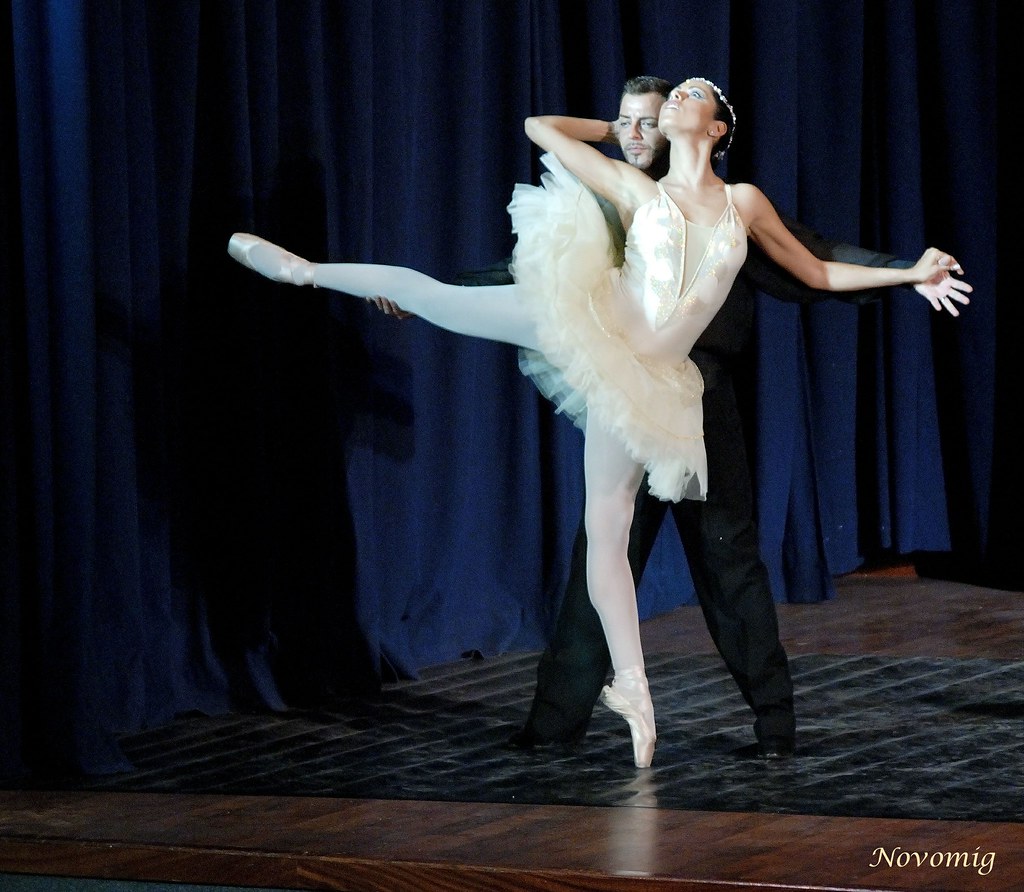

FEATURE image: A pas de deux on stage as a ballerina performs a poised extension en pointe while supported by a partner during a classical ballet performance. The partnership of dancer and ballerina lies at the heart of classical ballet, where technical virtuosity, musical expression, and elegant stagecraft combine to create enduring theatrical art. PHOTO: “Ballet en la Gala Lírica” by GonzalezNovo is marked with CC BY-SA 2.0.
Ballet’s enduring appeal can be understood through several landmark works that illustrate the art form’s evolution from Romantic-era storytelling to modern psychological drama, while also highlighting the dancers, choreographers, and traditions that shaped ballet history. The six featured ballets serve as representative milestones showing how ballet combines music, narrative, theatrical spectacle, and technical achievement across more than a century of development.

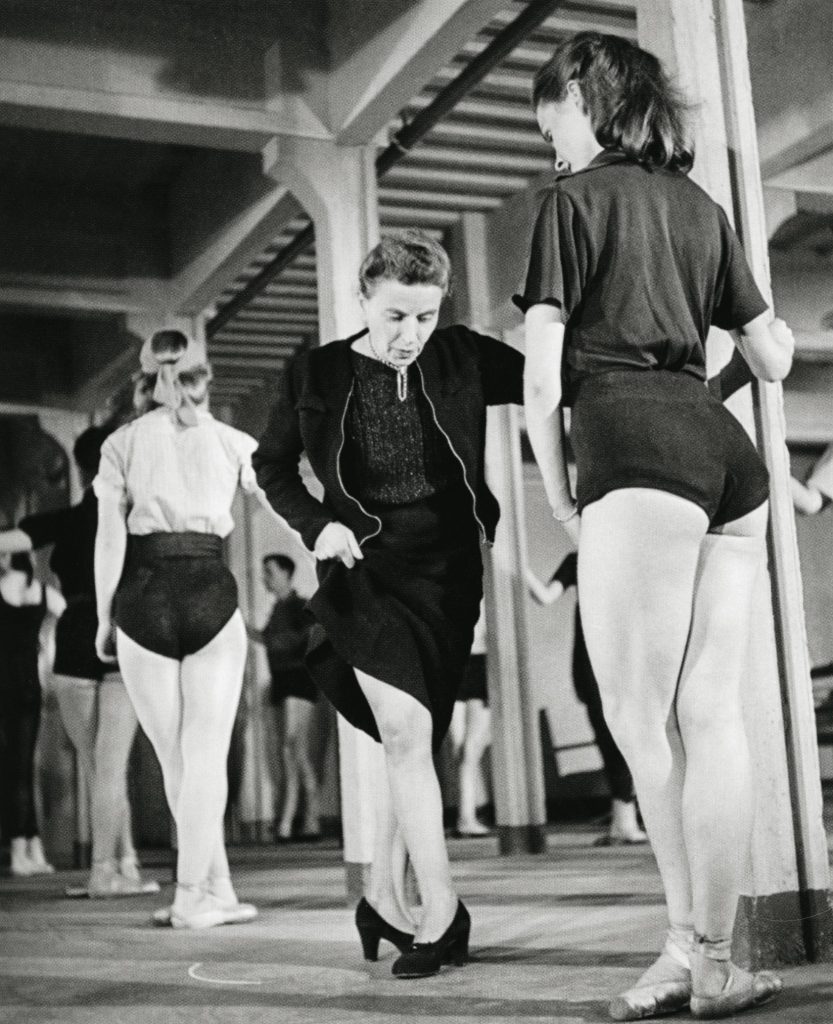
FAMOUS INSTRUCTOR: Marie Rambert (1888-1982), a prominent dance teacher in British ballet, works with with her students in the late 1940’s. Rambert founded the Rambert Dance Company which is active today.
Ballet Society, New York, 1948. Photo by Irving Penn is here: https://www.artic.edu/artworks/144790/ballet-society-new-york


Six Famous Modern & Classic Ballets.
# 1 The Dream (1964).
Choreographer: Frederick Ashton.
Music: Felix Mendelssohn.
Story: W. Shakespeare.


Adapted from William Shakespeare (English, 1564-1616) The Dream is a one-act ballet for the Royal Ballet created in 1964. Depicted is elegant Oberon, king of the forest fairies.

Shakespeare’s A Midsummer Night’s Dream, interpreted by Frederick Ashton, is a classic of The Royal Ballet’s repertory. Akane Takada performs the role of Titania, Queen of the Fairies. The high-spirited misadventures of the two pairs of mortal lovers from Shakespeare’s A Midsummer Night’s Dream combine with the humorous cavorting of Bottom, played by a male dancer who dances en pointe after his ludicrous transformation. The ballet culminates in a powerful pas de deux for Oberon and Titania, which moves through a stormy conflict of wills to a harmonious union. Felix Mendelssohn’s witty, gossamer-light music for the play provides a perfect partner to Frederick Ashton’s inventive choreography.
# 2 Onegin (1965).
Choreographer: John Cranko.
Music: Pyotr Ilyich Tchaikovsky.
Story: A. Pushkin.


With music by Pyotr Ilyich Tchaikovsky (1840-1893), Onegin was first performed in 1965. Onegin is one of the most popular story ballets for both audiences and dancers.
Onegin was created by John Cranko (1927-1973) and is his ballet masterpiece. Its lead roles are Tatiana and Onegin, and Olga and Lensky. These are finely drawn characters who tell a story of love and tragedy through a series of intricate and diverse dance sequences.

With his full-length ballet Onegin, John Cranko secured his place in the pantheon of great 20th century choreographers. Based on Alexander Pushkin’s dramatic verse novel „Eugen Onegin“, he tells the story of the arrogant and world weary aristocrat Onegin who rejects the love of the naïve country girl Tatiana only to realize – upon meeting her again years later – that in her he threw away the only woman who ever truly loved him. On the occasion of its 50th anniversary the Stuttgarter Ballett has come up with a special cast featuring Alicia Amatriain as Tatjana, Friedemann Vogel as Onegin, Elisa Badenes as Olga, David Moore as Lenski, Jason Reilly as Prince Gremin, Melinda Witham as Madame Larina and no other than the wonderful Marcia Haydée as nurse.
#3 Mayerling (1978).
Choreographer: Kenneth MacMillan.
Music: Franz Liszt.
Story: G. Freeman.

Mayerling was created by principal choreographer and former artistic director Kenneth MacMillan (1929-1992) at The Royal Ballet. Since its premiere in 1978, it has been a popular staple on the ballet stage. The music is by Franz Liszt (1811-1886).
The male lead dancer appears in virtually every scene in the three-act ballet and performs with five different ballerinas. It is one of ballet’s most demanding roles.
Mayerling is a tragic story based on the true story of the murder-suicide of the crown prince of Austria-Hungary and his mistress.
Mayerling is the Imperial hunting lodge in the Vienna Woods where the bodies of the pair were discovered on January 30, 1889.

Mayara Magri as Mitzi, and Marcelino Sambé, Reece Clarke, Tomas Mock and Calvin Richardson as Four Hungarian Officers, and Steven McRae as Crown Prince Rudolf. Kenneth MacMillan’s Mayerling was filmed and screened live in cinemas on 15 October 2018.
FAMOUS BALLERINA: Pierina Legnani (1868-1930).


Pierina Legnani (1868-1930) is considered the greatest Italian ballerina of the late nineteenth century.
Legnani trained at La Scala Theatre Ballet School in Milan and danced famously in Europe, especially in Italy and Russia.

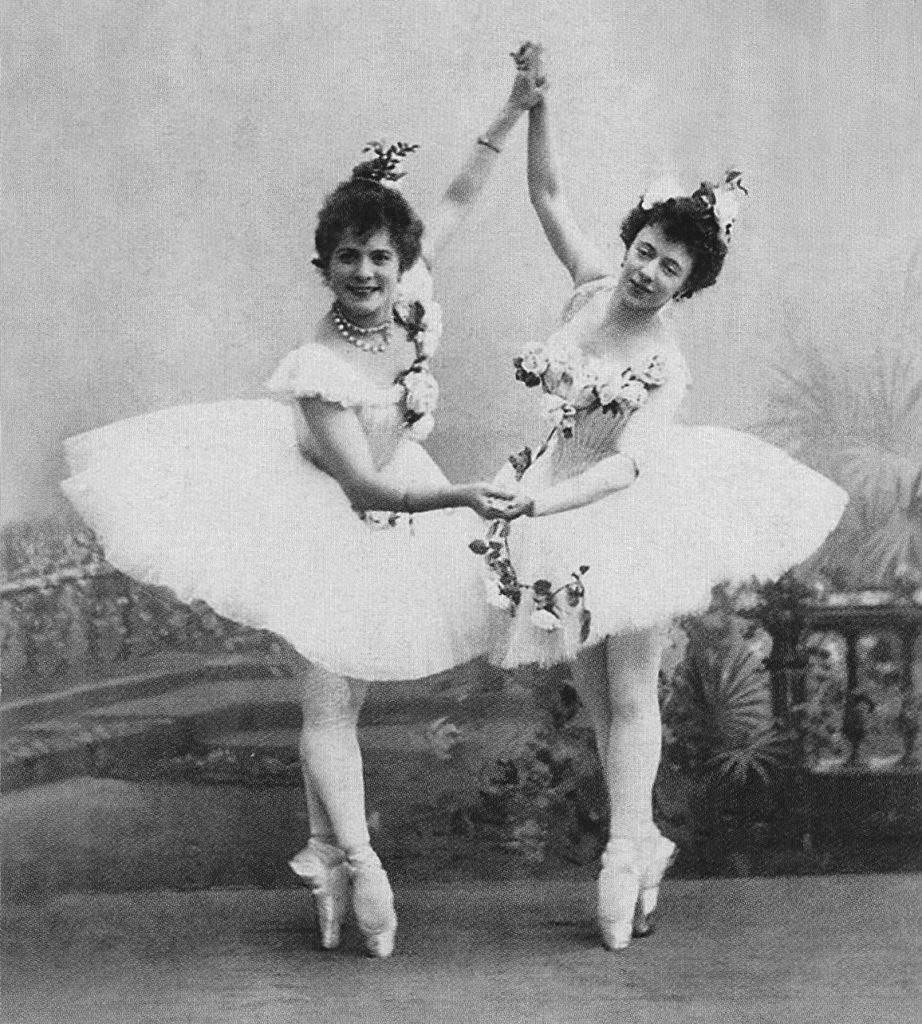
Pierina Legnani and Olga Preobrajenska (1871-1962) in 1899. In the late 19th century, the pair were considered the greatest ballerinas.


#4 Giselle (1841).
Choreographer: Jean Coralli and Jules Perrot.
Music: Adolphe Adam.
Story: Théophile Gautier and Vernoy de Saint-Georges.

With its premiere at the Paris Opera (Salle Le Peletier) in June 1841, the ballet Giselle was an immediate triumph and staged across Europe.
The story is about two lovers, Giselle and Albrecht. When Giselle discovers that Albrecht is betrothed to Bathilde she dies of a broken heart at the end of Act I. This leads to the appearance in Act II of a group of otherworldly and potentially mortally dangerous Wilis, a type of young female vampire. These creatures are intent on revenge for Giselle by arranging for Albrecht’s destruction.
The ballet music was composed by Adolphe Adam (1803-1856). It became the French composer’s most popular and enduring work. Musically, Adam introduced to ballet the leitmotif, that is, a specific theme for a character who appears on stage in the ballet.
The libretto was scored by Théophile Gautier (1811-1872) and Jules-Henri Vernoy de Saint-Georges (1799-1875). The choreography was by Jean Coralli (1779-1854) and Jules Perrot (1810-1892).


The print above depects the theatre at the time of Adolphe Adam’s triumphant ballet Giselle. The opera building, opened in 1820, was destroyed by fire in 1873 and replaced in a new location by the Palais Garnier.


#5 Coppélia (1870).
Choreographer: Arthur Saint-Léon.
Music: Léo Delibes.
Story: Charles-Louis-Étienne Nuitter.


Coppélia is a comic ballet based on Der Sandmann by E.T.A. Hoffmann (1776-1822). It was choreographed by Arthur Saint-Léon (1821-1870) with music by Léo Delibes (1836-1891) and a libretto by Charles-Louis-Étienne Nuitter (1828-1899).
The comedy surrounding mischief-making village folk premiered in May 1870. Its production was immediately interrupted by the Franco-Prussian War and the siege of Paris. Following the hostilities, Coppélia went on to become one of the most popular works of the Paris Opera Ballet.
Italian ballerina Giuseppina Bozzacchi (1853-1870) first danced the part of Swanilda. Tragically, the 17-year-old ballerina died from malnutrition related to the Franco-Prussian War’s privations in November 1870.

FAMOUS BALLERINA: Marie Taglioni (1804-1884).

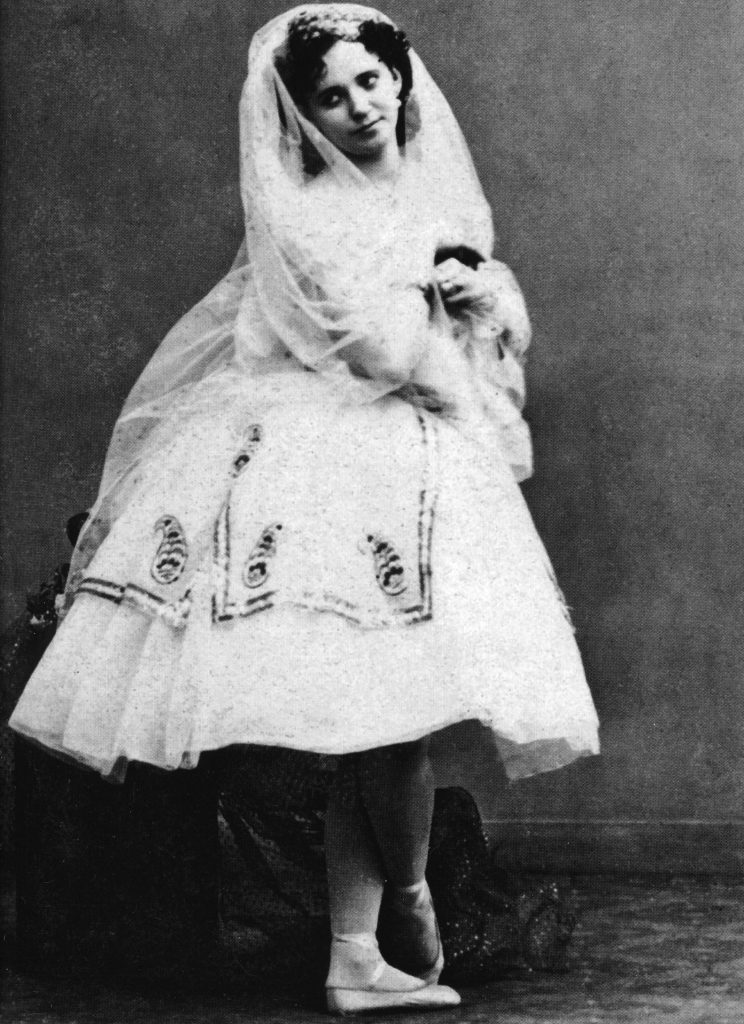
Marie Taglioni had many spectacular ballet accomplishments in her dancing career that spanned 25 years.
Marie’s parents were both dancers. Her Swedish mother was a ballet dancer and her Italian father was a dancer, choreographer, and ballet master in Vienna at the Court Opera.
Marie was rigorously trained by her father in Vienna, including six hours of ballet practice everyday for six days a week. The hard work paid off.
At 17 years old, Marie made her debut in Vienna in Rossini’s La reception d’une jeune nymphe à la cour de Terpischore, choreographed by her father. For the next five years Marie danced in cities in Austria and Germany until, in 1827, she made her Paris Opéra debut.
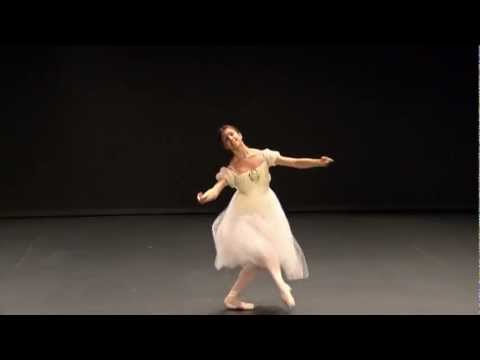
An introduction to ballerina Marie Taglioni, the most famous dancer of the Romantic era. Former ballet mistress Ursula Hageli explores her role in the creation of La Sylphide with Royal Ballet dancer Yasmine Naghdi and pianist Paul Stobart.
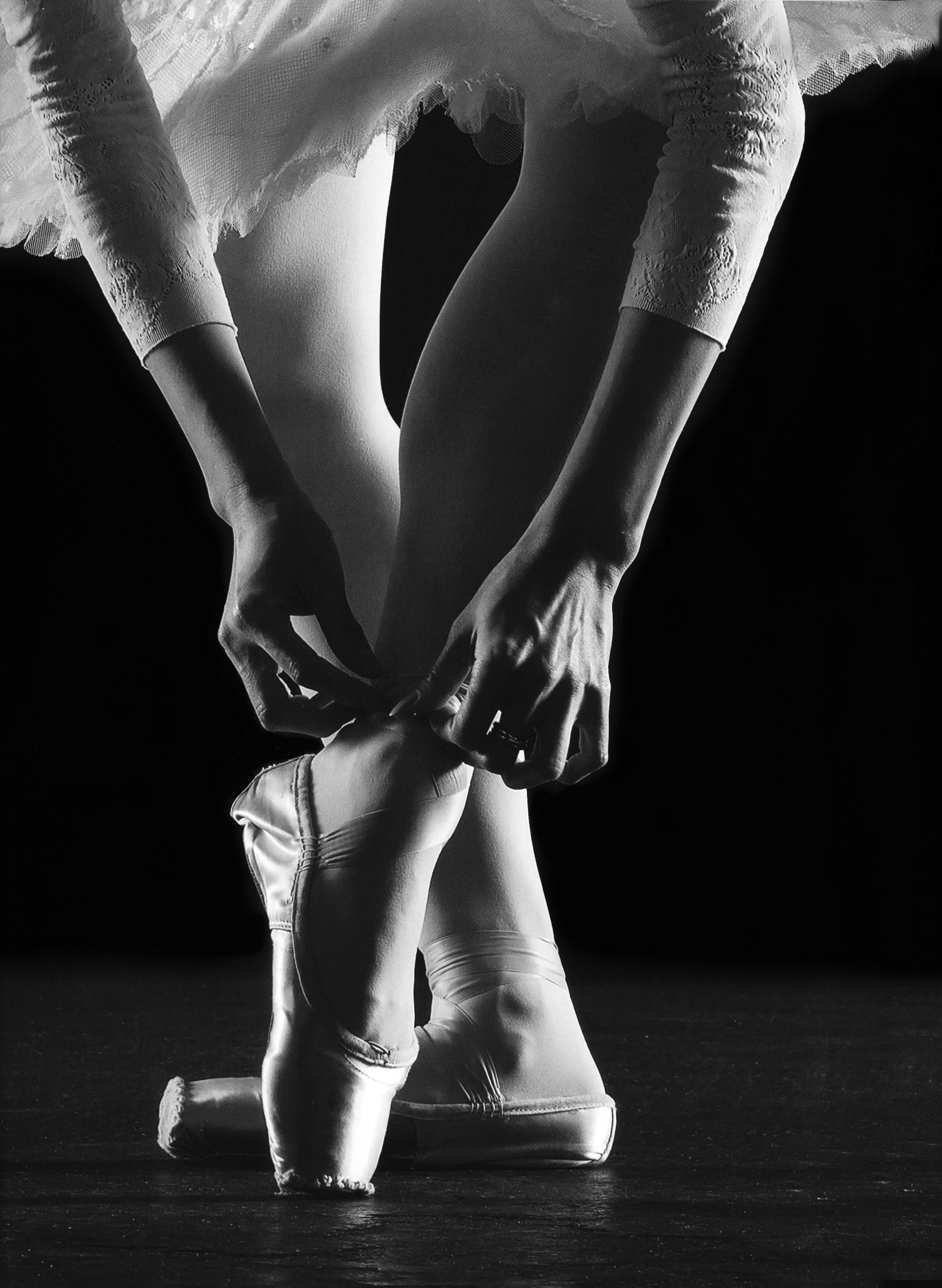
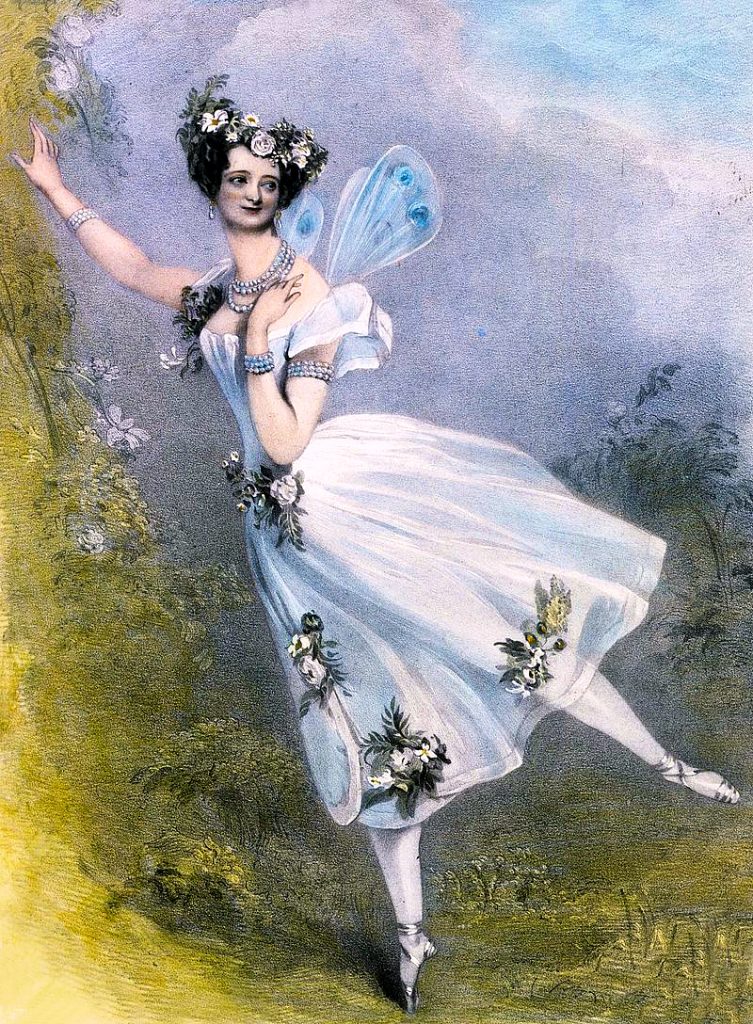
In 1832 Marie is credited with dancing en pointe (on tip toes), an innovation for ballet theater at that time. As a famous celebrity and the first famous ballerina, Marie Taglioni influenced fashion and hairstyles in the Romantic era of the 1830’s.

Marie married in 1832 but was separated in 1836. She bore a child with a lover in 1836 but he died soon after. In 1837 Marie accepted a dance contract to perform in Russia at the famed Imperial Ballet in St. Petersburg. Marie remained at the Imperial Ballet until 1842, the same year she gave birth to a second child. In 1843 she danced in Milan at La Scala in another of her father’s ballet creations, La Sylphide and in 1845 appeared in London at Her Majesty’s Theatre dancing in Pas de quatre choreographed by Jules Perrot (1810-1892). In London, Taglioni was one of the famous ballerinas to appear in this production dancing alongside Carlotta Grisi (1819-1899), Lucile Grahn (1819-1907) and Fanny Cerrito (1817-1909).


Dominating the image (above) is Marie Taglioni, standing with her arms en couronne, surrounded by ballerinas Lucille Grahn, Fanny Cerrito, and Carlotta Grisi. The lithograph by English artist and engraver Thomas Herbert Maguire (1821-1895) depicts a scene for the 1845 London production of Pas de Quatre.
In 1847 Marie Taglioni retired from the stage following her appearance in The Judgment of Paris, a ballet that concludes an opera (1754) by Christoph Gluck.
Taglioni lived in Venice into the 1850’s and returned to Paris in 1857 to take up the position of dance examiner at the Paris Opéra. One day before her 80th birthday, she died in Marseilles.
To this day there is some mystery as to the exact location of her grave. It is not known into which Paris cemetery Marie Taglioni was exactly buried.
#6 Paquita (1846).
Choreographer: Joseph Mazilier.
Music: Edouard Deldevez.
Story: Joseph Mazilier and Paul Foucher.
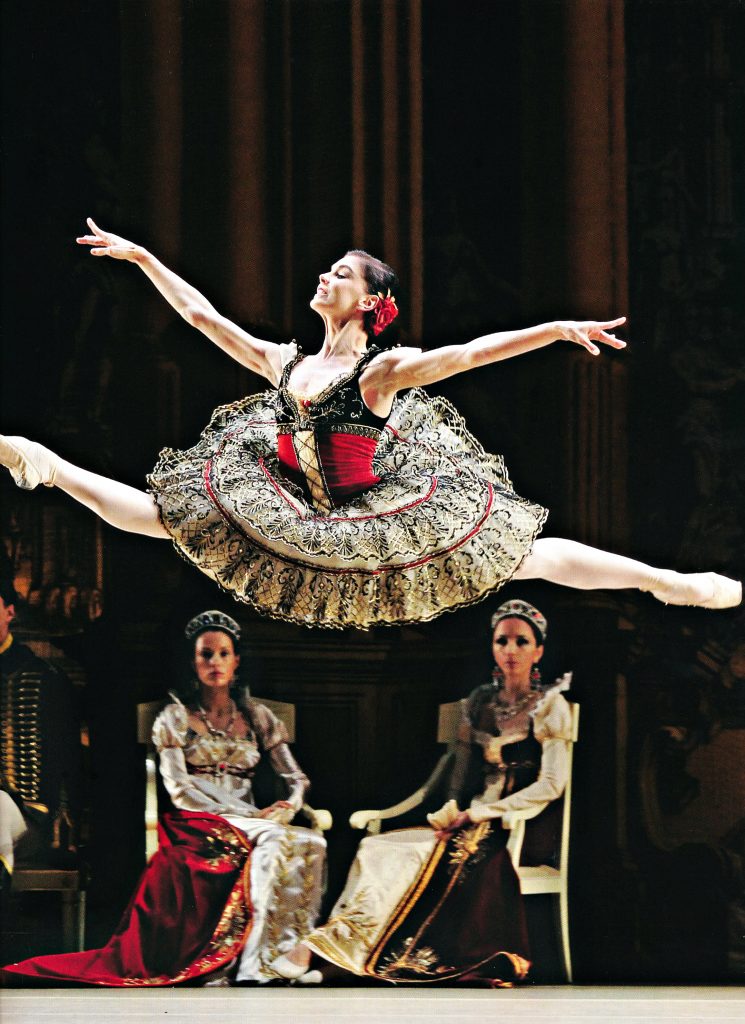
The two-act ballet is set in Spain during the Napoleonic Wars. It tells the love story of a French military officer and a Spanish gypsy woman.