FEATURE Image: July 2017. Hindu Temple of Greater Chicago, 10915 S. Lemont Road, Lemont, IL. A gopuram or ornate entrance tower at the entrance of the Hindu temple with a bronze prayer pole in front. 5.75 mb
Hierotopy?what is that?
It is a term developed at the start of the 21st century by Alexei Lidov (b. 1959), a Russian art historian who specializes in Byzantium.
Hierotopy derives from two Ancient Greek words meaning “Sacred Space” and in a specifically broad sense.
Hierotopy is the study of the creation and frequent re-creation of sacred spaces whose inter-disciplinary application extends to a vast array of media (i.e., images, shrines, architectural spaces, pilgrimage, song, incense, ritual, natural forces, such as light and darkness) as well as spans the areas of art history, archeology, cultural anthropology (diversity in social practice), ethnology (groups and culture), and religious studies.
What hierotopy is NOT.
What hierotopy is not is the study of the phenomenology of the sacred. Rather, it is a look at projects that express the sacred and the relationship of the sacred and the mundane. It is a universal language posited in a nearly infinite number of forms marked by creative human activity and expression.
As such, icons and other sacred artifacts, for example, are not seen only as isolated objects but as part of any wider project to express a wide scope of communication of the sacred and mundane. It is these projects themselves – including both their conceptual and artistic aspects, as well as the historical developments leading to their formation – which are the primary focus of hierotopic study.
Hierotopic projects take in churches, sanctuaries, architecture, lighting design, city places, rituals, feasts and ceremonies.
Hierotopic projects are not limited to churches and sanctuaries but can be landscapes, architectural compounds, and greater entities such as urban settings. While edifices and other macro-art and architecture are hierotopic, so are individual and simple yet equally powerful components such as the use of light in church architecture as well as sacred (including revealed religious and other) ceremonies, feasts, and folk customs.
Photographic images of Lourdes grottos, labyrinths, and Hindu prayer poles to visual demonstrations of higher planes of the ineffable and transcendent.
While my photographs as a hierotopic project can include original sacred spaces which are those that appear as the result of a theophany (Ancient Greek meaning “appearance of a deity”) or a representative thereof, it can extend to its re-creation elsewhere, such as, popularly, a Lourdes grotto or Hindu prayer pole. Other hierotopic projects can involve less tangible ideas but look to express a higher order so that by way of the hierotopic project a common bond or experience on or towards such higher planes is manifested between the created sacred space and its human participant or beholder, such as, to start, the prayer labyrinth.
Hierotopy may be limited only by its power for expression.
In regard to these photographs, seeing hierotopy as the study of the creative direction of projects coordinating artists and specialists in shaping a unified and comprehensive vision of the relation of the sacred and mundane, they share in its hierotopic object by being their own hierotopy project. In the seeking to capture others’ creative projects in the communication of the sacred and mundane along with those embodied human interactions with or among them, each photographic image is its own original hierotopy – and possibly suggests an opening for others to assemble theirs.
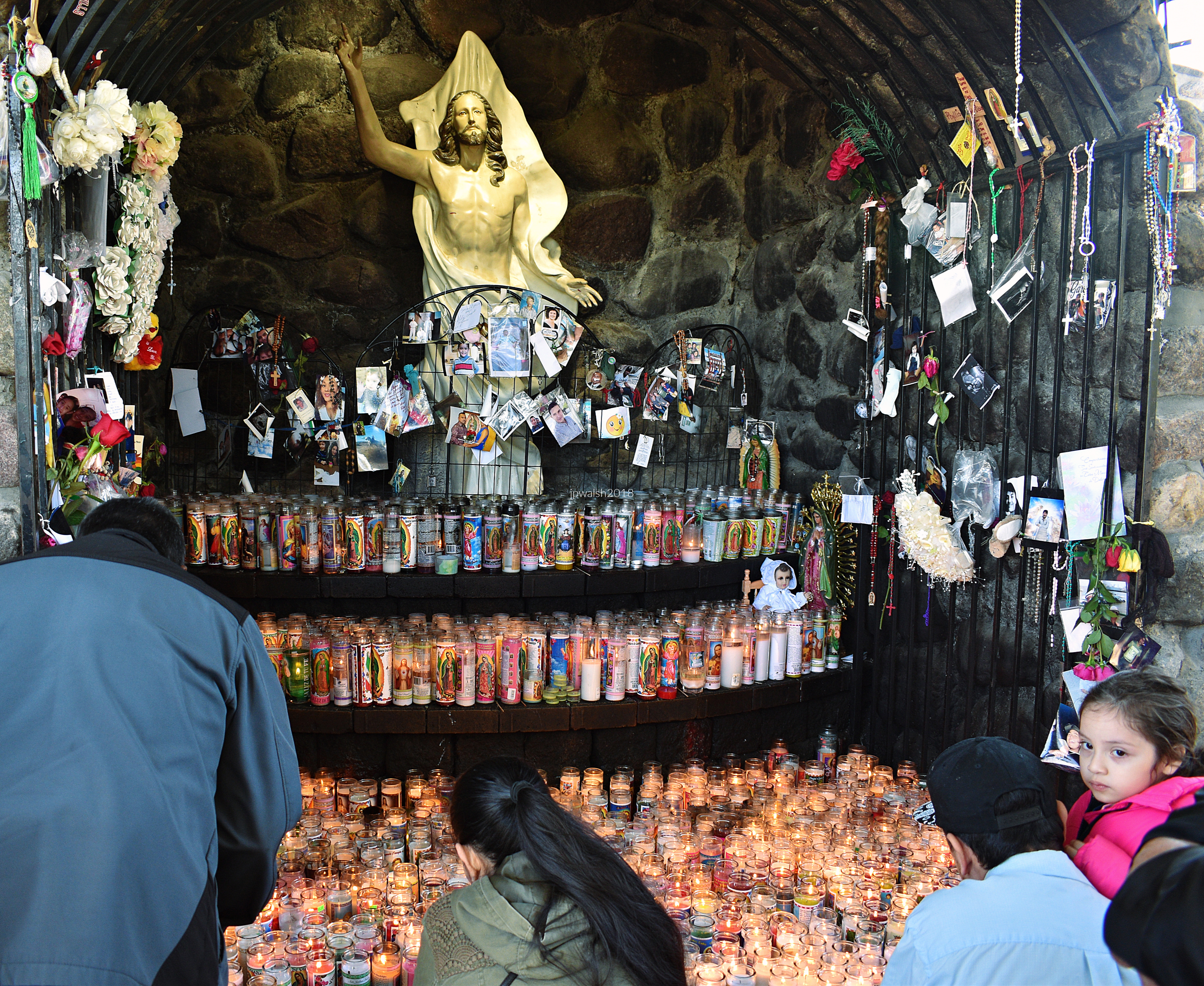
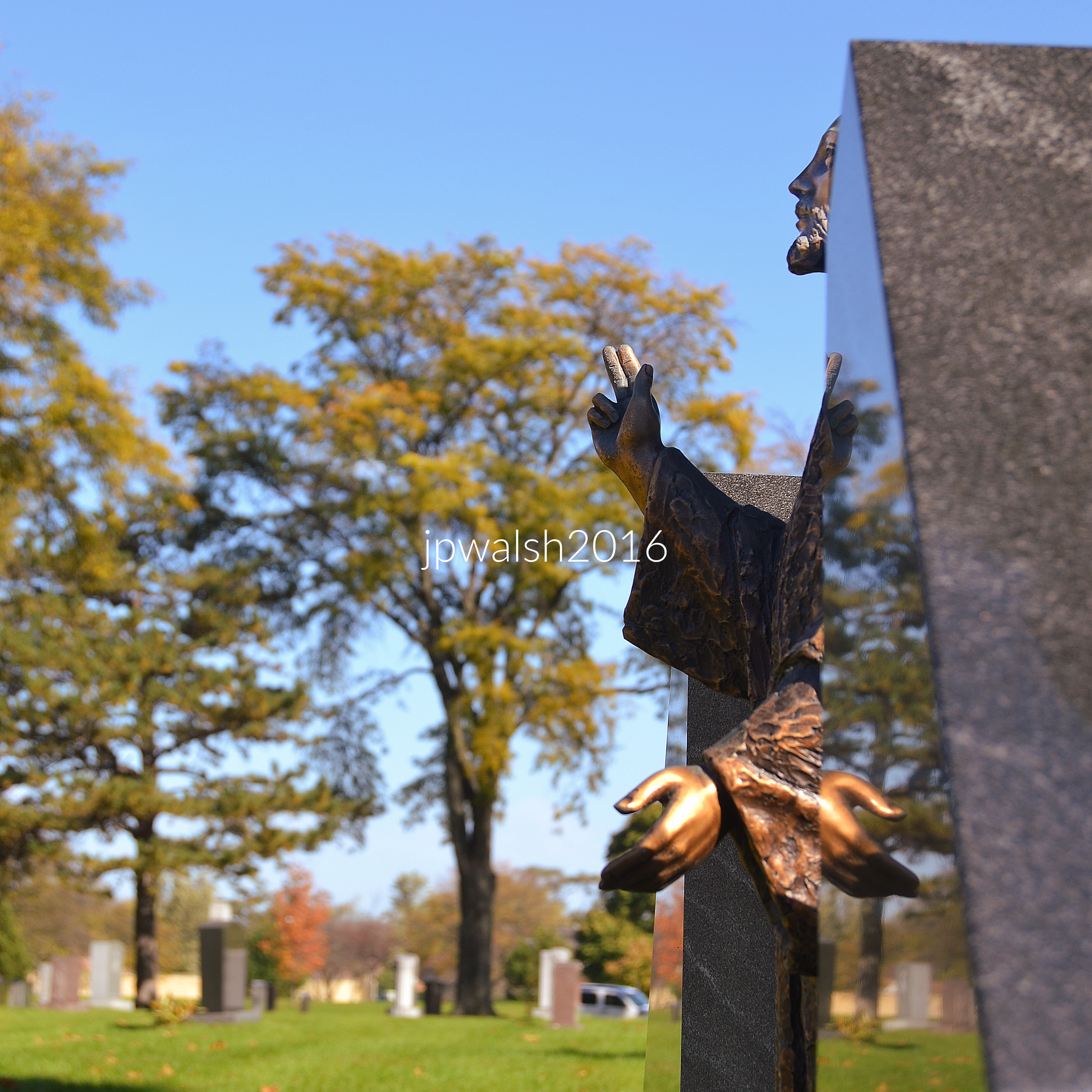
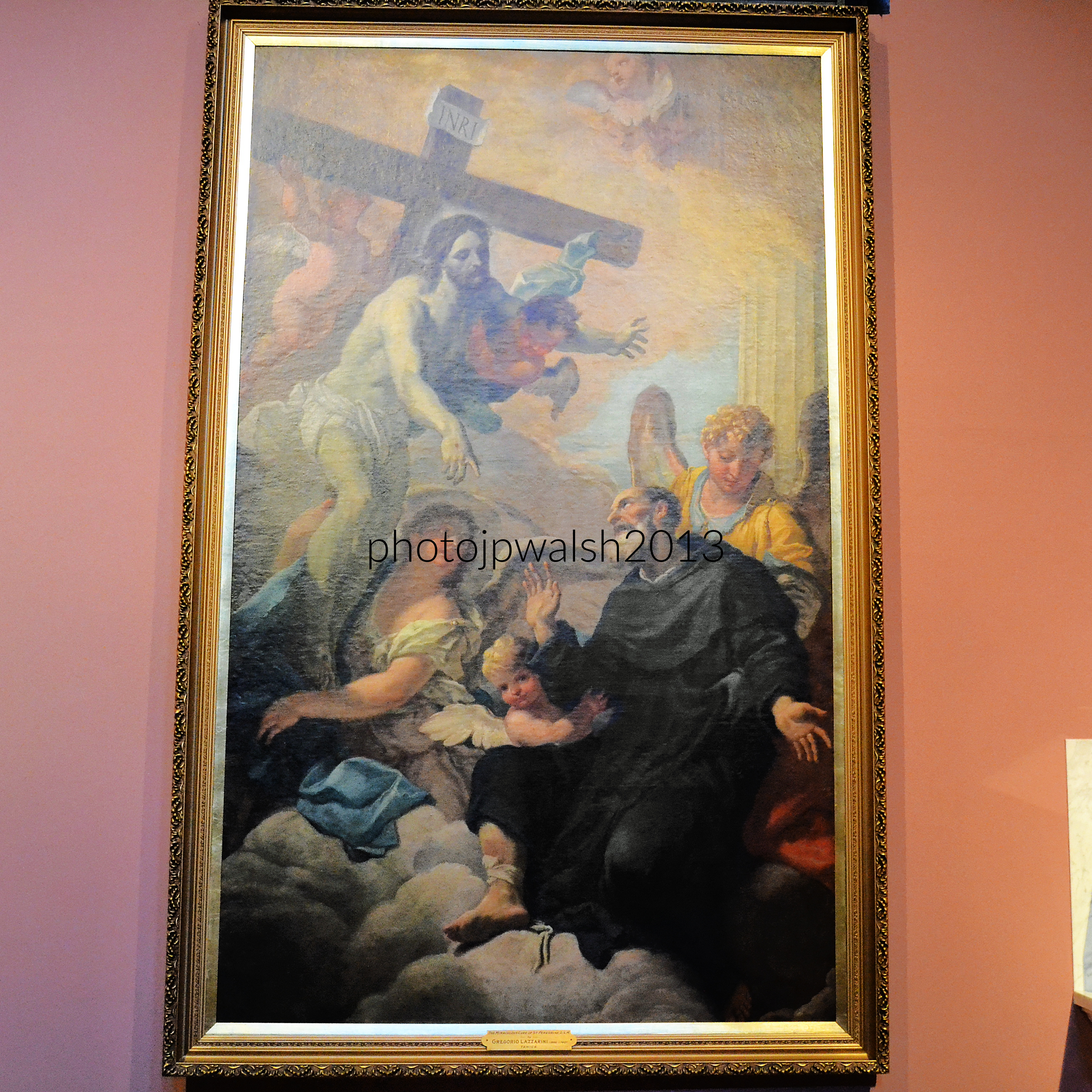
May 2018. El Santuario/Shrine of Our Lady of Guadalupe of the Archdiocese of Chicago, 1170 N. River Rd., Des Plaines, IL. 7.89 mb 84% August 2017. First Baptist Church, Kankakee County, IL. 6.63 mbJuly 2017. Moses, Mount Sinai, and the 10 Commandments Experience, The Shrine of Christ’s Passion, St. John, Indiana. 4.83 mbMay 2018. El Santuario/Shrine of Our Lady of Guadalupe of the Archdiocese of Chicago, 1170 N. River Rd., Des Plaines, IL. 3.65 mbOctober 2015. Levere Temple, Sigma Alpha Epsilon National Headquarters, 1856 Sheridan Rd, Evanston, IL. 30%.September 2015. St. Edmund’s Church, 188 S. Oak Park Avenue, Oak Park, IL. 7.84 mb 93%March 2013. Holy Innocents (East Village), Chicago. Good Friday, Via Crucis (Way of the Cross),. In 2021, after 116 years of service, the Chicago archdiocese combined Holy Innocents, St. Malachy + Precious Blood, and Santa Maria Addolorata to form a new parish, Blessed Maria Gabriella. 264kb 35%March 2013. Holy Innocents Church, 743 North Armour Street, Chicago. 1.74 mb N.B. In 2021, the Chicago archdiocese combined Holy Innocents, St. Malachy + Precious Blood (2248 W Washington Blvd,) and Santa Maria Addolorata (528 N Ada St, Chicago, IL 60642) to form a new parish, Blessed Maria Gabriella, with former Holy Innocents being the East site. Blessed Maria Gabriella (1914-1939) was born Maria Saghedduin Dorgali, Sardinia, Kingdom of Italy. She died in Rome at 25 years old of tuberculosis after a religious life as a Trappist nun dedicated to Christian unity. She was an obstinate and sometimes cantankerous child but grew into normal young adulthood. On September 30, 1935 she entered the Trappist convent in Grottaferrata close to Rome and was given the religious name of Maria Gabriella. On April 13, 1936 she became a novice and made her vows on October 31,1937, the Feast of Christ the King. Her abbess, Mother Pia Gullini, OCSO (1892-1959), came from a wealthy family after growing up in Verona and Venice and moving to Rome in 1912. As a young woman, Mother Pia was considered beautiful, elegant, intelligent, musically and artistically gifted, with an exuberant temperament. She had an enthusiasm, not without controversy among superiors of the order, for ecumenism which was the fruit of the efforts of Abbé Paul Couturier (1881-1953), a Benedictine Oblate. This enthusiasm was passed on to the others in her Trappist convent, including Sister Maria Gabriella. Though Pia was subject to normal monastery politics, she shaped the convent during her 20 years in leadership from 1931 to 1951. In that time Mother Pia had two overriding concerns: ecumenism and the legacy of Sister Maria Gabriella Sagheddu. Her efforts and prayers reaped good fruit: Sagheddu was beatified on January 25, 1983 in the Basilica of Saint Paul Outside the Walls by Saint Pope John Paul II at the conclusion of the Week of Prayer for Christian Unity which was the same observance which motivated Blessed Maria Gabriella’s decision to offer her short life to God. In 1957 when Sagheddu’s remains were exhumed in a chapel at a Trappistine convent at Vitorchiano near Viterbo they were found to be incorrupt. See – https://litpress.org/Products/MW057P/The-Letters-of-Blessed-Maria-Gabriella-with-the-Notebooks-of-Mother-Pia-Gullini – retrieved February 2, 2025.March 2013. Chicago. Via Crucis. 572kb 55%June 2013. Little India Chicago. 4.31mbOctober 2023. 7.82mb 79%March 2013. St. Stanislaus Kostka Church (Divine Mercy Sanctuary), 1327 N. Noble Street, Chicago. The monstance depicts the woman of Isaiah 7:14 and the woman of John’s Revelation 11:19ff. In Byzantine Catholic iconography, Mary is dressed in a red outer robe symbolizing her humanity and blue inner garment symbolizing her holiness. In her center is the Real Presence of Jesus in the Eucharist. 1.58 mbOctober 2015. Chicago. Corpus Christi Catholic Church, 4920 S. Martin Luther King Drive, Chicago. 25%. In July 2021, after 120 years of service, this Bronzeville Catholic Church closed its doors forever as part of the archdiocese’s consolidation plan,October 2016. Chicago. Ling Shen Ching Tze Temple, 1035 W 31st Street. The original building, Immanuel Presbyterian Church, was designed by Daniel Burnham (1846-1912) and John Wellborn Root (1850-1891) and built in 1894. It later became a gym and, after that, a Knights of Columbus hall. It became a Buddhist temple devoted to the teaching of Taoism in 1992. Prayer rooms at the temple have different themes with sculptures of various buddhas and figures and symbols that tell their story. See – https://www.dnainfo.com/chicago/20171017/bridgeport/buddhist-temple-ling-shen-ching-tze-open-house – retrieved December 4, 2023. 7.86mb 86%August 2015. Fatima Grotto, Forest Park, IL. St. Bernardine Catholic Church, 7246 W. Harrison Street. 2.98mbMay 2018. Des Plaines, IL. El Santuario/Shrine of Our Lady of Guadalupe of the Archdiocese of Chicago 1170 N. River Rd. 5.02 mb. This shrine was destroyed by arson fire in 2023. see = https://www.chicagocatholic.com/chicagoland/-/article/2023/05/31/arson-damages-chapel-at-guadalupe-shrine-in-des-plain-1 – May 31, 2023. July 2021. Field of Honor 2021 Colonial Flag Foundation, June 30 – July 4, 2021 Seven Gables Park, Wheaton, IL The event’s website claims: “This stirring display of 2,000 flags will bring the community together in a patriotic tribute to honor our heroes.” 7.82 mbMay 2013. Calvary Cemetery, Evanston IL. 4.97 mbApril 2013. Chicago (Back of the Yards). 1mb 35%March 2013. Chicago, St. Alphonsus Church. Altar mosaic of the Appearance of Christ to Two Disciples on the Road to Emmaus (Luke 23). 1.79mb.March 2013. Chicago, St. Josaphat Church. The custom of veiling religious statuary and other images in churches during Lent varies from place to place and whose origins are obscure. It could be as straightforward as a way to dramatically and visually inform the people in ancient and medieval times – many, if not most of whom were illiterate – that it was Lent. A rule to limit veiling to Holy Week came later in the 17th century. Although higher ups during Vatican II in the 1960’s made moves to abolish the practice of veiling images in Lent, its practice survived among the Catholic peoples. See- https://www.ewtn.com/catholicism/library/covering-of-crosses-and-images-in-lent-4938 – retrieved December 4, 2023. 1.14mbOctober 2016. Queen of Heaven Cemetery, Hillside, IL. 3.46 mbMay 2016. Chicago Chinatown. The Year of the Snake is year in the Chinese zodiac that occurs every 12 years. 6.77mb DSCN2733December 2013. Our Lady of Sorrows Basilica, Chicago. 3.89mb DSC_0218 (1). At the National Shrine of St. Peregrine (Our Lady of Sorrows Basilica in Chicago) is a late 17th century painting attributed to Gregorio Lazzarini (1665-1740) entitled “Jesus the Healer; St. Peregrine, OSM the Helper.” It depicts the healing miracle experienced by St. Peregrine Laziosi (1260-1345) who feast day is today. Peregrine Laziosi grew up in Forli near Ravenna in Italy whose wealthy family, like half of the town, was against being part of the Papal States. When Filippo Benizzi (1235-1285), general superior of the Order of the Servites, was assigned by the pope to try to bring together the two sides – Guelphs (pro-pope) and Ghibellines (pro-Holy Roman Emperor) – at a political meeting, the crowd who gathered spewed insults at the old friar with 18-year-old Peregrine, son of a Ghibelline leader, among them. The Servite General was chased out of Forli with insults and violence and Peregrine physically struck him. Soon after, Laziosi regretted his actions and sought out his victim to apologize. Filippo Benizzi greeted him with charity and this made a lasting impression on the young man. A few years later, Peregrine Laziosi joined the Servites in Siena and became a priest. He was sent back to Forli, founded a new Servite house, and was well known for his preaching and charitable work. At 60 years old Peregrine got a cancerous tumor on his right leg. The doctors had given up hope of a cure and decided to amputate. The night before the operation Laziosi had a vision – the one depicted in the shrine’s painting – of seeing Jesus descend from the cross to touch and heal his leg. When the doctors arrived the next day to do the operation Peregrine had been completely cured and unexplained by medical science. This news spread like wildfire through the town. Laziosi died of fever 25 years later on May 1, 1345, in his mid 80’s. After his death people who were sick and were cured attributed it to Peregrine’s miraculous intercession, particularly when it was a life-threatening disease. As his saintly cult grew – Peregrine is patron saint of cancer, AIDS, and other life-threatening maladies – his image often shows him exposing his tumorous leg. The shrine through prayer, blessing, pilgrimage, reconciliation and evangelization, accompanies those persons who live with serious illness, traditionally cancer, and their caregivers as they seek to find healing, support, peace and God in their daily lives. There is also a relic of St. Peregrine Laziosi at the shrine.