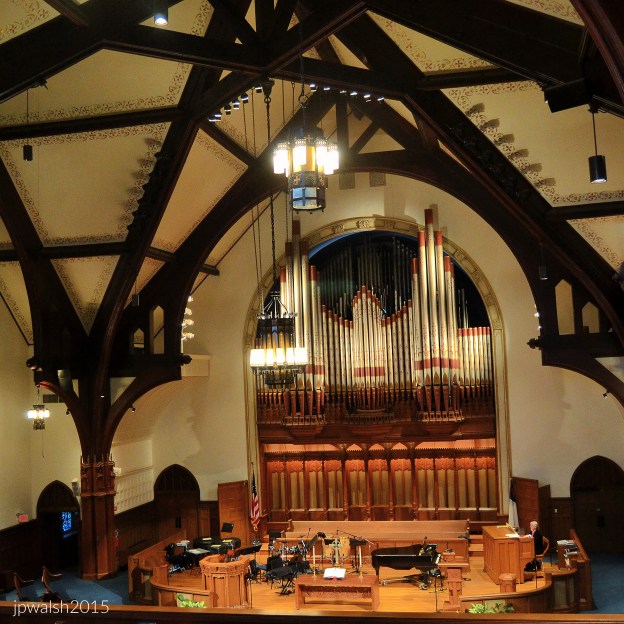
FEATURE image: Aeolian Skinner organ, sanctuary, 10/2015 6.27mb. Text and Photographs by John P. Walsh.
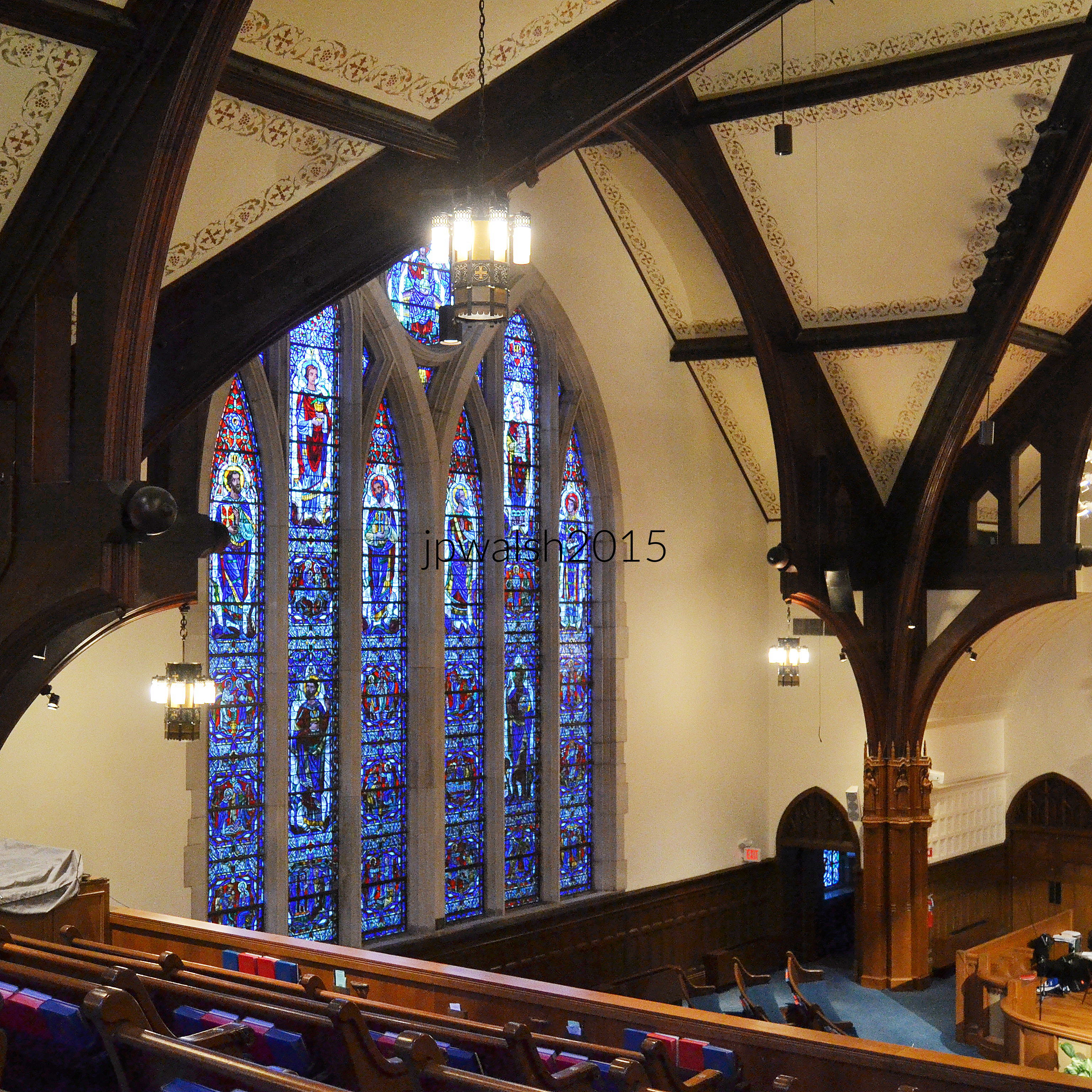
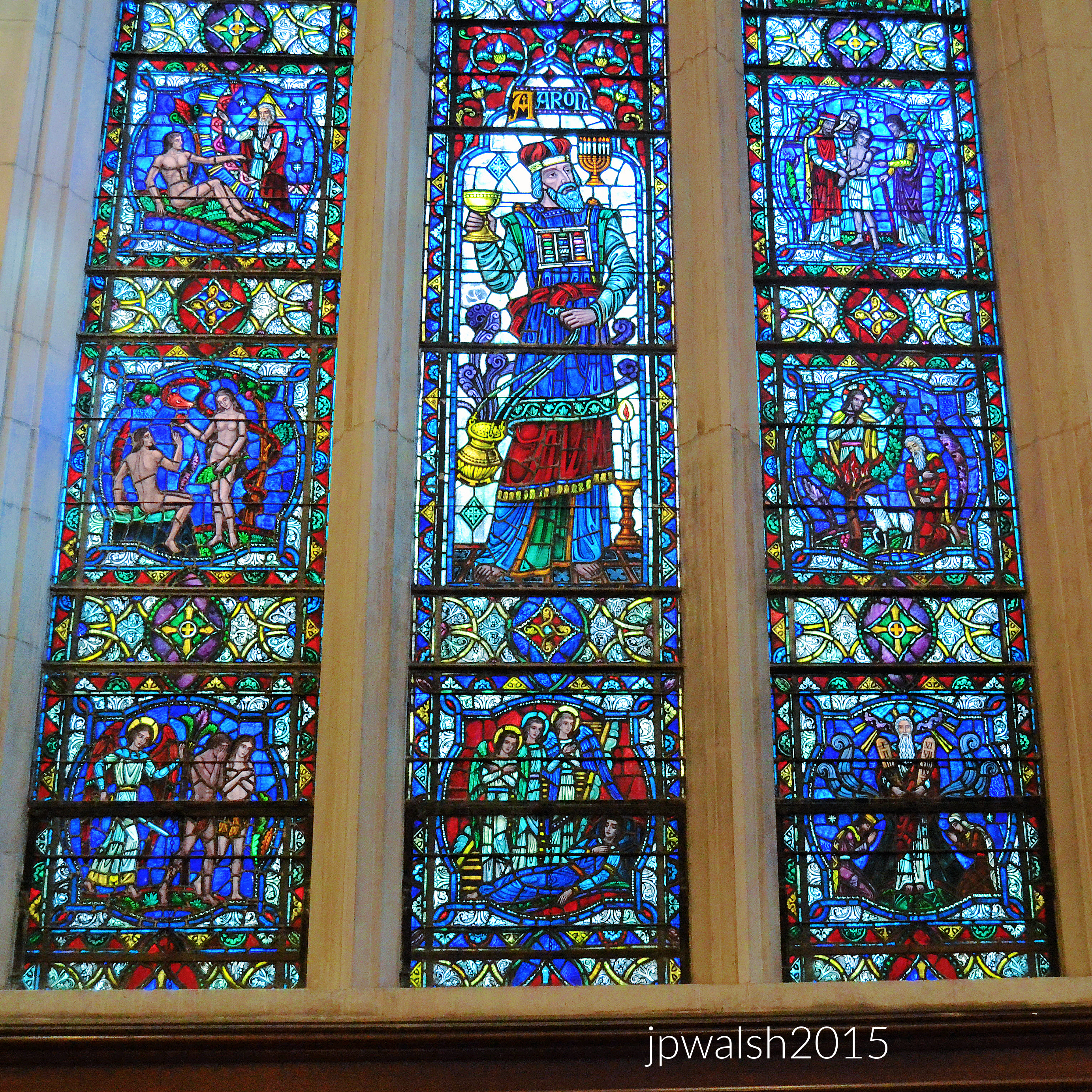
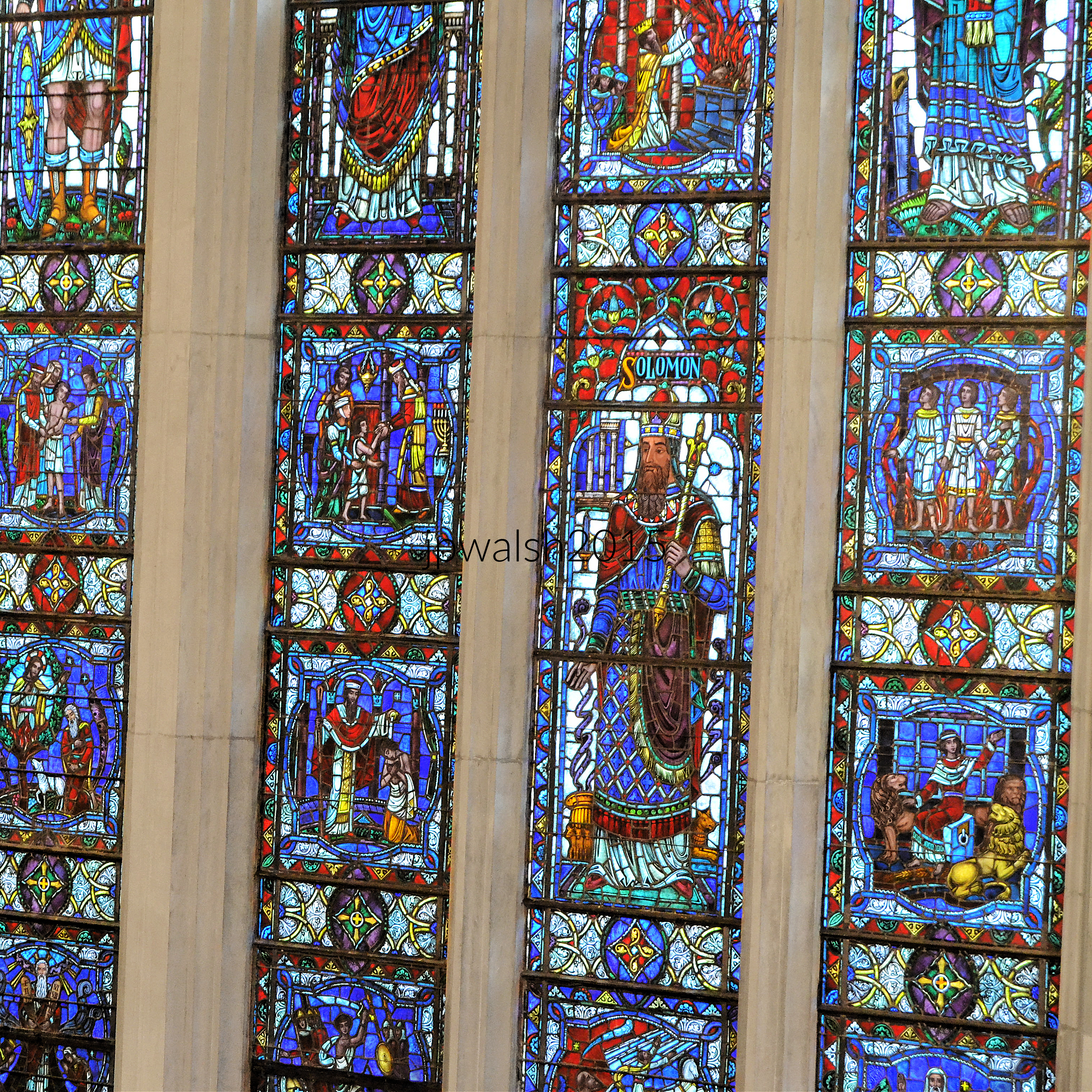
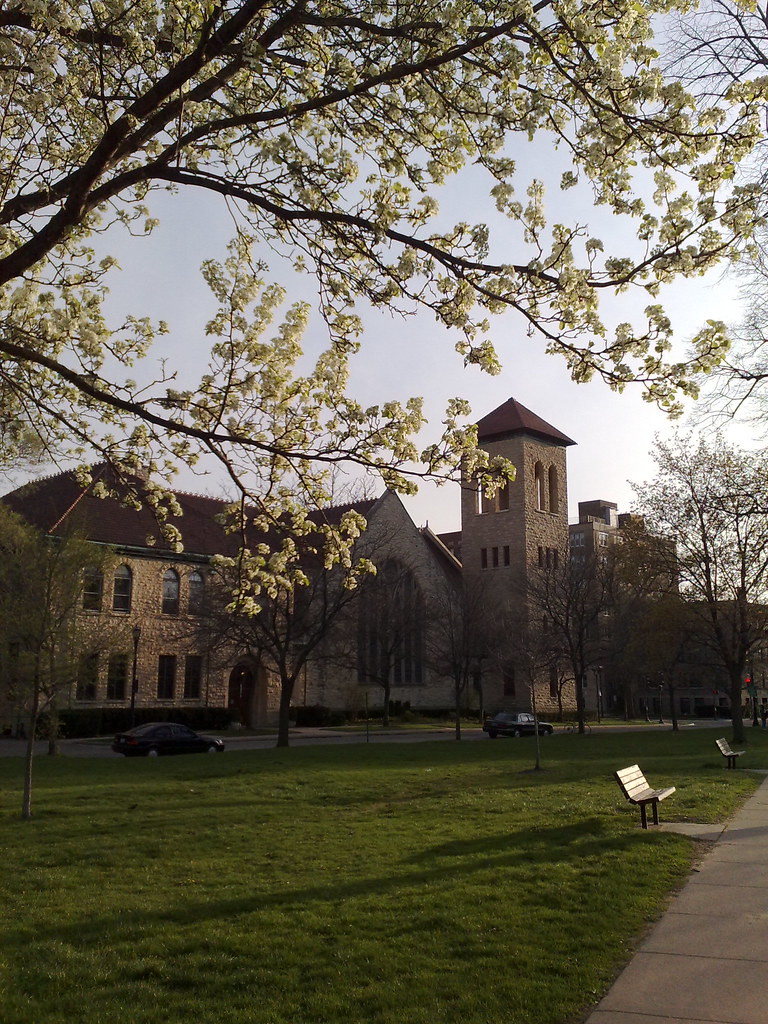
Daniel Hudson Burnham, c. 1890. The First Presbyterian of Evanston church building was designed in 1895 by architect Daniel Burnham (1846-1912) who lived in Evanston.The sanctuary seats over 1,000 worshippers. It has a vaulted roof with Nordic-style timber trusses for support instead of major columns that might obstruct views as well as retains an inclusive worship space. “PA02.2018 – 101” by Presbytery of Chicago is licensed under CC BY-NC-SA 2.0.Music is enhanced by First Presbyterian Church of Evanston’s Aeolian Skinner organ, portions of which date to the 1890s, and is one of Chicago’s finest organs. Wall-filling arched stained-glass windows tell Old and New Testament stories. 10/2015 6.81mbFirst Presbyterian Church, 1427 Chicago Ave, Evanston, IL One of the historic church’s dramatic wall-filling stained-glass windows.10/2015 7.79mb 80%Creation of Adam; Fall of Adam and Eve; Expulsion from the Garden; Priest Aaron and brother of Moses; three angelic visitors to Abraham; the story of Moses. 10/ 2015 7.87mb 90%Burt J. Denman, born in Toledo, Ohio, was an engineering graduate of the University of Michigan who was vice president and general manager of the United Light Power Company. Denman was for a while a leading Methodist layman and trustee of Northwestern University. 10/2015 2.76mbFrom Raymond Park, stained glass window and limestone walls. 10/2015 5.35 mbKing Solomon. 10/2015 7.81mb 98%Adjacent to Raymond Park, the 1895 Gothic Renaissance building is made of Lemont limestone with a tile roof and 120-foot-tall bell tower with open belfry. Raymond Park, which is part of the Evanston parks system, is named for Rev. Dr. Miner Raymond (1811-1897). Rev. Miner Raymond was born in New York City and began his career as a cobbler. Following his matriculation at Methodist Wesleyan Academy in Wilbraham, Massachusetts, Raymond became a teacher at the school starting in 1833 and its principal from 1848 to 1864. In 1837 he married Elizabeth Henderson in Webster, Massachusetts, and they had 8 children together. In 1864 Rev. Miner Raymond with his family relocated to Illinois where he became professor of systematic theology at Garrett Biblical Institute in Chicago. In 1884 he received his LL.D. from Northwestern University. Mrs. Raymond died in 1877 and the widower married Isabella (Hill) Binney in 1879 though she died after 1880. Dr. Rev. Miner Raymond died in 1897 and is buried in historic Rosehill Cemetery. “First Presbyterian Church of Evanston” by Marit & Toomas Hinnosaar is licensed under CC BY 2.0.
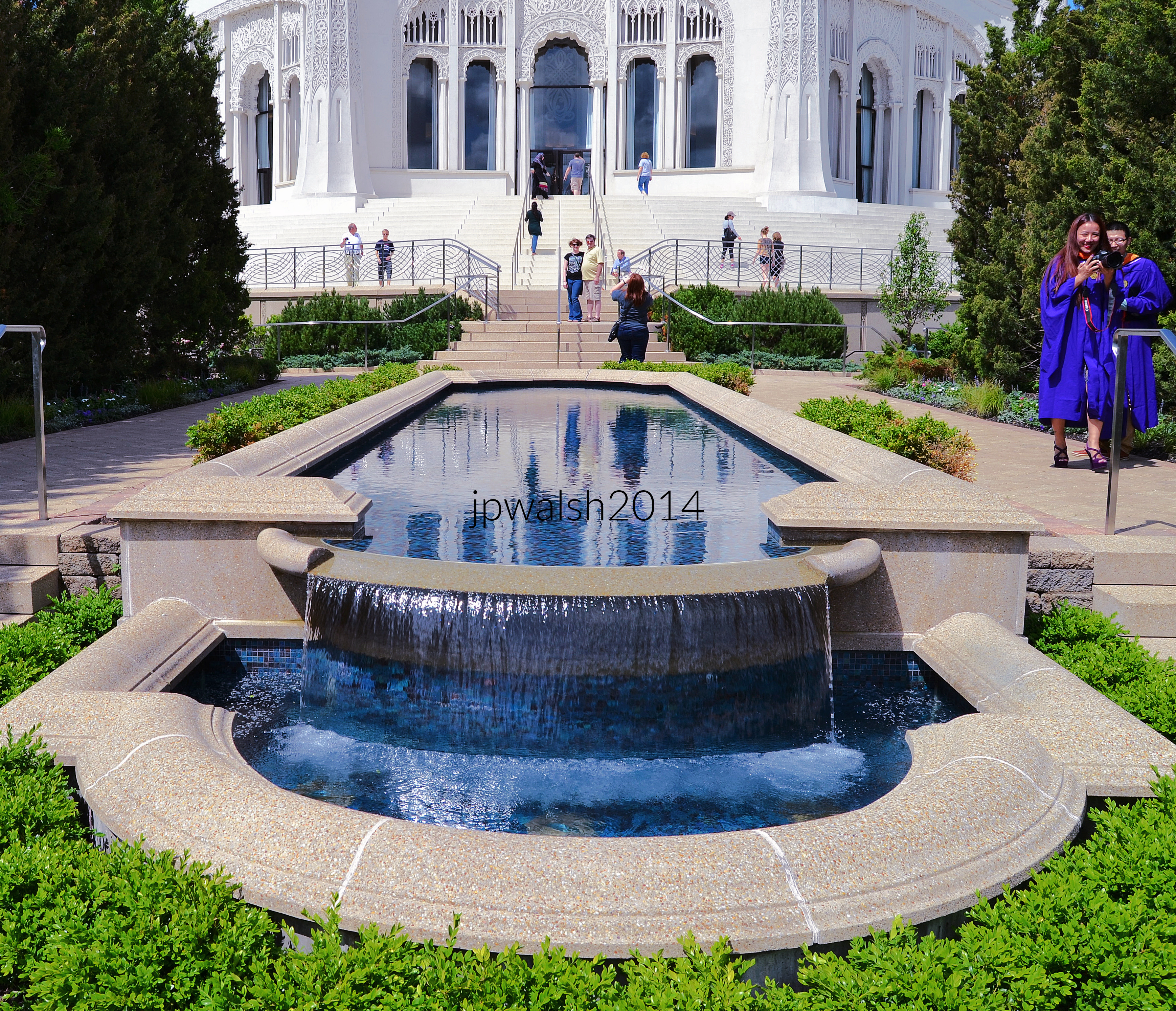
FEATURE image: To convey the Baháʼí principle of the unity of religion, architect Louis Bourgeois incorporated a variety of religious architecture and symbols including for Hindus, Buddhists, Native Americans, Jews, Christians and Muslims.
Text & Photographs by John P. Walsh.
The temple was designed by French-Canadian architect Louis Bourgeois (1856–1930). Bourgeois and his wife joined the Baháʼí faith by winter 1906. Photo c. 1922, Public Domain.
The Chicago Baháʼí Temple House of Worship is the second such house of worship constructed and the oldest one that is still standing. The popular destination along Lake Michigan on Chicago’s Northshore attracts visitors from around the world today for its amazing architecture, beautiful gardens, and message of religious unity in prayer and for peace.
The temple was designed by French-Canadian architect Louis Bourgeois (1856–1930). After studying and traveling in Paris, Italy, Greece, Egypt, and Iran, Bourgeois settled in Chicago in 1896 where he worked with Louis Sullivan. Bourgeois moved to Southern California and, in 1898, designed in Hollywood a landmark Mission Revival style house for painter Paul de Longpré (1855-1911) whose architecture and gardens became a tourist attraction.
The nine sides of the building represent the largest single digit number which stands fortheBaháʼí belief in the unity and oneness of humankind. 6/2014 6.55mb
The idea for the construction of the first Baháʼí Temple in the Western world began in Chicago in 1903. When there was a call for designs, Louis Bourgeois’ plans were the most promising. He worked on the complex design from 1909 to 1917. Before that time, Louis Bourgeois and his wife had joined the Baháʼí faith after having come into association with the Baha’i Faith through Boston’s Baháʼí community. In that time Bourgeois constructed a plaster model of his completed vision and in the 1920’s until his death in 1930 worked on the temple’s construction in Wilmette, Illinois.
While building activity was delayed though the Great Depression of the 1930’s and into World War II, temple construction began again in earnest in 1947 and the temple was dedicated in 1953.
Abdu’l-Bahá (1844-1921), eldest son of Baháʼu’lláh (1817-1892), the founder of the Baháʼí Faith, participated in the ground-breaking ceremony in 1912 of Baháʼí Temple. Construction began in earnest in the 1920s. It is four stories of reinforced concrete. 6/2014 4.11mbMoney for the building was raised entirely by the temple congregants as their gift to the people of the world. 6/2014 6.30mbThe temple rises 191 feet from its base to its ribbed dome’s peak. The main story pylons are 45 feet high each. The building’s surfaces are teeming with carved lacelike ornamentation. 6/2013 4.50mb The Baháʼí Temple has a highly traditional appearance whose architectural reputation in an age of orthodox modernism has only grown more positive with the years. 6/2013 4.85 mbInterior. “The forbidden temple.” by kern.justin is licensed under CC BY-NC-ND 2.0.The temple’s main prayer room seats 1,200 people. In the Baháʼí faith there are no clergy, no sermons and no rituals. Scriptures are read from various faith traditions with song provided by a cappella choir. 12/2017 5.31mb“The Source of All Learning is the Knowledge of God – Exalted Be His Glory.” There are an equal number of entrances each with a quotation above it by Baháʼu’lláh (1817-1892), founder of the Baháʼí faith. 6/2013 5.94mbThe Baháʼí temple is open year-round presenting its unique beauty through the seasons. 2/2021 7.97mb
SOURCES:
Chicago Churches and Synagogues: An Architectural Pilgrimage, George Lane, S.J., and Algimantas Kezys, Loyola University Press, Chicago, 1981, pp. 160-161.
Chicago’s Famous Buildings, Fifth Edition, Franz Schulze and Kevin Harrington, Chicago and London: University of Chicago Press, 2003, pp. 267-269.
A Guide to Chicago’s Historic Suburbs on Wheels and on Foot, Ira J. Bach, Swallow Press/Ohio University Press, 1981, p. 535.
The building is on the National Register of Historic Places situated on a broad, landscaped site that looks towards Lake Michigan. “Wilmette, 2015” by gregorywass is licensed under CC BY-NC-SA 2.0.