Monthly Archives: April 2025

250th Anniversary: The beginning of the American War for Independence started at the Battles of Lexington and Concord, Massachusetts, on the morning of April 19, 1775.

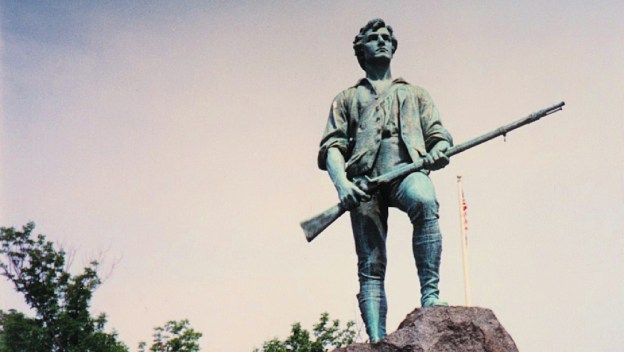
PUBLISHED APRIL 19, 2025 7pm CT. Feature image: Lexington Minute Man, 1899, by H. H. Kitson (c.1863-1947) stands in Lexington Green west of Boston, Massachusetts. Although called Minute Man, the statue is meant to represent the local Lexington militiaman, colonists of many ages and backgrounds, who volunteered to be first responders to military and other threats. The actual “minute men” was part of an elite subset of militia who were young and fit and able to respond to the greatest danger and challenge. Author’s photograph, July 1989.
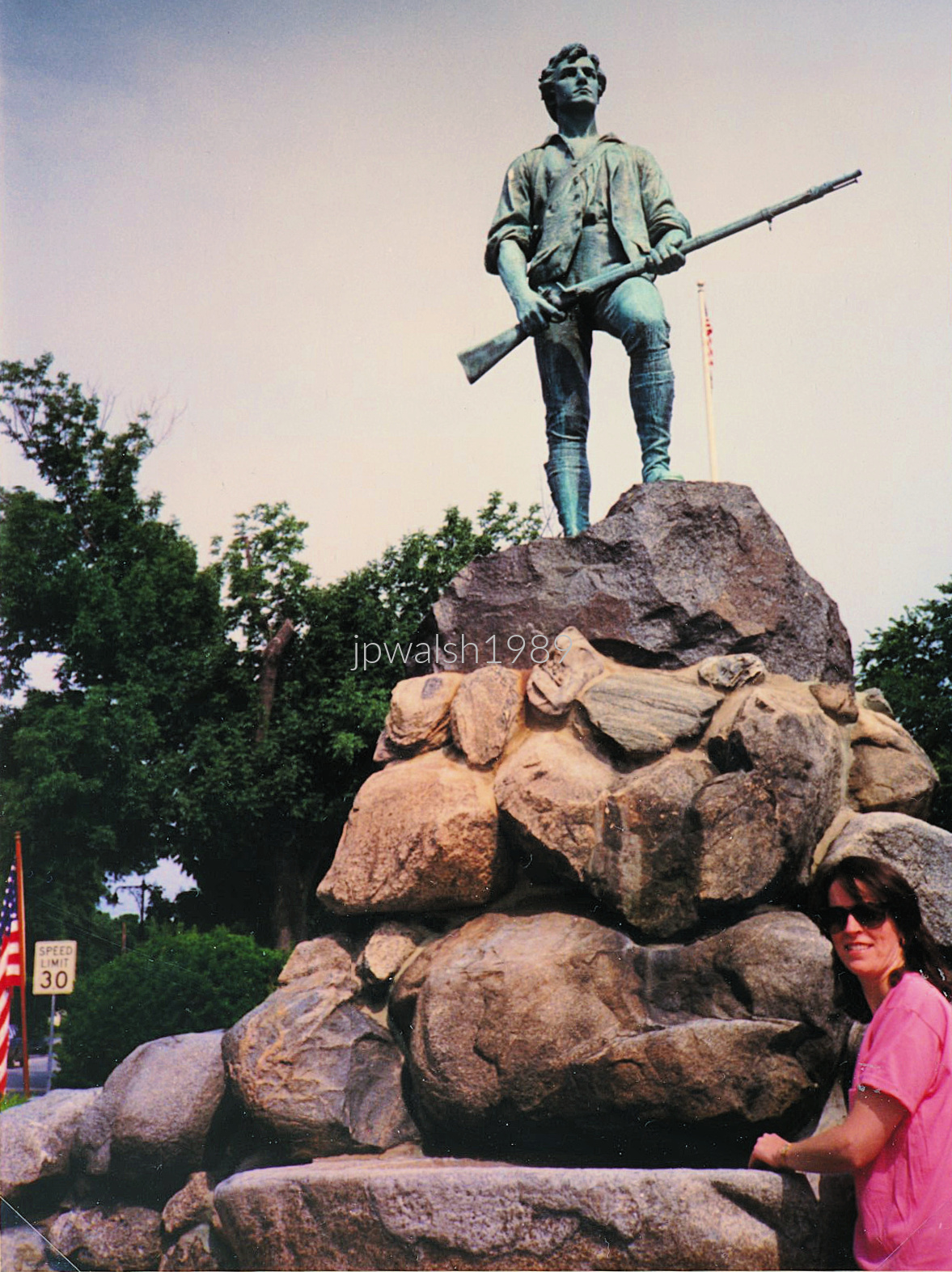
At the foot of the minuteman monument, visitors arrive in a steady flow, drawn to this enduring chapter of early American history. The bronze figure, rifle held in the classic Revolutionary‑era stance, recalls the citizen‑soldiers who first stepped forward to defend their towns. According to the National Park Service, the Minute Man National Historical Park—which includes Battle Road and its surrounding historic sites—welcomes more than 1 million visitors each year. see – Tourism to Minute Man National Historical Park contributes $102 million to local economy – Minute Man National Historical Park (U.S. National Park Service) – retrieved April 19, 2025.
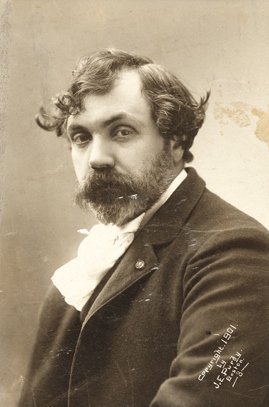
H.H. Kitson, sculptor of the famed Lexington Minuteman, was born in England and immigrated to the United States as a teenager. After studying art in Paris, he returned to New York in 1884 and moved to Boston two years later, where he established a studio, taught, married one of his students, and raised three children. The monument was commissioned in 1898 for $10,000 by railroad executive and U.S. Congressman Francis Brown Hayes, erected in 1899 facing the route of the British advance, and formally unveiled on April 19, 1900, for the 125th anniversary of the battle. Public Domain. see – https://monuments.freedomsway.org/monuments/minute-man-statue/ – retrieved April 19, 2025.
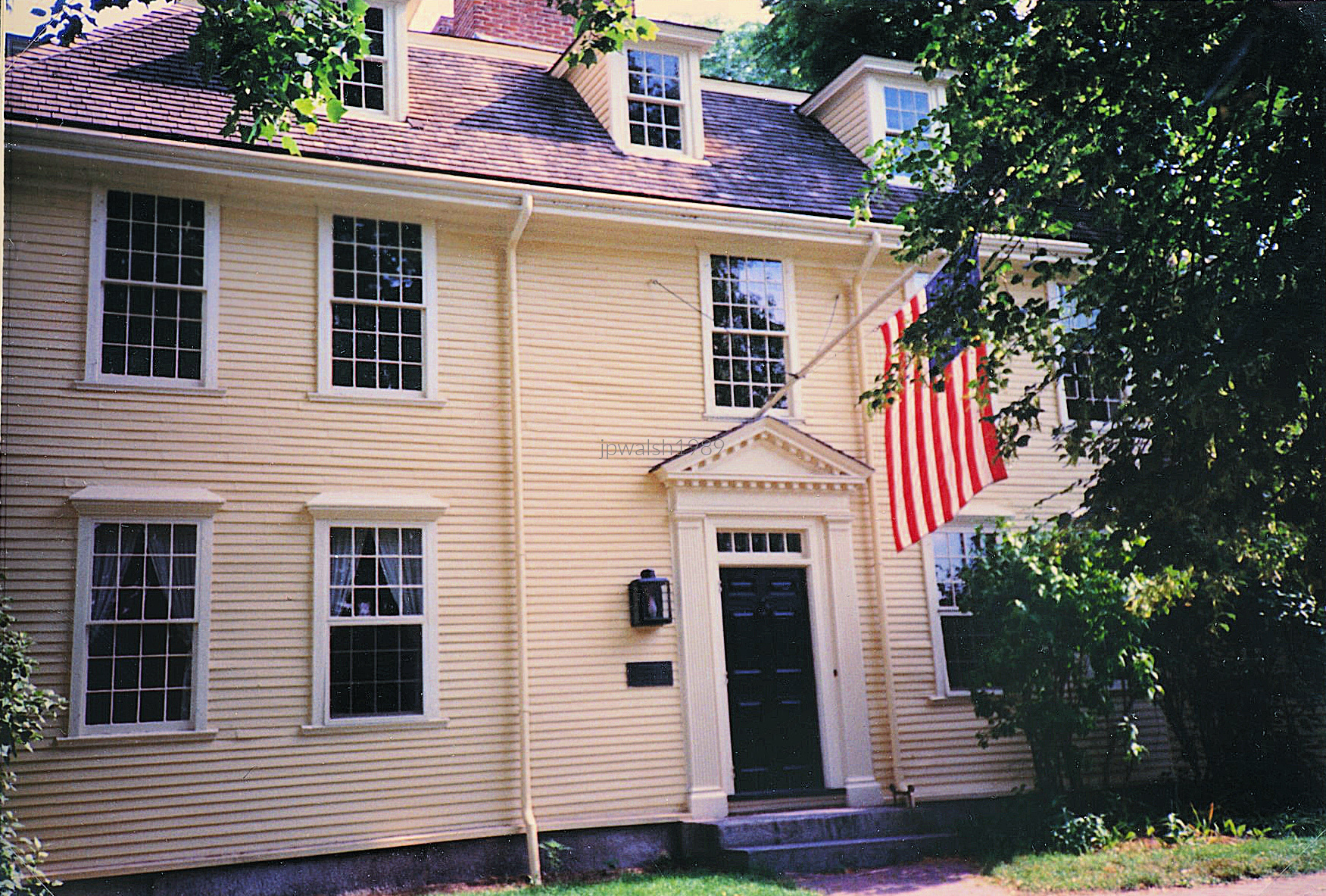
On April 19, 1775, local militiamen stepped out from Buckman Tavern beside the Lexington common and formed two lines to face the advancing British troops. Their stand resulted in the first casualties of the American Revolution. During our visit, we also learned that the phrase “sleep tight” comes from the rope‑laced frames that supported Colonial‑era mattresses. Author’s photograph, July 1989.
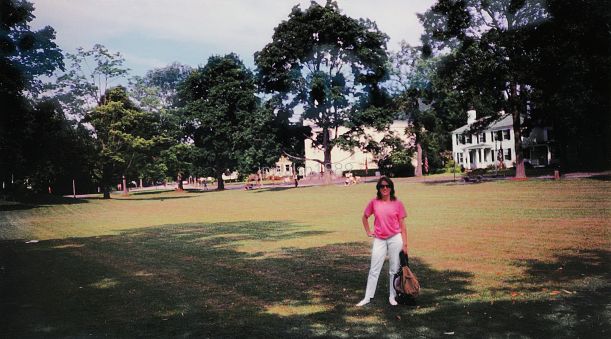
Author’s wife on Lexington Green where the first shots of the War of American Independence were fired on April 19, 1775. Author’s photograph, July 1989.

Also on April 19, 1775, the British approached the town of Concord where the American colonists sprang into action. After an alarm rider notified minutemen and militia, scouts were sent out to reconnoiter British movements. They heard the cackle of gunfire at Lexington Green and, learning of this martial situation, Concord prepared. The British advanced to Concord and the colonial militia strategically retreated past the North Bridge to watch what the British would do. Meanwhile the colonists were checking on the safety of their own military stores. With Concord effectively in British hands the Regulars moved out to take the town’s two bridges over the Concord River. The South Bridge was taken but the North Bridge proved more problematic. They crossed the bridge but encountered the colonists who had moved past it and into an elevated position. Loyalists in town informed the British where the colonists kept their military stores filled with supplies such as gun powder, cannon, shot, and flour. The colonists had their own intelligence network and had moved these stores to other hidden locations. At a farm where they thought the military supplies to be stored, the British forced a woman who lived there, one Rebecca Barrett, to make them breakfast as they searched the premises. But they found, as the colonists planned, nothing. Although there were kegs of gunpowder stored in the farm next door, the British didn’t go look.

DO NOT FIRE UNLESS FIRED UPON.

Meanwhile, the British held the two Concord bridges and waited for their search party to return. At the same time, the American colonists were getting a better look at their red-coat adversaries. As the Americans held a military council, their growing military presence forced the British who had crossed the bridge to retreat back to it. Armed militiamen were streaming in from several towns and formed a formidable front. As the British were setting fires in downtown Concord, the American colonists could see the flames rising from their position on the high ground. Because of these fires (the British were burning carriages) the Americans decided to march to the North Bridge so to cross into town to prevent the British from burning it down. Fully expecting a confrontation with the British, the militia companies loaded their weapons but were told not to fire unless fired upon. Approximately 400 militia men marched in order by company seniority down towards the North Bridge. There were less than 100 British guarding the bridge. With the coming American militia the British retreated around the bridge and considered this American action as an attack. There were a flurry of orders flying around the field of action to the point of chaos. The British debated marching into the field to meet the approaching Americans. They also debated ripping up the bridge so the Americans could not cross. They finally decided on a firing formation in the street at the base of the bridge.

SHOT HEARD ‘ROUND THE WORLD.

In the chaos the Americans arrived to the bridge. The British fired directly into the group and wounded and killed men. “The balls whistled well,” recalled a militia soldier. One American was shot through the throat. Another under and through the eye. One more through the heart. In a matter of seconds there were six total casualties. The Americans were then ordered:  “Fire, for God’s sake fire!” A hail of bullets was shot into the British. Three were killed and nine wounded.  Many of the British fled towards town. As the Americans chased the British, one militiaman struck a hatchet blow into the head of a wounded British soldier.

The British were quickly reinforced and ordered to march back to the bridge. But there was no more firing. The militia dispersed from the bridge though there was a huge influx of militia coming into Concord from several towns in all directions. The militiamen knew the terrain and its backroads and could converge quickly, directly and stealthily. Though the British asked for reinforcements (1,000 men) from Boston, nothing happened. The British retreated though Concord Bridge marked the beginning of a massive battle that raged over 16 miles along the Bay Road from Boston to Concord, and included some 1,700 British regulars and over 4,000 Colonial militia. see – https://www.nps.gov/mima/north-bridge-questions.htm – retrieved April 19, 2025.
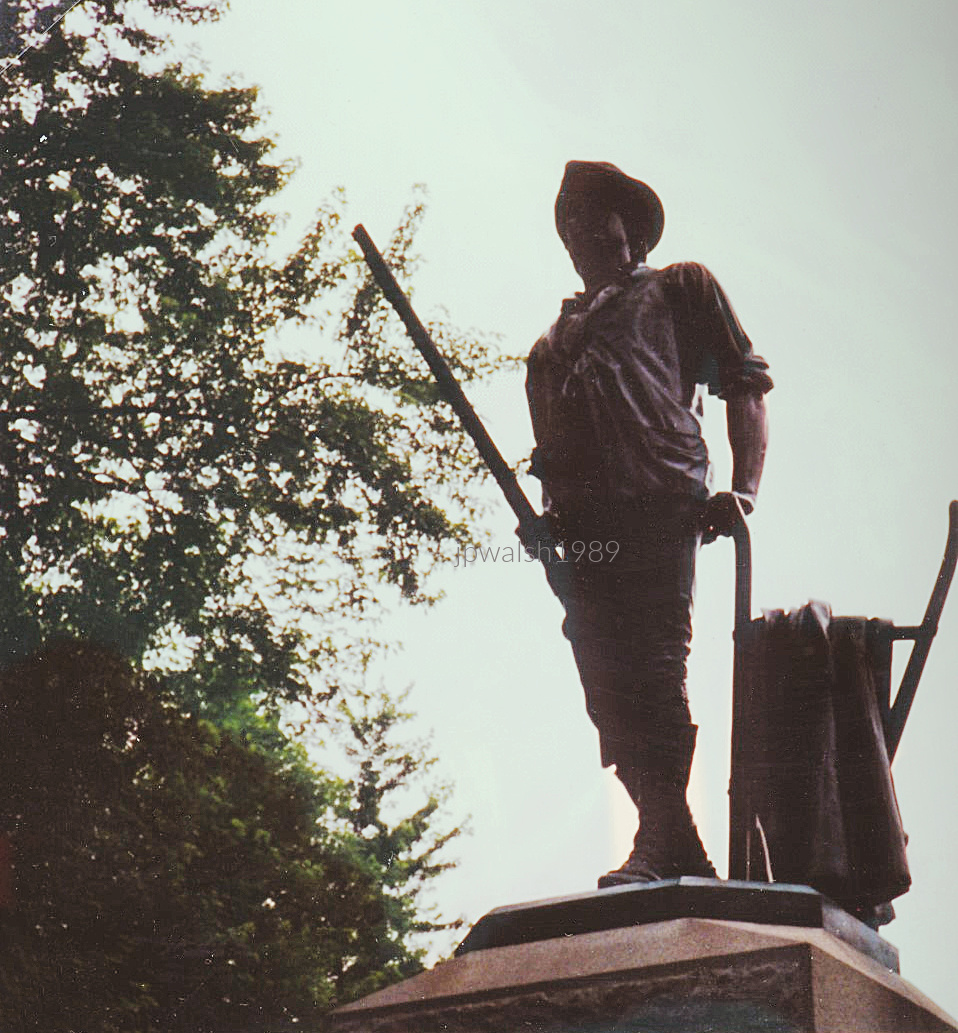
The Minute Man statue of 1875, created by Daniel Chester French (1850–1931), was unveiled on April 19, 1875, during the centennial commemoration of the battles of Lexington and Concord. Set near the site where the first colonial militiamen fell in Concord, the seven‑foot bronze was cast from old Civil War cannons by the Ames Foundry of Chicopee, Massachusetts. Its stone pedestal bears the opening lines of Ralph Waldo Emerson’s Concord Hymn, honoring the “shot heard round the world.”
BY THE RUDE BRIDGE THAT
ARCHED THE FLOOD,
THEIR FLAG TO APRIL’S
BREEZE UNFURLED,
HERE ONCE THE EMBATTLED
FARMERS STOOD,
AND FIRED THE SHOT HEARD
ROUND THE WORLD.
https://www.nps.gov/mima/learn/historyculture/the-minute-man-statue-by-daniel-chester-french.htm – retrieved April 19, 2025. Author’s photograph, July 1989.

Daniel Chester French (1850–1931) was born in New Hampshire and, at seventeen, moved to Concord to be near Ralph Waldo Emerson and the Alcott family, where he received his first art lessons. After further study in Boston, he was only twenty‑one when he received the commission for The Minute Man. The statue was unveiled to critical acclaim in 1875, though French himself was in Europe studying art at the time. Upon returning to the United States, he worked in studios in Washington, Boston, and eventually New York City. In 1897 he purchased the Stockbridge, Massachusetts estate that became Chesterwood, his longtime home and workspace. Over the following decades, French produced major public monuments in Boston, Cambridge, New York, Chicago, and Washington, D.C., and he is best known today for his Seated Lincoln in the Lincoln Memorial. He is buried in Sleepy Hollow Cemetery in Concord alongside Emerson, the Alcotts, and Henry David Thoreau.
https://www.nps.gov/mima/learn/historyculture/sculptor-daniel-chester-french.htm – retrieved April 19, 2025.
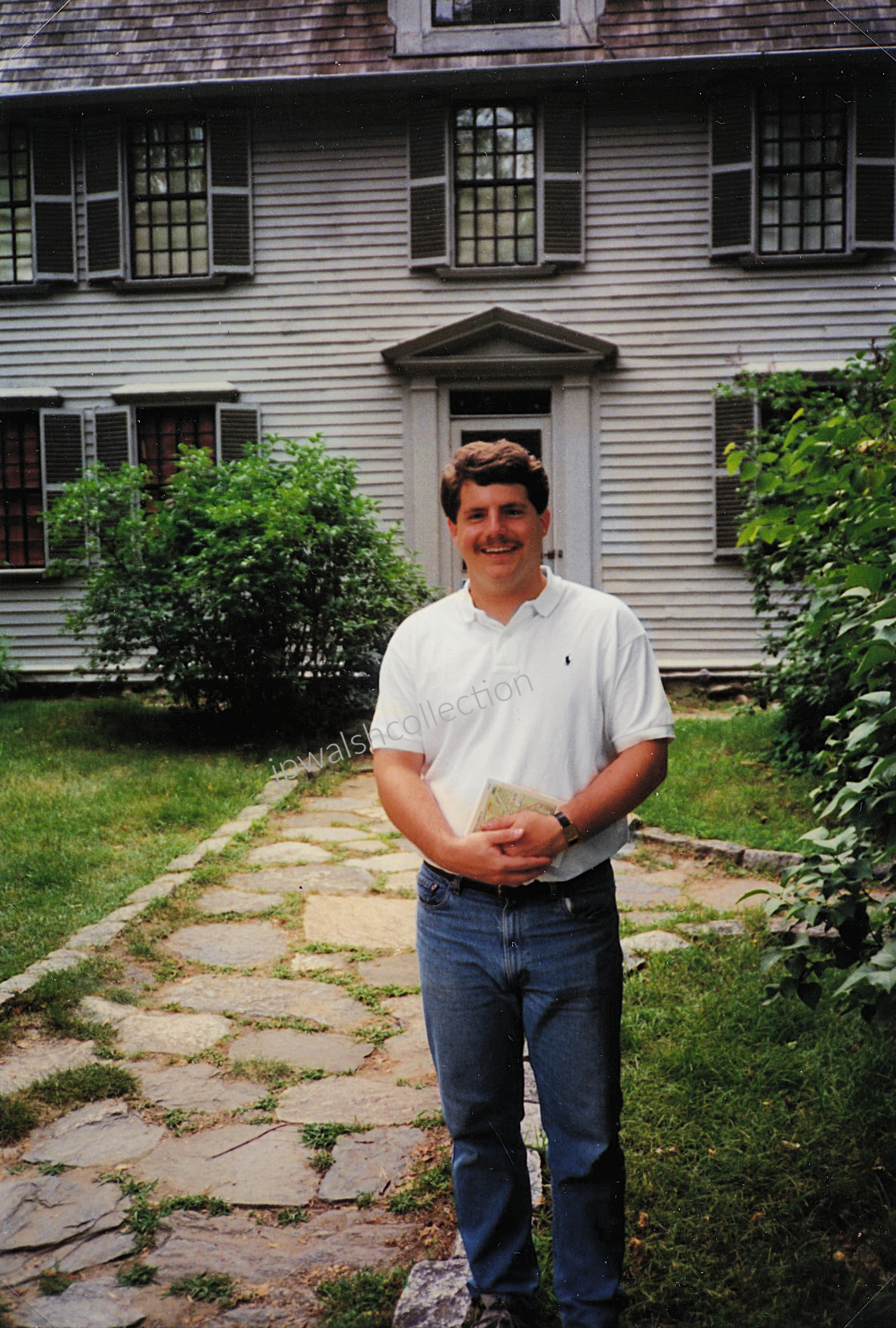
The author stands at the Old Manse in Concord, Massachusetts, a house on Monument Street with the Concord River just behind it and the North Bridge—now part of Minute Man National Historical Park—beside the property. Built in 1770 for Rev. William Emerson (1743–1776), the home later became central to the Emerson family line: William’s son, minister William Emerson, and his grandson, the transcendentalist Ralph Waldo Emerson. The elder Rev. Emerson served as Concord’s minister, chaplain to the Provincial Congress in 1774, and later chaplain to the Continental Army; he watched the fighting at the North Bridge from his fields while his family witnessed it from the upstairs windows. Decades later, Ralph Waldo Emerson drafted his foundational essay Nature here, and during his stay in the mid‑1830s he proposed to Lydia Jackson before the couple moved to what is now known as the Emerson House. Author’s collection, July 1989.
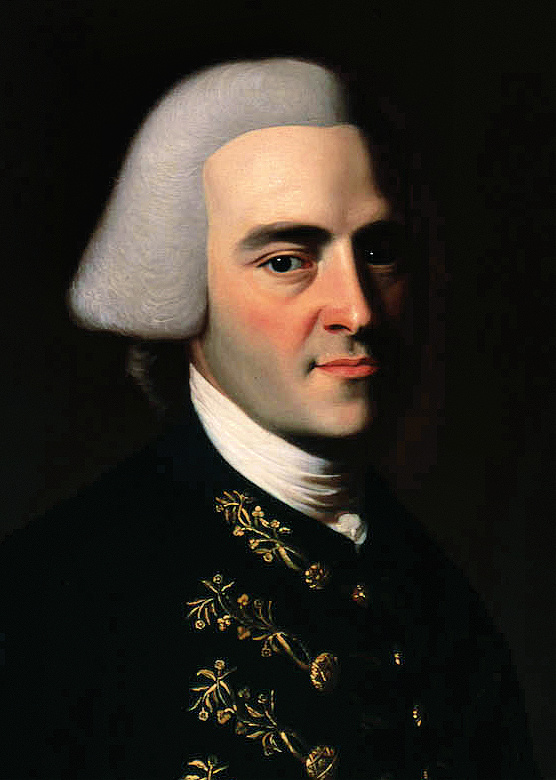
John Hancock, 1770, by John Singleton Copley (1738-1815) in the Massachusetts Historical Society. Public Domain.
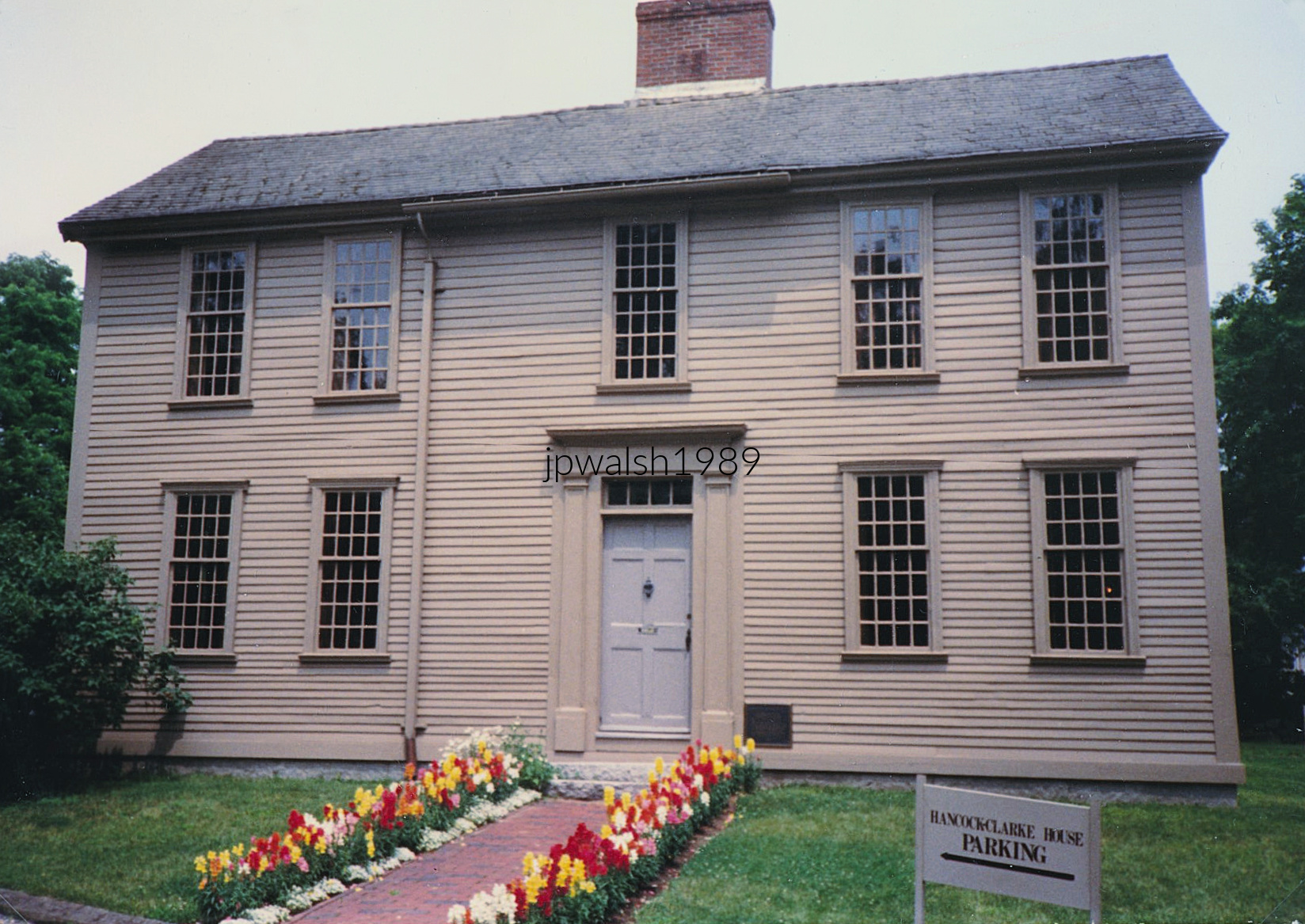
Built in 1738, the Hancock–Clarke House at 36 Hancock Street in Lexington, Massachusetts—less than half a mile from Lexington Green—is the historic residence where John Hancock (1737–1793) and Samuel Adams (1722–1803) were staying on the eve of the Battle of Lexington and Concord on April 19, 1775. Author’s photograph, July 1989.
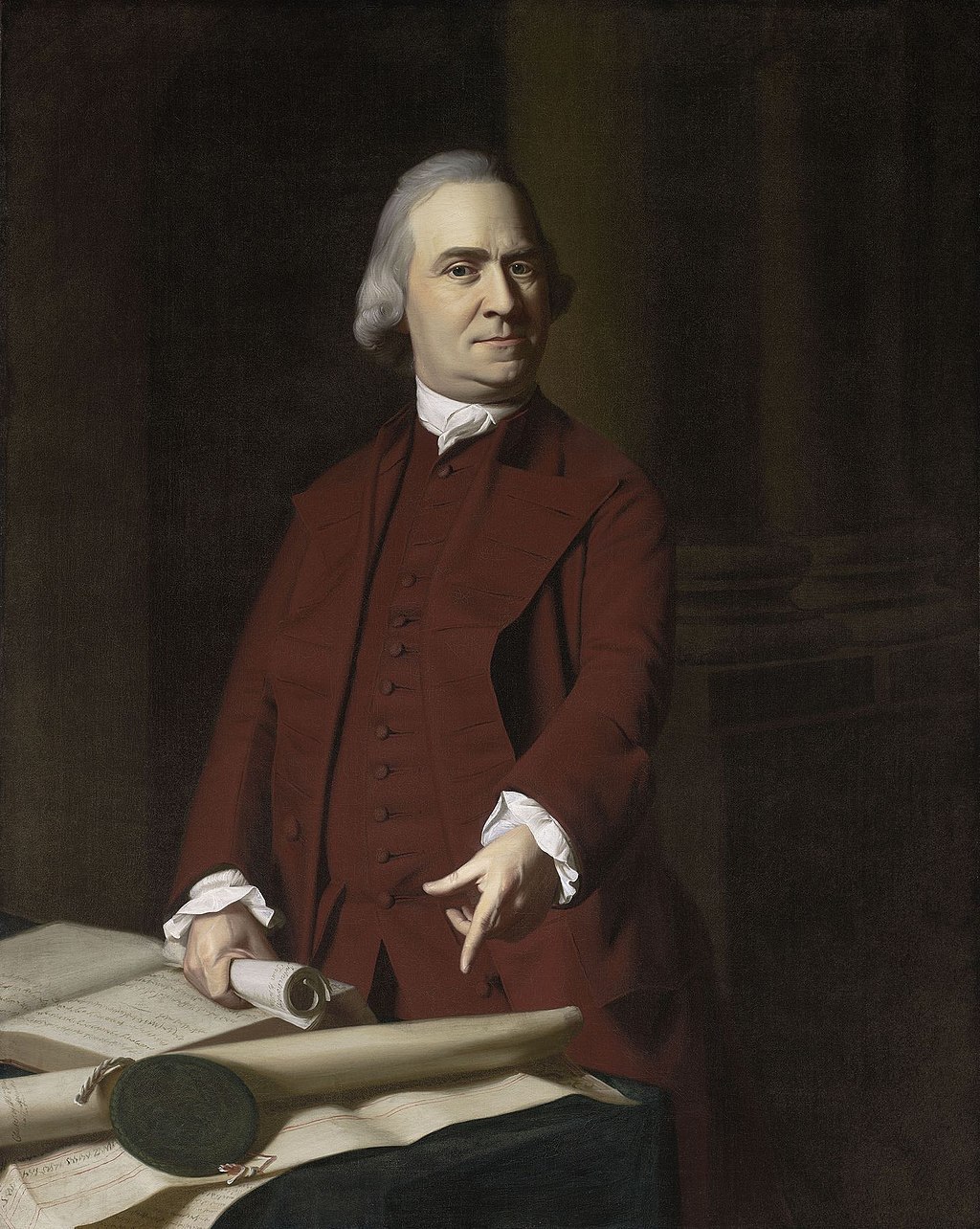
Samuel Adams, 1772, by John Singleton Copley (1738-1815) in the Boston Museum of Fine Arts. Public Domain. https://collections.mfa.org/objects/30881/samuel-adams?ctx=de17a5dc-0f39-480c-8e84-f4fc92f44030&idx=0 – retrieved April 19, 2025.
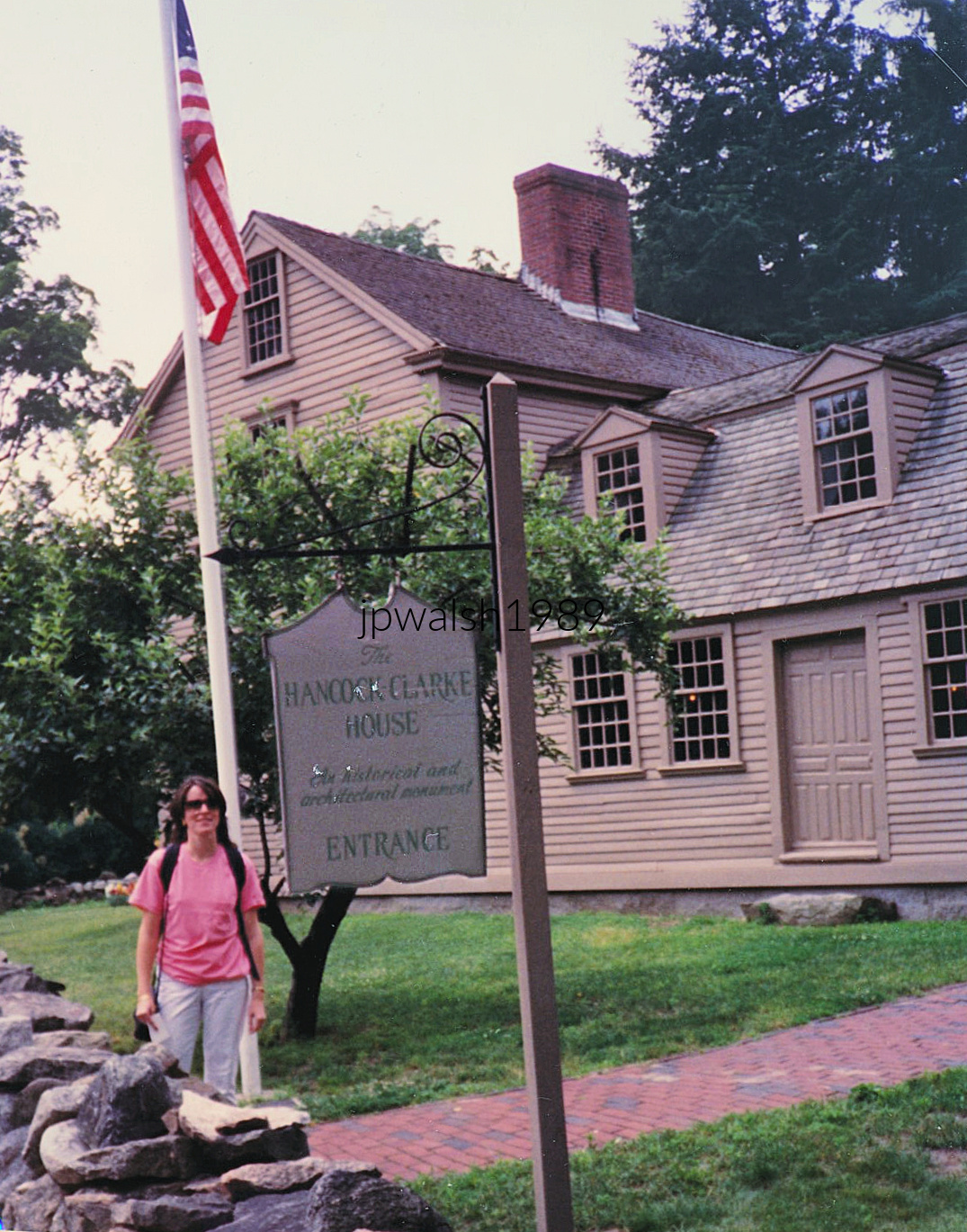
John Hancock and Samuel Adams attended the Massachusetts Provincial Congress in Concord on the evening of April 18, 1775, and spent the night in Lexington as guests of Rev. Jonas Clarke (1730–1805). Clarke, a Harvard graduate and Lexington’s pastor since 1755, feared the two leaders might be seized by the advancing British. In Boston, Joseph Warren (1741–1775) dispatched William Dawes (1745–1799) and Paul Revere (1734–1818) to warn them; arriving separately at the Hancock–Clarke House around midnight, both riders delivered the alarm before continuing on toward Concord. Hancock and Adams then left for Burlington, about a half‑hour away by horseback, to ensure their safety. Author’s photograph, July 1989.
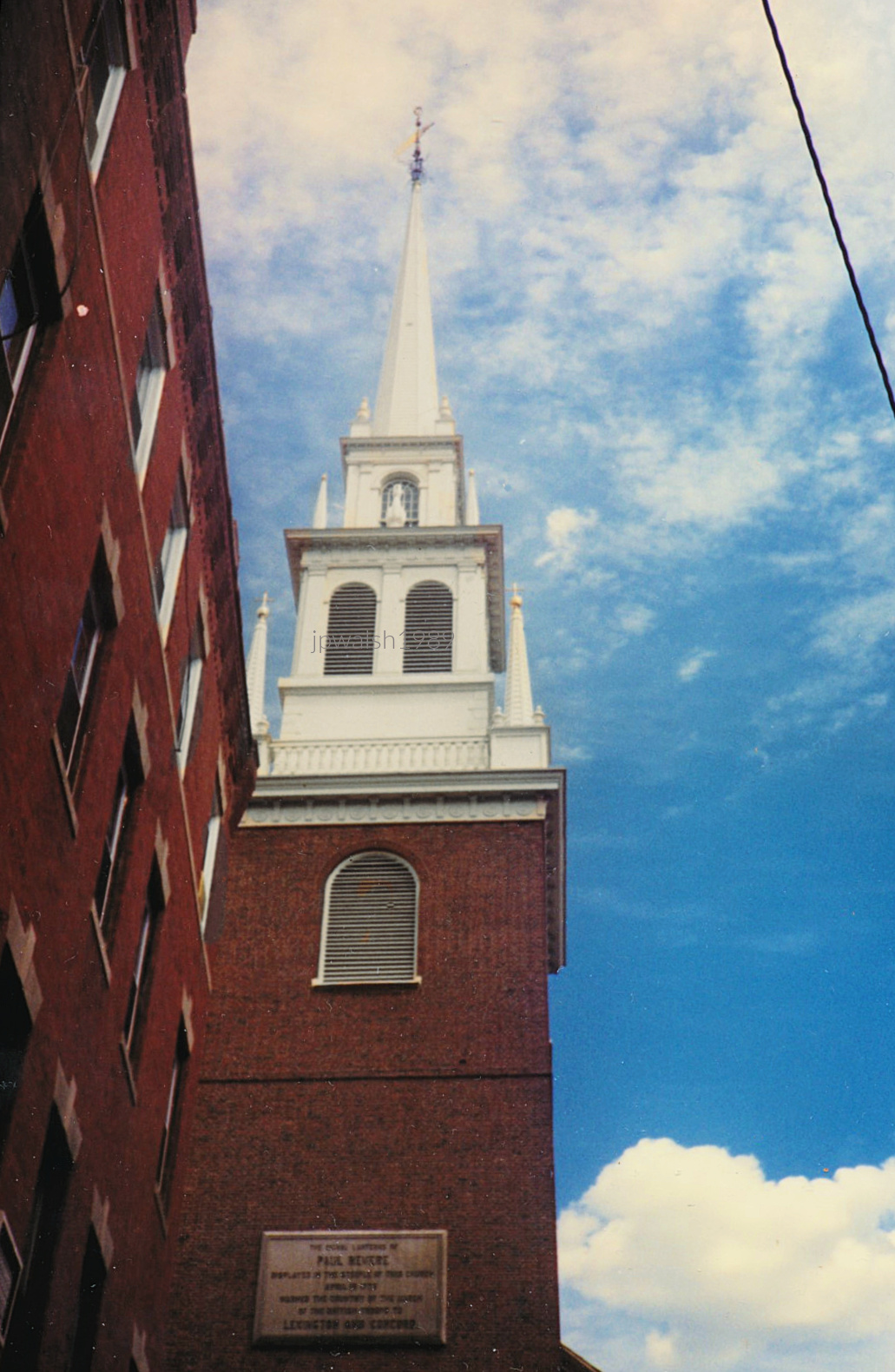
Old North Church, founded in 1723 as Christ Church, is best known for the night of April 18, 1775, when sexton Robert Newman and vestryman Capt. John Pulling Jr. climbed the steeple to display two lanterns. Their signal—alerting Paul Revere’s network that British troops were crossing the Charles River “by sea” toward Lexington and Concord—set in motion the opening moments of the American Revolution. see – https://www.oldnorth.com/ – retrieved April 19, 2025. Author’s photograph, July 1989.
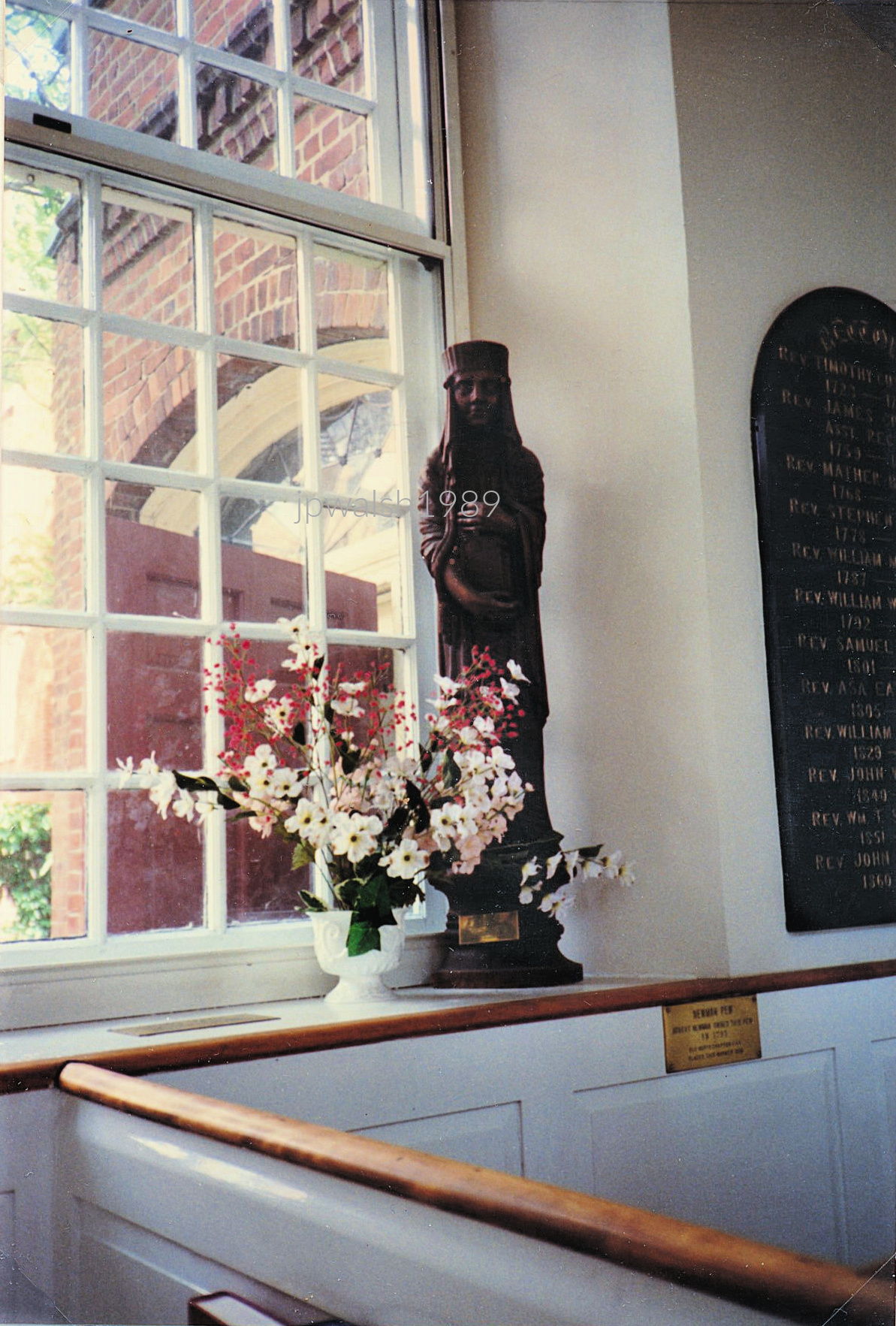
Inside Old North Church, visitors stand only a short walk from Copp’s Hill Burying Ground, where Increase Mather (1639–1723) and his son Cotton Mather (1663–1728) are buried. Both served as Puritan ministers whose era of leadership overlapped with the notorious Salem witch trials. Author’s photograph, July 1989.

Paul Revere, c. 1770, by John Singleton Copley (1738–1815), Museum of Fine Arts, Boston. Public Domain. Unlike Copley’s formal portraits of Samuel Adams and John Hancock—both displayed in Boston’s Faneuil Hall—Revere’s portrait was long kept in the Revere family attic, disliked for its informality. After Revere’s fame surged with Henry Wadsworth Longfellow’s 1861 poem Paul Revere’s Ride, the painting was restored in 1875, though it was not publicly exhibited until 1928. Revere’s descendants donated it to the Museum of Fine Arts in 1930. https://collections.mfa.org/objects/32401/paul-revere?ctx=00d797a8-0c5a-4d78-ba26-db22eb858902&idx=5 – retrieved April 19, 2025.

Author at the Paul Revere House in Boston with a work friend of my dad. March 1976. Author’s collection.

BELOVED HOMETOWN OF PRESIDENT RONALD REAGAN (1911-2004): DIXON, ILLINOIS.

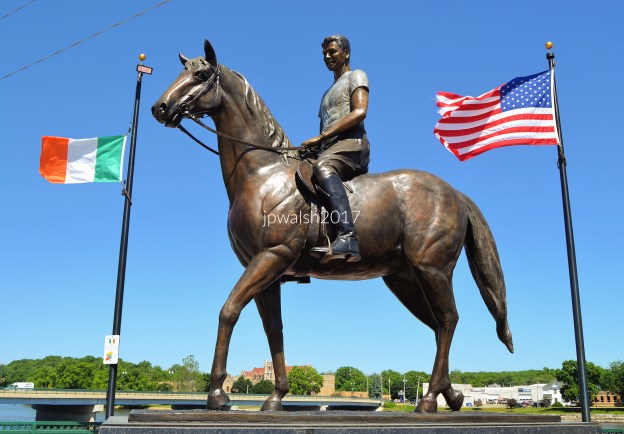
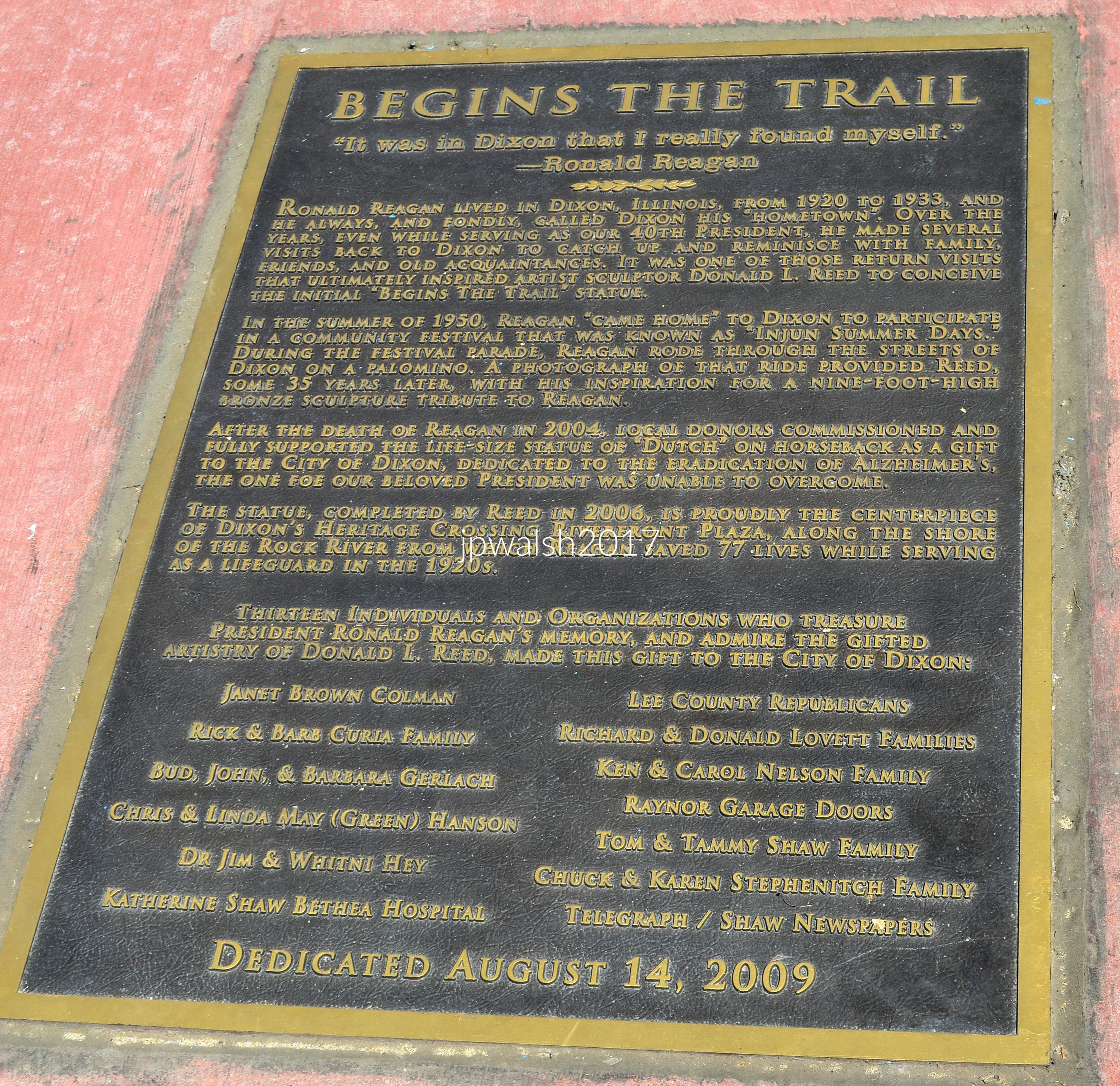
Feature Image: June 2017. 4.37mb DSC_0785. The statue of Ronald Reagan by American sculptor Donald L. Reed in DIxon, Illinois, was dedicated on August 14, 2009. It is based on a photograph of Reagan when he visited Dixon in 1950 and rode a horse through its streets in a parade. The statue itself is nine feet high on its pedestal and called Begins the Trail. It is the first of a series that includes a life-sized statue for the Reagan Foundation at the Ronald Reagan Presidential Library in Simi Valley, California, called Along the Trail. These artworks capture Reagan’s rugged amiable nature and his natural ability throughout life when riding. see – https://www.cowboysindians.com/2016/02/ronald-reagan-rides-again/ – retrieved April 13, 2025.

All text and photographs (except where noted) by John P. Walsh.

June 2017. 4.76mb DSC_0797.

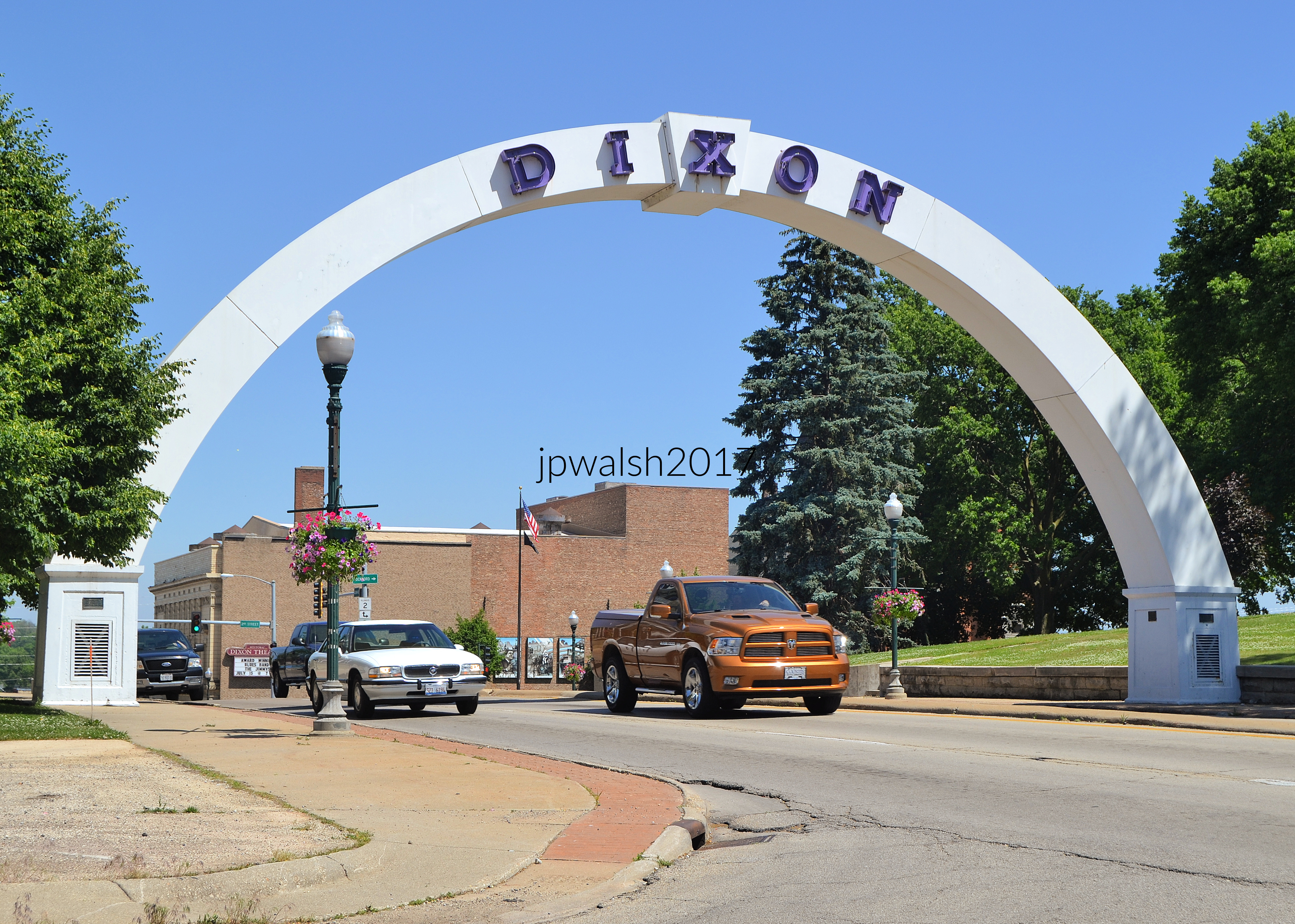
Considered the heart of Dixon, the memorial arch has been a landmark since the 1920s. The original arch, built in 1919, was made of beaver board and wood. It was built to celebrate the return of Dixon’s soldiers after World War One. In 1949, a new arch was constructed of wood. It was replaced in 1966 when Galena Avenue was widened. In 1985 the arch was replaced with this fiberglass one with the letters from the 1966 arch. In 2024 it went through a major restoration.
See – https://www.wifr.com/2024/06/04/dixons-iconic-memorial-arch-facing-repairs/ – retrieved February 28, 2025.

June 2017. 5.41mb DSC_0822.

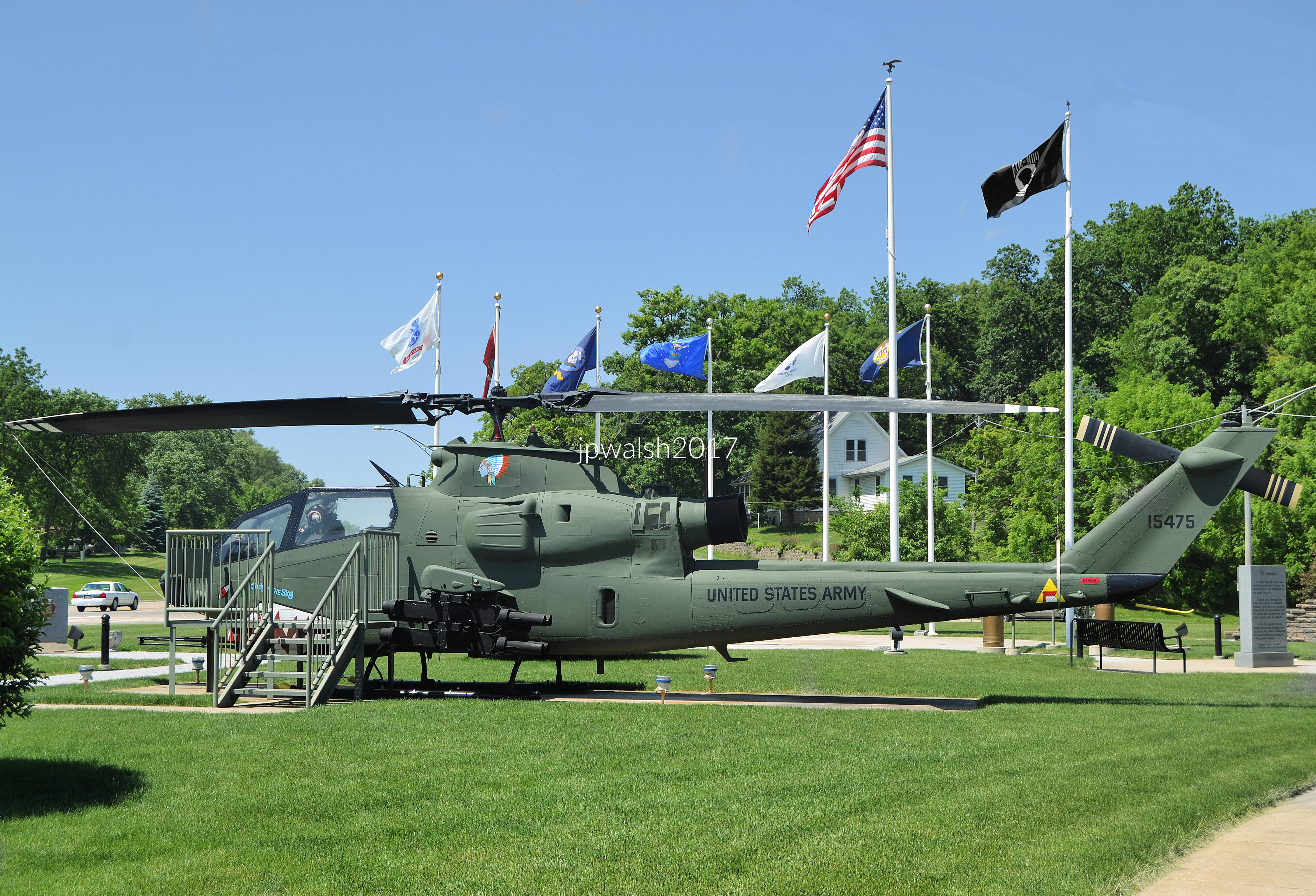
This helicopter (above and below) wears five Purple Hearts carved from enemy ground fire in Vietnam — battered, scorched, and shot to pieces, yet every time it clawed its way back through the smoke, it delivered its crew home alive. In Dixon’s (Illinois) Veterans Memorial Park founded in 2001 the 1967 AH-1F Cobra Attack Helicopter Gunship (serial #67-15475) was issued to the 7th Squadron of the First Calvary Divisions Aviation Group for its entire tour of duty. This helicopter arrived in Vietnam in March 1967. Following 1142 combat hours flown, the helicopter was damaged on July 27, 1969, because of a weapons malfunction. At 1792 hours flown it was shot down on February 6, 1970, by heavy enemy ground fire while providing armed escort to medivac helicopters with both crewmen wounded. On April 15, 1970, at 1954 hours flown, it was damaged while providing direct fire support to infantry. On July 13, 1970, it was shot down by small arms fire while providing escort at 2092 hours. At 2471 hours, on January 19, 1971, it was severely damaged by gunfire while providing direct escort protection to ground troops. On July 6, 1971, it was damaged by heavy ground fire on an armed escort mission at 2745 hours flown. see – Cobra Attack Helicopter – Veterans Memorial Park & Museum – retrieved April 13, 2025.
June 2017. 6.18mb DSC_0821 (2)
June 2017. 3.12mb DSC_0751.

On June 5, Ronald Reagan’s death day, Honor Guard gather at the Reagan Boyhood Home in Dixon, Illinois.

June 2017. 4.13mb DSC_0845.

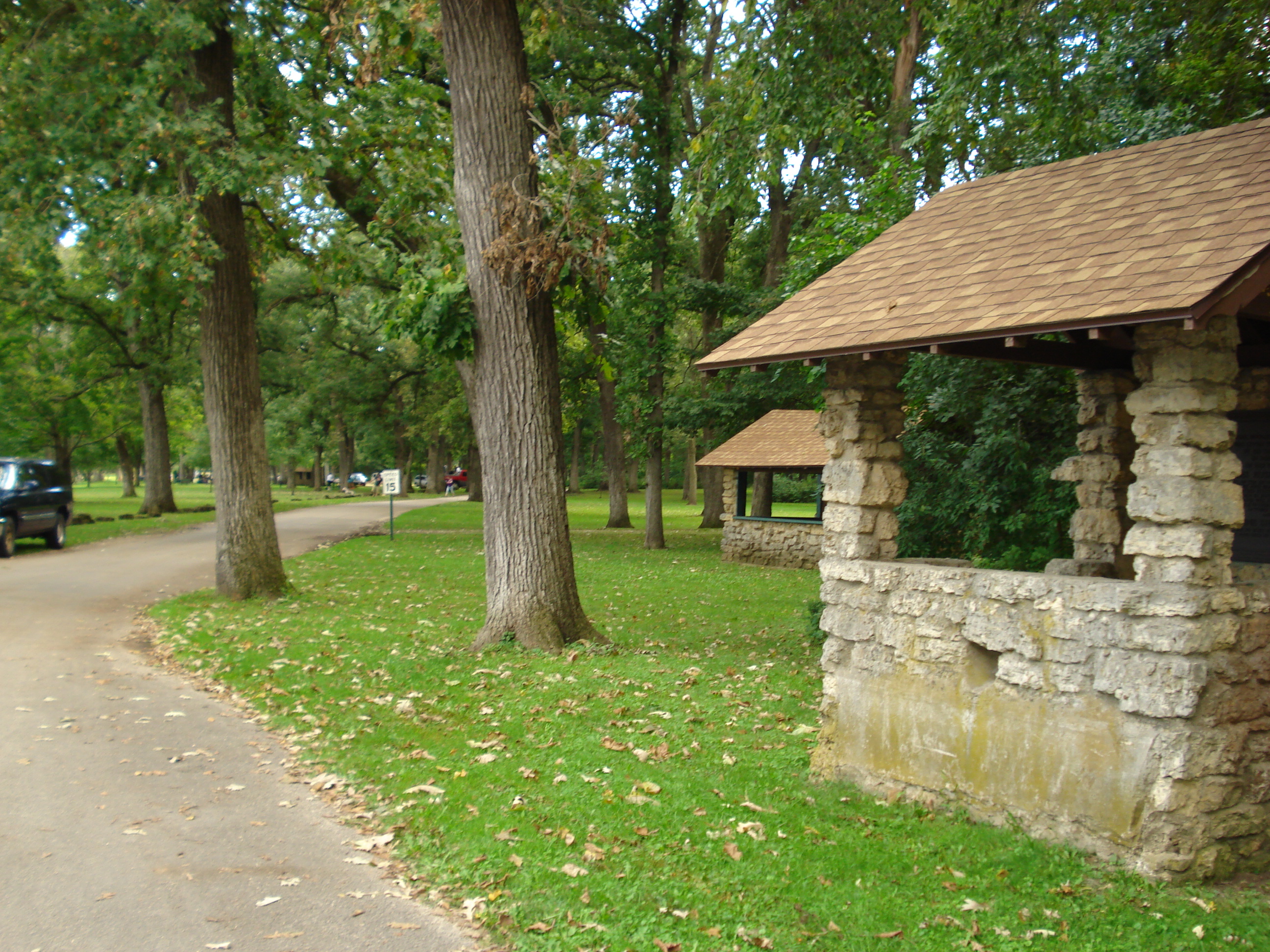
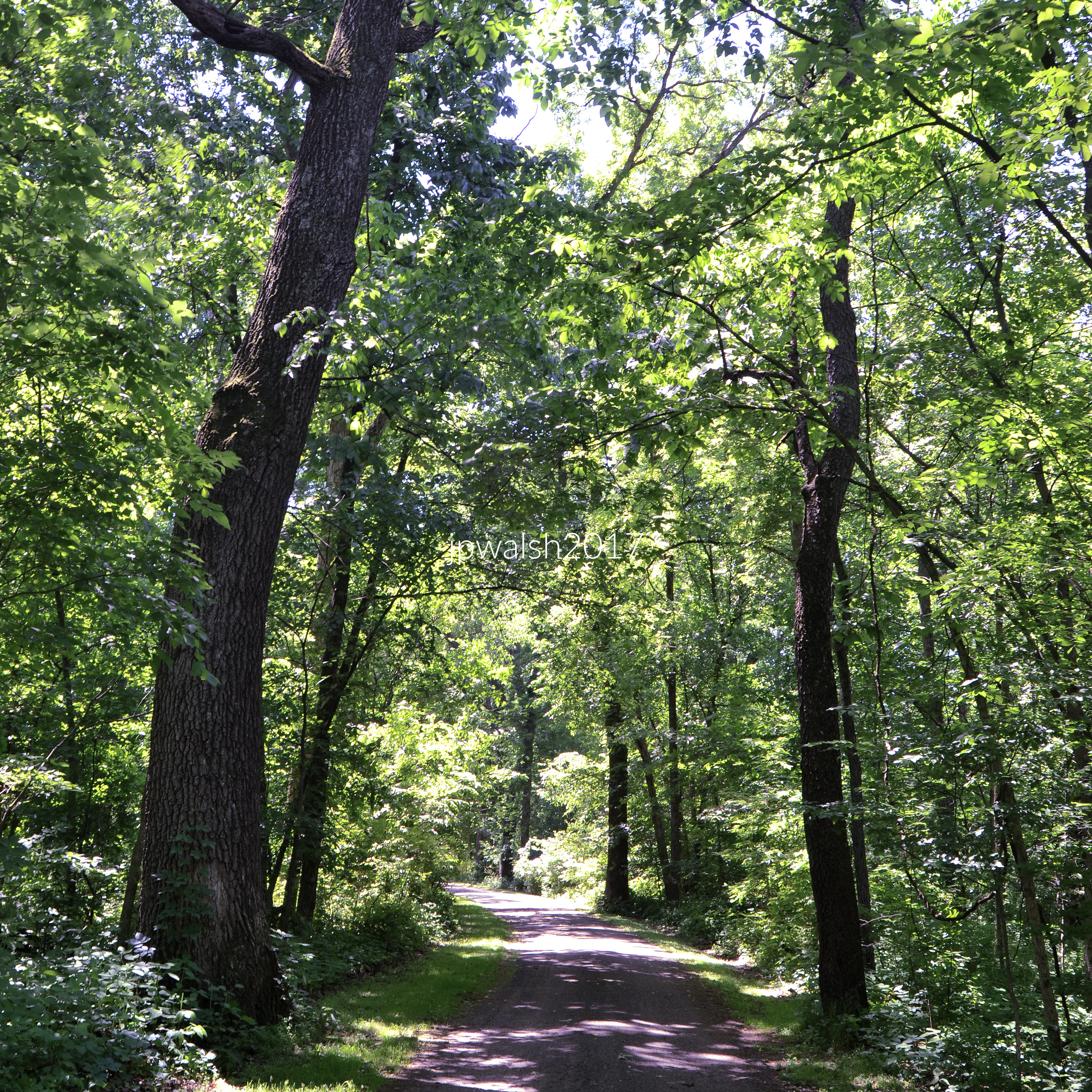
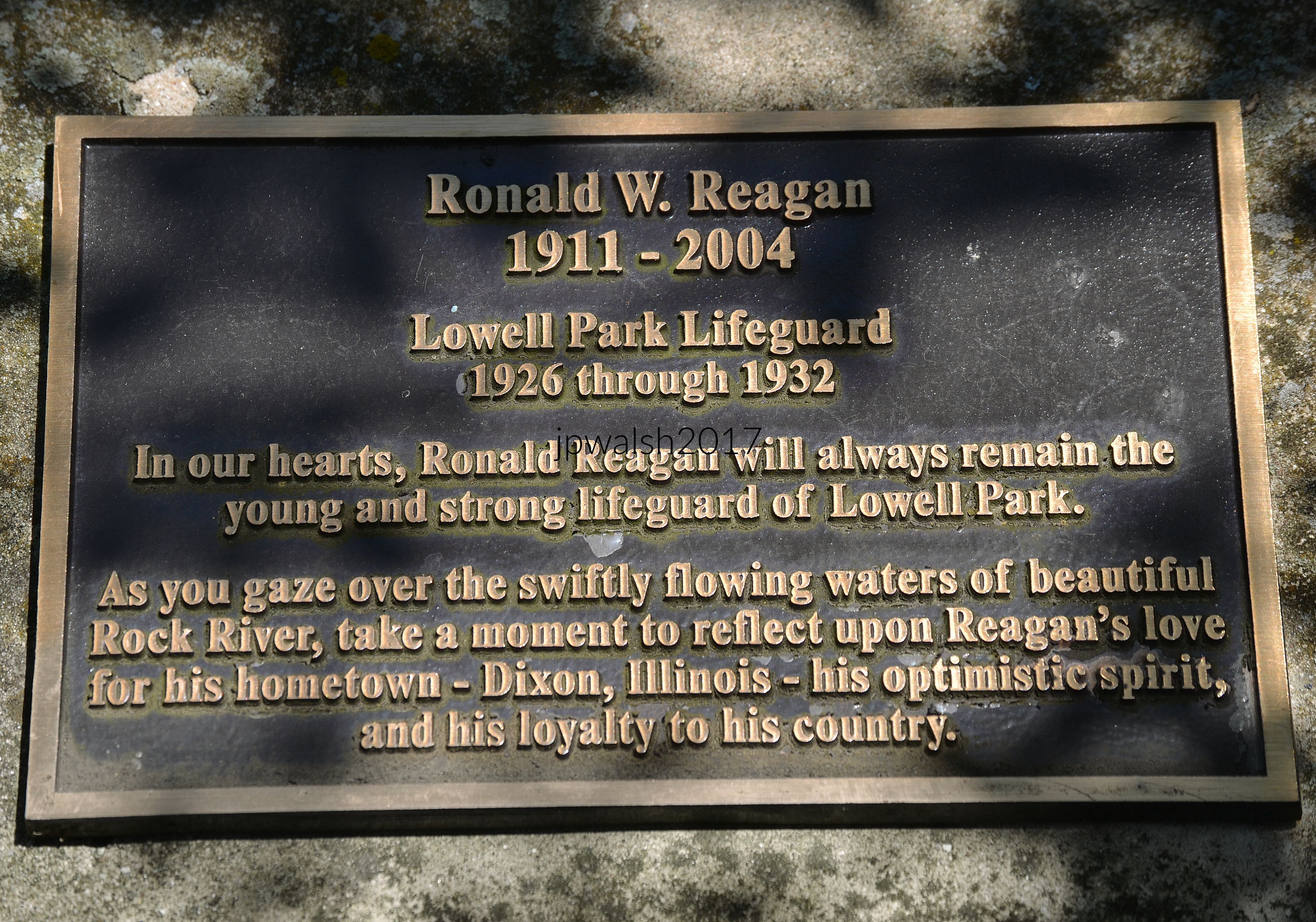
Reagan was a lifeguard at Lowell Park from 1926 to 1932. The original 200-acre public park opened in 1907 and began Dixon’s park system with the objective to preserve scenic beauty and establish civic beautification. From the start, Lowell Park attracted large numbers of people to its location along the Rock River. In this area, the valley of the Rock River contains bluffs and unique rock outcroppings that create a natural beauty. More than 100 years later, Lowell Park has maintained its distinctive scenic and natural recreational resources for free public use.

June 2017. 5.73mb DSC_0918.

Lowell Park predated the development of Illinois state parks in areas of outstanding natural attractions by many years. Lowell Park is the only public place in the Dixon area that preserves remnants of the Boles Trail established in 1826 from Peoria, Illinois, to Galena, Illinois. The trail was replaced in popularity by the famous Kellogg Trail established in 1825 east of the Boles Trail route. See – https://historyillinois.org/boles-trail-the/ – retrieved March 3, 2025.

Lowell Park Dixon, Illinois” by Kepper66 is licensed under CC BY-SA 3.0.

Lowell Park, Dixon’s first recreational park, was gifted in 1906 by Carlotta Lowell who was the niece of James Russell Lowell (1819-1891), a famous Boston (Cambridge) poet. The family came west on the invitation of Alexander Charters, a wealthy New York businessman, who purchased a large, wooded estate overlooking the river north of Dixon in 1837 and named it Hazelwood. His home later became the estate of Mr. & Mrs. Charles R. Walgreen, founder of the drug store chain that bears that name. Charles Lowell. a guest at Hazelwood, purchased the adjacent tract of land to live. Lowell married Josephine Shaw, also originally of Boston, and then of Staten Island in New York. When the Civil War broke out, Charles enlisted and was promoted to the rank of colonel and was killed in 1864 at the Battle of Cedar Creek in northern Virginia. Carlotta never knew her father as she was born after his death and the family never lived on their land in Dixon. In 1874, they moved to New York City and stayed there the rest of their lives. After her mother died, Carlotta offered the property in 1906 to the City of Dixon for a park in memory of her parents.

June 2017. 5.11mb DSC_0780.

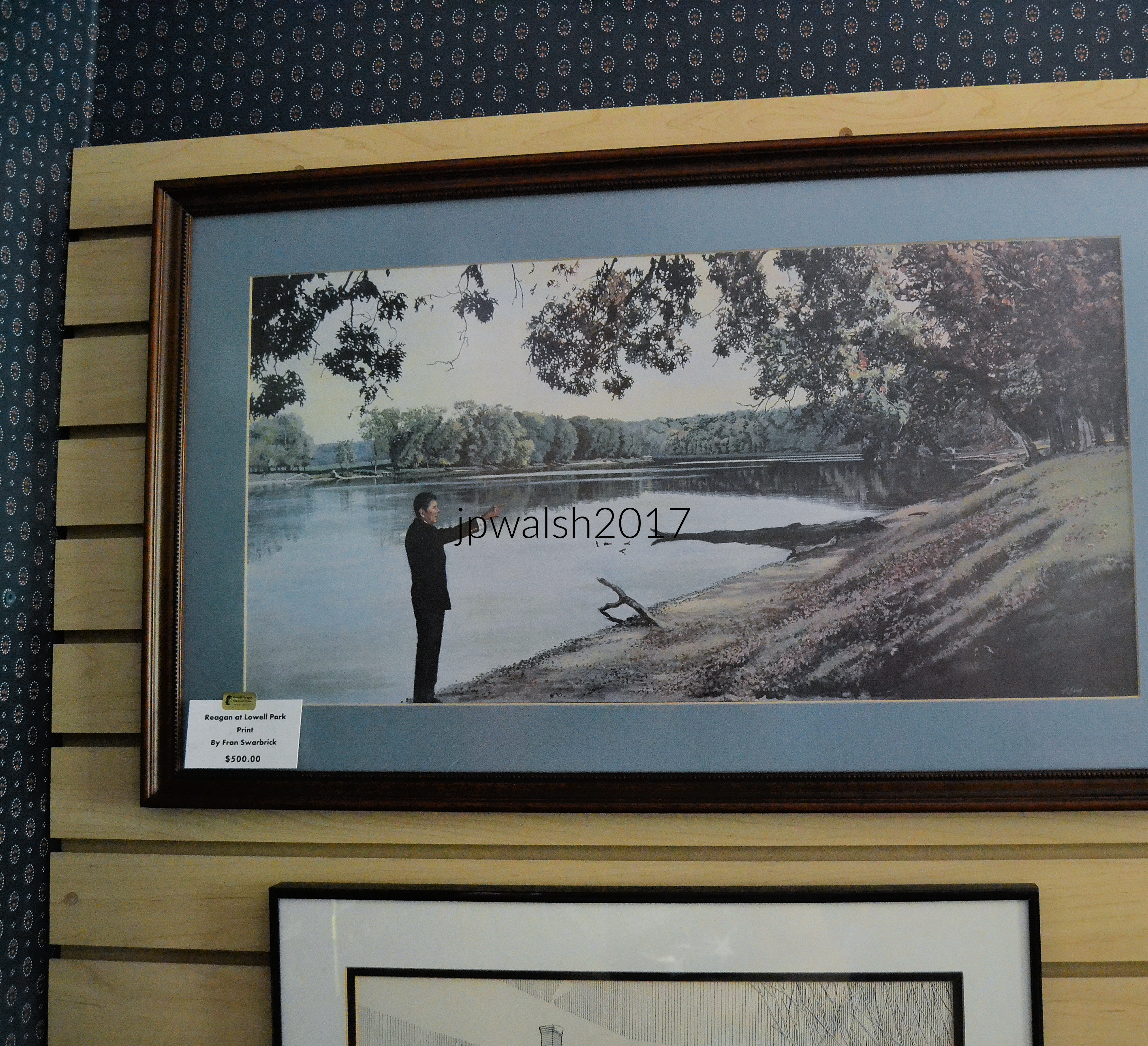
40th U.S. president Ronald Reagan visiting the Rock River in Lowell Park where he was an effective and beloved lifeguard for seven consecutive summers. In July 1921 a longer dock had been installed at the beach, extending 75 feet into the river with a springboard platform. The new bathhouse was built in 1922 that accommodated hundreds of bathers. Electricity was installed at the park in 1922 with lighting that allowed the beach to remain open until after dark. Over those summers, Reagan saved 77 swimmers from drowning. Obviously proud of his achievement, President Reagan often showed his Oval Office visitors a picture of the Rock River while telling them that his lifeguarding there was “one of the best jobs I ever had.”

Reagan at Lowell Park 1927. Ronald Reagan as lifeguard getting into a canoe in Lowell Park, 1927. Public Domain. https://www.reaganlibrary.gov/archives/photo/ronald-reagan-lifeguard-getting-canoe-lowell-park-1927-32 – retrieved March 4, 2025.

June 2017. old beachfront. 5.73mb DSC_0879.

The original 200 acres of Lowell Park opened to the public in 1907. The park was designed by the Olmsted Brothers, a nationally prominent architecture firm headed by the sons of Frederick Law Olmsted. Lowell Park was designed in the American Romantic style which is characterized by its emphasis on natural scenery, native plant materials, native building materials, curvilinear roads, and minimum formality. In 1959 the beach was finally closed after ten years of declining usage due to the opening of Memorial Pool in Vaile Park in the city of Dixon. The Lowell Park bathhouse was used for storage as its concession stand continued to operate until the late 1980s.

June 2017. Lowell Park was designed in the American Romantic style by the Olmsted Brothers. 7.24mb DSC_0916 (1)

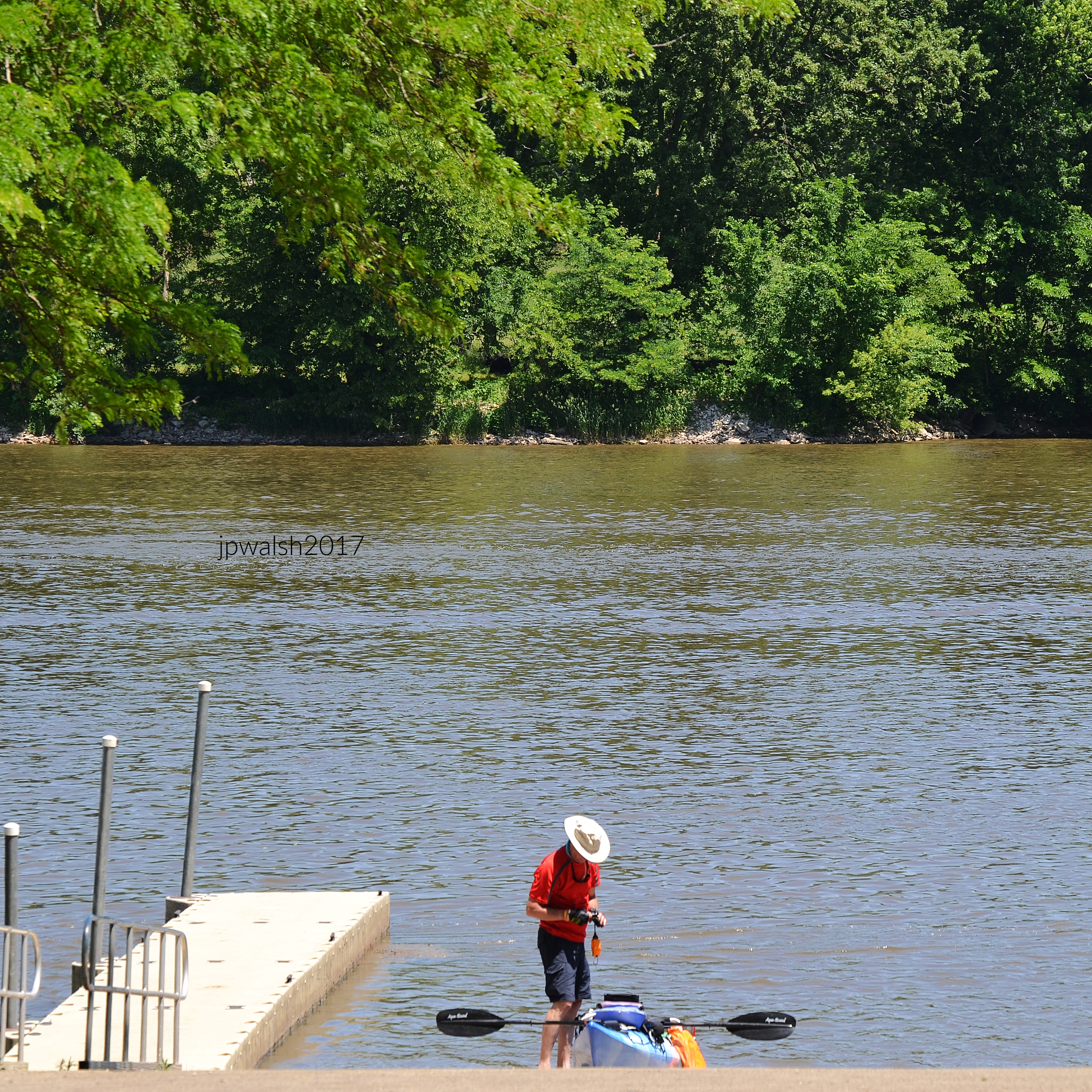
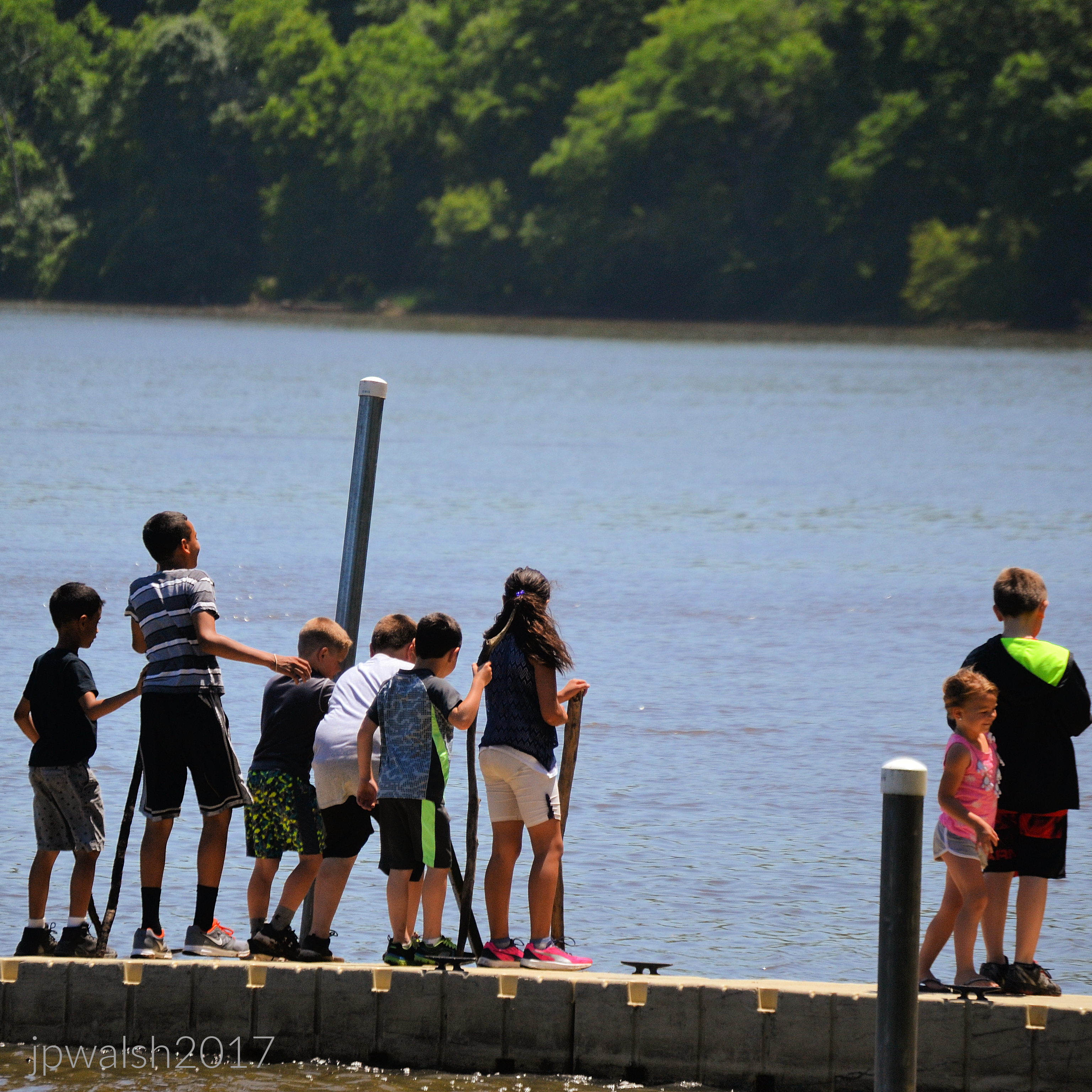
Rock River at Lowell Park is still the hub for recreational activities as it has been for over a century.

June 2017. 5.25mb DSC_0901.

President Reagan on his lifeguard years in Dixon: “One of the Best Jobs I Ever Had.”

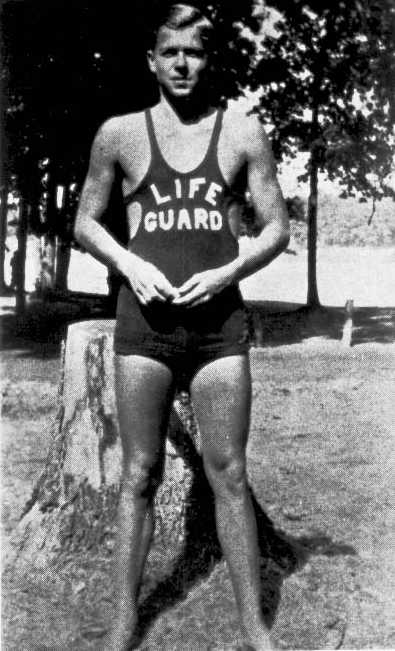
Ronald Reagan as a lifeguard at Lowell Park in 1927. Public Domain.

June 2017. Lowell Park, Dixon, IL. DSC_0882
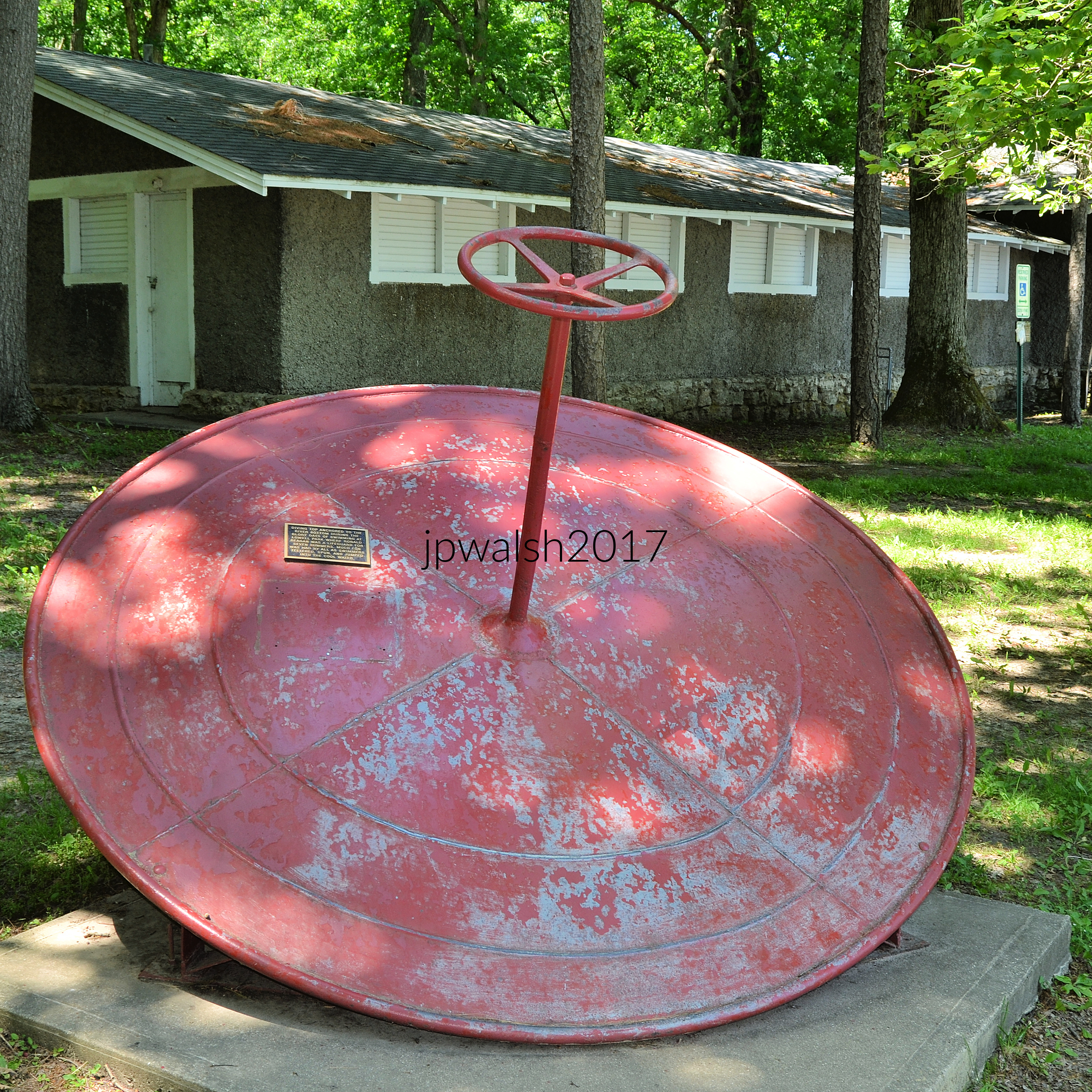
June 2017. Diving top with changing rooms and concession behind. Lowell Park, Dixon, IL. 5.38mb DSC_0896

Bus service from Dixon city to the park started in 1921. This diving top was anchored to the river bottom during its swimming hole glory days when Reagan was lifeguard. Swimmers teetered, spun and jumped into the water during hot Illinois summers which Reagan knew and loved. The one-story bathhouse behind it was designed and built in 1922. When Reagan was a lifeguard the building served as the concession stand and the check area for clothing baskets. Under a hipped roof, the men’s wing was to the south and women’s wing out of sight to the west. The architect of the bathhouse is unknown.  Native stone was used from the ground to the height of the concession building’s serving counters and for the foundations of the two wings. Above that the walls were stucco on the exterior. All stonework was coursed and roughly squared. It was ventilated by raising the hinged board covers of the screened window openings. The steel-supported roof was covered originally with black-blue slate shingles that were replaced in 1934 with asphalt shingles. The overhang is broad with exposed rafters.

June 2017. Lowell Park, Dixon, Illinois. 3.53mb DSC_0877

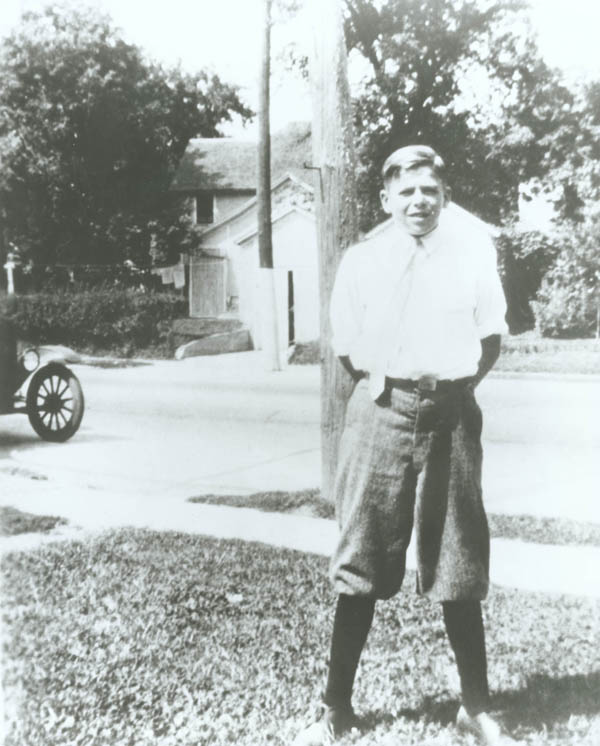
Ronald Reagan in Dixon, Illinois, in the early 1920’s. Public Domain.

June 2017. 5.93mb DSC_0774.

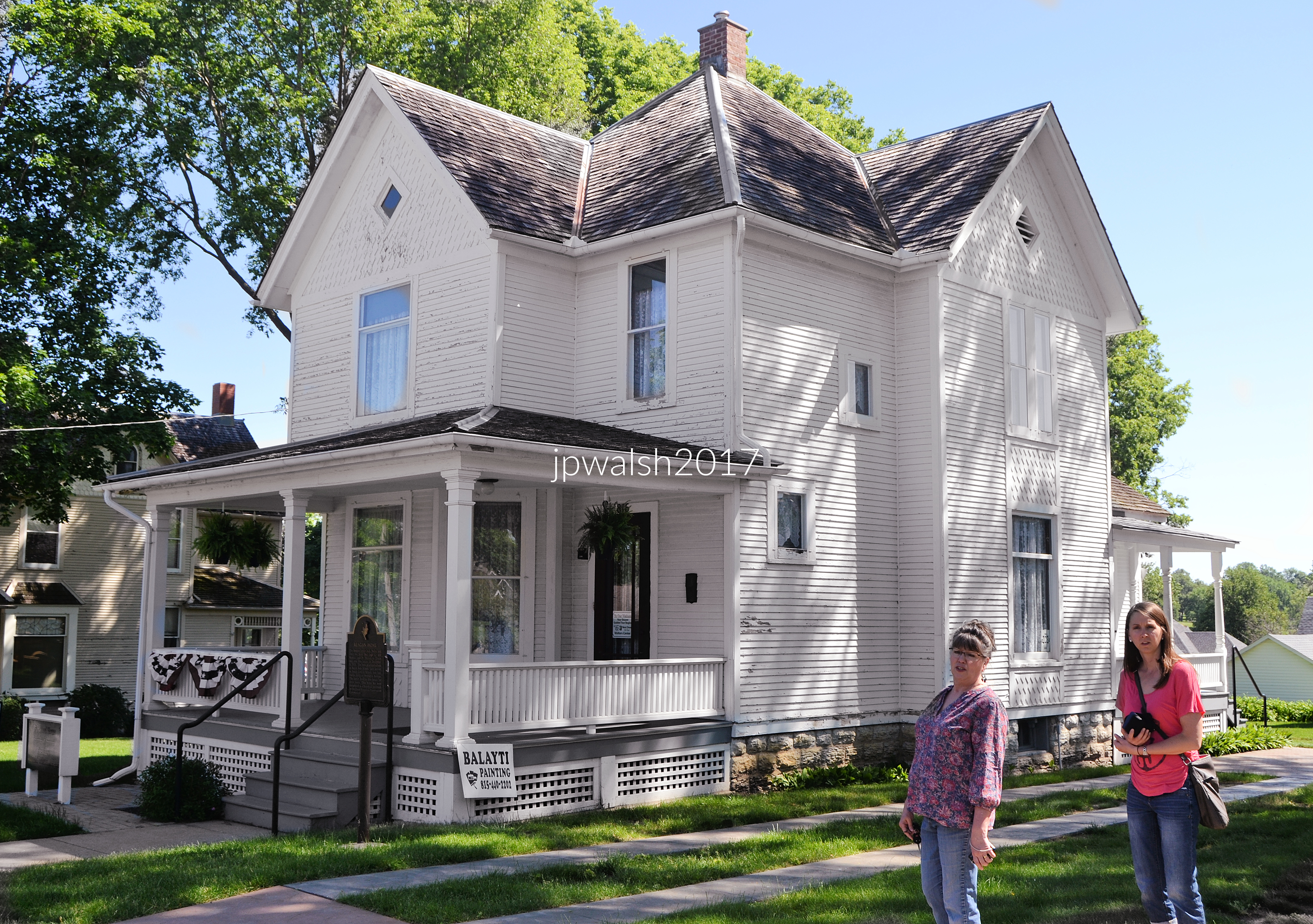
The Reagans settled in this rented house at 816 S. Hennepin Avenue in Dixon, Illinois, on December 6, 1920. The family of father Jack, mother Nelle, and 12-year-old Neil and 9-year-old Ronald lived here for three years. From 1921 to 1924, Neil and Ron attended South Side/Central School which still stands four blocks north of the house and is now the Dixon Historic Center. Reagan often walked along Hennepin Avenue going downtown to the Dixon Public Library at 221 South Hennepin Avenue and the First Christian Church at 123 South Hennepin Avenue where both Neil and Ron were baptized on June 1, 1922. Nelle taught Sunday school and sang in the church’s choir. Ronald and his mother were members of the Disciples of Christ church until 1937. Between 1924 and 1930, the Reagans lived in a rented house at 338 W. Everett Street in Dixon. Reagan lived in that house in Dixon when he was home from college after he began attending Eureka College in September 1928.

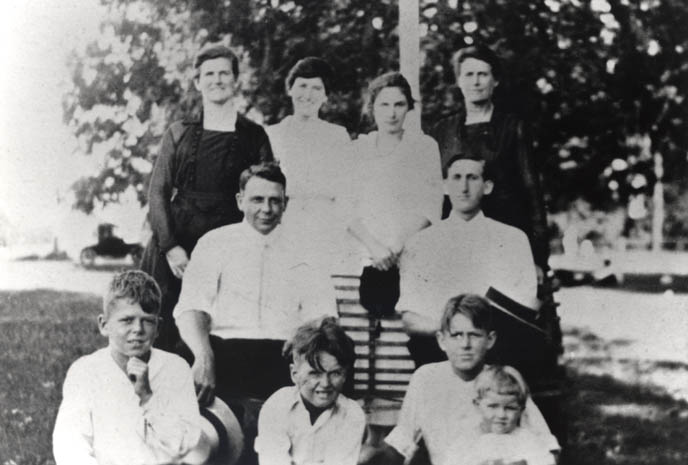
Reagan 1920s with family. Ronald Reagan sitting (hand on chin in front row) posing with other family members, Neil Reagan at far right (front row), Jack Reagan (middle row at left), Nelle Reagan (last row, second from left), Illinois. Public Domain.

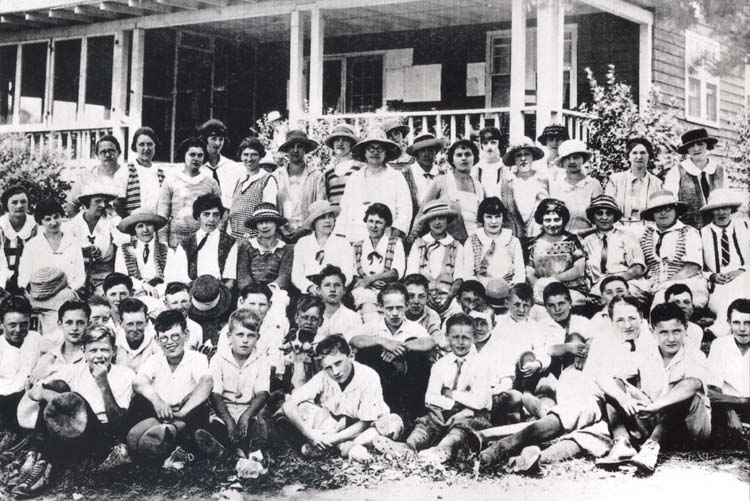
Ronald Reagan sitting (hand on chin in front row) with other golf caddies for the Lincoln Highway Ladies Golf Tournament in 1922 in DeKalb, Illinois. Public Domain.

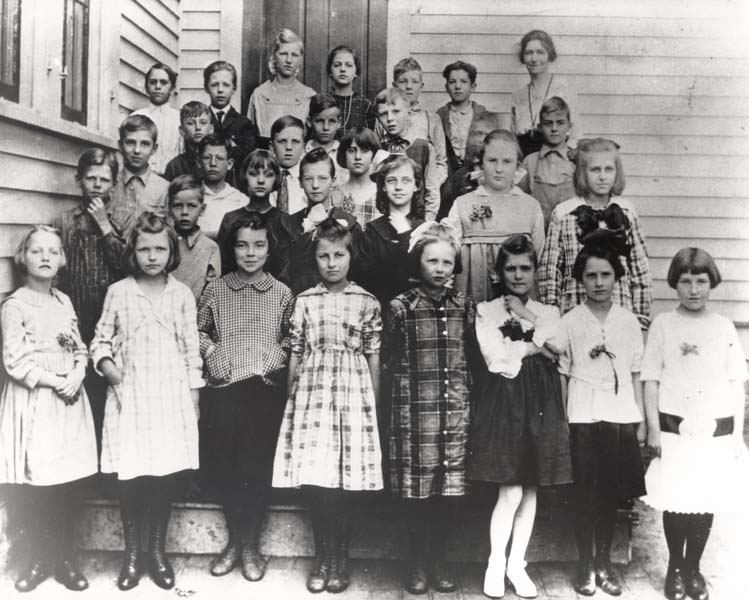
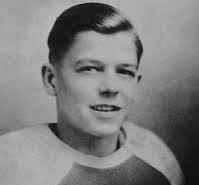
Reagan (second row, left) in 4th grade in Tampico, Illinois. Reagan was born in Tampico, Illinois, on February 6, 1911 in a second-floor apartment at 111 Main Street and, until 1914, at 104 W. Glassburn Street. Afterwards the family moved in sequence to Chicago, Galesburg, and Monmouth until they returned to Tampico in 1919-1920 and ultimately to Dixon in early December 1920. Reagan’s father was an alcoholic and they moved around a lot. As a young man Reagan became a lifesaver. Public Domain.

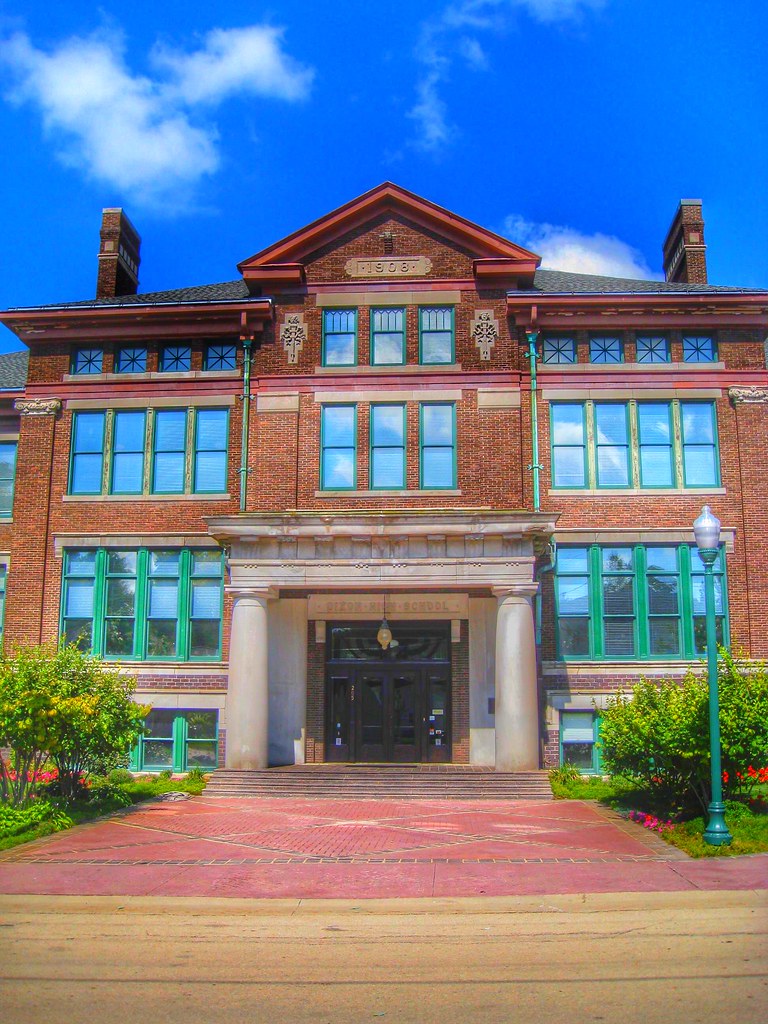
Brothers Neil and Ron Reagan attended South Side/Central School in DIxon, Illinois. The school building still stands at 205 W. 5th Street, four blocks north of the Boyhood Home. It is now the Dixon Historic Center.Dixon Illinois ~ The Dixon Historic Center ~ Exhibits devoted to President Ronald Regan” by Onasill ~ Bill is licensed under CC BY-NC-SA 2.0.

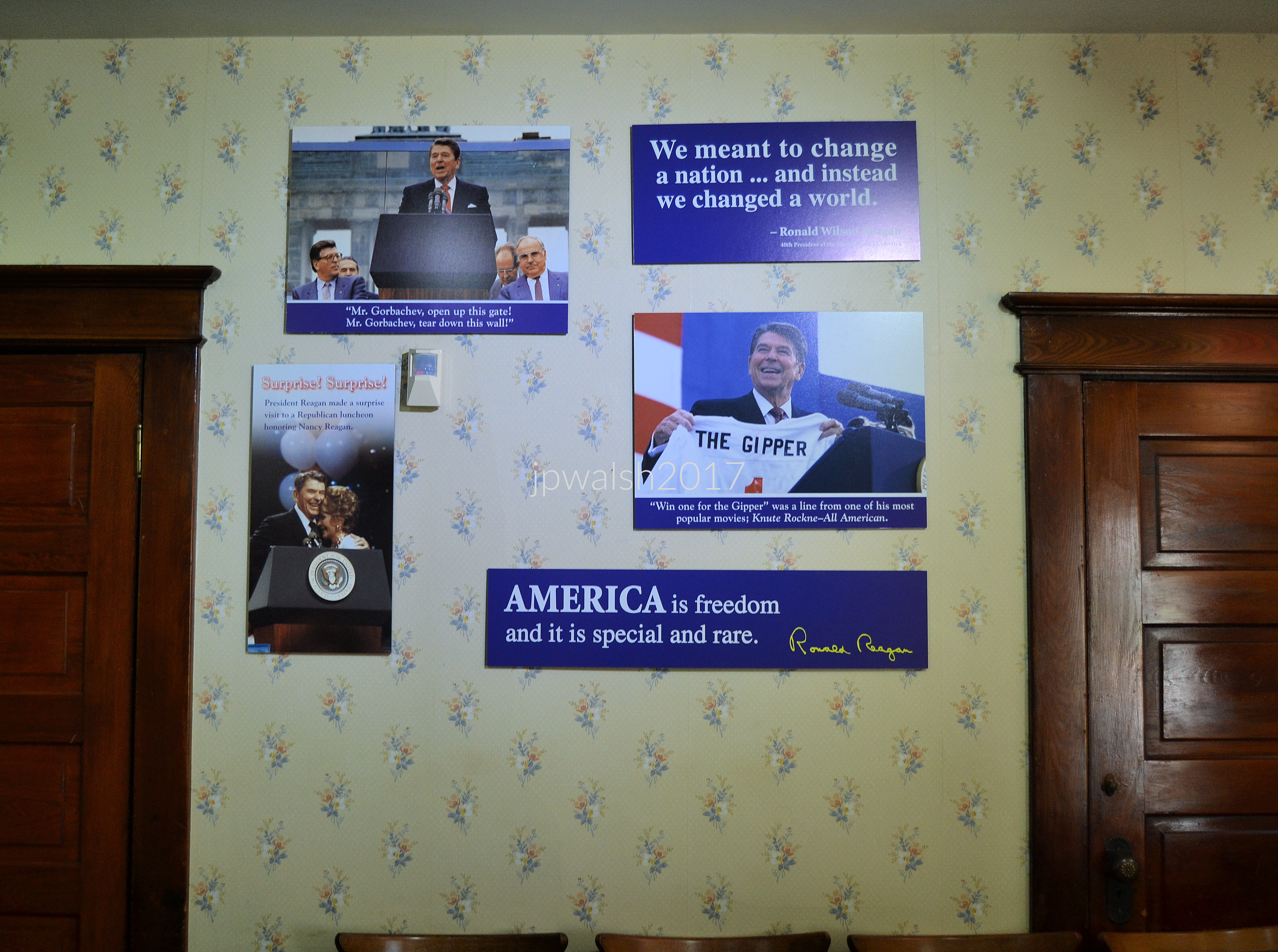
June 2017. Inside the Reagan Boyhood Home, Dixon, Illinois. 4.90mb DSC_0778 (1)

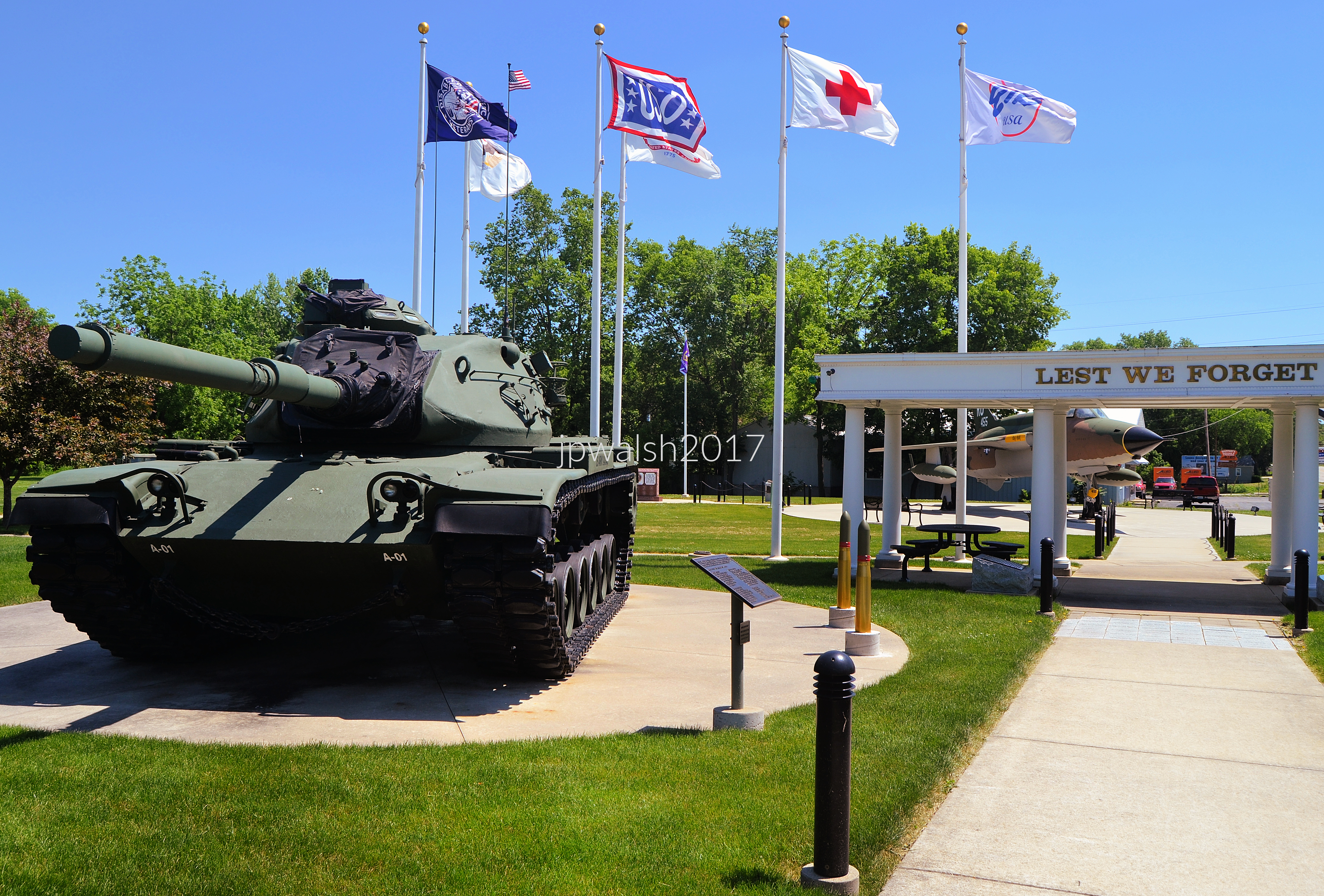
June 2017. Veterans Memorial Park, Dixon, Illinois. 6.41 mb DSC_0827.

The M60 tank is designed as one of the main assault vehicles of an Armor/Mechanized Infantry/ Infantry Division. It weighs about 105,000 pounds unloaded and has a 64,000 pound payload. The tank can travel at top speeds of 30 m.p.h. and can travel nearly 300 miles.

June 2017. Veterans Memorial Park, Dixon, Illinois. 7.05mb DSC_0831.

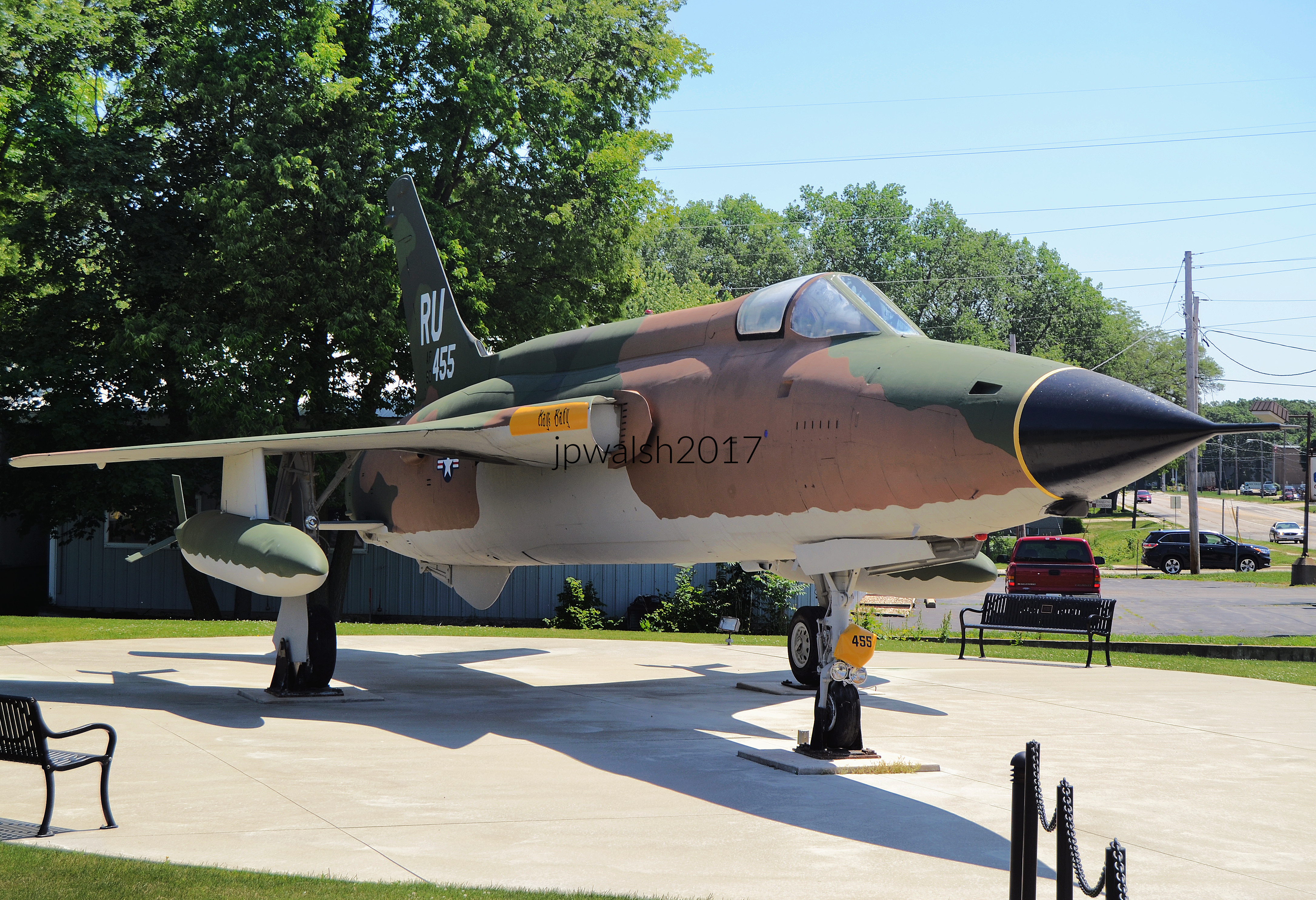
Republic F-105D Thunderchief (serial #60-455) was a new aircraft that served the U.S. Air Force from 1958 to 1984. This specific aircraft fought in Vietnam between 1968 and 1970. It was stationed at Takhli Airforce Base in Thailand with the 355 Tactical Fighter Wing that was established in April 1962 at George AFB in California and transferred to Thailand in 1965. This F-105D Thunderbird was one of 833 airplanes manufactured by Republic in Farmingdale, New York, with over half the fleet lost in combat or due to mechanical failures. With 610 built, this particular warbird was the definitive production model with all-weather capability because of advanced avionics, including AN/APN-131 navigational (Doppler) radar. This aircraft was retired with almost 6000 flying hours and two men who had flown it receiving the Medal of Honor. The plane’s maximum range is 2390 miles at a maximum ceiling of 48,500 feet and reached speeds of supersonic Mach 2 (1,534 m.p.h.) at over 36,000 feet. In addition to a Vulcan Gatling Gun the plane’s payload includes 750-pound conventional bombs (16 of them) or one nuclear bomb.

June 2017. 8.26 mb DSC_0803.

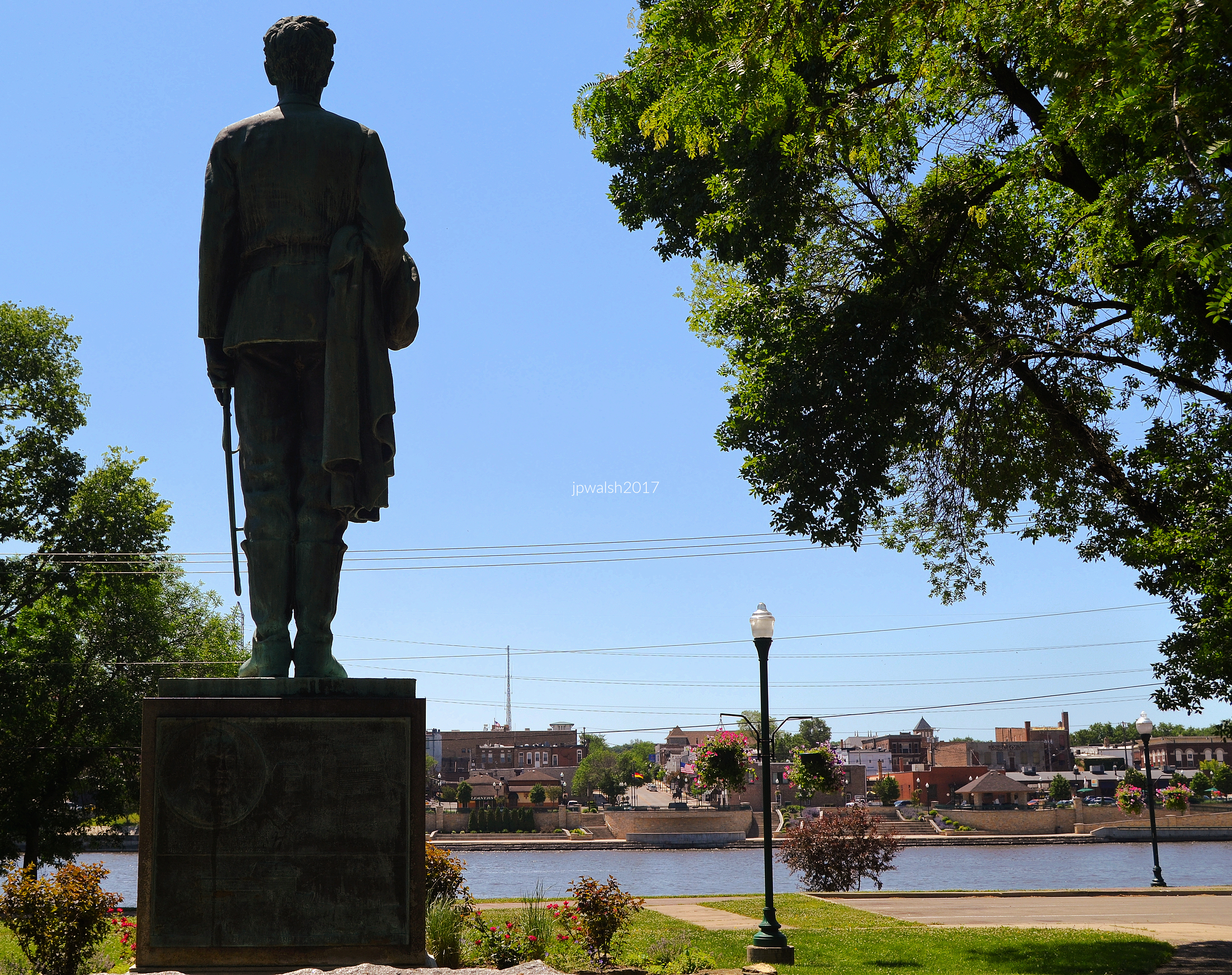
Capt. A. Lincoln, 16th president of the U.S., looking onto the Rock River in Dixon, Illinois, This 1930 statue by Leonard Crunelle (1872-1944) Reagan would have seen and known while living in Dixon. Young Lincoln enlisted in the Illinois Volunteers on April 21, 1832 and, following more enlistments, finally mustered out of military service on July 10, 1832. Across the Rock River is the modern Reagan statue.
June 2017. 4.37mb DSC_0785.

Ronald Reagan (1911-2004) lived in Dixon, Illinois from 1920 to 1933. Reagan always referred to Dixon as his “hometown.” Reagan made several visits to Dixon after he lived here, even when he was President of the United States. The statue is on the banks of the Rock River which is the same waterway where Reagan saved 77 lives as a lifeguard upstream at Lowell Park.

June 2017. 3.38mb DSC_0783.

After Reagan’s death in 2004 local donors commissioned this larger-than-life-sized statue of Dutch Reagan on a palomino horse and gifted it to the City of Dixon. It was dedicated to the eradication of Alzheimer’s that was a foe that President Reagan had to battle in last years.
June 2017. 5.28mb DSC_0786 (1)

Reagan in DIxon in the early 1920’s. Public Domain.

In 1982, President Reagan told the Eureka College audience, “Everything that has been good in my life began here.”

September 2016. Eureka College’s Burrus Dickinson Hall built in 1858. 3.87 mb

On campus at Eureka College in Eureka, Illinois, about 90 miles south of Dixon, where Reagan lived. The college, affiliated with the Disciples of Christ of which Ronald Reagan was a member, was founded in 1855. At the time of its founding Eureka was one of a handful of U.S. colleges that was co-ed. In 1856 Abraham Lincoln spoke on campus. After he graduated Reagan returned for campus visits at least a dozen times and served on its board of trustees. Reagan attended Eureka College from 1928 to June 10, 1932, when he graduated as the elected student body president with a degree in economics/sociology. Eureka College is the smallest college or university in American history to graduate a future U.S. president with a bachelor’s degree. The school is in Woodford County in Illinois.

On May 9, 1982, President Reagan announced the START treaty proposal in the Reagan Gym at Eureka’s commencement exercises. It resulted in a bilateral treaty signed in 1991 between the U.S. and U.S.S.R. on the reduction and the limitation of strategic offensive arms including nuclear warheads and intercontinental ballistic missiles and heavy bombers.

Ronald Reagan is the only U.S. president who was born, grew up and received his education in the state of Illinois.

September 2016. Part of the Berlin Wall. Eureka College. 2.40mb DSC_0493 (3)

Of Dixon the Gipper once said: “It was the place I really found myself.”

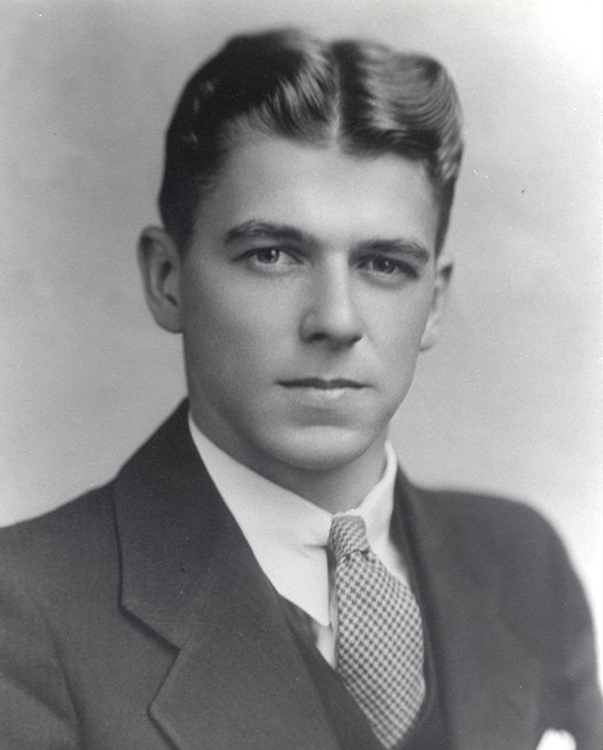
Portrait of Ronald Reagan in 1934 the year after he left Dixon, Illinois. His career led to Hollywood, California as a film actor and Screen Actors Guild president; to Sacramento, California as 33rd Governor of California (1967-1975); and to Washington, D.C., as 40th President of the United States of America (1981-1989). But it was to Dixon, Illinois, that Reagan always returned with its fond memories. Reagan graduated from Eureka College, a liberal arts school affiliated with the Disciples of Christ, in 1932 where he was active in sports and drama and elected student body president. Reagan’s first job was as a sports radio broadcaster in Davenport, Iowa, for Big Ten football games. Afterwards he was a sports announcer for Chicago Cubs’ baseball games on WHO-AM in Des Moines. Reagan arrived in Hollywood in 1937 and was cast in his first feature film Love is on the Air for Warner Bros. where he gets to play a newscaster. Fair use.

In Love is on the Air (1937) Ronald Reagan made his screen debut as a crusading radio reporter who takes on civic corruption.

This explanatory article may be periodically updated.

SOURCES-

https://web.archive.org/web/20171014084448/http://gis.hpa.state.il.us/pdfs/223426.pdf – retrieved March 3, 2025.

https://www.dixongov.com/content/dixon-community/reagan-s-roots-run-deep-in-the-dixon/ – retrieved March 4, 2025.

https://www.reaganlibrary.gov/archives/audiovisual/white-house-photo-collection-galleries/early-ronald-reagan-and-family – retrieved March 4, 2025.

https://www.reaganlibrary.gov/reagans/ronald-reagan/residences-ronald-w-reagan – retrieved March 4, 2025.

https://www.wifr.com/2024/08/23/what-is-ronald-reagans-connection-dixon/ – retrieved March 4, 2025.

Fair Use. Reagan Library – https://www.reaganlibrary.gov/public/2021-08/E24-1_0.jpg?KN9FfhLcWyx9eRcpUu744qKrRtzZnsV6= – retrieved March 4, 2025.

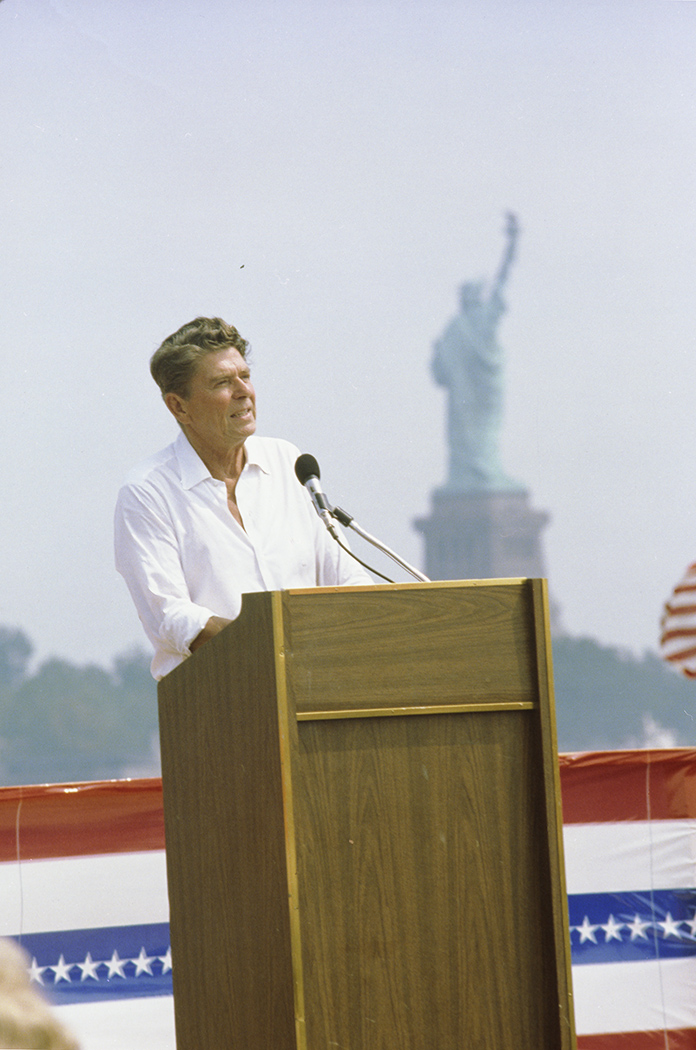
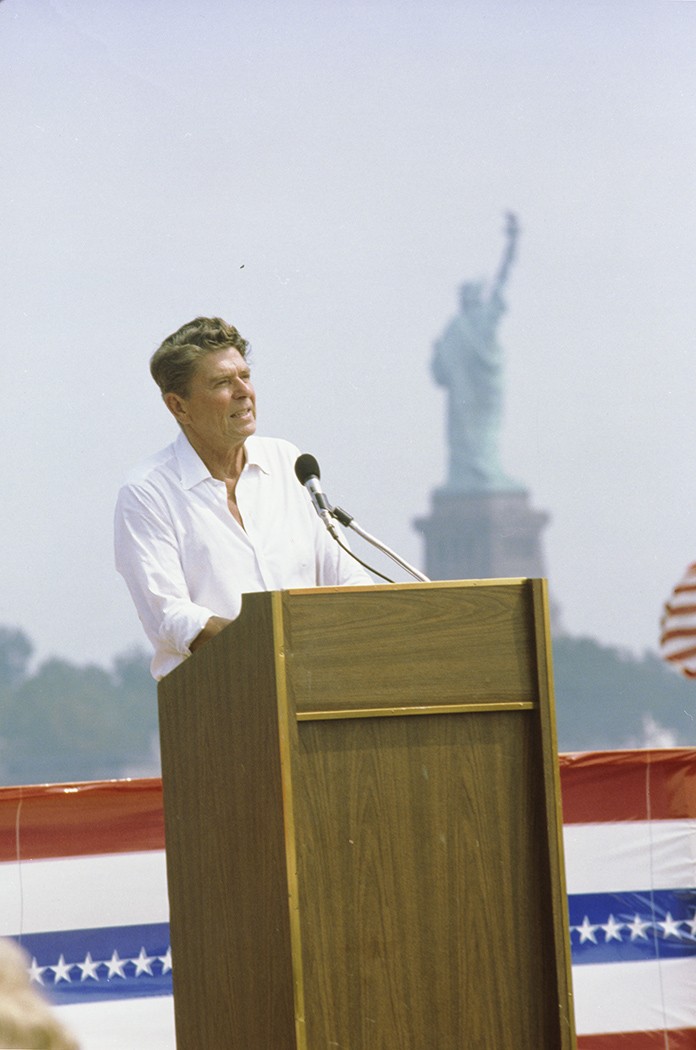
Reagan giving a speech in Liberty State Park in Jersey City, NJ on September 1, 1980. On a personal note, I met Ronald Reagan at the Palmer House in Chicago in June 1980 during a press conference. He was gracious and had movie star looks: tall and handsome. Reagan was elected the 40th U.S. president in a landslide over Jimmy Carter in November 1980 and re-elected in 1984. I later met Jimmy Carter in Chicago at a book signing in the 1990’s.

June 2017. 5.49 mb DSC_0776 (1)

Author and wife at Reagan Boyhood Home, Dixon, Illinois.

June 2017. 3.20mb DSC_0734 (2).

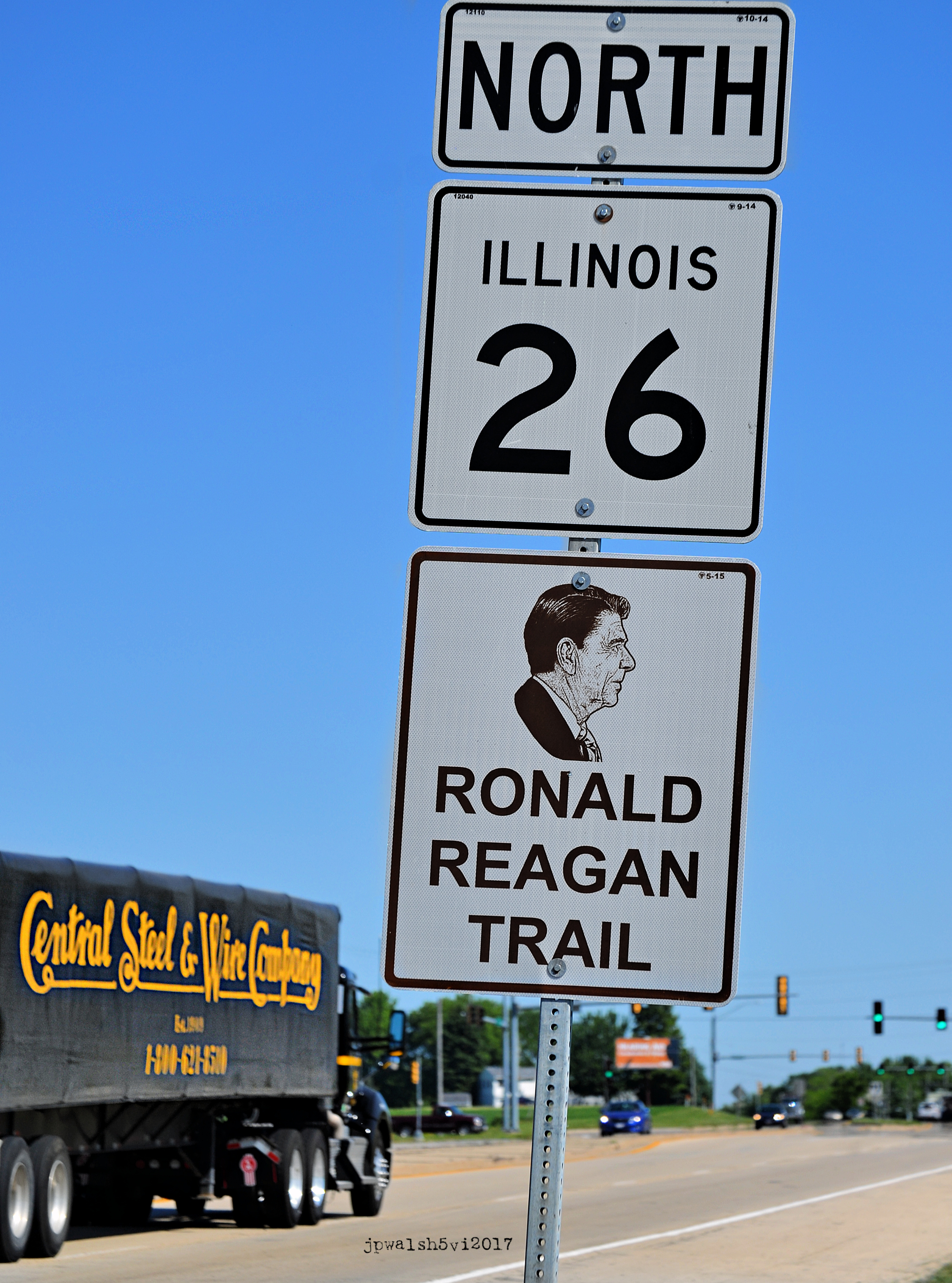
The Ronald Reagan Trail (IL-26) is a route in Illinois that follows sites of interest associated with the 40th president of the United States who was born in Tampico, Illinois and grew up in Dixon, Illinois. Route 26 originally ran north-to-south for about 25 miles from Freeport, Illinois to Polo, Illinois. In 1937, IL-26 was extended about 15 miles north to the Illinois-Wisconsin state line and about 15 miles south to Dixon, Illinois. In 1969, IL-26 was extended almost 100 miles south from Dixon to East Peoria, Illinois.

June 2017. Rock River at Lowell Park, Dixon, Illinois. 4.93 mb DSC_0865 (1). Author’s photograph.