FEATURE image: Nadar, Rosine Stolz (1815-1903), Paris, c.1857. Nadar transformed photographic portraiture into a serious artistic and cultural record of modern France by capturing the personalities, intellect, and creative spirit of the leading artists, writers, musicians, actors, and thinkers of nineteenth-century Paris. His portraits are presented not merely as likenesses, but as historical documents that preserve the human face of an extraordinary cultural age. Rosine Stoltz was a French mezzo-soprano.
By John P. Walsh.
Early Years: A Family in Transition
Gaspard-Félix Tournachon, later known as Nadar, was born in Paris on April 6, 1820, to Thérèse Maillet and Victor Tournachon at 195 rue Saint-Honoré (they married in 1826). A younger brother, Adrien, was born in 1825. His childhood was marked by instability. As political censorship and economic pressures undermined his father’s printing business, the family moved to 45 rue Saint-André-des-Arts on the Left Bank before relocating to Lyon in 1833. Financial hardship deepened for the family after the July Revolution of 1830, shaping the environment in which Nadar and his younger brother, Adrien, came of age.
While his family settled in Lyon, Nadar continued his education at Versailles, where he revealed an early gift for creative writing and an unusual talent for cultivating friendships. His studies were cut short by his father’s death in 1837. Returning to Lyon, he briefly pursued medical studies in hopes of supporting his mother and brother, though his true interests already lay elsewhere: journalism, literature, and public life held a far stronger attraction.
Paris and the Making of “Nadar”
In 1838 Nadar returned to Paris, where he immersed himself in the city’s vibrant literary culture. During the 1840s he began writing reviews and short stories, contributing to a variety of publications while developing his skills as a caricaturist. It was within these bohemian circles that the nickname “Nadar” emerged and ultimately replaced his given name.
The friendships he forged became central to his identity and future career. Frequenting Paris cafés and bohemian literary gatherings, he met many of the writers, poets, and critics who would later sit before his camera, including Gérard de Nerval (1808-1855), Charles Baudelaire (1821-1867) and Théodore de Banville (1823-1891). Nadar’s devotion to artistic and intellectual pursuits came at a cost, including a stint in a debtor’s prison in the early 1850s. Yet even after achieving wealth and fame, he retained the unconventional outlook and political and aesthetic radicalism of his youth.
A Man Shaped by a Changing Paris
Nadar’s rise coincided with one of the most transformative periods in French history. The Revolution of 1848 replaced the constitutional monarchy with the Second Republic, while Baron Haussmann’s sweeping reconstruction of Paris reshaped the city physically and socially. The atmosphere of upheaval mirrored Nadar’s own restless energy, persuasive character, and appetite for innovation.
Working in the rapidly expanding world of newspapers and journals, Nadar moved comfortably among the left-wing intellectuals and cultural figures who animated Parisian life. He met Honoré de Balzac through his editorial work and joined the Société des gens de lettres in 1844, gaining access to valuable professional and social networks, writing mainly short pieces for periodicals.
Although he never abandoned his literary ambitions, Nadar increasingly supplemented his income through caricature. His drawings appeared in many of the period’s leading publications, and his reputation as both an artist and keen observer of celebrity culture grew rapidly. He made sketches and drawings for a short-lived Journal du dimanche, the influential Le Charivari, an antisocialist Le Journal, a new weekly La Revue comique, and also Journal pour rire (which became Journal amusant), Tintamarre, Illustrated London News, and Count Charles de Villedeuil’s L’Éclair. By 1850 he had established the first studio bearing the Nadar name, laying the groundwork for an entirely new career.
From Caricature to Photography
Success as a draughtsman enabled Nadar to settle with his mother and Adrien who returned to Paris in 1845 at 13 rue Saint-Lazare in 1854, a location that would become his first important photographic studio. At a time when professional photography remained a relatively new occupation, Nadar entered a field still struggling to define itself. Was photography an art form or merely a technical service? Was a photographer’s workplace a studio or a commercial shop?
Nadar helped answer those questions through the quality and originality of his work. While hundreds of photographers would eventually enter the profession by 1870, Nadar had arrived at the moment when photography was emerging as a significant cultural force. Nadar retired from the profession fulltime in 1873.
Creating the Modern Portrait
Nadar married Ernestine-Constance Lefèvre (1836-1909) in 1854, and she became both an important supporter of his enterprise and one of his earliest photographic models. Drawing on years of experience creating caricatures of prominent figures, Nadar turned his attention to photographic portraiture.
His sitters reflected the breadth of Parisian cultural life: painters, sculptors, writers, actors, historians, philosophers, journalists, politicians, musicians, and members of the bourgeois public. He also photographed himself repeatedly, producing one of the most extensive self-portrait records of the nineteenth century.
Nadar’s approach was distinctive. A sitter would be welcomed into the outdoor courtyard on rue Saint-Lazare which served as Nadar’s studio. His first work used natural light whenever possible, favored plain dark backgrounds, minimized distracting props, and relied on carefully controlled lighting to emphasize character rather than status. Sitters often wore costumes supplied by the photographer which worked to generalize their social position and contemporaneity. As important as any technical device was Nadar’s ability to establish rapport with his sitters, often friends and celebrities. His relaxed manner encouraged spontaneity, allowing subjects to reveal something of their personality before the camera. The result was a body of portraiture that, while spare, was notable for its psychological depth and human immediacy.
The Nadar Brand
As Nadar’s reputation expanded, so did his ambitions. His brother Adrien learned how to take photographs from Gustave Le Gray (1820-1884). Le Gray, who was the same age as Nadar, was already one the most important photographers of his time. Adrien first set up photographic services with his older brother taking portraits. Yet Adrien and Le Gray remained contacts for Nadar only through the 1850s: Le Gray fled France in 1860 because of creditors and the brothers split professionally in a lawsuit brought by Nadar and decided in 1859. After a professional break with his brother Adrien, he acquired the former studio of the celebrated photographer Gustave Le Gray at 35 boulevard des Capucines. Enlarged with an impressive iron-and-glass penthouse structure, the new establishment opened in September 1861 and quickly became one of Paris’s most fashionable artistic destinations.
Marked by its famous outdoor “Nadar” sign, one of its unforgettable modern notes made by 21-year-old Antoine Lumière (1840-1911), the studio embodied modern urban culture and attracted an affluent clientele. As both photographer and celebrity, Nadar cultivating an image that balanced commercial success with artistic independence and bohemian credibility. Nadar charged high prices based on his appeal as an anti-establishment photographer who sometimes took erotic photographs as he cultivated Paris’s society of artists and political radicals.
Innovation Beyond the Portrait
The boulevard des Capucines studio also marked a new phase in Nadar’s creative development. His portraits became increasingly polished than his and Adrien’s work on rue Saint-Lazare in the 1850’s, and notable figures such as Sarah Bernhardt (1844-1923) and George Sand (1804-1876) sat for him multiple times.
Yet portraiture alone could not satisfy his curiosity. In 1864 he pioneered the use of artificial light to photograph the Paris catacombs and later the city’s vast sewer system, opening previously inaccessible spaces to photography. His fascination with flight led to another landmark achievement when he took aerial photographs from a balloon over Paris in 1865, creating some of the first aerial photographs in history. During the Seige of 1870, Nadar took to the air again with his camera for patriotic reasons.
Whether underground, high above the city, or face-to-face with the leading cultural figures of his age, Nadar consistently pushed photography into new territory. His career helped define what modern photography could be: a medium of art, innovation, and historical memory.
SOURCES:
- Begley, Adam. The Great Nadar: The Man Behind the Camera. New York: Tim Duggan Books, 2017.
- Bernard, Anne-Marie, ed. The World of Proust as Seen by Paul Nadar. Cambridge, MA: The MIT Press, 2002.
- Hambourg, Maria Morris, Françoise Heilbrun, Philippe Néagu, et al. Nadar. New York: Harry N. Abrams, 1995.
- Rubin, James H. Nadar: Gaspard-Félix Tournachon. London: Phaidon Press, 2001.
Nadar was uniquely positioned within Paris’s literary and artistic circles, allowing him intimate access to major cultural figures.

Nadar, Self Portrait, 1854. Throughout his career, Nadar took images of himself. This was used as a simple record of the artist but also a form of publicity for his business.
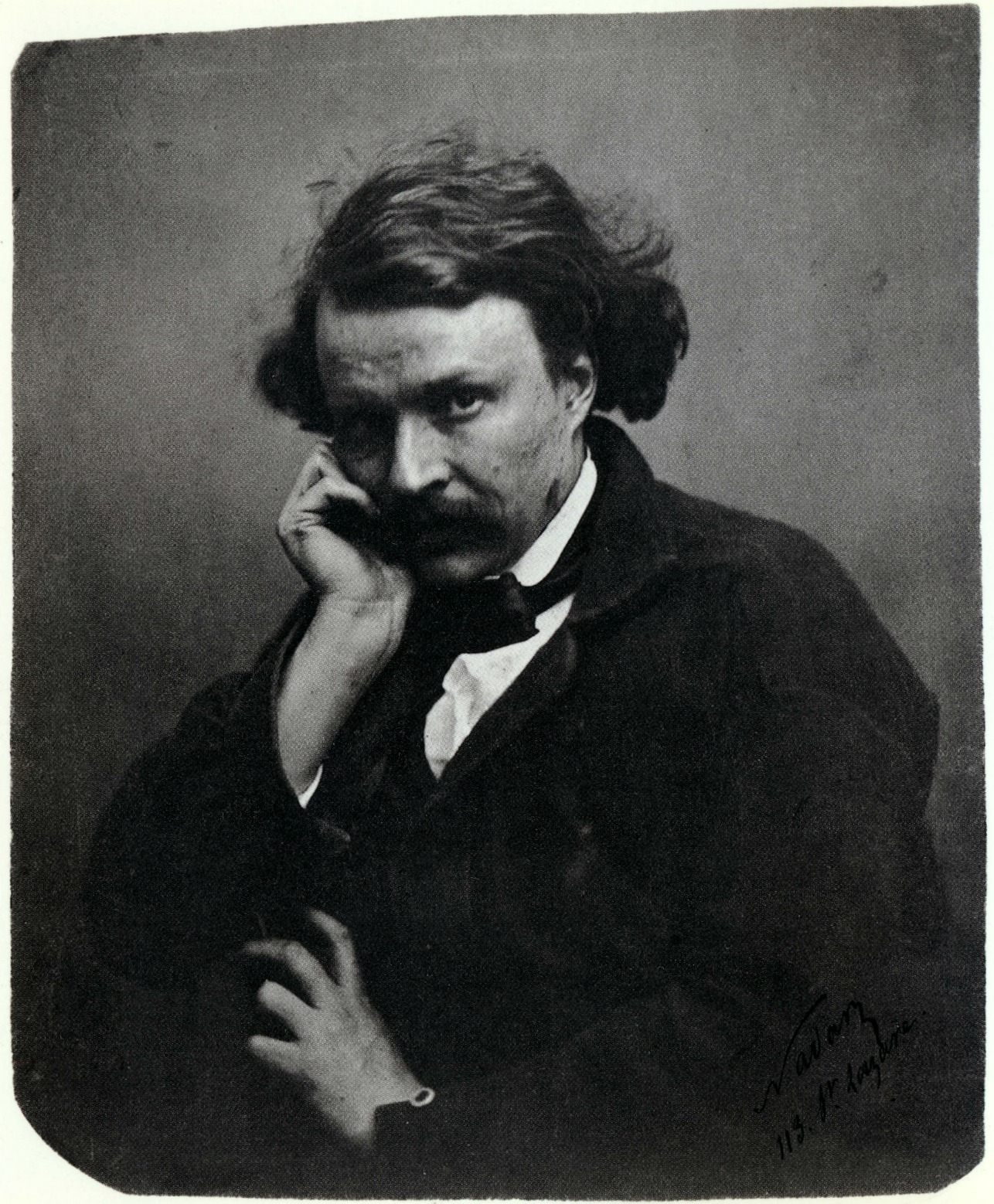
Nadar, Self Portrait, 1855.

Nadar, Atelier at 35, boulevard des Capucines, c. 1861. Nadar moved out of his mother’s house where he had his first studio into this grandiose showplace on the new boulevard which attracted celebrities, onlookers, and those eager to have their portrait taken in the nineteenth century. The script sign “Nadar” across the building’s facade at its upper floor offered a dramatic advertisement for the enterprising photographer.
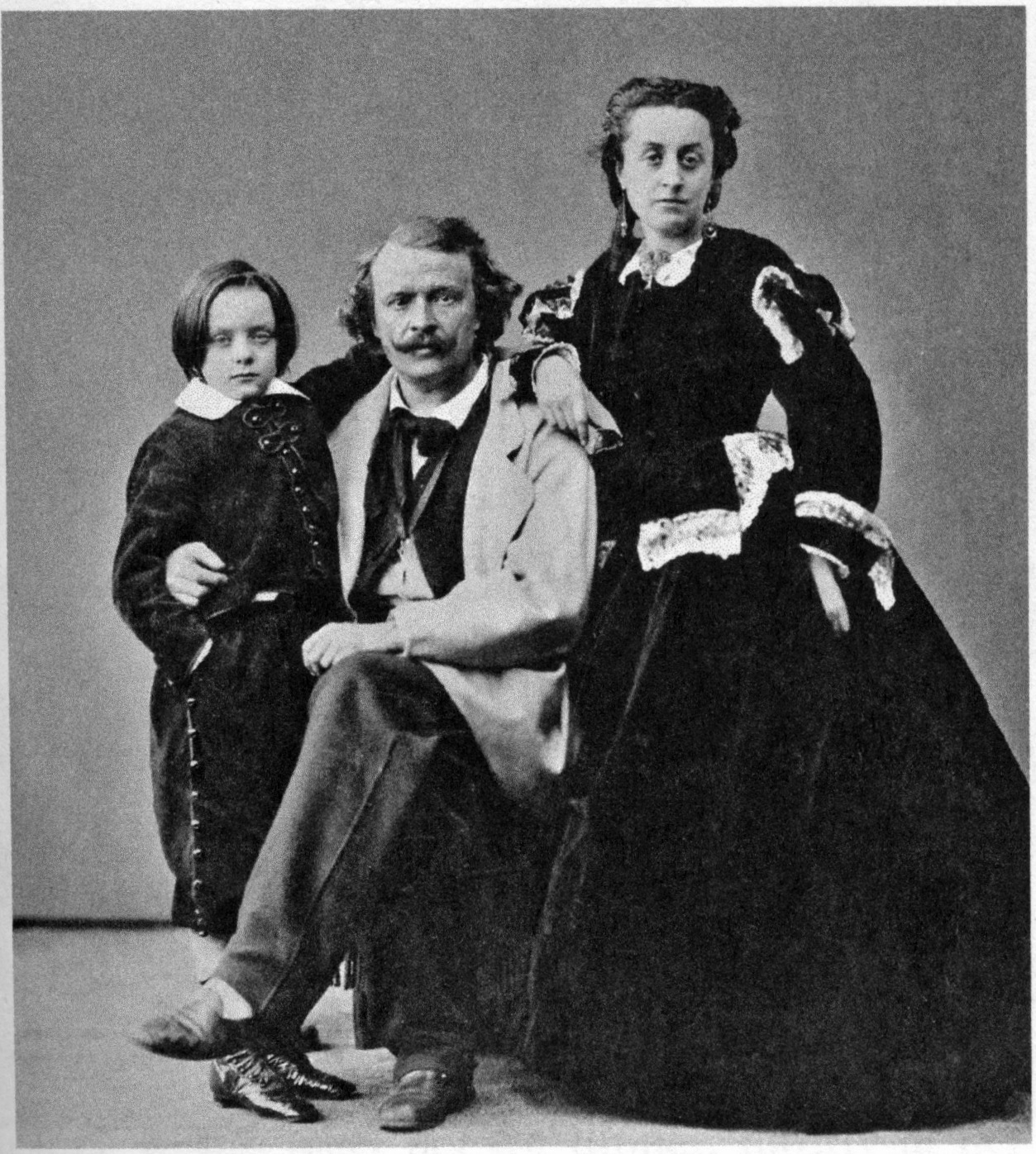
The Nadars, c. 1864. Paul Nadar (1856-1939), Gaspard-Félix Nadar (1820-1910), Ernestine-Constance Nadar née Lefèvre (1836-1909). A family portrait portrayed both a close family unit of mother, father, and son, as well as the dynastic quality of Nadar’s photographic business to be inherited by none other than young Paul by the 1890’s.
His portrait style emphasized character and psychological presence through lighting, simplicity, and rapport with the sitter.
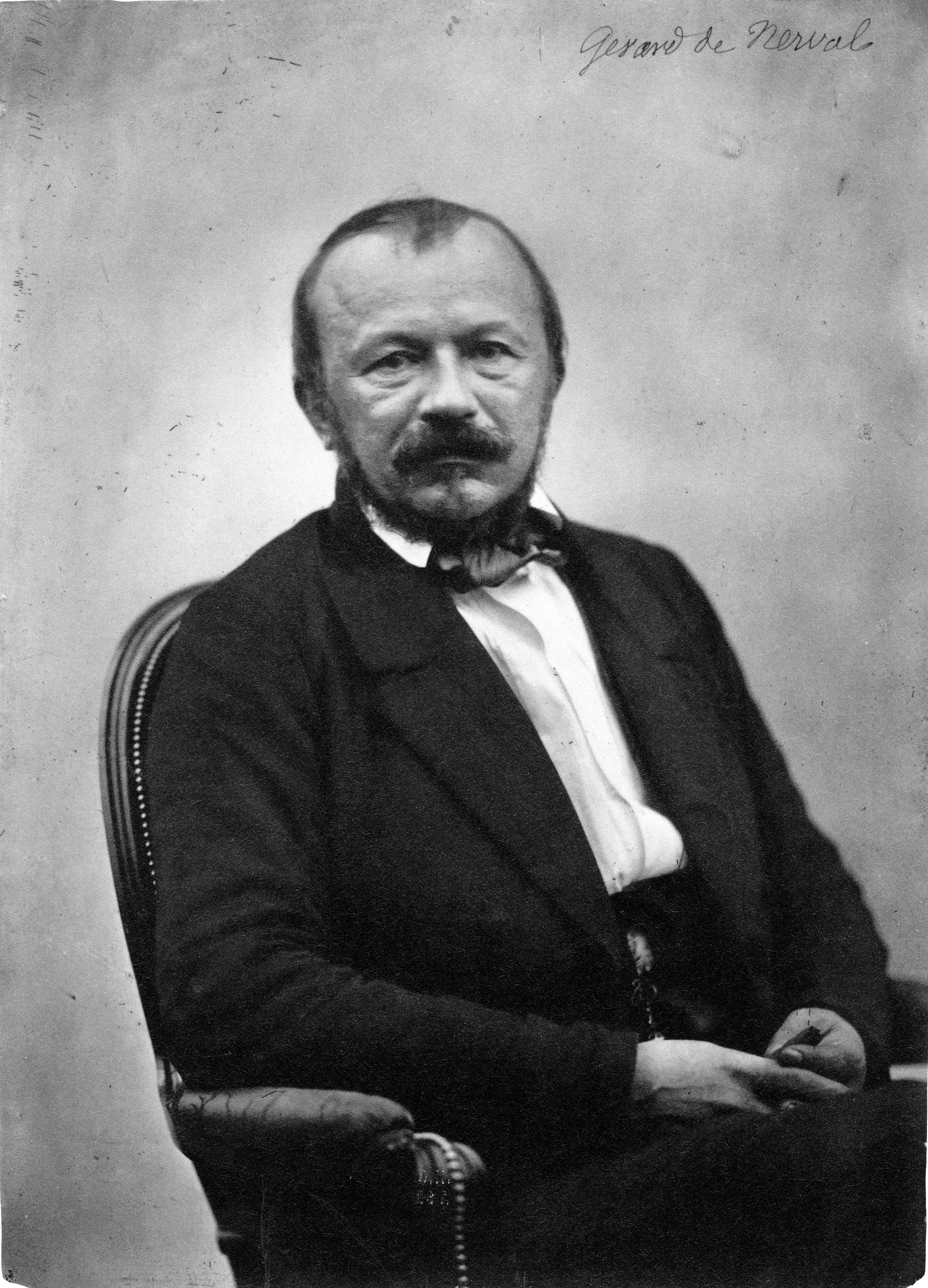
Nadar (and Adrien Tournachon), Gérard de Nerval (1808-1855), 1855. The poet played a major role in introducing French readers to the works of German Romantic authors, including Friedrich Gottlieb Klopstock (1724-1803), Gottfried August Bürger (1747-1804), Johann Wolfgang von Goethe (1749-1832) and Friedrich von Schiller (1759-1805). His own poetry was a major influence on Marcel Proust (1871-1922), André Breton (1896-1966), and the avant-garde movement of Surrealism in 1920’s that sought to release the creative potential of the unconscious mind. Nadar claimed that Nerval sat for him just once and only days before the bohemian poet committed suicide.
Charles Baudelaire, 1855-1862, by Nadar:

1855. In an early portrait by Nadar, his friend Baudelaire reclines in an armchair with an intense and dreamy gaze. The poet and critic was involved in producing poems to be published in 1859 as Les Fleurs du mal. Baudelaire’s critique of photography was its negative impact on judgement and feeling of the beautiful.

1855. The lumpy coat is likely a costume provided by Nadar that helps contrast the sitter’s slim frame and fine facial features. The formal gesture of the right hand inside the coat, a pose known in Ancient Greece to indicate good manners, had appeared in eighteenth century art to establish calm and deliberation in its subject so posed. Baudelaire’s left hand in the pocket is informal and could intentionally serve to undermine or mock the classical gesture. Nadar’s portrait series of Baudelaire is important to view as a group since these are the few images of the French Symbolist poet that exist from the mid nineteenth century and in a manner of pose inspired by the artistic interchange of the diverse and inventive Nadar and his subject who was also his friend, the experimental modernist writer Baudelaire.

c. 1856.
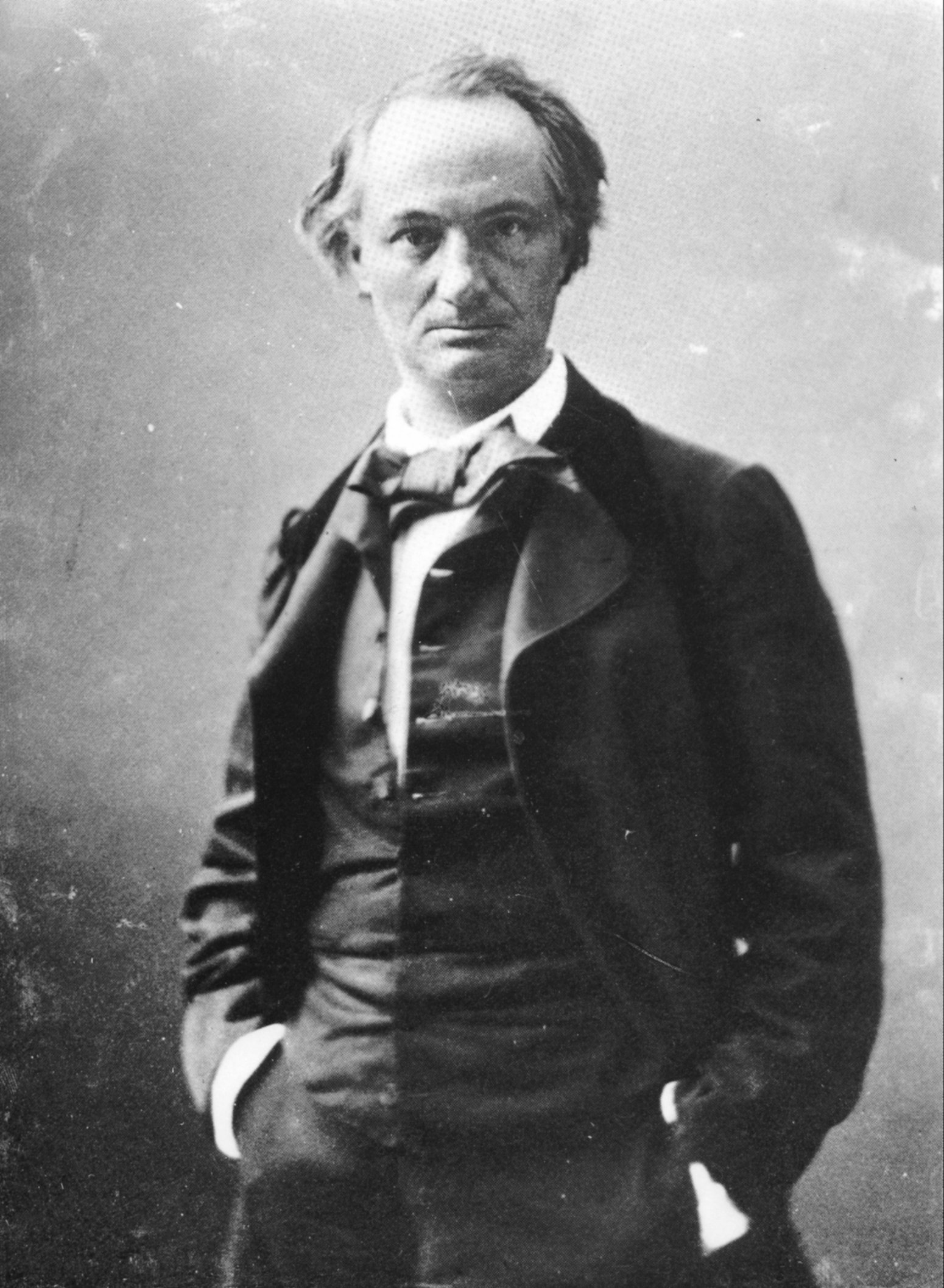
c. 1862. Rather than dreamy, Baudelaire’s expression — mouth turned down, eyes gleaming — is defiant and the pose is stern but whimsical.

c. 1862.
Nadar’s portraits documented not just individual people, but an entire cultural world.

Nadar, Théodore de Banville (1823-1891). Banville was a French poet , writer and critic who was a leader of the Parnassians and whose work was later influential on French Symbolism. His first book of verse, Les Cariatides (“The Caryatids”) in 1842, owed much to the style and manner of Victor Hugo (1802-1885). The chief quality of his poetry is its technical virtuosity — he experimented with forms such as the ballad and rondeau that had been neglected for 300 years — though contemporaries also admired his poems’ erudition, wit and whimsy. His best-known collection, Les Odes funambulesques (“Fantastic Odes”) published in 1857, is dedicated to Hugo who praised it. Such is the first stanza of Mascarades: Le Carnaval s’amuse!/ Viens le chanter, ma Muse,/En suivant au hasard/ Le bon Ronsard!

Nadar, Théodore de Banville, 1854.

Nadar, Henri Murger (1822-1861), Paris, c. 1855.
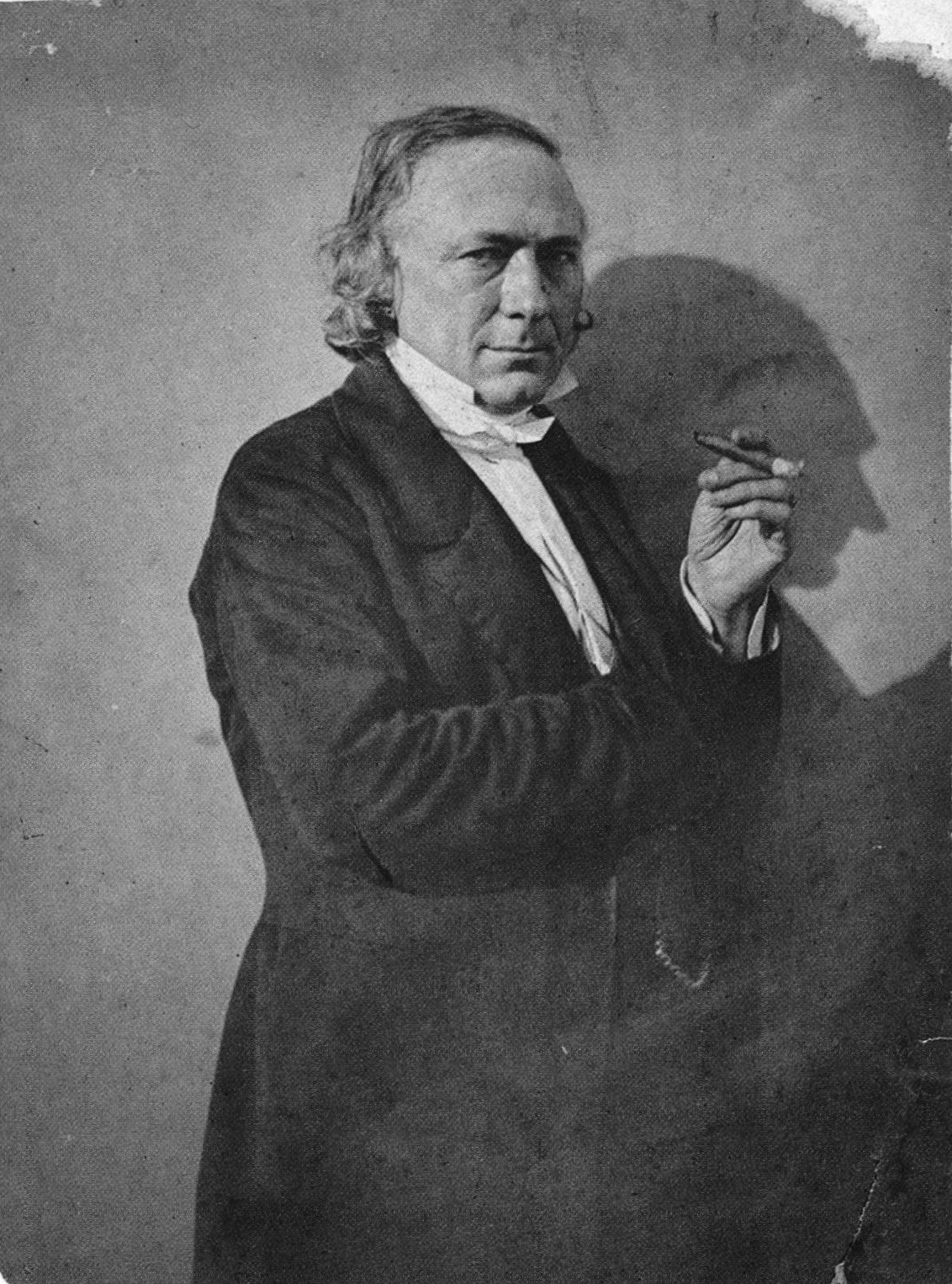
Nadar, Charles Philipon, Paris, 1854. The founder of Le Charivari in 1831, among other popular journals, Charles Philipon (1800-1862) was Nadar’s mentor and an important collaborator in Nadar’s bid to establish himself as a caricaturist. Philipon and Nadar, though from different generations, both shared an energetic and inventive personal character as well as a keen interest, skill, and talent for contemporary caricature (though censorship killed political cartoons after 1851). Charles Philipon, however, being the better businessman, provided Nadar in this period with editor in chief jobs at new magazines that Philipon founded and, until the day he died in 1862, stayed solicitous of Nadar’s future in illustration. Except that, after Charles Philipon died, Nadar lost all interest in the practice.
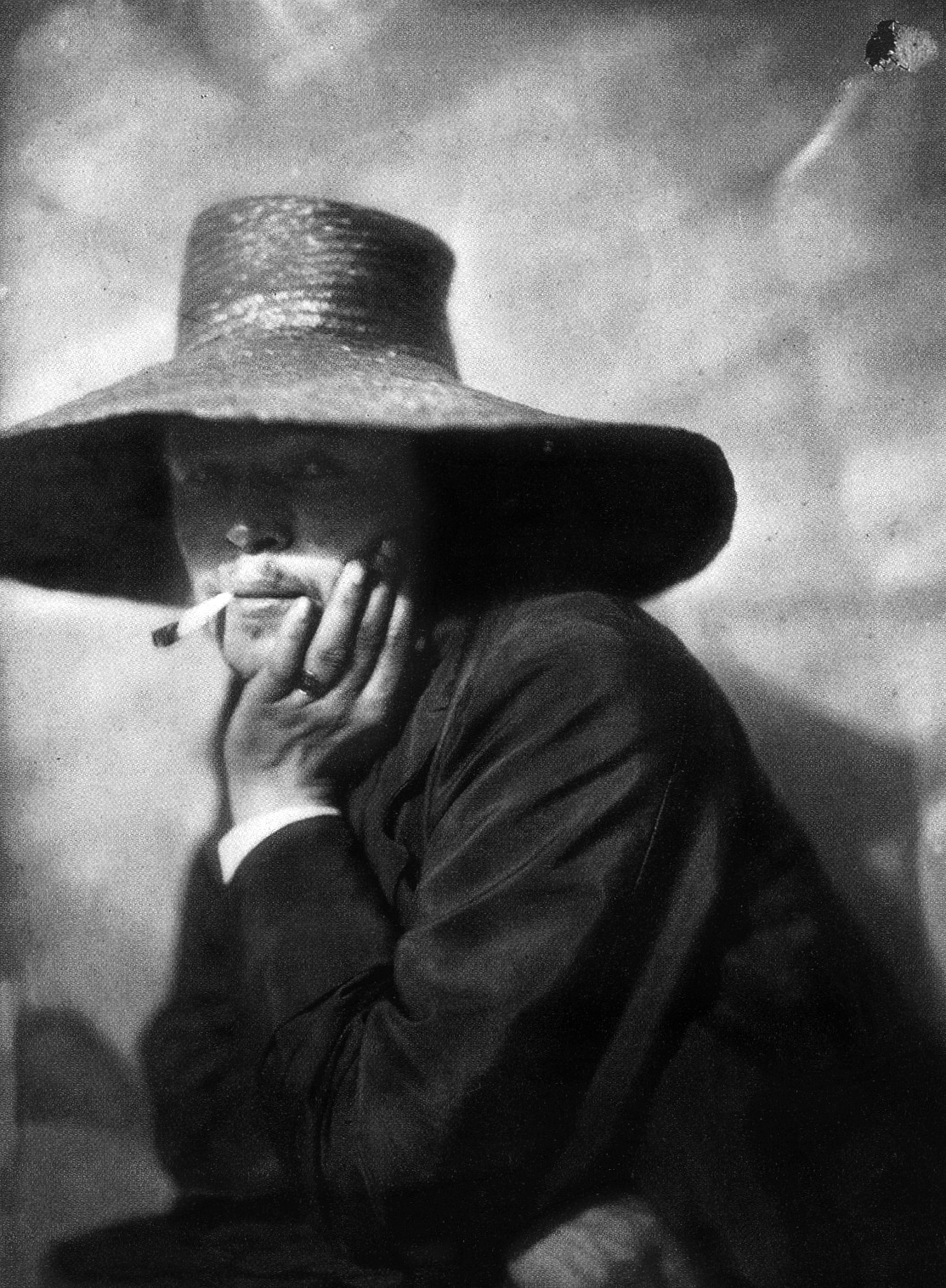
Adrien Tournachon (1825-1903), c. 1855. Nadar’s younger brother was a quirky and talented artist and photographer in his own right. By the mid-to-late 1850’s Adrien collaborated closely with his older brother in the photographic studio’s services. Their work in this period is often enmeshed so that an exact delineation between them can be difficult to ascertain. Is this photograph a self portrait or a collaborative (self-)portrait? The photograph presents Adrien at about age thirty, wearing casual attire and posing with a bohemian air marked by a broad-brimmed dark straw hat and holding a hand-rolled and lit cigarette in his mouth. Adrien Tournachon opened a photographic studio at 11, boulevard des Capucines in 1853. The two brothers worked together closely in photography which each also worked in other professions, Nadar as a caricaturist and Adrien as a painter (whom Nadar helped to establish). Adrien’s photography career included being active in newly-formed photographic societies, securing a patent for a photo-mechanical process, and later specializing in horse and animal photography as well as other photography-related businesses.
Nadar’s work helped establish photography as an artistic medium rather than merely a technical process.
Pierrot series, 1855, by Nadar:
Jean-Charles Deburau (1829-1873) as Pierrot series, c. 1855. This is another series of Nadar’s photographs–Deburau’s portrayal of the stock character Pierrot– that should be viewed as a group to appreciate the sitter portrayed in a single portrait, although this post includes only a small portion. A collaborative project by Nadar and Adrien. Nadar issued the invitation for Deburau to pose in the studio. Deburau is dressed as Pierrot, the famous commedia dell’arte character. These are rare full-length portraits in Nadar’s oeuvre and include Pierrot in a variety of dramatic poses, some more natural than others, in strongly sculptural light and shadow. There is Pierrot surprised, Pierrot listening, Pierrot in pain, Pierrot laughing and, most famously, Pierrot photographer which explicitly suggests the performative dialogue between sitter and photographer.


Pierrot surprised.

Pierrot running.

Pierrot laughing.

Pierrot listening.
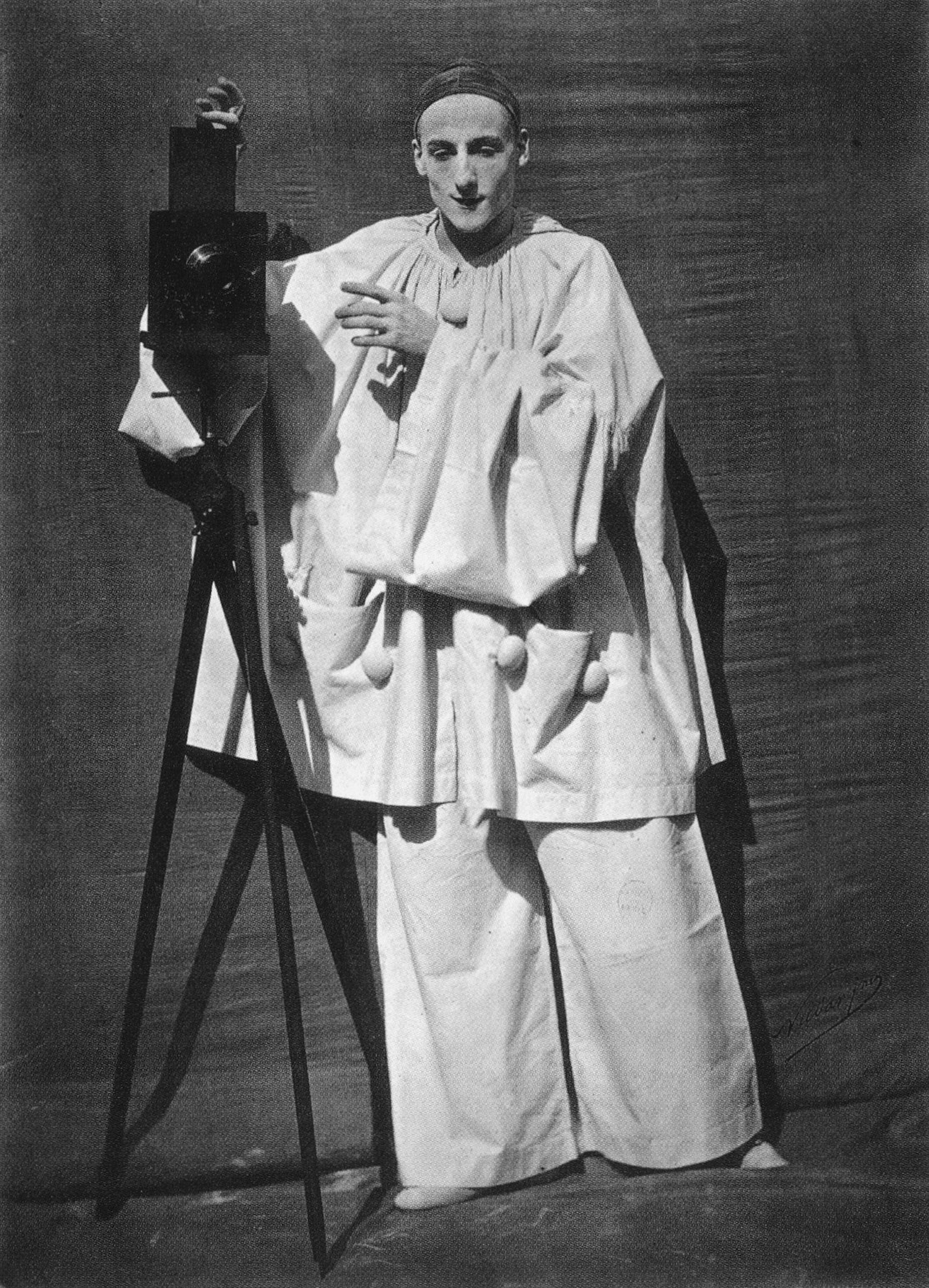
Pierrot as photographer.
BELOW: Nadar, Legrand, c. 1858. An understudy to Baptise Deburau as Pierrot and a friendly rival to Charles Deburau, Legrand was short and stocky and in his performances was known for his deftness in pantomime to convey character, especially sentiment and tears.

Nadar’s Pantheon are the people who made Paris.

Nadar, Théophile Gautier (1811-1872), Paris, c. 1855. Gautier was a French poet, dramatist, novelist, journalist, and art and literary critic.

Nadar, Jules Michelet (1798-1874), c. 1858. Historian of France. Nadar positions his camera lens below the subject so that Michelet can look out from above and has arranged the light reflectors to sculpt Michelet’s features in high relief.

Nadar, Prince Adam Jerzy Czartoryski (1770-1861), c. 1858. A Polish patriot, Nadar’s portrait of the prince was exhibited in 1859 at the Société Française de Photographie. In 1848 Nadar had volunteered to fight for the liberation of Poland when Lamartine called for an expeditionary force of 300 Polish and 200 French (including Nadar) to incite revolution against a Russian regime there since 1830. Nadar was captured, spent time in prison in Germany, and returned by foot to Paris.

Auguste Préault (1808-1879), Paris, c. 1854. A student of David d’Angers (1788-1856), Préault was a sculptor who first exhibited at the Paris salon in 1833. Works by Préault are in the Louvre, d’Orsay, and other museum collections mainly in France.

Created in 1842, the medallion titled Le Silence in the Louvre is one of the most famous works of Auguste Préault, who was the romantic sculptor par excellence. Reduced to its simplest expression, the deeply-engraved artwork — a funereal figure with a finger on the lips evoking the chasm between Life and Death — both fascinates and terrifies. This is the sculptural work on the tomb of Jacob Roblès in Père Lachaise where Préault abandoned recent traditional funerary imagery begun by his mentor David D’Angers of artwork that evokes the person who died, and fashioning in its place an enigmatic and mysterious evocation of death itself. Préault, who died in 1879, is also buried in Père Lachaise.

Nadar, Pierre-Clément-Eugène Pelletan (1813-1884), c. 1857. Protestant minister, mystic, socialist pamphleteer, an associate of George Sand and Lamartine. This is lionizing portrait – gleaming eyes, furrowed brow – that epitomized for the photographer the nobility of the Romantic hero.
The portraits collectively form a visual history of nineteenth-century French cultural life.
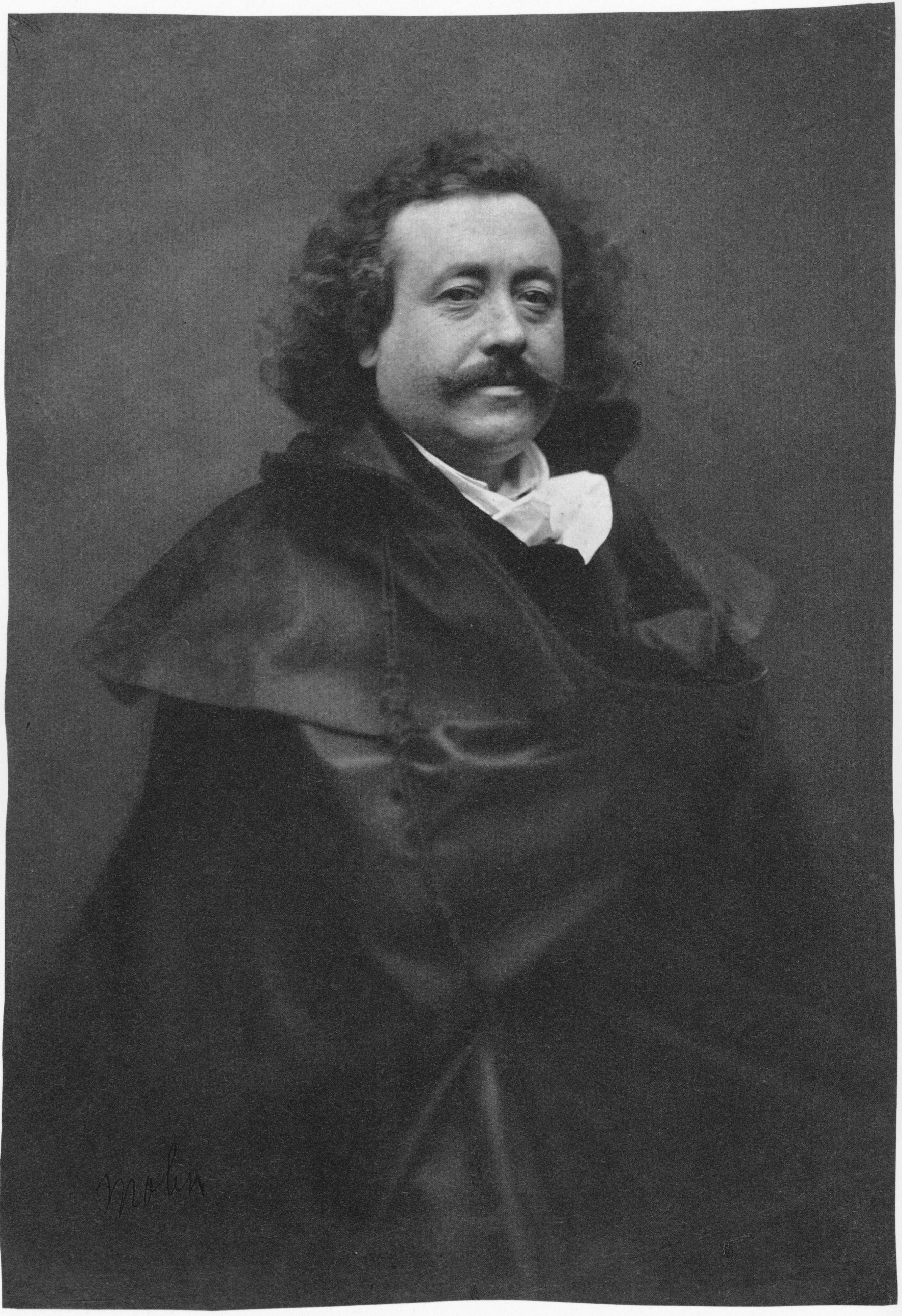
Nadar, Benoît Molin (1810-1894), Paris, 1858. A student of Baron Gros (1771-1835), Molin was a portrait, genre, Religion and History painter. Molin regularly exhibited at the Salon starting in 1843 and became the Director of Chambéry Musée des beaux-arts in 1850.

Molin, Le Baiser rendu (Judas et Satan), 1840s, Chambéry; Musée des Beaux-Arts.

Nadar, Gioachino Rossini (1792-1868). Italian composer who wrote 39 operas, including his French grand opera, Guillaume Tell (William Tell) in 1832 based on Friedrich Schiller’s 1804 play that is based on the previous William tell legend.
Gioachino Rossini: William Tell Overture (1829). London Philharmonic, Alfred Scholz.

Alexandre Dumas père (1802-1870), Paris, c. 1855. The French writer’s works have been translated into many languages, and he is one of the most widely read French authors. Many of his historical novels of high adventure were originally published as serials including The Count of Monte Cristo, The Three Musketeers, and Twenty Years After, among others. His novels have been adapted since the early twentieth century into hundreds of films.

François-Louis Lesueur (1820-1876), Paris, c. 1855. Lesueur was a French actor.
Nadar recorded the faces behind France’s golden cultural age.

Nadar (and Adrien Tournachon), Edmond Goncourt (1822-1896) and Jules Goncourt (1830-1870), Paris, c. 1855. The brothers were taste-makers of their time. The Prix Goncourt, the best known and most prestigious of French literary awards, is named for them.

Nadar (and Adrien Tournachon), Emmanuel Frémiet (1824-1910), 1854. Sculptor.

Joan of Arc on Horseback, 1874, Place des Pyramides, Paris by Frémiet. The pedestal was designed by the architect Paul Abadie (1812-1884). The model for Joan was Aimée Girod (1856–1937).

Nadar, Louis-Charles-Auguste-Couder (1789-1873), c. 1856. French painter and student of Jean-Baptiste Regnault (1754-1829) and Jacques-Louis David (1748-1825).

Couder, Le Serment du Jeu de Paume, 20 juin 1789, 1848, Musée de la Révolution française, Vizelle.
Nadar approached female sitters as individuals with distinct personalities and psychological presence, while also exploring the artistic possibilities of the nude as a serious photographic subject.

Finette, c. 1857.

Nadar (and Adrien Tournachon), Ernesta Grisi, 1854.
Nadar’s nude studies demonstrate “inventiveness and grace” in presenting vulnerability and beauty.

Nadar, Mariette (Standing Nude), c. 1855. Only by viewing Nadar’s nude portraits in a group can the viewer begin to get a sense of the photographer’s inventiveness and grace in posing the model that achieves the maximum effect of the sitter’s degrees of vulnerability and beauty.

Nadar, Mimi, c. 1857.

Nadar, Draped Standing Nude, c. 1858.
Whether the sitter was a famous writer, actress, society woman, or nude model, Nadar’s real subject was the individual’s presence and character rather than social status alone.
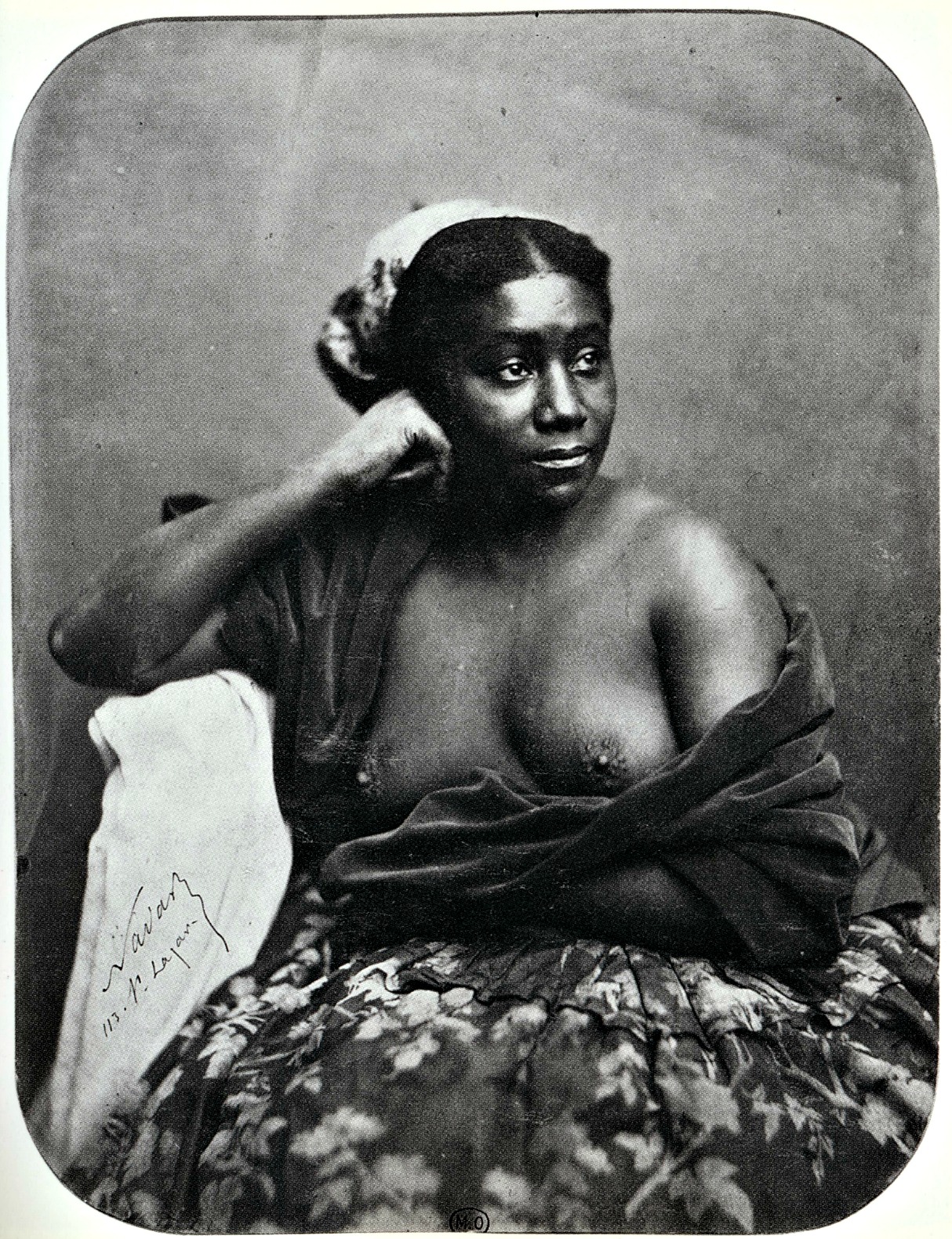
Maria L’Antillaise, Paris, c. 1858.

Mademoiselle de Sanzillon, Paris, c. 1858. Nadar took photographs of this society woman of the time. In a time when married women were still the legal property of their husband, Nadar’s portraits reveal a liberality of practice to find and display the individual personality of each female sitter. This is achieved by how the photographer posed them and captured their expression and outward fashion. The extent of Nadar’s abilities in the area of photographing women is best appreciated by seeing a select grouping of small-sized portraits that illustrate the range of this quality that he produced though a fraction of his oeuvre.

Mère Marie Jamet, c. 1860. From an inscription on the back of the photograph, it is speculated, though by no means certain, that this is the founder and mother superior of the Petites Soeurs des Pauvres (Little Sisters of the Poor).

Mademoiselle de Basté, c. 1855.
Through portraits and nude studies alike, Nadar sought to reveal the humanity, personality, and emotional presence of his female subjects, elevating photographic representations of women beyond social convention and toward artistic expression.

Nadar (and Adrien Tournachon?), Musette (also Mariette), c. 1855.

Young woman in profile, c. 1859.

Marie Laurent (1826-1904), Paris, c. 1856.

Maria L’Antillaise, Paris, c. 1858.

Young Model, Paris, c. 1858.

Juliette Adam (1835-1936), Paris, c. 1858.

Carlotta Grisi ( 1819-1899), Paris, 1865.
Portraits of the Artists, Poets, and Rebels Who Defined Paris
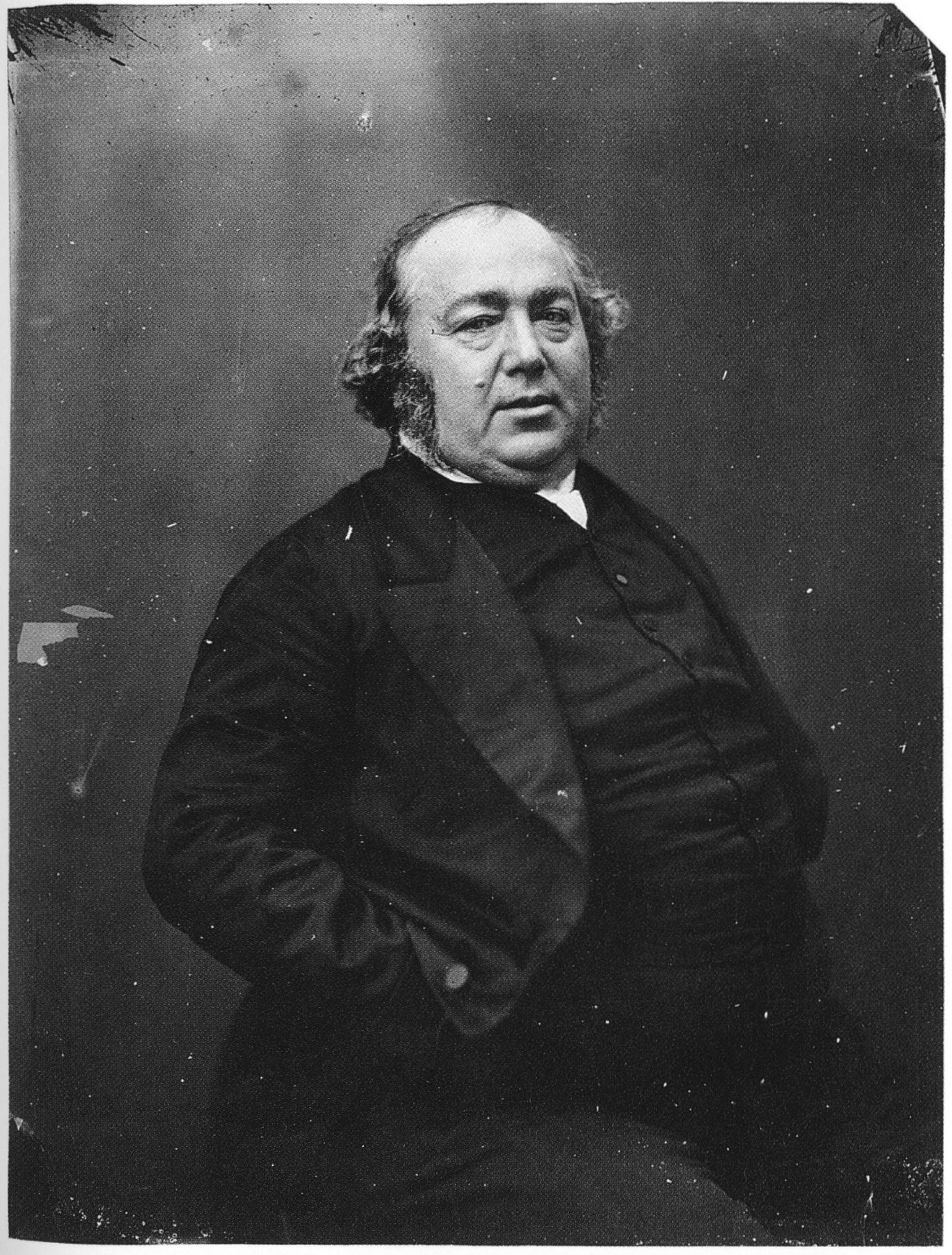
Nadar (Adrien Tournachon), Jules Janin (1804-1874), Paris, c. 1855. Known as the “prince of critics,” Janin enjoyed a 40-year-career as a theater critic, novelist, and literary historian from the 1830’s to the 1870’s.
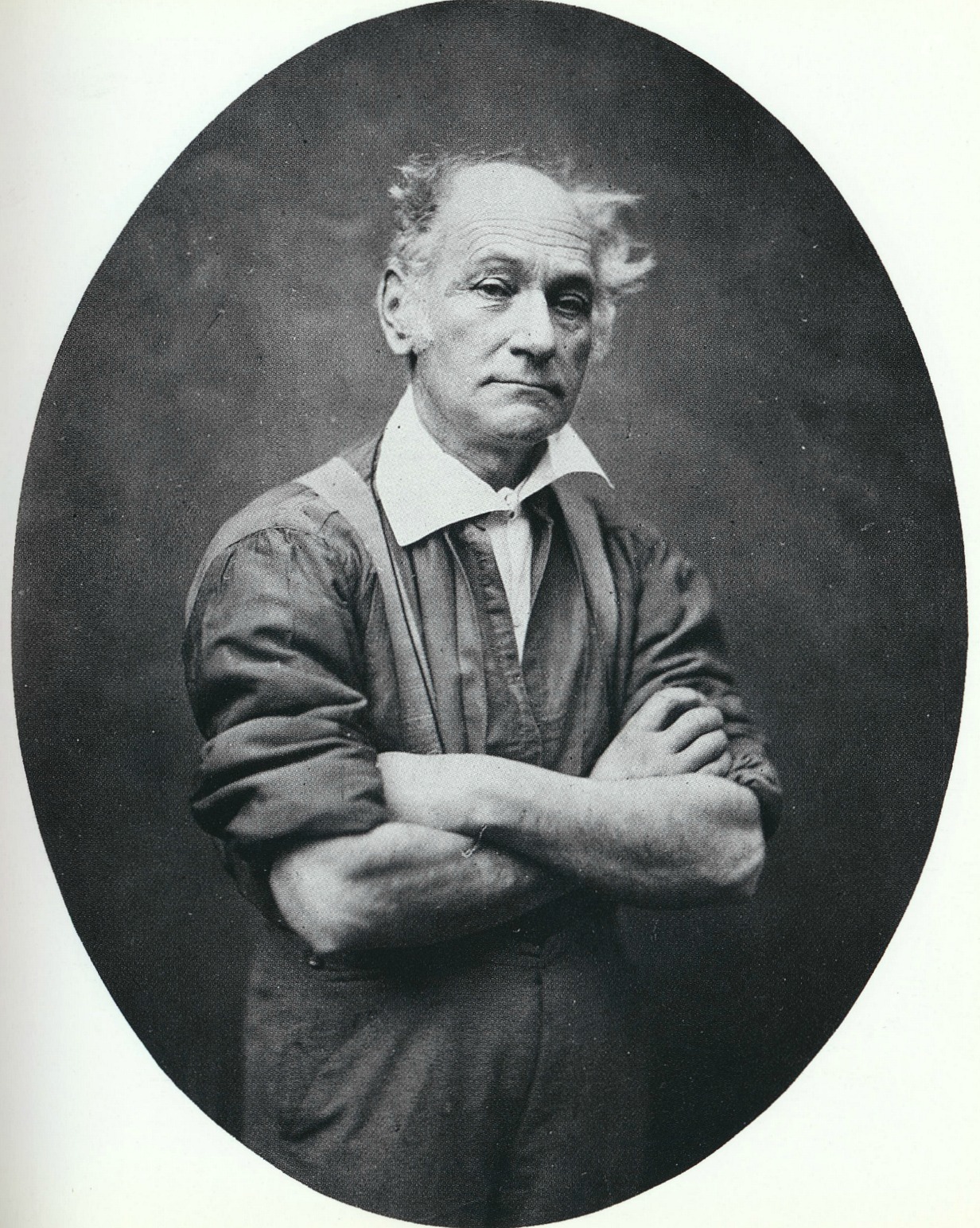
Kopp (d. 1872), Paris, c. 1857. Kopp was a comic actor at the Théâtre des Variétés, a theatre and “salle de spectacles” on the boulevard Montmartre in Paris. Several opéra bouffe by Jacques Offenbach premiered there in the 1860’s.

Le Théâtre des Variétés, sur le boulevard Montmartre, à Paris (IIe).

Nadar (and Adrien Tournachon), Émile Blavier, 1854. A young sculptor who gained recognition at the Salon of 1852.
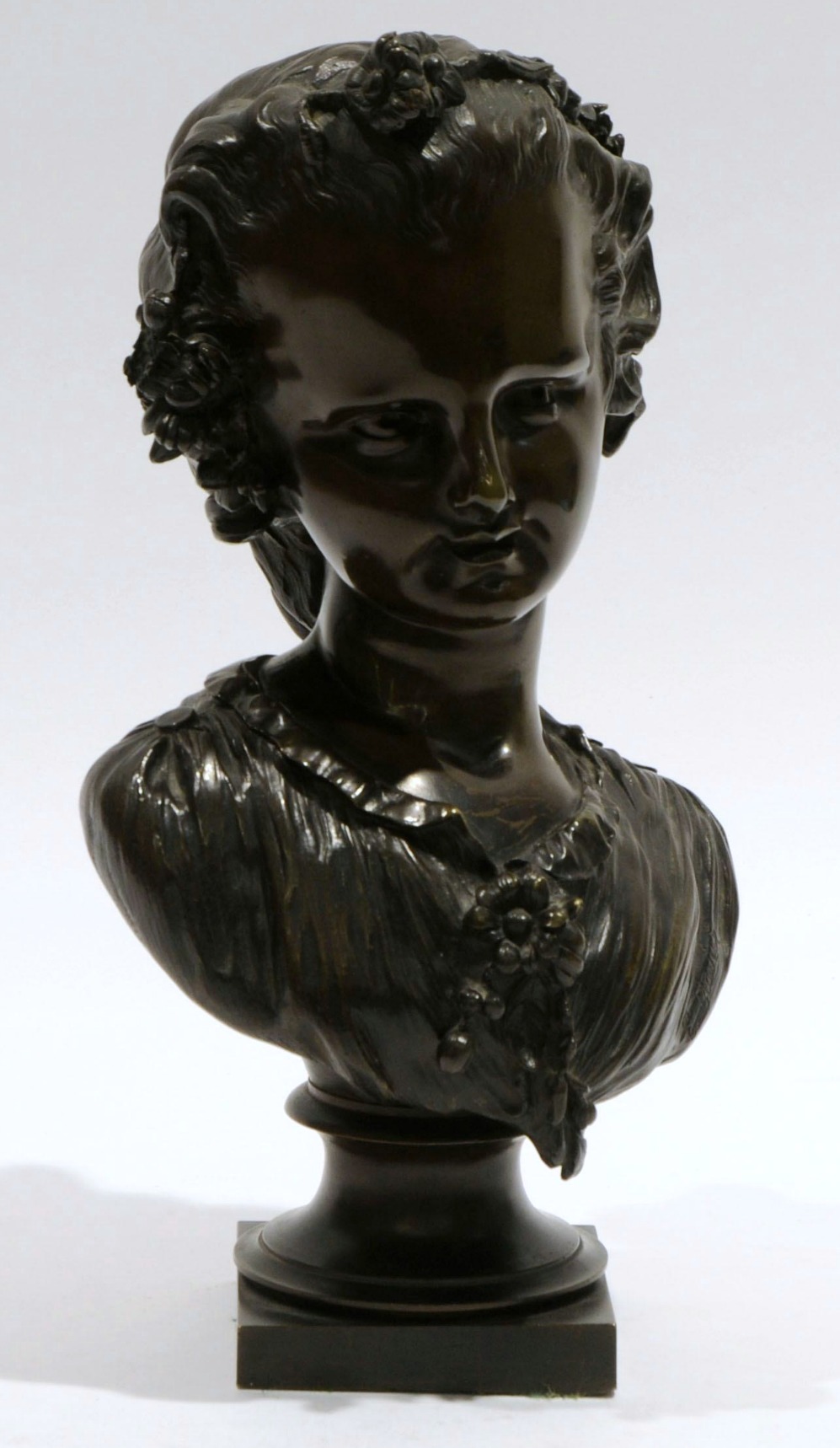
Blavier, Buste de fillette au chignon.
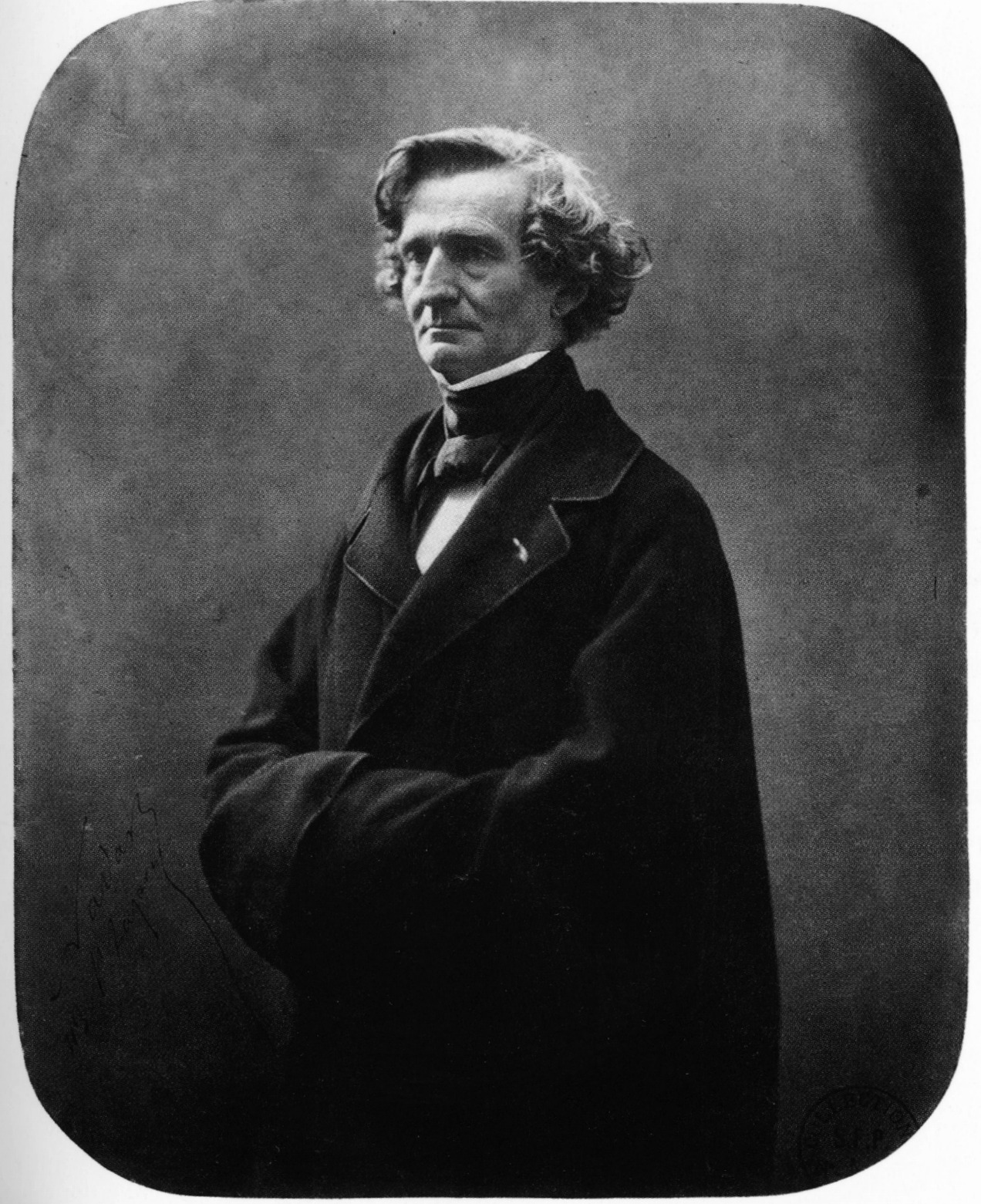
Hector Berlioz (1803-1869), Paris, c. 1857. Hector Berlioz’s Symphonie fantastique: Épisode de la vie d’un artiste … en cinq parties (Fantastic Symphony: Episode in the Life of an Artist… in Five Parts) was composed in 1830. and is one of the most important orchestral works of the period. Franz Liszt made a piano transcription of it in 1833. Leonard Bernstein described the symphony as the first musical expedition into psychedelia because of its hallucinatory and dream-like nature. The symphony is in five movements.

Paul Chenavard (1807-1895), Paris, c. 1857.

Nadar, Pierre-Alfred Ravel (1811-1881). Master comic on the Paris stage at the Théâtre du Palais-Royal for a quarter of century. Each brilliant conversationalists, both sitter and photographer were both at the height of their powers. The glorious theater interiors that still stand in Paris today give the best indication of the celebrity quality that surrounded many of Nadar’s sitters.

Foyer, Théâtre du Palais-Royal, 38 Rue de Montpensier, (1e).

Théâtre de la Montansier/Théâtre du Palais-Royal, 1er, Paris.

Rosine Stolz (1815-1903), Paris, c.1857.

Pierre Cicéri (1782-1868), Paris, c.1857.

Jean-Baptiste-Camille Corot (1796-1875), Paris, c. 1857.
The Photographer Who Captured Modernist French Genius – Eugène Delacroix, Honoré Daumier, Jean-François Millet, Charles-François Daubigny, Gustave Courbet, Gustave Doré, Édouard Manet:

Eugène Delacroix (1798-1863), Paris, 1858. Many volumes could be and are dedicated to the work of this great French Romantic artist and painter. The Musée Delacroix in Paris reports that the artist lived in ten different dwellings and changed studios six times prior to 1857, the year he moved to 6 Rue de Fürstenberg. The apartment he occupied there became the Musée Delacroix in 1932. Delacroix decorated the Salon du Roi (1833–1838) and the library (1840–1846) of the Assemblé Nationale, followed by the library of the Sénat (1840–1851). He was then commissioned for the ceiling of the Galerie d’Apollon for the Musée du Louvre (1850–1851). Between 1851 and 1854, he also created the décor of the Salon de la Paix in the Paris Hôtel de Ville, although his work was unfortunately lost in the fire of 1871. Apart from that particular ensemble, all of Delacroix’s secular decoration still remains in its original location for our viewing pleasure today. The Musée Delacroix has the model of the Orpheus for one of the hemicycles of the Assemblée Nationale ceiling, as well as the model for the hemicycle of the Sénat library depicting Alexander Placing Homer’s Poems in a Golden Chest.

Delacroix, Two Bearded Heads, after Veronese (detail from “The Marriage at Cana”), 1820, oil on canvas. Photo by author.

Delacroix, Lion Hunt (detail), 1861, The Art Institute of Chicago. Photo by author.
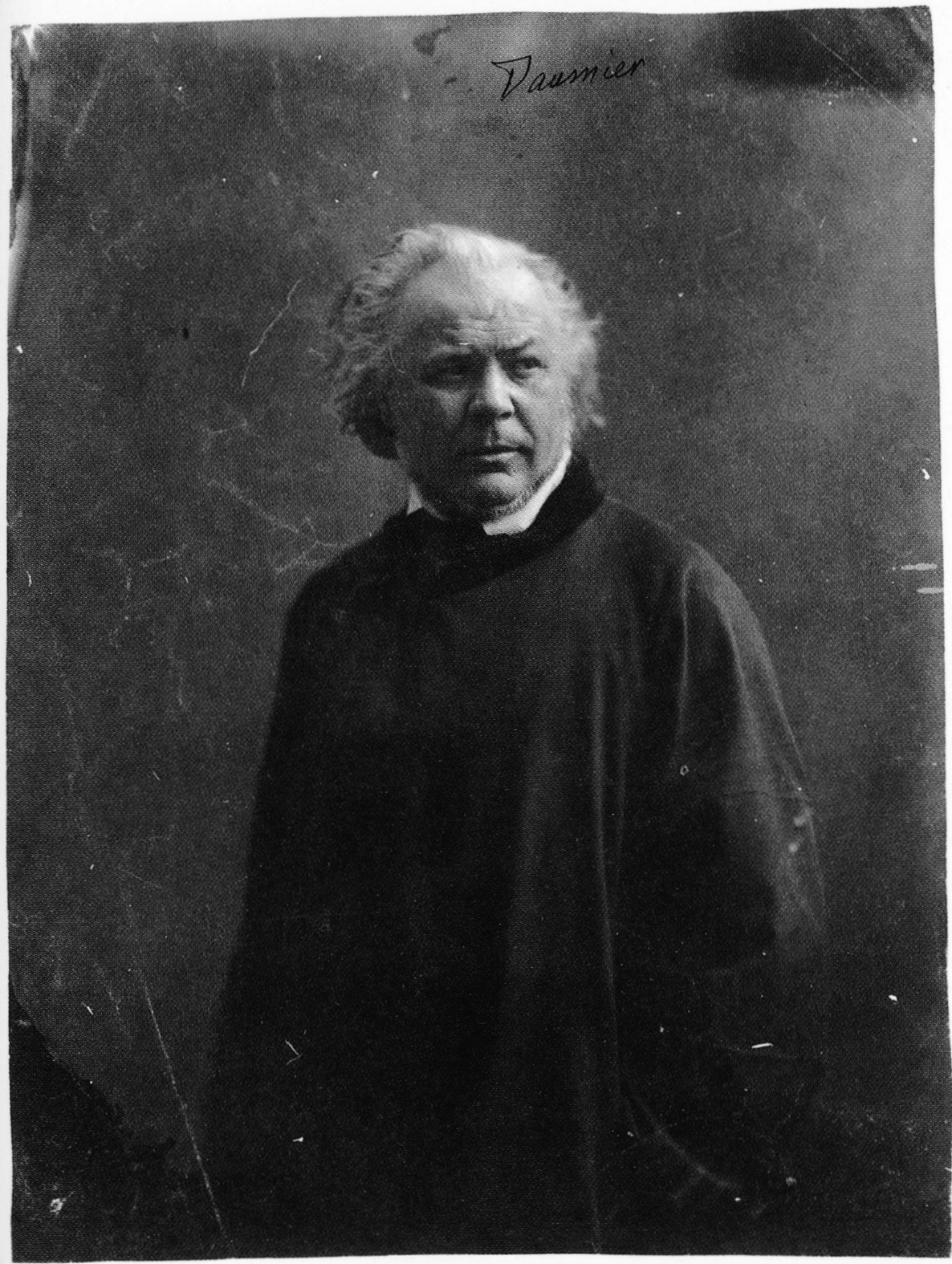
Honoré Daumier (1808-1879), Paris, c. 1857. Four masterful portraits taken in the same sitting. Nadar and Daumier both started their cartoon careers under Charles Philipon. Daumier started by drawing and was prompted, again by Philipon, to model unbaked clay figurines of lawmakers in the July Monarchy. For the rest of his long career Daumier was a master in drawing, painting, sculpture and lithography where the contemporary human element was key admired by Delacroix and Baudelaire. Daumier was friends with the sculptor Préault, painters Corot, Daubigny, Rousseau, and Dupré, and writers Théodore de Banville and Théophile Gautier. Although his first large solo exhibition (at Impressionist art dealer Durand Ruel’s gallery) was when the caricaturist was 70 years old, he had already been compared to novelist Balzac and philosopher Saint-Simon in that his art chronicled an era in French history. It is by viewing the several poses by Nadar of sitter during the same session that one begins to understand the appearance and personality of the subject for the first time.

Honoré Daumier (1808-1879), Paris, c. 1857.

Honoré Daumier (1808-1879), Paris, c. 1857. This portrait of Daumier was exhibited in 1859 at the Société Française de Photographie.

Daumier, Caricature de Photographie-A Collection of Ten Lithographs, lithograph, 36 x 24 cm. (14.2 x 9.4 in.), c. 1840–1867

Nadar, Jean-François Millet (1814-1875), c. 1857. Nadar admired Millet of whom he wrote in 1857 was “one of the most serious talents of the French school.” Some wanted to make Millet’s canvases into sociopolitical manifestos such as in Courbet’s works, but Millet was not intentionally political. Rather Millet’s works looked to depict a toiling peasantry with monumentality and the noble simplicity.

Millet, The Angelus, c 1857, Oil on canvas, 55.5 x 66 cm, Musée d’Orsay.

Nadar, Charles-François Daubigny (1817-1878), c. 1857. Born near Paris into a family of artists, Daubigny was first taught by his father, the artist Edme François Daubigny. His uncle Pierre Daubigny, a miniaturist, was also influential in his life. Daubigny carried on the tradition by his son Karl Daubigny (1846-1886), an accomplished landscape painter.

Daubigny, The Village of Groton, 1857, Oil on Panel, 29.8 x 53.7 cm (11 3/4 x 21 1/8 in.), Fine Arts Museums of San Francisco.

Gustave Courbet (1819-1877), Paris, c. 1866.

Courbet, Woman With A Parrot, 1866, oil on canvas, 51 x 77 in. (129.5 x 195.6 cm), The Metropolitan Museum of Art. New York. When this painting was shown in the Salon of 1866, critics censured Courbet’s “lack of taste” as well as his model’s “ungainly” pose and “disheveled hair.” Yet the provocative picture found favor with a younger generation of artists who shared Courbet’s disregard for academic standards.
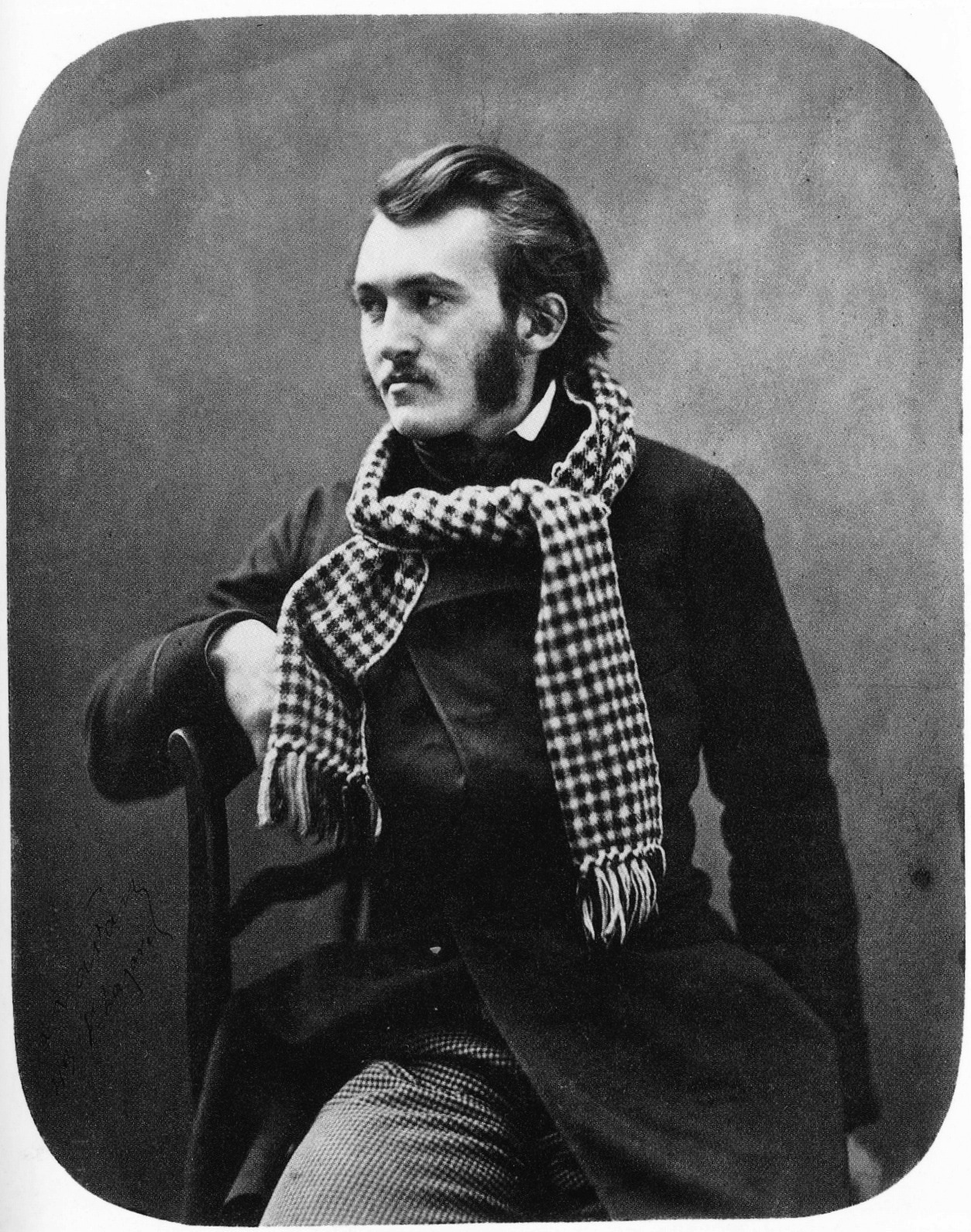
Gustave Doré (1832-1883), Paris, c. 1857.

Nadar, Gustave Doré, Paris, 1867.

Gustave Doré, Vision of the Valley of Dry Bones, 1866. Printmaker and engraver, Doré’s illustrations for the Bible in 1866 were a huge success. This print depicts a vision in Ezekiel 37 when God transported Ezekiel to a valley full of dry bones. God directed Ezekiel to speak to the bones saying that God would make breath enter the bones and they would come to life. This would be just as God did at creation for Adam and Eve as told in Genesis’s first chapters. In Doré’s print, Ezekiel spoke, and God’s breath enters the bones so that they begin to come together, develop flesh and skin, and stand up and form a vast army.
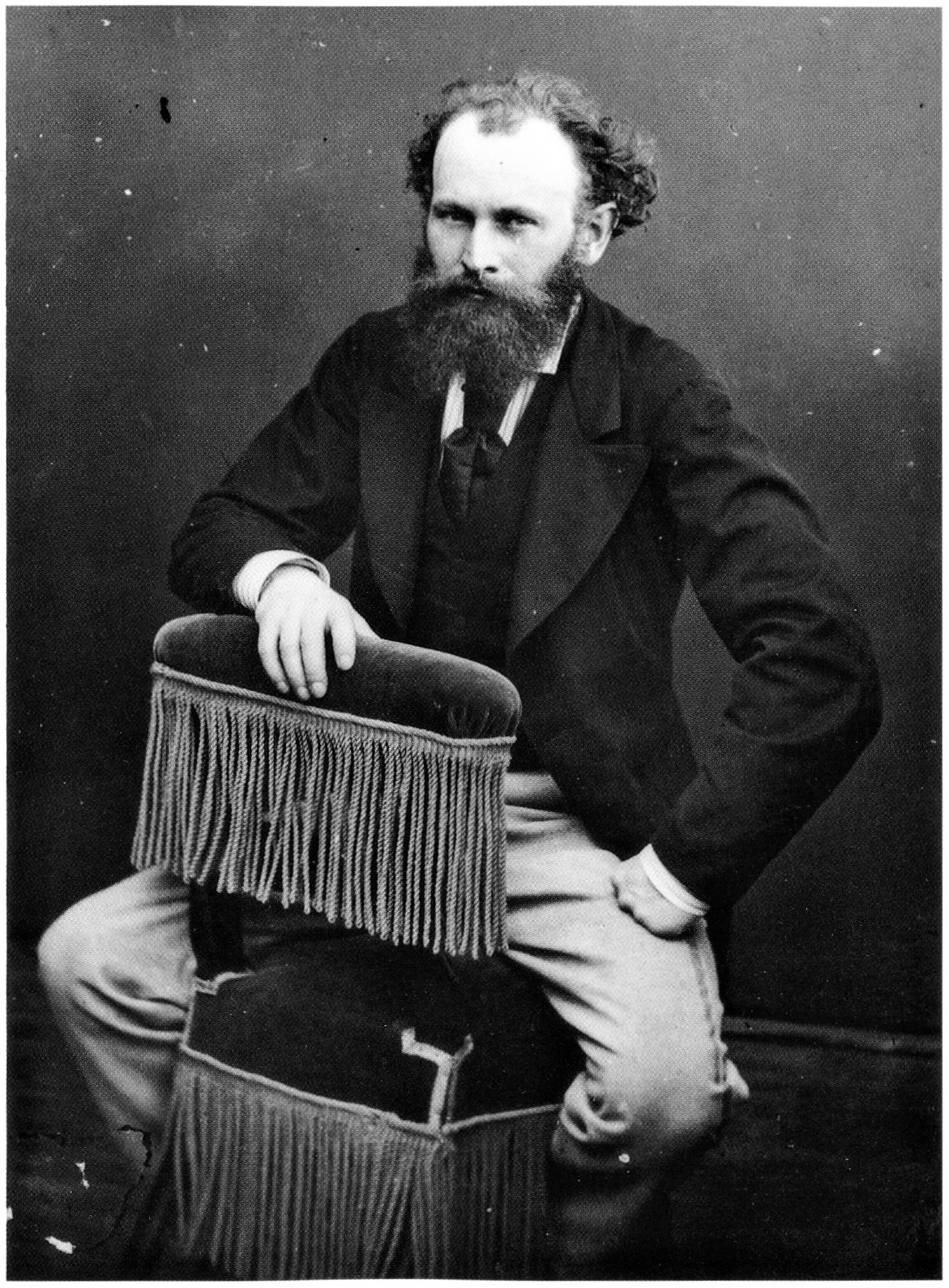
Nadar, Édouard Manet (1832-1883), Paris, c. 1864.
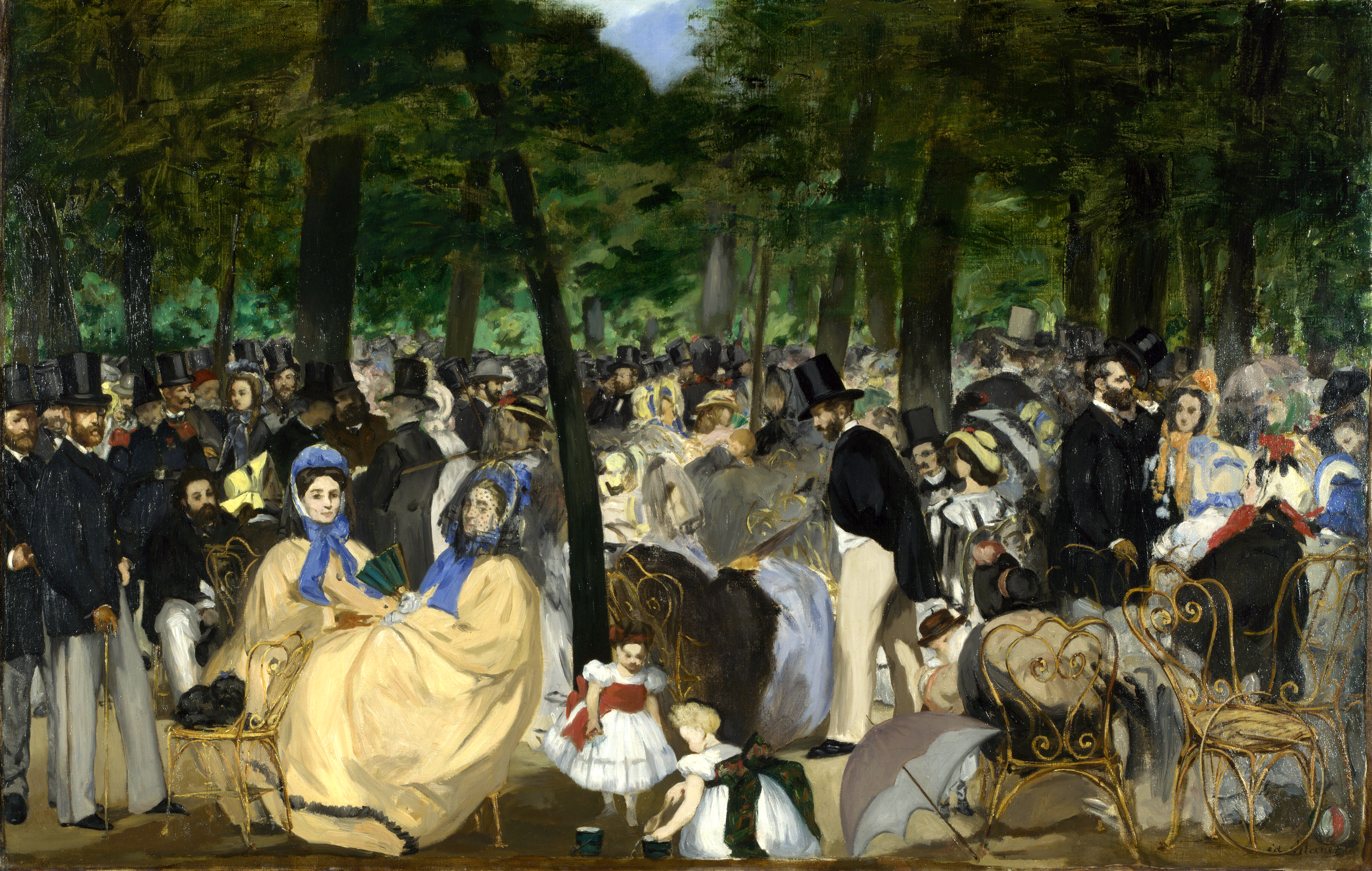
Manet, Music in the Tuileries. 1862. London.

Jacques Offenbach (1819-1880), Paris, 1875.
The famous can-can from Orphée aux Enfers (“Orpheus in the Underworld”) composed in 1858.

François Guizot (1787-1874), Paris, c. 1857. Guizot was a government official in certain of the conservative governments that ruled in early-to-mid-nineteenth century France. Where Guizot was contentious and controversial as a public official, his breath of learning on French History and European Civilization led to the publication of historical tomes that he wrote on these subjects that are comprehensive and well written and remain exciting classics of the period.

Moses Saphire (1795-1857), Paris, c. 1857. A cartoonist and satirist known as Maurice Gottlieb.

Adolphe Crémieux (1796-1880), Paris, c. 1858.

Isadore Severin, Baron Taylor (1789-1879), Paris, c. 1858.

Nadar, Philippe de Chennevières-Pointel (1820-1899), c.1855. Museum administrator and scholar. A good friend of Baudelaire who praised Chennevières’ modesty in the face of his humanitarian ideals and work ethic.

Emma Livry (1842-1863), Paris, c. 1859.
Nadar by Nadar (self-portraits):

Nadar, Self Portrait, c. 1858.

Nadar, Self-Portrait, c. 1859.

Nadar, Self-Portrait, c. 1860.

Nadar, Self Portrait in artificial light, c.1859-1860.
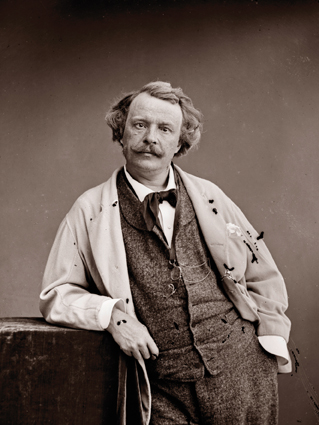
Nadar, Self-Portrait, c. 1865.

Nadar Self Portrait.

Nadar in old age.

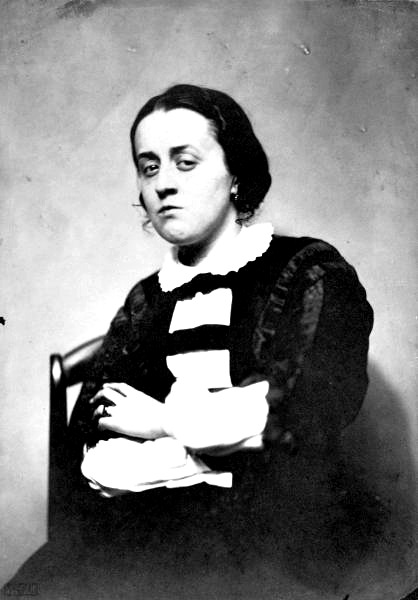
Ernestine-Constance Nadar (1836-1909), Paris, 1854.

Nadar, Ernestine Nadar, 1890. The Photographer’s wife displays a winsome expression in this portrait.

Giacomo Meyerbeer (1791-1864), Paris, 1860.

Nadar atelier, Pierre-Joseph Proudhon (1809-1865), Paris, 1862.

Mikhail Bakunin (1814-1876), Paris, c. 1863.

George Sand (1804-1876), Paris, 1864.

Constance Quéniaux (1832-1908), Paris, 1861. Documentary evidence (a letter between Alexandre Dumas fils and Georges Sand) points to the sitter in Nadar’s photograph, a former dancer at the Paris opera and a mistress of the Ottoman diplomat and art collector Khalil Bey as the subject in Gustave Courbet’s erotic painting, The Origin of the World (1866), in the Musée d’Orsay in Paris.
“The Divine Sarah,” Sarah Bernhardt by Nadar:

Sarah Bernhardt in her late teens, c. 1859.
In 1893 Sarah Bernhardt (1844-1923) took over the direction of the Théâtre de la Renaissance in Paris. Built in 1873, the theater stands next to the Porte Saint-Martin monument constructed in 1674. During the next six years (until 1899) many productions premiered in Bernhardt’s theater: Gismonda, a Greek melodrama in four acts, by Victorien Sardou (1831-1908) in 1894; La Princesse Lointaine, a play based on the story of a 12th-century troubadour, by Edmond Rostand (1868-1918) in 1895; two plays by Maurice Donnay (1859-1945), Amants in 1896 and L’Affranchie in 1898; La Figurante by François, Vicomte de Curel (1854-1928) in 1896; and two other productions in 1898, La Ville morte by Gabriele D’Annunzio (1863-1938) and Lysiane, a five-act play, by Romain Coolus (1868-1952). In 1896, Sarah Bernhardt in the Théâtre de la Renaissance, played the title role in Alfred de Musset’s Lorenzaccio, performing the part at the age of 52 and declared by the critics to be “from beginning to end, and at every moment, incomparably sublime.”

Sarah Bernhardt (1844-1923), Paris, c. 1864.

Théâtre de la Renaissance, Paris (10e).

Stage, Théâtre de la Renaissance, 20 boulevard Saint-Martin (10th), Paris. Sarah Bernhardt directed this theater from 1893 to 1899. It was built in 1873.

Sarah Bernhardt photographed by Nadar in the title role of Théodora in 1884.


Sarah Bernhardt photographed by Nadar.

In 1899 Sarah Bernhardt signed a long lease for the Théâtre des Nations/Théâtre Lyrique at 2 Place du Châtelet in the Fourth arrondissement and renamed it Théâtre Sarah-Bernhardt. It was designed by Gabriel Davioud (1824-1881) and built in 1862 by Baron Haussmann (1809-1891). It was virtually destroyed by fire in May 1871 at the end of Paris Commune and rebuilt according to the original plans in 1874. The renowned actress produced there until her death in 1923. Théâtre Sarah-Bernhardt today is Théâtre de la Ville.

Part of a program for a production of La Vierge d’Avila in 1906-1907 at the Théâtre Sarah-Bernhardt.

Impressive Haussmannian architecture of the Théâtre de la Ville has stood opposite the Théâtre du Châtelet, on the square of the same name in Paris, since 1862.

Sarah Bernhardt photographed by Nadar in a production of La Tosca in 1887.


Jules Champfleury (1821-1889), Paris, c. 1865. French writer and modern art critic. Champfleury was a prominent supporter of the Realist movement in painting and fiction and a champion of Gustave Courbet.


Jean Journet (1799-1861), Paris, c. 1858. Fourierist “apostle.” Champfleury included Journet in his Excentriques and Nadar looked to achieve a passionate and inspired image in this photographic portrait portrait to offset Courbet’s anti-idealized artwork of Journet included above (Lithograph in black on wove paper, 1850, The Art Institute of Chicago).

Charles Garnier (1825-1898), Paris, 1877. Architect of the opulent Opéra Garnier constructed between 1861 and 1875. The Palais Garnier is probably the most famous opera house in the world and one of the symbols of Paris.


Paris Opera exterior and interior. Stock photos.

Victor Hugo (1802-1885).