

51 POSTS.
FEATURE image: Fallingwater, Frank Lloyd Wright, Mill Run, Pennsylvania. March 2010. Author’s photograph.
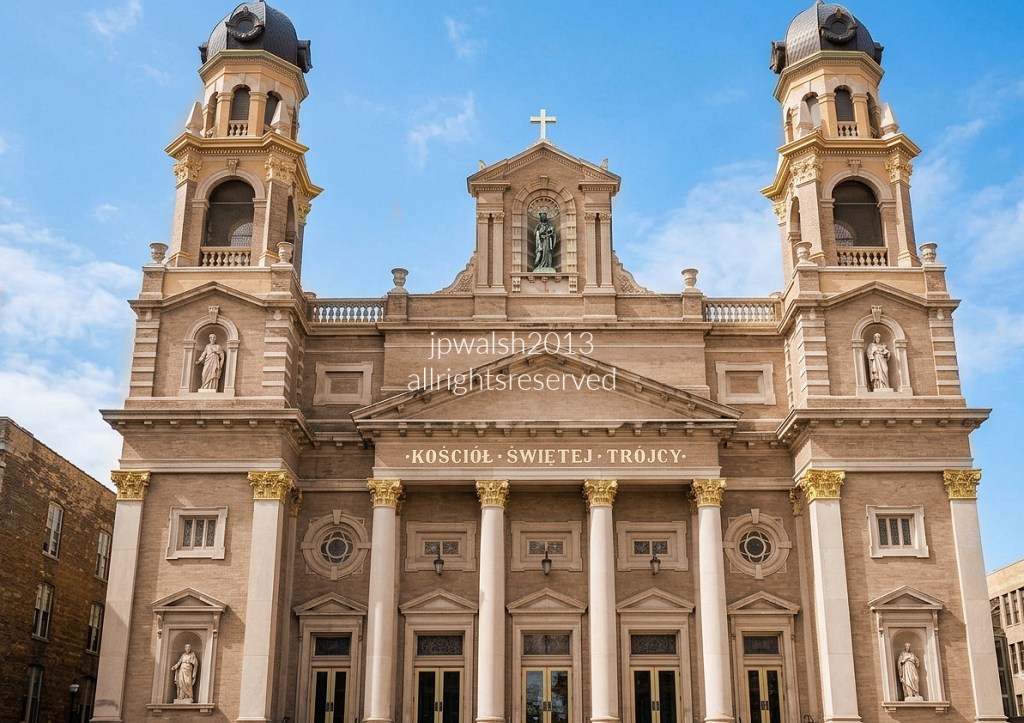
Holy Trinity Church: Chicago’s Monument to Polish Faith and Freedom.
Feature image: Exterior of Holy Trinity Polish Catholic Church, Shots of Holy Trinity Polish Mission can be seen throughout 20th Century-Fox’s 1948 film noir Call Northside 777 starring James Stewart, the first Hollywood feature film to be shot on location in Chicago. July 2013. Author’s photograph. Holy Trinity Polish Catholic Church in Chicago is more…

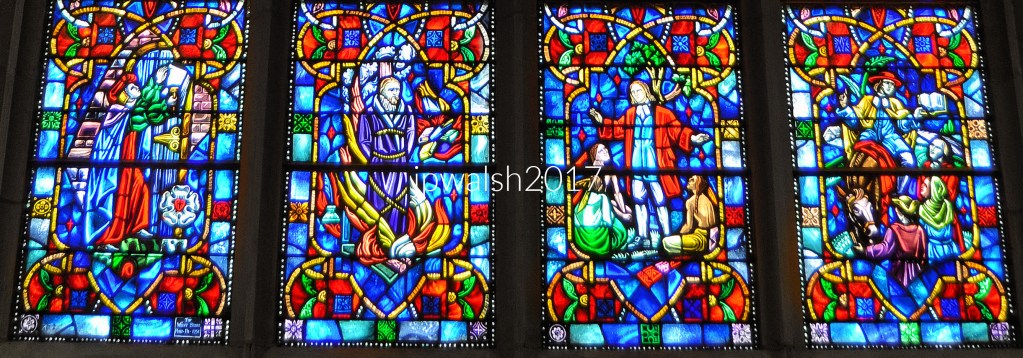
Wilmette’s Trinity United Methodist Church (1929): Willett Stained Glass and a Home Alone Legacy.
FEATURE Image: Reformation and the 18th century missions of Methodist founder John Wesley, detail of Willet stained- glass window, Trinity United Methodist Church, 1024 Lake Avenue, Wilmette, Illinois. March 2017. Author’s photograph. Trinity United Methodist Church in Wilmette is a remarkable example of early twentieth-century ecclesiastical architecture whose artistic significance is enriched by its exceptional…
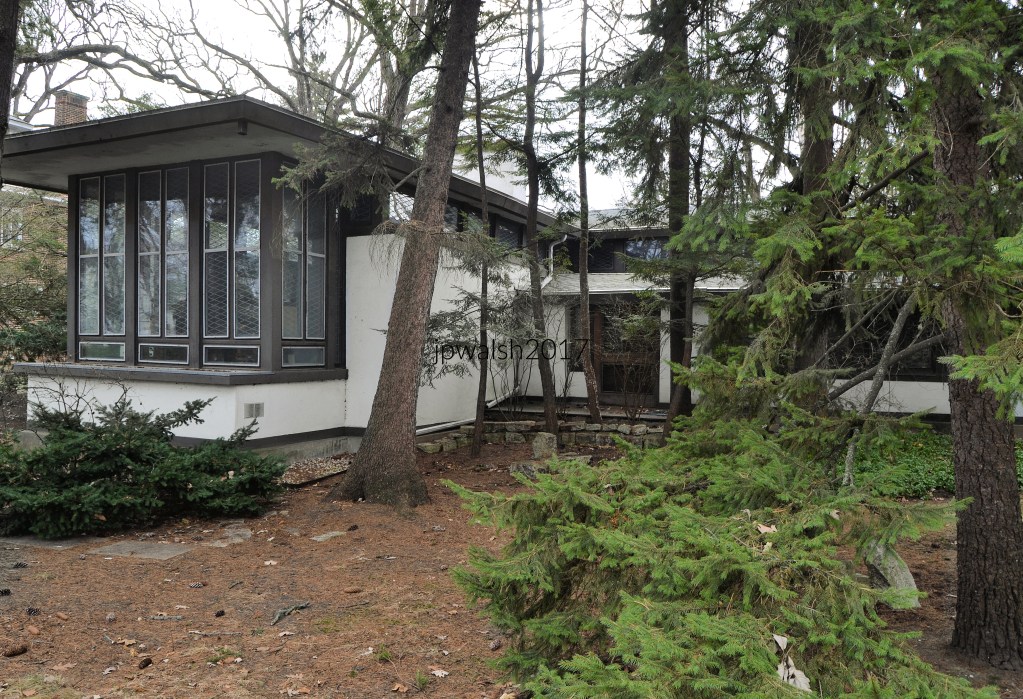
Prairie Architecture in Transition: Frank Lloyd Wright’s Frank J. Baker House (1909) in Wilmette, Illinois.
Feature image: Frank J. Baker House, Frank Lloyd Wright, 1909, Wilmette, Illinois. Frank J. Baker (1864–1922) was a driving force in Wilmette’s early growth — a sharp‑minded engineer and influential executive with the North Shore Electric Company and Commonwealth Edison who helped bring electricity to the North Shore. He is most remembered for the remarkable…
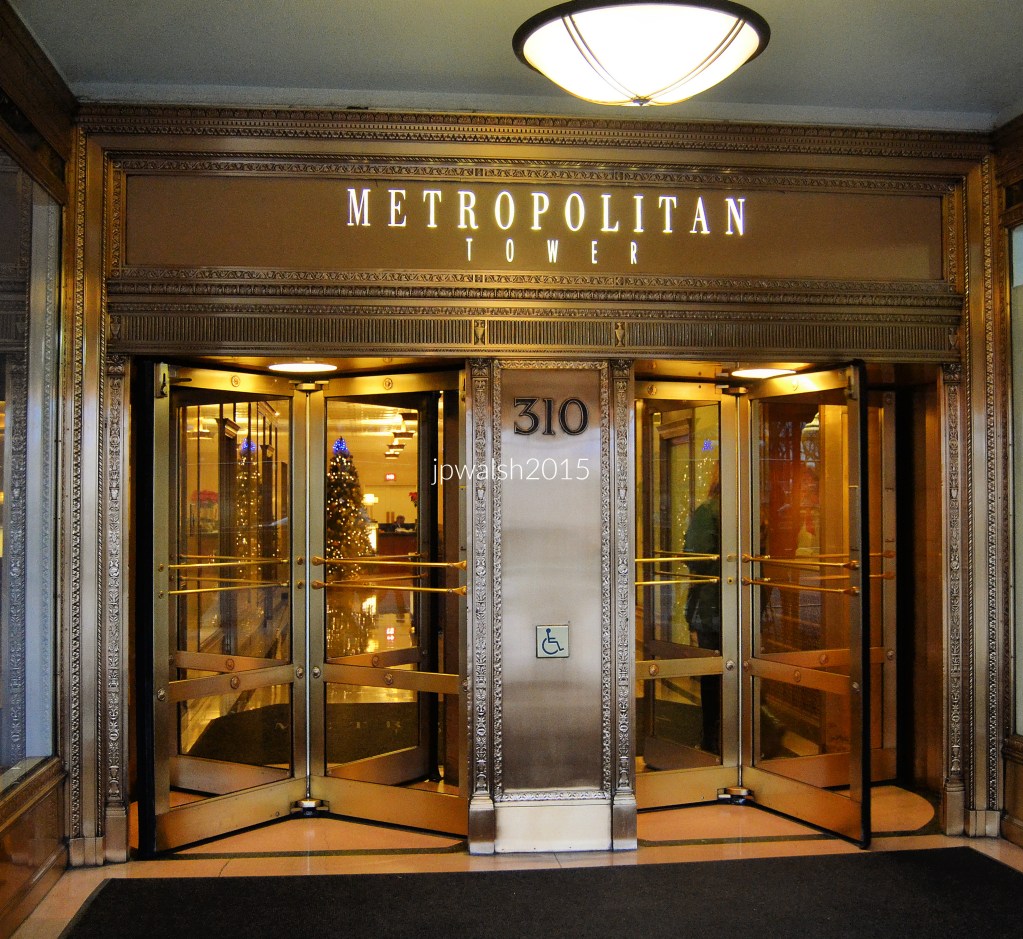
The Entrance to an Era: Chicago’s Metropolitan Tower (1924) and the Rise of Modern Michigan Avenue.
Feature Image: Main Entrance, Metropolitan Tower (1924), 310 South Michigan Avenue, Chicago, was designed by Graham, Anderson, Probst & White. December 2015. 4.89 mb DSC_0963 (1). Author’s photograph. Metropolitan Tower’s main entrance is more than an architectural detail: it is a surviving gateway to one of Chicago’s most significant early skyscrapers, a building that embodied the…
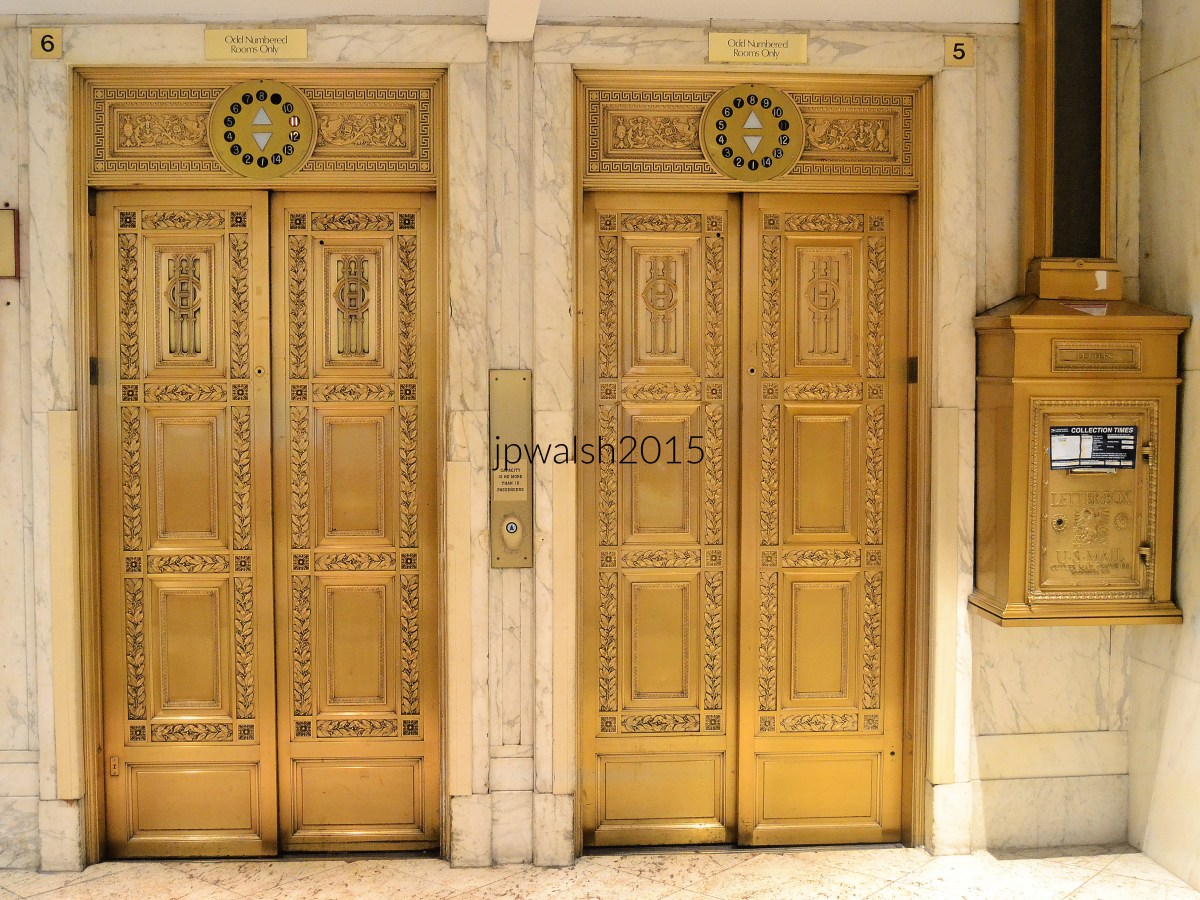
Built for the World’s Fair: The Congress Plaza Hotel (1893/1907) and Chicago’s Gilded Age Ambitions.
Feature Image: Congress Plaza Hotel in Chicago built in 1893 during the World’s Columbian Exposition features this later ornate Beaux-Arts gold elevator bank and the celebrated Gold Room. December 2015. Author’s photograph. 6.20 mb DSC_0617 (1). The Congress Plaza Hotel embodies Chicago’s transformation during and after the World’s Columbian Exposition, linking the city’s emergence as…
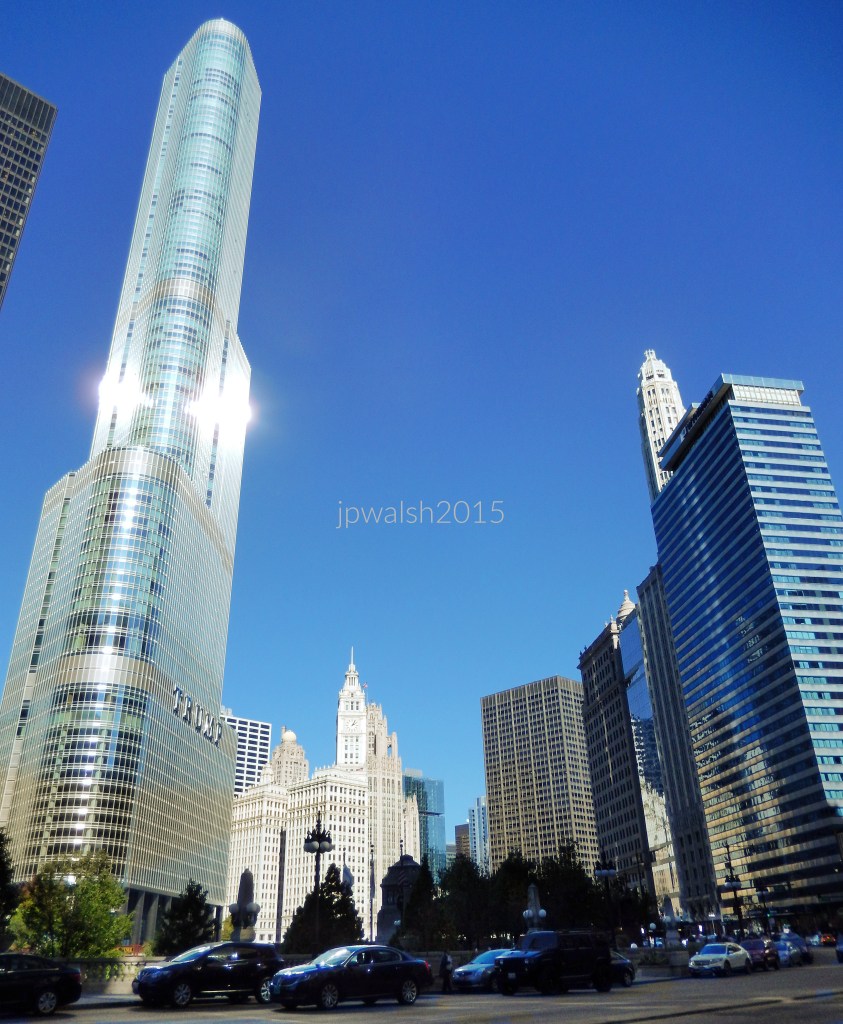
CHICAGO SKYLINE: The Shape of a Great City.
Feature Image: Chicago. October 2015. Author’s photograph. 5.85mb DSCN1452 (1). Chicago’s skyline demonstrates how architecture, engineering, and urban design combine to create one of the world’s most recognizable cityscapes, where individual landmarks become part of a larger visual composition of steel, stone, glass, light, and ambition. Chicago skyline from Museum Campus promontory (Northerly Island). October…

Munich Style in Oak Park: The F.X. Zettler Windows of St. Edmund Church, 1907-1910.
Feature Image: Two apostles, detail, Institution of the Eucharist window, F.X. Zettler, 1907-1910, St. Edmund Church. Author’s photograph. September 2015. The F.X. Zettler windows at St. Edmund Church are part of a larger story about how German Catholic artistic traditions shaped Chicago-area Catholicism, using sacred art not merely as decoration but as theological instruction, devotional…

125 Feet of Steel Above the Calumet: How the 1958 Chicago Skyway Shaped Regional Transit.
Feature image: Chicago Skyway Toll Bridge, 95th Street & S. Baltimore Avenue, Chicago. July 2016. Author’s photograph. 4.03mb DSC_0774 (1). The massive steel infrastructure of the Chicago Skyway Toll Bridge (specifically the “High Bridge” at 95th Street and S. Baltimore Avenue) represents a monumental feat of mid-20th-century engineering, combining structural strength, durability, and commercial utility…
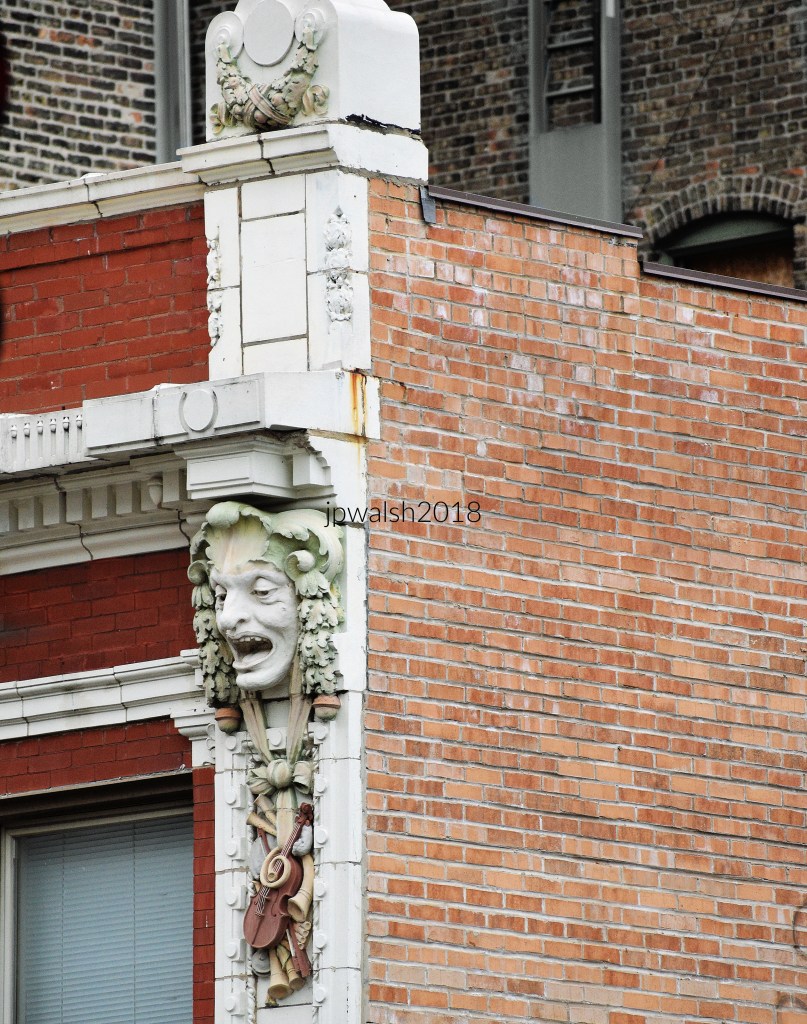
From Silent Films to Condos: The Life and Death of Chicago’s Village Art Theatre (1916-2007).
FEATURE Image: February 2018. Village “Art” Theatre, 1548-50 N. Clark Street, Chicago, Illinois 60610. The use of masks had been used in theatre since ancient times. They were usually tied to their dramatic source material and the inherent psychology of the characters. The Landmark Designation Report for the Village Theatre described this polychrome character head…
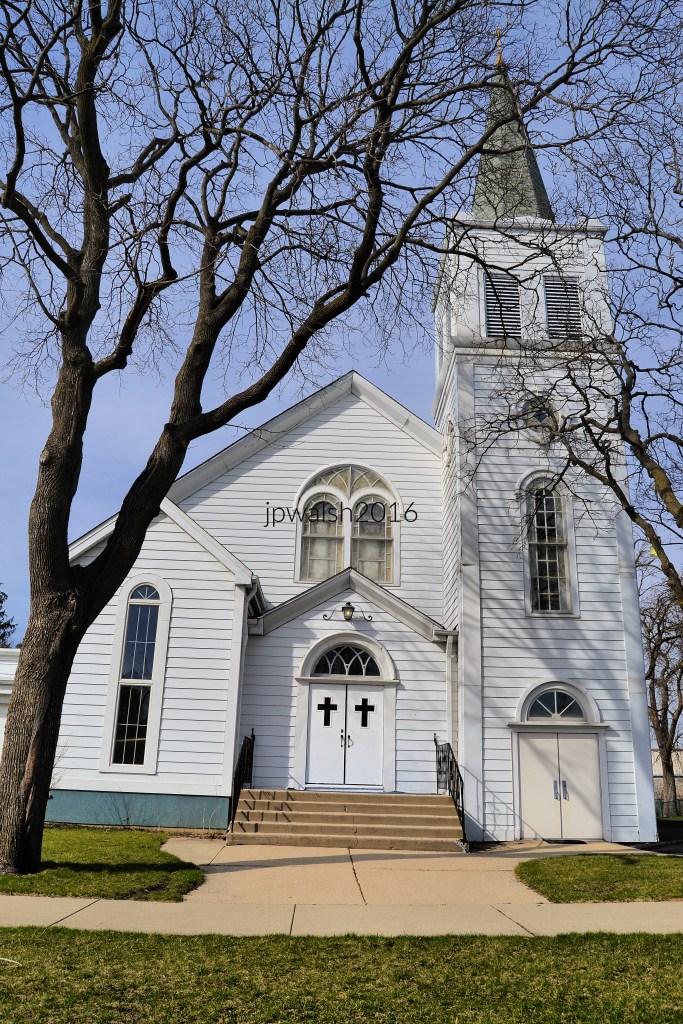
Where Frontier Hanover Township Became Suburban Chicago: Immanuel United Church of Christ (1852) on Old Church Road, Streamwood, Illinois.
FEATURE Image: Immanuel United Church of Christ, 1500 Old Church Road, Streamwood, Illinois. Built in 1868, it is the congregation’s second house of worship on the site and remains the congregation’s active sanctuary. March 2016. Author’s photograph. 7.49mb _0979 Immanuel United Church of Christ embodies the transformation of northern Illinois from frontier settlement to modern…

Stone, Spires, and Industry: Batavia’s Architectural Heritage Along the Fox River, from the 1830s to Today.
FEATURE Image: 143 First Street, c. 1863. Since the 19th century Batavia, Illinois, 40 miles west of Chicago, was a railroad and manufacturing center in addition to its farmsteads. This mid-19th century limestone factory building is testament to Batavia’s industrial heritage. After the U.S. Civil War, Batavia was a major manufacturer of Conestoga wagons used…
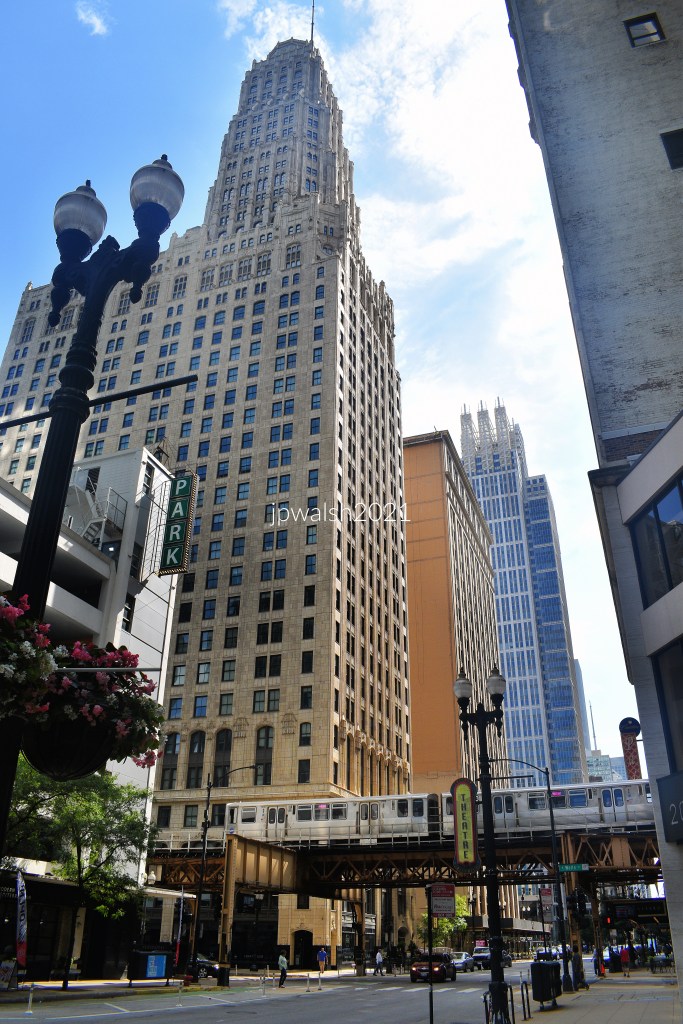
Randolph Tower (1929): A Chicago Skyscraper at the Crossroads of Classicism and Modernism.
FEATURE Image: View from the west, Steuben Club Building/Randolph Tower, 188 W. Randolph Street, Chicago. The building’s telescoping tower anticipates the design direction of the firm’s celebrated 1 North LaSalle Street Building completed in 1930. August 2021. Author’s photograph. 12.72mb_9354 (1) The Steuben Club Building, later known as Randolph Tower, embodies a pivotal moment in…
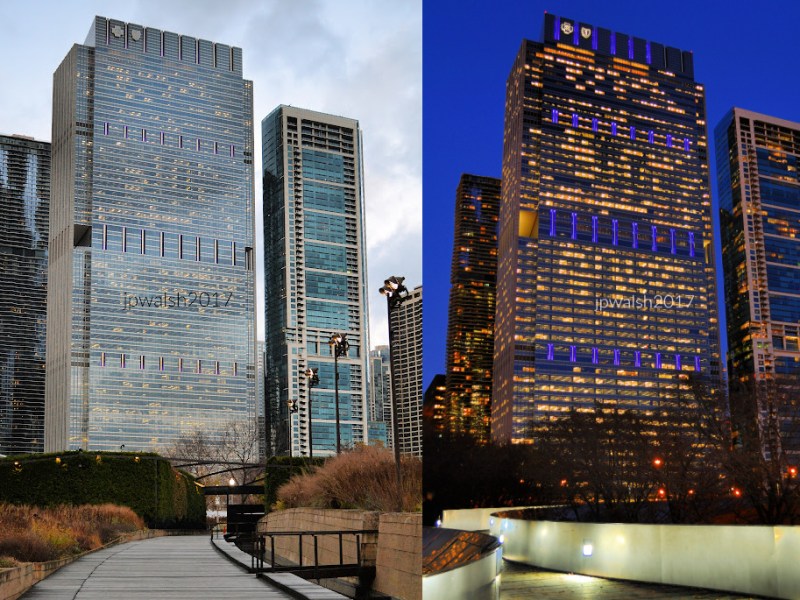
Built to Grow: The Blue Cross Blue Shield Tower (1997/2010) and Chicago’s Vertical Expansion Experiment.
FEATURE image: Blue Cross Blue Shield Tower building, 300 E. Randolph Street, Chicago, Illinois. Day and Night. It was designed by Goettsch Partners (GP) an architecture firm based in Chicago, with additional offices in Denver and Shanghai. November 2017. Author’s photographs. The Blue Cross Blue Shield Tower embodies a forward-thinking approach to urban architecture, demonstrating…
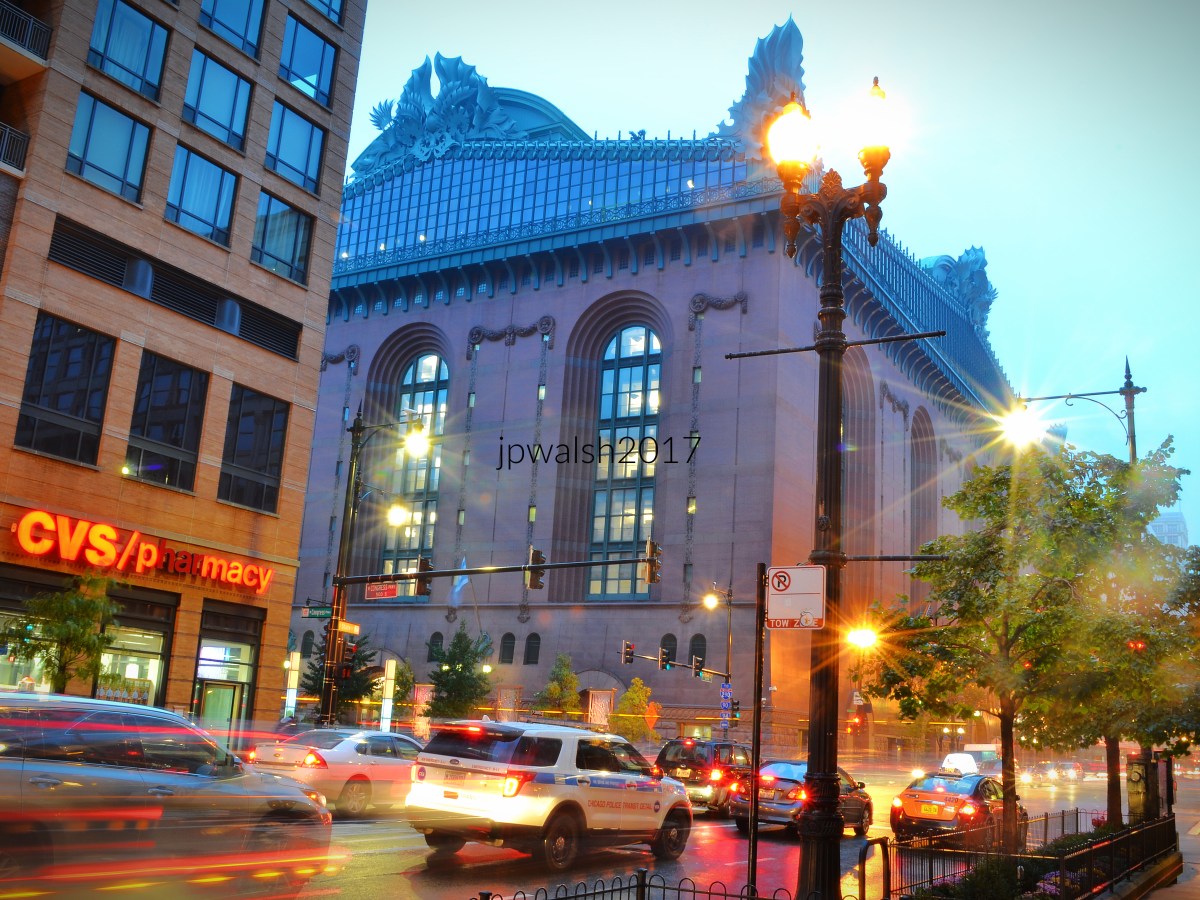
Building a Monumental Landmark: Harold Washington Library (1991) and Chicago’s Civic Identity.
FEATURE image: The Harold Washington Library sits on the northwest corner of State Street and Ida B. Wells (Congress) Drive. It is recognized as one of the largest public library buildings in the world. November 2017. Author’s photograph. 5.02 mb. The Harold Washington Library Center is a landmark of late 20th-century Chicago architecture that successfully…

Dearborn Street Station (1885): Echoes of Chicago’s Rail Empire and Last Great Link to the Railroad Age.
FEATURE Image: Completed in 1885 at a cost of $500,000 (equivalent to nearly $16 million in 2024), Dearborn Street Station in Chicago’s South Loop stood as a grand Romanesque composition of Italian brick and granite. Its architect, New Yorker Cyrus L. W. Eidlitz, would later design One Times Square (1904), the famed Manhattan tower that…

Let There Be Light: Abraham Rattner’s Masterpiece at the Chicago Loop Synagogue (1957).
FEATURE image: Chicago Loop Synagogue with stained glass window, Let There Be Light (1960) by American Expressionist artist Abraham Rattner (1895-1978). The synagogue was built in 1957 with this wall of stained glass. The colorful and semi-abstract artwork contrasts and complements with the architectural minimalism of the rest of the sanctuary. October 2015. Author’s photograph.…

Daniel Burnham’s 1895 Masterpiece: The Artistry of Evanston’s First Presbyterian Church.
FEATURE image: Aeolian Skinner organ, sanctuary. October 2015. Author’s photograph. 6.27mb. The First Presbyterian Church of Evanston (1895), designed by renowned local architect Daniel H. Burnham, stands as a masterwork of Gothic Renaissance architecture that masterfully balances community inclusivity with grand artistic elements—specifically highlighted by its unobstructed structural layout, a world-class Aeolian Skinner organ, and…

Abstract Light and Gothic Form: The Narrative Stained Glass of Northwestern’s Alice Millar Chapel (1962).
FEATURE Image: Alice Millar Chapel, 1962, Northwestern University, Evanston, IL. October 2015. Author’s photograph. 6.78mb The Alice Millar Chapel (1962) at Northwestern University, designed by architect Edward Grey Halstead, stands as a premier contemporary Gothic landmark on Chicago’s North Shore. Funded by philanthropist Foster G. McGaw, the chapel complex masterfully blends spiritual interfaith utility with striking…

Eclecticism by the Lake: Capturing Century-Old Residential Mastery in Evanston, Illinois.
FEATURE Image: 1432 Forest Avenue, Evanston, IL, 1885. Stylish single-family home, nearly 5,000 square feet, has 6 bedrooms and 3.5 bathrooms. June 2022. Author’s photograph. 7.7 mb 53% A rich, cross-generational tapestry of American residential design, Evanston’s historic architecture documents how pioneering designers deftly synthesized early modern Prairie style geometry with imposing, traditional European forms.…
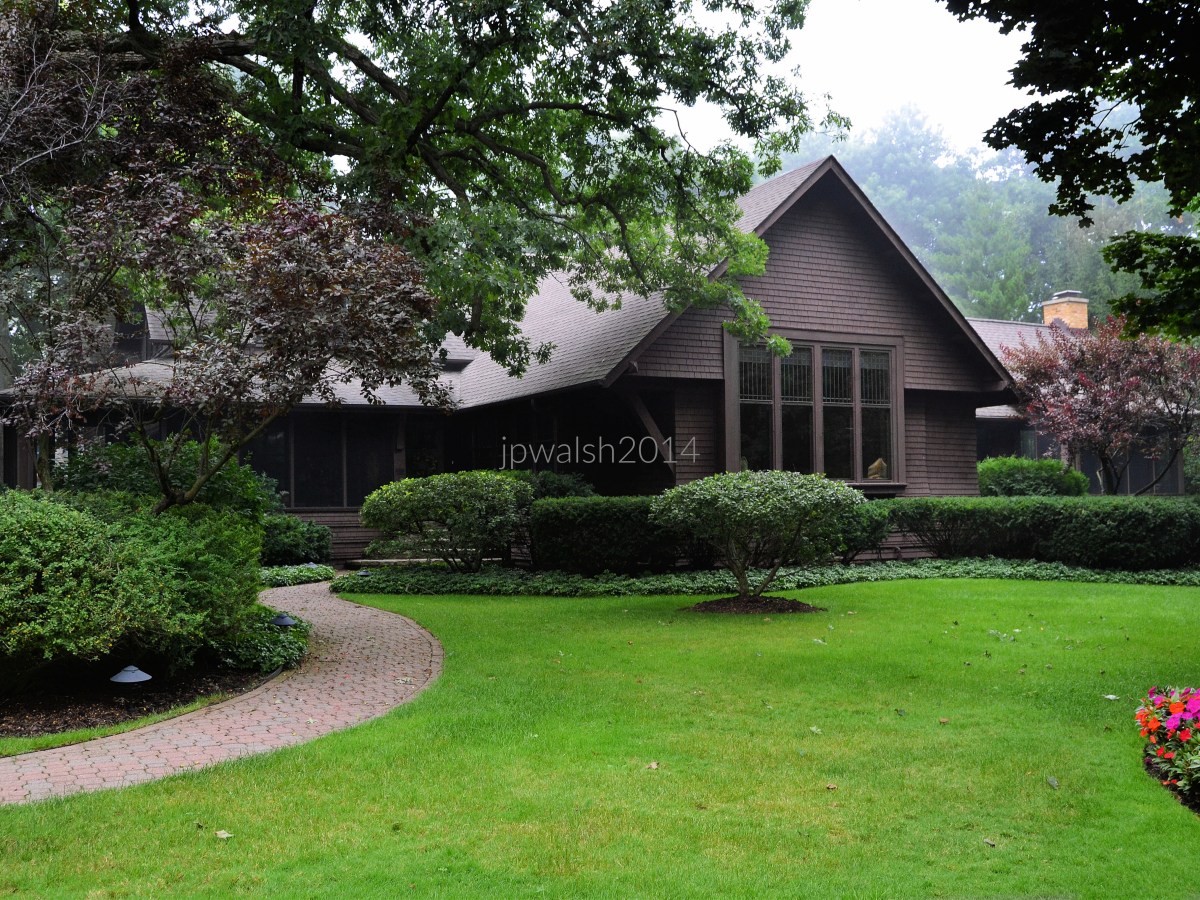
Winnetka, Illinois: A Century of Architectural Distinction.
FEATURE image: 822 Bryant, Winnetka, 1901. A grand example of the Shingle style working its way through the Arts and Crafts movement and influenced by the recent Prairie School’s horizontality and openness (see below for more details). Author’s photograph. 8/2014 99% 6.92mb. Winnetka’s architectural identity was shaped during a formative period from the 1880s to…

From Italianate to Prairie School: The Making of Wilmette’s Architectural Character, 1873-1930.
FEATURE image: Detail of 804 Forest Avenue, Wilmette, Illinois. The Prairie style house was built in 1906 by architect George Washington Maher (1864-1926) whose influence on the Midwest was profound and prolonged and, in its time, as great as Frank Lloyd Wright’s. June 2014. Author’s photograph. 3.95mb Wilmette’s architectural character reflects the evolution of Chicago’s…
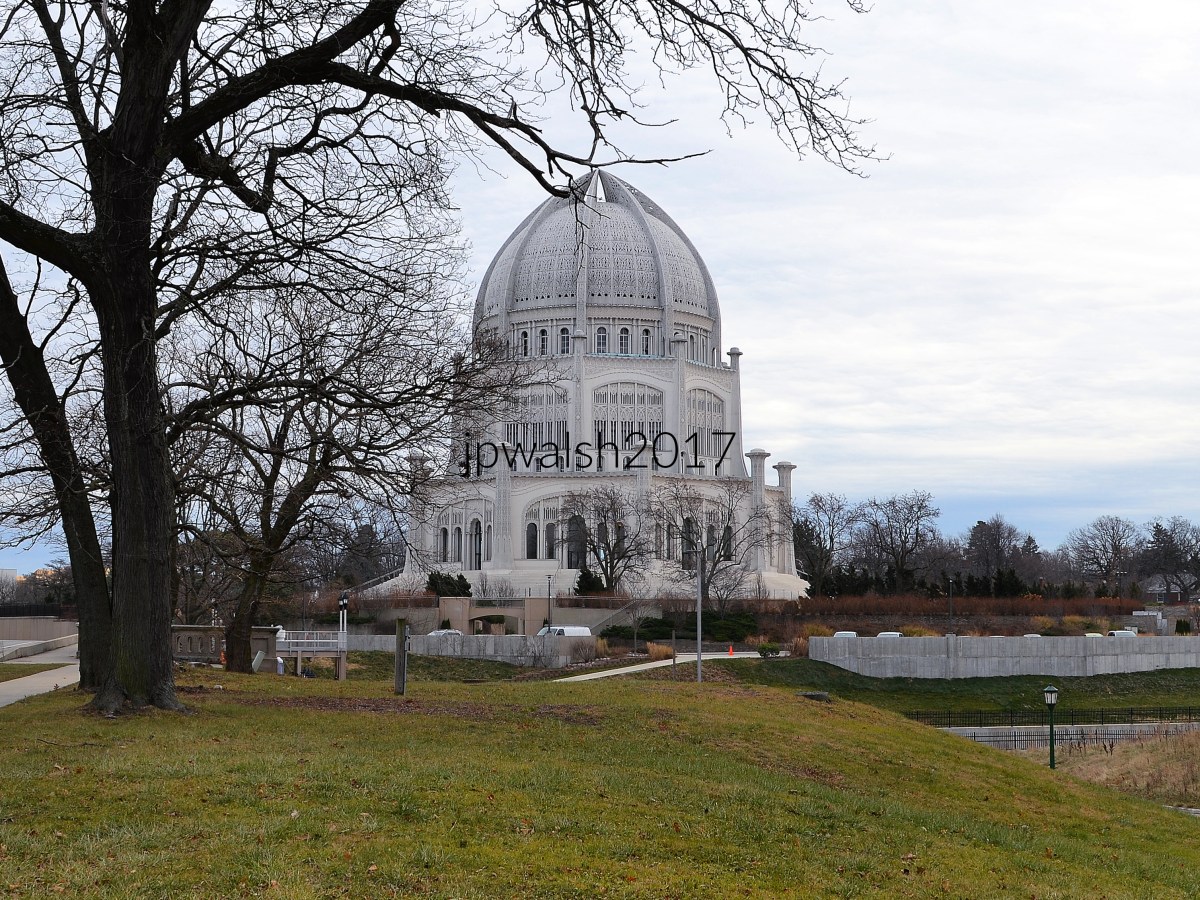
Architecture for a Universal Faith: Louis Bourgeois and the Baháʼí Temple (1912-1953) in Wilmette, Illinois.
FEATURE image: Architect Louis Bourgeois incorporated a variety of religious architecture and symbols including for Hindus, Buddhists, Native Americans, Jews, Christians and Muslims, to convey the Baháʼí principle of the unity of religion. Author’s photograph. The Baháʼí Temple in Wilmette is one of America’s most distinctive religious monuments, where architect Louis Bourgeois fused spiritual ideals,…

The Civic Opera Building (1929): Samuel Insull’s Art Deco Monument to Music and Commerce on the Chicago River.
FEATURE image: CIVIC OPERA BUILDING, 20 N. Wacker Drive, Chicago. The world-famous Lyric Opera of Chicago mounts its productions in one of North America’s most beautiful opera houses, the Civic Opera House at 20 North Wacker Drive in downtown Chicago, Illinois. Author’s photograph. The Civic Opera Building (1929) represents one of Chicago’s greatest achievements of…

From Little Fort to Industrial Port: Waukegan’s Architectural Legacy.
FEATURE image: 946 N. Sheridan Road, Waukegan, Illinois 1876. Waukegan’s surviving architecture serves as a visual record of the city’s transformation from frontier trading post to prosperous Great Lakes industrial center, preserving nearly a century of changing architectural tastes and civic ambitions. Text & photographs by author. INTRODUCTION Waukegan, Illinois, is an historic community on…

The Art Deco Landmark That Became the Face of the Movies: Park Ridge’s Pickwick Theatre (1928).
FEATURE Image: The Pickwick Theatre Building, an Art Deco movie palace, opened in 1928. Its marquee is one of the most recognized structures in Park Ridge, Illinois, a suburb of Chicago. The marquee became famous nationwide when it was featured in the opening sequence of the nationally syndicated television show, Gene Siskel & Roger Ebert’s…
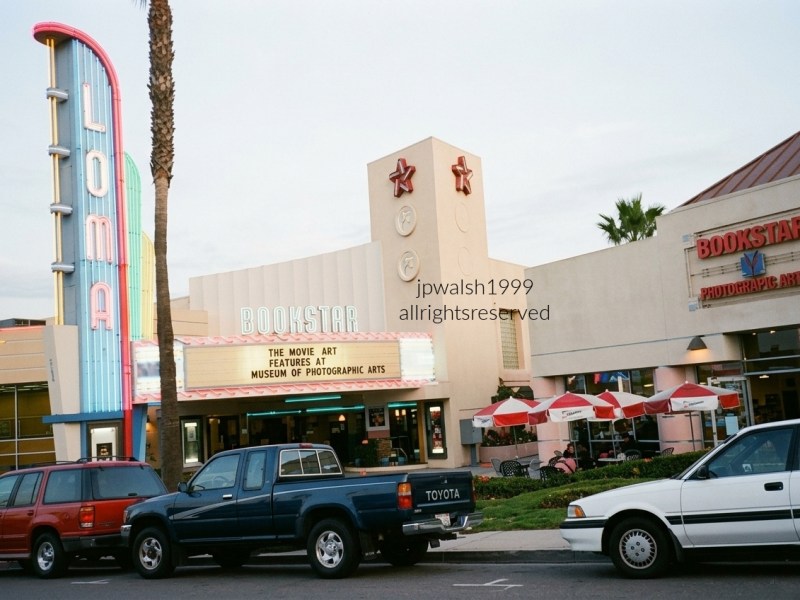
S. Charles Lee’s Loma Theatre (1945): A Bridge Between Art Deco Glamour and Postwar Modernism in San Diego.
FEATURE image: The Loma Theatre with its vertical sign in San Diego, California. was opened in 1945. This is a true transitional/hybrid building for American architect S. Charles Lee. The architect retains the curves (in the sign) of his pre-war theatre buildings and moves to the angles (in the main structure) that increasingly marked his…

From Adler to Dorsey: Ebenezer Missionary Baptist Church (1899) and the Rise of Chicago Gospel Music.
FEATURE Image: Signage of Ebenezer Missionary Baptist Church, 4501 S. Vincennes Avenue, Chicago. The church is known as “the birthplace of Gospel music” since Thomas A. Dorsey (1899-1993) started his first modern gospel choir here in 1931. October 2016. Author’s photograph, 6.06 mb Ebenezer Missionary Baptist Church embodies multiple layers of Chicago history: as the…

From Railroad Suburb to City Neighborhood: The Architecture of Beverly and Morgan Park, Chicago.
FEATURE image: Detail of wood, stone and brick used by architect Joseph Emil Hosek for his 1951 Prairie-style house at 8958 S. Hamilton Avenue in Northern Beverly. See a fuller description and another photograph of the house in this post. Beverly and Morgan Park preserve one of Chicago’s most distinctive residential landscapes, where nineteenth-century suburban…

Two Weeks, Thirteen Stories: Engineering Chicago’s 20-story Fisher Building (1896), An Early Skyscraper Triumph.
FEATURE image: FISHER BUILDING, 343 S. Dearborn Street, view from the south. Author’s photograph, December 2017. The 1895–96 Fisher Building represents a pivotal triumph in early skyscraper design, demonstrating how Charles B. Atwood’s flamboyant Gothic Revival aesthetics combined with Edward Clapp Shankland’s rapid steel-frame engineering to evolve the glass-and-terra-cotta formulas pioneered by the Reliance Building…

From Olmsted to Wright: The Making of Riverside, Illinois, America’s First Planned Suburb.
FEATURE Image: 124 Scottswood Road, Riverside, Illinois, 1871, by William LeBaron Jenney (1832-1907). A full description of this house is in the post. June 2022. Author’s photograph. Riverside, Illinois, is not simply an early suburb of Chicago but one of America’s most significant planned communities, where the visionary landscape design of Frederick Law Olmsted and Calvert…
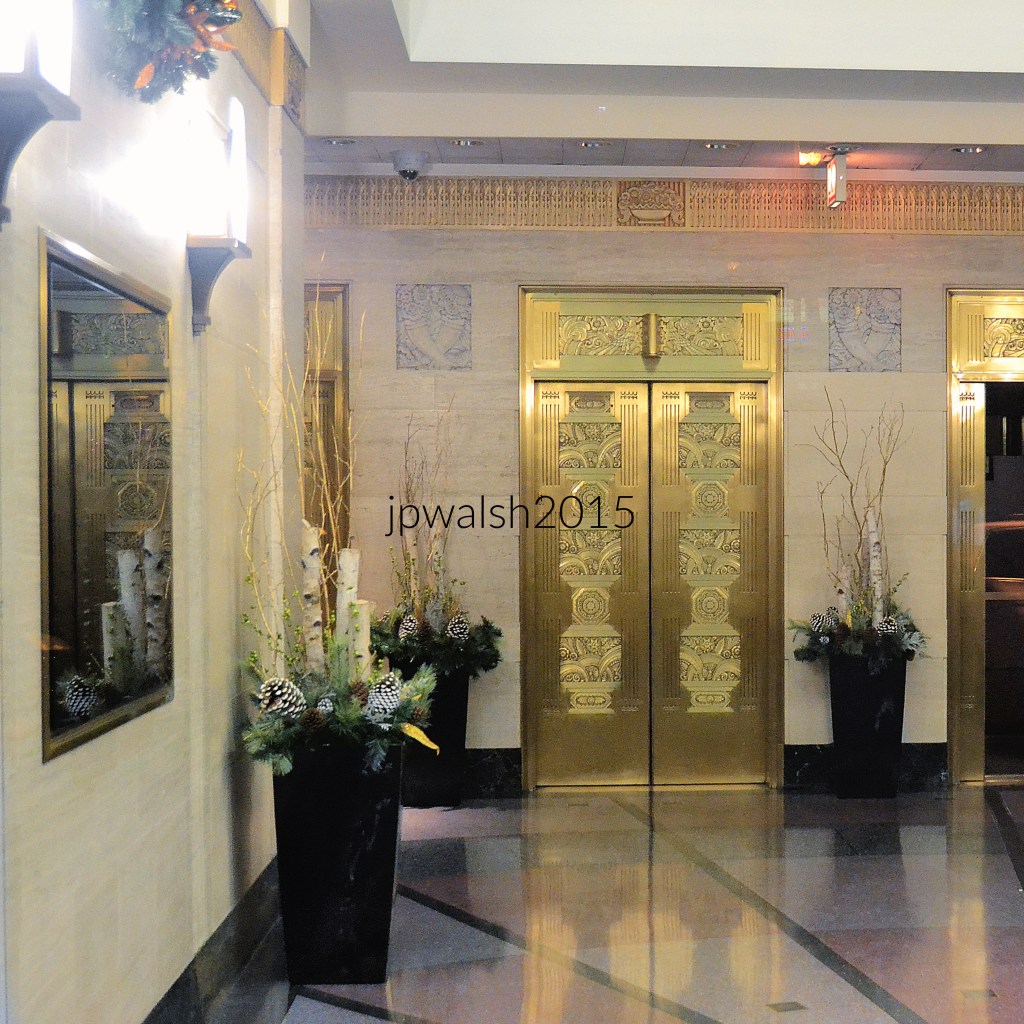
Pre-Depression Optimism in Bronze and Marble: Inside the Burnham Brothers’ Art Deco Lobby (1929) of 105 W. Madison in Chicago.
FEATURE Image: Burnham Brothers, Art Deco elevator bank, 105 W. Madison (1929), Chicago. December 2015. Author’s photograph. 3.99mb DSC_0958 (2). 105 W. Madison Street represents a critical structural and stylistic pivot in Chicago’s architectural history, where the Burnham Brothers masterfully blended their father’s classical traditions on the building’s exterior with a spectacular, forward-looking Art Deco…

Architecture in River Forest: From Italianate Roots to Prairie Modernism.
FEATURE image: 562 Keystone Avenue, River Forest, Illinois, is a house designed by Frank Lloyd Wright in 1909 and an excellent example of Wright’s mature Prairie style including its original Prairie-style glass. June 2022. Author’s photograph. River Forest, Illinois, preserves an exceptional cross-section of American residential architecture, where Prairie School masterpieces by Frank Lloyd Wright,…
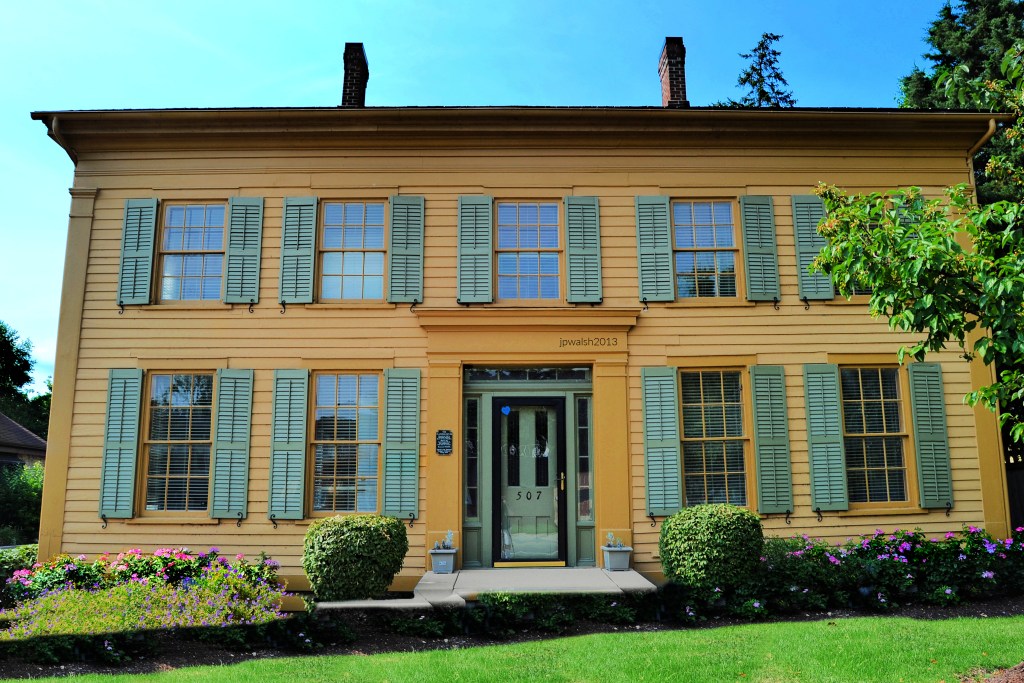
Walnut and Whitewash: Exploring Plainfield’s Historic 1841 Flanders House.
FEATURE image: Flanders House (1841), 24044 Main Street, Plainfield, Illinois. August 2013. Author’s photograph. Built out of solid local walnut in 1841, the historic Jason and Lucy Flanders House is one of Plainfield’s oldest extant residences and stands as a rare, rugged survivor of Illinois’s wild stagecoach era, blending classic pioneer grit with clean Federal…

Byzantine Heritage in Modern Chicago: Yaroslaw Korsunsky’s Sts. Volodymyr and Olha Church (1975).
FEATURE image: Stained glass, paintings, banners, and chandelier blend together and provide a more complete picture of people and episodes of the faith. North wall and ceiling. Chicago. Sts. Volodymyr and Olha Church. October 2016. Author’s photograph. 5.88 mb Sts. Volodymyr and Olha Church (1975) stands as a powerful expression of Ukrainian religious and cultural…

From Kyiv to Chicago: St. Nicholas Ukrainian Catholic Cathedral and the Architecture of Ukrainian Identity.
FEATURE image: St. Nicholas Ukrainian Catholic Cathedral (1915), 2238 W. Rice Street, Chicago, Illinois. July 2015. Author’s photograph. 7.16 mb Inspired by Kyiv’s ancient St. Sophia Cathedral, St. Nicholas Ukrainian Catholic Cathedral in Chicago demonstrates how immigrant communities used architecture, art, and worship to preserve identity while establishing a permanent presence in the American urban…

Russian Tradition, Chicago Design: Louis Sullivan’s Holy Trinity Cathedral (1903).
FEATURE Image: Holy Trinity Orthodox Cathedral, 1121 N. Leavitt, Chicago. The walls of the church building are load-bearing brick covered with stucco. The bell tower and octagonal belfry, dome, and roof are made of wood with metal trim and latticework. July 2015. Author’s photograph. 2.80 mb Holy Trinity Orthodox Cathedral demonstrates how Louis H. Sullivan…

A North Shore Expression of Catholic Art and Architecture: McCarthy, Smith & Eppig’s St. Francis Xavier Church (1939).
FEATURE image: Erected in 1939, St. Francis Xavier Church stands at 524 Ninth Street in Wilmette, Illinois, within a mature residential neighborhood just a few blocks west of Lake Michigan. Rather than dominate its surroundings, the church was deliberately designed to harmonize with the architectural character of Chicago’s North Shore, reflecting the desire of the…

Cast in Iron, Built for Commerce: The Story of Milwaukee’s Iron Block (1861/1899).
FEATURE image: Iron Block (1861/1899), 205 East Wisconsin Avenue, Milwaukee, Wisconsin, following its extensive restoration in 2014. September 2016. Author’s photograph. The Iron Block stands as a pioneering expression of cast-iron architecture in the American Midwest, demonstrating how innovation, craftsmanship, and commercial ambition transformed Milwaukee in the decades following its founding. Through George H. Johnson’s…

Oriental Theatre, 1926: The Movie Palace That Never Stopped Entertaining Chicago.
FEATURE image: Oriental Theatre completed in 1926 and renamed the Ford Center for the Performing Arts in 1997. It became the Nederlander Theatre in 2019. December 2017. Author’s photograph. The Oriental Theatre, designed by Cornelius Ward (C.W.) Rapp and George Leslie Rapp in 1926, represents both the architectural extravagance of America’s movie-palace era and the…

Austrian Stained Glass and the Visual Language of Faith: The Ascension and Assumption Windows (1927) at Sts. Peter and Paul Church, Naperville, Illinois.
Feature Image: Detail, Ascension of Christ window, Sts. Peter and Paul, Naperville, IL. Author’s photograph Thee 1927 Tyrol Art Glass Company windows at Sts. Peter and Paul Church in Naperville, Illinois, are not simply decorative religious artworks but important examples of European ecclesiastical craftsmanship that combine theology, biblical storytelling, symbolism, local Catholic history, and immigrant…

Row Houses (1873) on the Gold Coast: Survivors from Chicago’s Rebirth after the Great Chicago Fire.
FEATURE Image: Row Houses, c. 1873, 802-812 N. Dearborn Street, Chicago. June 2014. Author’s photograph. The row houses at 802-812 N. Dearborn Street stand as rare survivors of post-Fire Chicago, illustrating how nineteenth-century urban residential architecture helped shape the city’s transformation from a rebuilding frontier metropolis into a sophisticated national center of commerce, culture, and…

The Cobden (1892) in Lincoln Park: Richardsonian Romanesque and the Early Career of Charles S. Frost.
FEATURE Image: The Cobden (1892). 418-424 W. Belden Avenue, Chicago, Illinois. June 2014. Author’s photograph. Built in 1892 at the corner of Clark Street and Belden Avenue in Lincoln Park, The Cobden demonstrates how Richardsonian Romanesque architecture was adapted to a growing middle-class Chicago neighborhood, while revealing the early architectural maturity of Charles S. Frost,…

French Modernism on the Magnificent Mile: Jean-Paul Viguier’s Sofitel Chicago (2002).
FEATURE image: Sofitel Chicago Magnificent Mile, 20 East Chestnut Street, Chicago, Illinois. architect: Jean-Paul Viguier. June 2014. Author’s photograph. 4.66mb The Sofitel Chicago Magnificent Mile demonstrates how contemporary architecture can achieve both sculptural elegance and urban presence, bringing a distinctly French modernist sensibility to Chicago’s celebrated skyline while honoring the city’s tradition of architectural innovation.…
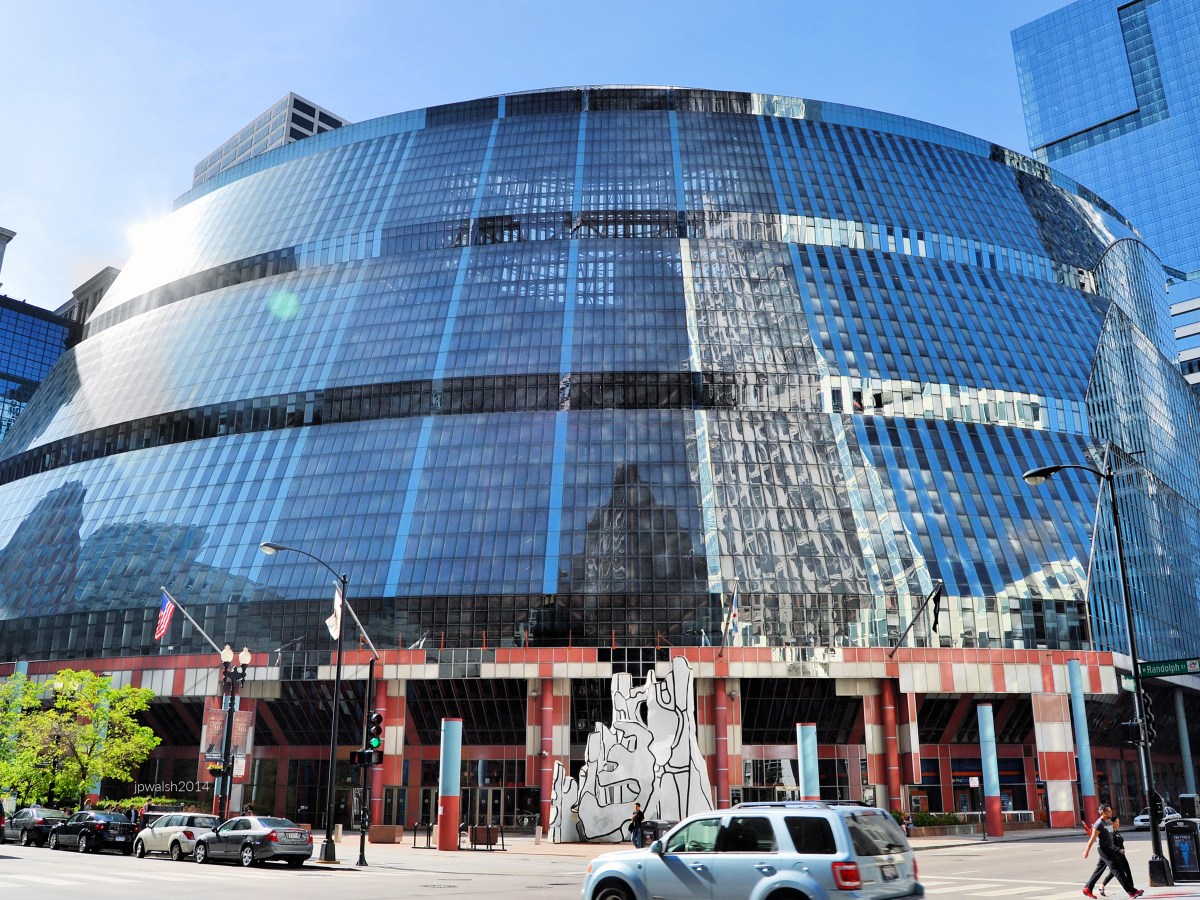
Steel, Glass, and Vision: Helmut Jahn’s Chicago Legacy, 1966-2021.
FEATURE image: Helmut Jahn, State of Illinois (Thompson) Center, 100 W. Randolph, Chicago, Illinois, 1979-1985. The Thompson Center was officially bought by Google in 2022 for a reported $105 million. May 2014. Author’s photograph. 4.75 mb Helmut Jahn was one of the most influential architects in shaping late-20th-century Chicago, blending the legacy of Miesian modernism…

Brick, Terra Cotta, and Nonconformity: Deconstructing the Mentor Building (1906).
Feature Image: THE MENTOR BUILDING, 1906, 39 S. State Street (6 E. Monroe Street), Chicago. Howard Van Doren Shaw (1869-1926), architect. Author’s photograph, 7/2015. Howard Van Doren Shaw’s Mentor Building (1906) stands as a pivotal anomaly in Chicago’s architectural history, serving as the architect’s sole foray into skyscraper design while masterfully bridging the horizontal warmth…

Beacon of the Midwest: The Chicago Harbor Lighthouse (1893) and the Making of a Great Lakes Metropolis.
FEATURE image: Chicago Harbor Lighthouse (1893), Chicago, Illinois, 2017. Author’s photograph. The Chicago Harbor Lighthouse (1893) stands as a symbol of the city’s rise as the principal commercial gateway between the Great Lakes and the American interior. More than a navigational aid, the lighthouse helped facilitate the maritime commerce, transportation networks, and industrial expansion that…

Beyond Millennium Carillon in Moser Tower: Capturing Naperville’s Historic Curb Appeal.
FEATURE image: 15 S. Sleight Street, 1883, Naperville, Illinois. See its description below. Frame house, tower, clapboard and shingle patterns. The tower is cut on a bias (on an angle), approaching 45 degrees. This has the tower with less surface area than if cutting it square. The cut also can serve an aesthetic or other…

Park Tower Condominium (1973): Late Modernism on Chicago’s Lakefront.
The Park Tower Condominium (1973) exemplifies how Chicago’s late modernist architects adapted the high-rise residential tower to the city’s lakefront, creating a landmark that combines urban density, engineering sophistication, and panoramic engagement with Lake Michigan. Park Tower Condominium, 5414 N. Sheridan Road, Chicago, SCB, 1973. View from east looking west. August 2015. Author’s photograph. 3.15mb.…

Engineering the City of Big Shoulders: The Chicago Avenue Bridge (1914) and the Meeting of Street Grid, Waterway Commerce, and Industrial Design.
FEATURE image: Portion of the open-grate pony-truss bascule Chicago Avenue Bridge and concrete house, erected in 1914, as it was in its last years of operation. Pointing to increased high traffic volume and load-bearing capacity issues, the 104-year-old bridge was demolished and replaced in 2018. Author’s photograph taken in May 2016. The Chicago Avenue Bridge…

Where Astronomy Became Architecture: Chichén Itzá and the Genius of the Ancient Maya.
FEATURE image: Chichén-Itzá serpent head sculptures guard a staircase. May 1988. Author’s photograph. All text and photographs by John P. Walsh, except where noted. Rising from the jungles of the Yucatán, Chichén Itzá reveals the intellectual, architectural, and spiritual achievements of the Maya, whose temples, pyramids, and astronomical observatories transformed a remote landscape into one…

Collegiate Church of St. Gertrude (11th Century): A Monument to Ottonian Power and Early Romanesque Design in Nivelles, Belgium.
FEATURE image: The Westwork of the Collegiate Church of St. Gertrude in Nivelles, Belgium, fronts an expansive historical building of the 11th century. Nivelles is an ancient settlement about 25 miles south-east of Brussels in Belgium’s French-speaking region of Wallonia. February-March 1992. Author’s photograph. The Collegiate Church of St. Gertrude stands as one of the finest…

David Adler (1882-1949): Chicago’s Master of the Great House.
FEATURE image: Staff members of The Charles A. Stonehill Estate on the beach, c. 1912. Through a mastery of historical styles, proportion, craftsmanship, and site planning, David Adler became America’s foremost architect of the twentieth-century country house, creating residences whose elegance and restraint defined upper-class domestic architecture in Chicago and far beyond. By John P.…

Heavenly Messengers in Glass: Franz Mayer’s 1902 Stained-Glass Angels at St. Michael Church in Chicago’s Old Town.
FEATURE Image: ASSUMPTION WINDOW (central panel/detail), 1902, St. Michael Church, Chicago. Franz Mayer & Company, Munich, Germany. The angels are not merely decorative details but expressions of the exceptional Munich craftsmanship that transformed St. Michael’s worship space and remain a significant cultural and artistic legacy today. October 2015. Author’s photograph. Assumption window. Above: ASSUMPTION WINDOW…

John Augustus Roebling and the Brooklyn Bridge (1869-1883): Engineering America’s Greatest Landmark of the Industrial Age.
The Brooklyn Bridge stands as the greatest achievement of John Augustus Roebling’s engineering career, uniting innovative design, industrial ambition, and architectural beauty to create an enduring symbol of New York City and America’s rise as a modern nation. FEATURE image: The Brooklyn Bridge. Centered perfectly is one of the bridge’s massive, Gothic-arched granite suspension towers,…

St. Michael Church in Old Town (1869): European Craftsmanship in Chicago’s Oldest German Parish.
FEATURE image: At the top of the high altar’s retable in St. Michael Church in Chicago’s Old Town is the figure of St. Michael the Archangel, the parish church’s patron. St. Michael is mentioned in several places in both the Hebrew and Christian scriptures. The near northside Chicago parish has been administered by the Redemptorist…

Fallingwater, 1935: When Frank Lloyd Wright’s Architecture Became Nature in the Pennsylvania Highlands.
FEATURE image: Fallingwater, Frank Lloyd Wright, Mill Run, Pennsylvania. March 2010. Author’s photograph. Fallingwater was designed in 1935 as a weekend retreat for the Kaufmann family of Pittsburgh and completed in 1937. Fallingwater represents Frank Lloyd Wright’s most celebrated achievement in organic architecture, uniting modern design, engineering, and the natural landscape so completely that the…
