Monthly Archives: November 2025

My Street Photography. GENERAL MOTORS: CHEVROLET BISCAYNE (1958-1975).

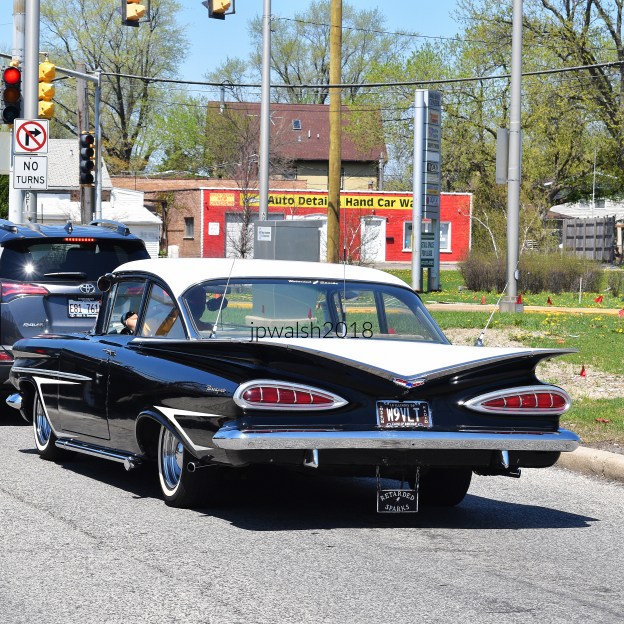
Feature Image: 1959 Chevy Biscayne, 7.89 mb, author’s photograph, May 2018.

In the 1950’s, American cars were noted for their V-8 engines, chrome, and tailfins of one kind or another. The late 1950’s was also marked by a recession which began in 1957 and continued into 1958 that led to a drop in car production in that period by nearly a third. “What is good for General Motors is good for America” could be true in 1950’s America when it was said, attributable to a 1953 Senate hearing, but its converse was also clearly the situation in the last years of that decade.

“From the Progress of the Past – the Promise of the Future.”

This was the tag line for General Motors that was celebrating its 50th anniversary in 1958. Many cars were painted golden to mark the “Golden Milestone.” It was the same year that the full-size Biscayne model made its first appearance. All Chevrolets in 1958 underwent an all-new “Sculptutamic Styling” that included the “gull wing” style fenders and twin taillights in the back of the Chevy Biscayne. The gull wing back extended along the body side to a “v” dip or gap. Another subtle styling addition was the quarter panel bulge between the rear wheel opening and the rear bumper. The Biscayne series replaced the Chevy 210 where the interior was made more colorful and instrumentation had a horizontal bias that, by 1959, was designed to be within easy sight of the driver. In 1958 Chevy introduced the X- shaped frame chassis and full coil suspension that provided greater stability that included 6-cylindar and V8 models, the 283 CID V8 replacing the 265 CID V8, with an optional 348 CID.

“Dollars never went further or bought longer lasting pride than in Chevrolet’s new Biscayne series for ’59.”

In 1959 General Motors – emulating a Chrysler corporate revamp in 1957 – redesigned the bodies of its entire fleet line so that many interior parts and some exterior parts were interchangeable on cars. In the process Chevy reshuffled their brands so that the Impala, that was a luxury option on the Bel Air in its first year in 1958, became Chevy’s own top-of-the-line brand in 1959. The Bel Air took the place of the Biscayne and the Biscayne in 1959 replaced the budget-priced Delray that was discontinued. Chevy Biscayne was produced in its second generation over two model years (1959 and 1960) and would be produced in five generations whose last model year was 1975.  

The 1959 Chevy: a.k.a. “Batmobile.”

In 1959 the most remarkable design change was an enlarged windshield and rear window on all cars for greater driver visibility of the road and a “flat top roof.” The bodyside was characterized, at the front, by a slight crease at the turn signal which joined a gentle, sloping bodyside curve. The tail fin started at the rear of the front door that carried to the slightly higher back-end splaying in a “v” shape above the “teardrop”-shaped taillights. The design of the 1959 Chevrolet later came to be known as the “Batmobile” for its body design affinities, particularly the wing-shaped tailfins, and that was featured in the Caped Crusaders’ custom built “bat motif” vehicle during the popular ABC “Batman” TV series in 1966 to 1968.

Batmobile, rear view. With its ‘bat motif” wing-shaped tail fins, the 1959 Chevys, including the Biscayne, shared similarities with the Caped Crusaders’ custom built vehicle. PHOTO: “Batmobile, rear view” by KWH703 is licensed under CC BY-NC-SA 2.0.

Drag racing footage of what looks like a 1960 Chevy Biscayne. The Biscayne was introduced as a full-sized Chevrolet model in 1958 in tandem that year with the top-of-the-line luxury Impala. They joined the Bel Air which has been offered since 1950. These cars constituted about 85% of all Chevy sales in 1960. The Biscayne was the slightly lowest price model with a Biscayne 2-door hardtop like this one setting back the American consumer $2230 BASE MSRP (less than $25,000 in 2025) and weighing about 3500 pounds. https://youtube.com/shorts/7oJPm104q0Y?si=ytYL4v1ruWa2jDTx – retrieved November 30, 2025.

The Feature Image 1959 Biscayne represented over a quarter of all Chevy sales that year. Its main competition was the Ford Custom 300, Plymouth Savoy, and Rambler. The Biscayne featured nylon and vinyl upholstery, cloth headliner, dual sun visors, color-keyed floor coverings, two-spoke steering wheel, stainless steel trim on the windshield and rear window, tail fins, small hubcaps, and 7.50 x 14 BSW tires. In 1959 the average price of a Chevy Biscayne was $2, 383 ($26,597.88).

SOURCES:

J. “Kelly” Flory, Jr., American Cars, 1946-1959, McFarland & Company, Inc. pp. 855-857, 866-867, 870-871, 949.

J. “Kelly” Flory, Jr., American Cars, 1960-1965, McFarland & Company, Inc. pp. 23-24, 26.

This explanatory article may be periodically updated.

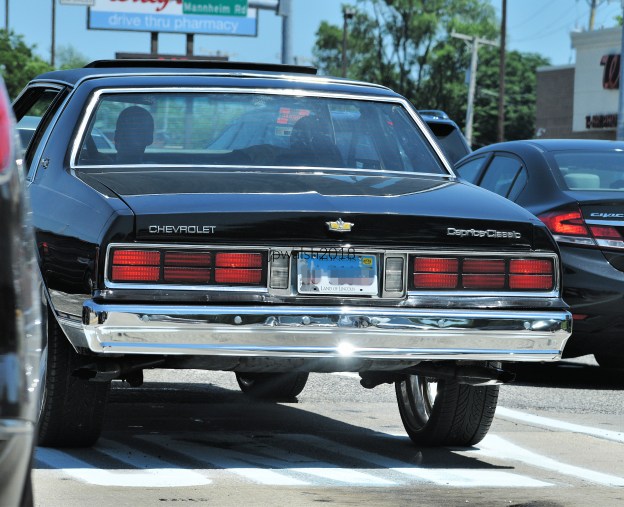
My Street Photography. GENERAL MOTORS: CHEVROLET CAPRICE (1965-1996).

Feature Image: 1982 Chevy Caprice Classic. June 2018. Author’s photograph. 92% 7.79 mb.

Chevrolet had a golden year in 1965. Sales had not been that stellar since 1955. What a difference one model year makes. In 1966 Chevrolet took a beating from Ford mainly from Ford’s new sporty Mustang for which Chevy had no direct competition yet. The closest was the Chevy II V-8 with its front engine rear-wheel drive but it wasn’t sporty and became competition for Ford’s Falcon. Further headaches for Chevy included negative publicity from consumer advocate Ralph Nadar’s book “Unsafe at Any Speed,” published in 1965 that criticized the automotive industry for its safety record, focusing on the Corvair, particularly driver handling concerns with the rear-engine economy car. As Nader’s work led to the passage of the National Traffic and Motor Vehicle Safety Act in 1966, which mandated federal safety standards for vehicles, it impacted Chevrolet sales in the short term adversely. In 1966 the Chevrolet Full Size whose model lines included the Bel Air (1950), Biscayne (1958), and Impala (1958) that represented more than 70% of Chevrolet’s sales volume now included the bumped-up Caprice in 1966 as the new top of the line model. The Caprice, which started in 1965 as a luxury option to the Impala 4 Door Hardtop, became popular as its own model and competed with the Plymouth VIP and new Ford Galaxie 500 LTD.

“The New Chevrolet. We Made It Right For the ‘80s.” – Ad tag line in 1980 for Impala and Caprice Classic.

The Chevrolet Caprice is a full-size car produced by Chevrolet in North America for the 1965 through 1996 model years. Full-size Chevys were touted as “The New Chevrolet.”

By 1980 the full-size Caprice Classic received with the Impala (1958-1985) an exterior makeover to be more aerodynamic for fuel economy with all new sheet metal as it retained the same chassis and basic interior and exterior design and appearance. In the pursuit of reducing drag, the front fenders and hood were lowered and the back trunk lid and rear quarter were raised. The roofline was formalized and body sides were smoothed. A new grille insert was “egg crate” style that was 4 rows high and five times as wide. On behalf of better fuel economy, the weight of this streamlined Chevy Caprice was reduced by 100-150 pounds.

The 1982 model year was part of the Caprice’s Third Generation that went from 1977 to 1990. In 1982 the Caprice Landau Coupe was dropped with only the three-seat Caprice Wagon, Sports Coupe and Four-Door Sedan offered. Both the two-door six -passenger V6 Sports Coupe and Four Door Sedan had an optional V8 engine. The Sports Coupe listed for $8,221– $8,291 (about $27,479.52 today) while the Four Door Sedan listed for $8,367 – $8,437 (about $27,967 today). Fully loaded options inside and out could add over $3000 ($10,000 today). In 1980 the Impala and Caprice Classic amounted to over 25% of Chevy’s sales volume. Caprice featured specific triple unit taillights, bright roof trim moldings, stand up hood ornament, and full wheel covers along with an interior velvet-look knit cloth or all-vinyl front bench seat, fold down center armrest (4-doors only), front door pull straps and lower door panel carpeting, electric clock, and extra acoustical insulation and courtesy lights.  

SOURCES:

See – https://www.capriceclassic.com/onamarie.geo/chevy1982.html – retrieved July 17, 2025.
J. “Kelly” Flory, Jr., American Cars, 1966 to 1972, McFarland & Company, Inc. pp. 32-33; 38-39.
J. “Kelly” Flory, Jr., American Cars, 1973 to 1980, McFarland & Company, Inc. pp. 798-800; 809-810.

This explanatory article may be periodically updated.

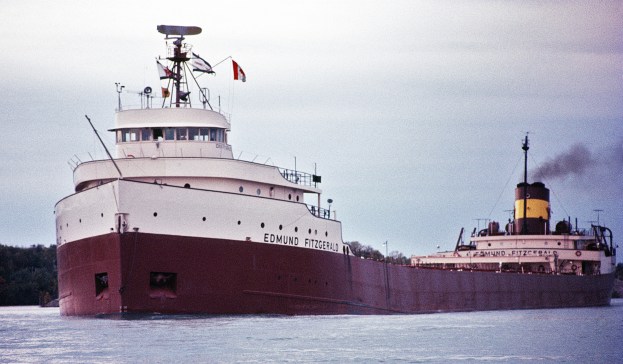
50 years ago today: The Wreck of the SS Edmund Fitzgerald (November 10, 1975).

FEATURE image: Edmund Fitzgerald in 1971. “Edmund Fitzgerald, 1971, 3 of 4 (restored; cropped)” by Greenmars is licensed under CC BY-SA 3.0.

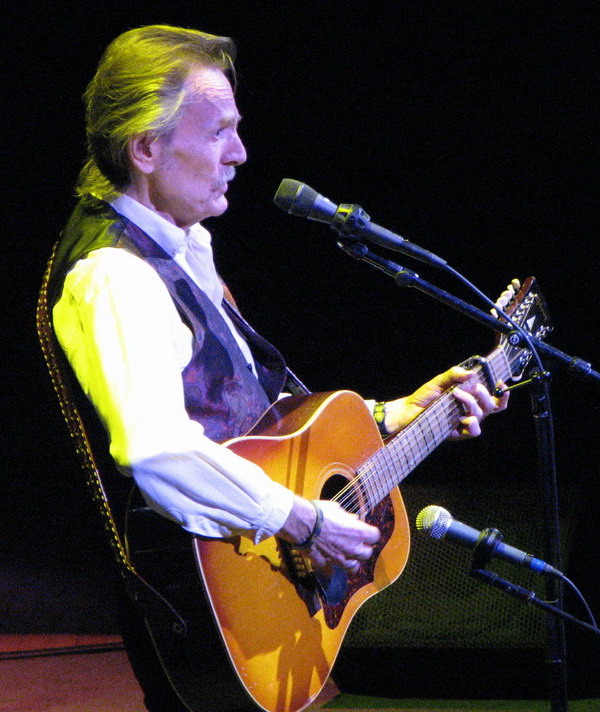
Gordon Lightfoot” by Original uploader was Piedmontstyle at en.wikipedia is licensed under CC BY 3.0.

Canadian singer-songwriter Gordon Lightfoot began releasing solo albums in 1966. The first six were on United Artists label and sold moderately well (up to 200,000 copies). Switching to Reprise in 1969 his debut album with the label, Sit Down Young Stranger, coincided with his first U.S. hit, If You Could Read My Mind, in 1970 and became Lightfoot’s first Gold album. This was followed by Lightfoot’s second Gold album (Platinum today) and no.1 single both called Sundown in 1974. The Wreck of the Edmund Fitzgerald – a true story of an ore vessel named after a Milwaukee, Wisconsin, civic leader, that sank in a Lake Superior storm in November 1975 – was Lightfoot’s next big hit appearing on Summertime Dream, a 1976 album that has gone Platinum.1

On November 10, 1975, during basically the colliding of two freshwater storms on Lake Superior, the largest of the five Great Lakes, the SS Edmund Fitzgerald, in service since 1958 and, when launched, the largest ship on the Great Lakes at over 700 feet long, went down into deep waters. For a cargo ship that should have normally expected more decades of service, the sinking caused the loss of its entire crew of 29 men. At 7 p.m. on November 10, 1975, the Fitzgerald radioed another cargo ship, the Anderson, telling them that, despite losing their radar, they were “holding their own.” Shortly thereafter the Fitzgerald was lost.

File:SS Edmund Fitzgerald wreck.png” by Oaktree b is licensed under CC BY-SA 3.0.

Location of the SS Edmund Fitzgerald wreck in Lake Superior approximately 17 miles (27 kilometers) north-northwest of Whitefish Point, Michigan. The ship now rests beneath about 535 feet (165 meters) of water and is considered a protected gravesite.2

Recovery Efforts involved the U.S. Navy and U.S. Coast Guard.

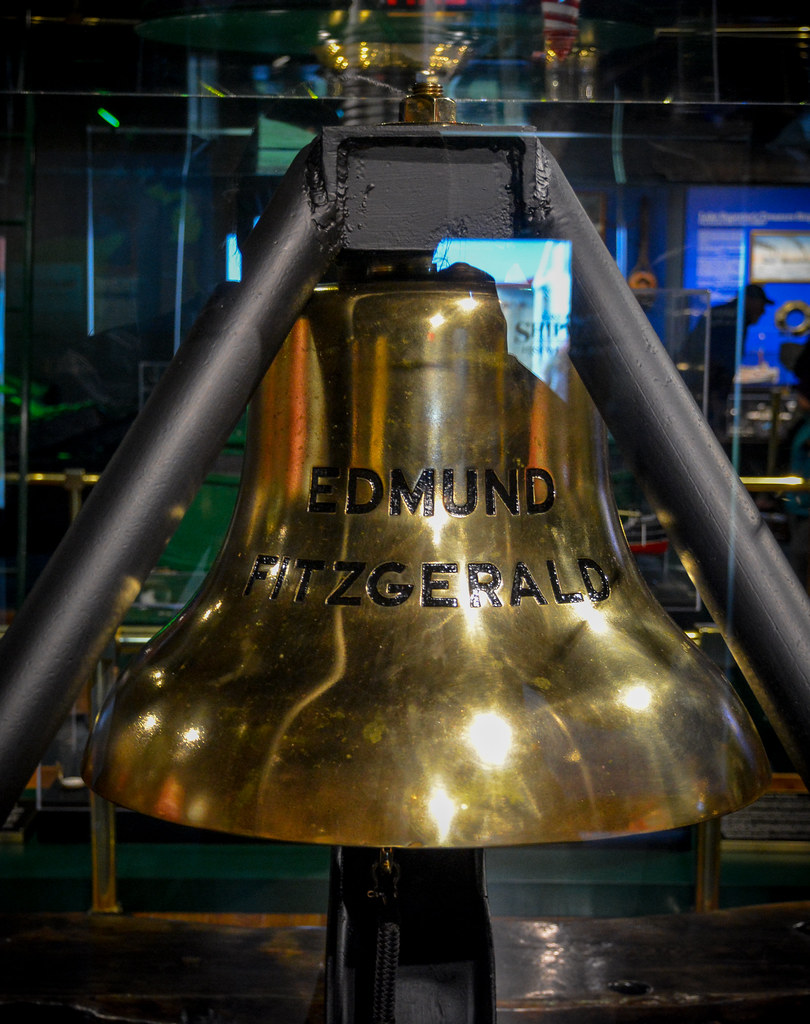
The Bell of the Edmund Fitzgerald” by TheGreenHeron is licensed under CC BY-NC 2.0.

Whitefish Point, located on the southeastern shore of Lake Superior in Michigan, houses the Great Lakes Shipwreck Museum, which holds memorial events for the SS Edmund Fitzgerald each November. The wreck’s location, being 17 miles north-northwest of the point, places it beyond safe navigation lines, illustrating why the ship never reached shelter that fateful night. On a personal note, I have had the opportunity to visit the Great Lakes Shipwreck Museum in Whitefish Point, Michigan that contains the bell from the SS Edmund Fitzgerald recovered in 1995.3

Edmund Fitzgerald” by jpellgen (@1179_jp) is licensed under CC BY-NC-ND 2.0.

The ultimate cause and circumstances of the wreck of the SS Edmund Fitzgerald in Lake Superior remain a mystery, weather conditions surrounding the sinking are well known – extraordinarily severe storm conditions, including 60 m.p.h. winds, towering waves of 25-30 feet, and heavy thick ice, which impacted possible structural vulnerabilities of the large, nearly 20-year-old cargo ship. The exact sequence of the events leading to the sinking are also unknown, as no distress signal detailing mechanical failure was received, so that the wreck has been attributed to adverse weather and lake conditions that impacted the vessel suddenly.4

The disaster, unlike the other hundreds of shipwrecks that have taken place on the Great Lakes, has entered into American mythology with Gordon Lightfoot’s ballad The Wreck of the Edmund Fitzgerald, written within a couple weeks after the disaster that same November 1975. Though the song by a bestselling recording artist about a recent shipwreck carried some risk where it was too early to know every fact, the verses are meticulously based on news stories of the basics that were known. By Lightfoot’s 7th studio album, Don Quixote, released in 1972, the Canadian singer-songwriter had begun in earnest to explore nautical themes. The Wreck of the Edmund Fitzgerald, released in June 1976 on Lightfoot’s 11th studio album, Summertime Dream, stayed on the same course.

2025 01 06 Record – Gordon Lightfoot 7” by Blake Handley is licensed under CC BY 2.0.

Summertime Dream was released in June 1976 and peaked at no. 12 on the Billboard 200 (no. 1 on Canada Top Albums). The Wreck of the Edmund Fitzgerald was the album’s second track and, in August 1976, became its second single peaking at no. 2 in the U.S. and no. 1 in Canada.

The song was getting local airplay from the album in Minnesota, Wisconsin, and Michigan. Its popularity led to its release as a single in August 1976 and became Lightfoot’s biggest and most unlikely hit record commemorating the sinking of a transport cargo ship with its lives lost from less than a year before. The six-and-one-half minute folk rock song reached no. 1 in Canada and no. 2 in the U.S. where it was kept out of the top spot by Rod Stewart’s Tonight’s the Night. After the song’s release, Lightfoot never lost contact with the surviving family members of that shipwreck. Gordon Lightfoot, who was born in a town on Lake Simcoe in Ontario, Canada, died less than 90 miles away on Lake Ontario in Toronto in May 2023 at 84 years old.

The legend lives on from the Chippewa on down
Of the big lake, they called Gitche Gumee
The lake, it is said, never gives up her dead
When the skies of November turn gloomy
With a load of iron ore, twenty-six thousand tons more
Than the Edmund Fitzgerald weighed empty
That good ship and true was a bone to be chewed
When the gales of November came early

The ship was the pride of the American side
Coming back from some mill in Wisconsin
As the big freighters go, it was bigger than most
With a crew and good captain well seasoned
Concluding some terms with a couple of steel firms
When they left fully loaded for Cleveland
And later that night when the ship’s bell rang
Could it be the north wind they’d been feeling?

The wind in the wires made a tattle-tale sound
And a wave broke over the railing
And every man knew, as the captain did too
‘Twas the witch of November come stealing
The dawn came late, and the breakfast had to wait
When the gales of November came slashin’
When afternoon came, it was freezin’ rain
In the face of a hurricane west wind

When suppertime came, the old cook came on deck sayin’
“Fellas, it’s too rough to feed ya”
At seven p.m., a main hatchway caved in, he said
“Fellas, it’s been good to know ya”
The captain wired in he had water comin’ in
And the good ship and crew was in peril
And later that night when his lights went outta sight
Came the wreck of the Edmund Fitzgerald

Does anyone know where the love of God goes
When the waves turn the minutes to hours?
The searchers all say they’d have made Whitefish Bay
If they’d put 15 more miles behind her
They might have split up or they might have capsized
They may have broke deep and took water
And all that remains is the faces and the names
Of the wives and the sons and the daughters

Lake Huron rolls, Superior sings
In the rooms of her ice-water mansion
Old Michigan steams like a young man’s dreams
The islands and bays are for sportsmen
And farther below Lake Ontario
Takes in what Lake Erie can send her
And the iron boats go as the mariners all know
With the gales of November remembered

In a musty old hall in Detroit, they prayed
In the Maritime Sailors’ Cathedral
The church bell chimed ’til it rang twenty-nine times
For each man on the Edmund Fitzgerald
The legend lives on from the Chippewa on down
Of the big lake, they call Gitche Gumee
Superior, they said, never gives up her dead
When the gales of November come early

Edmund Fitzgerald in MacArthur Lock” by Detroit District is licensed under CC BY-SA 2.0.

SS Edmund Fitzgerald in MacArthur Lock, Sault Ste. Marie, Michigan.

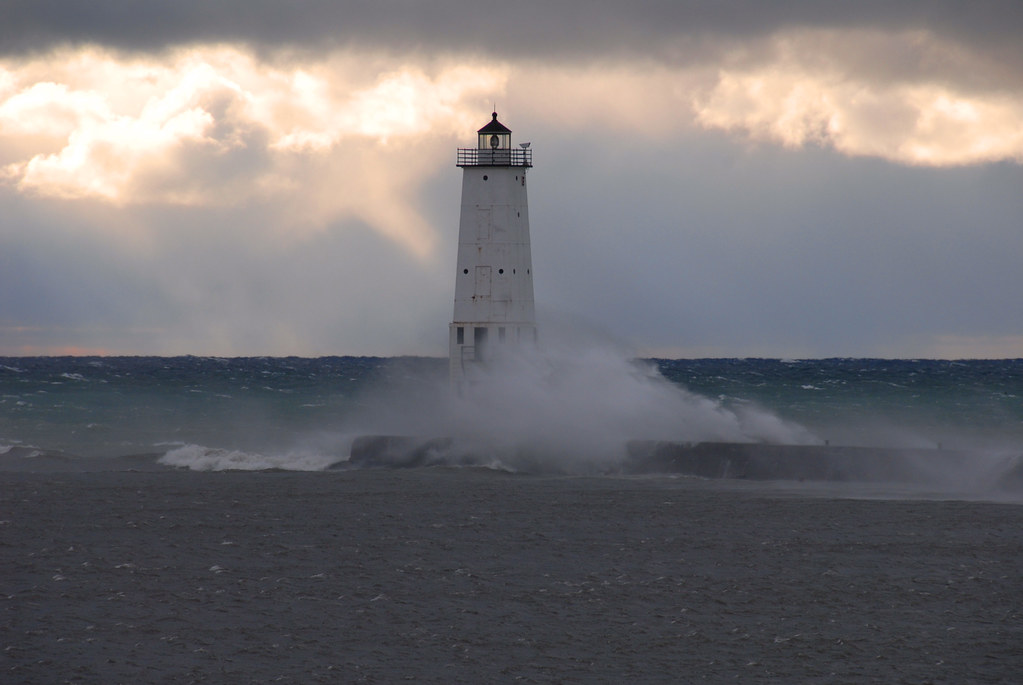
“DSC_6472” by Jim Sorbie is licensed under CC BY 2.0.

NOTES:

  1. The Rolling Stone Encyclopedia of Rock & Roll, Third Edition (2001), p. 566.
  2. https://spectrumlocalnews.com/mi/michigan/news/2025/11/10/retired-ap-reporter-helped-cement-the-legend-of-the-wreck-of-the-edmund-fitzgerald – retrieved November 10, 2025.
  3. https://fieldethos.com/wreck-of-the-edmund-fitzgerald/ – retrieved November 10, 2025.
  4. https://www.history.com/articles/edmund-fitzgerald-sinking-lake-superior – retrieved November 10, 2025.

PHOTO CREDITS:

Edmund Fitzgerald in 1971 – “Edmund Fitzgerald, 1971, 3 of 4 (restored; cropped)” by Greenmars is licensed under CC BY-SA 3.0.

Gordon Lightfoot guitar – “Gordon Lightfoot” by Original uploader was Piedmontstyle at en.wikipedia is licensed under CC BY 3.0.

map – “File:SS Edmund Fitzgerald wreck.png” by Oaktree b is licensed under CC BY-SA 3.0.

bell – “The Bell of the Edmund Fitzgerald” by TheGreenHeron is licensed under CC BY-NC 2.0.

mystery – “Edmund Fitzgerald” by jpellgen (@1179_jp) is licensed under CC BY-NC-ND 2.0.

Summertime Dream album cover – 2025 01 06 Record – Gordon Lightfoot 7” by Blake Handley is licensed under CC BY 2.0.

at MacArthur Lock – “Edmund Fitzgerald in MacArthur Lock” by Detroit District is licensed under CC BY-SA 2.0.

lighthouse – PHOTO: “DSC_6472” by Jim Sorbie is licensed under CC BY 2.0.