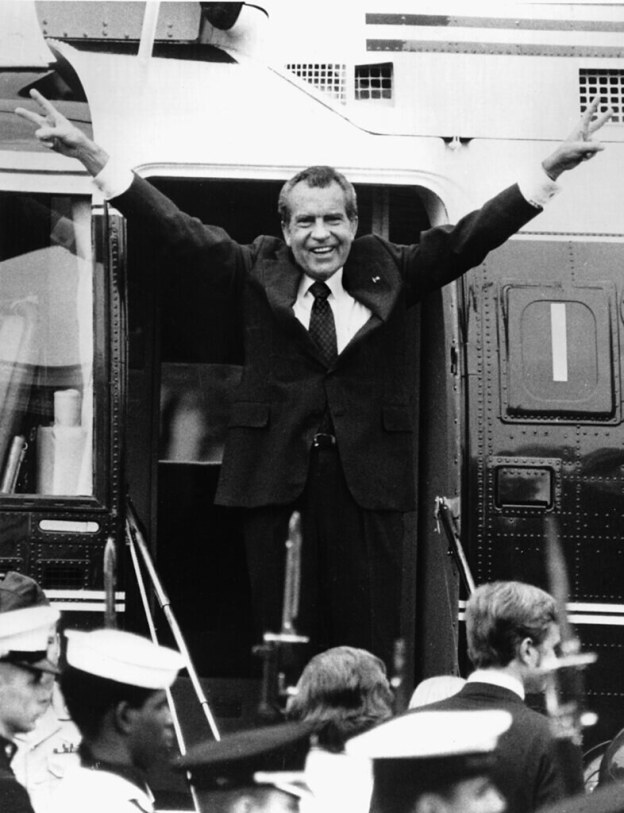
Feature Image: Richard Nixon flashes his double‑V salute as he boards the helicopter moments after his resignation on August 9, 1974. “RICHARD NIXON FAREWELL” by manhhai is licensed under CC BY 2.0.
I was on one of my backpacking canoe trips into Quetico Provincial Park in Canada during the week of Nixon’s resignation on August 9, 1974. Up to that point the political theatre in the nation had been stoked to climax. That summer I was one of the first to get and read a copy of Bernstein & Woodward’s All the President’s Men published in June 1974.
Carl Bernstein and Bob Woodward’s All the President’s Men traced the Watergate story from the June 17, 1972 break‑in through the cascading resignations of April 1973 — including Chief of Staff H. R. Haldeman and Domestic Affairs Advisor John Ehrlichman — and culminating in Alexander Butterfield’s July 1973 revelation of the White House taping system. The book reconstructs the political machinery behind the scandal, detailing how two relatively junior reporters uncovered a widening pattern of abuses inside the executive branch. It also pulls back the curtain on the reporting process itself, recounting the behind‑the‑scenes battles over major stories and Woodward’s clandestine meetings with his source, Deep Throat, who helped steer them through a landscape shaped by secrecy, institutional resistance, and the power of the presidency.
The film, All the President’s Men, released in April 1976, was directly based on the 1974 non-fiction book of the same name and starred Robert Redford as Bob Woodward and Dustin Hoffman as Carl Bernstein. “All the President’s Men, 1976” by thefoxling is licensed under CC BY-NC-SA 2.0.
In July 1972, Woodward and Bernstein searched the Library of Congress for evidence linking Watergate burglars to White House intelligence operations, yet found nothing after days of searching. Due to this lack of hard evidence, the story was kept off the front page, highlighting the initial lack of support for the investigation. The 1976 film All the President’s Men dramatizes this moment through a high-angle shot, visually emphasizing the pair’s isolation in exposing a massive, government-backed conspiracy.
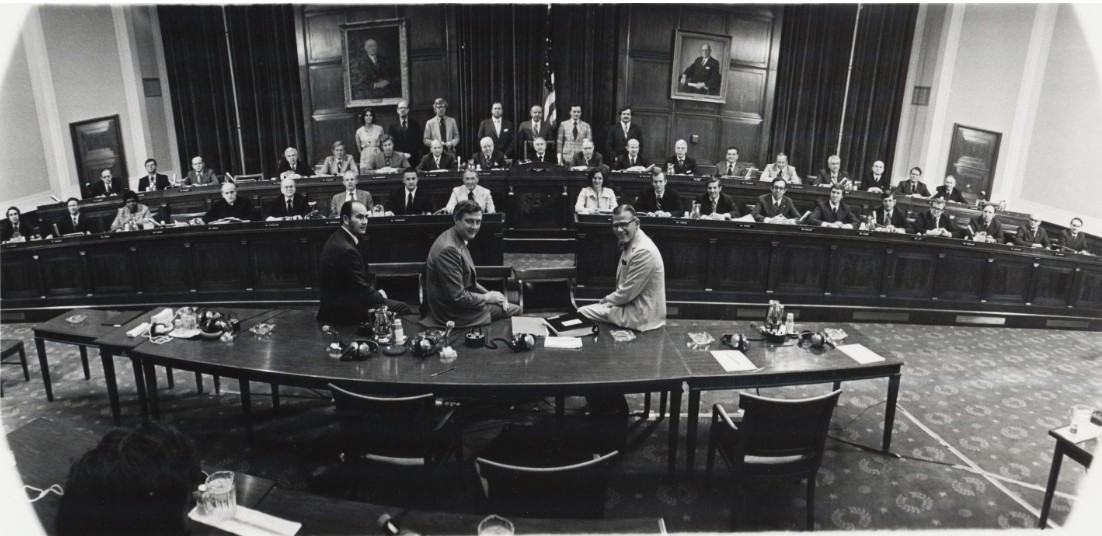
Since it started in May 1974, I had been watching the congressional hearings as well as reading the newspapers mostly that summer on the fight over the White House tapes. On July 24, 1974 the U.S. Supreme Court in an unanimous decision said Nixon had to surrender the tapes and on July 27, 1974 the House Judiciary Committee voted for articles of impeachment of Nixon. This was coming to a head just days before I was getting ready to set out for a week in the wilderness by way of Madison, Wisconsin and Ely, Minnesota.
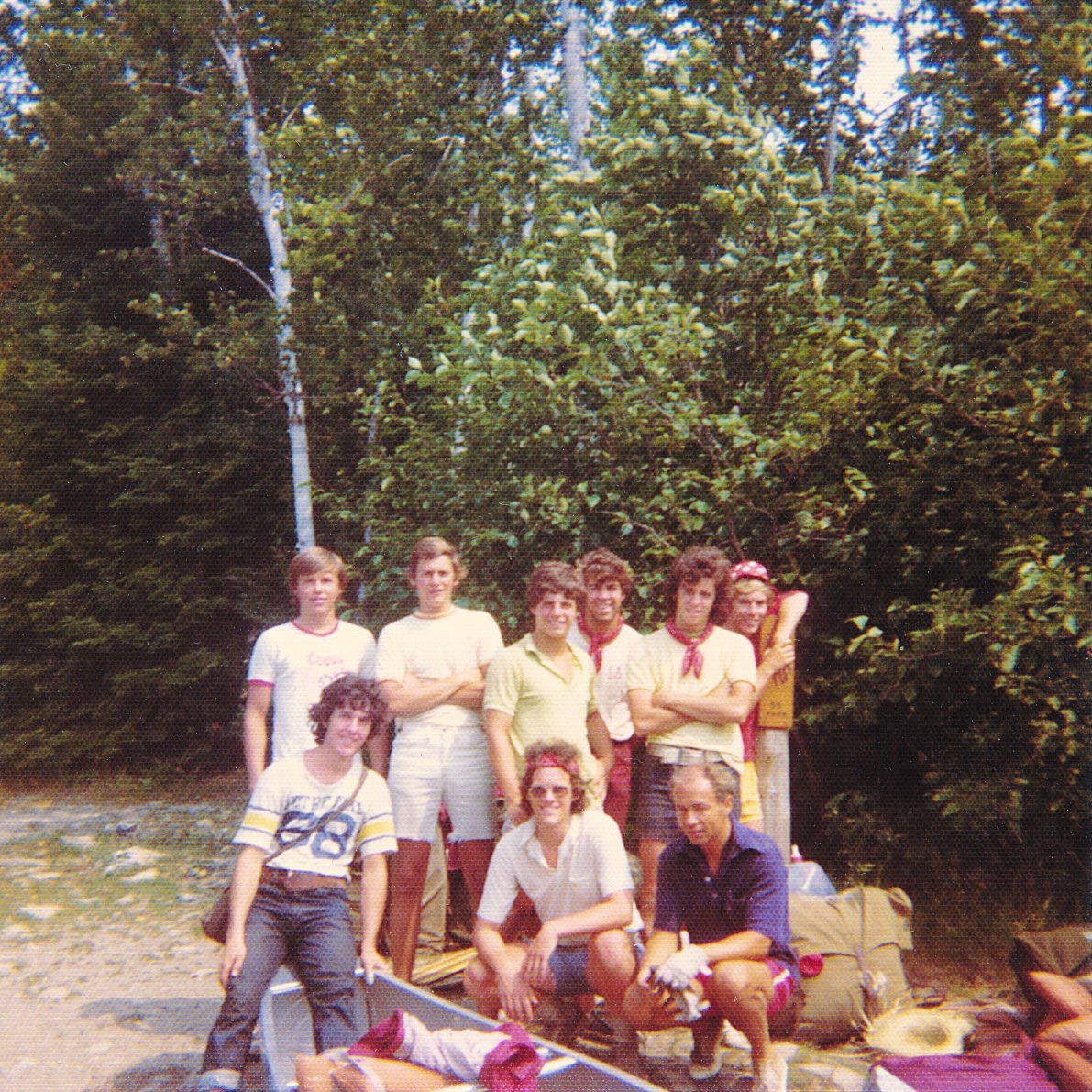
As we paddled, portaged, and set up and broke camp over a beautiful week in the wilderness, we were all aware that something extraordinary was unfolding in Washington. But with no radios or newspapers in the backcountry, we were cut off from the final act of Nixon’s presidency. Only when we returned to Ely, Minnesota for the trip home did we learn that Richard Nixon had resigned — the first, and so far only, U.S. president to do so. I’m standing at the center of the group, wearing the open‑collared green shirt. Author’s collection.
In an evening televised address on August 8, 1974, President Richard M. Nixon announced his resignation to be effective at noon on August 9, 1974. That day Nixon gave a farewell press conference in the East Room in mid morning before scores of White House staff and cabinet members joined by his wife, Pat, and two daughters, Julie and Tricia, with their husbands. Nixon was finally bowing to pressure from the public and Congress to leave the White House.
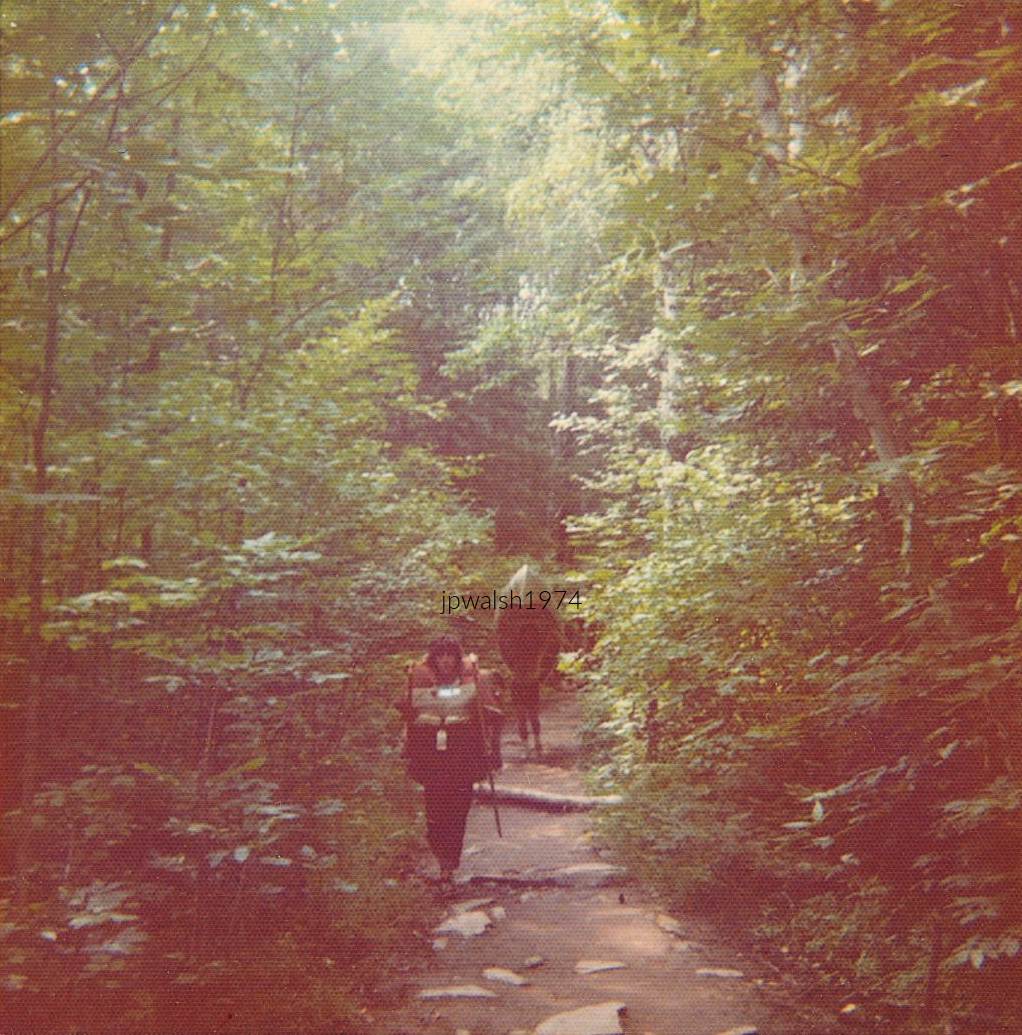
Portage, Quetico, August 1974: Between lakes and light, the work becomes its own kind of rhythm. Author’s photograph.
I didn’t see Nixon’s resignation speech when it happened. We were still on the canoe trip, deep in the woods, and the world felt very far away. But the next morning, back at the outfitter’s, a small television was on, and I caught his early‑morning press conference. Even then, I thought Nixon’s tone was maudlin and overwrought — a view I still hold, though with time it’s easier to see how skillfully he staged that final bit of melodrama.
In the days and weeks that followed, after years of political combat at the highest levels of government, the country felt both relieved and strangely unmoored, as if the ground had shifted and no one quite knew what came next. That sense of drifting didn’t last long. When President Ford pardoned Nixon on September 8, 1974, the national mood snapped back into focus. By then school had started again for me, and I was back on the football field, trying to keep track of plays and classes while the country tried to make sense of its own upheaval. Politics, like the season, regrouped quickly. The struggle resumed — loud, messy, determined — as if the nation needed that friction to feel like itself again so to make all right in the world by way of that struggle for it.
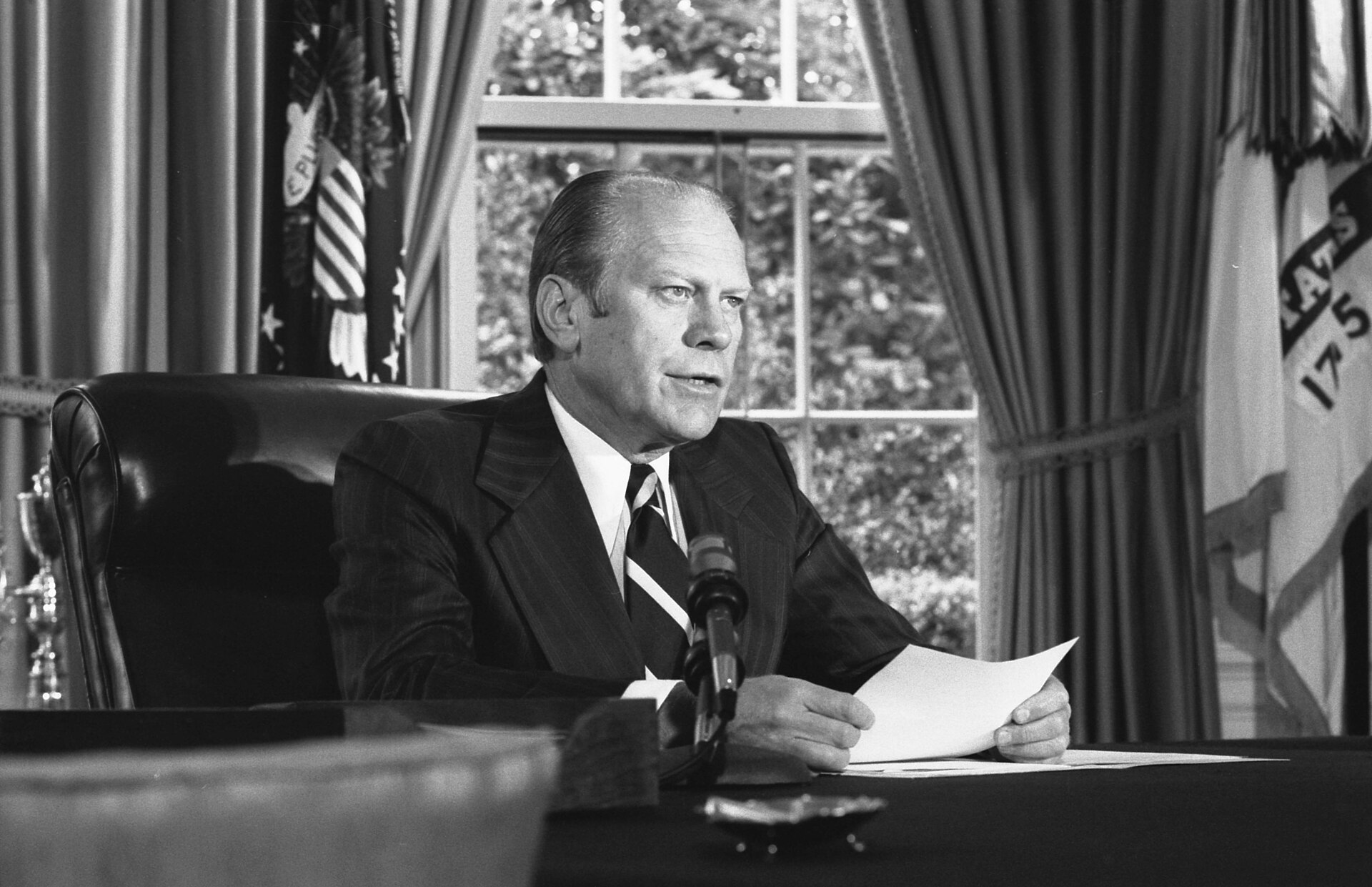
President Ford announcing his decision to pardon Nixon, September 8, 1974, in the Oval Office. Public Domain.
The author at the Richard Nixon Presidential Library in Yorba Linda, California, June 1994—nearly twenty years after Nixon’s resignation and just six weeks after his death on April 22, 1994, at age 81. Author’s collection.
June 1994. President Richard Nixon’s grave at the Nixon Library in Yorba Linda, California, set beside his childhood home. He is buried here alongside his wife, Pat. Author’s photograph.
Reporting work of Woodward and Bernstein has often been described as “maybe the single greatest reporting effort of all time” (Roy J. Harris Jr., Pulitzer’s Gold, 2007, p. 233). In 1976, the story they broke reached a mass audience through the hit film adaptation of All the President’s Men, with Robert Redford portraying Woodward and Dustin Hoffman as Bernstein. That same year, the two journalists published The Final Days, a sequel I read when it first appeared, which chronicled the collapse of Richard Nixon’s presidency — picking up where their earlier book ended and tracing the unraveling of the administration through its final, chaotic months.
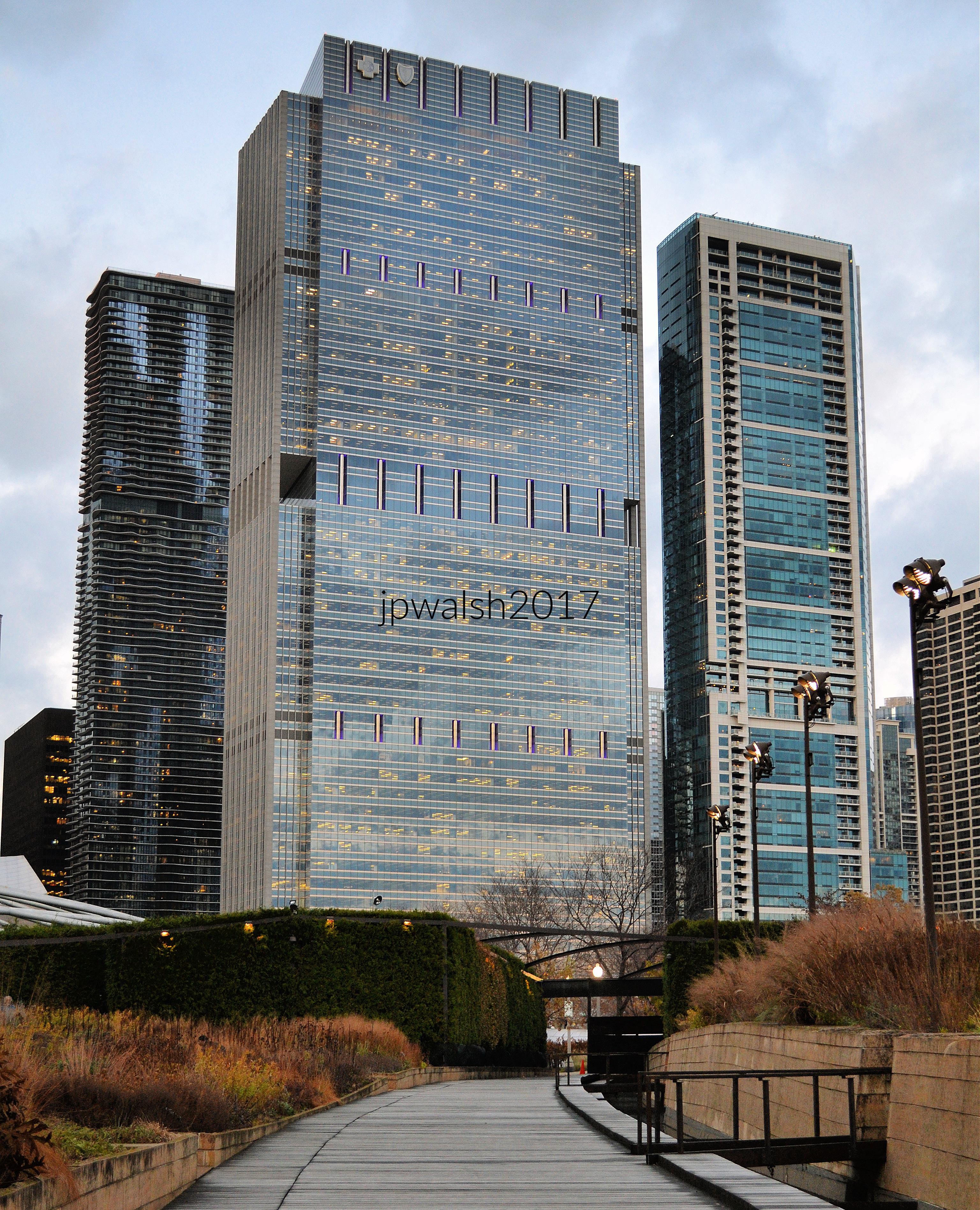
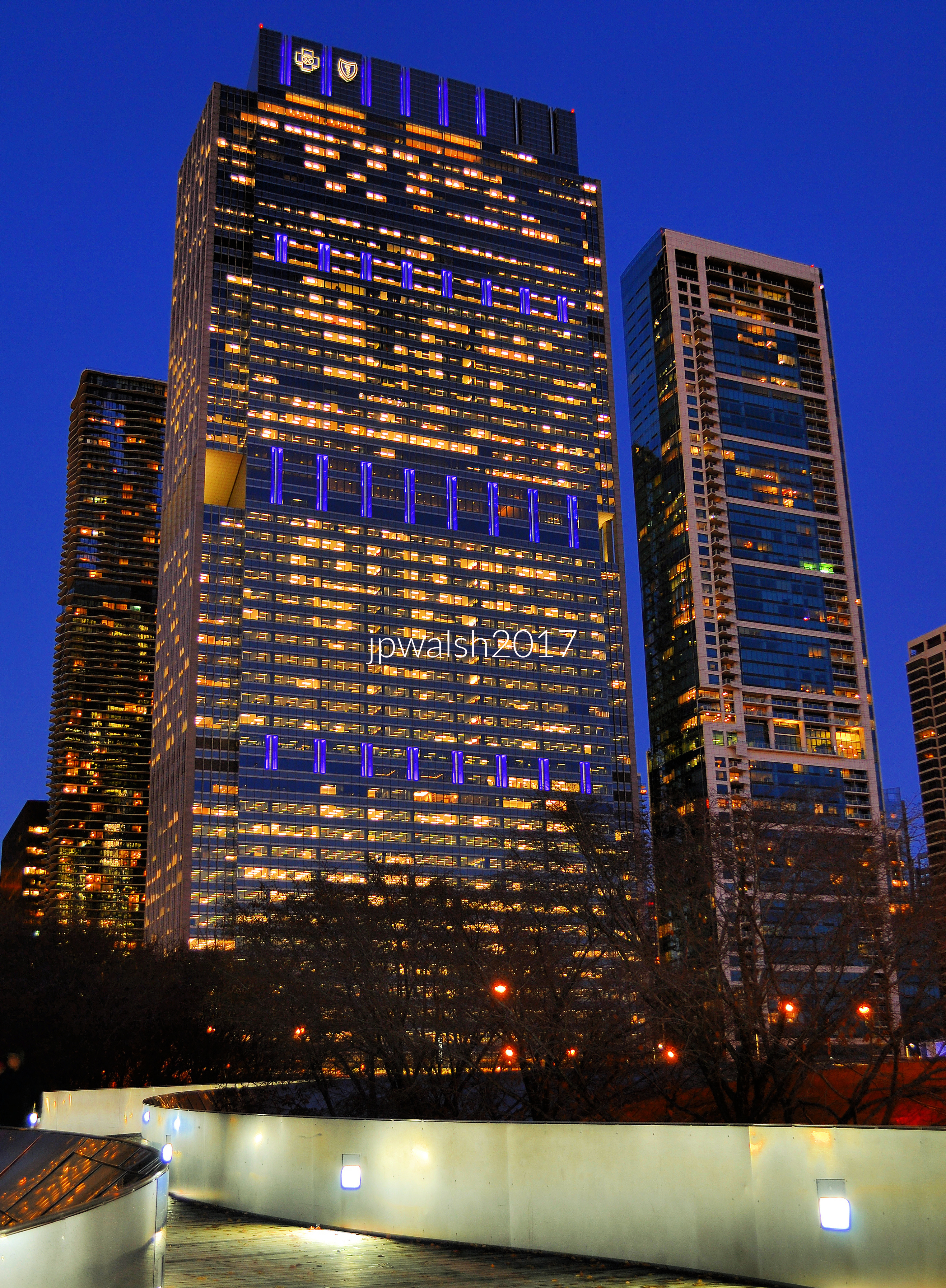
FEATURE image: Blue Cross Blue Shield Tower building, Day and Night. November 2017. It was designed by Goettsch Partners (GP) an architecture firm based in Chicago, with additional offices in Denver and Shanghai.
The Blue Cross Blue Shield Tower sits on the northeast corner of East Randolph Street and Columbus Drive in Chicago, Illinois. It is on the north side of Millennium Park. The tower is the headquarters of Health Care Services Corporation, a company founded in 1936 and based in Chicago, Illinois. HCSC is the licensee of the Blue Cross and Blue Shield Association that provides health insurance to more than 115 million people in the U.S. as of 2022.
Views are from inside Millennium Park. The Blue Cross Blue Shield Tower was built in two stages. The first stage was the original 32-story building completed by Lohan Associates (today Goettsch Partners) in 1997. It was built with the potential for a vertical expansion so that the client could grow in the same location. An expansion occurred in 2007 with a 24-story addition completed in 2010. It became the first building project in downtown Chicago that built upon an existing tower. Author’s photograph. All rights reserved. November 2017 7.38 mb 3417 (1)
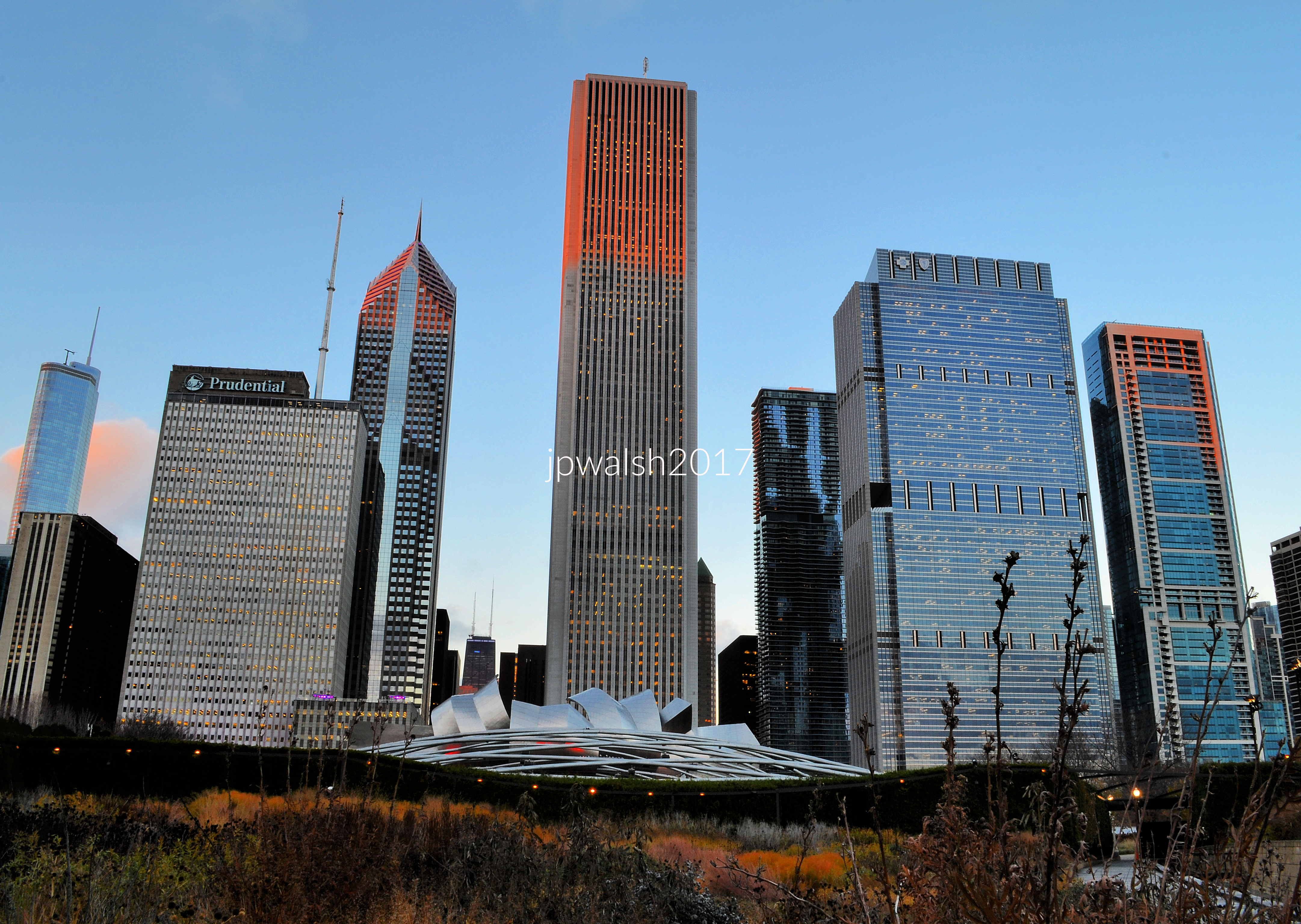
The Blue Cross Blue Shield Tower (second from right) in its setting on the north side of Millennium Park which was established in 1998. From left: One Prudential Plaza (1955), Two Prudential Plaza (1990), Aon Center (1973/1994). The Blue Cross Blue Shield Tower is next to the Aon Center with original plans to connect the two buildings via an underground pedway but did not come to fruition. Author’s photograph. All rights reserved. November 2017 5.76mb 3397 (1)
The Blue Cross Blue Shield Tower was designed by Jim Goettsch, chairman of Goettsch Partners. Author’s photograph. All rights reserved. November 2017 99% 7.41mb 3480
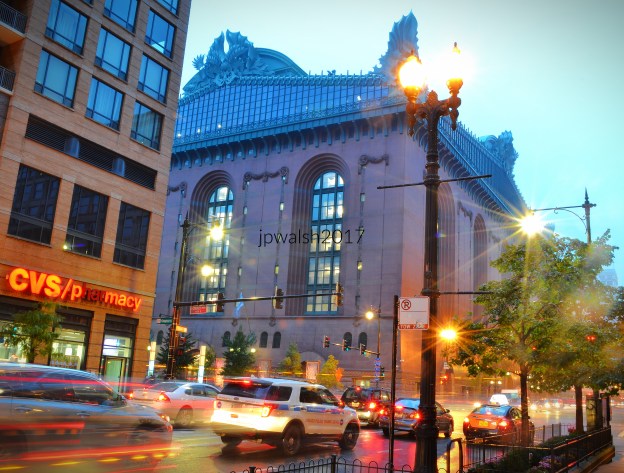
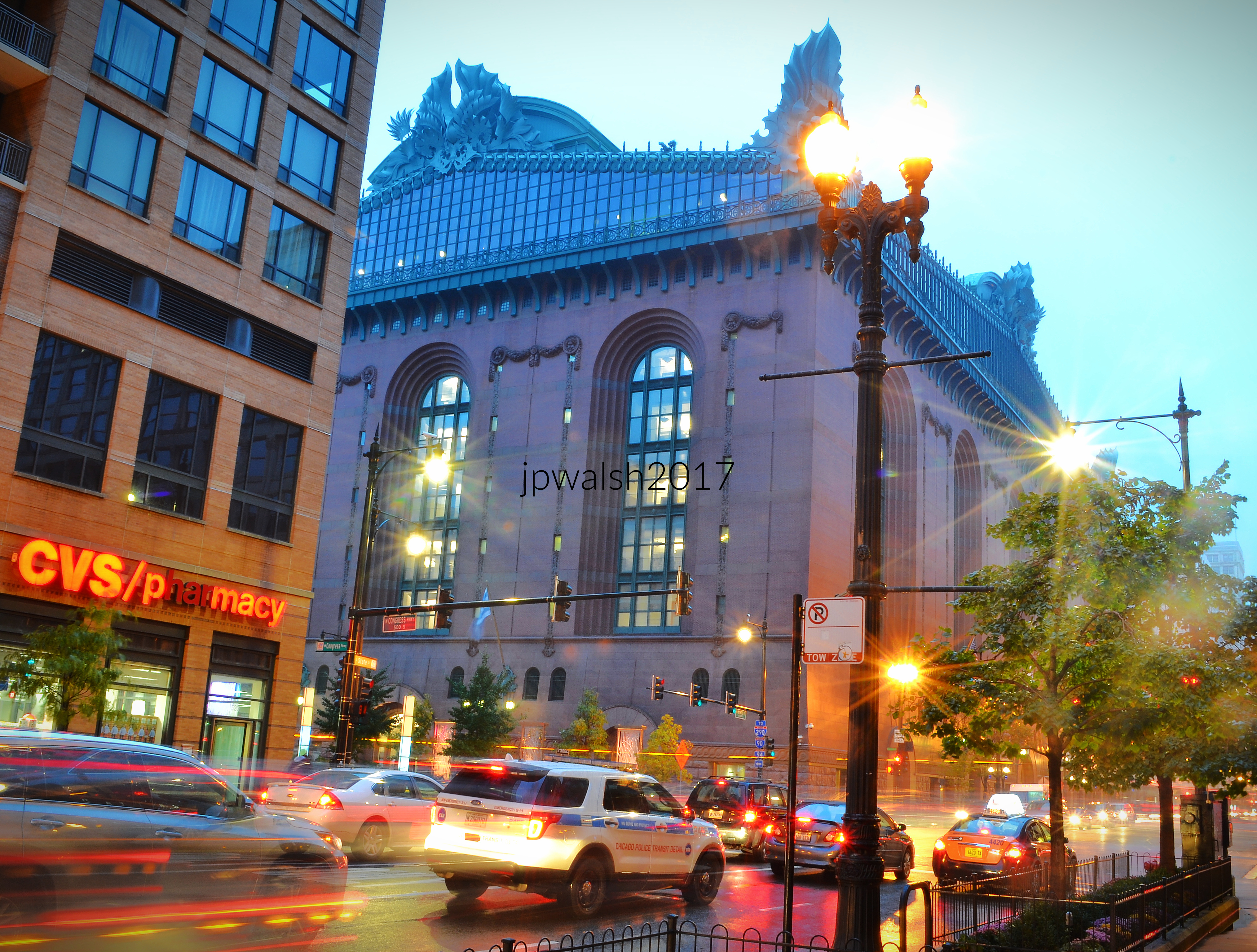
FEATURE image: The Harold Washington Library sits on the northwest corner of State Street and Ida B. Wells (Congress) Drive. It is recognized as one of the largest public library buildings in the world. November 2017. Author’s photograph. 5.02 mb.
The Harold Washington Library Center is a landmark of late 20th-century Chicago architecture that successfully combines the civic grandeur of traditional monumental buildings with a distinctly postmodern design vocabulary, while serving as both a major public institution and a lasting tribute to Mayor Harold Washington.
The decorative pediment of stylized aluminum sculptures was designed by Kent Bloomer in 1993. With enormous owls at each of the pediment’s four corners (“acroteria”), the large sculptures represent growth and wisdom. see – Harold Washington Library Center | Chicago Architecture Center – retrieved February 16, 2026. November 2017.Author’s photograph. 5.02 mb.
Designed by Hammond, Beeby & Babka after winning the 1987 competition for Chicago’s new central library. Completed in 1991 and remains one of the firm’s best-known works.
In 1987, Hammond, Beeby and Babka won the competition to design the main branch of Chicago’s library. The Harold Washington Library was completed in 1991 and is one of the Chicago-based architectural firm’s most famous structures. The building recalls neo-classical institutional buildings yet whose style is creatively applied in its details.
PHOTO: “Harold Washington (9519692588)” by City of Boston Archives from West Roxbury, United States is licensed under CC BY 2.0.
Harold Washington Library Center (1991) is named in honor of Harold Washington, Chicago’s first Black mayor, whose election in April 1983 reshaped the city’s political landscape. Re-elected in 1987, Washington served until his sudden death later that year, leaving a legacy of reform, civic engagement, and expanded political representation. Today, the building stands not only as a tribute to his leadership but also as one of the world’s largest public library facilities, serving as the principal research branch of the Chicago Public Library.
The Harold Washington Library is named for Chicago’s first Black mayor. Harold Washington (1922-1987) was elected to two terms as mayor starting in 1983. The well-read and erudite mayor died suddenly of a heart attack the day before Thanksgiving in November1987 just a few months into his second term. I was running along the lakefront in Lincoln Park on an overcast day when I heard the news on my Walkman. My fiancée and I were one of the thousands of Chicagoans (and one of the few whites) who passed by his open casket in the lobby of City Hall between November 27 and 29, 1987. I had also seen and heard Harold Washington speak a couple of times during his public appearances as mayor.
FROM THE PROGRAM: “The jury becomes the ultimate client…There are three areas of evaluation: the design of the building; how it meets technical specifications and how it fulfills the library program…•
Five competing architecture teams race to create the vision for the new Harold Washington (Chicago Public Main) Library that opened at 400 S. State Street on October 7, 1991. The Burnham-dreamed park south across Congress/Ida B. Wells from the library never materialized (Pritzker Park is to the north). The NOVA episode follows these creators as they develop and present their ideas to be judged by the city and public for the downtown building that range from postmodern to Beaux-Arts design concepts. FROM THE PROGRAM: “The jury becomes the ultimate client…There are three areas of evaluation: the design of the building; how it meets technical specifications and how it fulfills the library program…•
State Street entrance. Chicago. July 2015. Author’s photograph. 4.84mb
The design recalls neoclassical institutional architecture but reinterprets it through creative postmodern details.
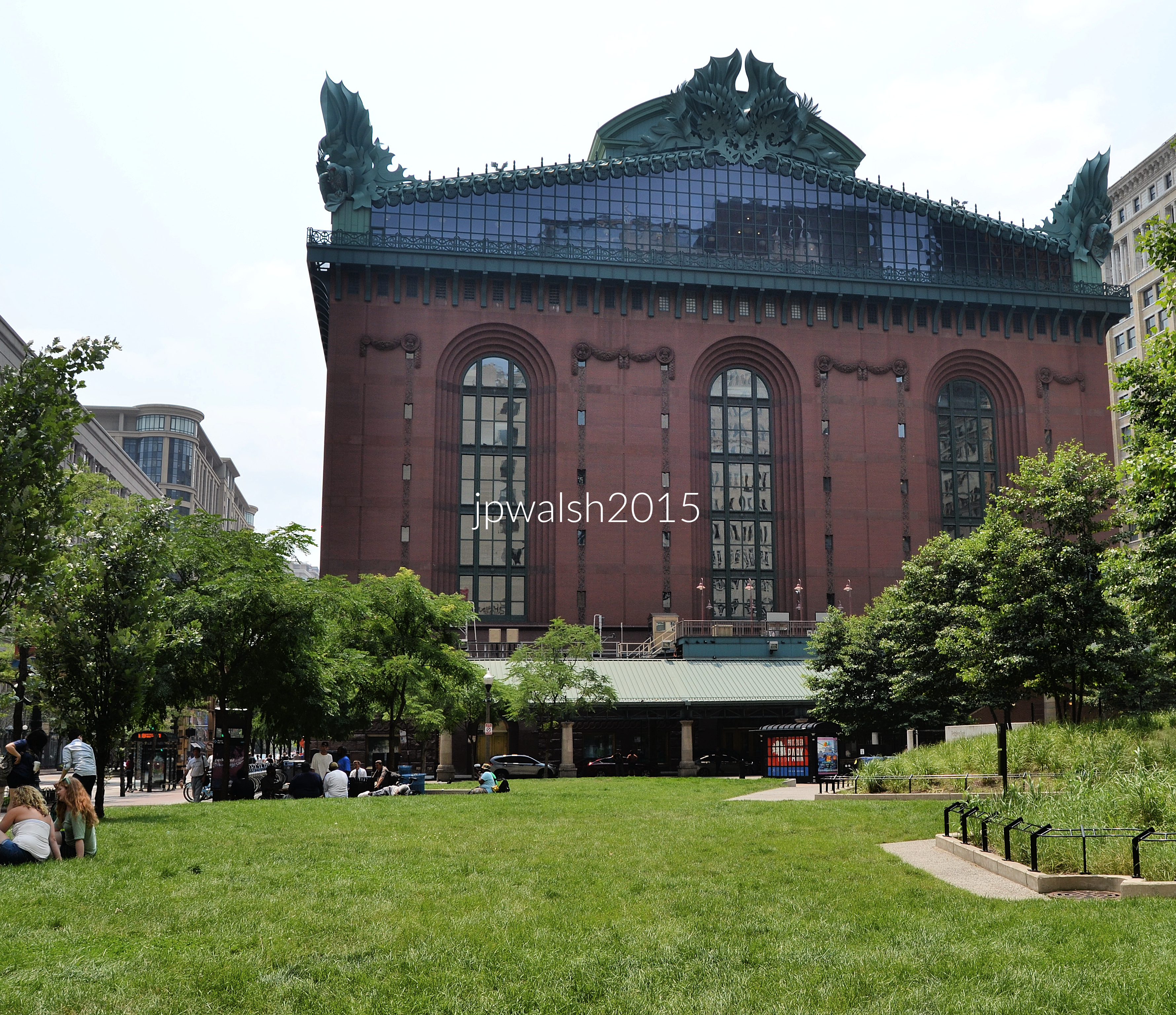
North facade. July 2015. Author’s photograph. 5.01mb DSC_0056 (1)
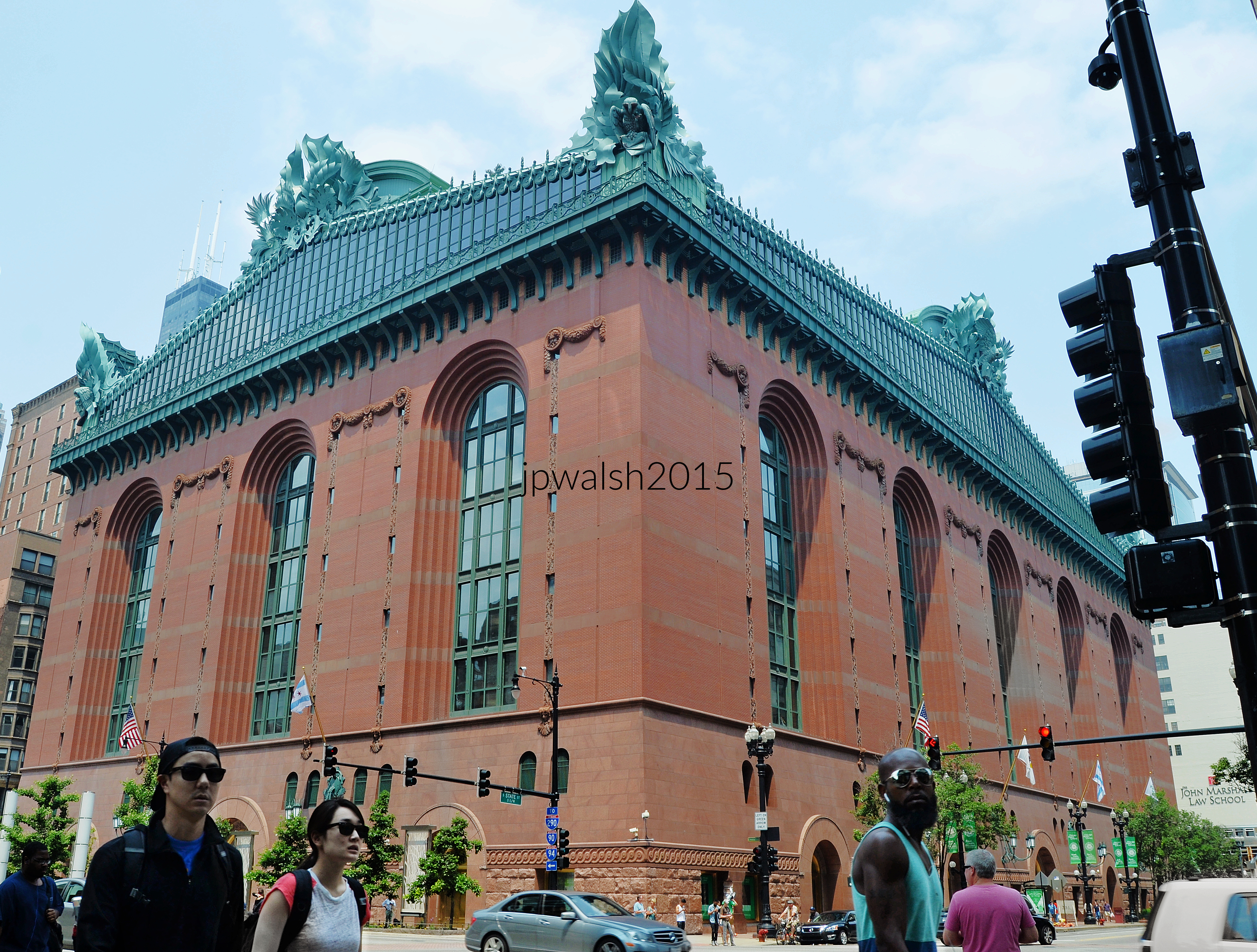
Southeast corner. July 2015. Author’s photograph. 5.52 mb DSC_0004 (2)
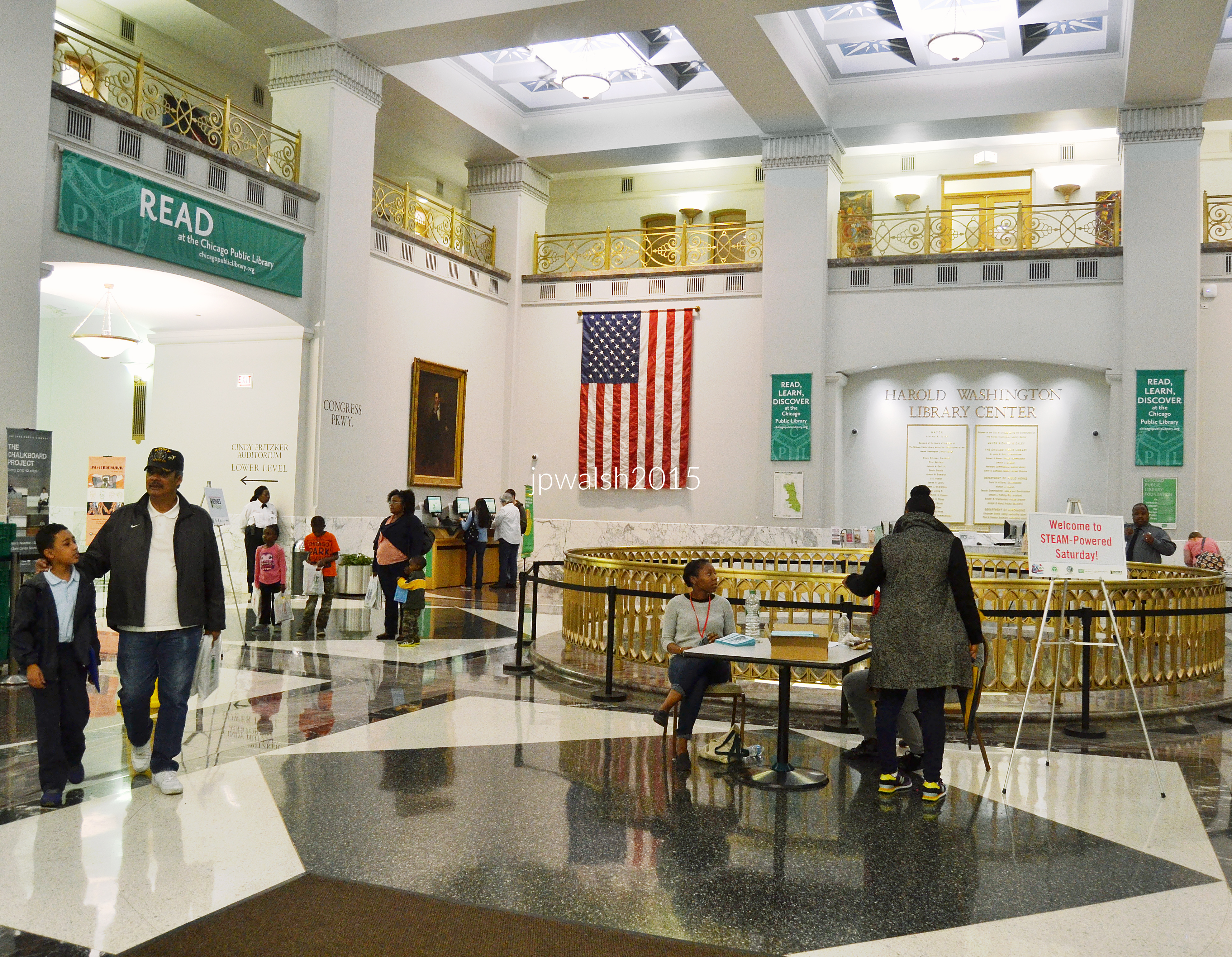
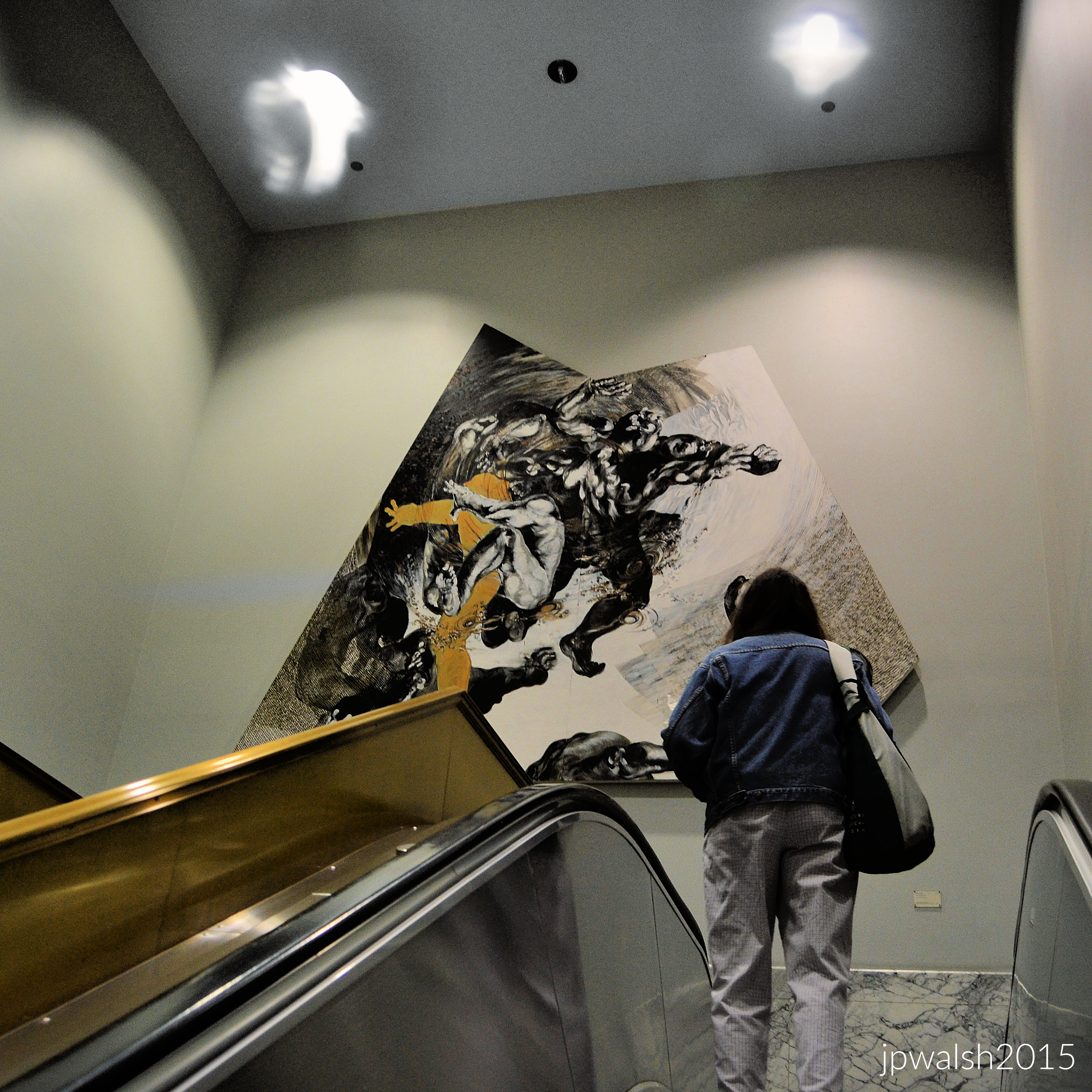
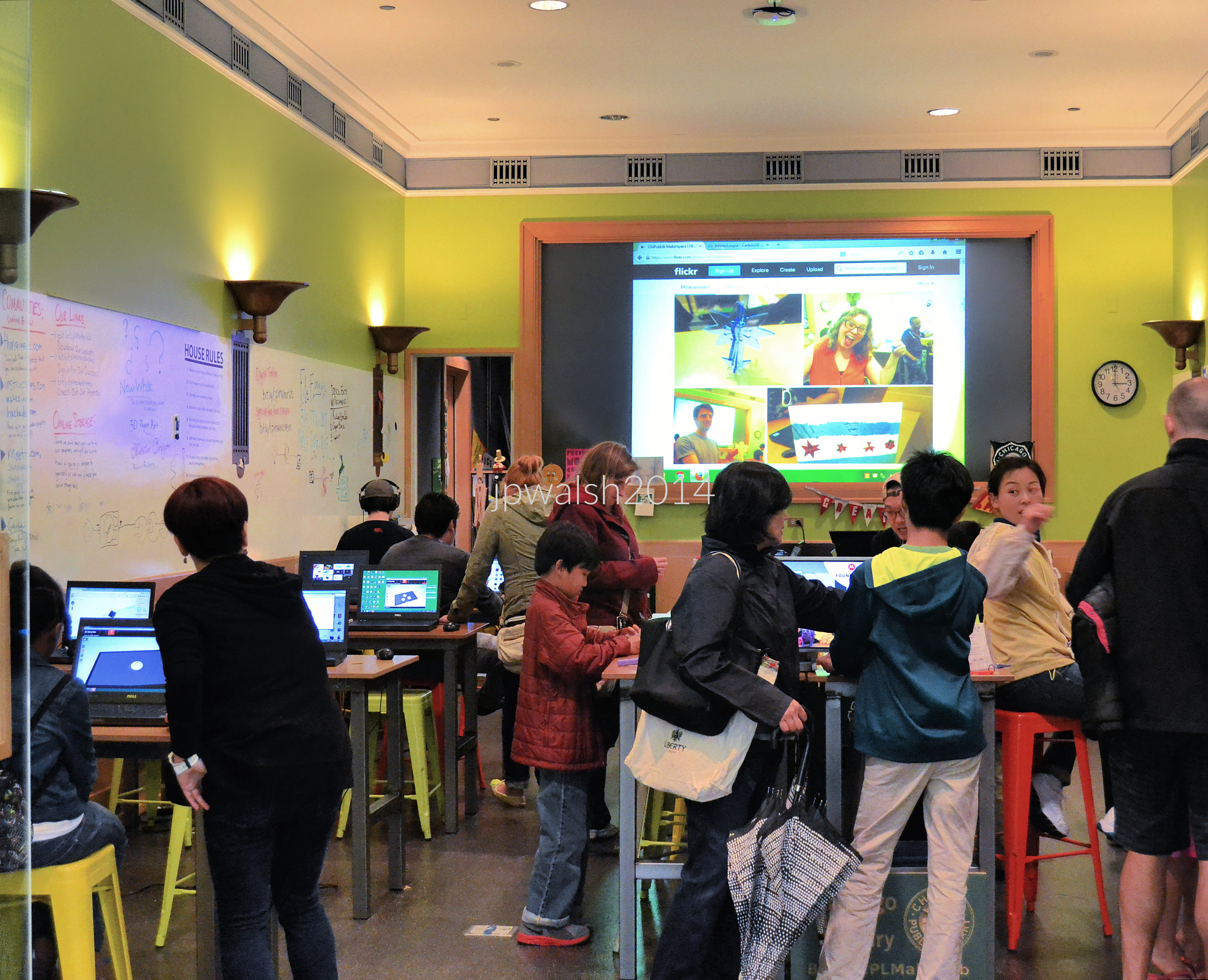
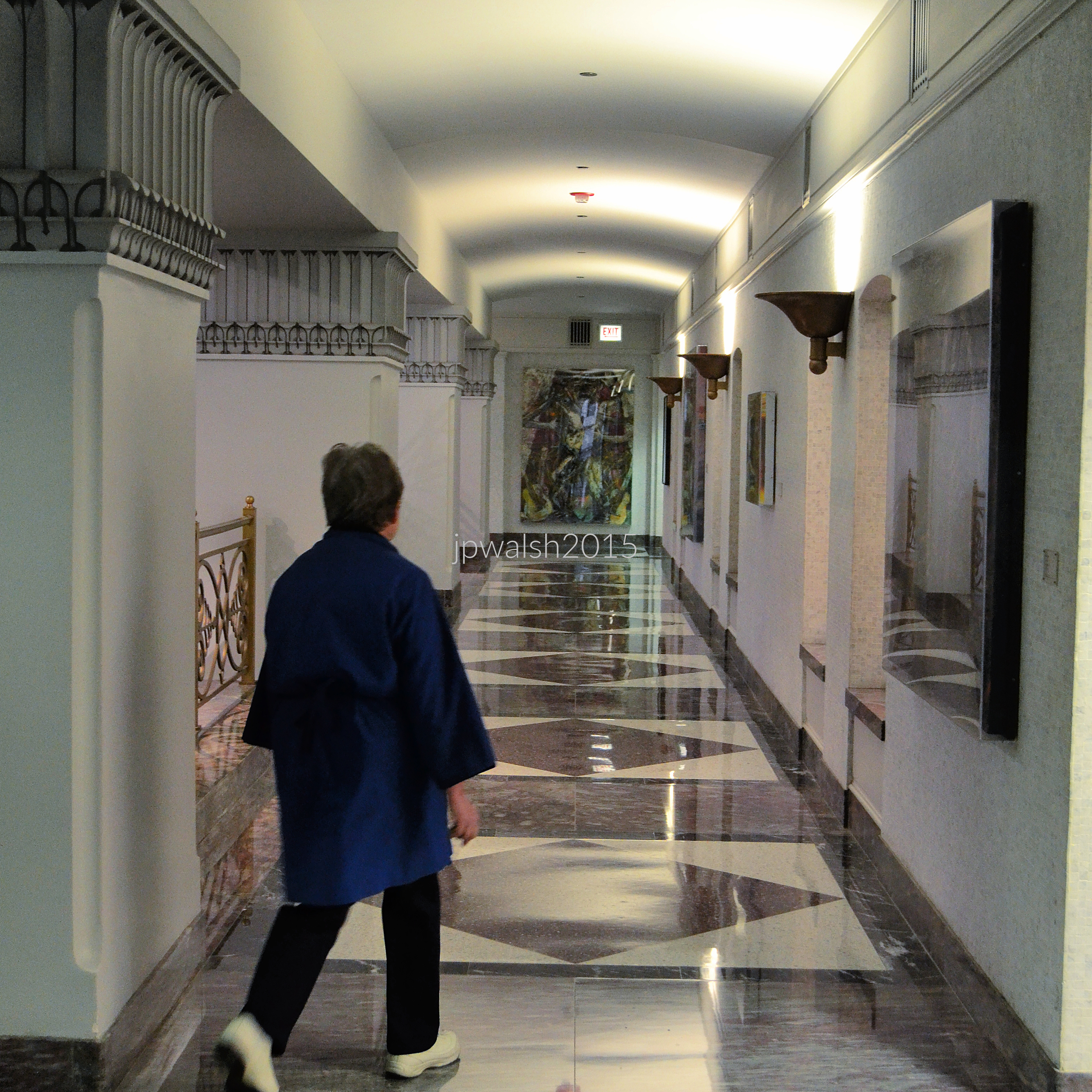
Interior views highlight the building’s function as a major cultural and educational resource, housing millions of items and specialized collections.
The Harold Washington Library houses millions of items across nine floors. At 750,000 square feet, it is the largest public library building in the world. see – Harold Washington Library | Loop Chicago – retrieved February 16, 2026. May 2015. Author’s photograph. 4.0 mb DSC_0476 (1)
Study Room. May 2015. Author’s photograph.4.88mb DSC_0488 (1)
On the 8th floor the Visual and Performing Arts Department maintains a comprehensive music archive. One major collection, for example, is the Martin and Morris Collection which contains roughly 1,500 scores from the renowned gospel music publisher. May 2015. Author’s photograph. 3.61mb DSC_0486.
The photographs document the library from multiple perspectives, emphasizing its urban presence, monumental scale, and role within the Chicago streetscape.
Harold Washington Library after dark. December 2015.Author’s photograph. 3.7mb DSC_0980 (3)
This explanatory article may be periodically updated.