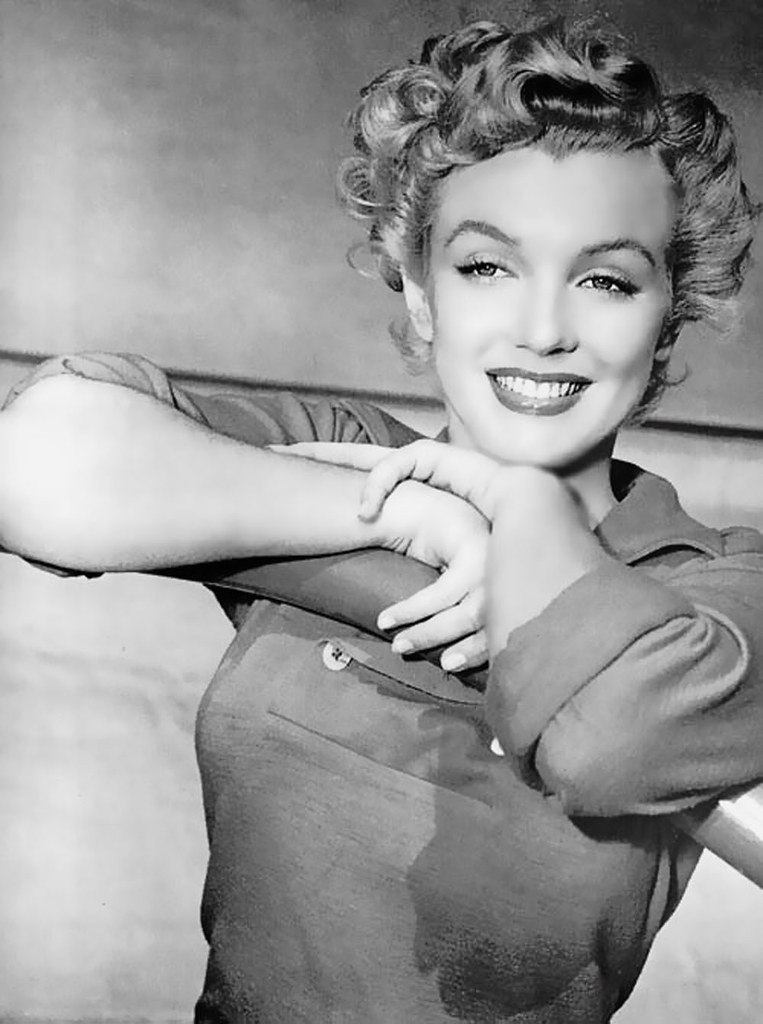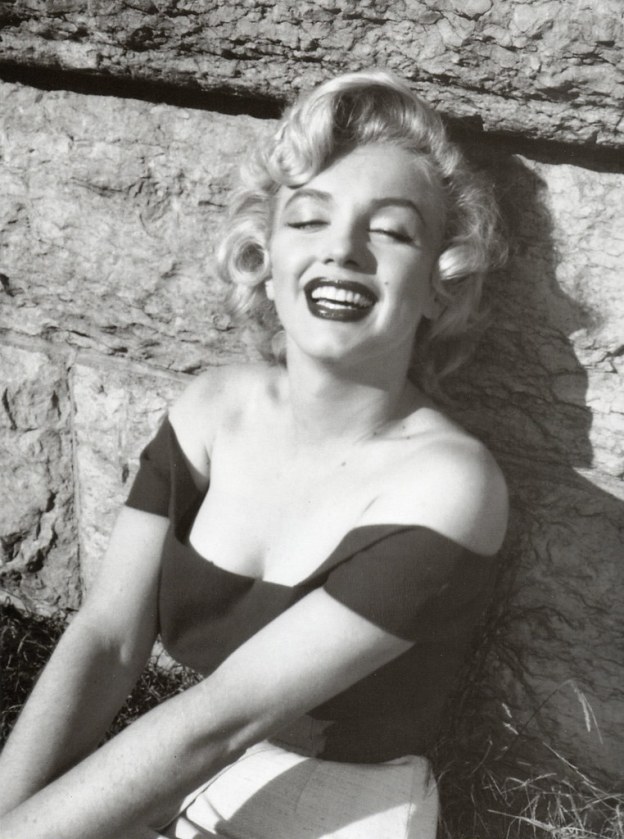

FEATURE image: Marilyn Monroe by Jock Carroll, June, 1952. In 1952, Canadian journalist‑photographer Jock Carroll spent two weeks documenting 26‑year‑old Marilyn Monroe in Niagara Falls as she filmed Niagara. Assigned by Weekend Magazine, he captured candid moments that revealed the rising star behind the role. They connected quickly, leading to a series of informal sessions—most notably the General Brock hotel shoot, where she practiced smoking for a part, and their on‑location wanderings along the river, where he photographed her among surprised tourists. The best images resurfaced in 1996 in Falling for Marilyn: The Lost Niagara Collection, now central to Niagara‑era Monroe archives. “Marilyn Monroe by Jock Carroll, June, 1952” by thefoxling is licensed under CC BY-NC-SA 2.0.
Marilyn Monroe would have turned 100 today on June 1, 2026. Nearly 65 years after her sudden death in August 1962, the world is marking her centenary with global film retrospectives, documentaries, and art exhibitions. From her roots as a vulnerable foster child to her rise as a towering Hollywood icon, Monroe transformed herself into a master of her own image, a savvy business pioneer, and an enduring symbol of resilience.
Biographical Overview: The Making of an Icon
Early Life and Adversity
Born Norma Jeane Mortenson on June 1, 1926, in Los Angeles, Monroe endured a turbulent and marginalized childhood. After her mother was institutionalized with schizophrenia, Monroe became a ward of the state, spending her youth moving between orphanages and foster care. She married a neighbor shortly after her 16th birthday. In 1945, while working at a defense factory, she left her job to begin a successful modeling career, establishing the essential grit that would fuel her future Hollywood ascent.
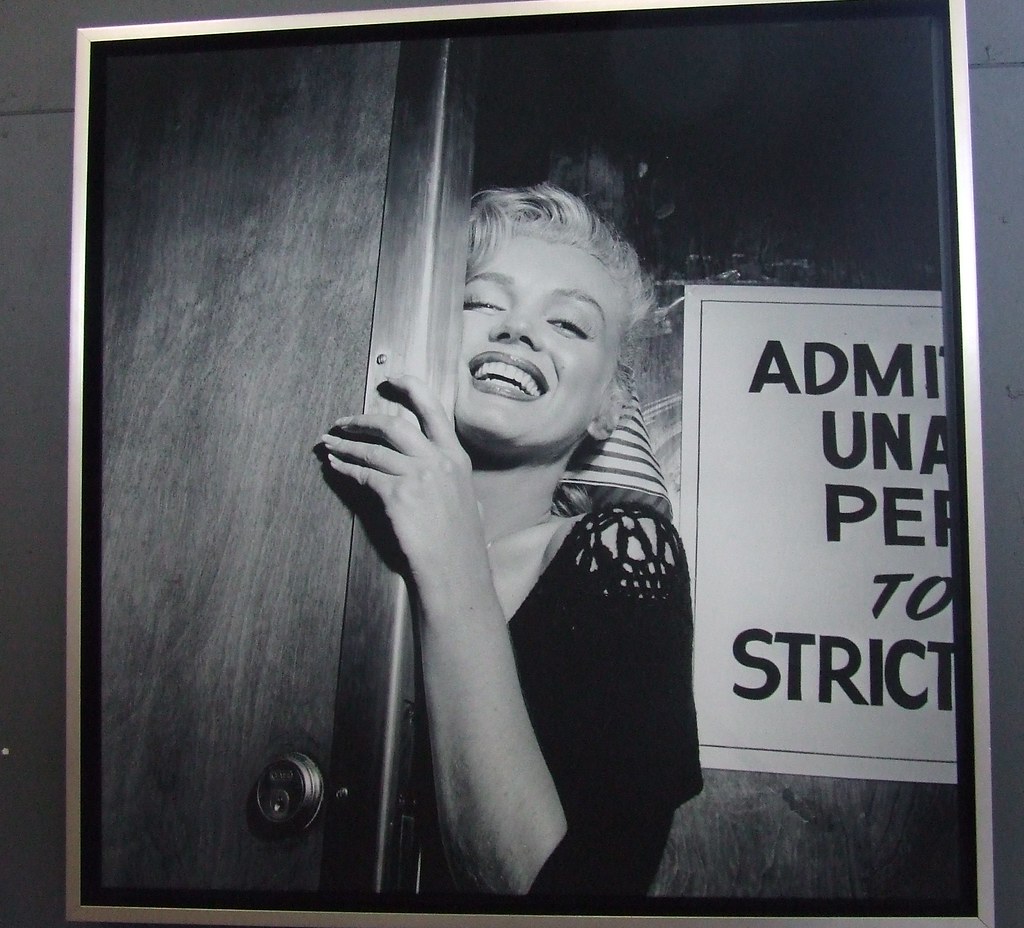
“marilyn monroe” by Gerard Stolk (vers l’automne) is licensed under CC BY-NC 2.0.
Defying the Hollywood Playbook
Monroe trained rigorously to transition into acting, debuting in minor film roles by the late 1940s. Though long reduced to a “bombshell” caricature by the studio system, Monroe was an ambitious, self-constructed artist who deeply understood the camera. She systematically fought studio heads for creative control. In December 1955, she negotiated a landmark seven-year contract with 20th Century-Fox, securing a premium salary of $100,000 per movie alongside the rare right to approve her own directors, cinematographers, and projects.
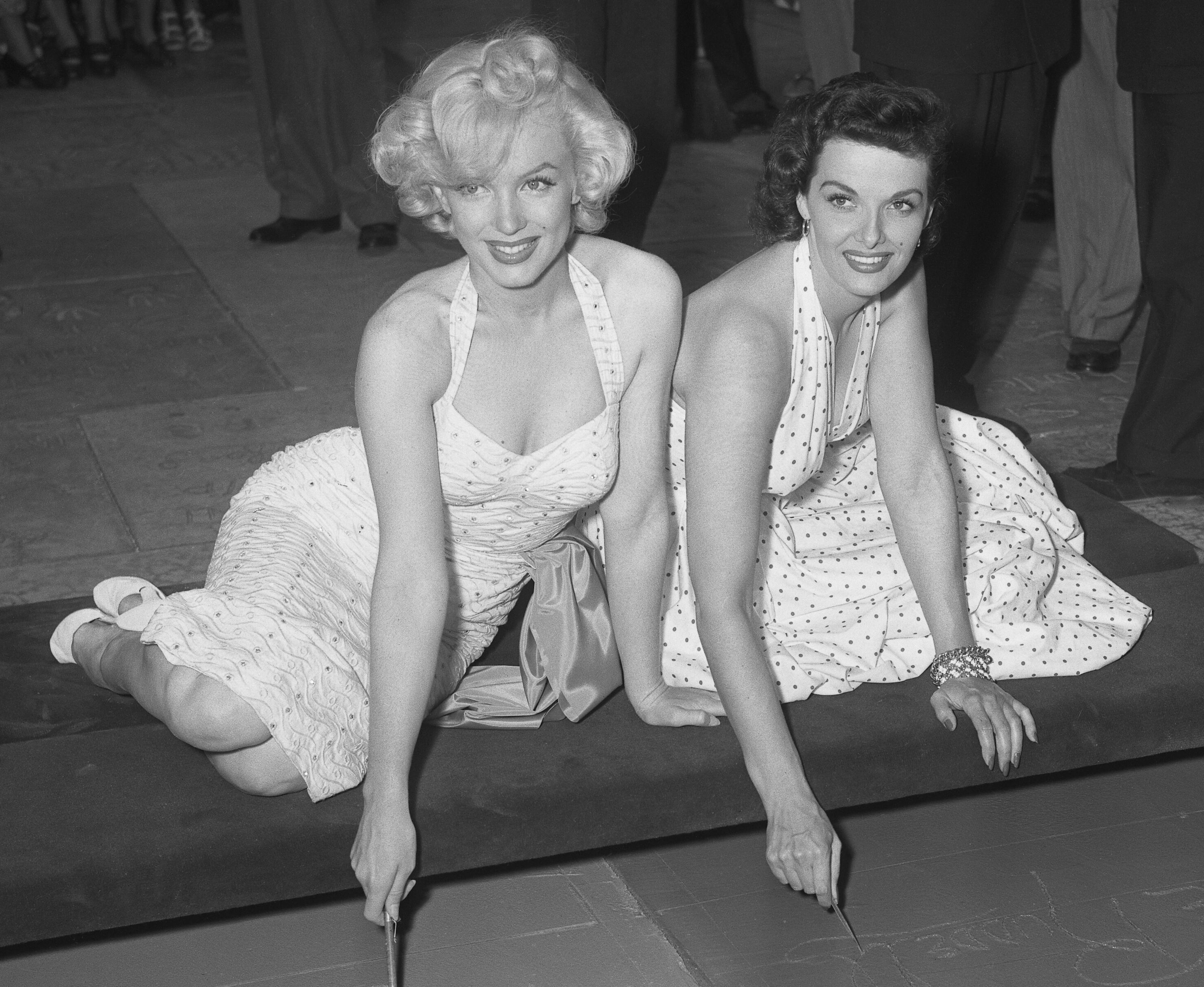
Monroe and sultry star Jane Russell shared the screen just once, in Howard Hawks’s 1953 musical comedy Gentlemen Prefer Blondes. Monroe played Lorelei Lee, the bubbly, gold‑digging showgirl, while Russell anchored the film as Dorothy Shaw, her sharp‑witted, fiercely loyal best friend. Their chemistry—playful, balanced, and effortless—became one of the film’s signatures. Their partnership spilled into real‑world Hollywood lore as well: the two famously pressed their handprints and footprints side by side in the cement at Grauman’s Chinese Theatre, sealing their brief but iconic collaboration in movie history. “Marilyn Monroe and Jane Russell at Chinese Theater 2” by Los Angeles Times is licensed under CC BY 4.0.
Independent Artistry and Business Innovation
Monroe became a feminist pioneer in a repressive era by founding her own independent venture, Marilyn Monroe Productions (MMP), in November 1954. This allowed her to step away from repetitive studio typecasting and pursue serious method acting in New York. Beyond her glamorous exterior, Monroe was highly intellectual—passionately studying literature, politics, and psychoanalysis. She used her immense platform for philanthropy and championed other artists, famously giving designer Bob Mackie his early career break.
Marilyn reading Irish modernist novelist James Joyce. Marilyn Monroe deliberately built the on‑screen persona Hollywood demanded of her, yet she just as deliberately complicated it. She played the “dumb blonde” roles magnificently, but she also worked against that stereotype by allowing herself to be photographed reading, studying, and thinking—images that quietly challenged the industry’s narrow expectations. In reality, she was a deeply intellectual woman who used books to self‑educate, sharpen her craft, and carve out a private inner life away from public scrutiny. Reading became both a refuge and a tool: a way to grow, to escape, and to become a more serious, disciplined actor than the roles she was offered ever suggested. “Marilyn Monroe Reading James Joyce” by I, Puzzled is licensed under CC BY-NC-SA 2.0.
Enduring Legacy
Following three marriages—including high-profile unions with baseball legend Joe DiMaggio and playwright Arthur Miller— On August 5, 1962, Monroe was found dead from a drug overdose at age 36. The tragedy occurred in the 12305 Fifth Helena Drive home in Brentwood she had purchased just six months earlier. The modest 1929 Spanish Colonial Revival for which she paid $77,500 was the very first piece of residential real estate that Monroe purchased completely on her own, using her own money, and with her name solely on the deed.
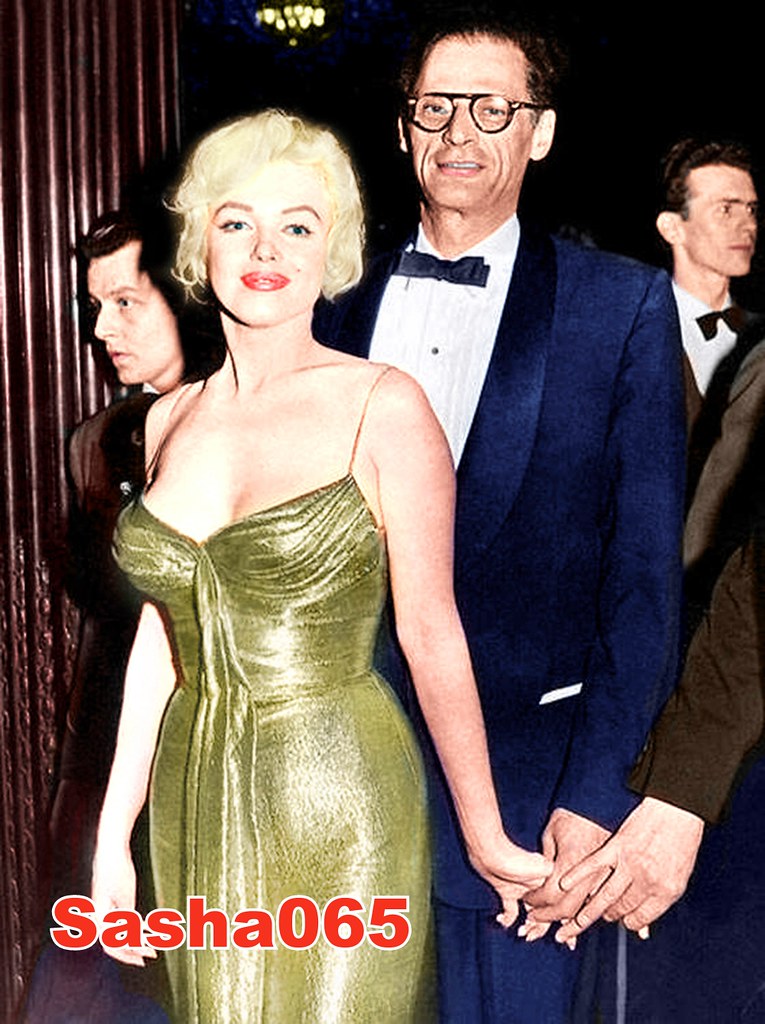
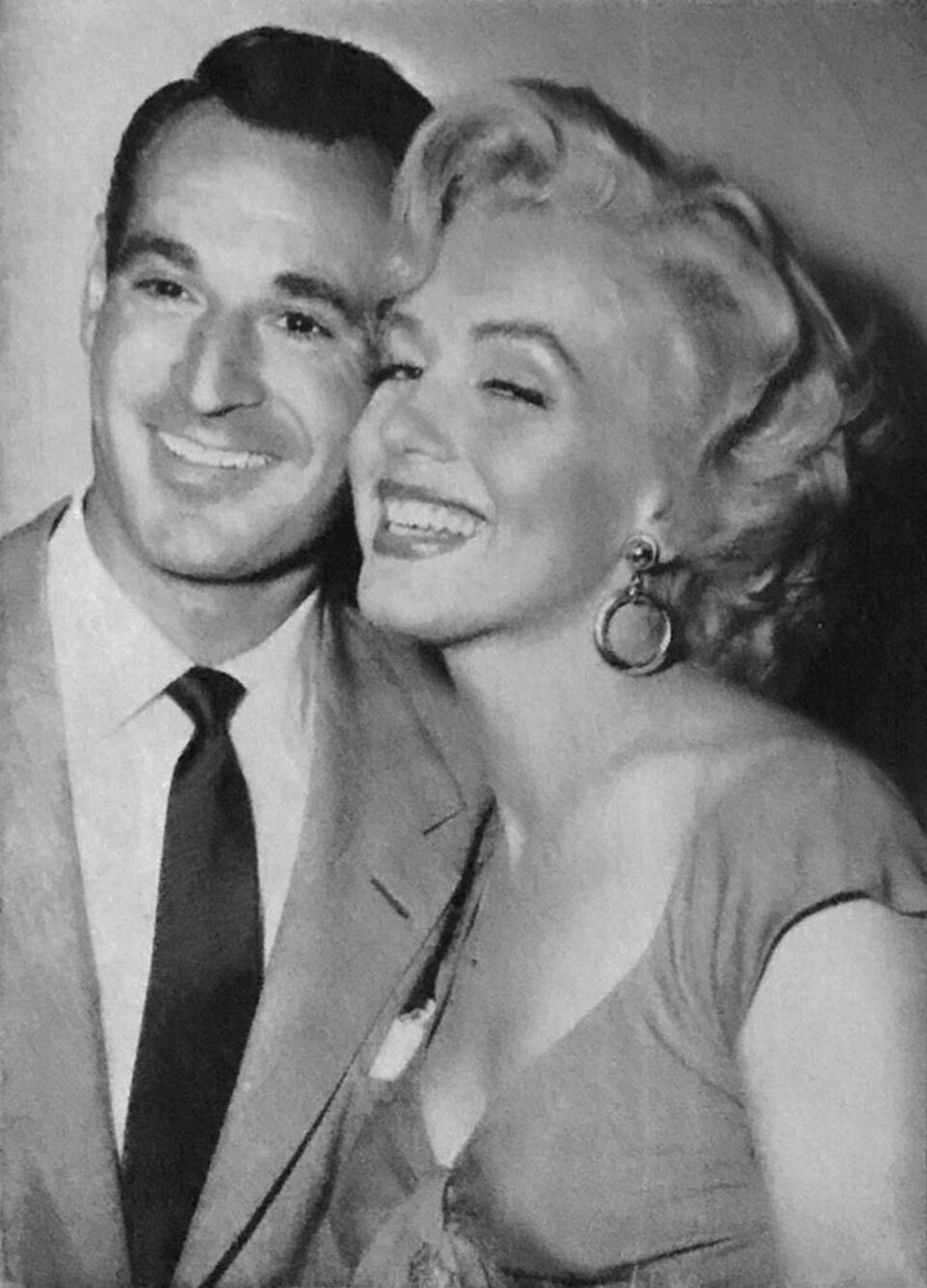
Marilyn Monroe’s three marriages chart her rise from a guarded teenager to a woman searching for emotional and intellectual grounding. At sixteen she wed James Dougherty, a protective but conventional match that dissolved once her career began to take shape. Her whirlwind union with Joe DiMaggio burned bright and fast, undone by his jealousy even as he later became a loyal presence who honored her memory for years. Her longest marriage, to Arthur Miller, reflected her desire to be taken seriously, yet it strained under personal losses and the pressures of fame and creative collaboration. “Marilyn Monroe and Arthur Miller” by Alexander Sasha Dejan is licensed under CC BY-NC-ND 2.0.
Officially ruled a “probable suicide,” her tragic passing sparked international headlines and enduring conspiracy theories. Today, her boundary-pushing legacy continues to inspire modern art, from Andy Warhol’s classic “Marilyn Diptych” silkscreens to William Travilla’s historic wardrobe installations at the Academy Museum of Motion Pictures.
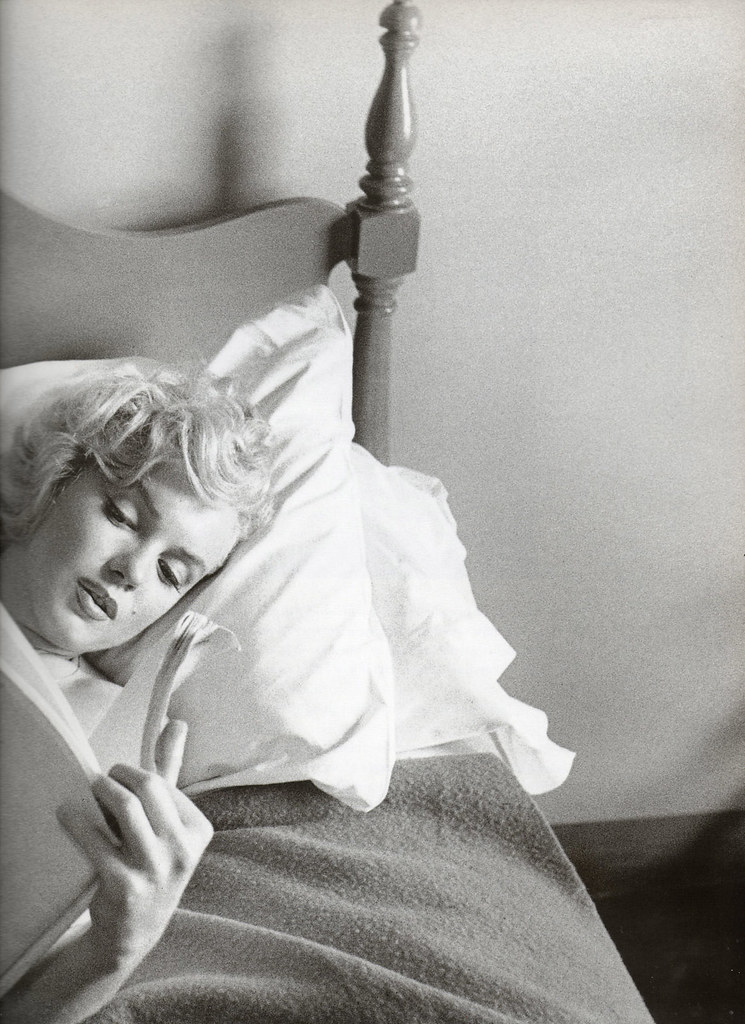
The well‑known photographs Jock Carroll took of Marilyn Monroe relaxing and reading the script of the film Niagara in bed were shot in Room 801 of the General Brock Hotel—now the Crowne Plaza Niagara Falls—in Ontario, Canada. It was taken in June 1952 during her 1952 stay for the filming of Niagara. “Marilyn Monroe by Jock Carroll, June, 1952” by thefoxling is licensed under CC BY-NC-SA 2.0.
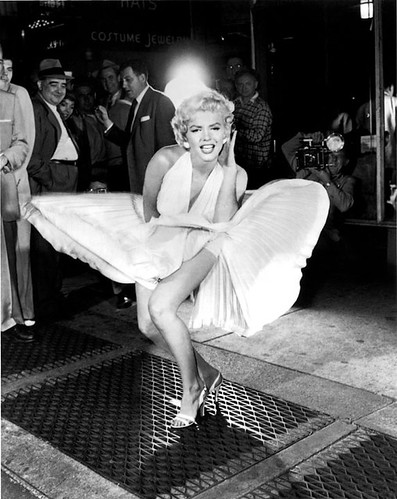
The publicity shots for the iconic “flying skirt” scene in The Seven Year Itch (1955) are arguably the most famous promotional images in Hollywood history, born from a calculated publicity stunt that created a massive public spectacle and ended Marilyn Monroe’s second marriage. Brainstormed by photographer Sam Shaw and featuring an ivory white halter-neck dress by William Travilla, the sequence was filmed at 1:00 AM on September 15, 1954, outside Manhattan’s Trans-Lux 52nd Street Theater. A raucous crowd of over 1,500 onlookers and 100 photographers swarmed the intersection as a subway grate blower sent Monroe’s skirt flying through 14 takes, generating deafening cheers that completely ruined the audio and forced a studio reshoot weeks later in Los Angeles. “Marilyn Monroe Lexington Subway Image” by MTAPhotos is licensed under CC BY 2.0.
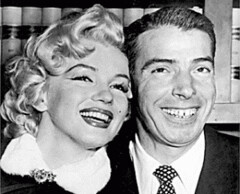
While the event cemented Monroe as the ultimate American sex symbol, her traditional husband, baseball legend Joe DiMaggio, grew furious watching the crowd ogle her undergarments, sparking a bitter fight that night at the St. Regis Hotel that led directly to their divorce after just nine months of marriage. “marilyn monroe and joe dimaggio” by lopesFamily is licensed under CC BY-NC-SA 2.0.
MARILYN MONROE: Selected Filmography and Synopsis
During her 15-year movie career, Monroe starred in some of the most enduring features of the 20th century. Key highlights of her cinematic legacy include:
Dangerous Years (1947) – Monroe makes her official film debut playing a brief role as a waitress.
The Asphalt Jungle (1950) – A critical breakthrough role directed by John Huston, featuring Monroe as a corrupt lawyer’s mistress.
All About Eve (1950) – Monroe earns critical attention as the sharp Miss Caswell in this prestigious, award-winning drama.
Niagara (1953) – A dramatic film noir shot in vivid color and CinemaScope that established her early box office magnetism.
Gentlemen Prefer Blondes (1953) – A massive $5.3 million musical comedy hit where Monroe plays gold-digging showgirl Lorelei Lee. The film cemented her superstardom and featured her effortless, iconic performance of “Diamonds Are a Girl’s Best Friend.”
How to Marry a Millionaire (1953) – A highly successful $8 million CinemaScope comedy showcasing her sharp, voluptuous comic timing.
The Seven Year Itch (1955) – A definitive $4.5 million cultural high point directed by Billy Wilder. It features the legendary, internationally sensation scene of Monroe’s white dress billowing over a Manhattan subway grate.
Bus Stop (1956) – A nuanced, critically acclaimed dramatic performance directed by Joshua Logan that pulled in $4.25 million.
The Prince and the Showgirl (1957) – A notable independent project produced under her own studio banner, Warner Brothers distribution.
Some Like It Hot (1959) – A legendary United Artists comedy displaying her “effervescent melancholy” and earning her major awards.
The Misfits (1961) – A dramatic John Huston production that served as Monroe’s final completed feature film, released just one year before her death.
The Sanctuary of a Global Pilgrimage
Marilyn Monroe lives on in the hearts of her worldwide admirers with a radiance that outlasts fame itself, proving that her vulnerability and warmth reach far deeper than her silver‑screen glamour. Decades after her passing, she is remembered not as a distant studio creation, but as a profoundly human figure—someone whose longing for love, acceptance, and artistic freedom makes her feel like an intimate friend to millions. It is this emotional closeness, this sense of truly knowing her, that has transformed her resting place into one of the most cherished pilgrimage sites in contemporary culture.
Tucked quietly behind tall glass towers in a bustling commercial district, Marilyn’s final sanctuary rests at Pierce Brothers Westwood Village Memorial Park, less than three miles from her Brentwood home where her life ended. In the Corridor of Memories, her pink marble crypt—Crypt 24—stands out unmistakably. For decades, visitors have pressed lipstick‑stained kisses onto the stone, leaving a soft crimson patina that no amount of polishing can erase. Fresh flowers, handwritten letters, poems, photographs, and small tokens of devotion gather there in a constant, ever‑renewing tribute.
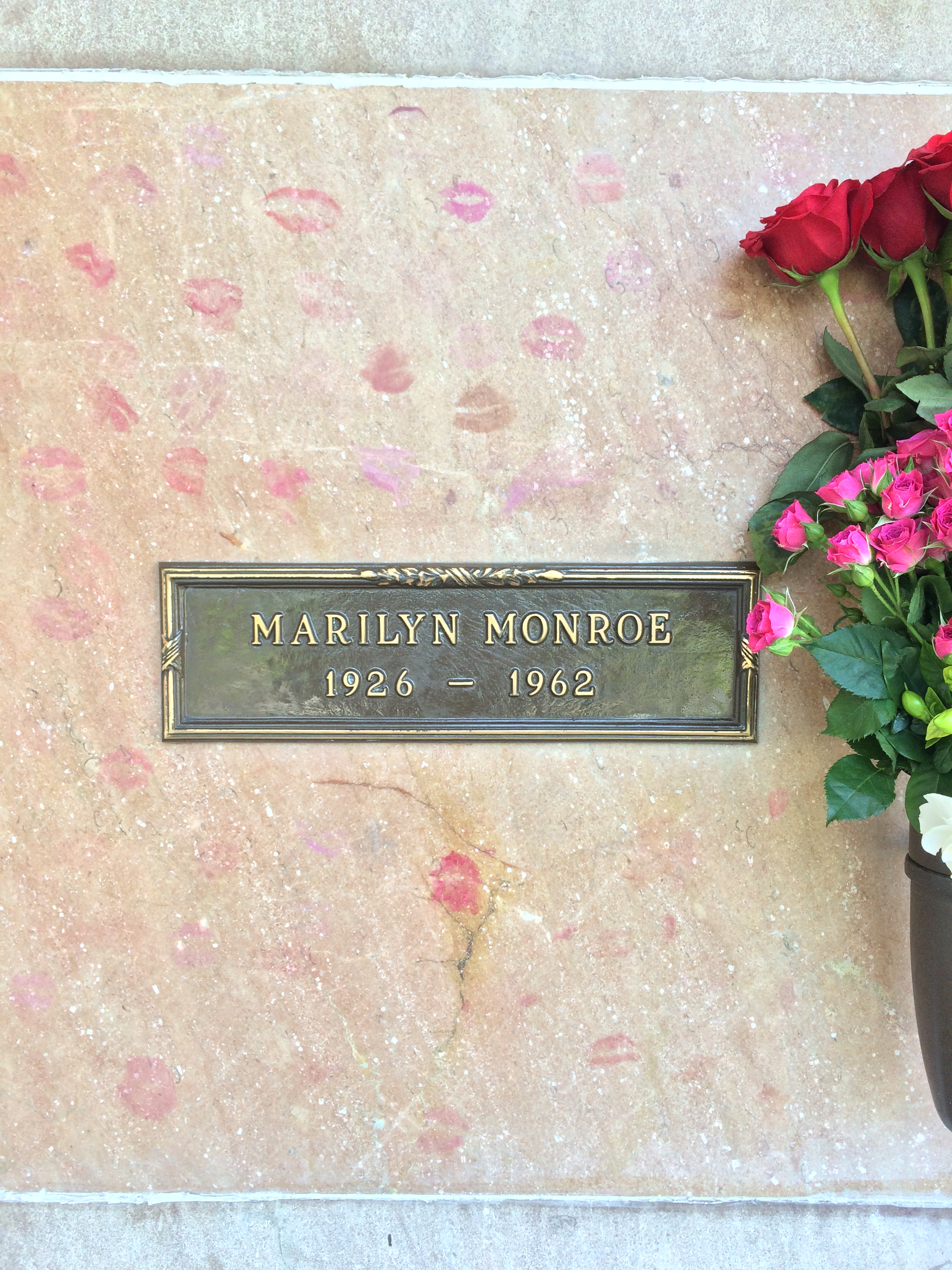
“Marilyn Monroe Grave” by Arthur Dark is licensed under CC BY-SA 4.0.
The Global Anniversary Gatherings
Each year, especially on June 1 and August 5, the small cemetery becomes a living shrine. Admirers travel from every corner of the world to honor her—some dressed in lovingly recreated versions of her iconic looks, others carrying stories of how she shaped their lives. Together, they ensure that her light, so often misunderstood in life, never dims in memory.
A Monument to the Love She Was Denied
In the end, Marilyn’s gravesite has become what Hollywood never fully allowed her to receive: a place of unconditional affection. It is a sanctuary where strangers become companions in shared devotion, where her memory is tended with gentleness, and where the world continues to offer her the love, protection, and dignity she longed for. Her resting place is not merely a crypt—it is a living testament to the enduring bond between a woman and the millions who still feel her presence.
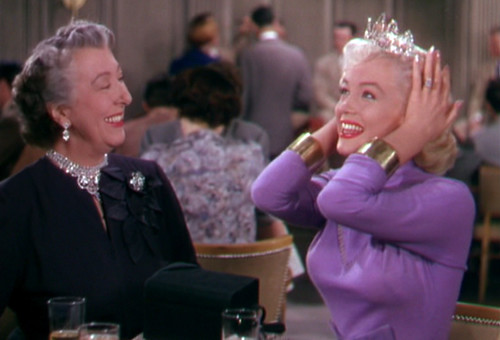
In Gentlemen Prefer Blondes, the moment Dorothy and Lady Beekman place a diamond tiara onto Lorelei’s head encapsulates the film’s core themes of performance, glamour, and female camaraderie. This striking gesture visually echoes Lorelei’s famous philosophy that diamonds, crowns, and adornments are far more than mere accessories; they are essential tools for survival, security, and self-definition in a man’s world. Shared alongside actress Norma Varden, this playful interaction highlights Lorelei’s delightful, self-aware charm as she masterfully navigates and subverts the extravagant spectacle of mid-century femininity. “Marilyn Monroe” by afevrier is licensed under CC BY-NC-SA 2.0.