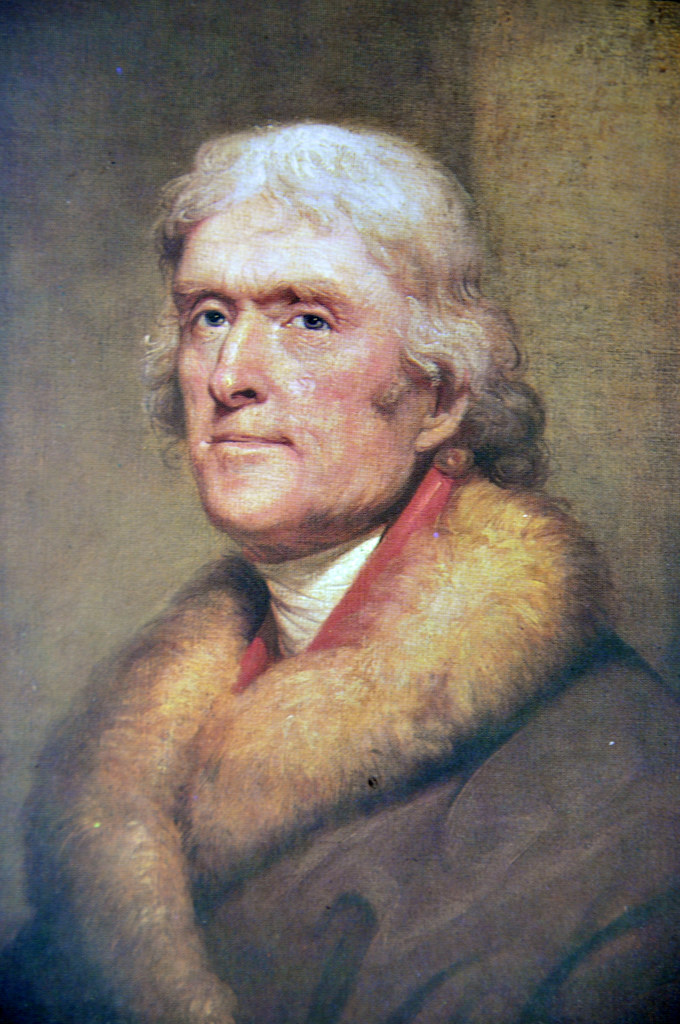
Since late May 2024 Illinois has been the epicenter of an historic emergence of two broods of trillions of cicadas whose buzzing presence is expected to continue into July. The Northern Illinois Brood (Brood XIII) came out of the soil on schedule during its 17-year cycle. In 2024 there is an adjacent emergence in the central United States occuring at the same time. It is the emergence of the Great Southern Brood (Brood XIX). It is this dual emergence of the two groups of cicadas that is historic since it has not happened since Thomas Jefferson was the third president of the U.S. in 1803.
Illinois is the epicenter of 2024’s historic cicada invasion.
According to a 2024 publication by the Ohio Biological Survey of “The 2024 Emergence of Periodical Cicada Broods XIII and XIX” by renowned cicada expert Dr. Gene Kritsky, Professor Emeritus of Biology and former Dean of the School of Behavioral and Natural Sciences at Mount St. Joseph University, the Brood XIII emergence extends from the center of the state of Illinois around Springfield and spreads as far north as southern Wisconsin. Brood XIX also extends from around Springfield, Illinois, to points south past Cairo, Illinois. “This is not just a cicada year,” Dr. Kritsky observed, “it’s an historic convergence of Broods XIII and XIX, making it a once-in-a-lifetime experience for enthusiasts and researchers alike” (See- https://www.msj.edu/news/2024/01/dr-gene-kritsky-releases-book-cicada-emergence.html – retrieved June 15, 2024). As trillions of cicadas mate and lay their eggs this year, the buzzing activity will gradually fade and 2024’s broods of adult cicadas die. Their offspring of 2024 will emerge, in the case of Brood XIII, during its next 17 year cycle in 2041.
While the cicada’s life is mostly spent under the soil, they use their legs to emerge from the soil where they molt and mate. Cicadas emerge after the soil temperature is higher than 64 degrees Fahrenheit. Their emergence from the ground turns over large amounts of soil, and after they die their decaying bodies contribute a massive amount of nutrients to the soil. June 15, 2024 79% 7.89 mb 8563
Ghost Trees.
GHOST TREES.Homeowners in Chicago have wrapped their small trees with mesh netting in preperation of the arrival of trillions of molting mating cicadas. The wrapped mesh is to prevent cicadas from damaging young trees. Once cicadas molt and mate, female cicadas lay their fertilized eggs in the bark of trees. April 2024 7.46 mbGHOST TREES.Periodical cicada years are quite beneficial to the ecology of the region. Their egg-laying in trees is a natural pruning that results in increased numbers of flowers and fruits in the succeeding years. May 31, 2024 99% 6.92 mb 7779GHOST TREES. June 15, 2024 95% 7.66 mb 8565 (2)GHOST TREES.June 3, 2024 89% 7.80 mb 7917GHOST TREES. May 28, 2024 90% 7.69 mb 7588
During May and June 2024, the 17-year Northern Illinois Brood XIII emerged in and around Chicago, across northern Illinois and in portions of northwest Indiana, southern Wisconsin and eastern Iowa.
Cicadas converge on a backyard playset. Cicadas do not sting or bite, and do not carry diseases. May 28 2024 95% 7.69 mb 7557Cicadas emerging from their shell. Cicadas are more closely related to aphids (i.e., black flys) than grasshoppers. May 28 2024 95% 7.67 mb 7667Trillions of male cicadas sing through sound-producing structures called tymbals on either side of the abdomen under the wings. Their singing is a mating call to the female.
June 7, 2024 4.20mb 8117May 31, 2024 5.47mb 7700May 31, 2024 5.03mb 7719May 31, 2024 5.80mb 7801June 3, 2024 99% 6.40mb 7911Cicadas do not eat solid food, but do drink fluids to avoid dehydration. May 28, 2024 2.73mb 7563June 8, 2024 6.87mb 8154June 7, 2024 4.84mb 8111June 10, 2024 7.02mb 8473
Reacting to a story in the Wall Street Journal dated June 9, 2024 entitled, “Americans Really, Really Hate Inflation—and That’s a Big Problem for the Fed” (see – https://www.wsj.com/economy/central-banking/americans-inflation-target-fed-c1fc7857?mod=latest_headlines – retrieved June 9, 2024) the author cites various financial experts where some of them prefer the traditional 2% target inflation rate for the Federal Reserve and others for a higher and perhaps more realistic 4% target rate (or thereabouts) so to give better headroom for the Fed to cut rates or not to stimulate and otherwise moderate the economy. In tandem with this article is another article that appeared in the Tampa Bay Times updated August 28, 2005 entitled, “Remember how Reagan beat inflation” (see – https://www.tampabay.com/archive/2004/06/09/remember-how-reagan-beat-inflation/ – retrieved June 9, 2024) that served as a history of inflation and unemployment rates between the 1960’s and the early 2000s.
Portrait of Paul A. Volcker (1927-2019) by Luis Alvarez Roure. 2015. Oil on linen. 40 x 30 inches. Collection of the Board of Governors of the Federal Reserve System.Volcker served as Fed chairman from 1979 to 1987. PHOTO CC BY-SA 3.0.
There are many ways to skin a cat – and as some financial experts agree that a 2% target inflation rate is the better choice for the Fed to maintain – the board can work with this traditional target inflation rate to react to the economy. That the going inflation rate should be higher and, if for no other reason that it matches today’s inflation level (4% as of April 2023 cited by WSJ article), has its proponents as more practical if not always politically viable. The last time inflation was as high as it is in 2024 was under one-term Democrat president Jimmy Carter in 1980. After inflation in 1976 was 4.9%, it roared to 13.3% under Carter. Further, the Carter Administration did not stop inflation’s continued rising at an unpredictable pace. When Reagan was elected in 1980 nearly 60% of voters said inflation was, as the TBT article stated, “a determining issue for them.” Mortgage rates, too, were at an historic high level in 1980. It was Fed Chairman Paul Volcker’s tight money policy that revived the 1980s and this despite Reagan’s tax cuts and massive deficit spending which left a troublesome legacy of historically large deficits and economic consolidation. To fix the economy as Volcker and Reagan worked it in the early 1980s had workers bear the brunt – Carter’s 7% unemployment rate spiked to 11% under Reagan. This meant millions of workers were suddenly without the means to buy goods and services and – guess what?- inflation dropped to under 4%. Though it ticked up to 6% by 1990 it has not been higher until President Joe Biden. The WSJ article’s citing “wage growth” that consumers should be appreciating yet apparently choose to ignore seems to be that most spectral of all economic indicators. As house prices (and mortgage interest rates) have doubled in the last 20 years how have wages kept up? Since Reagan, “free” money and attendant excessive borrowing at the individual and government level clearly juiced the economy, but at a price where the American people now have record debt levels and there have been certain misdirected “too big too fail” investments including inadequate affordable housing inventory and overbuilding office space and other commercial developments and the sometimes implosion of capital requiring huge bailouts, much of it from more borrowed money with the taxpayer on the hook.
Federal Reserve Board Chairman Jerome H. Powell took office on February 5, 2018, for a four-year term. He was reappointed to the office and sworn in for a second four-year term on May 23, 2022. Public Domain.
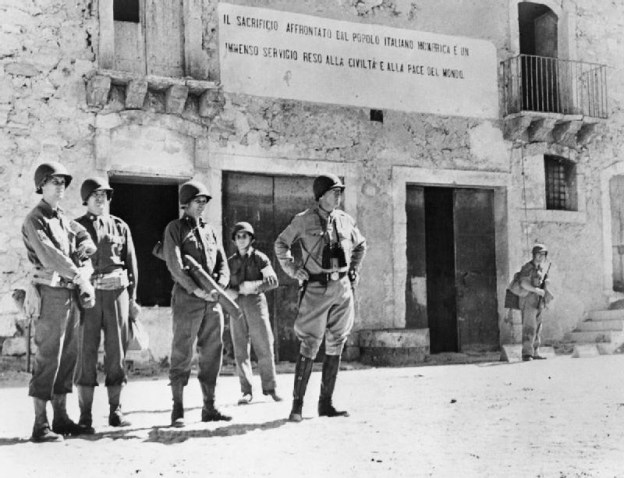
FEATURE IMAGE: Lieutenant General George Patton watches operations from a town in Sicily on the front line accompanied by his staff. Unknown photographer. Fair Use. For Operation Husky, the invasion of Sicily in July 1943, Patton commanded the Seventh U.S. Army, in landings on the southern bay of Sicily at Gela, Scoglitti and Licata. Patton’s I Armored Corps was officially redesignated the Seventh Army just before his force of 90,000 landed. Initially ordered to protect the British forces’ left flank, Patton was granted permission by British General Sir Harold Alexander (1891-1969) to take Palermo.
(2.42 minutes) June 6, 2024 – D-Day 80th (June 6, 1944) – After the remarkable North Africa and Sicily campaigns, three-star Lieutenant General Patton (George C. Scott) was sidelined by the architect of D-Day, Supreme Allied Commander and five-star General Dwight Eisenhower (“Ike”) (1890-1969) because of this “slapping” incident of an American soldier by Patton that took place in the time the American army reached Nicosia, Sicily, in the interior of the Italian island. Both by air or street to street, the fighting against the occupying Germans was a dogfight. This highly controversial “slapping” incident, witnessed by many, in Gen. George C. Patton’s command of the 7th Army occurred in an American evacuation hospital in Nicosia, Sicily, on August 3, 1943. Afterwards, Ike privately chastised Patton and insisted he apologize to the soldier, which Patton did.
George C. Scott (1927-1999) won the Academy Award for Best Actor for playing General George S. Patton in Patton (1970). Scott was the first actor to decline the award, having told the Academy of Motion Picture Arts and Sciences that he would if he won because of his belief that film performances should not be compared. The “slap heard around the world” was dramatized in Patton, the 1970 American epic biographical war film about U.S. General George S. Patton during World War II. The scene takes place in an evacuation hospital in the historic hilltown of Nicosia, Sicily, in the central part of the Italian island. Patton won seven Academy Awards, including Best Picture, Best Director and Best Original Screenplay.
The account of Patton’s humiliating slap of a young U.S. soldier leaked to the press and three-star Patton had to go on an extensive apology tour. Americans sacrificing at home were deeply disturbed by Patton’s action done at least partly out of misguided compassion. The result was that Patton was relieved of his command for six months citing his intense and unprofessional lack of personal discipline and self-control.
Patton was feared by the Germans more than any Allied commander. Yet American protocols sent him to England to train troops for combat in anticipation of D-Day. Patton was given combat command again only following the D-Day invasion. He crossed the Channel with the Third Army in July 1944. Nine months later, in April 1945, he was made a four-star general.
After the war, on December 9, 1945, Patton, the armored forces commander who criticized American leadership for not rolling right on through into Eastern Europe to fight the Russians – his suggestions were refused – was involved in a freak road accident near Heidelberg, Germany. The accident left Patton paralyzed. He died 12 days later in a Heidelberg hospital, on December 21, 1945. Patton was 60 years old.
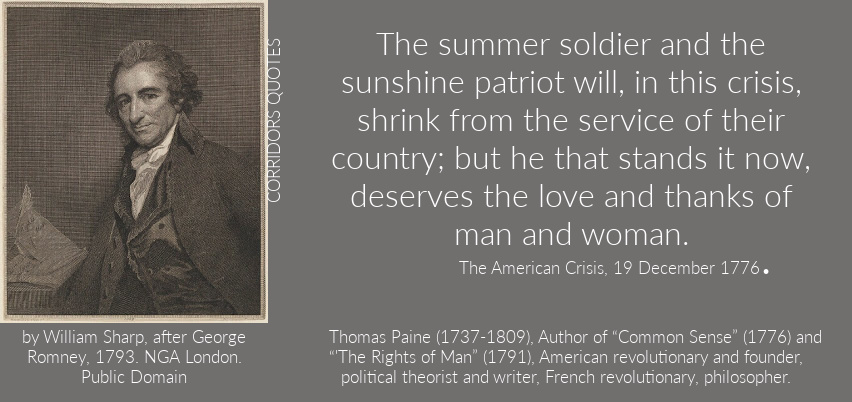
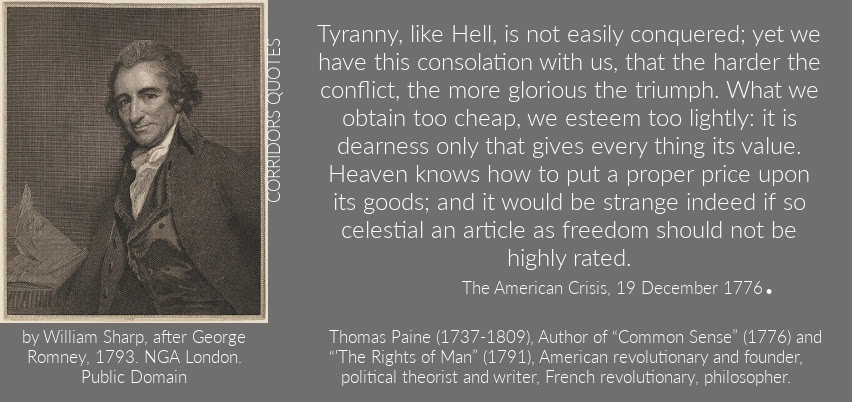
These are the times that try men’s souls. The American Crisis, 19 December 1776.The summer soldier and the sunshine patriot will, in this crisis, shrink from the service of their country; but he that stands it now, deserves the love and thanks of man and woman. The American Crisis, 19 December 1776.Tyranny, like Hell, is not easily conquered; yet we have this consolation with us, that the harder the conflict, the more glorious the triumph. What we obtain too cheap, we esteem too lightly: it is dearness only that gives every thing its value. Heaven knows how to put a proper price upon its goods; and it would be strange indeed if so celestial an article as freedom should not be highly rated. The American Crisis, 19 December 1776.
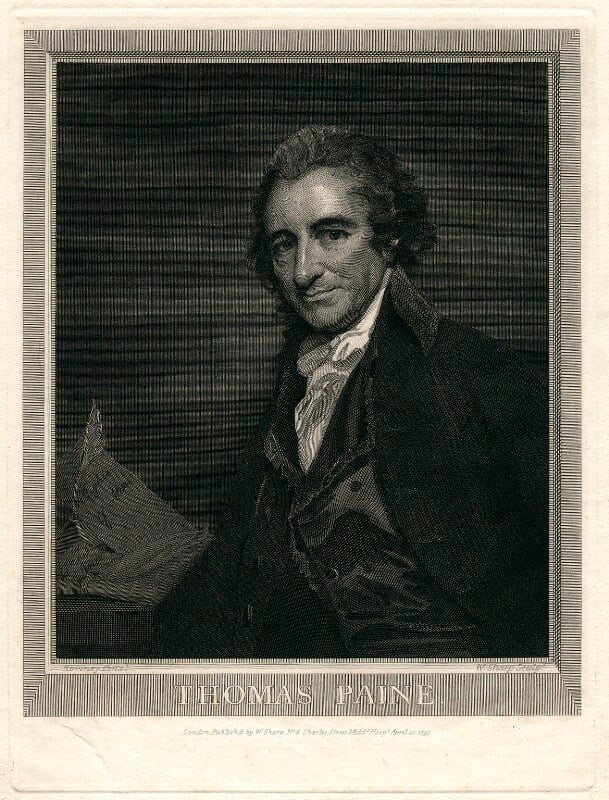
With the capture of Manhattan, British Army Commander in Chief William Howe sent Cornwallis to pursue Washington into New Jersey just sixty miles north of Philadelphia. Washington’s army was down almost 90% in December 1776 (3500 soldiers) from just August 1776. Washington just escaped Cornwallis’ grasp. As the British set up a line of forts to house and feed their soldiers during winter, Washington was the outsider. The British believed the end of the revolution of what they called “despised” and “undisciplined rabble” which Virginia planter George Washington led (by way of the efforts of troublemaker Massachusetts lawyer John Adams), was in hand. The British entered into winter by taking prisoner Charles Lee, one of Washington’s senior generals in the Continental army, and locked him up as well as their own fleet in Newport, Rhode Island which they took without resistance. The British kept Lee’s horse perpetually drunk out of spite for the Americans. Before Washington’s important crossing of the Delaware River on Christmas night 1776 and surprised the mercenary Hessians, Washington’s first comeback victory, it was the lowest ebb of the war. Since July 1776, Howe had taken almost 5000 men as P.O.W.’s, including 4 generals, and hundreds of artillery pieces and many tens of thousands of Washington’s ammunition in the wake of winning battles. It was then that 39-year-old Thomas Paine, serving in Washington’s army, wrote this propaganda tract (his Common Sense appeared earlier in January) that began with the famous line. “These are the times that try men’s souls: The summer soldier and the sunshine patriot will, in this crisis, shrink from the service of their country; but he that stands it now, deserves the love and thanks of man and woman. Tyranny, like Hell, is not easily conquered; yet we have this consolation with us, that the harder the conflict, the more glorious the triumph. What we obtain too cheap, we esteem too lightly: it is dearness only that gives every thing its value. Heaven knows how to put a proper price upon its goods; and it would be strange indeed if so celestial an article as freedom should not be highly rated.” Washington wrote about the same events more soberly: “Our affairs are in a very bad way . . . the game is pretty near up—owing in a great measure to the insidious arts of the enemy.”
SOURCES: CHAPTER THREE. “The Peace Commissioners? THE HOWE BROTHERS,” The Men Who Lost America: British Leadership, the American Revolution, and the Fate of the Empire (The Lewis Walpole Series in Eighteenth-Century Culture and History), Andrew Jackson O’Shaughnessy, Yale University Press, 2013, p. 96.
Your failure is, I am persuaded, as certain as fate. America is above your reach….her independence neither rests upon your consent, nor can it be prevented by your arms. In short, you spend your substance in vain, and impoverish yourself without hope. To the People of England , The American Crisis: PHILADELPHIA, Nov. 21, 1778. see- https://www.ushistory.org/paine/crisis/c-07.htm – retrieved June 5, 2024.