

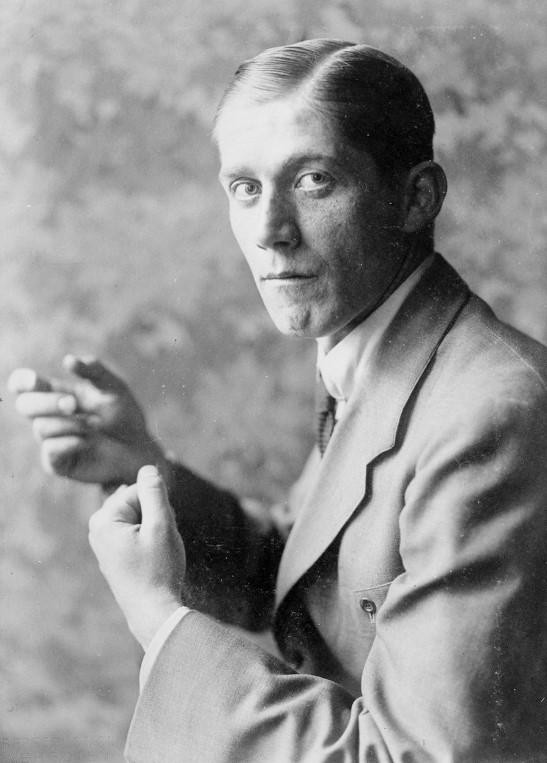
Oska Kokoschka in 1916. Photography by Marta Wolff (1871-1942), a Berlin-based photographer. On September 1, 1942 Marta Wolff was taken from her last place of residence in Wiesbaden to Theresienstadt. She died there of pneumonia on September 22, 1942. see – https://oskar-kokoschka.ch/fr/1001/Biographie – retrieved May 1, 2024.
When Oskar Kokoschka (Austrian, 1886-1980) painted Lady In Red that is in the Milwaukee Art Museum he was a starving artist living in Berlin. At 24 years old Kokoschka became associated with Berlin’s avant-garde and its writers, artists, and theatre actors. The artist knew some of the artists and others of Die Brücke and those associated with Der Sturm, the art and literary magazine. In June 1910 Paul Cassirer organized Kokoschka’s first major show. But Kokoschka’s involvement with the German Expressionists was limited as the young artist was dedicated to pursuing his own artistic ideas and forms. Commenting on this independence, Kokoschka wrote that he was “not going to submit…to anyone else’s control. That is freedom as I understand it.” (Oskar Kokoschka, My Life, translated from the German by David Britt, New York, Macmillan, 1974, p. 67). As Kokoschka developed the art of “seeing,” with his emphasis on depth perception, the local press saw young Kokoschka’s volatile unpredictability and called him “the wildest beast of all.”

Paul Cassirer (1871-1926) was a dynamic tastemaker with close ties to the Paris art market, especially to Galerie Durand-Ruel. In 1910 he mounted Oskar Kokoschka’s first major show. Before that, also in 1910, he held the first major Édouard Manet exhibition in Berlin. Cassirer was secretary of the Berlin Secession, an association of renegade modern artists established in 1898 in reaction to the academic and governmental restrictions imposed on contemporary art.
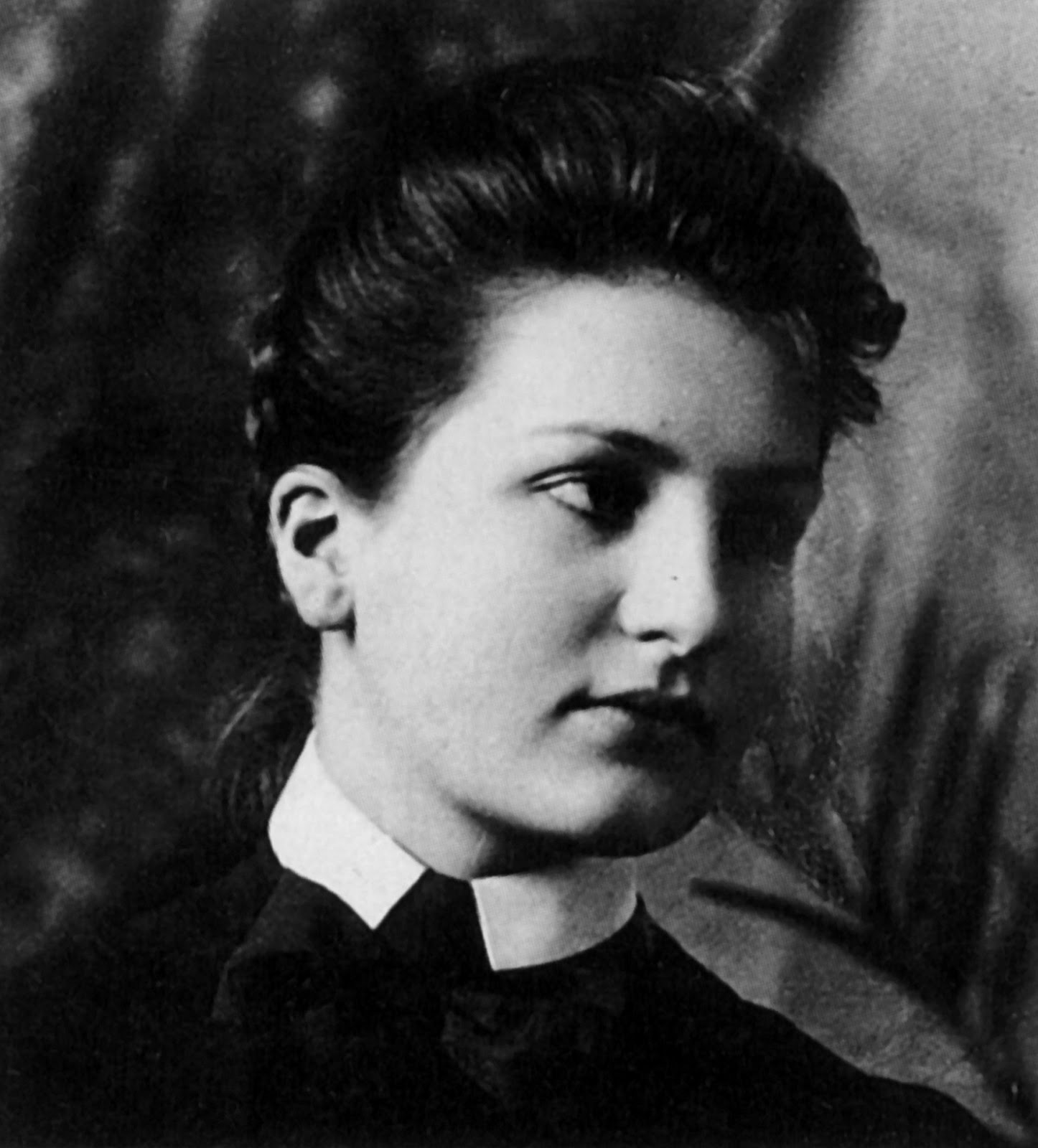
Though Kokoschka studied art of the past masters to develop a unique individual style, he and Die Brücke did interact on ideas and formal problems which generated an artistic atmosphere in Berlin and Vienna. In 1912, Kokoschka started a disastrous affair with Alma Mahler (1879-1964), the widow of Gustav Mahler (1860-1911). Its final ending in 1915 led Kokoschka to volunteer for the front lines in World War I and being seriously wounded in combat. The artist enlisted in the 15th Austrian Dragoon Regiment where, in 1915 on the Ukrainian front, Kokoschka was seriously wounded by a bullet to the head and a bayonet wound to the chest. In 1916 Kokoschka was wounded by grenade fire on the Isonzo Front.
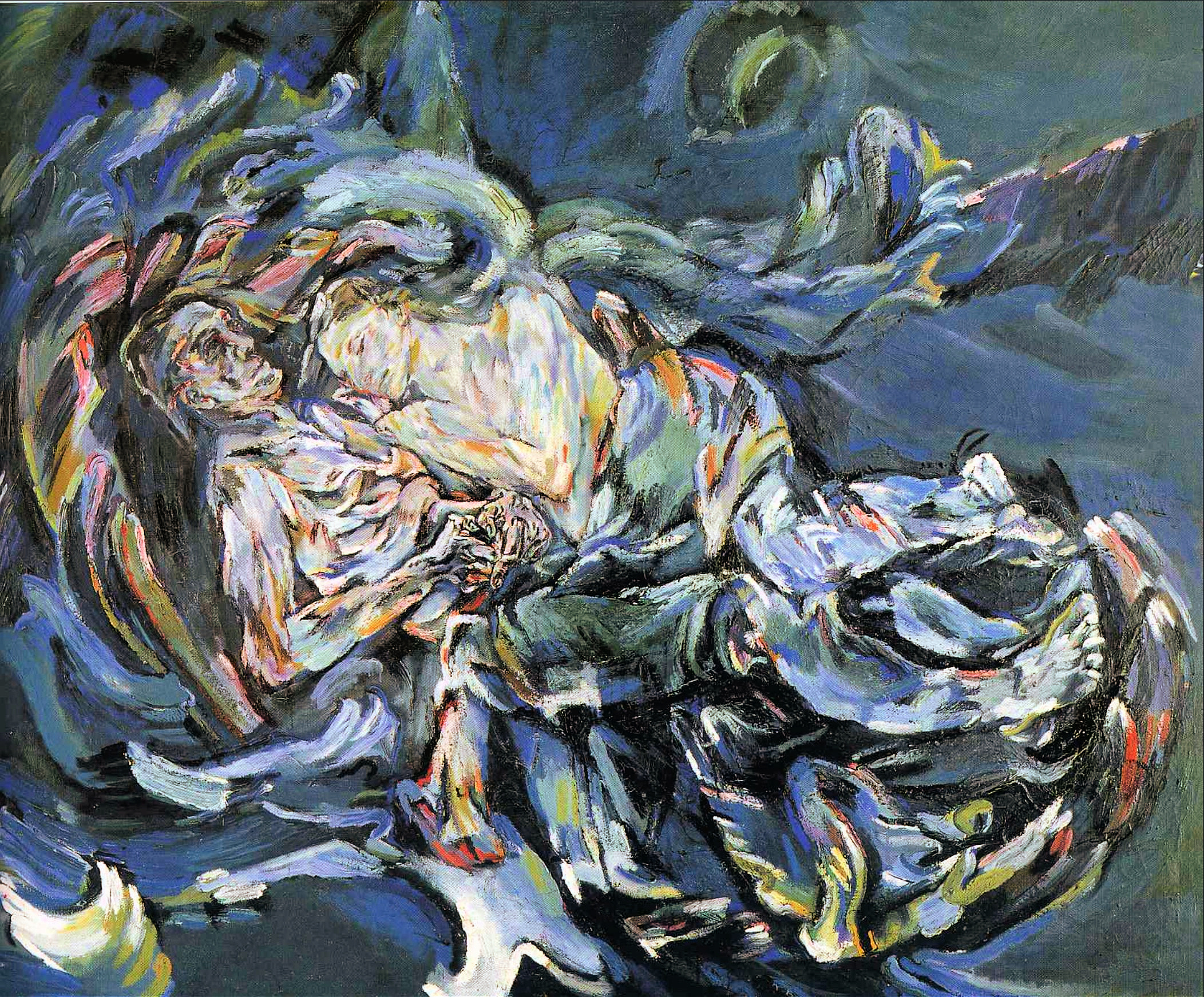
As its two figures bear portrait-like features of Kokoschka and Alma Mahler, the painting is interpreted as an autobiographical testimony to their relationship. Alma Mahler was the widow of composer Gustav Mahler, who died in 1911. In a letter to the Berlin art dealer Herwarth Walden, the artist described the newly completed work as “Tristan und Isolde” (Spielmann 2003, p. 153) alluding to unfulfillable quality of a difficult love. In the same year of 1914, the current title was created in conversation with the poet Georg Trakl.

The Expressionists’ emotional involvement with world events affected each of their creative processes. In these experiences of personal and social upheaval, Kokoschka maintained that as an artist – and he viewed this role as an existential fact more than a choice – his life had less to do with often prefabricated ideologies, programs, and parties and, rather, with searching and crafting his unique outlook as a creative individual. “There is no such thing as a German, French, or Anglo-American Expressionism!” Kokoschka would argue, “There are only young people trying to find their bearings in the world.” (Kokoschka, My Life, p. 37).
Kokoschka’s individualism made him one of the supreme masters of Expressionism, an -ism he defied. His tempestuous canvases with harsh colors and disjointed angles produced compositions that were emotionally aggressive and meant to prod the viewer into discomfort and rage. As Kokoschka eschewed the main modernist movement of Expressionism for the discovery and practice of his own unique style, he became one of the few major artists (Max Beckmann is another) who will often not appear in the annals of mainstream 20th century modernism, though this exclusive outcome is likely what would satisfy “the wildest beast of all.”
SOURCES:
The Berlin Secession: Modernism and Its Enemies in Imperial Germany, Peter Paret, The Belknap Press of Harvard University Press, 1980, p. 208.
Oskar Kokoschka, My Life, translated from the German by David Britt, New York, Macmillan, 1974.
https://oskar-kokoschka.ch/fr/1001/Biographie – retrieved May 1, 2024.
Oskar Kokoschka: Letters I. 1905–1919, edited by Olda Kokoschka and Heinz Spielmann, Düsseldorf, Claassen, 1984.
http://www.jottings.ca/carol/kokoschka.html#3 – retrieved May 1, 2024.
https://www.theartstory.org/artist/kokoschka-oskar – retrieved May 1, 2024.
https://commons.wikimedia.org/wiki/Category:Marta_Wolff – retrieved May 1, 2024.
https://upclose.christies.com/restitution/kunstsalon-cassirer – retrieved May 1, 2024.
https://www.gallery-weekend-berlin.de/journal/simon-elson-pate/ – retrieved May 1, 2024.


