

FEATURE image: Marlene Dietrich. Paramount, 1947. Photograph by A.L. “Whitey” Schafer. The actress was appearing in Golden Earrings, a 1947 romantic spy film made by Paramount Pictures and starring Ray Milland and Marlene Dietrich.*
Photographer A. L. “Whitey” Schafer (1902-1951) was a still photographer who started shooting stills in 1923 and continued in that line of work at Columbia Pictures when he moved there in 1932. Personally outgoing, Schafer was appointed head of the stills photography department at Columbia three years later. In the 1940’s Shafer wrote copiously on his craft and advocated for techniques in glamour photography that are seen in this Dietrich color portrait.

“Whitey” Schafer wrote an important book on glamour photography
In 1941 Schafer published Portraiture Simplified, a book in which he argues that “portraiture’s purpose is the realization of character realistically.” Among his technical observations Schafer wrote elsewhere that “composing a portrait is comparable to writing a symphony. There must be a center of interest, and in all portraits this naturally must be the head, or your purpose is defeated. Therefore, the highest light should be on the head.”
In 1941 Schafer replaced Eugene Richee (1896-1972) as department head of still photography at Paramount Studios. Schafer remained in that position where he photographed the stars until he died at 49 years old in an accident in 1951.
MARLENE DIETRICH

This Hollywood glamour portrait of forty-six-year-old Marlene Dietrich (1901, Berlin – 1992, Paris) wearing a green turtleneck sweater was taken when the movie actress was starring in Golden Earrings, a romantic spy film made by Paramount Pictures. It was her comeback film following World War II.
1940s blondes
Like other leading ladies in the 1940’s, the Hollywood glamour machine transformed Dietrich into a golden-haloed blond which accentuated her magnificent cheekbones and sultry eyes under penciled-arc eyebrows and painted nails that A.L. “Whitey” Schafer’s color portrait makes evident.
It was also in 1947—the same year that the photograph was made— that Dietrich received the Medal of Freedom. Dietrich called it her life’s proudest achievement.
While Golden Earrings was a decent film, its main purpose was to provide the actress with a job. It led into her next project—the 1948 American romantic comedy A Foreign Affair directed by Billy Wilder. That film made Dietrich again a top star.
Following Dietrich’s meteoric rise at Paramount Pictures starting in 1930 her acting parts later stagnated as film directors —including Josef von Sternberg and others—seemed to use her more as a piece of expensive cinematic scenery than as a serious dramatic actress.
ELIZABETH TAYLOR.
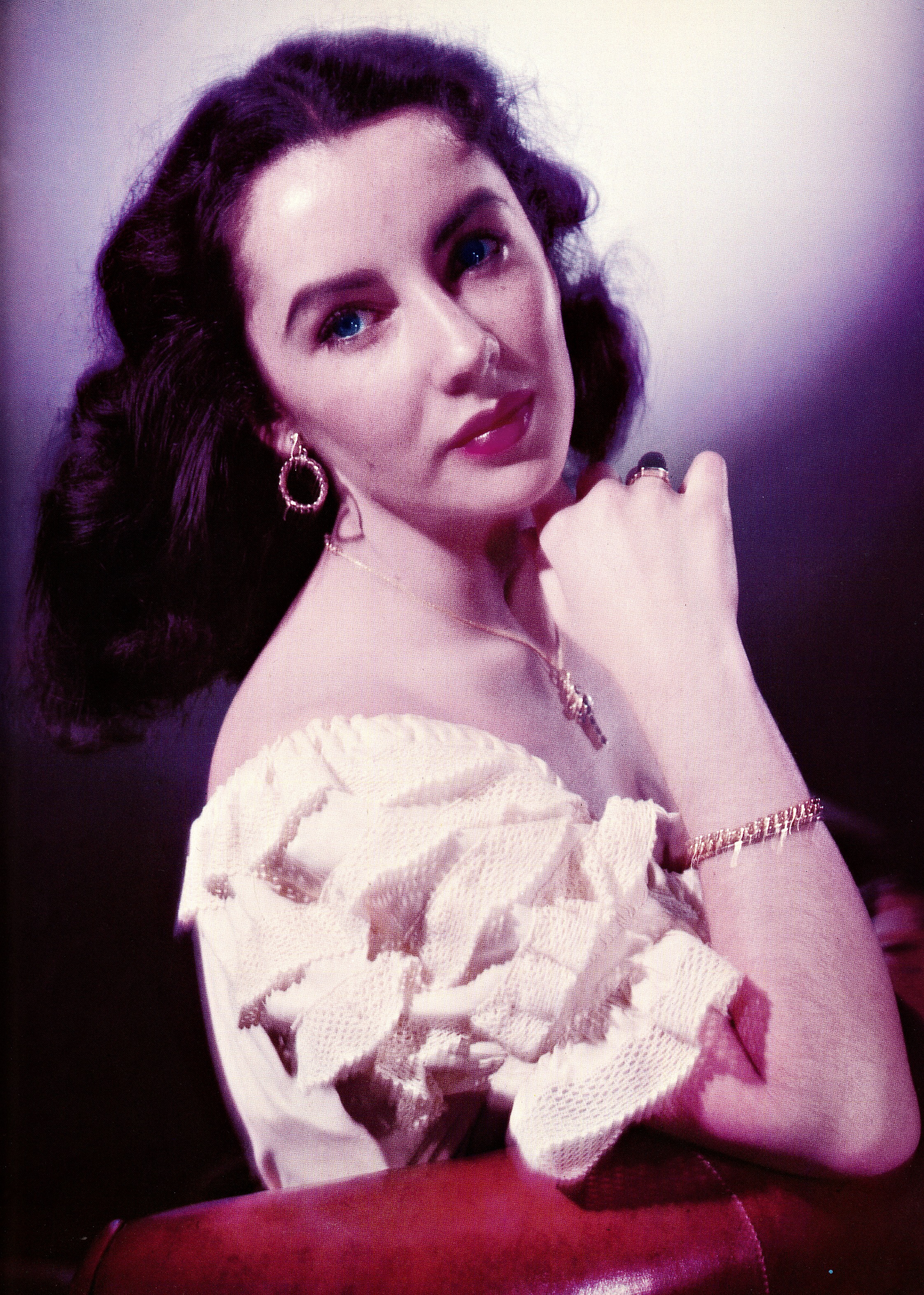
Though still a teenager, Elizabeth Taylor (1932-2011) in 1949 when the publicity still photograph was made, was celebrated as the new generation’s great beauty. In 1942, at 10 years old, Elizabeth made her film debut and her life and beauty blossomed over the decade in front of the cameras. The photograph captures Taylor after she made a little over a dozen films.
In 1950 she co-starred in M-G-M’s comedy film, Father of the Bride. Directed by Vincente Minnelli, Taylor played Kay, the daughter of Stanley T. Banks (Spencer Tracy) who is trying to cope with the preparations for her wedding day.
WHO IS HYMIE FINK? HIS IDENTITY REMAINS A MYSTERY
Who was Elizabeth Taylor’s photographer, Hymie Fink? Was Hymie Fink a studio photographer? Freelancer? Pseudonym for an unknown talent or combination of unknown talents?
His name appears among the stars starting in the late 1930’s until his death was announced by Hedda Hopper in the mid-1950’s. The gossip columnist ended her newspaper column for September 28, 1956 with this epitaph: “Hymie Fink, one of the sweetest men in Hollywood, died of a heart attack on Jane Wyman’s TV set. Hymie photographed every star and every major event in (Hollywood) for twenty-five years.”
LANA TURNER.
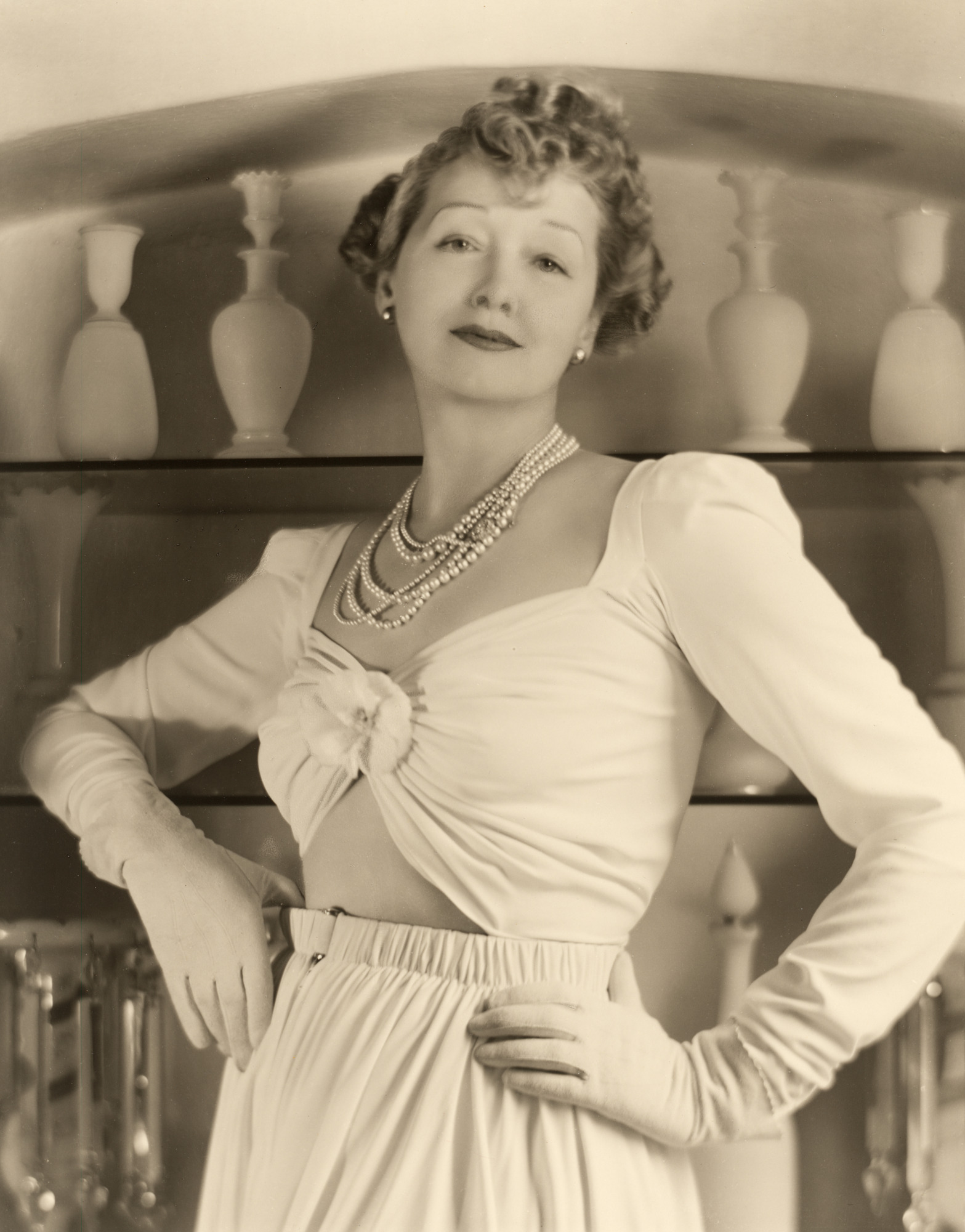
Before she became in the 1940’s the well-known Hollywood sensuous platinum blonde of movie legend and fame, Lana Turner (1921-1995) was a pretty redhead from Idaho named Julia Jean Turner.

Lana Turner, 18 years old in this unretouched color portrait by László Willinger (1909–1989), had been discovered three years earlier. Her discovery in a malt shop near Hollywood High School where she was a student, has entered the annals of show-biz mythology. Her discovery’s immediate result was a movie contract with producer-director Mervyn LeRoy (1900-1987).
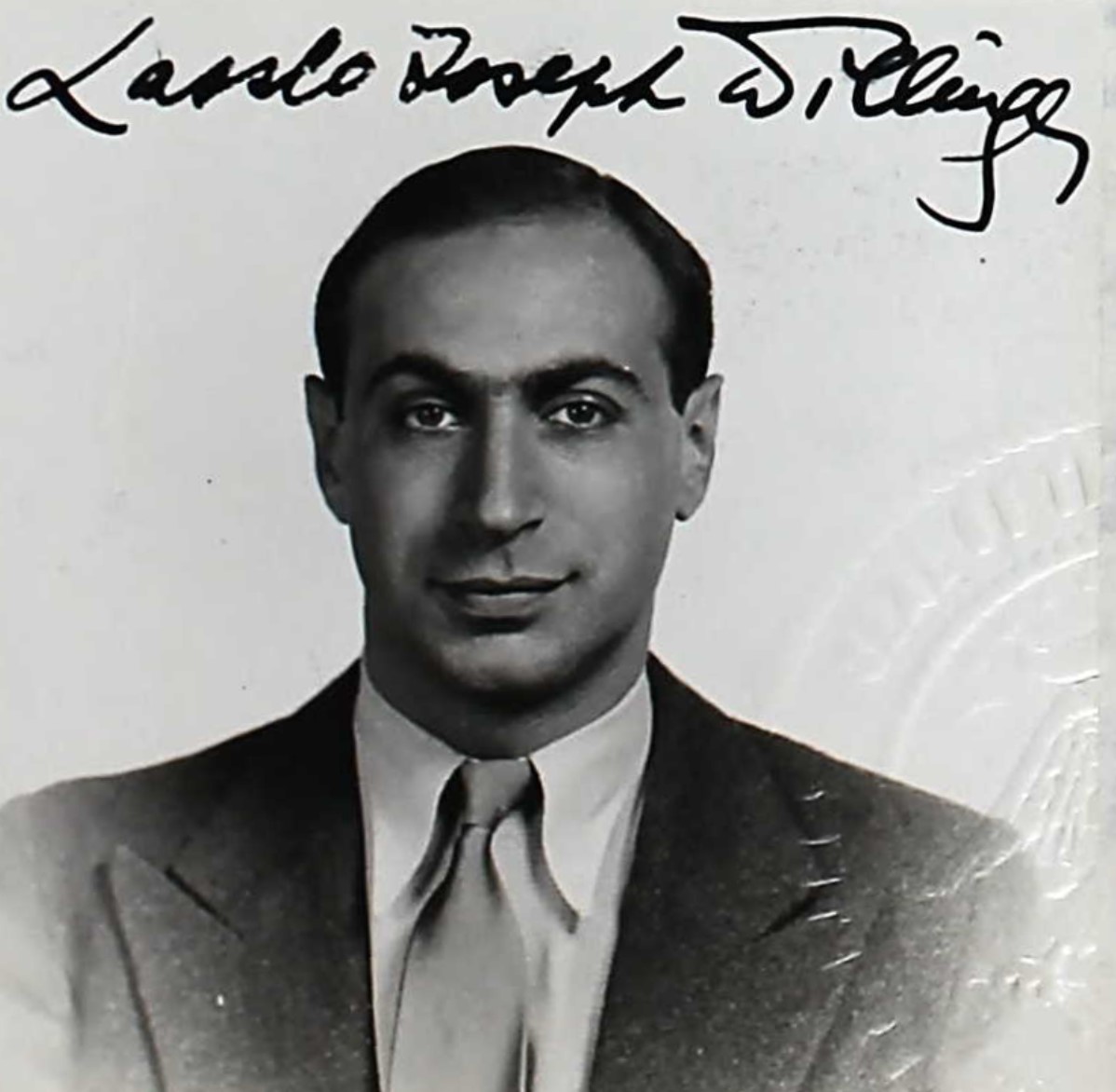
László Willinger
Hungarian-born photographer László Willinger started his professional career in Vienna, Austria. He left Europe for America in 1937 where he joined M-G-M that same year. Soon after, he made this lush shot of 18-year-old Lana Turner in a silky green dress seated on a red divan (or chair) with her head turned and looking to one side with slightly bloodshot eyes.
Willinger’s color portrait of red-headed Lana Turner emphasizes the sensuality of her personality manifested in her full red sensuous lips and painted nails. In 1944, László Willinger left MGM and established his own photography studio in Hollywood. For the next 40 years he successfully practiced his craft.
“America’s Sweater Sweetheart”
The title of Lana Turner’s first film in 1937 for Warner Brothers was They Won’t Forget. The title proved prophetic for Lana Turner’s Hollywood career as she went on to make over 50 glamorous films, most of them at M-G-M.
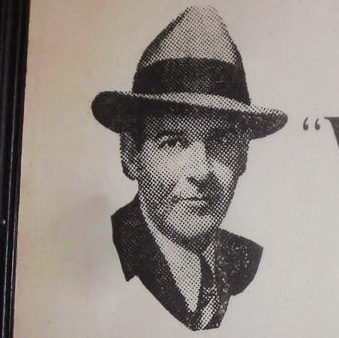
Lana’s image in her film debut created such a stir among movie-going audiences that gossip columnist Walter Winchell (1897-1972) coined her “America’s Sweater Sweetheart.” Over the next 20 years, a bevy of Hollywood actresses would wear tight sweaters over specialty bras that emphasized the bust line in the hope of sparking the same Lana Turner movie success story for themselves.
New Jean Harlow?
Lana was originally being groomed to be the new Harlow. She followed the sex-bomb script in full force in 1941 when the studio dyed her hair whitish blonde for Ziegfeld Girl. Lana co-starred with Judy Garland and Hedy Lamarr and stole the show.
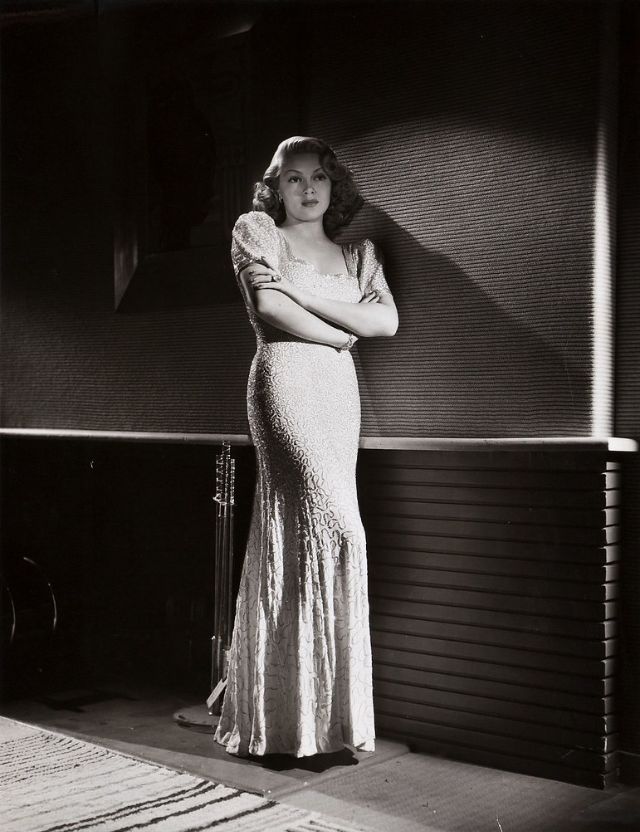
About her own reputedly rowdy personal life in those M-G-M years, Lana Turner later remarked: “My plan was to have one husband and seven children, but it turned out the other way…”
SOURCES:
DIETRICH – “Miss Dietrich to Receive Medal,” The New York Times, November 18, 1947;
https://ladailymirror.com/2013/11/04/mary-mallory-hollywood-heights-mdash-a-l-whitey-schafer-simplifies-portraits/;
http://vintagemoviestarphotos.blogspot.com/2014/11/a-l-whitey-schafer.html;
They Had Faces Then. Annabella to Zorina: The Superstars, Stars and Starlets of the 1930’s, John D. Springer and Jack D. Hamilton, Citadel Press, Secaucus, New Jersey, 1974.
Hollywood Color Portraits, John Kobal, William Morrow and Company. Inc., New York, 1981.
https://www.aenigma-images.com/2017/04/a-l-whitey-schafer/
PHOTO CREDIT – *The photograph copyright may be believed to belong to the distributor of the film, Paramount, the publisher of the film or the graphic artist. The copy is of sufficient resolution for commentary and identification but lower resolution than the original photograph. Copies made from it will be of inferior quality, unsuitable as counterfeit artwork, pirate versions or for uses that would compete with the commercial purpose of the original artwork. The image is used for identification in the context of critical commentary of the work, product or service for which it serves as poster art. It makes a significant contribution to the user’s understanding of the article, which could not practically be conveyed by words alone. As this is a publicity photo (star headshot) taken to promote an actress, these have traditionally not been copyrighted. Since they are disseminated to the public, they are generally considered public domain, and therefore clearance by the studio that produced them is not necessary. (See- Eve Light Honthaner, film production expert, in The Complete Film Production Handbook, Focal Press, 2001 p. 211. Gerald Mast, Further, film industry author, in Film Study and the Copyright Law (1989) p. 87, writes: “According to the old copyright act, such production stills were not automatically copyrighted as part of the film and required separate copyrights as photographic stills. The new copyright act similarly excludes the production still from automatic copyright but gives the film’s copyright owner a five-year period in which to copyright the stills. Most studios have never bothered to copyright these stills because they were happy to see them pass into the public domain, to be used by as many people in as many publications as possible.” Kristin Thompson, committee chairperson of the Society for Cinema and Media Studies writes in the conclusion of a 1993 conference with cinema scholars and editors, that they “expressed the opinion that it is not necessary for authors to request permission to reproduce frame enlargements … [and] some trade presses that publish educational and scholarly film books also take the position that permission is not necessary for reproducing frame enlargements and publicity photographs.”(“Fair Usage Publication of Film Stills,” Kristin Thompson, Society for Cinema and Media Studies.)
TAYLOR -http://tatteredandlostephemera.blogspot.com/2009/06/who-is-hymie-fink.html;
http://archives.chicagotribune.com/1956/09/29/page/22/article/diana-dors-isnt-homesick-shes-set-for-film-in-britain;
Hollywood Color Portraits, John Kobal, William Morrow and Company. Inc., New York, 1981.
TURNER – Hollywood Color Portraits, John Kobal, William Morrow and Company. Inc., New York, 1981.
Lana Turner interview with Phil Donahue, 1982 – https://www.youtube.com/watch?v=uhu6_V7pNL0
“Hollywood Photographer Dies,” The Hour, Associated Press, August 9, 1989 – https://news.google.com/newspapers nid=1916&dat=19890814&id=azIiAAAAIBAJ&sjid=uXQFAAAAIBAJ&pg=1804,2177679
PHOTO CREDIT: *The photograph copyright may be believed to belong to the distributor of the film, Metro-Goldwyn-Mayer, the publisher of the film or the graphic artist. The copy is of sufficient resolution for commentary and identification but lower resolution than the original photograph. Copies made from it will be of inferior quality, unsuitable as counterfeit artwork, pirate versions or for uses that would compete with the commercial purpose of the original artwork. The image is used for identification in the context of critical commentary of the work, product or service for which it serves as poster art. It makes a significant contribution to the user’s understanding of the article, which could not practically be conveyed by words alone. As this is a publicity photo (star headshot) taken to promote an actress, these have traditionally not been copyrighted. Since they are disseminated to the public, they are generally considered public domain, and therefore clearance by the studio that produced them is not necessary. (See- Eve Light Honthaner, film production expert, in The Complete Film Production Handbook, Focal Press, 2001 p. 211. Gerald Mast, Further, film industry author, in Film Study and the Copyright Law (1989) p. 87, writes: “According to the old copyright act, such production stills were not automatically copyrighted as part of the film and required separate copyrights as photographic stills. The new copyright act similarly excludes the production still from automatic copyright but gives the film’s copyright owner a five-year period in which to copyright the stills. Most studios have never bothered to copyright these stills because they were happy to see them pass into the public domain, to be used by as many people in as many publications as possible.” Kristin Thompson, committee chairperson of the Society for Cinema and Media Studies writes in the conclusion of a 1993 conference with cinema scholars and editors, that they “expressed the opinion that it is not necessary for authors to request permission to reproduce frame enlargements … [and] some trade presses that publish educational and scholarly film books also take the position that permission is not necessary for reproducing frame enlargements and publicity photographs.”(“Fair Usage Publication of Film Stills,” Kristin Thompson, Society for Cinema and Media Studies.)



