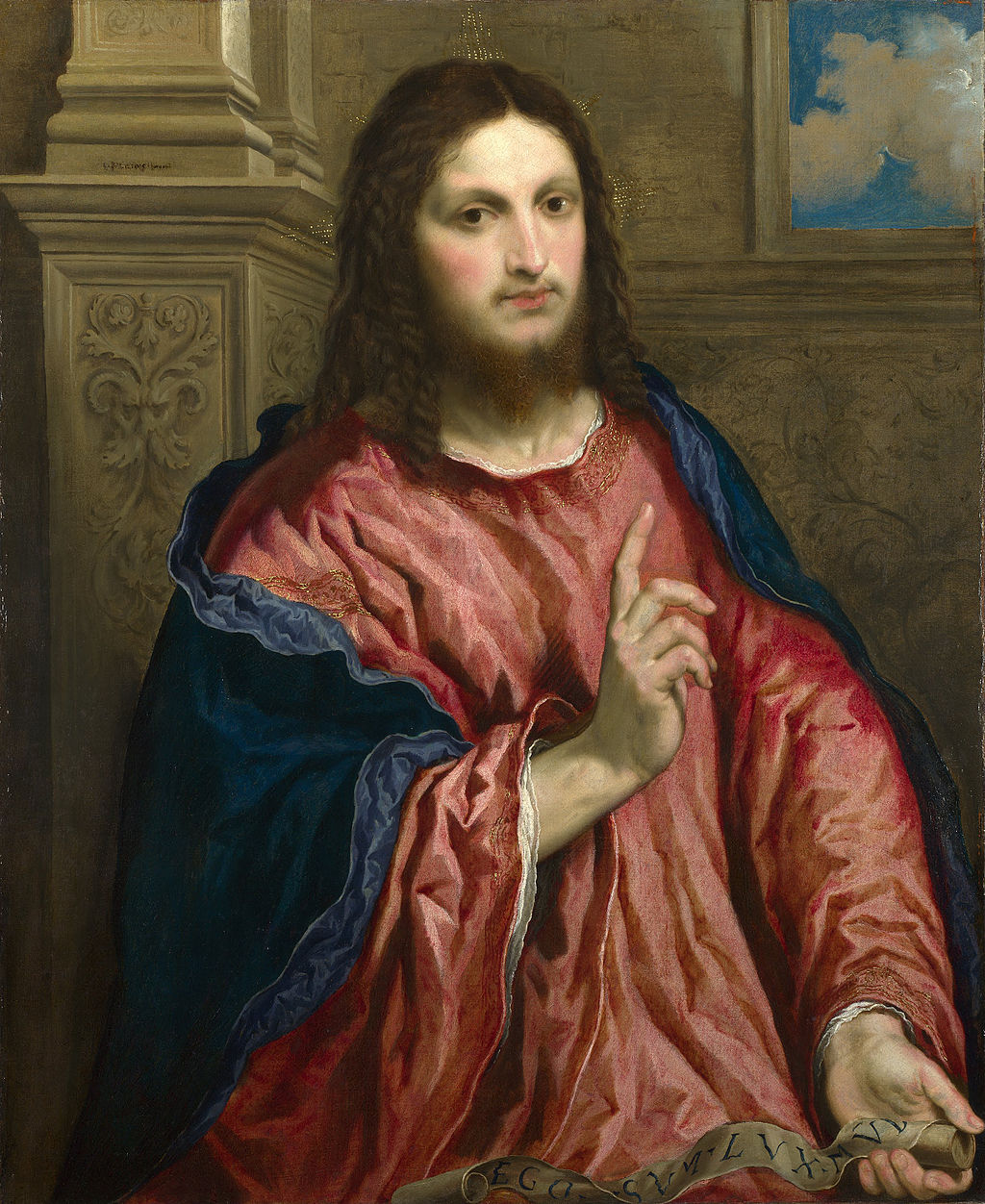
Tag Archives: Artist – Titian

ITALY. Venetian art in the 16th Century: Bellini, Conegliano, Carpaccio, Giorgione, del Piombo, Vecchio, Cariani, Lotto, Bordon/e.

FEATURE Image: Paris Bordon/e (1500-1571), Fisherman Presenting a Ring to the Doge Gradenigo, 1534, oil on canvas, 370 x 301 cm (145.7 in × 118.5 in), Gallerie dell’Accademia, Venice.

INTRODUCTION TO PART 1.

Venice is one of the great Italian cities for Renaissance art and its wide-ranging influences. Reflecting a city in the sea, its art is characterized by light and color. Its most remarkable artistic production was between 1470 and 1590 – the rise, height, and decline of the Italian Renaissance. Developed into a powerful maritime empire between the 9th and 11th centuries, Venice was an independent city state that rivaled all other Italian maritime empires such as Genoa, Pisa, and Amalfi; and lesser-known Ragusa, Ancona, Gaeta and Noli, and until the fall of the Republic in 1797. From its trade routes Venice inherited and fortified the coloristic tradition of Byzantium and the Eastern Mediterranean, Islamic countries and the Far East, Ravenna along the Italian coast to the south, and Aquileia near Trieste. Trade routes also included to the Free Cities of the North and its medieval Gothic culture. These activities led to a cosmopolitan culture manifested in Venice’s art and architecture. Around 1500 the Republic also had expanded its territorial holdings to a great extent across Italy, Dalmatia, the Alps, and the Aegean Sea.

The Tuscan Renaissance came to Venice starting around 1430 via Padua, a prestigious university town known for its science and philosophy departments, and part of the Venetian state. Artists such as Giotto (c.1267-1337), Filippo Lippi (c. 1406-1469), Donatello (c. 1386– 1466), Andrea Mantegna (1431-1506) and Paolo Uccello (1397-1475) brought essential elements of the Early Florentine Renaissance to Venice. Since 1469 Venice was a publishing center and had been a stop since late medieval times for humanist authors such as Petrarch (1304-1374). As the Mediterranean’s dominant naval force, Venice’s cosmopolitan mercantile culture brought financial and human capital to the lagoon city whose concentration spawned technological innovation. Politically, since Venice was a Republic and not a duchy or bishopric, publications and ideas were unencumbered by censorship present elsewhere. For example, Aldine Press established in 1495 began by printing Greek and Roman classics and later worked with leading humanists such as Desiderius Erasmus (1466 – 1536), Pietro Bembo (1470-1547) and Giovanni Pico (1463-1494). The Aldine Press also produced the first proto-type of today’s lightweight and portable paperbacks. By the 16th century over 250 publishing houses operated in Venice making the city a beacon for humanist writers and artists. (see – https://www.bbc.com/travel/article/20190708-the-city-that-launched-the-publishing-industry – retrieved December 15, 2024).

These propitious contacts and developments led to the establishment of Venetian Renaissance art by GIOVANNI BELLINI (c. 1430-1516). From an old family of painters, Bellini established a dialogue between Florentine artistic principles of space and form and its philosophy of the natural world with man at the center with Venetian painterly practice. His major discovery was, beginning in his artwork of the 1490s, the situating of naturalistic color to replace the urbane decorative palette used in medieval painting. He also moved past the older mythological subject matter to a naturalistic presentation of religious themes.

Bellini was joined by Sicilian painter Antonello da Messina (1430-1479) who studied with Piero della Francesca (c. 1416-1492) and introduced the influential geometric design to his compositions that influenced CIMA DA CONEGLIANO (c. 1459 – c. 1517). More isolated in his work – and thereby more important for art practice – was the work of VITTORE CARPACCIO (1465-1526) who introduced his synthesis of strict realism, including a sense of space and proportion. Carpaccio captured not only Venice’s contemporary architecture in the work of classicist Mauro Codussi (1440-1504) and sculptor Pietro Lombardo (1435-1515) but its social activity as well. Following Antonello da Messina and Piero della Francesca, Carpaccio used original and expressive colors. Though Carpaccio’s output faded before 1510, Bellini’s work continued until 1516 and through him formed a continuity of style between the late 1400’s and early 1500’s in Venice.

In this first period, GIORGIONE (1478–1510), a student of Bellini, was another important figure in exploring color in Venetian art. Though influenced by Bellini, Giorgione was original in his transformation of his teacher’s stoic elite classicism to a grounding in intimacy and humanity. Many of his religious subjects are based on individualized portraits. In his unidealized landscape painting based on the realism of German Albrecht Dürer (1471-1528), Giorgione replicates feelings produced in nature rather than rigid archeological reconstructions that Bellini, Mantegna and Donatello produced. Giorgione was also imbued in Flemish painting including Gerard David (c.1460-1523) and Hans Memling (c. 1433-1494). When Giorgione died at 32 years old in a pandemic in 1510, he left to others his melancholic contemplation of the natural world as a direction for Venetian painting, particularly TITIAN (1488-1576) who is to be featured in another post.

Titian was part of a family of artists who, in 13th-century and 14th century in Italy, had been civic leaders such as mayors, magistrates, and notaries. In Italian his name is Tiziano Vecellio, but in English the artist is famously known as Titian. Titian became the leading painter in Venice and an influential artist throughout sixteenth-century Italy. In the 15th century, two Vecellio brothers had children who became artists. Titian was the grandson of one of those brothers who was ambassador to Venice where the family had a timber trade. A follower of Giorgione, Titian was more intense and dominating in vision and style than the earlier master including his rich dark hues without drawing. Titian also took advantage of Germanic engraving and painting sources for his art, particularly its compositional realism, dynamism and classical references as manifest in Dürer. Though a perfunctory colorist, PARIS BORDON/E (1500-1571) was another artist who came under the influence of Titian’s imperially theatrical style and made a success of it.

There were other artists who followed Giorgione by way of his subject matter rather than, as Titian had, his color. This included artwork of SEBASTIANO DEL PIOMBO (1485-1547), particularly his early Venetian work before he departed for Rome in 1511, and JACOPO NEGRETTI, CALLED PALMA IL VECCHIO (c.1480–1528) who eventually fell into Titian’s orbit but painted arcadian subject matter inspired by Giorgione.

Prolific Venetian artist LORENZO LOTTO (c. 1480 – 1556) retained his independence and highly individual style in a prolific career influenced by Bellini’s composition, Antonello da Messina’s color, and Dürer’s realism. Lotto started in Treviso in 1503 and returned to Venice in 1525 via Recanati, Rome (where he worked with Raphael in the Vatican apartments making his drawing pliant and coloring mellow) and Bergamo. Lotto’s output was primarily deeply spiritual religious paintings and portraits which plumbed psychological depth, and were very popular. In Venice Lotto became one of the leading artists with Titian and Il Pordenone (1484-1539), painting altarpieces, devotional scenes, and portraits for wealthy patrons in the city. Lotto left Venice in 1533 to return to the papal states of the Marches where he intermittently returned to Venice. In 1554 Lotto became a lay brother at the Santa Casa in Loreto and died there in 1556.

ARTWORKS.

Giovanni Bellini (c. 1430-1516) Madonna with the Child, 1470-1476, oil on canvas transferred from wood, 20.4 in. x 16.9 in (52 x 43 cm), Museo Correr, Venice.

Giovanni Bellini came from a family of artists and began work in his father, Jacopo’s workshop. The Bellini brothers Giovanni and Gentile (d. 1507) were greatly influenced by their contemporary Andrea Mantegna who married their sister Nicolosia in 1454. The chronology of Bellini’s paintings is challenging to definitively settle upon since he ran a large workshop of pupils and assistants whose production output was signed with his name. Bellini’s pupils and influences extended to great names of Renaissance Venetian painting: Giorgione, Titian, Palma Vecchio, Sebastiano de Piombo and had influence beyond his direct contacts and into the future. Bellini also studied Donatello so to develop his personal style in the 1450’s and 1460’s. This is manifested in this Madonna and child of which there are several which expresses in light and color harmonious formal three-dimensional beauty and human feeling.

Giovanni Bellini (c. 1430-1516), Portrait of Joerg Fugger, 1474, oil on panel, 10.2 in. x 7.8 in., 26 cm x20 cm, Norton Simon Museum, Pasadena, California. https://www.nortonsimon.org/art/detail/M.1969.13.P – retrieved December 17, 2024.

In the mid 1470’s, following a practice popularized by Sicilian Antonello da Messina, Bellini moved from tempura painting to oil. Bellini began to use more rounded figures, also taken from Antonello. He also adapted Piero della Francesca’s perspective system. These artistic elements were evident in Northern European artwork commissioned by Italian families from Rogier Van der Weyden (1399-1464), Hugo Van Der Goes (c.1440-1482),  Jan Van Eyck (c. 1385-1441), Petrus Christus (c. 1395-1472), Dieric Bouts (c. 1415-1475) and Hans Memling (c. 1433-1494). Bellini’s oil on panel portrait is the artist’s first. The sitter is of Joerg Fugger, the 21-year-old heir to a wealthy banking family in Germany. Bellini depicts his subject with small blue blossoms in his hair, the sign of a scholar. The portrait is three-quarter length instead of profile and set against a neutral background or, later, with landscape and sky. The portrait informed a coming generation of portraiture and religious images in Italy including Raphael (1483 – 1520), Leonardo da Vinci (1452-1519), and Fra Bartolomeo (1472-1517).

Giovanni Bellini (c. 1430-1516). St. Francis in Ecstasy, c. 1475-1480, 49 1/16 x 55 7/8 in. (124.6 x 142 cm), Frick Collection, New York. https://collections.frick.org/objects/39/st-francis-in-the-desert?ctx=852c9ba455cb52cd75e5f9beca0c0713376389db&idx=4

The 1470’s saw Bellini produce his most glorious landscapes including the warm and glowing St. Francis at the Frick. Specific details about this painting’s provenance are speculative. It is presumed to have been painted in the late 1470’s for Venetian patrician Zuan Michiel, and was destined for the monastery of San Francesco del Deserto on a remote Venetian island. By 1525, the painting hung in the palace of Taddeo Contarini in Venice. (further reading- https://www.frick.org/exhibitions/bellini_giorgione – retrieved December 17, 2024.). Francis is shown receiving the stigmata in a natural mystical light surrounded by a variety of animals. Bellini’s setting for this religious event that took place in September 1224 is a valley in the Venetian countryside (it took place in Umbria), with a small hilltop town in the background and Francis standing outside his hermit’s dwelling. Saint Francis is said to have composed his Canticle of Creatures also in late 1224, considered one of the first masterpieces of Italian verse.
“Bellini and Giorgione in the House of Taddeo Contarini” on view until February 4, 2024, reunited for the first time in about four hundred years the Frick’s “St. Francis in Ecstasy” by Giovanni Bellini with Giorgione’s “Three Philosophers,” on rare loan from Vienna’s Kunsthistorisches Museum which hung in the palace of Venetian art collector Taddeo Contarini.
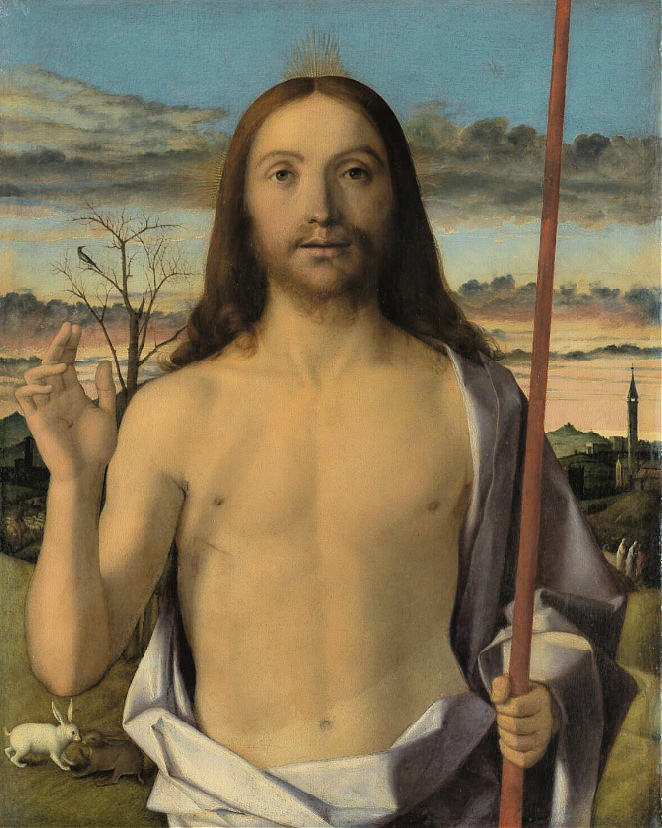
Giovanni Bellini (c. 1430-1516), Christ Blessing c. 1500, Tempera, oil, and gold on panel, 23 1/4 x 18 1/2 in. (59 x 47 cm), Kimbell Art Museum, Fort Worth, Texas. https://kimbellart.org/collection/ap-196707 – retrieved December 17, 2024.

In Bellini’s long career he depicted Jesus Christ differently over time. In his early years he often depicted the dead Christ in a lonely solitude. Later he added angels, and grief-stricken figures of his mother Mary and the apostle John. Bellini developed to depict Christ as triumphant or beatified in his miraculous apparitions of the Transfiguration, Resurrection and Ascension. In Christ Blessing Bellini animatedly portrays the God-Man sent to bless the world on one hand and holding the shepherd’s rod to guide his flock in the other (it may also be logically seen, though not completely in view, as his staff with the traditional red cross on a white flag atop symbolizing his triumph over death). A devotional image presenting the Resurrected Savior, its vibrant figure is brought close to the picture plane where his level gaze and shadowed arm of blessing informs the viewer of the matter-of-fact reality of the scene in quiet harmonious colors. Yet, at the same time, golden rays of light emanate from the top and sides of his head, making thoroughly evident His Divinity. In the background Bellini depicts prolific rabbits, shepherds tending their flock and three shrouded figures who likely are the three Marys at the tomb on Easter morning. There is also a lighted church bell tower to convey the presence of Christ in his Church.

Giovanni Bellini (c. 1430-1516), Drunkenness of Noah,  oil on canvas, c. 1515, 40.5 in. x 61.8 in (103 cm x 157 cm), Musée des Beaux-Arts et d’Archéologie de Besançon.

In one of Bellini’s last works the master shows how he adapts his work to the developing artistic style after 1510 led by Giorgione and Titian: the composition is fluid and dynamically conceived, with dramatic realism, aqueous colors and excited brushstrokes. Its attribution to Bellini has been accepted by scholars since 1927 though it remains open to debate.

Cima da Conegliano (c. 1459-c.1518), Virgin and Child in a Landscape, 1496-99, North Carolina Museum of Art, Raleigh, oil on panel, 28 x 24 3/4 in. (71.1 x 62.9 cm). https://ncartmuseum.org/object/virgin-and-child-in-a-landscape/ – retrieved December 12, 2024.

Cima was a Venetian artist who admired Bellini’s use of color and Antonello’s style of the Netherlandish masters. In contrast to renewed classicism which appeared in Venice in its art and architecture, Cima attempted a sophisticated art reliant on the study of nature that was prevalent in the provinces. Born in Treviso in about 1459, Cima worked in Vicenza in Mantegna’s circle and then moved to Venice in 1492. He was associated with the school of Alvise Vivarini (1442/1453–1503/1505), though Cima remained linked to the gentle and rustic naturalism of the provinces. His models included Madonnas and religious figures in peaceful landscapes such as this painting of a peasant mother and her child in a landscape that includes behind them a monastery and hilltop fortification. The crystalline colors and fluid drawing indicate Antonello’s influence while its overall placidness is characteristic of Cimi’s artwork.

Vittore Carpaccio (1465-1526), Apparition of the Martyrs of the Mount Ararat in the Church of Sant’ Antonio di Castello, c.1513-14, oil on canvas, 47 5/8 x 68 ½ in. (121x 174 cm), Gallerie dell’ Accademia, Venice.

A pupil of Gentile Bellini (Giovanni’s brother), and a follower of Giovanni and Giorgione, his finest work began in 1490. The Legend of Saint Ursula and other pageant-type pictures was early and masterful Italian genre painting. Carpaccio depicted detailed episodes of sacred history and legend using the settings and minutiae of contemporary everyday Venetian society within a formal pictorial schema. This Apparition of the Martyrs of the Mount Ararat in the Church of Sant’ Antonio di Castello is a small canvas that captures the compelling simplicity and authentic emotion of a religious scene that was present in his earlier larger format cycles and series. The painting is of a vision of the prior of  St. Anthony monastery kneeling at the altar on the far left. He turns to see the 10,000 martyrs of Mount Ararat he called upon in prayer during a plague that had broken out among the friars. As the martyrs process into the church, they are blessed by St. Peter, the first pope. Carpaccio depicts the interior of a Gothic Church  – including an elaborate wooden screen at left and cargo ships suspended from the ceiling – that was demolished in 1807.

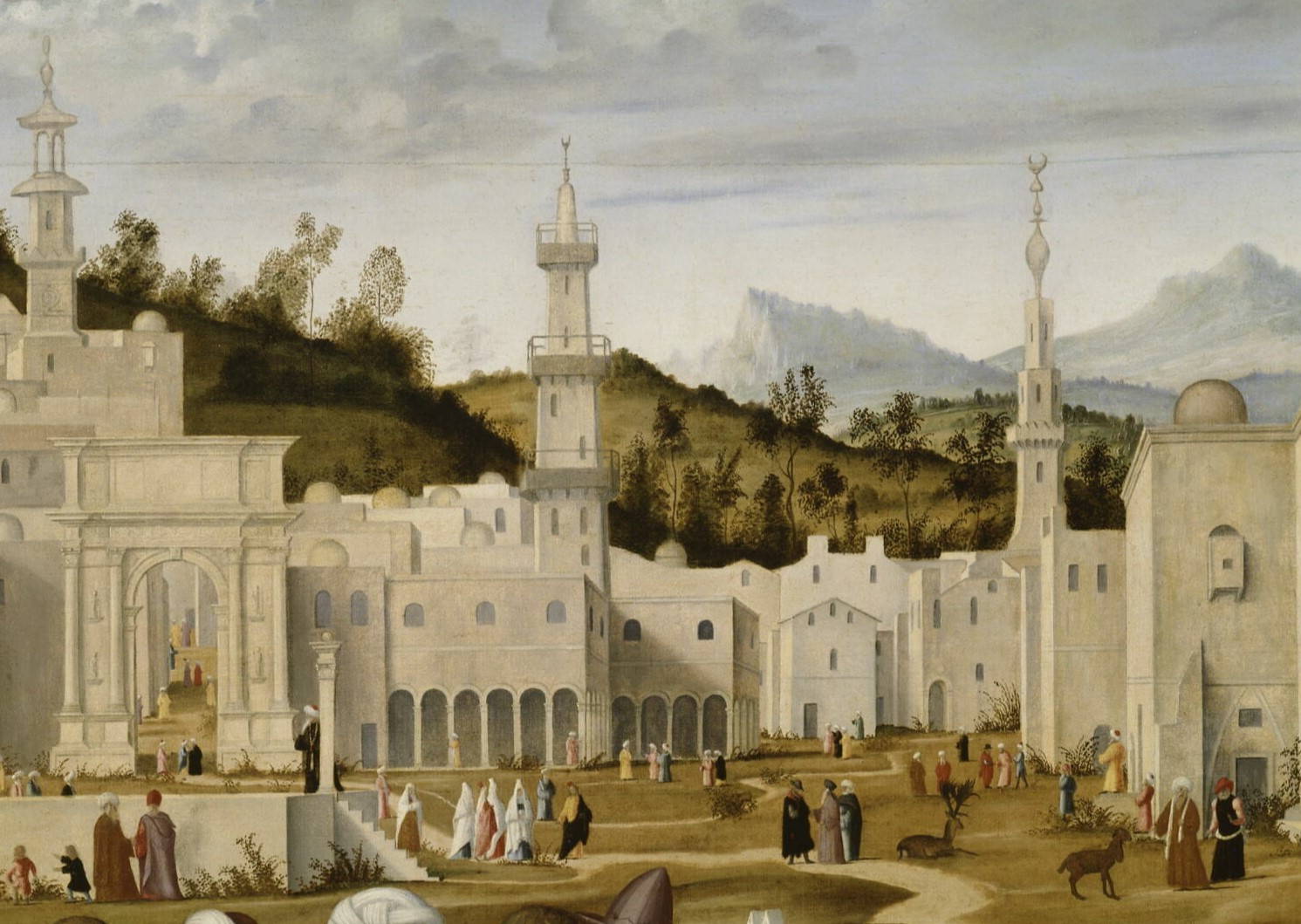
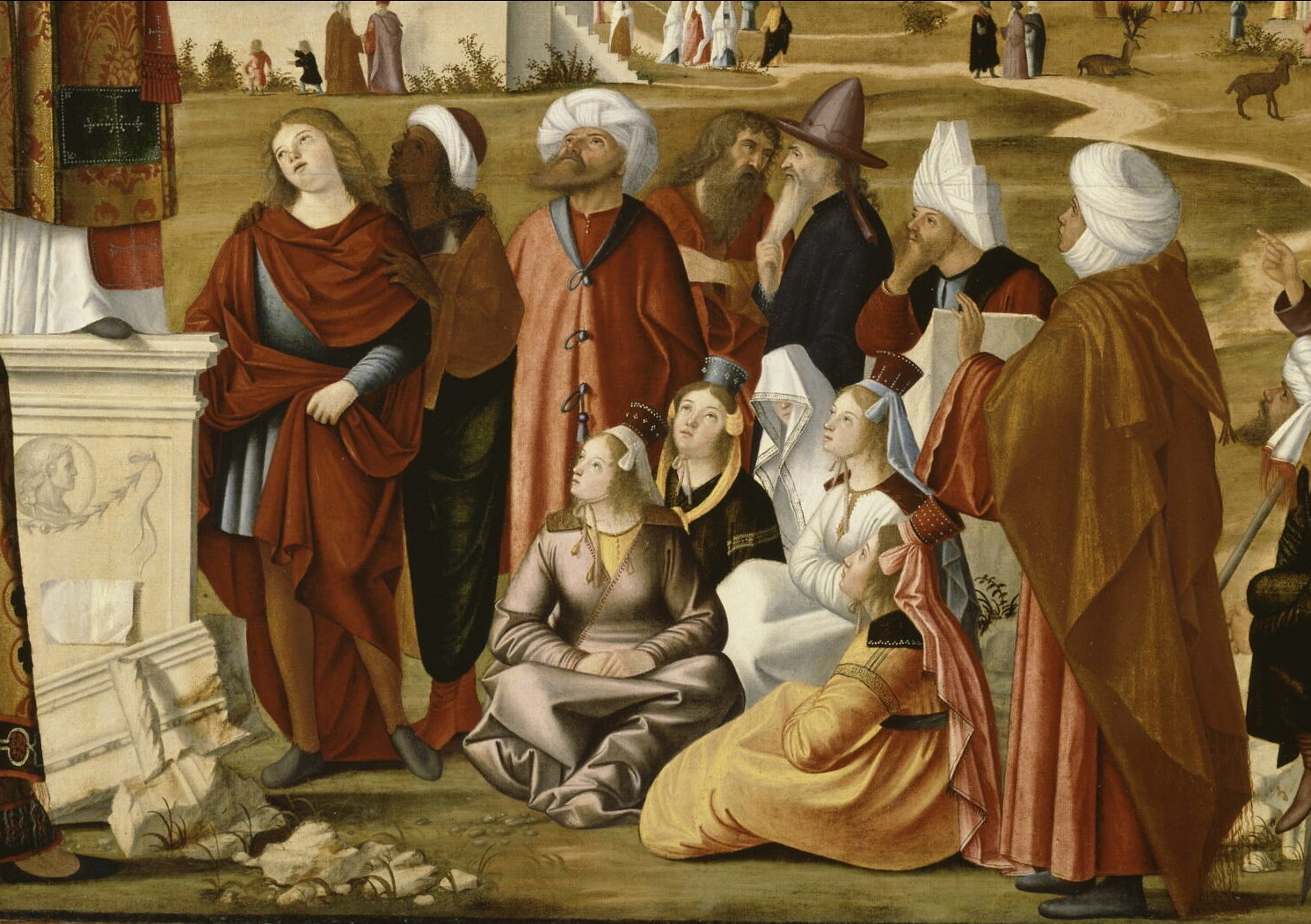
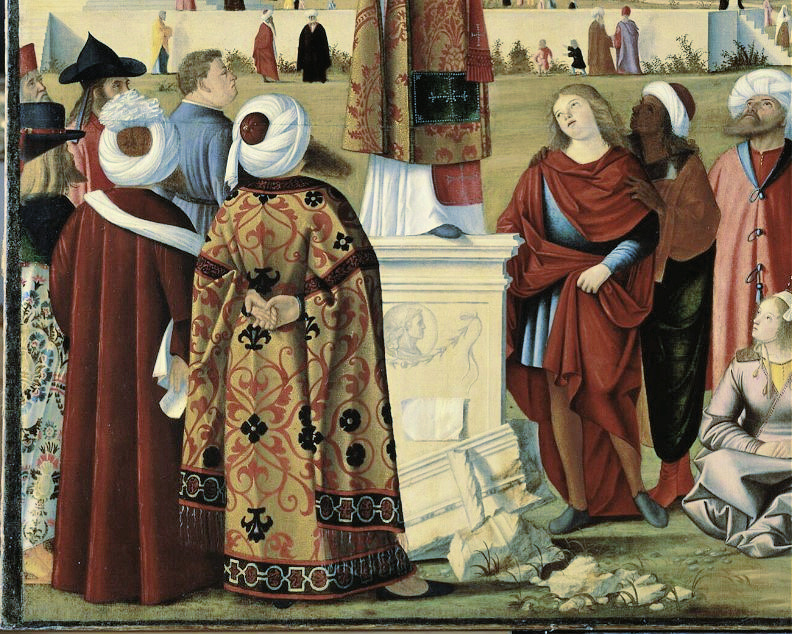
Vittore Carpaccio (1465-1526), Preaching of St. Stephen, 1500-1525, oil on canvas, 1.48 x 1.94m, Louvre. In place until the abolition of the brotherhood in 1806; P. Edwards, 1807; Pinacoteca di Brera, Milan, 1808; entered the Louvre by way of exchange, 1812. https://collections.louvre.fr/en/ark:/53355/cl010062650 – retrieved December 19, 2024.
detail.
detail.
detail.

Preaching of Saint Stephen by Vittore Carpaccio was done on the first quarter of the 16th century. It depicts the first Christian martyr, St. Stephen, giving a sermon whose actions and words involve its audience as active witnesses. Set within a spacious landscape it reflects an ideal city view, reminiscent to Jerusalem. It is suggested that Carpaccio may have been in Jerusalem as this scene is reminiscent of life in that city and of the Haram-ash-Sharif with the Mosque of Omar.
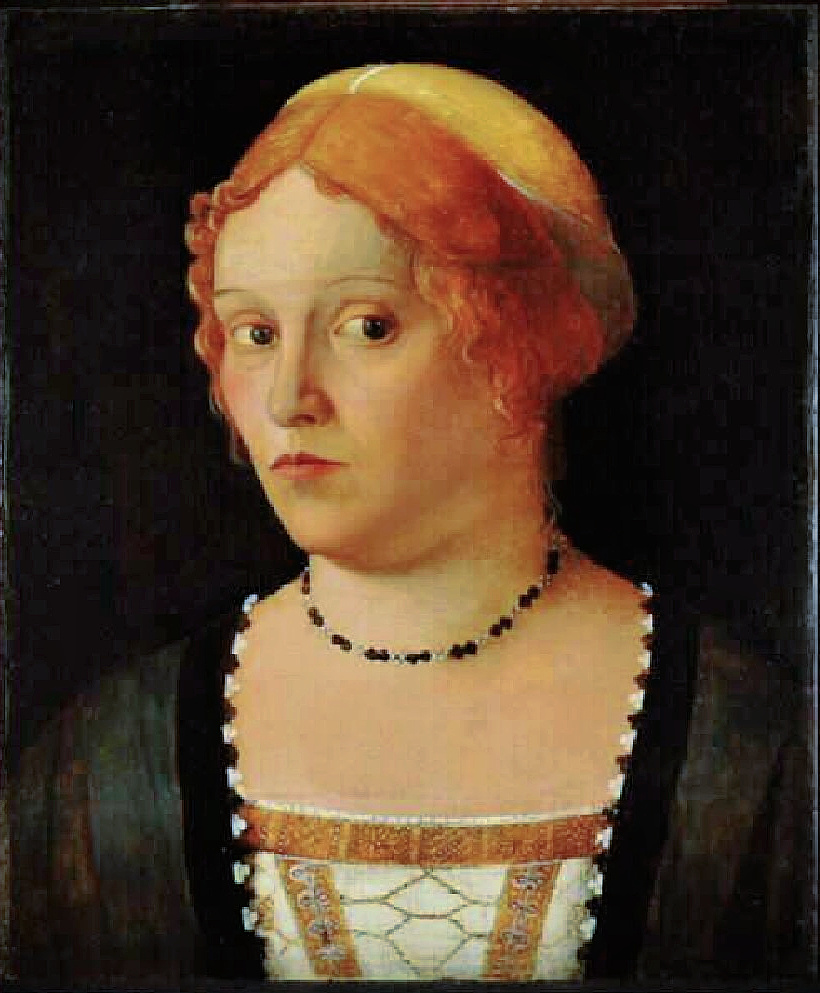
Portrait of a Lady, formerly attributed to Vittore Carpaccio (Italian, 1465 – 1526),:ca. 1505, Oil on panel with traces of tempera, 10 7/16 × 8 13/16 × 7/8 inches (26.47 × 22.4 × 2.21 cm) see – https://art.nelson-atkins.org/objects/16018/portrait-of-a-venetian-woman?ctx=0721b3e2-2547-4733-9f9a-582aecdcd7b0&idx=0 – retrieved December 5, 2024.

Carpaccio’s realism in numerous portraits in his ceremonial pictures was influenced by the Flemish masters already popular in Italy in the 1490’s. This bust-length independent portrait of a woman set against a plain dark background is almost an abstract construct of eyes, mouth and hairstyle. Her large head is turned slightly in one direction while her limpid  eyes look in the other direction. Her reddish hair is pulled loosely back from her face and, at the crown of her head she wears a yellow net to hold some of it. Her square-neck dress is slate blue edged in black, with a white and gold embroidered front panel. Around her neck she wears a choker of white and black beads.
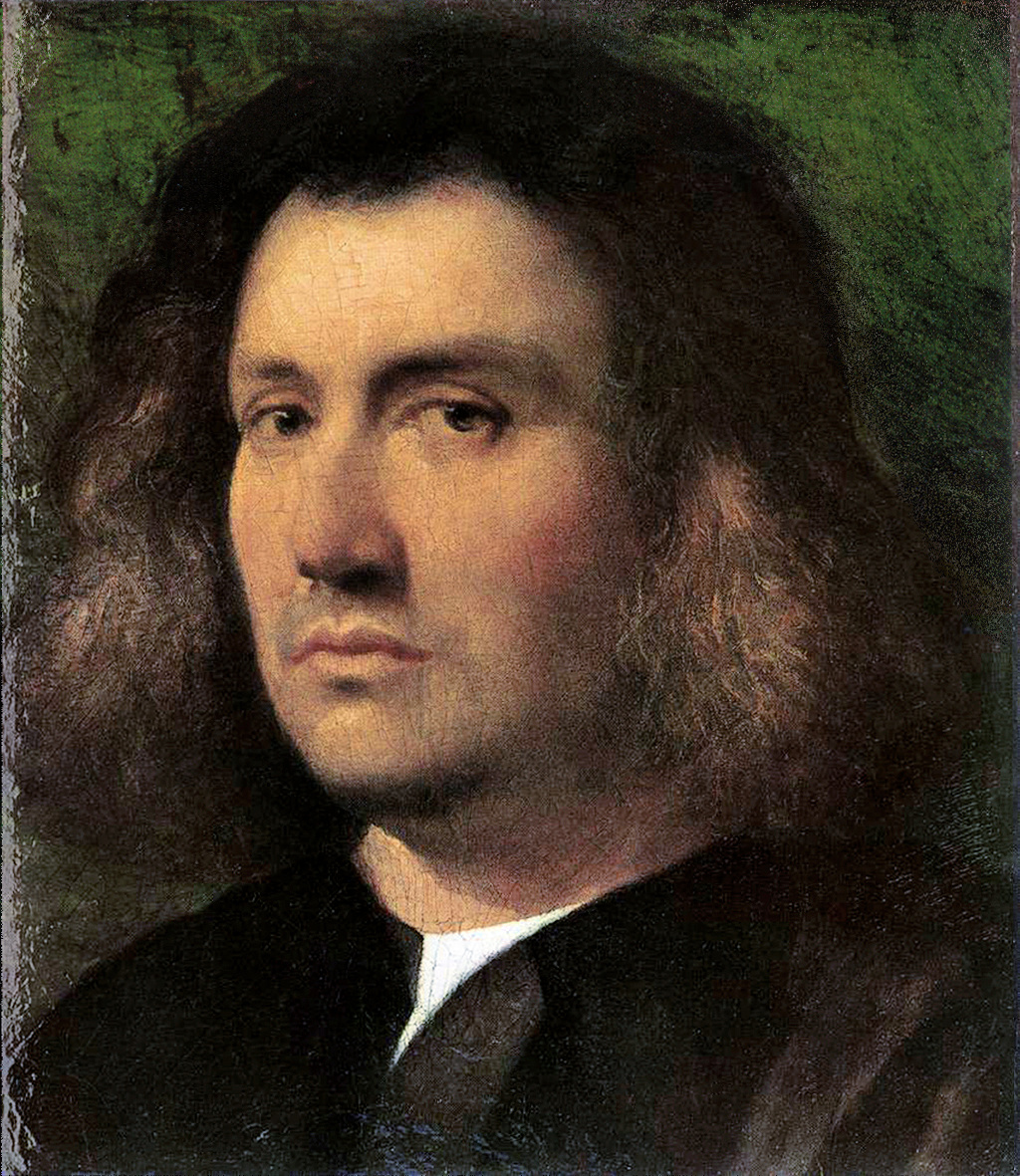
detail of picture below.
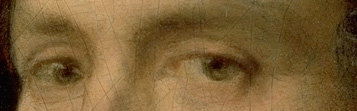
Giorgione (1478–1510), Portrait of a Man, 1506-10, oil on panel, 11 7/8 x 10 1/8 in. (30.16 x 25.72 cm), San Diego Museum of Art.https://collection.sdmart.org/objects-1/portfolio?records=50&query=sort_artist%20has%20words%20%22giorgione%22&sort=9 – December 18, 2024.

Giorgione who moved to Venice around 1500 is the transitional figure between Bellini and Titian. Instead of a prevailing late 15th century practice of precise brushstrokes and sculptural composition in his art, Giorgio expressed his subject matter in studied tonal gradations of color and precise analysis of human emotional expression described in gentle brushstrokes. Vasari saw Giorgione’s painting as if having no intermediary between art and life. Painted in the same period as Old Woman (Gallerie dell’ Accademia, Venice), this Portrait of a Man epitomizes what Vasari called the “modern manner” where Giorgione sought to paint “living and natural things.” With its plain dark background and close head crop the man’s carefully observed turning gaze and ambiguous expression is wholly engaging and alive.
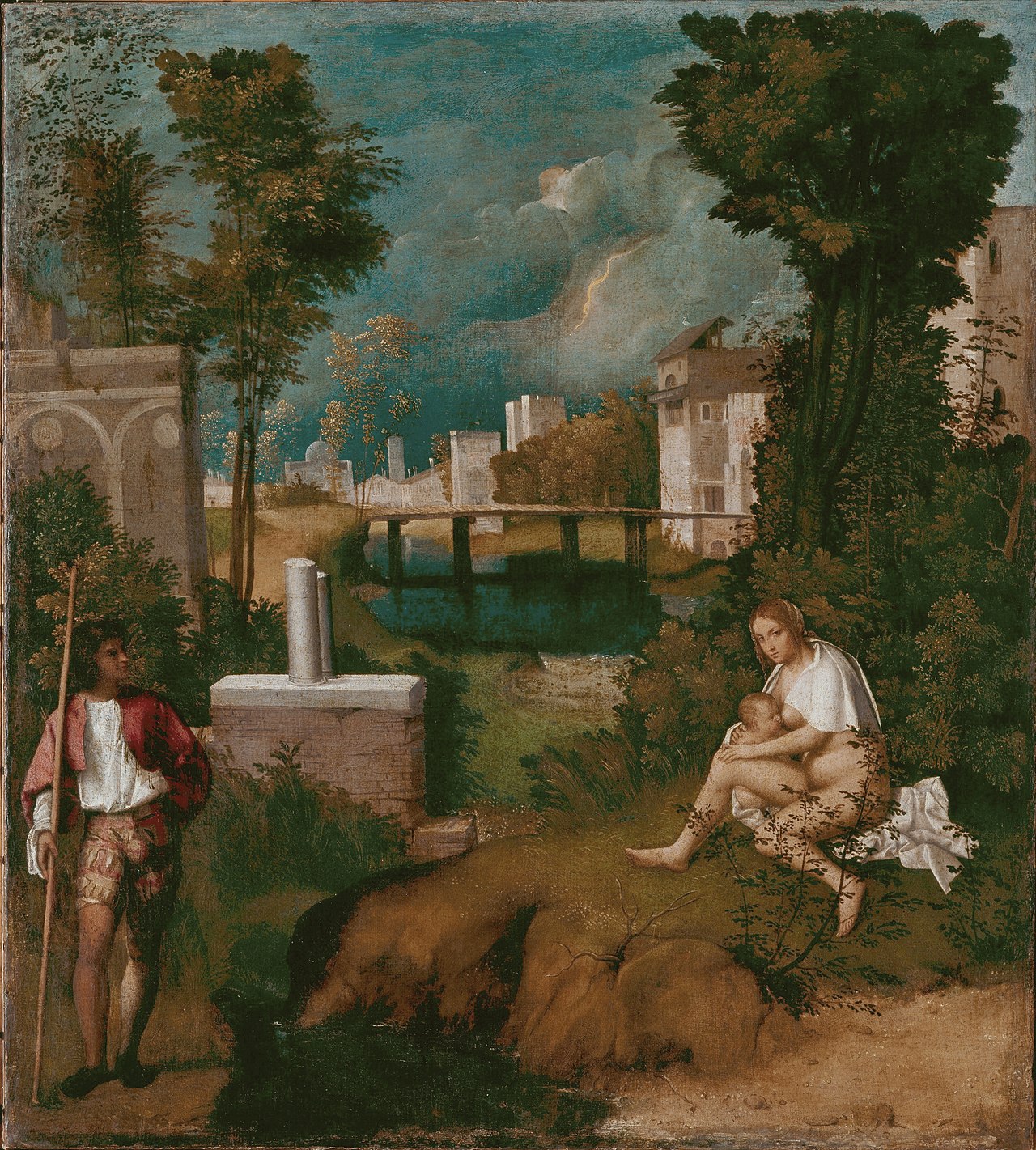
Giorgione (1478–1510), The Tempest, c. 1508, oil on canvas, 83 cm × 73 cm (33” × 29”), Gallerie dell’Accademia.

With Leonardo da Vinci, Giorgione is ranked as one of the founders of modern art. He was the first artist in Venice who often painted small artworks in oil of mysterious and evocative subjects for private commissions instead of public church works. The Tempest, originally commissioned by a Venetian noble of the House of Vendramin, is one of those artworks. Known as “a landscape of mood,” it has no discernable subject matter outside of expressing the tension and heat of an approaching storm. Its meaning remains elusive today. Giorgione’s career and personal life are equally mysterious. The artist is known to have shared a studio with Venetian painter Vincenzo Catena (c. 1480-1531) in Venice, worked on the Doges’ palace (though these works are lost) and on frescoes on the exterior of the German Merchants headquarters in Venice where Titian was working as well in a lesser role. Giorgione was an innovator but his known output is small, questionable, and, dying in the plague in 1510 at 32 years old, sometimes completed by others including his pupils, Titian and Sebastiano del Piombo, who were profoundly influenced by him.

Circle of Titian, formerly Giorgione, The Dead Christ supported by an Angel, oil on canvas, 1508-1510, 77.7 x 64.5 cm.; 30½ x 25⅜ in. Property from the Estate of Barbara Piasecka Johnson (1937–2013), https://www.sothebys.com/en/buy/auction/2022/old-masters-evening-sale/the-dead-christ-supported-by-an-angel – retrieved December 5, 2024.

Because of Giorgione’s early death in 1510 and other circumstances he did not complete many of his later paintings, making their ultimate identification difficult. That Titian completed many of these works is documented. Once in the collection of the House of Vendramin, this painting is such of jumble of painterly hands it is today attributed to the Circle of Titian though when earlier it was attributed to Giorgione the hand of Titian was apparent particularly in the figure of Christ. Titian was more aggressive in his use of colors –such as browns and grays- than Giorgione’s refined yellows and blues. X-rays reveal another composition – believed to be Giorgione-like- over the ponderous right hand of the angel painted over it.
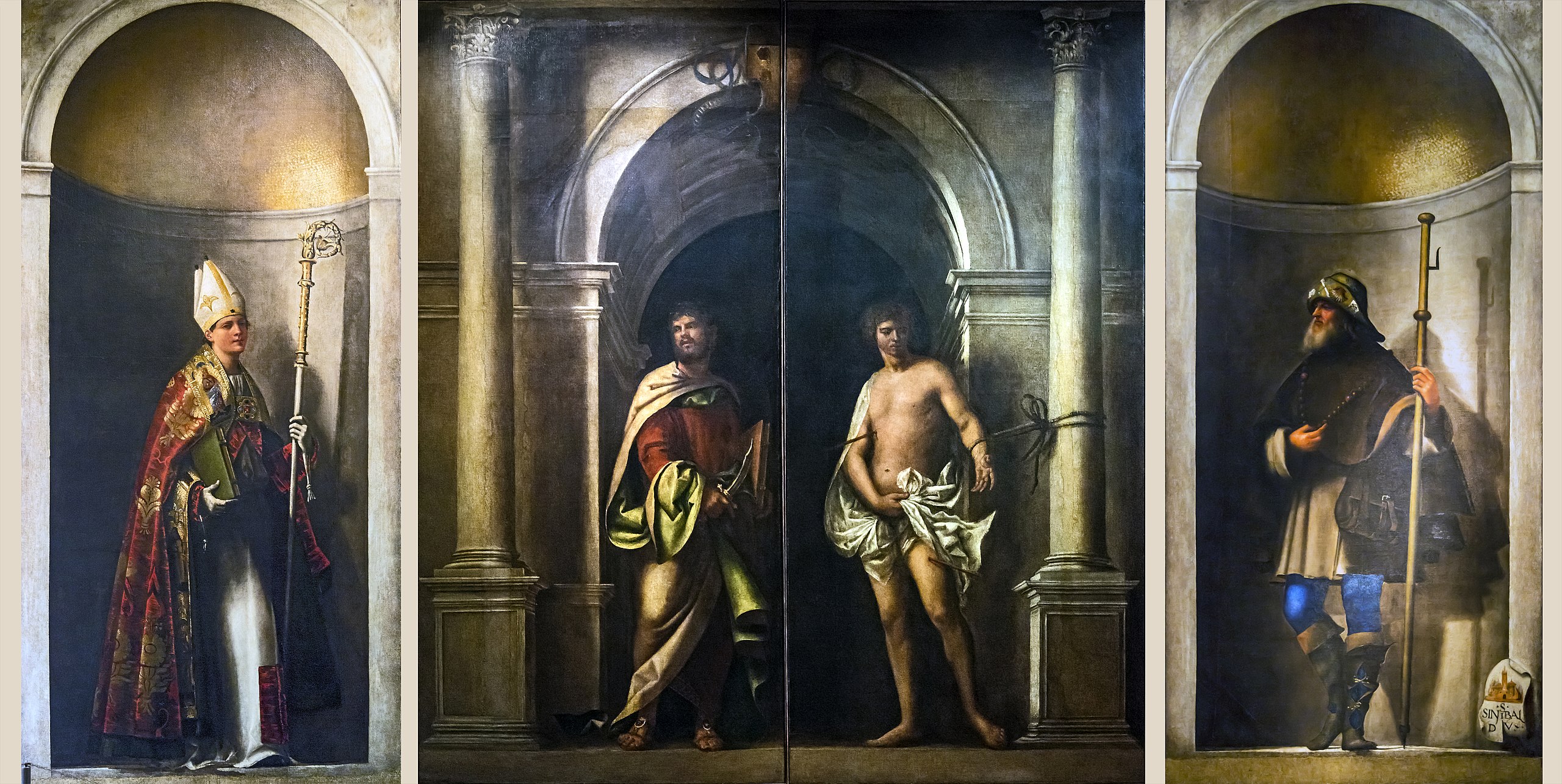
Sebastiano de Piombo (1485-1547), Organ Shutters, Four Saints, c. 1507-09, 115.3 in. x 53.9 in., 293 cm  x 137 cm  Gallerie delle’ Accademia, Venice (formerly in the Church of San Bartolomeo al Rialto).

When the organ shutter doors closed they formed a single image of two martyrs: Saint Batholomeo and Saint Sebastian. These organ shutters for San Bartolomeo al Rialto are the earliest documented works of Sebastiano. Commissioned by the church’s vicar in late 1507, it was completed in 1509.

Detail of above. St. Louis of Toulouse.

St. Louis of Toulouse was a bishop of Toulouse in France consecrated by Boniface VIII in 1297. Because of his princely standing Louis won the episcopal appointment, but as bishop he turned his office and efforts to meeting the material and spiritual needs of the poor in his diocese, feeding the hungry, and ignoring his own material interests. After six months, exhausted by his labors, he abandoned the position of bishop and died at Brignoles of fever, possibly typhoid, at 23 years old. St. Louis of Toulouse is one of the inside panels inside a niche of gray stone and gold mosaic (the other is St. Sebald of Nürnberg) by Sebastiano in his first documented commission.
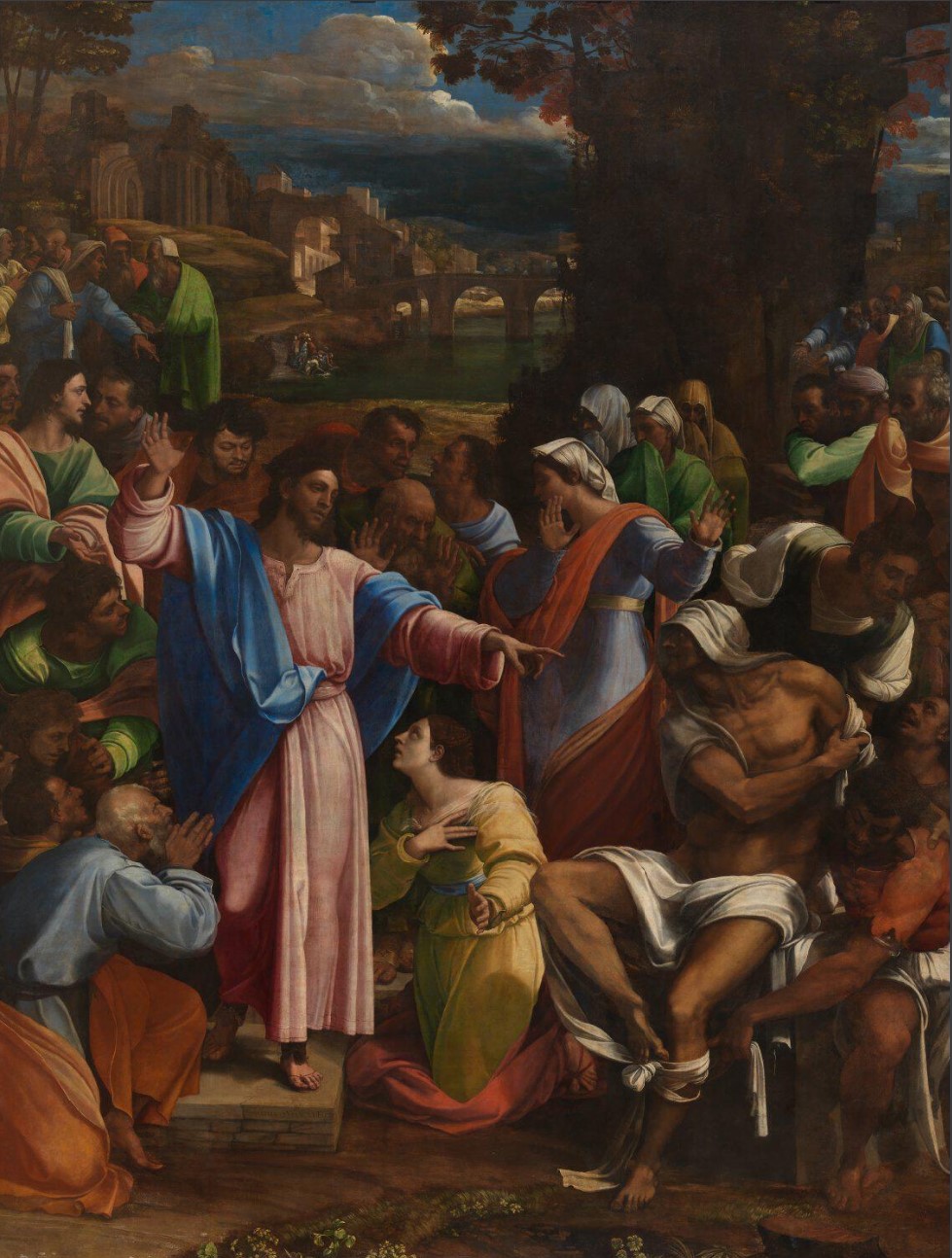
Sebastiano del Piombo (1485-1547), The Raising of Lazarus, 1517-19, oil, originally on wood, transferred to board, 381 × 289.6 cm, National Gallery of Art London. https://www.nationalgallery.org.uk/paintings/sebastiano-del-piombo-incorporating-designs-by-michelangelo-the-raising-of-lazarus – retrieved December 18, 2024.

Sebastiano Luciani, a pupil of Giorgione who deeply influenced him, was born in Venice in 1485. He didn’t become “del Piombo” until after 1531 when he became Keeper of the Papal Seal (“Il Piombo”). After Giorgione’s death in 1510 del Piombo may have completed some of Giorgione’s work and, in 1511, moved to Rome. Working at Villa Farnesina in Raphael’s circle that included Baldassare Peruzzi (1481-1536), del Piombo fell out with Raphael and became a devoted follower of Michaelangelo (1475-1564). Both eagerly worked to outperform Raphael, an artistic rival, and Michelangelo lent del Piombo some of his drawings to work from for some of the main figures in the complex composition of The Raising of Lazarus. The gigantic painting was commissioned for Narbonne Cathedral in southern France by Cardinal Giulio de’ Medici (1478-1534), later pope Clement VII, who had also commissioned Raphael’s last painting Transfiguration for the same cathedral.

“The Raising of Lazarus” by Sebastiano del Piombo is introduced by curator Matthias Wivel in this talk as part of the series ‘The History of the National Gallery in Six Paintings.’
Sebastiano del Piombo (1485-1547), Portrait of Clement VII, c. 1531, oil on slate, 105.4 × 87.6 cm (41 1/2 × 34 1/2 in.), J. Paul Getty Museum, Los Angeles. https://www.getty.edu/art/collection/object/103RJN – retrieved December 18, 2024.

The pope visited the artist’s studio and was pleased with his original three-quarter length portrait seated in a chair positioned diagonally, and ordered this oil copy on slate. The practice originated in Rome around 1500 in an attempt towards immortality in art. However, the material was heavy and would shatter if not handled with care. After 1531 del Piombo painted rather less and turned to making admirable portraits which combined his Venetian training in color and Roman discipline in form.
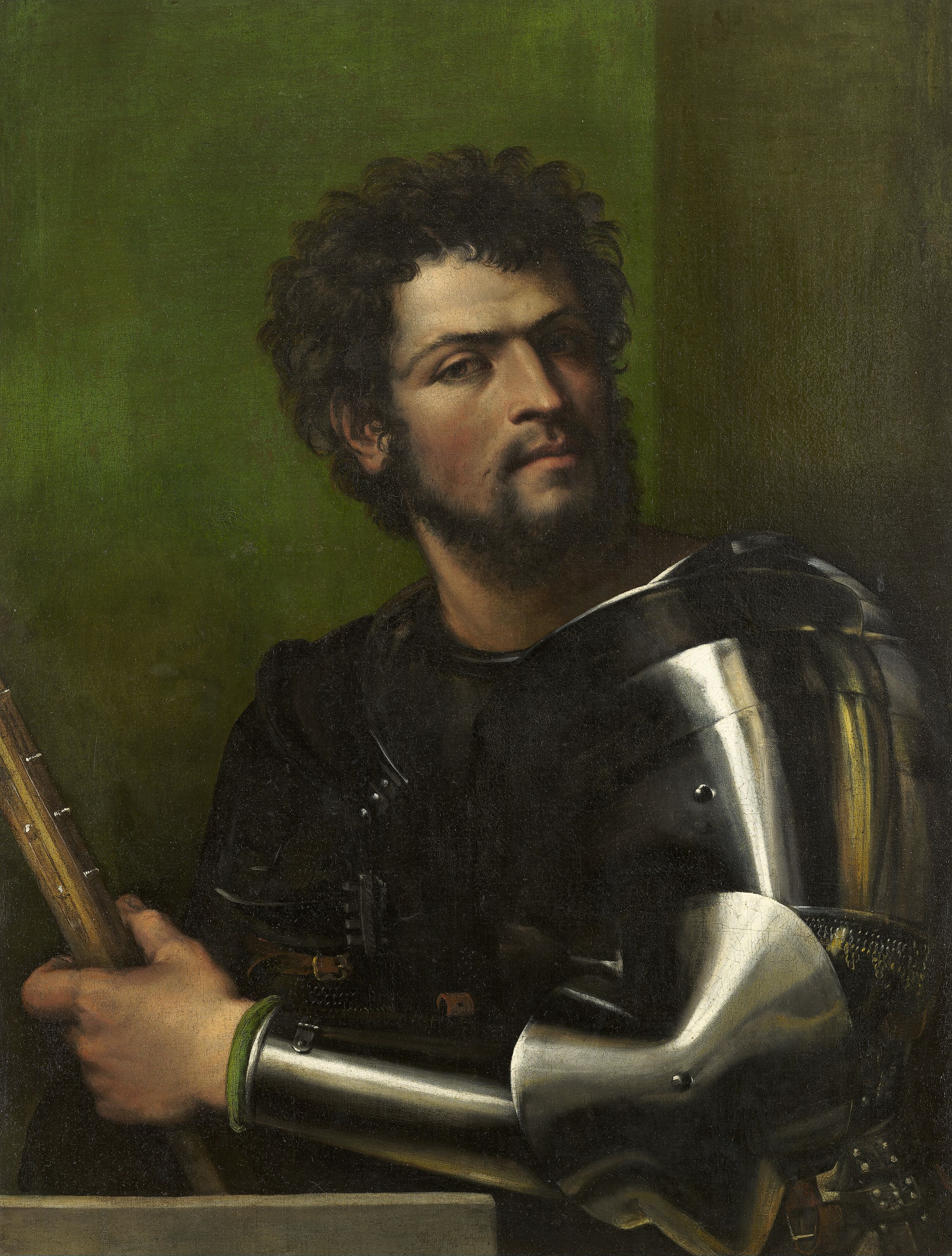
Sebastiano del Piombo (1485-1547), Portrait of a Man in Armor, c. 1511-15, oil on canvas, 34 ½ x 26 ¼ in (87.6 x 66.7 cm) Wadsworth Atheneum, Hartford.

Sebastiano made this portrait under the influence of Giorgione in terms of its gentle, engaging expression and subtly dramatic “over the shoulder” pose. Until more recently, this painting was attributed to Giorgione and, as it is Sebastiano, it recalls the deep influence Giorgione had on his pupils who imitated him profoundly. It has been postulated that the sitter is the Florentine general Francesco Ferrucci (1489-1530) who fought in the Italian Wars.

Jacopo Negretti called Palma il Vecchio (c. 1480-1528), Diana and Callisto, c. 1525/28, oil on canvas, 30 ½ x 48 ¾ in. (77.5 x 124 cm), Kunsthistorisches Museum, Vienna (Kunsthistorisches Museum Wien, Gemäldegalerie) https://www.khm.at/en/objectdb/detail/1291/?offset=34&lv=list – retrieved December 12, 2024.

Palma Il Vecchio was a Venetian painter who was a pupil of Bellini and influenced by Titian, Giorgione and Lotto. He is chiefly remembered for his paintings of female figures, particularly a blonde Venetian type of ample charm which extended even to paintings of several female saints. The subject of the naked woman located in a natural setting was pioneered by Giorgione and Titian but Palma Il Vecchio progressed the subject to work out the figure in three-dimensions and reliant on the linear curves in and of a complex assembly and interplay of naked female figures. In this painting, Palma il Vecchio adapted the poses of the sculptors of antiquity and drew on Mannerist contemporaries such as Giulio Romano (1499-1546) and Marc Antonio Raimondi (c. 1470/82–c. 1534). The sensuous surface texture typically found in Venetian art has given way to porcelain-like coolness.
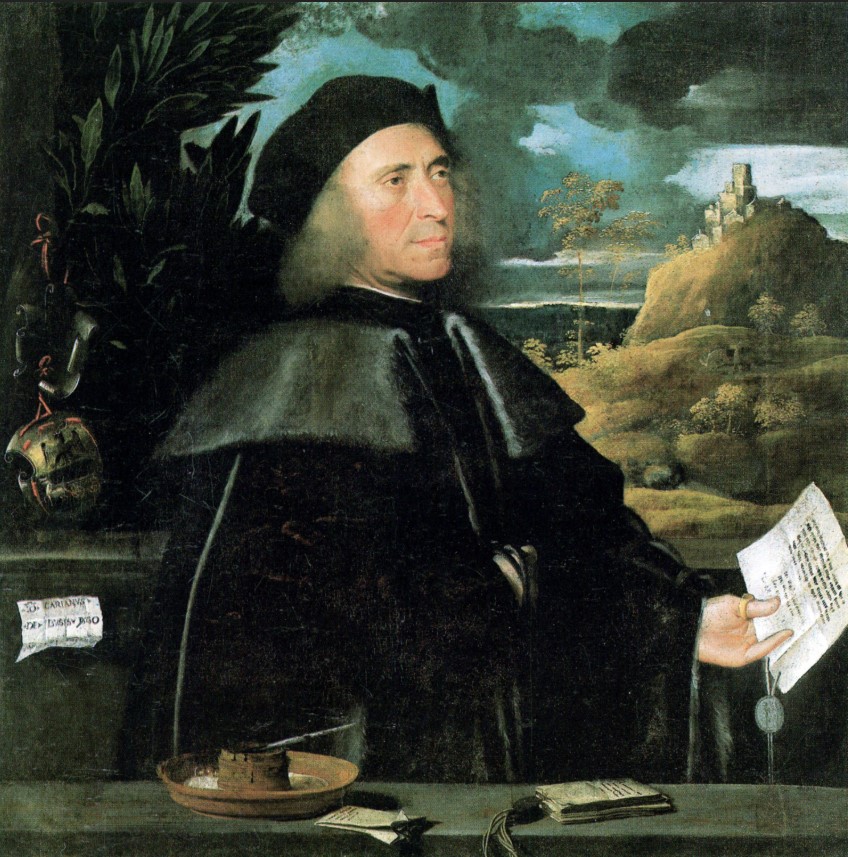
Giovanni Cariani (a. 1490-1547), Portrait of a Man, 1525-30, oil on canvas, 36 1/2 x 36 1/2 in. (92.7 x 92.7 cm), National Gallery of Canada, Ottawa.

Little is known about Cariani’s biography though it is speculated he was born in Bergamo in or before 1490. In his gentle, soft shaded subjects and arcadian elements Cariani’s early work is Venetian influenced by Giorgione. The artist was also inspired by Bellini and close to Palma Il Vecchio. He moved to Bergamo before 1520 and mastered portraiture under the influence of Lorenzo Lotto which are the highlight of his career. One of Cariani’s masterpieces is this portrait of a man of letters holding a seal that is possibly imperial or papal. The luminous colors are influenced by Palma Il Vecchio while the psychological insight of the sitter is learned from Lorenzo Lotto. The sitter is believed to possibly be Giovanni Benedetto da Caravaggio, a professor and administrator at the University of Padua.
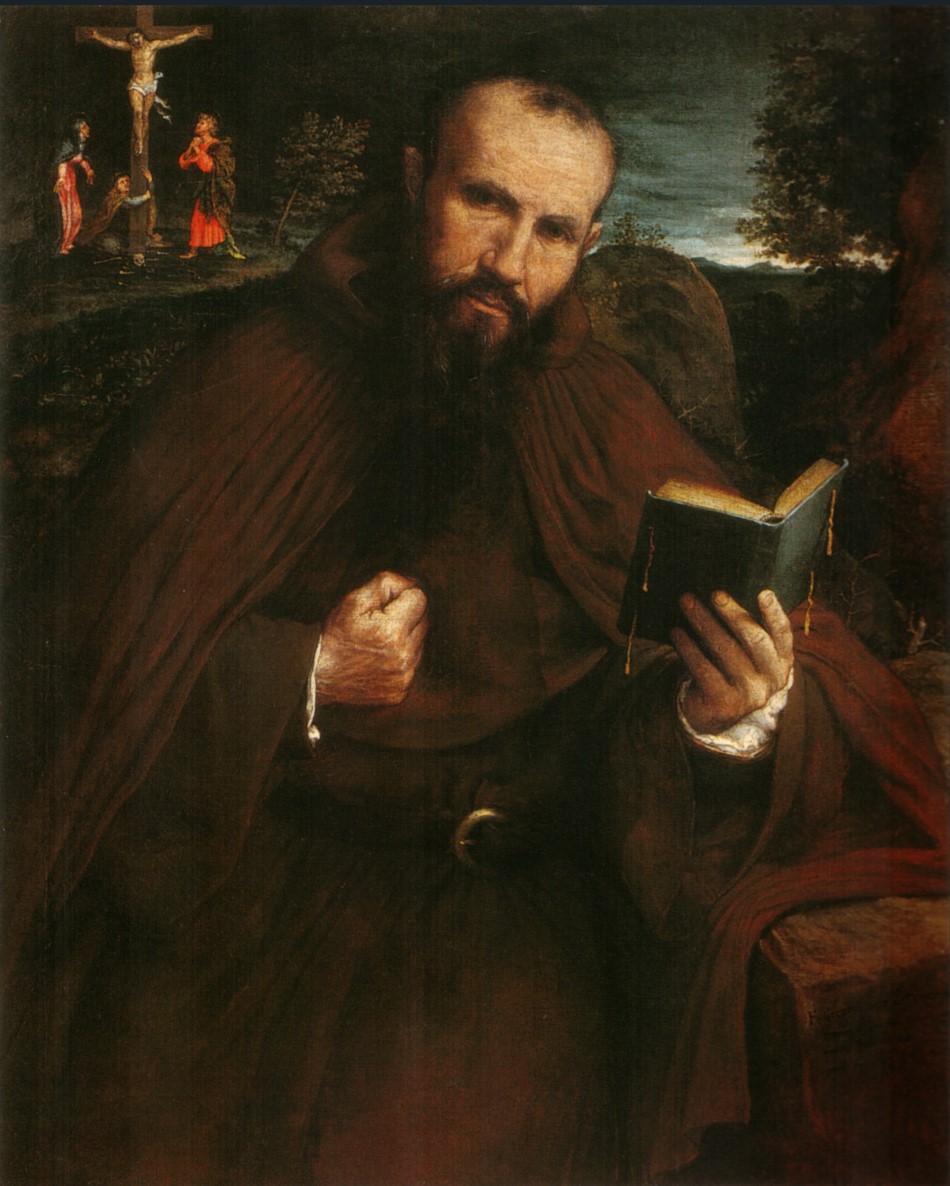
Lorenzo Lotto (c. 1480 – 1556), Fra Gregorio Belo of Vincenza, 1547, oil on canvas, 34 3/8 x 28 in (87.3 x 71.1 cm) The Metropolitan Museum of Art, New York City. https://www.metmuseum.org/art/collection/search/436917 – December 18, 2024.

The sitter beats his fist into his chest in penance, lifts an open book of Passion meditations, and is surrounded by a brooding sky and background living scene of Calvary, all of which works for the artist to scrutinize the mental state or inner thoughts of his sitter, here a religious brother in an order of poor hermits. Lotto had studied portraits of Albrecht Dürer, who made two trips to Venice, to learn to convey these deeper psychological states. Lotto’s assertively confessional portraits under his intense handling of light and dourly earthy colors, were astutely new and sometimes rejected by clients.
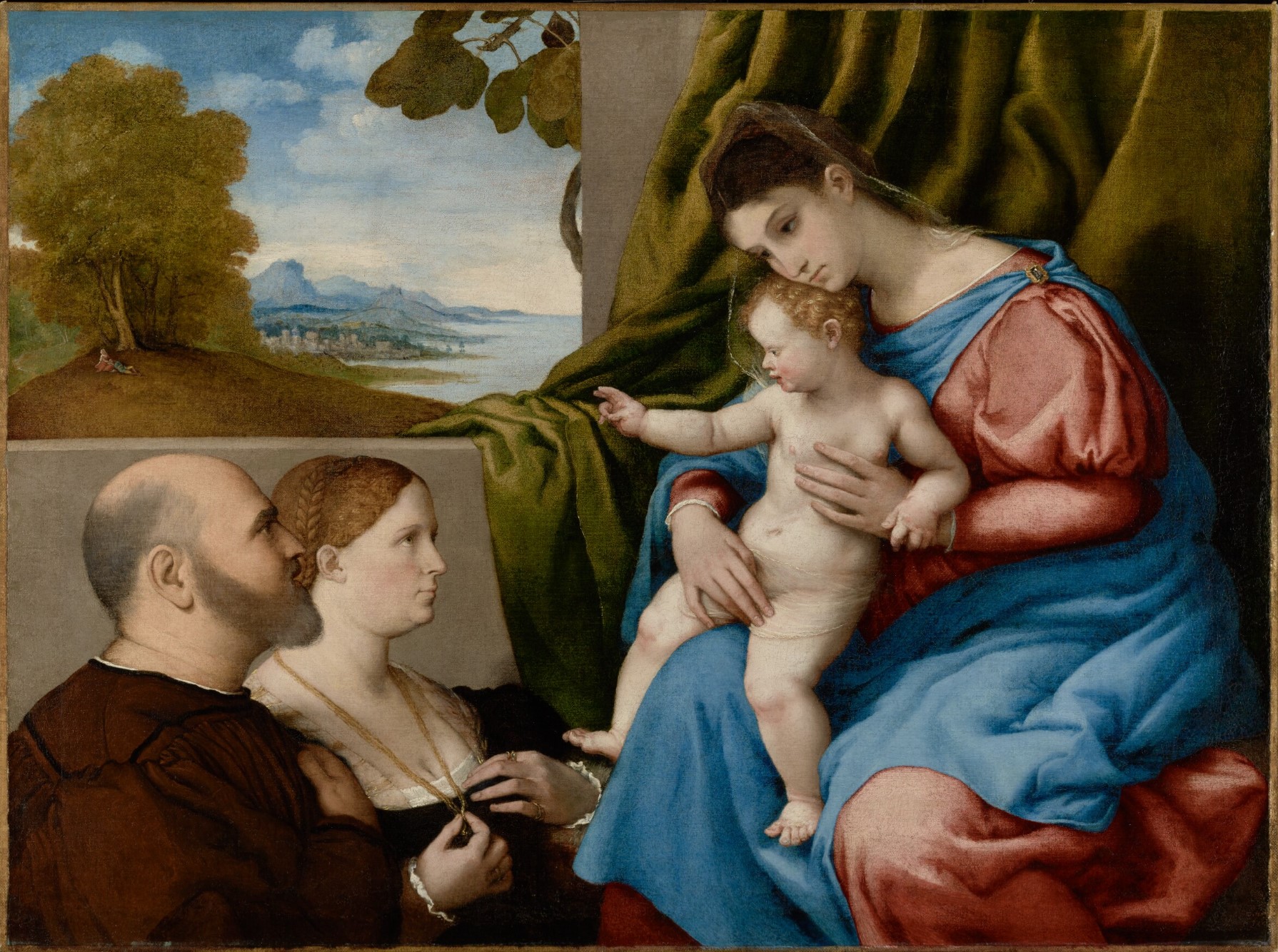
Lorenzo Lotto (c. 1480 – 1556), Madonna and Child with Two Donors, about 1525–1530, Getty Center https://www.getty.edu/art/collection/object/103RDE – retrieved December 11, 2024.

Lotto, a deeply religious man and one of the most independent of the 16th century Venetian artists, had a highly singular artistic vision with penetrating insight into the human personality. This painting is a mixture of the artist’s realism and idealism. The setting is natural as are the donors who Lotto draws with a Northern European Art sensibility. The Madonna and child are not derived from models, but expressed from an artistic conception of spiritual superiority. Kneeling donors in profile with the Virgin and Child was a motif developed in Venice in the 1490’s by Bellini. From the medieval period forward, donors were frequently portrayed in artworks they commissioned and such was more popular than ever in the early 1500’s.
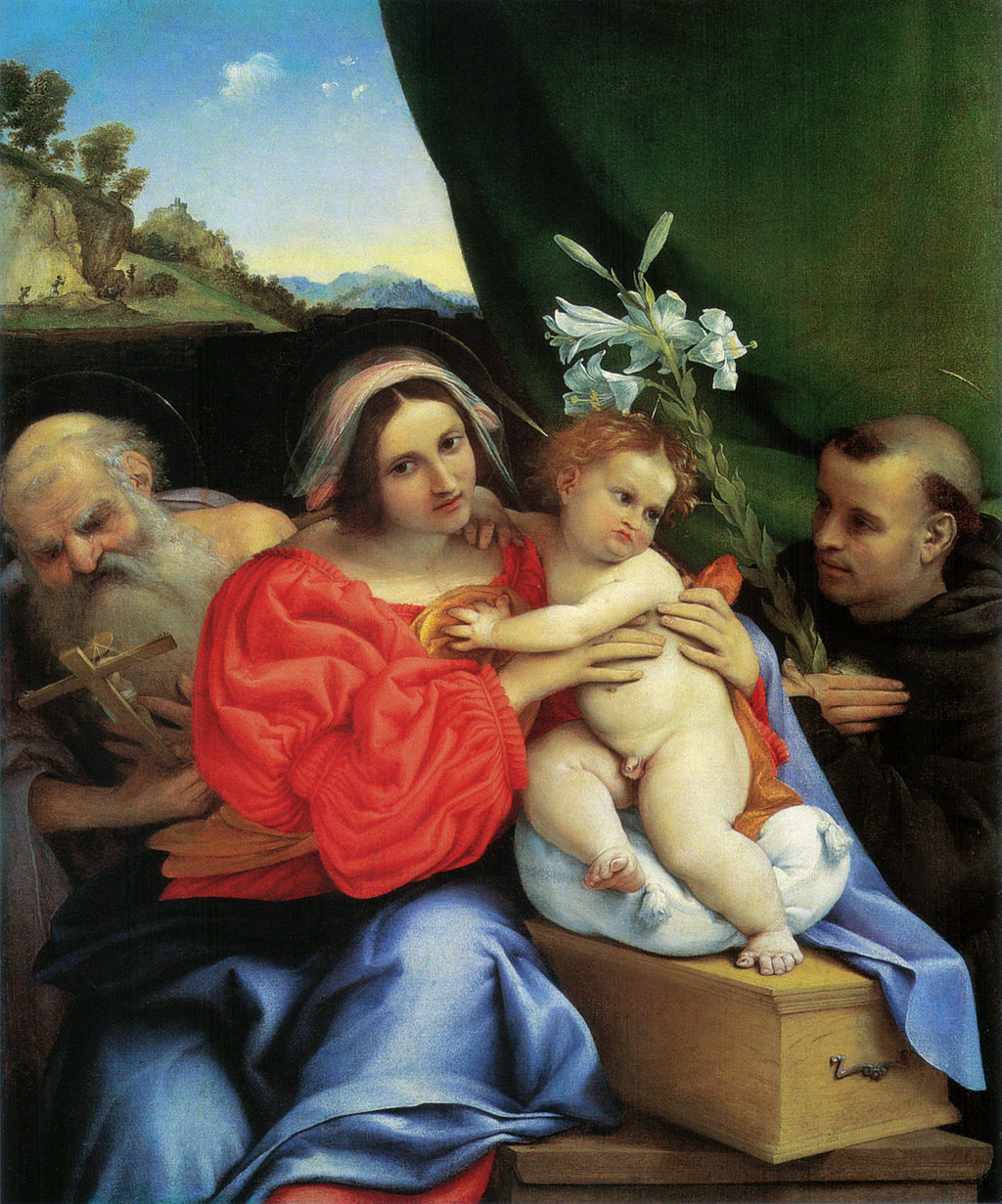
Lorenzo Lotto (c. 1480 – 1556), Madonna and Child with Sts. Jerome  and Anthony of Padua, 1521, oil on canvas, 37 1/8 x 30 5/8/ in. (94.3 x 77.8 cm),  Museum of Fine Arts, Boston.

While strongly influenced by Bellini at the start Lotto developed an independent chameleon-like style influenced by a range of contemporary Renaissance artists such as Sandro Botticelli (1445-1510), Fra Bartolomeo, Raphael, Corregio (1489-1534), Giorgione, Titian, as well as Germans, Dürer and Hans Holbein the Elder (1460-1524). But Lotto’s well-known character of independence had as much an historical context as a personal one. About Lotto, Bernard Berenson observed that the Venetian painter was “a psychological painter in an age which ended by esteeming little but force and display, a personal painter at a time when personality was getting to be of less account than conformity, evangelical at heart in a country upon which a rigid and soulless Vaticanism was daily strengthening its hold” (quoted in Pignatti, page 66). This painting from the 1520’s is remarkable for its renewed vision of the picture plane, here with an interlocking group of figures filling a shallow foreground like a frieze and a delimited background.
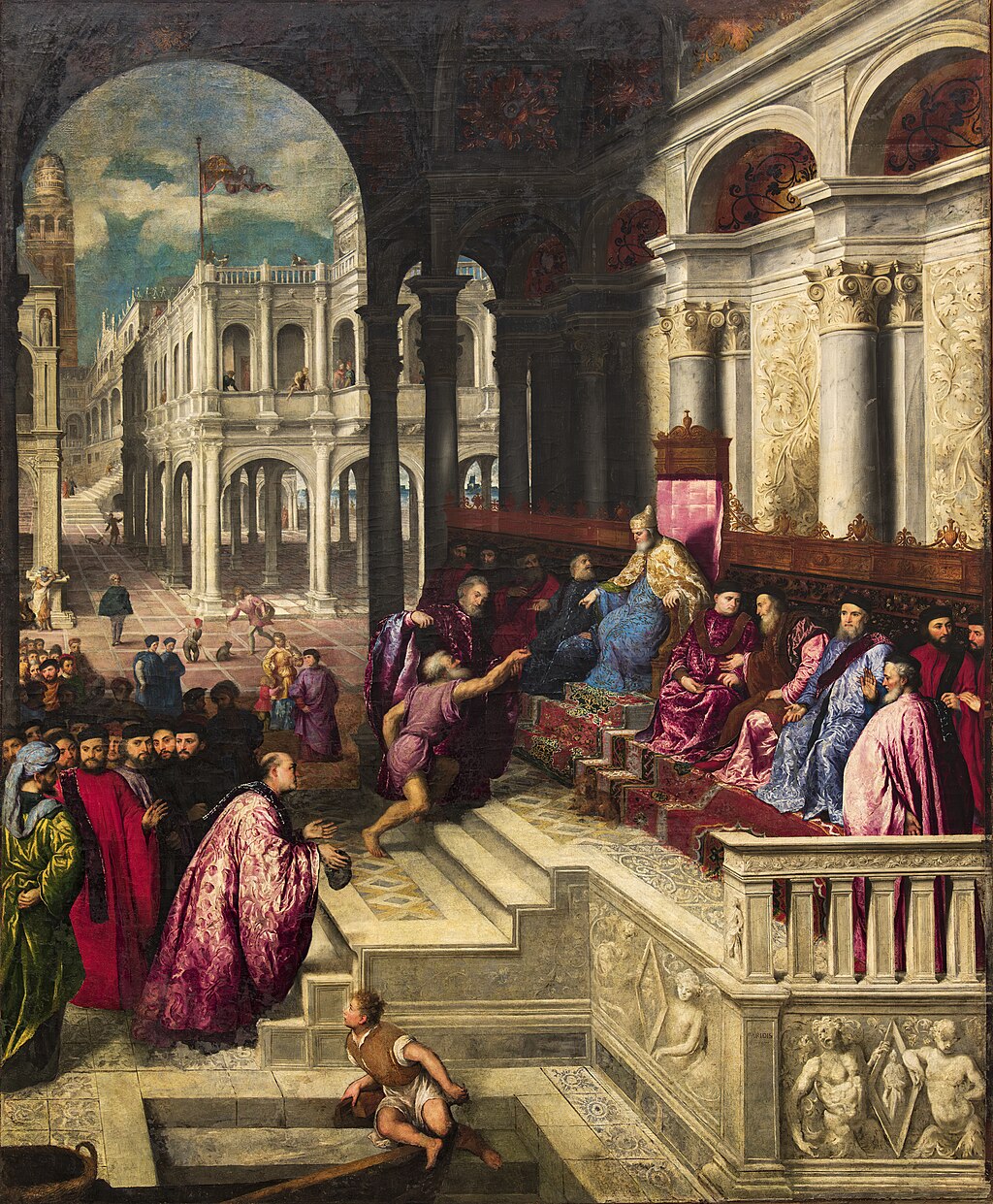
Paris Bordon/e (1500-1571), Fisherman Presenting a Ring to the Doge Gradenigo, 1534, oil on canvas, 370 x 301 cm (145.7 in × 118.5 in), Gallerie dell’Accademia, Venice.

It was painted in Venice for the confraternity of San Marco in 1540. Bartolomeo Gradenigo (1263-1342) was the 53rd Doge of Venice for three years, from 1339 to 1342. He was born in Venice to an ancient noble family and was a rich trader who practiced politics from an early age and lived a life of luxury. The painting depicts a famous legend that occurred in Gradenigo’s reign when a storm was pushed back by the intercession of Venice’s saints. Afterwards the saints gave a humble fisherman the “Ring of the Fisherman” to present to the doge.
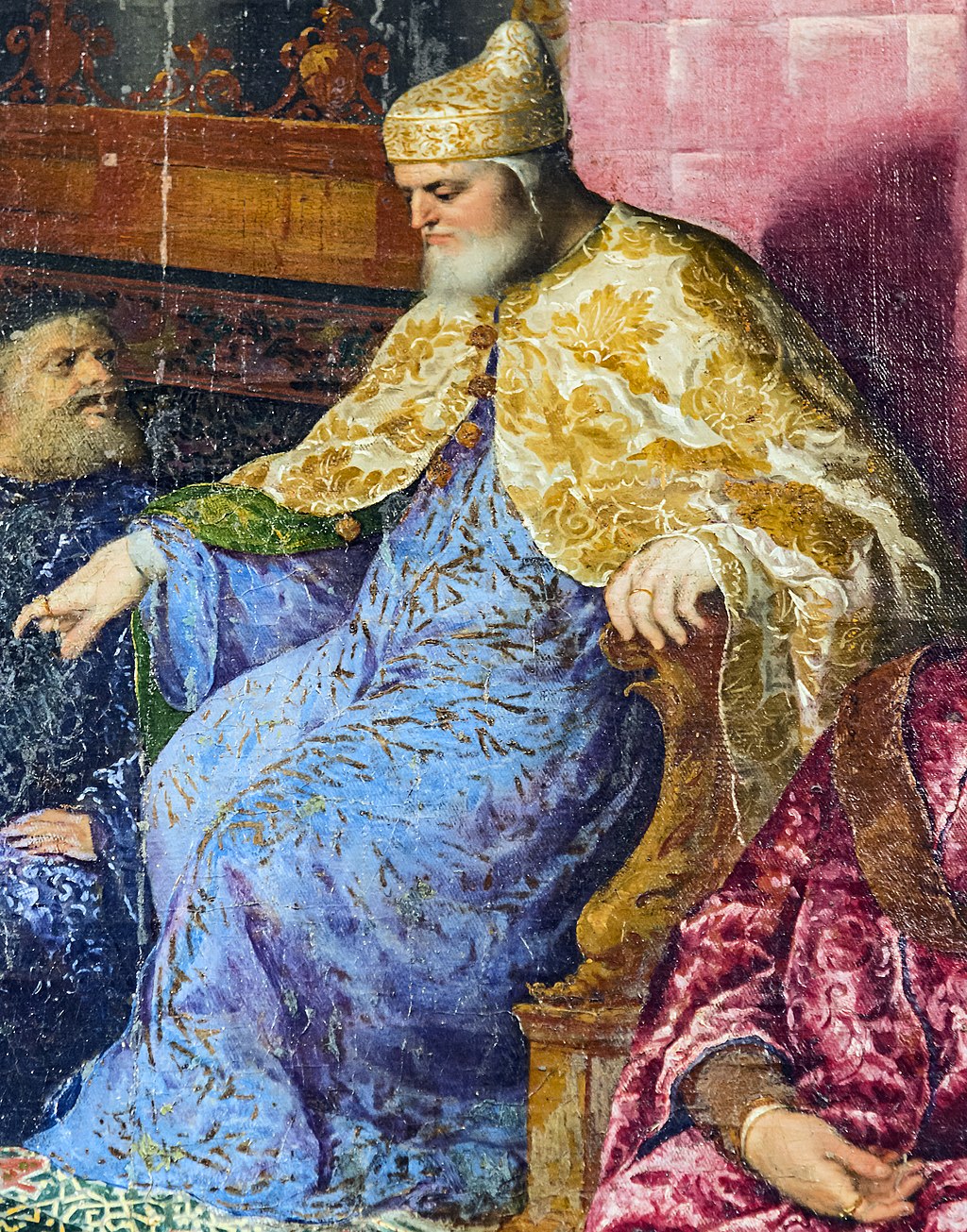
Accademia – Doge Bartolomeo Gradenigo by Paris Bordon/e.
Paris Bordon/e (1500-1571), Portrait of a Knight in Armor, oil on canvas, 36 x 30 in. (91.4 x 76.2 cm) Frame: 44 3/4 x 38 x 3 1/2 in. (113.7 x 96.5 x 8.9 cm), North Carolina Museum of Art, Raleigh. https://ncartmuseum.org/object/portrait-of-a-man-in-armor/ – retrieved December 13, 2024.

Paris Bordon/e was born in Treviso in 1500 and moved to Venice in 1508. where he was based his entire life until his death in 1571. His training is unknown though apparently in Venice where he listed as an independent painter in 1518. As a young professional he reflected the influence of Giorgione in his sentimental portraits and Titian in his use of bold and fluid colors. In the mid 1520s he took on a figural monumentality reminiscent of Pordenone. In the late 1530s Bordon/e was in France at the court of Francis I making realistic portraits and, in 1540, in Augsburg, where he painted for the wealthy Fuggers. Bordon/e was well known for his subjects’ delineated costumes and detailed intellectual landscapes.

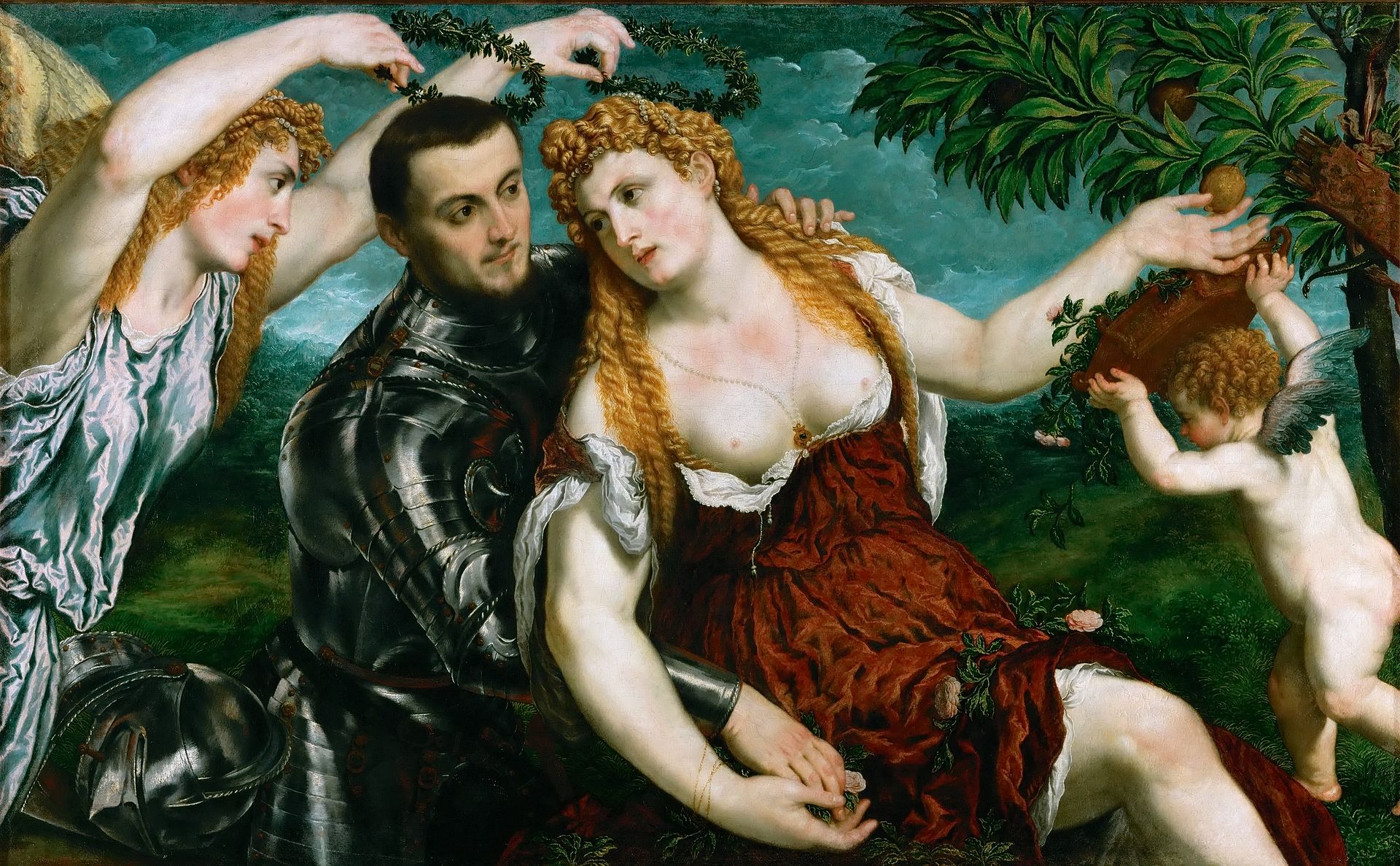
Paris Bordon/e (1500-1571). Gladiator fight, c. 1560, oil on canvas, 218 × 329 cm, Kunsthistorisches Museum Wien, Gemäldegalerie. https://www.khm.at/en/objectdb/detail/292/?offset=0&lv=list – retrieved December 13, 2024.
Paris Bordon/e.
Paris Bordon/e.
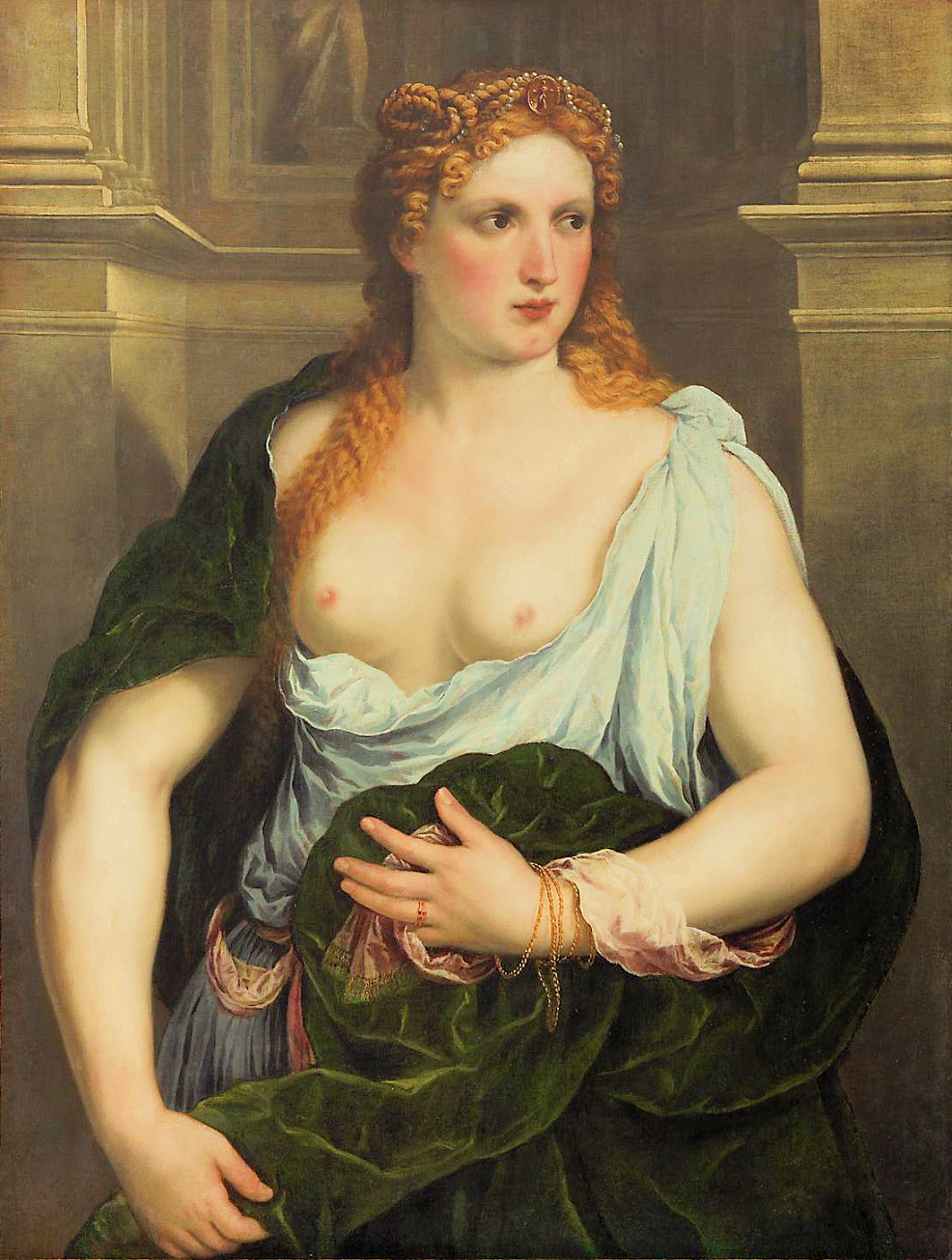
Paris Bordon/e (1500-1571), Portrait of a Young Woman in a Green Coat, c. 1550, oil on canvas, 40 1/8 x 30 ½ in. (102 cm × 77.5 cm), Kunsthistorisches Museum Wien, Gemäldegalerie.https://www.khm.at/en/objectdb/detail/288/?offset=11&lv=list – retrieved December 13, 2024.

Bordon/e’s painting is closely related to Titian’s style yet in this female figure expresses with elegance and refinement Bordon/e’s own sophisticated stylistic vision. This may be a portrait of Veronica Franco, a Venetian courtesan who played an outsized role in the social and cultural life of the city in the mid16th century.
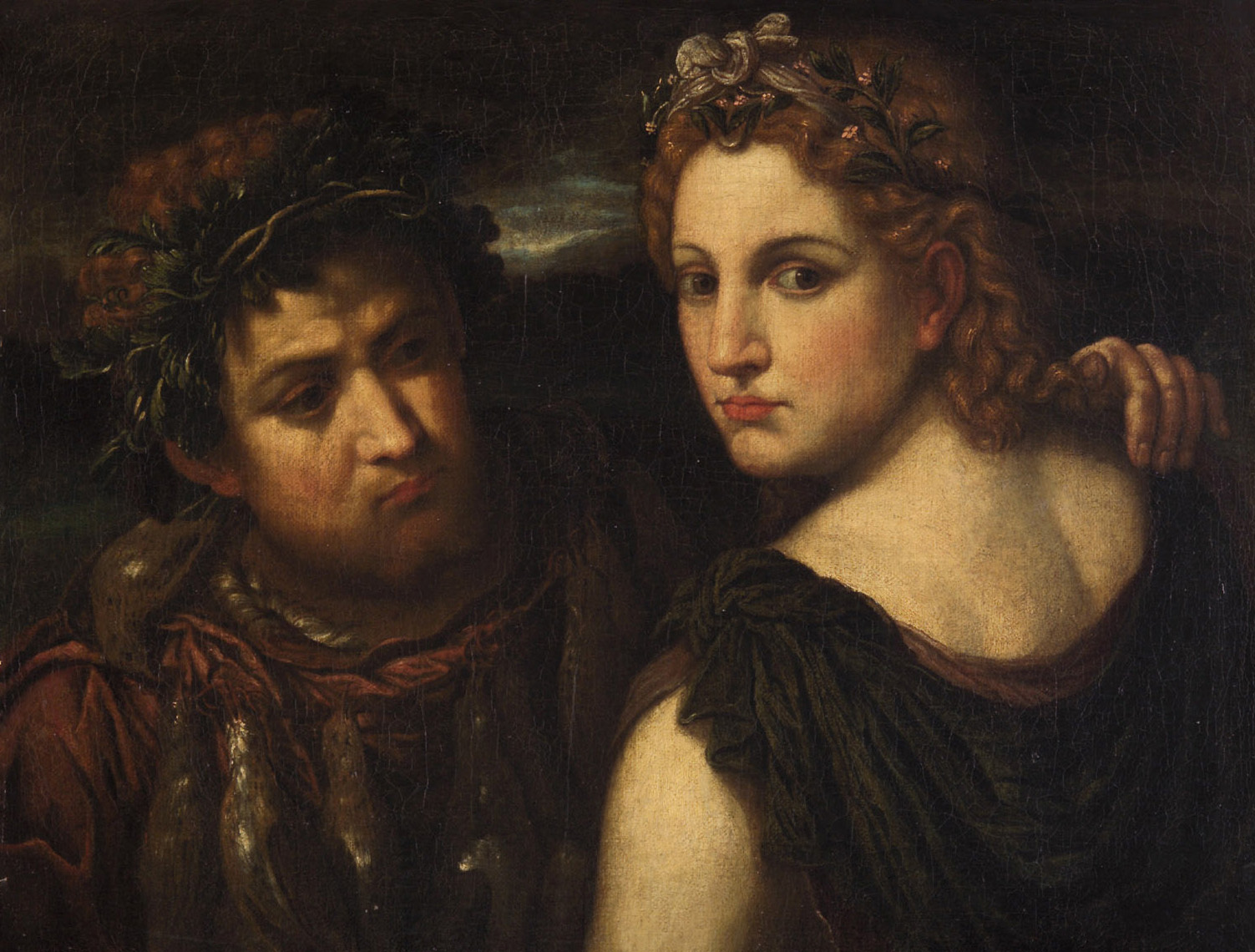
Paris Bordon/e (1500-1571), Nymph and hunter, 1550s, 45 × 61 × 2.4 cm, Kunsthistorisches Museum Wien, Gemäldegalerie. https://www.khm.at/en/objectdb/detail/294/?offset=1&lv=list – retrieved December 13, 2024.
Titian (c.1511-1576), The Death of Actaeon. c. 1559-75, oil on canvas, 178.8 × 197.8 cm. National Gallery London.

SOURCES: The Golden Century of Venetian Painting,  Terisio Pignatti, Los Angeles County Museum of Art and New York: George Braziller, Inc., 1979.

A Dictionary of Art and Artists, Peter and Linda Murray, Penguin Books; Revised,1998.

History of Italian Renaissance Art, 2nd edition, Frederick Hartt, Harry N Abrams. 1987.

Architectural History of Venice, 2nd edition, Deborah Howard, Yale University Press, New Haven and London, 2004.


ITALY. Italian art in the 13th-18th Centuries.

FEATURE image: Dosso Dossi (c. 1489–1542), Melissa, 1520s. 69.25 x 68.5 inches, Borghese Gallery, Rome.

Duccio Di Buoninsegna (c.1255-c.1319).

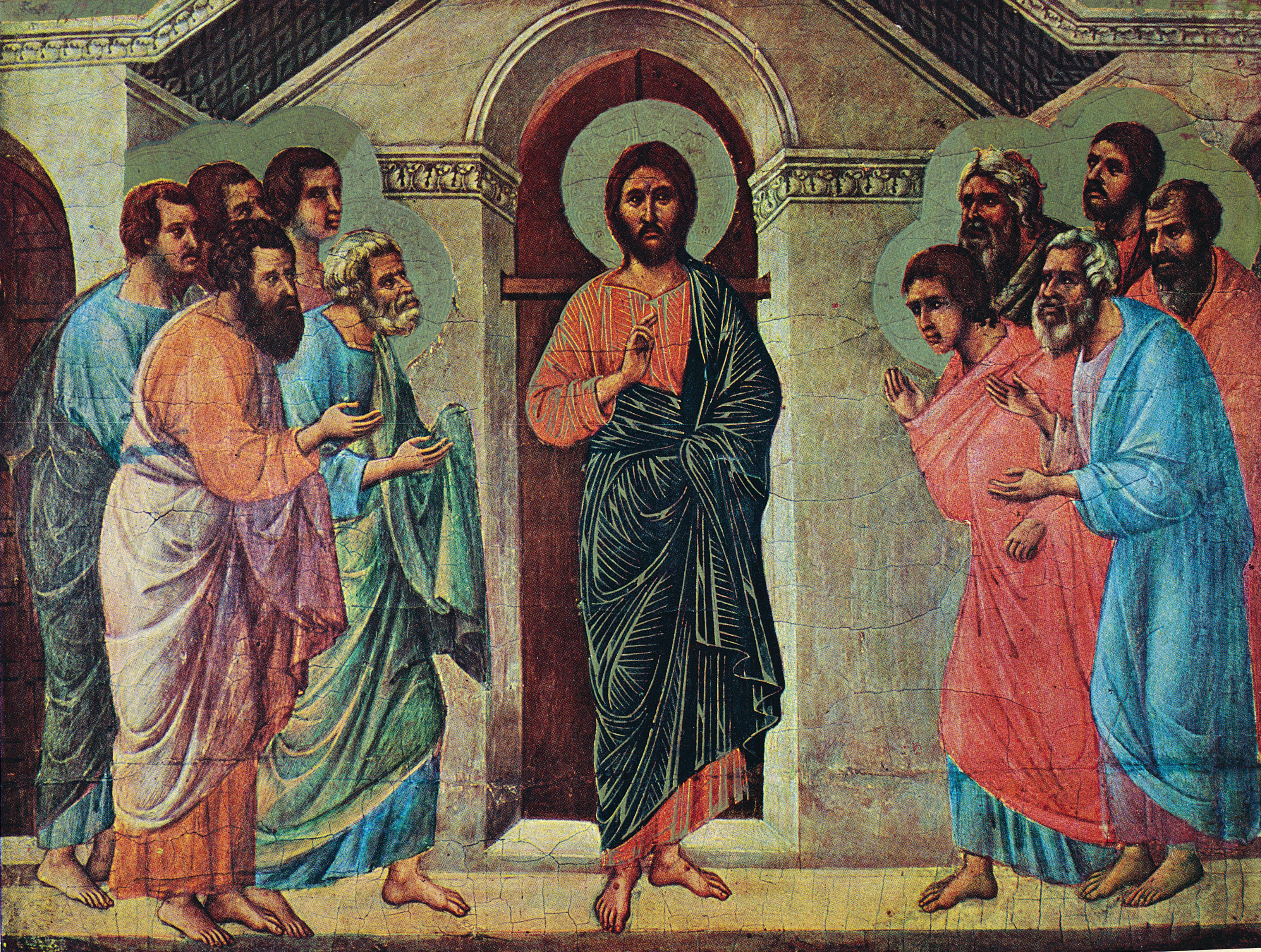
Duccio Di Buoninsegna (c.1255-c.1319), The Apparition of Jesus at the Closed Doors. The Museo dell’Opera del Duomo, Siena, Italy.

The artistic tradition of the Sienese master, Duccio di Buoninsegna (c. 1255-c. 1319) was based on older Greek painting. Duccio, however, was no less “modern” than Giotto (1266-1377). Giotto, who was trained by Cimabue (1240-1302), directed his creative artistry towards concrete reality whose perception derived from the artist’s thoughts and feelings of it. Duccio would achieve a similar but unique synthesis through and from a different direction. 

Duccio modernized the older Greek style creating the painting styles of the Sienese school as well as all of early Renaissance painting. Duccio’s artwork is distinguished by his discriminating advance of the Byzantine Post-Hellenism tradition in Tuscany—and following his own encounter with Cimabue who gave the Sienese artist his first important commission in Florence in 1285 —in a masterly delicate way. This delicacy and discrimination are seen in Duccio’s elegant, often light and airy, compositions and rich colors.

Over the next almost 25 years Duccio learned and deployed the elements of various pictorial traditions that, by his constant intelligent blending, enriched them. Duccio’s style used the iconographic schemata of the ancient Oriental-Byzantine tradition including its glorious color and poetic composition along with the ultra-contemporary French and Gothic linear style. Duccio’s oeuvre epitomizes the artist’s temperament and taste as well as a lifetime of artistic education and culture.  

Beyond its representation of an event in a scene, Duccio’s painting, not unlike Giotto’s histories, is raised to another level by some of its formal elements –- a figure, episode, or gesture -– into the artist’s magical world. This quality of Duccio’s art provides a textually clear and comprehensibly observed episode—such as of the Gospels— within a setting that is carefully observed and delineated—and with its totality imbued in finer artistic and aesthetic sensibilities.

The imminent drama manifested in Duccio’s iconography transcends its representational anecdote, even as figures or episodes of the Bible are easily recognizable. His artwork’s plasticity, with figures and surroundings in serene harmony, emanates a power whose message supersedes, or at least is contiguous to, the painting’s ostensible, usually religious, subject matter.

In the display of such a unique artistic quality, Duccio’s artwork functions in a dream-like and imaginatively timeless dimension—a unique poetical language—while it conveys an historical condition in any of his intentionally-varying episodes. Duccio’s carefully delineated religious scenes, softly and carefully conveyed, would characterize emerging Sienese painting and make religious painting exceedingly popular in Europe over the next 450 years. see – Giotto and His Contemporaries, Enzo Carli, trans. Susan Bellamy, New York: Crown Publishers, Inc., 1958.

Benozzo Gozzoli (c. 1421-October 4, 1497).

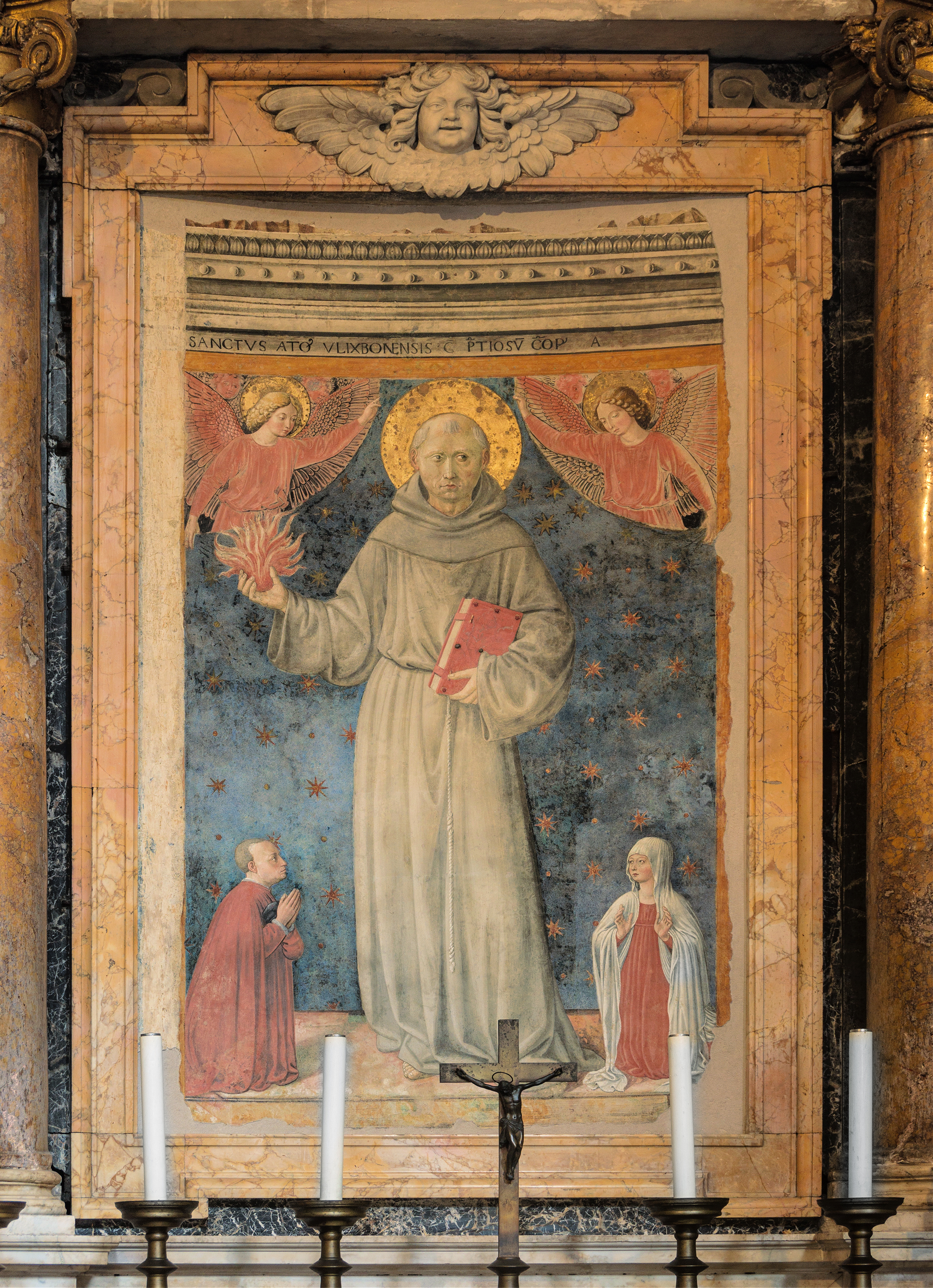
Benozzo Gozzoli (c. 1421-October 4, 1497), Saint Anthony of Padua, 1450, Santa Maria in Aracoeli, Rome, Italy. In art, the saint’s iconography often depicts him with one or more of the following: a book, a heart, a flame, a lily, or the child Jesus.

Anthony of Padua (1195-1231) had a cult in Italy that grew around him quickly and continues to today. He was born with the name Ferdinand in the last decade of the 12th century in Lisbon, Portugal. His father was a high financial official in the king’s court and a knight under Alfonso II of Aragon. Young Ferdinand was educated at the cathedral school in Lisbon and, at 15 years old, became an Augustinian Canon regular in Lisbon. After two years he transferred to a house in Coimbra in part to get away from his well-to-do relatives who were constantly seeking after their promising progeny who had decided to become a Catholic religious and priest. At Coimbra Ferdinand studied at the monastery’s renown biblical studies school for eight years. Steeped in the scriptures he became a theological and scripture scholar of unparalleled high caliber. One day the young Augustinian canon was serving as guest master for the house in Coimbra when 5 Franciscans sent out from Assisi in Italy by St. Francis (1181-1226)– the order had been founded in 1209 – stopped on their way to the missions in in Morocco. Not soon after Anthony learned that all 5 of these zealous Franciscans were butchered in Morocco as martyrs as soon as they arrived there. Their bodies brought back to Coimbra for their funeral deeply moved Anthony who wanted to emulate these Franciscans’ active witness and he decided to become a Franciscan himself in order to take their place. His family, who had been wary of his becoming a scholarly Augustinian following a venerable old rule in nearby Coimbra, grew even more upset as their son who threw away a knight’s career at court now joined a fly by night ragtag group in far flung Italy founded by another rich kid named Francesco who also renounced wealth to focus on evangelical poverty following his brand-new skeletal rule based on a few bible verses. Ferdinand was determined in his inspirations and took the difficult path of leaving the Augustinian canons for the Franciscans and then insisting on leaving Portugal for the missions in Morocco. But Ferdinand’s ambitions were stymied – he fell ill and was ordered home. But the ship he was traveling on was caught in a storm that drove Anthony off course to Sicily. From there he took the long journey to Assisi where he met St. Francis and was present at the famous Chapter of Mats in 1221 that drew, perhaps symbolically, 5,000 brethren of the new order. Though highly educated among a group of mendicants whose founder was suspicious of book learning, Anthony disappeared into menial duties in a small hospice in Forli. But the Franciscans, many of them former sons of the wealthy themselves, recognized Anthony’s brilliant abilities and he was ordered to preach to the whole of Italy. Anthony of Padua became this great preacher and, later, famous worker of miracles. In a time of heresy and controversy throughout Christendom Anthony, who was gentle, poised, charming, intelligent, thoughtful, and deeply well-versed in theology and scripture, served as a personable and effective counterweight. From that point forward until his death, Anthony was active and always on the road from Italy’s south to the north of France. Townspeople and rural folk were positively responsive to his efforts and wherever Anthony went next, churches, plazas and surrounding countryside would be packed with people to hear his sermons. Speaking events would be advertised by word of mouth so that towns often declared a holiday in anticipation of his arrival so that everyone could go out to listen to Anthony. Anthony’s preeminent issue was on the corruption of the secular clergy which scandalized the church, the faithful in the pews, and the wider world to the detriment of the faith. During a time of the rise of cities and the bourgeoisie, as the hierarchical church progressively attached themselves to the bankers and such, Anthony inveighed against the society’s greed, its lust for elite luxuriant living, with its necessary exploitation of labor to maintain themselves at such an unfair level. Anthony called such social behavior “tyrannical.” At a synod in Bourges, France, in the presence of the bishop, Anthony called him out – “as for you with the mitre on your head” and proceeded to denounce his abuses in the diocese before a petrified and perhaps also thrilled audience. Anthony happened to be in Padua when he preached his last sermons – and thus his nomenclature. Miracles and stories have a Franciscan flavor -such as preaching to the fishes or a giant walnut tree unexpectedly providing sustenance and shade to a tired evangelizing preacher. After 10 years of constant travel and preaching, like the Franciscan founder who died blind and naked on the ground outside the Portiuncula in 1226 at 44 years old, Anthony’s body had worn out at an early age. He was 36 years old. In the spring of 1231, his health deteriorated, he took a period of rest and prayer in a small hermitage in Camposampiero close to Padua. His health did not recover and he asked to return to St. Mary’s in Padua. As he was transported to the city in an ox cart he got as far Arcella, just opposite the city, where he died in a convent of Poor Clares. Though his cult hails him as a miracle worker — at his canonization 56 were recorded -– only one occurred in Anthony’s lifetime. Anthony‘s reputation, who was called the “hammer of the heretics” by his contemporaries, rests mainly on his persuasive preaching filled with the fire of the Holy Spirit. Pope Gregory IX (1227-1241) canonized Anthony less than a year after his death – faster than St. Francis himself – as this once rich kid with excellent theological and biblical training became the patron saint of losing things and the illiterate. On January 16, 1946, Pope Pius XII (1939-1958) declared Anthony a doctor of the church. In art, the saint’s iconography often depicts him with one or more of the following: a book, a heart, a flame, a lily, or the child Jesus. see – https://www.findagrave.com/memorial/5118/anthony_of_padua – retrieved June 13, 2025. The Saints: A Concise Biographical Dictionary, edited by John Coulson, Guild Press, New York, 1957, pp.73-76.

Dosso Dossi (c. 1489-1542).

Dosso Dossi (c. 1489–1542), Melissa, 1520s. 69.25 x 68.5 inches, Borghese Gallery, Rome.

Dosso Dossi (c. 1489-1542)– whose actual name was Giovanni de Lutero–was an Italian Renaissance painter who belonged to the School of Ferrara. Among scores of artists who painted mainly in the Venetian style influenced by Giorgione (c. 1477-1510), Dosso Dossi dominated the school that maintained its tradition of painterly artificiality.

Melissa is Dosso Dossi’s masterpiece: a benign personage in the Italian epic poem Orlando Furioso (1516) of Ludovico Ariosto (1574-1533). The enchantress frees humans from the black arts of the wicked sorceress Alcina. The painting depicts Melissa at the moment she burns the seals and spells of Alcina and liberates two men from the tree trunks.

The realistic dog is certainly a human being under Alcina’s spell who will be liberated by Melissa and take up again the suit of armor he watches earnestly. The trees are stylized, artificially-lighted elements – that is, Giorgionesque – that provide a magical setting for the poem’s characters.

The figure of Melissa is draped in a fringed red-and-gold-brocaded robe and enriched by Titianesque glazes. She is particularly alluring in a sparkling gold and green setting moored by meticulously and softly portrayed meadows, background figures, and distant city towers.

SOURCE: History of Italian Renaissance Art: Painting, Sculpture, Architecture, Third Edition, Frederick Hartt, New York: Harry N. Abrams, Inc. 1987.
A Dictionary of Art and Artists, Peter and Linda Murray, Penguin Books; Revised,1998.
Italian Paintings of the Sixteenth Century, Allan Braham, The National Gallery, London (William Collins), 1985.

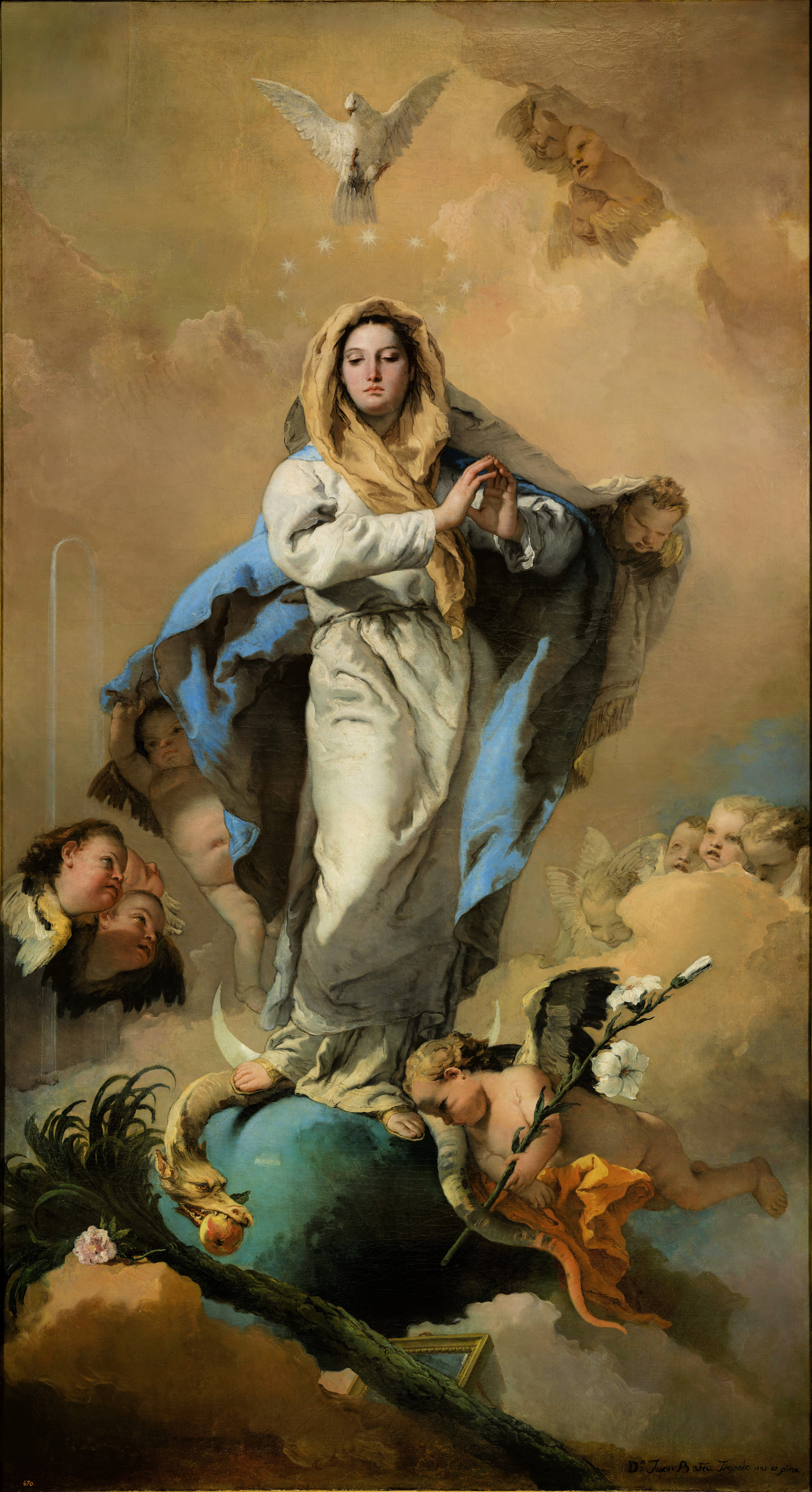
Giovanni Battista Tiepolo (1696-1770), The Immaculate Conception, 1767-1769, oil on canvas, 152x 279 cm, Prado, Madrid. 88% 7.88 mb

Tiepolo depicts Mary with proud, almost sculptural, beauty of a human being free from original sin from the moment of her conception. Mary stands as a fully mature woman who is triumphant over the tempter, the serpent, that slithers and writhes itself across the globe. Mary is surrounded by cherubim with her halo pictured as a circle of stars, usually 12 in number, though some here are implicitly hidden from view. In chapter 12 of the Book of Revelation in the New Testament, “a woman clothed with the sun, with the moon under her feet, and on her head a crown of twelve stars” (Rev. 12: 1) stands against the Dragon who is about “to devour her child when she gave birth” (Rev. 12: 4). That Biblical woman has been identified with Mary, particularly as The Immaculate Conception. The dove that hovers above her in the painting represents the Holy Spirit who emanates from the Father and the Son and rests on Mary fundamentally at her Annunciation (Luke 1) which leads to the birth of Jesus and at Pentecost (Acts 2) which is the birth of the Christian Church. Augmented by roses and lilies, Mary is clothed in her traditional symbolic colors representing her virginal purity (white) as she became pregnant by the Holy Spirit, her role as the sinless human Mother of God (red), her character of fidelity, truth and spiritual serenity (blue), and the glory of her birth as The Immaculate Conception and crowning as Queen of Heaven following her Assumption (gold). Though its dogma was not settled definitively until 1854 by Pope Pius IX (reign, 1846-1878), The Feast of the Immaculate Conception (December 8th) was on the Church calendar as early as 1708 and a popular subject for Catholic Church art throughout the 18th century.
Tiepolo was invited to Madrid in 1762 by Charles III (1716-1788). The artist was accompanied to Spain by his sons, Domenico and Lorenzo, and immediately began the frescoes in the Royal Palace that he finished in 1766. His next commission was for altar paintings, seven in number, for the new Franciscan Convent of San Pascual in Aranjuez, a Royal seat, including The Immaculate Conception. As soon as the series of paintings were finished in 1769, they were considered passé as Tiepolo’s late Baroque Rococo style had given way to the rise of neo-classicism as the next new thing that took hold of Carlos III, Europe and beyond to the United States into the first quarter of the 19th century. Tiepolo, who died in 1770, wasn’t around to see his church paintings fragmented and stored away and replaced by neo-classical artwork of the same subjects by another artist. However, The Immaculate Conception survived intact as King Carlos III ‘s confessor, the powerful Franciscan bishop Joaquín de Eleta (1707-1788) who, holding sway over artistic commissions, favored depictions of The Immaculate Conception as one of his important subjects that shaped late 18th century Spain’s visual culture. Tiepolo’s emotional and elegant version, which he signed, was conserved as a masterful contrast to neo-classicism’s colder rationality. The painting has been in the Prado since 1828 – Mary not content with being relegated to a storage closet – while a preparatory drawing that exists for the artwork made its way into the picture collection of the Lords Kinnaird in London. See- A Basic Guide to The Prado, J. Rogelio Buendia, translated by Patricia S. Parrent, Silex, 1973, pp. 240-241.

ITALY. Art of Connoisseurship, or How THE ART INSTITUTE OF CHICAGO’S TITIAN PAINTING was revealed to be artwork by an “Imitator.”

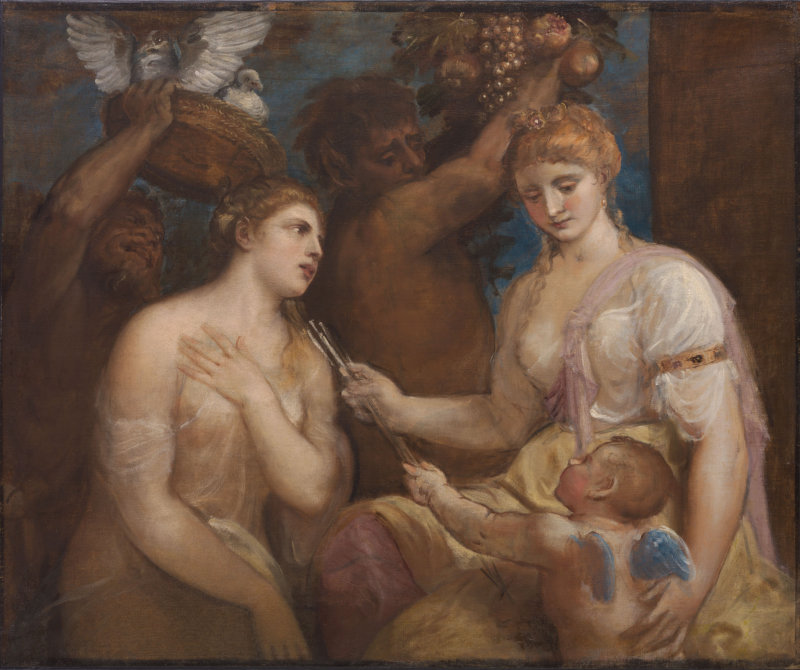
FEATURE image: Allegory of Venus and Cupid, c. 1600, Imitator of Titian (Tiziano Vecellio, Italian, c. 1485/90-1576), oil on canvas, 51 1/8 x 61 1/8 in. (129.9 x 155.3 cm). Charles H. and Mary F.S. Worcester Collection, 1943.90.

By John P. Walsh

The pleasant if heavily-restored late 16th century allegorical painting in the collection of The Art Institute of Chicago is today called Allegory of Venus and Cupid and dated to around 1600. Attributed to an “imitator” of Titian it remains in museum storage (“Not on Display”).

When this same painting was “rediscovered” around 1930 it was hailed as a Titian masterpiece and over the next 15 years was talked of that way in the general press and in some quarters of the art press. It delighted crowds who came to see it hang on the walls of The Art Institute of Chicago and The Cleveland Museum of Art. Called The Education of Cupid and dated to the 1550s, it was compared favorably with Titian’s famous allegorical subject paintings in Paris’s Louvre and in Rome’s Galleria Borghese.

The painting through the Great Depression and World War II was labeled “Titian,” but among expert connoisseurs there existed a longstanding dismissal of that attribution ever since its first known “resurfacing” in the mid1830s at Gosford House in Scotland.

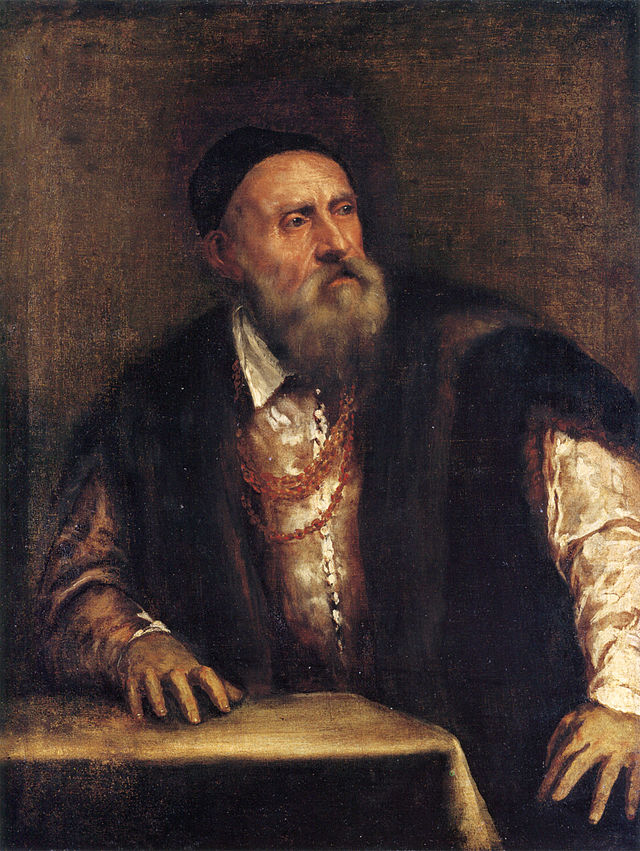
Titian, Self portrait, c. 1550, Gemäldegalerie, Berlin.

In Italian his name is Tiziano Vecellio, but in English the artist is famously known as Titian (1485-1576)

Titian was part of a family of artists who had been civic leaders in 13th-century and 14th-century Italy, such as mayors, magistrates, and notaries. In the 15th century, two Vecellio brothers had children who became artists. Titian was the grandson of one of those brothers who was ambassador to Venice where the family had a timber trade. Titian became the leading painter in Venice and an influential artist throughout sixteenth-century Italy. His cousin Cesare Vecellio (1530-1601) was an engraver and painter who trained in Titian’s workshop. The Vecellio cousins and their sons became artists and were allowed to use the appellation “di Tiziano” which would bring them attention.

The painter of The Art Institute of Chicago’s allegory entitled Allegory of Venus and Cupid is only identified as an “imitator” of Titian. Its allegorical motifs share similarities with Titian’s and this is perhaps partly why this Old Master painting by an unknown follower of Titian was mistaken for the master himself when it resurfaced on the art market in 1927.

Called The Education of Cupid and dated to the 1550s, it traded back and forth to the dealer for almost a decade until it was bought in 1936 by a well-connected Chicago couple who collected sixteenth-century Venetian paintings. The Wemyss ‘Allegory’ (named for its former British owner, Lord Wemyss) came to Chicago out of what amounted to be a Scottish attic.

It gained ready acclaim as a rediscovered Titian and since its subject was reminiscent of Titian’s Allegory of Marriage (1533) in the Louvre and a Titian subject allegory in the Galleria Borghese, the Wemyss ‘Allegory’ in Chicago was hailed as completing a triumvirate of Titian’s greatest allegorical compositions.

The problem was that this Chicago Titian was not a Titian at all, although it took about 10 years for that fact to gain modern acceptance.

After the purchase, the new owners immediately lent their Titian to The Art Institute to mount on its gallery walls. It would hang next to the collector couple’s verifiable Tintoretto, Veronese, and G.-B. Moroni. The museum eventually acquired the Wemyss ‘Allegory’ in 1943, but not before it toured The Cleveland Museum of Art during their “Twentieth Anniversary Exhibition” in 1936 and viewed with enthusiasm as a Titian.  

The collector purchase and subsequent loan to the Art Institute was front page news in Chicago. The director of the museum at the time, Robert Harshe, compared the work in importance to only two others in The Art Institute at that time – El Greco’s Assumption of the Virgin (1577-79) and Girl at the Open Half Door (1645) attributed to Rembrandt. Curiously, this painting first attributed to Rembrandt has been itself increasingly questioned in terms of its high authorship. One of the first historical European paintings to enter the museum’s permanent collection, Girl at the Open Half Door is today identified with the moniker “and Workshop” to indicate the possibility that it was created by a student under the master’s supervision.

The Assumption of the Virgin, 1577-79, El Greco ( see – https://www.artic.edu/articles/810/the-many-lives-of-el-grecos-assumption)
Young Woman at an Open Half-Door,1645, Rembrandt van Rijn and Workshop (see – https://www.artic.edu/artworks/94840/young-woman-at-an-open-half-door). Author’s photograph.
“Allegory of Venus and Cupid,” c. 1600, Imitator of Titian (Tiziano Vecellio, Italian, c. 1485/90-1576), oil on canvas, 51 1/8 x 61 1/8 in. (129.9 x 155.3 cm). Charles H. and Mary F.S. Worcester Collection, 1943.90.

Soon after its acquisition by The Art Institute, the Titian attribution was loudly critiqued in print and eventually dropped. The subject of the painting is of a girl who appears before Venus to be initiated into the mysteries of Love. At the girl’s right are Venus and the boy Cupid with an arrow. In the background two satyrs raise items such as a basket with two doves and a bundle of fruit.

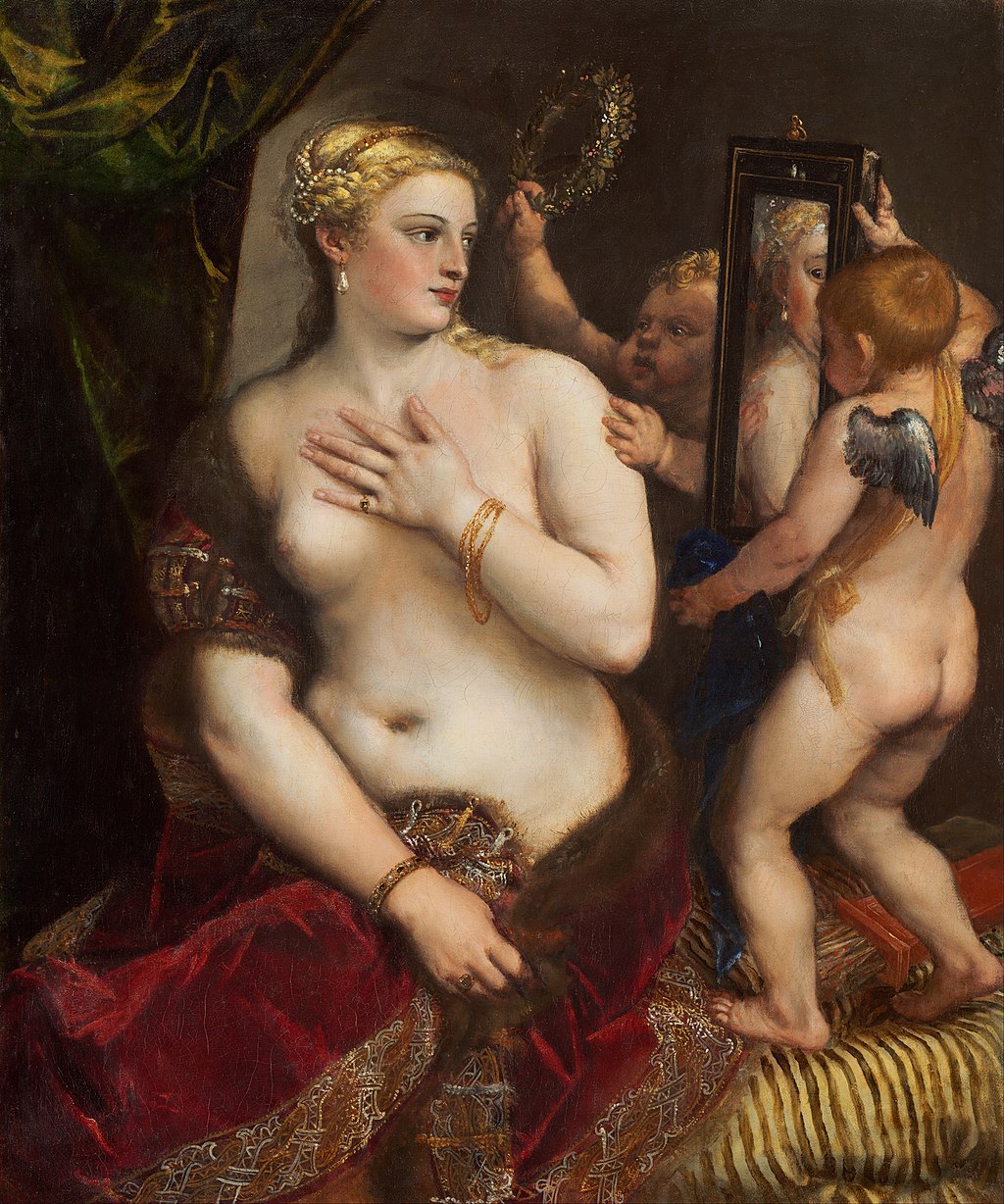
Allegories were popular in Italian Renaissance art to convey social, political, economic and religious messages using historical and mythological figures. This painting’s figures, however, appear to be derivative of specific Titian works. Further, it possesses little of the technical brilliance or psychological revelations found in Titian’s work such as in Triple Mask or Allegory of Prudence (c. 1570, London, National Gallery). For example, Titian’s imitator gives the figure of the girl the same dramatic hand gesture found in Titian’s Venus with a Mirror (c. 1555, The National Gallery of Art, Washington, D.C. ). Insofar as the girl’s skyward gaze and flowing hair, the imitator cites The Penitent Magdalene (1531-33, Florence, Palazzo Pitti).

Titian, Venus with a Mirror, 1555, National Gallery of Art, Washington, D.C.
Titian, Penitent Magdalen, 1533, Pitti Palace.

In addition to the painting’s derivative character of well-known Titian works, what most connoisseurs recognized by 1945 was what they called its “very modern” execution. This referred to its sharp color contrasts and figurative forms which developed only after Titian’s time. Connoisseurs also noted that Titian differentiated sharply between hair and ornament and that his female figures’s hair is neatly braided, whereas the hair is “in a mass” in the Wemyss ‘Allegory’. 

These characteristics pointed to the picture being related less to authentic Titians in Paris and Rome and more to those attributed dubiously, even spuriously, to Titian in Munich and at the Durazzo Palace in Genoa. Though this inauthenticity of Chicago’s Wemyss “Allegory” could have been questioned at the start of its appearance in Chicago in 1936, the museum was not adhering closely to the historical connoisseurship.

Sir Joseph Archer Crowe by Louis Kolitz (German, 1845-1914), London, National Portrait Gallery.
Giovanni Battista Cavalcaselle, 19th century.

Sir Joseph Archer Crowe (British, 1825-1896) and Giovanni Battista Cavalcaselle (Italian, 1819-1897) had seen all three of the spuriously attributed Titians in Munich, Genoa, and at Gosford House which was now in Chicago. It was well known the pair excluded all three from their Titian catalog except to note that they were imitations which had been notably damaged and restored. Chicago museum research in the late 1930s was also aware of Crowe and Cavalcaselle’s attributive work for they cited them in official publications on the Wemyss ‘Allegory,’ but overlooked their conclusions.

With the museum’s acquisition of the Wemyss ‘Allegory’ in 1943 Crowe and Cavalcaselle’s negative attribution for it was no longer ignored or denied.  About its reworking in England one tempting and likely wishful speculation was that the Wemyss ‘Allegory’ was restored by Sir Joshua Reynolds (1723-1792) but that claim remains unsubstantiated. Further facts contextualized in the deft historical hands of modern connoisseurship left the Wemyss ‘Allegory’ out in the Titianesque cold as an imitator. In the case of the Chicago painting it was by historical comparison with compositional arrangements in known Titians that the compositional arrangements in the Munich and Chicago paintings were deemed by Crowe and Cavalcaselle to be done by imitators. Historically for Titian it would be nonsensical or “unique” for Titian to have manipulated the figures in that way at that time.

By the mid1940s the Chicago painting was searching for a new name attribution, since Crowe and Cavalcaselle did not give it one. The notion that it was done by Damiano Mazza (active after 1573), an obscure 16th century artist and student of Titian, was proposed but later dismissed.

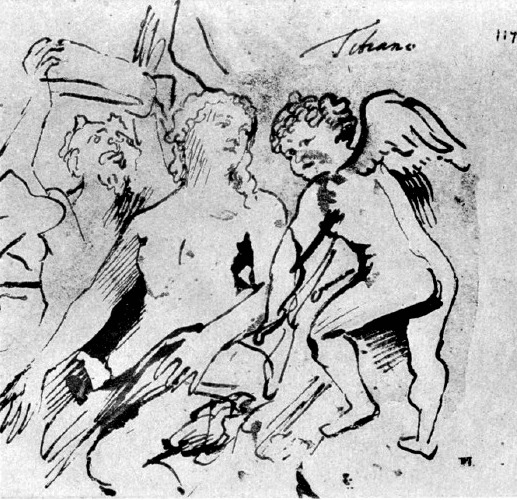
Chatsworth, Duke of Devonshire: Van Dyck, Sketchbook.
Rome, Galleria Borghese: Venus and Cupid with Satyr Carrying a Basket with Fruit, attributed to Paolo Veronese.

Some of the confusion over the attribution to Titian of the Wemyss ‘Allegory’ is based on erring connections made using erring extant evidence. For example, the conjecture of Vienna School-trained art historian of Venetian art Hans Tietze (Czech, 1880-1954) that a sketch by Sir Anthony van Dyck (1599-1641)–which Tietze wrongly believed was made at Chatsworth House of a painting once attributed to Titian–shared similar motifs with the Wemyss ‘Allegory’ is a thin thread for possible attribution to Titian. It may be argued that the Wemyss ‘Allegory’ shares very little with the Van Dyck sketch except for the satyr lifting a basket. Further, the painting which Van Dyck sketched is no longer attributed to Titian and has long been in the Galleria Borghese in Rome as a minor Venus and Cupid with Satyr Carrying a Basket with Fruit now attributed to Paolo Veronese. It was in Rome where Van Dyck must have made his sketch, not England, and it was there he misidentified it as Titian. It is a tenous trail of misleading evidence that became the prompt to a connoisseur’s mistaken thought.

Paris, Louvre: Allegory of Marriage, Titian, 1533.

Nuptial paintings

One persuasive conclusion on attribution today for the Wemyss ‘Allegory’ was offered by Hans Tietze’s wife, the historian of Renaissance and Baroque art, Erika Tietze-Conrat (1883-1958). Tietze-Conrat believed that The Art Institute painting resides in a pool of works done by assistants and imitators who combined varied elements of Titian’s allegories as found in the Louvre’s Allegory of d’Avalos (the aforementioned Allegory of Marriage) and the Borghese’s Education of Cupid.

Erwin Panofsky (German, 1892-1968) postulated that those known Titians were nuptial paintings. Building on that premise, Tietze-Conrat postulated that numerous reproductions were made by Titian followers so to create nuptial paintings for their patrons to suit their needs. The derivative works shared the intimacy of a private format with a recognizable cast of 16th century depictions of mythological actors and the evocation of a Titianesque mood.

Today the Art Institute of Chicago has renamed their Wemyss “Allegory” as Allegory of Venus and Cupid and dated it to “around 1600.” The museum removed Titian and every other named attribution. Attribution has been returned to the term that connoisseurs Crowe and Cavalcaselle gave the painting in 1881, namely, “imitator.” 

“The execution here is very modern,” the pair wrote in their Life and Times of Titian in 1881. “It is greatly injured, but was apparently executed by some imitator of Titian.” Their late 19th century judgment hold fast today.

NOTES –

“first known “resurfacing” in the mid1830s in Scotland at Gosford House” – http://www.artic.edu/aic/collections/artwork/46314?search_no=6&index=4 ,retrieved Dec 29, 2014.

On Titian and Vecellio family – Encyclopedia of Italian Renaissance & Mannerist Art, Volume II, edited by Jane Turner, Macmillan Reference Limited, 2000, p. 1695.

For provenance since 1835 – see http://www.artic.edu/aic/collections/artwork/46314?search_no=6&index=4 ,retrieved Dec 29, 2014.

“ready acclaim as a rediscovered Titian…”; “lent their Titian to The Art Institute to mount……”; “Cleveland… ‘Twentieth Anniversary Exhibition’ in 1936…” –A Great Titian,” Bulletin of the Art Institute of Chicago (1907-1951) Vol. 31, No. 1 (Jan., 1937), p. 8; “Famed Titian Work Acquired by Chicagoans,” Chicago Tribune, October 20, 1936, p. 28; “The Mr. and Mrs. Charles H. Worcester Gift,” Daniel Catton Rich, Bulletin of the Art Institute of Chicago, Vol. 24, No. 3 (Mar., 1930), pp. 29-31 and 40.  The Chicago collectors were Mr. and Mrs. Charles H. Worcester, a museum Vice-President and lumber and paper manufacturer.

“…director of the museum… compared the work in importance to El Greco’s ‘Assumption of the Virgin’ and Rembrandt’s ‘Girl at the Open Half Door’” – “Famed Titian Work Acquired by Chicagoans,” Chicago Tribune, October 20, 1936, p. 28.

“….Allegories were popular in Italian Renaissance art…”-  http://www.iub.edu/~iuam/online_modules/iowc/b_003.html,retrieved December 29, 2014.

little of the technical brilliance or psychological revelations found in…Triple Mask…”H. E. Wethey, The Paintings of Titian: Complete Edition, vol. 2, The Portraits, Phaidon, New York, p. 50.

“its ‘very modern’ execution”; “in a mass” – The Wemyss Allegory in the Art Institute of Chicago, E. Tietze-Conrat. The Art Bulletin Vol. 27, No. 4 (Dec., 1945), p. 269.

“It was widely known the pair excluded all three from their Titian catalog…” – “A Great Titian Goes to Chicago,” Art News 35, 5 (1936), p.15 (ill.).

“Chicago museum research in the late 1930s was aware of Crowe and Cavalcaselle’s attributive work… overlooked their conclusions…” – Footnote #4, The Wemyss Allegory in the Art Institute of Chicago, E. Tietze-Conrat. The Art Bulletin Vol. 27, No. 4 (Dec., 1945), p. 269.

“…restored by Sir Joshua Reynolds…” – The Wemyss Allegory in the Art Institute of Chicago, E. Tietze-Conrat. The Art Bulletin Vol. 27, No. 4 (Dec., 1945), p. 269.

 “done by Damiano Mazza…” Ibid., p. 270.

Conjecture of Hans Tietze; Erika Tietze-Conrat’s postulation –  Ibid., p. 271.

“the execution here is very modern… It is greatly injured, but was apparently executed by some imitator of Titian.” – Crowe and Cavalcaselle, Life and Times of Titian, London, 1881,
II, p. 468.

https://www.academia.edu/13331765/THE_ART_OF_CONNOISSEURSHIP_OR_HOW_THE_ART_INSTITUTE_OF_CHICAGO_DISCOVERED_THEIR_TITIAN_PAINTING_WAS_A_WORK_BY_AN_IMITATOR._