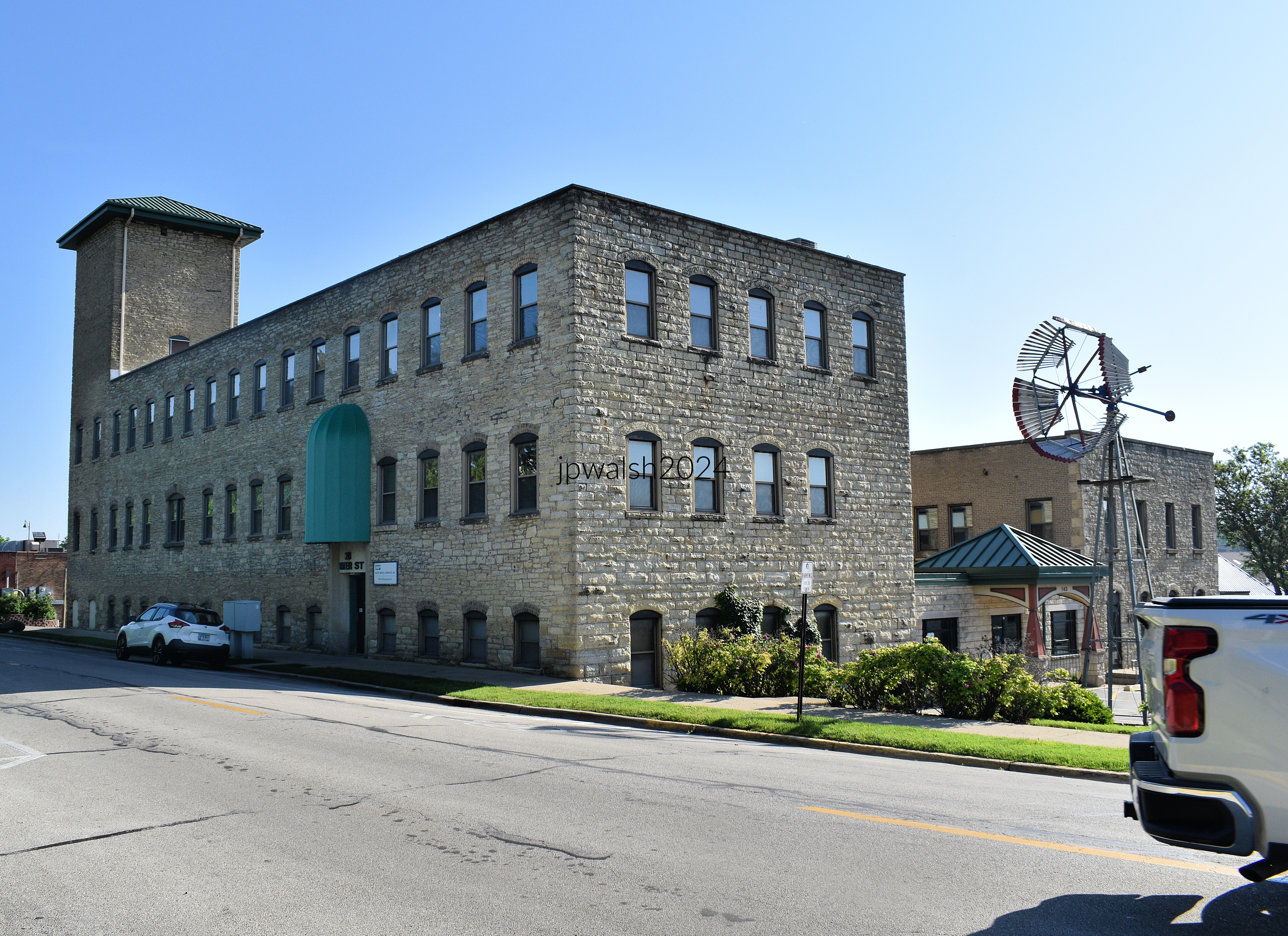
FEATURE Image: May 2024. 143 First Street, c. 1863. 7.52 mb_6360. Since the 19th century Batavia, Illinois, 40 miles west of Chicago, was a railroad and manufacturing center in addition to its farmsteads. This mid-19th century limestone factory building is testament to Batavia’s industrial heritage. After the U.S. Civil War, Batavia was a major manufacturer of Conestoga wagons used in the country’s westward expansion.
Text & Photographs John P. Walsh.
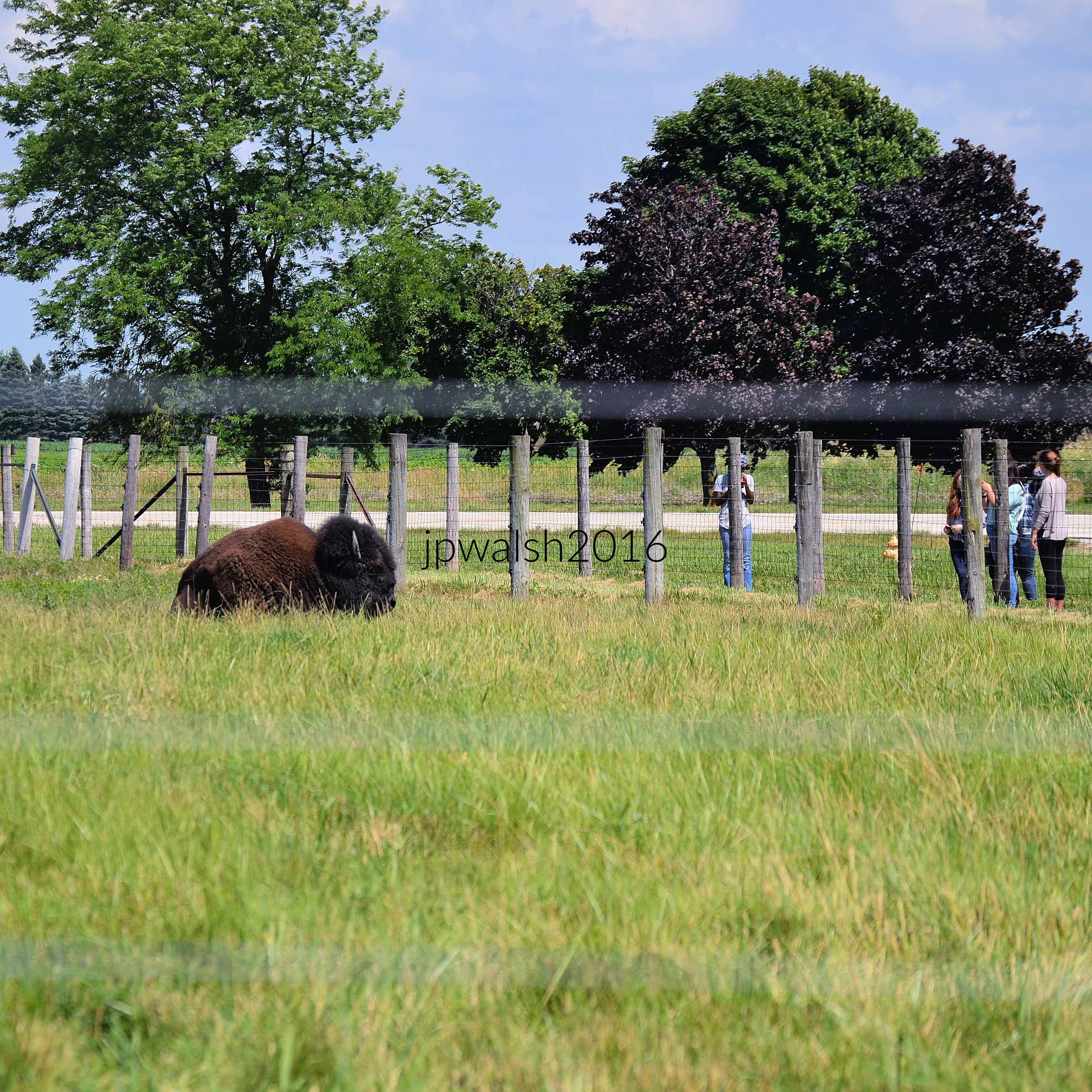
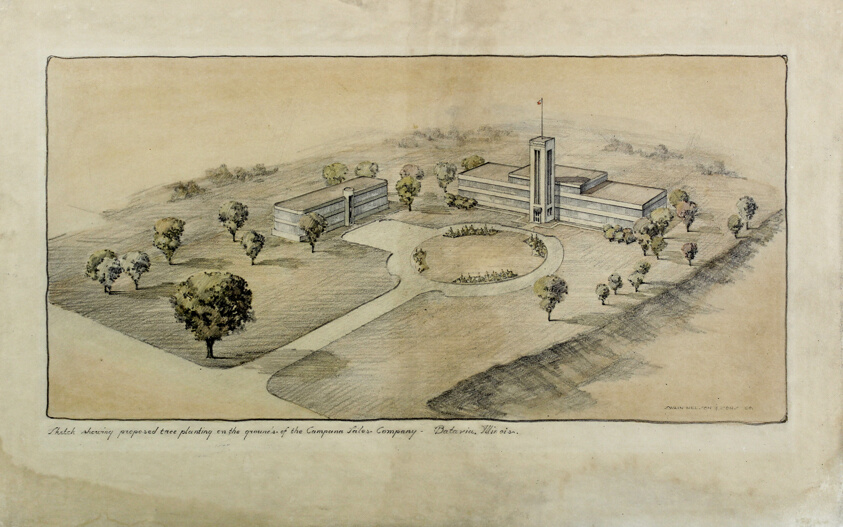
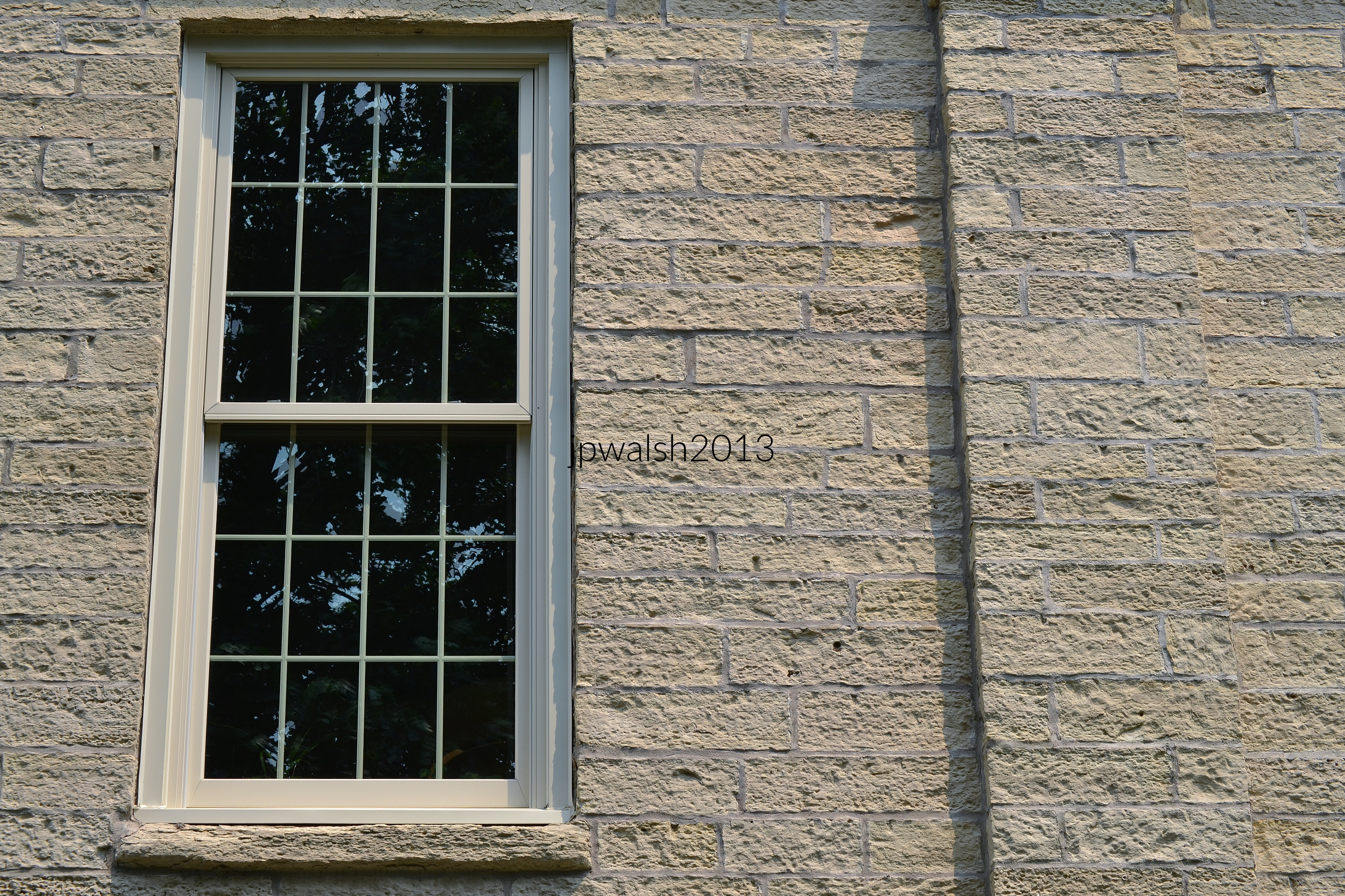
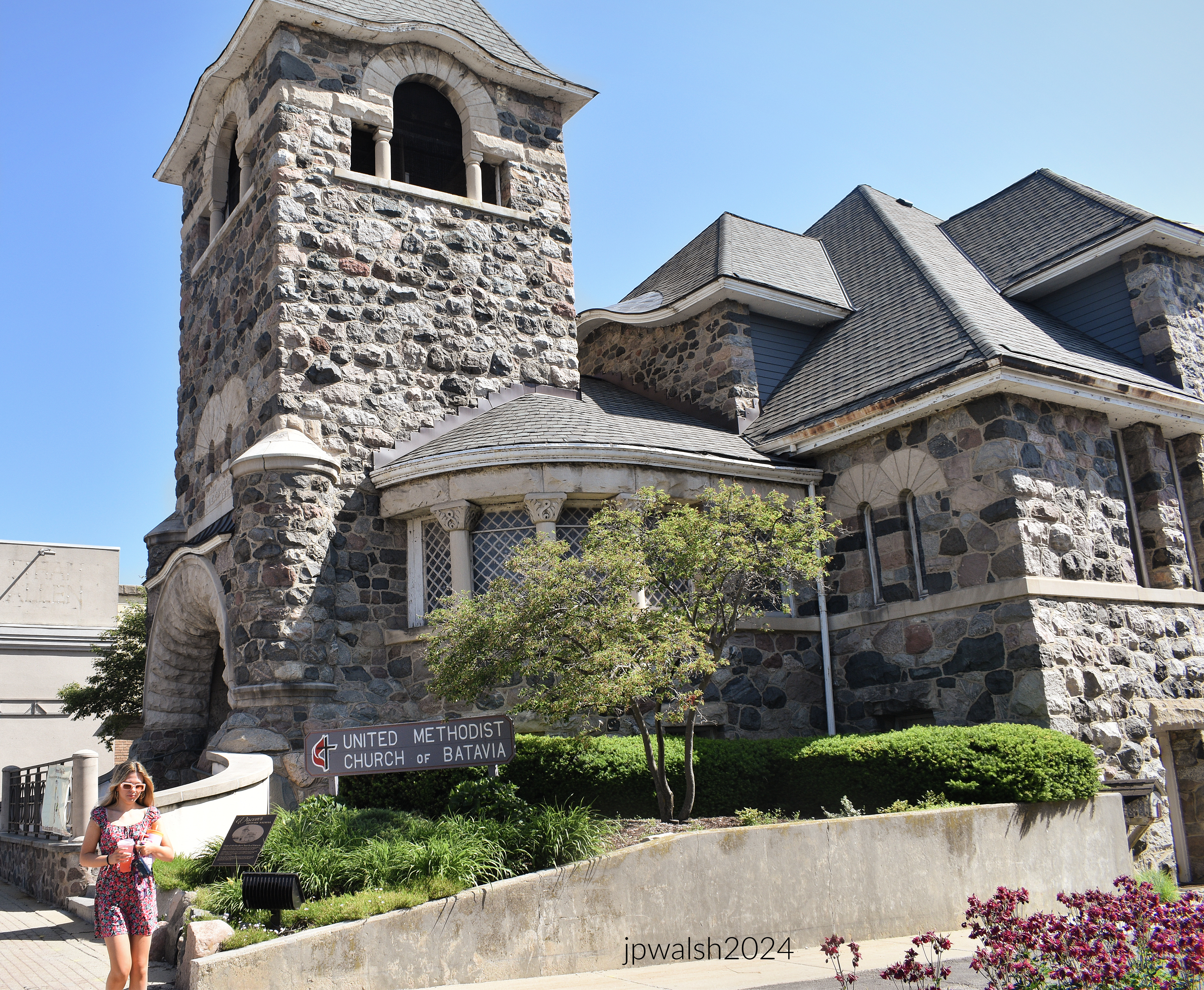
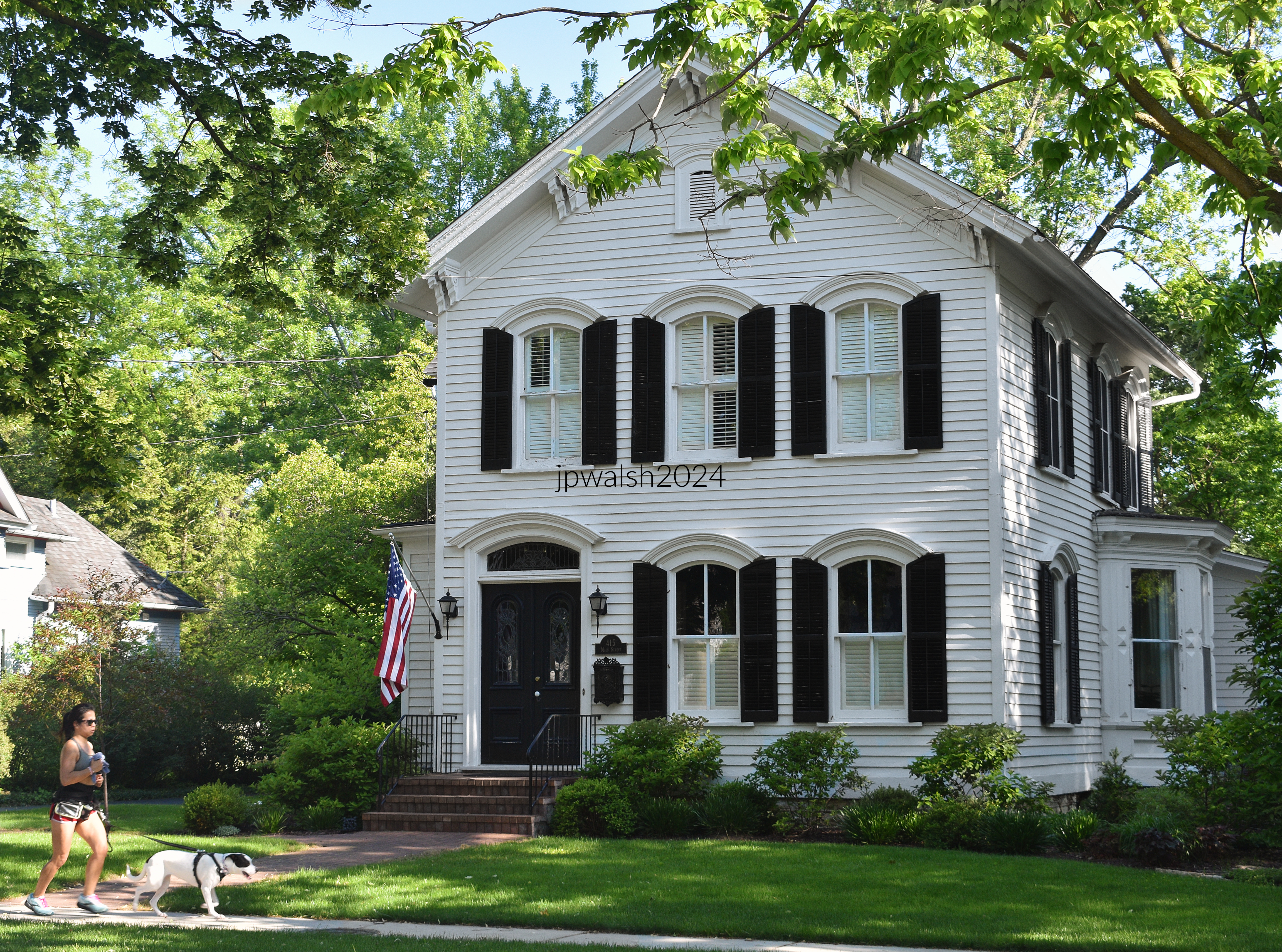
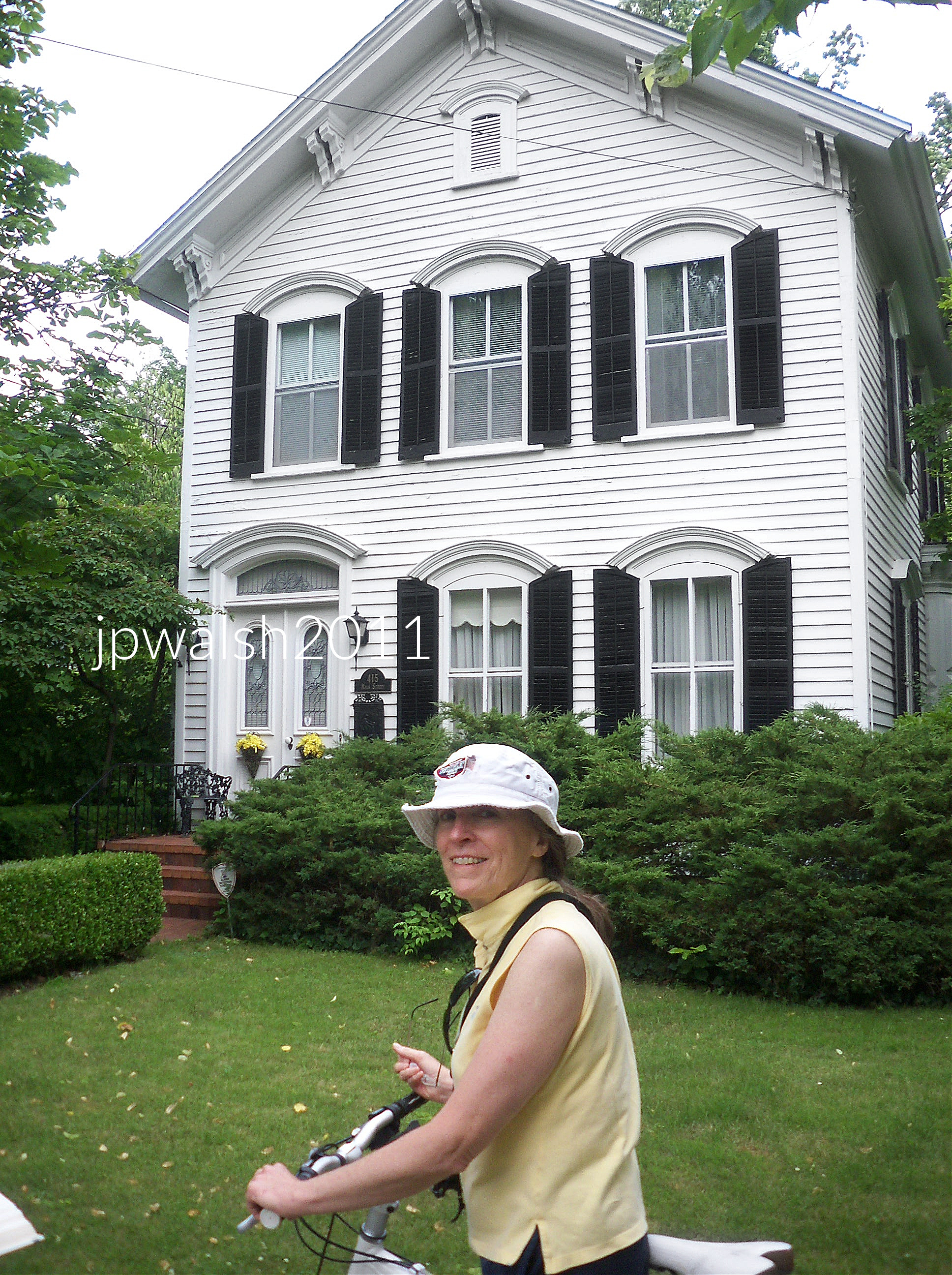
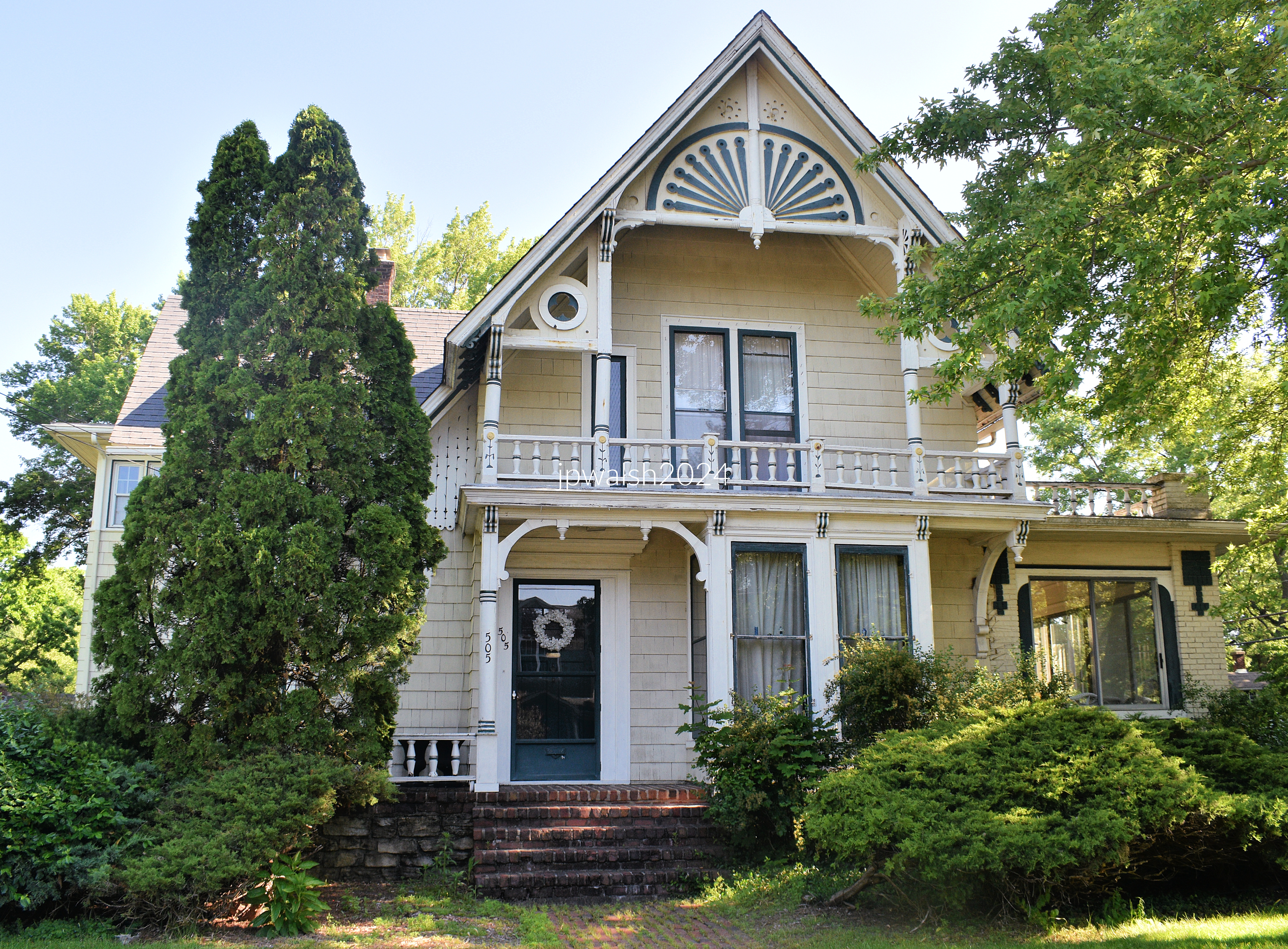
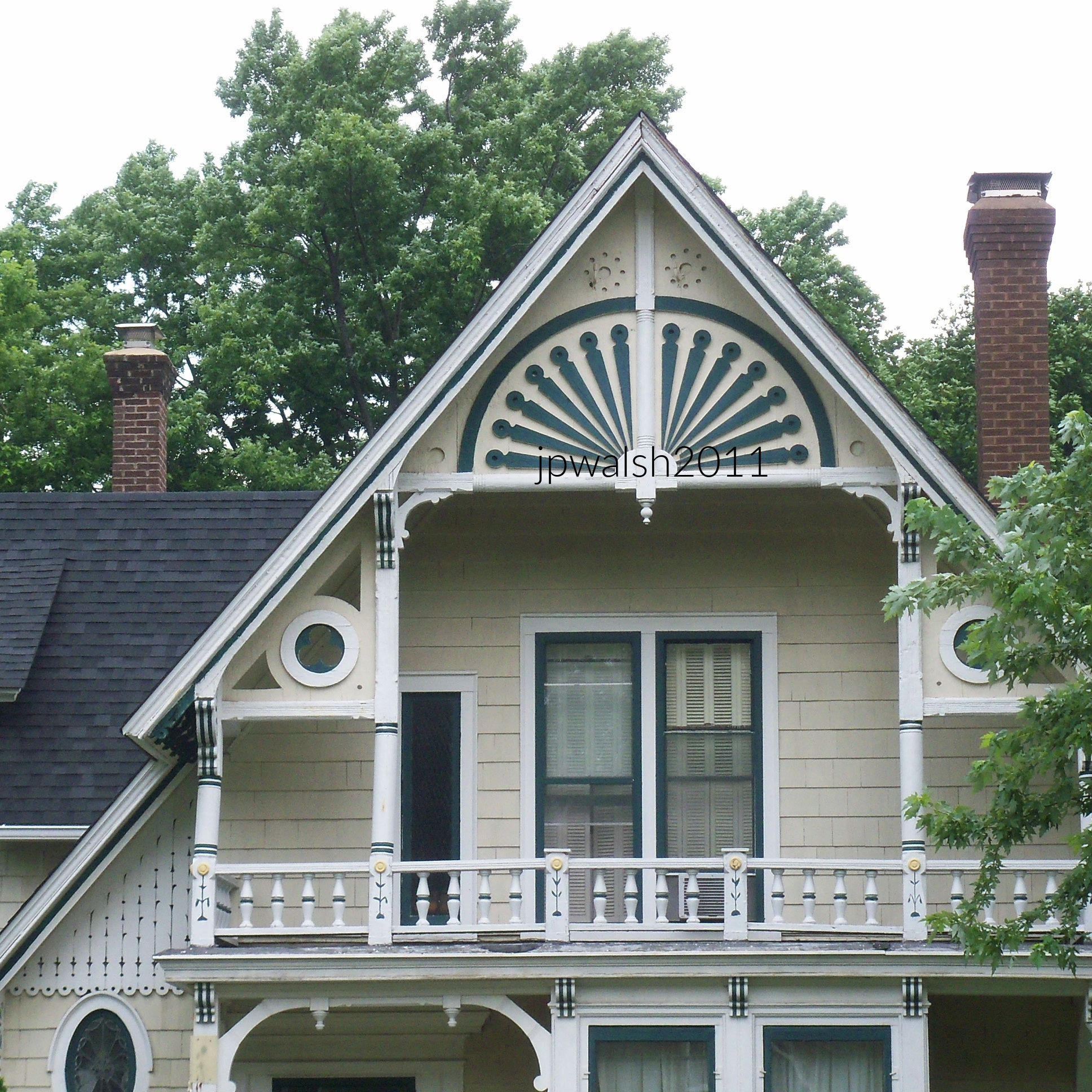
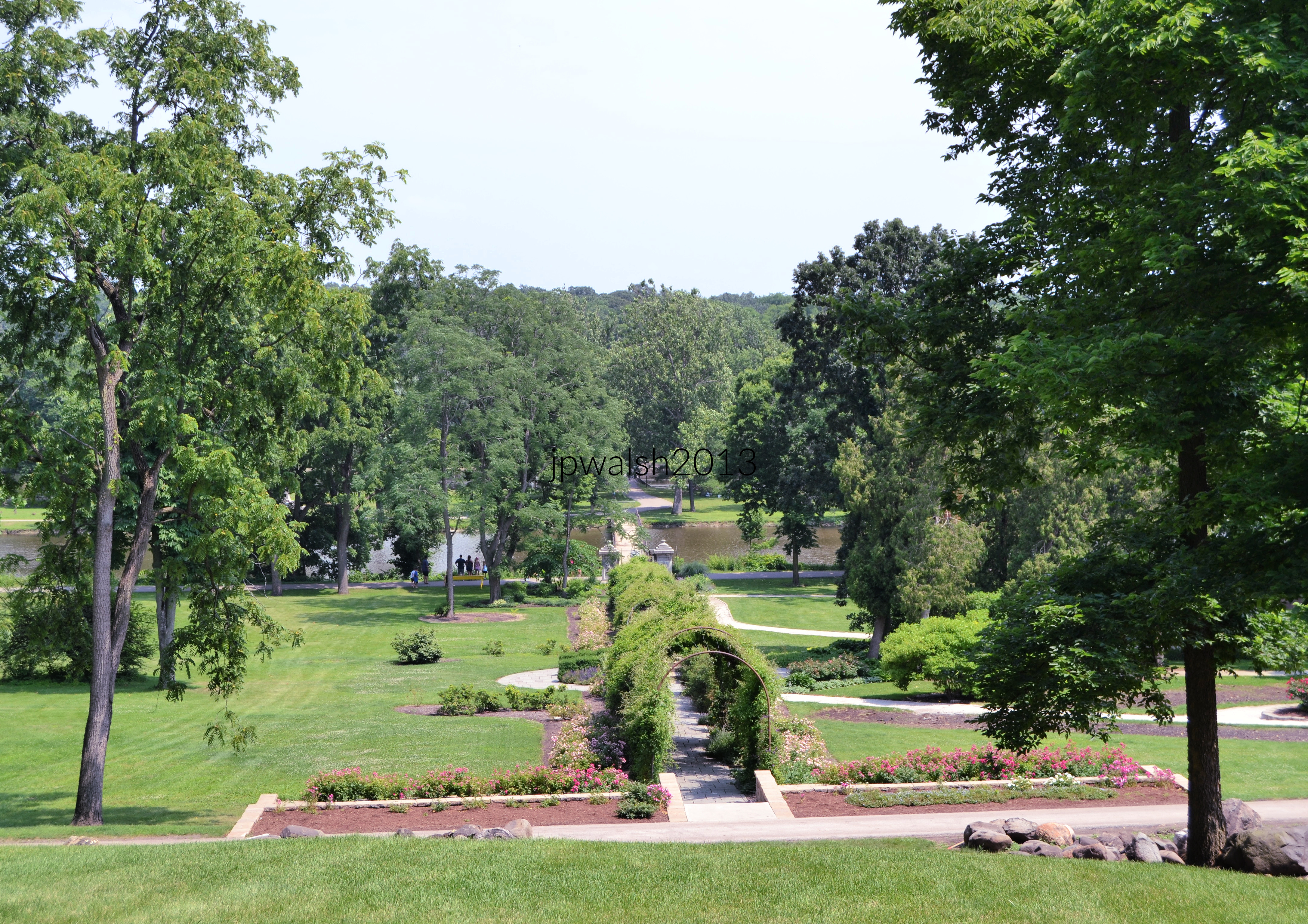
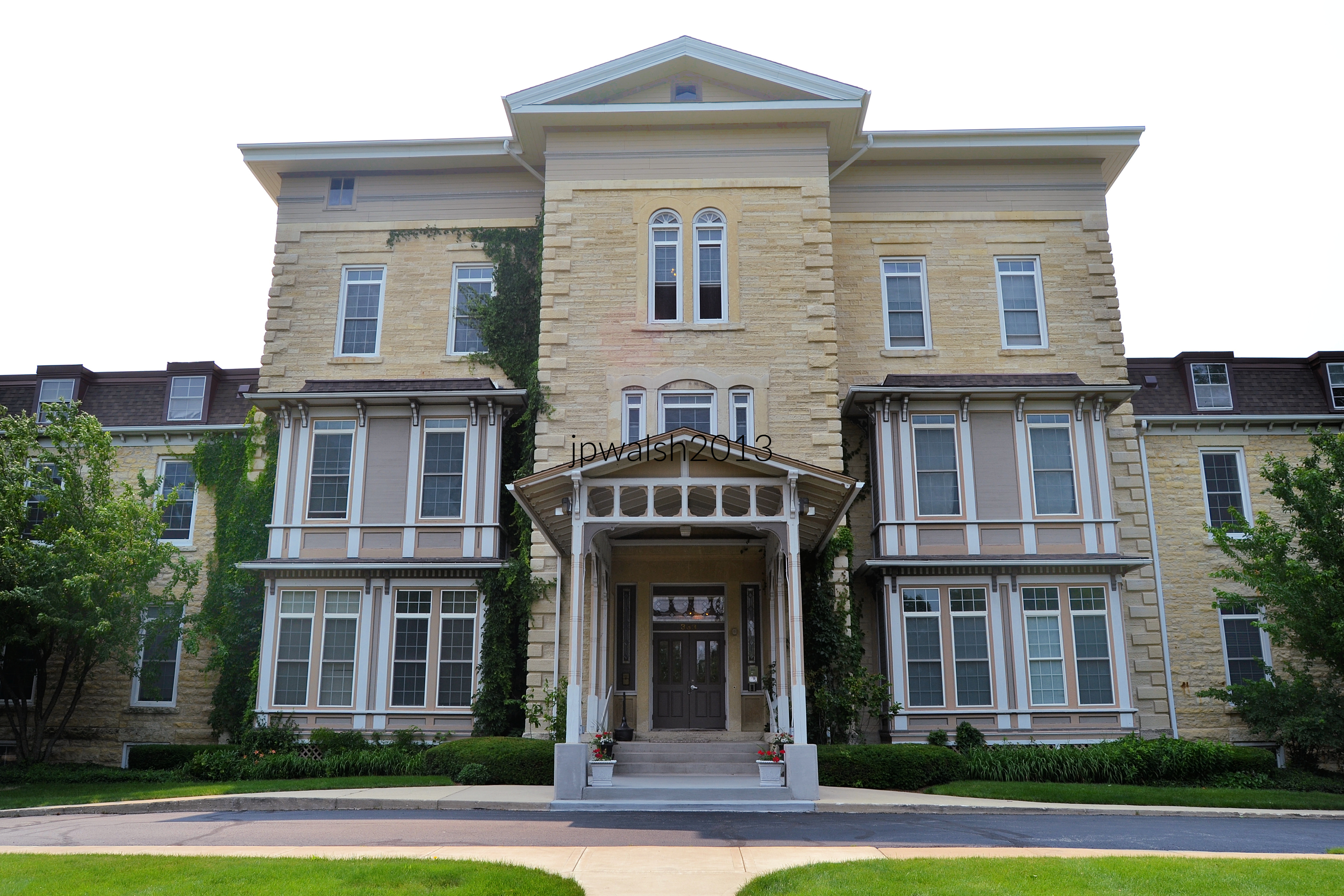
May 2024. 143 First Street, c. 1863. 7.52 mb_6360. The square shaped south façade’s stone cut is more grandiose than the longer west side indicating that it is the front face of the building. The tower at the north end likely held the building’s water tank and added more room and height for pulleys and other equipment.May 2024. Batavia is one of the towns along the Fox River settled in the 1830’s between Geneva and St. Charles to the north and larger Aurora to the south. 95% 7.75 mb DSC_6350.July 2016. Fermilab is to the east and adjacent to Batavia. Since 1969 it has housed a herd of bison when Fermilab’s first director, Robert Wilson, established the herd as a symbol of the history of the Midwestern prairie and the laboratory’s pioneering research at the frontiers of particle physics. Each spring new calves are born signaling the herd’s rejuvenation. 4.70mb _0577 see – https://www.fnal.gov/pub/about/bisoncam/ – retrieved 1.24.25.May 2024. Campana Sales Company Factory, Batavia, Illinois, East Elevation, 1936-1937. The Campana Factory was built in the International Style to manufacture cosmetics for The Campana Company. At the time Campana’s “Italian Balm,” heavily promoted on the radio, was the nation’s best-selling hand lotion. The building was designed by Frank D. Chase & Company (founded in 1913) with Childs and Smith in Chicago. Frank David Chase (1877-1937) built newspaper plants in St. Louis, Milwaukee and Oklahoma City and a number of important buildings in Chicago including hospitals and office buildings. The central tower reflects the 19th-century heritage of Batavia’s limestone factories. The one story wings on the extremity of the building were added in the late 1940’s. The factory was purchased by the laundry detergent brand Purex who later closed Campana operations in 1982. 77% 7.72mb _6437.https://www.artic.edu/artworks/102112/campana-sales-company-factory-batavia-illinois-east-elevation – retrieved January 22, 2025.https://www.artic.edu/artworks/102113/campana-sales-company-factory-batavia-illinois-landscape-perspective – retrieved January 22, 2025.May 2024. At the bottom of the tower of Campana Sales Company Factory the main entrance is stainless steel set into black polished marble. 7.48mb _6446.May 2024. The Congregational Church, 21 S. Batavia Avenue, 1856. 89% 7.73mb _6372. The locally quarried limestone central section dates to September 1856. The church displays the eclecticism of New England Colonial and Classical styles. Though the building’s classical detailing of capitals and pilasters is mostly missing, the precisely cut and laid stone are original. These cut ashlar blocks include neatly finished arches, sills, and entablatures. The church’s design is attributed to architect Elijah Shumway Town (1804-1890) who built Batavia’s Bellevue Place Sanitarium in 1853 where Mary Todd Lincoln was committed for 4 months in 1875. When the original steeple was knocked down in a storm in 1877 it wasn’t replaced until 97 years later in 1974 and is the tallest steeple in Kane County. There have been subsequent additions to the church in the last 60 years. Established in Thompson Paxton’s cabin in 1835 as “Church of the Big and Little Woods” and affiliated with the Presbyterians, the church relocated to Batavia Avenue in 1841. Sharing a common belief in the anti-slavery doctrine, the church was supported by church members and the community-at-large so that the church changed its name to “Congregational Church and Society of Bavaria” in 1843.May 2024. 355 First Street, 1852. 96% 7.83mb DSC_6389. This was the Methodist church built in the Greek Revival. The pilasters are Doric order that meet the main beam resting across the tops of columns (architrave), blank frieze, cornice, and classical pediment. After 1886 the building was used as a schoolhouse in the Batavia school system. Today it is law offices. In 1836 a group meeting in William Van Nortwick’s home in Batavia organized the “First Methodist Class” which marked the establishment of the Methodist church in Batavia.July 2013. West wall stone work and window of former Methodust Church built in 1852. 7.02mb _0004Born in Maine, Elijah Gammon (1819-1891) was a spiritual and business powerhouse. After he moved to Illinois he was the Methodist church’s first preacher in 1854. Having to give up preaching because of health in 1858, he changed careers to the manufacture of harvesting machinery. As he substantially contributed to the industry’s development and earned a fortune, his business responsibilities and success in no way limited his spiritual vision.https://aaregistry.org/story/elijah-gammon-supported-black-ministry/ – retrieved January 23, 2025.May 2024. United Methodist Church of Batavia, 8 N. Batavia, 1887. 87%7.91mb _6498. United Methodist Church of Batavia, 8 N. Batavia Avenue, Batavia, Illinois was built in 1887. The rugged eclectic Richardsonian Romanesque-type building was designed by Solon Spencer Beman (1853 –1914) and inspired by a church in France that its donors had admired. The structure was almost entirely the gift of abolitionist Elijah J. Gammon (1819-1891), the church’s first preacher and local businessman, and Captain Don Carlos Newton (1832-1893), another active local businessman who had a house investment property across the street. Beman was an architect of note as he designed the planned Pullman community and adjacent Pullman Company factory complex in Chicago as well as Chicago’s Fine Arts Building (1884) on Michigan Avenue. At the top of the tower is a Palladian window under a pyramidal roof while in the back are hipped roofs. The building’s boulders were taken from the contractor’s farm about a mile from the building site. The new church building replaced the first Methodist church in Batavia built in 1853 in Greek Revival and which still stands today.Born in New York, Captain Newton was a very active businessman. He died unexpectedly at his home in Batavia after attending the Chicago World’s Fair for a week with his family in 1893. He was described as ”a persevering, self-made man.” https://www.findagrave.com/memorial/16849480/don-carlos-newton – retrieved January 23, 2025.Chicago-based architect Solon Spencer Beman designed the United Methodist Church of Batavia in 1887. Beman is an architect of note as he designed the planned Pullman community and adjacent Pullman Company factory complex as well as Chicago’s Fine Arts Building (1884) on Michigan Avenue. Several of his largest commissions, including the Pullman Office Building, Pabst Building in Milwaukee (1891), and the Romanesque Revival Grand Central Station (1890) in Chicago, have since been demolished.A number of architects trained with Beman, including Prairie School architect William L. Steele (1875-1949), church architect Charles Draper Faulkner (1890-1979) and Spencer Solon Beman (1887-1952).May 2024. 415 Main Street, 1860. Eclectic Gothic Revival with Italianate features including scroll-cut square brackets tailored to the pitched roof line, segmental arches above the windows, and the heavy outlines of the door entrance. A polygonal bay and wings are informal features found in the Italianate that balances a formal façade. 89% 7.87mb. July 2011. 415 Main Street (1860). The door is larger than the windows and offset by the small ventilating window at the top in the gable. 2.54mb100_3328 (1)May 2024. 360 Main Street, 1855. 74% 7.72mb DSC_6409. The house is an example of the evolving transition from Greek Revival to Gothic Revival to Italianate. May 2024. 33 S. Lincoln Street, 1850. 73% 7.85mb DSC_6520. The lengthy 1850 Greek Revival is formal and simple. There are four pairs of windows and an architrave, frieze and cornice characteristic of the type as well as its corner pilasters. May 2024. 505 Main Street, 1858. The house is in the Swiss style and has a peacock feather spread motif above the second floor balcony. There are also trifoils set in circles in the gable. The brick sun room was added to the east around 1910. 92% 7.81mb DSC_6426 (1) July 2011. 505 Main Street’s in-vogue late 1850’s peacock feather motif was made by scroll cut boards nailed to a backing and long tubes made by a lathe. To the left under the roof extension there is incised ornamentation with a tall thistle plant motif. 1.54mb 100_3331 (1) May 2024. 356 First Street, c. 1850. 62% 7.80mb DSC_6395. Greek Revival frame clapboard house. May 2024. 637 N. Batavia Avenue, 1906. The Prairie style house was designed by Frank Lloyd Wright (1867-1959) in 1906. It is frame and stucco with massive chimneys. With its horizontals, low pitched roof, casement windows and thin eaves, it is the Prairie style fully developed. Frank Lloyd Wright in 1903, likely a self-portrait. Public Domain.July 2013. Fabyan Villa was the home of George and Nelle Fabyan from 1908 to 1939. A mid-19th century farmhouse was acquired by the Fabyans in 1905 and extensively remodeled by Frank Lloyd Wright in 1907. The house, on a hilltop looking east to the Fox River was the centerpiece of the Fabyans country estate called “Riverbank.” In 1914, the Fabyans purchased a windmill (photo below) that was located on a farm near Oakbrook, Illinois, and had it relocated opposite Riverbank on acreage that they acquired that same year.May 2024. 111 S. Lincoln Street, c. 1850 92% 7.84mb DSC_6396. Though obscured by modern adaptations, the severe cube of the structure indicates its Greek Revival roots. May 2024. 125 S. Lincoln, 1852. The Greek Revival style with the central section temple like with matching side pilaster ascending to a pediment as an incomplete entablature as one side is merely suggested by returns at the top of each pilaster. The wings include a one-story entrance and a two-story addition with cornice and dormers with window arches and tiny pitched roofs. 88% 7.78 mb DSC_6400May 2024. 432 Main Street, c. 1850. The front porch may or may not be original but befits the broad formal mid-19th century Greek Revival structure. 93% 7.82mb DSC_6431 (1)July 2011. Between Batavia and Geneva, Illinois, The Fabyan Windmill is an authentic, working Dutch windmill dating from the 1850s. It was built by a German craftsman, Louis Blackhaus, and moved to this location next to the Fox River from its original site near Oakbrook, Illinois, in July 1915. 2 mb 100_3357July 2011. 333 S. Jefferson Street, Batavia Institute, Bellevue Mental Hospital, 1853. Following the assassination of her husband, President Abraham Lincoln, Bellevue became the residence of Mary Todd Lincoln briefly in 1875. 2.87mb 100_3332 Mary Todd Lincoln in 1846. Mary Todd was 23 years old when she married 33-year-old Abraham Lincoln in Springfield, Illinois on November 4, 1842. Their four sons were all born in Springfield. In 1875 Robert Todd Lincoln (1843-1926), her eldest son, had her institutionalized following a jury trial. She was committed to this private asylum in Batavia on May 20, 1875. Estranged from her finances and her son, she fell into a deep depression in the mental institution. Making contact with her lawyer and the press, the former First Lady got the wheels of justice and public opinion on her side. The resulting bad publicity for Robert Lincoln prompted the asylum director to pre-emptively change his opinion of Mary’s mental fitness so that in September 1875 she was released into the care of her sister Elizabeth Todd Edwards (1813-1888) with whom she was close and moved to Springfield. Following a second jury trial on June 19, 1876 that declared Mary “restored to reason,” Mary Todd Lincoln was back in charge of her money and freedom and promptly fled the country. She lived in France for the next four years. When she returned to Springfield in poor health in 1880, she lived again with her sister in Springfield. On July 16, 1882. Mary Todd Lincoln died of a stroke in Elizabeth’s home. Mary was 63 years old. Before her burial in Oak Ridge Cemetery next to her slain husband, her funeral was held at First Presbyterian Church in Springfield. Just steps from the Lincoln home, this was the church Abraham Lincoln started attending in 1850 after the death of their second son, four-year-old Eddie. The present church building was dedicated in 1868 and remains standing at 7th Street and Capitol Avenue today. see – https://www.nps.gov/features/liho/25/25.htm – retrieved January 23, 2025. Elizabeth Todd Edwards. She and Mary were long close both in Springfield in the 1830’s and, later, at the White House. In 1875 Elizabeth accommodated her sister and the 64 trunks of her possessions with two rooms in her Springfield mansion. see – https://web.archive.org/web/20171201042129/https://www.civilwarwomenblog.com/elizabeth-todd-edwards/ – retrieved January 23, 2025.July 2013. 333 S. Jefferson Street, Batavia Institute, Bellevue Mental Hospital, 1853. The monumental Italianate structure was designed by Elijah Shumway Town (1804-1890) who built Batavia’s Congregational Church. Projecting two story wings with Mansard roof containing a third story is built of slightly cruder stone and added before 1870. July 2013. details. July 2013. details. 5.11mb 0479 July 2013. 419 Union Street, 1863. The exuberance of the Italianate style is manifest in a soaring polygonal bay on the facade’s one side and a cupola on the other. Large windows are characteristic of the Italianate as are multiple curved brackets. Contrasting textures of stucco and heavy stone provide interest and work to suggest the appearance of more expensive materials and construction than actually used. This was the residence of one of the doctors at the Batavia Institute across the street. 4.77mb _0092 (1)
Sources:
A Guide to Chicago’s Historic Suburbs on Wheels and on Foot, Ira J. Bach, Swallow Press/Ohio University Press, 1981, pp. 304-319.
FEATURE image: 946 N. Sheridan Road, Waukegan, Illinois 1876. A fuller description of this house whose appearance is almost out of a 19th century novel is found in the post below. All text & photographs by author.
INTRODUCTION.
Waukegan, Illinois, is an historic community on Lake Michigan about 40 miles north of downtown Chicago. It is one of the oldest settlements in Illinois. The site of the city was visited by French explorers Louis Jolliet (1645-1700) and Père Jacques Marquette, S.J. (1637-1675) in 1673 where Waukegan began as a French trading post and Potawatomie village.
Inside the Kiva (c.1905-1912), oil on canvas. 20 in. x 30.25 in., Kate Cory (1861-1958), Waukegan Historical Society. Waukegan photographer, sculptor, painter and muralist Kate Cory moved to Newark, New Jersey, with her family as a child. Between 1905 and 1912 she lived among the Hopi of the Oraibi Mesa in Arizona where this painting was made. Public Domain.
Waukegan’s origins as “Little Fort.”
“Little Fort” was the first name for the environs of Waukegan. It started around 1700 as a log building overlooking the Waukegan River on its southwestern shore as it drained into Lake Michigan. This point marked the portage from the Lake to the Des Plaines River as it traveled west. The state of Illinois was established in 1818. Over the next quarter century, the Illinois volunteer army fought local native American tribes and forced them to sign treaties and migrate west of the Mississippi. The Potawatomie left Waukegan by 1829 as they ceded their land in this area and throughout northeastern Illinois to the U.S. Government. The 1830s brought vast changes to the area with opportunities for development. In addition to the land transfer, the building of the Erie Canal in 1830 brought boatloads of settlers from New England and New York State into the Illinois and the Midwest region.
Along with other communities which developed on Chicago portage routes, the history of Waukegan’s founding and development shares a similar time frame as well as personalities and activities. In 1835 Thomas Jenkins was the first settler at “Little Fort.” Jenkins was followed in quick succession by other enterprising and hard-working New Englanders who settled much of northern Illinois in the 1830s which was the edge of the Western wilderness. Like Marquette and Jolliet in the 17th century, these newcomers recognized the potential monumental impact that access to Lake Michigan had for transport of goods in and out of the region and what that commercial activity and subsequent settlement would have on the surrounding real estate. As more people arrived, the creation of a village emerged. The area was platted and streets designated, and in a contested election in 1841, “Little Fort,” became the governmental center for a recently formed Lake County.
Little Fort Becomes Waukegan.
Between 1844 and 1846 the town’s population multiplied from 150 to 750 persons. In 1849 the community changed its name from “Little Fort” to Waukegan. By 1859, when the town was incorporated as a city, Waukegan boasted a population of 2,500 people. Chicago, by comparison, had a population of 112,172 denizens in the 1860 census. Waukegan is an English alliteration that closely approximated the word for “fort” or “trading post” in the Algonquin language. In the 2020 census Waukegan reported a population of 89,321 people.
Growing population in the port city. Coming of the railroad.
Waukegan had a natural deep harbor and was a port city. This feature attracted merchants and farmers who could readily ship their goods, produce, and grain from Lake and McHenry County businesses and farms to Chicago –- and, from that point, to the Midwest and the world. Waukegan soon became one of the busiest ports on the lake. When the railroad came to Waukegan in 1855 (today’s Chicago and North Western Railway), it stimulated interest in Waukegan as a manufacturing town that included ship and wagon building, flour milling, sheep raising, pork packing, beer brewing and dairy farming (Hawthorne-Melody Farms). The railroads made it feasible for the establishment of larger industries which appeared in Waukegan at the end of the 19th century such as U.S. Sugar Refinery, Washburn and Moen Wire Mill (U.S. Steel Corporation), U.S. Starch Works, and Thomas Brass and Iron Works, among others. This mercantile and agricultural activity generated sufficient wealth for its citizens to build big houses along Waukegan’s main streets. These residences expressed the current tastes in residential styles from Greek revival and Italianate styles to the Victorian and Prairie School.
1890-1930: Population boom fueled by immigration.
Between 1890 and 1930 Waukegan experienced a population boom fueled by European immigrants and, in the 1920’s, Black Americans during the Great Migration. Waukegan thrived though by the end of the 20th century, the city suffered from an exodus of its population to farther west suburbs. This was accompanied by a shuttering of industries as management sought cheaper labor in other countries. At the same time, Waukegan was welcoming a new influx of immigrants from Latin America.
Famous residents.
A few of Waukegan’s most famous residents in history include comedian Jack Benny (1894-1974), science fiction writer Ray Bradbury (1920-2012), World War II combat photographer under Colonel Darryl F. Zanuck (Twentieth Century Fox) Albert Klein, the aforementioned fine artist Kate Cory and NFL quarterback for the Cleveland Browns Otto Graham (1921-2003).
Even after he became famous, Jack Benny never forgot his hometown of Waukegan.
Science Fiction writer Ray Bradbury said he had a sign over his typewriter for 25 years as advice to himself and other writers: “DON’T THINK.”
When Otto Graham played for the Cleveland Browns the team played in 10 consecutive title games, 4 all American Conference and 3 NFL championships. In Waukegan, Otto Graham’s father was a music teacher who taught Jack Benny to play the violin.
PHOTOGRAPHS:
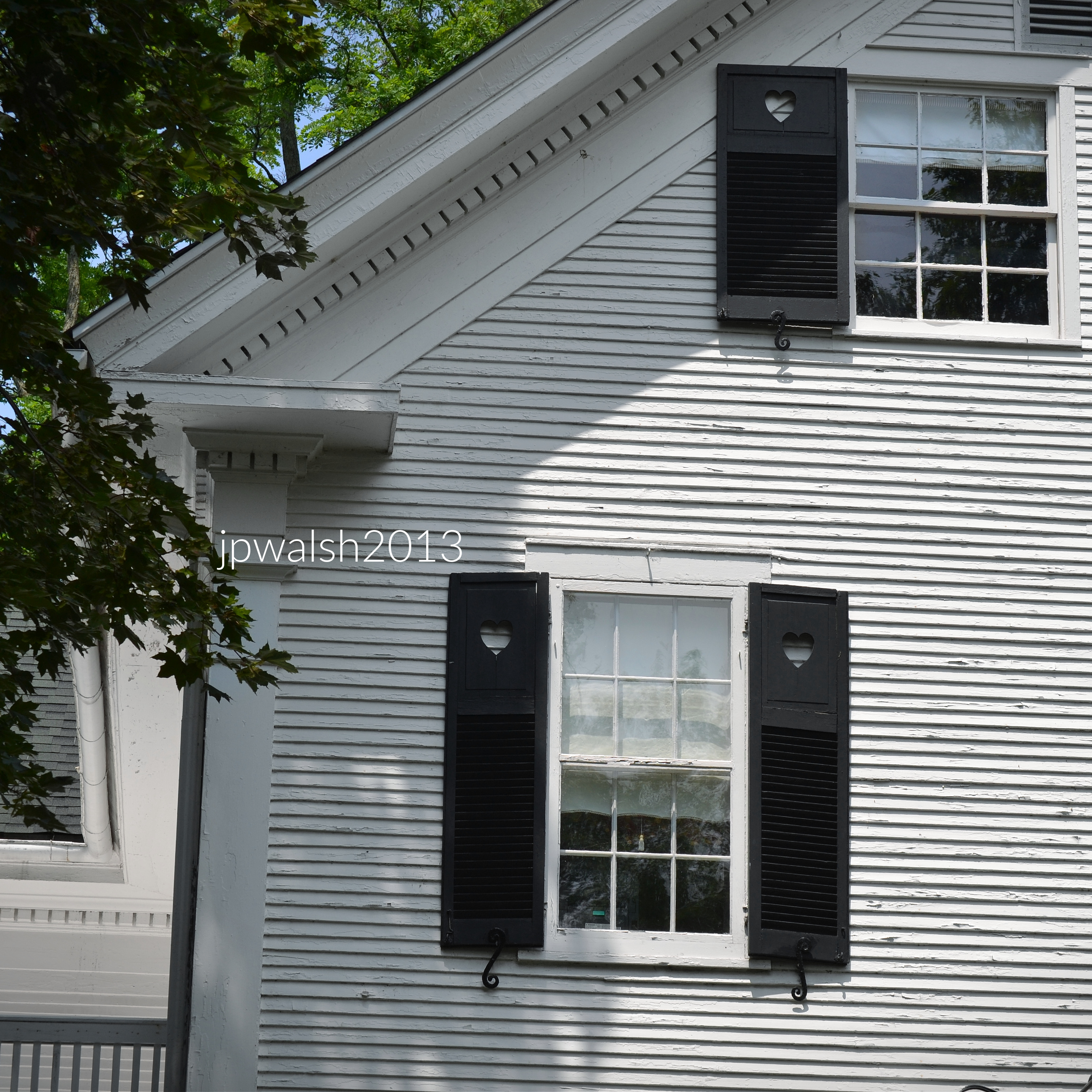
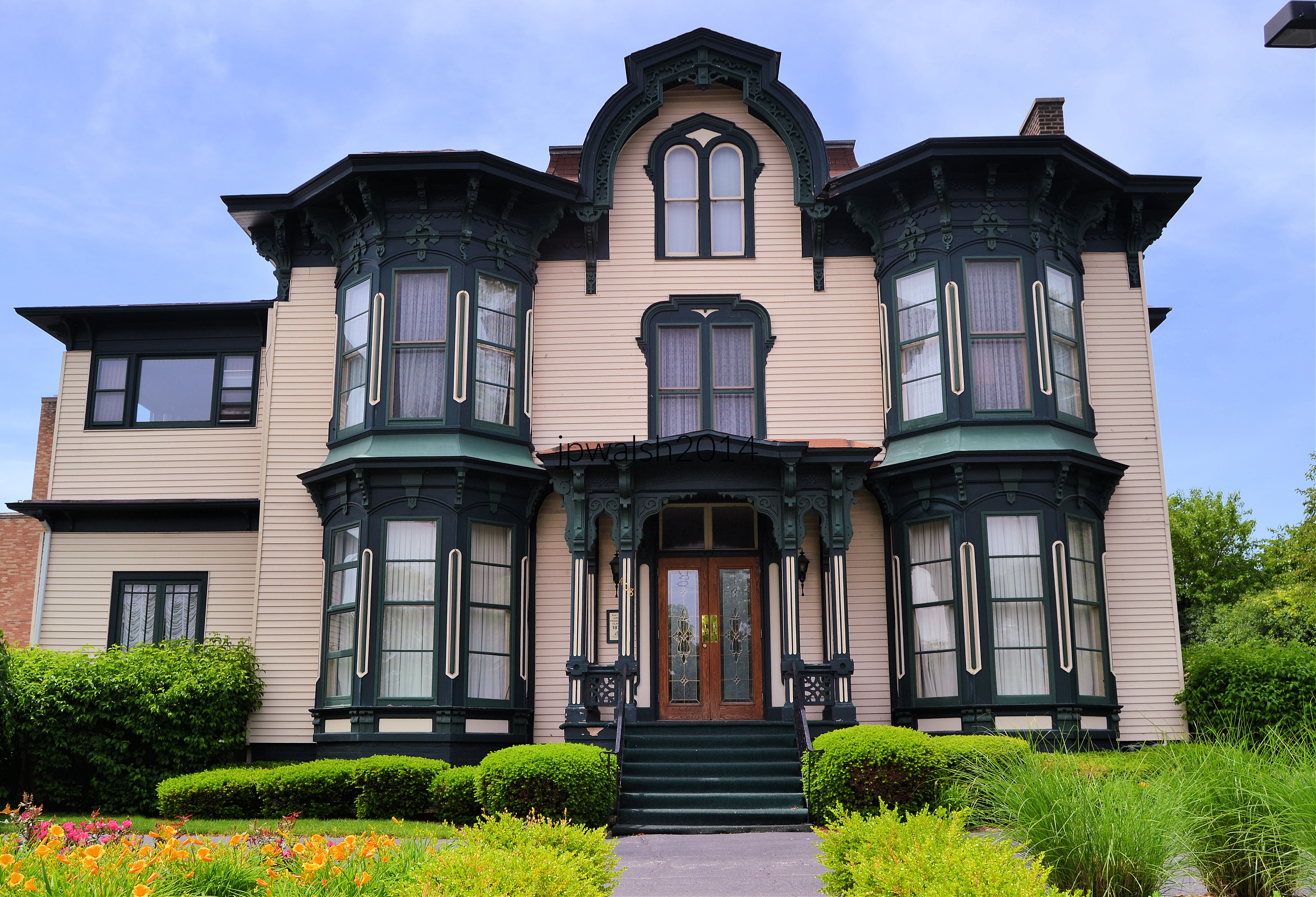
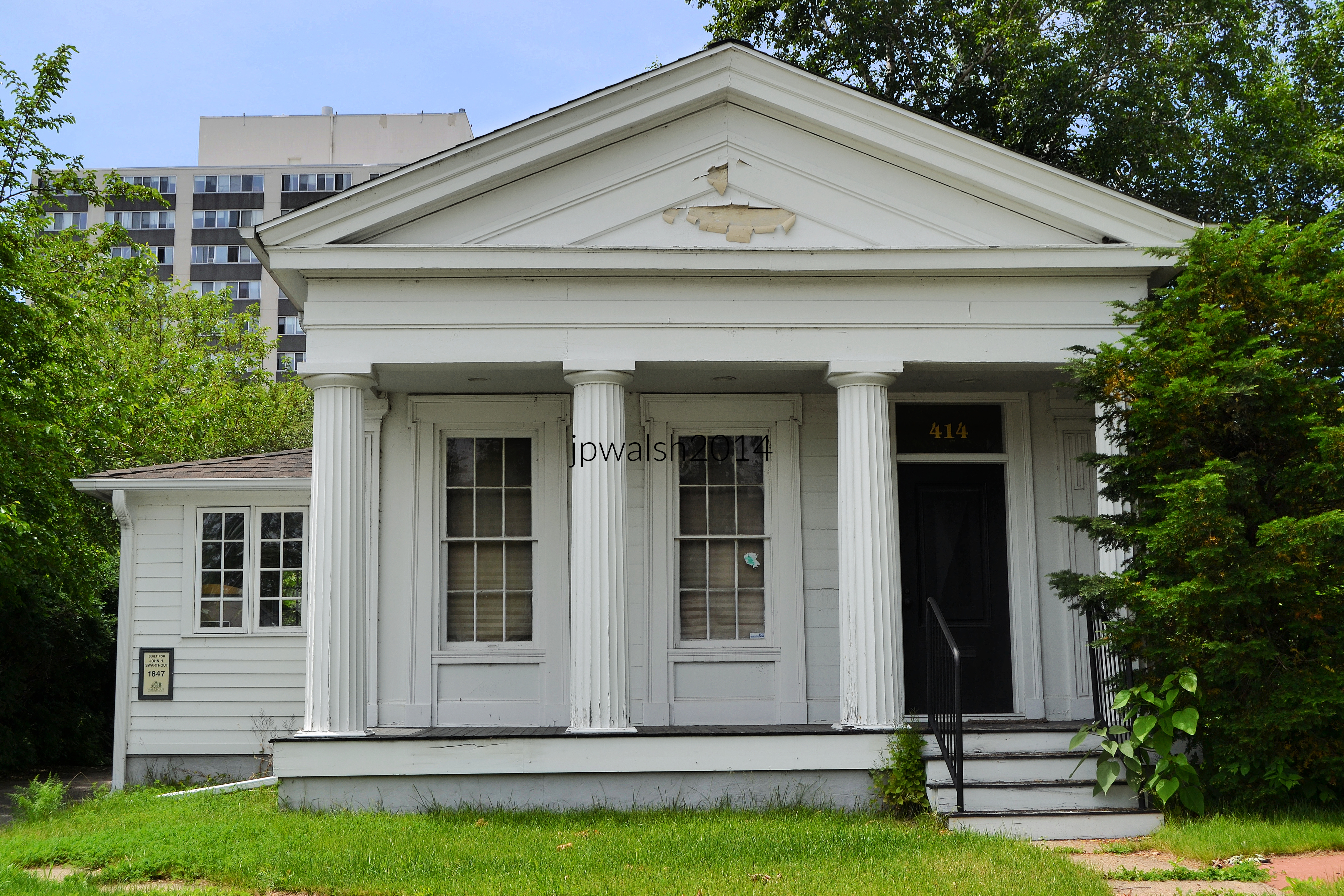
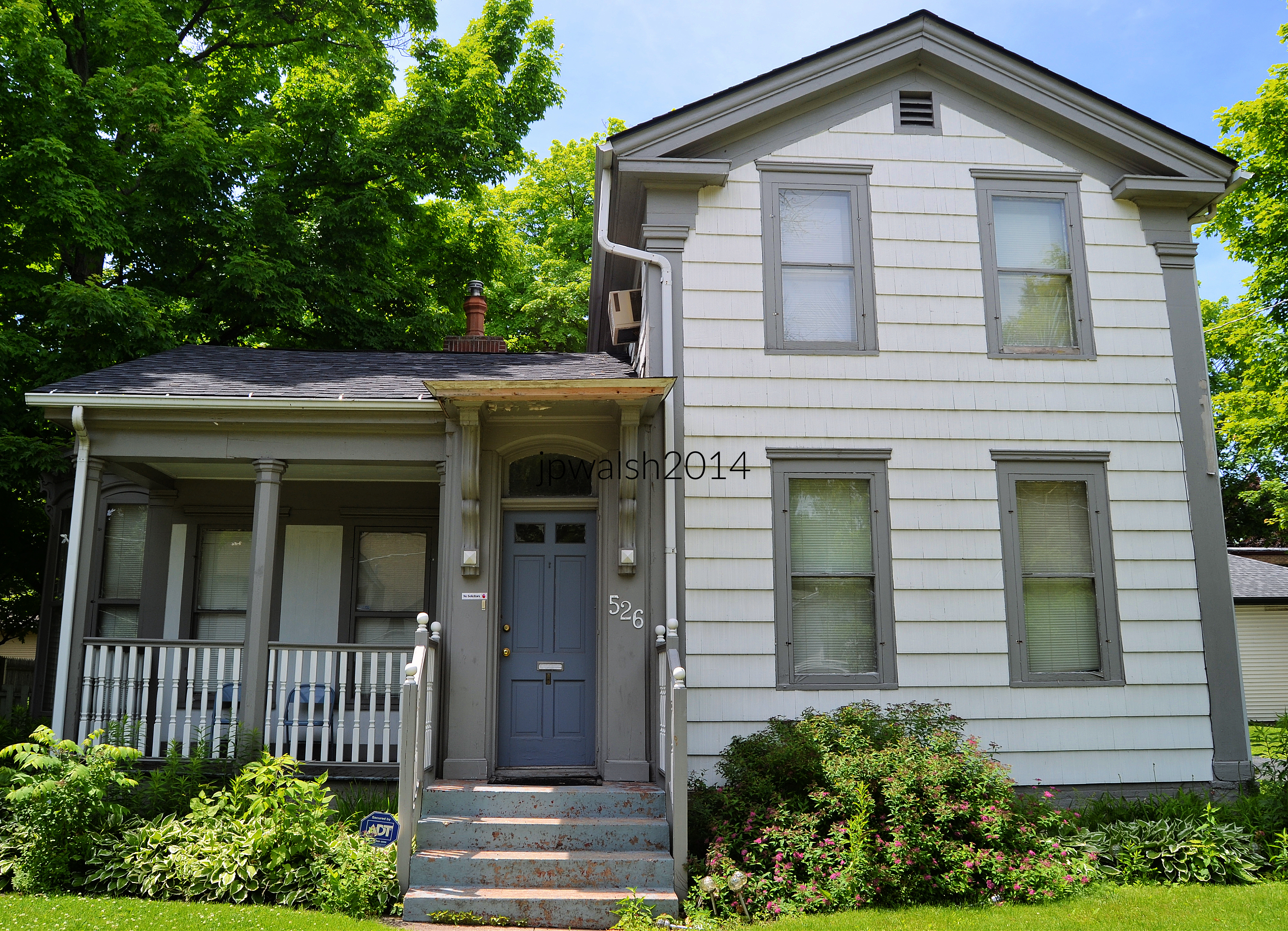
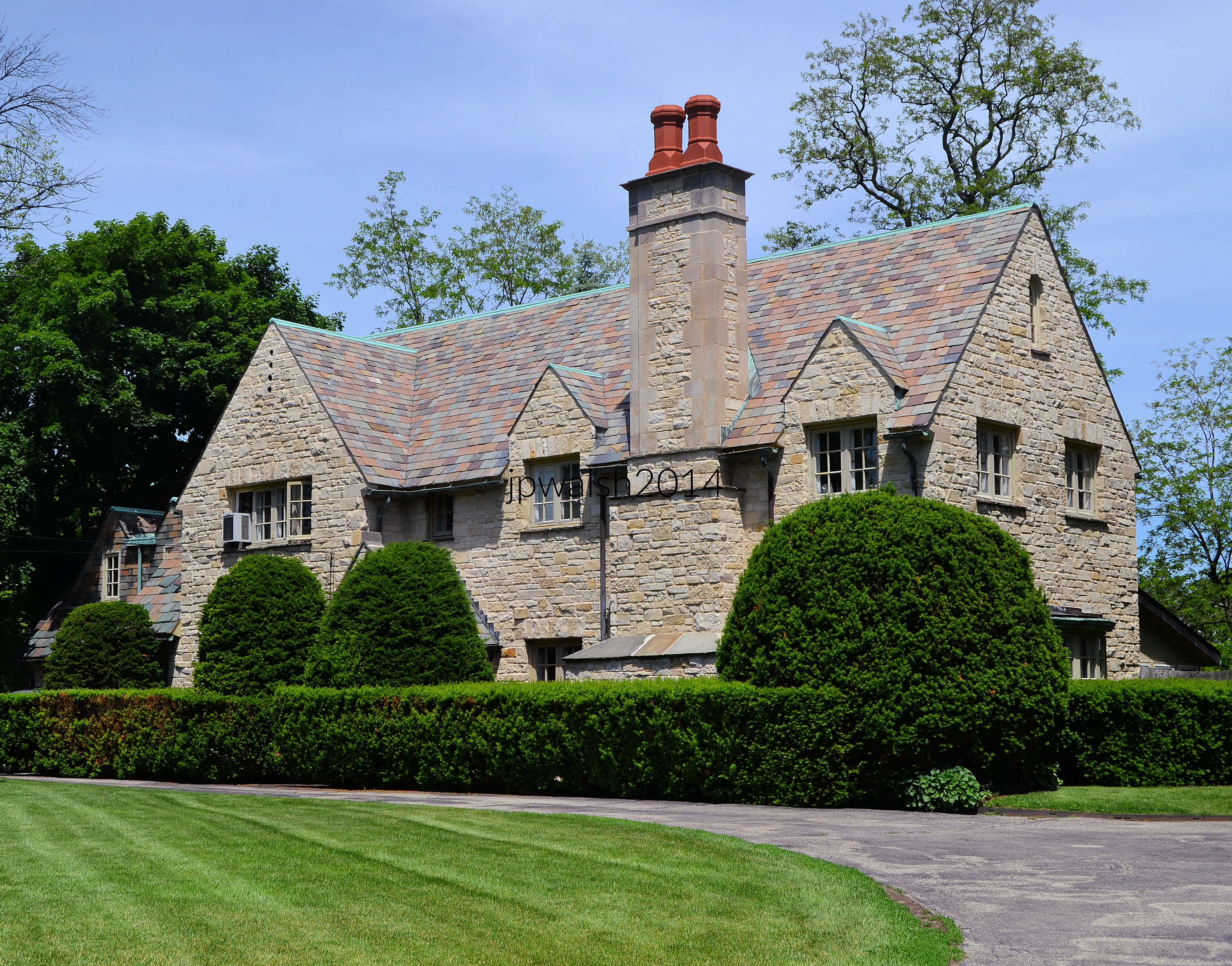
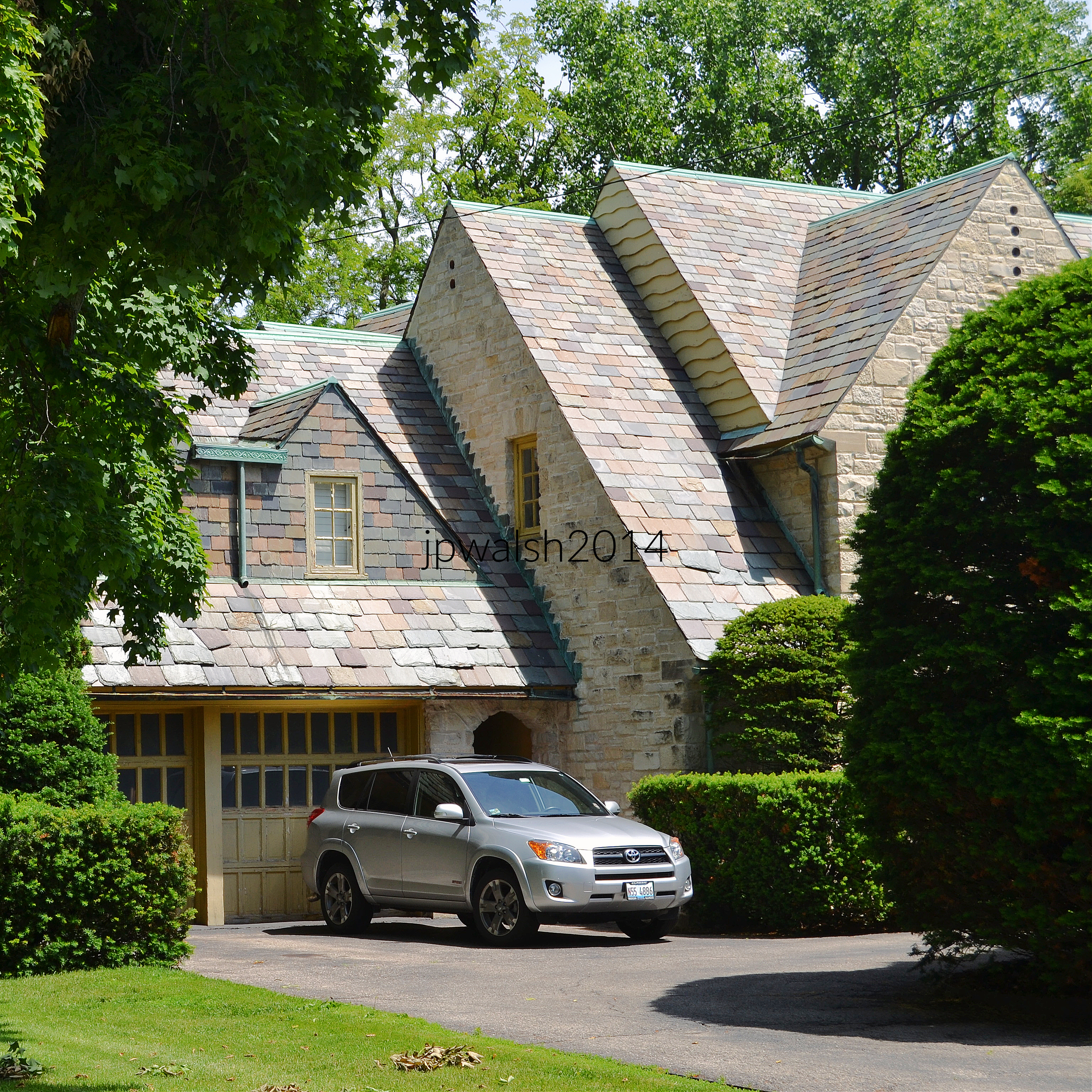
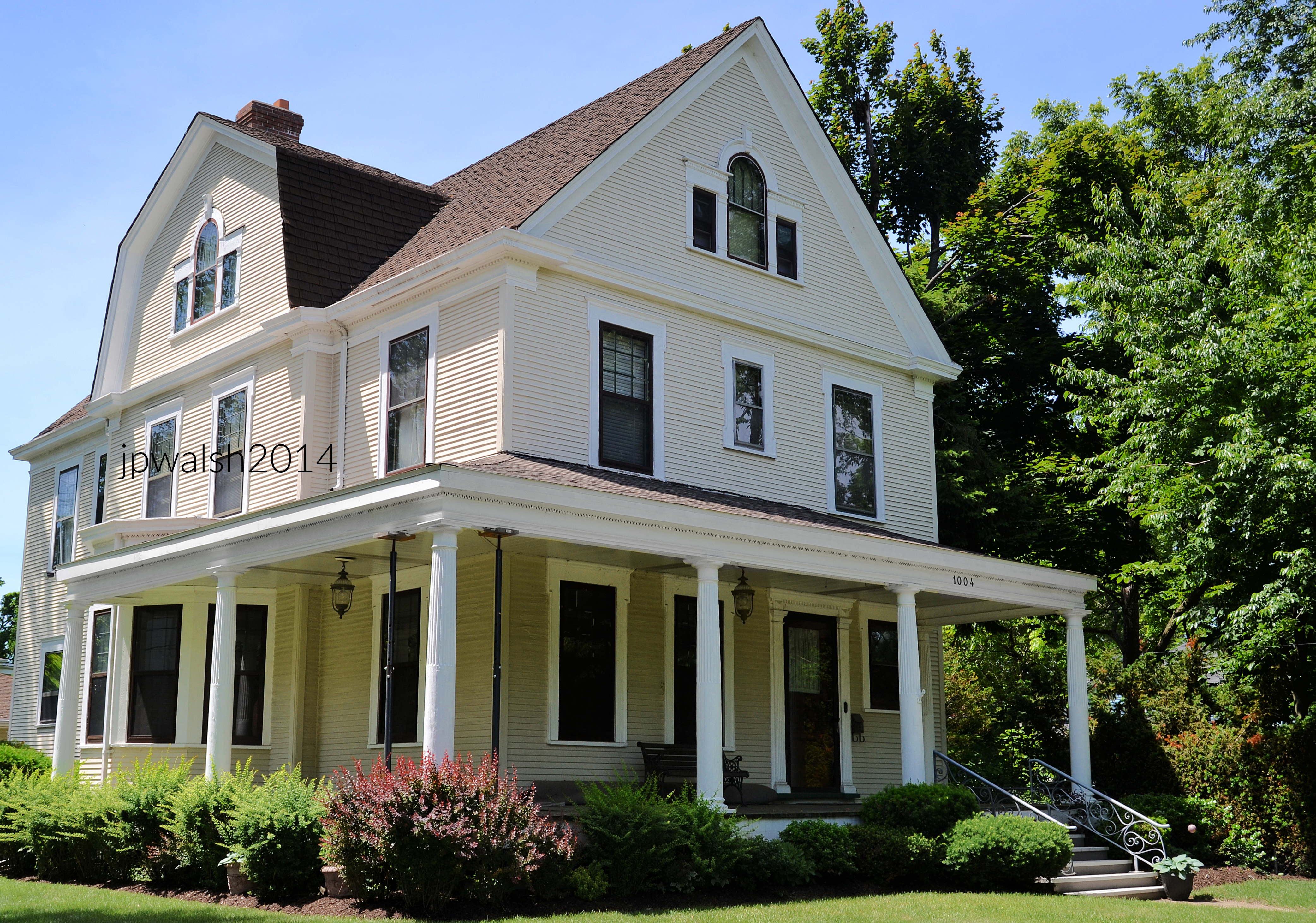
408 N. Sheridan Road, 1875. Built in the Italianate style in 1875. The set of four symmetrical bay windows on the first and second floors have 12 tall thin windows. The moldings have scroll cut, incised, and cut out brackets with heavy decorative surrounds with keystones. In the center above the canopied main entrance are a second floor and gable windows with heavy shoulders for its surrounds. Above the gable window is punched out, playfully decorative bargeboard. The two story porch to the south (left) while integrated to the Italianate building is a later turn-of-the-century addition.414 N. Sheridan Road, 1847. The strict Greek Revival-style modest building dates from 1847. Built by John H. Swartout, the frame house has a portico with a perfect classical pediment with Doric columns holding up a blank entablature. The façade hosts three identical openings – two being windows with shouldered moldings and a door with a transom. It is a simple and relatively small building that was in need of repair in 2014 when this photograph was taken by the author. 438 N. Sheridan Road, 1840s. The house was built up around a small 1840s Greek revival Style house. The Italian Villa style with its tall central tower, porch and columns, double brackets under the eaves and pediments above the windows, dates from the middle 1850s. the central door starts with the rope molding around the double doors and ascends to double arched windows on the second and third floors. 438 N. Sheridan Road, 1840s. Same house as above, southern exposure. The tower’s windows are replicated on each side at the same level as the front view. 505 N. Sheridan Road, 1850s. A central tower with a double window and a peaked arched pediment and a steep pitched roof marks this house from the 1850s as Greek Revival style. The door has heavy shoulders for its surrounds.526 N. Sheridan, late 1840s. A Greek revival style house prevalent in the state of Ohio. The Greek Revival gable has short returns with the second-floor windows extending into the gable area. This is a construction short cut for these upper story rooms. The porch with its octagonal columns and front door entry with its heavily bracketed canopy are later additions although no later than the mid1870s.619 N. Sheridan Road, 1840s. The present house was built around an earlier house erected in the 1840s. It is in the Victorian Gothic style. There are steep gables for the central tower and dormers. The central doors and windows have simple and neat surrounds.Detail of same house above, 619 N. Sheridan Road, 1840s.710 N. Sheridan Road, 1872. A restored Second Empire and Italianate Victorian mansion. The frame house features a double door entrance with glass panes and a veranda-like columnar front porch. A square-shaped second-floor porch is above the front entrance in the central section of the house and below its double bracketed cornice and Mansard roof.Detail of double bracketed cornice of restored 1872 Second Empire and Italianate Victorian mansion at 710 N. Sheridan Road in Waukegan, Illinois.837 N. Sheridan Road, 1858. The front porch and polygonal bay window were added to this late-1850s Italianate brick house more than 60 years later, around 1910.907 N. Sheridan Road, early 1930s. Made of Lannon stone from Wisconsin, the buff-colored, blocky, sedimentary dolomite rock house is designed in the English Tudor style. It has a slate roof. The tall wide chimney is integrated into the façade of the solid stone wall building flanked by casement windows in gabled wall dormers.Another view of same house above, 907 N. Sheridan Road, early 1930s. The well-designed monolithic stone and slate fortress was erected during the Great Depression.946 N. Sheridan Road, 1876. An Italianate house has a central tower with notable openings – a ground floor heavy doorway; above that, a pair of windows under a semi-circular pediment; and finally, at the top, a triplet of windows under a triangle pediment. The second floor carries the semi-circular pediment design across three more of its windows and there are double brackets under the eaves. The porch is likely an early 20th century addition.1004 N. Sheridan Road, late 1890s.
SOURCES:
A Guide to Chicago’s Historic Suburbs on Wheels and on Foot, Ira J. Bach, Swallow Press/Ohio University Press, 1981, pp. 97-111.
FEATURE image: 562 Keystone Avenue, River Forest, Illinois, is a house designed by Frank Lloyd Wright in 1909. It is an excellent example of Wright’s mature Prairie style including its original Prairie-style glass.
River Forest, Illinois is a suburb of Chicago in Cook County. River Forest is perhaps best known for its diversity of 19th and early 20th century American residential architecture. House designs and styles include those by Frank Lloyd Wright (1867-1959) and others in the Prairie School. Nestled near the Des Plaines River to the west, along heritage lands of the Menominee, Chippewa and, later, Potowatomi Native American tribes, today River Forest is an affluent residential suburb closely tied to its adjacent neighbor to the east, the suburb of Oak Park, Illinois. These communities share several affinities including its high school, namely, Oak Park and River Forest High School that is in Oak Park and was founded in 1871. River Forest’s population today approaches 12,000 residents and the suburb is home of two universities, including Dominican University founded in 1848 and Concordia University Chicago founded in 1864. River Forest’s train station is on Metra’s Union Pacific/West Line with service into nearby downtown Chicago, about 12 miles away.
These are my photographs of some of the residential architectural highlights to be seen in River Forest and were taken in June 2022.
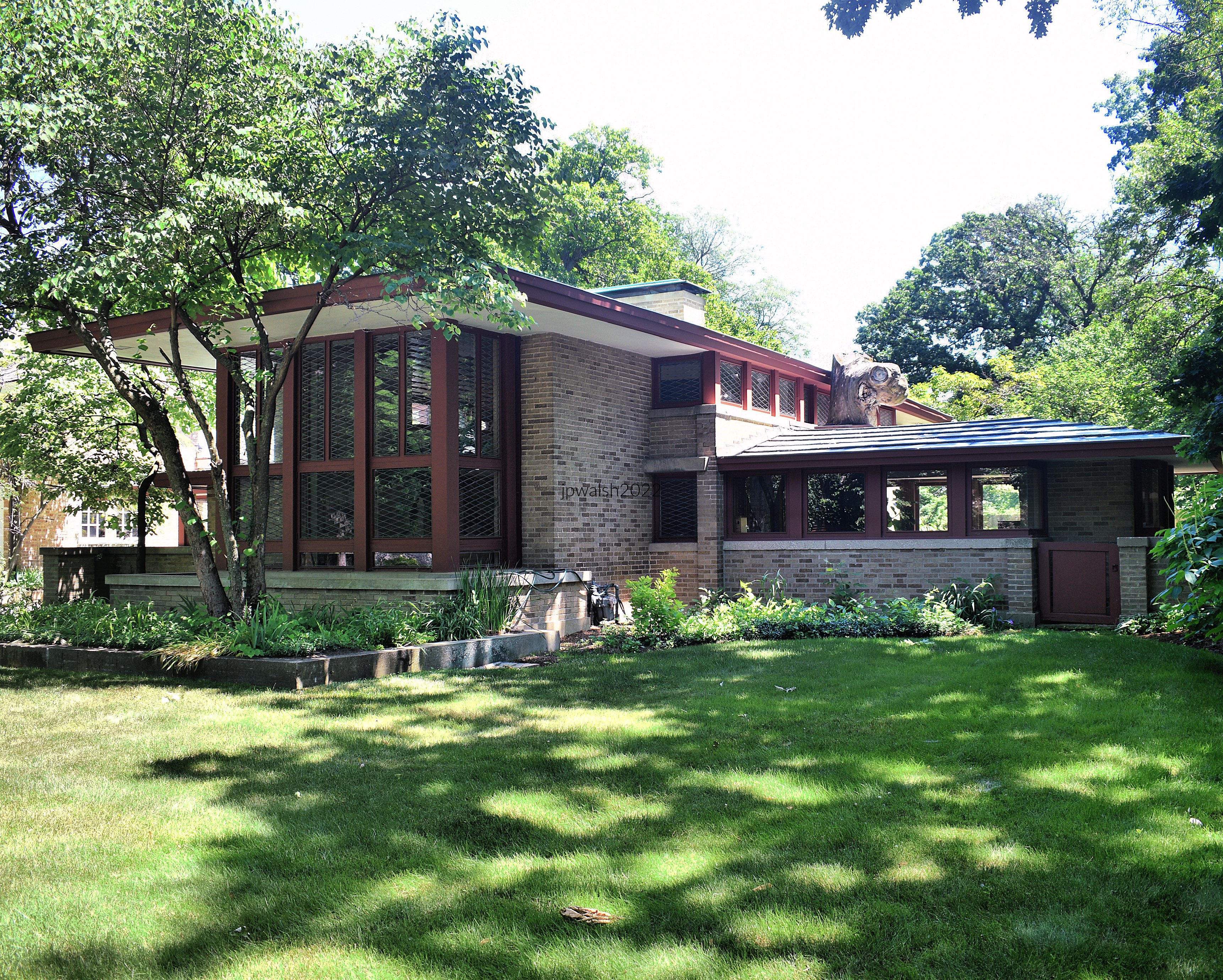
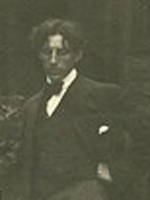
603 Edgewood Place, River Forest, Illinois, 1908, Frank Lloyd Wright. Known as the Isabel Roberts House, it was remodeled in the 1950s. 69% 7.99 mbFrank Lloyd Wright in 1903, likely a self-portrait. Public Domain.559 Edgewood Place, River Forest, Illinois, 1911, William Drummond (1876-1948). Drummond began his career working for architect Louis Sullivan (1856-1924). Working for Frank Lloyd Wright, Drummond became the chief draftsman for many of Wright’s well-known commissions. 89% 7.92mb559 Edgewood Place, River Forest, Illinois, 1911, William Drummond. 560 Edgewood Place, River Forest, Illinois, 1910, William Drummond. 98% 7.89 mbWilliam Drummond about 1901. Drummond was born in New Jersey into a family in the building trades. He moved to Chicago as a boy and later studied architecture at the University of Illinois but didn’t finish. At 23 years old he joined Frank Lloyd Wright’s studio and became his chief draftsman. Drummond obtained his architect’s license in 1901 and, while working part time for Wright, worked full time for Richard E. Schmidt (1865-1958) in 1901 and 1902 and for Daniel H. Burnham (1846-1912) in 1903 to 1905. In 1905 Drummond returned to working full-time for Wright until 1909 when Drummond went into private practice. Public Domain. 511 Edgewood Place, River Forest, Illinois, 1858, architect unknown. This early Italianate house was moved to its present location in1880 from a few blocks away. 77% 7.86 mb515 Auvergne Place, River Forest, Illinois, 1893, Frank Lloyd Wright. Known as the William H. Winslow House, this residence for an important industrialist is one of Wright’s earliest mature expressions of the Prairie style. 66% 7.90 mb344 Keystone Avenue, River Forest, Illinois, 1870, architect unknown. Fine and grandiose example of the Italianate style. 95% 7.85 mb517 Keystone Avenue, River Forest, Illinois, 1915, William Drummond. A simplified version of the expansive basic square house with a pitched roof and elaborated in the Prairie style.530 Keystone Avenue, River Forest, Illinois, 1915, Robert Spencer (1864-1953). Robert Spencer was born in Milwaukee, studied engineering at the University of Wisconsin and architecture at M.I.T. He practiced in Boston, married, and studied in Europe. At his return he relocated to Chicago through Shepley, Rutan & Coolidge. In 1895 Spencer established his own firm and located in the Schiller Building next to Frank Lloyd Wright. In 1905 Spencer partnered with Chicagoan Horace S. Powers, who studied at today’s I.I.T. The partnership built this house in River Forest which is a fine brick example of the Prairie School within a traditional framework. 97% 7.85 mbRobert Spencer (1864-1953). Unlike his slightly younger competitor, Frank Lloyd Wright, Spencer was a trained mechanical engineer and architect. Public Domain.
INTERLUDE: OTHER PERIOD HOMES in RIVER FOREST, ILLINOIS.
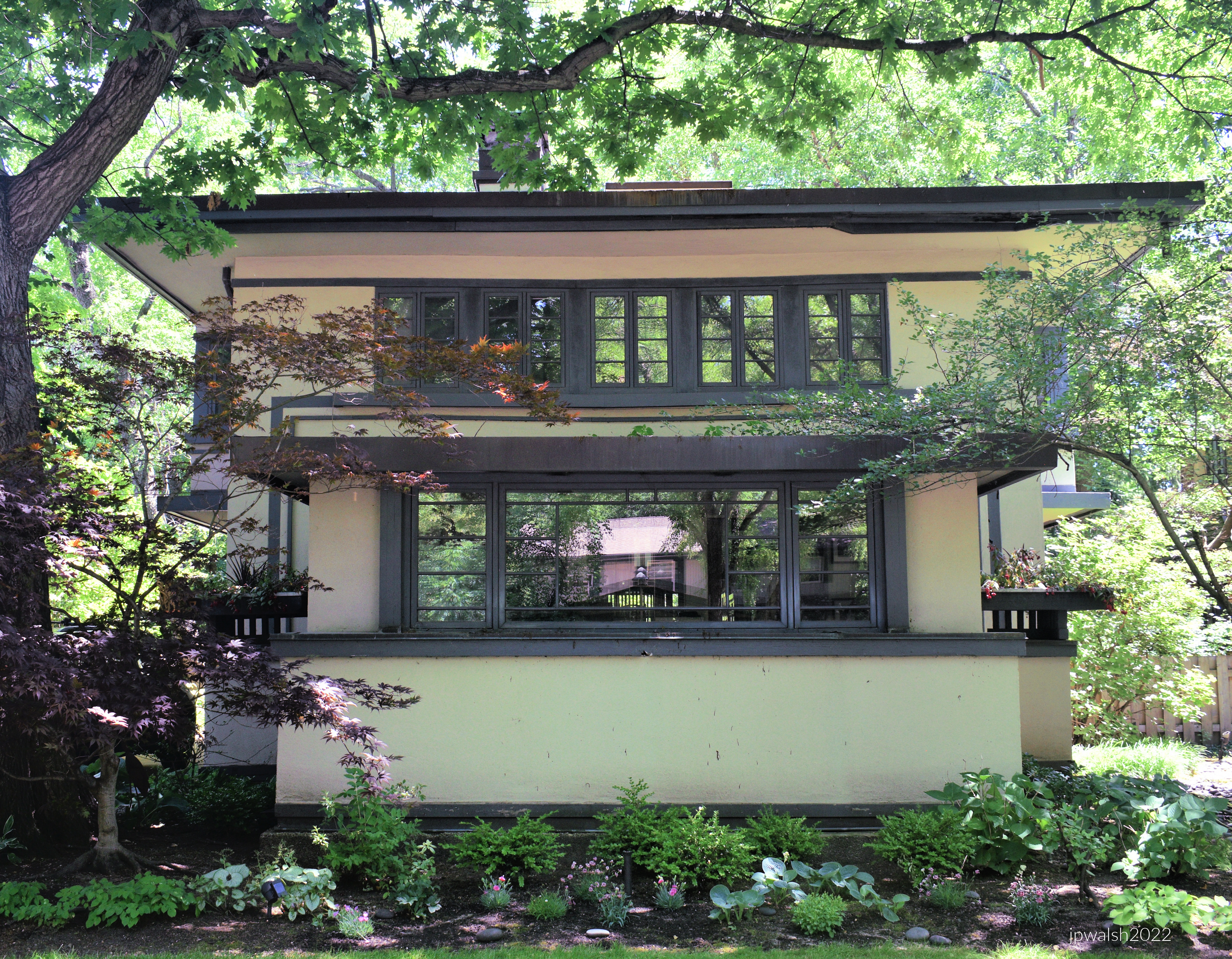
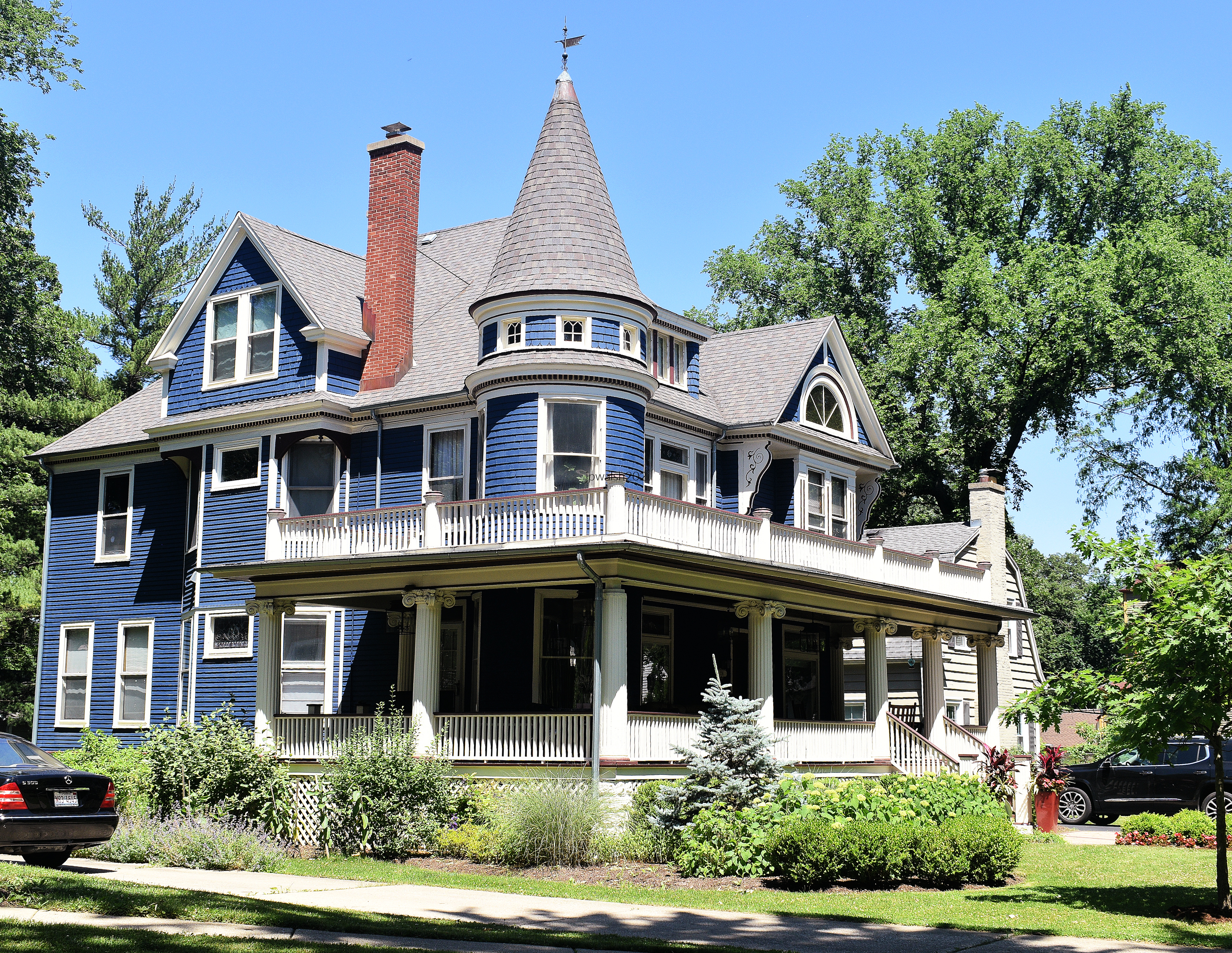
306 Keystone Avenue, River Forest, Illinois. A smaller second floor porch is fitted above the main ground entrance. 70% 7.90 mb.236 Keystone Avenue, River Forest, Illinois. Corner tower, multi-level wrap-around front porch. 73% 7.92 mb Row of late 19th/early 20th century houses, River Forest, Illinois. 78% 7.78 mb136 Keystone Avenue, River Forest, Illinois. The facade’s design elements are complex with intricate details. 90% 7.80 mb146 Keystone Avenue, River Forest, Illinois. Two big chimneys and a front porch swing makes for a timeless scene on a nice day. 90% 7.83 mb558 Keystone Avenue, River Forest, Illinois, 1860, architect unknown, This is an excellent example of a large Victorian Gothic cottage. 82% 7.62 mbFrank Lloyd Wright. Public Domain. 562 Keystone Avenue, River Forest, Illinois, 1909, Frank Lloyd Wright. The house’s projecting second-floor balcony and Prairie glass in a stucco surface is in evidence. 83% 7.93 mb.562 Keystone Avenue, River Forest, Illinois, 1909, Frank Lloyd Wright. The house’s prominent hipped roof with its simple fascia and stuccoed soffits are evident. Wright’s house design is characterized by the early, mature restraint and discipline of the Prairie School. 75% 7.91 mb.
SOURCES:
A Guide to Chicago’s Historic Suburbs on Wheels and on Foot, Ira J. Bach, Swallow Press/Ohio University Press, 1981, pp. 605-622.