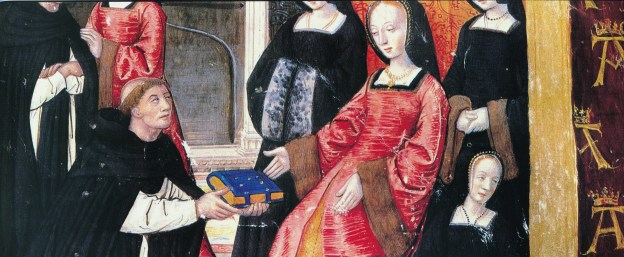
FEATURED image: Manuscript 16th century (detail): Queen consort Anne of Brittany (1477-1514) receiving a Book of Hours from her Dominican confessor, Antoine Dufour (d.1509). Montfort L’Amaury returned to the crown of France after Anne of Brittany married Charles VIII “the Affable” (1470-1498) in 1491.
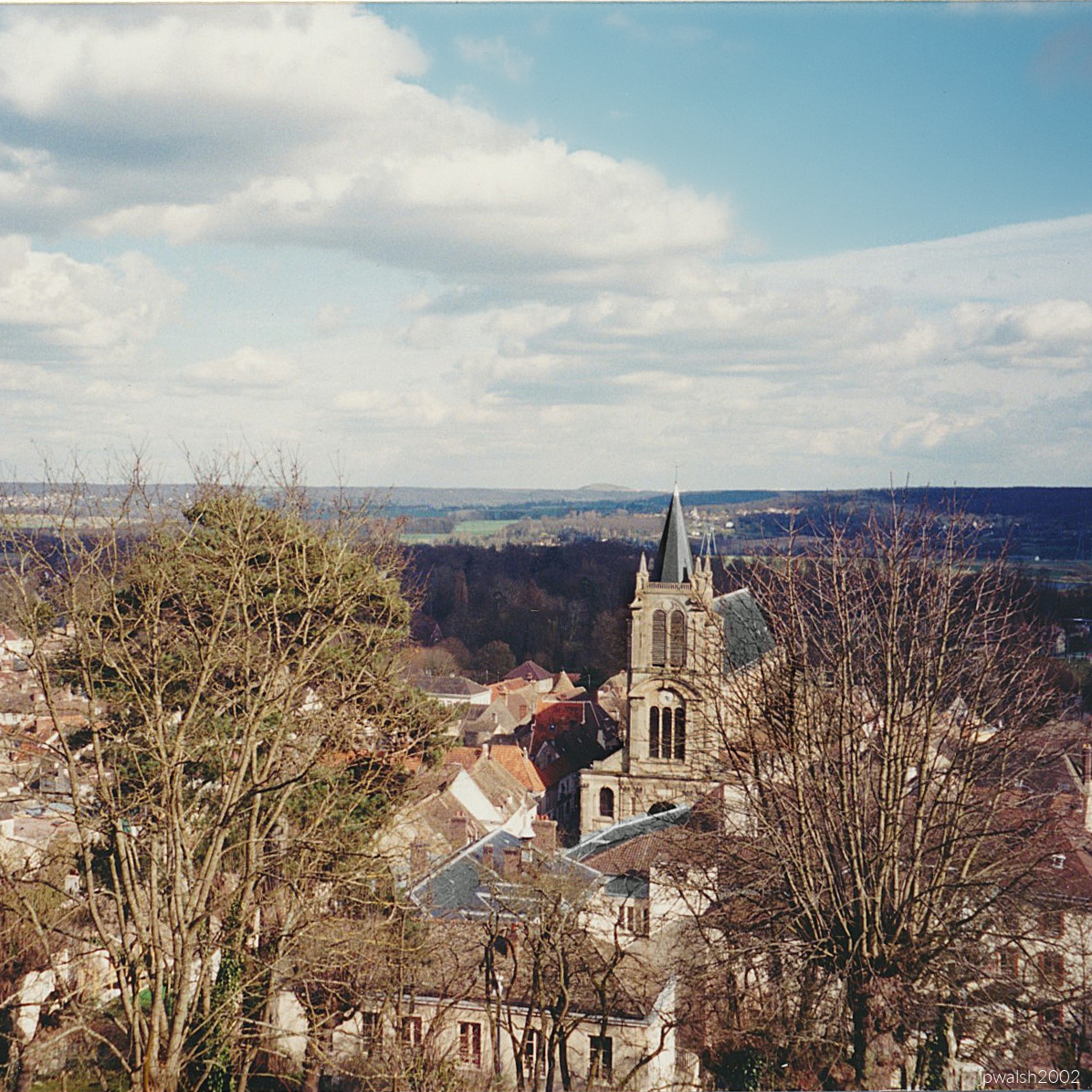
At the north edge of the Rambouillet forest the city of Montfort L’Amaury spreads along the restored ruins of its ancient fortified castle. Founded under the Capetian kings, the city owes its fame to Simon de Montfort (1208-1265), Anne de Bretagne (1477-1514), the Valois royal dynasty, and Henry IV (1553-1610). Its monuments begin in the 11th century, stretch towards exceptional Renaissance stained-glass windows and half-timbered houses as its civilization has attracted writers, artists, and musicians to live there. This would include the house of Maurice Ravel (1875-1937) called Le Belvédère where he lived from 1921 until his death and where we were invited to sit at, and play, the piano where Ravel composed Boléro. It was in March 2002 during a visit to Paris and the Île-de France that we ventured through Yvelines by train to Montfort-L’Amaury for a day trip which included a memorable déjeuner in a restaurant that has since disappeared.

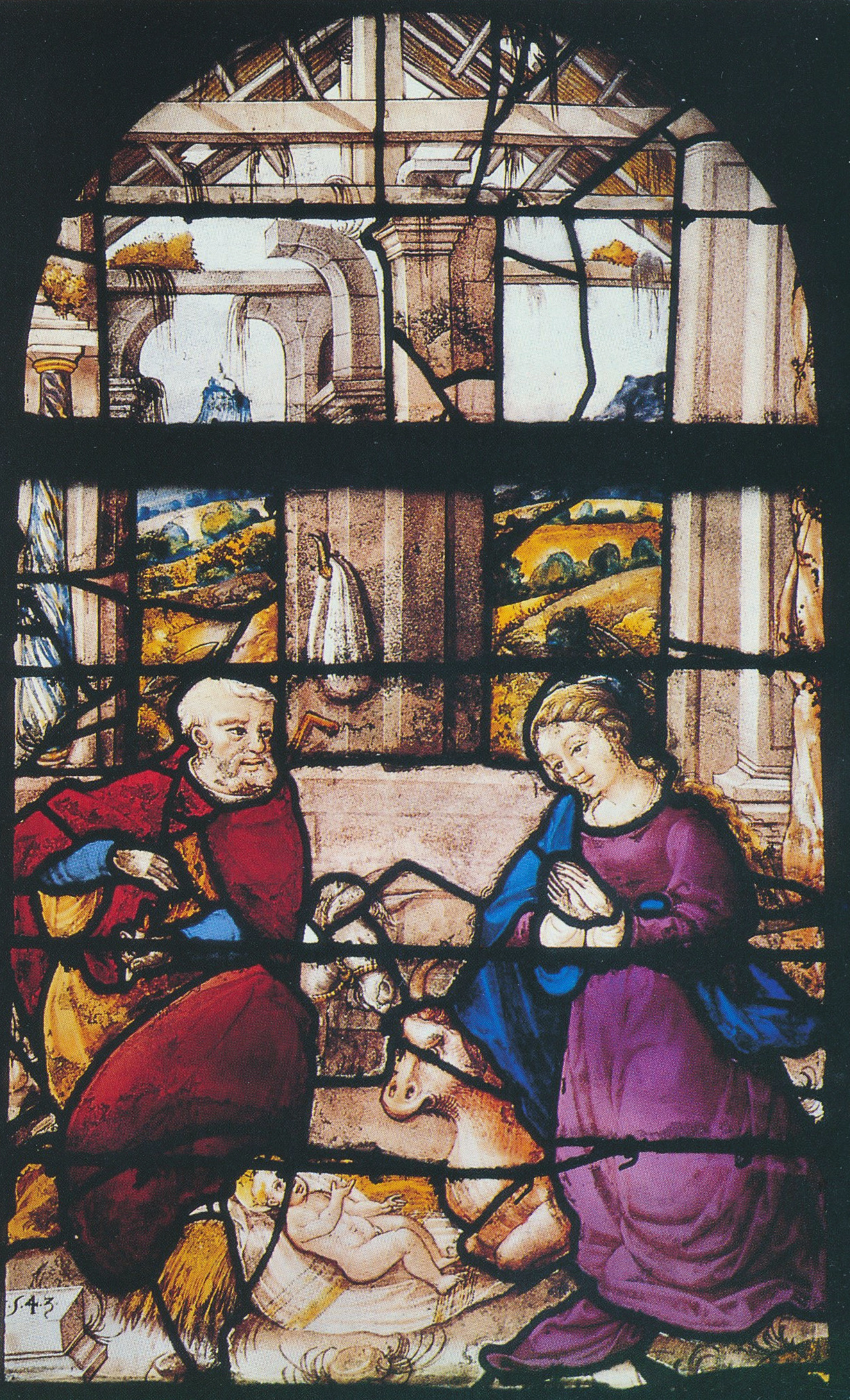
The interior of Saint Pierre church is bright and intimate. Like other French monuments, today’s Saint-Pierre was completed over many centuries. Its origin is in the 11th century. A notable reconstruction of the edifice began in the late 15th century by initiative of Queen Consort, Anne of Bretagne. There is a vast ambulatory around both sides of the nave. Since 1840, the church has been an historic monument because of its unique ensemble of 37 stained glass windows. The oldest date from the 1540s and 1570s. The others were installed in the late16th century. That ecclesial project was started by Catherine de Medicis (1519-1589) in 1562. The windows were installed during the time of the Council of Trent (1545-1563) and some of the glass commemorates that event. As none of the glasswork is signed, it is not known whether its painters are from Montfort L’Amaury or elsewhere.




https://www.parismuseescollections.paris.fr/fr/maison-de-victor-hugo/oeuvres/portrait-de-victor-hugo-sur-fond-de-notre-dame-de-reims


Charles Aznavour (1924-2018), dubbed France’s Frank Sinatra, never lived in Montfort L’Amaury. For 60 years, the singer lived in Galluis, a neighboring town just 5 minutes by car up the road. Yet, in those many years, Aznavour frequently came to Montfort L’Amaury, sometimes to go shopping or visit friends or eat at one of its excellent restaurants. In 2018 Aznavour was buried in the cemetery in Montfort L’Amaury and has become a pilgrimage site for his many fans.


The role of Montfort l’Amaury as a town began to develop in the High Middle Ages when Capetian king, Robert II (976-1031), built a castle there in the forest of Yvelines which was then a royal prerogative. William of Hainaut built the castle whose walls were finished around 1050. Hugues Bardoule was captain of the castle and thus a later 16th century gateway is named after him. It is in the 11th century that L’Église Saint-Pierre and L’Église Saint Laurent begin to be built. Robert II was married three times, and excommunicated by the Catholic Church – one of the early examples of French royals who married as they wished.
In the twelfth century, Bertrade de Montfort (1070-1117), after giving birth to a boy who would become King of Jerusalem, left her husband, the Duke of Anjou, Fulk IV (1043-1109) in 1092. She married the king of France, Philip I “the Amorous” whose spouse, Bertha of Holland, was also still living.
Philip was so in love with Bertrade that he refused to leave her even when threatened and finally excommunicated by Pope Urban II (1035-1099) in 1095. Because of his excommunication Philip was prevented from taking part in the First Crusade (1096-1099).

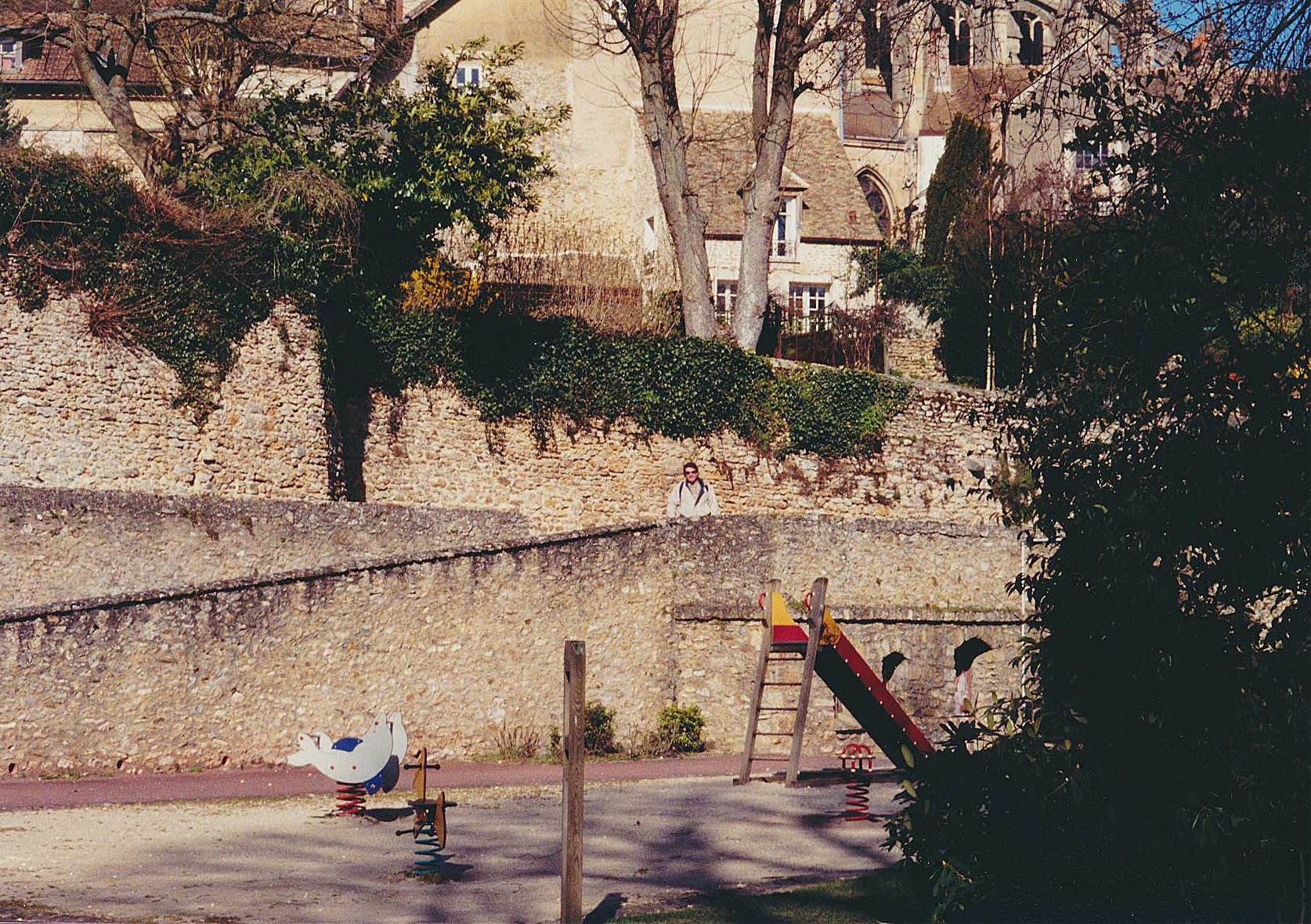
The ramparts and castle were destroyed by the English during the Hundred Years’ War in the 15th century. After the battle of Agincourt in 1419, the English occupied the French domain and it was during this time that the castle at Montfort was destroyed. The two rebuilt towers were named for Anne of Brittany after she assisted in the castle’s restoration. From this height, the fort overlooked the old Roman road from Beauvais to Chartres.
Also from this place, troops assembled at Montfort L’Amaury in the 12th century as Amaury III raised lords and knights to fight alongside Louis VI (1081-1137) against the Emperor of Germany. Simon IV fought alongside Philippe II Auguste (1165-1223) against the English as well as to the Crusades in the Middle East and the Albigensian Crusade in southern France. The Montforts distinguished themselves especially in this crusade against the Cathars.
At the beginning of the Third Crusade (1189-1192), not wanted by King Philippe Auguste (1165-1223), the future Louis VIII “the Lion” (1187-1226) was looking for companions. Simon IV, Lord of Montfort (1175-1218), embarked on the crusade where victory was equalled by its terror.
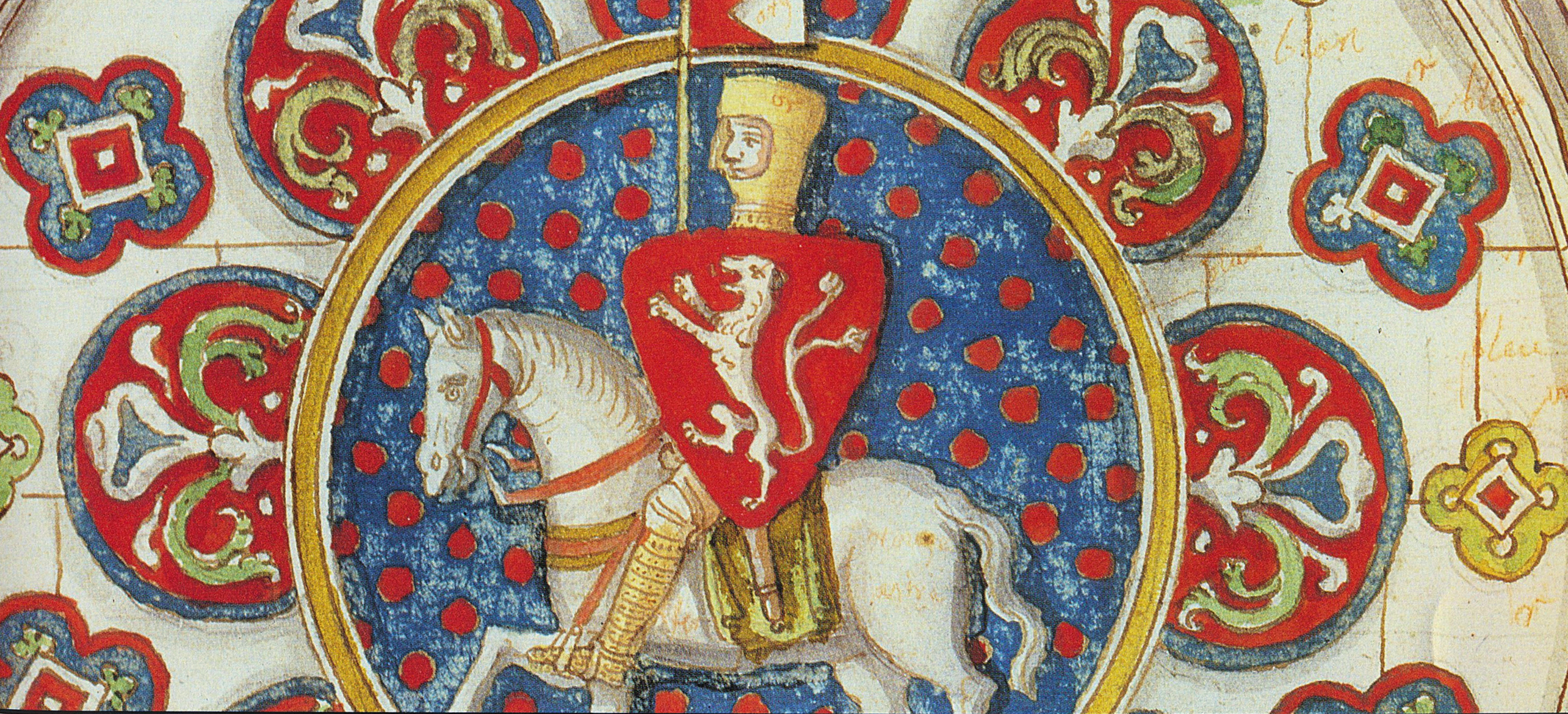
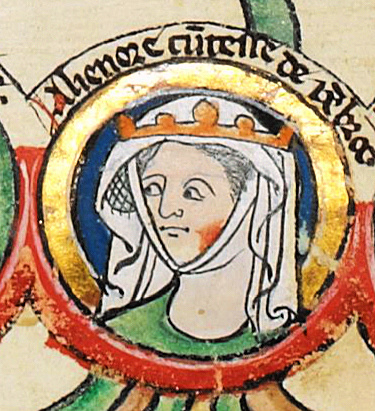
In January 1238, Montfort married Eleanor of England, daughter of King John and Isabella of Angoulême and sister of English King Henry III. While this marriage took place with the king’s approval, the act itself was performed secretly and without consulting the great barons. Eleanor had previously been married and swore a vow of perpetual widowhood after her husband died. This vow was broken when she married Montfort and, for that reason, the Archbishop of Canterbury condemned it. The English nobles protested the marriage of the king’s sister to a foreigner who was only of modest rank. Most notably, Richard, 1st Earl of Cornwell, the king’s and Eleanor’s brother, rose up in revolt over the marriage. King Henry III eventually bought off his brother and peace was restored. The marriage brought property to Montfort and when a child was born of the union in late 1238, he was baptized Henry, in honor of his uncle, the king. In February 1239, Montfort was finally invested as Earl of Leicester where he acted as the king’s advisor and became godfather to Henry’s eldest son, Edward, who became King Edward I (“Longshanks”).
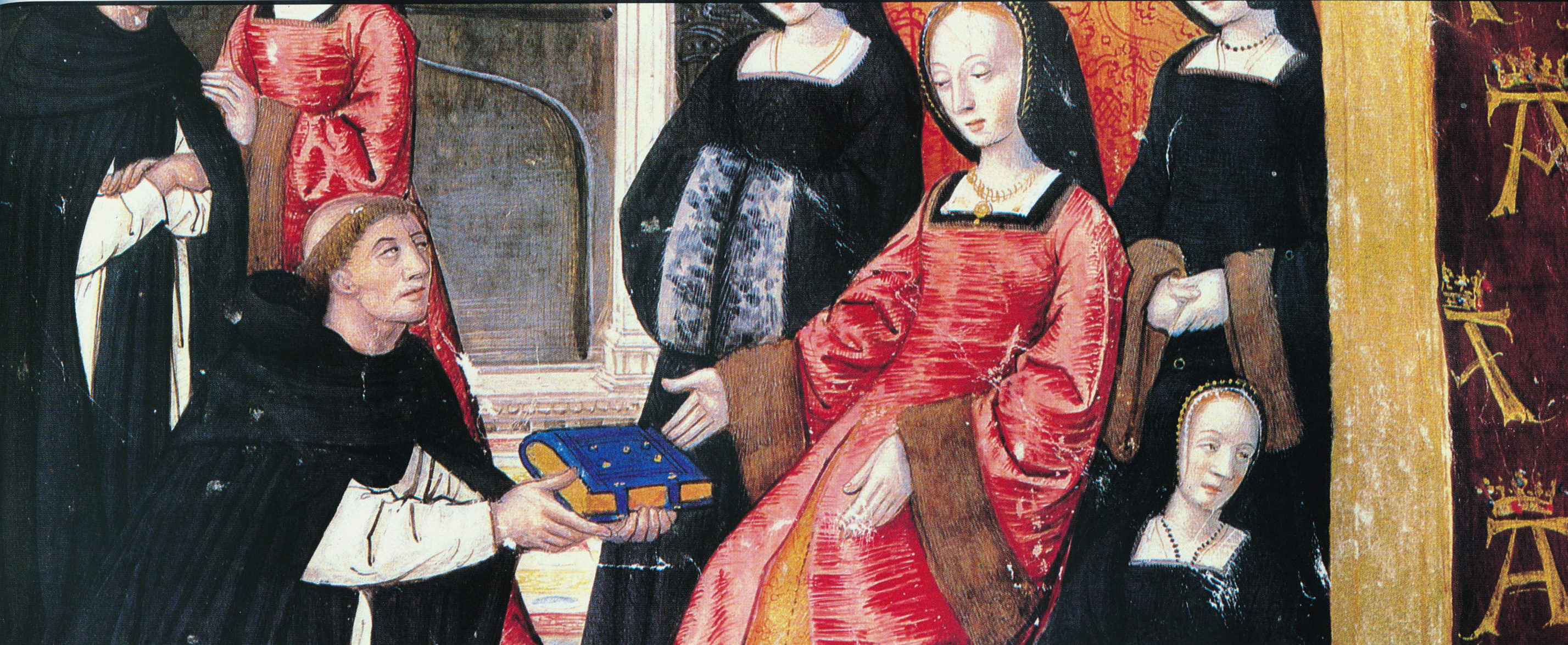
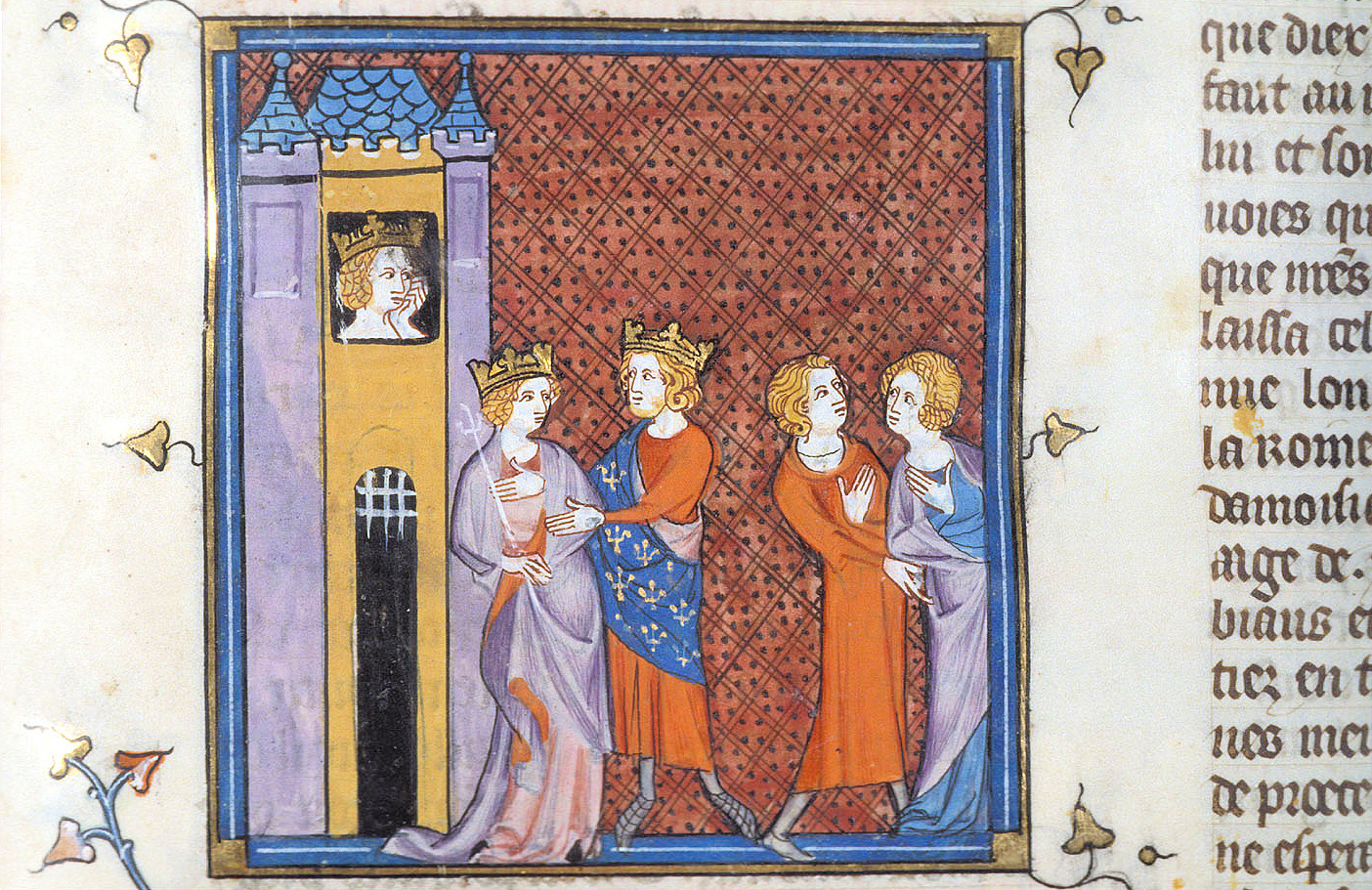
From Montfort L’Amaury, the lords continued to assist the French kings in the crusades. After John I, only a daughter allowed the continuity of the Montfort family. Beatrice d’Albidon married Robert, Count of Dreux. The Comté de Montfort was related to the Duchy of Brittany following the marriage of Yolande de Dreux-Montfort (1263-1330) with Arthur II of Brittany (1261-1312) in 1294. With their marriage in February 1492, Anne of Brittany became the first Queen of France crowned in St. Denis basilica. The marriage contract of Anne to Charles VIII “the Affable” stipulated a union of France and Brittany though the ruthless Charles forbade her to reign with her title, “Duchess of Brittany.” The contract also stated that if the queen were to die first and was childless, the king would inherit all her property. In this pre-nuptial agreement, it further stipulated that if Charles VIII died first Anne must marry his successor. This would be his cousin and brother-in-law, the handsome and seductive Louis II of Orléans, later, Louis XII (1462-1515). Though Charles and Anne often lived apart, she was pregnant for most of her married life with a child on average every fourteen months that produced two sons who died and two daughters who lived. After the accidental death of warring Charles in April 1498 (he hit his head on a door lintel), there was no male heir and 22-year-old Anne duly married Louis. Before she married French kings, Anne was engaged 8 times and briefly was married in 1490 to the Holy Roman Emperor, Maximilian, which the French did not like. Anne was still a married woman when she and Charles the Affable exchanged vows in December 1491. To prevent scandal the marriage had to be regularized by the pope who annulled Anne’s marriage to Maximilian in February 1492 and granted the royal couple a dispensation for each marrying their relative. Before new king Louis XII could marry Anne he had his 22-year marriage to Joan of France – a marriage of longer duration than Anne was then alive – annulled. In 1476 Louis believed he had had Joan forced on him by Louis XI (“The Universal Spider”) and never really cared for her. In what has been described as one of the seamiest lawsuits of the Middle Ages, Joan went on childless from her disappeared marriage to die in a nunnery. In 1499 it was the king’s second marriage and Anne’s third. Anne was quite aware that she was no longer a child but a 33-year-old woman, divorced and widowed with two children. She proceeded to actively insist at court on her rights and prerogatives. Though King Louis XII ruled Brittany, he officially recognized Anne’s title Charles had forbade and Louis promulgated decisions in her name. Their contract stipulated that Anne’s second child with Louis XII would rule Brittany. But with Anne’s death at 36 years old in 1514 this was not honored. Anne was coronated again in St. Denis basilica in 1504. She lived mostly at Blois and was an important patron of the Italian and French fine arts. Louis XII died the next year without a legitimate heir and his cousin and son-in-law Francis I mounted the throne. The couple were buried in St. Denis basilica. During the French Revolution in the wake of the frenzy of having decapitated the king in January 1793, revolutionaries made their way to St. Denis basilica and desecrated the graves of Anne of Brittany and Louis XII and threw their remains into a mass grave. This 15-16th century union of Brittany and France brought increased benefits to Montfort L’ Amaury compared to a union with Brittany alone. The new period saw the town’s castle ruins restored and there was new construction everywhere. The cemetery was relocated outside city walls. Churches were rebuilt and enhanced with that day’s art. While reaping these material improvements from its royal benefactors, Montfort maintained a semi-autonomy from the crown of France that would not be changed until 1550 when Brittany and the French Crown finally united under a single sovereign, Henry II (1519-1559).

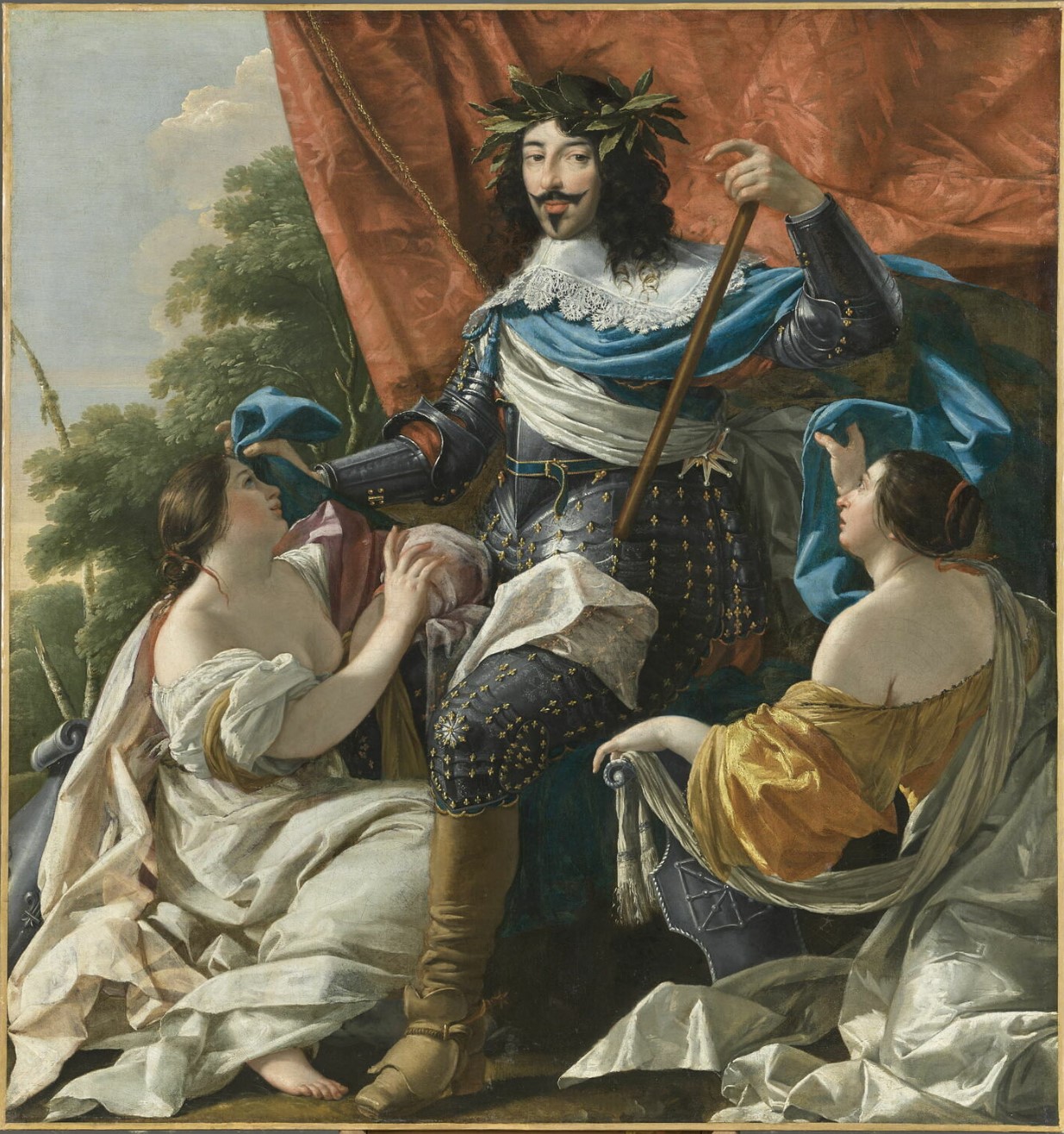
Under the Valois the Yvelines region of which Montfort is a central part received royal favor. Catherine de Medici (1519-1589) was named the Lady of Montfort in 1561. When the Wars of Religion broke out (1562-1598), the king, Charles IX (1550-1574), offered to the city home-rule in exchange for the reconstruction of its medieval ramparts at his expense. At the end of these wars, the passage of the future king, Henry IV (1553-1610) on the road that led him to Paris to take power, allowed Montfort L’Amaury to prove its loyalty to the new king. Montfort provided Henry Navarre with weapons and later obtained special rights in exchange. During the reigns of the first two Bourbon kings of France, Henry IV and Louis XIII (1601-1643), there are frequent royal visits to Montfort L’Amaury.
A canonized Catholic saint among the Valois- Joan of Valois (1464 – 1505), sister of Charles VIII, and betrothed of Louis XII.

The second daughter of Louis XI (1423-1483) and Charlotte of Savoy (1411-1483), Joan of Valois was a fleeting Queen of France as the wife of King Louis XII following the death of her brother, King Charles VIII. Her marriage was soon annulled so that Louis could, as pre-arranged by contract, marry Charles VIII’s widow, Anne of Brittany.
Joan’s demeanor was characterized by an accepting and placid countenance. When she retired from court politics to become Duchess of Berry, the former Queen of France remarked: “If so it is to be, praised be the Lord.”
In Bourges, Joan of Valois founded a monastic order of sisters and served them as their abbess. In terms of her personality, Joan could be autocratic as an administrator of her nuns, which may have been a vestige of her former high-born role. Joan was canonized in May 1950, almost 450 years after her death.


Le Belvédère: the House of Maurice Ravel from 1921 to his death in 1937 at Montfort L’Amaury.


Jean Anouilh (1910-1987) was a French dramatist who lived in Montfort-L’Amaury in France. Anouilh’s 1944 play, Antigone, was an adaptation play of Sophocles’ play of the same name. The 34-year-old Anouilh’s work was seen as an attack on the Vichy government of Marshal Pétain (1856-1951) in World War II.
Anouiih also wrote Becket. The original French play is titled Becket ou l‘Honneur de Dieu. It was staged in Paris at the Théâtre Montparnasse-Gaston Baty in October 1959 and directed by Anouilh. The play dramatizes historical martyr and Catholic saint Thomas Becket (1120-1170), the Archbishop of Canterbury In England, whose feast day is December 29.
Becket was the best friend to younger King Henry II of England. Cunning and proud, vulnerable and lonely, pent-up King Henry is interested in hunting and women, and not necessarily in that order. Henry is bored with political affairs and as king has his one friend, Thomas Becket, who is his companion in vice and debauchery.
Becket serves his king loyally, without compromise. Wanting to strengthen his power over the Church in England and believing his idea to be an excellent one, Henry appoints Becket as chancellor of England and he later becomes Archbishop of Canterbury. But nothing goes as planned. Becket, on his path to sainthood, finds he cannot serve both king and God.
For Henry the arrangement is one of disillusionment, resentment, hatred, and torn friendship – and, later, repentance. For Becket it is a tale of courage, renunciation, and honor as the archbishop seeks to defend church freedom in England against an ambitious secular power. Such conflict provokes Becket’s murder by the king’s knights in the archbishop’s own cathedral.
Anouilh’s Becket became an international sensation. Successive productions in English translation were mounted in London (starring Christopher Plummer and Eric Porter) and in New York City (starring Laurence Olivier and Anthony Quinn). In 1964 Becket became a major motion picture starring Richard Burton and Peter O’Toole which won the Academy Award for Best Screenplay.
SOURCES:
Montfort L’Amaury de l’an mil à nos jours, Marie-Huguette Hadrot, Paris: Somogy Editions d’Art, 2002.
Montfort-L’Amaury, Le Syndicat d’Initiative des Fêtes et des Arts de Montfort-L’Amaury et ses Environs, 1972.
Montfort-L’Amaury Les Verrières de L’Eglise Paroissiale Saint-Pierre(Yvelines), Laurence de Finance and Marie-Huguette Hadrot, Paris: Centre de Documentation du Patrimoine, 1994.
https://montjoye.net/chateau-de-montfort-lamaury
https://fr.wikipedia.org/wiki/Anne_de_Bretagne
http://www.montfortlamaury.free.fr/fr/index.php/Montfort-l-amaury-un-millenaire-d-histoire
The Saints: A Concise Biographical Dictionary, edited by John Coulson, Guild Press, New York, 1957.