

FEATURE image: June 2018. 1964 Ford Futura Falcon. 4.54 mb DSC_0136 (1).

In 1960 Ford’s ad tag line for the Falcon was “the easiest car in the world to own.” In 1964, Falcon was included under Ford’s umbrella tag line of “The Total Performance Cars for 1964.” In 1960 Ford Motor played the industry’s high stakes profitability game with its new line of cars that included the new compact for the ordinary American — Ford General Manager Robert McNamara’s Falcon. Naysayers and even conventional wisdom said compact car manufacturing was next to unprofitable. But the Falcon was Ford’s biggest success in 1960 and in its entire history up to that time. In 1961 all the majors — Ford, Chevy and Plymouth — offered affordable compact cars for Americans to drive. Ford being the leader – they were there first, offered the lowest price, and had 2- and 4-door models — won the compact car marketplace battle definitively. When it comes to their cars Americans like tradition and from its powertrain to exterior and interior styling Falcon was all that.
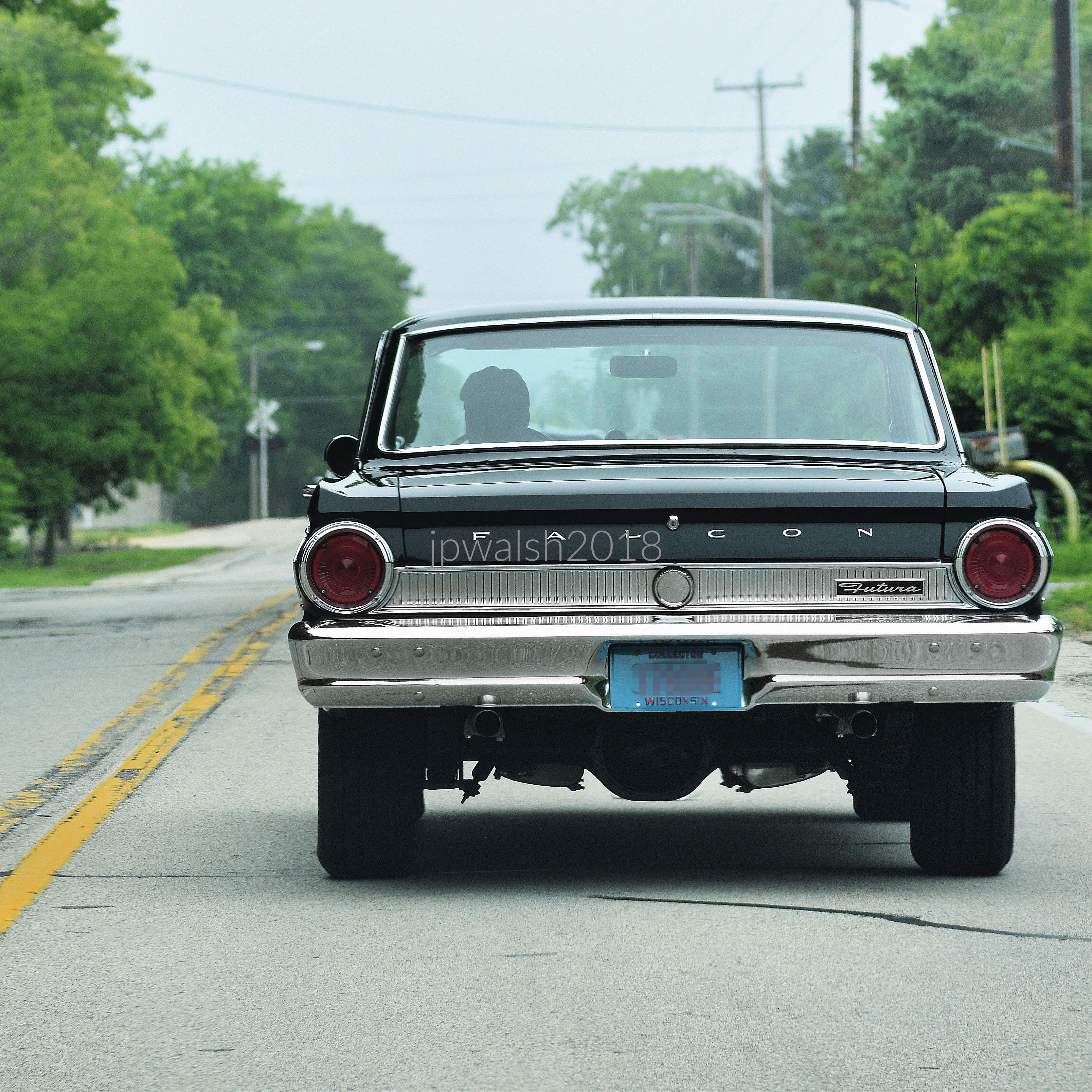
In 1964 all of Ford’s models were given upgrades including under the hood, such as the 289 CID V8 engine for the Mustang and mid-sized cars. The renewal that year of all its models was so important that the entire Ford line was named “Car of the Year” by Motor Trend magazine. In 1964 Falcon received a major restyling that included an angular and modern appearance while retaining its original performance components. Falcon, along with the Fairlane, were big sellers comprising together more than a third of all Ford sales. But the biggest news in 1964 was the arrival of Ford’s brand-new pony car at the World’s Fair in New York: the Mustang. The sporty Mustang was an instant hit and had taken some of its enduring design inspiration from the Falcon in terms of its practicality.
Standard equipment on the 1964 Falcon included cloth and vinyl interior trim, front door arm rests, chrome windshield and chrome rear window moldings, and hub caps. The FUTURA Falcon added features such as deluxe interior trim, side window moldings, hood ornament, full-length side trim molding, and full wheel covers. Further upgrades on Futura included bucket seats. SQUIRE included wood-grain exterior trim, power tailgate window and carpeted floors. SPRINT added bucket seats, a console, sports steering wheel, tachometer and wire wheel covers. The Falcon ranged from the Falcon 2-door sedan with a base MSRP of $1,996 ($20,859.87 in today’s dollars) all the way up to the Falcon Sprint 2-door convertible with a base MSRP of $2,671 ($27,914.19 in today’s dollars). The average price for a new Ford Falcon in 1964 for the American consumer was $2,345 ($24,507.22 in today’s dollars).
SOURCES:
J. “Kelly” Flory, Jr., American Cars, 1960 to 1965, McFarland & Company, Inc. pp. 41-43; 269-70; 299-300.

