Photographs and Text by John P. Walsh.
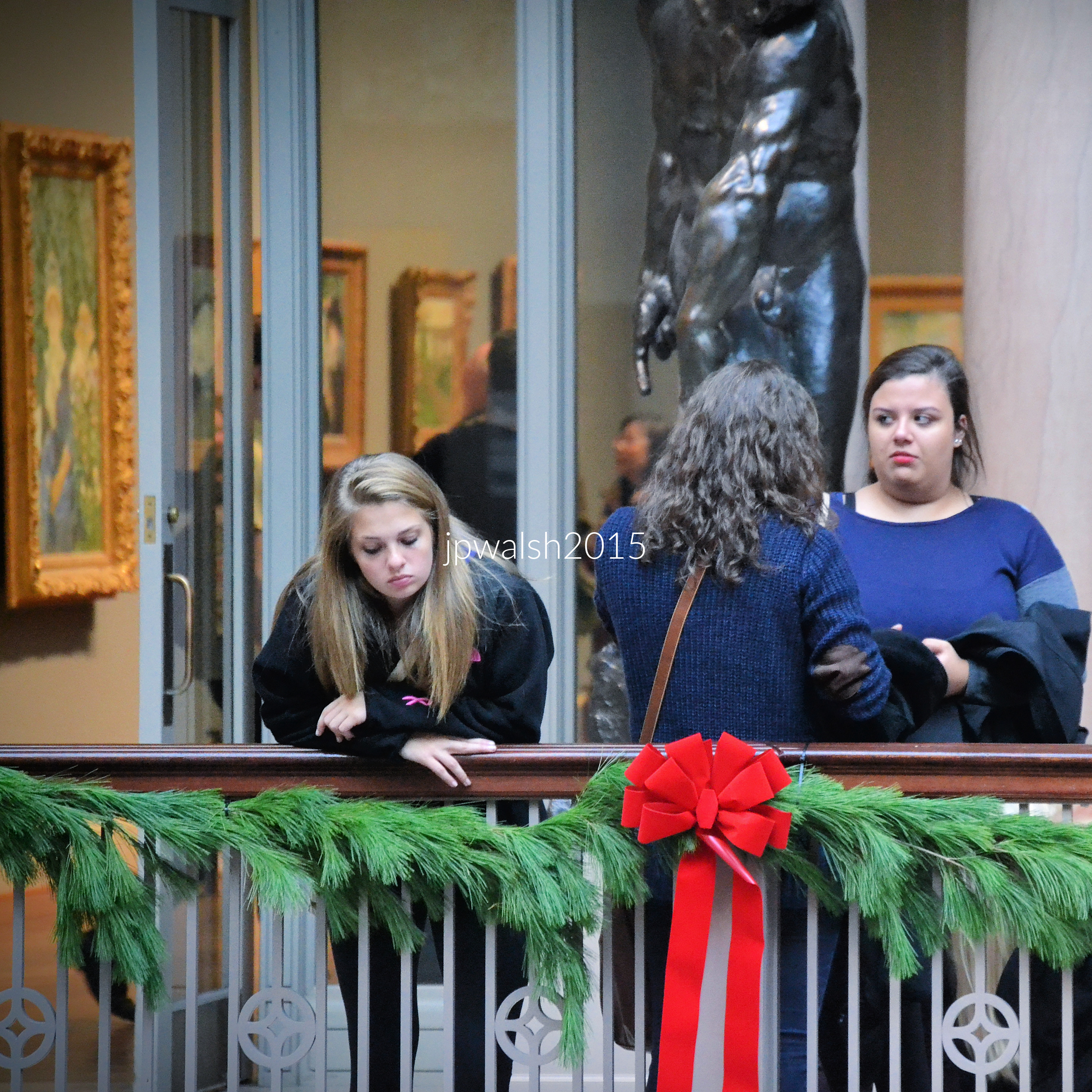
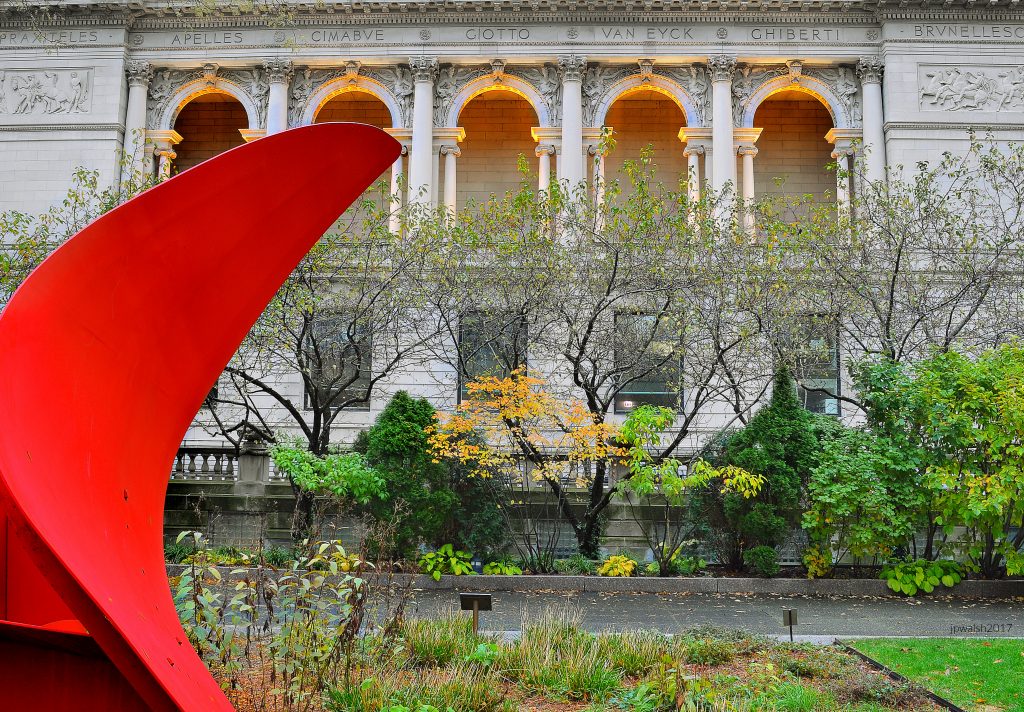
FEATURE image: May 2015. Michigan Avenue Main Lobby. The Art Institute of Chicago. 4.57mb DSC_0366 (1)




Speaking of his fountain (below) at the Art Institute of Chicago, Milles observed: “The great classicists knew that it was impossible to reproduce the appearance of flesh in marble, and they set themselves to create forms of pure beauty that would merely suggest and symbolize the living creature, and then to invest those forms with a meaning that mankind would feel intuitively to be universal and significant. This is what I have tried to do.“

Carl Milles (1875-1955), Triton Fountain, 1926, bronze, Alexander McKinlock Memorial Court, The Art Institute of Chicago. Swedish sculptor Carl Milles (1875-1955) studied in Paris from 1897 to 1904, working in the studio of Auguste Rodin (1840-1917). Yet Milles departed from the prevailing naturalism that dominated sculpture in the Belle Époque era, and embraced ideas and forms that reflected the artist’s independent spirit, his knowledge and appreciation of classical and Gothic sculpture, and his Nordic roots.


Henry Moore (1898-1986), Large Interior Form, bronze (ed. of 6), 1953/4, 16 ft. 9 in., North Garden, The Art Institute of Chicago. Henry Moore’s 16-foot sculpture was made when the 84-year-old British artist was concerned with the construction of three-dimensional space, internal forms within solid volumes, and placing his work in a natural setting. Moore had worked primarily in stone but as these formal concerns emerged, he shifted to modeling and bronze casting. Large Interior Form explores mass and void as well as gravity and growth within a nature-inspired artist-created form.


Aristide Maillol (1861-1944), Nymph—Central Figure for the Three Graces, 1930, The Hirshhorn Museum and Sculpture Garden, Washington D.C. Acquired by the museum in 1966, photographs show that the statue stood in an open location by a garden pool at the museum. In 1991 following a whirlwind of euphoria associated with the successful completion of Operation Desert Storm, a victory celebration at the Mall in June of that year involved hovering military jets and helicopters. Their downdraft sent gravel footpath debris flying in the air that scratched and cracked several statues in the sculpture garden. Though none appeared to sustain damage beyond some repair, the Nymph—Central Figure for the Three Graces suffered the most damage as the nude female statue had pitted indentations on her backside. In 2010 when this photograph was taken, the sculpture was located in front of a protective garden wall. See- https://www.baltimoresun.com/news/bs-xpm-1991-06-12-1991163158-story.html 20th Century. France. Sculpture. Modernism.





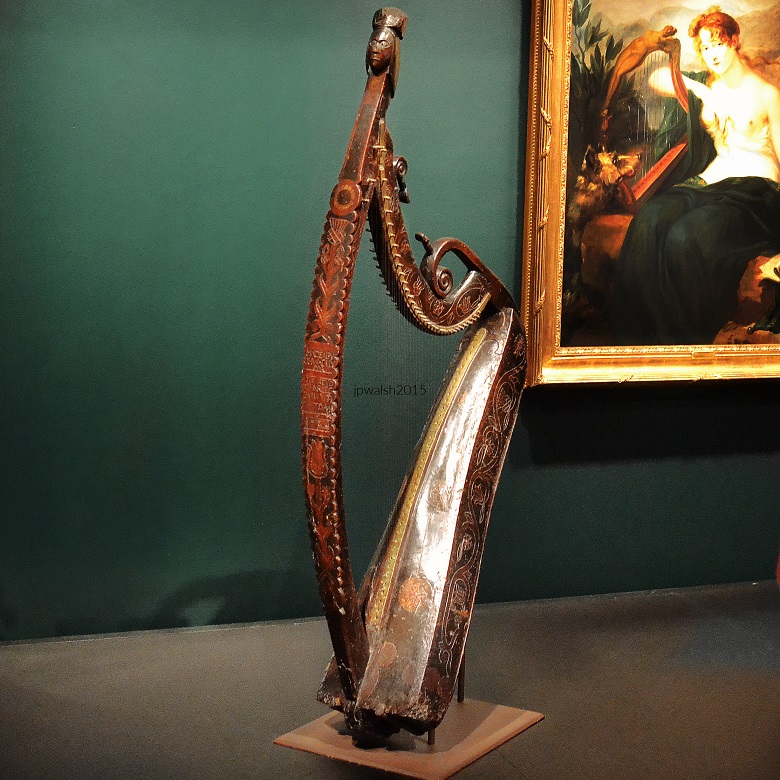
John Kelly, wire-strung Bunworth harp, 1734, Museum of Fine Arts, Boston, and Robert Fagan (c. 1761-1816), Portrait of Lady as Hibernia, c. 1798. Private collection. The Bunworth harp is inscribed: “made by Iohn Kelly for the Revd Charles Bworth Baltdaniel 1734″. The wire-string harp was made by Catholic instrument maker John Kelly for the Reverend Charles Bunworth, also of Baltdaniel, who was the Protestant rector of Buttevant, County Cork. The many aspects of the instrument—from soundbox, harmonic curve, fore-pillar, tuning pegs, and ornamentation and color— invite interest. Though it may be the female head at the top of the harmonic curve that at first most intrigues. (see – https://harp.fandom.com/wiki/Bunworth_Harp and http://www.earlygaelicharp.info/harpmakers/ – both retrieved October 14, 2021). Robert Fagan was an Irish painter who was born in London but spent most of his artistic career in Rome and Sicily (Fagan first arrived into Italy in 1781). Though an expatriate, Fagan’s oil on canvas depicts a woman who represents Ireland careessing the strings of the harp, the country’s national instrument and symbol. Seated next to an Irish wolfhound, she holds a scroll that reads: “Ireland Forever” (“Erin go bragh“). 18th century. Ireland.

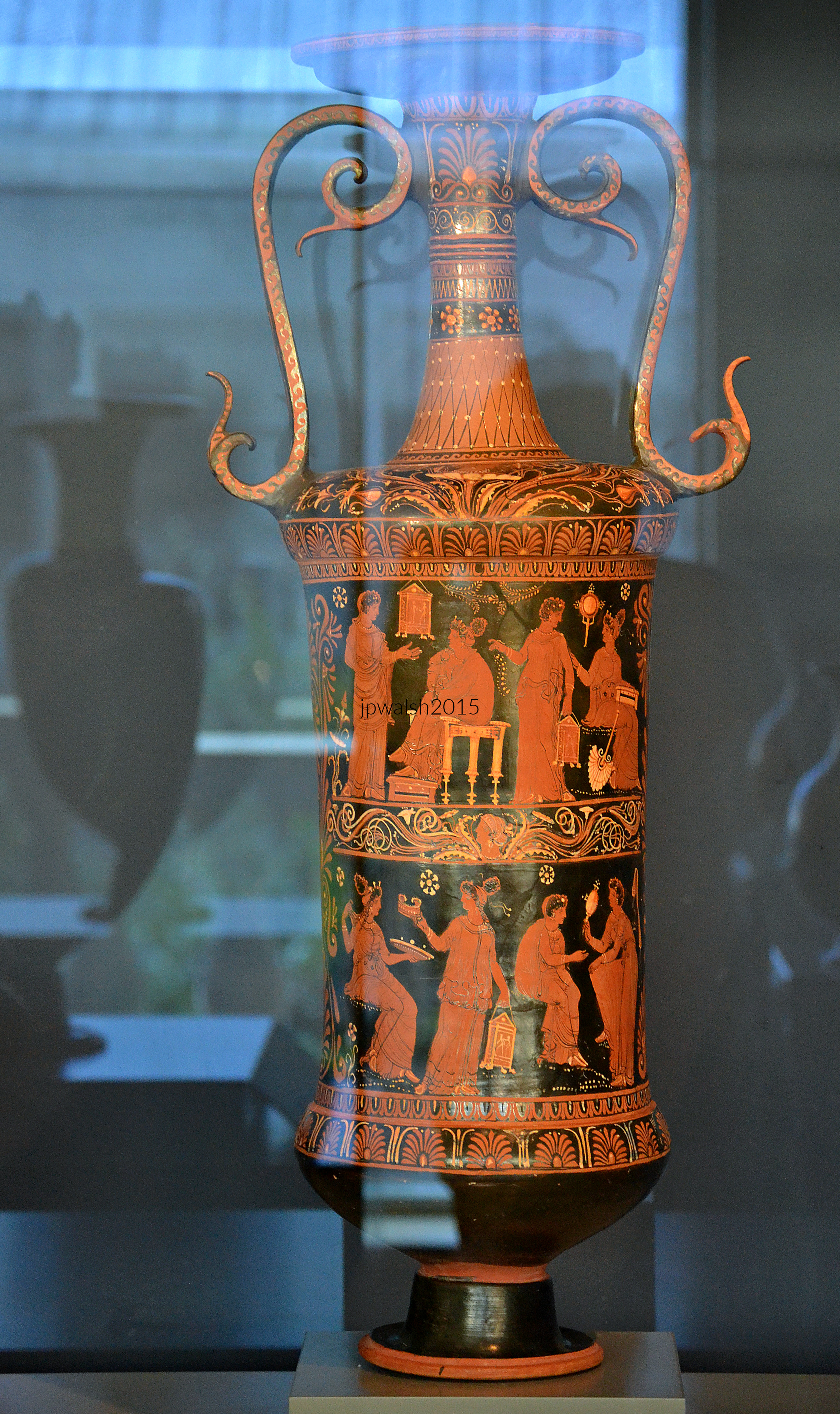


Black-figure painting was the primary technique for decorating Greek vases for over 200 years. The technique started in Corinth and expanded east to Athens in the mid first millennium BCE (700- 500 BCE). In this time period ancient Corinth was, with almost 100,000 people, one of the largest cities of Greece. In 146 BCE the Romans besieged, captured and demolished Corinth. The site lay deserted for almost 100 years until the Romans rebuilt it as a new city populated with around 50,000 Romans, Greeks and Jews. The Art Institute of Chicago.


Headdresses. 19th/20th Century. Africa. The Art Institute of Chicago. The headdresses at the right and at the left are Gelede headdresses. The headdress in the middle is perhaps a Gelde or Efe headdress. The headdress at the left is made of wood and the oldest of the headdresses. It was made in Nigeria or Benin by the Yoruba community in the late 19th/early 20th centuries. Gelede headdresses often portray women. The headdresses in the center and at right depict women. One is wearing a head tie and the other is showing a woman with a plaited hairstyle. These were made in Nigeria by the Yoruba community in the early 20th century. The Gelede festival of the Yoruba community in western Africa is a public spectacle which uses colorful masks that combines art and ritual dance to educate, entertain and inspire worship. Gelede includes the celebration of “Mothers,” a grouping that includes female ancestors and deities as well as the elderly women of the community whose power and spiritual capacity in society is convoked. The Efe is a nighttime public performance held the day before the Gelede.

Mariano Fortuny (1838-1874), African Chief, 1870, oil on canvas, 41 × 32.9 cm (16 1/8 × 12 15/16 in.). The Art Institute of Chicago. African Chief in The Art Institute of Chicago was recently exhibited in a 2017-2018 monographic retrospective at the Prado in Madrid. The show, simply entitled “Fortuny (1838-1874),” reflected the Prado’s holdings of many of this artist’s masterpieces. The Prado’s collection is due to their own acquisitions but mainly the generous bequests of the artist’s oils, watercolors, and drawings by late 19th century Mexican collector Ramón de Errazu (1840-1904) as well as the painter’s son, Mariano Fortuny y Madrazo. Fortuny’s artwork is often Orientalist in style that reflects the many trips he made to North Africa. In his career, Fortuny was noted for his precision of anatomy and archaeological scrupulousness though African Chief tends to the modern broken brush style for which the Spanish artist was prescient following his many trips to Paris. 19th century. Spain. Romanticism.


Bisa Butler (1973-), The Safety Patrol, 2018, by Bisa Butler. Cotton, wool, and chiffon; appliquéd and quilted. The Safety Patrol considers the potential of a group of children as future caretakers of the world led by a boy in a sash with outstretched arms whose duty it is to protect the others. Bisa Butler uses the technique of appliqué quiltmaking to create her work. For the figures, the artist cuts, layers, and pins together fabrics and arranges them on the ground fabric. This comprises the quilt top. Between this quilt top and a backing fabric is a layer of fiber “batting” or stuffing. These layers are stitched to form the quilt with the thread lines part of the structure, texture and details of the image. Butler seeks to use fabric colors and patterns to contribute to the quilt’s subject and narrative. 21st Century. American.


The State Ballroom, Saint Patrick’s Hall, Dublin Castle, oil on wood, c. 1845, signed and inscribed: F. J. Davis/Dublin. St Patrick’s Hall had long been a key location for Ireland’s political, military and social elite to gather (B. Rooney, Creating History, Stories of Ireland in Art, 2016, p.179). These dance proceedings are overseen by the Lord Lieutenant of Ireland and his wife visible at the end of the hall. The 1840s was a period of fashion indulgence. The social ball with attendees in sumptuous costume took place during the period of the Irish famine (1845-1849) where approximately one million people died. Another one million or more emigrated out of the country at the same time, many to the United States. Court dress for gentleman allowed personal expression in fabric and style for the waistcoat. Military officers and political office holders wore court uniforms indicating their position and rank. For ladies, to signal their marital situation, unmarried women wore jewelry and fresh flowers in their hair. Conventionally-minded single ladies added two ostrich feathers behind one ear. Matrons sported a third ostrich feather in their hair and wore lace ribbons.



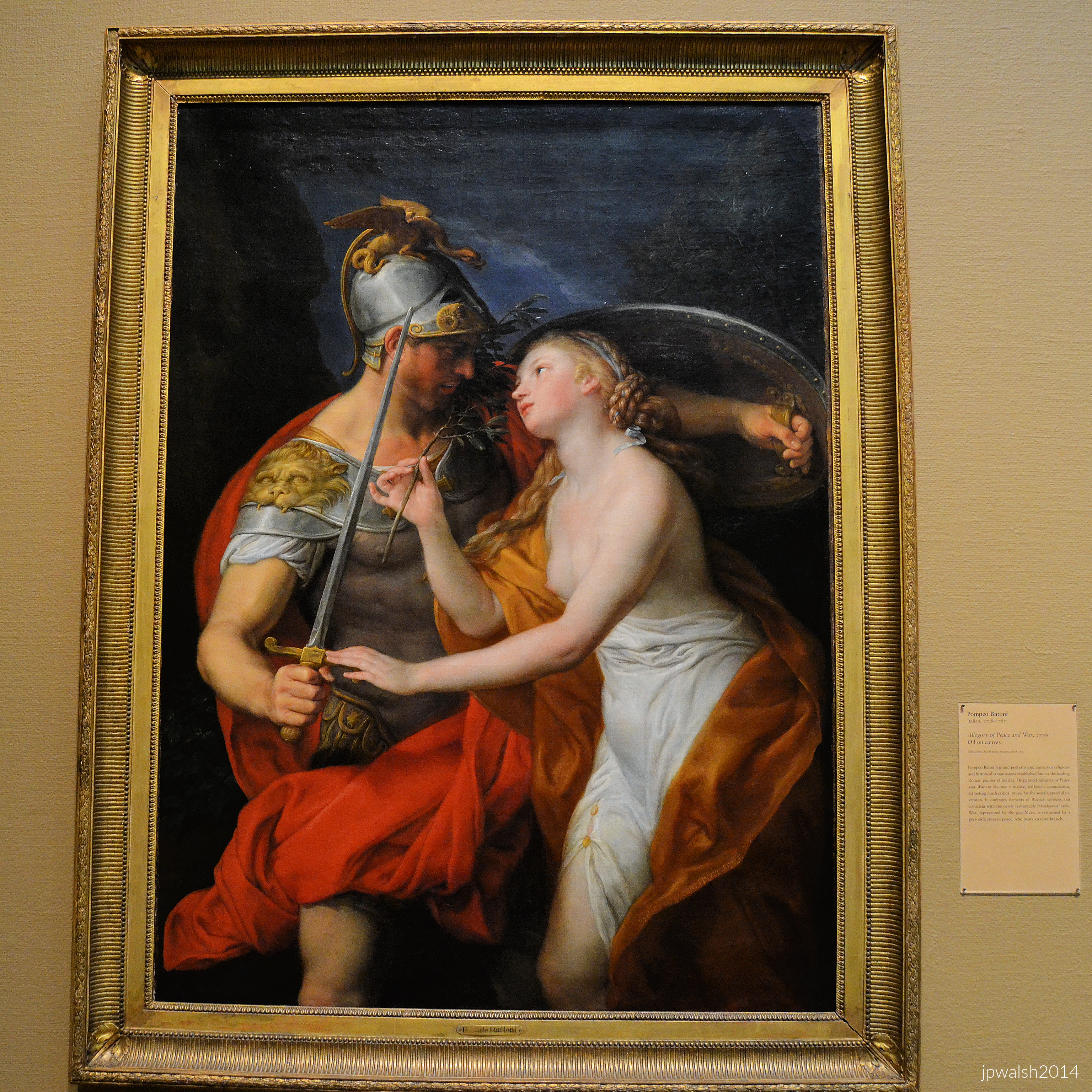
Pompeo Batoni (Italian, 1708-1787), Allegory of Peace and War, 1776, oil on canvas, 53 1/2 × 39 in. The Art Institute of Chicago. 5.73 mb Pompeo Batoni was a leading 18th-century Roman painter. The artist was known for his portraits and commissioned large format historical and religious paintings. The painting entitled “Allegory of Peace and War” represented the mythological figure of the god Mars being restrained by a semi-nude embodiment of peace. Peace lays her hand on War’s sword and bears to him an olive branch. The painting was the result of Batoni’s own invention – no one commissioned this artwork – and it stayed in the artist’s studio until at least the early 1780s.


Statue of Aphrodite, called Venus de Milo because it was found on the Greek Island of Milos in the Aegean Sea. It dates from around 150 B.C. In the Louvre in Paris, the Venus de Milo is one of the most famous statues in the world. Its soft, sensual handling of the marble was characteristic of the late Hellenistic period. She is monumental – the topless, armless Venus de Milo stands, independent of her base and pedestal, six feet five inches in height. In the course of the second half of the 19th century, the Venus de Milo became a favorite statue of Parisians and its visitors. It was around 1875 that it was moved away from the wall which it stood against and placed in the middle of a 17th century room so that it could be viewed completely around. It was accorded this baroque effect first used at Versailles at the start of the 18th century so to isolate monumental sculpture for display to produce maximum impact and enjoyment of the artwork. SOURCES: Masterpieces of the Louvre, Marcel Brion, NY: Abrams; Creators Collectors and Connoisseurs, Niels Von Holst, NY: G.P. Putnam’s Sons.
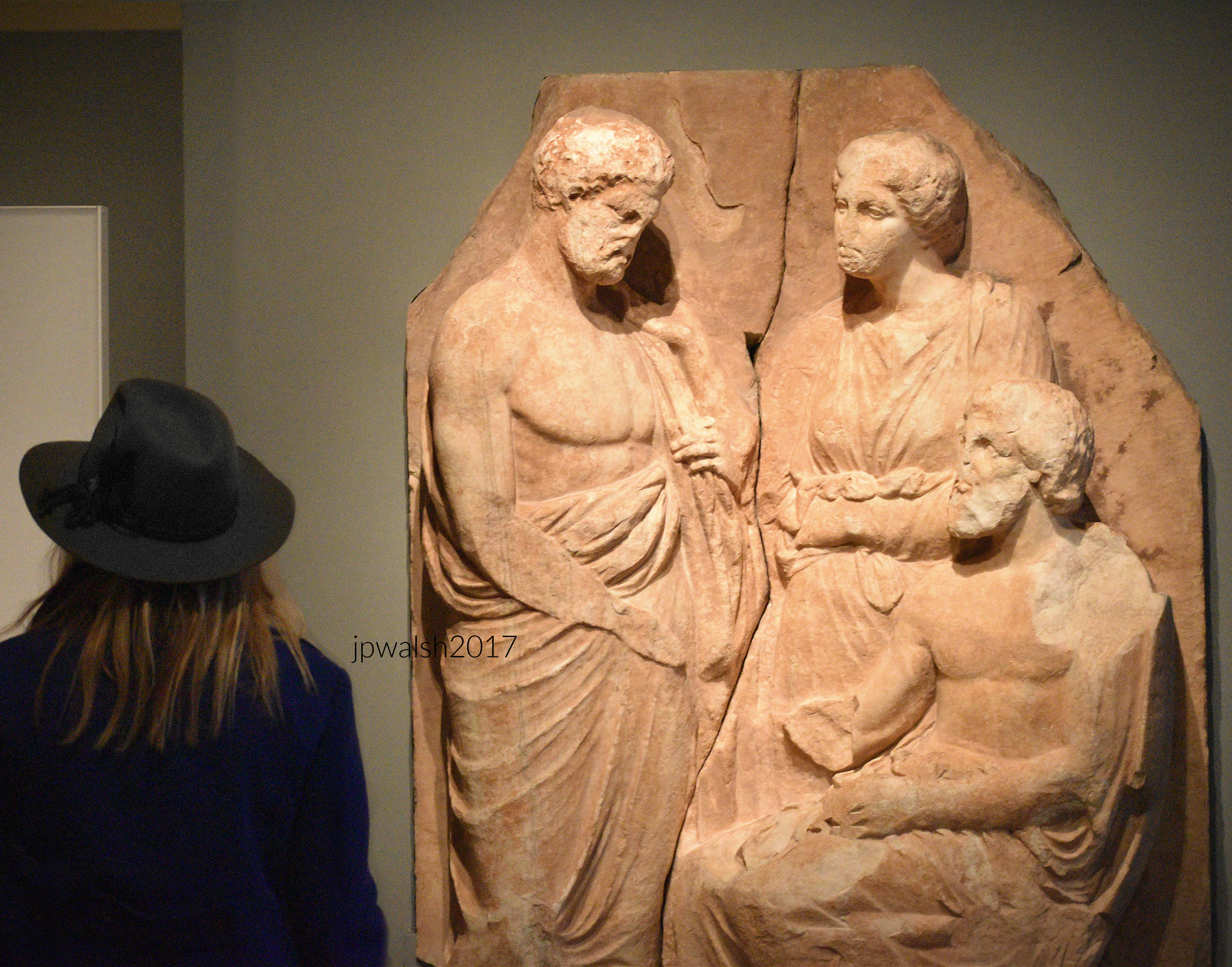
Fragment of a Funerary Monument, c. 330 BCE Greek; Athens, 152.4 × 111.8 × 33 cm (60 × 44 × 13 in.), The Art Institute of Chicago. see- https://www.artic.edu/artworks/55887/fragment-of-a-funerary-naiskos-monument-in-the-shape-of-a-temple – retrieved March 31, 2025. This is one of the fashionable burial markers, whether of Greek or Roman families, encountered by the public in ancient times. Made in all sorts of shapes and sizes, this large stone monument from the 4th century BCE shows three figures carved in very high relief so much so that they are nearly in the round. The two male figures’ gestures of parting indicate that it is a funerary scene. The standing man is likely the person who has died and this funerary marker depicts his sharing a final farewell with loved ones – their relationship, obviously close, after 2500 years, completely unknown.
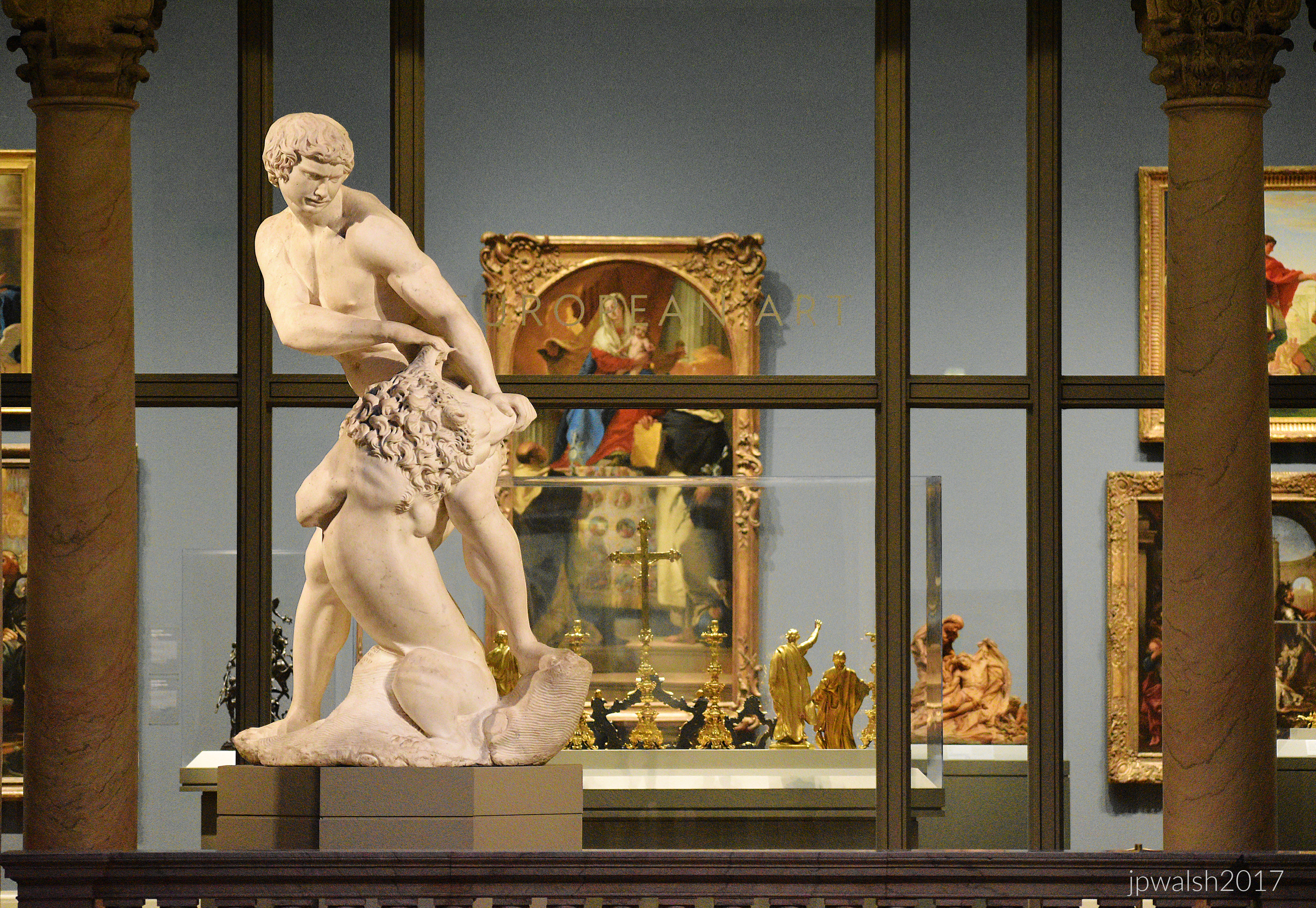
Cristoforo Stati (Italian, 1556–1619). Samson and the Lion, 1604-1607, marble, 210 × 112 × 84 cm (82 11/16 × 44 1/8 × 33 1/8 in.). The Art Institute of Chicago. see – https://www.artic.edu/artworks/146875/samson-and-the-lion – retrieved April 1, 2025. Stati studied in Florence under Giambologna (1529-1608). In 1601, Tuscany’s archduke, Ferdinando I de’ Medici (1549-1609), sent a sculpture of Samson by Giambologna to the palace of Spain’s prime minister in Valladolid as a gift. Later, Stati’s sculpture of Samson and the Lion was also sent to Spain as a complementary gift and installed in Madrid. The work was in a Swiss private collection before it was acquired by The Art Institute of Chicago in 1996.

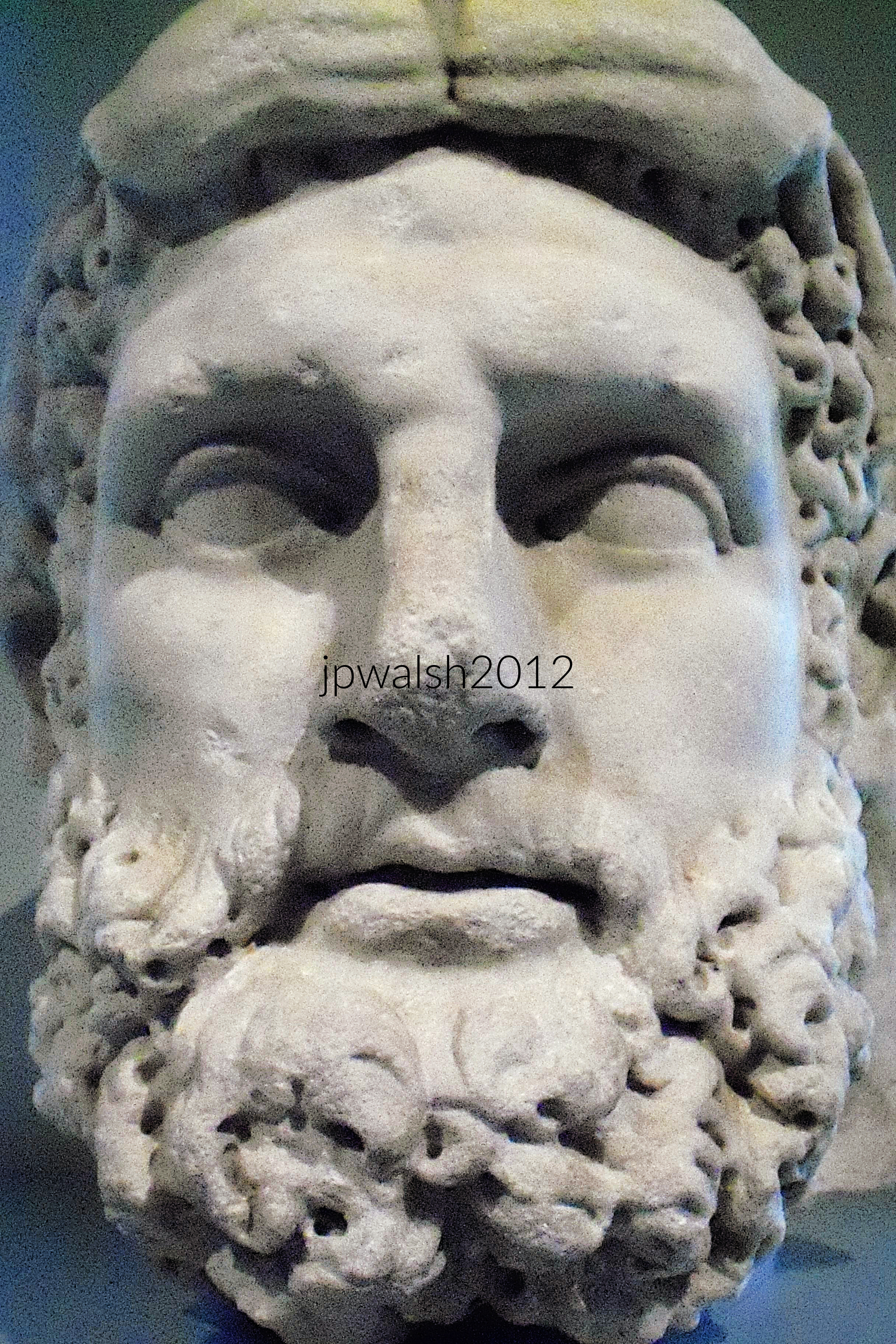
Head of Hercules. Roman, First Century CE. The Art Institute of Chicago. The Romans adapted the stories of Hercules’ superhuman feats of strength from the Greeks. The earlier Greeks viewed him as a demigod, the later Romans saw him as one of their hero figures.
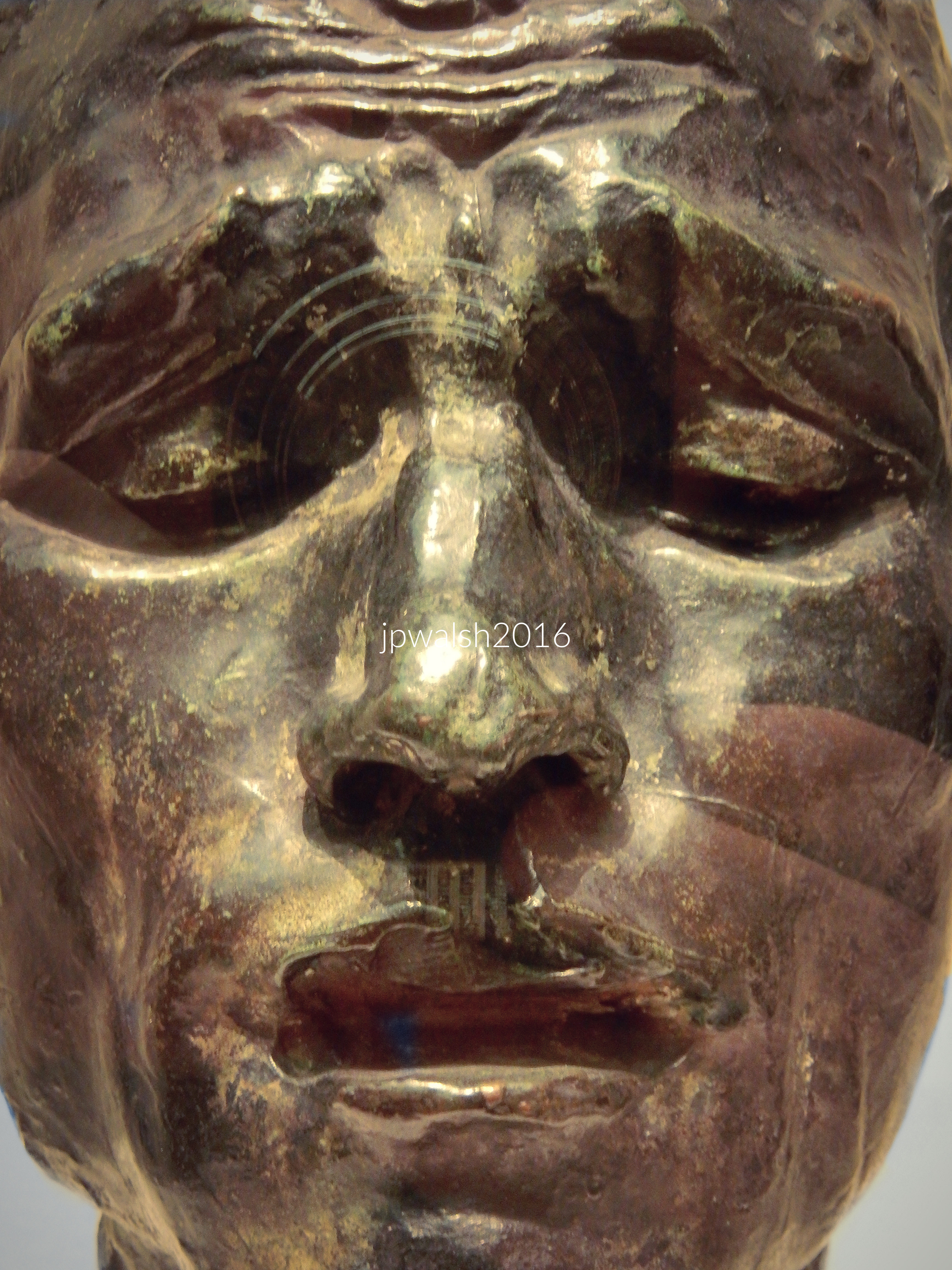
Head of Pierre de Wissant (1889) by Auguste Rodin, part of The Burghers of Calais (1884–89) in the collection of the Art Institute of Chicago, originates from the larger sculptural ensemble commemorating the six citizens of Calais who offered themselves as hostages to the English during the Hundred Years’ War. When displayed independently, the head emphasizes Rodin’s exploration of psychological intensity and human vulnerability. The sculpture conveys a moment of profound emotional anguish: the downward gaze, deeply furrowed brow, and partially opened mouth collectively articulate a state of acute despair and inner turmoil. Through these expressive distortions, Rodin captures not only the historical gravity of the subject’s sacrifice but also the universal experience of psychological suffering.

Auguste Rodin (1840-1917), A Burgher of Calais (Jean d’Aire), modelled 1889, plaster, 82×26 in. The figure was exhibited in the 1893 World’s Columbian Exposition in Chicago and entered the Art Institute’s collection that same year. The monument includes six individualized figures on a heroic scale and was commissioned in France in 1884. Completed in 1889 by Rodin the monument was installed in Calais’s town hall square in 1895. Rodin depicts Jean d’Aire, one of the town fathers, in sackcloth with the keys of the city, surrendering to the English during the Hundred Years War, in exchange for their lifting a nearly year-long siege that led to the starvation of the city’s inhabitants.. see – Monument to The Burghers of Calais | Musée Rodin – retrieved December 15, 2025.