Tag Archives: My Photography – Architecture & Design

My Architecture & Design Photography:  SKYLINE.

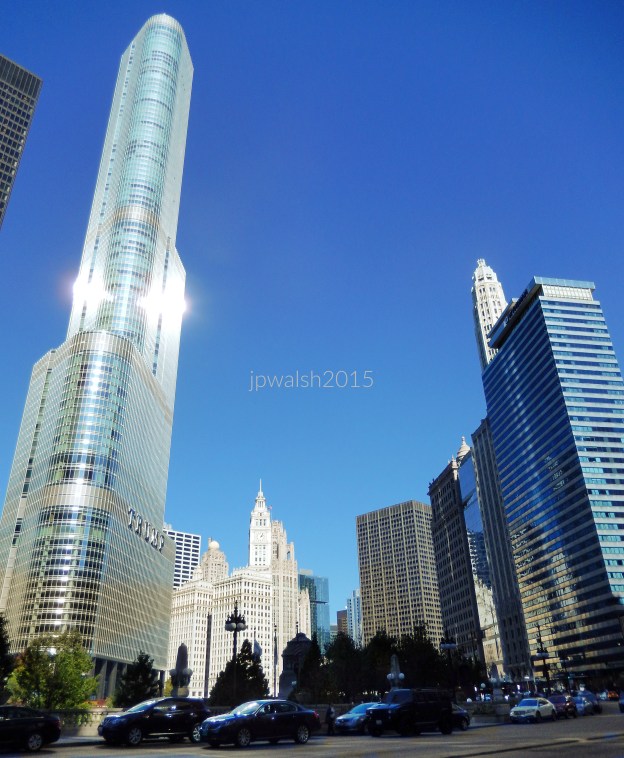
Feature Image: October 2015. Chicago. 5.85mb DSCN1452 (1). Author’s photograph.

October 2015. Chicago. 5.85mb DSCN1452 (1). Author’s photograph.

Wacker Drive and Wabash Avenue looking east, Chicago. From left: Trump International Hotel and Tower, Adrian Smith, architect (2009).

Wrigley Building, Graham, Anderson, Probst & White, architect (1921).

Tribune Tower (partially hidden), Howells & Hood, architect (1925).

401 N Michigan Avenue (Equitable Building), Skidmore, Owings & Merrill, architect (1965/Facelift 1992/Renovation 2016). The plaza (Pioneer Court) of the Miesian 401 N. Michigan draws over 22,000 pedestrians daily from busy Michigan Avenue. Apple’s global flagship store shares the plaza that provides immediate access to the Riverwalk via the Spanish Steps. see – 401 N Michigan Ave, Chicago, IL 60611 – Office for Lease | LoopNet – retrieved February 13, 2026.

360 N. Michigan Avenue (London Guarantee & Accident Building), Alfred S. Alschuler, architect (1923).

85 E. Wacker Drive (London House).

75 E. Wacker (formerly Lincoln Tower, originally Mather Tower), Herbert Hugh Riddle, architect (1928) and Harry Weese & Assocs. (Renovation/1983).

71 E. Wacker Drive (The Royal Sonesta Chicago Downtown, formerly Executive House Hotel), Milton Schwartz, architect (1959). 71 E. Wacker Drive is the first high-rise hotel in Chicago since the Great Depression. see – Executive House Hotel, 71 E. Wacker, Chicago – retrieved February 13, 2026.
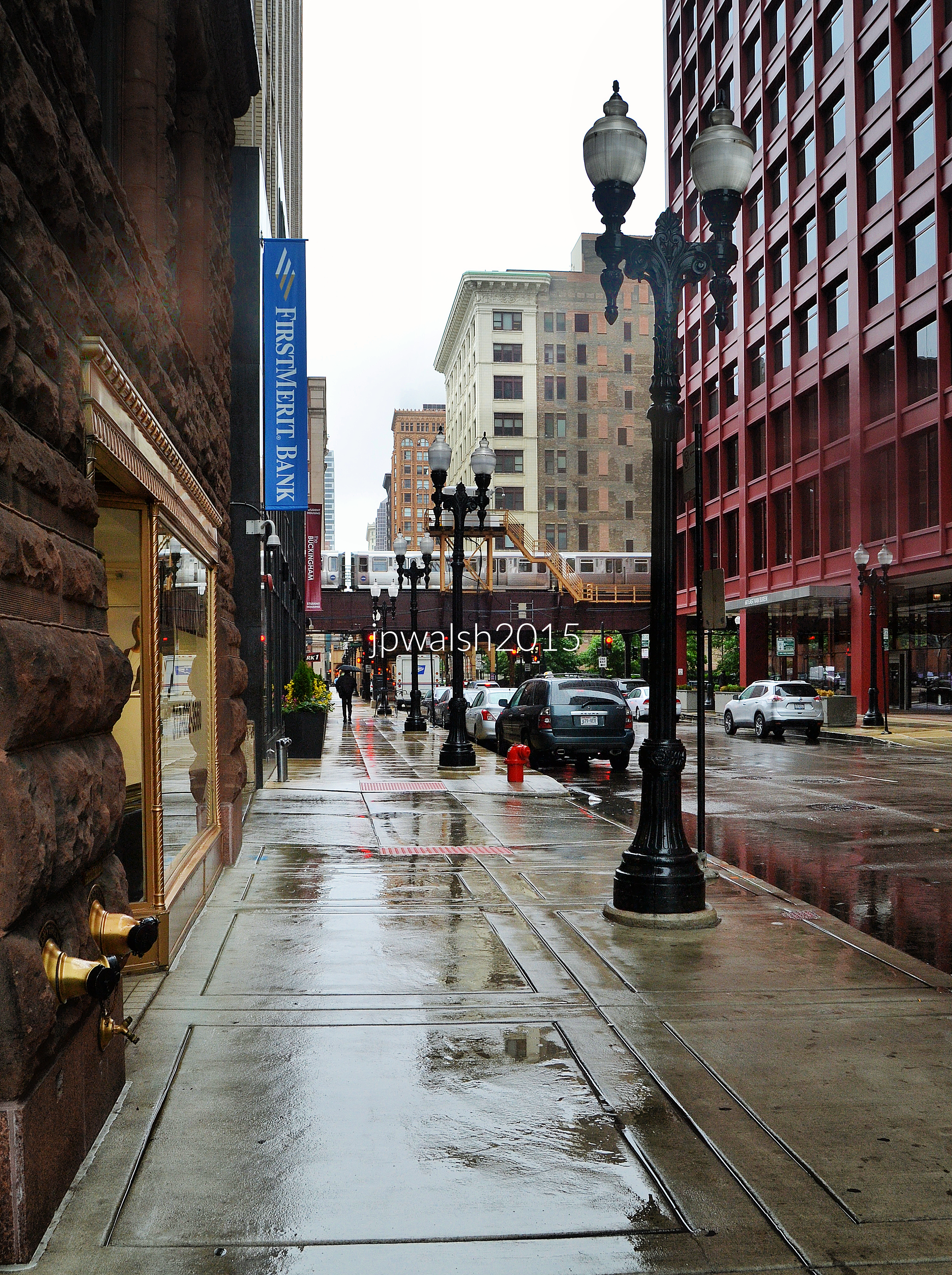
May 2015. Chicago. 99% 7.92mb DSC_0468. Author’s photograph.

Michigan Avenue and Van Buren Street looking west on Van Buren, Chicago. Left: Chicago Club, 81. E. Van Buren, Granger & Bollenbacher, architect (1929).

Right: CNA Center (333 S. Wabash Avenue), Graham, Anderson, Probst, architect (1972).

Near background: 333 S. State, DePaul Center (formerly Goldblatt’s, originally Rothschild & Co. Store), Holabird & Roche, architect (1912), renovation 1993.

Far background: Fisher Building (343 S. Dearborn Street), D.H. Burnham & Co., architect (1896) and Northern Addition, Peter J. Weber, architect (1907). Restoration and adaptive Reuse, 2001.
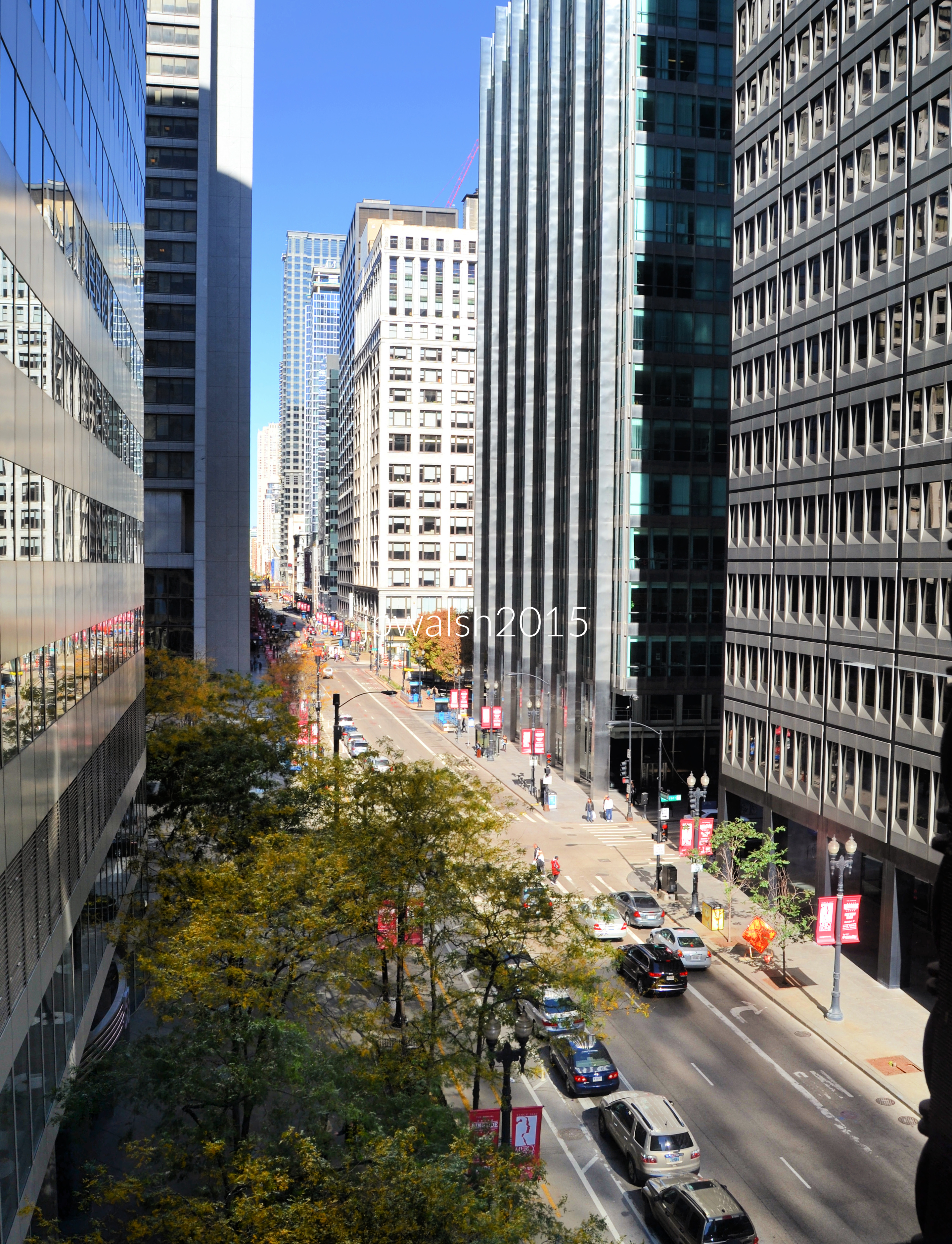
October 2015. Chicago. 4.28mb DSC_0061 (1) Author’s photograph.

Adams and Dearborn Streets looking north along Dearborn, Chicago. Left: 55 Xerox Center, 55 West Monroe, Chicago, Helmut Jahn, architect (1977-1980). Behind (partially hidden): Chase Tower (originally First National Bank of Chicago), Perkins & Will; C.F. Murphy Assocs. (1969).

Right: 33 W. Monroe, Skidmore, Owings & Merrill, architects (1980). Behind: Inland Steel Building, 30 W. Monroe, Skidmore, Owings & Merrill, architects (1954-1958).

Background: 2 N. State/1 N. Dearborn Streets (originally, Boston Store), Holabird & Roche (1906; 1917), renovation (2001).

November 2015. Chicago. 3.77mb DSC_0384 (1). Author’s photograph.

Halsted Street between Adams Street and Jackson Boulevard looking east, Chicago. Union Station Tower (MidAmerica Commodity Exchange), Skidmore, Owings & Merrill, architect (1971). Willis Tower (originally, Sears Tower), Skidmore, Owings & Merrill, architect (1974).

December 2015. Chicago. 2.40mb DSC_0577 (2). Author’s photograph.

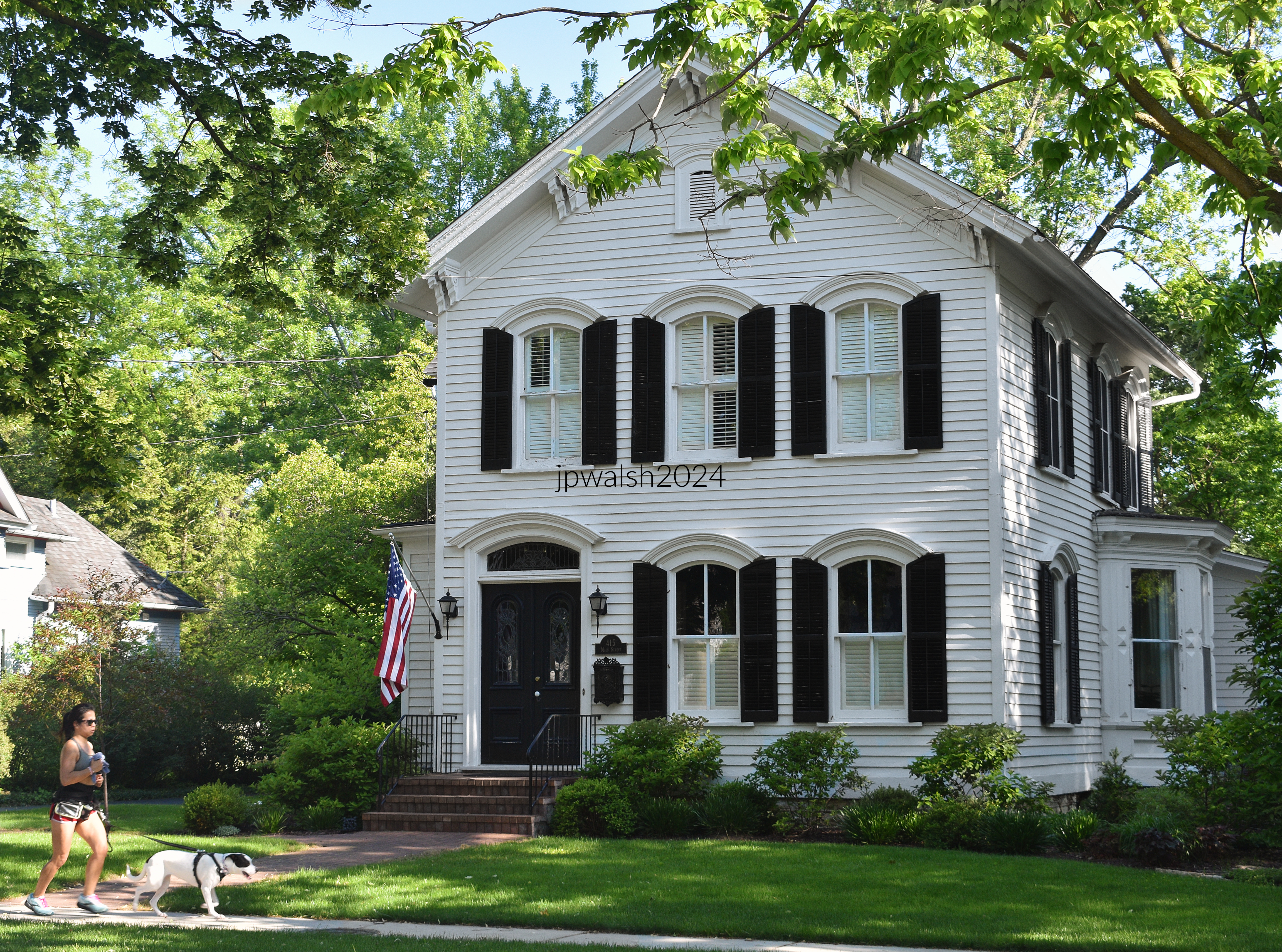
Balbo and Wabash Avenues looking north on Wabash. Left: (with Columbia College wall sign) 33 Ida B. Wells Drive building, Alfred S. Alschuler, architect, (1925/1926). DePaul University College of Law, 25 E. Jackson and, beyond, 230 S. Wabash, a 21-story building built in 1910.

Center: Trump International Hotel and Tower, Adrian Smith, architect (2009).

At right: Roosevelt University: Auditorium Building, Adler & Sullivan, architect (1887-1889) and The Wabash Building, a 32-story zigzagging glass structure, Christopher Groesbeck, AIA, architect (2012). CNA Center (333 S. Wabash Avenue), Graham, Anderson, Probst, architect (1972).
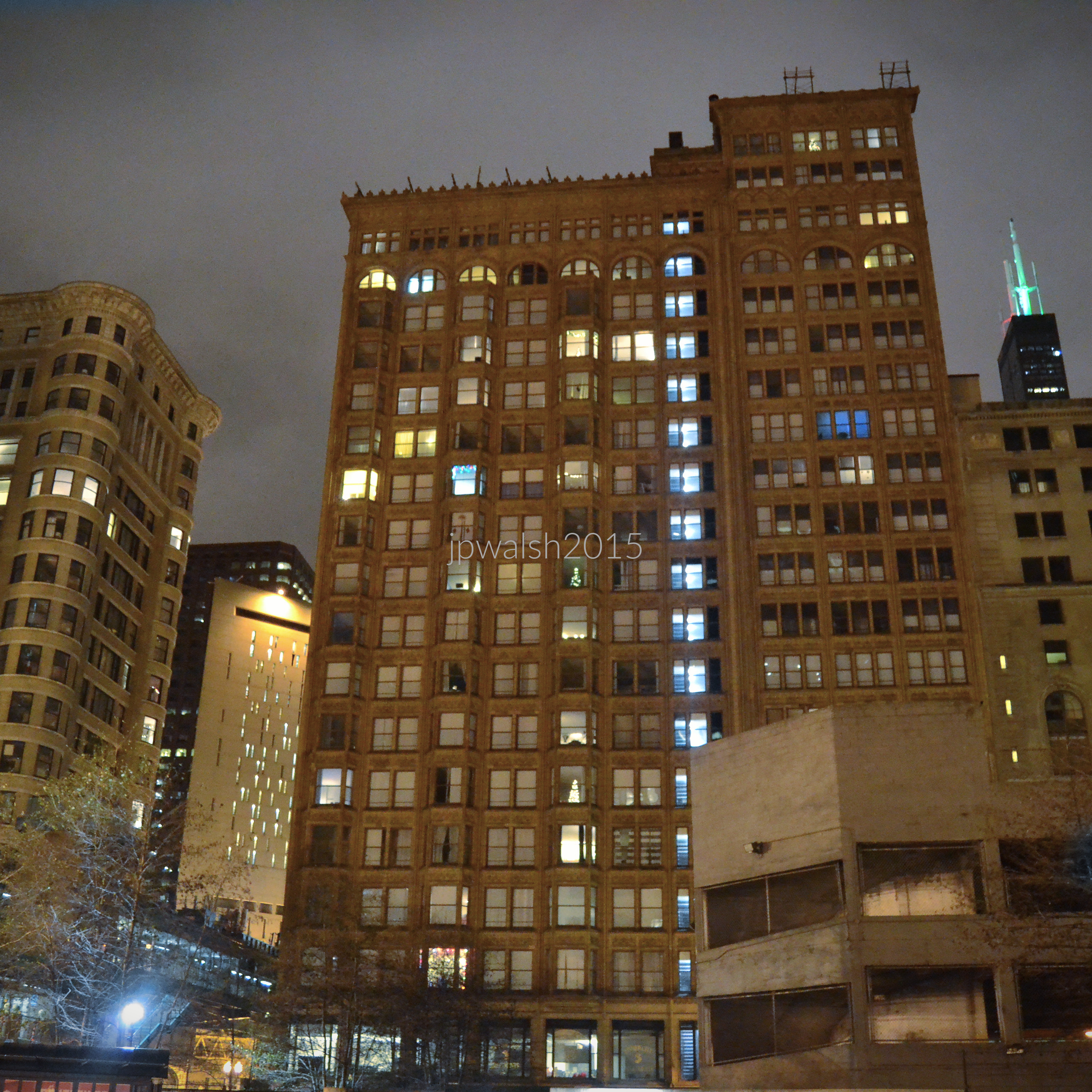
December 2015. Chicago 3.60mb DSC_0986 (2)

From left: Old Colony Building, 407 S. Dearborn Street, Holabird & Roche, architect (1894), Chicago Metropolitan Correctional Center, 71 W. Van Buren Street, Harry Weese & Associates (1975), Fisher Building, 342 S. Dearborn Street, D.H. Burnham, architect (1896) and Northern Addition, Peter Weber, architect (1907) and Sears Tower, 233 S. Wacker Drive, Skidmore, Owings & Merrill, architect (1974).
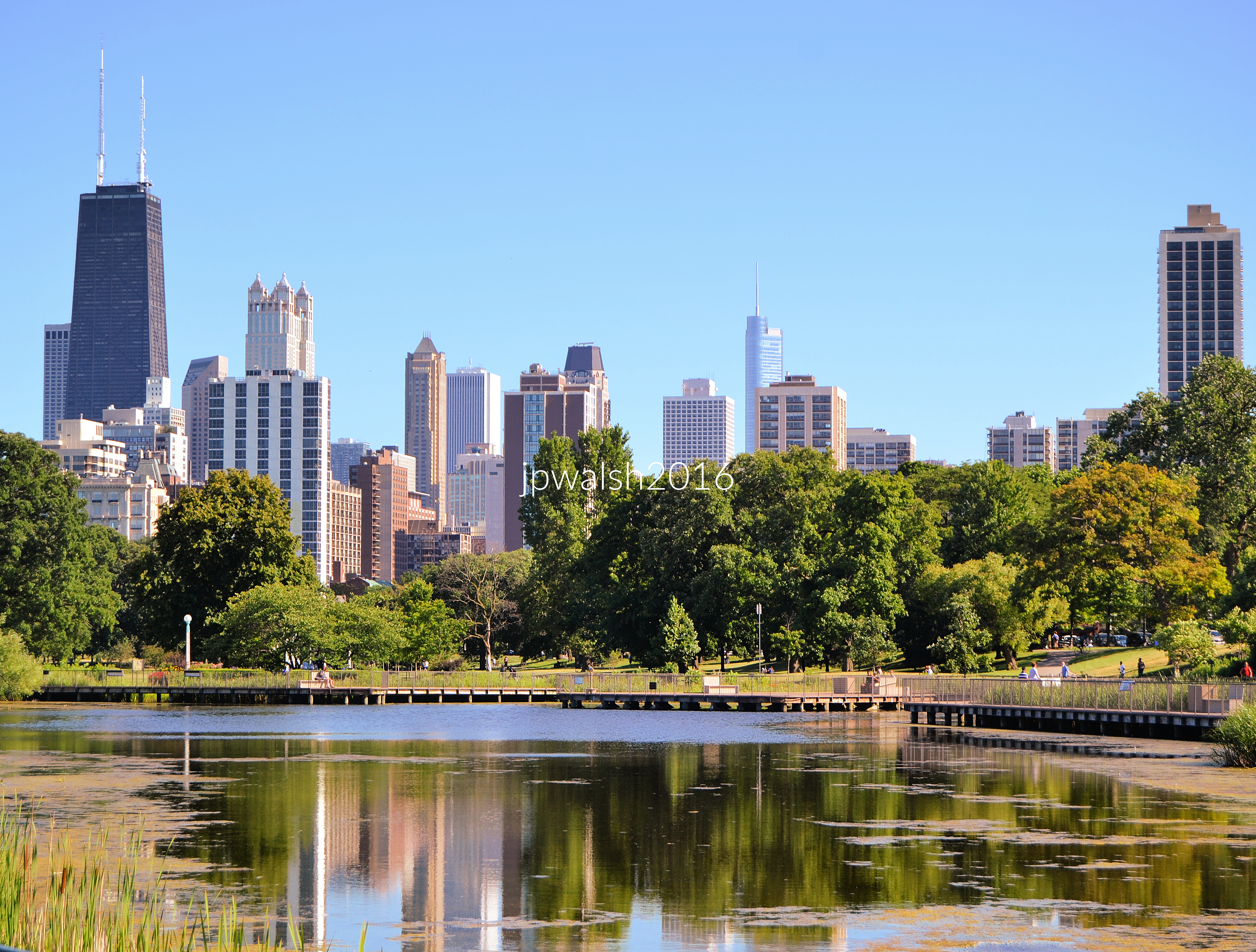
July 2016. Chicago 5.33mb DSC_0743 (1)

Lincoln Park looking over South Pond towards downtown. At left: (partial view) Water Tower Place, 845 N. Michigan Avenue, Loebl, Schlossman & Hackl, architect (1976); John Hancock Building, 875 N. Michigan Avenue, Skidmore, Owings & Merrill, architect (1969); 900 North Michigan Avenue, Kohn Pedersen Fox, architect (1989); Park Tower, 800 N. Michigan Avenue, Lucien LaGrange & Assoc., architect (2000); The Aon Center (formerly, Amoco Building; originally, Standard Oil Building), 200 E. Randolph Street, Edward Durell Stone; Perkins & Will, architects (1973); Trump International Hotel and Tower, Adrian Smith, architect (2009); At right: James House, 1560 North Sandburg Terrace, Solomon Cordwell Buenz, architect (1971).

My Architecture & Design Photography: VILLAGE “ART” THEATRE (1916), 1548-50 N. Clark Street, Chicago, Illinois, 60610. Designed by German-born Adolphe Woerner (1851- 1926) in Classical Revival/Renaissance Revival styles. One of Chicago’s oldest neighborhood movie palace chain theatres, it was demolished in 2018 for condos. Its decorative façade was saved. (9 Photos & Illustrations).

FEATURE Image: February 2018. Village “Art” Theatre, 1548-50 N. Clark Street, Chicago, Illinois 60610. The use of masks had been used in theatre since ancient times. They were usually tied to their dramatic source material and the inherent psychology of the characters. The Landmark Designation Report for the Village Theatre described this polychrome character head with musical instruments as “singing” in honor of the neighboring Germania Club, a German social club with its origins in men’s choral music. The head also wears a Baroque-style “wig” of oak leaves and acorns. In Germany, oak trees are revered, and acorns are a symbol of good luck. A decorative keystone on the theater’s round-arched window also has an acorn ornament. 88% 7.94mb DSC_4799 Author’s photograph.

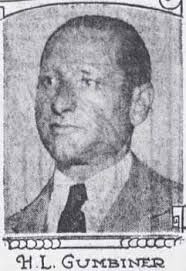
Designed by architect Adolphe Woerner (born Stuttgart, Germany 1851- 1926), the Village (Art) Theatre opened as the Germania Theatre on July 29, 1916 and closed in its 91st year in March 2007. The building was erected by German-born Frank Schoeninger exclusively as a movie theater for $75,000 (about $2.2 million in 2025) and leased for an annual $7,000 rent (about $205,000 today) to Herman L. Gumbiner (Germany, 1879- 1952, Santa Monica, Calif.) in a 10-year contract with his company, The Villas Amusement Company (later Gumbiner Theatrical Enterprises). By 1910, buildings erected solely for the purpose to showcase motion pictures were becoming increasingly popular as the appetite to consume the latest silent motion pictures out of Hollywood was booming everywhere. These neighborhood movie houses, larger than dingy storefront nickelodeons and yet smaller than flamboyantly ornate vaudeville theatres, had movie “palace” touches while fitted conveniently into Chicago’s many local commercial strips. Nearly all of these first-generation movie theaters in Chicago have been demolished or remodeled for other purposes including those larger-scale theaters developed by major theater operators such as Balaban and Katz, Lubliner and Trinz, and the Marks Brothers. While those palatial theatres could hold between 2,000 and 4,000 movie-goers the Village Theatre, one of the last and best first generation movie houses to survive for so long, originally held 1,000 spectators. Originally named the Germania Theater because it was next door to the Germania Club, it looked to attract affluent club members to its flicks.

The Germania Theatre was built in 1916 on Frank Schoeninger’s open land pictured above between the Germania Club (completed in 1889) and his tavern and hotel on the corner of Clark Street and North Avenue. In 1986 the Germania Club, citing the dwindling numbers of members, finally disbanded. Public Domain.

Herman Gumbinger was a major film exhibitor who was busy in Chicago building his independent theatre chain in the 1910’s, with several new movie house projects and acquisitions throughout the city’s northside primarily. After building Chicago’s first independent movie house chain in the teens, Gumbinger relocated to Los Angeles, California, in 1921 where he built the famous Los Angeles Theatre in the Broadway Historic Theatre District of Downtown L.A. Erected at a cost of over $1.5 million ($31 million today) and designed by renowned movie theatre architect S. Charles Lee (1899-1990) Gumbinger’s theatre premiered Charlie Chaplin’s City Lights. Gumbinger Theatrical Enterprises finally dissolved in 1943.

Herman Gumbinger (1879-1956), c. 1924, built Chicago’s first independent movie chain, including what became the Village Art Theatre. By the end of the 1920s, Chicago had more than thirty of these movie palace theaters. Among its holdings, Herman Gubinger and his brothers operated the New Blaine which was renamed and is today the Music Box Theatre. Public Domain.

The Germania was one of the first-generation movie theatres built at the intersection of three Chicago neighborhoods – Gold Coast to the south and east, Old Town to the north and west and Lincoln Park to the north. An architectural mix of styles including Classical Revival (triangle pediments, pilasters and cornice with dentils fashioned in terra cotta) and Renaissance Revival (rusticated exterior and round-arched windows with keystones), the movie house also incorporated Germanic symbolism in its details reflecting the area’s then prominent ethnic group. During World War One, in a wave of anti-German sentiment, The Germania Club renamed itself the Lincoln Club. It changed its name back in 1921. The Germania Theatre changed its name to the Parkside and never looked back. In 1931 until 1962 it was known as the Gold Coast theatre. Meanwhile, prohibition closed down Frank Schoeninger’s tavern and he left for Wisconsin. In the 1960’s the theatre was updated and renamed the Globe Theatre. In 1967 the building was renamed the Village Theatre after it survived being demolished by the nearby Sandburg Village development.

Sandburg Village is a Chicago urban renewal project consisting of eight high-rise buildings, a mid-rise building and 60 townhomes and artists’ lofts. The development was first occupied In 1963 and completed in 1971. In the early 1960’s the Village Theatre was to be incorporated into the project until its landowner refused to sell. PHOTO: “20190323 08 Carl Sandburg Village (49490506022)” by David Wilson from Oak Park, Illinois, USA is licensed under CC BY 2.0.
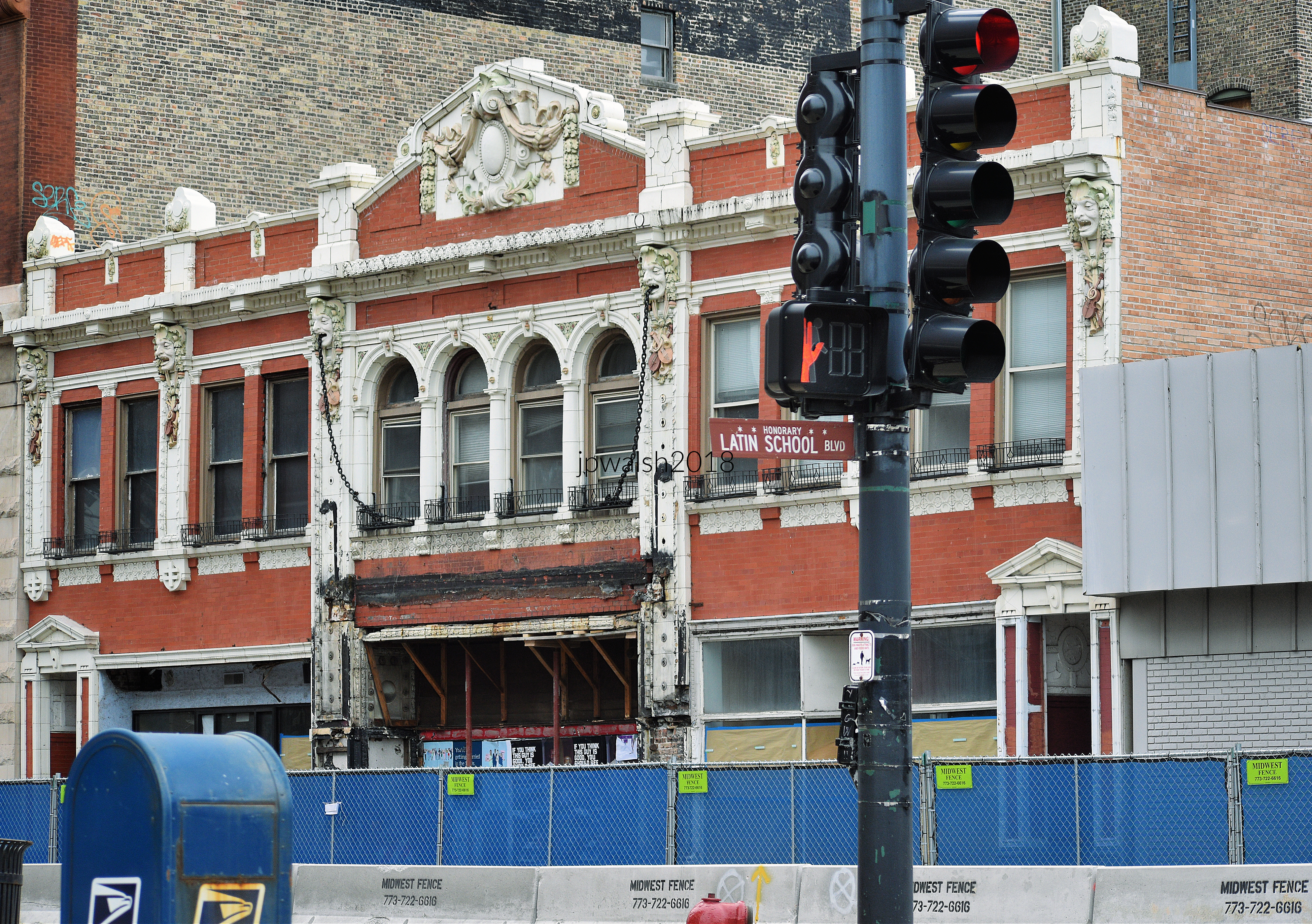
February 2018. The Village Theatre in the last days before its demolition. Its marquee from the 1960’s has been removed. The Village Theatre sat across the street from Latin School of Chicago at North and Clark Streets in Gold Coast/Old Town. In its Landmark Designation Report, the Village Theatre façade is described as having “a symmetrical arrangement, with a central theater entrance and separate entrances to the upstairs offices at opposite ends of the building. Each upper-story entrance has a deeply-recessed alcove lined with brick and white, carved-wood panels. A limestone slab step, inset with hexagonal tiles, is inside each alcove. Each alcove is framed with white terra cotta and brick pilasters on a base of gray terra cotta, made to imitate granite. The pilasters are topped with a triangular, white terra-cotta pediment.” 70% 7.93 mb DSC_4797. Author’s photograph.

The original two-story façade of red pressed brick and white beige glazed terra cotta decoration competed with a sizeable modern marquee that was removed before its demolition in 2018. Since after college I lived in Chicago for about 15 years, I recall seeing several films here. The ones I can remember seeing at the Village Theatre were Wall Street, House of Games, Fatal Attraction, Russia House, Michael Collins, and The Red Violin, among others of that period. In early 1991 the interior of the theater was divided into four screens and I didn’t stop going to movies there but just not as frequently as I did before. In April 2018, the Village Theatre and neighboring buildings along North Avenue were completely demolished to make way for construction of a condominium building. The ornate Clark Street frontage was stabilized as everything else crumbled to dust around it. The façade was repurposed to serve as the entrance for the new condo development known as Fifteen Fifty on the Park with units priced at opening at $1.625 to $5.85 million.

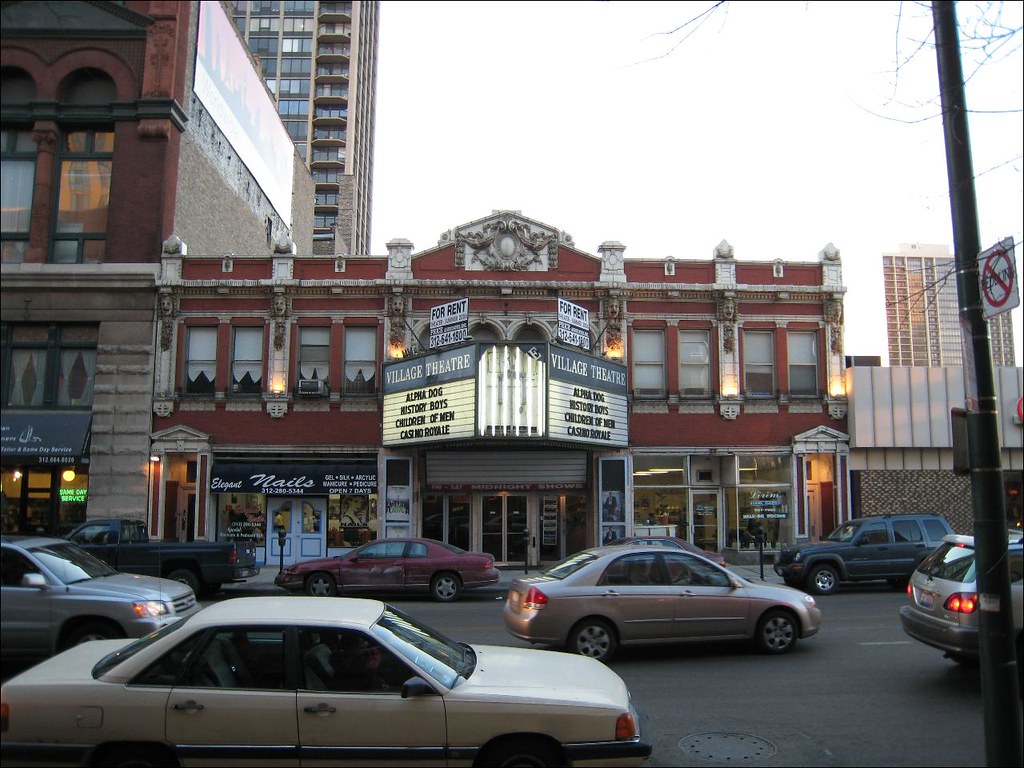
There had been at least three marquees for the Village Theatre: the original vertical Germania sign that was taken down almost as soon as it went up owing to anti-German sentiment in World War I; a horizontal, awning-style marquee like the one at the Biograph Theater (1914) at 2433 N. Lincoln Avenue in Chicago that was put up in conjunction with its existence as the Gold Coast theatre; and this prow-shaped marquee (pictured above) with steel-and glass doors believed to be part of the mid 1960s modifications when the movie house was the “Globe.” PHOTO: “Germania (Parkside, Gold Coast, Globe, Village) Theatre, Chicago, IL” by BWChicago is licensed under CC BY-NC 2.0.
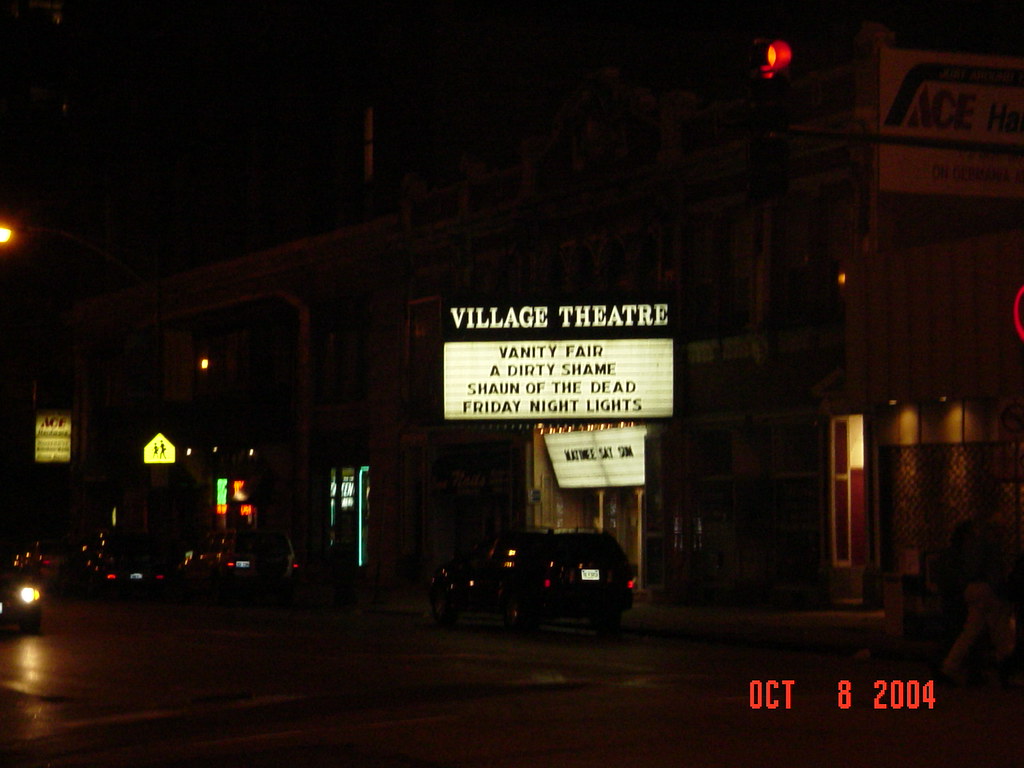
The Village Theatre took the moniker Village Art Theatre after The Chicago International Film Festival used the Village Theatre as a venue to screen “art house” films starting in 1969. PHOTO: “Village Art Theatre” by BWChicago is licensed under CC BY-NC 2.0.
The rear of the 102-year-old Village Theatre before its impending destruction in 2018.  Germania (Parkside, Gold Coast, Globe, Village) Theatre, Chicago, IL” by BWChicago is licensed under CC BY-NC 2.0.
October 2018. Author’s collection.

This explanatory article may be periodically updated.

SOURCES:

https://www.chicago.gov/content/dam/city/depts/zlup/Historic_Preservation/Publications/Village_Theatre.pdf – retrieved May 3, 2025.

https://chicago.curbed.com/2019/2/28/18233421/condo-construction-village-theater-fifteen-fifty-park – retrieved May 3, 2025.

https://www.urbanremainschicago.com/news-and-events/2018/06/03/chicagos-historic-village-theater-reduced-to-facedectomy-after-auditorium-demolished?fbclid=IwAR1IIsjQszVYuZ2mMhNy5QD1LHLP4UcAW-SmxegKhc2xZ2BeTLJUAng4YmY – retrieved May 3, 2025.

https://cinematreasures.org/theaters/409 – retrieved May 3, 2025.

https://www.findagrave.com/memorial/107764067/adolf-woerner – retrieved May 3, 2025.

https://buildingupchicago.com/tag/avoda-group/ – retrieved May 3, 2025.

https://www.friedrich-verlag.de/friedrich-plus/sekundarstufe/schultheater/theatertheorie/maskerade-im-theater-und-im-alltag-3524 – retrieved May 3, 2025.

https://www.findagrave.com/memorial/23567141/herman_louis-gumbiner# – retrieved May 3, 2025.

https://www.chicagohistory.org/germania-club/ – retrieved May 5, 2025.

My Architecture & Design Photography: Founded in pioneer Hanover Township in 1852 for German settlers, Immanuel United Church of Christ on Old Church Road in Streamwood, Illinois is today in the Chicago suburbs. (4 Photos & Illustrations).

FEATURE Image: March 2016. Immanuel United Church of Christ, 1500 Old Church Road, Streamwood, Illinois. Built in 1868, it is the congregation’s second house of worship on the site and remains the congregation’s active sanctuary. 7.49mb _0979

IMMANUEL UCC in Streamwood, Illinois, has a unique history within the context of the similar histories of other early settlers in Northern Illinois beginning in the 1820’s. Though diverse settlement throughout this part of the state was feverish (Chicago incorporated as a city in 1837), the prairie landscape expanse remained sparsely populated into the 1830’s and 1840’s with its mixture of farms, industry, and trade. The Streamwood church and burial grounds were founded in 1852 when W.G. Hubbard donated its five acres of land for “the sole and exclusive use of erecting a house thereon for religious worship and a burying ground.”

March 2016. Immanuel UCC is today part of a complex that includes newer church-related buildings. https://streamwoodiucc.org/home/about-us/church-history/ – retrieved January 30, 2025.

It was a group of 13 farmers who organized the church and chose its name: Deutsche Vereingigte, Evangelische Lutherische Immanuael’s Germeinde. Apparently, as Illinois was the edge of the Western frontier, in those days there wasn’t anyone around, or very many, to enjoin them to state it in English. Of course, it translates as “United Evangelical Lutheran Immanuel Congregation.” Today, Streamwood is in Cook County and sits just on the other side of DuPage County to the south that broke off from Cook and was established in its own right in February 1839. The original relatively open site today is surrounded by tract housing and other modern development for as far as the eye can see or vehicle drives with Elgin about 9 miles to the west.

1851 map of Cook and Dupage Counties. Hanover is between Elgin and Schaumburg Townships. Public Domain.

Streamwood, incorporated in 1957, is one of three communities that comprise the so-called “Tri Village” area that includes Bartlett and Hanover Park. This part of Northern Illinois had served as a seasonal hunting and camping ground for the Cherokee, Miami, Potawatomi, and Ottawa Indians. In their turn, the land had been claimed by France, England, Spain, Virginia, and the Northwest Territory before it became part of the State of Illinois in 1818.

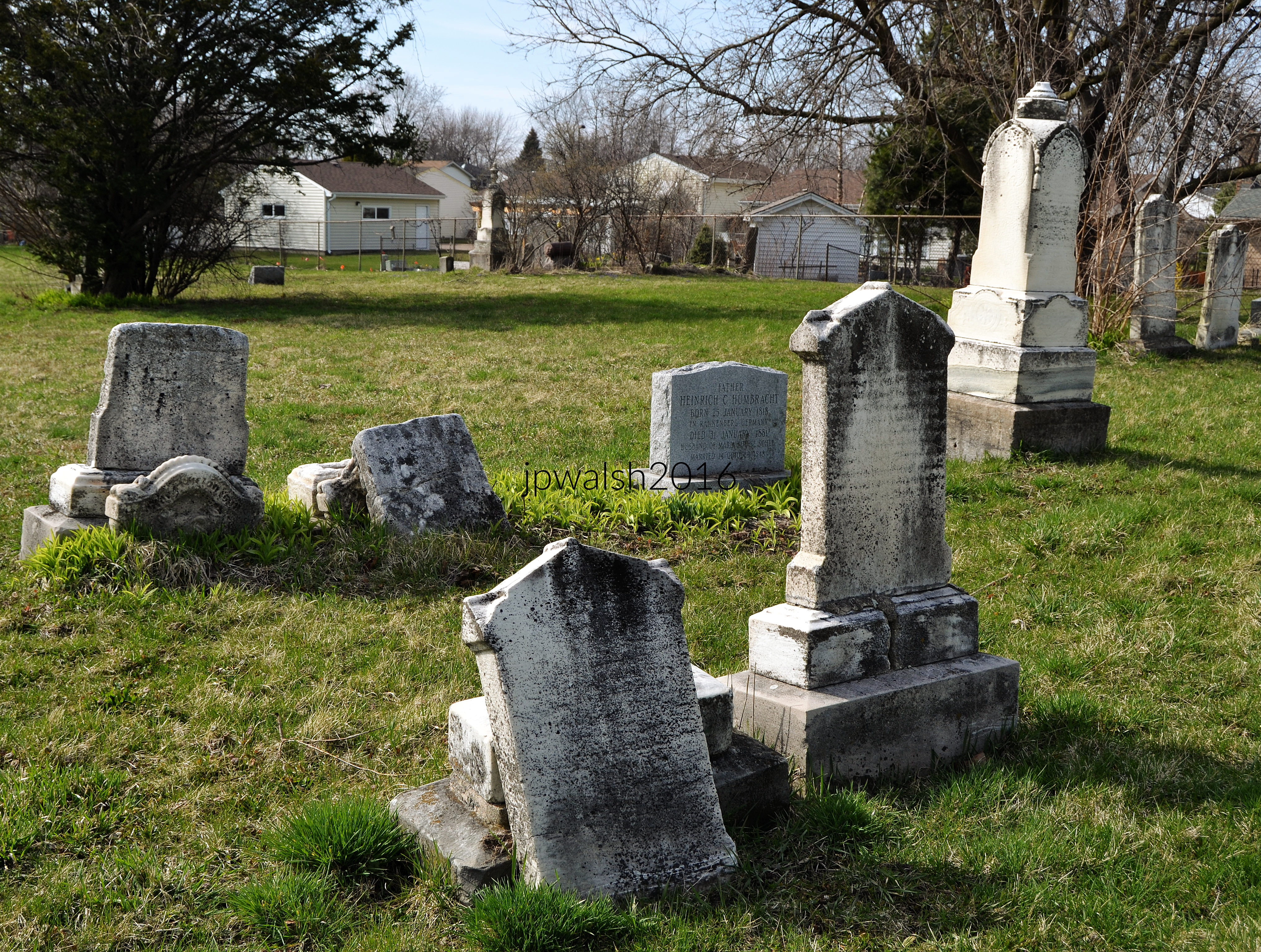
March 2016. The ImmanuelUCC church and burial ground were created in 1852 for German settlers in Hanover Township in today’s northwest DuPage/Cook Counties. Three U.S. Civil War veterans are buried here, including from the 127th Illinois Infantry; Volunteer 5th Calvary Illinois Regiment; and U.S. Calvary Co. H, 3rd Regiment. All three died and were buried in the cemetery decades after the war had ended. Author’s photograph.

While the church started out as Evangelical Lutheran, over time the congregation moved towards becoming part of the United Church of Christ. In 1959 the members changed its name to reflect that reality. The first church building that was completed in 1853 was replaced in 1868 and is the present one. Among other buildings added to the church complex, the same historic sanctuary remains this Chicago suburban congregation’s house of worship today.

March 2016. Landscape and grounds near ImmanuelUCC church in Streamwood. Hanover Township was an expansive area of farmland settled by mid-19th century German settlers to Illinois. Author’s photograph.

Sources:

DuPage Roots, Richard A. Thompson, editor, DuPage County Historical Society, 1985.

My Architecture & Design Photography: BATAVIA, Illinois. (34 Photos & Illustrations).

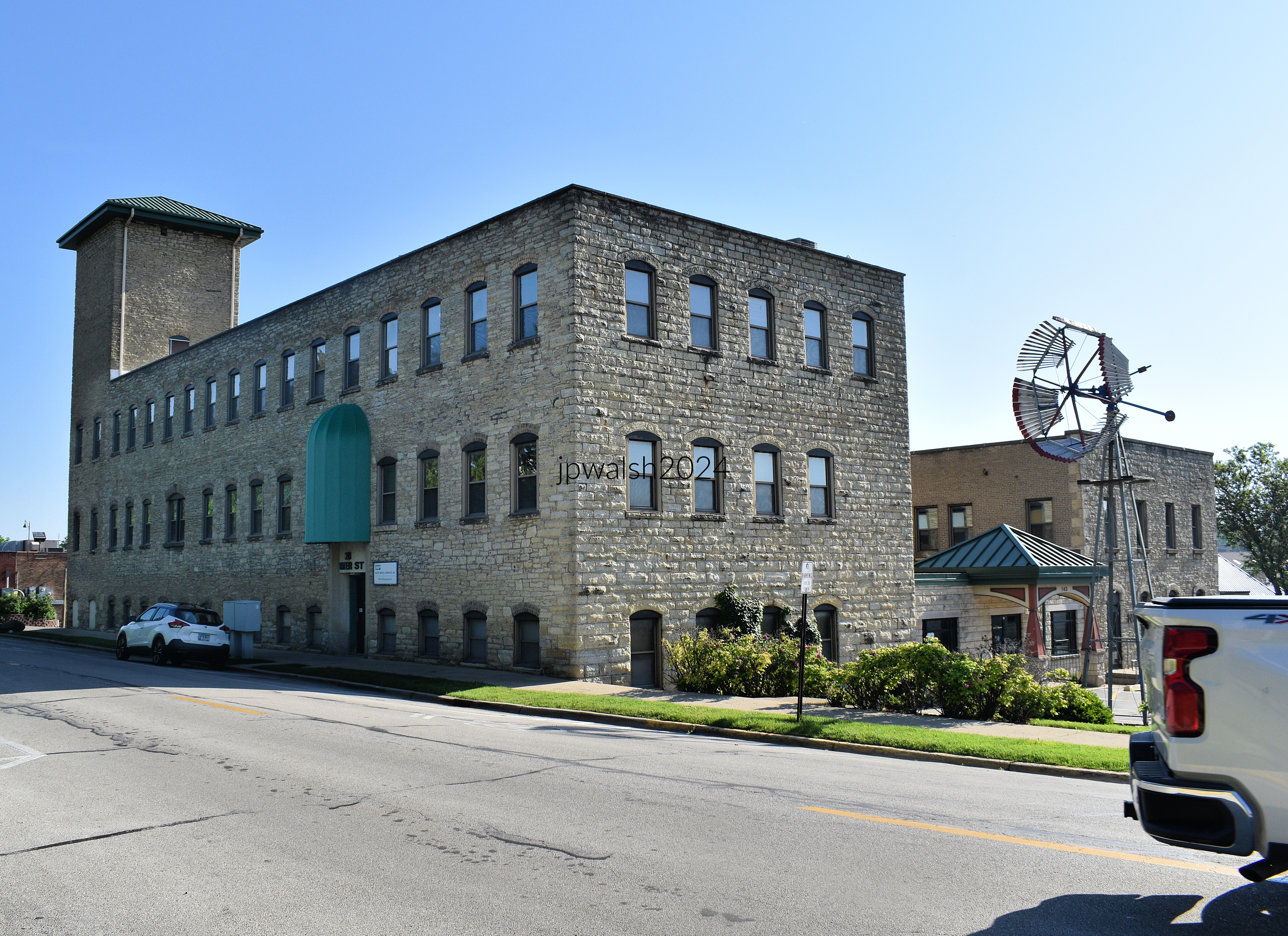
FEATURE Image: May 2024. 143 First Street, c. 1863. 7.52 mb_6360. Since the 19th century Batavia, Illinois, 40 miles west of Chicago, was a railroad and manufacturing center in addition to its farmsteads. This mid-19th century limestone factory building is testament to Batavia’s industrial heritage. After the U.S. Civil War, Batavia was a major manufacturer of Conestoga wagons used in the country’s westward expansion.

Text & Photographs John P. Walsh.

May 2024. 143 First Street, c. 1863. 7.52 mb_6360. The square shaped south façade’s stone cut is more grandiose than the longer west side indicating that it is the front face of the building. The tower at the north end likely held the building’s water tank and added more room and height for pulleys and other equipment.
May 2024. Batavia is one of the towns along the Fox River settled in the 1830’s between Geneva and St. Charles to the north and larger Aurora to the south. 95% 7.75 mb DSC_6350.
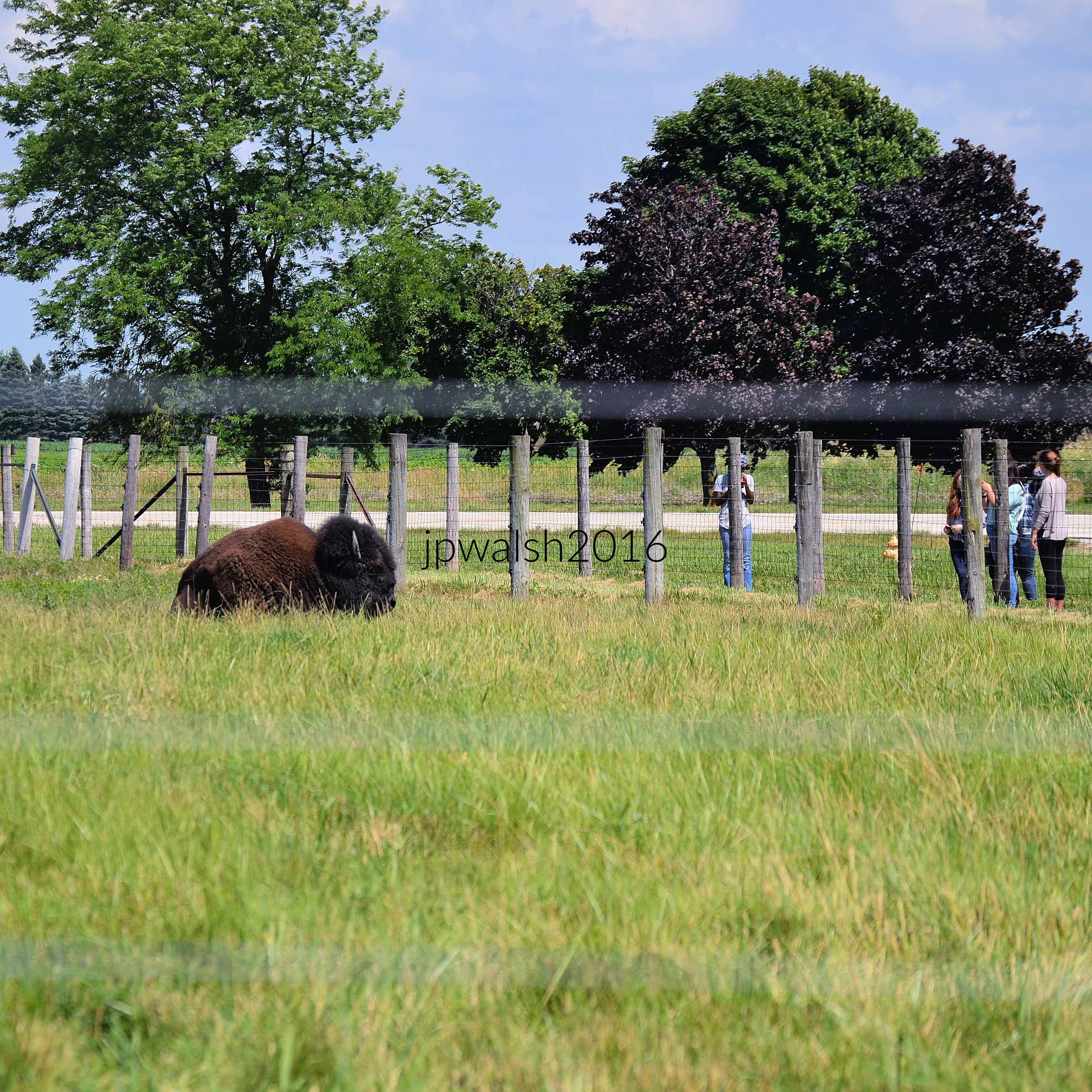
July 2016.  Fermilab is to the east and adjacent to Batavia. Since 1969 it has housed a herd of bison when Fermilab’s first director, Robert Wilson, established the herd as a symbol of the history of the Midwestern prairie and the laboratory’s pioneering research at the frontiers of particle physics. Each spring new calves are born signaling the herd’s rejuvenation. 4.70mb _0577 see – https://www.fnal.gov/pub/about/bisoncam/ – retrieved 1.24.25.
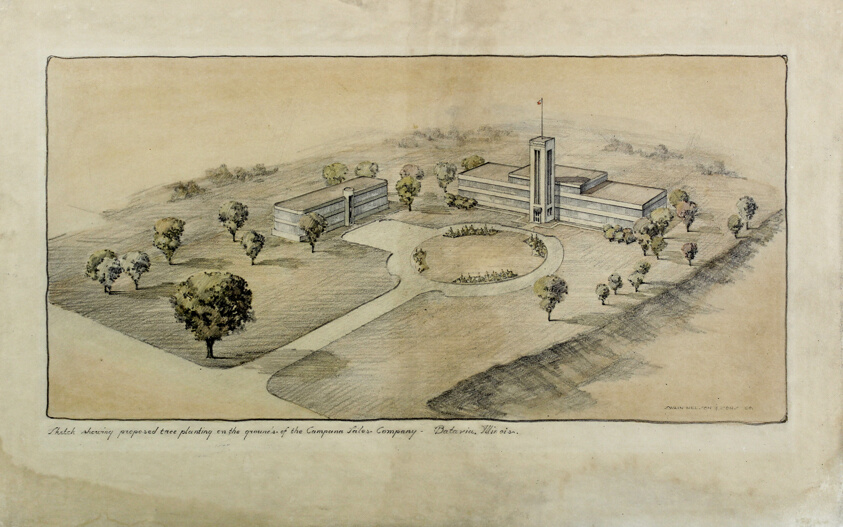
May 2024. Campana Sales Company Factory, Batavia, Illinois, East Elevation, 1936-1937. The Campana Factory was built in the International Style to manufacture cosmetics for The Campana Company. At the time Campana’s “Italian Balm,” heavily promoted on the radio, was the nation’s best-selling hand lotion. The building was designed by Frank D. Chase & Company (founded in 1913) with Childs and Smith in Chicago. Frank David Chase (1877-1937) built newspaper plants in St. Louis, Milwaukee and Oklahoma City and a number of important buildings in Chicago including hospitals and office buildings. The central tower reflects the 19th-century heritage of Batavia’s limestone factories. The one story wings on the extremity of the building were added in the late 1940’s. The factory was purchased by the laundry detergent brand Purex who later closed Campana operations in 1982. 77% 7.72mb _6437.
https://www.artic.edu/artworks/102112/campana-sales-company-factory-batavia-illinois-east-elevation – retrieved January 22, 2025.
https://www.artic.edu/artworks/102113/campana-sales-company-factory-batavia-illinois-landscape-perspective – retrieved January 22, 2025.
May 2024. At the bottom of the tower of Campana Sales Company Factory the main entrance is stainless steel set into black polished marble. 7.48mb _6446.
May 2024. The Congregational Church, 21 S. Batavia Avenue, 1856. 89% 7.73mb _6372. The locally quarried limestone central section dates to September 1856. The church displays the eclecticism of New England Colonial and Classical styles. Though the building’s classical detailing of capitals and pilasters is mostly missing, the precisely cut and laid stone are original. These cut ashlar blocks include neatly finished arches, sills, and entablatures. The church’s design is attributed to architect Elijah Shumway Town (1804-1890) who built Batavia’s Bellevue Place Sanitarium in 1853 where Mary Todd Lincoln was committed for 4 months in 1875. When the original steeple was knocked down in a storm in 1877 it wasn’t replaced until 97 years later in 1974 and is the tallest steeple in Kane County. There have been subsequent additions to the church in the last 60 years. Established in Thompson Paxton’s cabin in 1835 as “Church of the Big and Little Woods” and affiliated with the Presbyterians, the church relocated to Batavia Avenue in 1841. Sharing a common belief in the anti-slavery doctrine, the church was supported by church members and the community-at-large so that the church changed its name to “Congregational Church and Society of Bavaria” in 1843.
May 2024. 355 First Street, 1852. 96% 7.83mb DSC_6389. This was the Methodist church built in the Greek Revival. The pilasters are Doric order that meet the main beam resting across the tops of columns (architrave), blank frieze, cornice, and classical pediment. After 1886 the building was used as a schoolhouse in the Batavia school system. Today it is law offices. In 1836 a group meeting in William Van Nortwick’s home in Batavia organized the “First Methodist Class” which marked the establishment of the Methodist church in Batavia.
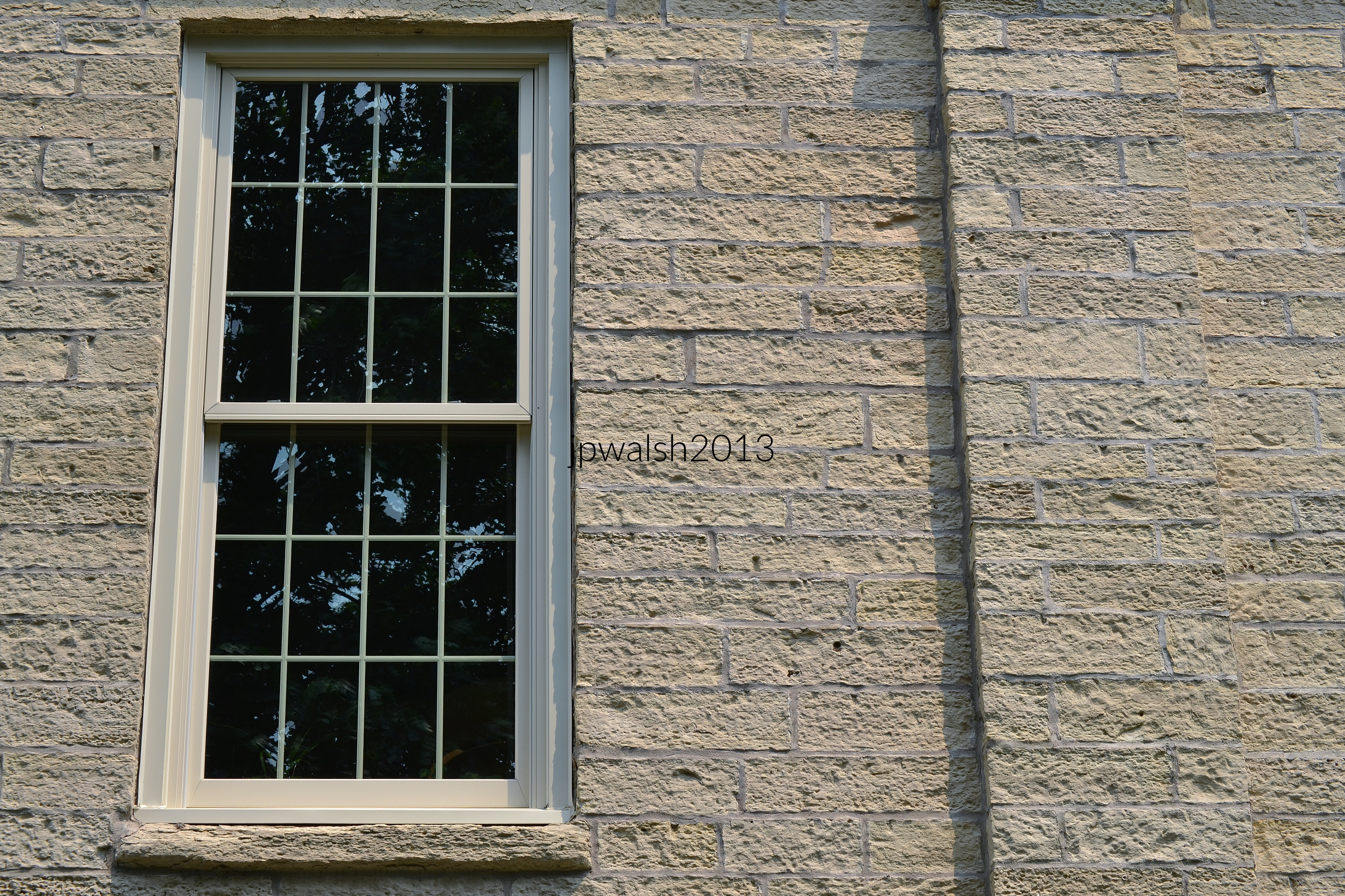
July 2013. West wall stone work and window of former Methodust Church built in 1852. 7.02mb _0004
Born in Maine, Elijah Gammon (1819-1891) was a spiritual and business powerhouse. After he moved to Illinois he was the Methodist church’s first preacher in 1854. Having to give up preaching because of health in 1858, he changed careers to the manufacture of harvesting machinery. As he substantially contributed to the industry’s development and earned a fortune, his business responsibilities and success in no way limited his spiritual vision. https://aaregistry.org/story/elijah-gammon-supported-black-ministry/ – retrieved January 23, 2025.
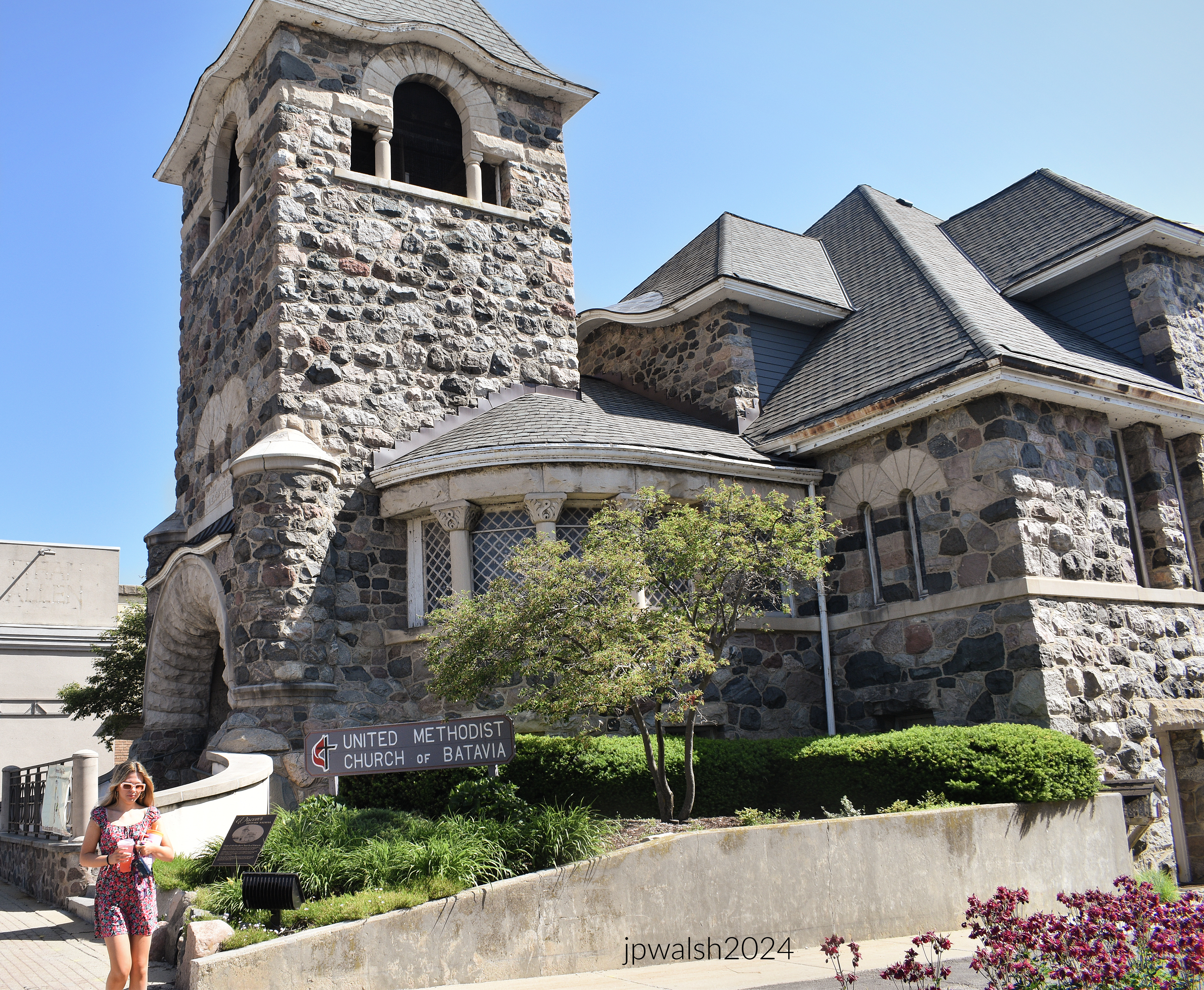
May 2024. United Methodist Church of Batavia, 8 N. Batavia, 1887. 87%7.91mb _6498. United Methodist Church of Batavia, 8 N. Batavia Avenue, Batavia, Illinois was built in 1887. The rugged eclectic Richardsonian Romanesque-type building was designed by Solon Spencer Beman (1853 –1914) and inspired by a church in France that its donors had admired. The structure was almost entirely the gift of abolitionist Elijah J. Gammon (1819-1891), the church’s first preacher and local businessman, and Captain Don Carlos Newton (1832-1893), another active local businessman who had a house investment property across the street. Beman was an architect of note as he designed the planned Pullman community and adjacent Pullman Company factory complex in Chicago as well as Chicago’s Fine Arts Building (1884) on Michigan Avenue. At the top of the tower is a Palladian window under a pyramidal roof while in the back are hipped roofs. The building’s boulders were taken from the contractor’s farm about a mile from the building site. The new church building replaced the first Methodist church in Batavia built in 1853 in Greek Revival and which still stands today.
Born in New York, Captain Newton was a very active businessman. He died unexpectedly at his home in Batavia after attending the Chicago World’s Fair for a week with his family in 1893. He was described as ”a persevering, self-made man.” https://www.findagrave.com/memorial/16849480/don-carlos-newton – retrieved January 23, 2025.
Chicago-based architect Solon Spencer Beman designed the United Methodist Church of Batavia in 1887. Beman is an architect of note as he designed the planned Pullman community and adjacent Pullman Company factory complex as well as Chicago’s Fine Arts Building (1884) on Michigan Avenue. Several of his largest commissions, including the Pullman Office Building, Pabst Building in Milwaukee (1891), and the Romanesque Revival Grand Central Station (1890) in Chicago, have since been demolished. A number of architects trained with Beman, including Prairie School architect William L. Steele (1875-1949), church architect Charles Draper Faulkner (1890-1979) and Spencer Solon Beman (1887-1952).
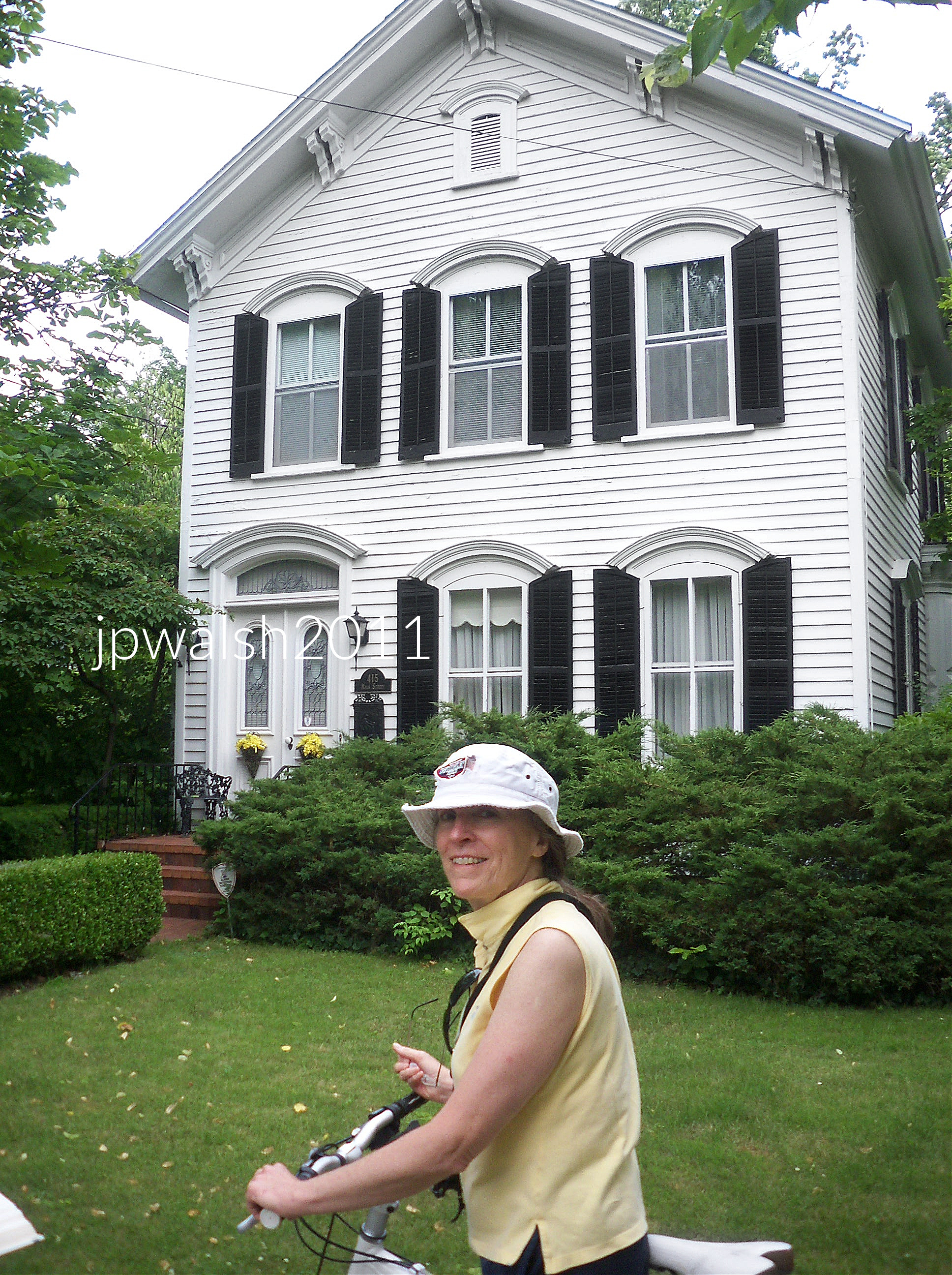
May 2024. 415 Main Street, 1860. Eclectic Gothic Revival with Italianate features including scroll-cut square brackets tailored to the pitched roof line, segmental arches above the windows, and the heavy outlines of the door entrance. A polygonal bay and wings are informal features found in the Italianate that balances a formal façade. 89% 7.87mb.
July 2011. 415 Main Street (1860). The door is larger than the windows and offset by the small ventilating window at the top in the gable. 2.54mb100_3328 (1)
May 2024. 360 Main Street, 1855. 74% 7.72mb DSC_6409. The house is an example of the evolving transition from Greek Revival to Gothic Revival to Italianate.
May 2024. 33 S. Lincoln Street, 1850. 73% 7.85mb DSC_6520. The lengthy 1850 Greek Revival is formal and simple. There are four pairs of windows and an architrave, frieze and cornice characteristic of the type as well as its corner pilasters.
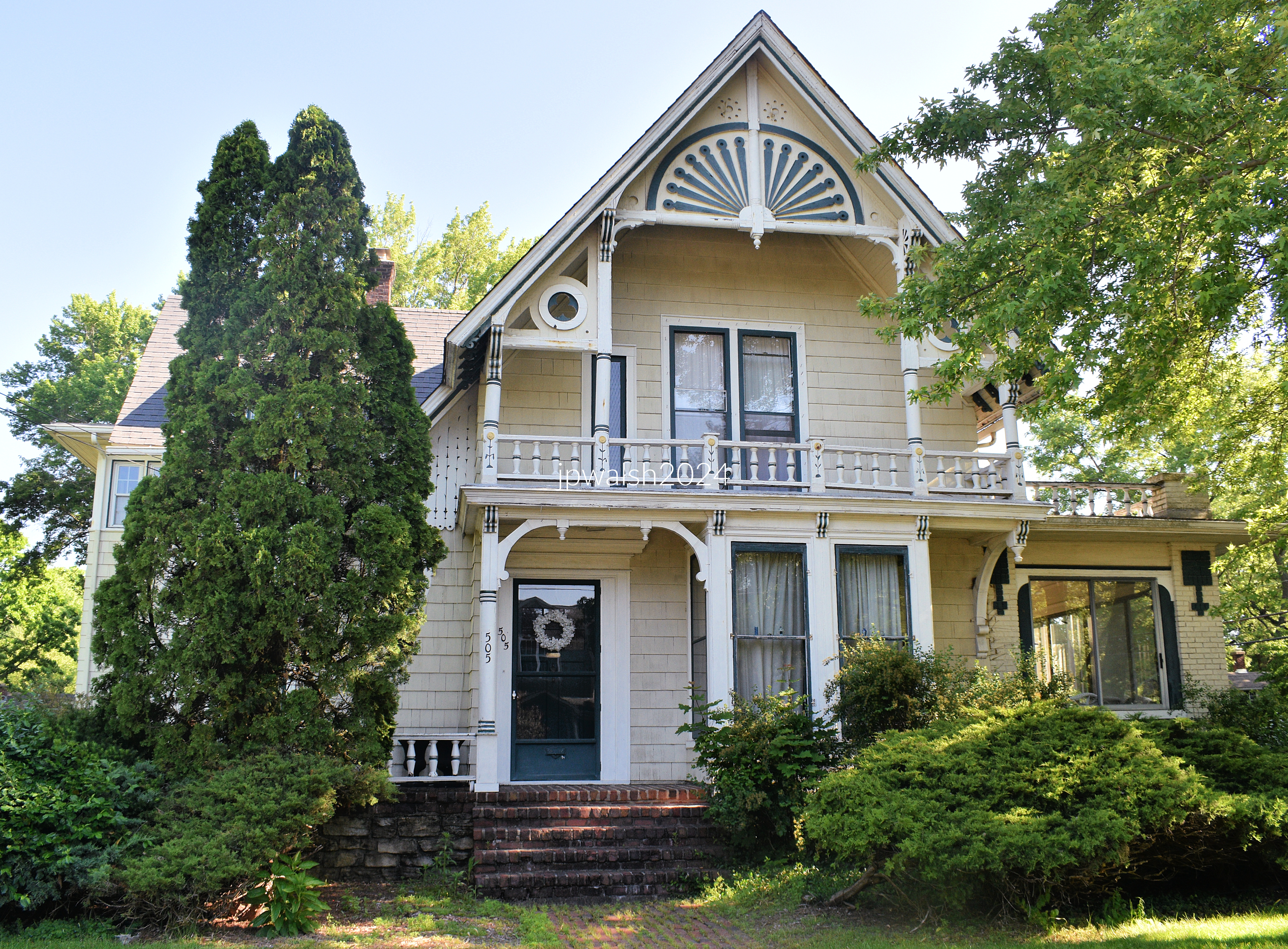
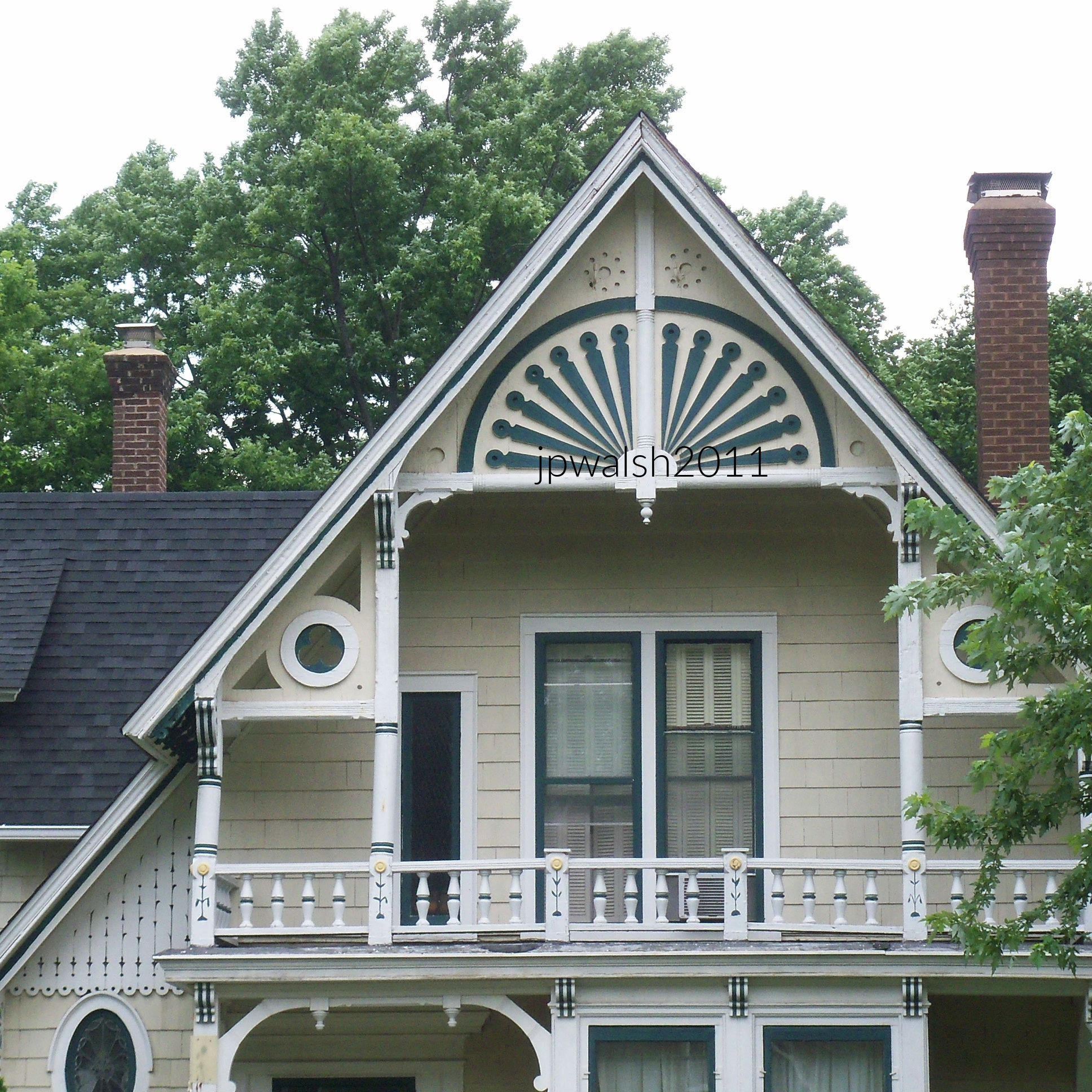
May 2024. 505 Main Street, 1858. The house is in the Swiss style and has a peacock feather spread motif above the second floor balcony. There are also trifoils set in circles in the gable. The brick sun room was added to the east around 1910. 92% 7.81mb DSC_6426 (1)
July 2011. 505 Main Street’s in-vogue late 1850’s peacock feather motif was made by scroll cut boards nailed to a backing and long tubes made by a lathe. To the left under the roof extension there is incised ornamentation with a tall thistle plant motif. 1.54mb 100_3331 (1)
May 2024. 356 First Street, c. 1850. 62% 7.80mb DSC_6395. Greek Revival frame clapboard house.
May 2024. 637 N. Batavia Avenue, 1906. The Prairie style house was designed by Frank Lloyd Wright (1867-1959) in 1906. It is frame and stucco with massive chimneys. With its horizontals, low pitched roof, casement windows and thin eaves, it is the Prairie style fully developed.
Frank Lloyd Wright in 1903, likely a self-portrait. Public Domain.
July 2013. Fabyan Villa was the home of George and Nelle Fabyan from 1908 to 1939. A mid-19th century farmhouse was acquired by the Fabyans in 1905 and extensively remodeled by Frank Lloyd Wright in 1907. The house, on a hilltop looking east to the Fox River was the centerpiece of the Fabyans country estate called “Riverbank.” In 1914, the Fabyans purchased a windmill (photo below) that was located on a farm near Oakbrook, Illinois, and had it relocated opposite Riverbank on acreage that they acquired that same year.
May 2024. 111 S. Lincoln Street, c. 1850 92% 7.84mb DSC_6396. Though obscured by modern adaptations, the severe cube of the structure indicates its Greek Revival roots.
May 2024. 125 S. Lincoln, 1852. The Greek Revival style with the central section temple like with matching side pilaster ascending to a pediment as an incomplete entablature as one side is merely suggested by returns at the top of each pilaster. The wings include a one-story entrance and a two-story addition with cornice and dormers with window arches and tiny pitched roofs. 88% 7.78 mb DSC_6400
May 2024. 432 Main Street, c. 1850. The front porch may or may not be original but befits the broad formal mid-19th century Greek Revival structure. 93% 7.82mb DSC_6431 (1)
July 2011. Between Batavia and Geneva, Illinois, The Fabyan Windmill is an authentic, working Dutch windmill dating from the 1850s. It was built by a German craftsman, Louis Blackhaus, and moved to this location next to the Fox River from its original site near Oakbrook, Illinois, in July 1915. 2 mb 100_3357
July 2011. 333 S. Jefferson Street, Batavia Institute, Bellevue Mental Hospital, 1853. Following the assassination of her husband, President Abraham Lincoln, Bellevue became the residence of Mary Todd Lincoln briefly in 1875. 2.87mb 100_3332
Mary Todd Lincoln in 1846. Mary Todd was 23 years old when she married 33-year-old Abraham Lincoln in Springfield, Illinois on November 4, 1842. Their four sons were all born in Springfield. In 1875 Robert Todd Lincoln (1843-1926), her eldest son, had her institutionalized following a jury trial. She was committed to this private asylum in Batavia on May 20, 1875. Estranged from her finances and her son, she fell into a deep depression in the mental institution. Making contact with her lawyer and the press, the former First Lady got the wheels of justice and public opinion on her side. The resulting bad publicity for Robert Lincoln prompted the asylum director to pre-emptively change his opinion of Mary’s mental fitness so that in September 1875 she was released into the care of her sister Elizabeth Todd Edwards (1813-1888) with whom she was close and moved to Springfield. Following a second jury trial on June 19, 1876 that declared Mary “restored to reason,” Mary Todd Lincoln was back in charge of her money and freedom and promptly fled the country. She lived in France for the next four years. When she returned to Springfield in poor health in 1880, she lived again with her sister in Springfield. On July 16, 1882. Mary Todd Lincoln died of a stroke in Elizabeth’s home. Mary was 63 years old. Before her burial in Oak Ridge Cemetery next to her slain husband, her funeral was held at First Presbyterian Church in Springfield. Just steps from the Lincoln home, this was the church Abraham Lincoln started attending in 1850 after the death of their second son, four-year-old Eddie. The present church building was dedicated in 1868 and remains standing at 7th Street and Capitol Avenue today. see – https://www.nps.gov/features/liho/25/25.htm – retrieved January 23, 2025.
Elizabeth Todd Edwards. She and Mary were long close both in Springfield in the 1830’s and, later, at the White House. In 1875 Elizabeth accommodated her sister and the 64 trunks of her possessions with two rooms in her Springfield mansion. see – https://web.archive.org/web/20171201042129/https://www.civilwarwomenblog.com/elizabeth-todd-edwards/ – retrieved January 23, 2025.
July 2013. 333 S. Jefferson Street, Batavia Institute, Bellevue Mental Hospital, 1853. The monumental Italianate structure was designed by Elijah Shumway Town (1804-1890) who built Batavia’s Congregational Church. Projecting two story wings with Mansard roof containing a third story is built of slightly cruder stone and added before 1870.
July 2013. details.
July 2013. details. 5.11mb 0479
July 2013. 419 Union Street, 1863. The exuberance of the Italianate style is manifest in a soaring polygonal bay on the facade’s one side and a cupola on the other. Large windows are characteristic of the Italianate as are multiple curved brackets. Contrasting textures of stucco and heavy stone provide interest and work to suggest the appearance of more expensive materials and construction than actually used. This was the residence of one of the doctors at the Batavia Institute across the street. 4.77mb _0092 (1)
April 2016. Calvary Episcopal Church (222 Main Street), 1880. Designed in the “American Gothic” style, the medieval Gothic forms was a mid-to-late19th century revolt in English protestant churches to the prevailing neo-classicism of the previous 200 years. American influence included the stone building’s overall heaviness and particularly in its square-shaped tower that has a double pitched roof and with a sheet metal zone of bosses and discs between the levels and surrounding steeple dormers. 2.82 mb DSC_0476 (1)

Sources:

A Guide to Chicago’s Historic Suburbs on Wheels and on Foot, Ira J. Bach, Swallow Press/Ohio University Press, 1981, pp. 304-319.

My Architecture & Design Photography: VITZTHUM & BURNS. Steuben Club Building (Randolph Tower), 1929. 188 W. Randolph Street, Chicago, Illinois, 60601. (3 Photos & Illustrations).

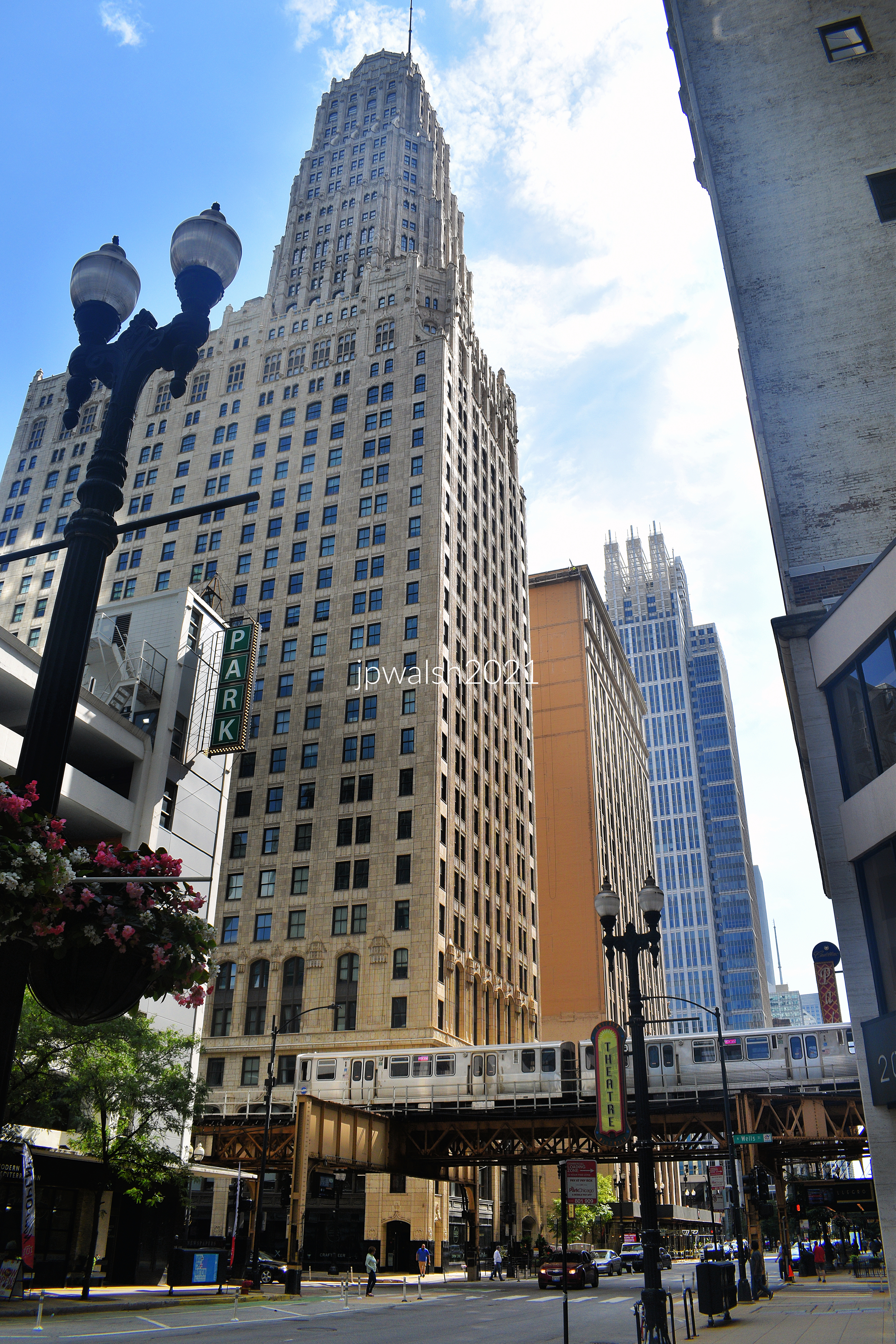
FEATURE Image: Steuben Club Building/Randolph Tower. 188 W. Randolph Street, Chicago. View from the west, August 2021. Author’s photograph. 12.72mb_9354 (1)

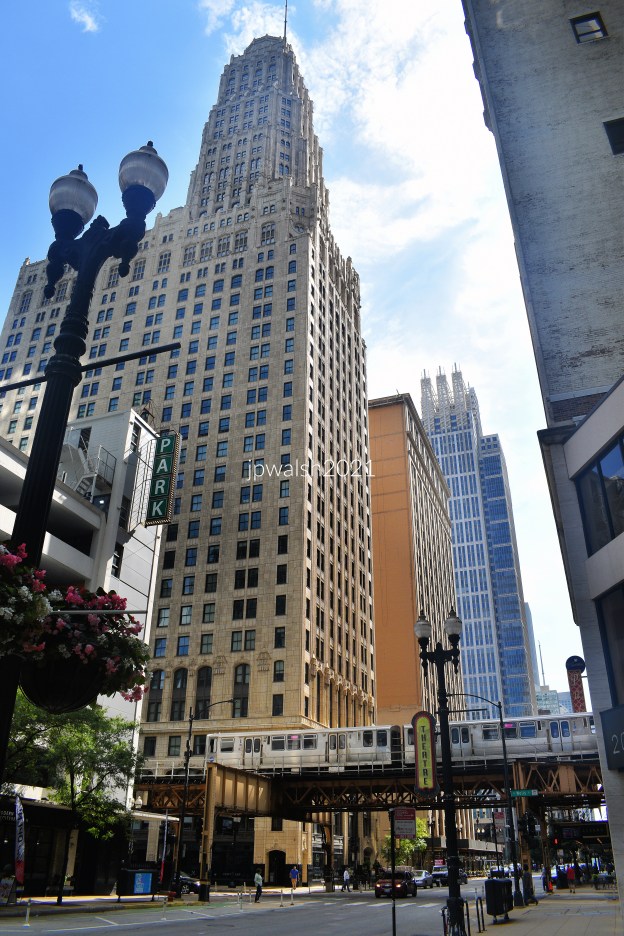
The 1929 limestone tower whose shape may be the last surviving skyscraper reflective of the 1923 zoning law with setbacks and a telescoping tower presages Vitzthum & Burns’ mighty 1 N. LaSalle Street Building in 1930. Randolph Tower was restored in 1993 by Stenbro, Ltd. and in 2013 opened as the residences of Randolph Tower City. In addition to its 15-story tower, the building is 27 stories tall and 465 feet high built on rock caissons. German-born Karl Martin Vitzthum (1880-1967) and John Joseph Burns (1886-1956) built some of Chicago’s best-known skyscrapers of the 1920s and 1930s. The firm also built, in 1953, St. Peter’s Church in the Loop at 110 W. Madison Street two doors down from the corner skyscraper of 1 N. LaSalle Street Building. Karl M. Vitzhum was architect on the Midland Hotel (then the Midland Club Building ). Built in 1927, it is 22 stories of roaring 1920’s Beaux-Arts architecture.

Karl Martin Vitzthum (1880-1967). One of the architects of the Steuben Club Building/Randolph Tower with partner John J. Burns. The skyscrapers they built starting in 1925 until the Great Depression became taller and more vertical as time progressed and are some of the most visible soaring stone structures of the period in downtown Chicago.
Karl Martin Vitzthum (Architect), Steuben Club Building, Chicago, Illinois, Perspective Randolph Street, 188 West (Building address), 1924-1928, Watercolor and tempera on paper 86 × 35.6 cm (33 7/8 × 14 in.) The Art Institute of Chicago. see – https://www.artic.edu/artworks/158560/steuben-club-building-chicago-illinois-perspective – retrieved September 21, 2024.

With each building the move from classicism to Modernism is clear as well as pure verticality. During the 1980s and 1990’s, I worked in one of Vitzthum & Burns’ mid1920s office buildings in Chicago – The Old Republic Building at 307 North Michigan Avenue built in 1925. My airy office on the 7th floor looked right onto Michigan Avenue where I could admire the Carbide and Carbon Building across the street built in 1929.

Steuben Club Building/Randolph Tower. August 2021. Author’s photograph. 82% 7.88 mb _9354

Vitzthum arrived in Chicago from Germany  in 1914 and worked with architectural firms such as Graham Anderson Probst and White, Burnham & Co., and White, Jarvis & Hunt. He often worked with Fredrick J. Teich (1874- n.a) prior to establishing his own firm with John J. Burns in 1919. Vitzthum was a young architect on Burnham’s staff when he worked on some engineering details for the old Comiskey Park (1910-1990). The partnership of Vitzthum and Burns started in 1919 and ended with Burns’ death in 1956. Though known for eclectic styled bank buildings throughout the Midwest, the pair had built the one-screen 1,000 seat The Hollywood Theatre at Fullerton Avenue and Greenview Avenue in 1926. The theatre closed in 1957 after being renamed the Holly Theatre and was demolished soon afterwards. It is a parking lot today for a local Walgreens across the street from Facets movie theatre.

SOURCES:

Frank A. Randall, History of Development of Building Construction in Chicago, Second Edition, Revised and Expanded by John D. Randall, University of Illinois Press, Urbana and Chicago, 1999, pp. 331 and 319.

Saliga, Pauline A., editor, The Sky’s The Limit A Century of Chicago Skyscrapers, Rizzoli New York, 1990, p. 133.

Alice Sinkevitch, AIA Guide to Chicago, 2nd Edition, Harcourt, Inc., Orlando, 2004, p. 84.

https://www.thechicagoloop.org/arch.vbur.00000.html – retrieved September 20, 2024.

https://rpwrhs.org/w/index.php?title=Holly_Theatre – retrieved September 20, 2024.

https://rpwrhs.org/w/index.php?title=Vitzthum,_Karl_Martin – retrieved September 20, 2024.

My Architecture & Design Photography: BLUE CROSS BLUE SHIELD TOWER (1997/2010), Lohan Associates/Goettsch Partners, 300 E. Randolph Street, Chicago, Illinois, 60601. (4 PHOTOS).

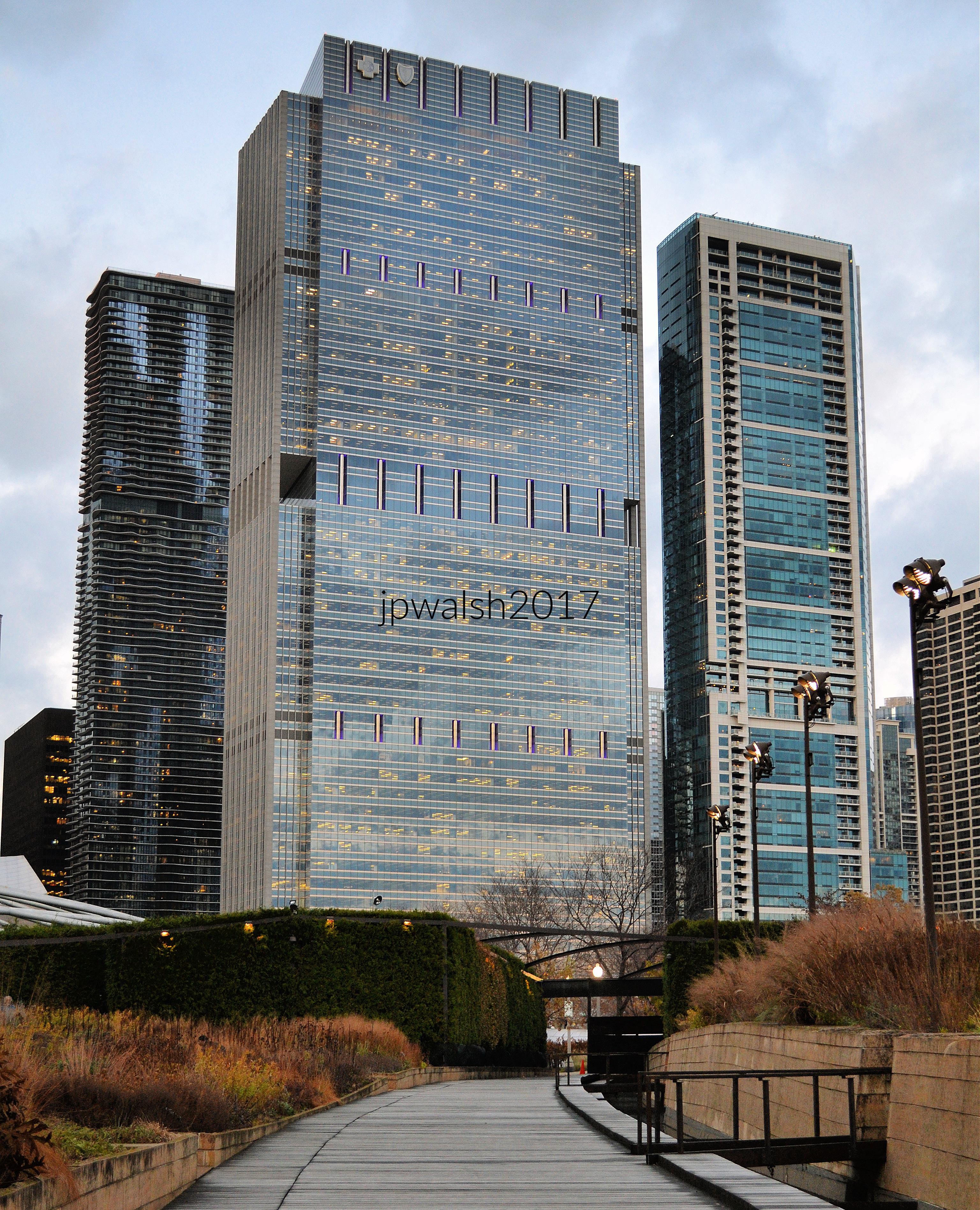
FEATURE image: Blue Cross Blue Shield Tower building, Day and Night. November 2017. It was designed by Goettsch Partners (GP) an architecture firm based in Chicago, with additional offices in Denver and Shanghai.

The Blue Cross Blue Shield Tower sits on the northeast corner of East Randolph Street and Columbus Drive in Chicago, Illinois. It is on the north side of Millennium Park. The tower is the headquarters of Health Care Services Corporation, a company founded in 1936 and based in Chicago, Illinois. HCSC is the licensee of the Blue Cross and Blue Shield Association that provides health insurance to more than 115 million people in the U.S. as of 2022.

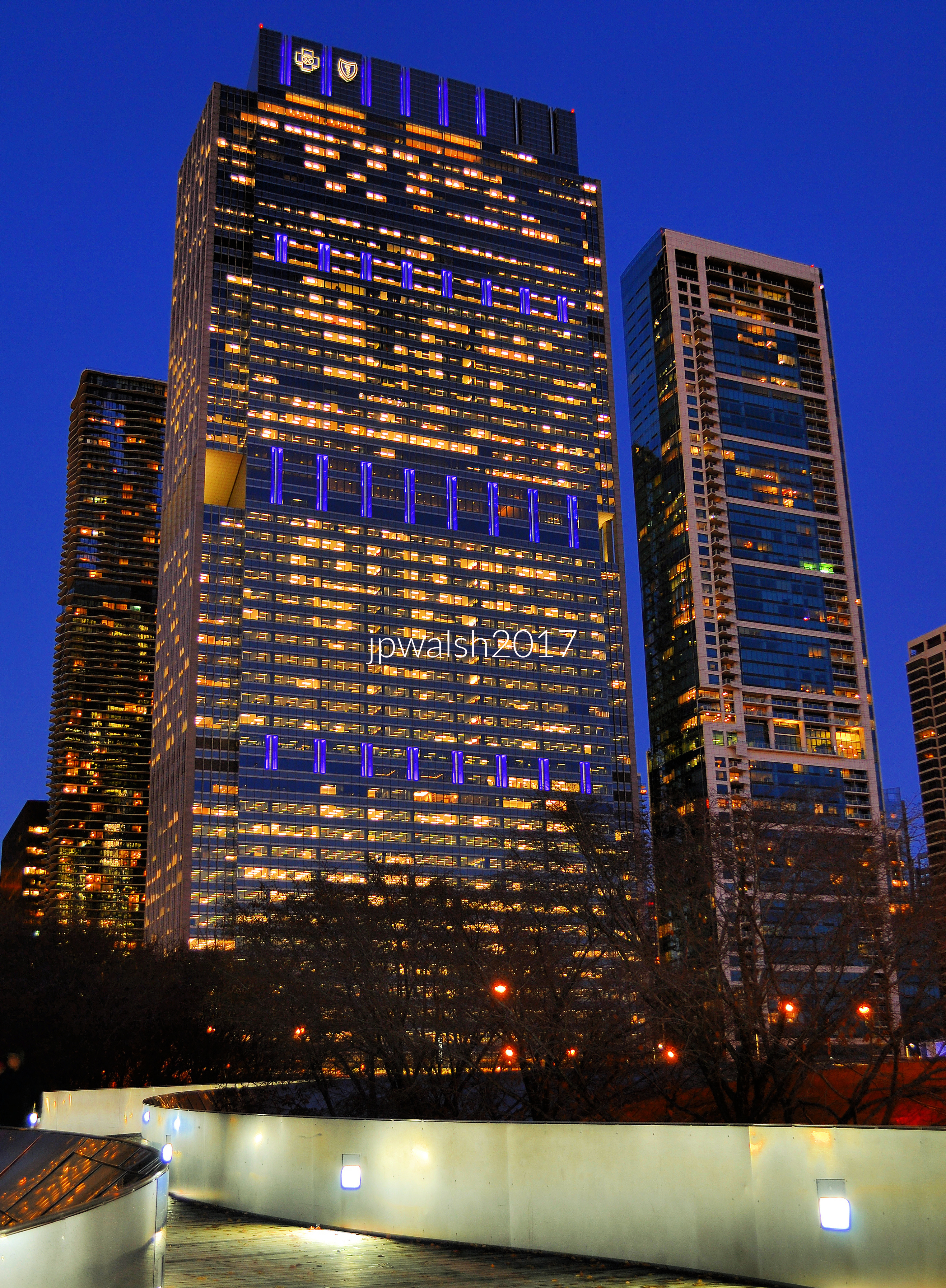
The Blue Cross Blue Shield Tower was built in two stages. The first stage was the original 32-story building completed by Lohan Associates (today Goettsch Partners) in 1997. It was built with the potential for a vertical expansion so that the client could grow in the same location. An expansion occurred in 2007 with a 24-story addition completed in 2010. It became the first building project in downtown Chicago that built upon an existing tower. The views are from inside Millennium Park. November 2017 7.38 mb 3417 (1)
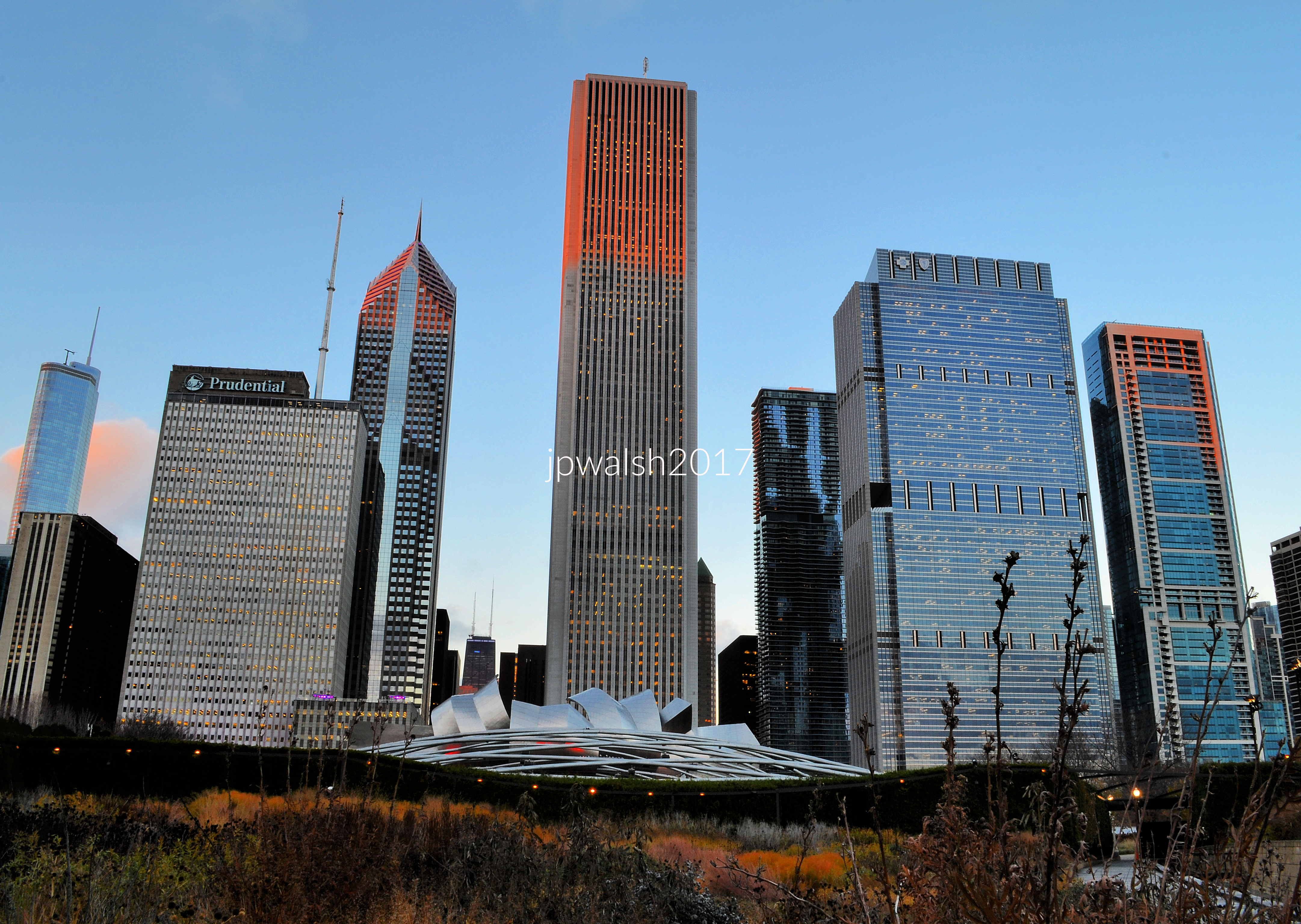
The Blue Cross Blue Shield Tower (second from right) in its setting on the north side of Millennium Park which was established in 1998. From left: One Prudential Plaza (1955), Two Prudential Plaza (1990), Aon Center (1973/1994). The Blue Cross Blue Shield Tower is next to the Aon Center with original plans to connect the two buildings via an underground pedway but did not come to fruition. November 2017 5.76mb 3397 (1)
The Blue Cross Blue Shield Tower was designed by Jim Goettsch, chairman of Goettsch Partners. November 2017 99% 7.41mb 3480

SOURCES –

https://www.bcbs.com/sites/default/files/file-attachments/page/Blue_Facts_Sheet-2022.pdf – retrieved August 7, 2024.

”24 More Stories Coming to Blue Cross Building,” Chicago Tribune, Bruce Japsen, July 26, 2006. – retrieved August 7, 2024.

AIA Guide to Chicago, 2nd Edition, Alice Sinkevitch, Harcourt, Inc., Orlando, 2004, p. 32.

https://www.gpchicago.com/ – retrieved August 7, 2024.

https://millenniumparkfoundation.org/the-foundation/ – retrieved August 7, 2024.

All Text & Photographs:

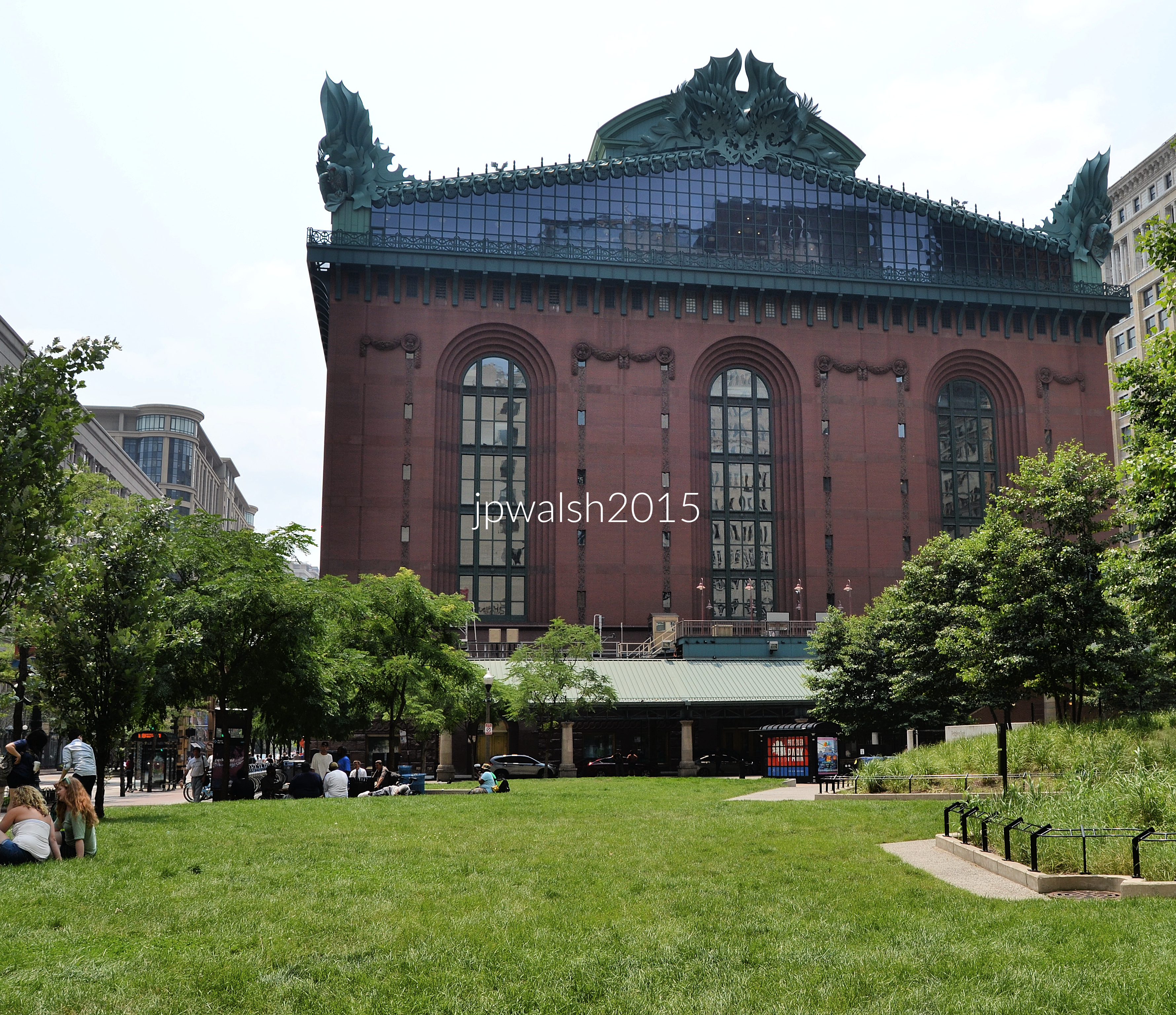
My Architecture & Design Photography: HAROLD WASHINGTON LIBRARY CENTER (1991), Hammond, Beeby & Babka; A . Epstein & Sons International, Assoc. Archs, 400 S. State Street, Chicago, Illinois, 60605.

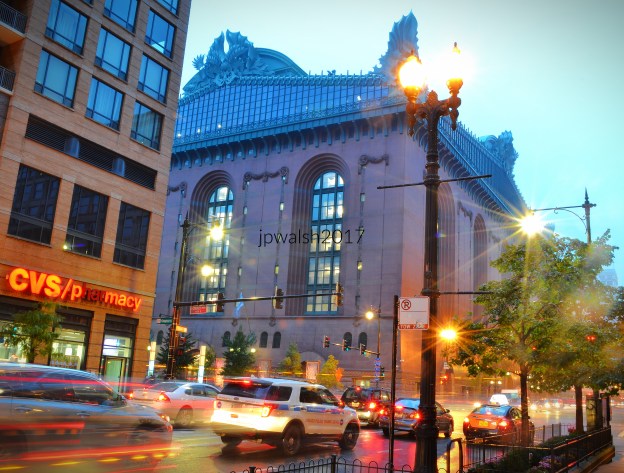
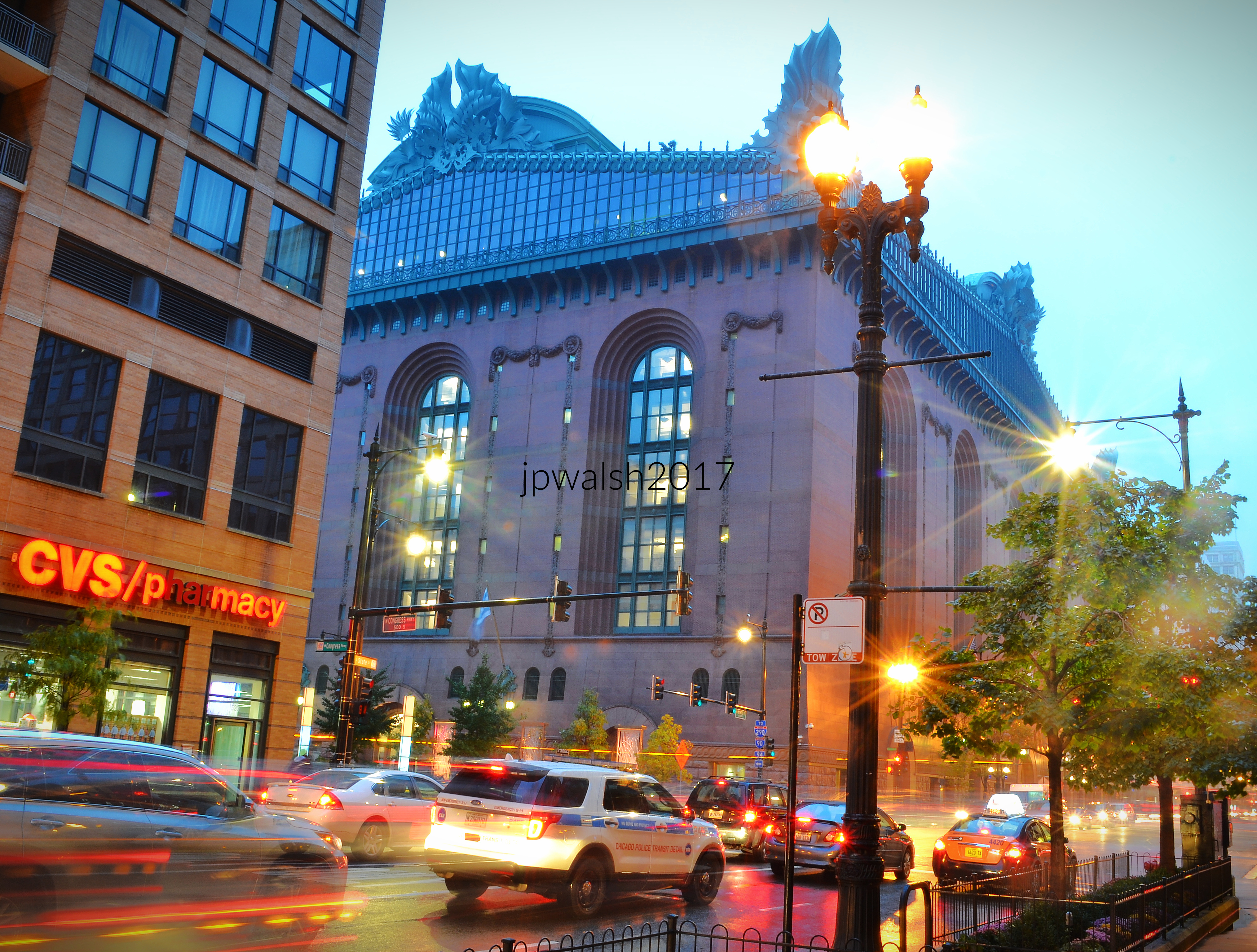
FEATURE image: November 2017. The Harold Washington Library sits on the northwest corner of State Street and Ida B. Wells (Congress) Drive. It is recognized as one of the largest public library buildings in the world. 5.02 mb. Author’s photograph.

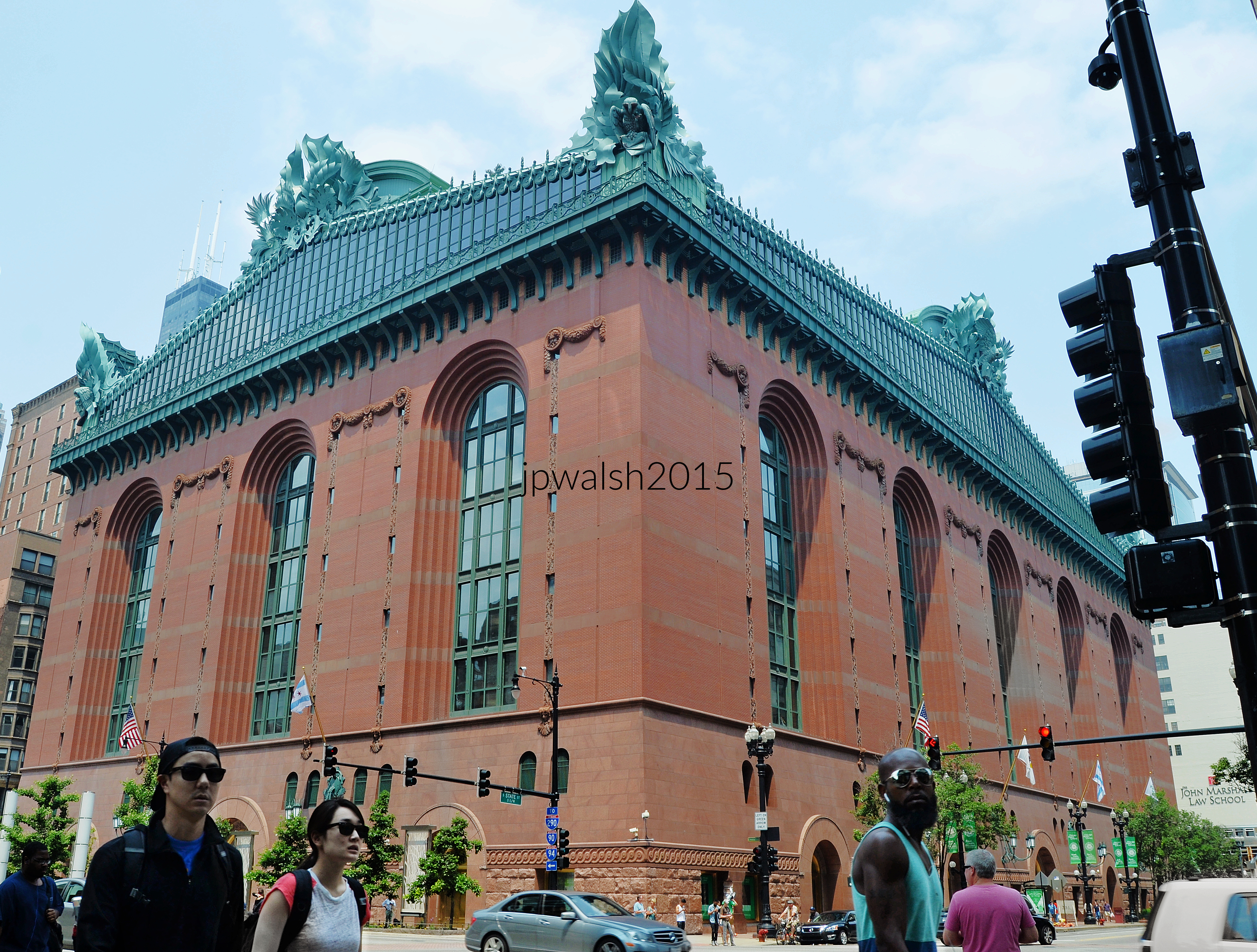
November 2017. The decorative pediment of stylized aluminum sculptures was designed by Kent Bloomer in 1993. The large sculptures represent growth and wisdom with enormous owls at each of the pediment’s four corners (“acroteria”). Harold Washington Library Center | Chicago Architecture Center – retrieved February 16, 2026. Author’s photograph.

In 1987, Hammond, Beeby and Babka won the competition to design the main branch of Chicago’s library. The Harold Washington Library was completed in 1991 and is one of the Chicago-based architectural firm’s most famous structures. The building recalls neo-classical institutional buildings yet whose style is creatively applied in its details.

PHOTO CREDIT: “Harold Washington (9519692588)” by City of Boston Archives from West Roxbury, United States is licensed under CC BY 2.0.

The Harold Washington Library is named for Chicago’s first Black mayor. Harold Washington (1922-1987) was elected to two terms as mayor starting in 1983. The well-read and erudite mayor died suddenly of a heart attack the day before Thanksgiving in November1987 just a few months into his second term. I was running along the lakefront in Lincoln Park on an overcast day when I heard the news on my Walkman. My fiancée and I were one of the thousands of Chicagoans (and one of the few whites) who passed by his open casket in the lobby of City Hall between November 27 and 29, 1987. I had also seen and heard Harold Washington speak a couple of times during his public appearances as mayor.

FROM THE PROGRAM: “The jury becomes the ultimate client…There are three areas of evaluation: the design of the building; how it meets technical specifications and how it fulfills the library program…•

Five competing architecture teams race to create the vision for the new Harold Washington (Chicago Public Main) Library that opened at 400 S. State Street on October 7, 1991. The Burnham-dreamed park south across Congress/Ida B. Wells from the library never materialized (Pritzker Park is to the north). The NOVA episode follows these creators as they develop and present their ideas to be judged by the city and public for the downtown building that range from postmodern to Beaux-Arts design concepts. FROM THE PROGRAM: “The jury becomes the ultimate client…There are three areas of evaluation: the design of the building; how it meets technical specifications and how it fulfills the library program…•

July 2015. State Street entrance. Chicago. 4.84mb Author’s photograph.
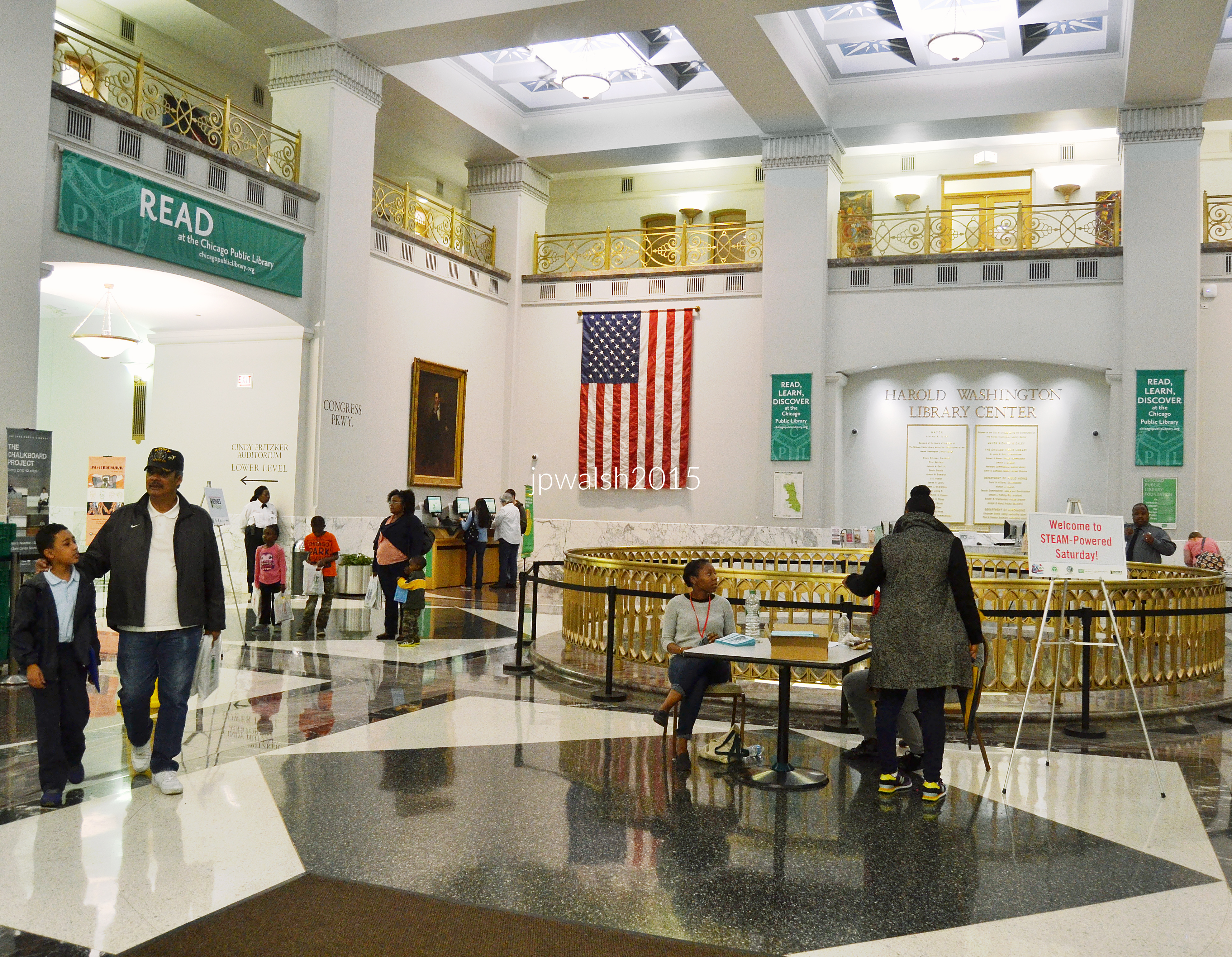
May 2015. The Harold Washington Library serves as the main research branch of the Chicago Public Library. Main floor entrance. see – Harold Washington Library | Loop Chicago – retrieved February 16, 2026. 5.85mb DSC_0474 (1). Author’s photograph.
May 2015. The Harold Washington Library houses millions of items across nine floors. At 750,000 square feet, it is the largest public library building in the world. Harold Washington Library | Loop Chicago – retrieved February 16, 2026. 4.0 mb DSC_0476 (1) Author’s photograph.
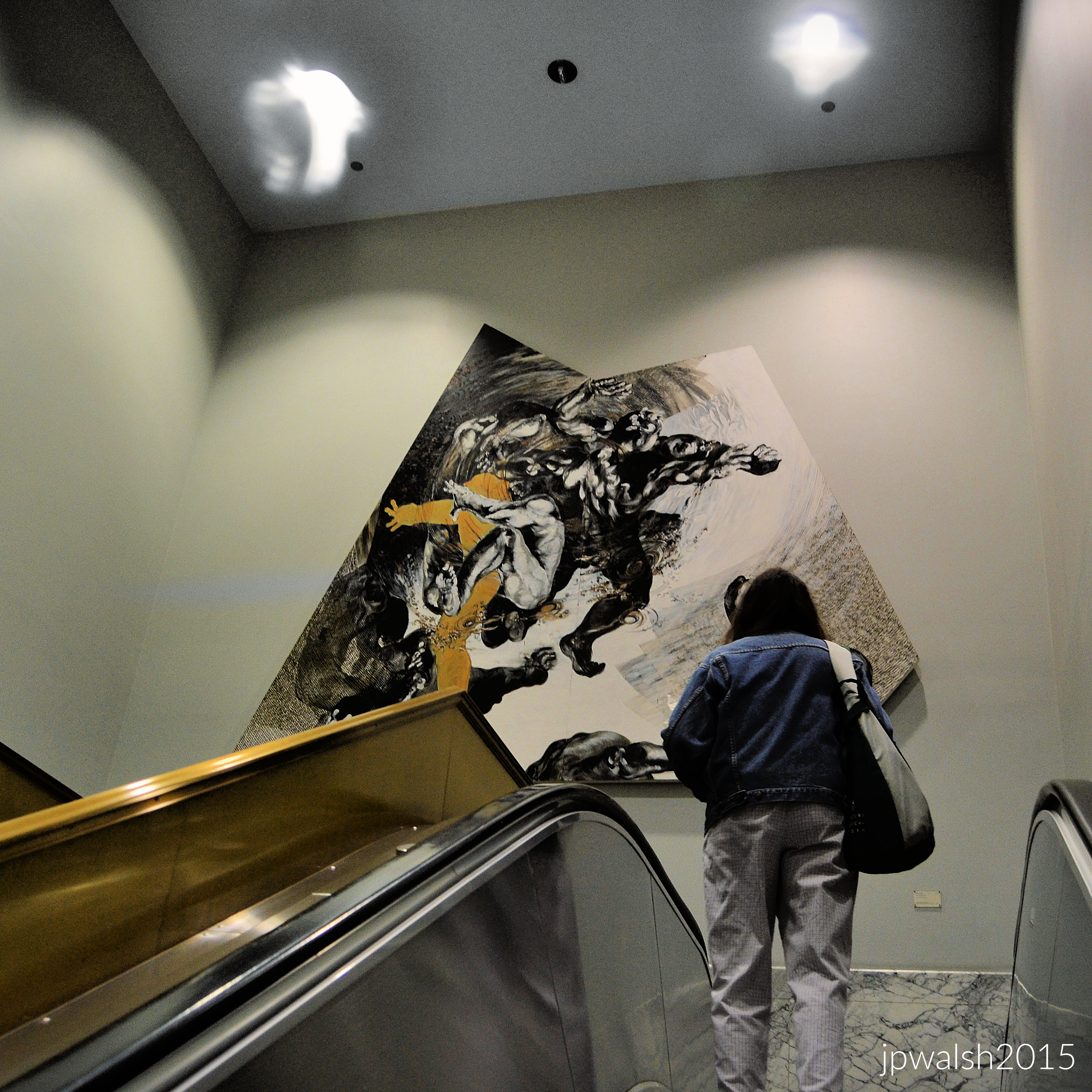
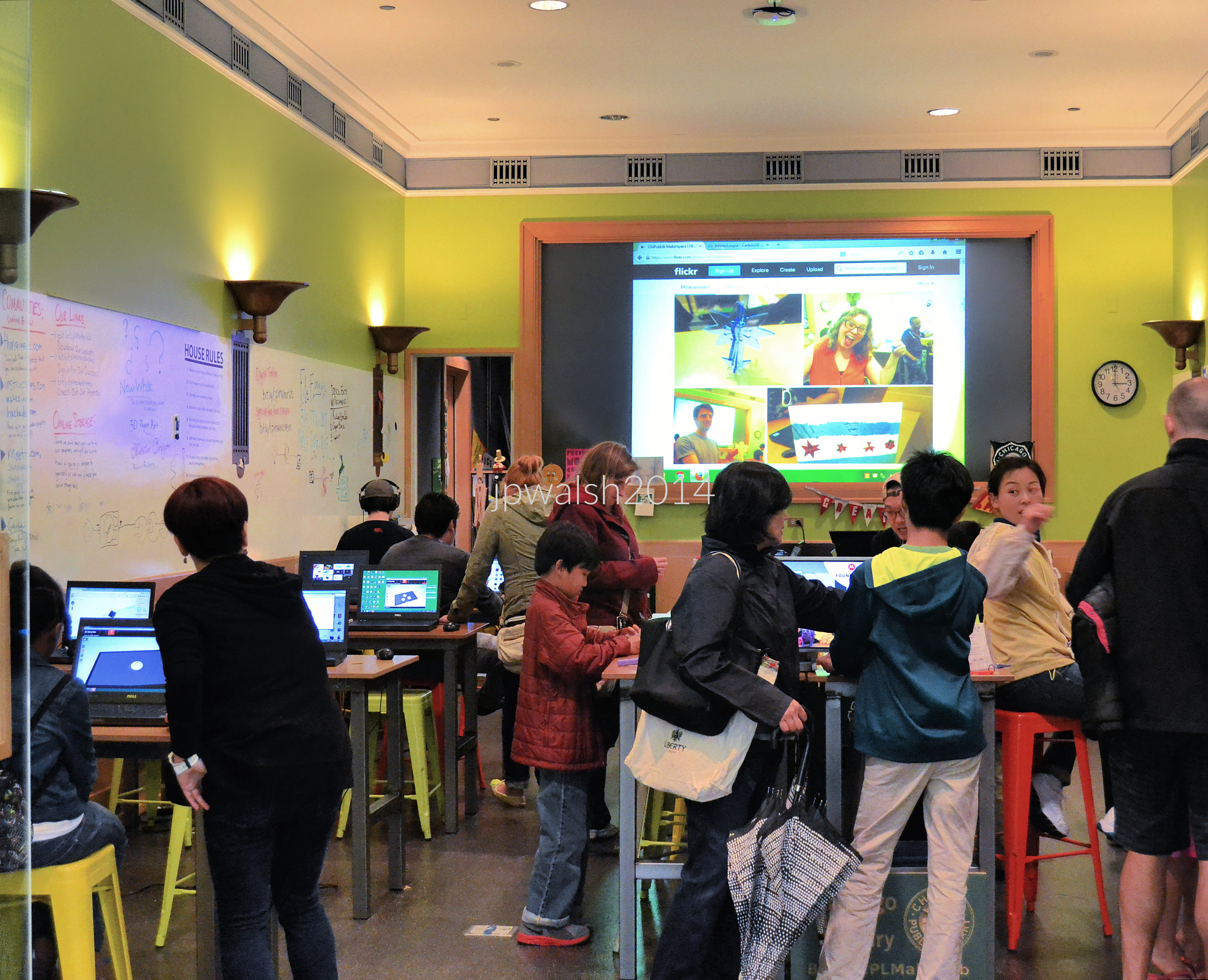
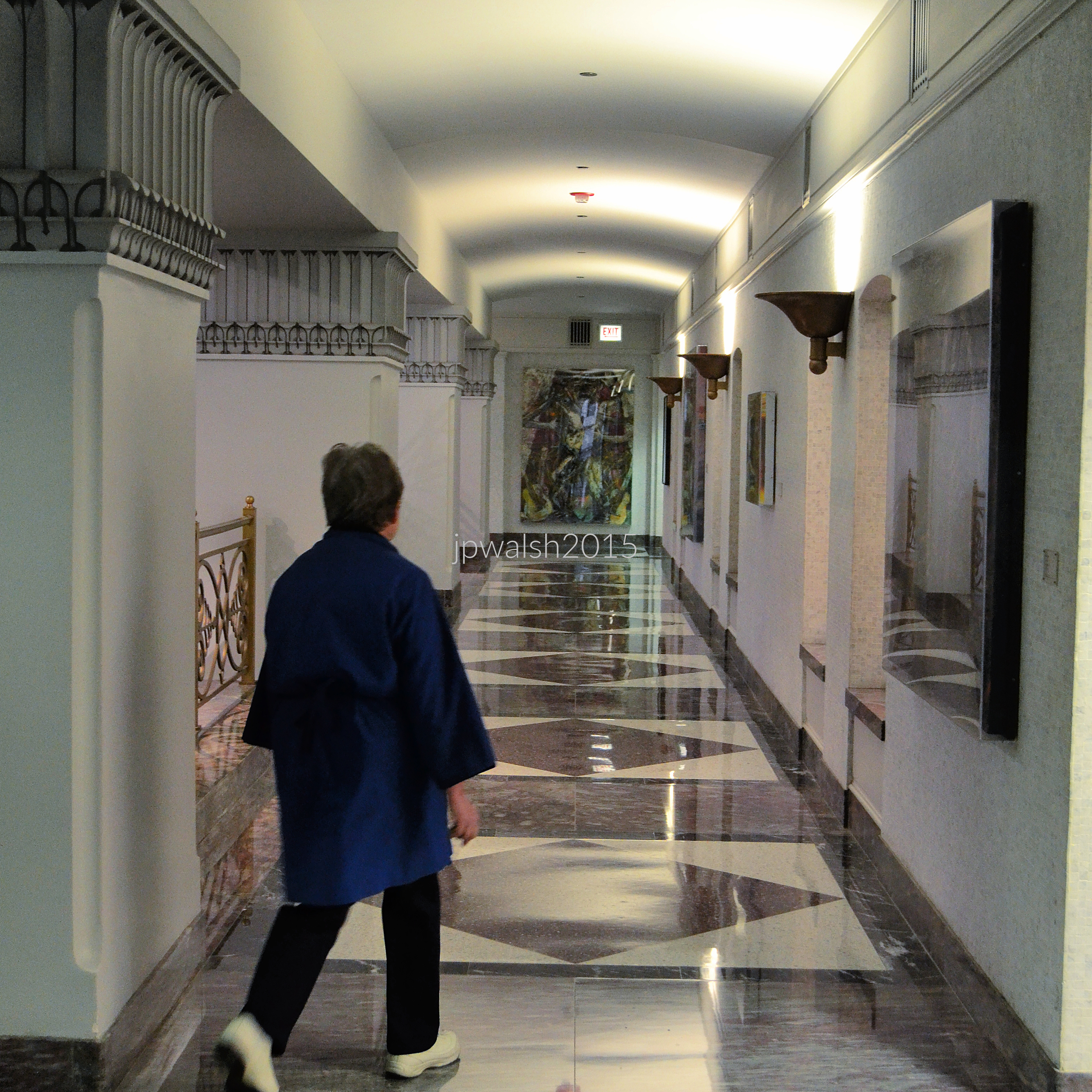
May 2015. Inside Harold Washington Library. 4.88mb DSC_0488 (1) Author’s photograph.
May 2015. On the 8th floor the Visual and Performing Arts Department maintains a comprehensive music archive. One major collection, for example, is the Martin and Morris Collection which contains roughly 1,500 scores from the renowned gospel music publisher. 3.61mb DSC_0486. Author’s photograph
July 2015. Northern view from Priztker Park. 5.01mb DSC_0056 (1) Author’s photograph.
July 2015. Southeastern view from Ida P. Wells Drive (formerly, Congress Parkway). 5.52 mb DSC_0004 (2) Author’s photograph.
December 2015. Harold Washington Library after dark. 3.7mb DSC_0980 (3) Author’s photograph.

This explanatory article may be periodically updated.

SOURCES:

https://www.architecture.org/learn/resources/architecture-dictionary/entry/hammond-beeby-and-babka – retrieved August 6, 2024.

AIA Guide to Chicago, 2nd Edition, Alice Sinkevitch, Harcourt, Inc., Orlando, 2004, p. 60.

FURTHER READING:

https://chicago.suntimes.com/architecture-design/2025/08/02/harold-washington-library-officials-new-chapter-institution?tpcc=cst_cm – retrieved August 4, 2025.

My Architecture & Design Photography: CYRUS L.W. EIDLITZ (1853-1921), Dearborn Street Station [Polk Street Station], 47 W. Polk Street, 1885, Chicago, Illinois. (24 Photos & Illustrations).

FEATURE Image: Dearborn Street Station in Chicago’s South Loop is an Italian brick Romanesque building with a granite base that was opened in 1885 at the cost of $500,000 (or almost $16 million in 2024). The architect was New York–based Cyrus L.W. Eidlitz who went on to build One Times Square (1904) in New York City from which the annual lit ball has dropped each New Year’s Eve since 1908. see – https://www.in2013dollars.com/us/inflation/1885?amount=500000 – retrieved February 27, 2024. Author’s photograph, November 2017. 6.44mb

The Hoosier leaving Dearborn Street Station in Chicago (its clock tower visible at right) for Indianapolis. Pre-1978, no mark. Public Domain.
The Dearborn Street Station in Chicago with its original hipped roofs, including on the tower, c. 1908. Public Domain.

The Dearborn Street Station is Chicago’s oldest existing train station though it has not operated as one since 1971. It is a U-shaped Italian brick three-story Romanesque structure with a granite base that was originally 80 feet tall to the roof line.

Today’s flat roof is a modification by an unknown architect from its elaborate original hipped roof that was lost in a 1922 fire. The eye-catching Flemish tower, originally 166 feet tall, was also modified after the same conflagration. The station building marks the southern terminus of Dearborn Street which today extends about 4 miles to its northern terminus at the southern boundary of Lincoln Park. Author’s photograph.

Looking south on Dearborn Street to the Dearborn Street Station which ends the 4-mile downtown street at the south.  “South Dearborn Street” by Reading Tom is licensed under CC BY 2.0.

The station’s frontage on Polk Street extends 212 feet. Originally the station extended 446 feet south along Plymouth Court with the train sheds 600 feet long with 8 tracks. The station’s train shed was demolished in 1976. In 1986 the station was converted to offices and shops (I had my Bank One branch in the Polk Street Station). Today it is the Dearborn Station Galleria in the South Loop Printing House Historic District.

Following demolition of the train sheds in 1976 the first phase of the Dearborn Park residential development south of the Dearborn Street Station building quickly sprang to life.

The 1885 clock tower of the Dearborn Street Station is visible at the left. Open land which for almost 100 years had been the Dearborn Street Station‘s busy train tracks into a shed equal to two football fields in length were cleared off to make room for Dearborn Park residential development. The photograph is dated from 1977 by William C. Brubaker. Site for Dearborn Park residential development” by UIC Library Digital Collections is licensed under CC BY-NC-SA 2.0.

The Dearborn Station had 8 tracks that accommodated 12 coaches and engines with 122 trains arriving and departing daily. Train lines that entered this station included the Chicago & Eastern Illinois (1877-1976), Chicago and Atlantic Railway (later the Chicago and Erie Railroad) (1871-1941), the Atchison, Topeka & Santa Fe (1859-1996), the Louisville, New Albany & Chicago (or Monon) (1897-1971), Grand Trunk Western Railroad Company (1859-1991), the Wabash Railroad (1837-1964), the Erie Railroad (1832-1960) and the Chicago & Western Indiana (1880-present).

Chicago & Eastern Illinois (1877-1976).

C&EI The Danville – Chicago Flyer at Steger, Illinois on November 26, 1965. Public Domain.
Map of the Dixie Route to Florida and connecting lines, published by the C&EI, L&N, and NC&StL railroads, 1926. Public Domain.
Preferred Share of the Chicago and Eastern Illinois Railroad Company, issued 1889. Public Domain.

Chicago and Atlantic Railway, later the Chicago and Erie Railroad (1871-1941).

Chicago and Atlantic Railway 1889 ad featuring The New York and Chicago Vestibule Limited. Public Domain.

Atchison, Topeka & Santa Fe (1859-1996).

AT&SF passenger train, c. 1895. Public Domain.
Map of “The Santa Fé Route” and subsidiary lines, as published in an 1891 issue of the Grain Dealers and Shippers Gazetteer. Public Domain.

Louisville, New Albany & Chicago, or Monon (1897-1971).

Chicago, Indianapolis and Louisville Railway, route map, 1903, Unknown author – Poor’s Manual of the Railroads of the United States. Public Domain.

Grand Trunk Western Railroad Company (1859-1991).

A 1976 map of the proposed routes to be turned over by Conrail on the GTW, DT&I and P&LE. Public Domain.
Grand Trunk Western Railroad locomotive shop, Battle Creek, Michigan, 1908. GT Western RR was one of the lines into Dearborn Street Station in Chicago. Public Domain.

The Wabash Railroad (1837-1964).
1886 map of the Wabash, St. Louis and Pacific Railway. Public Domain.
System timetable back and front cover, 1887. Public Domain.
Wabash system map, early 20th century. Public Domain.

The Erie Railroad (1832-1960).

An 1855 map of the New York and Erie Railroad. Public Domain.

Chicago & Western Indiana (1880-present).

The Kansas City Chief at Dearborn Station on February 5, 1968. The glowing face of the station clock in the clocktower is visible upper-left. Photograph by A Roger Puta. Public Domain.

All lines operating into Dearborn Station, except for the Santa Fe (above), travelled over the C&WI.

Colossal damages in December 1922 fire.

On December 21, 1922, fire destroyed the roof of the Dearborn Street Station.  The blaze started on the third floor and raged throughout that top floor. Hundreds of passengers and employees were safely evacuated and there was one reported injury. The Chicago Tribune reported that when the fire reached the central tower it roared up the long shaft which became a blazing torch. The crowds watched in amazement as the tower clock stopped and the hands on its three faces crashed into the raging fire below.
Dearborn Station Clock Tower.Dearborn Station Clock Tower” by Atelier Teee is licensed under CC BY-NC-ND 2.0

32-year-old architect of Dearborn Street Station came from Illustrious East Coast family of builders and architects.

Cyrus L. W. Eidlitz who built the Dearborn Street Station in Chicago in 1885 was from an influential American family of architects and buildershis father, Leopold Eidlitz (1823-1908), was a founder of the American Institute of Architects (AIA). Cyrus L. W. Eidlitz is best known for designing One Times Square, the former New York Times Building, on Times Square in 1904. He also founded HLW International, one of the oldest architecture firms in the United States. The reconstruction of Dearborn Station in Chicago in 1923 following its devastating fire was done by an unknown architect two years after Cyrus L. W. Eidlitz’s death.

Original facade completed in 1904 of One Times Square in 1919 by Cyrus L. W. Eidlitz who designed and built the Dearborn Station in Chicago in 1885. Public Domain.
The clock tower of the Dearborn Street Station is seen down Dearborn Street from Alexander Calder’s Flamingo in the Federal Center plaza. Author’s photograph, June 2022.

SOURCES:

AIA Guide to Chicago, 2nd Edition, Alice Sinkevitch, Harcourt, Inc., Orlando, 2004, p. 154.

History of Development of Building Construction in Chicago, Second Edition, Frank A. Randall, Revised and Expanded by  John D. Randall, University of Illinois Press, Urbana and Chicago, 1999, pp. 104-105 and 221-223.

Chicago’s Famous Buildings, 5th Edition, Franze Schulze and Kevin Harrington, The University of Chicago Press, 2003, pp. 89-90.

http://www.connectingthewindycity.com/2017/12/december-21-1922-dearborn-station.html – retrieved February 27, 2024.

The original ornate steeply pitched tiled roofs and dormers were lost in a fire in 1922 and not replaced.

My Architecture & Design Photography: EVANSTON, Illinois. (26 Photos & Illustrations).

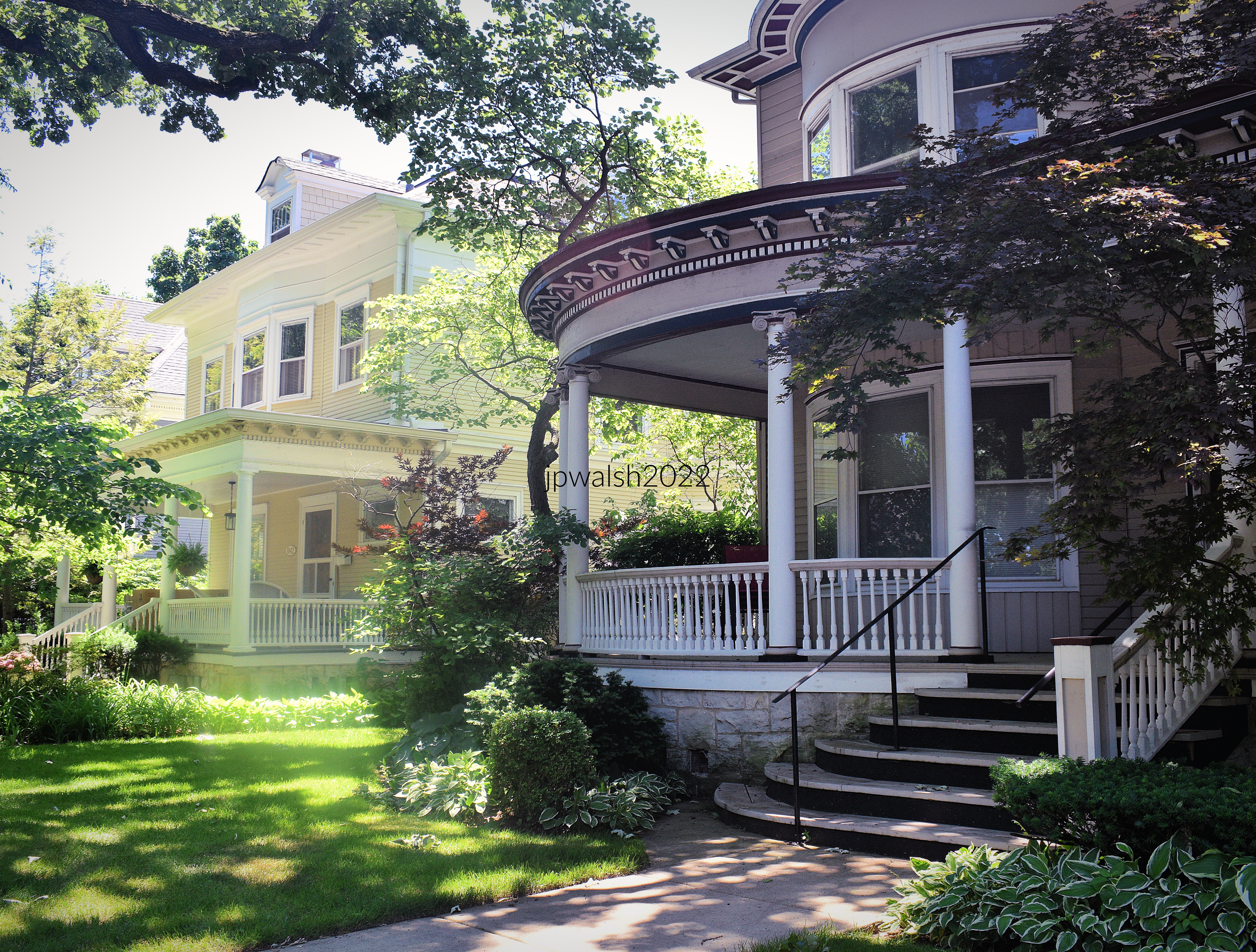
FEATURE Image: 1432 Forest Avenue, Evanston, IL, 1885. Stylish single family home, nearly 5,000 square feet, has 6 bedrooms and 3.5 bathrooms. Author’s photograph. 6/2022 7.7.mb 53%

Text & Photographs John P. Walsh.

1032 and 1034 Michigan Avenue, 1899. Double house designed by Myron Hunt (1868-1952) shortly before he relocated his practice to Los Angeles, CA. Each shingled dwelling is given a distinctive design. The northern side has a projecting porch and two-story polygonal bay. The southern side has a recessed porch. The house is tied together by a single gable with a quartet of double-hung windows and a cornice part of which is integrated to the polygonal bay. 6/2022. 7.84mb 70%
Myron Hunt (1868-1952) in February 1905. The American architect did numerous projects which are noted landmarks in Southern California and Evanston, Illinois. Born in Massachusetts he moved to Chicago and attended Northwestern University and later MIT where he graduated in 1893. Traveling and studying in Europe, he returned to Evanston where he worked as a draftsman in the local office of the Boston firm of Shepley, Rutan and Coolidge. In 1903 Hunt moved to Los Angeles, where he entered into a partnership with architect Elmer Grey (1871–1963). Opening an office in Pasadena, the firm of Hunt and Grey built houses for the wealthy. These included the summer ranch house for cereal magnate Will Keith Kellogg (1860-1951) in Pomona, CA, nearby to Los Angeles. Hunt and Grey also built hospitals, schools, churches and hotels. Public Domain.
1026 Michigan Avenue, 1915. Prairie style house designed by John Van Bergen (1885-1969) in 1915. The Oak Park, IL-born American architect did numerous such stylish house projects from DeKalb, IL, to Winnetka, IL in the 1910’s. 6/2022 7.78mb 79%
Architect John Van Bergen (above in c. 1927) was born and grew up in Oak Park, IL. He began his career as an apprentice draftsman working with Walter Burley Griffin (1867-1937) and for Frank Lloyd Wright (1867-1959) at his Oak Park Studio. Van Bergen’s early projects, mostly in Oak Park, were predominantly residential and largely in the Prairie School style, which he learned in Griffin’s and Wright’s studios. See- https://highlandparkhistory.com/highland-park-legends-program/john-van-bergen/ – retrieved December 5, 2023. Public Domain.
1049 Michigan Avenue, 1910. The Prairie-style house was designed and built by C.H. Thompson, a local developer. It is a basic block with a hipped roof, albeit on a grand scale and with dormers and porch projects that emphasize horizontality along with typical Prairie hoods. There is stucco façade with brick detailing of varying geometric design patterns. 6/2022 7.95 mb 88%
1010 Michigan Avenue, 1911. The Tudor style brick mansion was designed by Ernest Mayo (1864-1946). Once sitting on an even more expansive corner lot, Mayo designed the house and garden together. 6/2022. 7.91mb 65%
Another view of 1010 Michigan Avenue. Built in 1911, it is one of Evanston’s most formal examples of the popular Tudor Revival style whose design takes inspiration from Elizabeth I manor houses and is imposing. It is a symmetrical and complex design of porches, bows, gables, chimneys and window groupings. Architect Ernest Mayo was born in Birmingham, England in 1864 and began his career in South Africa. Mayo immigrated to Chicago in 1891 where he established the firm of Mayo and Curry. The Chicago firm designed factories, hotels, and office buildings, and Mayo worked on administrative buildings for the 1893 World’s Columbian Exposition. Mayo split with Curry and worked independently until he partnered with his 24-year-old son Peter Mayo in 1919 to form Mayo and Mayo. While Ernest Mayo received his architectural apprentice training in England, Peter received his degree from Yale University and further design education at The Art Institute of Chicago. See – https://www.winnetkahistory.org/gazette/140-sheridan-road-2/ and https://prabook.com/web/ernest.mayo/1717173 – retrieved December 5, 2023. 6/2022. 7.63mb 66%
Interior room, Dawes Mansion, 225 Greenwood Street, 1894. Designed by New York architect Henry Edwards Ficken (1852-1929), the house sits on a large lot overlooking Lake Michigan. The basic square block building is met by round tourelles on each corner with conical roofs that meet the same height of the main block’s hipped roof. The Châteauesque-style house was bought by Charles Gates Dawes (1865-1951) who was vice-president under Calvin Coolidge and, with its stunning cherry paneling, is furnished much as it was during Dawes’ residency. 10/2015 4.20mb
Charles Gates Dawes House, Evanston, Illinois” by StevenM_61 is licensed under CC BY-NC-ND 2.0.
1037 Michigan Ave, Evanston, IL, 1895. 6/2022 7.52mb 99%
940-950 Michigan Avenue, 1927. Michigan-Lee apartment building was erected by N.J  Lareau and associates and sits on a 20,000 square  foot lot on the southwest corner of Michigan and Lee. Georgian Colonial is the style of architecture for the new structure which is made of red brick and Bedford stone. The structure was built to house 24 total apartments: three 7-room, three 6-room, fifteen 5-room, and three 4-room apartments.  https://www.archinform.net/arch/202206.htm and http://www.michiganleecondoassociation.com/history.html – retrieved November 28, 2023. The swanky apartment complex was designed by Frank William Cauley (1898-1984) architect and lawyer. 6/2022. 7.68mb 66%
Frank Cauley, architect of the Michigan-Lee building (above) in 1927, graduated from the Armour Institute of Technology in 1922. Before he received his license to practice architecture, he designed the $2,000,000 three-hundred room (each with its own bath) Orrington Hotel in 1923 in Evanston, Illinois, for local developer Victor Ca[r]landrie Carlson. Carlson built the Carlson Building on Church Street in downtown Evanston as well as two landmark hotels, including The Library Plaza Hotel in 1922. Cauley went into business on his own, practicing until the 1929 crash. In the depression years he went to law school in Chicago and received his L.L.B. in 1938. In April 1969, the Illinois Institute of Technology awarded him a J.D.
https://undereverytombstone.blogspot.com/2015/10/he-left-his-mark-on-downtown-evanston.html – retrieved November 28, 2023
The Hotel Orrington” by Mark Blevis is licensed under CC BY-NC-SA 2.0.
Evanston front porches. 6/2022 7.80mb 79%
1210 Michigan Avenue, 1880. Started as a simple clapboard farmhouse one block from Lake Michigan. there have been several expansive additions since that time  The front exterior is marked by a simple veranda with grouped struts in the lintel which is supported by turned posts. 6/2022 7.68mb 75%
1332 Forest Avenue Evanston, IL, 1894, is a stylish home with several additions on an expansive corner lot. 6/2022 7.32mn 90%
1005 Michigan Avenue, 1913. The light-colored brick house is Colonial Revival with modifications is by Howard Van Doren Shaw (1869-1926). The façade’s symmetry is prominently displayed in its 5 equal openings for its two main floors and topped by a shortened pitched roof with three flat-roofed dormers. A chimney protrudes at the roof line to the north. For the main mass there are aligned windows with a middle opening for both the first and second floor symmetrically displaying diverse residential functionality: a broad-arched porchway and genteel fanlight above a double door entry on the first floor and, at the second level. a wrought iron balcony providing a small, mainly decorative step landing. The great house is situated on the northeast corner lot of a leafy yet trafficked suburban residential intersection, with the main building’s symmetry broken to the south by the then-popular sun porch extension. It is a low, two-story flat-roofed projection with an enclosed porch on the first floor and an open porch originally on the upper level. 6/2022. 7.58mb 73%
 
Howard Van Doren Shaw (1869-1926). Public Domain.
Evanston fashion, c. 1918. Most Evanstonians used local dressmakers and tailors to have their clothes made. The white cotton summer dress with embroidery and lace insertions and natural waistline was typical for the era. 10.2015 4.24mb
Northwestern University Gate” by AcidFlask is licensed under CC BY-NC-SA 2.0.
Chicago Avenue at Clark Street.
Evanston is home to Northwestern University. 6/2022 7.84mb 87%
Fortress Northwestern: University Library and Norris University Center, June 1977” by A.Davey is licensed under CC BY 2.0.
Divvy bike (with basket!) to get around campus and the neighborhood. 6/2022 7.77mb 83%
The longtime Chicago-Main Newsstand at 860 Chicago Avenue in Evanston is open 7 days a week from 7:00a.m. – 10:00p.m. 6/2022 7.74mb 85%
Left: 1730 Chicago Ave, Evanston, IL Built in 1865, it was the home of Frances Willard (1839-1898) and her family and was the headquarters of the Woman’s Christian Temperance Union. 6/2022 7.73mb 88%
Grosse Point Lighthouse, 1873, is a tapering column to a catwalk supported by Italianate brackets built by the U.S. Government. The lighthouse marks the approach into Chicago. The promontory on which it stands was named Grosse Point in the 17th century by French explorers and the area was mapped in 1673 by Louis Jolliet and Father Jacques Marquette, a Jesuit missionary. The lighthouse is topped by a polygonal glass lantern containing the light and lens. See – http://www.grossepointlighthouse.net/history.html – retrieved December 5, 2023. 6/2014 4.03mb

Sources:

A Guide to Chicago’s Historic Suburbs on Wheels and on Foot, Ira J. Bach, Swallow Press/Ohio University Press, 1981, pp. 499-530.

Other Evanston, IL POSTS:

My Architecture & Design Photography: WINNETKA, Illinois. (12 Photos & Illustrations).

FEATURE image: 822 Bryant, Winnetka, 1901. A grand example of the Shingle style working its way through the Arts and Crafts movement and influenced by the recent Prairie School’s horizontality and openness. Author’s photograph. 8/2014 99% 6.92mb.

Test & Photographs John P. Walsh.

11-844 Prospect, Winnetka, 1885 with later additions. The central section with the steeply pitched roof with a prominent flare is the oldest part of the house. It is the American Queen Anne style in vogue in the 1880s and Classical Revival style that emerged following the World’s Columbian Exposition in Chicago in 1893. The sunporch abuts a two-story porch whose corner columns are the Ionic order. 8/2014 7.79mb 95%
11-844 Prospect, Winnetka, 1885 with later additions. The south-facing façade has a tall chimney that rises from the ground to above the roof peak. The main entrance is under a shouldered segmental arch held up by columns of the relatively uncommon Roman Doric order. The beige-colored metal siding is a modern addition. 8/2014 6.04mb
9 – 824 Prospect Avenue, Winnetka, c. 1900. There is a prominent cornice with a garland frieze below a tiled hipped roof that has a central dormer with a Palladian window. The porch, supported by Ionic order expanded columns, wraps around the front to embrace a two-story bay facing south. Originally this offered a second -floor open sunporch. 8/2014 6.76mb
8 – 800 Lloyd Place, Winnetka, 1901. A traditional cube structure which is half stucco and half shingled is covered by a hipped roof that is slightly flared at the eaves. The main roof’s central dormer as well as the main entrance have their own hipped roofs. There is a slight polygonal bay seen on the east side. 8/2014 6.15mb
Sheridan Road, Winnetka, Illinois. 8/2014 3.01mb
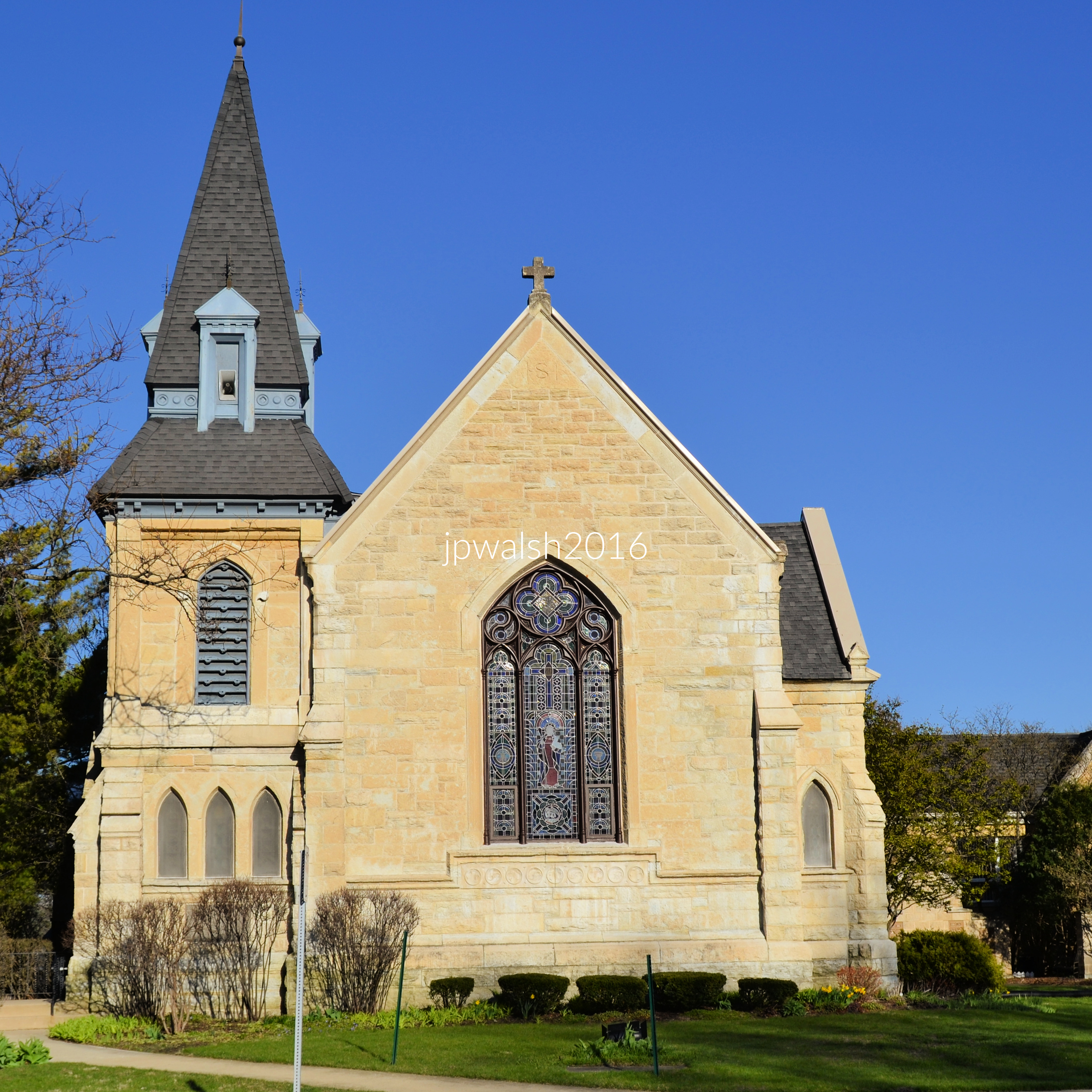
Sacred Heart Church, 1077 Tower Road, Winnetka. In July 2018 Sacred Heart Church in Winnetka and St. Philip the Apostle in Northfield consolidated into one (Divine Mercy Parish) as declining participation and increasing reliance on government funds and private donor largesse to operate make it impossible to sustain a presence and footprint in the local community otherwise. When this photograph was taken in 2014 Sacred Heart was still its own parish with a vestibule wall filled with photographic portraits of past pastors indicating a long and proud history. The trends in modern Catholic parish life and Catholic institutions in general are, and have been since the 1960’s, on a downward spiral. The Archdiocese itself cites these troubling statistics – less than 1 in 5 of Catholic Millennials (17%) go to weekly Mass; more than a third of the same Millennials (those born after 1986) identify with no religion at all; more than 8 in 10 (85%) of all public and private school 8th graders stop practicing the Catholic faith by early adulthood (23 years old). In the last 20 years Mass attendance has lost over 1 in 4 filling the pews. A significant number of “cradle Catholics,” that is, baptized children, do not receive 1st communion (20%) or the sacrament of confirmation (40%). See – https://www.renewmychurch.org/mission – retrieved November 21, 2023. 8/2014 4.58mb
Thirty-five-year old Augustus Barker Higginson, an architect located in Los Angeles, California, built  the impressive Shingle style house (below) at 822 Bryant Avenue Winnetka in 1901. Public Domain.
7 –  822 Bryant, Winnetka, 1901. A grand example of the Shingle style working its way through the Arts and Crafts movement and influenced by the recent Prairie School’s horizontality and openness. The domicile was built by progressive American architect Augustus Barker Higginson (1866-1915) then with architects Myron Hunt & Elmer Grey in Los Angeles, later locating his own firm in Santa Barbara, California. See – https://pcad.lib.washington.edu/person/7142/ – retrieved November 21, 2023. The house is an L-shaped plan with broad sloping pitches roofs. The window groupings have plain surrounds that fit elegantly into shingle walls that, when they reach the ground, flare slightly.
Christ Church and Garland Cemetery, 784 Sheridan Road, Winnetka, 1870’s. The church was established in 1869 and the cemetery grounds was begun in 1876. 8/2014 6.60mb
Christ Church, 784 Sheridan Road, Winnetka. Gothic revival: Charles J. Connick Studio (1912-1945). Harriet Leonard, born Albany, NY, Nov. 17, 1875 – died Winnetka, Feb. 28, 1923. Connick’s work in stained glass is noted for its brilliant colors, rich symbolism and abundant use of scripture passages. 8/2014 7.66mb
Dedicated in 1905, Christ Church (also known as Church on the Hill) is a traditional stone church that was the gift of the William Hoyt family. It was built as a memorial to their daughter and three grandchildren who were tragically killed in the 1903 Iroquois Theater fire in Chicago and buried in the adjacent cemetery. 8/2014 7.77mb
newspaper headline, 1903.

Sources:

A Guide to Chicago’s Historic Suburbs on Wheels and on Foot, Ira J. Bach, Swallow Press/Ohio University Press, 1981, pp. 565-74.