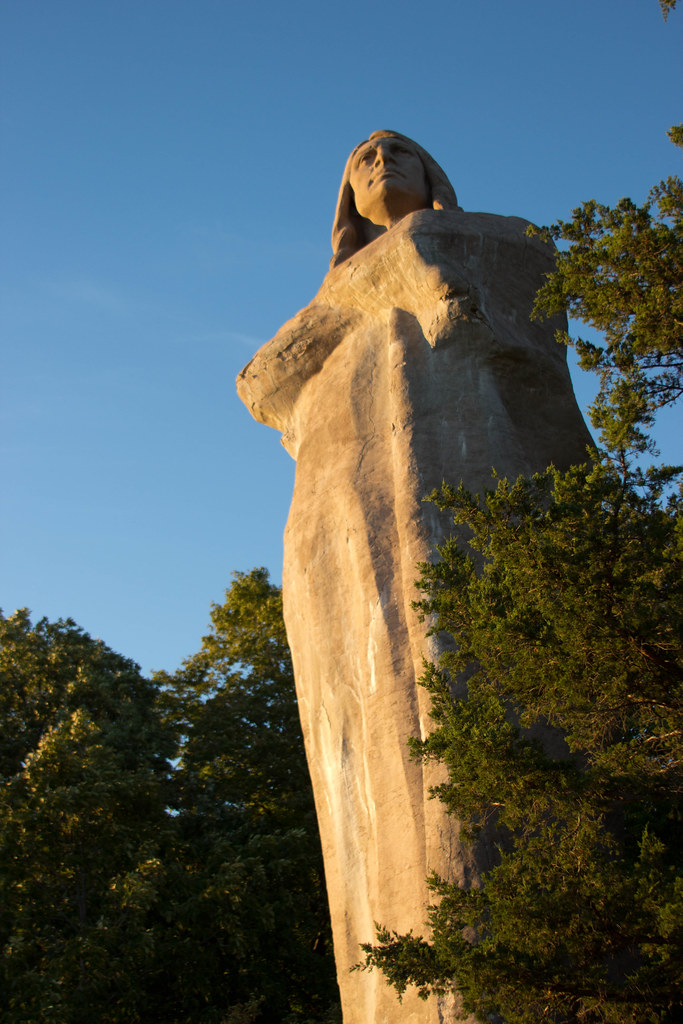
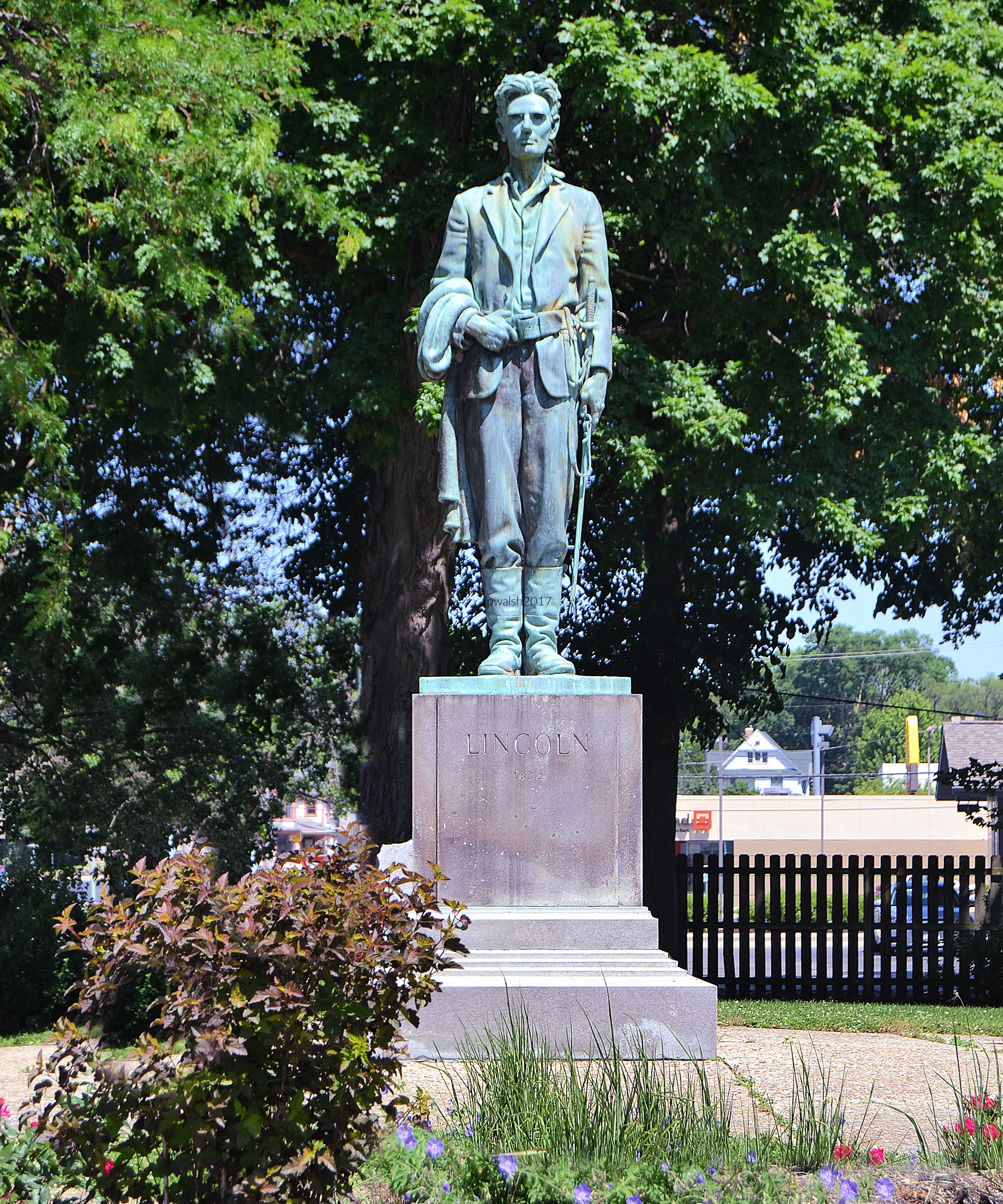
FEATURE image: The large bronze statue was the first prominent public depiction of the 16th U.S. president as a young adult man. Author’s photograph, June 2017. 4.70mb. Capt.
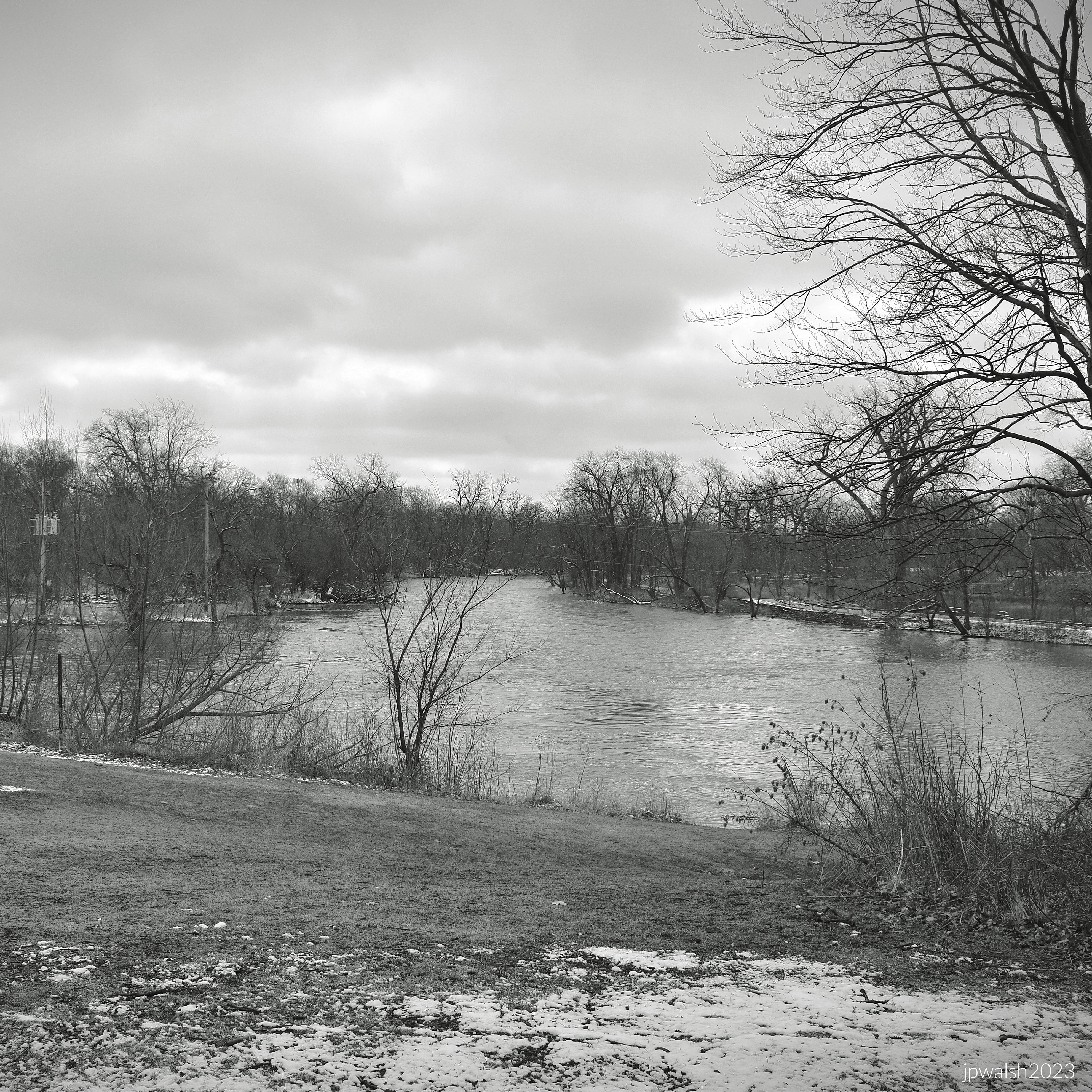
Young Lincoln was stationed in Dixon, Illinois, at Fort Dixon on the Rock River in today’s Lee County where the statue stands. “Rock River Fall_03” by markellis_1964 is licensed under CC BY-NC-SA 2.0.Capt. A. Lincoln looking onto the Rock River in Dixon, Illinois. Young Lincoln enlisted in the Illinois Volunteers on April 21, 1832 and, following more enlistments, finally mustered out of military service on July 10, 1832. Author’s photograph, 6/2017 8.26mb.
Illinois in the early 1830s was the edge of the American frontier and virtually wilderness. The Native American tribes were being expelled from the northern tier of the state established in 1818 by ceding their lands to the U.S Federal Government. Most of the Native Americans were pushed out of the state by treaty by the end of the 1820s. This quickly changed the landscape of a rapidly growing Illinois by way of new arrivals of settlers from the East in the 1840s and 1850s. Settlers were accompanied by ambitious commercial projects such as transportation canals and, even more impressive, the railroads, all of which worked to open up the Middle West of the United States to global markets and industrial prosperity.
Abraham Lincoln, born in a Kentucky log cabin in 1809, was 21 years old when he arrived into Illinois in 1830 with his family from Indiana. During the 1832 Black Hawk War, the 23-year-old Abe Lincoln lived in New Salem, Illinois, and was elected captain in the Illinois National Guard. The bronze statue, cast in 1930, of Lincoln in Dixon, Illinois, depicts for the first time a yet untapped aspect of the 16th president’s life and career for his ever-expanding public iconology – that of the youthful adult Lincoln starting out in his career.
Lincoln enlisted in the Illinois Volunteers on April 21, 1832 near Richland Creek in Sangamon County which was located about halfway between New Salem and Springfield, Illinois. The next day, Lincoln mustered into state service at Beardstown, Illinois, about 40 miles to the west on the Illinois River.
The 6-foot-4-inch Lincoln was elected captain, a position he said he was both surprised and proud to receive.
Lincoln mustered into U.S. service near Janesville, Wisconsin on May 3, 1832. He mustered out on May 27, 1832 in Ottawa, Wisconsin. Lincoln never fired a shot.
On that same day of May 27, 1832 Lincoln re-enlisted as a private in Captain Iles’ company. When that enlistment expired, Lincoln re-enlisted again in Captain Early’s company.
Lincoln finally mustered out of military service on July 10, 1832 at Whitewater, Wisconsin.
Young Lincoln was stationed in Dixon, Illinois, at Fort Dixon on the Rock River where this statue — unveiled in late September 1930 — stands. The sculptor is French-born Leonard Crunelle (1872-1944).
The artist leonard Crunelle (1872-1944) with the head of his heroic-sized Lincoln the Debater completed in 1929. Fair Use. The following year he completed Capt. A. Lincoln in Dixon, Illinois, which was another heroic-sized statue of an even much younger Lincoln
Crunelle’s immigrant family arrived in Illinois in 1889 and settled in Decatur, about 40 miles east of Springfield, Lincoln’s hometown. When Crunelle worked in the local mines, he started making fired clay sculptures. His work was brought to the attention of prominent American sculptor and teacher Lorado Taft (1860-1936) who brought young Crunelle to Chicago to study at The School of the Art Institute of Chicago. At the same time, Crunelle began to do decorative work for the Chicago World’s Fair in 1893.
Lorado Taft made his Black Hawk statue monument in 1911 in Oregon, Illinois, also on the Rock River about 16 miles upstream from Dixon, Illinois. It is all part of the area that saw action during the Black Hawk War in 1832 and led to the complete surrender and expulsion of the last Native American group in Illinois. “Black Hawk (aka ‘The Eternal Indian’)” by Dan Brekke is licensed under CC BY-NC 2.0.
The bronze sculpture of Lincoln – who later as a lawyer and politician expressed pride in his brief military service – is one of the first attempts to depict the Great Emancipator in his youth. Though Crunelle had made a statue called Lincoln the Debater for display in a park in Freeport, Illinois, in 1929 the slightly later Capt. A. Lincoln in Dixon, Illinois, depicted Lincoln more than half the great debater’s age.
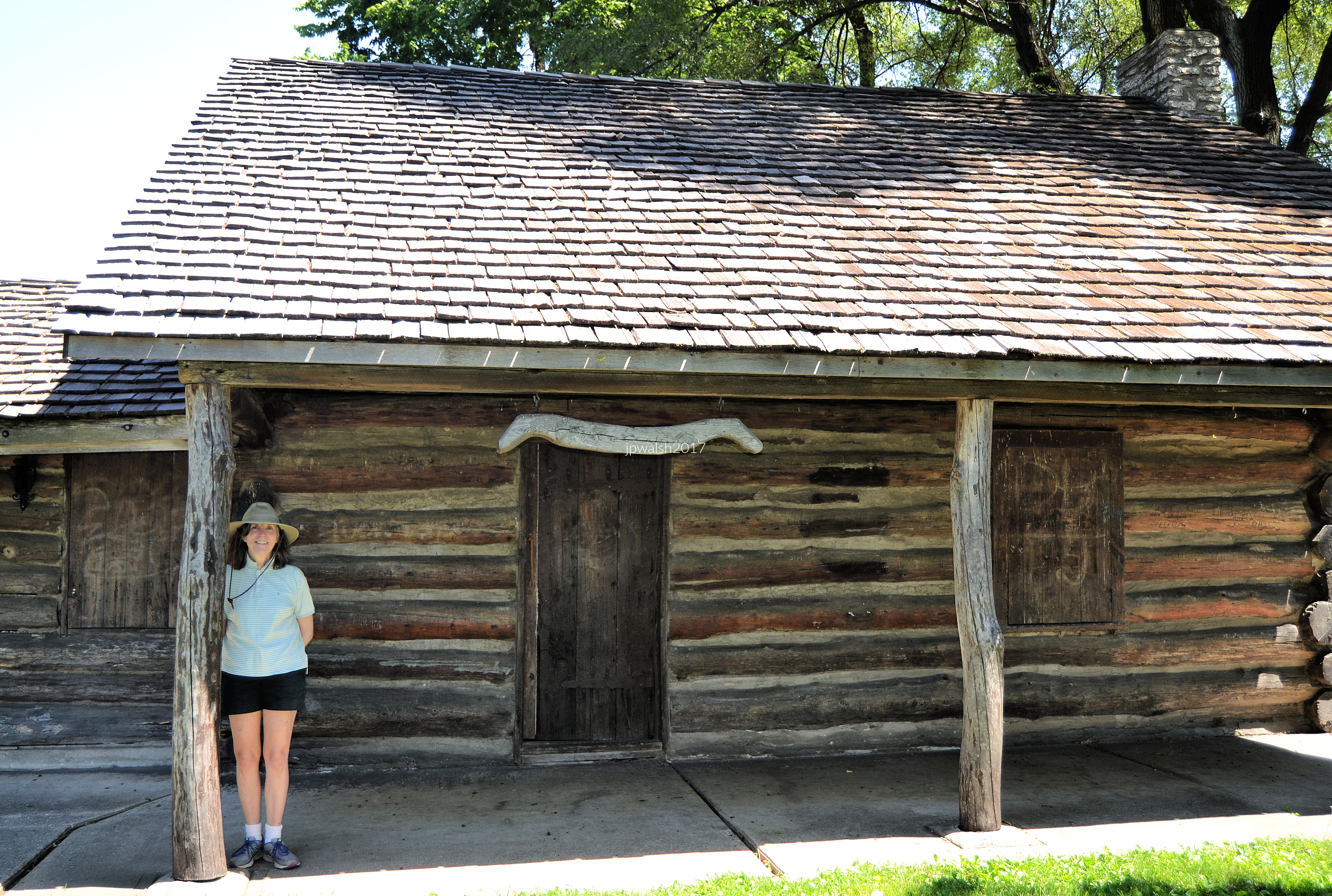
Plaque. Author’s photograph, 6/2017 9mb. Capt. A. Lincoln 1832. Dixon, Illinois. The 6-foot-4-inch Lincoln was elected captain, a position he said he was both surprised and proud to receive. Author’s photograph, 6/2017 6.87mb. “Rock River Fall_49” by markellis_1964 is licensed under CC BY-NC-SA 2.0.Reconstruction of log structure typical for the early 1830’s in Illinois when young Abraham Lincoln served at Fort Dixon on the Rock River in Dixon, Illinois, in the Illinois National Guard. Author’s photograph, 6/2017 6.75 mb.
FEATURE Image: The Pickwick Theatre Building, an Art Deco movie palace, opened in 1928. Its marquee is one of the most recognized structures in Park Ridge, Illinois, a suburb of Chicago. The marquee became famous nationwide when it was featured in the opening sequence of the nationally syndicated television show, Gene Siskel & Roger Ebert’s At the Movies. Author’s photograph.
Pickwick architects’ rendering, exterior, 1927. Public Domain.
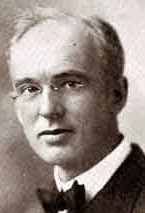
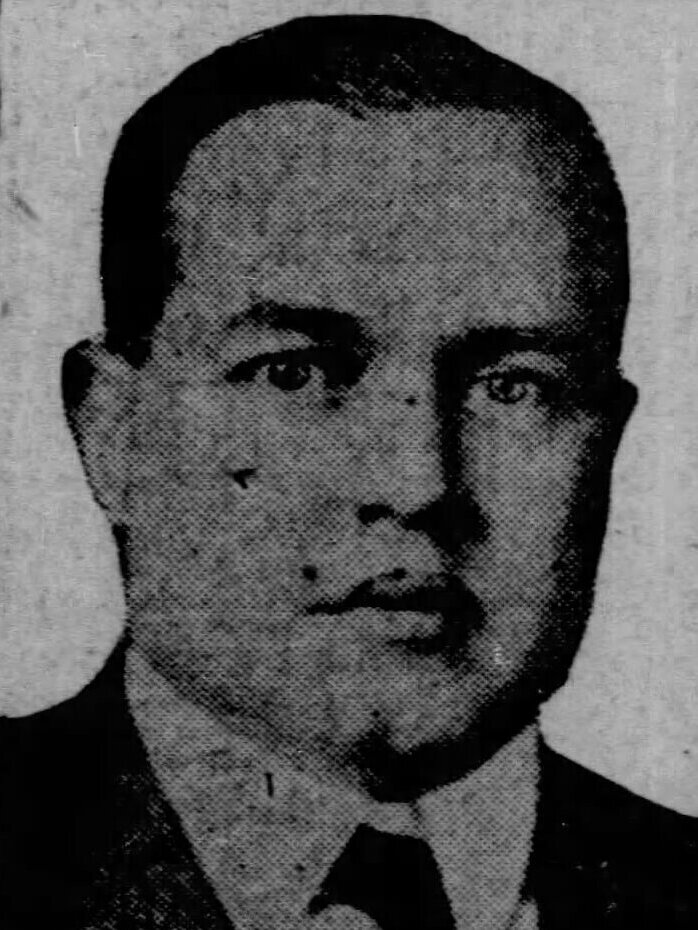
The Pickwick Theatre Building was designed by architectural partners R. Harold Zook (1889-1949) and younger engineer and architect William F. McCaughey (pronounced McCoy). The complex includes a movie auditorium, restaurant, storefronts and offices. Both architects apprenticed under Howard Van Doren Shaw (1869-1926), a leading Arts and Crafts architect and early colleague to Frank Lloyd Wright. Zook and McCaughey did significant work in other affluent Chicago suburbs and out of state. Zook designed homes in Iowa, Wisconsin, and Illinois, including his own quirky home in Hinsdale, Illinois, in 1924 where he resided until his death in 1949 (see –https://www.ourmidland.com/realestate/article/Designed-by-R-Harold-Zook-This-Quirky-Illinois-16056515.php – retrieved April 25, 2023). Zook’s public buildings included the St. Charles Municipal Building (1939) and the DuPage County Courthouse (1937). Zook and McCaughey had also partnered to design and build Maine East High School (1927). For a photograph of R. Harold Zook, see-http://www.zookhomeandstudio.org/r-harold-zook.html – retrieved April 25, 2023. McCaughey was born in Virginia and came to Illinois in 1916. He made his home in Park Ridge for many years and maintained an office in the new Pickwick Theater Building he designed.
Originally, the theater had a seating capacity of 1,450. The tower is 100 feet tall with a decorative limestone sunburst carving and capped by an ornamental 15-foot iron lantern. The sunburst is filled by stained glass while on each side of the central tower are two shorter matching pedestals capped with their own lanterns. The building faces both Northwest Highway and Prospect Avenue in nearly equal dimensions (the Prospect side is about 12 feet longer).The building is capped by a cornice with dentils as its second-floor window bays are separated by art deco piers. Each façade meets at a rounded corner. The base of the tower is met by its massive cast-iron theatre marquee.
Pickwick Exterior, 1929 “Pickwick Exterior 1929” by BWChicago is licensed under CC BY 2.0.The marquee became famous nationwide in 1983 when it was featured on syndicated television in the opening sequence for Siskel & Ebert’s “At the Movies.” It was restored to its original 1928 appearance in 2012. Author’s photograph.
The Pickwick Theater Building was erected at a major intersection not far from today’s Metra Union Pacific line commuter railroad station. By 1930, when the theater building was new, the population of Park Ridge had grown to 10,000 residents. (In 2020 there were almost 40,000 residents).
Classic Art Deco
In addition to being on the National Register of Historic Places, The Pickwick Theater Building is noted for its Art Deco style of architecture. Art Deco is defined by its emphasis on geometric designs, bright colors, and a range of ornament and motifs. Zook and McCaughey’s romantic style demonstrates that they were as much artists as architects evident in their distinctive designs, use of natural materials, and quality of craftsmanship.
The marquee before its restoration to its original colors of 1928. “Pickwick Theatre” by swanksalot is licensed under CC BY-NC-SA 2.0.Alfonso Iannelli and wife, 1916. The artist’s home and studio at 255 N. Northwest Highway was literally half a mile away from the new movie palace in Park Ridge. Public Domain.
Sculptor and designer Alfonso Iannelli (1888-1965), who maintained a studio and home in Park Ridge, contributed much to the Pickwick’s interior architecture and ornamentation. Iannelli ‘s decorative work for the building extended to the sculptures, murals, fire curtain, plaster panels, and even its Wurlitzer organ console as well as the cast-iron marquee outside. In 1990, the theater expanded the Pickwick’s screenings without altering the original auditorium while the marquee’s original 1928 red-and-gold color scheme and treatment was restored in 2012.
On December 6, 2022 it was announced the Pickwick Theatre would be closed in January 2023. At the time of this post’s publishing, the theatre was still open and showing a roster of new films. See – https://www.pickwicktheatre.com/ – retrieved April 25, 2023.
SOURCES:
Alice Sinkevitch, AIA Guide to Chicago, 2nd Edition, Harcourt, Inc., Orlando, 2004, p. 417.
Green, Betty. Zook: A Look at R. Harold Zook’s Unique Architecture. Chicago: Ampersand, Inc., 2010.
Jameson, David. Alfonso Iannelli: Modern by Design. Oak Park, IL: Top Five Books, 2013. Alfonso Iannelli: Modern by Design(Top-Five-Books, 2013)
Preservation Real Estate Advisors. Pickwick Theater Building Nomination for Landmark Designation.Park Ridge, IL: Park Ridge Historic Preservation Commission, 2010.
Yanul, Thomas G., and Paul E. Sprague, “Pickwick Theater Building,” Cook County, Illinois. National Register of Historic Places Inventory–Nomination Form, 1974. National Park Service, U.S. Department of the Interior, Washington, D.C.
FEATURE image: The Loma Theatre with its vertical sign in San Diego, California. was opened in 1945. This is a true transitional/hybrid building for American architect S. Charles Lee. The architect retains the curves (in the sign) of his pre-war theatre buildings and moves to the angles (in the main structure) that increasingly marked his movie theatres post war. The Loma Theatre was built in the later part of Lee’s career and is one of the scores of movie theatres built by the architect between 1926 and 1950. It was operated by Mann Theatres from 1973 until it closed on December 17, 1987. In San Diego’s Midway District, the Loma Theatre had a reputation of being a friendly, classy place (see video below). Author’s photograph, October 1999 60%.
The Loma Theatre was designed by S. Charles Lee (1899-1990) and opened on May 5, 1945 with its first feature, 20th Century-Fox’s Technicolor musical film, Diamond Horseshoe, starring Betty Grable. While the year 1936 was the most prolific year for Lee’s building designs – no less than 32 individual structures in California – the years 1945-46 of which the Loma Theatre is a part were prolific with 17 new movie theatres erected in California as well as one each in Arizona (250 seats), Miami, Florida (2000 seats), and Managua, Nicaragua (2000 seats). The Loma Theatre was originally opened with 1,188 seats.
Betty Grable was a 1940’s musical star. The Loma Theatre opened their doors with “Diamond Horseshoe,” a Technicolor Fox musical that was very successful at its release. “Betty Grable, 1940s musical star” by Movie-Fan is licensed under CC BY-NC-SA 2.0.
S. Charles Lee was one of the foremost mid20th-century architects of movie houses on the West Coast. Simeon Charles Levi was born and grew up in Chicago. There Lee worked for Rapp & Rapp, the renowned Chicago architectural firm that specialized in movie theatre design. Rapp & Rapp’s significant work in this period included State Street’s Chicago Theatre in 1921, and the Bismarck Hotel and Theatre, and the Oriental Theatre both in 1926.
S. Charles Lee was born in Chicago who had a prolific and successful career as a motion picture theatre archtitect and designer, particularly in the large state of California. Lee was a pilot who often flew to job sites for time efficiency. That it also impressed clients was not missed. Fair use.
The Loma Theatre’s architect was influenced by Louis Sullivan (1856-1924) and Frank Lloyd Wright (1867-1959). In 1922, before moving to Los Angeles, Lee was impressed by the Chicago Tribune building competition on North Michigan Avenue whose competitors juxtaposed historicism, such as the Beaux-Arts, with modernism. Lee considered himself a modernist, and his design career expressed the Beaux-Arts discipline and a modernist functionalism and freedom of form.
S. Charles Lee who developed his own style for his movie theatres in California was originally inspired by leading Chicago modern architects who he worked for and studied as a young architect.
Beginning his career in California in the 1920’s, by the 1930’s S. Charles Lee was the principal designer of motion picture theaters in Los Angeles. Throughout the 1930s and 1940s, Lee is credited with designing many hundreds of movie theaters in California, including San Diego’s Loma Theatre at 3150 Rosecrans Boulevard.
Mann Theatres operated it from 1973 to December 1987. Its last feature was Paramount Pictures’ Fatal Attraction, starring Michael Douglas and Glenn Close. The Loma ’s vintage signage is intact along with some of its movie-house interior although today it serves as a bookstore. For other interesting memories of this friendly and classy movie house, see – http://cinematreasures.org/theaters/1716– retrieved December 29, 2022.
Architect S. Charles Lee in the early 1920s. Public Domain.
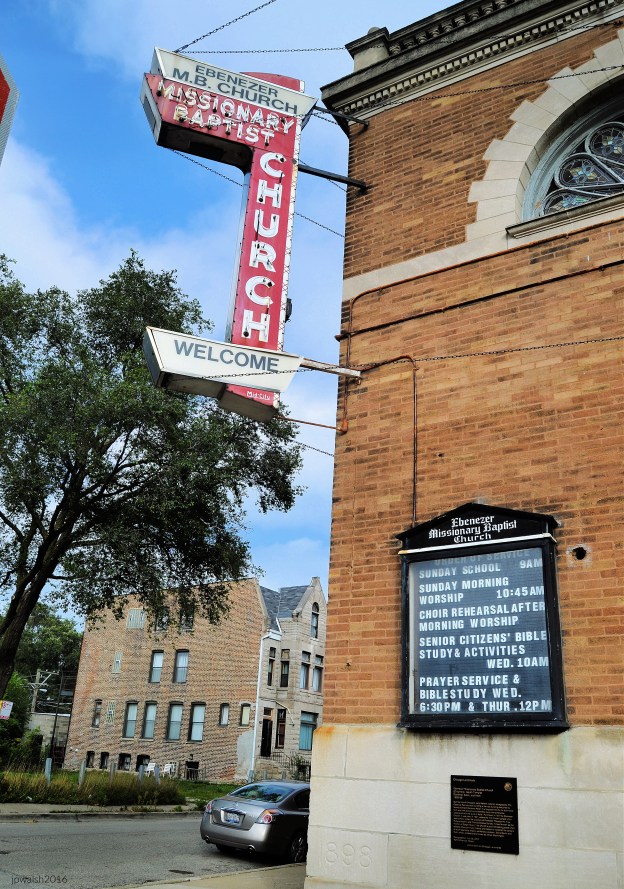
FEATURE Image: Signage of Ebenezer Missionary Baptist Church, Chicago. The church is known as “the birthplace of Gospel music” since Thomas A. Dorsey (1899-1993) started his first modern gospel choir here in 1931. Author’s photograph, 10/2016 6.06 mb
Built as one of Chicago’s early Reform Judaism synagogue in 1898, the Classical Revival style golden brick and stone building is the last one designed by Dankmar Adler (1844-1900). The building with its form distinctive to other Adler buildings as well as its fine acoustics, was purchased by Ebenezer Church in 1921.In the heart of the Bronzeville neighborhood on Chicago’s Southside, Ebenezer Missionary Baptist Church was formed in 1902. During the Great Migration, African-Americans made Ebenezer their church home in the early 1920’s.Ebenezer developed a reputation as a center for gospel music. Under the direction of Theodore R. Frye, Roberta Martin and, the “Father of Gospel Music,” Thomas A. Dorsey (1899-1993), the church’s groundbreaking gospel choir introduced a blend of Christian praise and blues at Ebenezer that established the careers of the “Mother of Gospel,” Sallie Martin (1895-1988), Mahalia Jackson (1911-1972) and Dinah Washington (1924-1963) who was inducted into the Rock ‘n Roll Hall of Fame in 1993.
I’ll Tell It Wherever I Go – Sallie Martin. Sallie Martin helped popularize the songs of Thomas A. Dorsey. Martin also worked with Cora Martin-Moore (1927-2005), Dinah Washington and Brother Joe May (1912-1972), the “Thunderbolt of the Midwest,” when Sallie Martin formed the Sallie Martin Singers. Sallie Martin was inducted into the Gospel Music Hall of Fame in 1991. Sanctuary. During the 30-year pastorate of Rev. Frank K. Sims, distinguished guests of the church included Rev. Dr. Martin Luther King, Jr. (1929-1968), Ralph Metcalfe (1910-1978), Adam Clayton Powell (1908-1972) and Mahalia Jackson.
“A voice like this comes only once in a millennium,” so said Dr. King about Mahalia Jackson. During the Chicago Freedom Movement in 1966, Mahalia Jackson, who lived in Chicago, joined her friend Rev. Martin Luther King Jr., when he was visited a church to preach a sermon about justice and equality. Like Dr. King, Mahalia Jackson was a devout Christian and Civil Rights activist. At the August 28, 1963 March on Washington, she sang “How I Got Over” and was on the Lincoln Memorial platform behind King while he was pronouncing his “I Have a Dream” speech.In 1966 a banquet honoring Dr. Frank Kentworth Sims on the 7th anniversary of his pastorate of Ebenezer Missionary Baptist Church featured Nobel Peace Prize recipient the Rev. Dr. Martin Luther King, Jr. as the guest speaker and Mahalia Jackson as guest vocalist.
Though there were literally as many church choirs as there were churches, Dinah Washington (1924-1963), then Ruth Jones, made a name for herself as a teenage gospel singer in Chicago. In 1940 Ruth gave a recital that included “Precious Lord Take My Hand,” one of Thomas A. Dorsey’s most popular songs. The music for this version of the Christian prayer, “The Lord’s Prayer,” was written by Albert Hay Malotte (1895-1964) in 1935. It was released in 2010 on the compilation album, The Fabulous Miss D! (The Keynote, Decca & Mercury Singles 1943–1953), which traces the first decade of Dinah Washington’s recording career on 78s and 45s, starting with her stint with Lionel Hampton (1908-2002) and continuing through the early years of her solo career.
SOURCES:
Alice Sinkevitch, AIA Guide to Chicago, 2nd Edition, Harcourt, Inc., Orlando, 2004, p. 417.
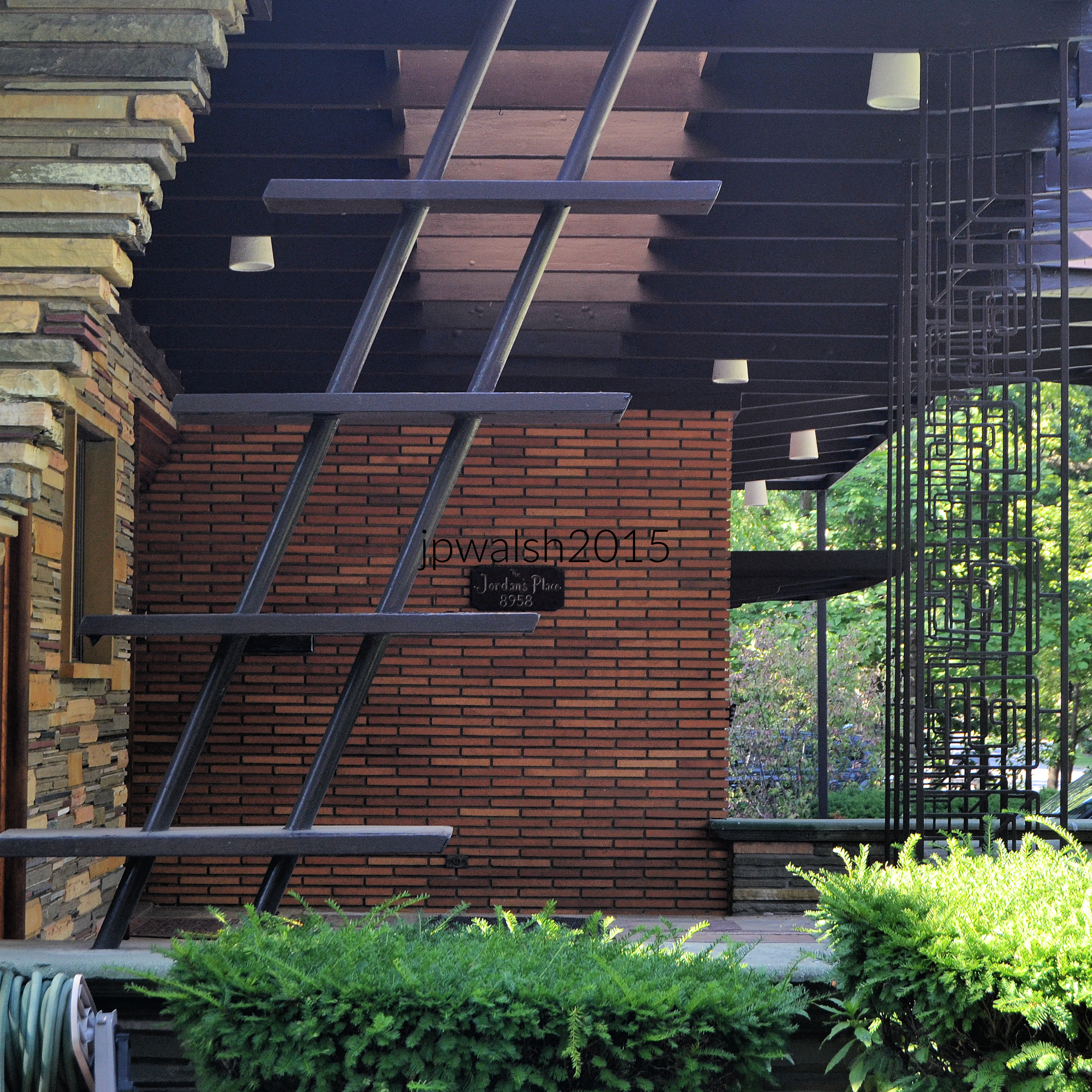
FEATURE image: Detail of wood, stone and brick used by architect Joseph Emil Hosek for his 1951 Prairie-style house at 8958 S. Hamilton Avenue in Northern Beverly. See a fuller description and another photograph of the house in this post.
Text & photographs by John P. Walsh.
INTRODUCTION.
The Beverly/Morgan Park community owes its charm and uniqueness to the variety of architecture styles and the plan for residential areas that were laid out in the late 19th century. Historic districts were established to help preserve that ambience.
Prairie School founder Frank Lloyd Wright (1867–1959) designed a handful of houses in Beverly/Morgan Park (4) between 1900 and 1917 as did Walter Burley Griffin who boasts an historic district on 104th Place. Today there are four historic districts – (1) the Ridge Historic District on the National Register of Historic Places, and Chicago Landmark Districts (2) covering historic homes and churches on sections of Longwood Drive and Seeley Avenue, (3) Prairie-style houses designed by architect Walter Burley Griffin, and (4) the train stations along the old Rock Island line.
The architect Walter Burley Griffin (1876-1937) has one of the historic districts in Beverly/Morgan Park named after him for his work designing Prairie-style houses. Griffin went on to become internationally famous as the designer of the new Australian capital city of Canberra in 1913. Public Domain.
The Ridge Historic District is an extensive area and one of the largest urban historic districts in the U.S. Boundaries include a substantial amount of historic Beverly and Morgan Park with architectural styles from the 1870s to the 1930s. More homes of historic value that are not in the historic district find designation and protection in the Chicago Landmark Districts.
The Beverly-Morgan Park area is a former homeland of the Potawatomi peoples. In 1833, the Native Americans ceded their land rights to this area to the U.S. government. In 1839, John Blackstone purchased 300 acres encompassing land known as the Ridge, a heavily wooded highland. Chicago and Fort Dearborn were accessible by an indigenous trail, also called the Vincennes Trail.
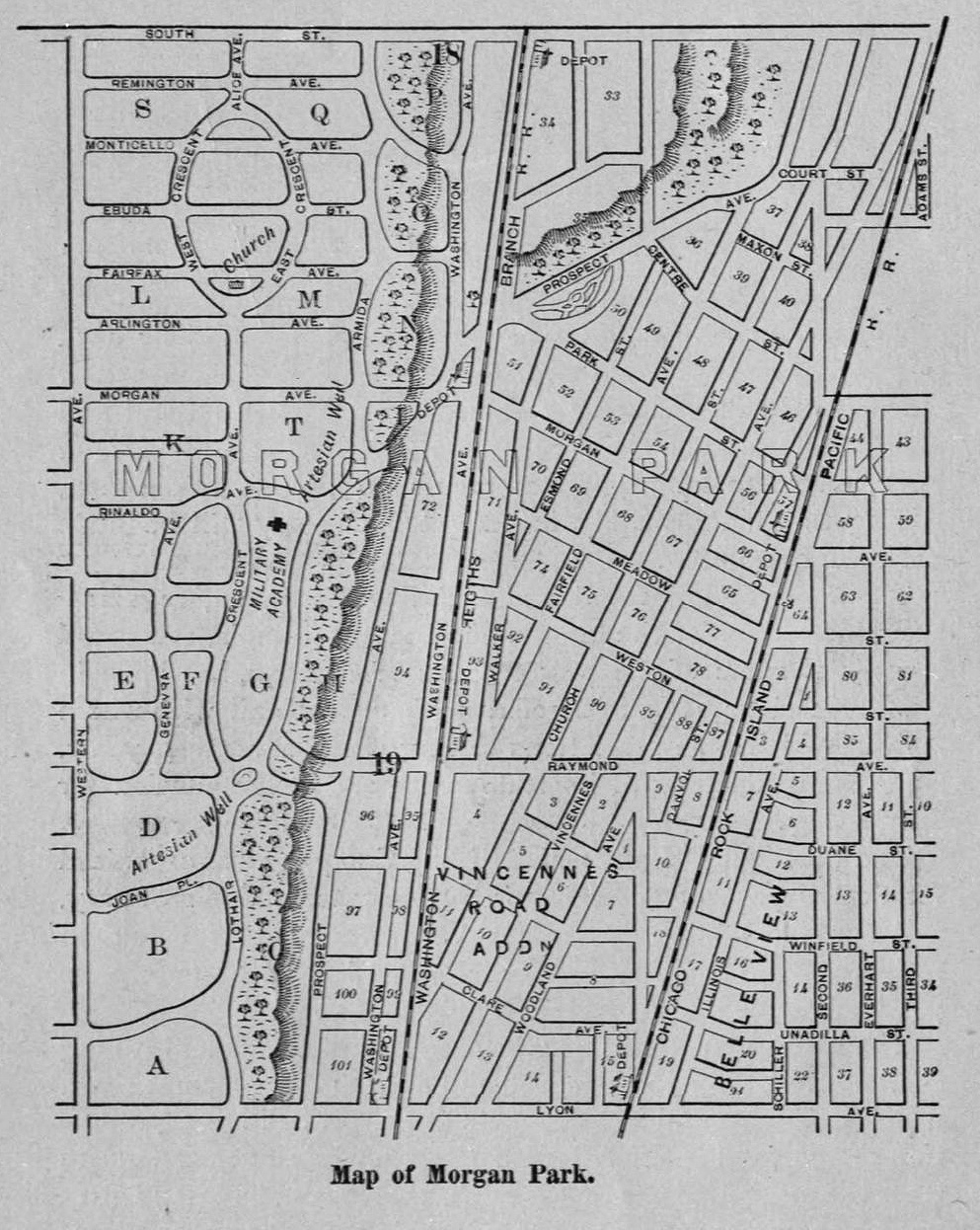
The area has mature trees, long, winding streets and old houses set back and nestled into hilly green plots. Morgan Park is the older community started in 1844 and later annexed to Chicago in 1914. Its original land tract was bought from John Blackstone by Englishman Thomas Morgan, between 91st and 119th street along the west side of Longwood Drive (the Blue Island Ridge). The area was a farming community until, after the Civil War, Morgan’s children sold the land to the Blue Island Building and Land Company, and, in 1869, Thomas F. Nichols planned a picturesque subdivision with winding streets, small parks, and roundabouts that evoke images of an English country town. Although the Chicago, Rock Island & Pacific railroad laid tracks through the area in 1852, commuter service to downtown was established over 35 years later, in 1888, which was six years after Morgan Park incorporated as a suburban village.
Map of Morgan Park, IL, as laid out by Thomas F. Nichols for the Blue Island Land and Building Company, 1870. Public Domain.
Following the Chicago fire, Morgan Park developed quickly in the 1870s including Morgan Park Military Academy (1873), Baptist Union Theological Seminary (1877), and Chicago Female College (1875). The seminary was run by Thomas Wakefield Goodspeed (1842-1927) and William Rainey Harper (1856-1906) who established The University of Chicago in Hyde Park in 1890. The seminary left Morgan Park at that time to become the University’s Divinity School. The political battle for Morgan Park’s annexation to Chicago resulted in its suburban women voting overwhelmingly for annexation in 1914 because it meant better city services and schools.
The Chicago, Rock Island & Pacific railroad had opened a station at 91st Street in 1889 and called it Beverly Hills which became the name for the whole area north of 107th along the Ridge. Beverly’s churches and schools reflected the community’s growth from east to west. Beverly (or Beverly Hills) developed along similar lines as adjacent Morgan Park though annexed to Chicago a quarter of century earlier in 1890. Beverly was originally part of the village of Washington Heights to the east which was also annexed to Chicago in 1890.
Notable Buildings in Beverly/Morgan Park.
J.T. Blake House, 2023 W. 108th Place, 1894, H.H. Waterman.
H.H. Waterman (1869-1948), a Wisconsin native, was a Wright contemporary. Waterman was known as Morgan Park’s “Village Architect” because he designed so many buildings in the community (no less than 15) even as Waterman also built houses out-of-state. Waterman’s architecture is vibrantly creative yet stately and recognizable by their charming and irregular designs. The J.T.Blake House is from the early mid 1890’s, a fecund building period for Waterman. It has a steeply pitched and swooping gabled roof that is asymmetrical and a jutting angled stairway bay. The house materials are stone, wood, and stucco.
Another H.H. Waterman confection is the so-called “Honeymoon Cottage” (above) nestled onto a broad, hilly corner Ridge lot, built in 1892. Waterman built this house for his young wife, Ida May Vierling (1872-1896), who died at 24 years old in 1896, leaving the talented architect alone to raise their baby daughter, Louise Hale Waterman (1895-1953). The house has a pretty terraced entrance with an exaggerated gabled entry porch. There is a high hipped roof that adds to the English cottage style whimsy and disproportion that is the architect’s own home. The Harry H. Waterman House, at 10838 S. Longwood Dr., built in 1892, is part of both the Ridge Historic District and the Longwood Drive District.
Morgan Park Methodist Episcopal, 11000 S. Longwood Drive, 1913, H.H. Waterman and addition, 1926, Perkins, Fellows & Hamilton.Dwight H. Perkins (1867-1941) was Prairie School architect and contemporary of Frank Lloyd Wright.Public Domain.
The original office of Perkins, Fellows and Hamilton who designed Morgan Park Methodist Episcopal church’s 1926 addition, was on Chicago’s Michigan Avenue and briefly shared with Frank Lloyd Wright. Perkins, Fellows and Hamilton became known for designing schools and civic buildings with prolific output in the Chicagoland area. Project designs included the Bowen High School, Carl Shurz High School—considered one of the most beautiful high schools in the area—as well as Evanston Township and Winnetka’s New Trier high schools. The firm also designed park facilities such as the Lincoln Park Boat House and the Lincoln Park Zoo’s famed Lion House.
Chicago Public Library, George C. Walker Branch, 11071 S Hoyne Avenue, 1890, Charles S Frost. Additions in 1933 and 1995.
George C. Walker was president of the Blue Island Land and Building Company. The original portion of the library building was designed by Charles Sumner Frost (1856-1931), cost $12,000, and opened on April 22, 1890. In 1929 its space was quadrupled and, in 1995, it received a major renovation. When Chicago Public Library, George C. Walker Branch, was built, Frost was 34 years old and at the beginning of a new stage in his early mid-career. The low-rise stone building is greatly influenced by the Richardsonian-Romanesque style which was prevalent among young architects in the 1880’s and 1890’s before the onset of the Beaux-Arts revival.
Charles Sumner Frost (1856-1931) was born in Maine and trained as an architect in Boston, Frost moved to Chicago in 1882. The partnership of Cobb and Frost designed and began construction of the Potter Palmer mansion (1882-1885) at 1350 N. Lake Shore Drive (demolished in 1951). Public Domain. Entrance towers, Chicago Public Library, George C. Walker Branch, 1892.
Adapted to a residential-commercial street in a middleclass neighborhood outside downtown Chicago, the building shows the characteristics associated with the Richardsonian Romanesque style, including strong picturesque massing, round-headed arches, clusters of short squat columns, recessed entrances, richly varied rustication, blank stretches of walling contrasting with bands of windows, and cylindrical towers with conical caps embedded in the walling.
Bryson B. Hill House, 9800 S. Longwood Drive, 1909, Albert G. Ferree.
Bryson B. Hill House (above) is a classically-inspired mansion with two-story tall Doric columns helping form the front entrance. While Prairie style of architecture was new and modern, the Chicago “Great House” did not go out of style, at least until the onset of the Great Depression in 1929 which necessitated downsizing of many house plans. Albert G. Ferree (1848-1919/1924) also built two and three flats in Chicago in the same period.
Beverly Unitarian Church (Robert C. Givins House), 10244 S. Longwood Drive, 1886, architect unknown.
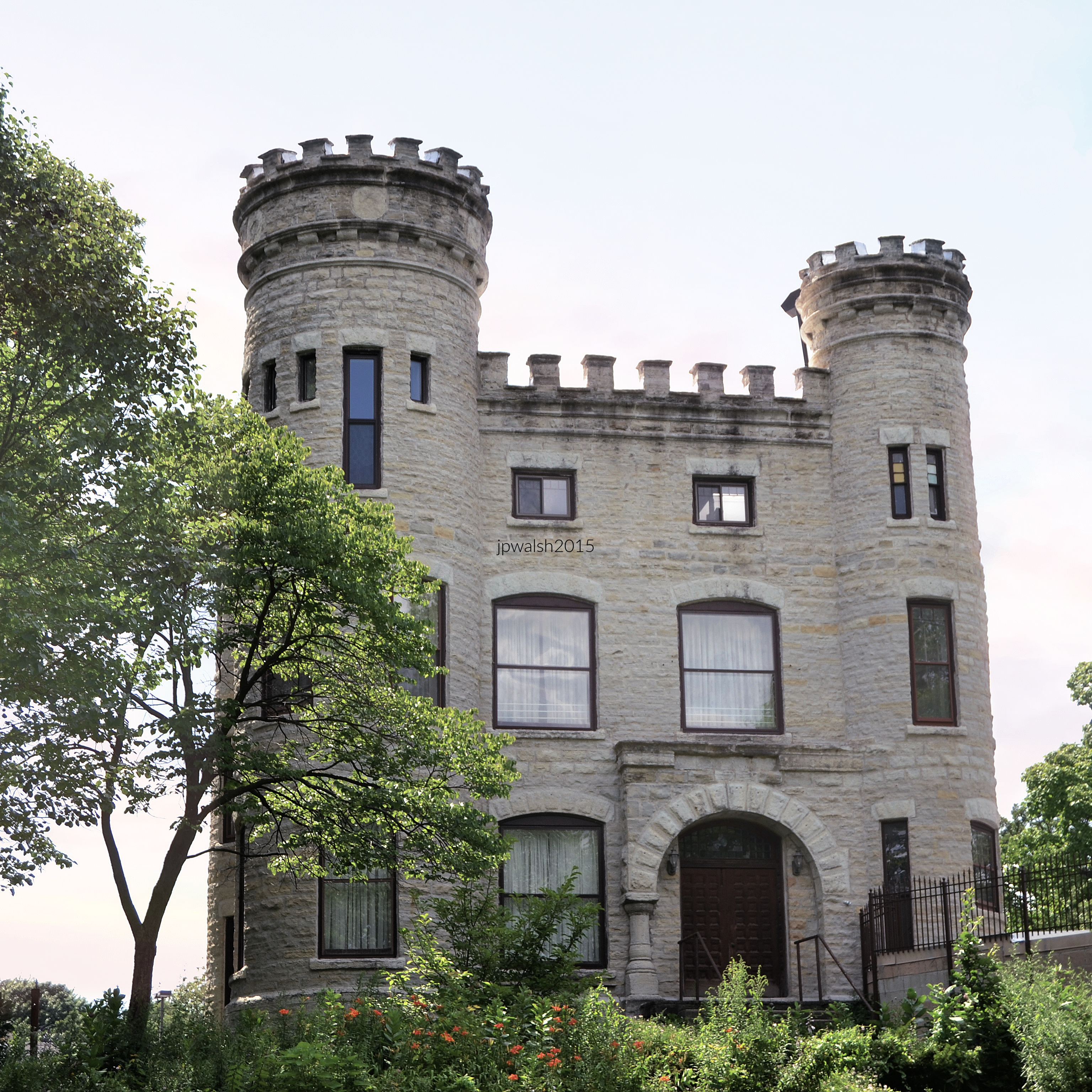
Part of the Longwood Drive Historic District, the Robert S. Givins House, at 103rd Street and Longwood Drive, is also known as the Givins Beverly Castle (above). Built by an early developer, the castle-like keep is built of Joliet limestone that attracts attention for its crenellated battlement and towers with arrow-slit windows. The gatehouse entrance is a traditional Richardsonian Romanesque rounded arch. This late 19th century castle on its hill is probably the community’s best-known landmark.
Robert W. Evans House, 9914 S Longwood Drive, 1908, Frank Lloyd Wright.Frank Lloyd Wright. Public Domain.
The Evans House (above) with a low hipped roof is built atop the Blue Island Ridge and not into it. There is a central fireplace around which the expansive house pinwheels. The original stucco exterior was later covered with flagstone. The earliest Wright house in the area is the Jessie Mae and William Adams House (9326 South Pleasant) completed in 1901. Robert and Alberta Evans had been married for 12 years when Wright built this home. Robert Evans was a sales manager and treasurer for the Picher Lead Company and Alberta Wetzel Evans was an award-winning botanist.
Headmaster’s House, 2203 W 111th Street, 1872, architect unknown.
The T-stem Victorian Gothic with stone foundation has a front porch on brick supports with thick square doric columns. There is a steeply pitched roof with brackets under the roof line.
The Berry House, 9750 S. Walden Parkway, 1922. Regular commuter service from Beverly/Morgan Park to Downtown Chicago has been in place since 1888. Train station: Chicago, Rock Island & Pacific Railroad – Morgan Park Station (111th St. Metra Station), 1891, John T. Long.
The first floor of the station (above) is faced entirely in wood advertising the woodsy ambience of its then-suburban setting. A waiting room fireplace survives.
Hiland A. Parker House, 10340 S Longwood Drive, 1894, Harry Hale Waterman.
The H.A. Parker House sits on a dramatic hill site met by a base of Richardsonian huge rusticated brownstone stone blocks to form a large semicircular porch and tower at the back. The tall roof with steeply pitched gabled dormers on this helps exaggerate the house’s height.
Setting and landscape are an integral aspect of residences in curvaceous and hilly Beverly and Morgan Park. Normand Smith Patton (1852– 1915) whose firm designed the Morgan Parak Congregational Church began practicing architecture in Chicago in 1874. He left for for Washington DC two years later where he remained until 1883. Patton returned to Chicagoand opened a practice with another architect, C.E. Randall. Randall died in 1885 but Patton’s firm survived under various forms as Patton & Fisher, Patton, Fisher and Miller, Patton & Miller, and Patton, Holmes & Flinn until his death in 1915.Patton & Miller designed scores of Carnegie libraries.Morgan Park Congregational Church, 11153 S. Hoyne, Chicago, 1916, Patton, Holmes & Flinn.Morgan Park Congregational Church, 11153 S. Hoyne, Chicago, 1916, Patton, Holmes & Flinn.
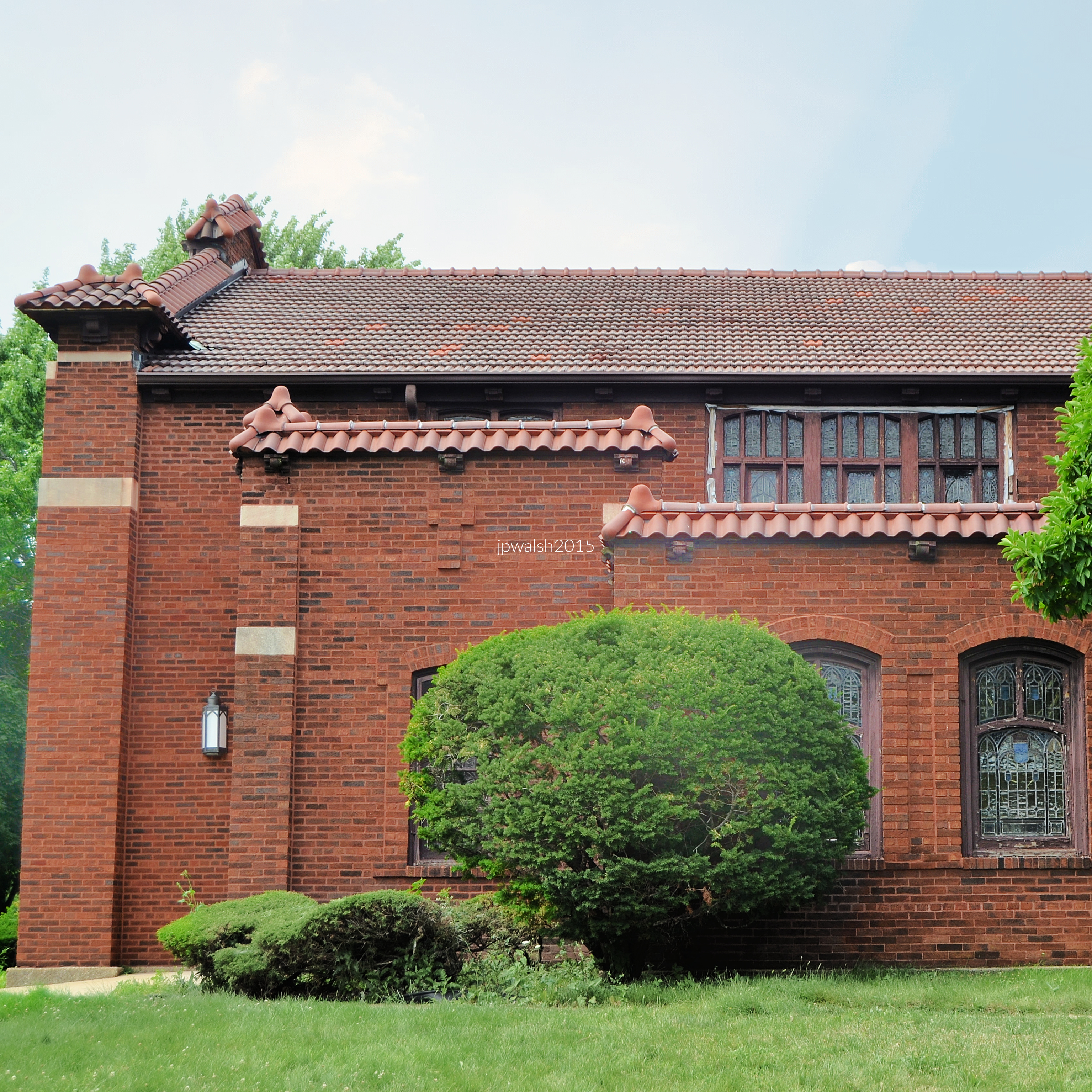
Blended with Mission style, Morgan Park Congregational Church is a handsome red brick Craftsman building that has been identified as the best preserved in Chicago. The church was designed by Patton, Holmes & Flinn. Normand Smith Patton (1852– 1915) was an American architect based in Chicago and Washington, D.C. Patton’s firm specialized in public buildings, particularly Chicago public schools as well as libraries and chapels.
Clarke House, 11156 S. Longwood Drive, 1892, John Gavin.
The Sarah D. Clarke House (or W.S. Kiskaddon House) is a miniature Queen Anne-style house with an Italianate corner tower.
James R. McKee House, 10415 S Seeley, 1908, John M. Schroeder.
The simple front entrance of the J.R. McKee House is on the side hidden by an oblong triangular brick wall. A projecting sunroom that faces the street is encased by a broken arch.
Frederick C. Sawyer House, 9822 S Longwood Drive, 1908, Horatio R. Wilson.
The Sawyer House is a mansion with many windows, three floors of solid red brick from 1908. The fashionable traditional Beaux-Arts style was built in a time of new Prairie style architecture in ascendance.
Horatio R. Wilson started as a draftsman in 1877. In 1889 he was in partnership with another Chicago architect and, in the 1900’s established an independent office. In this early 20th century period Wilson planned and built many important buildings, including the Illinois Theatre in Chicago, the L. C. Case Office Building in Racine, Wisconsin (1905), the Sharp Office Building in Kansas City, Missouri, and the Railroad Station at Wheaton, Illinois, for the Aurora, Elgin & Chicago Railroad. After 1910 he was associated with John A. Armstrong in organizing the firm of H. R. Wilson & Company of which he remained the head until his death. During this later period important examples of his firm’s works were the Macmillan Publishing Company’s Office Building and Warehouse (1911) in Chicago, erected at Prairie Avenue and 20th Street, including its addition in 1916. Wilson also designed the Raymond Apartment House on North Michigan Avenue, and the Surf and Sisson Hotels in Chicago. Architect Horatio R. Wilson also designed the South Michigan Avenue building that would later house Chess Records and the Milwaukee mansion that holds today’s Wisconsin Conservatory of Music.
Howard Hyde House, 10410 S Hoyne Avenue, 1917, Frank Lloyd Wright.
The Howard Hyde House is an American System Built home designed by Frank Lloyd Wright and built in 1917. The client was a cashier at International Harvester. Like the era’s popular Sears Catalog homes. Wright designs were prepackaged and ready to build. Wright had a long-term concern for affordable housing and he worked in short term partnerships with builders such as Milwaukee-based Richard Bros. and Burhans-Ellinwood & Co. The Hyde House was built as a model for a proposed subdivision that the U.S. entry into World War One halted. The only other house Wright built under this plan was 10521 S. Hoyne across the street.
Frank Lloyd Wright in 1926. Public Domain. 10541 S Hoyne, 1917, Frank Lloyd Wright.Horace Horton House, 10200 S Longwood, 1890, J.T. Long.
The H. Horton House (above) is Colonial Revival style.
Chicago State University, President’s House/Frank Anderson House, 10400 S. Longwood Drive, 1924, Oscar L. McMurry.
The CSU President’s House is Italian Renaissance Revival with Classical pediments.
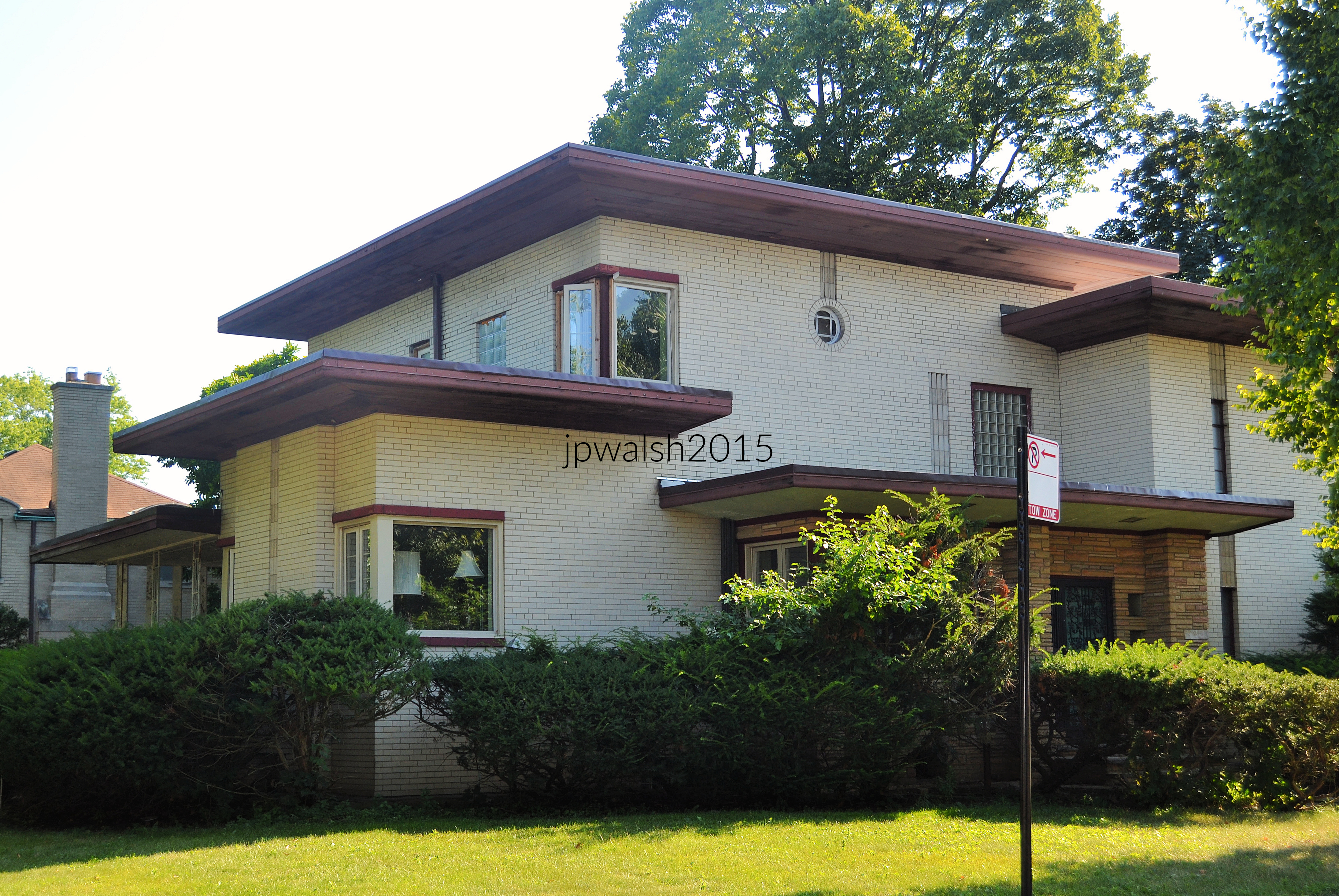
Russell L Blount House (2), 1950 W 102nd Street, Chicago, 1912, William Burley Griffin.
The Russell L. Blount House (2) was designed by architect Walter Burley Griffin (1876-1937) in 1912. The house has the same floor plan as the Blount House (1) also built by Griffin in 1911 at 1724 W. Griffin Place. The 1912 house has a cathedral ceiling which is intimated in the façade trim. Russell L. Blount, a real estate manager for a bank, and lived with his family in and out of Griffin houses as Blount built and sold them for considerable profit.
Walter Burley Griffin, 1912. Public domain. Born in Maywood, Illinois, Griffin grew up in Oak Park and Elmhurst, Illinois. Graduating as an architect from University of Illinois, Griffin was influenced by the Chicago-based Prairie School in ascendency at the turn of the 20th century. Griffin began working in Frank Lloyd Wright’s Oak Park studios and oversaw the construction of several noted houses by Wright and supplied landscape plans for Wright’s buildings. Griffin’s own architectural designs began in these years. Griffin developed his own modern style and, working in partnership with Marion Griffith (née Mahony) after 1911, they designed over 350 buildings, landscape and urban-design projects as well as designing construction materials, interiors, furniture and other household items. Marion Mahony was the first woman to be licensed to practice architecture in Illinois as well as Frank Lloyd Wright’s first employee in the mid 1890’s in Chicago. In 1913, upon winning the competition to design Canberra, Australia, Walter Burley Griffin, relocated there with his wife for the next 20 years. Griffin is credited with being the first architect to use reinforced concrete, originating the carport, and developing the L-shaped floor plan.9332 South Damen Avenue, Chicago, 1894, is the childhood home of U.S. Supreme Court Justice John Paul Stevens (1920-2019).
The childhood home of Supreme Court Justice John Paul Stevens (1920-2019) who used to sleep and spend time on this front porch is at 9332 S. Damen Avenue (above). The Waid-Coleman home was built in 1894 and retains its original stained glass, hardwood floors, pocket doors, and beamed ceilings. The exterior was stripped and painted in 2003 which Justice Stevens later commented made the house look now than he remembered.
On September 12, 1992, MAE JEMISON, engineer, physician and astronaut, made history as the first African American woman to travel in space when she took off as part of a NASA crew on the Space Shuttle Endeavor for 8 days in space.
“You’re the Inspiration” was written by PETER CETERA and David Foster. Cetera sang lead vocals for the 1984 album, Chicago 17. The song reached no.3 on the Billboard Hot 100 in 1985. Peter Cetera, bassist and founding member of Chicago, is from Morgan Park and grew up on Vincennes Avenue.
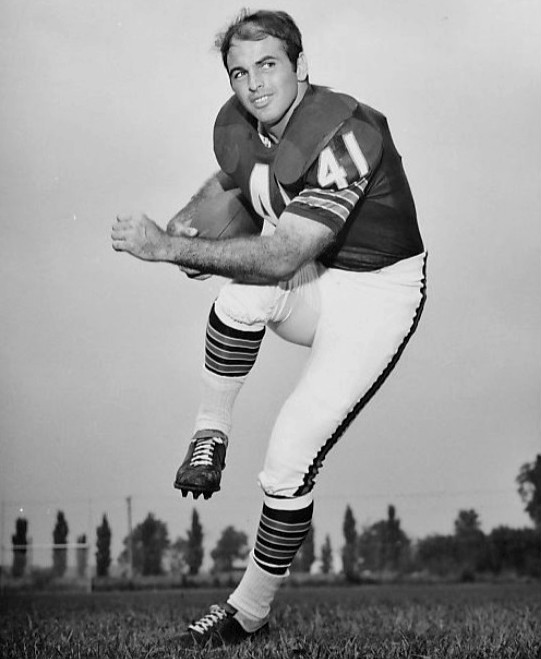
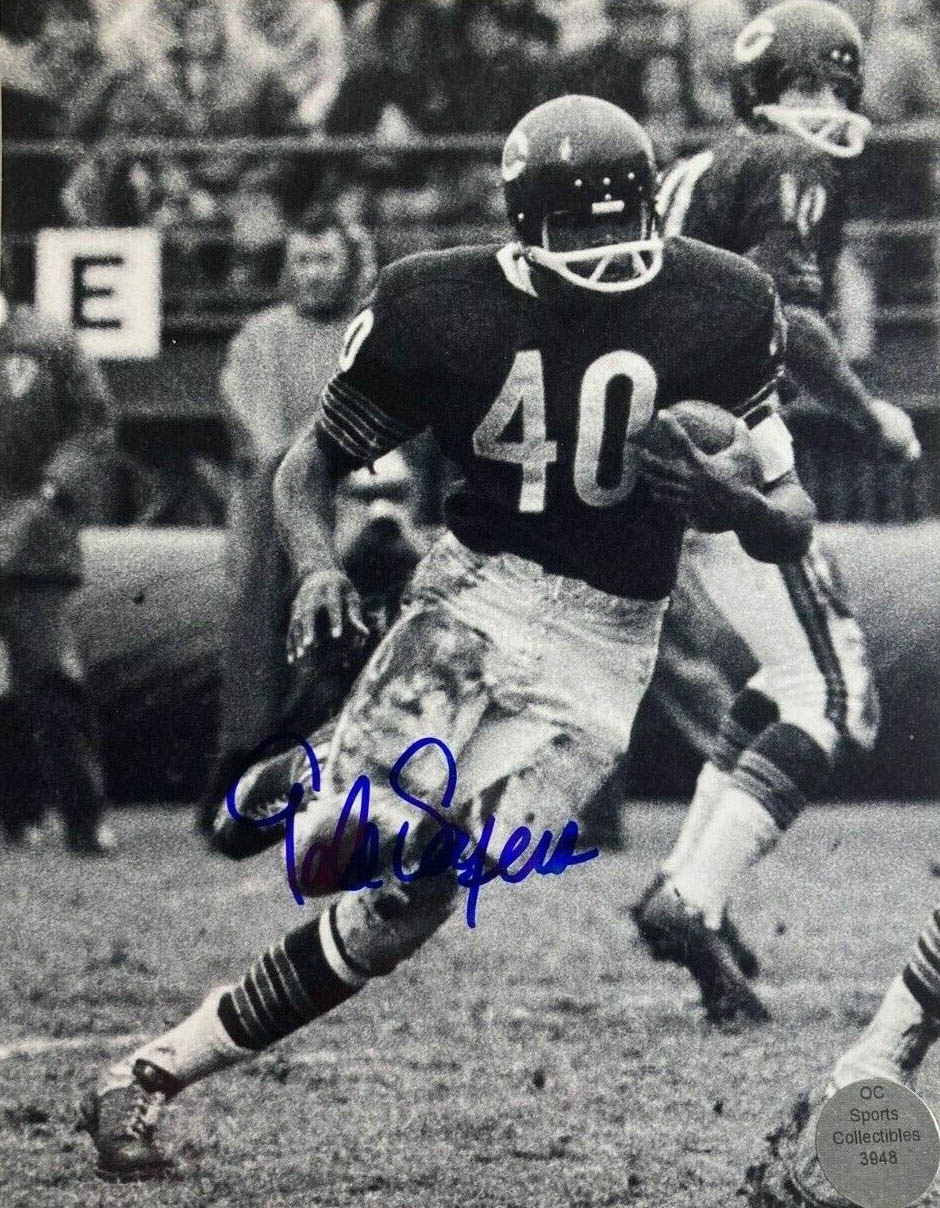
AJA EVANS, Olympic bobsled bronze medalist in 2014 and World Championships Bobsled Bronze medalist in 2017, is from Morgan Park.BRIAN PICCOLO in 1967. Public Domain. Brian Piccolo played for the Chicago Bears for four years before his death from cancer at age 26 on June 16, 1970. The Piccolo family lived in two different Beverly homes in that time. Signed by the Bears in 1965, the Piccolo family moved into a home in the 9200 block of Vanderpoel Street and later to a home in the 2000 block of West Hunt Avenue. In 1964 Piccolo led the nation in rushing at Wake Forest in North Carolina and was named Atlantic Coast Conference Player of the Year. Piccolo was born in Massachusetts and grew up in Florida. His wife, Joy, came from Georgia. While Piccolo was passed over in the 1965 draft, the Bears did pick up running back Gale Sayers and linebacker Dick Butkus. In 1965 Piccolo tried out for the Bears as a free agent and made the practice squad. In 1966 he was on the main roster playing on special teams. In 1967 and 1968 Piccolo got more playing time backing up Gale Sayers. His best season statistically is 1968 when he gained 450 running yards on 123 carries, a pair of touchdowns, and 291 yards on 28 receptions. In August 1969 Piccolo was made starting fullback next to Gale Sayers in the backfield. It was during the Bears-Falcons football game in Atlanta in November 1969 that Piccolo took himself out of the game because of chest pain and a persistent cough. A couple of days later an X-ray showed a tumor in his lungs. Piccolo was diagnosed with embryonal cell carcinoma, an aggressive form of testicular cancer that had metastasized. Piccolo began chemotherapy and while today the cure rate for this form of cancer can be upwards of 90%, in 1970 it was virtually incurable. Gale Sayers playing. Public domain. In Sayers’ rookie NFL season, he set a league record by scoring 22 touchdowns—including a record-tying six in one game—and gained 2,272 yards and named the NFL’s Rookie of the Year. In his first five seasons, Sayers was in four Pro Bowls and was selected All-Pro first team five times. In 1968 a right knee injury forced Sayers to miss the last five games of season but he returned in 1969 to lead the NFL in rushing yards and was named NFL Comeback Player of the Year. An injury to his left knee in the 1970 preseason and subsequent injuries kept him sidelined for most of his final two seasons.
In 1967, Gale Sayers and Chicago Bears teammate Brian Piccolo became the first interracial roommates in NFL history. Their friendship, which ended with Brian Piccolo’s death at 26 years old in 1970 following a battle with cancer, inspired Sayers to write his autobiography, “I Am Third,” which became the basis for the 1971 made-for-TV movie Brian’s Song. Sayers, who had recovered from a serious knee injury with the help and grit of his team-mate and friend, Brian Piccolo, saw Sayers lead the NFL in rushing in 1969 (1032 yards on 236 carries; 8 touchdowns). For his successful efforts, Sayers won the George S. Halas Most Courageous Player award. Typically awarded in August, Sayers asked for the award presentation to take place at a May 25, 1970 dinner. His reason was that Brian Piccolo, who had been diagnosed with cancer in November 1969, was seriously ill. Just a couple weeks later, on June 16, 1970, Brian Piccolo died. The following year, when Brian’s Song debuted on ABC on November 30, 1971, it became the most-watched made-for-TV movie in history. Brian’s Song, starring Billy Dee Williams as Sayers and James Caan as Piccolo, included that award presentation in its drama that had taken place in real life just one year before. “You flatter me by giving me this award, but I say to you here and now Brian Piccolo is the man of courage who should receive the George S. Halas Award. It is mine tonight, it is Brian Piccolo’s tomorrow. “I love Brian Piccolo, and I’d like all of you to love him, too. And tonight, when you hit your knees, please ask God to love him.” Visiting the gravesite of Brian Piccolo, St. Mary’s Cemetery, Evergreen Park, Illinois, July 2017. Chambers House, 10330 S. Seeley, Chicago, 1874.
The Chambers House (above) has a well-preserved French Tower. The architect is unknown who built this suburban villa from the 1870s and which boasts plenty of style and details.
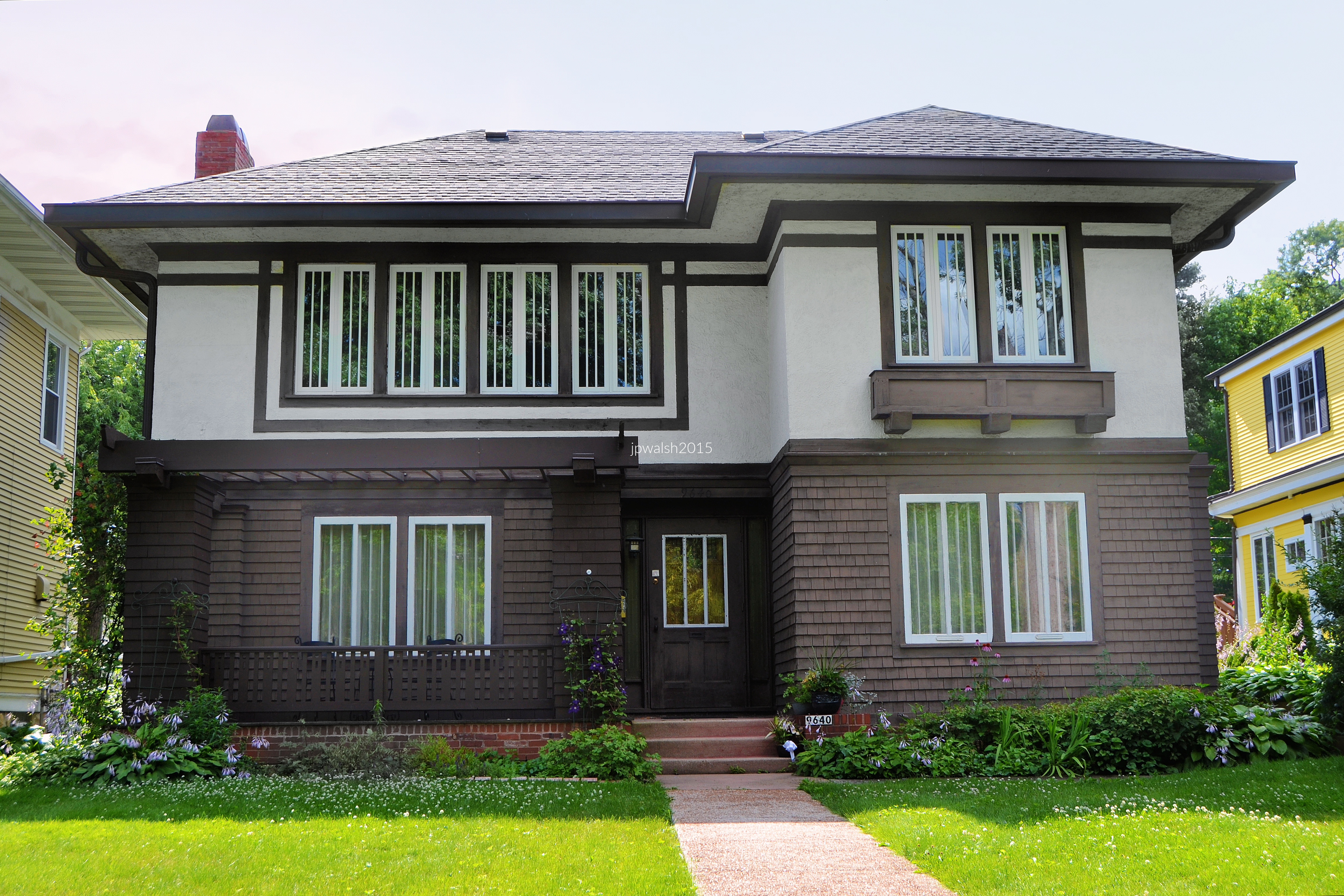
Louis A. Tanner House, 9640 S. Longwood drive, 1909, Tallmadge & Watson.Ignatius Chap House, 8831 S. Pleasant Avenue, 1928, Homer G. Sailor.
This modest late 1920’s home dressed in a Spanish Revival (or southern California hacienda) style has a central miniature tower and blind arches. Its colorful decorative tiles embedded into the stucco are original. The architect of the Ignatius Chap House (above) was Homer Grant Sailor (1887-1968) who was one of the last draftsmen for Louis Sullivan. In 1917 Sailor established his private practice, designing small Prairie School residences, low-rise commercial buildings and churches in the Chicago area. His work drew upon Sullivan’s simple massing and exhibits a program of applied terra cotta ornament more restrained than that of Sullivan.
Along with small parks and winding streets, roundabouts were part of the original plats of Beverly and Morgan Park. Along Longwood Drive. George W. Reed House, 2122 W. Hopkins Place, 1929, James Roy Allen.
The G.W. Reed House (above) is a massive building with irregular massing and that has 4 wings which pinwheel around a central core. With its assortment of beams, arches, and crenellations, the style is an amalgam of medieval, late medieval/early Renaissance, and with some Classical details. Built in 1929, the brick and limestone mansion on a Beverly hillside suggests a Tudor mansion added onto over different time periods. The house is one of two known extant works in Chicagoland of its architect, James Roy Allen (the other is the main gate of the Lake Forest cemetery at Lake Road). Allen designed the home for an executive of the Peabody Coal Company. The house has 19 rooms—plus a servants’ residence with three more rooms—and stands on one acre in the Dan Ryan Woods section of north Beverly. The interior is carved oak and walnut moldings set off by leaded glass windows, with four fireplaces and the original sterling silver andirons, as well as sterling silver sconces.
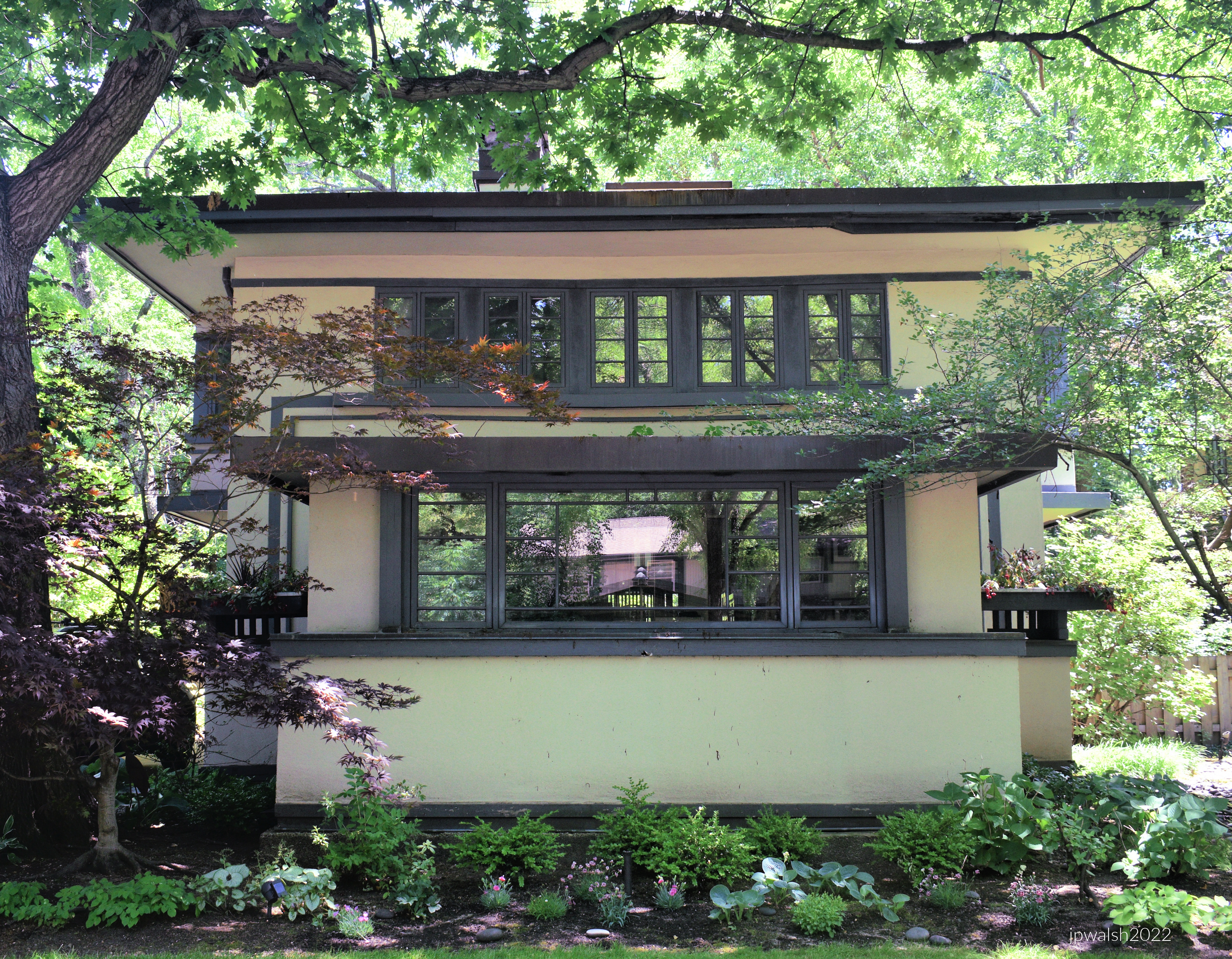
Magdalen H. Phillips House and Studio, 8910 S. Pleasant Avenue, 1954, William G. Carnegie.
The M.H. Phillips House (above) is a sprawling Late Prairie style single-story house on a northern Beverly hillside. It is by architect and engineer William G, Carnegie (1888-1969) who reiterates in the house design the popular idiom of Walter Burley Griffin with its deep eaves and patterned wooden muntins on the windows.
Everett Robert Brewer House, 2078 W. Hopkins Place, 1924, Murray D. Hetherington.
Beverly/Morgan Park displays work by generations of Hetherington family architects. This family’s architectural legacy began with John Todd (J.T.) Hetherington (1858-1936) who designed residences, churches, banks, and parks in Chicagoland. His son, Murray D. Hetherington (1891-1972) designed the Brewer House (above). He was the most prolific of the Hetherington architects to design in Beverly/Morgan Park and worked in the English Manor style, which is Tudor Revival sans half timbering. The Brewer House is a prime example of his work, many of these elegant residences designed in the booming 1920s into the 1930s. Hetherington paid close attention to the landscape settings of his houses as the Brewer House also conveys set atop hills and nestled by the Dan Ryan Woods. Using materials such as clinker brick and limestone the architect added texture and contrast to his designs and gave each house an individual character. The Brewer House’s irregular roofline with its variegated slate and random sized slabs are a case in point for this well-designed and constructed individuality. Hetherington interiors are also well designed and appointed with the modern design of large windows.
Murray D. Hetherington House, 8919 S. Hamilton Avenue, 1924, Murray D. Hetherington.This is the second generation Beverly/Morgan Park architect’s house. James Alex Brough House, 8929 S. Hamilton Avenue, 1927, Murray D. Hetherington.
J.A Brough House (above) is a stucco Spanish Revival house on a corner lot by Murray D. Hetherington in 1927. It sits across from the architect’s own home built in 1924.
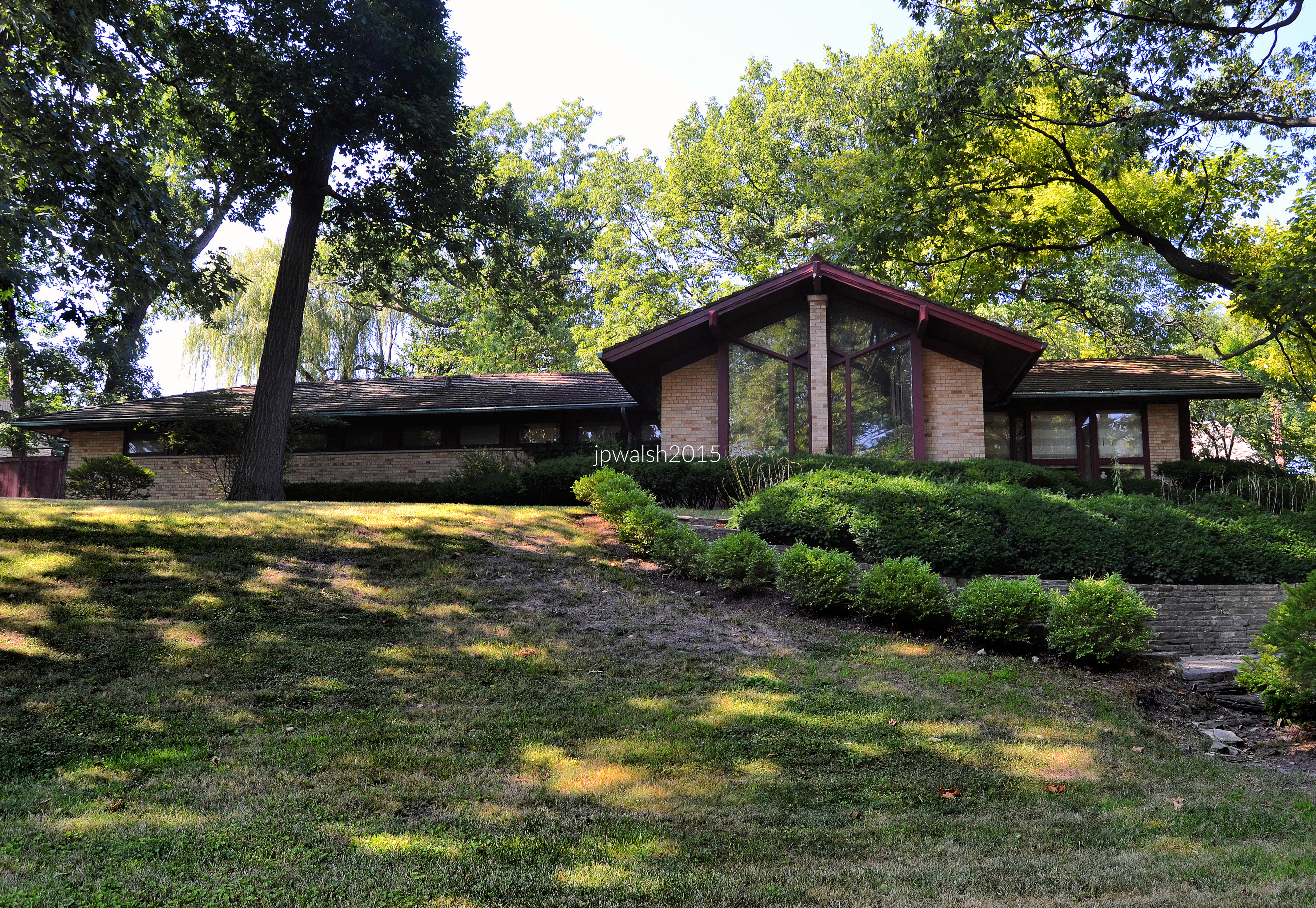
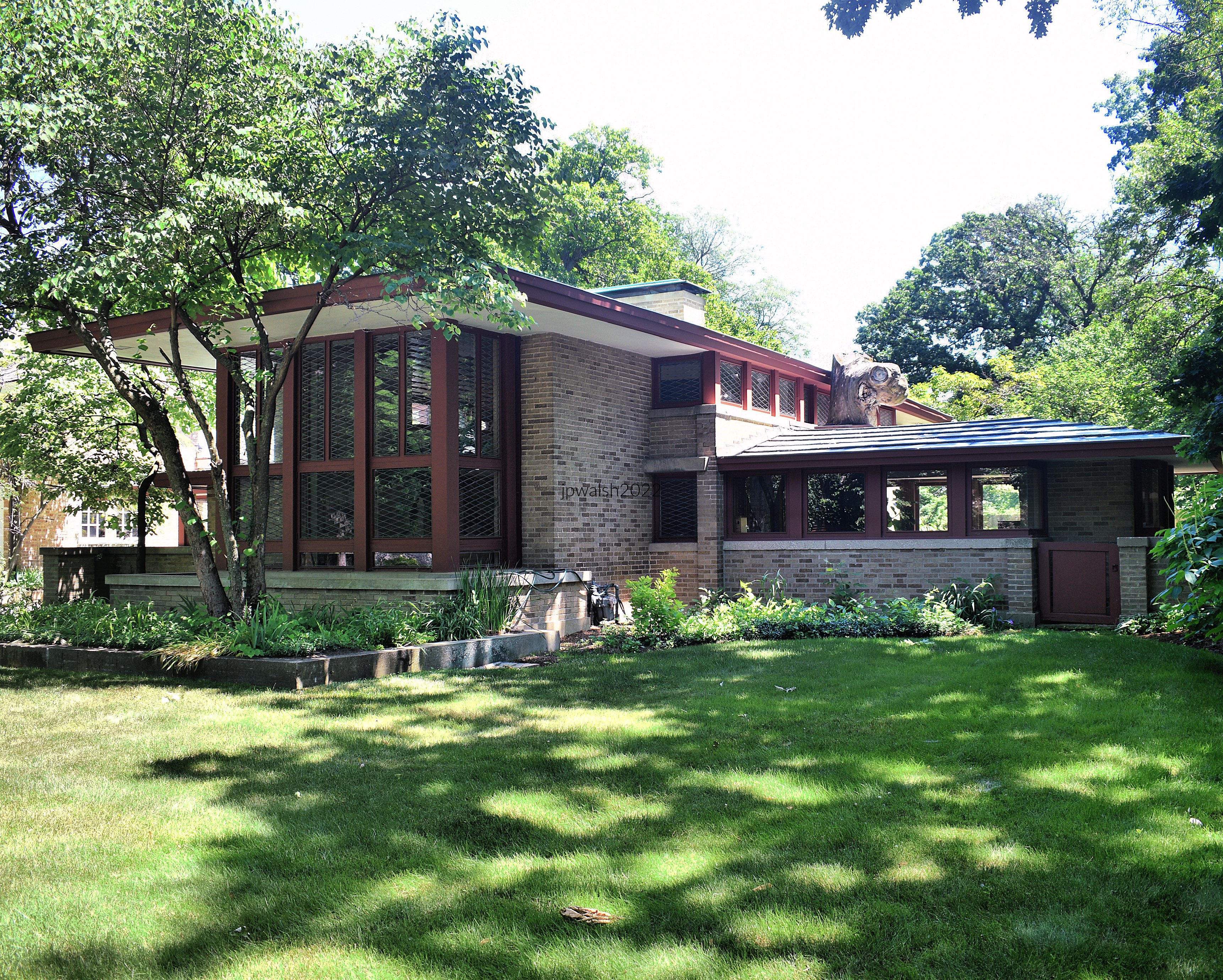
8958 S. Hamilton Avenue, 1951, Joseph Emil Hosek.
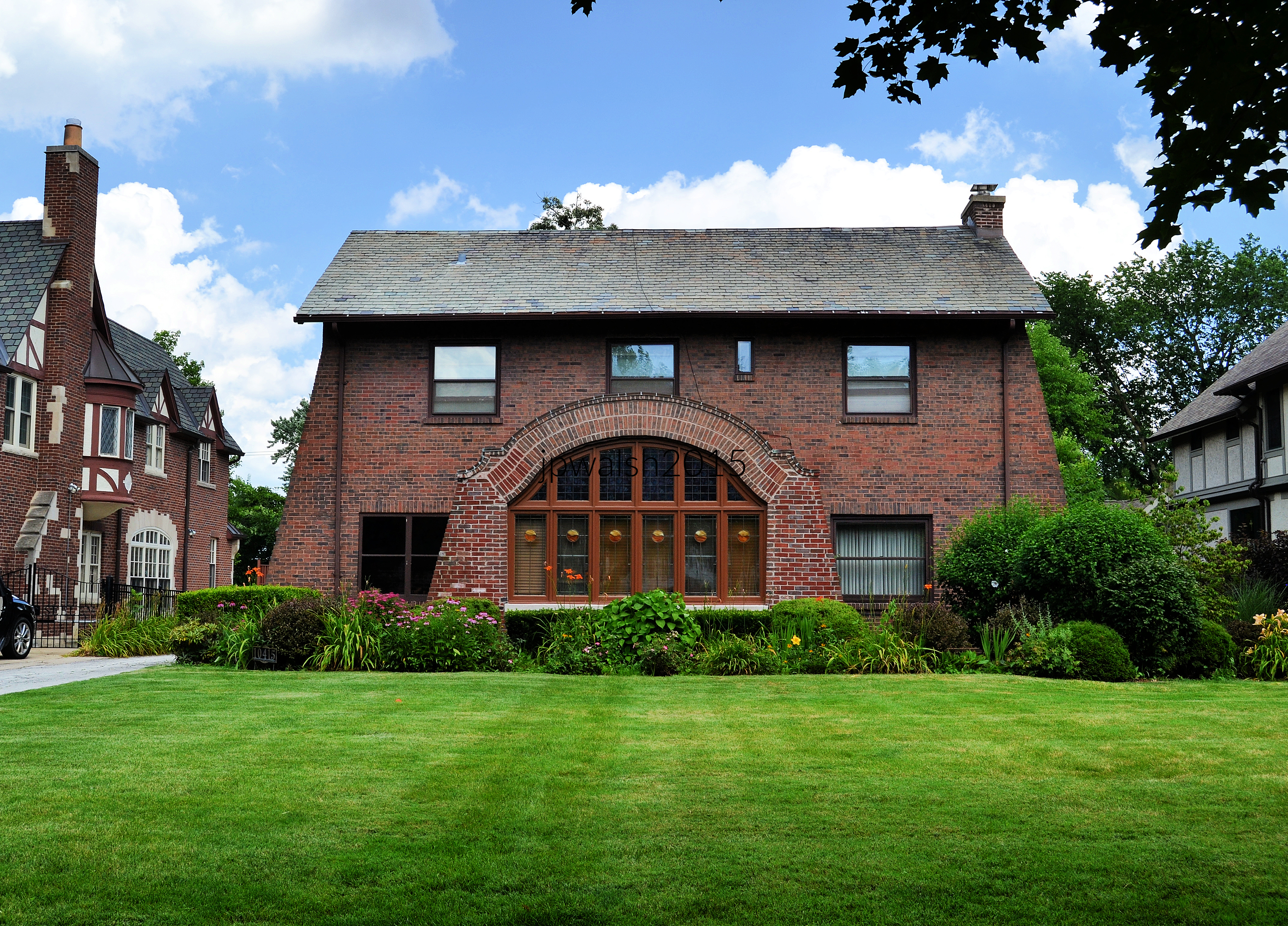
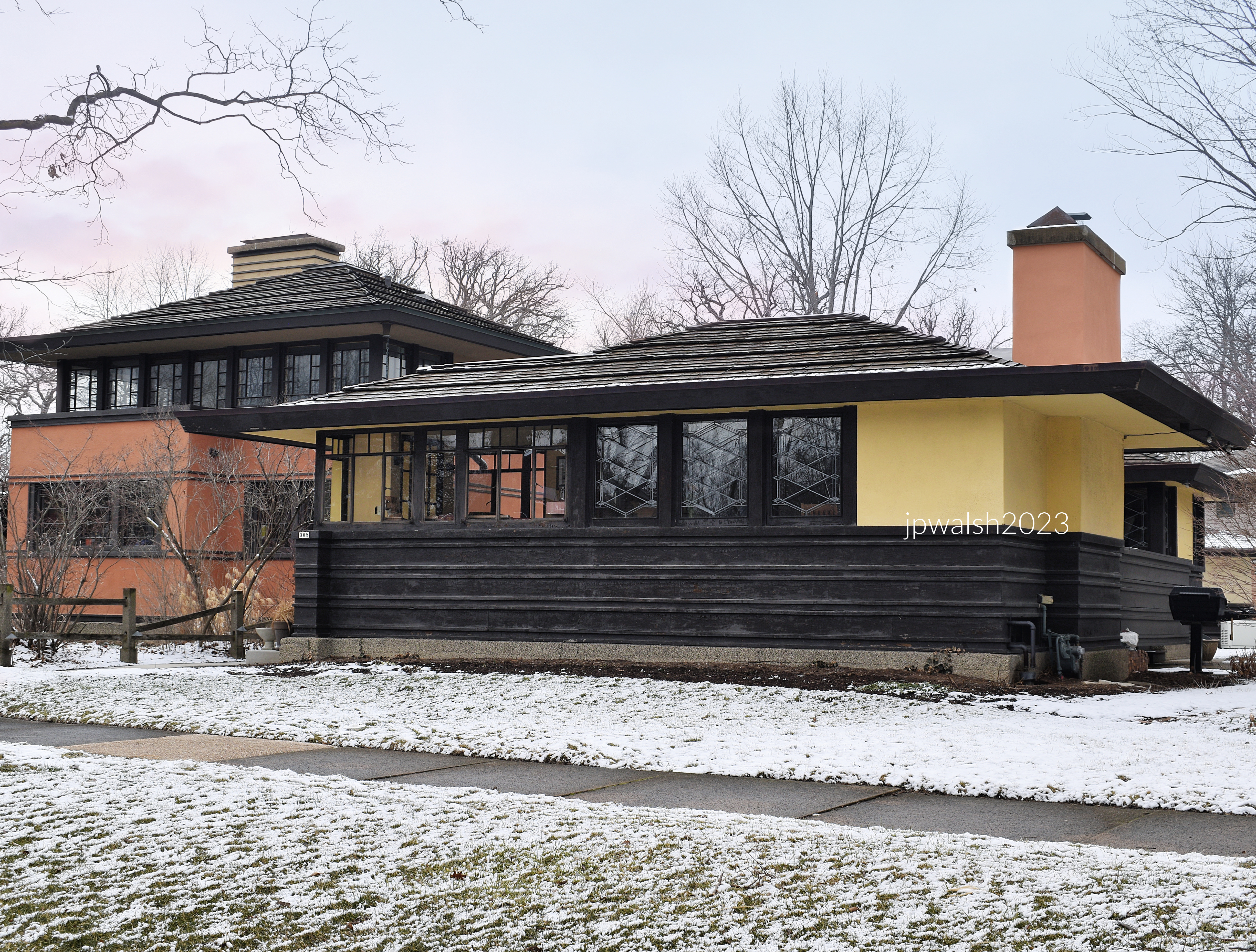
Joseph E. Hosek (1907-1993) was based in the Chicago area who did buildings for various clients, primarily in southwestern Chicago and suburbs. This large Prairie-style multi-level home at 8958 S. Hamilton Avenue has 5-feet wide eaves and, in a nod to a popular post-war style, variegated facing stones.
Wood, stone and brick used by Joseph Emil Hosek for his house at 8958 S. Hamilton Avenue in Northern Beverly.S.P. Balzekas House, 9000 S. Bell Avenue, 1935, William Sevic.
S.P. Balzekas House (above) is a stylish Prairie and Modernist mid1930’s house. William Sevic was an American architect, active in Illinois.
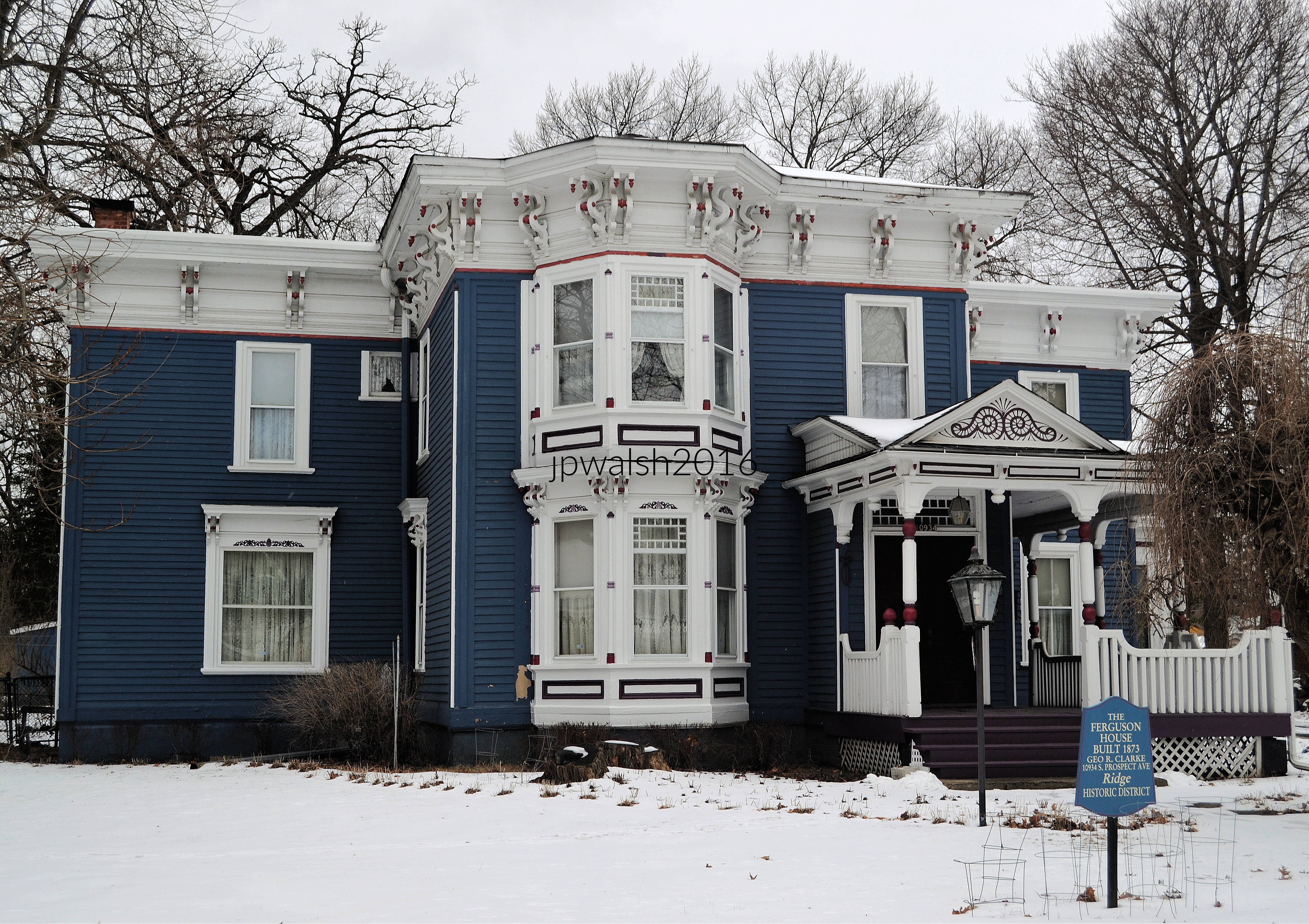
Garden, Beverly/Morgan Park. William G. Ferguson House, 10934 S. Prospect Avenue, 1873, architect unknown.Ingersoll-Blackwelder House, 10910 S. Prospect Avenue, 1874; and addition, 1887. Architect (s) unknown.Luther S. Dickey, Jr. House, 10990 S. Prospect Avenue, 1912, Chatten & Hammond.
The L.S. Dickey, Jr. House is a successful example of the eclectic Arts & Crafts style. Seen here is its half-timbered double gable. Chatten & Hammond were a prolific architectural partnership. In 1907, Charles (C.) Herrick Hammond (1882–1969) formed a partnership with Melville Clarke Chatten, a firm that expanded to become Perkins, Chatten & Hammond in 1933. The partnership lasted until the early 1950s.
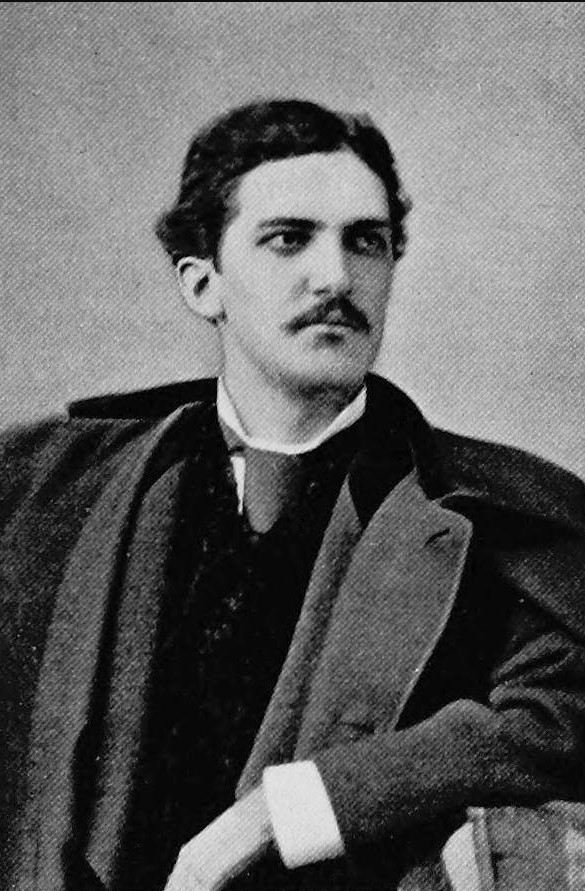
Dr. William H. German House, 10924 S. Prospect Avenue, 1884, Frederick G. German.
The Dr. W.H. German house is a catalog of the decorative power of wood sheathing, clapboards, patterned shingles, fretwood, and half timbers. Frederick G. German (1836-1937) was a Canadian-American architect with offices in the 1880s in Duluth, Minnesota.
Montague, M.L. (1901). Biographical Record of the Alumni and Non-Graduates of Amherst College (’72-’96) – The Third Quarter-Century. Amherst: Carpenter and Morehouse, Printers. p. 26.
Montague, M.L. (1901). Biographical Record of the Alumni and Non-Graduates of Amherst College (’72-’96) – The Third Quarter-Century. Amherst: Carpenter and Morehouse, Printers. p. 458.
FEATURE image: FISHER BUILDING, 343 S. Dearborn Street, view from the south. Author’s photograph, December 2017.
The success of the Reliance Building at 32 N. State Street built by Daniel H. Burnham (1846-1912) and John Wellborn Root (1850-1891) in 1890-91 and Burnham & Co. in 1894-95 led directly to the construction of the Fisher Building in 1895.
Daniel Hudson Burnham, c. 1890. In 1873 Burnham and Root entered into partnership in Chicago. In 1894 Burnham reorganized his office to include, among other partners, Charles B. Atwood who designed the Fisher Building.
The Fisher Building was also designed for Burnham & Co. by Charles B. Atwood (1849-1895). The Fisher Building was three stories taller than the Reliance Building and possessed even more flamboyant Gothic detailing as it is sheathed in golden terra cotta on its visible façades.
Charles B. Atwood c.1880. Public Domain.
The Fisher Building’s façade with its depictions of sea creatures in homage to the building’s namesake, Lucius G. Fisher (1843-1916), an Illinois paper company magnate and architect, was painstakingly restored and adapted for contemporary use in 2001. The rectangular prism with its Gothicized ornamentation sits on 25-foot piles under spread foundations engineered by Edward Clapp Shankland (1854-1924).
Ed Shankland was Daniel Burnham’s structural engineer through 1898 and worked on the Reliance Building and the Fisher Building.
In the mid 1890’s, the skyscraper was erected quickly with pride. The steel frame’s first 13 stories were erected in two weeks. The building has oriel windows and engaged colonettes at its corner piers. In 1907, a 20-story addition was built to the north by architect Peter J. Weber with Shankland also as structural engineer.
Lucius Fisher (1843-1916). Born in Wisconsin, Fisher was an Illinois paper magnate who commissioned the Daniel Burnham and Company to build the 20 story, 275 foot tall Fisher Building in the Chicago Loop in 1895. Completed in 1896, the landmark Fisher Building is the oldest extant 20 story building in Chicago. Public Domain. In 2002 the main entries on Dearborn Street and Plymouth Court were recreated. At the same time, over 1000 wood-frame windows were replaced or repaired and over 6000 terra-cotta pieces were replaced. Author’s photograph, May 2015. Fisher Building (1895-1896), looking east. To the left is Burnham & Root and Holabird & Roche’s Monadnock Building (1891-1893) and to the right is Holabird and Roche’s Old Colony Building (1893-1894). In the background is Graham, Anderson, Probst & White’s bright red international style CNA Center (1972). Author’s photograph, September 2015.Fisher Building (1895-86) at Plymouth Court and Van Buren Street, looking northwest. Author’s photograph, October 2017.
SOURCES:
AIA Guide to Chicago, 2nd Edition, Alice Sinkevitch, Harcourt, Inc., Orlando, 2004, pps. 62-63.
The Sky’s The Limit: A Century of Chicago Skyscrapers, Jane H. Clarke, Pauline A. Saliga, John Zukowsky, New York: Rizzoli, 1990, pps. 33-35.
Chicago’s Famous Buildings, 5th Edition, Franze Schulze and Kevin Harrington, The University of Chicago Press, 2003, pp. 82-83.
Frank A. Randall, History of Development of Building Construction in Chicago, Second Edition, Revised and Expanded by John D. Randall, University of Illinois Press, Urbana and Chicago, 1999, pps. 37 and 164-65.
FEATURE Image: 124 Scottswood Road, Riverside, Illinois, 1871, by William LeBaron Jenney (1832-1907). There is a full description of this house in the post below.
Text & photographs by John P. Walsh.
INTRODUCTION.
The location of today’s Riverside, Illinois, has been an active and important historical area since before the 17th century. It was part of an active trading route and the center for Native American Indian settlements – The Green Bay, Barry Point, Portage Trails, and numerous smaller Indian trails, all passed through the area. It was only a couple of miles from the so-called Chicago Portage which connected Lake Michigan to the Mississippi River centuries prior to the building of the I&M Canal before 1850. French explorers Jacques Marquette and Louis Jolliet passed by Riverside in 1673 when they were shown the portage by Native Americans. The Chicago Portage is a National Historic Site because it opened the western continent to trade and settlement as well as became the key to the founding and development of Chicago, just 11 miles away.
Riverside was originally inhabited by the Illinois and Miami Indians. In the late 18th and early 19th centuries the Potawatomi became the dominant tribe together with the Chippewa and Ottawa and formed an alliance called the “Council of Three Fires.” These tribes lived on wild game and roots, but later adapted to farming, with fields of corn, beans, and squash.
During these many centuries, Indian burial grounds and encampments were located in Riverside on grounds besides the Des Plaines River and towards the east to today’s Fairbank Road.
The state of Illinois was founded in 1818. For the next 24 years, the Illinois volunteer army fought local native American tribes and forced them to sign treaties and migrate west of the Mississippi.
After the Indians were first forced off their land by treaty in the early 1800’s, brothers David and Barney Lawton (or Laughton) came to the area from Michigan and established an outpost in Riverside in 1827 or 1828. Into the 1840s Illinois was the edge of the wilderness. These fur traders chose the area for similar reasons that the Native Americans had – its proximity to the Chicago Portage and the convergence of established trails whose traffic made it conducive to a thriving trading business.
In July 1832 the U.S. Government sent General Winfield Scott (1786-1866) to help with the Black Hawk War that started in April of that year and ended in August. That short war also involved a young 23-year-old captain from New Salem, Illinois, named Abraham Lincoln. Upon leaving Chicago, Scott and his army camped in Riverside along the Des Plaines River for several days and then marched further west. Scottswood Road, one of Riverside’s primary residential arteries, is named after the general.
In 1831, the first white permanent settlers came to Lawtons’ Tavern in Aux Plaines (the name for Riverside then) and settled in the first houses west of Chicago. Once Gen. Scott’s military campaign was over, he returned to Chicago and dispersed the volunteers. Federal law required the state to have a standing army, so the state legislature passed a law requiring counties to form militia. In 1834, Cook County formed the first militia when Stephen Forbes, Cook County’s first sheriff, called up volunteers to Laughton Tavern. Over 1000 enterprising men assembled in Riverside and elected Jean Baptiste Beaubien (1787-1864) the first colonel of the Cook County Militia.
The first stage of modern transit development was the Southwest Plank Road (later Route 66) completed from Chicago to Riverside in 1849. The road, called Ogden Avenue today, was eventually extended to Naperville, Illinois. It was operated as a toll road whose proceeds went to the private concerns that built it. Toll amounts depended on whether the traveler was a four-horse vehicle or a single horse and rider. Since its installation, the plank road has been a successful endeavor as it was the only road through areas that were often inaccessible.
Commercial enterprises in this period included additional taverns that offered lodging and board for travelers and their horses. There was also a brewery and distillery.
A bend of the Des Plaines River in Riverside, Illinois.
Riverside was mostly wooded tracts and farmland until the Civil War when the Chicago, Burlington & Quincy Railroad built a rail line through the area in 1863. With the rail a group of businessmen in 1869 formed the Riverside Improvement Company and set out to develop “a perfect village in a perfect setting.”
These Riverside businessmen hired landscape architects Frederick Law Olmsted (1822-1903) and Calvert Vaux (1824-1895), who had previously designed Manhattan’s Central Park, to design one of America’s first planned suburban communities. Their innovative plan set a template for suburban community planning such as curvilinear streets and modern amenities. Their vision was to design a mostly rural community with the conveniences of urban life such as utilities and broad streets. Whereas these curvilinear streets were utilized to fit an expansive community into limited open space it was also inspired by the community’s relationship to its natural environment, particularly the curves of the abutting Des Plaines River.
Portrait of Frederick Law Olmsted (1822-1903). Public Domain. Calvert Vaux (1824-1895). Public Domain.
The design of Riverside included important public spaces including a central square and park system that contained several large parks and scores of small triangular parks scattered through the village.
General Plan of Riverside · Olmsted, Vaux & Co. Landscape Architects 1869. Public Domain.
By 1871, Riverside had several larger homes, the water tower, and one of the country’s first multi-shop arcade buildings. There was a church, train depot, and grand hotel. Following the Chicago Fire in October 1871 there was a time of regional financial panic accompanied by frenzied renewed building. In the wake of Riverside Improvement Company going out of business, local Riverside residents came together to see Olmsted and Vaux’s design plan completed and built upon.
The Wesencraft residence is Riverside’s oldest home. It is located at 78 Pine Avenue on the north side of the railroad tracks. Public Domain.
Riverside grew slowly in its first decades but by the 1920s and 1930s had doubled and tripled its population of mostly middle class and upper middle Chicago commuters. This bedroom community grew steadily until its peak in 1970 (10,357 residents). Since then, Riverside’s population has dropped slightly and leveled off to a lower growth number so that by 2020 there were nearly 9,300 residents. (See – https://www.census.gov/programs-surveys/decennial-census.html – retrieved 3.3.23)
Since its incorporation as a village in 1875, Riverside also attracted increasing numbers of eminent architects to contribute to the diversity of Riverside’s historic architecture. These include Frank Lloyd Wright (1867-1959), William Le Baron Jenney (1832-1907), Charles Frederick Whittlesey (1867-1941), Joseph Lyman Silsbee (1848-1913), R. Harold Zook (1889-1949), Frederick Clarke Withers (1828-1901), Howard Van Doren Shaw (1869-1926), and William Eugene Drummond (1876-1948). Much of their work remains today evident in scores of historic landmark structures in Riverside.
Frank Lloyd Wright in 1903, likely a self-portrait. Public Domain.William Le Baron Jenney (1832-1907). Public Domain.Charles Frederick Whittlesey (1867-1941). Public Domain.Joseph Lyman Silsbee (1848-1913). Public Domain.
Frederick Clarke Withers (1828-1901). Public Domain.William Eugene Drummond (1876-1948). Public Domain.Howard Van Doren Shaw (1869-1926). Public Domain.OLD WATER TOWER, 1869, 10 Pine Avenue. Designed and built by William Le Baron Jenney of Jenney, Schermerhor & Bogart, Architects and Engineers.
The original Water Tower had a Gothic Revival wooden tank. The tower is accompanied by two round stone well houses built in 1898 and designed by George William Ashby. When the original tank was destroyed by fire in 1913, a steel tank was installed and the tower was raised 20 feet. It was topped by a canopy designed by William Mann.
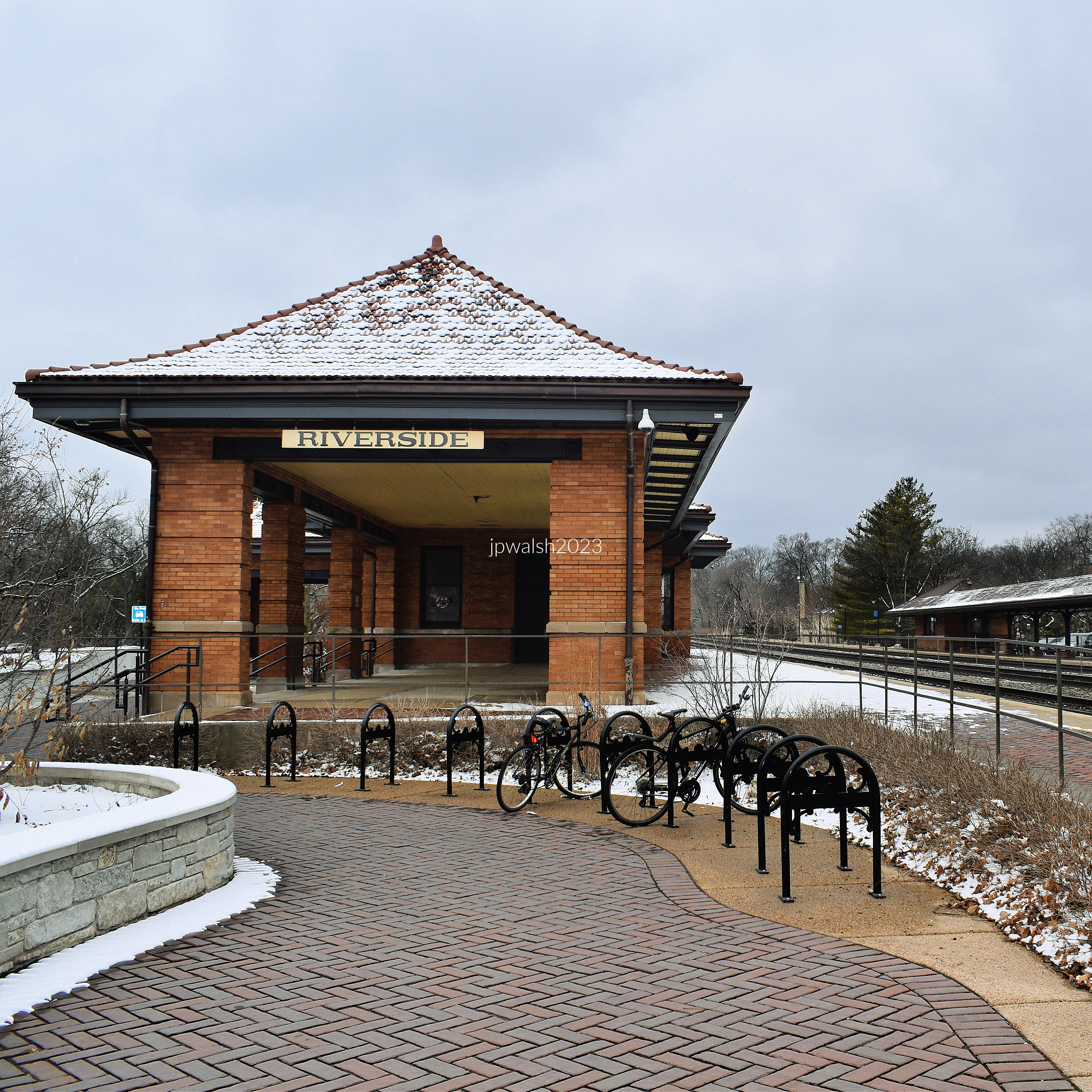
Riverside Railroad Depot, c. 1901, 90 Bloomingbank Road and 15 Pine Avenue. Designed and built by the Chicago, Burlington and Quincy Railroad.
A railroad through Riverside came in 1863, 6 years before the Olmsted/Vaux plan and 12 years before the village’s incorporation. William Le Baron Jenney designed the first depot in 1871. This main depot with open covered extensions on the south side of the tracks was connected by a tunnel to the north platform.
The view above shows the expansive tile roof-covered main entrance. The two large columns with variegated brick gives columns design and texture. There are many windows to allow natural light from its south exposure and a view of the tracks to the north.
Looking east, the orange-brick-colored main depot has open covered extensions for commuters to be protected from the elements during their wait outdoors for a train connection.
Looking west, a view of the train depot with one of its open covered extensions and peaked snow-covered tile roof. The northern platform is visible across the railroad tracks on the right. Author’s photograph taken in February 2023.
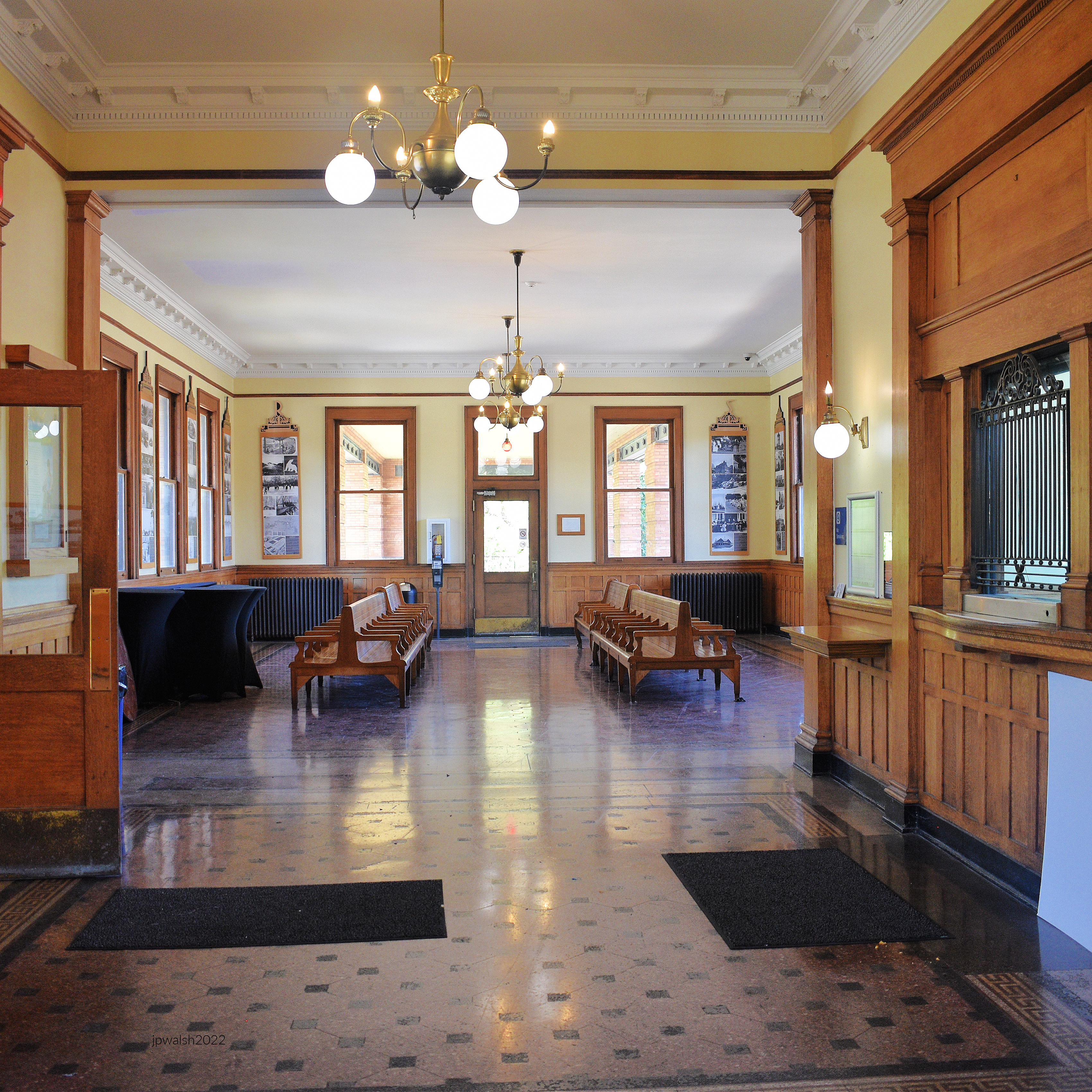
The same view as above over 100 years ago. Riverside Train Depot, 1919. Public Domain.Interior, Riverside Train Depot, c. 1901, includes a waiting room and, at right, ticket agent window. The ceiling has wainscotting and there are period light fixtures to accent the natural light pouring in from the series of encased large rectangular windows.On the brick-paved platform, another of the train depot’s open covered extensions.
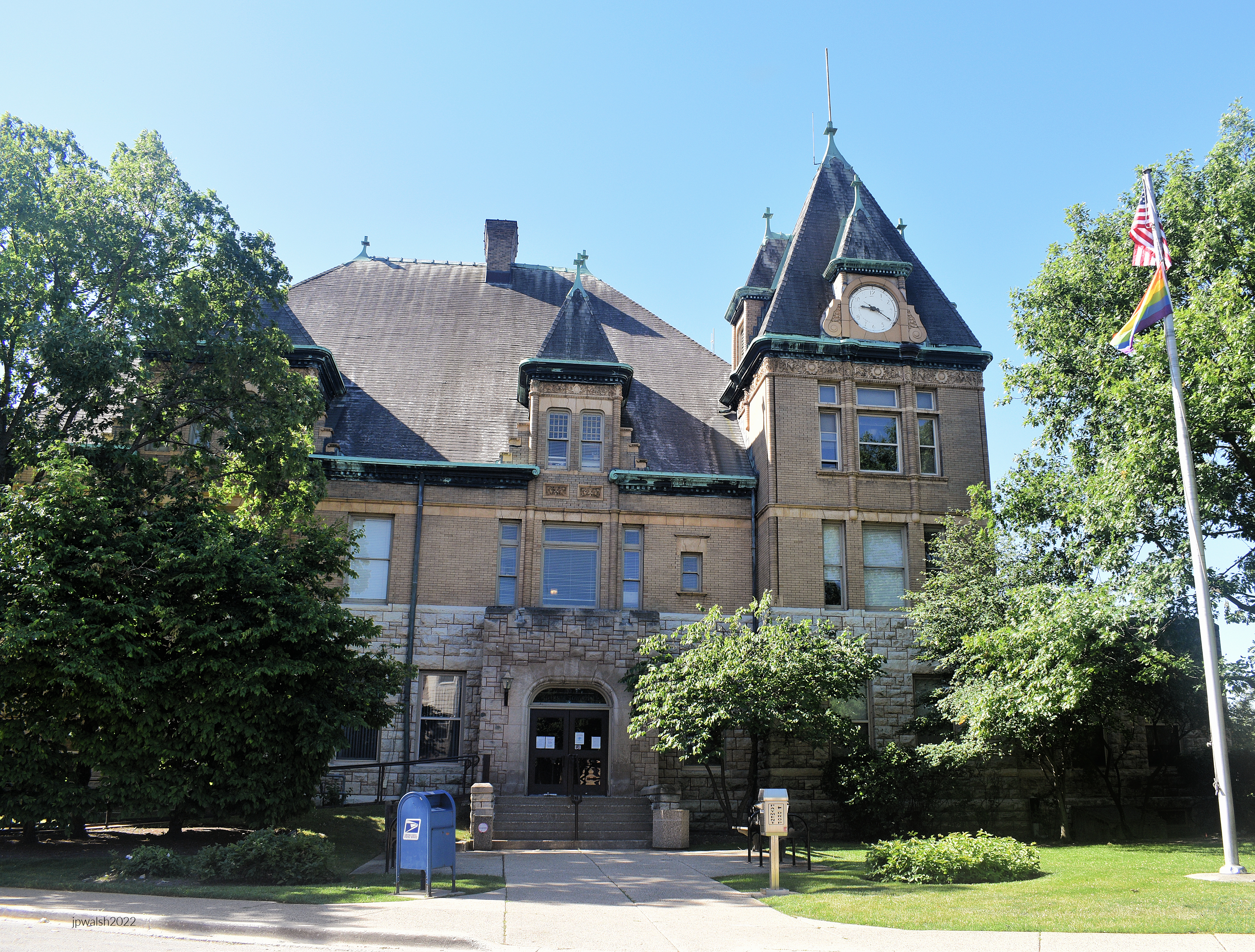
The Lake House, a 2006 fantasy romance film from Warner Brothers, was shot in Riverside, Illinois. A doctor (Sandra Bullock) who occupied a lakeside home exchanges letters with its newest resident, an architect (Keanu Reeves). When they discover that they’re actually living two years apart, they must try to unravel the mystery behind their romance before it’s lost in the midst of time.Riverside Town Hall, 27 Riverside Road, Riverside, Illinois, 1895, designed by George Ashby.
In 1891, the Village of Riverside and Riverside Township reached an agreement so that the village donated the land for a town hall and the township paid for its construction.
In 1893 the township authorized $15,000 for construction (about $500,000 today) and this picturesque and stately building, designed by George Ashby, was completed in 1895. The clock was added to the main tower in 1941.
The building is Richardsonian Romanesque at a time when that style, very popular in the 1880’s, had begun to wane among contemporary architects in preference for the Beaux-Arts.
There is a steeply pitched hipped roof with brick for the top floor and rough faced stone for the ground floor. The turret is polygonal and the windows are of various sizes on all three floors. There are many delicate design elements such as copper cornices, colonettes, stringcourses and dressed stone.
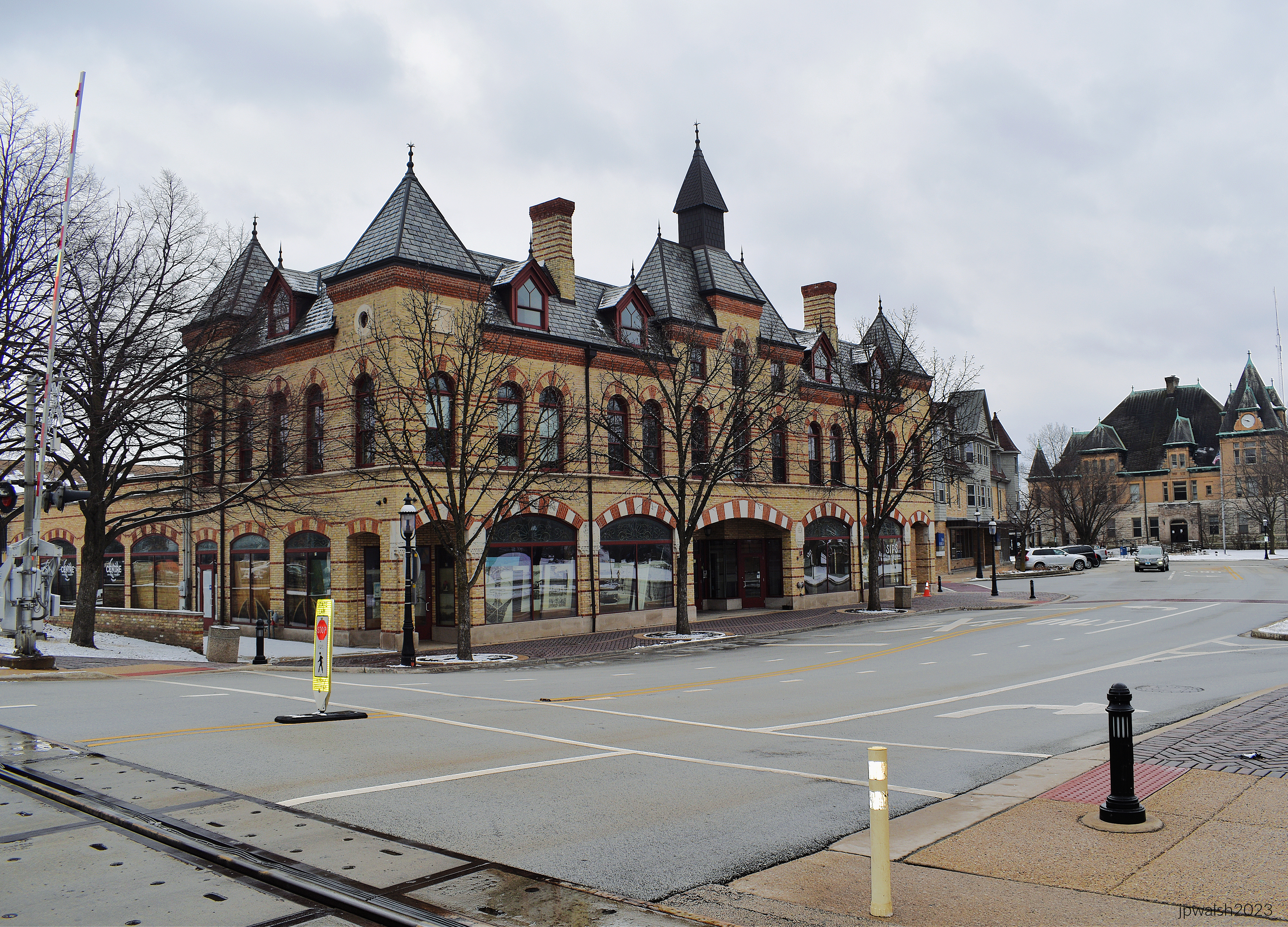
Arcade Building, 1 Riverside Road, Designed and built c. 1871, Frederick C. Withers.
The Arcade Building is the first commercial building built in Riverside following Olmsted and Vaux’s plan and is associated with the village’s original developers, the Riverside Improvement Company.
The Arcade Building – a multi-color brick and limestone building with pointed arches and projecting cornices and stringcourses – is High Victorian Gothic. It was designed by architect Fredrick C. Withers, an associate of Olmsted and Vaux. With its mansard windows between tower pavilions, the simple building references the elaborate and decorative Second Empire architecture.
Riverside Presbyterian Church, 116 Barrypoint, 1872, Frederick C. Withers.
The church building was designed by Fredrick C. Withers who designed the Arcade Building at around the same time. Like that early commercial building the church is an amalgam of styles and forms, including Gothic Revival and Italianate.
The stone building has a series of pitched gable roofs that cover and form the transepts and chancel. The corner tower rises to a timber belfry with moldings and pointed arch openings whose original manual pull bell as well as modern chimes still mark the hours. Extensions to the left and right are mid-20th century additions done in harmony with the original design.
100 Fairbank Road, 1869, by Calvert Vaux.
This clapboard Carpenter Gothic style house was designed as a model home for the Riverside Plan by that plan’s designer, Calvert Vaux. It is an example of East Coast architecture transplanted into the heart of the Midwest. The ground floor is higher than the second floor. The low-pitched roof is punctuated by a projecting porch with Gothic Revival carpentry supported by struts and a gabled roof.
Two other second floor porches are on the short sides of the building extending across that width above a ground-floor projecting bay. The clapboard sheathings are meticulously and variedly cut for decorative effects throughout the building’s exterior.
Curved sidewalks do not always follow the streets but their own direction along and across a mostly wooded landscape.107 Bloomingbank Road and 111 Bloomingbank Road, both c. 1890.
This neighboring pair of Queen Anne style homes are variations of the same building design. The buildings’ design shares a porch across the entire front, arched enclosed second floor porch, and front-facing attic windows. Both share the same kind of clapboard and shingle sheathing.
Houses on Bloomingbank Road face the Des Plaines River.Des Plaines RIver.143 Bloomingbank Road, c. 1869.
This house is set back from the road and built in 1869 which was the year that Olmsted and Vaux were commissioned to design the suburb. The Italianate-style house has tall windows and large brackets with feet and shoulders for their jambs and segmental points. The second-floor windows are met by a first-floor transomed window. A steeped pitched roof and complex massing is Gothic Revival. A subdued color palette blends into the natural surroundings. The porch veranda is original.
201 Bloomingbank Road at Scottswood, c. 1870.
The above 1870 house is a T-shaped Gothic revival with the stem of the “T” facing the street. The stem is surrounded by a veranda whose porch columns are Italianate with Gothic style “carpenter” capitals. The tall windows and lintels are Italianate. The façade’s windows are under a hood molding and the attic has a small window with a pointed lintel. The T-stem’s pitched roof in the Gothic Revival style is slightly lower than the T-cross’s pitched roof behind it.
213 Bloomingbank Road, c. 1905.
A frame clapboard and shingled 4-square cube from 1905. There is a front porch held up by four huge piers with ornamental moldings that cover expansive first-floor polygonal bay windows. Below the hipped roof are two center windows with round heads. The painted dark green and yellow mix is stately and blends into the nature setting.
253 Bloomingbank Road, c.1890.
The Queen Anne house from 1890 has a lot of windows. It is a basic cube with a gambrel roof with a wing that also has a gambrel roof. The front porch is covered on one side with a flared roof and on the other side with a pitched gable roof. The second floor has an open porch that looks over the Des Plaines River. The original clapboard and shingles have been covered on the first floor by later stucco.
281 Bloomingbank Road, 1909.Avery Coonley House, 300 Scottswood Road, 281 Bloomingbank Road, Riverside (Cook County, Illinois), 1910. Public Domain.281 Bloomingbank Road, 1909. From the street.
What became the nationally-recognized Avery Coonley School was founded in 1906 to promote the progressive education theories of John Dewey (1859-1952). It was founded as The Cottage School by Queene Ferry Coonley (1874-1958) on her estate in Riverside, Illinois, for her 4-year-old daughter.
The school, which continues to thrive today, has occupied several structures in its history. This included a literal small cottage on the Coonley Estate in Riverside to larger buildings designed by Frank Lloyd Wright in 1909. The school moved to Downers Grove in 1916 and, on a 11-acre campus there designed by landscape architect Jens Jensen (1860-1951), became the Avery Coonley School in 1929.
This section of Wright’s 1909 design is set back well off the street and mostly hidden by trees. Behind an iron fence, it is difficult for the public to perceive the full extent of the estate. Wright’s design begins at the street with a low stone urn.
On June 11, 1978, the courtyard’s swimming pool heater exploded and started a fire. The fire destroyed the main house’s living room and a bedroom. The exterior was later meticulously restored to its original appearance which included the school’s stucco walls, simple board trim and multi-color tile façade, all beneath a broad, tiled, hipped roof. At the time of the restoration the swimming pool was re-converted to its original function as a lily pond.
A free-standing L-shaped domestic structure with a broad hipped roof, the house was added sometime after 1909. Within its setting in the highly-designed suburb of Riverside, this Prairie style house sets a template and direction for much of what would be 20th century suburban development across the country.
300 Scottswood Road, 1909.
This is the main block of the Avery Coonley estate. The house is the epitome of the Prairie School style of broad horizontals, here using stucco boards, tile and glass beneath a low hipped roof. Wright’s design starts at the street with the low stone urn.
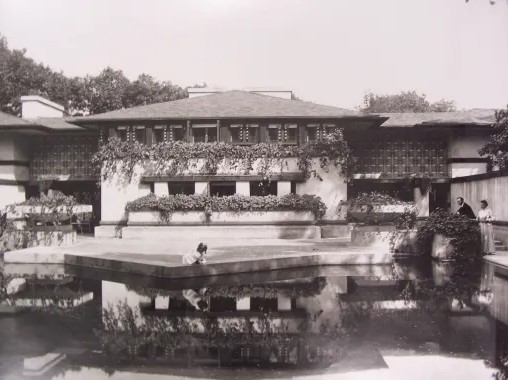
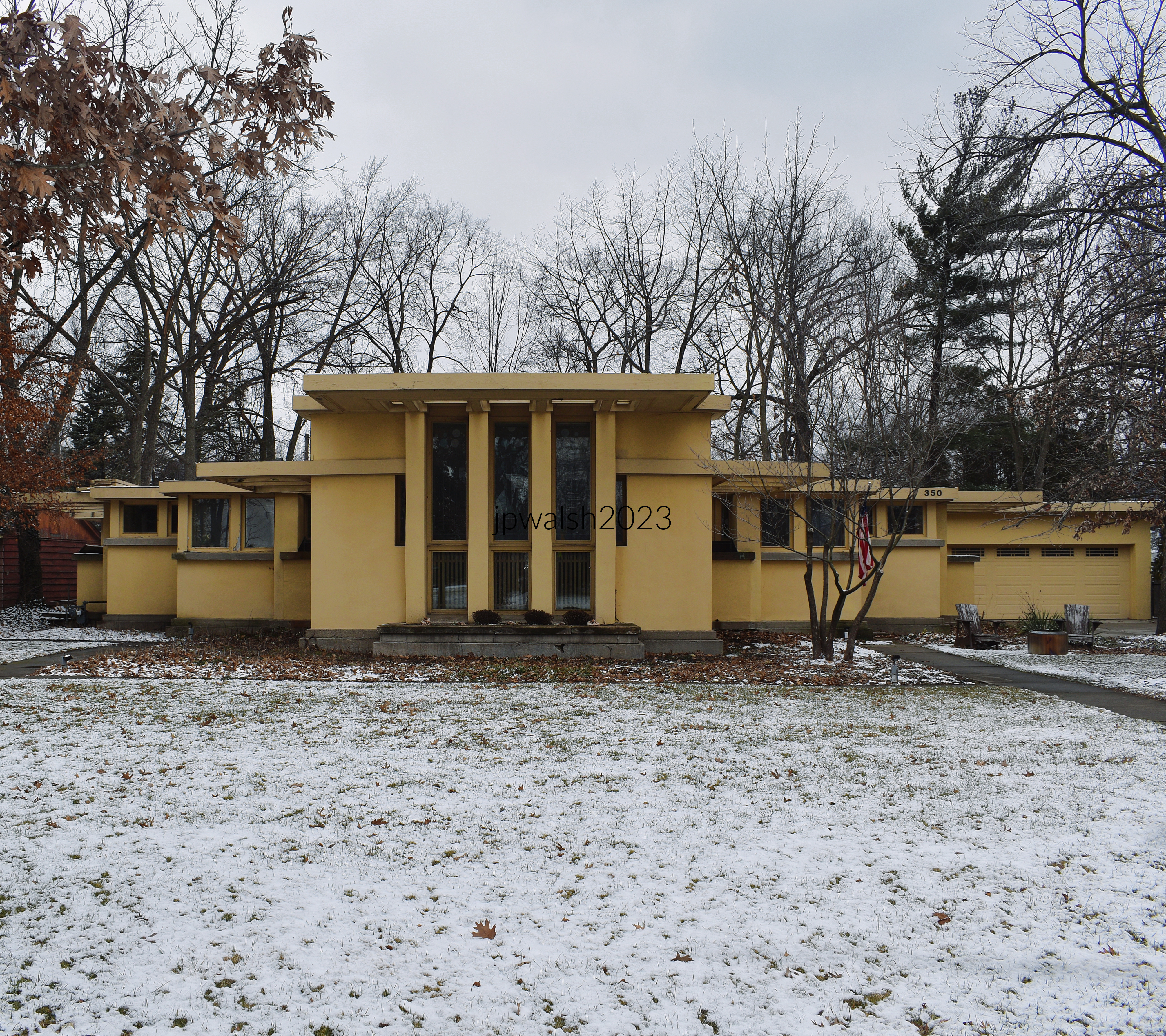
Avery Coonley Playhouse, 350 Fairbank Road, Riverside, Illinois, 1909, by Frank Lloyd Wright. Avery Coonley Playhouse, 350 Fairbank Road, 1909, by F. L. Wright in winter.
Basic plan of the playhouse (above) is a T-shaped building with higher T-stem to the street. A simple stucco structure, the playhouse’s flat roof and lower wings provide the Prairie style’s broad horizontality. Flat roof of the T-stem extends over three elongated windows while lower wings have clerestory windows.
William E. Drummond (1876–1948).308 Fairbank Road, Riverside, Illinois, c. 1910, Guenzel and Drummond.
Drummond began his career working for architect Louis Sullivan (1856-1924). Later, working for Frank Lloyd Wright, Drummond became the chief draftsman for many of Wright’s well-known commissions. In 1912 Drummond went into partnership with Louis Guenzel who had been a draftsman for Dankmar Adler (1844-1900) and Louis Sullivan (1856-1924).
The house is a one story hipped roofed cube or block with a broad brow of stucco soffits with eaves. The original casement windows include three in the front for the living room with geometric Prairie patterns. The lower portion of the façade is board siding and the top section is stucco.
The simple stone house in an English country cottage style was built in 1897. It has diamond-patterned casement windows and a single half-timbered gable poking out of a gambrel roof. The timber entrance porch that abuts stone achieves an overall craftsman effect.
144 Scottswood Road, c. 1870, William LeBaron Jenney.
Attributed to William LeBaron Jenney, the house is an early building in Riverside. It is a fusion of two styles – the Stick Style and Gothic Revival. The carpentry is solidly masterful. The roof has a low pitch and is punctuated with a massive chimney, dormers and gables with filets, spars and kingposts. The spurs or brackets supporting the overhanging eaves rest on boards intersecting with the clapboard. There is a broad veranda with turned posts supporting a lintel that supports small pointed arches with struts. The porch railing has tightly aligned balusters extending to a below-porch skirt with complementary cut-out patterns. The veranda roof extends over the angled main entrance to become a porte-cochère for the driveway.
124 Scottswood Road, 1871, William LeBaron Jenney.
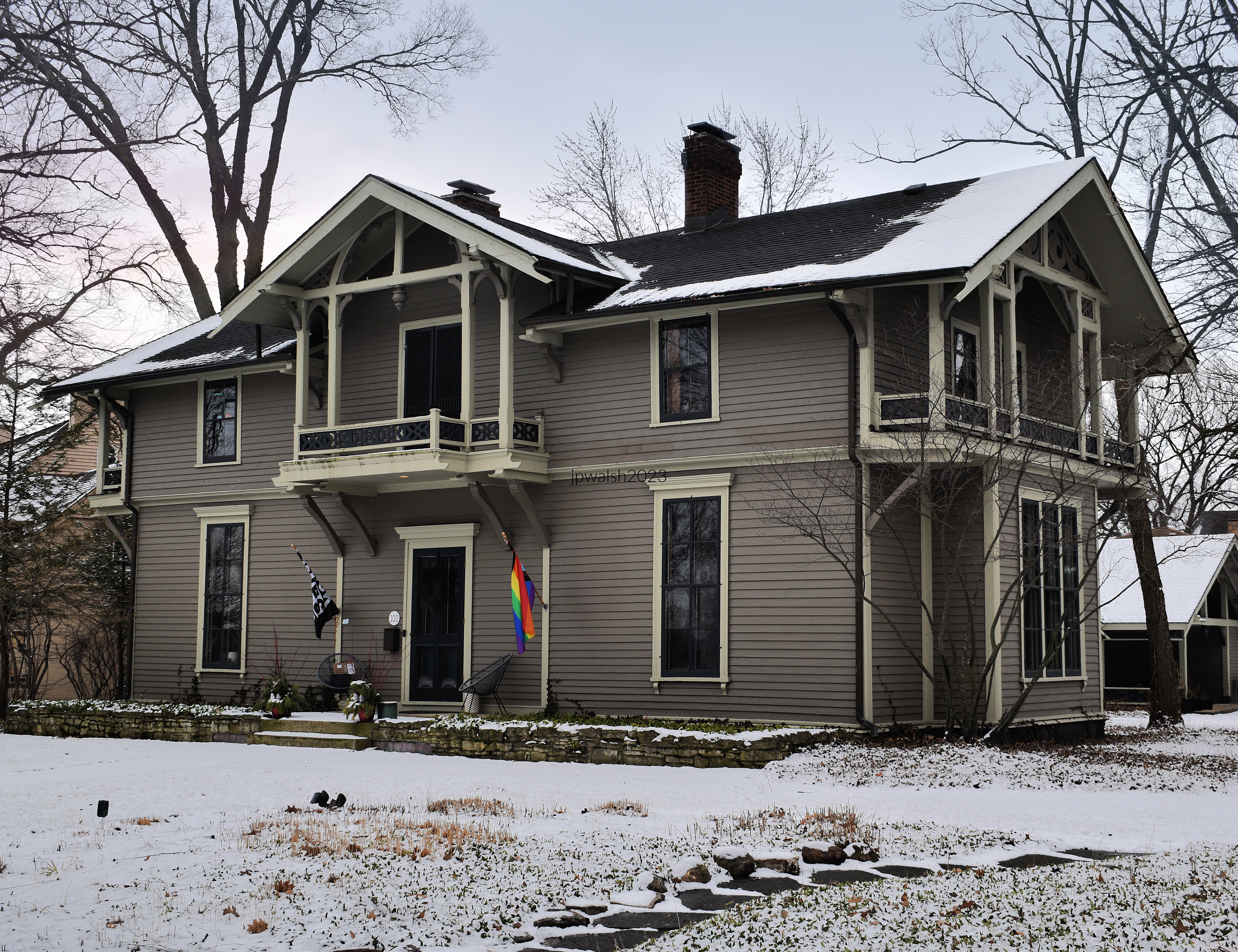
In the Gothic Revival style, the design and board-and-batten construction of the house is grand and appealing. With steeply pitched roofs, there are several gabled wings of varying distances and directional faces from the building’s core. Windows include long tabernacle windows and others with more elaborate extending jerkinhead roofs that are supported by boards incised with decorative cuts. There are pointed head windows on the second floor over the main entrance while the veranda stretches across two sides of the house supported by slope cut square posts with milled brackets. These and other rare trim and other details, including two massive chimneys, have survived in this house that is today over 150 years old.
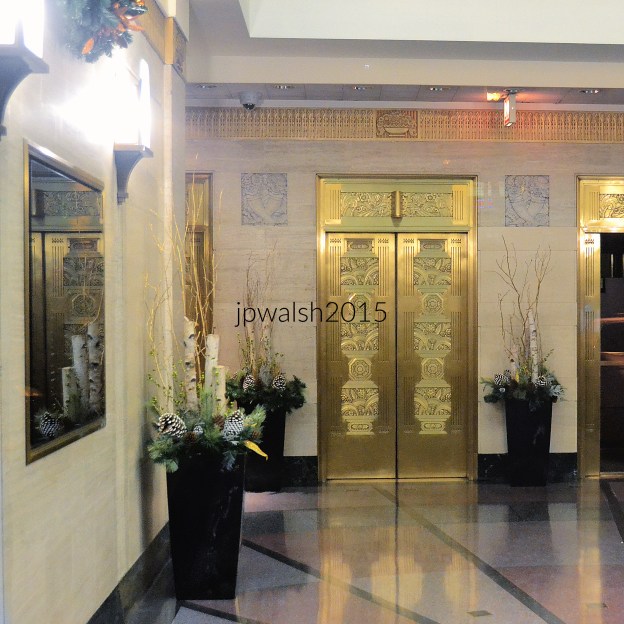
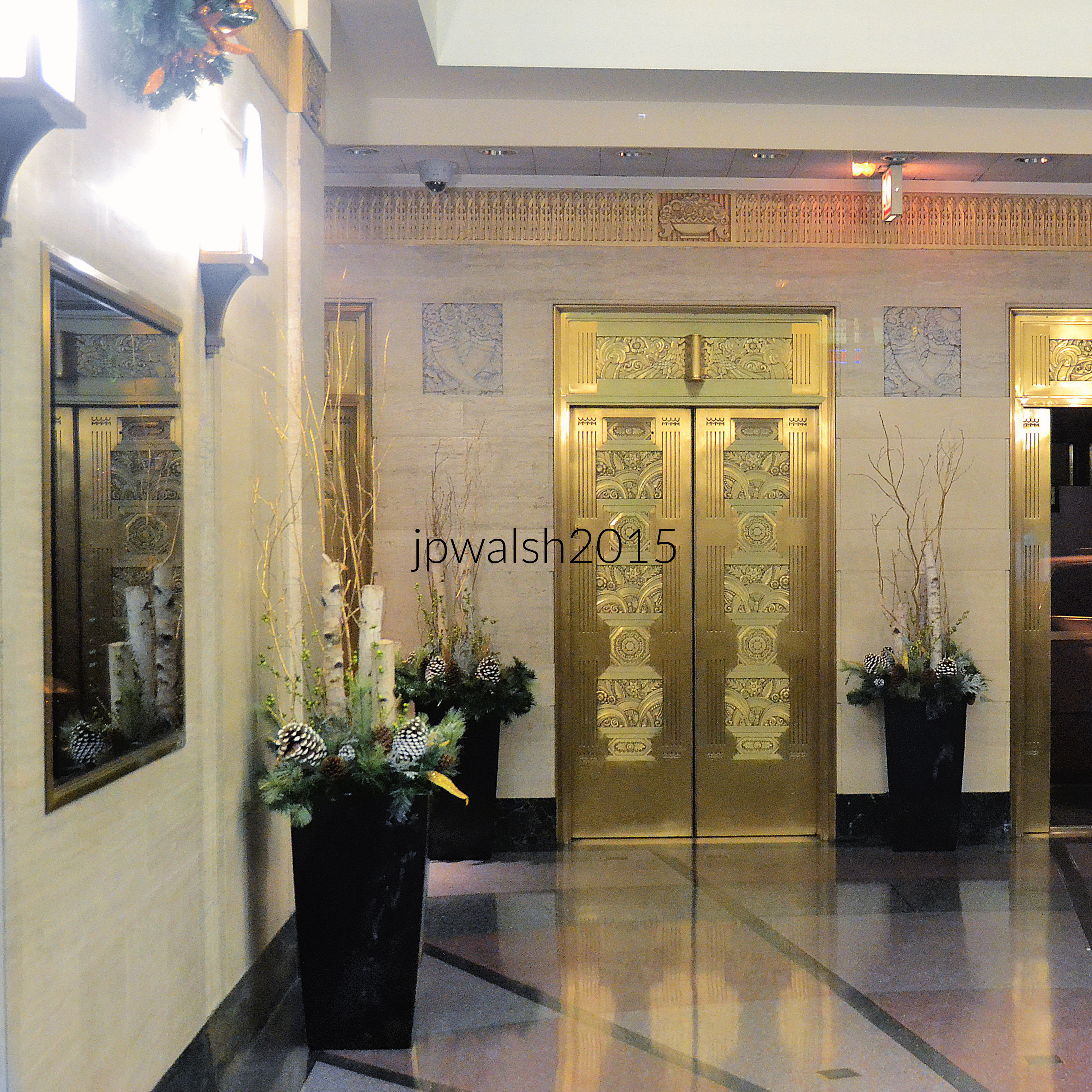
FEATURE Image: December 2015. Art Deco Elevator Bank (1929). 3.99mb DSC_0958 (2). Author’s photograph.
December 2015. Art Deco elevator bank, 105 W. Madison (1929), Chicago. 3.99mb DSC_0958 (2). Author’s photograph.
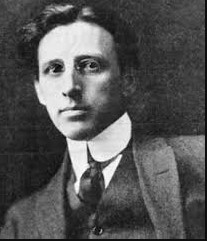
In the heart of Chicago’s Loop, 105 W. Madison Street (2 S. Clark St.) is an Art Deco beauty built in 1929 by the Burnham Brothers firm. The sons of Daniel Hudson Burnham (1846-1912), Daniel Hudson Burnham Jr. (1886–1961) and Hubert Burnham (1882-1968) erected the 22-story building with a tripartite façade and window treatments emphasizing the building’s height with glorious details inside and out. 105 W. Madison follows the neo-classic style employing light brown applied masonry with terra-cotta accents on the exterior and an art-deco interior, including this elevator bank on the lobby floor.
Daniel Hudson Burnham Jr. (1886–1961), Tuesday, July 20, 1926, Chicago Tribune. Public Domain. Hubert Burnham (1882-1968). Public Domain.
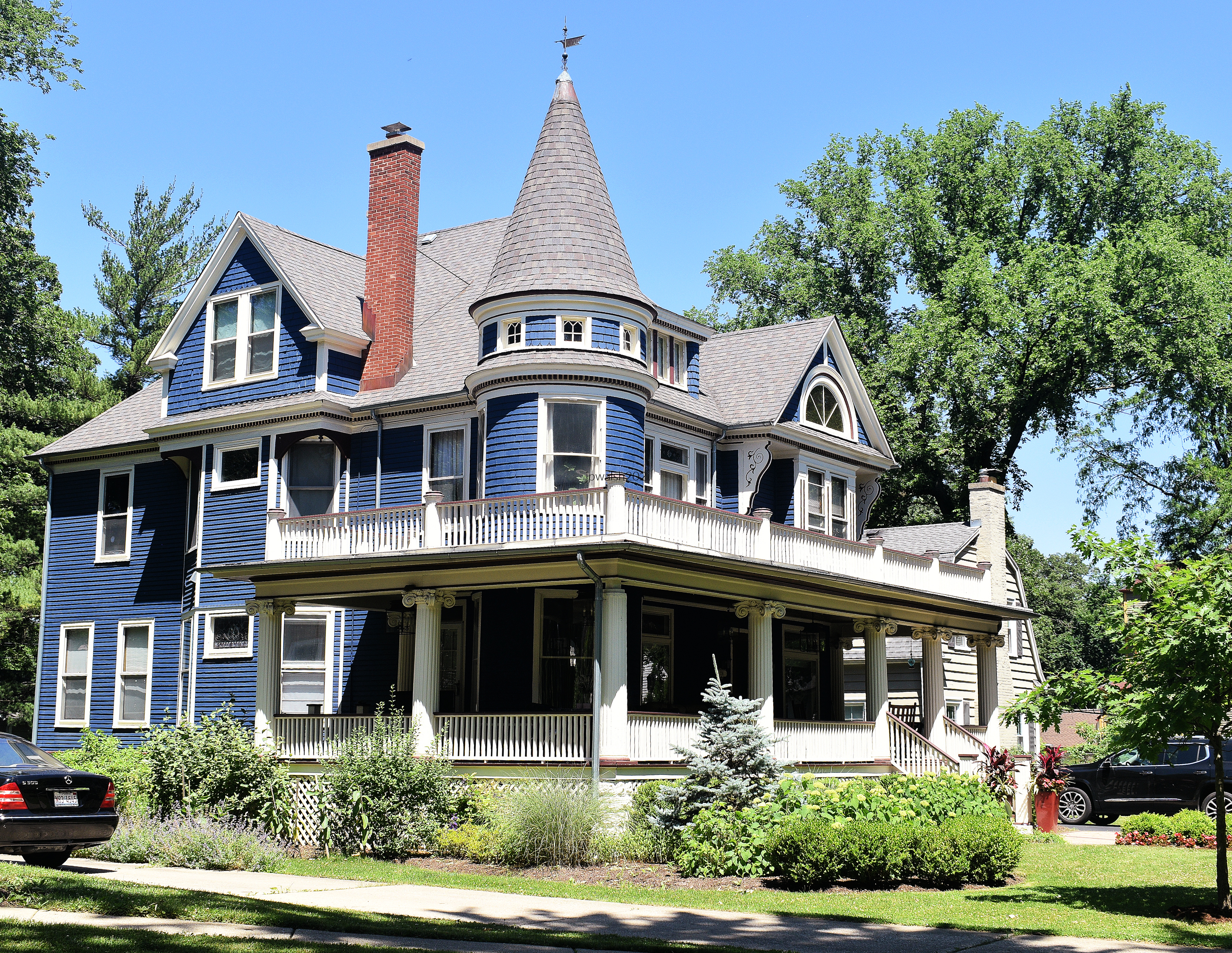
FEATURE image: 562 Keystone Avenue, River Forest, Illinois, is a house designed by Frank Lloyd Wright in 1909. It is an excellent example of Wright’s mature Prairie style including its original Prairie-style glass.
River Forest, Illinois is a suburb of Chicago in Cook County. River Forest is perhaps best known for its diversity of 19th and early 20th century American residential architecture. House designs and styles include those by Frank Lloyd Wright (1867-1959) and others in the Prairie School. Nestled near the Des Plaines River to the west, along heritage lands of the Menominee, Chippewa and, later, Potowatomi Native American tribes, today River Forest is an affluent residential suburb closely tied to its adjacent neighbor to the east, the suburb of Oak Park, Illinois. These communities share several affinities including its high school, namely, Oak Park and River Forest High School that is in Oak Park and was founded in 1871. River Forest’s population today approaches 12,000 residents and the suburb is home of two universities, including Dominican University founded in 1848 and Concordia University Chicago founded in 1864. River Forest’s train station is on Metra’s Union Pacific/West Line with service into nearby downtown Chicago, about 12 miles away.
These are my photographs of some of the residential architectural highlights to be seen in River Forest and were taken in June 2022.
603 Edgewood Place, River Forest, Illinois, 1908, Frank Lloyd Wright. Known as the Isabel Roberts House, it was remodeled in the 1950s. 69% 7.99 mb
Frank Lloyd Wright in 1903, likely a self-portrait. Public Domain.559 Edgewood Place, River Forest, Illinois, 1911, William Drummond (1876-1948). Drummond began his career working for architect Louis Sullivan (1856-1924). Working for Frank Lloyd Wright, Drummond became the chief draftsman for many of Wright’s well-known commissions. 89% 7.92mb559 Edgewood Place, River Forest, Illinois, 1911, William Drummond. 560 Edgewood Place, River Forest, Illinois, 1910, William Drummond. 98% 7.89 mbWilliam Drummond about 1901. Drummond was born in New Jersey into a family in the building trades. He moved to Chicago as a boy and later studied architecture at the University of Illinois but didn’t finish. At 23 years old he joined Frank Lloyd Wright’s studio and became his chief draftsman. Drummond obtained his architect’s license in 1901 and, while working part time for Wright, worked full time for Richard E. Schmidt (1865-1958) in 1901 and 1902 and for Daniel H. Burnham (1846-1912) in 1903 to 1905. In 1905 Drummond returned to working full-time for Wright until 1909 when Drummond went into private practice. Public Domain. 511 Edgewood Place, River Forest, Illinois, 1858, architect unknown. This early Italianate house was moved to its present location in1880 from a few blocks away. 77% 7.86 mb515 Auvergne Place, River Forest, Illinois, 1893, Frank Lloyd Wright. Known as the William H. Winslow House, this residence for an important industrialist is one of Wright’s earliest mature expressions of the Prairie style. 66% 7.90 mb344 Keystone Avenue, River Forest, Illinois, 1870, architect unknown. Fine and grandiose example of the Italianate style. 95% 7.85 mb517 Keystone Avenue, River Forest, Illinois, 1915, William Drummond. A simplified version of the expansive basic square house with a pitched roof and elaborated in the Prairie style.530 Keystone Avenue, River Forest, Illinois, 1915, Robert Spencer (1864-1953). Robert Spencer was born in Milwaukee, studied engineering at the University of Wisconsin and architecture at M.I.T. He practiced in Boston, married, and studied in Europe. At his return he relocated to Chicago through Shepley, Rutan & Coolidge. In 1895 Spencer established his own firm and located in the Schiller Building next to Frank Lloyd Wright. In 1905 Spencer partnered with Chicagoan Horace S. Powers, who studied at today’s I.I.T. The partnership built this house in River Forest which is a fine brick example of the Prairie School within a traditional framework. 97% 7.85 mbRobert Spencer (1864-1953). Unlike his slightly younger competitor, Frank Lloyd Wright, Spencer was a trained mechanical engineer and architect. Public Domain.
INTERLUDE: OTHER PERIOD HOMES in RIVER FOREST, ILLINOIS.
306 Keystone Avenue, River Forest, Illinois. A smaller second floor porch is fitted above the main ground entrance. 70% 7.90 mb.236 Keystone Avenue, River Forest, Illinois. Corner tower, multi-level wrap-around front porch. 73% 7.92 mb Row of late 19th/early 20th century houses, River Forest, Illinois. 78% 7.78 mb136 Keystone Avenue, River Forest, Illinois. The facade’s design elements are complex with intricate details. 90% 7.80 mb146 Keystone Avenue, River Forest, Illinois. Two big chimneys and a front porch swing makes for a timeless scene on a nice day. 90% 7.83 mb558 Keystone Avenue, River Forest, Illinois, 1860, architect unknown, This is an excellent example of a large Victorian Gothic cottage. 82% 7.62 mbFrank Lloyd Wright. Public Domain. 562 Keystone Avenue, River Forest, Illinois, 1909, Frank Lloyd Wright. The house’s projecting second-floor balcony and Prairie glass in a stucco surface is in evidence. 83% 7.93 mb.562 Keystone Avenue, River Forest, Illinois, 1909, Frank Lloyd Wright. The house’s prominent hipped roof with its simple fascia and stuccoed soffits are evident. Wright’s house design is characterized by the early, mature restraint and discipline of the Prairie School. 75% 7.91 mb.
SOURCES:
A Guide to Chicago’s Historic Suburbs on Wheels and on Foot, Ira J. Bach, Swallow Press/Ohio University Press, 1981, pp. 605-622.
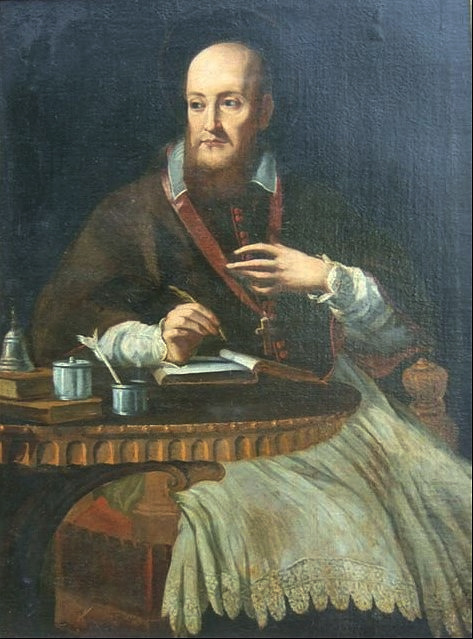
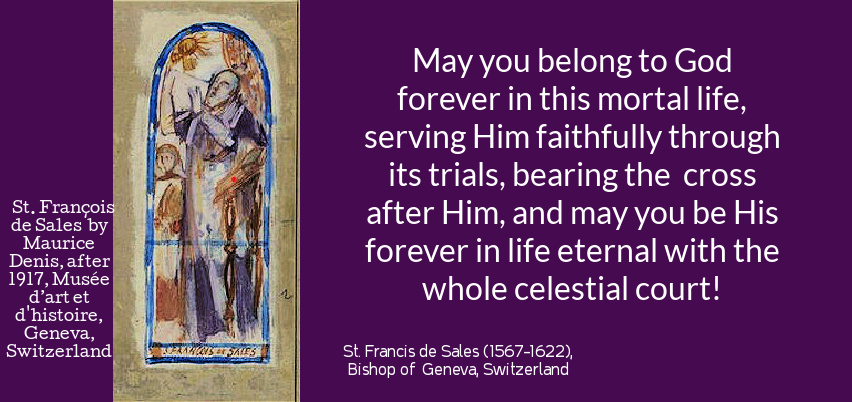
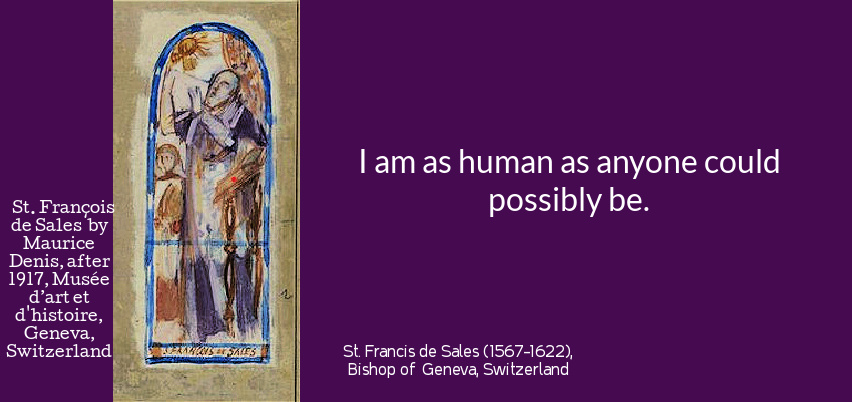
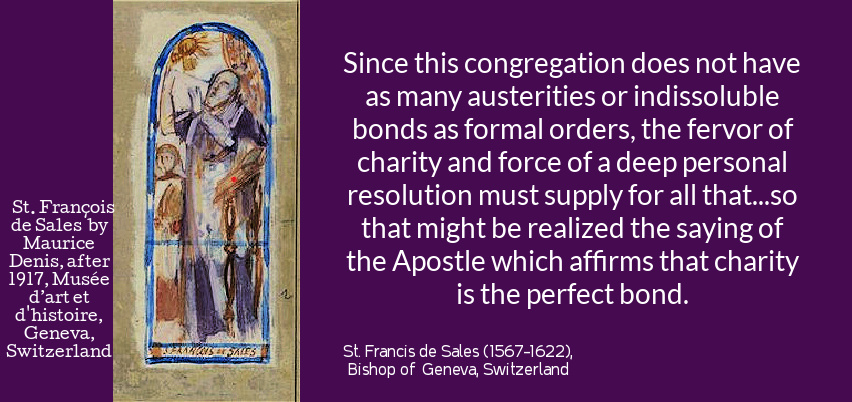
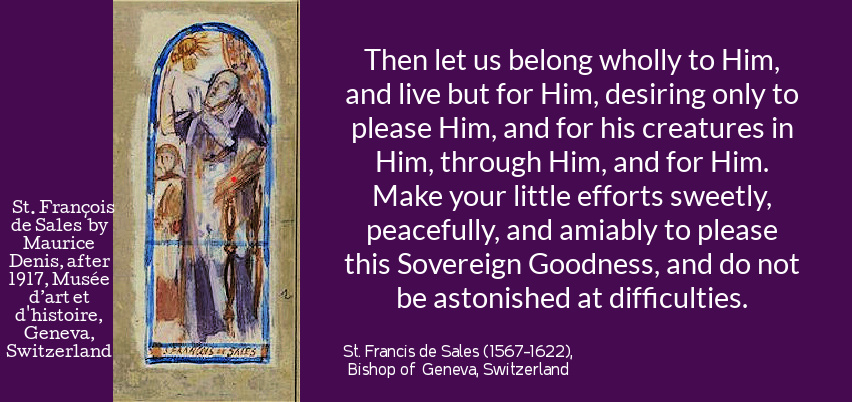
FEATURE Image: St. Francis de Sales, 18th c, Besançon, 96 x 131 cm. Public Domain.
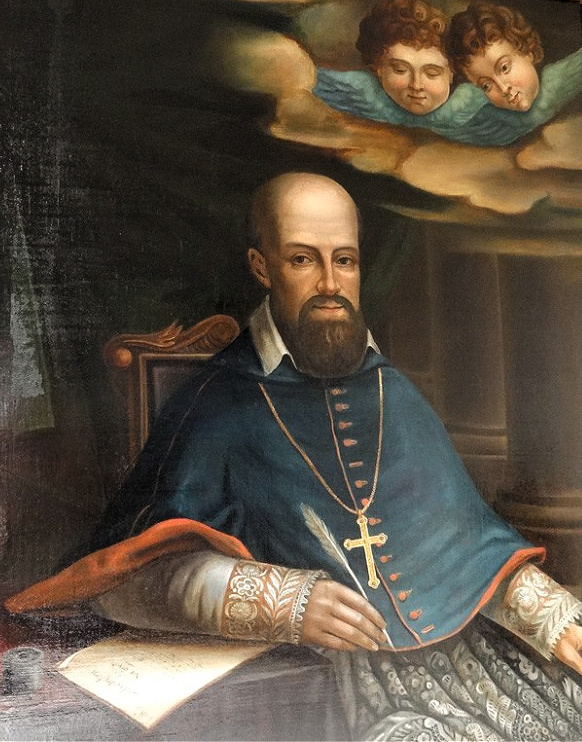
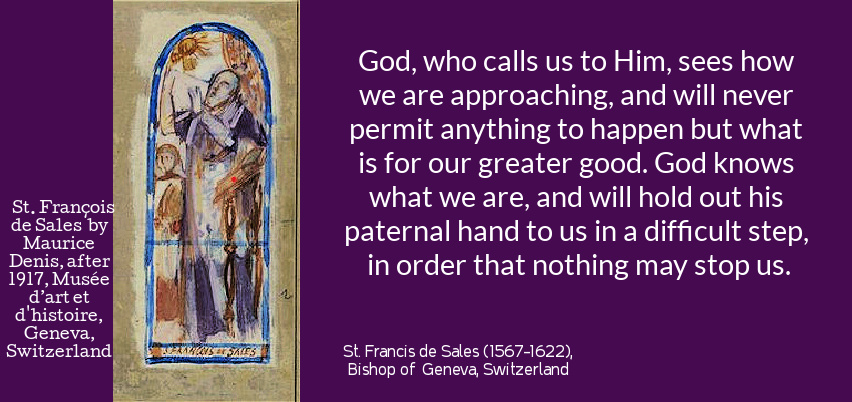
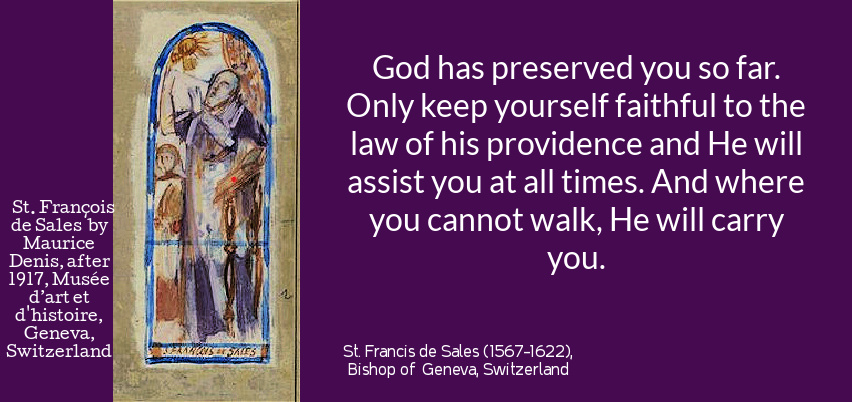
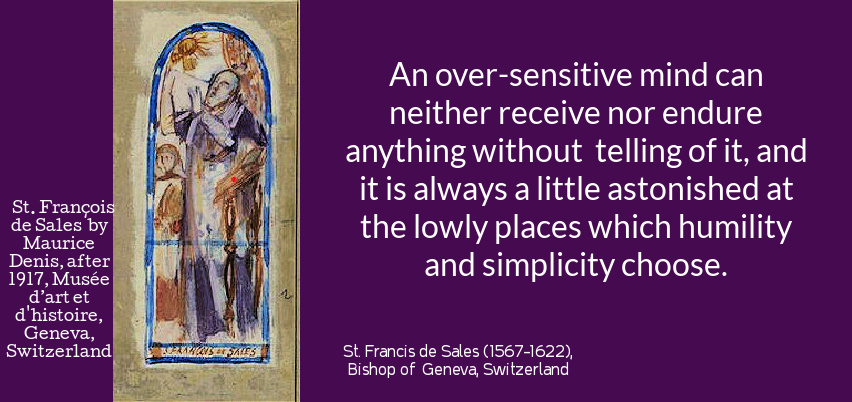
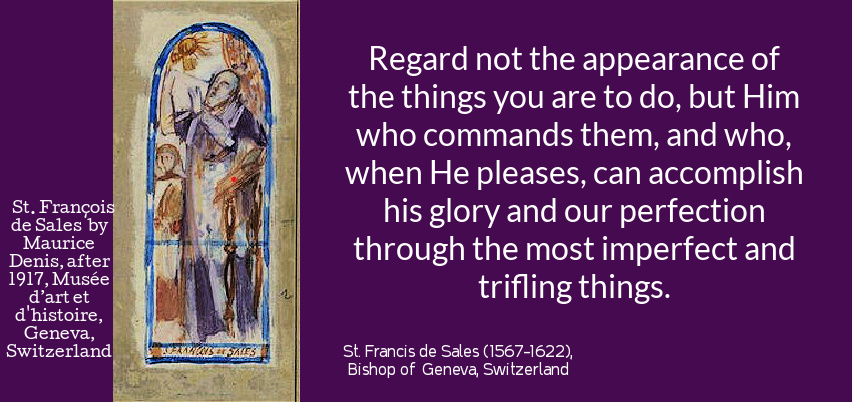
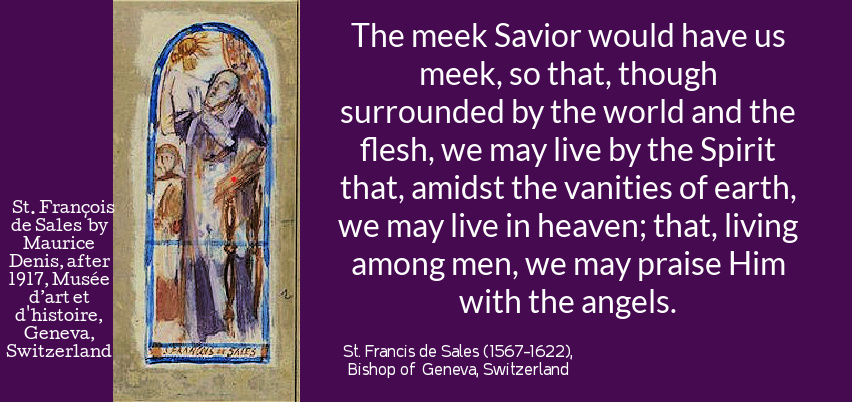
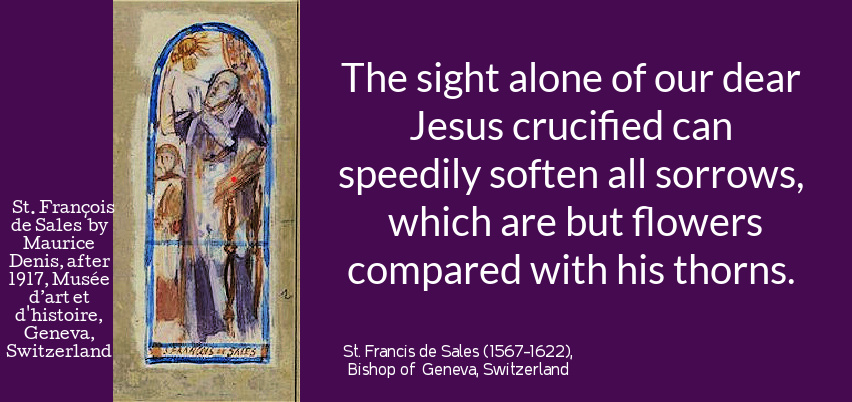
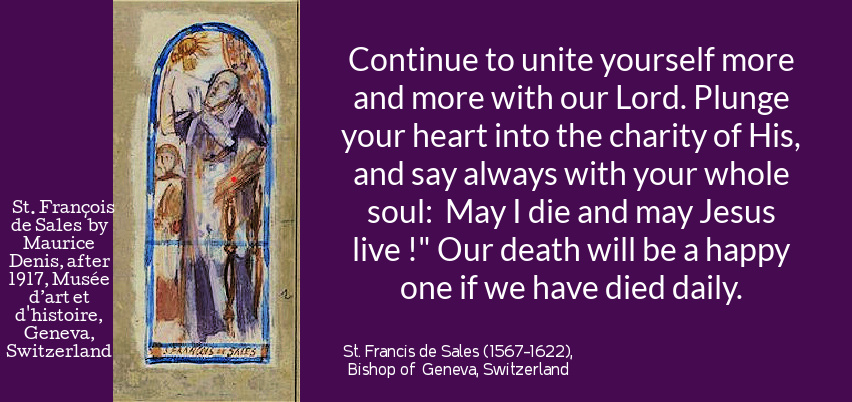
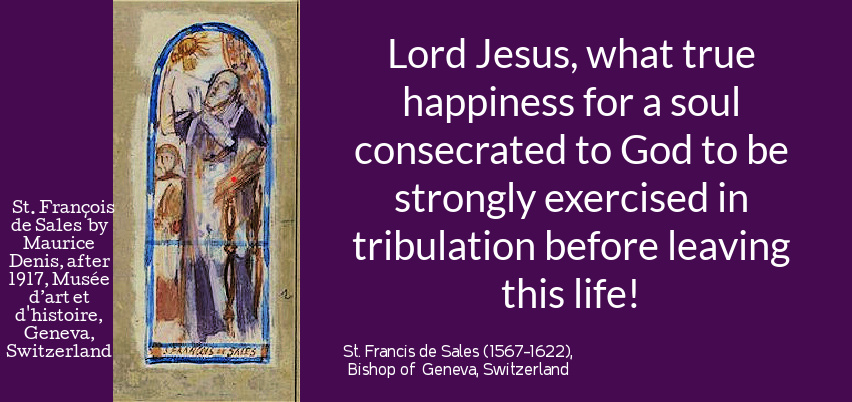
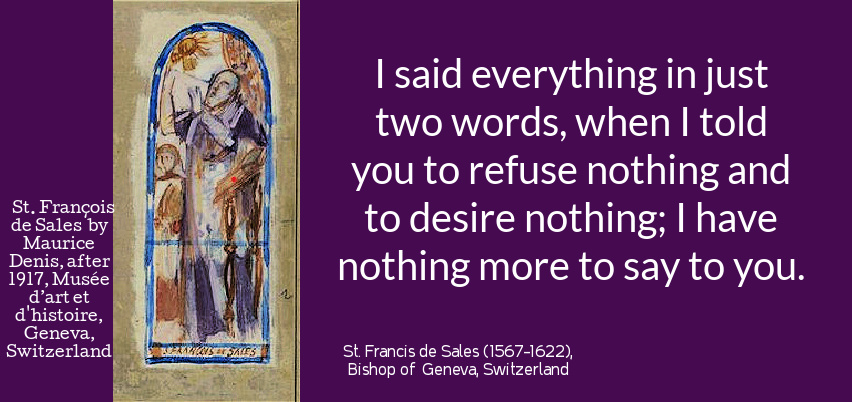
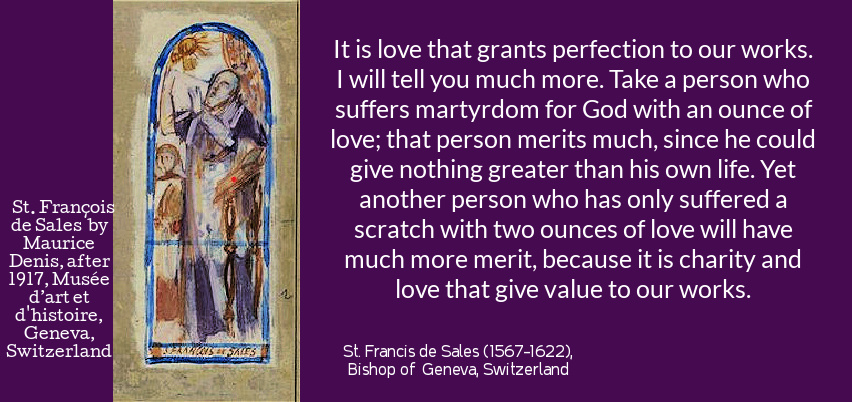
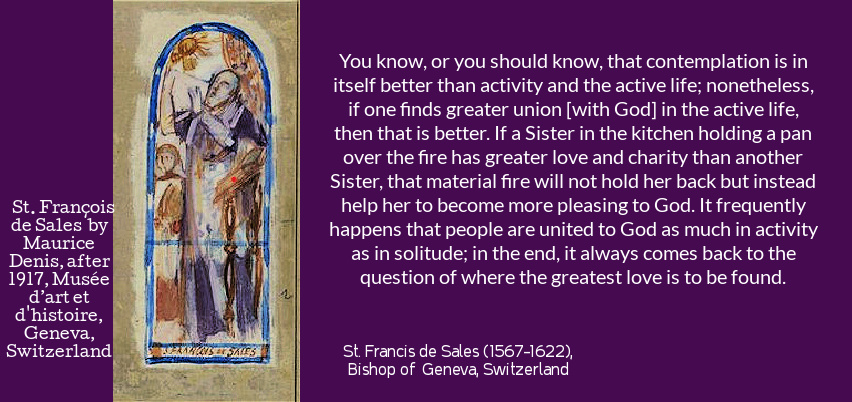
Saint Francis de Sales sitting in front of a copy of his work, “Introduction to the Devout Life,” oil on canvas, c.1790s, 77 cm x 99.5 cm, unknown artist. Hovering above the 17th century French Catholic bishop, saint, and Doctor of the Church are two cherubs who regard him with kindness. Public Domain. Francis de Sales became one of the most respected theologians in Christianity. A great preacher and writer, Francis de Sales ascended the seat of Bishop of Geneva, Switzerland, and, with widowed Baroness Jeanne de Chantal (1571-1641), founded the religious order of the Visitation. As a diplomat and man of prayer, Francis de Sales exerted a significant influence within the Catholic Church and among the temporal powers of the day. https://www.antiques-delaval.com/en/paintings/7068-hst-large-portrait-saint-francois-dirty-life-devote-cherubs-xviiieme.html -retrieved January 24, 2023. Public Domain.
CANONIZED ON APRIL 8, 1665, IN ROME BY POPE ALEXANDER VII, ST. FRANCIS DE SALES IS THE PATRON OF WRITERS, JOURNALISTS, THE CATHOLIC PRESS, CONFESSORS, THE DEAF AND EDUCATORS. ST. FRANCIS WAS DECLARED A DOCTOR OF THE CHURCH IN 1877 BY PIUS IX.
INTRODUCTION.
By all accounts, St. Francis de Sales (1567-1622), whose feast day is January 24, was a gracious and holy man. His writings were, similar to the Jesuits of whom Francis was a student, admirer and close friend, directed to society’s well-to-do and concerned with how, as society’s current elites, they can practice, most basically, Christian “noblesse oblige” within their privileged social station. St. Francis de Sales’ writing defended and explained Catholic doctrine to a Europe which, in an age of Renaissance and Reformation, was very much in revolt against it. To preserve and endorse (1) a social order and (2) perfect belief in doctrine, St. Francis de Sales communicated in everything that both were attainable simultaneously, and did so famously in his book, Introduction to the Devout Life (1608).
Like the sons of St. Ignatius of Loyola, St. Francis de Sales was active in the direction of souls. For Introduction to the Devout Life, Jesuit father Jean Fourier, S.J. strongly encouraged a noble lady around 1607 to prevail upon her local bishop (de Sales) to have his personal writings of spiritual direction to her and others printed to reach a wider audience at court and elsewhere among the ruling class. St. Francis de Sales was also eager to have his personal instructions in print for the advancement and perfection of individual souls. Introduction to the Devout Life became an instant international bestseller and, over 400 years later, remains a spiritual classic. As John K. Ryan, S.J. observed, “Its greatness lies in many things: in its originality, its completeness, its sincerity, its balance, its penetration and its style…(and) as such it is beyond adverse criticism in any important way.”1
Francis Bonaventure was born into nobility in August 1567 in Sales castle in Savoy, France, where there were tremendous social pressures to marry and settle into a life of wealth and prestige. Sent to Paris by his family, they wanted him to attend the prestigious College of Navarre in the fine hôtel de Navarre with its renowned library in rue Saint André des Arts, but Francis chose to attend the new Jesuit College of Clermont, which at that time was known for its religious and moral vision as much as its academic achievement.2 At the Jesuit school St. Francis de Sales came into contact with the post-Tridentine humanism taught by faculty such as Father Possevin, S.J. and Francis took to it like a duck to water so that he could express its intellectual tenets afterwards quite well.3 St. Francis de Sales worked out his spiritual life in prayer in Saint-Étienne-des-Grès in the Latin Quarter. The church (now demolished) on Rue Saint-Jacques was the center for Christianity among students. Another saintly Frenchman who later frequented Saint-Étienne-des-Grès was St. Vincent de Paul (1581-1660). Francis de Sales as a college-age layman was finding he had serious religious scruples and temptations to lust.4 it was in Saint-Étienne-des-Grès that St. Francis de Sales ultimately took a personal vow of chastity before a statue of the Virgin Mary which allowed him to pursue his spiritual desires.
After studying for five more years at the University of Padua, St. Francis de Sales emerged in 1591 with the equivalent of a J.D.- Ph.D. and was ordained a priest in 1593. In those years the young nobleman was surrounded by the Renaissance writings of philosophers and poets such as Marsiglio Ficino (1433-1499), Giovanni della Casa (1503-1556) and contemporary French theologian Pierre Charron (1541-1603).5 Now in his mid-20’s Francis was given by his bishop the nearly impossible task to reconvert John Calvin’s citizens of Geneva to Catholicism. Needless to say, Francis’s efforts failed. In fact, the Wars of Religion (1562-1598) were in full swing and made for impassioned attitudes on all sides and complicated factors in politics. An individual, Protestant or Catholic, had to practice their faith in a fragmented society.6
In 1602 St. Francis de Sales was sent to Paris to negotiate the condition of Catholics in reconverted territories in France. As a diplomat St. Francis de Sales was smooth – peaceful, positive, charitable and temperate in his words and persona. At meetings taking place at the court of French King Henry IV ( (1553-1610), St. Francis de Sales met some of the great figures of the religious and mystical revival occurring in France including Henri, Duc de Joyeuse (1563–1608), a General commander in the Wars of Religion and member of the Catholic League who became a Capuchin Franciscan after the death of his wife, Catherine de La Valette; Pierre de Bérulle (1575-1629), one of the most important mystics of 17th century France and, later, a Catholic cardinal; and Madame Acarie (1566-1618), mother of seven children, and foundress and lay sister of the Discalced Carmelites in France. She was perhaps the most widely respected religious person in Paris and certainly the go-to contact for the wealthy whenever they desired to help the poor because she made sure their alms got to the poor and not the professional charitable class. St. Francis de Sales, a respected theologian, also influenced the temporal powers – the dukes of Savoy, Charles Emmanuel I (1562-1630) and Victor Amadeus I (1587-1637), the regent of Savoy Christine de France and kings Henry IV and Louis XIII of France.
Charles Emmanuel I. Duke of Savoy (1562-1630) by Jan Kraeck. Public Domain. Victor Amadeus I (1587-1637), artist unknown. Public Domain.
In July 1602 following the death of Bishop Grenier, St. Francis de Sales became Bishop of Geneva. Francis de Sales traveled ceaselessly around the diocese and beyond, preaching and hearing confessions, and the people quickly realized they had a holy bishop. It was by way of one of his penitents, St. Jeanne-Françoise de Chantal (1572-1641), that St. Francis de Sales worked his vision of the foundation of a new order, the Visitation, whose charism was to serve the sick and the poor with “the charity and gentleness of Jesus Christ.”7
St. Francis de Sales with Sisters of the Visitation, Francisco Bayeu y Subias (1734-1795), c. 1760, oil on canvas, 56 x 34 cm, Prado, Madrid, Spain. The 18th century painting, once in the Royal Collection, is today housed in a regional art museum in Salamanca. Public Domain.It was by way of one of his penitents, St. Jeanne-Françoise de Chantal (1572-1641), that St. Francis de Sales worked his vision of the foundation of a new order, the Visitation, whose charism was to serve the sick and the poor with “the charity and gentleness of Jesus Christ.” https://www.museodelprado.es/coleccion/obra-de-arte/san-francisco-de-sales/540cb0b9-ca15-4c43-b011-d2d71f7c5820?searchMeta=san%20francis – retrieved January 24, 2023. Francisco Bayeu y Subías (1734-1795) is one of the leading of Spanish late Baroque painters using quick and fluid touches and vivid and exquisite colors though later assuming neoclassicism with formal, sometimes cold, pictures based rigorous observation of nature. Bayeu, born in Zaragoza, trained there in the workshop of Danish painter Juan Andrés Merklein (1716-1797) and in the drawing classes of José Luzán Martínez (1710-1785). In 1758 at 24 years old he obtained a two-year scholarship to the Academy of San Fernando in Madrid, but left two months later because of disputes with the professor Antonio González Velázquez (1723–1793). Bayeu returned to Zaragoza and painted several commissions for churches and convents. In 1762 he was helping German painter Anton Raphael Mengs (1728-1779) in the decoration of the Palacio Nuevo. Thanks to Mengs’ influence, Bayeu started his decorative collaborative undertakings that earned him the appointment of court painter in 1767. He worked mainly as a fresco painter. In addition to his courtly commissions, he did church commissions such as of the vaults of the Holy Chapel of the Basilica of Nuestra Señora del Pilar completed in 1776. He painted 11 scenes for the the cloister of the Cathedral of Toledo between 1776 and 1787. He was then entrusted with the decoration of the royal chapel in the Palace of Aranjuez. After Mengs’s departure in 1777 for Rome, Francesco Bayeu assumed all Mengs’ duties as first painter, though not obtaining the appointment. Like other Spanish artists he worked developing cartoons for Real Fábrica de Tapices de Santa Bárbara (Royal tapestry Factory). Bayeu supervised the work of a talented newcomer, Francisco Goya (1746- 1828) who was Bayeu’s brother-in-law since 1773. In 1785 Charles III entrusted Bayeu and Mariano Salvador Maella Pérez (1739 –1819) with the restoration of the paintings in the royal collections. When he fell ill in 1786, Goya replaced Bayeu at the Academy of San Fernando, which Bayeu had been director of painting. Despite declining health from overwork, the commissions kept coming in. The Prince and Princess of Asturias hired Bayeu for the decoration of the dining room vault in the Palace of El Pardo. Bayeu returned to Zaragoza in 1788 until he was called again in 1791 to Aranjuez where he painted for the oratory of the Royal Palace and the vault of the King’s bedroom. This would be his last work when he died, in Madrid, in 1795. see – https://www.museodelprado.es/coleccion/artista/bayeu-y-subias-francisco/b218fee4-053b-4656-8577-9aa001ad1989 – retrieved January 24, 2025.
It was in this first decade of the 17th century amidst this flurry of evangelizing and other activity that the 40-something bishop wrote the Introduction to the Devout Life (1608). The book, written in short chapters with titles on topical challenges, problems, and opportunities in the Christian life in the world, provides its responses based on practical counsels. The Introduction to the Devout Life much as his later work, On Love of God, are very reliant on the Bible for its teaching and sprang directly from the bishops’ care of souls that he was doing actively and sacramentally from his diocese in southeastern France. Francis’s generous range of literary sources reflected his education in Renaissance humanism and included classical authors, Montaigne, contemporary poets as well as medieval saints and spiritual writers such as Sts. Anselm, Bonaventure and Bernard. Francis was also familiar with the writings and religious vision of the 16th century Spanish mystics and saints such as Teresa of Avila and Ignatius of Loyola.8
The exceedingly practical St. Vincent de Paul observed about St. Francis de Sales’ On the Love of God: “A truly admirable book, which has as many admirers of the sweetness of its author as it has readers. I have carefully arranged that it shall be read throughout our Society [the Vincentians], as the universal remedy for all feeble ones, the good of slothful ones, the stimulus of love, and the ladder of those who are tending to perfection. Oh! that all would study it as it deserves! There should be no one to escape its heat.”9
St. Francis de Sales by J. J. Owens. c. 1905, based on the Turin portrait. Public Domain.
St. Francis de Sales, now in his early 50s, visited Paris in 1618 where he preached sometimes twice each day. His great work was to show how ordinary daily life, particularly a busy and successful life, could be a path of holiness. No issue was too large or small for the saint to address – from parties, clothes, flirtations, daily life among marrieds – but all directed to the purpose of imitation of Christ and the love of God. St. Francis takes for granted one’s daily life in French society and proposes no maxim which involves any violent upheavals from it. Part of the saint’s genius is to see that there can be no dispute between the social order and the Christian life. At the same time, St. Francis is no easy teacher or grader – he asks that the Christian virtues be upheld and practiced. That insistence on Christian virtue informing one’s daily life is also the genius of his doctrine. While highly educated and imbued with the grace of mind of the Renaissance, St. Francis carried naturally within himself and conveyed the wisdom of the French soil of Savoy, its terroir. As Francis took one’s daily life in French society for granted, he took Catholic doctrine as if for granted. He then explained it with a highly cultivated mind and gracious spirit that expressed itself with a sweetness and gentleness of style that expounded it as “the universal remedy…the stimulus of love…the ladder …to perfection” as St. Vincent de Paul recognized to those with faith or not, or in trouble in day-to-day life.
St. Francis de Sales perhaps speaks to the 21st century most clearly by way of his theology that is presented without sentimentality or melodrama and is clearly explained and lived to be particularly possible and desirable. Francis said: “He who lives for God, frequently thinks of Him during all the occupations of life.”12
January 24 is the memorial feast day of St. Francis de Sales on the General Roman Calendar of 1969. St. Francis de Sales is the patron of writers, journalists, the Catholic press, confessors, the deaf and educators. He was proclaimed a saint and doctor of the Catholic Church. The following quotes are taken from his many published works of spiritual edification, counsel, exhortation, and solace.
NOTES:
Introduction to the Devout Life, St. Francis de Sales, trans. and edited by John K. Ryan, Image books (Doubleday) Garden City New York, 1955, p.11.
Francis de Sales and Jane de Chantal: Letters of Spiritual Direction, trans. by Péronne Marie Thibert, V.H.M. and selected and introduced by Wendy M. Wright and Joseph F. Power, O.S.F.S. Paulist Press New York, 1988 p.19.
CF. Elisabeth Stopp, “St. Francis de Sales at Clermont College,” in Salesian Studies, 6 (Winter 1969). pp. 42-43.
Wright & Power, p. 20.
Wright & Power, p. 22.
The Saints: A Concise Biographical Dictionary, edited by John Coulson, Guild Press, New York, 1957, p. 305.
Maxims and counsels of St. Francis de Sales for every day in the year, Ella McMahon, M.H. Gill & Son, Dublin, 1884, p. 12.
QUOTATIONS.
There are certain birds..(that) have such short and weak legs as to be of no use to them; it is as if they did not even have them. Should they fall to the ground, they remain there, unable to take flight because, without the use of legs or feet, they cannot rise and take wing. Consequently, they remain on the ground and die there, unless a gust of wind, compensating for their inability, lifts them up, as it often does with other things. If, in that case, they flap their wings in response to the thrust of the wind, the wind itself will continue to help them by thrusting them ever higher, in order to help them to fly higher and higher.Keep yourself faithfully in the presence of God. Avoid hurry and anxiety, for there are no greater obstacles to our progress in perfection.Cast your heart gently, not violently, into the wounds of our Savior and have an unlimited confidence in his mercy and goodness.To make good progress we must devote ourselves to getting over that portion of the path which lies close before us, and not amuse ourselves with the desire to attain the last step before we have accomplished the first.We must make our imperfections die with us from day to day. Dear imperfections, which cause us to recognize our misery, which exercise us in contempt of self, and the practice of virtue, and notwithstanding which God accepts the preparation of our hearts which is perfect.I recommend simplicity to you; look before you, and not at the dangers which you behold in the distance. Keep your will firmly bent upon serving God with your whole heart. While you are thus occupied in forecasting the future you expose yourself to some false step.Have no care for tomorrow. Think only of doing well today. And when tomorrow shall have become today, then we shall think about it.We must make a provision of manna for each day only. Let us not be afraid that God will fail to send down more upon us tomorrow and the day after tomorrow, and every day of our pilgrimage.Since the Heart of our Lord has no more loving law than meekness, humility, and charity, we must firmly maintain these dear virtues in us.True sanctity lies in love of God, and not in foolish imaginings, raptures, &c. Let us devote ourselves to the practice of true meekness and submission, to renouncement of self, to docility of heart, to love of abjection, to consideration for the wishes of others : this is true sanctity and the most amiable ecstasy of the children of God.May you belong to God forever in this mortal life, serving Him faithfully through its trials, bearing the cross after Him, and may you be His forever in life eternal with the whole celestial court!
The great good of our souls is to live for God, and the greatest good to live for God alone. He who lives but for God is never sad, save at having offended God.He who lives for God, frequently thinks of Him during all the occupations of life.Saint Francis gives the rule to Saint Jeanne de Chantal (Study for the Chapel of the Visitation at Nantes), 19th century, Elie Delaunay (1828-1891), Louvre. Public Domain. The reason persons are in the world is to receive and carry the gentle Jesus: on our tongue by proclaiming him and in our arms by doing good works.I am as human as anyone could possibly be.See the divine lover at the gate. He does not simply knock once. He continues to knock. He calls the soul: come, arise my beloved, hurry!…In short, this divine Savior forgets nothing to show that his mercies are above all his works, are greater than his judgment.Solitude has its assaults, the world its busyness – in either place we must be courageous since in either place divine help is available to those who trust God and humbly and gently ask for his fatherly assistance.Since this congregation does not have as many austerities or indissoluble bonds as formal orders, the fervor of charity and force of a deep personal resolution must supply for all that…so that might be realized the saying of the Apostle which affirms that charity is the perfect bond.Saint François de Sales blesses Saint Jeanne de Chantal, Chapelle de la Visitation at Nantes n° 61 XIXe siècle. Elie Delaunay (1828-1891), Musée d’Arts de Nantes. Public Domain. It is the height of holy disinterestedness to be content with naked, dry, and insensible acts carried out by the superior will alone….In the end, the savior wants us to be His so perfectly that nothing else remains for us, and to abandon ourselves to His providence without reservation.Since the heart is the source of all our actions, as the heart is, so are they.For myself, I cannot approve the methods of those who try to reform a person by beginning with external things, such as bearings, dress or hair. On the contrary, it seems to me that we should begin inside.I beg you, my dear Sister, govern your community with a great expansiveness of heart…The more solicitous, open, and supportive you are with them, the more you will win their hearts.I had the courage to my give [my own dying mother] the last blessing, to close her eyes and mouth and to give her the last kiss of peace at the moment she passed away; after which my heart swelled and I wept….Saint Francis de Sales healing a lame man, Chapelle de la Visitation at Nantes n° 61 XIXe siècle. Elie Delaunay (1828-1891), Musée d’Arts de Nantes. Public Domain. Then let us belong wholly to Him, and live but for Him, desiring only to please Him, and for his creatures in Him, through Him, and for Him. Make your little efforts sweetly, peacefully, and amiably to please this Sovereign Goodness, and do not be astonished at difficulties.We must be constant in aspiring to the perfection of holy love, in order that love may be perfect. For the love which seeks anything less than perfection cannot fail to be imperfect.Never permit your soul to be sad and live in bitterness of spirit or scrupulous fear, since He who loved it and died to give it life is so good, so sweet, so amiable.God, who calls us to Him, sees how we are approaching, and will never permit anything to happen but what is for our greater good. God knows what we are, and will hold out his paternal hand to us in a difficult step, in order that nothing may stop us.God has preserved you so far. Only keep yourself faithful to the law of his providence and He will assist you at all times. And where you cannot walk, He will carry you.Saint Francis de Sales healing a lame man, Chapelle de la Visitation at Nantes n° 61 XIXe siècle. Elie Delaunay (1828-1891), Musée d’Arts de Nantes. Public Domain.An over-sensitive mind can neither receive nor endure anything without telling of it, and it is always a little astonished at the lowly places which humility and simplicity choose.I see you with your vigorous heart which loves and wills powerfully. I like it, for what are those half -dead hearts good for? We must make a particular exercise once every week of willing to love the will of God more tenderly, more affectionately than anything in the world, and that, too, not only in bearable but in the most unbearable events.Plant in your heart Jesus Christ Crucified, and all the crosses of this world will seem to you like roses.Lord Jesus, without reserve, without an if, or a but, without exception or limitation, may you holy will be done in all things and at all times.Regard not the appearance of the things you are to do, but Him who commands them, and who, when He pleases, can accomplish his glory and our perfection through the most imperfect and trifling things. Painting of St. Francis de Sales in Don Bosco’s rooms at the Oratory of St. Francis de Sales in Turin. Public Domain. Behold this great Artisan of mercy. He converts our miseries into graces and our iniquities into salutary remedies for our souls. Tell me, I pray, what will He not do with the afflictions, the labors, the persecutions which assail us?Never think you have attained the purity of heart which you owe to God until your will is freely and joyfully resigned to his holy will in all things, even in the most repugnant.Daily strengthen yourself more and more in the resolution, which you formed with so much affection, of serving God according to his good pleasure. Regard Him who commands them and, when He pleases, can accomplish his glory and our perfection through the most imperfect and trifling things.A true servant of God has no care for tomorrow, but performs faithfully what is required today, and tomorrow will do what is required without a word.The meek Savior would have us meek, so that, though surrounded by the world and the flesh, we may live by the Spirit that, amidst the vanities of earth, we may live in heaven; that, living among men, we may praise Him with the angels.St. Francis de Sales, 18th c, Besançon, 96 x 131 cm. Public Domain.Here is the great lesson – we must discover God’s will, and, recognizing it, endeavor to do it joyfully, or at least courageously.The sight alone of our dear Jesus crucified can speedily soften all sorrows, which are but flowers compared with his thorns.Our great rendezvous is an eternal heaven and compared with the price of eternity, what are the things which end with time?Continue to unite yourself more and more with our Lord. Plunge your heart into the charity of His, and say always with your whole soul: May I die and may Jesus live !” Our death will be a happy one if we have died daily.Lord Jesus, what true happiness for a soul consecrated to God to be strongly exercised in tribulation before leaving this life!Saint Francis Sales, antique pendant, Lyon, France. Public Domain. Nothing can give us deeper peace in this world than to frequently contemplate our Lord in all the afflictions He endured from his birth to his death. Contempt, calumnies, poverty, abjection, weariness, suffering, nakedness, wrongs, and grief of every kind.Let us faithfully cultivate that resignation and pure love of God which is never wholly practiced but amid sufferings. For to love God, when He feeds us with sweetness is nothing more than children do. But to love God when He feeds us with gall is to offer Him the cup of our loving fidelity.It is not in my power to propose to Him anything for you, save that He may, according to his holy will, fashion your heart for his dwelling, and reign there eternally. And whether He fashion it with the brush, hammer, or chisel, must be according to his good pleasure.I desire that your cross and mine should be wholly the cross of Jesus. This or that burden, or making any choice, God knows what He is doing and why He does it. It is certainly for our good.God wishes that, like Job, I should serve Him in the midst of dryness, suffering, and temptation. Like St Paul, that I serve Him according to His desire. You will see that one day He will do all and even more than you can desire.St. Francis de Sales. medallion. Public Domain. At the very thought of God, one immediately feels a certain delightful emotion of the heart, which testifies that God is God of the human heart.I said everything in just two words, when I told you to refuse nothing and to desire nothing; I have nothing more to say to you.Do you see the baby Jesus in the crib? He accepts all the discomforts of that season, the bitter cold and everything that the Father lets happen to him. He does not refuse the small consolations that his Mother gives him; we are not told that he ever reached out for his Mother’s breast, but left everything to her care and concern. So too, we ourselves should neither desire nor refuse anything, but accept all that God sends us, the bitter cold and the discomforts of the season.It is love that grants perfection to our works. I will tell you much more. Take a person who suffers martyrdom for God with an ounce of love; that person merits much, since he could give nothing greater than his own life. Yet another person who has only suffered a scratch with two ounces of love will have much more merit, because it is charity and love that give value to our works.You know, or you should know, that contemplation is in itself better than activity and the active life; nonetheless, if one finds greater union [with God] in the active life, then that is better. If a Sister in the kitchen holding a pan over the fire has greater love and charity than another Sister, that material fire will not hold her back but instead help her to become more pleasing to God. It frequently happens that people are united to God as much in activity as in solitude; in the end, it always comes back to the question of where the greatest love is to be found.In Holy Church, everything pertains to love, lives in love, is done for love and comes from love.Whatever may happen, Lord, you who hold everything in your hands and whose ways are all justice and truth, … I will love you, Lord, … I will love you here, O my God; I will hope always in your mercy and ever repeat your praise… O Lord Jesus, you will always be my hope and my salvation in the land of the living.I wonder whether another difficulty can also be raised concerning your reform: perhaps those who imposed it on you have treated the wound too harshly… I appreciate their method, although it is not what I am in the habit of using, especially with regard to noble and cultivated spirits like yours. I believe it is better simply to indicate the disease and put the scalpel in their hands, so that they themselves can make the necessary incision. Yet do not for this reason neglect the reform that you need.Saint Jeanne de Chantal. antique pendant, Lyon, France. Public Domain. The world is becoming so delicate that, in a little while, no one will dare any longer to touch it except with velvet gloves, or tend its wounds except with perfumed bandages; yet what does it matter, if only men and women are healed and finally saved? Charity, our queen, does everything for her children.My intention is but to represent, with simplicity and straightforwardly, without artifice and certainly without false colors, the history of the birth, progress, decline, operations, properties, advantages and sublime qualities of divine love.The power of grace does not constrain the heart, but attracts it. Grace possesses a holy violence, not to violate our liberty but to guide it to love. Grace acts strongly, yet in such a pleasing way that our will is not overwhelmed by so powerful a force; while pressing us, it does not oppress our liberty. Consequently, we are able, before all its might, to consent to or resist its promptings at our pleasure.God’s inspirations, Theotimos, anticipate us and make themselves felt before we are even aware of them, but once we become aware of them, it is up to us either to consent and follow their lead, or to refuse and reject them. They make themselves felt by us without us; yet without us they do not bring about our consent.All these fine people, commonly considered devout, most surely are not.In the end, charity and devotion can be said to differ from one another as fire from a flame. Charity is a spiritual fire that, when fanned into flame, is called devotion. Devotion thus adds nothing to the fire of charity but the flame that makes charity prompt, active and diligent, not only in the observance of God’s commandments but also in the exercise of his divine counsels and inspirations.Almost all those who have treated of devotion have sought to instruct persons living apart from the world, or at least they have taught a kind of devotion that leads to such isolation. I intend to offer my teachings to those who live in cities, in families, at court and who, by virtue of their state in life, are obliged to live in the midst of others.