

FEATURE IMAGE: The 1966 Chevrolet Impala is 6 foot 7 inches wide (79.9 inches). See –https://www.conceptcarz.com/s9332/chevrolet-impala-series.aspx – retrieved May 7, 2024. May 2024. 94% 7.65mb Author’s photograph.
All photographs in this post are the author’s original work.
1959: Ad tag line Chevrolet for ’59 – all new all over again! GM overhauled its entire lineup that year with fresh body designs, and the shake‑up came with a reshuffling of model names. The Impala, which had been the top trim within the Bel Air line in 1958, was elevated to its own full series. By 1959 it had fully taken over as Chevrolet’s premium offering, while the Bel Air slid into the mid‑range slot.
The new design on all cars included a taller, wraparound windshield and rear windows that were greatly enlarged joined to thinner roof pillars for greater visibility. The slightly curved rear window went high into the roof line and sported a “flat top” roof.
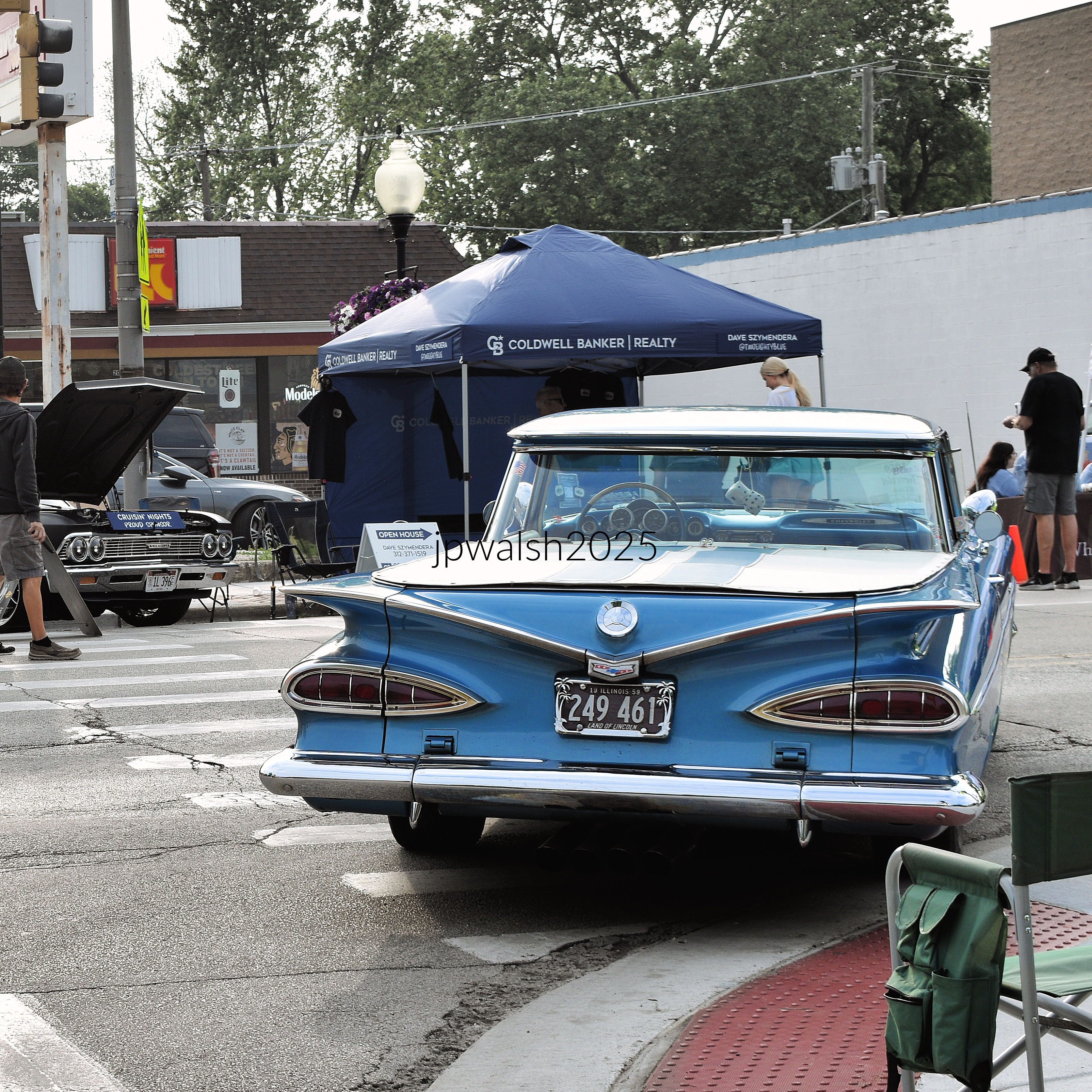
The front end carried a grille made of nine horizontal bars crossed by seven thicker, evenly spaced vertical bars. The center horizontal bar was heavier, and each intersection with the verticals ended in a blunt, squared‑off cap. Above the side‑by‑side headlights and grille sat a pair of horizontal, teardrop‑shaped inlets, and centered between them on the hood was the Chevy insignia.
The tailfin began its rise just behind the front door, running cleanly to the rear with a subtle lift in height. At the back, the horizontal fins overhung the taillights and converged at the centerline, forming a crisp “V” that defined the car’s signature rear profile.
The body style lasted through model year 1960. Impala’s average price in 1959 was $2,719 (about $31,000 in 2026 dollars). Chevy produced a little over 500,000 Impalas in 1959.
Ad tag line for the 1959 Chevy Impala: “Chevy’s glamorous new series. Stunning and elegant.”

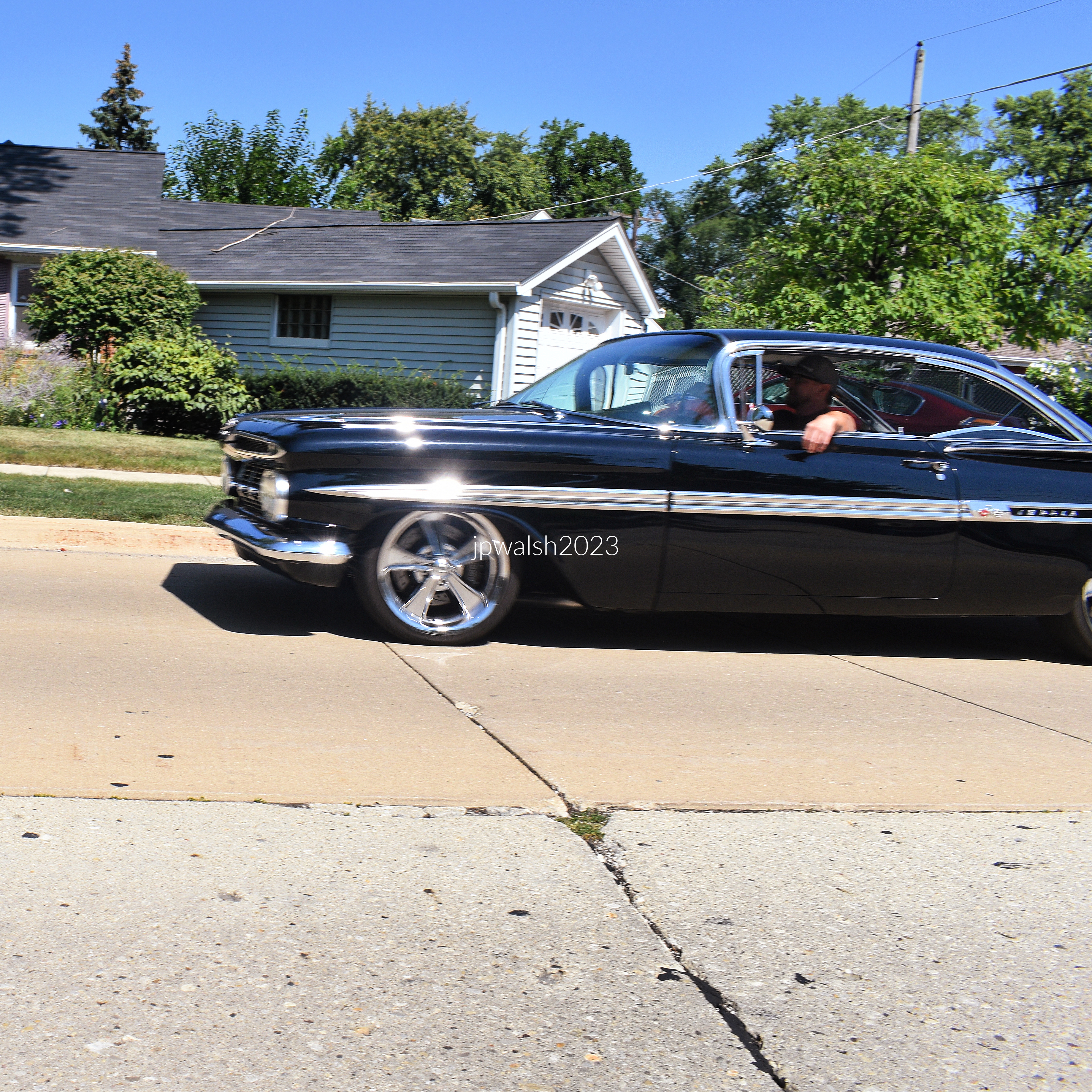
1959 Chevrolet Impala 2-door hardtop. Second Generation (1959-1960). In 1959 Chevy Impala replaced the Bel Air as Chevy’s full-size premium model.


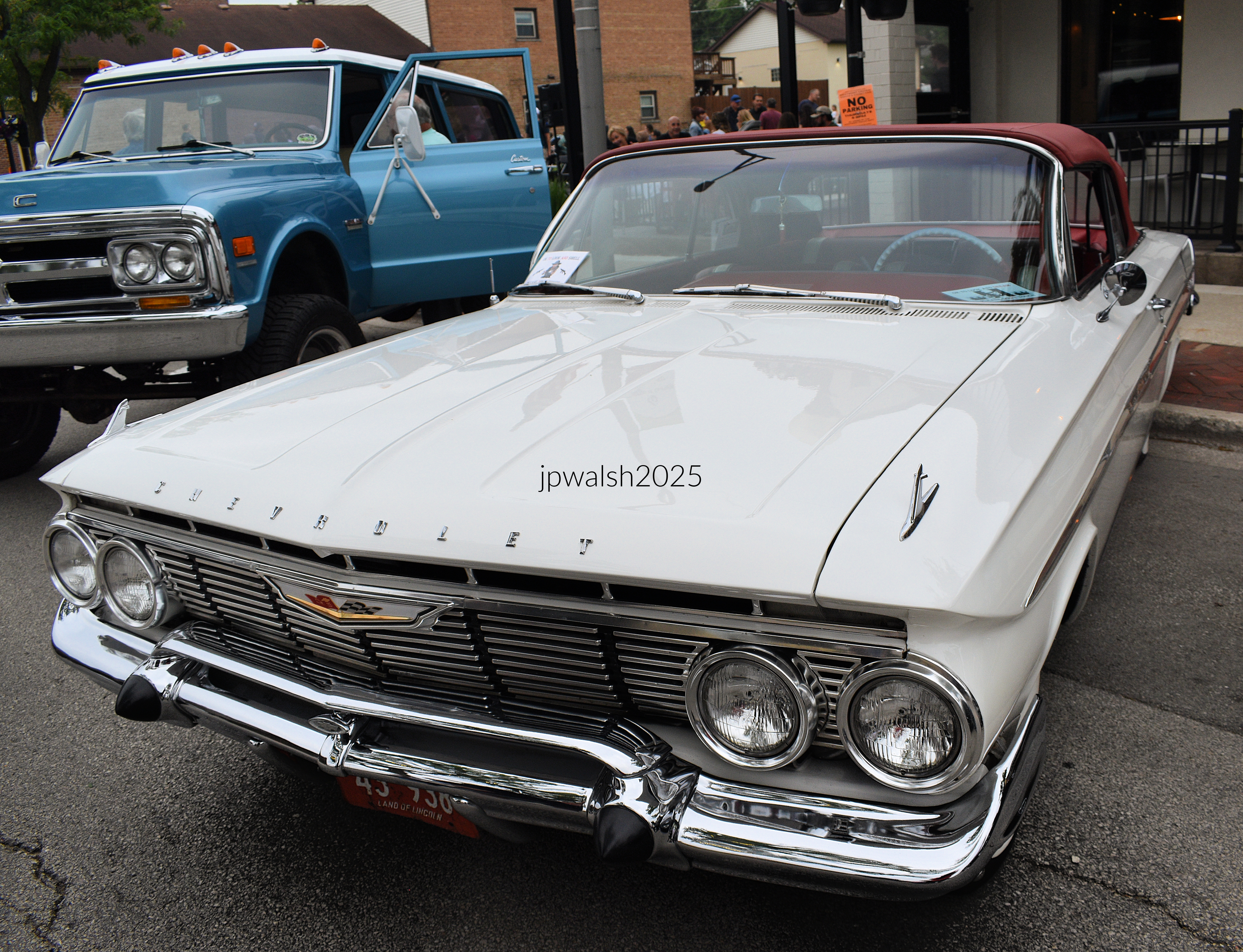
The Ad tag line for 1961 Impala: “America’s most popular cars, now trimmer in size.”
American automakers spent roughly two decades — from the early ’50s into the early ’70s — preaching the gospel that bigger was better. But running alongside that full‑size bravado was a quieter, persistent current of practical, economy‑minded engineering. A string of recessions — 1953–54, 1957–58, 1960–61, then again in 1969–70 and 1973–75 — kept reminding Detroit that not every buyer wanted (or could afford) a land yacht. Add in the first real wave of international competition, and the planners finally blinked. The result: the 1960 compact‑car push, with the Big Three rolling out smaller, thriftier models — and by 1961, expanding those compacts into higher‑trim, higher‑priced variants as the market proved there was real money in “small but smart.”

Chevrolet owned the scoreboard in 1961, cranking out nearly 1.45 million vehicles and standing as the undisputed manufacturing leader. The full‑size lineup — Impala, Biscayne, and Bel Air — accounted for roughly 80% of that volume, proving that Chevy’s big‑car formula still had the magic touch.
At the top of the heap sat the Impala, the premium full‑size offering. In convertible trim it came dressed with vinyl upholstery and headliner, an electric clock, carpet‑and‑vinyl combo flooring with coated rubber matting, and dual backup lamps — the kind of upscale touches that separated it from its Biscayne and Bel Air siblings.
The ’61 full‑size Chevrolets were completely reworked, trimming a bit of length and width for a cleaner, more modern stance. The redesign ditched the wraparound windshield and the last traces of tailfins, but kept the signature center “V” dip out back. Up front, the cars wore a full‑width grille flanked by dual headlamps on each side, with parking and turn‑signal lamps perched above — a crisp, squared‑up face that set the tone for Chevy’s early‑’60s look.

In 1965 the Chevrolet Full‑size line was sold with the tag line “Exciting, new look of elegance,” and the 1965 model year pushed that promise with a noticeable shift toward greater performance.
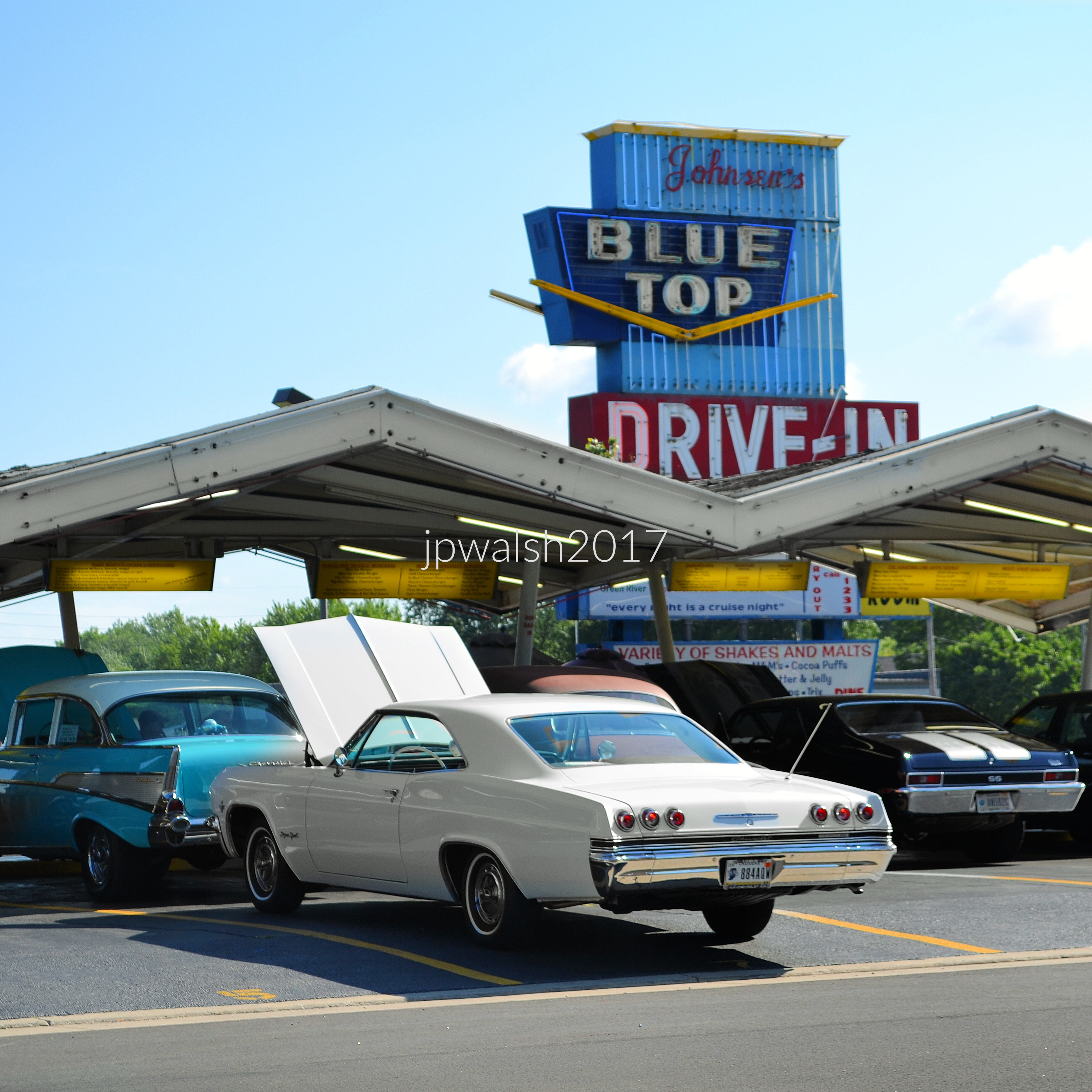
1965 Chevrolet Impala, Fourth Generation (1965–1970). Recognizable by its signature triple taillight design and flowing full-size body, the Chevy Impala was commonly equipped with a V8 engine, such as the 350 or 409ci. Redesigned in 1965, the Impala set an all-time industry annual sales record that year. July 2017. 2.77mb DSC_0419 (1). Author’s photograph.
The redesigned body introduced for 1965 carried through into 1966, giving the lineup a fresh, modern profile. That year, the Full‑Size series — Bel Air, Biscayne, and Impala — dominated Chevrolet’s output, accounting for nearly 70% of total production (1.647 million cars). The Impala alone made up almost three‑quarters of that figure, with 1,230,915 units built.

The Impala SS (Super Sport) debuted in 1960 as an appearance‑and‑performance package, and before long it was restricted to the hardtop and convertible coupes. From 1964 through 1967 — the Impala’s third and fourth generations — the Super Sport became its own standalone model, identified by a unique VIN prefix. In 1965–67, for example, 166/168 denoted a V8‑equipped Impala SS. August 2021. 10.9 mb. Author’s photograph.
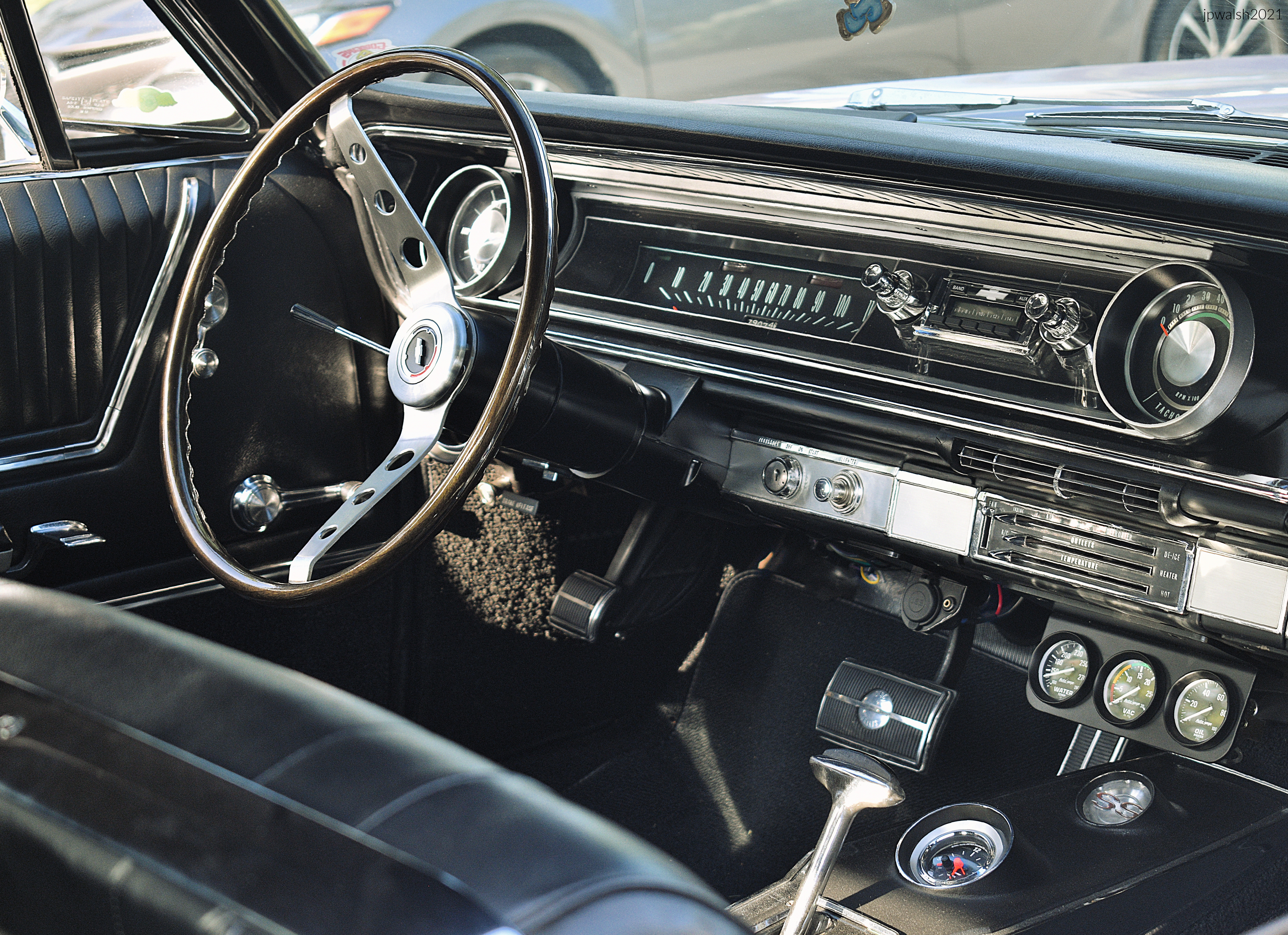
1965 Chevrolet Impala SS, Fourth Generation (1965-1970). From 1962 to 1964, Super Sports came with engine-turned aluminum trim which was used to fill the side moldings of the car. In 1965 this was replaced by a “blackout” trim strip that ran below the taillights. August 2021. 11.4 mb. Author’s photograph.

1965 Chevrolet Impala SS, Fourth Generation (1965-1970). The Chevrolet Impala arrived in 1958 with a signature design cue that set it apart from the rest of the lineup: its symmetrical triple taillights. By the late 1960s, as the muscle‑car era shifted toward smaller, lighter “big‑block” performers, the full‑size Super Sport began to fade from the spotlight. The Impala SS saw its final model year in 1969, closing out the original Super Sport era. August 2021. 7.71 mb. Author’s photograph.
The 1966 Chevrolet Full‑Size line carried the confident promise of its ad tag line — “Choose any Jet‑smooth 1966 Chevrolet. It’ll be well built, comfortable, dependable, and good looking.” Nearly 1.5 million full‑size Chevrolets rolled off the line that year, with the Impala once again leading the division at almost 960,000 units.
For 1965, Chevrolet introduced the Caprice as a top‑line Impala Sport Sedan; by 1966 it had become a separate series positioned above the Impala. The Impala itself continued to sit above the Bel Air and Biscayne and remained Chevrolet’s most popular full‑size model through the end of its initial production run in 1985.
By the late 1960s, as the muscle‑car movement shifted toward smaller, lighter platforms, the full‑size Super Sport gradually lost its footing. The Impala SS made its final appearance in 1969, closing the book on the original Super Sport era.
For Chevrolet in 1966, the company’s most painful competitive gap wasn’t in the full‑size field at all — it was the absence of a true answer to the runaway success of the Ford Mustang.

1966 Chevrolet Impala 2D Coupe. The Chevrolet Impala debuted in 1958 with a defining visual signature — its symmetrical triple taillights, a cue that instantly set it apart from the rest of the lineup. The 1966 Chevrolet Impala Super Sport (SS) Sport Coupe had a sexy sleek appearance with a 396 Turbo Jet that gave plenty of power and a smooth ride. May 2024. 89% 7.94mb Author’s photograph.

The 1966 Impala carried forward the clean lines of the ’65 but with a restrained, well‑judged refresh. It introduced a redesigned instrument panel, a new grille, revised wheel covers (excluding SS models), and a shift from the familiar six round taillights to rectangular units that wrapped subtly into the quarter panels, giving the rear a wider, more contemporary look. May 2024. 79% 7.85mb Author’s photograph.

Standard features on the 1966 Chevrolet Impala included lap belts front and rear, reverse lamps, day/night rearview mirror, and a padded dashboard. In a year of the introduction of the luxury Caprice and a slight redesign, sales plummeted compared to its record sales the year before. May 2024 97% 7.77mb Author’s photograph.
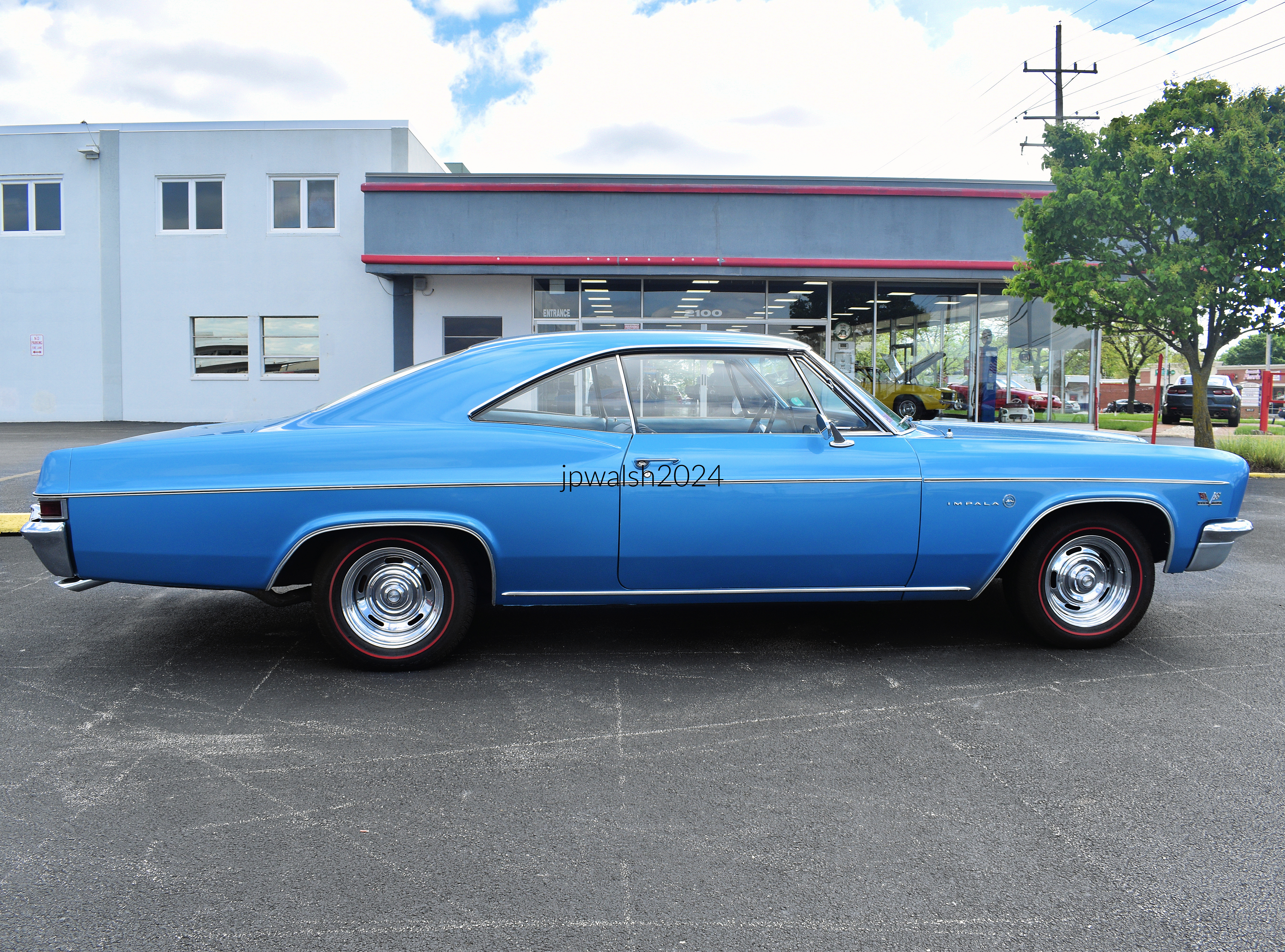
The 1966 Chevrolet Impala is nearly 18 feet long (213.2 inches). May 2024. 85% 7.56mb Author’s photograph.
The ad tag line in 1969 for Chevrolet’s Full‑Size lineup — “Never has so little money bought so much happiness” — captured the appeal of the Impala, Bel Air, and Biscayne as the brand’s value‑packed workhorses. By 1969, the Impala stood out not just as Chevrolet’s volume leader but as a model entering a distinctive moment in its evolution.
The 1969 Impalas carried several one‑year‑only traits that make them instantly recognizable to enthusiasts. After years of being optional, front disc brakes became standard equipment, paired with 15‑inch wheels — a setup that gave the big Chevys stronger stopping power and a more planted stance. It was also the only model year in which the cars actually wore the Impala nameplate on the body, a small but memorable break from tradition.
Production numbers underscored the Impala’s dominance. Out of Chevrolet’s 2,082,947 cars built for 1969, the Impala accounted for roughly 40% of the total — about 777,000 units — easily outpacing the more upscale Caprice and reaffirming its role as Chevrolet’s full‑size cornerstone.

1969 Chevrolet Impala. May 2024. 84% 7.93mb Author’s photograph.

1969 Chevrolet Impala. May 2024. 90% 7.42mb. Author’s photograph.
Chevrolet’s corporate message for 1970 — “Putting you first, keeps us first” — doubled as both a boast and a battle cry. And the Full‑size Chevrolets backed it up with their fourth restyle in four years. While they retained the broad‑shouldered stance and many cues of the ’69s, the 1970 models wore an entirely new face and tail, giving the big Chevys a fresher, more squared‑off presence on the road.
The 1970 model year opened with Chevrolet and Ford locked in a production slugfest, their rivalry on full display. When the dust settled, Chevy edged out Ford by fewer than 43,000 units — a razor‑thin margin in a combined output of 3,986,909 cars. Together, the two giants towered over the rest of the industry, their volume dwarfing every competitor in sight.
For the Full‑size line, the ad writers sharpened the pitch even further: “We’ll let other cars go their way. We’re going yours.” It was a confident nod to the brand’s bread‑and‑butter buyers — and fittingly, the Impala once again dominated production, anchoring Chevrolet’s full‑size lineup as its undisputed volume leader.

1970 Chevy Impala. September 2022. 67% Author’s photograph.
SOURCES:
J. “Kelly” Flory, Jr., American Cars, 1946-1959, McFarland & Company, Inc. pp. 949 and 953.
J. “Kelly” Flory, Jr., American Cars, 1960 to 1965, McFarland & Company, Inc., pp. 76-78, 87-92; 352 and 357.
J. “Kelly” Flory, Jr., American Cars, 1966 to 1972, McFarland & Company, Inc. pp. 32, 38-39; 235-36, 253-54, 260-61; 311-12, 330, 337.
see –https://www.conceptcarz.com/s9332/chevrolet-impala-series.aspx – retrieved May 7, 2024.
This explanatory article may be periodically updated.


