Tag Archives: #CarCulture

Chevrolet Impala: Six Decades of American Design (1958–1985; 1994–1996; 2000–2020).

FEATURE IMAGE: 1959 Chevrolet Impala 2-door hardtop (Second Generation, 1959-1960) cruising on a sunny day. The car showcases a compelling blend of original mid-century Chevrolet styling and modern custom-car culture. While its high-gloss black bodywork and extensive chrome trim remain faithful to the factory design, the Impala has been updated with large chrome 5-spoke mag wheels fitted with low-profile performance tires. A slightly lowered stance further enhances its aggressive yet tasteful restomod appearance.
Set against a classic Midwestern suburban backdrop of a ranch-style house and mature green trees, the photograph captures the car in its natural environment, rolling along open American pavement much as Chevrolet intended. More than six decades after its introduction, the iconic 1959 Impala remains instantly recognizable for its dramatic proportions, sweeping roofline, and unmistakable “batwing” tailfins, all complemented here by carefully chosen modern performance-inspired details. Author’s photograph. August 2023. 6.71mb DSC_6291 (1)

From the dramatic tailfins of the late 1950s to the full-size sedans of the twenty-first century, the Chevrolet Impala reflected changing American ideas about style, performance, comfort, and mobility. Across more than six decades, the Impala evolved from a stylish late-1950s flagship into a symbol of postwar prosperity, muscle-car performance, family transportation, police fleets, and modern full-size sedans. Surviving examples from multiple generations reveal the changing design, engineering, and cultural priorities of America itself.

All photographs and text in this post are the author’s original work.

1959: Ad tag line Chevrolet for ’59 – all new all over again! GM overhauled its entire lineup that year with fresh body designs, and the shake‑up came with a reshuffling of model names. The Impala, which had been the top trim within the Bel Air line in 1958, was elevated to its own full series. By 1959 it had fully taken over as Chevrolet’s premium offering, while the Bel Air slid into the mid‑range slot.

Ad tag line for the 1959 Chevy Impala: “Chevy’s glamorous new series. Stunning and elegant.”

In 1959, the Chevrolet Impala replaced the Bel Air as Chevrolet’s premium full-size model. The 1959 Chevrolet Impala 2-door hardtop (Second Generation, 1959-1960) represented one of the most radical and visually daring design departures in American automotive history, marking the year the Impala broke away from the Bel Air line to become Chevrolet’s definitive flagship automobile. The 1959 model year was General Motors’ bold response to Chrysler’s sweeping “Forward Look” designs. Under GM design chief Bill Mitchell, Chevrolet abandoned the upright, boxy appearance of its celebrated 1955-1957 models in favor of a longer, lower, and wider automobile that embraced the jet-age styling trends of the late 1950s. The result was a car whose dramatic proportions, expansive glass area, distinctive “batwing” tailfins, and futuristic detailing made it one of the most recognizable American automobiles ever produced. Author’s photograph. August 2023. 3.28mb DSC_6289 (1)

A Dramatic New Design for 1959 The Flat-Top Chevrolet

The new design on all cars included a taller wraparound windshield and greatly enlarged rear windows, paired with thinner roof pillars for improved visibility. The slightly curved rear window extended high into the roofline and was integrated into Chevrolet’s distinctive “flat-top” roof design.

Front-End Styling A Grille Like No Other

The front end carried a grille made of nine horizontal bars crossed by seven thicker, evenly spaced vertical bars. The center horizontal bar was heavier, and each intersection with the vertical bars ended in a blunt, squared-off cap. Above the side-by-side headlights and grille sat a pair of horizontal, teardrop-shaped inlets, while the Chevy insignia was centered on the hood between them.

Famous Tailfins The Batwing Revolution

The defining feature of the 1959 model was its massive, horizontally flared rear tailfins. Each tailfin began its rise just behind the front door, running cleanly toward the rear with a subtle increase in height. At the back, the horizontal fins overhung the taillights and converged at the centerline, forming a crisp “V” that defined the car’s signature rear profile. Unlike Cadillac’s vertical fins, Chevrolet’s fins spread outward like wings, earning them the nickname “batwings.”
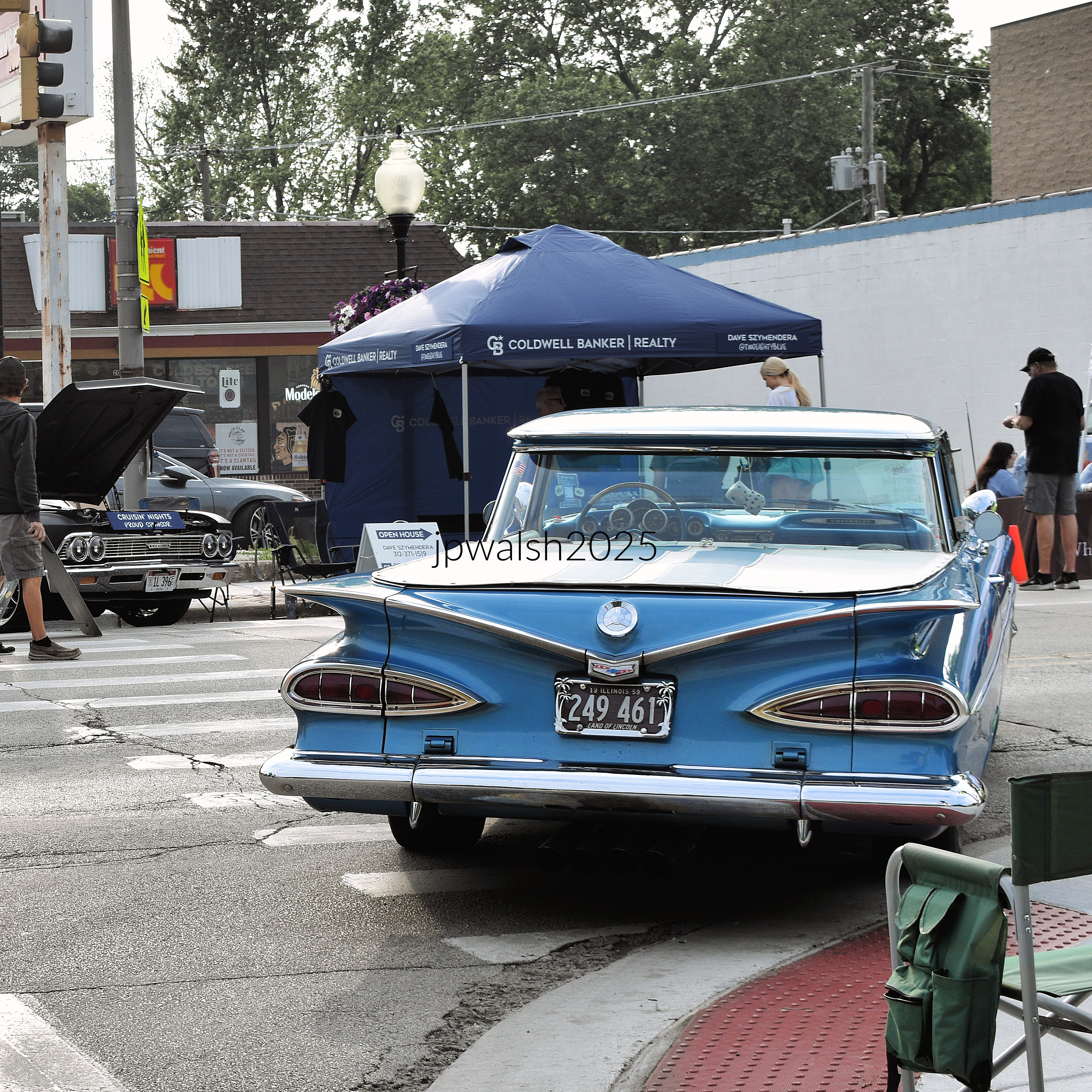
June 2025.1959 Chevy Impala 6.15mb DSC_1604 (1)

Exclusive 1959 Taillights Cat’s-Eye Taillights

Embedded directly beneath those dramatic fins were elongated, teardrop-shaped red lenses known as “cat’s eye” or “tear-drop” taillights. This distinctive rear-end styling was exclusive to 1959, as Chevrolet returned to its traditional round triple-lens taillights for the 1960 model.

The Sport Coupe Body Style Hardtop Elegance

As a 2-door hardtop (Sport Coupe), the car featured a pillarless side-window profile and a thin, sweeping roofline supported by a panoramic wraparound windshield and an equally expansive curved rear window. Together these elements created an airy, open cockpit feeling and emphasized the car’s futuristic styling.

Production and Price America Buys the Impala

The body style lasted through the 1960 model year. The average price of an Impala in 1959 was $2,719 (about $31,000 in 2026 dollars). Chevrolet produced slightly more than 500,000 Impalas for the 1959 model year.

August 2023. 1959 Impala. 7.60 mb DSC_6290.

1959 Chevrolet Impala 2-door hardtop. Second Generation (1959-1960). In 1959 Chevy Impala replaced the Bel Air as Chevy’s full-size premium model.

June 2025. 1959 Chevy Impala. 74% 7.86mb DSC_1603

The Ad tag line for 1961 Impala: “America’s most popular cars, now trimmer in size.”

The 1961 Chevrolet Impala Two-Door Convertible.1961 marked the start of the third-generation Impala which dramatically downsized the horizontal “bat-wing” tailfins of 1959 and 1960, replacing them with a cleaner, sculpted, jet-age slab-side look. The upscale Impala-exclusive side trim included a wide chrome spear running the length of the body filled with a contrasting red painted insert. It is configured with a matching red vinyl convertible soft top and a two-tone red and white matching interior. Author’s photograph. June 2025. 7.40mb DSC_1703 (1)

The Compact-Car Movement Arrives

American automakers spent roughly two decades — from the early ’50s into the early ’70s — preaching the gospel that bigger was better. But running alongside that full‑size bravado was a quieter, persistent current of practical, economy‑minded engineering. A string of recessions — 1953–54, 1957–58, 1960–61, then again in 1969–70 and 1973–75 — kept reminding Detroit that not every buyer wanted (or could afford) a land yacht. Add in the first real wave of international competition, and the planners finally blinked. The result: the 1960 compact‑car push, with the Big Three rolling out smaller, thriftier models — and by 1961, expanding those compacts into higher‑trim, higher‑priced variants as the market proved there was real money in “small but smart.”
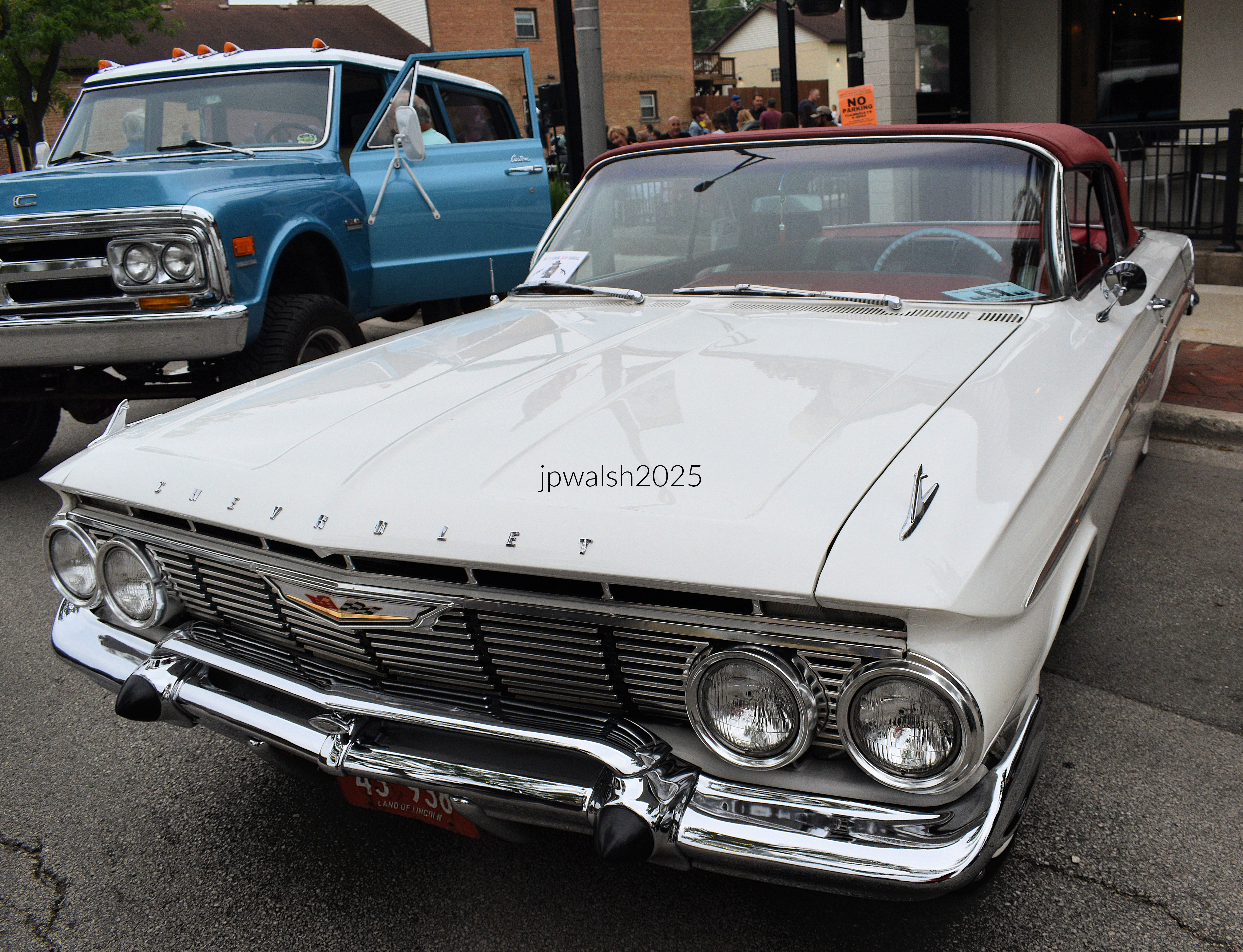
The front features the signature 1961 quad headlights over a full-width chrome grille with a small, centered Chevrolet crest. Under the hood, is a classic Chevrolet V8 configuration. Author’s photograph. June 2025. 94% 7.96mb DSC_1705

Chevrolet Dominates the Market

Chevrolet owned the scoreboard in 1961, cranking out nearly 1.45 million vehicles and standing as the undisputed manufacturing leader. The full‑size lineup — Impala, Biscayne, and Bel Air — accounted for roughly 80% of that volume, proving that Chevy’s big‑car formula still had the magic touch.

The Impala at the Top of the Line

At the top of the heap sat the Impala, the premium full‑size offering. In convertible trim it came dressed with vinyl upholstery and headliner, an electric clock, carpet‑and‑vinyl combo flooring with coated rubber matting, and dual backup lamps — the kind of upscale touches that separated it from its Biscayne and Bel Air siblings.

A New Look for 1961

The ’61 full‑size Chevrolets were completely reworked, trimming a bit of length and width for a cleaner, more modern stance. The redesign ditched the wraparound windshield and the last traces of tailfins, but kept the signature center “V” dip out back. Up front, the cars wore a full‑width grille flanked by dual headlamps on each side, with parking and turn‑signal lamps perched above — a crisp, squared‑up face that set the tone for Chevy’s early‑’60s look.

The interior of this 1961 Chevrolet Impala captures the spirit of General Motors’ mid-century Jet Age design, finished in a striking two-tone red-and-white color scheme with a few tasteful modern upgrades. The cabin features Chevrolet’s iconic 1961 deep-dish steering wheel, painted bright red on the upper rim and spokes and transitioning to white on the lower half. A chrome-trimmed center spoke with circular cutouts leads to the Chevrolet horn button, while an automatic column shifter sits above the original gear indicator (P-R-N-D-L).

In the upper register within a deeply recessed red instrument panel, a sweeping horizontal speedometer stretches from 0 to 120 mph. Below it, an upturned trim panel spans the dashboard and houses the ignition switch along with the secondary controls. Mounted beside the steering column is a black-faced aftermarket tachometer reading to 8,000 RPM, providing a modern performance touch.

The bench seat is trimmed in a period-correct combination of bright red vinyl bolsters and red-and-white striped fabric inserts. A matching red aftermarket console fitted over the transmission tunnel adds dual chrome-ringed cup holders and a storage armrest. Completing the interior are custom red carpeted floor mats with black borders and the classic scripted Impala logo, blending vintage style with everyday usability. Author’s photograph. June 2025. 99% 7.81mb DSC_1709 (1)

In 1965 the Chevrolet Full‑size line was sold with the tag line “Exciting, new look of elegance,” and the 1965 model year pushed that promise with a noticeable shift toward greater performance.
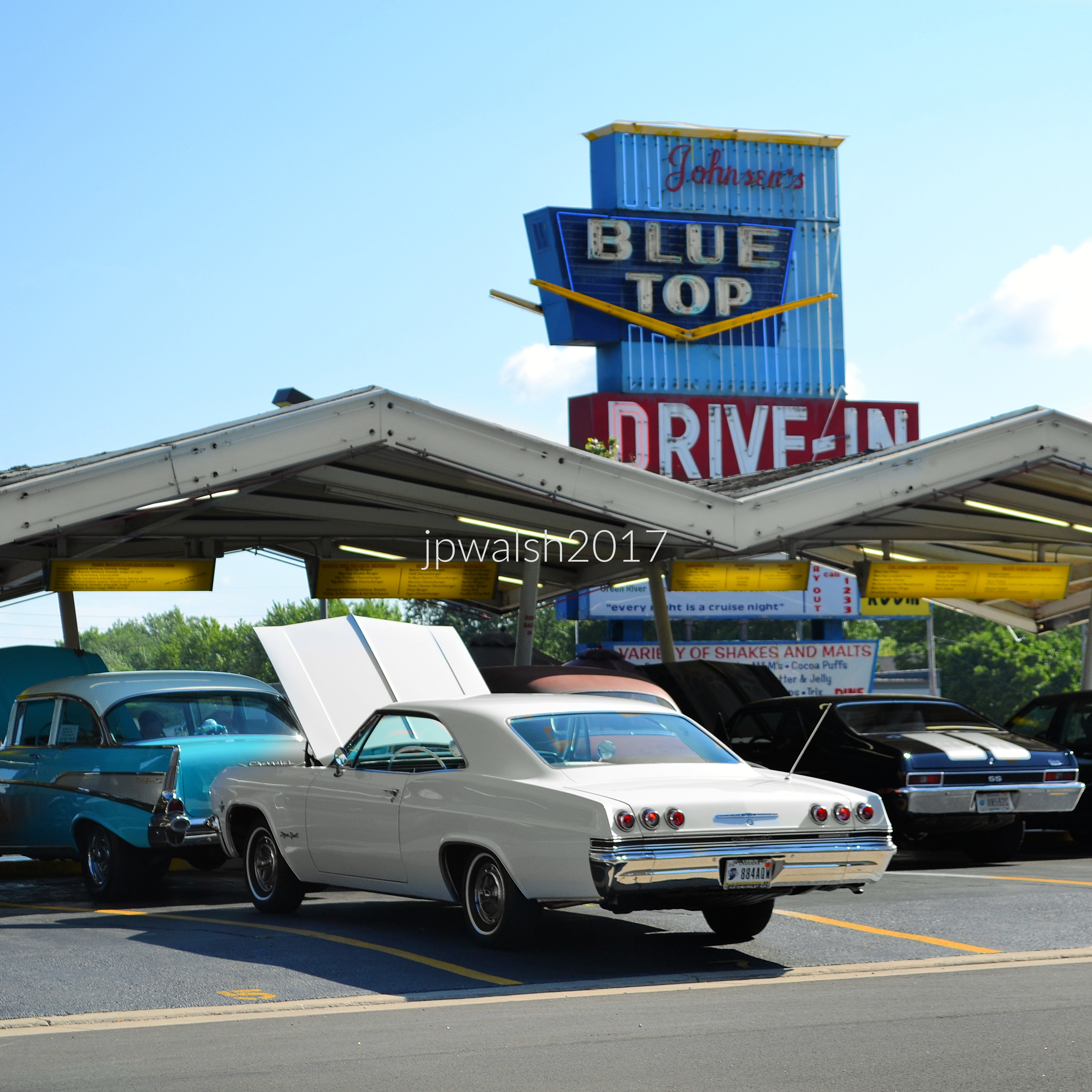
1965 Chevrolet Impala, Fourth Generation (1965–1970). Recognizable by its signature triple taillight design and flowing full-size body, the Chevy Impala was commonly equipped with a V8 engine, such as the 350 or 409ci. Redesigned in 1965, the Impala set an all-time industry annual sales record that year. July 2017. 2.77mb DSC_0419 (1). Author’s photograph.

The redesigned body introduced for 1965 carried through into 1966, giving the lineup a fresh, modern profile. That year, the Full‑Size series — Bel Air, Biscayne, and Impala — dominated Chevrolet’s output, accounting for nearly 70% of total production (1.647 million cars). The Impala alone made up almost three‑quarters of that figure, with 1,230,915 units built.

The Impala SS (Super Sport) debuted in 1960 as an appearance‑and‑performance package, and before long it was restricted to the hardtop and convertible coupes. From 1964 through 1967 — the Impala’s third and fourth generations — the Super Sport became its own standalone model, identified by a unique VIN prefix. In 1965–67, for example, 166/168 denoted a V8‑equipped Impala SS. August 2021. 10.9 mb. Author’s photograph.
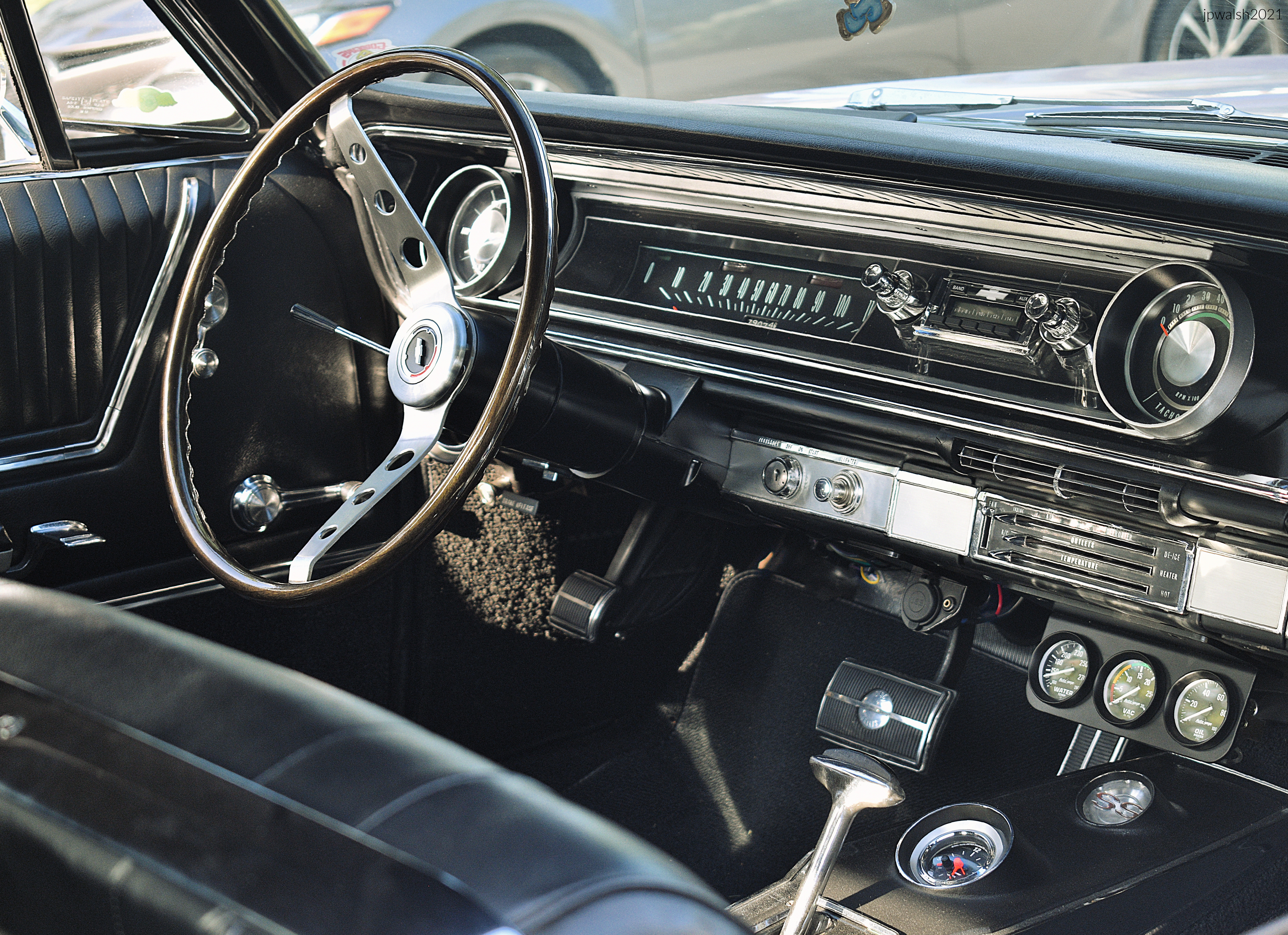
1965 Chevrolet Impala SS, Fourth Generation (1965-1970). From 1962 to 1964, Super Sports came with engine-turned aluminum trim which was used to fill the side moldings of the car. In 1965 this was replaced by a “blackout” trim strip that ran below the taillights. August 2021. 11.4 mb. Author’s photograph.

1965 Chevrolet Impala SS, Fourth Generation (1965-1970). The Chevrolet Impala arrived in 1958 with a signature design cue that set it apart from the rest of the lineup: its symmetrical triple taillights. By the late 1960s, as the muscle‑car era shifted toward smaller, lighter “big‑block” performers, the full‑size Super Sport began to fade from the spotlight. The Impala SS saw its final model year in 1969, closing out the original Super Sport era. August 2021. 7.71 mb. Author’s photograph.

The 1966 Chevrolet Full‑Size line carried the confident promise of its ad tag line — “Choose any Jet‑smooth 1966 Chevrolet. It’ll be well built, comfortable, dependable, and good looking.” Nearly 1.5 million full‑size Chevrolets rolled off the line that year, with the Impala once again leading the division at almost 960,000 units.

For 1965, Chevrolet introduced the Caprice as a top‑line Impala Sport Sedan; by 1966 it had become a separate series positioned above the Impala. The Impala itself continued to sit above the Bel Air and Biscayne and remained Chevrolet’s most popular full‑size model through the end of its initial production run in 1985.

By the late 1960s, as the muscle‑car movement shifted toward smaller, lighter platforms, the full‑size Super Sport gradually lost its footing. The Impala SS made its final appearance in 1969, closing the book on the original Super Sport era.

For Chevrolet in 1966, the company’s most painful competitive gap wasn’t in the full‑size field at all — it was the absence of a true answer to the runaway success of the Ford Mustang.

The 1966 Chevrolet Impala is 6 foot 7 inches wide (79.9 inches). See –https://www.conceptcarz.com/s9332/chevrolet-impala-series.aspx – retrieved May 7, 2024. May 2024. 94% 7.65mb Author’s photograph.

1966 Chevrolet Impala 2D Coupe. The Chevrolet Impala debuted in 1958 with a defining visual signature — its symmetrical triple taillights, a cue that instantly set it apart from the rest of the lineup. The 1966 Chevrolet Impala Super Sport (SS) Sport Coupe had a sexy sleek appearance with a 396 Turbo Jet that gave plenty of power and a smooth ride. May 2024. 89% 7.94mb Author’s photograph.

The 1966 Impala carried forward the clean lines of the ’65 but with a restrained, well‑judged refresh. It introduced a redesigned instrument panel, a new grille, revised wheel covers (excluding SS models), and a shift from the familiar six round taillights to rectangular units that wrapped subtly into the quarter panels, giving the rear a wider, more contemporary look. May 2024. 79% 7.85mb Author’s photograph.

Standard features on the 1966 Chevrolet Impala included lap belts front and rear, reverse lamps, day/night rearview mirror, and a padded dashboard. In a year of the introduction of the luxury Caprice and a slight redesign, sales plummeted compared to its record sales the year before. May 2024 97% 7.77mb Author’s photograph.
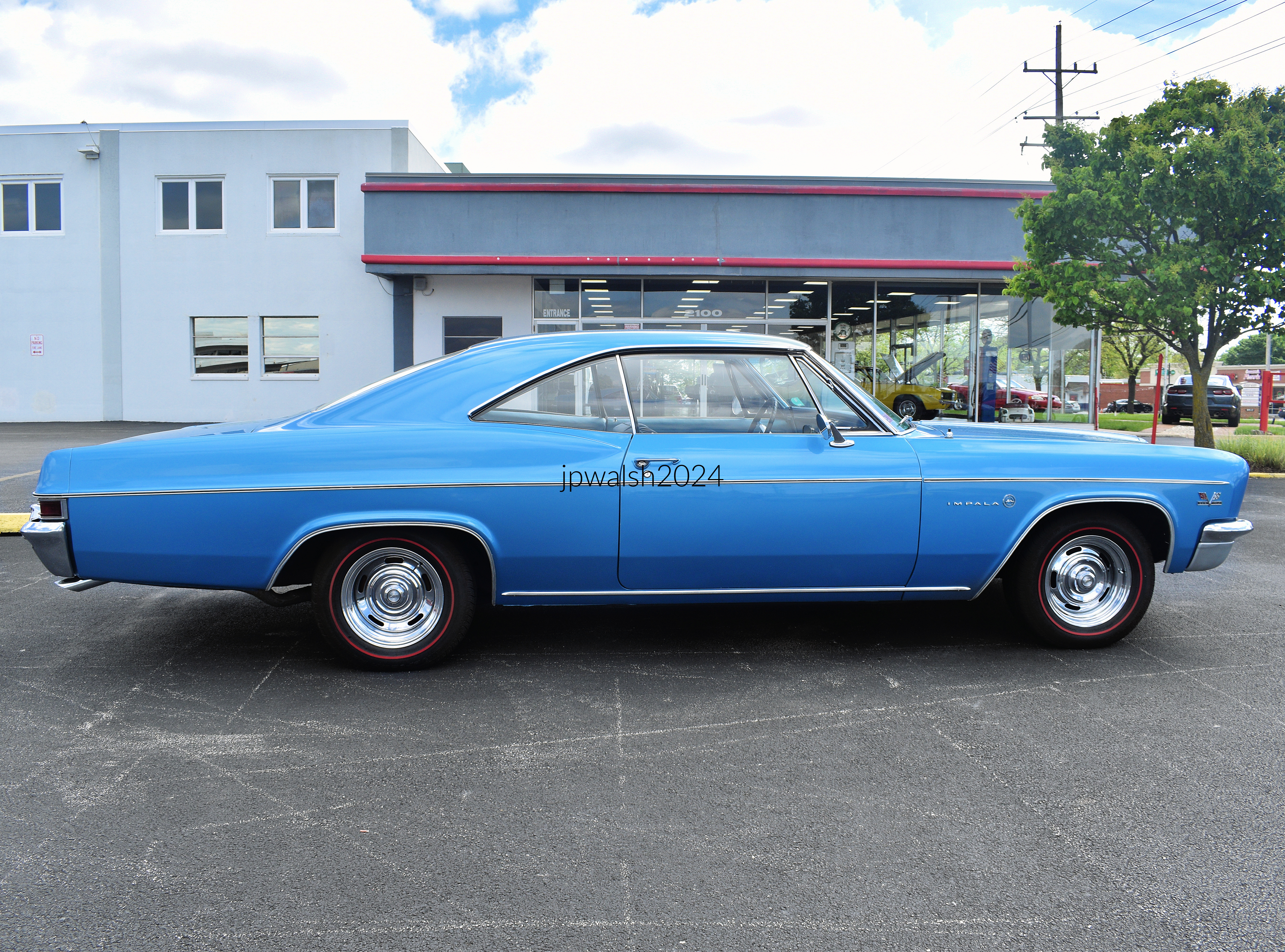
The 1966 Chevrolet Impala is nearly 18 feet long (213.2 inches). May 2024. 85% 7.56mb Author’s photograph.

The ad tag line in 1969 for Chevrolet’s Full‑Size lineup — “Never has so little money bought so much happiness” — captured the appeal of the Impala, Bel Air, and Biscayne as the brand’s value‑packed workhorses. By 1969, the Impala stood out not just as Chevrolet’s volume leader but as a model entering a distinctive moment in its evolution.

The 1969 Impalas carried several one‑year‑only traits that make them instantly recognizable to enthusiasts. After years of being optional, front disc brakes became standard equipment, paired with 15‑inch wheels — a setup that gave the big Chevys stronger stopping power and a more planted stance. It was also the only model year in which the cars actually wore the Impala nameplate on the body, a small but memorable break from tradition.

Production numbers underscored the Impala’s dominance. Out of Chevrolet’s 2,082,947 cars built for 1969, the Impala accounted for roughly 40% of the total — about 777,000 units — easily outpacing the more upscale Caprice and reaffirming its role as Chevrolet’s full‑size cornerstone.

1969 Chevrolet Impala. May 2024. 84% 7.93mb Author’s photograph.

1969 Chevrolet Impala. May 2024. 90% 7.42mb. Author’s photograph.

Chevrolet’s corporate message for 1970 — “Putting you first, keeps us first” — doubled as both a boast and a battle cry. And the Full‑size Chevrolets backed it up with their fourth restyle in four years. While they retained the broad‑shouldered stance and many cues of the ’69s, the 1970 models wore an entirely new face and tail, giving the big Chevys a fresher, more squared‑off presence on the road.

The 1970 model year opened with Chevrolet and Ford locked in a production slugfest, their rivalry on full display. When the dust settled, Chevy edged out Ford by fewer than 43,000 units — a razor‑thin margin in a combined output of 3,986,909 cars. Together, the two giants towered over the rest of the industry, their volume dwarfing every competitor in sight.

For the Full‑size line, the ad writers sharpened the pitch even further: “We’ll let other cars go their way. We’re going yours.” It was a confident nod to the brand’s bread‑and‑butter buyers — and fittingly, the Impala once again dominated production, anchoring Chevrolet’s full‑size lineup as its undisputed volume leader.

1970 Chevy Impala. September 2022. 67% Author’s photograph.

Chevrolet Impala Evolution: All Generations (1958–2020s) (https://www.youtube.com/watch?v=5Q-mu16nfvY) – retrieved April 27, 2026.

SOURCES:
J. “Kelly” Flory, Jr., American Cars, 1946-1959, McFarland & Company, Inc. pp. 949 and 953.
J. “Kelly” Flory, Jr., American Cars, 1960 to 1965, McFarland & Company, Inc., pp. 76-78, 87-92; 352 and 357.
J. “Kelly” Flory, Jr., American Cars, 1966 to 1972, McFarland & Company, Inc. pp. 32, 38-39; 235-36, 253-54, 260-61; 311-12, 330, 337.
see –https://www.conceptcarz.com/s9332/chevrolet-impala-series.aspx – retrieved May 7, 2024.

This explanatory article may be periodically updated.

Space-Age Style on Main Street: The Ford Galaxie, 1959-1974.

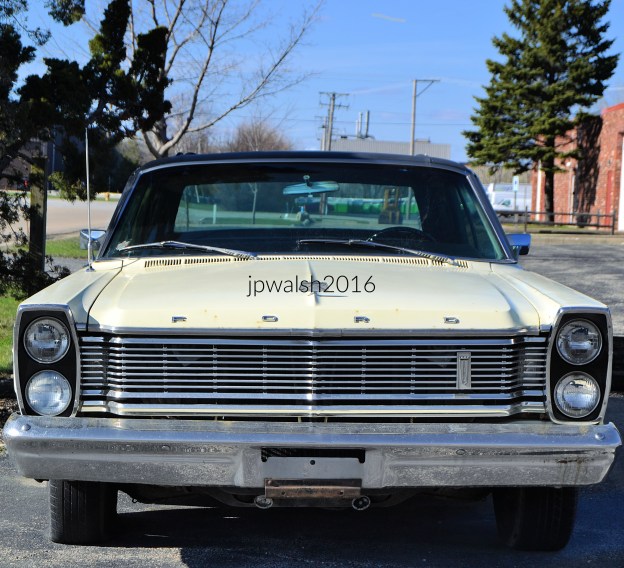
Feature Image: The 1965 Ford Galaxie 500 features a distinctive full-width grille with vertically stacked dual headlights. Available in various body styles, including hardtops and convertibles, the model was part of an all-new design for full-size Fords, highlighting crisp lines and engines that included V8 options such as the 352 cubic inch “Thunderbird Special.” Author’s photograph. April 2016. 3.34mb DSC_0471 (1).

The Ford Galaxie embodied the evolution of postwar America, rising from Robert McNamara’s vision of affordable, stylish transportation for the masses to become one of Ford’s most recognizable full-size automobiles before changing consumer demands and economic realities brought its era to a close.

Robert McNamara’s Vision for the Everyday American

In 1960, 44-year-old Robert McNamara was the new president of Ford Motor Company. In his career at Ford, McNamara was an executive who thought like and fought for the ordinary consumer. Unlike other car industry execs, McNamara was passionate about providing a highly affordable and great car for the ordinary American man and woman. McNamara was ahead of his time and actually might have been more useful or successful in the 1970’s when the introduction of emissions standards and fuel economy made weight and design more significant to meet government mandates.

The Falcon: A Car for the Masses

The Falcon was McNamara’s brainchild. Its average price point of $2,100 (about $23,000 today) fulfilled McNamara’s vision for a great American utilitarian car for the masses and it became a bestseller. The middling Ford Fairlane had an average base MSRP of less than $2,300. Next up the lower priced chain of Ford car models was Ford Galaxie. At a little over $2,700 MSRP ($29,500 today) Galaxie was a full-size Ford sedan throughout its production run.

“Meet the aristocrats of the low-priced field“—ad tag line in 1960 for Ford Galaxie.  

The story of the Ford Galaxie mirrors America’s automotive transformation, from the chrome-laden optimism of the early 1960s to the downsized, efficiency-minded realities of the 1970s.

1965 Ford Galaxie (above). With a classic full-size body, the Ford Galaxie 500 was available with various engines, including a high-performance 427 cubic inch V8. Options included a 3-speed automatic or 4-speed manual transmission. The spacious interior was known for its large bench seats. Author’s photograph. April 2016. 4.32 mb DSC_0468 (1).

The Galaxie became one of Ford’s most successful full-size cars during the early 1960s. The rise of the LTD gradually eclipsed the Galaxie brand and production fell sharply from its 1963 peak to its final year in 1974.

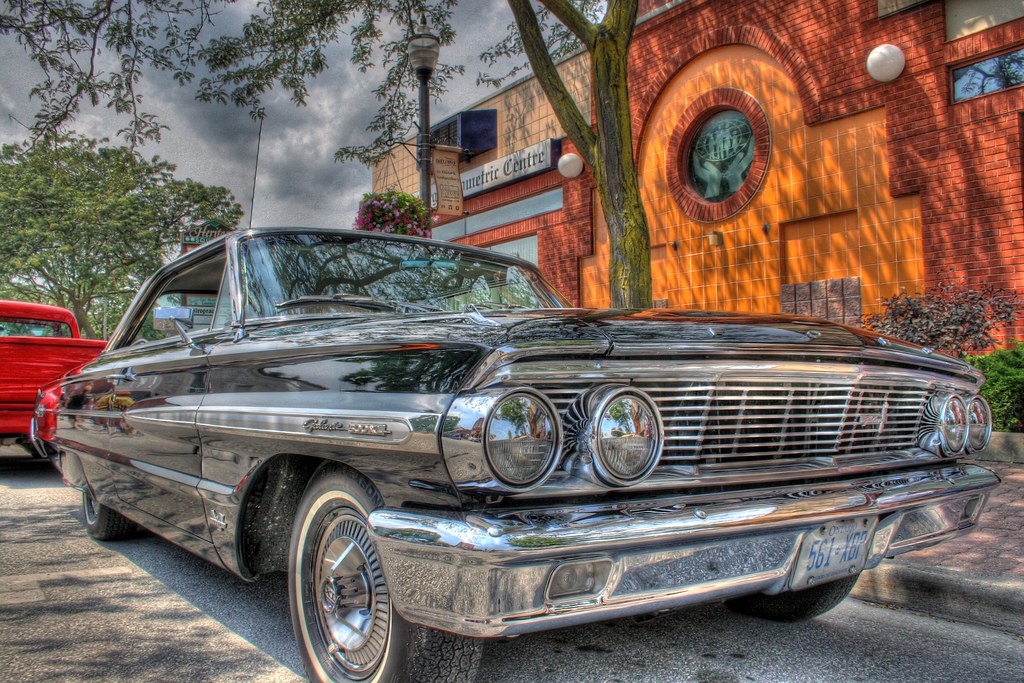
1964 Ford Galaxie 500XL (above). This full-size American car was a top choice in its era combining luxury features and power. The 2-door hardtop coupe could be equipped with a V8 engine, known for robust performance. Between the Custom and the LTD (the XL was discontinued after 1970), the Galaxie remained slotted as the mid-range full-size Ford into the 1970s. “FORD GALAXIE HDR” by abux_77 is licensed under CC BY-NC 2.0.

Robert McNamara’s consumer-focused leadership helped shape Ford’s early-1960s product strategy. The Falcon fulfilled McNamara’s vision for affordable transportation, while the Galaxie offered full-size comfort at a competitive price.

On November 9, 1960, Robert McNamara (1916-2009) became the youngest president in Ford Motor Company history and the first from outside the Ford family since 1906. One month on the job, McNamara was contacted on December 8, 1960, by president-elect John F. Kennedy’s transition team and offered the job of US Secretary of Defense. Though McNamara’s first reaction was that he wasn’t qualified for the defense job, he finally accepted and became the youngest defense secretary in US history up to that time. McNamara’s compensation at Ford was $3 million a year. At the Defense Department he made $25,000 a year. See – Our Vietnam The War 1954–1975, A.J. Langguth, 2000, Simon & Schuster, pp. 42-43 and McNamara At War: A New History, P. Taubman and W. Taubman, 2025, W.W. Norton, p. 120.  PHOTO: “Robert McNamara” by DoDEA Communications is licensed under CC BY-NC-ND 2.0.

Galaxie Styling and Features

In addition to a shiny nameplate, Galaxie included cloth/vinyl bench seating, chrome exterior trim on all windows and body sides and an aluminum rear quarter covering with upgrades available.

Ford’s Bold 1960 Redesign

Under McNamara, Ford took a heavy risk in 1960 when it introduced a totally revamped design on its bestseller compact Falcon as well as its line of full-sized cars. Fords were lighter and sleeker, with a body no longer sculpted but molded from fender to bumper trimmed in chrome. And for the first time in Ford history the full width grill had its headlights inset at each end instead of above. This design choice continued throughout Galaxie’s second generation into 1964.

The Decline of the Galaxie

By 1974, things were very much changed. The Mustang II was that year’s Motor Trend Car of the Year – and it was Galaxie’s last model year. The Galaxie had essentially been co-opted by what started in 1965 as its highest trim level: namely Ford LTD. Strictly Galaxie production had, in fact, fallen from its peak in 1963 of nearly 650,000 vehicles to under 120,000 in 1974.

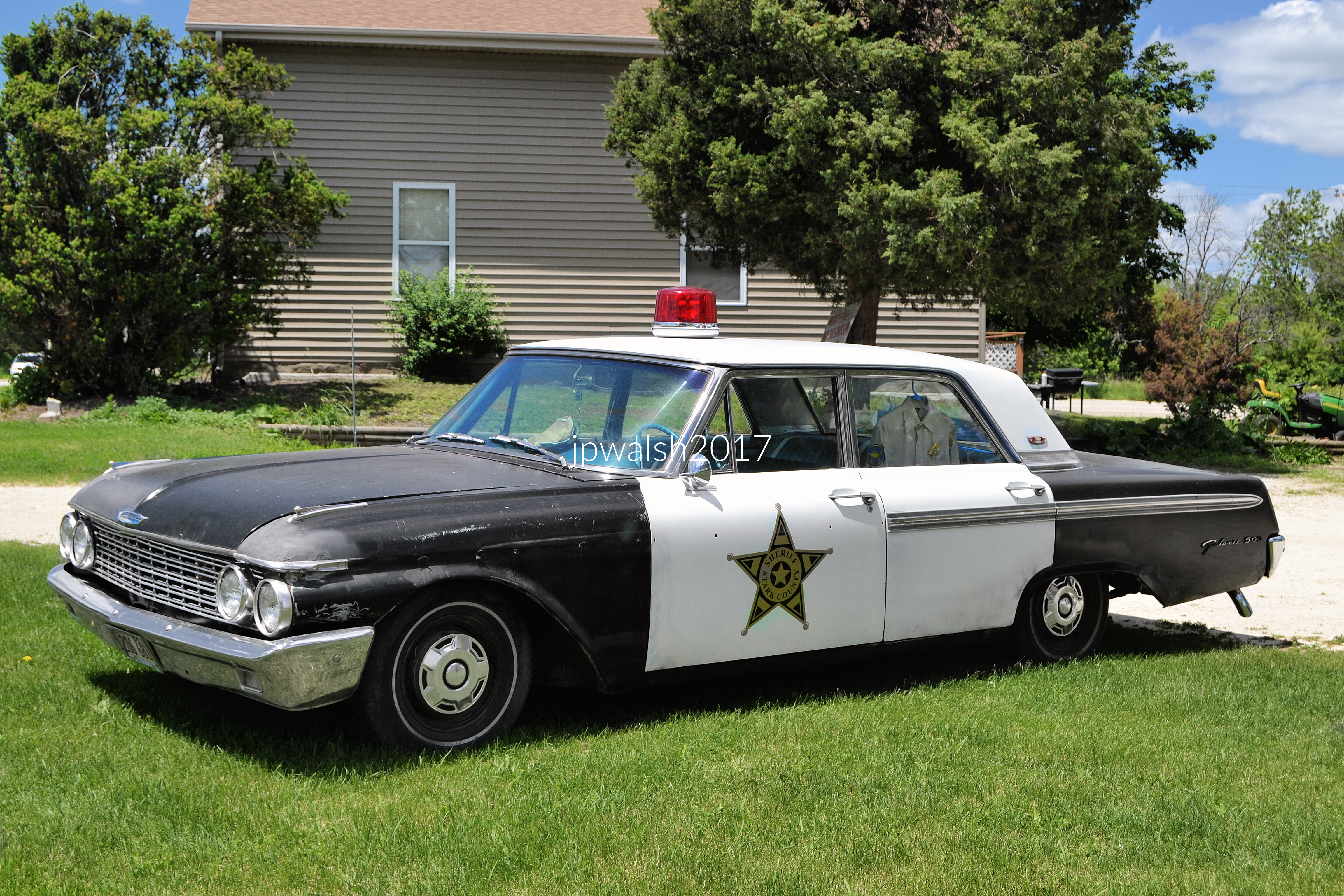
The Galaxie became part of American popular culture through television programs such as The Andy Griffith Show.

Mayberry tribute: 1962 Ford Galaxie. Author’s photograph. May 2017. 6.44mb DSC_0170 (1)

The Galaxie’s Television Legacy

The Andy Griffith Show, which aired from 1960 to 1968, remains one of the era’s most-watched series, spanning 249 episodes across eight seasons. Andy Griffith stars as Sheriff Andy Taylor of Mayberry, North Carolina. For Ford enthusiasts, the show is notable for its recurring lineup of Fairlanes, Galaxies, and Custom sedans. Over the years, fans have built numerous tributes — including the 1962 Ford Galaxie (above).

https://www.youtube.com/watch?v=viElz-ow5O0 – retrieved April 13, 2026.

The Andy Griffith Show offered a portrait of small‑town life that millions of viewers embraced. Sheriff Andy Taylor’s Ford patrol cars — mostly Fairlanes and Galaxies — became part of the show’s visual identity. Because Ford supplied vehicles to the production, Mayberry’s streets were lined with the latest models, giving the series a consistent look and a subtle sense of realism. On a television show that never dropped below seventh place in the annual Nielsen ratings and drew an estimated 25 million to 35 million each week across all eight seasons it was a bonanza of broadcast television product placement for Ford. Even today, that new line of Ford cars in the 1960’s are fan favorites, inspiring countless replicas and restorations.

SOURCES: J. “Kelly” Flory, Jr., American Cars, 1960 to 1965, McFarland & Company, Inc., pp. 41-45; J. “Kelly” Flory, Jr., American Cars, 1973 to1980, McFarland & Company, Inc., pp. 178-179.

This explanatory article may be periodically updated.

America’s Big Chevrolet: The Rise and Legacy of the Caprice, 1965-1996.

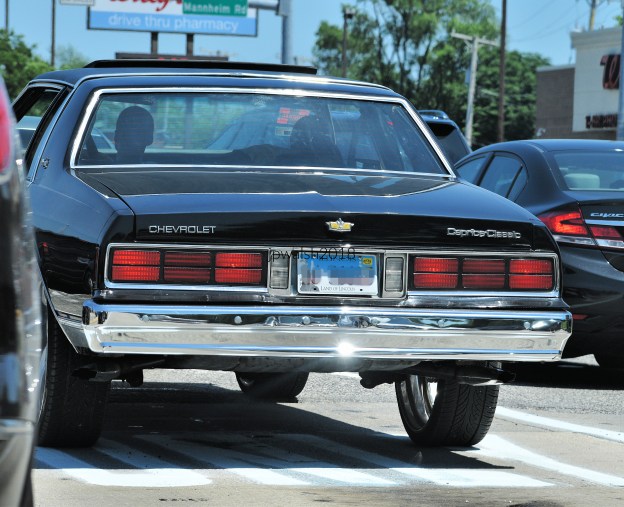
Feature Image: 1982 Chevy Caprice Classic. June 2018. Author’s photograph. 92% 7.79 mb.

The Chevrolet Caprice was General Motors’ flagship full-size Chevrolet, representing three decades of changing American automotive tastes, technology, and culture. Through its evolution from a luxurious 1960s cruiser to a downsized 1970s family sedan and finally a dominant police and fleet vehicle of the 1980s and 1990s, the Caprice reflected the shifting priorities of American drivers while remaining one of Chevrolet’s most recognizable nameplates.

By John P. Walsh

Chevrolet’s Golden Year: 1965

Chevrolet had a golden year in 1965. Sales had not been that stellar since 1955. What a difference one model year makes.

Ford Strikes Back and Nader Adds Pressure

In 1966 Chevrolet took a beating from Ford mainly from Ford’s new sporty Mustang for which Chevy had no direct competition yet. The closest was the Chevy II V-8 with its front engine rear-wheel drive but it wasn’t sporty and became competition for Ford’s Falcon. Further headaches for Chevy included negative publicity from consumer advocate Ralph Nadar’s book “Unsafe at Any Speed,” published in 1965 that criticized the automotive industry for its safety record, focusing on the Corvair, particularly driver handling concerns with the rear-engine economy car. As Nader’s work led to the passage of the National Traffic and Motor Vehicle Safety Act in 1966, which mandated federal safety standards for vehicles, it impacted Chevrolet sales in the short term adversely.

The Chevrolet Caprice was introduced in 1965 as a luxury trim package for the four-door Impala hardtop, before becoming its own separate, standalone model series in 1966. The Caprice embodied American preferences for size, comfort, and V8 performance during the 1960s.

A New Flagship: The Caprice Arrives

In 1966 the Chevrolet Full Size whose model lines included the Bel Air (1950), Biscayne (1958), and Impala (1958) that represented more than 70% of Chevrolet’s sales volume now included the bumped-up Caprice in 1966 as the new top of the line model. The Caprice, which started in 1965 as a luxury option to the Impala 4 Door Hardtop, became popular as its own model and competed with the Plymouth VIP and new Ford Galaxie 500 LTD.

“The New Chevrolet. We Made It Right For the ‘80s.” – Ad tag line in 1980 for Impala and Caprice Classic.

Aerodynamic Restyling for the 1980s

By 1980 the full-size Caprice Classic received with the Impala (1958-1985) an exterior makeover to be more aerodynamic for fuel economy with all new sheet metal as it retained the same chassis and basic interior and exterior design and appearance. In the pursuit of reducing drag, the front fenders and hood were lowered and the back trunk lid and rear quarter were raised. The roofline was formalized and body sides were smoothed. A new grille insert was “egg crate” style that was 4 rows high and five times as wide. On behalf of better fuel economy, the weight of this streamlined Chevy Caprice was reduced by 100-150 pounds.

The Chevrolet Caprice is a full-size car produced by Chevrolet in North America for the 1965 through 1996 model years. Full-size Chevys were touted as “The New Chevrolet.”

Demonstrating the revolution of American automotive design across three decades, the Caprice adapted successfully to changing fuel economy standards and market conditions.

The 1982 Caprice Lineup

The 1982 model year was part of the Caprice’s Third Generation that went from 1977 to 1990. In 1982 the Caprice Landau Coupe was dropped with only the three-seat Caprice Wagon, Sports Coupe and Four-Door Sedan offered. Both the two-door six -passenger V6 Sports Coupe and Four Door Sedan had an optional V8 engine. The Sports Coupe listed for $8,221– $8,291 (about $27,479.52 today) while the Four Door Sedan listed for $8,367 – $8,437 (about $27,967 today). Fully loaded options inside and out could add over $3000 ($10,000 today). 

Features and Market Success

In 1980 the Impala and Caprice Classic amounted to over 25% of Chevy’s sales volume. Caprice featured specific triple unit taillights, bright roof trim moldings, stand up hood ornament, and full wheel covers along with an interior velvet-look knit cloth or all-vinyl front bench seat, fold down center armrest (4-doors only), front door pull straps and lower door panel carpeting, electric clock, and extra acoustical insulation and courtesy lights.  

The 1991-1996 generation became an icon of law enforcement and fleet service. It also served extensively as taxi and government fleet transportation.

Conclusion

The Chevrolet Caprice endured for more than three decades because it successfully evolved with changing American tastes, from a luxurious full-size cruiser of the 1960s to a practical family sedan and, eventually, a familiar presence in police and fleet service. Today, surviving Caprices stand as rolling reminders of an era when big Chevrolets dominated American roads. Through these street photographs and film, the Caprice emerges not merely as a car, but as a lasting symbol of American design, mobility, and everyday life.

SOURCES:

See – https://www.capriceclassic.com/onamarie.geo/chevy1982.html – retrieved July 17, 2025.
J. “Kelly” Flory, Jr., American Cars, 1966 to 1972, McFarland & Company, Inc. pp. 32-33; 38-39.
J. “Kelly” Flory, Jr., American Cars, 1973 to 1980, McFarland & Company, Inc. pp. 798-800; 809-810.

This explanatory article may be periodically updated.

Ford Falcon: America’s Compact Car, 1960-1970.

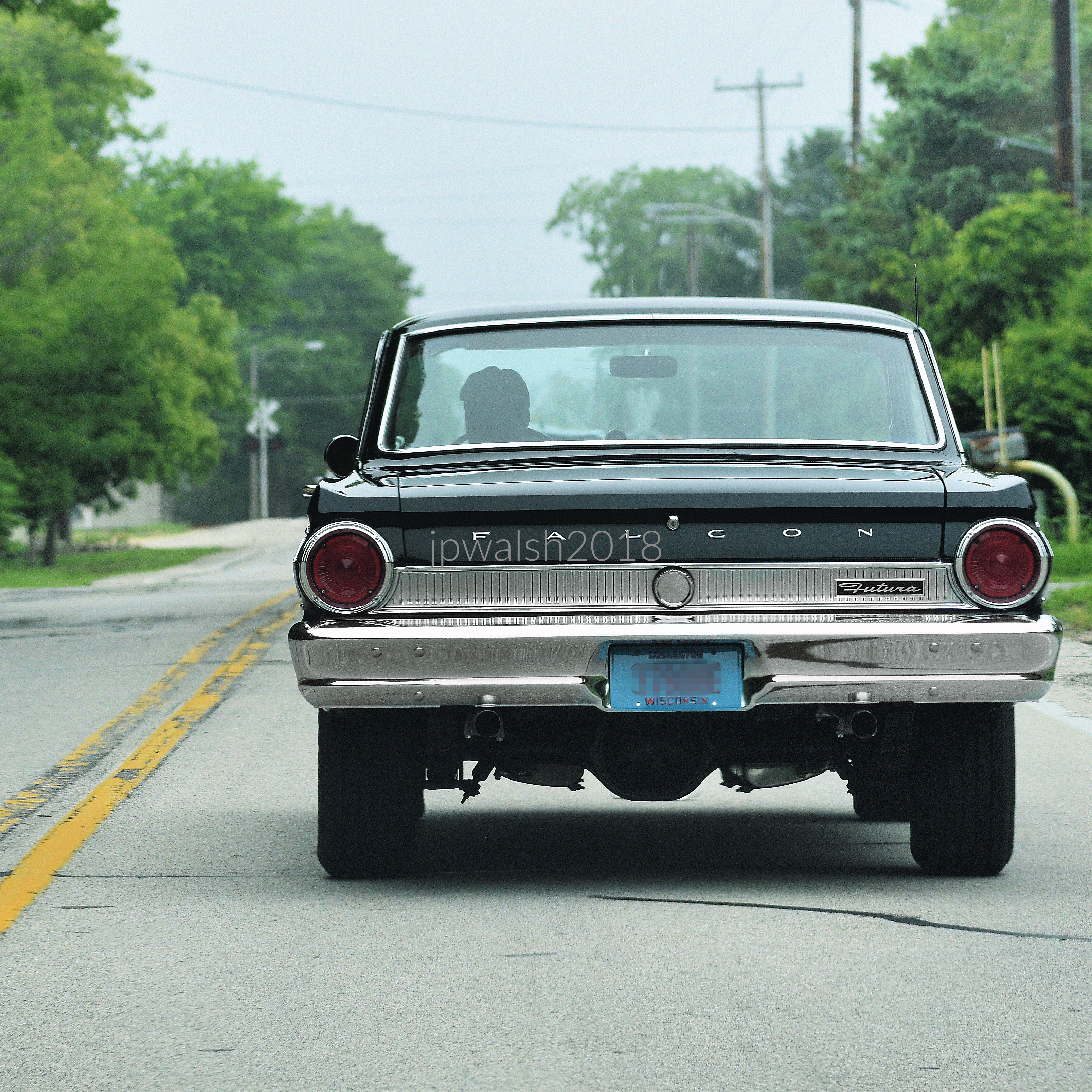
FEATURE image: 1964 Ford Futura Falcon. Author’s photograph. June 2018. 4.54 mb DSC_0136 (1).

The Ford Falcon (1960-1970) was one of the defining compact automobiles of postwar America, a practical and affordable car that reflected changing consumer tastes, suburban growth, and the increasing importance of personal mobility. These surviving Falcons become more than vintage vehicles; they serve as rolling artifacts of everyday American life, preserving the design language, engineering, and cultural aspirations of a transformative decade.

In 1960, Ford’s ad tag line for the Falcon was “the easiest car in the world to own.”

https://www.youtube.com/watch?v=7PwQB59yFaM – retrieved October 23, 2025.

The Ford Falcon was introduced as Ford’s answer to the growing market for compact automobiles. Its simple, practical design and affordability made it one of the most successful American cars of the 1960s. The Falcon appealed to a broad range of buyers, from families to young drivers.

Ford’s 1964 Banner Year and the Arrival of the Mustang

In 1964 all of Ford’s models were given upgrades including under the hood, such as the 289 CID V8 engine for the Mustang and mid-sized cars. The renewal that year of all its models was so important that the entire Ford line was named “Car of the Year” by Motor Trend magazine. In 1964 Falcon received a major restyling that included an angular and modern appearance while retaining its original performance components. Falcon, along with the Fairlane, were big sellers comprising together more than a third of all Ford sales. But the biggest news in 1964 was the arrival of Ford’s brand-new pony car at the World’s Fair in New York: the Mustang. The sporty Mustang was an instant hit and had taken some of its enduring design inspiration from the Falcon in terms of its practicality.

In 1964, Falcon was included under Ford’s umbrella tag line of “The Total Performance Cars for 1964.”

Robert McNamara, the Whiz Kids, and the Falcon’s Success

The Ford Falcon was the product of Robert McNamara’s hard‑edged managerial style. After serving in the Army Air Forces during World War II, he joined Ford and quickly became one of the “Whiz Kids,” applying strict analytical methods to every corner of the company. By 1960, Ford entered the industry’s high‑stakes profitability contest with a new lineup that included an inexpensive compact aimed at ordinary Americans. Conventional wisdom held that compacts couldn’t make money, but the Falcon proved otherwise, becoming Ford’s best‑selling car of 1960 and the most successful model in the company’s history up to that point. Within a year, all three majors—Ford, Chevrolet, and Plymouth—offered basic compacts, but Ford’s head start, lowest price, and full range of body styles gave it a decisive lead. In the end, the only company positioned to unseat Ford from the top of the compact market was Ford itself.

The Falcon provided the platform from which the Ford Mustang emerged in 1964.

Ford Futura Falcon. Author’s photograph. June 2018.7.36mb DSC_0122.

When it comes to cars Americans like tradition and from its powertrain to its exterior and interior styling Falcon was all that.

Standard Equipment and Trim Levels

Standard equipment on the 1964 Falcon included cloth and vinyl interior trim, front door arm rests, chrome windshield and chrome rear window moldings, and hub caps. The FUTURA Falcon added features such as deluxe interior trim, side window moldings, hood ornament, full-length side trim molding, and full wheel covers. Further upgrades on Futura included bucket seats. SQUIRE included wood-grain exterior trim, power tailgate window and carpeted floors. SPRINT added bucket seats, a console, sports steering wheel, tachometer and wire wheel covers.

Pricing the 1964 Falcon

The Falcon ranged from the Falcon 2-door sedan with a base MSRP of $1,996 ($20,859.87 in today’s dollars) all the way up to the Falcon Sprint 2-door convertible with a base MSRP of $2,671 ($27,914.19 in today’s dollars). The average price for a new Ford Falcon in 1964 for the American consumer was $2,345 ($24,507.22 in today’s dollars).

SOURCES:
J. “Kelly” Flory, Jr., American Cars, 1960 to 1965, McFarland & Company, Inc. pp. 41-43; 269-70; 299-300.

When Muscle Ruled Main Street: The Plymouth Road Runner (1968-1980).

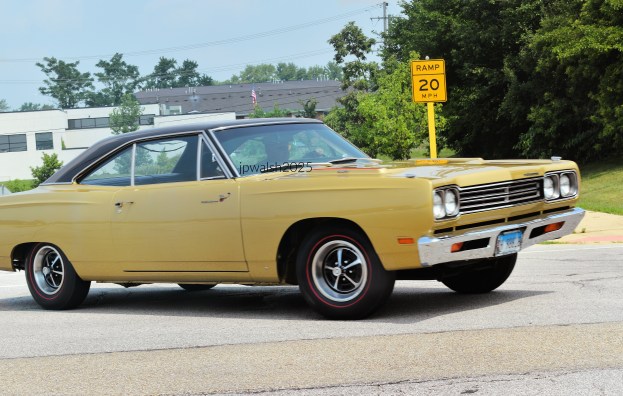
FEATURE image: August 2025. 1969 Plymouth Road Runner. 87% 7.54 mb DSC_4556 (1). 

The Plymouth Road Runner is more than a muscle car. It is a rolling artifact of America’s horsepower era, capturing the optimism, individuality, and changing automotive culture that defined the late 1960s through 1980. The Plymouth Road Runner embodied Chrysler’s belief that performance should belong to ordinary Americans, and its enduring presence on today’s streets reflects the lasting appeal of uncomplicated power and bold design.

Introduced in 1968 as a low-cost, high-performance muscle car.

Plymouth’s Strong Finish to the 1960s

Since the Great Depression years Chrysler Plymouth was the number three budget brand car in America following Ford and Chevrolet. By the1960’s that number three position had been held by General Motors’ Pontiac though Chrysler Plymouth reached that third position on occasion. In the 1970’s Plymouth would be overshadowed by Oldsmobile but in the late 1960’s that was a near future not yet revealed and, starting in 1968, Plymouth had a couple of incredible end-of-decade model years. In 1969 the two-door pony car Plymouth Barracuda (1964-1974) continued to have its own identity in the Chrysler line up and received only a modest makeover that year that included a new grill, interior trim and optional ‘Cuda 340 package. The mid-sized Belvedere (1954-1970) in its seventh generation and Satellite (1965-1974) in its second generation returned in 1969 with slight new treatments as did the compact Plymouth Valiant (1960-1976) in its third generation with a new grill and taillights. In 1969, after four years, The Plymouth Fury (1955/1959-1989) entered a fifth generation with a totally redesigned model line.

Featured some of Chrysler’s most memorable styling, especially the 1968-70 models.

The Road Runner Takes Flight

In 1969 Plymouth’s advertising tag line was Look what Plymouth’s up to now and it was the new Plymouth Road Runner that captured the car world’s imagination. A Plymouth first, Motor Trend magazine selected the 2-door convertible and 2-door coupe Road Runner as their 1969 Car of the Year. A powerful engine with a spartan trim level, the Road Runner muscle car was introduced by Chrysler in 1968. In 1969 Plymouth added a new Road Runner Convertible. Initially based on the lower-priced Plymouth Belvedere, the sporty Road Runner was a mid-size, performance-focused car designed to itself be a lower-priced option compared to the upscale Plymouth GTX or Pontiac GTO. In its heyday the Chrysler Plymouth Road Runner was the spartan alternative to the highly equipped Plymouth (Belvedere) GTX. All these Plymouth mid-sized models (along with the Satellite) were sold in 1969 with the tag line: The name of the game this year is “sport.” In 1969, the base price for a Plymouth Road Runner coupe was approximately $2,945 ($25,888 in 2025 dollars). The hardtop version listed for around $3,083 ($27,099) and the convertible model was $3,313 ($29,121). The mid-size Road Runner was introduced as a 2-door pillared coupe whose spare interior belied an exclusive “Roadrunner” 383 cu in B-series V8 engine with a 4-barrel Carter Carburetor and high-performance camshaft under the hood.

Named after the Warner Bros. cartoon character and marketed with unusual humor.

“Beep, Beep.”

Plymouth paid $50,000 to Warner Bros.-Seven Arts (about $465,500 today) to use the Road Runner name and likeness including the “beep, beep” horn sound that Plymouth developed for its customers with an investment of around $100,000 in today’s money. Produced from 1968 to 1980, the Road Runner was built on the mid-sized B-Platform for three generations. Like most muscle cars, in the 1970’s its performance capabilities declined — and, with it, sales — as the car industry was mandated to focus on fuel economy and emission standards.

Evolved significantly between its first generation and final 1980 version.

The End of the Muscle-Car Era

In 1976 the Road Runner nameplate became a trim and graphics package for the new Plymouth F-body compact two-door Volaré platform until discontinued in 1980. Having no special performance capability and with car manufacturers actively downsizing their lineups, the Volaré was discontinued on the same day in 1980 the Dodge Main Assembly plant in Detroit, Michigan, closed after being in continuous operation since 1911.

SOURCES: See –  J. “Kelly” Flory, Jr., American Cars, 1966 to 1972, McFarland & Company, Inc. pp. 297-303.

This explanatory article may be periodically updated.
Buick GS455: When Luxury Met Muscle (1970-1972).

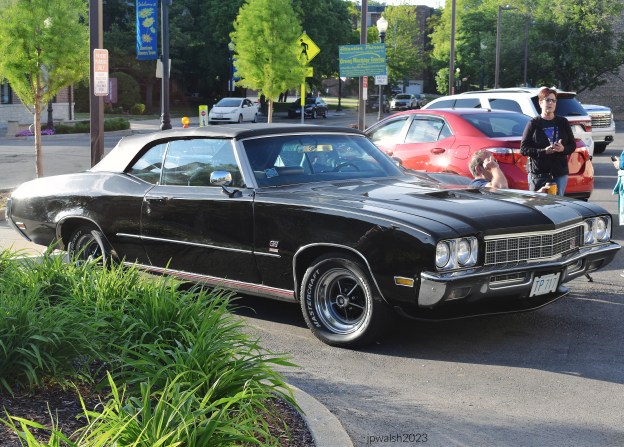
Feature Image: 1971 Buick (Gran Sport)GS455 Convertible. The dramatic hood scoops, stripes, and bold styling reflected the peak design language of the muscle-car era. The 1970-1972 models marked the final years before emissions regulations and market shifts reduced performance across Detroit Author’s photograph. May 2023. 7.72 mb 73%

The Buick GS455 (1970-1972) represented Buick’s bold entry into the peak years of the American muscle car era, combining luxury-car refinement with massive big-block power. It was not only an iconic performance machine but a period when Detroit engineering, styling, and horsepower reached their most ambitious expression before changing regulations, insurance costs, and the energy crisis brought the muscle-car age to a swift close.

Wouldn’t you really rather have a Buick? 1971’s advertising tag line for this GM American automobile maker.

Buick’s Last Great Muscle-Car Convertible

The GS 455 Arrives

The GS 455 was available as an option to the base GS during the 1971 and 1972 model years. Built on General Motors’ versatile A-body platform, it shared its foundation with many of the era’s most iconic American performance cars. The GS 455 used the same basic big-block 455-cubic-inch V8 introduced for the 1970 model year, helping establish Buick as a serious contender in the muscle-car wars.

The Buick GS455 was among the most powerful muscle cars produced by General Motors and the 1971 Buick GS 455 convertible remains one of the rarest.

Muscle Meets a Changing Era

Ironically, just as Detroit was producing some of its most desirable muscle cars, new federal emissions requirements and the transition to unleaded gasoline forced manufacturers to lower engine compression ratios beginning in 1971. As a result, the GS 455’s factory-rated output was reduced from earlier peak levels. Even so, Buick’s 455 V8, equipped with a single four-barrel carburetor, remained formidable, producing a factory-rated 345 horsepower and 460 lb-ft of torque.

The Stage 1 package elevated the GS455 into elite muscle-car territory. Buick uniquely blended luxury, comfort, and aggressive performance, distinguishing the GS from competitors.

The Coveted Stage 1 Package

Among performance enthusiasts, the Stage 1 package represented the ultimate factory Buick muscle-car specification. Approximately 81 GS 455 Stage 1 convertibles were produced for the 1971 model year, making them among the rarest and most sought-after Buick muscle cars. Although Buick developed a Stage 2 version of the 455, it never advanced much beyond the Stage 1 program. Production numbers were similarly limited, though aftermarket performance specialists continued to expand upon the concept.

Transmission Choices

GS buyers could tailor their cars to their preferences. The popular Turbo Hydra-Matic automatic transmission could be ordered with either a column-mounted shifter or a full-length center console. Drivers preferring a more hands-on experience could select either a 3-speed or 4-speed manual transmission with a floor-mounted shifter.

Buick Muscle-Car Hardware

Exclusive GS standard equipment reflected the car’s performance mission. Features included dual exhausts, functional hood air scoops, heavy-duty springs, upgraded shocks, and a stabilizer bar, all designed to enhance both power delivery and handling.

Rare by Any Measure

The 1971 Buick GS 455 Convertible ranks among the rarest muscle cars ever produced by Buick. Total GS convertible production for 1971 was just 902 vehicles, with a base MSRP of $3,476 (approximately $27,726 in 2025 dollars).

Collectibility Today

More than five decades after leaving the factory, the GS 455 remains highly prized among collectors. In 2025, the Buick GS 455 carried an average resale value of approximately $52,250, reflecting its rarity, performance credentials, and status as one of Buick’s last great muscle cars of the classic era.

The Buick GS455 (1970-1972) embodied that rare combination of luxury, style, and overwhelming big-block performance, securing its place among the most respected muscle cars of Detroit’s golden age. These automobiles have enduring appeal as rolling pieces of industrial design and American cultural history.

SOURCES:

Bring a Trailer. “1971 Buick GS 455 Stage 1 Convertible.” May 25, 2022. Accessed August 30, 2025. https://bringatrailer.com/listing/1971-buick-gs-9/.

CLASSIC.COM. “1971 Buick Gran Sport 455 Market.” Accessed August 30, 2025. https://www.classic.com/m/buick/gran-sport/455/year-1971/.

ClassicCarsBay. “Used 1971 Buick GS 455 for sale in Mooresville, NC.” Accessed August 30, 2025. https://classiccarsbay.com/for-sale-1971-buick-gs-455-in-mooresville-north-carolina-49118.

Flory, J. “Kelly,” Jr. American Cars, 1966 to 1972. Jefferson, NC: McFarland & Company, Inc., 2023.

Hemmings. “1971–’72 Buick GS 455.” September 24, 2018. Accessed August 30, 2025. https://www.hemmings.com/stories/1971-72-buick-gs-455/.


This explanatory article may be periodically updated.

From Z/28 to ZL1: Camaro’s Long Run of American Performance (1967-2002; 2010-2024).

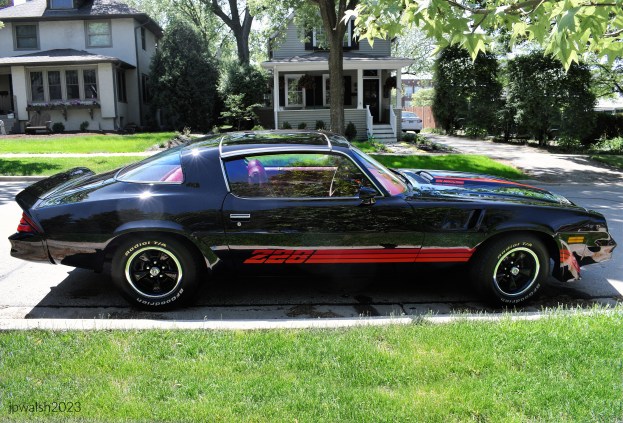
Feature Image: 1979-1981 Chevrolet Camaro Z28 (Details in post). May 2023. 7.72 mb 66%. Author’s photograph.

From the original 1967 pony car to the high-performance machines of the 21st century, the Chevrolet Camaro has remained one of America’s most recognizable symbols of speed, style, and automotive individuality while maintaining its identity as a competitor to the Ford Mustang.

1969 Chevrolet Camaro Z28. Author’s photograph. May 2023. 7.85mb 98%

The car evolved from a lightweight pony car into a powerful muscle-car icon.

The name Z/28 was introduced by General Motors in December 1966. In 1967 to 1969, Chevrolet continued to improve the car’s list of engine and performance options. The year 1970 introduced Gen II in a new Camaro design. In 1982 the car was redesigned again marking Gen III. There have been more redesigns over the decades with Chevrolet announcing that production of the Gen VI Camaro would officially end in December 2023, with the 2024 model year serving as the final run and the Z/28s with it.

1979-1981 Chevrolet Camaro. Author’s photograph. May 2023. 7.72 mb 66%.

Generation Overview

The second-generation Camaro ran from 1970 through 1981—making it the longest-running generation in the nameplate’s history—and transitioned the car from a raw late-1960s pony car into a sleeker, European-inspired sports coupe. By 1980, strict federal emissions rules had lowered factory horsepower across the industry, so Chevrolet leaned heavily on bold visual flair and handling packages to keep the Z28 exciting.

Key Styling Details

This Z28 has bodywork and graphics specific to 1980. The forward-facing “Air Induction” hood scoop (which featured a solenoid-operated flap that opened under full throttle) and the functional side fender vents replaced the simulated louvers used on 1978–1979 models. The lower body is wrapped in bold tri-tone red and orange decal stripes that integrate the Z28 callout along the doors, paired with matching striping over the hood.

Other period hallmarks visible in the profile include the integrated body-color urethane bumpers, a deep front air dam, flared wheel-arch moldings, and a tall three-piece rear decklid spoiler. The car is also equipped with removable glass T-top roof panels (a hugely popular option in the late 1970s and early 1980s), a vibrant Carmine red interior, and color-keyed 5-spoke Z28 wheels wrapped in raised white-letter BFGoodrich Radial T/A tires

1979-1981 Chevrolet Camaro. May 2023. 7.74 mb 88% Author’s photograph.

Interior packages included cloth and custom cloth, and vinyl and custom vinyl. In 1980 the five interior colors included oyster, black, blue, carmine red and tan. In 1981 the five interior colors changed to silver, black, blue, camel and red. In 1980, to save gas during the gas crisis, the car’s 130-mph speedometer was reduced to an 85-mph speedometer. See – https://mikeduman.com/blog/history-z28; https://www.caranddriver.com/news/a43578551/2025-chevrolet-camaro-z28-future-cars/; https://www.hemmings.com/stories/article/1980-81-chevrolet-camaro-z-28 – retrieved May 22, 2023.

1980 Z28 Engine & Drivetrain Specifications

The 1980 Camaro Z28 was powered by a 190-horsepower 350-cubic-inch V8 (49 states) or a 165-horsepower 305 V8 (California), with total Z28 production reaching 45,137 units. The 1980 model year marked a major milestone for enthusiasts because it was the last year Chevrolet allowed the 350 V8 to be paired with a 4-speed manual transmission (beginning in 1981, the 350 was restricted exclusively to an automatic, and the 4-speed manual could only be ordered with the 305).

Classic muscle car

Camaro vs. Mustang

Among debates about classic muscle cars, none gets hotter than the Chevrolet Camaro versus the Ford Mustang.

The Z/28’s Place in the Muscle-Car Era

With the exception of the 6.6-liter Trans Am, the Z/28 represents the best Detroit had to offer in the early 1980s, and an excellent entry point. A great car with its own ups and downs as its model developments moved ahead, the Camaro Z/28 at the outset was known for its good looks and sleek, crisp styling.

Styling and Performance

It hugged the road and moved fast with superb handling. By 1980, the standard wheel cover was matched by a rear deck spoiler and hood and deck stripes and, soon, a front spoiler to reduce drag.

The Last Traditional Drivetrain

The 1980 models were the last that offered the quintessential muscle car power-train combination-a 350-cu.in. V-8 with four-speed transmission.

Cost of a Loaded Z/28

The loaded Z in 1981 would cost around $12,000 (or $40,000 in 2023 dollars).

Dimensions

The Z/28 was 197.6 inches long and rode on a 108-inch wheelbase. It stood at a height of 49.2 inches and was 74.5 inches wide. The body was all steel.

Camaro styling reflected changing American tastes, from the crisp lines of the late 1960s to the aerodynamic forms of the 1980s and retro-inspired designs of the 2010s

This is a 1997 Chevrolet Camaro Z28 SS (or a 1996 model, as the two years share identical exterior styling, though the 1997 model was far more common in SS trim). Although fourth-generation Camaros ran from 1993 to 2002, Chevrolet gave the car a mid-cycle facelift in 1998. Fourth-generation LT1 SS coupes are relatively scarce compared to standard Z28s. SLP converted only 2,410 SS coupes in 1996 and 2,958 in 1997, making either year a notable find on the street today. Author’s photograph. May 2018. 7.39 mb

Distinctive 1993–1997 Styling

The rounded, slightly recessed headlight bucket visible at the front left fender, along with the three-color (red, amber, and clear) taillights, was used strictly from 1993 through 1997. These details place the car firmly within the early phase of the fourth-generation Camaro.

Return of the SS

Chevrolet revived the legendary SS (Super Sport) badge for the fourth generation in 1996 after a 24-year absence, modifying Z28 coupes through SLP Engineering. The car in the photo displays the authentic SS-specific styling cues from that two-year run: the raised, pedestal-mounted rear spoiler, the dual-outlet exhaust exiting together on the left side (“two-on-the-left”), and the SS emblems on the front fenders and rear fascia.

LT1 Power

The 1996 and 1997 SS models were the final fourth-generation Camaros powered by Chevrolet’s iron-block 5.7-liter LT1 V8, which was replaced by the aluminum LS1 in 1998. Thanks to the functional Ram Air induction system and low-restriction exhaust, SLP increased output from the standard Z28’s 285 horsepower to 305 horsepower (and 310 horsepower with the optional performance exhaust), along with 335 lb.-ft. of torque. Performance was impressive for the era, with 0–60 mph arriving in approximately 5.3 seconds.

A Relatively Rare Camaro

The car retains its signature two-tone fourth-generation appearance, with the gloss-black roof (“sail panel”) and side mirrors contrasting against the Bright Red paint. While the five-spoke ZR1-style wheels match the factory SS wheel design, they have been painted or powder-coated black rather than the original silver or chrome finish, giving the car a more contemporary blacked-out stance while preserving the aggressive look that helped make the SS one of the most desirable Camaros of the 1990s.

2011(?) Chevrolet Camaro. Author’s photograph, June 2017. 4.19 mb

2010 Chevrolet Camaro. Author’s photograph. April 2025. 7.16mb DSC_8471

2018 Chevrolet Camaro 2LT Coupe. The sixth-generation Camaro SS (2016–2024) is equipped with a 6.2L LT1 V8 engine and offered as a 6-speed manual and 8-speed automatic. The SS is capable of 455 horsepower and 455 lb.-ft. of torque, performing a 0-60 in 4.0 seconds. Author’s photograph. June 2024. 73% 7.83 mb 8246

Birth of a Pony Car

The Chevrolet Camaro is a pony car that began production in model year 1967. It ceased production in model year 2002 in its Gen IV. Starting in 1993 the iconic American car was produced exclusively in Canada in Sainte-Thérèse, Quebec.

Crisis at General Motors

In 2008 GM faced a severe liquidity crisis, having lost over $30 billion in 2008. In 2009 Chevrolet restarted its Camaro production in Gen V that was built exclusively in Canada though shifted to Oshawa, Ontario. Then-GM Chairman and CEO Rick Wagoner said about his Canadian-made car: “Camaro is much more than a car; it symbolizes America’s spirit and its love affair with the automobile.”

That same year the Obama administration demanded he resign for GM to receive a massive taxpayer-funded federal bailout. Without this federal assistance, the company was expected to go into liquidation, which officials estimated would cost more than one million jobs. The total bailout for General Motors and Chrysler amounted to approximately $80 billion, with the government taking a majority stake in GM during the process to guide its reorganization.

The Camaro Comeback

The 2010 Camaro became the model’s best seller (81,299 units) since 1995 (122,738 units). The first half of the 2010s was a renaissance for Camaro though its heyday remained the late 1960s and 1970s.

Inspired by a Legend

The 2010 Camaro was intentionally designed and produced along the lines of the 1969 model and is almost identical to the car’s original concept. By combining modern engineering with styling cues from one of Chevrolet’s most celebrated muscle cars, the fifth-generation Camaro successfully linked the model’s past with its future.

Original Pricing

The original MSRP for a 2010 Chevrolet Camaro ranged from $22,680 ($33,187.71 in 2025 dollars) for the LS coupe to $33,945 ($49,671.82 in 2025 dollars) for the 2SS coupe.

This explanatory article may be periodically updated.
From Chevy II to Nova: An American Compact Classic (1962-1979; 1985-1988).

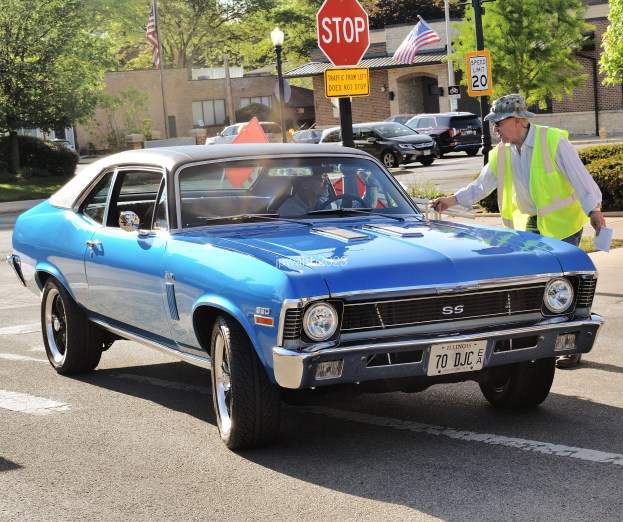
Feature Image: 1972 Chevrolet Nova SS. The third-generation Chevrolet Nova body style peaked in 1972 as a quintessential semi-fastback muscle coupe, representing a dramatic evolution from its humble 1960s economy-car origins and foreshadowing a total shift toward boxier, downsized front-wheel-drive designs by 1982.
The Nova initially launched in 1962 as the “Chevy II,” a strictly utilitarian, boxy compact car designed to compete with the Ford Falcon. Everything changed with the introduction of the third generation in 1968. Designers abandoned the boxy look for a longer, lower, and wider stance built on a 111-inch wheelbase. By 1972, the body style was highly refined.
The muscular, long-hood, short-deck proportions of the 1972 model would completely vanish over the next decade due to changing federal crash safety mandates, fuel emission laws, and shifting consumer tastes. Author’s photograph. May 2023. 7.82mb 80%.

The Chevrolet Nova (1962-1979; 1985-1988) was one of General Motors’ most enduring compact automobiles, evolving from an economical family car into a versatile platform that reflected changing American tastes in transportation, styling, and performance. Produced across multiple generations and remembered for both economy and performance, surviving Novas become moving artifacts of American automotive history, documenting how an ordinary compact car earned an extraordinary place in the nation’s roads, garages, and collective memory.

Building a better way to see the U.S.A. was Chevy’s 1972 advertising tag line. Nova’s ad tag line in 1972: How to see less of you mechanic and more of America.

Production Challenges and a Strong Sales Year

In 1972 there were labor strikes in GM assembly plants that severely impacted production of popular brands (Camaro; Pontiac Firebird) and delayed other model redesigns and rollout plans into 1973. New government regulations on car manufacturers also adversely impacted production schedules. The Chevrolet Nova was assembled in the same plant as Camaro that sat idle for six months. Both cars were saved that year because of enterprising Chevrolet executives who moved their production to other plants. Despite these challenges, Chevrolet became America’s best-selling car brand again in 1972 and Nova sales in particular were excellent.

From Chevy II to Nova

The Chevrolet Nova was produced in four generations from 1962 to 1979 and in a fifth generation from 1985 to 1988. It was the top trim level for the new Chevy II compact whose inception was to counter the popular 1960 Ford Falcon. The SS package was introduced by Chevrolet for 1963. By 1969 Chevy dropped the Chevy II nameplate and Nova become the nameplate throughout the 1970’s.

Simple engineering, affordability, and practicality made the Nova one of Chevrolet’s most successful models.

The Nova as a Compact Performance Car

The car’s growing engine capacities in the mid 1960’s was cut off by Chevrolet for what would be their premier muscle car, the Chevy Camaro, in 1967. With the Chevy II/Nova third generation beginning in 1968 Chevrolet introduced an all-new compact with contemporary semi-fastback styling that continued to 1974. It was with this generation that the car was simply called “Nova.” As a muscle car, Nova’s history ended in 1973 when the SS package was limited to appearance options and a jacked-up heavy-duty suspension although the car could be combined with a 175-horsepower 350.

Standard Equipment for 1972

In 1972 major standard equipment for the Nova included cloth and vinyl bench seat, deluxe steering wheel. hub caps, front-door vent windows, bright moldings on the windshield and rear window, manual drum brakes, vinyl-coated rubber floor tires and E78-14 wide whitewall tires.

The Rally Nova Option

Starting in mid-1971 the Rally Nova option was introduced that was basically an appearance option though it included heavy duty front and rear suspension (RPO-F40) which could be mono-leaf or multi-leaf in the rear.

Pricing the 1972 Chevrolet Nova

The Base MRSP on the 2-Door Coupe was $2,351 ($18,169.52 in 2025 dollars). The 4-Door Sedan was $2,379 ($18,385.91 in 2025 dollars).

Performance versions, particularly V8-powered models and SS variants, expanded the Nova’s appeal beyond economy-minded buyers.

1972 Chevy Nova SS 350. Restored Third Generation (1968–1972) 2-door Chevrolet Nova SS (Super Sport) coupe styled as a classic American muscle car. Its sloping, continuous roofline that glides smoothly down toward the rear deck lid is the definition of a semi-fastback body style. It also features a bold chrome front bumper and the distinctive “SS” performance badging centered on the blacked-out grille. The electric metallic blue paint finish paired with a clean white vinyl roof top, complemented by classic chrome trim accents along the grille, bumpers, and windows.

The hood is propped open to showcase a detailed, clean engine bay featuring a 350 cubic-inch (5.7L) small-block V8 engine. The engine setup includes an aftermarket chrome open-element air cleaner, upgraded performance components, and a custom polished radiator shroud. A “350” numerical emblem is also visible on the front fender just above the marker light.

The vehicle sits on classic five-spoke mag-style wheels wrapped in wide performance tires and displays a vintage Illinois license plate on the front bumper. Author’s photograph. July 2022. 5.53mb DSC_6546.

SOURCE:
https://cokertire.com/tires/e78-14-coker-classic-2-3-8-whitewall-tire.html?srsltid=AfmBOopDvzpu_2cdKTJYosN-5STf4twvFZE5PXmIzNGnWjXnK5P8ZXM2 – retrieved Aug. 30, 2025.
https://en.wikipedia.org/wiki/Chevrolet_Chevy_II_/_Nova – retrieved August 8, 2022.
J. “Kelly” Flory, Jr., American Cars, 1966 to 1972, McFarland & Company, Inc. pp. 485-486; 490.

This explanatory article may be periodically updated.

327 Stingray vs. 413 Super Stock Dodge: The Iconic Drag Race Behind the Beach Boys’ 1963 chart topper, “Shut Down.”

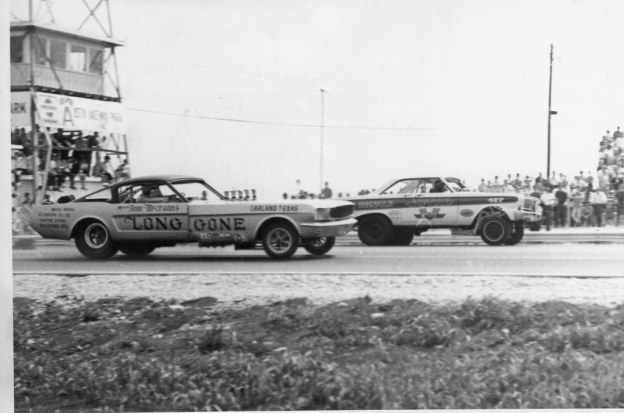
FEATURE image: “Drag Racing in Austin Texas,1967” by Hugo-90 is licensed under CC BY 2.0.

Shut Down is a song by Brian Wilson and Roger Christian that appeared on a pair of 1963 Beach Boys’ albums: Surfin’ U.S.A. in March 1963 and Little Deuce Coupe in October 1963. The song was first released in March 1963 on side B of the Surfin’ U.S.A. single that climbed to no.3 on the Billboard Hot 100 chart. Six months later, Shut Down was released as its own single and peaked at no.23.

The lyrics of Shut Down describe the dangerous activity of drag racing that is also illegal. Drag races were once popularly held on the public streets of southern California using muscle cars. As these races attracted many enthusiastic supporters, streets were sometimes closed off for the race cars and even had the cooperation of local police though unofficially.

The Beach Boys’ lyrics are filled with technical and slang terms for drag racing.

IT HAPPENED ON THE STRIP WHERE THE ROAD IS WIDE
(Oooo rev it up now)
TWO COOL SHORTS STANDING SIDE BY SIDE
(Oooo rev it up now)
YEAH, MY FUEL INJECTED STINGRAY AND A FOUR-THIRTEEN
(Oooo rev it up now)
REVVING UP OUR ENGINES AND IT SOUNDS REAL MEAN
(Oooo rev it up now)

One dragstrip in the early 1960s was Glenoaks Boulevard in southern California between Glendale/Burbank and San Fernando/Sylmar. It is a major thoroughfare which stretches over 20 miles. Since a drag race caused disruption to public traffic’s normal flow as well as likely increased harm to law-abiding bystanders, drag races were usually held at night when traffic volume tapered off and was low.

“Two cool shorts” refer not to some spectators’ bermudas, but the truncated length of the race cars.

In 1963, a “fuel injected Stingray” was very much the latest cool car feature. While computerized fuel injection became standard on passenger cars it was, from 1963 to 1965, a specialized mechanical feature found only on the Stingray. What fuel injection accomplished was to optimize the air-to-fuel mixture that made for powerfully efficient engine performance.

TACH IT UP, TACH IT UP
BUDDY GOING TO SHUT YOU DOWN

“Tach it up” refers to the moments before the start of the race when muscle cars revved their engines to achieve high rpms. This idling pedal-to-the-metal stores energy in the car’s flywheel so that when the car accelerates it literally jumps off the start line with extra power. Tach it up too much and the car accelerates and does a wheel stand or “wheelie.” While the car’s front wheels lifting off the ground is cool, it is also quite dangerous as the car could more easily lose control.

BUT THE FOUR-THIRTEEN’S REALLY DIGGING IN…
SUPERSTOCK DART IS WINDING OUT IN LOW…

The Dart is the other car in the Beach Boys song’s drag race. The 413 is a super-sized engine in the body of the 1962 Dodge Dart. The 413, also called a “hemmie” for its hemispheric dual combustion chambers, started being made by Chrysler way back in 1951.

BUDDY, GOING TO SHUT YOU DOWN.

“Shut Down” is slang for beating the opponent in the race by any and all means. After a car crosses the finish line it enters the shut-down lane. The first car in and out of the shut down lane is the winner.

Since its release in 1963, Shut Down has generated controversy—that it glorifies drag racing, an illegal activity and using what Cash Box at the time identified as “top rock-a-teen sounds.” But some believe the song’s greater scandal is that it seems to imply that the 327 fuel-injected Stingray beat the 413 Super Stock Dodge.

Dodge fans who really know what’s under the hood understand that that outcome couldn’t possibly be real.

“Drag Racing in Austin Texas,1967” by Hugo-90 is licensed under CC BY 2.0.


From Wartime Survivor to 1950s Icon: Chevrolet Deluxe (1941-1952) and Chevrolet 210 (1953-1957).

Feature Image: The buyers for the Chevrolet Deluxe (’41–’52) (left) and the Chevrolet 210 (’53–’57) (right) were cut from the same cloth — folks chasing that sweet spot of affordable style without stepping into full‑blown luxury. The 210 picked up right where the Styleline DeLuxe left off, sliding into Chevy’s mid‑range slot between the bare‑bones 150 (formerly the Special) and the flashier, top‑shelf Bel Air. Both the Styleline Deluxe and later the 210 played the same role: the step‑up car for families and everyday drivers who wanted something nicer than the entry-level model. They delivered a blend of clean looks, decent comfort, and approachable pricing, making them the go‑to choice for anyone wanting a little class without breaking the bank.

Through original street photography and historical commentary, this post traces the evolution of Chevrolet’s most popular passenger cars from the streamlined Chevrolet Deluxe (1941-1952) to the stylish Chevrolet 210 (1953-1957), revealing how changing automotive design reflected America’s transition from wartime sacrifice to postwar prosperity, mobility, and optimism.

Chevy Deluxe.

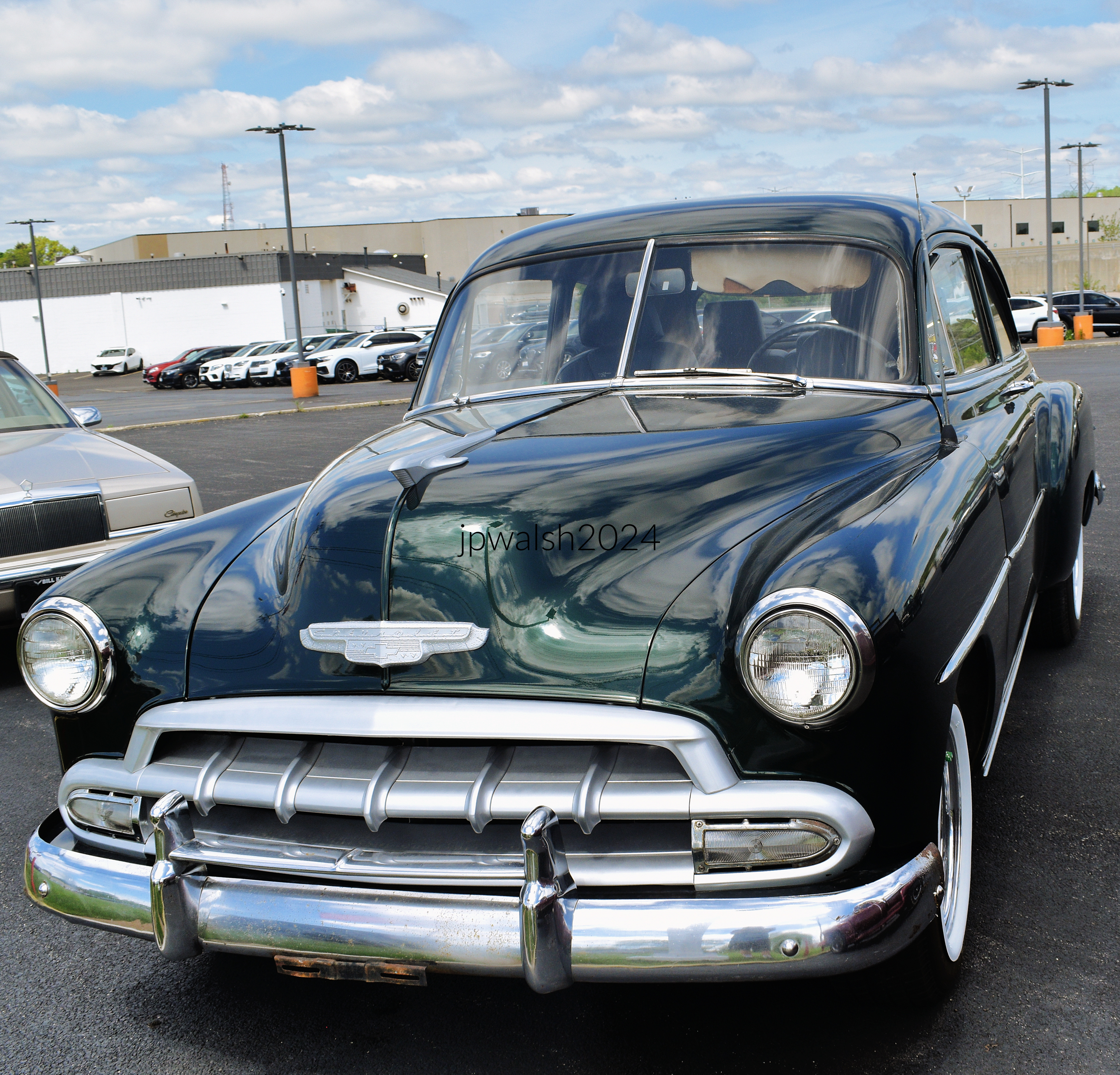
1951 Chevy Deluxe. Author’s photograph. May 2024. 5.45mb DSC_5540 (1).

The Chevrolet Deluxe is a trim line of Chevrolet automobiles that was marketed from 1941 to 1952. The car model was the volume sales leader for the market during the 1940s. The Chevy Deluxe was especially prevalent in the early 1950s as a mid-tier option, focusing on efficiency and often used for basic, reliable family transportation. It was commonly seen as a four-door sedan or stylish coupe in the 1950-1952 years.

The Chevrolet Deluxe was Chevrolet’s flagship passenger car throughout the 1940s and early 1950s.

Chevy 210.

1950s Chevy 210. Author’s photograph. October 2016. 1.92 mb.

The Chevy 210 ((shorthand for the 2100 series) arrived in 1953 like a fresh coat of chrome on a familiar silhouette, stepping in for the old Styleline Deluxe but carrying the spirit of the era forward. Where the Deluxe had been a dependable, no‑nonsense cruiser of its day, the 210 felt like the moment when Chevy let a little more pride slip into the sheet metal — cleaner lines, brighter trim, and the sense that families were starting to dream bigger on the open road. The 210 flashed more chrome, sharper interior trim, and that modern “wraparound” look that defined the ’55–’57 Chevys — a big step up from the cleaner, simpler lines of the early‑’50s Deluxe.
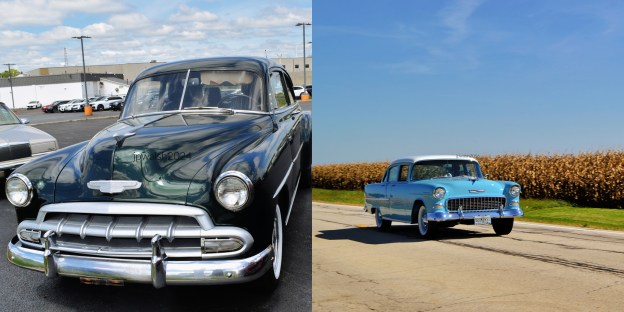
Through its 1953 to 1957 run, the 210 became the car you remember from faded snapshots: two‑tone paint catching the sun, bench seats that smelled like summer, and engines with just enough extra muscle to make a Sunday drive feel like something. Compared to the earlier Deluxe, it wasn’t just better equipped — it belonged to a more hopeful, more stylish moment in American motoring. The 210 series could be equipped with more powerful engines, such as the 265 and 283 cubic inch V8s by 1957. The 210 was Chevrolet’s best-selling model in 1953 and 1954.

From the uncertainty of World War II to the chrome-splashed optimism of the 1950s, Chevrolet’s Deluxe and 210 models helped put America on the road to a new era.

1954 Chevrolet 210. September 2021. 6.23 mb. Author’s photograph.
1954 Chevrolet 210. September 2021. 99% 7.81mb DSC_0713
1954 Chevrolet 210. September 2021. 99% 7.15mb DSC_0710 (4)

This explanatory article may be periodically updated.