Category Archives: Art History – United States

UNITED STATES. My Art Photography: MARION KRYCZKA (b., American). Chevy Dealership: A Tribute to Route 66 (2007), Joliet, Illinois.

FEATURE image: Chevy Dealership: A Tribute to Route 66, 2007, 396 N. Chicago Street, Joliet, Illinois. Tribute mural on Motor Row.

Joliet, Illinois, is a city of nearly 150,000 people about 45 miles southwest of downtown Chicago. Joliet is famous in popular culture for its appearance in the opening credits and scene of the 1980 comedy film, The Blues Brothers, starring John Belushi and Dan Ackroyd as musical men dressed in black, the fictional “Joliet” Jake and Elwood Blues. In addition to the very real old limestone walls of Joliet Prison at dawn (the prison complex itself closed in 2002), the film also begins with a dramatic flyover of Joliet’s old steel mills in operation at night.

Though the city of Joliet takes pride in this cinematic heritage, its manufacturing mills were vacated in the early 1980’s. The former steel mills and prison each ghostly stand today about one mile away from Chevy Dealership: A Tribute to Route 66, a pair of colorful murals that are all just part of Joliet’s recorded history that reaches back to the 17th century.

One of two acrylic murals at this site by Marion Kryczka with the assistance of artists Dante DiBartolo and Sadia Ashraf. Photograph by author in May 2017.

CREATED IN 2007, TROMPE-L’OEIL ACRYLIC MURALS CHEVY DEALERSHIP: A TRIBUTE TO ROUTE 66

The 2007 acrylic murals called Chevy Dealership: A Tribute to Route 66 is the artists’ imagined depiction of a Chevrolet automobile showroom in Joliet, Illinois in the mid-1950s. Newer than other murals in the city, the paintings are in remarkable physical condition on an exterior wall along a high-trafficked downtown street corner often in direct sunlight. The 10-by-15-foot murals were created by a team of artists led by Marion Kryczka, a Chicago-based artist and longtime professor at The School of the Art Institute of Chicago. The artists who matured under Kryczka’s mentorship are today accomplished artists in their own right.

Chevy Dealership: A Tribute to Route 66, the second of two murals on the walls of a 1930s dealership in Downtown Joliet, Illinois. The murals, completed in 2007, depict new cars and eager customers in the 1950s when the dealership on Motor Row was acquired by Bill Jacobs. Photograph by author in May 2021.

SERIES OF MURALS DISPLAYED ON THE EXTERIOR WALLS OF A 1930’S CHEVROLET SHOWROOM BUILDING

The downtown Joliet building at 396 N. Chicago Street displaying the 21st century murals had been the original showroom of Winston Chevrolet, a busy auto dealer in the mid-1930s and 1940s. In 1955 the dealership was acquired by Bill Jacobs, Sr. A vintage photograph from that time connected to the mural shows a bevy of new and used cars lined up and parked around the perimeter of the building apparently awaiting customers.

The acrylic mural of Bill Jacobs’ dealership in the 1950s is imbued with cultural and historical significance. Bill Jacobs Chevrolet, which opened in 1955, stayed in the family until it was sold in 2015.

Detail of above. Joliet, Illinois. 5/2021. 15.86 mb

BY 2010 BILL JACOBS AUTOMOTIVE GROUP EMPLOYED 500 PEOPLE AND SOLD LOTS OF CARS AND TRUCKS

The founder’s son, Bill Jacobs, Jr., bought the dealership from his father in 1978 at 23 years old. In 2010, Bill Jacobs, Jr., following a 7-year battle with cancer, passed away at 55 years old. Starting at this showroom building in 1955, Bill Jacobs Automotive Group had, by 2010, expanded to five Chicagoland dealerships. It employed almost 500 people and generated about $300 million in annual sales. Mrs. Jeanne Jacobs, the wife of Bill Jacobs, Sr., and Bill Jacobs, Jr.’s mother, passed away in October 2020. It was because of Jeanne Jacobs that her husband Bill Jacobs, a university professor, entered the car business. Jeanne Jacobs’ father owned a car dealership in Chicago where Bill Jacobs worked before he bought his own dealership in Joliet in 1955.

Since the 1970s, artist Marion Kryczka has had a career as an artist. Mr. Kryczka’s drawing is rooted in his foundation as a figurative artist and a lively technique which uses realism as a launching point to create familiar, beautiful, and meaningful scenes. For Chevy Dealership: A Tribute to Route 66, Krycka’s painting imagines a realistic American social scene which reflected Bill Jacobs Sr.’s business philosophy. Mr. Jacobs believed that business is about people and the mural’s showroom is filled with people who worked, lived and played in Joliet in the mid-1950’s. For a public mural like this one, community input was an important part of the process. There were group design sessions and meetings with city officials, with the city approving topics and contracting for the projects. For historic pieces, local residents sometimes posed.

MURALS FACE U.S. ROUTE 66, A 20TH CENTURY NATIONAL ROAD, AT JACKSON STREET IN JOLIET, ILLINOIS

The placing of Chevy Dealership: A Tribute to Route 66 in the mid20th century in the middle of the 1950’s helps express several important historical facets about the building, its car dealership, and the road (U.S. Route 66) that runs past it. In this art project are displayed many facets of Joliet’s rich heritage.

The mural is directly meaningful as a display of Joliet, Illinois, especially as it developed into a vibrant city where the Jacobs and many others put down roots. The mural also expresses the profound economic and cultural impact of the car industry in Joliet at that time reflecting national trends. Finally, it evokes the popularity of the legendary U.S. Route 66 which had opened in 1926 and followed a quilt of interconnected state and county roads for motor travel from Chicago, Illinois, through Illinois, Missouri, Oklahoma, Texas, New Mexico, Arizona, and all the way to Santa Monica, California in Los Angeles County. Chevy Dealership: A Tribute to Route 66 shows Joliet’s connection and contribution to this important larger national phenomenon.

MURALS DEPICT A UNIQUE MOMENT IN HISTORY THAT IS FOREVER CHANGED

The mid1950s for the Chevy dealership mural depicts that unique historical moment when old Route 66, just then 30 years old, was already on the threshold of major change. In the mural U.S. Route 66 was still in its hey-day—though, at the very same time, it was headed for a rapid and transformative decline.

In 1956 the Federal Aid Highway Act was passed by the U.S. Congress and signed by President Eisenhower. It authorized $25 billion for the construction of over 40,000 miles of an Interstate Highway System. The bill was the largest public works project in American history—and quickly displaced U.S. Route 66 as a major throughway.

The pair of Chevy Dealership murals sits along Historic Route 66 on the walls of the former 1930s Winston (later Jacobs) car dealership in Joliet’s Motor Row. The mural is part of a series at the site. It is the larger of two murals displayed on west and south walls of a historic one story red-brick building at 396 N. Chicago Street in downtown Joliet, Illinois.

MORE ON THE JOLIET, ILLINOIS, PUBLIC ART MURAL PROJECT

In the early 1990s, Joliet started a public art mural project. Contemporary art murals were created throughout the city often on exterior building walls or under viaducts. Several of these early murals, after 30 years being constantly exposed to the harsh weather conditions in summer and winter, are today in varying need of restorative work. Whether as an individual mural or as part of a series, these public murals have looked to depict in contemporary art the diversity of Joliet life in more than five centuries of its history.

Depicted in painted murals placed at strategic points throughout the city, it presented the various historic periods, people, and significant activities that preceded and followed Joliet’s establishment.

WIDE PRAIRIES, DEEP RIVERS — AND THE I&M CANAL NATIONAL HERITAGE CORRIDOR

After many hundreds of years living on the undulating prairie with its deep rivers, Native American communities were met and later expelled by European explorers and settlers. This displacement process in Joliet’s history began in 1673 when French-Canadian explorer Louis Jolliet (1645-1700) guided a French Jesuit, Père Jacques Marquette (1637-1675), up the Des Plaines River and camped just south of today’s downtown. As inevitable as it would seem to be, there are other theories as to how the city of Joliet was named besides after Louis Jolliet.

By the nineteenth and twentieth centuries came a proliferation of canals, various industries, railroads, and quarries that saw the economic boom of this northern Illinois city surrounded by a broad geographical area of farms. In 1964, Joliet’s significance in the development of this part of the nation’s interior was officially recognized with the establishment of the Illinois & Michigan Canal National Heritage Corridor designation.

SOURCES:

https://www.theherald-news.com/2020/10/13/jeanne-jacobs-made-the-joliet-car-business-her-family/ar1ppuo/

https://www.chicagogallerynews.com/events/marion-kryczka

https://patch.com/illinois/plainfield/car-dealer-bill-jacobs-55-dies-after-7-year-cancer-fight

https://www.daily-journal.com/news/local/the-great-walls-an-artistic-and-historic-adventure-in-joliet/article_7bf2fac1-a1c9-5c44-bc7b-042e470ddbbd.html

https://www.chicagotribune.com/news/ct-xpm-1997-12-07-9712070397-story.html

https://www.fhwa.dot.gov/publications/publicroads/96summer/p96su10.cfm Richard F. Weingroff. Summer 1996.

—all sites retrieved December 4, 2020.

UNITED STATES. My Art Photography: GAMALIEL RAMIREZ (1949-2018, Puerto Rico), Sea of Flags (2004). Street mural in Chicago’s Humboldt Park neighborhood.

FEATURE Image: Sea of Flags, Gamaliel Ramirez, 2004, Humboldt Park, Chicago.

SEA OF FLAGS, 2004, 2500 West Division Street, Chicago (Humboldt Park) by Gamaliel Ramirez (1949-2018) with the assistance of community members.

The mural entitled Sea of Flags depicts Fiesta Boricua (De Bandera a Bandera), an annual 3-day music and cultural event in the Humboldt Park neighborhood in Chicago.

Attracting tens of thousands of visitors, the fiesta is held starting in late August or early September. In 2018 the Fiesta Boricua celebrated its 25th anniversary and offered 3 stages booked back to back with scores of musical and cultural performers specializing in the pulsating rhythms of Puerto Rican salsa, reggaeton, bomba, plena, and merengue music, and more.

FAMOUS PEOPLE DEPICTED IN THE MURAL

Some of the famous people depicted in the mural Sea of Flags include Puerto Rican nationalist Lolita Lebrón (1919-2010), Nuyorican (“New York City/Puerto Rican”) poet and playwright Pedro Pietri (1944-2004) and, depicted as a bronze statue on the image’s left side, Don Pedro Albizu Campos (1891-1965), the leading figure in the Puerto Rican independence movement.

An abundance of Puerto Rican flags in the mural is intentional by the artist and his assistants. Since Spain ceded Puerto Rico to the United States in 1898 following the Spanish-American War — and ceded the Philippines and the island of Guam at the same time — Puerto Rico and the U.S. have had a complicated political relationship that is yet to be completely mutually resolved today.

THE ARTIST

Gamaliel Ramirez was born in the Bronx in New York in 1949. He spent most of his career in Chicago teaching and as a working artist. After 35 years in Chicago he retired to Santa Rita, San Juan, Puerto Rico. Following Hurricane Maria in September 2017, Mr. Ramirez was hospitalized for many months and passed away on May 21, 2018. The artist of this colorful mural has left behind for us a legacy of paintings, other murals, photography and poetry.

Photograph and text:

UNITED STATES. My Art Photography: THE SHRINE OF CHRIST’S PASSION, St. John, Indiana. (73 Photos & Video).

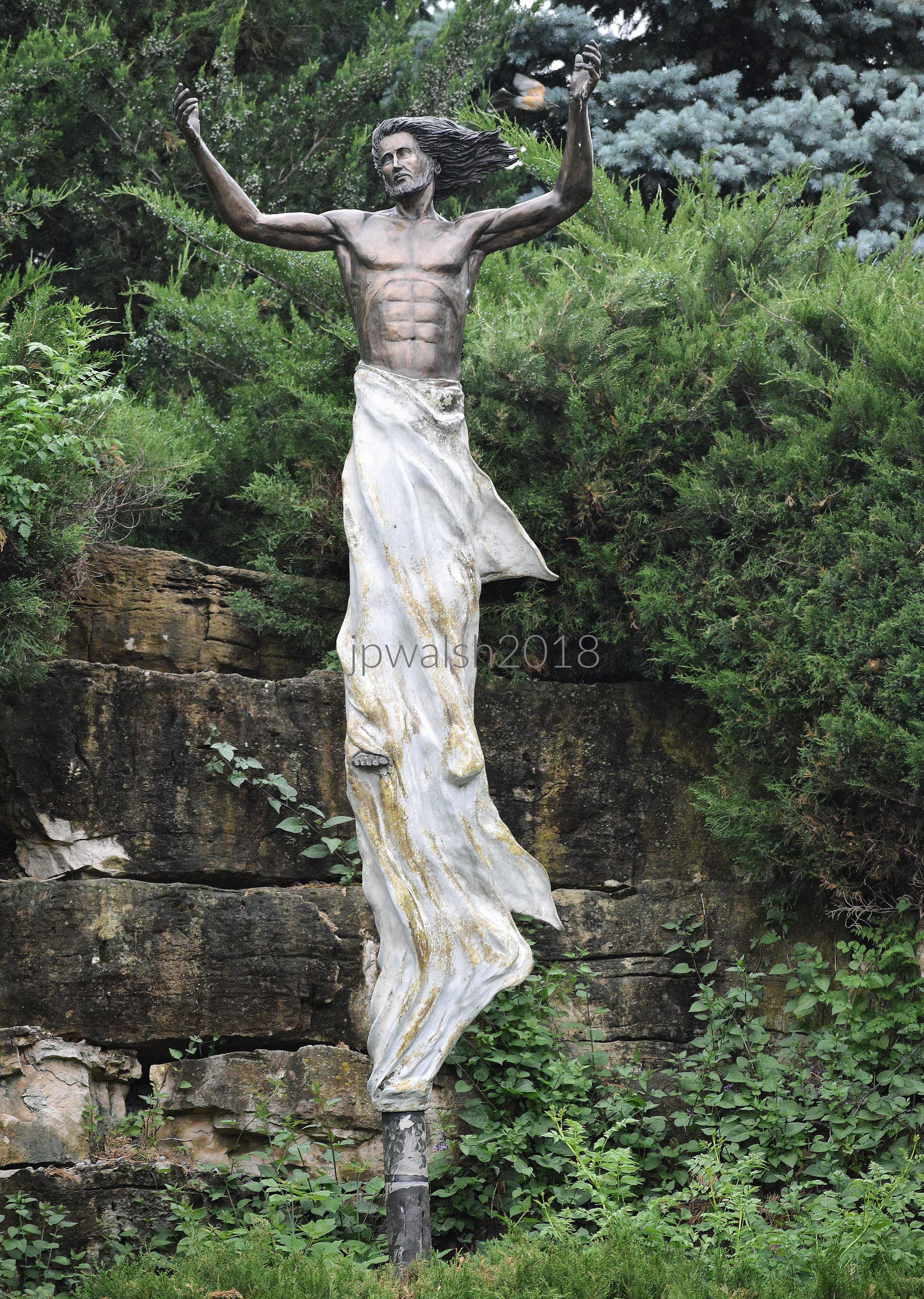
FEATURE image: (detail) Jesus Appears to Mary Magdalene, John 20:11-18.

INTRODUCTION

One hour’s drive (about 40 miles) south of downtown Chicago—and 90 minutes drive from the University of Notre Dame near South Bend, Indiana—is The Shrine of Christ’s Passion. Within a 30-acre site whose landscaped rocks, hills, and trees envelop the visitor, the shrine is located on busy U.S. 41 at 10630 Wicker Avenue in St. John, Indiana. A pioneer town settled in 1837, St. John still sits among farm fields though there is increasingly more development only minutes from the Indiana-Illinois state line.

On the historic Wachter family farm, the level terrain is a perfect outdoor setting for an array of multi-media and interactive attractions. Most visitors, whether as individuals or in groups, come to the shrine to traverse the half-mile winding concrete pathway that contain over 40 life-sized bronze sculptures which dramatize the Passion of Jesus Christ in the Bible.

The visit to the shrine begins in the well-stocked gift shop and leads directly outdoors to the dramatization of Jesus at The Last Supper and into the Garden of Gethsemane where Jesus prays. This is followed by the 14 traditional Stations of the Cross. The visit ends at Jesus’s empty tomb and his appearance to Mary Magdalene. Finally there is the dramatic Ascension of the Risen Jesus into Heaven on Mount Olivet.  

The shrine opened in 2011 and added its latest attraction– namely, a re-creation of the rock-filled path up Mount Sinai to where Moses has received the 10 Commandments –in 2017.

The Shrine of Christ’s Passion required a decade of planning and over $10 million dollars to build. Each setting or station for Christ’s passion has an orientation kiosk. Each features the well-known recorded voice of American television journalist Bill Kurtis. A push of a button has Mr. Kurtis’s voice over the kiosks’ speakers provide a clear and brief description in English of the sculptures’ scenes followed by a short meditation.

Along the broad concrete pathway the prayer trail is meditative and its easy progression from station to station lends itself to discovery. Formed hills, planted trees, bushes, and grasses as well as many large boulders, provide a complete landscape far from the outside world. The design creates a terrain that is self-contained and works to evoke the arid climate of the Holy Land where the last days of Christ can become vibrant today.

Upon exiting the gift shop with its walls and shelves of tempting religious articles and other items for purchase — all proceeds apparently go to the upkeep of the shrine– one steps into an outdoor pastoral setting which offers the immediate transition into the world of the Bible and following in the footsteps of Christ during his darkest moments. Visitors share the trail with others from around the nation and world. This is part of what makes each visit to the shrine unique and alive. Yet there is ample space and freedom to enjoy one’s own completely personal experience.

Whenever one may visit the shrine — it is open 361 days a year– the prayer trail has an atmosphere that is quiet and respectful. There is always a place to sit and drink in the sculpture art detailing the greatest story ever told. Among its flora, evocative rock and land formations, and realistically-rendered life-sized sculptures depicting Jesus Christ’s suffering –- one witnesses in a a new way Christ’s mission which triumphed over sin and death. 

A large and impressive place, The Shrine of Christ’s Passion retains a human scale along with giving the visitor a sense of being serenely out in nature.  Depending on how much time a visitor can spend, a visit to the shrine could possibly be accomplished in as little as 30 minutes though at least an hour should be allowed to see and begin to savor everything it has to offer.

In addition to the main prayer trail and gift shop, the shrine includes more attractions such as the Moses, Mount Sinai, and the 10 Commandments trail; The Sanctity of Life Shrine; and Our Lady of The New Millennium, a monumental three-story (34 feet) tall statue of the Virgin Mary constructed out of over 8,000 pounds of stainless steel.

The Shrine is operated by a non-denominational nonprofit, private foundation. Admission to all attractions at the shrine is free. The Shrine is open daily from 10:00 a.m. – 5:00 p.m., Thursdays until 8:00 p.m. The Prayer Trail is open year round, weather permitting.  

Sources –
The Shrine of Christ’s Passion Official website – http://shrineofchristspassion.org/
Our Lady of the New Millennium – https://www.chicagotribune.com/news/ct-xpm-2011-03-04-ct-talk-mary-statue-0305-20110304-story.html

IMAGES FROM THE PRAYER TRAIL

Main Entrance on U.S. 41 at 10630 Wicker Avenue in St. John, Indiana, minutes from the Illinois-Indiana state line. Just 40 minutes from downtown Chicago, there is ample free parking and tour buses are welcome.

The Gift Shoppe.

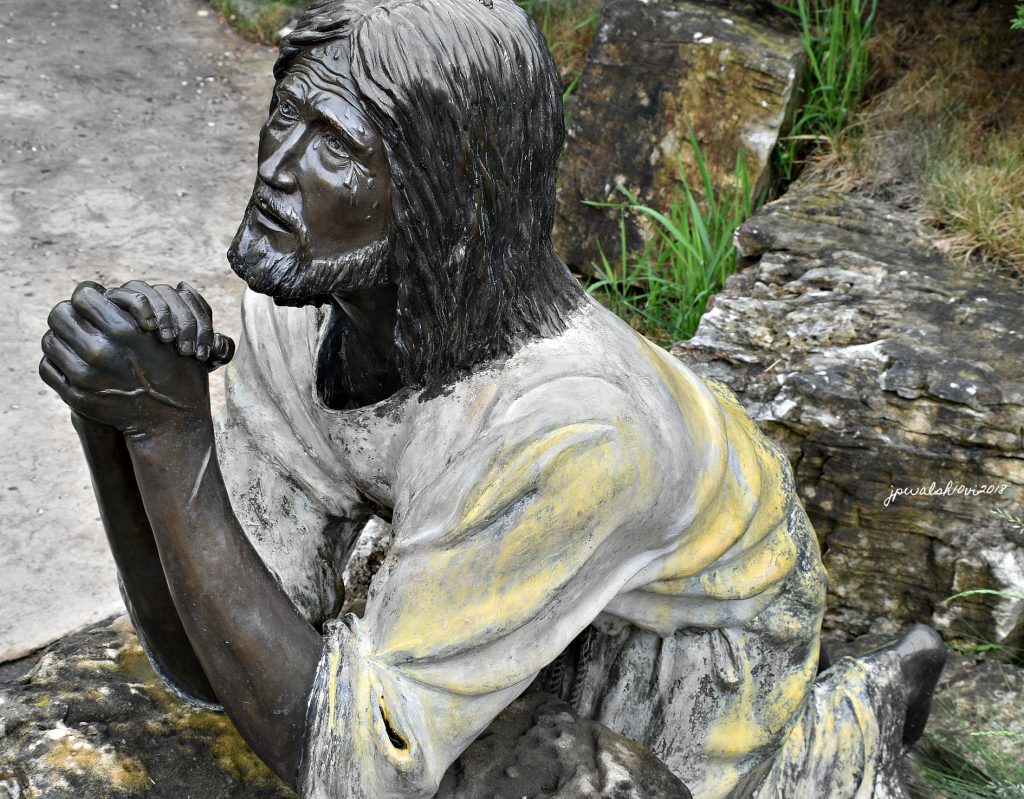
The Last Supper Luke 22:19

“And he took bread, gave thanks and broke it, and gave it to them, saying, “This is my body given for you; do this in remembrance of me.”

Garden of Gethsemane Mark 14:34

“My soul is overwhelmed with sorrow to the point of death,” Jesus said to them. “Stay here and keep watch.”

THE 14 STATIONS OF THE CROSS AT THE SHRINE OF CHRIST’S PASSION, ST. JOHN, INDIANA.

1. Jesus is condemned to death Matthew 27: 19-26.

“When Pilate saw that he was not succeeding at all, but that a riot was breaking out instead, he took water and washed his hands in the sight of the crowd, saying, “I am innocent of this man’s blood. Look to it yourselves.”…Pilate had Jesus flogged, and handed him over to be crucified.”

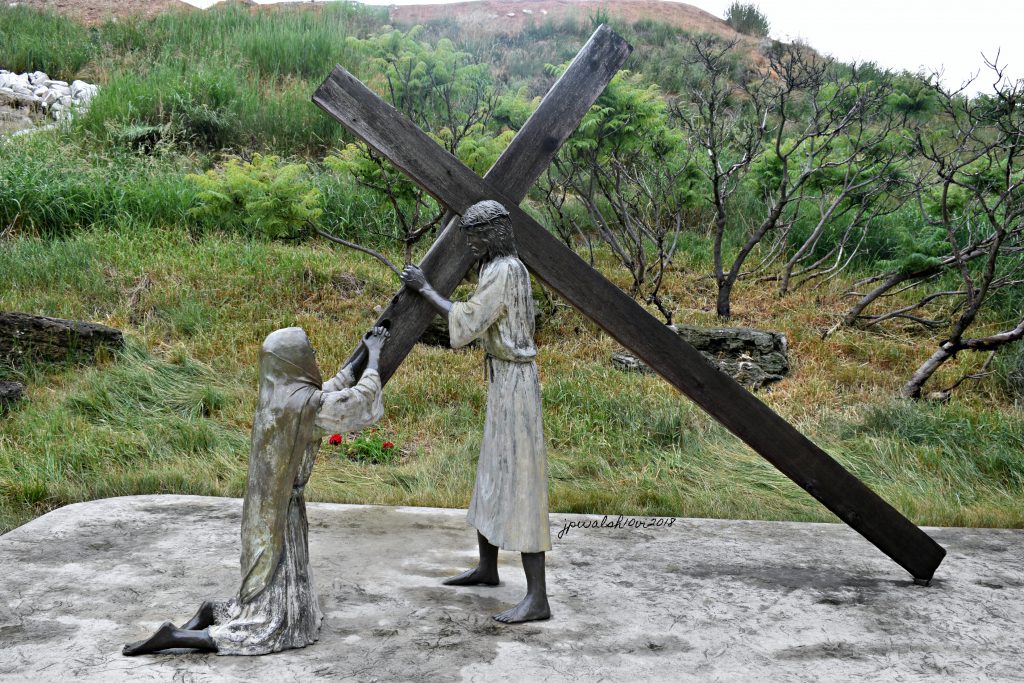
2. Jesus carries His cross John 19:16-17

“Then Pilate handed him over to be crucified. The soldiers took charge of Jesus, who carried his own cross to a location called “The Place of a Skull,” known in Aramaic as Golgotha.” 

3. Jesus falls for the first time Isaiah 53:1-3

“He was despised and rejected by mankind,
    a man of suffering, and familiar with pain.
Like one from whom people hide their faces
    he was despised, and we held him in low esteem.”

4. Jesus meets His mother, Mary Lamentations 1:12

“Is it nothing to you, all you who pass by?
    Look around and see.
Is any suffering like my suffering
    that was inflicted on me..?”

5. Simon of Cyrene helps Jesus carry the cross Luke 23:26

“They seized Simon from Cyrene, who was on his way in from the country, and put the cross on him and made him carry it behind Jesus.”

6. Veronica wipes the face of Jesus Psalm 17:15

“As for me, I will be vindicated and will see your face;
    when I awake, I will be satisfied with seeing your likeness.”

7. Jesus falls for the second time   Isaiah 53:4-6

“Surely he took up our pain
    and bore our suffering,
yet we considered him punished by God,
    stricken by him, and afflicted.”

8. Jesus meets the women of Jerusalem Luke 23:27-31

“A large number of people followed him, including women who mourned and wailed for him. 28 Jesus turned and said to them, “Daughters of Jerusalem, do not weep for me; weep for yourselves and for your children.”

9. Jesus falls for the third time Isaiah 53:10-11

“Yet it was the Lord’s will to crush him and cause him to suffer,
    and though the Lord makes his life an offering for sin,
he will see his offspring and prolong his days,
    and the will of the Lord will prosper in his hand….”

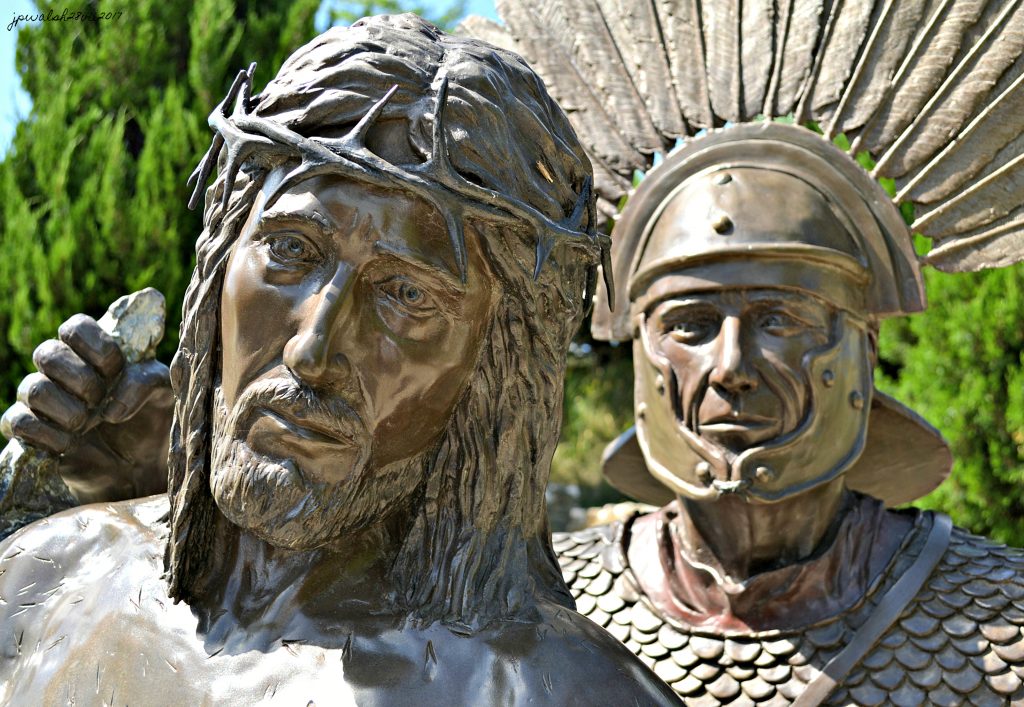
10. Jesus is stripped of His clothes Matthew 27:27-31

“They stripped him and put a scarlet robe on him, and then twisted together a crown of thorns and set it on his head. They put a staff in his right hand. Then they knelt in front of him and mocked him.”

11. Jesus is nailed to the cross Luke 23:33-34

“When they came to the place called the Skull, they crucified him there, along with the criminals—one on his right, the other on his left.”

12. Jesus dies on the cross­ Luke 23:44-49

 “Jesus called out with a loud voice, “Father, into your hands I commit my spirit.” When he had said this, he breathed his last.”

13. Jesus is taken down from the cross Mark 15:39

“When the centurion who stood facing him saw how Jesus breathed his last he said, ‘Truly this man was the Son of God!'”

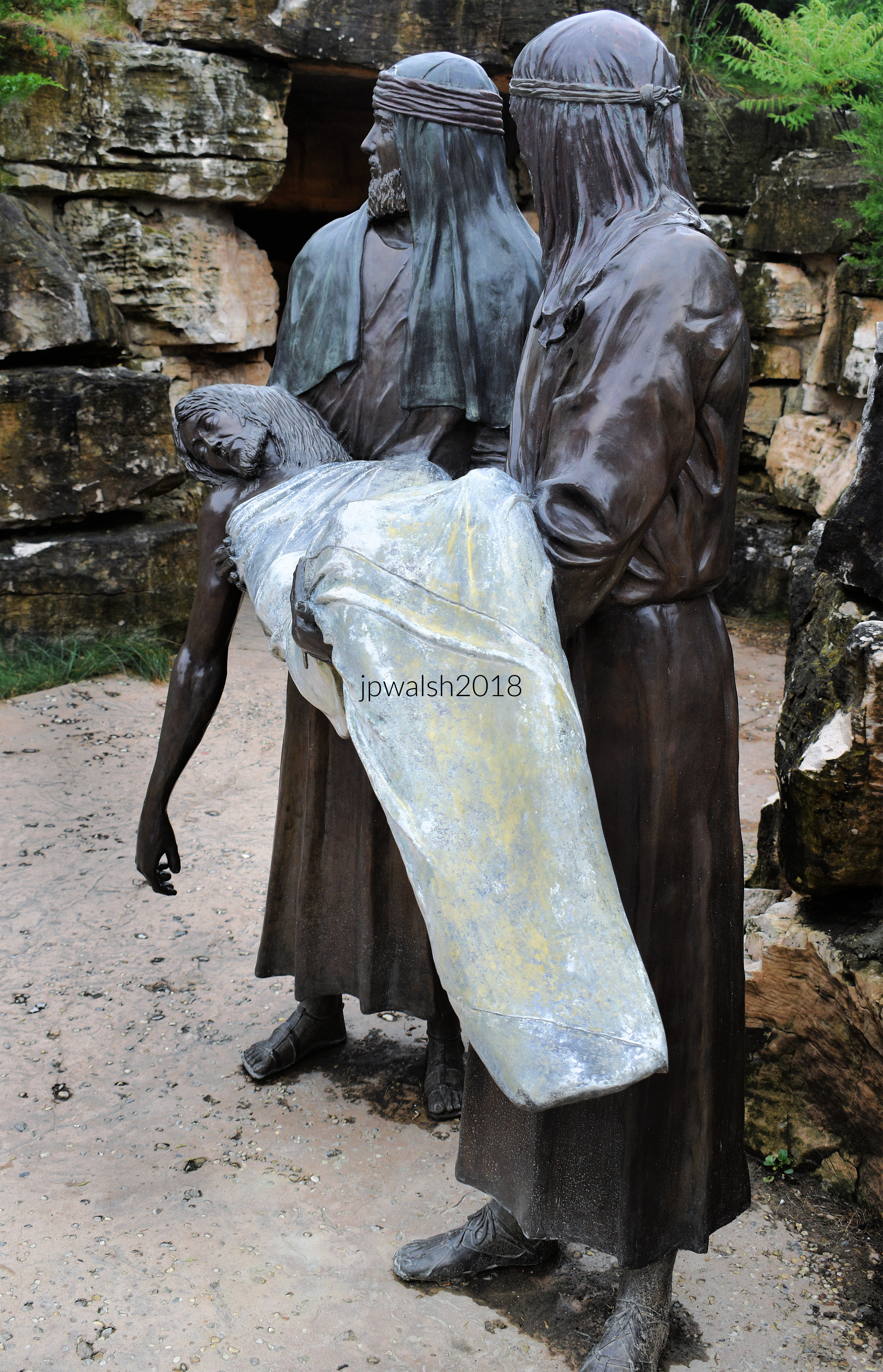
14. Jesus is placed in the tomb Luke 23:50-53

“Going to Pilate, Joseph of Arimathea asked for Jesus’ body. Then he took it down, wrapped it in linen cloth and placed it in a tomb cut in the rock, one in which no one had yet been laid.”

June 2018. 87% 7.94mb DSC_9082

The Resurrection of Jesus. Matthew 28.

1 After the sabbath, as the first day of the week was dawning,* Mary Magdalene and the other Mary came to see the tomb.

2 And behold, there was a great earthquake; for an angel of the Lord descended from heaven, approached, rolled back the stone, and sat upon it.

3 His appearance was like lightning and his clothing was white as snow.

4 The guards were shaken with fear of him and became like dead men.

5 Then the angel said to the women in reply, “Do not be afraid! I know that you are seeking Jesus the crucified.

6 He is not here, for he has been raised just as he said. Come and see the place where he lay.

Jesus Appears to Mary Magdalene John 20:16

 “Jesus said to her, “Mary.” She turned toward him and cried out in Aramaic, “Rabboni!” 

MORE of the Prayer Trail

The Ascension Acts of the Apostles 1:9

“…Jesus was taken up before their very eyes, and a cloud hid him from their sight.”

June 2018. 68% 7.90mb DSC_0310

The Ascension of Jesus is described twice in the New Testament, and both accounts come from Luke the Evangelist. The first appears at the end of his Gospel (Luke 24:50–53); the second opens the Acts of the Apostles (Acts 1:6–12).

In Acts, Luke introduces a crucial detail: a forty‑day period (Acts 1:3) during which the risen Jesus appears to the apostles, teaches them, and prepares them for their mission. This time frame is not emphasized in the Gospel account, suggesting that Luke separates the Resurrection and Ascension in Acts not because he inherited two different traditions, but because doing so serves a narrative purpose. Acts uses the forty days to situate the apostles within the larger story of Israel’s covenant history and to frame the early Church as the continuation of God’s saving work.

Once Jesus rises from the dead, the disciples recognize him as the Messiah. It is therefore understandable that, in Acts, they ask whether he will now restore Israel’s political kingdom. Luke, writing for future Christians, places in Jesus’s mouth a deliberately open‑ended reply. The timing of the parousia — the Second Coming — is not for them to know. Their task is different: to wait for the Holy Spirit, whose power will make them witnesses “to the ends of the earth.” Jerusalem, the site of Jesus’s Passion and Resurrection, becomes the starting point of this worldwide mission.

Acts adds further symbolic depth to the Ascension. Jesus is taken from their sight by a cloud, a biblical sign of divine presence and a motif associated with end‑times imagery (Luke 21:27). The event occurs on the Mount of Olives, a location already charged with eschatological expectation. As Jesus is lifted up, two figures in dazzling garments appear — the same angelic type who announced his birth (Luke 2:9) and proclaimed his Resurrection (Luke 24:4–7). Their message links Ascension and Second Coming: the Jesus who is taken up in glory “will return in the same way you saw him go” (Acts 1:11).

Christian tradition understands the mystery of Christ by tracing a single arc from the Incarnation to the Ascension. It begins at the Annunciation (Luke 1:26–38), when the eternal Word — the One who “was with God and…was God” (John 1:1) — takes on human nature in the womb of Mary. In this moment, the divine and human are united in the Person of Jesus.

The Ascension brings this union to its fulfillment. Here, the “new, saved man” enters the very life of the Father, revealing the destiny of redeemed humanity. Christ’s glorified body becomes the perfect expression of what humanity is meant to be in God: a life whose very mode of existence is love, for “God is love” (1 John 4:16). In heaven, the God‑Man embodies this reality completely.

The Ascension is immediately followed by Pentecost, when the apostles receive the Holy Spirit from the risen Christ. From that moment forward, they speak not only of Christ exalted in heaven, but of “Christ in us” — the indwelling presence that makes believers participants in his risen life.

Photographs and text:


UNITED STATES. LEE MILLER (1907-1977), Photographer, Surrealist, and Aesthete, Part 1: the Poughkeepsie years, 1907-1925.

FEATURE image: The Millers in 1920. Lee, Erik, Theodore, Florence and John.

The Millers, Theodore, Elizabeth Lee, Erik, John and Florence, in 1923.

By John P. Walsh

In the first decades of the twentieth century it became increasingly common practice for established American families to reflect and display their personal lives as well as social status in the timely gathering of photographic portraits. Progressively, the American family unit grew more compact in tandem with its greater personal affluence in an economy increasingly dominated by mechanization and the manufacture of consumer goods, all of which worked relentlessly to replace farming as the engine of American enterprise.

The Millers of Poughkeepsie, New York – a seventeenth century town eighty miles north of New York City which in the eighteenth century had progressed to an early state capital and, by 1910, a significant stop on the railroad line1 – shared that prototypical family form as they gathered for their family portraits between 1914 and 1932.

After 1900, camera availability and quality had markedly improved. Moving into the popular culture, photography allowed the display of a family image that is relaxed and natural as well as a time capsule of its members. In the instance of the Millers their formal and informal photographic portraits capture what appears to be a cohesive family unit expressive of their times. They are within a thoughtfully creative pose and posture likely managed by the head of the household, Theodore Miller (1872-1971), an energetic lifelong amateur photographer.

These portraits are ambitious for an aesthetic which manifests as a controlled vibrancy in the sitters as well as overall composition. The outcome for these portraits which all include Lee Miller as a child and teenager are photographs that combine the qualities of the fine arts with the more delicate workings of a machine. 

Lee Miller at about eight months old, c. December 1907. Taken by her father Theodore Miller, the amateur photographer would photograph his daughter near incessantly from her childhood into adulthood. Part chronicle, part creative project, their photographer-model relationship could be unusual as he photographed his daughter nude at times over the same time period.

Lee Miller at 8 years in a photograph by her father, Theodore Miller, in 1915.

The Millers, headed by highly credentialed mechanical engineer and amateur photographer Theodore Miller and his wife Florence (1881-1954), saw the couple produce a handsome family: brothers John MacDonald (December 15, 1905-2008) and Erik Theodore (born May 22, 1910-?) and middle daughter, Elizabeth Lee, later Lee Miller, Lady Penrose (April 23, 1907-1977).

In childhood, Lee was curious, had her special interests and likes, especially the newly invented movies, and was encouraged by her parents to be free and active. Rambunctious in youth, Li-Li (Elizabeth Lee’s nickname) expressed herself as a sort of tomboy and later a definite teenage rebel. In school she was often undisciplined and, as the ringleader, provocative.2

When she was ten years old in 1917, her father gave Li-Li an inexpensive and popular Kodak Brownie to take photographs. Kodak used the box camera to sell more products and popularize photography. Almost more like a toy, the Brownie series was first introduced in 1900 and extensively marketed to children,3 although they were taken by soldiers into World War I.

Kodak Brownie similar to the first camera Lee Miller had when she was 10 years old that was given to her by her father.

“Kodak Brownie Target Six-20” by John Kratz is licensed under CC BY-NC-SA 2.0

In the age of American invention, teenage Li-Li Miller, intelligent and creative, was fascinated by her father’s enduring experimentation with new camera gadgets including stereoscopy. That photographic application produced two-dimensional images which, when combined in the brain, gave the perception of three-dimensional depth.4

Traditional stereoscopy.

“Stereoscopy” by designrecherche is licensed under CC BY-NC-SA 2.0

The Millers in 1914. Florence, Erik, Lee, John, Theodore.

Lee Miller and her mother in 1914.

In an almost desperate search for an academic program to constructively engage their daughter’s interest, the Millers placed Li-Li in and out of several schools around Poughkeepsie. Lee traipsed through Governor Clinton school to Oakwood Quaker to St. Mary’s Catholic to Eastman Business College to Putnam Hall known as the prep school for local Vassar College.

Even with extra-curricular dance and theater activities as well as sojourns into creative writing – along with extended trips to New York City and, accompanying her father on business trips, such as to Puerto Rico on a cruise – by 1920 Li-Li seemed only most uniquely prepared to embrace the intrepid nonchalance of the flapper whose age had arrived thanks to the appearance of This Side of Paradise by F. Scott Fitzgerald.

“The Flapper” as conceived by American illustrator Frank Xavier Leyendecker (1876-1924) for Life magazine in 1922. It seemed by the start of the 1920’s, the teenage rebel and provacateur Lee Miller was ready to embrace the Flapper’s nonchalant image.

“‘The Flapper’ (1922)” by Swallowtail Garden Seeds is marked with CC PDM 1.0. This work is in the public domain.

The Millers in 1920. Lee, Erik, Theodore, Florence and John. The teenager bobbed and later permed her golden hair to match a new decade’s fashionable style as she looked for the next exit out of Poughkeepsie.

At the end of a record-cold spring of 1925, Li-Li, called spoiled and well-to-do by many of her neighborhood classmates, took a ship for Paris, France, on May 29 of that year. The Millers’ intention was not to internationalize the shortcomings of their daughter’s educational career, but to assist in the rebellious 18-year-old’s discovery and development of a talent and skill to match her artistic temperament.5

No one could predict in 1925 that after spending this short period of time in Europe as a teenager, Li-Li Miller of Poughkeepsie, New York, will, as Lee Miller, finally return to Europe to spend most of the rest of her life, over 50 years. In those adult years, Miller became a celebrated artist’s and cinema’s muse as well as an important World War II photographer.

In the cold spring of 1925, Lee Miller is joined by her father as the 18-year-old Lee boards the ship that will take her to Paris to study. The family’s hopes include that in Paris Lee will find and develop some talented skill to express her artistic temperament.

FOOTNOTES:

1. Burke, Carolyn, Lee Miller: A Life, Alfred A. Knopf, New York, 2006, p.6.
2. Haworth-Booth, Mark, The Art of Lee Miller, Yale University Press, 2007, p. 14; provocative-Burke, p. 24.
3. Roberts, Hilary, Lee Miller: A Woman’s War, Thames & Hudson, 2015, p. 190.
4. see Lincoln, Tom, Exercises in Three Dimensions, 2011. http://www.lincolntom.com/pages/Exercises%20in%203D.html- retrieved April 17, 2019
5. Roberts, p.194; https://thestarryeye.typepad.com/weather/april/page/2/

UNITED STATES. My Art Photography: OVER THE TOP TO VICTORY or “Doughboy,” 1921, in Wheaton, Illinois, by John Paulding (American, 1883-1935).

FEATURE image: Over the Top to Victory (“Doughboy”), 1921, John Paulding, Memorial Park, Wheaton, Illinois.

“Over the Top to Victory” is a bronze sculpture that depicts an American infantryman in World War I (known popularly as “doughboys”) that was created by American sculptor John Paulding (1883-1935).

The statue was cast in 1921 by the American Art Bronze Foundry in Chicago and stands in Memorial Park in Wheaton, Illinois.

Paulding studied sculpture at The School of the Art Institute of Chicago and is best remembered today for his World War I memorials.

When the United States entered World War I in April 1917 the soldiers fought valiantly. An armistice was signed on November 11, 1918—the origin of today’s Veterans Day—in a victory for the allies. The war had started in August 1914 and had gone on for over four years.

The statue was dedicated on Armistice Day, November 11, 1929, in honor of all World War I veterans in Wheaton, Illinois. Memorial Park had been established in central Wheaton in 1921 specifically to honor war veterans. Four months before this statue was dedicated—on July 12, 1929—the Wheaton Illinoian opined about The Doughboy: “The statue is a fitting memorial to the soldiers of the community who died fighting for our cause. Let us not forget so easily!”

After more than 70 years standing proudly outside in the elements, the statue was refurbished and conserved in August 2000 by Venus Bronze Work, Inc., in Detroit, Michigan—and rededicated on Veteran’s Day of that year. The same local American Legion Post led the dedication ceremonies in both 1929 and 2000.

"Over the Top to Victory" Doughboy Statue
“Over the Top to Victory,” 1921, bronze, John Paulding (American, 1883-1935), Memorial Park, Wheaton, Illinois.

Photographs and Text:

UNITED STATES. Former Miss Denmark to Playboy Model DANE ARDEN (ELSA SØRENSEN) poses as a carhop in a 1950’s Glamour Photograph. Historical Context.

FEATURE image: “Galaxy Carhop” by JackAZ Photo is marked with CC BY-NC-SA 2.0.

By John P. Walsh

Dane Arden (1934-2013) was an international magazine model in the 1950’s and 1960’s. She was born Elsa Sørensen on March 25, 1934 in Copenhagen, Denmark. Following her win of the title of Miss Denmark as a teenager she went to live with her family in Vancouver, Canada.

Her debut in the September 1956 issue of Playboy magazine gave her much publicity. Elsa Sørensen went on to appear multiple times in that American men’s entertainment/lifestyle publication. As Dane Arden, she modeled for other magazines such as the U.S. versions of Australia’s Adam magazine and Milan, Italy’s illustrated weekly news magazine, Tempo, among others.

Elsa moved to Los Angeles, California and married twice. She died at 79 years old on April 18, 2013 from complications following a bicycle accident in Vero Beach, Florida.

Dane Arden (Elsa Sørensen) in 1956 in her carhop uniform.

In one favorite set of non-nude color photographs of Dane Arden—this from 1956, the same time as her Playboy shoot— the 22-year-old Danish model expresses her beauty, physical dynamism and engaging personality as she poses as a carhop bringing fast food to people in their cars at drive-in restaurants.

Working carhops first appeared in the early 1920’s along expanding and popular interstate roads. In the 1920’s the carhops were mostly boys and men. During and after World War II, the service role was increasingly performed by women.

By the mid1950’s, abundant drive-ins had to compete for customers in fast-moving automobiles and so carhop uniforms had to be eye catching. Uniforms on busy roads would often be creatively thematic with military, airline, space age, and cheerleader uniforms predominating.

The 1956 color photograph of Dane Arden as a carhop (or waitress) is by Los Angeles-based glamour photographer Peter Gowland (1916-2010), the son of a Hollywood film actor and actress. In a photography career spanning over six decades and characterized by technical innovation, Gowland’s glamour and celebrity photography appeared on over one thousand magazine covers.

Dane Arden is an especially alluring carhop who wears a skimpy plaid-patterned matching fringed halter top and short shorts with fringed apron cut to size. Wearing the typical flat shoes and head gear worn by many female car hops at the time, Dane Arden proffers the perfect uniform to greet her customers with their lime-green cups of hot coffee.

Elsa Sørensen

Former Miss Denmark Elsa Sørensen, known professionally as Dane Arden, was a popular glamour model in the mid-1950’s and early 1960’s. Dane Arden posed in American men’s entertainment and lifestyle publications in the nude and non-nude.

Dane Arden displayed the blonde bombshell image that became very popular in mid-20th century American culture. She posed both nude and non-nude for pop-culture magazines in the 1950’s and 1960’s.

Dane Arden Tempo Oct 30 1956

Dane Arden good-humoredly believed there was no “nuttier business” to be in than posing for cheesecake pictures in these popular magazines. In her magazine spreads, Dane Arden shared with its mainly male readership that it took her longer to achieve an attractive “disheveled look” in a swimsuit for a beach shoot than if she was preparing for a fancy dress-up costume ball.

There is a short color documentary filmed in the mid 1970’s at the legendary Keller’s Drive-In in Dallas, Texas. Though shot at the end of an era for drive-in car hops along America’s open roads since the 1920’s, the film makes it easier to imagine the pace and purpose of Dane Arden’s 1956 glamour photograph of a female carhop at a popular mid20th century American roadside eatery.

The documentary about carhops and American Graffiti-style drive-in culture which once littered America’s roads coast to coast–and Dane Arden’s glamour photograph dressed as a car hop–placed the model’s photographic career smack dab in the middle of mainstream American culture.

Keller’s Drive-In which is featured in the film is a classic spot to enjoy a no-frills burger and cold beer. Its founder Jack Keller once worked at Kirby’s Pig Stand which became the nation’s first drive-in restaurant empire. Keller passed away in 2016 at 88 years old.

Keller’s original location opened in 1950 and closed in 2000. The oldest restaurant in the American chain today is the one that opened in 1955 on Northwest Highway in Dallas. There are two other Keller’s restaurants in Dallas.

In addition to Playboy, Elsa Sørensen appeared in the U.S. version of Adam magazine using the name Dane Arden which she used for all her non-Playboy modeling assignments.

Sources:
Dane Arden biography – Lentz III, Harris M., Obituaries in the Performing Arts, McFarland, 2013 and http://www.pulpinternational.com/pulp/entry/1960-photo-of-Danish-model-Elsa-Sorensen-aka-Dane-Arden.html (retrieved Aug. 28, 2017); women carhops – Koutsky, Kathryn Strand, Koutsky, Linda, and Ostman, Eleanor, Minnesota Eats Out: An Illustrated History, Minnesota Historical Society Press, 2003, p. 134; carhops history – http://www.history.com/this-day-in-history/last-day-for-texas-celebrated-drive-in-pig-stands (retrieved Aug. 28, 2017); story of Keller’s – http://res.dallasnews.com/interactives/kellers/ published on March 18, 2015 and http://www.dallasobserver.com/restaurants/the-man-who-brought-us-one-of-dallas-greatest-burgers-has-died-8271874 (retrieved Aug. 28, 2017).


UNITED STATES. JOHN SINGER SARGENT (1856-1925, American): Portraits of the 1870’s and 1880’s.

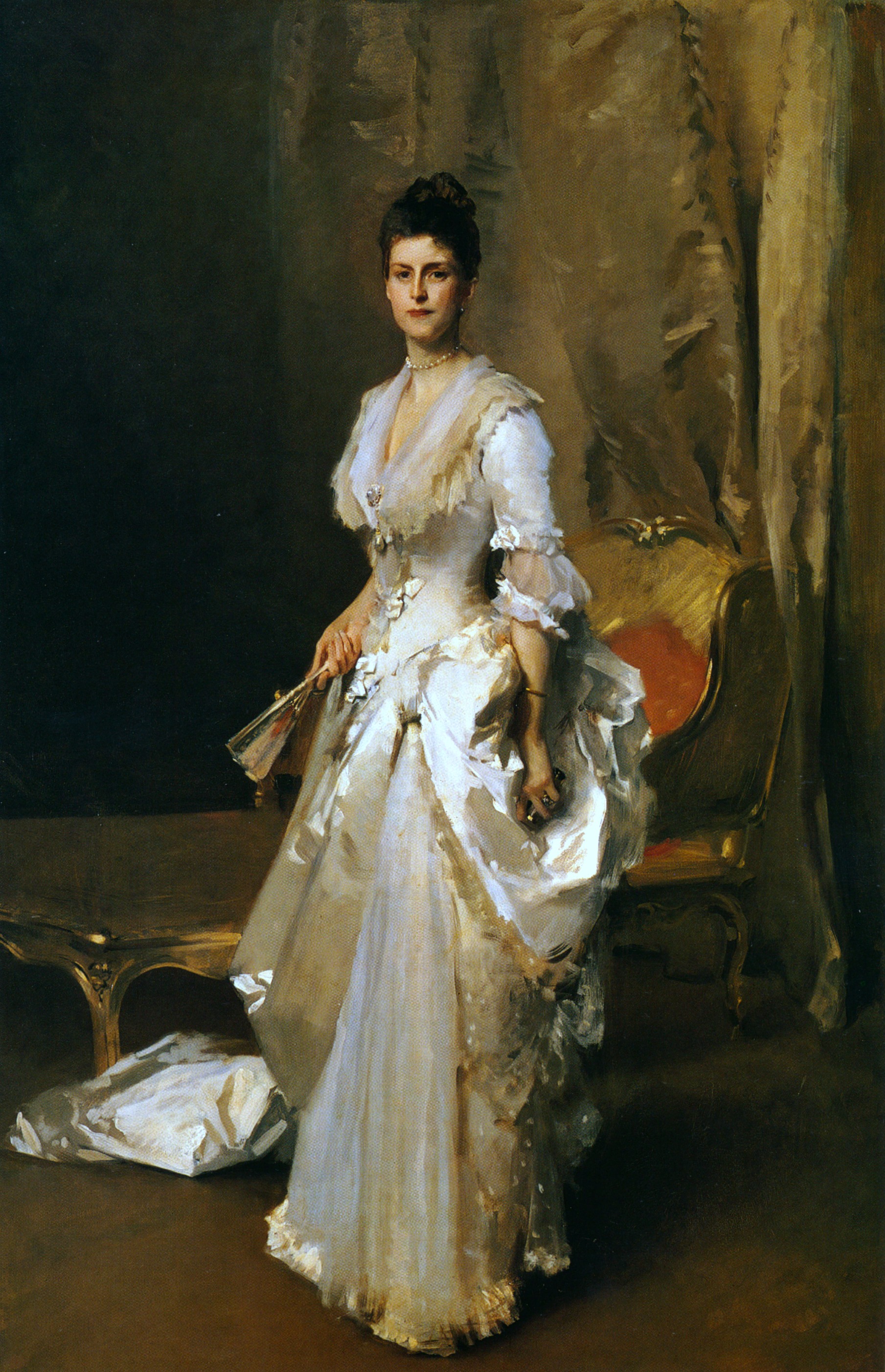
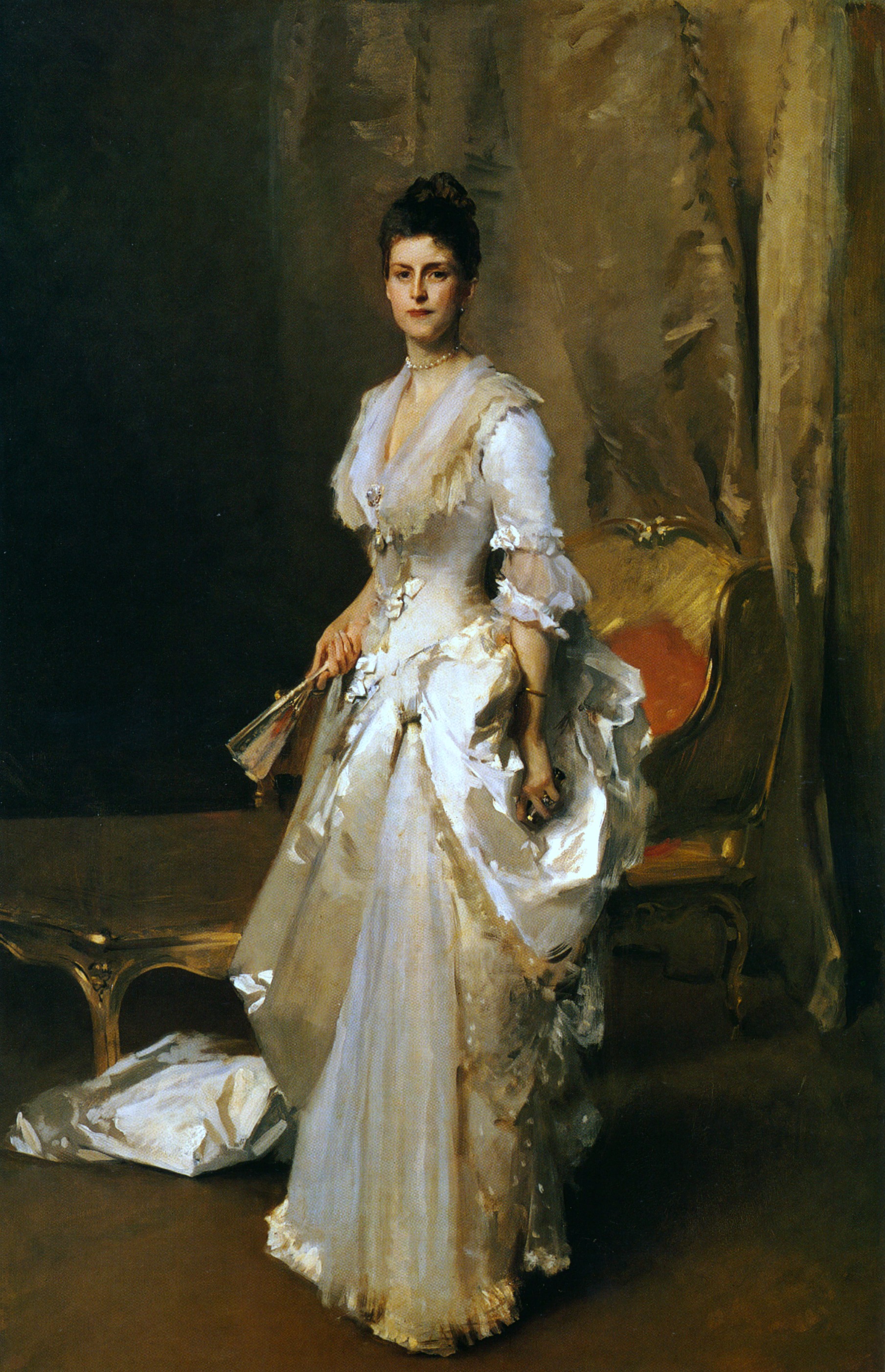
FEATURE image: Margaret Stuyvesant Rutherfurd White (Mrs. Henry White), 1883, oil on canvas, 225.1 × 143.8 cm (88 5/8 × 56 5/8 in.), National Gallery of Art, Washington, D.C. from Corcoran Collection, 2014.

By John P. Walsh

The art works by John Singer Sargent (1856-1925) in this post are ones in oil, watercolor, and pastel. They begin to present Sargent’s professional output during his formative years in France, England and his trips to the United States.

While Sargent’s early portrait subjects range from famous people such as writer Robert Louis Stevenson (1850-1894) and actress Ellen Terry (1847-1928) in her role as Lady Macbeth, Sargent’s first portraits were mostly of family and friends. These included artists, writers, musicians, and some of the artist’s romantic interests.

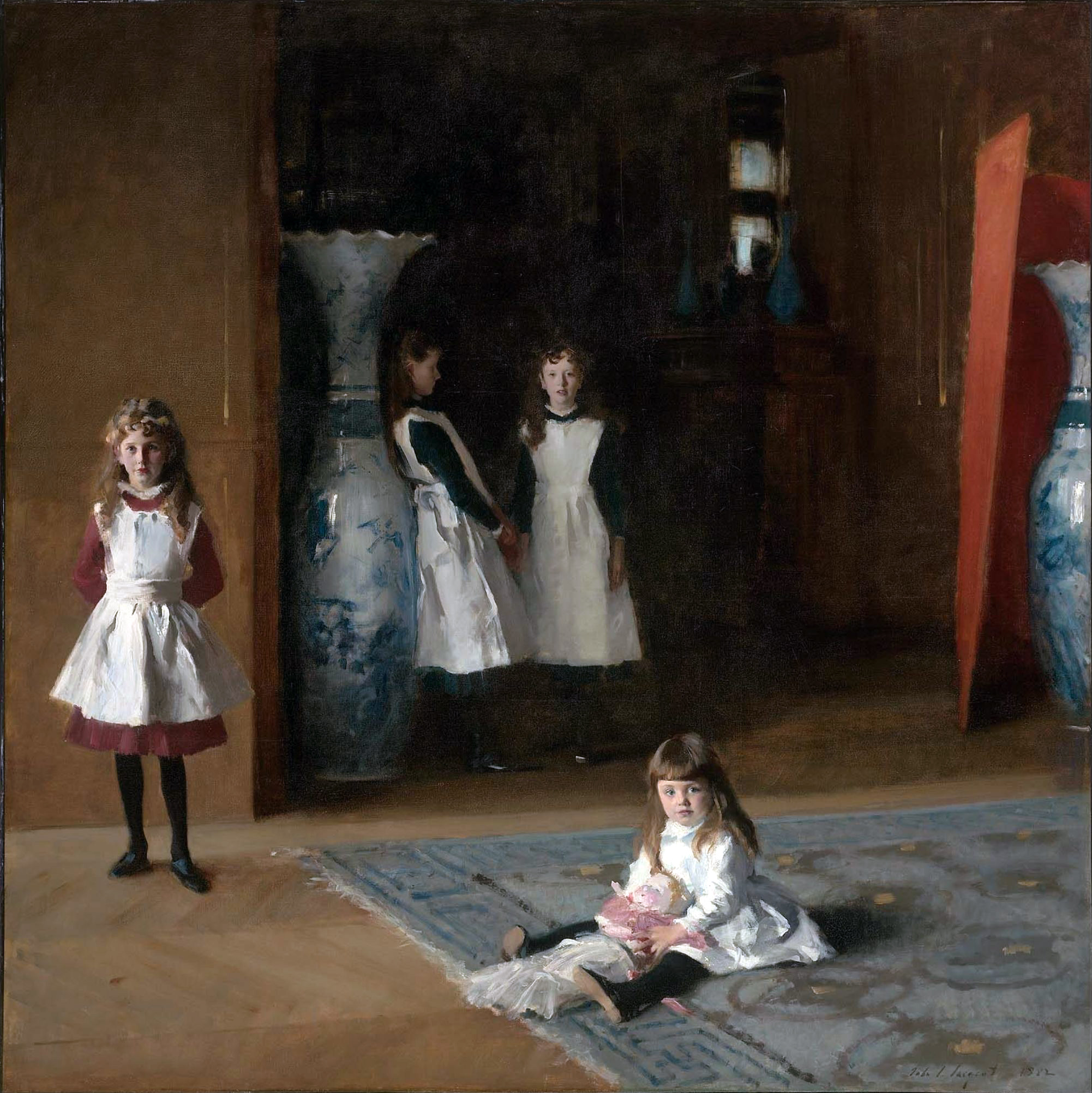
Sargent’s artistic practice developed within a swiftly expanding social circle of prominent American expatriates and Europeans which included portrait commissions from business, military, legal and medical practitioners. His portrait work extended to their wives and children. It was during this creative period that Sargent painted his well-known group portrait The Daughters of Edward D. Boit (1882) and the portrait of an exotic and controversial Madame X  (Mme. Virginie Amélie Avegno Gautreau).  

Each of the following art works are identified and described with a brief caption. These include the art work’s title (usually a sitter’s name), date created, and dimensions, markings and location, when known. Further, it often discusses how the sitter knew Sargent and the historical context of the art work including some of its particular provenance and exhibition history.

1fixed

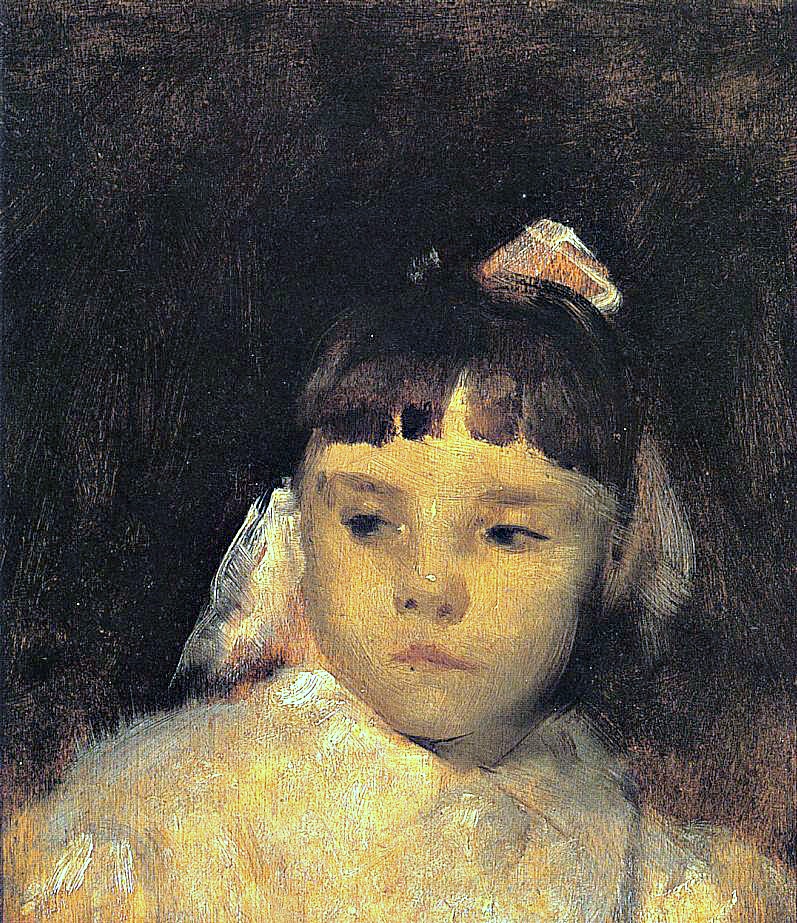
Violet Sargent, c. 1875, oil on panel, 27.7 x 23.5 cm (10 ½ x 9 ¼ in.), private collection. Originally inscribed across the top “Violet” but removed in a later cleaning. The sitter was the artist’s youngest sister (1870-1955).

2fixed

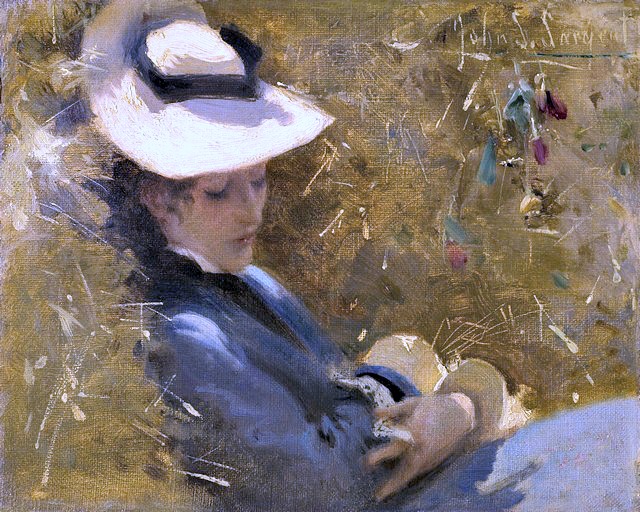
Resting, c. 1875, oil on canvas, 8½ x 10 9/16 in. (21.6 x 26.8 cm), inscribed upper right: John S. Sargent, Sterling and Francine Clark Art Institute, Williamstown, Massachusetts. Informal pose and setting, bold treatment of light, this is one of the artist’s early outdoor works. The identity of the sitter is unknown.

3-john_singer_sargent_emily_sargent_pleasantsfixed

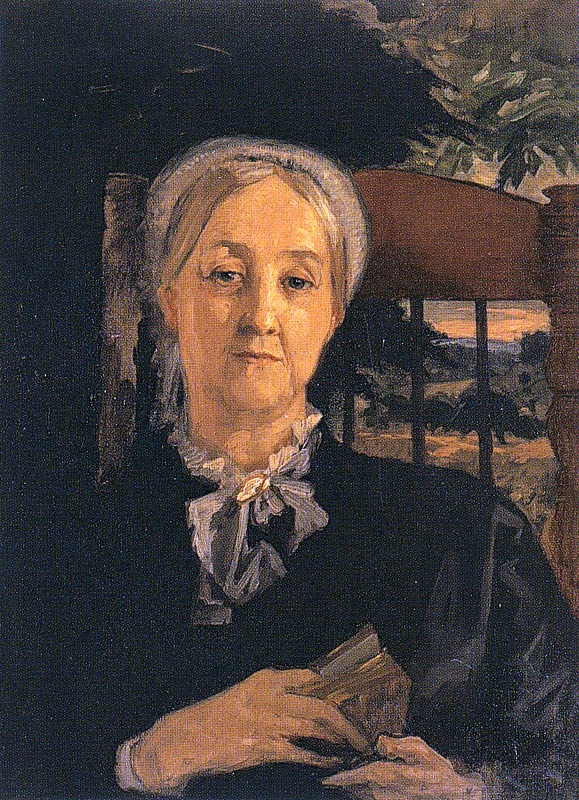
Mrs. Emily Sargent Pleasants, c. 1876, oil on canvas, 55.8 x 40.6 cm (22 x 16 inches), private collection. The artist’s aunt (his father’s sister). Dr. Pleasants (Emily’s husband) visited the artist’s family in France in 1875, but it is not known if she came along. The next year the 20-year-old American artist, born in Florence, Italy,  visited the United States for the first time and went to the Pleasants home in Radnor, Pennsylvania. The high-backed rocking chair in the painting points to this portrait being done there.

5fixed

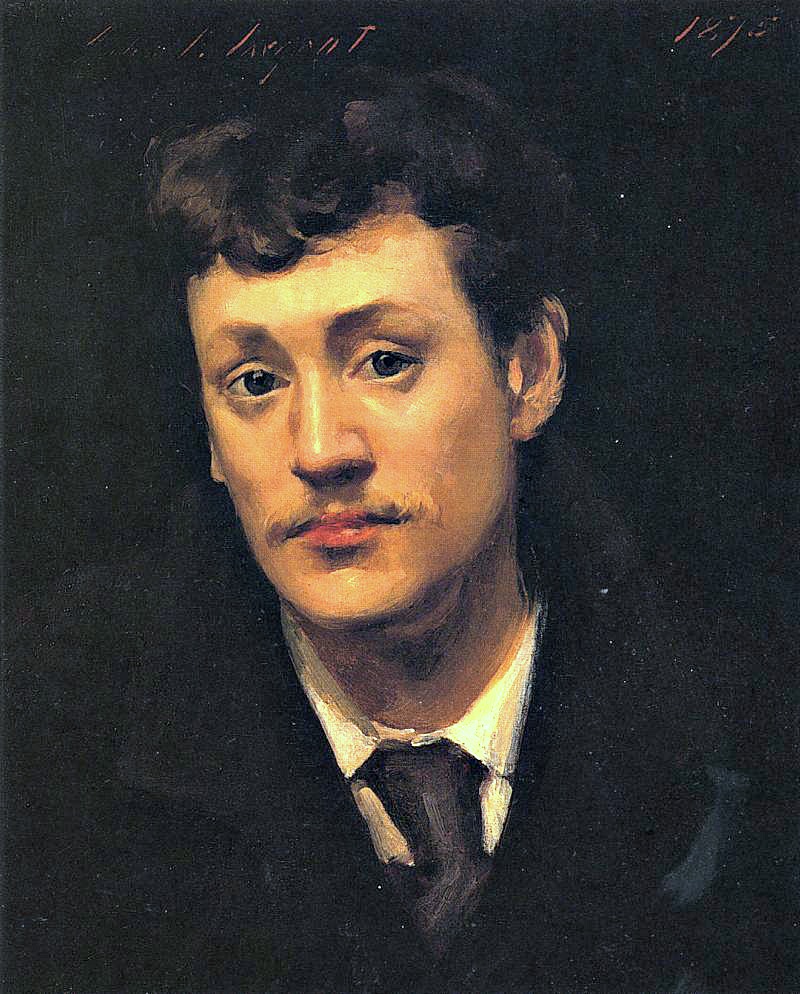
Frank O’Meara, c. 1876, oil on canvas, 44.5 x 39.5 cm (17½ x 15½ inches), inscribed upper left: John S. Sargent. Inscribed upper right:1875. Typewritten label on reverse signed by Austin Strong, 14/5/1931, The Century Association, New York. O’Meara was an “impecunious and dreamy” Irish art student with Sargent in Carolus-Duran’s atelier. Sargent painted it for O’Meara to give to an American girl during a summer romance. Then Isobel Osbourne (1858-1953) returned home and married somebody else.

7fixed

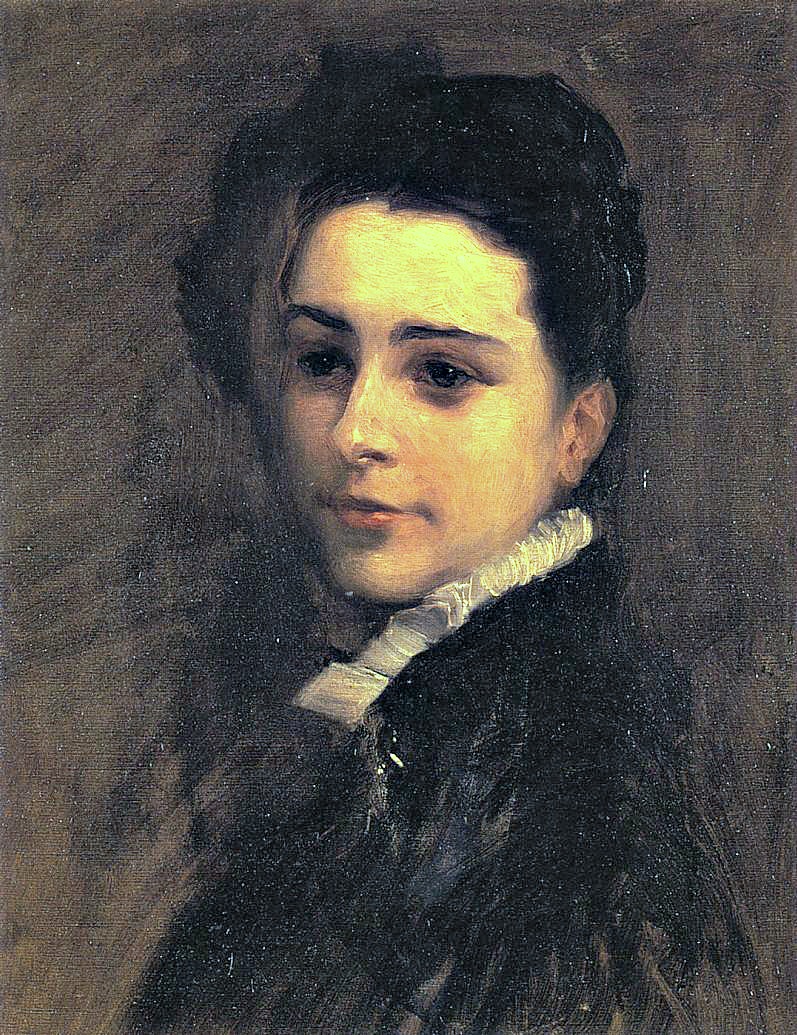
Mrs. Charles Deering, c.1877, oil on canvas, 55.8 x 43.2 cm (22 x 17 in.), Rhode Island School of Design. The family of Annie Rogers Case (1848-1876) met the Sargents in Florence in the 1860s. Her father (“the Admiral”) owned a Sargent Salon picture and dined with them on Christmas Day 1874. In 1876 JSS visited with the Deerings at Newport, Rhode Island,  but did not paint Annie’s portrait. Mrs. Deering died the next year in childbirth. In the Sargent-Deering letters preserved at Chicago the artist agreed to the widower’s request to paint a posthumous work of his wife.

8-fixed-dsc_0533

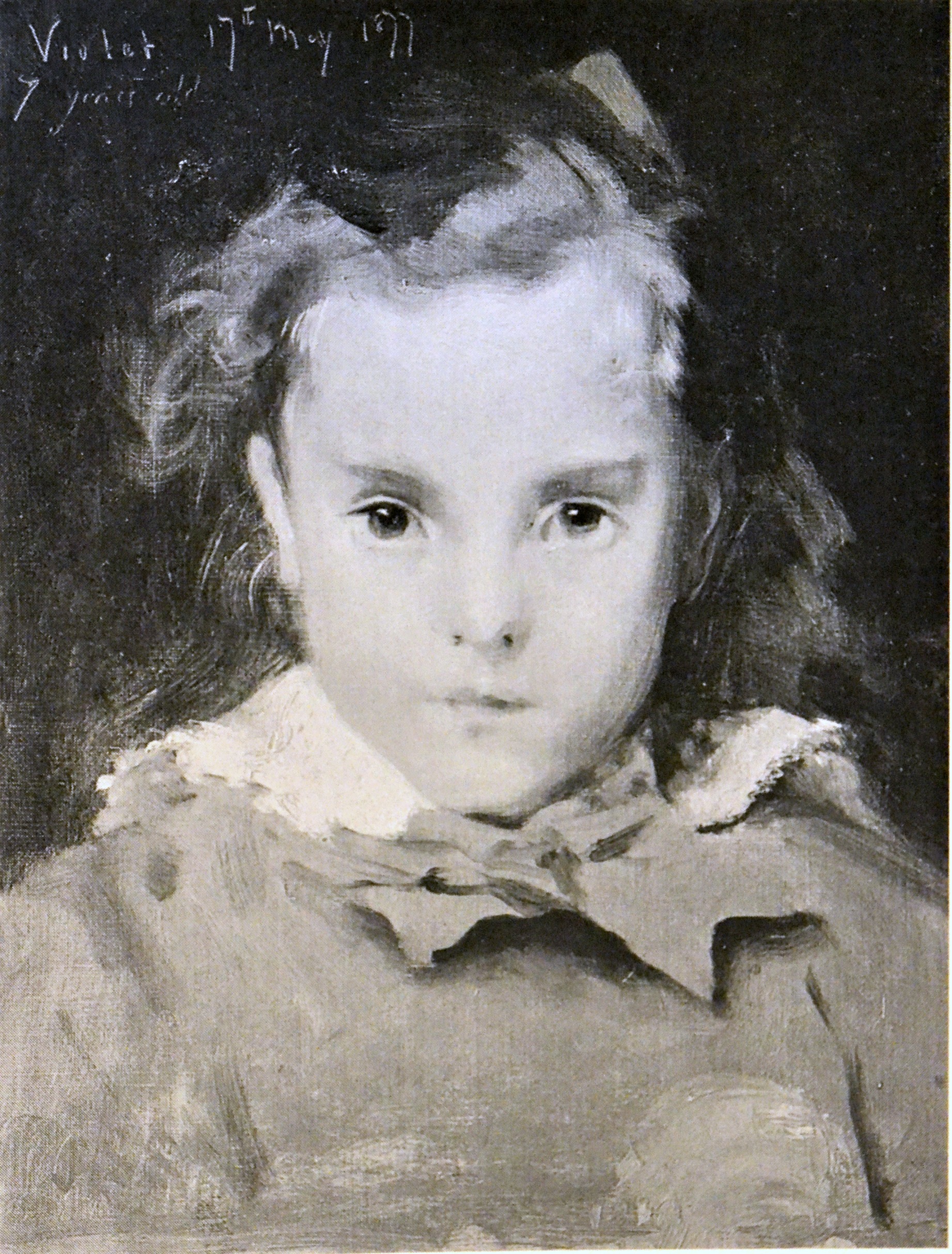
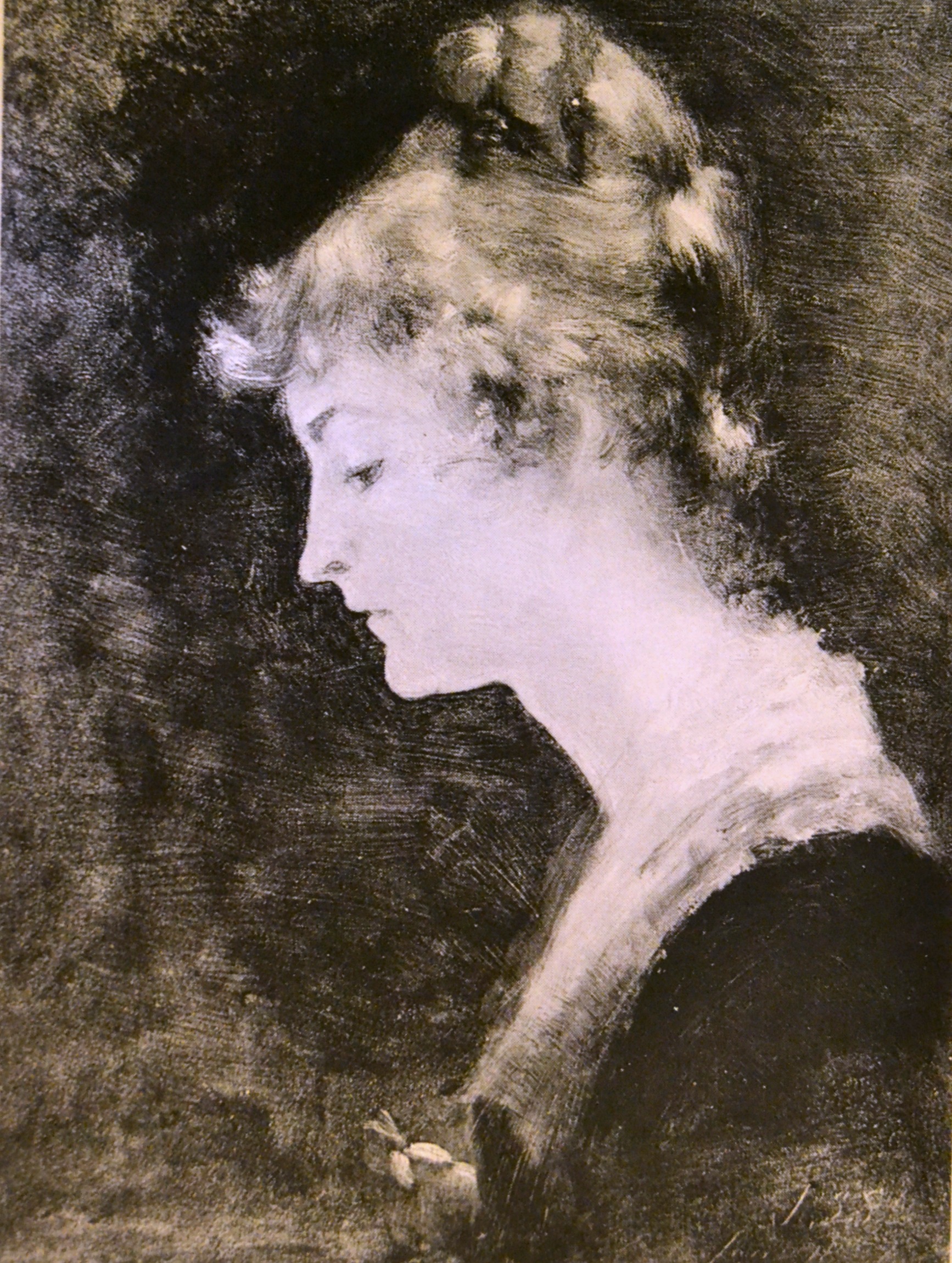
Violet Sargent, 1877, oil on canvas, 34.9 x 25.4 cm (13 3/4 x 10 in), inscribed upper right: Violet 17th May 1877/7 years old. Location unknown. Sargent’s younger sister, the later Mrs. Frances Ormond. It had been owned by French Academic painter Auguste-Alexandre Hirsch (1833 -1911).

9-dsc_0534

Harriet Louise Warren, 1877, oil on panel, 26.7 x 21 cm (10 1/2 x 8 1/4 in), inscribed lower right: JSS/Jan 18 1877. Private collection. Harriet Louise Warren (1854-1919) and Sargent were early friends. Later, in 1890, the artist painted her daughter, Beatrice.

11

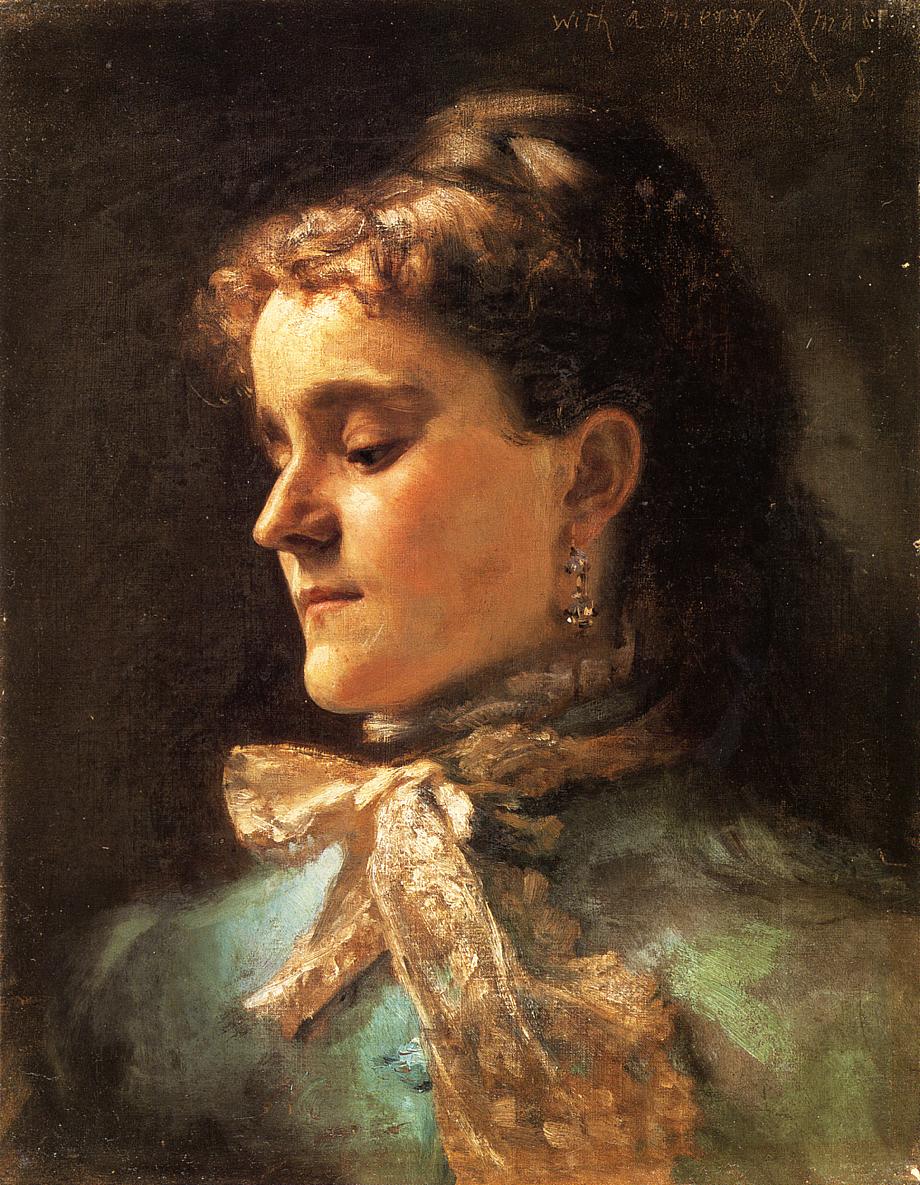
Emily Sargent, c.1877, oil on canvas, 31.1 x 22.9 cm (12 ¼ x 9 in.), private collection. Six siblings comprised the FitzWilliam and Mary Newbold Singer Sargent family. John was the second oldest and only boy. Of his five sisters only two lived to adulthood. This is JSS’s sister Emily (1857-1936) born one year after him. About 20 years old in this painting, the two were inseparable at home and roamed Europe and America together. Emily was a watercolorist and naturally cheerful.

12-eugene-juillerat

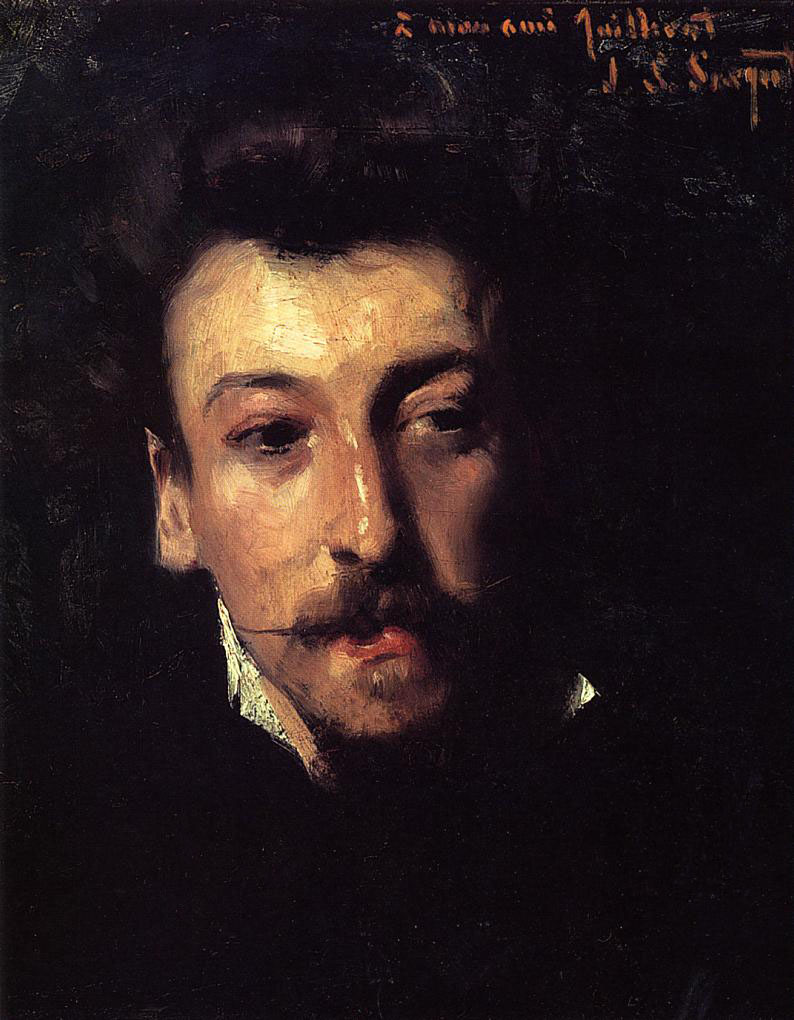
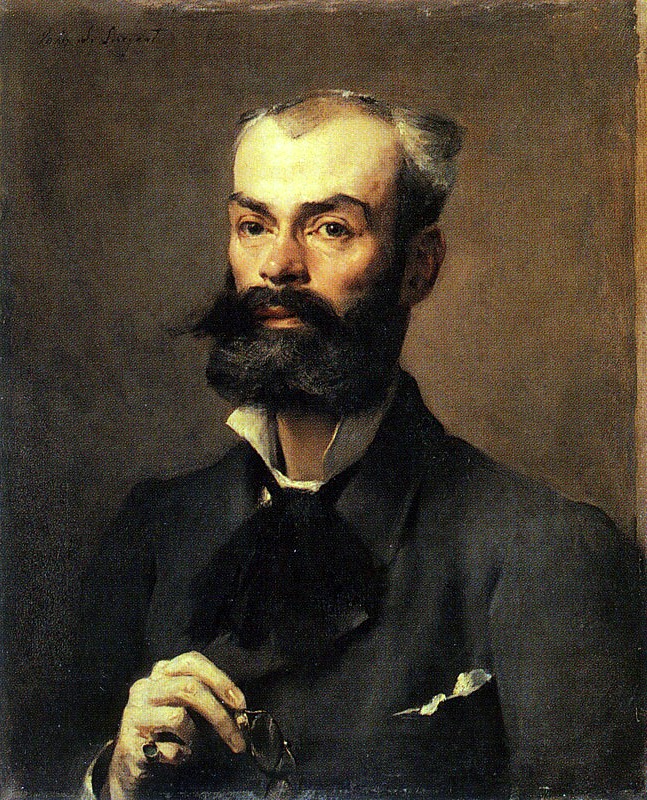
Eugène Juillerat, c. 1877-78, oil on canvas, 40.6 x 31.1 (16 x 12 ¼ in.), inscribed upper right: à mon ami Juillerat/J.S. Sargent. Inscribed on label on back by sitter on April 19, 1927. Private collection. Juillerat and Sargent were the same age and both studied under Carolus-Duran in Paris. Juillerat was an award-winning lithographer and sculptor receiving medals at the Salons of 1895 and 1899 and at the Exposition Universelle in 1900.

13-head-of-an-italian-girl

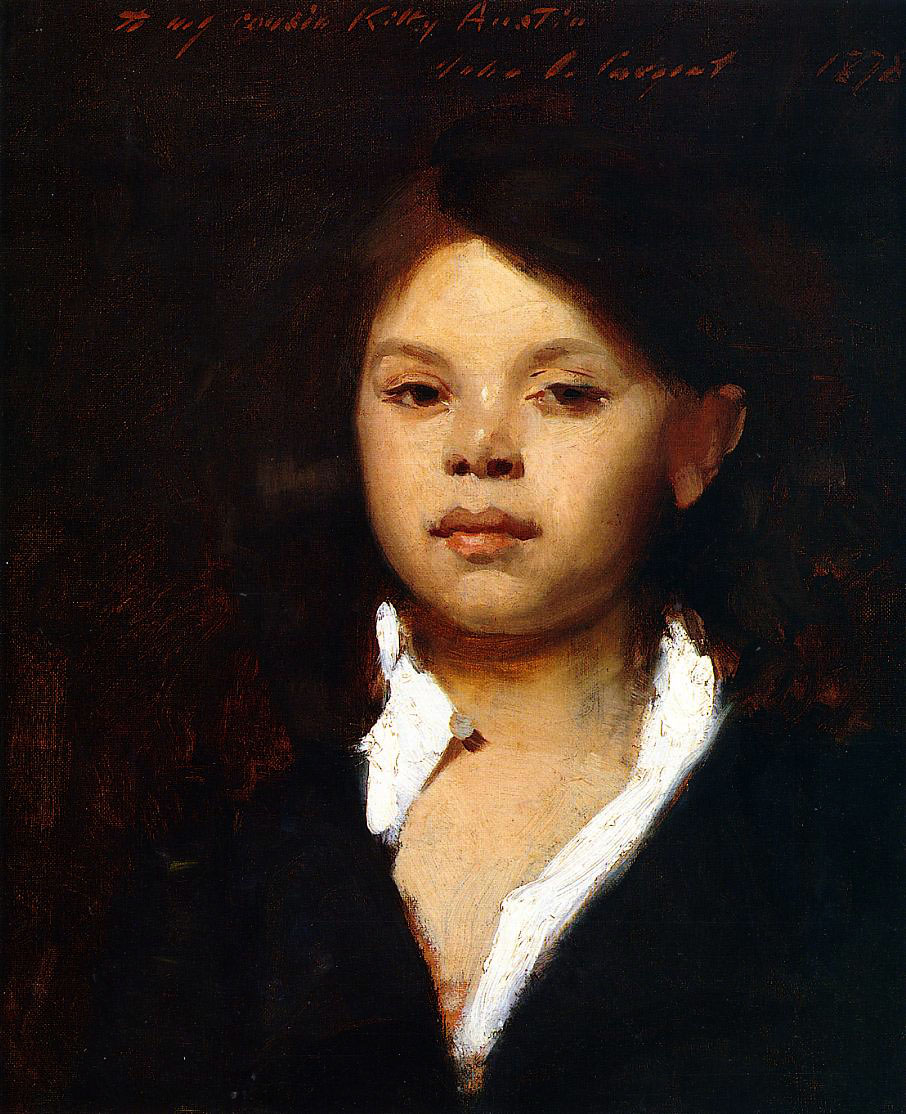
Head of an Italian Girl, 1878, oil on canvas, 45.7 x 38.1 (18 x 15 in.), Inscribed upper center: To my cousin Kitty Austin/ John S. Sargent; upper left: 1878. The Sargents had roots in New England yet resettled in Philadelphia where JSS’s father was a surgeon and married JSS’s mother. With the death of their firstborn, the Sargents left for Europe and stayed. JSS was born in Italy in 1856. He first visited the U.S.A. at 20 years old. This painting’s whereabouts and sitter’s identity are unknown.

14-mary-turner-austin

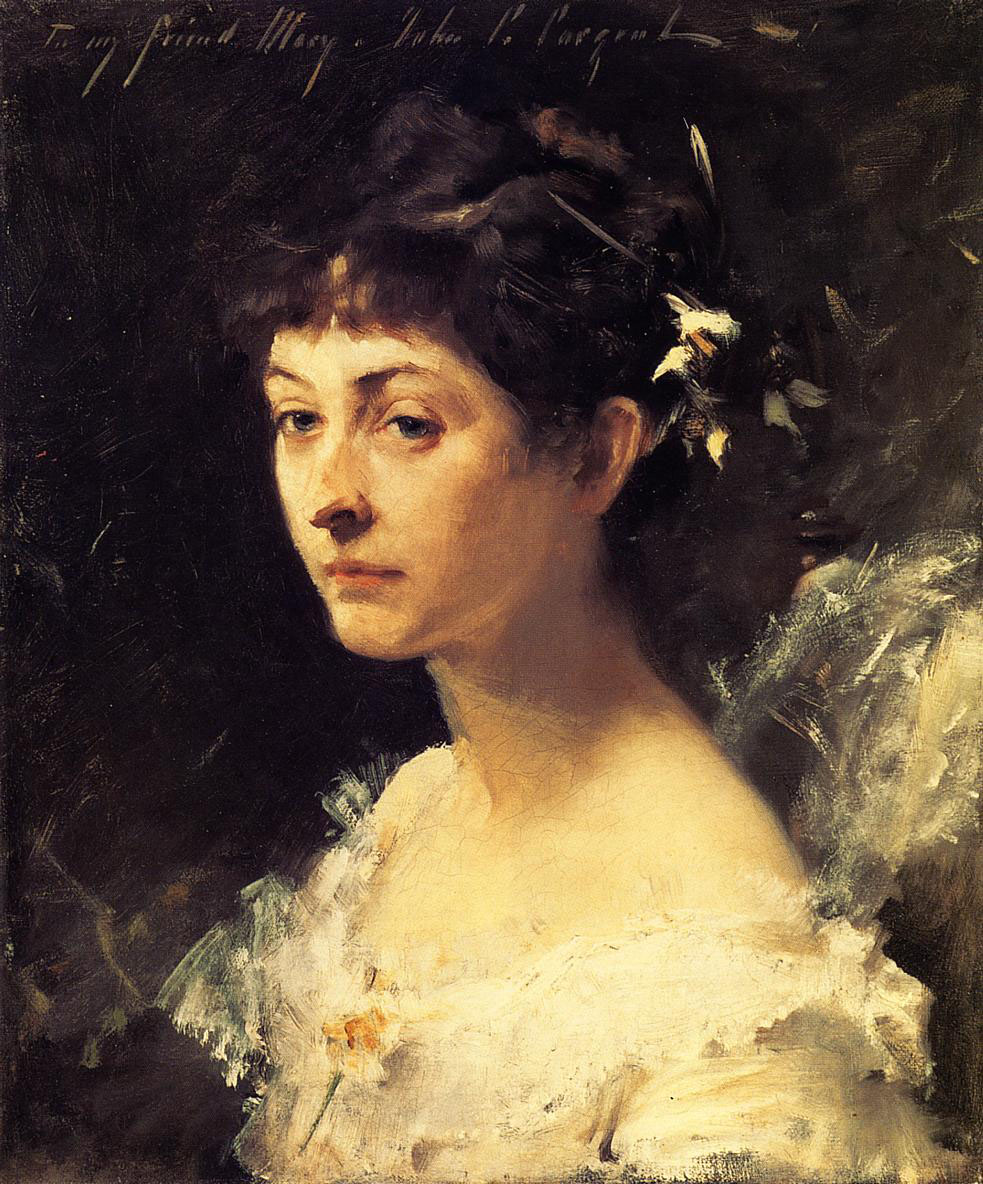
Mary Turner Austin, oil on canvas, 45.7 x 38.1 (18 x 15 in.), Inscribed upper left: to my friend, Mary, John S. Sargent. The Christopher Whittle Collection. The Austins, like the Sargents, were American expats in Europe. Dr. Sargent mentions the Austins in correspondence and writes that the girls are “quite attractive.” Mary was an art student. Chicago artist J.C. Beckwith at dinner with the Sargents hoped to see “the pretty Miss Austin.” French artist Auguste Hirsch owned this portrait.

15-head-of-an-italian-womanfixed

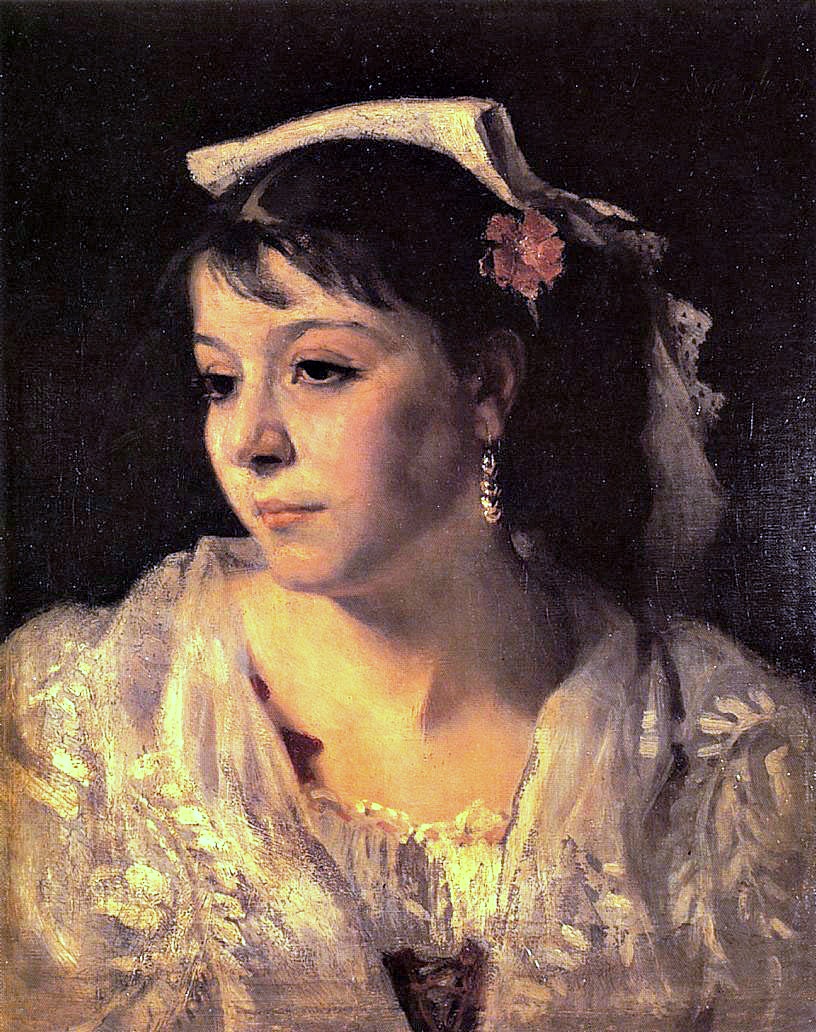
Head of an Italian Woman, c. 1878-1881, oil on canvas, 45.7 x 38.1 (18 x 15 in.), Inscribed upper right: J. S. Sargent. The Arkell Museum, Canajoharie, New York. Gift of Bartlett Arkell. Hair piled at the nape of the neck is a typical mid1870s woman’s hairstyle, though the dress is less fashionable. The model may be a Sargent cousin – a later Mrs. Wurts – who owned this picture in 1926.

15-1958-21-fixed

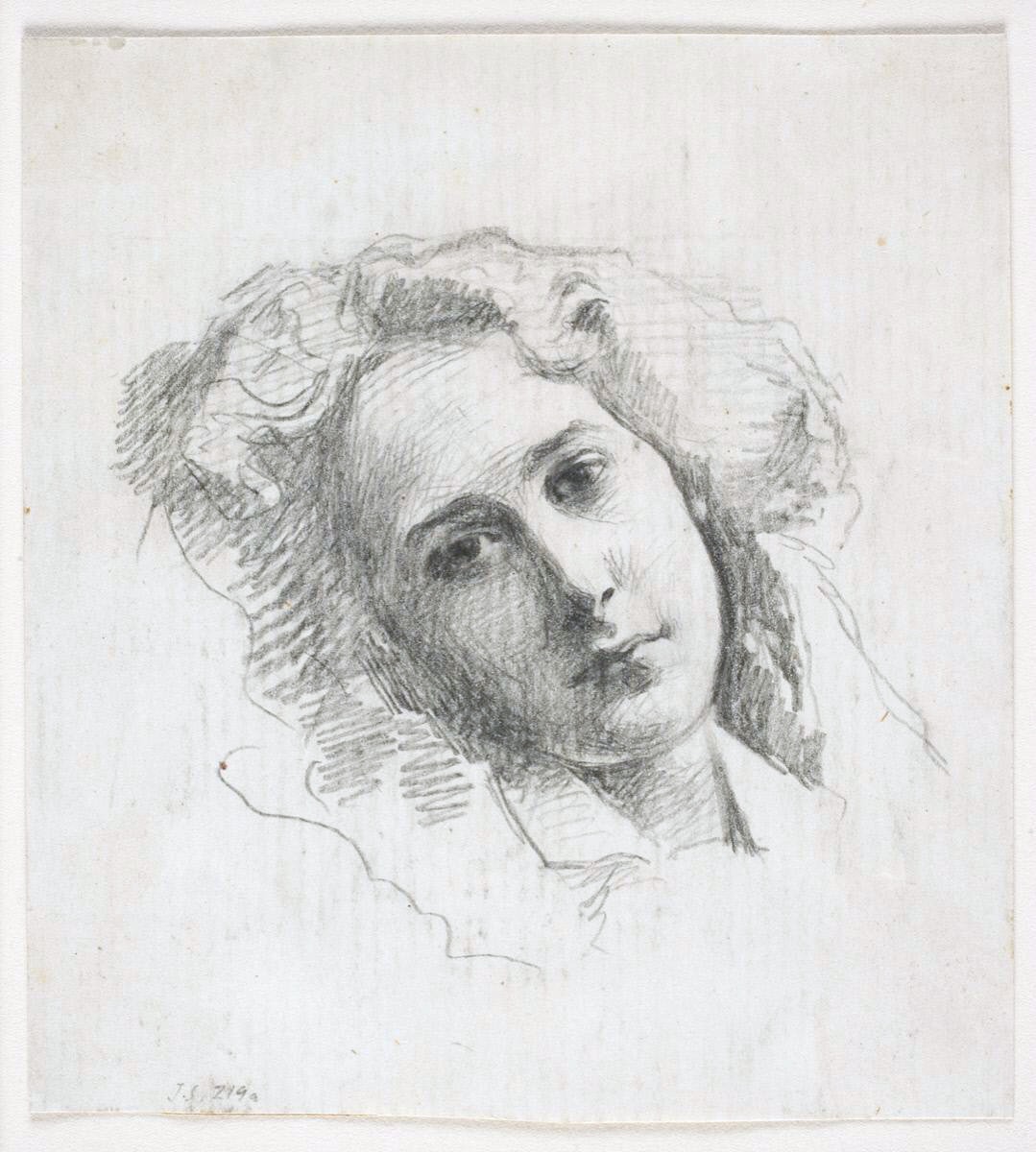
Portrait Sketch c. 1910, graphite on thin, slightly textured off-white laid paper (tissue) 10 x 9.1 cm (3 15/16 x 3 9/16 in.). Gift of Mrs. Francis Henry Taylor, The Worcester Art Museum, Worcester, Massachusetts. Dated c.1910, this drawing had been only recently identified as the same model as “Head of an Italian Woman” painted by Sargent sometime between 1878 and 1881 and today in the Arkell Museum.

16-john_singer_sargent_-_carmela_bertagna_c-_1880

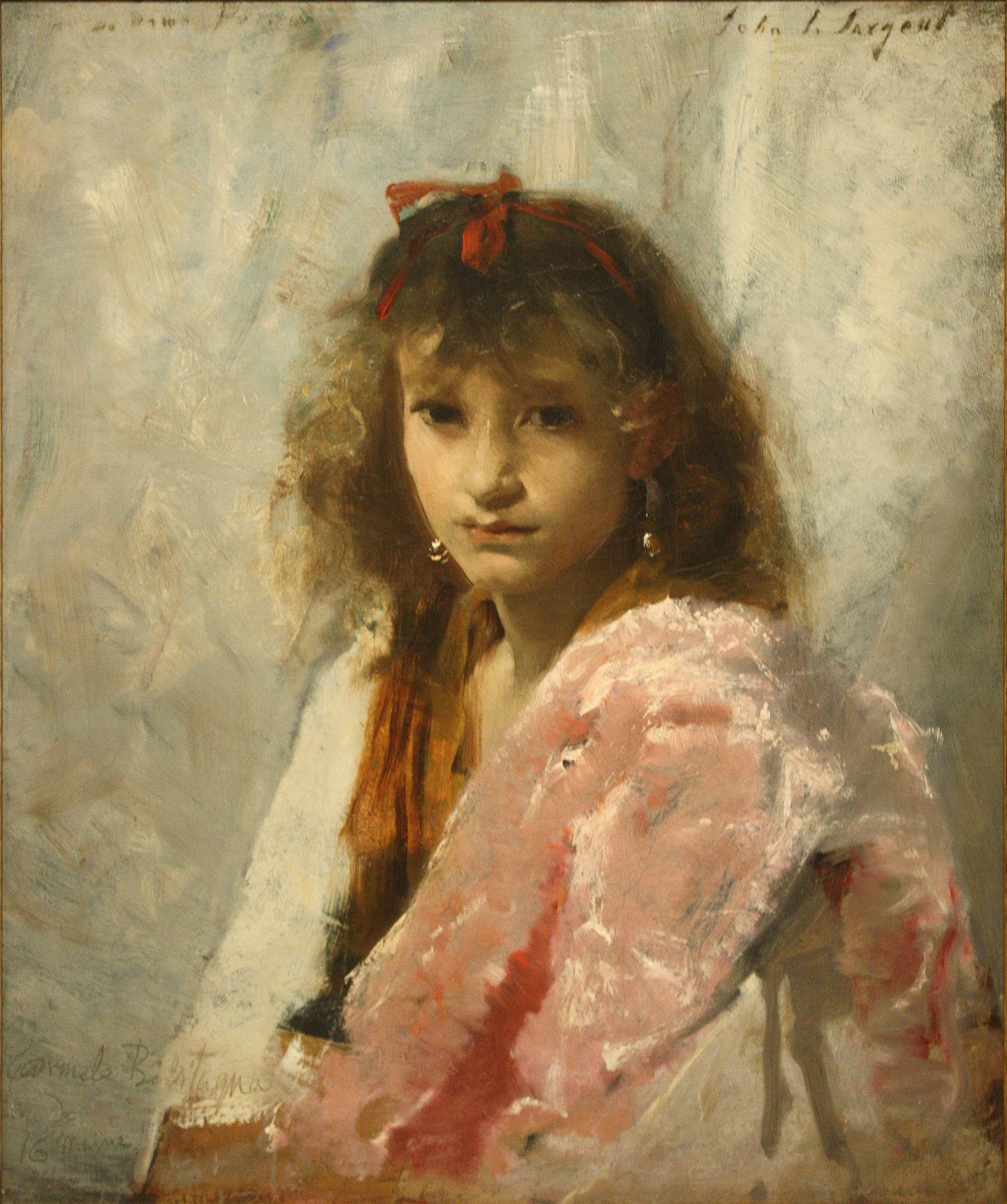
Carmela Bertagna, c.1879, oil on canvas, 59.7 x 49.5 (23.5 x 19.5 in.), inscribed upper L: à mon ami Poirson; upper R: John S. Sargent; lower L: Carmela Bertagna/rue du/16 Maine. Bequest F.W. Schumacher. The picture’s history is muddled by the sitter’s questioned identity (a professional model, possibly Carmela B.), its stylistic clues (no later than 1880), diverse inscriptions (to later friends) and exactly from whom it was acquired before it was given to the Columbus Museum of Fine Arts.

17-madame-francois-buloz-1879fixed

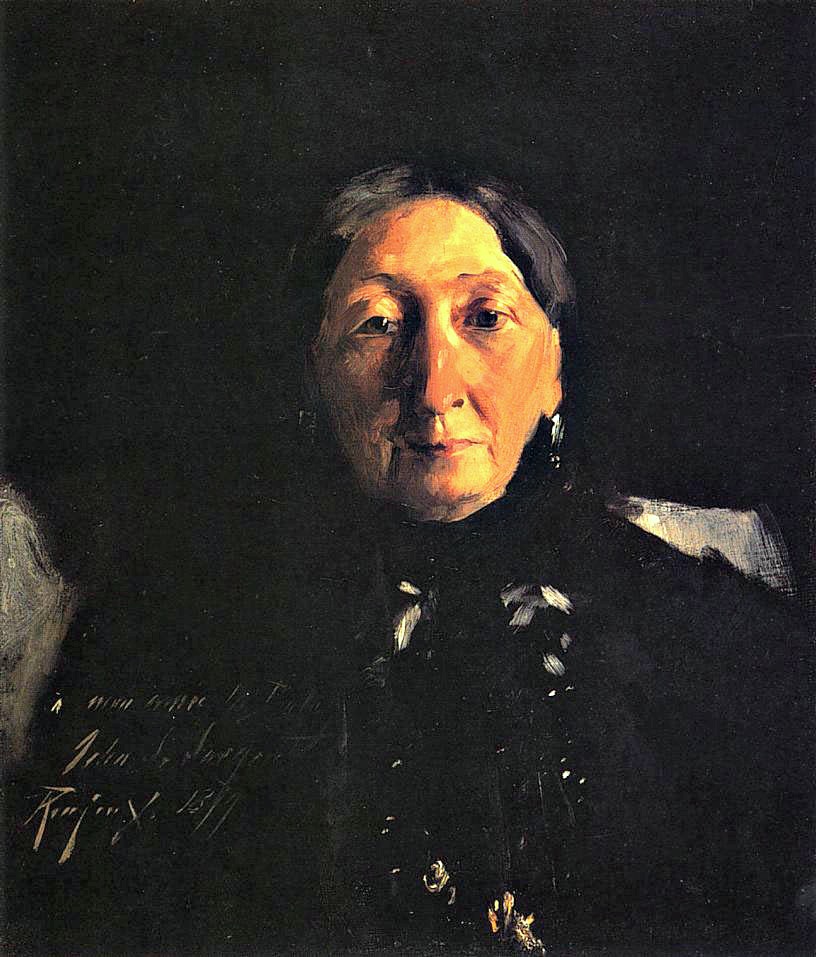
Mme. François Buloz, 1879, oil on canvas, 54 x 46.2 cm (21.25 x 18.25 in.), Inscribed lower L: à mon amie Me Buloz/John S. Sargent/Ronjoux 1879, Los Angeles County Museum of Art. Mme. Buloz was from a family of writers and musicians. In summer 1879, Sargent was in the Savoy to paint her daughter Marie’s full length portrait for her marriage. Madame complained that this portrait, painted in haste, made her look ten years older than she was.

18-fix

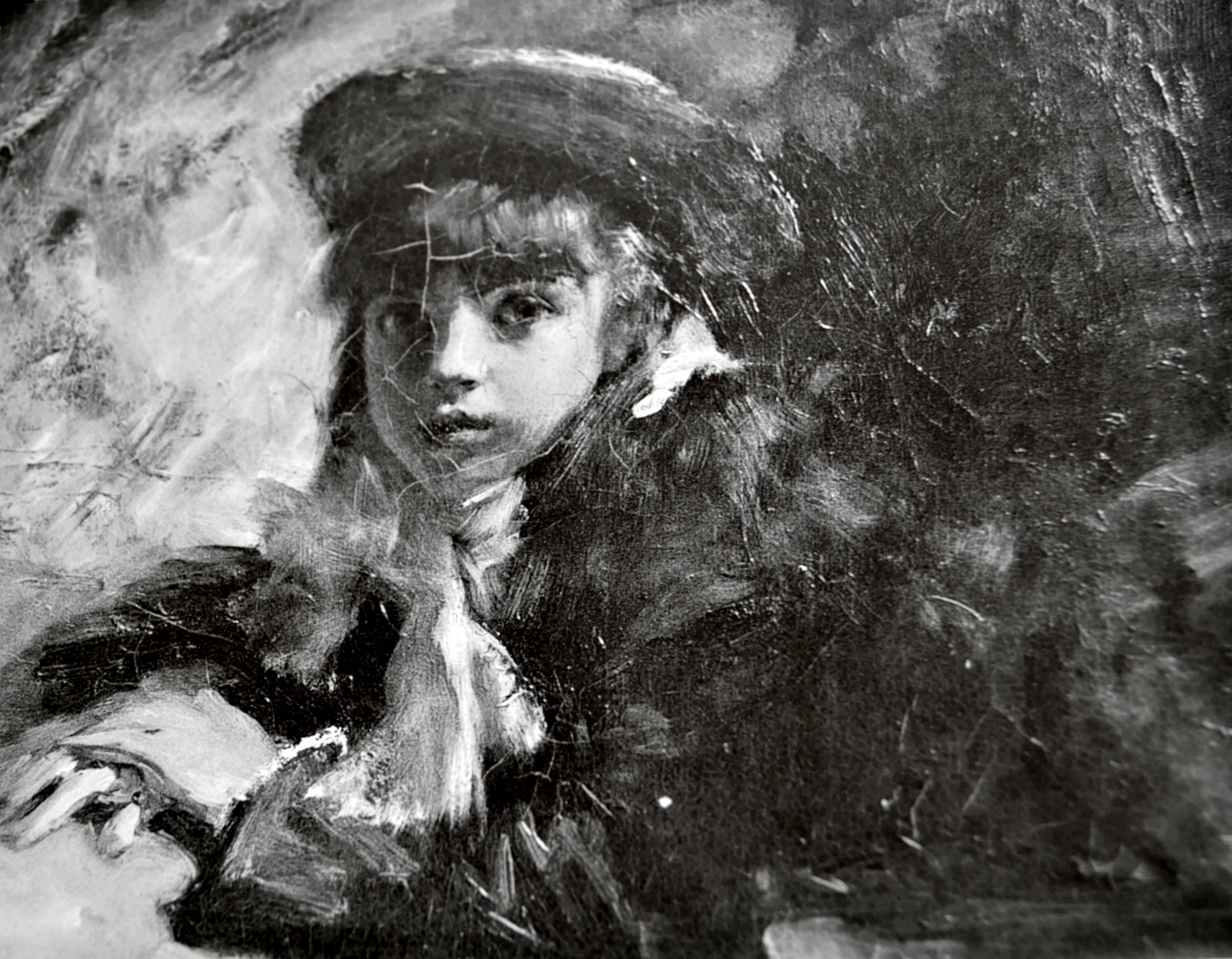
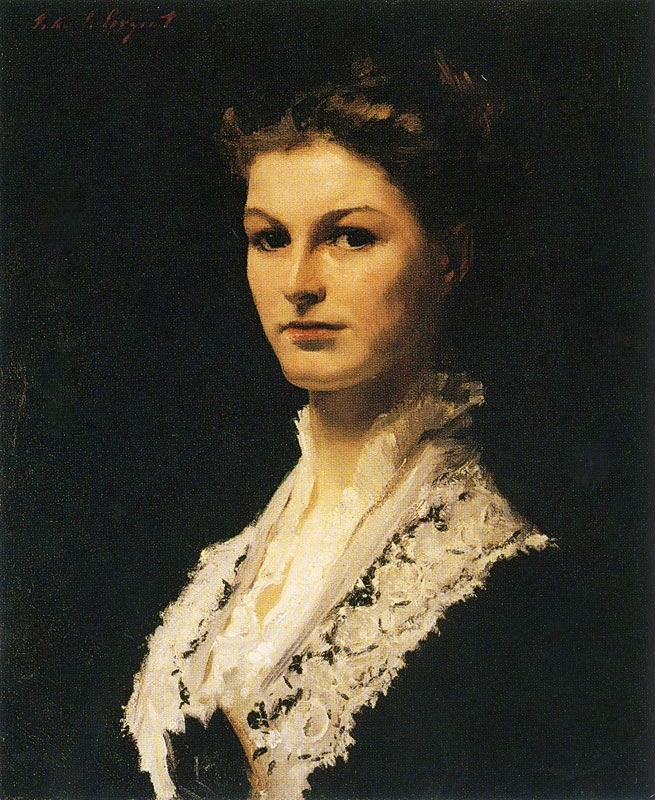
Marie-Louise Pailleron, 1879, 38.7 x 45.1 cm (15.25 x 17.75 in.), Inscribed, upper R: à ma petite amie Marie-Louise/John S. Sargent 1880, private collection. Daughter of Marie (Buloz) and Edward Pailleron, Sargent’s first important patrons. Two years after this portrait, Marie-Louise (1870-1950) was the subject of an important double portrait with her brother Edouard.

19-fixed-dsc_0879

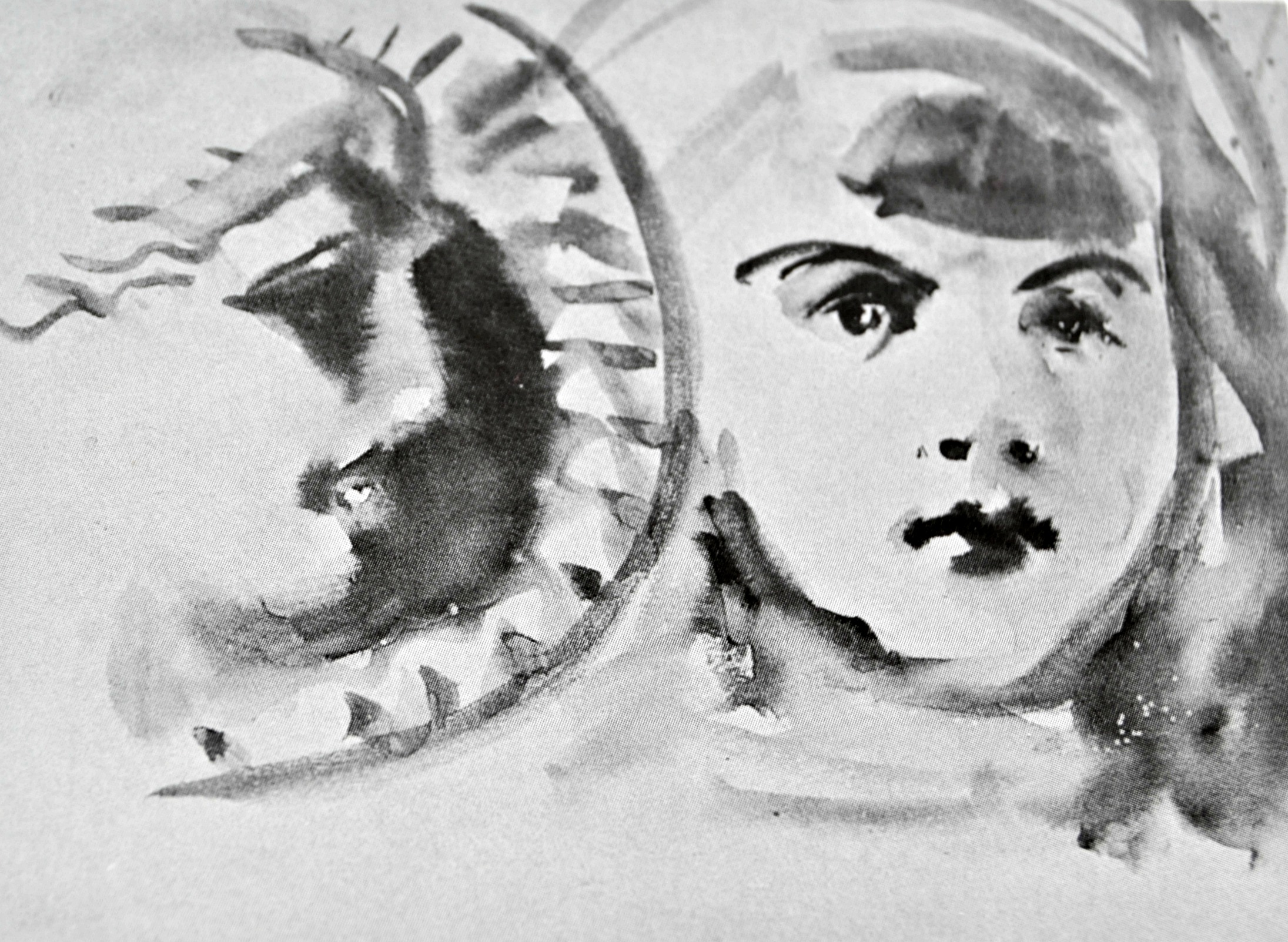
Marie-Louise Pailleron, 1879, watercolor on paper? Dimensions? Untraced. Sargent did other wash drawings of Marie-Louise that are better documented. The head on the left has a halo or other decorative design. This image is taken from a photograph the sitter made available in 1948 when the sketch was in her house at Ronjoux.

20-frances_sherborne_fanny_ridley_watts-largefixed

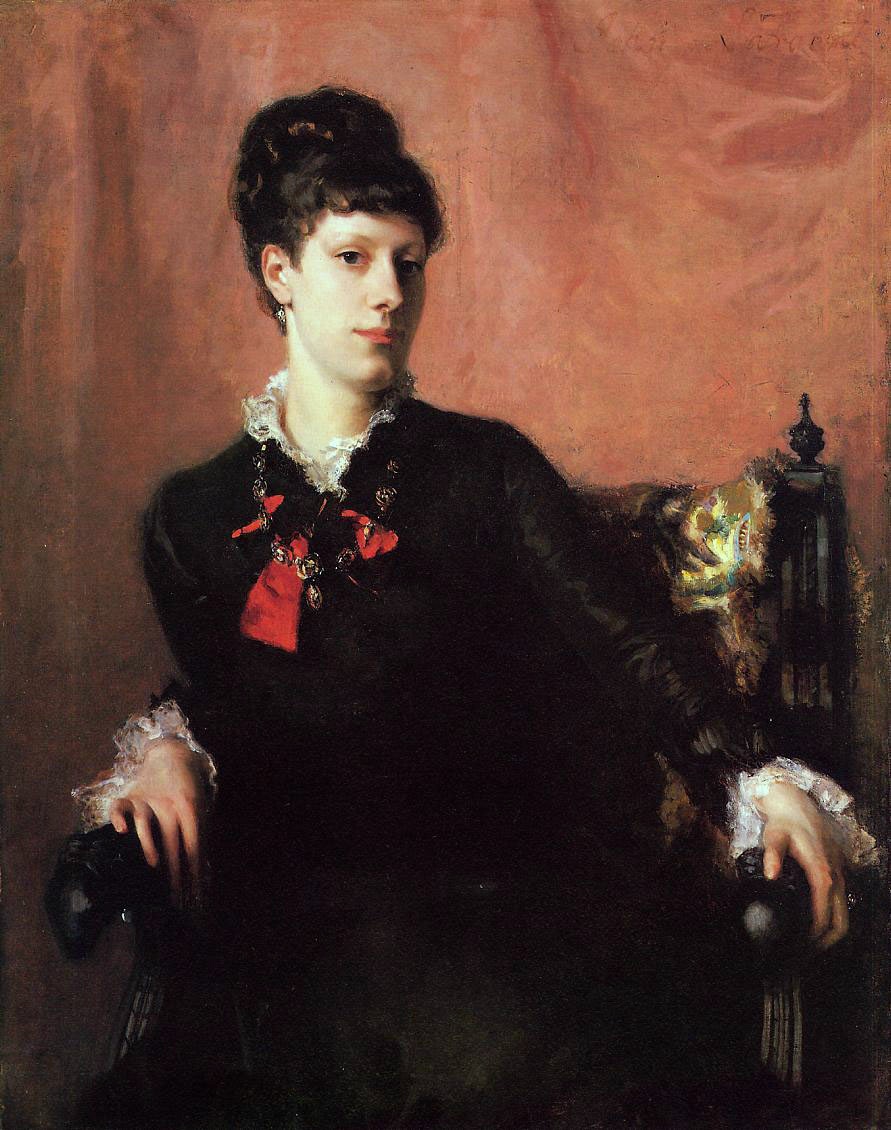
Fanny Watts, 1877, oil on canvas, 105.7 x 83.5 cm (41.5/8 x 32.7/8 in.), inscribed upper R: John S. Sargent. Philadelphia Museum of Art. Following money reverses in the U.S., Fanny’s New York family traveled to Nice and Florence in the 1860s and met the Sargents. The young Sargent and Fanny began a romance in 1876 that was nixed by Mrs. Sargent. The portrait is the artist’s attempt to reminisce about their time together. Dr. Sargent thought this portrait was his son’s “first serious work” and had it shown at the Salon. Fanny and the artist stayed lifelong friends.

21fixed

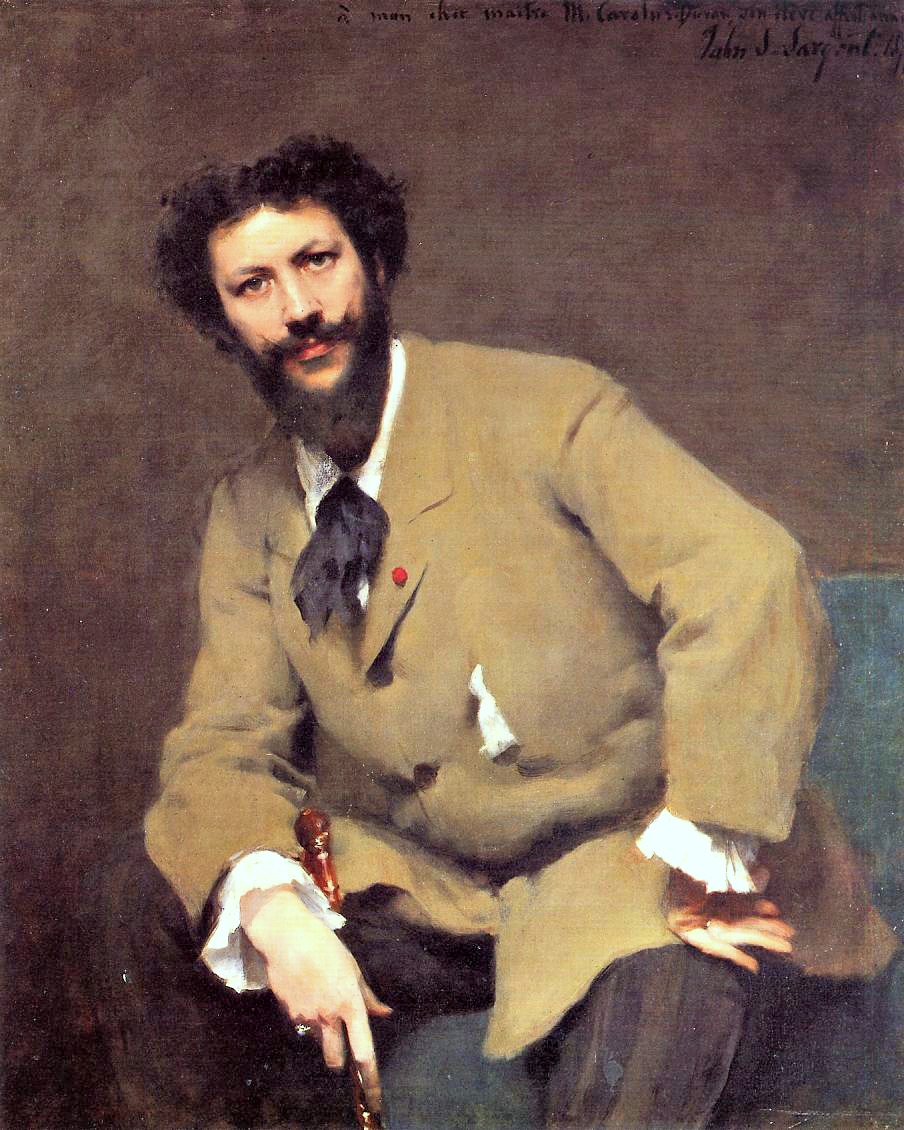
Carolus-Duran, 1879, oil on canvas, 116.8 x 95.9 cm (46 x 37 3/4 in.), inscribed upper R: à mon cher maître M. Carolus Duran, sur élève affectioné/John S. Sargent 1879. Clark Art Institute, Massachusetts. Teacher and portrait painter Carolus-Duran (1838-1917) had a profound influence on JSS’s artistic practice in the mid to late 1870s. The sitter wears a red ribbon of the Légion d’honneur in his buttonhole. It was Sargent’s second portrait exhibited at the Salon and this painting received critical praise in Europe and America.

24

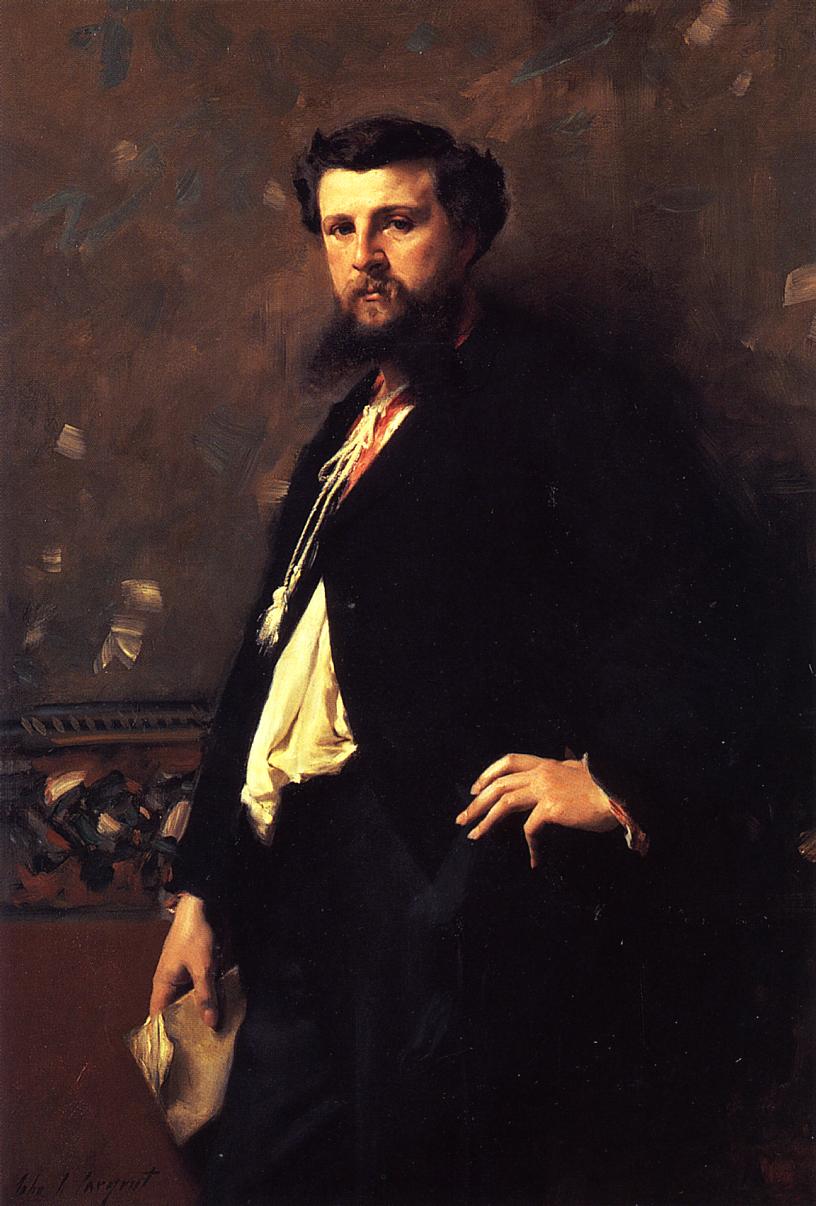
Edouard Pailleron, 1879, oil on canvas, 127 x 94 cm (50 x 37 in.), Inscribed lower L: John S. Sargent. Musée d’Orsay. Edouard Pailleron (1834-99) was JSS’s first major patron. How the 45-year-old famed poet and playwright met the unknown 23-year-old painter is a mystery. One impetus may be the favored portrait of Carolus-Duran at the Salon of 1879. This casually posed portrait of studied bohemianism was painted in Paris in  summer 1879 and soon paired with one of Mme. Pailleron.

25-madame-edouard-pailleron-1879fixed

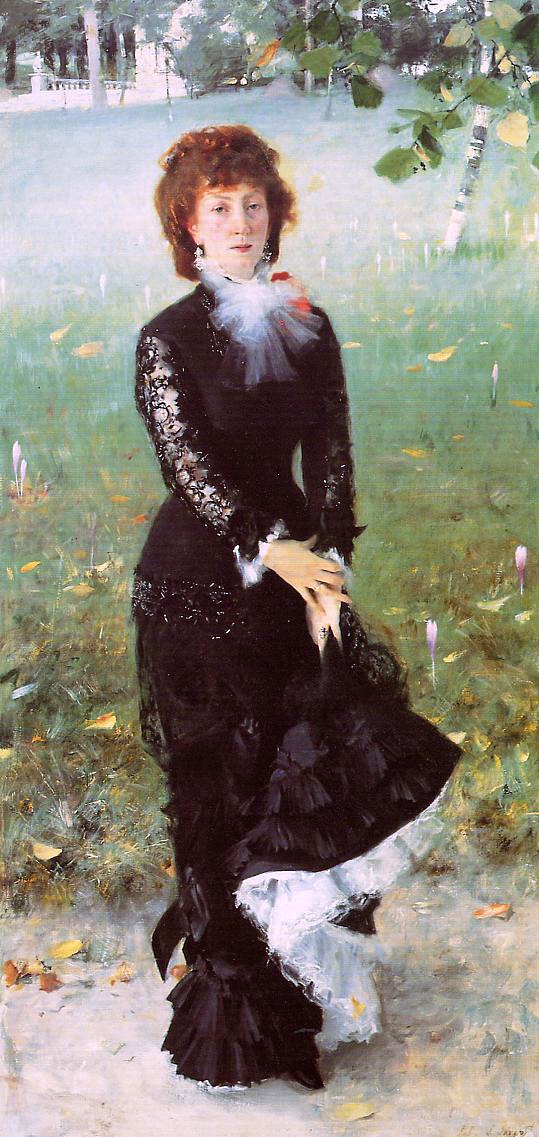
Madame Edouard Pailleron, 1879, oil on canvas, 208.3 x 100.3 cm (82 x 39.5 in.), Inscribed lower R: John S. Sargent/Ronjoux 1879. National Gallery of Art, Washington D.C. Sargent’s first full length portrait depicts Mme. Pailleron (1840-1913). It was painted at her parents’ house at Chambéry in the Savoy. She posed at the entrance to the allée des Tilleuls with house and garden behind. At the Salon of 1880 critics remarked that the black satin dress was out of place in an outdoor setting.

Madame Edouard Pailleron, 1879, study. The painting was Sargent’s first full length portrait.

26-john_singer_sargent_-_robert_de_cevrieuxfixed

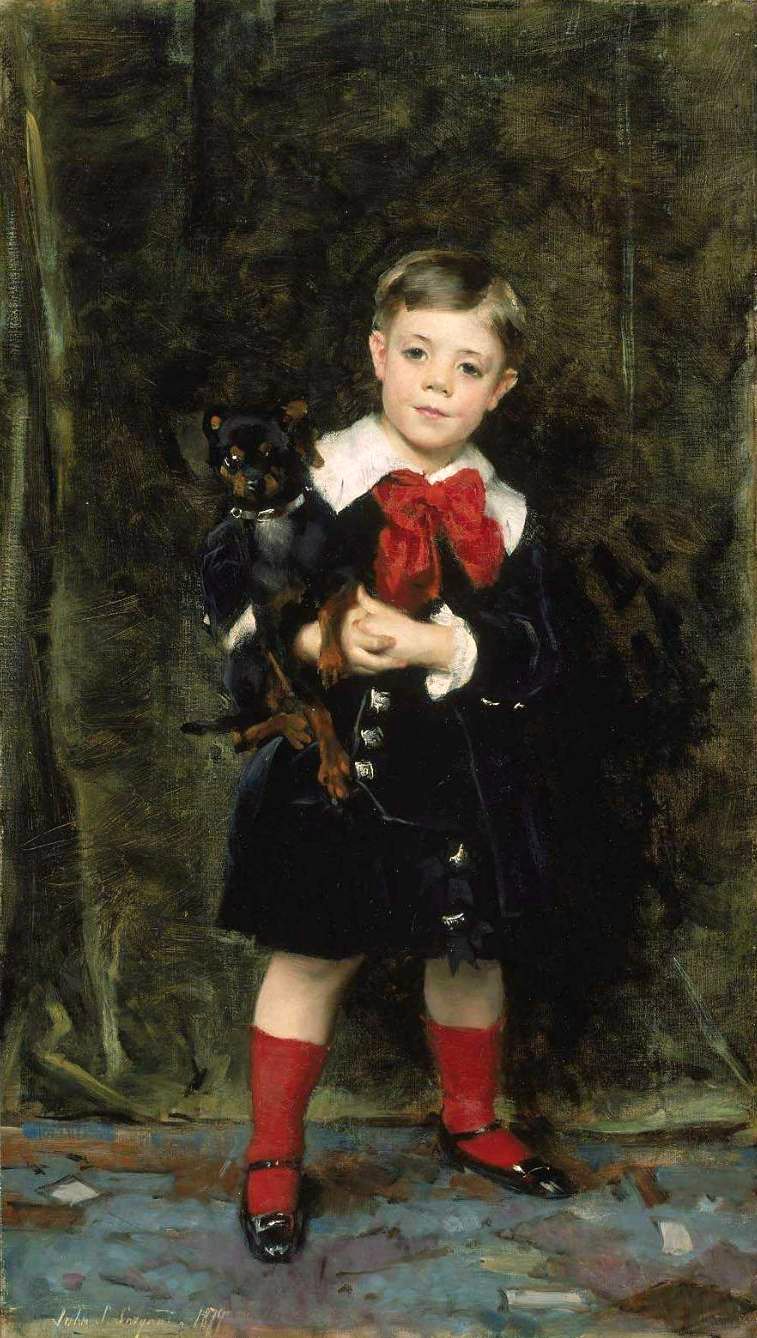
Robert de Cévrieux, 1879, oil on canvas, 84.5 x 48 cm (33.25 x 18.875 in.), inscribed lower L: John S. Sargent, 1879. Museum of Fine Arts, Boston. The Salon of 1879 was a watershed for JSS’s artistic career. Out of it came six portrait commissions in Paris including presumably this 6-year-old and his terrier. Carolus-Duran, by now JSS’s former teacher, painted children holding pets which were exhibited in mid1870s Salons. The child wears a velvet suit with no pant legs and matching jacket.

27-portrait-of-jeanne-kieffer-1879fixed

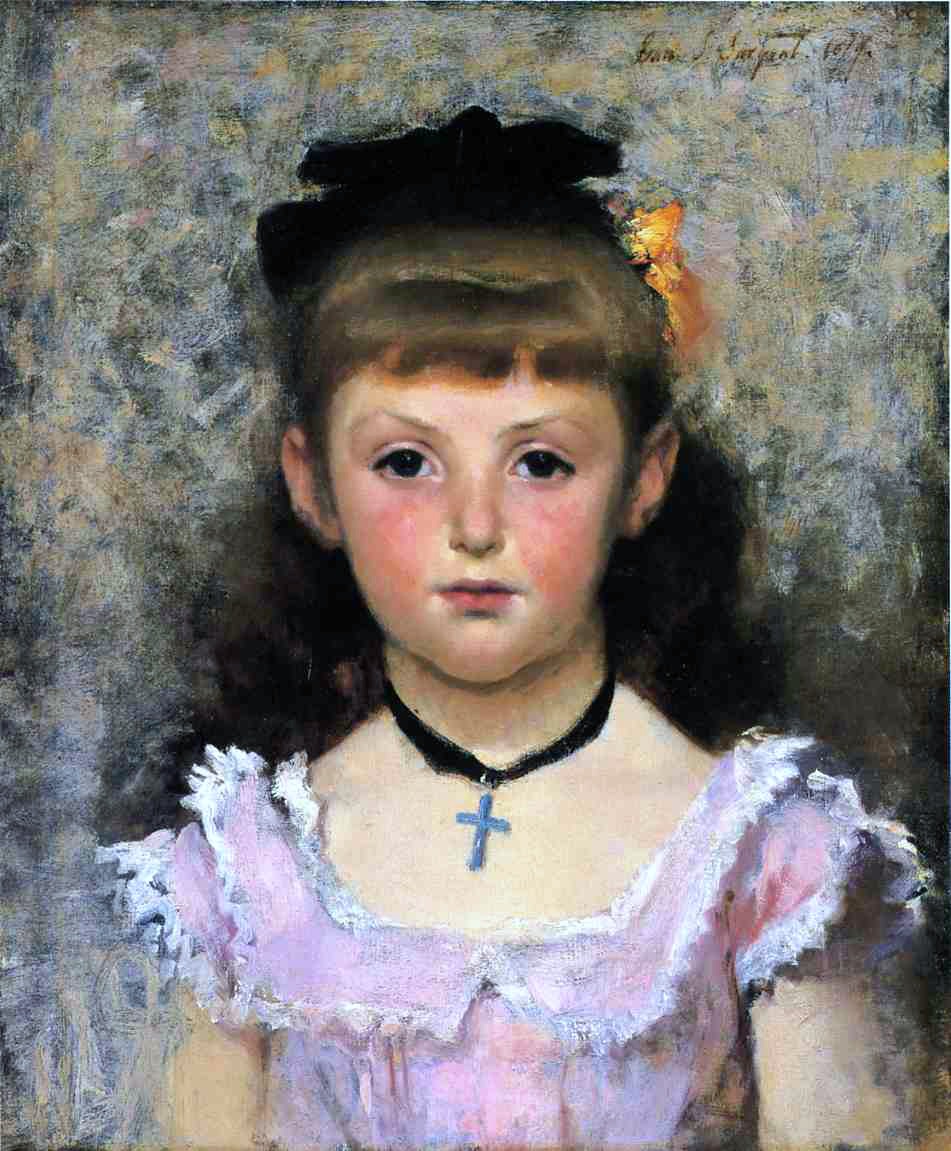
Jeanne Kieffer, 1879, oil on canvas, 43.2 x 35.6 cm (17 x 14 in.), inscribed upper right: John S. Sargent 1879. Private collection. By his early 20s some saw Sargent as an artist of “great talent and a real future.” He was also described as “practically starving.” This portrait of a 7-year-old sitter is quirky for the direct frontal pose and that the pink dress was an afterthought. The artist had originally painted her in a black velvet dress.

29-john_singer_sargent_vicomte_saint_perierfixed

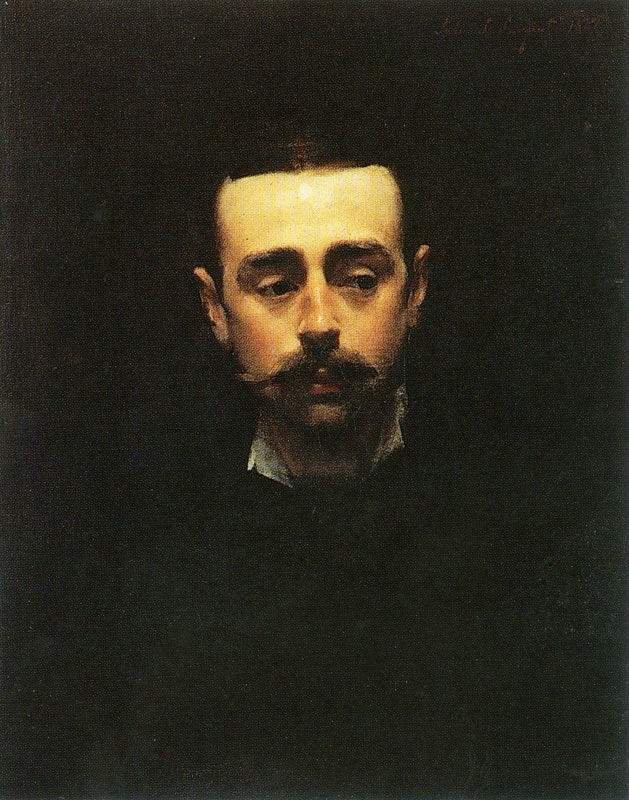
Le Vicomte de Saint-Périer, 1879, oil on canvas, 61 x 50.5 cm (24 x 19.875 in.), inscribed upper L: John S. Sargent. Musée d’Orsay. Sargent was paid 1,500 francs – a typical French worker’s annual wages – for this portrait of a well-connected professional soldier. The expressive realism of the head recalls his recent portraits of Edouard Pailleron and Carolus-Duran.

30-john_singer_sargent_henry_john_smith-2new-clean-fixed

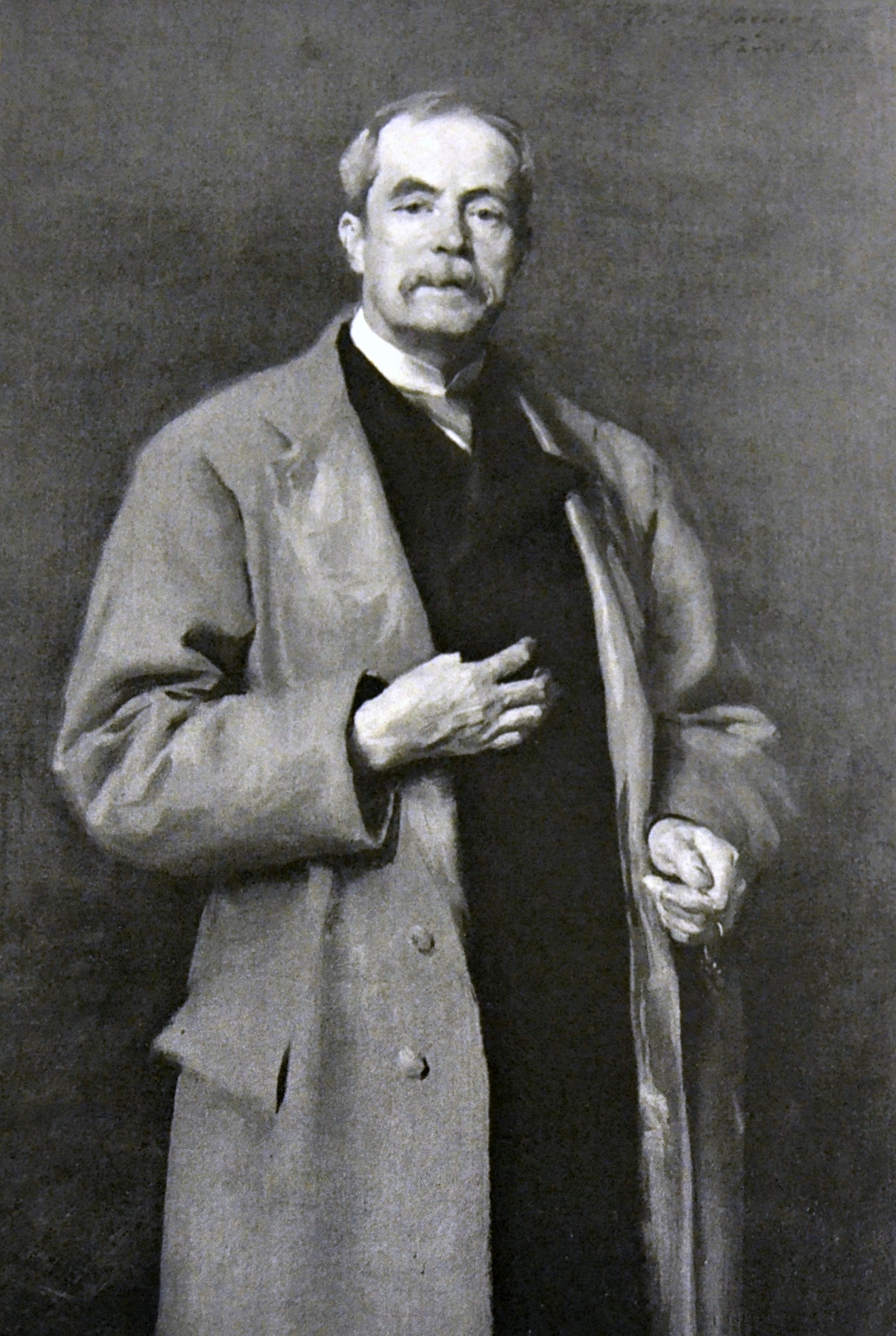
Henry St. John Smith, 1880, oil on canvas, 62.2 x 49.5 cm (24.5 x 19.5 in.), inscribed upper R: John S. Sargent 1880. Portland Museum of Art, Maine. Boston lawyer Henry St. John Smith (1852-1896) graduated from Harvard in 1872 and went to Europe virtually annually. In 1880 he was an eligible bachelor. Smith saw Sargent’s studio in Paris and didn’t like it. Friends Augustus Jay and Boston artist Francis Brooks Chadwick intervened and the result is this head-and-shoulders portrait that earned Sargent a commission of 1,500 francs.

32fixed

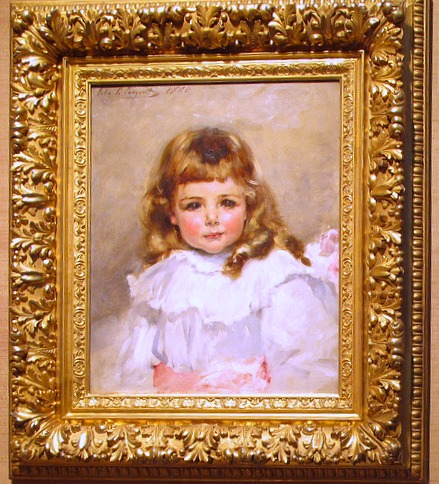
Peter Augustus Jay, 1880, oil on canvas, 45.8 x 37.5 cm (18 x 14.75 in.), inscribed upper L: John S. Sargent 1880. Private collection. The future U.S. Ambassador to Argentina is painted when he was a 3-year-old with golden shoulder-length hair and dressed in a bibbed white blouse. It was when Henry St. John Smith was with the boy’s father Augustus “Gussie” Jay at Sargent’s Paris studio when St. John Smith was having his portrait painted that the commission for the child’s portrait probably originated.

33fixed-john_singer_sargent_eleanor_jay_chapmandraft-2clean

Eleanor Jay Chapman, c.1881, oil on canvas, 43.8 x 53.3 cm (17.25 x 21 in.), inscribed upper L: John S. Sargent. Private collection. In 1881, Eleanor Jay Chapman was the 16-year-old daughter of a stockbroker. Through her mother, she was a descendant of John Jay, first Chief Justice of the U.S. Eleanor and her younger sister Beatrix had their portraits painted by Sargent in Paris (Beatrix’s was later destroyed). There is no evidence for how the Chapmans met Sargent, but it happened before her father’s financial collapse in 1882.

34-dsc_0876-3draftcleanfixed

Edward Burckhardt, 1880, oil on canvas, 55.2.x 46.4 cm (21.75 x 18.25 in.), inscribed lower L: To my friend Valerie/John S. Sargent Paris June 1880. Private collection. Sargent was an intimate friend of Swiss businessman Edward Burckhardt (1815-1903) and his American wife and their family. The portrait, painted in Paris in May 1880, has inspired little positive critical commentary.

36-john_singer_sargent_mrs_james_lawrence-new-fixed

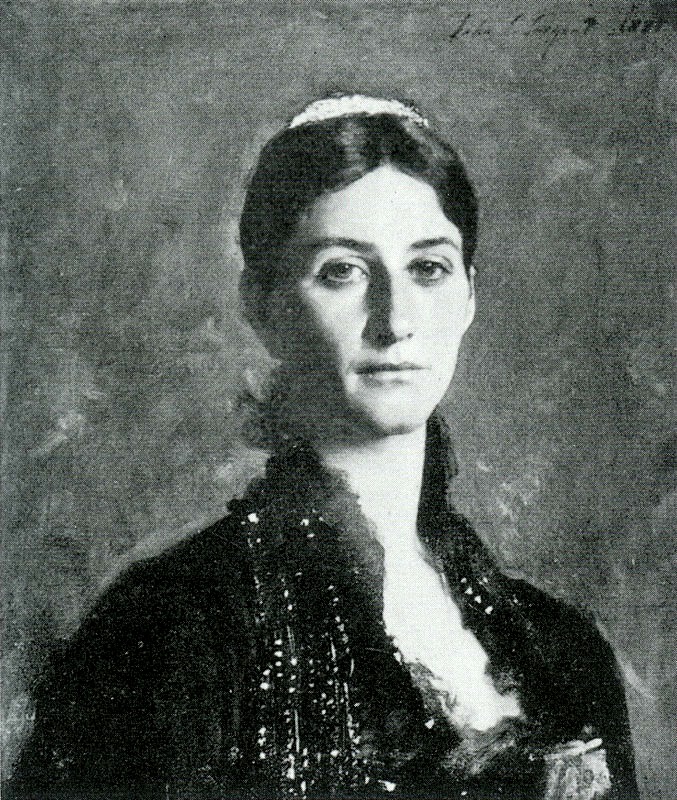
Mrs. James Lawrence, oil on canvas, 61 x 45.7 cm (24 x 18 in.), inscribed upper R: John S. Sargent 1881. Sargent painted companion portraits of Boston’s James Lawrence (1853-1914) and his new wife Caroline Estelle Mudge (1850-1920). Neither portrait has survived. Both were destroyed by fire in Hingham, Massachusetts, in 1939. In 1888 it was noted that the sitter wore a black dress in front of a red background.

37-edouard-and-marie-louise-pailleron-1881-fixed

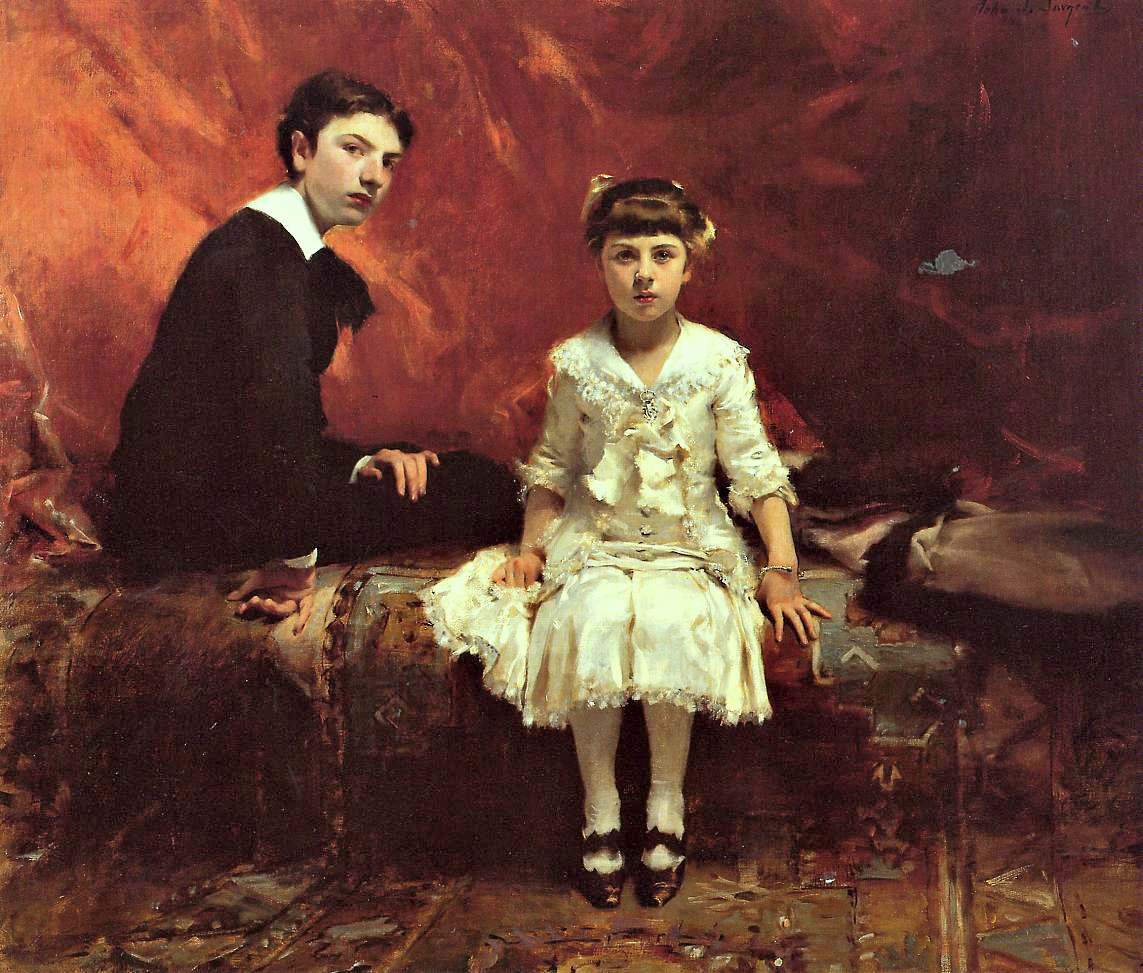
The Pailleron Children, 1881, oil on canvas, 152.4 x 175.3 cm (60 x 69 in.), upper right: John S. Sargent. Des Moines Art Center. Édouard (b.1865) and Marie-Louise (b.1870) are children of Sargent’s first patron. Seated on a bench, the boy is dressed in a suit with an Eton collar and silk bow tie and the girl, hair up, is wearing a satin dress with lace trim. Carolus-Duran had to calm Marie-Louise to cooperate for a double portrait that required 83 sittings done in Sargent’s studio. It was exhibited at the Salon of 1881.

38-fixed-john_singer_sargent_marie_louise_pailleron

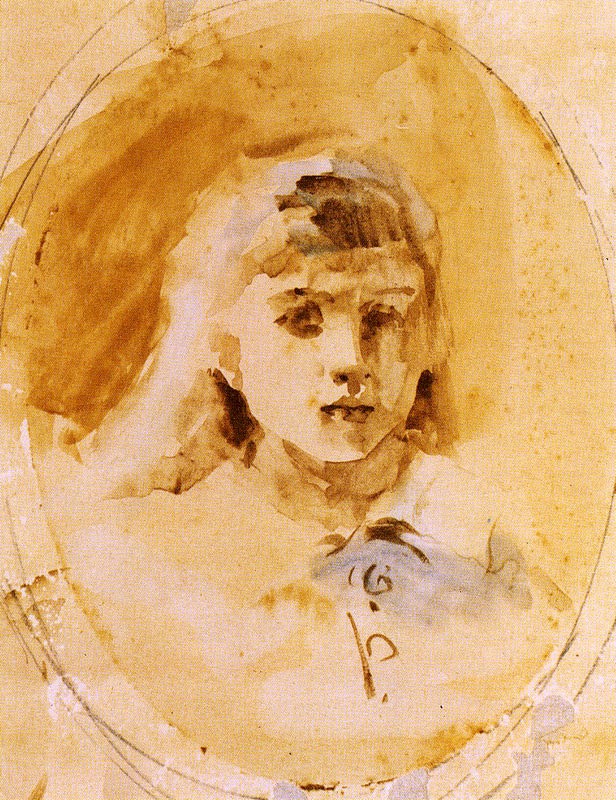
Marie-Louise Pailleron, c.1881, watercolor, 27 x 20 cm (10.625 x 7.875 in.). Private collection. Aside from a couple of dabs of blue, the portrait is executed nearly in one color, that is, en grisaille. Marie-Louise wears her hair “down” unlike in the formal portrait with her older brother done at the same time where the 10-year-old was exasperated by the artist’s insistence that she wear her hair “up.”

39-a-john_singer_sargent_marie_louise_pailleronfixed

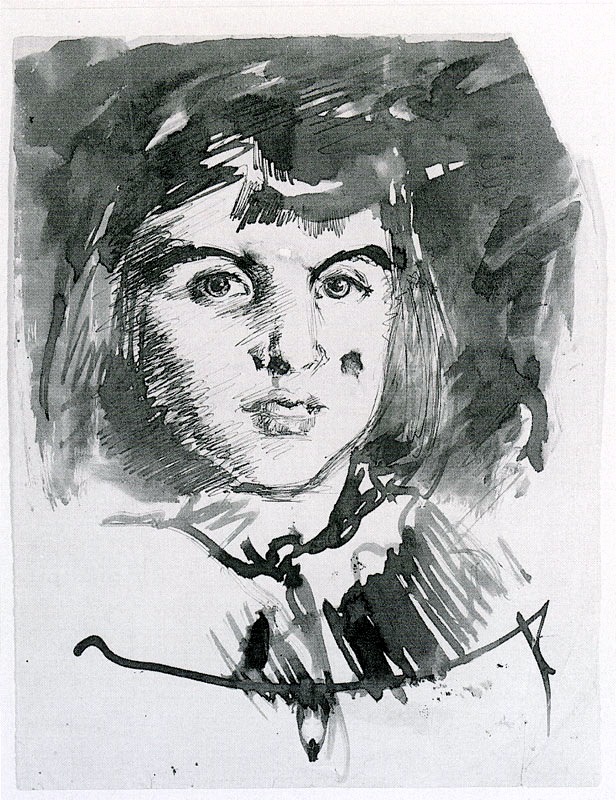
Marie-Louise Pailleron, c.1881, pen, ink and wash on paper, 23.2 x 18.1 cm (9.125 x 7.125 in.), Metropolitan Museum of Art, New York. A second monochrome facial study of 10-year-old Marie-Louise by JSS. The work has a playful aspect in that the paper’s back side (or verso) has a child’s drawing of a house.

40-dr_pozzi_at_homefixed

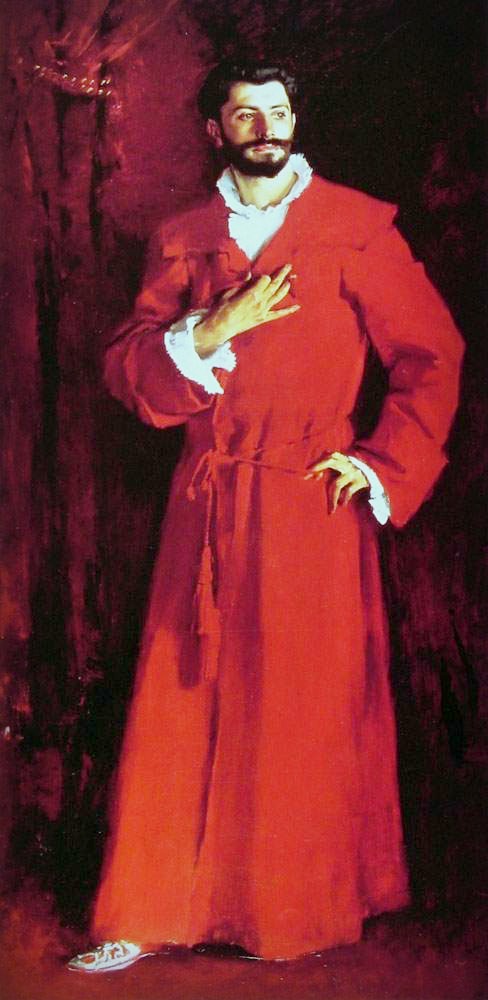
Dr. Pozzi (or Dr. Pozzi at Home), 1881. Oil on canvas, 204.5 x 111.4 cm (80 ½ x 43 7/8 in.). Inscribed upper right: John S. Sargent 1881. UCLA at the Armand Hammer Museum of Art and Cultural Center, Los Angeles.

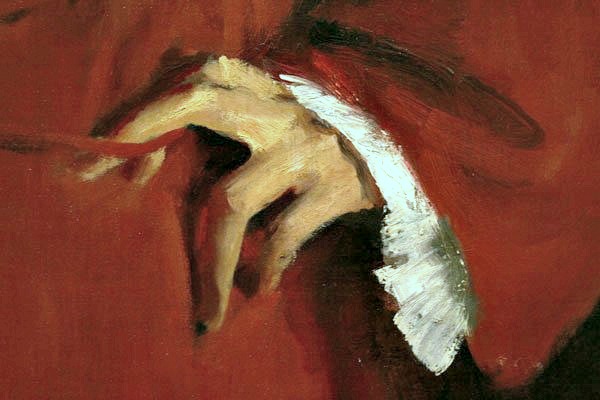
Below: Detail of left hand, Dr. Pozzi, 1881.

40-bfixed

42-dsc_0533-3

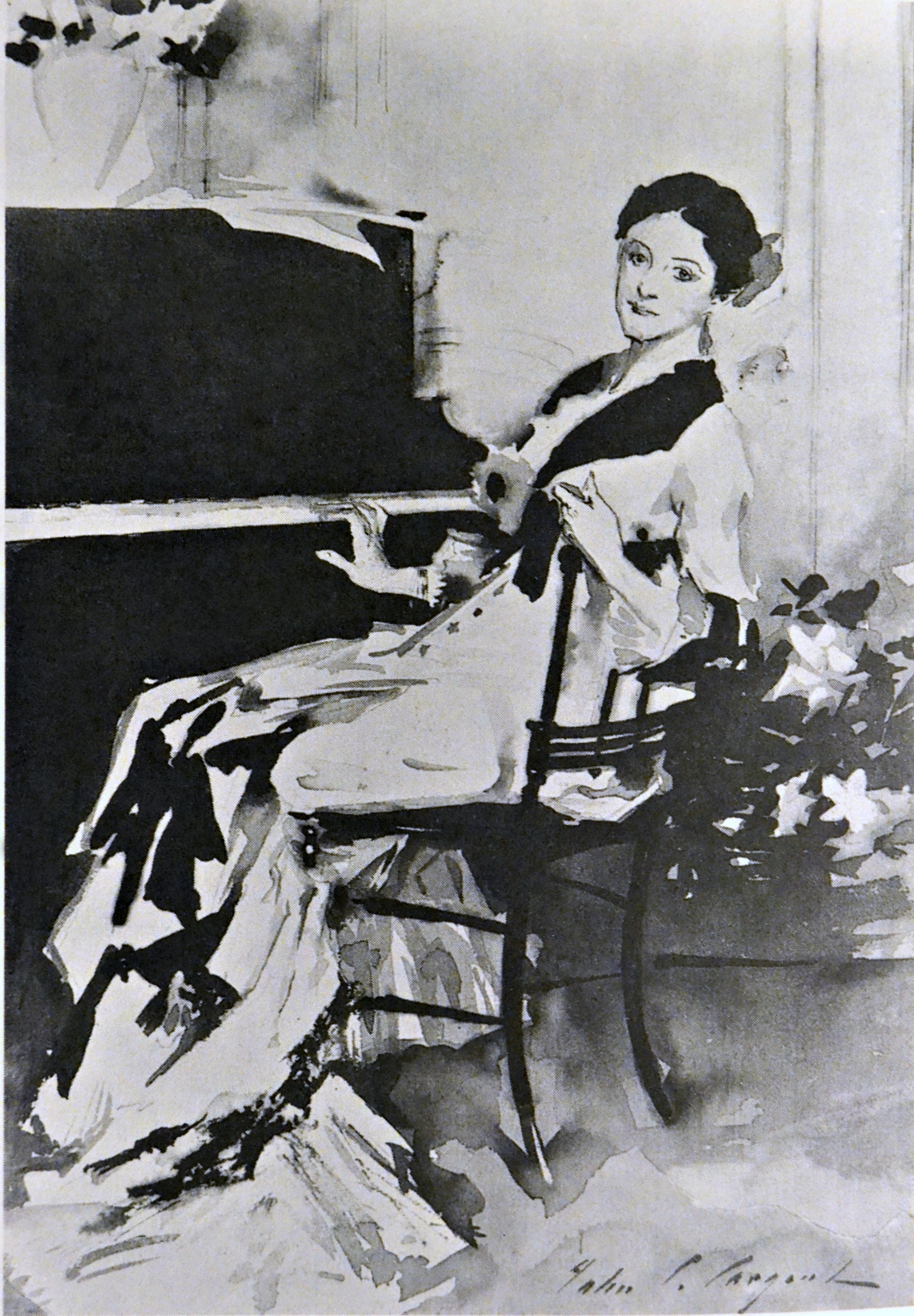
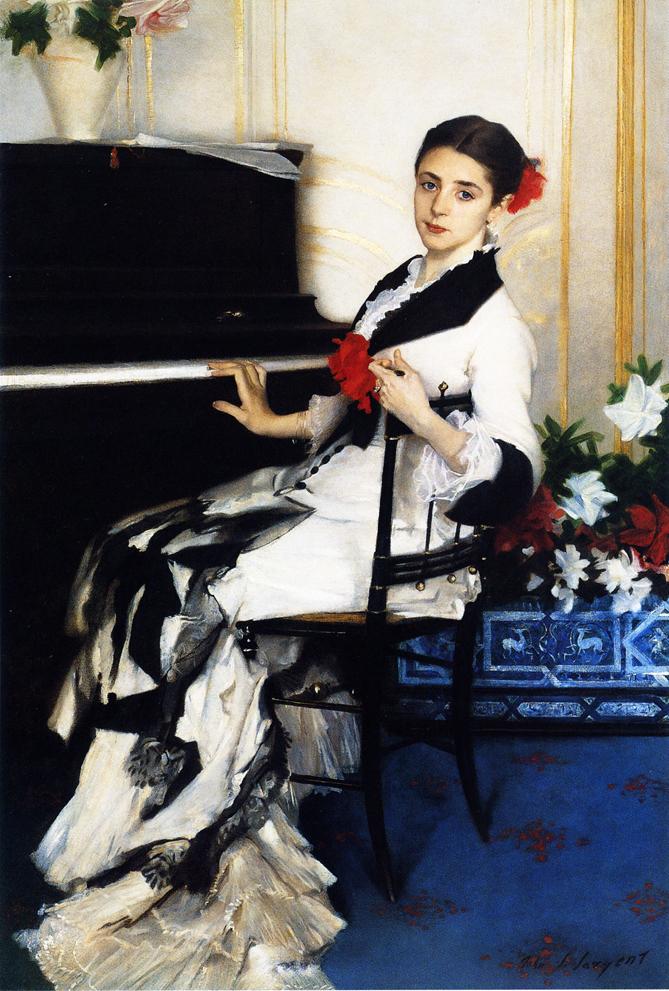
Madame Ramón Subercaseaux, c. 1881, sepia wash, 22.2 x 32.4 cm (12 ¾ x 8 ¾ in.), inscribed, lower right: John S. Sargent. Private collection. This is not a study for the painting below but a derivation from it. The artist made it for the painting’s reproduction in the Salon catalog.

41-madame-ramon-subercaseaux

Madame Ramón Subercaseaux, c. 1880-81, oil on canvas, 165.1 x 109.9 cm (65 x 43 ¼ in.). Inscribed, lower right: John S. Sargent. Private collection.

43-portrait-of-mrs-john-joseph-townsend-catherine-rebecca-bronson-1881

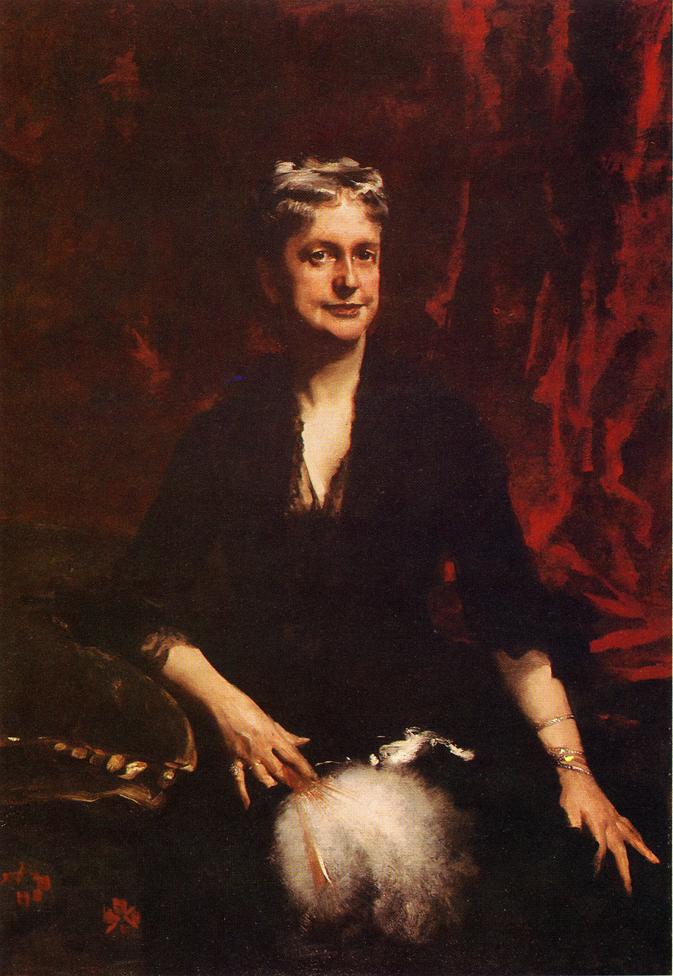
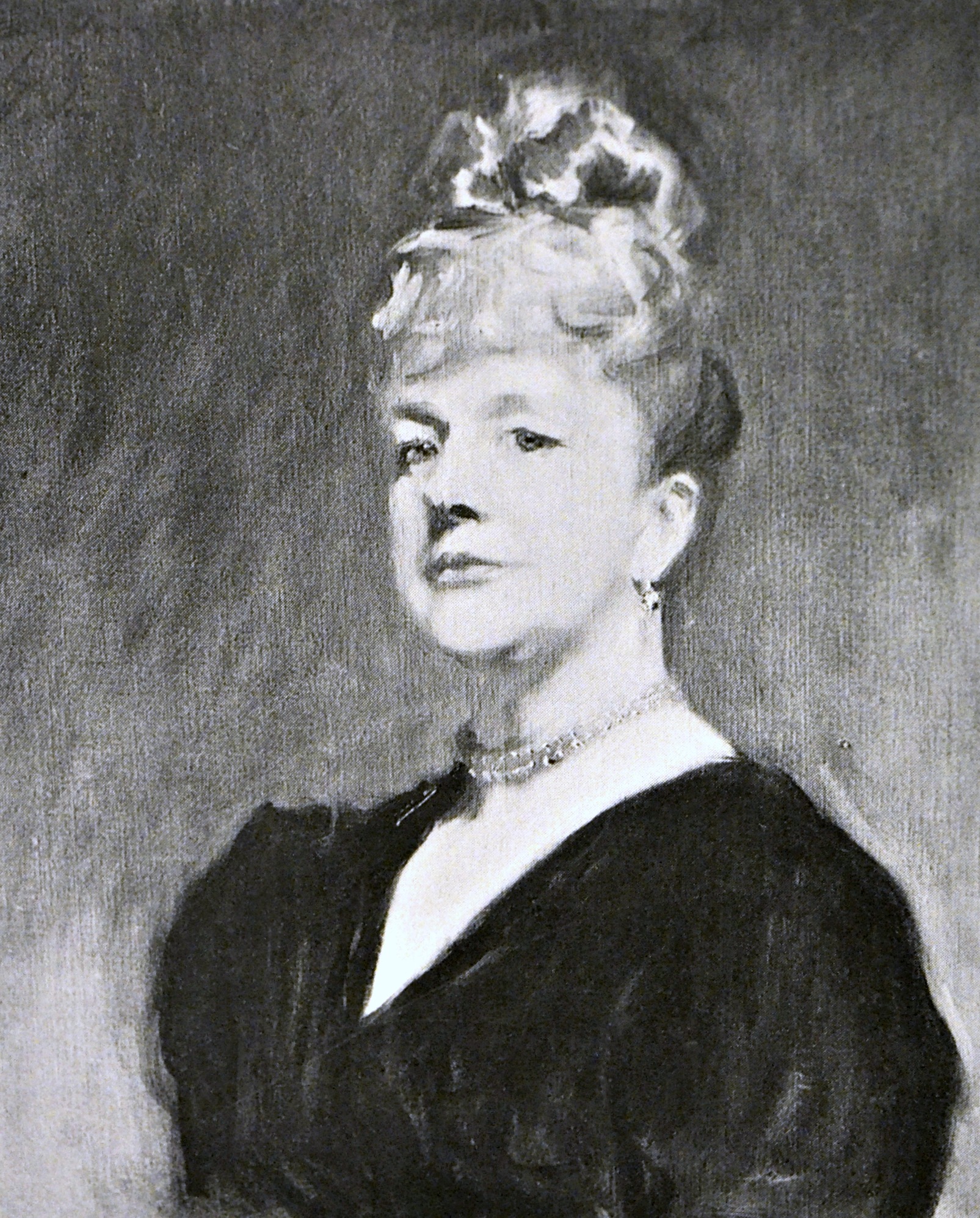
Mrs. John Joseph Townsend, 1881, oil on canvas, 124.5 x 83.8 cm (49 x 33 in.). Inscribed, upper right: John S. Sargent Paris 1881. Location unknown. Catherine Rebecca Bronson (1833-1926) was from a family of U.S. politicians and married a New York businessman. The Bronsons were part of the American expatriate community in Florence and Venice with the Sargents. This is Sargent’s first portrait of the old family friend. She sits on a low couch, right elbow on pillows and holds a swan’s-down fan.

44-dsc_0535fixed

Mrs. John Joseph Townsend, c. 1882, oil on canvas, 69.9 x 56.5 cm (27½ x 22¼ in.). Inscribed, upper left: to my dear friend Mrs Townsend/John S. Sargent. Location unknown.

45-dsc_0536fixed

John Joseph Townsend, 1882, oil on canvas, 128.9 x 86.4 cm (50 ¾ x 34 in.). Incribed, upper right: John S. Sargent/Paris 1882. Private collection. Mr. Townsend (1825-1889) was a New York lawyer who served in the State Assembly. A Columbia University trustee and Union Club president, he married Catherine Bronson, a Sargent family friend, in 1854.

46-john_singer_sargent_-_miss_beatrice_townsend

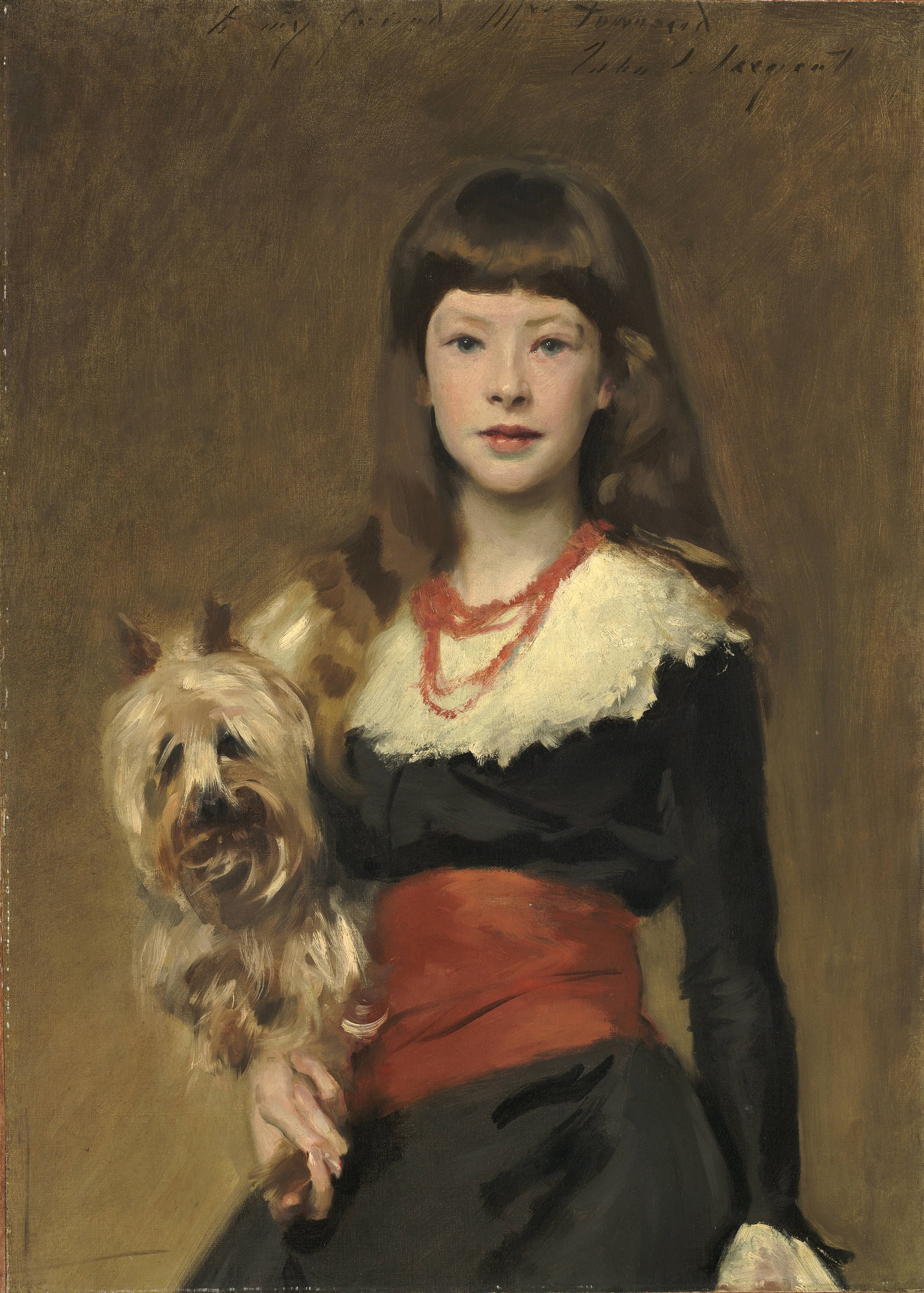
Beatrice Townsend, c. 1882, oil on canvas, 81.9 x 58.4 cm (32 ¼ x 23 in.). Inscribed, upper center: to my friend/Mrs. Townsend/John S. Sargent. National Gallery of Art, Washington, D.C. (Mellon Collection). (Eleanor) Beatrice Townsend (1870-1884), born in New York, was the sixth of seven children of Mr. and Mrs. Townsend. The teenager died tragically of peritonitis, an abdominal disease in 1884.

47-mr-and-mrs-john-w-field-1882

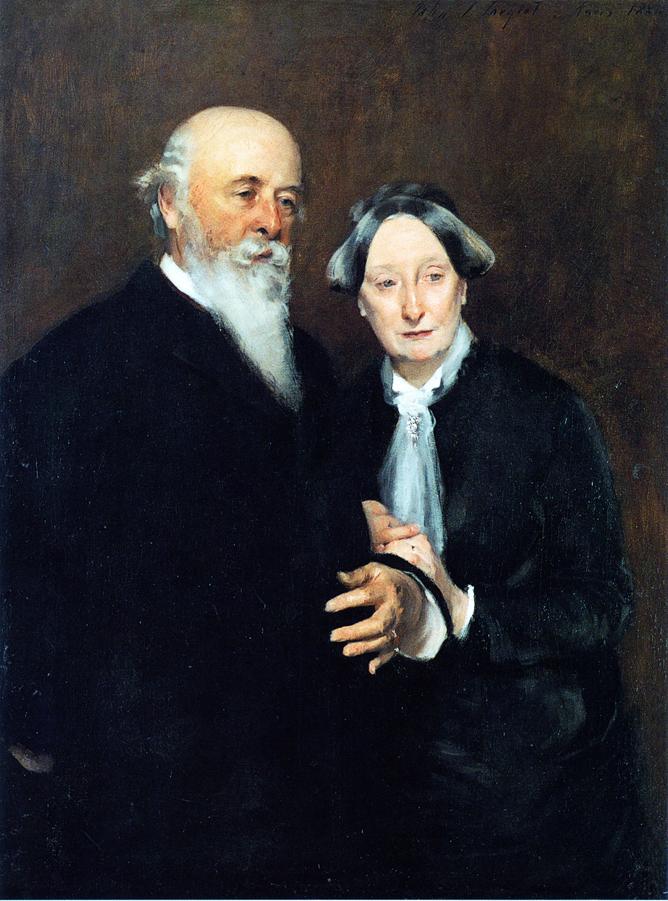
Mr. and Mrs. John Field, 1882, oil on canvas, 111.8 x 82.5 cm (44 x 32½ in.). Inscribed, upper right: John S. Sargent, Paris 1882. Pennsylvania Academy of Fine Arts, Philadelphia. Gilbert Stuart painted the father of Mrs. Field (Eliza Willing Spring Peters, 1820-1897) and she was painted by Thomas Sully in 1841– and now by Sargent. European travel led Mr. Field (1815-1887), a trader, into art collecting. In a June 1882 letter, British writer Vernon Lee noted that it was the Fields (or possibly the Townsends) who were nonstop talkers.

48-isabel-valle-1882

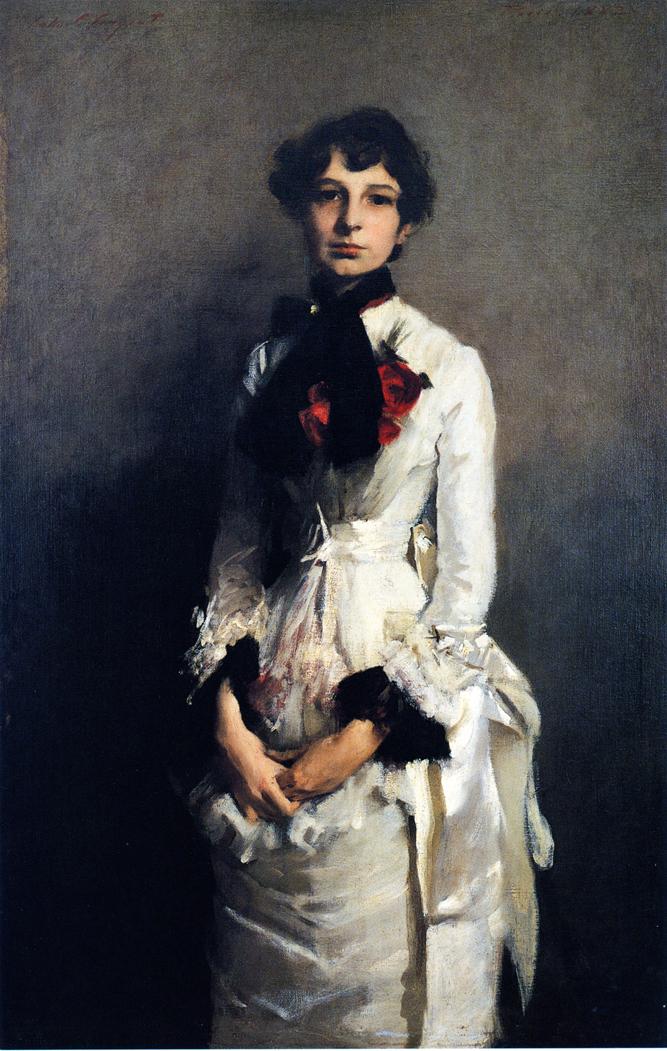
Isabel Vallé, 1882, oil on canvas, 132.1 x 81.3 cm (52 x 32 in.). Inscribed, upper left: John Singer Sargent; upper right: Paris 1882. Private collection. Likely exhibited at the third exhibition of the Cercle des arts libéraux in 1882 on rue Vivienne in Paris, Isabel Vallé (1864-1947) became Mrs. Austin but later divorced. The three-quarter-length portrait of the 18-year-old possesses a “soft, liquid beauty.”

49-dsc_0534-2fixed

Mrs. Jules Félix Vallé, 1882, 50.8 x 40.6 cm (20 x 16 in.), Inscribed, upper right: John S. Sargent/1882. Lost. Mrs. Vallé was Isabel Vallé’s mother.

50c-fixed

Mrs. Daniel Sargent Curtis, 1882, oil on canvas, 71.1 x 53.3 cm (28 x 21 in.). Inscribed, upper left: Venice 1882; upper right: John S. Sargent/to his kind friend Mrs Curtis. Spencer Museum of Art, Lawrence, Kansas. Ariana Randolph Wormeley (1833-1922) came from a family of writers and linguists. At 20 years old she married Dr. Sargent’s cousin and moved from Boston to a palazzo in Venice where she established a fashionable salon. Sargent called her the “Dogaressa” and was a frequent guest in later years.

51-mademoiselle-boussenet-duclos-fixed

Mademoiselle Boussenet-Duclos, 1882, oil on canvas, 55.6 x 46 cm (21 7/8 x 18 7/8 in.). Inscribed, upper left: John S. Sargent; upper right: 1882. Verso: Mr. John Sargent/ 8….. Private collection. The whereabouts of this portrait of a young woman dressed in a black outdoor coat with fur edging was unknown until it reappeared in public in 1988.

52-fixed-john_singer_sargent_madame_allouard_jouanfixed

Madame Allouard-Jouan, c. 1882, oil on canvas, 74.9 x 55.9 cm (29½ x 22 in.). Inscribed, upper left: à Mme Allouard Jouan/témoignage d’amitié; upper right: John S. Sargent. Musée du Petit Palais, Paris. In 1882 the portrait was exhibited at French art dealer Georges Petit’s gallery. The portrait was described as being painted “with verve, by the hand of a master.”

53-fixed-madame-paul-escudier-louise-lefevre-1882

Madame Paul Escudier, 1882, oil on canvas, 128.3 x 90.2 cm (50½ x 35½ in.). Inscribed,lower right: John S. Sargent 1882. Private collection. Louise Lefevre (1861-1950) married Paul Escudier (1858-1931), a sometime French entertainment lawyer. This informal portrait with a beautiful subject and setting in delightful light, the sitter’s identity is not certain. Sometimes compared to Belgian artist Alfred Stevens, the work’s reflection in the mirror seems to evoke Jan Van Eyck.

54-fixed-john_singer_sargent_madame_paul_escudier

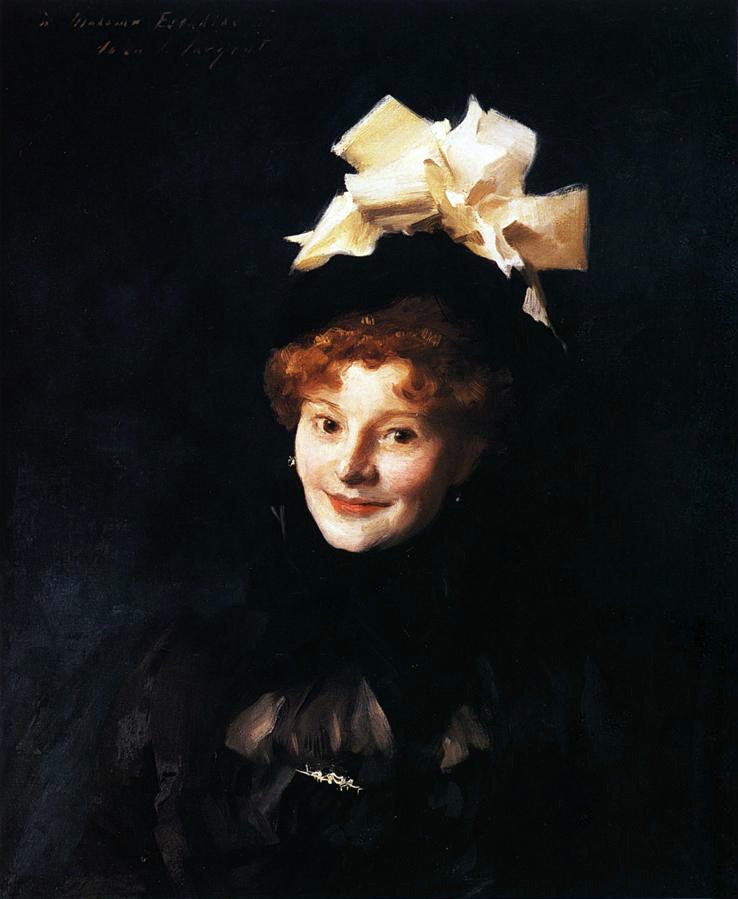
Madame Paul Escudier, c. 1882, oil on canvas, 73.2 x 59.5 cm (18 ¾ x 23 ½ in.). Inscribed, upper left: à Madame Escudier/John S. Sargent. Clark Art Institute, Massachusetts. The sitter is dressed in a black coat and diamond pin, ready for a possible soirée. She is wearing a fashionable white-ribboned black hat for a finish.

55-louise-burckhardt-also-known-as-lady-with-a-rose-1882

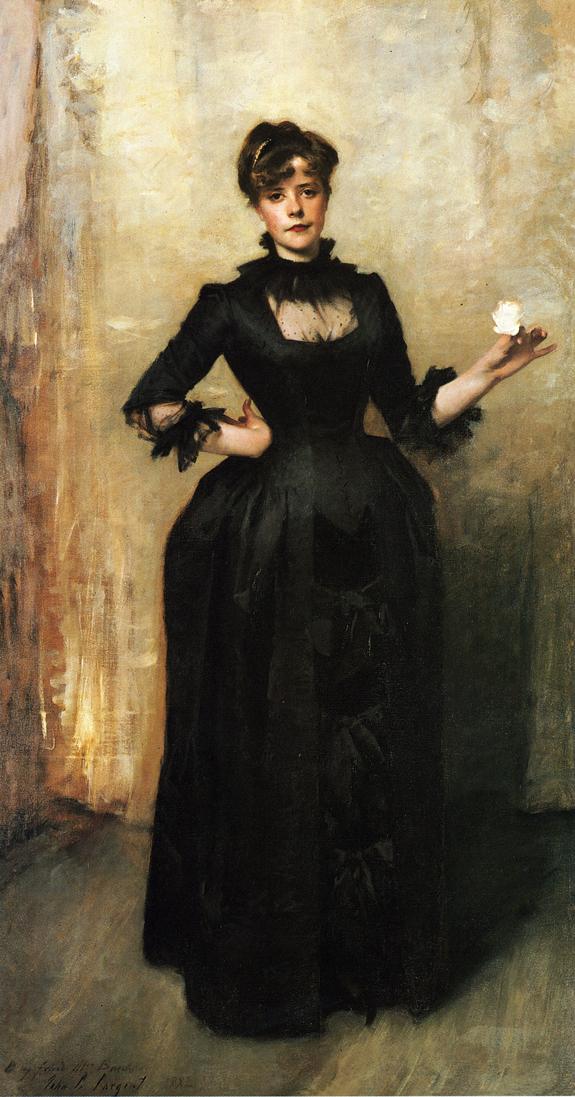
Louise Burckhardt (or, Lady With a Rose), 1882, oil on canvas, 213.4 x 113.7 cm (84 x 44¾ in.). The Metropolitan Museum of Art, New York.

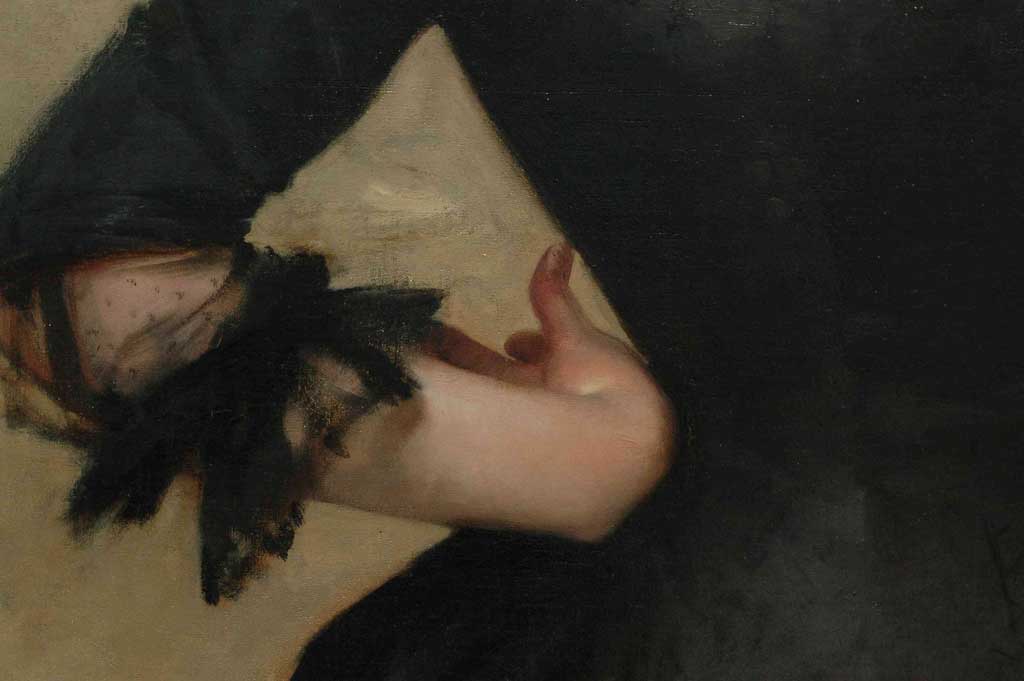
Below: detail of the right hand Louise Burckhardt (or, Lady With a Rose), 1882.

55-lady_with_the_rose_d

56-the_daughters_of_edward_darley_boit_john_singer_sargent_1882_unfree_frame_crop

Daughters of Edward D. Boit, 1882, oil on canvas, 221.9 x 221.6 cm (87 3/8 x 87 5/8 in.). Museum of Fine Arts, Boston, 1882. The group portrait depicts the four daughters of Sargent’s friend and fellow American painter, Edward Boit and his wife, Mary Louisa. In Europe the Boits lived in Rome and Paris where this painting, directly influenced by Velázquez, was painted in the family flat on Avenue de Friedland. Exhibited at Georges Petit and the Salon. The Japanese vases remain in the family today.

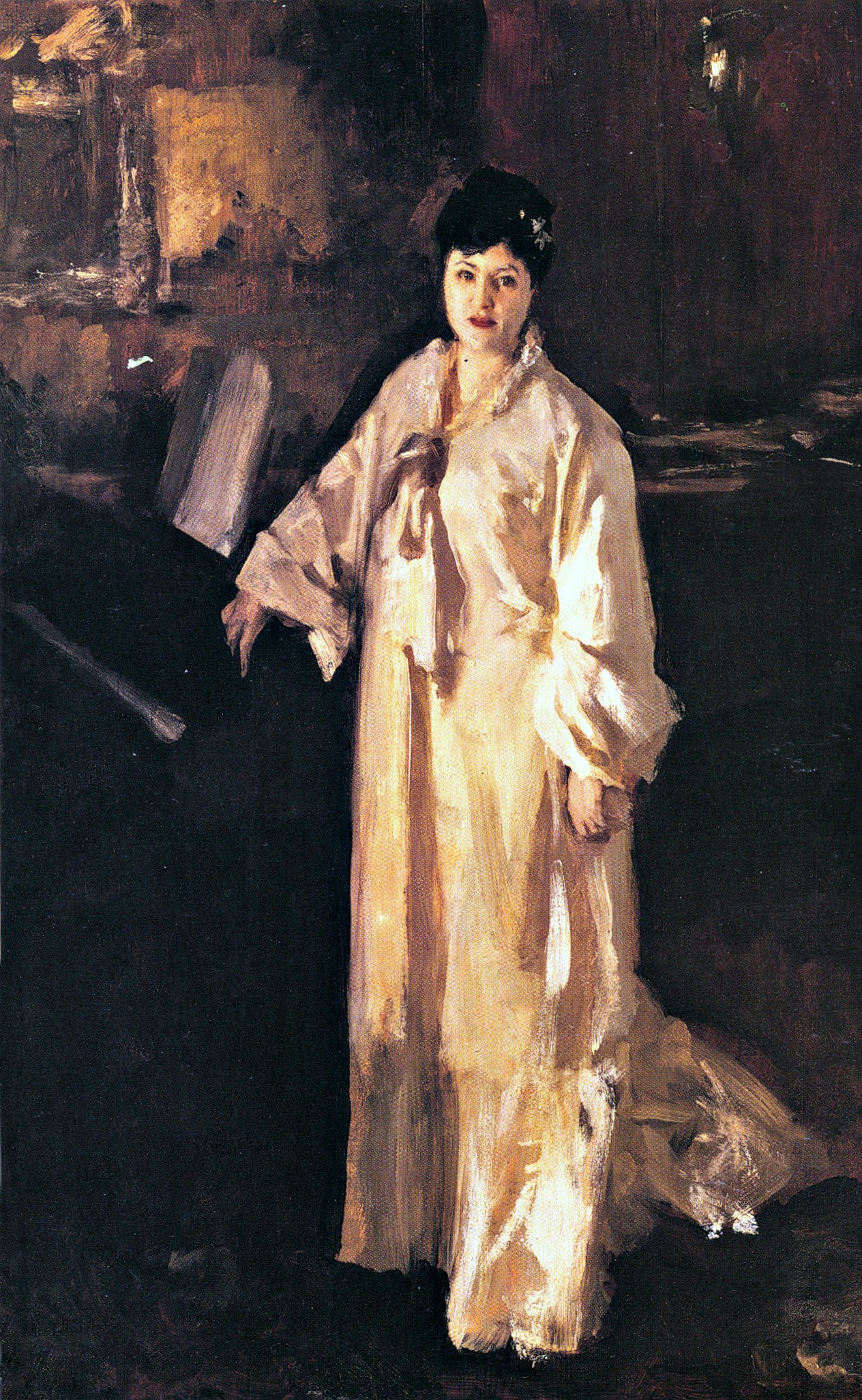
John Singer Sargent, Judith Gautier, 1883-85

Judith Gautier, c. 1883-1885. Detroit Institute of Arts, oil on panel. 39 x 24 1/2 in., (99.1 x 62.2 cm)

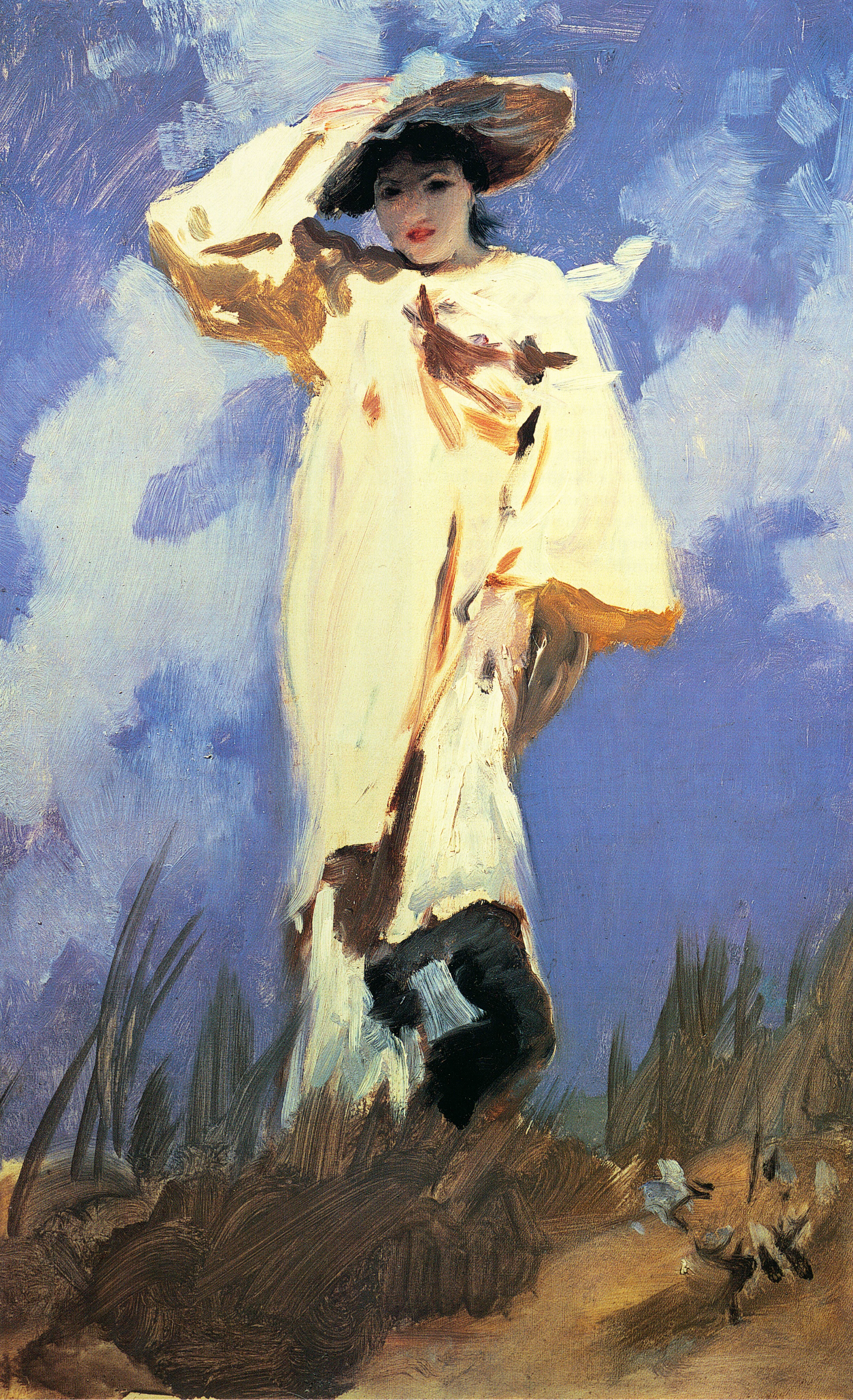
JSS, Judith Gautier or Gust of Wind, c, 1883-1885, private collection, oil on canvas, 24 1/8 x 15 in. (61.3 x 38.1 cm).

Judith Gautier or Gust of Wind, c, 1883-1885, private collection, oil on canvas, 24 1/8 x 15 in. (61.3 x 38.1 cm).

John Singer Sargent, Mrs. Henry White, 1883

Margaret Stuyvesant Rutherfurd White (Mrs. Henry White), 1883, oil on canvas, 225.1 × 143.8 cm (88 5/8 × 56 5/8 in.), National Gallery of Art, Washington, D.C. from Corcoran Collection, 2014.

REFERENCE: John Singer Sargent, Complete Paintings, Volume 1: The Early Portraits by Richard Ormond and Elaine Kilmurray, Yale University Press/Paul Mellon Centre, 1998.

UNITED STATES. My Art Photography: Made in 1990, a monumental Cor-10 steel sculpture by FERDINAND REBECHINI (American, 1923-2003) depicts a Kaskaskia leading Fr. Jacques Marquette, S.J. and Louis Jolliet through the Chicago Portage in 1673.

FEATURE image: Kaskaskia tribe member leads Fr. Jacques Marquette, S.J. and Louis Jolliet through the Chicago Portage, 1673. Cor-10 steel, Ferdinand Rebechini (1923-2003), The Chicago Portage National Historic Site, Lyons, Illinois, 1990. Author’s photograph taken in November 2012.

A Native American of the Kaskaskia tribe leading French explorers Father Jacques Marquette, S.J. and Louis Jolliet through The Chicago Portage. A Cor-10 steel sculpture by Ferdinand Rebechini (1923-2003) of Rebechini Studios Inc. of Elk Grove Village. The artwork was dedicated at The Chicago Portage National Historic Site in Lyons, Illinois, in April 1990. Author’s photograph.

In September 1673 members of the Kaskaskia, a Native American tribe of the Illinois Confederation, led French explorers Louis Jolliet (1645-1700) and Père Jacques Marquette, S.J. (1637-1675) through the portage that was well known to Native Americans for centuries and later called the Chicago Portage. The statue depicts that event, showing a Native American pulling the canoe where water meets land, and Jolliet in the middle and Father Marquette, a cross upon his chest, standing outside the canoe and pointing ahead. For hundreds of years, early travelers, traders, and settlers had to carry their canoes and its contents overland through the Chicago Portage between the Chicago and Des Plaines Rivers. It was on this tract of Illinois land – little changed since the mid17th century – where Marquette and Jolliet, the first French explorers to open up the Old Northwest Territory, once stood.

Cor-10 steel

Made of Cor-10 steel by Chicago-area artist Ferdinand Rebechini (1923-2003) and dedicated in April 1990, the sculpture at The Chicago Portage is made of the same material used to construct Chicago’s Picasso statue in Daley Plaza in downtown Chicago.

This outdoor sculpture stands at the western terminus of a nearly 8-mile-long water-and-overland travel route across the Continental Divide between the St. Lawrence and Mississippi River systems known as “the Chicago Portage.” Linking Lake Michigan (via the Chicago River) to the Mississippi River (via the Des Plaines River), the Chicago Portage became the key to expansion of travel and trade in the Old Northwest territory which later became the raison d’être for the founding of Chicago.

Portage Type and Length Could Widely Vary With the Weather and Seasons

The length of the portage varied with the weather. If water was high, canoes could be paddled longer from Portage Creek into Mud Lake and to the Chicago River without any overland portaging. In dry times, travelers would have to portage in the waist-high swamp waters of Mud Lake, and then drag their canoes through swamp, sloughs, and mud all the way to the Chicago River. The portage became no better in times of drought. Then the overland portage could be as long as upwards of 100 miles with no paddling between the Chicago River and the Illinois River near LaSalle/Peru.

Original section of the waterway at the Chicago Portage. The water originally flowed as part of the Des Plaines River. During construction of the Sanitary and Ship Canal in the late 1890’s it was cut off from the river and partially filled. For hundreds of years the Chicago Portage was that track of mostly land where in wet season travelers could mostly paddle from the Chicago River to the Des Plaines River and in dry or semi-dry season they had to carry canoes and supplies varying distances between rivers. It was here where the trio depicted in Ferdinand Rebechini’s sculpture pulled ashore in their canoe and once walked more than 300 years ago. Author’s photograph.
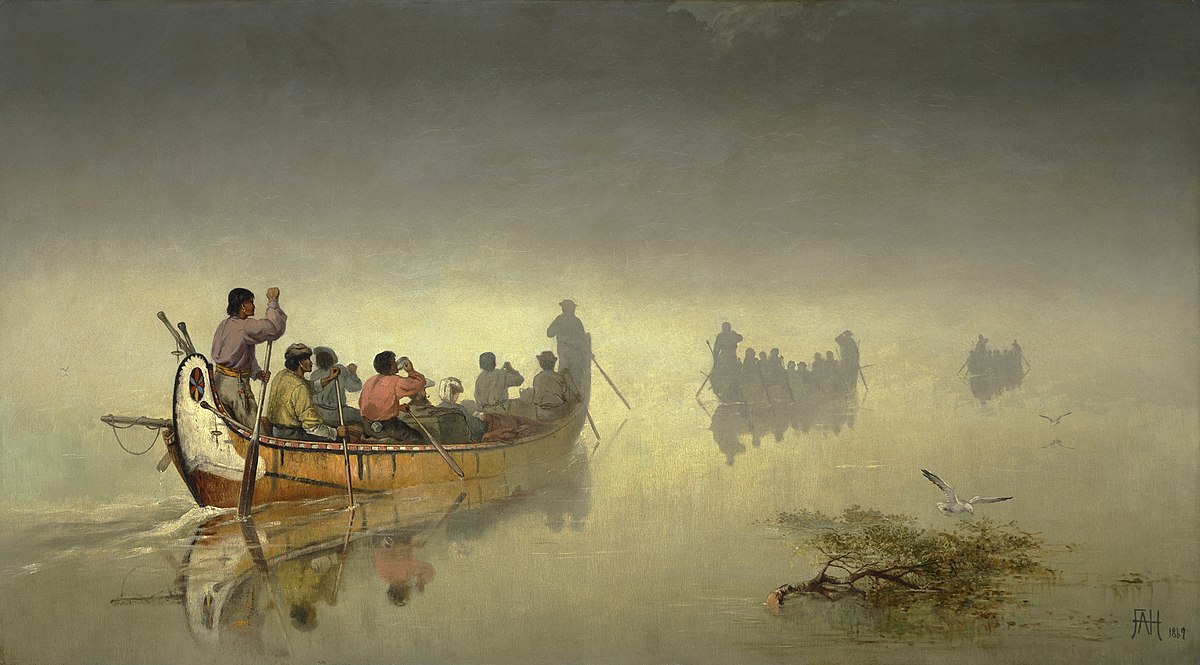
“Canoes in a Fog, Lake Superior,” 1869, Frances Anne Hopkins (1838–1919) Glenbow Museum, Alberta, Canada. Public Domain. In the 17th and 18th centuries the Chicago Portage welcomed a similar scene of paddling travelers such as Native Americans, missionaries, soldiers, pioneers, voyageurs, trappers, and traders on the waterways of Illinois wilderness.

Used and well-known by the Native Americans, the portage was first used by the Europeans in the mid-17th century. It became a major gateway for exploration and pioneer expansion to the West and for the fur trade. The portage at Chicago was discovered in September 1673 by Frenchmen Père Jacques Marquette and his guide Louis Jolliet as they returned from their voyage of exploration down the Mississippi River. A 36-year-old Marquette, already in bad health, spent his last winter of 1674-75 near the portage, and died in May 1675 near Ludington, Michigan. Numerous missionaries, soldiers, pioneers, voyageurs and traders into Illinois Country passed through the portage, including René Robert Cavelier, Sieur de la Salle (1643-1687) and Henry de Tonty (1649-1704). Starting around 1700, Europeans were kept out of the area by Native Americans who continued to use the portage extensively as the native peoples had done for centuries before the European arrival. Over the first half of the 18th century, the portage restricted non-Indian travel.

Ceded to the United States in 1795 in the Treaty of Greenville, the portage route was meticulously mapped and developed in the 19th century to meet the needs of greater interstate commerce. The Illinois and Michigan Canal was built along this route in 1848 mainly using Irish immigrant labor in its construction. In 1907, the Sanitary and Shipping Canal was built and remains in use today. The western terminus site is located in today’s city of Lyons, Illinois.

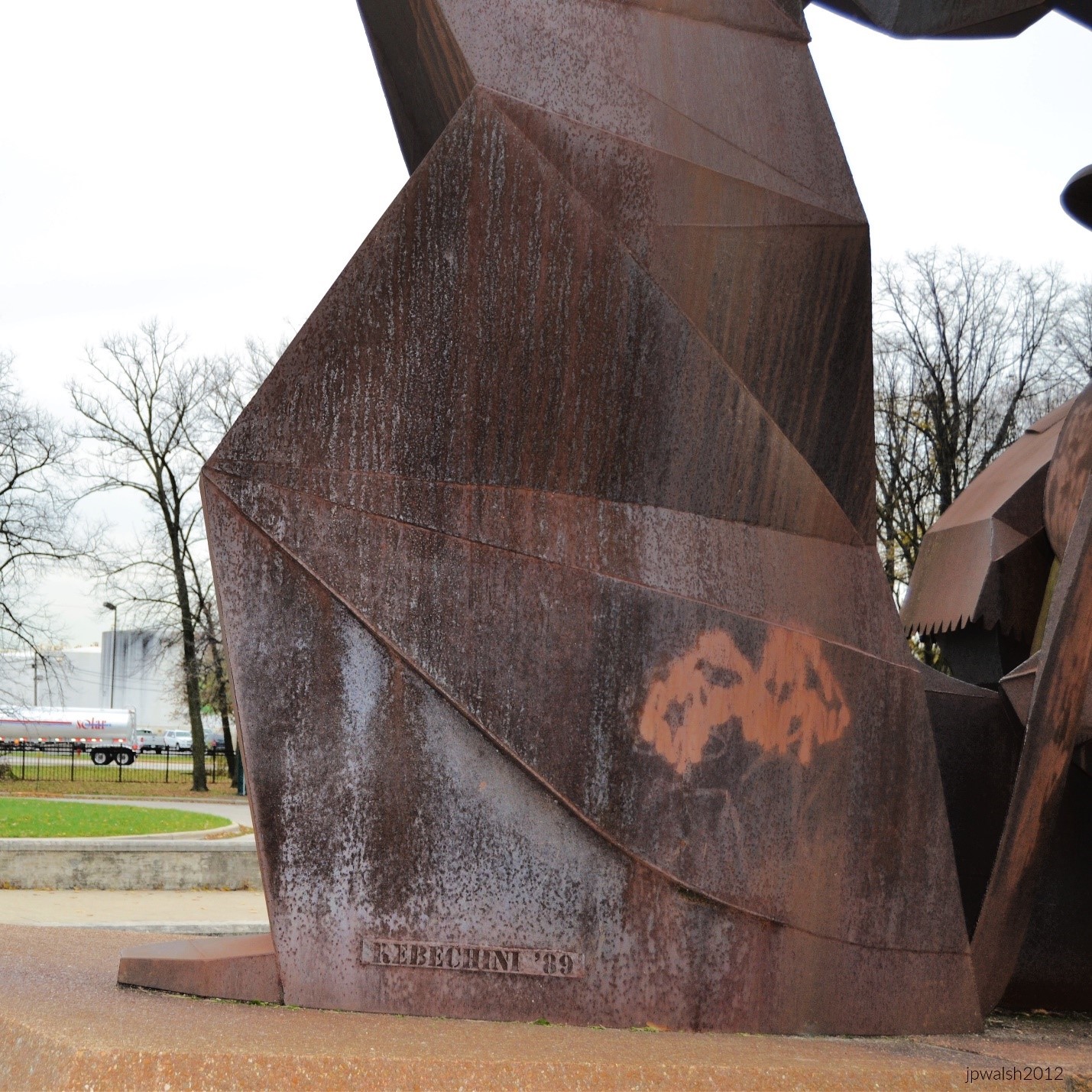
The artist signed his monumental Cor-Ten steel sculpture on the robe of the figure of Fr. Marquette. Author’s photograph.

The Chicago Portage, which made Chicago’s founding and thriving possible, is a U.S. Department of Interior National Historic Site

Since 1950, the historic Chicago Portage is owned and part of the Cook County Forest Preserve system. In 1952 the U.S. Department of Interior recognized the historic importance of the portage by officially designating it a National Historic Site.  The site is also part of the I & M Canal National Heritage Corridor. The eastern end of the portage route is the site of Fort Dearborn, by Lake Michigan at the mouth of the Chicago River near today’s high-traffic DuSable (Michigan Avenue) Bridge. Fort Dearborn was originally constructed in 1803 to protect the trade route made possible by the portage and through what would soon became Chicago, the “City of the Century.”

FURTHER READING:
https://web.archive.org/web/20121019040703/http://www.cr.nps.gov/history/online_books/explorers/siteb1.htm

Another view: Native American of Kaskaskia tribe leading French explorers Father Jacques Marquette, S.J. and Louis Jolliet through The Chicago Portage. Cor-10 steel sculpture by Ferdinand Rebechini (1923-2003) at The Chicago Portage National Historic Site in Lyons, Illinois, 11/2012 5.12 mb Author’s photograph.
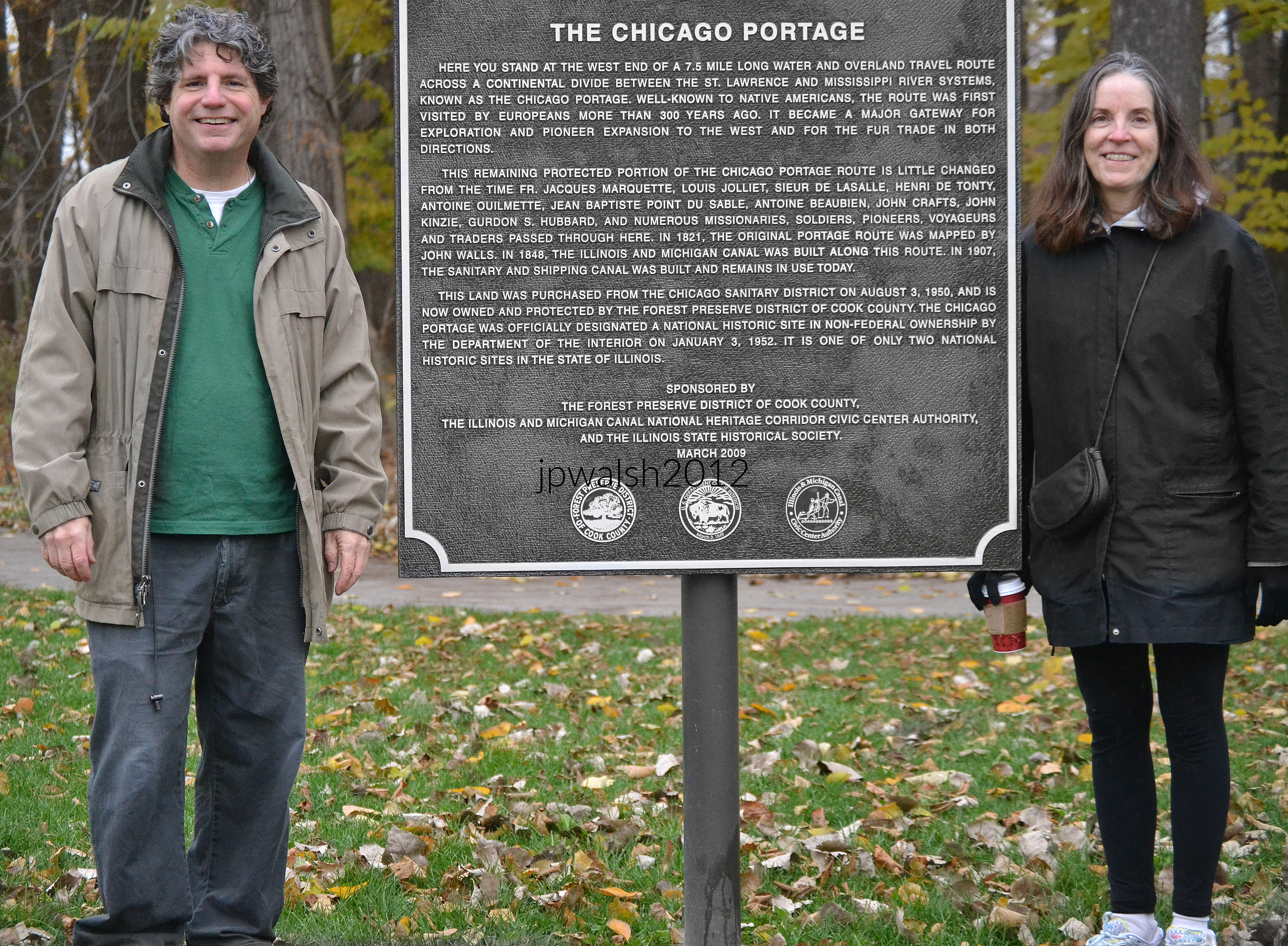
Author and wife visit the Chicago Portage National Historic Site. Author’s photograph.

Photographs and text: