


FEATURE image: Over the Top to Victory (“Doughboy”), 1921, John Paulding, Memorial Park, Wheaton, Illinois. John Paulding’s 1921 Over the Top to Victory transforms the image of the American doughboy into a permanent public memorial that keeps the service and sacrifice of World War I veterans alive for succeeding generations. May 2018. Author’s photograph.
All photographs in this post are the author’s original work.

Captured in a moment of forward motion, John Paulding’s bronze World War I “Doughboy” statue—standing proudly on its Memorial Park pedestal—is a perfect example of how memorials remain active instruments of remembrance rather than static historical objects. The history, symbolism, conservation, and continued prominence of the monument are beautifully reflected in the red, white, and blue wreath resting at its base, echoing the statue’s original 1929 Armistice Day dedication to Wheaton’s veterans. By preserving the sacrifice of local heroes through public art, the Doughboy serves as a lasting bridge between World War I service and present-day civic memory.
A Sculptor of Remembrance
John Paulding, who trained at the School of the Art Institute of Chicago, is best known for the World War I memorials he created in the years immediately following the conflict. The United States entered the war in April 1917, and American forces served with distinction on the Western Front. The fighting ended with the armistice of November 11, 1918, a date later commemorated annually as Veterans Day. Through works such as Over the Top to Victory, Paulding helped translate the sacrifices of the Great War into enduring public monuments.
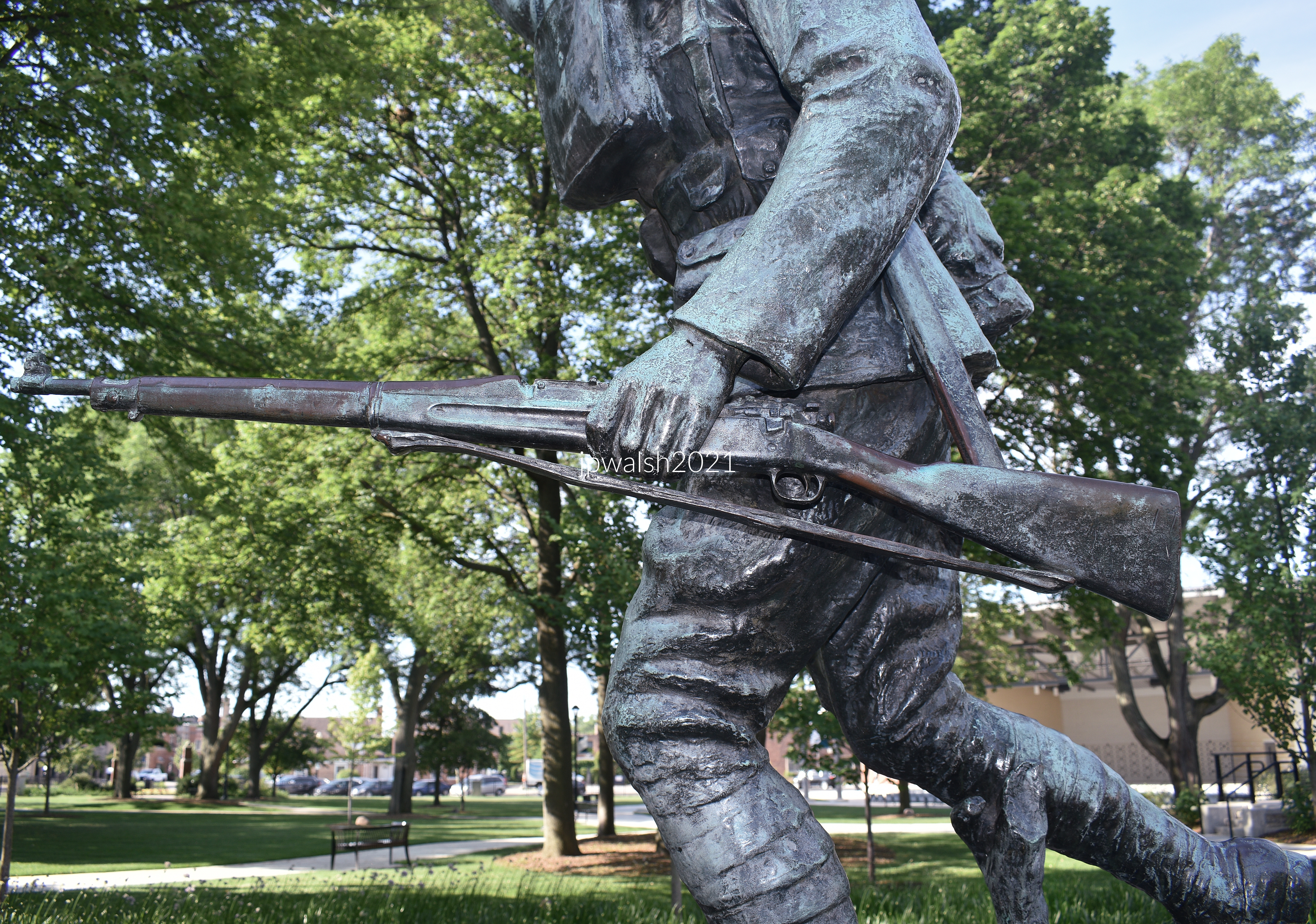
The Paulding doughboy strides through Memorial Park, rifle in hand, its dynamic pose recalling the energy and sacrifice of American soldiers in the Great War. Set against the trees and open grounds, the memorial continues its role as a focal point of remembrance in the community.
Memorial Park and a Community Tribute
Wheaton established Memorial Park in 1921 as a dedicated place to honor local veterans. Eight years later, Paulding’s bronze doughboy was installed and formally dedicated on Armistice Day, November 11, 1929, as a tribute to the community’s World War I servicemen and women. Anticipating the unveiling, the Wheaton Illinoian praised the memorial’s purpose, declaring: “The statue is a fitting memorial to the soldiers of the community who died fighting for our cause. Let us not forget so easily!” The dedication cemented the sculpture’s role as the centerpiece of Wheaton’s public remembrance of the Great War.

“Over the Top to Victory” is a bronze sculpture of an American World War I infantryman — one of the famed doughboys — created by American sculptor John Paulding (1883–1935). Cast in 1921 by the American Art Bronze Foundry of Chicago, the statue stands today in Memorial Park in Wheaton, Illinois.
Conservation and Renewal
After more than seven decades exposed to Midwestern weather, the bronze underwent professional conservation in August 2000 by Venus Bronze Works of Detroit. The restored memorial was rededicated on Veterans Day that same year, with the local American Legion Post once again leading the ceremony, continuing a tradition that stretched back to the statue’s original dedication in 1929.
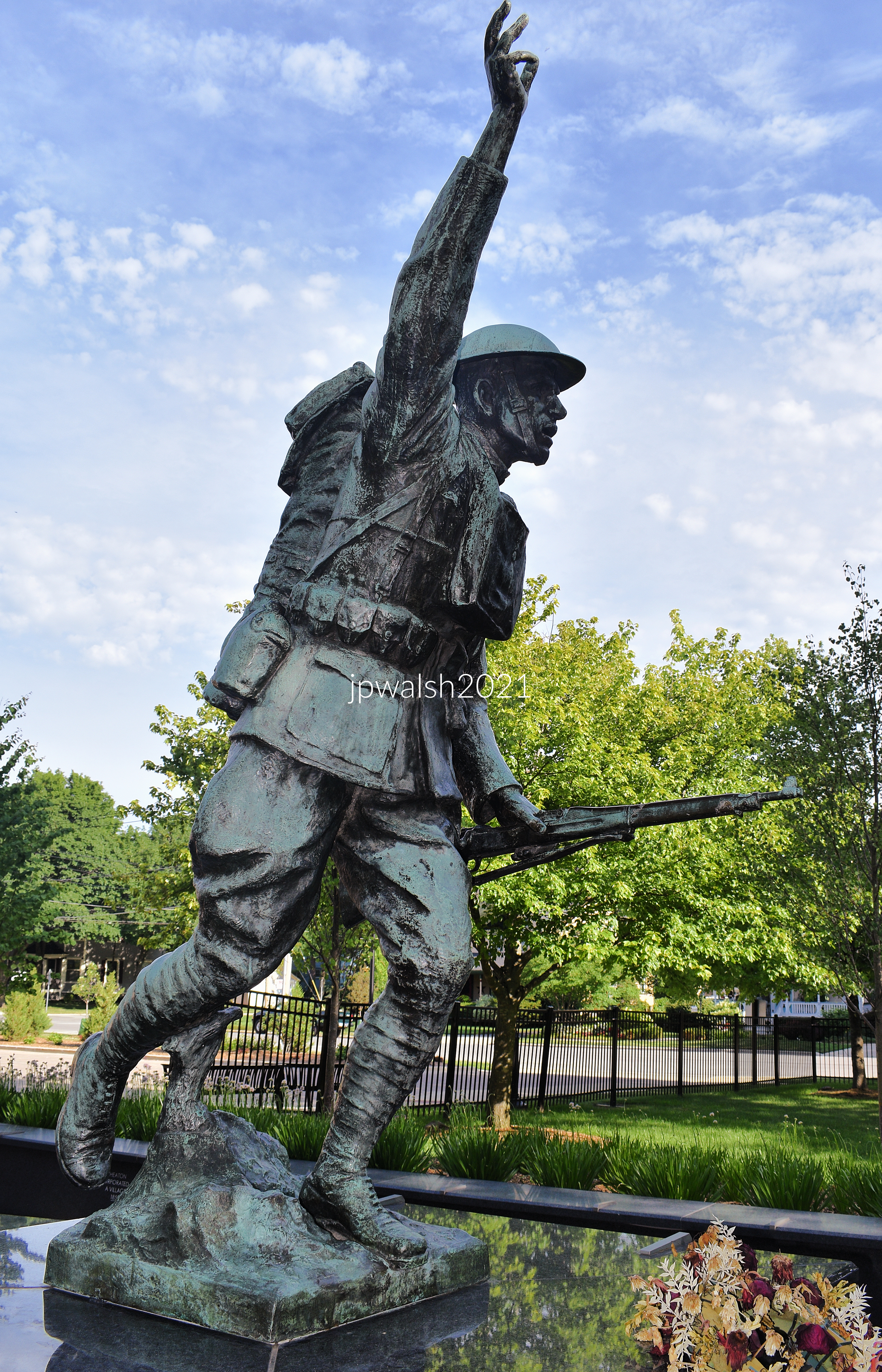
Paulding’s World War I doughboy surges forward on its newest Memorial Park pedestal, the raised arm and shouldered rifle capturing the urgency of the American advance. Flowers at the base mark the memorial’s ongoing role as a site of remembrance for Wheaton’s veterans.
Connecting past sacrifice with present memory
In the summer of 2020, the Over the Top to Victory doughboy was reinstalled as part of a redesigned veterans memorial plaza in Memorial Park. Relocated to a more prominent position, the statue became the focal point of a unified memorial setting that brought together previously dispersed monuments. Nearly a century after its creation, Paulding’s advancing doughboy continues to serve not only as a work of public art but also as a living symbol of community memory, military service, and sacrifice.
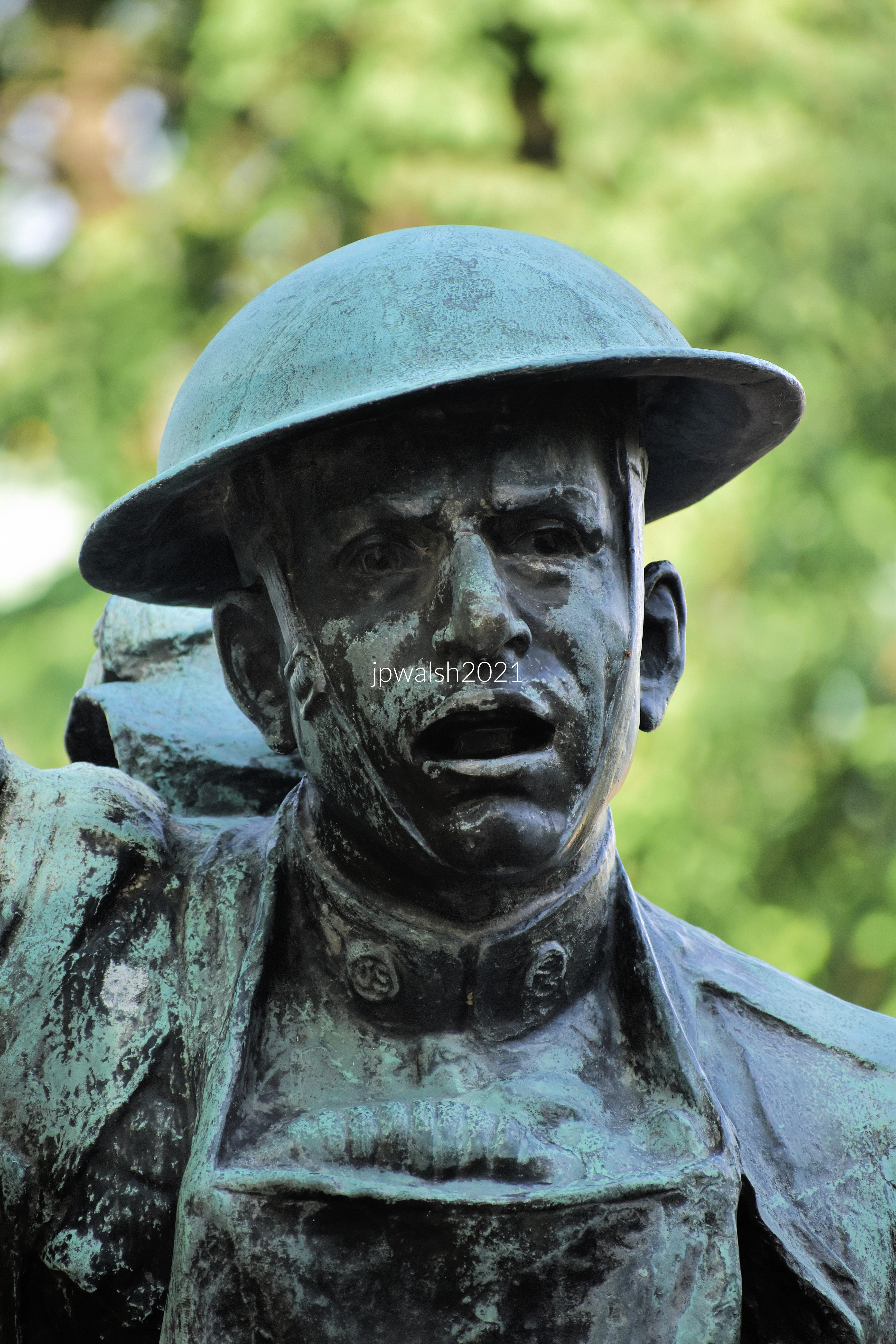
With his open mouth and tense expression, “Doughboy”, the popular nickname for American soldiers who served in Europe during World War I, embodies the strain, determination, and forward momentum of the U.S. infantryman in battle. Rather than portraying a figure at rest, sculptor John Paulding captured a soldier in the midst of action, projecting urgency and resolve. More than a century after its creation, the sculpture retains the same sense of movement and emotional immediacy that audiences experienced in the years following the Great War.
A Memorial for the Twenty-First Century
The continuing care of the monument, its rededications, and its prominent place within Memorial Park demonstrate how communities renew their commitment to remembrance over time. More than a bronze figure, Wheaton’s doughboy stands as a living link between those who served in the Great War and the citizens who continue to honor their sacrifice today and into the future.
This explanatory article may be periodically updated.


