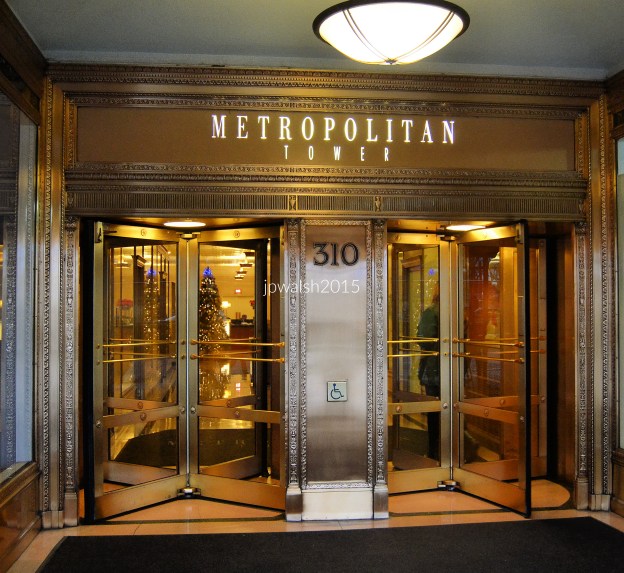
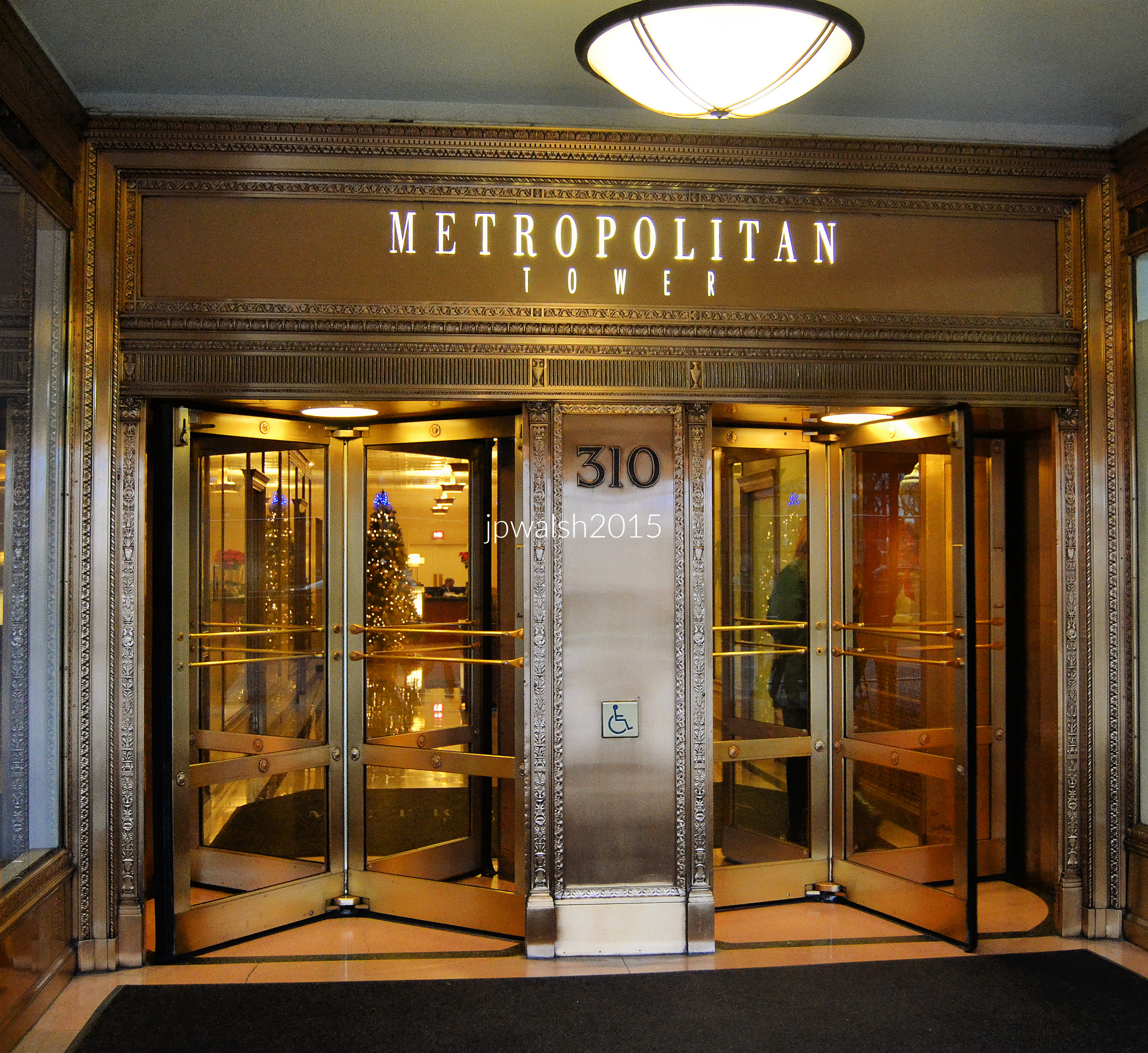
Feature Image: December 2015. Main Entrance, Metropolitan Tower (1924), Chicago. 4.89 mb DSC_0963 (1). Author’s photograph.
Located at 310 South Michigan Avenue on the southwest corner of Jackson Boulevard, Metropolitan Tower originally served as corporate headquarters for S.W. Straus and Co., a banking and investment firm. The building was erected in 1924 by Graham, Anderson, Probst & White in their signature classical style. The architectural firm was one of the largest in the first half of the twentieth century and went on to build Chicago’s Civic Opera Building in 1929. Founded in 1912, the firm was the successor to D. H. Burnham & Co. by way of partner, Ernest R. Graham (1868-1936), and Burnham’s sons, Hubert and Daniel Jr. Five years later the Burnhams left to form their own firm (Burnham Brothers) and Graham partnered with others of the firm’s members: William Peirce Anderson (1870-1924), Edward Mathias Probst (1870-1942), and Howard Judson White (1870-1936). No expense was spared for the Straus Building’s interior, though of the original lobby’s opulence all that remains are the elaborate bronze elevator doors. The entrance’s coffered bronze doors by Italian sculptor Leo Lentelli (1879-1961) were destroyed. see – Saliga, Pauline A., editor, The Sky’s The Limit A Century of Chicago Skyscrapers, Rizzoli New York, 1990, p. 117.
Ernest R. Graham (1868-1936).
William Peirce Anderson (1870-1924).
Edward Mathias Probst (1870-1942).
Howard Judson White (1870-1936).
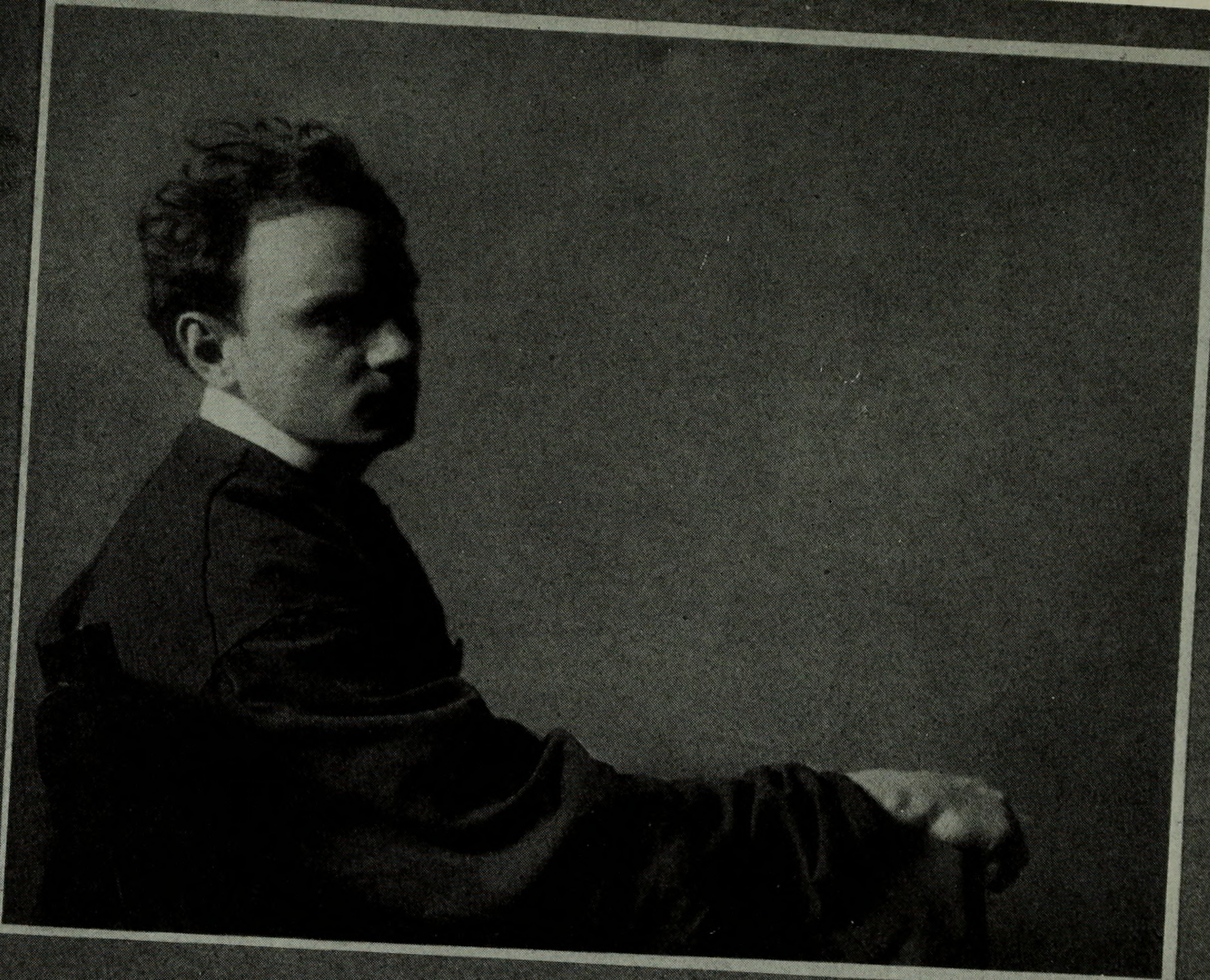
Leo Lentelli (1879-1961). The Italian sculptor created the original main entrance doors for Metropolitan Tower that were later destroyed. Public Domain.
The 30-floor classical-style Straus Building was renamed over the years for other of its famous inhabitants including Continental National Insurance Co. and Britannica Center for Encyclopedia Britannica. Metropolitan Tower was the first building in Chicago that took advantage of the new 1923 zoning ordinance for skyscrapers that allowed buildings taller than 260 feet (30 or more floors) with the necessary setbacks. Metropolitan Tower’s required setbacks begin at the 21st floor on which sits a nine-story tower until there is a second setback and then the final two stories. Crowned by a stepped pyramid and possessed of a powerful beacon that opened in 1924, the building is Chicago’s first Michigan Avenue skyscraper.
Unused for years, the building’s 1,500-pound carillon bells were restored in 1979 for Pope John Paul II’s visit to Chicago. Just steps from Metropolitan Tower, the papal visit included an outdoor mass in Grant Park on October 5, 1979, which attracted over one million attendees, the largest gathering ever in Grant Park history up to that time. see – CBS Chicago Vault: Pope John Paul II enthralls Chicagoans on 1979 visit – CBS Chicago – retrieved March 18, 2026.
At one time, the thirtieth floor was the Straus Tower Observatory, which was open to the public for viewing the city in all four directions. see – Home | Metropolitan Tower – retrieved February 24, 2026. Home to the Continental National Insurance Company soon after it was built, this iconic skyscraper is located within Chicago’s Landmark Historic Michigan Boulevard District. The glass “beehive” supported by four bison figures at the top of the building held the blue light of a four-direction beacon. The ensemble, symbolizing industry, strength, and thrift, saw its beacon, signifying global reach, permanently shut down in 1934 following the financial failure of the S.W. Straus and Company during the Great Depression. The building was converted to residential condominiums in 2007. see – Metropolitan Tower | Powered by Baird & Warner– retrieved February 24, 2026; AIA Guide to Chicago, 2nd Edition, Alice Sinkevitch, Harcourt, Inc., Orlando, 2004, page 42.
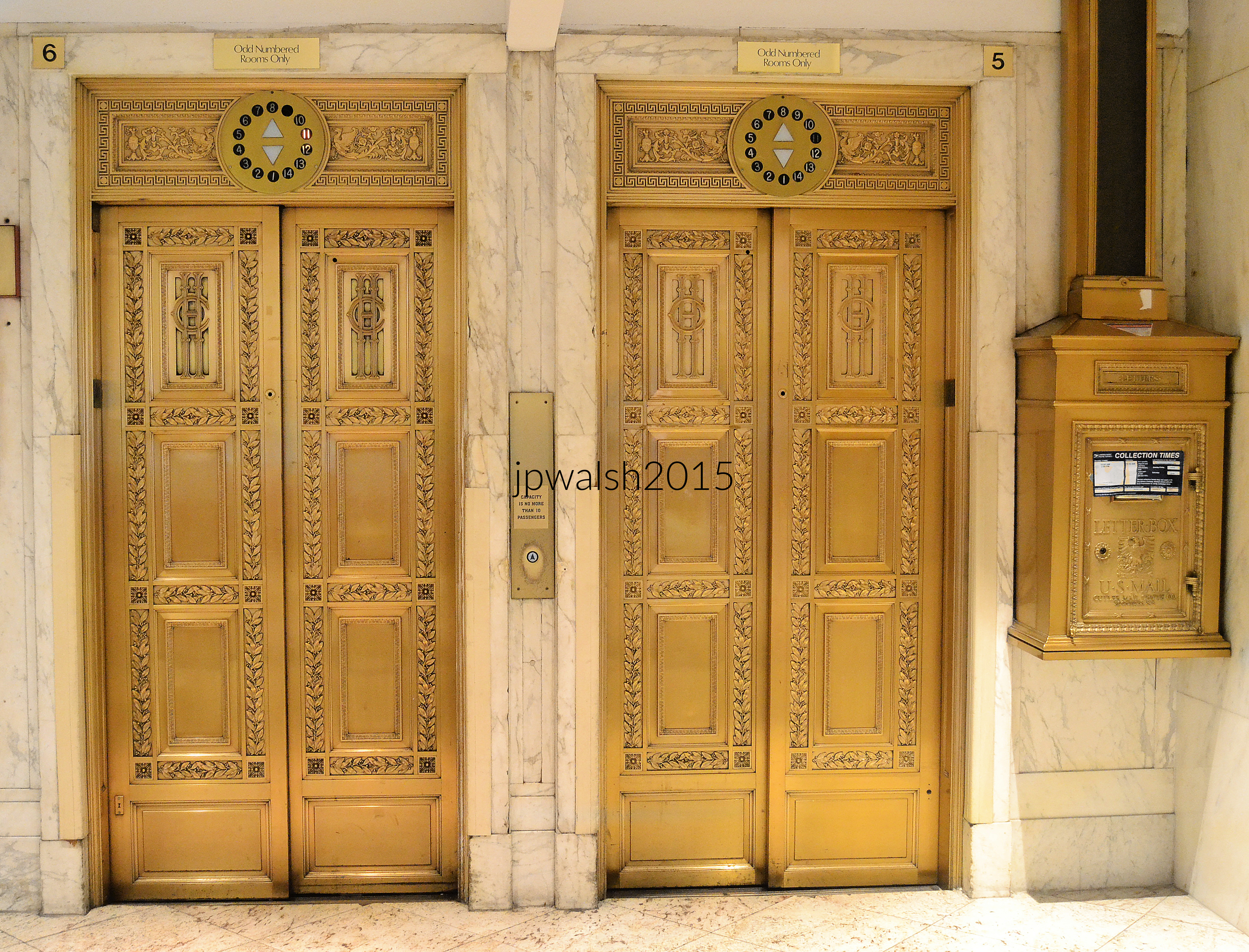
Feature Image: December 2015. Beaux-Arts elevator bank (1907). Congress Plaza Hotel, Chicago. 6.20 mb DSC_0617 (1). Author’s photograph.
The initial North Tower was built in 1893 during The World’s Columbian Exposition, held in Chicago from May 1 to October 31, 1893. It was built by famed developer R.H. Southgate and designed by Clinton J. Warren (1860-1938), a leading young hotel designer in the city. Warren moved to Chicago from Massachusetts in 1879 and the next year joined the firm of Burnham and Root. When he left the firm in 1886 to start his own firm he designed a long list of Chicago hotels. These included The Virginia Hotel (1889–1890), a ten-story building on the northwest corner of Ohio and Rush Streets, The Metropole Hotel (1891) an eight-story building on the southwest corner of Michigan Avenue and 23rd Street, The Plaza Hotel (1891–1992) at 1553 N. Clark Street at the southeast corner of Clark and North Avenue, The Lexington Hotel (1892) at 22nd and Michigan Avenue and The Auditorium Annex/Congress Hotel at 504 S. Michigan Avenue (1893), which is today The Congress Plaza Hotel. By 1900 Warren returned to Boston, Massachusetts, and died in San Diego, California, in 1938, by then his active years as an architect in Chicago obscured. His obituary in the New York Times failed to mention Warren’s training with Daniel Burnham, his influence on Chicago architecture by way of numerous prominent buildings over two decades in the city nor his work’s association to Al Capone by way of the gangster’s moving his headquarters to the Lexington Hotel in 1928 until 1931. Warren’s NYT obituary reads in full: “Clinton J. Warren SAN DIEGO, Calif., March 17 (AP). – Clinton J. Warren, architect, who designed buildings in Europe, Mexico and Eastern United States, died at his home here last night at the age of 80. Mr. Warren formerly lived in Winchester, Mass. His widow and two sons, Clinton Jay Jr. of San Francisco and John of New York, survive.” see – TimesMachine: March 18, 1938 – NYTimes.com and The Chicago Hotels of Architect Clinton J. Warren – Owlcation – retrieved February 22, 2026.
December 2015. Beaux-Arts elevator bank, 504 S. Michigan Avenue (1907), Chicago. 3.99mb DSC_0958 (2). Author’s photograph.
Originally named the Auditorium Annex it opened in 1893 to swarms of tourists and has remained open in this role continuously since to today (and is famous for its ghost hauntings). The Auditorium Annex became the closest major hotel at the time to two large train stations: Dearborn Station and Illinois Central Station both five blocks away. It was also the southernmost major hotel in Downtown Chicago and just a block and a half away from the elevated train station that took visitors to the World’s Columbian Exposition fairgrounds in Jackson Park. The gold elevator bank, featuring ornate gilded, Beaux-Arts styling, is located within the South Tower of the Congress Plaza Hotel, added between 1902 and 1907 designed by architects Holabird & Roche. see – Holabird & Roche. See- Chicago Landmarks – Architect Details – retrieved February 22, 2026.
William Holabird (1854-1923) and Martin Roche (1855-1927) of the architectural firm of Holabird & Roche that designed the South Tower of today’s Congress Plaza Hotel between 1902 and 1907. Public Domain.
This addition includes a luxurious banquet hall called the “Gold Room.” By 1908, the hotel had over 1,000 guest rooms and, in 1911, changed its name to the Congress Hotel inspired by its location on Congress Parkway (today’s Ida B. Wells Drive) and across from Grant Park. Several U.S. presidents have stayed in the Congress Hotel and could have used these golden elevators including Teddy Roosevelt, William Howard Taft, Warren Harding, and Calvin Coolidge. See – Congress Plaza Hotel History | Congress Plaza Hotel – retrieved February 22, 2026.
Feature Image: October 2015. Chicago. 5.85mb DSCN1452 (1). Author’s photograph.
October 2016. Chicago 4.90mb DSC_0104 (1)
Chicago skyline from Museum Campus promontory (Northerly Island).
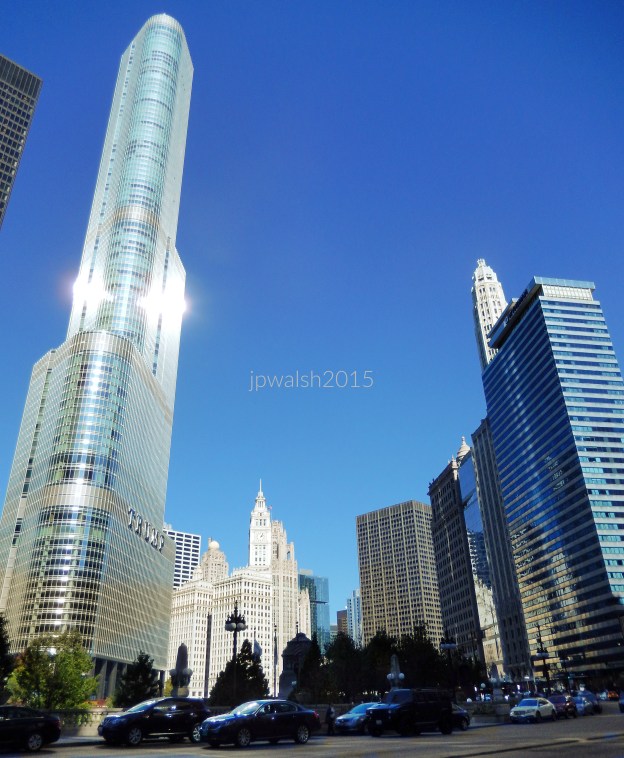
October 2015. Chicago. 5.85mb DSCN1452 (1). Author’s photograph.
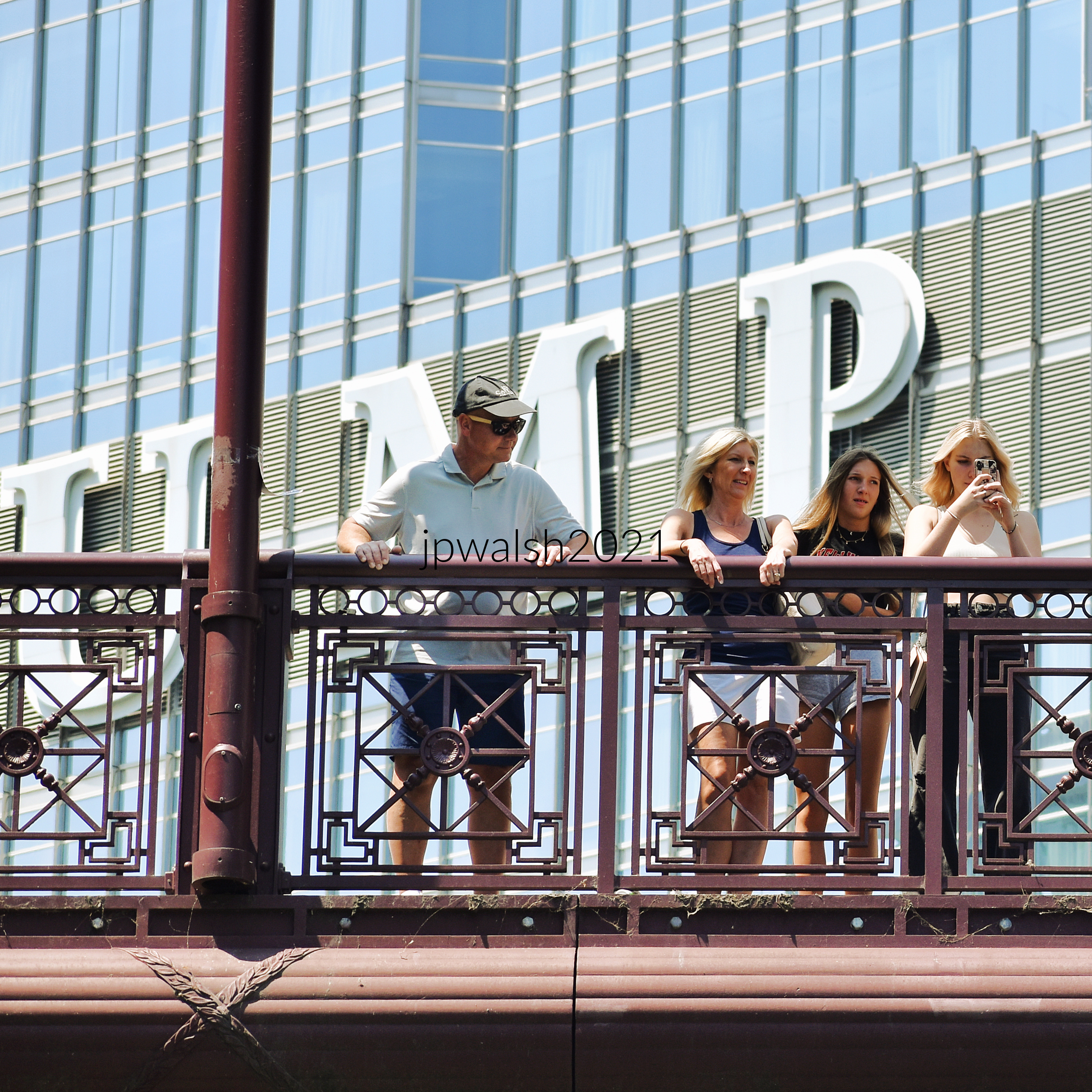
Wacker Drive and Wabash Avenue looking east, Chicago. From left: Trump International Hotel and Tower, Adrian Smith, architect (2009). Trump Tower Chicago is a 98-story skyscraper at 401 N Wabash Ave, completed in 2009. Rising 1,389 feet with its spire, it includes 486 condos, a 339-room hotel, and ranks as the 4th tallest building in the United States.
401 N Michigan Avenue (Equitable Building), Skidmore, Owings & Merrill, architect (1965/Facelift 1992/Renovation 2016). The plaza (Pioneer Court) of the Miesian 401 N. Michigan draws over 22,000 pedestrians daily from busy Michigan Avenue. Apple’s global flagship store shares the plaza that provides immediate access to the Riverwalk via the Spanish Steps. see – 401 N Michigan Ave, Chicago, IL 60611 – Office for Lease | LoopNet – retrieved February 13, 2026.
360 N. Michigan Avenue (London Guarantee & Accident Building), Alfred S. Alschuler, architect (1923).
85 E. Wacker Drive (London House).
75 E. Wacker (formerly Lincoln Tower, originally Mather Tower), Herbert Hugh Riddle, architect (1928) and Harry Weese & Assocs. (Renovation/1983).
71 E. Wacker Drive (The Royal Sonesta Chicago Downtown, formerly Executive House Hotel), Milton Schwartz, architect (1959). 71 E. Wacker Drive is the first high-rise hotel in Chicago since the Great Depression. see – Executive House Hotel, 71 E. Wacker, Chicago – retrieved February 13, 2026.
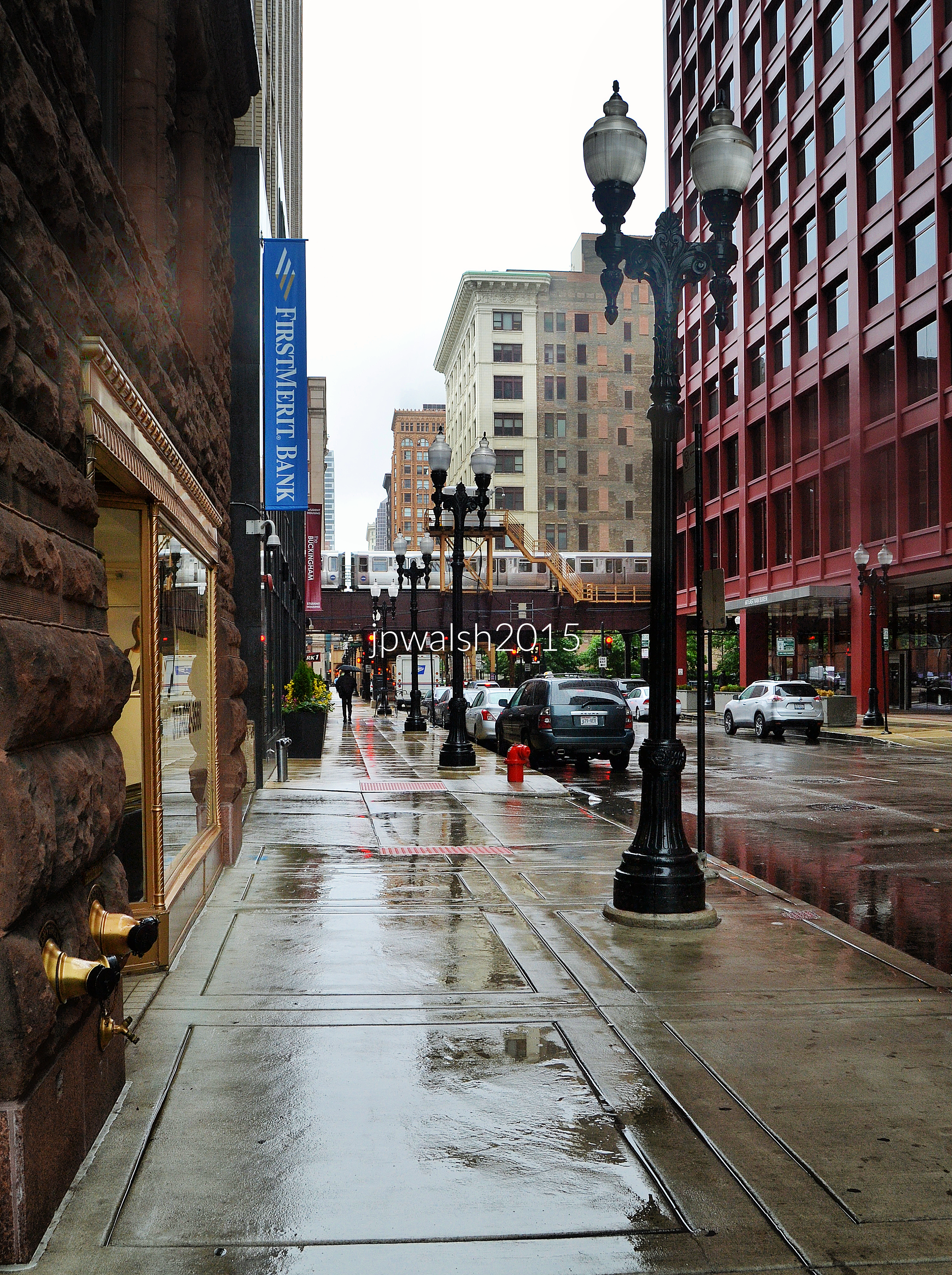
May 2015. Chicago. 99% 7.92mb DSC_0468. Author’s photograph.
Michigan Avenue and Van Buren Street looking west on Van Buren, Chicago. Left: Chicago Club, 81. E. Van Buren, Granger & Bollenbacher, architect (1929).
Right: CNA Center (333 S. Wabash Avenue), Graham, Anderson, Probst, architect (1972).
Near background: 333 S. State, DePaul Center (formerly Goldblatt’s, originally Rothschild & Co. Store), Holabird & Roche, architect (1912), renovation 1993.
Far background: Fisher Building (343 S. Dearborn Street), D.H. Burnham & Co., architect (1896) and Northern Addition, Peter J. Weber, architect (1907). Restoration and adaptive Reuse, 2001.
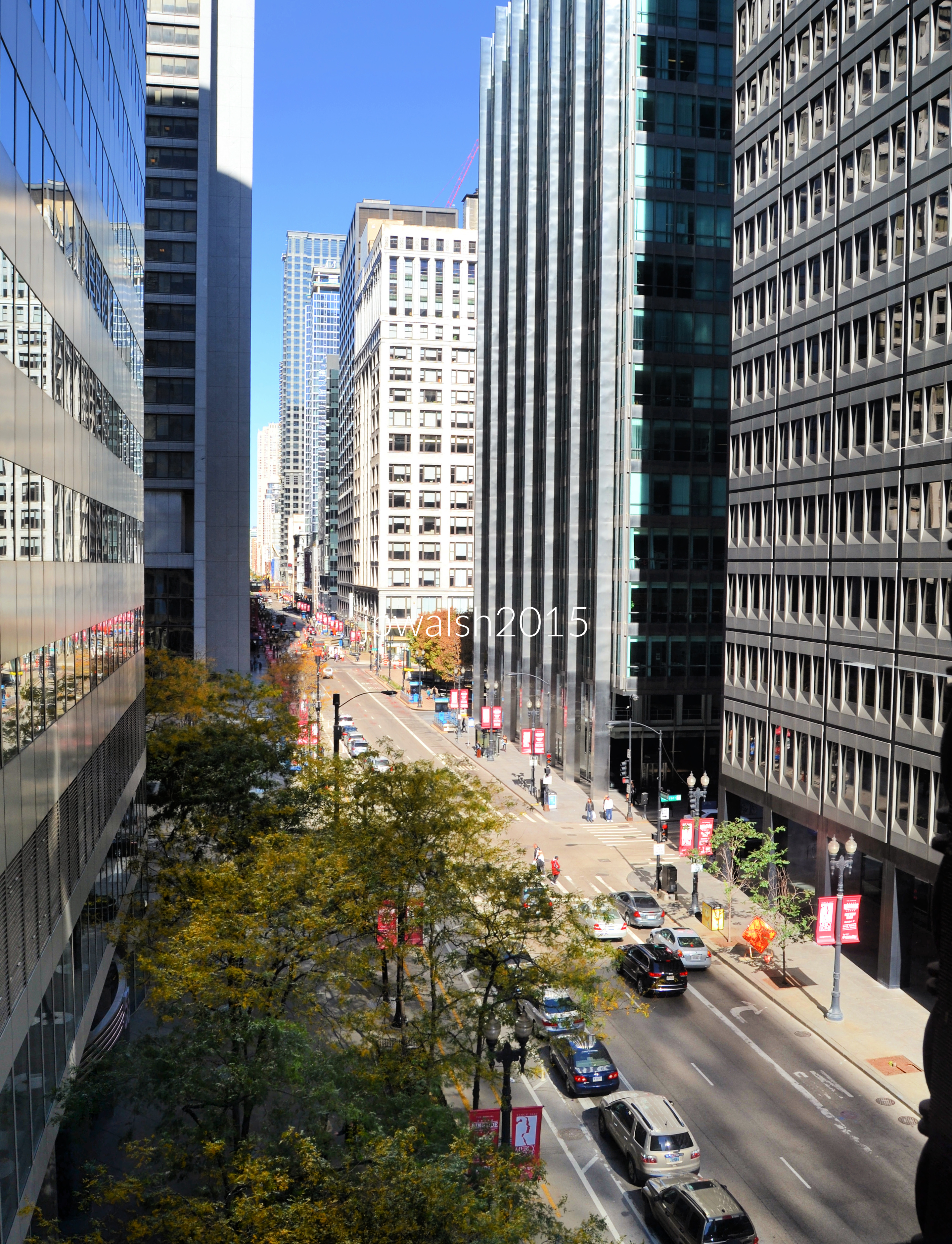
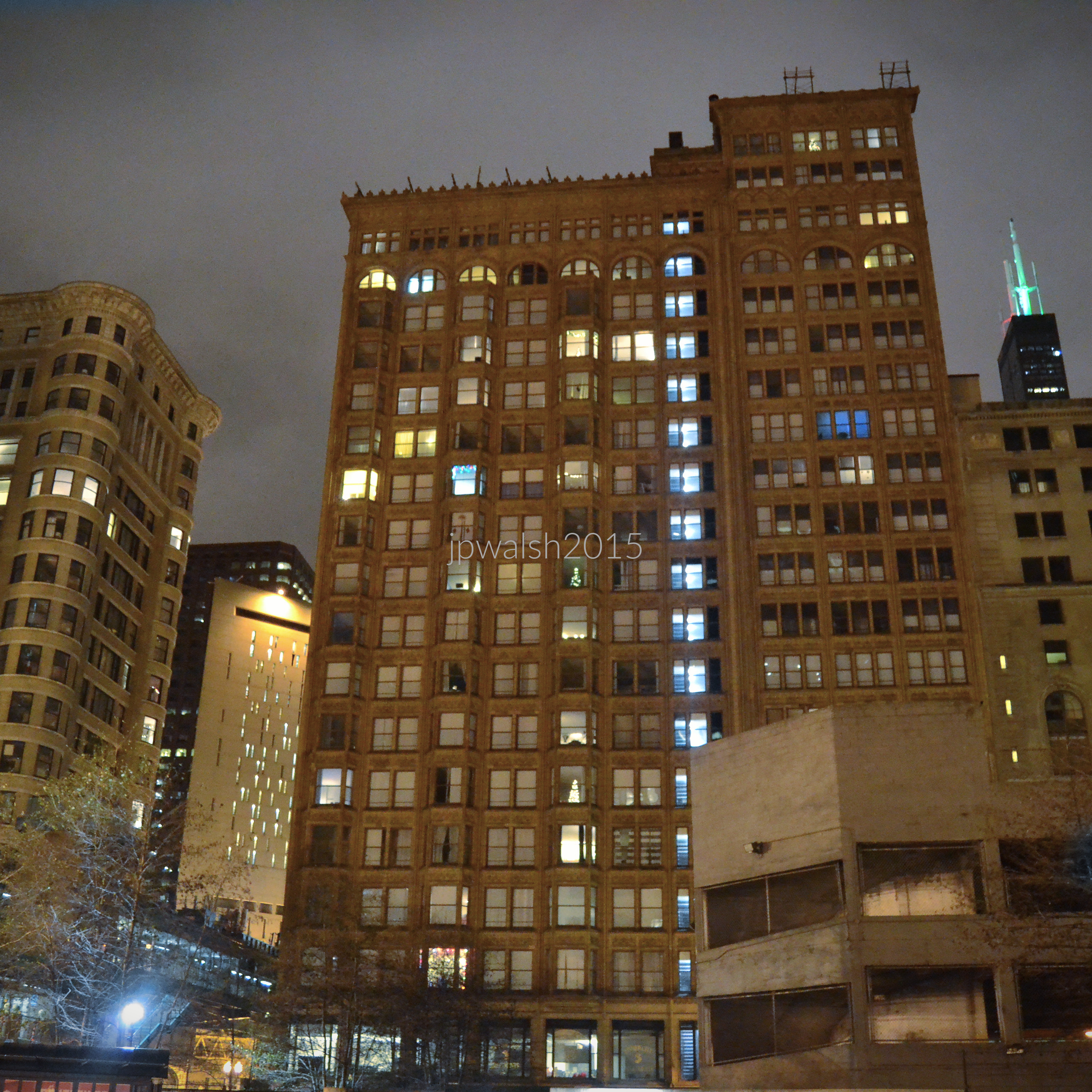
October 2015. Chicago. 4.28mb DSC_0061 (1) Author’s photograph.
Adams and Dearborn Streets looking north along Dearborn, Chicago. Left: 55 Xerox Center, 55 West Monroe, Chicago, Helmut Jahn, architect (1977-1980). Behind (partially hidden): Chase Tower (originally First National Bank of Chicago), Perkins & Will; C.F. Murphy Assocs. (1969).
Background: 2 N. State/1 N. Dearborn Streets (originally, Boston Store), Holabird & Roche (1906; 1917), renovation (2001).
November 2015. Chicago. 3.77mb DSC_0384 (1). Author’s photograph.
Halsted Street between Adams Street and Jackson Boulevard looking east, Chicago. Union Station Tower (MidAmerica Commodity Exchange), Skidmore, Owings & Merrill, architect (1971). Willis Tower (originally, Sears Tower), Skidmore, Owings & Merrill, architect (1974).
December 2015. Chicago. 2.40mb DSC_0577 (2). Author’s photograph.
Balbo and Wabash Avenues looking north on Wabash. Left: (with Columbia College wall sign) 33 Ida B. Wells Drive building, Alfred S. Alschuler, architect, (1925/1926). DePaul University College of Law, 25 E. Jackson and, beyond, 230 S. Wabash, a 21-story building built in 1910.
Center: Trump International Hotel and Tower, Adrian Smith, architect (2009).
At right: Roosevelt University: Auditorium Building, Adler & Sullivan, architect (1887-1889) and The Wabash Building, a 32-story zigzagging glass structure, Christopher Groesbeck, AIA, architect (2012). CNA Center (333 S. Wabash Avenue), Graham, Anderson, Probst, architect (1972).
December 2015. Chicago 3.60mb DSC_0986 (2)
From left: Old Colony Building, 407 S. Dearborn Street, Holabird & Roche, architect (1894), Chicago Metropolitan Correctional Center, 71 W. Van Buren Street, Harry Weese & Associates (1975), Fisher Building, 342 S. Dearborn Street, D.H. Burnham, architect (1896) and Northern Addition, Peter Weber, architect (1907) and Sears Tower, 233 S. Wacker Drive, Skidmore, Owings & Merrill, architect (1974).
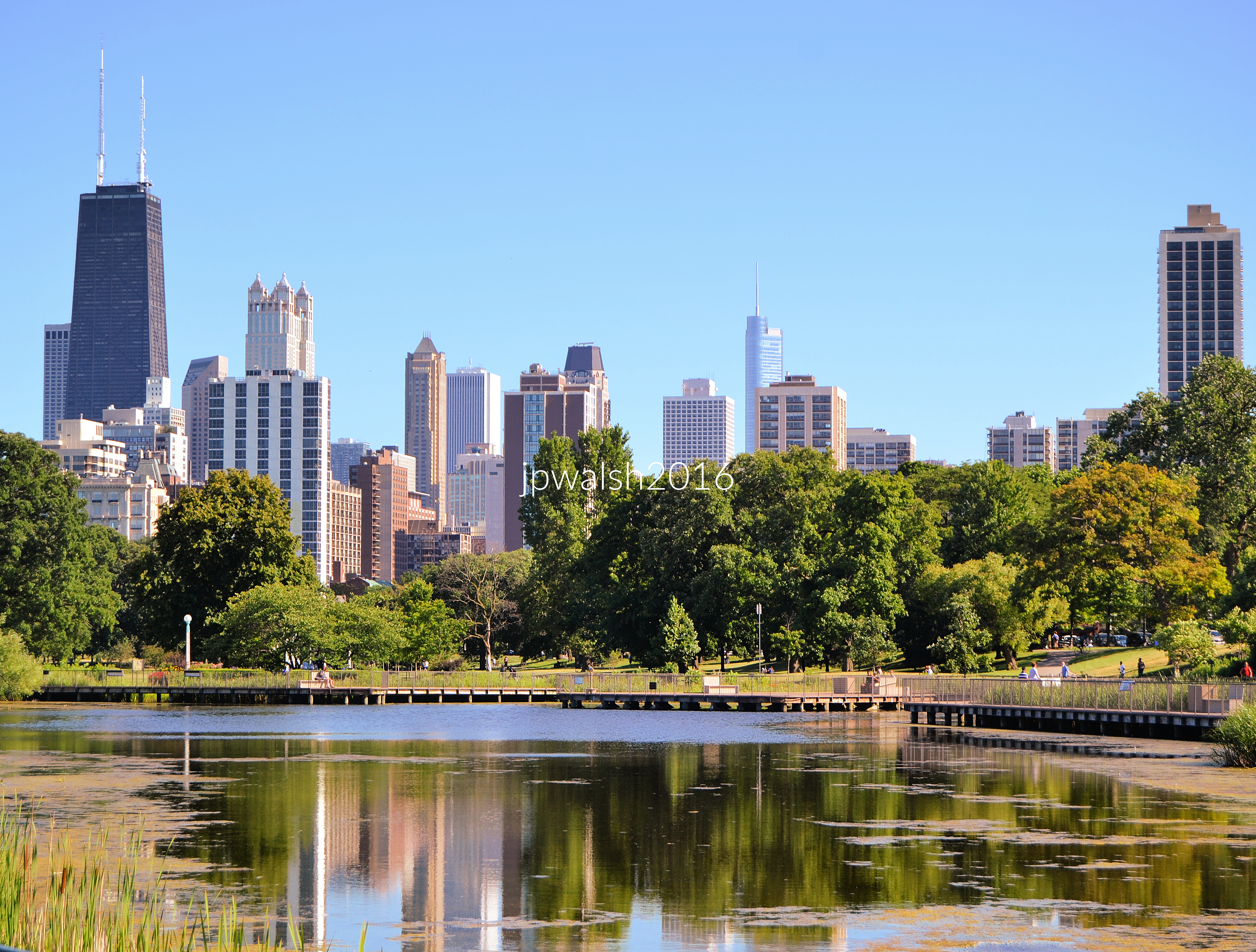
July 2016. Chicago 5.33mb DSC_0743 (1)
Lincoln Park looking over South Pond towards downtown. At left: (partial view) Water Tower Place, 845 N. Michigan Avenue, Loebl, Schlossman & Hackl, architect (1976); John Hancock Building, 875 N. Michigan Avenue, Skidmore, Owings & Merrill, architect (1969); 900 North Michigan Avenue, Kohn Pedersen Fox, architect (1989); Park Tower, 800 N. Michigan Avenue, Lucien LaGrange & Assoc., architect (2000); The Aon Center (formerly, Amoco Building; originally, Standard Oil Building), 200 E. Randolph Street, Edward Durell Stone; Perkins & Will, architects (1973); Trump International Hotel and Tower, Adrian Smith, architect (2009); At right: James House, 1560 North Sandburg Terrace, Solomon Cordwell Buenz, architect (1971).
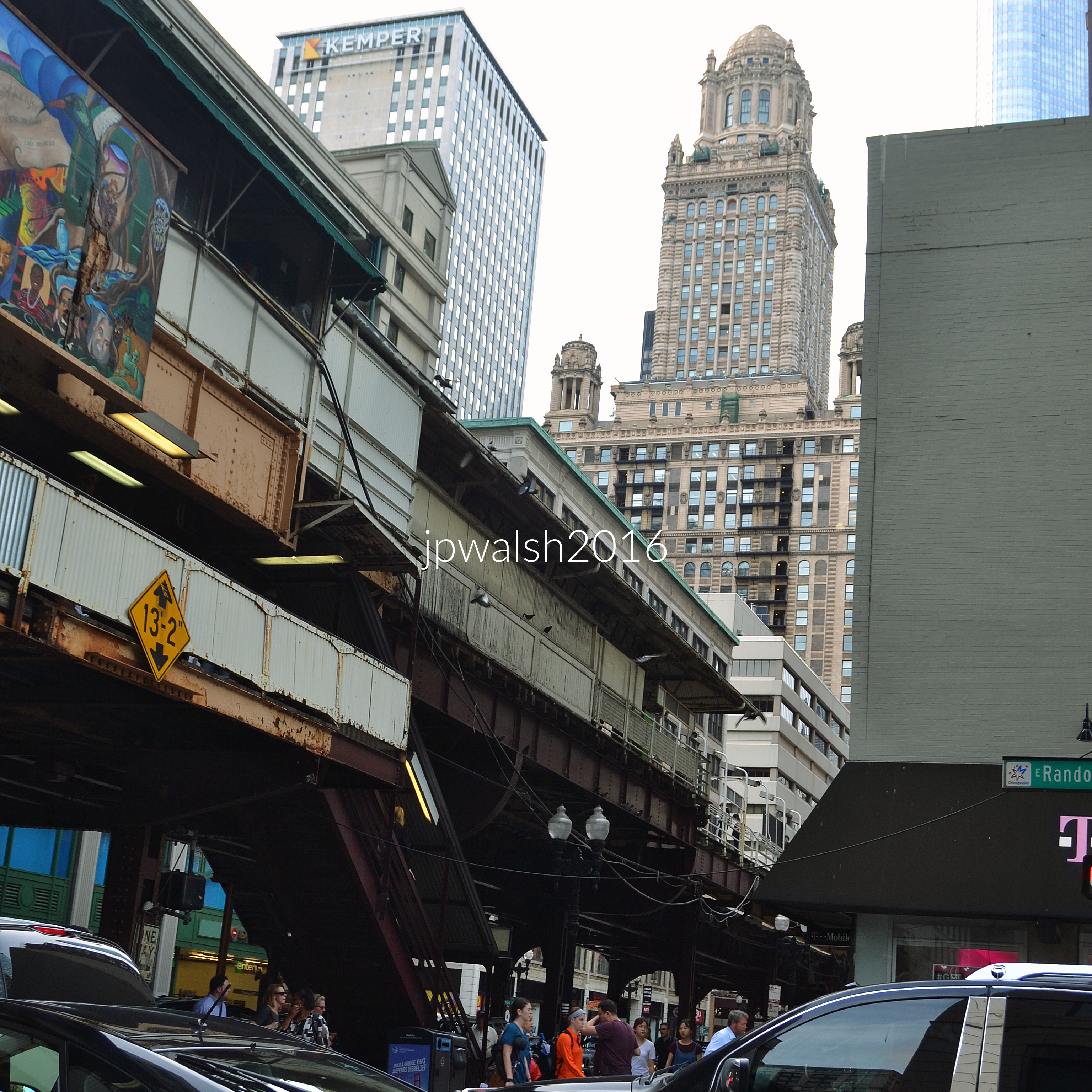
July 2016. Chicago. 3.28 mb DSC_0045 (1)
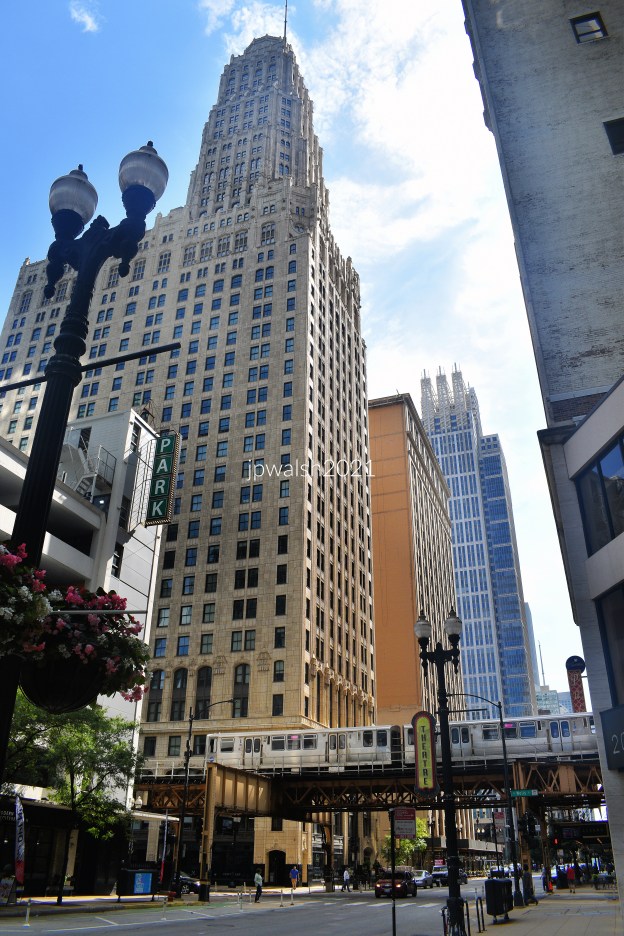
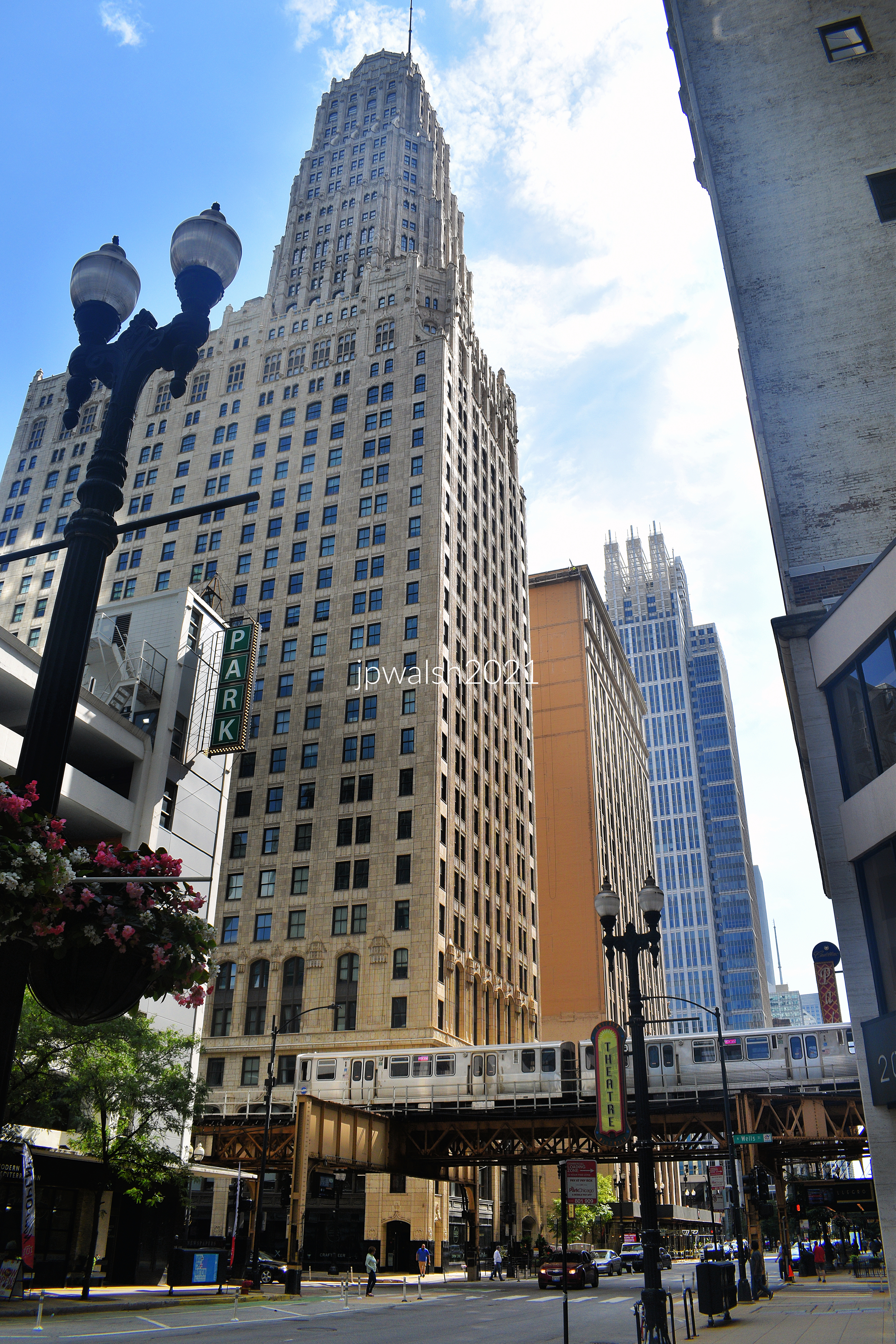
Looking north on Wabash Avenue from Randolph Street, the Chicago elevated train follows a north-south route along Wabash Avenue and has been part of downtown since the late 1890’s. The “Kemper” sign is on the relatively dull modernist Kemper Building, now One East Wacker, Shaw, Metz & Assoc., architect (1962). Followed by 35 East Wacker Drive (formerly Pure Oil Building; originally, Jewelers Building) with its distinctive dome, Glaver & Dinkelberg; Thielbar & Fugard, Assoc. Archs., architect (1926). Partial view is Trump Tower.
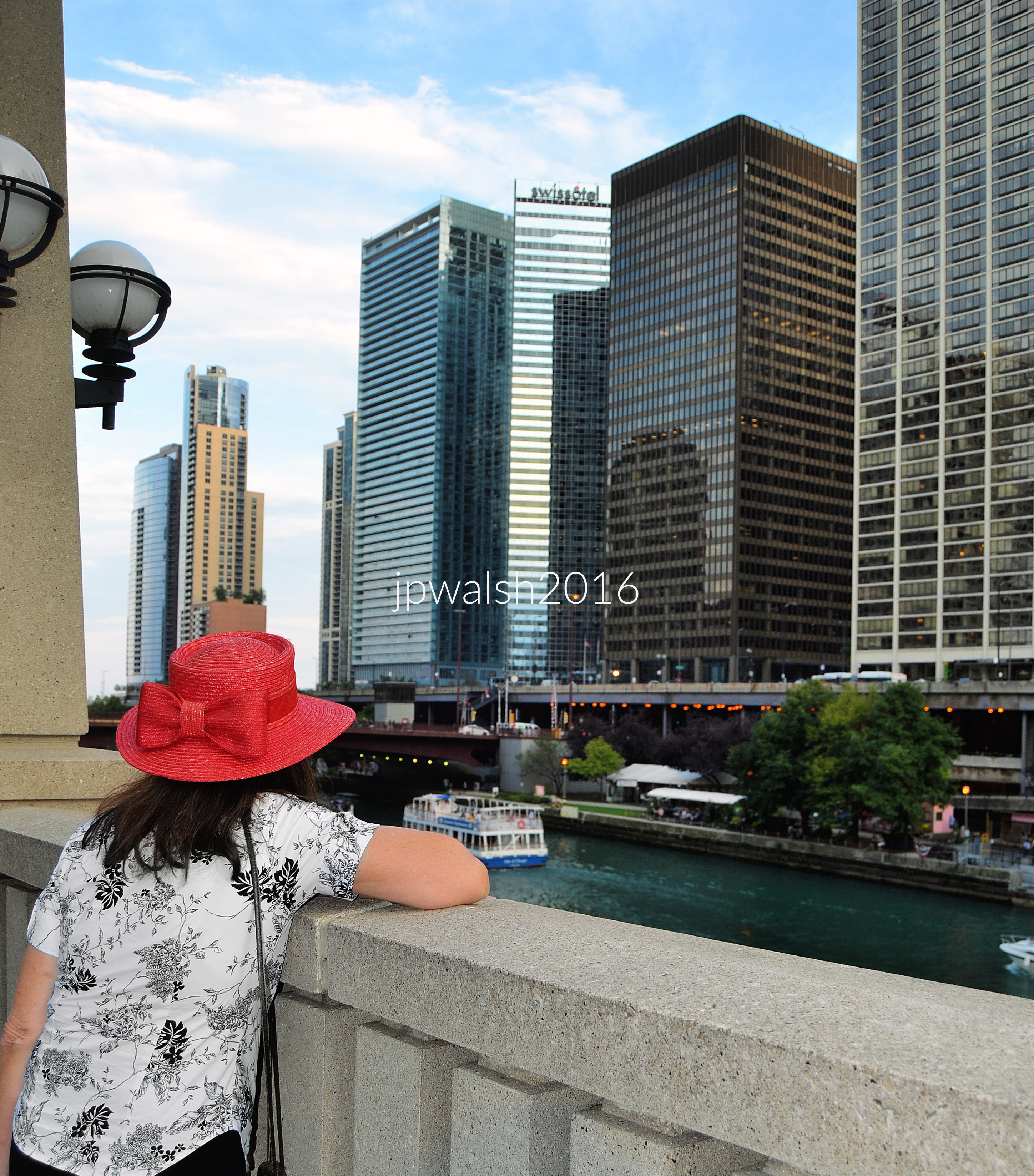
September 2016. Chicago.3.89mb DSC_0740 (1)
Right to left: The 233 E. Wacker Drive building (known as Columbus Plaza) in Chicago is 48-story apartment building, Fujikawa Conterato Lohan and Associates, architect (1978-1980). The 111 E. Wacker Drive building (known as One Illinois Center) in Chicago, is a 30-story Modernist building featuring bronze anodized aluminum and dark-tinted glass, Ludwig Mies van der Rohe in association with Joseph Fujikawa, architect (1967-1970). The Swissôtel Chicago at 323 E. Wacker Drive, is a 45-story, triangular, all-glass luxury hotel, Harry Weese and Associates, architect (1989). The 345 E. Wacker Drive building (known as Coast at Lakeshore East) in Chicago is a 40-story residential apartment tower, bKL Architecture LLC, architect (2013).
September 2016. Chicago. 4.93mb DSC_0745 (1)
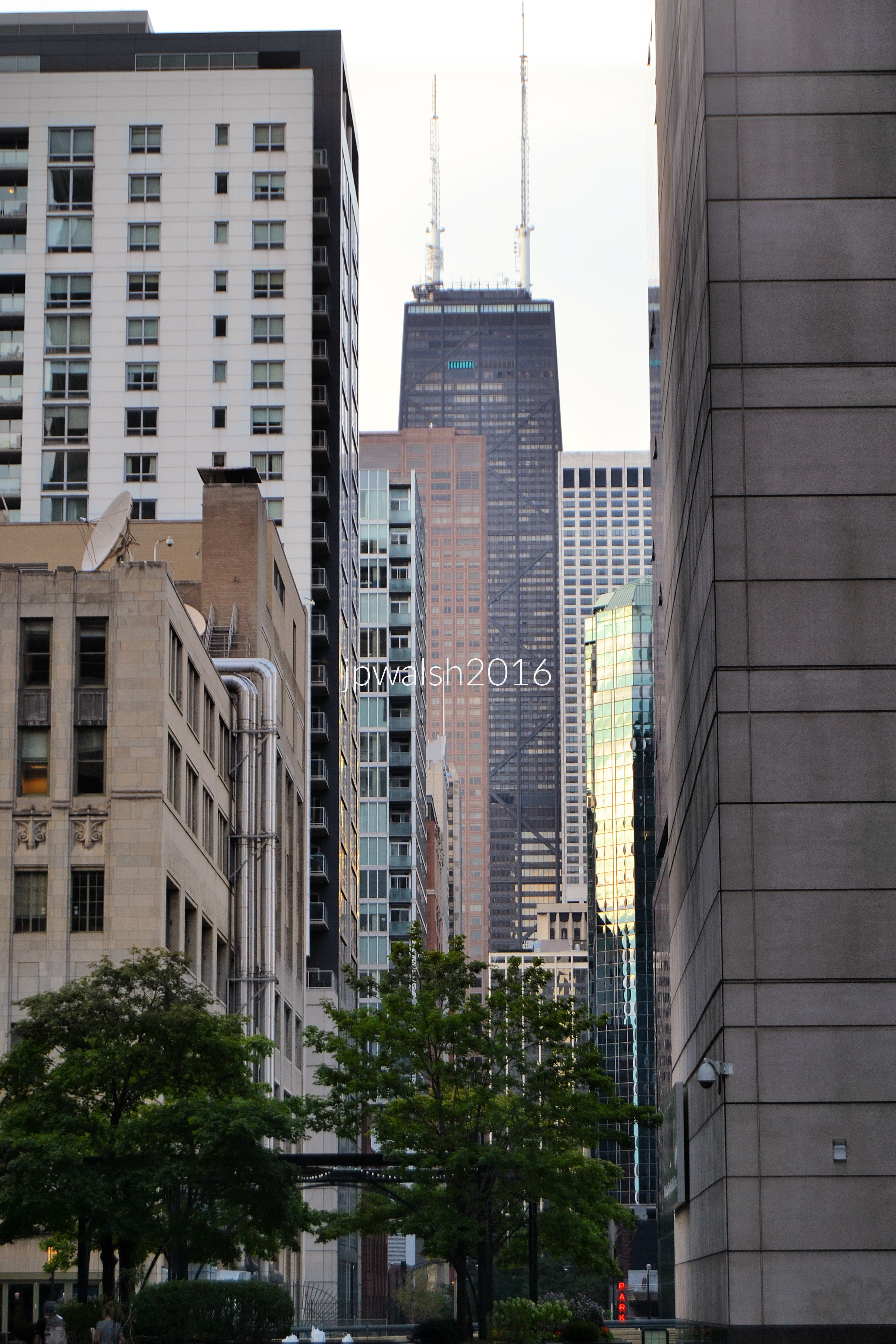
From the Riverwalk looking north along N. St. Clair Street: at right, the 27-story spandrel glass and metal panel 633 N. St Clair St. building, Loebl Schlossman [later; Dart] & Hackl, architect (1991). At left, the 63-story pinkish, rose-hued Swedish granite 161 Chicago Avenue East building (known as Olympia Centre) is a mixed-use retail, office, and residential skyscraper, Skidmore, Owings & Merrill, architect (1984-85). At right, the 74-story gray marble facade Water Tower Place, the first vertical shopping center on Michigan Avenue (8 floors), also includes the Ritz-Carlton hotel, luxury condos, and office space, Edward D. Dart (Loebl Schlossman Bennett and Dart), architect (1975). The John Hancock Center—now officially 875 North Michigan Avenue—is a 100‑story, tapered mixed‑use skyscraper known for its iconic X‑bracing. Often described as a “vertical city,” it is considered one of the first major mixed‑use skyscrapers in the world and includes office space (floors 13–41), about 700 condominiums (floors 44–92), and the highest indoor swimming pool in North America on the 44th floor. Its 94th‑floor observation deck offers panoramic views of Chicago and Lake Michigan. Bruce Graham of the firm Skidmore, Owings & Merrill, architect (1969). It was engineered by Fazlur Rahman Khan, who pioneered the tubular structural system used in the tower.
September 2016. Chicago. 5.06mb DSC_0756 (2)
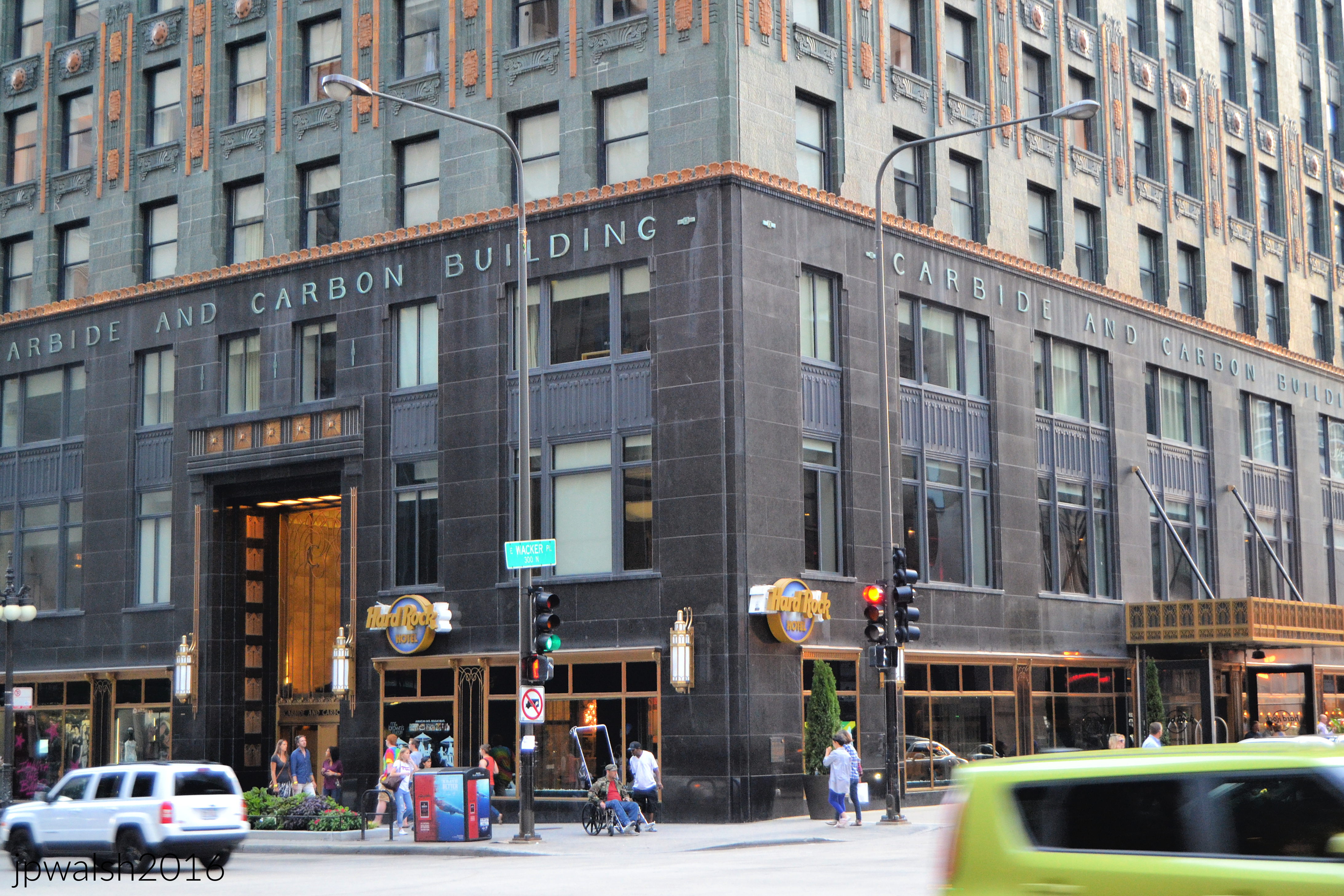
The Carbide and Carbon Building rises from 230 N. Michigan Avenue in Chicago like a gleaming Art Deco toast to the Jazz Age, Burnham Brothers, architect (1929). The 37‑story tower is instantly recognizable: its base wrapped in polished black granite, its shaft clad in deep green terra cotta, and its crown shimmering with 24‑karat gold leaf. Legend has it the architects shaped the building to resemble a champagne bottle — a fitting symbol for a city that never stopped celebrating its own ambition.
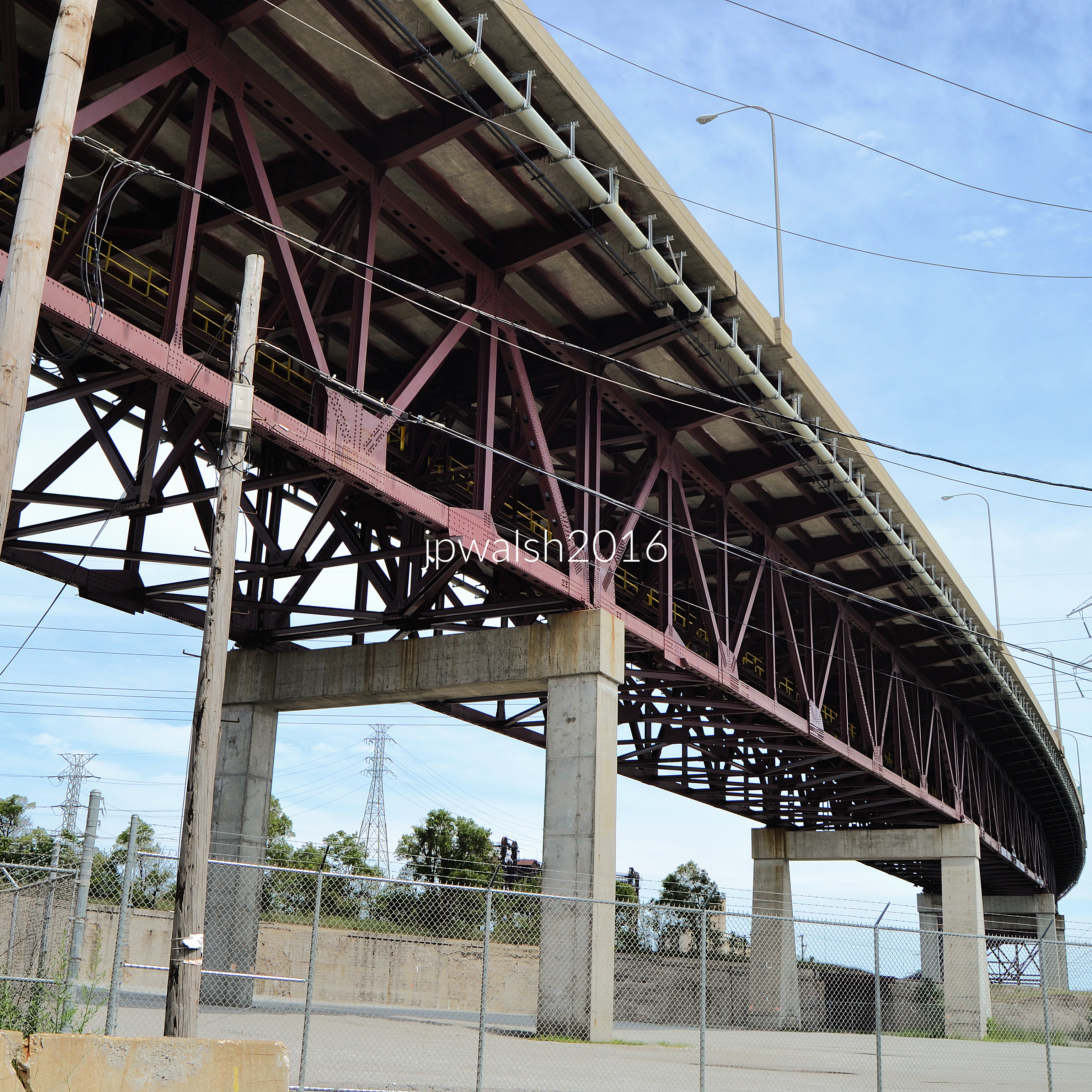
Feature image: July 2016. Chicago Skyway Toll Bridge, 95th St. & S. Baltimore Ave 4.03mb DSC_0774 (1). Author’s photograph.
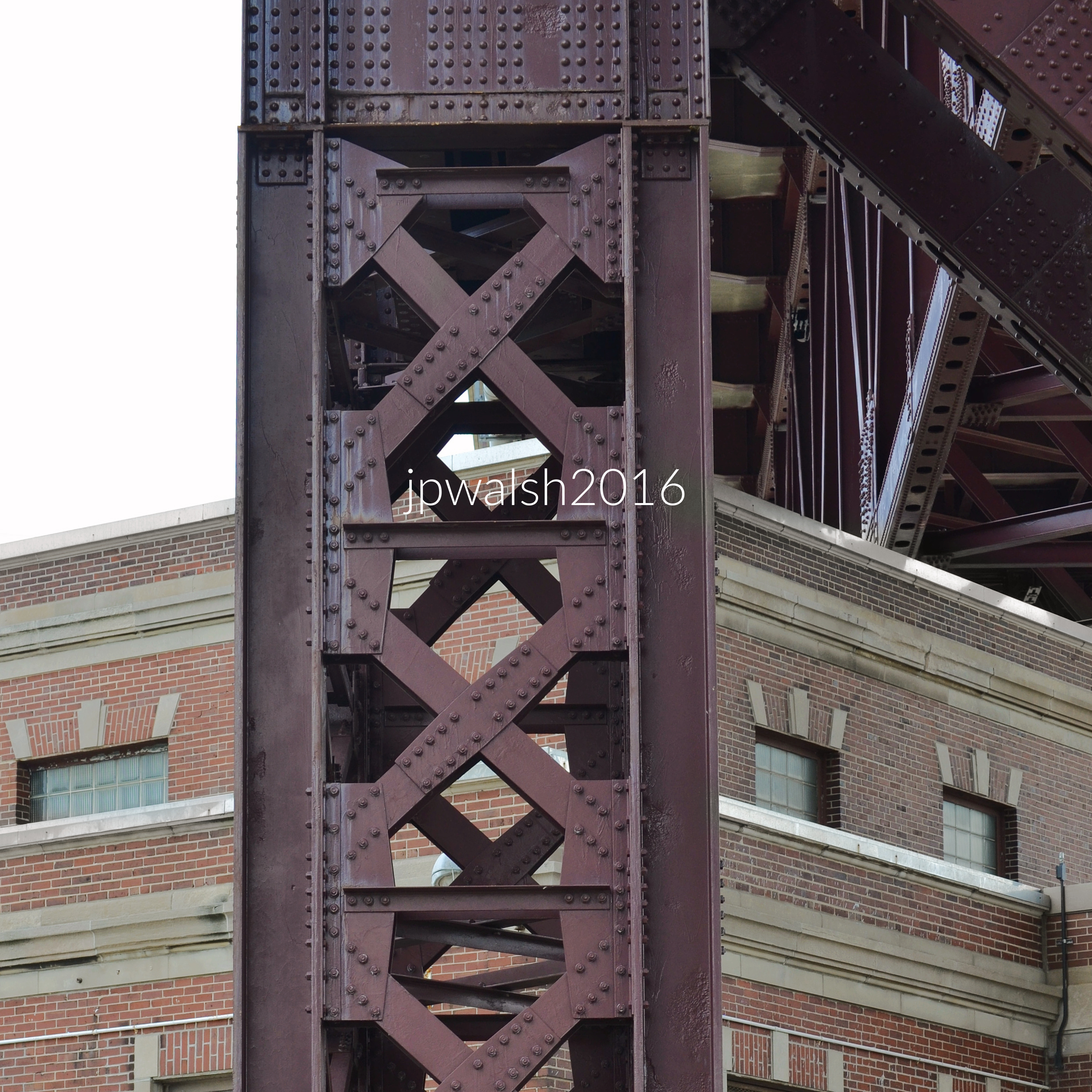
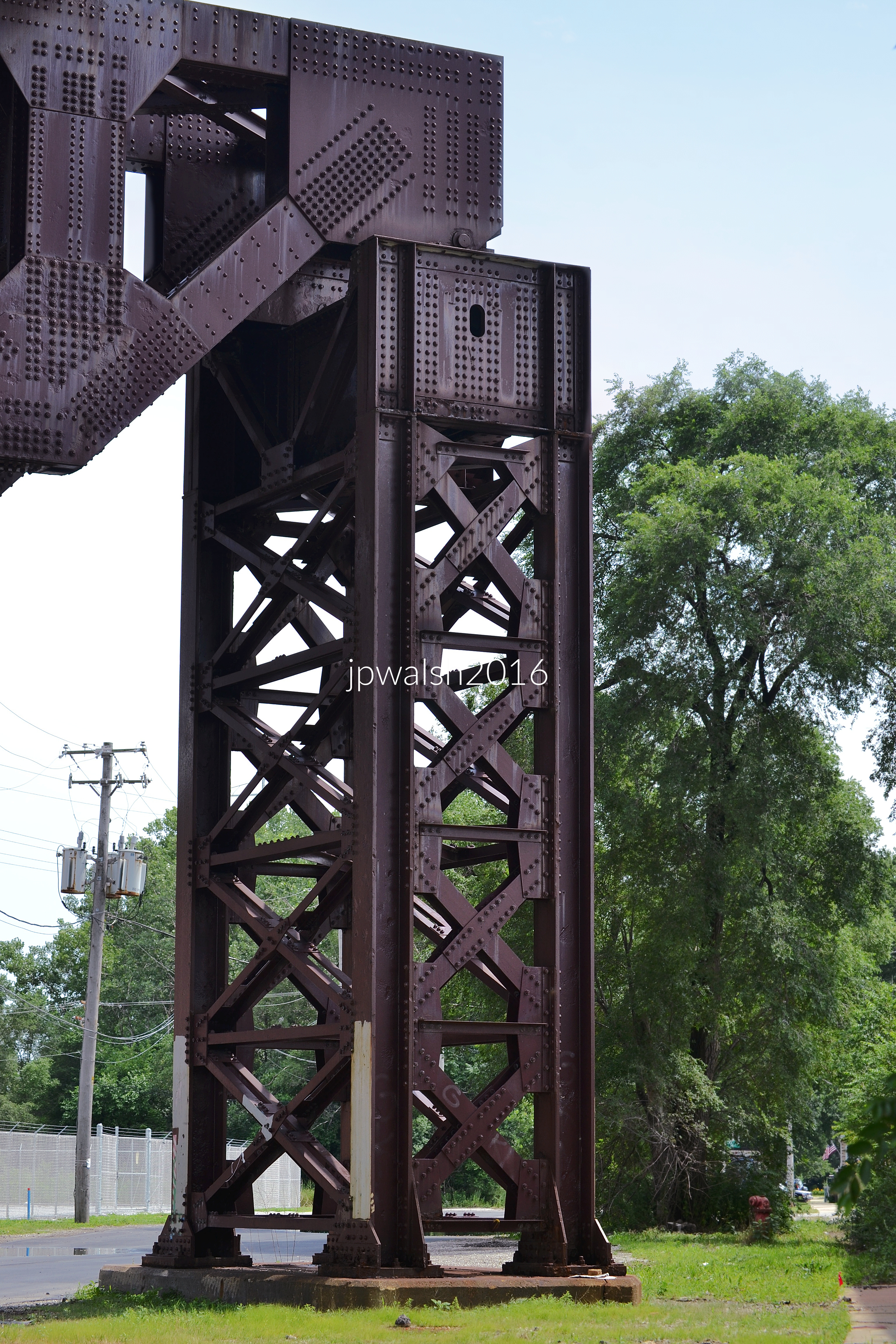
This photograph of the Chicago Skyway Toll Bridge (also known as the “Skyway”) is at the exact point where it spans the Calumet River and Calumet Harbor, a major harbor for industrial ships. Built by the City of Chicago in 1958 this massive steel undergirding is part of the 7.8 miles long expressway toll road that connects Chicago’s Dan Ryan freeway on the South Side to the Indiana Toll Road. The main feature of the Skyway is this half-mile long steel truss bridge known as the “High Bridge” whose maximum vertical clearance allowing ships and objects to pass safely underneath is 125 feet or about 10-12 building stories. The Chicago Skyway truss is primarily made of rolled and built-up steel beams for incredible weight-bearing strength, durability and functionality.
July 2016. Chicago Skyway. 95th St. & Baltimore Ave 4.05 mb DSC_0772 (1) Author’s photograph.
The Skyway was operated and maintained by the City of Chicago until January 2005 when Skyway Concession Company, LLC assumed its operations under a 99-year operating lease. The lease agreement between Skyway and the City of Chicago was the first privatization of an existing toll road in the United States. In February 2016, Skyway was purchased by three Canadian Pension Funds (OMERS Infrastructure, CPP Investment Board, and Ontario Teachers’ Pension Plan) and in December 2022 global toll road operator Atlas Arteria Group based in Australia, acquired 66.67% stake in the Skyway with OTPP retaining the rest. see – The Skyway – Chicago Skyway – retrieved December 19, 2025. While exact current figures go up and down, best estimates put daily vehicular traffic on the Chicago Skyway, both cars and trucks, at between 40,000 and 50,000 per day. see – FHWA – Center for Innovative Finance Support – Value Capture – Case Studies: Hays County, Texas Transportation Reinvestment Zones – retrieved December 19, 2025.
July 2016. Chicago Skyway. 95th St. & Baltimore Ave 4.93mb DSC_0765 (1). Author’s photograph. July 2016. Chicago Skyway. 95th St. & Baltimore Ave 2.21mb DSC_0764 (1). Author’s photograph. July 2016. Chicago Skyway. 95th St. & Baltimore Ave 5.13mb DSC_0769 (1). Author’s photograph.
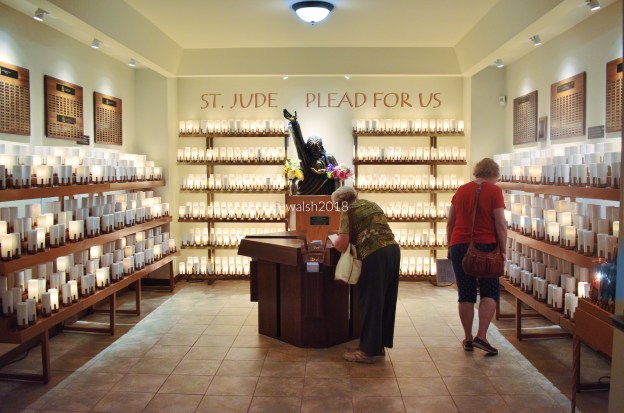
FEATURE Image: The many prayer intentions received at the National Shrine of St. Jude in Chicago are placed at the patron of hopeless cases’ devotional altar in the main sanctuary. These petitions are remembered at the National Shrine’s Masses and devotional prayers throughout the years. June 2018 80% 7.76mb DSC_9191. Author’s photograph.
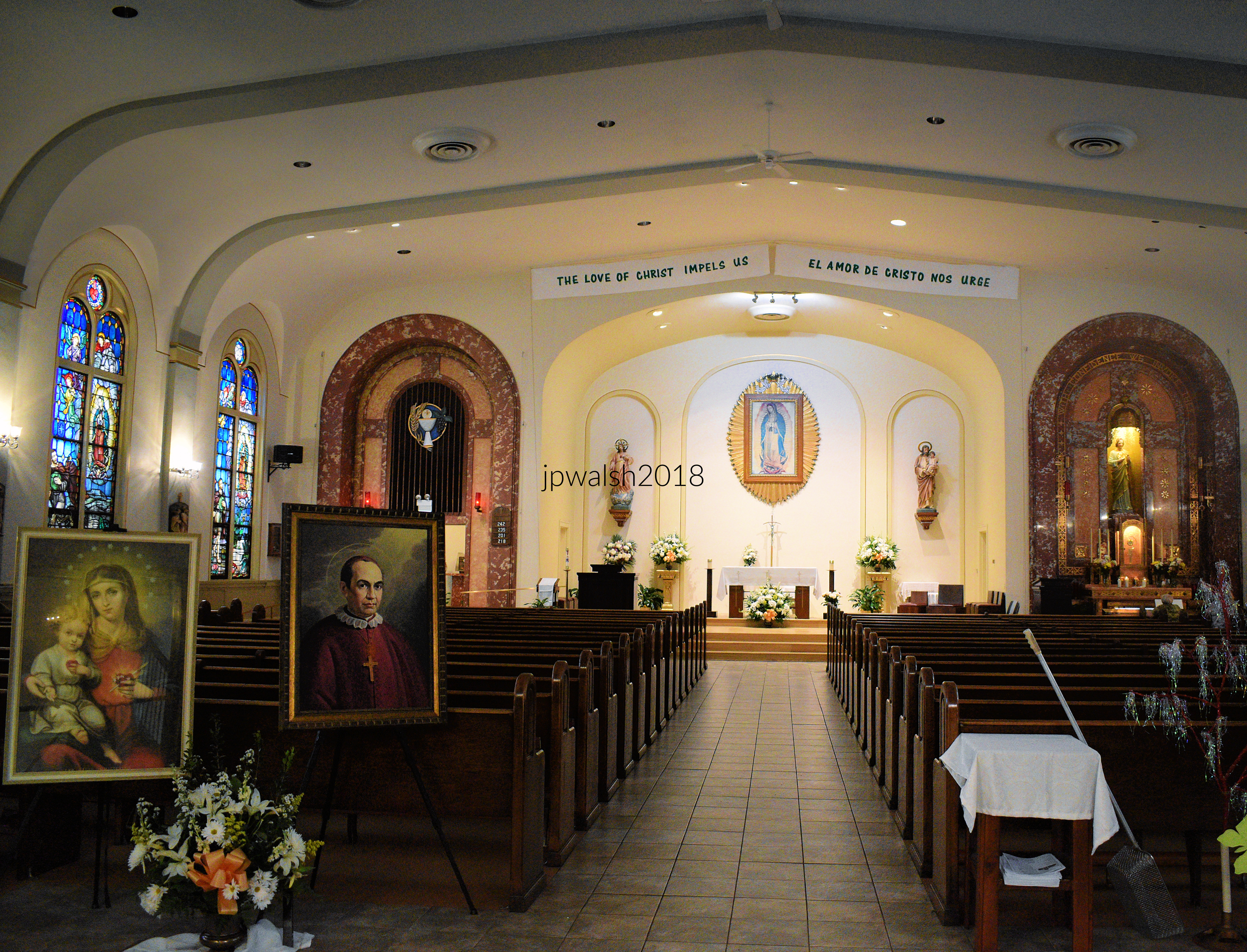
The National Shrine of St. Jude at 3208 E. 91st Street on Chicago’s far southeast side at Our Lady of Guadalupe parish church was canonically established in 1929. Its official decree was promulgated on November 15, 1929, by Chicago Cardinal Archbishop George Mundelein (1872-1939). June 2018 88% 7.72mb DSC_9173. Author’s photograph.
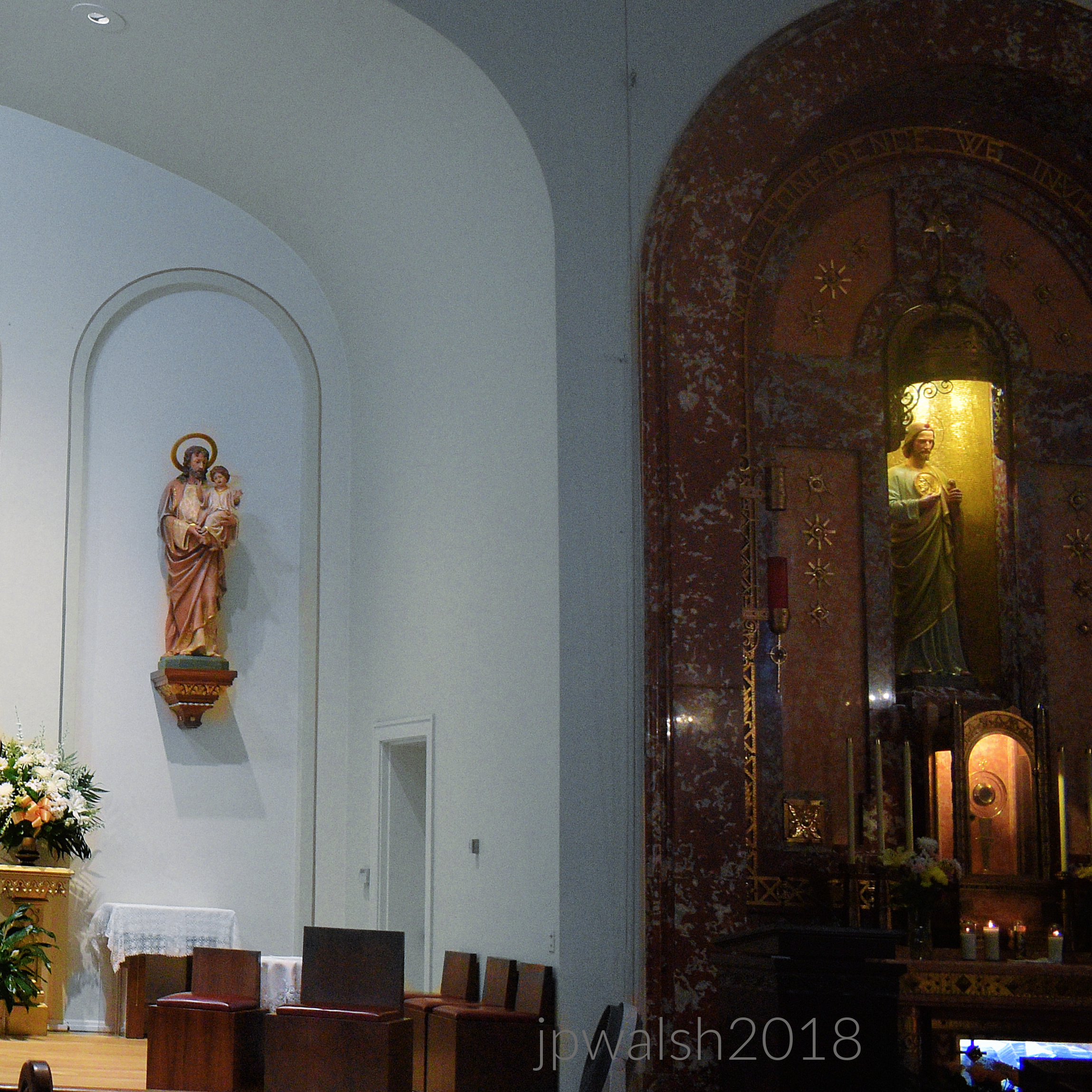
The pastor of the church at the time was Fr. James Tort, a Claretian missionary, who had a deep personal devotion to St. Jude, patron of hopeless cases and those that are almost despaired of. The saint, not to be confused with the traitor, Judas Iscariot, is honored by the church universally as the saint who brings visible and speedy help in most dire circumstances. A portrait of the founder of the Claretians, Spanish priest and bishop, St. Anthony Mary Claret (1807-1870), is one of the artworks that greet visitors into the main sanctuary. The image of Our Lady of Guadalupe is over the main altar. The devotional altar to St. Jude is right of the main altar. The altar to St. Jude contains a major relic of the saint: a piece of his bone. June 2018 84% 7.78 DSC_9177. Author’s photograph.
The shrine altar to St. Jude (right). In the darkest days of the Great Depression, Father Tort petitioned St. Jude with a request to help complete the parish church building for the people. In gratitude for the granting of this great favor. Fr. Tort promised to never cease to honor the saint, a true blood relative of Jesus and Mary, by dedicating a shrine altar to him in the church and to do all in his power to spread devotion to him. June 2018 2.29mb DSC_9186 (1). Author’s photograph.
This is one of the stained-glass windows in Chicago’s St. Jude Shrine. It depicts Jude preaching in Persia. Tradition holds that Saint Jude preached the Gospel in Judea, Samaria, Idumaea, Syria, Mesopotamia and Libya. He is also said to have visited Beirut. In addition to being patron of hopeless cases, Jude is patron of vegetarians. That Jude is portrayed holding an image of Jesus Christ has an interesting origin. During Jesus’s public ministry, a king had an incurable condition and was dying in Edessa. He sent a letter asking for Jesus to come. Instead of going himself, Jesus sent Jude. As Jude set out on this journey, Jesus pressed a cloth against His face, and when he gave it back to Jude, it had the Lord’s image on it. When St. Jude then went to the dying king in Edessa, and the king looked at the cloth with Christ’s miraculous impression, he was immediately healed. June 2018 6.47mbDSC_9184 (4). Author’s photograph.
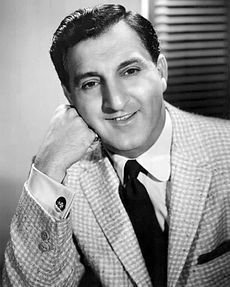
In 1940 when entertainer Danny Thomas (1912-1991) came to Chicago to do radio commercials, he found early success doing stand-up comedy in nightclubs. When work was finished, often around dawn, Thomas went to 6 a.m. Mass at St. Clement Church. There Thomas learned about Chicago’s National Shrine of St. Jude on the far southeast side. A couple of years earlier, Thomas, starting out in show business in Detroit— and with his first child, Marlo Thomas, on the way— had dedicated himself to St. Jude as the patron of hopeless cases. Soon after visiting and praying at the Chicago shrine, Thomas was offered a stand-up comedy job in New York City at La Martinique at 57 West 57th Street. This job launched his entertainment career into the big time. Following World War II, Thomas was performing for $3,750 a week at New York’s Roxy Theater just off Times Square and was performing in nightclubs across the country as well as offered film roles. In 1953 he starred in his own television show, Make Room for Daddy (later, The Danny Thomas Show). The sitcom ran for 11 consecutive seasons and became more popular with each year. By 1957 it was the no.2 show on television and, when the sitcom ended in 1964, it was in the top ten. “Danny thomas kayrouz” by Hany raymond rahme is licensed under CC BY-SA 4.0.
Altar of St. Jude, The National Shrine of St. Jude in Chicago. St. Jude Thaddeus was one of Jesus’ 12 apostles and. legend has it, that it was Jude who was the groom at the wedding feast of Cana where Jesus performed his first miracle of turning water into wine (John, chapter 2). Matthew states that Jude was one of the “brothers” of Jesus usually interpreted as a blood cousin. St. Jude, pray for us! June 2018 73% 7.89mb DSC_9182. Author’s photograph.
FEATURE Image: February 2018. Village “Art” Theatre, 1548-50 N. Clark Street, Chicago, Illinois 60610. The use of masks had been used in theatre since ancient times. They were usually tied to their dramatic source material and the inherent psychology of the characters. The Landmark Designation Report for the Village Theatre described this polychrome character head with musical instruments as “singing” in honor of the neighboring Germania Club, a German social club with its origins in men’s choral music. The head also wears a Baroque-style “wig” of oak leaves and acorns. In Germany, oak trees are revered, and acorns are a symbol of good luck. A decorative keystone on the theater’s round-arched window also has an acorn ornament. 88% 7.94mb DSC_4799 Author’s photograph.
Designed by architect Adolphe Woerner (born Stuttgart, Germany 1851- 1926), the Village (Art) Theatre opened as the Germania Theatre on July 29, 1916 and closed in its 91st year in March 2007. The building was erected by German-born Frank Schoeninger exclusively as a movie theater for $75,000 (about $2.2 million in 2025) and leased for an annual $7,000 rent (about $205,000 today) to Herman L. Gumbiner (Germany, 1879- 1952, Santa Monica, Calif.) in a 10-year contract with his company, The Villas Amusement Company (later Gumbiner Theatrical Enterprises). By 1910, buildings erected solely for the purpose to showcase motion pictures were becoming increasingly popular as the appetite to consume the latest silent motion pictures out of Hollywood was booming everywhere. These neighborhood movie houses, larger than dingy storefront nickelodeons and yet smaller than flamboyantly ornate vaudeville theatres, had movie “palace” touches while fitted conveniently into Chicago’s many local commercial strips. Nearly all of these first-generation movie theaters in Chicago have been demolished or remodeled for other purposes including those larger-scale theaters developed by major theater operators such as Balaban and Katz, Lubliner and Trinz, and the Marks Brothers. While those palatial theatres could hold between 2,000 and 4,000 movie-goers the Village Theatre, one of the last and best first generation movie houses to survive for so long, originally held 1,000 spectators. Originally named the Germania Theater because it was next door to the Germania Club, it looked to attract affluent club members to its flicks.
The Germania Theatre was built in 1916 on Frank Schoeninger’s open land pictured above between the Germania Club (completed in 1889) and his tavern and hotel on the corner of Clark Street and North Avenue. In 1986 the Germania Club, citing the dwindling numbers of members, finally disbanded. Public Domain.
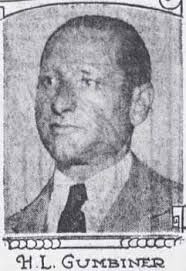
Herman Gumbinger was a major film exhibitor who was busy in Chicago building his independent theatre chain in the 1910’s, with several new movie house projects and acquisitions throughout the city’s northside primarily. After building Chicago’s first independent movie house chain in the teens, Gumbinger relocated to Los Angeles, California, in 1921 where he built the famous Los Angeles Theatre in the Broadway Historic Theatre District of Downtown L.A. Erected at a cost of over $1.5 million ($31 million today) and designed by renowned movie theatre architect S. Charles Lee (1899-1990) Gumbinger’s theatre premiered Charlie Chaplin’s City Lights. Gumbinger Theatrical Enterprises finally dissolved in 1943.
Herman Gumbinger (1879-1956), c. 1924, built Chicago’s first independent movie chain, including what became the Village Art Theatre. By the end of the 1920s, Chicago had more than thirty of these movie palace theaters. Among its holdings, Herman Gubinger and his brothers operated the New Blaine which was renamed and is today the Music Box Theatre. Public Domain.
The Germania was one of the first-generation movie theatres built at the intersection of three Chicago neighborhoods – Gold Coast to the south and east, Old Town to the north and west and Lincoln Park to the north. An architectural mix of styles including Classical Revival (triangle pediments, pilasters and cornice with dentils fashioned in terra cotta) and Renaissance Revival (rusticated exterior and round-arched windows with keystones), the movie house also incorporated Germanic symbolism in its details reflecting the area’s then prominent ethnic group. During World War One, in a wave of anti-German sentiment, The Germania Club renamed itself the Lincoln Club. It changed its name back in 1921. The Germania Theatre changed its name to the Parkside and never looked back. In 1931 until 1962 it was known as the Gold Coast theatre. Meanwhile, prohibition closed down Frank Schoeninger’s tavern and he left for Wisconsin. In the 1960’s the theatre was updated and renamed the Globe Theatre. In 1967 the building was renamed the Village Theatre after it survived being demolished by the nearby Sandburg Village development.
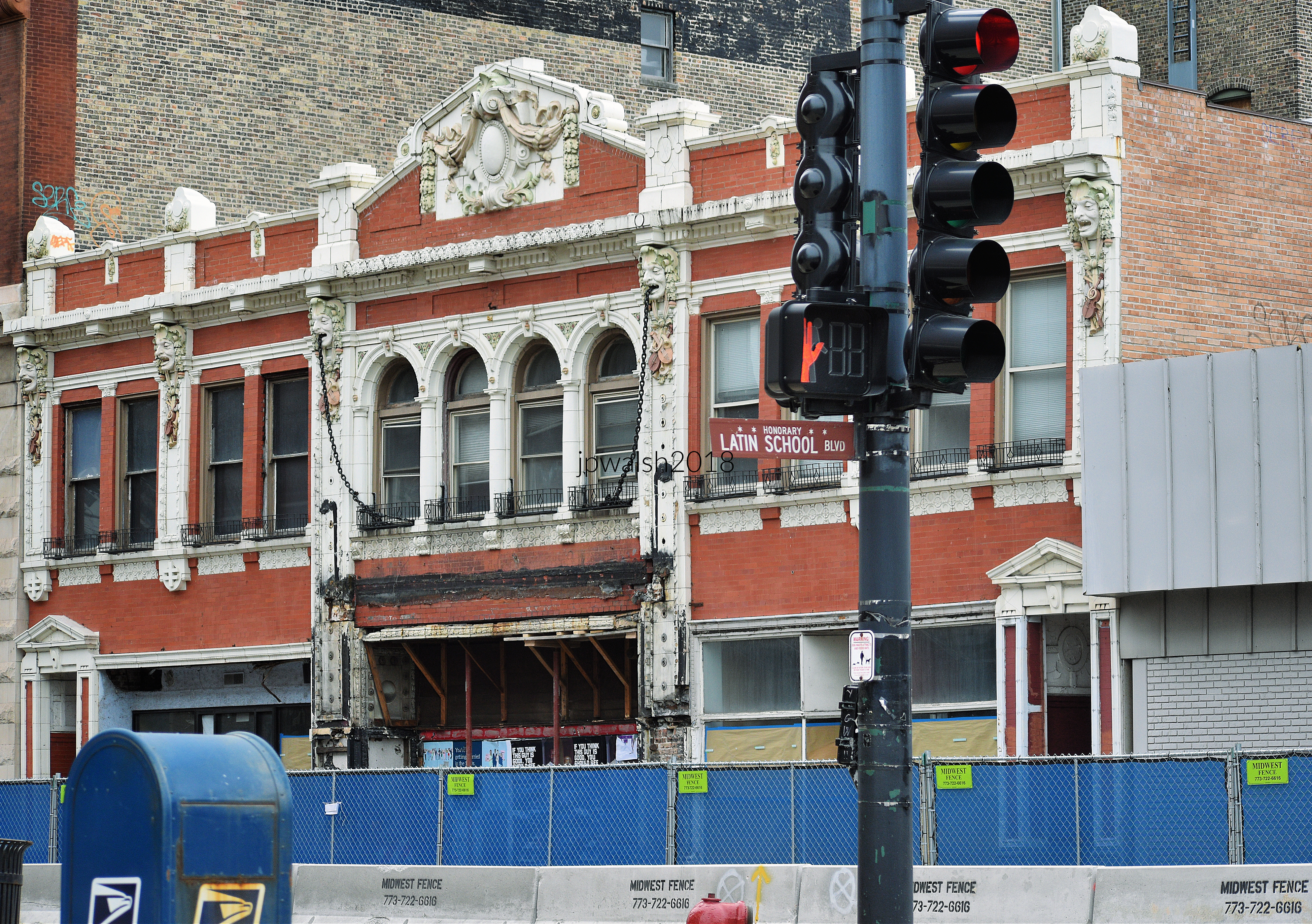
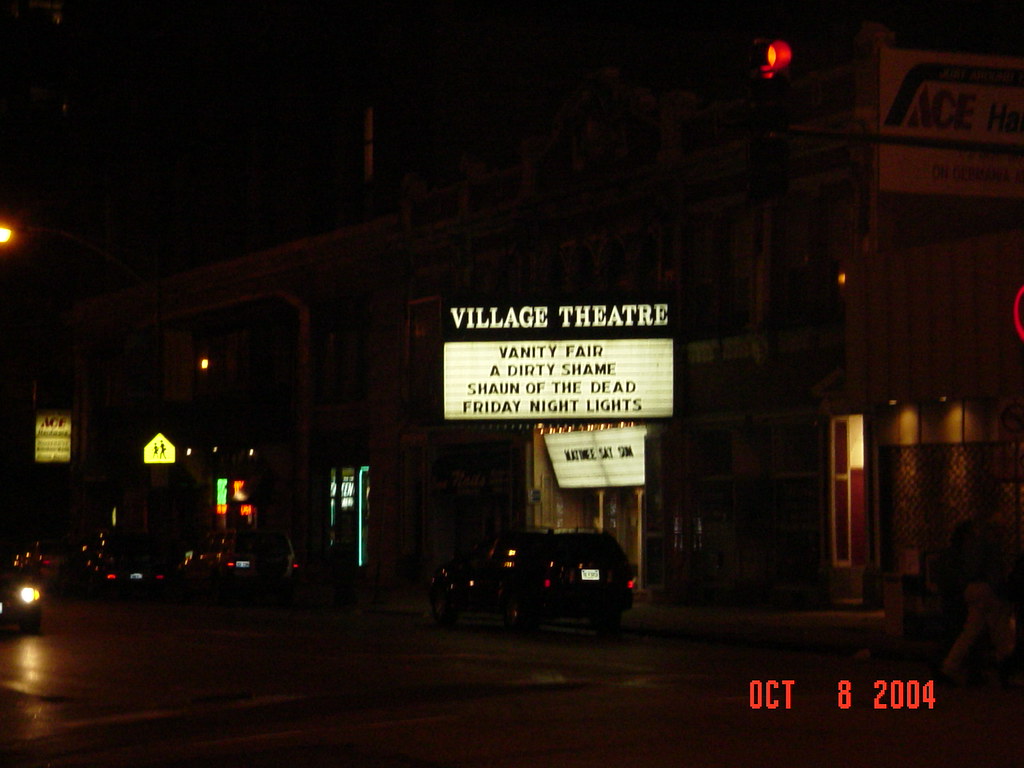
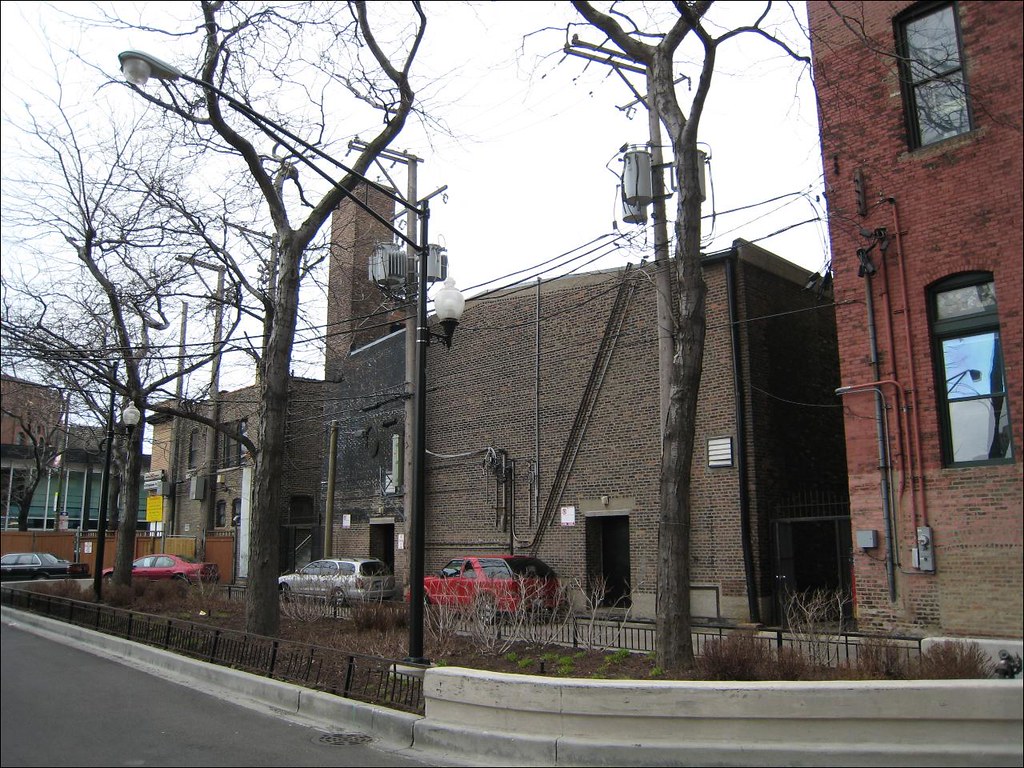
Sandburg Village is a Chicago urban renewal project consisting of eight high-rise buildings, a mid-rise building and 60 townhomes and artists’ lofts. The development was first occupied In 1963 and completed in 1971. In the early 1960’s the Village Theatre was to be incorporated into the project until its landowner refused to sell. PHOTO: “20190323 08 Carl Sandburg Village (49490506022)” by David Wilson from Oak Park, Illinois, USA is licensed under CC BY 2.0.February 2018. The Village Theatre in the last days before its demolition. Its marquee from the 1960’s has been removed. The Village Theatre sat across the street from Latin School of Chicago at North and Clark Streets in Gold Coast/Old Town. In its Landmark Designation Report, the Village Theatre façade is described as having “a symmetrical arrangement, with a central theater entrance and separate entrances to the upstairs offices at opposite ends of the building. Each upper-story entrance has a deeply-recessed alcove lined with brick and white, carved-wood panels. A limestone slab step, inset with hexagonal tiles, is inside each alcove. Each alcove is framed with white terra cotta and brick pilasters on a base of gray terra cotta, made to imitate granite. The pilasters are topped with a triangular, white terra-cotta pediment.” 70% 7.93 mb DSC_4797. Author’s photograph.
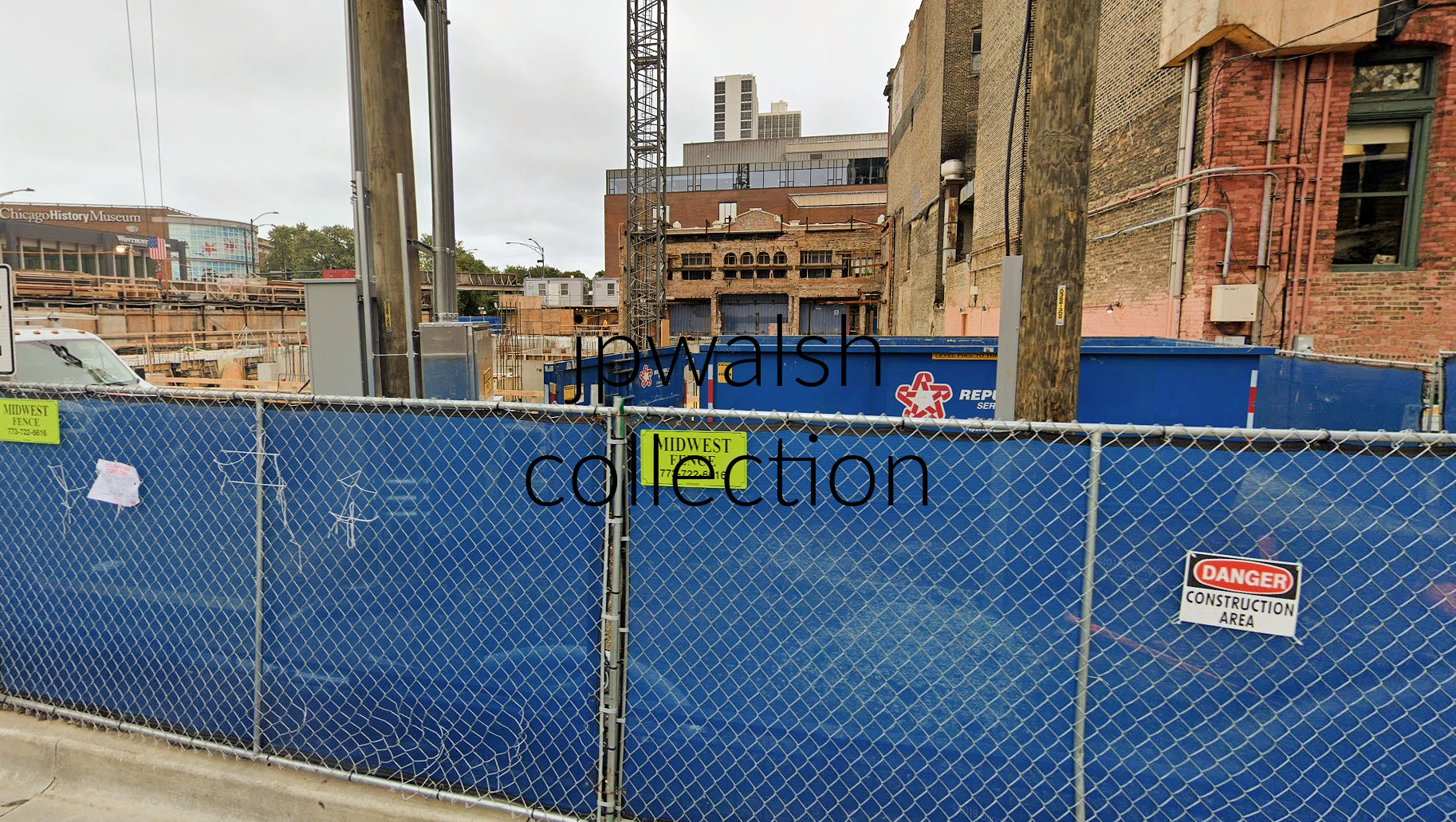
The original two-story façade of red pressed brick and white beige glazed terra cotta decoration competed with a sizeable modern marquee that was removed before its demolition in 2018. Since after college I lived in Chicago for about 15 years, I recall seeing several films here. The ones I can remember seeing at the Village Theatre were Wall Street, House of Games, Fatal Attraction, Russia House, Michael Collins, and The Red Violin, among others of that period. In early 1991 the interior of the theater was divided into four screens and I didn’t stop going to movies there but just not as frequently as I did before. In April 2018, the Village Theatre and neighboring buildings along North Avenue were completely demolished to make way for construction of a condominium building. The ornate Clark Street frontage was stabilized as everything else crumbled to dust around it. The façade was repurposed to serve as the entrance for the new condo development known as Fifteen Fifty on the Park with units priced at opening at $1.625 to $5.85 million.
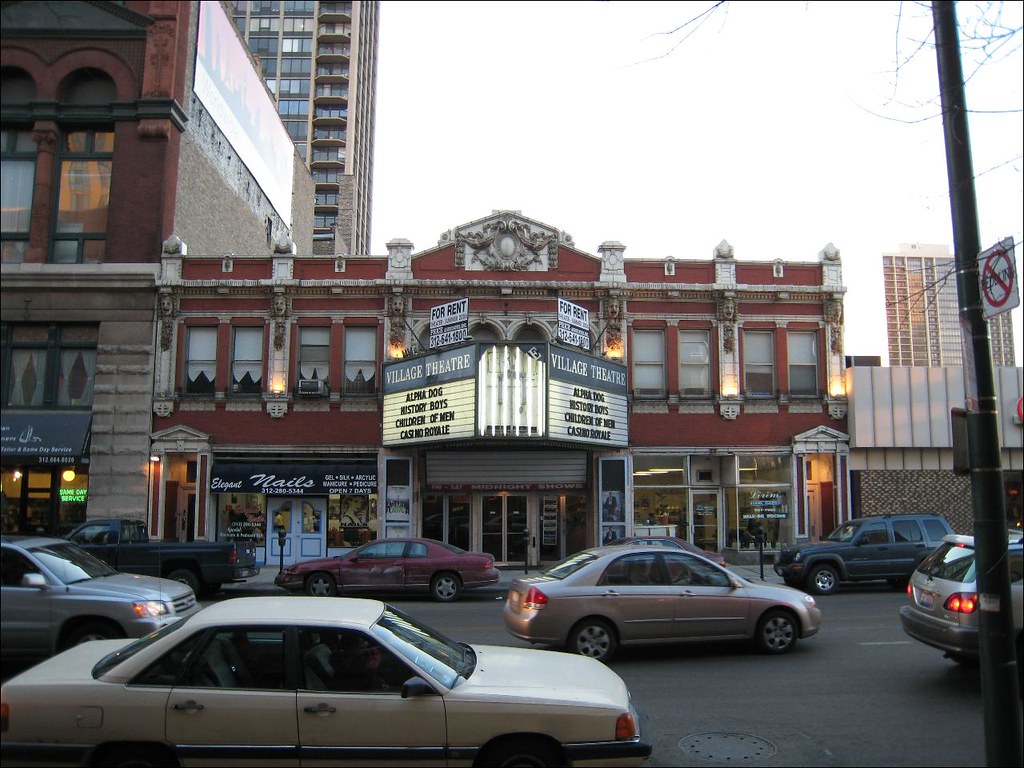
There had been at least three marquees for the Village Theatre: the original vertical Germania sign that was taken down almost as soon as it went up owing to anti-German sentiment in World War I; a horizontal, awning-style marquee like the one at the Biograph Theater (1914) at 2433 N. Lincoln Avenue in Chicago that was put up in conjunction with its existence as the Gold Coast theatre; and this prow-shaped marquee (pictured above) with steel-and glass doors believed to be part of the mid 1960s modifications when the movie house was the “Globe.” PHOTO: “Germania (Parkside, Gold Coast, Globe, Village) Theatre, Chicago, IL” by BWChicago is licensed under CC BY-NC 2.0.The Village Theatre took the moniker Village Art Theatre after The Chicago International Film Festival used the Village Theatre as a venue to screen “art house” films starting in 1969. PHOTO: “Village Art Theatre” by BWChicago is licensed under CC BY-NC 2.0.The rear of the 102-year-old Village Theatre before its impending destruction in 2018. “Germania (Parkside, Gold Coast, Globe, Village) Theatre, Chicago, IL” by BWChicago is licensed under CC BY-NC 2.0.October 2018. Author’s collection.
This explanatory article may be periodically updated.
FEATURE Image: Steuben Club Building/Randolph Tower. 188 W. Randolph Street, Chicago. View from the west, August 2021. Author’s photograph. 12.72mb_9354 (1)
The 1929 limestone tower whose shape may be the last surviving skyscraper reflective of the 1923 zoning law with setbacks and a telescoping tower presages Vitzthum & Burns’ mighty 1 N. LaSalle Street Building in 1930. Randolph Tower was restored in 1993 by Stenbro, Ltd. and in 2013 opened as the residences of Randolph Tower City. In addition to its 15-story tower, the building is 27 stories tall and 465 feet high built on rock caissons. German-born Karl Martin Vitzthum (1880-1967) and John Joseph Burns (1886-1956) built some of Chicago’s best-known skyscrapers of the 1920s and 1930s. The firm also built, in 1953, St. Peter’s Church in the Loop at 110 W. Madison Street two doors down from the corner skyscraper of 1 N. LaSalle Street Building. Karl M. Vitzhum was architect on the Midland Hotel (then the Midland Club Building ). Built in 1927, it is 22 stories of roaring 1920’s Beaux-Arts architecture.
Karl Martin Vitzthum (1880-1967). One of the architects of the Steuben Club Building/Randolph Tower with partner John J. Burns. The skyscrapers they built starting in 1925 until the Great Depression became taller and more vertical as time progressed and are some of the most visible soaring stone structures of the period in downtown Chicago. Karl Martin Vitzthum (Architect), Steuben Club Building, Chicago, Illinois, Perspective Randolph Street, 188 West (Building address), 1924-1928, Watercolor and tempera on paper 86 × 35.6 cm (33 7/8 × 14 in.) The Art Institute of Chicago. see – https://www.artic.edu/artworks/158560/steuben-club-building-chicago-illinois-perspective – retrieved September 21, 2024.
With each building the move from classicism to Modernism is clear as well as pure verticality. During the 1980s and 1990’s, I worked in one of Vitzthum & Burns’ mid1920s office buildings in Chicago – The Old Republic Building at 307 North Michigan Avenue built in 1925. My airy office on the 7th floor looked right onto Michigan Avenue where I could admire the Carbide and Carbon Building across the street built in 1929.
Steuben Club Building/Randolph Tower. August 2021. Author’s photograph. 82% 7.88 mb _9354
Vitzthum arrived in Chicago from Germany in 1914 and worked with architectural firms such as Graham Anderson Probst and White, Burnham & Co., and White, Jarvis & Hunt. He often worked with Fredrick J. Teich (1874- n.a) prior to establishing his own firm with John J. Burns in 1919. Vitzthum was a young architect on Burnham’s staff when he worked on some engineering details for the old Comiskey Park (1910-1990). The partnership of Vitzthum and Burns started in 1919 and ended with Burns’ death in 1956. Though known for eclectic styled bank buildings throughout the Midwest, the pair had built the one-screen 1,000 seat The Hollywood Theatre at Fullerton Avenue and Greenview Avenue in 1926. The theatre closed in 1957 after being renamed the Holly Theatre and was demolished soon afterwards. It is a parking lot today for a local Walgreens across the street from Facets movie theatre.
SOURCES:
Frank A. Randall, History of Development of Building Construction in Chicago, Second Edition, Revised and Expanded by John D. Randall, University of Illinois Press, Urbana and Chicago, 1999, pp. 331 and 319.
Saliga, Pauline A., editor, The Sky’s The Limit A Century of Chicago Skyscrapers, Rizzoli New York, 1990, p. 133.
Alice Sinkevitch, AIA Guide to Chicago, 2nd Edition, Harcourt, Inc., Orlando, 2004, p. 84.
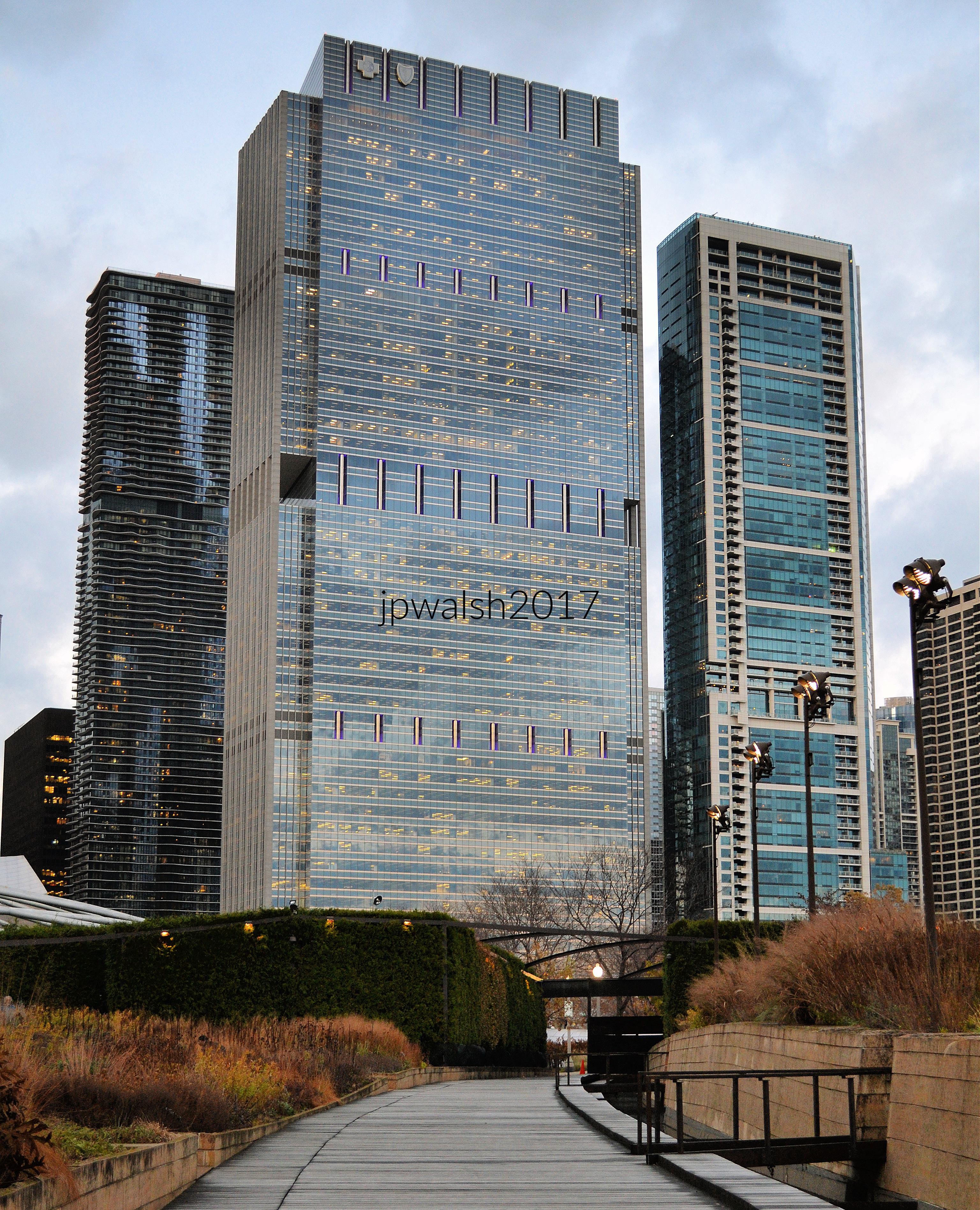
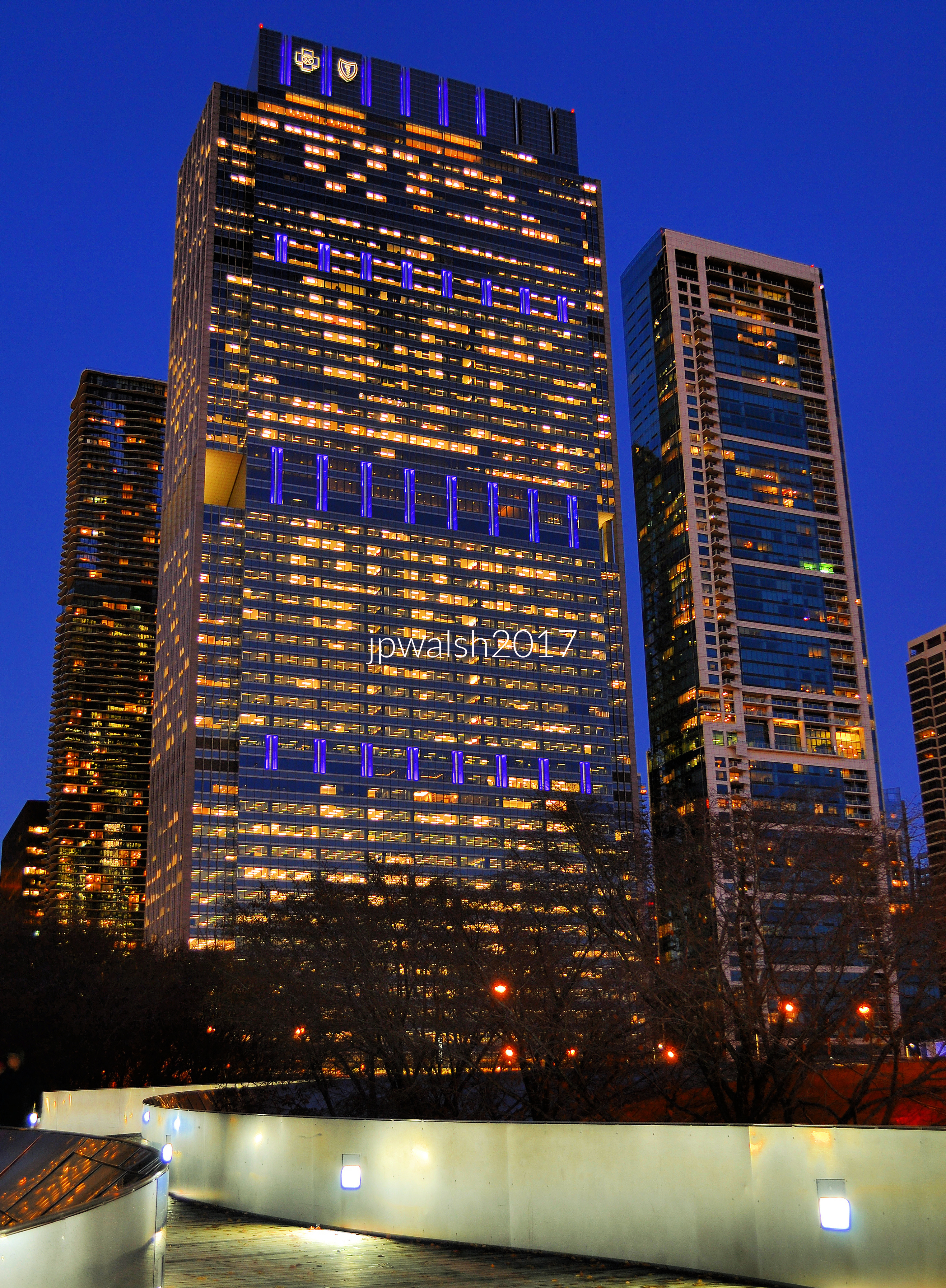
FEATURE image: Blue Cross Blue Shield Tower building, Day and Night. November 2017. It was designed by Goettsch Partners (GP) an architecture firm based in Chicago, with additional offices in Denver and Shanghai.
The Blue Cross Blue Shield Tower sits on the northeast corner of East Randolph Street and Columbus Drive in Chicago, Illinois. It is on the north side of Millennium Park. The tower is the headquarters of Health Care Services Corporation, a company founded in 1936 and based in Chicago, Illinois. HCSC is the licensee of the Blue Cross and Blue Shield Association that provides health insurance to more than 115 million people in the U.S. as of 2022.
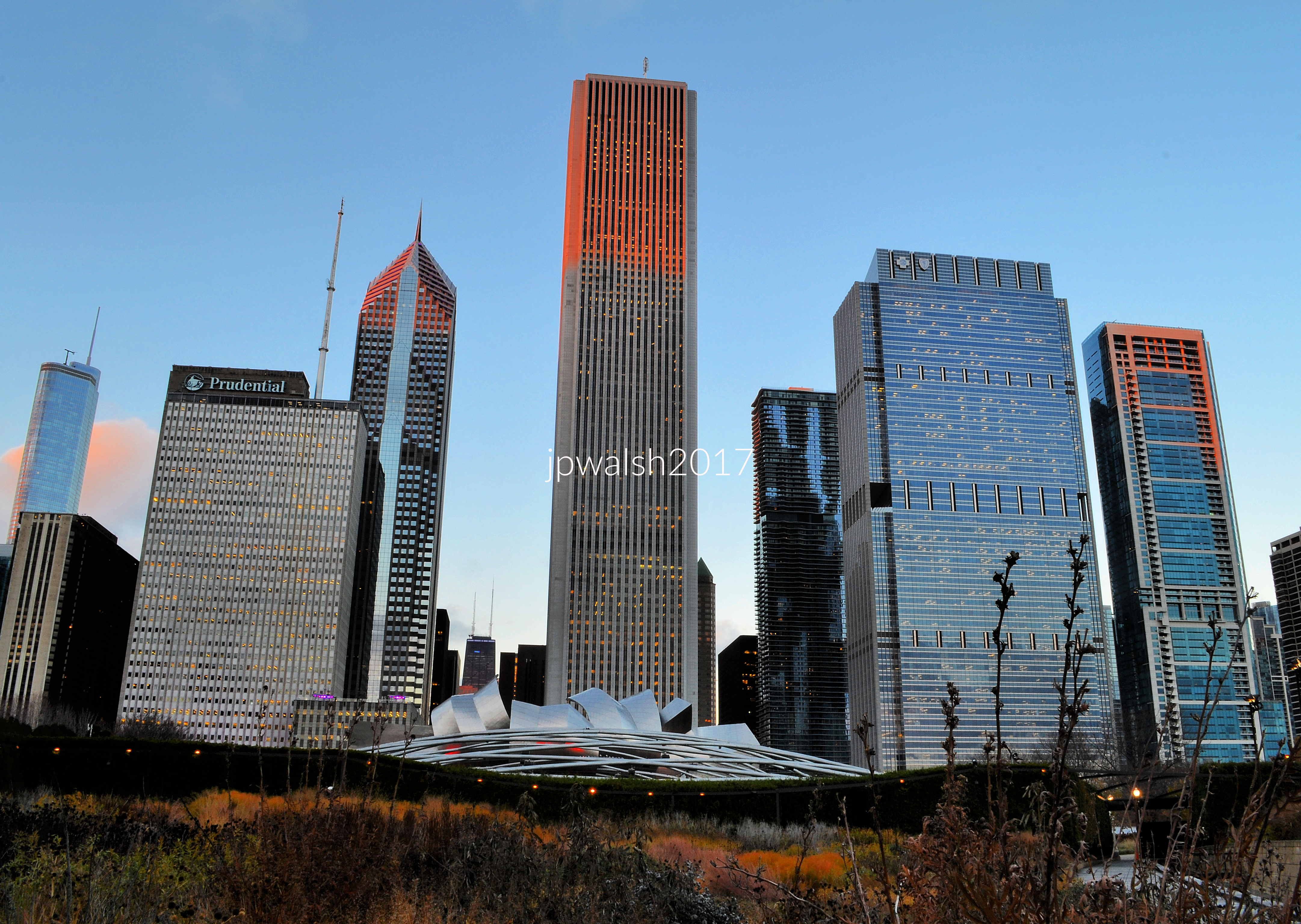
The Blue Cross Blue Shield Tower was built in two stages. The first stage was the original 32-story building completed by Lohan Associates (today Goettsch Partners) in 1997. It was built with the potential for a vertical expansion so that the client could grow in the same location. An expansion occurred in 2007 with a 24-story addition completed in 2010. It became the first building project in downtown Chicago that built upon an existing tower.The views are from inside Millennium Park. November 2017 7.38 mb 3417 (1)The Blue Cross Blue Shield Tower (second from right) in its setting on the north side of Millennium Park which was established in 1998. From left: One Prudential Plaza (1955), Two Prudential Plaza (1990), Aon Center (1973/1994). The Blue Cross Blue Shield Tower is next to the Aon Center with original plans to connect the two buildings via an underground pedway but did not come to fruition. November 2017 5.76mb 3397 (1)The Blue Cross Blue Shield Tower was designed by Jim Goettsch, chairman of Goettsch Partners. November 2017 99% 7.41mb3480
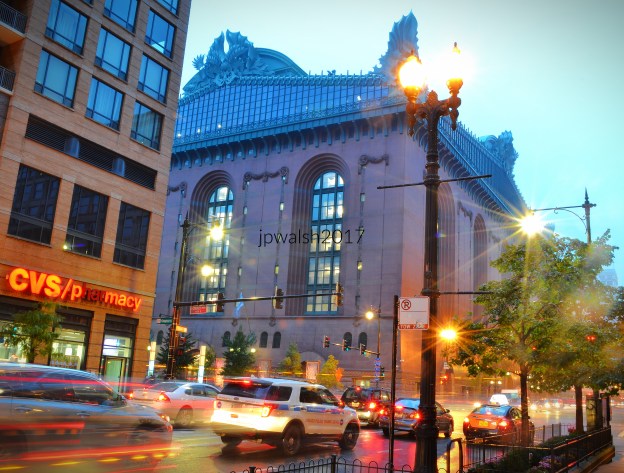
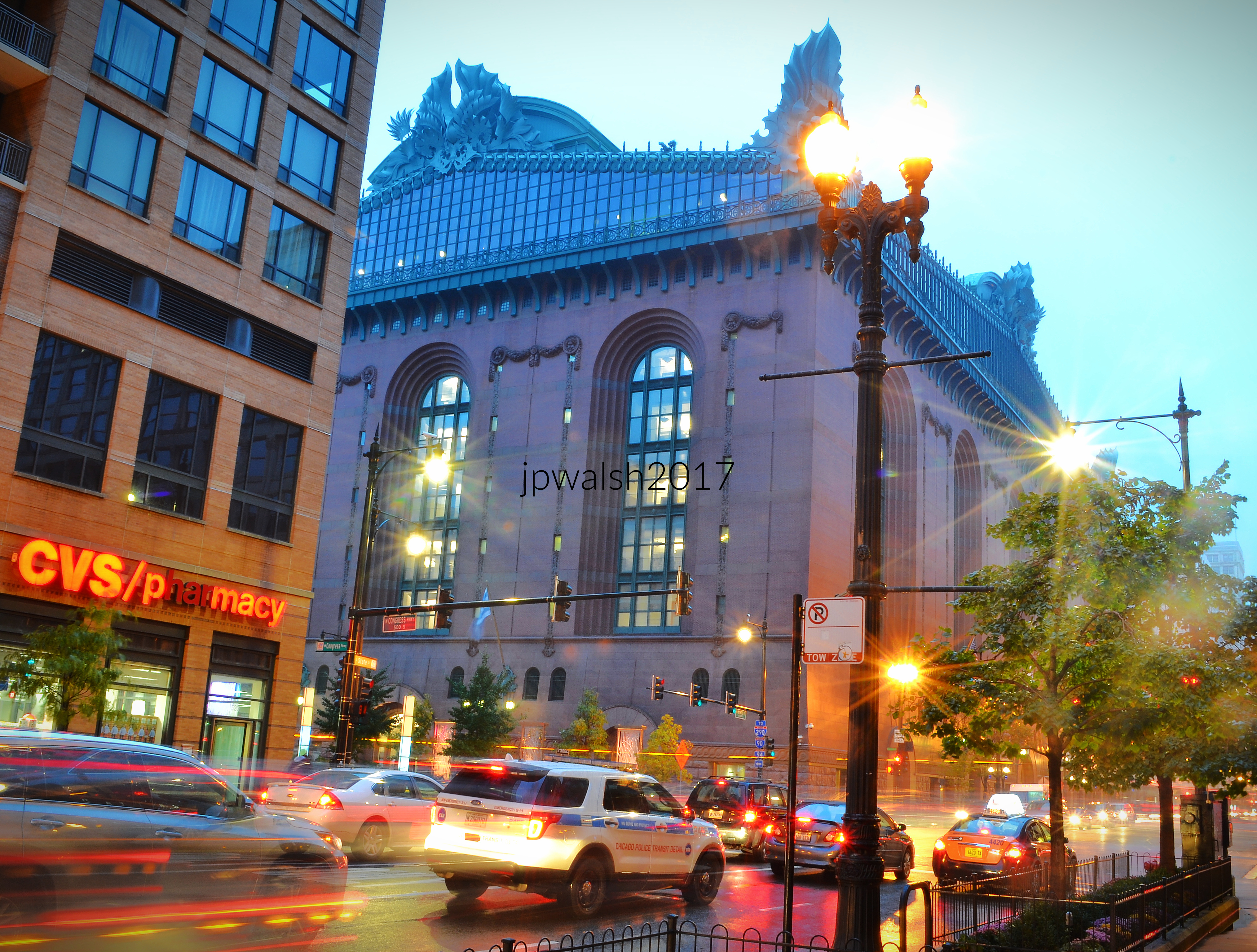
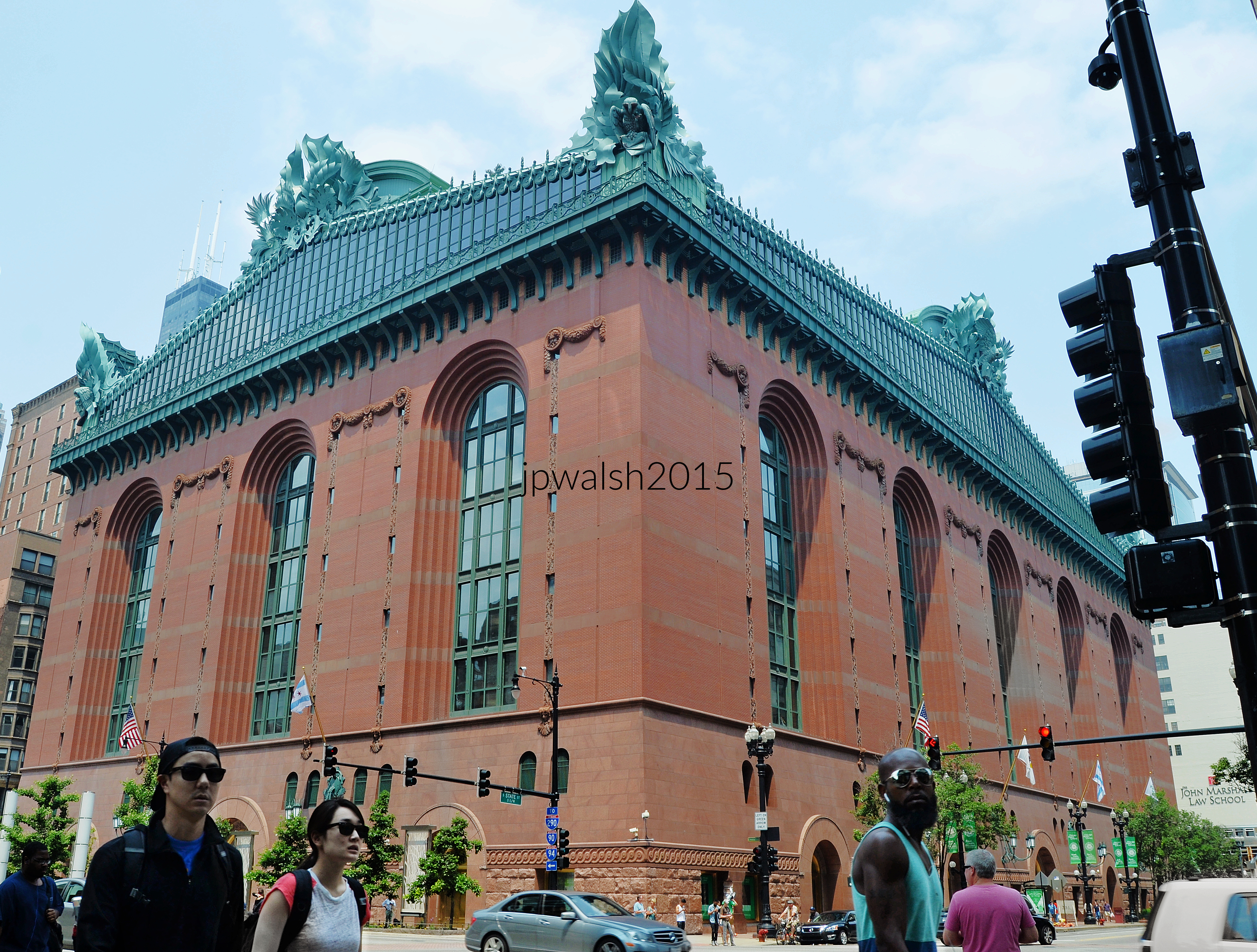
FEATURE image: November 2017.The Harold Washington Library sits on the northwest corner of State Street and Ida B. Wells (Congress) Drive. It is recognized as one of the largest public library buildings in the world. 5.02 mb. Author’s photograph.
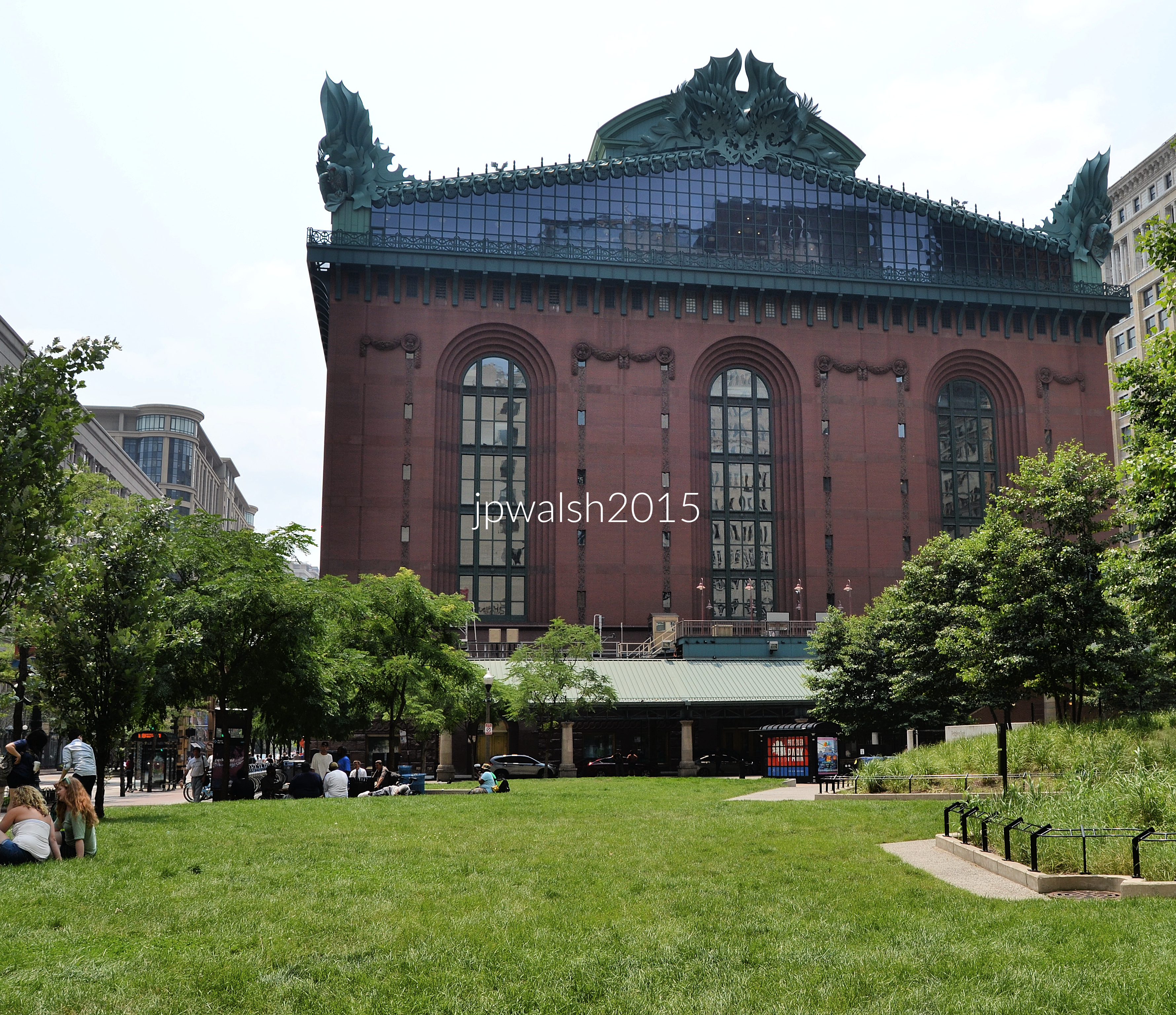
November 2017. The decorative pediment of stylized aluminum sculptures was designed by Kent Bloomer in 1993. The large sculptures represent growth and wisdom with enormous owls at each of the pediment’s four corners (“acroteria”). Harold Washington Library Center | Chicago Architecture Center – retrieved February 16, 2026. Author’s photograph.
In 1987, Hammond, Beeby and Babka won the competition to design the main branch of Chicago’s library. The Harold Washington Library was completed in 1991 and is one of the Chicago-based architectural firm’s most famous structures. The building recalls neo-classical institutional buildings yet whose style is creatively applied in its details.
PHOTO CREDIT: “Harold Washington (9519692588)” by City of Boston Archives from West Roxbury, United States is licensed under CC BY 2.0.
The Harold Washington Library is named for Chicago’s first Black mayor. Harold Washington (1922-1987) was elected to two terms as mayor starting in 1983. The well-read and erudite mayor died suddenly of a heart attack the day before Thanksgiving in November1987 just a few months into his second term. I was running along the lakefront in Lincoln Park on an overcast day when I heard the news on my Walkman. My fiancée and I were one of the thousands of Chicagoans (and one of the few whites) who passed by his open casket in the lobby of City Hall between November 27 and 29, 1987. I had also seen and heard Harold Washington speak a couple of times during his public appearances as mayor.
FROM THE PROGRAM: “The jury becomes the ultimate client…There are three areas of evaluation: the design of the building; how it meets technical specifications and how it fulfills the library program…•
Five competing architecture teams race to create the vision for the new Harold Washington (Chicago Public Main) Library that opened at 400 S. State Street on October 7, 1991. The Burnham-dreamed park south across Congress/Ida B. Wells from the library never materialized (Pritzker Park is to the north). The NOVA episode follows these creators as they develop and present their ideas to be judged by the city and public for the downtown building that range from postmodern to Beaux-Arts design concepts. FROM THE PROGRAM: “The jury becomes the ultimate client…There are three areas of evaluation: the design of the building; how it meets technical specifications and how it fulfills the library program…•
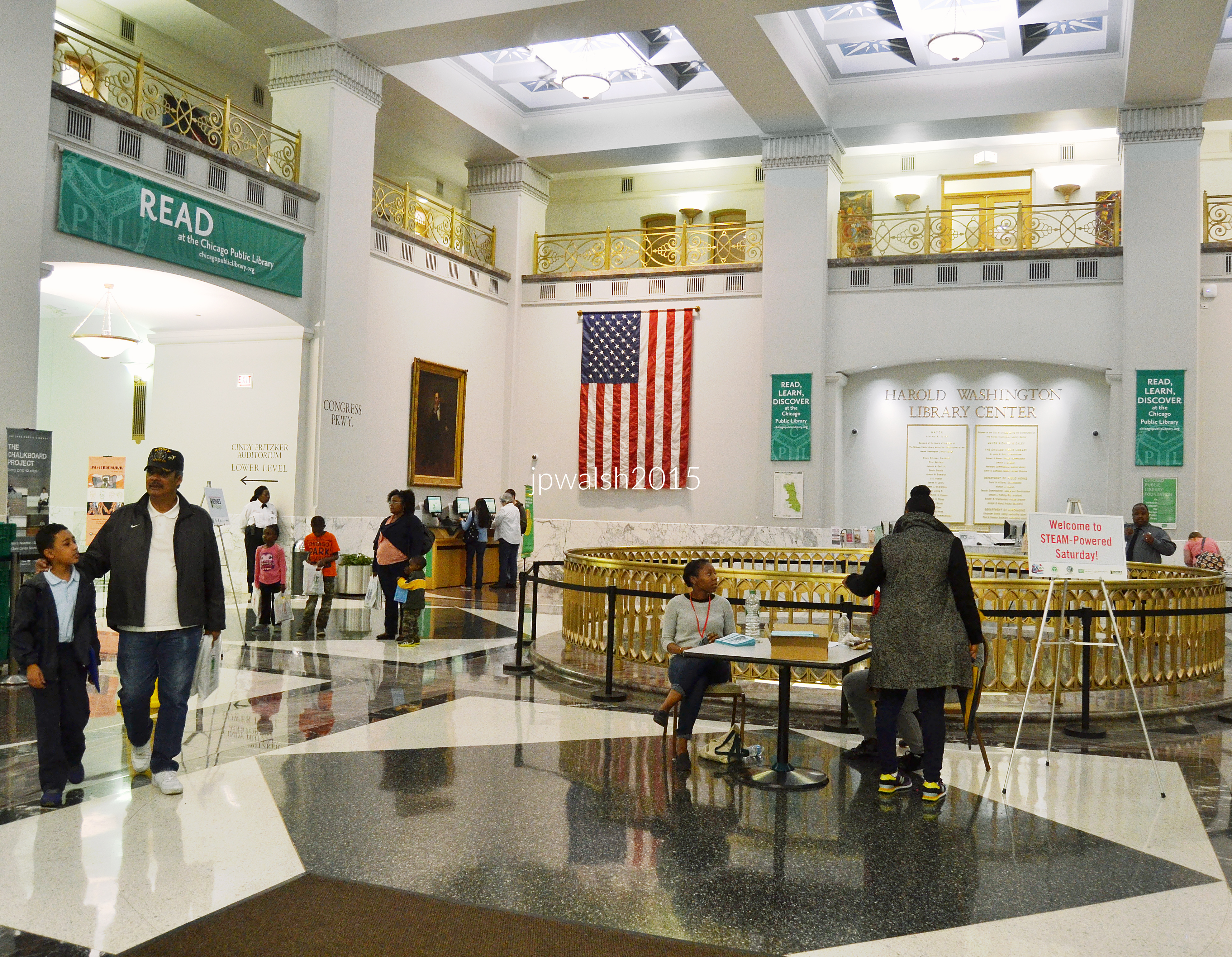
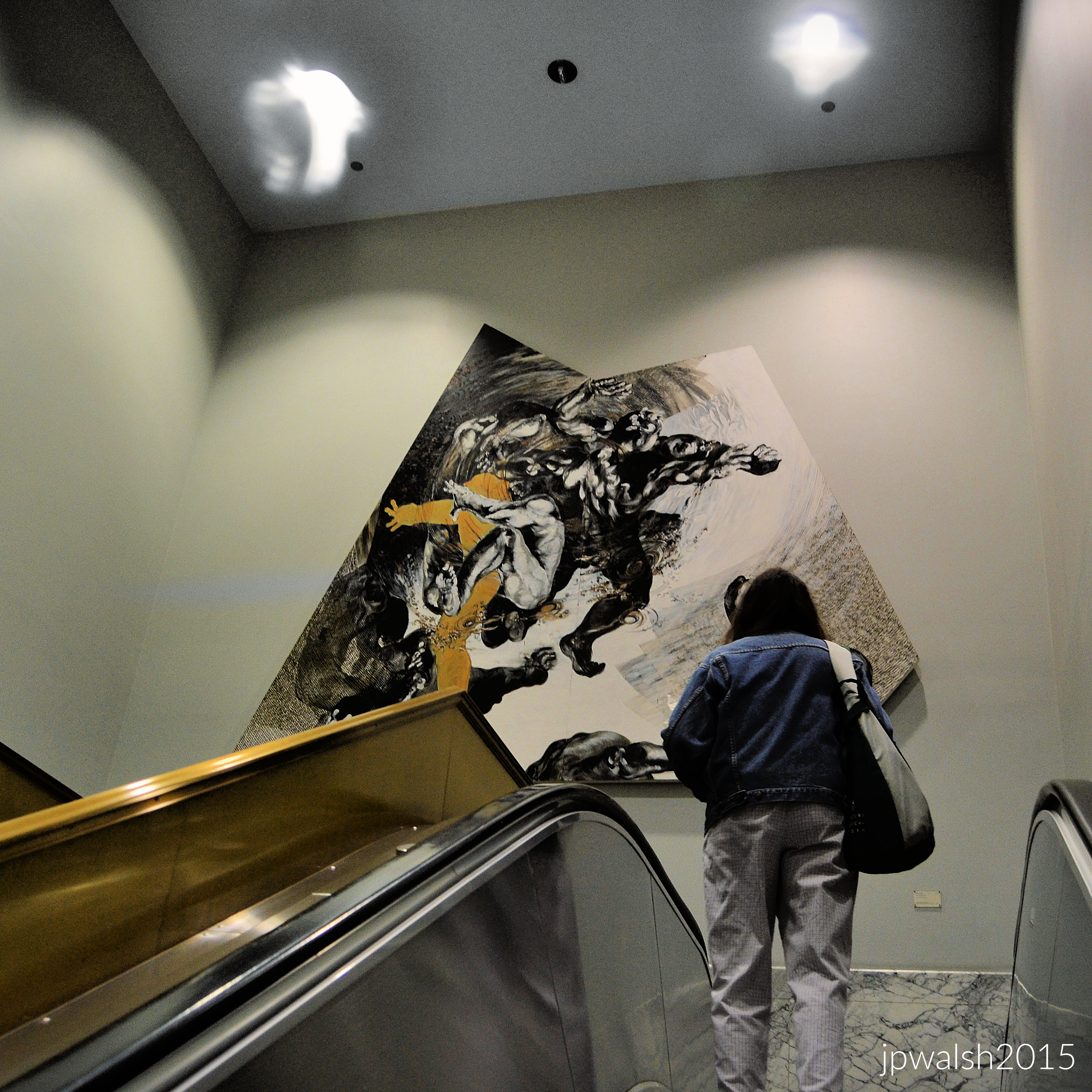
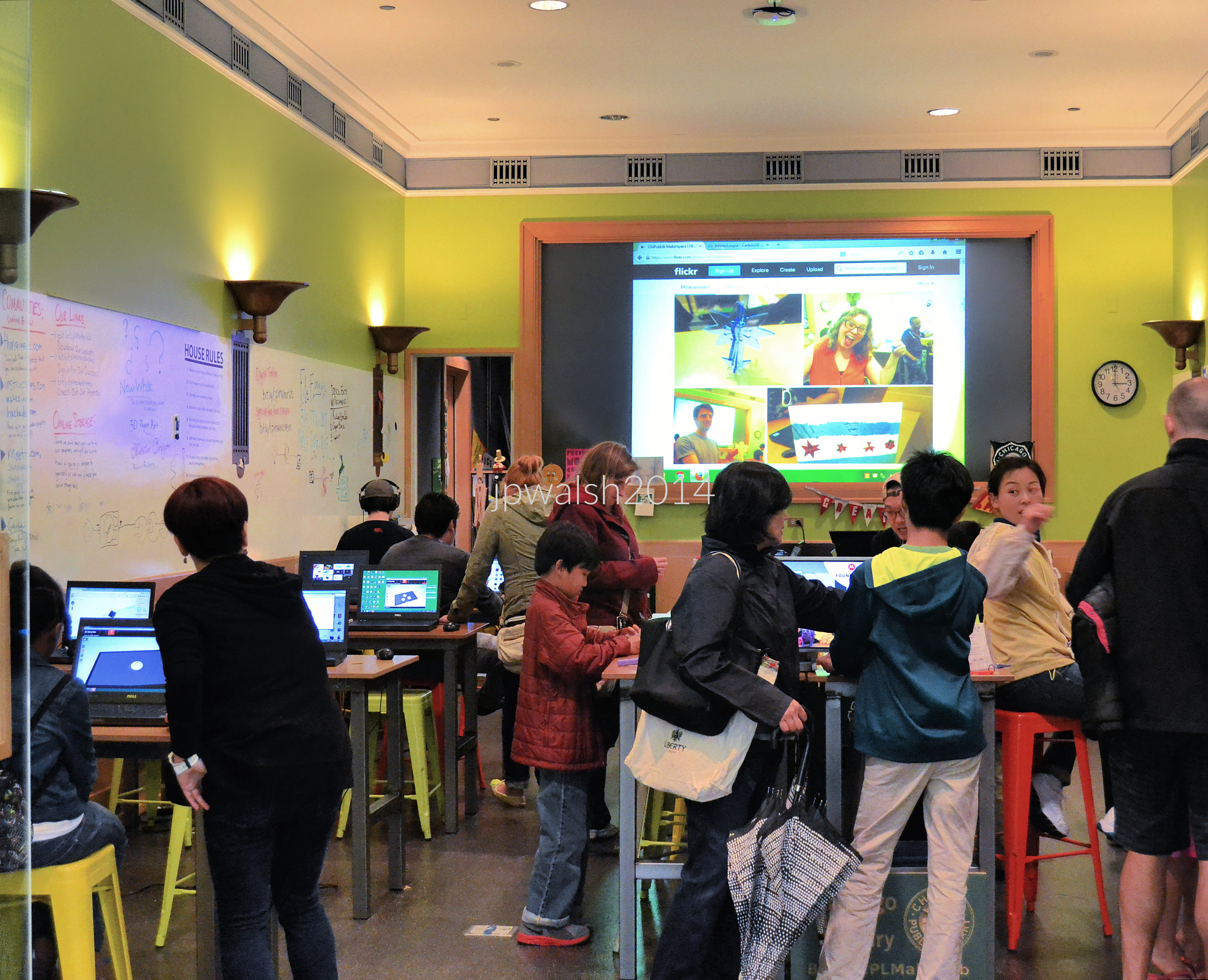
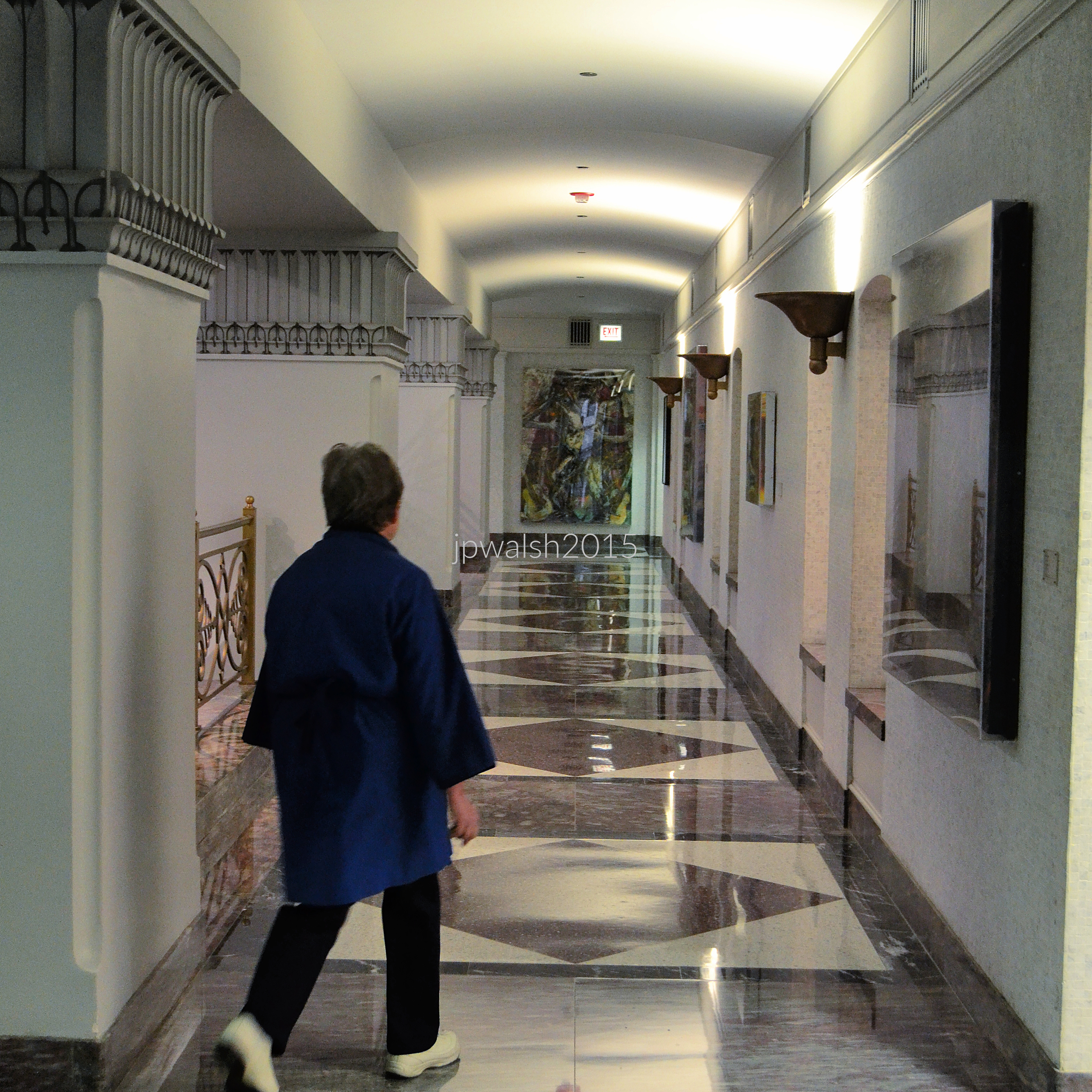
July 2015. State Street entrance. Chicago. 4.84mbAuthor’s photograph. May 2015. The Harold Washington Library serves as the main research branch of the Chicago Public Library. Main floor entrance. see – Harold Washington Library | Loop Chicago – retrieved February 16, 2026. 5.85mb DSC_0474 (1). Author’s photograph. May 2015. The Harold Washington Library houses millions of items across nine floors. At 750,000 square feet, it is the largest public library building in the world. Harold Washington Library | Loop Chicago – retrieved February 16, 2026. 4.0 mb DSC_0476 (1) Author’s photograph.May 2015. Inside Harold Washington Library. 4.88mb DSC_0488 (1) Author’s photograph.May 2015. On the 8th floor the Visual and Performing Arts Department maintains a comprehensive music archive. One major collection, for example, is the Martin and Morris Collection which contains roughly 1,500 scores from the renowned gospel music publisher. 3.61mb DSC_0486. Author’s photographJuly 2015. Northern view from Priztker Park. 5.01mb DSC_0056 (1) Author’s photograph. July 2015. Southeastern view from Ida P. Wells Drive (formerly, Congress Parkway). 5.52 mb DSC_0004 (2) Author’s photograph. December 2015. Harold Washington Library after dark. 3.7mb DSC_0980 (3) Author’s photograph.
This explanatory article may be periodically updated.