How Deep Is Your Love (1977) by the Bee Gees ranks number 375 on Rolling Stone’s list of the 500 Greatest Songs of All Time.1 It sits between White Room (1968) by Cream and Unchained Melody (1965) by The Righteous Brothers. Barry Gibb, the lone surviving Bee Gee today, reportedly said that How Deep Is Your Love is his favorite Bee Gees song. 2 In 2011 it was voted in a TV poll as the UK’s favorite.3 Recorded in the spring of 1977 in anticipation of the album and film Saturday Night Fever to be released later that year— How Deep Is Your Love was released in the U.S. as a single in September 1977. Three months later, after the smash-hit film Saturday Night Fever starring John Travolta was released, How Deep Is Your Love became the number one song in the U.S. on Christmas Eve 1977 and stayed in the top spot for three weeks. Although the song had started on the charts in October 1977, when it reached number one it stayed in the top 10 for four months until April 1978 which, at that time, set a longevity record. There are two official music videos for How Deep Is Your Love featuring the Bee Gees.4
Fig. 1. There are two official music videos performed by the Bee Gees of How Deep is Your Love. The music of the Bee Gees (left to right: Robin, Barry, and Maurice Gibb) and the 1977 film Saturday Night Fever starring John Travolta breathed fire into the disco music craze and helped define the disco era in the late 1970’s.
Fig 2. A huge international pop music hit starting in late 1977, How Deep is Your Love written and performed by the Bee Gees made its way into the Saturday Night Fever: The Original Movie Sound Track album that went Platinum on January 3, 1978 and was certified 16x Multi-Platinum on November 16, 2017. It remains one of the top ten-selling albums of all time.
When the Bee Gees were asked by film producer Robert Stigwood to provide five songs for a film tentatively titled Tribal Rites of the New Saturday Night based on the 1975 New York magazine fiction article about the urban disco scene, they didn’t want to compose music specifically for a film (although Barry did write the title song for Stigwood’s follow-up picture, Grease). It didn’t help that the Bee Gees were given neither a script nor told what the movie plot was about. They offered Stigwood, their longtime manager, songs that they were already working on: Stayin’ Alive, Night Fever, If I Can’t Have You (later sung by Yvonne Elliman), More Than A Woman, and How Deep is Your Love.5 At one early screening that included John Travolta and director John Badham, the Bee Gees were pleased though a little surprised that their songs, while demo cuts, meshed perfectly with the film’s scenes now re-titled Saturday Night Fever. To be added to the Bee Gees’ astonishment— and anyone else’s attending that night’s rough cut— was that no one had any idea that they were embarking on a motion picture that would be a milestone in film history and forever define the disco age.
Stayin’ Alive was released in December 1977 as the second single from the soundtrack and it, too, climbed to no. 1 on the Billboard Hot 100 in February 1978. It stayed in the top spot for four consecutive weeks. One year later, in February 1979, Stayin’ Alive won the Grammy Award for Best Vocal Arrangement for Two or More Voices.
Fig. 3. John Travolta attended the London premiere of Saturday Night Fever on March 22, 1978 with Kay Edwards.
Following its world premiere in Hollywood on December 7, 1977, Saturday Night Fever became an enormous success. It became Chicago film critic Gene Siskel’s favorite film—soon after, Siskel famously bought Tony Manero’s white suit at a charity auction in 1978 for $2,000. Colleague and friend Roger Ebert writing shortly after Siskel’s death in 1999, believed that Saturday Night Fever had struck Siskel mainly on an emotional level but also for its themes that had impressed him. Other influential film critics were similarly praiseworthy of the film’s subject matter. At the 50th Academy Awards on April 3, 1978 Saturday Night Fever had received only one nomination (John Travolta for Best Actor) in a year where Annie Hall and Star Wars dominated the competition.Robin Gibb later observed that Saturday Night Fever was made on a very low budget, released very late in the year and had no expensive promotion. The film’s word of mouth was good, however, which even included its star, John Travolta, who at its world premiere at then-Mann’s Chinese Theatre admitted watching the musical film on the big screen as if seeing a fantasy or dream for the first time.6
Fig. 4. Tony Manero’s shiny white polyester suit — bought off the rack in Brooklyn for the making of the film Saturday Night Fever— has been compared to a symbol of aspiration and hope in what is otherwise a dark movie.
Conceptually the song How Deep Is Your Love materialized when, working with collaborator Blue Weaver, Barry Gibb’s instigating question to him in beginning to compose it was: “What is the most beautiful chord that you know?”7 It was the first song the Bee Gees composed that ended up in the film Saturday Night Fever. After a creative hit-and-miss process at the piano – and further collaboration with Robin and Maurice – the song was put together in the middle of night in about four hours at the Château d’Hérouville studios in France.8 This was part of the Bee Gees’ usual working process – arriving into the studio around three o’clock in the afternoon and ending their workday near or after midnight – resulting in all of the film’s songs written quickly, with the lyrics finished later and the disco music taking longer.9 The Bee Gees’ falsetto singing had always been emotional, and it was often by way of collaborating with industry talent— other musicians, producers, and the like—that their music developed in new directions. By the time How Deep is Your Love came about, the Bee Gees had a reputation for being open to suggestions, including the personally emotional piano chords Blue Weaver offered the Brothers Gibb that night.10 The creation of How Deep Is Your Love followed a course already prevalent in the Bee Gees musical career – an attitude of collaboration and creativity in the studio that allowed ideas to be suggested, and beautiful melodies to quickly emerge as the result. Though How Deep is Your Love was composed in one sitting, its arrangement and production took longer which changed some of the song’s original structure. The title was based on what the Bee Gees simply maintained was the variety of connections listeners could make with the phrase How Deep is Your Love – and so providing the song with further universal appeal.11 Following the film’s U.S. release by Paramount Pictures on December 14, 1977 Maurice Gibb believed its ultimate success was the combination of its phenomenal 23-year-old star John Travolta and the music soundtrack whose album had already been certified Gold on November 22, 1977 and certified Platinum on January 3, 1978. The combination of star power and music – along with stunning word of mouth and critical acclaim – created a record-shattering synergy for both film and soundtrack album featuring Bee Gees songs making the cultural impact of Saturday Night Fever swift and enduring. How Deep is Your Love remains one of the most anthologized love songs of the modern era. As recently as November 16, 2017, the soundtrack album was certified 16x Multi-Platinum.12
Fig. 5. John Travolta in the 1970’s. Playing 19-year-old Tony Manero in Saturday Night Fever about a teen with a good job at the local hardware store in Brooklyn who is trying to dance his way to a better life. His performance earned the 23-year-old Travolta an Academy Award nomination for Best Actor in a Leading Role that year.
Fig. 6. Brooklyn-born Donna Pescow was a newcomer and played Annette in Saturday Night Fever. Annette is Tony’s former dance partner and would-be girlfriend.
Fig 7. Like Donna Pescow and others in the cast of Saturday Night Fever, co-star Karen Lynn Gorney, John Travolta’s love interest in the film, was a newcomer. Even Travolta who had a swelling fan base because of his ongoing role as Vinnie Barbarino in the popular late 1970’s TV sitcom Welcome Back, Kotter, was not seen as a dance man. Hungry to take his acting career to the next level, Travolta’s energetic dance scenes had critics praising his performance as among the best ever filmed.
Fig. 8. A two-minute scene of disco dancing by John Travolta thrust his energetic performance and the new star into the annals of film history. (This is a portrayal of Travolta as Danny Zuko in Grease.)
Fig. 9. “Robert Stigwood explained to the Bee Gees about this young guy, who every weekend blows his wages at a disco in Brooklyn. He’s got a really truly Catholic family, and he’s got a good job, but he blows his wages every Saturday night. He has his mates with him. Then he comes back and starts the week again, and this goes on every Saturday night. But it’s just this one Saturday night that’s filmed. So that’s what we knew (about a film we were writing music for) except it was John Travolta playing the part…” Maurice Gibb in Bee Gees: The Authorized Biography.
How Deep Is Your Love quickly reached number one internationally in countries such as Canada, Brazil, Finland, Chile, and France. In the Bee Gees’ native England it reached number three which delighted the newly–resurgent pop music group in that they had a top five hit in a country that by the mid-to-late 1970’s saw Punk and New wave rock in the ascendant.13 The Sex Pistols’ God Save the Queen, also released in 1977, was banned on the airwaves by the BBC for its “gross bad taste” though today it ranks number 175 on the Rolling Stone’s Greatest Hits list – 200 slots higher than the Bee Gees’ disco ballad, How Deep Is Your Love. How Deep Is Your Love and the Saturday Night Fever album provided superstar momentum for the Bee Gees’ next projects, but like their careers up to that point, the English-Australian pop-rock band simply continued their readiness to create music. In The Ultimate Biography of the Bee Gees, Blue Weaver understood the Bee Gees’ success during this period was not due to their “virtuosity,” although their falsetto vocals were “brilliant,” but their collaborative working method which they pursued until reaching the final product that satisfied them – and clearly satisfied some part of the rest of the world.14
Fig. 10. In 1978 Barry Gibb observed about Robin and Maurice and himself: “When we were kids, we’d sit on each other’s beds all night and plan our careers. We decided that when we got to the top, we’d have our own office. We wanted to get to a point where we wouldn’t have to ever work again so we could sit back and enjoy everything we had accomplished. A few years ago that seemed forever out of reach. Sometimes I think I’m living that dream now. We’ve never really made it before. If this is indeed the top, then it’s better than what we imagined. It’s a lot of fun.” Bee Gees: The Authorized Biography.As the Bee Gees, Barry and twins Maurice and Robin became one of the world’s biggest bands ever selling more than 220 million records. In 1997 they were inducted into the Rock and Roll Hall of Fame. Maurice died in 2003 and Robin in 2012. In 2017 Barry told CBS News: “So when I lost them all, I didn’t know whether I wanted to go on. ”
Fig. 11. 70-year-old Barry Gibb was honored during Stayin’ Alive: A Grammy Salute to the Music of the Bee Gees in April 2017 where he got up on stage to close out the show to perform a few hit songs.
During one visit to the hospital while Robin was in a coma, Barry sang a song that he had written for him called The End Of The Rainbow.
Song’s recording and release dates – Bee Gees Anthology (songbook) by the Bee Gees, Hal Leonard (1991) and Bee Gees The Authorized Biography, Barry, Robin and Maurice Gibb (as told to David Leaf), Delilah Communications/A Delta special, 1979, p.116.
Didn’t want to compose music for a film – The Ultimate Biography Of The Bee Gees: Tales Of The Brothers Gibb, By Melinda Bilyeu, Hector Cook, Andrew Môn Hughes, 2001, Omnibus Press, London, pp. 411; Hardly told the film plot – Bee Gees The Authorized Biography, Barry, Robin and Maurice Gibb (as told to David Leaf), Delilah Communications/A Delta special, 1979, p.110.
Surprised music with unseen film meshed – Bee Gees The Authorized Biography, Barry, Robin and Maurice Gibb (as told to David Leaf), Delilah Communications/A Delta special, 1979, p.111; Ebert on Siskel’s favorite film – https://www.rogerebert.com/reviews/great-movie-saturday-night-fever-1977 – Retrieved January 24, 2018; other critics’ praise of film- see Pauline Kael, “Nirvana,” The New Yorker, December 26, 1977, pp. 59-60; film low budget, released late- The Ultimate Biography Of The Bee Gees: Tales Of The Brothers Gibb, By Melinda Bilyeu, Hector Cook, Andrew Môn Hughes, 2001, Omnibus Press, London, pp. 411. Regarding the white suit that had been bought off the rack in Brooklyn for the film, its symbolism in Saturday Night Fever has been postulated. Professor Deborah Nadoolman Landis, a designer and historian of film costume stated that the white suit was a symbol of aspiration and hope in an otherwise “dark little movie” – see https://www.theguardian.com/artanddesign/2012/aug/06/john-travolta-white-suit-v-and-a – retrieved January 25, 2018.
Song’s musical concept – The Ultimate Biography Of The Bee Gees: Tales Of The Brothers Gibb, By Melinda Bilyeu, Hector Cook, Andrew Môn Hughes, 2001, Omnibus Press, London, pp. 411-412.
First song composed for Saturday Night Fever, Château d’Hérouville – Bee Gees The Authorized Biography, Barry, Robin and Maurice Gibb (as told to David Leaf), Delilah Communications/A Delta special, 1979, p.109.
Songs written quickly – Ibid., p.109; lyrics later – The Ultimate Biography Of The Bee Gees: Tales Of The Brothers Gibb, By Melinda Bilyeu, Hector Cook, Andrew Môn Hughes, 2001, Omnibus Press, London, p. 415.
Open to suggestions – Bee Gees The Authorized Biography, Barry, Robin and Maurice Gibb (as told to David Leaf), Delilah Communications/A Delta special, 1979, p.107. emotional piano chords – The Ultimate Biography Of The Bee Gees: Tales Of The Brothers Gibb, By Melinda Bilyeu, Hector Cook, Andrew Môn Hughes, 2001, Omnibus Press, London, p. 411-12.
song composing, arrangement, and production – The Ultimate Biography Of The Bee Gees: Tales Of The Brothers Gibb, By Melinda Bilyeu, Hector Cook, Andrew Môn Hughes, 2001, Omnibus Press, London, pp. 409 and 412. Title chose Ibid. p. 412.
Movie’s ultimate success – Bee Gees The Authorized Biography, Barry, Robin and Maurice Gibb (as told to David Leaf), Delilah Communications/A Delta special, 1979, p.112. Costing $3.5 million to make, Saturday Night Fever earned an impressive $237.1 million –see “Saturday Night Fever, Box Office Information”. Box Office Mojo – retrieved May 26, 2014. Soundtrack album certified God and Platinum -http://www.beegees-world.com/bio_gplat.html -Retrieved February 1 , 2018. certified 16x Multi-Platinum on November 16, 2017 – see https://www.riaa.com/gold-platinum/- retrieved January 24, 2018.
Carolina Crescentini is an Italian film and television actress who has appeared in more than 20 films since 2006. Born in Rome in 1980 (April 18) Carolina grew up in the elegant Monteverde Vecchio district. Not unlike Grace Kelly of Philadelphia, Carolina wanted to become an actress from an early age and studied and worked diligently in the craft.
Carolina attended Italian acting schools including the Centro Sperimentale di Cinematografia – or, The Center for Experimental Cinematography. This Italian institution hosts a national film archives (Cineteca Nazionale) as well as one of Italy’s most prestigious film acting schools (Scuola Nazionale di Cinema).
Soon after, Carolina began her acting career in television commercials, short films and music videos. The blonde beauty whose stage presence is similar to Kate Hudson and whose fashion savvy is like Chloë Sevigny got her first big break in films from another Centro Sperimentale di Cinematografia alumni – Fausto Brizzi.
It was in the sequel to Brizzi’s 2006 film Notte prima degli esami (The Night Before The Exams). The original film was a phenomenon in Italy. It earned around 15 million euros and won the David di Donatello Award (the Italian Oscar) and several more awards.
In Brizzi’s 2007 hit Italian teen comedy Notte prima degli esami – Oggi (The Night Before The Exams – Today), Carolina Cresentini plays Azzurra, the love interest of the main character. Where Brizzi’s 2006 teen comedy is set in Rome in 1989, the 2007 sequel which featured many of the same actors in the same roles—with the addition, of course, of Carolina Crescentini— it is set in the summer 2006. This is the same summer Italy played for the World Cup which they won that year.
Brizzi’s sequel and Carolina’s first major film was an even bigger hit than the original. Even the French film industry made a version of Notte prima degli esami calling it Nos 18 ans and featuring French teenagers set in 1989.
Carolina Crescentini in a still photo from the pillow fight scene in Notte Prima degli Esami – Oggi (2007). The film gave the the Italian actress her breakout role.
Italian actors Nicolas Vaporidis and Carolina Crescentini during filming of Notte Prima Degli Esami – Oggi. About six months later they starred again together in the film thriller Cemento armato.
The pillow fight scene in Fausto Brizzi’s sequel Notte Prima degli esamei – Oggi. It is where Luca (Nicolas Vaporidis) and Azzura (Carolina Cresecentini) first meet. A box office smash in Italy, it was Carolina Crescentini’s first major film and started her on the road to stardom. In Italian. (3.22 minutes).
Within the year of her first major film Carolina immediately co-starred with Italian star Nicolas Vaporidis in Cemento armato (Concrete Romance). It is a 2007 Italian neo-noir thriller directed by Marco Martani. Crescentini’s dramatic performance as Asia, a rape victim, earned her a Best Actress nomination at the prestigious Nastro d’Argento (Silver Ribbon) Awards.
The next year, in 2008, Carolina was nominated for a David di Donatello Award for Best Supporting Actress for playing Benedetta, a fragile and spoiled rich beauty pursued by Silvio Muccino in Parlami d’amore (Speak to me of love). The film became another smash hit in Italy that year.
The trailer for Cemento armato. In a role that earned her a Best Actress nomination at the Nastro d’Argento awards in 2008, blonde beauty Carolina Crescentini wears her hair dark which matches the film’s often violent character. In Italian (1.27 minutes).
Carolina Crescentini’s performance in the Italian thriller Cemento armato (Concrete Romance) earned her a Best Actress nomination in 2008.
Before becoming an actor, Carolina Crescentini thought she would be an art or film critic. Reading about tennis star Andre Agassi.
Carolina Crescentini’s beauty has been called special. A blonde with gentle features, her beauty captivates yet does not immediately overwhelm. Her attraction is fed by details: blue eyes surrounded by sensual dark circles that give an uneasy and lived-in air.
Carolina Cresentini at the 66th annual Venice International Film festival, held in Venice, Italy, in September 2009. Maria Grazia Cucinotta served as the festival’s hostess.
A scene from Carolina Crescentini’s third film Parlami d’amore (Speak to me of love) in a role which led to her being nominated for a David di Donatello Award for Best Supporting Actress. Her co-star is Silvio Muccino. (2:34 minutes).
Carolina at the premiere of Tell me About Love (Parlami d’Amore).
Carolina made films where her roles were smaller but memorable. She played Anna in veteran Italian director Giuliano Montaldo’s I demoni di San Pietroburgo (The Demons of St. Petersburg). It is a bio-pic about Russian novelist Fyodor Dostoevsky. With a soundtrack by prolific Ennio Morricone, Carolina said her experience for this 2008 film on location in Russia was very beautiful.
The trailer from The Demons of St. Petersburg which was one of Carolina Crescentini’s favorite films to work on. It is a biopic of Fyodor Dostoyevsky shot on location in Russia featuring an all-star international cast. (1:41 minutes).
Playing Anna in The Demons of Saint Petersburg (2008) which Carolina described as a beautiful film work experience.
In 2010 Carolina’s body of work was again recognized by winning the Giuseppe De Santis Award for Best Female Newcomer as well as the Giffoni Award at that venerable international children’s film festival.
In 2011 Carolina won the People’s Choice Ciak D’Oro award for Best Supporting Actress playing Corinna in the 2011 Italian comedy film Boris-Il Film which was based on a popular Italian TV series of the same name.
From Boris-Il Film (58 seconds):
Carolina Crescentini as Corinna in Boris-Il Film.
Carolina Crescentini dressed in Ferragamo for a press conference in Rome for Boris-Il Film. Part of the SS2011 collection it is elegantly detailed within a warm and refined tone. Carolina chose to combine a double-breasted jacket with brown high heel boots for a delightfully easy look.
Carolina Crescentini at the D&G SS10 Fashion Show.
In 2010 Carolina Crescentini appeared in the film “Twenty Cigarette” about a survivor of the 2003 Nasiriyah bombing in Iraq. Carolina commented that the film was an authentic story told straight-forwardly, and with sensitivity and respect for the feelings of the fallen family.
Carolina Crescentini plays Angelica in the 2009 Italian comedy film “Generazione 1000 euro” written and directed by Massimo Venier. The film received two Nastro d’Argento nominations for best comedy film and for best supporting actress.
Excerpt from a trailer for the 2009 Italian comedy film Oggi sposi (Just Married) directed by Luca Lucini where Carolina plays Glada. The movie is about a reformed ladies’ man who has his heart set on marrying the daughter of the Indian ambassador. (56 seconds)
In the 2011 award-winning drama film The Entreprenuer (L’Industriale), Carolina worked again with director Giuliano Montaldo. It follows the story of a businessman facing extreme challenges to make his enterprises successful. A press event above with the director and cast (4:07 minutes) is followed by a clip below featuring Carolina Crescentini and Pierfrancesco Favino in a scene from the Italian Golden Globes Best Film.
Carolina Crescentini and Pierfrancesco Favino in The Entrepreneur (2011) directed by Giuliano Montaldo.
In addition to regular work in Italian TV series and movies including the series I bastardi di Pizzofalcone (2017) and movie Donne:Pucci (2016), Carolina Crescentini is a fashion icon in Italy wearing designs by prestigious fashion houses, both old and new, Italian and international.
Carolina has appeared on magazine covers including her shoot for Playboy in May 2010. Carolina said that in shots must have been “photoshopped” becausee in them she can’t recognize herself.
Tu Style Magazine, Italy (9 May 2016)
Carolina’s recent film work includes Tempo instabile con probabili schiarite (Partly Cloudy with Sunny spells), a 2015 Italian comedy about business partners who find oil on their land at the same time their furniture factory is going out of business. Carolina plays Elena, the wife of the lead.
She also appeared in the discomfiting satiric film called Pecore in erba (The Sheep in the Meadow, a.k.a. Burning Love) written and directed by Alberto Caviglia which debuted at the Venice Film Festival in 2015.
In 2015 Carolina worked once again with veteran Italian film directors— this time the brothers Taviani in their wry Maraviglioso Boccaccio (Wonderous Boccaccio). The film is based on vignettes from the fourteenth centuryThe Decameron. Both the book and the film premiered in Florence, albeit six centuries apart.
Trailer for the wry and witty 2015 film Maraviglioso Boccaccio directed by veteran Italian film directors Paolo and Vittorio Taviani (1:34 minutes):
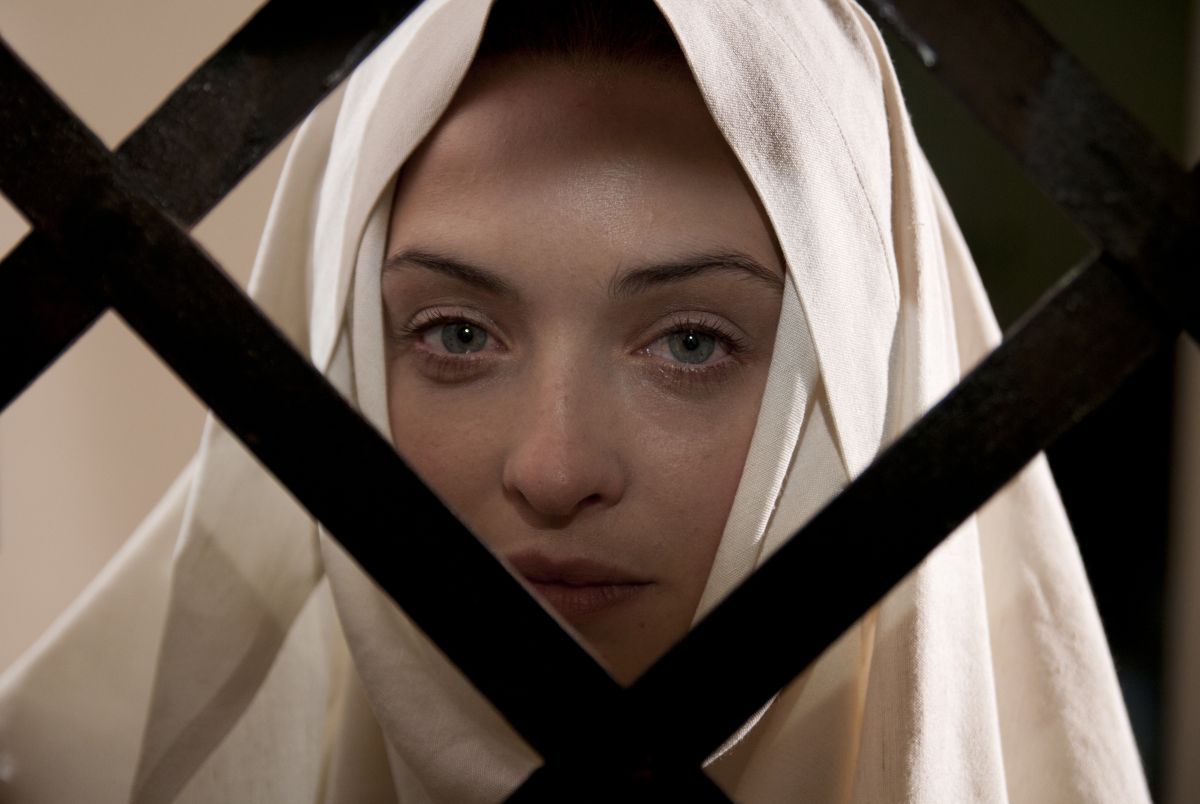
Marvelous Boccaccio: Carolina Crescentini in a scene where she plays a wayward nun.
A scene from Maraviglioso Boccaccio featuring Carolina Crescentini as Isabetta, a wayward novice. Featured is Paola Cortellesi as the convent’s superior. (3.02 minutes)
Carolina Crescentini, costume designer Piero Tosi and Anna Fendi.
During World War II in Germany, Alfred Delp, S.J. (September 15, 1907 – executed, Berlin, February 2, 1945) was a member of the Kreisauer Kreis (The Kreisau Circle) composed of German men and women from a variety of backgrounds who opposed Adolf Hitler’s Nazi regime.
Fr. Delp was arrested by the Nazis in 1944 and, after six months in prison in shackles, the German Catholic priest and Jesuit was sentenced to death for high treason and executed by hanging on Candlemas 1945.
Following the Allied victory in 1945, Fr. Delp’s prison writings were assembled into a posthumous book called Facing Death (German: Im Angesicht des Todes). A highlight of the 37-year-old Delp’s writings are his seasonal sermons and meditations for Advent and Christmas which were written as he languished in a cell “three steps wide” surrounded by Nazi guards.
Fr. Delp’s writings, scrawled on numerous slips of paper and smuggled out before his death, have been compared to Dietrich Bonhoeffer’s Letters and Papers from Prison also written in Tegel prison in Berlin, Germany, during World War II.
Father Delp was developing his thoughts and writing about the annual Advent drama at least as early as 1933 so his prison writings became a concluding chapter of a lasting adult interest as he faced his death.
German-born Alfred Delp S.J. (September 15, 1907 – Berlin, 2 February 1945) wrote his meditations and sermons on Advent and Christmas when he was a political prisoner of the Nazis in Germany in World War II.
From Alfred Delp, S.J., “Figures of Advent,” Advent of the Heart, Ignatius Press, San Francisco, 2006 (adapted):
“I see this year’s Advent (December 1944 in Berlin’s Tegel Prison) with an intensity and discomposure like never before….Along with these thoughts comes the memory of an angel that a good person gave me for Advent in 1942. It held a banner: ‘Rejoice, for the Lord is near.’ A war bomb destroyed the angel as well as that good person although I often sense that she continues to do angel-services for me. It is the knowledge of the quiet angels of annunciation, who speak their message of blessing into the distress of our world situation and scatter their blessing’s seeds which begin to grow in the middle of the night which informs and encourages us of the truth of a situation. These angels of Advent are not loud angels of public jubilation and fulfillment but, silent and unnoticed, they come into private and shabby rooms and appear before our hearts as they did long ago. Silently they bring the questions of God and proclaim to us the miracles of God, with whom nothing is impossible. Advent is a time of refuge because it has received a message – and so to believe in God’s auspicious seeds that the angels offer an open heart are the first things we must do with our lives. The next is to go through the days as announcing messengers ourselves. We wait in faith for the abundance of the coming harvest – not because we trust the earth or the stars or our own good sense and courage – but only because we have perceived God’s messages and know about His herald angels – and even have ourselves encountered one.”
SECOND SUNDAY IN ADVENT.
Thomas Merton in his introduction to Alfred Delp’s Prison Writings – a modern compilation of a young German Jesuit’s writings in prison in Berlin before he was executed for high treason as a Nazi resister in World War II – states that Fr. Delp was condemned because he and others “hoped to build a new Germany on Christian principles.” (p. xxv.)
Merton, a mid20th century Trappist monk, priest, and spiritual writer, links Fr. Delp’s political activity in the Kreisau Circle—an underground group of about twenty-five German dissidents of diverse backgrounds opposed to the Nazi regime—to broader Church doctrine and the western tradition of liberalism in evidence since the Ancient Greeks that “always hoped to attain a more equitable world order by peaceful collaboration among nations.” (ibid.)
For Fr. Delp, according to Merton, the stark choice before human beings remained the crucial one of global order or global destruction. Father Delp observed that even religious people in his time had fallen into the militaristic government’s syllogistic trap of “conquest first and a new and better world later.”
Fr. Delp’s concern when making this sort of choice is that “if the person who says it tolerates or helps further conditions which are fatal to mankind…or weakens his or her own spiritual, moral, and religious sense” – then even “the most pious prayer can become a blasphemy.” (ibid.) Fr. Delp proposed that any human indifference to honesty and justice originating in passionate conviction vitiates human nature which is left to then express itself in a vicious circle of fear and arrogance.
From Fr. Delp’s perspective, his active participation in Kreisauer Kreis for which he was executed by the Nazis in February 1945 pointed to the eschatological character of the Advent drama by the young Jesuit priest’s hope in his time for the political and social ruin of Germany which had sunk into bitter darkness and that it would find its way ahead by the light of each person’s burning candle “for honesty and justice.”
Alfred Delp, S.J.
From Alfred Delp S.J., Prison Writings, Orbis Books, Maryknoll, New York, 2004:
“So this Sunday we must again fold our hands and kneel humbly before God in order that his salvation may be active in us and that we may be ready to call upon him and be moved by his presence. The arrogance so typical of modern men and women is deflated here. At the same time, the icy loneliness and helplessness into which we are frozen melts under the divine warmth that fills and blesses us …If we are terrified by a dawning realization of our true condition, that terror is completely calmed by the certain knowledge that God is on the way and actually approaching. Our fate, no matter how much it may be entwined with the inescapable logic of circumstance, is still nothing more than the way to God, the way God has chosen for the ultimate consummation of his purpose, for his permanent ends. Light your candles – such candles as you possess – for they are the appropriate symbol for all that must happen in Advent if we are to live.”
THIRD SUNDAY IN ADVENT.
On Friday, July 28, 1944, two Gestapo men were waiting outside St. George’s church in Munich, a simple Baroque pile in an almost pastoral setting near the Englischer Garten.
Eight days before there had been an assassination attempt on Hitler’s life which failed. For active German dissidents to the Nazi regime in custody or, for the time being, still walking free, things were going to get worse.
Helmuth James Graf von Moltke (1907 – 1945), one of the leaders of the Kreisau Circle, a type of anti-Nazi salon, had been in prison since January 1944. Now, following the failed bombing at the Wolf’s Lair, Peter Yorck von Wartenburg (1904 –1944) who was the other leader of the Kreisau Circle, was immediately arrested and sent to Berlin where he was tried and executed on August 8, 1944.
Images above: St. Georg München-Bogenhausen. Parish church of German resister and martyr Alfred Delp, S.J. who was serving as its pastor in World War II.
One of the two Gestapo men waiting outside St. George’s to arrest Fr. Alfred Delp, S.J. happened to be an old schoolmate of his.
Like other Catholic bishops and priests who were known de facto dissenters working against the Nazi regime, especially its social and racial ideologies and practices, Fr. Delp had long been under close surveillance by the Gestapo.
As a member of the Kreisau Circle – that group of professionals of diverse religious, social, and political backgrounds with one thing in common (being dyed-in-the-wool anti-Nazis), Fr. Delp was their social scientist with a Ph.D. He illumined their minds to cutting-edge labor issues, including what could be the German worker’s role in a post-war liberated Germany.
Image above: Helmuth James Graf von Moltke (March 11, 1907 – January 23, 1945).Count Moltke had close sympathies with the democratic forces of the day and expressed open criticism as he watched the rise of Hitler. In 1933 he refused to accept Nazi appointments. After the outbreak of World War II, as an expert adviser on international law and the laws of war he served as war administration councilor in the Office for Foreign Affairs/Counterintelligence in the Armed Forces High Command in Berlin. He was particularly active in advocating for humane treatment of prisoners of war and observance of international law. In 1940 Moltke with Peter Graf Yorck von Wartenburg became the leading figures in a group that emerged as the Kreisau Circle with its discussions held in Berlin and Kreisau. Moltke, formulating memoranda on the establishment of a new political order in Germany, systematically extended his contacts to Protestant and Catholic church leaders and to leaders of the social democratic political opposition. Moltke was arrested on January 19, 1944 after he had warned members of the Solf Circle that they were under Gestapo surveillance. His involvement in the plans for a coup against Hitler was not exposed until after the failure of the assassination attempt of July 20, 1944. Helmuth James Graf von Moltke was sentenced to death by the People’s Court on January 11, 1945 and executed on January 23, 1945 in Berlin-Plötzensee. http://www.gdw-berlin.de/home/
Under arrest, Fr. Delp disappeared into Nazi prisons in Munich and Berlin for almost three weeks. None of his friends could find him.
At Lehrterstrasse, a Gestapo prison in Berlin that specifically dealt with German resisters, the doctor-priest was regularly beaten. Fr. Delp was charged by the National Socialists with a half dozen crimes—being in Kriesau Circle; holding resistance meetings; knowing von Moltke and other anti-Nazis; knowing Claus von Stauffenberg who placed the bomb on July 20, 1944 to assassinate Hitler; knowing in advance of the assassination plot; and, displaying a general attitude of anti-Nazism.
The charge of knowing about the assassination plot before it happened greatly concerned Fr. Delp. He categorically denied it and, consequently worked vigorously through his lawyer to disprove it.
Having moved to Tegel Prison in Berlin on August 8, 1944, Fr. Delp’s whereabouts were finally discovered on August 15, 1944, by Marianne Hapig (1894-1973), a social worker and indefatigable friend to German resistance.
At Tegel, Fr. Delp found another significant friend—Harald Poelchau (1907-1972) the prison’s Lutheran chaplain since 1933. With the agency of chaplain Poelchau, the Catholic priest, Fr. Delp, had wafers and wine to say Mass. Also, messages could be smuggled in and out by way of the laundry.
It was through such a clandestine route that Fr. Delp made his final vows as a Jesuit on December 8, 1944. In front of a visiting witness, Fr. Delp pronounced the vow formula. Afterwards, he apologized for his emotion as he sank into a prison chair and wept.
Marianne Hapig (March 5, 1894 – March 23, 1973).Marianne Hapig discovered Father Delp’s presence at Tegel prison in Berlin after his disappearance following his arrest in Munich three weeks earlier. A career social worker and anti-Nazi Marianne Hapig and her lifelong jurist friend Marianne Pünder managed to smuggle Alfred Delp’s prison writings out of Tegel prison where soon after the war they were published.
Harald Poelchau (October 5, 1903 – April 29, 1972). Rev. Poelchau gained his doctorate in 1931 under Paul Tillich, the leading representative of Religious Socialism. At the end of 1932, Poelchau applied for a prison chaplain’s post in Berlin and became the first cleric to be employed by the National Socialist regime in a penal institution. As an official in the Justice Department he rapidly became an important source of support for the victims of National Socialist violence, and gave spiritual comfort to hundreds of people sentenced to death as they faced execution. From 1941 onwards he was a member of the circle around Helmuth James Graf von Moltke and attended the first major Kreisau Conference. After the failed coup attempt of July 20, 1944 Poelchau was able to pass on last messages and farewell letters to the relatives of many of those sentenced to death. Harald Poelchau managed to avoid being investigated by the Gestapo and survived the war.
Many of Fr. Delp’s Advent writings come during these months in prison. They were smuggled out by Marianne Hapig and, her lifelong friend, Marianne Pünder. For more than a decade, Fr. Delp had written extensively on the Christian season of expectant waiting for the coming of Christmas.
Die gefesselten Hände (English: “Bound Hands”) by Tilman Riemenschneider (c.1460-1531).
During these months in prison, his hands almost always in chains, Fr. Delp had identified with a specific artwork as he wrote his Advent thoughts onto endless slips of paper. It was a sixteenth century German wood sculpture of St. Sebastian known as Die gefesselten Hände (English:“Bound Hands”) by Tilman Riemenschneider (c.1460-1531).
Die gefesselten Hände (“Bound Hands”) by Tilman Riemenschneider (c.1460-1531). c. 1510, linden wood, originally painted; Mainfränkisches Museum Würzburg(Detail) Die gefesselten Hände (“Bound Hands”) by Tilman Riemenschneider (c.1460-1531).
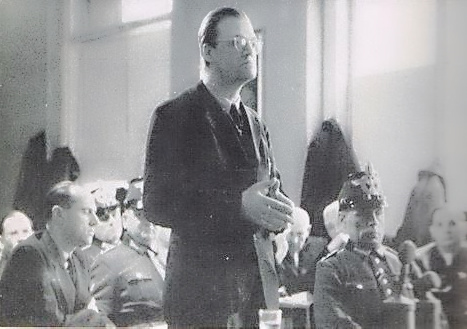
Alfred Delp, S.J. at his trial.
At his two-day trial in January 1945, rabid Nazi judge Roland Freisler was interested in one charge against Delp: the priest’s association with von Moltke. The leader of Kreisauer Kreis would be soon on death row and executed on January 23, 1945. Since 1942, Friesler’s reign of terror already included 5,000 death sentences as president of the People’s Court. It did not help that Fr. Delp was a Catholic priest and Jesuit.
So with Hitler, Friesler was maniacally anticlerical. Although many Nazis grew up as Catholics, in adulthood such notorious men as Hitler, Josef Goebbels, Martin Bormann, Heinrich Himmler, and others, held Christianity in utter and complete contempt. (Ian Kershaw; Hitler: a Biography; pp. 381–82). Once in power, Hitler believed that Christianity signified “the systematic cultivation of the human failure” and that its religious organization and central beliefs had to be marginalized and eventually purged from a heroic German worldview (Alan Bullock; Hitler: a Study in Tyranny; p. 218).
When Hitler invaded Poland in September 1939, the Superior-General of the Jesuits was just then a Pole, Wlodimir Ledóchowski, S.J. (1866 –1942). Ledóchowski who was in charge of neutral Vatican Radio made international broadcasts about Nazi wartime atrocities in many languages.
Wlodimir Ledóchowski, S.J. (1866 –1942). Ledóchowski, S.J. (1866 –1942) had been the Polish Superior-General of the Jesuits since 1915 when Hitler invaded Poland on September 1, 1939, setting off World War II. A renowned institutional builder, Ledóchowski established several notable institutes and colleges in Rome. In January 1940, Vatican Radio controlled by the Jesuits and with Pope Pius XII’s authorization broadcast the details of the Polish wartime situation. When the German ambassador protested the German language broadcasts, the Pope honored the request. But Vatican Radio broadcasts in other languages of the Poland situation continued and in even more explicit detail. The British press at the time hailed Vatican Radio as “tortured Poland’s powerful advocate.” see – Peter Hebblethwaite; Paul VI The First Modern Pope, Paulist Press, 1993, p. 140.
That Fr. Delp remained a Jesuit—even after he was offered a plea deal by the Nazis to walk free of all charges if he renounced his religious faith—undoubtedly deserved the death penalty in Freisler’s court.
After the death sentence was pronounced on January 11, 1945, the typical procedure of immediate execution was delayed. During this time, the bombing by British and Americans intensified. Fr. Delp desperately hoped that the Allies would arrive in time to set political prisoners, including himself, free. But, finally, on February 2, 1945, at Berlin-Plötzensee Alfred Delp was taken from his holding pen by the Nazi executioner and executed by hanging. The next day, February 3, 1945, Roland Freisler presiding in his People’s Court, was killed by collateral damage in an Allied bombing attack.
Alfred Delp, S.J.
From Alfred Delp, S.J., “Meditation for the Third Sunday of Advent Written in Tegel Prison, Berlin, December 1944” (adapted), Advent of the Heart, Ignatius Press, San Francisco, 2006:
“Mankind is challenged again to stand and deliver. Only man does not merely exchange one set of chains for another – God’s calls are always creative. They increase the very reality within us that is called upon – precisely because of their realness and authenticity…Freedom is the breath of life. We sit in musty bomb cellars and cramped prisons and groan under the bursting and destructive blows of fate. We should finally stop giving everything a false glamour and unrealistic value and begin to bear it for what it is – unredeemed life. As soon as we do this, the jangling of chains and the trembling of nerves and the faintness of heart transform themselves into a small prayer – “Drop down, dew…” We should much more definitively unite our concrete destiny with those kind of connections and call upon God’s redeeming freedom. Then the narrowness widens, our lungs breathe in fresh air again, and the horizon has promises again. Existence still weeps and mourns, but already a soft, joyous melody of longing and knowledge is ringing through the mourners’ broken voices. With this knowledge and attitude humanity releases itself from the lonely relationship to things and circumstances. A person finds wholesomeness and healing – not the goal-oriented, cool distance of calculation, mechanization, and organization. It is rather that higher level of freedom, the perspective given to someone looking from the heights to what lies below. The voice of such a person is not so quickly silenced!”
“The conditions for true joy have nothing to do with conditions of our exterior life but consist of humanity’s interior frame of mind and competence, which make it possible now and again for the person to sense, even in adverse circumstances, what life is really about…And the first answer is found in the figure of John the Baptist who personifies Advent. Humanity must be brought to an absolute clarity about himself and honestly before himself and others. He must come down from all the pedestals of arrogance onto which he always climbs…From the high-horses of vanity and self-deception that, for a time, let themselves be trotted out so proudly. Those horses though finally throw off their “master” in the wilderness…Two criteria identify whether we are following an authentic impulse or not…Both are found once again in John the Baptist. The first is service – human honesty requires a person to see himself as a servant and perceive his reality as mission and an assignment…The second criterion keeps us on track- annunciation, which calls us to praise of God. An extended personal effort is required to keep giving oneself the impulse to rise above, move away from self. But at the same time this is how a human being attains the necessary openness in which he or she must continue if sincerely wanting to strive toward the great realities God has prepared for him or her.”
FOURTH SUNDAY IN ADVENT.
Advent Nativity.
Thomas Merton makes clear about Father Delp that his writings on Advent are usually a simple presentation of the traditional Christian faith with no special originality to his images. (p. xxxv, Prison Writings). It is Fr. Delp’s application of those facts based in his personal experience – as an active dissident and prisoner of a Germany in ruins during World War II – that restores the sometimes hackneyed outcome to Advent to its original hope.
In Fr. Delp’s world, if humanity is fully alert to the desperation and bitterness of the times, Advent’s basic image of God-made-man becomes immensely opportune and favorable for humanity’s future although not holding any foregone conclusions or sudden outcomes.
“The Spirit of the Lord is upon me, because he has anointed me to bring glad tidings to the poor. He has sent me to proclaim liberty to captives and recovery of sight to the blind, to let the oppressed go free, and to proclaim a year acceptable to the Lord.” Luke 4:18-19.
Thomas Merton views Father Delp’s Advent meditations in Pauline terms, although Fr. Delp found St. Paul sometimes had a ‘tendency to over-emphasize.’ (p. 55, ibid.). Humanity hopes in God’s close alliance so to win back or have restored a future that is not any longer in ruins and in which humanity and even created life itself is absurdly helpless to fix.
Holy Face painted by Saint Thérèse of Lisieux. National Shrine of St. Thérèse in Darien, Illinois.
Saint Thérèse of Lisieux (French, 1873-1897) traced and painted this image of the Holy Face of Jesus and tacked it to wool for hanging as a gift to her sister Céline who was at home at Les Buissonnets taking care of their widower father who was suffering from illness. The National Shrine of St. Thérèse in Darien, Illinois. It may be expected that a similar sort of facial expression was found on Father Delp. On February 2, 1945 Father Delp was imprisoned, tried and executed by the Nazis for “hop[ing] to build a new Germany on Christian principles.”
Alfred Delp S.J.
From Alfred Delp S.J., Prison Writings, Orbis Books, Maryknoll, New York, 2004:
“God in the Christmas encounter is still the challenging God. The greatest misconceptions all center round the typical Christmas picture of God. Humanity becomes so wrapped up in appearance that the breathtaking reality of the birth of God as a human child scarcely enters our mind and the soul doesn’t grasp its significance….Of course the externals, the sweet sentimental pictures, carols, cribs and so on, are a comfort….but there is a great deal more to the nativity than that. The truth of it is too tremendous to be appreciated unless one concentrates on it fully. Since the birth of God, humanity has been confirmed in the hope that when we turn to God’s throne for favor that God is on our side. This does not mean that God has dethroned Himself any more than it means that human life has become a primrose path in the wake of that stupendous event. We need to look critically at the tendency to sentimentalize the divine attributes by personifying them in an innocent child or over-beautifying the adult Jesus. The glamorizing of the nativity story – the making the whole tone of Christ’s life equal to a Baroque sermon full of ominous warnings and grave moralizing – has contributed quite a lot to the West’s being paralyzed in the face of those conditions that hinder us and keep us trapped. God became man but nevertheless is God, master of all creation. Human beings must approach the God-made-man with reverence and adoration – disenthralling themselves in order to find themselves. It is the only way.”
BIBLIOGRAPHY:
Bullock, Alan, Hitler: a Study in Tyranny, Completely Revised Edition, Harper & Row, New York, 1964.
Delp, S.J., Alfred, Advent of the Heart, Ignatius Press, San Francisco, 2006.
Delp, S.J., Alfred, Prison Writings, Orbis Books, Maryknoll, New York, 2004.
Hebblethwaite, Peter, Paul VI The First Modern Pope, Paulist Press, New York, 1993.
Kershaw, Ian, Hitler: a Biography, W. W. Norton & Company, New York, 2010.
Kidder, Annemarie S., Ultimate Price Testimonies of Christians who Resisted the Third Reich, Orbis Books, Maryknoll, New York, 2012.
Royal, Robert, The Catholic Martyrs of the Twentieth Century A Comprehensive World History, Crossroad, New York, 2000.
Richmond, Virginia-based producer and musician Matthew White first learned about English singer-ongwriter Flo Morrissey from an article about her on The Guardian website. They met at a music event in London in October 2015.
The two international artists were signed to different record labels, but found out they had musical interests in common and that they worked well together. Morrissey and White discovered, for instance, that they both liked recording cover versions of great songs, especially ones that were personally resonating. As young performers they liked that they could hone their vocal performances and work with production values using these others’ time-honored musical compositions. They were also excited to introduce these songs to a new generation of listeners by way of their contemporary versions.
Morrissey (b. 1994) and White (b. 1982) teamed up for a collaborative full duet album of ten cover songs called Gentlewoman, Ruby Man. Recorded in 2016, the album was released in January 2017 on Glassnote Records.
Following months of preparation, the cover songs were selected from a wide range of musical artists and recorded in 10 days in downtown Richmond at the studios of Spacebomb Records, a label founded by White in 2011.
The album’s first track is their cover version of Little Wings’ Look At What The Light Did Now. Little Wings is a band founded in the late 1990’s in San Luis Obispo, California, by Alabama-born indie rocker Kyle Field (b. 1972). The original Little Wings version of the song is a vocal duet with acoustic guitar released in 2002. The song received limited reviews at the time though they were mostly positive.
Gentlewoman, Ruby Man tracklist: 1. Look At What The Light Did Now (Little Wings Cover) 2. Thinking ‘Bout You (Frank Ocean Cover) 3. Looking For You (Nino Ferrer Cover) 4. Color Of Anything (James Blake Cover) 5. Everybody Loves The Sunshine (Roy Ayers Cover) 6. Grease (Bee Gees Cover) 7. Suzanne (Leonard Cohen Cover) 8. Sunday Morning (Velvet Underground Cover) 9. Heaven Can Wait (Charlotte Gainsbourg Cover) 10. Govindam (George Harrison Cover)
They started to compile a list on Spotify of around 500 songs. From there, they whittled the list down to just ten songs. Morrissey and White discovered that the songs they ultimately selected weren’t necessarily compositions they expected to do going into the project. Chosen material that surprised them included newer compositions and songs that extended into genres such as R&B.
As planned, the indie rock production featured 10 songs from a diverse group of musical artists. These included Leonard Cohen, Frank Ocean, the Bee Gees, and James Blake.
FEATURE image: Paul Laurence Dunbar (1872-1906), African-American poet, standing, at right, in a photograph of the Howard University Class of 1900. William Grant Still extensively used Dunbar’s poetry in his Symphony No. 1 in A-flat, “Afro-American” in 1930.
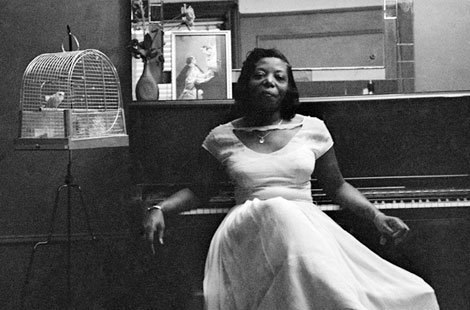
African American pianist, composer and arranger, and vocalist Mary Lou Williams (1910-1981). She demonstrated remarkable musical talent in modern genres as diverse as classical, free jazz, hard bop, swing, big band, and gospel.
By John P. Walsh
Following the tradition set down by President Jimmy Carter in 1979, the White House officially announced that June 2017 was to be African American Music Month. The proclamation in part reads: “During June, we pay tribute to the contributions African Americans have made and continue to make to American music. The indelible legacy of these musicians who have witnessed our Nation’s greatest achievements, as well as its greatest injustices give all Americans a richer, deeper understanding of American culture. Their creativity has shaped every genre of music, including rock and roll, rhythm and blues, jazz, gospel, hip hop, and rap.” A very nice tribute although I would hasten to attach onto its last sentence – “and all other American musical genres.” This could then include the significant contributions by African American artists to classical music such as William Grant Still (1895-1978), Florence B. Price (1887-1953), Harry T. Burleigh (1866-1949), William Levi Dawson (1899 – 1990), and Mary Lou Williams (1910-1981).
William Grant Still (1895-1978).
William Grant Still, Symphony No.1 in A flat major “Afro-American” (1930) performed by the Detroit Symphony Orchestra conducted by Neeme Järvi. When this symphony was performed in 1931 by the Rochester Philharmonic Orchestra, Williiam Grant Still became the first African-American composer to have a symphonyperformed by a leading orchestra.
William Grant Still (1895-1978) is the “dean” of African-American classical music composers.
Born in Mississippi, William Grant Still grew up in Little Rock, Arkansas, and attended Wilberforce University and Oberlin Conservatory of Music, both in Ohio.
In addition to composing over 150 works— including five symphonies and eight operas— William Grant Still is an African American composer with several musical “firsts” to his name.
He is the first African American composer to conduct a major American symphony orchestra—the Los Angeles Philharmonic Orchestra in 1936.
He is the first to have a symphonyperformed by a leading orchestra—his Symphony No. 1 in A-flat, “Afro-American” (1930) bythe Rochester Philharmonic Orchestra in 1931.
Still’s first symphony (he wrote five) sought to express Black culture within mainly European classical symphonic tools and forms available at that time.
About his intentions for the music, Still wrote: “I seek in the ‘Afro-American Symphony’ to portray not the higher type of colored American, but the sons of the soil, who still retain so many of the traits peculiar to their African forebears; who have not responded completely to the transforming effect of progress.” (see- Catherine Parsons Smith’s William Grant Still: A Study in Contradictions, Berkeley and Los Angeles, CA: University of California Press, 2000, p. 121.)
Arranged in four movements of about 6 minutes each, Still headlined each movement with quotes from poems by early 20th-century African-American poet Paul Laurence Dunbar (1872-1906). In 1899 Dunbar published his Poems of Cabin and Field and died tragically of tuberculosis at 33 years old in 1906. The “Afro-American” Symphony’s 4 movements are entitled: I. Moderato assai (“Longing”); II. Adagio (“Sorrow”); III. Animato (“Humor”) and IV. Lento, con risoluzione (“Aspiration.”)
The stanza by Paul Laurence Dunbar that William Grant Still selected to follow the fourth movement reads:
“Be proud, my Race, in mind and soul, Thy name is writ on Glory’s scroll In characters of fire. High ‘mid the clouds of Fame’s bright sky, Thy banner’s blazoned folds now fly, And truth shall lift them higher.”
Paul Laurence Dunbar (1872-1906), African-American poet, standing, at right, in a photograph of the Howard University Class of 1900.
William Grant Still is the first to have an opera performed by a major opera company—his Troubled Island (1939) by The New York Opera Company in 1949.
Finally, William Grant Still is the first to have an opera performed on national television—his A Bayou Legend (1941) in 1981.
William Grant Still, In Memoriam of the Colored Soldiers Who Died for Democracy (1944) performed by the Boston Symphony Orchestra conducted by George Szell.
Florence B. Price (1887-1953).
Florence B. Price (1887-1953) is the first African-American female composer to have a major symphonic composition performed by a leading American symphony orchestra. This occurred on June 15, 1933 in Chicago in conjunction with the city’s A Century of Progress International Exposition (Chicago was founded in 1833).
Visitors can still see the Auditorium Theatre on Michigan Avenue where the Chicago Symphony Orchestra performed Price’s Symphony No. 1 in E minor completed in 1932in a world premiere performance. That historic concert also included musical works by Harry T. Burleigh (main entry below), tenor Roland Hayes (1887-1977), and mixed-race English composer Samuel Coleridge-Taylor (1875-1912) who was known as the “African Mahler.”
Florence B. Price was born in Little Rock, Arkansas into a mixed-race family (her father was a prominent dentist and African American) and later studied at the New England Conservatory of Music in Boston and taught piano, organ and voice at Clark Atlanta University in Georgia as well as privately.
In 1927 she moved to Chicago where in a musical career as a composer that produced over 300 works, her métier blossomed. Price’s music often incorporated rhythms expressed in Africa-based musical traditions and African-American folk tunes and spirituals arranged in elaborate orchestrations derived from the European Romantic composers.
In addition to Symphony No. 1 in E minor (1932), some of Florence B. Price’s best known works include her Fantasie Negre (1929), Mississippi River suite (1934), and Symphony No. 3 in C Minor (1940). In 1940 Florence B. Price was the first female African American composer inducted into the American Society of Composers, Authors and Publishers (ASCAP).
A word on Florence B. Price’s well-known Mississippi River suite (1934): Price composed it in 1934 with a dedication to one of her prominent teachers at the American Conservatory of Music in Chicago where Price continued her musical studies after she arrived to the city in 1927.
The suite uses the contrivance of a boat navigating the Mississippi River and along its path experiencing its diverse expressions of human life and history as told in musical sections.
The FIRST part depicts dawn on the river.
The SECOND part portrays its American Indian heritage by using an array of percussion.
The THIRD part expresses the African American experience along the river utilizing well-known negro spirituals— such as, Nobody Knows the Trouble I’ve Seen; Stand Still Jordan;Go Down, Moses; and Deep River.
The FINAL part has the suite conclude with a melodic cacophony of contemporary tunes during the 1930’s including River Song, Lalotte, and Steamboat Bill.
The Negro Speaks of Rivers by Langston Hughes (1902-1967).
Langston Hughes (1902-1967).
Langston Hughes, who was born in Joplin, Missouri, said he wrote the poem, The Negro Speaks of Rivers, after he was crossing the Mississippi River into Illinois in 1919 and inspiration struck. Even after he helped lead the Harlem Renaissance in New York City as a poet, novelist, and playwright in the 1920’s, Hughes, who grew up in the American Midwest (Kansas, Illinois and Ohio), said he always knew the Heartland best.
Florence Price – from Symphony No. 3 in C Minor (1940). I. Andante – Allegro ORF Vienna Radio Symphony Orchestra John Jeter
William Levi Dawson (1899 – 1990).
William L. Dawson (1899-1990), born in Alabama, was a composer and arranger, trombonist, and music educator. Dawson continually was learning so to use the rich heritage of African American music and later African music as the basis for many types of music that he composed and arranged.
After graduating with highest honors from Tuskegee Institute he studied music and composition in Kansas City and Chicago. For many years he performed as first trombonist with the Chicago Civic Orchestra.
It is Dawson’s work as music director with the 100-voice Tuskegee Institute Choir that led to many distinguished and celebrated national and international choral performances in the mid-twentieth century.
As a composer William Dawson is most famous for his Negro Folk Symphony which he wrote in 1934 but revised in 1952 after studying indigenous African music throughout West Africa. Dawson visited several countries in West Africa that year to study indigenous African music. The experience inspired him to revise his Negro Folk Symphony which was recorded in 1961 by Leopold Stokowski for Decca Records.
The three movements of the symphony are entitled: “The Bond of Africa,” “Hope in the Night” and “O, le’ me shine, shine like a Morning Star!”
William Dawson conducts the Tuskegee Institute Choir in 1955 in his arrangement of the negro spiritual Listen to the Lambs written by R. Nathaniel Dett first performed in 1913.
In 1952, Dawson visited several countries in West Africa to study indigenous African music. The experience inspired him to revise his Negro Folk Symphony which was first written in 1934. The new work was recorded in 1961 by Leopold Stokowski for Decca Records.
Harry T. Burleigh (1866-1949).
Harry Burleigh (1866–1949), born in Erie, Pennsylvania, was an eminent African-American baritone, and influential classical composer and arranger.
As a student at New York City’s National Conservatory of Music of America, Burleigh became associated with Antonín Dvořák (1841-1904) who heard the baritone sing spirituals and encouraged him to create arrangements for these melodies.
With the Czech composer’s active interest, Burleigh developed into one of America’s most important composers and arrangers of spirituals. He created arrangements for more than 100 songs including “Deep River,” “Swing Low, Sweet Chariot,” and “Nobody Knows the Trouble I’ve Seen” which are classics today. Burleigh’s “In Christ there is no East or West” remains a church hymnal standard. Burleigh set poems by Walt Whitman to music also.
When Burleigh was accepted in 1894 as baritone soloist at St. George’s Episcopal Church in Manhattan—a post where he stayed for over 50 years—it was by a vote of the congregation which had never allowed African-Americans to worship there before. The congregation voted to a tie—that was broken in Harry Burleigh’s favor by congregant by J. P. Morgan.
While Burleigh’s advocacy of negro melodies through writing, speaking engagements and new arrangements was always indefatigable, he found time to coach many well-known singers, including Enrico Caruso, Roland Hayes, Marion Anderson, and Paul Robeson.
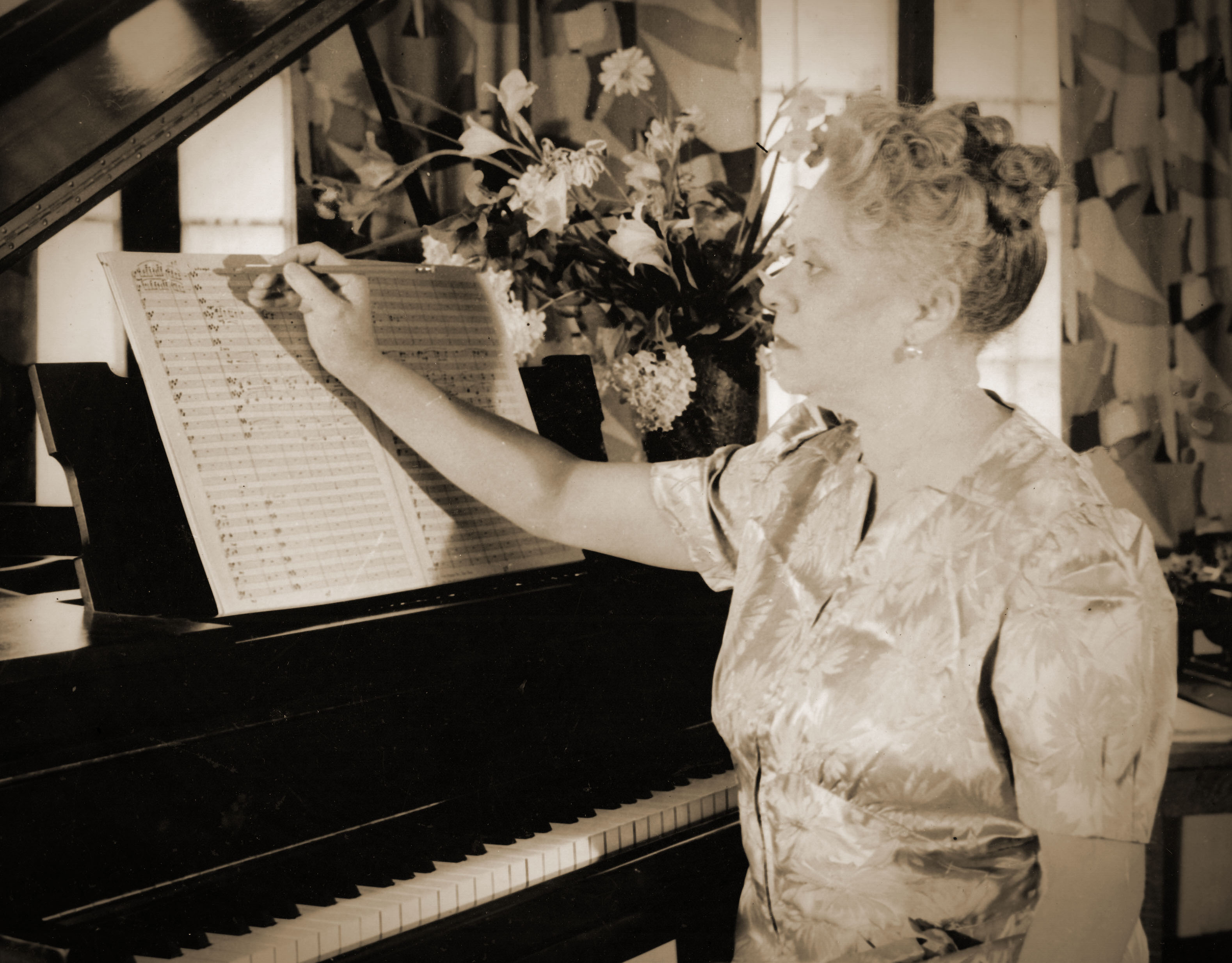
Mary Lou Williams (1910-1981).
A self-taught pianist, by the time she was 20 years old Mary Lou Williams was a professional musician and touring bandleader.
In her formative years she looked for inspiration to Chicago bandleader and composer “Lovie” Austin (1887–1972). Quite soon Williams’ own records as a pianist and arranger began to sell briskly.
In a 50-year-plus career she wrote and arranged music for bandleaders such as Duke Ellington (1899-1974) and Benny Goodman (1909-1986) and served the beloved mentor to slightly younger African-American musical artists who became household names in the world of jazz: Thelonious Monk (1917-1982), Charlie Parker (1920-1955), Miles Davis (1926-1991), Tadd Dameron (1917-1965), Bud Powell (1924-1966), and Dizzy Gillespie (1917-1993), to name a few.
Though Mary Lou Williams’ musical accomplsihments are not well-known in popular culture, almost 40 years after her death, her recordings are a treasure to listen to and she is much honored for her inspiring work by her admirers—many of whom are artists and great institutions.
Mary Lou Williams’ album, Zodiac Suite, released in 1945 and remastered here from the original acetates, is a 12-part interpretation of the astrological zodiac composed and performed on the piano by Mary Lou Williams who is accompanied by two of her hand-picked session musicians—all innovators from the clubs of New York—namely, Canadian jazz double-bassist Al Lucas (1912-1983) and American jazz and rhythm & blues drummer Jack “The Bear” Parker.
Each movement is a set of classically-inspired jazz tone poems for the signs of the horoscope: Aries, Taurus, Gemini, Cancer, Leo, Virgo, Libra, Scorpio, Sagittarius, Capricorn, Aquarius, and Pisces.
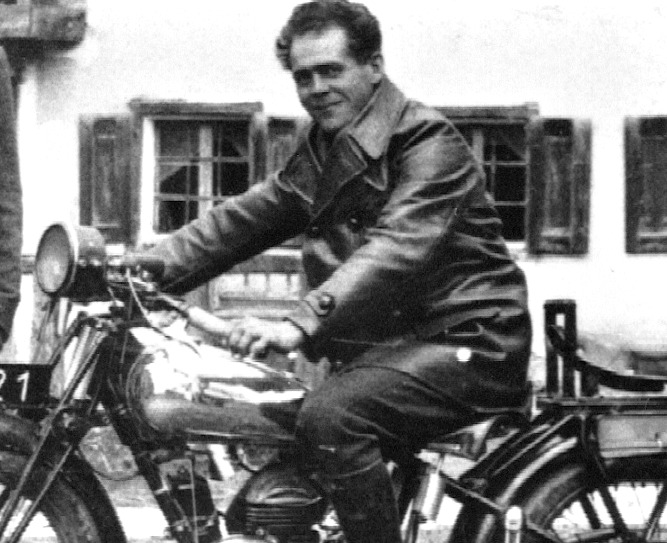
FEATURE image: Detail of Franz Jägerstätter on a motorbike in St. Radegund, Austria, in 1940.
By John P. Walsh
October 26, 2017/updated July 15, 2021.
In his 17-minute speech at the TED conference in April 2017, Pope Francis talked about the importance of human interdependence, equality, and inclusion. Perhaps surprisingly, the pope stressed the power of the human individual to make positive change. While one might expect a pope to wax on communal connections reflected in a Gospel passage such as, “For where two or three gathers together as my followers, I am there among them” (Matthew 18:20), Pope Francis looked instead to the radical nature of the single individual to bring about a message of hope into the world. Pope Francis said: “A single individual is enough for hope to exist and only then it turns into ‘us.’ And so, does hope only exist when it turns into us? – No. Hope starts with the individual ‘you.’ When there is an us, it starts a revolution.” Grounded in an individual’s conscience and action, hope for the world can begin. The pope’s message of hope by way of a single individual—and he encourages his TED auditors to be that individual— does not usually come without a price. What Mother Teresa of Calcutta (1910-1997) said on love the pope adapted to his or any message of hope: it cannot be done “unless it comes at your own expense.”
The power of the individual to be a cause of hope with potential to revolutionize even the nation is what Richard Attenborough (1923-2014) dramatizes from history in his 1983 Academy-Award-winning three-hour bio-pic film, Gandhi. In the setting of a segregated South Africa, young Indian lawyer Mohandas K. Gandhi (1869-1948) played by Ben Kingsley is visited at his ashram by a young American journalist (Martin Sheen) who tells Gandhi he is an awfully small minority to be taking on governments and empires. But Gandhi replies: “If you are a minority of one – the truth is the truth.”
Questions of the conflict of the morality of the individual conscience and the social morality which is directed to the attainment and conservation of the values represented by the state and nation is part of that which the young American journalist, dramatized in the film Gandhi, warned the hero about—and which remains in tension in any era, including today. The debate surrounding the nature or limits of individual conscience as well as its interaction with cultural values and things is bound to be— at least philosophically and even theologically— complex and indefinite. Arguments and subtleties about these topics become rife when the circumstances call for it. Following some of the definitions and descriptions of conscience from Dietrich Bonhoeffer (1906-1945) — and as only part of the range for hope that Pope Francis alludes to in his TED speech— the conscience’s normal function relates to resisting action demanded from within or outside the self. Although conscience, according to Bonhoeffer, is not called upon in the face of good—it simply acts—nor includes the whole fabric of life, when the individual conscience encounters a forbidden act, it views it as “a peril to life as a whole, that is to say, disunion with oneself.” Bonhoeffer’s Protestant theology will not boast of having a good conscience except to say that, by it, humans importantly discover their lack of knowledge of God as well as their own corruption and that by this self-knowledge expressed in conscience find a road to God. Bonhoeffer writes: “All knowledge is now based on self-knowledge….Knowledge now means the establishment of the relationship to oneself; it means the recognition in all things to oneself and of oneself in all things. For man who is in disunion with God, all things are in this disunion, what is and what should be, life and law, knowledge and action, idea and reality, reason and instinct, duty and inclination, conviction and advantage, necessity and freedom, exertion and genius, universal and concrete, individual and collective; even truth, justice, beauty and love come into opposition with one another, just as do pleasure and displeasure, happiness and sorrow…All these disunions are varieties of the disunion in the knowledge of good and evil. The point of decision of the specifically ethical experience is always conflict. But in conflict the judge is invoked; and the judge is the knowledge of good and evil; he is man.”
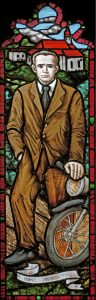
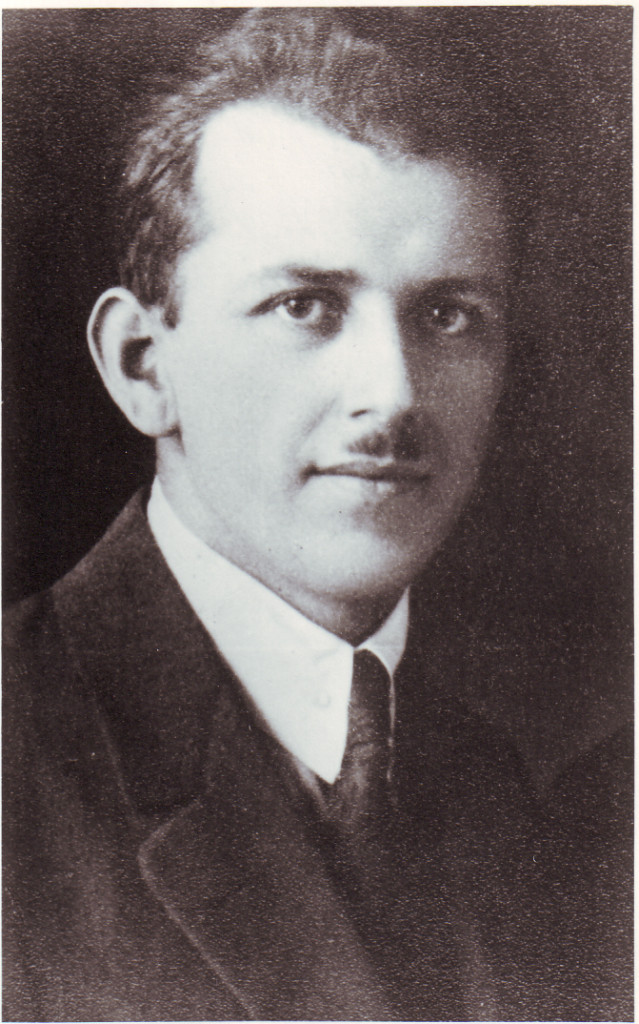
Franz Jägerstätter (May 20, 1907-executed, August 9, 1943).
On October 26, 2007 at St. Mary Cathedral in Linz, Austria, Pope Benedict XVI in front of 5,000 pilgrims beatified Franz Jägerstätter, a relatively unknown 36-year-old Austrian farmer who was executed by the Nazis in August 1943 because—similar to Captain von Trapp in The Sound of Music (1965)—he was anti-Nazi and refused to fight in their armed forces.
Blessed Franz Jägerstätter’s widow, Franziska (1914-2013), who was 94 years old in 2007, and his four daughters, Maria, Aloisia and Rosalia, and, from a previous relationship, Hildegard, attended the beatification. Franziska rode to the cathedral in the sidecar of a motorcycle, in memory of her husband’s love of motorcycling. After being drafted three times into the German army, Franz Jägerstätter decided after his training and noncombatant military service ended in April 1941 that he would not comply with any future compulsory enlistment in the Third Reich. To this end, he compiled gut-wrenching notes with his opinions on his conscientious objection in the face of the Nazi régime. After her husband’s arrest in early 1943, Franziska hid his writings and brought them into the light of day after the war. By that time, Franz Jägerstätter lay buried in an obscure and sometimes defaced grave in St. Radegund, Austria, a mountainous village northwest of Salzburg. In notes written during his erratic military service—Jägerstätter had been sworn into the German army on June 17, 1940 at Braunau Am Inn which lasted only a few days before he received a deferment and then called-up again to serve from October 1940 to April 1941 until another deferment—the Austrian farmer examined issues surrounding his refusal to fight anymore. By expounding in writing as well as posing argumentative questions Jägerstätter judged what he should do in response to his deep-seated antipathy to the Nazi régime and its war effort. Despite suggestions for compliance and delay, Jägerstätter was called up a third and final time in March 1943 where he made clear to the Nazis his conscientious objection which led to his imprisonment, court martial trial, and execution in August 1943.
For his beatification in 2007—a first step to Catholic sainthood—Jägerstätter’s family and supporters recalled his clear rejection of National Socialism because of their racial policies, including the myth of racial purity; war glorification; state deification; and their declared program of annihilating all faith and religion. Jägerstätter’s total rejection of Nazism echoed Bishop Johannes Maria Gföllner of Linz (1867-1941) whose extensive writings and sermons in this period provided a phrase Jägerstätter would consider his motto: “It is impossible to be a good Catholic and a true Nazi.” When Hitler came to Linz on March 12, 1938 Bishop Gföllner refused to meet with him and lamented other bishops in Austria who were more ingratiating. Bishop Gföllner regarded the myth of racial purity propagated by Nazism as “a backsliding into an abhorrent heathenism.” In 1933 Gföllner wrote: “The Nazi standpoint on race is completely incompatible with Christianity and must therefore be resolutely rejected. This also applies to the radical anti-Semitic racism preached by Nazism. To despise, hate and persecute the Jewish people just because of their ancestry is inhuman and against Christian principles … “
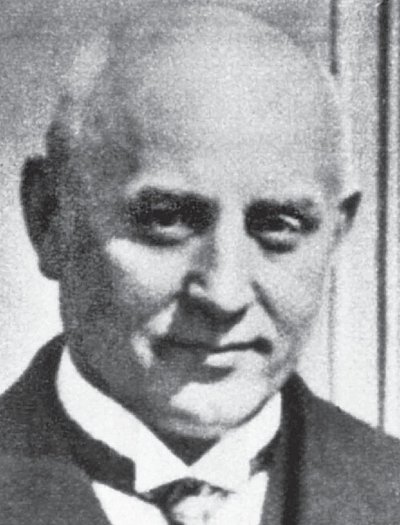
Bishop Johannes Maria Gföllner (1867-1941), center, at a celebration in 1935.
Adopting as his role models St. Thomas More (1478-1535), St Thérèse of Lisieux (1873-1897), and the patron saint of Switzerland, hermit-ascetic St. Nicholas of Flüe (1417 1487), Jägerstätter challenged virtually everyone he knew or came into contact with—be it his mother, neighbors, or church or civil representatives— with his developing conviction to refuse to fight for the Third Reich – and received pushback, many believing they had his best interest in mind, from virtually everyone.
What was seen to be his civic duty and the only action he could conceivably follow so to “save his life,” Jägerstätter was having serious doubts over. Even Jägerstätter’s loving wife Franziska argued that he should comply with any conscription order. Less than two years before, in April 1938, Franziska had to insist that he not shirk attending the Anschluss plebiscite which Jägerstätter declared he had every intention to avoid. On March 12, 1938, less than one month before the plebiscite, German troops occupied Austria and, that same day, Hitler personally crossed the long-closed border to visit Linz. Under penalty of being sent to a concentration camp for electoral truancy, the official turnout for the Anschluss plebiscite on April 10, 1938 was reported at 99.71%—with 99.73% in favor of annexation of Austria into Nazi Germany. Thirty-year-old Franz Jägerstätter formed part of that microscopic minority in Austria who voted “no” to Hitler’s Anschluss that day and was the only one of St. Radegund’s 500 or so citizens to do so. It was also the last time that Franziska pressured Franz on a matter of his conscience by telling him to not skip the vote as he intended to do. It soon became clear that Franz’s anti-Nazi stance could cost him his life. Already people from every village were being taken off to concentration camps for the slightest infractions from absolute Nazi rule.
Mesmerized by the Nazi propaganda machine, Austrians knelt when Hitler entered Vienna, and Catholic churches were just more buildings mandated to fly the swastika flag, among other abusive measures and laws. When other Austrians would say, ‘Heil, Hitler,’ Franz would say, ‘Gröss-Gott!’ (“Praise God!”). Though never part of an organized resistance, Franz Jägerstätter was one of a handful of local denizens soon identified by an informer to the Gestapo as anti-Nazi which the town mayor—who on his own initiative did not report Jägerstätter’s vote to the authorities and had obtained Jägerstätter’s two deferments —quashed. One result of the denunciation was that the Gestapo began to monitor the accused’s phone calls, letters, and other communications.
When Jägerstätter witnessed immediate persecution of priests who spoke up against the Nazis (many were arrested and sometimes murdered) as well as learning the fate of euthanasia of the mentally ill, Jägerstätter quickly reasoned whether he should help that sort of regime to conquer the world. This outlook appeared to be shared by Pope Pius XII when, in a meeting with the German Foreign Minister in March 1940, he complained in writing about the persecution of the Church in Germany and Austria.
As 1941 turned into 1942 and then 1943, Franziska once and for all decided to stand by her husband in this matter of his refusal to fight for Hitler in the Wehrmacht after seeing him for many months and years argue his points alone. “If I had not stood by him,” she later explained, “he would have had no one.”
Franz Jägerstätter on a motorbike in St. Radegund, Austria, following his first deferment in summer 1940 after a few days in the German army.
Franz Jägerstätter (third from the left) during training as a military driver in Enns, Austria, in November 1940 during his second call up.
While firmly against Nazi ideology, Franz’s ultimate refusal to serve in the German armed forces developed more deliberately. After being conscripted twice in 1940, it was during basic training on December 8, 1940 in Enns that Jägerstätter entered the Secular Franciscans. After taking “Third Order” vows in St. Radegund church in 1941, he grew more determined to be a pacifist in regard to the German war effort. Jägerstätter believed as an individual who formed his conscience and acted upon it —in his case, saying a resolute “no” to Nazism, including as a conscientious objector— would “change nothing in world affairs.” Jägerstätter hoped that his conscientious objection would be “a sign” that not everyone let themselves be “carried away with the tide.” Jägerstätter acted on his conscience until, as Mother Teresa of Calcutta observed on love, “it came at his own expense.” Any of his thoughtful wrangling—if he hoped it would sway others—did not occur. Almost thirty years after the fall of the Third Reich, some villagers continued to view Jägerstätter’s brand of pacifism as unnecessary, extreme, “religious,” and even traitorous in terms of national defense. At war’s end, except for his wife and daughters—and they were denied state benefits until the 1990’s—there was a handful of anti-Nazi resisters—some of whom were Catholic priests— who supported or otherwise mirrored Jägerstätter’s brand of conscientious objection. Many of the individuals who, similar to Jägerstätter, acted on what they recognized as a Biblical call to social justice laid in obscure, premature graves because they, too, had been condemned to death as enemies of the state.
Austrian farmer Franz Jägerstätter refused to support the Nazis and participate in the war effort, despite a tidal wave of pressure to do so in World War II.
EXCERPTS FROM FRANZ JÄGERSTÄTTER’S WRITINGS IN 1940:
ON CALLS TO PATRIOTIC DUTY.
“Who dares to assert that among the German people in this war only one person bears the responsibility, and why then did so many millions of Germans have to give their ‘Yes’ or ‘No’? Can one be reproached today for lacking patriotism? Do we still even have a mother country in this world? For if a country is supposed to be my mother country, it may not just impose duties—one must also have rights, and do we have rights here today? If someone becomes ineducable and might be a burden on the state, what happens to them? Would such a mother country be worth defending at all? Which we cannot speak of anyway, because Germany was attacked by no one. Once, I believe, we would have had the right to defend ourselves, and that was four years ago when we were still Austrians…”
ON THE ANSCHLUSS.
“Let’s just ask ourselves: are Austria and Bavaria blameless that we now have a Nazi government instead of a Christian one? Did Nazism just simply drop on us from the sky? I believe we needn’t waste many words about it, for anyone who hasn’t slept through the past decade knows well enough how and why everything has come about in the way it has…In March 1938, what horror stories weren’t spread and invented here in Austria against Chancellor [Kurt] Schuschnigg (1897-1977), a still Christian-minded man, and against the clergy? Those few who didn’t catch the madness and who couldn’t be persuaded to cast that misguided ‘Yes’ vote were simply labeled fools or Communists, yet today the Nazis still haven’t given up the struggle to maybe win those fools over to the Nazi movement after all, or at least to sacrifice them to their ideology!”
ON WHETHER IT IS A JUST WAR. “What Catholic can dare to say that these raids which Germany has carried out in several countries, and is still carrying out, constitute a just and holy war?”
ON THE CONSEQUENCES OF HITLER’S PROGRAM “Oh, we poor German people, bedazzled by delusions of grandeur, will we ever return to reason again? As the saying goes: ‘Nothing comes about by chance, everything comes from above.’ Then did this war, which we Germans are already waging against almost all the peoples of the world, break over us as suddenly as, perhaps, a terrible hailstorm, which one is forced to watch powerlessly, only praying that it will soon stop without causing too much damage? For, thanks to the radio, newspapers, rallies, etc., nearly all of us knew what program Hitler was planning to carry out, and that the shrugging off of the debts and the demonetization of the Reich mark would bring about the very consequences which have now occurred in plenty …”
ON THE GERMAN INVASION OF THE SOVIET UNION.
“It is very sad to hear again and again from Catholics that this war, waged by Germany, is perhaps not so unjust because it will wipe out Bolshevism. It is true that at present most of our soldiers are stuck in the worst Bolshevist country, and simply want to make harmless and defenseless the people who live there and defend themselves. But now a question: what are they fighting in this country – Bolshevism or the Russian people? When our Catholic missionaries went to a pagan country to make them Christians did they advance with machine guns and bombs in order to convert and improve them? Most of these noble warriors for Christianity wrote home that if they only had the means to hand things out, everything would go much faster… If we look back a little into history, we note almost the same thing again and again: if a conqueror attacks another country with war, they have not normally invaded the country to improve people or even perhaps give them something, but usually to get something for themselves. If we fight the Russian people, we will get much from that country which is of use to us here. If one were merely fighting Bolshevism, these others things – minerals, oil wells or good farmland – would not be a factor.”
ON BEING MARRIED WITH YOUNG CHILDREN.
“Again and again, people try to trouble my conscience over my wife and children. Is an action any better because one is married and has children? Is it better or worse because thousands of other Catholics are doing the same?”
ON THE CHURCH HIERARCHY.
“If the Church stays silent in the face of what is happening, what difference would it make if no church were ever opened again?”
ON THE CAUSE OF ALL THE INJUSTICE AND SUFFERING.
“Ever since people have existed on this earth, experience teaches us that God gives people free will and has only very seldom noticeably interfered in the fate of individuals and peoples, and that therefore it will be no different in the future either, except at the end of the world. Adam and Eve already completely ruined their destiny through their disobedience towards God; God gave them free will and they would never have had to suffer if they had listened more to God than to the tempter. Even His beloved Son would then have been spared infinite suffering. And so it will remain until the end of the world: that every sin has consequences. But woe to us if we always try to avoid shouldering those consequences and aren’t willing to do penance for our sins and errors.”
Franz Jägerstätter’s wife Franziska (center) on her 99th birthday with two of their three daughters, Maria (left) and Aloisia (right) with local dignitaries in 2012.
At the Beatification for Blessed Franz Jägerstätter, conscientious objector, on October 26, 2007 at St. Mary Cathedral in Linz, Austria.
Franziska Jägerstätter with Bishop Ludwig Schwarz, Beatification of Franziska Jägerstätter, October 26, 2007.
Austrian layman Blessed Franz Jägerstätter depicted in stained glass in St. Radegund with his beloved motorcycle. Jägerstätter said: “I can say from my own experience how painful life often is when one lives as a halfway Christian; it is more like vegetating than living.”
Franz Jägerstätter sought advice from friends and clergy about his intention to be a conscientious objector. His decision caused arguments in his family and among his friends. One local priest told Jägerstätter that his decision to not serve in the Nazi military was “suicidal” and although the church hierarchy had accommodated Nazism under the rationale to keep Austrian Catholic parish church doors open to bestow the sacraments, Jägerstätter was, at least in this instance, refused absolution. Since Bishop Gföllner’s pastoral letters had significant influence on Franz Jägerstätter’s evaluation of Nazism, he hoped to receive helpful advice from Gföllner’s successor, Bishop Joseph Calasanz Fliesser (1896-1960). Prepared as usual, Jägerstätter was accompanied to Linz by Franziska and brought eleven difficult questions to ask the bishop. “What Catholic,” Jägerstätter asked, “can dare to say that these raids which Germany has carried out in several countries, and is still carrying out, constitute a just and holy war?” With the Anschluss now three years in place, Jägerstätter met a new and more taciturn bishop. Jägerstätter asked: “Can one be reproached today for lacking patriotism? Do we still even have a mother country in this world? For if a country is supposed to be my mother country, it may not just impose duties. One must also have rights, and do we have rights here today? If someone becomes ineducable and might be a burden on the state, what happens to them? Would such a mother country be worth defending at all? Germany was attacked by no one. Once, I believe, we would have had the right to defend ourselves, and that was four years ago when we were still Austrians.”
Bishop Fliesser did not resolve Jägerstätter’s questions but sought to remind him of his family responsibility. Jägerstätter bristled at the bishop’s advice on several issues including that, as a soldier, he would not be held accountable by the church for following orders. Jägerstätter wrote: “We may just as well strike out the gifts of wisdom and understanding from the Seven Gifts for which we pray to the Holy Spirit. For if we’re supposed to obey the Führer blindly anyway, why should we need wisdom and understanding?”
To try to see the bishop more fairly, some have claimed his cautious response was that he feared Jägerstätter could be a Nazi spy. Others claimed that such a pall of collective social dread had settled over the populace that the bishop could not understand or accept how one individual farmer could be so truly courageous. Jägerstätter appreciated the perilous situation that priests and bishops faced if they went against the Third Reich. As a Catholic, Jägerstätter was called to step into the breach so that “the Church would not stay silent in the face of what was happening…(for then) what difference would it make if no church were ever opened again?” Ultimately, at Jägerstätter’s Nazi trial in July 1943 that condemned him, Jägerstätter said: “The Bishop has not experienced the grace that has been granted to me.”
Franz Jägerstätter was born on May 20, 1907 between Salzburg and Braunau am Inn as the illegitimate child of Franz Bachmeier, a farmer’s son, and Rosalia Huber, a housemaid. Jägerstätter was 15 months younger than Dietrich Bonhoeffer, the famous German pastor, theologian, and anti-Nazi dissident, who was imprisoned and murdered by the Nazis for his nonconformity to the dictates of their politics. Little Franz was first cared for by his widowed grandmother, Elisabeth Huber, and attended a crowded one-room school in St. Radegund where, during World War I, there were episodes of widespread hunger and other disadvantages.
Birthplace of Franz Jägerstätter. Born on May 20, 1907, Jägerstätter was an illegitimate child of a housemaid and a farmer.
After Franz’s father was killed in World War I, Rosalia married prosperous farmer Heinrich Jägerstätter in 1917 who adopted the boy. After Franz’s formal education ended when he was 14 years old, he remained an avid lifelong reader. “People who don’t read,” Jägerstätter quipped, “will never be able to stand on their own feet. They will all too easily become a football for the opinions of others.” Many in St. Radegund were impressed by this popular young man who rode a motorbike he bought in the mining town of Erzberg, Austria, with his work earnings.
Franz Jägerstätter at 18 years old. The young man was an avid reader, worker, and motorcycle rider.
Franziska Schwaninger. From the village of Hochburg, Austria, about 8 miles from St. Radegund, she was from a religious family and considered becoming a nun in Ranshofen teaching kindergarten. Told by the nuns to come back in six months, Franziska met Franz Jägerstätter at a turning point in his life. The two light-hearted young people — “We were very jolly and laughed a lot,” she said — had a short engagement before they were married.
Working as a farmer in Teising, Germany and, in 1927, in the iron ore industry in Eisenerz, Austria, Jägerstätter returned to St. Radegund in 1930 where, in 1933, this “raufer” (brawler) soon fathered an out-of-wedlock child. There was no question that 26-year-old Jägerstätter would not marry Theresia Auer, a working maid. At first, he even disputed his paternity, but then helped care for both the mother and child (named Hildegard) and forged an affectionate lifelong father-daughter bond. This experience started Jägerstätter on a different path in life. His future wife, Franziska Schwaninger (1913–2013) of Hochburg, Austria, was working as a dairy and kitchen maid when in 1934, the 21-year-old Austrian woman met Jägerstätter at a local parish social. One of the first questions Franziska asked the “raufer” Franz was whether he attended church. From the start of their relationship, her religiosity influenced him. Franz and Franziska were married on April 9, 1936, during Holy Week. Supported by his wife’s deep faith, Franz, in addition to his farm work, became the sexton in the local church and started going to mass daily where he received communion. In the next four years Jägerstätter and Franziska had three daughters. Franziska included Jägerstätter’s illegimate daughter as part of the family. After 1945, however, Hildegard lost contact with her half-sisters. This family riff is attributed to their grandmother Rosalia (Jägerstätter’s mother) who never liked Theresia Auer, Hildegard’s mother.
After their wedding Franz and Franziska set out to Rome, Italy, and received Pius XI’s papal blessing. Within the year Pius XI published and had proclaimed from Catholic pulpits in Germany his encyclical Mit brennender Sorge (“With Burning Concern”) which condemned leading aspects of the Third Reich. Bishop Gföllner of Linz ordered that the papal encyclical be read from the pulpit of every parish in pre-Anschluss Austria. The contents of the encyclical worked to add to newlywed Jägerstätter’s mistrust of the Nazi regime. It was around this time that Jägerstätter reported having a dream. In it a fine-looking train was traveling through the mountains and adults and children flocked to it with a majority of adults boarding it. Then, in the dream, someone took Jägerstätter’s hand and told him: “This train is going to hell.” As during the Fatima apparition on July 13, 1917, Jägerstätter had a vision of hell but also purgatory. Jägerstätter reported that “the suffering in purgatory (was) so great.” For Jägerstätter the dream image of the fine-looking moving train was Nazism.
Franziska Schwaninger (1913–2013) of Hochburg, Austria, married Austrian farmer Franz Jägerstätter on April 9, 1936, during Holy Week. After their wedding they set out to Rome, Italy, for their honeymoon and received Pius XI’s papal blessing.
The peasant mother of Franz Jägerstätter (left), his three daughters, Maria, Aloisia and Rosalia, and his wife, Franziska. Franziska sent this photograph to Franz on November 3, 1940 when he was in the military service (basic training) from October 1940 to April 1941. It was the town mayor who obtained repeated deferments for Franz Jägerstätter.
Photograph of Maria, Louisi and Rosi.
The young Austrian farmer and husband was well aware of what he termed the constant “creeping up” of Nazism and it led him to make an extensive examination of their outlook and track record. Jägerstätter asked: “Is membership in the Nazi movement…a help or hindrance for us Catholics in achieving blessedness?” While Jägerstätter notes that money is flowing into Christian associations in Germany at a record pace, the simple farmer observes that in several instances it is of “no value” to the state which is reliant on its propaganda and military and police power. “So the Führer wants to constantly test his people to see who’s for or against him. In Germany, before Hitler took over, they used to say that Nazis were not allowed to take Communion. And how do things look now in this great German Reich? Some people go, so it seems, quite placidly up to the altar rail, even though they’re members of the Nazi Party, and have let their children join the Party, or are even training to become Nazi educators themselves. Has the Nazi Party, which has been murdering people in the most atrocious way for more than two years now, really changed its program, making it permissible or a matter of indifference for its members to take Communion? Or have the church leaders already given their decision or approval, so that it’s now allowed for Catholics to join a party which is hostile to the Church? Yes, sometimes it makes you want to just shout out. If you think it over a little, could it come as a surprise if even the most fair-minded were to go crazy in such a country? The way things look, we’re not going to see any bloody persecution of Christians here after all, as the Church now does almost everything the Nazi Party wants or orders.”
Though Jägerstätter accepted the prospect for himself of persecution and suffering for standing up to a murderous Nazi state, he sought to not “throw stones” at the church hierarchy since “after all, they are human.”
After many delays, Jägerstätter was finally called to active duty a third time on February 23, 1943. It was the day after the first leaders of the Munich-based White Rose Nazi resistance student movement Hans Scholl (1918-1943) and Sophie Scholl (1921-1943), who were brother and sister, were executed for high treason. Three weeks earlier, the German public was informed of the official surrender of the German Army at the Battle of Stalingrad. It marked the first time the Nazi government admitted to a failure in the war. Able-bodied Austrian farmer Jägerstätter reported to duty at Enns (Austria) on March 1, 1943 and promptly declared his mulled-over conscientious objection. The Nazis responded by putting him in jail. A priest from home visited him and repeated the well-worn advice to do his civic duty and come out of jail. Jägerstätter refused and was sent to Linz prison for the rest of March and April 1943 and then transferred to Tegel prison in Berlin in May 1943.
Incarcerated at Tegel in the same time period was Dietrich Bonhoeffer who was there from his arrest on April 5, 1943 until October 1944 when Bonhoeffer was moved to Gestapo headquarters in Berlin on Prinz-Albrecht-Strasse (today’s Niederkirchnerstrasse) where he stayed until February 1945. With Bonhoeffer’s execution by hanging at Flossenbürg concentration camp on April 9, 1945, the theologian had been also transferred to Buchenwald concentration camp and to Regensburg. There is no known evidence that Franz Jägerstätter and Dietrich Bonhoeffer met one another at Tegel. Jägerstätter did learn at Tegel that an Austrian Catholic priest (Franz Reinisch) had been executed as a conscientious objector citing reasons very much like Jägerstätter’s own. That single individual’s martyrdom, echoing Pope Francis’s TED talk, brought a message of hope to Jägerstätter’s plight. Jägerstätter was now clear that he could “change nothing in world affairs (but) at least be a sign that not everyone let themselves be carried away with the tide.”
Bonhoeffer wrote some of his best-known letters at Tegel and Franz also sent missives. In one letter to his wife Franziska, Jägerstätter wrote: “Most beloved wife, today I received with joy your dear letter. Not a God or a church gives a commandment requiring that we must under a burden of sin commit ourselves in an oath to obeying the civil authorities in all matters. I cannot take an oath in favor of a government that is fighting an unjust war. The true Christian is to be recognized more in his deeds than in his speech. Let us love our enemies, bless those who curse us, and pray for those who persecute us. For love will conquer and endure for all eternity.”
Franziska’s letters to Franz were equally a source of encouragement and reassurance for husband and wife. In a letter dated February 20, 1941, Franziska wrote to Franz: “It is a great comfort to me that you love praying so much, and so can maybe manage to bear everything patiently during this difficult time. From your letters I gather that, despite everything, you aren’t unhappy and often find time to go to church to find consolation and courage there.”
Yard at Tegel prison in Berlin.
The sign Jägerstätter’s daughters hold reads: Lieber Vater komm bald! (Dear Father come [home] soon!). This photograph was sent to their father in Tegel prison and brought the 36-year-old husband and father to tears of joy.
About ten minutes by motor car from Tegal prison, the Reichskriegsgericht (“Reich Court-Martial”) filed almost 1,200 sentences of capital punishment for various forms of treason, spying, resistance (frauen und männer des widerstand) and conscientious objection (kriegsdienstverweigerer). In the period between August 1939 and February 7, 1945, nearly 90% of these death sentences were carried out. In the same building dealing with charges of treason were also proceedings associated with Hitler’s “Night and Fog” decree. That order of December 7, 1941 directed that any persons captured in occupied territories who acted to undermine German troops were to be taken “by night and fog” to Germany to face trial in special courts that could ignore normal conventions and procedures for the prisoner’s humane treatment.
Accused by the Third Reich of undermining Wehrkraftzersetzung (“military morale”) —as had been passive resisters Hans and Sophie Scholl of the White Rose — Franz Jägerstätter was found guilty at military trial at the Reichskriegsgericht, the highest German military court during the period of national socialism, and sentenced to death on July 6, 1943. Standing before the second panel of the national court martial led by lieutenant general staff judge Werner Lueben (1894-1944), Jägerstätter was “condemned to death for sedition” and sentenced to loss of civil rights and of eligibility for military service- an official judgment that punitively cut the person off from society. The written judgment of the court is a summary of Jägerstätter’s path to conscientious objection. It reads: “In February 1943 the accused was again called up, by written command, for active service with motorized replacement unit 17 in Enns from 25 February 1943. At first, he ignored the call-up, because he rejects National Socialism and therefore does not wish to do military service. Under pressure from relatives and the persuasion of his local priest, he finally reported on 1 March 1943 to the permanent company at motorized replacement unit 17 in Enns, but immediately announced that because of his religious views he refused to do armed military service. During questioning by the court officer, despite detailed instruction and advice as to the consequences of his conduct, he maintained his negative attitude. He explained that if he fought for the National Socialist state, he would be acting against his religious conscience. He also assumed this negative attitude during questioning by the court investigating officer of Division No. 487 in Linz, and by the representative of the national court martial. However, he declared himself willing to serve as a medical orderly as an act of Christian charity. At the main trial he repeated his statements and added that it was only during the last year he had reached the conviction that as a believing Catholic he could not perform military service and could not simultaneously be a National Socialist and a Catholic. That it was impossible. If he had obeyed the earlier call-up, he had done so because at that time because he had regarded it as sinful not to obey the commands of the state. Now God had made him think that it was not a sin to reject armed service, that there were things over which one should obey God more than man. Because of the command ‘Love thy neighbor as thyself’ he could not fight with weapons. He was however prepared to serve as a medical orderly. The accused had already been a soldier for six months (1940-41 call-up), had taken the oath of loyalty to the Führer and Supreme Commander of the Army, and during his period of service was amply informed about the duties of the German soldier. Nevertheless, despite being told about the consequences of his conduct, he stubbornly refuses for personal reasons to fulfill his patriotic duty in Germany’s hard struggle for survival. Accordingly, the death sentence is pronounced.”
In this building at Witzlebenstrasse 5, Berlin, on July 6, 1943, the Austrian farmer Franz Jägerstätter was sentenced to death by the Supreme Military Court of the Third Reich (Reichskriegsgericht)on grounds of his conscientious objection to military service in the Nazi war effort. In addition to dealing with various charges of treason, this building dealt with proceedings associated with Hitler’s “Night and Fog” decree. The order of December 7, 1941 directed that persons captured in occupied territories who acted to undermine German troops were to be taken “by night and fog” to Germany to face trial in special courts which could ignore procedures and conventions for a prisoner’s humane treatment.
Memorial sign outside today’s former Reichskriegsgericht building in Berlin. It reads in English: “In this building, Witziebenstrasse 4-10, was from 1936-1943 the Reichskriegsgericht. The highest court of armed forces justice sentenced here over 260 conscientious objectors and countless men and women of the resistance because of their attitude towards National Socialism (Nazism) and war to the point of executing them to death.”
Following his July 6, 1943 condemnation by the supreme military tribunal, Jägerstätter was given several weeks at Tegel to ponder his conscience’s perilous consequence. The Third Reich, desperate for manpower in 1943, allowed conscientious objectors to recant their objection unconditionally and be immediately assigned to a military probation unit.
Though fourth century BCE Greek philosophers Aristotle and Plato, and later, Thomas Aquinas (1225-1274) and Robert Bellarmine (1542-1621) argued for state authority, they also warned of its risks and potential abuses so that, for Aquinas in his Summa Theologica there was the right to resist tyranny and, for Bellarmine, there was no intrinsic divine right of kings. However, the practice of conscientious objection was relatively rare in Western societies prior to World War II. Following the military defeat of Hitler the Catholic Church moved to vocalize a mission to be a moral advocate in terms of social justice. Throughout World War II individuals like Franz Jägerstätter but also Dietrich Bonhoeffer, Hans and Sophie Scholl, Alfred Delp, S.J. (1907-1945), Blessed Nikolaus Gross (1898-1945), Max Metzger (1887-1944), Eugen Bolz (1881-1945), Ernst Volkmann (1902-1941) and others stood up for their faith as well as human rights and were executed as enemies of the state. In their lifetimes these martyrs’ actions received little to no sympathy from bishops or ordinary Catholics because social justice— including conscientious objection—was basically absent from standard church teaching. Even with the advent of democracy, there remained the church’s ancient teaching that governments derive their authority from God and citizens should obey them. Despite this theology and the law, the obvious illegitimacy of the Nazi regime that led to the disobedience, refusal, and conscientious objection of individuals such as Jägerstätter, Bonhoeffer, the Scholls, etc., and who cited Biblical and philosophical truth and justice as greater than state authority and, often, the authority of politically-drenched church hierarchs – helped begin the formation of a greater religious sense for the situational dynamics of the individual’s conscience within the state. Pope Pius XII (1939-1958) proved sufficiently intrepid to try to get in front of this new spiritual juggernaut of social justice that had, even with church-state concordats in place, many martyrs’ spilled blood upon it in World War II. On February 18, 1946, the 69-year-old Pius XII appointed as new Cardinals three German bishops who had publicly opposed the Third Reich. Yet for the remainder of this pope’s time on the seat of Peter, the church’s goals and objectives for social justice remained mostly vague and ambiguous.
LEADING RESISTORS TO HITLER’S NAZI REGIME WHO WERE EXECUTED BY THE STATE PRIOR TO AND DURING WORLD WAR II.
DIETRICH BONHOEFFER (1906 – 9 April 1945). Lutheran pastor and theologian, it was after the failure of the July 20, 1944 plot on Hitler’s life—and discovery of Abwehr documents (Abwehr was a German military intelligence organization Bonhoeffer had joined) relating to the plot—that Bonhoeffer, already under Nazi arrest, was accused of conspiracy. Bonhoeffer was executed by hanging at Konzentrationslager Flossenbürg on April 9, 1945, just two weeks before the camp was liberated by American soldiers.
HANS SCHOLL (German, 1918 – 22 February 1943) and SOPHIE SCHOLL (German, 1921 – 22 February 1943). Upon distributing anti-Nazi political resistance leaflets on February 18, 1943 at Ludwig-Maximilians-Universität München, students Sophie Scholl, Hans Scholl and Christoph Probst were immediately arrested. On February 22, 1943 they were tried in the Volksgerichtshof and found guilty of high treason. They were executed by beheading the same day.
ALFRED DELP, S.J. (German, 1907 – Berlin, 2 February 1945) was a member of the Kreisauer Kreis composed of men and women from a variety of backgrounds who were opposed to Hitler’s Nazi regime. Delp was arrested in 1944, sentenced to death and executed in 1945. Delp’s book Facing Death, written during his six months’ imprisonment has been compared to Bonhoeffer’s Letters and Papers from Prison.
Blessed NIKOLAUS GROSS (German, 1898 – 23 January 1945) and ELIZABETH KOCH GROSS (1901-1971). An anti-Nazi journalist, Nikolaus Gross was arrested on August 12, 1944 in connection with the failed plot to kill Hitler at the Wolf’s Lair (July 20, 1944). In September 1944 he was taken to Tegel prison where Elizabeth visited him twice and saw torture markings on his body. Gross was hanged on January 23, 1945 at Plötzensee Prison.
Servant of God EUGEN BOLZ (German, 1881 – 23 January 1945) was a politician and member of the resistance to the Nazi régime. Bolz had been Protestant Württemberg’s first Catholic president when the Nazis came to power in 1933. Since Bolz loathed the Nazis, they immediately forced him from office and sent him to a concentration camp. When he was released, Bolz went into semi-retirement near Ulm, where he was constantly monitored by the Gestapo. In 1942 Bolz secretly accepted the post of Culture Minister in a shadow German “government in waiting” ready to replace Hitler. But when the plot to kill Hitler failed on July 20, 1944, Bolz was arrested where he was tried and, on January 23, 1945, beheaded at Plötzensee Prison.
MAX METZGER (German, 1887 – 17 April 1944) was a Catholic priest and longtime peace activist in Germany. After Hitler came to power in 1933, Metzger was arrested many times by the Gestapo. A pamphlet writer, his 1943 essay on German state reorganization in a post-war world was given to a courier who betrayed him. Metzger was arrested on June 29, 1943. The presiding judge at his trial said Metzger and people like him should be “eradicated.” Fr. Metzger was executed in Brandenburg prison on April 17, 1944.
FRANZ REINISCH (1903-1942), an Austrian Catholic priest, was conscripted for military service in the Third Reich on September 12, 1941. Reinisch refused to swear allegiance to Hitler but publicly noted he would swear allegiance to the German people so to join the Wehrmacht. Reinisch was arrested and charged with undermining military morale. Brought to Tegel, a prison chaplain denied Reinisch communion for failure to perform his civic duty. Tried and convicted, Reinisch was moved to Brandenburg in Berlin where he was beheaded by guillotine on August 21, 1942.
Pope Francis with a portrait of Franz Reinisch.
ERNST VOLKMANN (1902-1941). Ernst Volkmann had to die because he refused to fight for Nazi Germany on religious grounds. In 1929, he married Maria Handle from Bregenz, Austria, with whom he had three children. He ignored all Wehrmacht conscription orders, which is why Ernst Volkmann was arrested in June 1940. The Berlin court sentenced him to death on July 7, 1941. A month later on August 9, at 5:05 am, Ernst Volkmann was beheaded in the Brandenburg-Görden prison.
HELMUTH JAMES GRAF VON MOLTKE (1907 – January 23, 1945). Count Moltke had close sympathies with the democratic forces of the day and expressed open criticism as he watched the rise of Hitler. In 1933 he refused to accept Nazi appointments. After the outbreak of World War II, as an expert adviser on international law and the laws of war he served as war administration councilor in the Office for Foreign Affairs/Counterintelligence in the Armed Forces High Command in Berlin. He was particularly active in advocating for humane treatment of prisoners of war and observance of international law. In 1940 Moltke with Peter Graf Yorck von Wartenburg became the leading figures in a group that emerged as the Kreisau Circle with its discussions held in Berlin and Kreisau. Moltke, formulating memoranda on the establishment of a new political order in Germany, systematically extended his contacts to Protestant and Catholic church leaders and to leaders of the social democratic political opposition. Moltke was arrested on January 19, 1944 after he had warned members of the Solf Circle that they were under Gestapo surveillance. His involvement in the plans for a coup against Hitler was not exposed until after the failure of the assassination attempt of July 20, 1944. Helmuth James Graf von Moltke was sentenced to death by the People’s Court on January 11, 1945 and executed on January 23, 1945 in Berlin-Plötzensee. http://www.gdw-berlin.de/home/
After the war was over, Pope Pius XII (1939-1958) named three German bishops who had publicly defied the Third Reich to be Cardinals. These were Blessed CLEMENS AUGUST GRAF VON GALEN (1878-1946), KONRAD MARIA VON PREYSING (1880–1950) and JOSEF FRINGS (1887 – 1978). The development for social justice as a mission of the church would remain vague and ambiguous until later popes.
For Jägerstätter, in regard to Hitler’s demand of virtually religious avowal to the Nazi state— including serving in or supporting Germany’s military expeditions based on their war ideology—these political pressures had reached the limits of the individual’s duty to obey even when faced with the demureness of a social majority or institutions: “Yet Christ also demands that we should make a public avowal of our faith, just as the Führer Adolf Hitler demands a public avowal from his fellow countrymen. God’s Commandments do indeed teach us that we should obey the secular authorities, even if they aren’t Christian, but only as long as they don’t order us to do anything wrong. For we must obey God even more than men.”
On August 9, 1943, Franz Jägerstätter was taken from Tegel to Brandenburg-Görden (or Brandenburg/Havel) prison in the Görden quarter of Brandenburg an der Havel less than 60 miles west of Berlin. Built with a capacity of 1,800, it sometimes held over 4,000 during Nazi rule.
In Franz Jägerstätter’s last letter written from Brandenburg-Görden prison where he was executed on August 9, 1943, the 36-year-old Austrian farmer, husband and father, conscientious objector, and soon martyr wrote these words: “Now I’ll write down a few words as they come to me from my heart. Although I am writing them with my hands in chains, this is still much better than if my will were in chains. Neither prison nor chains nor sentence of death can rob a man of the Faith and his free will. God gives so much strength that it is possible to bear any suffering…. People worry about the obligations of conscience as they concern my wife and children. But I cannot believe that, just because one has a wife and children, a man is free to offend God.”
Offered a New Testament by the prison chaplain, Jägerstätter, lifetime avid reader, sexton, secular Franciscan, and thoughtful and articulate conscientious objector whose biblical passages he had drunk deeply in the pursuit of his solitary self-sacrificial path, particularly in light of his sacramental marriage to Franzika in 1936, calmly refused. Jägerstätter told Fr. Albert Jochmann from Brandenberg: “I am completely bound now in inner union with the Lord, and any reading would only interrupt my communication with God.” The prisoner was then led out to the executioner’s guillotine and, along with 16 other prisoners with the same fate that day, beheaded. Under the Nazis. there were 1,800 people executed in Brandenburg, its murderous operation well-known by the townspeople.
That same evening, only hours after the scheduled 4 p.m. execution, Fr. Jochmann told a group of Austrian nuns that Franz Jägerstätter was the first and only saint he ever met. Jägerstätter’s remains, like the other victims of Nazi executions at Brandenburg, was cremated at the municipal crematorium. Placed in separate urns, the ashes were to be buried anonymously. But Fr. Jochmann and other priests asked cemetery staff to disclose specifically marked burial places that then allowed the nuns at the hospital to plant flowers that marked the graves. The nuns who brought back Franz Jägerstätter’s ashes to be buried in St. Radegund in 1946 were the same order of nuns which Franziska Jägerstätter had looked into joining at Ranshof as a single woman before she met her husband.
Franz Jägerstätter was martyred on the same day as St. Teresa Benedicta of the Cross or St. Edith Stein (1891-1943) who died in Auschwitz. Franziska did not learn of her husband’s death until about a month later. She had sent him a letter in early September 1943 but the response came from the prison chaplains at Tegel and Brandenburg who informed her of his death. Sometime after that, Franziska received from the Nazis the official announcement of the execution of her husband, Franz Jägerstätter, together with his last letter.
First page of Franz Jägerstätter’s final essay written in prison. The first sentence reads: “Now I’ll write down a few words as they come to me from my heart. Although I am writing them with my hands in chains, this is still much better than if it were my will in chains.”
Before receiving the official announcement and last letter, Franziska wrote back to the prison chaplains (Fathers Jochmann and Heinrich Kreutzberg) revealing some of her loving relationship with her now-late husband: “Have received your kind letter with the words of comfort, many thanks. I particularly thank you from the bottom of my heart for visiting my dear husband so often in prison. It must have made him very happy, to receive words of comfort from representatives of Christ even in his cell, and to even be able to receive the dear Lord Jesus in the Holy Communion, as he always did his best to follow the Commandments. So it will not have been too great a sin that he did not obey the state, and I hope that, with God’s help, he will surely have safely reached his eternal goal after all. I feel very sorry he’s gone, because I’ve lost a dear husband and a good father to my children, and I can also assure you that our marriage was one of the happiest in our parish – many people envied us. But the good Lord intended otherwise, and has loosed that loving bond. I already look forward to meeting again in Heaven, where no war can ever divide us again. I want to say again, with all my heart: may God reward you for all the good you have done my dear husband. With deepest respect and gratitude, Franziska Jägerstätter.”
FRANZ JÄGERSTÄTTER’S LEGACY TODAY.
In terms of Franz Jägerstätter ‘s legacy, a few cursory observations.
Trappist monk and writer Thomas Merton (1915-1968) was influenced by the life of Franz Jägerstätter. Merton included a chapter on Jägerstätter in his popular 1968 book Faith and Violence (University of Notre Dame Press – available in several reprinted editions).
Trappist monk and writer Thomas Merton (1915-1968) was influenced by the life of Franz Jägerstätter. Merton included a chapter on Jägerstätter in his popular 1968 book Faith and Violence.
Gordon Zahn (1918-2007) from Loyola University in Chicago, wrote A Solitary Witness: The Life and Death of Franz Jägerstätter in 1964. Zahn was a conscientious objector during World War II who related that one of the great moments of his life was when he heard a student during the Vietnam War say he was burning his draft card “in memory of Franz Jägerstätter.” Jägerstätter who was a conscientious objector to the Nazi war effort, was not necessarily an absolute pacifist regarding just war. Gordon Zahn was a guiding light in the Catholic peace movement as a co-founder of Pax Christi USA. Pax Christi focuses on human rights and security, disarmament and demilitarization, a just world order and religion and peace. Its president Kevin Patrick Dowling, is a South African Redemptorist. See – http://www.paxchristi.net/about-us/why-pax-christi – retrieved July 7, 2021.
Gordon Zahn wrote A Solitary Witness: The Life and Death of Franz Jägerstätter in 1964. Zahn was a conscientious objector during World War II and a co-founder of Pax Christi, the Catholic Peace and Human Rights movement.
The Refusal (Der Fall) is a 94 minute-dramatized film about Franz Jägerstätter orginally released in West Germany in 1971.
The Refusal (Der Fall) is a 94 minute-dramatized film about Franz Jägerstätter directed by Alex Corti with a screenplay by Hellmut Kindler. It stars Kurt Weinzierl and Julia Gschnitzer as Franz and Franziska Jägerstätter. The sympathetic portrayal of the conscientious objector was originally released in (West) Germany in 1971. Nearly 30 years after Jägerstätter’s execution, actual villagers who knew the film’s protagonist were interviewed.
Jägerstätter (August Diehl): “I thought we could build our nest high up in the trees. Fly away like birds.”
Ohlendorff (Johan Leysen) – “Instead of suffering for the truth, I paint it.”
One of the most recent projects on the life and legacy of Franz Jägerstätter is Terrence Malick’s 2019 biopic film A Hidden Life. The award-winning film stars August Diel and Valerie Pachner as Franz and Franziska Jägerstätter and this film’s evocative narrative makes it clear how the married couple journeyed together through the entirety of Franz’s conscientious objector resistance to Hitler and the Nazi war effort in imprisonment, ostracization by society, and death. The title—A Hidden Life —derives from the early 1870’s novel Middlemarch by George Eliot which, in turn, derives from Paul’s Letter to the Colossians (chapter 3; verse 3).
Jägerstätter’s individual witness helps give loving form and meaning to the whole of Creation itself —God’s creation —and unto God Himself who is often impugned by human beings for having abandoned humanity to evil and hopeless guilt. An early Nazi interrogator questions Jägerstätter’s specific circumstantial decision to resist injustice with a possible challenge by way of a larger context so for him to ponder his stubborn individual refusal to fight for the state authority, in this case, Hitler: “Are you alone wise? How do you know what is good or bad? You know better than I? Did heaven tell you this? Heard a voice? There’s a difference between the kind of suffering we can’t avoid and a suffering we choose. You’ve forgotten what the world looks like. The light. The sky. I didn’t make this world the way it is. And neither did you. We all have blood on our hands. No one is innocent. Crying, bloodshed, everywhere. He who created this world. He created evil. Conscience makes cowards of us all. Take care, my friend. The Antichrist is clever. He uses a man’s virtues to mislead him.”
A standard practice for Nazi operators of the camps, for instance, was to make sure that all its staff were certain to “have blood on our hands.”
While the Nazis emphasized the isolation and control of imprisonment they had over Jägerstätter —and one can view Jägerstätter with pity for this —the film makes increasingly clear as its narrative develops that the conscientious objector to an unjust project stands for himself and all others who, by one or another reason or cause, are not privileged to speak for themselves fully by standing up for what is right. When the prisoner’s defense attorney presents terms to go free that includes an oath of loyalty to Hitler, he tells Jägerstätter, “See here, I’m going to leave this paper with you. Keep it with you. Sign, and you’ll go free.” Jägerstätter, in the Nazi state’s shackles, replies, “But I am free.”
Jägerstätter expresses God’s creation as loving and meaningful despite the nay-sayers by freely accepting the required suffering and self-sacrifice based on his faith in the example and person of Jesus Christ to do it. From Tegel prison Jägerstätter writes, “I’ll write a few words, just as they come from my heart. Even though I’m writing them with bound hands, that’s still better than if my will were bound. These men have no friends. No loving hand to hold theirs. What are you here for? Treason. They’ve seen sorrow. Shame. Destruction. What strong hearts! When you give up the idea of surviving at any price, a new light floods in. Once, you were in a rush, always short of time. Now you have all you need. Once, you never forgave anyone. Judged people without mercy. Now you see your own weakness, so you can understand the weakness of others.”
Grave of Blessed Franz Jägerstätter, St. Radegund, Austria.
FEATURE Image: Saint Francis kissing the leper, Zacarías González Velázquez, oil on canvas, c. 1787, 217×264 cm, Prado. The painting is part of a serial of thirty-three scenes on the “Life of Saint Francis” commissioned for the Basilica of Saint Francis the Great in Madrid done by multiple Spanish painters. The artist was inspired by Saint Bonaventure’ biography of St. Francis that recounts this scene of Francis, dressed in the luxurious clothes of a rich knight, as he dismounts from his steed to kiss a leper. see – Saint Francis Embracing a Leper – The Collection – Museo Nacional del Prado – retrieved October 4, 2017.
By John P. Walsh
Come la notte Francesco pregando nella selva incontro il lebbroso —or, in English, “How St. Francis praying one night meets a leper.”
Starting at 38:15 minutes, a dramatic five-minute scene in the middle of Roberto Rossellini’s 1950 Italian film Francesco, giullare di Dio (Francis, God’s Jester or The Flowers of St. Francis), shows a medieval St. Francis of Assisi (c. 1181-1226) seeking out and embracing the time-honored social outcast—a leper.
Following this embrace—an encounter young Francis up to this point in his life had seriously avoided—the saint falls to the ground and, in tears cries out: “My God. My Lord and my all! O great God!”
Beginning at 41:00, the 5-minute scene of St. Francis of Assisi embracing the leper in Roberto Rosseliini’s 1950 film, Francesco, giullare di Dio, captures the pivotal moment of spiritual transformation of St. Francis, demonstrating his humility, compassion, and obedience to God. By embracing the leper, whom Francis previously feared and loathed, the rich young man from Assisi overcame his own limitations and signaled the start of his true life in God.https://youtu.be/bHHH6kP3hGE?si=peIL38eajdR53KNi – retrieved January 29, 2026.
Is the film scene historically accurate?
The event of the embrace is historically accurate though dramatized in Rossellini’s film after Francis’s brotherhood is established. Rather, in history it occurred at the beginning of the Italian saint’s conversion – in fact, was its cause. This is an important distinction since the embrace was most significant for St. Francis. It could even be argued that without Francis’s embrace of the leper, there would be no St. Francis of Assisi at all.
In Francis’s own Testament written in 1225—one year before his death at 44 or 45 years old—the saint stated directly that his embrace of the leper became the cause of his conversion.
For a rich young man such as Francis in medieval Europe who, during an age of many French popes, sought chivalric glory in military arms, he naturally spurned the contagion of leprosy that was an incurable disease and diligently avoided lepers. As Francis put it, when he embraced the leper he “exercised mercy” to him as Francis bridged his natural ambition and religious doubt with trust in God’s grace by embracing Assisi’s despised.
In that way, the leper— a common sight throughout medieval Europe and one that readily filled the lighthearted Francis with horror—became the astonishing means for the saint’s conversion of faith.
Special order of knights founded by pope cared for lepers in Italy.
In thirteenth-century Europe, by law lepers had to live apart from the rest of society owing to their contagious infectious disease.
As early as the 6th century under Pope St. Symmachus (495–514) there were general hospitals in Rome that cared for lepers though a network of specialized leper houses became more prevalent by the 11th-century. In 1130, the hospitaller and military Order of Saint Lazarus was established so that at the Third Lateran Council in 1179, two or three years before St. Francis’s birth, Pope Alexander III helped formalize the church’s role in the care of lepers, emphasizing their separation for care rather than mere social isolation.
St. Thomas Becket takes leave of Pope Alexander III in the autumn of 1165. 13th century miniature attributed to Matthew Paris, British Library. Public domain.
In the time period that Rossellini’s poignant film scene is set — it is either 1205 or 1206—there existed in Europe tens of thousands of church-run “hospitals” for lepers. One such leper hospital was a short walk outside Assisi’s town walls. Called San Salvatore delle Pareti, the leper hospital near Assisi that began to intrigue a young Francis is today a farm field.
Before his famous encounter of embracing the leper, Francis —then around 24 years old—had to work up gradually to the crucial moment of embracing a leper.
After Francis gave up his several quests to be a soldier, he returned to Assisi disappointed and disenchanted. Though he found refuge in the embrace of family and childhood friends, the same impulses that led Francis to abandon a military career even before it started, now prompted him to walk beyond the comforts of Assisi’s walls onto the road that led to the leper hospital.
Young Francis visits the leper hospital — and it changes his life.
Near the hospital, Francis interacted very tentatively, first with those caring for lepers —a charitable church activity first recognized by Pope Gregory the Great (540-604 CE)—and then at times with the lepers themselves.
Miniature of Gregory the Great writing under the inspiration of the Holy Spirit, in a 12th-century copy of his Dialogues, British Library, London.
To start, it was the sickening smell peculiar to the leper hospital wafting into Francis’s nostrils that made him flee.
But as his visits continued Francis—who by now was living as a hermit— journeyed to the leper hospital to leave them a charitable gift. After leaving it on the roadside, Francis vanished as bell-clanging lepers appeared.
It took Francis many more visits to the leper hospital as well as, in solitude, dwelling on his own thoughts and prayers to finally reach what he believed was God’s answer for him.
As clearly dramatized in Roberto Rossellini’s wonderful film, Francis discovered a deeper courage and confidence in himself—and in the same moment a supernatural faith— when along the road to the leper hospital he stepped up to leave for the leper the charitable embrace of one of the rich sons of Assisi.
Yet, following that encounter, Francis realized that the leper had given him a gift also.
After that Francis was free to profoundly pursue whatever track God called him to run. Francis could now be called to renounce the world’s riches. He married his “Lady Poverty” in their joyous mystical marriage so that even today, in the 21st century, poverty remains a major Franciscan charism. Francis and Lady Poverty have been married for over 800 years.
Following a lifetime spent in heroic Franciscan mendicancy, this world-famous Umbrian saint “Francesco” proclaimed to his Franciscan family and the world that it was at that exact moment when he embraced the leper—and the leper embraced him—that a life in and for God truly started.
St. Francis of Assisi has the indelible mark of the leper. He conquered fear and embraced the other in love no matter how godforsaken. Done in the context of divine trust and love, that faith-filled action set each man free.
SOURCE: St Francis of Assisi: A Biography by Johannes Jørgensen (1912). Translated from the Danish with the author’s sanction by T. O’Conor Sloane, Image books, 1955.
Sassetta (c.1392-c.1451), St. Francis in Ecstasy, back of the Sansepolcro altarpiece, 1437-44, Panel, 80 3/4 x 48 inches. Villa I Tatti, Florence.
FEATURE image: Marlene Dietrich. Paramount, 1947. Photograph by A.L. “Whitey” Schafer. The actress was appearing in Golden Earrings, a 1947 romantic spy film made by Paramount Pictures and starring Ray Milland and Marlene Dietrich.*
Photographer A. L. “Whitey” Schafer (1902-1951) was a still photographer who started shooting stills in 1923 and continued in that line of work at Columbia Pictures when he moved there in 1932. Personally outgoing, Schafer was appointed head of the stills photography department at Columbia three years later. In the 1940’s Shafer wrote copiously on his craft and advocated for techniques in glamour photography that are seen in this Dietrich color portrait.
Born in in Salt Lake City and growing up in California, “Whitey” Schafer ran the leading portrait gallery at Columbia in the 1930’s and early 1940’s. His work contributed to the emerging stardom of Rita Hayworth. Unknown photographer, May 1936, Motion Picture Studio Insider. Fair use.
“Whitey” Schafer wrote an important book on glamour photography
In 1941 Schafer published Portraiture Simplified, a book in which he argues that “portraiture’s purpose is the realization of character realistically.” Among his technical observations Schafer wrote elsewhere that “composing a portrait is comparable to writing a symphony. There must be a center of interest, and in all portraits this naturally must be the head, or your purpose is defeated. Therefore, the highest light should be on the head.”
In 1941 Schafer replaced Eugene Richee (1896-1972) as department head of still photography at Paramount Studios. Schafer remained in that position where he photographed the stars until he died at 49 years old in an accident in 1951.
MARLENE DIETRICH
Marlene Dietrich. Paramount, 1947. Photograph by A.L. “Whitey” Schafer.
This Hollywood glamour portrait of forty-six-year-old Marlene Dietrich (1901, Berlin – 1992, Paris) wearing a green turtleneck sweater was taken when the movie actress was starring in Golden Earrings, a romantic spy film made by Paramount Pictures. It was her comeback film following World War II.
The film’s song, “Golden Earrings,” with music by Victor Young (1900-1956) and lyrics by Ray Evans (1915-2007) and Jay Livingston (1915-2001) was sung in the movie by actor Murvyn Vye (1915-1976). It was a hit recording in 1947-48 by Peggy Lee.See- https://digital.library.unt.edu/ark:/67531/metadc1633213/m1/#track/4
1940s blondes
Like other leading ladies in the 1940’s, the Hollywood glamour machine transformed Dietrich into a golden-haloed blond which accentuated her magnificent cheekbones and sultry eyes under penciled-arc eyebrows and painted nails that A.L. “Whitey” Schafer’s color portrait makes evident.
It was also in 1947—the same year that the photograph was made— that Dietrich received the Medal of Freedom. Dietrich called it her life’s proudest achievement.
While Golden Earrings was a decent film, its main purpose was to provide the actress with a job. It led into her next project—the 1948 American romantic comedy A Foreign Affair directed by Billy Wilder. That film made Dietrich again a top star.
Following Dietrich’s meteoric rise at Paramount Pictures starting in 1930 her acting parts later stagnated as film directors —including Josef von Sternberg and others—seemed to use her more as a piece of expensive cinematic scenery than as a serious dramatic actress.
From Paramount Pictures, A Foreign Affair is a 1948 American romantic comedy-drama film directed by Billy Wilder. The film made Marlene Dietrich once again a top star in the post-war years.
ELIZABETH TAYLOR.
Elizabeth Taylor. M-G-M, 1949. Photograph by Hymie Fink.
Though still a teenager, Elizabeth Taylor (1932-2011) in 1949 when the publicity still photograph was made, was celebrated as the new generation’s great beauty. In 1942, at 10 years old, Elizabeth made her film debut and her life and beauty blossomed over the decade in front of the cameras. The photograph captures Taylor after she made a little over a dozen films.
In 1950 she co-starred in M-G-M’s comedy film, Father of the Bride. Directed by Vincente Minnelli, Taylor played Kay, the daughter of Stanley T. Banks (Spencer Tracy) who is trying to cope with the preparations for her wedding day.
In 1950 Elizabeth Taylor co-starred in Father of the Bride, M-G-M’s comedy film that was nominated for three Academy Awards. It was directed by Vincente Minnelli.
WHO IS HYMIE FINK? HIS IDENTITY REMAINS A MYSTERY
Who was Elizabeth Taylor’s photographer, Hymie Fink? Was Hymie Fink a studio photographer? Freelancer? Pseudonym for an unknown talent or combination of unknown talents?
His name appears among the stars starting in the late 1930’s until his death was announced by Hedda Hopper in the mid-1950’s. The gossip columnist ended her newspaper column for September 28, 1956 with this epitaph: “Hymie Fink, one of the sweetest men in Hollywood, died of a heart attack on Jane Wyman’s TV set. Hymie photographed every star and every major event in (Hollywood) for twenty-five years.”
Hedda Hopper (1885-1966) was a powerful voice in Hollywood whose gossip columns were read by tens of millions. “Hedda Hopper” by Baron Adolph de Meyer, 1 Sep 1868 – 6 Jan 1946 is marked with CC0 1.0.
LANA TURNER.
Before she became in the 1940’s the well-known Hollywood sensuous platinum blonde of movie legend and fame, Lana Turner (1921-1995) was a pretty redhead from Idaho named Julia Jean Turner.
Lana Turner. 1939, photograph by László Willinger.*
Lana Turner, 18 years old in this unretouched color portrait by László Willinger (1909–1989), had been discovered three years earlier. Her discovery in a malt shop near Hollywood High School where she was a student, has entered the annals of show-biz mythology. Her discovery’s immediate result was a movie contract with producer-director Mervyn LeRoy (1900-1987).
László Willinger
Hungarian-born photographer László Willinger started his professional career in Vienna, Austria. He left Europe for America in 1937 where he joined M-G-M that same year. Soon after, he made this lush shot of 18-year-old Lana Turner in a silky green dress seated on a red divan (or chair) with her head turned and looking to one side with slightly bloodshot eyes.
Willinger’s color portrait of red-headed Lana Turner emphasizes the sensuality of her personality manifested in her full red sensuous lips and painted nails. In 1944, László Willinger left MGM and established his own photography studio in Hollywood. For the next 40 years he successfully practiced his craft.
László Willinger’s portrait photography career of film stars and celebrities started in 1937. Public Domain.
“America’s Sweater Sweetheart”
The title of Lana Turner’s first film in 1937 for Warner Brothers was They Won’t Forget. The title proved prophetic for Lana Turner’s Hollywood career as she went on to make over 50 glamorous films, most of them at M-G-M.
Lana Turner was only 16 years old when she debuted in a part that totaled about five minutes screen time. At one point, in this scene of about 20 seconds, she struts in a tight-fitting sweater and cocked beret that made her an overnight national sex symbol.
Lana’s image in her film debut created such a stir among movie-going audiences that gossip columnist Walter Winchell (1897-1972) coined her “America’s Sweater Sweetheart.” Over the next 20 years, a bevy of Hollywood actresses would wear tight sweaters over specialty bras that emphasized the bust line in the hope of sparking the same Lana Turner movie success story for themselves.
Walter Winchell, influential newspaper gossip columnist and radio news commentator, dubbed 16-year-old Lana Turner in 1938,” America’s Sweater Sweetheart,” and the moniker stuck. “Walters Winchell Julius 1” by Goosefriend is licensed under CC BY 2.0.
New Jean Harlow?
Lana was originally being groomed to be the new Harlow. She followed the sex-bomb script in full force in 1941 when the studio dyed her hair whitish blonde for Ziegfeld Girl. Lana co-starred with Judy Garland and Hedy Lamarr and stole the show.
Lana Turner in Ziegfeld Girl in a photograph by Eric Carpenter, 1941. Fair use.
About her own reputedly rowdy personal life in those M-G-M years, Lana Turner later remarked: “My plan was to have one husband and seven children, but it turned out the other way…”
SOURCES:
DIETRICH – “Miss Dietrich to Receive Medal,” The New York Times, November 18, 1947; https://ladailymirror.com/2013/11/04/mary-mallory-hollywood-heights-mdash-a-l-whitey-schafer-simplifies-portraits/; http://vintagemoviestarphotos.blogspot.com/2014/11/a-l-whitey-schafer.html; They Had Faces Then. Annabella to Zorina: The Superstars, Stars and Starlets of the 1930’s, John D. Springer and Jack D. Hamilton, Citadel Press, Secaucus, New Jersey, 1974. Hollywood Color Portraits, John Kobal, William Morrow and Company. Inc., New York, 1981. https://www.aenigma-images.com/2017/04/a-l-whitey-schafer/ PHOTO CREDIT – *The photograph copyright may be believed to belong to the distributor of the film, Paramount, the publisher of the film or the graphic artist. The copy is of sufficient resolution for commentary and identification but lower resolution than the original photograph. Copies made from it will be of inferior quality, unsuitable as counterfeit artwork, pirate versions or for uses that would compete with the commercial purpose of the original artwork. The image is used for identification in the context of critical commentary of the work, product or service for which it serves as poster art. It makes a significant contribution to the user’s understanding of the article, which could not practically be conveyed by words alone. As this is a publicity photo (star headshot) taken to promote an actress, these have traditionally not been copyrighted. Since they are disseminated to the public, they are generally considered public domain, and therefore clearance by the studio that produced them is not necessary. (See- Eve Light Honthaner, film production expert, in The Complete Film Production Handbook, Focal Press, 2001 p. 211. Gerald Mast, Further, film industry author, in Film Study and the Copyright Law (1989) p. 87, writes: “According to the old copyright act, such production stills were not automatically copyrighted as part of the film and required separate copyrights as photographic stills. The new copyright act similarly excludes the production still from automatic copyright but gives the film’s copyright owner a five-year period in which to copyright the stills. Most studios have never bothered to copyright these stills because they were happy to see them pass into the public domain, to be used by as many people in as many publications as possible.” Kristin Thompson, committee chairperson of the Society for Cinema and Media Studies writes in the conclusion of a 1993 conference with cinema scholars and editors, that they “expressed the opinion that it is not necessary for authors to request permission to reproduce frame enlargements … [and] some trade presses that publish educational and scholarly film books also take the position that permission is not necessary for reproducing frame enlargements and publicity photographs.”(“Fair Usage Publication of Film Stills,” Kristin Thompson, Society for Cinema and Media Studies.)
TURNER – Hollywood Color Portraits, John Kobal, William Morrow and Company. Inc., New York, 1981. Lana Turner interview with Phil Donahue, 1982 – https://www.youtube.com/watch?v=uhu6_V7pNL0 “Hollywood Photographer Dies,” The Hour, Associated Press, August 9, 1989 – https://news.google.com/newspapers nid=1916&dat=19890814&id=azIiAAAAIBAJ&sjid=uXQFAAAAIBAJ&pg=1804,2177679 PHOTO CREDIT: *The photograph copyright may be believed to belong to the distributor of the film, Metro-Goldwyn-Mayer, the publisher of the film or the graphic artist. The copy is of sufficient resolution for commentary and identification but lower resolution than the original photograph. Copies made from it will be of inferior quality, unsuitable as counterfeit artwork, pirate versions or for uses that would compete with the commercial purpose of the original artwork. The image is used for identification in the context of critical commentary of the work, product or service for which it serves as poster art. It makes a significant contribution to the user’s understanding of the article, which could not practically be conveyed by words alone. As this is a publicity photo (star headshot) taken to promote an actress, these have traditionally not been copyrighted. Since they are disseminated to the public, they are generally considered public domain, and therefore clearance by the studio that produced them is not necessary. (See- Eve Light Honthaner, film production expert, in The Complete Film Production Handbook, Focal Press, 2001 p. 211. Gerald Mast, Further, film industry author, in Film Study and the Copyright Law (1989) p. 87, writes: “According to the old copyright act, such production stills were not automatically copyrighted as part of the film and required separate copyrights as photographic stills. The new copyright act similarly excludes the production still from automatic copyright but gives the film’s copyright owner a five-year period in which to copyright the stills. Most studios have never bothered to copyright these stills because they were happy to see them pass into the public domain, to be used by as many people in as many publications as possible.” Kristin Thompson, committee chairperson of the Society for Cinema and Media Studies writes in the conclusion of a 1993 conference with cinema scholars and editors, that they “expressed the opinion that it is not necessary for authors to request permission to reproduce frame enlargements … [and] some trade presses that publish educational and scholarly film books also take the position that permission is not necessary for reproducing frame enlargements and publicity photographs.”(“Fair Usage Publication of Film Stills,” Kristin Thompson, Society for Cinema and Media Studies.)
Dane Arden (1934-2013) was an international magazine model in the 1950’s and 1960’s. She was born Elsa Sørensen on March 25, 1934 in Copenhagen, Denmark. Following her win of the title of Miss Denmark as a teenager she went to live with her family in Vancouver, Canada.
Her debut in the September 1956 issue of Playboy magazine gave her much publicity. Elsa Sørensen went on to appear multiple times in that American men’s entertainment/lifestyle publication. As Dane Arden, she modeled for other magazines such as the U.S. versions of Australia’s Adam magazine and Milan, Italy’s illustrated weekly news magazine, Tempo, among others.
Elsa moved to Los Angeles, California and married twice. She died at 79 years old on April 18, 2013 from complications following a bicycle accident in Vero Beach, Florida.
Dane Arden (Elsa Sørensen) in 1956 in her carhop uniform.
In one favorite set of non-nude color photographs of Dane Arden—this from 1956, the same time as her Playboy shoot— the 22-year-old Danish model expresses her beauty, physical dynamism and engaging personality as she poses as a carhop bringing fast food to people in their cars at drive-in restaurants.
Working carhops first appeared in the early 1920’s along expanding and popular interstate roads. In the 1920’s the carhops were mostly boys and men. During and after World War II, the service role was increasingly performed by women.
By the mid1950’s, abundant drive-ins had to compete for customers in fast-moving automobiles and so carhop uniforms had to be eye catching. Uniforms on busy roads would often be creatively thematic with military, airline, space age, and cheerleader uniforms predominating.
The 1956 color photograph of Dane Arden as a carhop (or waitress) is by Los Angeles-based glamour photographer Peter Gowland (1916-2010), the son of a Hollywood film actor and actress. In a photography career spanning over six decades and characterized by technical innovation, Gowland’s glamour and celebrity photography appeared on over one thousand magazine covers.
Dane Arden is an especially alluring carhop who wears a skimpy plaid-patterned matching fringed halter top and short shorts with fringed apron cut to size. Wearing the typical flat shoes and head gear worn by many female car hops at the time, Dane Arden proffers the perfect uniform to greet her customers with their lime-green cups of hot coffee.
Former Miss Denmark Elsa Sørensen, known professionally as Dane Arden, was a popular glamour model in the mid-1950’s and early 1960’s. Dane Arden posed in American men’s entertainment and lifestyle publications in the nude and non-nude.
Dane Arden displayed the blonde bombshell image that became very popular in mid-20th century American culture. She posed both nude and non-nude for pop-culture magazines in the 1950’s and 1960’s.
Dane Arden good-humoredly believed there was no “nuttier business” to be in than posing for cheesecake pictures in these popular magazines. In her magazine spreads, Dane Arden shared with its mainly male readership that it took her longer to achieve an attractive “disheveled look” in a swimsuit for a beach shoot than if she was preparing for a fancy dress-up costume ball.
There is a short color documentary filmed in the mid 1970’s at the legendary Keller’s Drive-In in Dallas, Texas. Though shot at the end of an era for drive-in car hops along America’s open roads since the 1920’s, the film makes it easier to imagine the pace and purpose of Dane Arden’s 1956 glamour photograph of a female carhop at a popular mid20th century American roadside eatery.
The documentary about carhops and American Graffiti-style drive-in culture which once littered America’s roads coast to coast–and Dane Arden’s glamour photograph dressed as a car hop–placed the model’s photographic career smack dab in the middle of mainstream American culture.
Keller’s Drive-In which is featured in the film is a classic spot to enjoy a no-frills burger and cold beer. Its founder Jack Keller once worked at Kirby’s Pig Stand which became the nation’s first drive-in restaurant empire. Keller passed away in 2016 at 88 years old.
Keller’s original location opened in 1950 and closed in 2000. The oldest restaurant in the American chain today is the one that opened in 1955 on Northwest Highway in Dallas. There are two other Keller’s restaurants in Dallas.
In addition to Playboy, Elsa Sørensen appeared in the U.S. version of Adam magazine using the name Dane Arden which she used for all her non-Playboy modeling assignments.
FEATURE image: Hawker-Siddeley Blue Steel was started privately in 1954. A contract was placed in 1956 for a stand-off missile to carry a thermonuclear device with a 1 megaton yield by the British Ministry of Supply. Blue Steel was powered by two Armstrong Siddeley Motors that were ignited on launch and enabled the missile to fly at supersonic speed. The missile was constructed of stainless steel with surfaces manufactured of titanium steel. Blue Steel first entered service in 1962 and remained as Britain’s nuclear deterrent until 1970. (see- https://www.rafmuseum.org.uk/research/collections/hawker-siddeley-blue-steel/) “Hawker Siddeley Blue Steel” by hugh llewelyn is licensed under CC BY-SA 2.0.
By John P. Walsh, dated August 9, 2017
In addition to Twitter, the media tells us that U.S. President Donald J. Trump loves to watch a lot of TV. Has he seen the film: Virtual JFK (2008)?
“Does it matter,” the film’s narrator states, “who is president on issues of war and peace? Can a president make a decisive difference in matters of war and peace? Can a president decisively lead his country into war or keep his country out of war? Or are the forces that drive nations into conflict far more impersonal (and) out of the control of any human being, even a president?”
Donald J. Trump and John F. Kennedy. Similar to JFK in the Cuban Missile Crisis in 1962, Trump in 2017 must use the military and moral strength of the U.S. to seek and find a conclusion so that North Korea changes course on their nuclear weapons peacefully. Fair use.
Nine nations stockpile around 16,300 nuclear weapons. The U.S. possesses less than half of them.
In 2014 nine nations around the world—including North Korea—have around 16,300 nuclear weapons. Estimates are that North Korea’s arsenal today may be about 20 warheads or higher. In descending order of warhead amounts, the other nuclear states are Russia (8,000 warheads), the U.S.A. (7,300), France (300), China (250), the UK (225), India and Pakistan (about 100 each) and Israel (80).
According to the National Security Archive, the last tactical nuclear weapons left Cuba in December 1962. For a rogue state such as North Korea to possess nuclear weapons is dangerous and unpredictable to the region and world.
Like JFK in the Cuban Missile Crisis in 1962, the U.S. must use its military and moral strength to seek and find a conclusion so that North Korea changes course on their nuclear weapons peacefully. Exactly what that change should look like is an important debate not explored here, but the U.S. must not or never start or provoke a nuclear war to achieve it.
Kennedy prepared for nuclear war during the Cuban Missile Crisis, but always carefully stayed away from pulling the trigger. There can be no close analogy between Cuba, 90 miles off American shores, in 1962 and North Korea, over 6,000 miles away, in 2017.
The Cold War by the early 1960’s had become a well-worn competitive geopolitical game that hadn’t completely played itself out. The Russians built a wall in Berlin in 1961; Kennedy quarantined Cuba in 1962. In the Cuban Missile Crisis, the missiles were clearly Russian nukes. In 2017 what sources can Trump hold accountable for the North Korean weapons deployment in addition to the rogue regime? China? Russia? Iran? If Pyongyang is as remote and obscure today as the Kremlin was in Kennedy’s time, today’s political and military equations appear to be more tangled and complicated.
JFK: “It will be worse before it gets better.”
Any calculations for war must include those who may or will get killed – and how many. Is American “hyper” power any good if its allies are casualties on a massive scale? No nuclear exchange must result with a hermit kingdom dictator who is not a friend of the U.S. or its allies in the region – especially if war may incalculably spread.
If the U.S. has allies in the true meaning of the word then an attack on them by North Korea (or China or Russia) is equal to an attack on the homeland – otherwise what’s the point of the U.S. having allies at all? The U.S. must protect its allies in the region to the highest degree so to defend and preserve its esteemed alliances. In this ongoing dangerous politico-military standoff there are ramifications with severe strong risk for the U.S. as a global superpower and markedly in East Asia. North Korea must somehow stand down for there to be success from the perspective of the U.S and its allies.
Similar to the Cuban Missile Crisis that endured for 13 straight days—the Korean crisis has gone on arguably for over 60 years — patience and cool-headed leadership joined to a calibration of carrot and stick (preferring the carrot) should serve as worthwhile qualities so to craft a necessarily peaceful and successful outcome.
“Because of the ingenuity of science and man’s own inability to control his relations one with another,” said JFK in 1961 in Virtual JFK, “we happen to live in the most dangerous time in the history of the human race.” The film states that experienced military advisers believed that whenever Americans committed military force – they won the conflict.
Kennedy avoided war –and was almost impeached for it.
But as frequent and strong pressure by many advisers is put on Kennedy to commit the U.S. to a war, the president time and again chose to avoid both conventional and nuclear war.
It may not be well remembered today but after the failure of the Bay of Pigs in 1961, there was talk of John Kennedy’s impeachment for incompetence. Many in his own Democratic party wouldn’t support him because they had convinced themselves he wasn’t a serious political leader.
JFK: “The United States as the world knows will never start a war.”
In 2017 the defeat of 33-year-old Kim Jong-un’s nuclear threat short of war will not be simply a victory for the status quo but a step forward in terms of American leadership in that part of the world.
Carrot and stick
An actual war –even if nonnuclear and limited which is improbable -– cannot be in any civilized people’s self-interest. Certainly if Kim started a nuclear war, which is very remote but possible, war would come. As Trump stated plainly, on August 8, 2017, the U.S. response would be with “fire and fury.”
President Trump issues a stern warning to North Korea after the latest missile news, saying the nation “best not make any more threats to the United States.”
In October 1962 Kennedy’s speech to the nation on the Cuban Missile Crisis included his own “fiery” rhetoric:
“Third: It shall be the policy of this nation to regard any nuclear missile launched from Cuba against any nation in the Western Hemisphere as an attack on the United States, requiring a full retaliatory response upon the Soviet Union.”
JFK concluded with the overall purpose of his actions: “Our goal is not the victory of might, but the vindication of right – not peace at the expense of freedom, but both peace and freedom, here in this hemisphere, and we hope, around the world. God willing, that goal will be achieved.”
In 2017 we may look for a resolution to the North Korea crisis where history repeats itself.
All through the Cold War Kennedy looked into the face of strategic MAD (Mutually Assured Destruction) without blinking and then chose to evoke the better angels of our nature. At the United Nations in his first year as president (September 25, 1961) Kennedy exhorted the world’s representatives: “Together we shall save our planet – or together we shall perish in its flames. Save it we can. Save it we must. Then shall we earn the eternal thanks of mankind and, as peacemakers, the eternal blessing of God.”
President Trump would do well to aspire to the same.

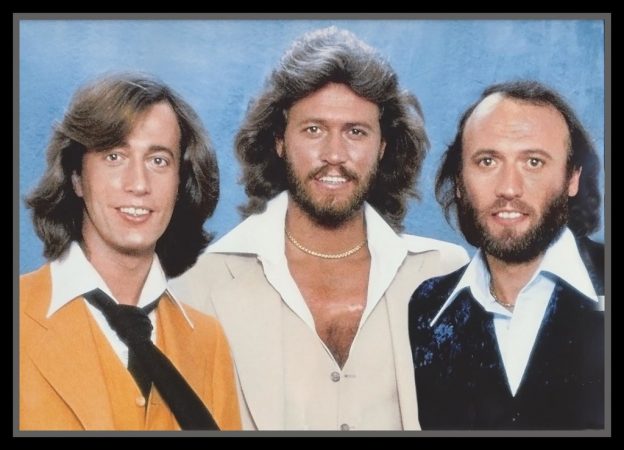

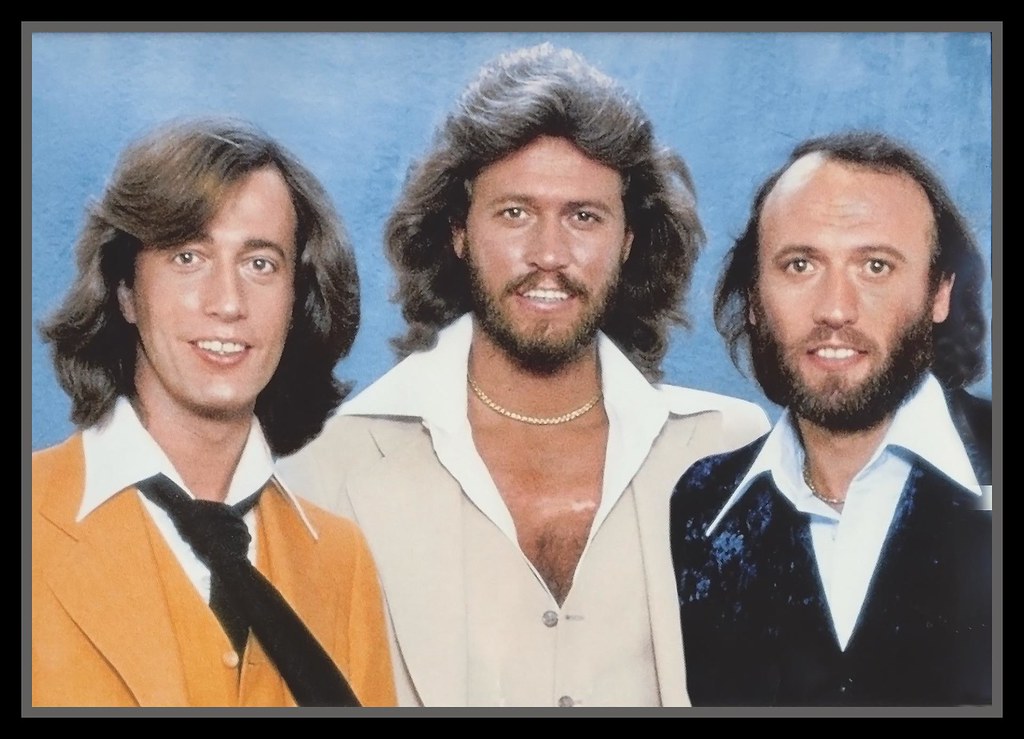

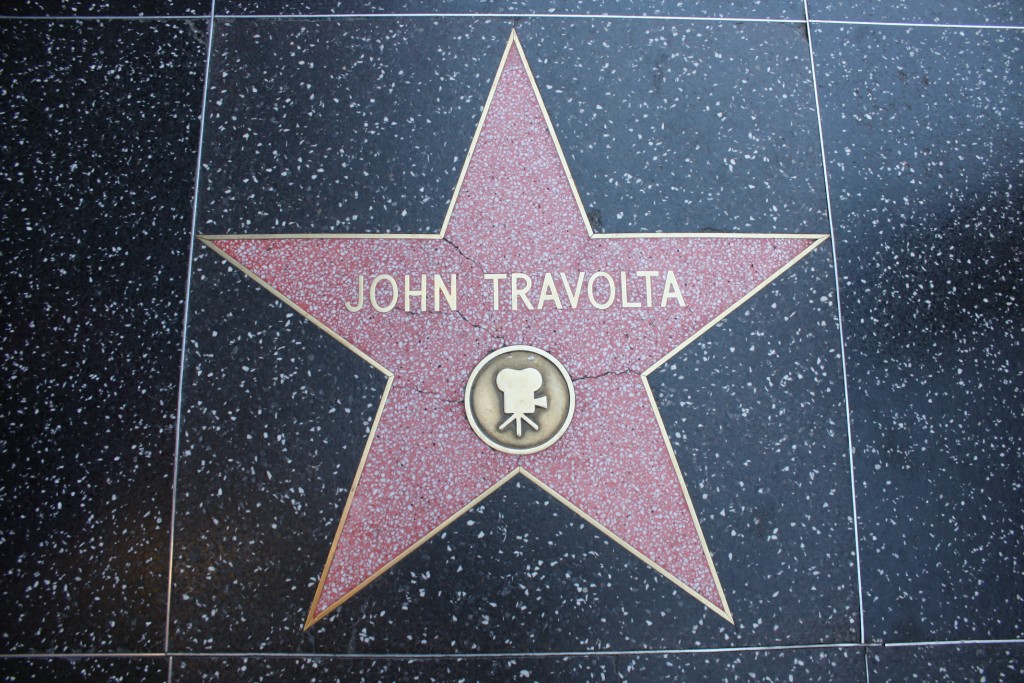
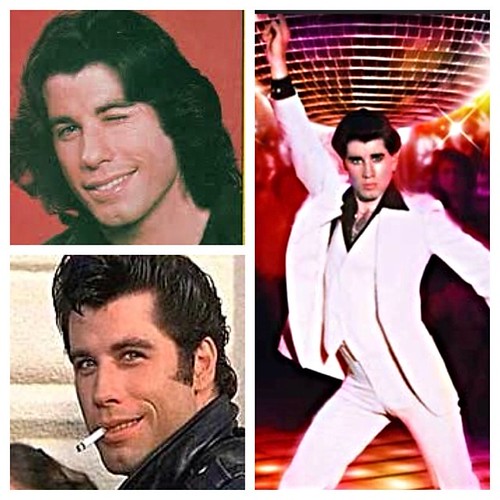



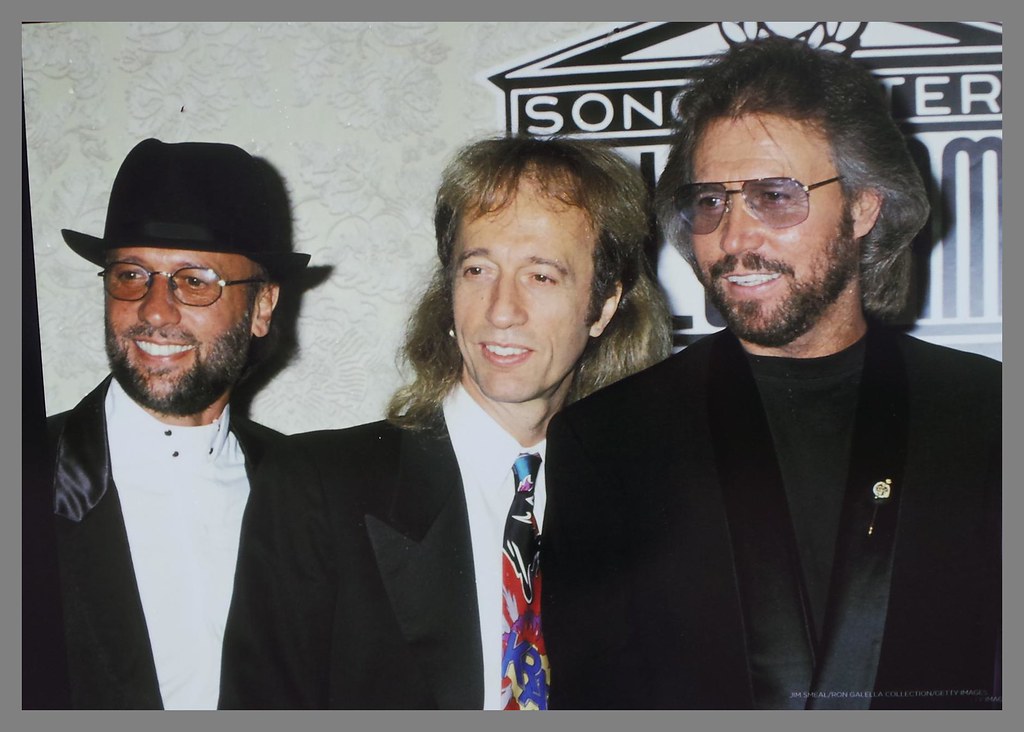
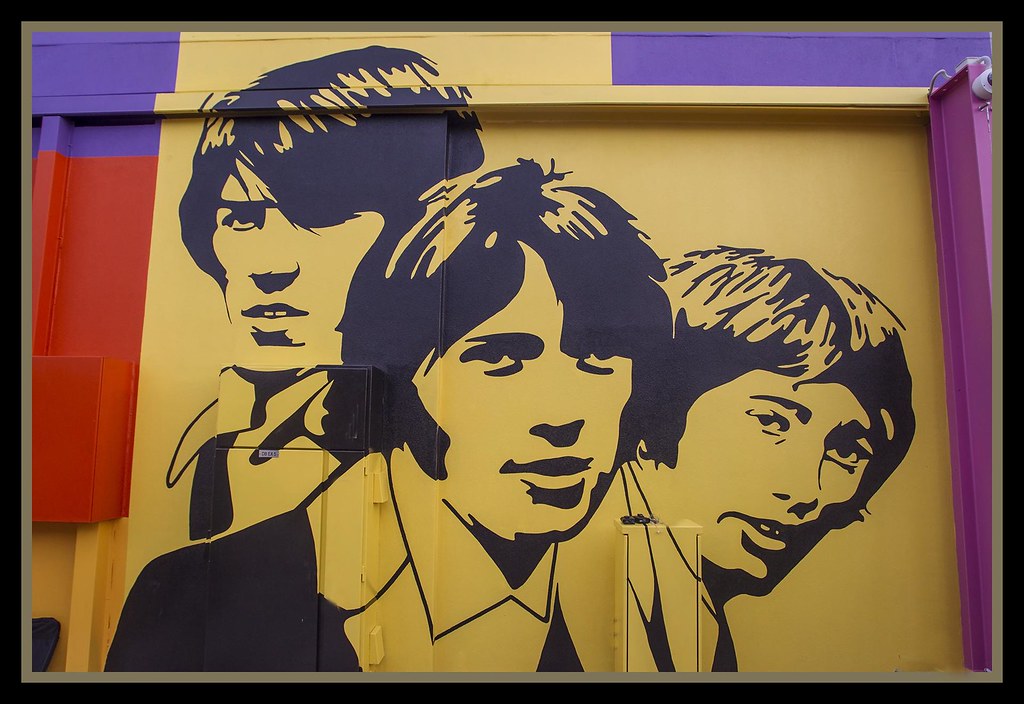















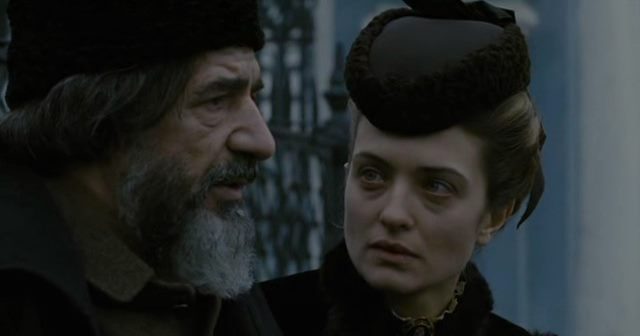








![Tu Style Magazine [Italy] (9 May 2016)](https://jwalsh2013.files.wordpress.com/2017/10/tu-style-magazine-italy-9-may-2016.jpg)