My entire life I have always enjoyed being around flowers and gardens.
I started taking photographs of them in 2012. With so many other people everywhere, I have always enjoyed visiting and walking among the beautiful fragrances of earth’s bountiful and beautiful flora. Dangling, drooping, shooting straight up, bunches, single stem, of endlessly different shapes, sizes and colors—and places and settings—flowers and gardens embody life, creativity, and beauty. One of my earliest memories of gardens was on a childhood vacation to Jefferson’s Monticello and, in that summer’s heat, being surrounded with the scent of the boxwood shrubs. All these perennials and annuals are definitely worthwhile photographic subjects. To stroll (and bend and scrunch) among nature’s orchestra of leaves, branches, and blooms and photograph them is one of life’s pleasures.
The world of flora contains some of the most distinctive creations on the planet.
Fresh blooms are engaging, shy, forthright and protective. In their season, they exist to proffer their fleeting beauty and fragrance for the spectacular end of reproducing themselves.
I have taken photographs of many other subjects but flowers I return to again and again. It’s because flowers don’t disappoint.
Grace Kelly wrote a book on flowers called My Book of Flowers. “I love walking in the woods, on the trails, along the beaches, ” she said. “I love being part of nature…” This is one of the great things about searching for and finding flora to photograph: whether in the wild, semi-wild, in a nursery, or on the front porch or in the garden, the wonder of their presence leads to an experience of nature in its most vital form.
Grace Kelly became interested in flowers and their arrangements only in the last years of her life. It had been suggested to the American princess in the late 1960’s that as part of the festivities for Monaco’s centennial she might host a flower arranging competition, which she did. Though princess Grace admitted she “was the most ignorant garden president going,” her knowledge of flowers and gardening grew and, if only because of their shared passion for these precious blooms, she met many new friends. I too have found that I have made friends from all over the world because of our mutual love for flowers and the garden. One cannot underestimate flower power!
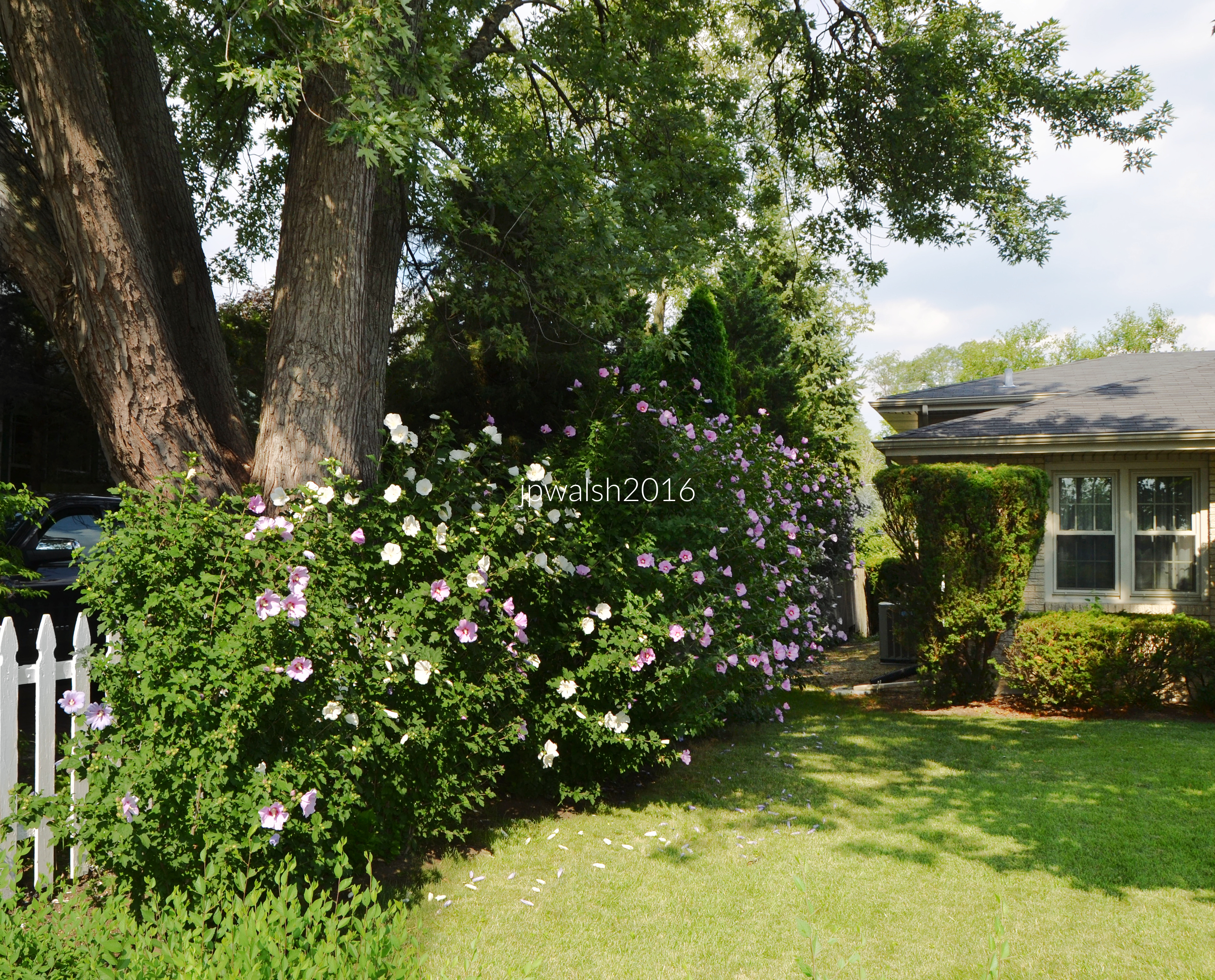
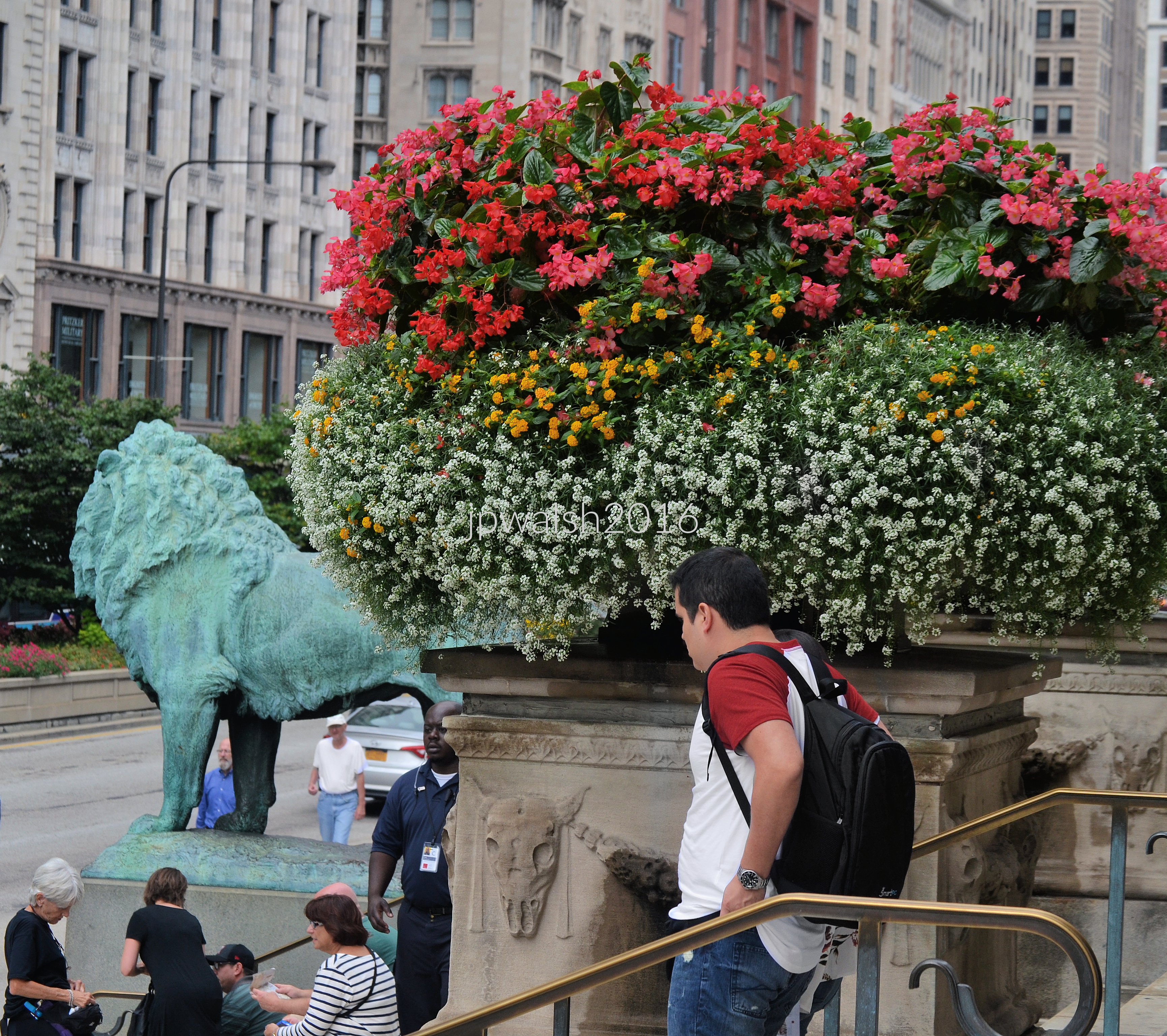
Most of my photographs of flowers and gardens are shot in the Chicago area.
May 2018. May 2024. May 2018. September 2018.December 2017. Chicago, Garfield Park Conservatory. May 2018. May 2028. May 2018. July 2017.April 2018. May 2018. June 2017. Pre- Civil War Lion House, North Prospect Avenue on North Franklin Place, Milwaukee, Wisconsin. May 2016. Dianthus.
May 2016.
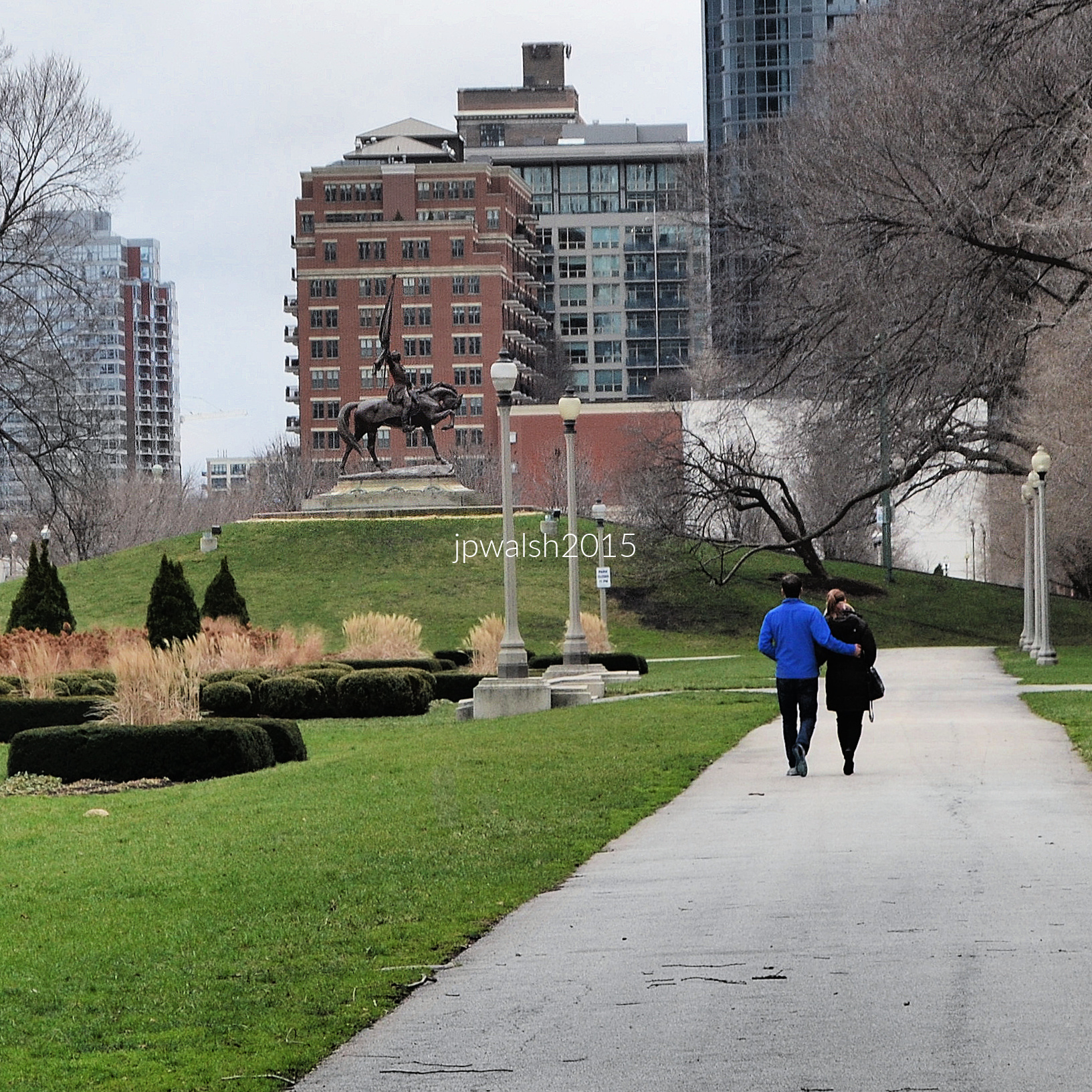
May 2016. “Black Magic” petunia.July 2013. Oak Park, Illinois.July 2013. Hollyhock. May 2018. “Dream Touch” double late tulip. May 2018. “Frederick Douglass” multi-petaled cultivar. Named for Frederick Douglass (1818-1895), American slave, abolitionist leader and author. Developed in 1972 by Richard Americo Fenicchia.March 2018. Wheaton, IL. 99% 7.83 mb _5332 (1)May 2019. Glen Ellyn, Illinois. May 2020.May 2018.May 2018.June 2020. Peony with cicada. May 2018. May 2018. Impatiens. August 2014. Fox River, West Dundee, Illinois. May 2018. Orchids. July 2015. Chicago. Designed and built in 1917 by architect Frank Lloyd Wright, July 2017. Anderson Japanese Gardens. Rockford, Illinois. Chicago Old Town. hydrangeasJuly 2013. Prairie Coreopsis (Coreopsis palmata). Woodridge, Ilinois.August 2013. Purple Cornflower (Echinacea purpurea). West Chicago Prairie.August 2013. Orange sulphur butterfly & wild clover. Water Fall Glen, Lemont, Illinois. September 2016. Ellwood House. Dekalb, IL.August 2016. Richmond, Illinois.August 2021. Lombard, Illinois. August 2021. Lombard, Illinois. August 2015.June 2014. Naperville, Illinois. May 2021. Chicago (State Street). May 2017. June 2022. 7.25mb 99%June 2017. 7.04mb 95%September 2017. 2.68 mbApril 2021 1mbOctober 2016. 4.04 mbSeptember 2022. 6.60 mb 99% (50)August 2017. 7.88mb 78%October 2022. 7.98 mb 76%October 2023. 7.82mb 79%June 2022. Riverside, Illinois. 416 kb 35%May 2023. 7.89mb 74%May 2023. 7.90 mb 66%May 2023. 7.83 mb 90%May 2023. 4.43 mbMay 2023. 7.83 mb 89%May 2023 4.02 mb. The U.S. Congress designated the Friday before Memorial Day as National Poppy Day. According to the American Legion founded by U.S. War Veterans in 1919 following World War I, the red poppy is a nationally recognized symbol of sacrifice worn by Americans since that time to honor those who served and died for our country in all wars. It reminds Americans of the sacrifices made by our veterans while protecting our freedoms. June 2023 7.70mb 88% (60)June 2023. 7.85mb 70%June 2023. 7.78 mb 88%June 2023. 30%July 2023. 7.78mb 76%July 2023. 7.45 mb 99%August 2023. 6.64mbAugust 2023. 7.52mb 99%June 2021. 7.82mb 63%May 2023. 6.93 mb 99%October 2023. 6.98mb (70)November 2023. 5.92mbAugust 2016. 6.62mbAugust 2016. 7.85mb 89%April 2024. 99% 7.29mbApril 2024. 64% 7.74mbApril 2024. 93% 7.78 mbMay 2024. 91% 7.91mbMay 2024. 98% 7.74 mbJuly 2024. 99% 7.06 mb 0143 (1)August 2024. 65% 7.69 mb 0929 (1)September 2024. 7.28mb 1821 (1)September 2024. 7.18 mb 1861 (1)September 2024. 93% 7.81 mb_1879September 2024. 7.23mb _1884 (1)October 2022. 7.43mb_9353September 2024. 95% 7.96 mb_2709June 2024. 99% 7.30 mb 3442September 2024. 5.41mb_2857 copyMay 2016. Chicago (Millennium Park). 7.45mb DSCN2453 (1)August 2016. 5.41mb DSCN3803August 2016. 6.45mb DSCN3784 (1)March 2017. 6.74mb DSCN5474June 2017. 4.64mb DSC_0350April 2025. 7.84mb DSC_9352 (1)April 2025. 99% 7.35 mb DSC_9322May 2025. 87% 7.81mb DSC_1023July 2025. 73% 7.88 mb DSC_3565 (1)October 2025 99% 7.77mb DSC_7122September 2015. Chicago. 5.99mb DSCN1212 (1)December 2015. Chicago. Gen. John Logan Memorial (1897), Grant Park. 1.17mb DSC_0590 (1)May 2016. Lilacia Park designed by Jens Jensen. 3.95mb DSC_0140 (1) May 2016. 2.69 mb DSC_0073 (1)May 2016. 2.85mb DSC_0079 (1)May 2016. 4.32mb DSC_0034 (1)May 2016. 5.47mb DSC_0150 (1)May 2016. 4.75 mb DSC_0065 (1)May 2016. Wheaton, IL. 3.21mb DSC_0389 (1) May 2016. Crest Hill, IL. 4.07mb DSC_0487 (1)May 2016. Naperville. 2.94mb DSC_0596 (2)May 2016. Wheaton (Adams Park). 3.70mb DSC_0617 (1)June 2016. Naperville, IL. 4.62mb DSC_0669 (1)July 2016. Downers Grove, IL. 6.04mb DSC_0494 (1)July 2016. 5.89mb DSC_0687 (1)September 2016. 4.56mb DSC_0448 (1) September 2016. 4.90mb DSC_0690 (2)Oct 2016. Chicago (Old Town). 4.42mb DSC_0932 (1)
FEATURE IMAGE: Manuel Mendive, Este Lugar Sagrado/This Sacred Place, 2009, acrylic on canvas, Cernuda Arte Coral Gables, FL. Expo Chicago/2016.
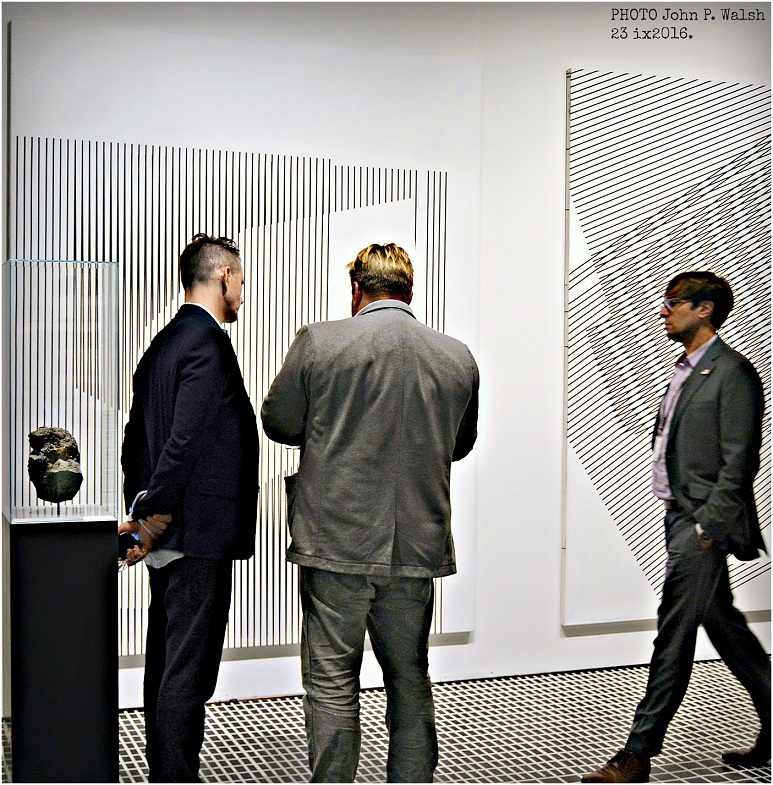
EXPO CHICAGO 2016 is the 5th annual exhibition of international contemporary and modern art held in Chicago at Navy Pier’s Festival Hall. It took place from September 22-25, 2016. Expo Chicago/2016 presents 145 galleries representing 22 countries and 53 cities from around the world. This post’s photographs are of that event.
Jeff Koons, BMW M3 GT2, Expo Chicago/2016.
Alfredo Jaar, Be Afraid of the Enormity of the Possible, 2015, neon, edition 3/3 + 3AP, Galerie Thomas Schulte, Berlin, Germany. Expo Chicago/2016.
At Dittrich & Schlechtriem, Berlin, Germany includes artwork by Klaus Jörres and Julian Charrière. Expo Chicago/2016.
At Cernuda Arte Coral Gables, FL. Manuel Mendive (foreground) Este Lugar Sagrado/This Sacred Place, 2009, acrylic on canvas. Expo Chicago/2016.
Paintings I, Art+Language, Made in Zurich 1965-1972, London. Expo Chicago/2016.
The Art + Language group’s Michael Baldwin and Mel Ramsden in Chicago. Founded in the mid1960s in the United Kingdom by Terry Atkinson (b. 1939), David Bainbridge (b. 1941), Michael Baldwin (b. 1945) and Harold Hurrell (b. 1940), artist Mel Ramsden joined in 1970.
Throughout the 1970s, Art + Language dealt with questions about art production and attempted a shift from conventional forms of art, such as painting and sculpture, to theoretically linguistic (text)-based artwork. Art + Language remains active today in several collaborative projects.
September 2016. 99% 7.21 mb DSC_0630
Jonathan Lasker, The Handicapper’s Faith, 2011, Galerie Thomas Schulte, Berlin, Germany. Expo Chicago/2016.
At Gallery MOMO Cape Town/Johannesburg, South Africa. Artwork by Mary Sibande. Expo Chicago/2016.
Expo Chicago/2016.
Andrew Moore, Mirador, Gibara, Cuba, 2008, 46 x 58 inch archival pigment print, Yancey Richardson Gallery, New York.
Margot Bergman, Agnes, acrylic on canvas, 2016, Corbett vs. Dempsey, Chicago. Expo Chicago/2016.
Shannon Finley, Googol, 2015, acrylic on linen, 4 panels 95 x 189 in.,Carrie Secrist Gallery, Chicago. Expo Chicago/2016.
Euan Uglow, Sue Wearing a Blue Swimming Cap, 1978/80, oil on canvas 19.5 x 27.5 in., Browse & Darby London. Expo Chicago/2016.
Juan Garaizabal, Álvaro Alcázar Gallery, Madrid. Expo Chicago/2016.
April Martin, The Sun had not yet Risen, 2016, copper, thread, glass, vinegar, The School of the Art Institute of Chicago. Expo Chicago/2016.
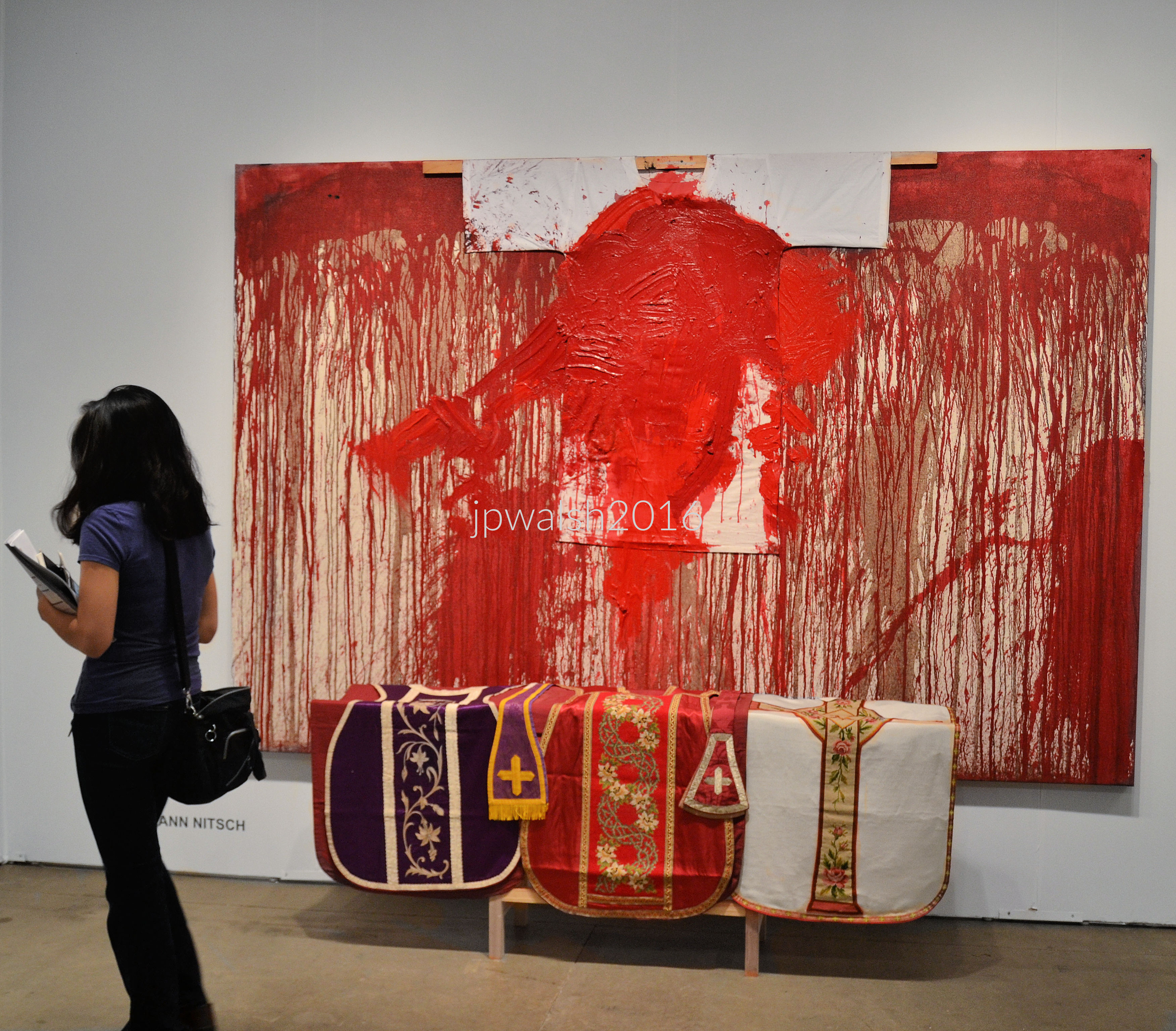
September 2016. Hermann Nitsch, Schüttbild (Shaped Image), 2013, Acrylic on Canvas, Marc Straus Gallery, New York City. 4.29mb DSC_0876 (1)
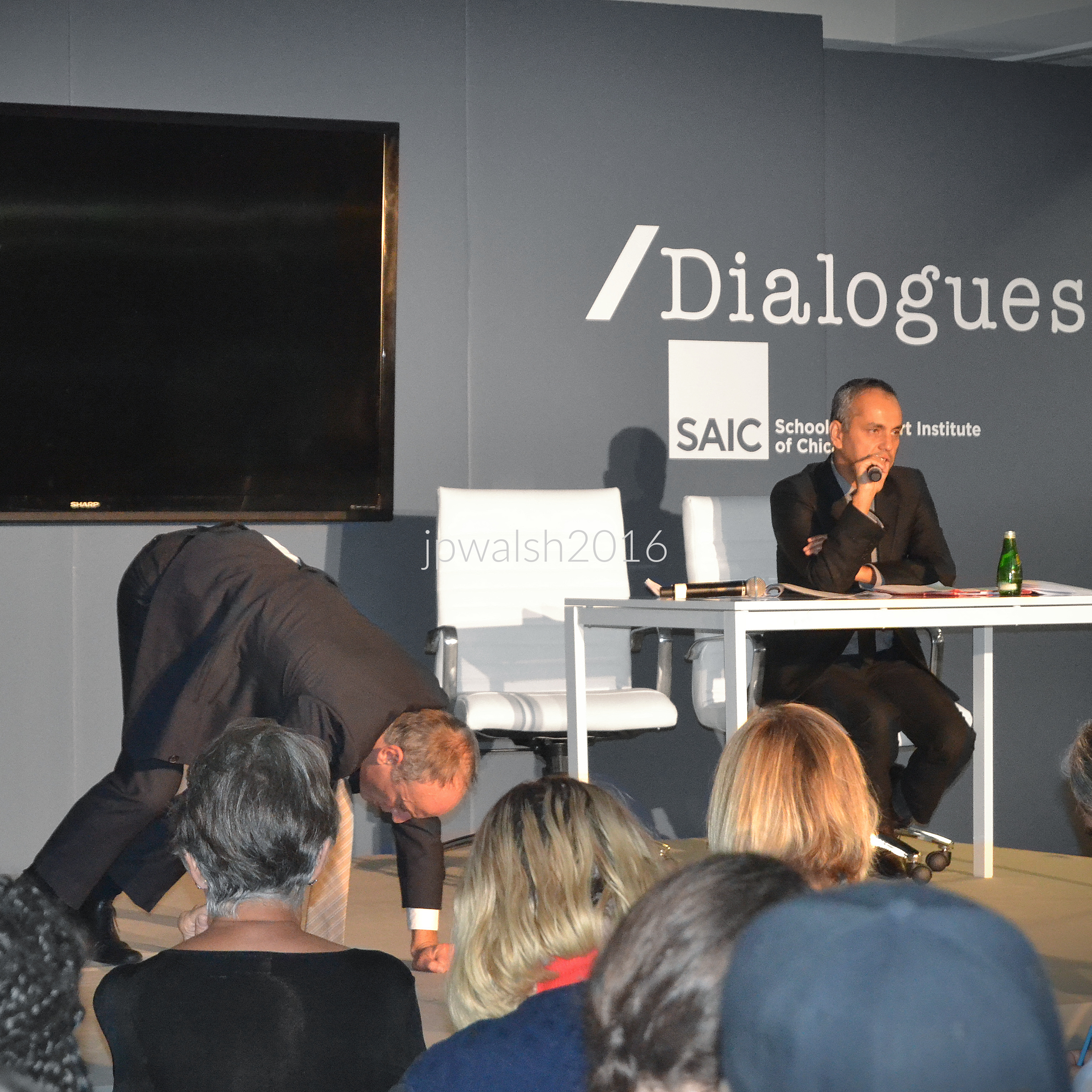
Dialogue with Miguel Aguilar and Chris Silva, Conversation Pieces. Expo Chicago/2016.
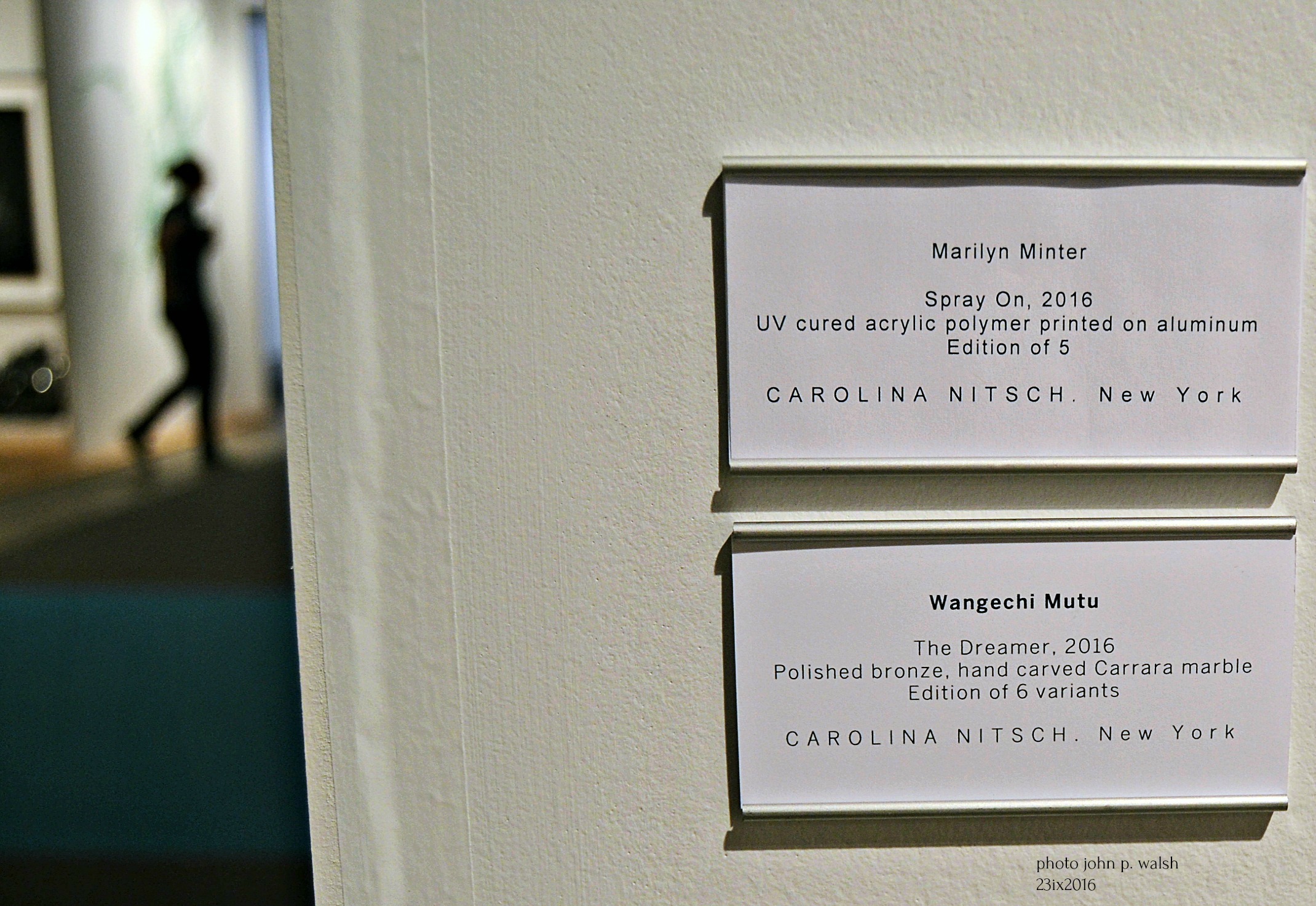
Louise Bourgeois, Girl with hair, 2007, archival dye on silk, edition of 12, Carolina Nitsch, New York City. Expo Chicago/2016.
Pace Gallery, New York City. Expo Chicago/2016.
Expo Chicago 2016.
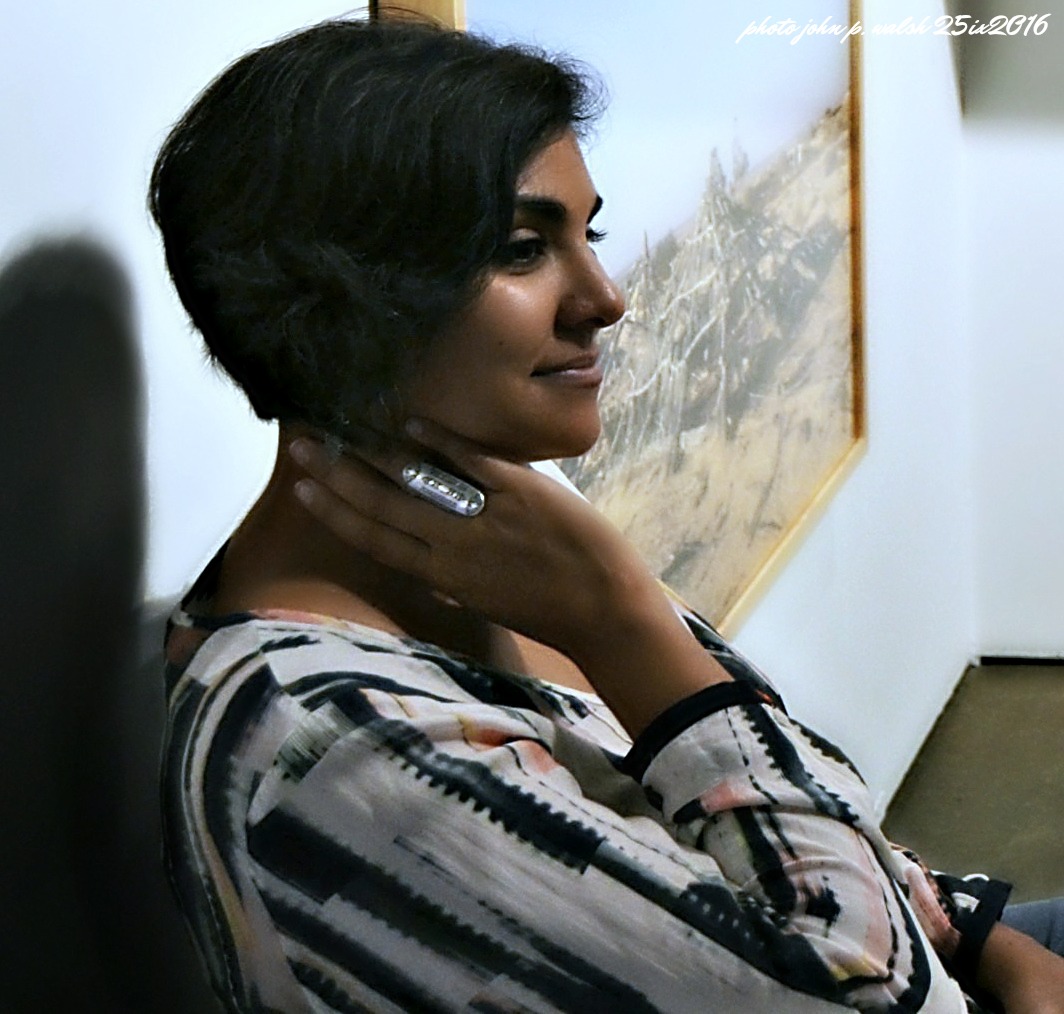
Genieve Figgis, Half Gallery, New York City. Genieve Figgis is an artist from Ireland who began her artistic career on social media. Expo Chicago/2016.
Buddha’s tight ringlet curls by Qi Yu. Ceramic cinnabar mineral mounted on canvas. Expo Chicago/2016.
Artist Qi Yu of Redbrick Art Museum, Beijing, China.
North Cafe. Expo Chicago/2016.
Expo Chicago/2016.
Listen, you a wonder. you a city of a woman. you got a geography of your own., Amy Sherald, 2016, 54 x 43 in., oil on canvas, Monique Meloche Gallery, Chicago.
The artist’s title quotes American poet Lucille Clifton (1936-2010): “listen, you a wonder. you a city of a woman. you got a geography of your own. listen, somebody need a map to understand you. somebody need directions to move around you. listen, woman, you not a noplace anonymous girl; mister with his hands on you he got his hands on some damn body!”
Raffi Kalenderian, Sekula Benner Street, 2016, oil on canvas, Buchmann Galerie Berlin/Lugano. Expo Chicago/2016.
Ernesto Burgos, Kate Werble Gallery, New York City. Expo Chicago/2016.
Sims Reed Gallery London. Expo Chicago/2016.
Ann Agee, Negishi Heights 1957, 2015, acrylic on Thai Mulberry paper, P.P.O.W. Gallery, New York City. Expo Chicago/2016.
Expo Chicago/2016.
Performance outside Zwirner Gallery, New York City. Background: Raymond Pettibon, No Title (Manhattan rising, advancing—), 2010, ink and acrylic on paper, 59 x 118 inches. Expo Chicago/2016.
Mel Bochner, Blah Blah Blah, 2016 and Aloyson Shotz, Flow Fold #3, 2015, Carolina Nitsch Gallery, New York City. Expo Chicago/2016.
Bernar Venet, Indeterminate Line, 2013, rolled steel, 75 1/2 × 80 × 62 in. Paul Kasmin Gallery, New York City. Expo Chicago/2016.
Richard Norton Gallery. Expos Chicago/2016.
Jannis Varelas, New Flags for a New Country, The Breeder, Athens, Greece. Expo Chicago/2016.
Expo Chicago/2016.
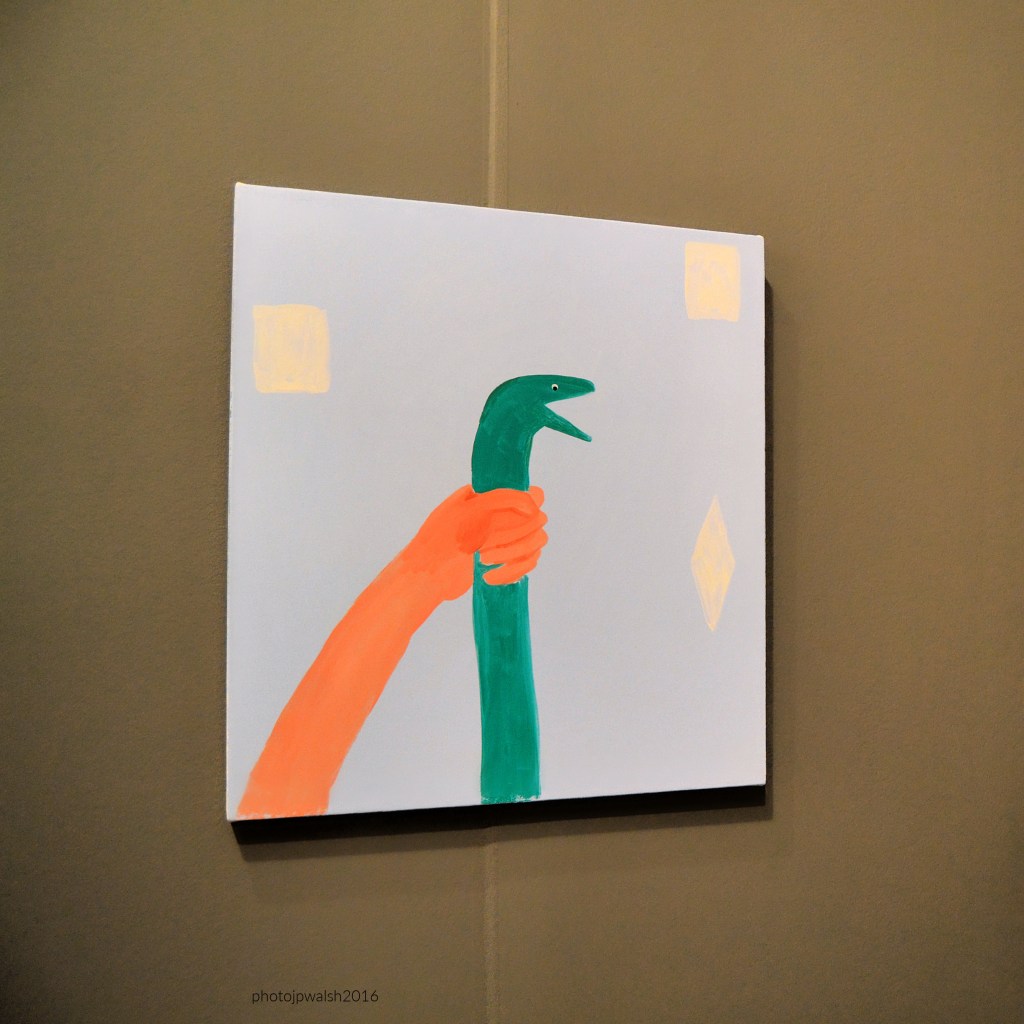
Jenn Smith, Untitled (Snake), oil and acrylic on canvas, 2016, The School of the Art Institute of Chicago. Expo Chicago/2016.
Atelier Van Lieshout, The Beginning of Everything, foam, paint, wood, paverpoll, 2016. Expo Chicago/2016.The molecule represents Glucose (C6H12O6), the primary source of energy for human life. Without glucose, nothing would function: neither the brain, intelligence, thought, muscles, movement or sports. Without energy, our lives would come to a standstill.
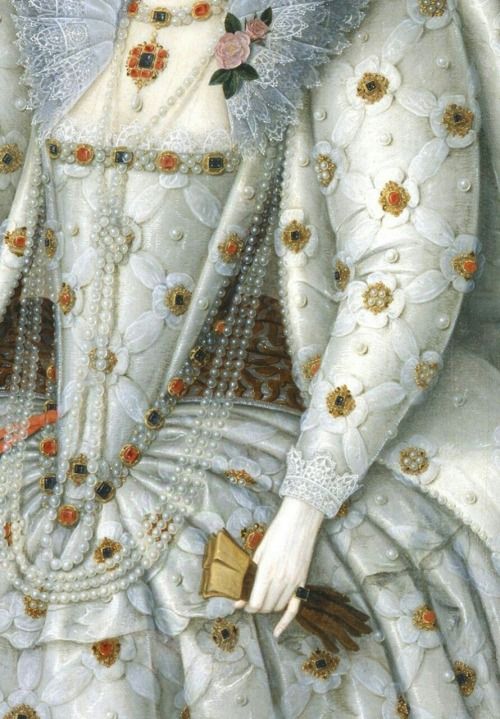
FEATURE image: Detail, Queen Elizabeth I. Ditchley portrait. Marcus Gheeraerts the Younger, 1592.
Marcus Gheeraerts the Younger, Captain Thomas Lee in Irish Dress, oil on canvas, 1594 (purchased 1980), Tate Britain.
Captain Thomas Lee (c.1551-1601) had his portrait painted by 33-year-old Marcus Gheeraerts the Younger (Bruges, 1561-1636) in London in 1594. Captain Lee was 43 years old and had worked as a military adventurer for English colonization in Ireland since the early 1570’s.
The young artist was the son of Gheeraerts the Elder (c. 1520–c. 1590), a painter and printmaker associated with the Tudor court in the late 1560’s and 1570’s. Fleeing religious persecution in Flanders, Gheeraerts the Elder arrived into England with his 7-year-old son Marcus in 1568. In 1577, Gheeraerts the Elder had likely returned to Flanders.
By 1594, when the portrait of Captain Lee was made, Gheeraerts the Younger was a rising young contemporary artist working in Elizabeth I’s Tudor court. Sir Roy Strong, the English art historian who served as director of the National Portrait Gallery and the Victoria and Albert Museum in London is unequivocal about Gheeraerts the Younger’s artistic importance to English art history. Strong wrote that Gheeraerts is “the most important artist of quality to work in England in large-scale between (Hans) Eworth (c. 1520 – 1574) and (Anthony) van Dyck (1599-1641).”1
In addition to a discussion of the early painting of Captain Lee, a complete collection of Marcus Gheeraerts the Younger’s 33 art works– including signed and dated works, documented and dated works, inscribed and dated works, and inscribed and undated works– is included in this post following this introduction.
Social contract: Marriages of court artists in late-16th-century Tudor England.
At 22 years old in 1583, Marcus Gheeraerts the Younger’s world in and around London was ideally enclosed by marriage to the sister of talented Tudor court painter John De Critz (c.1555-c.1641). De Critz, like his new brother-in-law Gheeraerts the Younger, was a child expatriate from Flanders to England in 1568.2
In 1571 Gheeraerts the Elder had married his son’s future wife’s sister, making father and son Gheeraerts also eventually brothers-in law.3
Over two decades later, in 1602, Gheeraerts the Younger’s sister married the court artist Isaac Oliver (c.1565-1617).4
This was typical social behavior at the Tudor court where many active artists were connected by ties of marriage, family, and artistic training as well as shared European origin.
In Gheeraerts the Younger’s circle, for instance, John De Critz was apprenticed to the wealthy portrait painter Lucas de Heere (1534-1584) who may also have helped train Gheeraerts the Younger. De Heere – like Gheeraerts the Younger and De Critz – was a religious refugee to England from Flanders.
Isaac Oliver, Gheeraerts the Younger’s other brother-in-law, studied under leading Tudor portrait miniaturist and goldsmith Nicholas Hilliard (c.1547-1619). 5 Roy Strong as Director of the National Portrait Gallery in London links Hilliard to Gheeraerts by way of the supreme artistic quality found in both of these contrasting artists’ masterpieces.6
One remarkable technical innovation that the young artist applied in his portraits was the use of stretched canvas in place of wood panel that allowed for larger and lighter surface areas on which to paint and more easily transport pictures of the grand gentlemen and ladies of the time.
By way of marriage to an Irish Catholic woman, Captain Thomas Lee became a man of considerable property in Ireland. Captain Lee had separated from his wife by the time of his portrait. The next year -– in 1595 –- Lee married an Englishwoman. Over the decades, Captain Lee’s military reputation became one of an enfant terrible in Ireland which did not mellow over time. Powerful friends looked to explain Thomas’s frequent reckless political and military behavior. It was justified as the occupational hazard of a longtime English soldier in Ireland.
Planning and posing of Captain Lee’s portrait.
Lee posed for Gheeraerts when the captain was straight off the battlefield from Ulster chieftain Aodh Mag Uidhir (Hugh Maguire, d. 1600) and in London for delicate negotiations.
To presumably express Thomas’s faithful service to the Crown, the portrait includes a Latin inscription in the tree that refers to Mucius Scaevola (c. 500 BC), an ancient perhaps mythical Roman fighter who remained loyal to Rome even after he was captured by mortal enemies.
Captain Thomas Lee was related to Sir Henry Lee as paternal half cousins. Sir Henry was Queen Elizabeth I’s Champion for almost 25 years until his retirement in 1590. In that capacity, Henry was the creator of the stunning imagery for her publicly-popular Accession Day festivals that he annually planned. Along with Gheerearts the Younger’s Elizabethan allegorical portrait Lady in Fancy Dress (The Persian Lady) (#30 below) and the Ditchley portrait of Queen Elizabeth I (#31 below) — both painted in the early 1590s — Henry, who remained active and influential in political affairs, may have helped devise the symbolism in Captain Lee’s portrait. The portrait also came from Ditchley, Sir Henry Lee’s timber-framed family house set in the wooded farmsland of north Oxfordshire.
While the painting’s landscape where Captain Lee stands is likely a representation of Ireland’s wild landscape, Henry Lee’s symbolism may provide other subtle and humorous features.
Troublesome Thomas, for example, stands under an oak, which may refer to Sir Henry’s political protection but also that these trees are prone to dangerous lightning strikes.
The final seven years of Captain Thomas Lee’s life iterated a legendary standard: at times negotiating with or killing Irish enemies he also served time in prison in Ireland on a charge of treason. Ultimately, Sir Henry could not save his familial junior– in 1601 Thomas faced execution in England for treason against Elizabeth I.
English colonial rule tightens in 17th century Ireland.
English power became increasingly absolute in 17th century Ireland.
In the 1590’s, the Protestant Ascendancy in Ireland believed turning their backs on the mostly Catholic natives was the most effective governing strategy. While an oath of allegiance to the Crown remained law to divest Irish rebels of their property to English rule, it was not vigorously applied until the arrival in 1604 into Ireland of Lord Deputy Arthur Chichester (1563-1625).
The 1590’s continued to implement England’s new plantation system in Ireland which amounted to confiscating Irish property for English and Scottish settlers. While this provided quick and lucrative rewards for the conquerors, the political situation was not free of ambiguity. English laws were attacked by Irish chiefs seeking protection under older common law.
Protestant settlers had their own uneasy relationship with the English Crown who, in turn, fought a tug of war with an English Parliament.
About half of settlers in Ulster were Presbyterians who were dissenters from the English church which itself was at war with Anglo- and Gaelic Irish Catholics. Moreover, London viewed new Protestant landowners in Ireland –- such as Captain Thomas Lee –- with no less suspicion as despoiled Catholics. The Crown believed that the new Protestant vanguard in Ireland had power to usurp the island’s treasure more readily than pillaged Catholics who could, ironically perhaps, be better disposed to the idea of royal governance.7
While Thomas Lee’s special status is expressed in the painting’s lace embroidery on his rolled-up shirt and inlaid pistol and Northern Italian-made helmet, the Captain is dressed as a common foot-soldier who traveled through Ireland lightly armed. Captain Lee is also, both seriously and humorously, barelegged.
Sir Henry Lee must have been one of Marcus Gheeraerts the Younger’s earliest patrons, as the Ditchley collection had several portraits which can be ascribed to the artist.8
FOOTNOTES:
Strong, Roy, The English Icon: Elizabethan & Jacobean Portraiture, The Paul Mellon Foundation for British Art London Routledge and Kegan Paul Limited New Haven Yale University Press, 1969, p.22.
Ibid. p.259.
Hearn, Karen, Marcus Gheeraerts II: Elizabethan Artist, In Focus (Tate Publishing), 2003, p. 11ff.
The Captain Thomas Lee portrait was first recorded at Ditchley by Vertue in 1725 who noted there a portrait of ‘Lee in Highlanders Habit leggs naked a target & head piece on his left hand his right a spear or pike. Ætatis suae.43.ano.Dni 1594’.
1. SIGNED AND DATED WORKS (8 works):
1 – Marcus Gheeraerts The Younger, Louis Frederick, Duke of Württemberg, 1608, oil on canvas, 225.1 x 113.1 cm, St James Palace. Probably painted for James I though first recorded in Charles II’s collection. (Strong 255, The English Icon).
Gheeraerts II painted portraits of several foreign dignitaries on their visits to the English court. Louis Frederick, Duke of Württemberg visited James I in London for three months in the latter part of 1608 and likely the artist produced this work at that time.
2 – Marcus Gheeraerts the Younger, William Camden, 1609, oil of panel,, 76.2.x 58.5 cm, Bodleian Library, Oxford. Given to the Schools by Camden Professor (1622-1647) Degory Whear. (Strong 256).
3 – Marcus Gheeraerts the Younger, Lucy Davis, Countess of Huntingdon, 1623, oil on panel, 76.8 x 62.3 cm, Private Collection. (Strong 257).
4 – Marcus Gheeraerts the Younger, William Pope, 1st Earl of Downe, 1624, oil on panel, 62.3.x 47.1 cm, Trinity College, University of Oxford. It was presented to Trinity College in 1813 by Henry Kett. (Strong 258).
5 – Marcus Gheeraerts the Younger, Elizabeth Cherry, Lady Russell, 1625, oil on canvas, 194.5 x 105.6 cm, The Duke of Bedford. This painting has been at Woburn Abbey since 1625. (Strong 259).
6 – Marcus Gheeraerts the Younger, Sir William Russell, 1625, oil on canvas, 195.6 x 111.8 cm, The Duke of Bedford. Always at Woburn Abbey. (Strong 260).
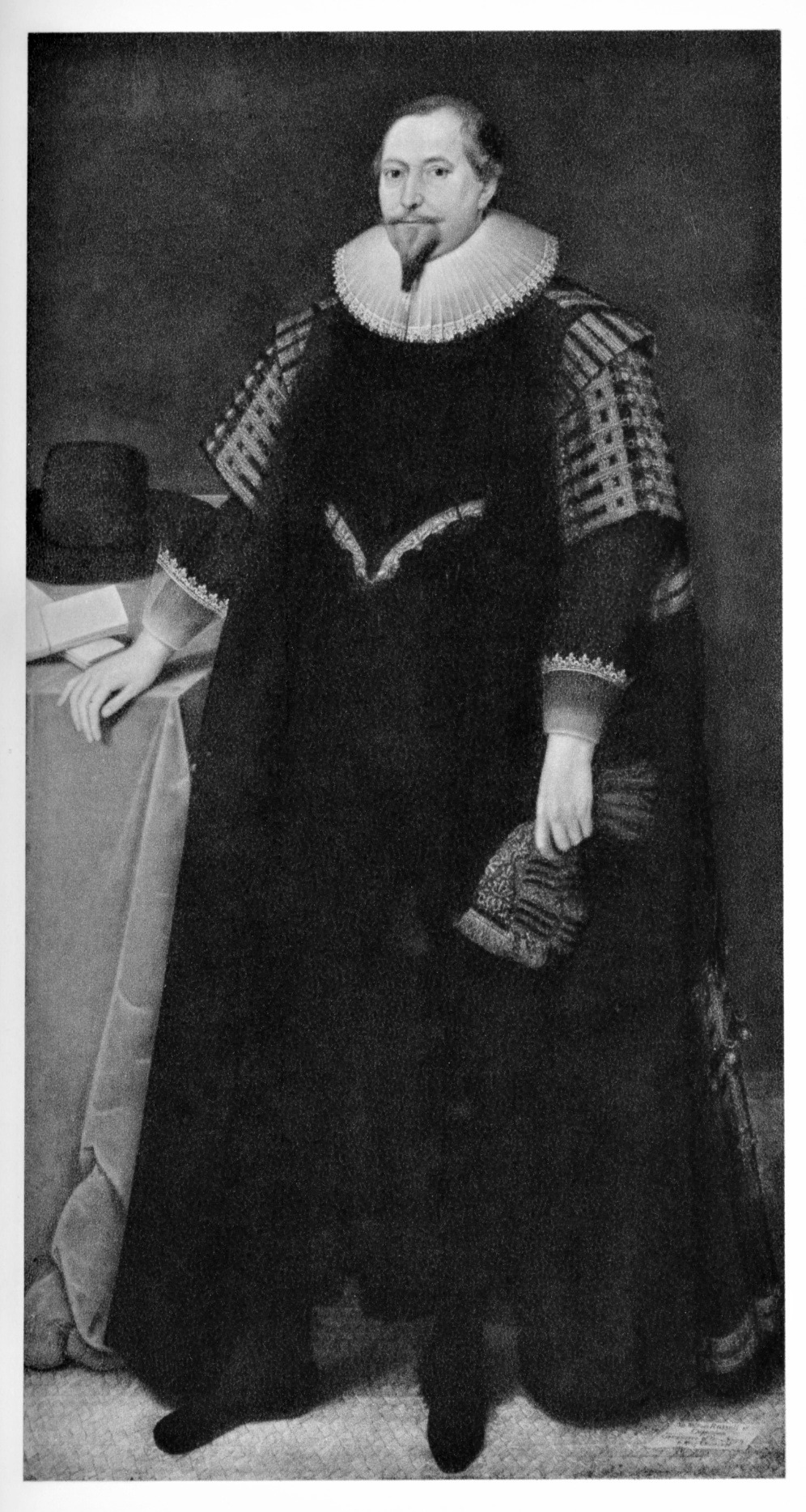
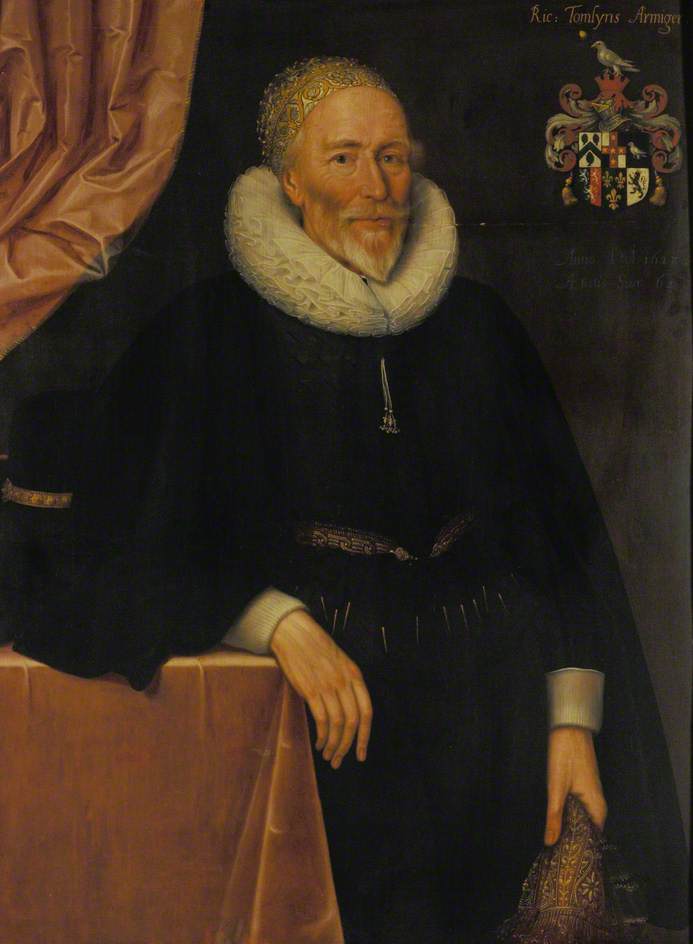
7 – Marcus Gheeraerts the Younger, Richard Tomlins, 1628, oil on panel, 111.8 x 83.9 cm. The Bodleian Library, Oxford. It was in the Library in 1759. (Strong 261).
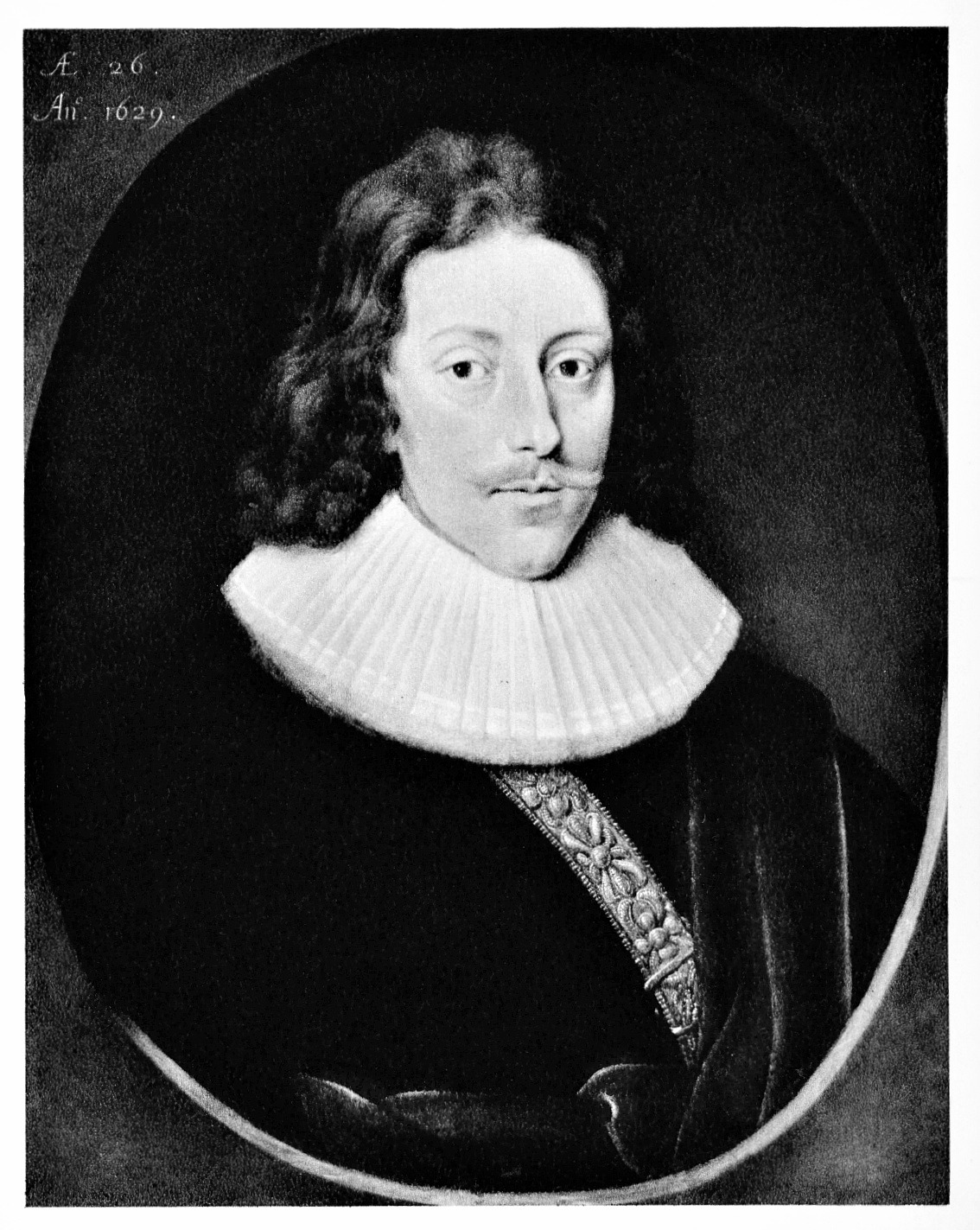
8 – Marcus Gheeraerts the Younger, Anne Hale, Mrs. Hoskins, 1629, oil on panel, 111.8 x 82.7 cm. Jack Hoskins Master, Esq. The painting remains in the family. (Strong 262). With detail.
2. DOCUMENTED AND DATED WORKS (3 works):
9 – Marcus Gheeraerts the Younger, Barbara Gamage, Countess of Leicester, and her children, 1596, oil on canvas, 203.2 x 260.3 cm, The Viscount De L’Isle. Always at Penshurst Place near Tonbridge, Kent, 32 miles southeast of London; first recorded 1623. (Strong 263).
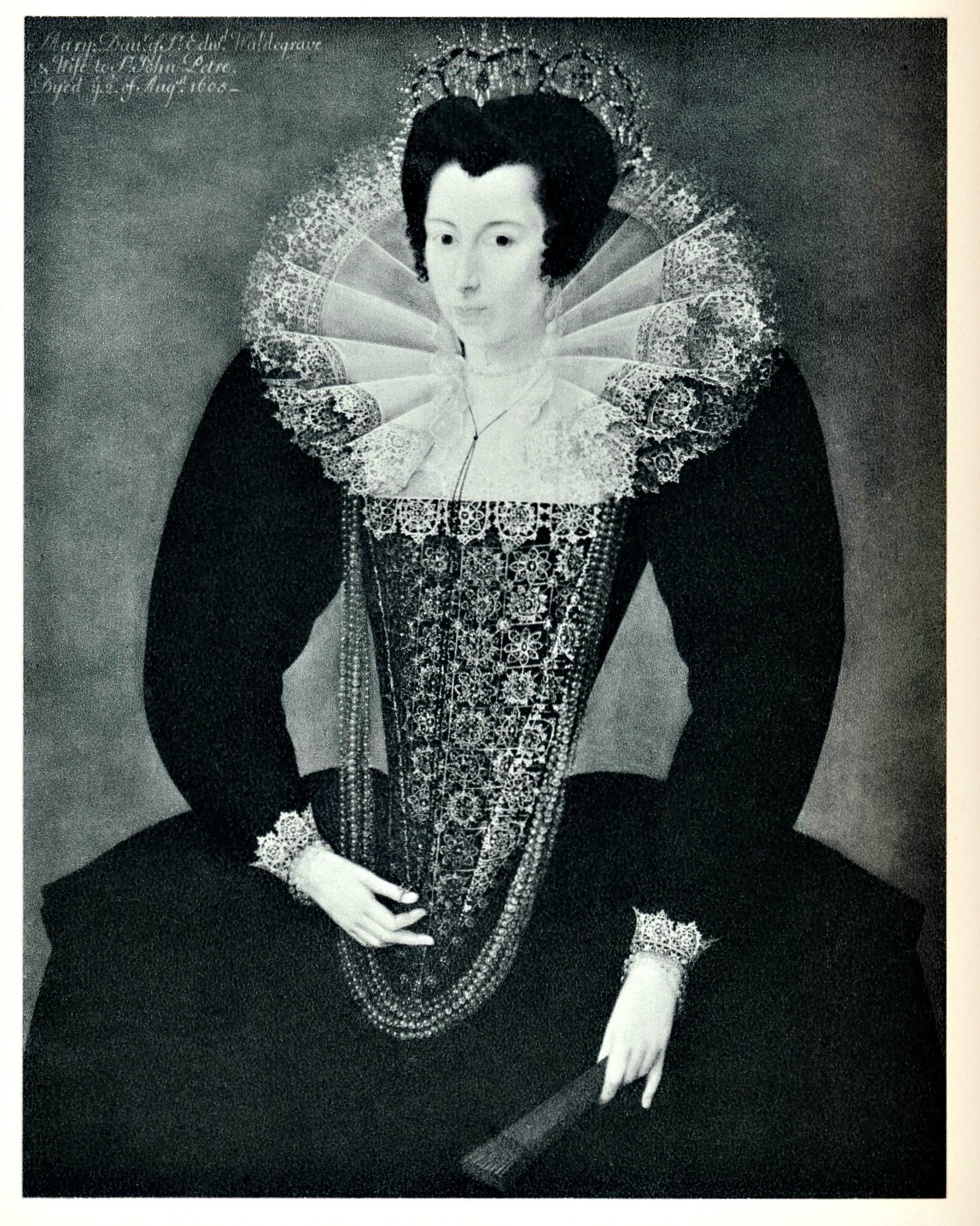
10 – Marcus Gheeraerts the Younger, William, 2nd Lord Petre, 1599, oil on panel. 111.8 x 90.2.cm. The Lord Petre; custody of the Essex County Record Office. (Strong 264).
11 – Marcus Gheeraerts the Younger, Katherine Somerset, Lady Petre, 1599, oil on panel, 111.8 x 90.2 cm. The Lord Petre. Always at Ingatestone Hall, the 16th century manor of the Barons Petre in Essex, England. Queen Elizabeth I spent several nights there in 1561. (Strong 265).
3. INSCRIBED AND DATED WORKS (18 works):
12 – Marcus Gheeraerts the Younger, Unknown Lady (Mary Rogers, Lady Harington), 1593, oil on panel, 114.3 x 94 cm, Tate (purchased 1974). The identity for the sitter is speculative, although her age (23 years old) is inscribed. It is one of the earliest known portraits by Gheeraerts. (Strong 266).
Detail, Unknown Lady (Mary Rogers, Lady Harington), 1593. The sitter is identified in part by the clothes she wears: the distinctive black and white pattern on her dress heralds the Harington coat of arms. The sitter is 23 years old and her portrait may have been painted in connection with a visit to Kelston (The Harington homestead) in 1592 by Queen Elizabeth. The Latin inscription in the painting reads, “I may neither make nor break” a dramatic phrase whose meaning is no longer clear.
13 – Marcus Gheeraerts the Younger, Captain Thomas Lee in Irish Dress, oil on canvas, 1594 (purchased 1980), Tate Britain. (Strong 267). With detail.
14 – Marcus Gheeraerts the Younger, Sir Francis Drake, oil on canvas, 1594. Versions at National Maritime Museum, Greenwich and Lt.- Col. Sir geirge Tapps-Gervis-Meyrick.
15 – Marcus Gheeraerts the Younger, Unknown Man (Called the Earl of Southampton), 1599, location unknown. (Strong 269).
16 – Marcus Gheeraerts the Younger, Unknown Lady, 1600, oil on panel, The Lord Talbot de Malhide. (Strong 270).
17 – Marcus Gheeraerts the Younger, Sir Henry Lee, oil on canvas, 1600, private collection on loan since 2008 to Tate Britain.
Sir Henry Lee (1533–1611), a Tudor Court favorite under Elizabeth I, was appointed as Queen’s Champion and Master of the Armoury. In that capacity, Sir Henry organised the annual public Accession Day festivals in honor of the queen. He commissioned the famous Ditchley portrait of Elizabeth I by Gheeraerts for his house at Ditchley in Oxfordshire. In 1597 he was made a Knight of the Garter and in Gheeraerts‘s portrait wears that order’s gold chain and bejeweled medal of St George slaying the dragon. (Strong 271).
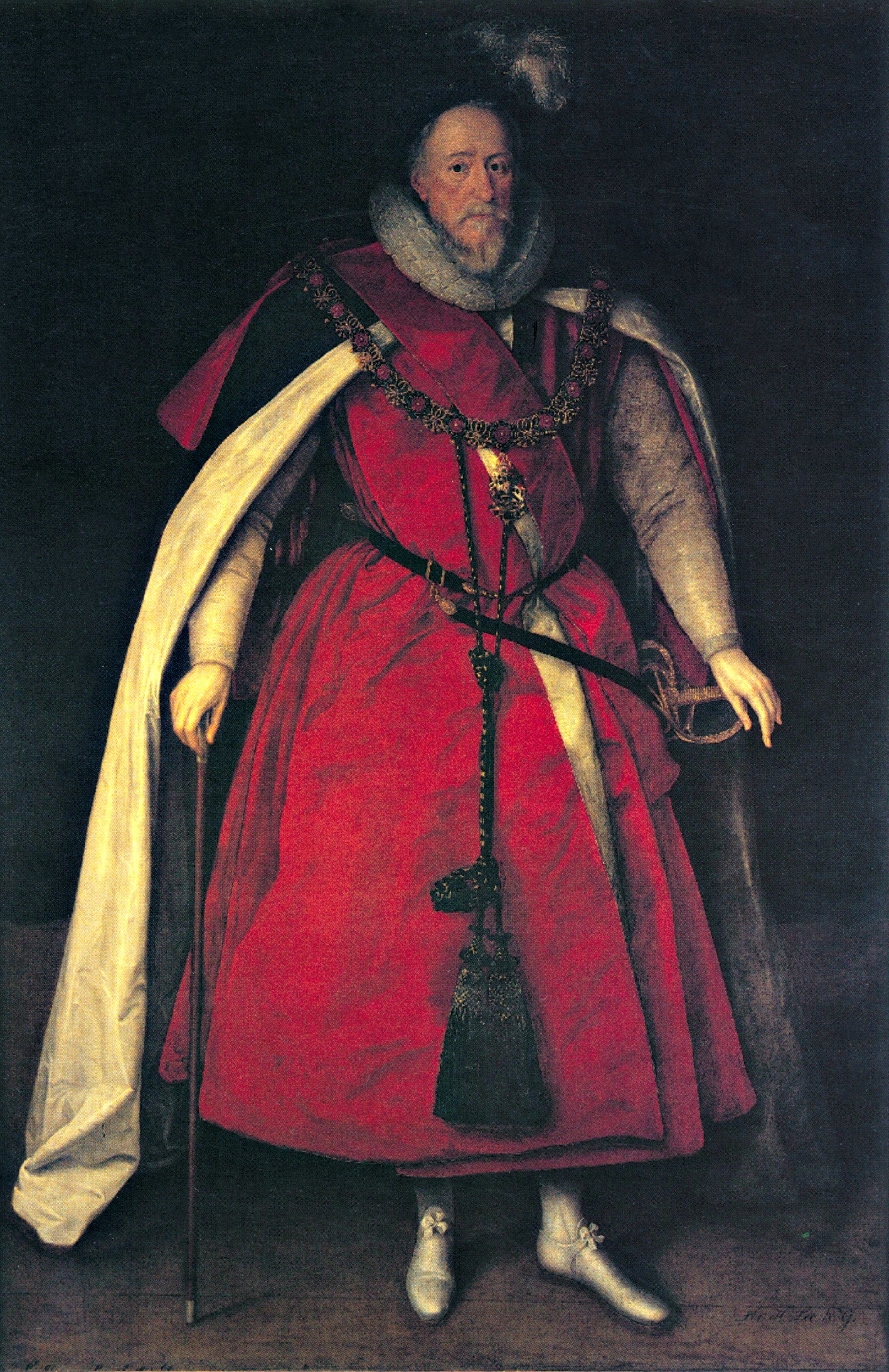
18 – Marcus Gheeraerts the Younger, Sir Henry Lee in Garter Robes, 1602, oil on canvas, 216.2 x 137.2 cm. Always at Ditchley until 1933. Today at The Armourers & Brasiers’ Company of the City of London. Founded in 1322, the livery company was awarded its first Royal Charter in 1453 from King Henry VI. In 1708 the Armourers joined with the Brasiers and received its current charter from Queen Anne. (Strong 272).
Detail, Sir Henry Lee in Garter Robes, 1602. One of Gheeraerts II’s finest portraits, Sir Henry Lee is a former man of action, whose old head is remarkably shrewd.
19 – Marcus Gheeraerts the Younger, Christophe de Harlay, Comte de Beaumont, 1605, oil on canvas, The Marquess of Salibury.
The Comte de Beaumont was the French ambassador to England at a time when the Kings of England and France were looking in their own ways for a diplomatic solution to the religious controversies in Europe. The painting was made for Robert Cecil, 1st Earl of Salisbury, a politician who had won James I’s trust. (Strong 273).
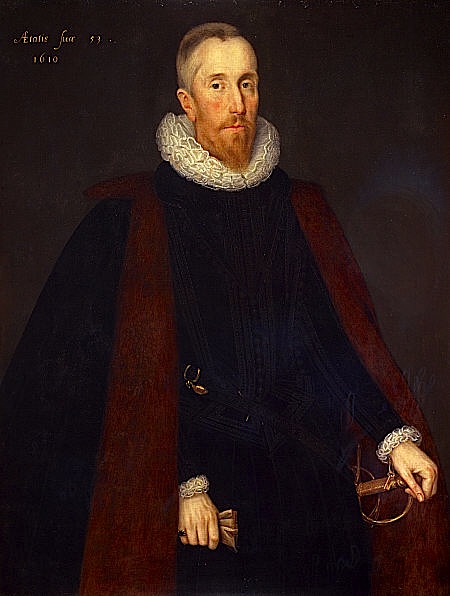
20 – Marcus Gheeraerts the Younger, Alexander Seton 1st Earl of Dunfermline, 1606.
Alexander Seton, 1st Earl of Dunfermline (1555–1622), a Scot, was regarded as one of the finest legal minds of his time. Seton served as Lord President of the Court of Session (top judge) from 1593 to 1604, Lord Chancellor of Scotland (top presiding officer of state) from 1604 to 1622 and Lord High Commissioner to the Scottish Parliament. (Strong 274).
21 – Marcus Gheeraerts the Younger, Anne of Denmark, 1614, oil on panel, 109.4 x 87.3 cm, Windsor Castle.
At 15 years old, Anne married the future James I of England in 1589. The Queen consort bore James three children who survived infancy, including the future Charles I (reigned 1625-1649).
Once fascinated with his bride, observers regularly noted incidents of marital discord between the dour and ambitious James and his independent and self-indulgent wife.
Before she died in 1619 the royal couple led mainly separate lives. (Strong 275).
22 – Marcus Gheeraerts the Younger, Ulrik, Duke of Schleswig-Holstein, 1614, oil on canvas, 211.2 x 114.3 cm, The Duke of Bedford.
Prince Ulrik of Denmark, (1578–1624) was the second son of King Frederick II of Denmark and his consort, Sophie of Mecklenburg-Güstrow.
As second-born Ulrick bore the merely titular rank of Duke of Holstein and Schleswig although he later became Administrator of Schwerin.
After his sister Anne became Queen of England, Ulrik was godfather to Princess Mary. (Strong 276).
23 – Marcus Gheeraerts the Younger, Sir John Kennedy, oil on canvas, 1614, The Duke of Bedford. Upon James I’s accession, Elizabeth Brydges — Maid of Honour of Queen Elizabeth I — married Sir John Kennedy, one of the king’s Scotch attendants. This occured at Sudeley Manor in Gloucestershire.
Chandos appears to have opposed the match, and it was rumored in early 1604 that Sir John Kennedy had a wife living in Scotland. James I wrote to Chandos (February 19, 1603 or 1604) entreating him to overlook Sir John’s errors because of his own love for his attendant.
Elizabeth Brydges apparently left her husband and desired to have the matter legally examined. As late as 1609 the legality of the marriage had yet to be decided.
Lord Chandos declined to aid his cousin, and Sir John Kennedy’s wife died deserted and in poverty in 1617. (Strong 277).
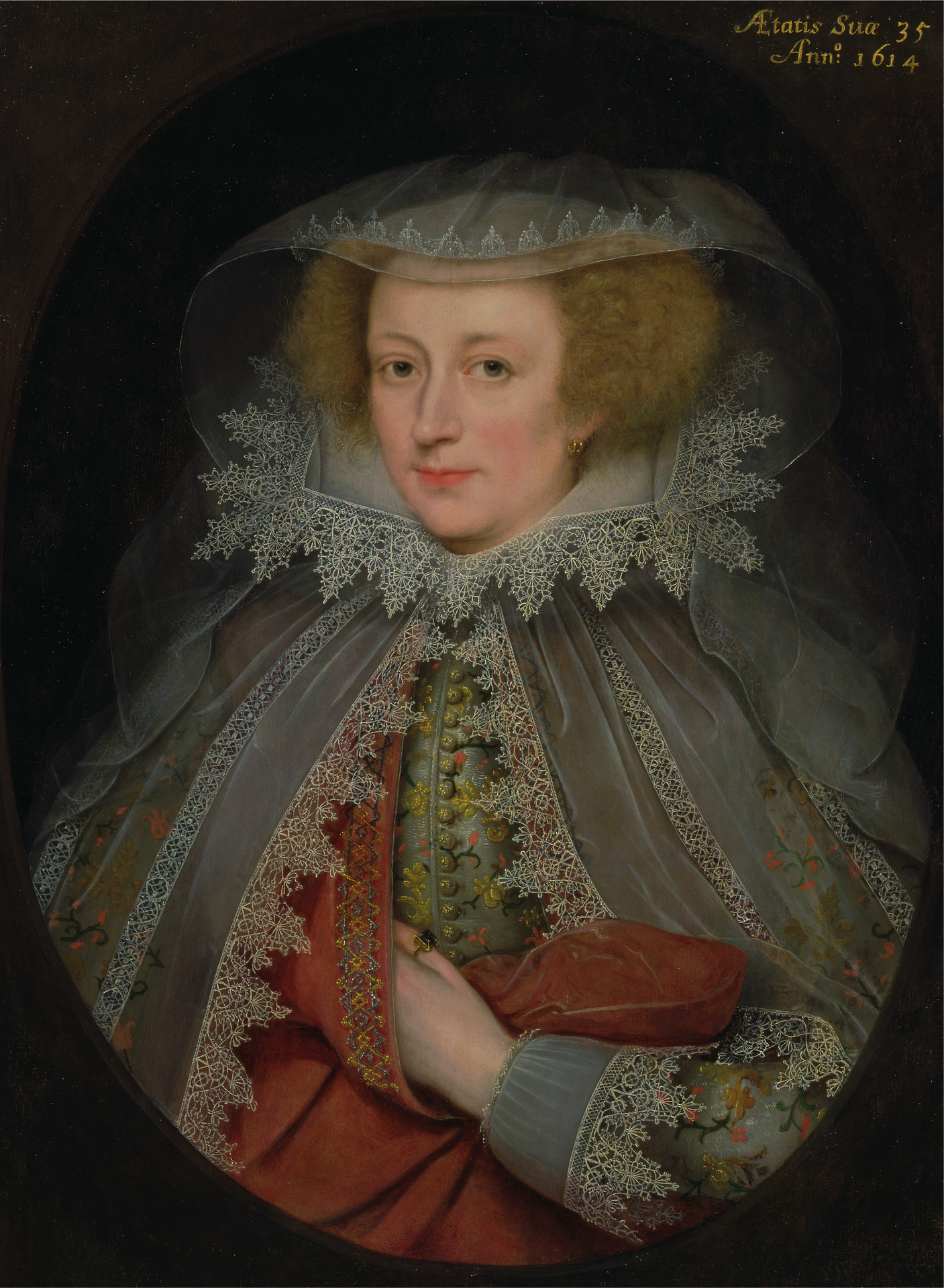
24 – Marcus Gheeraerts the Younger, Catherine Killigrew, Lady Jermyn, 1614, oil on panel, 73.7 x 57.2 cm, Yale Center for British Art. (Strong 278).
Catherine Killigrew was 35 years old when she sat for this portrait. The wife of an MP as well as the mother of three children, Catherine was the daughter of Sir William Killigrew (d. 1622) who was a courtier to Queen Elizabeth I and to King James I. Her father, Sir William, served as Groom of the Privy Chamber. (Strong 278).
25 – Marcus Gheeraerts the Younger, probably Mary (née Throckmorton), Lady Scudamore, oil on panel, 1615, 45 in. x 32 1/2 in. (1143 mm x 826 mm), National Portrait Gallery, London, purchased 1859.
The sitter, once wrongly identified as the Countess of Pembroke, is likely Lady Scudamore though about whom little is known. The portrait is likely for the occasion of her son’s marriage (John, later Viscount Scudamore) to Elizabeth Porter of Dauntsey, Wiltshire.
The wreath of flower and inscribed motto ‘No Spring Till now,’ suggest the hope that this marriage must have represented within the family. (Strong 279).
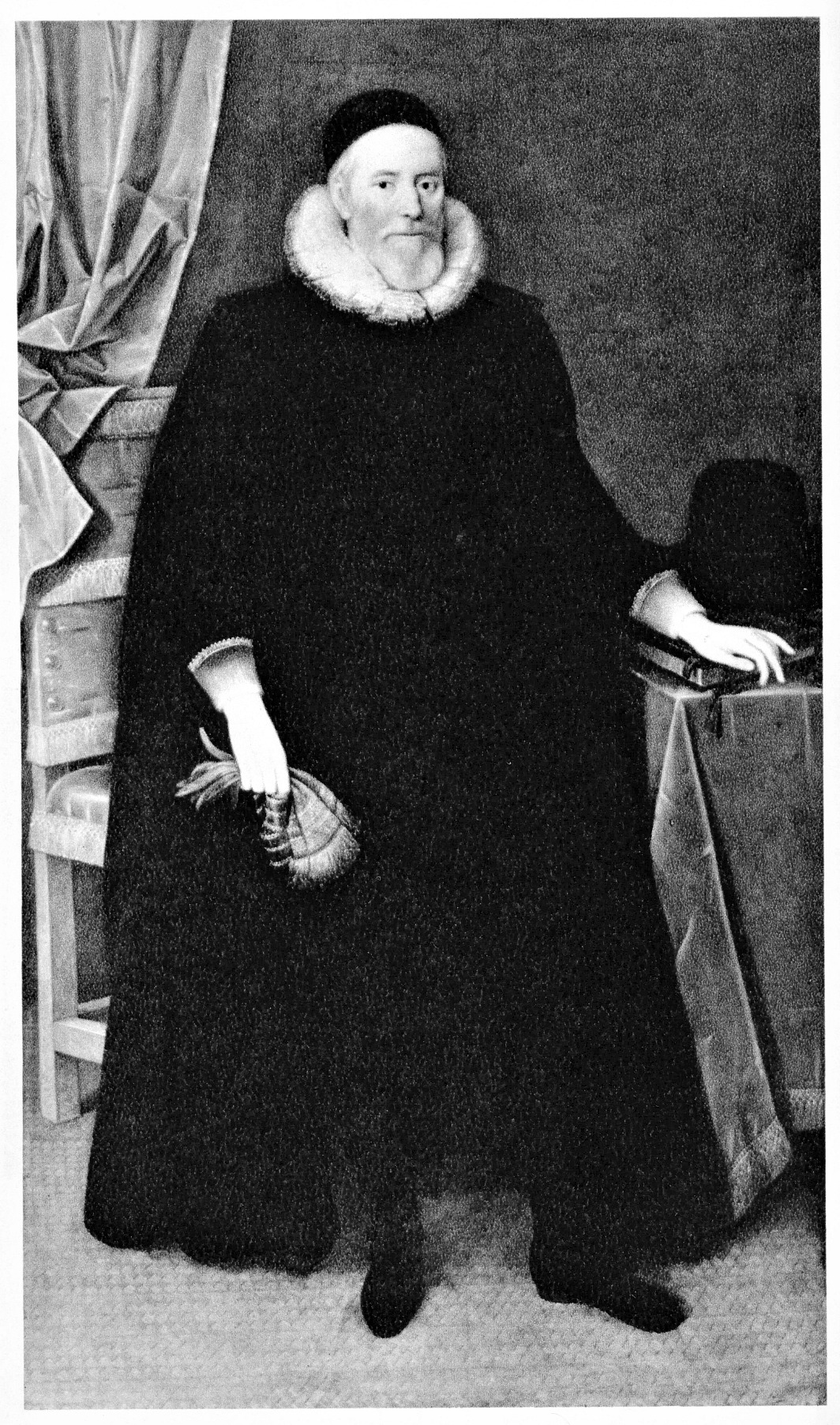
26 – Marcus Gheeraerts the Younger, Sir Henry Savile, 1621, 216.2 x 127 cm, Bodleian Library, Oxford. Gift from the sitter’s widow, 1622.
Sir Henry Savile (1549-1622) was an enterprising Bible scholar. When his qualifications did not meet the standards for the role of Provost of Eton, he had Queen Elizabeth I waive the college’s rules for him.
As Warden of Merton — a post secured with the help of influential friends — he was unpopular with faculty and students though the college itself flourished.
Sir Henry’s brother was a powerful lawyer who helped guide his brother’s career which included knighthood in 1604. (Strong 280).
27 – Marcus Gheeraerts the Younger, Sir Henry Savile, 1621, oil on canvas, 1621, 203.7 x 122 cm, Eton College. A second smaller copy of the Bible scholar and college administrator. (Strong 281).
28 – Marcus Gheeraerts the Younger, William Herbert, Earl of Pembroke, 1628, oil on panel, 68.5 x 48.2 cm, Philip Yorke.
Under King James I, William Herbert, 3rd Earl of Pembroke (1580 –1630), founded Pembroke College, Oxford, in 1624. In 1623 the First Folio of Shakespeare’s plays was dedicated to him and to Philip Herbert, Earl of Montgomery (the later 4th Earl of Pembroke), his brother.
A bookish man, the 3rd Earl of Pembroke was engaged to be married three times. The first engagement was to Elizabeth Carey in 1595. Elizabeth was the granddaughter of the Lord Chamberlain who ran Shakespeare’s company. William simply refused to marry her. In 1597 William was engaged a second time. This time it was to Bridget de Vere. As William found her dowry arrangements to be unsatisfactory, negotiations dragged out to a tiresome point where the match became unacceptable.
In 1600 William impregnated a mistress at court whom he refused to marry. The child was born and died soon after. Following this episode, William and the mistress (Mary Fitton) were barred from court.
In 1604 William married Mary Talbot. Their children both died in infancy. At the same time, William was having an extra-marital affair with his cousin, Lady Mary Wroth, which produced two illegitimate children.
A lively patron of the arts, William Herbert, 3rd Earl of Pembroke died suddenly in 1630 at 50 years old. He is buried in Salisbury Cathedral in the family vault at the foot of the altar. (Strong 282).
29 – Marcus Gheeraerts the Younger, Charles Hoskins, 1629, oil on panel, 66.1 x 52.7 cm, Jack Hoskins Master. Esq. (Strong 283).
30 – Marcus Gheeraerts the Younger, Lady in Fancy Dress (The Persian Lady), 1590s, oil on panel, 216.5 x 135.3 cm, Hampton Court.
First recorded in the collection of Queen Anne but believed to be part of the Royal Collection before that time, in the cartouche the sonnet reads: “The restless swallow fits my restless minde, Instill revivinge still renewinge wronges; her Just complaintes of cruelty unkinde, are all the Musique, that my life prolonges. With pensive thoughtes my weeping Stagg I crowne whose Melancholy teares my cares Expresse; hes Teares in sylence, and my sighes unknowne are all the physicke that my harmes redresse. My only hope was in this goodly tree, which I did plant in love bringe up in care: but all in vaine, for now to late I see the shales be mine, the kernels others are. My Musique may be plaintes, my physique teares If this be all the fruite my love tree beares.”
Lady in Fancy Dress is a good example of Elizabethan allegorical portraiture. Importantly, the painting may be related to the Ditchley portrait of Elizabeth I (Strong 285) as well as the portrait of Captain Thomas Lee (Strong 267 ). These three portraits may be connected in some way to the entertainment given by Sir Henry Lee, the Queen’s Master of the Armouries and Champion of the Tilt, when the Queen visited Ditchley in 1592. (Strong 284).
Queen Elizabeth I is standing on a map of England. Detail from The Ditchley Portrait of Elizabeth I by Marcus Gheeraerts the Younger in 1592.
Detail of a bejeweled fan in Queen Elizabeth I’s right hand from The Ditchley Portrait of 1592 by Marcus Gheeraerts the Younger. In the decade before The Ditchley Portrait Gheeraerts the Elder, Marcus II’s father, had painted a full- length oil on panel portrait of Elizabeth I. In the ensuing handful of years, practical technical innovation in art is in evidence in the Elizabethan court — the the son’s oil portrait of the same royal personage was able to be produced on canvas on a much larger scale.
Detail of the beautiful garment and accessories.
Detail, Queen Elizabeth I. Ditchley portrait. Three fragmentary Latin inscriptions in the painting have been interpreted as: “She gives and does not expect”; “She can, but does not take revenge”; and, “In giving back, she increases.”
An inscribed sonnet, whose author is not known, takes the sun as its subject. At some later date the canvas was cut more than 7 centimeters fragmenting the final words of the each line.
31 – Marcus Gheeraerts the Younger, Queen Elizabeth I (“The Ditchley Portrait”), oil on canvas, 1592, 95 in. x 60 in. (2413 mm x 1524 mm). National Portrait Gallery, London. Bequeathed by Harold Lee-Dillon, 17th Viscount Dillon, 1932.
Queen Elizabeth was nearly 60 years old when this portrait was made. It is traditionally understood to have been painted on the Queen’s visit to Ditchley, the timber-framed family house in north Oxfordshire of Sir Henry Lee (1533-1611).
Like John II Walshe (d.1546/7) of Little Sodbury, Gloucestershire, who was the King’s Champion to Elizabeth’s father Henry VIII, Henry Lee served at that standard for Queen Elizabeth from 1570 until his retirement about two years before this painting was made.
Ditchley once provided lodging and access to the royal hunting ground of Wychwood Forest. (Strong 285).
32 – Marcus Gheeraerts the Younger, Sir Henry Lee, 1590s, oil on canvas, 117 x 86.4 cm, The Ditchley Foundation. Always at Ditchley. The painting and inscribed verses memoralize an incident where Bevis – Lee’s dog – saved his master’s life. “More faithfull then favoured…” (Strong 286).
33 – Marcus Gheeraerts the Younger, Michael Dormer, mid 1590s, oil on canvas, 122 x 91.5 cm, J.C. H. Dunlop, Esq. There are Latin inscriptions which surround and are written across the globe and shield. (Strong 287).
The social and cultural world of Sir Henry Lee once again influences the young artist’s portrait of Michael Dormer, who was an Oxfordshire neighbor to Sir Henry. In Dormer’s three-quarter-length portrait, the right hand is posed similarly to Thomas Lee’s portrait. As Captain lee’s portrait is the centerpiece of this post’s explorations,it may be said with Michael Dormer’s this post has traveled full circle around Marcus Gheeraerts II’s verifiable portraiture in Elizabethan and Jacobean England.
Here then concludes the complete collection of Marcus Gheeraerts the Younger’s signed and dated works (Strong 255-262); inscribed and dated works (Strong 266-283); and, inscribed and undated works (Strong 284-287). Not included here are works dated and attributed to the artist (Strong 288-294) and attributed and undated (Strong 295-313). The last group includes several well-known portraits including William Cecil, Lord Burghley, c. 1595, in the National Portrait Gallery (Strong 295) and Robert Devereux, 2nd Earl of Essex, c. 1596, in collection of the Duke of Bedford. (Strong 300).
CAPTION NOTES:
Strong 255 – Hearn, Karen, Marcus Gheeraerts II, Elizabethan Artist (In Focus series), Tate Publishing, 2002, p. 29.
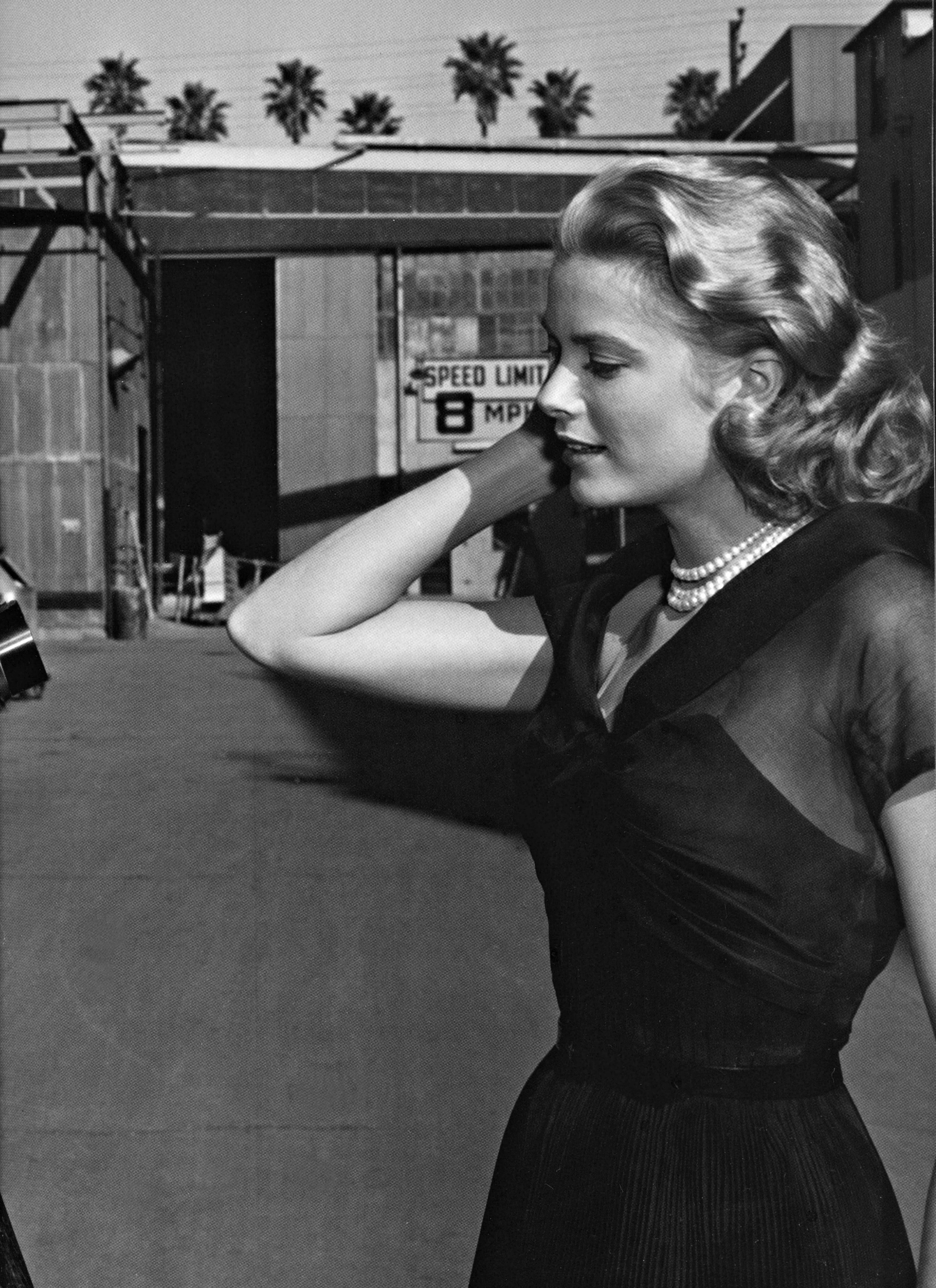
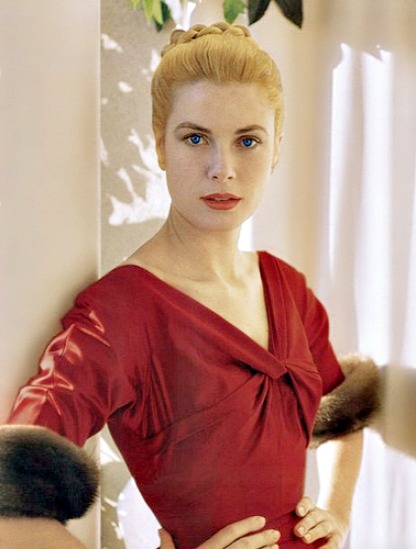
Philadelphia-born Grace Kelly (1929-1982) had a short but dazzling film career in Hollywood. Called the “Greatest Screen Presence in Film,”1 passionate and dramatically talented Grace Kelly was Alfred Hitchcock’s favorite actress when she starred in three of his classic films of the 1950’s: Dial M For Murder (1954), Rear Window (1954) and To Catch a Thief (1955).
After Grace was discovered in 1951 by Gary Cooper who said that Grace was “different from all these actresses we’ve been seeing so much of”2—and cast in High Noon (1951) as Cooper’s movie wife—Grace Kelly’s incomparable charm and allure swiftly impressed Hollywood and the world.
From September 1951 to March 1956 Grace Kelly’s star blazed across the silver screen in eleven major motion pictures for five different Hollywood studios. Grace was at the height of her career when she exited Hollywood to get married to the prince of Monaco in Europe, in April 1956.
Lloyd Bridges, Katy Jurado, and Gary Cooper co-starred with Grace Kelly in High Noon. Gary Cooper took credit for discovering Grace. Cooper was impressed with her acting talent, good looks, work ethic, and professionalism.
Grace Kelly and her stand-in Dorothy Towne on the set of High Noon (1952).
With 2 Hollywood films under her belt, Grace Kelly was nominated for her first Oscar for Best Supporting Actress in John Ford’s Mogambo (1953). Kelly plays Linda Nordley who arrives at the camp with her husband and soon has an affair with the camp’s big game hunter, Marswell (Clark Gable) that leads to a fit of jealous rage.
Following High Noon for United Artists, Grace’s performance for M-G-M on John Ford’s Mogambo (1953) led to her first Academy Award nomination as Best Supporting Actress. This was a coup for Grace Kelly who had made two films and was only one of many actresses considered for the role. Neither was Grace the studio’s first choice for the part of Linda Nordley, but English actress Deborah Kerr. It was mostly thanks to fellow Irish-American John Ford that worked to get fellow half-Irish Kelly the role – and Grace got to see the continent of Africa, “all expenses paid.” Always looking ahead, Kelly did Mogambo for many reasons not least of which was its overseas international connection.
Location filming in Africa began in November 1952 and continued until the end of January 1953. It was a major production, and out of the nervous excitement that seemed to imbue the project for the actors and crew, there shortly developed a sense of camaraderie and confidence. Grace contributed to the exciting professional spirit and a major outcome was that the Technicolor film from M-G-M was successful both critically and at the box office. It also raised the career prospects of its principals—namely, director John Ford, and Clark Gable, Ava Gardner, and newcomer Grace Kelly.3
Ava Gardner and Grace Kelly in Africa during the filming of Mogambo, M-G-M’s 1953 Technicolor adventure/romantic film directed by John Ford.
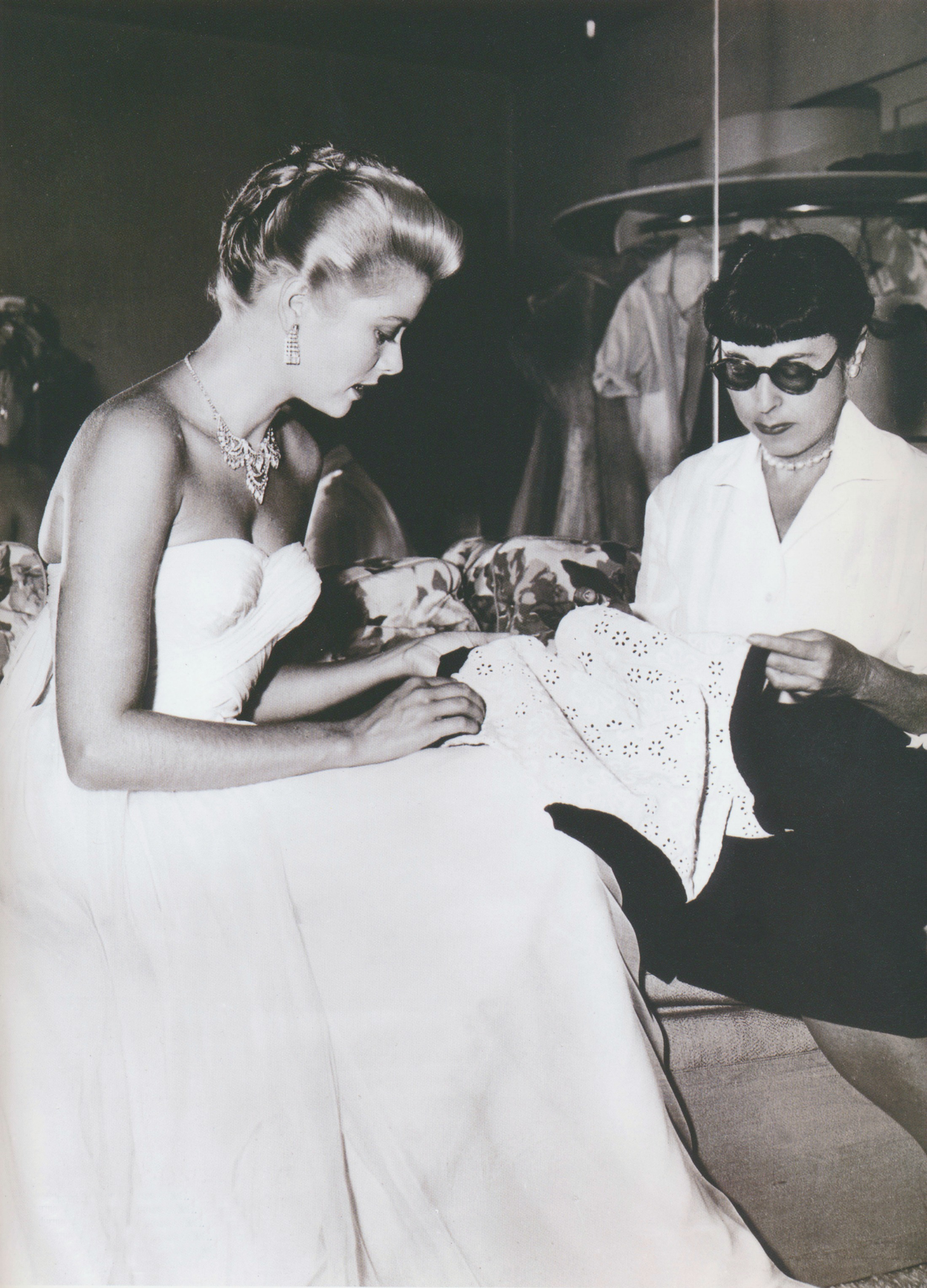
Clark Gable repeated the role of big-game hunter Victor Marswell that he played in Red Dust, M-G-M’s 1932 film co-starring Jean Harlow and Mary Astor. In the 1953 film, Marswell’s competing love interests were now played by Ava Gardner as Eloise Kelly and Grace Kelly as Linda Nordley. Grace Kelly was dressed by Helen Rose (1904-1985) costumer designer at M-G-M, for Mogambo. She wore a memorable well-cut pink shirt and, during one evening dinner, a flower dress which inspired its imitation among movie-goers. In 1956 Grace would be dressed again by Helen Rose for The Swan, though it is by being dressed by older and prolific costume designer Edith Head (1897-1981) that Grace Kelly became a fashion film icon.
From left: hairstylist Annabella Levy, actor Elizabeth Taylor and costume designer Helen Rose in 1954. Helen Rose did most of her costume design work at M-G-M which was also Grace Kelly’s home studio. Helen Rose dressed Grace in Mogambo (1953) and The Swan (1956). Public Domain. PD-US (licensing information : [1]) – no copyright notice (see source). https://en.wikipedia.org/wiki/Helen_Rose#/media/File:Levy-Taylor-Rose_in_Rhapsody.jpg
GRACE BEGINS HER FASHION COLLABORATION WITH ACADEMY-AWARD-WINNING COSTUME DESIGNER EDITH HEAD IN 1953.
By 1953 Grace Kelly was becoming as well-known as Audrey Hepburn for her fashion sense and costume designer Edith Head found it a joy to work with her. “Grace Kelly” by twm1340 is marked with CC BY-SA 2.0.
Grace Kelly in wardrobe by Edith Head for The Bridges of Toko-Ri. Filming began in January 1954.
In July 1953 Grace began work on Dial M For Murder for Warner Brothers where she met Alfred Hitchcock who became a cinematic mentor. Soon after, The Bridges at Toko-Ri (1954) at Paramount Pictures began Grace’s ground-breaking multi-film collaboration with Academy-Award winning costume designer Edith Head. In the 1930’s, costume designer Edith Head leaned liberal in her costume designs. By the 1950’s, when she worked with Grace, Head’s fashion designs became more conservative. Edith Head and Grace Kelly became lifelong friends. Even after Grace left Hollywood and became Princess of Monaco, Edith Head, who had a very busy schedule as a prolific and successful costume designer in Hollywood – a record eight Academy Awards for Best Costume Design between 1949 and 1973 – visited Grace in Monaco on vacations right up to the time of Kelly’s untimely death at 52 years old on September 14, 1982 following a car accident.
In 1952 Grace Kelly played Amy Fowler Kane in Fred Zinnemann’s High Noon. In 1953 Kelly received an Oscar nomination for Best Supporting Actress for her performance as Linda Nordley, one side of a love triangle, in John Ford’s Mogambo with Hollywood stars Clark Gable and Ava Gardner. Grace had made her first of three films with Alfred Hitchcock as Margot Mary Wendice in Dial M For Murder (released in May 1954). So, when filming started in January 1954 for The Bridges at Toko-Ri, Grace Kelly, who just turned 24 years old, had already made remarkable films.
The year 1954 proved to be a banner year for Grace Kelly’s scintillating Hollywood career. In August/September 1954 Alfred Hitchcock’s Rear Window was released. The part of Lisa Carol Fremont solidified Kelly’s image as a fashion icon. Other films released in 1954 starring Grace Kelly were Green Fire with Stewart Granger, The Bridges at Toko-Ri with William Holden and The Country Girl with Bing Crosby – all December 1954 releases. In the dressed-down role of Georgie Elgin Grace Kelly’s performance brought her that year’s Academy Award for Best Actress in a Leading Role in March 1955. In May 1955 Grace Kelly met Prince Rainier III (1923-2005) of Monaco and the couple were engaged by the end of the year.
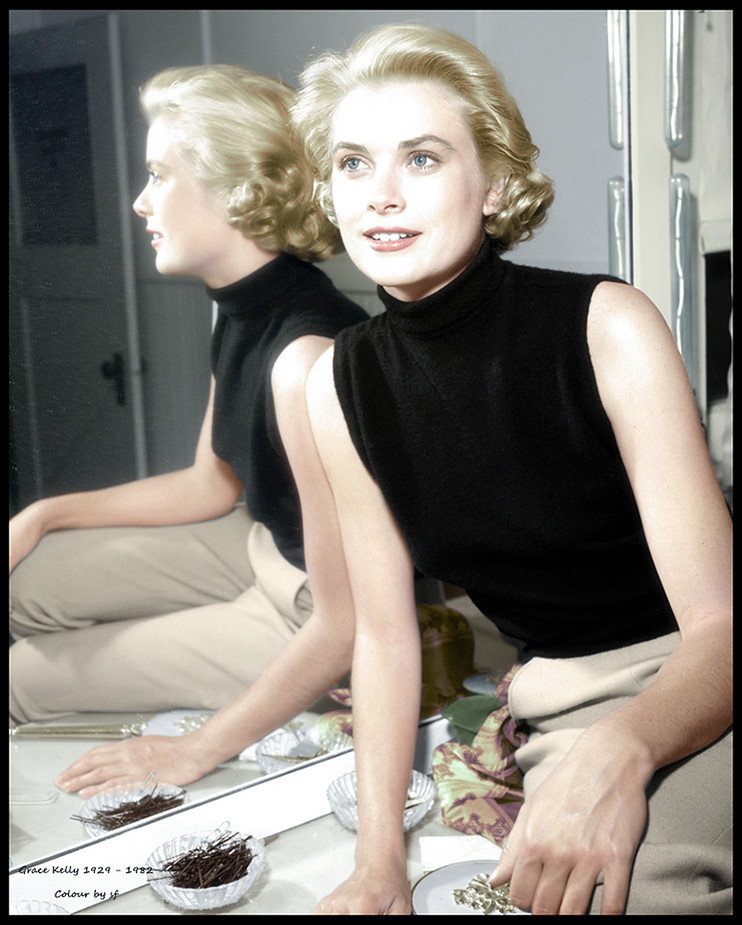
In The Bridges of Toko-Ri Grace played the small but pivotal role of Nancy Brubaker, wife of Lt. Harry Brubaker (William Holden). Kelley wears a sleeveless turtleneck and tan pants in her dressing room on set in 1954. PHOTO credit: “Grace Kelly 1929 – 1982” by oneredsf1 is marked with CC BY-NC-SA 2.0GRACE KELLY APPEARED in 5 FILMS RELEASED IN 1954, INCLUDING HER ACADEMY-AWARD-WINNING BEST ACTRESS PERFORMANCE IN THE COUNTRY GIRL. “Grace Kelly 1929 – 1982” by oneredsf1 is marked with CC BY-NC-SA 2.0.On the set of Green Fire in 1953 Grace Kelly wears a belted beige dress and matching sunhat. PHOTO credit: “Grace Kelly 1929 – 1982” by oneredsf1 is marked with CC BY-NC-SA 2.0.
Grace Kelly was the reason the box office thrived for Green Fire, a drama about emerald miners in South America co-starring Stewart Granger. It was produced in Cinemascope and Eastman Color. The film was panned by many.
Kelly had been working constantly since 1951. She made the entertaining color action feature The Bridges at Toko-Ri for Paramount Pictures. The film is significant for the fact that it started the collaboration of Grace Kelly with costume designer Edith Head as well as was a serious film dealing with the Korean war.
Before meeting Prince Rainier III in May 1955 upon leading the American delegation that year to the Cannes Film Festival and making the Hitchcock thriller, To Catch a Thief, co-starring Cary Grant, Grace had her share of romantic involvements, including during the making of The Bridges at Toko-Ri.
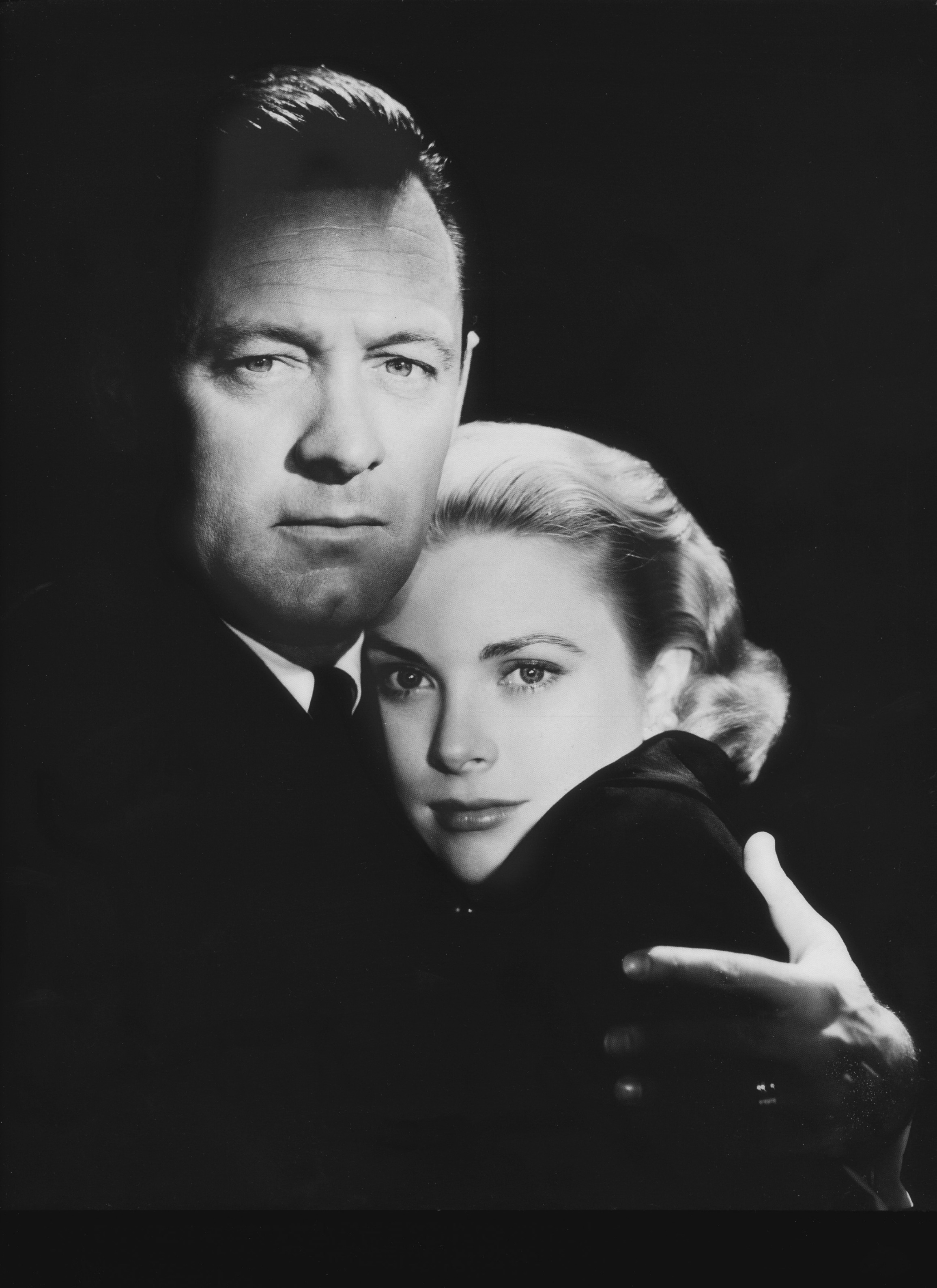
Grace Kelly and William Holden play the husband-and-wife lead roles in Paramount Pictures’ 1954 war film, The Bridges at Toko-Ri. During filming, Grace Kelly fell madly in love with her Bill Holden, her co-star, who was married and 11 years older. PHOTO image: “Grace Kelly 1929 – 1982” by oneredsf1 is marked with CC BY-NC-SA 2.0.
Off screen Grace Kelly had fallen madly in love with co-star William Holden. Holden was 11 years older than Grace Kelly—and married. But they had an affair throughout the making of the picture. The electricity of that affair is evident in the love scenes where they played movie husband and wife.
In The Bridges at Toko-Ri Grace Kelly is Nancy Brubaker, the young wife of Navy pilot Lieutenant Harry Brubaker (Holden). A husband and father, Brubaker never wanted to be a flyer in the Navy and still wants out. Yet he accepts a very risky and dangerous mission during the Korean War and is killed in action. The commander asks—is it really a good mission if lives of good men are lost? The film is based on a novel by James Michener who recounted actual missions he covered as a correspondent on U.S. air craft carriers that were flying bombing missions on railroad bridges in North Korea in 1951 and 1952.
In The Bridges at Toko-Ri Grace Kelly played Nancy Brubaker, the wife of a U.S. Navy pilot (William Holden) who is killed in action in the Korean War. Grace is radiant in every scene in which she appears.
Though Kelly has a relatively small part in the war film, she is radiant in every scene. This is the first film where Grace Kelly appears in bed. Directed by prolific Marc Robson, The Bridges at Toko-Ri was one of the biggest hits of his career. Lyn Murray composed the musical score. Murray started in Hollywood in 1950 doing vocal arrangements for Walt Disney but soon was writing music for feature films throughout the 1950’s and 1960’s.
The film is a noisy and straightforward tale of one small American family in war-time. It combines humor notably provided by Mickey Rooney as CPO NAP Mike Forney that soon collides with war’s high-stakes mortal danger whose scenes look to presage Vietnam. The film’s cooperation with the U.S. Navy led to realistic and spectacular aerial and carrier action scenes that, in 1956, won the Academy Award for Best Special Effects.
Grace Kelly had a small but important role in The bridges at Toko-Ri, one of the best motion pictures made dealing with the Korean war. From Paramount Pictures and based on a book by James Michener, it was filmed in Technicolor and had the full cooperation of the U.S. Navy.
Holden as Airman Brubaker tenderly expresses his sense of loss when his fellow airmen Mike Forney and Nestor Gamidge (Earl Holliman) are whisked off to other navy assignments. Their entire job was to save the lives of airmen in battle—and had saved Brubaker’s – so that their sudden professional absence is personally and deeply felt.
This is a film of the mid 1950s with caring commanders who look and talk remarkably like Ike, then President of the United States and who had just ended the Korean action in July 1953. Chain smoking by nearly everyone in the cast appears to be de rigueur. Listening to navy radio Lieutenant Harry Brubaker is riveted hearing a broadcast from Chicago’s famous Chez Paree nightclub showcasing jazz trumpeter Henry Busse. The local flair and period cultural items add interest to the fine acting and timeless beauty of Grace Kelly along with the film’s fact-based war story and blockbuster action. Almost 70 years after its initial release, The Bridges at Toko-Ri continues to be a worthwhile entertainment.
A stage play on film, the action in Dial M For Murder is limited to a few rooms about a tennis player (Ray Milland) who arranges to kill his wife (Grace Kelly) to inherit her money. Shot in WarnerColor, it co-starred a cast that included Robert Cummings. “Grace Kelly 1929 – 1982” by oneredsf1 is marked with CC BY-NC-SA 2.0.
On the set of Rear Window (1954).
In Rear Window released in September 1954, Grace Kelly received equal billing with co-star Jimmy Stewart and director Alfred Hitchcock.
Grace refused other lucrative film offers to work again with Hitchcock, this time at Paramount Pictures, on Rear Window co-starring Jimmy Stewart. In this landmark mystery thriller film which came out in summer 1954, one of Hitchcock’s dramatic emphases for Grace Kelly’s film persona was to display her natural elegance and sex appeal—he was amused by her public image as an “Ice Queen”4—by having her costumed in an array of fabulous Edith-Head-designed lingerie, dresses, and pants. Growing up in Philadelphia Grace Kelly as an adolescent and teenager had modeled in local fashion shows but, by the middle 1950’s in her mid-twenties, she became an international fashion and style icon.
Edith-Head lingerie, dresses, and pants highlighted the differences in lifestyle between the character of Lisa played by Kelly and the photojournalist L.B. Jeffries played by Jimmy Stewart.
In the scene where Kelly is first introduced in the film, Stewart awakes to a full close up of Lisa coming toward him for what may be cinema’s greatest kiss. The dress Lisa describes as “fresh from the Paris plane” offered a simple neckline to frame Grace’s face for the close-up, a fitted black bodice and a full skirt to mid-calf, among other accessories. The $1,100 price tag in 1954 that Lisa talks about is about $13,000 today. Hitchcock wanted the audience to know immediately that Lisa was no ordinary woman that had arrived to Jeff’s apartment.Studio publicity still of Grace Kelly for the film Rear Window (1954). Public Domain. “Grace Kelly in Rear Window” by thefoxling is marked with CC BY-NC-SA 2.0.
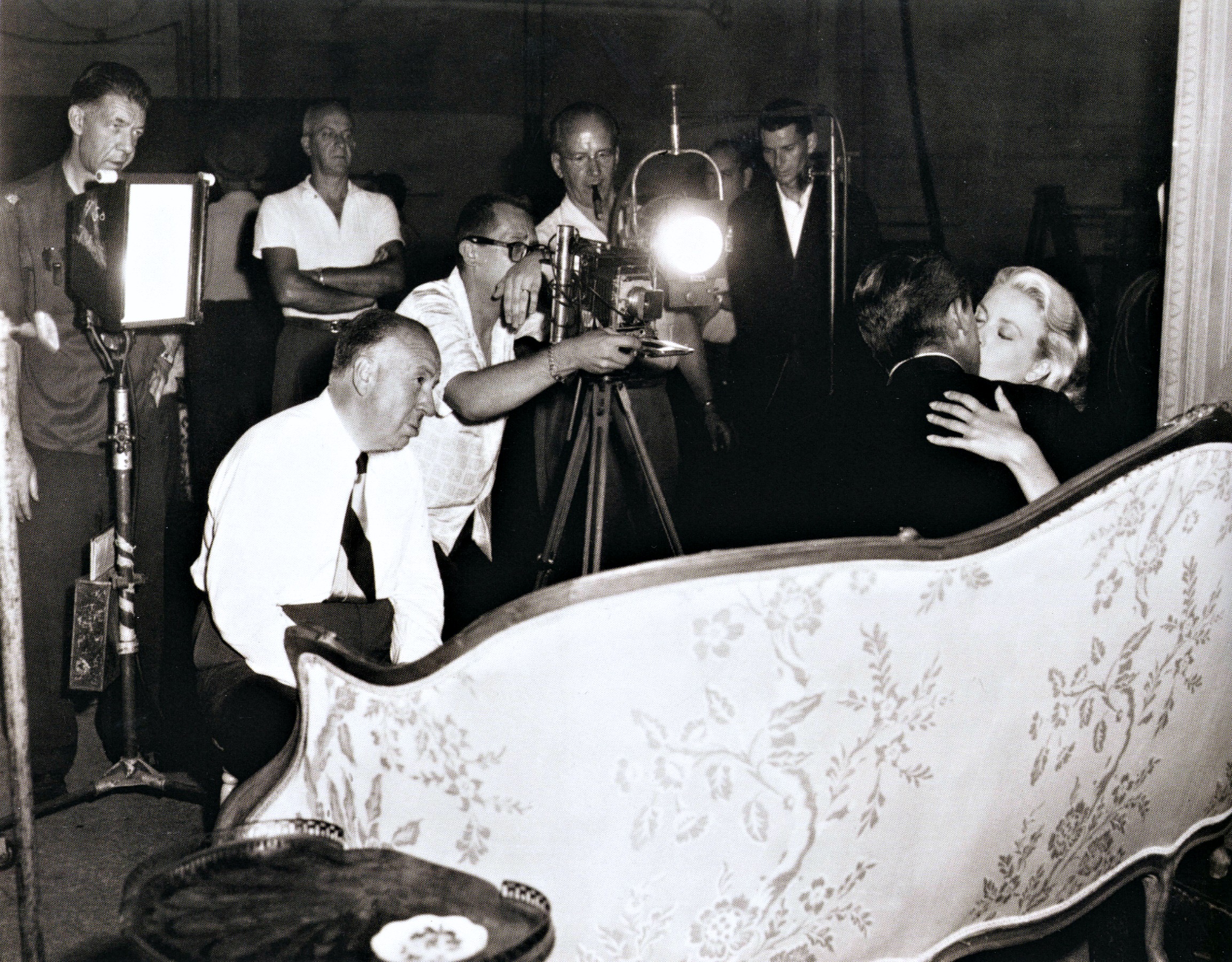
Action In Rear Window – like Dial M For Murder – was in a confined setting. In Alfred Hitchcock’s first picture for Paramount Pictures, the action was confined to one room with a hero (Jimmy Stewart) confined by a broken leg. Rear Window, which is about a photojournalist who sees strange goings-on as he watches people in the privacy of their apartments using a telephoto lens, was an artistically and financially suspenseful parlor drama that was hugely successful.“Alfred Hitchcock, Grace Kelly, Jimmy Stewart (1)” by oneredsf1 is marked with CC BY-NC-SA 2.0.“Grace Kelly 1929 – 1982” by oneredsf1 is marked with CC BY-NC-SA 2.0.
Never just a pretty face, Grace Kelly insisted in her studio contract that she be allowed regular breaks to be able to act in live theater.5 From childhood, Grace admired the art of the live stage and welcomed demanding theater and film roles that challenged and exhibited her acting range and abilities. This love of the theater was a big part of her motivation to seek the hardly glamorous but dramatically impressive role of Georgie Elgin in George Seaton’s The Country Girl (1954) for Paramount Pictures.
With co-stars Bing Crosby and William Holden, the film featured Grace playing Georgie, the long-suffering wife of an alcoholic actor struggling to resume his career (played by Crosby).
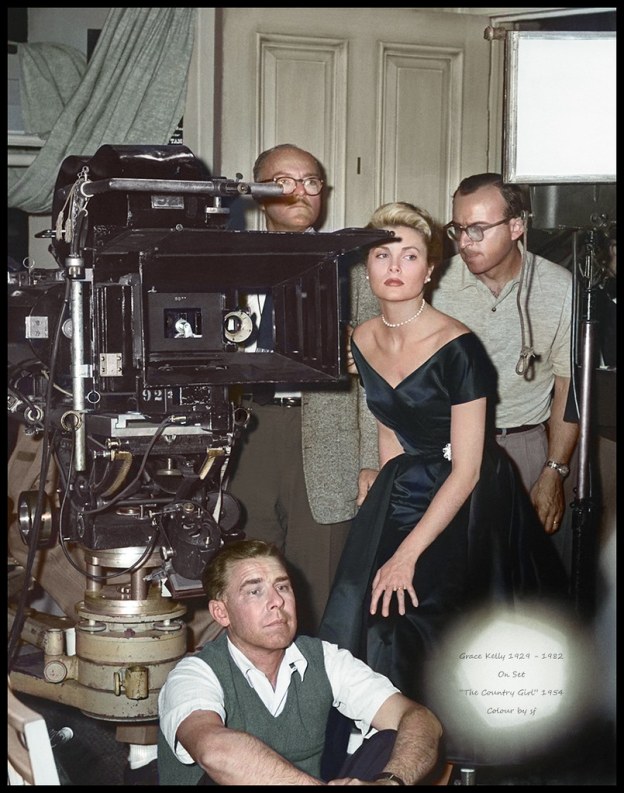
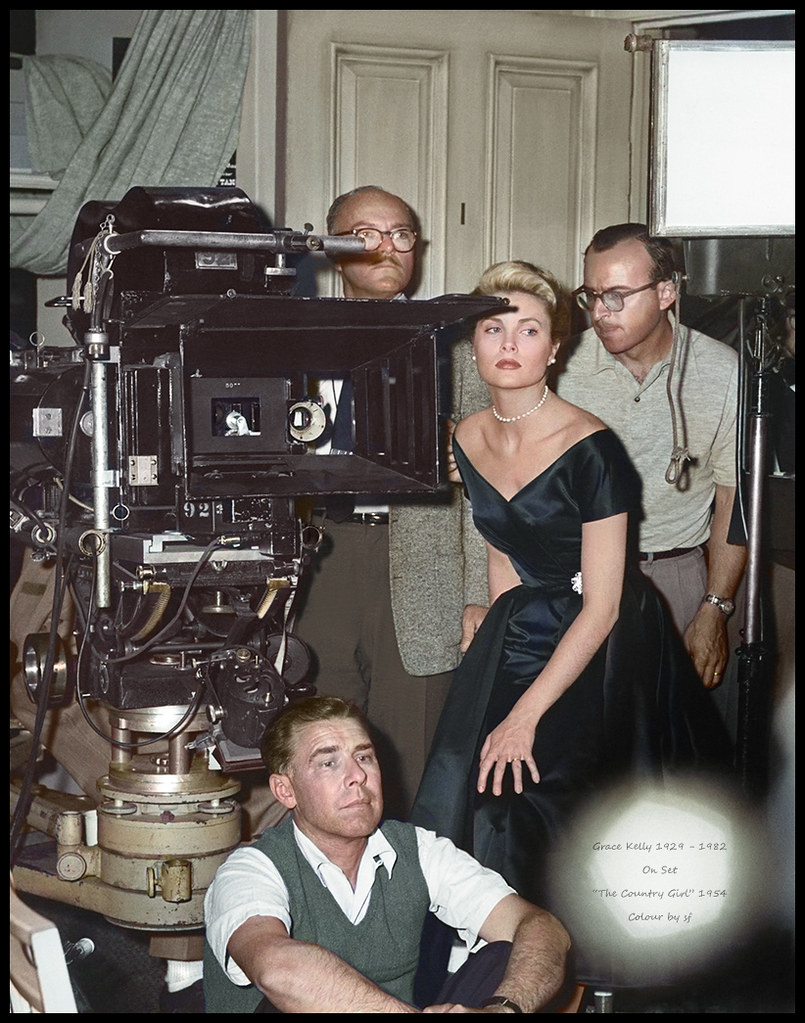
Grace Kelly studying the script during filming of George Seaton’s The Country Girl. The 1954 drama film received 7 Academy Award nominations and won two Oscars – including Grace Kelly as Best Actress.
The Country Girl features actors playing against type and revealing new facets of their acting talents. William Holden plays Bernie Dodd, a stage director, who takes a chance on Frank Elgin (Bing Crosby), a great star who has lost jobs because of his dipsomania. Dodd blames Elgin’s wife Georgie (Grace Kelly) but realizes that Frank Elgin would have crumbled without her. When Frank pulls himself together for an opening night triumph, Dodd proposes to Georgie and she must decide to leave with the handsome, hardworking stage director or stay with her troubled husband. Grace on the set of The Country Girl,1954. “Grace Kelly 1929 – 1982” by oneredsf1 is licensed under CC BY-NC-SA 2.0.
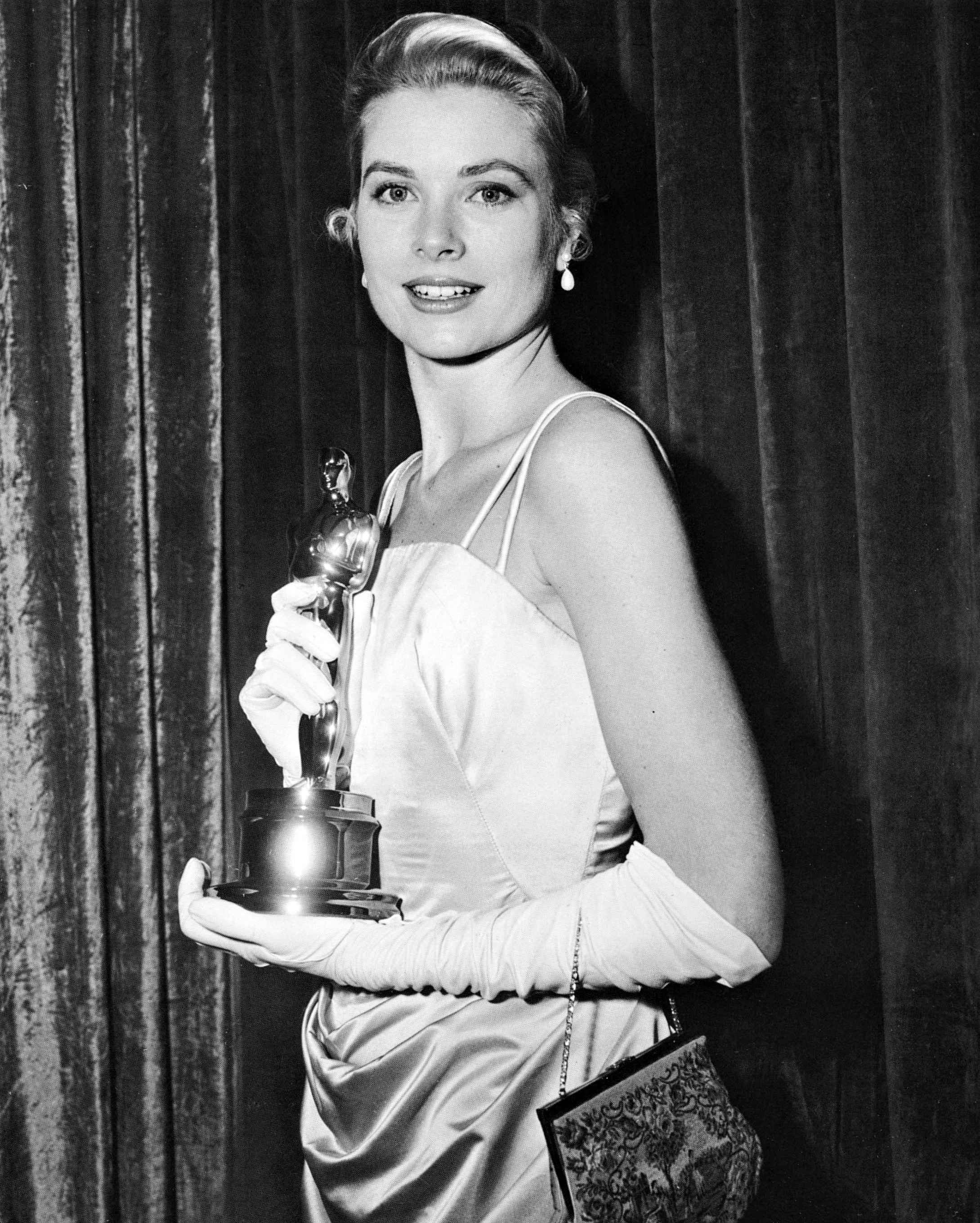
At its release, The Country Girl was a hit and nominated for seven Academy Awards. On Wednesday, March 25, 1955, at the telecast of the 27th annual Academy Awards held at RKO Pantages Theatre, the third time the ceremony was televised nationally, The Country Girl won two Oscars, including one for Grace Kelly for Best Actress.6 At 25 years old Grace Kelly of the ambitious and hugely competitive Kellys of Philadelphia had reached the pinnacle of the cinema arts holding her profession’s gold-plated statuette.
Grace Kelly backstage after the 27th annual Academy Awards on March 25, 1955.
During the evening Grace won the Oscar for Best Actress for her dressed-down and dramatic role in The Country Girl.
At the 27th Annual Academy Awards, presenter Bette Davis is joined by Marlon Brando and Grace Kelly, each holding their golden trophies for Best Actor and Best Actress.
In early 1954 Grace had flown to South America to make Green Fire (1954) for M-G-M with Stewart Granger. In May 1954 she was at the French Riviera to make her third film with Alfred Hitchcock: To Catch a Thief (1955) co-starring Cary Grant for Paramount Pictures.
Grace liked the Riviera. In April 1955 she traveled there again for the 8th annual Cannes Film Festival. It was during this early spring 1955 Mediterranean trip that Grace Kelly was first introduced to Prince Rainier III of Monaco.
Grace Kelly in a chiffon-draped gown by Edith Head in To Catch a Thief (1955).
Sitting in a director’s chair with her co-star Cary Grant’s name emblazoned on it, Academy-Award-winning Best Actress Grace Kelly is served a beverage by director Alfred Hitchcock on the set of To Catch A Thief.
Cary Grant’s reaction to the beach dress makes its stunning design even more iconic. “Grace Kelly” by twm1340 is marked with CC BY-SA 2.0.
Hitchcock had found his blonde muse in Grace Kelly and aided mightily to reveal her star qualities. Grace Kelly and Cary Grant in To Catch a Thief (1955). Kelly and Grant were lifelong friends. PHOTO credit: “Grace Kelly & Cary Grant, ‘To Catch a Thief’, 1955” by thefoxling is marked with CC BY-NC-SA 2.0.
Grace wears a pink dress for a walk in the south of France. Grace Kelly on the set of To Catch A Thief. “grace kelly” by ___carmendy is marked with CC BY 2.0.About Grace Kelly, friend and co-star Cary Grant recalled that the Academy-Award winning actress commanded so much respect during the filming of “To Catch a Thief” that there was almost total silence when she arrived on the set.Fair use.
Grace Kelly dressed for the ball in the penultimate scene of her penultimate film, To Catch A Thief.
Grace Kelly by Howell Conant, 1955. Conant was Grace Kelly’s friend and favorite photographer.
26-year-old Grace Kelly and 31-year-old Prince Rainier III on their first meeting at the palace in Monaco, May 6, 1955. They would be engaged to be married by the end of the year. Photo: Edward Quinn. Fair Use.
Grace Kelly stood five foot seven inches tall and weighed 118 pounds. Her dress size was two.7 She was born on November 12, 1929 into the Kelly family of Philadelphia. Grace Patricia Kelly was the third of four children and one of that Irish-German family’s three girls. Elder sister Peggy and younger sister Lizanne were athletic and shared their mother Margaret’s model looks. Margaret was the family disciplinarian who the Kelly children liked to call “the Prussian General.”8
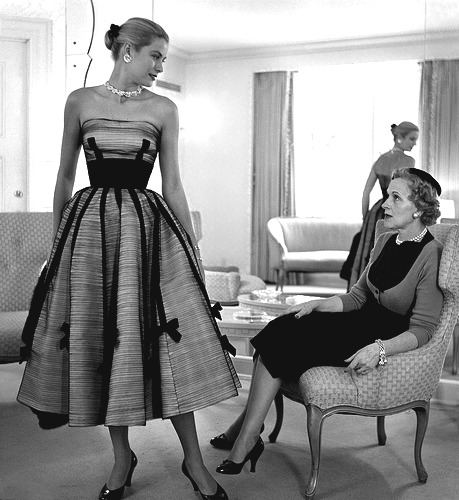
Grace Kelly models a fashionable dress for her mother in the mid1950’s. Grace’s reflection is in the mirror.
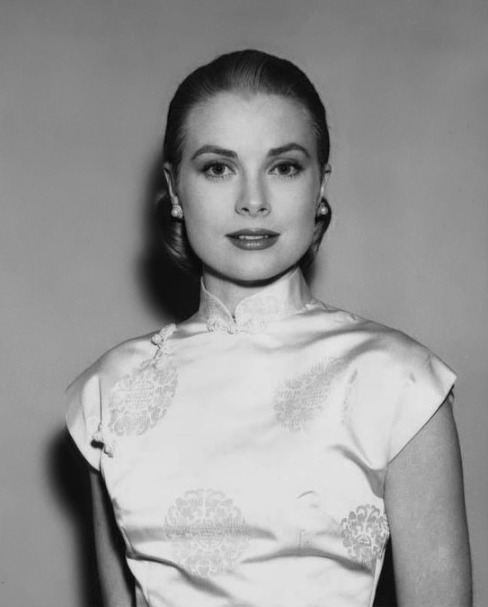
As a child Grace was dreamy and shy while her siblings were outgoing and athletic. Yet Grace inherited a keen awareness of her body using her arms and legs to be dramatically expressive in an actress’s rather than athlete’s way.9 At 18 years old Grace’s beautiful rectangle-shaped face with soft pear-shape dimensions displayed thick blond hair, almond-shaped blue eyes, a small high-bridge nose and ruby lips evident in later glamour photographs.
Each member of the Philadelphia Kelly family was an exuberant competitor in areas of American life such as athletics, business, politics, or high society.
in addition to her remarkable beauty, one of Grace’s major strengths was her ability to focus on the goal she decided to pursue whether professionally or personally until that goal was achieved.
When Grace won the Academy Award for Best Actress in 1955 it was a brick in the Kelly family wall of ambition for success.
Before she was a teenager Grace performed in plays so that during her teenage years a desire to be a professional actress grew. Since Grace was situated within a protective and affluent family as well as educated in Philadelphia Catholic and other private schools she sought theater work in New York City instead of Hollywood. Even when she had achieved the pinnacle of film success Grace still considered New York Theater a worthwhile aspiration and Hollywood as a pitiless machine of cinematic production.10
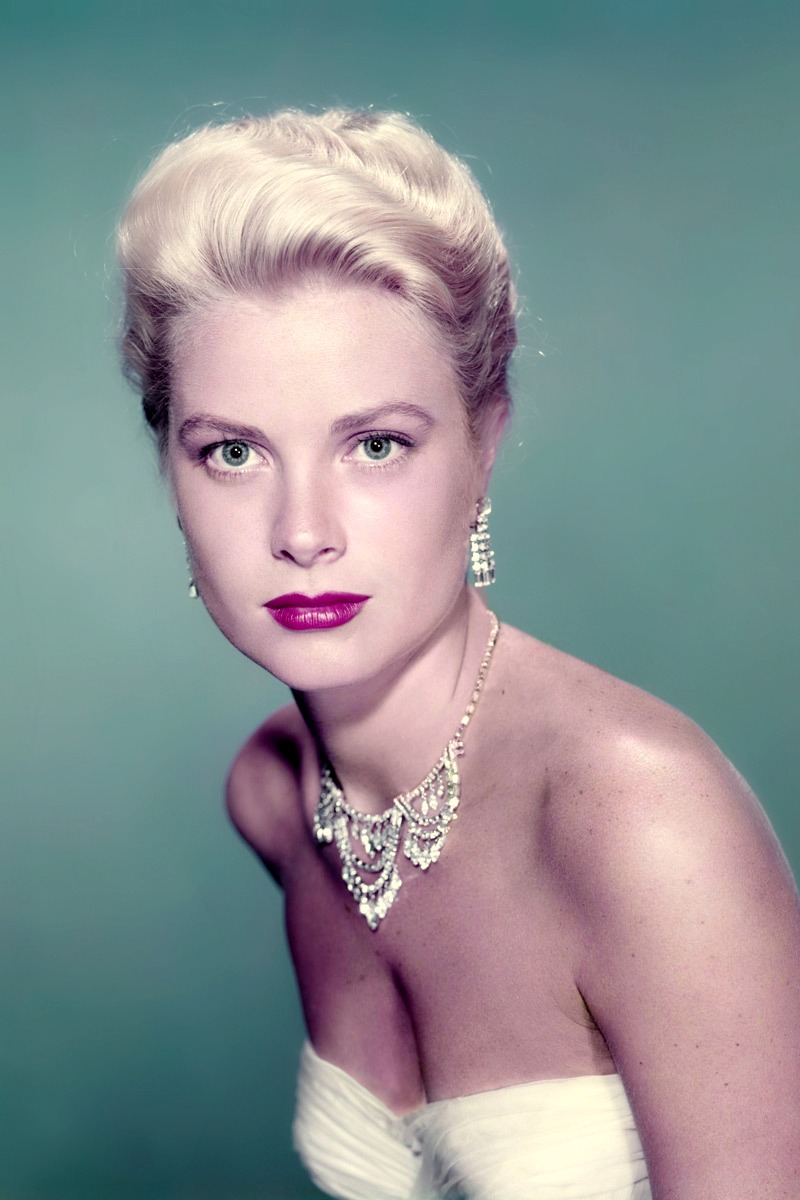
The Kellys in Philadelphia. Grace and Peggy flank Jack and Lizanne on his shoulders, c. 1946. Grace Kelly moved to Southern California to be in motion pictures. She appeared in her first film called Fourteen Hours for 20th Century-Fox in 1951 when she was 22 years old.“Grace Kelly 1929 – 1982” by oneredsf1 is marked with CC BY-NC-SA 2.0.Grace Kelly, 1955. Four years after her arrival to Hollywood Grace Kelly was one of the most glamorous women in the world.
It was Aristotle Onassis who suggested to Prince Rainier that he marry a beautiful American movie star to bring the glitterati back to Monaco. Onassis’s list at the time did not include Grace Kelly.11
Invited to the 1955 Cannes Film Festival after she had won the Academy Award for Best Actress for The Country Girl one month before, Grace was curious enough about the prince to be introduced to him in Monaco on Friday, May 6, 1955.
What is memorable from the photographs of their meeting at the palace is that the Prince looks chic and handsome and Grace is at her most beautiful in a black silk floral print dress with her blond hair pulled back into a German-style bun.
That evening Grace returned to Cannes for the festival’s screening of The Country Girl helping to conclude a day that Grace herself called “pretty wild.”12 But Grace’s career in Hollywood wasn’t over—nor her life half begun. She was back in Paris before the festival’s winners were announced (she had won nothing there),13 and soon returned to Hollywood to make what turned out to be her final two Hollywood movies – The Swan and High Society.
Grace Kelly and Prince Rainier were engaged in December 1955. One of her female co-stars observed that the gem of Grace’s engagement ring that she received from the prince was the size of a “skating rink.”
Grace Kelly wears her engagement ring from Prince Rainier on the set of High Society.
Grace Kelly in a make-up test for the honeymoon scene in High Society.
High Society from M-G-M, starring Grace Kelly as socialite Tracy Lord, was the biggest money making film of 1956. It was a musical adaptation of M-G-M’s The Philadelphia Story (1940) starring Katharine Hepburn in the lead role. High Society co-starred crooners Bing Crosby and Frank Sinatra and songs by Cole Porter. The film was Grace Kelly’s swan song before she departed Hollywood forever. In High Society (1956) Grace Kelly plays Tracy Samantha Lord. C.K. Dexter-Haven (Crosby), her former husband, remains in love with her but she is now engaged to socially prominent and snobbish George Kittredge (John Lund). With the help of a sympathetic reporter (Sinatra), Dexter-Haven has a short window of time to convince her that she really still loves him. Costumes were by Helen Rose who worked at M-G-M from 1942. Photograph by Eric Carpenter (1909-1976), a Clarence Sinclair Bull assistant, Fair use. Grace Kelly in High Society (1956). “Grace Kelly” by thefoxling is marked with CC BY-NC-SA 2.0.Grace Kelly, The Swan.
In the same year that The Swan (1956), a film featuring royalty, was released, Grace Kelly had married the Prince of Monaco. Grace Kelly in a M-G-M publicity photograph for The Swan.
Grace behind the wheel of a Mercedes-Benz for a scene in High Society.
Leaving “Tinsel Town” for what turned out to be forever, the 26-year-old movie star sailed for Monaco. The Kellys paid a $2 million dowry and, in April 1956, Grace married her prince. She became a wife, mother, and royal princess of a sovereign city-state and microstate on the Mediterranean Sea – and one of the wealthiest places in the world.14 Grace, however, traveled frequentl to the United States, and though her acting career had precipitously ended, she remained Hollywood royalty as well.
Fourteen Hours Grace Kelly as Louise Anne Fuller Directed by Henry Hathaway Released March 6, 1951. Twentieth-Century Fox
1952:
High Noon Amy Fowler Kane Directed by Fred Zinnemann Released July 24, 1952 United Artists
1953:
Mogambo Linda Nordley Directed by John Ford Released October 9, 1953 M-G-M
1954:
Dial M for Murder Margot Mary Wendice Directed by Alfred Hitchcock Released May 18, 1954 Warner Bros.
Rear Window Lisa Carol Fremont Directed by Alfred Hitchcock Released September 1, 1954 Paramount Pictures
The Bridges at Toko-Ri Nancy Brubaker Directed by Marc Robson Released December 31, 1954 Paramount Pictures
The Country Girl Georgie Elgin Directed by George Seaton Released December 15, 1954 Paramount Pictures
Green Fire Catherine Knowland Directed by Andrew Marton Released December 29, 1954 M-G-M
1955:
To Catch a Thief Frances Stevens Directed by Alfred Hitchcock Released August 3, 1955 Paramount Pictures
1956:
The Swan Princess Alexandra Directed by Charles Vidor Released April 18, 1956 M-G-M
High Society Tracy Lord Directed by Charles Walters Released July 17, 1956 M-G-M
TEXT NOTES:
It was actually my brother Kevin who, when he was working in the Chicago Film Office, wrote to me this description of Grace Kelly and Rear Window as the greatest film ever.
Quoted in Roberts, Paul G., Style Icons Vol 4 Sirens, Fashion Industry Broadcast, p. 74.
Scott Eyman, Print The Legend: The Life and Times of John Ford, Simon & Schuster, 1999, p. 419-21; Kenda Bean and Anthony Uzarowski, Ava: A Life in Movies, Philadelphia: Running Press, 2017, p. 118
Dherbier, Yann-Brice and Verlhac, Pierre-Henry, Grace Kelly A Life in Pictures, Pavilion, 2006, p. 11.
Edith-Head-designed apparel for Rear Window – Haugland, H. Kristina, Grace Kelly: Icon of style to Royal bride (Philadelphia Museum of Art), Yale University Press, 2006, p. 956; so she could act in live theater – TBA
First meeting in Monaco of Grace Kelly and Prince Rainier III. He would tell her, “This is Europe, not America, We think differently here, and you will have to get used to it.” Fair use.
FEATURE image: La Ghirlandata. Dante Gabriel Rossetti (1828-1882). 1873. Oil on canvas. 124 x 85 cm. Guildhall Gallery, London. City of London Corporation. Public Domain.
All variations of the name Brigid mean “power, strength, force, and authority” as well as “vigor, virtue and fortitude.”
By John P. Walsh
In Ireland a generation ago the girl’s first name of Brigid (along with Mary) was one of the island’s most popular. In the 1960s and 1970s, it seemed that a lot of Irish-American girls were named Brigid, or wished to be. By the 2010s the name of Brigid was no longer, in Ireland at least, very popular as other girls’ names replaced it.1
In Ireland the name Brigid is rendered in a healthy variety of ways.
The well-known Bridget is the English variant. In this Irish folk song Bríd Óg Ní Mháille (Young Brigid O’Malley), it is the Irish language Brid (pronounced Breed) that is used. The Irish also offers Bride, Brídín, Brighid, Brighidín, Brigit, Breeda, and others. With so many alternatives for a very ancient name it may be surprising that none of them rank high on the popularity charts although their accumulated usage may do so.2
The root word of Brigid translates as “fire.”
With its root word being breo (which means fire), all variations of Brigid have the Irish word brígh in common. According to the Royal Irish Academy’s Dictionary of the Irish Language, brígh has multiple definitions and meanings. It primarily connotes “power, strength, force, and authority” but also translates as “vigor, virtue and fortitude.” In medicine, brígh refers to the antidote which proves to be strongly effective.3 As Brid is sometimes translated as “strong-willed” and “high born,” it is clear that this girl’s appellation possesses excellent qualities that, along with the beauty of its sound when spoken and its venerable ancient history, may be expected to one day again reach into the top 100 Irish names for girls.
St Brigid of Ireland statue by Timothy P. Schmalz. The sculpture of St. Brigid at Knock Shrine in Ireland captures that moment where Brigid gave her father’s treasured sword to a leper in the presence of the King of Leinster. Before her father was able to strike her down, she explained that, by way of the leper, she could give the sword of God. The King, being a Christian, forbade her father to strike her down and granted her her freedom saying: “Brigid’s merit before God is greater than our own.”
Mother was a slave, father was a pagan chief.
The first Irish historical figure directly associated with the name Brid or Brigid that is most relevant to the name in Ireland today is St. Brigid (c. 451–525). Along with saints Patrick (418-493) and Columba (540-615), Brigid is one of Ireland’s three patron saints.
Legends swirl around this early Christian figure from the moment of her birth, including the story of angels seen hovering over the Irish cottage where she was born near Dundalk at the foot of the Cooley Mountains. History records that her mother was a Christian slave and her father was a pagan chief.
Legends from ancient times. Patron saint of ireland.
Soon after Brid’s birth, her mother was sold and had to leave her father’s house although young Brid stayed. There are many Irish fioretti or folk tales relating Brid’s fantastical holy exploits during this period of her early youth. One appealing story among many tells of her disobeying her father so to journey to visit her enslaved mother. Traveling alone along Ireland’s wild pathways, Brid located her mother who was tending her owner’s cattle. Mother and daughter worked side-by-side until their labors’ fruit proved so abundant that Brid was able to secure her mother’s freedom. How Brid later chose to consecrate her life to God as a nun which led to her founding Ireland’s first monastic community of women is also explained in legends.4
Pre-Christian Celtic goddess.
St. Brigid of Ireland’s misty past is informed by a pre-Christian Celtic goddess named Brigid whose mythology as we know it today was first recorded, ironically perhaps, by early Irish Christian monks. As in St. Brid’s story of liberating her enslaved mother, the pagan goddess Brid is closely aligned to the cow as well as the sheep, but also animals with mythological qualities of regeneration such as the rooster and snake. Surrounding this more remote Brid is a panoply of supernatural qualities and events told in legends and folklore.5 Yet this ancient pagan Celtic goddess has her even older forebears in the Proto-Indo-European goddesses that are over 5,000 years old. In ancient Mesopotamia one finds a certain Brid who was deity of the hearth.6
Brigit is a powerful spiritual and religious form in Irish history. She is one of the most complex and contradictory goddesses of the Celts. That pagan goddess is the patroness of healers, poets, and metal workers-all of the inspired and practical civilized arts. Associated with fire and light, Brigid is the guardian of inner vital energy.
Nineteenth Century Irish Folk song.
Bríd Óg Ní Mháille is an Irish folk song in a long line of Irish musical taste about forsaken love. It is performed here brilliantly in the Irish by singer Gillian Fenton who is accompanied on traditional Irish harp by Fiachra O’ Corragáin. There are many traditional and contemporary renditions, however, of this popular late nineteenth-century Irish Gaelic song. Its surge of popularity is an entirely local Irish story.
There was a certain young man in mid-20th-century County Mayo who was a Gaelic teacher. He took particular fancy to this tune about a young Irishman who lost his love — the titular Bridget O’Malley — to another suitor. He was left “heartbroken…the arrows of death…piercing my heart.”7 The Gaelic teacher, armed with this air about “the beauty of Oriel without any doubt…now married to another…” took it with him back to the county just next door, his native Donegal, where its popularity flourished.
St. Brighid of Ireland is shrouded in ancient legends and myths. A play featuring Brigid of Ireland casts her story as a tragedy.
The Beguiling of Merlin, Edward Burne-Jones, 1872-77, Oil on Canvas, 186 cm x 111 cm (73in x 44 in), Lady Lever Art Gallery, Port sunlight, Merseyside. There is twelfth century story in which Merlin is beguiled by a female figure whose vision thereof inspires or causes History. The female form is sometimes associated with Brigantia. In some stories-illustrated in a mid 19th-century painting such as this one by Pre-Raphaelite artist Burne-Jones she is the figure who nurtures the development of human potential–a Muse.
Saint Brigid of Ireland (c. 451 – 525) is one of Ireland’s patron saints. From the moment of her birth in the mid-fifth century, Brigid’s story is shrouded in Christian legends and tales. St. Brid is a direct descendant of the older pagan Celtic goddess of the same name. Until the mid-sixteenth century, St. Brid’s fire was a flame burned in her honor for literally 1000 yearsby nuns in the monastery in Ireland she founded.
St. Bride by John Duncan, 1913. Bride is one of the many variations for the English Bridget or Irish Brighid. Others include Brid, Brídín, Brighidín, Brigit, and Breeda.
There is another Irish Gaelic song referencing the name Brid that is titled Fair Bridget (Brid Bhan) and also emanates out of Donegal. It is not as popular as Bríd Óg Ní Mháille, but speaks about a modern young Brid –- similar to the mother of ancient St. Brid –-who is taken out of her home to tend cattle in a far-away place not her own. It is heartbreak for this fair Brid to begin a new life where the cows graze on the “sour grass” of the mountain sides. Like St. Brid’s mother, this fair Brid, it is told, eventually returned to her native place, although the song doesn’t tell us, only local legend.
The listener, however, can be assured of the veracity of these melancholy verses for in Bríd Óg Ní Mháille it says: “There is nothing more beautiful than the moon over the sea or the white blossom, and my love is like that with her golden tresses and her honey-mouth that has never deceived anybody.”
LYRICS:
Oh Bríd O’Malley You have left my heart breaking You’ve sent the death pangs Of sorrow to pierce my heart sore A hundred men are craving For your breathtaking beauty You’re the fairest of maidens In Oriel for sure
I’m a handsome young fellow Who is thinking of wedlock But my life will be shortened If I don’t get my dear My love and my darling Prepare now to meet me On next Sunday evening On the road to Drum Slieve
‘Tis sadly and lonely I pass the time on Sunday My head bowed in sorrow My sights heavy with woe As I gaze upon the byways That my true love walks over Now she’s wed to another And left me forlorn
(2.49 minutes).
FOOTNOTES:
Topping the list of the 100 most popular girls’ names in Ireland today are Emily, Emma, Sophie, Ella, and Amelia, in that order. Mary ranks number 84 and Bridget is not even on the list. See – http://www.irish-genealogy-toolkit.com/Irish-girl-names.html
In 2015, within the family of girl names directly related to Brígh, Brianna was the most widely used. Brian is the male form of the name.
See Irish Saints, Robert T. Reilly, Avenel Books, New York, 1981, pp. 16-26.
Carey, John. “Tuath Dé” inThe Celts: History, Life, and Culture, edited by John T. Koch. ABC-CLIO, 2012. pp.751-753.
See The Oxford Introduction to Proto-Indo-European and the Proto-Indo-European World, J.P. Mallory; D.Q. Adams, 2006, Oxford, England: Oxford University Press.
Folksongs of Britain and Ireland, edited by Peter Kennedy, Schirmer Books, New York, 1975, p. 82.
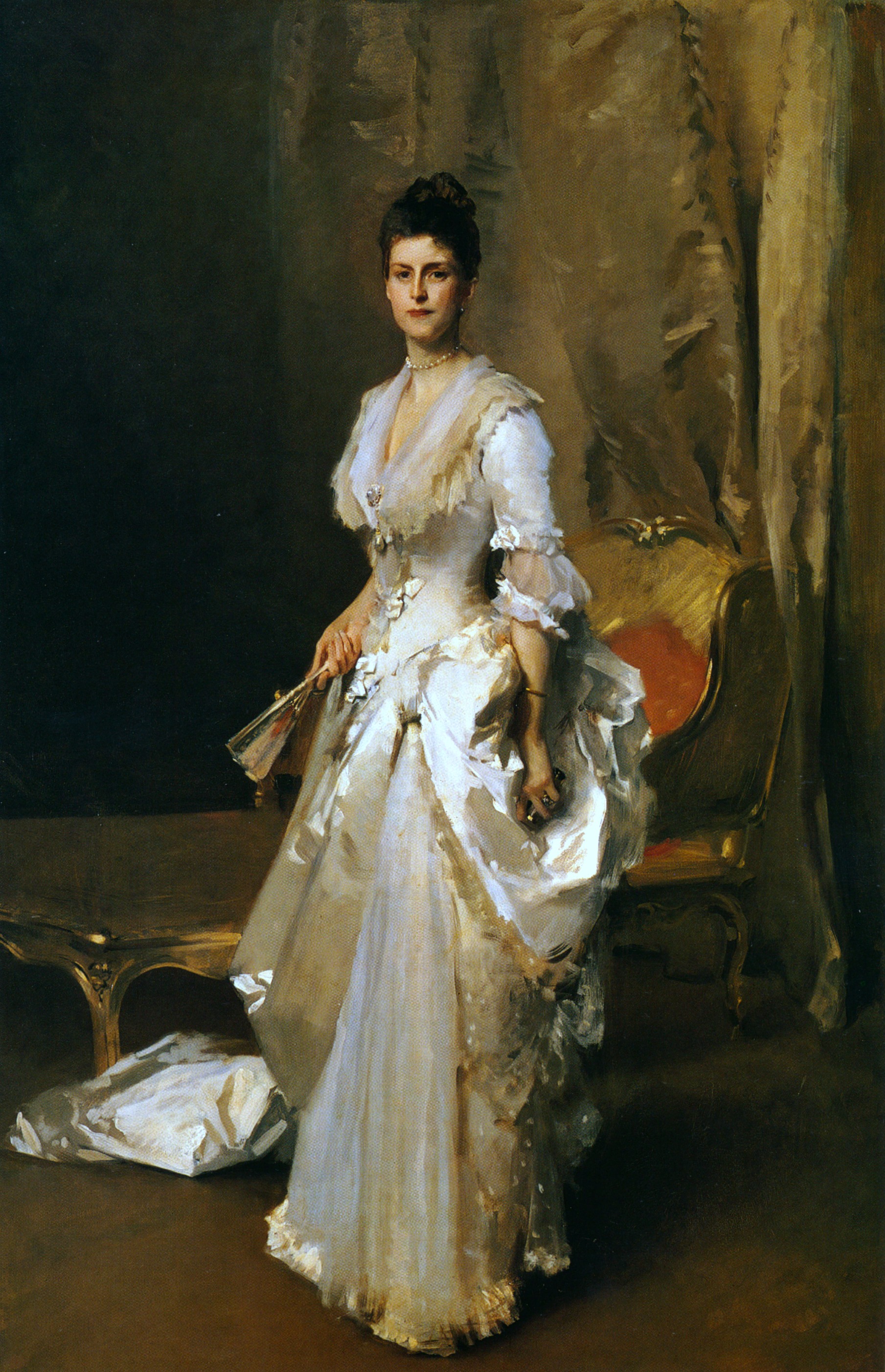
FEATURE image: Margaret Stuyvesant Rutherfurd White (Mrs. Henry White), 1883, oil on canvas, 225.1 × 143.8 cm (88 5/8 × 56 5/8 in.), National Gallery of Art, Washington, D.C. from Corcoran Collection, 2014.
By John P. Walsh
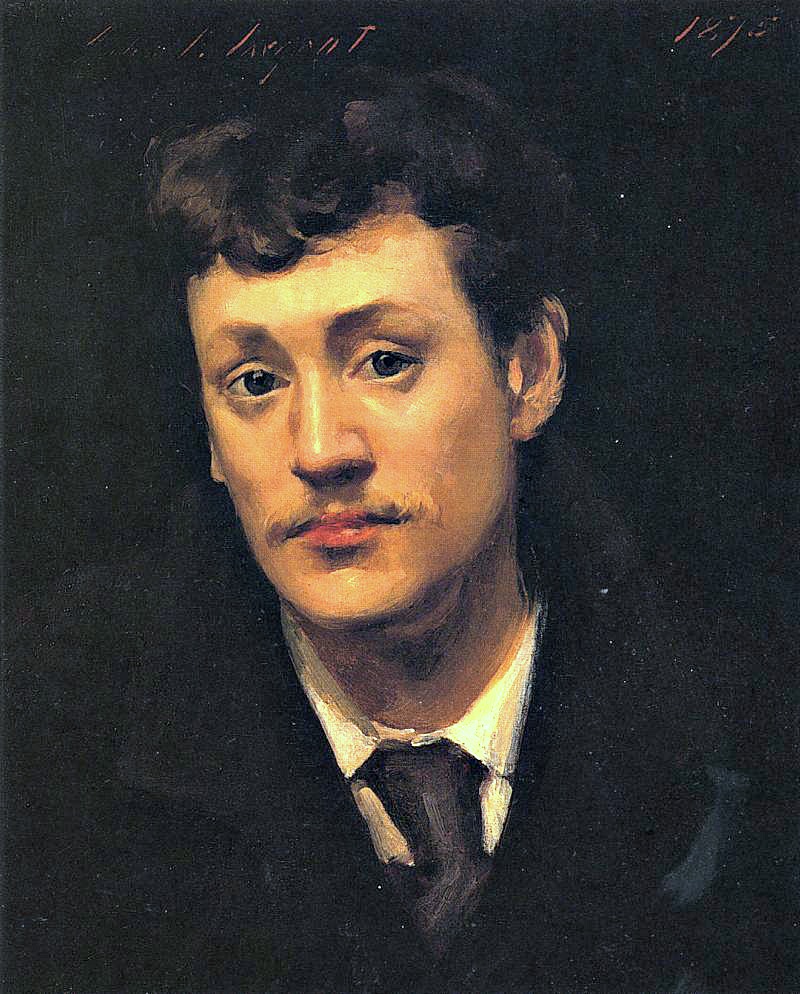
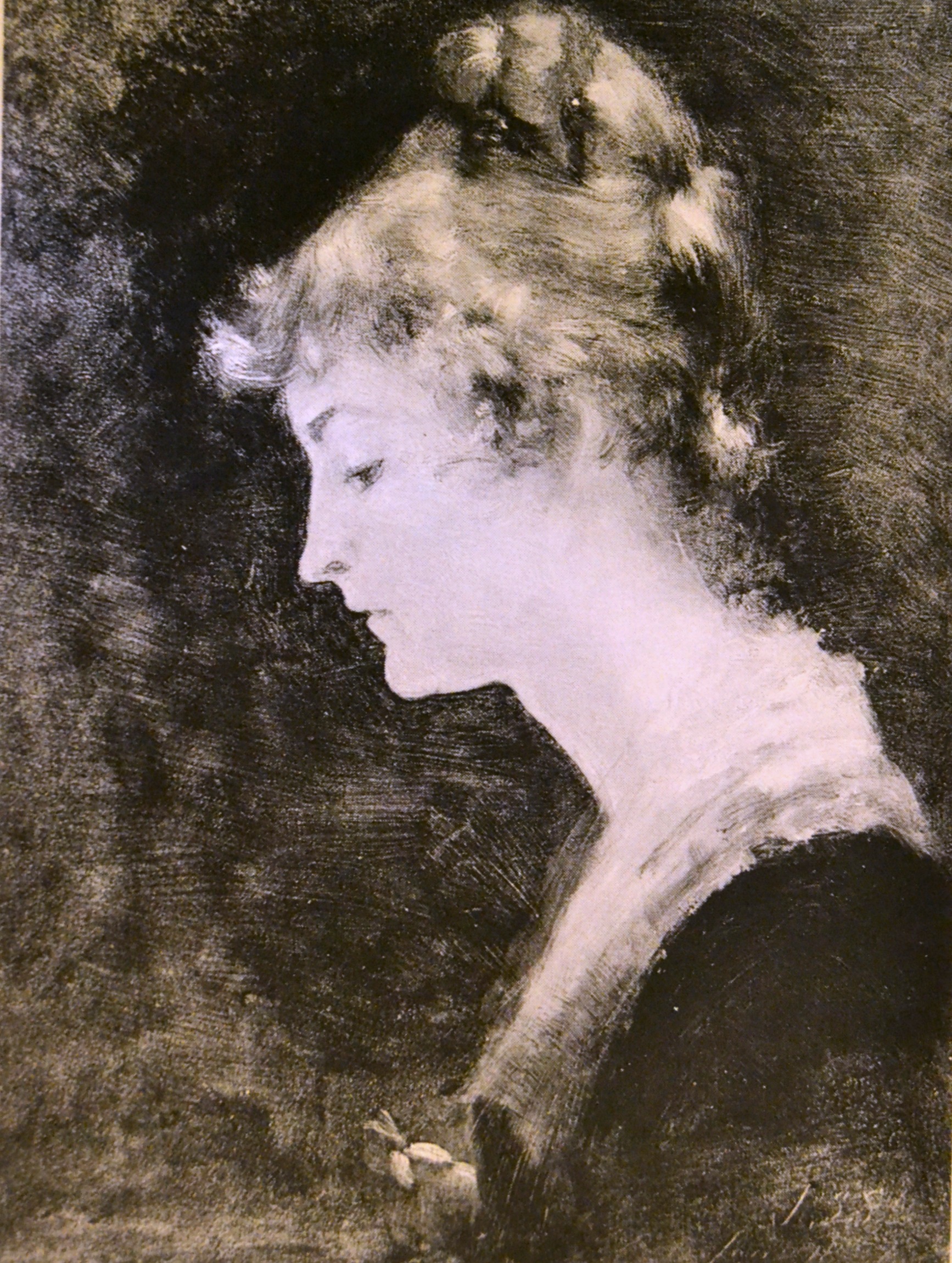
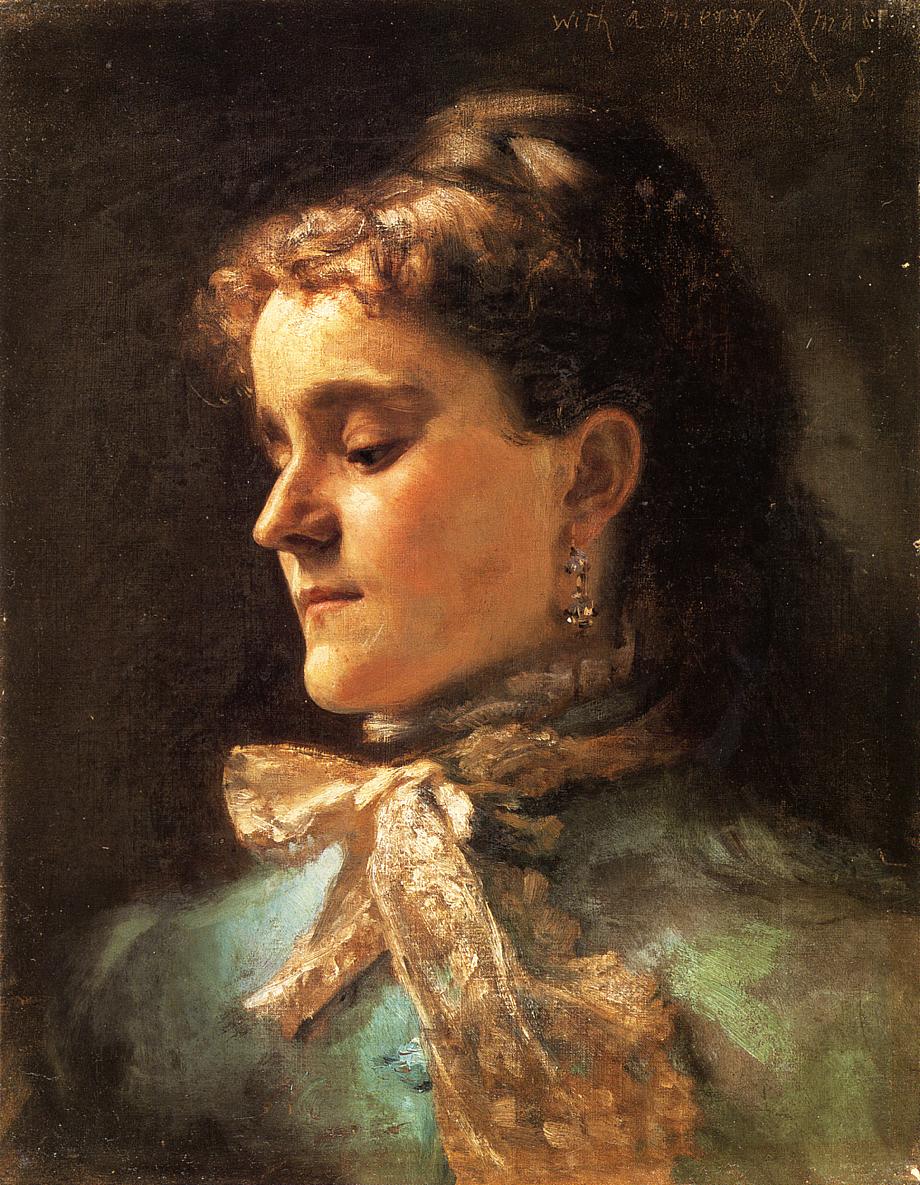
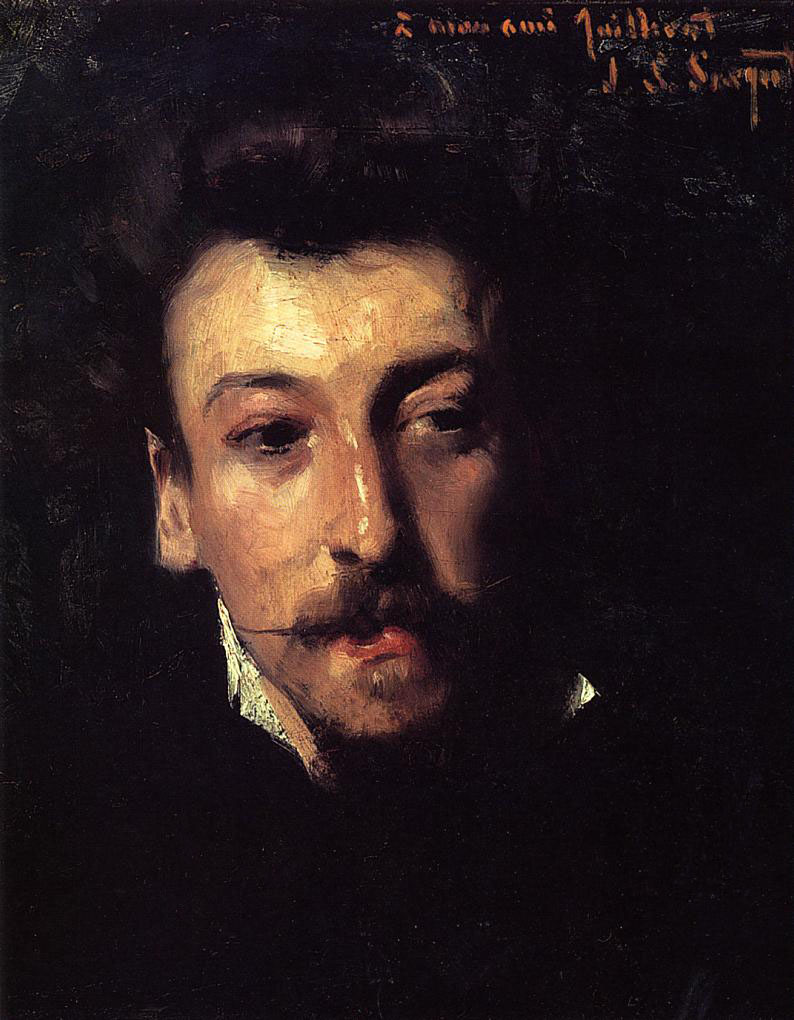
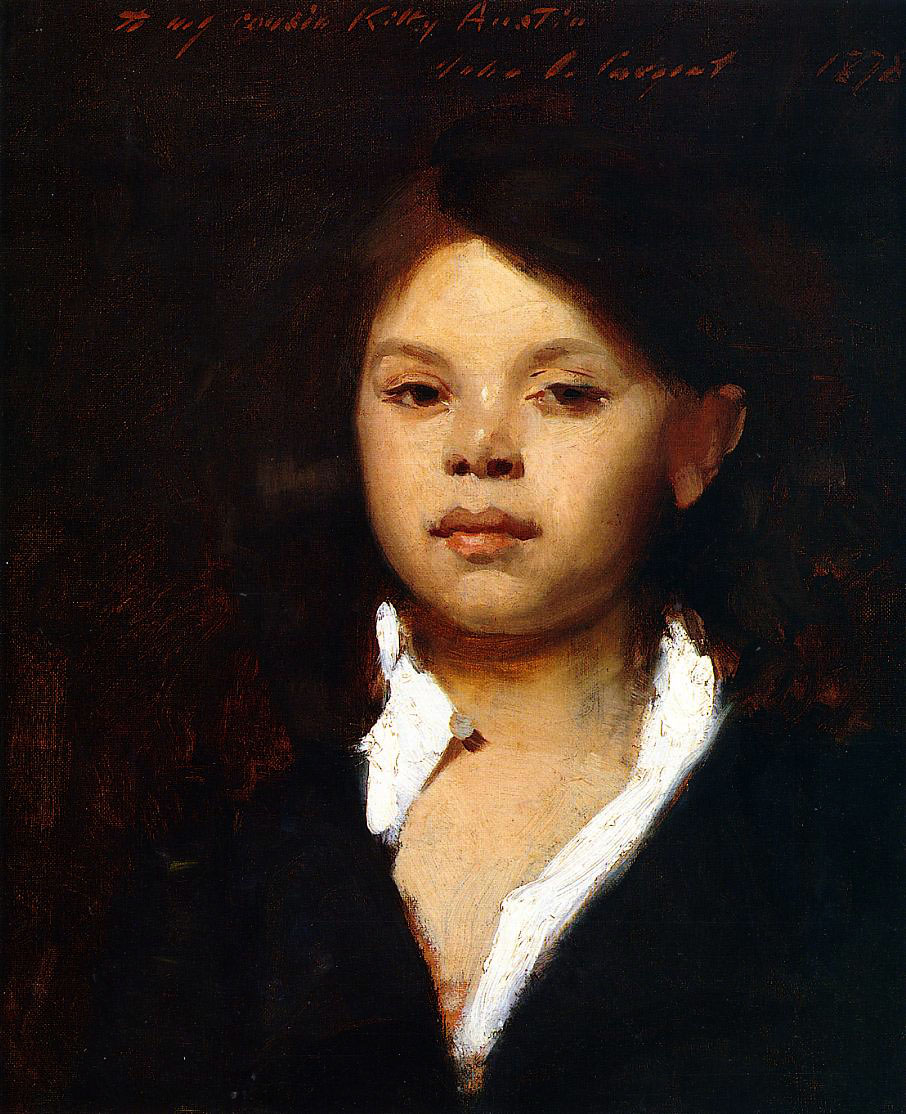
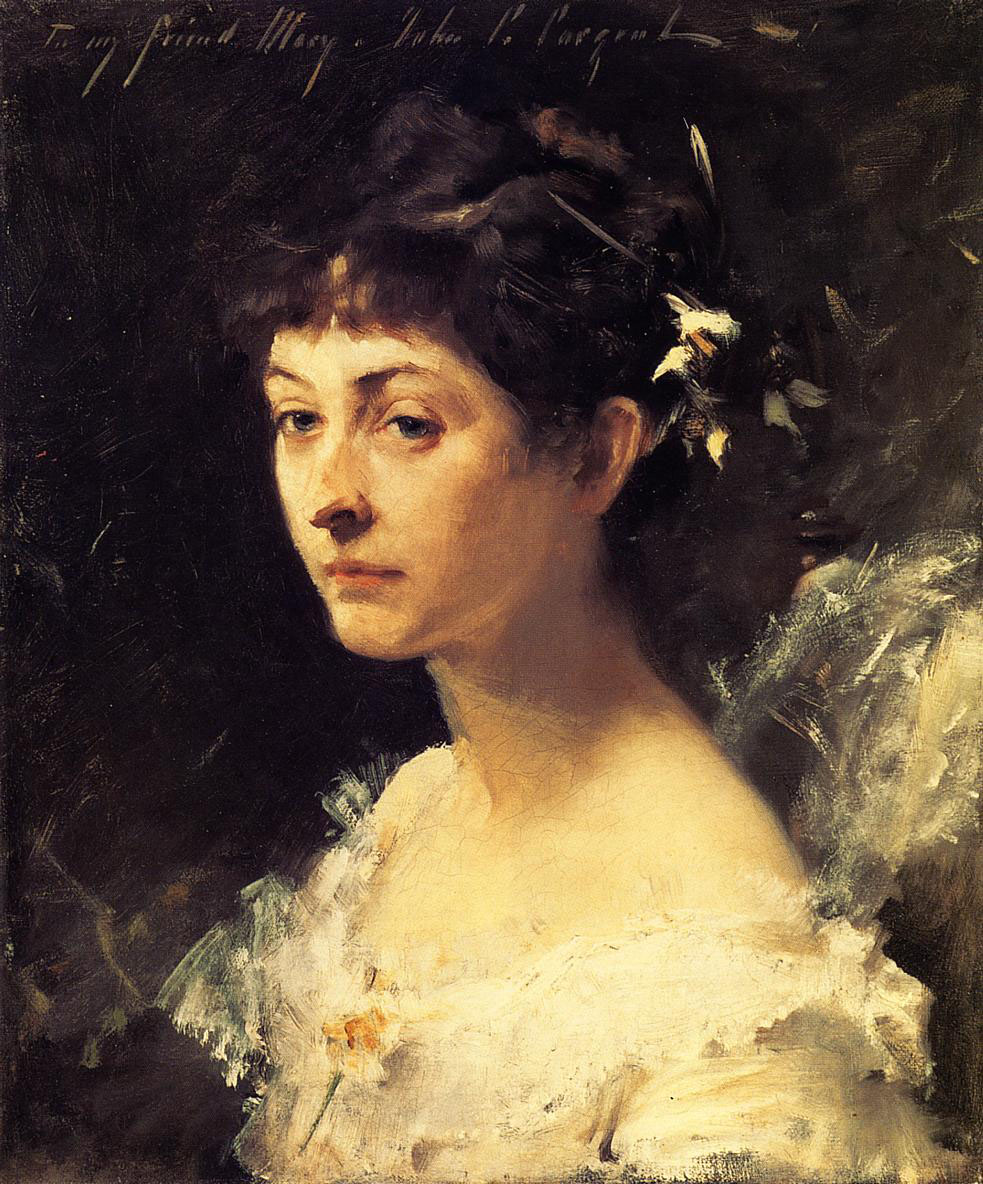
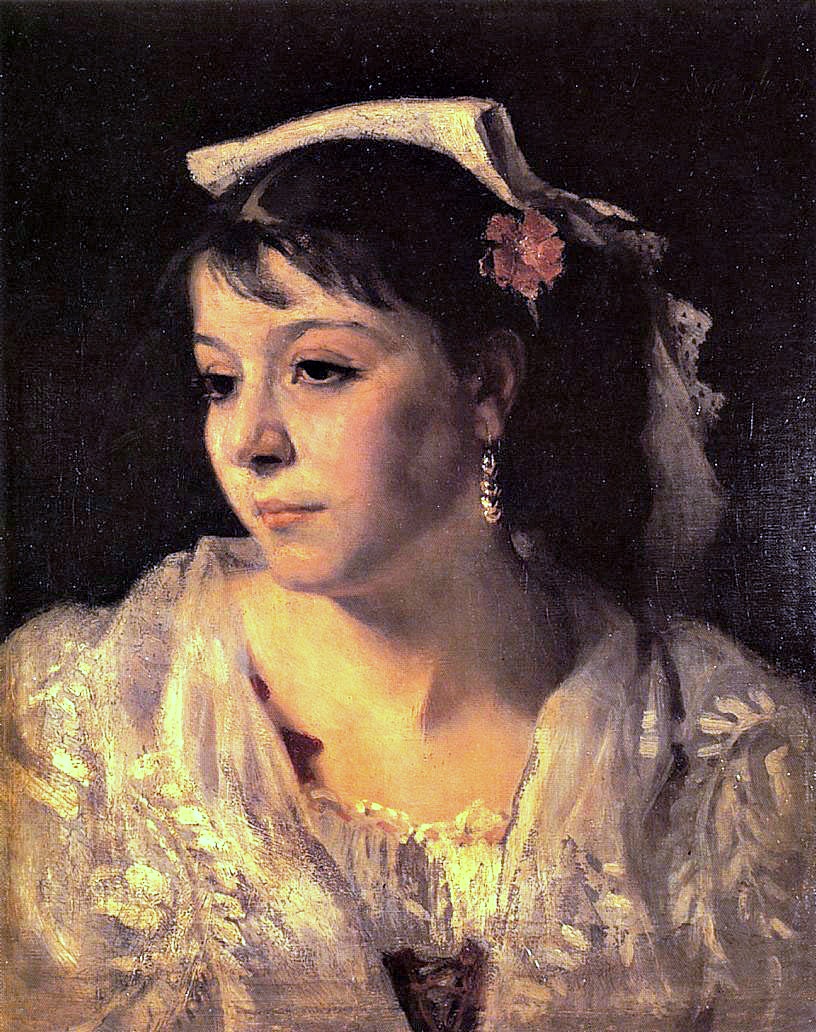
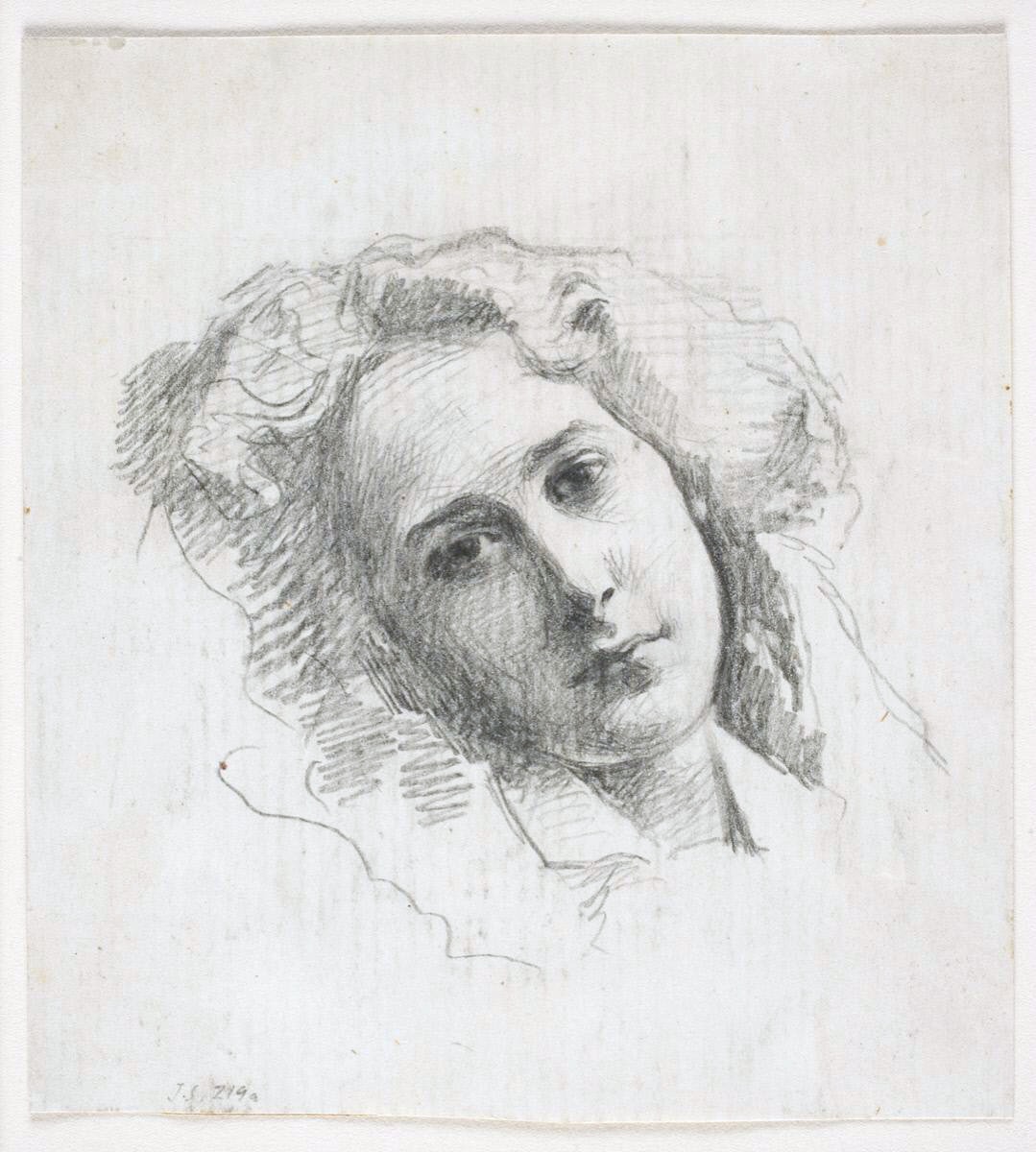
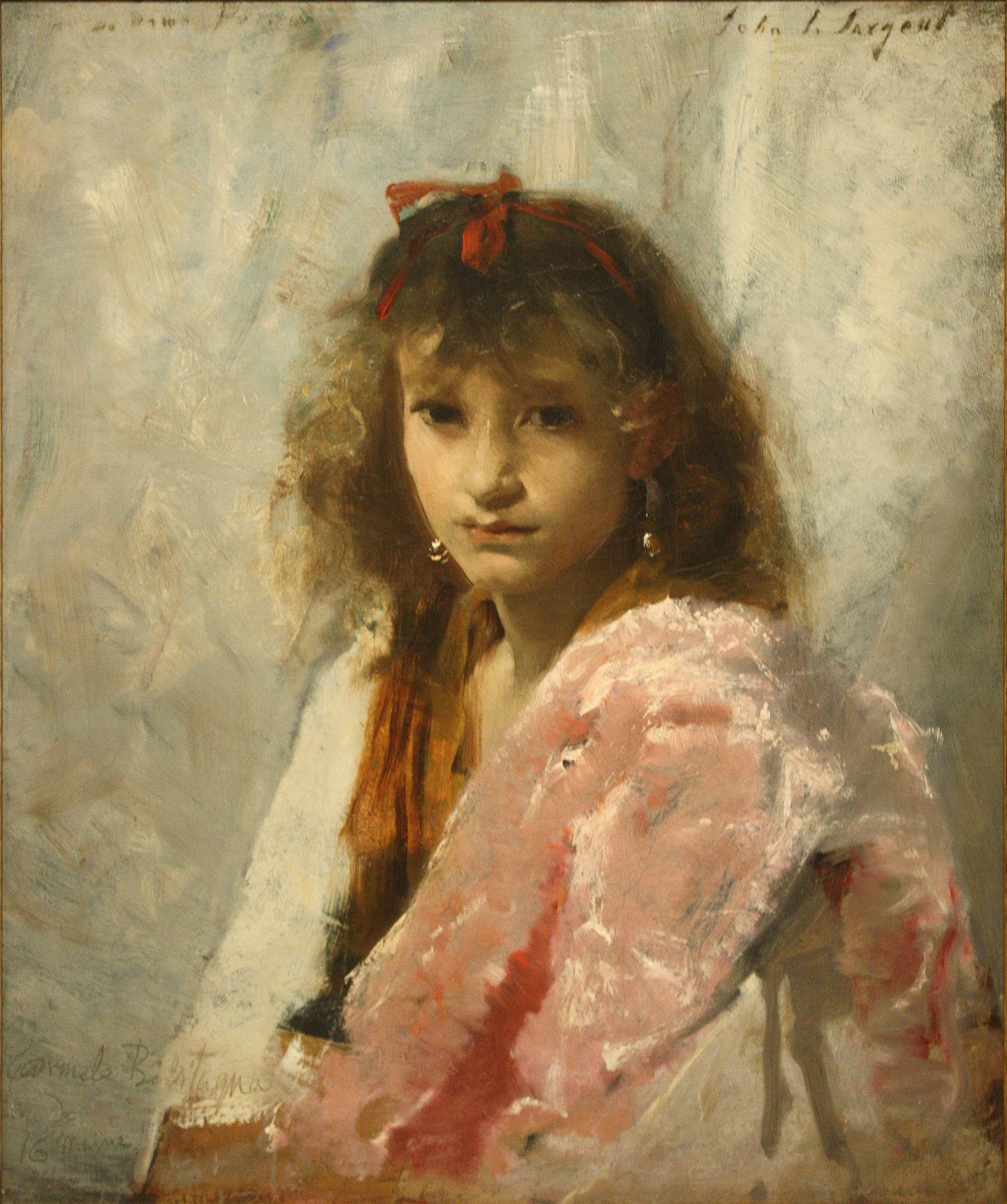
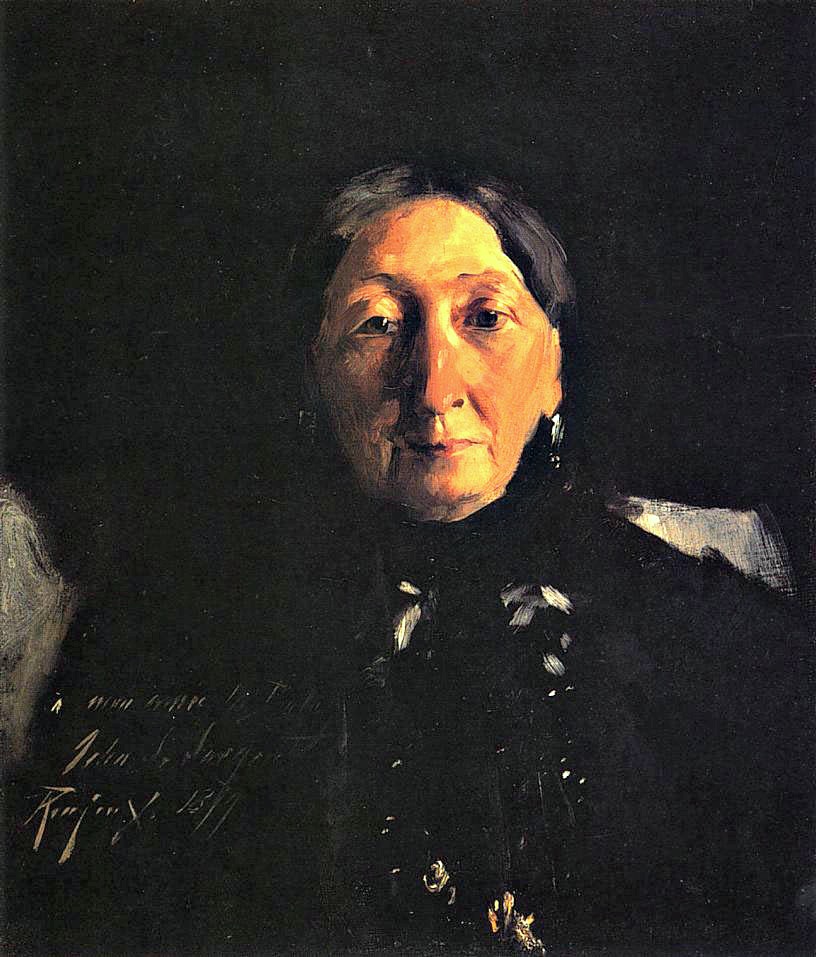
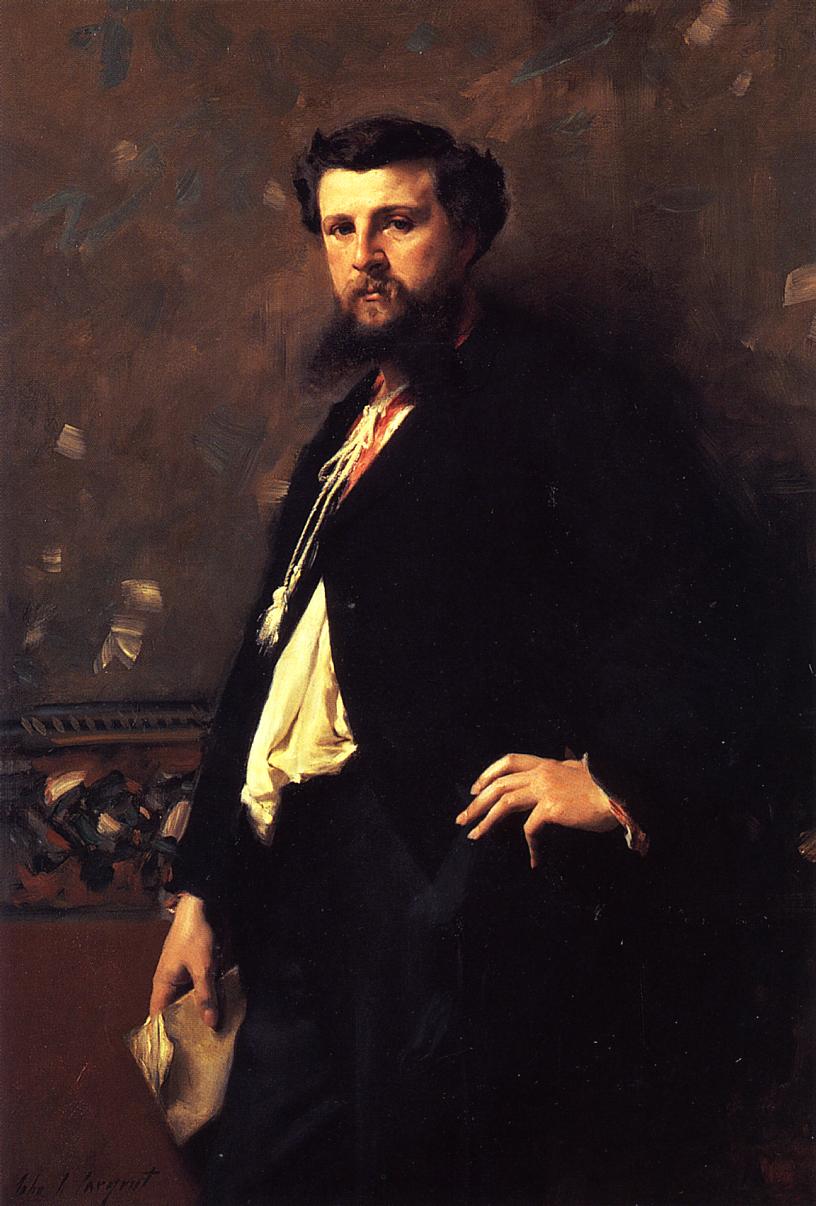
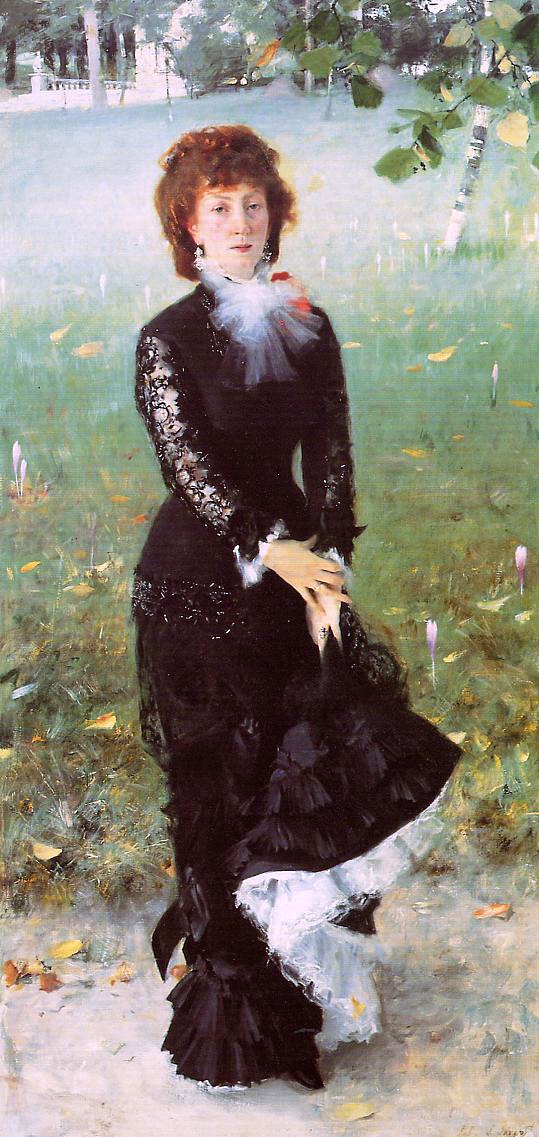
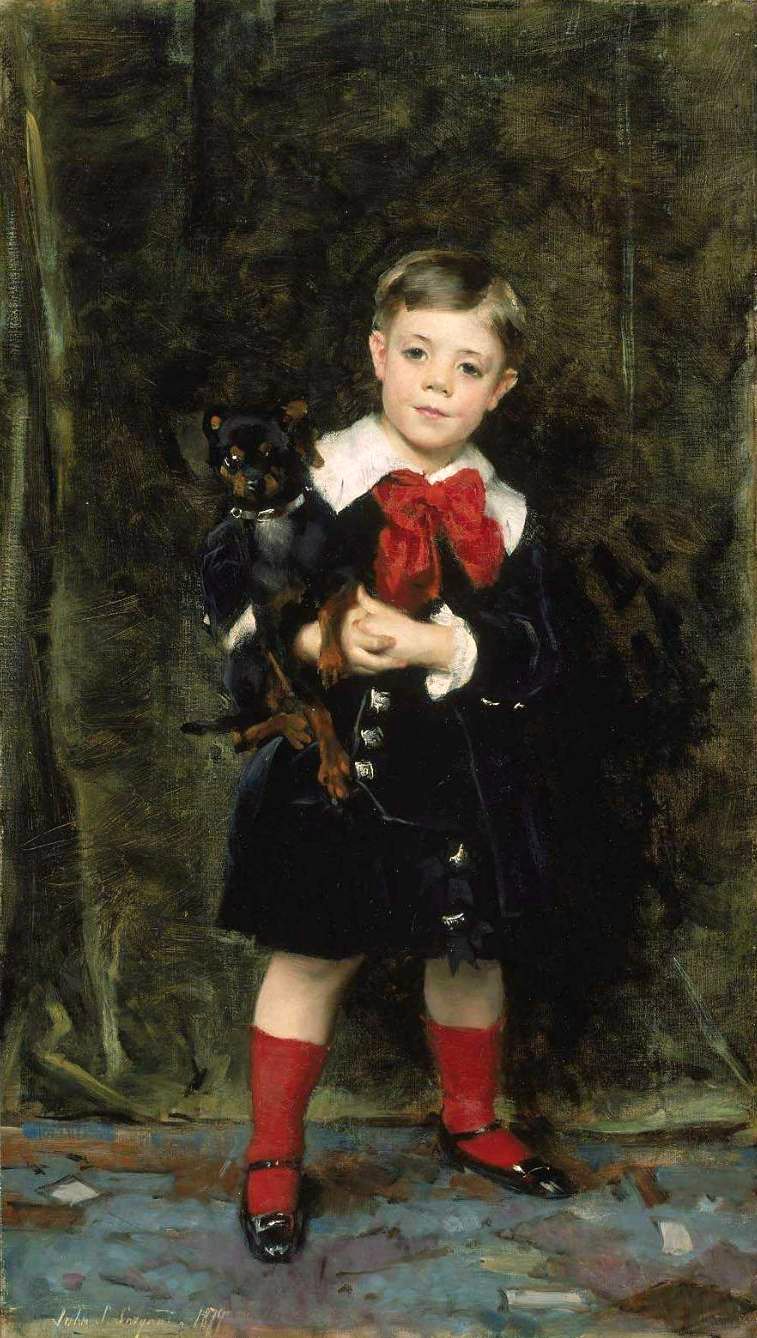
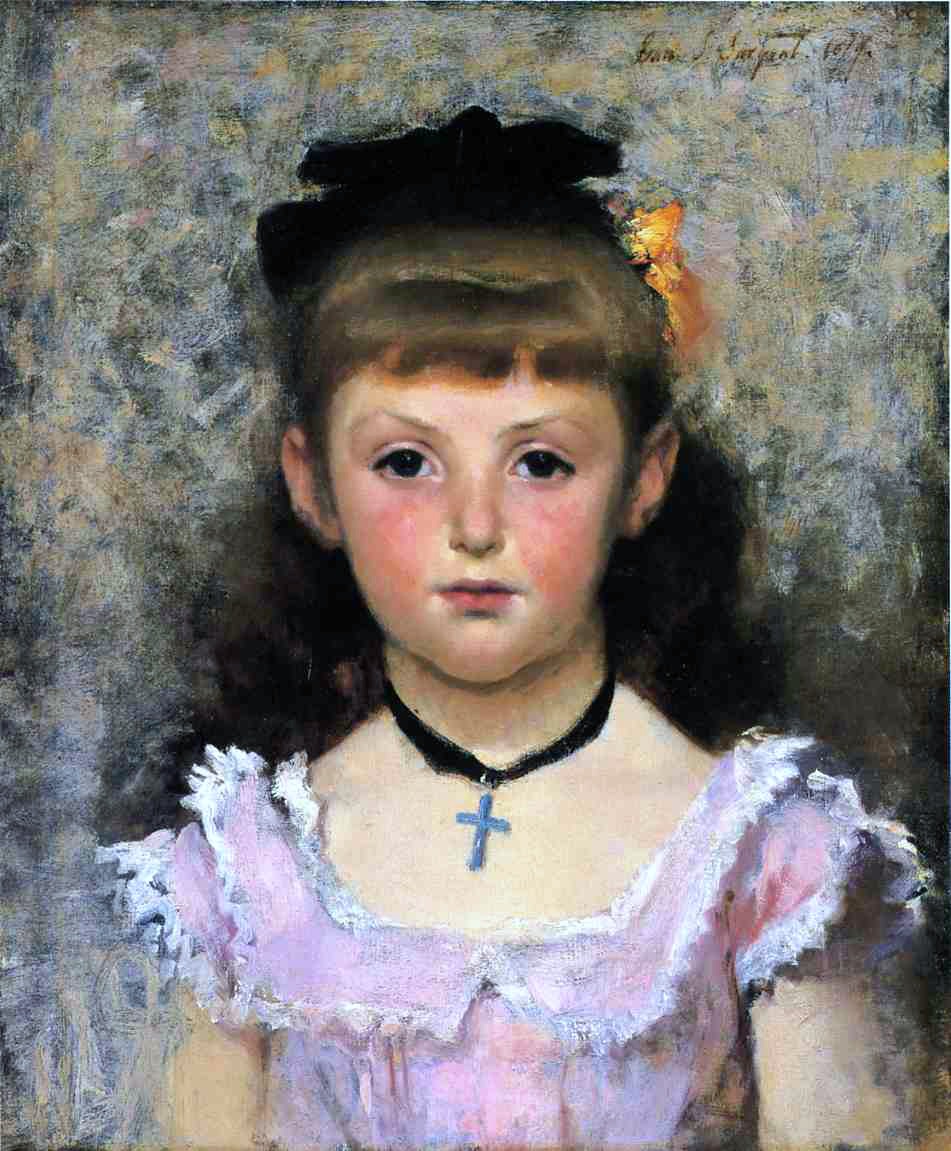
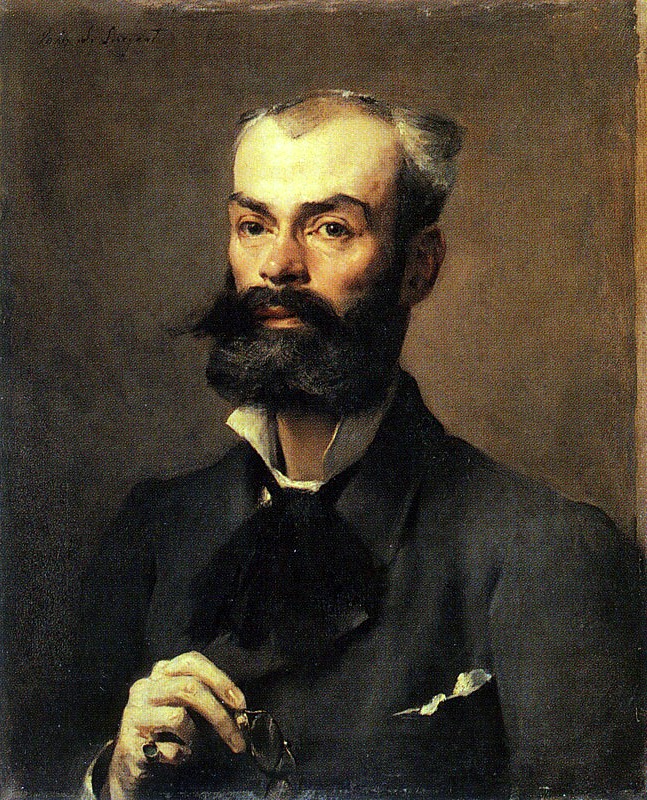
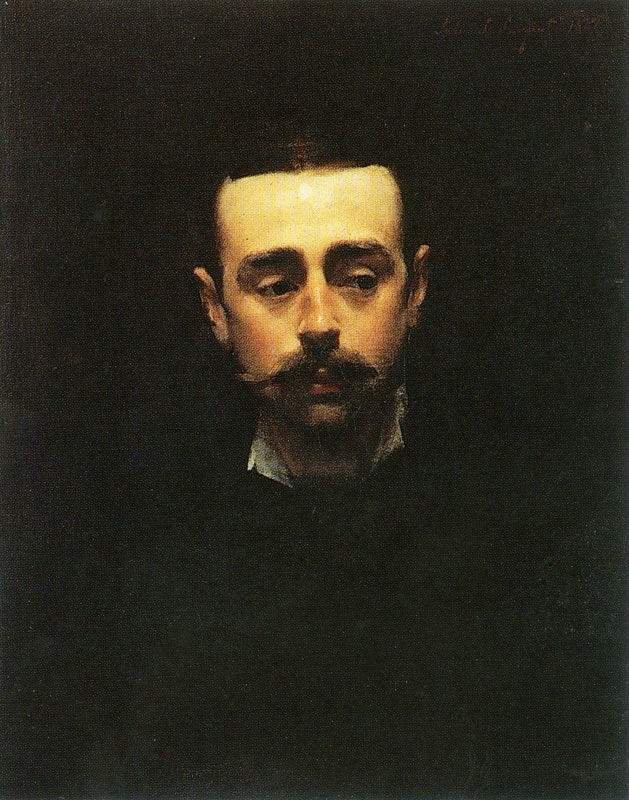
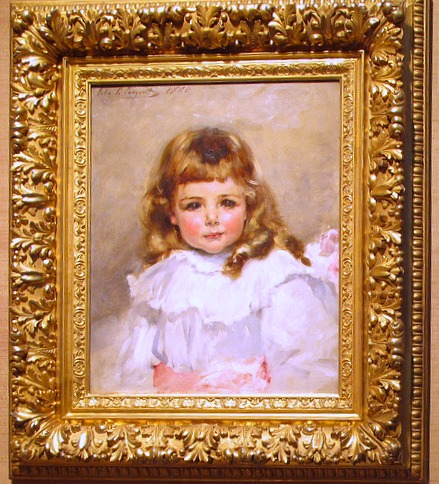
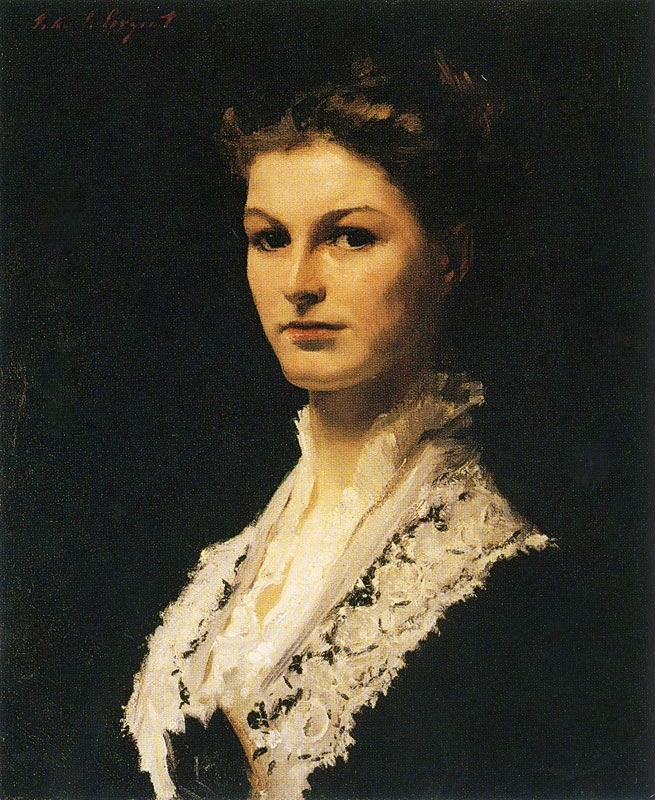
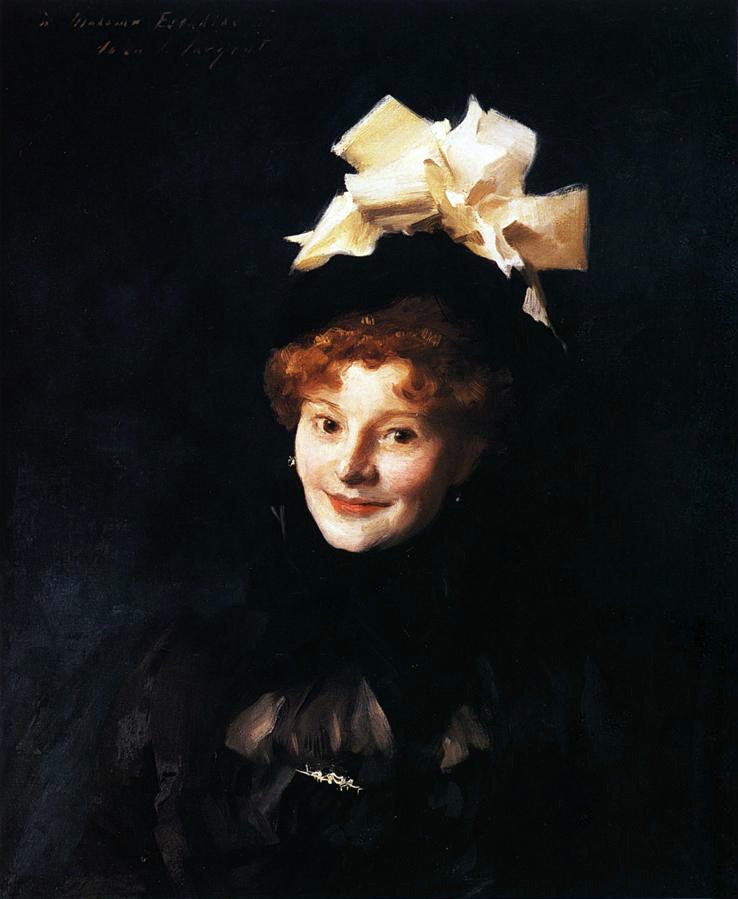
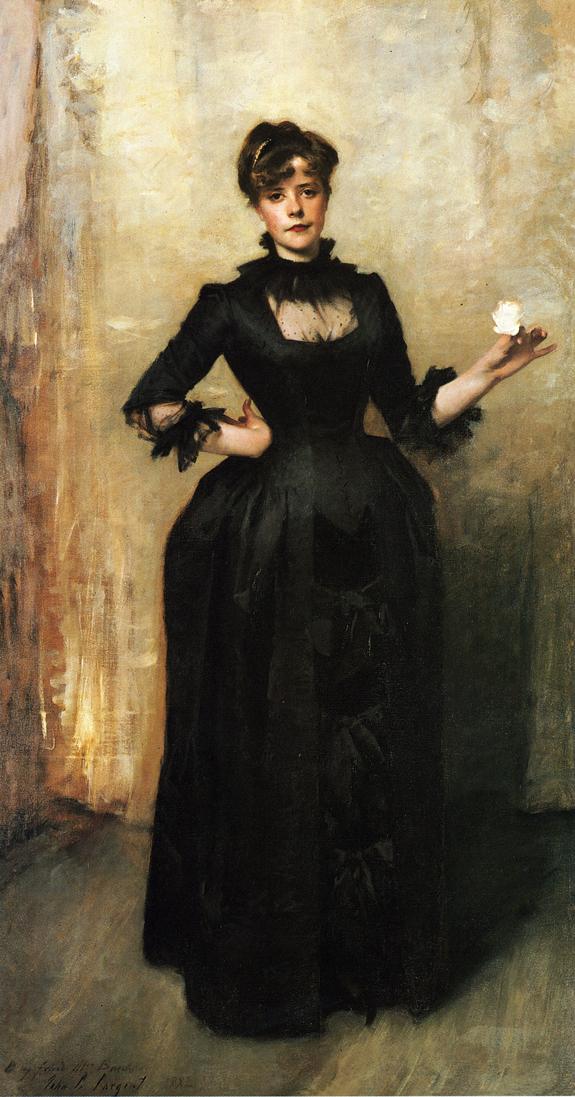
The art works by John Singer Sargent (1856-1925) in this post are ones in oil, watercolor, and pastel. They begin to present Sargent’s professional output during his formative years in France, England and his trips to the United States.
While Sargent’s early portrait subjects range from famous people such as writer Robert Louis Stevenson (1850-1894) and actress Ellen Terry (1847-1928) in her role as Lady Macbeth, Sargent’s first portraits were mostly of family and friends. These included artists, writers, musicians, and some of the artist’s romantic interests.
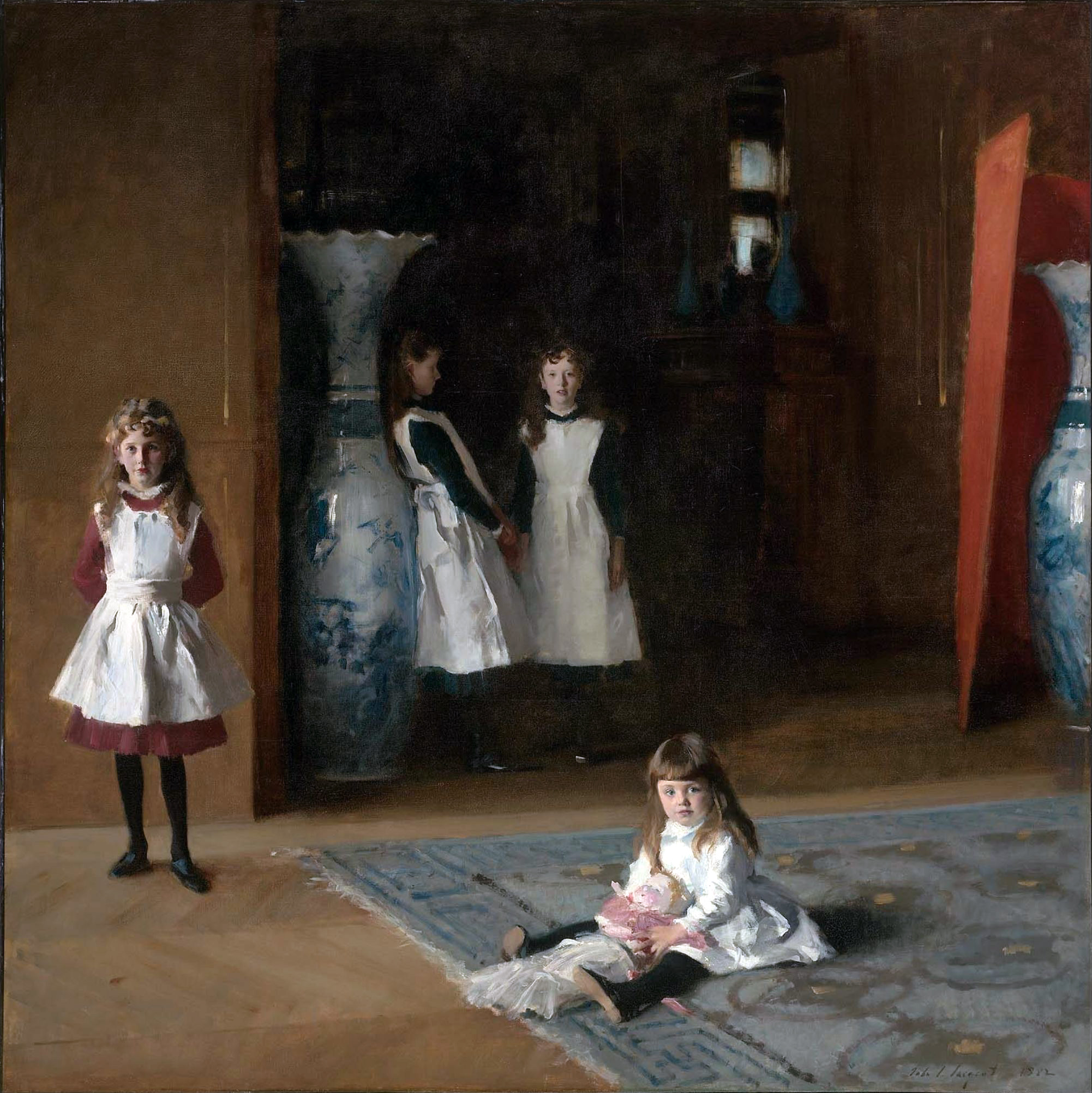
Sargent’s artistic practice developed within a swiftly expanding social circle of prominent American expatriates and Europeans which included portrait commissions from business, military, legal and medical practitioners.His portrait work extended to their wives and children. It was during this creative period that Sargent painted his well-known group portrait The Daughters of Edward D. Boit (1882) and the portrait of an exotic and controversial Madame X (Mme. Virginie Amélie Avegno Gautreau).
Each of the following art works are identified and described with a brief caption. These include the art work’s title (usually a sitter’s name), date created, and dimensions, markings and location, when known. Further, it often discusses how the sitter knew Sargent and the historical context of the art work including some of its particular provenance and exhibition history.
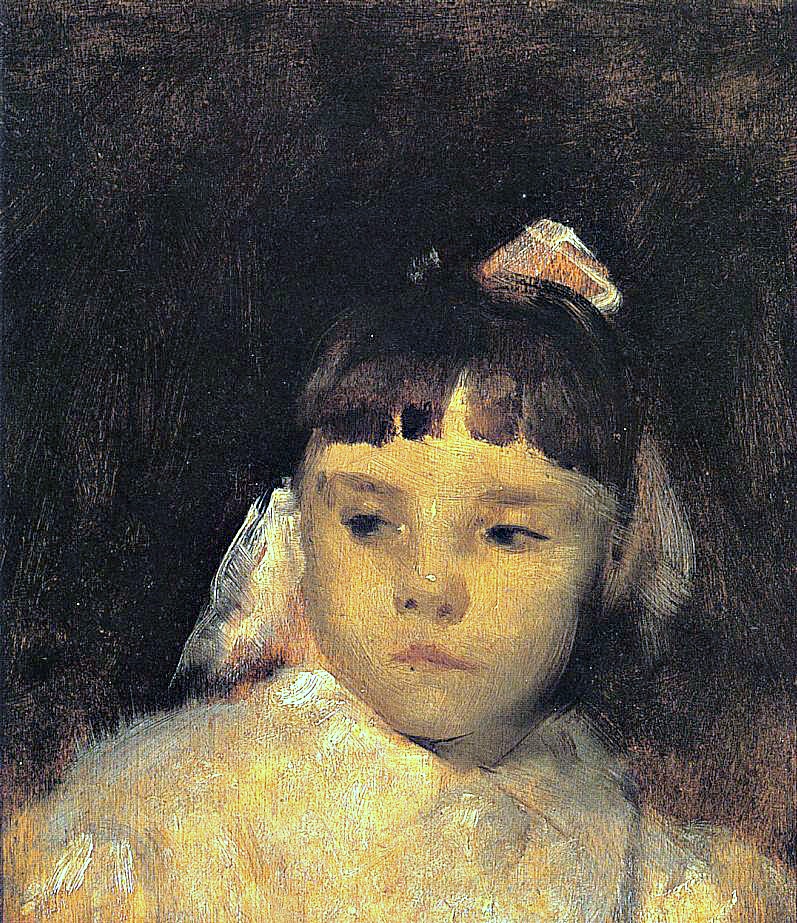
Violet Sargent, c. 1875, oil on panel, 27.7 x 23.5 cm (10 ½ x 9 ¼ in.), private collection. Originally inscribed across the top “Violet” but removed in a later cleaning. The sitter was the artist’s youngest sister (1870-1955).
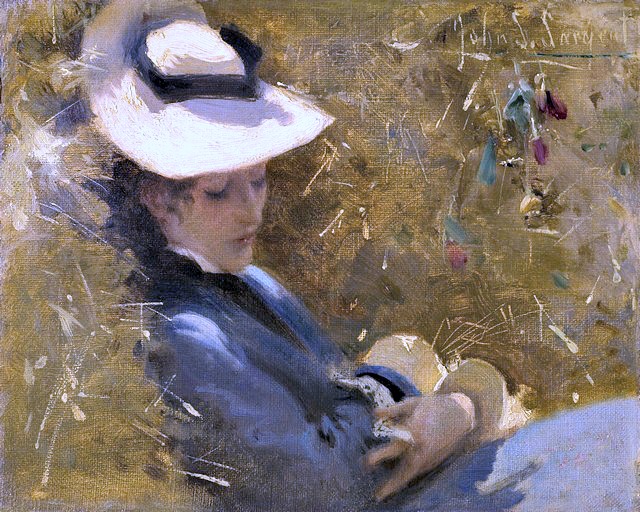
Resting, c. 1875, oil on canvas, 8½ x 10 9/16 in. (21.6 x 26.8 cm), inscribed upper right: John S. Sargent, Sterling and Francine Clark Art Institute, Williamstown, Massachusetts. Informal pose and setting, bold treatment of light, this is one of the artist’s early outdoor works. The identity of the sitter is unknown.
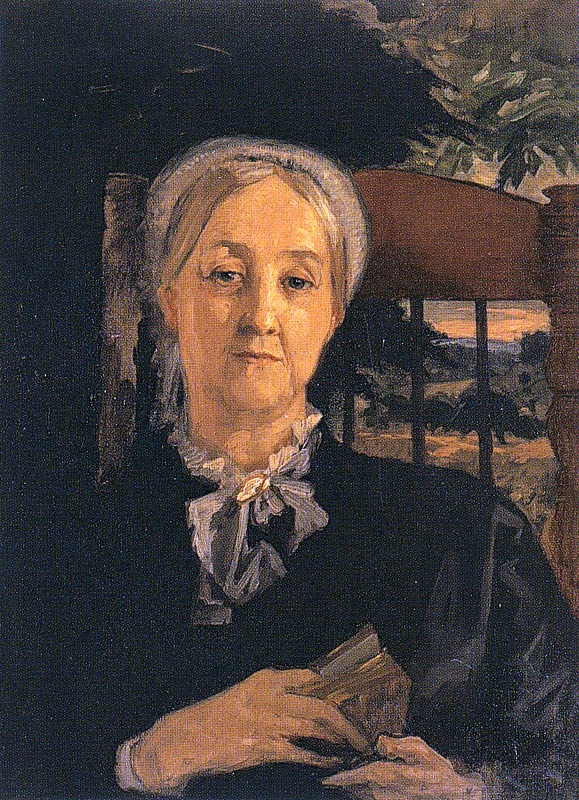
Mrs. Emily Sargent Pleasants, c. 1876, oil on canvas, 55.8 x 40.6 cm (22 x 16 inches), private collection. The artist’s aunt (his father’s sister). Dr. Pleasants (Emily’s husband) visited the artist’s family in France in 1875, but it is not known if she came along. The next year the 20-year-old American artist, born in Florence, Italy, visited the United States for the first time and went to the Pleasants home in Radnor, Pennsylvania. The high-backed rocking chair in the painting points to this portrait being done there.
Frank O’Meara, c. 1876, oil on canvas, 44.5 x 39.5 cm (17½ x 15½ inches), inscribed upper left: John S. Sargent. Inscribed upper right:1875. Typewritten label on reverse signed by Austin Strong, 14/5/1931, The Century Association, New York. O’Meara was an “impecunious and dreamy” Irish art student with Sargent in Carolus-Duran’s atelier. Sargent painted it for O’Meara to give to an American girl during a summer romance. Then Isobel Osbourne (1858-1953) returned home and married somebody else.
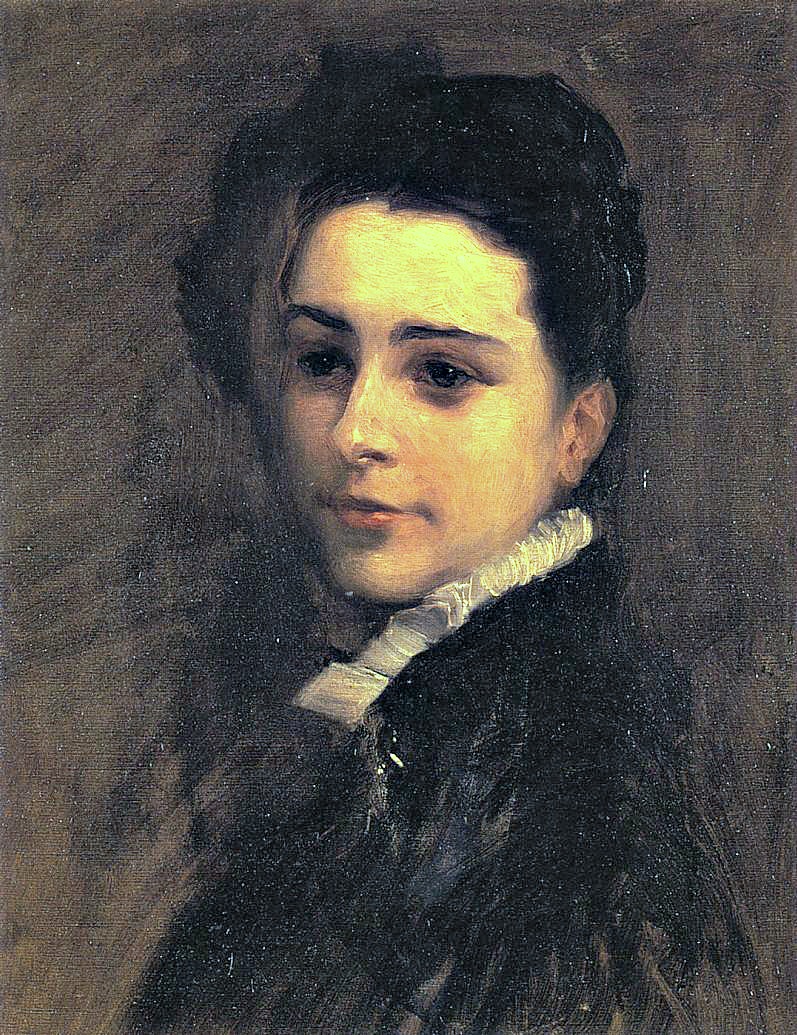
Mrs. Charles Deering, c.1877, oil on canvas, 55.8 x 43.2 cm (22 x 17 in.), Rhode Island School of Design. The family of Annie Rogers Case (1848-1876) met the Sargents in Florence in the 1860s. Her father (“the Admiral”) owned a Sargent Salon picture and dined with them on Christmas Day 1874. In 1876 JSS visited with the Deerings at Newport, Rhode Island, but did not paint Annie’s portrait. Mrs. Deering died the next year in childbirth. In the Sargent-Deering letters preserved at Chicago the artist agreed to the widower’s request to paint a posthumous work of his wife.
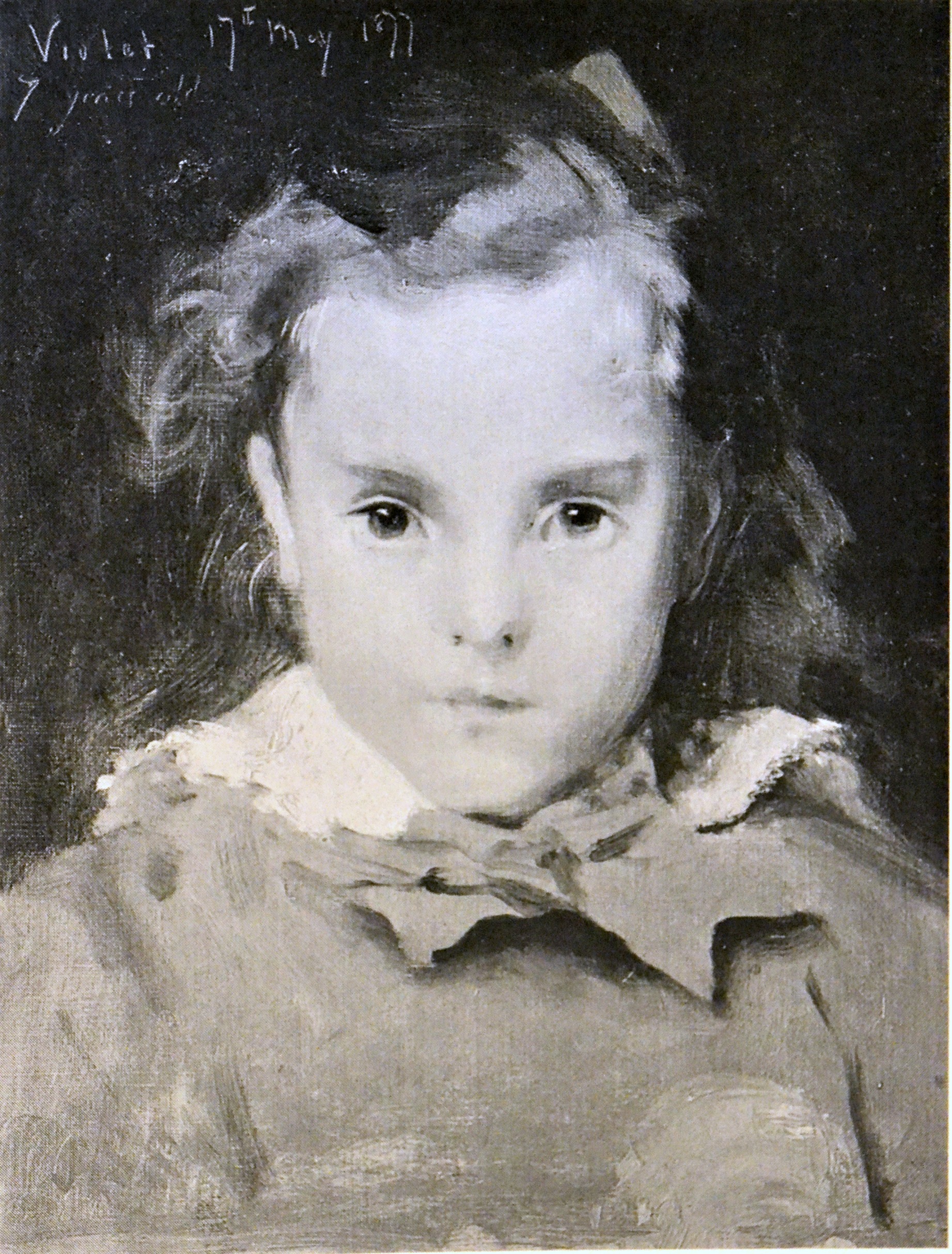
Violet Sargent, 1877, oil on canvas, 34.9 x 25.4 cm (13 3/4 x 10 in), inscribed upper right: Violet 17th May 1877/7 years old. Location unknown. Sargent’s younger sister, the later Mrs. Frances Ormond. It had been owned by French Academic painter Auguste-Alexandre Hirsch (1833 -1911).
Harriet Louise Warren, 1877, oil on panel, 26.7 x 21 cm (10 1/2 x 8 1/4 in), inscribed lower right: JSS/Jan 18 1877. Private collection. Harriet Louise Warren (1854-1919) and Sargent were early friends. Later, in 1890, the artist painted her daughter, Beatrice.
Emily Sargent, c.1877, oil on canvas, 31.1 x 22.9 cm (12 ¼ x 9 in.), private collection. Six siblings comprised the FitzWilliam and Mary Newbold Singer Sargent family. John was the second oldest and only boy. Of his five sisters only two lived to adulthood. This is JSS’s sister Emily (1857-1936) born one year after him. About 20 years old in this painting, the two were inseparable at home and roamed Europe and America together. Emily was a watercolorist and naturally cheerful.
Eugène Juillerat, c. 1877-78, oil on canvas, 40.6 x 31.1 (16 x 12 ¼ in.), inscribed upper right: à mon ami Juillerat/J.S. Sargent. Inscribed on label on back by sitter on April 19, 1927. Private collection. Juillerat and Sargent were the same age and both studied under Carolus-Duran in Paris. Juillerat was an award-winning lithographer and sculptor receiving medals at the Salons of 1895 and 1899 and at the Exposition Universelle in 1900.
Head of an Italian Girl, 1878, oil on canvas, 45.7 x 38.1 (18 x 15 in.), Inscribed upper center: To my cousin Kitty Austin/ John S. Sargent; upper left: 1878. The Sargents had roots in New England yet resettled in Philadelphia where JSS’s father was a surgeon and married JSS’s mother. With the death of their firstborn, the Sargents left for Europe and stayed. JSS was born in Italy in 1856. He first visited the U.S.A. at 20 years old. This painting’s whereabouts and sitter’s identity are unknown.
Mary Turner Austin, oil on canvas, 45.7 x 38.1 (18 x 15 in.), Inscribed upper left: to my friend, Mary, John S. Sargent. The Christopher Whittle Collection. The Austins, like the Sargents, were American expats in Europe. Dr. Sargent mentions the Austins in correspondence and writes that the girls are “quite attractive.” Mary was an art student. Chicago artist J.C. Beckwith at dinner with the Sargents hoped to see “the pretty Miss Austin.” French artist Auguste Hirsch owned this portrait.
Head of an Italian Woman, c. 1878-1881, oil on canvas, 45.7 x 38.1 (18 x 15 in.), Inscribed upper right: J. S. Sargent. The Arkell Museum, Canajoharie, New York. Gift of Bartlett Arkell. Hair piled at the nape of the neck is a typical mid1870s woman’s hairstyle, though the dress is less fashionable. The model may be a Sargent cousin – a later Mrs. Wurts – who owned this picture in 1926.
Portrait Sketch c. 1910, graphite on thin, slightly textured off-white laid paper (tissue) 10 x 9.1 cm (3 15/16 x 3 9/16 in.). Gift of Mrs. Francis Henry Taylor, The Worcester Art Museum, Worcester, Massachusetts. Dated c.1910, this drawing had been only recently identified as the same model as “Head of an Italian Woman” painted by Sargent sometime between 1878 and 1881 and today in the Arkell Museum.
Carmela Bertagna, c.1879, oil on canvas, 59.7 x 49.5 (23.5 x 19.5 in.), inscribed upper L: à mon ami Poirson; upper R: John S. Sargent; lower L: Carmela Bertagna/rue du/16 Maine. Bequest F.W. Schumacher. The picture’s history is muddled by the sitter’s questioned identity (a professional model, possibly Carmela B.), its stylistic clues (no later than 1880), diverse inscriptions (to later friends) and exactly from whom it was acquired before it was given to the Columbus Museum of Fine Arts.
Mme. François Buloz, 1879, oil on canvas, 54 x 46.2 cm (21.25 x 18.25 in.), Inscribed lower L: à mon amie Me Buloz/John S. Sargent/Ronjoux 1879, Los Angeles County Museum of Art. Mme. Buloz was from a family of writers and musicians. In summer 1879, Sargent was in the Savoy to paint her daughter Marie’s full length portrait for her marriage. Madame complained that this portrait, painted in haste, made her look ten years older than she was.
Marie-Louise Pailleron, 1879, 38.7 x 45.1 cm (15.25 x 17.75 in.), Inscribed, upper R: à ma petite amie Marie-Louise/John S. Sargent 1880, private collection. Daughter of Marie (Buloz) and Edward Pailleron, Sargent’s first important patrons. Two years after this portrait, Marie-Louise (1870-1950) was the subject of an important double portrait with her brother Edouard.
Marie-Louise Pailleron, 1879, watercolor on paper? Dimensions? Untraced. Sargent did other wash drawings of Marie-Louise that are better documented. The head on the left has a halo or other decorative design. This image is taken from a photograph the sitter made available in 1948 when the sketch was in her house at Ronjoux.
Fanny Watts, 1877, oil on canvas, 105.7 x 83.5 cm (41.5/8 x 32.7/8 in.), inscribed upper R: John S. Sargent. Philadelphia Museum of Art. Following money reverses in the U.S., Fanny’s New York family traveled to Nice and Florence in the 1860s and met the Sargents. The young Sargent and Fanny began a romance in 1876 that was nixed by Mrs. Sargent. The portrait is the artist’s attempt to reminisce about their time together. Dr. Sargent thought this portrait was his son’s “first serious work” and had it shown at the Salon. Fanny and the artist stayed lifelong friends.
Carolus-Duran, 1879, oil on canvas, 116.8 x 95.9 cm (46 x 37 3/4 in.), inscribed upper R: à mon cher maître M. Carolus Duran, sur élève affectioné/John S. Sargent 1879. Clark Art Institute, Massachusetts. Teacher and portrait painter Carolus-Duran (1838-1917) had a profound influence on JSS’s artistic practice in the mid to late 1870s. The sitter wears a red ribbon of the Légion d’honneur in his buttonhole. It was Sargent’s second portrait exhibited at the Salon and this painting received critical praise in Europe and America.
Edouard Pailleron, 1879, oil on canvas, 127 x 94 cm (50 x 37 in.), Inscribed lower L: John S. Sargent. Musée d’Orsay. Edouard Pailleron (1834-99) was JSS’s first major patron. How the 45-year-old famed poet and playwright met the unknown 23-year-old painter is a mystery. One impetus may be the favored portrait of Carolus-Duran at the Salon of 1879. This casually posed portrait of studied bohemianism was painted in Paris in summer 1879 and soon paired with one of Mme. Pailleron.
Madame Edouard Pailleron, 1879, oil on canvas, 208.3 x 100.3 cm (82 x 39.5 in.), Inscribed lower R: John S. Sargent/Ronjoux 1879. National Gallery of Art, Washington D.C. Sargent’s first full length portrait depicts Mme. Pailleron (1840-1913). It was painted at her parents’ house at Chambéry in the Savoy. She posed at the entrance to the allée des Tilleuls with house and garden behind. At the Salon of 1880 critics remarked that the black satin dress was out of place in an outdoor setting.
Madame Edouard Pailleron, 1879, study. The painting was Sargent’s first full length portrait.
Robert de Cévrieux, 1879, oil on canvas, 84.5 x 48 cm (33.25 x 18.875 in.), inscribed lower L: John S. Sargent, 1879. Museum of Fine Arts, Boston. The Salon of 1879 was a watershed for JSS’s artistic career. Out of it came six portrait commissions in Paris including presumably this 6-year-old and his terrier. Carolus-Duran, by now JSS’s former teacher, painted children holding pets which were exhibited in mid1870s Salons. The child wears a velvet suit with no pant legs and matching jacket.
Jeanne Kieffer, 1879, oil on canvas, 43.2 x 35.6 cm (17 x 14 in.), inscribed upper right: John S. Sargent 1879. Private collection. By his early 20s some saw Sargent as an artist of “great talent and a real future.” He was also described as “practically starving.” This portrait of a 7-year-old sitter is quirky for the direct frontal pose and that the pink dress was an afterthought. The artist had originally painted her in a black velvet dress.
Le Vicomte de Saint-Périer, 1879, oil on canvas, 61 x 50.5 cm (24 x 19.875 in.), inscribed upper L: John S. Sargent. Musée d’Orsay. Sargent was paid 1,500 francs – a typical French worker’s annual wages – for this portrait of a well-connected professional soldier. The expressive realism of the head recalls his recent portraits of Edouard Pailleron and Carolus-Duran.
Henry St. John Smith, 1880, oil on canvas, 62.2 x 49.5 cm (24.5 x 19.5 in.), inscribed upper R: John S. Sargent 1880. Portland Museum of Art, Maine. Boston lawyer Henry St. John Smith (1852-1896) graduated from Harvard in 1872 and went to Europe virtually annually. In 1880 he was an eligible bachelor. Smith saw Sargent’s studio in Paris and didn’t like it. Friends Augustus Jay and Boston artist Francis Brooks Chadwick intervened and the result is this head-and-shoulders portrait that earned Sargent a commission of 1,500 francs.
Peter Augustus Jay, 1880, oil on canvas, 45.8 x 37.5 cm (18 x 14.75 in.), inscribed upper L: John S. Sargent 1880. Private collection. The future U.S. Ambassador to Argentina is painted when he was a 3-year-old with golden shoulder-length hair and dressed in a bibbed white blouse. It was when Henry St. John Smith was with the boy’s father Augustus “Gussie” Jay at Sargent’s Paris studio when St. John Smith was having his portrait painted that the commission for the child’s portrait probably originated.
Eleanor Jay Chapman, c.1881, oil on canvas, 43.8 x 53.3 cm (17.25 x 21 in.), inscribed upper L: John S. Sargent. Private collection. In 1881, Eleanor Jay Chapman was the 16-year-old daughter of a stockbroker. Through her mother, she was a descendant of John Jay, first Chief Justice of the U.S. Eleanor and her younger sister Beatrix had their portraits painted by Sargent in Paris (Beatrix’s was later destroyed). There is no evidence for how the Chapmans met Sargent, but it happened before her father’s financial collapse in 1882.
Edward Burckhardt, 1880, oil on canvas, 55.2.x 46.4 cm (21.75 x 18.25 in.), inscribed lower L: To my friend Valerie/John S. Sargent Paris June 1880. Private collection. Sargent was an intimate friend of Swiss businessman Edward Burckhardt (1815-1903) and his American wife and their family. The portrait, painted in Paris in May 1880, has inspired little positive critical commentary.
Mrs. James Lawrence, oil on canvas, 61 x 45.7 cm (24 x 18 in.), inscribed upper R: John S. Sargent 1881. Sargent painted companion portraits of Boston’s James Lawrence (1853-1914) and his new wife Caroline Estelle Mudge (1850-1920). Neither portrait has survived. Both were destroyed by fire in Hingham, Massachusetts, in 1939. In 1888 it was noted that the sitter wore a black dress in front of a red background.
The Pailleron Children, 1881, oil on canvas, 152.4 x 175.3 cm (60 x 69 in.), upper right: John S. Sargent. Des Moines Art Center. Édouard (b.1865) and Marie-Louise (b.1870) are children of Sargent’s first patron. Seated on a bench, the boy is dressed in a suit with an Eton collar and silk bow tie and the girl, hair up, is wearing a satin dress with lace trim. Carolus-Duran had to calm Marie-Louise to cooperate for a double portrait that required 83 sittings done in Sargent’s studio. It was exhibited at the Salon of 1881.
Marie-Louise Pailleron, c.1881, watercolor, 27 x 20 cm (10.625 x 7.875 in.). Private collection. Aside from a couple of dabs of blue, the portrait is executed nearly in one color, that is, en grisaille. Marie-Louise wears her hair “down” unlike in the formal portrait with her older brother done at the same time where the 10-year-old was exasperated by the artist’s insistence that she wear her hair “up.”
Marie-Louise Pailleron, c.1881, pen, ink and wash on paper, 23.2 x 18.1 cm (9.125 x 7.125 in.), Metropolitan Museum of Art, New York. A second monochrome facial study of 10-year-old Marie-Louise by JSS. The work has a playful aspect in that the paper’s back side (or verso) has a child’s drawing of a house.
Dr. Pozzi (or Dr. Pozzi at Home), 1881. Oil on canvas, 204.5 x 111.4 cm (80 ½ x 43 7/8 in.). Inscribed upper right: John S. Sargent 1881. UCLA at the Armand Hammer Museum of Art and Cultural Center, Los Angeles.
Below: Detail of left hand, Dr. Pozzi, 1881.
Madame Ramón Subercaseaux, c. 1881, sepia wash, 22.2 x 32.4 cm (12 ¾ x 8 ¾ in.), inscribed, lower right: John S. Sargent. Private collection. This is not a study for the painting below but a derivation from it. The artist made it for the painting’s reproduction in the Salon catalog.
Madame Ramón Subercaseaux, c. 1880-81, oil on canvas, 165.1 x 109.9 cm (65 x 43 ¼ in.). Inscribed, lower right: John S. Sargent. Private collection.
Mrs. John Joseph Townsend, 1881, oil on canvas, 124.5 x 83.8 cm (49 x 33 in.). Inscribed, upper right: John S. Sargent Paris 1881. Location unknown. Catherine Rebecca Bronson (1833-1926) was from a family of U.S. politicians and married a New York businessman. The Bronsons were part of the American expatriate community in Florence and Venice with the Sargents. This is Sargent’s first portrait of the old family friend. She sits on a low couch, right elbow on pillows and holds a swan’s-down fan.
Mrs. John Joseph Townsend, c. 1882, oil on canvas, 69.9 x 56.5 cm (27½ x 22¼ in.). Inscribed, upper left: to my dear friend Mrs Townsend/John S. Sargent. Location unknown.
John Joseph Townsend, 1882, oil on canvas, 128.9 x 86.4 cm (50 ¾ x 34 in.). Incribed, upper right: John S. Sargent/Paris 1882. Private collection. Mr. Townsend (1825-1889) was a New York lawyer who served in the State Assembly. A Columbia University trustee and Union Club president, he married Catherine Bronson, a Sargent family friend, in 1854.
Beatrice Townsend, c. 1882, oil on canvas, 81.9 x 58.4 cm (32 ¼ x 23 in.). Inscribed, upper center: to my friend/Mrs. Townsend/John S. Sargent. National Gallery of Art, Washington, D.C. (Mellon Collection). (Eleanor) Beatrice Townsend (1870-1884), born in New York, was the sixth of seven children of Mr. and Mrs. Townsend. The teenager died tragically of peritonitis, an abdominal disease in 1884.
Mr. and Mrs. John Field, 1882, oil on canvas, 111.8 x 82.5 cm (44 x 32½ in.). Inscribed, upper right: John S. Sargent, Paris 1882. Pennsylvania Academy of Fine Arts, Philadelphia. Gilbert Stuart painted the father of Mrs. Field (Eliza Willing Spring Peters, 1820-1897) and she was painted by Thomas Sully in 1841– and now by Sargent. European travel led Mr. Field (1815-1887), a trader, into art collecting. In a June 1882 letter, British writer Vernon Lee noted that it was the Fields (or possibly the Townsends) who were nonstop talkers.
Isabel Vallé, 1882, oil on canvas, 132.1 x 81.3 cm (52 x 32 in.). Inscribed, upper left: John Singer Sargent; upper right: Paris 1882. Private collection. Likely exhibited at the third exhibition of the Cercle des arts libéraux in 1882 on rue Vivienne in Paris, Isabel Vallé (1864-1947) became Mrs. Austin but later divorced. The three-quarter-length portrait of the 18-year-old possesses a “soft, liquid beauty.”
Mrs. Jules Félix Vallé, 1882, 50.8 x 40.6 cm (20 x 16 in.), Inscribed, upper right: John S. Sargent/1882. Lost. Mrs. Vallé was Isabel Vallé’s mother.
Mrs. Daniel Sargent Curtis, 1882, oil on canvas, 71.1 x 53.3 cm (28 x 21 in.). Inscribed, upper left: Venice 1882; upper right: John S. Sargent/to his kind friend Mrs Curtis. Spencer Museum of Art, Lawrence, Kansas. Ariana Randolph Wormeley (1833-1922) came from a family of writers and linguists. At 20 years old she married Dr. Sargent’s cousin and moved from Boston to a palazzo in Venice where she established a fashionable salon. Sargent called her the “Dogaressa” and was a frequent guest in later years.
Mademoiselle Boussenet-Duclos, 1882, oil on canvas, 55.6 x 46 cm (21 7/8 x 18 7/8 in.). Inscribed, upper left: John S. Sargent; upper right: 1882. Verso: Mr. John Sargent/ 8….. Private collection. The whereabouts of this portrait of a young woman dressed in a black outdoor coat with fur edging was unknown until it reappeared in public in 1988.
Madame Allouard-Jouan, c. 1882, oil on canvas, 74.9 x 55.9 cm (29½ x 22 in.). Inscribed, upper left: à Mme Allouard Jouan/témoignage d’amitié; upper right: John S. Sargent. Musée du Petit Palais, Paris. In 1882 the portrait was exhibited at French art dealer Georges Petit’s gallery. The portrait was described as being painted “with verve, by the hand of a master.”
Madame Paul Escudier, 1882, oil on canvas, 128.3 x 90.2 cm (50½ x 35½ in.). Inscribed,lower right: John S. Sargent 1882. Private collection. Louise Lefevre (1861-1950) married Paul Escudier (1858-1931), a sometime French entertainment lawyer. This informal portrait with a beautiful subject and setting in delightful light, the sitter’s identity is not certain. Sometimes compared to Belgian artist Alfred Stevens, the work’s reflection in the mirror seems to evoke Jan Van Eyck.
Madame Paul Escudier, c. 1882, oil on canvas, 73.2 x 59.5 cm (18 ¾ x 23 ½ in.). Inscribed, upper left: à Madame Escudier/John S. Sargent. Clark Art Institute, Massachusetts. The sitter is dressed in a black coat and diamond pin, ready for a possible soirée. She is wearing a fashionable white-ribboned black hat for a finish.
Louise Burckhardt (or, Lady With a Rose), 1882, oil on canvas, 213.4 x 113.7 cm (84 x 44¾ in.). The Metropolitan Museum of Art, New York.
Below: detail of the right hand Louise Burckhardt (or, Lady With a Rose), 1882.
Daughters of Edward D. Boit, 1882, oil on canvas, 221.9 x 221.6 cm (87 3/8 x 87 5/8 in.). Museum of Fine Arts, Boston, 1882. The group portrait depicts the four daughters of Sargent’s friend and fellow American painter, Edward Boit and his wife, Mary Louisa. In Europe the Boits lived in Rome and Paris where this painting, directly influenced by Velázquez, was painted in the family flat on Avenue de Friedland. Exhibited at Georges Petit and the Salon. The Japanese vases remain in the family today.
Judith Gautier, c. 1883-1885. Detroit Institute of Arts, oil on panel. 39 x 24 1/2 in., (99.1 x 62.2 cm)
Judith Gautier or Gust of Wind, c, 1883-1885, private collection, oil on canvas, 24 1/8 x 15 in. (61.3 x 38.1 cm).
Margaret Stuyvesant Rutherfurd White (Mrs. Henry White), 1883, oil on canvas, 225.1 × 143.8 cm (88 5/8 × 56 5/8 in.), National Gallery of Art, Washington, D.C. from Corcoran Collection, 2014.
REFERENCE: John Singer Sargent, Complete Paintings, Volume 1: The Early Portraits by Richard Ormond and Elaine Kilmurray, Yale University Press/Paul Mellon Centre, 1998.
There are thousands of Irish folk songs, a traditional and often nationalistic musical genre that is experiencing today a renaissance and renewal as song collections are widely available that began to be compiled in the nineteenth century and continued into the twentieth century at a productive pace.
These folk song collections include the Francis James Child collection of 305 Scottish and English ballads (which has ramifications for the first Irish song discussed here) from the final decades of the nineteenth century to recent collections including Folksongs of Britain and Ireland compiled by Peter Kennedy in 1975.1
The popularization of an extensive range of Irish folk songs proliferated in the twentieth century with the inclusion of sound recordings and broadcast programs on radio and television. Music and words that started in local communities returned to them by way of mass media such as the popularity of “Beidh ceol, caint agus craic again” (“We’ll have music, chat and craic”) used by Seán Bán Breathnach for his Irish-language chat show SBB inaShuí, broadcast on RTÉ from 1976 to 1982.
Folk songs, local songs, are experiencing a twenty-first century renaissance with a return to traditional, local cultural sources through the prism of contemporary interpretations and arrangements by established and new musical performers in Ireland and other countries around the world, including the United States. These artists find commercial value in performing mainly traditional material on their own terms.3
Craicing Selfie with Seán Bán Breathnach.
Weile Weile Waila is a folk song that emerged in Ireland during the hardship of the Great Hunger of the 1840s and early 1850s when by necessity hundreds of thousands unto millions of Irish emigrated to the United States and Canada and to many other parts of the world out of sheer desperation.4
Weile Weile Waila is a children’s nursery rhyme specific to Ireland first catalogued by Harvard English professor and folklorist Francis James Child (1825-1896) who discovered over a dozen variants for this song titling them “The Cruel Mother.”5 In Child’s incomplete catalogue of ballads — his project interest in the British Isles in the 1880s and 1890s was more literary than musical — its overall subject offerings range from romance and legends, the supernatural, history, morality tales, and riddles, and in no way precludes darker subjects and themes as is found in Weile Weile Waila.
This folk song could be called a “murder” ballad as well as a “family strife” ballad or “abuse of authority” ballad, all of which are considered “Child” ballads named for Francis James Child who catalogued their type.
Which of the 17 versions of this song that Child collected as “The Cruel Mother” best meshes with this Irish ditty belies traits they appear to all share: a woman gives birth and using a pen-knife kills the child, often with the descriptive relish to tear “the tender heart.”6
The English and Scottish Popular Ballads, 1882–1898 of Francis James Child. Reviewing this product revealed a treasury of folk music in the British Isles that has been especially active since the end of the eighteenth century.
Undated engraving of F.J. Child, the dedicated scholar at the root of folk music collections in the British Isles by Gustav Kruell (German, 1843-1907). There is a faint image of a rose at the upper right.
The song’s title phrase Weile Weile Waila is itself murky. Likely medieval in origin, the term’s original meaning is lost to history although in Ireland in the nineteenth century it was primarily used for a popular exclamation of grief – an emotion much roused and justified on the island in that time period.7
This Irish version of Francis James Child’s “The Cruel Mother” poses its own specific plot. An “old” (no longer “cruel”) woman who “lived in the woods” stabs an infant “three months old” to death along the banks of the River Saile, a stream which may refer to one that flows in and near Dublin today.
A tiny portion of the River Saile featured in the Irish folk song Weile Weile Waila may be a local name given to the River Poddle in the city of Dublin. The River Poddle is a tributary of the Liffey, rising in Cookstown to the north of Tallaght. From its source, it flows into Dublin City, and splits at Mount Argus at what is known as the “Tongue” or “stone boat” in the photograph pictured above.
In the Irish version, the old woman is probably not the mother of the baby which provides a remarkable variant to a historic song that extensively describes a cruel mother. Yet the old folk song’s dark flavor is retained for use as a nursery rhyme obviously sung by a young mother to her child perhaps with humor and loving, benign menace.
The old woman uses the song’s prevalent pen-knife (here made “long and sharp”) and is quickly approached and arrested by “two policemen” and “a man” to be “sent to jail” where she is dispatched to the gallows and executed for the crime. This series of events unique to the Irish lyric (some of it was updated as recently as the 1970’s) is that the cruel mother’s hope for eternal mercy or fear of eternal damnation that ends many of the Child Ballad versions is replaced with harsh justice for the old woman in the here and now. The death of the baby is specifically lamented.
Suffering associated with The Irish Famine of 1845-50 depicted in a contemporary sculpture (1997) called Famine by Rowan Gillespie in Dublin. While causes and numbers are hotly debated, approximately one million people died and at least one million more emigrated from Ireland according to David Ross in Ireland: History of a Nation (2002, Geddes & Grosset, New Lanark).
The song retains in each verse that popular Irish exclamation of grief -– Weile Weile Waila -–injecting into its dark proceedings, now made into a nursery ditty, a forlorn lyric that stands on the precipice to describe with open eyes shocking and oftentimes glossed-over ancillary misfortunes in Ireland during years of mass starvation and disease in the mid-nineteenth century. Its specificity of Irish suffering -– the “end” of the old woman and the baby — describes a cycle of viciousness met by harsh earthly justice that makes for a sobering two minutes of Irish folk music. The song’s material carries forward to the present a sharp slice of Ireland’s former meaner times when members of local communities could be driven to despicable acts when necessary resources for survival are long delayed. In this short nursery rhyme with an ample and well-documented folk song history– and popularized in the 1970’s by the folk band The Dubliners –Irish parents and children alike could be entertained by others’ calamities where the guilty are meted out justice and the innocent are bemoaned.
(“There was an old woman and she lived in the woods…”) Woman begging with baby in Clonakilty (County Cork), Ireland. Portrait print of a destitute mother holding her baby in one arm and a begging bowl in the other. These miserable conditions were brought on by the Great Famine and compounded by socio-economic practices such as forced evictions of poverty-stricken peasants from their homes and farms.
The Dubliners featuring Ronnie Drew perform Weila Weila Waila in a 1988 television performance (2:19 minutes). Twenty years later, at Ronnie Drew’s funeral in 2008, the large gathering of mourners sang this song to his memory in unison clapping and stamping their feet.8
The Dubliners began performing as a group in 1962. The group was composed by Ciarán Bourke, Barney Mckenna, Luke Kelly, John Sheahan, and Ronnie Drew.
LYRICS Weile Weile Waila:
And there was an old woman and she lived in the woods A weila weila waila There was an old woman and she lived in the woods Down by the River Saile
She had a baby three months old A weila weila waila She had a baby three months old Down by the River Saile
She had a penknife long and sharp A weila weila waila She had a penknife long and sharp Down by the River Saile
She stuck the penknife in the baby’s heart A weila weila waila She stuck the penknife in the baby’s heart Down by the River Saile
Three loud knocks came knocking on the door A weila weila waila Three loud knocks came knocking on the door Down by the River Saile
There was two policeman and a man A weila weila waila There was two policeman and a man Down by the River Saile
They took her away and they put her into jail A weila weila waila They took her away and they put her into jail Down by the River Saile
They put a rope around her neck A weila weila waila They put a rope around her neck Down by the River Saile
They pulled the rope she got hung A weila weila waila They pulled the rope she got hung Down by the River Saile
Now that was the end of the woman in the woods A weila weila waila And that was the end of the baby too Down by the River Saile
Quote Seán Bán Breathnach – Fintan Vallely, Companion to Irish Traditional Music, New York University Press, New York, 1999, p. 9.
New bands recording Irish folk songs include, in Ireland, The Corrs; in Britain, The Pogues; and in the United States, Dropkick Murphys as well as Flogging Molly. There are many others.
There are many sources on the subject of Irish emigration in the mid-nineteenth century. What is noteworthy is that the causes for it and numbers involved in it frequently remain intensely debated.
On the subject of Child Ballads – see Mary Ellen Brown, Child’s Unfinished Masterpiece: The English and Scottish Popular Ballads, University of Illinois Press, Urbana, 2011 and E. Housman, British Popular Ballads, Ayer Publishing, 1969.
FEATURED image: Francisco de Goya (1746-1828), The Kite (detail), 1777/78. Oil on canvas, 269 x 285 cm.
These are a selection of the first two suites of decorative tapestry cartoons (or designs) completed for El Escorial in 1775 and El Palacio Real del Pardo between 1776 and 1778 by Spanish artist Francisco de Goya (1746-1828) .
Both of these palaces were the residences of the future Carlos IV (reigned, 1788-1808) and his wife, Queen consort of Spain, María Luisa de Parma—they are the Prince and Princess of Asturias for whom the artist did these works.
1. DINING ROOM OF THE PRINCES OF ASTURIAS IN SAN LORENZO DE EL ESCORIAL, 1775.
1. Decoy Hunting 1775. Oil on canvas, 112 x 179 cm.
The cartoon called Decoy Hunting is part of the first commission that Goya received for the Royal Tapestry Factory of Santa Bárbara in 1774-1775.
It was part of a series of fourteen tapestries—of which Goya rendered nine of them. They depicted hunting subjects, a keen passion for the Spanish nobility, to hang as decoration in the dining room at El Escorial of the Prince and Princess of Asturias.
Newly arrived to Madrid in January 1775 , Goya completed and submitted his cartoons for this commission between May and October 1775.
The cartoon called Decoy Hunting is part of the first commission that Goya received for the Royal Tapestry Factory of Santa Bárbara in 1774-1775.
It was part of a series of fourteen tapestries—of which Goya rendered nine of them. They depicted hunting subjects, a keen passion for the Spanish nobility, to hang as decoration in the dining room at El Escorial of the Prince and Princess of Asturias.
Newly arrived to Madrid in January 1775 , Goya completed and submitted his cartoons for this commission between May and October 1775.
2. Dogs on a leash 1775. Oil on canvas, 112 x 174 cm.
This is Goya’s tapestry cartoon of two hunting dogs chained together—one of which sits up and holds a fixed gaze on the viewer—with hunters’ tools on the ground. It is part of a series of decorative tapestries depicting hunting subjects for the new Bourbon rooms installed in 1773 by the architect Juan de Villanueva (1739-1811) at El Escorial.
Goya, newly arrived to Madrid from Zaragoza in 1775, was brought into the project because one of its originators, Ramón Bayeu y Subías (1746-1793), after having completed five of the intended fourteen cartoons by March 1775, was appointed to assist painter Anton Raphael Mengs (1728–1779) at El Palacio Real de Madrid in the execution of several frescoes there.
Goya rendered the remaining nine cartoons, six of which are included in this blog post.
3. Hunting Party 1775. Oil on canvas, 290 x 226 cm.
Hunting Party is one of the nine cartoons Goya provided for the royal dining room at El Escorial. This cartoon scene displays different types of hunting.
While Goya worked closely with the designs of Ramón and elder brother Francisco Bayeu y Subías (1734-1795), the originators of this project, the young artist placed his own stamp upon the commissioned work.
For instance, in the background, Goya’s sprinting greyhound provides an original and engaging study of how to represent rapid animal movement in a painting.
4. Hunter with his Hounds 1775. Oil on canvas, 268 x 67.5 cm.
The two cartoons below called Hunter with his hounds and Hunter Loading his Rifle are paired for a tapestry in El Escorial to hang by a window or door.
The cartoon is notable in part for Goya’s successful rendering of a hunter depicted from the back with a rifle on his shoulder and two leashed dogs — a “modern figure in a landscape.” Goya’s late 18th-century artistic accomplishment became a leading challenge for later 19th century French Impressionists such as Claude Monet (1840-1926) and Pierre-Auguste Renoir (1841-1919) to attempt the same sort of figural art work.
5. Hunter loading his Rifle 1775. Oil on canvas, 292 x 50 cm.
Goya’s cartoon is called Hunter loading his rifle. It is paired with Hunter with his hounds. the cartoon depicts a face-forward hunter with a sitting dog who stares at the viewer. In the background are others in the hunting party.
The design is for a dining room tapestry at El Escorial for the future Carlos IV (1748-1819) and his wife, María Luisa de Parma (1751-1819).
6. The Angler 1775. Oil on canvas, 289 x 110 cm.
Two activities are represented in this cartoon scene—fishing and hunting. A transition between them is marked by the sports’ different tools that overlap in the middle of the canvas.
The Angler completed the commission begun in 1774 by Francisco and Ramón Bayeu to prepare a set of fourteen tapestry cartoons for the decoration of the dining room of the future Carlos IV and María Luisa de Parma at El Escorial, of which Goya produced nine of them.
The theme of hunting was specifically selected to merge with the monarchs’ use of El Escorial in the autumn as a hunting grounds.
Two activities are represented in this cartoon scene—fishing and hunting—with a transition between them marked in the sports’ different tools overlapping in the middle of the canvas.
The Angler completed the commission begun in 1774 by Francisco and Ramón Bayeu to prepare a set of fourteen tapestry cartoons for the decoration of the dining room of the future Carlos IV and María Luisa de Parma at El Escorial, of which Goya produced nine of them. The theme of hunting was specifically selected to merge with the monarchs’ use of El Escorial in the autumn as a hunting grounds.
2. DINING ROOM OF THE PRINCES OF ASTURIAS IN THE PALACE OF EL PARDO, 1776-1778.
7. The Picnic 1776. Oil on canvas, 271 x 295 cm.
The Picnic is part of Goya’s 10-tapestry decorative cartoon series depicting leisure in the countryside for a dining room tapestry at El Pardo for the Prince and Princess of Asturias.
Notable for its foreground still life, this scene depicts young revelers sitting on the banks of the Manzanares River at Madrid’s periphery.
The Picnic is joined in Goya’s second cartoon series by Dance on the Banks of the Manzanares, A Fight at the Venta Nueva, An Avenue in Andalusia (or The Maja and the cloaked Men), The Drinker,The Parasol, The Kite, The Card Players,Children blowing up a Bladder, and Boys picking Fruit.
8. A Fight at the Cock Inn 1777. Oil on canvas, 41.9 x 67.3 cm.
An early draft called El Mesón del Gallo by Goya for his preparatory sketch for the cartoon of A Fight at the New Inn.
Goya’s artistic models for the cartoon range from typical seventeenth century Flemish and Dutch genre scenes to elements of Italian classicism.
The 32-year-old Goya displays a creative edginess in a tapestry that is to hang in the royal house. The artist presents a brutal and ironically humorous scene showing country folk from diverse regions of Spain and of varying social roles using several weapon types to violently contest a card game involving money.
9. Dance on the Banks of the Manzanares 1776 – 1777. Oil on canvas, 272 x 295 cm.
The resulting tapestry was to be hung on a wall of the dining room at the Palacio de El Pardo in Madrid for the princes of Asturias. Progressing from his hunting cartoon suite done on behalf of the brothers Bayeu the year or so before, this 10-part series of country life scenes was completely Goya’s own invention.
Goya’s cartoon called Dance on the Banks of the Manzanares depicts a scene of majos and majas (country folk) dancing the seguidillas, a dance that was popular in Madrid and throughout Spain’s Castile region.
The view of the river banks and the figure of the man clapping his hands are composition elements preserved in Goya’s drawing notebook suggesting they were taken from life.
10. Children blowing up a Bladder 1777 – 1778. Oil on canvas, 116 x 124 cm.
The tapestry resulting from this cartoon hung in the dining room of the future Carlos IV and Queen consort María Luisa de Parma in El Palacio de El Pardo in Madrid.
With his cartoon Goya started his childhood scenes in this series of ten tapestries of “country” subjects for the royal house.
In a playful yet dramatic scene, a boy of about 7 years old inflates an animal bladder as his companion awaits the outcome raising one hand to her heart.
Two women seated in the background are perhaps the children’s mothers. One of the women displays a melancholic disposition as she holds a hand to the head while the other looks straight at the viewer.
11. An Avenue in Andalusia or The Maja and the cloaked Men 1777. Oil on canvas, 275 x 190 cm.
This tapestry cartoon presents an ostensible love scene of a well-dressed young woman with her companion. in the tapestry factory invoice Goya identified both figures as gitanos, or gypsy people.
The scene is populated with other stealthily dressed figures, perhaps with their own sinister intent, suggesting an undercurrent of jealous spying on the gitano pair.
For a Madrid royal palace’s dining room (El Pardo), Goya considered this scene a fanciful contemporary walk in far-off Andalucia in southern Spain.
12. The Parasol 1777. Oil on canvas, 104 x 152 cm.
A bottom-to-top perspective view joined to its format indicates that this tapestry cartoon for the El Pardo dining room was intended to decorate an over-arch.
A cortejo holds a green-color parasol to shade an elegant young woman from the Iberian sunshine.
Goya’s cartoon could have possibly been modeled on the work of Jean Ranc (1674–1735), a French portrait painter or on a lunette entitled Vertumnus and Pomano by Italian painter Pontormo (1494-1557).
If it is the Pontormo that inspired Goya then, in this instance, the artist creatively transformed what was an ancient mythological subject into a scene of modern Spanish life.
13. The Kite 1777 – 1778. Oil on canvas, 269 x 285 cm.
In this mid-to-late eighteenth century contemporary scene, possibly drawn from life, Goya describes it as young people who “have gone out to the field to fly a kite.”
A majo is smoking, body splayed upon the ground, sending smoke into the air. In the cartoon’s center three majos fly the popular kite with a sun face on it. One figure holds the spindle, another guides its string, and a third in heroic stance, launches and maintains the kite aloft.
In the background, couples chat and watch the kite’s flight, while a dog sits and looks towards the viewer.
The building in the cartoon’s upper right part has been interpreted as an astronomical observatory, a scientific project popularly spoken of in the days of Carlos III (1716-1788).
14. The Drinker 1777. Oil on canvas, 107 x 151 cm.
A cartoon for a tapestry in the dining room in the Palace of El Pardo in Madrid, one of a series of ten made by Goya between 1776 and 1778.
The scene has been interpreted as has been seen as Goya’s allegory of gluttony. A young man drinks from a boot and a boy eats a raw turnip snatched out of a collection of meager vegetables with a round loaf of bread that constitutes the cartoon’s still life.
These images would be based on characters from a 1554 Spanish novella entitled The Life of Lazarillo de Tormes and of His Fortunes and Adversities. The novella tells the story of a boy named Lazarillo who learns the world’s wiles from a blind beggar with whom he is apprenticed.
The format and bottom-to-top perspective view indicates the modern tapestry cartoon was for an over-window decoration.
15. Boys picking Fruit 1778. Oil on canvas, 119 x 122 cm.
Boys picking Fruit is another of Goya’s childhood scenes. It is one of four scenes of a set with Children blowing up a Bladder, The Parasol, and The Drinker which hung as overhead decorations in the dining room at El Pardo.
The joyful and playful cartoon depicts four boys gathered at a tree to shake down its fruit. It is part of a series of ten tapestry cartoons of “country” subjects—all conserved in the Prado Museum in Madrid—that Goya composed and produced.
16. The Card Players 1777 – 1778. Oil on canvas, 270 x 167 cm.
To give this scene an appearance of realism, Goya carefully crafted each individual face and unique expression for each figure. These creative details enriches the depiction of country folk cheating and being cheated at cards.
Goya’s accurate study of the contrast of light and shadow enhances his varied colors which works to heighten the scene’s realism.
A group of majos situate themselves in a field as three of them play card. They gather under a man’s cloak placed on a tree branch which shadows them from the sun at siesta.
With gold coins tossed into a hat on the ground by one of the players, the two other majos study their hands, each with an expression of concern.
Darkly humorous, the cartoon revealed to its viewer the accomplices standing behind two players and who are sending signals to a third player about the unsuspecting victims’ cards.
The Card Players concludes Goya’s 10-part cartoon series of scenes of country life for the tapestries in the dining room of El Pardo for the princes of Asturias.
CONCLUSION.
Between 1775 and 1792, Goya painted more than 60 cartoons for the Royal Tapestry Factory located in Madrid since 1720. (It moved to its present site by the main train station in the nineteenth century). Like Les Gobelins, an older counterpart in Paris, the Royal Tapestry Factory supplied the Spanish royal court with tapestries which were among the most prestigious objects owned by them.
By the late eighteenth century, large tapestries were hung in palaces mainly for decoration. Goya’s contemporary scenes from that period illuminated newly-built Bourbon rooms at El Escorial and the dining room at El Pardo.
In 1775, that the Prince and Princess of Asturias were hanging tapestry scenes about the hunt—an activity that would become the future Carlos IV’s passion —or about peasant life had been the fashionable choice for the ruling class for around two hundred years already.
For Goya’s designs to display the artist’s playfully sensuous inventions joined with a dark and ironically humorous wit—along with the candid appreciation of the modern scene based on first-hand observation (especially the costumes) as well as using stock social characters doing things that can intelligently impress and amuse a royal audience and their guests—makes these disposable cartoons the more remarkable.
Further, the fact that they were retrieved largely intact from the basement of a Madrid royal palace almost a century after Goya’s death and are now housed in the Prado makes their firsthand study in the 21st century altogether amazing.
FEATURE image: Staff members of The Charles A. Stonehill Estate on the beach, c. 1912.
By John P. Walsh
David Adler (January 3, 1882 – September 27, 1949) was an American architect who made major contributions in domestic architecture for mostly affluent clients in and around Chicago. Different than German-American modernist architect Mies van der Rohe (1886-1969) who also practiced in Chicago around the same time, David Adler’s important work drew from the past for his architectural idioms.1 What are these artistic arrows in Adler’s quiver and what makes his work interesting and valuable today?
Buildings intact and standing today.
A great amount of his domestic buildings are still standing and mainly intact for the viewer to see and experience today. Only seven of his architectural projects have been demolished. These monuments of a gilded age attract one’s attention by their powerful presence based on their typical enormity, ornate details, and tasteful grace rooted in the classic European style. Gigantic skylights, curved staircases, ornate fanlight windows, columns, working fountains, and many other features, characterize Adler’s homes for his clients.
Based on his commissioned projects, David’s Adler’s architectural career spanned from 1911 following his return from studying in Europe after an undergraduate career at Princeton University, until the year of his death in 1949.
Early work and later updates.
In 1913, 31-year-old Adler was designing and building outside of the Chicago area—specifically, a chapel and iron gates at Greenwood Cemetery in Galena, Illinois.
After 1915, he was doing out-of-state projects such as the Berney house and garage in Fort Worth, Texas and the Dillingham house in Honolulu, Hawaii.
Adler’s grandiose floor plans made their appearance at the start of his career in 1911 and continued over 38 years in more than 200 major works, several of which he returned to in later years and updated.
Diverse projects for social elite.
His work includes mostly houses, whether complete or in alterations and additions, but also apartments, townhouses, gates and terraces, outbuildings and dependencies, clubhouses, locker rooms, bathhouses, swimming pools, cottages, commercial buildings, boardrooms, lodges, prefabricated houses, houseboats, and in 1924, a dining car for the Atchison, Topeka and Santa Fe Railroad. In the late 1940s, Adler turned to designing an altar and headstones for the social elite.2
Adler planned and built in locations throughout the United States including the aforesaid Fort Worth, Texas and Honolulu, Hawaii; Wisconsin; Minnesota; Massachusetts; New York City and State; Connecticut; Colorado; Georgia; California; Florida; Louisiana; Virginia; New Mexico; as well as internationally, including British Columbia; and London, England.
Work in and near Chicago, Illinois.
The vast majority of his commissions—whether he planned and built them or only planned them—are found in the American Midwest, especially in Illinois, and particularly in and around Chicago.
While some Adler commissions were also planned but not constructed, only a handful of buildings have been so far razed. This translates for today’s viewer into a near complete body of Adler’s architectural work to be appreciated (although most remain in private hands).
Anti-Modernist, European tradition and American taste.
As streamlined, monumental and functional modernist architecture made its appearance in the late nineteenth century based in part on the stylistic language of industrialization, the wealth generated in that prosperous machine age became concentrated in the hands of individuals and their families who, having begun the perennial pilgrimage of American tourists to Europe, desired to live in private residences that evoked the palatial surroundings of historical nobility.3
David Adler’s “traditionalist” work in the first half of the twentieth century was part of, and built on, the great American tradition of architects who relied on European antecedents but adapted them to contemporary American taste. Additionally, Adler’s years in Europe between 1908 and 1911, especially in France, and his return to Chicago which like other cities in the United States after 1890 experienced a Beaux-Arts (academic neoclassical) renaissance, led him to embrace traditional architectural systems and rules for his clients throughout his career.
Honorary licensed architect of the “Great House.”
Throughout the 1910s and 1920s Adler’s architectural practice— surprisingly he was not a licensed architect although he received an honorary license in his mid-career—encountered socioeconomic conditions in Chicago and elsewhere that benefited his early and later design success.
Proliferation of his traditional work is more remarkable when viewed in the context of the modernist architectural achievements which were materializing on the landscape in the United States and Europe in those same years he practiced.4
Onset of the Great Depression and Memorial Service at The Art Institute of Chicago.
By the end of his life Adler expressed regret that the lengthy era of the “great house” was over. In the Great Depression in the 1930s, Adler had to adapt to designing smaller-scaled projects.
When Adler died unexpectedly at 67 years old in 1949, he left new commissions on the drafting table. His memorial service was held in The Art Institute of Chicago where Adler had been a board member for almost twenty five years and he was buried in Chicago’s Graceland Cemetery.
NOTES
The Country Houses of David Adler, Stephan M. Salny, Introduction by Franz Schulze, W.W. Norton & Company, New York and London, 2001. p. 9.
Ibid., pp.193- 203.
Ibid., p. 10; see We’ll Always Have Paris, American Tourists in France since 1930, Harvey Levenstein, The University of Chicago Press, 2004.
Country houses, p.11.
Charter Club, Princeton, New Jersey, 1903. Razed in 1913.
Adler’s sketch in 1905 for Princeton’s Charter Club.
The Charter Club based on Adler’s design. One of Princeton’s undergraduate eating clubs.
Charter Club, symmetrical Georgian Revival design. The entrance portico was supported by four Doric columns that partly masked a balcony on the second story. Strong dental molding crowd the tops of the second-floor windows, while a row of five identical dormers gave the structure a top-heavy look. A covered porch extended to the east, supported by Doric columns. As a cost-saving measure, the entire structure was built of wood. It was replaced in 1913.
Mrs. and Mrs. Charles A. Stonehill, Glencoe, Illinois, 1911. Louis XIII style. Alterations, 1930. Razed, 1960s.
David Adler, Mr/s. Charles A Stonehill, Glencoe, Illinois, 1911. View of house from Lake Michigan.
David Adler when a young man.
David Adler, Mr/s. Charles A Stonehill, Glencoe, Illinois, 1911. Terrace façade.
David Adler, Mr/s. Charles A. Stonehill, Glencoe, Illinois, 1911. Dining Room. English walnut paneling with hand-carved walnut table and high back upholstered chairs.
Original entrance to Stonehill Mansion on Sheridan Road in Glencoe, Illinois. It sat on more than 19 acres on Lake Michigan. In 2016 North Shore Congregation Israel Temple is on the site.
David Adler, Mr/s. Charles A. Stonehill, Glencoe, Illinois, 1911. RAZED in the 1960s.
David Adler, Stonehill (called Pierremont), Entrance Hall. The Stonehill family lived at the estate until the Crash of 1929.
The Château de Balleroy is a seventeenth-century château in Balleroy, Normandy.
.
One of two stone rams at the entrance to courtyard at Stonehill mansion. Landscape architect Jens Jensen (1860-1951) designed several gardens at the mansion.
David Adler, Mr/s. Charles A. Stonehill, Glencoe, Illinois, 1911. Music Room. Louis XVI paneling and parquet-de-Versailles flooring with Louis XV furnishings.
Members of the Household Staff at the Charles A. Stonehill Estate. The mansion was demolished in the 1960s.
Garden trellis at the Charles A. Stonehill estate in Glencoe, Illinois.
Inspired by the Chateau de Balleroy in northern France, Charles A. Stonehill commissioned his son-in-law David Adler to design and build this Louis-XIII style building. Set high on the bluff overlooking Lake Michigan, this home was a popular weekend destination by many of Chicago’s elite in the 1910s.
Members of the staff of The Charles A. Stonehill Estate on the beach.
David Adler, Mr/s. Charles A. Stonehill, Glencoe, Illinois, 1911. Drawing Room. Tuscan pilasters. Unique octagonal-shaped coffered ceiling.
Mrs. and Mrs. Ralph H. Poole, Lake Bluff, Illinois, 1912. Louis-XV style. Stands.
Mr/s. Ralph H. POOLE, Lake Bluff, IL, 1912. Adler was influenced by François Mansart (1598-1666) for this early commissioned project.
Floor plan, Poole house, Lake Bluff, Illinois, 1912. Adler placed the five main rooms along the rear of the house with the living room as the central gathering point.
POOLE (Lake Bluff, IL), 1912. Adler’s interior is based on the Hôtel Biron in Paris (today’s Musée Rodin).
POOLE (Lake Bluff, IL), 1912. Living room to music and dining rooms.
POOLE (Lake Bluff, IL), 1912. Dining room.
Mrs. and Mrs. Charles B. Pike, 955 Lake Road, Lake Forest, Illinois. Built in 1916 in the Italian Villa style. Building stands.
The house at 955 Lake Road in Lake Forest, Illinois, sits on Lake Michigan and is designed in the Italian villa style. Built in 1916 for Charles and Frances Pike, the 21-room house possesses one of Adler’s most successful outdoor spaces – the entrance Courtyard.
Creating paths using paving beach stones with embedded designs, this outdoor garden was encapsulated on four sides by the back wall of the house (the main entrance which faces the road) as well the Kitchen, classically-proportioned Entrance Loggia and fifty-foot-long Gallery.
The Courtyard was further integrated with the interior space where one enters the house’s main rooms from the Entrance Loggia into the Vestibule (with Adler’s masterful treatment of pediments and coffered ceiling) or by way of one of three sets of French doors with pilaster-supported archways into the vaulted Gallery.
In addition to the Vestibule and Gallery with its airy fifteen foot-tall ceilings, the interior first-floor plan of the Pike house contained the Living Room, Dining Room and East Loggia. Each of these main rooms was oriented to the balustraded landings of two staircases which led to an expansive sunken garden and towards Lake Michigan. The second floor of the Pike house contained bedrooms.
D. Adler. Pike House. Lake Forest, Illinois. 1916. Entrance Facade.
D. Adler. Pike House. Lake Forest. 1916. Entrance Loggia.
D. Adler. Pike House. Lake Forest. 1916. Entrance Loggia, another view.
D. Adler. Pike House. Lake Forest. 1916. Courtyard.
D. Adler. Pike House. Lake Forest. 1916. Courtyard with view of his design of the pavement using beach stones creating an interplay of color, texture, and shape.
D. Adler. Pike House. Lake Forest. 1916. Vestibule. From the Entrance Loggia one enters the house’s main rooms into this Vestibule with Adler’s masterful treatment of pediments and coffered ceiling.
D. Adler. Pike House. Lake Forest. 1916. Gallery.
D. Adler. Pike House. Lake Forest. 1916. Living Room (or Library). The black stone fireplace mantel was the focal point of the room.
D. Adler. Pike House. Lake Forest. 1916. Living Room (or Library) in recent times.
D. Adler. Pike House. Lake Forest. 1916. Dining Room. The same size as the as the Living Room, the black terrazzo floor was consistent on the first floor, but Adler achieved greater intimacy with the beamed ceiling.
D. Adler. Pike House. Lake Forest. 1916. Dining Room today.
D. Adler. Pike House. Lake Forest. 1916. Garden/Main Facade. The house was inspired by Charles A. Platt’s Villa Turicum from 1908, but Adler turned the Pike house’s orientation to the Lake and away from the road.
D. Adler. Pike House. Lake Forest. 1916. Sunken Garden. Looking toward Lake Michigan.
D. Adler. Pike House. Lake Forest. 1916. Garden/Main Facade today.
Mrs. and Mrs. Alfred E. Hamill, Lake Forest, Illinois. Built by Henry Dangler in 1914 in the Italian style and renovated by David Adler in 1917. Building stands.
When Adler became involved in the project, the Hamill House added two bronze centaurs on pedestals at the foot of the driveway introducing its new brick and limestone forecourt. A more dramatic change was the installation of the false parapet that heightened the house and hid its tiled roof.
Adler added the library to the west wing with steps going down to it from the living room. Warm and inviting the library had tall walnut bookcases and a hemispherical niche. One door opened to a staircase leading to Hamill’s second-floor bedroom. The fireplace was detailed in black marble and limestone with a pediment mantel. Over time Adler directed interior changes that included a breakfast room and music room.
Into the 1920’s Hamill — an investment banker and the man who introduced Adler to involvement with the Museum of The Art Institute of Chicago — continued to make grandiose changes to his house. Some included adding a tower building and garage and servants’ quarters in the same Italian design as the main house. The tower stood almost seventy-five feet tall and included Alfred Hamill’s study.
Alfred Hamill’s study in the Italian-style tower by David Adler in the 1920’s is reminiscent of Napoleon’s tented study at Malmaison in France.
Another of Hamill’s improvements in the 1920’s was a Palladian-designed Garden Pavilion with limestone open summerhouse and cylindrical posts encircled by stairs leading to a deck. Today the Hamill House as well as its tower and garden pavilion stand, but are separate properties.
FEATURE image: Walter Cronkite in November 1983 by photographer Bernard Gotfryd (1924-2016). Library of Congress. Public Domain.
By John P. Walsh, November 4, 2016.
INTRODUCTION
The date of November 4, 2016 is American newsman Walter Cronkite’s 100th birthday. The CBS News anchor died in 2009 at 92 years old. Employed with CBS News since 1950, Cronkite anchored the CBS Evening News from April 1962 to Friday, March 6, 1981. Walter Cronkite lived by professional journalistic standards that appear to be largely out of favor in 2016.
Working in times as exhilarating and turbulent as our own, the mustached newsman came nightly into Americans’ living rooms for decades and became lionized as “the most trusted man in America” in viewer polls. This was not, in Cronkite’s case, any hollow accolade. Because of its accuracy and in-depth reporting, Cronkite’s broadcast was, after 1967 until his retirement, the top-rated news program on television.
Since grade school I have been a news junkie and, along with Cronkite’s broadcast in those same years, I frequently tuned in the nightly newscasts of Howard K. Smith at ABC (originally at CBS) and John Chancellor at NBC. To quote Bob Dylan, this year’s Nobel laureate in Literature: The Times They Are a-Changin’. In 2016 there is an obvious conflation of journalism and partisan American politics at many important media outlets, including Cronkite’s own diverse and venerable CBS News.
What, if any, is or should be the line of advocacy and objectivity in journalism? The formula promulgated in and by the media today appears ill-fitted to Cronkite’s inveterate viewpoint for the journalistic duty to objective reporting. What would centenarian Walter Cronkite say about the spectrum of media bias as practiced in 2016?
In honor of Walter Cronkite’s 100th birthday, here are Cronkite quotations germane to the subject:
I am in a position to speak my mind. And that is what I propose to do. SOURCE: UN Address (1999). “For many years, I did my best to report on the issues of the day in as objective a manner as possible. When I had my own strong opinions, as I often did, I tried not to communicate them to my audience. Now, however, my circumstances are different. I am in a position to speak my mind. And that is what I propose to do. Those of us who are living today can influence the future of civilization. We can influence whether our planet will drift into chaos and violence, or whether through a monumental educational and political effort we will achieve a world of peace under a system of law where individual violators of that law are brought to justice.”
In seeking truth you have to get both sides of a story. SOURCE:
There is no such thing as a little freedom. Either you are all free or you are not free. SOURCE:
American military journalists undergoing combat flight training for bombing missions in 1943. Left to right: Gladwin Hill, William Wade, Robert Post, Walter Cronkite, Homer Bigart, and Paul Manning.Cronkite in 1943- This work is in the public domain in the United States because it is a work prepared by an officer/employee of the U.S. Government as part of official duties under terms of Title 17 Chapter 1 Section 105 of the US Code.
Success is more permanent when you achieve it without destroying your principles. SOURCE: Reader’s Digest, Quotable Quotes: Wit and Wisdom from the Greatest Minds of Our Time (2012).
I think it is absolutely essential in a democracy to have competition in the media, a lot of competition, and we seem to be moving away from that. SOURCE: https://www.npr.org/templates/story/story.php?storyId=106796633 John Nichols, The Nation: Walter Cronkite America’s Anchorman, July 20, 2009. “I think it is absolutely essential in a democracy to have competition in the media, a lot of competition, and we seem to be moving away from that,” Cronkite told me the last time we spoke about media issues.
Objective journalism and an opinion column are about as similar as the Bible and Playboy magazine. SOURCE:
There’s a little more ego involved in these jobs than people might realize. SOURCE:
I am neither a Republican nor Democrat. I am a registered independent because I find that I cast my votes not on the basis of party loyalty but on the issues of the moment and my assessment of the candidates. SOURCE:
Walter Cronkite anchored the top-rated news broadcast from 1967 to 1981 when the mustached newsman retired. This is the title card for the “CBS Evening News with Walter Cronkite” on April 4, 1968, the night Martin Luther King, Jr. was assassinated. Cronkite April 4, 1968 news card-fair use-
The photo bite was invented before the sound bite. SOURCE: Cronkite, A Reporter’s Life, 1996.
I think that being liberal, in the true sense, is being non-doctrinaire, non-dogmatic, non-committed to a cause but examining each case on its merits. Being left of center is another thing; it’s a political position. I think most newspapermen by definition have to be liberal. If they’re not liberal, by my definition of it, then they can hardly be good newspapermen. If they’re preordained dogmatists for a cause, then they can’t be very good journalists. SOURCE:
If that is what makes us liberals, so be it, just as long as in reporting the news we adhere to the first ideals of good journalism – that news reports must be fair, accurate and unbiased. SOURCE:
It is not the reporter’s job to be a patriot or to presume to determine where patriotism lies. His job is to relate the facts. SOURCE:
It is a seldom proffered argument as to the advantages of a free press that it has a major function in keeping the government itself informed as to what the government is doing. SOURCE:
Breaking news of the assassination of President Kennedy on Friday, November 22, 1963. CBS News Bulletin card- This image consists only of simple geometric shapes or text. It does not meet the threshold of Originalityneeded for copyright protection, and is therefore in the public domain.
CBS was ten minutes into its live broadcast of the soap opera As the World Turns when a “CBS News Bulletin” bumper slide abruptly broke into the broadcast at 1:40 pm, ten minutes after the assassination took place in Dallas.
Over this slide, Cronkite began reading what would be the first of three audio-only bulletins that were filed in the next twenty minutes: “Here is a bulletin from CBS News. In Dallas, Texas, three shots were fired at President Kennedy’s motorcade in downtown Dallas. The first reports say that President Kennedy has been seriously wounded by this shooting.”
Walter Cronkite in Vietnam to cover the Tet Offensive, 1968.Cronkite in Vietnam, February 20, 1968-Public Domain-NARA via WikiCommons. This image or file is in the public domain because it contains materials that originally came from the U.S. Marine Corps.
Vietnam. Walter Cronkite and a CBS Camera crew use a jeep for a dolly during an interview with the commanding officer of the 1st Battalion, 1st Marines, during the Battle of Hue City.Cronkite Vietnam interview-Public Domain- Department of Defense. Department of the Navy. U.S. Marine Corps. National Archives at College Park.
Walter Cronkite was so known for his extensive coverage of the U.S. space program. Cronkite gets a taste for moon walking at the reduced gravity simulator at NASA’s Langley Research Center in August, 1968.Moon Walking-Public Domain-NASA.gov.
Walter Cronkite reporting on television a debate during the 1976 presidential election. Cronkite on television in 1976-This work is from the U.S. News & World Reportcollection at the Library of Congress. According to the library, there are no known copyright restrictions on the use of this work. See WikiCommons.
The ethic of the journalist is to recognize one’s prejudices, biases, and avoid getting them into print. SOURCE:
By the 1956 campaign year the public’s fascination with television created a new phenomenon. The people frequently showed more interest in the television reporters than the candidates. SOURCE: Cronkite, A Reporter’s Life, 1996.
Freedom of the press is not just important to democracy, it is democracy. SOURCE:
Walter Cronkite interviews President John F. Kennedy on Labor Day, September 2, 1963 in Hyannis Port, Massachusetts. (Mrs. Cronkite is in the foreground). They appeared on a special program of the CBS Evening News.Kennedy and Cronkite- Public Domain-NARA record: 4538278)
Cronkite challenged the president about the “hot war” in Vietnam which already “seems to parallel other famous debacles.” President Kennedy, citing 47 personnel killed in Vietnam, agreed that the situation was “very ominous.” Kennedy went on to say that calls to withdraw from Vietnam were “wholly wrong.”
They also discussed civil rights, including school integration and the march on Washington only days before (August 28, 1963) and the movement’s potential impact on Kennedy’s re-election chances.
Cronkite asked Kennedy what he believed were the major issues of the 1964 presidential election campaign. Kennedy replied that they were national security, education, and jobs.
The president specifically cited chronic unemployment that he believed was addressed by his tax cut and various job training programs. Also discussed was the Nuclear Test Ban Treaty that the U.S. signed on august 5, 1963 with Great Britain and the U.S.S.R. The treaty which banned nuclear weapons testing in the atmosphere, in outer space, and under water was confirmed in the U.S. Senate afew weeks later and signed by kennedy on October 7, 1963.
Journalists pose with President Nixon on February 28, 1972, including Walter Cronkite, in Shanghai, China. (same image below, cropped).
Cronkite behind Nixon’s right shoulder in China. Nixon in China -Public Domain-NARA via WikiCommons.
Journalists Walter Cronkite, Eric Sevareid, and Bob Schieffer interviewing President Gerald R. Ford in the Blue Room of the White House on April 21, 1975 for CBS News. Ford and Cronkite-photographer Unknown- Gerald R. Ford White House Photographs (NARA: 1756311).
Three days before Walter Cronkite’s retirement, on March 3, 1981, 65-year-old Cronkite greets 70-year-old President Ronald Reagan for an interview at the White House. There would be an assassination attempt on Reagan just a few weeks later, on March 30, 1981, in Washington, D.C. To preserve jis journalistic independence, one tactic Cronkite used was to have the journalist enter an interview from one side of a room and the interviewee (often a politician) to enter from the other. Reagan and Cronkite-Public Domain- Courtesy Ronald Reagan Library, PD as official government record.
The relationship that still exists between politics and television: a standoff between an attempt to manipulate the medium and the medium’s determination not to be manipulated. SOURCE: Cronkite, A Reporter’s Life, 1996.
Putting it as strongly as I can, the failure to give free airtime for our political campaigns endangers our democracy. SOURCE: Free the Airwaves! (November 4, 2002). “In our country, third-party candidates throughout the years have said there is not a dime’s worth of difference between the candidates from the major parties. Well, that is clearly a campaign canard. But it may appear to be true if the public’s knowledge of the important differences between candidates is limited to what the public sees and hears on television. Putting it as strongly as I can, the failure to give free airtime for our political campaigns endangers our democracy.”
I regret that, in our attempt to establish some standards, we didn’t make them stick. We couldn’t find a way to pass them on to another generation, really. SOURCE:
We cannot defer this responsibility to posterity. Time will not wait. SOURCE:
Walter Cronkite congratulates graduates via video on May 11, 2007 during the Sporing convocation at the Walter Cronkite School of Journalism and Mass Communication (Grady Memorial Auditorium). Walter Cronkite (November 4, 1916, Saint Joseph, MO – July 17, 2009, Manhattan, New York City).“2007 Spring Convocation” by ASU_Cronkite is licensed under CC BY-NC-SA 2.0 .
CBS newsman Walter Cronkite speaks at a ceremony at the National Air and Space Museum in Washington celebrating the 35th anniversary of Apollo 11 in 2004.Cronkite at NASM in 2004 -This photograph is in the public domainin the United States because it was solely created by NASA. NASA copyright policy states that “NASA material is not protected by copyright unless noted”.
“”In the absence of anything else, he came up with ‘That’s the way it is.'” But that too ruffled feathers, (Sanford “Sandy”) Socolow said. “(CBS News President Richard) Salant’s attitude was, ‘We’re not telling them that’s the way it is. We can’t do that in 15 minutes,’ which was the length of the show in those days. ‘That’s not the way it is.'”Still, Cronkite persisted and that’s the way it was from then on.”
Photograph credits: Cronkite at NASM in 2004 -This photograph is in the public domainin the United States because it was solely created by NASA. NASA copyright policy states that “NASA material is not protected by copyright unless noted”. Cronkite in 1943- This work is in the public domain in the United States because it is a work prepared by an officer/employee of the U.S. Government as part of official duties under terms of Title 17 Chapter 1 Section 105 of the US Code. Cronkite April 4, 1968 news card-fair use- CBS News Bulletin card-This image consists only of simple geometric shapes or text. It does not meet the threshold of Originalityneeded for copyright protection, and is therefore in the public domain. Cronkite in Vietnam, February 20, 1968-Public Domain-NARA via WikiCommons. This image or file is in the public domain because it contains materials that originally came from the U.S. Marine Corps. Cronkite Vietnam interview-Public Domain- Department of Defense. Department of the Navy. U.S. Marine Corps. National Archives at College Park. Moon Walking-Public Domain-NASA.gov. Cronkite on television in 1976-This work is from the U.S. News & World Reportcollection at the Library of Congress. According to the library, there are no known copyright restrictions on the use of this work. See WikiCommons. Kennedy and Cronkite- Public Domain-NARA record: 4538278) Nixon in China -Public Domain-NARA via WikiCommons. Ford and Cronkite-photographer Unknown- Gerald R. Ford White House Photographs (NARA: 1756311. Reagan and Cronkite-Public Domain- Courtesy Ronald Reagan Library, PD as official government record. “2007 Spring Convocation” by ASU_Cronkite is licensed under CC BY-NC-SA 2.0 . Cronkite at helm-Public Domain- Senior Chief Photographer’s Mate Terry A. Cosgrove – http://www.navy.mil/navydata/navy_legacy_hr.asp?id=243
I don’t think people ought to believe only one news medium. They ought to read and they ought to go to opinion journals and all the rest of it. I think it’s terribly important that this be taught in the public schools, because otherwise, we’re gonna get to a situation because of economic pressures and other things where television’s all you’ve got left. And that would be disastrous. We can’t cover the news in a half-hour evening event. That’s ridiculous. SOURCE:
They never change a man who’s leading in the ratings. SOURCE: Conversations with Cronkite: Walter Cronkite and Don Carleton, University of Texas at Austin, 2010, p. 173.
The most important thing about the [Chet]Huntley-[David]Brinkley lead is that NBC’s very alert, strong public relations and press department sold the idea that they were just dominant in the news….That claim was vastly overdrawn in relation to the actual rating difference between NBC and CBS, which was, most of the time, within one point. SOURCE: Conversations with Cronkite: Walter Cronkite and Don Carleton, University of Texas at Austin, 2010, p. 173.