Category Archives: American history

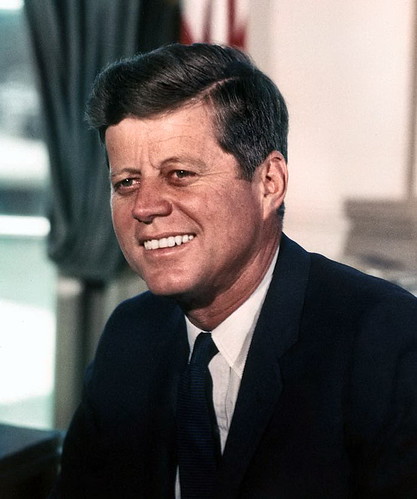
BLOG JOHN FITZGERALD KENNEDY (May 29, 1917–November 22, 1963), 35th U.S. PRESIDENT.

FEATURE image: Portrait of President John F. Kennedy. “President John F. Kennedy” by U.S. Embassy New Delhi is licensed under CC BY-ND 2.0.

INTRODUCTION.
by John P. Walsh

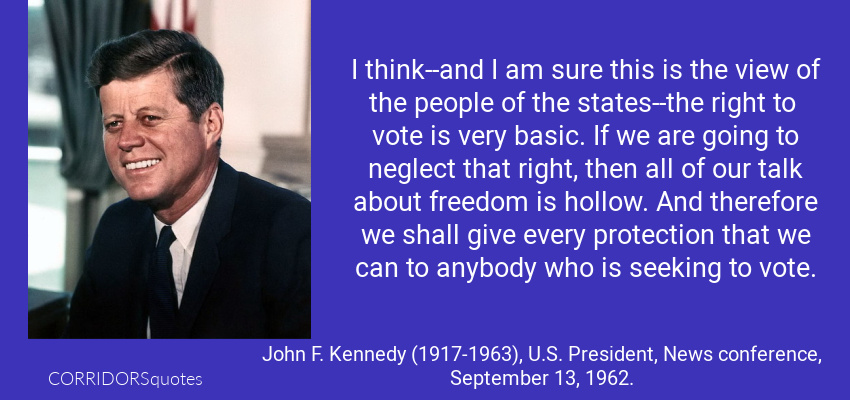
I think – and I am sure this is the view of the people and the states- the right to vote is very basic. If we are going to neglect that right, then all of our talk about freedom is hollow. And therefore we shall give every protection that we can to anybody who is seeking the vote. News conference, September 13, 1962.

The men who create power make an indispensible contribution to the nation’s greatness. But the men who question power make a contribution just as indispensible for they determine whether we use power or power uses us. Remarks at Amherst College, October 26, 1963.

(starts @ 28 seconds) Grand Prairie, Texas, in September 1960. https://youtu.be/iJHrgw8-QEc?si=NMUyZjDxJZXTy1bi – retrieved November 2, 2025.

One of the rare joint appearances of Senators John Kennedy and Lyndon Johnson, the Democratic Presidential ticket, during the 1960 campaign which they prevailed over the Republican ticket of Nixon-Lodge. Here the two men make a joint campaign appearance in Grand Prairie, Texas, in September 1960. Kennedy nor Johnson were natural campaigners—Kennedy’s hands would be shaking hidden under a table or podium as he spoke, his voice growing hoarse. Johnson, who was uncomfortable in crowds and tried too hard, often worked himself on the campaign trail into a sick exhaustion.

Though both candidates wanted to have more joint appearances on the campaign trail, both senators’ aides mutually agreed it mostly hurt the ticket’s—and more precisely, Kennedy’s —image. Though Johnson was only nine years older than Kennedy—both men were the first U.S. presidents born in the 20th century— aides believed that wherever they showed up together Kennedy looked as if he might be LBJ’s son. However, the press and LBJ griped for weeks and months that the candidates should make more joint campaign appearances running as they were for the highest offices in the land.

When it was hinted in the press that there was a growing rift between the candidates and that that was to blame for their not campaigning together, another joint appearance of JFK and LBJ was scheduled in November 1960 five days before Election Day. For the campaign event at the Biltmore in Los Angeles Lyndon Johnson flew out especially to be there and the event received glowing national print and television coverage. On that Thursday before the Tuesday when Americans went to the polls, both candidates and their campaigns viewed the event as a big plus.

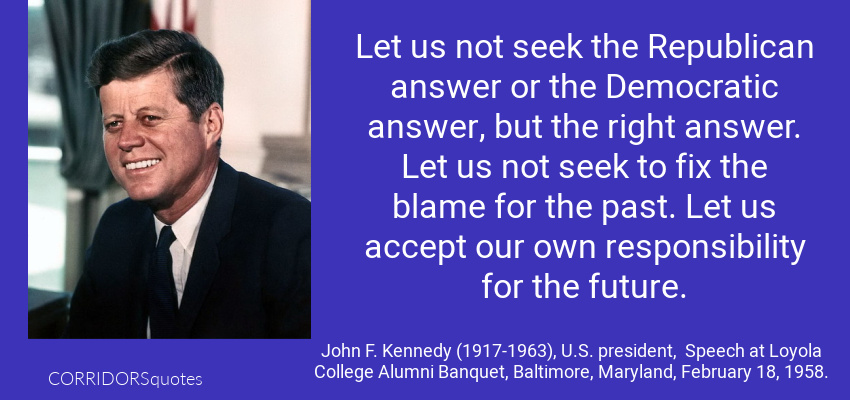
Let us not seek the Republican answer or the Democratic answer, but the right answer. Let us not seek to fix the blame for the past. Let us accept our own responsibility for the future. Speech at Loyola College Alumni Banquet, Baltimore, Maryland, February 18, 1958.

FROM 13 DAYS (2000). JFK: BOB, IS THERE ANY WAY TO AVOID STOPPING THE SUBMARINE FIRST? MCNAMARA: I’M AFRAID NOT MR. PRESIDENT. https://www.youtube.com/watch?v=gol-iCLcroY – retrieved April 20, 2026

In response to the rapid buildup of Soviet nuclear missiles in Cuba, President John F. Kennedy announced that the United States would impose a naval blockade—officially termed a “quarantine”—around the island. It went into effect on the morning of October 24, 1962, when American warships and aircraft tightened a ring around Cuba with orders to intercept any vessel suspected of carrying offensive military equipment.

Tension spiked almost immediately. Roughly 25 Soviet ships, some believed to be transporting nuclear missile components, continued steaming toward the quarantine line. U.S. commanders had standing instructions: any vessel refusing inspection could be stopped, diverted, and, if necessary, sunk. At 10:00 a.m., as the quarantine became active, Kennedy convened ExComm to assess the situation when new intelligence came in that made the situation immediately more precarious. Reports were that the approaching Soviet ships were joined by a Soviet sub armed with nuclear weapons, raising the risk of an existential, catastrophic confrontation. At the same time, aerial reconnaissance showed Soviet crews working feverishly in western Cuba to complete missile sites armed with nuclear warheads pointed at the U.S.—further evidence that the threat to U.S. national security, already considered imminent by the Kennedy Administration, was growing by the minute.

On the diplomatic front, the crisis was unresolved as it was debated by delegates at the U.N. whether Kennedy’s blockade was even legal under international law. Soviet leaders accused the United States of issuing an ultimatum and warned that force would be met with force. Meanwhile protests were organized on each side across the globe as political maneuvering accelerated.

By the end of October 24, 1962, the first signs of restraint appeared: several Soviet ships slowed or halted before reaching the quarantine line, suggesting Moscow might be reconsidering its next move. Even so, the world understood, some for the first time, that it stood on the precipice of nuclear war. The day ended with both superpowers locked in the most dangerous equilibrium of the crisis so far – both armed, alert, and waiting for the next move – with no one knowing whether diplomacy or confrontation would ultimately prevail.

Above: Rev. Dr. Michael Ramsey (1904-1988), Archbishop of Canterbury, and JFK, met on Halloween in 1962. Their Wednesday meeting took place just 3 days following the end of the Cuban Missile Crisis. The world breathed a great sigh of relief that armed confrontation which likely would lead to nuclear war between superpowers was avoided. The previous Saturday, October 27, 1962, was in fact one of the tensest days in the entire ordeal. A U-2 plane was shot down by Soviet-supplied SAM missiles. They killed the USAF pilot and Kennedy’s own ExCOMM demanded immediate military action against those sites. Kennedy resisted the advice. Upon shooting down and killing the U.S. pilot, the Soviets demanded tougher terms for negotiating the removal of 42 mid and long-range nuclear missiles in Cuba. That night, Robert Kennedy met secretly with Soviet Ambassador Anatoly Dobrynin in Washington, D.C. where they reached a basic understanding that only needed approval by Moscow. The next morning. Sunday, October 28, 1962, Radio Moscow announced that the Soviet Union had accepted Kennedy’s proposed solution. The 13-day Cuban Missile Crisis was over. Michael Ramsey was appointed Archbishop of Canterbury on May 31, 1961, and installed in June 1961. He served in this position until 1974. In 1962 Dr. Ramsey was then serving as president of the World Council of Churches (1961 to 1968) and, during his archbishopric, the first woman Anglican priest – Chicago-born high altitude balloonist Jeannette Piccard (1895 -1981) – was ordained in the United States in 1974.

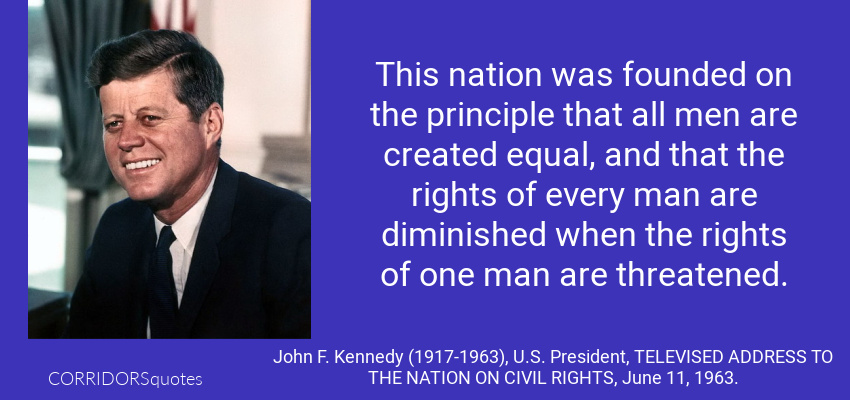
This nation was founded on the principle that all men are created equal, and that the rights of every man are diminished when the rights of one man are threatened. Televised address to the nation on Civil Rights, June 11, 1963.

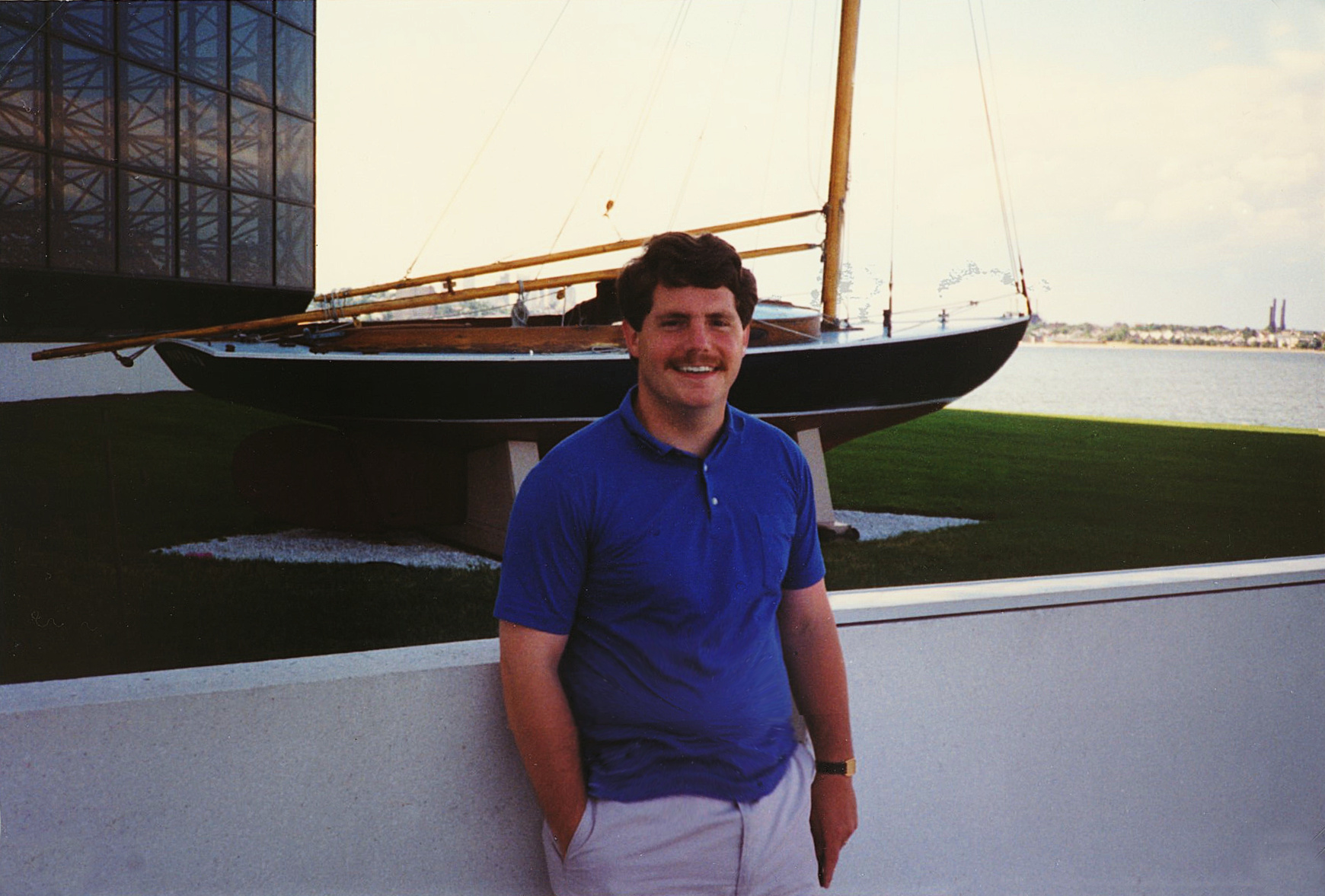
July 1989. John F. Kennedy Library, Columbia Point, Boston, MA.
President-Elect John F. Kennedy and Chester Bowles emerge from a breakfast conference at Kennedy’s Georgetown home in Washington, on Nov. 29, 1960. Bowles was appointed Under Secretary of State and later was Kennedy and Johnson’s ambassador to India.
October 2003. 3307 N Street, Georgetown, Washington, D.C. In June 1957 Massachusetts Senator John F. Kennedy (1917-1963) bought this three story Federal-style house as a gift for his wife, Jackie, following the birth of their daughter, Caroline. John Jr. was also born while the Kennedys lived here. Jackie hosted teas in the house’s double living room after JFK’s 1958 Senate re-election campaign and during the 1960 presidential campaign. The front entrance became famous when President-elect Kennedy made regular announcements of national news such as cabinet appointments, including younger brother and campaign manager, Robert F. Kennedy as U.S. Attorney General. The house was sold when the Kennedys moved into the White House in 1961.
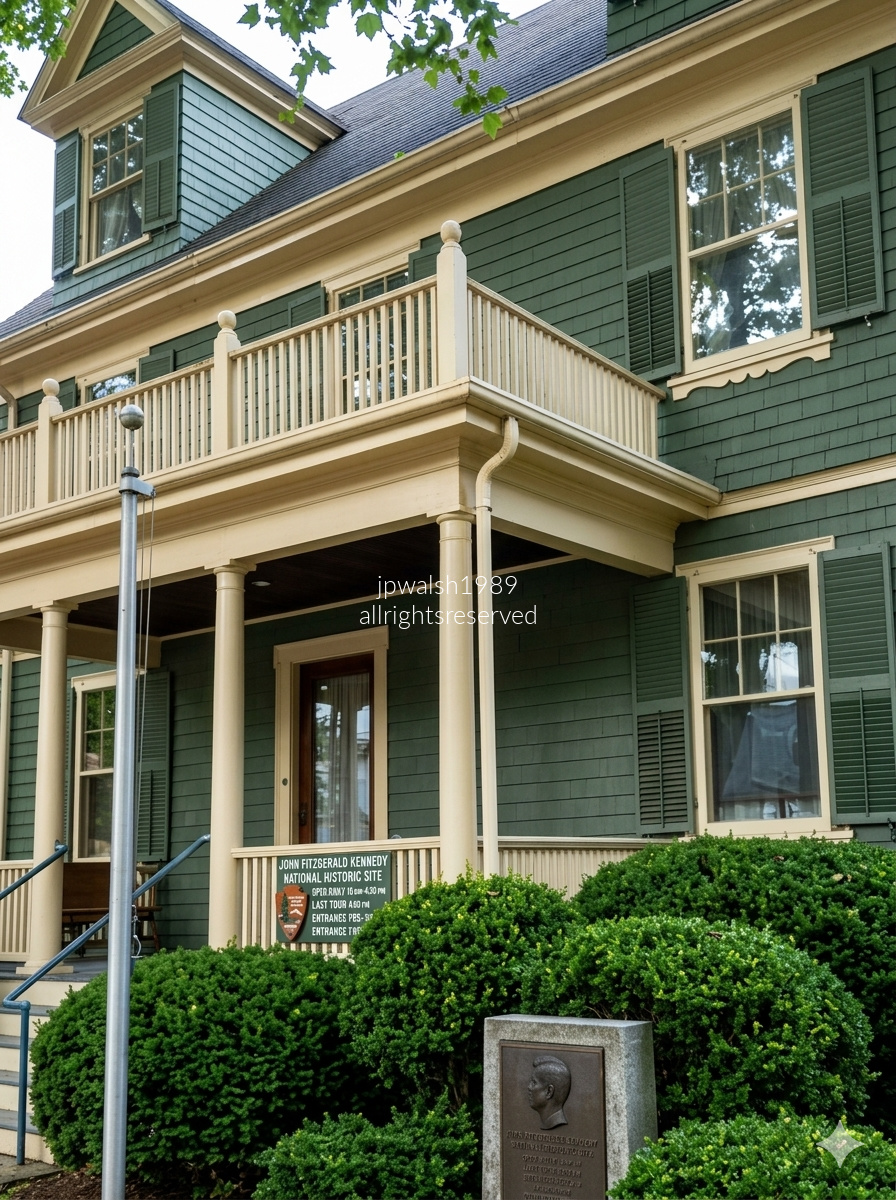
August 2005. The John Fitzgerald Kennedy National Historic Site in Brookline, Massachusetts, a suburb adjacent to Boston, is the birthplace and childhood home of President John F. Kennedy. The house on Beals Street was purchased by Kennedy’s father, Joseph Patrick Kennedy in August 1914 in anticipation of his marriage to Rose Elizabeth Fitzgerald in October 1914. JFK’s father was a shrewd, opportunistic and driven bank president and businessman who started to make his fortune by building warships and transports in Quincy shipyards in World War I. Joe Kennedy was an affectionate father who instilled a spirited sense of competition in the Kennedy children starting in their years in Brookline.
August 2005. The John Fitzgerald Kennedy National Historic Site in Brookline, Massachusetts. John Kennedy was born in this upstairs master bedroom on May 29, 1917. The family lived here until 1920 when they moved a 5-minute walk away to a larger home on Abbottsford where they lived until 1927. Then the Kennedys moved to New York. Rose Fitzgerald, who was the daughter of Boston’s first American-born Irish mayor, had seven of her nine children in Brookline and was reluctant to leave. Joe’s father was a saloonkeeper and politician. While Joe instilled the competitive spirit in to his children, Rose, who as a young woman studied in Europe, taught her children an appreciation of the arts: music, painting, and history. A deeply religious person she would take her young children on walks with the family dog in tow, as they went to the weekday market and afterward to the church so they would know that their faith was not restricted to Sunday. After JFK’s assassination in 1963, Rose Kennedy established this house as a gift to the American people so that, as she said, “Future generations will be able to visit it and see how people lived in 1917 and thus get a better appreciation of the history of this wonderful country.” see – https://www.nps.gov/jofi/index.htm – retrieved May 29, 2025.
(56 seconds). “We are not afraid to entrust the American people with unpleasant facts, foreign ideas, alien philosophies, and competitive values. For a nation that is afraid to let its people judge the truth and falsehood in an open market is a nation that is afraid of its people.” -John F. Kennedy, Voice of America speech, February 26, 1962.

SPEAKING OF FREEDOM OF INFORMATION IN A FREE COUNTRY TO THE ENTIRE WORLD. Voice of America speech, February 26, 1962. FULLER CONTEXT: “What we do here in this country, and what we are, what we want to be, represents really a great experiment in a most difficult kind of self-discipline, and that is the organization and maintenance and development of the progress of free government. And it is your task, as the executives and participants in the Voice of America, to tell that story around the world.
This is an extremely difficult and sensitive task. On the one hand you are an arm of the Government and therefore an arm of the Nation, and it is your task to bring our story around the world in a way which serves to represent democracy and the United States in its most favorable light. But on the other hand, as part of the cause of freedom, and the arm of freedom, you are obliged to tell our story in a truthful way, to tell it, as Oliver Cromwell said.. with all our blemishes and warts, …And we hope that the bad and the good is sifted together by people of judgment and discretion and taste and discrimination, that they will realize what we are trying to do here.
This presents to you an almost impossible challenge, ..The first words that the Voice of America spoke were [IN 1942]. They said, “The Voice of America speaks. Today America has been at war for 79 days. Daily at this time we shall speak to you about America and the war, and the news may be good or bad. We shall tell you the truth”…
In 1946 the United Nations General Assembly passed a resolution reading in part, “freedom of information is a fundamental human right, and the touchstone of all the freedoms to which the United Nations is consecrated.” This is our touchstone…We seek a free flow of information across national boundaries and oceans, across iron curtains and stone walls. We are not afraid to entrust the American people with unpleasant facts, foreign ideas, alien philosophies, and competitive values. For a nation that is afraid to let its people judge the truth and falsehood in an open market is a nation that is afraid of its people.
The Voice of America thus carries a heavy responsibility. Its burden of truth is not easy to bear. It must explain to a curious and suspicious world what we are. It must tell them of our basic beliefs. It must tell them of a country which is in some ways a rather old country–certainly old as republics go. And yet it must make our ideas alive and new and vital in the high competition which goes on around the world since the end of World War II.
…The advent of the communications satellite, the modernization of education of less-developed nations, the new wonders of electronics and technology, all these and other developments will give our generation an unprecedented opportunity to tell our story. And we must not only be equal to the opportunity, but to the challenge as well. For in the next 20 years your problem and ours as a country, in telling our story, will grow more complex. …
We believe that people are capable of standing the burdens and the pressures which choice places upon them, …And as you tell it, it spreads. And as it spreads, not only is the security of the United States assisted, but the cause of freedom.” See – https://www.presidency.ucsb.edu/documents/remarks-the-20th-anniversary-the-voice-america – retrieved May 29, 2025.

November 22, 1963 – President John F. Kennedy’s remarks in front of the Texas Hotel, Fort Worth, TX. – retrieved November 23, 2025. (3.18 minutes).

NOVEMBER 22, 1963, a portion of President John F. Kennedy’s remarks at the Citizen’s Rally in front of the Texas Hotel in Fort Worth, Texas on a rainy morning. In his brief speech the president explains that the country’s overall security relies on (1) military strength, (2) economic prosperity, and (3) superiority in space exploration and that Fort Worth again “will play its proper part.” KENNEDY: “What we are trying to do in this country and what we are trying to do around the world, I believe, is quite simple: and that is to build a military structure which will defend the vital interests of the United States. And in that great cause, Fort Worth, as it did in World War II, as it did in developing the best bomber system in the world, the B-58, and as it will now do in developing the best fighter system in the world, the TFX, Fort Worth will play its proper part. And that is why we have placed so much emphasis in the last 3 years in building a defense system second to none, until now the United States is stronger than it has ever been in its history. And secondly, we believe that the new environment, space, the new sea, is also an area where the United States should be second to none.”

August 2005. National Portrait Gallery, Washington, D.C. Jacqueline Kennedy, the King of Hearts – Stop Action Reaction, 1997, by Tian Mion (b. 1960). see – https://www.si.edu/object/jacqueline-kennedy-king-hearts-stop-action-reaction:npg_S_NPG.2007.6 – retrieved May 29, 2025.

Rose and Joe Kennedy were at the Hyannis Port compound on November 22, 1963. It was a clear, crisp day – a “bluebird.” Rose attended morning Mass, as usual, then returned to have lunch with Joe, who was still severely debilitated from his 1961 stroke. Afterward, they went for a short drive. When they returned, Rose received a call from her son, Attorney General Robert Kennedy: the President—her son Jack—had been shot. A second call followed, telling her he was dead. Rose withdrew to grieve alone, walking the beach and sitting quietly in her room. She later said she asked God how years of raising and preparing her children for service could be undone in seconds. Around 4:15 p.m., she took a call from the new president, Lyndon Johnson, speaking from Air Force One shortly after being sworn in and as he returned to Washington with President Kennedy’s body. Composed, Rose addressed him as “Mr. President.”

Report to the American People on Civil Rights – June 11, 1963.

https://www.youtube.com/watch?v=PTHowggASwY

June 11, 2025 – (13.23 minutes). On May 27, 1963 the Supreme Court stated that it was not going to tolerate the evasion of its 1954 landmark decision Brown v. Board of Education that segregated schools. They stated such in another desegregation case involving public parks. When the High Court made their decision in 1954, in no way could they have foreseen the years of delay. On June 5, 1963 a federal court enjoined Alabama Gov. George Wallace from in any way impeding the admission of two qualified Black citizens from enrolling in the University of Alabama. President John F. Kennedy, on June 10, 1963, reinforced this decision by writing to Gov. Wallace urging him not to interfere. The following day, June 11, 1963, Wallace carried out his pledge to “stand in the schoolhouse door” and blocked the Black students from enrolling. When Wallace was confronted by Kennedy’s federal marshals, and refused the students’ entry, the president nationalized the Alabama Guard. When troops appeared on the scene the governor relented and the Black students entered and registered for classes. That evening from the Oval Office Kennedy appeared on radio and television to deliver what is called the “Report to the American People on Civil Rights” in which he set out the moral and legal issues involved with Civil Rights and proposed legislation that would later become the landmark Civil Rights Act of 1964. In the first two years of Kennedy’s term, he had been slow and cautious in his support of civil rights and desegregation in the United States. Ever the politician he was concerned that any bold actions or initiatives on his part in this area would alienate Congressmen he needed to get through his stalled legislative agenda. On June 11, 1963 in a radical departure from his and the nation’s past Kennedy gave his full-throated endorsement to Civil Rights and Civil Rights legislation in this 13-minute speech. Later that night, in the early hours of June 12, 1963, civil rights activist Medgar Evers, who had been listening to Kennedy’s remarks on the radio, was killed by a sniper as he returned to his home in Jackson, Mississippi. On June 13, 1963 82 black marchers protesting Evers’ death were arrested by Jackson police. On June 19, 1963 Kennedy asked Congress to introduce his bill to desegregate public facilities, take federal action to end job discrimination, and allow the U.S. Attorney General to start desegregation suits. In the meantime, as Congressional negotiation and debate was beginning on the Civil Rights bill, Kennedy asked civil rights leaders to suspend protests and marches which they refused to do. Instead, in the face of a Congressional filibuster of Kennedy’s civil rights bill, they announced a March for Jobs and Freedom in Washington, D.C. to take place in August 1963. Within a week of Evers’s murder, a white suspect was arrested and charged with the slaying. See- Kennedy and the Press, edit. Harold W. Chase and Allen H. Lerman, introduction by Pierre Salinger, Thomas Y. Crowell Company, New York, 1965, p. 452.

(27 seconds). Berlin speech at Rudolph Wilde Platz, June 26 1963
Texas motorcade & remarks at the dedication of the Aerospace Medical Health Center, San Antonio – November 21, 1963
White house 1963  – color recording of remarks for “Seas around us”.
Moon speech, Rice University, Houston, Texas – September 12, 1962
.
https://youtu.be/cgHGg8PiAqo?si=aSZpzJKa_NEeHsP4 – retrieved November 1, 2025. For transcript of speech SEE – The President and the Press: Address before the American Newspaper Publishers Association, April 27, 1961 | JFK Library

On April 27, 1961, President John F. Kennedy delivered his 2400-word+ major speech known as “President and the Press” before the American Newspaper Publishers Association at the Waldorf-Astoria Hotel in New York City. In the speech delivered just days after the failed Bay of Pigs Invasion the new president made a plea for responsible journalism in the face of Cold War threats. The remarks remain relevant today on the topics of press freedom, misinformation, and national security.

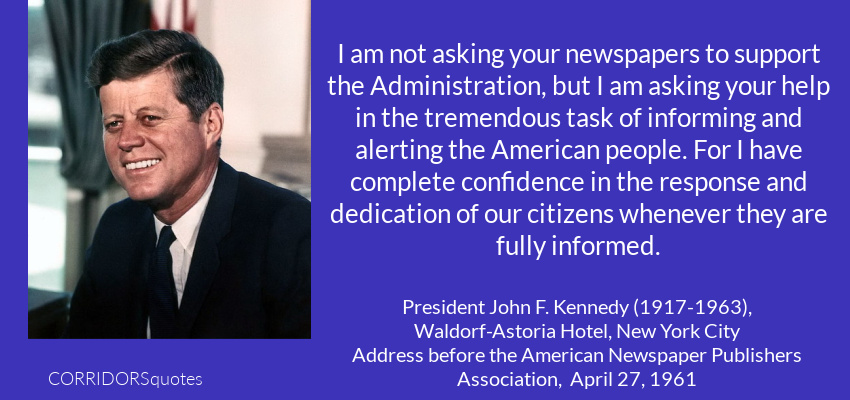
I am not asking your newspapers to support the Administration, but I am asking your help in the tremendous task of informing and alerting the American people. For I have complete confidence in the response and dedication of our citizens whenever they are fully informed. Waldorf-Astoria Hotel, New York City, Address before the American Newspaper Publishers Association, April 27, 1961. see – https://www.jfklibrary.org/archives/other-resources/john-f-kennedy-speeches/american-newspaper-publishers-association-19610427#:~:text=This%20Administration%20intends%20to%20be,out%20when%20we%20miss%20them. – retrieved March 25, 2025.
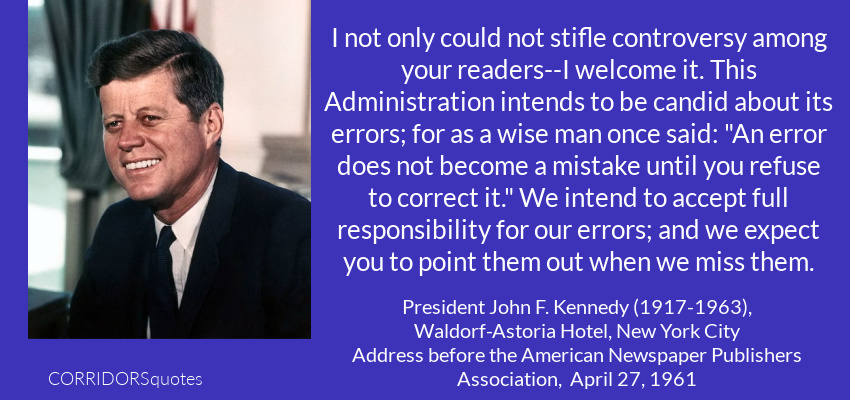
I not only could not stifle controversy among your readers–I welcome it. This Administration intends to be candid about its errors; for as a wise man once said: “An error does not become a mistake until you refuse to correct it.” We intend to accept full responsibility for our errors; and we expect you to point them out when we miss them. Waldorf-Astoria Hotel, New York City, Address before the American Newspaper Publishers Association, April 27, 1961. see – https://www.jfklibrary.org/archives/other-resources/john-f-kennedy-speeches/american-newspaper-publishers-association-19610427#:~:text=This%20Administration%20intends%20to%20be,out%20when%20we%20miss%20them. – retrieved March 25, 2025.

When Franklin Delano Roosevelt signed the Social Security Act on August 14, 1935, the 32nd president called the program a “cornerstone.” In 1998 when I met Jimmy Carter, the 39th president, at a book signing (“The Virtues of Aging”) in Chicago I asked him if he thought that Social Security was destined to go away. He said to me he didn’t think so. In 2026, the federal retirement benefits program is under threat like never before. This is due for many reasons including a large aging population. There are 75 million seniors on Social Security today, three times more than in 1975. As well as a smaller work force who contribute payroll taxes to the program compared to the growing number of beneficiaries. Reserves are being depleted and insolvency is projected for the mid-2030s. In the presidential campaign of 1960 Democratic Party’s nominee John F Kennedy visited the national shrine home of Franklin Delano Roosevelt in Hyde Park, New York. It was the 25th anniversary of the signing of the Social Security law, The Democratic candidate for president spoke to 2,000 senior citizens who had come to honor the memory of the late president and to listen to the soon-to-be 35th president. Kennedy proposed a federal medical care bill (Medicare was signed into law in 1965). Social Security benefits to meet the rising cost of living (implemented in 1975). Incentivize workers to earn more money and still enjoy Social Security. Vocational guidance for persons of retirement age. Provide adequate housing for the aged. Expand research into the causes and prevention of diseases associated with advancing age. Increased survivor benefits for spouses responsible for under-age children.

JOHN F. KENNEDY: we do not rely merely on the past we look forward in this country we fight the same battle that he fought we find it easier because he fought it but it is now our battle. so that this country moves ahead. (6) John F. Kennedy [Democratic] 1960 Campaign Ad “Hyde Park – Social Security” – YouTube – retrieved August 14, 2025. (4.41 minutes).

News Conference 29 — March 29, 1962. THE PRESS CONFERENCE TOOK PLACE THE SAME WEEK THE HOUSE WAYS AND MEANS COMMITTEE PASSED THE PRESIDENT’S TAX CUT BILL. IN THIS SAME PRESS CONFERENCE JFK WAS CONCERNED TO CLOSE TAX LOOPHOLES THAT PERMIT AND ENCOURAGE AMERICAN INDUSTRY TO INVEST OVERSEAS. SIGNIFICANTLY THE CONGRESS WAS CONCERNED WITH REVENUE BALANCING BETWEEN WHAT WAS LOST FROM THE TAX CUTS AND WHAT WAS GAINED BY TAX REFORMS SO THAT THE TAX BILL WAS REVENUE NEUTRAL. IT WAS AN EXERCISE TO ECONOMIC STIMULUS AND NOT THE BROAD-BRUSH ANSWER THAT IT HAS BECOME IN REGARD TO THE COUNTRY’S ECONOMICS (OR, CONVERSELY, TAX HIKES FOR THAT MATTER). THE 1962 TAX BILL WAS MODIFIED AND PASSED ACCORDINGLY TO BALANCE THOSE FIGURES. KENNEDY PROPOSED SIGNIFICANT REDUCTIONS IN TAX RATES FOR INDIVIDUALS AND CORPORATIONS WHICH WOULD LEAD TO AN INITIAL LOSS OF TAX REVENUE FOR THE GOVERNMENT. BROADLY PRO-GROWTH, IT WAS NOT A TAX GIVEAWAY AS THE COUNTRY PRACTICES TODAY AS IT WAS SEEN AS NOT BEING ABLE TO AFFORD IT WHICH OF COURSE IT CAN’T. RATHER, THE GOAL WAS TO BALANCE OUT THE REVENUE LOST FROM THE TAX RATE CUTS AND TO GENERATE REVENUES BY REFORMS RESULTING IN REVENUE GAINS AND THUS A REVENUE-NEUTRAL BILL. THESE TAX GAINS FOR THE GOVERNMENT INCLUDED ELIMINATING THE DIVIDEND CREDIT AND EXCLUSION, INTRODUCING WITHHOLDING TAXES ON DIVIDENDS AND INTEREST INCOME, RESTRICTING CERTAIN BUSINESS EXPENSE DEDUCTIONS, PARTICULARLY FOR ENTERTAINMENT AND MEALS, ADDRESSING THE TAX TREATMENT OF COOPERATIVES AND FINANCIAL INSTITUTIONS, AND CHANGES TO THE TAXATION OF GAINS FROM THE SALE OF DEPRECIABLE PROPERTY. WHILE THE FINAL VERSION OF THE REVENUE ACT OF 1962, AS PASSED BY CONGRESS, ACTUALLY RESULTED IN A NET LOSS OF REVENUE IN THE SHORT TERM THE ADVENT OF REAGANOMICS HAS BROUGHT MASSIVE TAX CUTS SKEWED TO THE RICH WITH NO OFFSETTING TAX REVENUE STREAMS FOR THE GOVERNMENT BUT RELYING SOLELY ON REVENUE FROM THE GROWTH OF THE TAX STIMULUS AND, COUPLED TO OVERSPENDING, DEFICIT SPENDING (BORROWING) FOR THE REST. THIS HAS RESULTED IN MASSIVE BUDGET DEFICITS KENNEDY COULD NEVER HAVE IMAGINED. IN FACT, THAT YEAR OF 1962 THE PRESIDENT WAS AIMING FOR A TAX CUT AND A BALANCED BUDGET.

(6) John F. Kennedy’s HILARIOUS response to a woman’s question. – YouTube – retrieved July 21, 2025.

The line most associated with John F. Kennedy’s 1961 Inaugural Address—“Ask not what your country can do for you; ask what you can do for your country”—has endured as a defining call to civic action. Delivered by the nation’s first Catholic president, the phrase urged Americans to view national progress as a shared personal duty rather than a service provided by, or reliant on, the government.

Its resonance is echoed in the 1965 documentary, Years of Lightning, Day of Drums, one of the earliest films to chronicle Kennedy’s presidency and assassination. Near the conclusion, narrator Gregory Peck reflects, “All this took place in the early 1960s, and someday the early 1960s will be a long time ago.” Hearing that line as a child, I was struck by its existential reminder that even the most vivid present moments inevitably recede into memory and become history.

Some historians have suggested that Kennedy’s famous inaugural exhortation may trace back to his years at Choate, the Connecticut boarding school he entered in 1931 as a ninth-grade student. In his chapel addresses, headmaster George St. John frequently reminded students: “The youth who loves his alma mater will always ask not ‘what can she do for me?’ but ‘what can i do for her?’” Kennedy would have heard this refrain repeatedly during his formative years.

Kennedy arrived at Choate following his older brother, Joe Jr., a standout athlete two years ahead of him. By contrast, Kennedy was frail, thin, and saddled with the nickname “rat face” among classmates. His early years at the school were marked less by distinction than by mischief. He gathered around him a circle of friends he called “The Muckers Club,” a tongue-in-cheek embrace of headmaster St. John’s term for troublemakers. Their antics were largely harmless—witty pranks and playful irreverence—and the group included Kennedy’s roommate and lifelong friend, Lem Billings.

Despite his unremarkable start, Kennedy’s trajectory at Choate shifted. By the time he graduated in 1935, he was not valedictorian, but his peers voted him “Most Likely To Succeed,” a judgment that proved prescient.

JFK, May 4, 1963: First, it is to make sure that our private schools are increasingly representative of the diversity of American life. These schools will not survive if they become the exclusive possession of a single class or creed or color. They will enlarge their influence only as they incorporate within themselves the variety which accounts for so much of the drive and the creativity of the American tradition. The second is to make sure that our private schools prepare young men and women for service to the community and to the Nation. The inheritance of wealth creates responsibilities; so does privilege in education.
 https://www.youtube.com/watch?v=Zp4alOCiqCo – retrieved February 27, 2026.

This explanatory article is periodically updated.

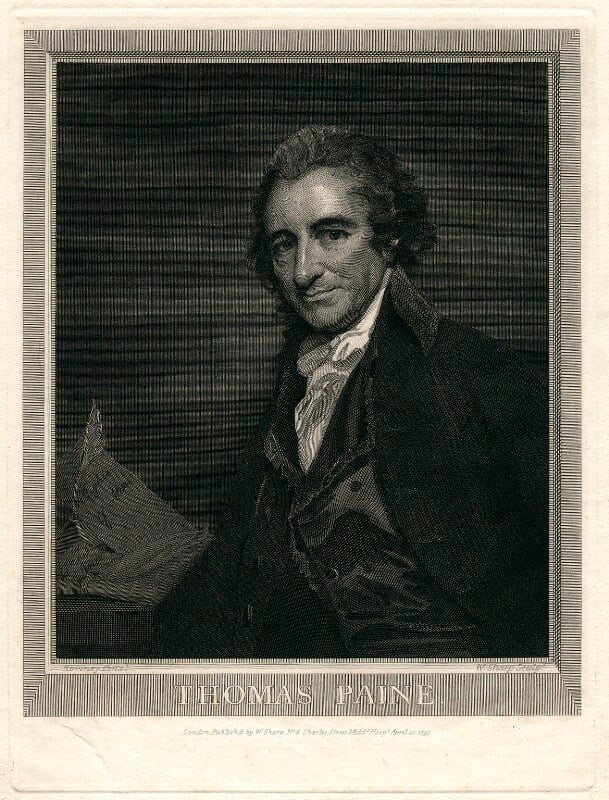
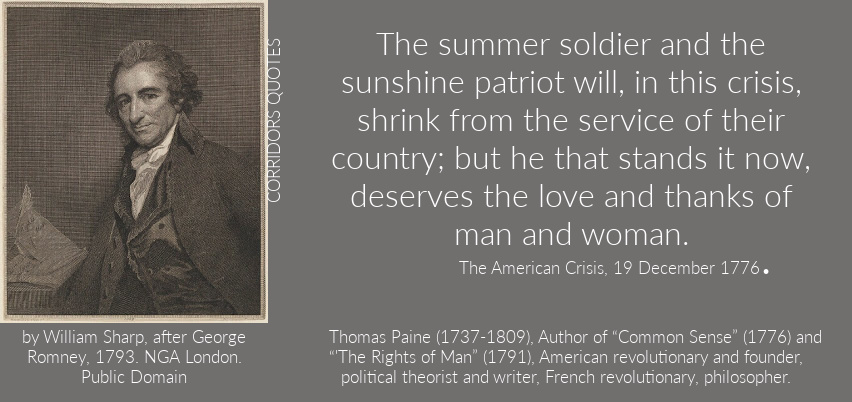
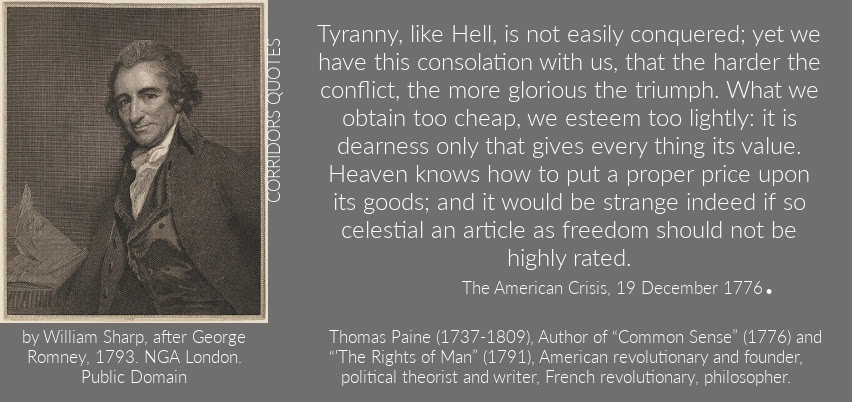
THOMAS PAINE (1737-1809), Author of “Common Sense” (1776) and “The Rights of Man” (1791), American revolutionary and founder, political theorist and writer, French revolutionary, philosopher.

FEATURE Image: Thomas Paine, by engraver William Sharp (1749-1824), after portrait painter George Romney (1734-1802), 1793. NGA, London. Public Domain. See – https://www.npg.org.uk/collections/search/portrait/mw35502/Thomas-Paine?LinkID=mp03422&search=sas&sText=thomas+paine&role=sit&rNo=6 – retrieved June 1, 2024.

These are the times that try men’s souls. The American Crisis, 19 December 1776.
The summer soldier and the sunshine patriot will, in this crisis, shrink from the service of their country; but he that stands it now, deserves the love and thanks of man and woman. The American Crisis, 19 December 1776.
Tyranny, like Hell, is not easily conquered; yet we have this consolation with us, that the harder the conflict, the more glorious the triumph. What we obtain too cheap, we esteem too lightly: it is dearness only that gives every thing its value. Heaven knows how to put a proper price upon its goods; and it would be strange indeed if so celestial an article as freedom should not be highly rated. The American Crisis, 19 December 1776.

With the capture of Manhattan, British Army Commander in Chief William Howe sent Cornwallis to pursue Washington into New Jersey just sixty miles north of Philadelphia. Washington’s army was down almost 90% in December 1776 (3500 soldiers) from just August 1776. Washington just escaped Cornwallis’ grasp. As the British set up a line of forts to house and feed their soldiers during winter, Washington was the outsider. The British believed the end of the revolution of what they called “despised” and “undisciplined rabble” which Virginia planter George Washington led (by way of the efforts of troublemaker Massachusetts lawyer John Adams), was in hand. The British entered into winter by taking prisoner Charles Lee, one of Washington’s senior generals in the Continental army, and locked him up as well as their own fleet in Newport, Rhode Island which they took without resistance. The British kept Lee’s horse perpetually drunk out of spite for the Americans. Before Washington’s important crossing of the Delaware River on Christmas night 1776 and surprised the mercenary Hessians, Washington’s first comeback victory, it was the lowest ebb of the war. Since July 1776, Howe had taken almost 5000 men as P.O.W.’s, including 4 generals, and hundreds of artillery pieces and many tens of thousands of Washington’s ammunition in the wake of winning battles. It was then that 39-year-old Thomas Paine, serving in Washington’s army, wrote this propaganda tract (his Common Sense appeared earlier in January) that began with the famous line. “These are the times that try men’s souls: The summer soldier and the sunshine patriot will, in this crisis, shrink from the service of their country; but he that stands it now, deserves the love and thanks of man and woman. Tyranny, like Hell, is not easily conquered; yet we have this consolation with us, that the harder the conflict, the more glorious the triumph. What we obtain too cheap, we esteem too lightly: it is dearness only that gives every thing its value. Heaven knows how to put a proper price upon its goods; and it would be strange indeed if so celestial an article as freedom should not be highly rated.” Washington wrote about the same events more soberly: “Our affairs are in a very bad way . . . the game is pretty near up—owing in a great measure to the insidious arts of the enemy.”

SOURCES: CHAPTER THREE. “The Peace Commissioners? THE HOWE BROTHERS,” The Men Who Lost America: British Leadership, the American Revolution, and the Fate of the Empire (The Lewis Walpole Series in Eighteenth-Century Culture and History), Andrew Jackson O’Shaughnessy, Yale University Press, 2013, p. 96.

Your failure is, I am persuaded, as certain as fate. America is above your reach….her independence neither rests upon your consent, nor can it be prevented by your arms. In short, you spend your substance in vain, and impoverish yourself without hope. To the People of England , The American Crisis: PHILADELPHIA, Nov. 21, 1778. see- https://www.ushistory.org/paine/crisis/c-07.htm – retrieved June 5, 2024.

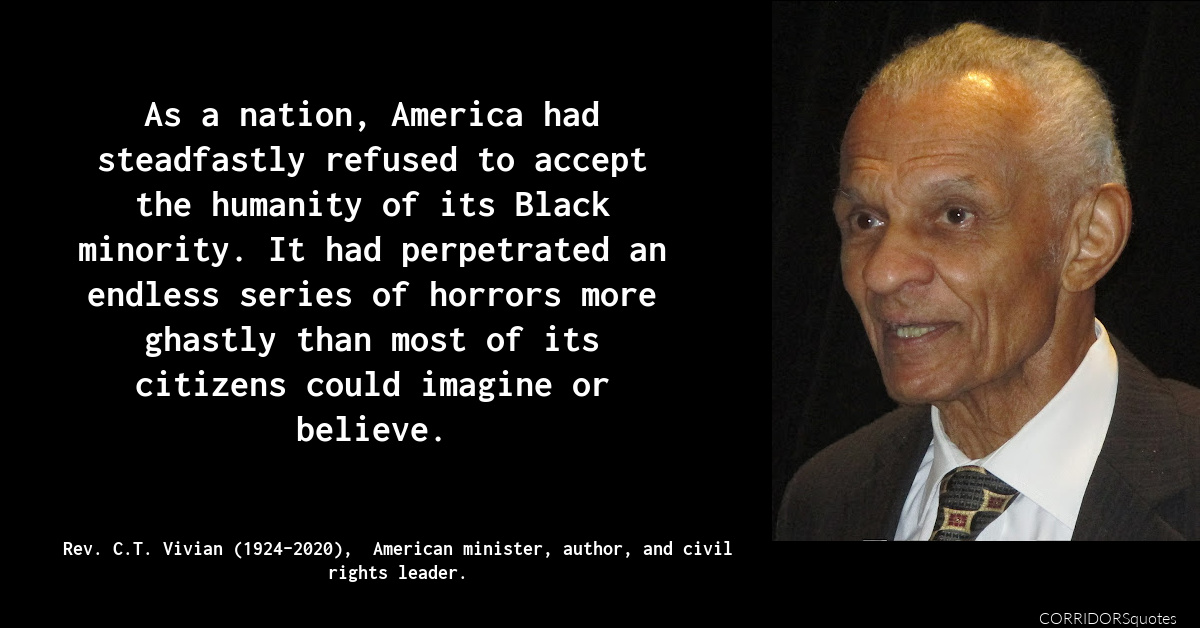
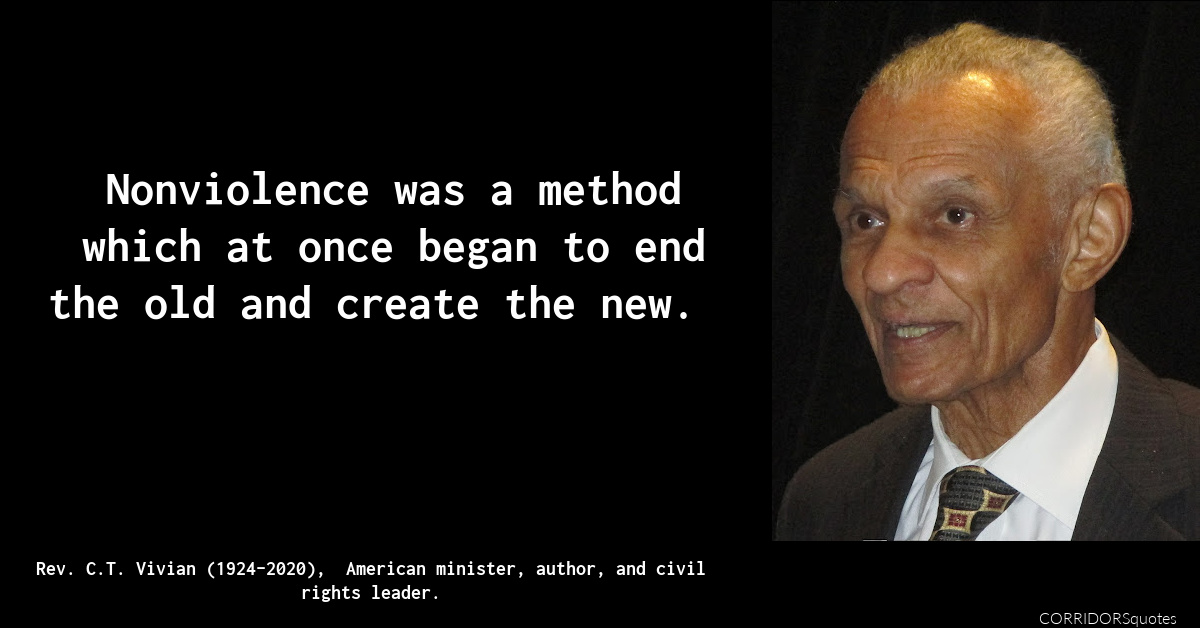
Rev. C.T. VIVIAN (1924-2020). American minister, author, and civil rights leader.

FEATURE image: Rev. C.T. Vivian. PHOTO: CC BY-SA 4.0

President Barack Obama delivers the 2013 Presidential Medal of Freedom to Cordy Tindell “C.T.” Vivian, during a ceremony in the East Room of the White House, Nov. 20, 2013. (Official White House Photo by Lawrence Jackson)/ Public Domain.

Rev. C.T. Vivian died on July 17, 2020 at 95 years old. Rev. Vivian was born in Boonville, Missouri, and migrated as a child with his mother to Macomb, Illinois. Rev. Vivian grew up to attend Western Illinois University (WIU) in Macomb, Illinois, where he worked as the sports editor for the student newspaper. In 1987, decades after attending the university, Rev. Vivian received an honorary doctorate from WIU.

Rev. Vivian’s career as an activist began in Peoria, Illinois, where, in 1947, he participated in sit-in demonstrations to successfully integrate Barton’s Cafeteria. Soon after, he served with Rev. Dr. Martin Luther KIng, Jr. and joined Dr. King’s executive staff. In that capacity, Rev. VIvian served as the national director of affiliates for the Southern Christian Leadership Conference (SCLC).

In the mid1960’s Rev. Vivian organized and directed efforts to re-evaluate activist networks and goals and the ideology and practice of Black Power, as well as the role of Christian faith among its participants.

In 1965, Rev. C.T. Vivian became Director of Fellowships and Internships of the Urban Training Center (UTC) for Christian Mission in Chicago. Founded with a grant from the Ford Foundation in 1963 to train African American Christian pastors and organizers—Rev. Jesse Jackson was among the first 19 men trained under Rev. Vivian’s program at the UTC in its first year—the organization considered new dimensions to protest movements in Chicago concerned with Black power, Black identity and Black unity.

By means of lectures, readings, discussions and nonviolent training exercises such as “the Plunge” where participants had to survive on their own for seven days without access to housing, food, or other resources, the organization existed to help its participants to seek ways to take power from structures which affect their lives particularly on the West and South Sides of Chicago. 

In 1970, following the assassination of Dr. King in 1968, Rev. Vivian became the first of Dr. King’s staff to write a book based on his experiences in the civil rights movement. Rev. Vivian’s book was entitled Black Power and the American Myth.

Rev. Vivian eventually became director of the Urban Theological Institute at Atlanta’s Interdenominational Theological Center, a consortium of African-American seminaries. He was also board chair of Capitol City Bank, a minority-owned bank founded in 1995 that focused on loans for underserved areas. With eight branches in metro Atlanta, Capitol City Bank closed in 2015.

Through the C.T. Vivian Leadership Institute founded in 2008, Rev. Vivian continued to do the kind of work he did in Chicago in the 1960’s which was facilitating mainly youth who were seeking discerned strategies for their material and spiritual goals. On behalf of at-risk youth and college graduates, Rev. Vivian fostered innovative leadership for their career development in the 21st century. In 2012, Rev. Vivian returned to serve as interim President of the Southern Christian Leadership Conference and, in 2013, President Obama awarded Rev. Vivian the Presidential Medal of Freedom.

Photograph: C.T. Vivian, Harry Belafonte (1927-2023), Rev. Joseph Lowery (1921-2020). Photograph: Harry Belafonte, Rev. Joseph Lowery, and C.T. Vivian” by pflegerarchives is licensed under CC BY-SA 2.0.

PHOTO: CC BY-SA 4.0

The United States began with a struggle for civil rights. The specific issue – taxation without representation – was merely a focus for the larger question of whether or not a dominant majority would continue to exploit a subject minority. The American colonists decided that this oppression was not tolerable.
America was born as a revolutionary nation.
The question always before the Black man was: What must I do to be free?
Freedom was conceived of in commercial terms, and indeed there was cause for this..Yet the fact is that when ordinary Black people began to move it was not an economic force that moved them. They sought dignity, not dollars; manhood, not money; pride, not prosperity.
It was Martin Luther King who removed the Black struggle from the economic realm and placed it in the moral and spiritual context.
As a nation, America had steadfastly refused to accept the humanity of its Black minority. It had perpetrated an endless series of horrors more ghastly than most of its citizens could imagine or believe
Racism began as rationalization. It began as a justification of the white man’s injustice to the Black. The greed that brought Black men into slavery was not alone enough to make the institution bearable to the white conscience.
White Americans had to become racists or John Browns…There were many more whites of John Brown’s persuasion than is commonly known. The annals of Southern history document the executions of scores of whites accused of fomenting Black revolt.
Today bigotry most often shows itself as blind indifference and willful ignorance rather than as racist activism.
When Martin Luther King emerged, he raised the issues from the pragmatic to the sublime.
During the time of slavery abolitionists were accused of violence for merely ADVOCATING an end to slavery, while the steady falling of the overseer’s lash went unquestioned as a necessary fact of life.
White America has accepted the brutality of enforced poverty, the violence of economic and social discrimination, the viciousness of personal intolerance, as social facts.
The Blacks who were brought to this country as slaves were systematically stripped of all cultural ties…Nor were they allowed to develop new institutions to replace the old. They were not permitted to read or write.
Blacks were permitted nothing by which to mark themselves as human. They had neither legal nor moral rights. They were property, not people.
Although the Constitution had been amended to declare him a citizen, the Black was neither considered to be, nor treated as, a man.
Even the Black church, which has been the closest thing in most communities to be a truly independent Black institution, has largely failed to deal with the facts of Black America. The church has taught that Blacks were human. But that they would only enjoy its privileges after death.
Blacks had to come to see themselves as masters of their own fate, masters of their secular destiny as well as their spiritual destiny.
These facts — (of economic discrimination, infant mortality rate, malnutrition) and all the others which describe the Black condition — we knew well. Our problem was to make the rest of the nation understand them.
Among other models of social action was the American Revolution itself.
When white people find filth in the streets of their neighborhood they quite properly call city hall and complain, and it is removed. But when the same whites (and warped Blacks) find filth in the ghetto streets, they call for a clean-up campaign by ghetto residents.
In 1964, the Small Business Administration reviewed its past ten years and reported that it had made seven loans to Blacks during that time –seven in ten years. This record is typical of most banks, savings and loans companies, and other financial institutions, which provide the capital that allows people to enter the commercial world.
As Gunnar Myrdal pointed out in his classic study AN AMERICAN DILEMMA, this country does not have a Negro problem, it has a white problem. Changing the white majority, their attitudes and their institutions, is basic to any solution to “racial strife.”
We saw that the failure to admit Blacks to the society had created a permanent ambivalence within the nation, an ambivalence which warped everything that the nation did. Even the simple facts of history had been so twisted that it was impossible for most Americans to understand what happened to their land or why they had arrived at the crisis they were facing.
The first permanent non-Indian settlers in what is now the United States were not whites seeking religious freedom but Blacks seeking physical freedom. These people came here as slaves with an ill-fated Spanish colonial venture. They rebelled and sought refuge with the Indians. The Spanish left and the Blacks remained. This took place more than a hundred years before the landing of the Mayflower.
Of major importance is the fact that at the time of the Revolutionary War the entire American economy was sustained by slavery. Slaves were held in every colony.
For Blacks were not the only ones oppressed by slavery. Whites were also brutalized by their inability to escape from slavery. In the South this was especially clear. A police state was created and the entire population lived in terror of a slave uprising.
Millions of Americans suffered from misplaced hatreds. The classic example is the poor white Southerner who has been pitted against Blacks by the powerful men who exploit them both.
Most of the antislavery agitation in the United States came from poor whites in the South. These people saw that slavery kept THEM in bondage by allowing planters to control all the best land and manipulate the markets to their own advantage.
John Calhoun voiced the typical slaveholder’s view when he said freedom for whites was impossible without the enslavement of Blacks.
In the Dred Scott decision of 1857…the Supreme Court explained that the phrase “the people of the United States” in the Constitution was never meant to include Blacks.
Congress…created the Freedmen’s Bureau, an agency designed to make the ex-slaves participants in the national economy. Much good work was done by the Bureau.
In the Fifteenth Amendment, the government officially forbade the denial of voting rights because of “race, color, or previous condition of servitude.” And having done this, the government washed its hands of the whole matter.
One reactionary Supreme Court decision interpreted the Fourteenth Amendment as having granted the privilege of national citizenship, but not necessarily state citizenship. This gave Blacks rights such as access to seaports, but left questions of education, suffrage, and employment up to the states.
During the 1890s, two to three Blacks were lynched every week – week after week, year after year.
During the Jim Crow mania, states, counties, towns, and cities vied with one another in passing repressive legislation, running all the way from the silly to the insane. This was the period which the “separate but equal” doctrine was taking shape.
The Civil Rights Act of 1965 was intended partly to enforce the Fifteenth Amendment, because no more than a tiny fraction of the Black population had ever actually been allowed to vote.
Ironically, it is America’s firm commitment to equalitarian ideals which makes the race question so intense.
What began as a Negro rights movement and became a civil rights movement would have to become a human rights movement encompassing the entire nation. It would not be enough even for the nation to change its attitudes toward Black people – we saw that the nation would have to change its attitude toward itself as well. White people as individuals and as a group would have to examine and redefine themselves, their past, and their future just as Blacks were doing.
Almost every public pronouncement concerning the condition of Blacks insisted that their situation was rapidly improving. But since Blacks were invisible to the white world, these questionable statements went unverified.
Some of our leaders recommended movement through education…Others to industrial occupations…still other leaders counseled violence. Throughout the history of America we fought many times. Before emancipation there were over 250 slave conspiracies and revolts.
To all who accepted it, nonviolence offered new power. It pitted calm courage against frantic fear. It set the action of love against the reaction of hate.
Nonviolence was a method which at once began to end the old and create the new.
The Birmingham campaign of 1963 was the first large-scale test of the new method (of nonviolence). It was titled “Project C” – C for CONFRONTATION.
When it became clear that we would not be crushed, official Birmingham accepted our demands—(1) desegregation of all public facilities, (2) hiring and upgrading of workers without discrimination, (3) the release of all jailed demonstrators, (4) the establishment of a permanent biracial committee to keep communications open between Blacks and whites.
Our movement depended on mass support; the mobilization of our people was our principal weapon.
We were continually warned about “backlash”—which is what white people do when Black people fail to “stay in their place.”
We were continually told by whites and fearful Blacks alike that we were fomenting discord, creating racial strife, mounting reaction and bigotry.

Introductory text:

White liberals also touted the success gained through legal action. But important as court battles have been, they failed to make any basic change in the lives of most Blacks.
Ten years after the school desegregation cases of 1954, only 2.14% of the nearly 3 million Black children in Southern schools have been affected and were receiving anything like a desegregated education.
As this protest reached massive proportions it became clear that those Americans who were not coming to realize the justice of the Black demands were closing their minds more permanently and more desperately to justice.
Massive opposition was stirring. White citizens’ councils were forming throughout the South. In the Northern cities, the names were different but the motives were the same whether they came under the heading of parents’ and taxpayers’ groups, homeowners’ associations, or community school councils.
Our accomplishments often bewildered us as much as our defeats.
It was not until the riots began that we understood the extent of our failure. The message from the streets was that hundreds of years of Black appeals for justice would now give way to action.
When there is no justice for ALL, then there is no justice at all. Some may be favored, but none are safe.
Genuine integration can never become a reality until both parties can live together as equals; and that will not happen until each sees the other as human, until each holds the same values upon which the entire culture can grow.
Integration is dead. The concept and the experience, insofar as they were tried, have both failed because of the powerful racism of this society. Blacks, in response, have realized that they must develop their own distinctive culture.
Black organizations that have organized around welfare have almost universally called for the abolishment of that system.
Who then really WANTS the welfare system? Who profits by it? Who perpetuates it? It is, of course, the people who RUN the system.
It is those who ADMINISTER welfare who get the most money, not the recipients; it is the administrators who are most truly ON welfare. This point should always be remembered when they try to speak for the Black community.
The collapse of the integration model has led to many social experiments ranging from Black capitalism to the African revival. There has been a headlong search for new sources of identity.
Within Black communities, therefore, the cry is no longer for integrated education, but for community control. It means Black control of Black schools, just as whites have always controlled their schools.
In a few cases there have even been beginning attempts at coalition between bigots and Blacks in opposition to the white liberals who refuse to give up the rubric of integration.
Some segments of the Black movement are concerning themselves specifically with the creation and re-creation of Black culture. Others have found inspiration in such international movements as socialism.
The only sanity seems to lie in a new form of segregation which will hopefully, in time, bring a new demand for integration – the integration of whites into the re-created culture that the Black minority has begun to achieve.

Introductory biographical text:

Most brief, educationally distinct citations come from C.T. Vivian’s Black Power and the American Myth.

Watching U.S. PRESIDENTS.

FEATURE Image: “White House” by Diego Cambiaso is licensed under CC BY-SA 2.0.

“The advent of the new president changed everything. The Roosevelts transformed the White House as completely as the swift march of public thoughts and events had changed the country. No longer did the Executive Mansion resemble a medieval castle besieged by the forces of progress. The drawbridges were figuratively let down, and the moats drained of their timeworn prejudices. The archers of reaction withdrew from their turrets, and the victorious New Deal army took over the battlements.” George Abell and Evelyn Gordon, Let Them Eat Caviar, Dodge Publishing Co., New York, 1937.

The Roosevelts. Franklin and Eleanor (FDR Bio, part 1)” by Tony Fischer Photography is licensed under CC BY 2.0.
Warren G. Harding in 1920 by Harris & Ewing. Public Domain. 

“Even that son of a bitch looks impressive in that getup!” Alice Roosevelt Longworth (1884-1980), at the White House after visiting President Warren Harding in the Oval Office. Quoted in Katherine Graham’s Washington, Knopf, 2002.

Alice Roosevelt was President Teddy Roosevelt’s oldest child and the only child of Roosevelt and his first wife, Alice Hathaway Lee, who died in childbirth. Alice grew up to be an independent, unconventional and outspoken “first daughter” and was an important figure in the women’s movement in the first half of the 20th century.

Alice Longworth was perfectly realistic about Harding—and didn’t like the Republican president very much. Sen. Brandegee of Connecticut, a member of Harding’s own inner circle, called the former newspaper owner of The Marion Star, Senator from Ohio, and 29th U.S. President, “no world-beater, but he’s the best of the second-raters.”

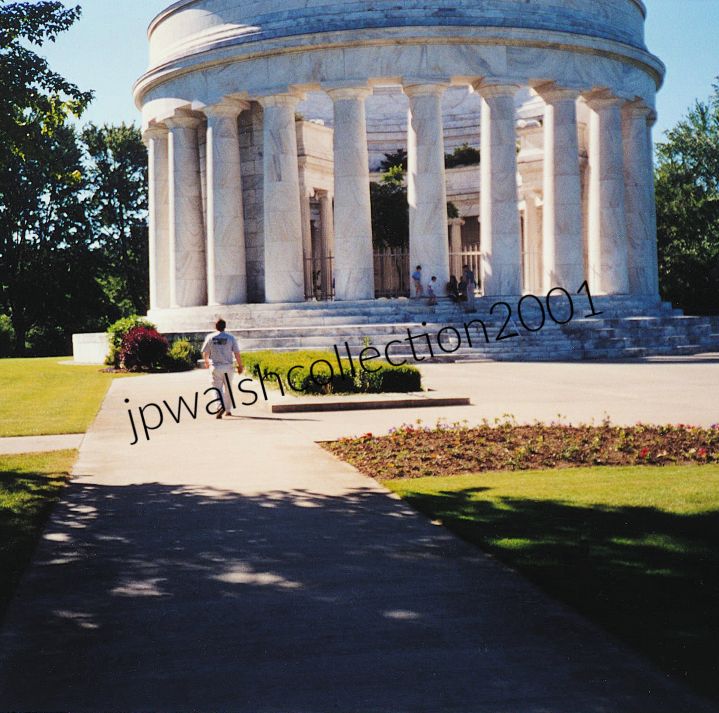
June 2001. Visiting Harding Tomb in Marion, Ohio. The final resting place of Warren G. Harding (1865-1923), 29th President of the United States (1921-1923) and First Lady Florence Kling Harding (1860-1924) is located in Marion Cemetery. Following President Harding’s death on Aug. 2, 1923, and funeral, his body was placed in the Receiving Vault in Marion Cemetery until a memorial was built. Florence died in 1924, and her body was also placed in the vault. The Hardings were moved to the memorial in December 1927. In 1931 President Herbert Hoover officially dedicated the memorial. 60% see – https://hardingpresidentialsites.org/harding-memorial/ – retrieved August 10, 2025.

(50 seconds). While Abraham Lincoln, LBJ and Donald Trump are the three tallest U.S. presidents –and Trump at $7.3 billion, says Forbes in 2025, and Kennedy at $150 million in 1960 ($1.6 billion today) are the richest – though newer wealth rankings jiggle that richest list somewhat – this clip happens to include several of the shortest presidents – the two Adamses (5’7”), “Little Van” Martin Van Buren (5’6”) and the shortest of all chief executives, James Madison (5’4”). https://youtube.com/shorts/h1q_lxjoGog?si=Nj7fkFM8iejI4lX7 – January 30, 2026.

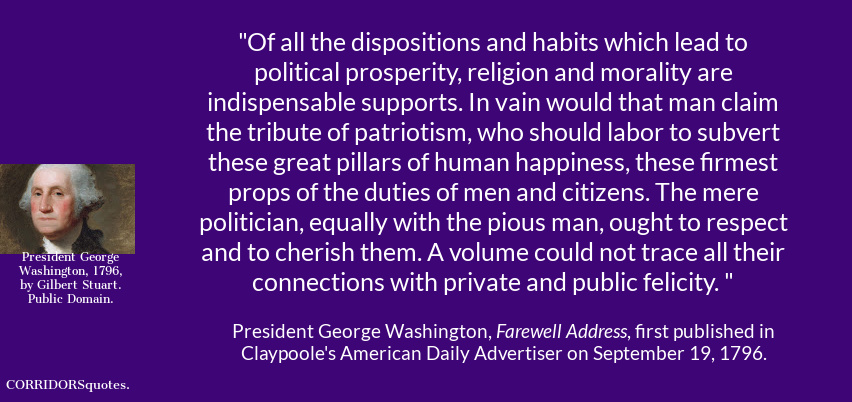
“Of all the dispositions and habits which lead to political prosperity, religion and morality are indispensable supports. In vain would that man claim the tribute of patriotism, who should labor to subvert these great pillars of human happiness, these firmest props of the duties of men and citizens. The mere politician, equally with the pious man, ought to respect and to cherish them. A volume could not trace all their connections with private and public felicity.” President George Washington, Farewell Address, first published in Claypoole’s American Daily Advertiser on September 19, 1796.

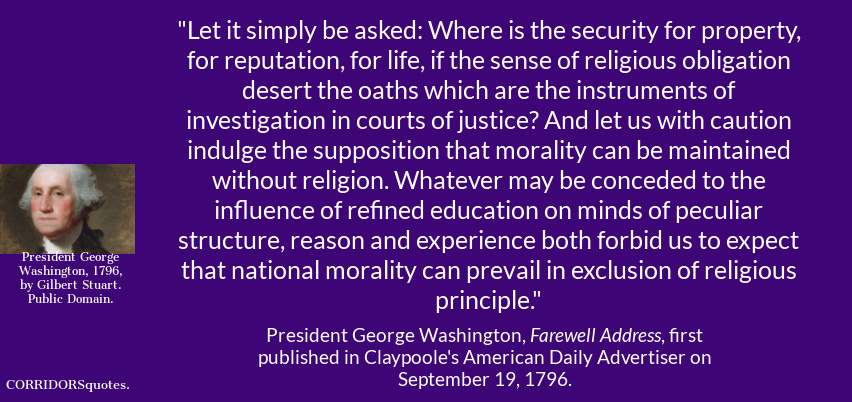
“Let it simply be asked: Where is the security for property, for reputation, for life, if the sense of religious obligation desert the oaths which are the instruments of investigation in courts of justice? And let us with caution indulge the supposition that morality can be maintained without religion. Whatever may be conceded to the influence of refined education on minds of peculiar structure, reason and experience both forbid us to expect that national morality can prevail in exclusion of religious principle.” President George Washington, Farewell Address, first published in Claypoole’s American Daily Advertiser on September 19, 1796. 

“[The Wilsons] finally settled on a house in the 2300 block of S Street, Northwest, and purchased it…[W]e rode by everyday, and the President was eager as a bridegroom about getting back to private life. He seemed to gain new strength as he shed the idea of responsibility and assumed the freedom of a civilian. But he did not forget his dreams.” Colonel Edmund W. Starling, Starling of the White House…as told to Thomas Sugrue…, Simon & Schuster.

Colonel Edmund William Starling (1875-1944) was chief of the Secret Service detail in the White House from 1914 to 1943. In his thirty years of service at the White House he was responsible for the personal safety of five President of the United States—Woodrow Wilson, Warren G. Harding, Calvin Coolidge, Herbert Hoover and Franklin D. Roosevelt. Starling idolized Woodrow Wilson. His first exposure to Wilson left him “in a daze.” Born in Hopkinsville, Kentucky, the posthumous book is based on over 11,000 personal letters Starling wrote over the decades, mostly to his mother back home. Starling’s ashes are buried at Arlington National Cemetery.

SOURCES: http://www.arlingtoncemetery.net/ewstarling.htm; https://hoptownchronicle.org/hopkinsville-native-edmund-w-starling-protected-five-presidents-as-a-secret-service-agent/

“As Senate majority leader, I participated in many private conferences with President Franklin D. Roosevelt….Usually we would talk in his bedroom at the White House, and the President, wrapped in his cherished gray bathrobe, which he clung to year after year….would interrupt work on a pile of papers and puff at a cigarette through his long ivory holder as we exchanged views.” Alben W. Barkley (1877-1956), That Reminds Me, 1954.

Senator Barkley (later Vice President Barkley under President Harry S. Truman) describes an almost iconic FDR- one can almost imagine a bespectacled 32nd president smoking a cigarette from a long cigarette (in this instance, ivory) holder and jauntily thrusting his chin forward.

Alben W. Barkley, Democrat of Kentucky, was one of the most prominent American politicians of the first half of the 20th Century. Barkley hoped expectantly to someday be the U.S. President–or at least his party’s sometime presidential nominee, particularly in 1952. The longtime majority leader of the U.S. Senate had to settle, however, for being a one-term vice-president in the executive branch. After Truman chose Barkley to be his running mate in 1948 and that ticket triumphed in one of American history’s most astounding upsets, Alben Barkley became a popular national figure known everywhere as “The Veep.” Like his Kentucky forebear Abraham Lincoln, Vice President Barkley was a noted story-teller and often started his sentence with, “And that reminds me…” 

(55 seconds) 4 Republicans, 4 Democrats, 2 Whigs. Every single one of these U.S. presidents were U.S. veterans (according to the US Department of Veteran Affairs). https://youtube.com/shorts/jW_UPuIB2HI?si=uEHgHEQEPPXG6efc – retrieved Jan. 31, 2026.
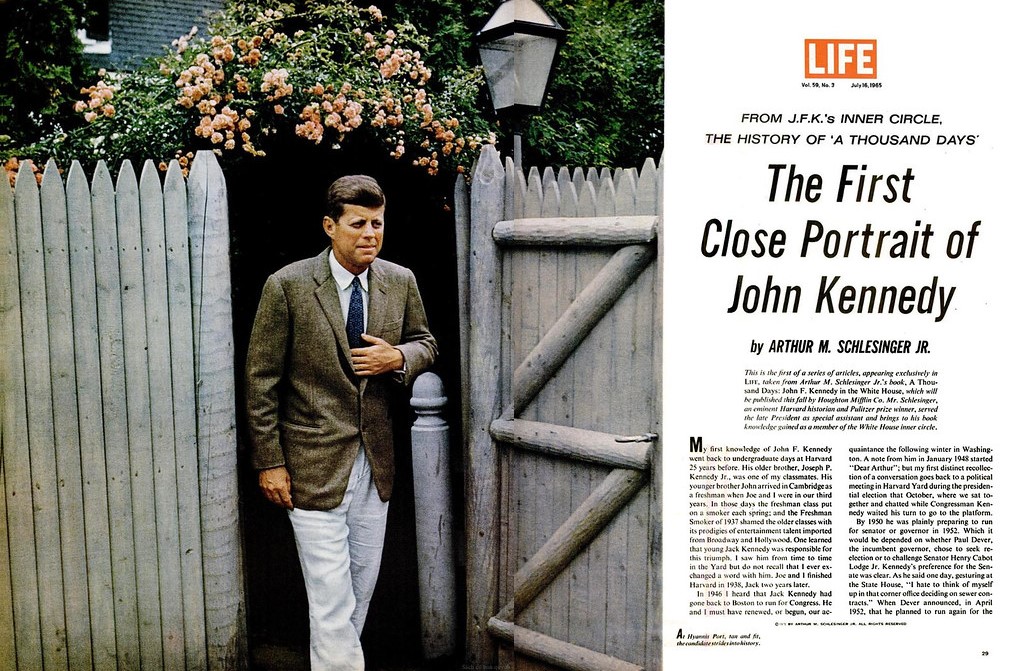
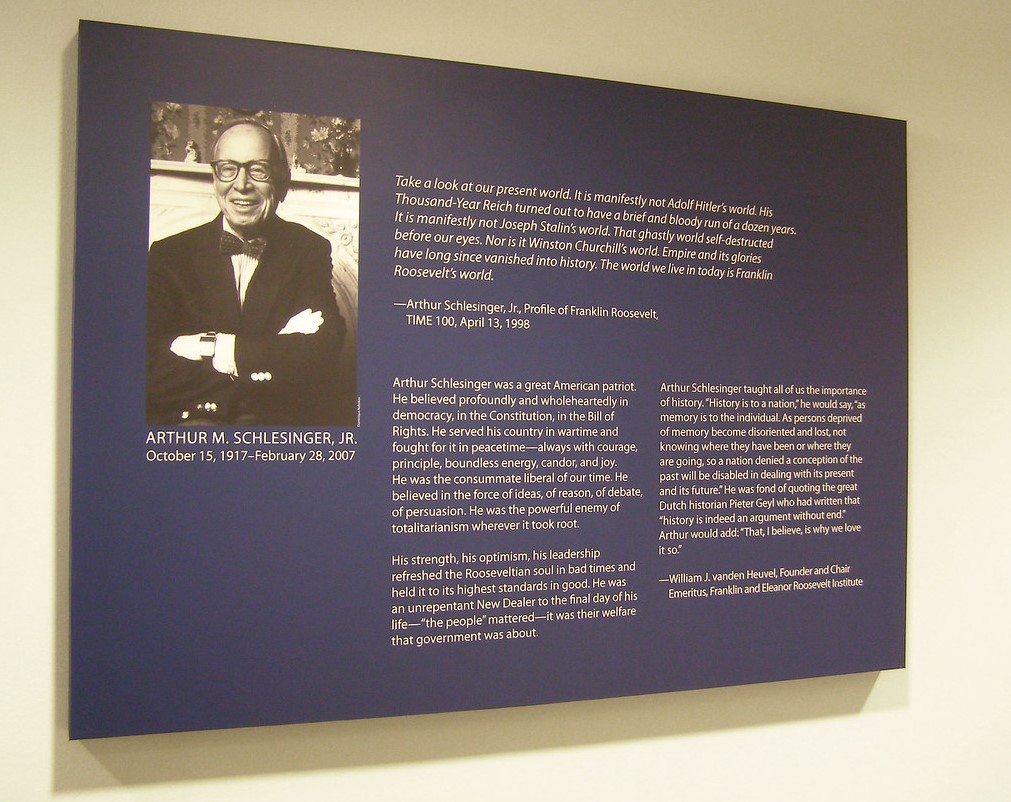
“It was all gone now-the life-affirming, life-enhancing zest, the brilliance, the wit, the cool commitment, the steady purpose….[President Kennedy] had so little time: it was as if Jackson had died before the nullification controversy and the Bank War, as if Lincoln had been killed six months after Gettysburg or Franklin Roosevelt at the end of 1935 or Truman before the Marshall Plan.” Arthur M. Schlesinger, Jr. (1917-2007) on the death of JFK. From A Thousand Days: John F. Kennedy in the White House, Houghton Mifflin, 1965.

LIFE Magazine JULY 16, 1965 (3) – The First Close Portrait of John Kennedy – by Arthur M. Schlesinger Jr.LIFE Magazine JULY 16, 1965 (3) – The First Close Portrait of John Kennedy – by Arthur M. Schlesinger Jr.” by manhhai is licensed under CC BY 2.0.
Arthur M. Schlesinger Research Room a the FDR Presidential Library & Museum in Hyde Park, NY.Arthur M. Schlesinger Research Room” by FDR Presidential Library & Museum is licensed under CC BY 2.0.

Arthur M. Schlesinger, Jr. was an American historian who resigned from Harvard and was appointed Special Assistant to the President in the Kennedy Administration in January 1961. Per Kennedy’s desire, Schlesinger served as a sort of ad hoc roving reporter and troubleshooter on behalf of the president. In February 1961, Schlesinger was told of the plans for what developed into the disastrous Bay of Pigs invasion in April 1961 and wrote a memorandum to the president telling him that he opposed the action. During the Cuban Missile Crisis in October 1962 Schlesinger aided United Nations ambassador Adlai Stevenson on his presentation to the world body on behalf of the Kennedy Administration’s ultimately successful efforts to peacefully remove Soviet nuclear missiles in Cuba. On November 22, 1963, Schlesinger had flown to New York for a luncheon with Washington Post owner Katharine Graham and the editors of her magazine, Newsweek. As they still sipped pre-luncheon libations and amiably talked about upcoming college football games that weekend, a young man in shirtsleeves suddenly entered the gathering. He tentatively announced to the group that, as Schlesinger relates in A Thousand Days, “the President has been shot in the head in Texas.”

The Gilded Age following the Civil War up through the Roaring 20s saw just two Democratic presidents (Cleveland and Wilson) among 7 Republicans. Four presidents in this period were born in Ohio — Harrison, McKinley, Taft, and Harding. Two presidents from Ohio were assassinated – and New Yorkers succeeded them both – Arthur after Garfield and Roosevelt after McKinley. In both cases the Republican base was in a tizzy as both New Yorkers were unlike the elected presidents – Arthur dismissed as an unelected, elite, and corrupt politician and TR as young, impetuous, and overly imperialistic. Wilson won in 1912 because the Republicans were split by TR and Taft – though Wilson’s Electoral College tally was impressive. Harrison’s great grandfather was a signer of the Declaration of Independence, his grandfather the 9th U.S. president and Benjamin Harrison himself a Civil War veteran and lawyer. Like his grandfather, Harrison defeated an incumbent president (Cleveland) though he lost the popular vote. People called Harrison the “ice box” because, at 5’6”, he was short and stocky, a cold fish personally, and insignificant politically. When he ran for re-election against Cleveland (and lost) it was the only time in U.S. history that both major party candidates had been president. Two weeks before the election Harrison’s wife Caroline died of tuberculosis in the White House. Wilson’s wife Ellen also died in the White House of Bright’s Disease on August 6, 1914. Harding died in office and Calvin Coolidge, who succeeded him, saw his younger son, 16-year-old Calvin, Jr. tragically die from a freak accident while playing tennis at the White House. Calvin, Jr.’s brother John Coolidge, who died in 2000, said the 30th president never forgave himself for his son’s death. https://youtube.com/shorts/xFOCM_LrgF4?si=Wkj_G6GBK1jfiDt2 – retrieved February 1, 2026.
 

“[George Washington’s] mind was great and powerful, without being of the very first order; his penetration strong, though not so acute as that of a Newton, Bacon, or Locke; and as far as he saw, no judgment was ever sounder. It was slow in operation, being little aided by invention or imagination, but sure in conclusion.” Thomas Jefferson (1743-1826), U.S. president, Letter, January 1814.

After returning from France where he served as Minister Plenipotentiary with John Adams and Benjamin Franklin in Paris in the mid-to-late 1780’s, Thomas Jefferson accepted President George Washington’s invitation to serve as the nation’s first Secretary of State in the early 1790’s. Jefferson eventually left Washington’s cabinet over his opposition to Treasury Secretary Alexander Hamilton’s promotion of a national debt and national bank in contrast to Jefferson’s vision of a minimalist federal government (see Joseph J. Ellis, American Sphinx: The Character of Thomas Jefferson, Random House, 1998, pp. 221-222). Thomas Jefferson was elected the third president of the United States in 1800 and served two terms as president. In 1803 Jefferson transacted the Louisiana Purchase that doubled the size of the United States and in the process acquired the most fertile tract of land of its size on Earth.

“During the inaugural parade [President George H.W.] Bush kept darting in and out of his limousine…These pop-outs were much better received than the Jimmy Carter business of walking the whole parade route. We Americans like our populists in small doses and preferably from an elitist.” P.J. O’Rourke, PARLIAMENT OF WHORES, Atlantic Monthly Press, 1991.

George H.W. Bush, President 1989 – 1993. George H.W. Bush, President 1989 – 1993” by US Department of State is licensed under CC BY-NC 2.0.

The Bushes were a big family and family oriented. O’Rourke reported in his best-selling book that on the first night of Bush’s presidency 28 members of the Bush family spent it at the White House.

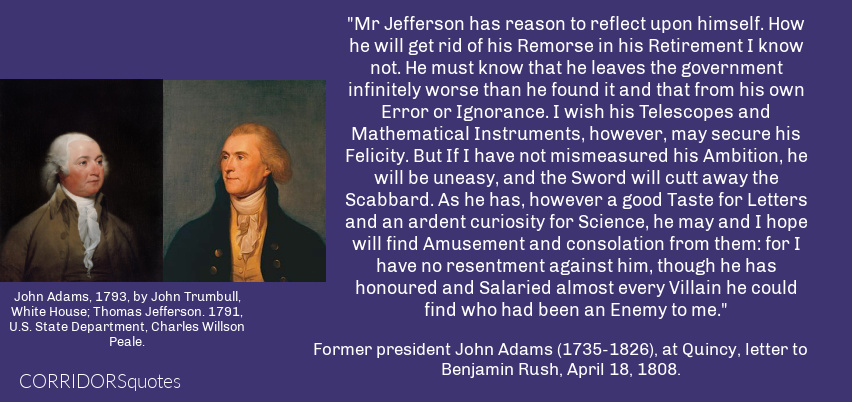
“Mr Jefferson has reason to reflect upon himself. How he will get rid of his Remorse in his Retirement I know not. He must know that he leaves the government infinitely worse than he found it and that from his own Error or Ignorance. I wish his Telescopes and Mathematical Instruments, however, may secure his Felicity. But If I have not mismeasured his Ambition, he will be uneasy, and the Sword will cutt away the Scabbard. As he has, however a good Taste for Letters and an ardent curiosity for Science, he may and I hope will find Amusement and consolation from them: for I have no resentment against him, though he has honoured and Salaried almost every Villain he could find who had been an Enemy to me.” Former president John Adams (1735-1826), at Quincy, letter to Benjamin Rush, April 18, 1808.

The punctuation and capitalization are Adams’ original. see– https://founders.archives.gov/documents/Adams/99-02-02-5238

John Adams (1735-1826), the second president of the United States, a Federalist, and Thomas Jefferson (1743-1826), a Democratic-Republican, were fierce political rivals. Both lawyers—Adams from Massachusetts and Jefferson from Virginia—each were enlightened political liberals who served in the Continental Congress in Philadelphia as well as headed the committee that drafted the Declaration of Independence. Adams and Jefferson also served together as ministers to France in the 1780’s. Into the 1790’s, as president (Adams) and vying to be (Jefferson), each served opposing visions for the direction of the new nation. At their extreme, the Federalists advocated to establish a strong Federal government that could alienate the individual rights of large groups. Jefferson’s vision of limited government included his advocacy in certain instances for state government to have the right to resist those federal laws that were injurious to local interest.

efferson’s narrow victory in the presidential election of 1800 made John Adams the nation’s first one-term president and sent the New England patriarch into early retirement at Peacefield in Quincy, Massachusetts. For the next decade, during Jefferson’s two terms as president, John Adams harbored a barely hidden resentment of his political rival, if not enemy when measured by some of their florid rhetoric towards one another. Though these two sparring giants of the early republic eventually resumed civil correspondence – Adams writing a New Year’s Day greeting to Jefferson in 1812 that Jefferson responded to three weeks later – it became these once friends and political collaborators’ first contact since 1801 – Adams had been especially upset by the relentless propaganda campaign of Jefferson’s Republican party against him during the second president’s first term. Jefferson’s years-long accusations against President Adams inscluded descriptions of the second president as narcissistic, incompetent, dangerous to democracy, unbalanced, and corrupt. All these public proclamations were approved and personally paid for by Jefferson, a profligate spender, and which led to the premature and hasty departure by Adams as chief executive from Washington, D.C. on March 4, 1801, not attending Jefferson’s inauguration. At least two remarkable outcomes resulted in this renewed friendship of political rivals in these resumed letters – one, that Adams and Jefferson stayed in close contact until the day they died and, two, that that was on the same day – July 4, 1826. Which of these conspicuous marvels s most noteworthy among fierce rivals and Founding fathers may be debated. see – https://founders.archives.gov/documents/Jefferson/03-04-02-0296-0002; https://openendedsocialstudies.org/2018/09/25/adams-jefferson-and-two-visions-for-the-united-states/; Joseph J. Ellis, American Sphnix: The Character of Thomas Jefferson, Random House, 1998, pp. 281-82).

“Isn’t it nice that Calvin is President? You know we never really had room before for a dog.” Grace Coolidge (1879-1957), First Lady of the U.S. (1923-1929), in 1927.

Grace Coolidge was the wife of the 30th President of the U.S., Calvin Coolidge. Throughout her husband’s career, whether as Governor of Massachusetts, Vice-President, or President, Grace Coolidge avoided politics. Though the young Grace broke off a marriage engagement to marry Coolidge, her mother advised against marrying this young man. Calvin Coolidge and Grace Coolidge married on October 4, 1905—and Calvin Coolidge never settled his differences with his mother-in-law who felt her daughter was completely responsible for his rising political fortunes. The Coolidges had two sons, John (1906–2000) and Calvin (1908–1924). After Calvin Coolidge, Jr. died of blood poisoning in July 1924, the Coolidges were inconsolable. The story is well-known: while playing lawn tennis with his brother, John, at the White House, the teenager developed a blister on one of his toes. Within the week, the 16-year-old was dead of a blood infection despite being admitted to Walter Reed Army Medical Center. (see- https://www.coolidgefoundation.org/blog/the-medical-context-of-calvin-jr-s-untimely-death/)

Calvin Coolidge, President 1923 – 1929” by US Department of State is licensed under CC BY-NC 2.0.

By 1921, the wife of Vice-President Coolidge entered Washington society and quickly became the most popular woman in the capital. In 1927 when Mrs. Coolidge made these remarks, the world that her husband was facing was in flux. In 1927, as France called to outlaw war, which was endorsed by the U.S, a Great Depression already began in Germany with its economic collapse on “Black Friday.” After President Coolidge called for a Naval Disarmament Conference, only a couple of global powers showed up.

The world seemed to be getting smaller in 1927. In May 1927 American Charles Lindbergh flew solo, nonstop, from New York to Paris and started the era of transatlantic air travel. Regular transatlantic telephone service also began in 1927. In the U.S., as the stock market boomed, much of it on shaky credit, lawyers and doctors earned around 3½ times more than a teacher or factory worker. Baltimore-born “Babe” Ruth hit a record 60 home runs in New York.

The first full-length sound motion picture, The Jazz Singer, opened in 1927. In Chicago there was an important art exhibition of Chinese Buddhist art of the Wei Dynasty. In 1927, Hemingway published Men without Women; Willa Cather published Death Comes for the Archbishop; and Thomas Mann published The Magic Mountain. That year’s Pulitzer Prize went to Thornton Wilder’s second novel, The Bridge of the San Luis Rey. It told the story of people who unexpectedly die together in a rope bridge collapse in Peru and the friar who witnessed the accident looking to figure out the possibly cosmic answers as to why.

“The days of transition from Kennedy to Johnson were as hard on me as they were on anyone else–harder. I was losing a dog and gaining a President I didn’t know. Not only didn’t I know him, I didn’t think I wanted to know him. He wasn’t boyish or good-natured or quick-witted like Kennedy and I heard him cussing out the help when things weren’t done fast enough.” Traphes Bryant, Dog Days at the White House, 1975.

In 1951, Traphes Bryant started out at the White House working as an electrician in the afternoons. Bryant moved on to respond to general maintenance calls including a broken White House elevator. In the 1950’s Bryant was already looking after the First Family’s pets, both for the Trumans and, later, the Eisenhowers. The line of work became official for Traphes Bryant in 1961 when John Kennedy became president.

Kennedy asked Bryant to become the new presidential kennel keeper. The president liked how Bryant trained the dogs to meet the presidential helicopter that would often be seen in photographs and films.

Though Kennedy himself was allergic to some animals, First Lady Jackie Kennedy adored all sorts of animals. During the next 1000 days while in office, the Kennedys kept several pets. At one point the first family, which included children Caroline and John, Jr., had nine dogs. The Kennedys also kept hamsters, horses, birds, a rabbit, and a cat. Some of the animals were gifts from foreign heads of state.

In 1961 Soviet Premier Nikita Khrushchev sent the Kennedys a mixed breed dog named Pushinka. The dog’s mother had been sent into orbit in 1960 on Korabl-Sputnik 2. While a surprise, the Kennedy’s welcomed the Russian’s canine gift. In fact, Kennedy’s Welsh terrier, Charlie, not only had a new companion but a new mate: Pushinka gave birth to four puppies fathered by Charlie. Kennedy called the litter, “the pupniks.”

Bryant was officially in charge of Pushinka’s and Charlie’s grooming, exercise, and diet—and all the rest though those responsibilities ended abruptly for Kennedy in November 1963.

see BRYANT, TRAPHES L.: ORAL HISTORY INTERVIEW – JFK #1, 5/13/1964; Traphes Bryant, Dog Days at the White House, 1975; Katherine Graham’s Washington, Knopf, 2002, pp. 542-43; https://www.facebook.com/WhiteHouseHistory/posts/traphes-bryant-pictured-here-had-been-a-white-house-electrician-since-1948-worki/3374666809225225/

“Nancy Dickerson wrote that ‘The LBJ social style was something of a shock to the capital. Starting right at the White House, the Johnson way was different…It’s difficult to comprehend the LBJ style because even by Texas standards he had large impulses. When the Johnsons said, ‘You all come,’ they meant it. Their lack of inhibition was new in Washington, a Southern city in the East. LBJ was a cowboy, and though that mythic figure is in the best American tradition, the Washington establishment, the press and the country were unaccustomed to a cowboy in the White House. The city shook its collective head.’ …However, the Johnsons gradually began to put their own mark on the city.” Katharine Graham, Katharine Graham’s Washington, Knopf, 2002, p. 458.

I always thought [President Jimmy] Carter was great…That kind of brain power made him the smartest president we’ve had in my time. His failing was as a politician. He did not know how to organize the White House and how to get along with Congress. Carter promised he was not going to work with the bureaucracy in Washington. He would be the people’s president.. He did it — and it doesn’t work. [Carter] proved that. Conversations with Cronkite: Walter Cronkite and Don Carleton, University of Texas at Austin, 2010, p.320.

The helicopter crash in the Iranian desert unfolded in the dead of night during Operation Eagle Claw on April 24–25, 1980—a mission meant to pull 52 American hostages out of Tehran. What began as a daring rescue quickly unraveled as sandstorms, mechanical failures, and miscommunication converged at a remote staging site known as Desert One. When a helicopter collided with a transport aircraft during an attempted refuel, a fireball lit up the desert floor, killing eight U.S. servicemen and forcing the mission to be abandoned. The tragedy exposed deep flaws in planning and coordination and became a defining moment for how the United States approached special operations for decades to come and an episode for continued diminishment of the Carter presidency in an election year by the Iran crisis. President Carter delivered this televised address from the Oval Office regarding the failed mission (Operation Eagle Claw) on April 25, 1980. .https://www.youtube.com/watch?v=F4D5_F6hz3I – retrieved March 2, 2026.
The Iranian Revolution was already gathering momentum more than a year before the seizure of 52 American hostages on November 4, 1979. As nationwide protests escalated in 1978, the Shah increasingly relied on Washington for guidance. In January 1979, facing mass demonstrations and a collapsing political order, he asked the Carter administration whether he should authorize a forceful crackdown. Washington declined to give a clear answer. According to historical accounts, U.S. officials were reluctant to endorse or appear complicit in violent repression, especially amid domestic political sensitivities in the United States during an upcoming election year.

The Shah, already politically weakened and personally hesitant to use large scale force, departed Iran shortly thereafter. President Carter later told the American public that he avoided direct intervention in Iran’s internal affairs, but archival material shows that his administration was divided. Secretary of State Cyrus Vance opposed supporting harsh measures, while National Security Advisor Zbigniew Brzezinski argued that the stakes for U.S. interests required difficult decisions and potentially firm action.

After the Shah’s departure, the United States dealt with a fragile interim government that lacked both authority and direction. Carter dispatched a senior military officer to Tehran, but U.S. guidance remained ambiguous. Iranian officials sought clarity on whether Washington supported efforts to halt the revolutionary movement; no definitive policy emerged. With no coherent strategy from either Tehran or Washington, the moderate government proved unable to contain events. In February 1979, Ayatollah Khomeini returned to Iran and rapidly consolidated power, sweeping aside moderate factions and establishing a revolutionary regime.

Carter’s broader approach combined pressure on the Shah to liberalize politically with sympathy for resisting Khomeini’s movement. Yet he struggled to enforce a consistent foreign policy. Internal disagreements, bureaucratic friction, and the president’s own reluctance to authorize forceful measures contributed to a policy vacuum at a critical moment. The resulting instability culminated in the November 1979 embassy takeover, when Iranian students seized the U.S. mission in Tehran and held American diplomats hostage for 444 days.

The hostage crisis dominated U.S. politics and overshadowed Carter’s presidency. The prolonged standoff, combined with economic challenges at home, contributed to his decisive loss to Ronald Reagan in the November 1980 election. – JPW March 2, 2026.
“In a way the criticism of Washington is extremely healthy. Because the idea of Thomas Jefferson was that to make the system work, Americans always had to be in a state of semi-revolution against the government. He would have been terrified to think that in 2001 Americans might be uncritical of Washington and let it steal their liberties.” Michael Beschloss, U.S. historian, quoted in “Why Do They Hate Washington?” by Sally Quinn, The Washington Post, April 12, 2001.

“Just the day before, I’d joked about being the vice president when I addressed a group of newspapermen covering the Senate. One of them called me Mr. Vice President and I said, “Smile when you say that,” and I told them that the Senate was the greatest place in the world and that I wish I was still a senator. “I was getting along fine,” I said, “until I stuck out my neck too far and got too famous. And then they made me VP and now I can’t do anything.” But now I wasn’t the vice president any longer, and there was plenty to do.” Harry S. Truman, 33rd U.S. President, Where the Buck Stops: The Personal and Private Writings of Harry S. Truman, ed. Margaret Truman, 1989.

“Do you know who the patient is in the emergency room?” “Yes.” “Would you give me his name, please?” I said, “It’s Reagan. R-E-A-G-A-N.” I waited for a reaction. “First name?” “Ron.” “Address?” I said, “1600 Pennsylvania.” His pencil stopped in mid-scratch. He finally looked up. “You mean…?” I said, “Yes. You have the president of the United States in there.” Michael K. Deaver at George Washington University Hospital in Washington, D.C. after the assassination attempt on President Reagan on March 30, 1981. From his Behind the Scenes, 1987.

On Monday afternoon, March 30, 1981, after giving a speech at the Washington Hilton Hotel at 1919 Connecticut Avenue, N.W., in Washington, D.C., President Reagan was shot by 25-year-old would-be assassin, John Hinckley, Jr. The president was slammed to the floor of the presidential limousine by a Secret Service agent during the first split seconds of the shooting in a bid to save his life. Later Reagan expressed his anger for being treated very roughly by the agent though the agent knew he was just doing his job. Under a pile of agents, the 70-year-old president was raced in the limousine to George Washington University Hospital about a mile away.

At first it was believed that the president was unhurt, but within minutes, still on the way to the emergency room, Reagan coughed up blood from his lungs.

At the hospital, the president walked on his own power about 15 yards into the emergency room. Once inside the hospital, Reagan slumped and was helped by Secret Service agents into a private room off the lobby.

As the hospital’s trauma team assembled, it was still not clear whether Reagan had been hit or not in the hail of 6 bullets shot in quick succession by the would-be assassin’s .22 caliber gun. Bullets struck James Brady, Reagan’s Press Secretary, in the head above his left eye; Secret Service agent Timothy McCarthy in the chest; and D.C. police officer Thomas Delahanty in the back of his neck ricocheting off his spine. All of them would receive medical attention and survive.

The doctors were just starting their examination of the president when a green smocked-hospital orderly with a clipboard approached Michael K. Deaver, White House Deputy Chief of Staff and Reagan confidante, looking for information on the new patient. It soon became clear that Reagan had, indeed, been hit in the assassination attempt. A fragment of a bullet had ricocheted off the limousine’s armored car door and entered the new president below the armpit, traveled down his left side, bounced off a rib, punctured his lung, and stopped just inches from his heart.

“What convinces is conviction. You simply have to believe in the argument you are advancing. If you don’t you are as good as dead. The other person will sense something isn’t there, and no chain of reasoning, no matter how logical or elegant or brilliant, will win your case for you.” Lyndon B. Johnson, quoted in Doris Kearns Goodwin, Lyndon Johnson and the American Dream, St. Martin’s Press, 1991, p. 130.

“I have been searching for the fundamental fact that converted Europe to believe in us. Before this war, Europe did not believe in us as she does now. She did not believe in us throughout the first three years of the war. She seems really to have believed that we were holding off because we thought we could make more by staying out than by going in. And, all of a sudden, in a short eighteen months, the whole verdict is reversed. There can be but one explanation for it. They saw what we did—that, without making a single claim, we put all our men and all our means at the disposal of those who were fighting for their homes, in the first instance, but also for a cause, the cause of human rights and justice, and that we went in, not to support their national claims, but to support the great cause which they held in common. And when they saw that America not only held ideals, but acted ideals, they were converted to America and became firm partisans of those ideals.” Woodrow Wilson, February 24, 1919. Address Following Arrival from the Paris Peace Conference in Boston, Massachusetts. For more, see – https://www.presidency.ucsb.edu/documents/address-following-arrival-from-the-paris-peace-conference-boston-massachusetts – retrieved January 26, 2025.

This famous piece of advice (below) was given by Democratic Senator J. Hamilton Lewis to a newly elected Harry S Truman upon his arrival in the Senate in 1935. 

“Harry, don’t start out with an inferiority complex. For the first six months you’ll wonder how the hell you got here. After that you’ll wonder how the hell the rest of us got here.” James Hamilton Lewis (1863 – 1939), Illinois Senator and Majority Whip (1913-1919 and 1931-1939), Democrat.

August 28, 1963: the 72-minute MEETING AT THE WHITE HOUSE OF CIVIL RIGHTS LEADERS WITH PRESIDENT JOHN F. KENNEDY following the historic March On Washington for Jobs and Freedom.

FEATURE image: Civil Rights March on Washington, D.C. (Leaders of the march posing in front of the statue of Abraham Lincoln, Lincoln Memorial.) by Rowland Scherman (b. 1937), for the U.S. Information Agency. Press and Publications Service. Public Domain/U.S. National Archives and Records Administration.

Sensing a national breakthrough for civil rights, Rev. Dr. Martin Luther King, Jr. joined civil rights leaders to plan a March on Washington for Wednesday, August 28, 1963. The great march filled the VIP section at the Lincoln Memorial and the National Mall to past the Washington Monument, a distance of almost one mile. The March on Washington is remembered for King’s “I Have a Dream” speech and the massive crowd’s hopeful jubilation. The meeting with President John F. Kennedy afterwards was more than a polite courtesy call to the White House–it helped coordinate political strategy for the movement that would have concrete ramifications for the Civil Rights Act of 1964 following Kennedy’s death.

By John P. Walsh

President John F. Kennedy watched the march—and Martin Luther King, Jr.’s “I Have A Dream” speech—from the White House on television.

Both Kennedy and King were young men—King was 34 years old, Kennedy was 46 years old. Mature beyond their years, each American proffered green oak in some ways—Kennedy was especially more personally sensitive than his “cool” public persona belied him to be. King, too, was mostly uncomfortable on August 28, 1963 with the particular attention, from the media and others, that he was receiving for his remarks at the Lincoln Memorial.

As the civil rights leaders filed into the Cabinet Room at the White House the first thing Kennedy said when he took King’s hand was “I have a dream…” The president was repeating King’s line that immediately impressed him and the nation when they heard it on TV live only a short time before.

King deflected the president’s compliment and immediately asked him what the president thought of United Automobile Workers president Walter Reuther’s excellent speech. It had included a criticism of Kennedy for defending freedom around the world but not always at home. Kennedy replied to King: “Oh, I’ve heard [Walter] plenty of times.”

King and Kennedy hardly talked any more during the visit, though when they did it led to an outcome for action.

Civil Rights leaders in this group photograph at the Lincoln Memorial followed-up the March on Washington with a visit to the White House to meet President Kennedy. Seated left to right: National Urban League executive director Whitney Young (1921-1971); chairman of the Demonstration Committee Cleveland Robinson (1914-1995); labor union leader A. Philip Randolph (1889-1979); Dr. Rev. Martin Luther King, Jr. (1929-1968); National Association for the Advancement of Colored People (NAACP) leader Roy Wilkins (1901-1981). Standing left to right: director of the National Catholic Conference for Interracial Justice Matthew Ahmann (1931-2001); Rabbi Joachim Prinz (1902-1998); Student Nonviolent Coordinating Committee (SNCC) leader John Lewis (1940-2020); Protestant minister Eugene Carson Blake (1906-1985); Congress of Racial Equality (CORE) leader Floyd McKissick (1922-1991); labor union leader Walter Reuther (1907-1970).
Rev. Dr. Martin Luther King, Jr., speaking at the March on Washington from the Lincoln Memorial on August 28, 1963. Following the successful march for jobs and freedom, civil rights leaders went to the White House to visit with President Kennedy and pushed measures to strengthen the Civil Rights bill.

Kennedy and NAACP leader Roy Wilkins talked at length about strengthening the civil rights bill following that day’s completely peaceful march. King moved away from the president and down the line to near then-23-year-old John Lewis, head of the Student Nonviolent Coordinating Committee (SNCC).

One section to the civil rights bill these activists wanted the president to add was a ban on employment exclusion based on race.

As White House and other photographers filmed and snapped pictures of the historic White House meeting of leading progressive personalities of the early 1960s, the civil rights leaders told the president about the accelerating automation in the job market that would potentially depress the availability of jobs.

They also discussed the plight of the inner city, telling Kennedy that Black teenagers were dropping out of school in epidemic numbers. A. Philip Randolph told the president that the entire current generation of young Blacks “had no faith” in whites. They also dismissed Black leadership, government and God. To these young Americans, U.S. society as it was presently constituted meant nothing to them but despair.

During the visit, Kennedy was lobbied to re-insert into the act a section that was stripped in 1957 giving authority to the Attorney General to investigate and initiate lawsuits on behalf of blatant civil rights infringements.

President Kennedy responded that with Robert Kennedy, his Attorney General, he had looked into joblessness and the school drop-out rate among Blacks in Chicago and New York City. At the August 28, 1963 meeting Kennedy encouraged the civil rights leaders to have the Black community do more.

“It seems to me,” the president said, “with all the influence that all you gentleman have in the Negro community that we could emphasize…educating [your]children, on making them study, making them stay in school and all the rest.”

White House, August 28, 1963, meeting with President Kennedy after the march.

Any add-ons now to the civil rights bill joined existing legislation that was already on the brink of defeat in the Democrat-controlled Senate and too close to call in a Democrat-controlled House.

Despite these close margins, Wilkins countered that the Speaker of the House had assured him that an even stronger civil rights bill could pass the House and would work to pressure the Senate to act. Wilkins suggested that the president go over the heads of the Congress who obstructed passage of the bill and lead a crusade to win voter approval for the civil rights measures.

Kennedy replied frankly to the leaders that civil rights must be a bipartisan effort. For a Democrat president to lead a crusade would allow Republicans to support civil rights and blame the Democrats for it which would hurt the Democratic Party in the South. Kennedy assured the civil rights leaders that “treacherous” political games were being played in the Federal legislature on the bill by both Republicans and Democrats.

Kennedy was countered again – this time by Walter Reuther.

“Look, you can’t escape this problem,“ the white labor leader said, “and there are two ways of resolving it—either by reason or riots. But now the civil war is not gonna be fought at Gettysburg, it’s gonna be fought in your backyard, in your plant, where your kids are growing up.” Reuther further told JFK he didn’t much like the young president’s “seminar” style of governing where “you call a big meeting…and nothing happens.” Reuther told Kennedy that he preferred his vice-president’s governing style where Lyndon B. Johnson “jawbone[d]” an issue until he would “get difficult things done.”

King stayed silent for most of this back and forth debate. When King finally spoke he asked JFK that if the sitting president led a crusade then perhaps his predecessor, Republican president Dwight D. Eisenhower, might get involved. It would then, King suggested, become the bipartisan push Kennedy was looking for.

Kennedy snapped back at King: “No, it won’t.”

In reply, King made a knowing joke: “Doesn’t [President Eisenhower] happen to be in the other denomination?”

Ike’s personal pastor was Rev. Eugene Blake who was in the Cabinet Room. Blake, a powerful force and no pushover, had been the march’s only white speaker.

One reason that Rev. Blake spoke at the march was that he had been arrested in a civil rights demonstration in Baltimore and had gone to jail.

Just hours earlier, Rev. Blake orated: “We come late, late we come, in the reconciling and repentant spirit.” The Protestant clergyman embraced the march’s agenda of civil and economic rights for African Americans and the end to racism. Still, Blake rejected words like “revolution” and “the masses” used by some civil rights activists.

At that day’s White House visit, Blake told Kennedy that Ike could be approached about civil rights. The president pivoted and urged Blake to visit the former president at his home in Gettysburg to discover any political role Ike might be willing to take for the civil rights bill. Kennedy advised: “And include a Catholic and maybe a businessman or two.”

Then pointing to Reuther, Kennedy lightly said: “And leave Walter in the background.” Amid chuckles, Kennedy then left the room of civil rights leaders. Before exiting, the president turned to assure them he would keep in touch on the civil rights bill in the months ahead.

SOURCES:

TAYLOR BRANCH, PARTING THE WATERS AMERICA IN THE KING YEARS 1954-1963. NEW YORK: SIMON & SCHUSTER, 1988.

DAVID GARROW, BEARING THE CROSS: MARTIN LUTHER KING, JR., AND THE SOUTHERN LEADERSHIP CONFERENCE, WILLIAM MORROW AND COMPANY, 1986.

On August 28, 1963 about 250,000 peaceful protesters descended on Washington, D.C. for the March on Washington for Jobs and Freedom. The march was one of the largest political rallies for human rights in United States history.

OTHER VOICES AT THE MARCH:

Harry Belafonte (1927-2023) was born in New York City died there at 96 years old. Harry Belafonte won a Tony, an Emmy, and 3 Grammy Awards in his career as a film actor and singer that stretched over 70 years. Belafonte was also a civil rights activist who brought and introduced a rafter of Hollywood A-list entertainers to the March On Washington for Jobs and Freedom on August 28, 1963 where Dr. King gave his “I Have a Dream” speech.

Among the more than 200-250,000 attendees at the march were these Hollywood stars. Belafonte chartered a plane from Los Angeles for the historic event to show their support for what was going on in the civil rights movement in America. The great march filled the VIP section at the Lincoln Memorial and the National Mall to past the Washington Monument, a distance of almost one mile. The mood of this massive crowd was one of hopeful jubilation. Afterwards, Dr. King and other civil rights leaders went to the White House to meet with President Kennedy. There they talked about the march, and discussed what was ahead in terms of social conditions and the civil rights movement, including the legislative effort that led to the Civil Rights Act of 1964 following Kennedy’s death. Some of the artists and film stars at the Lincoln Memorial that day in addition to Harry Belafonte were Marlon Brando, Rita Moreno, James Garner, Tony Franciosa, Sammy Davis, Jr., Joanne Woodward, Paul Newman, Susan Strasberg, Burt Lancaster, Robert Ryan, Gregory Peck, Anthony Quinn, James Baldwin, Lena Horne, Ruby Dee, Sidney Poitier, Charlton Heston and several more.

REMARKS BY HARRY BELAFONTE: “We are here to bear witness to what we know. We know that this country, America, to which we are committed, and which we love, aspires to become that country in which all men are free. We also know that freedom is not license. Everyone in a democracy ought to be free to vote. But no one has the license to oppress or demoralize another. We also know or we would not be here, that the American negro has endured for many generations in this country which he helped to build the most intolerable injustices. To be a negro in this country means several unpleasant things. In the Deep South it often means he is prevented from exercising his right to vote by all manner of intimidation up to and including death. This fact of intimidation is a great weight in the life of any negro and though it varies in degree it never varies in intent which is simply to limit, to demoralize and to keep in subservient status more than 20 million negro people. We are here, therefore, to protest this evil and make known our resolve to do everything we can possibly do to bring it to an end. As artists and as human beings we rejoice in the knowledge that human experience has no color and that excellence in any endeavor is the fruit of individual labor and love. We believe artists have a valuable function in any society since it is the artists who reveal society to itself. But any society that ceases to respect the human aspirations of all its citizens courts political chaos and artistic sterility. We need the energies of these people to whom we have for so long denied full humanity. We need their vigor, their joy, the authority which their pain has brought them and cutting ourselves off from them then we are punishing and diminishing ourselves. As long as we do so our society is in great danger. Our growth as artists is severely menaced and no American can boast of freedom since he cannot be considered an example of it. We are here then in an attempt to strike the chains of the ex-master no less than the ex-slave and to invest with reality that deep and universal longing which has sometimes been called the American Dream.”

PHOTO CREDITS:

Hundreds of thousands descended on Washington, D.C.’s, Lincoln Memorial Aug. 28, 1963. Public Domain/U.S. Government Photo.

Civil Rights March on Washington, D.C. (Leaders of the march posing in front of the statue of Abraham Lincoln, Lincoln Memorial.) by Rowland Scherman (b. 1937), for the U.S. Information Agency. Press and Publications Service. Public Domain/U.S. National Archives and Records Administration.

Martin Luther King, Jr., speaking from the Lincoln Memorial during the March on Washington by Rowland Scherman (b. 1937), for the U.S. Information Agency. Press and Publications Service. Public Domain/U.S. National Archives and Records Administration.

Civil Rights March on Washington, D.C. (Aerial view of Washington Monument showing marchers.) U.S. Information Agency. Press and Publications Service. Public Domain/U.S. National Archives and Records Administration.

Leaders of the march leading marchers down the street. U.S. Information Agency. Press and Publications Service. Public Domain/U.S. National Archives and Records Administration.

CHIEF JOSEPH (c.1840-1904), Nez Percé leader.

FEATURE image: Portrait of Chief Joseph in native dress with ornaments, 1900, by Lee Moorhouse (1850–1926). Public Domain.

INTRODUCTION.
by John P. Walsh

Chief Joseph, 1877.

Joseph (1840-1904) was the leader of one of the Nez Percé tribes. The band amounted to about 200 people who lived in the Wallowa Valley in northeastern Oregon. White settlers wanted their grazing lands. After the death of Wellamotkin in 1871, a Nez Percé chief and Joseph’s father, the 31-year-old tall and handsome Joseph began to have conflict with the whites.

At the time of Joseph’s birth in 1840 there were around 6,000 Nez Percé, most of them living in small fishing villages next to fecund streams and rivers. Each village had its own “chief” and young Joseph visited these villages with his father where he learned about the people and the lore of his nation.

Once each winter was over, the Nez Percé, like other Native American tribes ranged beyond their own territory. These could be friendly visits like buffalo hunts or more contentious meetings. These cultural interchanges influenced Nez Percé as they influenced others. For hundreds of years the Nez Percé were mostly influenced by the Pacific Coast culture through the Chinook tribes more than the Plains tribes.

In the 1730s the Nez Percé learned about horses from Native Americans like the Apache who had contact with Spanish settlements in the south. With horses the Nez Percé traveled farther and more often into the Plains so that by the 1800s the Nez Percé were more a Plains tribe though they maintained their roots in the Pacific Northwest.

It was at the start of the 19th century that those venturing Nez Percé came into contact with whites and bought guns. The home tribe didn’t have to wait long to encounter the whites – in 1805 Lewis and Clark reached the Columbia River. Promised more guns, none appeared for a couple of years and these by way of a Canadian trader.

The Nez Percé got their name from this French-Canadian trader who saw the nose piercings that the tribe used to affix ornaments to themselves. In 1812 the American traders that Lewis and Clark promised finally arrived but quickly left and the Canadians took over.

By the late 1820s the Nez Percé roamed farther east and encountered more white fur traders among whom they lived, traded, fought, and frequently intermarried. It was in this period that the first Christian missions, both protestant and Catholic, began their influence among the Nez Percé. In the 1830s the Nez Percé journeyed to St. Louis to recruit missionaries which was successful. Joseph’s father, Wellamotkin, became a Presbyterian and Joseph was baptized at birth. By 1850, with the influx of white settlers into Oregon, the Native Americans expelled the missionaries though this divided the tribe. Joseph retreated to the Wallowa Valley away from contact – and conflict – with the new arrivals.

In 1855 the Nez Percé signed a treaty that created a large reservation for themselves. Joseph was considered a Christian and friendly to the whites. In 1860 when gold was discovered on the Nez Percé reservation the rampant trespassing of whites was unacceptable to Joseph. White crime against Nez Percé went up and whites built settlements on Indian land. Federal agents arrived and offered a smaller new reservation to the Nez Percé. The proposal was initially opposed by Indian leaders but Federal agents bought off the local chiefs one-by-one and, in 1863, a treaty was signed.

The new reservation was one quarter the size of what it was and did not include the Wallowa Valley. Joseph and most of the rest of the chiefs refused to sign. It was at this time that Joseph renounced his protestant Christianity as the white man’s religion. The Nez Percé on the new reservation saw the arrival of more and more whites. Though the Wallowa Valley where Joseph lived remained outside the white settlements’ orbit that changed over a short time.

In 1871, after Joseph buried his father and became chief, white settlers began moving into the Wallowa Valley. Joseph protested to the U.S. Government and, in 1873, President U.S. Grant ordered the whites to withdraw and formally recognized the Wallowa reservation.

But the White House in Washington D.C. was far away and the whites refused to leave. They threatened Joseph with extermination if the Nez Percé didn’t leave – and invited increasing numbers of white settlers who poured into the valley. The Oregon governor took the side of the white settlers and President Grant was forced to rescind his decision that favored Chief Joseph.

Chief Joseph – known as Heinmot Tooyalakekt (“thunder travels to lofty mountains”) – counseled delay. He moved his tribe farther from the encroaching white settlers and appealed to the U.S. Government again whose review of land claims and treaties advised siding with the Indians.

The U.S. Government did nothing until they appointed a panel in November 1876 with the power to make a final decision about the competing claims. Looking to dominate and persuade Chief Joseph, they were not able to do so by argument.

Chief Joseph, before 1877. Photographed by William H. Jackson.

But events on the ground were intensifying between whites and Nez Percé so much so that violence between them was expected. The commissioners made their decision. Whether Nez Percé signed the 1863 or not all Nez Percé must go to the new small reservation or be taken there by force. The whites would get the Wallowa Valley. The deadline was April 1,1877.

As the deadline approached the Nez Percé appealed to the commission to let them continue to live in the Wallowa Valley but the decision was final. A new deadline of June 12, 1877 was set. Joseph was called a coward by his tribe for abiding by the order to go to the reservation.

That night a Nez Percé youth avenged the murder of his father by whites by killing 4 whites and wounding 1 more. Nez Percé killed 15 more whites in the next couple of days – and struck terror in the hearts of white settlers.

Chief Joseph counseled diplomacy but most of the Nez Percé didn’t listen to him and left for hiding places. Joseph was watched closely by his own tribe that he would not abandon them or betray them to the soldiers. Chief Joseph and his buffalo-hunting younger brother Ollokot finally decided to join the Nez Percé to fight the whites.

Soldiers were deployed to force the Nez Percé onto the reservation. With Nez Percé informants they planned to attack the hostile Nez Percé in their encampment. The Indian response was to buy time to escape. A white flag of truce went on ahead of the small Nez Percé party to meet the soldiers. There was an exchange of gunfire and the battle was on. The soldiers lost 34 dead, a third of the command, while the Nez Percé lost none and two wounded. The victors retrieved scores of guns and ammo that the fleeing soldiers left behind.

Reinforcements were called in – on both sides. Rumors ran wild. There was a massacre of reservation Nez Percé mistaken for hostiles. As the soldiers advanced the hostiles cut in behind them and the white settlers the soldiers were supposed to be protecting lay exposed to the hostiles. These Nez Percé advanced and massacred parties of soldiers, civilian volunteers, and terrified settlers.

Nez Percé picked up about 40 warriors but also whole communities of women and children to protect. Joseph was being given credit for this successful war campaign though it was other war leaders who led the strategy and tactics.

By July 11, 1877, there was 400 soldiers and 180 others who were pursuing the Nez Percé. They attacked and the Nez Percé responded. The battle went on for two days though the Nez Percé were outnumbered 6 to 1. The army lost 13 killed and 27 wounded and the Nez Percé lost 4 killed and 6 wounded – and escaped again. The Nez Percé decided it was time to evacuate the area.

On July 16, 1877 Chief Joseph agreed to the exodus to Montana. The army decided to pursue them. Army reinforcements were called out of Montana to intercept the Nez Percé. Chief Joseph decided to talk with them. Promising to be peaceful and pay for any supplies on his way to the Crows, he reassured the volunteers. In Montana. the Nez Percé rested though they were being pursued by new reinforcements. On August 8, 1877, the Nez Percé were attacked. The Nez Percé were surprised but reorganized and counter attacked and escaped with much of the army’s hardware and ammo. The army lost 33 soldiers dead and 38 wounded. Fourteen of 17 officers were among the casualties. But at least 60 Nez Percé were killed in the battle of Big Hole.

The Nez Percé decided to escape to Canada. Lean Elk replaced Looking Glass as supreme war chief. On and on the Indians hurried. On September 13, 1877 the Nez Percé were overtaken by U.S. cavalry. But, at Canyon Creek, the Nez Percé escaped with three wounded while 3 cavalrymen were killed and 11 were wounded.

Nez Percé, c. 1910.

Just 30 miles from the Canada border and confident that they had outrun their pursuers, the Nez Percé took a much-needed rest. This pause became their last stand.

The army arrived with 600 men that included infantry, cavalry, and Cheyenne warriors. This force intercepted the Nez Percé on September 30, 1877. They attacked and, from Nez Percé gunfire, the army had 2 officers and 22 soldiers killed and 4 officers and 38 soldiers wounded. Another contingent of army successfully worked to cut the Nez Percé camp into pieces. A siege ensued. The army commander lured Joseph to a diplomatic talk and then took him prisoner/hostage. The Nez Percé retaliated by taking an army officer prisoner/hostage. A swap was quickly agreed to.

The arrival of army reinforcements on October 4, 1877 spelled the end for the Nez Percé hold outs. Negotiations began and the Nez Percé were split – some argued to keep fighting. Joseph agreed to surrender. When the parlay ended one of chiefs who argued to keep fighting was shot in the head by a stray bullet as he stood up from discussion with the white man.

Bibliography: The Patriot Chiefs, Alvin M. Josephy, Jr., Viking Press, NY, 1961, pp. 312-340.
Saga of Chief Joseph, Helen Addison Howard, 1978.

Following the Battle of Bear Paw, non-treaty (of 1863) groups of the Nez Percé surrendered to the United States Army on October 5, 1877, ending the Nez Percé War.  

When I am gone, think of your country. You are the chief of these people. They look to you to guide them. Always remember that your father never sold the country. You must stop your ears whenever you are asked to sign a treaty selling your home. They have their eyes on this land. My son, never forget my dying words, this country holds your father’s body. Never sell the bones of your father and mother. Wellamotkin to Chief Joseph (c.1840-1904), Nez Percé, 1871.

Somebody has got our horses. Reaction to violation of surrender treaty terms by U.S. Government. “When the terms of surrender were violated by the government, [Chief] Joseph did not dig up the tomahawk and go on the warpath again…. He…. spoke with a straight tongue , and was a gentleman of his word. Nor did he blame [Maj. Gen. O. O.] Howard or [Col. Nelson A.] Miles for what his people suffered. He remarked only the above. (Quoted in Saga of Chief Joseph, H. A. Howard, University of Nebraska Press, 1978, p. 348.)

We love the land. It is our home. Chief Joseph (c.1840-1904), Nez Percé, November 1876.

Suppose a white man goes to my neighbor and says to him, ‘Joseph has some good horses. I want to buy them, but he refuses to sell.’ My neighbor answers, ‘Pay me the money, and I will sell you Joseph’s horses.’ The white man returns to me and says, ‘Joseph, I have bought your horses and you must let me have them.’ If we sold our lands to the government, this is the way they were bought. Chief Joseph (c.1840-1904), Nez Percé, November 1876.

Gravesite of Chief Joseph, Nez Percé cemetery, Nespelem, Okanogan Co., Washington. Author’s photograph, 1993. In October 1877, after months of fugitive resistance, most of the surviving remnants of Joseph’s band were cornered in northern Montana, 40 miles from the Canadian border. Chief Joseph surrendered to the Army with the understanding that he and his people would be allowed to return to the reservation in western Idaho. He was instead transported between various forts and reservations on the southern Great Plains before being moved to Colville Indian Reservation in east-central Washington where he died in 1904.

If you tie a horse to a stake, do you expect him to grow fat? If you pen an Indian up on a small spot of earth, and compel him to stay there, he will not be contented, nor will he grow and prosper. I have asked some of the great white chiefs where they get their authority to say to the Indian that he shall stay in one place, while he sees white men going where they please. They cannot tell me. Chief Joseph (c.1840-1904), Nez Percé, North American Review, Cedar Falls, Iowa, April 1879.


I am tired of fighting. Our chiefs are killed…The old men are all dead. It is the young men who say yes or no. He who led the young men are dead. Chief Joseph (c.1840-1904), Nez Percé, 1877.

It is cold and we have no blankets. The little children are freezing to death. My people, some of them, have run away to the hills, and have no blankets, no food, no one knows where they are – perhaps freezing to death. Chief Joseph (c.1840-1904), Nez Percé, 1877.

I want to have time to look for my children and see how many I can find. Maybe I shall find them among the dead. Hear me, my chiefs. I am tired; my heart is sick and sad. From where the sun now stands, I will fight no more forever. Chief Joseph (c.1840-1904), Nez Percé, 1877.

Chief Joseph, c. 1903.
Nez Percé cemetery, Colville Indian Reservation, Nespelem, Okanogan Co., Washington. Chief Joseph’s gravesite is in the distance marked by the tall memorial pillar. Author’s photograph, 1993.

MICHAEL BLOOMBERG (b. 1942). American businessman and politician.

FEATURE image: Mayor Michael Bloomberg. “File:Mayor Michael Bloomberg (cropped).jpg” by Rubenstein is licensed under CC BY 2.0.

Michael Bloomberg (born February 14, 1942) is an American businessman, politician, and author. He is the CEO and majority owner of Bloomberg L.P, which he co-founded.

Bloomberg was the mayor of New York City from 2002 to 2013. His tenure was marked by a period of relative prosperity but also controversial city-wide policies and practices, such as “stop and frisk.”

By having the city’s mayoral term limits law extended in 2008, Bloomberg served three consecutive four-year terms as mayor.

In 2020 Michael Bloomberg entered the Democratic Party primaries as a presidential candidate.

According to Forbes business magazine, Bloomberg is worth about $64 billion. He is divorced and has two grown daughters.

My favorite childhood book was called Johnny Tremain, about a Boston boy who joins the Sons of Liberty at the dawn of the American Revolution. At the end of the book, Johnny stands on Lexington Commons and sees a nation that is “green with spring dreaming of the future”. That’s the America I know and love. Michael Bloomberg, 2020 Democratic National Convention speech, August 20, 2020.

Growing up, I was taught to believe that America is the greatest country in the world. Not because we won the Second World War, but because of why we fought it; for freedom, democracy and equality. Michael Bloomberg, 2020 Democratic National Convention speech, August 20, 2020.

I’ve supported Democrats, Republicans and independents. Hell, I’ve actually been a Democrat, Republican, and independent. Michael Bloomberg, 2020 Democratic National Convention speech, August 20, 2020.

I believe we need a leader who is ready to be Commander in Chief, not college debater in chief. Michael Bloomberg, Super Tuesday speech, March 3, 2020.

I follow facts, respect data, and tell the truth. My whole career I have been a doer. And I believe we need less talk, less partisanship, less division, less tweeting. Michael Bloomberg, Super Tuesday speech, March 3, 2020.

Let me also say, since I have the floor for a second, that I really am surprised that all of these, my fellow contestants up here, I guess would be the right word for it, given nobody pays attention to the clock, I’m surprised they show up, because I would have thought after I did such a good job in beating them last week, that they’d be a little bit afraid to do that. Michael Bloomberg, Democratic Presidential debate, Charleston, South Carolina, February 25, 2020.

Well, I think what’s right for New York City isn’t necessarily right for all the other cities, otherwise you would have a naked cowboy in every city. So let’s get serious here. But I do think it’s the government’s job to have good science, and to explain to people what science says, or how to take care of themselves and extend their lives. Michael Bloomberg, Democratic Presidential debate, Charleston, South Carolina, February 25, 2020.

We shouldn’t be fighting wars that we can’t win. We should go to war only as a last resort. Nobody argues with that. But this is a dangerous world, and if we haven’t learned that after 9/11, I don’t know what’s going to teach us what to do. Michael Bloomberg, Democratic Presidential debate, Charleston, South Carolina, February 25, 2020.

We have to be able to stop terrorism. And there’s no guarantees that you’re going to be able to do it, but we have to have some troops in places where terrorists congregate, and to not do so is just irresponsible. Michael Bloomberg, Democratic Presidential debate, Charleston, South Carolina, February 25, 2020.

You can’t move the embassy back. We should not have done it without getting something from the Israeli government, but it was done, and you’re going to have to leave it there. Michael Bloomberg, Democratic Presidential debate, Charleston, South Carolina, February 25, 2020.

Only solution here is a two-state solution. The Palestinians have to be accommodated. The real problem here is you have two groups of people, both of whom think God gave them the same piece of land. And the answer is to obviously split it up. Michael Bloomberg, Democratic Presidential debate, Charleston, South Carolina, February 25, 2020.

Misconception? That I’m six feet tall. Michael Bloomberg, Democratic Presidential debate, Charleston, South Carolina, February 25, 2020.

This election is just too important, and we cannot afford to get it wrong. Michael Bloomberg, Democratic Presidential debate, Charleston, South Carolina, February 25, 2020.

Vladimir Putin thinks Donald Trump should be president of the United States. Michael Bloomberg, Democratic Presidential debate, Charleston, South Carolina, February 25, 2020.

I’ve apologized and asked for forgiveness. I’ve met with black leaders to try to get an understanding of how I can better position myself and what I should have done and what I should do next time. Michael Bloomberg, Democratic Presidential debate, Charleston, South Carolina, February 25, 2020.

Let me tell you, I have been working very hard. We’ve improved the school system for Black and Brown students in New York City. We’ve increased the jobs that are available to them. We’ve increased the housing that’s available to them. We have programs– Michael Bloomberg, Democratic Presidential debate, Charleston, South Carolina, February 25, 2020.

But if you talk to the people in New York City, I have over 100 Black elected officials that have endorsed me. A lot of them are in the audience tonight. Michael Bloomberg, Democratic Presidential debate, Charleston, South Carolina, February 25, 2020.

I was the mayor of the largest, most populous city in the United States for 12 years, and people will tell you it’s a lot better city today. It is safer for everybody. The school system is better. The budget is under control. We’ve done the things that people need in New York City for all ethnicities. Michael Bloomberg, Democratic Presidential debate, Charleston, South Carolina, February 25, 2020.

I know that if I were Black, my success would have been a lot harder to achieve. And I know a lot of Black people that if they were white it would have been a lot easier for them. That’s just a fact, and we’ve got to do something about it than rather just demagogue about it. Michael Bloomberg, Democratic Presidential debate, Charleston, South Carolina, February 25, 2020.

I have been training for this job since I stepped on the pile that was still smoldering on 9/11. I know what to do. I’ve shown I know how to run a country. I’ve run the city which is almost the same size, is bigger, than most countries in the world. Michael Bloomberg, Democratic Presidential debate, Charleston, South Carolina, February 25, 2020.

I’m the one choice that makes some sense. I have the experience. I have the resources. And I have the record. When people hired me to run New York City three times, in an overwhelmingly Democratic, progressive city, they elected me again and again. Michael Bloomberg, Democratic Presidential debate, Charleston, South Carolina, February 25, 2020.

Let’s just go on the record. They talk about 40 Democrats. 21 of those were people that I spent $100 million to help elect. All of the new Democrats that came in and put Nancy Pelosi in charge and gave the Congress the ability to control this president–I—I got them. Michael Bloomberg, Democratic Presidential debate, Charleston, South Carolina, February 25, 2020.

If you keep on going, we will elect Bernie. Bernie will lose to Donald Trump. And Donald Trump and the House and the Senate and some of the statehouses will all go red. And then between gerrymandering and appointing judges, for the next 20 or 30 years, we’re going to live with this catastrophe. Michael Bloomberg, Democratic Presidential debate, Charleston, South Carolina, February 25, 2020.

The polls aren’t the election. Michael Bloomberg, Democratic Presidential debate, Charleston, South Carolina, February 25, 2020.

Can anybody in the room imagine moderate Republicans going over and voting for him? And you have to do that, or you can’t win. Michael Bloomberg, Democratic Presidential debate, Charleston, South Carolina, February 25, 2020.

We have put background checks — we have got background checks in 20 states. So you can do it. It’s Congress that can’t seem to do it. And I don’t know why we think they’re going to do it. Michael Bloomberg, Democratic Presidential debate, Charleston, South Carolina, February 25, 2020.

I saw a statistic the other day, when I came into office, zero New York City schools were in the top 25 of the state. When I left, 23 out of 25 were from New York City. We’ve cut the gap between the rich and the poor. We’ve made an enormous difference in all of the options that parents have. Michael Bloomberg, Democratic Presidential debate, Charleston, South Carolina, February 25, 2020.

I raised teacher salaries by 43 percent. I put an extra $5 billion into our school system. I value education. It is the only way to solve the poverty problem is to get people a good education. Michael Bloomberg, Democratic Presidential debate, Charleston, South Carolina, February 25, 2020.

I think the Chinese government has not been open. Their press — the freedom of press does not exist there. They — their human rights record is abominable, and we should make a fuss, which we have been doing, I suppose. Michael Bloomberg, Democratic Presidential debate, Charleston, South Carolina, February 25, 2020.

We have to deal with China if we’re ever going to solve the climate crisis. We have to deal with them because our economies are inextricably linked. We would not be able to sell or buy the products that we need. Michael Bloomberg, Democratic Presidential debate, Charleston, South Carolina, February 25, 2020.

In terms of whether he’s a dictator, he does serve at the behest of the Politboro, their group of people. But there’s no question he has an enormous amount of power. But he does play to his constituency. You can negotiate with him. That’s exactly what we have to do, make it seem that it’s in his interest and in his people’s interest to do what we want to do. Follow the rules, particularly no stealing of intellectual property, Follow the rules in terms of the trade agreements that we have are reciprocal and go equally in both directions. Michael Bloomberg, Democratic Presidential debate, Charleston, South Carolina, February 25, 2020.

I do agree with her that the rich aren’t paying their fair share. We should raise taxes on the rich. I did that as mayor in New York City. I raised taxes. Michael Bloomberg, Democratic Presidential debate, February 19, 2020.

What a wonderful country we have. The best known socialist in the country happens to be a millionaire with three houses. What did I miss here? Michael Bloomberg, Democratic Presidential debate, February 19, 2020.

I can’t speak for all billionaires. All I know is I’ve been very lucky, made a lot of money, and I’m giving it all away to make this country better. And a good chunk of it goes to the Democratic Party, as well. Michael Bloomberg, Democratic Presidential debate, February 19, 2020.

What am I, chicken liver? Michael Bloomberg, Democratic Presidential debate, February 19, 2020.

I can’t think of a ways that would make it easier for Donald Trump to get re-elected than listening to this conversation. It’s ridiculous. We’re not going to throw out capitalism. We tried. Other countries tried that. It was called communism, and it just didn’t work. Michael Bloomberg, Democratic Presidential debate, February 19, 2020.

I don’t think there’s any chance of the senator beating President Trump. You don’t start out by saying I’ve got 160 million people I’m going to take away the insurance plan that they love. That’s just not a way that you go and start building the coalition that the Sanders camp thinks that they can do. I don’t think there’s any chance whatsoever. Michael Bloomberg, Democratic Presidential debate, February 19, 2020.

Look, this is a management job, and Donald Trump’s not a manager. This is a job where you have to build teams. He doesn’t have a team so he goes and makes decisions without knowing what’s going on or the implications of what he does. We cannot run the railroad this way. Michael Bloomberg, Democratic Presidential debate, February 19, 2020.

This country has to pull together and understand that the people that we elect — and it’s not just the president of the United States — they should have experience, they should have credentials, they should understand what they’re doing and the implications thereof. Michael Bloomberg, Democratic Presidential debate, February 19, 2020.

Fortunately, I make a lot of money, and we do business all around the world. And we are preparing it. The number of pages will probably be in the thousands of pages. I can’t go to TurboTax. Michael Bloomberg, Democratic Presidential debate, February 19, 2020.

This file is made available under the Creative Commons CC0 1.0 Universal Public Domain Dedication. The person who associated a work with this deed has dedicated the work to the public domain by waiving all of their rights to the work worldwide under copyright law, including all related and neighboring rights, to the extent allowed by law. You can copy, modify, distribute and perform the work, even for commercial purposes, all without asking permission.  

Politics of Inclusion: ROBERT F. KENNEDY, 50 years Later (1968-2018).

FEATURE image: “‘Some men see things as they are, and say ‘Why?’ — I dream of things that never were, and say, ‘Why not?”” by gwilmore is marked with CC BY-NC-SA 2.0.

Robert Kennedy Speaks to Civil Rights Demonstrators at Justice Department by Warren K. Leffler, 1963.

PHOTO CREDIT: “No Known Restrictions: Robert Kennedy Speaks to Civil Rights Demonstrators at Justice Department by Warren K. Leffler, 1963 (LOC)” by pingnews.com is marked with CC PDM 1.0.

By John P. Walsh

It was fifty years ago today (June 8, 1968) that Senator Robert F. Kennedy had his funeral in Manhattan and a train procession to Washington D.C., for his burial. This after being shot on June 5, 1968 upon winning the California Democratic primary for president of the United States. His assassination, funeral, and the long train ride to Arlington National Cemetery are seared into the national memory as well as my own who heard and watched on radio and television all these historic events unfold as a child. It is a memorable series of life-changing happenings for the nation, similar to when President Abraham Lincoln was assassinated and his long funeral train procession from Washington, D.C. to Illinois took place in 1865. Before Lincoln’s funeral train went on to its final destination of Springfield, Illinois, the president’s body lay in state in Chicago. There, as it experienced in its other stops across several states, throngs greeted the Civil War president and, as History would have it, my great-grandfather who was in the Union army at that time served as one of Lincoln’s honor guards.

RFK Mississippi Delta April 1967
Robert F. Kennedy campaigns in 1968.

On June 8, 1968, brides and bridesmaids tossed their wedding bouquets at RFK’s funeral train when it passed in order to make their final good-byes. Though weddings and funerals are very different, they have similarities for being one of humanity’s great milestones, a significant rite of passage, where what was or has been, has died and what lies ahead is mysterious.

History records that one of RFK’s favorite songs was Where have all the flowers gone?, the modern folk song written by Pete Seeger which became a big hit, a number one musical sensation, in 1962, when RFK was Attorney General of the United States. The song is its own meditation on life’s transience – with its carriage of universal mortality – and whose lyrics, which Bobby Kennedy’s intuition understood perhaps more than he knew – grew more and more prophetic as the 1960’s moved forward.

Where have all the flowers gone?
Long time passing
Where have all the flowers gone?
Long time ago
Where have all the flowers gone?
Girls have picked them every one
When will they ever learn?

Where have all the young girls gone?
Long time passing
Where have all the young girls gone?
Long time ago
Where have all the young girls gone?
Taken husbands every one
When will they ever learn?

Where have all the young men gone?
Long time passing
Where have all the young men gone?
Long time ago
Where have all the young men gone?
Gone for soldiers every one
When will they ever learn?

Where have all the soldiers gone?
Long time passing
Where have all the soldiers gone?
Long time ago…

kennedy campiagn itinerary
RFK’s campaign schedule for president from June 7 to June 17, 1968. John F. Kennedy Library.

In the JFK Library in Boston, there’s a multi-page document which is RFK’s campaign schedule for president from June 7 to June 17, 1968. In the last 10 weeks the candidate had won four out of five state primaries he entered – in the Midwest (Indiana, Nebraska, and South Dakota) and California. Typed and single-spaced for over 11 pages, it became immediately moribund with his unexpected and premature rendezvous with death.

Ted Kennedy and Ethel Kennedy at Bobby Kennedy's funeral
Robert Kennedy’s funeral. His widow, Ethel, and younger brother, Ted who delivered the oration, June 8, 1968, St. Patrick’s Cathedral, New York City.

On June 7, 1968, Senator Kennedy of New York was not to be lying in state at St. Patrick’s Cathedral in Manhattan but on a 6 a.m. flight from L.A. to St. Louis for a luncheon with convention delegates. He then was to fly to New York State for a flurry of campaign appearances starting at Niagara Falls which would literally take him working into the early hours of the next day. On June 8, 1968, RFK was not to be funeralized with a train procession to follow for burial at Arlington, but making campaign appearances all over New York State from dawn to dusk. On June 9 he was not to lay silent on a hill below Custis House, not far from his brother, the slain 35th President of the United States, but…

RFK funeral train Paul Fusco
RFK funeral train photograph Paul Fusco

Perhaps RFK’s legacy for Democrats in 2018 and beyond is not that, as many insist, the New Deal Democratic coalition died along those rails on June 8, 1968 – fifty years ago today – but that it continues inherently with every progress and advancement made in society and, importantly, from and for all sides of American life. RFK’s brand of American politics for the Democratic Party is one that looks to include more of a wide array of political viewpoints than one would easily imagine possible or manageable. On June 8, 1968, Cecil Smith, of Charleston, South Carolina, was quoted in The Washington Evening Star as calling Kennedy “a wonderful man — a man of everybody.” Kennedy would never stop trying to govern from a grassroots political perspective which is creative and critical of extremes or mere pragmatism on behalf of the noble pursuit to be elected to high office so to effectively lead a diverse and great nation into a better future for all.

RFK funeral train photograph Paul Fusco

In today’s moribund politics of division, RFK’s ideals for America were no less difficult to achieve in 1968 than in 2018 – or beyond. After RFK was killed, an already-polarized presidential election of 1968 led to a predominance over the next fifty years of a strong brand of partisan politics. Kennedy’s more inclusive approach turned up historically truncated and, with decades of often mean-spirited political partisanship, is even chafed at as exotic or, at least, futile. Yet that Kennedy brand of democratic politics would never accept such defeatism then or now.

robert kennedy 6/5/68

RFK’s at the podium to deliver a victory speech following the outcome of the California primary. These last words of 42-year-old Senator Kennedy to the American people, given shortly after midnight on June 5, 1968, and literally moments before he was shot, speaks volumes to his governing approach for the future. Its vision absolutely requires the many and diverse hands, voices, and votes of the American people to accomplish, which was true in 1968 and today.

“What I think is quite clear is that we can work together in the last analysis. What has been going on in the United States for the last three years – the divisions, the violence, the disenchantment with our society – the division, whether it’s between blacks and whites, the poor and the more affluent, or between different age groups or the war in Vietnam, that we can start to work together, that we are a great country, an unselfish country and a compassionate country. And I intend to make that my basis for running over the next few months… The country wants to move in a different direction. We want to deal with our own problems in our own country and we want peace in Vietnam…The fact is all of us are involved in this great effort – and it’s a great effort not on behalf of the Democratic Party – it’s a great effort on behalf of the United States – on behalf of our own people- on behalf of mankind all around the globe and the next generation of Americans… What we are going to do in the rural areas of our country? What we are going to do for those who still suffer in the United States from hunger? What we are going to do around the rest of the globe? And whether we are going to continue the policies that have been so unsuccessful, in Vietnam of American troops and American marines carrying the major burden of that conflict I do not want to and I think we should move in a different direction. So I thank all of you who made this possible this evening, all of the effort that you have made, and all of the people whose names I haven’t mentioned but did all of the work…So I thank all of you…And now it’s on to Chicago and let’s win there…”

kennedys
RFK funeral train photograph Paul Fusco

Visitors at RFK’s gravesite, Arlington National Cemetery, Arlington, Virginia, June 2001. Author’s photograph.

RFK

RAY KROC’S VERY FIRST MCDONALD’S FRANCHISE RESTAURANT started in 1955 in Des Plaines, Illinois, is slated to meet the wrecking ball.

FEATURE image: McDonald’s, 1967. “Toledo, McDonald’s 1967” by DBduo Photography is marked with CC BY-SA 2.0.

First McDonald's franchise restaurant, 1955, May 2018.
McDonald’s very first franchise restaurant on its original site, 1955 (replica, 1985). It is slated to be razed by McDonald’s Corporation immediately. Author’s photograph taken May 6, 2018.

By John P. Walsh

A closed-down weather-beaten replica of the very first McDonald’s franchise restaurant started by Ray Kroc (1902-1984) on April 15, 1955 standing on its original site in Des Plaines, Illinois, is slated to be demolished by McDonald’s Corporation with its land donated or possibly sold.

It was not long ago that McDonald’s touted that approximately one in every eight American workers had been employed by the company (Source: McDonald’s estimate in 1996) and that even today McDonald’s hires around 1 million workers in the U.S. every year. By 1961 there were 230 McDonald’s franchises in the United States. In 2017 there was 37, 241 McDonald’s restaurants worldwide. Not only historians and historic preservationists decry the imminent demolition of the first McDonald’s restaurant in Des Plaines, Illinois, just west of Chicago, but others impressed by its direct significance to the growth and impact to U.S. labor history as well as the American restaurant industry and American automotive culture in the post-World War II era. Further, McDonald’s restaurants today reach into 121 other countries around the world influencing and being influenced by global cuisine. That all of this cultural and business import was born on a now-threatened patch of land on Lee Street in Des Plaines, Illinois, is impressive.

It appears that if and when McDonald’s follows through on its November 2017 decision to raze the building and give up the site, this originally-designed McDonald’s restaurant on Ray Kroc’s original site in Des Plaines will be forever lost. The story of how that planned demolition of this unique piece of Americana came to be began 35 years ago. It was on March 3, 1984 that after 29 years of continual operation the original franchise restaurant on the original site was permanently closed and demolished. Founder and former McDonald’s Corporation chairman Ray Kroc had died less than six weeks before in January 1984 at 81 years old in San Diego, California.

The McDonald’s restaurant brand opened its first burger bar called McDonald’s Bar-B-Q in California in 1940 – and, by 1953, brothers Maurice and Richard McDonald started a small franchise business in Phoenix, Arizona and Downey, California. Today’s nationwide and global franchise empire that serves 75 burgers every second (Source: McDonald’s Operations and Training Manual) began when Oak Park, Illinois-born Ray Kroc, a paper-cup-turned-milkshake-machine salesman, convinced the McDonald brothers to let him franchise their business nationwide. Kroc offered to manage the franchises in the U.S., excepting the brothers’ first franchises in Arizona and California, and the pair were to receive a tiny percentage of gross sales nationwide in return.

first night Des Plaines
Historic photograph from 1955 of the original Des Plaines McDonald’s restaurant which was demolished in 1984. A replica restaurant was built in 1985 based on architectural plans of later McDonald’s restaurants. That replica on the historic site is awaiting immediate demolition announced by McDonald’s in late 2017.  Fair Use.

Kroc’s first walk-up franchise McDonald’s restaurant at the “Five Corners” intersection in Des Plaines, Illinois, served an assembly-line format menu of hamburgers, cheeseburgers, french fries and a selection of drinks. In 1955, he founded McDonald’s System, Inc., a predecessor of the McDonald’s Corporation, and six years later bought the exclusive rights to the McDonald’s name and operating system. By 1961, Ray Kroc’s vision had clearly paid off for the now 59-year-old former paper cup salesman. That same year, Kroc bought out the McDonald brothers for $2.7 million and launched his strict training program, later called “Hamburger University, ” in nearby Elk Grove Village, Illinois, at another of his 230 new McDonald’s restaurants. Ray Kroc’s original vision was that there should be 1,000 McDonald’s restaurants in the United States. When Kroc died in January 1984, his goal had been exceeded six fold — there were 6,000 McDonald’s restaurants in the U.S. and internationally in 1980.

The Des Plaines suburban location of Ray Kroc’s very first McDonald’s franchise retains its relatively humble setting even as the McDonald’s Corporation it spawned earns $27 billion in annual sales making it the 90th-largest economy in the world (Source: SEC). Kroc, the milkshake machine salesman who convinced the McDonald brothers to let him franchise their fast-food operation nationwide, saw his original McDonald’s franchise at 400 Lee St. in Des Plaines open for business until, shortly after his death, it closed on Saturday, March 3, 1984.

47-ray-kroc-quotes
Ray Kroc (1902-1984) photographed with an artist’s rendering of his highly successful McDonald’s franchise restaurant. The franchise started in Des Plaines, Illinois, in April 1955 and has had a significant impact on U.S. labor history and the American restaurant industry and automotive culture in the post-World war II era.  Fair Use.

In 1984 there were no plans to preserve the site – its golden arches and road sign had been carted away –  but a public outcry prompted McDonald’s in 1985 to return the restaurant’s restored original sign designed by Andrew Bork and Joe Sicuro of Laco Signs of Libertyville, Illinois, and dedicate a restaurant replica that still exists today on the original site though it is now slated for demolition. The historic red neon-lettered sign turned on for the opening of Kroc’s first store on April 15, 1955 – there is one similar to it preserved in The Henry Ford museum in Dearborn, Michigan dating from 1960 – proclaimed “McDonald’s Hamburgers” and “We Have Sold Over 1 Million” and, intersecting with an iconic golden arch displayed a neon-animated “Speedee” chef, the fast food chain’s original mascot. (The clown figure of Ronald McDonald first appeared in 1963).

Newspaper advertisement
Newspaper advertisement announcing the opening of Ray Kroc’s first McDonald’s in Des Plaines, Illinois, in 1955. It featured the franchise’s first mascot, Speedee, who was significant to the assembly-line format menu and prevailing automobile culture. Fair Use.
Ray Kroc_s first McDonald_s restaurant in Des Plaines, Illinois April 15, 1955.
Historic photograph of Ray Kroc’s first McDonald’s restaurant in Des Plaines, Illinois, on opening day, April 15, 1955. Fair Use.
McDonald's first franchise Des Plaines IL.
The replica of McDonald’s first franchise restaurant is missing its golden arches, “McDonald’s” sign over the entrance and its original 1955 Speedee neon lettered sign. They were dismantled and removed in January 2018 by McDonald’s to an undisclosed location out of public view. Photo by author, May 6, 2018.

The day after the original restaurant closed –  Sunday, March 4, 1984 – a McDonald’s restaurant franchise moved across the street into a state-of-the-art new building on a site that once accommodated a Howard Johnson’s and, after that, a Ground Round. The full-service McDonald’s in Des Plaines, Illinois, today continues to operate out of that 1984 building. It may confuse the visitor which exactly is the original site of the first McDonald’s as the newer 1984 building not on the first site displays inside a high-relief metal sign that reads: “The national chain of McDonald’s was born on this spot with the opening of this restaurant.” Though undated, it is signed by Ray Kroc which points to it being brought over from the original restaurant when it was closed. At the replica restaurant on the original site two metal plaques (dated April 15, 1985) properly proclaim: “Ray A. Kroc, founder of McDonald’s Corporation, opened his first McDonald’s franchise (the ninth McDonald’s drive-in in the U.S.) on this site, April 15, 1955.”

A few months after the first franchise restaurant was closed and demolished in 1984, the parcel of land on which it sat – it had only always been leased since 1955 – was purchased by McDonald’s at the same time they announced plans for the replica landmark restaurant.

The original architectural plans by architect Robert Stauber from the mid1950’s were lost, so 1980’s planners applied architectural drawings of McDonald’s restaurants built in the late 1950’s for the replica. Its kitchen included refurbished equipment brought out of storage, including the restaurant’s original six-foot grill. It also displayed one of Ray Kroc’s original multimixers like the ones he sold to Maurice and Richard McDonald that started a fast-food partnership in the 1950’s which by the mid-1960’s inspired many well-known copy cats of McDonald’s model, including Burger King, Burger Chef, Arbys, KFC, and Hardee’s.

Soda_fountain_Multimixer_5-head_malt machine_mfgd_by Sterling_Multiproducts (1)
Soda fountain multimixer. Fair Use.

The original restaurant had been remodeled several times during its almost 30 years of operation but never had much in the way of indoor seating or a drive-through. It did feature a basement and furnace built for Chicago’s four seasons and was used by the replica museum to exhibit items. The McDonald’s Museum was open for tours until September 2008 when the site experienced record-setting flooding from the nearby Des Plaines River. In April 2013 another record flood in Des Plaines submerged the McDonald’s Museum and produced serious speculation that the site would be moved or permanently closed.

Aerial 2013 Des Plaines
An aerial view during the April 2013 Des Plaines River flood shows the partially submerged replica first McDonald’s franchise restaurant (at right) with its original Speedee neon sign. Thesign was first lit on April 15, 1955, a Friday Night. Photo: Chris Walker, Chicago Tribune, April 19, 2013. Fair Use.

In mid-July 2017, only four years since the last significant flood, the area experienced its worst flooding on record. In November 2017 McDonald’s announced it would raze the replica restaurant structure and by May 2018 the site had had its utilities disconnected and its golden arches, Speedee sign, and main entrance McDonald’s sign dismantled and removed. These historically valuable items were taken by McDonald’s out of public view to an undisclosed location. Once again, and this time more seriously it appears, the prospect of pleas by Des Plaines municipal authorities, historic preservationists, social media and others for McDonald’s Corporation to preserve the site intact is murky at best.

Notes:

number of franchises in U.S. 1961 – http://sterlingmulti.com/multimixer_history.html# – retrieved May 8, 2018

number of restaurants 2017- https://www.statista.com/statistics/219454/mcdonalds-restaurants-worldwide/ -retrieved May 8, 2018.

121 countries – https://en.wikipedia.org/wiki/List_of_countries_with_McDonald%27s_restaurants – retrieved May 8, 2018.

McDonald’s System, Inc; McDonald brothers for $2.7 million; Hamburger University; Kroc’s 1,000 restaurant vision – https://www.mcdonalds.com/us/en-us/about-us/our-history.html – retrieved May 8, 2018.

6,000 McDonald’s restaurants by 1980- https://en.wikipedia.org/wiki/History_of_McDonald%27s#1980s – retrieved May 8, 2018

original architectural plans lost – http://www.dailyherald.com/news/20171120/mcdonalds-plans-to-tear-down-des-plaines-replica-retrieved May 6, 2018.

2008 Des Plaines River flood- http://articles.chicagotribune.com/2013-04-18/news/chi-des-plaines-roads-flooded-after-storm-20130418_1_des-plaines-river-big-bend-lake-water-levels- retrieved May 8, 2018.

2013 Des Plaines River flood – https://patch.com/illinois/desplaines/bp–des-plaines-river-flood-information-03bfa82b– retrieved May 8, 2018.

2017 Des Plaines River flood

INTERNATIONAL CRISES ACROSS A NUCLEAR AGE: On Donald Trump’s North Korea Crisis (2017) and John F. Kennedy’s Cuban Missile Crisis (1962).

FEATURE image: Hawker-Siddeley Blue Steel was started privately in 1954. A contract was placed in 1956 for a stand-off missile to carry a thermonuclear device with a 1 megaton yield by the British Ministry of Supply. Blue Steel was powered by two Armstrong Siddeley Motors that were ignited on launch and enabled the missile to fly at supersonic speed. The missile was constructed of stainless steel with surfaces manufactured of titanium steel. Blue Steel first entered service in 1962 and remained as Britain’s nuclear deterrent until 1970. (see- https://www.rafmuseum.org.uk/research/collections/hawker-siddeley-blue-steel/) “Hawker Siddeley Blue Steel” by hugh llewelyn is licensed under CC BY-SA 2.0.

By John P. Walsh, dated August 9, 2017

In addition to Twitter, the media tells us that U.S. President Donald J. Trump loves to watch a lot of TV. Has he seen the film: Virtual JFK (2008)?

“Does it matter,” the film’s narrator states, “who is president on issues of war and peace? Can a president make a decisive difference in matters of war and peace? Can a president decisively lead his country into war or keep his country out of war? Or are the forces that drive nations into conflict far more impersonal (and) out of the control of any human being, even a president?”

Donald J. Trump and John F. Kennedy. Similar to JFK in the Cuban Missile Crisis in 1962, Trump in 2017 must use the military and moral strength of the U.S. to seek and find a conclusion so that North Korea changes course on their nuclear weapons peacefully. Fair use.

Nine nations stockpile around 16,300 nuclear weapons. The U.S. possesses less than half of them.

In 2014 nine nations around the world—including North Korea—have around 16,300 nuclear weapons. Estimates are that North Korea’s arsenal today may be about 20 warheads or higher. In descending order of warhead amounts, the other nuclear states are Russia (8,000 warheads), the U.S.A. (7,300), France (300), China (250), the UK (225), India and Pakistan (about 100 each) and Israel (80).

According to the National Security Archive, the last tactical nuclear weapons left Cuba in December 1962. For a rogue state such as North Korea to possess nuclear weapons is dangerous and unpredictable to the region and world.

Like JFK in the Cuban Missile Crisis in 1962, the U.S. must use its military and moral strength to seek and find a conclusion so that North Korea changes course on their nuclear weapons peacefully. Exactly what that change should look like is an important debate not explored here, but the U.S. must not or never start or provoke a nuclear war to achieve it.

Kennedy prepared for nuclear war during the Cuban Missile Crisis, but always carefully stayed away from pulling the trigger. There can be no close analogy between Cuba, 90 miles off American shores, in 1962 and North Korea, over 6,000 miles away, in 2017.

The Cold War by the early 1960’s had become a well-worn competitive geopolitical game that hadn’t completely played itself out. The Russians built a wall in Berlin in 1961; Kennedy quarantined Cuba in 1962. In the Cuban Missile Crisis, the missiles were clearly Russian nukes. In 2017 what sources can Trump hold accountable for the North Korean weapons deployment in addition to the rogue regime? China? Russia? Iran? If Pyongyang is as remote and obscure today as the Kremlin was in Kennedy’s time, today’s political and military equations appear to be more tangled and complicated.

JFK: “It will be worse before it gets better.”

Any calculations for war must include those who may or will get killed – and how many. Is American “hyper” power any good if its allies are casualties on a massive scale? No nuclear exchange must result with a hermit kingdom dictator who is not a friend of the U.S. or its allies in the region – especially if war may incalculably spread.

If the U.S. has allies in the true meaning of the word then an attack on them by North Korea (or China or Russia) is equal to an attack on the homeland – otherwise what’s the point of the U.S. having allies at all? The U.S. must protect its allies in the region to the highest degree so to defend and preserve its esteemed alliances. In this ongoing dangerous politico-military standoff there are ramifications with severe strong risk for the U.S. as a global superpower and markedly in East Asia. North Korea must somehow stand down for there to be success from the perspective of the U.S and its allies.

Similar to the Cuban Missile Crisis that endured for 13 straight days—the Korean crisis has gone on arguably for over 60 years — patience and cool-headed leadership joined to a calibration of carrot and stick (preferring the carrot) should serve as worthwhile qualities so to craft a necessarily peaceful and successful outcome.

“Because of the ingenuity of science and man’s own inability to control his relations one with another,” said JFK in 1961 in Virtual JFK, “we happen to live in the most dangerous time in the history of the human race.” The film states that experienced military advisers believed that whenever Americans committed military force – they won the conflict.

Kennedy avoided war –and was almost impeached for it.

But as frequent and strong pressure by many advisers is put on Kennedy to commit the U.S. to a war, the president time and again chose to avoid both conventional and nuclear war. 

It may not be well remembered today but after the failure of the Bay of Pigs in 1961, there was talk of John Kennedy’s impeachment for incompetence. Many in his own Democratic party wouldn’t support him because they had convinced themselves he wasn’t a serious political leader.

JFK: “The United States as the world knows will never start a war.”

In 2017 the defeat of 33-year-old Kim Jong-un’s nuclear threat short of war will not be simply a victory for the status quo but a step forward in terms of American leadership in that part of the world.

Carrot and stick

An actual war –even if nonnuclear and limited which is improbable -– cannot be in any civilized people’s self-interest. Certainly if Kim started a nuclear war, which is very remote but possible, war would come. As Trump stated plainly, on August 8, 2017, the U.S. response would be with “fire and fury.”

President Trump issues a stern warning to North Korea after the latest missile news, saying the nation “best not make any more threats to the United States.”

In October 1962 Kennedy’s speech to the nation on the Cuban Missile Crisis included his own “fiery” rhetoric:

“Third: It shall be the policy of this nation to regard any nuclear missile launched from Cuba against any nation in the Western Hemisphere as an attack on the United States, requiring a full retaliatory response upon the Soviet Union.”

JFK concluded with the overall purpose of his actions: “Our goal is not the victory of might, but the vindication of right – not peace at the expense of freedom, but both peace and freedom, here in this hemisphere, and we hope, around the world. God willing, that goal will be achieved.”

In 2017 we may look for a resolution to the North Korea crisis where history repeats itself.

All through the Cold War Kennedy looked into the face of strategic MAD (Mutually Assured Destruction) without blinking and then chose to evoke the better angels of our nature. At the United Nations in his first year as president (September 25, 1961) Kennedy exhorted the world’s representatives: “Together we shall save our planet – or together we shall perish in its flames. Save it we can.  Save it we must. Then shall we earn the eternal thanks of mankind and, as peacemakers, the eternal blessing of God.”

President Trump would do well to aspire to the same.

NOTES:

Nine nuclear nations – http://www.independent.co.uk/news/world/nine-nations-have-nuclear-weapons-here-is-how-many-each-country-has-a6827916.html

about 20 warheads – http://www.express.co.uk/news/world/791436/north-korea-nuclear-weapons-kim-jong-un-how-many

Last Cuba warheads removed – http://nsarchive.gwu.edu/NSAEBB/NSAEBB449/

Iran and North Korea – http://thediplomat.com/2016/04/the-iran-north-korea-connection/

fire and fury – https://www.nytimes.com/2017/08/09/world/asia/north-korea-trump-threat-fire-and-fury.html?_r=0

United Nations speech – https://www.jfklibrary.org/Research/Research-Aids/JFK-Speeches/United-Nations_19610925.aspx