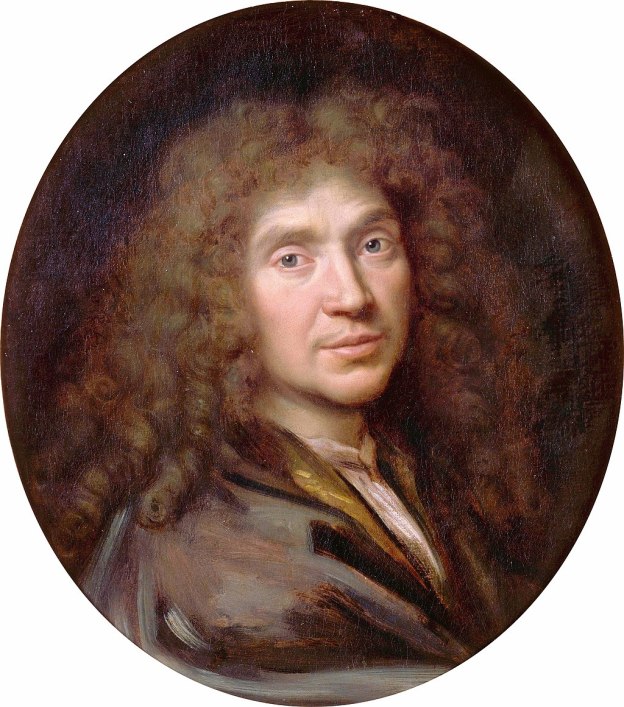


FEATURE Image: Jawlensky, Hügel (Hills), 1912, oil on hardboard, Museum am Ostwall, Dortmund.

SUMMARY:
Alexei von Jawlensky (1864-1941), a young Russian-émigré artist to Germany beginning in the mid 1890’s, became one of the most progressive avant-garde modernist artists of his generation. His international search—from Russia to France, England and the Low Countries, as well as his lifelong expatriate base in Munich, Germany—led him to experiment and synthesize unto German Expressionism the main currents of modern art styles before World War One. This included significant borrowings from Impressionism, Post Impressionism, Cloisonnism, Synthetism, Symbolism, and Fauvism. Jawlensky, with Russian compatriot Wassily Kandinsky (1866-1944) and German painter Gabriele Münter (1877-1962), among several others, pursued a decade-long dialogue of their individual experimentation, particularly in the liberation of color and form, as, in part, an artistic response to a modern society increasingly saturated by industrialization and mechanization. Within the socio-economic context of a rising newly-formed German Empire before World War I, these emergent German Expressionists sought to free the object (and unto the natural world) from its objective fixity and situate it within the inner feelings and spirit of the artist. Within European modernism, Jawlensky developed a wide network of contacts and took especial inspiration from modern painters such as Édouard Manet (1832-1883), Vincent Van Gogh (1853-1890), Paul Gauguin (1848-1903), Paul Cézanne (1839-1906), Henri Matisse (1869-1954), and others. Jawlensky sought in modern art exhibitions and the co-founding of, and participation in, the New Munich Artist’s Association in 1909 and Der Blaue Reiter in 1911, to lead modern art towards representational expressionism and abstraction.

In 1871, the newly-founded German Empire fused together most of the German speaking states in Central Europe under Prussian leadership. Over the next 60 years under several different forms of government—that of Emperor Wilhelm I (1871-1888), his grandson Wilhelm II (1888-1918) and, following World I, the Weimer Republic (1918-1933) —Germany worked to create and define a political and cultural identity all its own.
In World War I (1914-1918), the recent German Empire fought to consolidate its gains but the effort failed—and Central European powers were divided up into smaller states after the war. The German Empire had risen and fallen in less than 50 years.1
Before unification in 1871, German-speaking denizens of Central Europe came from many independent and differing political units. The Kingdom of Prussia, which in 1816 annexed the Kingdom of Brandenburg, was the foremost German power alongside Austria. Long-held liberal dreams based on the French Revolution of 1789, the Napoleonic empire (defeated at Waterloo in 1815) and later mid-19th century pan-European revolutions looked to unify these diverse states into a national union based on self-determination. But these idealistic political aspirations did not reflect all the conditions and facts in these lands.
Napoleon’s invasions into Central Europe in 1806 and 1807 resulted in German state governments that were conservative and anti-constitutional monarchies. When unification came for Germany in 1871, it was not by popular uprisings or democracy. It was the diplomatic handiwork of the six-foot-three-inch Prussian prime minister, Otto von Bismarck (1815-1898).

In 1849, Otto von Bismarck was elected to the Landtag, or Prussian parliament. Following a decade of government service, König Wilhelm of Prussia appointed Bismarck in 1862 as Minister President of Prussia and Foreign Minister. This gave Bismarck virtual absolute power.
In 1866, Bismarck started a short, decisive war with Austria. It proved Prussia was the dominant force in German territory. The Austrian war led to the Prussians with their allies annexing territories and forming the North German Confederation comprised of 22 German states. Nationalism throughout German-speaking Europe rose significantly after this military victory over Austria which had in the contest lost its dominant power position in Europe.
By 1870, German unification was both cause and effect of German nationalism. Unification was opposed by European nations, particularly France, as well as German expansion. The smaller German kingdoms reacted to the diplomatic opposition by uniting with Prussia. It was France that, since the 17th century, was viewed as the actual destabilizing force in Europe, and not a new Germany.
The Franco-Prussian War of 1870 which started when France was maneuvered by Bismarck to declare war on the North German Confederation, was a disastrous defeat for France. The Prussian victory allowed them to annex Alsace-Lorraine from the French and became another impetus for independent German states to join a united Germany. The German empire was founded and declared on New Year’s Day, 1871. Bismarck crowned Wilhelm as Kaiser Wilhelm I, and Bismarck became Grand Chancellor.
With Austria as an exception, Bismarck ruled the German states as the Second Reich. He brutally censored and repressed any contradictory forces to German nationalism—including the Catholic Church and the Communists and worked to mold scattered German speaking residents into one political and cultural nationality. This nationalistic vision of centralized power—and entangling alliances to support or offset it—led to the mechanized death mill of World War I. In that conflict, Germany, Austria-Hungary, Bulgaria and the Ottoman Empire—the so-called Central Powers—fought the Allied Powers of Great Britain, France, Russia, Italy, Romania, Japan and, later, the United States.
In this “Great War” the total number of military and civilian casualties on both sides was around 40 million—about 20 million deaths and 21 million wounded. Of the 20 million deaths, it included about 10 million in the military and 10 million civilians. The Allies lost almost 6 million soldiers and the Central Powers lost about 4 million.2
World War I was a dividing point in modern history which also had effects on modern art in Germany. Many young, avant-garde artists were killed in action as soldiers in the war. Wassily Kandinsky (1866-1944) and Alexei von Jawlensky (1864-1941), both Russian-émigrés, had to flee Germany, only to emerge from the general carnage years later. After the war, German architect Walter Gropius (1883-1969) believed that his work could be picked up precisely where it was left off before the war. But Gropius quickly realized that was not going to happen going forward, as if the worldwide calamity could exclude art-making in its whirlwind.
Prior to World War I, however, the German Empire experienced dynamic activity and prosperity. During Wilhelm II’s 30-year reign (1888-1918), rapid industrialization, population growth, and the growing gap between an increasingly wealthy and politically influential elite and disenchanted working class rippled throughout the empire. Berlin became Germany’s national capital and Europe’s young new city.


Within this modern-state commotion, the role of art in Germany became a battle for the nation’s soul: from the pole of freedom to produce outstanding artworks in the modernist spirit to a regressive cultural heritage with proto-fascist overtones. Cultural conservatives argued for turning inward to German sources for the future direction of German art. These conservative critics dismissed French Impressionism as nonacademic, genre painting of modern life. Above all, it was foreign.
Conversely, the Berlin Secession (1898-1934) and Neue Galerie Thannhauser in Munich challenged academic and state-sponsored artwork and introduced international styles. These venues were where Germans went to see post-Impressionists such as Vincent Van Gogh and later Cubists such as Pablo Picasso and Georges Braque.
By the dawn of the 20th century, what it meant to be German, and among a culturally diverse citizenry, was a 30-year experimental construct forged by Bismarck using raw power so to achieve a unified empire on the world stage. The fall of that empire and the peace that followed it, helped set the stage for the rise of Fascism leading to World War II.
Modern artists of the key artistic movements of the Wilhelmine period, particularly Expressionist art groups such as Die Brücke (“The Bridge”) in Dresden from 1905 to 1913 and Der Blaue Reiter (“The Blue Rider”) in Munich from 1911 to 1914 — avant-garde forms of modernist abstraction and romanticism — wanted to offset conventional social values based on German industrial materialism by using a contradictory form of self-expression based on the sensual and spiritual.
The issue of what exactly was, or would be, “German” art in the modern age were the stakes for these artists. These artists sought to unify body and soul by expressing internal qualities through exterior appearances and saw this integrated expression as their contribution to that societal and artistic endeavor.3 Progressive artists never dismissed the idea of a German art. They sought its expression in avant-garde artistic elements and forms thereby rejecting its basis on historical and cultural anecdote or nostalgia.

Alexei von Jawlensky, born in Torzhok in western Russia in 1864, started his career in the military. At 25 years old, in 1889, Jawlensky, stationed in Moscow, requested a transfer to St. Petersburg to study painting at the Academy of Arts. In St. Petersburg, Jawlensky learned about the French Impressionists, particularly the artwork of Édouard Manet (1832-1883) and Alfred Sisley (1839-1899). In 1892, while taking painting lessons with Russian naturalist painter Ilya Repin (1844-1930), Jawlensky met realist painter Marianne von Werefkin (1860-1938) who became his mistress and dedicated patron. In 1893 Von Werefkin invited Jawlensky to her father’s estate in Kovno governorate (modern Lithuania) where Jawlensky met Hélène Nesnakomoff (1881-1965), Von Werekin’s personal maid. In time she became Jawlensky’s mistress, mother of his child and, ultimately, in 1922, his wife.


After seven years studying art in St. Petersburg, Jawlensky’s request to leave the military was granted. He left in early 1896 with a 20-year half pension and the rank of staff captain. That summer Jawlensky traveled through Germany, Holland and Belgium with Marianne von Werefkin and a female friend. Returning to St. Petersburg by way of Paris and London, Jawlensky viewed and admired artwork of J. W. M. Turner (1775-1851) and living artists, James Whistler (1834-1903) and Puvis de Chavannes (1824-1898).
In St. Petersburg, Jawlensky entrusted his possessions with family in Russia. With two young painter friends, Igor Grabar (1871-1960) and Dmitrij Kardovskij (1866-1943), he set off to settle in Munich at the end of 1896. Marianne von Werefkin and Hélène Nesnakomoff joined Jawlensky soon after. From his arrival into Munich, Jawlensky lived, with the exception of World War I, in Germany until his death in 1941. In 1897 Jawlensky, Von Werefkin and Hélène Nesnakomoff took an apartment at Giselastrasse 23, a residential street near the Englischen Garten, where they lived until 1914.
In Munich Jawlensky attended Anton Ažbe’s art school where he met other young German artists, and in 1897, fellow Russian artist, Wassily Kandinsky. Anton Ažbe (1862-1905), a Slovene realist painter, was a master of human anatomy. He enforced figure drawing studies in his classes which Kandinsky loathed but Jawlensky had been studying since 1890. Kandinsky did appreciate Ažbe’s expressed view that an artist should never conform to a theory or set of rules. Ažbe, who died at 43 years old of cancer in 1905, said: “You must know your own anatomy but in front of the easel you must forget it.”4


After five months in Munich, Jawlensky traveled to Venice in April 1897. He went with Werefkin, Grabar and Kardovskij, and Anton Ažbe. The next summer, in 1898, Jawlensky returned to Russia with Marianne von Werefkin and Hélène Nesnakomoff to visit family. That autumn the Russian group returned to Munich, where artists continued to draw heads and nudes at Azbé’s school. In 1898 Jawlensky met German Symbolist painter Franz von Stuck (1863-1928) and where, in 1900, Kandinsky matriculated in his art class.5 Jawlensky’s conversation with von Stuck was not on the expression of German character in Symbolist art but the technical issue of working in tempura. In 1898 Jawlensky also received a visit from Russian portraitist Valentin Serov (1865-1911).


In 1899, with Grabar and Kardovskij, Jawlensky executed the ambitious project to open their own painting school in Munich which was short-lived. Kardovskij returned to Russia in 1900 to eventually become a professor at the St. Petersburg Academy of Arts in 1907. Grabar returned to Russia in 1903 to became director of Moscow’s Tretyakov Gallery. Jawlensky, remaining in Munich, was painting still lifes and looking for color harmonies.


Jawlensky visited Russia in 1901 with Marianne von Werefkin and Hélène Nesnakomoff. They visited the Ansbaki estate in the Vitebsk governorate (modern Belarus). When Jawlensky fell ill possibly with typhus, he recovered at the Black Sea with Marianne von Werefkin. There he met Kardovskij and his wife, Olga Lyudvigovna Della-Vos-Kardovskaya (1875-1952), a painter who studied at Anton Ažbe’s in Munich in 1898 and 1899.

The following year, in January 1902, a son, Andreas, was born to Jawlensky and Hélène Nesnakomoff. Jawlensky was continuing to paint still lifes and figural pictures, some of which were influenced by Swedish artist, Anders Zorn (1860-1920). Jawlensky’s pictures featured as models Hélène and her sister, Maria, after she arrived to Munich in November 1902 to aid the new parents. In a visit in 1902, Prussian-born artist Lovis Corinth (1858-1925) advised Jawlensky to send a painting to the Berlin Secession. Jawlensky did so and it was exhibited.


Between 1903 and 1907, with Munich as his base, Jawlensky spent much time in France, including in Paris, Brittany and Normandy. In 1903, as Marianne von Werefkin and Georgian artist Alexander Salzmann (1874-1934) traveled in Normandy, Jawlensky was in Paris where he was fascinated with the color and texture of Vincent Van Gogh (1853-1890). That same year, in Munich, Jawlensky attended lectures on aesthetics by Theodor Lipps and met the young, eccentric Austrian printmaker Alfred Kubin (1877-1959). Lipps’ theory of aesthetics involved the overlap of psychology and philosophy creating a framework for the concept of Einfühlung (“empathy”) which, defined as “projecting oneself onto the object of perception,” became a key component of Expressionism.5
In 1904, an over-worked Kubin married Hedwig Gründler, an older widow. In early 1906 Jawlensky painted her portrait in his Munich apartment before the Kubins left Munich to live in Austria. In the 23 x 30 inch, oil-on-cardboard portrait, Jawlensky’s colors and modeling of the face showed the influences of French Impressionism and emergent Fauvism.


Jawlensky stayed in Reichertshausen in the summer of 1904. A woody hamlet 15 miles east of Heidelburg, Jawlensky painted a series of landscapes. In 1905 he followed up with a series of landscapes at Füssen. Jawlensky made friends with Wladimir Bechtejeff (1878-1971), a young Russian painter who relocated to Munich in 1904 in admiration of Jawlensky. Like the older artist, Bechtejeff stayed in Munich until 1914. When Jawlensky visited the 38-year-old German composer Felix vom Rath (1866-1905), son of a wealthy industrialist, Jawlensky saw for the first time at his home a painting by Paul Gauguin (Riders on the Beach of Tahiti, 1902, Essen). At Vom Rath’s home, Jawlensky also met pianist Anna Langenhan-Hirzel (1874-1951).7


The middle years of the first decade of the 20th century—1905, 1906 and 1907—were key to Jawlensky’s artistic development. It is likely that Jawlensky traveled to France in 1905. He exhibited six paintings in the Paris Salone d’Automne in 1905, the exhibition which gave birth to the Fauves.
In January 1906 Jawlensky returned to St. Petersburg to exhibit nine paintings. As evidenced in his correspondence, he traveled to France in 1906. He visited Paris and Carantec in Brittany which was a region where Gauguin had worked. That same year Jawlensky exhibited ten paintings at the Paris Salone d’Automne in the newly-formed Russian Pavilion organized by ballet impresario Sergei Diaghilev (1872-1929). At the salon, either in 1905 or 1906, Jawlensky met Henri Matisse (1869-1954) whose Fauvist artwork Jawlensky unreservedly admired. During Jawlensky’s visit to France in 1906 he also met Russian painter Elisabeth Ivanowna Epstein (1879-1956) and studied the artwork of Gauguin, Paul Cézanne (who died in October 1906), and Maurice de Vlaminck (1872-1958). Over the next couple of years, Jawlensky wrestled with Cézanne’s influence on his art.8


In 1905 and 1906 Jawlensky painted landscapes and character studies, mainly heads. Following the 1906 exhibition in Paris Jawlensky traveled to the Mediterranean resort town of Sausset-les-Pins outside of Marseilles to continue to paint landscapes. Jawlensky returned to Munich by way of Geneva where he visited Swiss Symbolist artist, Ferdinand Hodler (1853-1918).


Jawlensky spent the fall of 1906, as evidenced in correspondence, in Wasserburg am Inn outside of Munich. He painted landscapes and portraits.

The next year, in 1907, he returned to Wasserburg for a shorter stay with his 5-year-old son, Andreas. In fall 1907 he went to Paris with Hélène Nesnakomoff and Andreas to view the Cézanne retrospective at the Salon d’Automne. He also visited at Matisse’s studio. Near Marseilles to paint landscapes alone afterwards, Jawlensky believed that he achieved his primary goal to use color that was autonomous from the object and based on the artist’s inner feeling. This was a major breakthrough for his painting. Jawlensky’s Mittelmeerkűste (Mediterranean Coast) (below) became the result of these searches and his talisman for landscapes going forward.9


The landscape Wasserburg am Inn (Melancholy in the Evening) provides insight into Jawlensky’s artistic development at this time. Painted at Wasserburg Am Inn outside Munich in 1907, Jawlensky experimented with applying the techniques of French post-Impressionism, especially Van Gogh, Gauguin and Henri Matisse. The painting and others in this period express Jawlensky’s goal of making unnatural color harmonies and giving visual form to the artist’s inner nature or spirituality. In the manner of Van Gogh, Jawlensky used chisel-like brush strokes and, like Gauguin, thick outlining to achieve a rhythmic, flat, two-dimensional landscape.
Following these travels to Wasserburg am Inn, Paris and Marseilles in 1907, Jawlensky was back in Munich at Christmas and met Dutch Symbolist artist Jan Verkade (1868-1946) in January 1908. Verkade was a Dutch post-Impressionist and Symbolist painter who was a member of the French Nabis under Gauguin in Brittany. Verkade taught Jawlensky and Marianne Weferkin about Gauguin’s ideas on Synthetism. A convert to Catholicism in the mid1890s, Verkade became a Benedictine monk and priest and lived at a monastery in nearby Beuron. In 1907 and 1908 Verkade stayed in Munich and at times painted in Jawlensky’s studio. Jawlensky also learned from Verkade about the writings of French theosophist Edouard Schuré (1841-1929) who influenced the Nabis’ art. In 1908 Jawlensky met Paul Sérusier (1864-1927) who painted The Talisman, an icon to Gauguin’s ideas of Synthetism. 10


In Munich in 1908 Jawlensky met other significant figures for his art, including the acquaintance of German painter Karl Caspar (1879-1956) and 22-year-old Alexander Sacharoff (1886-1963). Sacharoff was one of Europe’s most innovative solo dancers. Jawlensky formed a lifelong friendship with Sacharoff and painted his portrait several times between 1909 and 1913. Jawlensky’s 1909 portrait of Sacharoff was painted spontaneously one evening when Sacharoff arrived to Jawlensky’s studio before a performance. In his full theater costume, Jawlensky’s portrait of Sacharoff is notable in that it was one of the first examples of the painter’s motif of wide, piercing eyes.11


In 1908, with the help of Theo van Gogh’s widow, Jawlensky acquired a Van Gogh painting, La maison du Père Pilon. Jawlensky spent the next three summers—in 1908, 1909 and 1910—in southern Bavaria at Murnau am Staffelsee with Hélène Nesnakomoff, Andreas, Marianne von Werefkin, Kandinsky and Gabriele Münter (1877-1962).
In 1909 Jawlensky met Austrian philosopher Rudolf Steiner (1861-1925), Baltic German painter Ida Kerkovius (1879-1970), and German Expressionist painters Erma Barrera-Bossi (1875-1952) and August Macke (1887-1914). These were all notable figures to the formation of avant-garde expressionism. Jawlensky also met the Ukrainian brothers and avant-garde artists David Burliuk (1882-1967) and Wladimir Burliuk (1886-1917).
Jawlensky’s summer visits to Murnau led to significant development in his painting, This was especially true for his large format portraits. In 1909, his Murnau landscape is a highly stylized reduction of the subject of mountains, trees, and pathway into flat, geometrical forms and harsh, contrasting and unnatural colors influenced by French Cloisonnism and French Cubism. The painting, Murnau landscape, is another example of Gauguin-inspired Synthetism with its high degree of stylization and artificial bright colors. Some of the experimental nature of the painting is indicated by the color samples in the lower righthand corner of the painting.

It was Wassily Kandinsky and Gabriele Münter who discovered Murnau in the spring of 1908 on a bicycle tour. They told Jawlensky about it who visited that summer with Marianne von Werfekin and wrote to Kandinsky to join them. In 1909 Münter and Kandinsky bought a house in Murnau which they called “The Russia House.” The importance of the Bavarian landscape as an inspiration to these artists’ work cannot be underestimated. The Murnau years of 1908 to 1910 was the start and bonding of artists that evolved in 1911 to the formation of The Blue Rider. In 1908 it was Jawlensky’s sharing of his new ideas gained from his visits to France that made him the progressive leader of the group in this period. Accompanied by Marianne von Werfekin, Jawlensky returned to this market town several times where he stayed at Gasthof Griesbräu.12


The painting Summer Evening in Murnau is marked by intense colors, dark contours, simple drawing, and a reduction of form reflecting Jawlensky’s understanding of Gauguin’s “Synthetism.” Sérusier had observed that “art is above all a means of expression.” Within the embryonic Blue Rider group of artists before 1911, Gauguin’s “Synthetism” meshed to Wassily Kandinsky’s idea of “inner necessity.” Intense colors and imaginary reduction of forms that marks German Expressionism had its nascent development in Jawlensky’s paintings at Murnau.13

In March 1909 Jawlensky co-founded Neue Künstlervereinigung München (“New Munich Artists”), an exhibition organization to counteract the inability of official academic art to accommodate avant-garde practice in a new century and counteract the Munich Secession, one of the oldest breakaway modern art groups founded in 1892. Before the first NKVM exhibition in Munich in December 1909, Jawlensky, Kandinsky and other artists resigned from the Munich Secession.14
In 1909 Jawlensky. Kandinsky, Gabriele Münter, and art historian Oskar Wittenstein and Heinrich Schnabel elected Kandinsky as NKVM president and Jawlensky as vice-president. German magic realist painter Alexander Kanoldt (1881–1939) was appointed secretary and German painter Adolph Erbslöh (1881–1947) was made chairperson of the association’s exhibition committee. German painter and printmaker Paul Baum (1859-1932) joined as did Russian painter Wladimir Bechtejeff (1878-1971), and German painters Erma Barrera-Bossi (1875-1952) and Carl Hofer (1878-1955). Alexander Sacharoff, Austrian Symbolist printmaker Alfred Kubin, and East European artist Moissey Kogan (1879-1943) soon joined this German avant-garde secession.
The NKVM hosted, in Munich, three annual exhibitions—in 1909, 1910, and 1911. These Munich shows then traveled around Germany. On December 1, 1909 the first New Munich Artists (NKVM) show opened at the Neue Galerie Thannhauser. It included ten painters, one sculptor, one printmaker and other invited artists. Though half of the exhibitors were Russians, these visual artists showed no similarity in style.15 The first show traveled to Brünn, Elberfeld, Barmen, Hamburg, Düsseldorf, Wiesbaden, Schwerin, and Frankfurt am Main. It was greeted almost universally with jeers by the public. The critics called it a “carnival hoax” and saw their art as evocative of bad French Impressionism.16

The pamphlet for the foundation of the artist association stated, “Our starting point is the idea that the artist not only receives new impressions from the world outside from nature, but that he also gathers experiences in an inner world. And indeed, it seems to us that at the moment more artists are again spiritually united in their search for artistic forms. They are looking for forms that will express the mutual interdependence of all these experiences and which are free from everything irrelevant. The aim is that only those elements which are actually necessary should be expressed with emphasis. In other words, they are striving for an artistic synthesis This seems to us a solution that is once again uniting in spirit an increasing number of artists.”17

In 1909 and 1910, working in Murnau am Staffelsee, Alexei Jawlensky took outings into the foothills of the Bavarian Alps to paint. It was a manageable walk for the 45-year-old artist into surrounding mountains and woods. Floating Cloud is one painting that is part of a group of artworks from this period that evokes mountains, clouds and trees. The painting is undated so there is no irrefutable proof it was painted in 1910 — Jawlensky’s final summer stay in Murnau — but its varied and discordant colors and tendency to synthetic composition points to having been created in 1910 or summer 1909.
Its foreground green, dark trees, pink clouds, and orange sky are formal elements found in landscapes from the period. The painting had been later discarded by the artist though under exactly what circumstances is unclear. When World War I began in August 1914, Russian-émigré Jawlensky had to leave works behind in Munich to be retrieved in 1921 and 1922. Floating Cloud was brought to the United States in 1924 by its owner, Galka Scheyer (1889-1945). Jawlensky began his series of monumental heads by 1910 that defined his artwork in the years ahead.
In Floating Cloud, shapes are precisely delineated; the chain of the pine trees’ triangular forms are echoed in the repetition of the mountain chain’s pointed shapes in the background. The clearly defined planes of foreground, middle distance, and background are parallel to the picture plane but compressed into a narrowed, stage-like area. Jawlensky also began many figural drawings of the female nude in 1910 though he did not use them for paintings much. Its formal properties as well as subject is similar to paintings of Henri Matisse in this time period.18


Meanwhile Kandinsky’s Blue Mountain in 1908-1909 continued to demonstrate his direction towards abstraction. In the picture, a blue mountain has a yellow and a red tree on each side of it. A procession of human figures and horses crosses in the foreground. Their faces, clothing, and saddles are composed of bold colors, with little linear detail. The flat, contoured colored shapes indicate French Fauvist influences.


Floating Cloud was exhibited by Jawlensky, along with ten other of his paintings, in the important second exhibition of the New Artists’ Association which opened in September 1910 at the Neue Galerie Thannhauser. In that second show, Jawlensky also exhibited Child with Doll (Kind mit Puppe). In that painting, the sitter was a local school girl in Murnau. In 1912 Jawlensky returned to the subject of a girl with doll and gave one such picture to Franz Marc.19

Heinrich Thannhauser (1859-1934) opened his gallery in Munich in 1904. In 1908 it hosted an important exhibition of over ninety works by Vincent van Gogh. The Neue Galerie Thannhauser became the leading proponent of international modern art in Germany in the 1910’s exhibiting French Impressionist and post-Impressionist art as well as German and other international modern artists. Designed by Paul Wenz in the glass-domed Arcopalais developed by Georg Meister and Oswald Bieber at Theatinerstraße 7 in the heart of Munich’s shopping district, several rooms of the Neue Galerie Thannhauser were set up as fashionable domestic environments. With Wassily Kandinsky and Franz Marc in December 1911, Thannhauser organized the first exhibition of Der Blaue Reiter.

The second NKVM exhibition is important in that it was the world’s first modern art exhibition that assembled an estimable scope of international artists represented by Germans, French, Russians, and others.
The second exhibition expanded to include French Cubists, including Pablo Picasso and Georges Braque, Postimpressionists, and Fauvists, such as Henri Le Fauconnier, Andre Dérain, Maurice Vlaminck, and Kees van Dongen.20 The historic showing at the Neue Galerie Thannhauser afterwards traveled to Karlsruhe, Mannheim, Hagen, Paul Cassirer Berlin, Leipzig, Galerie Arnold Dresden, Munich Weimar, and the Neue Secession Berlin. The exhibition was the precursor of future great international shows such as the Cologne Sonderbund in 1912 and New York Armory Show in 1913. The Armory Show, in which Neue Galerie Thannhauser participated, introduced European Modernism to the United States.
The Munich gallery occupied over 2,600 square feet of the glass-domed Arcopalais and was divided between two floors. Nine exhibition rooms were on the ground floor with a skylit gallery on the floor above. Similar to the first NKVM exhibition, the Munich public derided the offerings of the second. The German press called for its closure as the artists were “anarchists.” A small group of sympathizers gathered to support the avant-garde exhibitions including other modern artists and some German curators, one of whom was afterwards dismissed from his official curatorial posts because he espoused contemporary nonacademic views.21


The second exhibition catalog had five articles and was illustrated by Picasso’s Head of a Woman. In addition to Jawlensky’s 11 art works, Gabriele Münter exhibited 7 art works, including Landscape with White Wall from 1910. Kandinsky had carefully defined his different categories for a painting—an impression; an improvisation; and a composition.22 Kandinsky exhibited examples of all three at the second NKVM show in September 1910, including Composition no.2 of early 1910 and Improvisation no.12-The Rider painted in summer 1910.

Karl Ernst Osthaus (1874–1921), an important German patron of European avant-garde art, founded the Folkwang Museum at Hagen, Germany, in 1902. Following the second New Artists’ Association exhibition, Osthaus organized an even larger exhibition of Expressionist painting with works by Jawlensky and Kandinsky.

By 1910, with 20 years of art practice, Jawlensky had built up and continued to expand his circle of collectors. His friendship with Cuno Amiet (1868-1961), a pioneer of modern art in Switzerland, likely started in 1909. In Still Life with Vase in 1909 Jawlensky painted in simplified forms, vivid colors, and decorative lines, following the example of Henri Matisse.23 From 1906 to 1911, Jawlensky’s still lifes were influenced by Matisse who Jawlensky met in Paris. In 1909 and 1910 Jawlensky painted still lifes that are among his finest works. Starting in 1911, Jawlensky focused increasingly on the human face. Regarding his still lifes, Jawlensky observed that he was not searching for a material object, but by way of form and color, “want[ing] to express an inner vibration.”24


In late 1909 and into early 1910 Marianne von Werefkin visited family in Lithuania. Since the early 1890’s, Alexej von Jawlensky and Marianne von Werefkin were a pioneering artist couple of the avant-garde. With the founding of the Neue Künstlervereinigung München in 1909, from which The Blue Rider emerged in 1911, individually and as a couple they advanced modernism as a conceptual and creative force making a significant contribution to early 20th century modern art. Each had found the other’s soulmate in which their interpersonal relationship was intense and complex. Lily Klee (1876-1946), wife of painter Paul Klee, wrote in her memoirs that Jawlensky and von Werfekin were “no marriage” but rather “an erotically platonic friendship love.” Though their domestic partnership ended, they remained loyal partners and art colleagues. A wealthy, Russian aristocrat, Von Werfekin was, as a painter and knowledgeable supporter of their theories and ideas, an influential force in the NVKM and Blaue Reiter that benefitted these progressive artists’ work.25

In 1910, Jawlensky met German painter and printmaker Franz Marc (1880-1916) and, in 1911, after seeing the second exhibition of the Neue Künstlervereinigung, Marc joined NKVM. Pierre Girieud and Henri Le Fauconnier also joined. That same year Kandinsky, Marc, and others in the NKVM resigned and founded Der Blaue Reiter.
The approach of Le Fauconnier’s painting influenced by Gauguin and Emile Bernard greatly influenced Jawlensky’s work in this period. Kandinsky’s mediation led to Jawlensky exhibiting 6 paintings in Vladimir Izdebsky’s salon in Odessa and Kiev from December 1909 to February 1910 and again in Odessa at the same venue in December 1910. Jawlensky also exhibited at the Sonderbund Westdeutscher Künstler in Düsseldorf. In 1911 Jawlensky visited Franz Marc in Sindelsdorf, south of Munich and spent that summer with his family and Marianne von Werefkin in far northern Germany. At Prerow on the Baltic Sea he painted landscapes and large figural works in bright strong colors. The artist considered his time at Prerow as “a turning point in my art.”


In Fall 1911 Jawlensky traveled to Paris with von Werefkin where he saw Matisse, visited with Pierre Paul Girieud (1875-1940) and met Kees van Dongen (1877-1968). Later that year Girieud stayed with Jawlensky in Munich where Heinrich Campendonk (1889-1957) visited him in the studio in November. In December 1911 Kandinsky, Marc, Münter, Kubin and Macke resigned from the Neue Künstlervereinigung and Kandinsky and Marc founded Der Blaue Reiter.
The fault line between NKVM and The Blue Rider was over the degree of artistic importance of representation (Kanoldt and Erbslöh) versus nonrepresentation (Kandinsky, Marc, Kubin, Münter) in avant-garde German expressionism. The resignations came after Kandinsky and Marc had forcefully advocated for a jury show and, then, having overcome some other members’ intractable resistance, one of Kandinsky’s large format pictures was rejected by the jury for the 1911 NKVM show.26


Kandinsky in 1910 produced the first painting, a watercolor, that was completely nonrepresentational—Untitled in the collection of the Pompidou in Paris. In late 1911 Kandinsky, seeing his painting as a triumph of art over the external object, published his art theories in a major treatise entitled Über das Geistige in der Kunst (“On the Spiritual in Art”). Kandinsky, who was informed on European modern art currents, synthesized and personalized ideas that were broadly available at the turn of the 20th century—one, that there is an order of pre-eminent human experiences; second, that all artworks possess spiritual or expressive qualities to be researched, expanded to the sensory faculties and refined to and superseded by physical and psychological effects; and, third, that the essential nature of art makes it autonomous of naturalistic external appearances.
Modern, specifically abstract, art, through the artist’s practice of relaying his emotive and spiritual qualities can, within the broad engagement of culture as well as art that possesses an autonomous spiritual-expressionist nature, can become a barometer for social progress and gauge the spirit of the age.
Since art is the embodiment of spirit or expression, Kandinsky postulated no specific formal or stylistic language—form is meaningless apart from the expression, the making visible, of the artist’s inner reality. This is true for the “great” avenues of realism or abstraction. The immediate use of Cubist and Futurist forms dematerialized further into a spiritual significance of colors and nonrepresentational forms in Abstract Expressionism.27
The third and final NKVM show was held in December 1911 at Neue Galerie Thannhauser. It featured 58 paintings and 8 illustrations by eight of the original and early member artists, namely, Jawlensky, Adolf Erbslöh, Alexander Kanoldt, Erma Barrera-Bossi, Wladimir von Bechtejeff, Moissey Kogan, Pierre Girieud and Marianne von Werefkin. It was hardly mentioned in the German press.
The show closed on January 12, 1912 and likely did not travel though scheduled to do so. In the same month of December 1911 and in the same gallery Der Blaue Reiter hosted its first exhibition. Though Jawlensky and Marianne von Werefkin sympathized with Kandinsky and der Blaue Reiter, they did not follow into the group until 1912.
Neither did Jawlensky follow Kandinsky into nonrepresentational abstract art. He continued with representational motifs. Jawlensky was more concerned with synthesis—a term and practice with a broad, diverse, and even contradictory definition. For Jawlensky, synthesis occurred between impressions of the outer world and experiences of the artist’s inner world. In terms of his art, it involved the “outer” object and “inner” expressive, unnatural colors. It involved the “outer” pictorial composition and “inner” colors and forms, with these categorical elements being fluid in terms of their opposition.


NOTES
1. German Unification – Confronting Identities in German Art: Myth, Reactions, Reflections, Smart Museum, Chicago, 2002, pamphlet.
2. World War I casualties- http://www.centre-robert-schuman.org/userfiles/files/REPERES%20%E2%80%93%20module%201-1-1%20-%20explanatory%20notes%20%E2%80%93%20World%20War%20I%20casualties%20%E2%80%93%20EN.pdf
3. Idea of German art–https://www.britannica.com/place/Torzhok
4. Ažbe Quote- Boehmer, Konrad, Schonberg and Kandinsky: An Historic Encounter (Contemporary Music Studies), Routledge, 1998, p. 209.
5. matriculated at von Stuck’s- Watson, Peter, The German Genius: Europe’s Third Renaissance, the Second Scientific Revolution, and the Twentieth Century, HarperCollins, 2010, p. 515.
6. Trip to Paris and Brittany– Clemens Weiler, Jawlensky: Heads, Faces, Meditations, Pall Mall Press, 1971.; Theodor Lipps– Encyclopedia Britannica.
7. Hedwig Kubin—Hoberg, Annegret, The Blue Rider in the Lenbachhaus, Munich, Prestel, Munich, 1989. Wladimir Bechtejeff —https://www.kreisbote.de/lokales/garmisch-partenkirchen/schlossmuseum-murnau-zeigt-bilder-wladimir-bechtejeff-9688996.html
8. Paris Salone d’Automne and Matisse- Donald Gordon, Modern Art Exhibitions 1900-1916, Munich, 1974.
9. On Mediterranean Coast painting- Elger, Dietmar, Expressionism: A Revolution in German Art, Taschen, Cologne, Germany, 1998, p.166.
10. Melancholy in the evening –https://mfastpete.org/obj/wasserburg-on-the-inn-melancholy-in-the-evening/; Verkade- http://www.peterbrooke.org/art-and-religion/denis/intro/beuron.html
11. Sacharoff portrait—Hoberg, Blue Rider in Lenbachhaus.
12. Murnau art colony—Watson, German Genius, pp. 516-518; progressive artist- Hoberg, Blue Rider in Lenbachhaus; Barnett, Vivian Endicott, The Blue Four Collection at the Norton Simon Museum, 2002, p. 84.
13. Hoberg, Blue Rider in Lenbachhaus.
14. Selz, Peter, German Expressionist Painting, University of California Press, Berkeley, Los Angeles, London, 1974. p.185.
15. ibid., p 186 and 191.
16. First NKVM exhibition travel cities– Hoberg, not paginated; carnival hoax—Selz, German Expressionist Painting, p. 191.
17. Elgar, Expressionism, p. 168; Selz, German Expressionist Painting, p 191; Watson, German Genius, p. 516.
18. Selz, p. 195; Barnett, p. 86.
19. Barnett, p. 90.
20. Hoberg (not paginated); Selz, p.193.
21. Selz, p. 196.
22. “An impression is a direct impression of nature, expressed in purely pictorial form. An improvisation is a largely unconscious, spontaneous expression of inner character, non-material nature. A composition is an expression of a slowly formed inner feeling, tested and worked over repeatedly and almost pedantically. Reason, conscious, purpose, play an overwhelming part. But of calculation nothing appears: only feeling…” Kandinsky, Concerning the Spiritual in Art, quoted in Selz, p.196.
23. Elgar, Expressionism, p. 169.
24. Hoberg, not paginated.
25. Elgar, Expressionism, p.177.
26. Selz, p. 197.
27. Harrison, Charles & Paul Wood, Art in Theory 1900-1990: An Anthology of Changing Ideas, Blackwell Publishers, Oxford U.K. and Cambridge, MA, 2000, p 86); Chipp, Herschel B., Theories of Modern Art: A Source Book by Artists and Critics, University of California Press, Berkeley, Los Angeles, London, 1971, pp. 126-127; Kern, Stephen, The Culture of Time and Space, 1880-1918, Harvard University Press, Cambridge, MA, 1983, p. 203).
Bibliography
Barnett, Vivian Endicott, The Blue Four Collection at the Norton Simon Museum, 2002.
Boyle, Nicholas, German Literature: A Very Short Introduction, Oxford University Press, Oxford New York, 2008.
Chipp, Herschel B., Theories of Modern Art: A Source Book by Artists and Critics, University of California Press, Berkeley, Los Angeles, London, 1971.
Dube, Wolf-Dieter, Expressionism, Oxford University Press, New York and Toronto, 1972.
Elger, Dietmar, Expressionism: A Revolution in German Art, Taschen, Cologne, Germany, 1998.
Harrison, Charles & Paul Wood, Art in Theory 1900-1990: An Anthology of Changing Ideas, Blackwell Publishers, Oxford U.K. and Cambridge, MA, 2000.
Hoberg, Annegret, The Blue Rider in the Lenbachhaus, Munich, Prestel, Munich, 1989.
Kern, Stephen, The Culture of Time and Space, 1880-1918, Harvard University Press, Cambridge, MA, 1983.
Koldehoff, Stefan and Chris Stolwijk, editors, The Thannhauser Gallery: Marketing Van Gogh, Mercatorfonds, Brussels, 2018.
Selz, Peter, German Expressionist Painting, University of California Press, Berkeley, Los Angeles, London, 1974.
Taylor, A.J.P., Bismarck: The Man and the Statesman, Vintage Books, New York, 1967 (originally 1955).
Watson, Peter, The German Genius : Europe’s Third Renaissance, the Second Scientific Revolution, and the Twentieth Century, HarperCollins, 2010.


FEATURE image: Portion of the open-grate pony-truss bascule Chicago Avenue Bridge and concrete house, erected in 1914, as it was in its last years of operation. Pointing to increased high traffic volume and load-bearing capacity issues, the 104-year-old bridge was demolished and replaced in 2018. Author’s photograph taken in May 2016.


Built in 1914 by Ketler-Elliot Erection Company of Chicago, the original Chicago Avenue Bridge was one of the oldest pony truss bascule bridges in Chicago. Connecting River North and River West, the steel bridge was, after 104 years, demolished in November 2018 and replaced five months later, in 2019, by a temporary fixed bridge. Since this portion of the river is now used mostly for recreational purposes, a new, permanent immovable concrete bridge was expected to open over the Chicago River in this location starting in 2021, delayed by the pandemic, and that will not be a bascule bridge.

A pony truss bridge is a steel truss bridge that allows traffic over and through the truss, but with no cross brace across the top connecting its two sides. The truss bridge assembly of the Chicago Avenue Bridge was made of riveted steel beams—and a witness to Chicago’s early 20th century industrial manufacturing might.
As well as being “Hog Butcher For The World, Tool Maker, Stacker of Wheat, Player with Railroads and the Nation’s Freight Handler” as Carl Sandberg wrote in his 1914 poem, Chicago, published in the new (1912) Poetry magazine, Chicago was also at that time a world leader in steel production and bridge design.

The basic design of any bascule bridge is similar to a medieval castle drawbridge. A leaf or span rises and descends that permits traffic upon it and— for the Chicago Avenue Bridge— also traffic below it on the Chicago River.
Chicago boasts more than 50 movable bridges. Single-leaf (truss) bascule bridges were constructed where the river was not very wide and a single bridge deck goes up and down between abutments. This was often used for train traffic which was convenient since Chicago was and still remains the railroad capital of the United States.
The more common double-leaf (truss) bascule bridge— including the Chicago Avenue Bridge—consists of two leaves or spans which meet in the middle over the river. Counterweights on each side of the bridge beneath it in a river pit (or pits) balances, stabilizes and fortifies the vertical movement of the bridge deck.
If the bridge deck is single leaf, the “Chicago Style” bridge rises in a piece vertically to one side of the river. If the bridge deck is two leaves, each rise to their side of the river and descend to close again by meeting in the middle of the bridge deck.

Bascule bridges are the most commonly found moveable bridges in the world because they operate quickly and efficiently. The Chicago Avenue Bridge was operated from a companion pitched-roof bridge house with rounded corners and rows of windows clad in decorative (today oxidized green) copper. The foundational portions of the bridge house were constructed of concrete. Upper portions were made of wood with roofing of vitrified tile. So far, the bridge house portion of the structure has not been demolished.
In 1914, the new Chicago Avenue Bridge across a jag of Chicago River abutting the national headquarters of Montgomery Ward whose complex was first built in 1907, made for a sleek, powerful, modern and elegant statement about industry and urban commerce in early 20th century Middle America.


There are numerous variations and designs of the bascule bridge which in Chicago includes the trunnion (“pivot point”) bascule (“seesaw”) bridge. The nation’s first such bridge started operation in Chicago in 1902 over the north branch of the Chicago River at Cortland Street which can still be seen in operation today. The bridge design became known as the “Chicago Style” as its leaf or leaves, suspended on axles (trunnions) with massive concrete counterweights located below the bridge in the riverbank pit, opens and lifts a single or dual bridge deck to clear the river for traffic without blocking the waterway with a central pier.

Chicago’s bascule bridges—and the Chicago Avenue Bridge was one of them—were designed to its specific location. Each was designed to take on heavy loads and the attendant vibration which included the ice and snow pack of Chicago’s typically harsh winters. The design and construction into bedrock took into account wind resistance, whether the bridge leaves were open or closed, and to wind speeds of 100 miles per hour in any and all directions.

By 1920, improvements in bascule bridge design allowed for the construction of a double deck trunnion bascule bridge where car, truck and foot traffic could be carried simultaneously on its upper and lower decks. The first such double deck trunnion bascule bridge in Chicago was near the site of the old Fort Dearborn on the Chicago River at Michigan Avenue—today’s busy DuSable Bridge, formerly Michigan Avenue Bridge which opened in May 1920.
The Chicago Avenue Bridge is also significant as it belonged to a set of Chicago city bridges built between 1910 and 1915 whose designs looked to go beyond their utilitarian function to incorporate artistic and other aesthetic elements. Beginning with the Chicago Avenue Bridge in 1913, the Chicago Planning Commission worked with the city’s Bridge Division at the bascule bridge’s design stage.

Following the demolition of the Chicago Avenue Bridge in 2018, an immoveable temporary steel girder bridge was installed in 2019 over this span of the Chicago River. For the moment, bridge design has returned to utilitarian functionality alone with little or no artistic or aesthetic program which had been one of the progressive features of the Chicago Avenue Bridge over a century ago.

SOURCES:
Solzman, David M., The Chicago River: An Illustrated History and Guide to the River and Its Waterways, Wild Onion Books, Chicago, 1998.
http://chicagoloopbridges.com/Ctype.html
https://chicago.curbed.com/2018/10/29/18038134/construction-chicago-avenue-bridge-traffic
https://www.archpaper.com/2018/06/chicago-offers-historic-chicago-avenue-bridge-free/
https://loc.gov/pictures/item/IL0823/
https://historicbridges.org/bridges/browser/?bridgebrowser=illinois/chicago/


FEATURE image: “Cary Grant” by classic film scans is licensed under CC BY 2.0.
By John P. Walsh
Cary Grant made 72 feature films between 1932 and 1966- 34 in the 1930’s, 20 in the 1940’s, 13 in the 1950’s, and 5 in the 1960’s. (Grant also appeared in 10 more short films between 1932 and 1976). His feature films ranged from all classics of the genre. The debonair English-American actor with boundless energy and superb timing tangled with THRILLERS—Suspicion (1941), To Catch a Thief (1955), North by Northwest (1959)— COMEDIES—Bringing Up Baby (1938), His Girl Friday (1940), The Philadelphia Story (1940)— ROMANCES—Notorious (1946), An Affair to Remember (1957) – and much more. Grant was nominated twice for an Academy Award for Best Actor – in 1941 for Penny Serenade (directed by George Stevens) and None but the Lonely Heart in 1944 – but did not win.
In his 34-year Hollywood career Grant made his last films in the 1960’s. These included That Touch of Mink (1962), Charade (1963), Father Goose (1964), and Walk, Don’t Run (1966). These films became some of his best work. Afterwards, Grant decided to retire at what was a professional – and personal – high note. In June 1965 the 61-year-old Grant married actress Dyan Cannon, 33 years his junior, and they both had their first child, a girl, born in February 1966. It was Dyan Cannon’s first marriage; Grant’s fourth. They divorced in 1968.
With an acting career spanning four decades—Grant’s film debut was in 1932 for Paramount Pictures’ comedy, This is the Night—Grant said good-bye to the silver screen at 62 years old. In 1970 he received his sole Oscar, an honorary one, for which he was pleased and humbled in his acceptance speech before the Academy. It was Hollywood’s Golden Age, and in that time, Cary Grant was a household name synonymous with suavity, comedy, drama, romance, and perpetually fit and tanned-and-pressed good looks.

Grant’s final film came in 1966 with the summer release of the comedy, Walk, Don’t Run. It was one more film made by one of Grant’s new production companies and distributed by Columbia Pictures. Grant’s departure from film coincided with the birth of his daughter, Jennifer— Grant becoming a father for the first time. Grant called her his “best production”— and now wanted to give her all his time and attention. Grant said: “My life changed the day Jennifer was born. I’ve come to think that the reason we’re put on this earth is to procreate. To leave something behind. Not films, because you know that I don’t think my films will last very long once I’m gone. But another human being. That’s what’s important.”

Grant starting wooing Dyan Cannon in 1962. Within a three-year whirlwind courtship, she became pregnant with Grant’s baby so that, in1965, the 28-year-old actress wanted a marriage proposal. Cary Grant was the epitome of cinema’s best and most important actors. After their marriage, Dyan Cannon discovered that their relationship turned polite and frostier than she had expected with Hollywood’s quintessential leading man. On March 20, 1968 — less than three years after tying the knot in a secret wedding ceremony in Las Vegas, Nevada followed by a honeymoon in England taking a private jet supplied Howard Hughes – Cannon sought and got a divorce. While Cannon received alimony from Grant to raise their daughter, the young mother and up-and-coming actress had to sort things out more completely after their break-up. Theirs had been a love affair with many memorable romantic moments. But what Grant told her when they were still dating was remembered by Cannon after the marriage failed. Grant said: “I don’t know what it is, but something happens to love when you formalize it. It cuts off the oxygen.”

When Grant first asked to meet Dyan Cannon, she assumed it was for an acting part. Grant began his romance with then-25-year-old Dyan Cannon in 1962. That fall the couple flew from California to New York where Cannon began rehearsing for The Fun Couple, a Broadway comedy play starring Jane Fonda and directed by Andreas Voutsinas. Grant meanwhile worked with film director Stanley Donen on Charade, a romantic-comedy pseudo-Hitchcock mystery thriller that Grant co-starred in with Audrey Hepburn. Hepburn had been filming another romantic comedy, Paris When it Sizzles, with William Holden.

Charade’s animated Main Title and music follow a widescreen shot of a pre-dawn countryside in Europe as a speeding train finally approaches and screeches past. A body is dumped out of the moving train, plunges down the ravine and stops in a ditch, the camera providing a close-up of the dead victim’s face. Colorful animation follows of pinwheels as the wood-block-driven music heighten tension for what will be two charming lovers, Grant and Hepburn, caught in a mysterious web of criminals after money.

Grant reluctantly left Cannon and the comforts of his suite at the Plaza Hotel in New York City to make his way to Paris to shoot Charade (Hepburn lived near Paris). Many Paris locations were used in the film: near Notre Dame is the Pont au Double bridge, just below the Quai de Montebello. During the filming of Charade, Cary Grant and Audrey Hepburn walked along the riverbank below this bridge as they discussed who the killer is. Another location was the Musée Cernuschi just outside of Parc Monceau on the Avenue Velasquez. The museum is featured in Charade where it is used as Reggie’s apartment which she finds ransacked after returning from a holiday ski trip. Finally, the Palais Royal near the Louvre appears in Charade in its final scenes when the real Carson Dyle is revealed and shooting begins.

When Dyan Cannon had her first holiday break from Broadway rehearsals at Christmas 1962, she hopped on a flight to Paris. Arriving on December 26, Grant and Cannon spent the next several days together in his hotel. On New Year’s Eve, the couple were the special guests of Audrey Hepburn and her husband Mel Ferrer at their castle where a sumptuous dinner and many flights of crisp and creamy French champagne were served. Cannon flew back to the States on January 2, 1963, after a most pleasant holiday. She resumed her theater work in New York City while Grant and Hepburn stayed behind in Paris to continue filming Charade.


The film Charade is well-known for its Hitchcock-style inspiration and screenplay by the original story’s author Peter Stone (1930-2003). From Stone’s 1961 short story, The Unsuspecting Wife, the film Charade offers witty lines and a head-knocking, heart-pounding whodunit. In Charade, Regina “Reggie” Lampert (Hepburn) is on winter holiday in the French Alps. Returning to her home in Paris, she is shocked to find that it has been ransacked of everything of value. The mysterious victim thrown off the train in the Main Title and the mysterious man Reggie met on holiday in Grenoble– Peter Joshua, alias Alexander Dyle, alias Adam Canfield, alias Brian Cruikshank (Cary Grant) –converge into her life to help her solve the mystery of why these crimes have occurred and what they mean. Charade is about hidden money, spies and larcenists, double-crossing and being on the run. In addition to all that, it’s a love story. Charade was one of the last of the suspense-screwball comedy films –a staple of the Hollywood film genre since the 1930’s that faded in the gritty realist films of the 1960’s and 1970’s until its reemergence in the 1980’s.
With Charade in the rear-view mirror, Grant came home just as Cannon became mostly absent. Throughout 1964 and much of 1965 Cannon had done no film work yet but continued a busy theater career as she was touring the country in the musical How to Succeed in Business Without Really Trying. Looking for something to do with his time, Grant formed a production company and made Father Goose.
Grant’s character, Walter Eckland, played against Grant’s film type. Ecklund was a bedraggled loner in the South Pacific during World War II who reluctantly takes under his protection an unmarried French school teacher (Leslie Caron) and her seven grade school students. They were suddenly made refugees from the war during a Japanese bombing raid. The heart-warming Father Goose was a mega-hit at its release during Christmas 1964 and made millions of dollars. Receipts, however, were significantly less than in each of Grant’s three previous films — Operation Petticoat in 1959 with Tony Curtis, That Touch of Mink in 1962 with Doris Day, and Charade. Despite a lot of pre-Oscar buzz, Grant wasn’t nominated for his performance. Father Goose was one more disappointment for Grant as he worked to possibly be given an Academy Award before he might retire.


That Touch of Mink co-starred Doris Day and Cary Grant. It was the hit movie of summer of 1962 though outshined in the movie world by Lawrence of Arabia and The Longest Day later that year. The romantic-comedy is great fun—it won a Golden Globe award for Best Comedy Picture-—and became a popular rerun on TV for the next decade.
Cary Grant was cast as wealthy businessman Philip Shane, a role originally meant for Rock Hudson. That Touch of Mink was, above all, intended to be a Doris Day vehicle. From 1962 to 1964 Doris Day was the top box office star in Hollywood. Her presence definitely contributed to Universal Pictures’ bottom line since That Touch of Mink was the fourth biggest money maker of the year.
Playing working girl Cathy Timberlake, the movie is basically a stylish “boy meets girl, boy loses girl, boy gets girl back”—and given a chance to learn his lesson, they get married. American audiences loved the concept as well as Day and Grant together on the big screen. The film was the fastest million-dollar earner of 1962 and set a record at the time for the highest gross earnings in an initial theatrical release.
For Grant it was his second highest grossing film of his 30-year career, which was especially prosperous since the 58-year-old actor was a co-producer. Grant made $4 million for That Touch of Mink (around $35 million in today’s money). Three weeks after its opening, Betsy Drake, Grant’s third wife, filed for divorce.
The court proceedings of the high-profile couple after over a decade of marriage were followed closely in the press. The settlement for Drake who told the papers: “I was always in love with him and I still am…but…he left me long ago,” included more than one million dollars in cash and profit sharing in every Cary Grant film ever made up to that time.
That Touch of Mink, a film thick with early 1960’s conventional sensibilities, was nominated for 3 Academy Awards. Both Grant and Doris Day never won an Academy Award. The story goes that after her exit from films Doris Day was offered the Honorary Oscar multiple times but always turned it down. Grant won and accepted his Honorary Academy Award in 1970. In 1962 That Touch of Mink was nominated for Best Sound, Best Art Direction and Best Screenplay. In the first two categories Oscar went to Lawrence of Arabia and in the third to Divorce Italian Style.

In June 1965, with Father Goose and the Oscars behind him and Dyan Cannon’s national tour ended—Grant and Cannon, who was now pregnant, got married. After a secret marriage ceremony in Las Vegas and a honeymoon, their news was eventually publicized. As the excitement began to settle down, Grant informed Cannon he would be making another film—and was traveling to Japan by himself for the next many months.
Grant formed another production company and, with producer Sol C. Siegel, signed with Columbia Pictures to distribute his new film. Buying the rights to The More the Merrier, a World War II-era comedy, Grant took the role that had been nominated in the early 1940’s for an Academy Award. Grant’s 1966 remake was called Walk, Don’t Run in which he played a British industrialist, Sir William Rutland.

Grant’s mid 1960’s romantic-comedy vehicle is familiar territory that allowed the now-married father to continue to cash in on his popularity. The film is light fare even when compared to other such Grant vehicles such as Dream Wife (1953), Houseboat (1955), and, more recently, Father Goose (1964). Walk, Don’t Run was a safe remake of an Oscar-nominated World War II-era comedy, The More the Merrier, directed by George Stevens, and starring Jean Arthur, Joel McCrea, and Charles Coburn with Grant taking the Coburn part, a role which was Oscar-nominated in 1943 for Best Supporting Actor. Transferred to the 1964 Summer Olympics in Tokyo during a housing shortage, the story is about three strangers who come to share an apartment — industrial magnate Sir William Rutland (Grant), American Olympian Steve Davis (Jim Hutton), and young single British expat Christine Easton (Samantha Eggar). For Grant’s last film he intentionally worked it so he did not get the girl. Instead, Sir William plays matchmaker to Christine, engaged to boring British diplomat Julius Haversack (John Standing), so that she goes for Hutton. Grant personally cast Hutton and Eggar for their roles. Very predictable fare with stodgy stage direction, the decent performances by the leads bestride what amounts to an anachronistic production, despite its contemporary setting and delightful score from Quincy Jones, his first big break in films.
In the film, Christine, whose tiny apartment it is, would prefer a female roommate. She sublets to Sir William because he is pushy, charming and a fellow Brit in need. But he immediately sublets half of his portion to Hutton, making for three. Comedy results from three outsized adults sharing a very small living space as they pursue their lives’ conflicting schedules as normally as possible.
Walk, Don’t Run was one of Quincy Jones’s first big breaks. The 33-year-old Chicago-born Jones came to score the film after its star and Executive Producer, Cary Grant, recommended him for the job. Grant met him briefly through their mutual friend, singer Peggy Lee. From that meeting Grant felt Jones’ style would be perfect for the film and he made sure he was hired. Jones went on to enormous success as the composer of numerous film scores such as In the Heat of the Night in 1967 and The Color Purple in 1985 as well as the producer of successful pop rock recordings such as Michael Jackson’s bestselling albums and the 1985 global recording phenomenon, We Are The World. In 2013, Quincy Jones was inducted into the Rock and Roll Hall of Fame.

After Grant returned from Asia and the baby was born, in private and public he insisted that Walk, Don’t Run was his last film. It proved to be true. Grant stated he would not make a film with his wife, Dyan Cannon, a talented actress whose career had just begun. Instead, Grant insisted Cannon should retire from acting and be a stay-at-home mother. Dyan Cannon did not welcome these stay home ideas. Even in 1966 Cannon began to wonder if—following an exciting courtship and a 33-year age difference they barely mentioned—her marriage to Cary Grant was on the rocks.
NOTES:
Best production— “Hollywood loses a legend”. Montreal Gazette. December 1, 1986. p. 1.
That’s what’s important— McCann, Graham (1997). Cary Grant: A Class Apart. Columbia University Press, 1998.
Cuts off the oxygen— http://worldnewsblogx.blogspot.com/2011/10/my-husband-cary-grant-force-fed-me-lsd.html
Charade film locations—https://www.wessexscene.co.uk/travel/2017/02/21/audrey-hepburn-in-paris/
Fastest million-dollar earner of the year and record for highest gross earnings in an initial theatrical release – “Million-$ Gross In 5 Weeks; ‘Mink’ A Radio City Wow”. Variety, July 18, 1962. p.1. and “B’way as Spotty as Weather; ‘Town’ Big $41,000, ‘Guns’ Only Okay $20,000, ‘Grimm’ Giant 59G, ‘Mink’ 151G, 10th” Variety, August 22, 1962. p.9.
Betsy Drake settlement – Eliot, Marc, Cary Grant A Biography, Harmony Books, NY 2004, p 337.
Last film and would not make a film with his wife— Ibid., p. 352.
Might be in trouble—Cannon, Dyan, Dear Cary: My Life with Cary Grant, 2011, p. 217 ff.
PHOTO CREDITS:
FEATURE image-Cary Grant by classic film scans is licensed under CC BY 2.0.
2-Cary Grant by classic film scans is licensed under CC BY 2.0.
3-Fair use.
4-Cary Grant by twm1340 is licensed under CC BY-SA 2.0.
5-CHARADE by Laurel L. Russwurm is marked with CC0 1.0.
6-Public domain published in a collective work i.e. periodical in the US between 1925 and 1977 and no Copyright.
7-Bond Films Openings Montage (Amalgamation) by avhell is licensed under CC BY-SA 2.0.
8-Charade titles by Maurice Bender by Stewf is licensed under CC BY-NC-SA 2.0.
9-Charade_1963_Audrey_Hepburn_and_Cary_Grant public domain because it was published in the United States between 1925 and 1963 and although there may or may not have been a copyright notice, the copyright was not renewed.
10- Cary Grant, in Charade 1963 by Movie-Fan is licensed under CC BY-NC-SA 2.0.
11- Let’s continue this little Charade by Thiophene_Guy is licensed under CC BY-NC-SA 2.0.
12-Radio City Music Hall (2008) by jpellgen (@1179_jp) is licensed under CC BY-NC-ND 2.0.
13-Cary Grant by classic film scans is licensed under CC BY 2.0.
14-MM008600-39 by Florida Keys–Public Libraries is licensed under CC BY 2.0.
15- Cary Grant and Doris Day by classic film scans is licensed under CC BY 2.0,
16-1947 Bristol-born Hollywood film star Cary Grant alighting from Bristol Freighter G-AGVC at Los Angeles, 13 Jan 1947. by Gary Danvers is licensed under CC BY-SA 2.0.
17- Walk, Don’t Run poster. Fair use.
18-Fair use.
CARY GRANT HOLLYWOOD FILMOGRAPHY (1962-1966):
1962:
That Touch of Mink
Cary Grant as Philip Shayne
Directed by Delbert Mann
Released June 14, 1962
Universal Pictures
1963:
Charade
Peter Joshua / Alexander Dyle / Adam Canfield / Brian Cruikshank
Directed by Stanley Donen
Released December 5,1963
Universal Pictures
1964:
Father Goose
Walter Christopher Eckland
Directed by Ralph Nelson
Released December 10, 1964
Universal Pictures
1966:
Walk, Don’t Run
Sir William Rutland
Charles Walters
Released June 29, 1966
Columbia Pictures
This explanatory article may be periodically updated.


*The photograph copyright may be believed to belong to the distributor of the film, Universal Pictures and Columbia Pictures, the publisher of the film or the graphic artist. The copy is of sufficient resolution for commentary and identification but lower resolution than the original photograph. Copies made from it will be of inferior quality, unsuitable as counterfeit artwork, pirate versions or for uses that would compete with the commercial purpose of the original artwork. The image is used for identification in the context of critical commentary of the work, product or service for which it serves as poster art. It makes a significant contribution to the user’s understanding of the article, which could not practically be conveyed by words alone. As this is a publicity photo (star headshot) taken to promote an actress, these have traditionally not been copyrighted. Since they are disseminated to the public, they are generally considered public domain, and therefore clearance by the studio that produced them is not necessary. (See- Eve Light Honthaner, film production expert, in The Complete Film Production Handbook, Focal Press, 2001 p. 211.) Gerald Mast, further, film industry author, in Film Study and the Copyright Law (1989) p. 87, writes: “According to the old copyright act, such production stills were not automatically copyrighted as part of the film and required separate copyrights as photographic stills. The new copyright act similarly excludes the production still from automatic copyright but gives the film’s copyright owner a five-year period in which to copyright the stills. Most studios have never bothered to copyright these stills because they were happy to see them pass into the public domain, to be used by as many people in as many publications as possible.” Kristin Thompson, committee chairperson of the Society for Cinema and Media Studies writes in the conclusion of a 1993 conference with cinema scholars and editors, that they “expressed the opinion that it is not necessary for authors to request permission to reproduce frame enlargements … [and] some trade presses that publish educational and scholarly film books also take the position that permission is not necessary for reproducing frame enlargements and publicity photographs.”(“Fair Usage Publication of Film Stills,” Kristin Thompson, Society for Cinema and Media Studies.)

FEATURE image: Civil Rights March on Washington, D.C. (Leaders of the march posing in front of the statue of Abraham Lincoln, Lincoln Memorial.) by Rowland Scherman (b. 1937), for the U.S. Information Agency. Press and Publications Service. Public Domain/U.S. National Archives and Records Administration.

By John P. Walsh
President John F. Kennedy watched the march—and Martin Luther King, Jr.’s “I Have A Dream” speech—from the White House on television.
Both Kennedy and King were young men—King was 34 years old, Kennedy was 46 years old. Mature beyond their years, each American proffered green oak in some ways—Kennedy was especially more personally sensitive than his “cool” public persona belied him to be. King, too, was mostly uncomfortable on August 28, 1963 with the particular attention, from the media and others, that he was receiving for his remarks at the Lincoln Memorial.
As the civil rights leaders filed into the Cabinet Room at the White House the first thing Kennedy said when he took King’s hand was “I have a dream…” The president was repeating King’s line that immediately impressed him and the nation when they heard it on TV live only a short time before.
King deflected the president’s compliment and immediately asked him what the president thought of United Automobile Workers president Walter Reuther’s excellent speech. It had included a criticism of Kennedy for defending freedom around the world but not always at home. Kennedy replied to King: “Oh, I’ve heard [Walter] plenty of times.”
King and Kennedy hardly talked any more during the visit, though when they did it led to an outcome for action.


Kennedy and NAACP leader Roy Wilkins talked at length about strengthening the civil rights bill following that day’s completely peaceful march. King moved away from the president and down the line to near then-23-year-old John Lewis, head of the Student Nonviolent Coordinating Committee (SNCC).
One section to the civil rights bill these activists wanted the president to add was a ban on employment exclusion based on race.
As White House and other photographers filmed and snapped pictures of the historic White House meeting of leading progressive personalities of the early 1960s, the civil rights leaders told the president about the accelerating automation in the job market that would potentially depress the availability of jobs.
They also discussed the plight of the inner city, telling Kennedy that Black teenagers were dropping out of school in epidemic numbers. A. Philip Randolph told the president that the entire current generation of young Blacks “had no faith” in whites. They also dismissed Black leadership, government and God. To these young Americans, U.S. society as it was presently constituted meant nothing to them but despair.
During the visit, Kennedy was lobbied to re-insert into the act a section that was stripped in 1957 giving authority to the Attorney General to investigate and initiate lawsuits on behalf of blatant civil rights infringements.
President Kennedy responded that with Robert Kennedy, his Attorney General, he had looked into joblessness and the school drop-out rate among Blacks in Chicago and New York City. At the August 28, 1963 meeting Kennedy encouraged the civil rights leaders to have the Black community do more.
“It seems to me,” the president said, “with all the influence that all you gentleman have in the Negro community that we could emphasize…educating [your]children, on making them study, making them stay in school and all the rest.”

Any add-ons now to the civil rights bill joined existing legislation that was already on the brink of defeat in the Democrat-controlled Senate and too close to call in a Democrat-controlled House.
Despite these close margins, Wilkins countered that the Speaker of the House had assured him that an even stronger civil rights bill could pass the House and would work to pressure the Senate to act. Wilkins suggested that the president go over the heads of the Congress who obstructed passage of the bill and lead a crusade to win voter approval for the civil rights measures.
Kennedy replied frankly to the leaders that civil rights must be a bipartisan effort. For a Democrat president to lead a crusade would allow Republicans to support civil rights and blame the Democrats for it which would hurt the Democratic Party in the South. Kennedy assured the civil rights leaders that “treacherous” political games were being played in the Federal legislature on the bill by both Republicans and Democrats.
Kennedy was countered again – this time by Walter Reuther.
“Look, you can’t escape this problem,“ the white labor leader said, “and there are two ways of resolving it—either by reason or riots. But now the civil war is not gonna be fought at Gettysburg, it’s gonna be fought in your backyard, in your plant, where your kids are growing up.” Reuther further told JFK he didn’t much like the young president’s “seminar” style of governing where “you call a big meeting…and nothing happens.” Reuther told Kennedy that he preferred his vice-president’s governing style where Lyndon B. Johnson “jawbone[d]” an issue until he would “get difficult things done.”
King stayed silent for most of this back and forth debate. When King finally spoke he asked JFK that if the sitting president led a crusade then perhaps his predecessor, Republican president Dwight D. Eisenhower, might get involved. It would then, King suggested, become the bipartisan push Kennedy was looking for.
Kennedy snapped back at King: “No, it won’t.”
In reply, King made a knowing joke: “Doesn’t [President Eisenhower] happen to be in the other denomination?”
Ike’s personal pastor was Rev. Eugene Blake who was in the Cabinet Room. Blake, a powerful force and no pushover, had been the march’s only white speaker.
One reason that Rev. Blake spoke at the march was that he had been arrested in a civil rights demonstration in Baltimore and had gone to jail.
Just hours earlier, Rev. Blake orated: “We come late, late we come, in the reconciling and repentant spirit.” The Protestant clergyman embraced the march’s agenda of civil and economic rights for African Americans and the end to racism. Still, Blake rejected words like “revolution” and “the masses” used by some civil rights activists.
At that day’s White House visit, Blake told Kennedy that Ike could be approached about civil rights. The president pivoted and urged Blake to visit the former president at his home in Gettysburg to discover any political role Ike might be willing to take for the civil rights bill. Kennedy advised: “And include a Catholic and maybe a businessman or two.”
Then pointing to Reuther, Kennedy lightly said: “And leave Walter in the background.” Amid chuckles, Kennedy then left the room of civil rights leaders. Before exiting, the president turned to assure them he would keep in touch on the civil rights bill in the months ahead.
SOURCES:
TAYLOR BRANCH, PARTING THE WATERS AMERICA IN THE KING YEARS 1954-1963. NEW YORK: SIMON & SCHUSTER, 1988.
DAVID GARROW, BEARING THE CROSS: MARTIN LUTHER KING, JR., AND THE SOUTHERN LEADERSHIP CONFERENCE, WILLIAM MORROW AND COMPANY, 1986.

Harry Belafonte (1927-2023) was born in New York City died there at 96 years old. Harry Belafonte won a Tony, an Emmy, and 3 Grammy Awards in his career as a film actor and singer that stretched over 70 years. Belafonte was also a civil rights activist who brought and introduced a rafter of Hollywood A-list entertainers to the March On Washington for Jobs and Freedom on August 28, 1963 where Dr. King gave his “I Have a Dream” speech.
Among the more than 200-250,000 attendees at the march were these Hollywood stars. Belafonte chartered a plane from Los Angeles for the historic event to show their support for what was going on in the civil rights movement in America. The great march filled the VIP section at the Lincoln Memorial and the National Mall to past the Washington Monument, a distance of almost one mile. The mood of this massive crowd was one of hopeful jubilation. Afterwards, Dr. King and other civil rights leaders went to the White House to meet with President Kennedy. There they talked about the march, and discussed what was ahead in terms of social conditions and the civil rights movement, including the legislative effort that led to the Civil Rights Act of 1964 following Kennedy’s death. Some of the artists and film stars at the Lincoln Memorial that day in addition to Harry Belafonte were Marlon Brando, Rita Moreno, James Garner, Tony Franciosa, Sammy Davis, Jr., Joanne Woodward, Paul Newman, Susan Strasberg, Burt Lancaster, Robert Ryan, Gregory Peck, Anthony Quinn, James Baldwin, Lena Horne, Ruby Dee, Sidney Poitier, Charlton Heston and several more.
REMARKS BY HARRY BELAFONTE: “We are here to bear witness to what we know. We know that this country, America, to which we are committed, and which we love, aspires to become that country in which all men are free. We also know that freedom is not license. Everyone in a democracy ought to be free to vote. But no one has the license to oppress or demoralize another. We also know or we would not be here, that the American negro has endured for many generations in this country which he helped to build the most intolerable injustices. To be a negro in this country means several unpleasant things. In the Deep South it often means he is prevented from exercising his right to vote by all manner of intimidation up to and including death. This fact of intimidation is a great weight in the life of any negro and though it varies in degree it never varies in intent which is simply to limit, to demoralize and to keep in subservient status more than 20 million negro people. We are here, therefore, to protest this evil and make known our resolve to do everything we can possibly do to bring it to an end. As artists and as human beings we rejoice in the knowledge that human experience has no color and that excellence in any endeavor is the fruit of individual labor and love. We believe artists have a valuable function in any society since it is the artists who reveal society to itself. But any society that ceases to respect the human aspirations of all its citizens courts political chaos and artistic sterility. We need the energies of these people to whom we have for so long denied full humanity. We need their vigor, their joy, the authority which their pain has brought them and cutting ourselves off from them then we are punishing and diminishing ourselves. As long as we do so our society is in great danger. Our growth as artists is severely menaced and no American can boast of freedom since he cannot be considered an example of it. We are here then in an attempt to strike the chains of the ex-master no less than the ex-slave and to invest with reality that deep and universal longing which has sometimes been called the American Dream.”

PHOTO CREDITS:
Hundreds of thousands descended on Washington, D.C.’s, Lincoln Memorial Aug. 28, 1963. Public Domain/U.S. Government Photo.
Civil Rights March on Washington, D.C. (Leaders of the march posing in front of the statue of Abraham Lincoln, Lincoln Memorial.) by Rowland Scherman (b. 1937), for the U.S. Information Agency. Press and Publications Service. Public Domain/U.S. National Archives and Records Administration.
Martin Luther King, Jr., speaking from the Lincoln Memorial during the March on Washington by Rowland Scherman (b. 1937), for the U.S. Information Agency. Press and Publications Service. Public Domain/U.S. National Archives and Records Administration.
Civil Rights March on Washington, D.C. (Aerial view of Washington Monument showing marchers.) U.S. Information Agency. Press and Publications Service. Public Domain/U.S. National Archives and Records Administration.
Leaders of the march leading marchers down the street. U.S. Information Agency. Press and Publications Service. Public Domain/U.S. National Archives and Records Administration.


FEATURE image: Chichén-Itzá serpent head sculptures guard a staircase. Author’s photograph.
By John P. Walsh

Cancún’s sandy spit of land at the northern tip of the Yucatán peninsula was uninhabited by the ancient Mayans. It was trodden by the conquistadores and used by pirates as a hide-out. Today, oozing like wet plaster into the Caribbean sea, the beaches are a new jet-age resort. I visited the Yucatán from Chicago for a few days in May 1988.
Though the tourist board in Cancún was telling of more resort development by the mid-1990s, it already boasted of 85 hotels and about 9,000 guest rooms during my trip.
After two days acclimating myself nicely to the Caribbean climate and working my way un poco with the Spanish language, I signed up with a local tour operator for a 12-hour bus tour. The destination was to one of the most famous sites on the Yucatán peninsula and the world: the ancient Mayan archeological site of Chichén-Itzá.
With its mysterious, virtually-intact looming pyramids and temples as well as startling tales of human sacrifice and one of the world’s most accurate cosmic calendar systems—all over 1,000 years old—I was excited to adventure out of the comfort of Cancún’s “Zona Hotelera” into the Yucatán jungle interior.

The ancient Mayan cities and later Spanish colonial ones that sit on top of them are a stark contrast to the touristy jet-set beaches of Cancún.
An extensive jungle stretches across the Yucatán’s three states of Quintana Roo, Campeche, and Yucatán that are inhabited by human communities as well as wild animals such as jaguars. We frequently saw black-headed, blue-bodied birds called Yucatán jays. We saw iguanas on sun-washed rocks.

I left the hotel and met the bus in Cancún town at 8:00 a.m. Francisco drove the air-conditioned 40-seater as Raúl toted a microphone and told the group about some of the things we were seeing along the way.
They took us out of Quintana Roo’s Cancún to Yucatán’s Chichén-Itzá about 125 miles away. On arrow-straight highway 180 we drove into small local communities along the two-lane road. We would reach Chichén-Itzá out of Valladolid, the Mayan/Spanish colonial city which is sometimes called the most colorful town in Mexico.
Chichén-Itzá’s famous complex of Mayan ruins dates from the Classic period of 600 CE to 1200 CE. Important archeological sites in the Yucatán still await reclamation from the jungle today –such as smaller Cobá in Quintana Roo. Guided tours are recommended for an extensive and remarkably safe visit into these interesting backwater places.

The bus climbed onto south highway 180 and followed it through villages such as Cocoyol, Catzin, Chemax, Xalaú, and others. Along the route there were thatched-roof dwellings which held patterned hammocks inside. Outside, dogs slinked around and small farm animals sometimes shared the road. The entire Yucatán peninsula is sparsley populated with only a fraction (about 4%) of Mexico’s total population.
Francisco told us that the thatched-roof dwellings were durable. One such dwelling could last almost 20 years. The huts were made of sticks which we were told kept dwellers cool and comfortable year-round. Raúl said that the average year-round temperature on the peninsula was 93 degrees Fahrenheit. Starting in April, humidity levels rose and the temperature hovered over 100 degrees. Thatched hut dwellings were the predominant local housing we saw from highway 180.

With exceptions, the lifestyle of modern Mayans has not strayed from their ancestors’ of the last millennia. Traditional Mayan homes are oval-shaped huts made of sticks bound together to form walls. Palm fronds are laid upon the wood frame for a peaked roof. Inside there is a main room usually with a dirt floor. Hammocks create a sleeping area.
In Valladolid, a Spanish colonial town founded in 1543, there were larger stores. From the bus windows, we saw local women in the huipil, the traditional garment worn by indigenous women from central Mexico to Central America, doing their errands. They outnumbered men on the street who were mostly absent on this sunny and hot May morning in the middle of the week.


Raúl said the men worked in Cancún during the week for about eight dollars a day, This wage was significantly higher than the $5 a day usually earned on the peninsula. The workers, Raúl said, are “smart” because when they are working, they live at the hotels where they eat, shower, and live rent-free. When they return home to the villages, they bring all of their earnings with them to their families. In most of these outlying towns it requires about $40 per week in income to meet living expenses, whereas workers in Cancún can earn nearly twice that amount.
The Iglesia de San Servacio is in the center of Valladolid on the south side of the main square. It was founded and built by Fr. Francisco Hernandez on March 24, 1545.
In 1705 part of the original church was demolished by order of the Benedictine bishop of Yucatán, Pedro Reyes de los Ríos de Lamadrid (1657-1714). The bishop ordered this partial demolition following the desecration of the sacred building during a political battle in July 1703 known as the “Crime of Mayors.”

After Captain Hipólito de Osorno lost political favor in Valladolid he decided, together with his lawyer Pedro Gabriel de Covarrubias, to take refuge in the church of San Servacio.
But the political excitement of the time had reached an uncontrollable situation. In the pre-dawn hours of July 1703, a frenzied mob, led by Valladolid’s newly-elected mayors, Señors Avuso and Tovar, broke into the sacred enclosure.
The lawyer De Covarrubias was killed in the church after being driven through by a spear. His blood spilled on the altar and stained it. The captain was mortally wounded when the mob found him hidden behind the organ. The ruckus in no way benefitted the two new mayors. Both Señors Ayuso and Tovar were found guilty of murder and hanged.
Due to this murder in the cathedral the bishop had it rebuilt in 1706 as it is seen today. The altar’s position was moved to face north and west towards Rome. The church building is located on Valladolid’s main square named after Francisco Cantón Rosado (1833-1917), a conservative governor of Yucatán (1898-1902).
The church building’s main façade has a coat of arms carved on stone with arabesques, a royal crown, and a Franciscan cord. There are images of an eagle and a palm that were frequently used in the decoration of Franciscan churches in the Yucatán. Two square-shaped towers rise on either side of the central façade.

The Mayan civilization is shrouded in the mists of history. Archeologists, anthropologists and historians have speculated that they originated in about in 2600 BCE in the middle of the Bronze Age (3300 BCE to 1300 BCE). The origins of the Mayans therefore predate the oldest books of the Bible by 1,000 years.
Mayan technical skill extended to complex calendar systems and hieroglyphic writing whose images are in evidence at Chichén-Itzá. Mayan artisans were skillful weavers and potters and artifacts have been found in vast quantities at the site. The ancient Mayans also cleared routes for trade. Their main source of fresh water was from cenotes (sink-holes) and they stored rainwater in reservoirs called chultun.
Mayan culture made remarkable advances in mathematics and astronomy. Mayans are known for their impressive urban planning, farming methods, and architectural achievements. All of these impressive achievements are to be seen at Chichén-Itzá in its pyramids, temples, ball courts, palaces, and astronomical observatories.
By 300 BCE Mayan society had evolved into a hierarchical social structure where kings and priests ruled. Stretching from Cancún through the Yucatán, Belize, and Guatemala to the coast of the Pacific Ocean, Mayan civilization was a highly structured society. It consisted of several independent states, each possessed of several classes—a ruling class, warrior class, and agricultural class. The society reached its apex in the Classic period from about 200 CE to 900 CE.
The stone monuments at Chichén-Itzá were built as a ceremonial center during the Classic period. As it continues to impress visitors today, it accomplished the same thing for ancient Mayans over 1,000 years ago.
The decline of ancient Mayan civilization started around 900 CE as they began to surrender their independence to the Toltecs who absorbed them. The Toltecs were another pre- Colonial Mesoamerican civilization located in central Mexico that reached its height between around 900 to almost 1200 CE. Though Chichén-Itzá as a ceremonial center would not die for another 250 years, the city became a vestige of itself whose remnants alone of a great civilization survived when conquered by the Spanish colonists in the 15th century.
It was hot and humid when we arrived into Chichén-Itzá. Discovered by explorers as early as the 1830’s—and opened to the public in 1922—it was today an impressive and expansive series of ancient stone monuments on a grassy 1200-acre campus carved out of jungle. Do people live further into the jungle? Raúl said about one mile from the road there are small communities of two or three hundred people who live in farther from the main road.
The pyramids and temples of Chichén-Itzá are the Yucatán’s best known monuments. The Mayan city was absorbed by the Toltecs in 987 CE. According to legend, a man named Kukulcan—who is the same figure as Quetzalcoatl from the Toltec capital of Tula —arrived from the west “for the redemption of his people.” In Chichén-Itzá, Kukulcan built this magnificent city which combined the Puuc style of the Mayans and the motifs of the Toltecs, namely, the feathered serpent, warriors, eagles and jaguars.
Starting in the midnineteenth century and again at the end of the century, there was a range of scientists and explorers associated with the discovery and excavation of the archeological site of Chichén-Itzá that is seen today.
As its great natural water well (or cenote) likely gave Chichén-Itzá its name, one major figure worth considering is the early American explorer Edward Thompson (1857-1935). For most of his adult life Edward Thompson lived and worked at Chichén-Itzá including famously dredging and diving into the sacred well in search of treasure and human remains for evidence of legends of human sacrifices.
A diplomat by profession and an amateur archeologist, Thompson had an indefatigable curiosity about the ancient Mayan ceremonial city and did important work here.
As a young scholar Thompson was inspired by the writings of American explorer and diplomat John Lloyd Stephens (1805-1852). Together with English artist Frederick Catherwood (1799-1845) they were pivotal figures in the rediscovery of Maya civilization in Central America.
Catherwood’s detailed drawings of the ruins of the Maya civilization explored by Stephens led to best-selling books published in the early 1840s such as Incidents of Travel in Central America, Chiapas and Yucatán and Incidents of Travel in Yucatán. These were illustrated works that introduced Europe and the United States to the civilization of the ancient Maya.


Stephens and Catherwood in turn had been inspired by earlier pioneers of scientists and explorers. Two figures who influenced them were Alexander von Humboldt (1769-1859) and Juan Galindo (1802–1840).


Von Humboldt was a Prussian geographer, naturalist, and explorer whose work in botanical geography led to the development of the field of biogeography. Galindo was an Anglo-Irish military and administrative officer in the short-lived liberal Federal Republic of Central America (1823-1841) and who was actively engaged in Maya archeology.
In 1847 the Caste War of Yucatán broke out limiting access to the Yucatán’s unexcavated ruins. The Caste War restricted the borders of Yucatán and Quintana Roo to all but indigenous Maya for nearly 60 years, making travel to the area dangerous. When the United States appointed Edward Thompson archaeological consul to the Yucatán in 1895 he became one of the first to explore the land since the Caste War.

Edward Thompson arrived in the Yucatán at Mérida in 1895. He had purchased land in 1894 that included the unexcavated site of Chichén-Itzá. For the next 30 years Thompson dedicated his life to exploring the site.
In 1904 Thompson started to explore the bottom of the sacred well— the cenote sagrado. Thompson used divers (including himself) and dredges. Over six years he brought up a fortune in gold, copper and jade as well as a wealth of vases, obsidian glass knives and Maya incense called copal. Thompson did some of his explorations for major American museums such as The Field Museum in Chicago and the Peabody Museum at Harvard University, among others.
From his arrival, the sacred well attracted Thompson’s intense interest. In his 1932 book, People of the Serpent, Thompson stated he became intrigued with the murky waters of the great well as soon as he first saw it from the top of El Castillo.
Though most ancient Maya artifacts as well as its codice books with its written language were destroyed by the local Catholic Church authorities in the 16th century, Thompson read the colonial Spanish accounts of Mayan history.

To implement his plan to explore the cenote, Thompson returned to his hometown of Boston where he raised money, took diving lessons, and constructed a specialized diving mechanism. Thompson sent the dredging bucket, winch, tackles, steel cables, derrick and 30-foot boom to Chichén-Itzá.
The dredge buckets brought up ornaments and objects of daily life. Thompson’s and another diver’s plunges discovered more precious treasures, including human skeletons. These discoveries were controversial. The fact that this ancient site was being disturbed brought critics. Further, Thompson was neither a scientist nor academic but simply an enthusiastic amateur. He published his Maya civilization studies in Popular Science Magazine. But these critiques aside, Thompson’s field work virtually single-handedly put Chichén-Itzá on every world explorer’s own bucket list.


Thompson excavated graves at the Ossario (High Priest’s Temple), the mid-sized step-style pyramid within the Ossario Group complex of Mayan temples found just south of the Kukulkan pyramid series. Thompson’s discoveries offered an outcome not unlike the cenote. In the Ossario pyramid and its cave Thompson found more jade, pottery, human bones, and various other ancient Mayan artifacts.
Close to Chichén-Itzá Thompson discovered pits with quarried veins of lime gravel that the Mayan’s used for mortar. Nearby he found stones of calcite (to hammer), flint (to pick) and smooth stones used to produce flat surfaces on walls. Ancient Mayan craftsmen had no metal tools, but these stone implements helped scientists to reconstruct how the monumental buildings could be constructed. Thompson also uncovered shards of nephrite (a type of jade) as well as the so-called Mayan “date” stone, known later as the Tablet of the Initial Series. This stone let iconographers decipher the dates of Chichén-Itzá’s Classic period.
In 1926 Thompson’s land was seized by authorities of Mexico’s new nationalist government and Thompson was charged with removing artifacts illegally. It was only in 1944, almost a decade after Thompson’s death, that the Mexican Supreme Court ruled in the North American explorer’s favor.

It is frankly thrilling to see the pre-Columbian Mesoamerican step pyramid. At nearly 80 feet tall, the pyramid dominates the center of the archaeological site of Chichén-Itzá. It was built between 700 and 1100 A.D.


El Castillo served as a temple to the god Kukulkan. Each side of the pyramid has 91 steps for a total of 364 steps. With the platform at the top, it equals the 365 days of the year. There are 52 smooth stone panels on each side of the pyramid which coordinates with the ancient Mayan calendar’s 52-year cycle. The nine terraces on each side of the pyramid represent the 18-month solar calendar.
Twice during Spring Equinox (March 21) at sunrise and sunset, the sunlight is observed to move down stair by stair from the top stair of the northern stairway until it touches the famous serpent head stone carving at the base of the pyramid. In a marvel of nature, sunlight and shadow work to form a “serpent” that appears to descend into the earth. The cosmological phenomenon was an important fertility symbol for the Mayans whose society was agricultural. It signaled that the golden sun had entered the earth in the form of a serpent and that it was time to plant corn.


Teobert Maler (1842–1917) was a pioneer of ancient Maya research. Maler’s expeditions to over 150 ruins in the Yucatán began secretly in the 1870s.
Several ruins Maler described and photographed had been discovered by him, and his photographs of its architecture and inscriptions aided further research in ancient Maya civilization.
Many sites Maler photographed were not visited by scientists until decades later. As the ruins were often further damaged by climate events or human impact—Maler’s photographs remain some of the best record of Maya ruins.
Because of Maler’s work at Chichén-Itzá and elsewhere, the German explorer is regarded as one of the most important research photographers of the 19th century.


OTHER PHOTOGRAPH CREDITS:
YUCHATAN JAYS – Licensed under the Creative Commons Attribution 2.0 Generic license. Tony Hisgett – originally posted to Flickr as Yucatan Jays – immature
IGUANA – CC BY-SA 2.0 view terms.


FEATURE image: Marvin Gaye in 1970. This work is in the public domain in the United States because it was published in the U.S. between 1927 and 1977, inclusive, without a copyright notice. see – https://en.wikipedia.org/wiki/Marvin_Gaye#/media/File:Marvin_Gaye_(1973_publicity_photo).jpg and https://www.nytimes.com/2015/10/02/fashion/mens-style/paul-newman-steve-mcqueen-cary-grant-style.html.

What’s Going On is one of rhythm and blues and soul’s first “concept” albums and is considered by many to be not just one of the great albums of all time but the greatest.
What’s Going On produced three hit singles. All top ten chart bestsellers addressed diverse issues affecting a complicated time—including the war in Vietnam (What’s Going On, #2, 1971), the global biophysical environment (Mercy Mercy Me (The Ecology), #4, 1971) and civil rights and justice (Inner City Blues (Makes Me Want to Holler), #9, 1971).
The 32-year-old Gaye, who had his first hit song in 1962, had entered into a new and distinct stage of his musical career by the early 1970’s. Like Stevie Wonder, Gaye was one of the Motown artists to first gain complete control over his records.
Gaye’s Inner City Blues revealed the conditions of America’s black ghettos and America’s attitude and (lack of) response to them — Make me wanna holler. To those in society wielding predominant power, Gaye unflinchingly depicts the conditions of America’s inner-city ghettos and the attitudes of the men, women and children who live there.
Relentlessly bleak economic conditions of these cities’ slums—”Crime is increasing, trigger happy policing, panic is spreading, God knows where we’re heading”— perpetrate denizens’ lives. In a prosperous period in U.S. history such is offset by endless war, spiraling inflation, and an economy geared for permanently and grossly augmenting “haves” and “have nots.”
In Marvin Gaye’s mellifluous tenor voice which had a tremendous three-octave range, the singer relates soulfully and passionately—the multi-track background vocals were also sung by Gaye—his conclusion about “The way they do my life” which makes him “wanna holler and throw up my hands.” The writers’ conclusion about inner-city ghetto conditions in the United States, a rich country that ceaselessly spends its money on “rockets, moon shots,” is that insofar as the ghetto resident: “This ain’t livin’, this ain’t livin’, No, no baby, this ain’t livin’.“

Gaye had his first hit at 23 years old and died one day before his 45th birthday after he was shot to death by his father following a violent verbal altercation in 1984. In a career that exemplified the maturation of romantic black pop of the 1960’s, 1970’s, and 1980’s Gaye’s music developed into a popular artistic form that openly explored contemporary society and all manner of politics, including sexual.
In Inner City Blues the talented singer relates his harrowing subject matter and that which it implies by way of a sophisticated and mellow funk style. Detroit-based session musicians, particularly Eddie “Bongo” Brown and Bob Babbitt on bass, who were part of The Funk Brothers that performed on most Motown recordings of the period—added to the record’s sound.
Rockets, moon shots
Spend it on the have nots
Money, we make it
‘Fore we see it you take it
Oh, make you wanna holler
The way they do my life
Make me wanna holler
The way they do my life
This ain’t livin’, this ain’t livin’
No, no baby, this ain’t livin’
No, no, no
Inflation no chance
To increase finance
Bills pile up sky high
Send that boy off to die
Oh, Make me wanna holler
The way they do my life
Make me wanna holler
The way they do my life
Hang ups, let downs
Bad breaks, set backs
Natural fact is
I can’t pay my taxes
Oh, make me wanna holler
And throw up both my hands

Yeah, it makes me wanna holler
And throw up both my hands
Crime is increasing
Trigger happy policing
Panic is spreading
God knows where we’re heading
Oh, make me wanna holler
They don’t understand
Mother, mother
Everybody thinks we’re wrong
Who are they to judge us
Simply cause we wear our hair long
PHOTO CREDITS:
Marvin Gaye by Soul Portrait – “Películas Marvin Gaye y Al Green” by Soul Portrait is licensed under CC BY-NC-SA 2.0
MARVIN GAYE WHAT’S GOING ON – FR by richbedforduk is marked with a CC BY-NC-ND 2.0 license.
“Marvin Gaye – Symphony (70´s / 1985)” by Soul Portrait is licensed under CC BY-NC-SA 2.0


FEATURE Image: November 2017. Michigan-based Saints basketball team visiting in downtown Chicago.


The Logan Theatre at 2646 N. Milwaukee in Chicago opened in November 1915 as The Paramount Theatre. It was operated by Lubliner & Trinz that started operating movie theaters in Chicago around 1914. At their peak, Lubliner & Trinz operated about nineteen theaters and leased or built about 36 theaters until 1934. The Paramount had seating for 988 in orchestra level and was equipped with a Weickhardt organ, based in Milwaukee, Wisconsin. It was renamed the Logan Theatre in 1929 when it was taken over by Essaness, a Chicago-based movie theater chain. The company owned and operated 33 theaters in the Chicago area, including the Pantheon and Biograph theaters. see – Lubliner & Trinz Theater History – The Clark Theater ; Logan Theatre in Chicago, IL – Cinema Treasures – retrieved January 18, 2026.


The Chicago Athletic Association (CAA) was a historic men’s club and athletic team based in Chicago, Illinois, formed in 1890 and closed in 2007. The 1893 building was designed by prolific architect Henry Ives Cobb (1859-1931). Transformed into the Chicago Athletic Association Hotel, it opened as a boutique hotel, welcoming the public and preserving its rich history.

Van Buren Street Station is a commuter rail station in downtown Chicago that serves the Metra Electric Line to University Park, Blue Island, and South Chicago neighborhood and the South Shore Line to Gary and South Bend, Indiana.