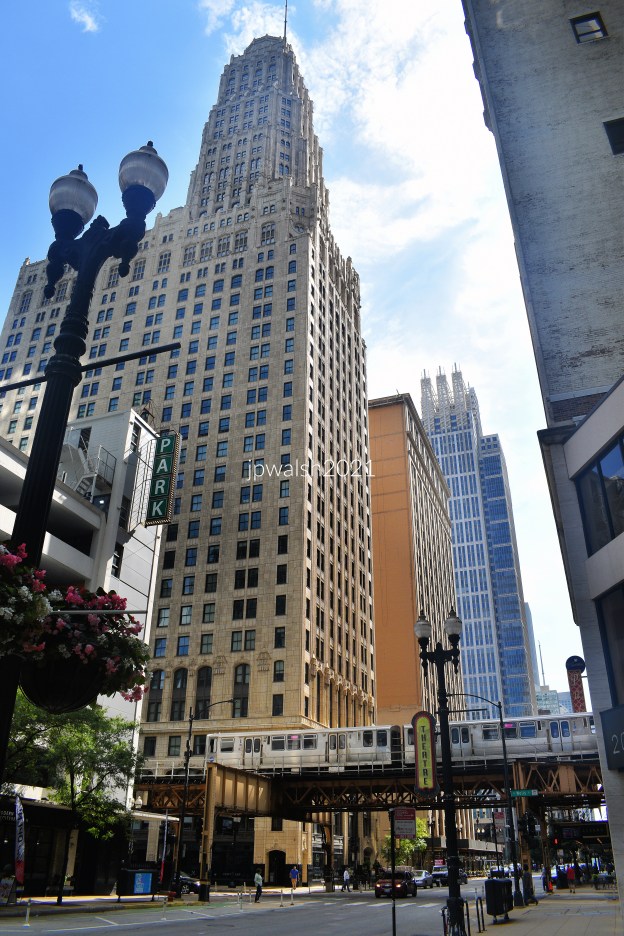
FEATURE Image: Steuben Club Building/Randolph Tower. 188 W. Randolph Street, Chicago. View from the west, August 2021. Author’s photograph. 12.72mb_9354 (1)
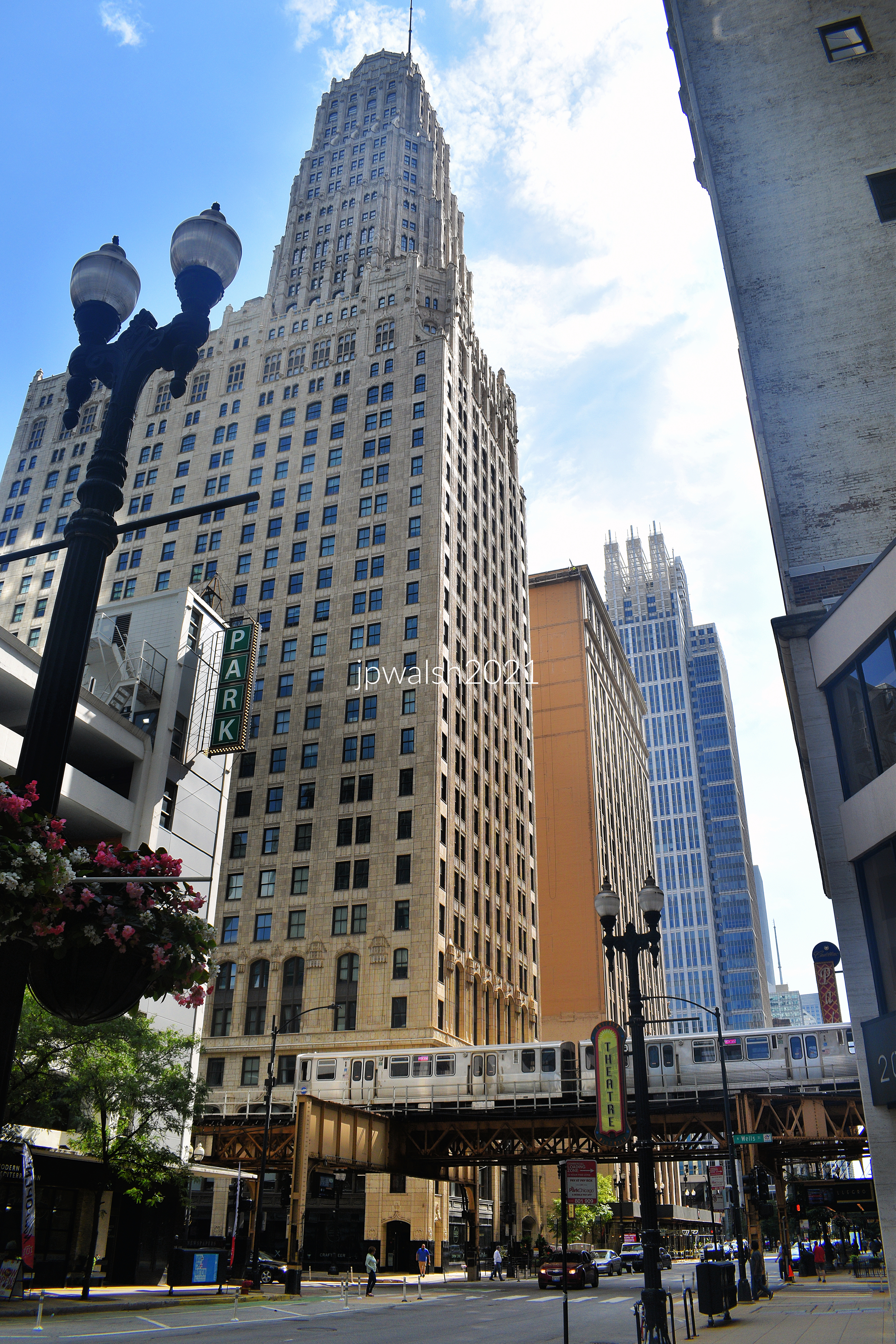
The 1929 limestone tower whose shape may be the last surviving skyscraper reflective of the 1923 zoning law with setbacks and a telescoping tower presages Vitzthum & Burns’ mighty 1 N. LaSalle Street Building in 1930. Randolph Tower was restored in 1993 by Stenbro, Ltd. and in 2013 opened as the residences of Randolph Tower City. In addition to its 15-story tower, the building is 27 stories tall and 465 feet high built on rock caissons. German-born Karl Martin Vitzthum (1880-1967) and John Joseph Burns (1886-1956) built some of Chicago’s best-known skyscrapers of the 1920s and 1930s. The firm also built, in 1953, St. Peter’s Church in the Loop at 110 W. Madison Street two doors down from the corner skyscraper of 1 N. LaSalle Street Building. Karl M. Vitzhum was architect on the Midland Hotel (then the Midland Club Building ). Built in 1927, it is 22 stories of roaring 1920’s Beaux-Arts architecture.
Karl Martin Vitzthum (1880-1967). One of the architects of the Steuben Club Building/Randolph Tower with partner John J. Burns. The skyscrapers they built starting in 1925 until the Great Depression became taller and more vertical as time progressed and are some of the most visible soaring stone structures of the period in downtown Chicago. Karl Martin Vitzthum (Architect), Steuben Club Building, Chicago, Illinois, Perspective Randolph Street, 188 West (Building address), 1924-1928, Watercolor and tempera on paper 86 × 35.6 cm (33 7/8 × 14 in.) The Art Institute of Chicago. see – https://www.artic.edu/artworks/158560/steuben-club-building-chicago-illinois-perspective – retrieved September 21, 2024.
With each building the move from classicism to Modernism is clear as well as pure verticality. During the 1980s and 1990’s, I worked in one of Vitzthum & Burns’ mid1920s office buildings in Chicago – The Old Republic Building at 307 North Michigan Avenue built in 1925. My airy office on the 7th floor looked right onto Michigan Avenue where I could admire the Carbide and Carbon Building across the street built in 1929.
Steuben Club Building/Randolph Tower. August 2021. Author’s photograph. 82% 7.88 mb _9354
Vitzthum arrived in Chicago from Germany in 1914 and worked with architectural firms such as Graham Anderson Probst and White, Burnham & Co., and White, Jarvis & Hunt. He often worked with Fredrick J. Teich (1874- n.a) prior to establishing his own firm with John J. Burns in 1919. Vitzthum was a young architect on Burnham’s staff when he worked on some engineering details for the old Comiskey Park (1910-1990). The partnership of Vitzthum and Burns started in 1919 and ended with Burns’ death in 1956. Though known for eclectic styled bank buildings throughout the Midwest, the pair had built the one-screen 1,000 seat The Hollywood Theatre at Fullerton Avenue and Greenview Avenue in 1926. The theatre closed in 1957 after being renamed the Holly Theatre and was demolished soon afterwards. It is a parking lot today for a local Walgreens across the street from Facets movie theatre.
SOURCES:
Frank A. Randall, History of Development of Building Construction in Chicago, Second Edition, Revised and Expanded by John D. Randall, University of Illinois Press, Urbana and Chicago, 1999, pp. 331 and 319.
Saliga, Pauline A., editor, The Sky’s The Limit A Century of Chicago Skyscrapers, Rizzoli New York, 1990, p. 133.
Alice Sinkevitch, AIA Guide to Chicago, 2nd Edition, Harcourt, Inc., Orlando, 2004, p. 84.
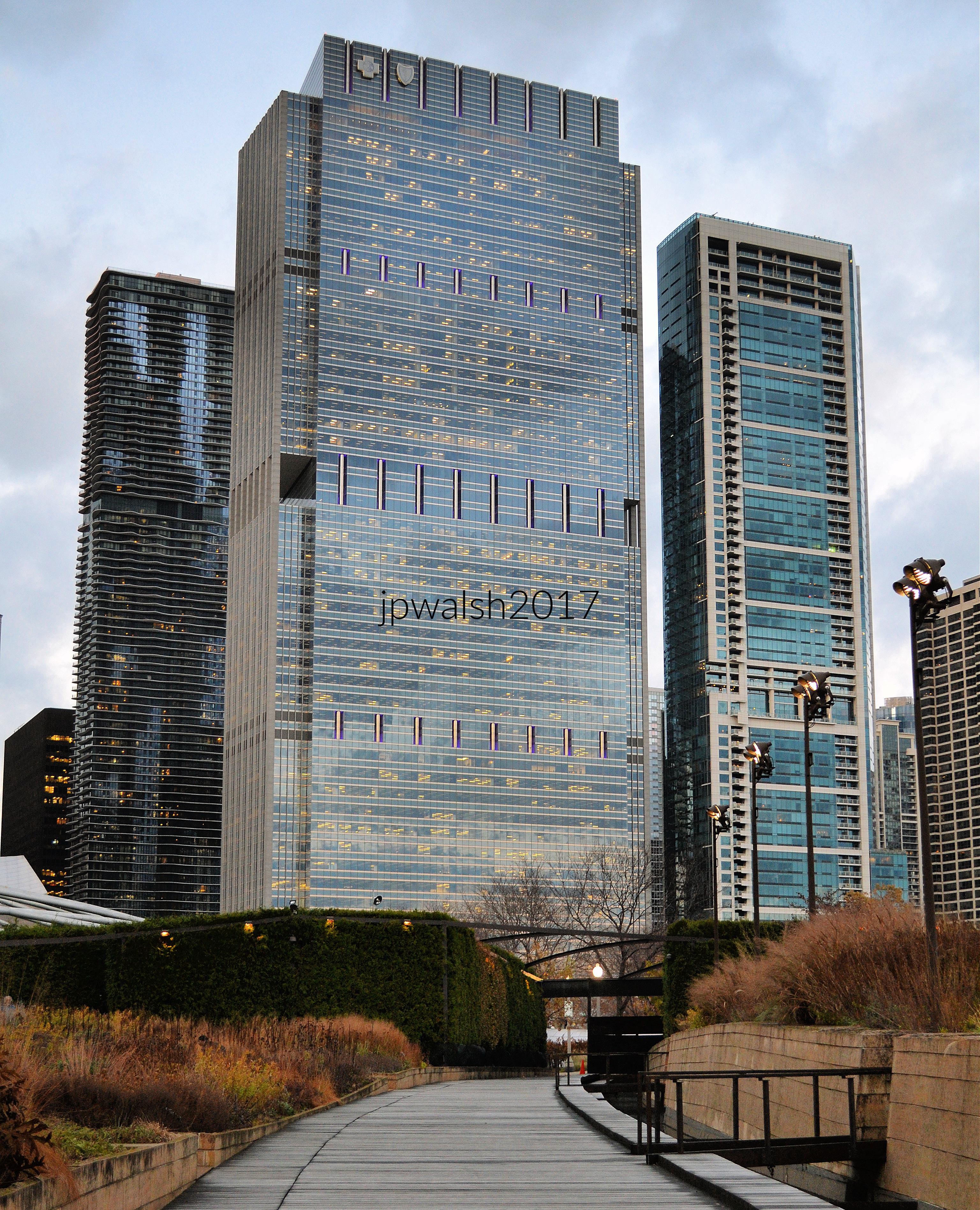
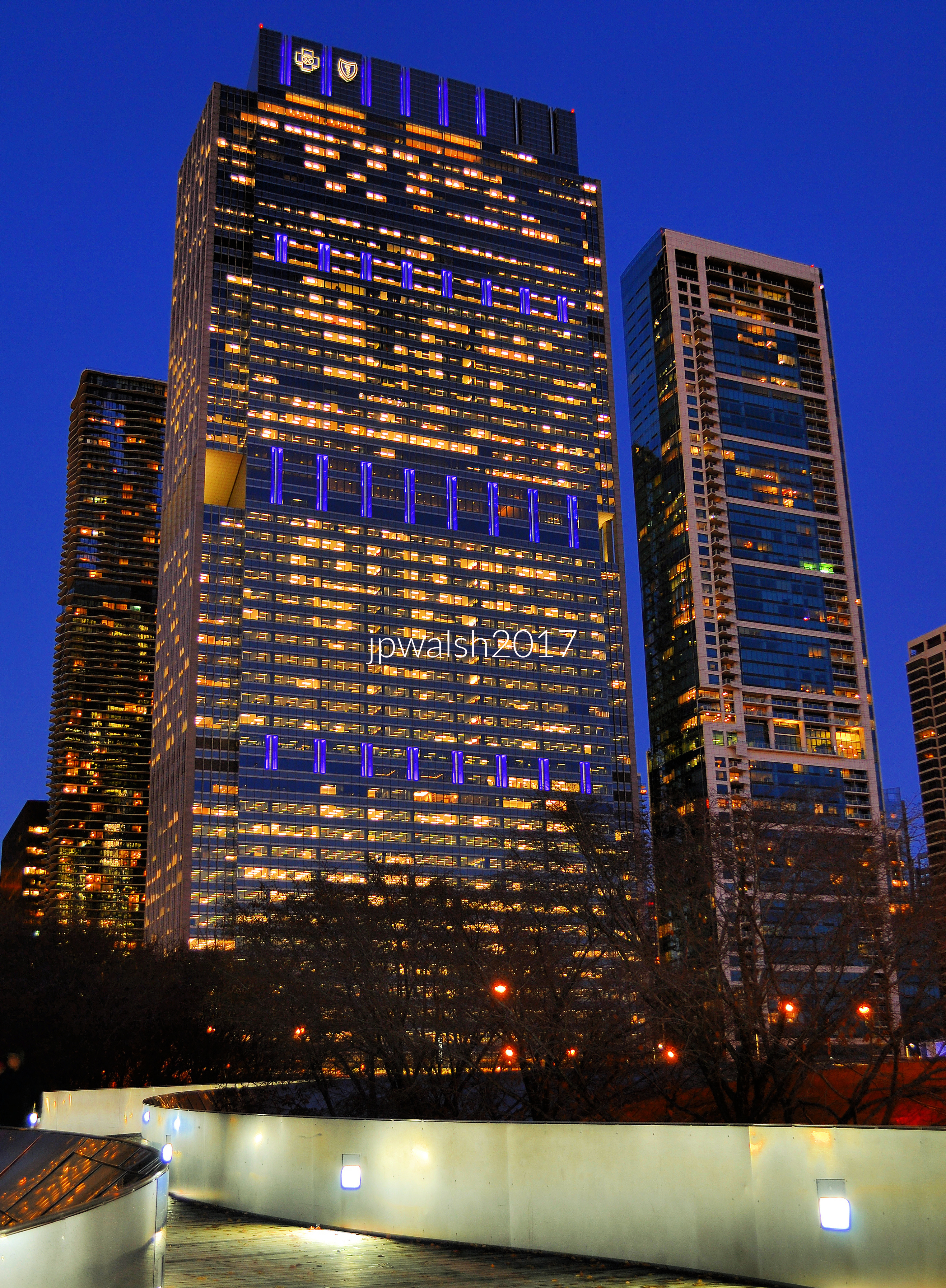
FEATURE image: Blue Cross Blue Shield Tower building, Day and Night. November 2017. It was designed by Goettsch Partners (GP) an architecture firm based in Chicago, with additional offices in Denver and Shanghai.
The Blue Cross Blue Shield Tower sits on the northeast corner of East Randolph Street and Columbus Drive in Chicago, Illinois. It is on the north side of Millennium Park. The tower is the headquarters of Health Care Services Corporation, a company founded in 1936 and based in Chicago, Illinois. HCSC is the licensee of the Blue Cross and Blue Shield Association that provides health insurance to more than 115 million people in the U.S. as of 2022.
Views are from inside Millennium Park. The Blue Cross Blue Shield Tower was built in two stages. The first stage was the original 32-story building completed by Lohan Associates (today Goettsch Partners) in 1997. It was built with the potential for a vertical expansion so that the client could grow in the same location. An expansion occurred in 2007 with a 24-story addition completed in 2010. It became the first building project in downtown Chicago that built upon an existing tower. Author’s photograph. All rights reserved. November 2017 7.38 mb 3417 (1)
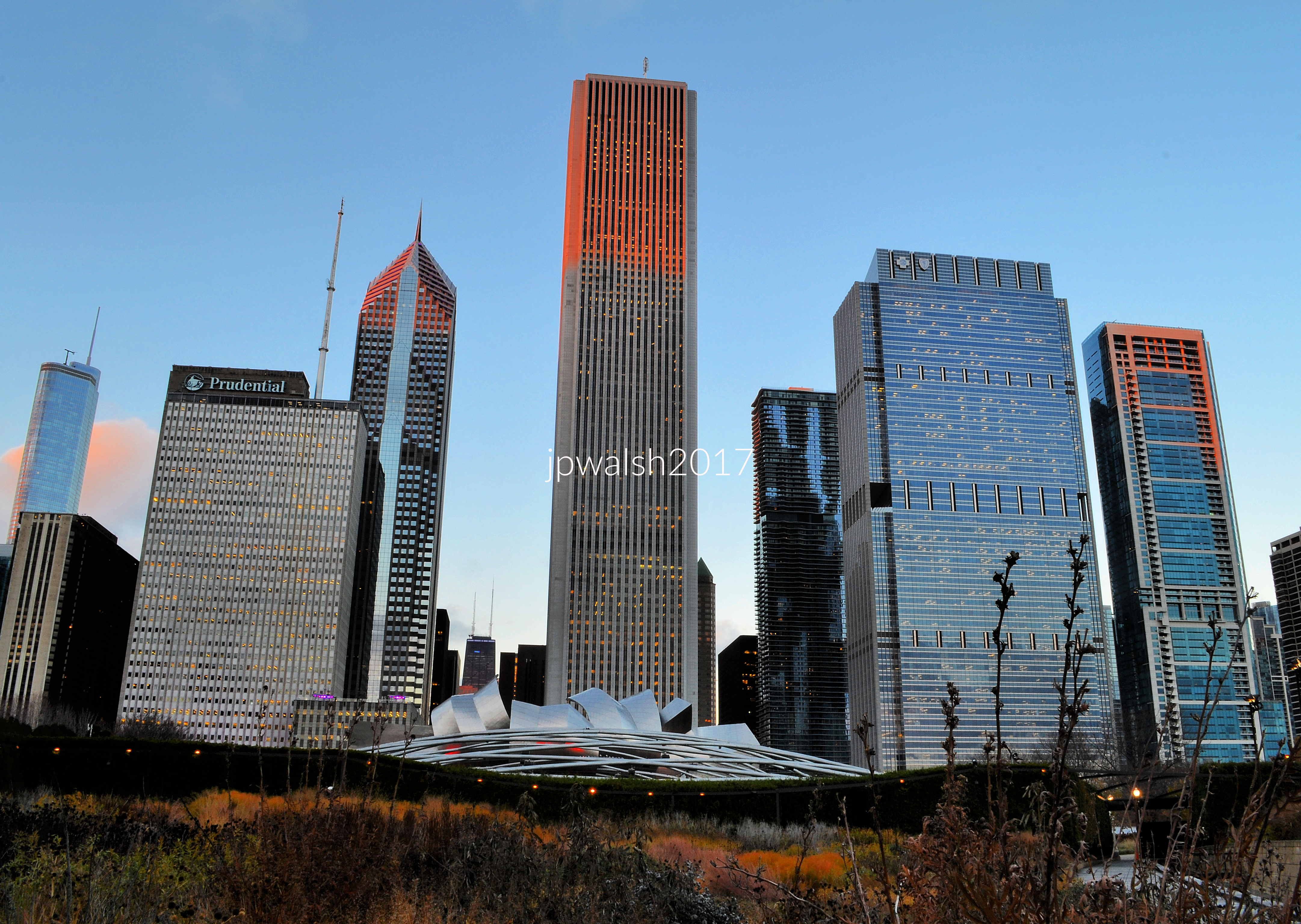
The Blue Cross Blue Shield Tower (second from right) in its setting on the north side of Millennium Park which was established in 1998. From left: One Prudential Plaza (1955), Two Prudential Plaza (1990), Aon Center (1973/1994). The Blue Cross Blue Shield Tower is next to the Aon Center with original plans to connect the two buildings via an underground pedway but did not come to fruition. Author’s photograph. All rights reserved. November 2017 5.76mb 3397 (1)
The Blue Cross Blue Shield Tower was designed by Jim Goettsch, chairman of Goettsch Partners. Author’s photograph. All rights reserved. November 2017 99% 7.41mb 3480
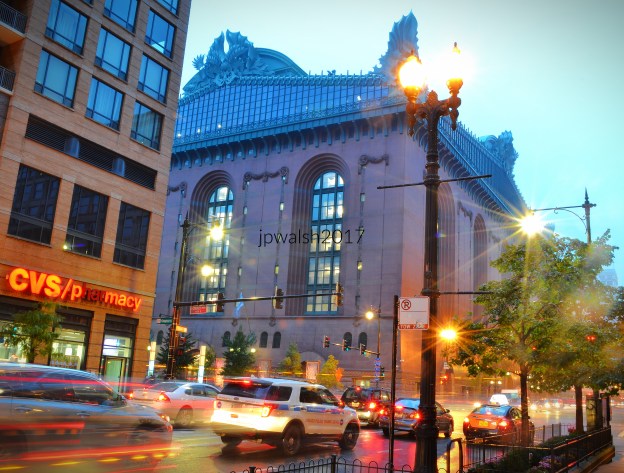
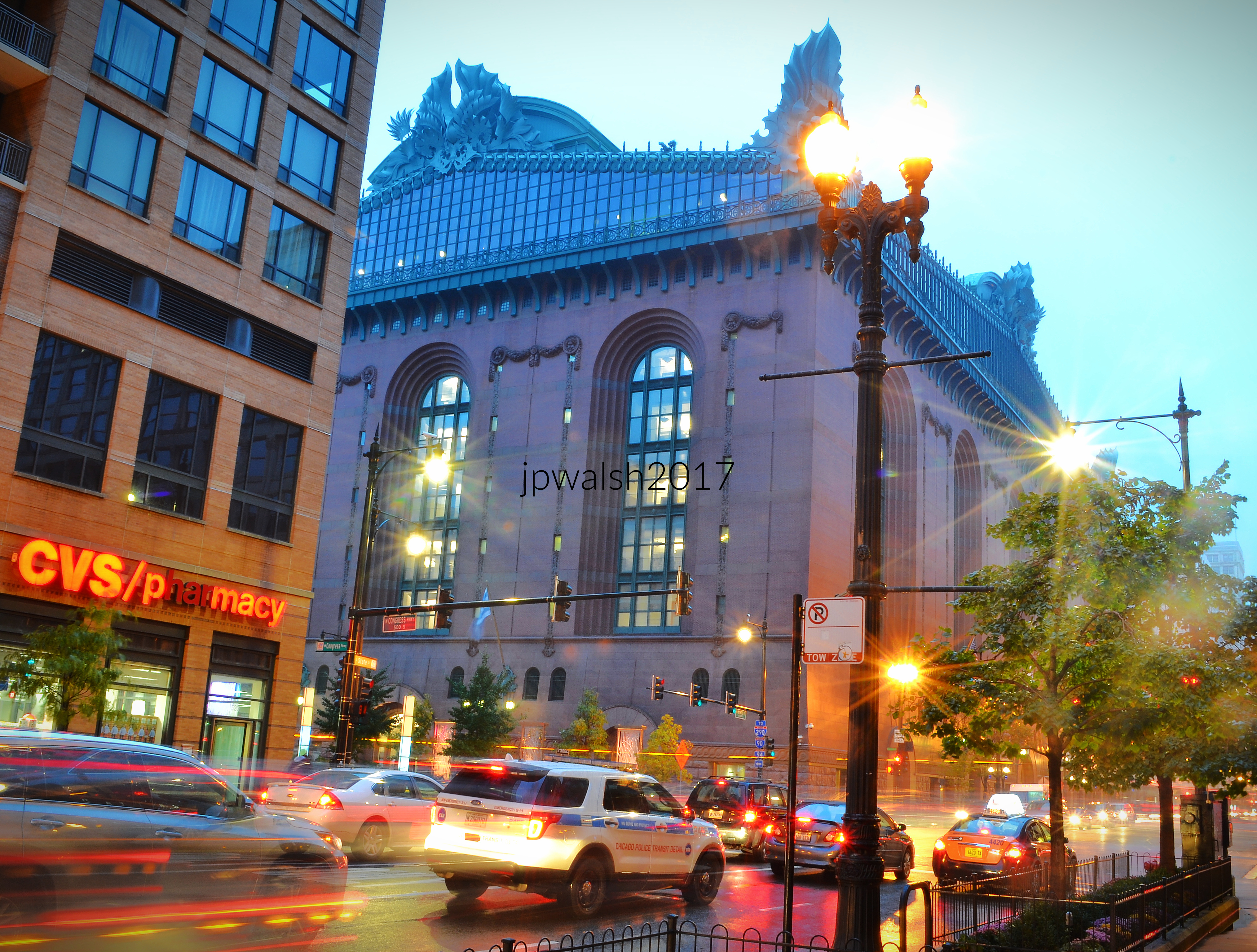
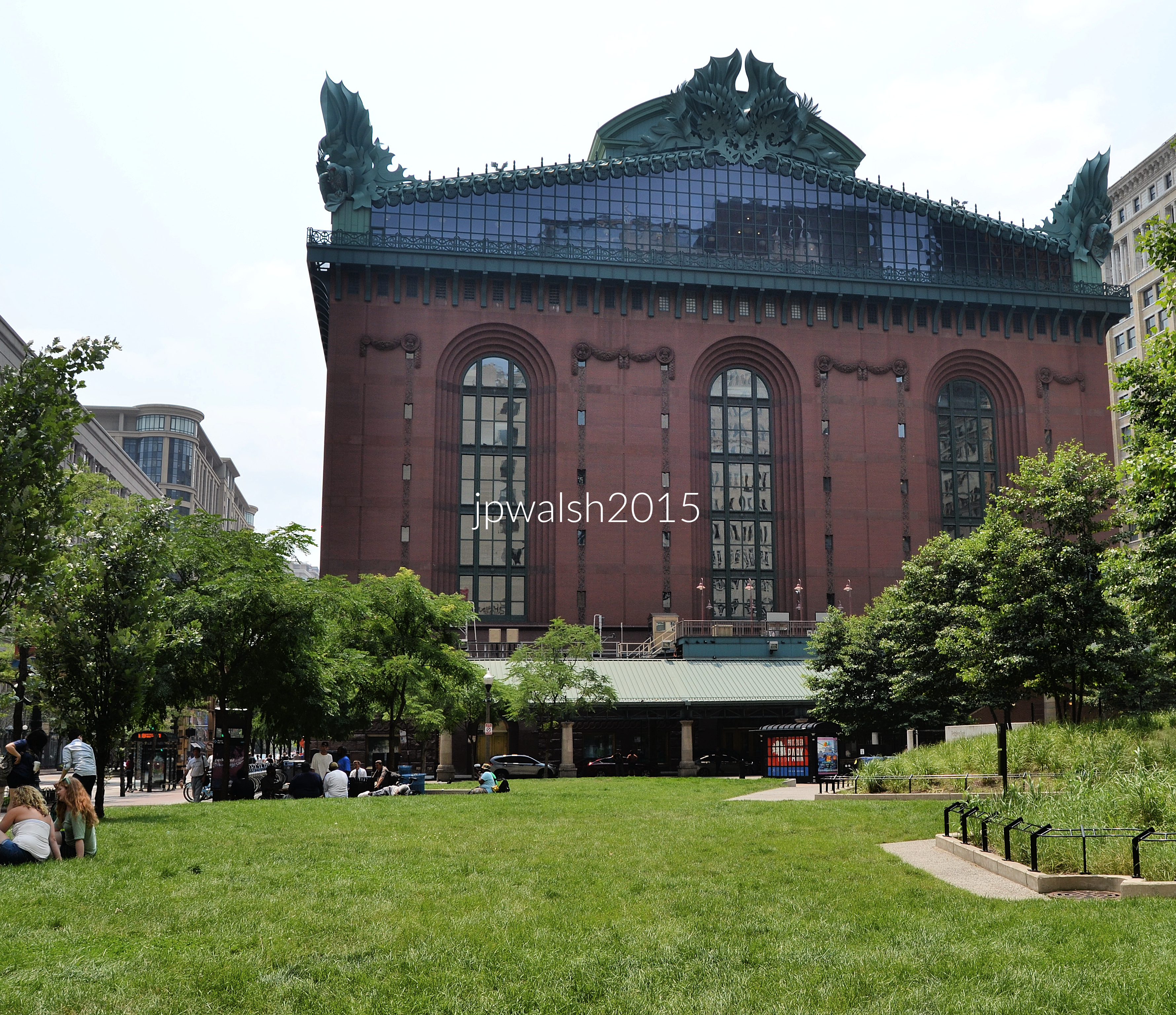
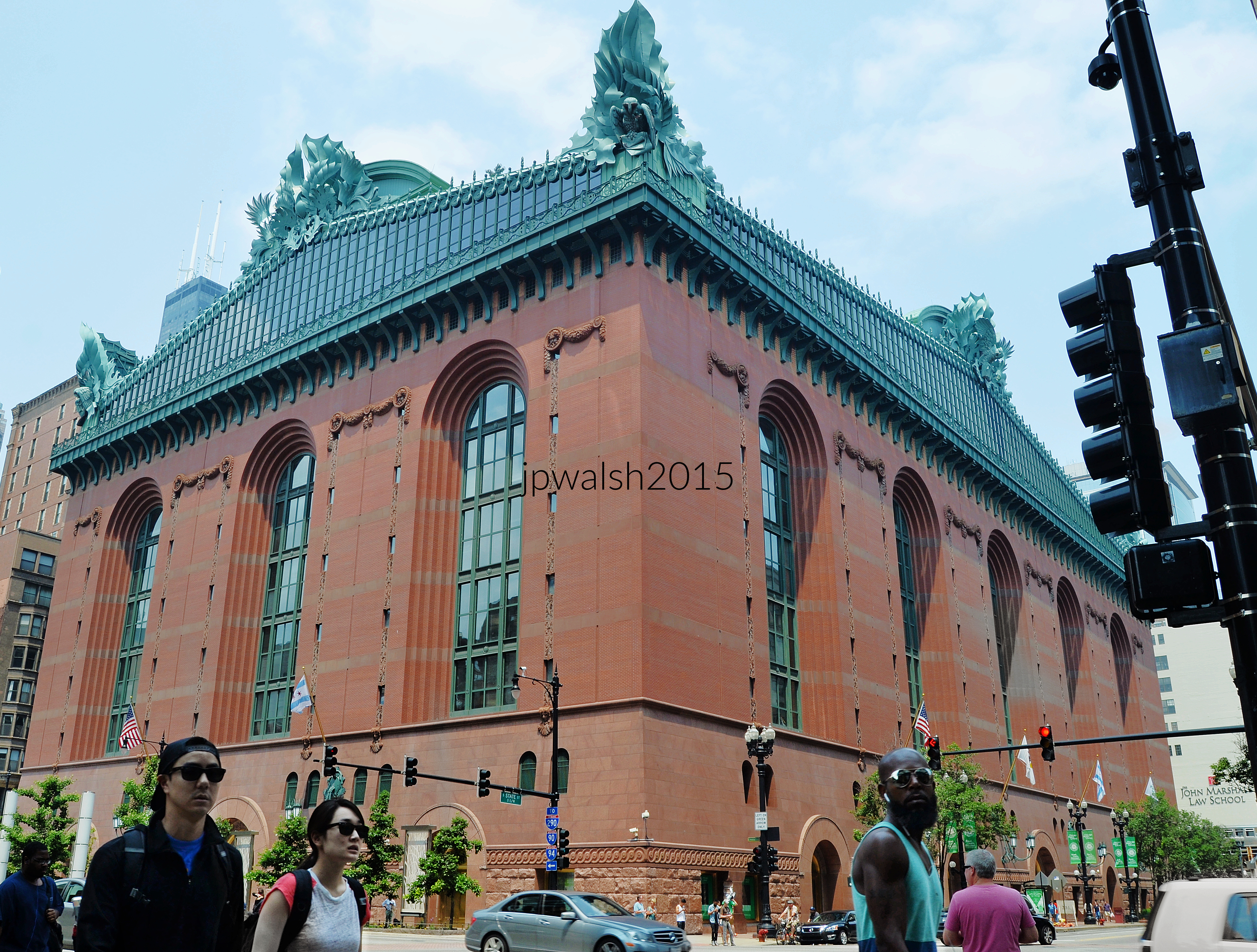
FEATURE image: November 2017.The Harold Washington Library sits on the northwest corner of State Street and Ida B. Wells (Congress) Drive. It is recognized as one of the largest public library buildings in the world. 5.02 mb. Author’s photograph.
November 2017. The decorative pediment of stylized aluminum sculptures was designed by Kent Bloomer in 1993. The large sculptures represent growth and wisdom with enormous owls at each of the pediment’s four corners (“acroteria”). Harold Washington Library Center | Chicago Architecture Center – retrieved February 16, 2026. Author’s photograph.
In 1987, Hammond, Beeby and Babka won the competition to design the main branch of Chicago’s library. The Harold Washington Library was completed in 1991 and is one of the Chicago-based architectural firm’s most famous structures. The building recalls neo-classical institutional buildings yet whose style is creatively applied in its details.
PHOTO CREDIT: “Harold Washington (9519692588)” by City of Boston Archives from West Roxbury, United States is licensed under CC BY 2.0.
The Harold Washington Library is named for Chicago’s first Black mayor. Harold Washington (1922-1987) was elected to two terms as mayor starting in 1983. The well-read and erudite mayor died suddenly of a heart attack the day before Thanksgiving in November1987 just a few months into his second term. I was running along the lakefront in Lincoln Park on an overcast day when I heard the news on my Walkman. My fiancée and I were one of the thousands of Chicagoans (and one of the few whites) who passed by his open casket in the lobby of City Hall between November 27 and 29, 1987. I had also seen and heard Harold Washington speak a couple of times during his public appearances as mayor.
FROM THE PROGRAM: “The jury becomes the ultimate client…There are three areas of evaluation: the design of the building; how it meets technical specifications and how it fulfills the library program…•
Five competing architecture teams race to create the vision for the new Harold Washington (Chicago Public Main) Library that opened at 400 S. State Street on October 7, 1991. The Burnham-dreamed park south across Congress/Ida B. Wells from the library never materialized (Pritzker Park is to the north). The NOVA episode follows these creators as they develop and present their ideas to be judged by the city and public for the downtown building that range from postmodern to Beaux-Arts design concepts. FROM THE PROGRAM: “The jury becomes the ultimate client…There are three areas of evaluation: the design of the building; how it meets technical specifications and how it fulfills the library program…•
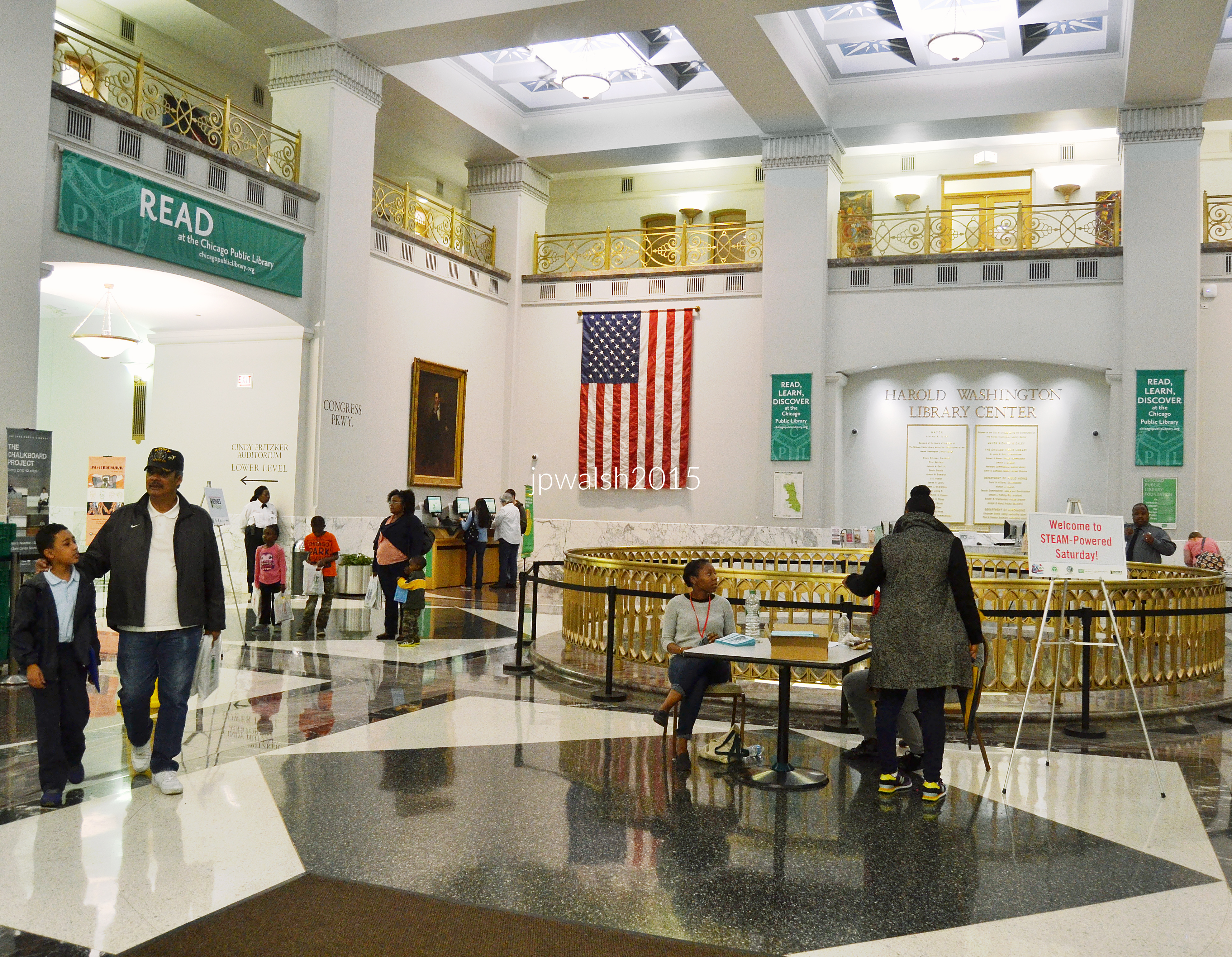
July 2015. State Street entrance. Chicago. 4.84mbAuthor’s photograph. May 2015. The Harold Washington Library serves as the main research branch of the Chicago Public Library. Main floor entrance. see – Harold Washington Library | Loop Chicago – retrieved February 16, 2026. 5.85mb DSC_0474 (1). Author’s photograph. May 2015. The Harold Washington Library houses millions of items across nine floors. At 750,000 square feet, it is the largest public library building in the world. Harold Washington Library | Loop Chicago – retrieved February 16, 2026. 4.0 mb DSC_0476 (1) Author’s photograph.May 2015. Inside Harold Washington Library. 4.88mb DSC_0488 (1) Author’s photograph.May 2015. On the 8th floor the Visual and Performing Arts Department maintains a comprehensive music archive. One major collection, for example, is the Martin and Morris Collection which contains roughly 1,500 scores from the renowned gospel music publisher. 3.61mb DSC_0486. Author’s photographJuly 2015. Northern view from Priztker Park. 5.01mb DSC_0056 (1) Author’s photograph. July 2015. Southeastern view from Ida P. Wells Drive (formerly, Congress Parkway). 5.52 mb DSC_0004 (2) Author’s photograph. December 2015. Harold Washington Library after dark. 3.7mb DSC_0980 (3) Author’s photograph.
This explanatory article may be periodically updated.
FEATURE Image: Dearborn Street Station in Chicago’s South Loop is an Italian brick Romanesque building with a granite base that was opened in 1885 at the cost of $500,000 (or almost $16 million in 2024). The architect was New York–based Cyrus L.W. Eidlitz who went on to build One Times Square (1904) in New York City from which the annual lit ball has dropped each New Year’s Eve since 1908. see – https://www.in2013dollars.com/us/inflation/1885?amount=500000 – retrieved February 27, 2024. Author’s photograph, November 2017. 6.44mb
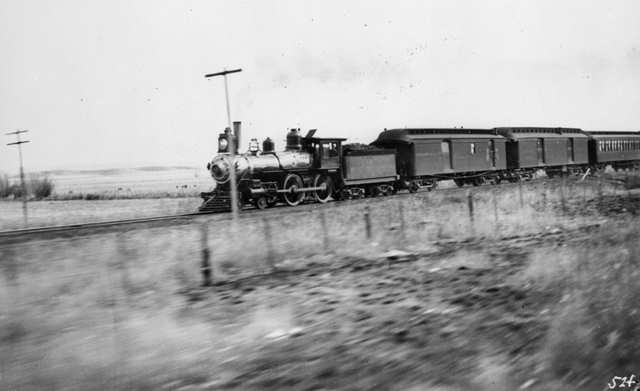
The Hoosier leaving Dearborn Street Station in Chicago (its clock tower visible at right) for Indianapolis. Pre-1978, no mark. Public Domain.The Dearborn Street Station in Chicago with its original hipped roofs, including on the tower, c. 1908. Public Domain.
The Dearborn Street Station is Chicago’s oldest existing train station though it has not operated as one since 1971. It is a U-shaped Italian brick three-story Romanesque structure with a granite base that was originally 80 feet tall to the roof line.
Today’s flat roof is a modification by an unknown architect from its elaborate original hipped roof that was lost in a 1922 fire. The eye-catching Flemish tower, originally 166 feet tall, was also modified after the same conflagration. The station building marks the southern terminus of Dearborn Street which today extends about 4 miles to its northern terminus at the southern boundary of Lincoln Park. Author’s photograph.
Looking south on Dearborn Street to the Dearborn Street Station which ends the 4-mile downtown street at the south. “South Dearborn Street” by Reading Tom is licensed under CC BY 2.0.
The station’s frontage on Polk Street extends 212 feet. Originally the station extended 446 feet south along Plymouth Court with the train sheds 600 feet long with 8 tracks. The station’s train shed was demolished in 1976. In 1986 the station was converted to offices and shops (I had my Bank One branch in the Polk Street Station). Today it is the Dearborn Station Galleria in the South Loop Printing House Historic District.
Following demolition of the train sheds in 1976 the first phase of the Dearborn Park residential development south of the Dearborn Street Station building quickly sprang to life.
The 1885 clock tower of the Dearborn Street Station is visible at the left. Open land which for almost 100 years had been the Dearborn Street Station‘s busy train tracks into a shed equal to two football fields in length were cleared off to make room for Dearborn Park residential development. The photograph is dated from 1977 by William C. Brubaker. “Site for Dearborn Park residential development” by UIC Library Digital Collections is licensed under CC BY-NC-SA 2.0.
The Dearborn Station had 8 tracks that accommodated 12 coaches and engines with 122 trains arriving and departing daily. Train lines that entered this station included the Chicago & Eastern Illinois (1877-1976), Chicago and Atlantic Railway (later the Chicago and Erie Railroad) (1871-1941), the Atchison, Topeka & Santa Fe (1859-1996), the Louisville, New Albany & Chicago (or Monon) (1897-1971), Grand Trunk Western Railroad Company (1859-1991), the Wabash Railroad (1837-1964), the Erie Railroad (1832-1960) and the Chicago & Western Indiana (1880-present).
Chicago & Eastern Illinois (1877-1976).
C&EI The Danville – Chicago Flyer at Steger, Illinois on November 26, 1965. Public Domain. Map of the Dixie Route to Florida and connecting lines, published by the C&EI, L&N, and NC&StL railroads, 1926. Public Domain.Preferred Share of the Chicago and Eastern Illinois Railroad Company, issued 1889. Public Domain.
Chicago and Atlantic Railway, later the Chicago and Erie Railroad (1871-1941).
Chicago and Atlantic Railway 1889 ad featuring The New York and Chicago Vestibule Limited. Public Domain.
Atchison, Topeka & Santa Fe (1859-1996).
AT&SF passenger train, c. 1895. Public Domain.Map of “The Santa Fé Route” and subsidiary lines, as published in an 1891 issue of the Grain Dealers and Shippers Gazetteer. Public Domain.
Louisville, New Albany & Chicago, or Monon (1897-1971).
Chicago, Indianapolis and Louisville Railway, route map, 1903, Unknown author – Poor’s Manual of the Railroads of the United States. Public Domain.
Grand Trunk Western Railroad Company (1859-1991).
A 1976 map of the proposed routes to be turned over by Conrail on the GTW, DT&I and P&LE. Public Domain. Grand Trunk Western Railroad locomotive shop, Battle Creek, Michigan, 1908. GT Western RR was one of the lines into Dearborn Street Station in Chicago. Public Domain.
The Wabash Railroad (1837-1964).
1886 map of the Wabash, St. Louis and Pacific Railway. Public Domain.System timetable back and front cover, 1887. Public Domain.Wabash system map, early 20th century. Public Domain.
The Erie Railroad (1832-1960).
An 1855 map of the New York and Erie Railroad. Public Domain.
Chicago & Western Indiana (1880-present).
The Kansas City Chief at Dearborn Station on February 5, 1968. The glowing face of the station clock in the clocktower is visible upper-left. Photograph by A Roger Puta. Public Domain.
All lines operating into Dearborn Station, except for the Santa Fe (above), travelled over the C&WI.
Colossal damages in December 1922 fire.
On December 21, 1922, fire destroyed the roof of the Dearborn Street Station. The blaze started on the third floor and raged throughout that top floor. Hundreds of passengers and employees were safely evacuated and there was one reported injury. The Chicago Tribune reported that when the fire reached the central tower it roared up the long shaft which became a blazing torch. The crowds watched in amazement as the tower clock stopped and the hands on its three faces crashed into the raging fire below.Dearborn Station Clock Tower. “Dearborn Station Clock Tower” by Atelier Teee is licensed under CC BY-NC-ND 2.0
32-year-old architect of Dearborn Street Station came from Illustrious East Coast family of builders and architects.
Cyrus L. W. Eidlitz who built the Dearborn Street Station in Chicago in 1885 was from an influential American family of architects and builders—his father, Leopold Eidlitz (1823-1908), was a founder of the American Institute of Architects (AIA). Cyrus L. W. Eidlitz is best known for designing One Times Square, the former New York Times Building, on Times Square in 1904. He also founded HLW International, one of the oldest architecture firms in the United States. The reconstruction of Dearborn Station in Chicago in 1923 following its devastating fire was done by an unknown architect two years after Cyrus L. W. Eidlitz’s death.
Original facade completed in 1904 of One Times Square in 1919 by Cyrus L. W. Eidlitz who designed and built the Dearborn Station in Chicago in 1885. Public Domain.The clock tower of the Dearborn Street Station is seen down Dearborn Street from Alexander Calder’s Flamingo in the Federal Center plaza. Author’s photograph, June 2022.
SOURCES:
AIA Guide to Chicago, 2nd Edition, Alice Sinkevitch, Harcourt, Inc., Orlando, 2004, p. 154.
History of Development of Building Construction in Chicago, Second Edition, Frank A. Randall, Revised and Expanded by John D. Randall, University of Illinois Press, Urbana and Chicago, 1999, pp. 104-105 and 221-223.
Chicago’s Famous Buildings, 5th Edition, Franze Schulze and Kevin Harrington, The University of Chicago Press, 2003, pp. 89-90.
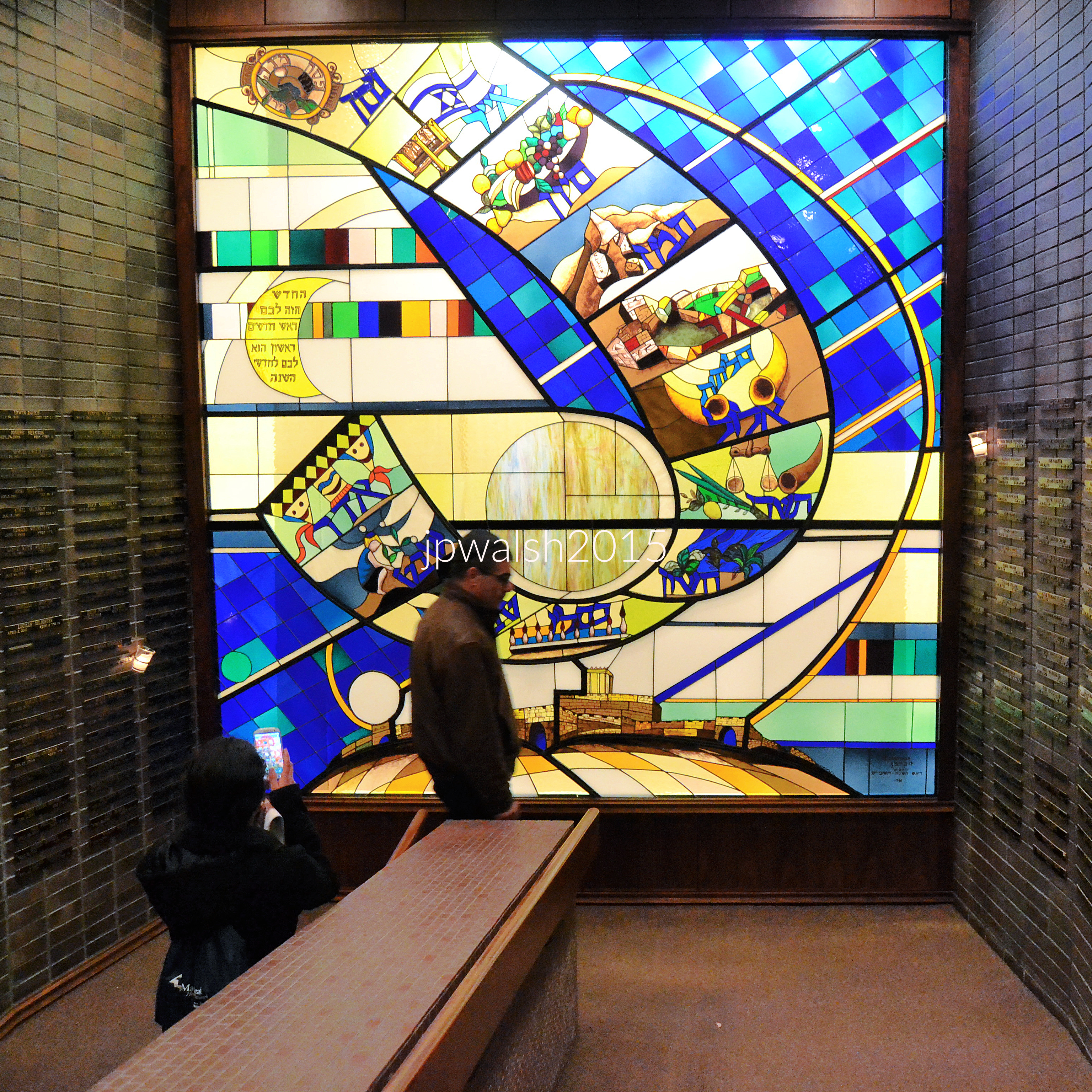
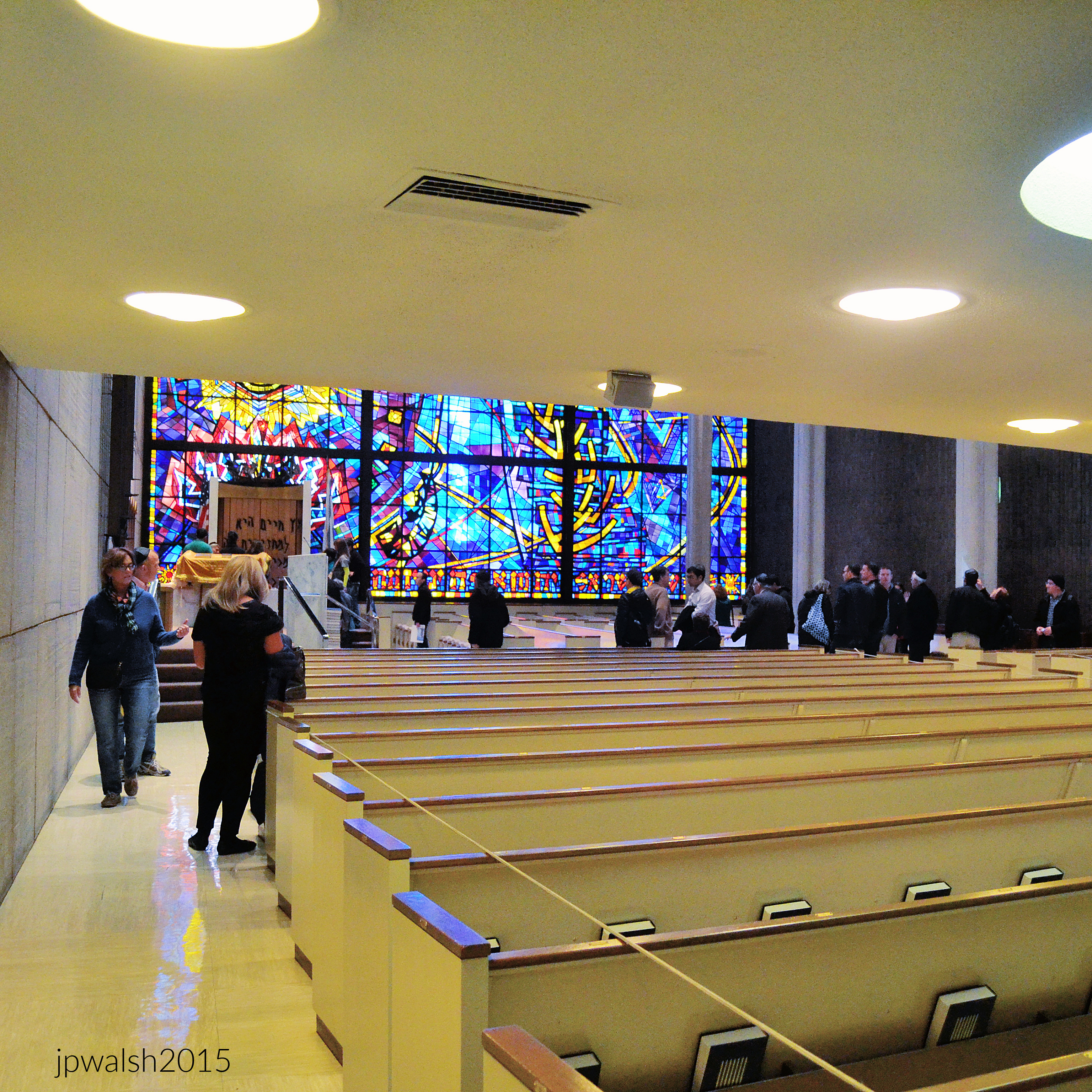
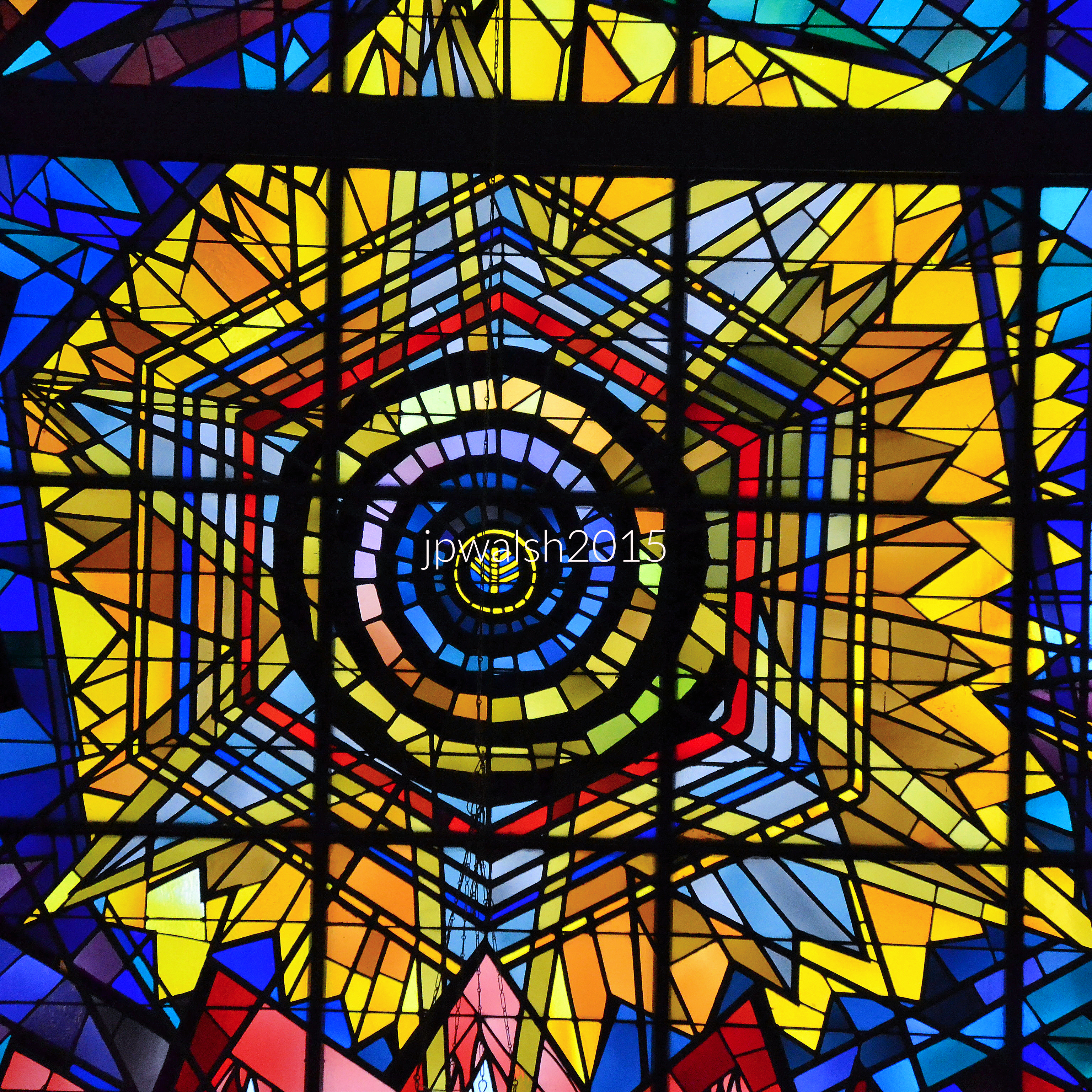
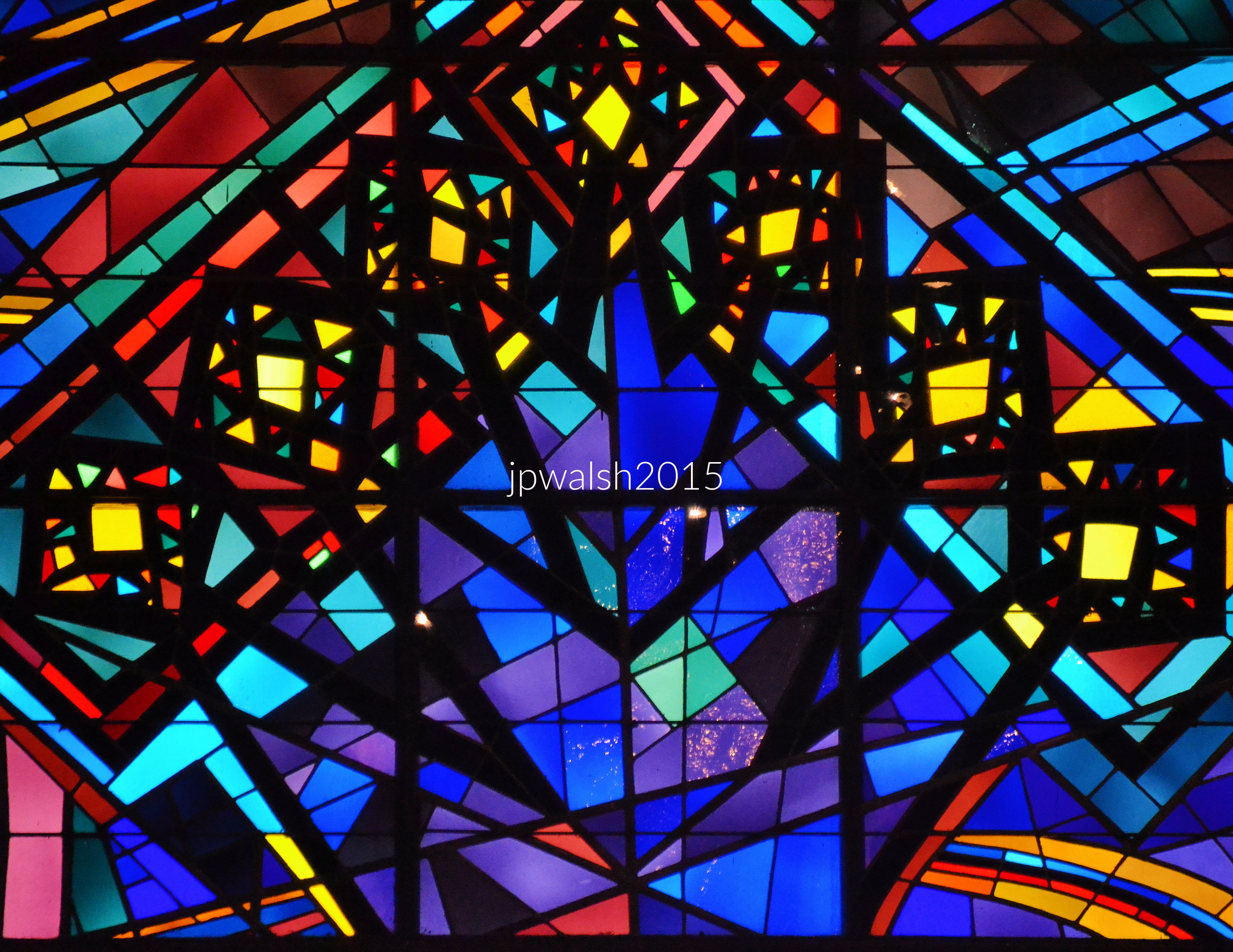
FEATURE image: Chicago Loop Synagogue with stained glass window, Let There Be Light (1960) by American Expressionist artist Abraham Rattner (1895-1978). The synagogue was built in 1957 with this wall of stained glass. The colorful and semi-abstract artwork contrasts and complements with the architectural minimalism of the rest of the sanctuary. Author’s photograph.
Text by John P. Walsh.
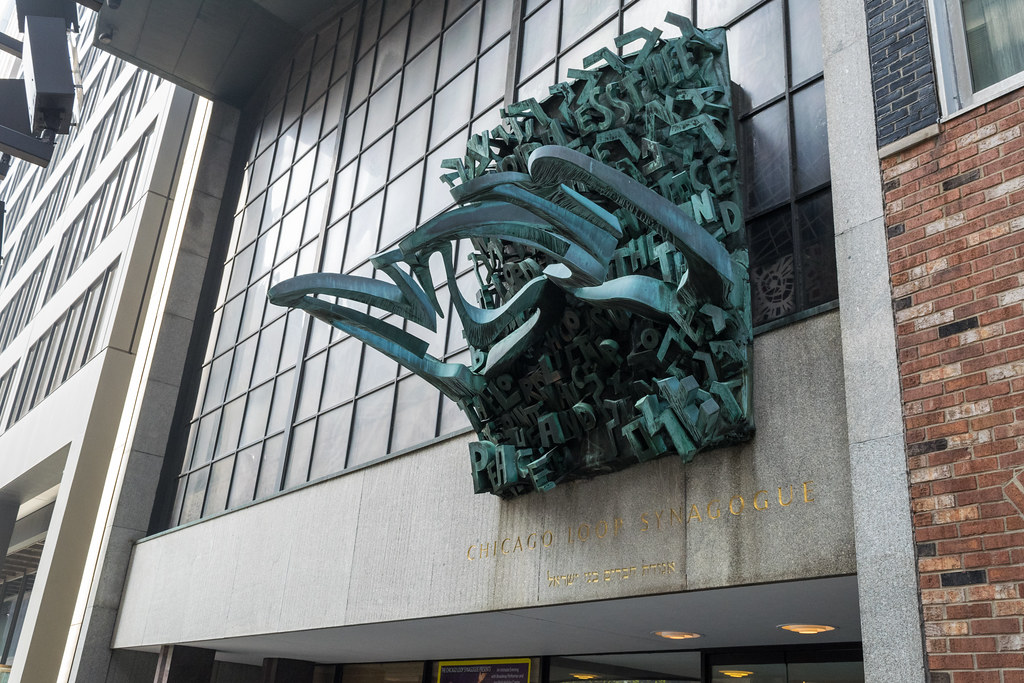
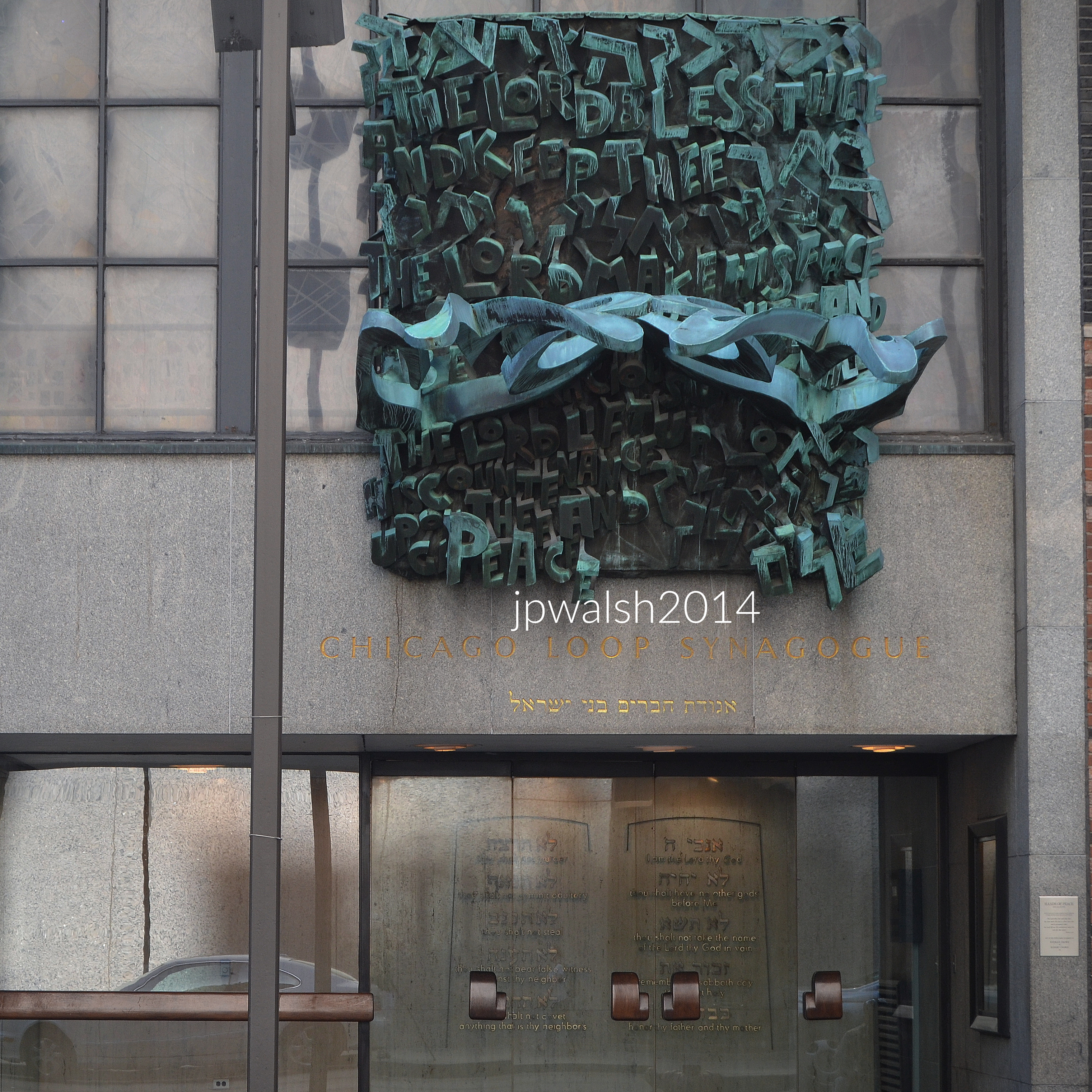
Chicago Loop Synagogue, exterior. May 2024 97% 7.89 mb Author’s photograph.Chicago Loop Synagogue on Clark Street in downtown Chicago, “Chicago Loop Synagogue” by _jjph is licensed under CC BY-NC-SA 2.0.
Chicago Loop Synagogue was a midcareer project for a pair of leading Chicago Jewish architects of Modernism — Jerrold Loebl (1899–1978) and Norman Schlossman (1901– 1990). Loeble was a son of Hungarian immigrants and Schlossman was the grandson of immigrants from Germany. Both graduated from the Armour Institute (today’s Illinois Institute of Technology) and became partners in 1925. The third partner changed over the decades and in 2024 the firm is Loebl, Schlossman, & Hackl. Following World War II, the firm was Loebl, Schlossman & Bennett and the team created influential examples of Chicago’s mid-century Modernism. Richard Marsh Bennett (1907-1996) had been chairman of the Yale Architecture Department and stayed with the firm until 1974 when he returned to teach at the Harvard Graduate School of Design. The architectural firm’s designs included Weiss Memorial Hospital (4646 N Marine Drive) and The Darien (3100 N. Lake Shore Drive ) also built in the 1950s.
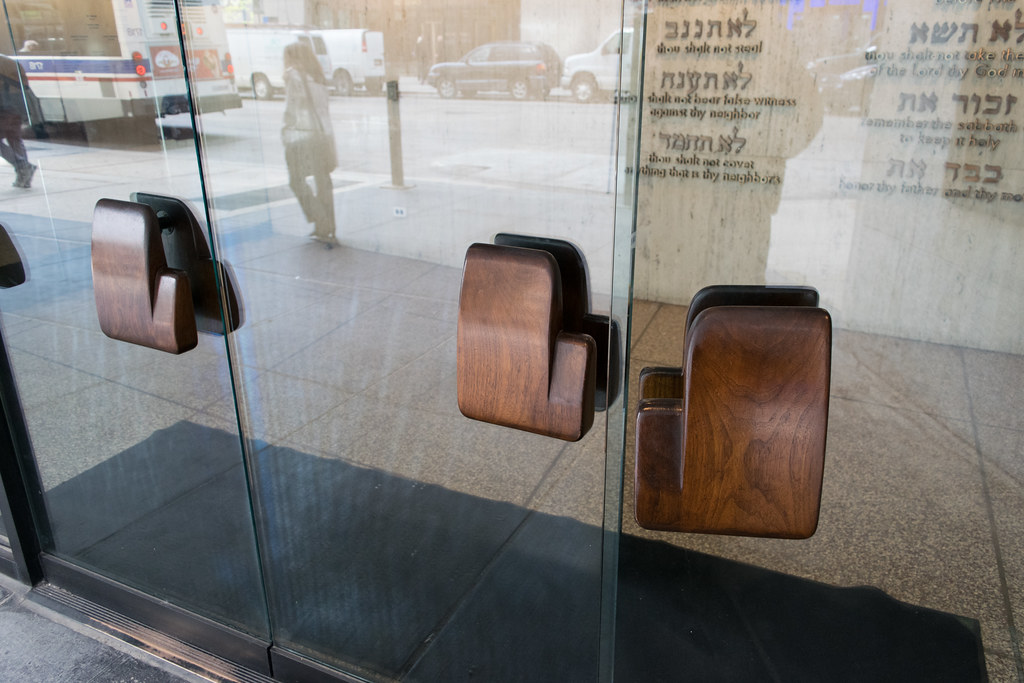
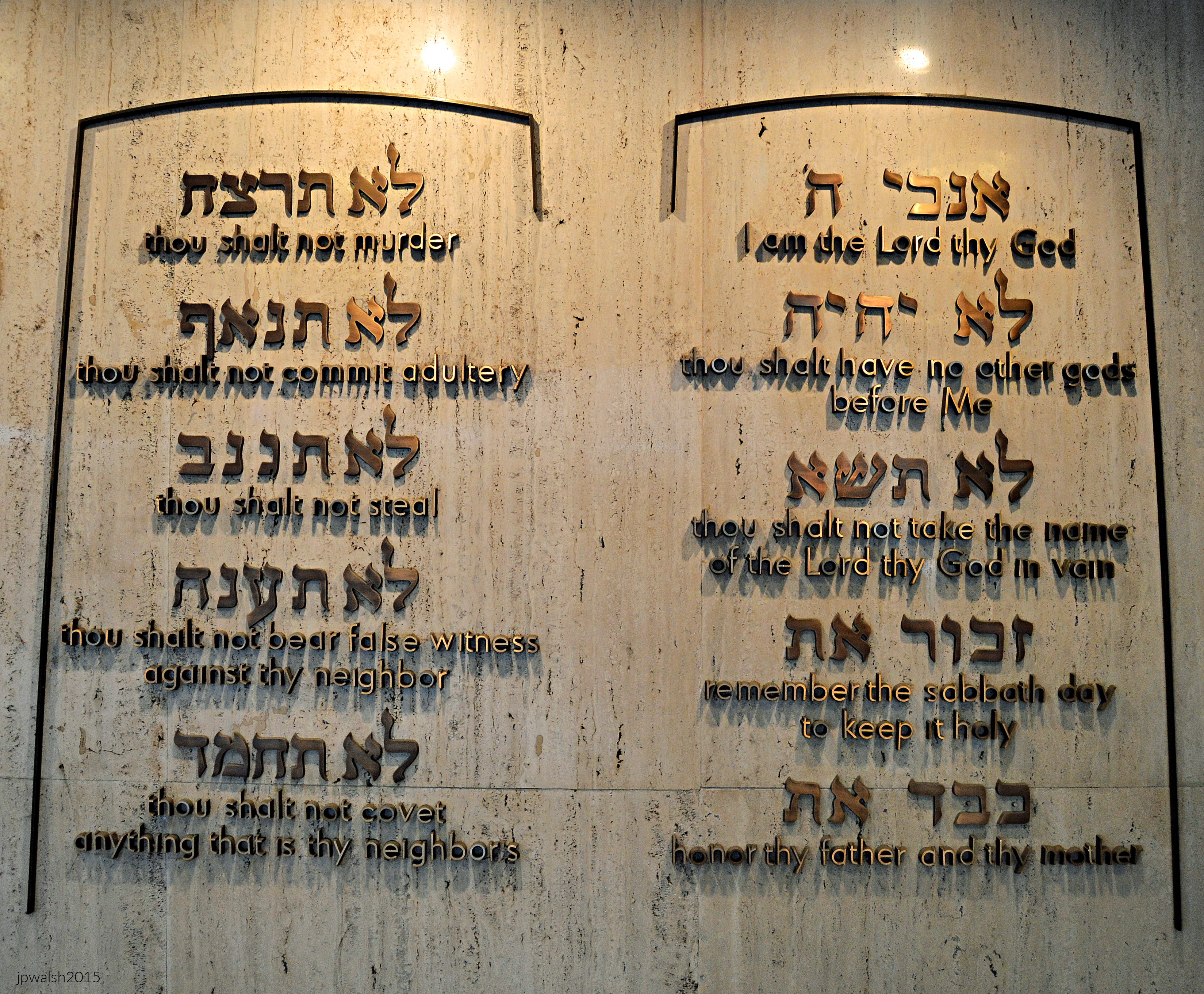
“Hands of Peace | Chicago Loop Synagogue” by _jjph is licensed under CC BY-NC-SA 2.0.May 2014. 4.28mb DSC_0055 (3). Author’s photograph. May 2014. 4.58mb DSC_0057 (1). Author’s photograph.Glass doors with wooden handles define the main entrance into Loop Synagogue off busy Clark Street. “Chicago Loop Synagogue” by _jjph is licensed under CC BY-NC-SA 2.0Ten Commandments. 9/2015 4.73 mb Author’s photograph.
The Ten Commandments meet the visitors in the foyer upon entering synagogue. For the Jews, the Ten Commandments (found in the Bible in Exodus 20:2-17 and Deuteronomy 5: 6-21) are a special set of spiritual laws that the LORD Himself wrote on two stone tablets (luchot) that Moses brought down from Mount Sinai. In the Scriptures these laws are called the “Aseret Ha Devarim,” the “ten words” or “ten utterances.” In rabbinical writings, they are usually referred to as “Aseret Ha Dibrot,” and in Christian theological writings they are called the Decalogue which is derived from the Greek name “dekalogos” (“ten statements”) found in the Septuagint (Exodus 34:28 and Deuteronomy 10:4), which is the Greek translation of the Hebrew name. To the Jews the Torah has a total of 613 commandments which includes the ten from the Decalogue. See – https://www.the-ten-commandments.org/the-ten-commandments.html – retrieved December 4, 2023).
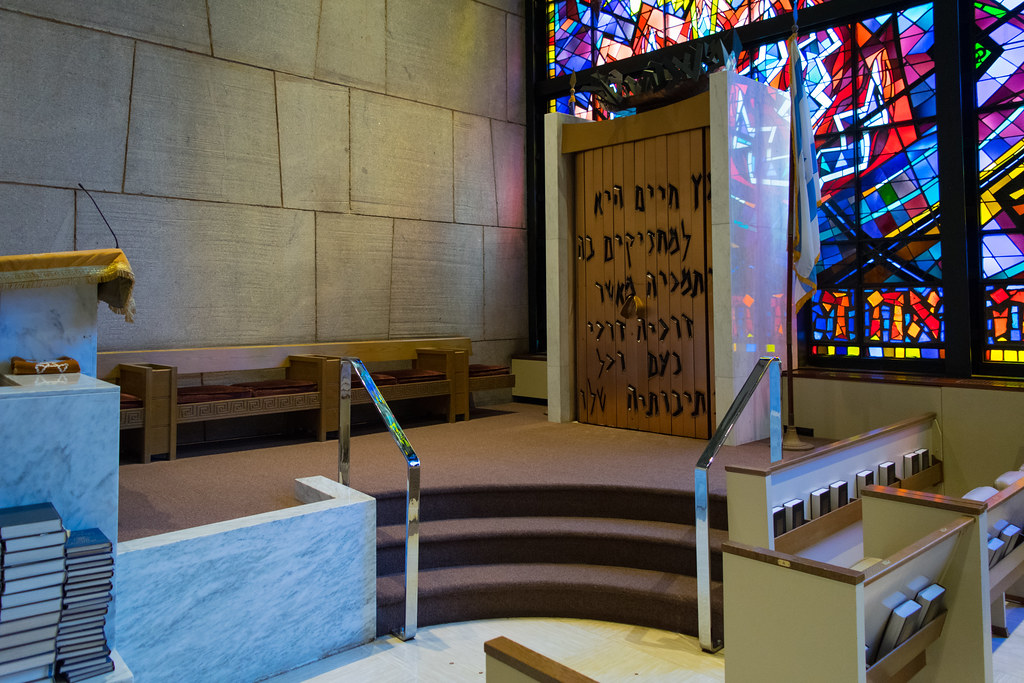
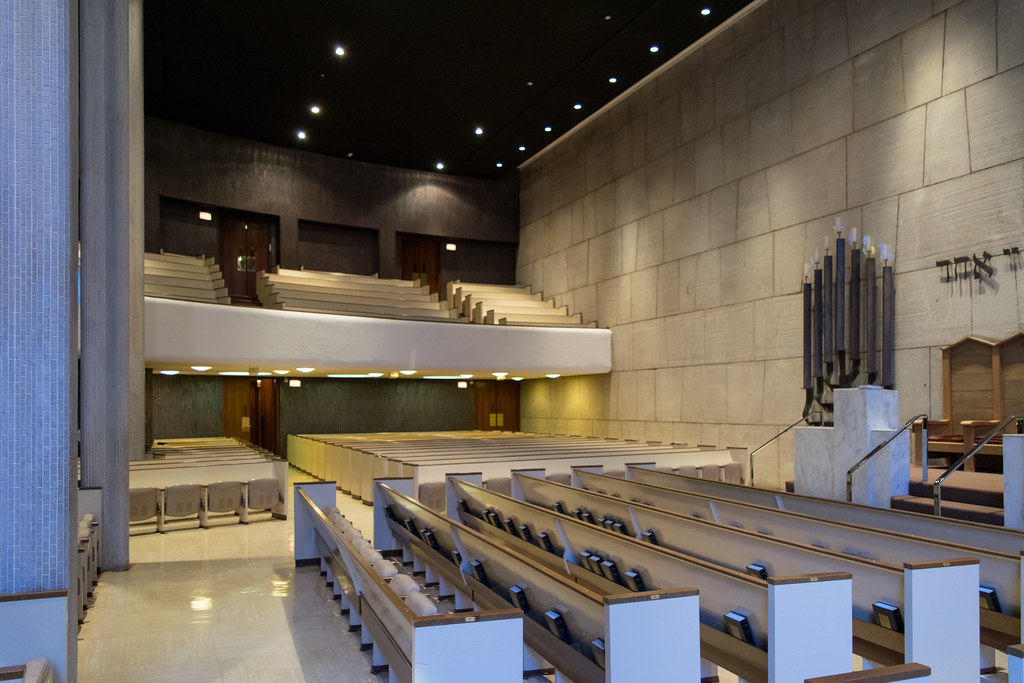
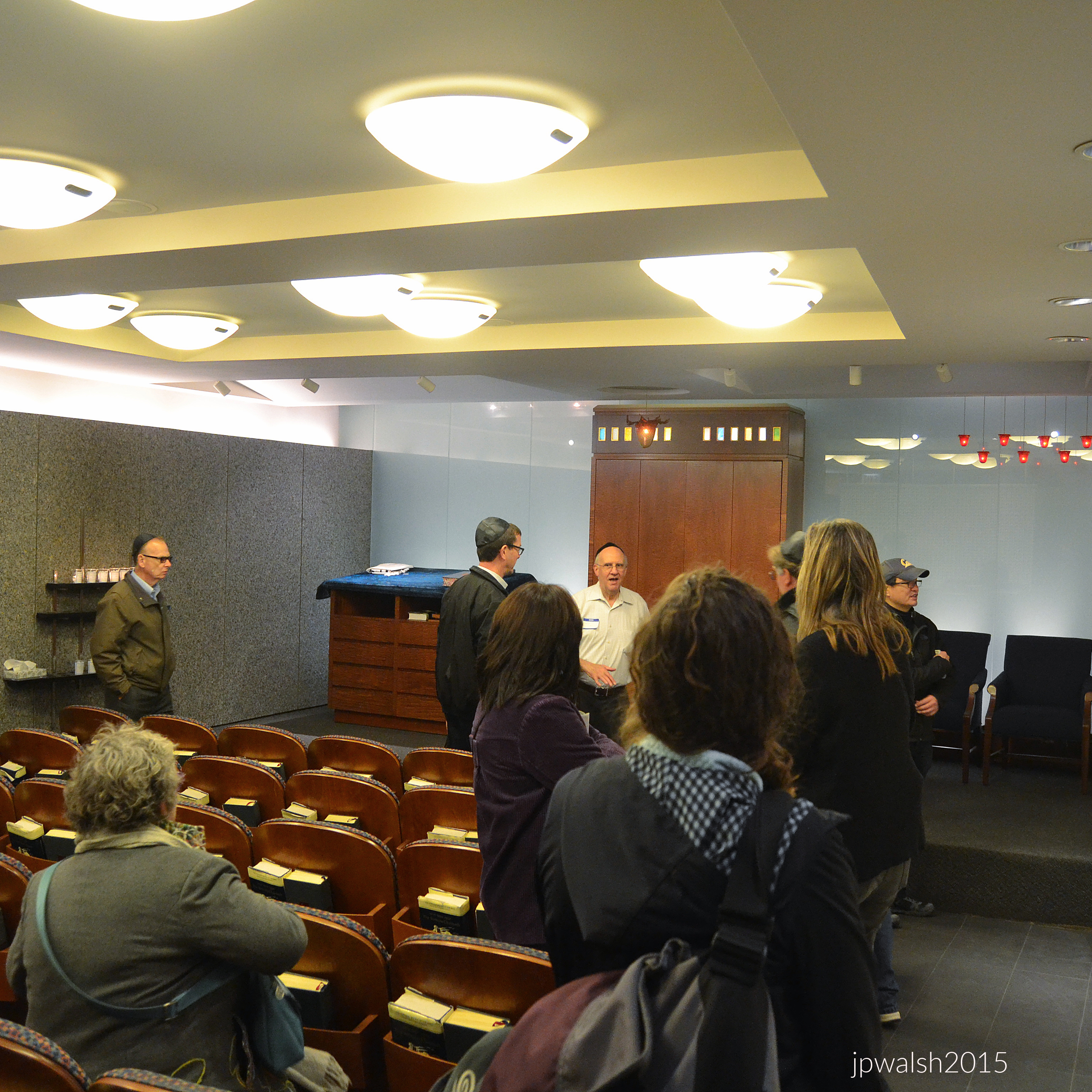
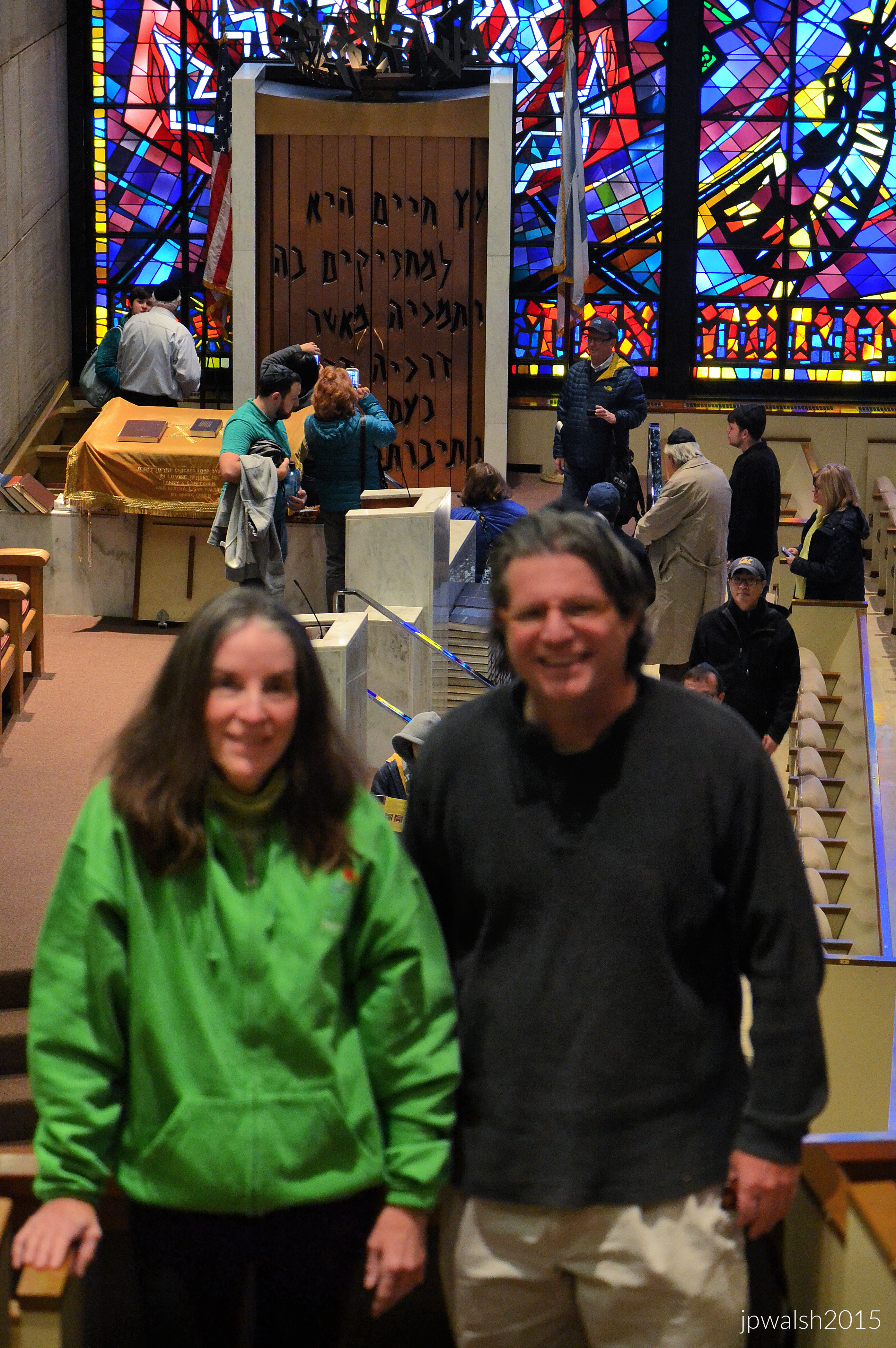
Chicago Loop Synagogue. Author’s photograph. Author’s photograph. “Chicago Loop Synagogue” by _jjph is licensed under CC BY-NC-SA 2.0.The limestone blocks of the North wall are cut at an angle to evoke the Western Wall of the Temple in Jerusalem. The Hebrew text inscribed on the wall is the Shema Yisrael, which is the central prayer and declaration of faith in Judaism. In English, it translates to: “Hear, O Israel: The Lord our God, the Lord is One.” Author’s photograph.The Holy Ark is made by Israeli sculptor and ceramicist Henri Azaz (1923-2008). Jutting into the prayer space from the far-left corner of the window, Rattner incorporated the ark that would house the Torah scrolls. He surrounded it with flames – integrated into the glass – leaping up and out, drawing attention to the presence of God in the very heart of the sanctuary. “Chicago Loop Synagogue” by _jjph is licensed under CC BY-NC-SA 2.0.The House of Worship is 3 floors, 450 seats, 6 Torahs, and a 40-foot-tall stained-glass window that fills the Eastern façade and the congregation with filtered sunlight. Author’s photograph. The Chicago Loop Synagogue was founded in 1929 to serve the religious needs of those whose business activities brought them downtown.Author’s photograph. “Chicago Loop Synagogue” by _jjph is licensed under CC BY-NC-SA 2.0.Visitors to the Chicago Loop Synagogue are guided by one of its members. Author’s photograph. Author’s photograph.
Abraham Rattner, the Expressionist artist of the wall-filling colorful stained-glass window was born in Poughkeepsie, New York to a Russian-Jewish father and a Romanian-Jewish mother. Rattner studied to be architect, but turned to painting studying at the Corcoran School of Art in Washington D.C. and the Pennsylvania Academy of the Fine Arts in Philadelphia. Rattner served as a camouflage artist in France during World War I and, after the war, joined many of “the Lost Generation” that writer and critic Gertrude Stein spoke about when referencing the post- war Ernest Hemingway and many others who lived in Europe, mainly Paris, in the 1920s. Rattner lived in Paris for 20 years, from 1920 until late 1939 where, during that extensive time period, he met Claude Monet (1840-1926). To avoid the coming Nazi invasion of France, Rattner and his wife Bettina Bedwell (1889-1947), a journalist and fashion illustrator from Nebraska who studied at the School of the Art Institute of Chicago and who married in 1924, returned to America, where they lived in New York City. Rattner was known for his rich use of color and abstraction in his artwork and whose subject matter often had to do with religion. In the post-World War II era he taught at several schools, including New York’s The New School (1947–55) and at Yale University (1952-1953). In 1949 Rattner married Esther Gentle (1899 – 1991), an artist and art dealer, and was a friend of writer Henry Miller (1891-1980) who wrote about their friendship in 1968 in A Word About Abraham Rattner.
10/2015 7.77 mb 91%. Author’s photograph. .
The colors and design elements of this 31 x 40-foot glass artwork signify God’s relationship with the cosmos, humanity, and the Jewish people. After two years working on conceptual and design schemes, the artist Abraham Rattner spent a year fabricating the window – a presentation of cool blues and warm red and yellows studded with purples that take on shapes of planets, trees, Hebrew letters and the Israelite tribes. It was made in Paris’s 15th arrondissement at Atelier Barillet, the house and workshop of master glassmaker Louis Barillet (1880-1948). The artwork was the subject of a 1976 exhibition at the Smithsonian American Art Museum and a 1978 exhibit at the Skirball Cultural Center in Los Angeles. The window was made to fit inside the prayer space for which it was created. To create the stained glass work, Rattner drew inspiration from the opening passages of Genesis, honing in on the hidden meanings of the words “And there was light” to channel cosmic creative energies of the Divine.
Author’s photograph.
The Tree of Life (above) is also visaged as the Menorah and is identified with the light of innermost perception – the spirit; thought; ideas; life; and of knowledge. This Primal Light, God’s light, radiates outward, extending and expanding throughout the universe.
Author’s photograph.
The Menorah (above) poetically conceived as a tree of life and of light. The Menorah is the classic symbol of Judaism.
Author’s photograph.
The Star of David (above right) and the palm branch used on the Sukkot (Feast of Booths) harvest festival.
Author’s photograph.
The shofur or ram’s horn (above) is an ancient instrument used on High Holidays to call the people to repentance. In close proximity to the shofur is the etrog which is a fruit of the Holy Land which expresses earth’s bounty as well as the overflowing love of a human being’s heart for God.
A view of the sanctuary from its balcony. The near perfect beauty of the Chicago Loop Synagogue is self-evident. Author’s photograph. The prayer room on the first floor is used for daily prayer and other gatherings. Author’s photograph.
Chicago Churches and Synagogues: An Architectural Pilgrimage, George Lane, S.J., and Algimantas Kezys, Loyola University Press, Chicago, 1981,pp. 202-203.
AIA Guide to Chicago, 2nd Edition, Alice Sinkevitch, Harcourt, Inc., Orlando, 2004, p. 74.
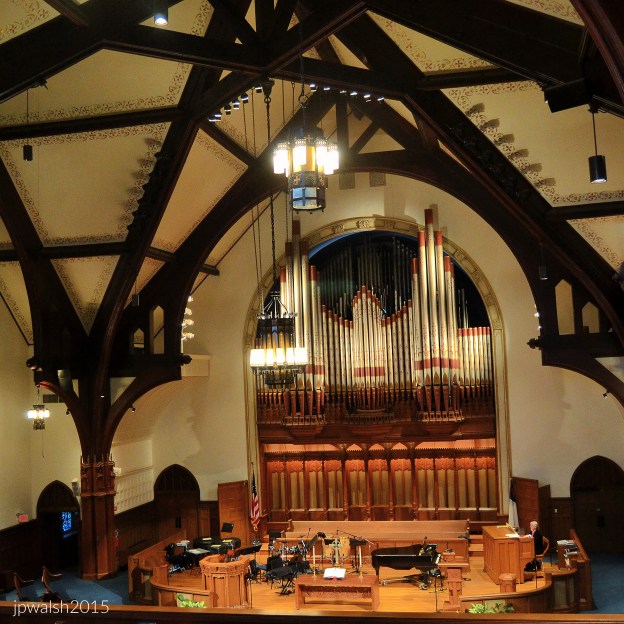
FEATURE image: Aeolian Skinner organ, sanctuary, 10/2015 6.27mb. Text and Photographs by John P. Walsh.
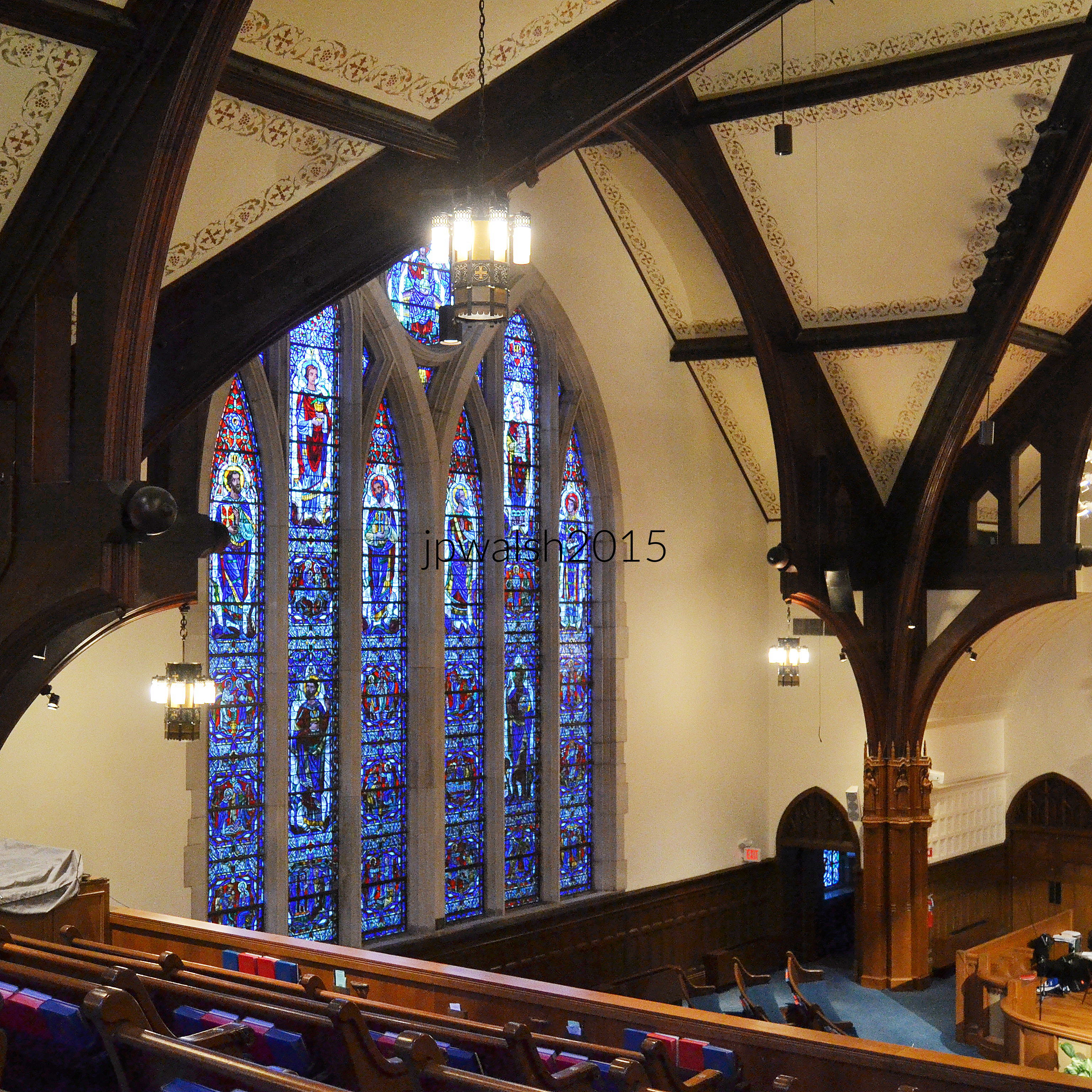
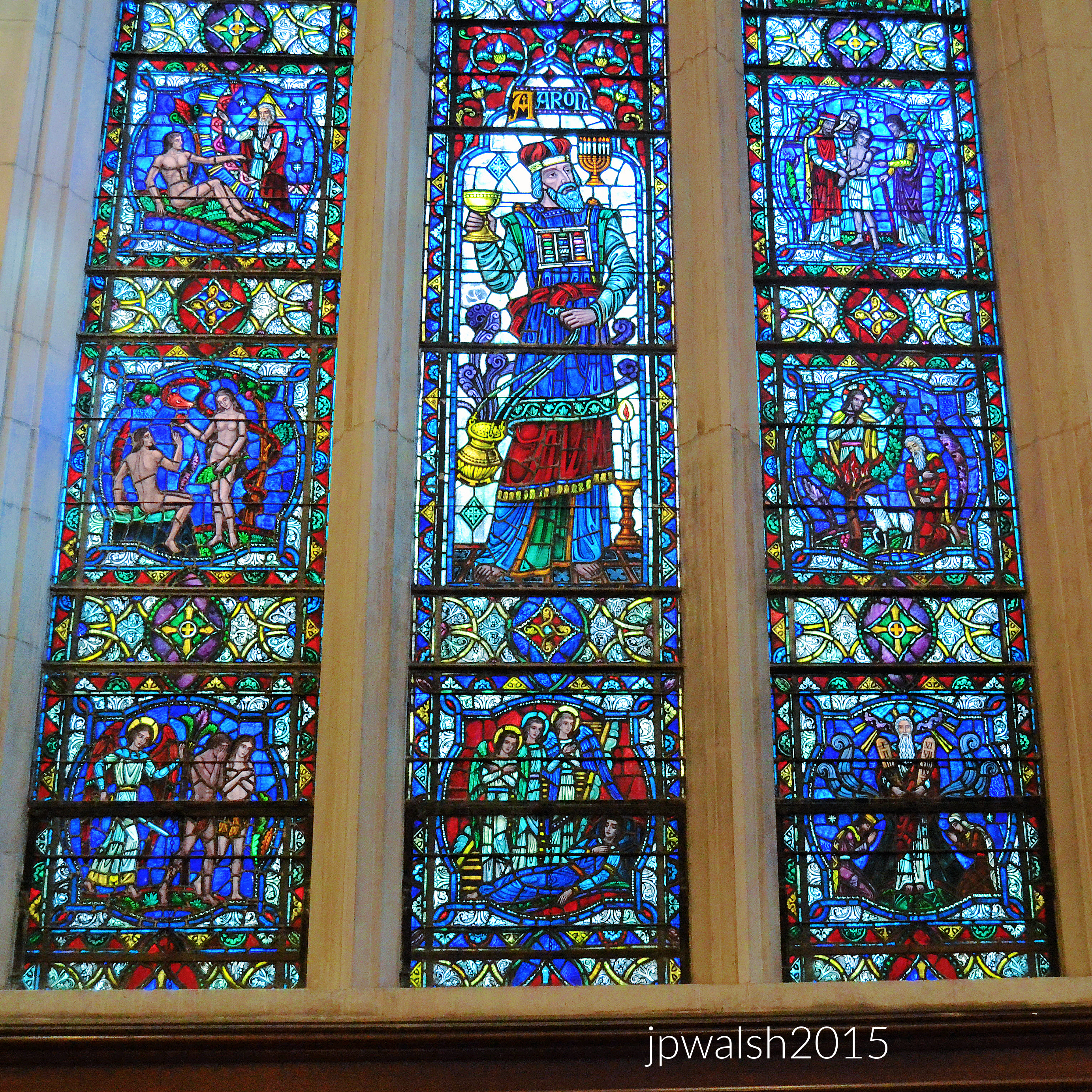
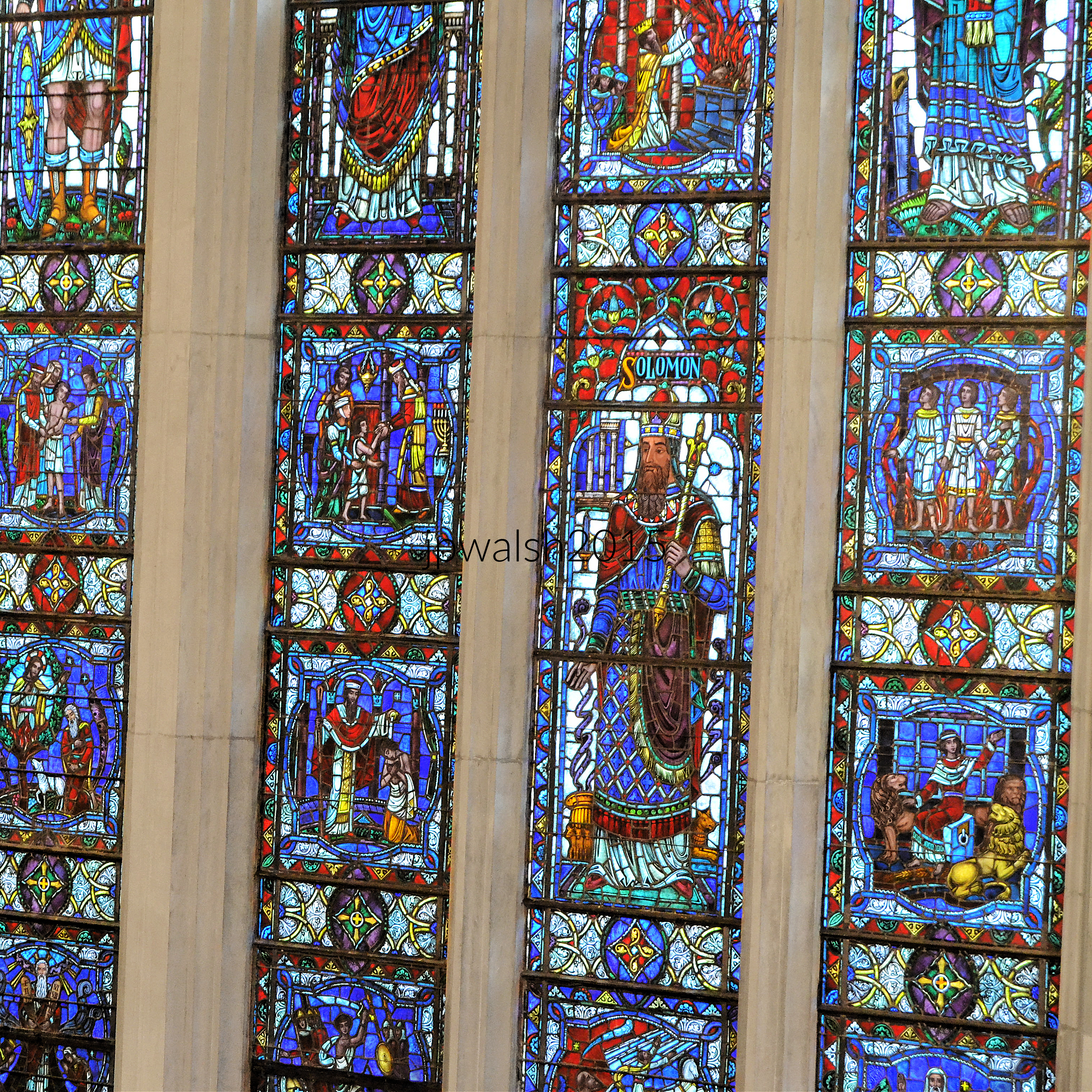
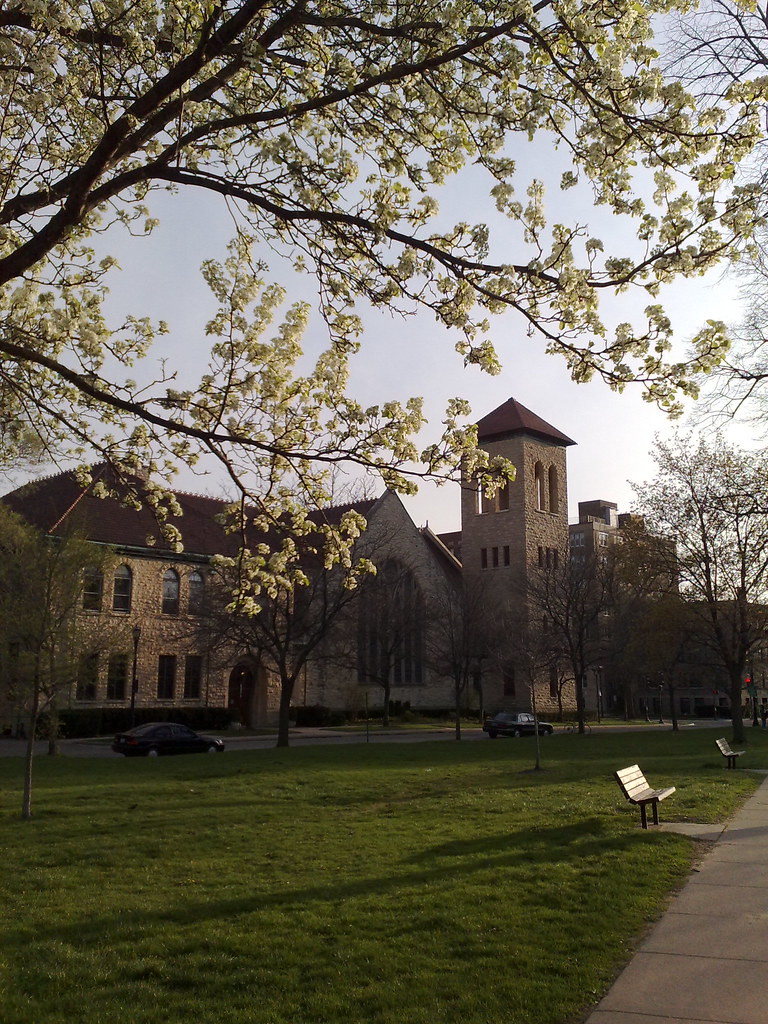
Daniel Hudson Burnham, c. 1890. The First Presbyterian of Evanston church building was designed in 1895 by architect Daniel Burnham (1846-1912) who lived in Evanston.The sanctuary seats over 1,000 worshippers. It has a vaulted roof with Nordic-style timber trusses for support instead of major columns that might obstruct views as well as retains an inclusive worship space. “PA02.2018 – 101” by Presbytery of Chicago is licensed under CC BY-NC-SA 2.0.Music is enhanced by First Presbyterian Church of Evanston’s Aeolian Skinner organ, portions of which date to the 1890s, and is one of Chicago’s finest organs. Wall-filling arched stained-glass windows tell Old and New Testament stories. 10/2015 6.81mbFirst Presbyterian Church, 1427 Chicago Ave, Evanston, IL One of the historic church’s dramatic wall-filling stained-glass windows.10/2015 7.79mb 80%Creation of Adam; Fall of Adam and Eve; Expulsion from the Garden; Priest Aaron and brother of Moses; three angelic visitors to Abraham; the story of Moses. 10/ 2015 7.87mb 90%Burt J. Denman, born in Toledo, Ohio, was an engineering graduate of the University of Michigan who was vice president and general manager of the United Light Power Company. Denman was for a while a leading Methodist layman and trustee of Northwestern University. 10/2015 2.76mbFrom Raymond Park, stained glass window and limestone walls. 10/2015 5.35 mbKing Solomon. 10/2015 7.81mb 98%Adjacent to Raymond Park, the 1895 Gothic Renaissance building is made of Lemont limestone with a tile roof and 120-foot-tall bell tower with open belfry. Raymond Park, which is part of the Evanston parks system, is named for Rev. Dr. Miner Raymond (1811-1897). Rev. Miner Raymond was born in New York City and began his career as a cobbler. Following his matriculation at Methodist Wesleyan Academy in Wilbraham, Massachusetts, Raymond became a teacher at the school starting in 1833 and its principal from 1848 to 1864. In 1837 he married Elizabeth Henderson in Webster, Massachusetts, and they had 8 children together. In 1864 Rev. Miner Raymond with his family relocated to Illinois where he became professor of systematic theology at Garrett Biblical Institute in Chicago. In 1884 he received his LL.D. from Northwestern University. Mrs. Raymond died in 1877 and the widower married Isabella (Hill) Binney in 1879 though she died after 1880. Dr. Rev. Miner Raymond died in 1897 and is buried in historic Rosehill Cemetery. “First Presbyterian Church of Evanston” by Marit & Toomas Hinnosaar is licensed under CC BY 2.0.
FEATURE Image: Alice Millar Chapel, 1962, Northwestern University, Evanston, IL.
Text & Photographs John P. Walsh.
The Purpose of the Alice Millar Chapel
Breaking ground on Easter, April 21, 1962, the Alice Millar Chapel is on the campus of Northwestern University in Evanston, Illinois. The large chapel structure displaced 5 houses for the site’s four buildings on the school`s Evanston campus. It is intended as a space for prayer and reflection based in individual and communal tranquility, solitude, and celebration. At the chapel’s dedication its donor said, “[It is] a place where the soul may find quiet and repose—may be stimulated—or may just meditate. One’s character and personality cannot be fully developed unless his soul finds a purpose.” The chapel can seat over 700 people on the main floor.1
Northwestern University was founded by Methodists in 1851. At the beginning, there was no specific denominational affiliation that the university had. Alice Millar became a formal congregation in May 1971, identifying as “the church in the chapel.”2
The buildings complex (there are 4 buildings total) was designed by Edward Grey Halstead (1909-1992) who was senior partner in the Chicago architectural firm of Jensen, McClurg & Halstead. Mr. Halstead, who lived in Riverside and Wheaton, Illinois, joined the firm in 1952. The builder was Gerhardt F. Meyne Company in Chicago. Mr. Halstead was a third-generation architect born in Minnesota who studied at the University of Minnesota and University of Michigan. Though Halstead thought of himself as a hospital architect – his design projects include Elmhurst Memorial Hospital, Berwyn Community Hospital, Oak Park Hospital and Edward Hospital in Naperville – his largest project was the Alice Millar Chapel.3
Foster G. McGaw, noted philanthropist and founder of a major medical supply company based in Evanston, established the chapel in honor of his mother. Fair Use.
The contemporary Gothic landmark was built as a gift of Mr. & Mrs. Foster McGaw. Foster G. McGaw (1897–1986) was a noted philanthropist who founded the American Hospital Supply Corporation in Chicago in 1922. In 1985 McGaw’s company was acquired by Baxter Travenol Laboratories for $3.8 billion – about $11 billion in today’s dollars. Based in Evanston, at its peak, AHSC was the largest medical supplier in the world and employed thousands of Evanstonians.4 In 1953 Foster G. McGaw donated to the construction of McGaw Memorial Hall (today’s Welsh-Ryan Arena) in tribute to his father, Francis A. McGaw. At the time of construction, it was one of the largest auditoriums in Chicago. At its opening it was used in August 1954 for the Second Assembly of World Council of Churches founded in 1948 which showcased the convocation address by newly-elected President Dwight D. Eisenhower.5
Foster McGaw’s vision for the chapel was to establish a house of prayer whose space inspired the visitor to pursue a spiritual quest. Music concerts regularly appear on the chapel schedule with the chapel choir performing with in-house and guest musical ensembles and symphony orchestras. There are regular organ concerts on the 5,000-pipe organ. The Choir welcomes members from all different religious backgrounds and Sunday services to which all are welcome are given in a Protestant tradition. More interfaith activities at Millar Chapel include various faith traditions, including Muslims, Buddhists and Hindus, who pray and study at the chapel. Inspired by the interfaith witness of Rev. Dr. Martin Luther King, Jr. (1929-1968), there is a candlelight ceremony each year to honor the slain Civil Rights leader.
Who is Alice Millar?
Alice Millar for whom the chapel is named. Public Domain.
The chapel is dedicated to McGaw’s mother, Mrs. Alice Millar McGaw (1859-1910). Millar was born in Alnwick in the north of England. She studied music and notably performed a piano recital for Queen Victoria. She moved to the U.S. with her father, a medical doctor, and met and married Reverend Francis A. McGaw at McCormick Theological Seminary in September 1888. All four of her children were present at the dedication ceremony for the chapel in 1962. Alice Millar had died over 50 years earlier at Augustana Hospital (Swedish Evangelical) in Chicago’s Old Town.6
CHAPEL’S MOST STRIKING FEATURE ARE THE STAINED-GLASS WINDOWS.
The wall-filling windows of abstract and modern design allow light and color to stream into the sanctuary from every side of the chapel building. The modern-designed windows bestow to the chapel a literally awesome ambiance. These magnificent works of art include the east windows that face the sunrise of Lake Michigan (representing healing, law, discovery, literature and the arts) and the west windows that face the sunset of the prairie (representing commerce, space, communication, the State, and the human race). These side windows are in dialogue with the single chancel window with its theological themes.
Across the breezeway and part of the chapel complex is the Jeanne Vail Meditation Chapel. Dedicated in 1963 it is a more traditional English style space built in memory of Mrs. Mary Vail McGaw’s daughter, Jeanne, who died in 1949 at 23 years old. The young woman died from complications of polio after having just given birth to a baby girl. Both the Alice Millar and Jeanne Vail Meditation Chapel are open daily and are very popular for weddings especially for Northwestern University alumni. The Vail Chapel seats 125 people. There is another adjacent building, Parkes Hall, that houses classrooms and the chaplain’s office and completes the complex.
Chancel window and side windows are in conversation with its subjects and themes. 6.78mb 10/2015. The Chancel Window behind the altar is a theological window exploring themes of Creation, Redemption, and Triumph using abstract motifs. The colors of these windows are spectacular and with sunlight penetrating make the space sparkle jewel-like yet airy. 7.71mb 10/2015
EAST SIDE WINDOWS: LAW
LAW: Images of a dove. a sword and scales, human figures refer to law and justice. All the windows while presenting various thematic iconography maintain a similar color scheme throughout. 7.53mb 10/2015
EAST SIDE WINDOWS: HEALING
HEALING: Honoring the physician among recognizable tools of the profession – microscope, test tubes, the caduceus (staff with intertwined serpents), among others as the viewer looks up at the long window. 6.07mb 10/2015
EAST SIDE WINDOWS: DISCOVERY
DISCOVERY: Human discovery of the natural world. A central figure is surrounded by elements of air, earth, fire and water. There is bird, balloon, fish, deep-sea submersible (bathysphere), orbits. Again, the window’s height coupled with its colors and design is impressive. 99% 7.93mb 10/2015
EAST SIDE WINDOWS: LITERATURE
LITERATURE: Dove at the top represents the Holy Spirit who guides the hand of the Bible writer. Recognizable images are a cross; skull; human figures carrying grapes. 6.37mb 10/2015
WEST SIDE WINDOWS: COMMUNICATIONS; THE STATE;HUMAN RACE
COMMUNICATIONS: Railroad crossing; filmstrip; the 5 senses; a telephone. THE STATE: Eagle with thunderbolts and olive branch; capitol dome; family; owl; cross, etc. RACES OF HUMANITY: lamb carrying cross; 5 hands; olive branch. 7.78mb 10/2015
WEST SIDE WINDOWS: COMMERCE
COMMERCE: Among abstracted symbols of commerce, wheat stack. 4.13mb 10/2015
WEST SIDE WINDOWS: SPACE
SPACE: Sun at top, planets, stars, constellations, a bull, astronaut. 4.59mb 10/2015
FEATURE Image: 1432 Forest Avenue, Evanston, IL, 1885. Stylish single family home, nearly 5,000 square feet, has 6 bedrooms and 3.5 bathrooms. Author’s photograph. 6/2022 7.7.mb 53%
Text & Photographs John P. Walsh.
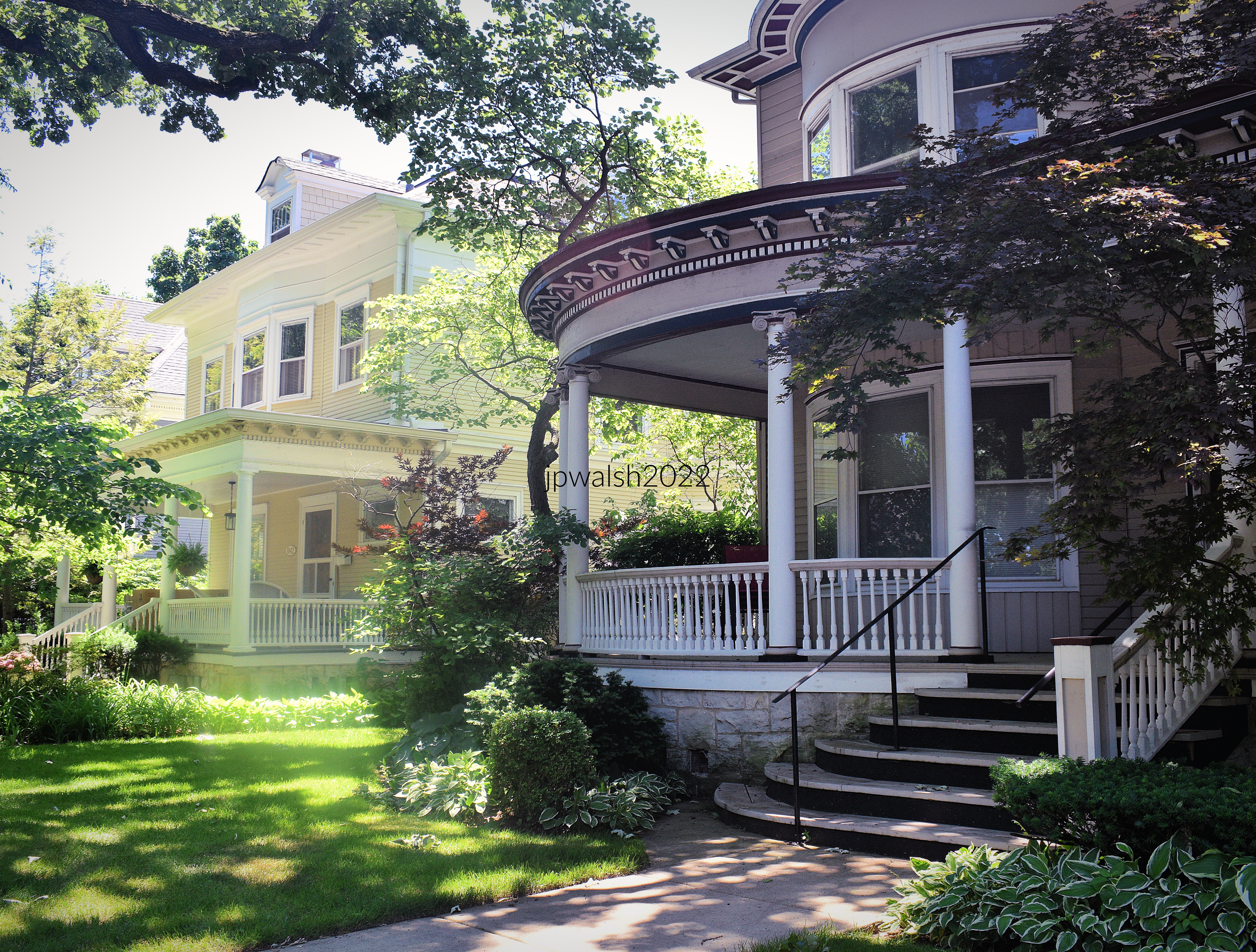
1032 and 1034 Michigan Avenue, 1899. Double house designed by Myron Hunt (1868-1952) shortly before he relocated his practice to Los Angeles, CA. Each shingled dwelling is given a distinctive design. The northern side has a projecting porch and two-story polygonal bay. The southern side has a recessed porch. The house is tied together by a single gable with a quartet of double-hung windows and a cornice part of which is integrated to the polygonal bay. 6/2022. 7.84mb 70%Myron Hunt (1868-1952) in February 1905. The American architect did numerous projects which are noted landmarks in Southern California and Evanston, Illinois. Born in Massachusetts he moved to Chicago and attended Northwestern University and later MIT where he graduated in 1893. Traveling and studying in Europe, he returned to Evanston where he worked as a draftsman in the local office of the Boston firm of Shepley, Rutan and Coolidge. In 1903 Hunt moved to Los Angeles, where he entered into a partnership with architect Elmer Grey (1871–1963). Opening an office in Pasadena, the firm of Hunt and Grey built houses for the wealthy. These included the summer ranch house for cereal magnate Will Keith Kellogg (1860-1951) in Pomona, CA, nearby to Los Angeles. Hunt and Grey also built hospitals, schools, churches and hotels. Public Domain.1026 Michigan Avenue, 1915. Prairie style house designed by John Van Bergen (1885-1969) in 1915. The Oak Park, IL-born American architect did numerous such stylish house projects from DeKalb, IL, to Winnetka, IL in the 1910’s. 6/2022 7.78mb 79%Architect John Van Bergen (above in c. 1927) was born and grew up in Oak Park, IL. He began his career as an apprentice draftsman working with Walter Burley Griffin (1867-1937) and for Frank Lloyd Wright (1867-1959) at his Oak Park Studio. Van Bergen’s early projects, mostly in Oak Park, were predominantly residential and largely in the Prairie School style, which he learned in Griffin’s and Wright’s studios. See- https://highlandparkhistory.com/highland-park-legends-program/john-van-bergen/ – retrieved December 5, 2023. Public Domain.1049 Michigan Avenue, 1910. The Prairie-style house was designed and built by C.H. Thompson, a local developer. It is a basic block with a hipped roof, albeit on a grand scale and with dormers and porch projects that emphasize horizontality along with typical Prairie hoods. There is stucco façade with brick detailing of varying geometric design patterns. 6/2022 7.95 mb 88%1010 Michigan Avenue, 1911. The Tudor style brick mansion was designed by Ernest Mayo (1864-1946). Once sitting on an even more expansive corner lot, Mayo designed the house and garden together. 6/2022. 7.91mb 65%Another view of 1010 Michigan Avenue. Built in 1911, it is one of Evanston’s most formal examples of the popular Tudor Revival style whose design takes inspiration from Elizabeth I manor houses and is imposing. It is a symmetrical and complex design of porches, bows, gables, chimneys and window groupings. Architect Ernest Mayo was born in Birmingham, England in 1864 and began his career in South Africa. Mayo immigrated to Chicago in 1891 where he established the firm of Mayo and Curry. The Chicago firm designed factories, hotels, and office buildings, and Mayo worked on administrative buildings for the 1893 World’s Columbian Exposition. Mayo split with Curry and worked independently until he partnered with his 24-year-old son Peter Mayo in 1919 to form Mayo and Mayo. While Ernest Mayo received his architectural apprentice training in England, Peter received his degree from Yale University and further design education at The Art Institute of Chicago. See – https://www.winnetkahistory.org/gazette/140-sheridan-road-2/ and https://prabook.com/web/ernest.mayo/1717173 – retrieved December 5, 2023. 6/2022. 7.63mb 66%Interior room, Dawes Mansion, 225 Greenwood Street, 1894. Designed by New York architect Henry Edwards Ficken (1852-1929), the house sits on a large lot overlooking Lake Michigan. The basic square block building is met by round tourelles on each corner with conical roofs that meet the same height of the main block’s hipped roof. The Châteauesque-style house was bought by Charles Gates Dawes (1865-1951) who was vice-president under Calvin Coolidge and, with its stunning cherry paneling, is furnished much as it was during Dawes’ residency. 10/2015 4.20mb“Charles Gates Dawes House, Evanston, Illinois” by StevenM_61 is licensed under CC BY-NC-ND 2.0.1037 Michigan Ave, Evanston, IL, 1895. 6/2022 7.52mb 99%940-950 Michigan Avenue, 1927. Michigan-Lee apartment building was erected by N.J Lareau and associates and sits on a 20,000 square foot lot on the southwest corner of Michigan and Lee. Georgian Colonial is the style of architecture for the new structure which is made of red brick and Bedford stone. The structure was built to house 24 total apartments: three 7-room, three 6-room, fifteen 5-room, and three 4-room apartments. https://www.archinform.net/arch/202206.htm and http://www.michiganleecondoassociation.com/history.html – retrieved November 28, 2023. The swanky apartment complex was designed by Frank William Cauley (1898-1984) architect and lawyer. 6/2022. 7.68mb 66% Frank Cauley, architect of the Michigan-Lee building (above) in 1927, graduated from the Armour Institute of Technology in 1922. Before he received his license to practice architecture, he designed the $2,000,000 three-hundred room (each with its own bath) Orrington Hotel in 1923 in Evanston, Illinois, for local developer Victor Ca[r]landrie Carlson. Carlson built the Carlson Building on Church Street in downtown Evanston as well as two landmark hotels, including The Library Plaza Hotel in 1922. Cauley went into business on his own, practicing until the 1929 crash. In the depression years he went to law school in Chicago and received his L.L.B. in 1938. In April 1969, the Illinois Institute of Technology awarded him a J.D. https://undereverytombstone.blogspot.com/2015/10/he-left-his-mark-on-downtown-evanston.html – retrieved November 28, 2023“The Hotel Orrington” by Mark Blevis is licensed under CC BY-NC-SA 2.0.Evanston front porches. 6/2022 7.80mb 79%1210 Michigan Avenue, 1880. Started as a simple clapboard farmhouse one block from Lake Michigan. there have been several expansive additions since that time The front exterior is marked by a simple veranda with grouped struts in the lintel which is supported by turned posts.6/2022 7.68mb 75%1332 Forest Avenue Evanston, IL, 1894, is a stylish home with several additions on an expansive corner lot. 6/2022 7.32mn 90%1005 Michigan Avenue, 1913. The light-colored brick house is Colonial Revival with modifications is by Howard Van Doren Shaw (1869-1926). The façade’s symmetry is prominently displayed in its 5 equal openings for its two main floors and topped by a shortened pitched roof with three flat-roofed dormers. A chimney protrudes at the roof line to the north. For the main mass there are aligned windows with a middle opening for both the first and second floor symmetrically displaying diverse residential functionality: a broad-arched porchway and genteel fanlight above a double door entry on the first floor and, at the second level. a wrought iron balcony providing a small, mainly decorative step landing. The great house is situated on the northeast corner lot of a leafy yet trafficked suburban residential intersection, with the main building’s symmetry broken to the south by the then-popular sun porch extension. It is a low, two-story flat-roofed projection with an enclosed porch on the first floor and an open porch originally on the upper level. 6/2022. 7.58mb 73% Howard Van Doren Shaw (1869-1926). Public Domain.Evanston fashion, c. 1918. Most Evanstonians used local dressmakers and tailors to have their clothes made. The white cotton summer dress with embroidery and lace insertions and natural waistline was typical for the era. 10.2015 4.24mb“Northwestern University Gate” by AcidFlask is licensed under CC BY-NC-SA 2.0.Chicago Avenue at Clark Street. Evanston is home to Northwestern University. 6/2022 7.84mb 87%“Fortress Northwestern: University Library and Norris University Center, June 1977” by A.Davey is licensed under CC BY 2.0. Divvy bike (with basket!) to get around campus and the neighborhood. 6/2022 7.77mb 83%The longtime Chicago-Main Newsstand at 860 Chicago Avenue in Evanston is open 7 days a week from 7:00a.m. – 10:00p.m. 6/2022 7.74mb 85%Left: 1730 Chicago Ave, Evanston, IL Built in 1865, it was the home of Frances Willard (1839-1898) and her family and was the headquarters of the Woman’s Christian Temperance Union. 6/2022 7.73mb 88%Grosse Point Lighthouse, 1873, is a tapering column to a catwalk supported by Italianate brackets built by the U.S. Government. The lighthouse marks the approach into Chicago. The promontory on which it stands was named Grosse Point in the 17th century by French explorers and the area was mapped in 1673 by Louis Jolliet and Father Jacques Marquette, a Jesuit missionary. The lighthouse is topped by a polygonal glass lantern containing the light and lens. See – http://www.grossepointlighthouse.net/history.html – retrieved December 5, 2023.6/2014 4.03mb
Sources:
A Guide to Chicago’s Historic Suburbs on Wheels and on Foot, Ira J. Bach, Swallow Press/Ohio University Press, 1981, pp. 499-530.
FEATURE image: 822 Bryant, Winnetka, 1901. A grand example of the Shingle style working its way through the Arts and Crafts movement and influenced by the recent Prairie School’s horizontality and openness. Author’s photograph. 8/2014 99% 6.92mb.
Test & Photographs John P. Walsh.
11-844 Prospect, Winnetka, 1885 with later additions. The central section with the steeply pitched roof with a prominent flare is the oldest part of the house. It is the American Queen Anne style in vogue in the 1880s and Classical Revival style that emerged following the World’s Columbian Exposition in Chicago in 1893. The sunporch abuts a two-story porch whose corner columns are the Ionic order. 8/2014 7.79mb 95% 11-844 Prospect, Winnetka, 1885 with later additions.The south-facing façade has a tall chimney that rises from the ground to above the roof peak. The main entrance is under a shouldered segmental arch held up by columns of the relatively uncommon Roman Doric order. The beige-colored metal siding is a modern addition. 8/2014 6.04mb9 – 824 Prospect Avenue, Winnetka, c. 1900. There is a prominent cornice with a garland frieze below a tiled hipped roof that has a central dormer with a Palladian window. The porch, supported by Ionic order expanded columns, wraps around the front to embrace a two-story bay facing south. Originally this offered a second -floor open sunporch. 8/2014 6.76mb8 – 800 Lloyd Place, Winnetka, 1901. A traditional cube structure which is half stucco and half shingled is covered by a hipped roof that is slightly flared at the eaves. The main roof’s central dormer as well as the main entrance have their own hipped roofs. There is a slight polygonal bay seen on the east side. 8/2014 6.15mbSheridan Road, Winnetka, Illinois. 8/2014 3.01mbSacred Heart Church, 1077 Tower Road, Winnetka. In July 2018 Sacred Heart Church in Winnetka and St. Philip the Apostle in Northfield consolidated into one (Divine Mercy Parish) as declining participation and increasing reliance on government funds and private donor largesse to operate make it impossible to sustain a presence and footprint in the local community otherwise. When this photograph was taken in 2014 Sacred Heart was still its own parish with a vestibule wall filled with photographic portraits of past pastors indicating a long and proud history. The trends in modern Catholic parish life and Catholic institutions in general are, and have been since the 1960’s, on a downward spiral. The Archdiocese itself cites these troubling statistics – less than 1 in 5 of Catholic Millennials (17%) go to weekly Mass; more than a third of the same Millennials (those born after 1986) identify with no religion at all; more than 8 in 10 (85%) of all public and private school 8th graders stop practicing the Catholic faith by early adulthood (23 years old). In the last 20 years Mass attendance has lost over 1 in 4 filling the pews. A significant number of “cradle Catholics,” that is, baptized children, do not receive 1st communion (20%) or the sacrament of confirmation (40%). See – https://www.renewmychurch.org/mission – retrieved November 21, 2023. 8/2014 4.58mbThirty-five-year old Augustus Barker Higginson, an architect located in Los Angeles, California, built the impressive Shingle style house (below) at 822 Bryant Avenue Winnetka in 1901. Public Domain. 7 – 822 Bryant, Winnetka, 1901. A grand example of the Shingle style working its way through the Arts and Crafts movement and influenced by the recent Prairie School’s horizontality and openness. The domicile was built by progressive American architect Augustus Barker Higginson (1866-1915) then with architects Myron Hunt & Elmer Grey in Los Angeles, later locating his own firm in Santa Barbara, California. See – https://pcad.lib.washington.edu/person/7142/ – retrieved November 21, 2023. The house is an L-shaped plan with broad sloping pitches roofs. The window groupings have plain surrounds that fit elegantly into shingle walls that, when they reach the ground, flare slightly. Christ Church and Garland Cemetery, 784 Sheridan Road, Winnetka, 1870’s. The church was established in 1869 and the cemetery grounds was begun in 1876. 8/2014 6.60mbChrist Church, 784 Sheridan Road, Winnetka. Gothic revival: Charles J. Connick Studio (1912-1945). Harriet Leonard, born Albany, NY, Nov. 17, 1875 – died Winnetka, Feb. 28, 1923. Connick’s work in stained glass is noted for its brilliant colors, rich symbolism and abundant use of scripture passages. 8/2014 7.66mbDedicated in 1905, Christ Church (also known as Church on the Hill) is a traditional stone church that was the gift of the William Hoyt family. It was built as a memorial to their daughter and three grandchildren who were tragically killed in the 1903 Iroquois Theater fire in Chicago and buried in the adjacent cemetery. 8/2014 7.77mbnewspaper headline, 1903.
Sources:
A Guide to Chicago’s Historic Suburbs on Wheels and on Foot, Ira J. Bach, Swallow Press/Ohio University Press, 1981, pp. 565-74.
FEATURE image: Detail of 804 Forest Avenue, Wilmette, Illinois. The Prairie style house was built in 1906 by architect George Washington Maher (1864-1926) whose influence on the Midwest was profound and prolonged and, in its time, as great as Frank Lloyd Wright’s. Author’s photograph. 6/2014 3.95mb
5 – 1231 Forest Avenue, 1898. A two-story clapboard with a flared hipped roof with three dormers, one each in the front and on the sides. The façade-length porch also has a hipped roof. The first floor has a projecting polygonal bay window and a front door and separate square vestibule window. 6/2014 4.76mb6 – 1215 Forest Avenue, c. 1909. The two-story home is built of finely dressed (cut, worked) ashlar stone. The home has a hipped roof and steep pitched pediment with a broken cornice and a false balcony with rounded attic window. In a rigidly centralized composition, there is a slight projecting bay above the entrance that is sheltered by a large porch with a massive projecting pediment held by a masonry pier with short bulging columns. 6/2014 5.67mb 11 – 1041 Forest Avenue, 1873. Masked by later additions, this house was originally Italianate whose hooded windows and small square attic window remain on the façade. 6/2014 4.20mb12- 1020 Forest Avenue, Community Church of Wilmette, 1920, has massing of large rubble ashlar walls with broad arches and a porch. 6/2014 3.57mb12- 1020 Forest Avenue, Community Church of Wilmette, 1920, was a pioneer for a large building tucked unobtrusively onto a residential street that in terms of stance was replicated by other churches that were built later in the suburb. 6/2014 6.05mb
13 – 932 Forest Avenue, 1890s. A grand two-story Classical Revival house with a high hipped roof and ionic pilasters at the corners as well as sides and pediment of the projecting entrance. Ionic columns also support the porch. 6/2014 4.86mb14 – 922 Forest Avenue pre-1873 and c. 1900. The house was originally built in the Italianate style evident in the cornice with double brackets in the front and single brackets on the side of the house along with pedimented windows. The third-floor gables were added around 1900 as well as the broad bow façade. These changes worked to add space and mask the original style. The front porch is even more recent. 6/2014 5.61mbGeorge Washington Maher (1864-1926), born in West Virginia, was an American architect in the Prairie School style who was known for blending with the Arts& Crafts style. According to H. Allen Brooks in The Prairie School – Frank Lloyd Wright and his Midwest Contemporaries (1972) “[Maher’s] influence on the Midwest was profound and prolonged and, in its time, was certainly as great as was [Frank Lloyd] Wright’s. Compared with the conventional architecture of the day, his work showed considerable freedom and originality, and his interiors were notable for their open and flowing…space.” By the time of his death, G.W. Maher had designed over 270 projects; from houses to parks to public buildings. Public Domain. 15 – 804 Forest Avenue, 1906. The Prairie style house was built in 1906. The architect was George Washington Maher (1864-1926). 6/2014 3.95mb15 – 804 Forest Avenue, 1906, by G.W. Maher is a solid 4-square house that is modest compared to a similar-styled project the Prairie-school architect completed in 1899 in Oak Park, IL , known as Pleasant Home. 6/2014 4.85mb
Sources:
A Guide to Chicago’s Historic Suburbs on Wheels and on Foot, Ira J. Bach, Swallow Press/Ohio University Press, 1981, pp. 534-547.
The Prairie School – Frank Lloyd Wright and his Midwest Contemporaries. Brooks, H. Allen New York: W.W. Norton and Company, 1972, p. 330.