

FEATURE Image: ASSUMPTION WINDOW (central panel/detail), 1902, St. Michael Church, Chicago. Franz Mayer & Company, Munich, Germany. The angels are not merely decorative details but expressions of the exceptional Munich craftsmanship that transformed St. Michael’s worship space and remain a significant cultural and artistic legacy today. October 2015. Author’s photograph.

Assumption window.
Above: ASSUMPTION WINDOW (central panel/detail), 1902, St. Michael Church, Chicago. Franz Mayer & Company, Munich, Germany.
St. Michael Church and the Great Chicago Fire
St. Michael Church in Old Town on Chicago’s North Side is one of the city’s oldest parishes and church buildings. Founded in 1852, its brick church, completed in 1869, survived the Great Chicago Fire of 1871.
Survival, however, came at a cost. The flames that swept north through Chicago consumed the wooden homes surrounding the historically German parish, leaving St. Michael’s a charred shell. Its bell tower collapsed in the intense heat. The fire had begun about three miles to the south on De Koven Street near the site traditionally associated with Mrs. O’Leary’s barn. After engulfing downtown Chicago, the blaze continued northward before finally burning itself out near Fullerton Avenue.
In 1869 the church had cost more than $130,000 to build, a substantial investment for the growing congregation. Repairs following the fire in 1872 required another $40,000. Yet the reconstruction did not include the stained-glass windows featured here. Those celebrated works would not arrive until the beginning of the twentieth century.
A Golden Jubilee Transformation
In 1902, as St. Michael Parish prepared to celebrate its Golden Jubilee, a new decorative program transformed the church interior. Tall stained-glass windows manufactured in Bavaria, Germany, were installed throughout the sanctuary.
These windows were the fourth set incorporated into architect August Walbaum’s original design. Earlier glazing installed in 1866, 1873, and 1878 had consisted primarily of frosted or tinted glass. The new windows brought color, narrative, and artistic sophistication to the historic church.
Created by Franz Mayer & Company of Munich, among the world’s leading ecclesiastical art studios, the Golden Jubilee windows drew upon centuries of European stained-glass craftsmanship. Their vivid imagery filled the church’s east and west walls with scenes from the New Testament and the lives of Christ and the Virgin Mary.
The jubilee renovation also included five new handcrafted altars by Hackner & Sons of La Crosse, Wisconsin. Together, these additions enriched the worship experience for a flourishing immigrant parish and continue to do so today. Professionally cleaned and restored in 2013, the windows remain preserved in their original setting.
The Sacred Stories in Glass
Mayer’s west-side windows depict episodes from the life of the Blessed Virgin Mary, including the Presentation of Mary, the Annunciation, the Visitation, the Nativity, the Epiphany, and the Assumption.
The east-side windows focus on the life of Jesus Christ, portraying scenes such as the Finding in the Temple, Jesus Blessing the Children, Mary Magdalene washing Christ’s feet, the Ascension, and the Sacred Heart.
Rich jewel-like colors heighten the drama of each composition. Reds were produced using gold compounds, blues through cobalt, and greens through uranium-based pigments. Many of the biblical scenes are set within idealized Renaissance European surroundings, linking sacred history with centuries of Christian artistic tradition.
Throughout the cycle, angels serve as heavenly companions and witnesses to the events depicted. These finely rendered celestial figures unify the program and contribute to the sense of wonder that distinguishes the Mayer windows.
Franz Mayer & Company of Munich
Franz Mayer & Company was founded in 1847 as the “Institute for Christian Art” and established its stained-glass department in 1860. In 1882 the firm received designation as a Royal Bavarian Establishment for Ecclesiastical Art from King Ludwig II of Bavaria. It was later recognized by the Vatican as a Pontifical Institute of Christian Art.
Today the company is viewed as one of the great names in ecclesiastical art, but in 1902 it was still a comparatively young and ambitious studio. Its work for St. Michael reflected the aspirations of both a rising German arts firm and a growing Catholic parish in a rapidly expanding American city.
Under the leadership of founder’s son Franz Borgias Mayer (1848-1926), the company continued to expand internationally. A decade after the installation of the St. Michael windows, Pope Pius X commissioned the Munich studio to create stained glass for St. Peter’s Basilica and other important Vatican chapels.
Throughout the United States, Mayer’s reputation grew alongside the nation’s prosperous Catholic immigrant communities. Its stained-glass windows and ecclesiastical furnishings appeared in churches from Chicago and New York to Michigan, Ohio, Kentucky, Washington, and California. The family-owned company remains in operation today, continuing a tradition that helped bring some of Europe’s finest sacred art to American churches such as St. Michael’s in Old Town Chicago.
NOTES:
- Gabriel Mayer, ed., Franz Mayer of Munich (Chicago: University of Chicago Press, 2013), 45.
- Nola Huse Tutag and Lucy Hamilton, Discovering Stained Glass in Detroit (Detroit: Wayne State University Press, 1987), 152.
- “Werkstaette,” Franz Mayer of Munich, accessed May 10, 2016, http://www.mayer-of-munich.com/werkstaette/.
Angels in Glass
The stained-glass windows are not merely beautiful. Rather, the 1902 Franz Mayer & Company windows at St. Michael Church are a remarkable intersection of artistic excellence, immigrant history, religious devotion, and Chicago preservation, and that they remain largely intact today as a living cultural treasure. These Bavarian-made windows brought world-class European craftsmanship to a growing German-American parish in the Midwest and continue to inspire wonder more than a century later.

Above: ASSUMPTION WINDOW (central panel/detail), 1902, St. Michael Church, Chicago. Franz Mayer & Company, Munich, Germany.

Above: ASSUMPTION WINDOW (central panel/detail), 1902, St. Michael Church, Chicago. Franz Mayer & Company, Munich, Germany- Oct 30, 2015.

Above: ASSUMPTION WINDOW (central panel/detail), 1902, St. Michael Church, Chicago. Franz Mayer & Company, Munich, Germany.
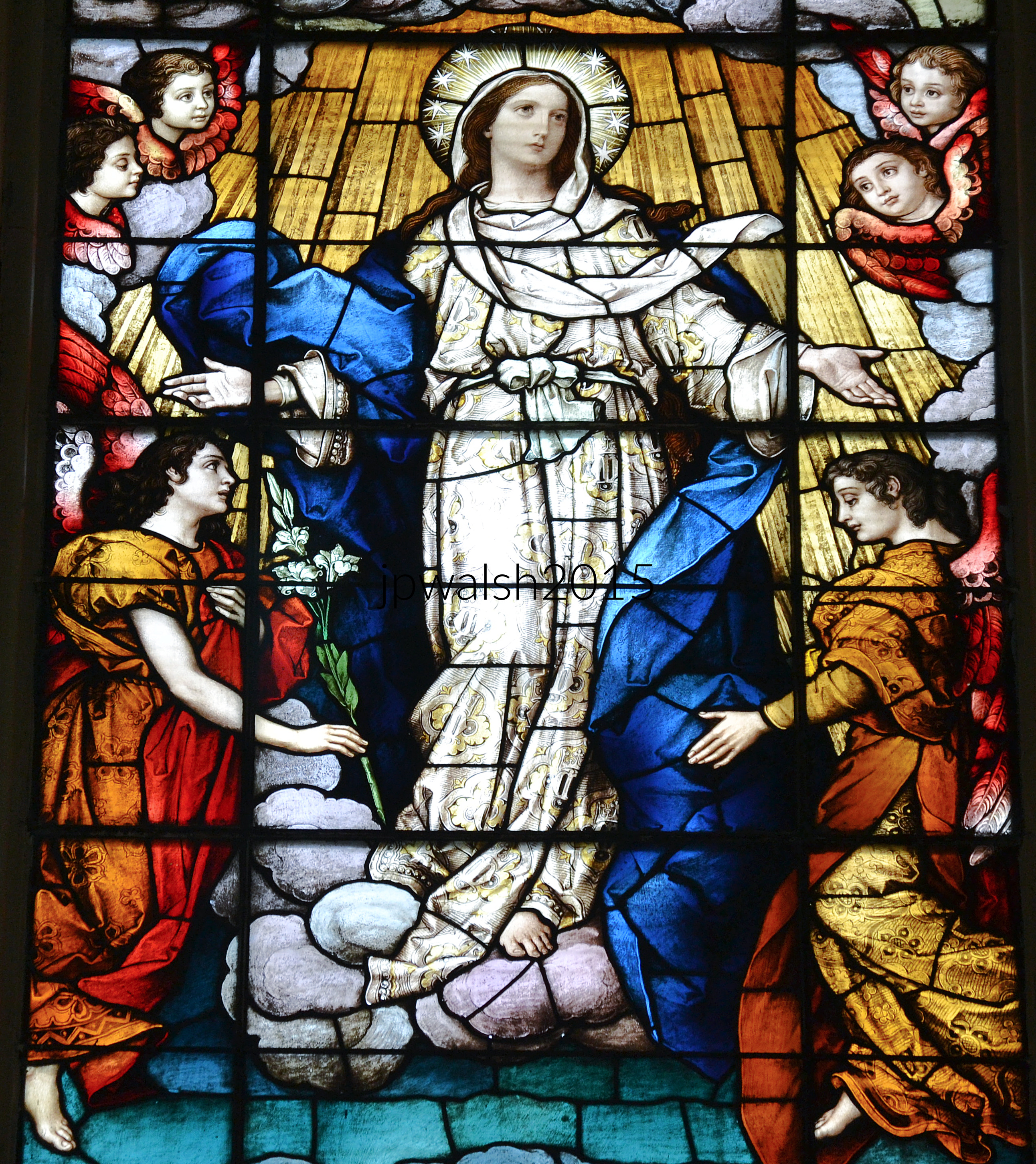
Above: ASSUMPTION WINDOW (central panel/detail), 1902, St. Michael Church, Chicago. Franz Mayer & Company, Munich, Germany.

Above: SACRED HEART WINDOW (detail), 1902, St. Michael Church, Chicago. Mayer & Company, Munich, Germany.

Above: ASCENSION WINDOW (side panel/detail), 1902, St. Michael Church, Chicago. Franz Mayer & Company, Munich, Germany.

Above: ASCENSION WINDOW (side panel/detail), 1902, St. Michael Church, Chicago. Franz Mayer & Company, Munich, Germany.
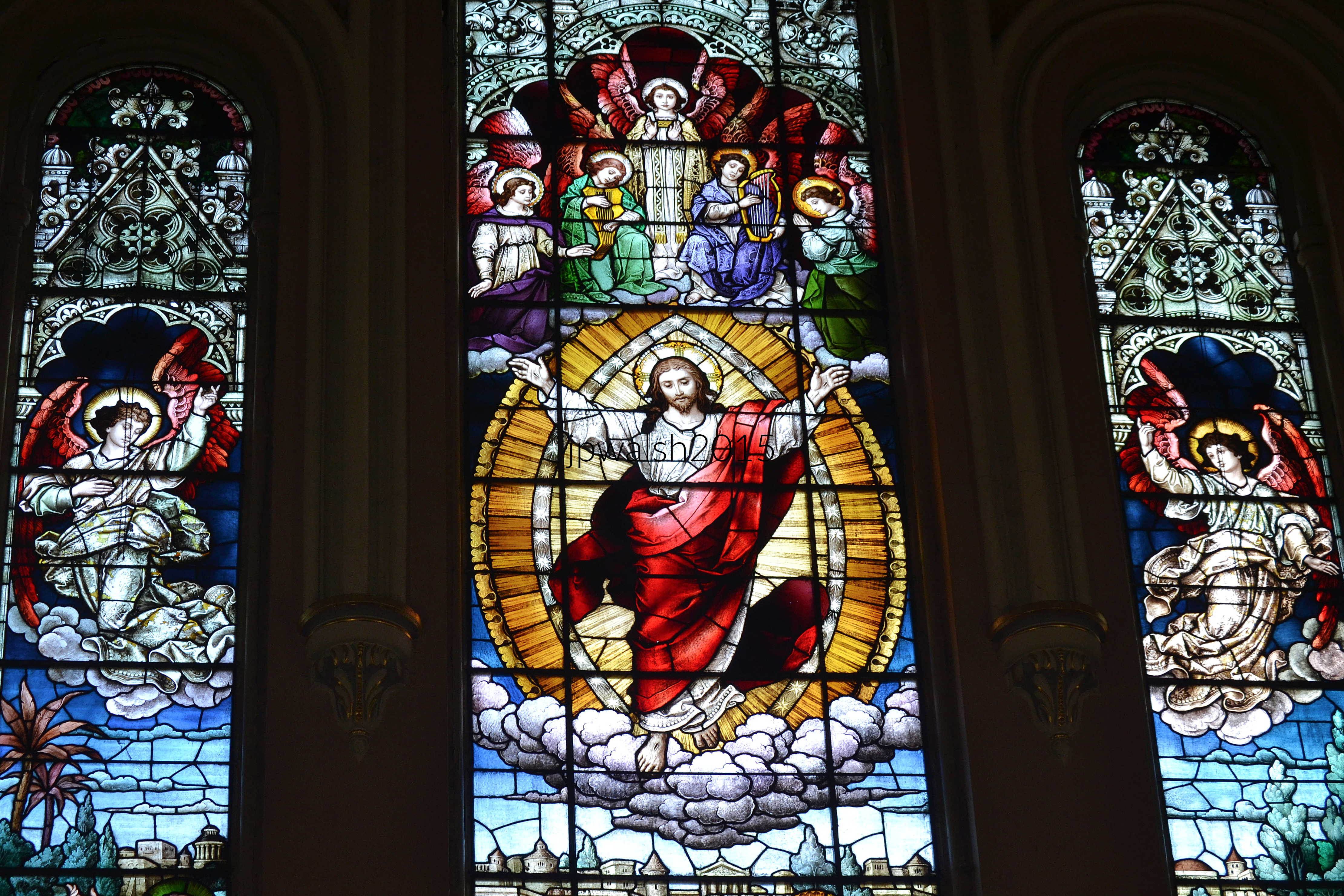
Above: ASCENSION WINDOW (side panel/detail), 1902, St. Michael Church, Chicago. Franz Mayer & Company, Munich, Germany.
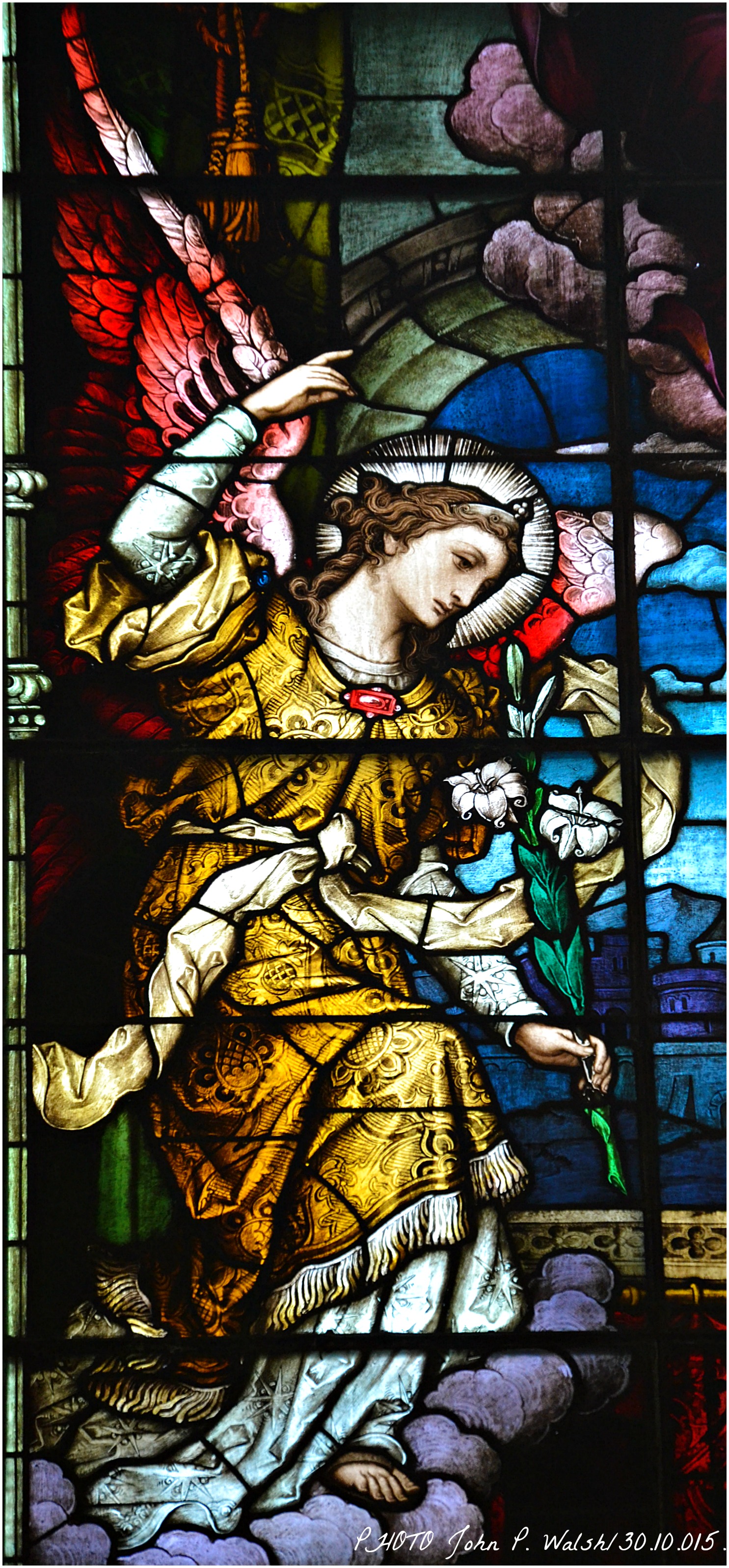
Above: ANNUNCIATION WINDOW (detail), 1902, St. Michael Church, Chicago. Franz Mayer & Company, Munich, Germany.

Above: PARABLE WINDOW (detail), 1902, St. Michael Church, Chicago. Mayer & Company, Munich, Germany.

Above: VISITATION WINDOW (detail), 1902, St. Michael Church, Chicago. Franz Mayer & Company, Munich, Germany.

Above: CHRISTMAS WINDOW (detail), 1902, St. Michael Church, Chicago. Franz Mayer & Company, Munich, Germany.
The 1902 stained-glass windows created by Franz Mayer of Munich for St. Michael Church embody the transfer of European sacred art to immigrant Chicago, enriching worship while preserving a lasting legacy of craftsmanship, faith, and cultural identity.


I am reaching out to whomever might be able to direct me about a stained glass window I recently acquired. It is completely disassembled and a large puzzle to say the least. The seller claims it was removed from St Michael’s Old Town some years ago during a remodel. I have no idea if that is true etc, but I do know it is of the same type and quality of the Mayer windows in your pictures. I don’t know what construction project would have caused it to be removed. Anyway, from the pieces I have it appears to be the Virgin, the infant Jesus and 3 angels. In your work, have you heard of such a window being removed? It may have been removed before you took your pictures. I have already tried to contact the parish but have not heard back yet. I would appreciate any direction you could offer! Thank you in advance!
Hi there, I live in the UK and have a couple of domestic stained glass panels by Franz Mayer c.1902. They show musicians; 2 playing wind instruments and 2 singing.
I inherited them from my great aunt, a stained glass artist Joan Howson 1885 – 1964.
I’d love to see what your fragments look like and will happily send over some pictures of my panels.
Thanks.