

FEATURE image: Pope St. John 23 (1881-1963). “Pope John XXIII” by jimforest is licensed under CC BY-NC-ND 2.0.
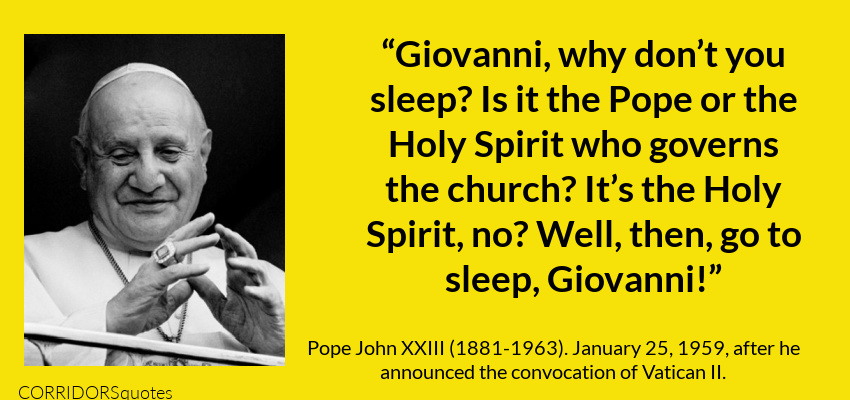
“Giovanni, why don’t you sleep? Is it the Pope or the Holy Spirit who governs the church? It’s the Holy Spirit, no? Well, then, go to sleep, Giovanni!” Wit and Wisdom of Good Pope John, collected by Henri Fesquet.
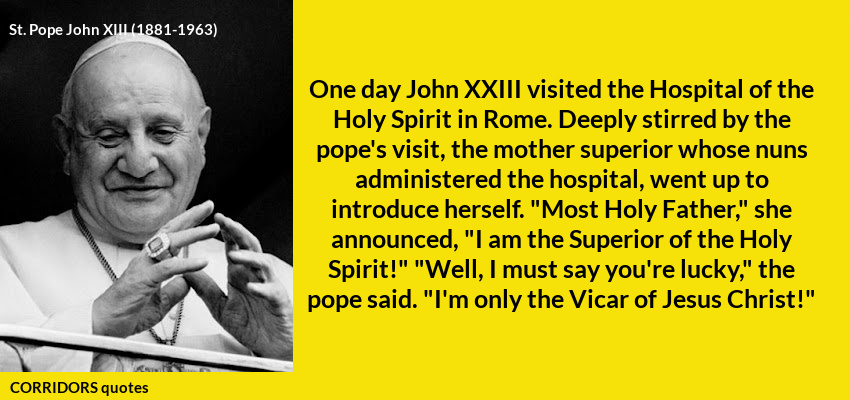
One day John XXIII visited the Hospital of the Holy Spirit in Rome. Deeply stirred by the pope’s visit, the mother superior whose nuns administered the hospital, went up to introduce herself. “Most Holy Father,” she announced, “I am the Superior of the Holy Spirit!” “Well, I must say you’re lucky,” the pope said. “I’m only the Vicar of Jesus Christ!” Wit and Wisdom of Good Pope John, collected by Henri Fesquet.
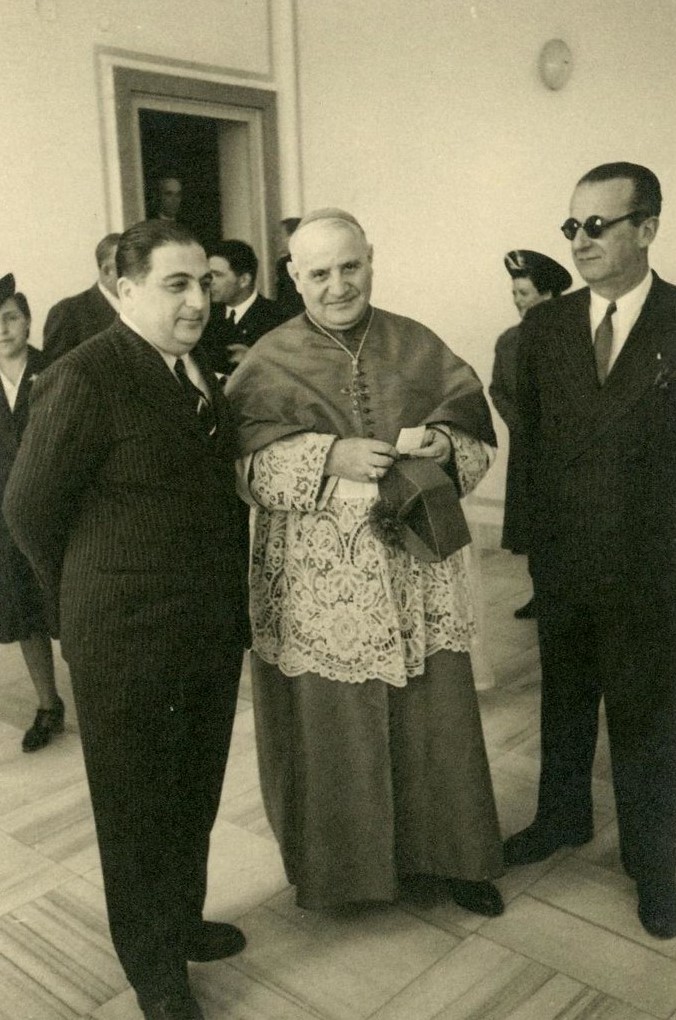
1943 – Istanbul, Raffaele Guariglia (1889-1970), ambassador to Turkey, and Msgr. Angelo Roncalli, apostolic delegate in Istanbul. “1943 – Istanbul, Raffaele Guariglia, Ambasciatore in Turchia, e Mons. Angelo Roncalli delegato apostolico ad Istanbul” by realizzato da Stefano Baldi is licensed under CC BY-NC-ND 2.0.

Voglio essere buono, ad ogni costo, sempre, con tutti. (“I want to be good, at all costs, always, with everyone.”) Casa Natale di Papa Giovanni, Sotto Il Monte Giovanni XXIII (Bergamo).
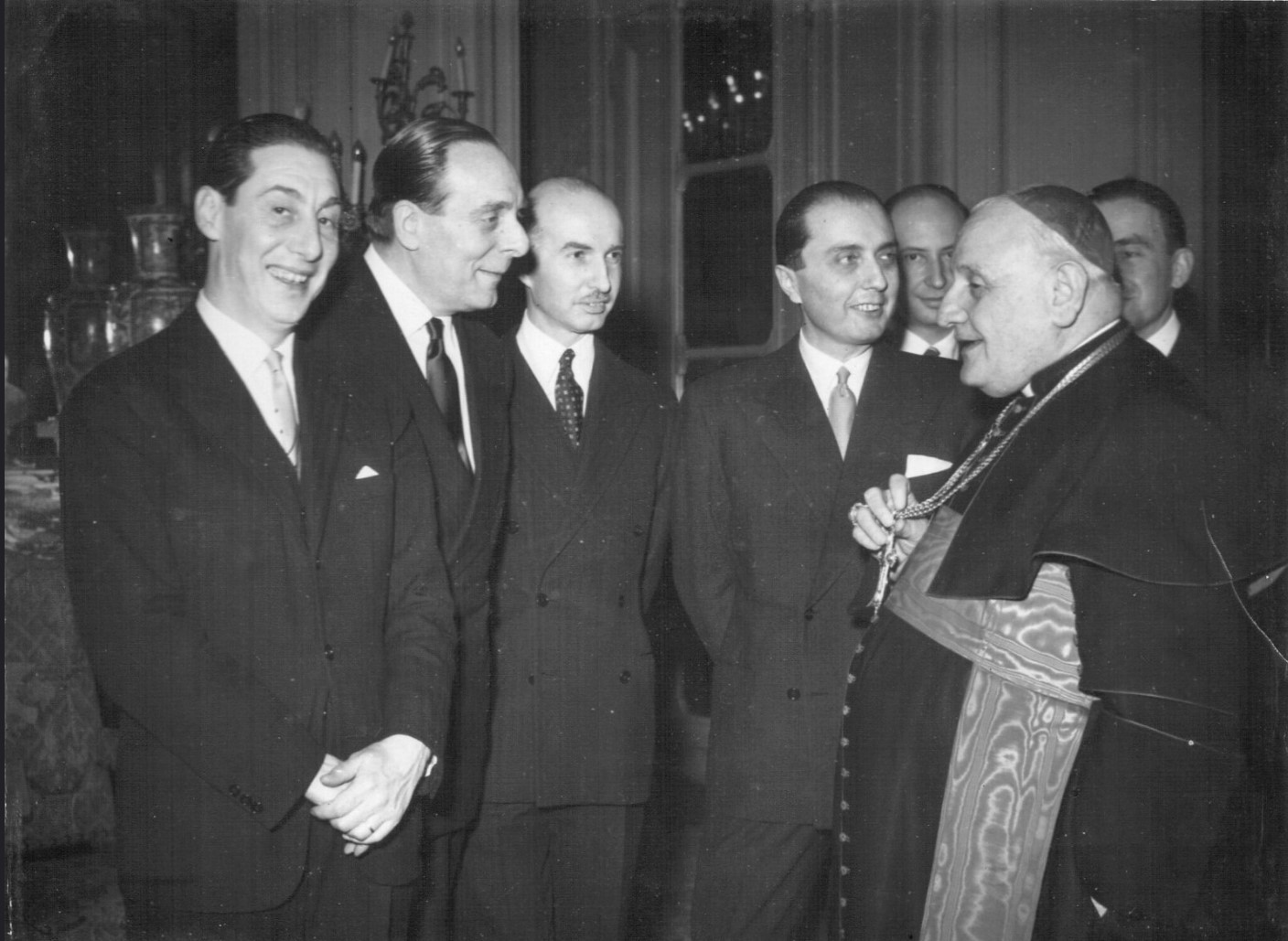
1953, Paris, Angelo Roncalli, Apostolic Nuncio in Paris, with some officials of the Embassy. Roberto Gaja (1912-1992), Embassy Counsellor, is the third from the left. “1953, Parigi, Angelo Roncalli, Nunzio Apostolico a Parigi, con alcuni funzionari dell’Ambasciata. Roberto Gaja, Consigliere d’Ambasciata, è il terzo da sinistra” by realizzato da Stefano Baldi is licensed under CC BY-NC-ND 2.0.

Una croce mi ci vuole: Signore Gesù aiutami a portarla umilmente e degnamente (“A cross is needed for me: Lord Jesus, help me to carry it humbly and worthily.”) Casa Natale di Papa Giovanni, Sotto Il Monte Giovanni XXIII (Bergamo).
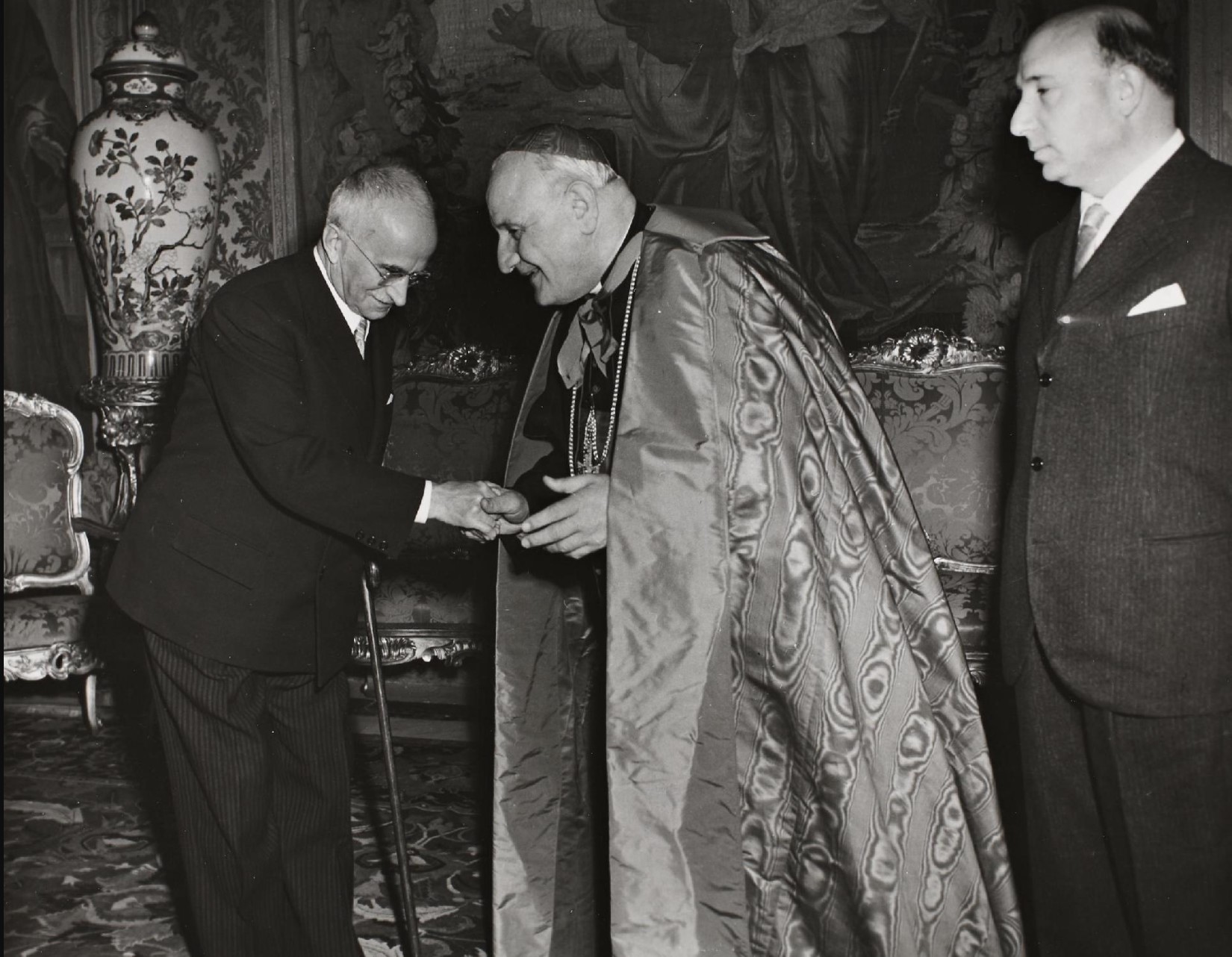
The President of the Italian Republic, Luigi Einaudi (1874-1961), receives His Eminence Cardinal Angelo Giuseppe Roncalli, Archbishop of Venice. “Il Presidente della Repubblica Luigi Einaudi riceve Sua Eminenza il Cardinale Angelo Giuseppe Roncalli, Arcivescovo di Venezia” is licensed under CC BY-NC-SA 4.0.
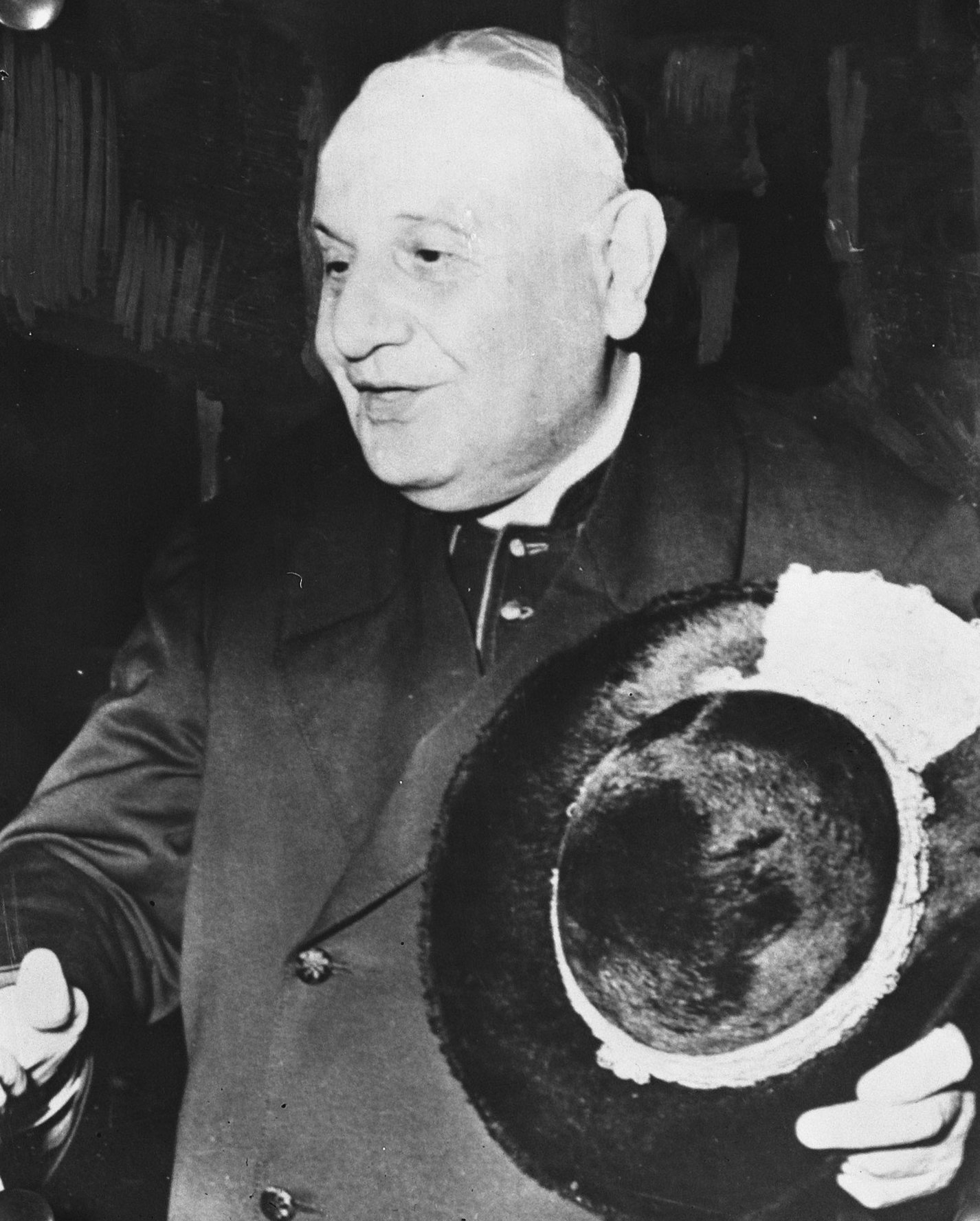
Giuseppe Roncalli, the future Pope John XXIII, was made a cardinal by Pope Pius XII on January 12, 1953. Immediately afterward, he was appointed Patriarch of Venice, a post he held until his election as pope in 1958. In Venice, Cardinal Roncalli’s leadership stood out: prayerful, humble, effective, and unfailingly affable, he immersed himself in the daily life of the archdiocese with a level of personal engagement locals had not experienced in decades. PHOTO: “Kardinaal Angelo Giuseppe Roncalli, Bestanddeelnr 909-9364” by Anefo is marked with CC0 1.0.

Non cade lacrima dai nostri occhi e non c’è sospiro del nostro cuore senza una riposta di Dio. (“There is no tear that falls from our eyes and no sigh of our heart without a response from God.”) Casa Natale di Papa Giovanni, Sotto Il Monte Giovanni XXIII (Bergamo).

Mi sento più che mai unito ai tanti e tanti che soffrono negli ospedali e nelle case, o sono angustiati in varie forme. (“I feel more than ever united with the many who suffer in hospitals and homes, or are distressed in various forms.”) Casa Natale di Papa Giovanni, Sotto Il Monte Giovanni XXIII (Bergamo).

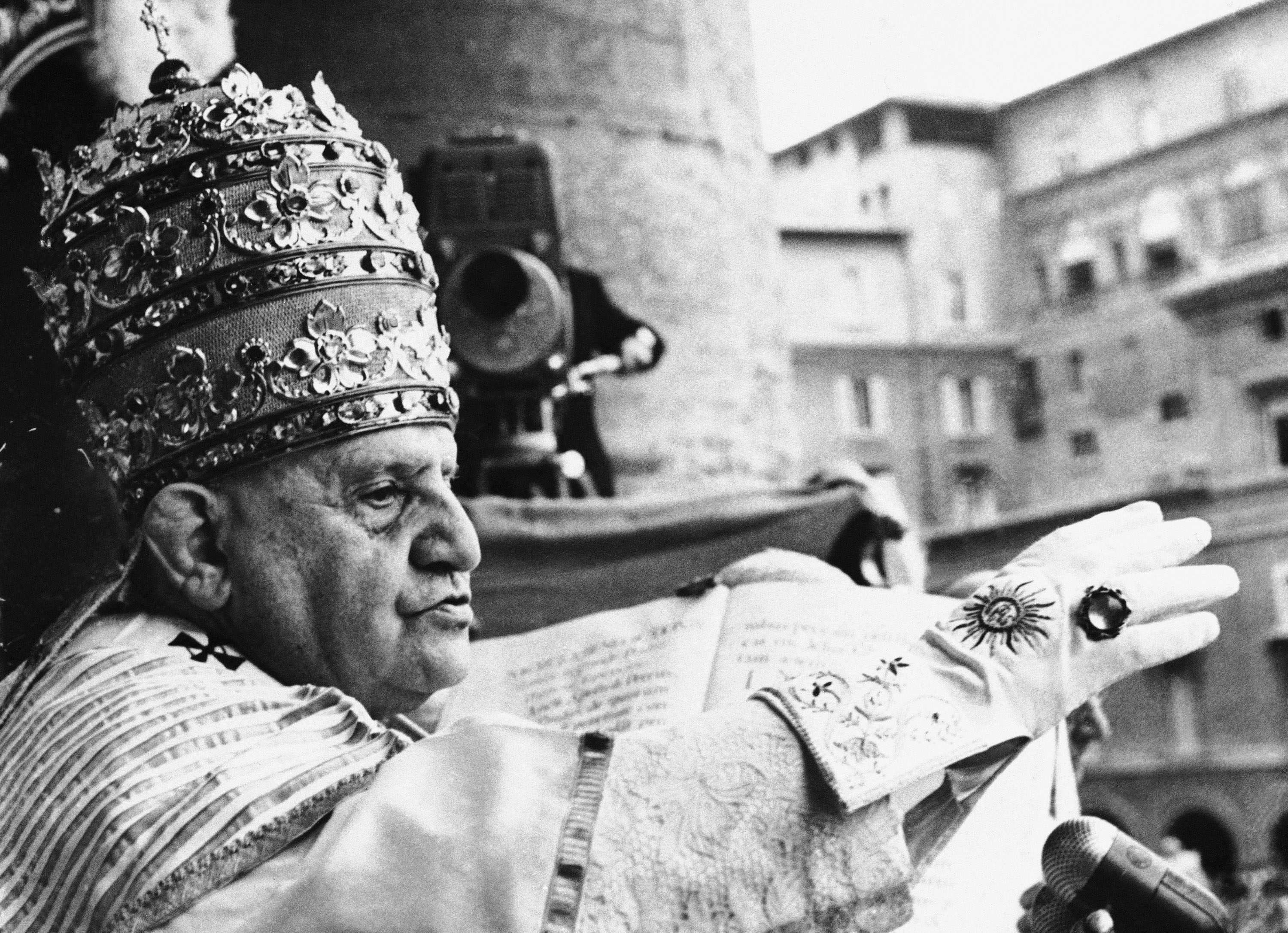
In this photograph from November 4, 1958, Pope John XXIII, newly crowned as Supreme Pontiff of the Roman Catholic Church, lifts his hand in blessing before the faithful gathered at the Vatican. The gentle dignity of the moment foreshadows the deep pastoral spirit that would define his pontificate. Decades later, John XXIII would be canonized alongside Pope John Paul II in a solemn Vatican ceremony. (AP Photo) This work is in the public domain in the United States because it was published in the United States between 1931 and 1963, and although there may or may not have been a copyright notice, the copyright was not renewed.

Una gran medicina per i nostri mali è la buona coscienza, soprattutto l’abbandano nella Provvidenza di Dio. (“A great medicine for our ills is a good conscience, especially its abandonment to the Providence of God.”) Casa Natale di Papa Giovanni, Sotto Il Monte Giovanni XXIII (Bergamo).

Per la pace in famiglia tutto bisogna sacrificare e tutto conviene prendere dalla buona parte. (“For peace in the family everything must be sacrificed and everything should be taken from its good part.”) Casa Natale di Papa Giovanni, Sotto Il Monte Giovanni XXIII (Bergamo).

Pope John XXIII convened the Second Vatican Council in 1962. The Council’s proceedings were held in four sessions from 1962 to 1965 as it aimed to define the Church for modern times, or aggiornamento. The First Session was opened by Pope John XXIII in October 1962 and closed in December 1962. John XXIII died on June 3, 1963, and his successor Paul VI (Giovanni Montini) was elected on June 21, 1963. The Second Session, opened by Paul VI in September 1963 closed in December 1963. The Third and Fourth Sessions were also held from September to December in 1964 and 1965, respectively. The Council adjourned on December 8, 1965, which is the feast of The Solemnity of the Immaculate Conception.
Vatican II produced 16 major documents, including Constitutions (4), Decrees (9), and Declarations (3).
Constitutions:
Lumen Gentium: (Dogmatic Constitution on the Church) – Defined Church as the People of God and as sacrament. – promulgated November 21, 1964.
Dei Verbum: (Dogmatic Constitution on Divine Revelation) – Cited the Bible and Tradition as sources of divine revelation. – November 18, 1965.
Sacrosanctum Concilium: (Constitution on the Sacred Liturgy) – Called for liturgical changes including use of local languages. – December 4, 1963.
Gaudium et Spes: (Pastoral Constitution on the Church in the Modern World) – Addressed the Church’s engagement with contemporary human life. – December 7, 1963.
Decrees:
Ad Gentes (Mission Activity) – 1965.
Apostolicam Actuositatem (Apostolate of the Laity) – November 18, 1965.
Christus Dominus (Pastoral Office of Bishops) – October 28, 1965.
Inter Mirifica (Media of Social Communications) – December 4, 1963.
Orientalium Ecclesiarum (Eastern Catholic Churches) – November 21, 1964.
Optatam Totius (Priestly Training) – October 28, 1965.
Perfectae Caritatis (Renewal of Religious Life) – October 28, 1965.
Presbyterorum Ordinis (Ministry and Life of Priests) – December 7, 1965.
Unitatis Redintegratio (Ecumenism) – November 21, 1964.
Declarations:
Gravissimum Educationis (On Christian Education) – October 28, 1965.
Nostra Aetate (On the Relation of the Church to Non-Christian Religions): A landmark document that opened dialogue and understanding with other faiths, particularly Judaism and Islam, and addressed universal human spiritual heritage. – October 28, 1965.
Dignitatis Humanae (On Religious Freedom): Affirmed the human right to religious liberty. – December 7, 1965.

Cardinal Alfredo Ottaviani (Holy Office head), Cardinal Francis Spellman of Boston and Enrico Dante (Master of Ceremonies) gather around John XXIII at the opening ceremonies of the Second Vatican Council on October 11, 1962. Off to the left is Aspreno II Colonna, Prince of Paliano, near Rome. Called by John XXIII on January 25, 1959, the Council was held in four fall sessions between 1962 and 1965, continuing under Pope Paul VI after Pope John XXIII’s death in June 1963. PHOTO: Public Domain. The country of origin of this photograph is Italy. It is in the public domain there because its copyright term has expired.

Figlioli, cercate più quello che unisce che ciò che divide… (“Little children, seek more what unites than what divides…”) Casa Natale di Papa Giovanni, Sotto Il Monte Giovanni XXIII (Bergamo).

Tutti ricordo e per tutti pregherò. (“I remember everyone and I will pray for everyone.”) Casa Natale di Papa Giovanni, Sotto Il Monte Giovanni XXIII (Bergamo).

Published in January 1963, Pope John XXIII was named TIME’s Man of the Year for his decisive global influence, highlighted by his role in convening the Second Vatican Council and his quiet but effective mediation during the Cuban Missile Crisis. Elected in 1958 at age 77 and widely expected to be a short-term “transitional” pope, he surprised the world by reshaping the papacy through openness, pastoral warmth, and a new commitment to ecumenical dialogue. His selection marked the first time a pope received the magazine’s annual distinction, underscoring his impact on both believers and nonbelievers. PHOTO: Time Inc., started renewing the copyrights of Time magazine in 1962 with the 29 January 1934, issue. Therefore, issues that were published before 29 January 1934 are in the public domain. In addition, a few later issues were not renewed. The copyright on this 1963 issue of Time magazine was not renewed, and it is in the public domain.
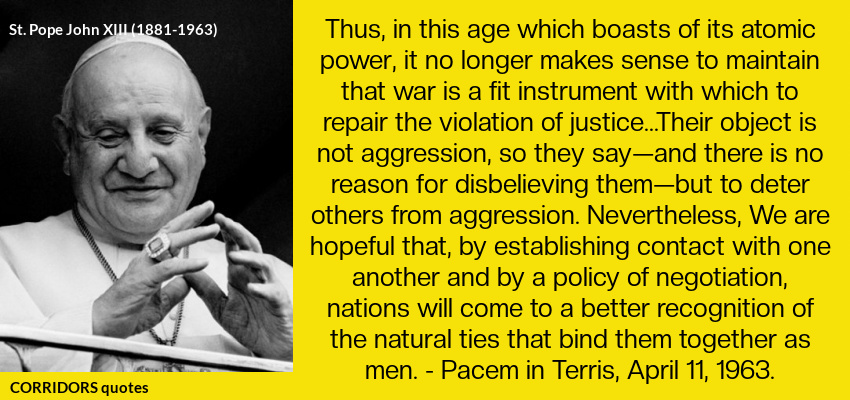
Thus, in this age which boasts of its atomic power, it no longer makes sense to maintain that war is a fit instrument with which to repair the violation of justice…Their object is not aggression, so they say—and there is no reason for disbelieving them—but to deter others from aggression. Nevertheless, We are hopeful that, by establishing contact with one another and by a policy of negotiation, nations will come to a better recognition of the natural ties that bind them together as men. – Pacem in Terris, April 11, 1963.
Issued on April 11, 1963, in the harrowing shadow of the Cuban Missile Crisis, Pacem in Terris (“Peace on Earth”) served as a vital moral intervention for a world teetering on the edge of nuclear conflict. In a groundbreaking departure from tradition, Pope St. John XXIII addressed this final encyclical not only to the Catholic faithful but to all “men of good will,” signaling a new era of universal engagement. By urging a retreat from the Cold War arms race, the Pope shifted the foundation of global security from the “balance of terror” to a framework of mutual trust, disarmament, and restraint. Within the Church, the document marked a pivotal evolution, embedding religious freedom and universal human rights into the core of Catholic social teaching and establishing the Church as a credible voice in the modern struggle for international justice. Though Pope John XXIII passed away on June 3, 1963—just 53 days after its publication and less than five years into his papacy—his final work remains a prophetic cornerstone. Today, it continues to provide the moral blueprint for the Church’s response to humanitarian crises and the enduring quest for a peaceful global order.
https://www.vatican.va/content/john-xxiii/en/encyclicals/documents/hf_j-xxiii_enc_11041963_pacem.html – retrieved May8, 2026.
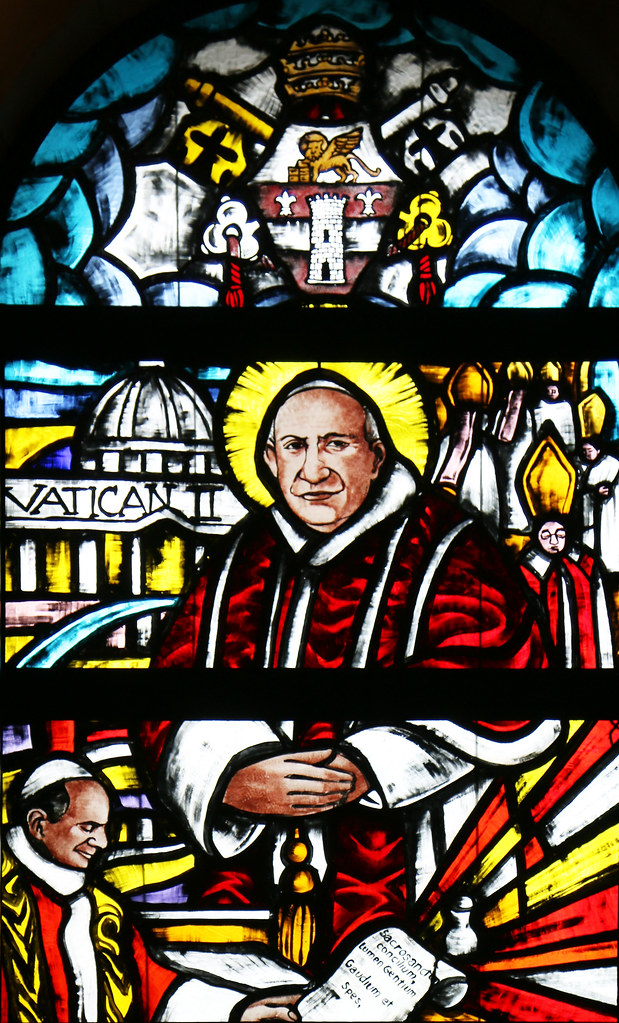
Pope John XXIII (1958–1963) issued eight encyclicals during his pontificate, focusing on themes of social justice, peace, unity, and pastoral care.
Here is the list of his 8 encyclicals:
Ad Petri Cathedram (To the Chair of Peter) – June 29, 1959. Purpose: Promotes truth, unity, and peace under the light of charity.
Ad Petri Cathedram (June 29, 1959)
Sacerdotii Nostri Primordia (At the Beginning of Our Priesthood) – August 1, 1959. Purpose: Honors St. John Vianney and urges priests toward spiritual perfection.
Sacerdotii Nostri Primordia (August 1, 1959)
Grata Recordatio (With Joyful Recollection) – September 26, 1959. Purpose: Encourages praying the Rosary for the success of the upcoming Council.
Grata Recordatio (September 26, 1959)
Princeps Pastorum (The Prince of Shepherds) – November 28, 1959. Purpose: Stresses the need for native clergy and lay leadership in mission territories.
Princeps Pastorum (November 28, 1959)
Mater et Magistra (Mother and Teacher) – May 15, 1961. Purpose: Explains the Church’s role in social progress including workers’ rights and global economic justice.
Mater et Magistra (May 15, 1961)
Aeterna Dei Sapientia (God’s Eternal Wisdom) – November 11, 1961. Purpose: Calls for Christian unity through the legacy of Pope St. Leo the Great against modern secularism.
https://www.vatican.va/content/john-xxiii/en/encyclicals/documents/hf_j-xxiii_enc_11111961_aeterna-dei.html
Paenitentiam Agere (To Practice Penance) – July 1, 1962. Purpose: Requests penance from the faithful to ensure the Council’s spiritual success.
https://www.vatican.va/content/john-xxiii/en/encyclicals/documents/hf_j-xxiii_enc_01071962_paenitentiam.html – all above retrieved May 9, 2026.
Pacem in Terris (Peace on Earth) – April 11, 1963. Purpose: Details a blueprint for world peace based on human rights and dignity, addressed to “all men of good will.”
https://www.vatican.va/content/john-xxiii/en/encyclicals/documents/hf_j-xxiii_enc_11041963_pacem.html – retrieved May 8, 2026.

This explanatory article may be periodically updated.
