Feature Image:”Money” by free pictures of money is licensed under CC BY 2.0.
Reacting to a story in the Wall Street Journal dated June 9, 2024 entitled, “Americans Really, Really Hate Inflation—and That’s a Big Problem for the Fed” (see – https://www.wsj.com/economy/central-banking/americans-inflation-target-fed-c1fc7857?mod=latest_headlines – retrieved June 9, 2024) the author cites various financial experts where some of them prefer the traditional 2% target inflation rate for the Federal Reserve and others for a higher and perhaps more realistic 4% target rate (or thereabouts) so to give better headroom for the Fed to cut rates or not to stimulate and otherwise moderate the economy. In tandem with this article is another article that appeared in the Tampa Bay Times updated August 28, 2005 entitled, “Remember how Reagan beat inflation” (see – https://www.tampabay.com/archive/2004/06/09/remember-how-reagan-beat-inflation/ – retrieved June 9, 2024) that served as a history of inflation and unemployment rates between the 1960’s and the early 2000s.
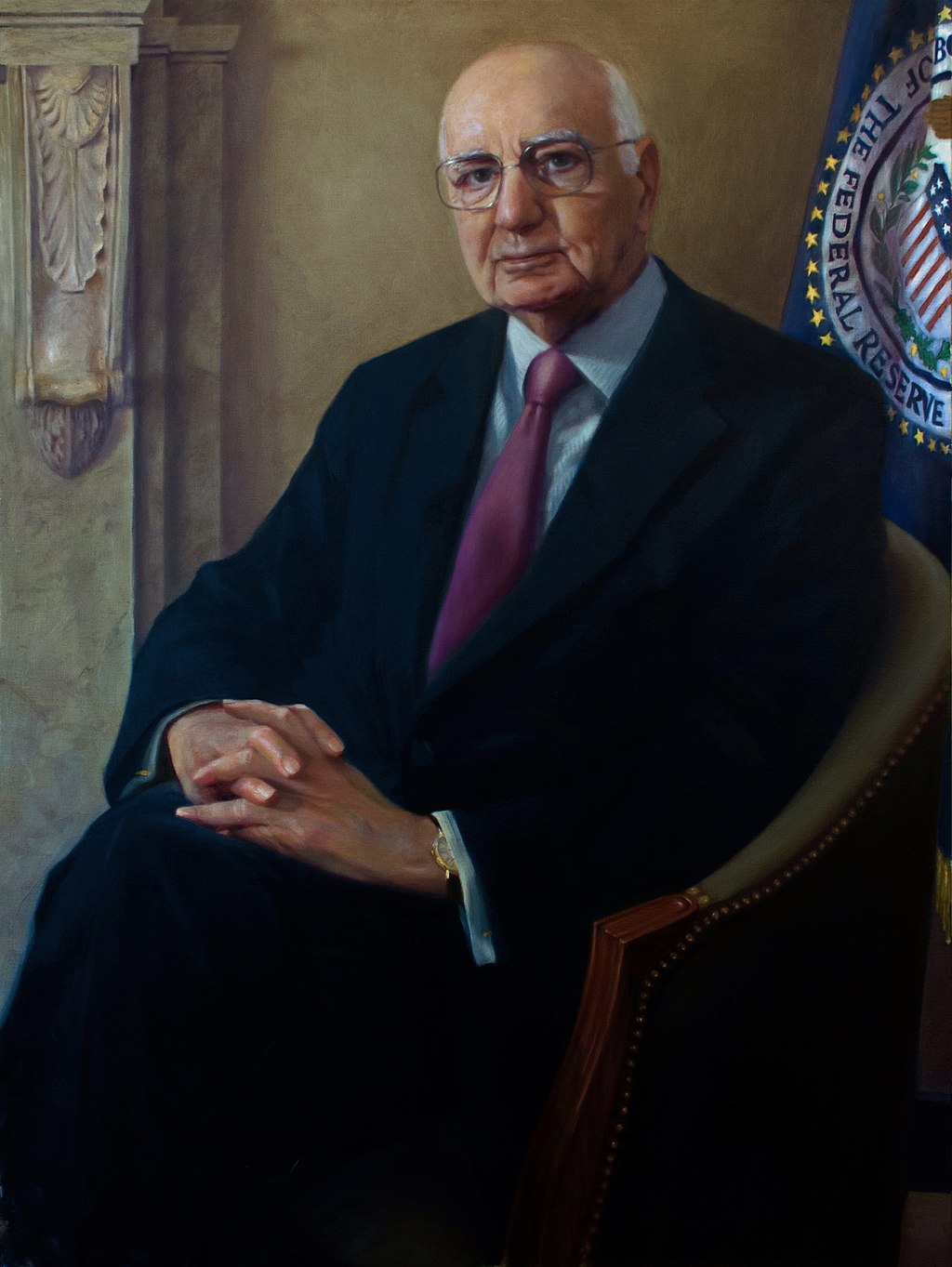
Portrait of Paul A. Volcker (1927-2019) by Luis Alvarez Roure. 2015. Oil on linen. 40 x 30 inches. Collection of the Board of Governors of the Federal Reserve System. Volcker served as Fed chairman from 1979 to 1987. PHOTO CC BY-SA 3.0.
There are many ways to skin a cat – and as some financial experts agree that a 2% target inflation rate is the better choice for the Fed to maintain – the board can work with this traditional target inflation rate to react to the economy. That the going inflation rate should be higher and, if for no other reason that it matches today’s inflation level (4% as of April 2023 cited by WSJ article), has its proponents as more practical if not always politically viable. The last time inflation was as high as it is in 2024 was under one-term Democrat president Jimmy Carter in 1980. After inflation in 1976 was 4.9%, it roared to 13.3% under Carter. Further, the Carter Administration did not stop inflation’s continued rising at an unpredictable pace. When Reagan was elected in 1980 nearly 60% of voters said inflation was, as the TBT article stated, “a determining issue for them.” Mortgage rates, too, were at an historic high level in 1980. It was Fed Chairman Paul Volcker’s tight money policy that revived the 1980s and this despite Reagan’s tax cuts and massive deficit spending which left a troublesome legacy of historically large deficits and economic consolidation. To fix the economy as Volcker and Reagan worked it in the early 1980s had workers bear the brunt – Carter’s 7% unemployment rate spiked to 11% under Reagan. This meant millions of workers were suddenly without the means to buy goods and services and – guess what?- inflation dropped to under 4%. Though it ticked up to 6% by 1990 it has not been higher until President Joe Biden. The WSJ article’s citing “wage growth” that consumers should be appreciating yet apparently choose to ignore seems to be that most spectral of all economic indicators. As house prices (and mortgage interest rates) have doubled in the last 20 years how have wages kept up? Since Reagan, “free” money and attendant excessive borrowing at the individual and government level clearly juiced the economy, but at a price where the American people now have record debt levels and there have been certain misdirected “too big too fail” investments including inadequate affordable housing inventory and overbuilding office space and other commercial developments and the sometimes implosion of capital requiring huge bailouts, much of it from more borrowed money with the taxpayer on the hook.
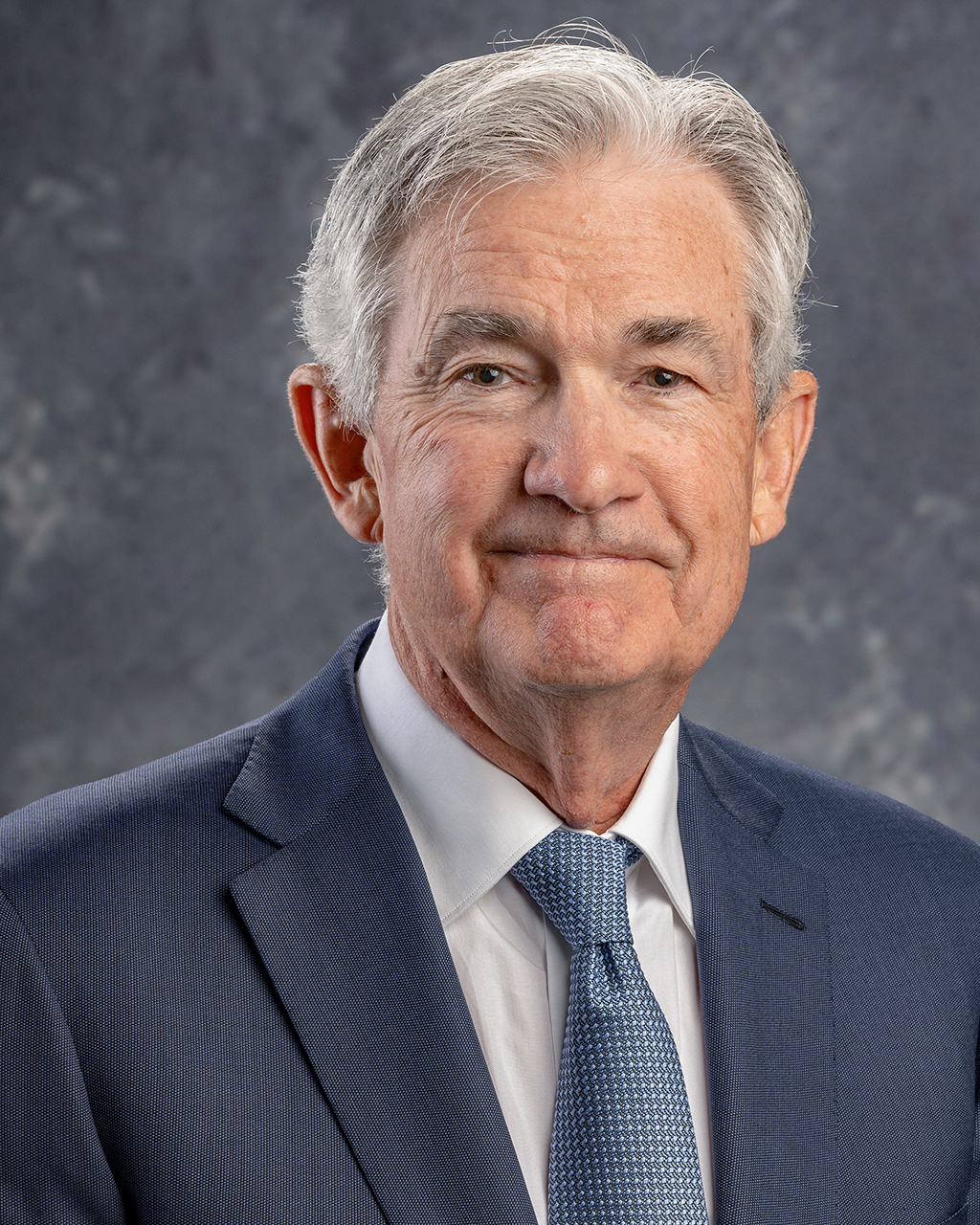
Federal Reserve Board Chairman Jerome H. Powell took office on February 5, 2018, for a four-year term. He was reappointed to the office and sworn in for a second four-year term on May 23, 2022. Public Domain.