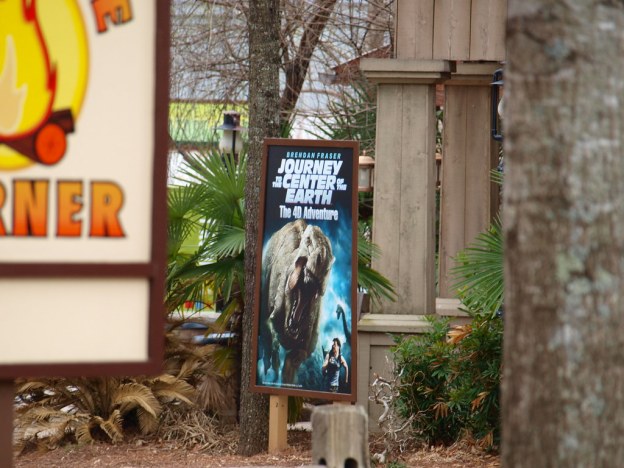
Feature Image: Promotion of a 2008 film adaptation of Journey to the Center of the Earth in 4D. “Journey to the Center of the Earth 4D Movie Sign” by rmanoske is licensed under CC BY-NC-ND 2.0.

Neon lights, warm marquee glow, and a line out the door—opening night at the Roxy as moviegoers queue for the 4D plunge into Journey to the Center of the Earth. “Warner Bros. Movie World – Journey to the Center of the Earth 4-D Adventure” by Mohd Fazlin Mohd Effendy Ooi is licensed under CC BY 2.0.
In this 3D science‑fantasy action‑adventure, Brendan Fraser stars as volcanologist Trevor Anderson, who sets out on a dangerous quest to uncover what happened to his missing brother. He’s joined by his 13‑year‑old nephew, Sean (Josh Hutcherson), and an Icelandic mountain guide, Hannah (Anita Briem). Their search plunges them into a vast, hidden world beneath the Earth’s crust—a luminous, prehistoric landscape filled with strange ecosystems, volcanic hazards, and living prehistoric creatures, including dinosaurs. Directed by Eric Brevig, the film takes a loose approach to Jules Verne’s 1864 novel, treating the book as an in‑story roadmap rather than a strict adaptation. The emphasis is on family‑friendly spectacle and immersive 3D effects, including early use of the 4DX format, which added motion, wind, water sprays, and other sensory elements in select theaters. Released on July 11, 2008, the movie earned $244.2 million worldwide on a $60 million budget. Critics admired its visual energy and inventive 3D sequences but found the plot predictable and Fraser’s trademark quips a bit on the cheesy side. Even so, the film became a reliable family favorite and spawned a sequel, Journey 2: The Mysterious Island (2012)—though Fraser did not return.
Journey to the Center of the Earth began as a science‑fiction novel published in 1864, 160 years ago, by Jules Verne (1828–1905). Verne’s story follows the fiery German geologist Professor Otto Lidenbrock, his anxious nephew Axel, and their unflappable Icelandic guide Hans Bjelke as they descend into the planet’s interior. Their expedition leads them through vast caverns, prehistoric landscapes, and encounters with living creatures long thought extinct.
Across three centuries, Verne’s subterranean adventure has proven irresistible. The novel has inspired multiple film, television, and radio adaptations, along with theme‑park attractions and reinterpretations that keep its blend of science, imagination, and danger alive for new generations.
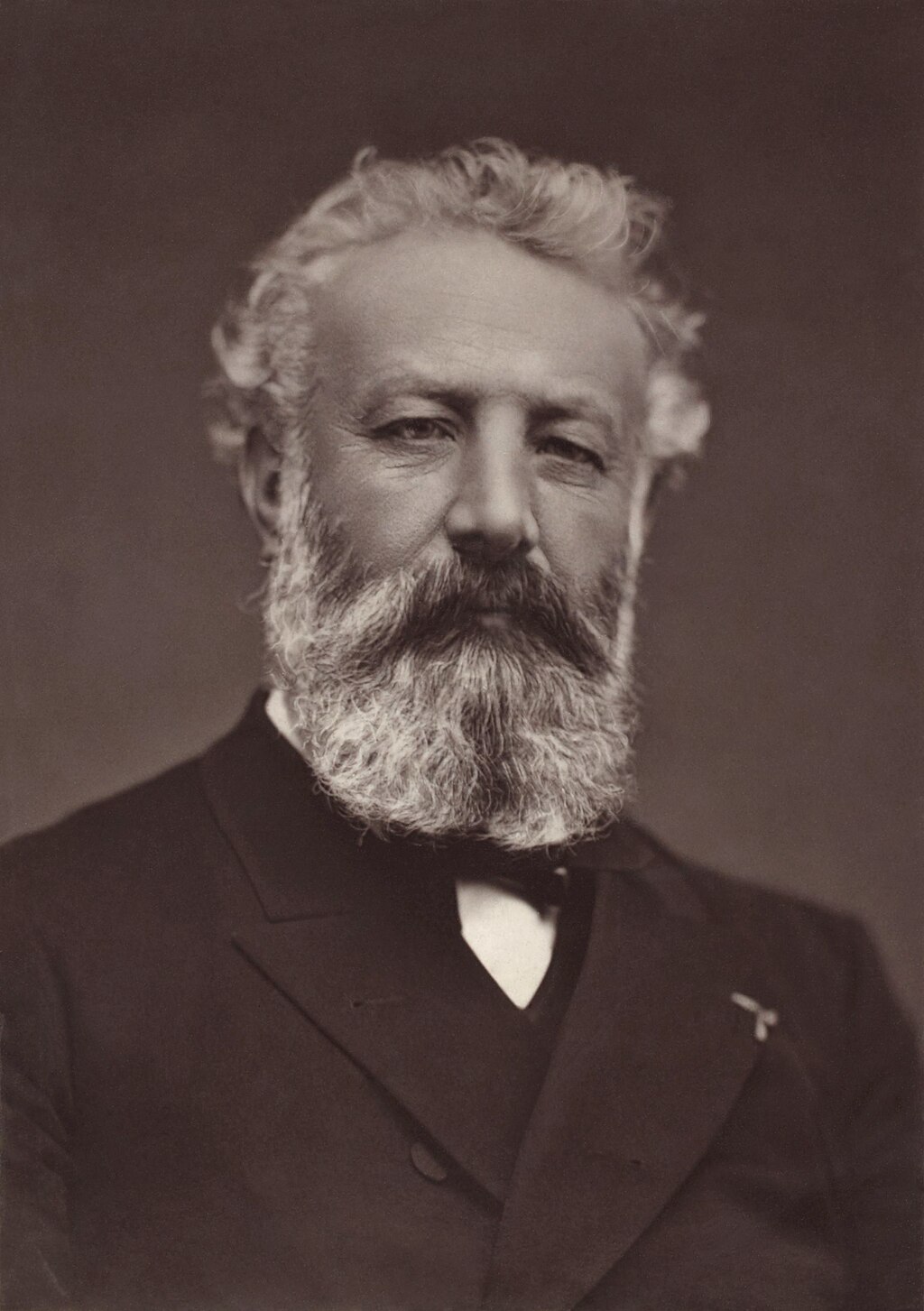
Photograph of Jules Verne in Nantes by Étienne Carjat (1828-1906). In Société de Géographie. Public Domain.
The story has been revisited many times, most famously in the 1959 20th Century‑Fox film starring James Mason, featuring a bold, atmospheric score by Bernard Herrmann. For a new generation, the tale resurfaced as a 1967 Saturday‑morning cartoon series, voiced by Ted Knight, Pat Harrington, and Jane Webb—a nostalgic favorite for many who grew up with weekend television. The enduring appeal of Verne’s adventure was underscored again in 2008, when no fewer than three separate film adaptations of Journey to the Center of the Earth were released. In the wake of the heavy marketing campaign for the high-profile theatrical version starring Brendan Fraser, other studios produced their own versions of the classic subterranean odyssey., including a TV movie and a direct to DVD low budget feature, each capitalizing and offering its own spin on the Jules Verne tale.
“Creatures of the Swamp,” the fourth episode of the 1967 animated Journey to the Center of the Earth series, originally aired on September 30, 1967, on ABC. In this 20‑minute adventure, Professor Lindenbrook builds a custom swamp buggy for Lars to navigate an underground marsh, but the mission quickly unravels when hostile moss creatures ambush and capture him. Count Saknussemm’s interference leads to Alec’s capture as well, forcing Lindenbrook and Cindy to enlist the help of the friendly local “swamp people” to mount a rescue. Ted Knight voiced both Professor Lindenbrook and the villainous Count Saknussemm.
The 1967 animated series wasn’t a direct adaptation of Jules Verne’s 1864 novel. Instead, it reworked the hit 1959 20th Century‑Fox film into a Saturday‑morning format. Co‑produced by Filmation Associates and 20th Century Fox Television, the show leaned into the movie’s commercially successful changes and added episodic, monster‑of‑the‑week fantasy adventures. As a result, the popular cartoon show followed Verne’s book only loosely, moving far from the novel’s harder science‑fiction tone.
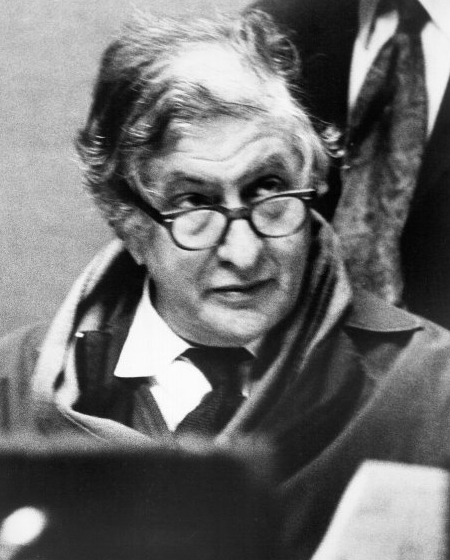
From the late 1950s to the mid-1960s, Bernard Herrmann scored a series of mythically-themed fantasy films, including 20th Century-Fox’s Journey to the Center of the Earth in 1959. Unknown photographer – Arlington Heights Herald, Arlington Heights, Illinois. Permission details: This work is in the public domain in the United States because it was published in the United States between 1929 and 1977, inclusive, without a copyright notice. For further explanation, see Commons:Hirtle chart as well as a detailed definition of “publication” for public art. Note that it may still be copyrighted in jurisdictions that do not apply the rule of the shorter term for US works (depending on the date of the author’s death), such as Canada (50 p.m.a.), Mainland China (50 p.m.a., not Hong Kong or Macao), Germany (70 p.m.a.), Mexico (100 p.m.a.), Switzerland (70 p.m.a.), and other countries with individual treaties.
Bernard Herrmann’s score for the 1959 film Journey to the Center of the Earth is often cited as one of the most inventive, audacious, and influential fantasy film scores of Hollywood’s Golden Age. Known for his iconic collaborations with Alfred Hitchcock (Psycho, Vertigo), Herrmann approached this project with a radical idea: he wanted to create, in his words, an “atmosphere with absolutely no human contact—the film had no emotion, only terror.”
To achieve that effect, Herrmann stripped the subterranean sequences of all stringed instruments, removing warmth and lyricism entirely. In their place, he built a massive, echoing wall of sound using five separate organs, evoking the scale and weight of vast underground chambers. For the lowest registers of the brass and woodwinds, he revived the serpent, a 16th‑century leather‑covered bass wind instrument whose raw, guttural tone added a primal edge. Its harsh, instinctive honks heighten the terror in scenes where the explorers are hunted by giant dimetrodons and lizards.
Of the three Journey to the Center of the Earth films released in 2008, the standout is easily Eric Brevig’s 4D adventure (below). Starring Brendan Fraser as the professor, Josh Hutcherson as his nephew, and Anita Briem as their guide, Hannah, it follows the spirit of Verne’s 1860s novel with surprising fidelity while delivering a lively, effects‑driven thrill ride.
Most journeys belong to the private realm—scribbled into diaries never meant to be read, then tucked away or forgotten. But some journeys break past the personal and become universal, the kind of adventures where the “I” disappears and larger‑than‑life protagonists take over. Jules Verne’s Journey to the Center of the Earth is one of those classics, a story that leaves the individual behind and invites everyone into its grand, imaginative descent.
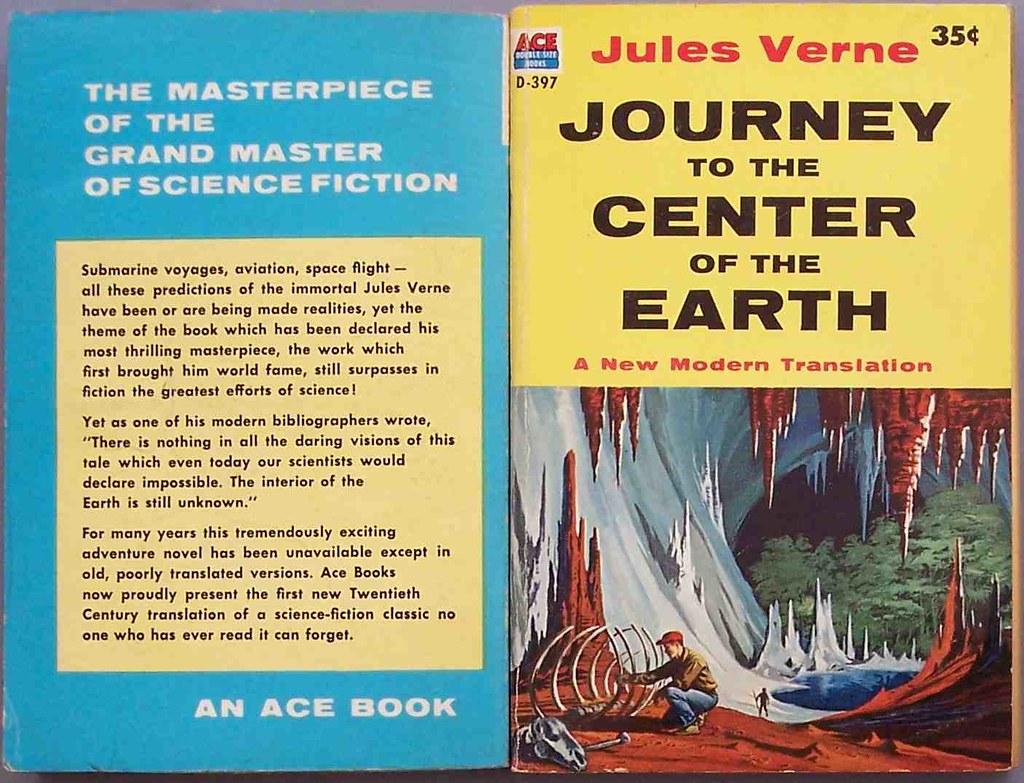
The novel’s first English edition was published in London in 1871. Journey to the Center of the Earth has appeared in various other English translations and has never gone out of print. “journey to the center of the earth” by cdrummbks is licensed under CC BY 2.0.