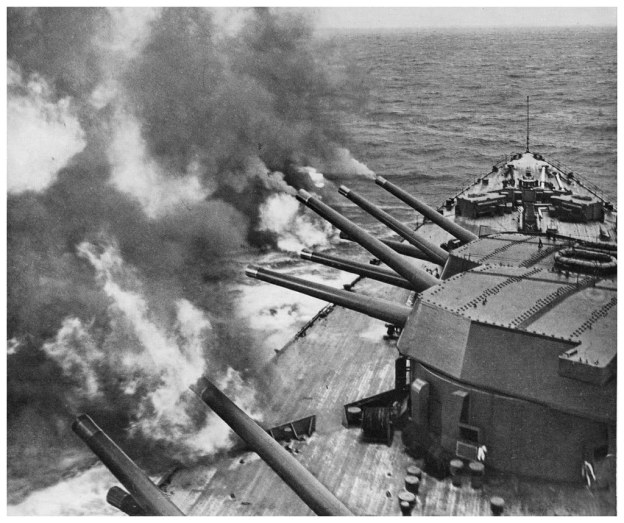
FEATURE image: HMS Rodney unloading her guns. HMS Rodney’s 16-inch guns played a pivotal role at the last battle with the Bismarck in the North Atlantic in May 1941. The British battleship’s powerful broadsides at the Bismarck caused significant structural damage that sunk the German warship. “HMS Rodney lightens her load sometime in the 1930’s.” by WWII in View is marked with Public Domain Mark 1.0.
In 1941 the Allies determined the war would need to be won in the Atlantic.1 From 1939 to 1945 the Battle of the Atlantic was the longest continuous military campaign in World War II. It stemmed from the start of the war in Europe with Hitler’s invasion of Poland on September 1, 1939, and the declaration of war by France and Britain on the Third Reich. This was followed by the Battle of Britain and Fall of France in 1940 and the Allies’ declaration of war on Italy on June 10, 1941. The United States, as a non-belligerent and working through its neutrality laws, aided the Allies, namely Britain, through cash and carry and lend-lease purchases of large amounts of American-made armaments as well as providing reconnaissance to the British navy and air force who were in the fight against German U-boats and battleships aggressively attacking and sinking the merchant ships headed for Britain.
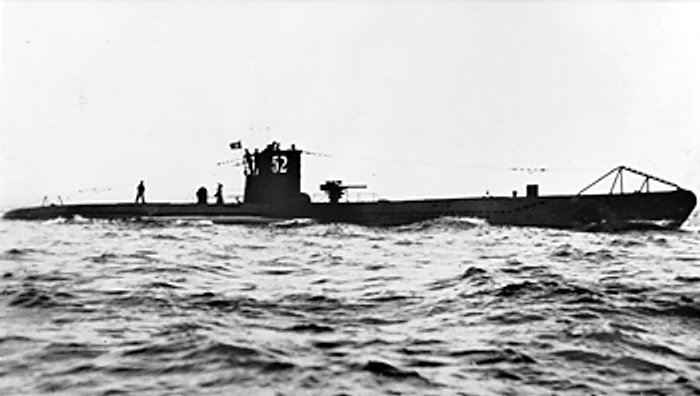
German submarine U-52. Public Domain.
A massive nearly square-shaped zone of conflict surrounded Great Britain and Iceland with its approximate boundaries from the southeast coast of Greenland across the Atlantic to France and north between Britain and Norway and back around Iceland towards Greenland. Since Denmark was occupied by German forces, the United States in April 1941 occupied their abandoned colony of Greenland and designated it as part of the Western hemisphere to categorize American non-belligerent military activity as self-defense. The Americans took the same approach with Iceland sending troops as a forward, if ostensibly defensive, posture.2
This situation brought the navies of the United States, Canada and Great Britain together as the Allies provided escort to the merchant ships into a combat zone with the German Kriegsmarine (navy), specifically U-boats (submarines) and warships, as well as the Luftwaffe (air force), who were severely disrupting the supply line. The commanders of the opposing forces were both World War I veterans. Vice-Admiral Gilbert O. Stephenson (1878-1972), a pioneer of anti-submarine techniques in the First World War, was training commander of the British escort groups while Admiral Karl Dönitz (1891-1980), whose navy career began before the Great War was the commander of the German U-boat fleet.

Vice-Admiral Gilbert O. Stephenson, 1929. Stephenson who served in World War I was recalled at the start of World War II and aided in the evacuation of Dunkirk. In 1940 Stephenson was tasked with setting up the training base at Tobermory on the Isle of Mull in the Scottish Inner Hebrides. Stephenson was a noteworthy disciplinarian, and his training vision and methods had an influence within the service after the war ended. The Vice-Admiral believed the most important priorities for trainees were, in order, (1) to instill the will to win; (2) to accept discipline; (3) to execute a highly competent administration; and, (4) to display technical proficiency. Public domain.

German officer Karl Dönitz on the U-39 during World War I. Public domain.
Until the attack on Pearl Harbor by Japan on December 7, 1941 the United States was a non-belligerent and Hitler wanted to keep it that way. Germany was mounting its invasion of Russia called Operation Barbarossa, which, involving almost 4 million troops, was the largest offensive operation in military history. For American internationalists looking for a way into the war in 1941, American neutrality and Lend-Lease laws along with public opinion complicated that desire. American opinion, markedly isolationist through the 1930’s and into the early 1940’s, was, in spring and summer 1941, split on whether the U.S. should escort merchant marine vessels while a large majority was against entering the war. Most Americans polled believed the United States had already been doing too much for Britain.3 In April 1941, after a year of the largest armament production program in U.S. history, President Roosevelt decided for American patrols comprised of ships and airplanes, rather than escorts or convoys, to insure the delivery of needed supplies to Britain and other Allied combatants. The mission, started without diplomatic or public fanfare, gave solely reconnaissance aid to Britain. This role in an expanding territory in the Atlantic was justified by FDR as hemispheric self-defense from the Nazis. This position was reinforced by Roosevelt in a fireside chat with the American people on May 27, 1941. By then the Bismarck was under attack and sunk. FDR’s rationale was based on the premise that the “supreme purpose” of the Axis powers was to achieve world domination by its control of the high seas and the capture of Great Britain was key to that endeavor.4

In 1941, before America’s entry as a belligerent into World War II, President Roosevelt aided the Allies with immense U.S. armament production sent to Britain and American patrols in the North Atlantic to provide intelligence to the British navy to assure their safe delivery to Britain. Further, FDR worked within the parameters of U.S. laws as well as listening to, and helping shape, the American people’s sentiments as to how much to aid Britain short of war. President Roosevelt with Microphones, September 11, 1941 (NARA). “Public Domain: President Roosevelt with Microphones, September 11, 1941 (NARA)” by pingnews.com is marked with Public Domain Mark 1.0.
In the face of these American patrols that FDR spoke of, Hitler was, after the fall of Denmark, Norway, the Low Countries, and France, looking east. The Germans were on the offensive from Yugoslavia to Greece to North Africa. Though the invasion of Britain was off, the Atlantic remained under siege. In April and May 1941 German wolfpacks (coordinated attacks by U-boats on convoys) took a heavy toll on British merchant shipping in the combat zone south of Iceland.5
May 24, 1941.
On May 24, 1941, the German battleship Bismarck, accompanied by the cruiser Prinz Eugen, left Norway for the Atlantic. The British intercepted the German ships in the Denmark Strait between Greenland and Iceland, but the Bismarck fought back and sank the HMS Hood, the biggest battlecruiser in the world at that time, which exploded with the loss of 1,415 of its crew. The sinking of the Hood marked what remains the single greatest loss of life in Royal Navy history.
The battle also damaged the Prince of Wales. The Bismarck, under the command of Günther Lütjens (1887-1941), continued its passage south to the convoy routes but had sustained battle damage to its fuel tanks which led to subsequent flooding. Pursued by the damaged Prince of Wales and cruisers Norfolk and Suffolk, the Bismarck, traveling more slowly and trailing oil, changed course to head to Brest for ship repairs. In short order, the Bismarck turned on the British pursuers to allow the Prinz Eugen to escape into the Atlantic.
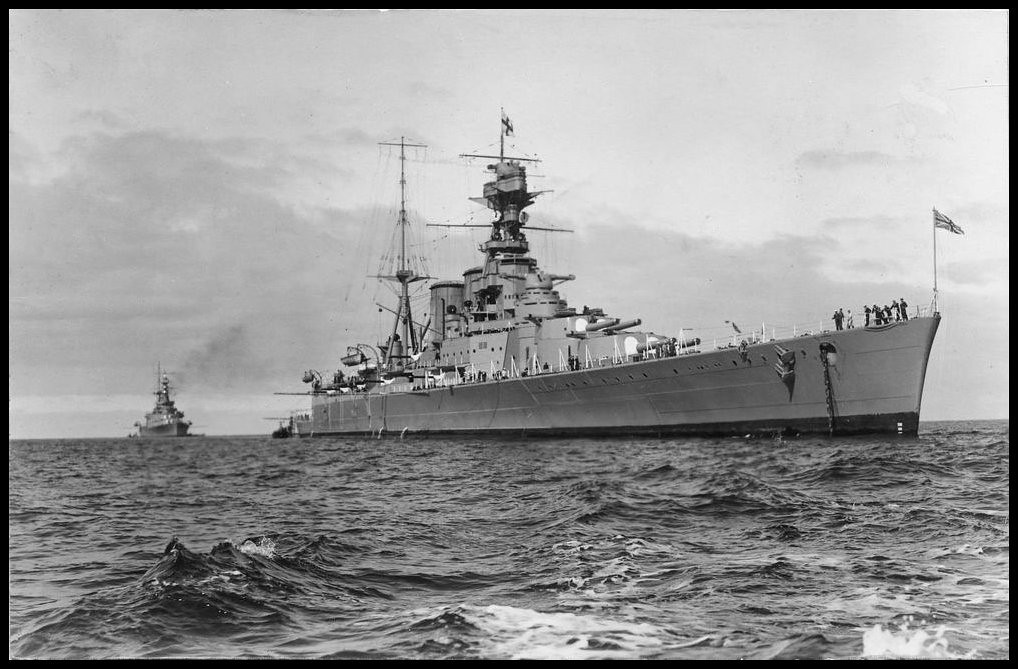
British battleship Hood. The biggest battleship in the British navy, the Hood was sunk in the Denmark Strait by the German Bismarck on May 24, 1941, with a staggering British loss of 1,415 crew lives. “H.M.S. Hood 1924” by State Library of South Australia is licensed under CC BY 2.0.
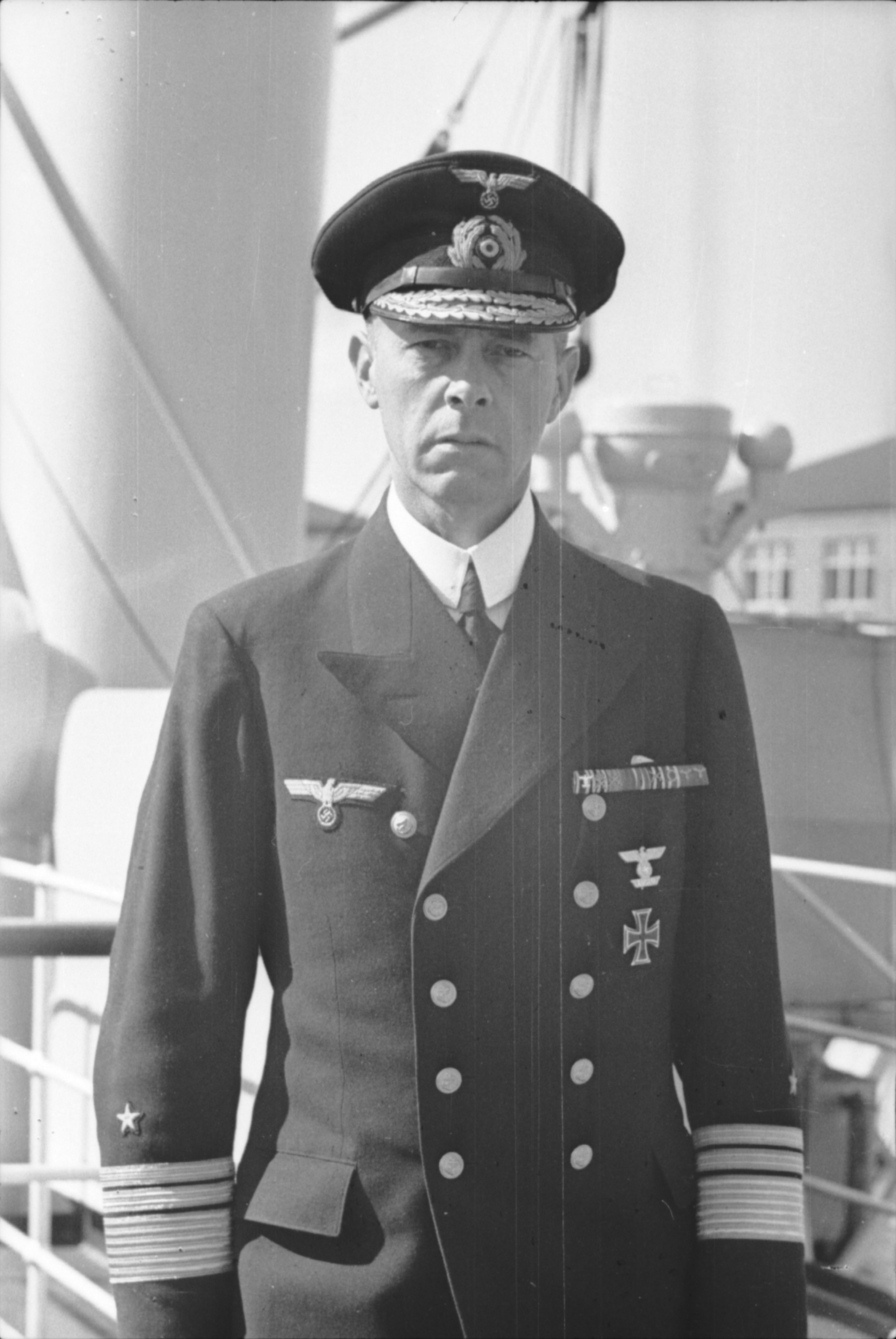
Günther Lütjens (1887-1941). Commander of the Bismarck. It was two days after celebrating his 52nd birthday that Adl. Lütjens perished in battle with his crew on May 27, 1941. “<div class=’fn’> <div class=’language de’ style=’display:inline;font-weight:bold;’>Günter Lütjens</div> <abbr class=’BArchtooltips’ title=’Short title assigned by the archive’><span typeof=’mw:File’><span><img src=’https://upload.wikimedia.org/wikipedia/commons/thumb/5/53/Info_non-talk.svg/20px-Info_non-talk.svg.png’ decoding=’async’ width=’15’ height=’15’ class=’mw-file-element’ srcset=’https://upload.wikimedia.org/wikipedia/commons/thumb/5/53/Info_non-talk.svg/40px-Info_non-talk.svg.png 1.5x’ data-file-width=’62’ data-file-height=’62’></span></span></abbr></div>” by Unknown author Unknown author is licensed under CC BY-SA 3.0.
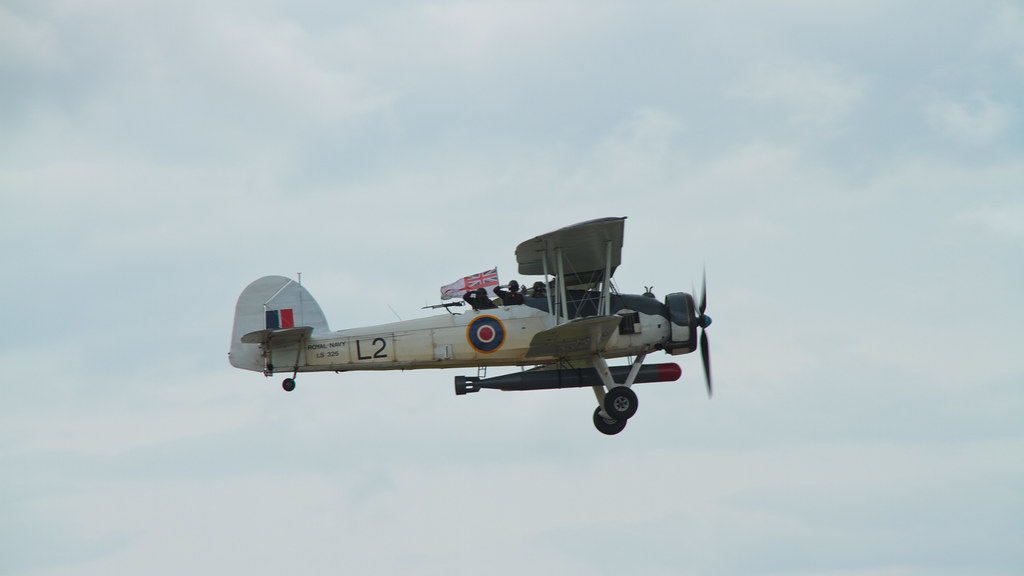
That evening, Fairey Swordfish planes — a resilient British torpedo bomber biplane that originated in the early 1930s —took off from the Home Fleet’s aircraft carrier Victorious for its first attack on the Bismarck. They engaged the warship but without important effect. For the next 31 hours, since the sinking of the Hood, the Bismarck eluded the English fleet which was looking for it further to the west.
May 25, 1941.
Commander Lütjens was not aware that the British had lost him. In the early hours of May 25, 1941, he broke radio silence to send a coded message to Germany. Though its content was indecipherable, the British heard it and observed that the German commander had stopped communicating with Wilhelmhaven in Germany and began talking with Paris. This was a break that allowed the British to figure closely the actual vicinity of the enemy warship and that it was heading to France. British warships in search of the Bismarck were provided the new coordinates and the orders to pursue accordingly. This included King George V and Norfolk to be joined by a flotilla of 5 destroyers under the command of Captain Philip Vian (1894-1968).
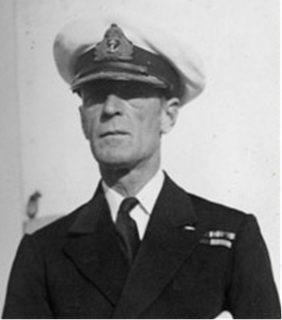
British Captain Philip Vian in 1940. Taken before 1957, this work created by the United Kingdom Government is in the Public Domain.
May 26, 1941.
At 10 a.m. the Bismarck was spotted by an American pilot in one of the American-made Catalinas provided by Roosevelt to the British war effort. Flying out of a base in Northern Ireland, the plane was part of a squadron that had been assigned a specific search area for the Bismarck. It was piloted by American Ensign Leonard “Tuck” Smith (1915-2006) whose role was to familiarize RAF Pilot Officer, Dennis Briggs, with the plane’s controls. Though revealed long after the war’s end, Smith was credited with being the first person to spot the Bismarck before the final battle. He was awarded the Navy’s Distinguished Flying Cross for his role in the sinking of the Bismarck. Leaving in the middle of the night on May 26, 1941, the weather was bad with a ceiling of about 100 feet. According to Smith’s report, it took six hours to reach the search area. As soon as they spotted the Bismarck, they came under intense anti-aircraft fire from the warship and Smith had to take violent evasive action to escape getting blown out of the sky. Smith and the crew soon lost contact with the battleship, but their messages as to its precise location had been received. British ships and planes soon converged on an intercept course. Already the aircraft carrier Ark Royal had sent scouting planes and a pair of Swordfish spotted the enemy warship shortly after Smith did. When Smith landed his Catalina back in Northern Ireland at 9: 30 p.m., 18 hours after having taken off, it would be just 12 more hours that the 35,000-ton Bismarck would be at the bottom of the Atlantic Ocean.
After the Bismarck’s location was known, Captain Philip Vian’s flotilla that was to join King George V in the search for Bismarck, changed course and headed directly for the Bismarck. Three days earlier, on May 23, 1941, the British naval formation known as Force H had left Gibraltar for convoy duties that included the aircraft carrier HMS Ark Royal, battlecruiser Renown, and light cruiser Sheffield. On May 26, 1941, Force H set course to intercept the Bismarck.
Starting late on Monday, May 26, 1941, the last battle of the German battleship Bismarck started in the Atlantic Ocean The ship was sunk about 350 miles west of the port city of Brest in France. At 2:50 p.m. on May 26, 1941, fifteen Fairey Swordfish planes took off from the aircraft carrier HMS Ark Royal to attack the Bismarck.

The British aircraft carrier HMS Rodney with fighter biplane. “Supermarine Walrus being hoisted onto HMS RODNEY (4888758875)” by whatsthatpicture from Hanwell, London, UK is licensed under CC BY 2.0
The attack failed and the British cruiser Sheffield fell under friendly fire. The British staked everything on one more attack to stop the Bismarck before it could safely enter into Brest harbor the next day. At 7:10 p.m., a second sortie of 15 Swordfish planes took off from the HMS Ark Royal armed with conventional torpedoes. At 8:47 p.m., these Swordfish began their attack. The Bismarck received a direct hit but it was not mortal. A second torpedo hit the ship’s stern that jammed and disabled the battleship’s rudders crippling it. The King George V and HMS Rodney joined the fray from the northwest about 6.00 p.m. and, at 10:00 p.m., the Sheffield directed Captain Vian’s destroyers towards the target where they harassed an unmaneuverable Bismarck with torpedo attacks through the night.
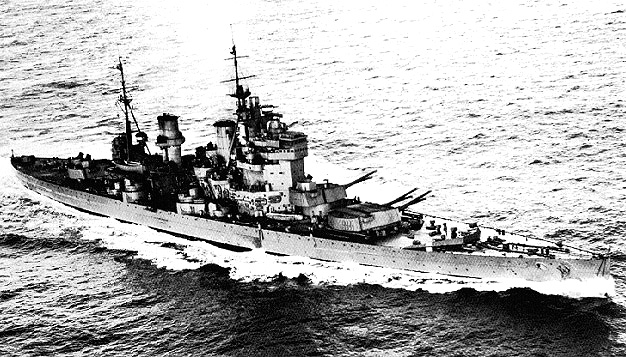
The battleship HMS King George V in 1941. Commanded by Admiral Sir John Tovey, it was one of the ships which sank the Bismarck. Public Domain.
May 27, 1941.
The next day, Tuesday, May 27, 1941, the Bismarck, unable to steer or repair the rudder, expected an attack from the British battleships. At 8:30 a.m., they readied battle stations. At 8:43 a.m. the HMS Rodney and HMS King George V, joined by cruisers and destroyers, including the HMS Norfolk and HMS Dorsetshire, spotted the Bismarck. At 8:47 a.m., from a distance of over 10 miles, the battleship HMS Rodney opened fire commencing the final battle. Though Bismarck returned fire, with its disabled rudder, its gun platforms were unstable due to uncontrollable movements on a rising sea in gale-force winds. At two minutes past 9 a.m. the HMS Rodney unloaded its 16-inch guns and hit the Bismarck’s forward superstructure, severely damaging the bridge, command facilities, fire control, and observation posts, as well as killing most of the warship’s senior officers. Both HMS Rodney and HMS King George V engaged Bismarck in heavy gunfire with increasing precision as British shells dismantled the ship’s command structure and gun turrets making the Bismarck a floating hulk. With Bismarck’s ability to return fire random and infrequent the British warships came into closer range for the German warship’s final neutralization. HMS Norfolk and HMS Dorsetshire joined HMS Rodney to fire on Bismarck with its 8 -inch guns and torpedoes. With its four main gun turrets inoperable, at 9.31 a.m., the Bismarck had lost the capacity to fight back with orders down the chain of German officers to scuttle and abandon the ship.
Nearly 3,000 projectiles were used against the Bismarck to achieve this outcome in the final battle. In the final stages of the battle the British ships surrounded the Bismarck in a crossfire that overpowered the German crew. In addition to significant structural damage, this intense continuous British gunfire set off fires on the Bismarck that caused secondary explosions.
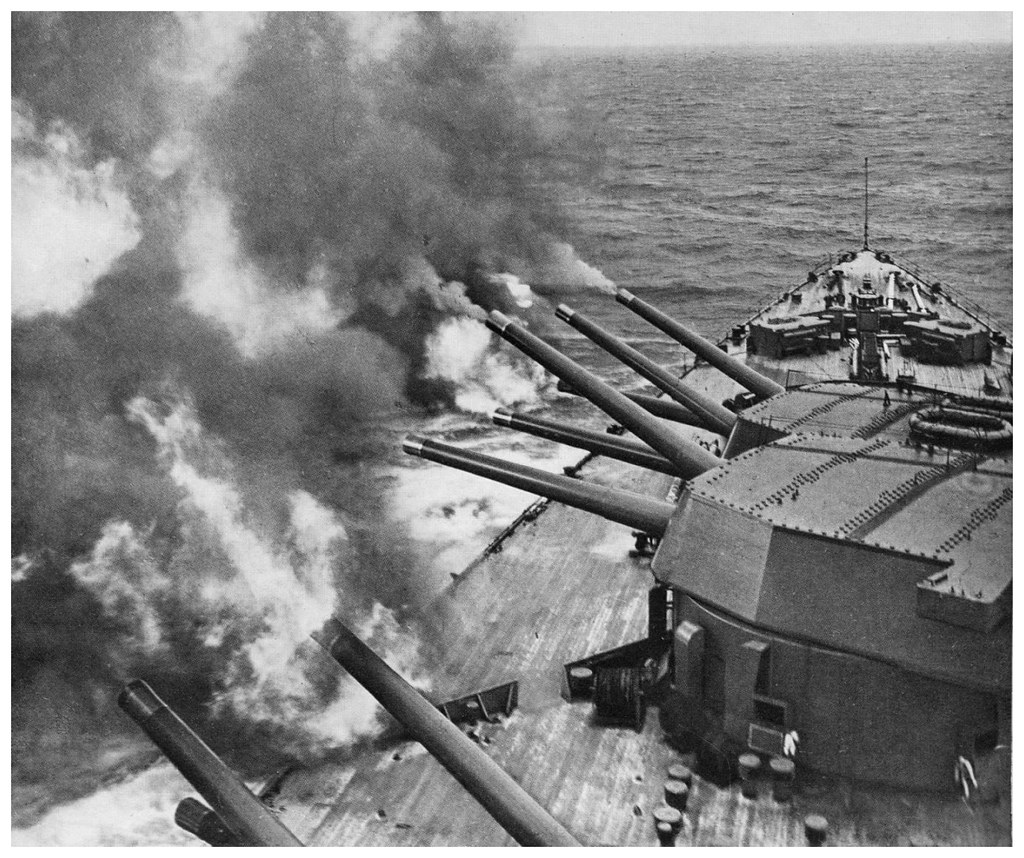
Following the battle with the Bismarck, the HMS Rodney continued its service in World War II. In November 1942, the HMS Rodney provided naval gunfire support in Operation Torch for the Allied landings of North Africa. In 1943 during the Italian Campaign the HMS Rodney provided support for the Allied landing in Sicily (Operation Husky). In 1944, as part of Operation Neptune (the navy component of Operation Overlord), the HMS Rodney provided gunfire support during the D-Day Normandy beach landings. Following the war, in 1948, the HMS Rodney was sold for scrap. “HMS Rodney lightens her load sometime in the 1930’s.” by WWII in View is marked with Public Domain Mark 1.0.
The British kept firing, the HMS Rodney at point-blank range and the King George V from a greater distance to lob in shells. At 10:05 a.m., the Bismarck was sunk. In the battle’s last stage, the British torpedoes tore holes in the Bismarck’s hull hastening the ship’s decline into the sea. Of the Bismarck’s crew of 2, 200 men only 114 survived. The Luftwaffe that the Bismarck hoped would intervene was not able to fly in meaningful number due to bad weather. The British left the rescue mission with hundreds of German sailors still in the water as a German U-boat periscope had been spotted.
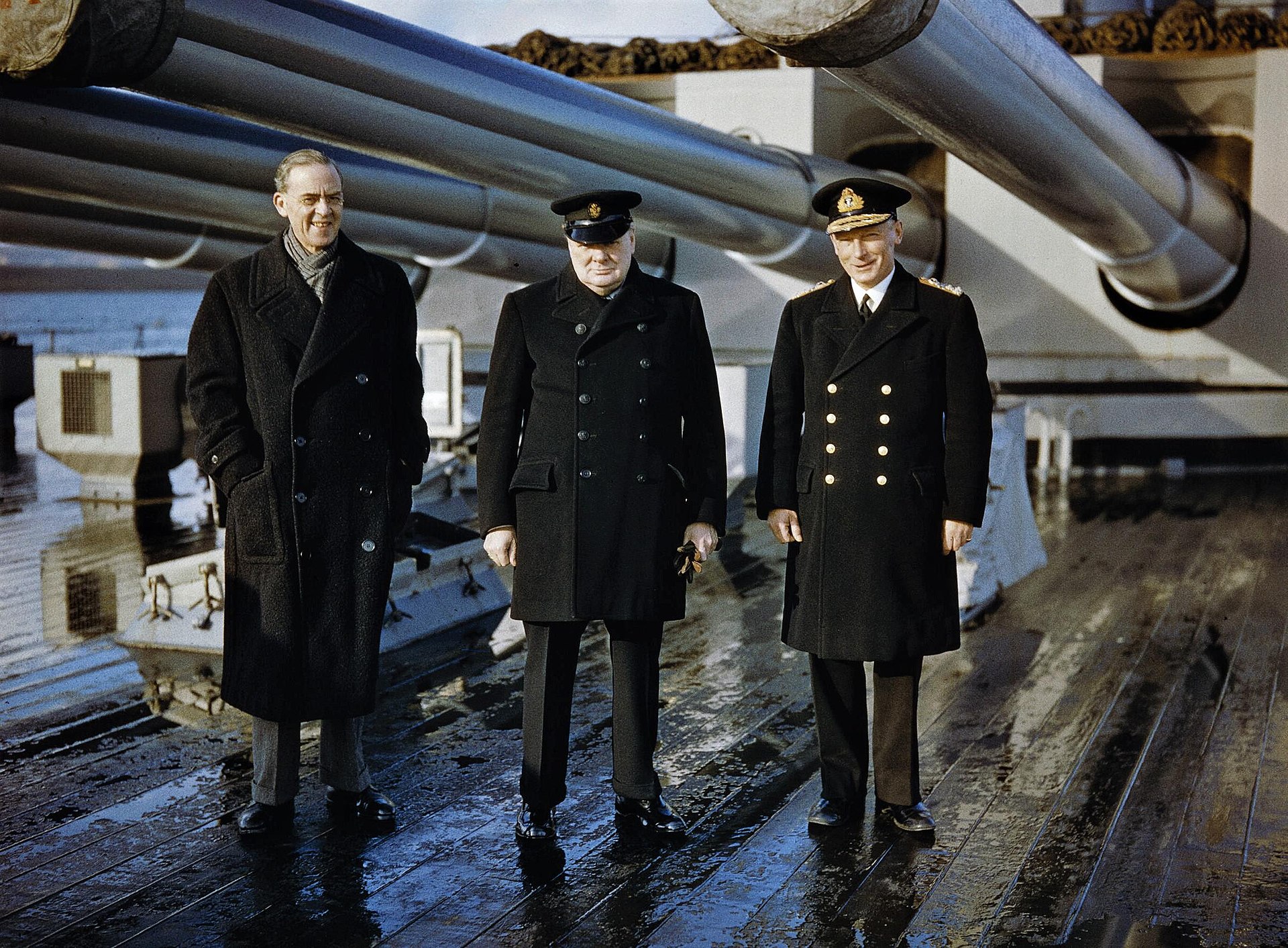
Winston Churchill with the Lord Privy Seal, Sir Stafford Cripps, and the Commander-in-Chief Home Fleet, Admiral Sir John Tovey, on the quarterdeck of HMS KING GEORGE V at Scapa Flow, 11 October 1942. Adm. Tovey who made the above observations about the Bismarck served as Commander in Chief of the Home Fleet from 1940 to 1943 and served as Commander in Chief, Nore from 1943 to 1946. Adm. Tovey was First and Principal Naval Aide de Campe to the King from January 1945. Public Domain.
After the sinking, Admiral John Tovey (1885-1971) said: “The Bismarck had put up a most gallant fight against impossible odds worthy of the old days of the Imperial German Navy, and she went down with her colours flying.”6
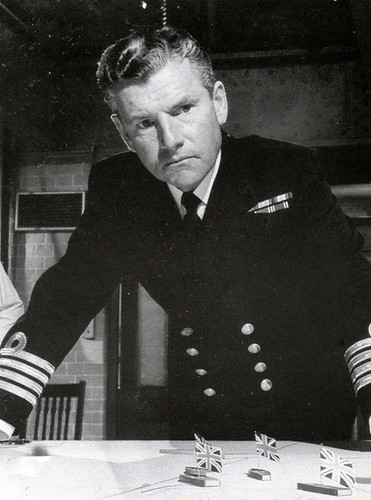
In 1960 the British black-and-white film production, Sink the Bismarck!, was a hit in the United States and, after its first run, regularly broadcast on TV through the 1960’s and 1970’s in reruns. It co-starred Kenneth More as Captain Jonathan Shepard who coordinates the hunt for Bismarck aided by Women’s Royal Naval Service Second Officer Anne Davis (Dana Wynter). More had served as a Royal Navy lieutenant on HMS Victorious during World War II. “Kenneth More, ‘Sink the Bismarck’, 1960” by thefoxling is licensed under CC BY-NC-SA 2.0.
FOOTNOTES:
1. Freedom From Fear: The American People In Depression and War, 1929-1945, David M. Kennedy, NY: Oxford University Press, 1999, pp. 490 and 493.
2. Freedom from Fear, p. 492.
3. Operation Barbarossa – Freedom from Fear, p. 495; polls- Ibid., p. 491.
4. Freedom from Fear, pp. 492-493.
5. The Reluctant Belligerent: American Entry Into World War II, 2nd edition, Robert A. Divine, NY: John Wiley & Sons, 1979, p. 117.
6. Last battle of Bismarck – Wikipedia – retrieved October 18, 2025.
SOURCES:
The Reluctant Belligerent: American Entry Into World War II, 2nd edition, Robert A. Divine, NY: John Wiley & Sons, 1979.
Freedom From Fear: The American People In Depression and War, 1929-1945, David M. Kennedy, NY: Oxford University Press, 1999.
https://navalhistoria.com/hms-rodney-helped-to-sink-the-bismarck/#:~:text=The%20final%20battle%20between%20HMS%20Rodney%2C%20HMS%20King,turning%20point%20in%20the%20Battle%20of%20the%20Atlantic. – retrieved October 14, 2025.
The American Who Helped Sink the Bismarck | Defense Media Network – retrieved October 15, 2025.
Gilbert Stephenson Explained – retrieved October 18, 2025.