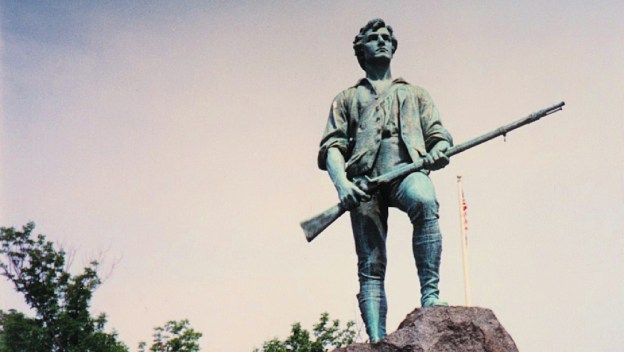
PUBLISHED APRIL 19, 2025 7pm CT. Feature image: Lexington Minute Man, 1899, by H. H. Kitson (c.1863-1947) stands in Lexington Green west of Boston, Massachusetts. Although called Minute Man, the statue is meant to represent the local Lexington militiaman, colonists of many ages and backgrounds, who volunteered to be first responders to military and other threats. The actual “minute men” was part of an elite subset of militia who were young and fit and able to respond to the greatest danger and challenge. Author’s photograph, July 1989.
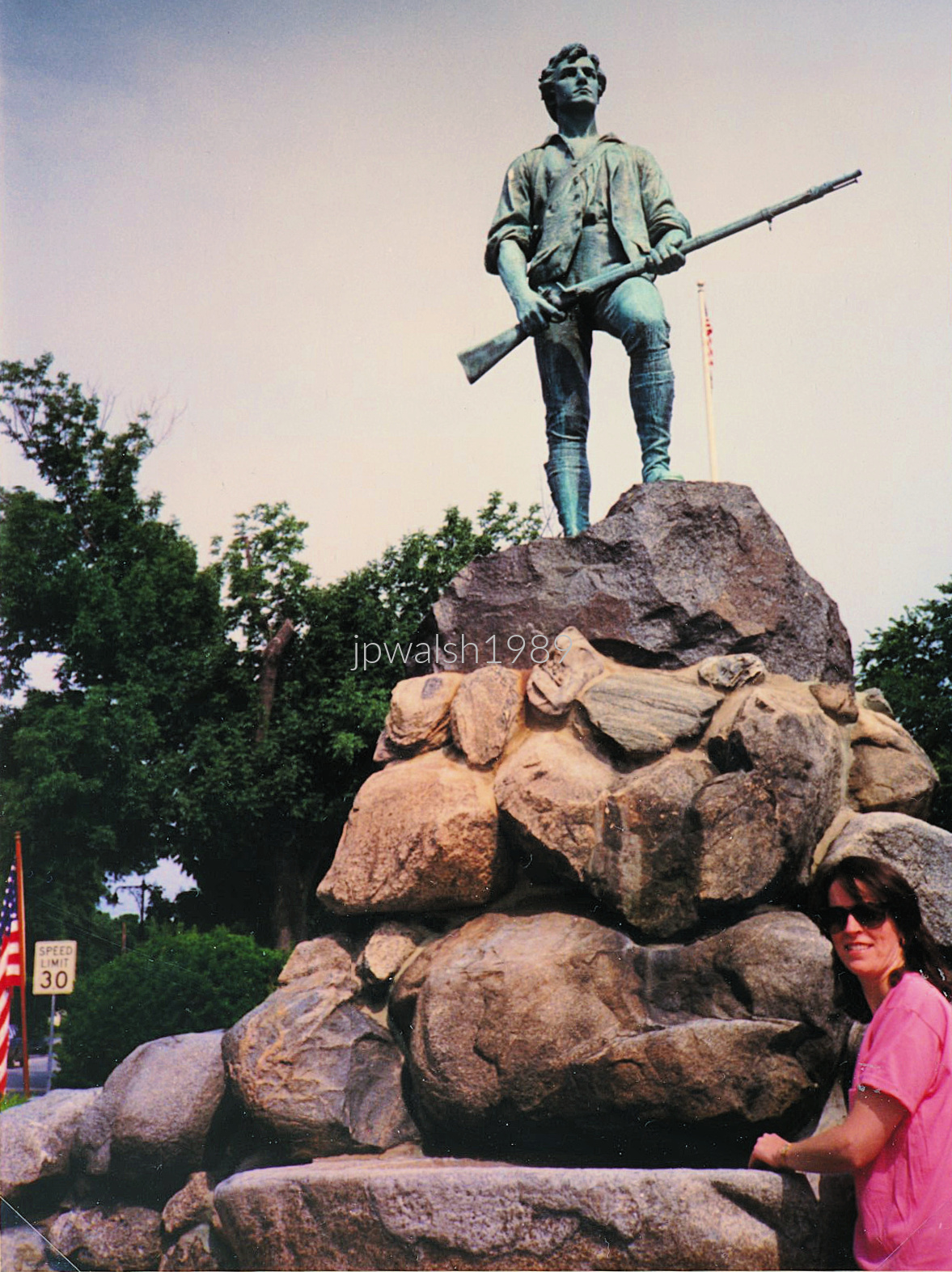
At the foot of the minuteman monument, visitors arrive in a steady flow, drawn to this enduring chapter of early American history. The bronze figure, rifle held in the classic Revolutionary‑era stance, recalls the citizen‑soldiers who first stepped forward to defend their towns. According to the National Park Service, the Minute Man National Historical Park—which includes Battle Road and its surrounding historic sites—welcomes more than 1 million visitors each year. see – Tourism to Minute Man National Historical Park contributes $102 million to local economy – Minute Man National Historical Park (U.S. National Park Service) – retrieved April 19, 2025.
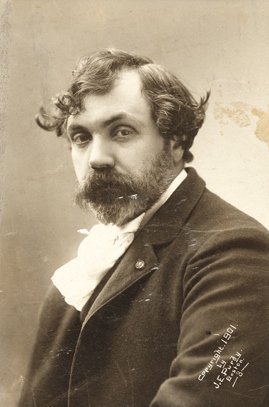
H.H. Kitson, sculptor of the famed Lexington Minuteman, was born in England and immigrated to the United States as a teenager. After studying art in Paris, he returned to New York in 1884 and moved to Boston two years later, where he established a studio, taught, married one of his students, and raised three children. The monument was commissioned in 1898 for $10,000 by railroad executive and U.S. Congressman Francis Brown Hayes, erected in 1899 facing the route of the British advance, and formally unveiled on April 19, 1900, for the 125th anniversary of the battle. Public Domain. see – https://monuments.freedomsway.org/monuments/minute-man-statue/ – retrieved April 19, 2025.
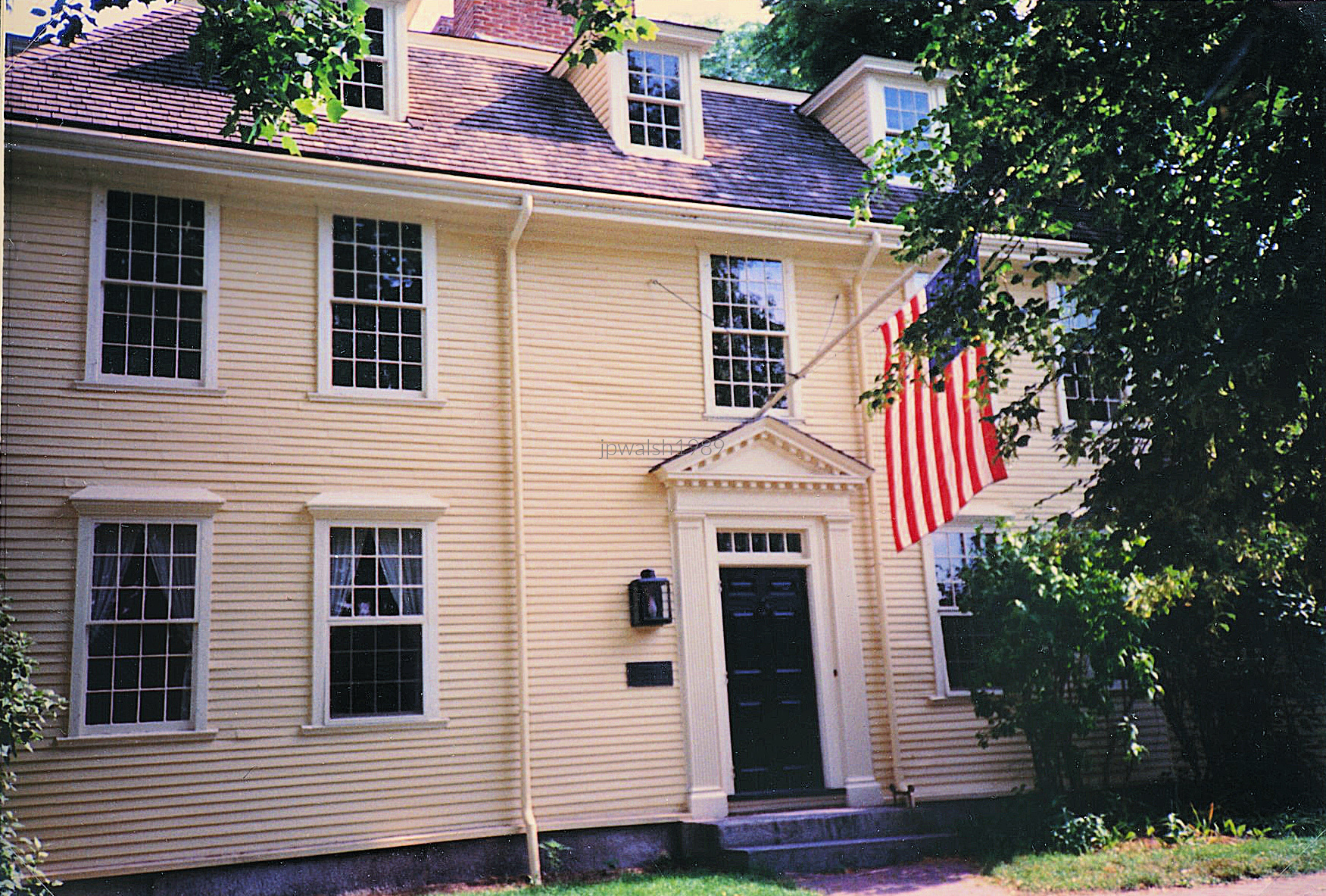
On April 19, 1775, local militiamen stepped out from Buckman Tavern beside the Lexington common and formed two lines to face the advancing British troops. Their stand resulted in the first casualties of the American Revolution. During our visit, we also learned that the phrase “sleep tight” comes from the rope‑laced frames that supported Colonial‑era mattresses. Author’s photograph, July 1989.
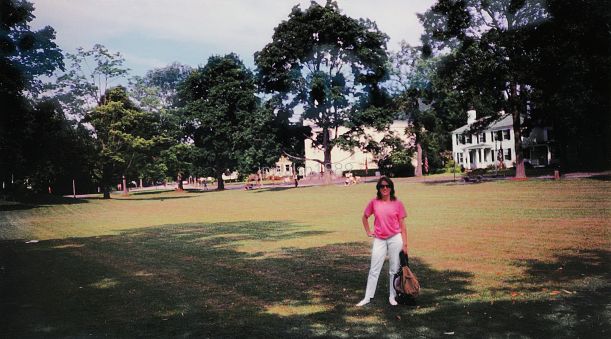
Author’s wife on Lexington Green where the first shots of the War of American Independence were fired on April 19, 1775. Author’s photograph, July 1989.
Also on April 19, 1775, the British approached the town of Concord where the American colonists sprang into action. After an alarm rider notified minutemen and militia, scouts were sent out to reconnoiter British movements. They heard the cackle of gunfire at Lexington Green and, learning of this martial situation, Concord prepared. The British advanced to Concord and the colonial militia strategically retreated past the North Bridge to watch what the British would do. Meanwhile the colonists were checking on the safety of their own military stores. With Concord effectively in British hands the Regulars moved out to take the town’s two bridges over the Concord River. The South Bridge was taken but the North Bridge proved more problematic. They crossed the bridge but encountered the colonists who had moved past it and into an elevated position. Loyalists in town informed the British where the colonists kept their military stores filled with supplies such as gun powder, cannon, shot, and flour. The colonists had their own intelligence network and had moved these stores to other hidden locations. At a farm where they thought the military supplies to be stored, the British forced a woman who lived there, one Rebecca Barrett, to make them breakfast as they searched the premises. But they found, as the colonists planned, nothing. Although there were kegs of gunpowder stored in the farm next door, the British didn’t go look.
DO NOT FIRE UNLESS FIRED UPON.
Meanwhile, the British held the two Concord bridges and waited for their search party to return. At the same time, the American colonists were getting a better look at their red-coat adversaries. As the Americans held a military council, their growing military presence forced the British who had crossed the bridge to retreat back to it. Armed militiamen were streaming in from several towns and formed a formidable front. As the British were setting fires in downtown Concord, the American colonists could see the flames rising from their position on the high ground. Because of these fires (the British were burning carriages) the Americans decided to march to the North Bridge so to cross into town to prevent the British from burning it down. Fully expecting a confrontation with the British, the militia companies loaded their weapons but were told not to fire unless fired upon. Approximately 400 militia men marched in order by company seniority down towards the North Bridge. There were less than 100 British guarding the bridge. With the coming American militia the British retreated around the bridge and considered this American action as an attack. There were a flurry of orders flying around the field of action to the point of chaos. The British debated marching into the field to meet the approaching Americans. They also debated ripping up the bridge so the Americans could not cross. They finally decided on a firing formation in the street at the base of the bridge.
SHOT HEARD ‘ROUND THE WORLD.
In the chaos the Americans arrived to the bridge. The British fired directly into the group and wounded and killed men. “The balls whistled well,” recalled a militia soldier. One American was shot through the throat. Another under and through the eye. One more through the heart. In a matter of seconds there were six total casualties. The Americans were then ordered: “Fire, for God’s sake fire!” A hail of bullets was shot into the British. Three were killed and nine wounded. Many of the British fled towards town. As the Americans chased the British, one militiaman struck a hatchet blow into the head of a wounded British soldier.
The British were quickly reinforced and ordered to march back to the bridge. But there was no more firing. The militia dispersed from the bridge though there was a huge influx of militia coming into Concord from several towns in all directions. The militiamen knew the terrain and its backroads and could converge quickly, directly and stealthily. Though the British asked for reinforcements (1,000 men) from Boston, nothing happened. The British retreated though Concord Bridge marked the beginning of a massive battle that raged over 16 miles along the Bay Road from Boston to Concord, and included some 1,700 British regulars and over 4,000 Colonial militia. see – https://www.nps.gov/mima/north-bridge-questions.htm – retrieved April 19, 2025.
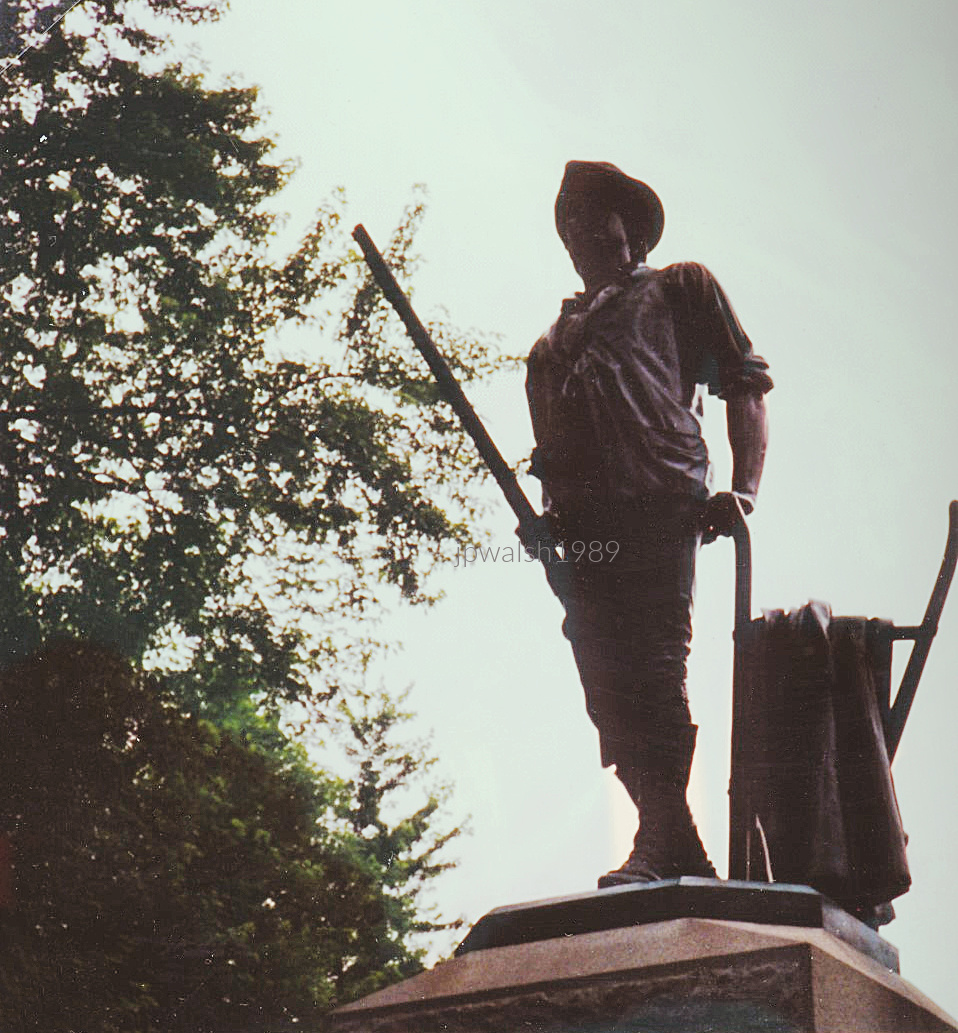
The Minute Man statue of 1875, created by Daniel Chester French (1850–1931), was unveiled on April 19, 1875, during the centennial commemoration of the battles of Lexington and Concord. Set near the site where the first colonial militiamen fell in Concord, the seven‑foot bronze was cast from old Civil War cannons by the Ames Foundry of Chicopee, Massachusetts. Its stone pedestal bears the opening lines of Ralph Waldo Emerson’s Concord Hymn, honoring the “shot heard round the world.”
BY THE RUDE BRIDGE THAT
ARCHED THE FLOOD,
THEIR FLAG TO APRIL’S
BREEZE UNFURLED,
HERE ONCE THE EMBATTLED
FARMERS STOOD,
AND FIRED THE SHOT HEARD
ROUND THE WORLD.
https://www.nps.gov/mima/learn/historyculture/the-minute-man-statue-by-daniel-chester-french.htm – retrieved April 19, 2025. Author’s photograph, July 1989.

Daniel Chester French (1850–1931) was born in New Hampshire and, at seventeen, moved to Concord to be near Ralph Waldo Emerson and the Alcott family, where he received his first art lessons. After further study in Boston, he was only twenty‑one when he received the commission for The Minute Man. The statue was unveiled to critical acclaim in 1875, though French himself was in Europe studying art at the time. Upon returning to the United States, he worked in studios in Washington, Boston, and eventually New York City. In 1897 he purchased the Stockbridge, Massachusetts estate that became Chesterwood, his longtime home and workspace. Over the following decades, French produced major public monuments in Boston, Cambridge, New York, Chicago, and Washington, D.C., and he is best known today for his Seated Lincoln in the Lincoln Memorial. He is buried in Sleepy Hollow Cemetery in Concord alongside Emerson, the Alcotts, and Henry David Thoreau.
https://www.nps.gov/mima/learn/historyculture/sculptor-daniel-chester-french.htm – retrieved April 19, 2025.
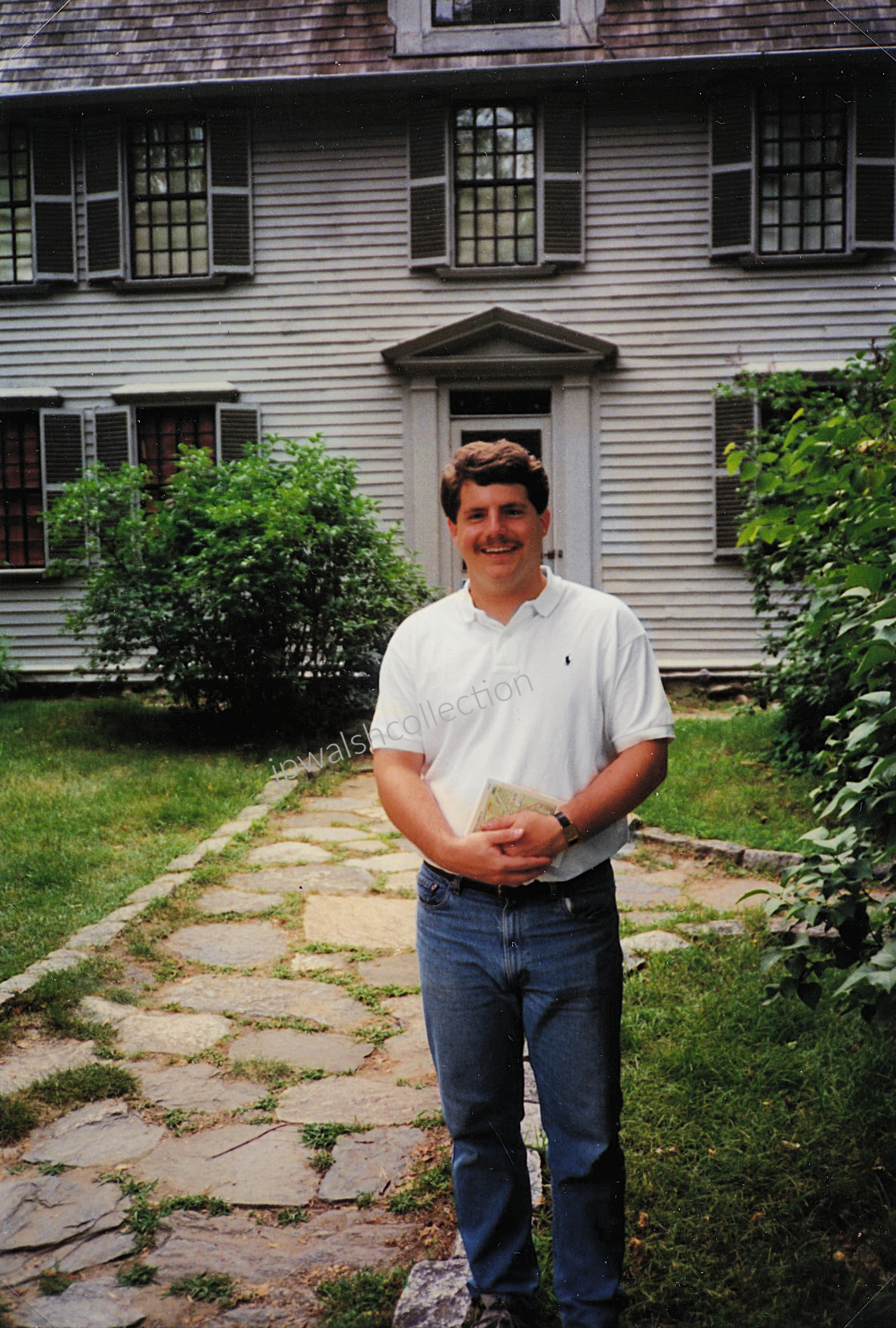
The author stands at the Old Manse in Concord, Massachusetts, a house on Monument Street with the Concord River just behind it and the North Bridge—now part of Minute Man National Historical Park—beside the property. Built in 1770 for Rev. William Emerson (1743–1776), the home later became central to the Emerson family line: William’s son, minister William Emerson, and his grandson, the transcendentalist Ralph Waldo Emerson. The elder Rev. Emerson served as Concord’s minister, chaplain to the Provincial Congress in 1774, and later chaplain to the Continental Army; he watched the fighting at the North Bridge from his fields while his family witnessed it from the upstairs windows. Decades later, Ralph Waldo Emerson drafted his foundational essay Nature here, and during his stay in the mid‑1830s he proposed to Lydia Jackson before the couple moved to what is now known as the Emerson House. Author’s collection, July 1989.
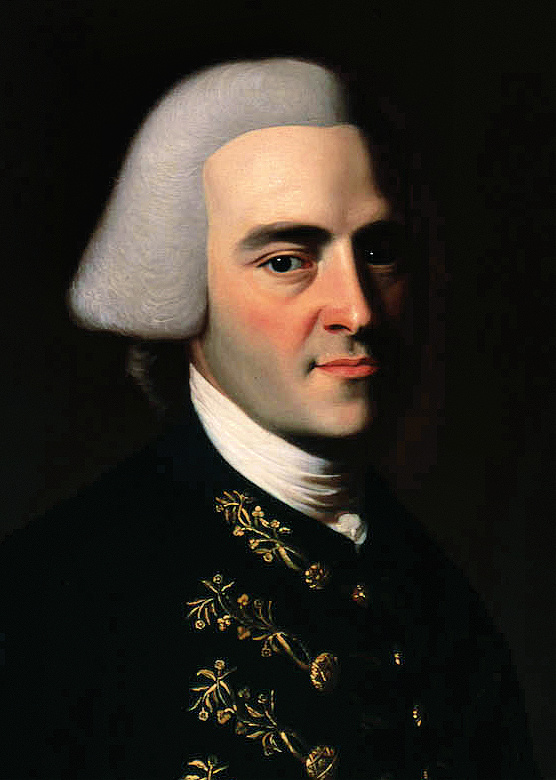
John Hancock, 1770, by John Singleton Copley (1738-1815) in the Massachusetts Historical Society. Public Domain.
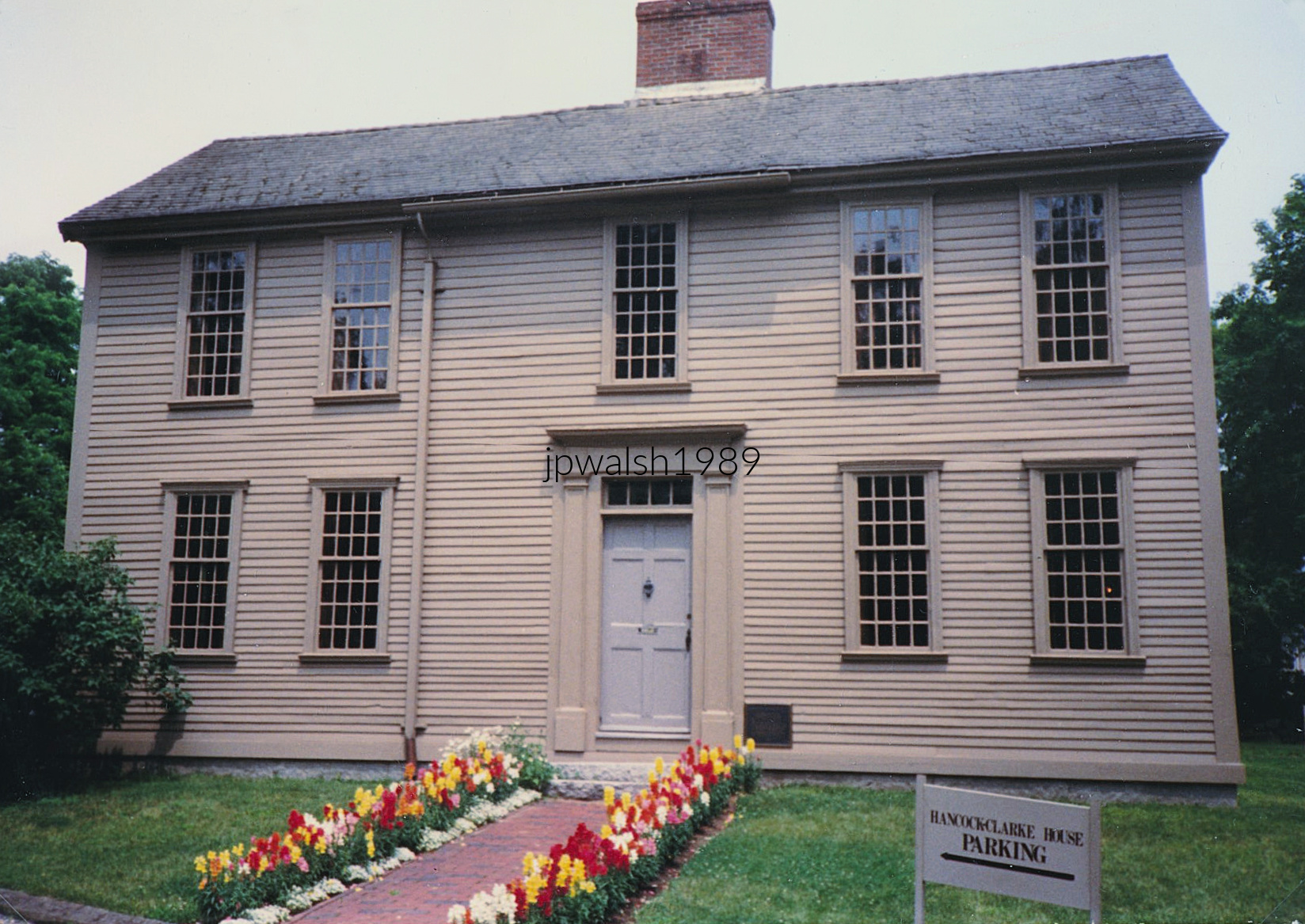
Built in 1738, the Hancock–Clarke House at 36 Hancock Street in Lexington, Massachusetts—less than half a mile from Lexington Green—is the historic residence where John Hancock (1737–1793) and Samuel Adams (1722–1803) were staying on the eve of the Battle of Lexington and Concord on April 19, 1775. Author’s photograph, July 1989.
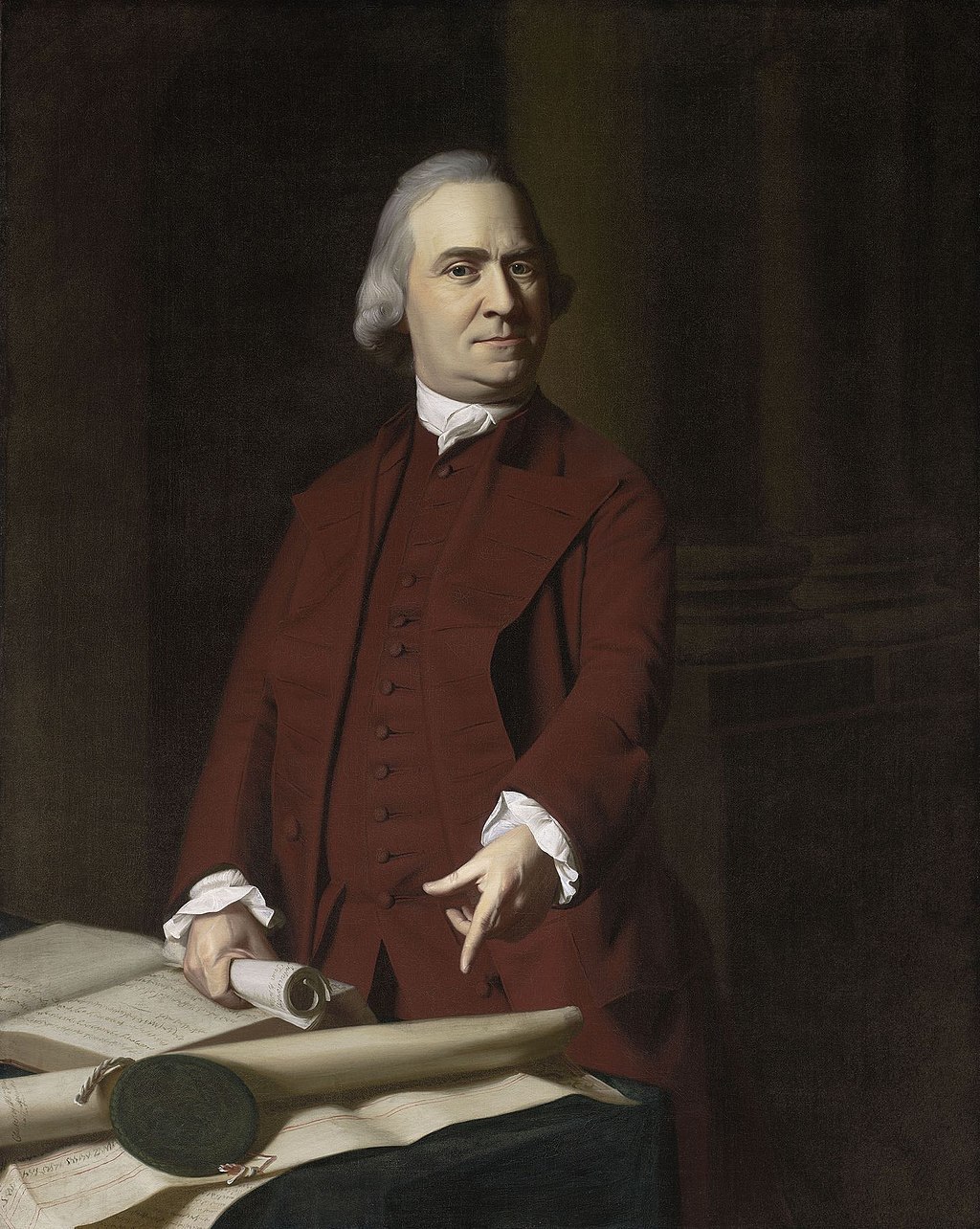
Samuel Adams, 1772, by John Singleton Copley (1738-1815) in the Boston Museum of Fine Arts. Public Domain. https://collections.mfa.org/objects/30881/samuel-adams?ctx=de17a5dc-0f39-480c-8e84-f4fc92f44030&idx=0 – retrieved April 19, 2025.
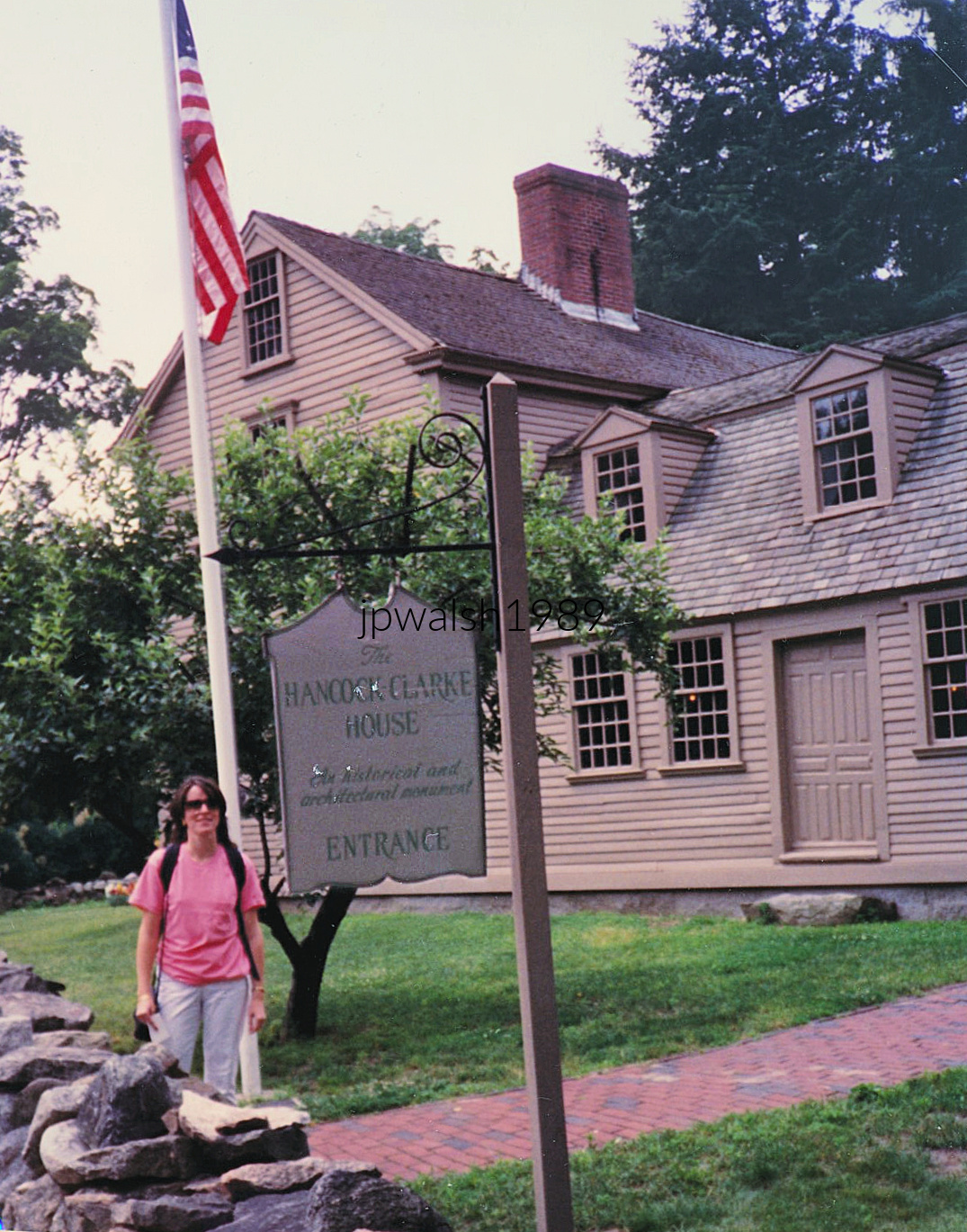
John Hancock and Samuel Adams attended the Massachusetts Provincial Congress in Concord on the evening of April 18, 1775, and spent the night in Lexington as guests of Rev. Jonas Clarke (1730–1805). Clarke, a Harvard graduate and Lexington’s pastor since 1755, feared the two leaders might be seized by the advancing British. In Boston, Joseph Warren (1741–1775) dispatched William Dawes (1745–1799) and Paul Revere (1734–1818) to warn them; arriving separately at the Hancock–Clarke House around midnight, both riders delivered the alarm before continuing on toward Concord. Hancock and Adams then left for Burlington, about a half‑hour away by horseback, to ensure their safety. Author’s photograph, July 1989.
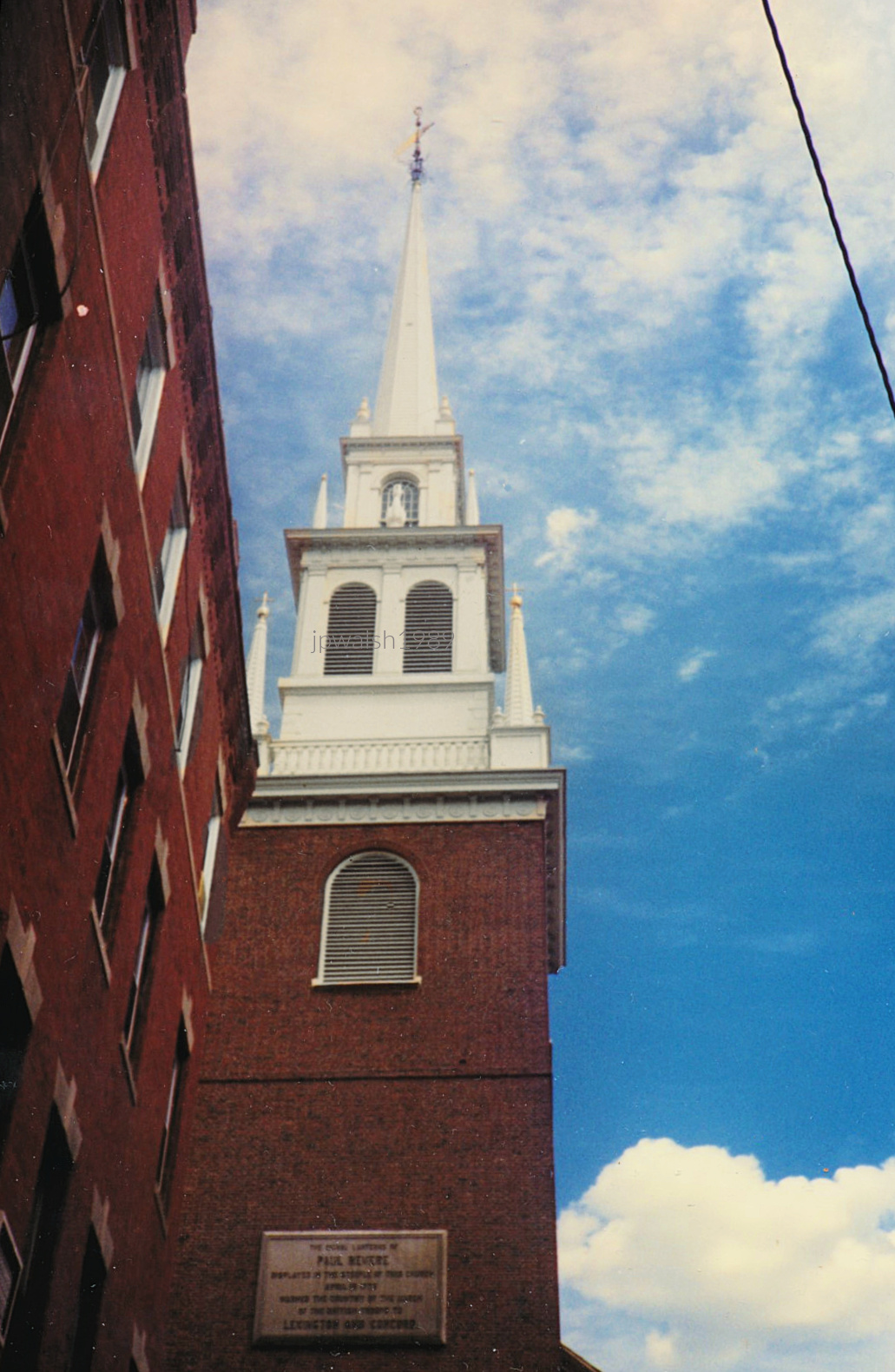
Old North Church, founded in 1723 as Christ Church, is best known for the night of April 18, 1775, when sexton Robert Newman and vestryman Capt. John Pulling Jr. climbed the steeple to display two lanterns. Their signal—alerting Paul Revere’s network that British troops were crossing the Charles River “by sea” toward Lexington and Concord—set in motion the opening moments of the American Revolution. see – https://www.oldnorth.com/ – retrieved April 19, 2025. Author’s photograph, July 1989.
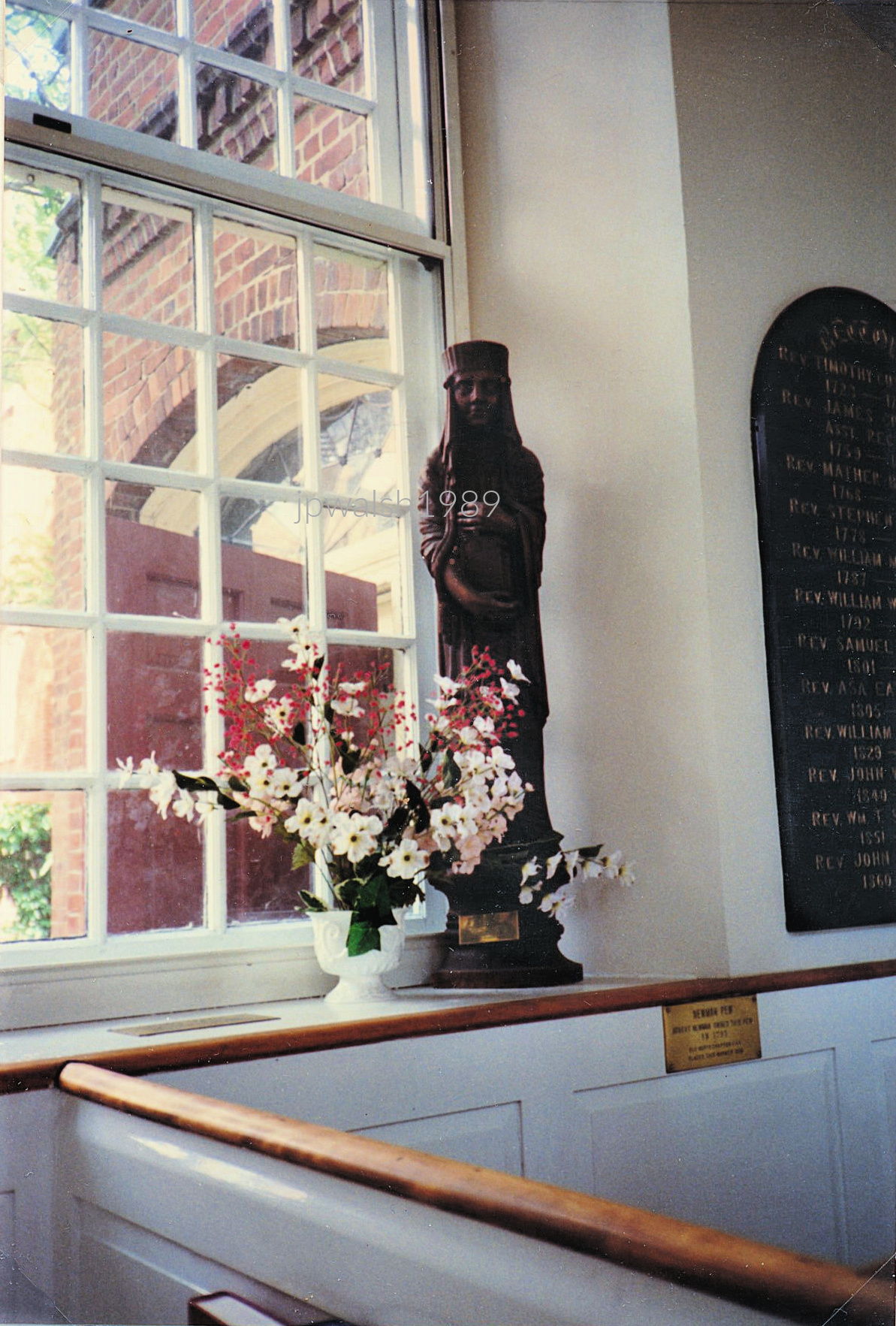
Inside Old North Church, visitors stand only a short walk from Copp’s Hill Burying Ground, where Increase Mather (1639–1723) and his son Cotton Mather (1663–1728) are buried. Both served as Puritan ministers whose era of leadership overlapped with the notorious Salem witch trials. Author’s photograph, July 1989.

Paul Revere, c. 1770, by John Singleton Copley (1738–1815), Museum of Fine Arts, Boston. Public Domain. Unlike Copley’s formal portraits of Samuel Adams and John Hancock—both displayed in Boston’s Faneuil Hall—Revere’s portrait was long kept in the Revere family attic, disliked for its informality. After Revere’s fame surged with Henry Wadsworth Longfellow’s 1861 poem Paul Revere’s Ride, the painting was restored in 1875, though it was not publicly exhibited until 1928. Revere’s descendants donated it to the Museum of Fine Arts in 1930. https://collections.mfa.org/objects/32401/paul-revere?ctx=00d797a8-0c5a-4d78-ba26-db22eb858902&idx=5 – retrieved April 19, 2025.

Author at the Paul Revere House in Boston with a work friend of my dad. March 1976. Author’s collection.