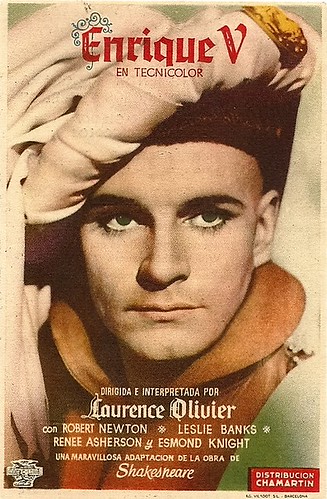
Feature Image: Movie poster in Spanish for Laurence Olivier’s 1944 Technicolor adaptation of William Shakespeare’s play, Henry V (1599). Produced in Ireland to serve as a British morale-boosting propaganda tool during WWII, the film achieved global distribution through theatrical releases and subsequent re-releases and is today frequently used in university studies (e.g., Cambridge Core) on cinematic Shakespeare. Photo: “Enrique V” by Kirby York is marked with Public Domain Mark 1.0.
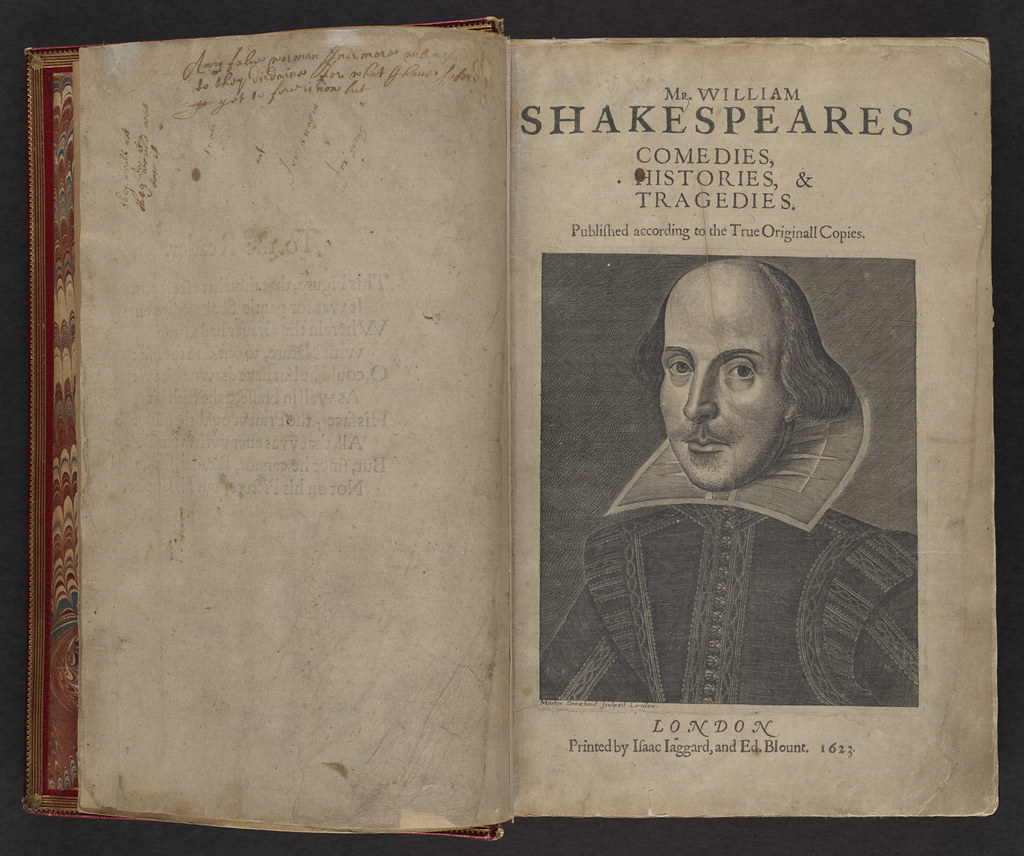
Shakespeare’s Henry V was first published in 1600 in a quarto edition and in subsequent editions in 1602 and 1619. A more complete, reliable text was later published in the First Folio in 1623. Photo: “Mr. William Shakespeares Comedies, Histories & Tragedies [Title page]” by Boston Public Library is licensed under CC BY 2.0.
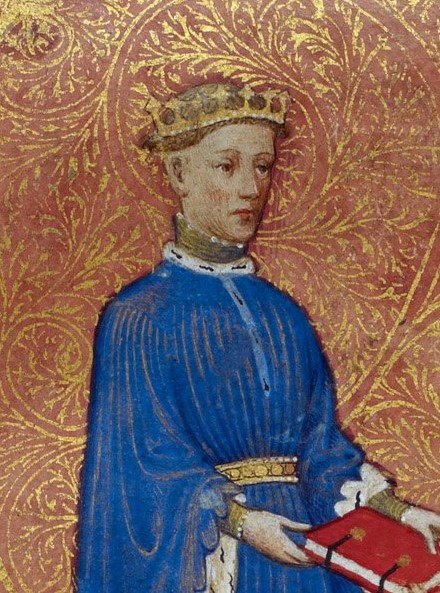
Henry V in the Regement of Princes, c. 1411–1413. Henry V died in 1422 at the age of 35, likely from dysentery contracted in the unsanitary conditions of his military camp. In his will, he named his brother, John of Bedford, as regent for his infant son, the future Henry VI, who would not be crowned in his own right until 1437. Although the Treaty of Troyes had positioned Henry V to inherit the French crown, he never became King of France; Charles VI outlived him, preventing the succession. His son, Henry VI—often described as gentle, passive, and averse to violence and warfare—proved unable to sustain his father’s hard‑won claims. His authority in France collapsed, and at home he was deposed in March 1461 by the Yorkist Edward IV. A brief restoration in 1470 returned him to the throne, but only for months; Henry VI was permanently deposed and killed in May 1471. Public Domain.
William Shakespeare likely wrote Henry V in spring 1599. The play dramatizes the 28-year-old English king’s campaign to claim the French throne, culminating in his victory at Agincourt on October 15, 1415—a battlefield I visited in 1993, still largely unchanged after six centuries. Henry based his claim on his ancestor Edward III, and his triumph was aided by a France divided by civil war between Burgundians and Orléanists.
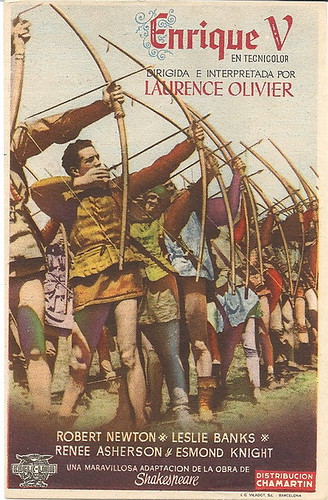
At the Battle of Agincourt (1415), roughly 80% of Henry V’s army were longbowmen—an overwhelming concentration of missile power that defined the fight. Henry deployed thousands of archers along his flanks and center, unleashing relentless, high‑velocity arrow storms that tore through the densely packed, heavily armored French ranks. Behind their sharpened stakes, these archers acted as an offensive engine, cutting down waves of advancing knights before they ever reached English lines. The result was one of military history’s most lopsided victories. Estimates suggest 6,000–10,000 French dead—including more than ninety nobles—against only a few hundred English losses. French formations collapsed, morale shattered, and an army that outnumbered the English by as much as six to one simply disintegrated. Agincourt proved that disciplined, trained, often low‑born archers could annihilate superior numbers of elite, armored cavalry. It didn’t just win a battle—it rewrote the rules of medieval warfare. Photo: “Enrique V (3)” by Kirby York is marked with Public Domain Mark 1.0.
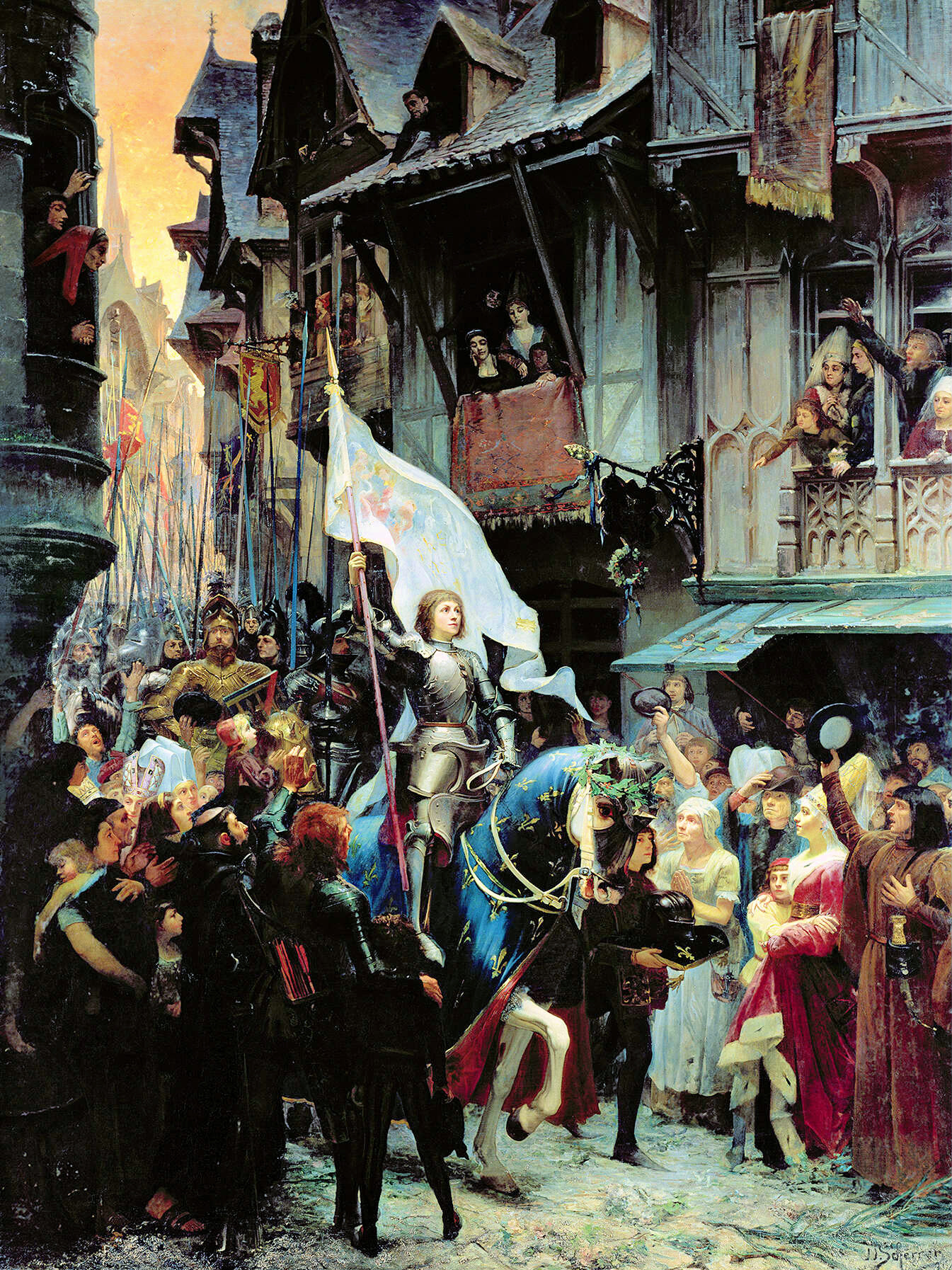
Entrée de Jeanne d’Arc à Orléans (“Entrance of Joan of Arc into Orléans”), painted in 1887 by the academic artist Jacques Scherrer (1855-1916), portrays Joan’s triumphant arrival in Orléans on May 8, 1429, after she lifted the city’s siege during the Hundred Years’ War. Her victory set in motion the campaign that culminated in the Dauphin’s coronation as King Charles VII at Reims on July 17, 1429. Public Domain.
Within fifteen years, Jeanne la Pucelle—Joan of Arc—led Orléanist and Armagnac forces to lift the siege of Orléans in 1429. Captured by Burgundians in 1430, she was handed to the English and condemned by their puppet ecclesiastical court before being burned in Rouen. Henry’s 1415 victory enabled the 1420 Treaty of Troyes, which disinherited the Dauphin, named Henry regent and heir to Charles VI, and arranged his marriage to Catherine of Valois, sister of the future Charles VII. On July 17, 1429, after Joan’s visions and military successes, she stood beside the Dauphin as he was crowned at Reims. By 1453, the French had expelled the English entirely from France.
The 1944 Technicolor film follows a performance of Shakespeare’s history play at the Globe in 1603 as it evolves toward a sharper, more realistic style. Laurence Olivier’s bold, experimental film adaptation—directing and starring in the title role—reimagined Shakespeare for the screen centuries after the play’s premiere. The production became a landmark of cinematic Shakespeare, celebrated for its visual flair and Olivier’s command of film technique, especially in the sweeping, meticulously staged battle sequences. (8) William Walton : Henry V : Touch her soft lips and part. Film clips. – YouTube (https://www.youtube.com/watch?v=pnQl4Wj8NXc) – retrieved April 23, 2026.
The play Henry V emerged during an intensely creative year for Shakespeare and was likely among the first plays staged at the new Globe Theatre. Though often read as patriotic, it also probes the ethical and personal costs of war, exposing its brutality and questioning the justice of Henry’s campaign. Laurence Olivier’s 1944 Technicolor adaptation transformed the play into wartime propaganda to bolster British morale and later earned recognition as a landmark Shakespearean film. Its iconic score was composed by William Walton.
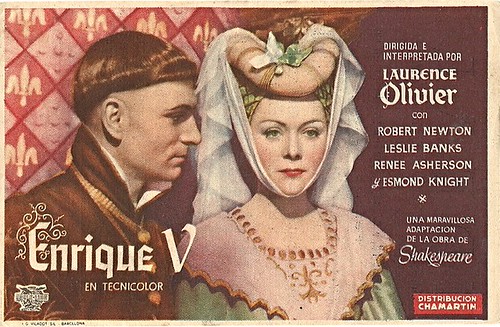
Henry V starred British actors Laurence Olivier as Henry V and Renée Asherson as Catherine of Valois. Photo: “Enrique V (2)” by Kirby York is marked with Public Domain Mark 1.0.
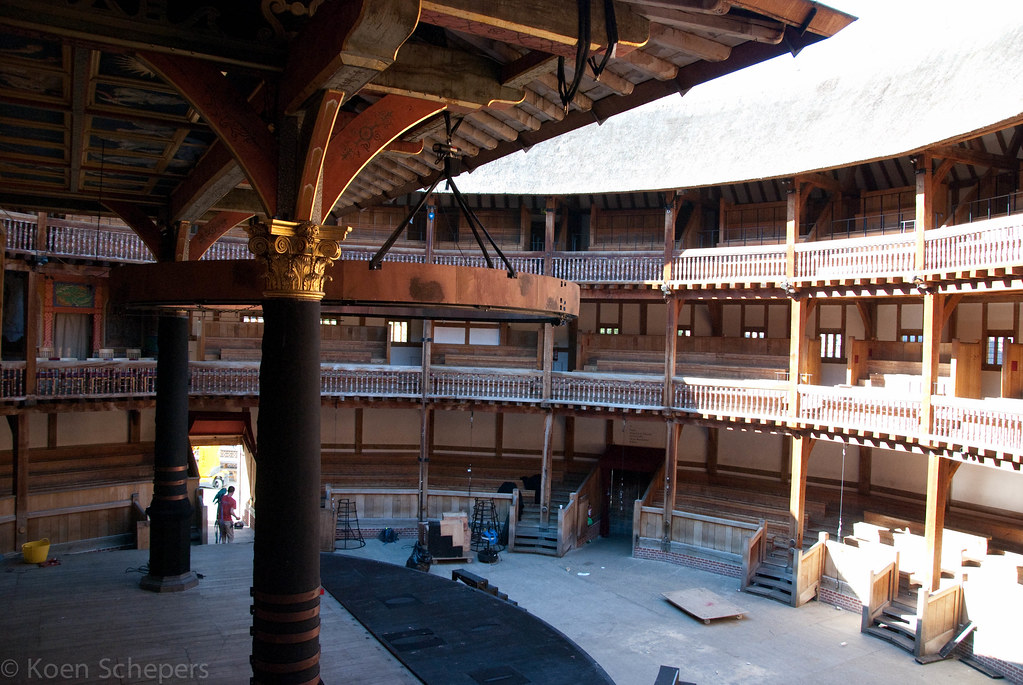
The original Globe Theatre opened in summer of 1599 in Southwark, London, built by the Lord Chamberlain’s Men which was the company William Shakespeare wrote for and part-owned. It is widely believed that the first play by Shakespeare performed at the Globe was Julius Caesar, likely alongside Henry V and As You Like It. Today’s Globe Theatre in London is the third Globe. see – Globe Theatre | About us | Discover | Shakespeare’s Globe – retrieved April 23, 2026. Photo: “Shakespeare’s Globe” by Werkmens is licensed under CC BY-NC-ND 2.0.