
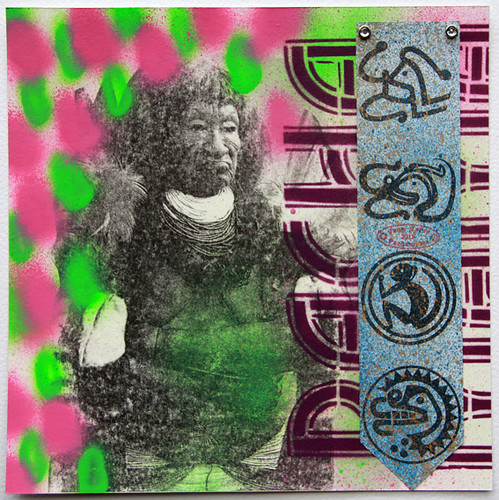

Feature image: “De la Serie Pachamama” by Juan Vélez is licensed under CC BY-NC-SA 2.0. Pachamama, meaning “Mother Earth” in Quechua and Aymara, is the Andean goddess of fertility and nature—a living, nurturing force central to indigenous culture. For centuries she has embodied the unity of space, time, and land, and is honored through reciprocal agricultural rituals to ensure abundant harvests.
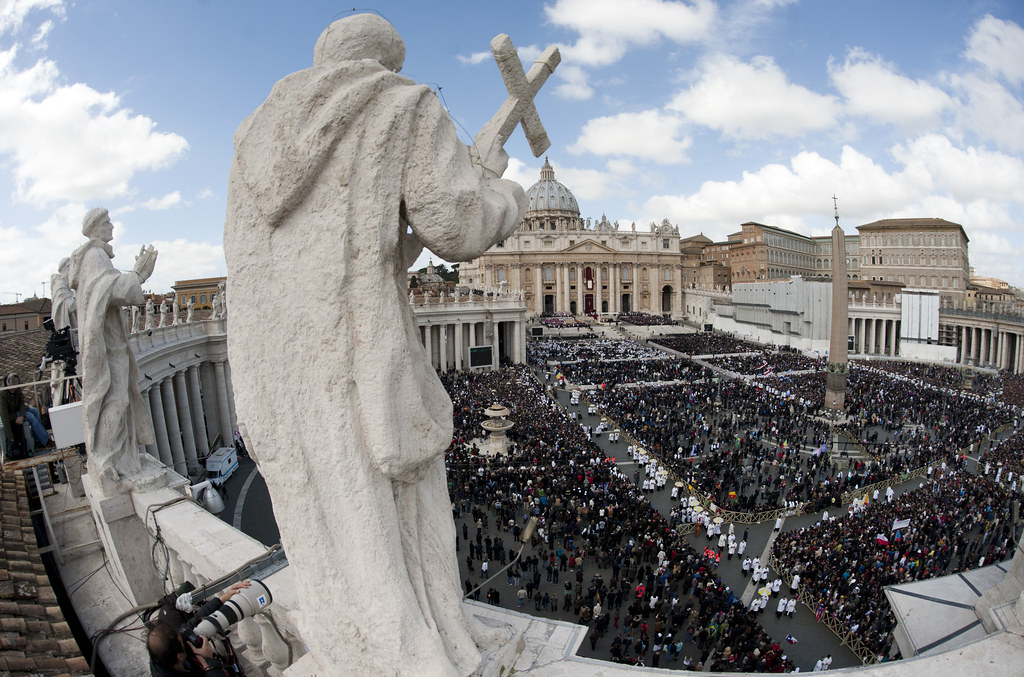
The inauguration Mass of Pope Francis took place on March 19, 2013, in St. Peter’s Square at the Vatican. The ceremony marked the official start of his ministry as the 266th pope and was attended by thousands of faithful, religious leaders, and political dignitaries from the global community. “The Inauguration Mass For Pope Francis” by Catholic Church (England and Wales) is licensed under CC BY-NC-SA 2.0.
Within Christian theology, Yahweh and Abba are understood as designations for the same God, each highlighting a different dimension of the divine identity: the LORD. Yahweh (YHWH), the sacred name revealed in the Hebrew Bible, emphasizes God’s self‑existence and covenantal sovereignty. Abba—an Aramaic term meaning “Father”—is used by Jesus and later by Paul to express an intimate, relational mode of addressing that same Creator. The relationship of Father and Son regarding Yahweh and the Messiah comes from the Hebrew Bible in a prophecy of Nathan. Together, the terms reflect both the transcendence and the personal closeness attributed to God in Christian thought.
God smote the land with all manner of plagues, but still Pharaoh’s heart was hardened. “These things were ordered by themselves, not by God.” Released by Paramount Pictures, The Ten Commandments is a 1956 American epic directed, produced, and narrated by Cecil B. DeMille. Starring Charlton Heston as Moses and Yul Brynner as Pharaoh, the film dramatizes the biblical story of the Exodus.
The account of the first plague in Exodus—when the Nile turned to blood—has long been understood in Christian tradition as a dramatic assertion of the LORD’s sovereignty over creation. Water, earth, sun, moon, and all natural forces fall under His command. In the ancient world, this act was not merely a disruption of nature but a direct theological confrontation. The Nile was revered as a divine source of life, and Egyptian religion associated it with deities such as Hapi, Khnum, and Osiris. By transforming the river into blood, the LORD demonstrated His supremacy over these gods and exposed the futility of idolatry.
This theme—God’s judgment against false worship—runs throughout Scripture. The first commandment forbids the worship of other gods, and Deuteronomy 6:13–16, later cited by Jesus during His temptation in the desert (Matthew 4), reinforces the call to exclusive fidelity to the LORD and warns against “testing” Him through divided allegiance and idol worship. The plagues, therefore, are not arbitrary punishments but theological signs: they reveal the consequences of idolatry and call both Israel and Egypt to recognize the one true God.
Contemporary Catholics argue that this same principle applies today when Church leaders engage in or appear to endorse rituals involving non Christian deities. Critics of modernist tendencies point to events such as the Pachamama ceremonies during the Amazon Synod, interpreting them as a departure from the first commandment and a dangerous blurring of the line between respect for indigenous cultures and participation in religious acts incompatible with Christian worship. Such actions echo the temptation Jesus resisted who obeyed his Father’s will and relied on his Providence —instead of in the least seeking harmony or power through compromise with spiritual forces outside the covenant.
This tension recalls the famous exchange between Margaret More and her father, St. Thomas More. When she urged him to outwardly conform to an oath while privately dissenting, he replied: “What is an oath then but words we say to God?” His point was that fidelity requires integrity of both heart and action. To critics of modern syncretistic gestures, the same principle applies: one cannot outwardly participate in rites honoring a pagan goddess while inwardly claiming a different intention.
Seen through this lens, the first plague is not harsh but proportionate to the spiritual crisis it confronts. It transforms a symbol of life into a sign of judgment, exposing the emptiness of Egypt’s gods and warning Pharaoh of the consequences of hardened idolatry. The narrative becomes not only an ancient story but a perennial reminder: whenever God’s people flirt with rival spiritual powers, the result is confusion, disorder, and a call to return to the LORD with undivided hearts.
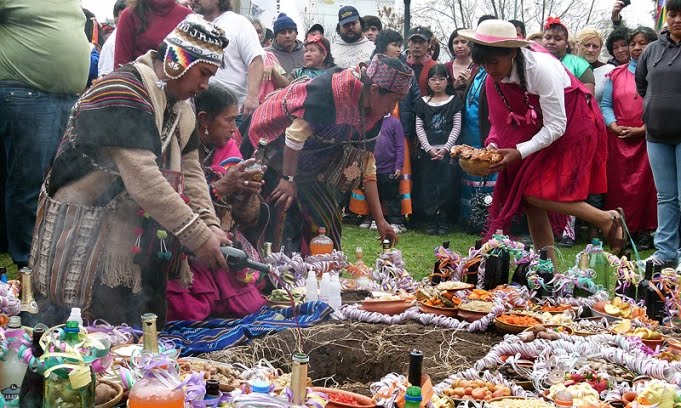
There was a Pachamama ceremonial rite attended by Pope Francis in the Vatican Gardens during the Amazon Synod on October 4, 2019. Several related events followed in the subsequent days and weeks. On October 7, 2019, statues identified as Pachamama and other indigenous figures were carried from St. Peter’s Basilica to the Synod Hall and placed before the main altar. After several of these statues were removed and thrown into the Tiber River, Pope Francis ordered their recovery and had them returned to the main altar between October 21 and 25, 2019. During the Synod’s closing Mass on October 25, the pope accepted a bowl associated with ritual practices involving Pachamama and placed it on the altar. See – Pope Francis apologizes that Amazon synod Pachamama statues were thrown into Tiber River and The Pope, the Amazon, and Pachamama | FRANCIS X. CLOONEY, S.J. – retrieved March 23, 2026. As part of the post‑synodal process, Pope Francis issued the apostolic exhortation Querida Amazonia on February 12, 2020, which included a brief reference to Pachamama. Although the pope did not explicitly define whether the contested image represents a goddess, a symbol of Mother Earth, or simply a pregnant woman, he framed its presence within Christian liturgical contexts as an expression of respect for indigenous cultures. He therefore cautioned against hasty judgments and argued that “it is possible to take up an indigenous symbol in some way, without necessarily considering it as idolatry.” See – “Querida Amazonia”: Post-Synodal Exhortation to the People of God and to All Persons of Good Will (2 February 2020) – retrieved March 23, 2026.
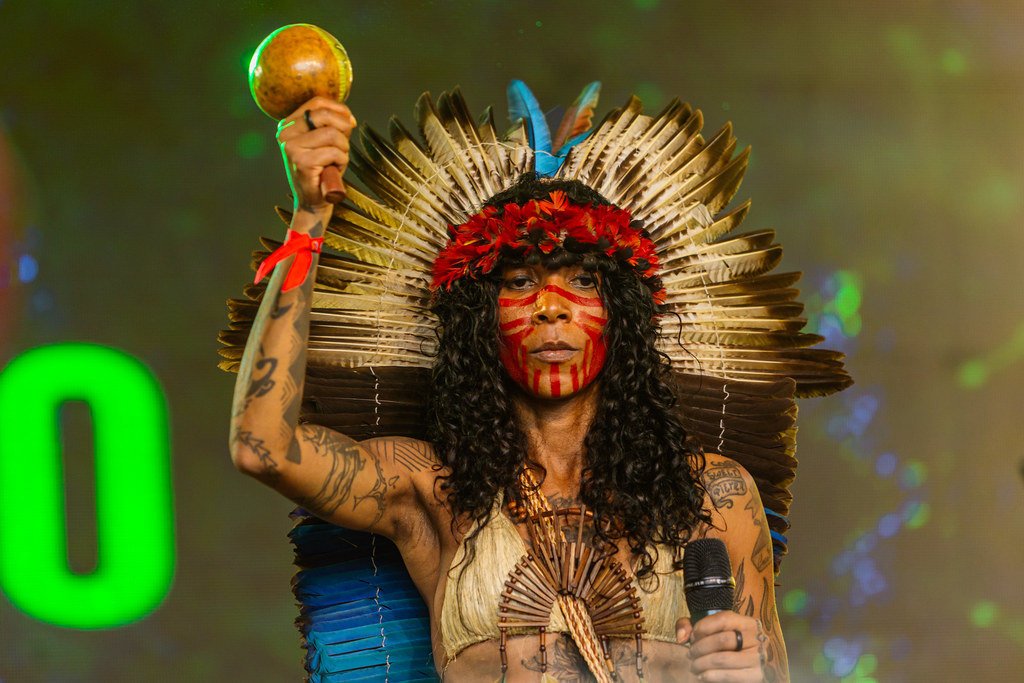
The papal text drew criticism from numerous sectors within the Church, including Catholic women’s organizations, which noted a central tension: while the document speaks eloquently about sensitivity to and acceptance of indigenous religious practices, it simultaneously overlooks the fact that women play indispensable liturgical and pastoral roles in Amazonian communities, even as the Catholic Church continues to bar women from ordained ministry.
Some commentators further argued that the document reflects a distinctly Jesuit interpretive lens, reviving debates reminiscent of the Chinese Rites Controversy (c. 1630s–1742). That earlier dispute—an intense, century‑long conflict within the Church—centered on whether Confucian and ancestor‑veneration rituals were compatible with Christian practice. Jesuits advocated for cultural accommodation, permitting converts to retain these rites, whereas Dominicans and Franciscans condemned them as pagan superstition. The controversy ultimately ended with a papal prohibition, a defeat the Jesuits neither forgot nor forgave. Their later suppression by Pope Clement XIV in the 1773 brief Dominus ac Redemptor further cemented the episode’s significance in Jesuit memory.
Against this backdrop, Querida Amazonia was interpreted by some as a cultural manifesto that reopens historically contentious questions about inculturation without offering concrete pastoral or structural proposals for the Church’s mission in the region. Critics argued that its “Pan‑Amazonian” vision implicitly legitimized the use of “Pachamama” figures in ecclesial settings—objects some labeled as idolatrous—and risked advancing a syncretistic or pantheistic ecclesiology. In this view, the document’s strong emphasis on indigenous spirituality blurs the line between respect for local cultures and a theological reconfiguration in which the natural environment itself appears to be divinized.
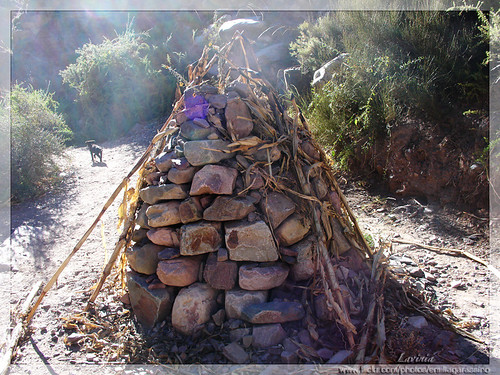
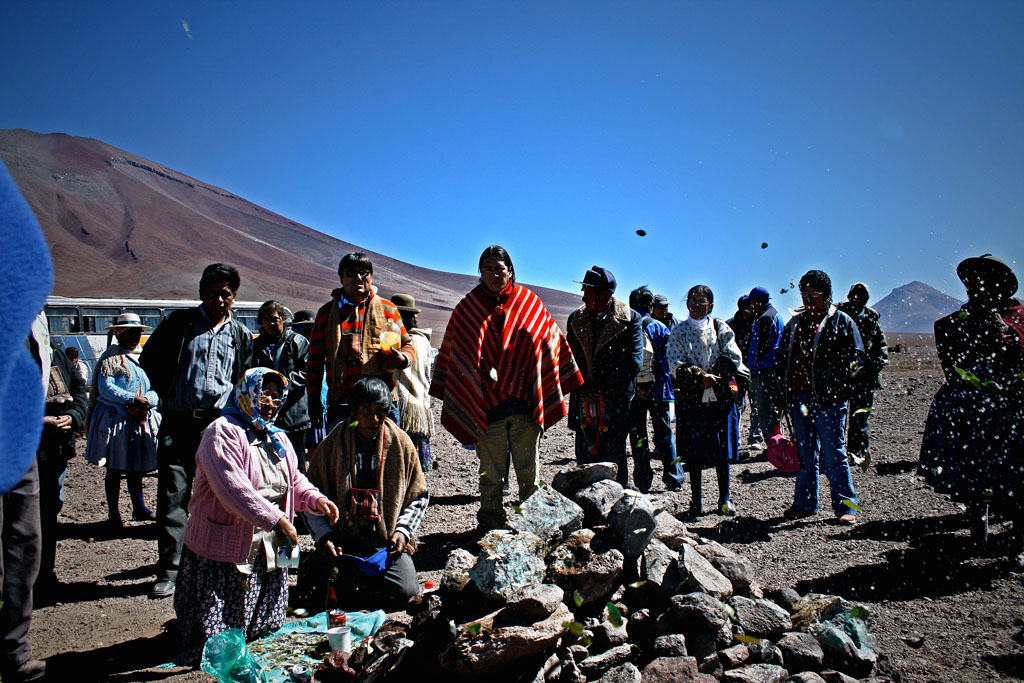
THERE’S NOTHING “PAGAN” TO SEE HERE: VATICAN SPOKESMEN.
Vatican officials repeatedly stressed that the Pachamama figures—those smooth wooden carvings that appeared throughout the Amazon Synod—were meant to embody life itself, nothing more. Yet the debate refused to settle. Reporters and commentators kept circling back, probing whether these images carried echoes of Amazonian spiritual traditions, perhaps even the mystical or magical practices woven into the forest cultures from which they emerged.
Paolo Ruffini, head of the Vatican’s communications office, stepped forward in October 2019 with a firm, almost weary clarity. The figure, he insisted, “fundamentally… represents life. And enough.” He brushed aside attempts to brand Pachamama as “pagan” or “evil,” pushing back against the swirl of speculation. To him, the symbol was no more sinister than a tree—another universal emblem of fertility, rootedness, and the continuity of creation. Ruffini’s comparison was deliberate: a reminder that symbols can be shared across cultures without carrying the weight of worship, and that the Church, in this moment, was choosing to see Pachamama not as a rival deity but as a poetic gesture toward the sacredness of life. see – Pope Francis apologizes that Amazon synod Pachamama statues were thrown into Tiber River – retrieved March 23, 2026.
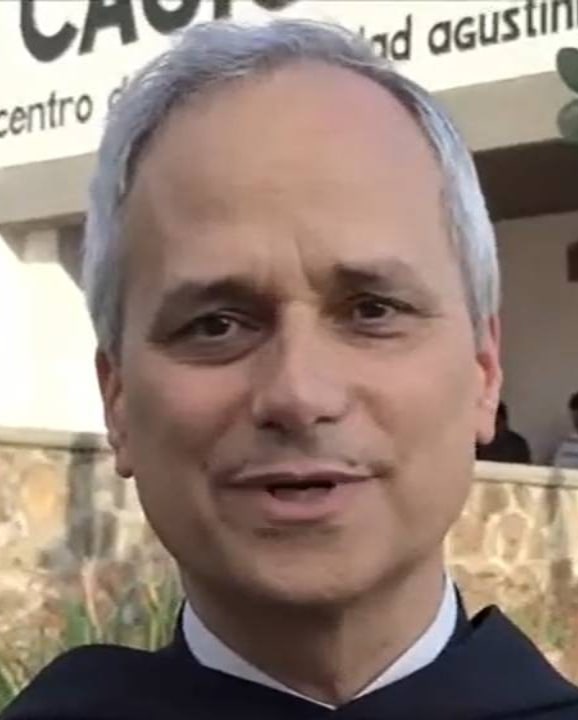
Recent reports have drawn attention to Pope Leo XIV—widely regarded as a protégé of Pope Francis—regarding his participation in Pachamama-related ceremonies during his missionary work in Peru in the mid‑1990s. The resurfacing of these accounts in 2026 has generated considerable debate. Critics have questioned how the pope can, on the one hand, caution clergy against relying on advanced technologies such as artificial intelligence in their homiletic preparation, while on the other hand urging restraint in judging indigenous religious practices and appearing to support primitive rituals that some observers interpret as forms of non‑Christian worship.
The discussion intensified after photographs emerged from an Augustinian symposium in South America, depicting a mid‑forties Fr. Robert Prevost kneeling in a circle during what has been described as an indigenous agricultural ritual. For those who do not view such practices as conflicting with the First Commandment, the images may seem unremarkable. For others, however, they raise theological and pastoral concerns about syncretism and the boundaries of legitimate cultural engagement within the Church.


