
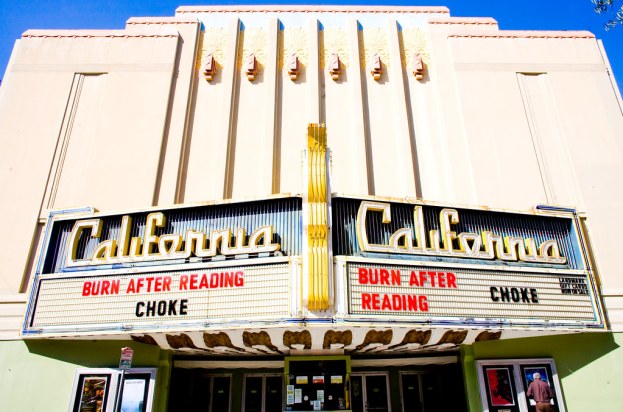
FEATURE Image: “California” by Thomas Hawk is licensed under CC BY-NC 2.0.

Vice President and Democratic presidential nominee Kamala Harris supporter in 2024. Author’s photograph. Sept 2024 8.96mb
California as National Vanguard
San Francisco Democrat and longtime U.S. House Representative Nancy Pelosi recently told Bill Maher on Real Time With Bill Maher (HBO) that California “is always in the lead” and that it is up to the rest of the country whether they choose to “follow that lead.” What the former Speaker said on August 31, 2024 is, in my view, both insightful and essentially correct.
Vice President Kamala Harris, the 2024 Democratic nominee for president, is herself a California native and former state Attorney General and U.S. Senator. Their shared California sensibility—rooted in diversity, demographic change, and a forward‑leaning cultural posture—is not only the state’s history but increasingly the nation’s trajectory.
The California Pattern: A Country Becoming California
It is often said today that “every state is a border state.” One could just as easily say that every state is now a state of California. The demographic, cultural, and political patterns that defined California for more than a century are now unfolding nationwide, whether chosen or not.
This dynamic is not merely demographic. It is historical, psychological, and structural.
L.A. as Prototype: A City Without a Past
In The Big Goodbye: Chinatown and the Last Years of Hollywood (2020), author Sam Wasson cites educator Richard G. Lillard (1909–1990), who chronicled Los Angeles’s explosive development from the 1880s onward. Lillard observed that L.A. was essentially an open‑border town that grew too fast for its own infrastructure.
Wasson also quotes journalist Morrow Mayo (1896–1983), who wrote that Los Angeles had always been a commodity, a place marketed to outsiders as somewhere to come to. When Vice President Harris said “Don’t come, don’t come” in Guatemala in June 2021, the remark can be read through this California lens—a familiar, almost resigned plea from a state that has spent 150 years absorbing wave after wave of newcomers.
Because of this constant churn, Los Angeles—unlike older American cities, and even less so than San Francisco—rarely speaks of its past. It lives in a perpetual present, always turning the page. Where other cities experienced a boom and then settled into normalcy, L.A. is a boomtown permanently in boom mode, with all the visionary energy and strange side effects that come with it.
Migration as California’s Defining Engine
California drew migrants from across the United States in the late 19th and 20th centuries; today it draws them from around the world. Between 2021 and 2024, nearly two million new migrants arrived—roughly 500,000 people every year. With or without adequate infrastructure, this is a massive human boom unmatched by any other state.
Since the 1880s, California has imported people and exported ideas. Increasingly, it is exporting its people as well—along with its political culture, its social norms, and its worldview.
The Spread of the California Model
This is the phenomenon Pelosi alludes to: a California model spreading beyond the state’s borders. The question is not whether the model exists, but whether other states choose to adopt, resist, or adapt it.
The “Californication” of the United States is already underway. The only remaining variables are the degree of acquiescence and the pace at which it unfolds.
The Limits of Reversal
If Donald Trump believes he can halt this momentum by deporting California’s undocumented population—and the undocumented population dispersed across all 50 states, which collectively equals California’s entire population—he faces a monumental challenge. The California state of mind is already planted, already influential, and already attractive to many.
The demographic and cultural forces shaping the country now are the same ones that shaped California long before. The state is not merely a place; it is a template, and the nation is increasingly living inside it.

Republican nominee and former president Donald Trump supporter in 2024. Author’s photograph. Sept 2024 7.92 mb
L.A. as a Lens for the National Experience
It is instructive to look closely at Los Angeles, because its pattern of constant booms mirrors what is now happening across the country. The city’s cycles—rapid growth, sudden reinvention, and equally rapid forgetting—offer a preview of the national experiential trajectory emerging under what might be called California’s literal and cultural leadership.
Boom, Erasure, and the California Condition
As Sam Wasson notes, L.A.’s booms bring an influx of the new that inevitably produces what he calls “destructive erasures” of what came before. This is not an occasional disruption but a perpetual condition—the defining rhythm of a place that never stops remaking itself.
Increasingly, the nation is entering this same mode. The California pattern—constant arrival, constant reinvention, constant shedding of the past—is becoming a national operating system.
A Political Culture Shaped by Perpetual Reinvention
This is the California way that Nancy Pelosi alluded to in her conversation with Bill Maher: a model that other states may choose to follow, consciously or not. The election becomes, in part, a referendum on whether the country embraces this California‑style dynamism, with all its gains and losses.
Even the political “flip‑flops” for which Vice President Harris has been criticized since becoming the Democratic nominee can be read through this lens. They echo a long California tradition of boom and erasure, where rapid change is not an anomaly but a structural feature of the culture she comes from.
California’s Pattern as National Future
Seen this way, Harris’s shifts are not merely tactical or personal—they reflect the deeper California historical pattern of constant adaptation. In a political moment shaped by demographic churn, cultural flux, and rapid realignment, that pattern may be less a liability than a preview of the country’s emerging identity.

Vice President and Democratic presidential nominee Kamala Harris supporter in 2024. Author’s photograph. Sept 2024 7.23 mb
Leaving California, Only to Carry It Elsewhere
The irony of the moment is that many Californians who leave the state—seeking relief from its pressures, costs, or pace—may be doing so in vain. In moving to other states, they often bring with them the very cultural, political, and economic sensibilities they hoped to escape. In that sense, they become agents of Californication, extending the state’s influence rather than diminishing it.
A California State of Mind on the Move
This California state of mind—restless, forward‑tilting, boom‑driven—now appears in places far from the Pacific coast. The rapid arrival of newcomers in cities like Springfield, Ohio, or the dramatic demographic and real‑estate shifts in Aurora, Colorado, reflect a broader national pattern: communities experiencing sudden change, rapid growth, and the accompanying sense of disruption that Sam Wasson describes as “destructive erasures.”
These are not uniquely California events. They are California‑style events, unfolding elsewhere.
The Californication of Everywhere U.S.A.
If this pattern has not reached a particular town yet, the logic of national migration and cultural diffusion suggests that it eventually will. The California model—constant influx, constant reinvention, constant shedding of what came before—has become a portable operating system, carried by both longtime Californians and new arrivals who first encountered American life in California.
This is the Californication of Everywhere U.S.A.: a spreading cultural template rather than a geographic one.
A Culture Without a Rearview Mirror
For Angelenos—and for many Californians—the absence of a stable past is not a flaw but a condition of life. The state lives in a perpetual present, defined by booms and erasures so frequent that they rarely register as events. What disappears is forgotten; what arrives becomes temporarily the new normal.
As this sensibility spreads, more of the country begins to resemble California: forward‑leaning, memory‑light, and always in motion.

