Tag Archives: News

Bessie Coleman, First Black Woman Licensed Aviator and Pioneering Civil Rights Figure, Born on This Day in 1892

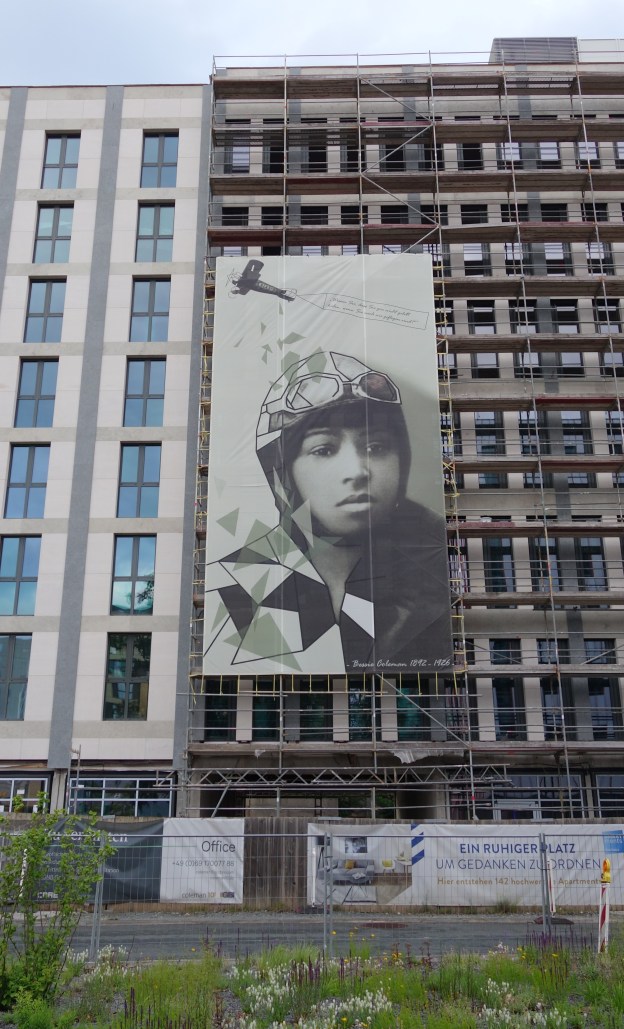
FEATURE image: Contemporary poster of American aviator Bessie Coleman (1892-1926) along Bessie Coleman Street in the Gateway Gardens district at Frankfurt Airport in Germany. PHOTO CREDIT: DSC06136 Frankfurt Flughafen Gateway Gardens Bessie-Coleman-Straße” by X-angel is licensed under CC BY-SA 4.0.

Early Life in Texas

Bessie Coleman, the first licensed Black female aviator, was born on January 26, 1892, in Texas. Her father, who was American Indian, left the family for Oklahoma when she was seven. Bessie stayed in Texas with her mother while her older siblings moved away. In the deeply segregated America of the late 19th and early 20th centuries, racism shaped nearly every aspect of life. Even so, Bessie’s mother encouraged her to excel in school, where Bessie became an avid reader.

Education and Early Work

At 18, Bessie attended what is now Langston University for one semester but lacked the funds to continue. She returned home to work alongside her mother, who labored as a maid and sharecropper.

At 23, ambitious and restless, Bessie moved to Chicago to live with her brothers. She worked menial jobs — manicurist, restaurant server — but found the city’s atmosphere freer than the Jim Crow South.

A New Possibility: France

During World War I, her brothers served in France and returned with stories of a society where women and Black people were treated with more dignity than in the United States. They told her that in France, women even flew airplanes — a revelation that electrified her.

In America, flying was largely a pastime for wealthy white men. Still, Bessie applied to U.S. flight schools and was rejected everywhere.

Support from Robert Abbott

Enter Robert Abbott, the influential Black Chicago newspaper owner of the Chicago Defender. Impressed by her determination, he urged her to go to France to earn her license. The French accepted her application, and Bessie crossed the Atlantic to begin training.

Training in a Dangerous Era

Flying in the 1910s was perilous. Open cockpits had no seat belts, aircraft were fragile, and accidents were common. Despite the risks, Bessie excelled. She became the first Black and American Indian woman to earn a pilot’s license.

She returned to the United States determined to build a career — but she lacked money and access.

Barnstorming Dreams and Barriers

To earn enough to buy her own plane and inspire other women and people of color, Bessie sought work as a stunt pilot. But once again, American flight schools refused to train a Black woman, even one already licensed.

Her dream would require the same persistence that had carried her from Texas to Chicago to France — and back again.
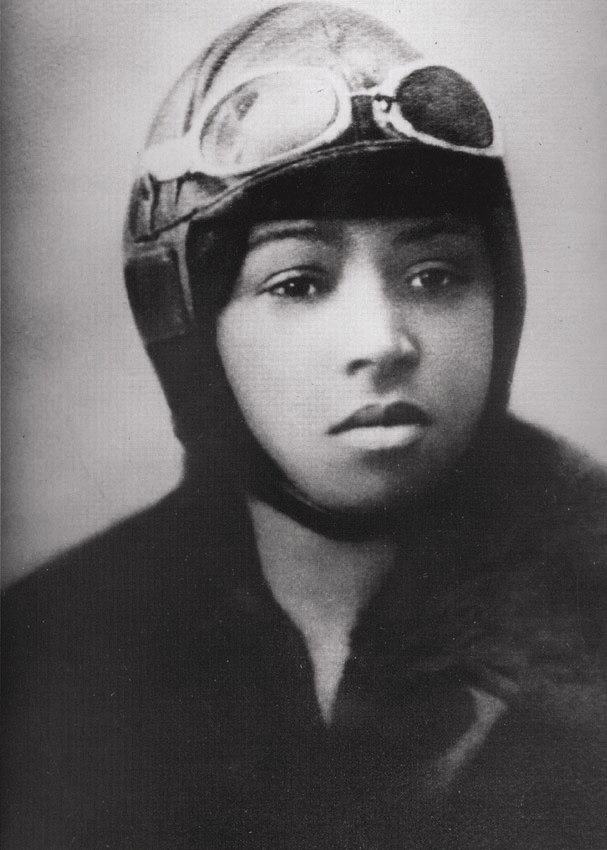
Bessie Coleman’s photo on her first pilot’s license, issued June 15, 1921. Public Domain.

Returning to France for Advanced Training

Bessie returned to France to get the specialized aviation training she still couldn’t access in the United States. Her determination — and the barriers she faced — had not gone unnoticed back home. By the time she returned to America for the second time, now a licensed pilot and trained stunt performer, the press greeted her with mostly positive attention.

1922: A Breakthrough Year

It was 1922, and Bessie was ready to take off. Her longtime supporter Robert Abbott arranged her first major air show in New York City, which immediately set reporters buzzing. Back in Chicago, her adopted home, Bessie began performing in more and more air shows, each one building her reputation.

A Rising Star of the Air Shows

To be a stunt pilot required absolute fearlessness, and Bessie’s daring routines — her figure eights, her loop‑the‑loops — made her a sensation across the country. She wanted to maintain and eventually own her own plane, but she didn’t yet have the money. So she borrowed whatever aircraft she could, determined to keep flying and to keep proving what a Black woman pilot could do.

“Queen Bess” Takes the Roaring Twenties by Storm

While some women performed wing‑walking stunts, none piloted the plane and performed aerial maneuvers the way Bessie did. Her skill, charisma, and courage made her a cultural phenomenon. Americans began calling her “Queen Bess” and “Brave Bess,” names that captured her place in the imagination of the roaring 1920s.

Bessie Coleman and airplane, 1922. Public Domain.

Aviation as Activism

As she was determined to do so, Bessie Coleman was making a difference in the nation. Of all these remarkable things in the air Bessie was known for, none was more significant than what she also achieved on the ground. Bessie Coleman told show promoters and managers that she would not perform at any show whose audience or performers were segregated by race or anything else. “Brave Bess” insisted that for all shows she performed in, there had to be just one gate for all people to walk through. At the time this was a profoundly radical request, particularly south of the Mason-Dixon line.

Speaking, Teaching, and Inspiring

Beyond stunt flying, Bessie lectured at schools and churches, urging young people — especially Black children — to pursue aviation. She saw flight not only as a career but as a path to dignity, opportunity, and pride.

Setbacks and Recovery

Still hoping to buy her own airplane, Bessie finally purchased one in 1923. But during a test flight, she crashed, breaking her leg and several ribs. She spent a year recovering in Chicago, grounded but not defeated.

A Return to the Skies

By 1926, Bessie was ready to fly again. She had no funds for a new aircraft, but a wealthy businessman donated a used plane. It was far from ideal — rickety, temperamental — and she hired a mechanic, William Wills, to get it into working shape.

Wills flew the plane from Texas to Florida for her next show, but along the way he had to make several emergency landings as the engine repeatedly failed. After repairs in Florida, he and Bessie took the plane up for a test flight on April 30, 1926, the day before the show.

The Fatal Flight

They tested the plane as Bessie hunted for locations for her stunts. During the practice run, Bessie leaned out of the open cockpit — without a seatbelt, standard for stunt pilots — to scout locations for her aerial maneuvers. Something went wrong mechanically. The plane lurched, and Bessie fell to her death. Moments later, the aircraft crashed, killing Wills as well. Bessie was 34. Wills was 24.

A Nation Mourns

By the time of her third memorial service in Chicago, more than 20,000 people had paid their respects. At the Chicago service alone, 15,000 mourners gathered as journalist Ida B. Wells read an essay honoring Bessie’s courage and legacy. Bessie Coleman was laid to rest at Lincoln Cemetery in Blue Island, among many of Chicago’s Black notables.

A Legacy That Took Flight

In 1929, Black engineer and aviator William J. Powell founded the Bessie Coleman Aero Club in Los Angeles, training Black men and women to fly. By the 1930s, groups of Black female stunt pilots — including the Blackbirds — carried her inspiration into the sky.

In 1940, Bessie’s early champion, millionaire newspaper publisher Robert Abbott, was also buried in Lincoln Cemetery, not far from the woman whose dreams he helped launch.

Bessie Coleman, first Black and American Indian licensed aviator, two days before her 31st birthday, January 24, 1923. Public Domain.

SOURCES:

Bessie Coleman Bold Pilot Who Gave Women Wings, Martha London, 2021, Capstone Press, North Mankato, MN.

Brave Bessie Flying Free, Lillian M. Fisher, 1995, Hendrick Long, Houston, TX.

2024 & THE CALIFORNICATION OF EVERYWHERE, U.S.A.

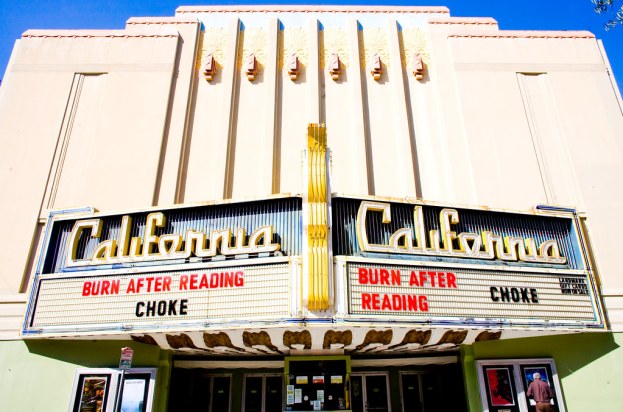
FEATURE Image: “California” by Thomas Hawk is licensed under CC BY-NC 2.0.

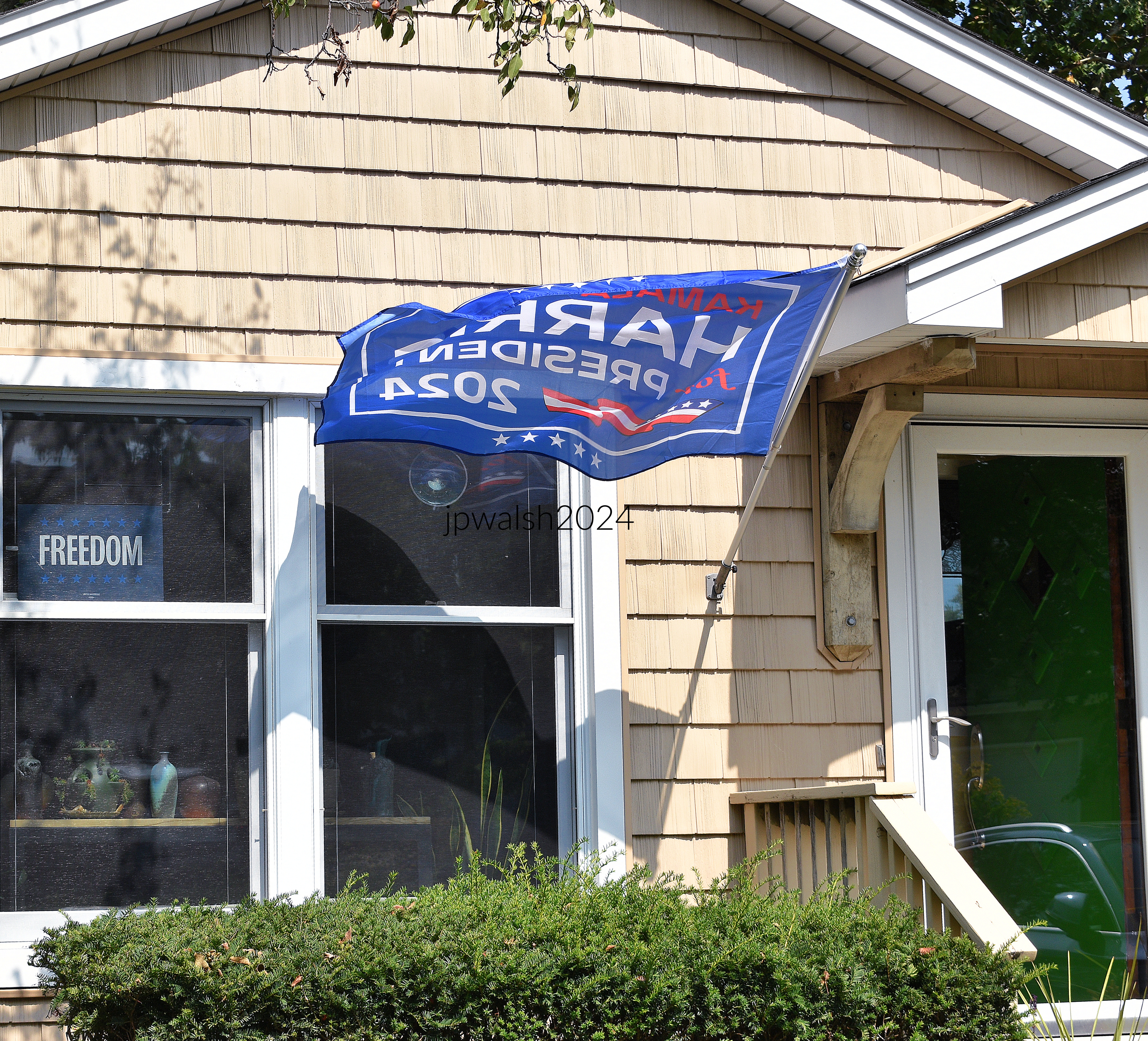
Vice President and Democratic presidential nominee Kamala Harris supporter in 2024. Author’s photograph. Sept 2024 8.96mb

California as National Vanguard

San Francisco Democrat and longtime U.S. House Representative Nancy Pelosi recently told Bill Maher on Real Time With Bill Maher (HBO) that California “is always in the lead” and that it is up to the rest of the country whether they choose to “follow that lead.” What the former Speaker said on August 31, 2024 is, in my view, both insightful and essentially correct.

Vice President Kamala Harris, the 2024 Democratic nominee for president, is herself a California native and former state Attorney General and U.S. Senator. Their shared California sensibility—rooted in diversity, demographic change, and a forward‑leaning cultural posture—is not only the state’s history but increasingly the nation’s trajectory.

The California Pattern: A Country Becoming California

It is often said today that “every state is a border state.” One could just as easily say that every state is now a state of California. The demographic, cultural, and political patterns that defined California for more than a century are now unfolding nationwide, whether chosen or not.

This dynamic is not merely demographic. It is historical, psychological, and structural.

L.A. as Prototype: A City Without a Past

In The Big Goodbye: Chinatown and the Last Years of Hollywood (2020), author Sam Wasson cites educator Richard G. Lillard (1909–1990), who chronicled Los Angeles’s explosive development from the 1880s onward. Lillard observed that L.A. was essentially an open‑border town that grew too fast for its own infrastructure.

Wasson also quotes journalist Morrow Mayo (1896–1983), who wrote that Los Angeles had always been a commodity, a place marketed to outsiders as somewhere to come to. When Vice President Harris said “Don’t come, don’t come” in Guatemala in June 2021, the remark can be read through this California lens—a familiar, almost resigned plea from a state that has spent 150 years absorbing wave after wave of newcomers.

Because of this constant churn, Los Angeles—unlike older American cities, and even less so than San Francisco—rarely speaks of its past. It lives in a perpetual present, always turning the page. Where other cities experienced a boom and then settled into normalcy, L.A. is a boomtown permanently in boom mode, with all the visionary energy and strange side effects that come with it.

Migration as California’s Defining Engine

California drew migrants from across the United States in the late 19th and 20th centuries; today it draws them from around the world. Between 2021 and 2024, nearly two million new migrants arrived—roughly 500,000 people every year. With or without adequate infrastructure, this is a massive human boom unmatched by any other state.

Since the 1880s, California has imported people and exported ideas. Increasingly, it is exporting its people as well—along with its political culture, its social norms, and its worldview.

The Spread of the California Model

This is the phenomenon Pelosi alludes to: a California model spreading beyond the state’s borders. The question is not whether the model exists, but whether other states choose to adopt, resist, or adapt it.

The “Californication” of the United States is already underway. The only remaining variables are the degree of acquiescence and the pace at which it unfolds.

The Limits of Reversal

If Donald Trump believes he can halt this momentum by deporting California’s undocumented population—and the undocumented population dispersed across all 50 states, which collectively equals California’s entire population—he faces a monumental challenge. The California state of mind is already planted, already influential, and already attractive to many.

The demographic and cultural forces shaping the country now are the same ones that shaped California long before. The state is not merely a place; it is a template, and the nation is increasingly living inside it.

Republican nominee and former president Donald Trump supporter in 2024. Author’s photograph. Sept 2024 7.92 mb

L.A. as a Lens for the National Experience

It is instructive to look closely at Los Angeles, because its pattern of constant booms mirrors what is now happening across the country. The city’s cycles—rapid growth, sudden reinvention, and equally rapid forgetting—offer a preview of the national experiential trajectory emerging under what might be called California’s literal and cultural leadership.

Boom, Erasure, and the California Condition

As Sam Wasson notes, L.A.’s booms bring an influx of the new that inevitably produces what he calls “destructive erasures” of what came before. This is not an occasional disruption but a perpetual condition—the defining rhythm of a place that never stops remaking itself.

Increasingly, the nation is entering this same mode. The California pattern—constant arrival, constant reinvention, constant shedding of the past—is becoming a national operating system.

A Political Culture Shaped by Perpetual Reinvention

This is the California way that Nancy Pelosi alluded to in her conversation with Bill Maher: a model that other states may choose to follow, consciously or not. The election becomes, in part, a referendum on whether the country embraces this California‑style dynamism, with all its gains and losses.

Even the political “flip‑flops” for which Vice President Harris has been criticized since becoming the Democratic nominee can be read through this lens. They echo a long California tradition of boom and erasure, where rapid change is not an anomaly but a structural feature of the culture she comes from.

California’s Pattern as National Future

Seen this way, Harris’s shifts are not merely tactical or personal—they reflect the deeper California historical pattern of constant adaptation. In a political moment shaped by demographic churn, cultural flux, and rapid realignment, that pattern may be less a liability than a preview of the country’s emerging identity.

Vice President and Democratic presidential nominee Kamala Harris supporter in 2024. Author’s photograph. Sept 2024 7.23 mb

Leaving California, Only to Carry It Elsewhere

The irony of the moment is that many Californians who leave the state—seeking relief from its pressures, costs, or pace—may be doing so in vain. In moving to other states, they often bring with them the very cultural, political, and economic sensibilities they hoped to escape. In that sense, they become agents of Californication, extending the state’s influence rather than diminishing it.

A California State of Mind on the Move

This California state of mind—restless, forward‑tilting, boom‑driven—now appears in places far from the Pacific coast. The rapid arrival of newcomers in cities like Springfield, Ohio, or the dramatic demographic and real‑estate shifts in Aurora, Colorado, reflect a broader national pattern: communities experiencing sudden change, rapid growth, and the accompanying sense of disruption that Sam Wasson describes as “destructive erasures.”

These are not uniquely California events. They are California‑style events, unfolding elsewhere.

The Californication of Everywhere U.S.A.

If this pattern has not reached a particular town yet, the logic of national migration and cultural diffusion suggests that it eventually will. The California model—constant influx, constant reinvention, constant shedding of what came before—has become a portable operating system, carried by both longtime Californians and new arrivals who first encountered American life in California.

This is the Californication of Everywhere U.S.A.: a spreading cultural template rather than a geographic one.

A Culture Without a Rearview Mirror

For Angelenos—and for many Californians—the absence of a stable past is not a flaw but a condition of life. The state lives in a perpetual present, defined by booms and erasures so frequent that they rarely register as events. What disappears is forgotten; what arrives becomes temporarily the new normal.

As this sensibility spreads, more of the country begins to resemble California: forward‑leaning, memory‑light, and always in motion.