Category Archives: History

Once More into the Breach: Shakespeare, History, and Olivier’s 1944 Henry V.

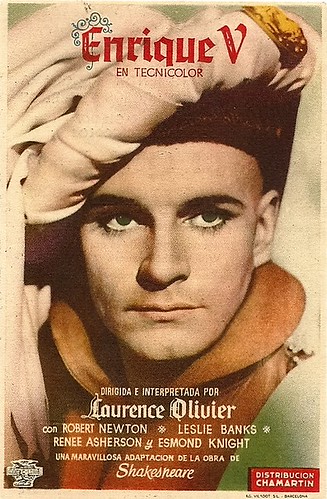
Feature Image: Movie poster in Spanish for Laurence Olivier’s 1944 Technicolor adaptation of William Shakespeare’s play, Henry V (1599). Produced in Ireland to serve as a British morale-boosting propaganda tool during WWII, the film achieved global distribution through theatrical releases and subsequent re-releases and is today frequently used in university studies (e.g., Cambridge Core) on cinematic Shakespeare. Photo: “Enrique V” by Kirby York is marked with Public Domain Mark 1.0.
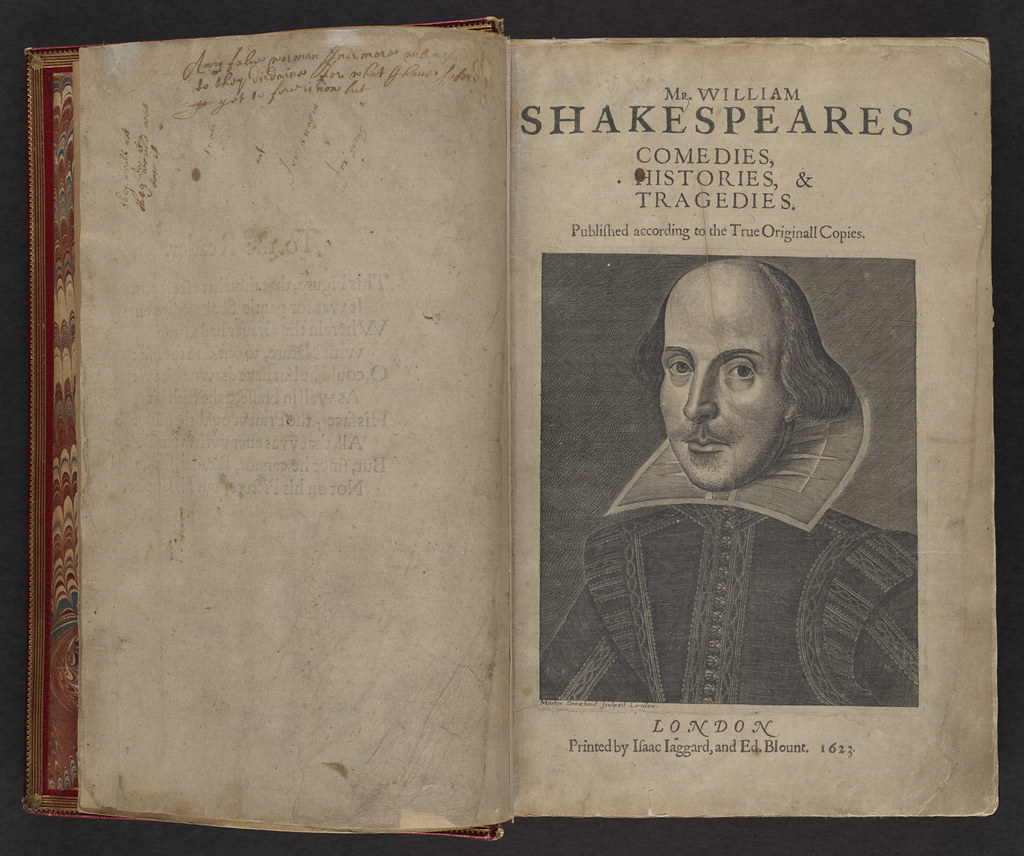
Shakespeare’s Henry V was first published in 1600 in a quarto edition and in subsequent editions in 1602 and 1619. A more complete, reliable text was later published in the First Folio in 1623. Photo: “Mr. William Shakespeares Comedies, Histories & Tragedies [Title page]” by Boston Public Library is licensed under CC BY 2.0.
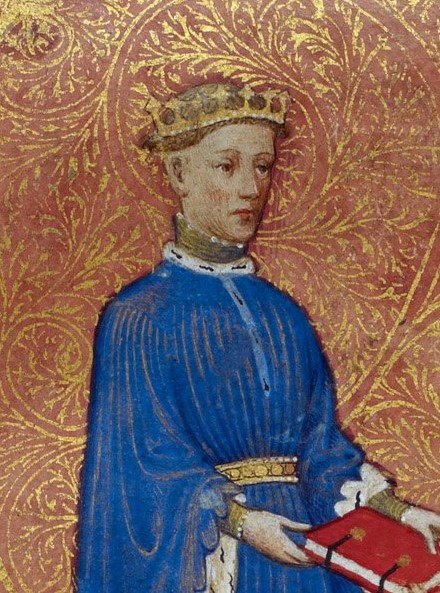
Henry V in the Regement of Princes, c. 1411–1413. Henry V died in 1422 at the age of 35, likely from dysentery contracted in the unsanitary conditions of his military camp. In his will, he named his brother, John of Bedford, as regent for his infant son, the future Henry VI, who would not be crowned in his own right until 1437. Although the Treaty of Troyes had positioned Henry V to inherit the French crown, he never became King of France; Charles VI outlived him, preventing the succession. His son, Henry VI—often described as gentle, passive, and averse to violence and warfare—proved unable to sustain his father’s hard‑won claims. His authority in France collapsed, and at home he was deposed in March 1461 by the Yorkist Edward IV. A brief restoration in 1470 returned him to the throne, but only for months; Henry VI was permanently deposed and killed in May 1471. Public Domain.

William Shakespeare likely wrote Henry V in spring 1599. The play dramatizes the 28-year-old English king’s campaign to claim the French throne, culminating in his victory at Agincourt on October 15, 1415—a battlefield I visited in 1993, still largely unchanged after six centuries. Henry based his claim on his ancestor Edward III, and his triumph was aided by a France divided by civil war between Burgundians and Orléanists.
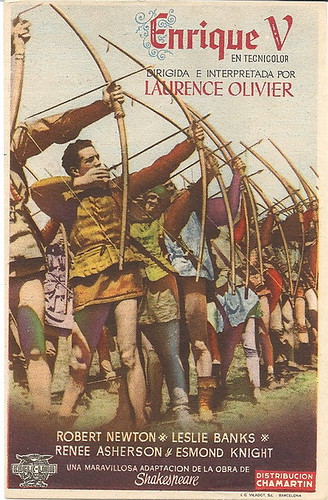
At the Battle of Agincourt (1415), roughly 80% of Henry V’s army were longbowmen—an overwhelming concentration of missile power that defined the fight. Henry deployed thousands of archers along his flanks and center, unleashing relentless, high‑velocity arrow storms that tore through the densely packed, heavily armored French ranks. Behind their sharpened stakes, these archers acted as an offensive engine, cutting down waves of advancing knights before they ever reached English lines. The result was one of military history’s most lopsided victories. Estimates suggest 6,000–10,000 French dead—including more than ninety nobles—against only a few hundred English losses. French formations collapsed, morale shattered, and an army that outnumbered the English by as much as six to one simply disintegrated. Agincourt proved that disciplined, trained, often low‑born archers could annihilate superior numbers of elite, armored cavalry. It didn’t just win a battle—it rewrote the rules of medieval warfare. Photo: “Enrique V (3)” by Kirby York is marked with Public Domain Mark 1.0.
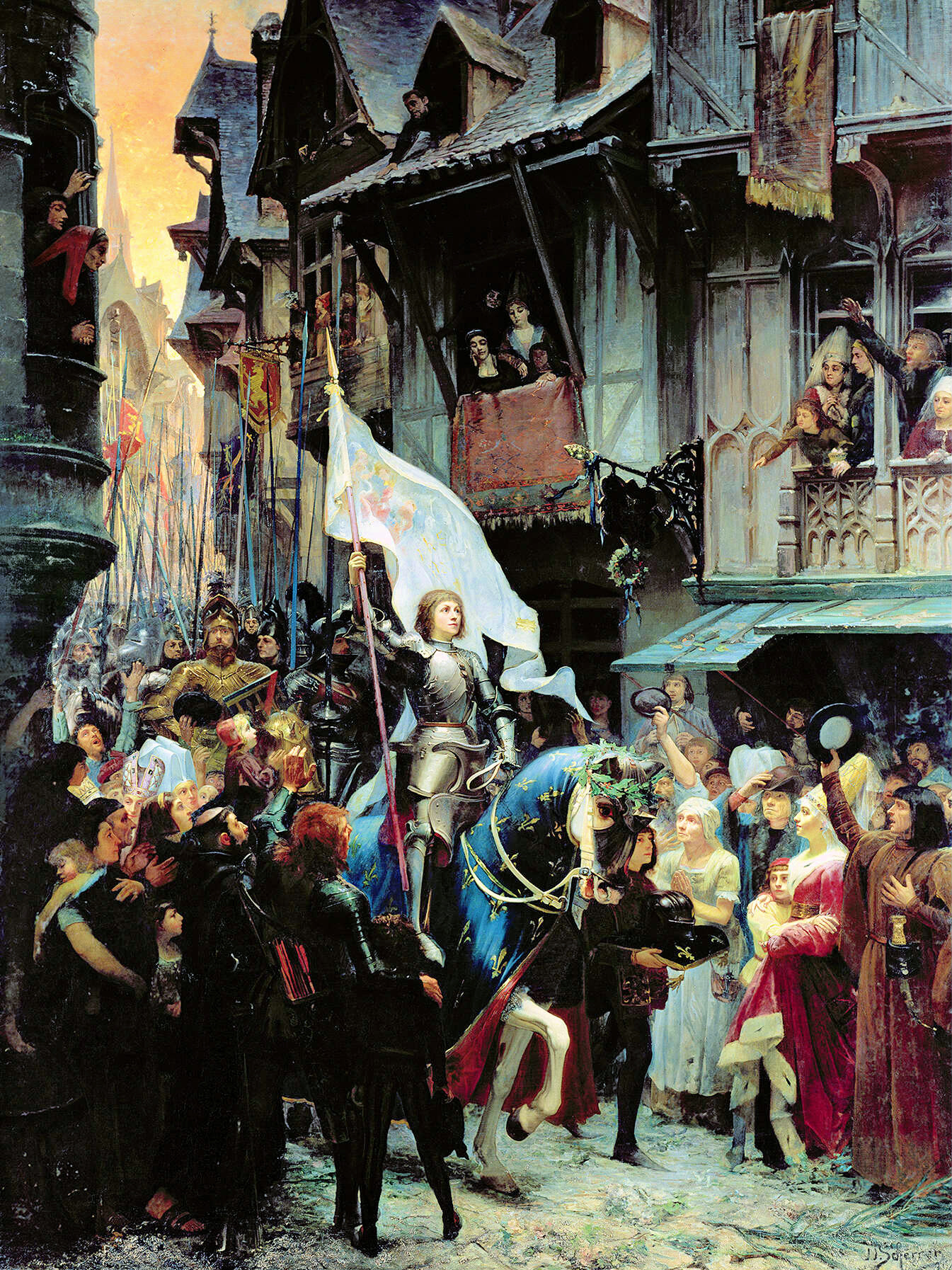
Entrée de Jeanne d’Arc à Orléans (“Entrance of Joan of Arc into Orléans”), painted in 1887 by the academic artist Jacques Scherrer (1855-1916), portrays Joan’s triumphant arrival in Orléans on May 8, 1429, after she lifted the city’s siege during the Hundred Years’ War. Her victory set in motion the campaign that culminated in the Dauphin’s coronation as King Charles VII at Reims on July 17, 1429. Public Domain.

Within fifteen years, Jeanne la Pucelle—Joan of Arc—led Orléanist and Armagnac forces to lift the siege of Orléans in 1429. Captured by Burgundians in 1430, she was handed to the English and condemned by their puppet ecclesiastical court before being burned in Rouen. Henry’s 1415 victory enabled the 1420 Treaty of Troyes, which disinherited the Dauphin, named Henry regent and heir to Charles VI, and arranged his marriage to Catherine of Valois, sister of the future Charles VII. On July 17, 1429, after Joan’s visions and military successes, she stood beside the Dauphin as he was crowned at Reims. By 1453, the French had expelled the English entirely from France.

The 1944 Technicolor film follows a performance of Shakespeare’s history play at the Globe in 1603 as it evolves toward a sharper, more realistic style. Laurence Olivier’s bold, experimental film adaptation—directing and starring in the title role—reimagined Shakespeare for the screen centuries after the play’s premiere. The production became a landmark of cinematic Shakespeare, celebrated for its visual flair and Olivier’s command of film technique, especially in the sweeping, meticulously staged battle sequences. (8) William Walton : Henry V : Touch her soft lips and part. Film clips. – YouTube (https://www.youtube.com/watch?v=pnQl4Wj8NXc) – retrieved April 23, 2026.

The play Henry V emerged during an intensely creative year for Shakespeare and was likely among the first plays staged at the new Globe Theatre. Though often read as patriotic, it also probes the ethical and personal costs of war, exposing its brutality and questioning the justice of Henry’s campaign. Laurence Olivier’s 1944 Technicolor adaptation transformed the play into wartime propaganda to bolster British morale and later earned recognition as a landmark Shakespearean film. Its iconic score was composed by William Walton.
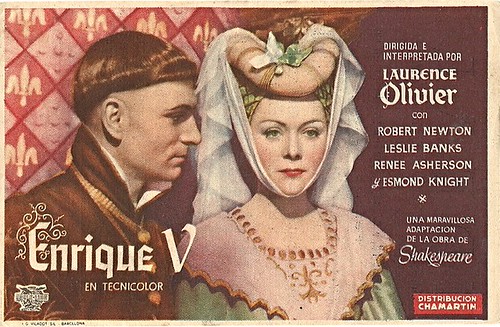
Henry V starred British actors Laurence Olivier as Henry V and Renée Asherson as Catherine of Valois. Photo: “Enrique V (2)” by Kirby York is marked with Public Domain Mark 1.0.
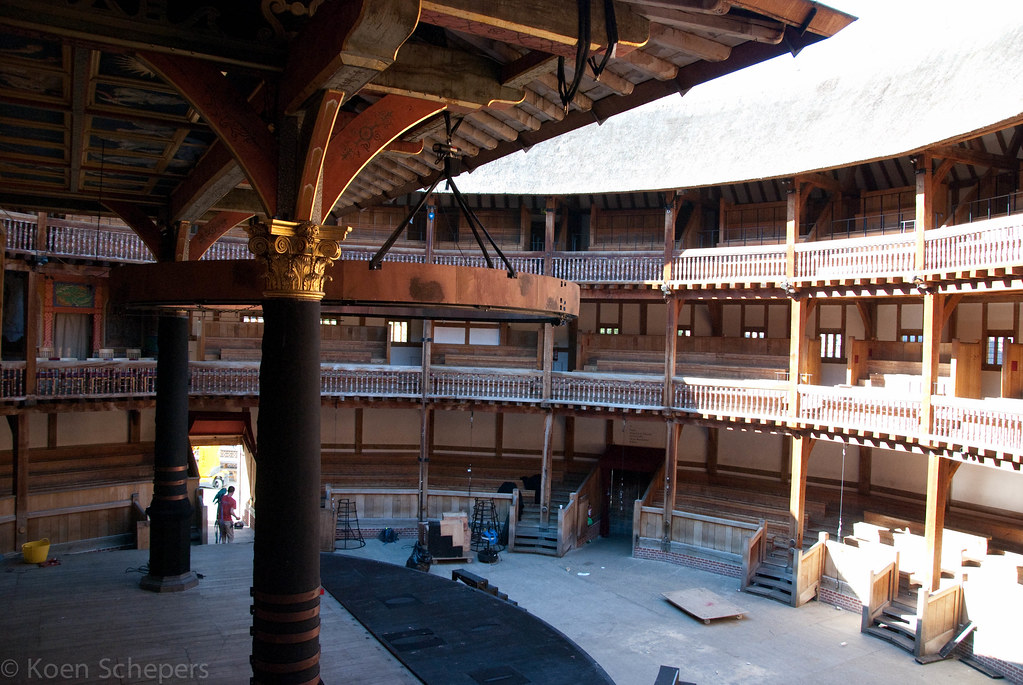
The original Globe Theatre opened in summer of 1599 in Southwark, London, built by the Lord Chamberlain’s Men which was the company William Shakespeare wrote for and part-owned.  It is widely believed that the first play by Shakespeare performed at the Globe was Julius Caesar, likely alongside Henry V and As You Like It. Today’s Globe Theatre in London is the third Globe. see – Globe Theatre | About us | Discover | Shakespeare’s Globe – retrieved April 23, 2026. Photo: “Shakespeare’s Globe” by Werkmens is licensed under CC BY-NC-ND 2.0.

50 years ago today: The Wreck of the SS Edmund Fitzgerald (November 10, 1975).

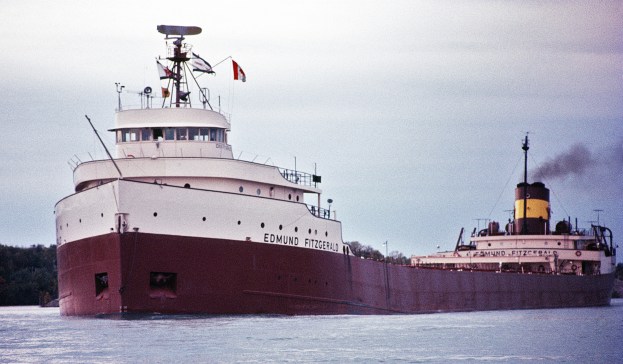
FEATURE image: Edmund Fitzgerald in 1971.

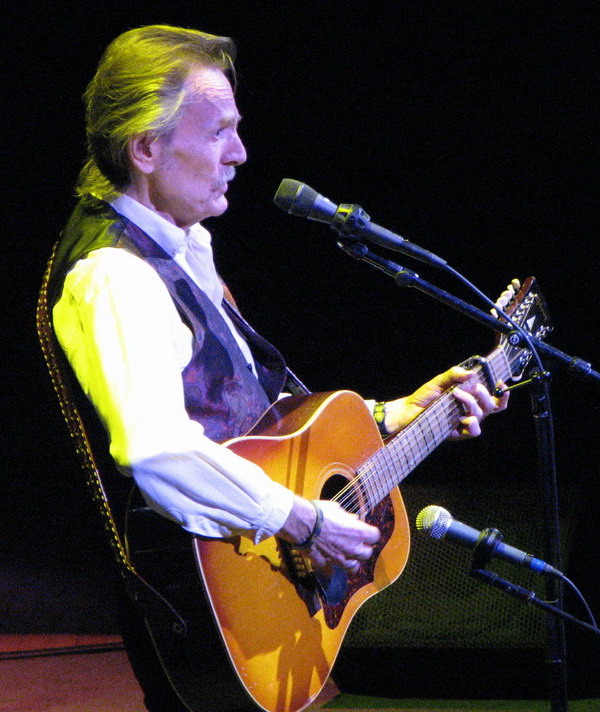
Canadian singer-songwriter Gordon Lightfoot began releasing solo albums in 1966. The first six were on United Artists label and sold moderately well (up to 200,000 copies). Switching to Reprise in 1969 his debut album with the label, Sit Down Young Stranger, coincided with his first U.S. hit, If You Could Read My Mind, in 1970 and became Lightfoot’s first Gold album. This was followed by Lightfoot’s second Gold album (Platinum today) and no.1 single both called Sundown in 1974. The Wreck of the Edmund Fitzgerald – a true story of an ore vessel named after a Milwaukee, Wisconsin, civic leader, that sank in a Lake Superior storm in November 1975 – was Lightfoot’s next big hit appearing on Summertime Dream, a 1976 album that has gone Platinum.1

On November 10, 1975, during basically the colliding of two freshwater storms on Lake Superior, the largest of the five Great Lakes, the SS Edmund Fitzgerald, in service since 1958 and, when launched, the largest ship on the Great Lakes at over 700 feet long, went down into deep waters. For a cargo ship that should have normally expected more decades of service, the sinking caused the loss of its entire crew of 29 men. At 7 p.m. on November 10, 1975, the Fitzgerald radioed another cargo ship, the Anderson, telling them that, despite losing their radar, they were “holding their own.” Shortly thereafter the Fitzgerald was lost.

Location of the SS Edmund Fitzgerald wreck in Lake Superior approximately 17 miles (27 kilometers) north-northwest of Whitefish Point, Michigan. The ship now rests beneath about 535 feet (165 meters) of water and is considered a protected gravesite.2

Recovery Efforts involved the U.S. Navy and U.S. Coast Guard.

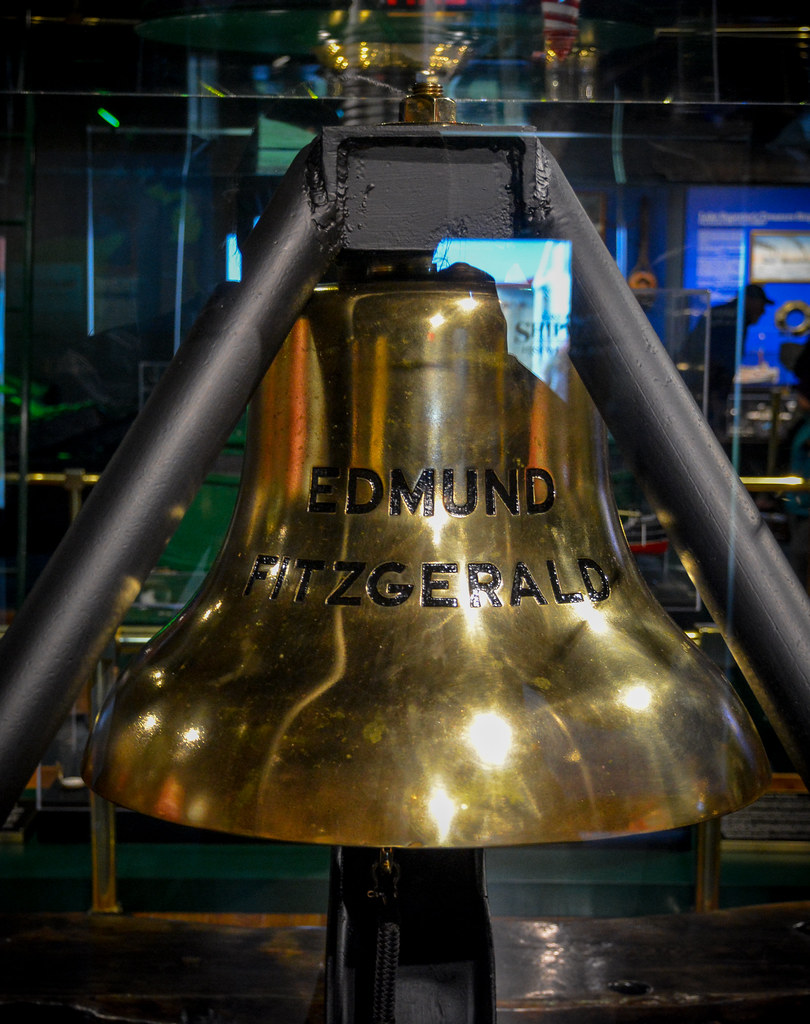
Whitefish Point, located on the southeastern shore of Lake Superior in Michigan, houses the Great Lakes Shipwreck Museum, which holds memorial events for the SS Edmund Fitzgerald each November. The wreck’s location, being 17 miles north-northwest of the point, places it beyond safe navigation lines, illustrating why the ship never reached shelter that fateful night. On a personal note, I have had the opportunity to visit the Great Lakes Shipwreck Museum in Whitefish Point, Michigan that contains the bell from the SS Edmund Fitzgerald recovered in 1995.3

The ultimate cause and circumstances of the wreck of the SS Edmund Fitzgerald in Lake Superior remain a mystery, weather conditions surrounding the sinking are well known – extraordinarily severe storm conditions, including 60 m.p.h. winds, towering waves of 25-30 feet, and heavy thick ice, which impacted possible structural vulnerabilities of the large, nearly 20-year-old cargo ship. The exact sequence of the events leading to the sinking are also unknown, as no distress signal detailing mechanical failure was received, so that the wreck has been attributed to adverse weather and lake conditions that impacted the vessel suddenly.4

The disaster, unlike the other hundreds of shipwrecks that have taken place on the Great Lakes, has entered into American mythology with Gordon Lightfoot’s ballad The Wreck of the Edmund Fitzgerald, written within a couple weeks after the disaster that same November 1975. Though the song by a bestselling recording artist about a recent shipwreck carried some risk where it was too early to know every fact, the verses are meticulously based on news stories of the basics that were known. By Lightfoot’s 7th studio album, Don Quixote, released in 1972, the Canadian singer-songwriter had begun in earnest to explore nautical themes. The Wreck of the Edmund Fitzgerald, released in June 1976 on Lightfoot’s 11th studio album, Summertime Dream, stayed on the same course.

Summertime Dream was released in June 1976 and peaked at no. 12 on the Billboard 200 (no. 1 on Canada Top Albums). The Wreck of the Edmund Fitzgerald was the album’s second track and, in August 1976, became its second single peaking at no. 2 in the U.S. and no. 1 in Canada.

The song was getting local airplay from the album in Minnesota, Wisconsin, and Michigan. Its popularity led to its release as a single in August 1976 and became Lightfoot’s biggest and most unlikely hit record commemorating the sinking of a transport cargo ship with its lives lost from less than a year before. The six-and-one-half minute folk rock song reached no. 1 in Canada and no. 2 in the U.S. where it was kept out of the top spot by Rod Stewart’s Tonight’s the Night. After the song’s release, Lightfoot never lost contact with the surviving family members of that shipwreck. Gordon Lightfoot, who was born in a town on Lake Simcoe in Ontario, Canada, died less than 90 miles away on Lake Ontario in Toronto in May 2023 at 84 years old.

The legend lives on from the Chippewa on down
Of the big lake, they called Gitche Gumee
The lake, it is said, never gives up her dead
When the skies of November turn gloomy
With a load of iron ore, twenty-six thousand tons more
Than the Edmund Fitzgerald weighed empty
That good ship and true was a bone to be chewed
When the gales of November came early

The ship was the pride of the American side
Coming back from some mill in Wisconsin
As the big freighters go, it was bigger than most
With a crew and good captain well seasoned
Concluding some terms with a couple of steel firms
When they left fully loaded for Cleveland
And later that night when the ship’s bell rang
Could it be the north wind they’d been feeling?

The wind in the wires made a tattle-tale sound
And a wave broke over the railing
And every man knew, as the captain did too
‘Twas the witch of November come stealing
The dawn came late, and the breakfast had to wait
When the gales of November came slashin’
When afternoon came, it was freezin’ rain
In the face of a hurricane west wind

When suppertime came, the old cook came on deck sayin’
“Fellas, it’s too rough to feed ya”
At seven p.m., a main hatchway caved in, he said
“Fellas, it’s been good to know ya”
The captain wired in he had water comin’ in
And the good ship and crew was in peril
And later that night when his lights went outta sight
Came the wreck of the Edmund Fitzgerald

Does anyone know where the love of God goes
When the waves turn the minutes to hours?
The searchers all say they’d have made Whitefish Bay
If they’d put 15 more miles behind her
They might have split up or they might have capsized
They may have broke deep and took water
And all that remains is the faces and the names
Of the wives and the sons and the daughters

Lake Huron rolls, Superior sings
In the rooms of her ice-water mansion
Old Michigan steams like a young man’s dreams
The islands and bays are for sportsmen
And farther below Lake Ontario
Takes in what Lake Erie can send her
And the iron boats go as the mariners all know
With the gales of November remembered

In a musty old hall in Detroit, they prayed
In the Maritime Sailors’ Cathedral
The church bell chimed ’til it rang twenty-nine times
For each man on the Edmund Fitzgerald
The legend lives on from the Chippewa on down
Of the big lake, they call Gitche Gumee
Superior, they said, never gives up her dead
When the gales of November come early

SS Edmund Fitzgerald in MacArthur Lock, Sault Ste. Marie, Michigan.

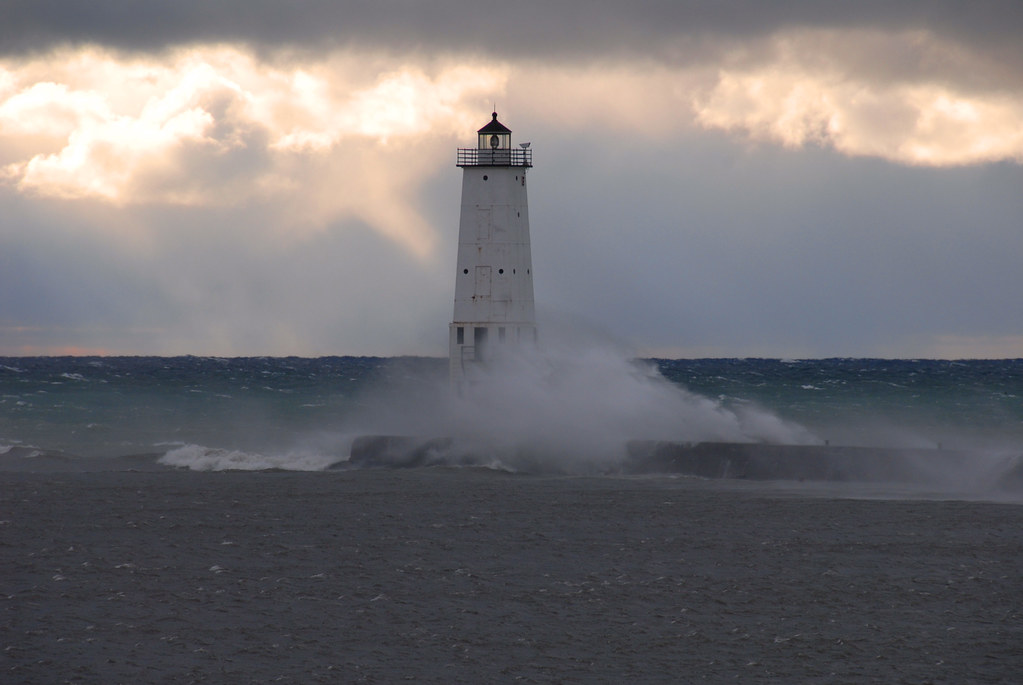
Lighthouse photo copyright 2007 Jim Sorbie.

NOTES:

  1. The Rolling Stone Encyclopedia of Rock & Roll, Third Edition (2001), p. 566.
  2. https://spectrumlocalnews.com/mi/michigan/news/2025/11/10/retired-ap-reporter-helped-cement-the-legend-of-the-wreck-of-the-edmund-fitzgerald – retrieved November 10, 2025.
  3. https://fieldethos.com/wreck-of-the-edmund-fitzgerald/ – retrieved November 10, 2025.
  4. https://www.history.com/articles/edmund-fitzgerald-sinking-lake-superior – retrieved November 10, 2025.

PHOTO CREDITS:

Edmund Fitzgerald in 1971 – “Edmund Fitzgerald, 1971, 3 of 4 (restored; cropped)” by Greenmars is licensed under CC BY-SA 3.0.

Gordon Lightfoot guitar – “Gordon Lightfoot” by Original uploader was Piedmontstyle at en.wikipedia is licensed under CC BY 3.0.

map – “File:SS Edmund Fitzgerald wreck.png” by Oaktree b is licensed under CC BY-SA 3.0.

bell – “The Bell of the Edmund Fitzgerald” by TheGreenHeron is licensed under CC BY-NC 2.0.

mystery – “Edmund Fitzgerald” by jpellgen (@1179_jp) is licensed under CC BY-NC-ND 2.0.
Summertime Dream album cover – 2025 01 06 Record – Gordon Lightfoot 7” by Blake Handley is licensed under CC BY 2.0.

at MacArthur Lock – “Edmund Fitzgerald in MacArthur Lock” by Detroit District is licensed under CC BY-SA 2.0.

lighthouse – PHOTO: “DSC_6472” by Jim Sorbie is licensed under CC BY 2.0.

250th Anniversary: The beginning of the American War for Independence started at the Battles of Lexington and Concord, Massachusetts, on the morning of April 19, 1775.

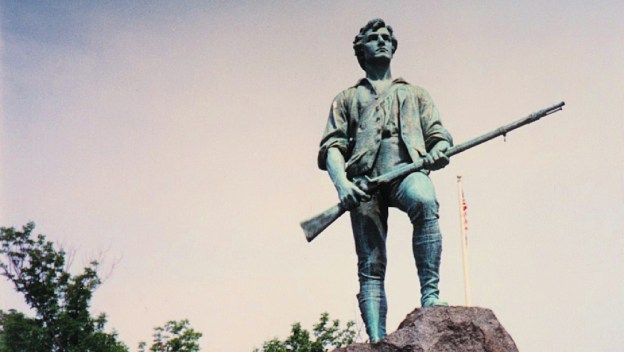
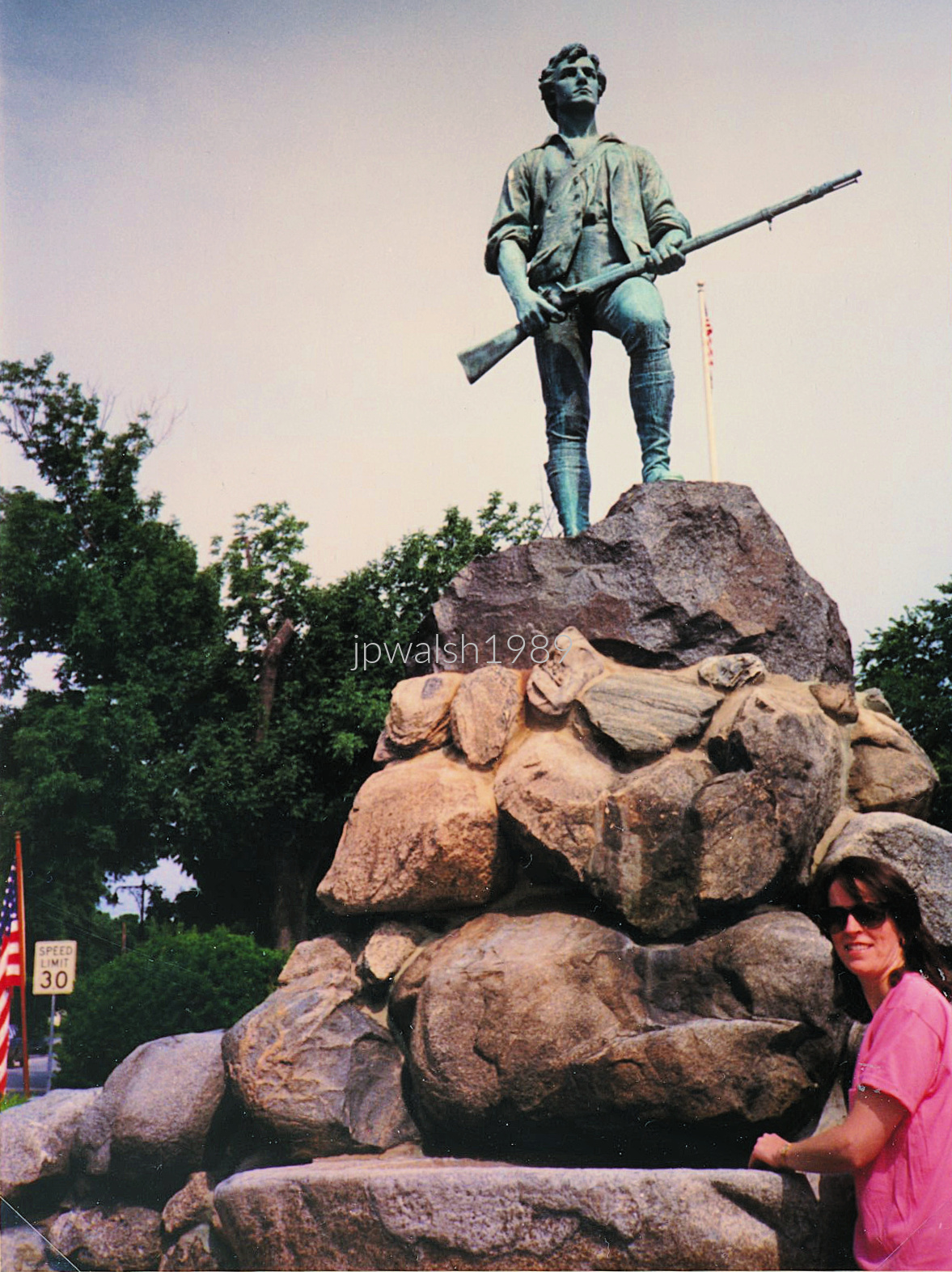
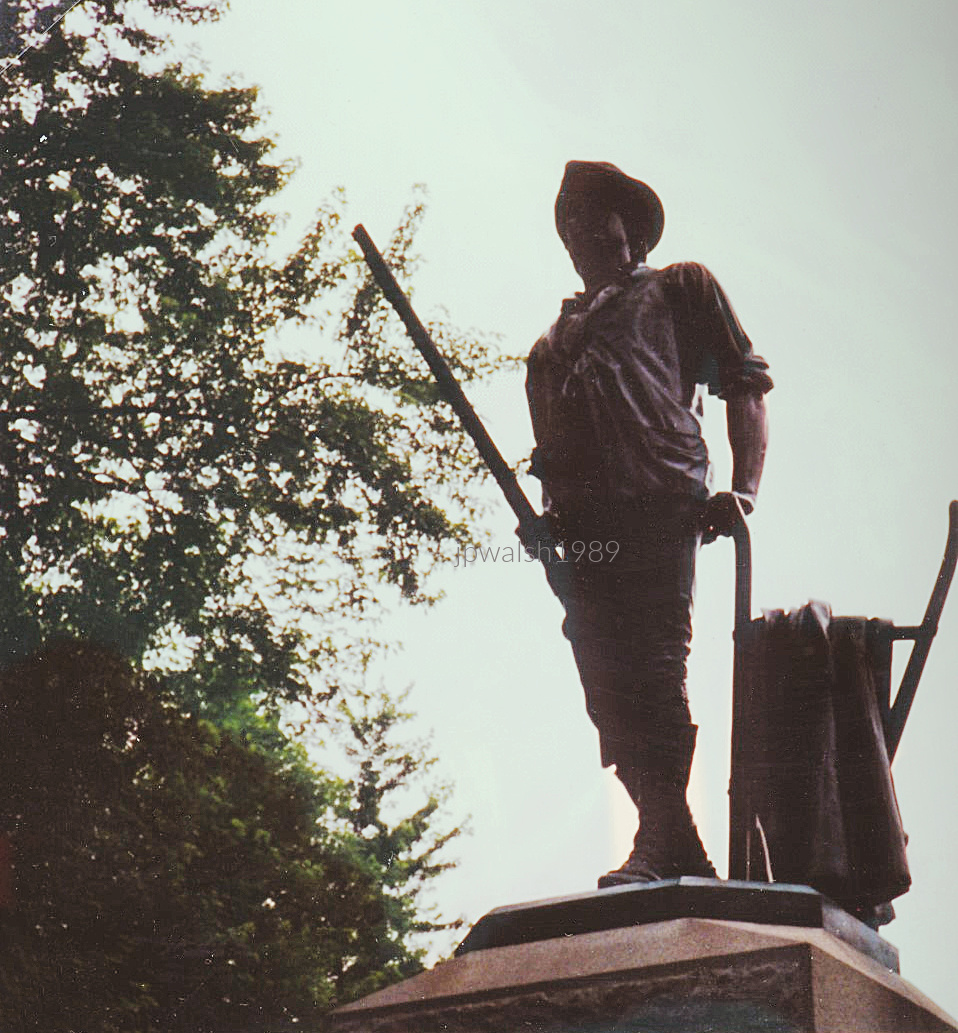
PUBLISHED APRIL 19, 2025 7pm CT. Feature image: Lexington Minute Man, 1899, by H. H. Kitson (c.1863-1947) stands in Lexington Green west of Boston, Massachusetts. Although called Minute Man, the statue is meant to represent the local Lexington militiaman, colonists of many ages and backgrounds, who volunteered to be first responders to military and other threats. The actual “minute men” was part of an elite subset of militia who were young and fit and able to respond to the greatest danger and challenge. Author’s photograph, July 1989.

H.H. Kitson, sculptor of the famous Lexington Minuteman statue, was born in England and emigrated to the United States as a teenager. Kitson studied art in Paris and returned to New York City in 1884. He relocated to Boston in 1886 where he established a studio, received numerous commissions and taught art, married one of his students, and became the father of three children. The statue was commissioned in 1898 for $10,000 by railroad executive, lawyer, state senator, and U.S. Congressman Francis Brown Hayes. It was erected in 1899 facing the route of the British advance in 1775 and unveiled on April 19, 1900 for the 125th anniversary of the battle. Public Domain. see – https://monuments.freedomsway.org/monuments/minute-man-statue/ – retrieved April 19, 2025.

On April 19, 1775, local American militiamen emerged from Buckman Tavern adjacent to the Lexington common and formed two rows on the common to face arriving British troops. The militiamen suffered the first casualties of the American Revolution. It was here on our visit that we learned about the phrase: “to sleep tight” referring to a Colonial-era bed’s network of tied rope that supported the mattress. Author’s photograph, July 1989.

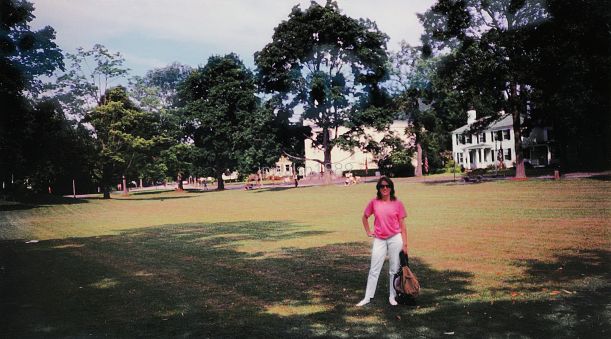
Author’s wife on Lexington Green where the first shots of the War of American Independence were fired on April 19, 1775. Author’s photograph, July 1989.

Also on April 19, 1775, the British approached the town of Concord where the American colonists sprang into action. After an alarm rider notified minutemen and militia, scouts were sent out to reconnoiter British movements. They heard the cackle of gunfire at Lexington Green and, learning of this martial situation, Concord prepared. The British advanced to Concord and the colonial militia strategically retreated past the North Bridge to watch what the British would do. Meanwhile the colonists were checking on the safety of their own military stores. With Concord effectively in British hands the Regulars moved out to take the town’s two bridges over the Concord River. The South Bridge was taken but the North Bridge proved more problematic. They crossed the bridge but encountered the colonists who had moved past it and into an elevated position. Loyalists in town informed the British where the colonists kept their military stores filled with supplies such as gun powder, cannon, shot, and flour. The colonists had their own intelligence network and had moved these stores to other hidden locations. At a farm where they thought the military supplies to be stored, the British forced a woman who lived there, one Rebecca Barrett, to make them breakfast as they searched the premises. But they found, as the colonists planned, nothing. Although there were kegs of gunpowder stored in the farm next door, the British didn’t go look.

DO NOT FIRE UNLESS FIRED UPON.

Meanwhile, the British held the two Concord bridges and waited for their search party to return. At the same time, the American colonists were getting a better look at their red-coat adversaries. As the Americans held a military council, their growing military presence forced the British who had crossed the bridge to retreat back to it. Armed militiamen were streaming in from several towns and formed a formidable front. As the British were setting fires in downtown Concord, the American colonists could see the flames rising from their position on the high ground. Because of these fires (the British were burning carriages) the Americans decided to march to the North Bridge so to cross into town to prevent the British from burning it down. Fully expecting a confrontation with the British, the militia companies loaded their weapons but were told not to fire unless fired upon. Approximately 400 militia men marched in order by company seniority down towards the North Bridge. There were less than 100 British guarding the bridge. With the coming American militia the British retreated around the bridge and considered this American action as an attack. There were a flurry of orders flying around the field of action to the point of chaos. The British debated marching into the field to meet the approaching Americans. They also debated ripping up the bridge so the Americans could not cross. They finally decided on a firing formation in the street at the base of the bridge.

SHOT HEARD ‘ROUND THE WORLD.

In the chaos the Americans arrived to the bridge. The British fired directly into the group and wounded and killed men. “The balls whistled well,” recalled a militia soldier. One American was shot through the throat. Another under and through the eye. One more through the heart. In a matter of seconds there were six total casualties. The Americans were then ordered:  “Fire, for God’s sake fire!” A hail of bullets was shot into the British. Three were killed and nine wounded.  Many of the British fled towards town. As the Americans chased the British, one militiaman struck a hatchet blow into the head of a wounded British soldier.

The British were quickly reinforced and ordered to march back to the bridge. But there was no more firing. The militia dispersed from the bridge though there was a huge influx of militia coming into Concord from several towns in all directions. The militiamen knew the terrain and its backroads and could converge quickly, directly and stealthily. Though the British asked for reinforcements (1,000 men) from Boston, nothing happened. The British retreated though Concord Bridge marked the beginning of a massive battle that raged over 16 miles along the Bay Road from Boston to Concord, and included some 1,700 British regulars and over 4,000 Colonial militia. see – https://www.nps.gov/mima/north-bridge-questions.htm – retrieved April 19, 2025.

The Minute Man statue of 1875 by Daniel Chester French (1850-1931). The Minute Man statue was unveiled on April 19, 1875 for the centennial celebration of the battle of Lexington and Concord. The statue is set near the spot where the first colonial militia men were killed in Concord on that fateful day in 1775. The 7-foot-tall bronze statue was cast from old Civil War cannons by the Ames Foundry of Chicopee, Massachusetts and the stone pedestal base is inscribed with the first stanza of a poem, The Concord Hymn by Ralph Waldo Emerson:
BY THE RUDE BRIDGE THAT
ARCHED THE FLOOD,
THEIR FLAG TO APRIL’S
BREEZE UNFURLED,
HERE ONCE THE EMBATTLED
FARMERS STOOD,
AND FIRED THE SHOT HEARD
ROUND THE WORLD.
https://www.nps.gov/mima/learn/historyculture/the-minute-man-statue-by-daniel-chester-french.htm – retrieved April 19, 2025. Author’s photograph, July 1989.

Daniel Chester French (1850- 1931) was born in New Hampshire. At 17 years old French moved to Concord to be near Ralph Waldo Emerson (1803-1882) and the family of Louisa May Alcott (1832-1888) where he took his first art lessons. French studied art in Boston and was 21 years old when he was commissioned for The Minute Man statue. At its unveiling the statue was critically acclaimed though French was in Europe at the time studying art. On his return to the United States French had studios in Washington D.C., then Boston and finally in New York City. In 1897 French purchased the estate that would become Chesterwood in Stockbridge, Massachusetts. French created famous works of public art in Boston, Cambridge, Mass., New York City, Chicago and Washington D.C. French is best known for his Seated Lincoln inside the Lincoln Memorial in Washington D.C. French is buried in Sleepy Hollow Cemetery in Concord along with Emerson, the Alcotts and Henry David Thoreau.
https://www.nps.gov/mima/learn/historyculture/sculptor-daniel-chester-french.htm – retrieved April 19, 2025.

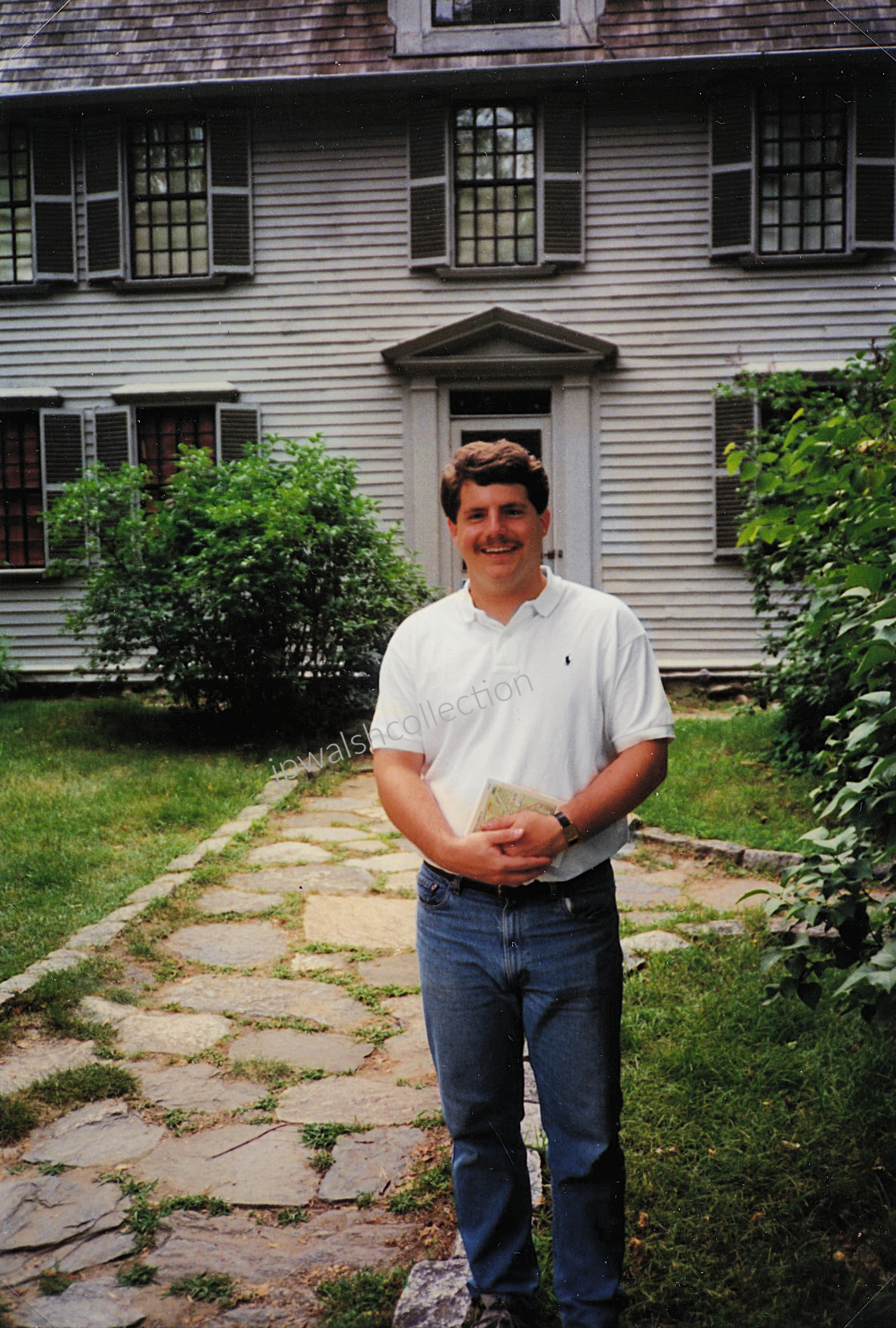
Author at the Old Manse in Concord, Massachusetts. The house is located on Monument Street, with the Concord River just behind it. The property is next to the North Bridge, a part of Minute Man National Historical Park. The Old Manse was built in 1770 for the Rev. William Emerson (1743-1776), father of minister William Emerson (1769-1811) and grandfather of transcendentalist philosopher Ralph Waldo Emerson. The elder Rev. Emerson was the town minister in Concord, chaplain to the Provincial Congress when it met at Concord in October 1774 and later a chaplain to the Continental Army. Emerson observed the fight at the North Bridge, a part of the Concord Fight, from his farm fields while his wife and children witnessed the fight from the upstairs windows of this house. Ralph Waldo Emerson wrote his first draft of his essay, Nature, that was the Transcendentalist movement’s foundational work. While living at the Old Manse in the mid 1830’s, Emerson proposed to his future wife, Lydia Jackson (1802-1892). After their marriage they moved to another house in Concord that is today known as the Emerson House. Author’s collection, July 1989.

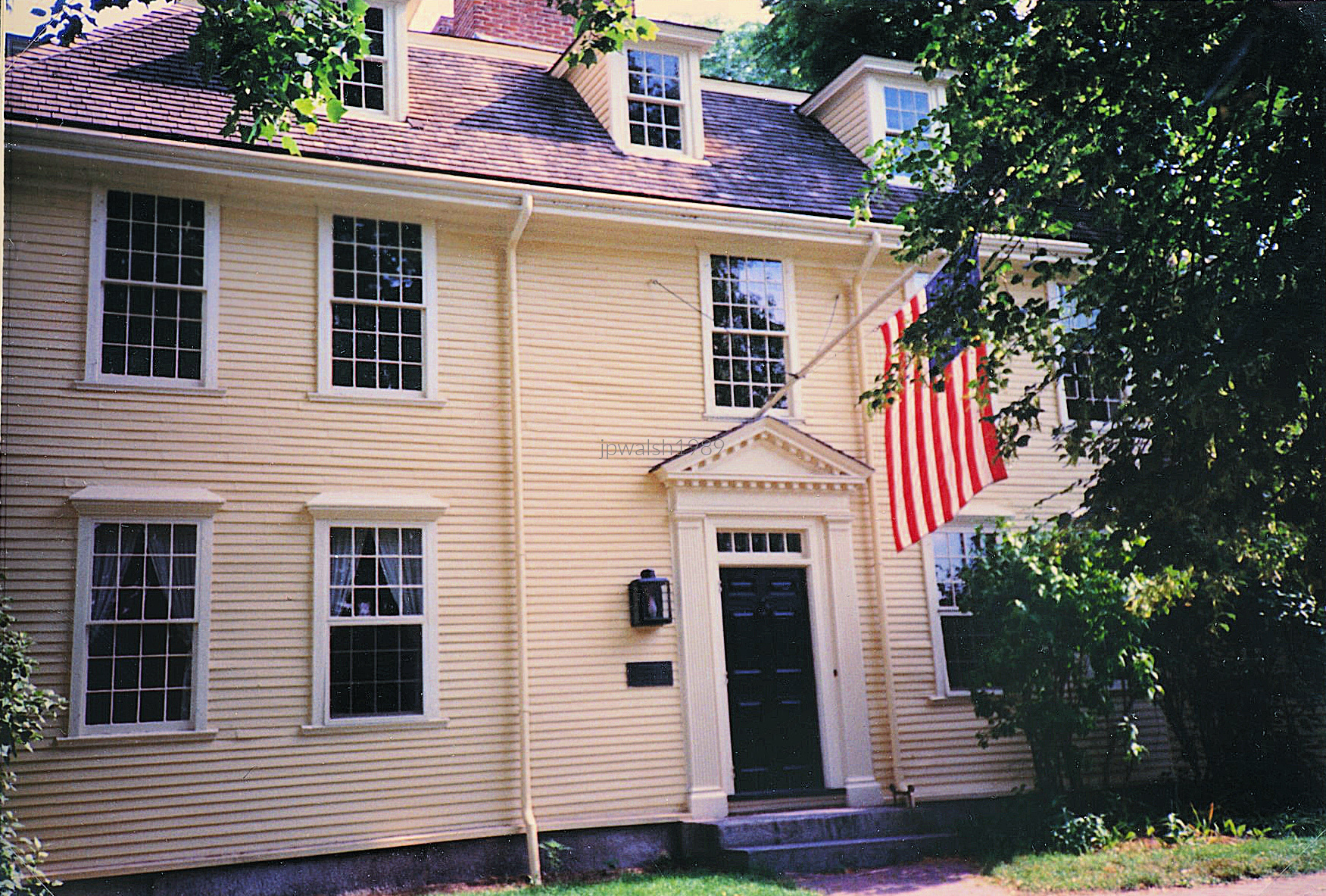
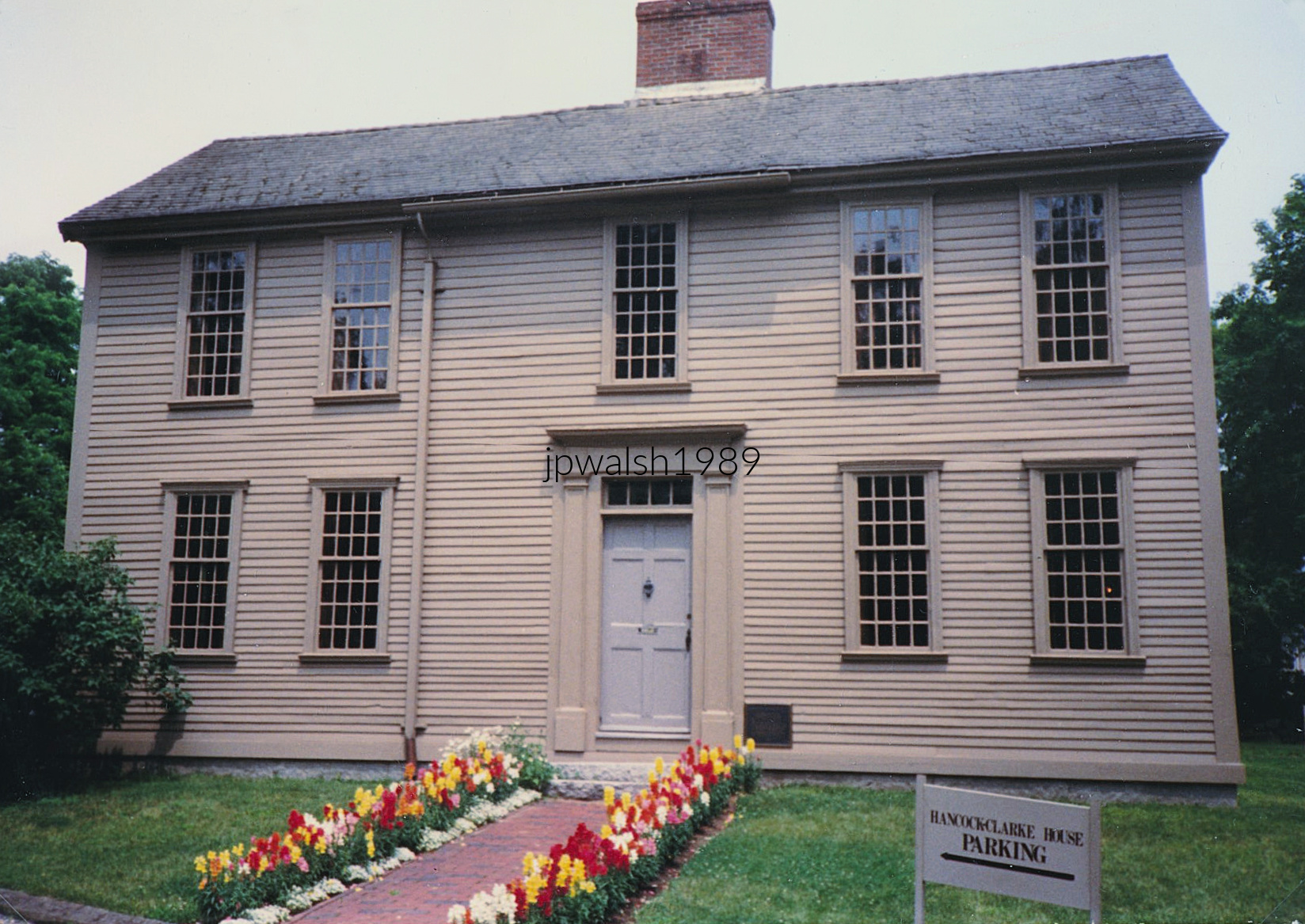
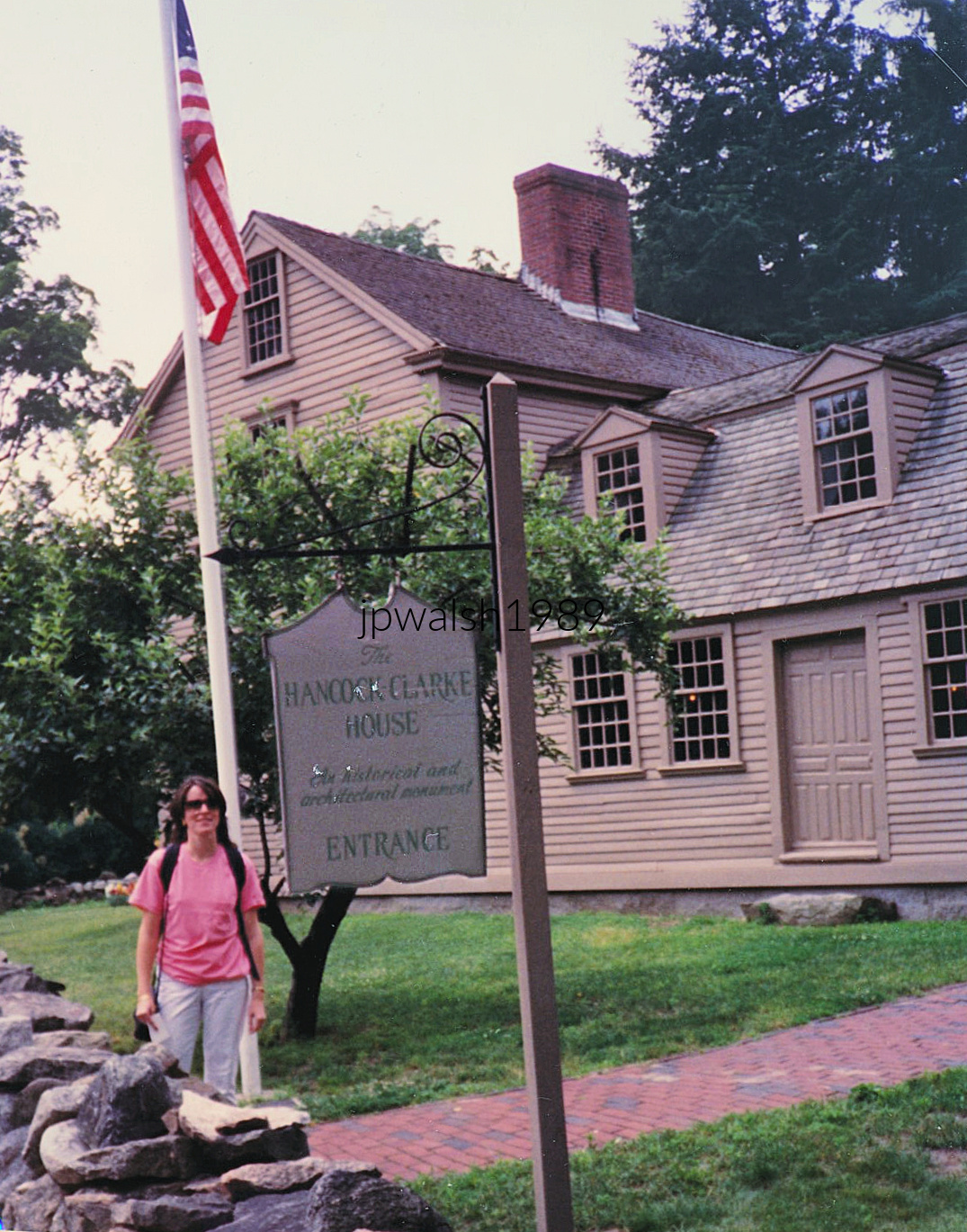
Built in 1738, the Hancock-Clarke House at 36 Hancock Street in Lexington, Massachusetts, – less than half a mile from Lexington Green – is an historic house where colonial leaders John Hancock (1737-1793) and Samuel Adams (1722-1803) were both staying before the Battle of Lexington and Concord on April 19, 1775.  Author’s photograph, July 1989.

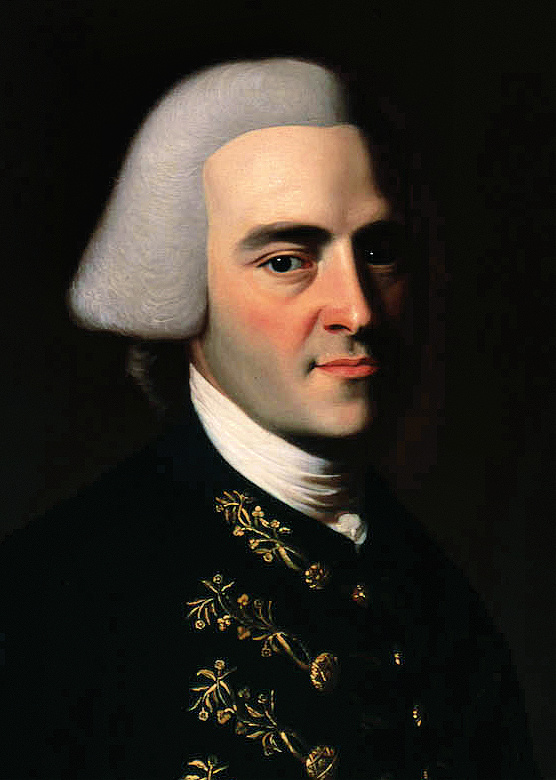
John Hancock, 1770, by John Singleton Copley (1738-1815) in the Massachusetts Historical Society. Public Domain.
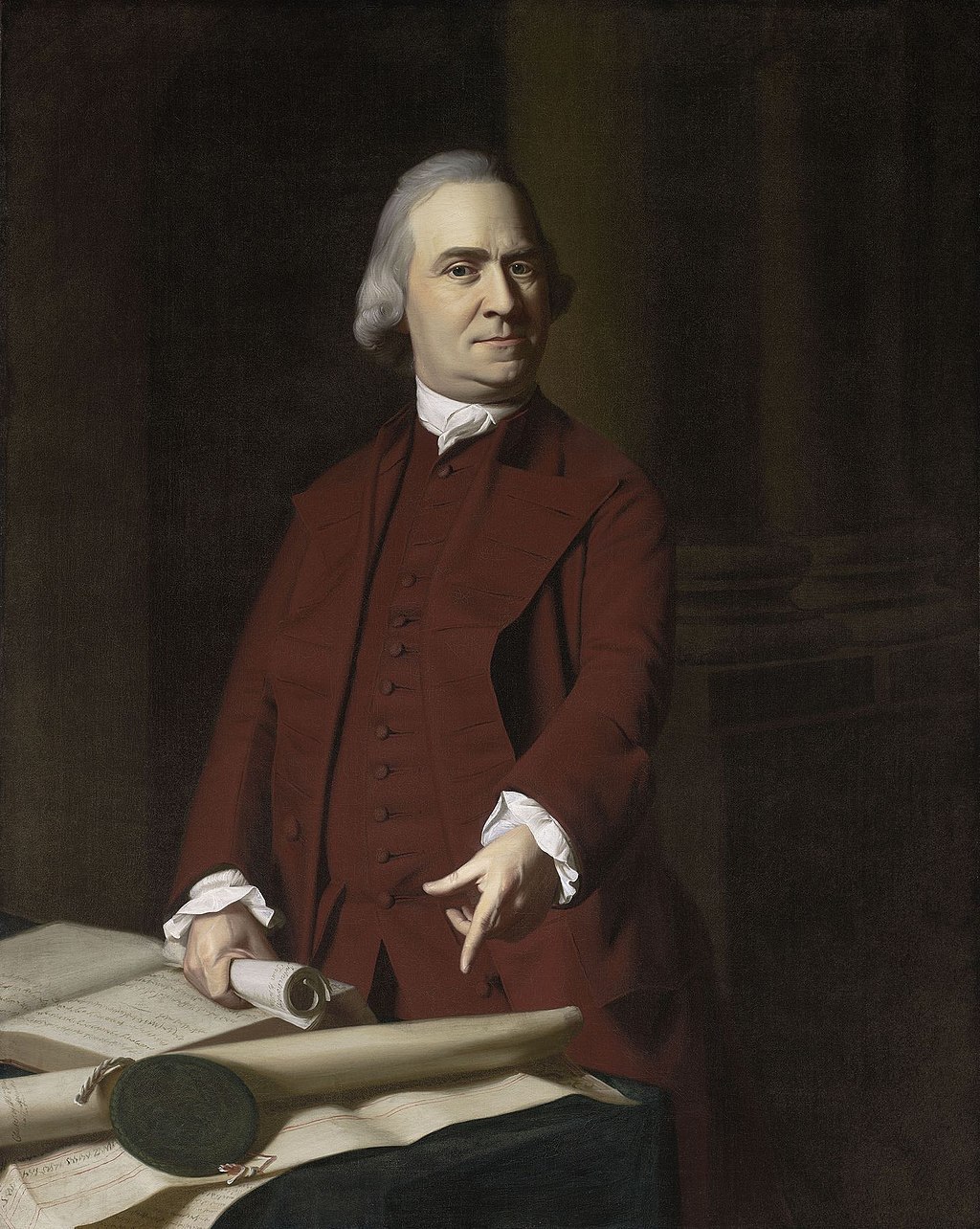
Samuel Adams, 1772, by John Singleton Copley (1738-1815) in the Boston Museum of Fine Arts. Public Domain. https://collections.mfa.org/objects/30881/samuel-adams?ctx=de17a5dc-0f39-480c-8e84-f4fc92f44030&idx=0 – retrieved April 19, 2025.

John Hancock and Samuel Adams attended the Massachusetts Provincial Congress in Concord on the evening of April 18, 1775 and were guests of Rev. Jonas Clarke (1730-1805) that evening in Lexington. Clarke was a Harvard College grad (class of 1752) and the third pastor of the Church of Christ in Lexington since 1755. Fearing that Hancock and Adams might become prisoners of the advancing British, Joseph Warren (1741-1775) in Boston dispatched William Dawes (1745-1799) and Paul Revere (1734-1818) to Lexington with news of the advancing British troops. Arriving separately at the Hancock-Clarke House, they stopped to warn the patriots around midnight, then set off for Concord. Hancock and Adams made their way to Burlington, a 30-minute horseback ride away, for safe haven. Author’s photograph, July 1989.

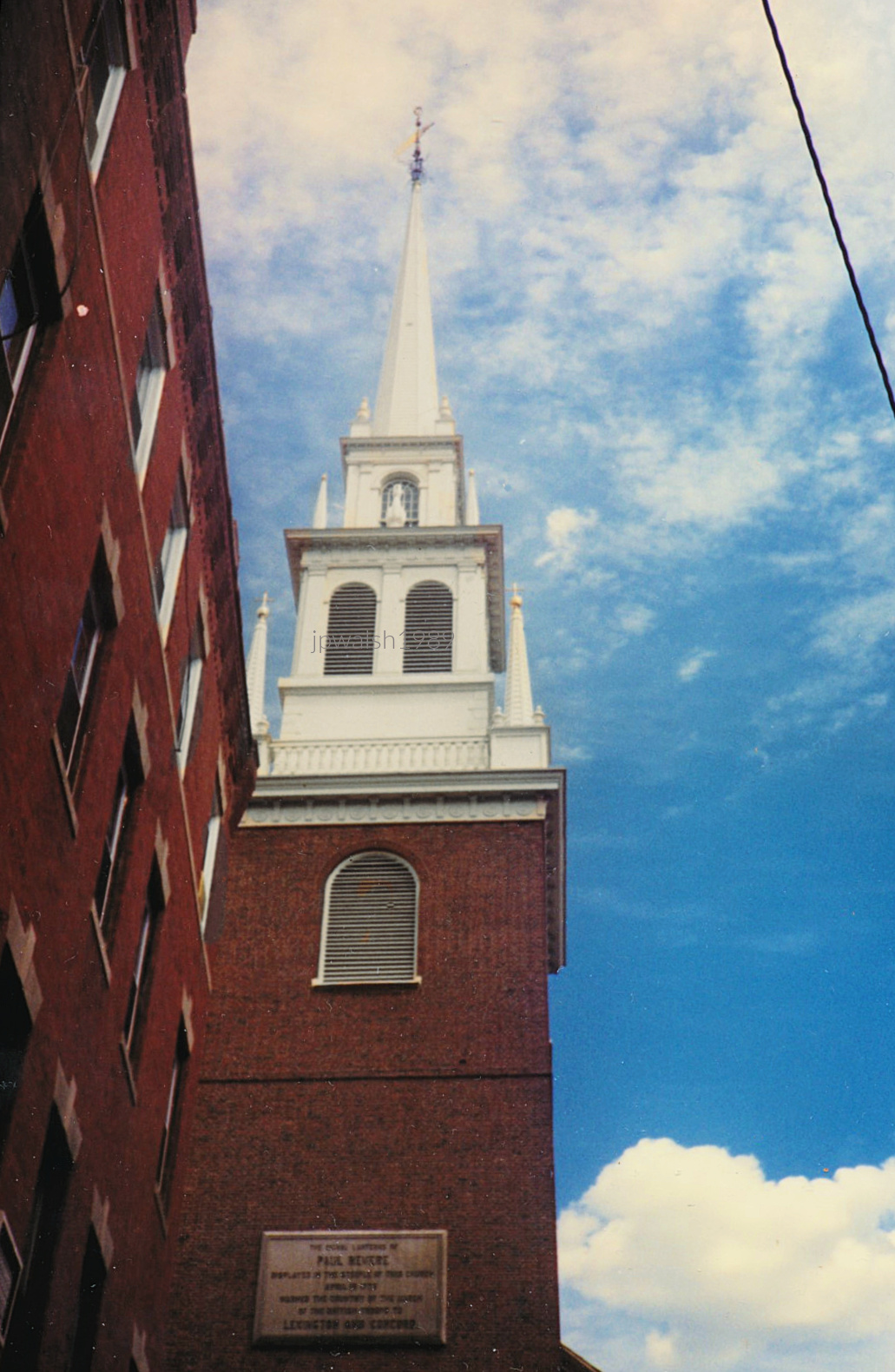
Old North Church in Boston was established in 1723 as Christ Church. Old North is famous for the night of April 18, 1775, when the church sexton, Robert Newman, and vestryman Capt. John Pulling, Jr. climbed the steeple and held high two lanterns as a signal from Paul Revere that the British were marching to Lexington and Concord by sea across the Charles River and not by land. This momentous event ignited the American Revolution. see – https://www.oldnorth.com/ – retrieved April 19, 2025. Author’s photograph, July 1989.

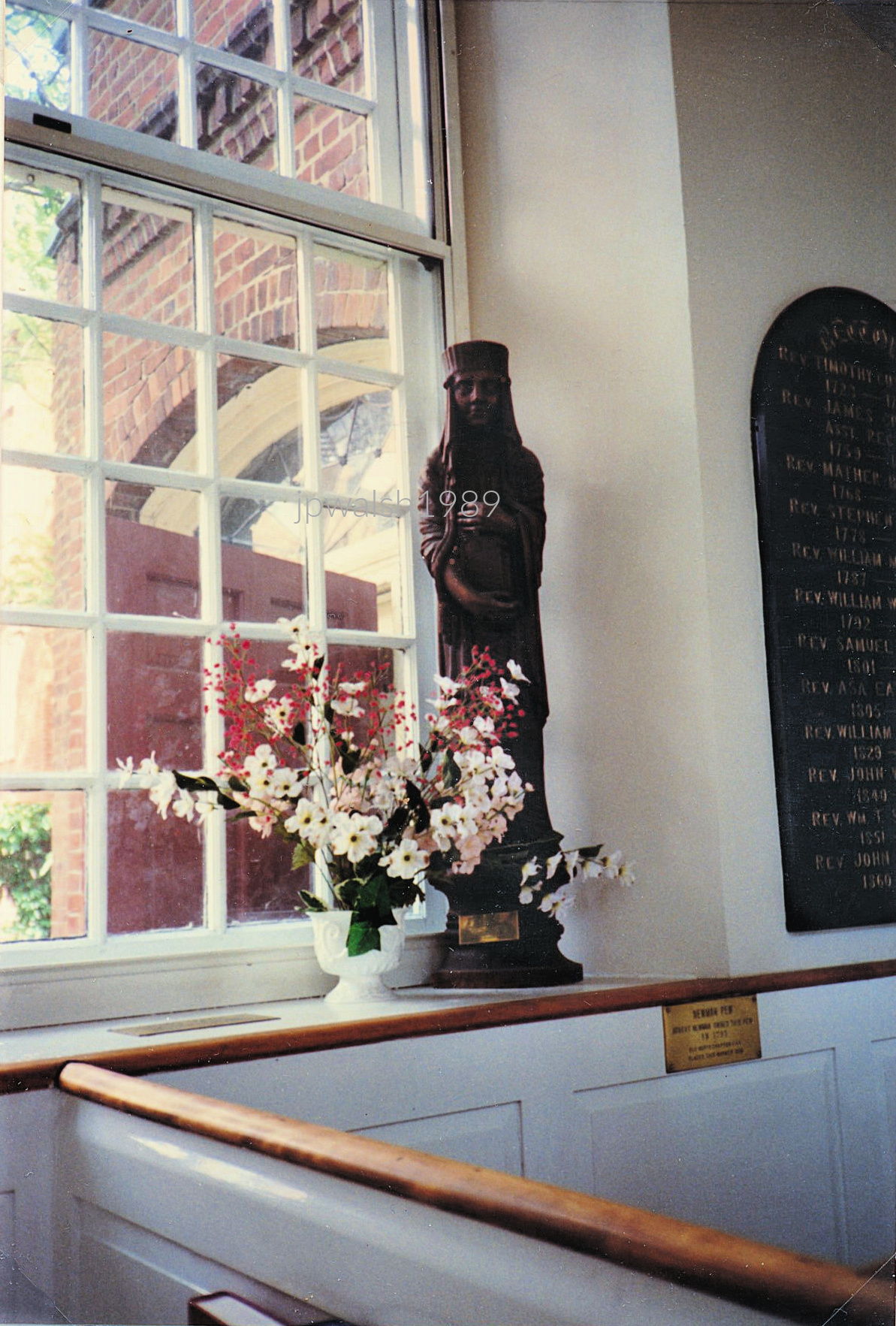
Inside Old North Church. Nearby in Copp’s Hill Burying Ground are the graves of Increase (1639-1723) and Cotton (1663-1728) Mather, the Old North Church’s Puritan pastors whose administration coincided with the notorious Salem Witch Trials. Author’s photograph, July 1989.

Author at Paul Revere House, Boston, with a work friend of my dad. March 1976.

Paul Revere, c. 1770, by John Singleton Copley (1738-1815) in the Boston Museum of Fine Arts. Public Domain. Unlike Copley’s portraits of Samuel Adams and another of John Hancock, both of which were displayed in Boston’s Faneuil Hall, Paul Revere’s portrait was relegated to the Revere family attic, disliked by his family after his death for its informality. With Paul Revere’s fame assured following the publication of “Paul Revere’s Ride,” a poem by Henry Wadsworth Longfellow (1807-1882) in 1861, the painting was restored in 1875 though not publicly displayed until 1928. It was given to the Museum of Fine Arts in 1930 by Revere’s descendants. https://collections.mfa.org/objects/32401/paul-revere?ctx=00d797a8-0c5a-4d78-ba26-db22eb858902&idx=5 – retrieved April 19, 2025.

Opened and in continuous operation since 1942, Leon’s in Milwaukee, Wisconsin, is still owned by the original family. The Drive-In served as inspiration for Arnold’s in the 1970’s popular TV sitcom “Happy Days.”

FEATURE image: Late afternoon at Leon’s Frozen Custard in Milwaukee, Wisconsin. June 2017. (4.53mb, DSC_0728). Author’s photograph.

Leon’s original sign. By victorgrigas – Own work, CC BY-SA 3.0.

Leon’s is a family-owned drive-in in Milwaukee, Wisconsin, that opened 83 years ago – in 1942. The building was remodeled in the early 50’s and is what is seen today. Leon’s was inspiration for the original Arnold’s Drive-In in the 1970’s ABC television sitcom, Happy Days, that was also set during the 1950’s in Milwaukee, Wisconsin.

The World Famous Leon’s.The World Famous Leon’s” by nixter is licensed under CC BY-NC 2.0.
Fonzi played by Henry Winkler was a new character for the ABC TV series. He had just 6 lines in the first episode of “Happy Days” whose debut broadcast was January 15, 1974. In the series, Fonzie’s full name was Arthur Fonzarelli and called that by Richie’s mom. The original family name of series’ creator Garry Marshall (1923-2016) was Masciarelli and changed before Garry was born by his father, a man of Italian descent. TV Guide #1189” by trainman74 is licensed under CC BY-NC 2.0.
Ordering at Leon’s.World Famous Leon’s Frozen Custard” by Thomas Hawk is licensed under CC BY-NC 2.0.

Leon’s is still owned and operated by the original family. The main focus of the business is, and always has been, to serve the freshest and finest frozen custard available anywhere. The business is open all year round and they have full soda fountain service, a sandwich menu, daily special flavors and take-out service.

Leon’s at night. “Leon’s” by joseph a is licensed under CC BY-NC-SA 2.0.
Late afternoon at Leon’s, Milwaukee, Wisconsin. June 2017. Leon’s was inspiration for Arnold’s on Happy Days. Author’s photograph.
Arnold’s was the name of the local Milwaukee drive-in hang out for most of the characters in Happy Days. Fair Use.

In 1973 Ron Howard was 19 years old when he signed to a seven-year contract to do Happy Days. Howard was balancing working on several projects at the same time: making a film (American Graffiti), going to college at USC, and planning for a directing career. Given a starring role as Richie Cunningham, Howard was paid $3,500 per episode (about $25,000 in 2025). Along with M*A*S*H, All in the Family, The Mary Tyler Moore Show, and The Bob Newhart Show, Happy Days was one of the most popular TV shows of the 1970’s. It aired for 11 seasons from January 15, 1974, to July 19, 1984 on the ABC network. There was a total of 255 half-hour episodes. Ron Howard starred as Richie Cunningham in the Love American Style episode in February 1972 on which the new TV series was based, but still had to audition for the part for the TV series. Cast again as Richie, at the first read-through for the first episode Howard reconnected with Anson Williams (“Potsie”) and Marion Ross (Richie’s mother) who were also in the Love American Style pilot. He also met Tom Bosley (“Richie’s dad”), Donny Most (“Ralph Malph”) and 28-year-old Yale School of Drama grad Henry Winkler (“Fonzie”) at that first read through.

SOURCES:

Ron Howard & Clint Howard , The Boys A Memoir of Hollywood and Family, William Morrow, 2021, pp. 275-277.

https://leonsfrozencustardmke.com/ – retrieved March 2, 2025.

https://happydays.fandom.com/wiki/Arnold%27s_Drive-In – retrieved March 20, 2025.

80th Anniversary: Battle of Iwo Jima (Feb. 19-Mar. 26, 1945): American victory in the Pacific Theater which cost dearly and whose heroism was captured in photographs and color films, rallied a war-weary homefront to renewed resolve to finish the job in the last months of World War II.

FEATURE image: American flamethrowers in a foxhole on Iwo Jima, February 1945. Marine Flamethrowers in Foxholes, February 1945” by Archives Branch, USMC History Division is licensed under CC BY 2.0.

Fourth Division Marines in Foxhole on Beach, Iwo Jima, February 1945 “Fourth Division Marines in Foxhole on Beach, Iwo Jima, February 1945” by Archives Branch, USMC History Division is licensed under CC BY 2.0.
Advancing Marine Flamethrower Squad, Iwo Jima, February 1945. “Advancing Marine Flamethrower Squad, Iwo Jima, February 1945” by Archives Branch, USMC History Division is licensed under CC BY 2.0.

The Battle of Iwo Jima was a nearly 40-day battle campaign fought by the U.S. Marine Corps and U.S. Navy against the Japanese Imperial Army on the island of Iwo Jima in the Pacific. With 110,000 total battle personnel (over 70,000 troops), the American objective of their invasion (called “Operation Detachment”) was to capture the island and its airfields. Iwo Jima was situated between Japan and the American bomber bases in the Mariana Islands. Since summer 1944 unescorted American B-29 bombers were flying nearly 3000 miles roundtrip to bomb Japan and being lost at sea from entrenched Japanese defenses. With Iwo Jima in American hands U.S. fighter planes could escort the long-range bombers as well as have any damaged aircraft find sanctuary on the island. The American victory after a five week campaign resulted in the capture of Iwo Jima with its immediate benefit that, by war’s end, 2,400 B-29s were able to make safe forced landings on the island.

Iwo Jima in 1945. Mount Suribachi is a knob at the bottom of the map. “Map of Iwo Jima, 1945” by Archives Branch, USMC History Division is licensed under CC BY 2.0.
Marines Detonating Japanese Mine on Beach, Iwo Jima, February 1945. “Marines Detonating Japanese Mine on Beach, Iwo Jima, February 1945” by Archives Branch, USMC History Division is licensed under CC BY 2.0.
Marines Taking Shelter on the Beach, Iwo Jima, February 1945. Marines Taking Shelter on Beach, Iwo Jima, February 1945” by Archives Branch, USMC History Division is licensed under CC BY 2.0.

There were 20,000 or so heavily-fortified Japanese defending the island to the death while U.S. Navy and Marine Corps aircrews had complete air superiority. The U.S. Navy provided heavy artillery gunfire support from the sea. The Battle of Iwo Jima, an American victory, took place from February 19 to March 26, 1945, and was one of the fiercest of World War II. That Americans could take the island was not the question. Its exact cost was. The casualty toll was heavy for both sides. The Japanese had 216 taken prisoner and up to 18,375 killed or missing in action. The American combat toll was also staggering: 6,821 killed in action, 19,217 wounded, and 2,648 experiencing battle trauma.

23d Regiment, Fourth Marine Division Command Post, Iwo Jima, 1945. “23d Regiment, Fourth Marine Division Command Post, Iwo Jima, 1945” by Archives Branch, USMC History Division is licensed under CC BY 2.0.
Fifth Marine Division Command Post, Iwo Jima, 1945. Fifth Marine Division Command Post, Iwo Jima, 1945” by Archives Branch, USMC History Division is licensed under CC BY 2.0.

Joe Rosenthal (1911-2006), with his camera hanging at his side, surveys the landing beaches at Iwo Jima on March 7, 1945. Rosenthal was awarded the U.S. Navy Distinguished Public Service Award, as well as the Marine Corps Distinguished Public Service Award by the Marine Corps, for his war photography. Photo by AP/U.S. Marine Corps. Public Domain.

On Friday, February 23, 1945, Rosenthal landed on the island and heard that they were going to raise a flag on the highest point on the island which was the old volcano at the southwest end called Mount Suribachi. Rosenthal carried a Speed Graphic camera that was press standard issue and joined other photographers ready to ascend to the top. Halfway up they met a marine photographer coming down whose camera was obliterated by an enemy grenade explosion. Rosenthal and the others were told that the marines had already raised the flag. But the views were good from the summit anyway and still worth the climb. Once at the top Rosenthal and the rest saw marines who were working to affix a larger flag to a pipe under orders from a captain who wanted to replace it for the earlier smaller flag just raised. When the six marines started to raise that second larger flag on the heavy pole Rosenthal pushed his camera’s shutter. After taking the flag-raising photo, Rosenthal made his way back down Mount Suribachi to the shoreline. There, he took a transport boat out to the command ship, where he wrote captions for his photos and sent them, sight unseen, with the undeveloped film by seaplane to Guam.

Marines on Beach, Iwo Jima, February 1945. “Marines on Beach, Iwo Jima, February 1945” by Archives Branch, USMC History Division is licensed under CC BY 2.0.
In the shadow of Mount Suribachi, Iwo Jima, 1945. “In the shadow of Suribachi, Iwo Jima, 1945” by Archives Branch, USMC History Division is licensed under CC BY 2.0.
Marines Advancing on Beach, Iwo Jima, February 1945 – 36324610020. “Marines Advancing on Beach, Iwo Jima, February 1945 – 36324610020” by Archives Branch, USMC History Division is licensed under CC BY 2.0.
Marine Firing 30mm, Iwo Jima, 1945 “Marine Firing 30mm, Iwo Jima, 1945” by Archives Branch, USMC History Division is licensed under CC BY 2.0.
Iwo Jima – Mt Suribachi Detail. “Iwo Jima – Mt Suribachi Detail” by Agsftw is licensed under CC BY-SA 3.0

“I took the picture. But the Marines took Iwo Jima.”

In February 1945 Joe Rosenthal was a 33-year-old American photographer for the AP. Rosenthal’s poor eyesight prevented him from fighting in combat though his task as an embedded photographer placed him in Harm’s Way. Before Iwo Jima, Joe Rosenthal had landed with the marines on Guam and Peleliu. His Pulitzer Prize-winning photograph of the flag raising on Iwo Jima became a sign of hope for a war-weary American home front that victory in the Pacific would be theirs. It also became the iconic symbol of everything U.S. Marines. Rosenthal was very proud of his photograph of the six marines and the Marines overall, though modest about any accolades that came his way. Rosenthal put his role in perspective, saying: “I took the picture. But the Marines took Iwo Jima.” Yet it is not to be forgotten that Rosenthal was exposing himself to the same dangers as the six marines that day when he took his iconic photograph for history of the flag raising on Iwo Jima on February 23, 1945.

Original photograph by Joe Rosenthal, February 23, 1945. Public Domain.
Iwo Jima Flag Raising 1945 – Rare Color Film by Sgt Genaust [#Upscaled#1080p#60FPS#ww2]. Three feet to Joe Rosenthal’s right, Sgt. Genaust captured the flag-raising from nearly the same angle using color motion picture film.

Unveiled in November 1954, the Marine Corps War Memorial in Washington, D.C. was dedicated to all Marines who have given their lives in the defense of the U.S. since 1775. see – https://www.nps.gov/gwmp/learn/historyculture/usmcwarmemorial.htm – retrieved February 19, 2025. Author’s photograph, October 2003.

U.S. Marine Corps War Memorial (Iwo Jima Memorial) – (Arlington, Virginia) – August 1, 2015. U.S. Marine Corps War Memorial (Iwo Jima Memorial) – (Arlington, Virginia) – August 1, 2015” by cseeman is licensed under CC BY-NC-SA 2.0.

US Marine Corps War Memorial, Washington, D.C. The centerpiece of the memorial is a colossal sculpture group by Felix Weihs de Weldon (1907-2003), then on duty with the U.S. Navy, depicting the six Marines who raised the second larger U.S. flag atop Mount Suribachi on Iwo Jima on February 23, 1945. The memorial was designed by Horace Whittier Peaslee, Jr. (1884-1959) and dedicated in November 1954 by President Dwight D. Eisenhower. Author’s photograph, October 2003.

Felix Weihs de Weldon. Public Domain.
Marine Post Office, Iwo Jima, 1945. “Marine Post Office, Iwo Jima, 1945” by Archives Branch, USMC History Division is licensed under CC BY 2.0.

US Marine Corps War Memorial, Washington, D.C., was based on the iconic AP photograph by Joe Rosenthal taken on February 23, 1945 of the raising of the U.S. flag at the top of Mount Suribachi at the start of the Battle of Iwo Jima (February 19- March 26, 1945). Rosenthal’s photograph was flashed around the world for the first time on Sunday, February 25, 1945, and instantly became a symbol of the American war effort in the Pacific Theatre during World War II. The Marine Corps War Memorial Foundation organized the fundraising and creation of the monument. The complete cost of the memorial was $850,000 (about $10 million in 2025). The 32-foot-high bronze figures are erecting a 60-foot flag pole onto Mount Suribachi. Important dates in the history of the Marine Corps are burnished in gold into the Swedish marble base. The six marines who raised the flag on Iwo Jima have all been identified and include a sergeant, 2 corporals, and 3 privates first class. Unveiled in November 1954, the Marine Corps War Memorial was dedicated to all Marines who have given their lives in the defense of the U.S. since 1775. Author’s photograph, October 2003.

Flags of Our Fathers (2006) is an American war film about the Battle of Iwo Jima (February 19 – March 26, 1945) and its aftermath. The film was directed and co-produced by Clint Eastwood (who also composed the film’s score) and released with his smaller companion film Letters from Iwo Jima about the same battle from the Japanese viewpoint. Distributed by Paramount Pictures (U.S.) and Warner Bros. Pictures internationally, the films basically broke even at the box office as each received favorable critical reviews. Flags of Our Fathers is based on a 2000 book of the same name by James Bradley (with Ron Powers) about Bradley’s Navy corpsman father, John, and the five U.S. Marines who raised the flag at the top of Mount Suribachi on February 23, 1945 and that was made world famous by Joe Rosenthal’s AP photograph. (In 2016 the U.S. Marines announced that Bradley and others originally believed to be in the photograph, in fact, were not). In addition to its fierce battle depictions, Flags of Our Fathers dramatizes the ups and downs of the home front. Though three of the marines in the photograph – a private, corporal and the sergeant – had been killed in action less than a week after the iconic photograph, the photograph’s surviving marines became celebrities who returned stateside to participate in a war bond selling tour. With World War II ending in Europe, the Iwo Jima marines and their photograph came to symbolize American heroism and resolve for victory in the Pacific Theatre. Yet their uplifting mission also called for further individual sacrifice from these dedicated men.

See Iwo Jima war bond poster here = https://collections.ushmm.org/search/catalog/irn520954  – retrieved February 19, 2025.

USMC Iwo Jima War Memorial at Night, World War II, Veteran Soldiers, American Flag. “USMC Iwo Jima War Memorial at Night, World War II, Veteran Soldiers, American Flag” by Beverly & Pack is licensed under CC BY 2.0.
Marines Advancing on Beach, Iwo Jima, February 1945. “Marines Advancing on Beach, Iwo Jima, February 1945” by Archives Branch, USMC History Division is licensed under CC BY 2.0.
Marine Field Gun Emplacement on Beach, Iwo Jima, February 1945. “Marine Field Gun Emplacement on Beach, Iwo Jima, February 1945” by Archives Branch, USMC History Division is licensed under CC BY 2.0.

Rosenthal told Collier’s magazine: “The sky was overcast, but just enough sunlight fell from almost directly overhead, because it happened to be about noon, to give the figures a sculptural depth. The 20-foot pipe was heavy, which meant the men had to strain to get it up, imparting that feeling of action. The wind just whipped the flag out over the heads of the group, and at their feet the disrupted terrain and the broken stalks of the shrubbery exemplified the turbulence of war.” Quoted in https://www.usfca.edu/magazine/december-2024/feature/man-behind-the-camera – retrieved Feb. 19, 2025. Wire services flashed Joe Rosenthal’s photograph around the world where it was published on the front pages of more than 200 newspapers on Sunday, February 25, 1945. The photo appeared on magazine covers across the country as well. Following the battle of Iwo Jima, the photo was used for publicity in war bond drives from May 11 to July 4, 1945, which raised an amazing $26.3 billion – by far  the biggest haul of any of the seven U.S. war loan drives during World War II.. Rosenthal’s photograph became an enduring icon. 

Mount Suriarlington “Mount Suriarlington” by John Loo is licensed under CC BY 2.0.

In November 1963 FOR “BILL OF RIGHTS WEEK,” President John F. Kennedy made a short film introduction addressing the nation on the Bill of Rights in the U.S. Constitution that JFK called “the most extraordinary and detailed guarantees of individual liberty that any people on earth now possess.”

FEATURE Image: “bill of rights day tribute” by Demetrios Georgalas aka brexians is licensed under CC BY-NC-SA 2.0.

On November 5, 1963, President John F. Kennedy reminded his fellow Americans of the detailed guarantees of individual liberty found in the Bill of Rights that “perhaps we take for granted but which we are guaranteed in the United States Constitution…”President John F. Kennedy” by U.S. Embassy New Delhi is licensed under CC BY-ND 2.0.
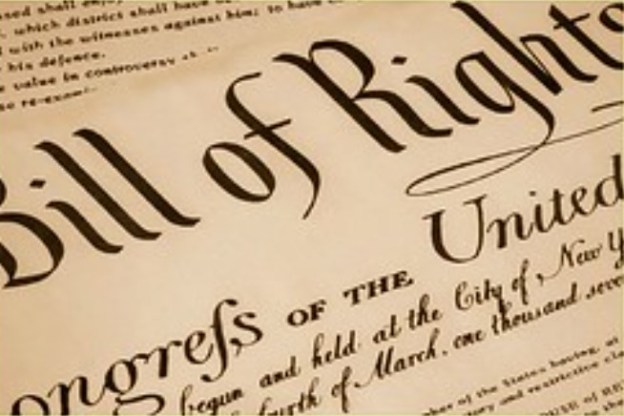
In a letter dated September 24, 1963, Lawrence Speiser (1923-1991), Director of the Washington D.C. Office of the American Civil Liberties Union (ACLU) expressed his encouragement and support to the idea of the President of The United States addressing the nation in that auspicious time and place to commemorate that year’s U.S. Bill of Rights week. The Bill of Rights are the first ten amendments to the U.S. Constitution that were created on September 25, 1789 and ratified by the states on December 15, 1791. As the president listed in his remarks, they guarantee individual rights and liberties to every citizen including “freedom of speech, freedom of religion, freedom of the press, the right of assembly and petition, the right of trial by jury, the right to be secure in one’s own home, the protection of due process of law and private property and public trials, and many other things…” President Kennedy agreed to make a two-minute movie trailer for national showing on television and in theaters during “Bill of Rights Week” to be held that year from December 15 to 21.

In his letter, the ACLU Director in Washington, D.C. acknowledged the important relevance of the Bill of Rights in his day as it was when originally written and adopted. Just months since President Kennedy’s June 11, 1963 Civil Rights speech to the nation (https://www.jfklibrary.org/learn/about-jfk/historic-speeches/televised-address-to-the-nation-on-civil-rights – retrieved October 26, 2024) which advocated a fundamental support of the civil rights movement for Black Americans, and less than one month since the March on Washington and Martin Luther King Jr.’s “I Have A Dream” speech delivered from the steps of the Lincoln Memorial in the National Mall, ACLU Director Speiser pointed out to Kennedy’s Press Secretary in his letter the significance of the Bill of Rights to these actions: “Certainly the entire civil rights movement today for fair and equal treatment for Negroes has demonstrated the importance of basic freedoms of speech, press, religion and assembly as well as due process of law in attaining that ideal. The August 28th “March on Washington” was a massive demonstration in the time-honored tradition of a peaceable assembly to petition the government for a redress of grievance.”

On November 5, 1963, President John F. Kennedy recorded a short speech for Bill of Rights Day, which is celebrated on December 15. The speech was filmed at the request of the Council of Motion Picture Organizations and was distributed to theaters across the country. 

President Kennedy’s remarks from the Oval Office were filmed on November 5, 1963. They were to be broadcast nationwide in December 1963. A little over two weeks after Kennedy made these remarks, the 46-year-old president was assassinated in Dallas, Texas. In President Kennedy’s remarks on Bill of Rights Day he related the history of how the document came to be created and formed: “After the Constitution was written it was felt that while this was an extraordinary document it did not provide the kind of guarantees for our individual liberties that a free country required. Therefore, under the leadership of James Madison, the first 10 amendments were adopted to the Constitution. We call them the Bill of Rights.“

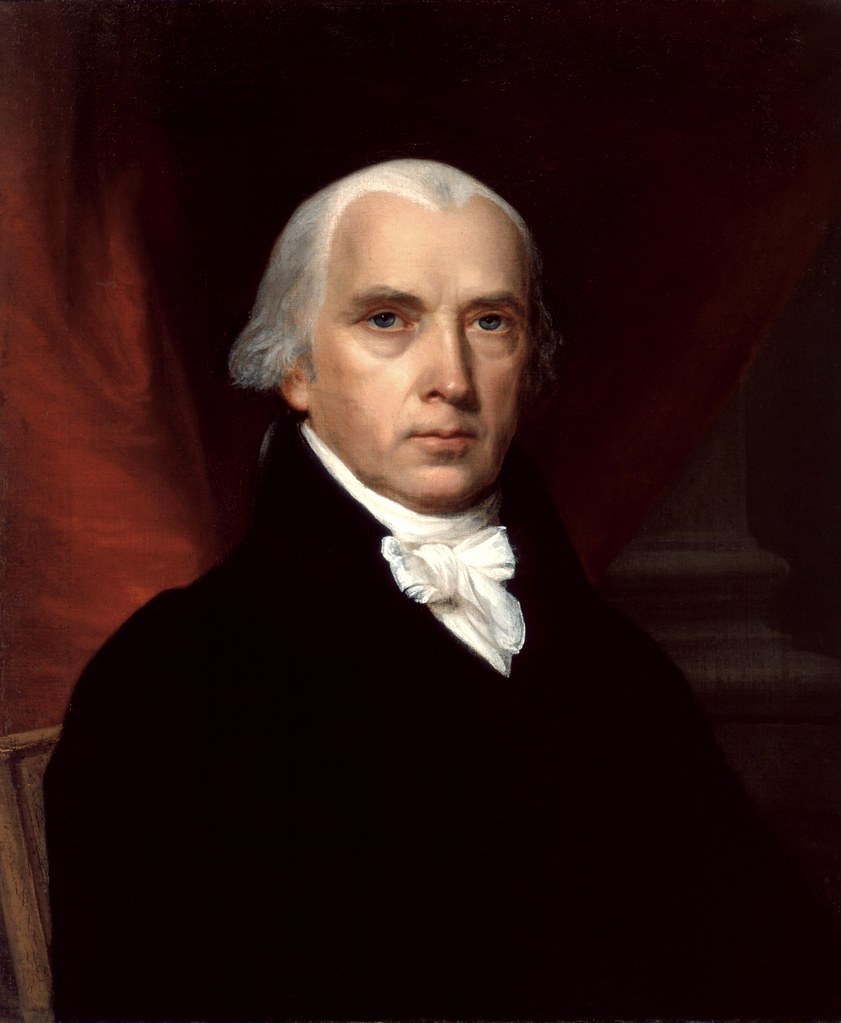
James Madison (1751-1836), who became the 4th president of the U.S. for two terms starting in 1808, introduced the Bill of Rights on June 8, 1789. His amendments contained numerous restrictions on the federal government and would protect, among other things, freedom of religion, freedom of speech, and the right to peaceful assembly. While most of his proposed amendments were drawn from the ratifying conventions, Madison was largely responsible for proposals to guarantee freedom of the press, protect property from government seizure, and ensure jury trials. President John F. Kennedy, 35th president of the United States, cited Madison in his remarks to the nation on November 5, 1963. 4 James Madison” by US Department of State is marked with Public Domain Mark 1.0.

The U.S. Bill of Rights comprises the first ten amendments to the U.S. Constitution adopted in 1791. The Bill of Rights specifically adds to the Constitution specific and detailed guarantees of personal freedoms and rights, clear limitations on the government’s power in judicial and other proceedings, and explicit declarations that all powers not specifically granted to the federal government by the Constitution are reserved to the states or the people.The Bill of Rights” by eugevon is licensed under CC BY-SA 2.0.
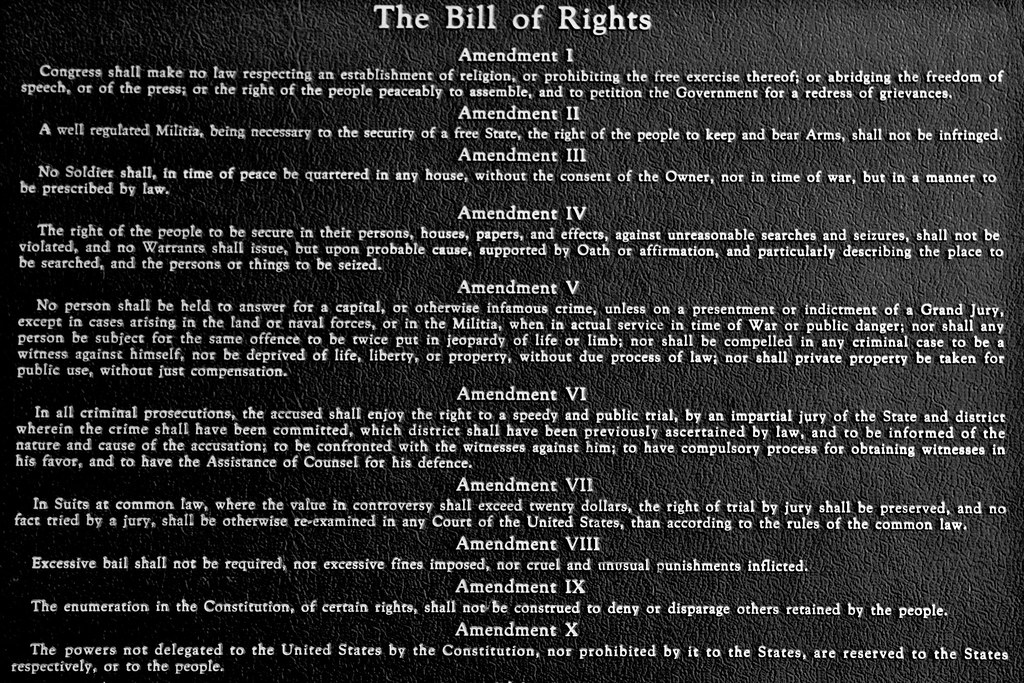
President Kennedy pointed to the document’s profound meaning and relevance in the life of the nation – “We, The People.” Despite, or because of, the many struggles in the nation’s history, the Bill of Rights had proved vital and inseparable to the people in America – and mankind – in their guarantee of the sort of life its citizens seek to live and lead. “My fellow American citizens,” Kennedy said, “…They are the most extraordinary and detailed guarantees of individual liberty that any people on earth now possess. Because of the Bill of Rights, we are guaranteed freedom of speech, freedom of religion, freedom of the press, the right of assembly and petition, the right of trial by jury, the right to be secure in one’s own home, the protection of due process of law and private property and public trials, and many other things that perhaps we take for granted but which we are guaranteed in the United States Constitution…”

bill of rights day tribute” by Demetrios Georgalas aka brexians is licensed under CC BY-NC-SA 2.0.
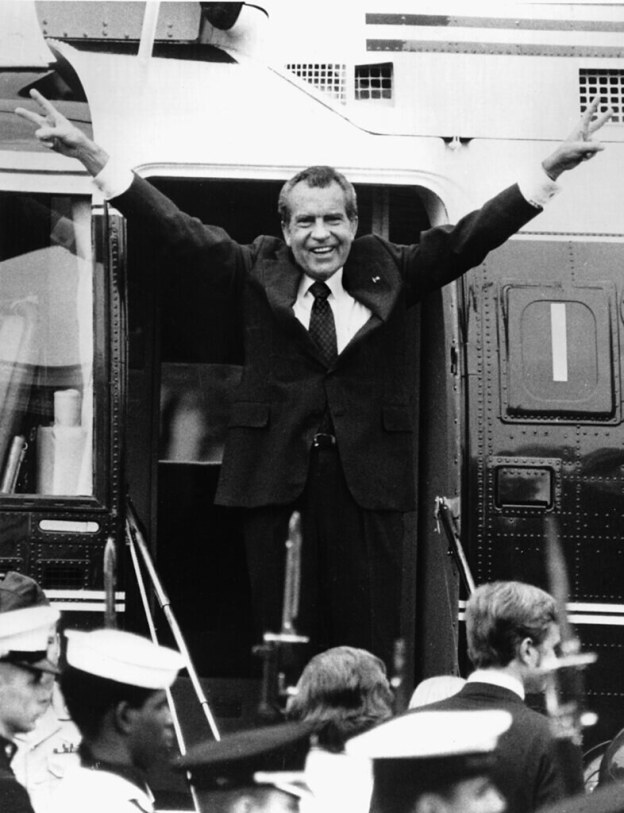
50 years ago today: President Richard Nixon Resigns.

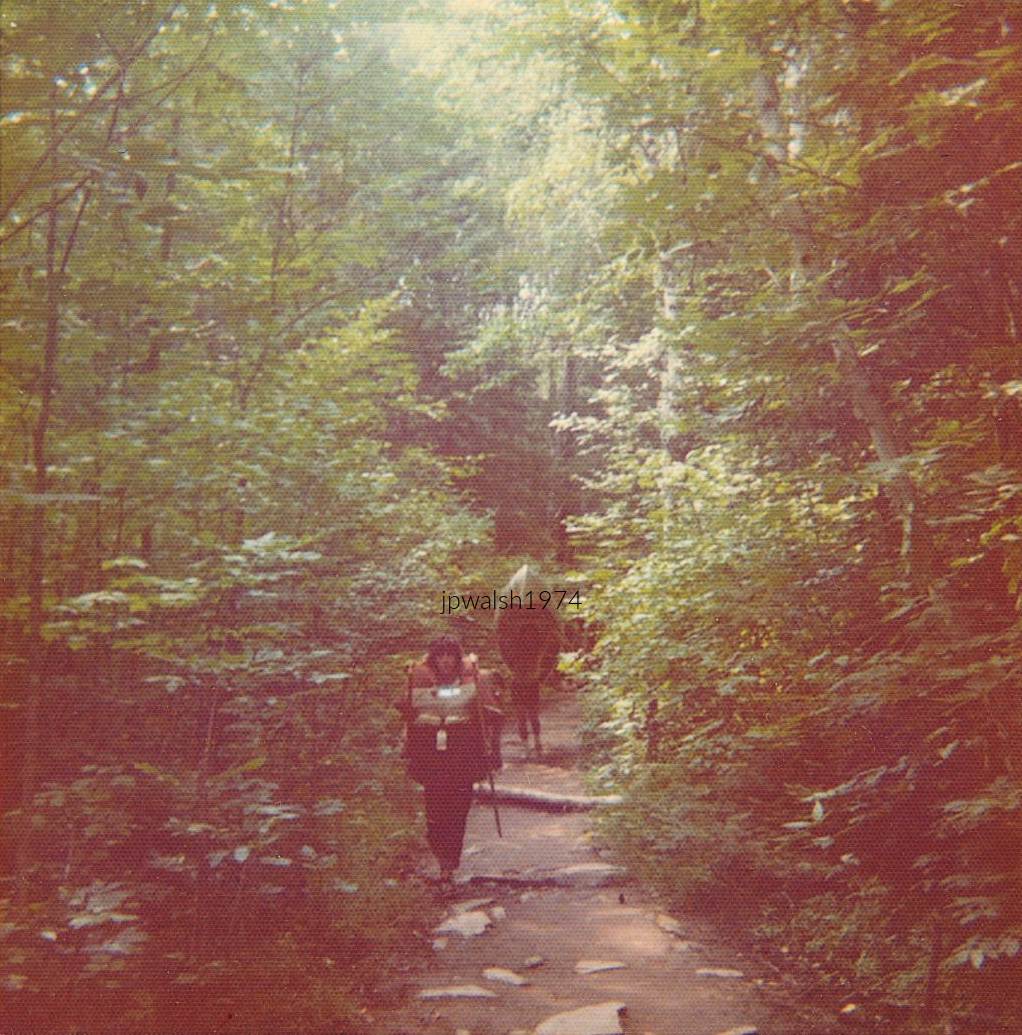
I was on one of my backpacking canoe trips into Quetico Provincial Park in Canada during the week of Nixon’s resignation on August 9, 1974. Up to that point the political theatre in the nation had been stoked to climax. That summer I was one of the first to get and read a copy of Bernstein & Woodward’s All The President’s Men in June 1974.

The Washington Post investigative reporters Carl Bernstein and Bob Woodward’s All the President’s Men was released in June 1976. It is about the Watergate scandal from the June 1972 break-in through to the resignations in April 1973 of White House Chief of Staff H. R. Haldeman and Domestic Affairs Advisor John Ehrlichman and the revelation by deputy assistant Alexander Butterfield in July 1973 about the White House tapes. It relates events behind the scenes of major stories and revealing of sources including detailed accounts of Woodward’s secret meetings with his source Deep Throat. “All the President’s Men, 1976” by thefoxling is licensed under CC BY-NC-SA 2.0.

The reporting work of Woodward and Bernstein has been called “maybe the single greatest reporting effort of all time” (see – Roy J. Harris, Jr., Pulitzer’s Gold, 2007, p. 233, Columbia: University of Missouri Press). In 1976, a popular film adaptation of All The President’s Men was released starring Robert Redford as Woodward and Dustin Hoffman as Bernstein. That same year, journalists Woodward and Bernstein published The Final Days, a sequel to All The President’s Men which I also read at its release that chronicled the last months of Richard Nixon’s presidency, starting around the time their previous book ended.

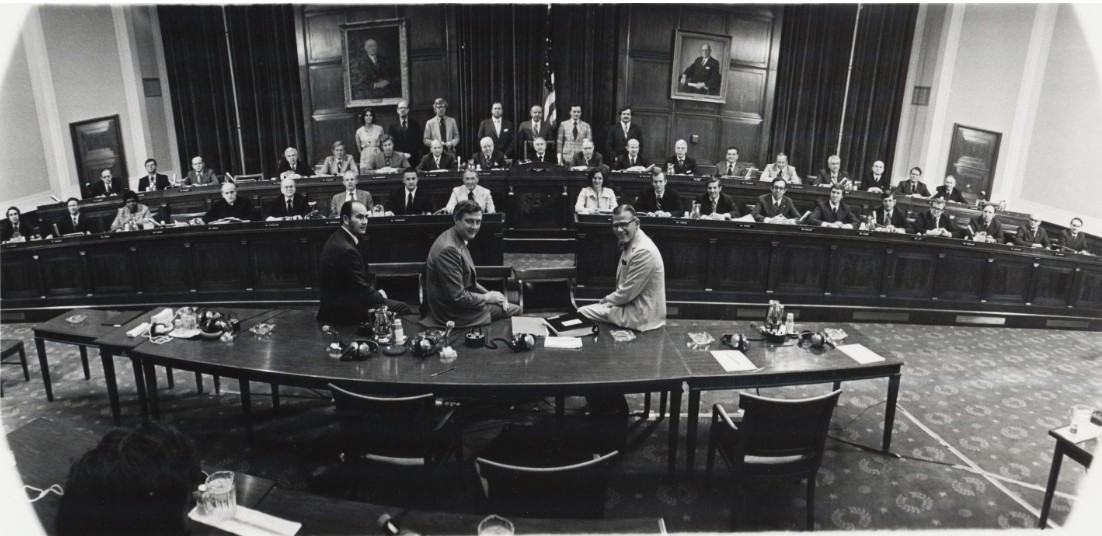
Members and staff of the House Judiciary Committee on July 27, 1974. Public Domain. The articles of Impeachment can be found here: https://watergate.info/impeachment/articles-of-impeachment/ – retrieved August 8, 2024.

Since it started in May 1974, I had been watching the congressional hearings as well as reading the newspapers mostly that summer on the fight over the White House tapes. On July 24, 1974 the U.S. Supreme Court in an unanimous decision said Nixon had to surrender the tapes and on July 27, 1974 the House Judiciary Committee voted for articles of impeachment of Nixon. This was coming to a head just days before I was getting ready to set out for week in the wilderness by way of Madison, Wisconsin and Ely, Minnesota.

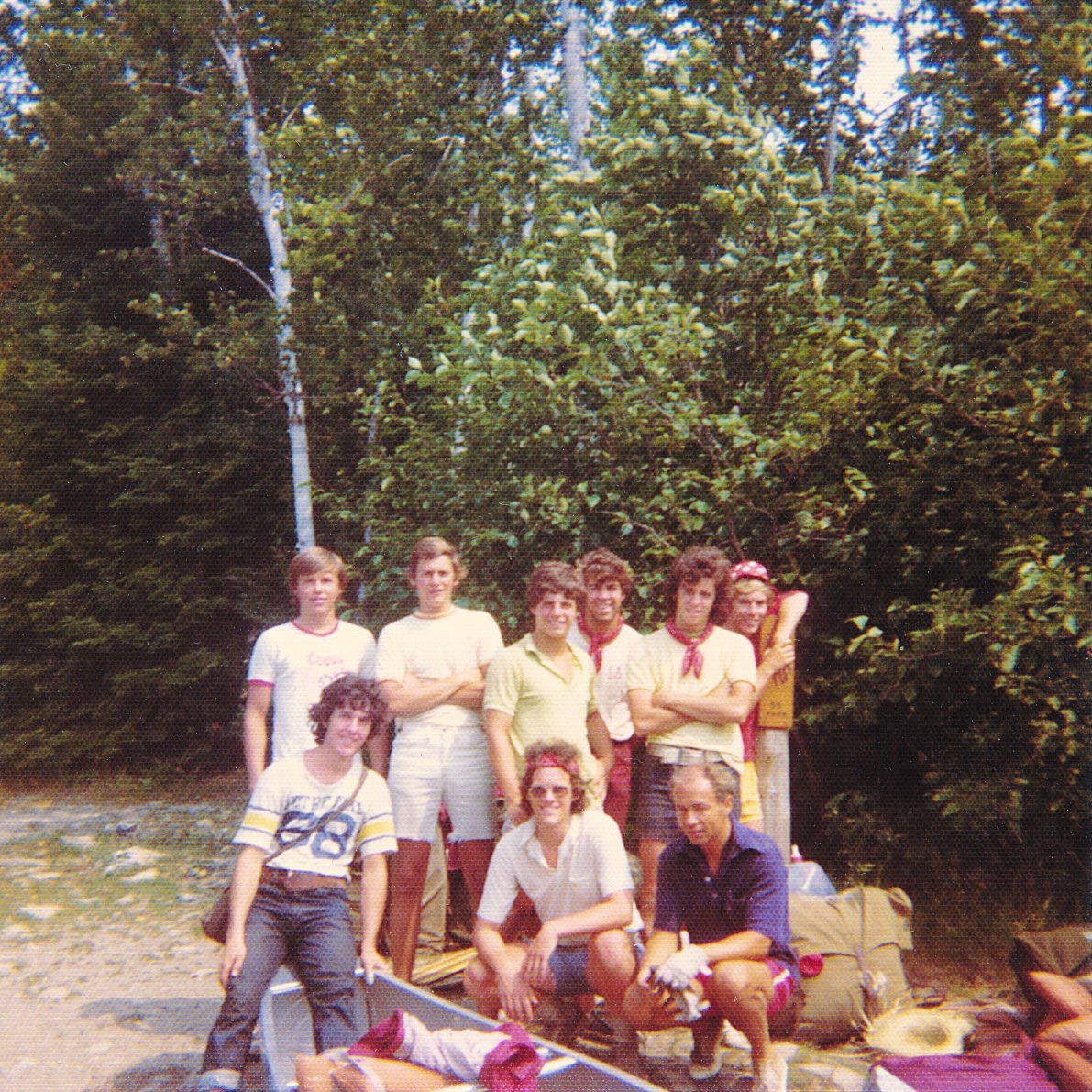
Canoe trip group August 8, 1974. As we paddled, portaged and set up and broke camp for a beautiful week outdoors, we were all well aware of the heightened goings on in Washington D.C. regarding Nixon’s presidency. Since we had no media in the wilderness, we didn’t find out Nixon resigned, the first and only president so far in U.S. history to do so, until we returned to Ely, Minnesota for the return trip home. The author is standing in the center in open-collared green shirt.

In an evening televised address on August 8, 1974, President Richard M. Nixon announced his resignation to be effective at noon on August 9, 1974. That day Nixon gave a farewell press conference in the East Room in mid morning before scores of White House staff and cabinet members joined by his wife, Pat, and two daughters, Julie and Tricia, with their husbands. Nixon was finally bowing to pressure from the public and Congress to leave the White House.

I missed the resignation speech itself but saw the early morning press conference on tv at the outfitter’s. At the time, I thought Nixon was maudlin and mawkish. That’s still my take today though Nixon’s final presser is masterful melodrama. In the first days and weeks following the Nixon resignation – after years of political struggle at the highest levels of government – there was a sense of relief and being cast adrift in the nation. Real engagement returned it seemed following President Ford’s pardoning of Nixon on September 8, 1974. For me school had started again and I was playing football. But the rough and tumble of national politics gathered and regrouped again so to resume making all right in the world by way of that struggle for it.

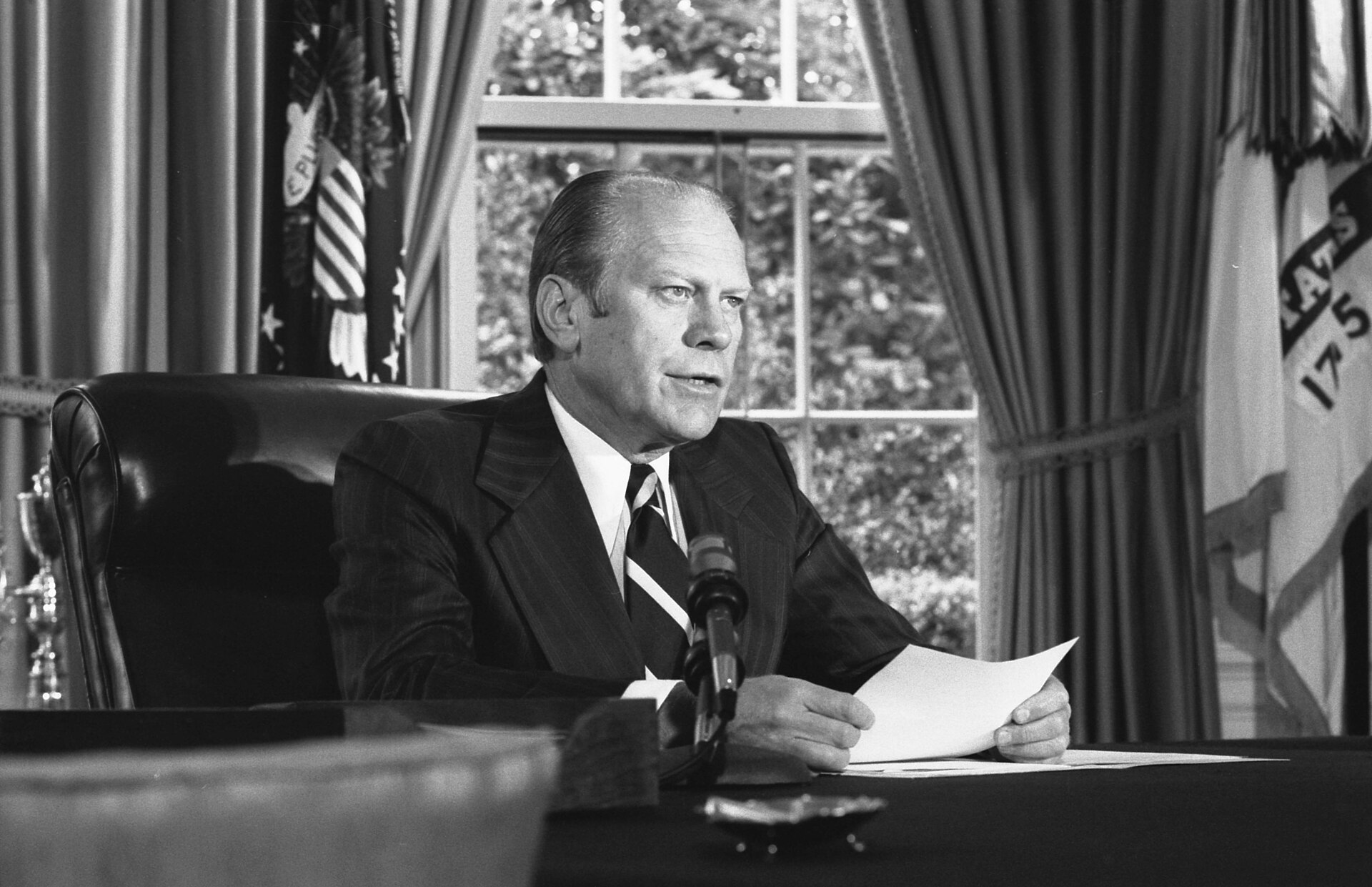
President Ford announcing his decision to pardon Nixon, September 8, 1974, in the Oval Office. Public Domain.

President Nixon’s grave in June 1994 at the Nixon Library adjacent to his childhood home in Yorba Linda, California. Nixon is buried next to his wife, Pat. Author’s photograph.

Author at the Nixon Library in Yorba Linda, California, in June 1994 – 20 years after the presidential resignation and about 6 weeks after President Nixon died at 81 years old on April 22, 1994. Author’s collection.

The Fireworks of Versailles: a public display of the world’s most advanced pyrotechnics has lighted up the French King’s palace and its spectacular waterworks and gardens since the 17th century.

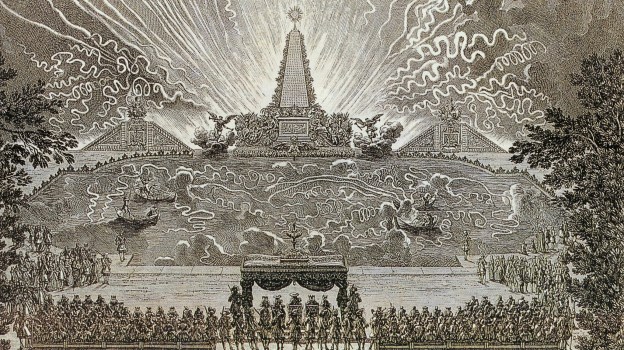
Feature image: 18 août 1674: feu d’artifice sur le Canal, 1676, by French Academy designer and engraver Jean Le Pautre (1618-1682). Flamboyant ephemeral architectures were erected at Versailles for a 17th century summer evening on the Canal that forms the base of elaborate pyrotechnics. Public Domain.

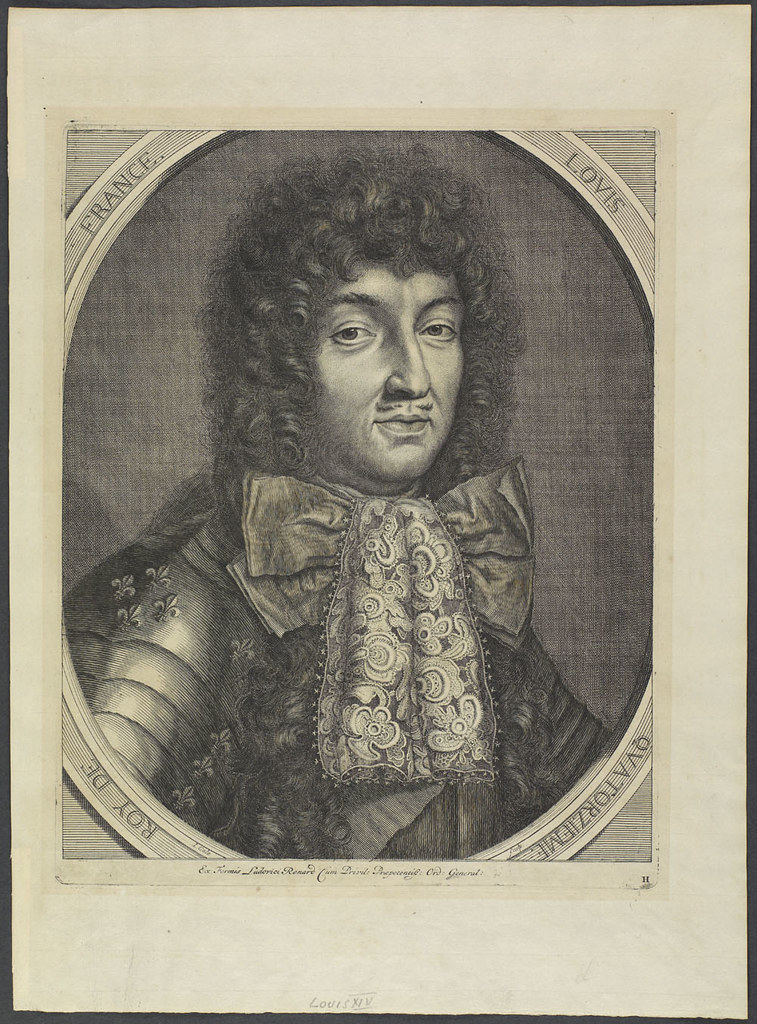
When the French Sun King, Louis XIV (reign, 1638-1715) made his decision to build a palace complex at Versailles, surrounded by the greatest gardens and waterworks the world had ever seen, fireworks (feux d’artifices), were an essential part of the grand entertainments which the king put on for the French court and the thousands of visitors who assembled to celebrate for various special occasions.

King Louis XIV of France (1638-1715), the Sun King, whose sense of monarchial grandeur and power was linked to the 17th century concept of light. The young king settled in Versailles, not because the site itself was especially reflective of his intentions for transporting his court to a place outside of Paris for entertainments but because the memory of his father, Louis XIII (1601-1643) remained attached to this marshy valley, to this original hunting manse, and its modest garden. The Versailles palace, waterworks and gardens are not adapted to the site, but the site, despite shortcomings of its natural setting, adapted to the grandiose scale of the royal project. PHOTO credit: “King Louis XIV, 1638-1715 / Roi Louis XIV, 1638-1715” by BiblioArchives / LibraryArchives is marked with CC BY 2.0.
For the next 100 years major productions were mounted at Versailles of fireworks and illuminations. While fireworks originated in China, it was Rome that embraced them first in the 14th century and began Europe’s courtly and popular tradition of shooting off rockets to entertain and celebrate the public. Not to be outdone, the French had soon imported Italian artists, architects – and fireworks experts whose displays in France became Europe’s grandest. A major reason Louis XIV moved the court to the suburbs was to escape cramped Paris in the Louvre and so afford these large and majestic lawn and garden entertainments fit for a king. These “divertissements du Roi” involved not just fireworks and illuminations but festivals of music, dance and theater plays.

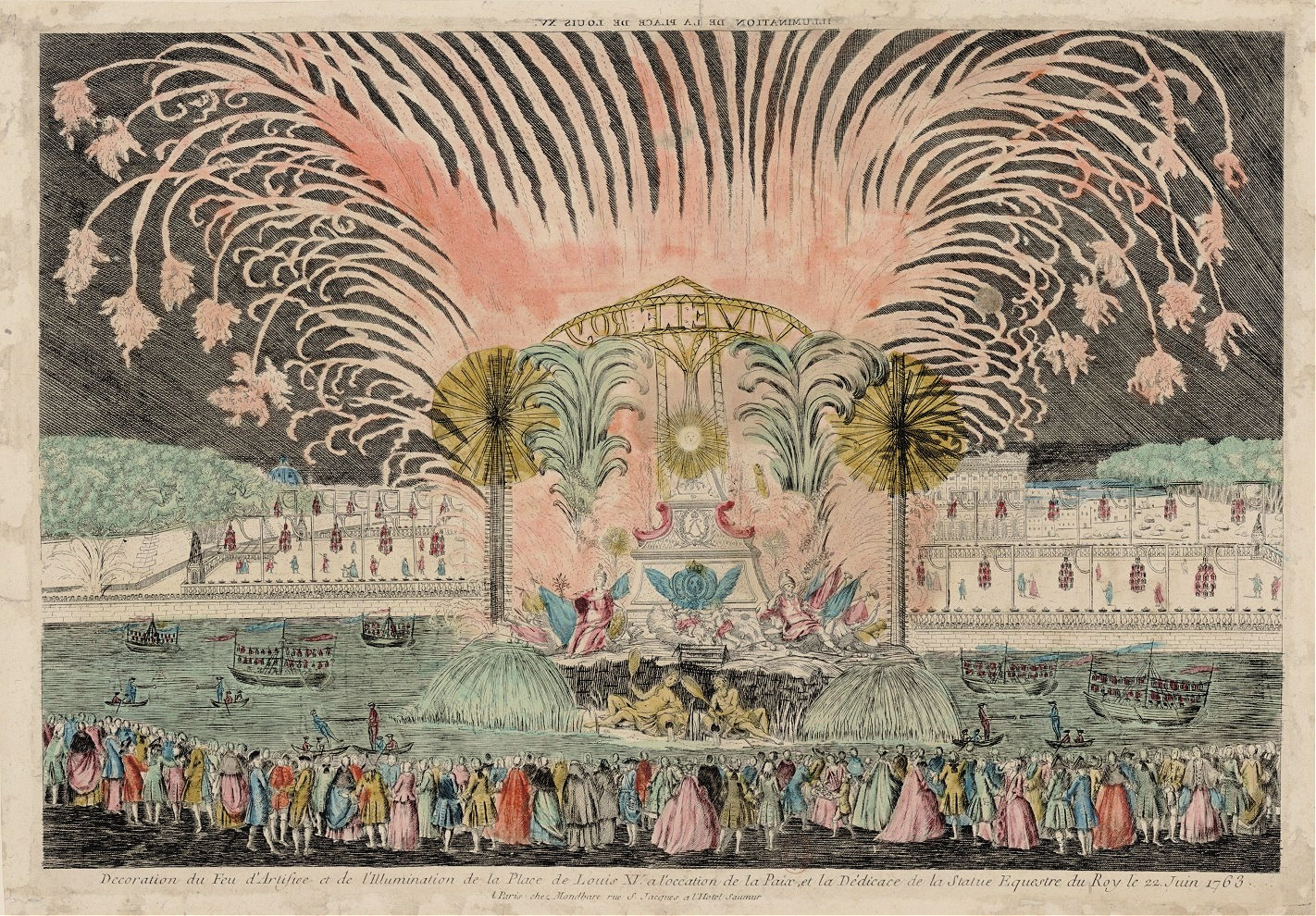
Décoration du feu d’artifice et de l’illumination de la place de Louis XV, à l’occasion de la paix, et la dédicace de la statue équestre du Roi, le 22 juin 1763. Chez Louis-Joseph Mondhare (1734-1799), rue S. Jacques à l’hotel Saumur. Bibliothèque nationale de France, département Estampes et photographie. Public Domain. See – https://www.europeana.eu/en/item/9200518/ark__12148_btv1b8409645h?q=paix%20paris%201763 – retrieved July 14, 2024.

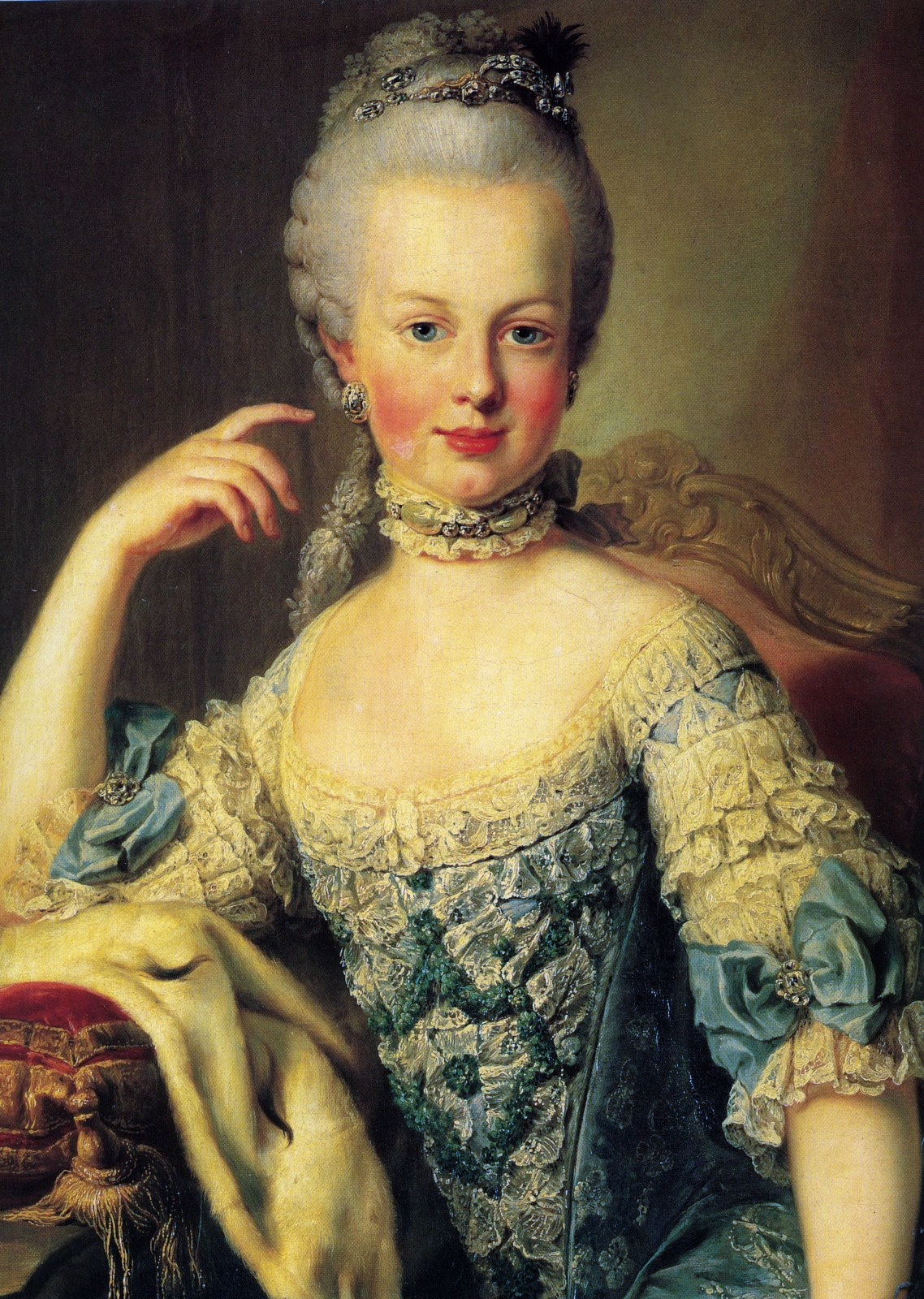
One of the greatest of these entertainments occurred in 1770 with the arrival of 14-year-old Marie Antoinette (1755-1793) from Austria who was to marry the heir to the throne. Louis XV’s (1710-1774) largesse included a guest list of thousands for festivities that lasted for many days. These displays included the participation of the French Academy of Science who studied and advised the king’s staff (“bureau de Menus-plaisirs“) on how to launch 20,000 rockets into the sky at the same time followed by the simultaneous lighting of 15,000 lanterns in the gardens.

Portrait of Archduchess Marie Antoinette, by Swedish-Austrian Martin van Meylens the Younger (1698-1770), c. 1768, Schönbrunn Palace, Vienna. Public Domain.
Even today, crowds of visitors flock to Versailles just to the west of Paris, where they gather to see the most advanced pyrotechnics that are reflected in and enhance the palace’s grandiose and expansive waterworks and gardens.

SOURCES:

Les Jardins de Versailles, Pierre-André Lablaude, Editions Scala, 1998, pp. 38-39.

https://www.smh.com.au/entertainment/art-and-design/leading-lights-why-sydneys-nye-fireworks-pale-in-comparison-to-the-pyrotechnics-of-versailles-20161130-gt0dyj.html – retrieved July 11, 2024.

ECONOMY TOPICS: June 9, 2024 – INFLATION. At its worst, Jimmy Carter 7% unemployment (13.3% inflation) and Ronald Reagan 11% unemployment (4% inflation). In 2024, Joe Biden 4% unemployment (4% inflation).

Feature Image:”Money” by free pictures of money is licensed under CC BY 2.0.

Reacting to a story in the Wall Street Journal dated June 9, 2024 entitled, “Americans Really, Really Hate Inflation—and That’s a Big Problem for the Fed” (see – https://www.wsj.com/economy/central-banking/americans-inflation-target-fed-c1fc7857?mod=latest_headlines – retrieved June 9, 2024) the author cites various financial experts where some of them prefer the traditional 2% target inflation rate for the Federal Reserve and others for a higher and perhaps more realistic 4% target rate (or thereabouts) so to give better headroom for the Fed to cut rates or not to stimulate and otherwise moderate the economy. In tandem with this article is another article that appeared in the Tampa Bay Times updated August 28, 2005 entitled, “Remember how Reagan beat inflation” (see – https://www.tampabay.com/archive/2004/06/09/remember-how-reagan-beat-inflation/ – retrieved June 9, 2024) that served as a history of inflation and unemployment rates between the 1960’s and the early 2000s.

Portrait of Paul A. Volcker (1927-2019) by Luis Alvarez Roure. 2015. Oil on linen. 40 x 30 inches. Collection of the Board of Governors of the Federal Reserve System. Volcker served as Fed chairman from 1979 to 1987. PHOTO CC BY-SA 3.0.

There are many ways to skin a cat – and as some financial experts agree that a 2% target inflation rate is the better choice for the Fed to maintain – the board can work with this traditional target inflation rate to react to the economy. That the going inflation rate should be higher and, if for no other reason that it matches today’s inflation level (4% as of April 2023 cited by WSJ article), has its proponents as more practical if not always politically viable. The last time inflation was as high as it is in 2024 was under one-term Democrat president Jimmy Carter in 1980. After inflation in 1976 was 4.9%, it roared to 13.3% under Carter. Further, the Carter Administration did not stop inflation’s continued rising at an unpredictable pace. When Reagan was elected in 1980 nearly 60% of voters said inflation was, as the TBT article stated, “a determining issue for them.” Mortgage rates, too, were at an historic high level in 1980. It was Fed Chairman Paul Volcker’s tight money policy that revived the 1980s and this despite Reagan’s tax cuts and massive deficit spending which left a troublesome legacy of historically large deficits and economic consolidation. To fix the economy as Volcker and Reagan worked it in the early 1980s had workers bear the brunt – Carter’s 7% unemployment rate spiked to 11% under Reagan. This meant millions of workers were suddenly without the means to buy goods and services and – guess what?- inflation dropped to under 4%. Though it ticked up to 6% by 1990 it has not been higher until President Joe Biden. The WSJ article’s citing “wage growth” that consumers should be appreciating yet apparently choose to ignore seems to be that most spectral of all economic indicators. As house prices (and mortgage interest rates) have doubled in the last 20 years how have wages kept up? Since Reagan, “free” money and attendant excessive borrowing at the individual and government level clearly juiced the economy, but at a price where the American people now have record debt levels and there have been certain misdirected “too big too fail” investments including inadequate affordable housing inventory and overbuilding office space and other commercial developments and the sometimes implosion of capital requiring huge bailouts, much of it from more borrowed money with the taxpayer on the hook.

Federal Reserve Board Chairman Jerome H. Powell took office on February 5, 2018, for a four-year term. He was reappointed to the office and sworn in for a second four-year term on May 23, 2022. Public Domain.

###

LT. GEN. GEORGE S. PATTON (1885-1945), the most feared Commander in the Allied army, landed American forces on Sicily on July 10, 1943 and was temporarily relieved of command by Ike following Patton’s “slap heard around of the world” of an American soldier in an evacuation hospital in Nicosia, Sicily, on August 3, 1943.

FEATURE IMAGE: Lieutenant General George Patton watches operations from a town in Sicily on the front line accompanied by his staff. Unknown photographer. Fair Use. For Operation Husky, the invasion of Sicily in July 1943, Patton commanded the Seventh U.S. Army, in landings on the southern bay of Sicily at Gela, Scoglitti and Licata. Patton’s I Armored Corps was officially redesignated the Seventh Army just before his force of 90,000 landed. Initially ordered to protect the British forces’ left flank, Patton was granted permission by British General Sir Harold Alexander (1891-1969) to take Palermo.

(2.42 minutes) June 6, 2024 – D-Day 80th (June 6, 1944) – After the remarkable North Africa and Sicily campaigns, three-star Lieutenant General Patton (George C. Scott) was sidelined by the architect of D-Day, Supreme Allied Commander and five-star General Dwight Eisenhower (“Ike”) (1890-1969) because of this “slapping” incident of an American soldier by Patton that took place in the time the American army reached Nicosia, Sicily, in the interior of the Italian island. Both by air or street to street, the fighting against the occupying Germans was a dogfight. This highly controversial “slapping” incident, witnessed by many, in Gen. George C. Patton’s command of the 7th Army occurred in an American evacuation hospital in Nicosia, Sicily, on August 3, 1943. Afterwards, Ike privately chastised Patton and insisted he apologize to the soldier, which Patton did.

George C. Scott (1927-1999) won the Academy Award for Best Actor for playing General George S. Patton in Patton (1970). Scott was the first actor to decline the award, having told the Academy of Motion Picture Arts and Sciences that he would if he won because of his belief that film performances should not be compared. The “slap heard around the world” was dramatized in Patton, the 1970 American epic biographical war film about U.S. General George S. Patton during World War II. The scene takes place in an evacuation hospital in the historic hilltown of Nicosia, Sicily, in the central part of the Italian island. Patton won seven Academy Awards, including Best Picture, Best Director and Best Original Screenplay.

The account of Patton’s humiliating slap of a young U.S. soldier leaked to the press and three-star Patton had to go on an extensive apology tour. Americans sacrificing at home were deeply disturbed by Patton’s action done at least partly out of misguided compassion. The result was that Patton was relieved of his command for six months citing his intense and unprofessional lack of personal discipline and self-control.

Patton was feared by the Germans more than any Allied commander. Yet American protocols sent him to England to train troops for combat in anticipation of D-Day. Patton was given combat command again only following the D-Day invasion. He crossed the Channel with the Third Army in July 1944. Nine months later, in April 1945, he was made a four-star general.

After the war, on December 9, 1945, Patton, the armored forces commander who criticized American leadership for not rolling right on through into Eastern Europe to fight the Russians – his suggestions were refused – was involved in a freak road accident near Heidelberg, Germany. The accident left Patton paralyzed. He died 12 days later in a Heidelberg hospital, on December 21, 1945. Patton was 60 years old.

###