
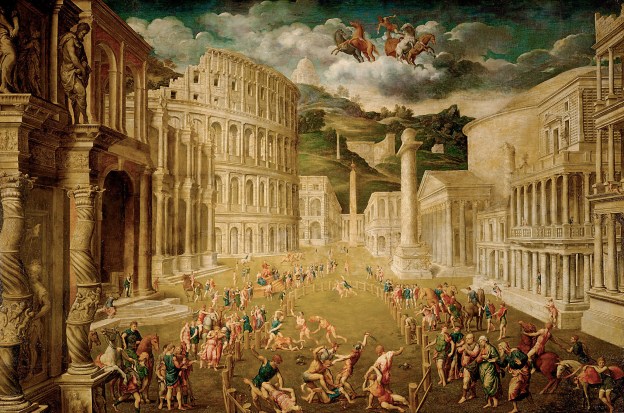
FEATURE Image: Paris Bordon/e (1500-1571). Gladiator fight, c. 1560, oil on canvas, 218 × 329 cm, Kunsthistorisches Museum Wien, Gemäldegalerie. ITALY. Venetian art in the 16th Century: Bellini, Conegliano, Carpaccio, Giorgione, del Piombo, Vecchio, Cariani, Lotto, Bordon/e. – CORRIDORS│An Educational Website in the Arts and History. Featuring My Photography and Videos.
Unlike the geographically dispersed traditions of the North, the artistic identity of Southern Europe was forged within intensely concentrated urban centers of power and patronage. Rather than a history of broad regions, the story of art in Spain, France, and Italy is a story of rival and supreme capitals—the royal academies and bustling salons of Paris, the imperial court of Madrid, and the competitive artistic powerhouses of Rome, Florence, Venice, and beyond. These courtly and metropolitan hubs acted as the undisputed leaders of Western art history, standardizing the academic system, driving stylistic revolutions from the Baroque to Modernism, and drawing the continent’s greatest talents into their orbits. By framing this history through these critical nodes of influence, we see how urban wealth, centralized political power, and dense artistic communities transformed specific cities into the permanent capitals of global visual culture.
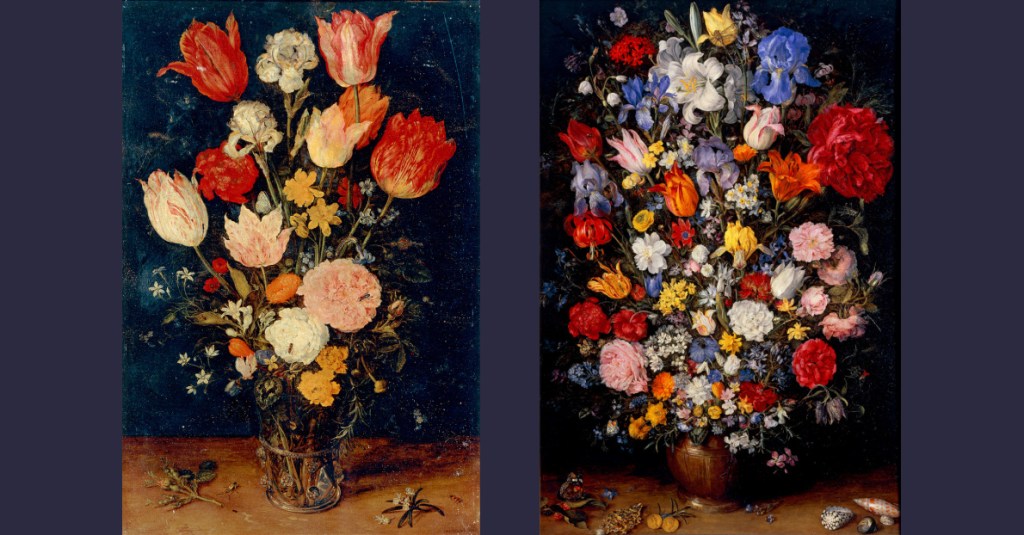
ITALY. Two Flower Paintings from 1608 in the Pinacoteca Ambrosiana, Milan, Italy by Flemish artist Jan Brueghel the Elder (1568-1625), nicknamed the “Flower” and “Velvet” Artist.
Feature Image: Flowers in a Vase and Flower Vase with Jewel, Coins, and Shells, both 1608, oil on copper, by Jan Brueghel the Elder and in the Pinacoteca Ambrosiana, Milan, Italy. Jan Brueghel the Elder (Flemish, 1568-1625) produced hundreds of paintings by his own hand and in collaboration with other master painters. His painterly skill…


ITALY. 550th Anniversary of the Birth of Italian Renaissance Artist Michelangelo Buonarroti (March 6, 1475-1564). 17 Artworks & Illustrations.
FEATURE Image: Portrait of Michelangelo, Marcello Venusti (1510-1579), after 1550. Casa Buonarroti, Florence, Italy. see – https://artsandculture.google.com/asset/ritratto-di-michelangelo/AgFcI66SXt6qGg?hl=it – retrieved March 6, 2025. The Italian Renaissance artist was born in Florentine territory in Caprese in the provinces of Tuscany where his father was a government bureaucrat. The family soon relocated to Florence where Michaelangelo grew up.…

ITALY. Venetian art in the 16th Century: Bellini, Conegliano, Carpaccio, Giorgione, del Piombo, Vecchio, Cariani, Lotto, Bordon/e.
FEATURE Image: Paris Bordon/e (1500-1571), Fisherman Presenting a Ring to the Doge Gradenigo, 1534, oil on canvas, 370 x 301 cm (145.7 in × 118.5 in), Gallerie dell’Accademia, Venice. INTRODUCTION TO PART 1. Venice is one of the great Italian cities for Renaissance art and its wide-ranging influences. Reflecting a city in the sea, its art…
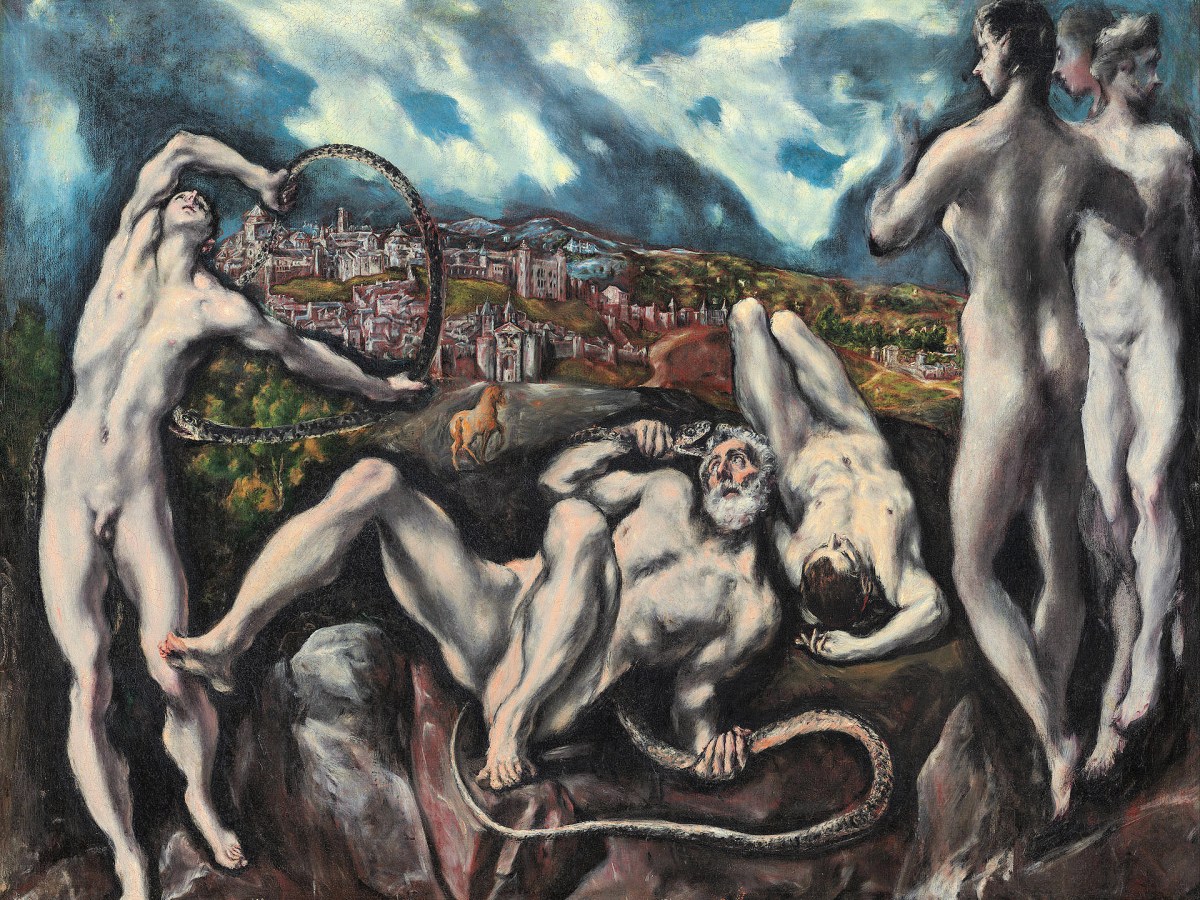
SPAIN. EL GRECO (Domenikos Theotokopoulos)(Greek, 1541-1614), Brilliant painter of mystical events.
FEATURE Image: El Greco (Domenikos Theotokopoulos), Laocoön, oil on canvas, 1604-1614, 55 7/8 x 76″, National Gallery of Art, Washington, D.C. In Greek and Roman mythology, Laocoön is a Trojan priest who warned the Trojans to destroy the Trojan Horse sent by the Athenians and is punished with death by the gods for it. See…

ITALY. CARAVAGGIO (ITALIAN, 1571-1610), BAROQUE MASTER OF DARKNESS. (50+ artworks).
FEATURE Image: Caravaggio (Michelangelo Merisi), Judith Beheading Holofernes, c. 1598, oil on canvas, 56 ¾ x 76 ¾” 145 x 195cm Galleria Nazionale d’Arte Antica, Rome. https://barberinicorsini.org/opera/giuditta-e-oloferne/ – retrieved October 12, 2024. Ottavio Leoni (1578-1630), Portrait of Caravaggio, c. 1621/25, red and white chalk on blue paper, 23.4 x 16.3 cm, Biblioteca Marucelliana, Florence. INTRODUCTION.…

ITALY. RAPHAEL (ITALIAN, 1483-1520), HIGH RENAISSANCE MASTER. (50+ artworks).
FEATURE Image: Raphael, Portraits of Agnolo Doni and Maddalena Doni, c. 1506, oil on panel, 24 ¾ x 17 ¾” Pitti Gallery, Florence. INTRODUCTION. Born in Urbino in 1483, an environment rich in the arts and humanist learning, Raphael had a remarkable capacity for personal growth and branded new incarnations of his artistic style regularly.…

FRANCE. My Art Photography: Cathédrale de Chartres, ROYAL (WEST) PORTAL (12th century), anonymous, Chartres, France.
FEATURE image: “Chartres, North Porch, Central Portal, LeftJamb” by profzucker is licensed under CC BY-NC-SA 2.0. The North Porch was constructed at the start of the 13th century. The North Porch, like the North Rose Window (below) crafted in the same time, depicts the glories of the Virgin Mary along with Old Testament figures. First Visit and Returning…

FRANCE. French art in the 17th Century: SIMON VOUET (1590-1649).
https://johnpwalshblog.com/2022/12/07/french-art-in-the-17th-century-simon-vouet-1590-1649/ FEATURE Image: Simon Vouet (1590-1649), Self-portrait, c. 1626–1627, Musée des Beaux-arts de Lyon. https://www.mba-lyon.fr/fr/article/simon-vouet In Simon Vouet’s self portrait painted in his final years in Rome he displays his signature rapid brushwork and desire for movement in the picture. Simon Vouet was born into modest circumstances in Paris on January 9, 1590. After stays…

FRANCE. French art in the 17th Century: VALENTIN DE BOULOGNE (1591-1632).
FEATURE IMAGE: Valentin de Boulogne (1591-1632), Allegory of Rome, 1628, oil on canvas, 330 x 245 cm, Villa Lante (Institutum Romanum Finlandiae Foundation). Villa Lante in Rome is an example of the work of the 16th century Raphael school in the reign of the Medici popes. The Renaissance villa, which was a residence for Roman…

FRANCE. French art in the 16th Century.
FEATURE image: Ulysses and Penelope, Francesco Primaticcio called Le Primatice (1504-1570), Toledo Museum of Art, c. 1560, oil on canvas, 44 3/4 x 48 3/4 in. (113.6 x 123.8 cm). Jean Perréal’s most important attribution is this portrait of Louis XII who was King of France from 1498 to 1515. Louis XII was married three…

FRANCE. French art in the 15th Century.
FEATURE image: DETAIL, Henri Bellechose (1415-1440), École de Bourgogne, Retable de saint Denis, 1416, https://collections.louvre.fr/ark:/53355/cl010063178 Retable de Saint Denis, (above), was completed in 1416 for the church of the Charterhouse of Champmol that is adjacent to Dijon. The artwork’s attribution has long been debated between Bellechose and Jean Malouel (1370-1415). Written evidence points to Bellechose possibly only…

ITALY. Italian art in the 13th-18th Centuries.
FEATURE image: Dosso Dossi (c. 1489–1542), Melissa, 1520s. 69.25 x 68.5 inches, Borghese Gallery, Rome. Duccio Di Buoninsegna (c.1255-c.1319). The artistic tradition of the Sienese master, Duccio di Buoninsegna (c. 1255-c. 1319) was based on older Greek painting. Duccio, however, was no less “modern” than Giotto (1266-1377). Giotto, who was trained by Cimabue (1240-1302), directed…

ITALY. In Florence, THE BATTLE OF ANGHIARI (1503-06) by Leonardo da Vinci (1452-1519) and his fabled competition with Michelangelo for the laurel of Greatest High Renaissance Artist.
FEATURE image: Peter Paul Rubens, Copy of Leonardo’s Battle of the Standard (from the Battle of Anghiari), 1603, Louvre. On May 2, 2019, the world remembered the day 500 years ago when Leonardo da Vinci (1452-1519), Italian Renaissance artist and polymath, died. The 67-year-old applied the spheres of the human brain to its many branches of…

Nadar and the Faces of Nineteenth-Century France: Photography as a Record of Cultural Genius.
FEATURE image: Nadar, Rosine Stolz (1815-1903), Paris, c.1857. Nadar transformed photographic portraiture into a serious artistic and cultural record of modern France by capturing the personalities, intellect, and creative spirit of the leading artists, writers, musicians, actors, and thinkers of nineteenth-century Paris. His portraits are presented not merely as likenesses, but as historical documents that preserve…

FRANCE. POST-IMPRESSIONISM. Henri Toulouse-Lautrec (1864-1901): COMPLETE 31 Mass-Produced COLOR POSTERS, 1891-1900.
FEATURE image: Henri de Toulouse-Lautrec (1864-1901), La Revue Blanche, 1895, Paris. Lithograph in four colors. By John P. Walsh The nineteenth century in France brought about a radical transformation of the role of the artist. In place of artwork for aristocratic patrons, artists in all media were increasingly left to their own devices and began…

SPAIN. Francisco de GOYA (1746-1828), Madrid, Spain, First Suites of Tapestry Cartoons for the Princes of Asturias, 1775 to 1778.
FEATURED image: Francisco de Goya (1746-1828), The Kite (detail), 1777/78. Oil on canvas, 269 x 285 cm. These are a selection of the first two suites of decorative tapestry cartoons (or designs) completed for El Escorial in 1775 and El Palacio Real del Pardo between 1776 and 1778 by Spanish artist Francisco de Goya (1746-1828) . Both…

FRANCE. POST-IMPRESSIONISM. Three MONOTYPES of Paul Gauguin (1848-1903) whose visual images and text reflect European Symbolism and Tahiti to create a new hybrid in Paris, 1893-1895.
FEATURE Image: Paul Gauguin, Tahitian Idol-The Goddess Hina, 1894/95 – woodcut in black ink, over ochre and red, with touches of white and green inks, on tan wove paper, 5.78 x 4.72 inches (147 x 120 mm). The Art Institute of Chicago, Edward McCormick Blair collection. Produced in Paris inspired by Tahiti: Tahitians Fishing -…

FRANCE. Savagery In Civilization: Tahiti-inspired graphic art in Paris, 1893-1895, by PAUL GAUGUIN (1848-1903).
FEATURE image: Gauguin, Self-Portrait with Palette, winter 1893-94 or 1894-95, 92 x 73 cm (35 7/8 x 28 1/2 in.), private collection. By John P. Walsh In May 1894 during a working visit to Brittany filled with nostalgia, a 45-year-old Paul Gauguin broke his leg above the ankle in a scuffle with sailors in broad daylight. In…
