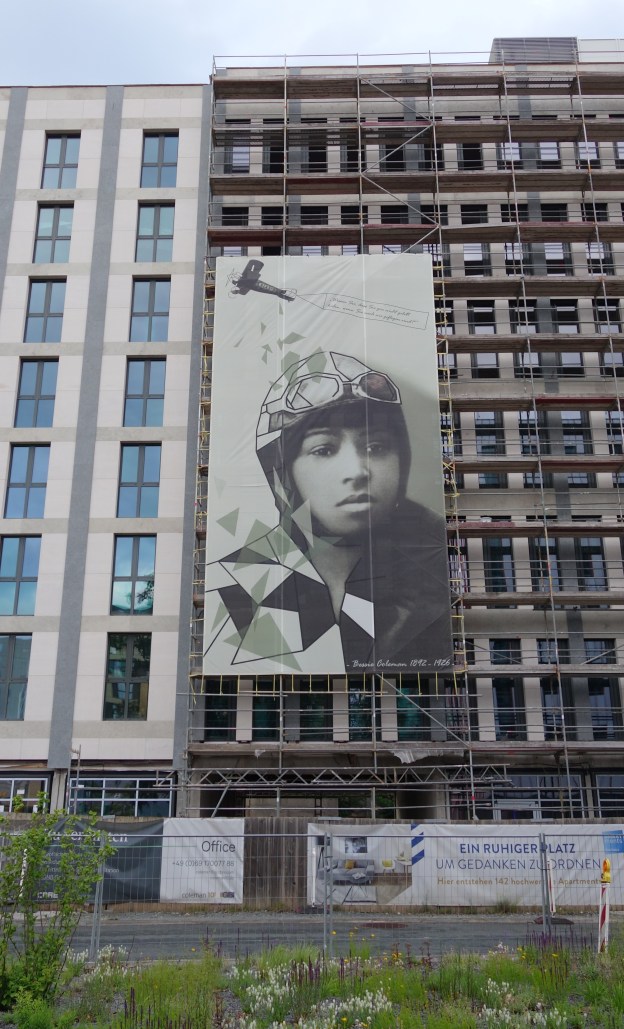
Bessie Coleman, the first licensed Black female aviator, was born on January 26, 1892, in Texas. Her father, who was American Indian, left the family for Oklahoma when she was seven. Bessie stayed in Texas with her mother while her older siblings moved away. In the deeply segregated America of the late 19th and early 20th centuries, racism shaped nearly every aspect of life. Even so, Bessie’s mother encouraged her to excel in school, where Bessie became an avid reader.
Education and Early Work
At 18, Bessie attended what is now Langston University for one semester but lacked the funds to continue. She returned home to work alongside her mother, who labored as a maid and sharecropper.
At 23, ambitious and restless, Bessie moved to Chicago to live with her brothers. She worked menial jobs — manicurist, restaurant server — but found the city’s atmosphere freer than the Jim Crow South.
A New Possibility: France
During World War I, her brothers served in France and returned with stories of a society where women and Black people were treated with more dignity than in the United States. They told her that in France, women even flew airplanes — a revelation that electrified her.
In America, flying was largely a pastime for wealthy white men. Still, Bessie applied to U.S. flight schools and was rejected everywhere.
Support from Robert Abbott
Enter Robert Abbott, the influential Black Chicago newspaper owner of the Chicago Defender. Impressed by her determination, he urged her to go to France to earn her license. The French accepted her application, and Bessie crossed the Atlantic to begin training.
Training in a Dangerous Era
Flying in the 1910s was perilous. Open cockpits had no seat belts, aircraft were fragile, and accidents were common. Despite the risks, Bessie excelled. She became the first Black and American Indian woman to earn a pilot’s license.
She returned to the United States determined to build a career — but she lacked money and access.
Barnstorming Dreams and Barriers
To earn enough to buy her own plane and inspire other women and people of color, Bessie sought work as a stunt pilot. But once again, American flight schools refused to train a Black woman, even one already licensed.
Her dream would require the same persistence that had carried her from Texas to Chicago to France — and back again.
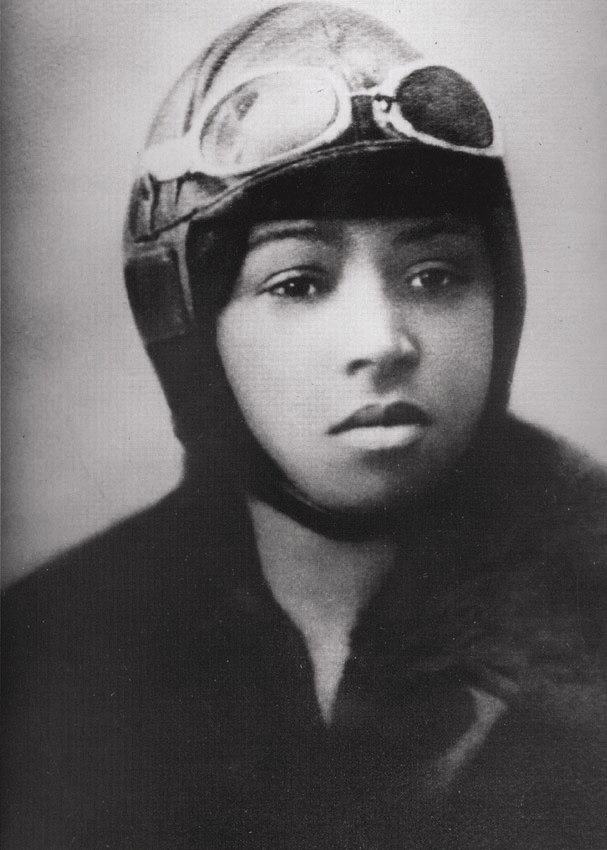
Bessie Coleman’s photo on her first pilot’s license, issued June 15, 1921. Public Domain.
Returning to France for Advanced Training
Bessie returned to France to get the specialized aviation training she still couldn’t access in the United States. Her determination — and the barriers she faced — had not gone unnoticed back home. By the time she returned to America for the second time, now a licensed pilot and trained stunt performer, the press greeted her with mostly positive attention.
1922: A Breakthrough Year
It was 1922, and Bessie was ready to take off. Her longtime supporter Robert Abbott arranged her first major air show in New York City, which immediately set reporters buzzing. Back in Chicago, her adopted home, Bessie began performing in more and more air shows, each one building her reputation.
A Rising Star of the Air Shows
To be a stunt pilot required absolute fearlessness, and Bessie’s daring routines — her figure eights, her loop‑the‑loops — made her a sensation across the country. She wanted to maintain and eventually own her own plane, but she didn’t yet have the money. So she borrowed whatever aircraft she could, determined to keep flying and to keep proving what a Black woman pilot could do.
“Queen Bess” Takes the Roaring Twenties by Storm
While some women performed wing‑walking stunts, none piloted the plane and performed aerial maneuvers the way Bessie did. Her skill, charisma, and courage made her a cultural phenomenon. Americans began calling her “Queen Bess” and “Brave Bess,” names that captured her place in the imagination of the roaring 1920s.
Bessie Coleman and airplane, 1922. Public Domain.
Aviation as Activism
As she was determined to do so, Bessie Coleman was making a difference in the nation. Of all these remarkable things in the air Bessie was known for, none was more significant than what she also achieved on the ground. Bessie Coleman told show promoters and managers that she would not perform at any show whose audience or performers were segregated by race or anything else. “Brave Bess” insisted that for all shows she performed in, there had to be just one gate for all people to walk through. At the time this was a profoundly radical request, particularly south of the Mason-Dixon line.
Speaking, Teaching, and Inspiring
Beyond stunt flying, Bessie lectured at schools and churches, urging young people — especially Black children — to pursue aviation. She saw flight not only as a career but as a path to dignity, opportunity, and pride.
Setbacks and Recovery
Still hoping to buy her own airplane, Bessie finally purchased one in 1923. But during a test flight, she crashed, breaking her leg and several ribs. She spent a year recovering in Chicago, grounded but not defeated.
A Return to the Skies
By 1926, Bessie was ready to fly again. She had no funds for a new aircraft, but a wealthy businessman donated a used plane. It was far from ideal — rickety, temperamental — and she hired a mechanic, William Wills, to get it into working shape.
Wills flew the plane from Texas to Florida for her next show, but along the way he had to make several emergency landings as the engine repeatedly failed. After repairs in Florida, he and Bessie took the plane up for a test flight on April 30, 1926, the day before the show.
The Fatal Flight
They tested the plane as Bessie hunted for locations for her stunts. During the practice run, Bessie leaned out of the open cockpit — without a seatbelt, standard for stunt pilots — to scout locations for her aerial maneuvers. Something went wrong mechanically. The plane lurched, and Bessie fell to her death. Moments later, the aircraft crashed, killing Wills as well. Bessie was 34. Wills was 24.
A Nation Mourns
By the time of her third memorial service in Chicago, more than 20,000 people had paid their respects. At the Chicago service alone, 15,000 mourners gathered as journalist Ida B. Wells read an essay honoring Bessie’s courage and legacy. Bessie Coleman was laid to rest at Lincoln Cemetery in Blue Island, among many of Chicago’s Black notables.
A Legacy That Took Flight
In 1929, Black engineer and aviator William J. Powell founded the Bessie Coleman Aero Club in Los Angeles, training Black men and women to fly. By the 1930s, groups of Black female stunt pilots — including the Blackbirds — carried her inspiration into the sky.
In 1940, Bessie’s early champion, millionaire newspaper publisher Robert Abbott, was also buried in Lincoln Cemetery, not far from the woman whose dreams he helped launch.
Bessie Coleman, first Black and American Indian licensed aviator, two days before her 31st birthday, January 24, 1923. Public Domain.
SOURCES:
Bessie Coleman Bold Pilot Who Gave Women Wings, Martha London, 2021, Capstone Press, North Mankato, MN.
Feature image: Three reindeer, one mission: stack the holiday cheer sky‑high. Bringing some serious retro California sunshine to the winter chill, this stacked reindeer yard display perfectly channels the festive, energetic groove of The Beach Boys’ 1963 classic “Little Saint Nick.” Just like Santa’s legendary bobsled, these three are hauling holiday spirit through the neighborhood at a frightening speed. December 2024. Author’s photograph. All rights reserved.
At Christmas 1963, “Little Saint Nick” was more than a successful Beach Boys Christmas novelty record. Its B-side, “The Lord’s Prayer,” revealed Brian Wilson’s emerging artistic ambition, sophisticated vocal arranging, and willingness to push beyond the group’s surf-pop image, making the single an important milestone just before the Beatles and the British Invasion transformed popular music.
The Road to the Top
The Beach Boys finally reached the top of the Billboard Hot 100 in May 1964 with “I Get Around.” The breakthrough felt overdue. Throughout 1963, the California surf pop group had dominated American radio: five Top 10 singles, including three that cracked the Top 5, and three Top 10 albums. They completed their first national tour that April, and “Surfin’ U.S.A.” finished the year as Billboard’s No. 1 song. By December, with their first holiday single “Little Saint Nick” climbing the charts, the Beach Boys looked like America’s most celebrated pop band. Only Newark’s The Four Seasons rivaled their chart power.
Shifting Tides
Then, just two months later, everything changed. The British Invasion hit. The Beatles arrived in early 1964 and turned the rock ’n’ roll world upside down. Overnight, the Beach Boys found themselves challenged—creatively and commercially—by the Fab Four, who were suddenly setting the pace the rest of the pop world had to match.
The 1963 single “Little Saint Nick” endures because it transformed the band’s surf‑and‑speed aesthetic into holiday magic and was an early step toward the ambitious studio craft of The Beach Boys’ Christmas Album the following year.
Little Saint Nick LYRICS:
(Ooooooooh, merry Christmas Saint Nick) (Christmas comes this time each year) (Oooooooo-ooooooooh)
Well, way up north where the air gets cold There’s a tale about Christmas that you’ve all been told And a real famous cat all dressed up in red And he spends the whole year workin’ out on his sled
It’s the little Saint Nick (Oooooh, little Saint Nick) It’s the little Saint Nick (Oooooh, little Saint Nick)
Just a little bobsled, we call it old Saint Nick But she’ll walk a toboggan with a four speed stick She’s candy-apple red with a ski for a wheel And when Santa hits the gas, man, just watch her peel
It’s the little Saint Nick (Oooooh, little Saint Nick) It’s the little Saint Nick (Oooooh, little Saint Nick)
Run, run, reindeer Run, run, reindeer (Oh-oh-oh-oh) Run, run, reindeer Run, run, reindeer He don’t miss no one
And haulin’ through the snow at a frightenin’ speed With a half a dozen deer with Rudy to lead He’s gotta wear his goggles ’cause the snow really flies And he’s cruisin’ every pad with a little surprise
It’s the little Saint Nick (Oooooh, little Saint Nick) It’s the little Saint Nick (Oooooh, little Saint Nick)
(Aaa-aaa-aaah) (Ooooooooh, merry Christmas Saint Nick) (Christmas comes this time each year) (Aaa-aaa-aaah) (Ooooooooh, merry Christmas Saint Nick) (Christmas comes this time each year) (Aaa-aaa-aaah) (Ooooooooh, merry Christmas Saint Nick) (Christmas comes this time each year) (Aaa-aaa-aaah) (Ooooooooh, merry Christmas Saint Nick) (Christmas comes this time each year)
A Holiday Blueprint and Spiritual Depth
“Little Saint Nick” was released on December 9, 1963, climbing to No. 3 on Billboard’s Christmas Singles chart. Brian Wilson had composed the music that August, building it on the same brisk, compact structure he used for “Little Deuce Coupe.” Mike Love supplied most of the lyrics, shifting his focus from hot rods to a holiday bobsled.
The single’s B side carried a more reflective but remarkable achievement: “The Lord’s Prayer,” Albert Hay Malotte’s 1935 setting, adapted and arranged by Brian Wilson. Sung a cappella in four interlocking harmonies, it revealed a creative and spiritual depth unusual for a band of early twenty somethings. By Christmas 1963, the Beach Boys were firmly established as America’s No. 1 pop group.
“Little Saint Nick” successfully adapted the Beach Boys’ hot-rod and surf formula into a Christmas song, helping cement their status as America’s leading pop group in late 1963.
Brian Wilson dreamed up “The Lord’s Prayer” as a bold holiday B‑side—an intricate, five‑part a cappella arrangement blending barbershop, jazz‑pop, and church hymnals. Released December 9, 1963, it showcased his rising studio ambition long before fans were ready for it.The Beach Boys poured long hours into reshaping their signature harmonies for Christianity’s most venerated prayer. In doing so, they hoped to elevate the sacred text while proving that their so‑called surfer sound carried far more depth than lightweight pop. Their intricate vocal blend became both a devotional experiment and an early declaration of artistic ambition.
“The Lord’s Prayer” was an unusually ambitious B-side, featuring intricate a cappella harmonies and spiritual subject matter that demonstrated Brian Wilson’s growing sophistication as an arranger and producer.
Another clear indicator of the band’s rapid evolution can be found in Shut Down Volume 2, released in March 1964 at the absolute peak of the initial Beatlemania hurricane, where it climbed to No. 13 on the Billboard 200. Written and recorded just before the British Invasion transformed the American airwaves, the album’s opening track and lead single, “Fun, Fun, Fun,” was released a mere six days before the Beatles’ historic debut on The Ed Sullivan Show. Written by Brian Wilson and Mike Love, the track was recorded on New Year’s Day 1964 as a sunny California anthem wrapped around a story of teenage rebellion. The lyrics follow a girl who deceives her father, taking his Ford Thunderbird under the guise of going to the library, only to cruise the town to enjoy the thrill of speed and peer admiration that comes with driving a cool car. Rather than offering a rigid moral lesson, the song unapologetically celebrates the carefree, defiant spirit of youth. The driving hook—”she’ll have fun, fun, fun till her daddy takes the T-bird away”—promises that her freedom will last right up until she is caught, though the narrative ends with the narrator rescuing her from being grounded so the joyride can continue. While the Beatles already held the top slots on the charts in early 1964, the Beach Boys were still chasing their first chart-topper; “Fun, Fun, Fun” peaked at No. 5 that March, paving the way for their first No. 1 hit with “I Get Around” later that July.
The Ed Sullivan Shockwave
In mid January 1964, they left for their first international tour, performing in Australia and New Zealand. When they returned on February 2, their next single—“Fun, Fun, Fun”—was released the following day. It reached No. 5 on March 21.
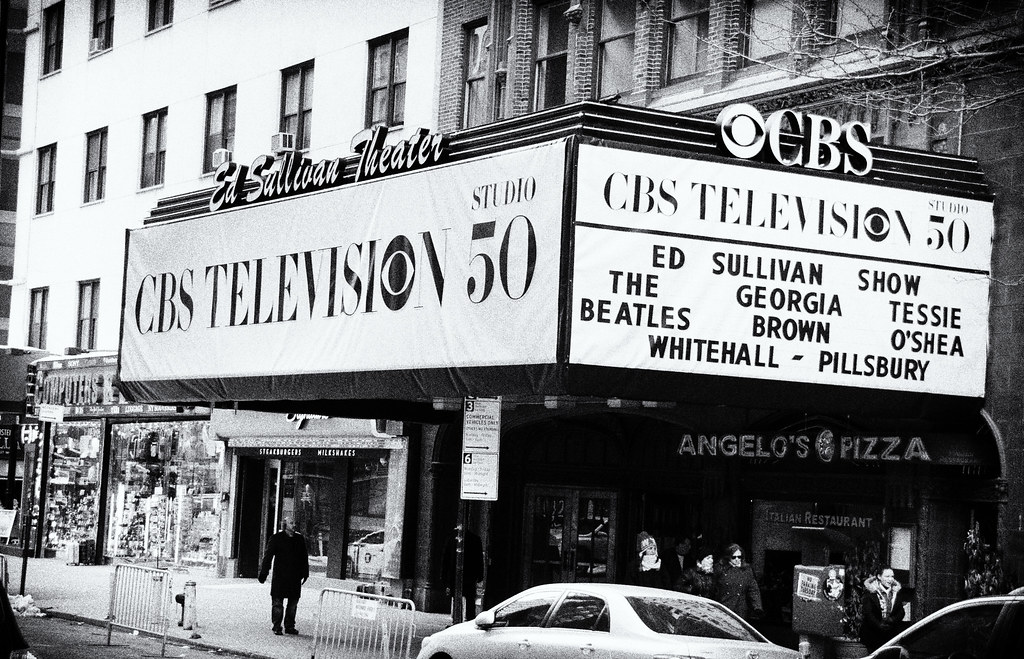
But in the brief window between its release and its chart peak, the rock ’n’ roll landscape shifted beneath their feet. On February 9, 1964, the British Invasion began in earnest. The Beatles—John, Paul, George, and Ringo—made their first appearance on The Ed Sullivan Show, performing before an audience of roughly 74 million Americans, nearly half the country. The Beach Boys, still the top U.S. pop band, had not yet been invited onto that stage. The Beatles’ explosive debut instantly reshaped the pop hierarchy, and the Beach Boys suddenly found themselves facing a new and formidable rival.
The single stands at a historical crossroads, representing the Beach Boys at the peak of their pre-Beatles success just before the British Invasion challenged them and inspired the artistic competition that would lead to their greatest innovations.
The Packaging Gap
Overnight, the Beach Boys suddenly looked almost bush league next to the British newcomers—not musically, since both groups drew from the same exuberant teenage world, but in publicity, packaging, and sheer media savvy. It was a preview of what would happen again in the 1980s, when British acts outpaced Americans in the emerging music video era.
A Five-Year Revolution
In the long wake of that shock, as the Beatles returned to The Ed Sullivan Show twice more in February 1964 and again that May, Brian Wilson’s quiet but fierce competition with them began. Rock ’n’ roll would never be the same. Over the next five years, the music exploded into something more original, experimental, and sonically adventurous—a transformation that fueled breakthroughs for the Beach Boys, the Beatles, and countless others.
And sitting right on the cusp of that revolution was “Little Saint Nick.” With its hook and beat, the 1963 single endures today as a bright artifact from the moment just before rock ’n’ roll reinvented itself.
SOURCES:
Badman, Keith. The Beach Boys: The Definitive Diary of America’s Greatest Band on Stage and in the Studio. 1st ed. San Francisco: Backbeat Books, 2004, pp. 45-54. Love, Mike. Good Vibrations: My Life as a Beach Boy. New York: Penguin Publishing Group, 2016, pp. 84-88. Morgan, Johnny. The Beach Boys: America’s Band. Illustrated ed. New York: Union Square & Co., 2015, pp. 61-65. Whitburn, Joel. Joel Whitburn’s Top Pop Singles, 1955-1999. Menomonee Falls, WI: Record Research, Inc., 2000, pp.38-39.
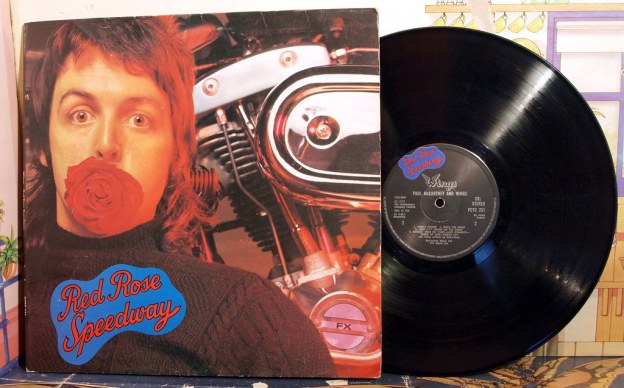
Feature Image: Red Rose Speedway is the second studio album by English-American rock band Wings, although credited to “Paul McCartney and Wings.” It was released through Apple Records on May 4, 1973, preceded by its lead single, the ballad My Love on March 23, 1973. It was Wings’ first no. 1 hit. PHOTO: “red rose speedway, PAUL MCCARTNEY,” by badgreeb RECORDS – art -photos is licensed under CC BY-SA 2.0.
Paul built “My Love” from the ground up: chords first, then melody, then words—a “pure love song,” as he later called it, written for his Wings bandmate and wife, Linda. PHOTO: “Linda McCartney Retrospective” by cezzie901 is licensed under CC BY 2.0.
Recording and Release
MY LOVE LYRICS: And when I go away I know my heart can stay with my love It’s understood It’s in the hands of my love And my love does it good Whoa, whoa, whoa, whoa Whoa, whoa, whoa, whoa My love does it good And when the cupboard’s bare I’ll still find something there with my love It’s understood It’s everywhere with my love My love does it good Whoa, whoa, whoa, whoa Whoa, whoa, whoa, whoa My love does it good Whoa, whoa, I love Whoa, whoa, my love Only my love holds the other key to me Whoa, whoa, I love Whoa, whoa, my love Only my love does it good to me Whoa, whoa, whoa, whoa Whoa, whoa, whoa, whoa My love does it good Don’t ever ask me why I never say goodbye to my love It’s understood It’s everywhere with my love And my love does it good Whoa, whoa, whoa, whoa Whoa, whoa, whoa, whoa My love does it good Whoa, whoa, I love Whoa, whoa, my love Only my love does it good to me Whoa, whoa, whoa, whoa Whoa, whoa, whoa, whoa
“My Love” was recorded by Paul and Linda McCartney in January 1973 and released on March 23 of that year. The single reached no. 1 on June 2, 1973, becoming one of Wings’ early chart‑topping successes. After four straight weeks at no. 1 on the Billboard Hot 100 beginning June 2, 1973, “My Love” finally slipped to no. 2 on June 30. Taking its place was the previous week’s no. 5 single—George Harrison’s “Give Me Love (Give Me Peace on Earth)”—which climbed into the top spot for a one‑week reign.
Henry McCullough’s Improvised Solo
The song’s signature guitar solo was improvised in the studio by Wings’ new lead guitarist Henry McCullough (1943–2016). Paul, playing electric piano on the track, had envisioned a different solo but chose to trust McCullough’s instinct. Reflecting in 2010, he recalled (quoted in NME): “It was like, ‘Do I believe in this guy?’ And he played the solo on ‘My Love’, which came right out of the blue. And I just thought, Fucking great. And so there were plenty of moments like that where somebody’s skill or feeling would overtake my wishes.”
A Song Built on Chords
Paul later noted that the way he had written “My Love”—chord‑based rather than melody‑and‑counterpoint driven—shaped the space McCullough stepped into. The guitarist’s spontaneous solo fit the harmonic structure so naturally that Paul regarded it as a moment when another musician’s creativity elevated the song beyond his original plan.
Wings bandmates in 1973. Guitarist Henry McCullough appears at left in the bottom photo. Before joining Wings, McCullough toured as a session guitarist with Jimi Hendrix and Pink Floyd, and in 1969 performed with Joe Cocker at Woodstock—making him the only Irish musician to take the stage at the legendary festival. PHOTO: “red rose speedway, PAUL MCCARTNEY,……” by badgreeb RECORDS – art -photos is licensed under CC BY-SA 2.0.
Grammar, Blues Influence, and Everyday Speech
The lyrics of “My Love” include deliberately ungrammatical phrasing—most famously, “My love does it good.” Paul McCartney knew exactly what he was doing. The line reflects a habit carried over from his Beatles‑era Hamburg days, when he absorbed the syntax of American blues, a tradition rich in mixed or non‑standard grammar. Paul liked the phrase because it sounded like real speech, the way people actually talk rather than the way grammar books prescribe.
Subverting the Rules
McCartney also enjoyed bending grammatical rules simply for the pleasure of it, something the Beatles had done to memorable effect in earlier songs. “My love does it good” functions as a value judgment about the beloved without specifying what “it” is—leaving the meaning open for listeners to fill in themselves.
“My Love,” with its deliberately ungrammatical charm, grew straight out of Paul McCartney’s Beatles‑era instincts and his 1969 marriage to Linda. A love song made by real life, it blends his old habit of bending language with the new domestic world he built with her and their four children. PHOTO: 여유로운 휴일… 따뜻한 감성의 사진을 만나다 #Seoul #Daelim #Gallery #Linda #McCartney #Photo #Exhibition” by IchStyle is licensed under CC BY 2.0.
Paul and Linda (née Eastman) McCartney first crossed paths on May 15, 1967 at London’s Bag O’Nails Club, just steps from Buckingham Palace. He was a Beatle; she was a rising photographer known for her striking prints. They married on March 12, 1969 and stayed together for 29 years. “My Love” arrived just after their fourth wedding anniversary—a love song rooted in the partnership that defined Paul’s post‑Beatles life. PHOTO: “Bag O’Nails, Victoria, London – geograph.org.uk – 1981720” by Graham Hogg is licensed under CC BY-SA 2.0.
By the late 1970s, “My Love” had become one of the most frequently covered songs by any former Beatle—second only to George Harrison’s “My Sweet Lord”. During its original chart run, the single slipped from no. 1 to no. 2 on June 30, 1973, just as Harrison’s “Give Me Love (Give Me Peace on Earth)” rose to the top for a one‑week stay, a moment that underscored the commercial strength of both ex‑Beatles in the early 1970s.
McCullough’s Defining Moment
For Northern Irish guitarist Henry McCullough (1943–2016), the improvised solo on “My Love” remained the defining achievement of his career. He often described it as his proudest musical moment—a spontaneous, intuitive performance that became central to the song’s identity.
McCartney’s Later Reflections
Paul McCartney remembered the session with equal admiration. Looking back in 2016, he noted that “the solo [Henry] played on ‘My Love’ was a classic that he made up on the spot in front of a live orchestra,” a testament to McCullough’s instinct and to Paul’s willingness to let another musician reshape the emotional arc of his song.
SOURCES:
The Lyrics 1956 to the Present, Paul McCartney, Liveright Publishing Corporation, 2023, pp. 349-352.
Levine, Nick (15 June 2016), “Paul McCartney pays tribute to ‘super-talented’ Wings guitarist Henry McCullough”. nme.com. – retrieved September 2, 2024.
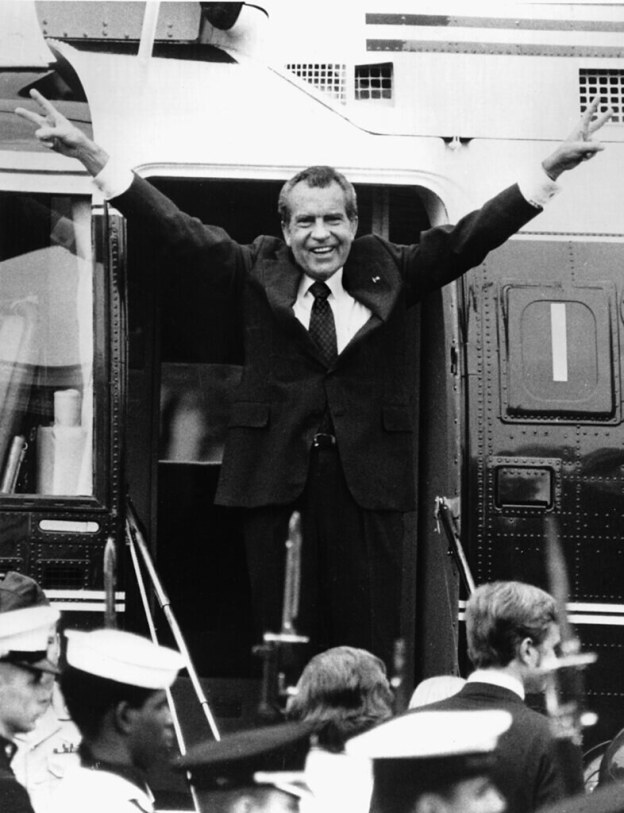
Feature Image: Richard Nixon flashes his double‑V salute as he boards the helicopter moments after his resignation on August 9, 1974. “RICHARD NIXON FAREWELL” by manhhai is licensed under CC BY 2.0.
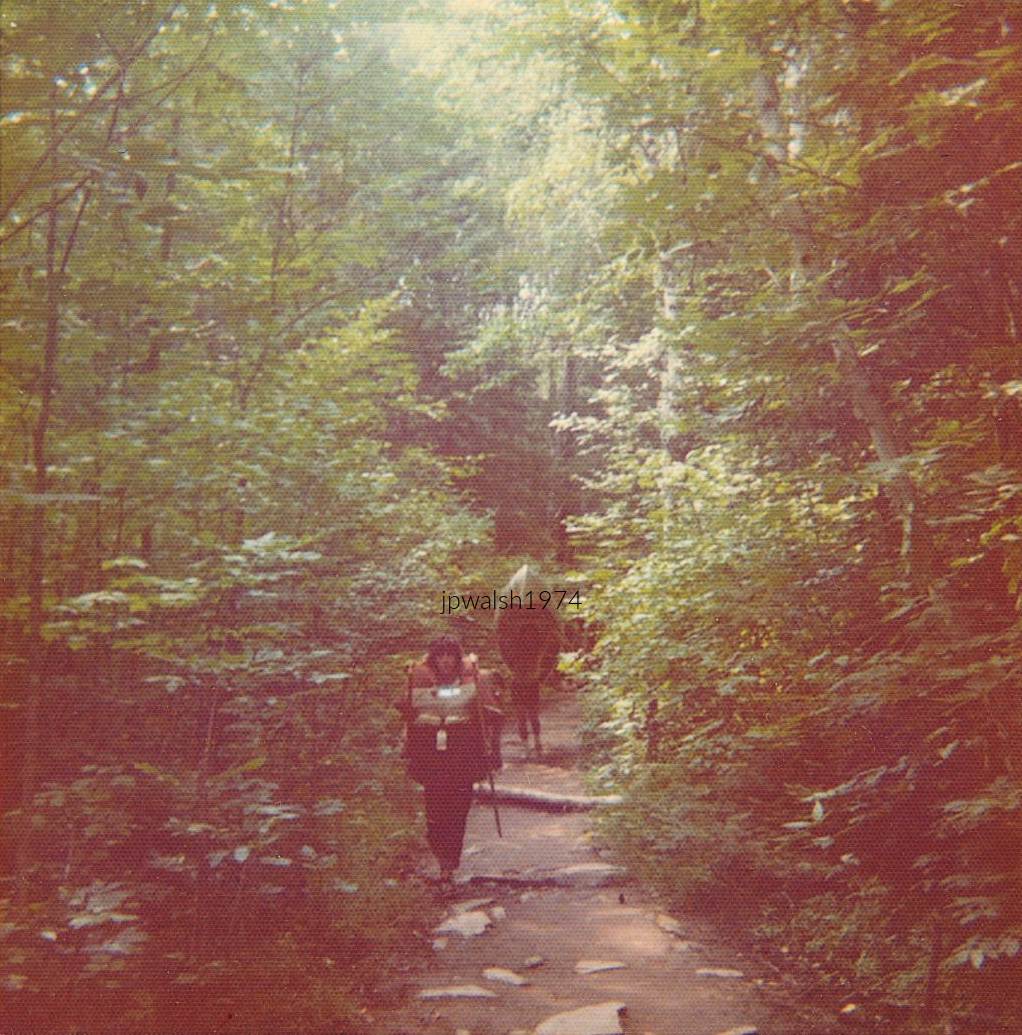
I was on one of my backpacking canoe trips into Quetico Provincial Park in Canada during the week of Nixon’s resignation on August 9, 1974. Up to that point the political theatre in the nation had been stoked to climax. That summer I was one of the first to get and read a copy of Bernstein & Woodward’s All the President’s Men published in June 1974.
Carl Bernstein and Bob Woodward’s All the President’s Men traced the Watergate story from the June 17, 1972 break‑in through the cascading resignations of April 1973 — including Chief of Staff H. R. Haldeman and Domestic Affairs Advisor John Ehrlichman — and culminating in Alexander Butterfield’s July 1973 revelation of the White House taping system. The book reconstructs the political machinery behind the scandal, detailing how two relatively junior reporters uncovered a widening pattern of abuses inside the executive branch. It also pulls back the curtain on the reporting process itself, recounting the behind‑the‑scenes battles over major stories and Woodward’s clandestine meetings with his source, Deep Throat, who helped steer them through a landscape shaped by secrecy, institutional resistance, and the power of the presidency.
The film, All the President’s Men, released in April 1976, was directly based on the 1974 non-fiction book of the same name and starred Robert Redford as Bob Woodward and Dustin Hoffman as Carl Bernstein. “All the President’s Men, 1976” by thefoxling is licensed under CC BY-NC-SA 2.0.
In July 1972, Woodward and Bernstein searched the Library of Congress for evidence linking Watergate burglars to White House intelligence operations, yet found nothing after days of searching. Due to this lack of hard evidence, the story was kept off the front page, highlighting the initial lack of support for the investigation. The 1976 film All the President’s Men dramatizes this moment through a high-angle shot, visually emphasizing the pair’s isolation in exposing a massive, government-backed conspiracy.
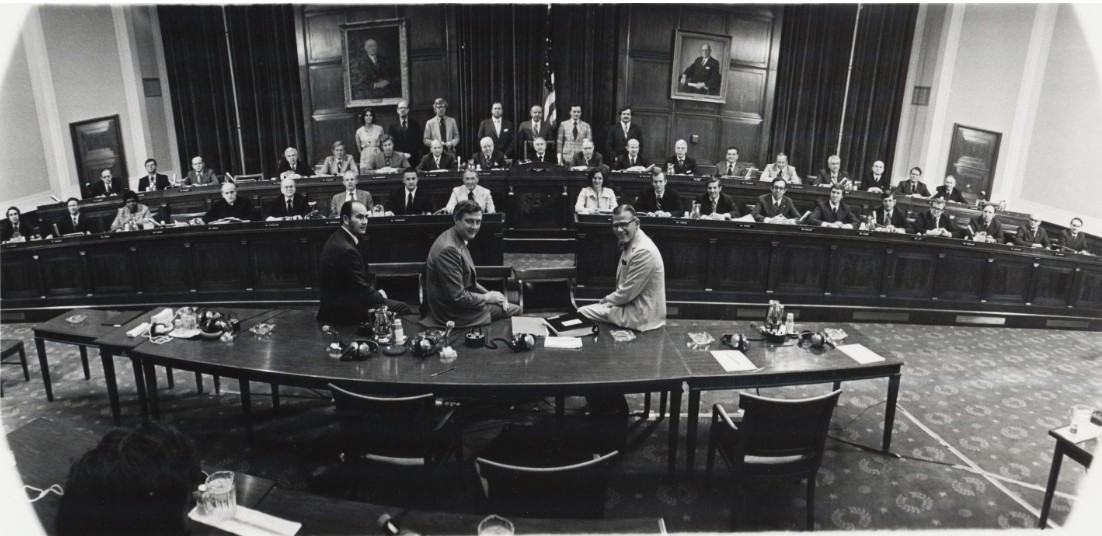
Since it started in May 1974, I had been watching the congressional hearings as well as reading the newspapers mostly that summer on the fight over the White House tapes. On July 24, 1974 the U.S. Supreme Court in an unanimous decision said Nixon had to surrender the tapes and on July 27, 1974 the House Judiciary Committee voted for articles of impeachment of Nixon. This was coming to a head just days before I was getting ready to set out for a week in the wilderness by way of Madison, Wisconsin and Ely, Minnesota.
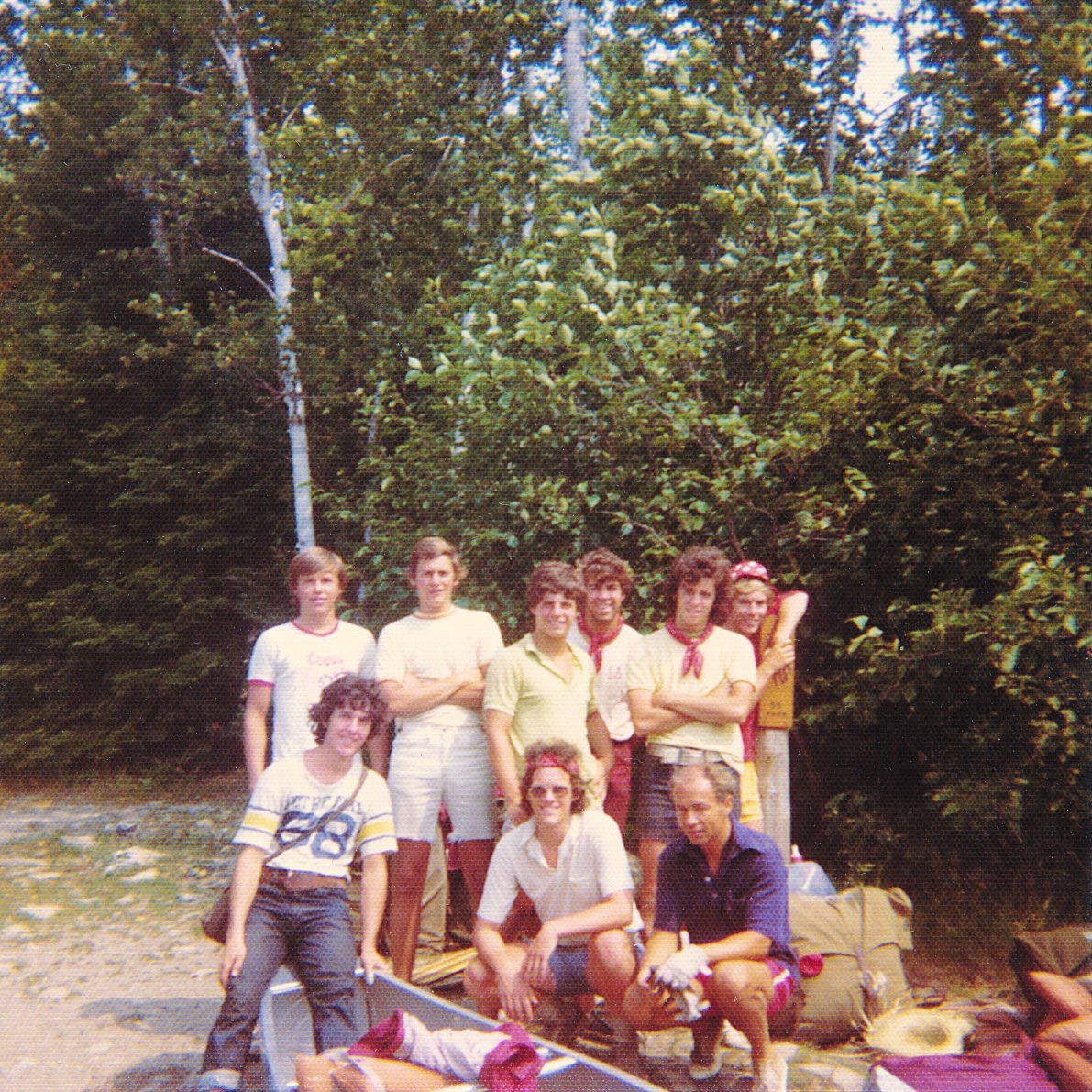
As we paddled, portaged, and set up and broke camp over a beautiful week in the wilderness, we were all aware that something extraordinary was unfolding in Washington. But with no radios or newspapers in the backcountry, we were cut off from the final act of Nixon’s presidency. Only when we returned to Ely, Minnesota for the trip home did we learn that Richard Nixon had resigned — the first, and so far only, U.S. president to do so. I’m standing at the center of the group, wearing the open‑collared green shirt. Author’s collection.
In an evening televised address on August 8, 1974, President Richard M. Nixon announced his resignation to be effective at noon on August 9, 1974. That day Nixon gave a farewell press conference in the East Room in mid morning before scores of White House staff and cabinet members joined by his wife, Pat, and two daughters, Julie and Tricia, with their husbands. Nixon was finally bowing to pressure from the public and Congress to leave the White House.
Portage, Quetico, August 1974: Between lakes and light, the work becomes its own kind of rhythm. Author’s photograph.
I didn’t see Nixon’s resignation speech when it happened. We were still on the canoe trip, deep in the woods, and the world felt very far away. But the next morning, back at the outfitter’s, a small television was on, and I caught his early‑morning press conference. Even then, I thought Nixon’s tone was maudlin and overwrought — a view I still hold, though with time it’s easier to see how skillfully he staged that final bit of melodrama.
In the days and weeks that followed, after years of political combat at the highest levels of government, the country felt both relieved and strangely unmoored, as if the ground had shifted and no one quite knew what came next. That sense of drifting didn’t last long. When President Ford pardoned Nixon on September 8, 1974, the national mood snapped back into focus. By then school had started again for me, and I was back on the football field, trying to keep track of plays and classes while the country tried to make sense of its own upheaval. Politics, like the season, regrouped quickly. The struggle resumed — loud, messy, determined — as if the nation needed that friction to feel like itself again so to make all right in the world by way of that struggle for it.
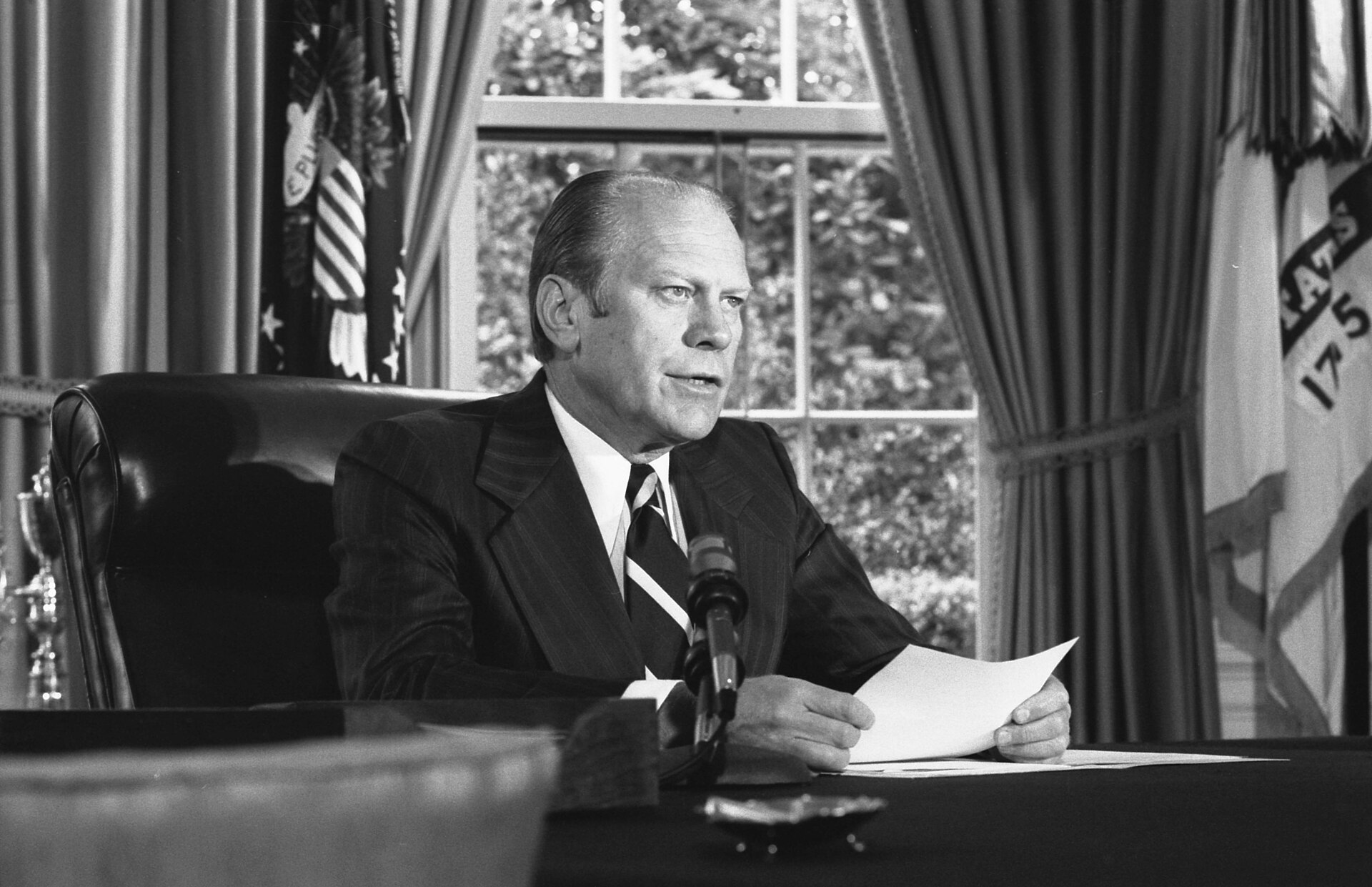
President Ford announcing his decision to pardon Nixon, September 8, 1974, in the Oval Office. Public Domain.
The author at the Richard Nixon Presidential Library in Yorba Linda, California, June 1994—nearly twenty years after Nixon’s resignation and just six weeks after his death on April 22, 1994, at age 81. Author’s collection.
June 1994. President Richard Nixon’s grave at the Nixon Library in Yorba Linda, California, set beside his childhood home. He is buried here alongside his wife, Pat. Author’s photograph.
Reporting work of Woodward and Bernstein has often been described as “maybe the single greatest reporting effort of all time” (Roy J. Harris Jr., Pulitzer’s Gold, 2007, p. 233). In 1976, the story they broke reached a mass audience through the hit film adaptation of All the President’s Men, with Robert Redford portraying Woodward and Dustin Hoffman as Bernstein. That same year, the two journalists published The Final Days, a sequel I read when it first appeared, which chronicled the collapse of Richard Nixon’s presidency — picking up where their earlier book ended and tracing the unraveling of the administration through its final, chaotic months.
FEATURE image: This historic photograph captures the August 28, 1963 meeting between President John F. Kennedy and civil rights leaders in the White House Oval Office immediately following the March on Washington for Jobs and Freedom. The photograph (left to right) includes Willard Wirtz (U.S. Secretary of Labor), Floyd McKissick (National Chairman of the Congress of Racial Equality, CORE), Mathew Ahmann (Executive Director of the National Catholic Conference for Interracial Justice), Whitney Young (Executive Director of the National Urban League), Dr. Martin Luther King Jr. (President of the Southern Christian Leadership Conference, SCLC), John Lewis (Chairman of the Student Nonviolent Coordinating Committee, SNCC), Rabbi Joachim Prinz (President of the American Jewish Congress), A. Philip Randolph (Director of the March on Washington and veteran labor leader), President John F. Kennedy, Vice President Lyndon B. Johnson, Walter Reuther (President of the United Automobile Workers, UAW), Roy Wilkins (Executive Secretary of the National Association for the Advancement of Colored People, NAACP). Public Domain.
The real historical significance of August 28, 1963, did not end with Martin Luther King Jr.’s “I Have a Dream” speech or the March on Washington itself, but continued inside the White House during a 72-minute strategy session between President John F. Kennedy and civil rights leaders. The meeting was not merely ceremonial. It served as a critical discussion about political strategy, legislative priorities, jobs, education, urban poverty, and the future of the civil rights movement, helping shape the path toward the Civil Rights Act of 1964.
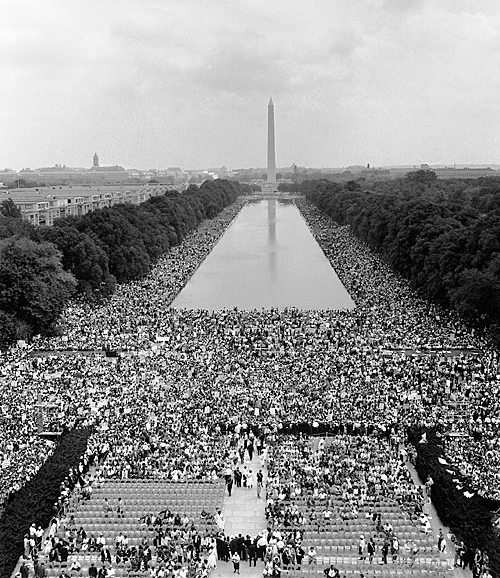
Fig. 1. Hundreds of thousands descended on Washington, D.C.’s Lincoln Memorial, August 28, 1963. (U.S. Government Photo.) Public Domain. Sensing a national breakthrough for civil rights, Rev. Dr. Martin Luther King, Jr. joined civil rights leaders to plan a March on Washington for Wednesday, August 28, 1963. The great march filled the VIP section at the Lincoln Memorial and the National Mall to past the Washington Monument, a distance of almost one mile. The March on Washington is remembered for King’s “I Have a Dream” speech and the massive crowd’s hopeful jubilation. The meeting with President John F. Kennedy afterwards was more than a polite courtesy call to the White House–it helped coordinate political strategy for the movement that would have concrete ramifications for the Civil Rights Act of 1964 following Kennedy’s death.
Kennedy’s Reaction to the March
President John F. Kennedy watched the March on Washington, including Martin Luther King Jr.’s “I Have a Dream” address, on television from the White House. Though both men were relatively young, King at 34 and Kennedy at 46, they shared a maturity and sensitivity that often contrasted with their public images. King, in particular, was uncomfortable with the intense attention focused on him after his speech at the Lincoln Memorial.
When civil rights leaders arrived at the White House Cabinet Room later that day, Kennedy greeted King with a smile and the words, “I have a dream,” repeating the line that had so impressed him only hours earlier. King brushed aside the compliment and instead asked what the president thought of Walter Reuther’s speech, which had criticized America’s commitment to freedom abroad while failing to fully secure it at home. Kennedy answered dryly, “Oh, I’ve heard Walter plenty of times.”
Fig. 2.Civil Rights March on Washington, D.C. (Leaders of the march posing in front of the statue of Abraham Lincoln, Lincoln Memorial.) (Photograph by Rowland Scherman, U.S. Information Agency, National Archives and Records Administration.) Public Domain. Civil Rights leaders in this group photograph at the Lincoln Memorial followed up the March on Washington with a visit to the White House to meet President Kennedy. Seated left to right:National Urban League executive director Whitney Young (1921-1971); chairman of the Demonstration Committee Cleveland Robinson (1914-1995); labor union leader A. Philip Randolph (1889-1979); Dr. Rev. Martin Luther King, Jr. (1929-1968); National Association for the Advancement of Colored People (NAACP) leader Roy Wilkins (1901-1981). Standing left to right: director of the National Catholic Conference for Interracial Justice Matthew Ahmann (1931-2001); Rabbi Joachim Prinz (1902-1998);Student Nonviolent Coordinating Committee (SNCC) leader John Lewis (1940-2020); Rev. Eugene Carson Blake (1906-1985); Floyd McKissick (1922-1991); labor union leader Walter Reuther (1907-1970).
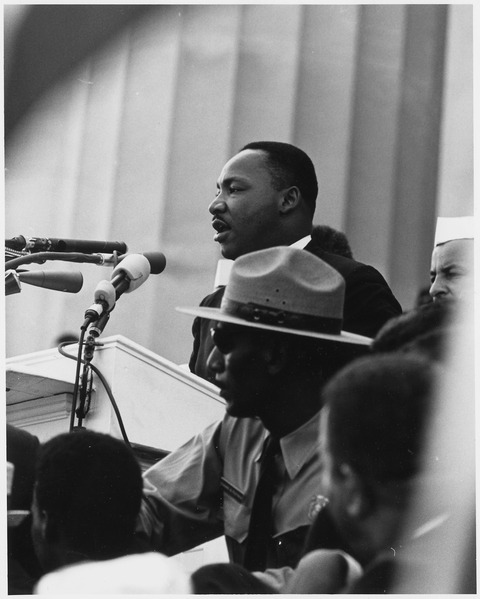
Fig. 3.Martin Luther King, Jr., speaking from the Lincoln Memorial during the March on Washington. (Photograph by Rowland Scherman, U.S. Information Agency, National Archives and Records Administration.) Public Domain. Rev. Dr. Martin Luther King, Jr., speaking at the March on Washington from the Lincoln Memorial on August 28, 1963. Following the successful march for jobs and freedom, civil rights leaders went to the White House to visit with President Kennedy and pushed measures to strengthen the Civil Rights bill.
Civil Rights Priorities
Although King and Kennedy spoke only briefly, the meeting quickly turned to policy. Kennedy and Roy Wilkins talked at length about strengthening the pending civil rights bill in light of the march’s peaceful success. Meanwhile, King moved down the line to stand near John Lewis, the 23-year-old chairman of the Student Nonviolent Coordinating Committee (SNCC).
Civil rights leaders pressed for stronger protections in the civil rights bill, including a ban on racial discrimination in employment. They also warned Kennedy about accelerating automation, which threatened to reduce job opportunities, and described worsening conditions in urban Black communities. Leaders highlighted soaring school dropout rates among Black teenagers and a growing sense of alienation among young African Americans.
A. Philip Randolph told the president that the entire current generation of young Blacks “had no faith” in whites. They also dismissed Black leadership, government and God. To them, he said, American society offered little beyond despair.
The Debate Over Federal Action
The activists also urged Kennedy to restore a provision removed from the 1957 Civil Rights Act that would give the Attorney General broader authority to investigate and pursue civil rights violations.
Kennedy replied that he and Attorney General Robert Kennedy had already examined unemployment and school dropout problems in cities such as Chicago and New York. He argued that community leadership also had a responsibility to encourage educational achievement.
“It seems to me,” Kennedy said, “with all the influence that all you gentlemen have in the Negro community that we could emphasize educating children, making them study, making them stay in school and all the rest.”
Despite the bill’s narrow prospects in Congress, Roy Wilkins countered that the Speaker of the House had assured him an even stronger civil rights bill could pass the House and help pressure the Senate to act. Wilkins urged President Kennedy to go over the heads of congressional opponents and lead a national crusade to win voter approval for the civil rights measures.
Kennedy rejected that strategy. He argued that civil rights had to remain a bipartisan cause and warned that a partisan campaign could undermine Democratic support in the South while allowing Republicans to claim credit for supporting civil rights. He also complained that both parties were engaging in “treacherous” political maneuvering that complicated passage of the legislation. Any add-ons now to the civil rights bill joined existing legislation that was already on the brink of defeat in the Democrat-controlled Senate and too close to call in a Democrat-controlled House.
In the tension between moral urgency and political pragmatism, civil rights leaders pressed Kennedy to act more boldly, while Kennedy focused on the difficult realities of congressional politics and bipartisan support.
White House, August 28, 1963, meeting with President Kennedy after the march.
Reuther Challenges the President
The sharpest exchange came from Walter Reuther.
“You can’t escape this problem,” the labor leader warned. “There are two ways of resolving it, either by reason or riots.”
Reuther argued that racial conflict would not be confined to historic battlefields like Gettysburg but would erupt in neighborhoods, workplaces, and communities across the country. He also criticized Kennedy’s governing style, calling it a “seminar” approach in which meetings produced too little action. Reuther contrasted Kennedy with Vice President Lyndon B. Johnson, whose governing style as Majority Leader he praised where he relentlessly pushed difficult legislation through Congress. by “jawbone[ing]” an issue until he got “difficult things done.”
Throughout much of the debate, King remained silent. When he finally spoke, he suggested that if Kennedy led a civil rights crusade, perhaps former Republican President Dwight D. Eisenhower could join it, transforming the effort into the bipartisan movement Kennedy desired.
Kennedy immediately dismissed the idea.
“No, it won’t,” he replied.
King answered with a playful jab: “Doesn’t President Eisenhower happen to be in the other denomination?”
Rev. Eugene Blake and the Eisenhower Idea
King’s remark referred to Rev. Eugene Blake, Eisenhower’s pastor, who was present in the Cabinet Room. Blake had been the only white speaker at the March on Washington. He had previously been arrested during a civil rights demonstration in Baltimore and had spent time in jail for the cause.
Earlier that day Blake had declared from the march platform, “We come late, late we come, in the reconciling and repentant spirit.” The Protestant clergyman supported both civil rights and economic justice for African Americans while avoiding the more revolutionary language favored by some activists.
Blake told Kennedy that Eisenhower might indeed be willing to help. The president seized on the suggestion and encouraged Blake to visit the former president in Gettysburg to explore what role he might play in advancing the civil rights bill.
“And include a Catholic and maybe a businessman or two,” Kennedy advised.
Then, pointing toward Reuther, he added with a grin, “And leave Walter in the background.”
The room chuckled. Shortly afterward, before leaving the meeting, Kennedy assured the group he would remain in contact in the months ahead as the civil rights bill moved forward.
SOURCES:
Branch, Taylor. Parting the Waters: America in the King Years 1954–63. New York: Simon & Schuster, 1988.
Garrow, David J. Bearing the Cross: Martin Luther King, Jr., and the Southern Christian Leadership Conference. New York: William Morrow and Company, 1986.
Fig. 4.Civil Rights March on Washington, D.C. (Aerial view of Washington Monument showing marchers.) (U.S. Information Agency photograph, National Archives and Records Administration.) Public Domain. On August 28, 1963, about 250,000 peaceful protesters descended on Washington, D.C. for the March on Washington for Jobs and Freedom. The march was one of the largest political rallies for human rights in United States history.
Harry Belafonte and Hollywood at the March on Washington
A Life of Achievement and Activism
Harry Belafonte (1927-2023) was born in New York City and died there at the age of 96. Over a remarkable career that spanned more than seventy years, he earned a Tony Award, an Emmy Award, and three Grammy Awards as both a pioneering singer and accomplished film actor. Beyond his entertainment career, Belafonte devoted himself to the struggle for civil rights and became one of the movement’s most visible and influential supporters.
Bringing Hollywood to History
Belafonte used his celebrity and influence to help unite the entertainment industry behind the civil rights cause. As plans were finalized for the March on Washington for Jobs and Freedom on August 28, 1963, he organized support from many of Hollywood’s biggest stars. To ensure a strong show of solidarity, Belafonte chartered a plane from Los Angeles to bring a group of prominent actors, entertainers, and artists to Washington, D.C.
Their presence highlighted the growing national support for the movement and demonstrated that the fight for equality extended well beyond political and civil rights circles into the highest levels of American popular culture.
The March on Washington
An estimated 200,000 to 250,000 people gathered in the nation’s capital for what became one of the most significant events in American history. The crowd filled the area around the Lincoln Memorial and stretched across the National Mall toward the Washington Monument, covering nearly a mile. Despite the enormous size of the gathering, the atmosphere was one of hope, optimism, and celebration.
It was from the steps of the Lincoln Memorial that Dr. Martin Luther King Jr. delivered his immortal “I Have a Dream” speech, a defining moment of the civil rights movement and one of the most celebrated speeches in American history.
Hollywood Stars in Attendance
Among the many entertainers who joined Belafonte at the march were Marlon Brando, Rita Moreno, James Garner, Tony Franciosa, Sammy Davis Jr., Joanne Woodward, Paul Newman, Susan Strasberg, Burt Lancaster, Robert Ryan, Gregory Peck, Anthony Quinn, James Baldwin, Lena Horne, Ruby Dee, Sidney Poitier, Charlton Heston, and numerous others.
Many of these performers actively supported civil rights causes, while others used their public stature to bring national attention to the movement’s goals. Their participation underscored the broad coalition that had gathered in Washington to advocate for racial equality, voting rights, employment opportunities, and social justice.
Meeting with President Kennedy
Following the march, Dr. King and several prominent civil rights leaders traveled to the White House to meet with President John F. Kennedy. During their discussions, they reviewed the significance of the day’s events, examined the challenges still facing African Americans, and discussed the future direction of the civil rights movement.
The meeting also touched on the legislative efforts that would eventually culminate in the Civil Rights Act of 1964. Although President Kennedy would not live to see its passage, the momentum generated by the March on Washington helped build public support for the landmark legislation that became law under President Lyndon B. Johnson.
A Lasting Legacy
Harry Belafonte’s role in the March on Washington reflected his belief that artists had a responsibility to use their influence in the service of justice. By bringing some of Hollywood’s most recognizable faces to the nation’s capital, he helped amplify the message of the civil rights movement and demonstrated the power of cultural figures to support social change. His contributions as both an entertainer and activist remain an enduring part of American history.
REMARKS BY HARRY BELAFONTE: “We are here to bear witness to what we know. We know that this country, America, to which we are committed, and which we love, aspires to become that country in which all men are free. We also know that freedom is not license. Everyone in a democracy ought to be free to vote. But no one has the license to oppress or demoralize another. We also know or we would not be here, that the American negro has endured for many generations in this country which he helped to build the most intolerable injustices. To be a negro in this country means several unpleasant things. In the Deep South it often means he is prevented from exercising his right to vote by all manner of intimidation up to and including death. This fact of intimidation is a great weight in the life of any negro and though it varies in degree it never varies in intent which is simply to limit, to demoralize and to keep in subservient status more than 20 million negro people. We are here, therefore, to protest this evil and make known our resolve to do everything we can possibly do to bring it to an end. As artists and as human beings we rejoice in the knowledge that human experience has no color and that excellence in any endeavor is the fruit of individual labor and love. We believe artists have a valuable function in any society since it is the artists who reveal society to itself. But any society that ceases to respect the human aspirations of all its citizens courts political chaos and artistic sterility. We need the energies of these people to whom we have for so long denied full humanity. We need their vigor, their joy, the authority which their pain has brought them and cutting ourselves off from them then we are punishing and diminishing ourselves. As long as we do so our society is in great danger. Our growth as artists is severely menaced and no American can boast of freedom since he cannot be considered an example of it. We are here then in an attempt to strike the chains of the ex-master no less than the ex-slave and to invest with reality that deep and universal longing which has sometimes been called the American Dream.”
Fig. 5. Leaders of the march leading marchers down the street. (U.S. Information Agency photograph, National Archives and Records Administration.) Public Domain.
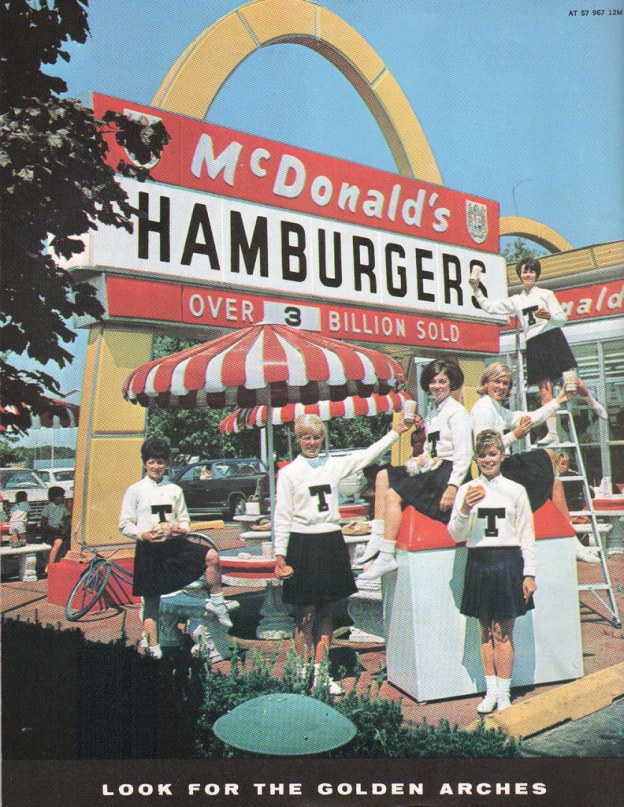
The planned demolition of the replica standing on the original site of Ray Kroc’s first McDonald’s franchise in Des Plaines, Illinois represents the potential loss of an important piece of American business, labor, automotive, and cultural history. What began as a single franchise opened on April 15, 1955, helped launch one of the world’s most influential restaurant chains, making the site’s preservation historically significant.
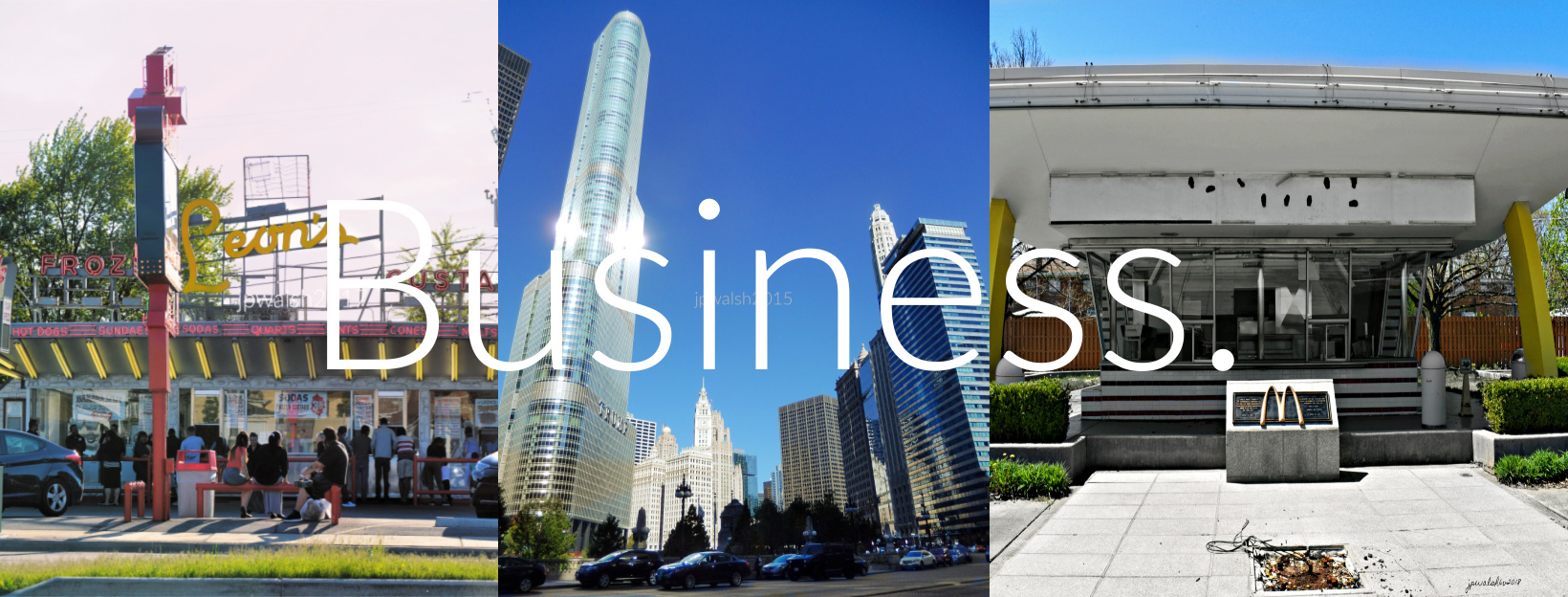
McDonald’s very first franchise restaurant on its original site, 1955 (replica, 1985). It is slated to be razed by McDonald’s Corporation immediately. Author’s photograph taken May 6, 2018.
By John P. Walsh
A closed-down weather-beaten replica of the very first McDonald’s franchise restaurant started by Ray Kroc (1902-1984) on April 15, 1955 standing on its original site in Des Plaines, Illinois, is slated to be demolished by McDonald’s Corporation with its land donated or possibly sold.
It was not long ago that McDonald’s touted that approximately one in every eight American workers had been employed by the company (Source: McDonald’s estimate in 1996) and that even today McDonald’s hires around 1 million workers in the U.S. every year. By 1961 there were 230 McDonald’s franchises in the United States. In 2017 there was 37, 241 McDonald’s restaurants worldwide. Not only historians and historic preservationists decry the imminent demolition of the first McDonald’s restaurant in Des Plaines, Illinois, just west of Chicago, but others impressed by its direct significance to the growth and impact to U.S. labor history as well as the American restaurant industry and American automotive culture in the post-World War II era. Further, McDonald’s restaurants today reach into 121 other countries around the world influencing and being influenced by global cuisine. That all of this cultural and business import was born on a now-threatened patch of land on Lee Street in Des Plaines, Illinois, is impressive.
Ray Kroc opened his first McDonald’s franchise in Des Plaines, Illinois, on April 15, 1955, on the site that would become synonymous with the chain’s expansion.
It appears that if and when McDonald’s follows through on its November 2017 decision to raze the building and give up the site, this originally-designed McDonald’s restaurant on Ray Kroc’s original site in Des Plaines will be forever lost. The story of how that planned demolition of this unique piece of Americana came to be began 35 years ago. It was on March 3, 1984 that after 29 years of continual operation the original franchise restaurant on the original site was permanently closed and demolished. Founder and former McDonald’s Corporation chairman Ray Kroc had died less than six weeks before in January 1984 at 81 years old in San Diego, California.
The McDonald’s restaurant brand opened its first burger bar called McDonald’s Bar-B-Q in California in 1940 – and, by 1953, brothers Maurice and Richard McDonald started a small franchise business in Phoenix, Arizona and Downey, California. Today’s nationwide and global franchise empire that serves 75 burgers every second (Source: McDonald’s Operations and Training Manual) began when Oak Park, Illinois-born Ray Kroc, a paper-cup-turned-milkshake-machine salesman, convinced the McDonald brothers to let him franchise their business nationwide. Kroc offered to manage the franchises in the U.S., excepting the brothers’ first franchises in Arizona and California, and the pair were to receive a tiny percentage of gross sales nationwide in return.
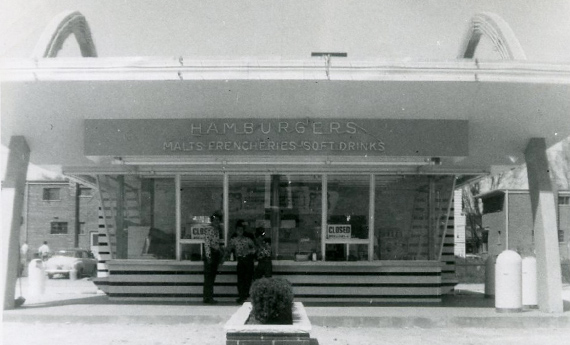
The structure slated for demolition was a 1985 replica built on the original location after the original restaurant was demolished in 1984.
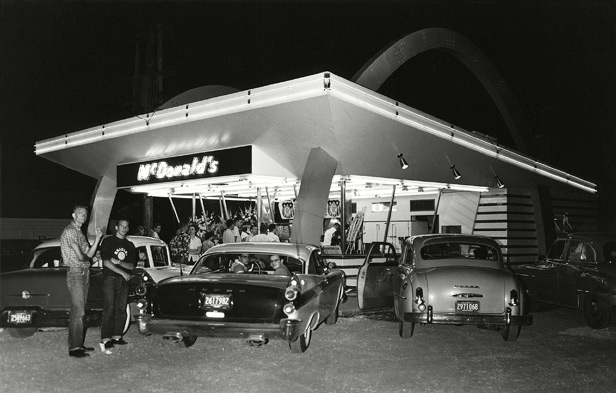
Historic photograph from 1955 of the original Des Plaines McDonald’s restaurant which was demolished in 1984. A replica restaurant was built in 1985 based on architectural plans of later McDonald’s restaurants. That replica on the historic site is awaiting immediate demolition announced by McDonald’s in late 2017. Fair Use.
Kroc’s first walk-up franchise McDonald’s restaurant at the “Five Corners” intersection in Des Plaines, Illinois, served an assembly-line format menu of hamburgers, cheeseburgers, french fries and a selection of drinks. In 1955, he founded McDonald’s System, Inc., a predecessor of the McDonald’s Corporation, and six years later bought the exclusive rights to the McDonald’s name and operating system. By 1961, Ray Kroc’s vision had clearly paid off for the now 59-year-old former paper cup salesman. That same year, Kroc bought out the McDonald brothers for $2.7 million and launched his strict training program, later called “Hamburger University, ” in nearby Elk Grove Village, Illinois, at another of his 230 new McDonald’s restaurants. Ray Kroc’s original vision was that there should be 1,000 McDonald’s restaurants in the United States. When Kroc died in January 1984, his goal had been exceeded six fold — there were 6,000 McDonald’s restaurants in the U.S. and internationally in 1980.
By 1961, there were 230 McDonald’s franchises, demonstrating the rapid success of Kroc’s franchising model.
The Des Plaines suburban location of Ray Kroc’s very first McDonald’s franchise retains its relatively humble setting even as the McDonald’s Corporation it spawned earns $27 billion in annual sales making it the 90th-largest economy in the world (Source: SEC). Kroc, the milkshake machine salesman who convinced the McDonald brothers to let him franchise their fast-food operation nationwide, saw his original McDonald’s franchise at 400 Lee St. in Des Plaines open for business until, shortly after his death, it closed on Saturday, March 3, 1984.
Ray Kroc (1902-1984) photographed with an artist’s rendering of his highly successful McDonald’s franchise restaurant. The franchise started in Des Plaines, Illinois, in April 1955 and has had a significant impact on U.S. labor history and the American restaurant industry and automotive culture in the post-World war II era. Fair Use.
In 1984 there were no plans to preserve the site – its golden arches and road sign had been carted away – but a public outcry prompted McDonald’s in 1985 to return the restaurant’s restored original sign designed by Andrew Bork and Joe Sicuro of Laco Signs of Libertyville, Illinois, and dedicate a restaurant replica that still exists today on the original site though it is now slated for demolition. The historic red neon-lettered sign turned on for the opening of Kroc’s first store on April 15, 1955 – there is one similar to it preserved in The Henry Ford museum in Dearborn, Michigan dating from 1960 – proclaimed “McDonald’s Hamburgers” and “We Have Sold Over 1 Million” and, intersecting with an iconic golden arch displayed a neon-animated “Speedee” chef, the fast food chain’s original mascot. (The clown figure of Ronald McDonald first appeared in 1963).
Newspaper advertisement announcing the opening of Ray Kroc’s first McDonald’s in Des Plaines, Illinois, in 1955. It featured the franchise’s first mascot, Speedee, who was significant to the assembly-line format menu and prevailing automobile culture. Fair Use.
Historic photograph of Ray Kroc’s first McDonald’s restaurant in Des Plaines, Illinois, on opening day, April 15, 1955. Fair Use.
The replica of McDonald’s first franchise restaurant is missing its golden arches, “McDonald’s” sign over the entrance and its original 1955 Speedee neon lettered sign. They were dismantled and removed in January 2018 by McDonald’s to an undisclosed location out of public view. Photo by author, May 6, 2018.
The day after the original restaurant closed – Sunday, March 4, 1984 – a McDonald’s restaurant franchise moved across the street into a state-of-the-art new building on a site that once accommodated a Howard Johnson’s and, after that, a Ground Round. The full-service McDonald’s in Des Plaines, Illinois, today continues to operate out of that 1984 building. It may confuse the visitor which exactly is the original site of the first McDonald’s as the newer 1984 building not on the first site displays inside a high-relief metal sign that reads: “The national chain of McDonald’s was born on this spot with the opening of this restaurant.” Though undated, it is signed by Ray Kroc which points to it being brought over from the original restaurant when it was closed. At the replica restaurant on the original site two metal plaques (dated April 15, 1985) properly proclaim: “Ray A. Kroc, founder of McDonald’s Corporation, opened his first McDonald’s franchise (the ninth McDonald’s drive-in in the U.S.) on this site, April 15, 1955.”
The Des Plaines location symbolizes the beginning of a business that expanded into a global restaurant empire.
A few months after the first franchise restaurant was closed and demolished in 1984, the parcel of land on which it sat – it had only always been leased since 1955 – was purchased by McDonald’s at the same time they announced plans for the replica landmark restaurant.
The original architectural plans by architect Robert Stauber from the mid1950’s were lost, so 1980’s planners applied architectural drawings of McDonald’s restaurants built in the late 1950’s for the replica. Its kitchen included refurbished equipment brought out of storage, including the restaurant’s original six-foot grill. It also displayed one of Ray Kroc’s original multimixers like the ones he sold to Maurice and Richard McDonald that started a fast-food partnership in the 1950’s which by the mid-1960’s inspired many well-known copy cats of McDonald’s model, including Burger King, Burger Chef, Arbys, KFC, and Hardee’s.
Soda fountain multimixer. Fair Use.
Public outcry previously led to preservation efforts, including the construction of the replica and restoration of historic signage. Repeated flooding from the nearby Des Plaines River contributed to concerns about maintaining the site.
The original restaurant had been remodeled several times during its almost 30 years of operation but never had much in the way of indoor seating or a drive-through. It did feature a basement and furnace built for Chicago’s four seasons and was used by the replica museum to exhibit items. The McDonald’s Museum was open for tours until September 2008 when the site experienced record-setting flooding from the nearby Des Plaines River. In April 2013 another record flood in Des Plaines submerged the McDonald’s Museum and produced serious speculation that the site would be moved or permanently closed.
An aerial view during the April 2013 Des Plaines River flood shows the partially submerged replica first McDonald’s franchise restaurant (at right) with its original Speedee neon sign. Thesign was first lit on April 15, 1955, a Friday Night. Photo: Chris Walker, Chicago Tribune, April 19, 2013. Fair Use.
In mid-July 2017, only four years since the last significant flood, the area experienced its worst flooding on record. In November 2017 McDonald’s announced it would raze the replica restaurant structure and by May 2018 the site had had its utilities disconnected and its golden arches, Speedee sign, and main entrance McDonald’s sign dismantled and removed. These historically valuable items were taken by McDonald’s out of public view to an undisclosed location. Once again, and this time more seriously it appears, the prospect of pleas by Des Plaines municipal authorities, historic preservationists, social media and others for McDonald’s Corporation to preserve the site intact is murky at best.
The site is a unique piece of Americana whose loss would erase a tangible connection to one of the most influential business stories of the 20th century. It has significance even beyond McDonald’s, touching on American labor history, restaurant culture, and postwar automobile culture.
During World War II in Germany, Alfred Delp, S.J. (September 15, 1907 – executed, Berlin, February 2, 1945) was a member of the Kreisauer Kreis (The Kreisau Circle) composed of German men and women from a variety of backgrounds who opposed Adolf Hitler’s Nazi regime.
Fr. Delp was arrested by the Nazis in 1944 and, after six months in prison in shackles, the German Catholic priest and Jesuit was sentenced to death for high treason and executed by hanging on Candlemas 1945.
Following the Allied victory in 1945, Fr. Delp’s prison writings were assembled into a posthumous book called Facing Death (German: Im Angesicht des Todes). A highlight of the 37-year-old Delp’s writings are his seasonal sermons and meditations for Advent and Christmas which were written as he languished in a cell “three steps wide” surrounded by Nazi guards.
Fr. Delp’s writings, scrawled on numerous slips of paper and smuggled out before his death, have been compared to Dietrich Bonhoeffer’s Letters and Papers from Prison also written in Tegel prison in Berlin, Germany, during World War II.
Father Delp was developing his thoughts and writing about the annual Advent drama at least as early as 1933 so his prison writings became a concluding chapter of a lasting adult interest as he faced his death.
German-born Alfred Delp S.J. (September 15, 1907 – Berlin, 2 February 1945) wrote his meditations and sermons on Advent and Christmas when he was a political prisoner of the Nazis in Germany in World War II. PHOTO: “Alfred Delp Mannheim” by Graf Foto is licensed under CC BY-SA 3.0.
From Alfred Delp, S.J., “Figures of Advent,” Advent of the Heart, Ignatius Press, San Francisco, 2006 (adapted):
“I see this year’s Advent (December 1944 in Berlin’s Tegel Prison) with an intensity and discomposure like never before….Along with these thoughts comes the memory of an angel that a good person gave me for Advent in 1942. It held a banner: ‘Rejoice, for the Lord is near.’ A war bomb destroyed the angel as well as that good person although I often sense that she continues to do angel-services for me. It is the knowledge of the quiet angels of annunciation, who speak their message of blessing into the distress of our world situation and scatter their blessing’s seeds which begin to grow in the middle of the night which informs and encourages us of the truth of a situation. These angels of Advent are not loud angels of public jubilation and fulfillment but, silent and unnoticed, they come into private and shabby rooms and appear before our hearts as they did long ago. Silently they bring the questions of God and proclaim to us the miracles of God, with whom nothing is impossible. Advent is a time of refuge because it has received a message – and so to believe in God’s auspicious seeds that the angels offer an open heart are the first things we must do with our lives. The next is to go through the days as announcing messengers ourselves. We wait in faith for the abundance of the coming harvest – not because we trust the earth or the stars or our own good sense and courage – but only because we have perceived God’s messages and know about His herald angels – and even have ourselves encountered one.”
SECOND SUNDAY IN ADVENT.
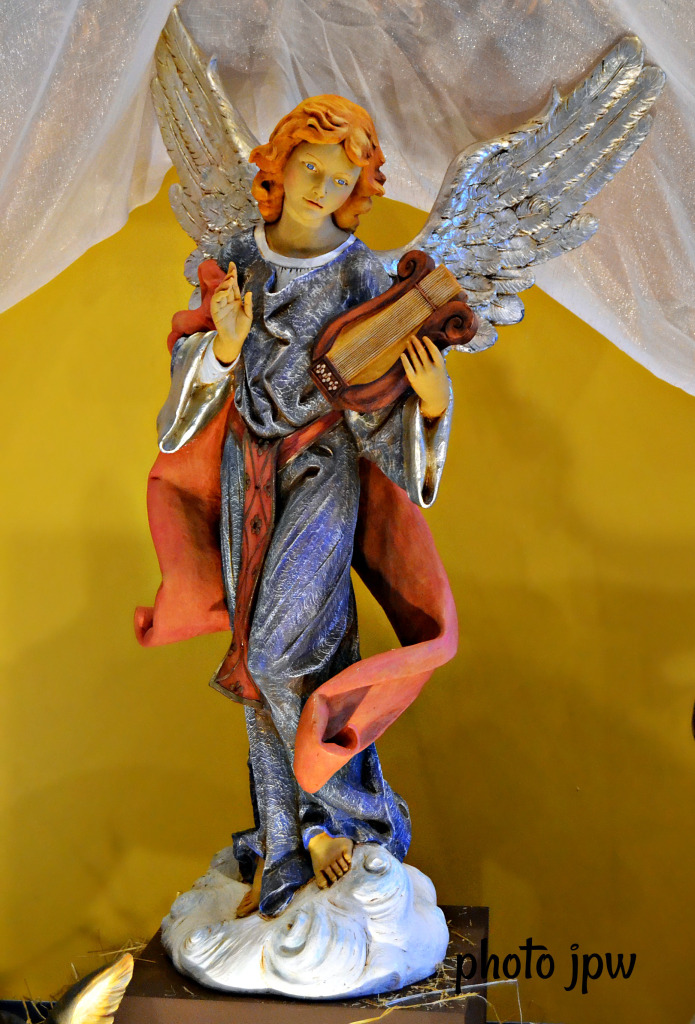
Standing Nativity Angel holding a lyre. Author’s photograph.
Thomas Merton in his introduction to Alfred Delp’s Prison Writings – a modern compilation of a young German Jesuit’s writings in prison in Berlin before he was executed for high treason as a Nazi resister in World War II – states that Fr. Delp was condemned because he and others “hoped to build a new Germany on Christian principles.” (p. xxv.)
Merton, a mid20th century Trappist monk, priest, and spiritual writer, links Fr. Delp’s political activity in the Kreisau Circle—an underground group of about twenty-five German dissidents of diverse backgrounds opposed to the Nazi regime—to broader Church doctrine and the western tradition of liberalism in evidence since the Ancient Greeks that “always hoped to attain a more equitable world order by peaceful collaboration among nations.” (ibid.)
For Fr. Delp, according to Merton, the stark choice before human beings remained the crucial one of global order or global destruction. Father Delp observed that even religious people in his time had fallen into the militaristic government’s syllogistic trap of “conquest first and a new and better world later.”
Fr. Delp’s concern when making this sort of choice is that “if the person who says it tolerates or helps further conditions which are fatal to mankind…or weakens his or her own spiritual, moral, and religious sense” – then even “the most pious prayer can become a blasphemy.” (ibid.) Fr. Delp proposed that any human indifference to honesty and justice originating in passionate conviction vitiates human nature which is left to then express itself in a vicious circle of fear and arrogance.
From Fr. Delp’s perspective, his active participation in Kreisauer Kreis for which he was executed by the Nazis in February 1945 pointed to the eschatological character of the Advent drama by the young Jesuit priest’s hope in his time for the political and social ruin of Germany which had sunk into bitter darkness and that it would find its way ahead by the light of each person’s burning candle “for honesty and justice.”
Hanging symmetrically from the classical pilasters are lush green pine Advent wreaths accented with vibrant, formal red ribbon bows. Against a peach-toned back wall is a dedicated devotional stand filled with dozens of glowing red glass prayer candles lit by parishioners. Author’s photograph. Alfred Delp, S.J. Fair use.
From Alfred Delp S.J., Prison Writings, Orbis Books, Maryknoll, New York, 2004:
“So this Sunday we must again fold our hands and kneel humbly before God in order that his salvation may be active in us and that we may be ready to call upon him and be moved by his presence. The arrogance so typical of modern men and women is deflated here. At the same time, the icy loneliness and helplessness into which we are frozen melts under the divine warmth that fills and blesses us …If we are terrified by a dawning realization of our true condition, that terror is completely calmed by the certain knowledge that God is on the way and actually approaching. Our fate, no matter how much it may be entwined with the inescapable logic of circumstance, is still nothing more than the way to God, the way God has chosen for the ultimate consummation of his purpose, for his permanent ends. Light your candles – such candles as you possess – for they are the appropriate symbol for all that must happen in Advent if we are to live.”
THIRD SUNDAY IN ADVENT.
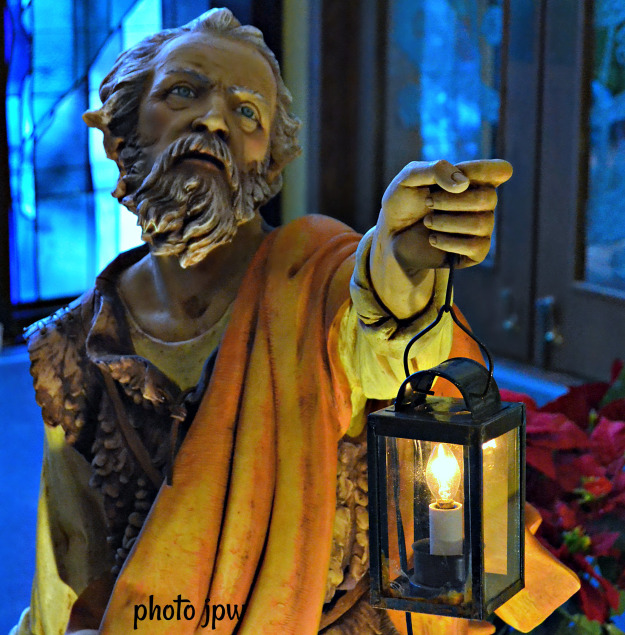
Part of a grand nativity scene, a young woman, Martha, dressed in traditional rustic garments, holds a woven basket overflowing with apples and pears, while a garland of red berries drapes down her skirt. Author’s photograph.
On Friday, July 28, 1944, two Gestapo men were waiting outside St. George’s church in Munich, a simple Baroque pile in an almost pastoral setting near the Englischer Garten.
Eight days before there had been an assassination attempt on Hitler’s life which failed. For active German dissidents to the Nazi regime in custody or, for the time being, still walking free, things were going to get worse.
Helmuth James Graf von Moltke (1907 – 1945), one of the leaders of the Kreisau Circle, a type of anti-Nazi salon, had been in prison since January 1944. Now, following the failed bombing at the Wolf’s Lair, Peter Yorck von Wartenburg (1904 –1944) who was the other leader of the Kreisau Circle, was immediately arrested and sent to Berlin where he was tried and executed on August 8, 1944.
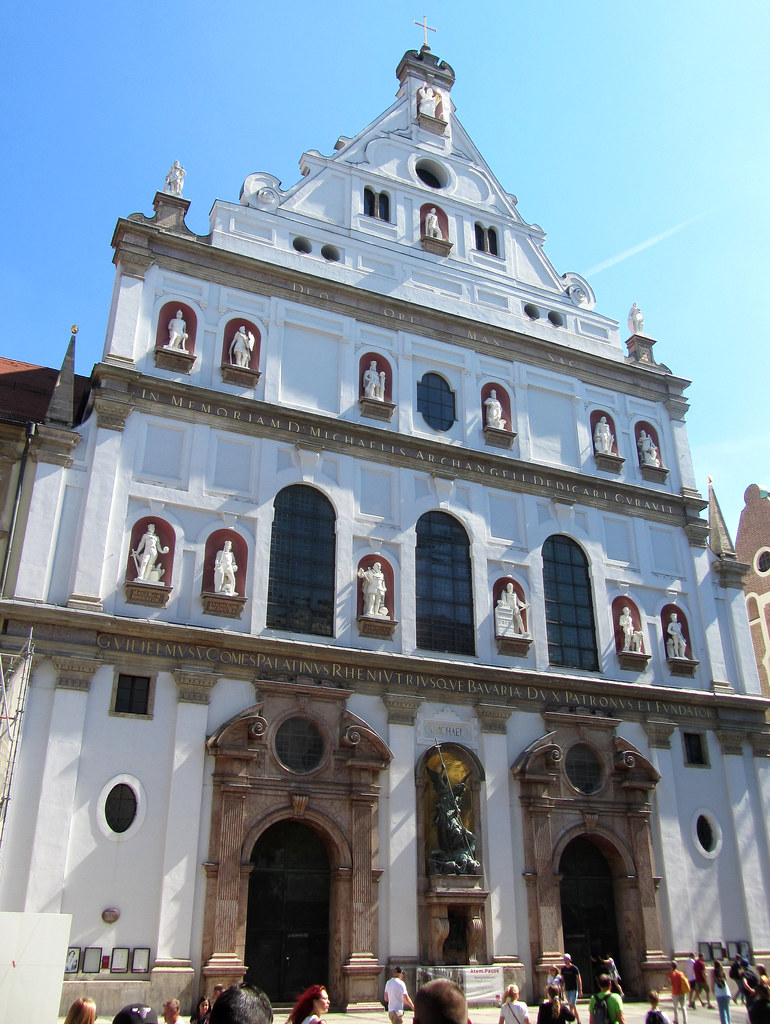
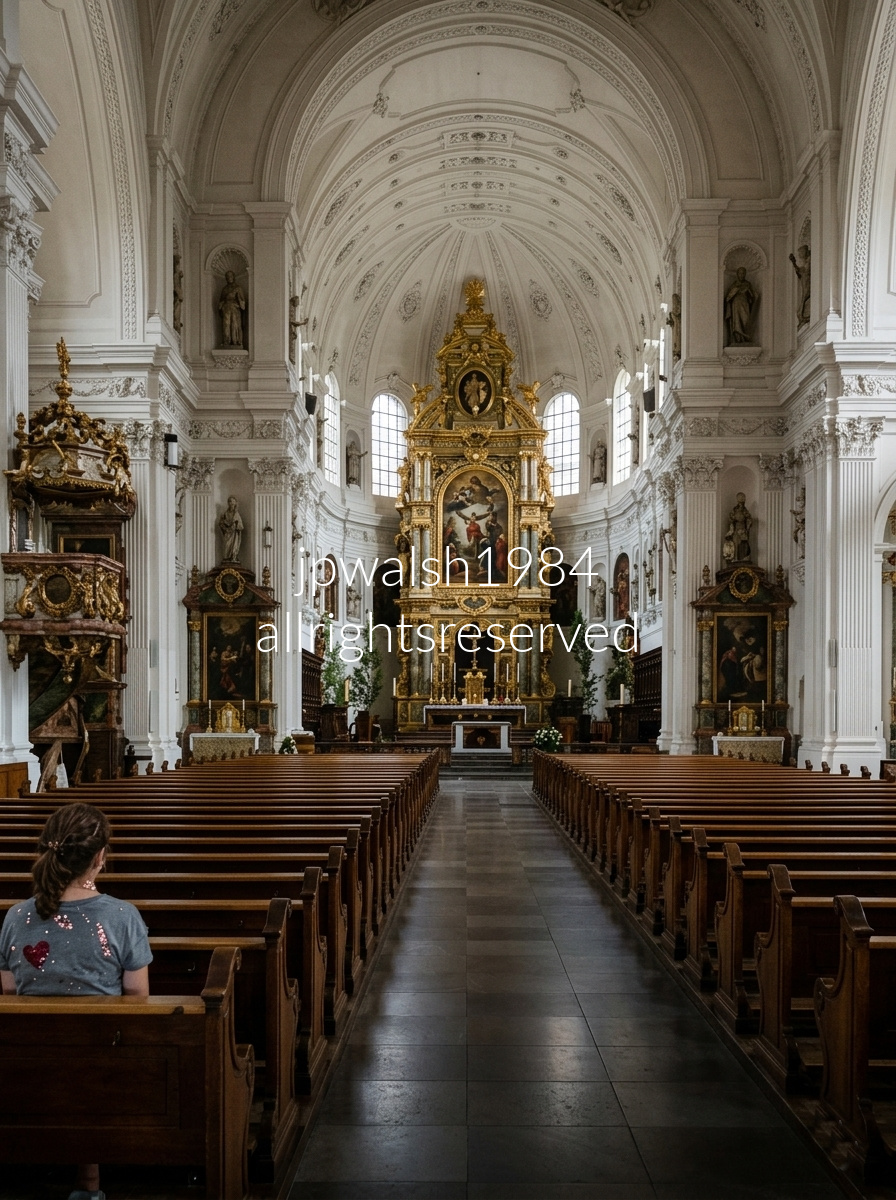
Beyond its architectural prominence as the largest Renaissance church north of the Alps, St. Michael’s maintains a deeply profound, historic connection to the German anti-Nazi resistance through Father Alfred Delp, S.J. The young Jesuit priest began his formal priestly ministry within these walls when he was ordained on June 24, 1937, by Munich’s celebrated Cardinal Michael von Faulhaber who delivered his famous anti-Nazi Advent sermons in 1933 which largely defined his ongoing critical tone towards the regime. Father Delp frequently ascended the pulpit of St. Michael’s to deliver powerful sermons that, alongside the courageous ministry of his fellow Jesuit Father Rupert Mayer, openly condemned the total incompatibility of National Socialist ideology with Christian values. This vocal opposition eventually led Delp to join the Kreisau Circle, a clandestine network of dissidents drafting plans for a humanitarian, Christian social order to rebuild Germany following the anticipated collapse of the Third Reich. Implicated in the wider resistance movements, Delp was arrested by the Gestapo in July 1944 and subsequently executed by hanging at Berlin-Plötzensee prison on February 2, 1945. In recognition of his enduring martyrdom, the Archdiocese of Munich and Freising has formally initiated the diocesan phase for Father Delp’s beatification process, ensuring that St. Michael’s continues to honor him as one of its most courageous historic voices.
St. Georg München-Bogenhausen, Munich:
Images above and below:St. Georg München-Bogenhausen. Parish church of German resister and martyr Alfred Delp, S.J. who was serving as its pastor in World War II.
One of the two Gestapo men waiting outside St. George’s to arrest Fr. Alfred Delp, S.J. happened to be an old schoolmate of his.
Like other Catholic bishops and priests who were known de facto dissenters working against the Nazi regime, especially its social and racial ideologies and practices, Fr. Delp had long been under close surveillance by the Gestapo.
As a member of the Kreisau Circle – that group of professionals of diverse religious, social, and political backgrounds with one thing in common (being dyed-in-the-wool anti-Nazis), Fr. Delp was their social scientist with a Ph.D. He illumined their minds to cutting-edge labor issues, including what could be the German worker’s role in a post-war liberated Germany.
Image above: Helmuth James Graf von Moltke (March 11, 1907 – January 23, 1945).Count Moltke had close sympathies with the democratic forces of the day and expressed open criticism as he watched the rise of Hitler. In 1933 he refused to accept Nazi appointments. After the outbreak of World War II, as an expert adviser on international law and the laws of war he served as war administration councilor in the Office for Foreign Affairs/Counterintelligence in the Armed Forces High Command in Berlin. He was particularly active in advocating for humane treatment of prisoners of war and observance of international law. In 1940 Moltke with Peter Graf Yorck von Wartenburg became the leading figures in a group that emerged as the Kreisau Circle with its discussions held in Berlin and Kreisau. Moltke, formulating memoranda on the establishment of a new political order in Germany, systematically extended his contacts to Protestant and Catholic church leaders and to leaders of the social democratic political opposition. Moltke was arrested on January 19, 1944 after he had warned members of the Solf Circle that they were under Gestapo surveillance. His involvement in the plans for a coup against Hitler was not exposed until after the failure of the assassination attempt of July 20, 1944. Helmuth James Graf von Moltke was sentenced to death by the People’s Court on January 11, 1945 and executed on January 23, 1945 in Berlin-Plötzensee. http://www.gdw-berlin.de/home/ Fair use.
Under arrest, Fr. Delp disappeared into Nazi prisons in Munich and Berlin for almost three weeks. None of his friends could find him.
At Lehrterstrasse, a Gestapo prison in Berlin that specifically dealt with German resisters, the doctor-priest was regularly beaten. Fr. Delp was charged by the National Socialists with a half dozen crimes—being in Kriesau Circle; holding resistance meetings; knowing von Moltke and other anti-Nazis; knowing Claus von Stauffenberg who placed the bomb on July 20, 1944 to assassinate Hitler; knowing in advance of the assassination plot; and, displaying a general attitude of anti-Nazism.
The charge of knowing about the assassination plot before it happened greatly concerned Fr. Delp. He categorically denied it and, consequently worked vigorously through his lawyer to disprove it.
Having moved to Tegel Prison in Berlin on August 8, 1944, Fr. Delp’s whereabouts were finally discovered on August 15, 1944, by Marianne Hapig (1894-1973), a social worker and indefatigable friend to German resistance.
At Tegel, Fr. Delp found another significant friend—Harald Poelchau (1907-1972) the prison’s Lutheran chaplain since 1933. With the agency of chaplain Poelchau, the Catholic priest, Fr. Delp, had wafers and wine to say Mass. Also, messages could be smuggled in and out by way of the laundry.
It was through such a clandestine route that Fr. Delp made his final vows as a Jesuit on December 8, 1944. In front of a visiting witness, Fr. Delp pronounced the vow formula. Afterwards, he apologized for his emotion as he sank into a prison chair and wept.
Marianne Hapig (March 5, 1894 – March 23, 1973).Marianne Hapig discovered Father Delp’s presence at Tegel prison in Berlin after his disappearance following his arrest in Munich three weeks earlier. A career social worker and anti-Nazi Marianne Hapig and her lifelong jurist friend Marianne Pünder managed to smuggle Alfred Delp’s prison writings out of Tegel prison where soon after the war they were published. Fair use.
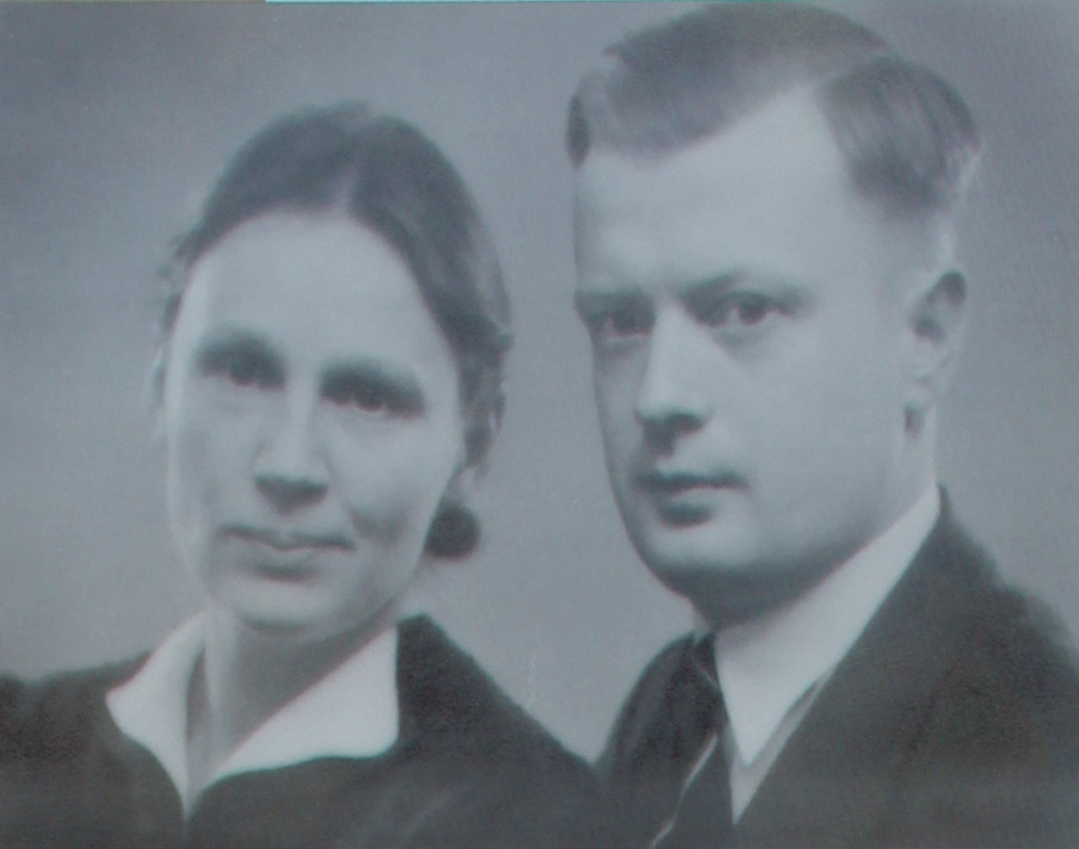
Dorothee und Harald Poelchau. Dorothee Poelchau (born Dorothee Ziegele; June 6, 1902 – November 4, 1977) was a German librarian and a prominent anti-Nazi resistance fighter who worked alongside her husband, Harald Poelchau. PHOTO: “Dorothee und Harald Poelchau (cropped)” by OTFW, Berlin is licensed under CC BY-SA 3.0.
Harald Poelchau (October 5, 1903 – April 29, 1972). Rev. Poelchau gained his doctorate in 1931 under Paul Tillich, the leading representative of Religious Socialism. At the end of 1932, Poelchau applied for a prison chaplain’s post in Berlin and became the first cleric to be employed by the National Socialist regime in a penal institution. As an official in the Justice Department he rapidly became an important source of support for the victims of National Socialist violence, and gave spiritual comfort to hundreds of people sentenced to death as they faced execution. From 1941 onwards he was a member of the circle around Helmuth James Graf von Moltke and attended the first major Kreisau Conference. After the failed coup attempt of July 20, 1944 Poelchau was able to pass on last messages and farewell letters to the relatives of many of those sentenced to death. Harald Poelchau managed to avoid being investigated by the Gestapo and survived the war. Fair use.
Many of Fr. Delp’s Advent writings come during these months in prison. They were smuggled out by Marianne Hapig and, her lifelong friend, Marianne Pünder. For more than a decade, Fr. Delp had written extensively on the Christian season of expectant waiting for the coming of Christmas.
Die gefesselten Hände (English: “Bound Hands”) by Tilman Riemenschneider (c.1460-1531).
During these months in prison, his hands almost always in chains, Fr. Delp had identified with a specific artwork as he wrote his Advent thoughts onto endless slips of paper. It was a sixteenth century German wood sculpture of St. Sebastian known as Die gefesselten Hände (English:“Bound Hands”) by Tilman Riemenschneider (c.1460-1531).
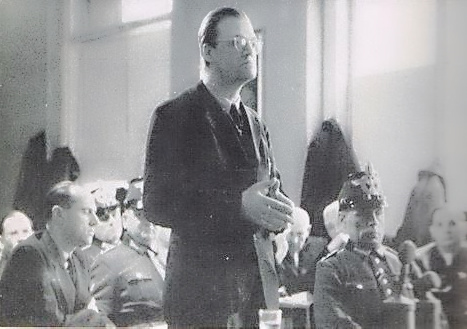
Alfred Delp, S.J. at his trial. Fair use.
At his two-day trial in January 1945, rabid Nazi judge Roland Freisler was interested in one charge against Delp: the priest’s association with von Moltke. The leader of Kreisauer Kreis would be soon on death row and executed on January 23, 1945. Since 1942, Friesler’s reign of terror already included 5,000 death sentences as president of the People’s Court. It did not help that Fr. Delp was a Catholic priest and Jesuit.
So with Hitler, Friesler was maniacally anticlerical. Although many Nazis grew up as Catholics, in adulthood such notorious men as Hitler, Josef Goebbels, Martin Bormann, Heinrich Himmler, and others, held Christianity in utter and complete contempt. (Ian Kershaw; Hitler: a Biography; pp. 381–82). Once in power, Hitler believed that Christianity signified “the systematic cultivation of the human failure” and that its religious organization and central beliefs had to be marginalized and eventually purged from a heroic German worldview (Alan Bullock; Hitler: a Study in Tyranny; p. 218).
When Hitler invaded Poland in September 1939, the Superior-General of the Jesuits was just then a Pole, Wlodimir Ledóchowski, S.J. (1866 –1942). Ledóchowski who was in charge of neutral Vatican Radio made international broadcasts about Nazi wartime atrocities in many languages.
Wlodimir Ledóchowski, S.J. (1866 –1942). Ledóchowski, S.J. (1866 –1942) had been the Polish Superior-General of the Jesuits since 1915 when Hitler invaded Poland on September 1, 1939, setting off World War II. A renowned institutional builder, Ledóchowski established several notable institutes and colleges in Rome. In January 1940, Vatican Radio controlled by the Jesuits and with Pope Pius XII’s authorization broadcast the details of the Polish wartime situation. When the German ambassador protested the German language broadcasts, the Pope honored the request. But Vatican Radio broadcasts in other languages of the Poland situation continued and in even more explicit detail. The British press at the time hailed Vatican Radio as “tortured Poland’s powerful advocate.” see – Peter Hebblethwaite; Paul VI The First Modern Pope, Paulist Press, 1993, p. 140. Fair use.
That Fr. Delp remained a Jesuit—even after he was offered a plea deal by the Nazis to walk free of all charges if he renounced his religious faith—undoubtedly deserved the death penalty in Freisler’s court.
After the death sentence was pronounced on January 11, 1945, the typical procedure of immediate execution was delayed. During this time, the bombing by British and Americans intensified. Fr. Delp desperately hoped that the Allies would arrive in time to set political prisoners, including himself, free. But, finally, on February 2, 1945, at Berlin-Plötzensee Alfred Delp was taken from his holding pen by the Nazi executioner and executed by hanging. The next day, February 3, 1945, Roland Freisler presiding in his People’s Court, was killed by collateral damage in an Allied bombing attack.
Alfred Delp, S.J. Fair use.
From Alfred Delp, S.J., “Meditation for the Third Sunday of Advent Written in Tegel Prison, Berlin, December 1944” (adapted), Advent of the Heart, Ignatius Press, San Francisco, 2006:
“Mankind is challenged again to stand and deliver. Only man does not merely exchange one set of chains for another – God’s calls are always creative. They increase the very reality within us that is called upon – precisely because of their realness and authenticity…Freedom is the breath of life. We sit in musty bomb cellars and cramped prisons and groan under the bursting and destructive blows of fate. We should finally stop giving everything a false glamour and unrealistic value and begin to bear it for what it is – unredeemed life. As soon as we do this, the jangling of chains and the trembling of nerves and the faintness of heart transform themselves into a small prayer – “Drop down, dew…” We should much more definitively unite our concrete destiny with those kind of connections and call upon God’s redeeming freedom. Then the narrowness widens, our lungs breathe in fresh air again, and the horizon has promises again. Existence still weeps and mourns, but already a soft, joyous melody of longing and knowledge is ringing through the mourners’ broken voices. With this knowledge and attitude humanity releases itself from the lonely relationship to things and circumstances. A person finds wholesomeness and healing – not the goal-oriented, cool distance of calculation, mechanization, and organization. It is rather that higher level of freedom, the perspective given to someone looking from the heights to what lies below. The voice of such a person is not so quickly silenced!”
“The conditions for true joy have nothing to do with conditions of our exterior life but consist of humanity’s interior frame of mind and competence, which make it possible now and again for the person to sense, even in adverse circumstances, what life is really about…And the first answer is found in the figure of John the Baptist who personifies Advent. Humanity must be brought to an absolute clarity about himself and honestly before himself and others. He must come down from all the pedestals of arrogance onto which he always climbs…From the high-horses of vanity and self-deception that, for a time, let themselves be trotted out so proudly. Those horses though finally throw off their “master” in the wilderness…Two criteria identify whether we are following an authentic impulse or not…Both are found once again in John the Baptist. The first is service – human honesty requires a person to see himself as a servant and perceive his reality as mission and an assignment…The second criterion keeps us on track- annunciation, which calls us to praise of God. An extended personal effort is required to keep giving oneself the impulse to rise above, move away from self. But at the same time this is how a human being attains the necessary openness in which he or she must continue if sincerely wanting to strive toward the great realities God has prepared for him or her.”
FOURTH SUNDAY IN ADVENT.
Advent Nativity awaiting the birth of Jesus. Author’s photograph.
Thomas Merton makes clear about Father Delp that his writings on Advent are usually a simple presentation of the traditional Christian faith with no special originality to his images. (p. xxxv, Prison Writings). It is Fr. Delp’s application of those facts based in his personal experience – as an active dissident and prisoner of a Germany in ruins during World War II – that restores the sometimes hackneyed outcome to Advent to its original hope.
In Fr. Delp’s world, if humanity is fully alert to the desperation and bitterness of the times, Advent’s basic image of God-made-man becomes immensely opportune and favorable for humanity’s future although not holding any foregone conclusions or sudden outcomes.
“The Spirit of the Lord is upon me, because he has anointed me to bring glad tidings to the poor. He has sent me to proclaim liberty to captives and recovery of sight to the blind, to let the oppressed go free, and to proclaim a year acceptable to the Lord.” Luke 4:18-19.
Thomas Merton views Father Delp’s Advent meditations in Pauline terms, although Fr. Delp found St. Paul sometimes had a ‘tendency to over-emphasize.’ (p. 55, ibid.). Humanity hopes in God’s close alliance so to win back or have restored a future that is not any longer in ruins and in which humanity and even created life itself is absurdly helpless to fix.
Holy Face painted by Saint Thérèse of Lisieux. National Shrine of St. Thérèse in Darien, Illinois. Author’s photograph.
Saint Thérèse of Lisieux (French, 1873-1897) traced and painted this image of the Holy Face of Jesus and tacked it to wool for hanging as a gift to her sister Céline who was at home at Les Buissonnets taking care of their widower father who was suffering from illness. The National Shrine of St. Thérèse in Darien, Illinois. It may be expected that a similar sort of facial expression was found on Father Delp. On February 2, 1945 Father Delp was imprisoned, tried and executed by the Nazis for “hop[ing] to build a new Germany on Christian principles.”
Alfred Delp S.J. Fair use.
From Alfred Delp S.J., Prison Writings, Orbis Books, Maryknoll, New York, 2004:
“God in the Christmas encounter is still the challenging God. The greatest misconceptions all center round the typical Christmas picture of God. Humanity becomes so wrapped up in appearance that the breathtaking reality of the birth of God as a human child scarcely enters our mind and the soul doesn’t grasp its significance….Of course the externals, the sweet sentimental pictures, carols, cribs and so on, are a comfort….but there is a great deal more to the nativity than that. The truth of it is too tremendous to be appreciated unless one concentrates on it fully. Since the birth of God, humanity has been confirmed in the hope that when we turn to God’s throne for favor that God is on our side. This does not mean that God has dethroned Himself any more than it means that human life has become a primrose path in the wake of that stupendous event. We need to look critically at the tendency to sentimentalize the divine attributes by personifying them in an innocent child or over-beautifying the adult Jesus. The glamorizing of the nativity story – the making the whole tone of Christ’s life equal to a Baroque sermon full of ominous warnings and grave moralizing – has contributed quite a lot to the West’s being paralyzed in the face of those conditions that hinder us and keep us trapped. God became man but nevertheless is God, master of all creation. Human beings must approach the God-made-man with reverence and adoration – disenthralling themselves in order to find themselves. It is the only way.”