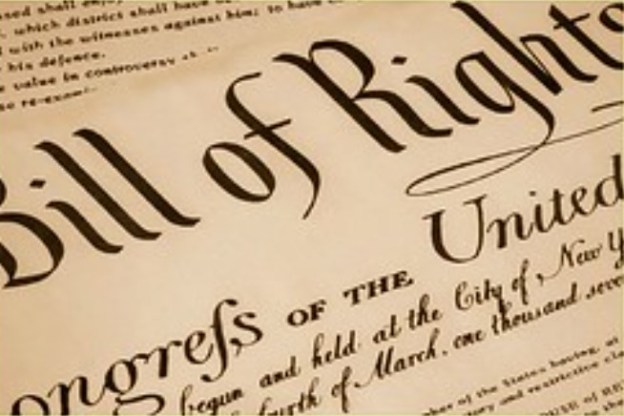
FEATURE Image: “bill of rights day tribute” by Demetrios Georgalas aka brexians is licensed under CC BY-NC-SA 2.0.

On November 5, 1963, President John F. Kennedy reminded his fellow Americans of the detailed guarantees of individual liberty found in the Bill of Rights that “perhaps we take for granted but which we are guaranteed in the United States Constitution…” “President John F. Kennedy” by U.S. Embassy New Delhi is licensed under CC BY-ND 2.0.
In a letter dated September 24, 1963, Lawrence Speiser (1923-1991), Director of the Washington D.C. Office of the American Civil Liberties Union (ACLU) expressed his encouragement and support to the idea of the President of The United States addressing the nation in that auspicious time and place to commemorate that year’s U.S. Bill of Rights week. The Bill of Rights are the first ten amendments to the U.S. Constitution that were created on September 25, 1789 and ratified by the states on December 15, 1791. As the president listed in his remarks, they guarantee individual rights and liberties to every citizen including “freedom of speech, freedom of religion, freedom of the press, the right of assembly and petition, the right of trial by jury, the right to be secure in one’s own home, the protection of due process of law and private property and public trials, and many other things…” President Kennedy agreed to make a two-minute movie trailer for national showing on television and in theaters during “Bill of Rights Week” to be held that year from December 15 to 21.
In his letter, the ACLU Director in Washington, D.C. acknowledged the important relevance of the Bill of Rights in his day as it was when originally written and adopted. Just months since President Kennedy’s June 11, 1963 Civil Rights speech to the nation (https://www.jfklibrary.org/learn/about-jfk/historic-speeches/televised-address-to-the-nation-on-civil-rights – retrieved October 26, 2024) which advocated a fundamental support of the civil rights movement for Black Americans, and less than one month since the March on Washington and Martin Luther King Jr.’s “I Have A Dream” speech delivered from the steps of the Lincoln Memorial in the National Mall, ACLU Director Speiser pointed out to Kennedy’s Press Secretary in his letter the significance of the Bill of Rights to these actions: “Certainly the entire civil rights movement today for fair and equal treatment for Negroes has demonstrated the importance of basic freedoms of speech, press, religion and assembly as well as due process of law in attaining that ideal. The August 28th “March on Washington” was a massive demonstration in the time-honored tradition of a peaceable assembly to petition the government for a redress of grievance.”
On November 5, 1963, President John F. Kennedy recorded a short speech for Bill of Rights Day, which is celebrated on December 15. The speech was filmed at the request of the Council of Motion Picture Organizations and was distributed to theaters across the country.
President Kennedy’s remarks from the Oval Office were filmed on November 5, 1963. They were to be broadcast nationwide in December 1963. A little over two weeks after Kennedy made these remarks, the 46-year-old president was assassinated in Dallas, Texas. In President Kennedy’s remarks on Bill of Rights Day he related the history of how the document came to be created and formed: “After the Constitution was written it was felt that while this was an extraordinary document it did not provide the kind of guarantees for our individual liberties that a free country required. Therefore, under the leadership of James Madison, the first 10 amendments were adopted to the Constitution. We call them the Bill of Rights.“
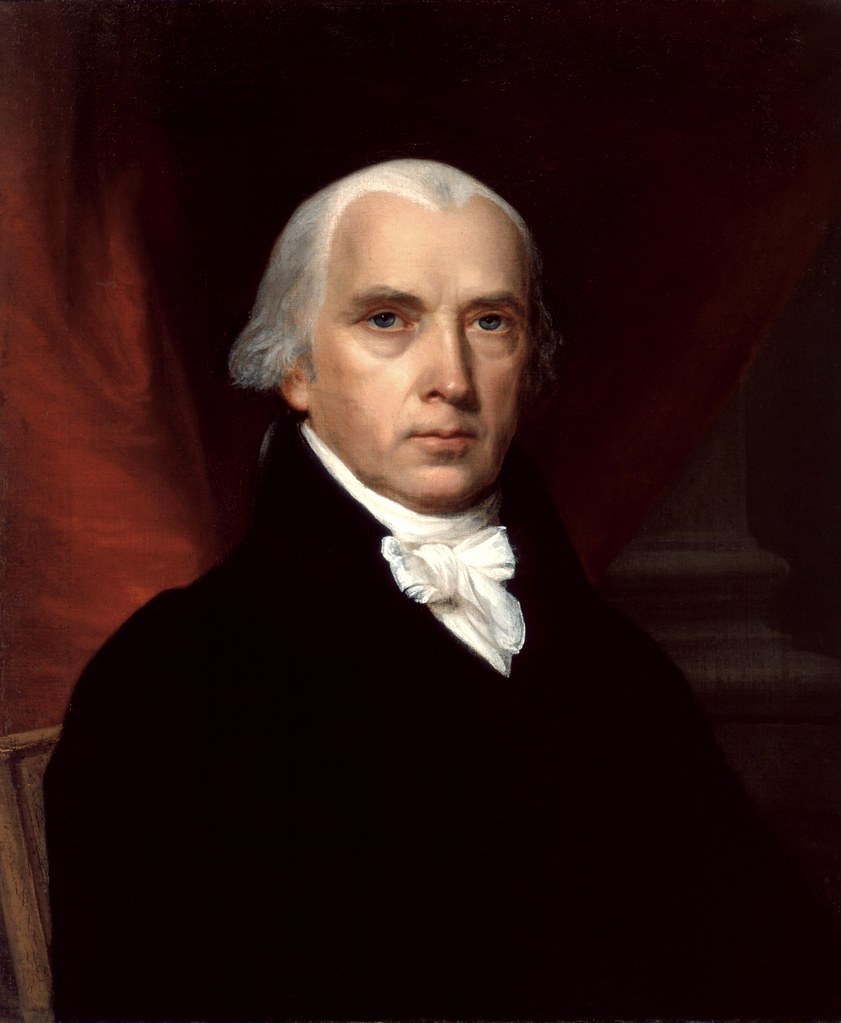
James Madison (1751-1836), who became the 4th president of the U.S. for two terms starting in 1808, introduced the Bill of Rights on June 8, 1789. His amendments contained numerous restrictions on the federal government and would protect, among other things, freedom of religion, freedom of speech, and the right to peaceful assembly. While most of his proposed amendments were drawn from the ratifying conventions, Madison was largely responsible for proposals to guarantee freedom of the press, protect property from government seizure, and ensure jury trials. President John F. Kennedy, 35th president of the United States, cited Madison in his remarks to the nation on November 5, 1963. “4 James Madison” by US Department of State is marked with Public Domain Mark 1.0.
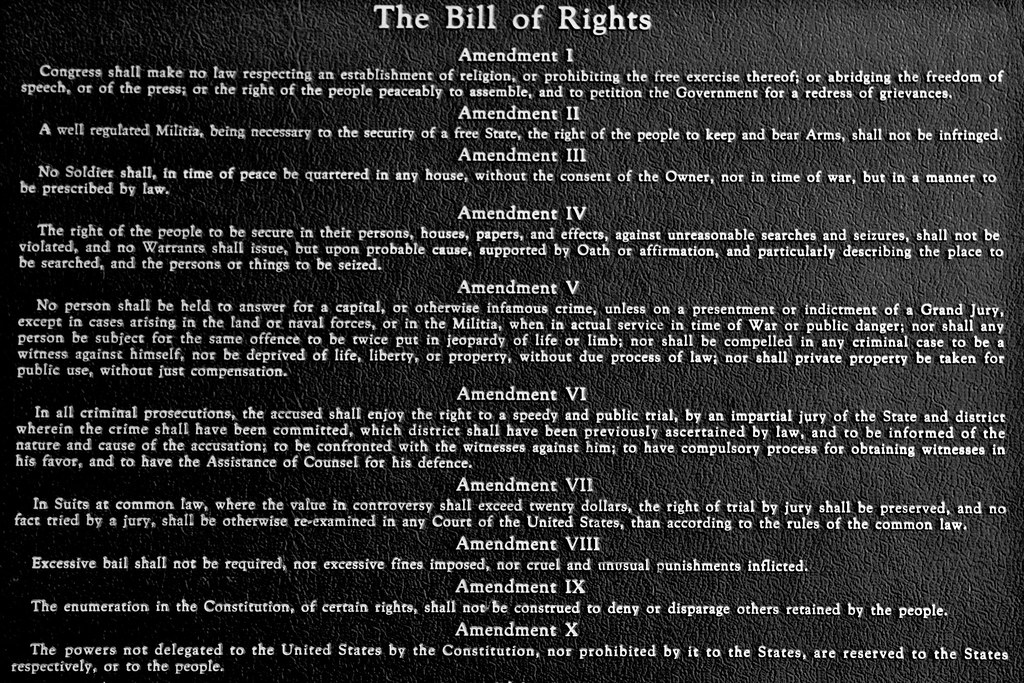
The U.S. Bill of Rights comprises the first ten amendments to the U.S. Constitution adopted in 1791. The Bill of Rights specifically adds to the Constitution specific and detailed guarantees of personal freedoms and rights, clear limitations on the government’s power in judicial and other proceedings, and explicit declarations that all powers not specifically granted to the federal government by the Constitution are reserved to the states or the people. “The Bill of Rights” by eugevon is licensed under CC BY-SA 2.0.
President Kennedy pointed to the document’s profound meaning and relevance in the life of the nation – “We, The People.” Despite, or because of, the many struggles in the nation’s history, the Bill of Rights had proved vital and inseparable to the people in America – and mankind – in their guarantee of the sort of life its citizens seek to live and lead. “My fellow American citizens,” Kennedy said, “…They are the most extraordinary and detailed guarantees of individual liberty that any people on earth now possess. Because of the Bill of Rights, we are guaranteed freedom of speech, freedom of religion, freedom of the press, the right of assembly and petition, the right of trial by jury, the right to be secure in one’s own home, the protection of due process of law and private property and public trials, and many other things that perhaps we take for granted but which we are guaranteed in the United States Constitution…”
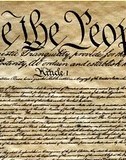
“bill of rights day tribute” by Demetrios Georgalas aka brexians is licensed under CC BY-NC-SA 2.0.