
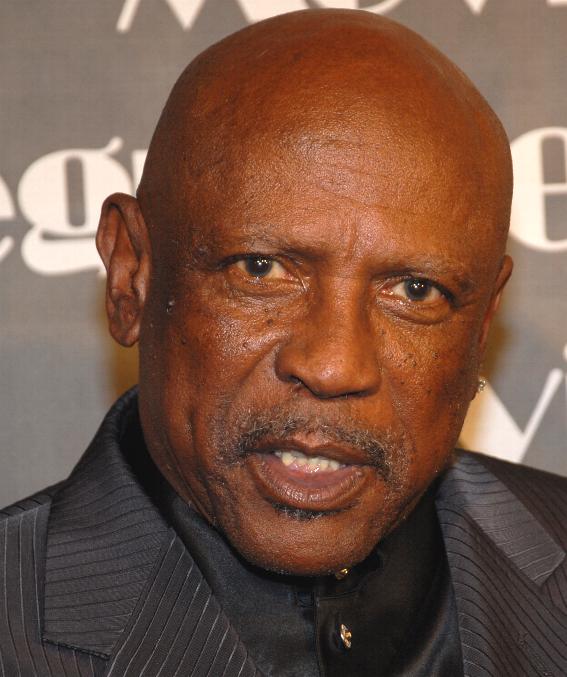

FEATURE image: Louis Gossett, Jr. (1936-2024). “File:Louis Gossett Jr LF.JPG” by Credit to lukeford.net (permission statement at en:User:Tabercil/Luke Ford permission) is licensed under CC BY-SA 2.5.
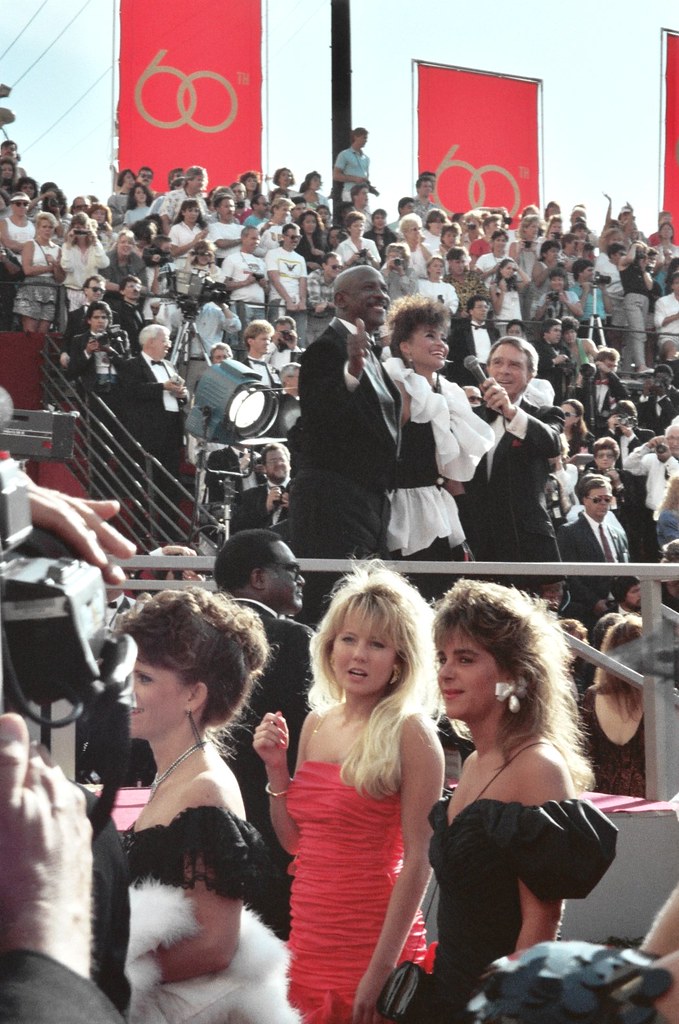
“Lou Gossett Jr” by Alan Light is licensed under CC BY 2.0.
Louis Gossett Jr. at the 60th Academy Awards in 1987 — a moment that captured the authority and ease of a man who had already carved out one of the most decorated careers in American entertainment.
In a stage, film, and television journey that stretched across generations, Gossett made his Broadway debut at 17 and never stopped ascending. Over the decades he collected dozens of Best Actor and Supporting Actor honors, including his historic 1983 Academy Award, along with Golden Globes, Primetime and Daytime Emmys, and multiple NAACP Image Awards. He wasn’t just successful — he was a trailblazer who widened the path for those who followed.
Louis Gossett Jr. died on March 29, 2024, at a rehabilitation center in Santa Monica, California. He was 87.
Released in July 1982, An Officer and a Gentleman landed like a jolt. The 1982 Paramount summer powerhouse directed by Taylor Hackford tracks 13 bruising weeks of aviation officer candidate training under Gunnery Sergeant Emil Foley’s unrelenting command — a crucible designed to strip away candidate ego, expose character, and forge discipline.
At the center is brash aviation officer candidate Zack Mayo (Richard Gere), a young man who enlists in the all-volunteer U.S. armed forces — a system only nine years old at the time. Mayo has the physical and mental chops, but his hustler instincts get the better of him: he’s caught selling polished shoes and buckles to other candidates during inspection. It’s just the first crack in his armor of ego.
U.S. Marine Gunnery Sergeant Emil Foley: “Mayo I want you DOR.(Drop On Request).” Aviation Officer Candidate Zack Mayo: “No Sir. You can kick me out of here but I ain’t quittin’.”
Enter Sergeant Foley (Louis Gossett Jr., in an Oscar‑winning role), the hardest man on the base — a drill instructor who locks onto “Mayonnaise” (Foley’s nickname for Zack) and refuses to let him skate by on ego. Foley’s mandate is blunt and uncompromising: break Mayo down, teach him esprit de corps, and rebuild him into someone worthy of the uniform.
An Officer and a Gentleman became Paramount’s biggest hit that year. It earned $190 million at the box office, over 30 times its $6 million production costs. Audiences responded to its classic architecture: a diverse, believable ensemble; high‑stakes group and individual training sequences; friendships forged under pressure; and a tender romance between Mayo and Paula (Debra Winger), a factory worker and townie with a quiet resilience.
And then there’s the ending — triumphant, cathartic, and instantly iconic.
In the penultimate scene Sgt. Foley’s graduating class lines up to thank the gunnery sergeant who pushed them to the limit.
The grind of classroom drills and field exercises quickly gives way to a deeper contest inside each candidate — strength against insecurity, ambition against fear, and the fragile pull of camaraderie against the urge to walk away. No one carries that tension more visibly than Zack Mayo (Richard Gere), whose swagger masks a lifetime of emotional armor. While Foley’s task is to strip that armor and force a reckoning, the story’s power comes from watching whether Mayo can rebuild himself into someone who can meet that new standard rather than collapse under it.
In the film’s penultimate scene Foley’s graduating class lines up to thank the gunnery sergeant who pushed them to the limit. When Ensign Mayo — the officer candidate most transformed by Foley’s brutal, exacting training — steps forward, he offers his Navy challenge coin. Foley pockets it separately from the others, recognizing it as a symbol of uncommon achievement and hard‑won purpose. Zack Mayo tells Sgt. Foley, “I won’t ever forget you, Sergeant. I wouldn’t have made this if it weren’t for you.” To which Foley responds: “I know. Get the hell out of here.”
While the ingredients weren’t new, the finale of An Officer and a Gentleman refined them into a crowd‑pleasing template that shaped 1980s and 1990s pop culture, cementing the image of the uniformed hero sweeping his love away from the factory floor.
Jack Nitzsche’s career peaked in 1983 when the Chicago‑born composer won both the Academy Award and the BAFTA for Best Original Song for co‑writing “Up Where We Belong” with Buffy Sainte‑Marie (lyrics by Will Jennings). Powered by that anthem and his sweeping main theme, Nitzsche also earned Oscar and BAFTA nominations for Best Original Score.
The song is inseparable from the film’s legendary finale: Zack Mayo (Richard Gere), newly minted as a Naval Aviator, strides into Paula’s (Debra Winger) paper factory in his dress whites, lifts her into his arms, and carries her out as her co‑workers, mouths agape at the what they are seeing, quickly erupt in cheers. It’s a fairy‑tale rescue staged on a factory floor — a “knight in shining armor” moment that resolves two people both of whom were from the wrong‑side‑of‑the‑tracks renewing themselves in their romance with triumphant clarity.
The emotional voltage of the scene is reinforced by Joe Cocker and Jennifer Warnes’ soaring performance of “Up Where We Belong,” which turns the moment into pure catharsis. Ironically, Richard Gere initially pushed back on this scene, calling the ending too sentimental for such a gritty film, but director Taylor Hackford insisted — and created one of the most iconic romantic conclusions in movie history.
From his turn as Will Reeves/Hooded Justice in HBO’s Watchmen (2019) to major film roles in The Color Purple (2023) and his Oscar‑winning performance as Gunnery Sergeant Emil Foley in An Officer and a Gentleman (1982), Louis Gossett Jr. built a career defined by range, authority, and trailblazing impact.
SOURCES:
https://customchallengecoins.net/the-rich-history-and-meaning-behind-navy-challenge-coins/ – retrieved March 30, 2024.


