John P. Walsh is an art historian, writer and photographer. He has an M.A. in Modern Art History, Theory and Criticism from The School of the Art Institute of Chicago and taught Modern Art History at Northwestern University.
Follow his work @ http://johnpwalshblog.com/
Pinterest @ http://www.pinterest.com/lang52tr/
Facebook @ https://www.facebook.com/john.p.walshiii.
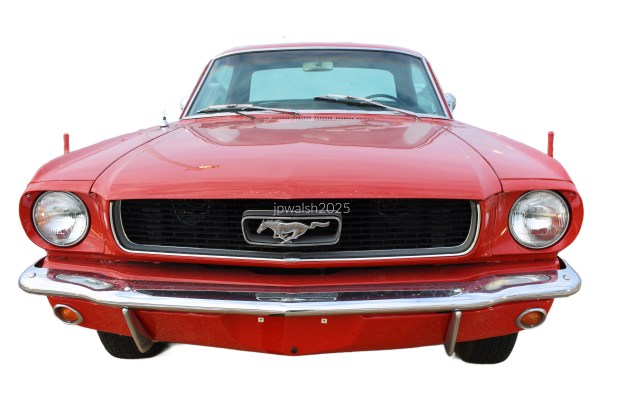
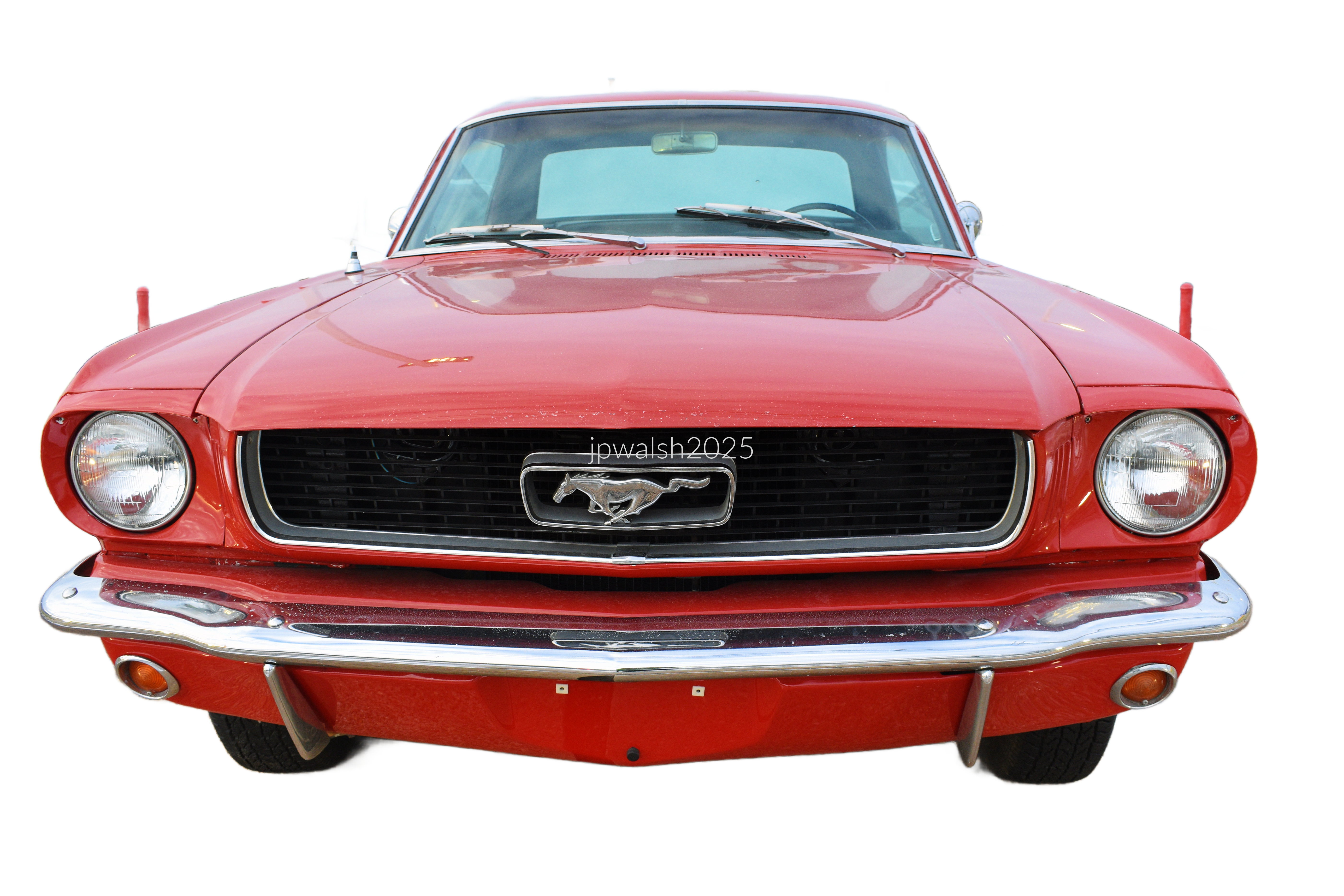
FEATURE Image: For the FORD MUSTANG in 1966 the only changes in its second model year was a new front grille, redesigned side emblems and a few trim modifications.
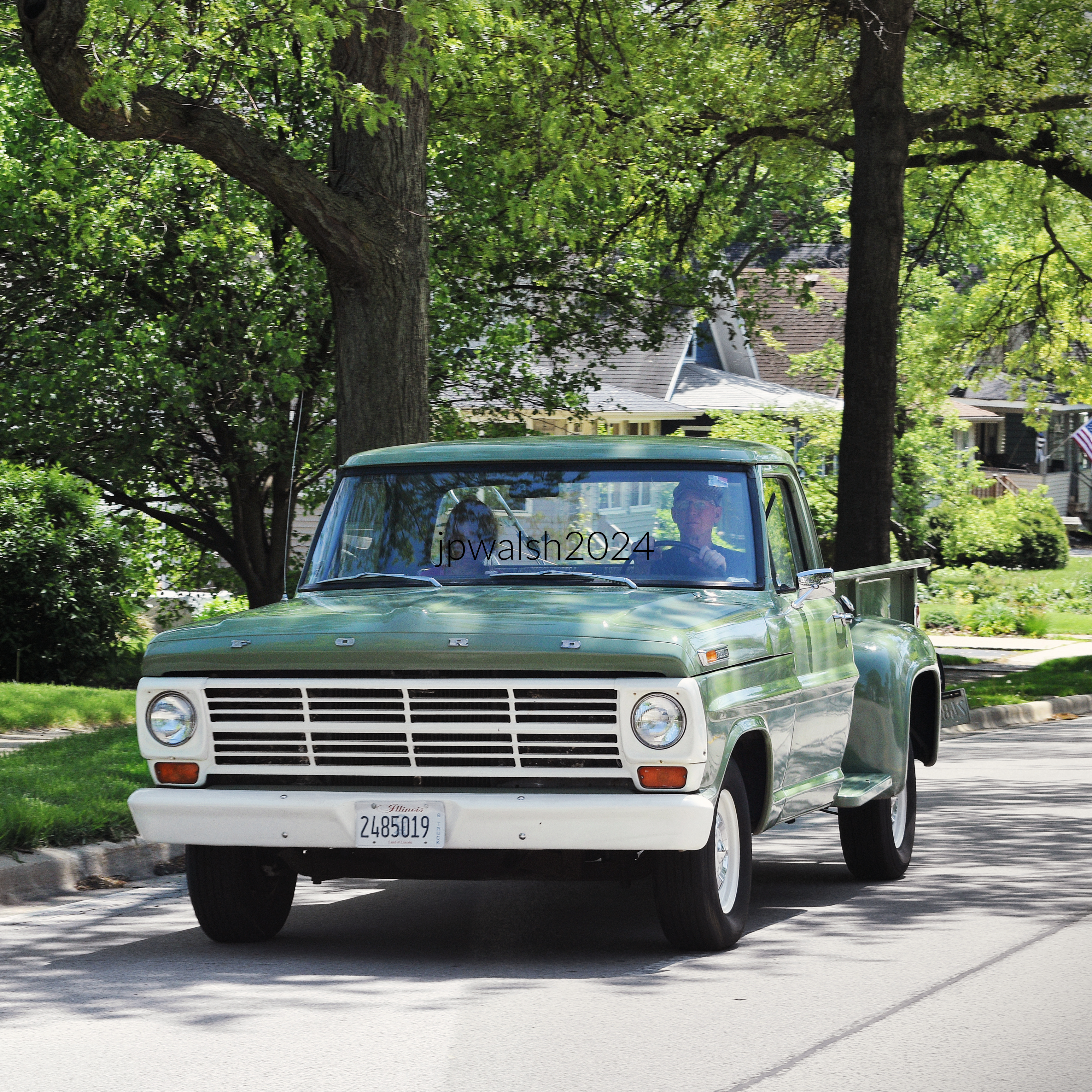
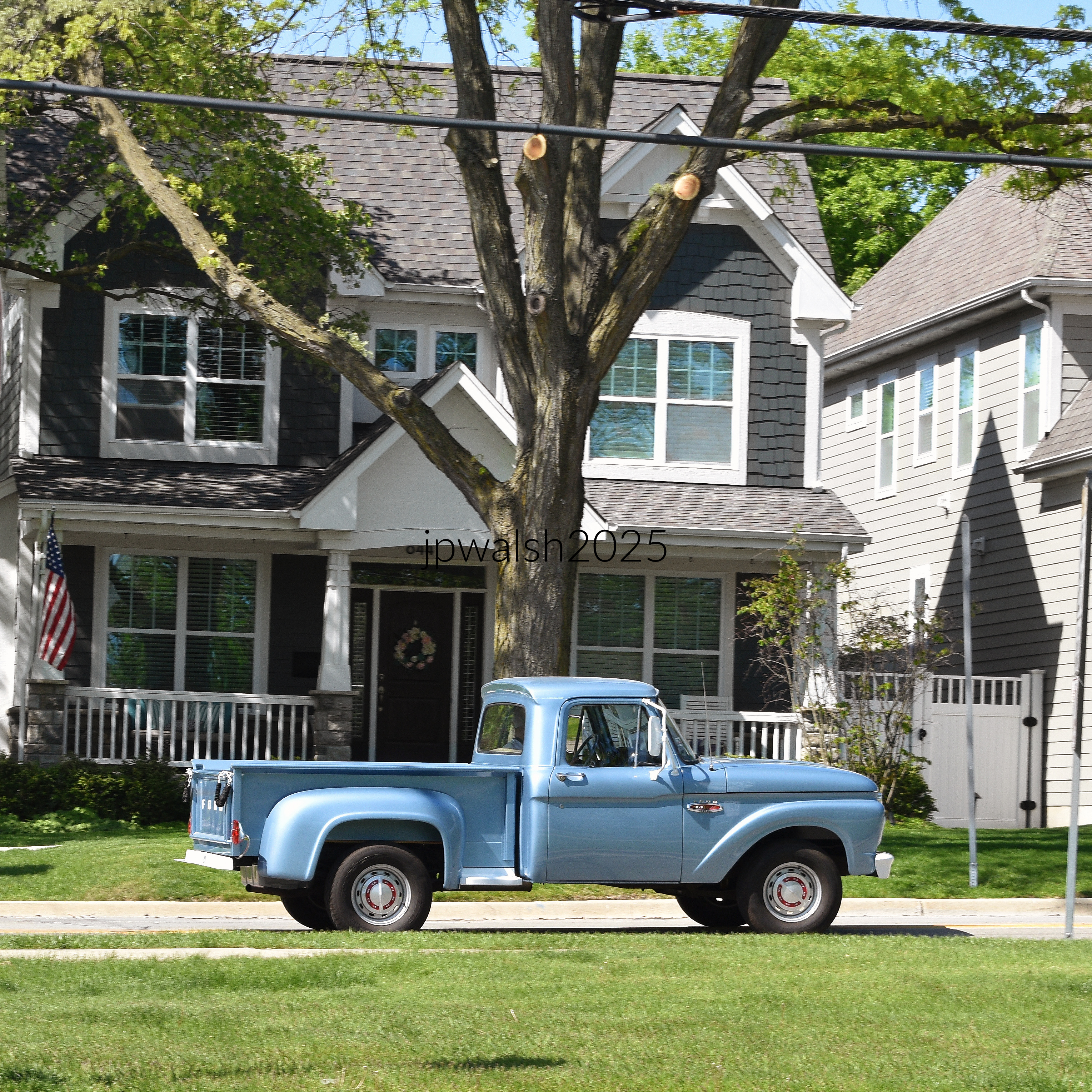
May 2024. 1967 Ford F-250. 5.75 mbJune 2017. 1984(?) Ford F-150. 6.71 mb The F-150 started in 1975 as a truck model between the F-100 and F-250 (there was also the F-350). By 1976 it quickly became America’s favorite truck. In towns across America even today, Ford trucks from the 1950s era still work alongside today’s newest models. In 1983, F-100 production ended. In addition to work loads, the F-150 offered an additional new focus on lifestyle and comfort. Starting in the 1980s, Ford truck customers could select custom paint packages and, for the first time, the blue-oval Ford emblem was affixed on the front grille.August 2021. 2017(?) Ford F-150, 7.99mb 97% The 2021 Ford F-150 ‘s solid performance and durability have few competitors in the modern truck market and is one of the most popular trucks. The XL is a more budget-friendly option compared to the XLT. The XL’s basic engine is the same as the XLT — 3.3L Ti-VCT V6, 290 hp, and 265 lb-ft of torque. The F-150 XL offers first-rate amenities and excellent performance making for an incredible value.June 2023. 1970 Ford F-100 Ranger XLT 7.89mb 93% The F-100 and F-250 came in Styleside or Flareside although the Ranger XLT model was available in Styleside only. The combination two-tone option had the Regular Two-Tone (roof only) and the Deluxe where the lower body side and tailgate moldings were part of the paint option. January 2025. Ford F-350 truck. 74% 7.76mb 6151 (1)July 2023. 2003 Ford Ranger XLT 7.39mb 75%May 2023. 1965 Ford F-100. 7.70 mb 87%May 2025. 1964 Ford F-100. 5.71mb DSC_0002 (1)
FORD Expedition
June 1918. Ford Expedition (1997-present).7.88 mb 81% The Ford Expedition was the first full-size Ford SUV sold with a four-door body introduced for the 1997 model year as the successor of the Ford Bronco. The Bronco was introduced in 1966 and discontinued after five generations in 1996 (a sixth generation of the Bronco was introduced in 2021). Since 1996, the Ford Expedition, which is sold in regular and extended lengths, has shared some body parts and mechanical components with the Ford F-150, the car market’s favorite truck. Like the F-150, the Ford Expedition is known as being one of the longest-lasting vehicles on the road with many vehicles with over 200,000 miles on the odometer.
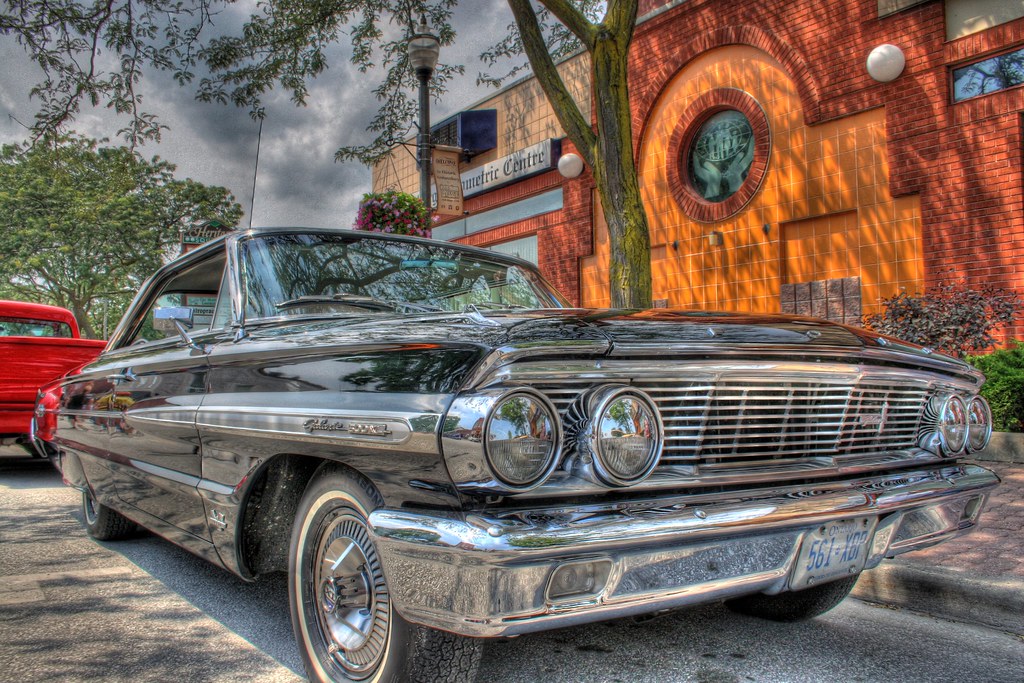
The ad tag line for the Galaxie in 1960 was: ”Meet the aristocrats of the low-priced field.” In 1960 Robert McNamara was the new president of Ford Motor Company and he was an executive who in his career at Ford, thought like and fought for the consumer. Unlike other car industry execs he was passionate about providing a utilitarian car for the masses, a highly affordable and great car for the common man or woman. He was ahead of his time and might actually have been more useful or successful a decade and half later with the introduction of emissions standards and fuel economy where design and weight had to be taken into account to meet government mandates leading to the expensive boxes they build today. The Falcon, McNamara’s baby, at the average price point of $2100 (about $23,000 today) fulfilled McNamara’s vision and became America’s bestseller. The middling Ford Fairlane had an average base MSRP of less than $2300. The Ford Galaxie was next up the lower priced chain at a little over $2,700 MSRP ($29,500 today). In addition to a shiny nameplate, Galaxie included cloth/vinyl bench seating, chrome exterior trim on all windows and body sides and an aluminum rear quarter covering with upgrades available. Under McNamara, Ford took a heavy risk in 1960 when it introduced a totally revamped design on its bestseller compact Falcon as well as its line of full-sized cars. Fords were lighter and sleeker, with a body no longer sculpted but molded from fender to bumper trimmed in chrome. And for the first time in Ford history the full width grill had its headlights inset at each end instead of above. This design choice continued throughout Galaxie’s second generation into 1964. By 1974, things were very much changed. The Mustang II was that year’s Motor Trend Car of the Year – and it was Galaxie’s last model year. The Galaxie had essentially been co-opted by what started in 1965 as its highest trim level: namely Ford LTD. Strictly Galaxie production had in fact fallen from its peak in 1963 of nearly 650,000 vehicles to under 120,000 in 1974. see – J. “Kelly” Flory, Jr., American Cars, 1960 to 1965, McFarland & Company, Inc. pps. 41-45; J. “Kelly” Flory, Jr., American Cars, 1973 to1980, McFarland & Company, Inc. pps. 178-179.
FORD Thunderbird
June 2023. 1964 Ford T-bird 7.35mb (70) 1964 Ford Thunderbird Convertible with chrome headlights, grill, and bumper along with the Thunderbird hood script. The car is finished in “Rangoon Red” with black vinyl upholstery. Particular Thunderbirds were powered by a 390ci V8 engine joined with Ford’s 3-speed “Cruise-O-Matic” auto transmission. There are bucket seats upfront. The Ford T-bird was produced across 11 generations between 1955 to 1997 and 2002 to 2005. Originally produced as an upscale 2 seater it was expanded in 1958 with a rear seat and became a personal luxury car that after 1968 was often rebadged by Lincoln-Mercury. September 2023.1964 Thunderbird. 92,456 Thunderbird’s were produced in 1964. 7.66 mb 78%March 2024. 1964 Thunderbird 87% 7.67mbJuly 2025. 1960 Ford 2-door hardtop T-bird. The year 1960 was the first year that American manufacturers produced compact cars to counter the popularity of the VW Beetle and other European and Japanese brands. Though Ford had its Falcon and slightly larger and better trimmed Comet, the move to the compact arena would never be the Ford Thunderbird’s route. In 1960 Ford pushed aside the boxy upright models of the late 1950’s for an overall lighter and sleeker appearance although the current body style of the Ford Thunderbird continued from 1958. This was the second generation of T-Bird and followed by its third generation in 1961. As a personal luxury car, the term Ford used, the Thunderbird was of a car category all its own. What started as a two-seater in 1955, the Thunderbird added a backseat in 1958 as the model became successively larger with each generation over the next 19 years. The car only had its first downsize in the seventh generation in 1977. In 1960 the 2-door Thunderbird’s taillights and side trim were among its notable changes from 1959. The base price of a hardtop was $3755 ($41000 today) – but you couldn’t buy that today – with the convertible costing about 10% more.See – American Cars,1960 to 1965, J Kelly Flory Jr. , 2023. pp. 41 and 45. 83% 7.80 mb DSC_9180
FORD Mustang
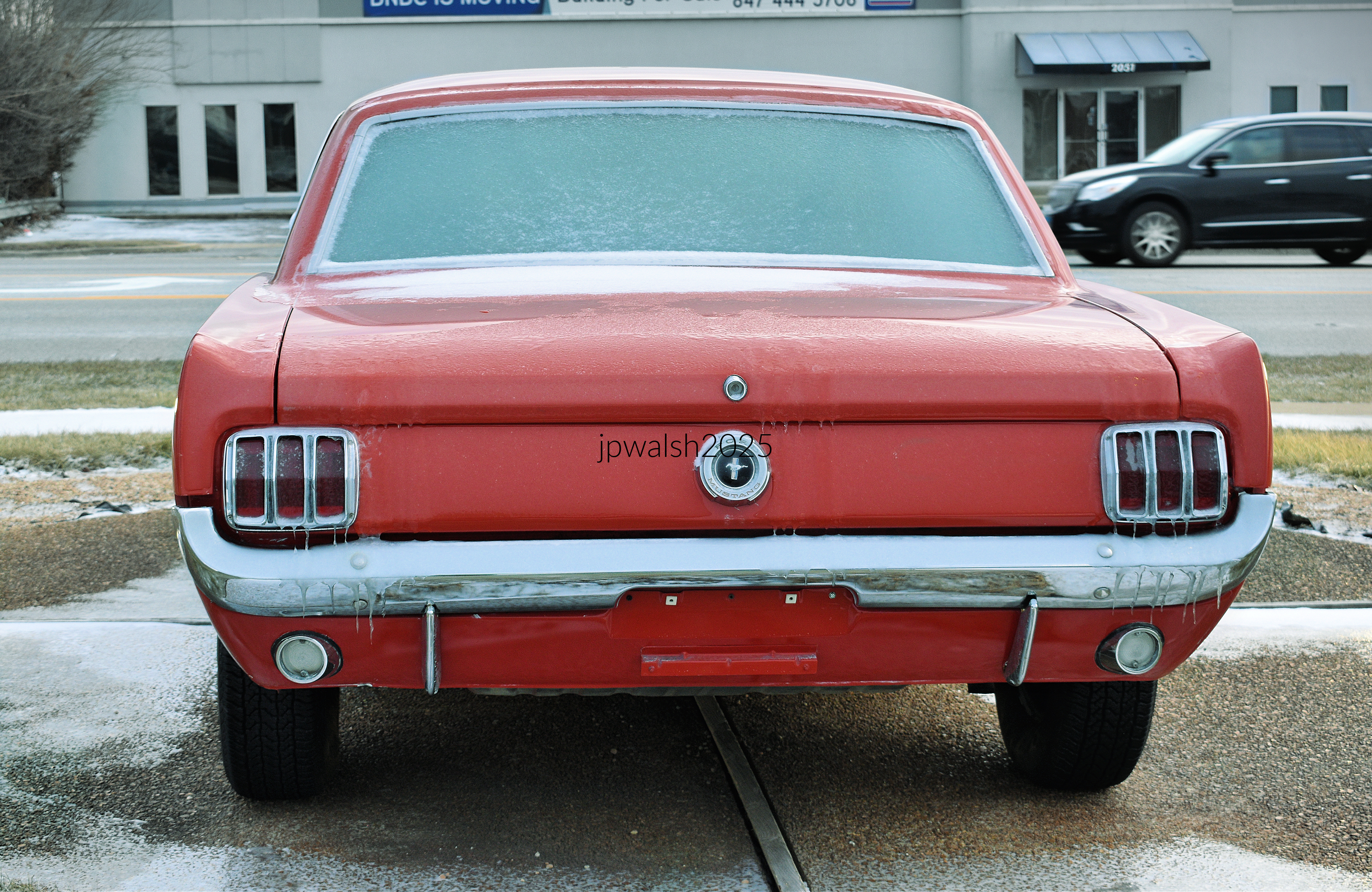
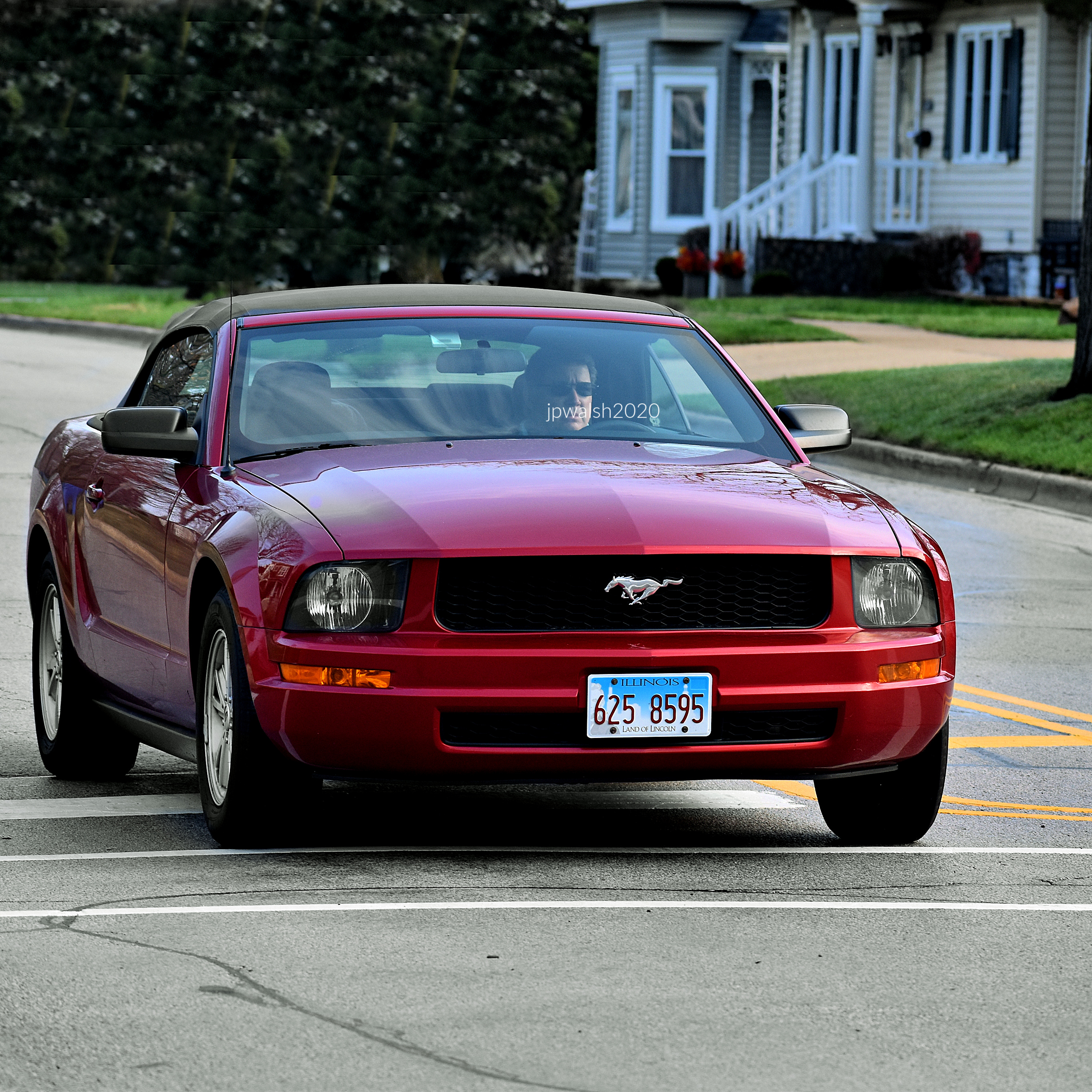
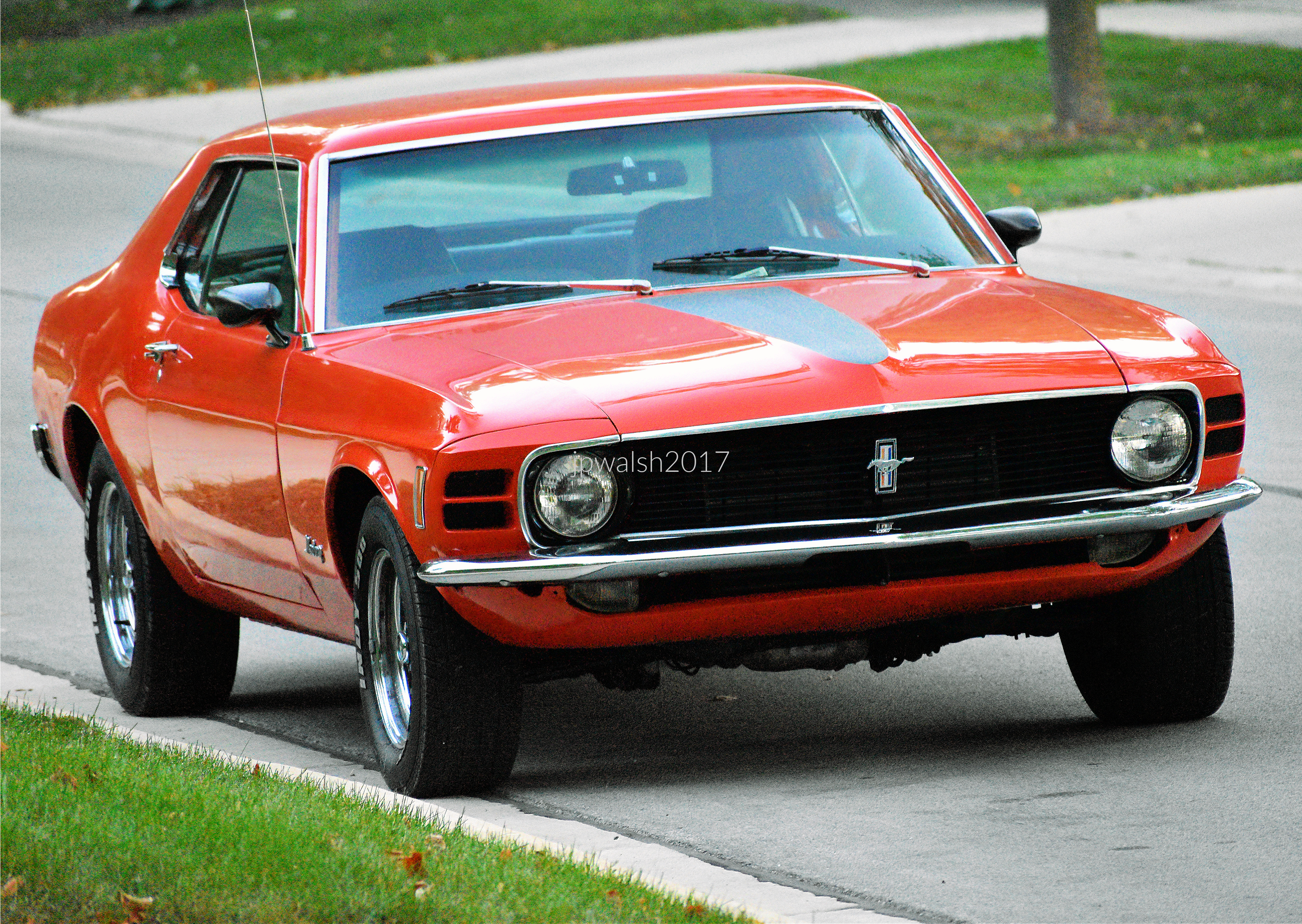
June 2023. 1965 Ford Mustang. 7.78 mb 88%September 2023. 1970 Ford Mustang. 6/2023 6.32mb January 2025. The only changes for the 1966 Ford Mustang was its new front grille, redesigned side emblems and various trim modifications. The average price was $2,560 ($25,200 in 2025 dollars). 4.19mb DSC_6136 (1)January 2025. In 1966 Ford was the largest car manufacturer in the nation. The 1966 Ford Mustang Coupe is an example of a mid-60’s pony car that changed the American automotive landscape forever. Starting in 2024 the Mustang is in its 7th generation. The first-generation Ford Mustang was manufactured from March 1964 until 1973 with modifications. 99% 6.64 mb_6134January 2025. Back end of 1966 Ford Mustang Coupe. Developed by Donald N. Frey (1923-2010) and styled by L. David Ash (d. 1991), along with Lee Iacocca (1924-2019) and others, the Mustang used chassis, suspension, and drivetrain components derived from the Ford Falcon and Fairlane to save costs. 83% 7.82mb DSC_6133May 2022. (2008?) Ford Mustang GT 5/2022 7.60 mb 99%April 2020. 2008(?) Ford Mustang. 3.38 mb August 2017. 1970 Ford Mustang. It was the final model year for the horsepower race in the American auto industry. From 1971 onwards engines were required to run on unleaded fuel with more strict emissions that both reduced output. Ford, the second largest car manufacturer by volume, had made a lot of changes to its products in 1970. This included to the Mustang which received a facelift such as new headlamps and parking lights. For the first time since 1964 the original side scoop was eliminated in 1970. The average price for Mustangs was just over $3000 ($25,000 in 2025). 68% 7.68 mb DSC_1965September 2022. 1970 Mustang Mach 1. 7.95 mb 93%June 2023. 2014 Ford Mustang GT. 7.92 mb 79%
FORD Fairlane
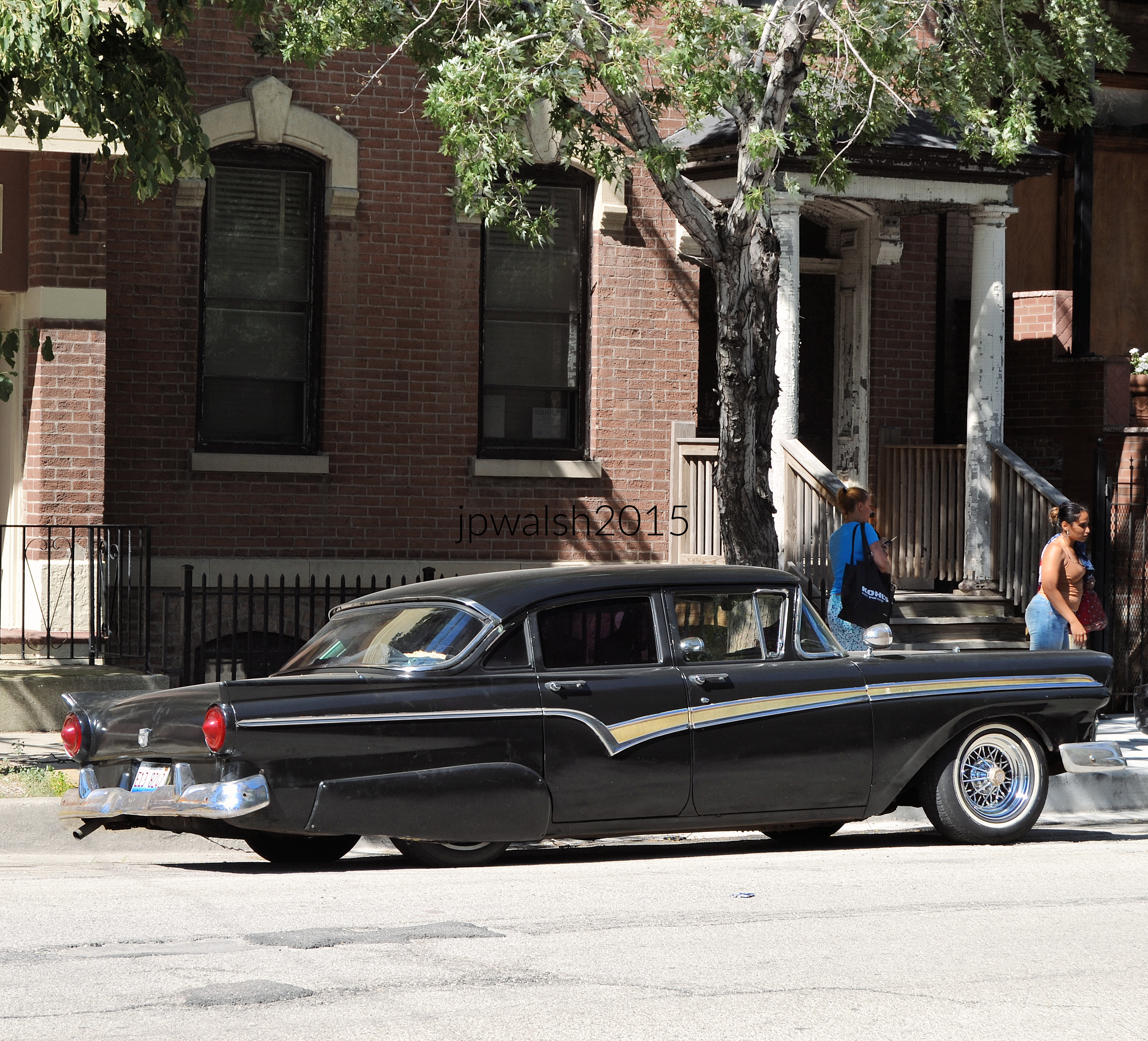
July 2015. 1957 Ford Fairlane 4.28mb_0949 (1)
MERCURYComet
May 2024.1964 Mercury Comet. In 1964 Chevrolet and Ford were the largest car manufacturers (about 4 million units combined). Mercury, a smaller middling car producer (303,000 units) had been in business 25 years in 1964. The Comet, introduced in 1960, had a brand-new look in 1964. The Comet’s more powerful engine, grill and lines gave it an expensive pseudo-muscle car look. The average price was $2415 ($23,800 in 2025 dollars). 99% 7.77mb
MERCURY Grand Marquis
May 2018. The 1989 Mercury Grand Marquis. The Grand Marquis was the top of the model line produced in four generations from 1975 until 2011. It was assembled in Missouri until 1985 and then in Canada. From 1988, the Grand Marquis was available only as a four-door sedan. After the Mercury Cougar, the Grand Marquis was the second-best-selling Mercury (2.7 million units) and, with 36 years in production, the longest-running Mercury nameplate. First stand-alone generation (1979–1991), Second generation (1992–1997), Third generation (1998–2002), Fourth generation (2003–2011). 73% 7.78mb DSC_7179.
PONTIAC Solstice
September 2023. 2008 Pontiac Solstice. 7.83 mb 87%. Concept car 2002. Production started in 2005 for 2006 model year. In the first year, Pontiac produced 10,000 cars that did not meet the unexpected orders demand. Due to the 2008 economic recession, GM discontinued the Pontiac division, a venerable American automobile brand founded in 1926. The last model year for the Pontiac Solstice was 2010. The car can do zero to 60 m.p.h in under 6 seconds.
PONTIAC Tempest
May 2023 1967 Pontiac Tempest. 7.57 mb 99%1967 Pontiac Tempest interior. 7.37 mb 95% The Pontiac Tempest was produced from 1960 to 1970 and from 1987 to 1991. The line offered the LeMans trim upgrade. By 1964 the Tempest, Tempest Custom, and LeMans were separate trim packages with, in 1964 and 1965, the GTO performance option upgrade available to the LeMans trim package. Beginning in 1966 the GTO was offered as a separate model line. There have been four generations of Pontiac Tempest, the 1967 model year the last of the second generation.
PONTIAC Grand Prix
July 2022. 1962 Pontiac Grand Prix 2-Door Hardtop (coupe). 7.93mb 80% The Pontiac Grand Prix from GM was an all-new model in the 1962 model year. The performance-oriented coupe went through 4 generations until it was discontinued 40 years later in 2002. It was succeeded by the fifth generation Pontiac GTO. There was a much later sedan version of the Pontiac Grand Prix that was launched in 1988 and produced through 2008 after which that year GM discontinued its 82-year-old Pontiac division. July 2022. 1962 Pontiac Grand Prix 2-Door Hardtop coupe (interior). 7.91 mb 67%
PONTIAC Firebird Trans Am
October 2024. 1978 Pontiac Firebird Trans Am 2-Door Coupe.In 1978 Pontiac’s theme was “The Best Year” based on the previous year’s sales increases achieved by models that that included the Trans Am. The Firebird Trans Am recorded another sales gain in 1978. The body style in 1978 was current since 1970 with minor trim and detail changes from 1977. With its Morrokide bucket seats and plush cut pile carpet and deluxe 3-spoke steering wheel it was 1970’s style with no primary competition. The average price for a Firebird was $5,228 ($25,585 in 2025 dollars) with the Trans Am topping model production at $5,889 ($28,869.09in 2025 dollars). There were 187,285 Firebirds produced in 1978 with the Trans Am representing about half of them. 99% 7.84 mb DSC_3497 (1)
CADILLAC de VILLE
July 2023. 1964 Cadillac de Ville convertible. While the appearance is close to its immediate predecessors, the 1964 Cadillac had a new and improved automatic transmission (“Hydra-matic”) for smoother thrust. But in 1964 Cadillac’s quality of drivability and ride were being successfully challenged by the Ford Lincoln Continental and Chrysler Imperial Crown. The Cadillac de Ville had been in production since 1949 with this current body style in production from 1961 to 1964. The average price of a 1964 Cadillac de Ville was $5,582 ($57,434.76 in 2025 dollars). The last model marketed specifically as a de Ville was in 2005.78% 7.92 mb 4022 (1)January 2024. 1977 Cadillac Coupe de Ville.7.77mb 68%April 2025.1984 Cadillac de Ville. 91% 7.90mb DSC_8528
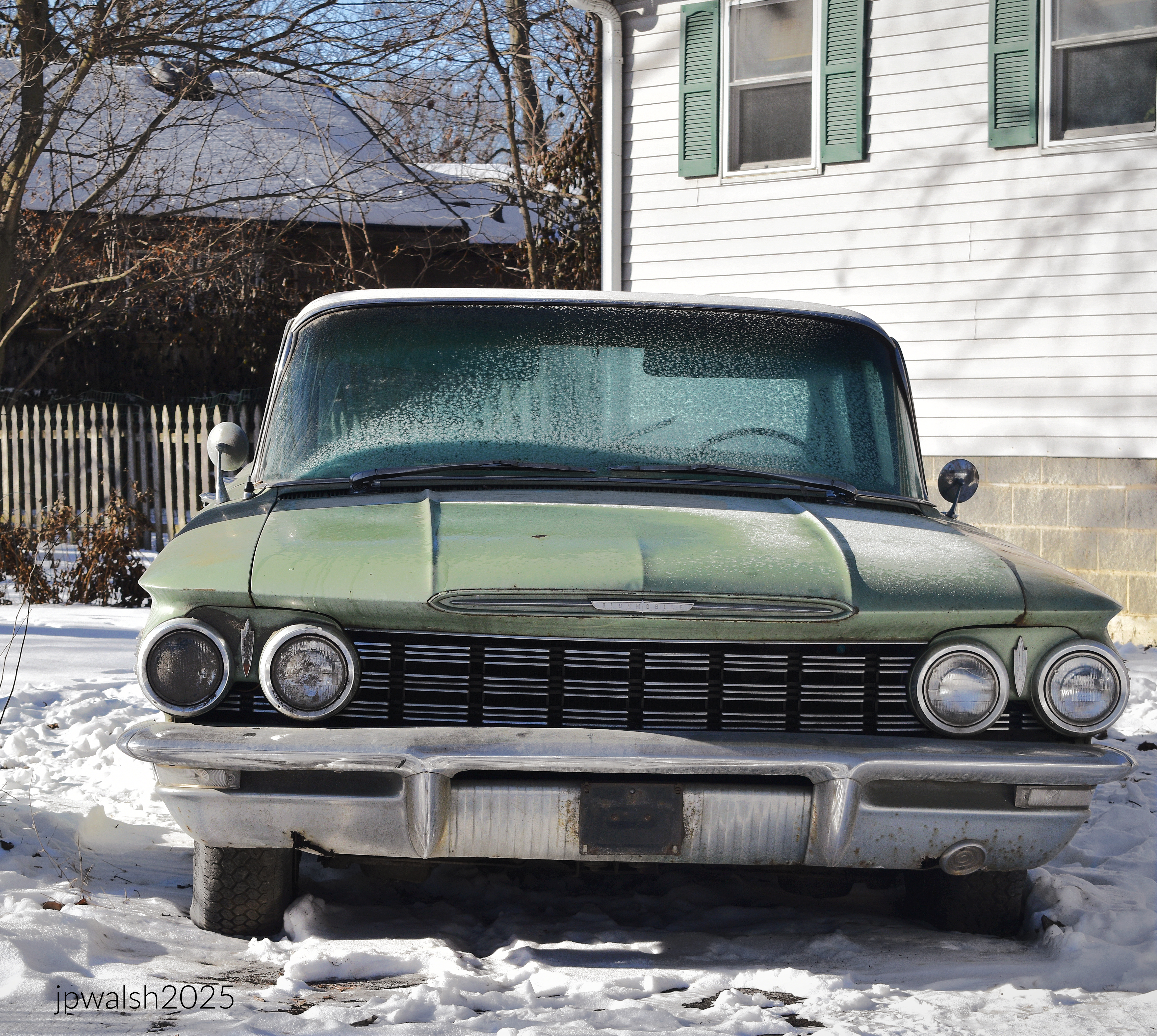
February 2025. 1960 Oldsmobile 88. Manufactured since 1949, the fourth generation in 1959 and 1960 was the shortest of its ten generations (until 1999). Critics and customers liked the 1959 Oldsmobile, buying close to 383,000 cars. So when in 1960 output slid to 347,141 it was not good news for Olds. Recently 4th in the industry rankings, Oldsmobile fell behind Dodge to seventh place. A big job lay ahead for the fifth generation (1961-1964) of Oldsmobiles which revived a performance image to go along with the traditional Oldsmobile reputation for easy motoring. The budget buy was the entry-level modelDynamic two-door sedan at $2,835 or $30,425.58 in today’s dollars. see – https://auto.howstuffworks.com/1960-oldsmobile.htm – retrieved February 21, 2025. 99% 7.62mb DSC_7216. July 2022. 1970 Oldsmobile Delta 88 Convertible (lipstick red). 7.88 mb 93%
British
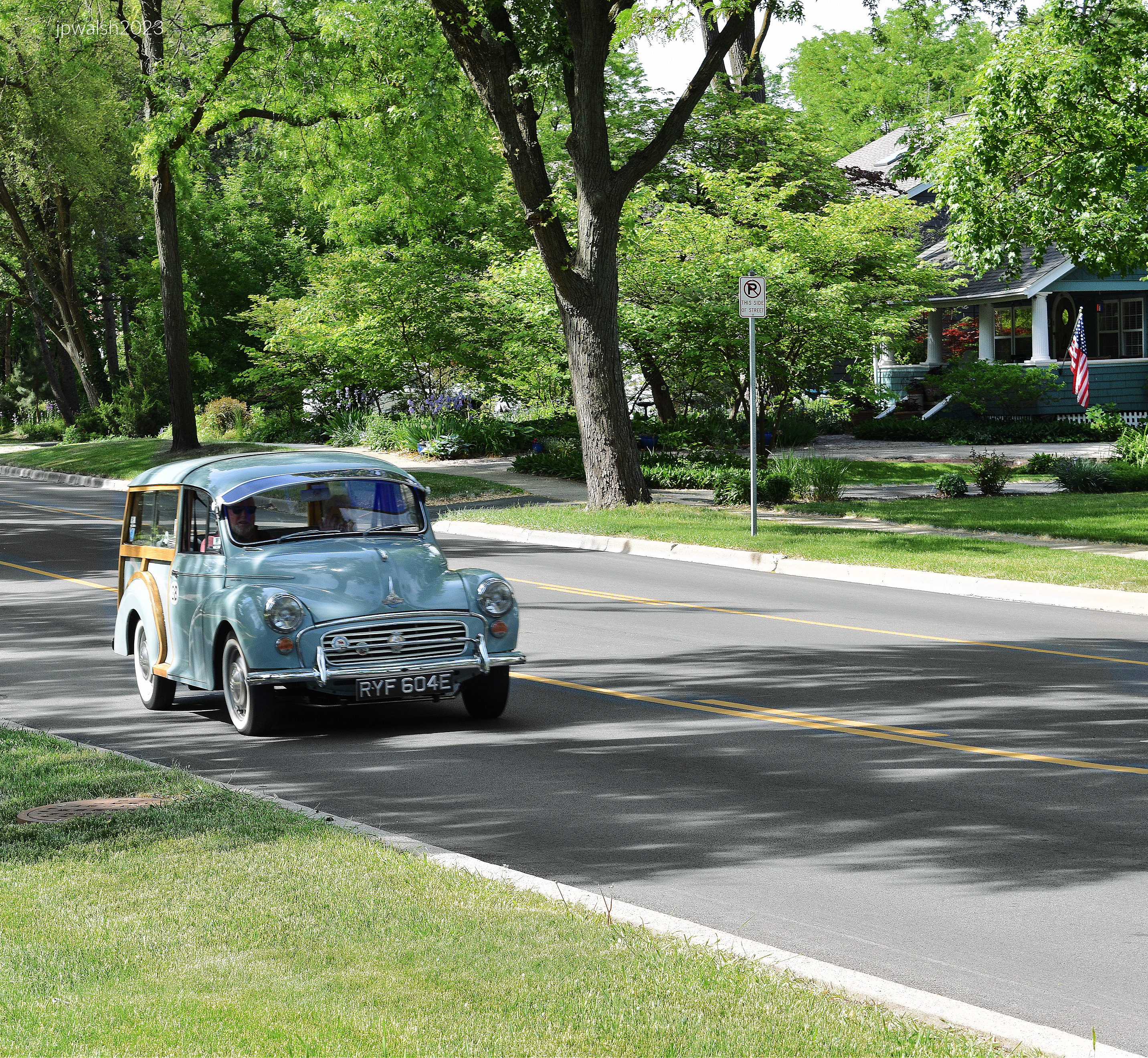
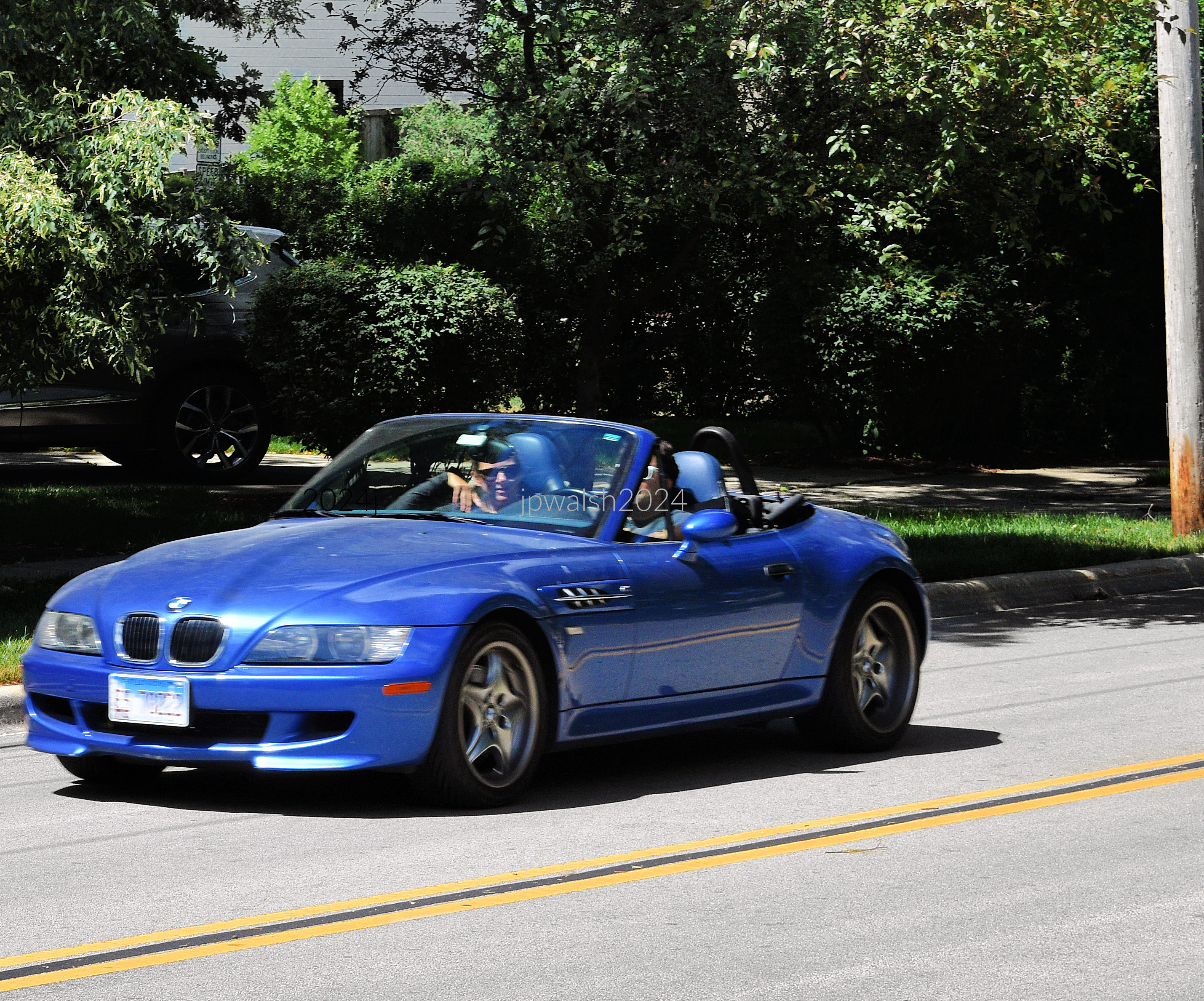
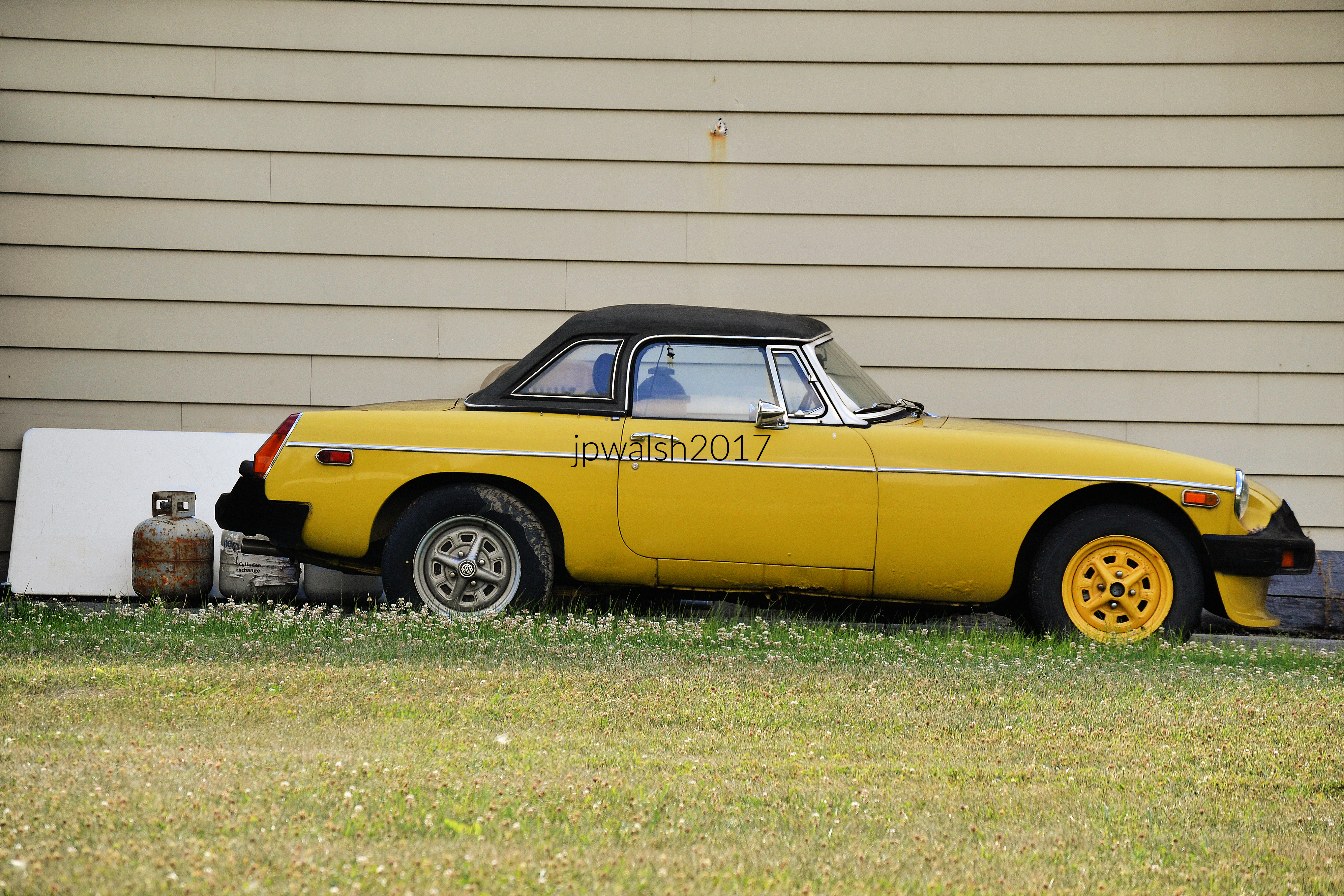
May 2023. Morris Minor (UK, 1948-1971). 7.77 mb 66%June 2024. 1999 BMW Z3 M Roadster with estoril blue glossy finish and 17-inch style 40 ”Roadstar” wheels. 3.82 mb.June 2017. Shelby Cobra. 4.40mb DSC_0318July 2017. 1978(?) MG MGB 2-door Roadster. From 1962 to 1968 the MGB two-door sports car was manufactured and marketed as a four-cylinder, soft-top sports car by the British Motor Corporation (BMC). It was produced by the Austin-Morris division of British Leyland from 1968 to 1980. Combined sales for the MGB and its variants MGC and MGB GT V8 was 523,836 cars. In 1992 the MGB re-entered limited production of 2000 cars as a MG RV8 before its final replacement in 1995 by the MG F. 99% 7.23mb DSC_0010May 2025.1976 (?) MG MGB Roadster. 99% 7.50mb DSC_9942 (1) May 2018. 2006(?) BMW Mini Cooper Hatch. 3.24 mb
Japanese
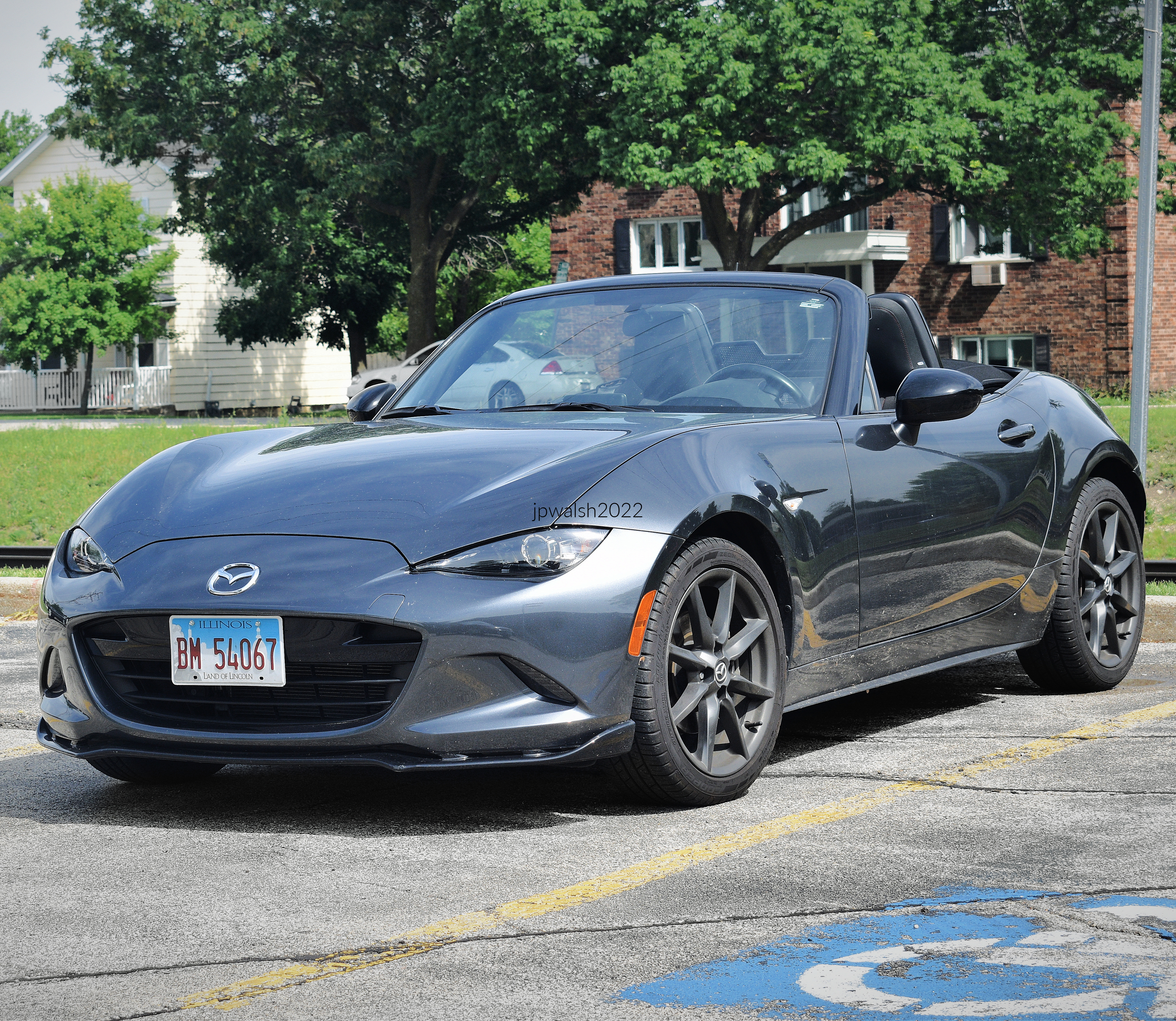
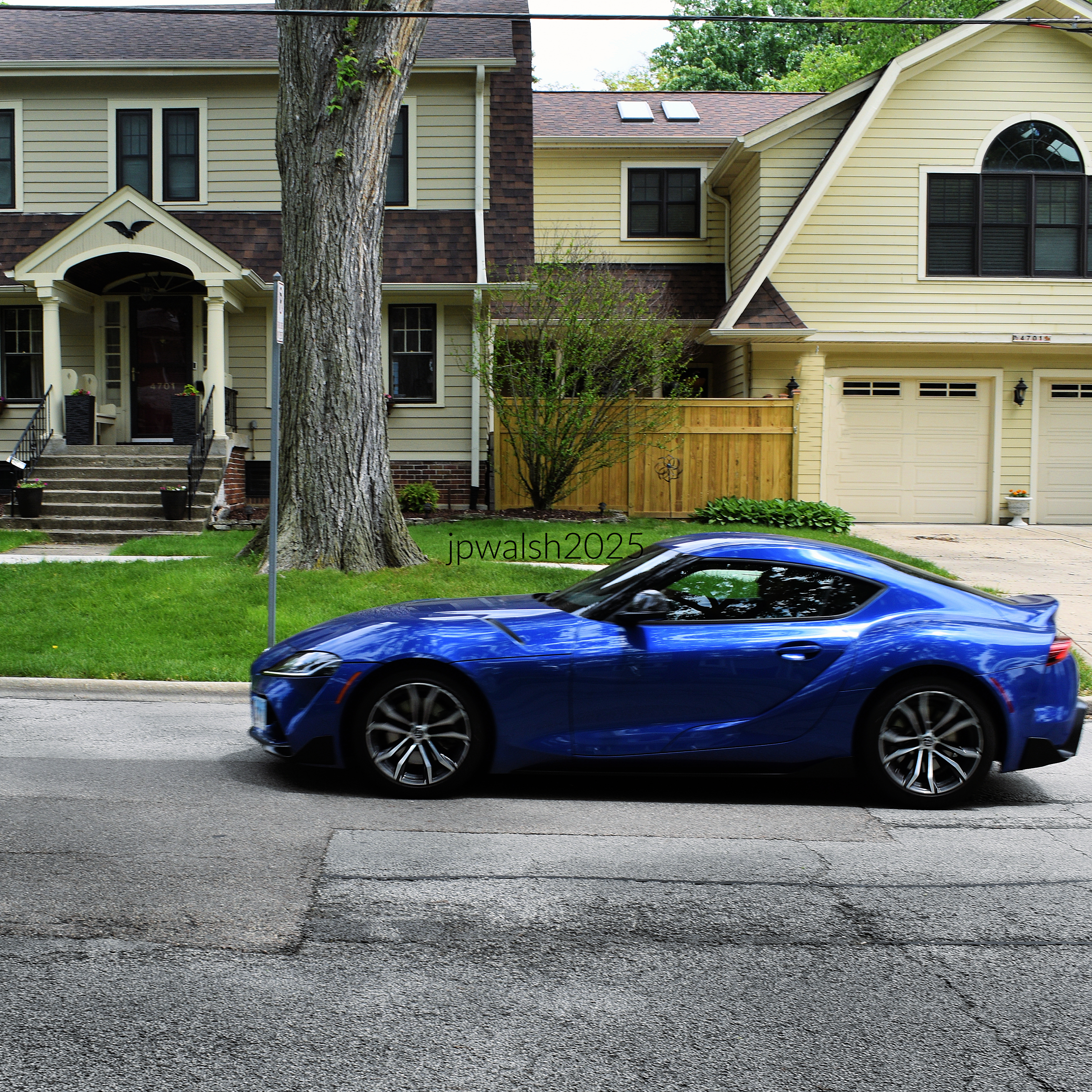
August 2016. 2001 Toyota MR2 Spyder 2-door convertible. 94% 7.62mb 3824.May 2016. 2015 Mazda MX-5 Miata GT 6.22mb DSCN2965 (1)June 2022. Mazda MX-5 (1989-). 7.94 mb 90%July 2021. Honda S2000 (1999-2009) 7.89 mbAugust 2021. Mitsubishi 3000GT (1990-2000). 7.91 mb 86%May 2025. Mazda MX-5 (NC). The Mazda MX-5 (NC) is the third generation of the Mazda MX-5 manufactured from 2005 to 2015. At its introduction in 2005, it won the Car of the Year Japan Award and made Car and Driver’s 10 Best list from 2006 to 2013. 65% 7.82mb DSC_0353May 2025. 2024 Toyota GR Supra 99% 7.28mb DSC_1082
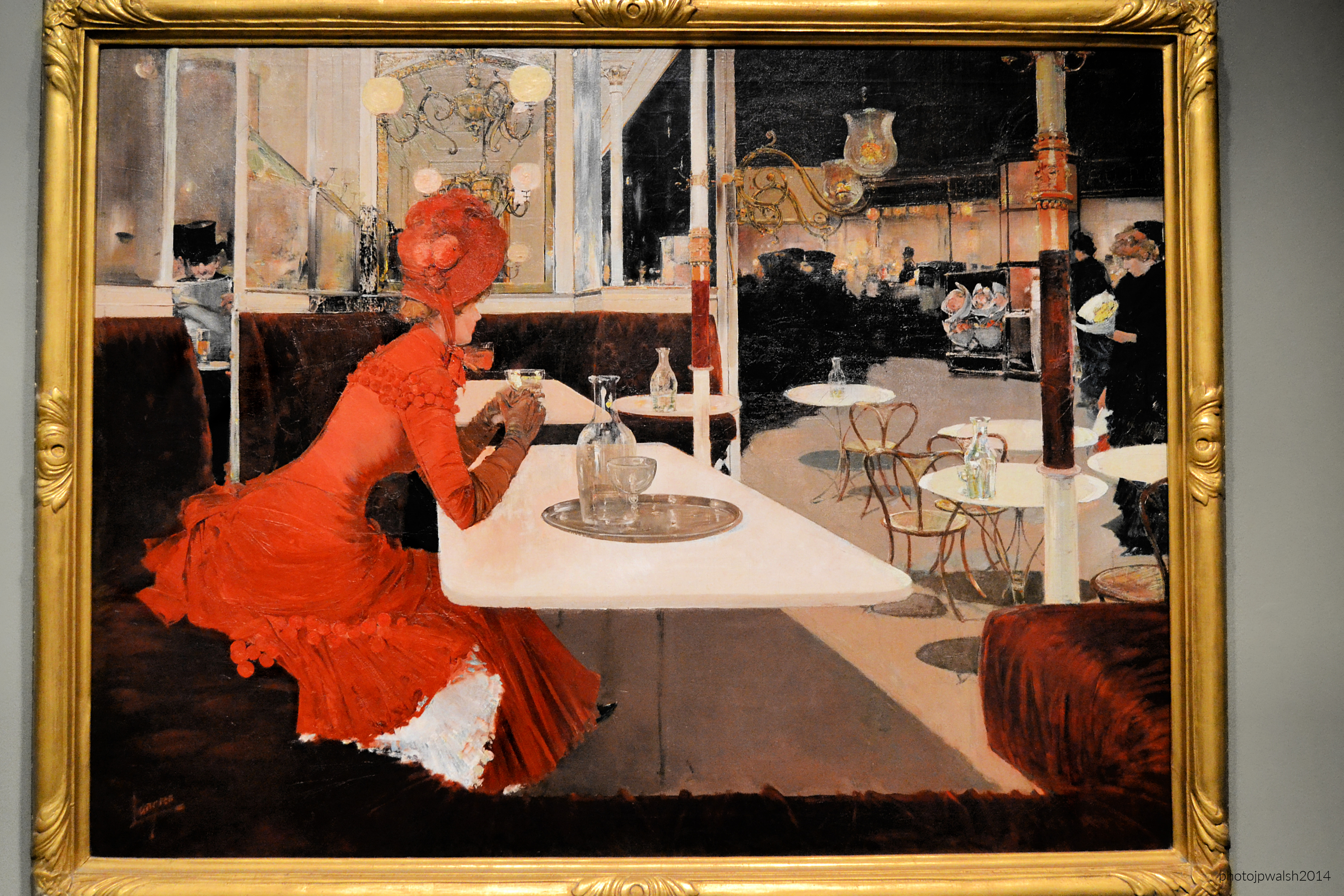
FEATURE Image: Fernand Harvey Lungren (1857-1932), The Café, 1882/84, oil on canvas. The Art Institute of Chicago. 9/2014.
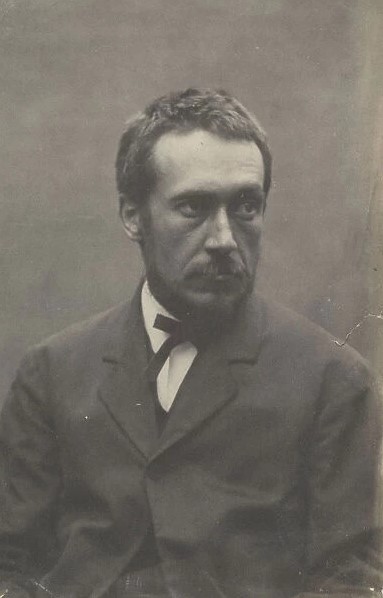
Fernand Lungren, not dated, c. 1900.
The artist, born in Sweden, moved with his family to Toledo, Ohio, as a child. Lungren wanted to be an artist but his father objected, wanting him to be a mining engineer. For a brief time, in 1874, Lungren attended the University of Michigan at Ann Arbor to study his father’s preferred subject. But after two years—Lungren’s father still opposed to his son being an artist— saw the younger Lungren rebel and prevail. In 1876 Lungren was able to study under Thomas Eakins (1844-1916) at the Pennsylvania Academy in Philadelphia and had Robert Frederick Blum (1857-1903), Alfred Laurens Brennan (1853-1921) and Joseph Pennell (1857-1926) as fellow students.
Thomas Eakins, self-portrait, c. 1880. The 19-year-old Lungren studied under Eakins at the Pennsyvania Academy in Philadelphia.
In winter 1877 the 20-year-old Lungren moved to New York City. With his first illustration published in 1879, he worked as an illustrator for Scribner’s Monthly (renamed Century in 1881) as well as for Nicholas (a children’s magazine) and as a contributor until 1903. He later worked for Harper’s Bazaar, McClure’s and The Outlook. Lungren’s illustrations included portraits, and social and street scenes.
Paris in the 1880’s. Lungren was largely disappointed by his visit to Paris from June 1882 to December 1883 when he returned to New York.
In June 1882 Lungren sailed to Paris via Antwerp with a group of artists. In an 18-month stay in Paris he studied informally for two months at the Académie Julian, and viewed the latest French Impressionist artworks. He found his artistic purpose in Paris in direct observation and spent the balance of his time studying Parisian street scenes in the manner of the “new painting.”
Fernand Harvey Lungren (1857-1932), The Café, 1882/84, Dixon Gallery and Gardens, Memphis, Tennessee. Lungren depicts two women sitting at a dining table. The models and dresses share affinities with The Café from the same period. The cafe setting offered a myriad of elements to express modernity. La France Élégante et Paris Élégant Réunis 1882. Fernand Harvey Lungren (1857-1932), The Café, 1882/84, oil on canvas. The Art Institute of Chicago. 9/2014. Lungren paid special attention to the image presented by a woman in the details of her fashion from her hat with pom-poms, the size of her bustle, and even her shawl. Further, the bright electric lights above the woman’s head illustrate the intense competition and innovation of the late 1870’s and 1880’s in developing and marketing functional incandescent lamps. The contrast they provide to the dimmer gaslamps also depicted in the painting by Lungren are remarkable. The Café, 1882/84, (detail). The architectural space of the café opens the street. The figure on the right holds a bouquet of yellow flowers while a coachman in the background is reflected by the light of a shop window with a carriage moving to the left.
Lungren returned to New York City in 1883 and, soon afterwards, established a studio in Cincinnati, Ohio. Sponsored by the Santa Fe Railroad which wished to commission images of the Southwest to entice eastern tourists, Lungren made his first excursions west in the early 1890s. In 1892 he visited Santa Fe, New Mexico for the first time and, in the following years painted artworks inspired by his contact with American Indian culture and the desert landscape. This was the start of his lifelong association with American West and Southwest. In 1899 he showed these American desert works at the American Art Galleries in New York and afterwards at the Royal Academy in London and the Walker Art Gallery in Liverpool.
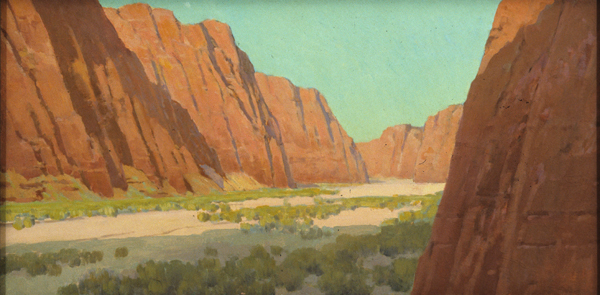
Fernand Harvey Lungren (1857-1932), Canyon de Chelly oil on canvas 18 3 /16 x 36″, c. 1903-1906. AD&A Museum, Santa Barbara, CA.
When Lungren was in London he made pictures of street life and met several artists, including James Abbott McNeill Whistler (1834-1903). In late 1900 Lungren traveled to Egypt with American pharmaceutical entrepreneur Henry Solomon Wellcome (1853-1936) and returned to New York via London in the next year. Lungren had married Henrietta Whipple in 1898 and they eventually moved to California in 1903, settling in Mission Canyon above Santa Barbara in 1906.
Theodore Roosevelt in 1906. The U.S. president and conservationist was one of the admirers of Lungren’s artwork. Fernand Harvey Lungren (1857-1932), Afterglow: Painted Desert oil on canvas 25 1/4 x 45 in.; framed: 29 3/4 x 49 3/4 x 2 in. AD&A Museum
Lungren lived and work in California—including several notable trips to Death Valley starting in 1909 —until his death in 1932. After Lungren’s wife died in 1917, the artist helped found the Santa Barbara School of the Arts in 1920 and remained on its board until his death in 1932. He became a charter member of the Santa Barbara Art League and executed two works for dioramas at the Santa Barbara Museum of Natural History. Most of Lungren’s artwork, including hundreds of his paintings (some 300 works), were bestowed to Santa Barbara State Teachers College, which became the University of California, Santa Barbara, and are part of the University Art Museum
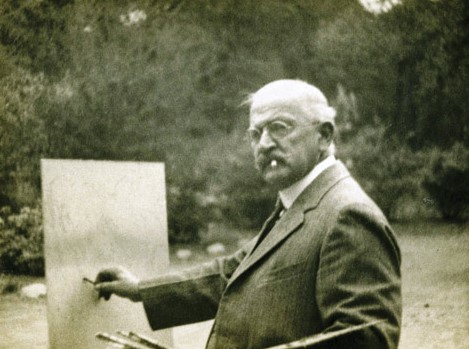
Lungren in later life.
SOURCES:
J.A. Berger, Fernand Lungren: A Biography, Santa Barbara, 1936.
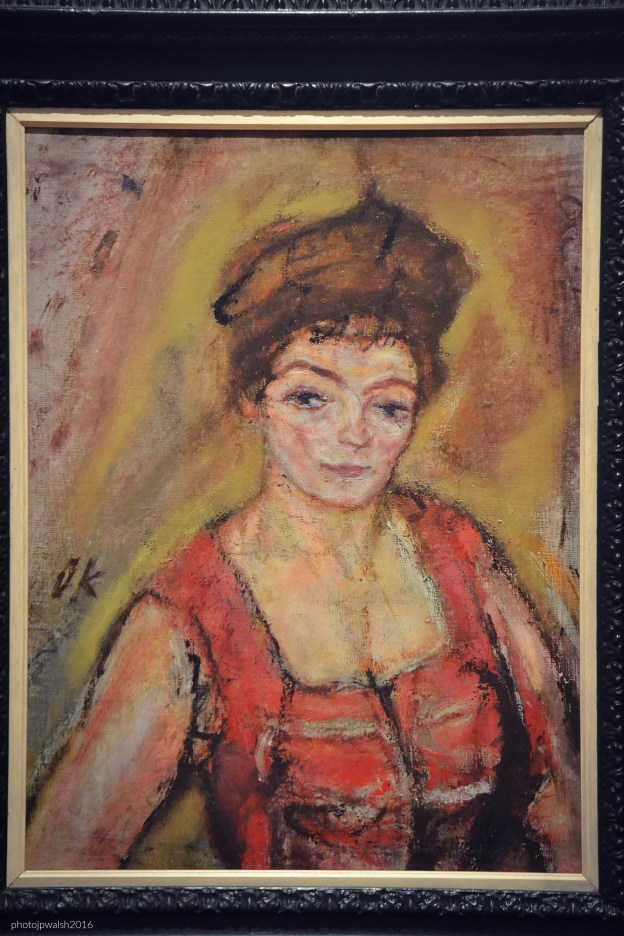
Feature Image: Oskar Kokoschka (Austrian, 1886-1980), Lady in Red(Dame in Rot), 1911, oil on canvas, 21 11/16 × 16 in. (55.09 × 40.64 cm), Milwaukee Art Museum. Author’s photograph, 2016. see – Collection | Milwaukee Art Museum – retrieved June 5, 2026.
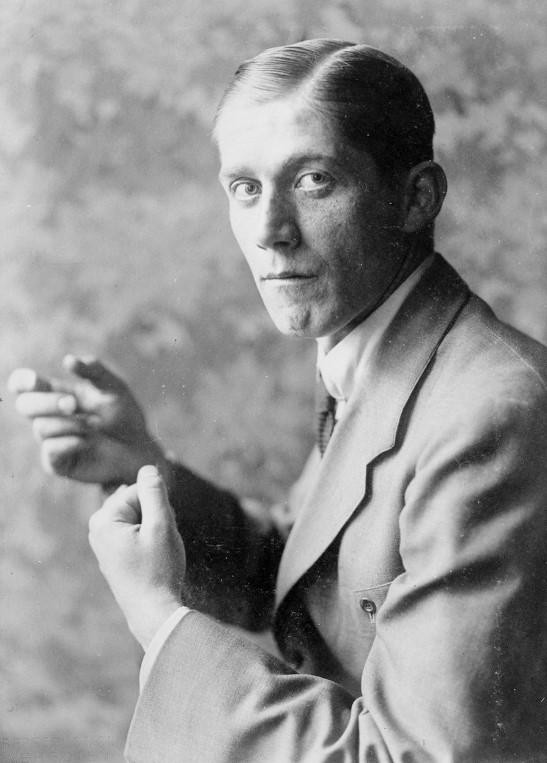
Oskar Kokoschka in 1916, photographed by Marta Wolff (1871–1942), a Berlin‑based portrait photographer. Wolff’s career—and life—were cut short under Nazi persecution. On September 1, 1942, she was deported from her last residence in Wiesbaden to Theresienstadt, where she died of pneumonia on September 22, 1942. see – https://oskar-kokoschka.ch/fr/1001/Biographie – retrieved May 1, 2024. Public Domain.
Early Berlin Years
When Austrian painter Oskar Kokoschka (1886–1980) created Lady in Red, now in the Milwaukee Art Museum, he was a struggling young artist living in Berlin. At just twenty‑four, he entered the city’s avant‑garde circles, moving among writers, painters, and theatre figures who were reshaping modern culture.
Connections to the Avant‑Garde
Kokoschka knew several members of Die Brücke as well as artists and writers associated with Der Sturm, the influential art and literary magazine. His visibility rose quickly: in June 1910, dealer Paul Cassirer organized Kokoschka’s first major exhibition, placing him in the center of Berlin’s experimental art world.
Independence from Expressionism
Despite these associations, Kokoschka’s involvement with the German Expressionists remained limited. He resisted being absorbed into any movement, insisting on developing his own artistic language. Reflecting on this independence, he later wrote that he was “not going to submit…to anyone else’s control. That is freedom as I understand it” (Oskar Kokoschka, My Life, translated from the German by David Britt, New York, Macmillan, 1974, p. 67).
Developing the Art of “Seeing”
As Kokoschka refined what he called the art of “seeing”—a method grounded in heightened depth perception and psychological intensity—the Berlin press seized on his volatility. Critics labeled him “the wildest beast of all,” a phrase that captured both his unpredictability and the raw emotional force of his early work.
Between 1900 and 1930, Berlin emerged as a world capital of modern art. Among its most influential figures was Paul Cassirer (1871–1926), a dynamic tastemaker with strong ties to the Paris market, particularly Galerie Durand‑Ruel. In 1910 he organized Oskar Kokoschka’s first major exhibition, the same year he mounted Berlin’s first significant show devoted to Édouard Manet. Cassirer also served as secretary of the Berlin Secession, the renegade association founded in 1898 in opposition to the academic and governmental constraints placed on contemporary art. Public Domain.
Exchanges with the Expressionists
Though Kokoschka studied the art of past masters to forge a distinct personal style, he remained in conversation with the artists of Die Brücke. Their shared debates over form, color, and the expressive possibilities of the figure helped create the artistic climate of Berlin and Vienna in the years before the First World War.
Lady in Red: A Key Early Statement
Painted around 1911, Lady in Red at the Milwaukee Art Museum stands at a pivotal moment in Kokoschka’s early career, when he was forging the fiercely independent artistic identity that would define his oeuvre. The portrait belongs to the same period in which he was debating formal problems with Die Brücke, resisting the codification of Expressionism, and articulating his belief that the artist’s task was existential rather than ideological. In this sense, Lady in Red is not simply a portrait—it is a declaration of Kokoschka’s emerging stance as a radically individual modernist.
Oskar Kokoschka (Austrian, 1886-1980), Lady in Red, c. 1911, oil on canvas, 21 11/16 × 16 in. (55.09 × 40.64 cm), Milwaukee Art Museum. Author’s photograph, 2016.
Within Kokoschka’s oeuvre, Lady in Red stands as an early, forceful articulation of the qualities that would define his mature work:
Psychological penetration rather than surface likeness
Expressive distortion used as a tool of revelation
Emotional aggression that challenges the viewer
A refusal to submit to any movement’s stylistic program
Psychological Intensity and the Art of “Seeing”
The painting exemplifies Kokoschka’s developing method of “seeing,” his term for a heightened perceptual and psychological engagement with the sitter. Rather than offering a flattering likeness, Lady in Red confronts the viewer with the sitter’s emotional presence—rendered through agitated brushwork, acidic color contrasts, and angular distortions that destabilize the composition. These qualities align with the emotionally aggressive canvases meant to unsettle, provoke, and force the viewer into an encounter with the subject’s inner life.
A Portrait That Defies the “-ism” and Shaped by Upheaval
Although the painting shares Expressionism’s interest in subjective intensity, Lady in Red resists the movement’s stylistic conventions. Kokoschka’s palette is harsher, his forms more fractured, his psychological probing more confrontational than those of his contemporaries.
Created just before his catastrophic affair with Alma Mahler and the wartime traumas that would scar him physically and psychologically, Lady in Red captures Kokoschka at a moment of intense personal searching. The painting’s emotional volatility anticipates the turbulence that would soon engulf his life.
It is a portrait that embodies the very independence that earned him the label “the wildest beast of all.”
The Alma Mahler Affair
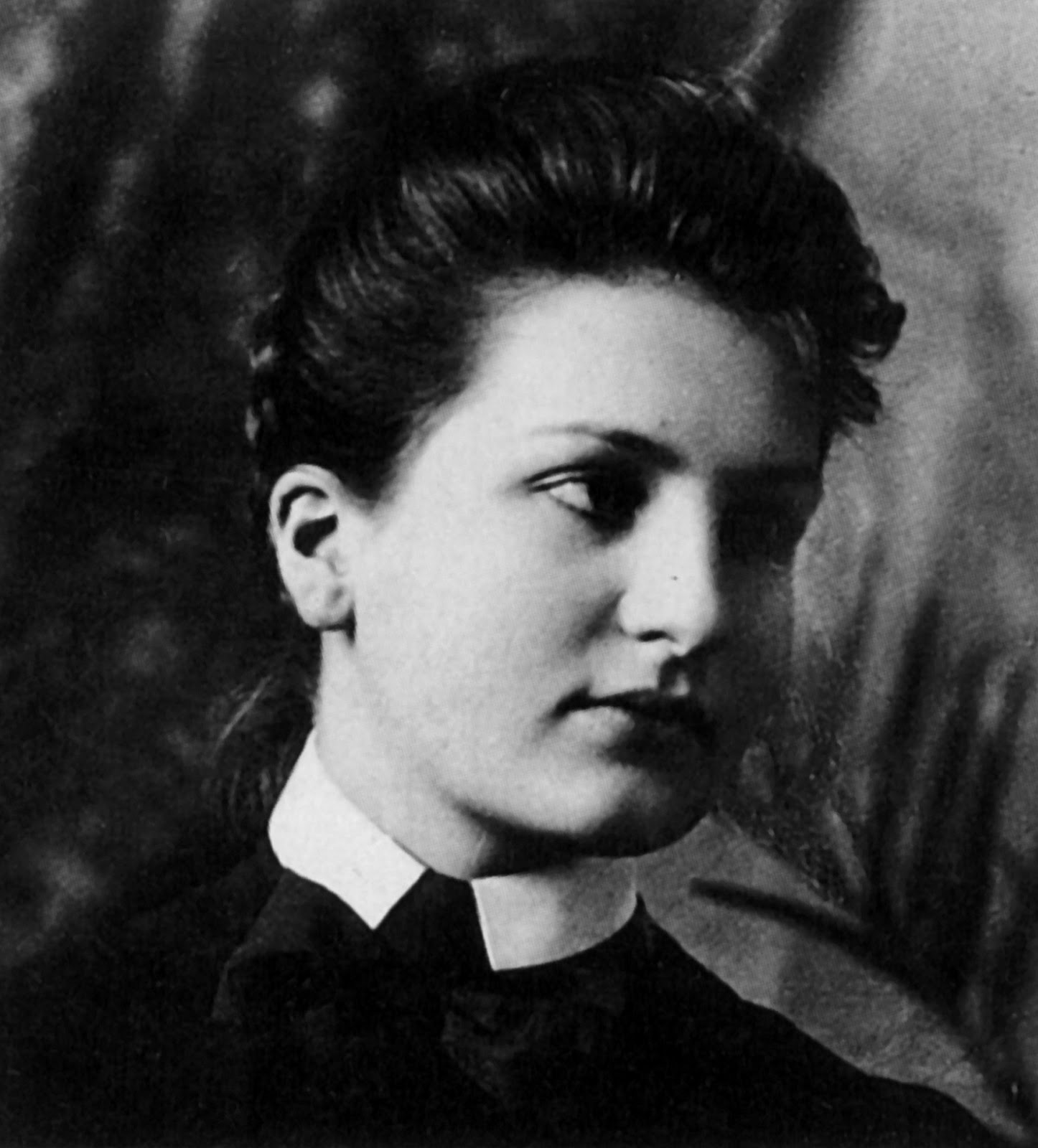
In 1912, Kokoschka entered a turbulent and ultimately destructive relationship with Alma Mahler (1879–1964), widow of composer Gustav Mahler (1860–1911). The affair consumed him emotionally and creatively. When it collapsed in 1915, the rupture was so profound that Kokoschka volunteered for frontline service in World War I.
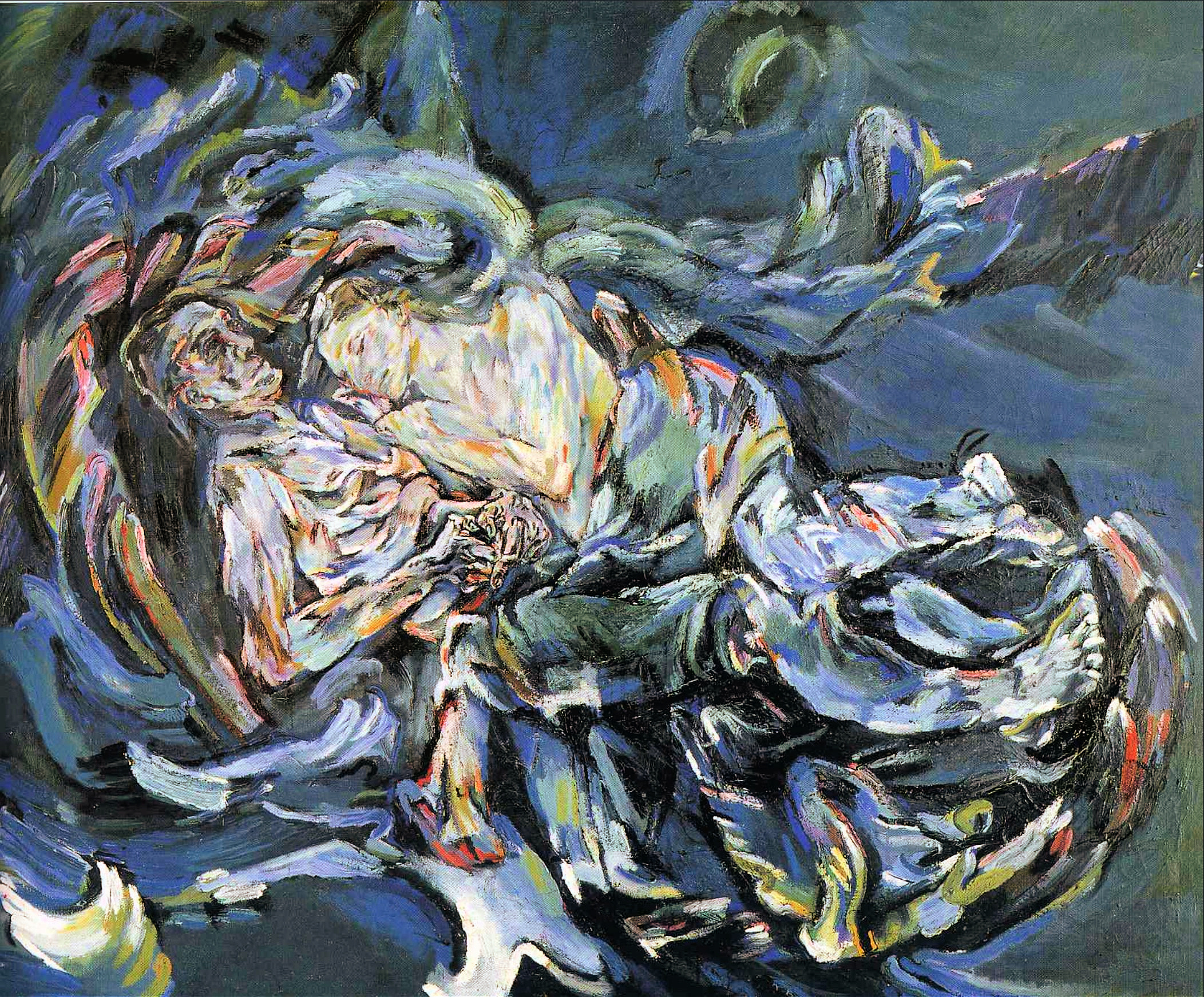
Alma Mahler, the young widow of composer Gustav Mahler (1860–1911), began a tumultuous affair with Kokoschka in 1912. During their 1913 trip to Italy, he cast their relationship into art, immortalizing them together in his 1914 masterpiece Die Windsbraut (Bride of the Wind), a swirling, dreamlike vision of passion and instability.
Oskar Kokoschka, Die Windsbraut (The Bride of the Wind), 1913. Oil on canvas, 180.4 x 220.2 cm, Kunstmuseum, Basel, Switzerland. see – Kunstmuseum Basel – Sammlung Online – Die Windsbraut – retrieved May 1, 2024. Often read as an autobiographical testament to Kokoschka’s relationship with Alma Mahler, the painting features portrait‑like evocations of both figures. Alma, widow of composer Gustav Mahler, had begun a turbulent affair with the artist in 1912. Upon completing the work, Kokoschka described it to Berlin dealer Herwarth Walden as his “Tristan und Isolde” (Spielmann 2003, p. 153), invoking the unfulfillable nature of a difficult love. Later in 1914, the title Die Windsbraut (Bride of the Wind) emerged in conversation with the poet Georg Trakl.
War Service and Wounds
Kokoschka enlisted in the 15th Austrian Dragoon Regiment, where he saw brutal combat. In 1915, on the Ukrainian front, he suffered a bullet wound to the head and a bayonet wound to the chest, injuries that nearly killed him. The following year, he was wounded again—this time by grenade fire on the Isonzo Front—adding to the physical and psychological scars that would shape his postwar work.
Expressionism and the Artist’s Role
The Expressionists’ intense engagement with the upheavals of their time influenced each artist’s creative process. Amid this turbulence, Kokoschka insisted that the artist’s vocation was not rooted in prefabricated ideologies or party programs, but in the existential task of forging a personal vision. For him, artistic identity was not a stylistic allegiance but a way of being in the world. “There is no such thing as a German, French, or Anglo‑American Expressionism!” he argued. “There are only young people trying to find their bearings in the world” (Kokoschka, My Life, p. 37).
Defying the “-ism”
Kokoschka’s fierce individualism made him one of the great masters of Expressionism precisely because he refused to be contained by it. His canvases—charged with harsh, clashing colors, fractured angles, and psychological intensity—were designed to unsettle. They confront the viewer, provoking discomfort, agitation, even rage. In rejecting the dominant currents of modernism to pursue his own path, Kokoschka became, like Max Beckmann, one of the major figures who often sits uneasily within the standard narratives of twentieth‑century art.
The Outsider as Master
This marginal position, however, aligns with Kokoschka’s self‑image. His refusal to conform—to movements, to expectations, to the tidy categories of art history—was central to his identity. For the artist once branded “the wildest beast of all,” exclusion from the mainstream was not a failure but a vindication of the independence he prized.
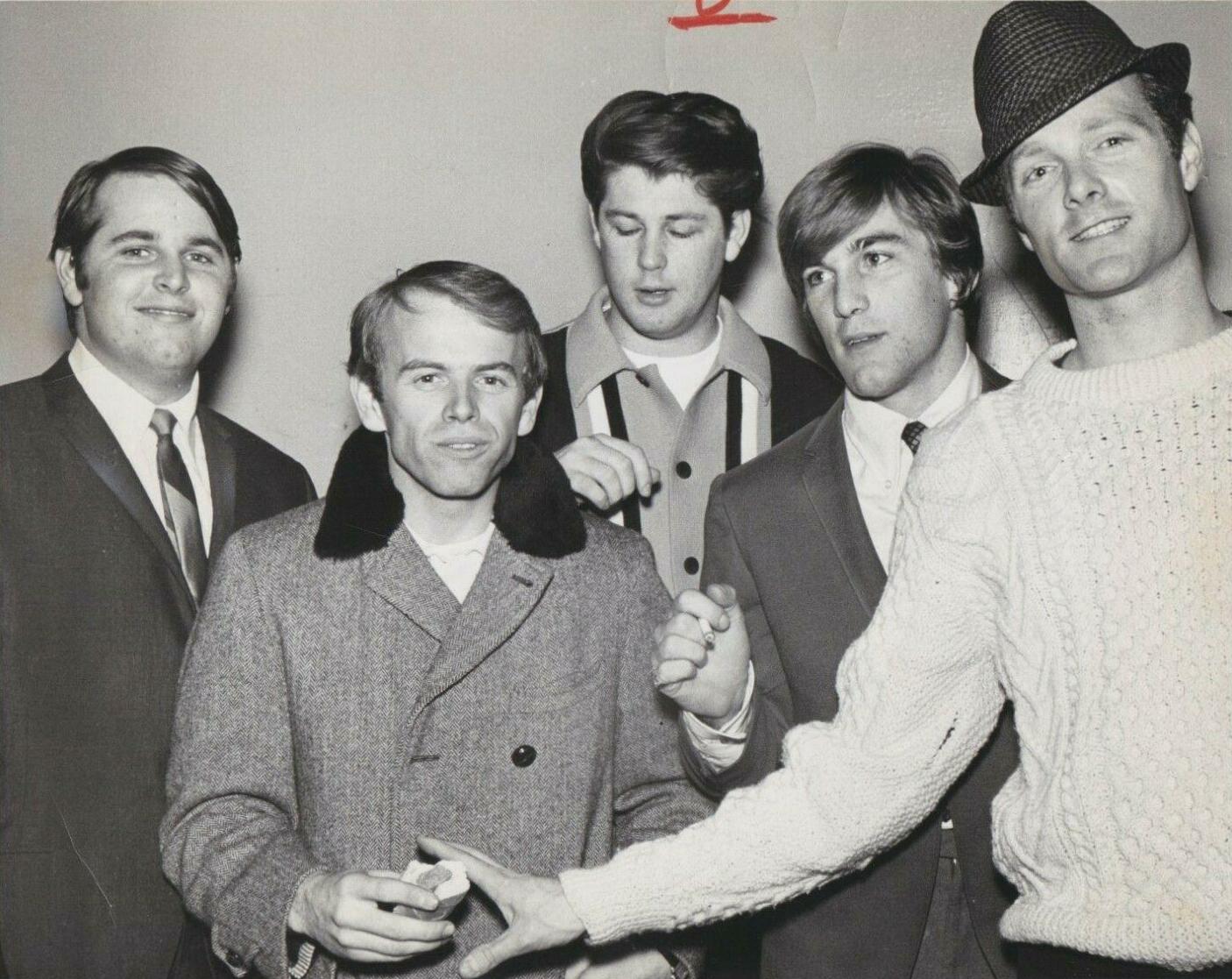
Feature Image: The Beach Boys in 1964; clockwise from left: Al Jardine, Mike Love, Brian Wilson, Carl Wilson, Dennis Wilson. Trade ad for The Beach Boys’s single “California Girls”/”Let Him Run Wild.” Public Domain. Permission details The ad appeared in the 11 September 1965 issue of Billboard and can be dated from that publication; it is pre-1978. There are no copyright markings as can be seen at the full view link. The ad is not covered by any copyrights for Billboard. US Copyright Office page 3-magazines are collective works (PDF) “A notice for the collective work will not serve as the notice for advertisements inserted on behalf of persons other than the copyright owner of the collective work. These advertisements should each bear a separate notice in the name of the copyright owner of the advertisement.”
The Beach Boys in Europe in late 1964. The Beach Boys appearing in a Billboard magazine in 1964. Public Domain.
By John P. Walsh
On November 2, 1964 the Beach Boys invaded London, England for a television appearance and concert.
Mike Love and Brian Wilson wrote “When I Grow Up (To be a Man)” as well as most of “The Beach Boys Today!” released in March 1965 on which it appeared. Trade ad for The Beach Boys’s single “California Girls”/”Let Him Run Wild.”Public Domain. Permission details The ad appeared in the 11 September 1965 issue of Billboard and can be dated from that publication; it is pre-1978. There are no copyright markings as can be seen at the full view link. The ad is not covered by any copyrights for Billboard. US Copyright Office page 3-magazines are collective works (PDF) “A notice for the collective work will not serve as the notice for advertisements inserted on behalf of persons other than the copyright owner of the collective work. These advertisements should each bear a separate notice in the name of the copyright owner of the advertisement.”
With the press media in England Wilson admitted the Beach Boys had written and performed music on surfer subjects as well as cars but displayed anger as he denied that they had anything to do per se with “surfer music” and certainly not in originating or perpetrating it. Besides, Wilson offered that that phase was pretty much over. Their music was just their sound that people liked to listen to. In London and elsewhere he said that the Beach Boys had found new subjects particularly on social themes surrounding what it meant to be a young person in the mid1960’s.
Recorded and released as a single in August 1964, “When I Grow Up (To Be A Man)” was another song by Brian Wilson and Mike Love. Mike Love thought it may have had to do with Brian Wilson’s father’s concern for his sons’ masculinity in the glitzy music business (see Love, p. 92) as much as his criticism of Brian’s impending marriage in December 1964 to 16-year-old Marilyn Rovell, a member of the Honeys. Brian had asked for her hand in an expensive telephone call from Australia when the Beach Boys were on tour there and in New Zealand in January 1964 and more than once until the nuptials. Back in California, Wilson produced his song, “He’s a Doll,” for the Honeys who recorded it on February 17, 1964 and released it two months later, on April 13, 1964.
The Honeys (originally the Rovell Sisters) were an American girl group formed in Los Angeles. After 1962, the Rovell Sisters were rechristened “the Honeys” by Brian Wilson who served as its record producer and songwriter. He married Marilyn Rovell of the Honeys in December 1964. From left: Marilyn Rovell, Diane Rovell, and Ginger Blake.
The Beach Boys’ first no. 1 single was one that was released in May 1964. They had been making music since 1962 and the last twelve months, since May 1963, had been busy and productive. Since spring of 1963 they had 3 top-5 hits (and two more top-10 hits). “Surfin’ U.S.A.” peaked at no. 3 in May 1963 and became Billboard’s no.1 song for the year. “Little Saint Nick” released in December 1963 peaked at no. 3 on the Billboard Christmas Singles chart. By the time “Fun, Fun, Fun” peaked at no. 5 in March 1964, everything had changed in rock ‘n roll music in America, and particularly for the Beach Boys. The change was marked by the appearance of the Beatles on the Ed Sullivan Show in February 1964. Literally half the country – 74 million people – tuned in and the impact was immediate. When the Beach Boys heard the hordes of screaming fans for the Fab Four, Brian Wilson thought for a moment about quitting, disappointed that so much of what the California band had been working on and striving for had suddenly been eclipsed – and by Brits no less. Brian Wilson set to work to complete more original material and was more open to experimenting with arrangements and instrumentation to achieve a new sound. Though the Beach Boys were replaced in the top spot on Billboard’s year-end singles in 1964 by the Beatles (“I Want To Hold Your Hand”) and the Beatles locked up the second spot as well (“She Loves You”), “I Get Around,” was in the top 5 that year.
“Surfin’ U.S.A.” by the Beach Boys peaked at no. 3 in May 1963 and became Billboard’s no.1 song for the year. The song expressed and informed a burgeoning surfer culture in its love of the ocean, surfboards, loud colorful print apparel and popular feature films and magazines that brought a counterculture into the mainstream. The Beach Boys’ music, particularly “Surfin’ U.S.A.” in 1963, also became emblematic of the California Sound.
The Brian Wilson-Mike Love song was released as a single on May 11, 1964, with “Don’t Worry Baby” on the B-side. “I Get Around” was on the Billboard Hot 100 by mid-June and the no. 1 song for the first two weeks of July 1964. As Mike Love saw it in his Good Vibrations: My Life as Beach Boy, “As exciting as it is to see a record climb the charts, it inevitably falls, sometimes quickly. “I Get Around” remained No.1 for two weeks. So it was all about the next new song, recording it, getting it on the radio, getting it charted, keeping the ball rolling.” (Love, p. 97)
On July 13, 1964, the Beach Boy’s sixth album All Summer Long was released on Capitol records with “I Get Around” its first track. Considered the band’s first artistically unified collection of songs, All Summer Long reached the Billboard 200 two weeks later and rose rapidly to peak at no.4 on August 22, 1964. According to Mike Love, the lyrics developed out of their experiences describing the band’s restlessness with “instant fame, some fortune” and looking to find new spaces and places “where the kids are hip.” By the second and final verses the narrator has moved from monotonous boredom in search of something more to boasting that he has the fastest car and great success with the women. In those first few months of 1964 the Beach Boys had moved from wunderkind band to a personal and musical maturity. On “I Get Around” Dennis Wilson biographer Jon Stebbins wrote that it “is clearly ahead of its time, and it signals the speed at which Brian had developed. With its edgy guitar/sax bursts doubled with trebly reverbed Fender flicks, electric-organ fills, and an arrangement that stops, goes, accelerates, and then stops and goes a few more times, the song is nearly otherworldly in its inventiveness. Each band member’s voice is showcased, and this helps to make this single as good as any pop record ever made.” In February 1965, All Summer Long was certified gold by the RIAA. So that by the time of the Beach Boys’ American invasion of Britain in November 1964 they continued their counter to the British invasion of the Beatles in February 1964.
“Carl’s Big Chance,” the final surfer instrumental on a Beach Boys studio album, was recorded to showcase Carl Wilson’s guitar playing.
Also inspired by the Beatles’ success doing the same thing, the Beach Boys recorded “In My Room” in German so to promote their fan base there. In February 1964, the Beach Boys were in Europe doing TV and in-person appearances when the Beatles debuted on The Ed Sullivan Show in New York City.
Though released after the onset of Beatlemania in March 1964, the material for the Beach Boys’ album, Shut Down Volume Two, was conceived, written, and produced in late 1963 and early 1964. The Beatles’ impetus on the Beach Boys to more subtly integrate older musical sources to something new and original would still be several weeks and months in the offing. The lead track, Fun, Fun, Fun was recorded in the first week of January 1964 and released as a single on February 3, 1964, less than a week before the Beatles’ first appearance on The Ed Sullivan Show. That appearance (and the Rolling Stones’ stateside arrival in June 1964) is considered the beginning of rock music’s British Invasion and a milestone in American pop culture. Meanwhile, the lovely melancholic The Warmth of the Sun on side one of Shut Down Volume Two was written by Brian Wilson and Mike Love on the night of the Kennedy assassination in November 1963. Considered one of the finer early Beach Boys tunes, the Wilson-Love song collaboration would be kicked up more than a notch in 1964. Seemingly overnight, in front of the whole world, in that musical moment of February-March 1964, the Beatles marked the beginning of the 1960’s as we know it, and the Beach Boys, freely admitting to the passing of their car and surfer craze and, with The Warmth of the Sun, if written for JFK, Camelot, marked the era’s ending. Both were appropriate junctures for young developing bands: the Beatles, in 1964, out front of the Beach Boys to start. Although The Warmth of the Sun was on the best-selling Shut Down Vol. II (no. 13 on the Billboard 200), it didn’t get too much air play until it was placed on the B-side of the single Dance, Dance, Dance at the end of the year. This followed the release of the Beach Boys’ All Summer Long (I Get Around; Wendy) in July 1964 and anticipated The Beach Boys Today! (When I Grow Up (To Be a Man); Help Me, Rhonda) in March 1965. Both studio LPs – the Beach Boys’ sixth and eighth – grabbed back some of the rock pop critical and popular initiative they had prior to the Beatles. As the mid1960s were now in full swing, it also started the informal competition between two 20-something composers – namely, Southern Californian Brian Wilson and Liverpudlian Paul McCartney.
The Warmth of The Sun was written by Brian Wilson and Mike Love on the night of the JFK assassination. Released in February 1964 one week before the appearance of the Beatles for the first time on The Ed Sullivan Show that began the British invasion in pop music, the Beach Boys’ song marked the close of an era just as another opened.
A penultimate filler track, “Our Favorite Recording Sessions,” on All Summer Long showed the Beach Boys, like the Beatles, as just silly likeable band-mates. The Beach Boys were the first American band to do this type of humanizing perspective in their work.
Broadcast on April 18, 1964, the Beach Boys appeared on American Bandstand. They lip-synched “Don’t Worry Baby” and host Dick Clark interviewed them. The rest of the show was dedicated to the music of the Beatles. In 1964 the Beach Boys decided it was time to move past popular surfer and car songs.
Following the release of Shut Down Volume Two, the Beach Boys appeared on the Steve Allen Show. Allen in his introduction said, “I’m sure you’re familiar with them they’ve had so many big hit records this last year. Let’s welcome the Beach Boys with Fun, Fun, Fun.”
Wilson’s “When I Grow Up (To Be a Man)” is one of the first rock songs to present a teenager thinking in the first person about serious matters on his future adulthood. It is one of the first top-40 songs (no.1 in Canada and no. 9 in the U.S.) to use the idiomatic term “turn on” (as in “Will I dig the same things that turned me on as a kid?”). It is also an intelligent question, in Mike Love’s part, of what sort of woman he will pursue in the near future as a man.
In Brian Wilson’s part, the composition’s 14-year-old narrator asks another pertinent question in the song: “Will I love my wife for the rest of my life?” As Wilson was soon getting married in real life, there is an invested urgency and emotional depth in the teenager’s question. At the same time, it is a careful, perhaps even emotionally prescient question as it does not query their marital status (Wilson and Marilyn Rovell were divorced in 1979). The lyrics are creatively astute in that “When I Grow Up” conveys these late adolescence complexities in an uplifting tone of apparent innocence, sincere interest, and hopeful enthusiasm by its serious teenage narrator.
The manager of the Beach Boys was the Wilson brothers’ father, Murry. Murry Wilson mused out loud whether his eldest son, Brian Wilson, at 22 years old, was possibly immature in his choices. Yet Brian, despite his mental breakdowns, was taking charge in his personal and professional life.
The Beach Boys Today! was recorded mostly in 1964 and released in March 1965.It peaked at no. 4 on the Billboard 200 and was certified Gold. “beach boys- today!” by cdrummbks is licensed under CC BY 2.0.
Before the March 1965 album, The Beach Boys Today!, was completed and whose recording began in August 1964 with “When I Grow Up (To Be A Man),” Murry was fired by Brian and didn’t return. Despite Murry’s expressed doubts and his eldest son’s impending marriage, Brian Wilson’s music was growing and developing by leaps and bounds. Surrounded by the smell of cannabis that Brian started smoking regularly, new musical insight is heard in When I Grow Up (To Be A Man). It is one of the first Beach Boys’ songs featuring those oddly changing, yet harmonious chords that do not stay in one key for more than a few measures. That musical structure characterized many of Brian Wilson’s finest compositions going forward. The young producer also again deployed a harpsichord – it can be heard in I Get Around – which was a creative use of a 16th century Baroque instrument which was unusual for a mid-1960’s pop rock song. The Beach Boys’ example, however, led to its use and that of other classical music instruments much more by rock bands afterwards. The track also features, as Jon Stebbins maintains, “one of Dennis’s best studio drum performances” (see – The Beach Boys FAQS, 2011, p. 53).
The Beach Boys Today! started recording in August 1964 and was completed in January 1965. It was recorded at three different studios in Hollywood (United Western Recorders, Gold Star Studios, and RCA Studios) using over 30 session musicians and was released on March 8, 1965. In those months Brian also suffered breakdowns that he later explained as owing to circumstances. “I used to be Mr. Everything, “he said, “I was run down mentally and emotionally because I was running around, jumping on jets from one city to another on one-night stands, also producing, writing, arranging, singing, planning, teaching – to the point where I had no peace of mind and no chance to actually sit down and think or even rest” (quoted in Badman, p. 74). Love saw it differently attributing some of it to the impending psychedelic drug culture that characterized the mid to late 1960s and Brian’s novel, if limited, involvement (see Love, p. 185). A dismissed Murry stayed in Hawthorne, California at home (3701 W. 119th Street; torn down in the mid1980s) where youngest brother, Carl Wilson, was still living and where he listened many times to Introducing… The Beatles and Meet the Beatles! in his room.
In April 1964 and May 1964 members of the Beach Boys appeared personally in two films and Brian Wilson’s songs were used in other films. In April 1964 Brian Wilson spent two days on the set of “Girls on the Beach,” a 1965 release, singing his song “Lonely Sea” to a group of teenagers from the Surfin’ USA album. The movie, about a sorority house trying to book the Beatles for a benefit concert, have to settle for the Beach Boys instead. Everything changed away from these corny stilted low budget beach and surfer flicks when, in August 1964, A Hard Day’s Night was released. The Beatles got to play themselves in a witty script that featured their songs and natural appeal. It was as far as could be from California surfer girls and boys whose music the Beach Boys showcased.
In May 1964 the Beach Boys were still just starting out when they played back up to Annette Funicello (1942-2013) during the opening credits of the Disney comedy film, Monkey’s Uncle, released in summer 1965. They are lip-synching a Sherman brothers’ song. Former Mouseketeer Funicello was making her last movie for Disney and had high praise for the Beach Boys. “As silly as the [opening credits] song is in places,” she remarked, “it really does rock and with the Beach Boys’ amazing four-part harmonies, I could sing it without echo.” (see – Funicello, Annette; Bashe, Patricia Romanowski (1994). A Dream Is a Wish Your Heart Makes: My Story. Hyperion. p. 134). She continued: “They were wonderful guys and I feel fortunate that I was kind of in on the ground floor. We even worked together performing at Disneyland. Little did any of us know how successful they would become.” (see- Santoli, Lorraine (Spring 1993). “Annette – As Ears Go By”. Disney News Magazine. p. 18.)
In June 1964 they recorded The Beach Boys’ Christmas Album (released in November 1964) and since July had been in Hawaii and Arizona to begin their 33-day, 42-concert Surfin’ Safari tour. After Murry was fired the Beach Boys became more involved in their concert date strategy, such as playing nearby secondary and tertiary cities as well as playing in big ones (see Love, p. 98). In early August 1964, “When I Grow Up (To Be A Man)” was the first song recorded for The Beach Boys Today! and released as a single on August 24, 1964. It is a philosophical song whose music is an artistic progression for Brian Wilson and the Beach Boys with its rich and profound instrumental arrangement and 4-part vocal harmonies that are fluid and ethereal (See – https://www.songfacts.com/lyrics/the-beach-boys/the-warmth-of-the-sun – retrieved April 16, 2024). Wilson’s use of the harpsichord in the song could stem from “easy listening” sources such as Henry Mancini’s Playboy’s Theme (1960) from the late-night TV show or other of his film scores. Rock critic Richard Meltzer later observed that it was When I Grow Up (To be a Man) that marked the moment when the Beach Boys “abruptly ceased to be boys” (quoted in O’Regan, Jody (2014). When I Grow Up: The Development of the Beach Boys’ Sound (1962-1966) (PDF) (Thesis). Queensland Conservatorium, p. 253). In his 2016 memoir, Love wrote that the song was “probably influenced” by Murry Wilson who constantly challenged Brian’s manhood.
LYRICS When I grow up to be a man Will I dig the same things that turn me on as a kid? Will I look back and say that I wish I hadn’t done what I did? Will I joke around and still dig those sounds When I grow up to be a man? Will I look for the same things in a woman that I dig in a girl? (Fourteen fifteen) Will I settle down fast or will I first wanna travel the world? (Sixteen seventeen) Now I’m young and free, but how will it be When I grow up to be a man? Ooh ooh ooh Ooh ooh ooh Will my kids be proud or think their old man is really a square? (Eighteen nineteen) When they’re out having fun yeah, will I still wanna have my share? (Twenty twenty-one) Will I love my wife for the rest of my life, rest of my life When I grow up to be a man? What will I be when I grow up to be a man? (Twenty-two twenty-three) Won’t last forever (Twenty-four twenty-five) It’s kind of sad (Twenty-six twenty-seven) Won’t last forever (Twenty-eight twenty-nine) It’s kind of sad (Thirty thirty-one) Won’t last forever (Thirty-two)
In September 1964 the Beach Boys picked up the Surfin Safari tour that they broke off in August 1964 to return to the studio to record and release When I Grow Up (To Be a Man). After touring up and down the East Coast from Florida to New York, they made an appearance on The Ed Sullivan Show on September 27, 1964. In front of screaming fans they performed “I Get Around,” their no.1 hit that year and what would become a top-5 Billboard song of the year.
Released October 19, 1964, the live album Beach Boys Concert was the first Beach Boys album to be no. 1 on the Billboard 200. The only other album to achieve the top spot is Endless Summer in 1974. Recorded in Sacramento, California, Beach Boys Concert was the first live album to top the pop music record charts (see – Moskowitz, David V., ed. (2015). The 100 Greatest Bands of All Time: A Guide to the Legends Who Rocked the World, p.42). It was on the charts for nearly a year and in the no. 1 spot for 4 consecutive weeks. Because Brian Wilson was not going to perform live with the group in the future, it is a relatively rare recording of the original line-up.
Also in October of 1964, the Beach Boys, crowd pleasers mostly wherever they went, played four songs at the T.A.M. I. (Teenage Awards Music International show) in Santa Monica, California. The Beach Boys played Surfin’ USA, I Get Around, Surfer Girl, Dance, Dance, Dance. Others in that show included Chuck Berry, James Brown, the Supremes, Smokey Robinson and the Rolling Stones who played right before the Beach Boys. According to Mike Love’s “Good Vibrations,” he met and made friends with Marvin Gaye at that show. “Surfin’ U.S.A.” peaked at no. 3 in May 1963 and became Billboard’s no.1 song for the year. The concert was held at the Santa Monica Civic Auditorium on October 28 and 29, 1964.
When the Beach Boys landed in London in early November 1964 there was an electricity in the air surrounding them. Since February they had a top-5 hit (Fun, Fun, Fun), no. 1 song (“I Get Around”), a no.1 album (Beach Boys Concert), TV and movie appearances, live concert tours and so on. They had two follow-up top-10 singles – When I Grow Up (To Be Man) and Dance, Dance, Dance. The band’s leader, Brian Wilson, was getting married in December. There was a competition between the Beach Boys and the Beatles who, so far, dominated the field, despite the Beach Boys’ tremendous accomplishment. Their arrival into Britain was greeted with screaming fans and lots of media attention. As Mike Love put it, “Five singles and four albums – by any measure, an extraordinary year. It did nothing to slow down the Beatles, who had nine Top 10 singles and six albums that charted either 1 or 2, but both commercially and artistically, we were doing our best to hold our own.” (Love, p. 97)
In November 1964, after eight days in England doing TV and radio promotions and taping performances, the band flew to France, Italy, Germany, Denmark and Sweden to make more live appearances. It was their first time in Paris and the Beach Boys acted like typical camera-toting young American tourists in Montmartre. At their concert at Olympia Hall in Paris they were greeted by fans shrieking in French. Mike Love stated in his Good Vibrations that when he wrote “California Girls” in 1965 the lyrics were inspired by the band’s experiences seeing all the beautiful women during their late 1964 European tour – and thinking of home.
They flew back home and did more concerts until, on December 7, 1964, Brian Wilson and Marilyn Rovell married. As Mike Love observed, it was Brian Wilson who was under the most “pressure” of “trying to keep pace with the Beatles, trying to satisfy the [record] label, trying to become a global band.” (Love, p. 104). On December 23, 1964, Brian Wilson was on an airplane from L.A. to Houston, Texas, to start a 25-date concert tour when he announced he had had enough of the hectic lifestyle of a pop rocker. Getting back to L.A., he returned to the vacant family homestead in Hawthorne and had a long talk with his mother who, Brian said, “sort of straightened me out” (quoted in The Beach Boys’ America’s Band, Johnny Morgan, p.81). Despite Brian’s marriage and breakdown, the Beach Boys road show carried on. Glen Campbell filled in for Brian to finish out the concert dates in Texas that ended the year 1964 for the Beach Boys. It was to be a busy January 1965.
SOURCES:
The Beach Boys: America’s Band, Johnny Morgan, Union Square & Co.; Illustrated edition, 2015, pp. 63-81.
The Beach Boys: The Definitive Diary of America’s Greatest Band on Stage and in the Studio, Keith Badman, Backbeat Books; First Edition, 2004.
Good Vibrations: My Life as a Beach Boy, Penguin Publishing Group, Mike Love, 2016, p. 97; pp. 159-160.
Dennis Wilson: The Real Beach Boy, Jon Stebbins, ECW Press, 2000 p.39.
The Beach Boys FAQ, All That’s Left to Know about America’s Band, Jon Stebbins, Backbeat Books, 2011.
When I Grow Up: The Development of the Beach Boys’ Sound (1962-1966) (Thesis), Jody O’Regan (2014). Queensland Conservatorium.
A Dream Is a Wish Your Heart Makes: My Story, Annette Funicello, Patricia Romanowski (1994). Hyperion. p. 13.
Santoli, Lorraine (Spring 1993). “Annette – As Ears Go By”. Disney News Magazine. p. 18.
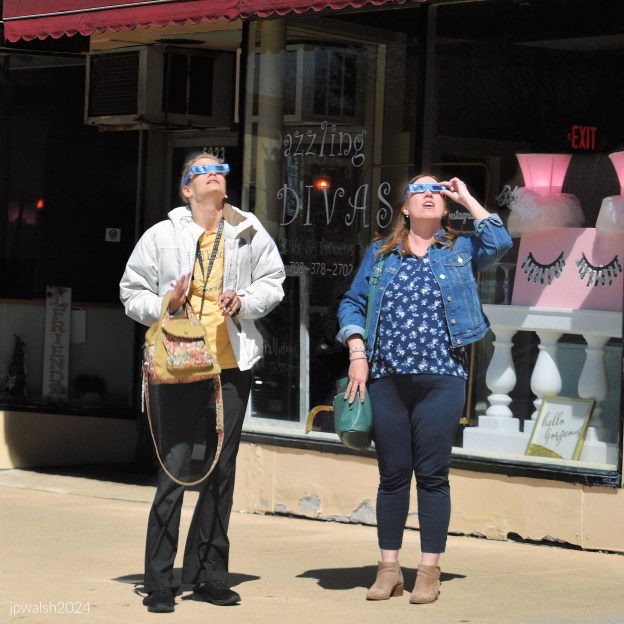
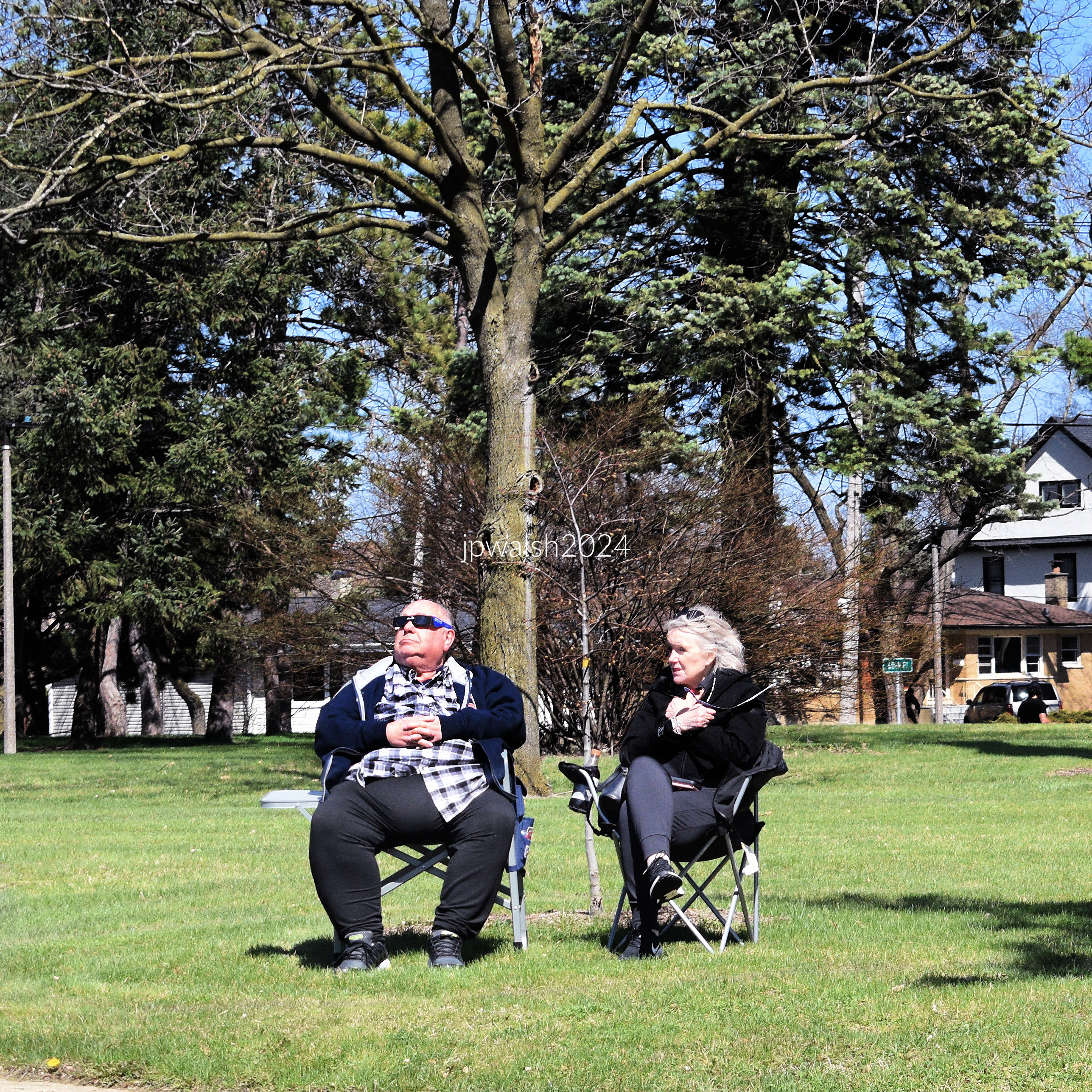
FEATURE image: Viewers near Chicago, Illinois, of the Total Eclipse of the Sun, April 8, 2024. Author’s photograph. All rights reserved.
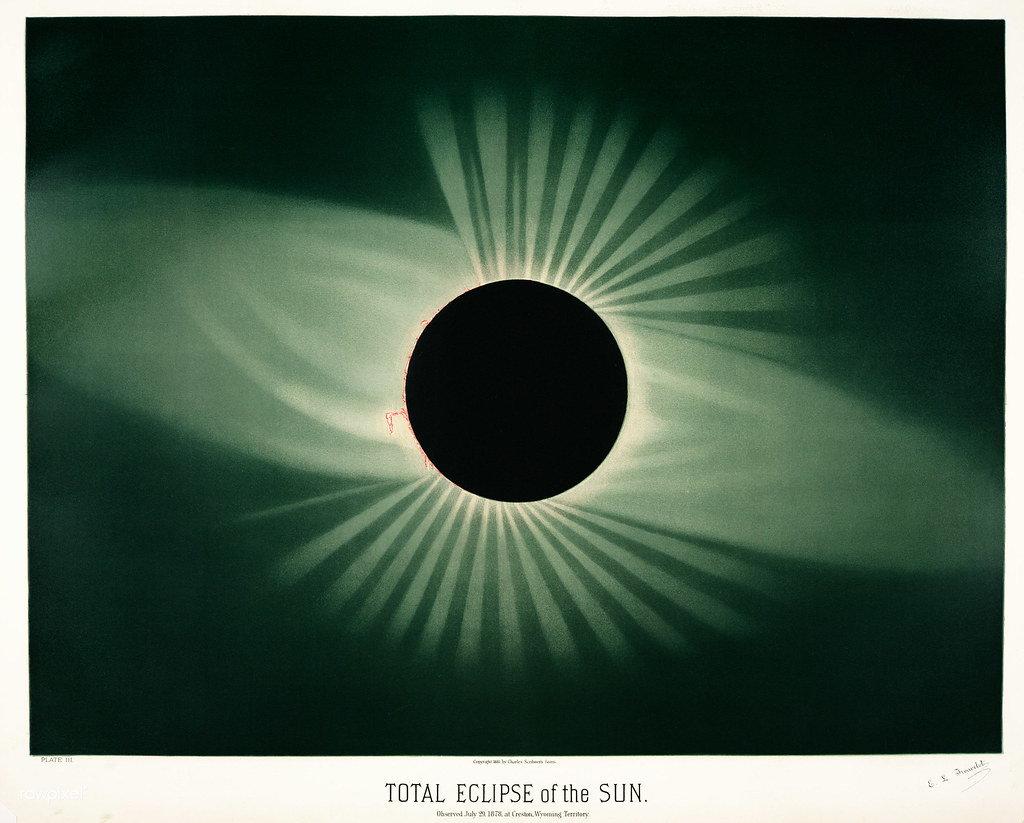
On Monday, April 8, 2024, a total solar eclipse crossed North America, passing over Mexico, the United States, and Canada. The path of the eclipse first entered into Mexico then into the United States in Texas and into Canada in southern Ontario province. In the U.S., the solar eclipse’s “path of totality” traveled through Oklahoma, Arkansas, Missouri, Illinois, Kentucky, Indiana, Ohio, Pennsylvania, New York, Vermont, New Hampshire, and Maine. The central event took less than two hours. See – https://science.nasa.gov/eclipses/future-eclipses/eclipse-2024/where-when/ – retrieved April 8, 2024. In the U.S. over 30 million people resided in the path of the April 8, 2024 solar eclipse. The next total solar eclipse in the mainland U.S. and Canada won’t be for more than 20 years. See – https://www.nytimes.com/live/2024/04/08/science/total-solar-eclipse#what-to-know-about-the-great-north-american-eclipse – retrieved April 9, 2024. The last total solar eclipse across the U.S. was August 21, 2017 and, before that, one must return to the 1970’s for a total solar eclipse in the U.S. though their paths do not begin to match the 2024 event in terms of crossing the center of the country.
Yet, a “total eclipse of the sun” is, if not one of science’s misnomers, clearly one of nature’s optical illusions. If 1.3 million Earths can fit in the sun (https://www.iflscience.com/how-many-earths-can-fit-inside…) and 50 moons can fit in the Earth (https://www.reference.com/…/many-moons-fit-inside-earth…) then 65 MILLION moons would fit in the sun. That science can learn much from the tiny moon “covering” the sun – more akin to a visual pinprick – can only be limited despite the belief (like the ancients) that it signifies more. Yet as Einstein’s Theory of Relativity demonstrates (i.e., that light bends by gravity) even a limited empirical physical footprint’s significance such as a solar eclipse can be outsized to learned points greater than its intrinsic data range – that is when viewed and processed by the universe’s most vast body – the human imagination.
Solar eclipse watchers near Chicago, April 8, 2024. Author’s photograph. All rights reserved.
In the media, everything is hyped and what’s important is ignored; as if earth’s tiny moon is going to block the solar system’s sun. At best it’s a dim overcast for 5 minutes where, afterwards, many express some disappointment in the drama of expectations. A lunar eclipse (that happened March 25, 2024) is more interesting for the masses of naked-eye low-tech earthlings. As far as a cosmic event, the solar eclipse is eagerly anticipated whatever its scale as it will contribute to science and scientific knowledge based on its rare natural phenomenon and the development of astronomers’ newest tools. Yet humankind’s imagination by itself is the more interesting aspect of the cosmos, starting here on earth, and ascending to the stars and planets.
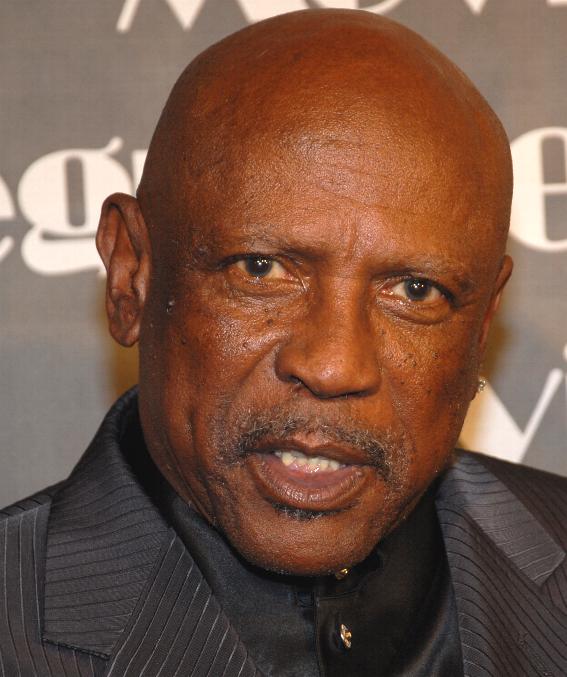
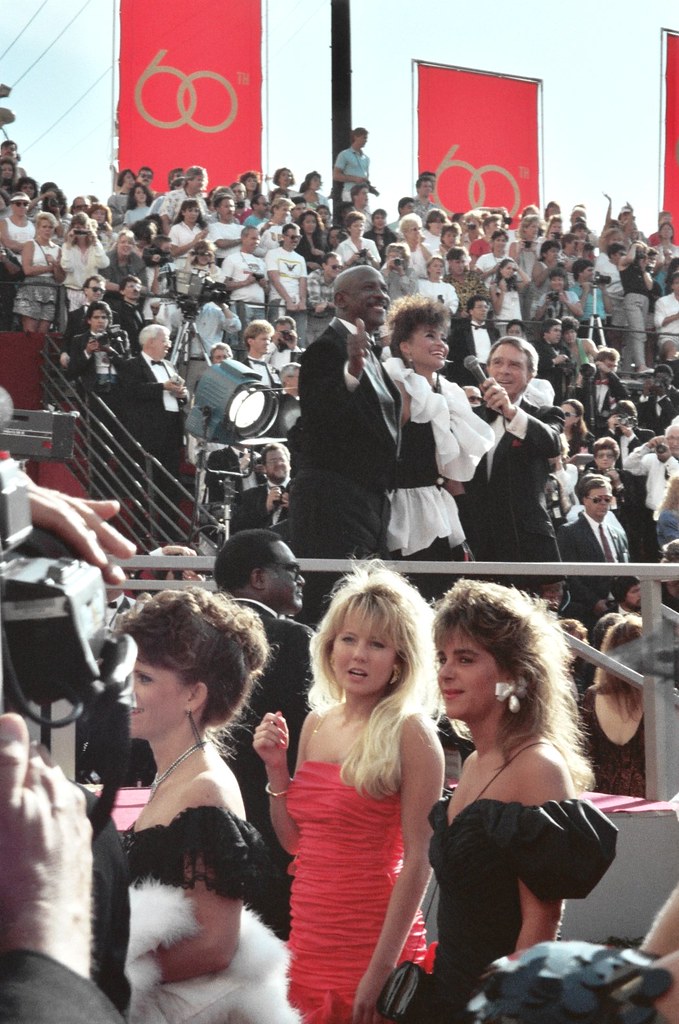
Louis Gossett Jr. at the 60th Academy Awards in 1987 — a moment that captured the authority and ease of a man who had already carved out one of the most decorated careers in American entertainment.
In a stage, film, and television journey that stretched across generations, Gossett made his Broadway debut at 17 and never stopped ascending. Over the decades he collected dozens of Best Actor and Supporting Actor honors, including his historic 1983 Academy Award, along with Golden Globes, Primetime and Daytime Emmys, and multiple NAACP Image Awards. He wasn’t just successful — he was a trailblazer who widened the path for those who followed.
Louis Gossett Jr. died on March 29, 2024, at a rehabilitation center in Santa Monica, California. He was 87.
Louis Gossett Jr. won the Academy Award for Best Supporting Actor for his ferocious, unforgettable turn as Navy Gunnery Sergeant Emil Foley in the 1982 Paramount summer powerhouse An Officer and a Gentleman. Directed by Taylor Hackford and starring Richard Gere and Debra Winger, the film tracks 13 bruising weeks of aviation officer candidate training under Foley’s unrelenting command — a crucible designed to strip away ego, expose character, and forge discipline.
As candidates from every corner of civilian life grind through classroom drills and field exercises, the real test becomes internal: strength versus insecurity, ambition versus fear, the fragile bonds of camaraderie versus the pressure to quit. No one embodies that struggle more than Zack Mayo (Richard Gere), whose swagger masks a lifetime of emotional armor. Foley’s job is to break him down; the story’s power comes from watching whether Mayo can build himself back up.
Released in July 1982, An Officer and a Gentleman landed like a jolt. I remember seeing it that summer in a packed theater — one of the most purely entertaining films I’d encountered up to that point in life, and honestly, since. (And yes, it was 1982, so ticket prices were already creeping up.)
At the center is brash aviation officer candidate Zack Mayo (Richard Gere), a young man who enlists in the all-volunteer U.S. armed forces — a system only nine years old at the time. Mayo has the physical and mental chops, but his hustler instincts get the better of him: he’s caught selling polished shoes and buckles to other candidates during inspection. It’s just the first crack in his armor of ego.
U.S. Marine Gunnery Sergeant Emil Foley: “Mayo I want you DOR.(Drop On Request).” Aviation Officer Candidate Zack Mayo: “No Sir. You can kick me out of here but I ain’t quittin’.”
Enter Gunnery Sergeant Emil Foley (Louis Gossett Jr., in his Oscar‑winning role), the hardest man on the base — a drill instructor who locks onto Zack Mayo and refuses to let him skate by on ego. Foley’s mandate is blunt and uncompromising: break Mayo down, teach him esprit de corps, and rebuild him into someone worthy of the uniform.
The film became Paramount’s biggest hit of 1982. Produced for $6 million, it earned $190 million at the box office — roughly $524 million in 2022 dollars. Audiences responded to its classic architecture: a diverse, believable ensemble; high‑stakes training sequences; friendships forged under pressure; and a tender romance between Mayo and Paula (Debra Winger), a factory worker and townie with a quiet resilience.
And then there’s the ending — triumphant, cathartic, and instantly iconic.
Zack Mayo (Richard Gere)- “I won’t ever forget you sergeant.” In this penultimate scene from An Officer and a Gentleman, Sgt. Foley’s graduating class lines up to thank the gunnery sergeant who pushed them to the limit. When Ensign Zack Mayo — the officer candidate most transformed by Foley’s brutal, exacting training — steps forward, he offers his Navy challenge coin. Foley pockets it separately from the others, recognizing it as a symbol of uncommon achievement and hard‑won purpose.
From his turn as Will Reeves/Hooded Justice in HBO’s Watchmen (2019) to major film roles in The Color Purple (2023) and his Oscar‑winning performance as Gunnery Sergeant Emil Foley in An Officer and a Gentleman (1982), Louis Gossett Jr. built a career defined by range, authority, and trailblazing impact.
While the ingredients weren’t new, the finale of An Officer and a Gentleman refined them into a crowd‑pleasing template that shaped 1980s and 1990s pop culture, cementing the image of the uniformed hero sweeping his love away from the factory floor.
Jack Nitzsche’s career peaked in 1983 when the Chicago‑born composer won both the Academy Award and the BAFTA for Best Original Song for co‑writing “Up Where We Belong” with Buffy Sainte‑Marie (lyrics by Will Jennings). Powered by that anthem and his sweeping main theme, Nitzsche also earned Oscar and BAFTA nominations for Best Original Score.
The song is inseparable from the film’s legendary finale: Zack Mayo (Richard Gere), newly minted as a Naval Aviator, strides into Paula’s (Debra Winger) paper factory in his dress whites, lifts her into his arms, and carries her out as her co‑workers, mouths agape at the what they are seeing, quickly erupt in cheers. It’s a fairy‑tale rescue staged on a factory floor — a “knight in shining armor” moment that resolves two people both of whom were from the wrong‑side‑of‑the‑tracks renewing themselves in their romance with triumphant clarity.
The emotional voltage of the scene is reinforced by Joe Cocker and Jennifer Warnes’ soaring performance of “Up Where We Belong,” which turns the moment into pure catharsis. Ironically, Richard Gere initially pushed back on this scene, calling the ending too sentimental for such a gritty film, but director Taylor Hackford insisted — and created one of the most iconic romantic conclusions in movie history.
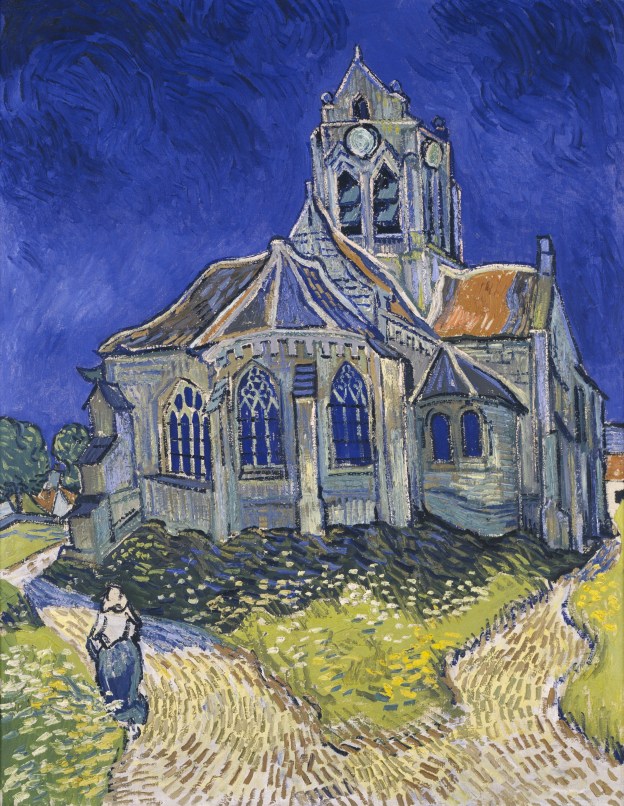
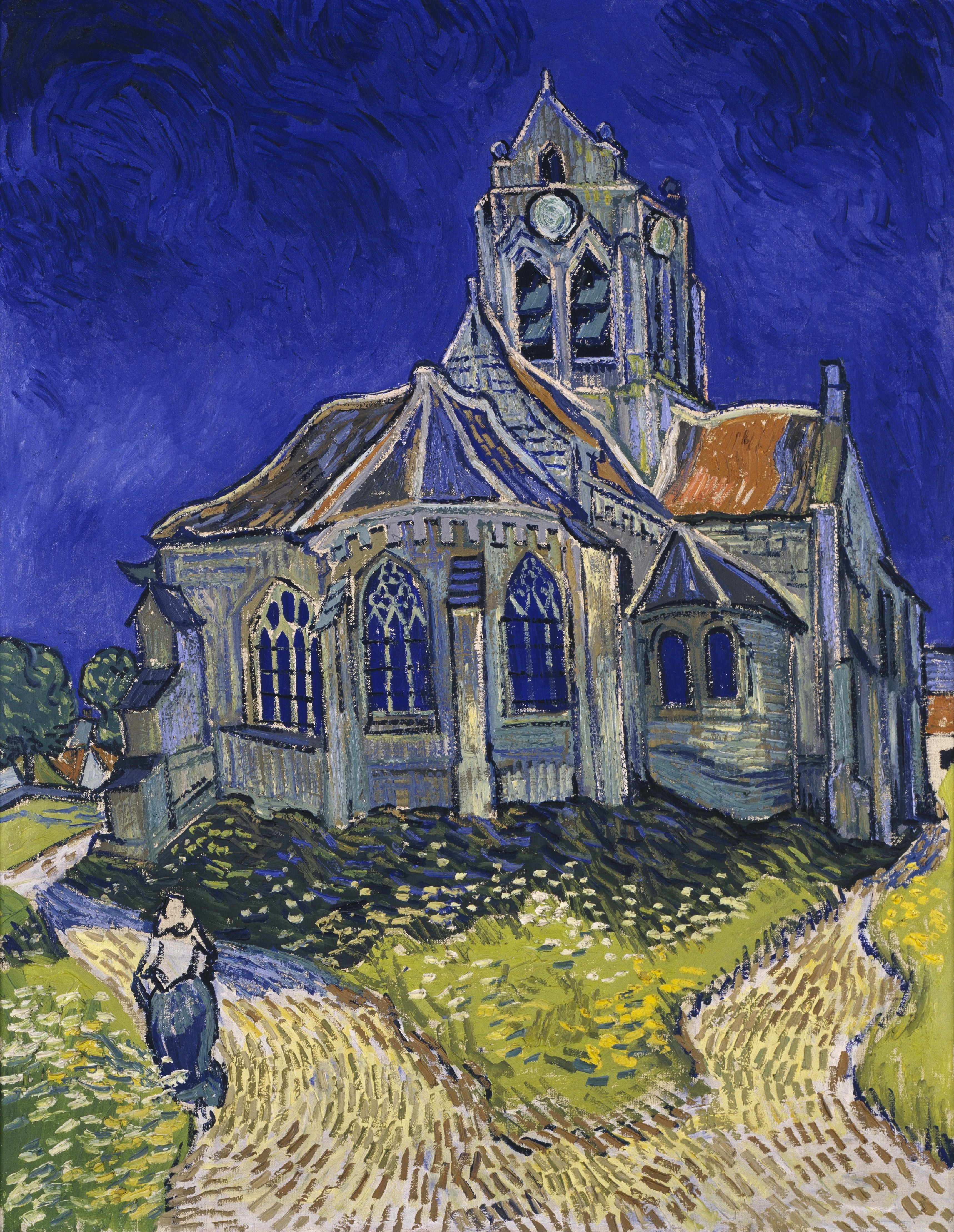
FEATURE Image: Vincent Van Gogh (1853-1890), L’église d’Auvers-sur-Oise, vue du chevet (“The Church at Auvers”), June 1890, oil on canvas, 94 cm x 74 cm (37 in x 29.1 in), Musée d’Orsay, Paris. Vincent Van Gogh (1853-1890), staying in Auvers starting on May 20, 1890 liked the country town with its artistic pedigree (Corot, Daubigny, Cézanne) and spoke of settling into permanent quarters in the village after renting an attic room in a local café. The artist continued about his experience at Auvers as he wrote: “[C]es toiles vous diront ce que je ne sais dire en paroles, ce que je vois de sain et de fortifiant dans la campagne” (“[T]hese canvases will tell you what I can’t say in words, what I consider healthy and fortifying about the countryside.”) During his more than two months stay in Auvers, a small farm town about 20 miles west of Paris, the post-impressionist did more than 100 drawings and paintings of local landscapes, gardens, and village scenes such as this Catholic church. On the evening of July 27, 1890 Van Gogh had acquired a pistol and shot himself in the chest near the Auvers chateau. After languishing in pain for two days, he died on the morning of July 29, 1890. Vincent Van Gogh was 37 years old. Public Domain.
The graves of both Vincent Van Gogh (1853-1890) and his younger brother and Paris art dealer Theo Van Gogh (1857-1891). They have been side by side in the Auvers cemetery in France since 1914. Photo: Author’s collection. May 2005.
By John P. Walsh
In a peripatetic life, the last place where Vincent Van Gogh (1853-1890) lived was Auvers-sur-Oise, a small commune, a short distance northwest of Paris. Since Auvers was on a rail line in the orbit of Paris, Van Gogh moved to the small town with its farming community so he could live independently yet remain close to his art dealer younger brother Theo Van Gogh (1857-1891) who lived with his wife and family in the hustle and bustle of Paris. After leaving Saint-Paul Asylum, Saint-Rémy, where Van Gogh had admitted himself as a patient since May 1889, he traveled to the French capital in May 1890 where he visited Theo and Jo. He was then onwards to Auvers where, by arrangement of Theo, the artist was under the supervision of Dr. Paul Gachet (1828-1909), a mental health physician who was also an avid modern art collector and had his house, family and practice in the town. Vincent arrived to Auvers on May 20, 1890 and stayed in the Saint-Aubin hotel until he moved into a rented attic room in a café of Arthur Gustave Ravoux and his wife, Adeline Louise Touillet, who charged him three and a half francs per night for room and board. Located in Place de la Mairie, a 5-minute walk from the train station, the artist’s daily schedule involved rising at dawn and going outside to draw and paint.
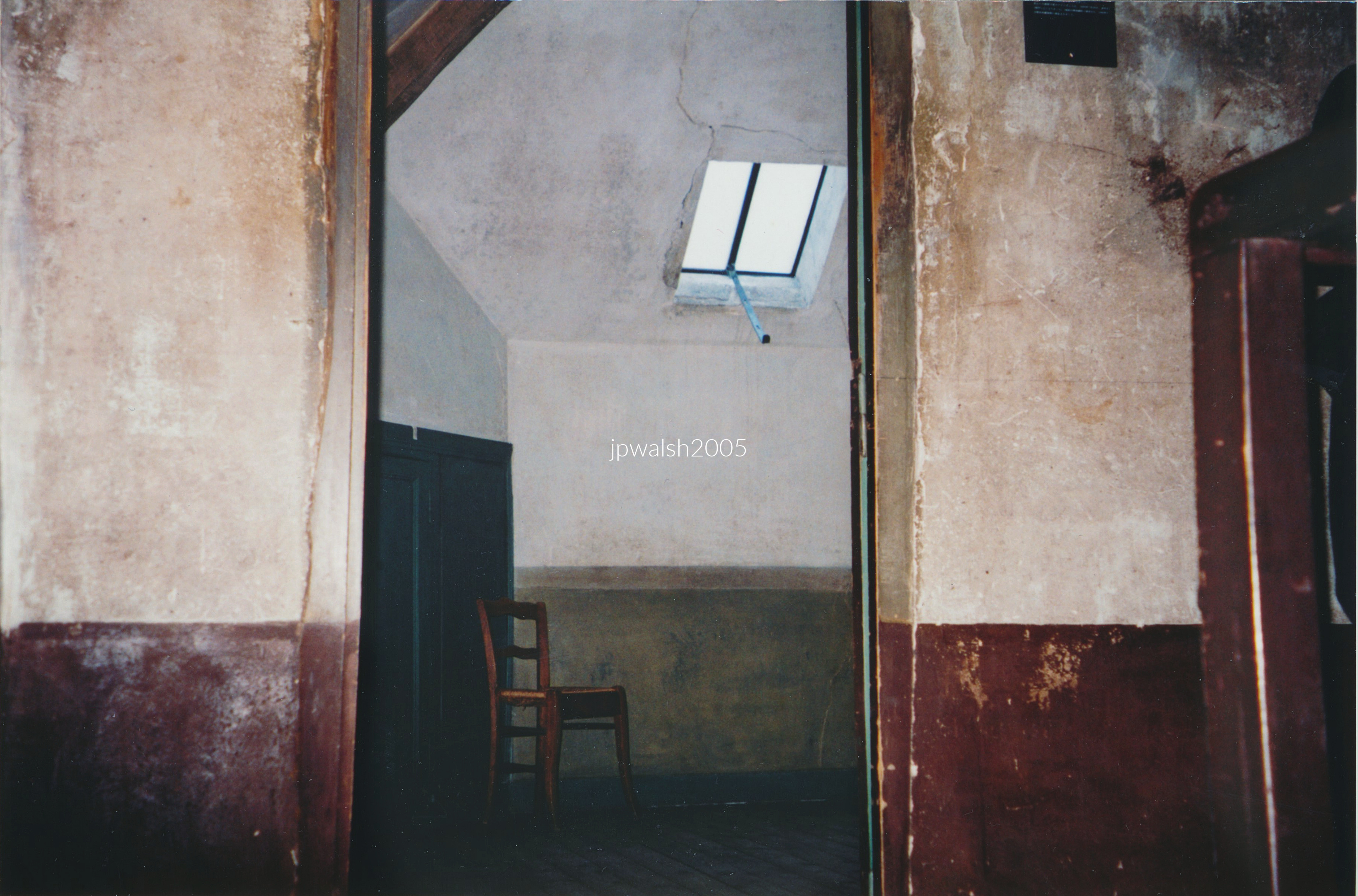
Entrance to Vincent Van Gogh’s rented room in Ravoux’s inn in Auvers. It was here that the artist lived for two months as he made more than 100 drawings and paintings in the town. The room is where Van Gogh returned after he shot himself on July 27, 1890 and died two days later surrounded by family and friends. Author’s photograph, May 2005.
After roaming the town where he made friends of villagers, visited Dr. Gachet’s, and journeyed into nearby farm fields, Van Gogh returned to Ravoux’s café for lunch that was served at noon. In the afternoon he might sometimes work in the “painters’ room” at the inn or visit with other painters staying at the inn, such as compatriot Anton Matthias Hirschig (1867-1939) and Spanish painter Martinez de Valdivielse. These acquaintances proved more significant for history insofar as they provided eyewitness testimony of Van Gogh’s death and funeral. Following dinner at Ravoux’s, Van Gogh climbed the inn’s simple staircase to his single room in the center of the attic landing and retired at about nine in the evening.
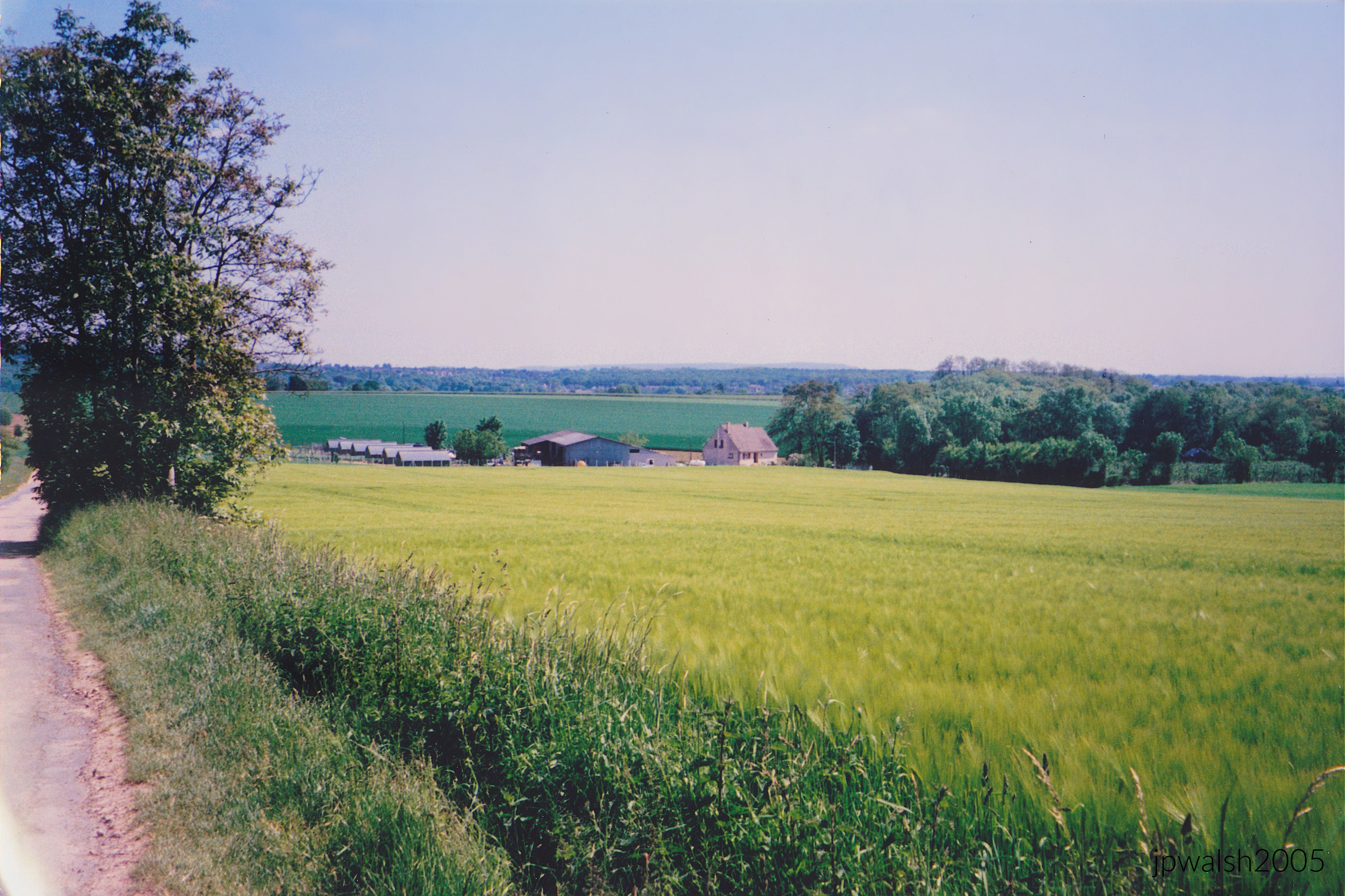
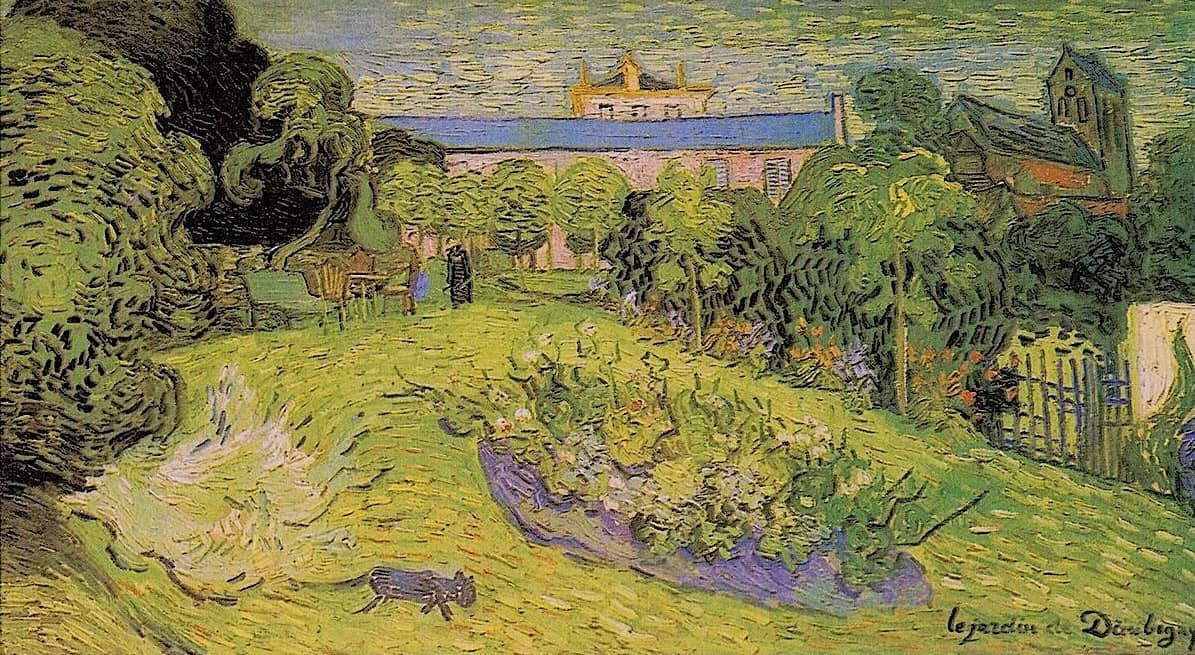
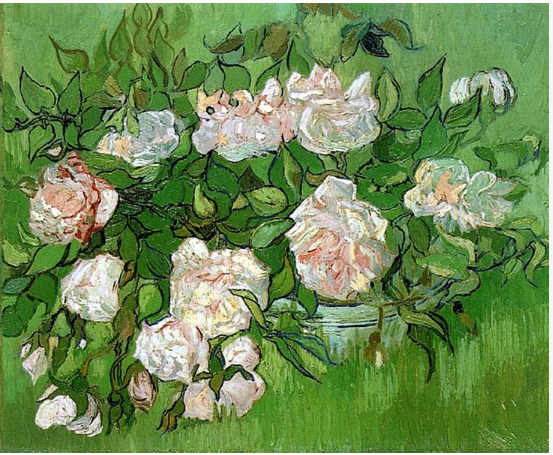
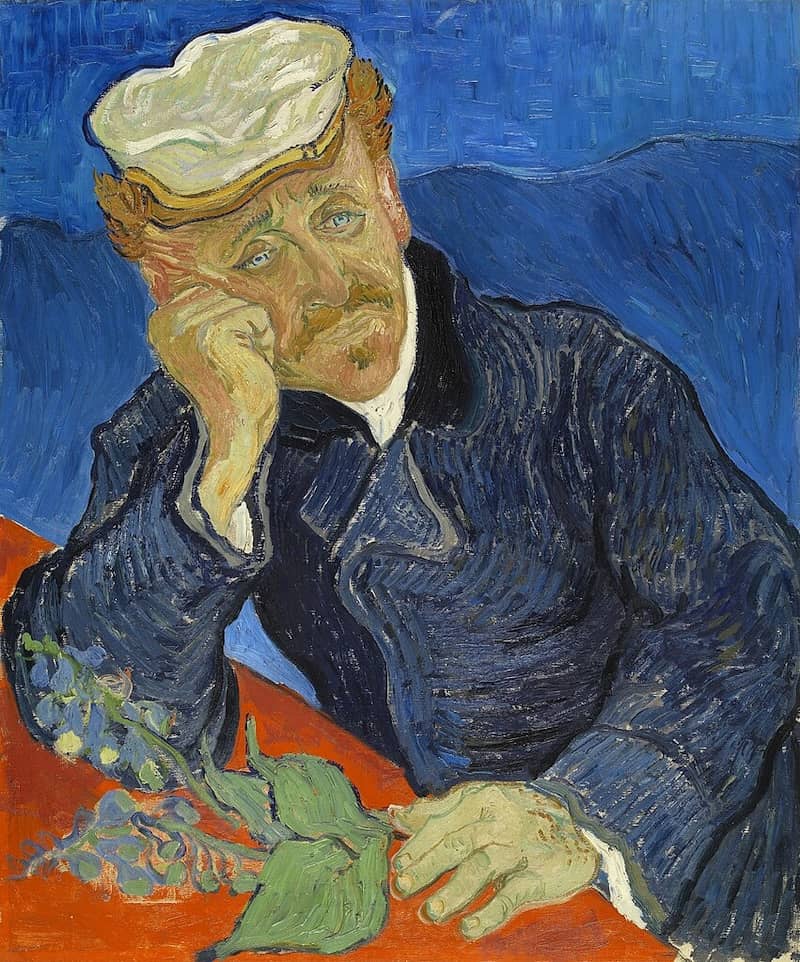
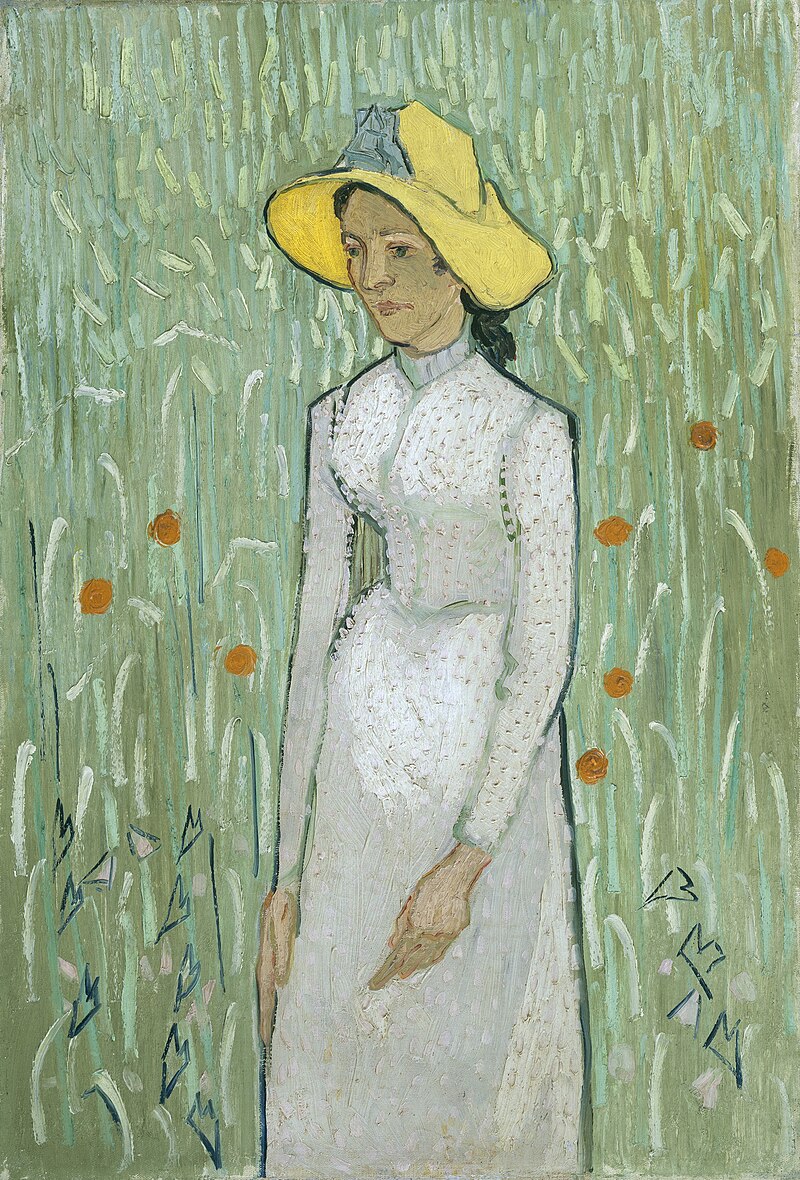
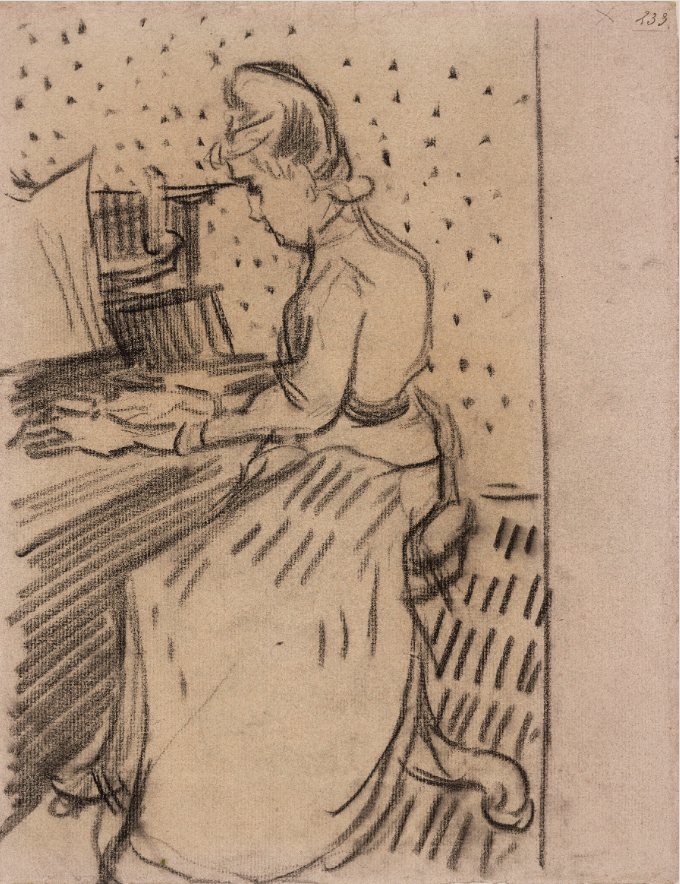
Fields of Auvers. Author’s photograph, May 2005.Vincent Van Gogh, View of Vessenots near Auvers, May 1890, oil on canvas, 55×65 cm, Thyssen-Bornemisza, Madrid, Spain. Public Domain.Vincent Van Gogh, Daubigny’s Garden, 1890, oil on canvas, 56 cm × 101 cm (22 in × 39.8 in), Kunstmuseum Basel, Basel, Switzerland. There are three versions by Van Gogh of this Auvers garden of the late Barbizon artist Charles-François Daubigny (1817-1878) who had moved to Auvers in 1860. All three paintings by Van Gogh were made between May and July 1890. Daubigny, a landscape artist who painted en plein aire, died in 1878 and his widow still lived in the house in Auvers that was a short walk from Ravoux’s inn. Van Gogh stepped outdoors into Daubigny’s garden to look back towards the house for the painting’s subject (the Church of Auvers is distinctly drawn in the painting’s upper right corner). Since the 1870’s Van Gogh admired Daubigny and mentioned him with other Barbizon painters, Jean-François Millet (1814-1875) and Camille Corot (1796-1875) (see – https://www.vincentvangogh.org/garden-of-daubigny.jsp – retrieved March 11, 2024). Public Domain.Vincent Van Gogh, Daubigny’s Garden, midJune 1890, oil on canvas, 51 cm x 51.2 cm, Van Gogh Museum, Amsterdam. Other versions of Daubigny’s Garden are in the Hiroshima Museum of Art in Japan (see – https://www.hiroshima-museum.jp/en/collection/eu/vangogh.html – retrieved March 11, 2024) and the Van Gogh Museum in Amsterdam (see – https://www.vangoghmuseum.nl/en/collection/s0104V1962 – retrieved March 11, 2024.). The square-format flat decorative painting, painted on a simple tea towel that was mounted to canvas, became Van Gogh’s first painted attempt of the garden. It acts as a modernist talisman reminiscent of Paul Sérusier’s 1888 cigar box painting and looks ahead to the decorative landscapes of the Nabis in the 1890’s and of Gustave Klimt (1862-1918) 15 years later. Public Domain.Vincent van Gogh, Garden in Auvers, July 1890, oil on canvas, 64×80 cm, private collection. Though Van Gogh died in 1890 his modernist artistic influence had deep ties with the European avant-garde art movement in the 1890’s and beyond. Public Domain.Setting for, and approach to, the Church of Auvers hardly differs from the time of Van Gogh’s stay in the town in May to July 1890. Author’s photograph, May 2005.Irises and other flowering plants on the side of an Auvers road that leads to Dr. Gachet’s house. Author’s photograph, May 2005.Vincent Van Gogh, Still Life Pink Roses, June 1890, oil on canvas, 32 x 40.5 cm, Ny Carlsberg Glyptotek, Copenhagen, Denmark. Public Domain.Van Gogh, Dr. Gachet (second version), June 1890, Musée d’Orsay, Paris. As a token of friendship, Van Gogh painted two authenticated versions of Dr. Gachet’s portrait in June 1890 at Auvers. Reasons that Van Gogh came to Auvers included the role played by Dr. Gachet as the artist’s therapist, as well as that the well-regarded physician contributed to his town’s modern art pedigree. Dr. Gachet was himself an avid collector and painter and participated in art circles since the 1850’s with Gustave Courbet (1819-1877). Later, Dr. Gachet saw to it that Paul Cézanne (1839-1906) came to Auvers to paint in 1873. It was Camille Pissarro (1830-1903) living in nearby Pontoise who recommended Dr. Gachet to Theo Van Gogh in anticipation of Vincent’s arrival from Saint-Rémy. Vincent Van Gogh was completely enamored with the doctor and thought of him as a brother. When Dr. Gachet visited Theo in Paris in early July 1890, he told him he believed that Vincent was “completely recovered” and “that there need be no fears of a further attack” (quoted in Complete Paintings, p. 718). As Van Gogh found Dr. Gachet to be another brand of eccentric, he painted him in these portraits as a deep thinker who reflected a sensitive nature tending to slight melancholy. Public Domain.Van Gogh, Portrait of Adeline Ravoux, June 1890, oil on canvas, 52x 52 cm, Cleveland Museum of Art. In their therapeutic and other conversations, it was Dr. Gachet in June 1890 who encouraged Van Gogh to make portraits of other sitters in Auvers. Van Gogh had done portraits of local Arlesiens in the “Studio of the South” in 1888 as well as many self-portraits. Adeline Ravoux was the 15-year-old daughter of his Auvers innkeepers, the Ravoux’s. About one month after this portrait was made, the girl was with her parents to witness Vincent’s return to the café after he shot himself. She wrote later in a memoir: “Vincent walked bent, holding his stomach, again exaggerating his habit of holding one shoulder higher than the other. Mother asked him: “M. Vincent, we were anxious, we are happy to see you to return; have you had a problem?” He replied in a suffering voice: “No, but I have…” He did not finish, crossed the hall, took the staircase and climbed to his bedroom.” (see – http://www.vggallery.com/misc/archives/a_ravoux.htm – retrieved March 11, 2024). Public Domain.Van Gogh, Young Girl Standing Against Wheat, late June 1890, 66.7 x 45.8 cm (26 1/4 x 18 1/16 in.), National Gallery of Art, Washington, D.C. The painting’s lack of horizon creates a flat wall behind the sitter who appears in close proximity to the picture plane as she fills the pictorial space. Van Gogh shadowed her face under her hat and gave her a “distant, unfocused” gaze, all of which works to give the portrait emotional distance. (see – Painting the Difference: Sex and Spectator in Modern Art by Charles Harrison, University of Chicago Press, 2006). Public Domain.Van Gogh, Marguerite Gachet at the Piano, June 1890, chalk on paper, 30.5 cm x 23.8 cm, Van Gogh Museum, Amsterdam. Marguerite Gachet was the daughter of Dr. Gachet. At the time of this drawing which resulted in a similarly composed painting, the sitter had recently turned 21 years old. In anticipation of the painting that is today in the Kunstmuseum Basel, Van Gogh made two sketches in late June 1890 of which this is one. https://www.vangoghmuseum.nl/en/collection/d0427V1962r – retrieved March 11, 2024. Public Domain.As in Van Gogh’s 1890 painting of the same subject, the church at Auvers (“Notre-Dame-de-l’Assomption”) today is brightly lit in the sun, while the church itself sits in its own shadow. Author’s photograph, May 2005.Van Gogh, L’église d’Auvers-sur-Oise, vue du chevet (“The Church at Auvers”), June 1890, oil on canvas, 94 cm x 74 cm (37 in x 29.1 in), Musée d’Orsay. Public Domain.
Van Gogh proved quite productive in Auvers, painting several notable canvasses in and around the town and countryside, particularly landscapes and other outdoor subjects en plein aire. In these two months, the painter produced 74 paintings and 33 drawings, including the portraits of Dr. Gachet and Adeline Ravoux, The Church of Auvers, and Field of Wheat with Crows. In a letter of around July 10, 1890, Van Gogh wrote to Theo and Jo that he painted three large canvases at Auvers since visiting them in Paris on July 6, 1890. During that visit the artist also met with Henri Toulouse-Lautrec (1864-1901) and art critic Gabriel-Albert Aurier (1865-1892). In addition to Daubigny’s Garden, these large canvasses likely included Wheatfield with Crows and Wheatfields Thunderclouds (both Van Gogh Museum Amsterdam). Van Gogh described them as “immense stretches of wheatfields under turbulent skies…searching to express sadness [and] extreme loneliness” (“immenses étendues de blés sous des ciels troublés… chercher à exprimer de la tristesse, de la solitude extreme”). See – https://vangoghletters.org/vg/letters/let898/print.html – retrieved March 11, 2024.
Vincent Van Gogh, Sorrowing Old Man (“At Eternity’s Gate”), 1890, 80 cm × 64 cm (31.5 in × 21.2 in), oil on canvas, Kröller-Müller Museum, Otterlo, The Netherlands. The painting was completed at St. Rémy shortly before Van Gogh moved to Auvers-sur-Oise.At the wheatfield in Auvers where Van Gogh painted “Wheatfield with Crows,” one of his last paintings, in July 1890. Author’s photograph, May 2005.Van Gogh, Wheatfield with Crows. July 1890, oil on canvas, 50.2 cm × 103 cm (19.8 in × 41 in), Van Gogh Museum, Amsterdam. Public Domain. Many have claimed this to be Van Gogh’s last painting.Auvers fields. Author’s photograph, May 2005.
Van Gogh, Wheatfield Thunderclouds, July 1890, oil on canvas, 50.4 cm × 101.3 cm (19.8 in × 39.9 in), Vincent Van Gogh Museum, Amsterdam.
On July 27, 1890, Vincent, as he did each day, went into the fields to paint. Though the artist appeared to be in good spirits, the artist shot himself later that day near the chateau after going for a walk towards evening. Though able to walk the 10 minutes back mortally wounded to Ravoux’s inn, he told them nothing upon entering the café. The Ravoux’s, sensing something was wrong, called for Mazery, the village doctor and Dr. Gachet. Though these doctors bandage the wound, Van Gogh’s condition is inoperable. In the hot attic room, Van Gogh suffered into the next day, when Theo was sent for. He arrived immediately on July 28 from Paris to be by his brother’s side. Van Gogh died the next morning of July 29, 1890. This suicide sent ripples of shock through the village, as some townspeople had witnessed these events. During my visit to Auvers in May 2005, after exiting Van Gogh’s room where he died, I told the innkeeper that the story was sad (“c’est triste”). She countered, “C’est emouvante” (“It’s moving”). Vincent was buried the next day, July 30, 1890, in Auvers’ new graveyard. His funeral was attended by Theo, Dr. Gachet, the Ravoux’s, assorted villagers, and friends from Paris. These last included artists Emile Bernard (1868-1941), Charles Laval (1862-1894), and Lucien Pissarro (1863- 1944), Camille Pissarro’s son. Petit boulevard art dealer and art materials supplier Julien (Père) Tanguy (1825-1894) was also in attendance. Van Gogh’s casket was strewn with yellow dahlias and sunflowers and Dr. Gachet gave remarks as did Theo Van Gogh. Later, in a letter to his wife, Theo wrote about the proceedings: “[Vincent] was buried in a sunny spot among the cornfields, and the cemetery does not have that unpleasant character of Parisian cemeteries.” (see- Kort geluk, 1999, p. 281). The mortal remains of Van Gogh were transported to the cemetery by a rented hearse from the next town because Auvers’ Catholic priest would not allow the community’s hearse to be used. A proposed church service was also cancelled. The homiletics were left to Dr. Gachet who said: “Vincent was an honest man and a great artist, and there were only two things for him – humanity and art. Art mattered to Vincent Van Gogh more than anything else and he will live on through it” (quoted in Complete Paintings, p. 719).
Graves of Vincent and Theo Van Gogh, Auvers-sur-Oise, France. Author’s photograph, May 2005.
Three days after the funeral, Emile Bernard wrote to Aurier about “our dear friend Vincent.” Aurier had written in January 1890 about the intense fixity of Van Gogh’s art. The art critic conjectured that it may be the catalyst for change in French art. In his essay entitled Les Isolés: Vincent van Gogh published in Mercure de France, Aurier prophesied for an artist-savior figure: “A man must come, a Messiah, a sower of Truth, to rejuvenate our geriatric art, indeed perhaps the whole of our geriatric, feeble minded, industrial society” (quoted in Complete Paintings, p. 698). Van Gogh, aware of these statements, did not think he was Aurier’s man. On August 2, 1890 Emile Bernard wrote to Aurier: “On Sunday evening [Vincent] went out into the countryside near Auvers, placed his easel against a haystack and went behind the chateau and fired a revolver shot at himself. Under the violence of the impact (the bullet entered his body below the heart) he fell, but he got up again, and fell three times more, before he got back to the inn where he was staying (Ravoux, place de la Mairie) without telling anyone about his injury. He finally died on Monday evening, still smoking his pipe which he refused to let go of, explaining that his suicide had been absolutely deliberate and that he had done it in complete lucidity…. On the walls of the room where his body was laid out all his last canvases were hung making a sort of halo for him and the brilliance of the genius that radiated from them made this death even more painful for us artists who were there. The coffin was covered with a simple white cloth and surrounded with masses of flowers, the sunflowers that he loved so much, yellow dahlias, yellow flowers everywhere. It was, you will remember, his favorite color, the symbol of the light that he dreamed of as being in people’s hearts as well as in works of art….The sun was terribly hot outside. We climbed the hill outside Auvers talking about him, about the daring impulse he had given to art, of the great projects he was always thinking about, and of the good he had done to all of us. We reached the cemetery, a small new cemetery strewn with new tombstones. It is on the little hill above the fields that were ripe for harvest under the wide blue sky that he would still have loved…perhaps.Then he was lowered into the grave…Then we returned. Theodore Van Ghog [sic] was broken with grief; everyone who attended was very moved, some going off into the open country while others went back to the station…” (see – https://www.webexhibits.org/vangogh/letter/21/etc-Bernard-Aurier.htm – retrieved March 11, 2024.)
Van Gogh, Two Women Crossing the Fields, July 1890, oil on paper on canvas, Marion Koogler McNay Art Museum, San Antonio, Texas.
By contrast, Anton Hirschig, the Dutch artist who roomed next door to Van Gogh at Ravoux’s, wrote a letter much later, in 1911, to Albert Plasschaert (1874-1941) in which he recounted a more terrible scene following Van Gogh’s shooting himself. Hirschig wrote: “He lay in his attic room under a tin roof. It was terribly hot. It was August. He stayed there alone for some days. Perhaps only a few. Perhaps many. It seemed to me like a lot. At night he cried out, cried out loud. His bed stood just beside the partition of the other attic room where I slept: Isn’t there anyone willing to open me up! I don’t think there was anyone with him in the middle of the night and it was so hot. I don’t think I ever saw any other doctor like his friend the retired army doctor: It’s your own fault, what did you have to go kill yourself for? He didn’t have any instruments this doctor. He lay there until he died.”
Theo Van Gogh died in Holland on January 25, 1891, nearly 6 months to the day after Vincent’s death. Theo was buried in Holland but exhumed and reinterred next to his older brother Vincent’s grave in Auvers cemetery in 1914. While Vincent Van Gogh, the man, was never larger than life, as an artist he produced an explosion of life on paper and canvas. Van Gogh came to art late (30 years old in 1883) and produced incessantly for the next 7 years. His oeuvre was beautifully powerful, and none of it more remarkably for the future of modernism than that done in Auvers-sur-Oise in May to July 1890.
SOURCES –
Ingo F. Walther/Painer Metzger, Vincent Van Gogh The Complete Paintings, Benedikt Taschen, 1996.
Charles Harrison, Painting the Difference: Sex and Spectator in Modern Art, University of Chicago Press, 2006.
FEATURE Image: Marianne Williamson founded Project Angel Food in Hollywood, California, that prepares and delivers healthy meals to feed people impacted by serious illness, bringing comfort and hope every day. PHOTO: “Marianne Williamson” by Gage Skidmore is licensed under CC BY-SA 2.0.
Marianne Williamson (b. 1952), a Democrat, is running for U.S. president in 2024. She has an interesting biography. For example, Williamson has been active in charity work founding in 1989 Project Angel Food that provides free meals for people too sick to shop and cook for themselves. Sparked in response to a dramatic increase in HIV/AIDS cases in the late 1980s and early 1990’s, Project Angel Food has served its 16 millionth free meal to the sick and infirm in 2023. Within an especially committed and hard-working history, Elizabeth Taylor’s AIDS Foundation gave Project Angel Food its first-ever grant of $150,000 in 1992 and the charity organization obtained its first government grant in 1993. In 1999, Taylor accepted an Angel Award recognizing her impact on increasing awareness of HIV/AIDS at a time in Los Angeles when there were more than 30,000 known cases. In 1998, Marianne Williamson founded the Peace Alliance, a U.S. nonprofit working towards peace building in the U.S. and around the globe. Ms. Williamson is a board member for RESULTS, a nonprofit dedicated to finding long-term solutions to poverty. Ms. Williamson’s candidacy for U.S. President this year (she UNsuspended her campaign this week) should certainly be worth following.
5.29 minutes. “The spirit of this place even though it’s so modern and so huge that little seed that was planted in the very beginning, that spark I swear, Is still here which is so important…”