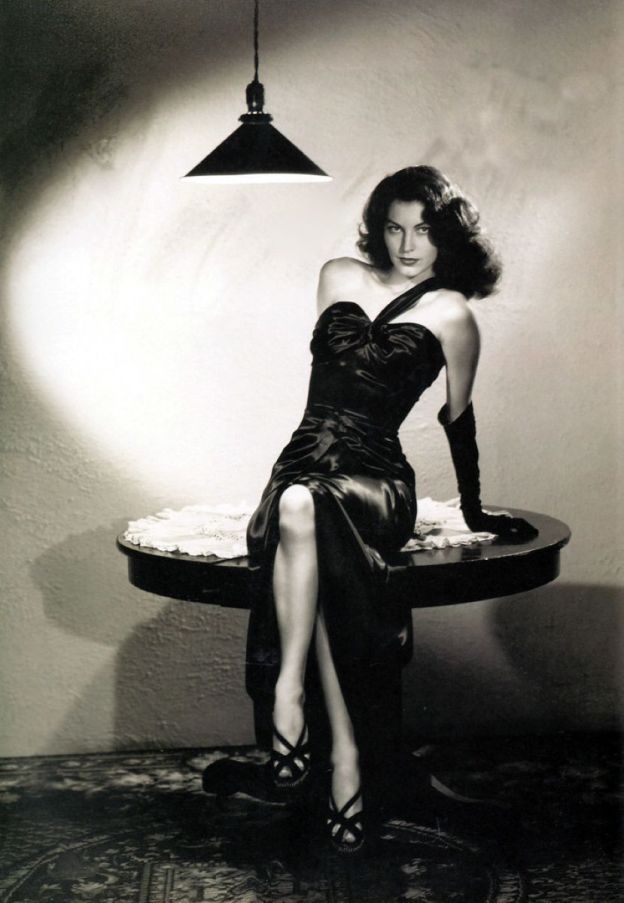
FEATURE: Twenty-three-year-oldAva Gardner was a noir icon in the making when, in 1946, she sat beneath a hard cone of light, her satin gown, long gloves, and crisp shadows distilled into pure mid-century glamour. Distributed globally across newspapers, movie magazines, lobby cards, and posters, cross‑legged on the polished table, she projects cool, controlled noir magnetism—elegance with an undercurrent of danger. Captured by veteran Universal studio portrait photographer Ed Esterbrook, this iconic image served as the primary promotional portrait for Robert Siodmak’s 1946 masterpiece, The Killers. On the Universal film sets, cinematographer Elwood Bredell shaped the movie’s high-contrast lighting, carving sharp, expressionistic shadows while giving Gardner’s skin a luminous, dangerous sheen. Bringing this lethal on-screen look to life was Gardner in a famous, custom-made asymmetrical black satin gown crafted by Vera West, Universal’s legendary chief costume designer. Altogether, these elements froze a moment in time that remains one of the most recognizable and enduring symbols of cinematic post-war noir glamour. PHOTO: “Ava Gardner in The Killers, 1946” by thefoxling is licensed under CC BY-NC-SA 2.0.
Robert Siodmak’s 1946 film The Killers stands as a pivotal milestone in cinema history, serving as the catalyst for Universal Pictures’ postwar commercial stabilization while simultaneously redefining film noir by launching Burt Lancaster into stardom and establishing Ava Gardner as the definitive archetype of the Hollywood femme fatale.
A Film Noir Breakthrough
Eighty years ago today—August 28, 1946—Robert Siodmak’s The Killers exploded onto American movie screens, instantly becoming a film noir sensation. It launched Burt Lancaster into overnight stardom after producer Mark Hellinger couldn’t land his first choice, Wayne Morris, and it introduced Ava Gardner as Hollywood’s definitive femme fatale. Adapted from Ernest Hemingway’s 1927 existential and grim short story, the film follows a washed-up ex-boxer who waits calmly in a dark room for hitmen to kill him, utterly undone by Gardner’s double-crossing allure. Though Anthony Veiller received official screen credit, the script carried major, uncredited writing contributions from future directing icons Richard Brooks and John Huston, while Miklós Rózsa’s tense, four-note brass score sharpened its fatalistic mood.
From the complete, dramatic original motion picture score for the 1946 film noir classic The Killers, composed by the legendary Miklós Rózsa. The soundtrack includes the famous, tense instrumental tracks that heightened the movie’s fatalistic mood, alongside the nightclub torch song performed with vocals by Ava Gardner herself.
Hollywood at Peak Attendance
Moviegoing in 1946 was at its absolute historic height, drawing a staggering 90 million weekly admissions. However, ticket prices had nearly doubled since before the war. This spike made post-war audiences far more selective, pushing major studios away from cheap “B-movies” and toward full-length, high-production features—frequently shot in vibrant Technicolor and paired as double features to ensure patrons got their money’s worth.
Universal Pictures tried to reinvent itself by merging with independents, including Hellinger’s banner, which produced The Killers for under $1 million and earned more than $3 million. Emboldened to meet the new demand, the studio chased prestige cinema, dropped its old B‑pictures and many longtime stars, and merged with International Pictures to form Universal‑International—but audiences mostly shrugged, and by decade’s end the company was losing money.
The Return to What Audiences Wanted
Veteran executive Edward Muhl, who had been with Universal since 1927, stepped up as general manager to steady the studio before officially becoming Head of Production in 1953. He steered the company back toward what mainstream American audiences reliably embraced: lucrative, low-budget comedy franchises like Ma and Pa Kettle (10 films, 1947–1957) and Francis the Talking Mule (7 films, 1950–1956), alongside a steady, highly profitable output of escapist Technicolor action-adventure films.
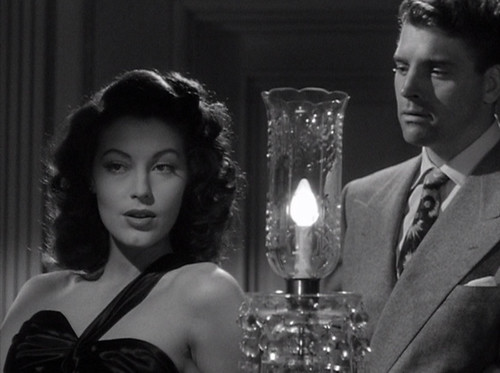
Film still from the production of The Killers (1946) captures the charged chemistry between Ava Gardner as Kitty Collins and Burt Lancaster, making his debut as Ole “The Swede” Andreson. Their first meeting is a textbook noir seduction: the doomed protagonist instantly, helplessly drawn into the orbit of the femme fatale who will seal his fate. At the center of the frame, cinematographer Elwood Bredell turns a crystal oil lamp into a diegetic light source—a glowing boundary between the two characters that casts soft illumination across Gardner’s face while dropping the rest of the room into deep, moody shadow. She’s wearing Vera West’s asymmetrical black satin gown—the same one from the famous publicity portrait—and on screen the heavy satin drinks the light, turning her into the ultimate femme fatale. PHOTO: “Ava Gardner y Burt Lancaster” by afevrier is licensed under CC BY-NC-SA 2.0.
This video short captures the electric first meeting between Ava Gardner and Burt Lancaster in the 1946 film noir classic The Killers, highlighting her sultry debut scene as Kitty Collins. The clip showcases Ava Gardner’s mesmerizing screen presence that audiences will remember as she delivers her smooth, fatalistic dialogue directly to the spellbound Swede. KITTY COLLINS: “How wonderful of you, I could never bear to see a man I really cared for being hurt.”
“She can’t sing, she can’t act, she can’t talk. She’s terrific!”– Louis B. Mayer on Ava Gardner.
Before The Killers, Ava Gardner was hopelessly stuck in Hollywood limbo. MGM head Louis B. Mayer had signed the 19-year-old North Carolina newcomer in 1941 purely based on her breathtaking physical photos. For five long years, she drifted through more than twenty films as an uncredited extra, barely noticed by the industry.
The Killers changed everything. Producer Mark Hellinger fought to cast the 23-year-old as Kitty Collins, freeing her from MGM’s rigid, squeaky-clean star-making machinery and handing her a role with genuine dramatic weight. Dressed in Vera West’s iconic, asymmetrical black satin gown, Gardner used her natural magnetism, smoldering gaze, and quiet confidence to completely command the visual frame. On the silver screen, she crafted a cold, calculating siren who seamlessly weaponized vulnerability to orchestrate a massive double-cross.
When the film became a box-office triumph in August 1946, audiences and critics were instantly transfixed. Gardner and Lancaster became overnight A-list sensations. Suddenly, she wasn’t just a glamorous face in the gossip columns—she was a legitimate actress widely praised for her dramatic depth and dangerous screen presence.
MGM moved fast to exploit her newly minted star power. Gone were the uncredited bit parts; instead, Gardner was vaulted into high-profile late-1940s productions like The Hucksters (1947) opposite Clark Gable, One Touch of Venus (1948), and The Bribe (1949). By the turn of the decade, MGM’s publicity office was completely overwhelmed, processing more than 3,000 fan photo requests per week for Hollywood’s ultimate new siren.
The original theatrical movie poster for The Killers (1946) pulses with classic film noir energy, dominated by bold red typography and the striking tagline: “TENSE! TAUT! TERRIFIC!” Public Domain. The poster had a valid copyright notice, as seen on the bottom left corner. However, the copyright for the artwork was not renewed, as was required by American copyright law to extend/maintain protection for works published 1963 or earlier. In order to maintain copyright protection, the poster would have had to be renewed 28 years after publication, in either 1973 or 1974. Because it was not renewed, copyright lapsed at that time. Note that the poster art is a distinct work from the film it represents and had to be renewed separately.
SOURCE: The Universal Story, Clive Hirschhorn, Crown Publishers, Inc. New York, 1983, pp. 156-64.
This explanatory article may be periodically updated.
ROSA LEE: I LOVE YOU, YOU KNOW? EVERY NIGHT WHEN I SAY MY PRAYERS AND I THANK THE LORD FOR HIS BLESSINGS AND HIS TENDER MERCIES TO ME, YOU AND SONNY HEAD THE LIST. Tender Mercies – 11. “Blessings and Tender Mercies” – retrieved February 16, 2026.
The Passing of a Film Legend
Robert Duvall died February 15, 2026, at his home in Middleburg, Virginia, at 95 it was announced February 16.
An Oscar-Winning Turn in Tender Mercies
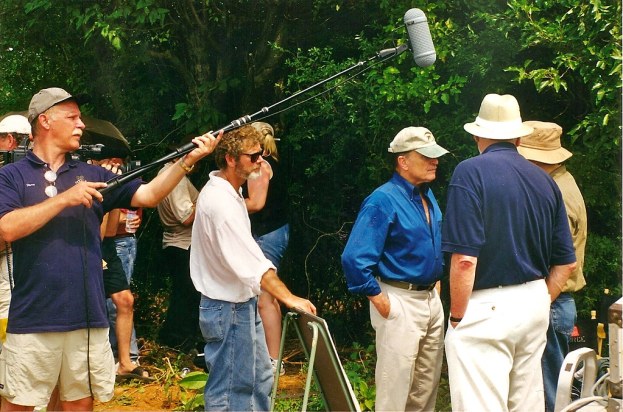
In Tender Mercies, a 1983 American drama film set in Texas, Robert Duvall played washed-up country singer Mac Sledge in a performance that won that year’s Academy Award for Best Actor. In this scene, Duvall’s friend, Wilford Brimley, played Harry, Mac’s former manager, and Tess Harper played a widow named Rosa Lee who develops feelings for Mac. Coming off a bitter break up with his wife Dixie Lee, a superstar country singer, who won’t let her ex-alcoholic husband near herself or their grown daughter, Mac, a once legendary country music star in his own right, lives and works quietly at a gas station operated by Rosa Lee who lives with her young son. As Mac tries to rebuild both his career and life on the Texas badlands, he finds he has keener, if less flashy, success with the latter. Nominated for 5 Academy Awards, Tender Mercies also won Oscar for Best Screenplay – Written Directly for the Screen (Horton Foote).
A Six-Decade Legacy of Iconic Cinema
In his 60-year film career, Duvall made scores of films, receiving seven Academy Award nominations in the process. Duvall also received four Golden Globe Awards. From his film debut in 1962 as Boo Radley in To Kill A Mockingbird, Duvall appeared in some of the most iconic feature films of his era and in iconic roles both on screen and behind the camera as producer, writer and director.
Robert Duvall played Lieutenant Colonel William “Bill” Kilgore in Apocalypse Now, a 1979 war film directed by Francis (Ford) Coppola. Commanding the 1st Battalion, 9th Air Cavalry Regiment during the Vietnam War, Kilgore is depicted as an adrenaline-fueled “gung-ho” officer who embodies the insanity of the war. (6) Apocalypse Now UHD (1979) – Lieutenant Colonel Bill Kilgore (1/11) | 4K Clips – YouTube – retrieved February 16, 2026.
Notable Filmography and Final Work
Notable film titles include: True Grit (1969), M*A*S*H (1970), The Godfather (1972), The Godfather Part II (1974), The Conversation (1974), Apocalypse Now (1979), The Great Santini (1979), Tender Mercies (1983), The Natural (1984), The Apostle (1997), Open Range (2003), and Wild Horses (2015). At 91 years old, Duvall’s final film, The Pale Blue Eye, was released 60 years after his first, in 2022.
Based on the 1969 novel by Mario Puzo, Francis Ford Coppola’s The Godfather (1972) is one of the greatest films of all time. Robert Duvall plays cool-headed Tom Hagen, the Irish-German consigliere and lawyer for the Corleone crime family. Since youth Hagen was unofficially adopted into the New York-based Italian American family by the Godfather, Vito Corleone. Hagen is dispatched to Hollywood by the Godfather to secure a film role for Johnny Fontaine, a singer and Vito’s godson, and produced by Jack Woltz (John Marley). When Woltz refuses Tom Hagen’s first offer for Johnny to star in his picture, and Tom Hagen returns to New York, the Godfather makes the reluctant film producer a second offer he can’t refuse.
Robert Duvall’s extraordinary six-decade career cemented his status as a titan of American cinema. From his hauntingly quiet film debut in To Kill a Mockingbird to his commanding, adrenaline-fueled performance in Apocalypse Now, Duvall possessed a rare, transformative range. His Oscar-winning turn in Tender Mercies showcased his unique ability to find profound truth in personal, everyday humanity. Whether portraying fierce officers, cool-headed family consiglieres, or broken men seeking redemption, Duvall consistently elevated every frame he occupied. His immense body of work leaves behind an indelible blueprint for character acting and an enduring legacy in film history.
This explanatory article may be periodically updated.
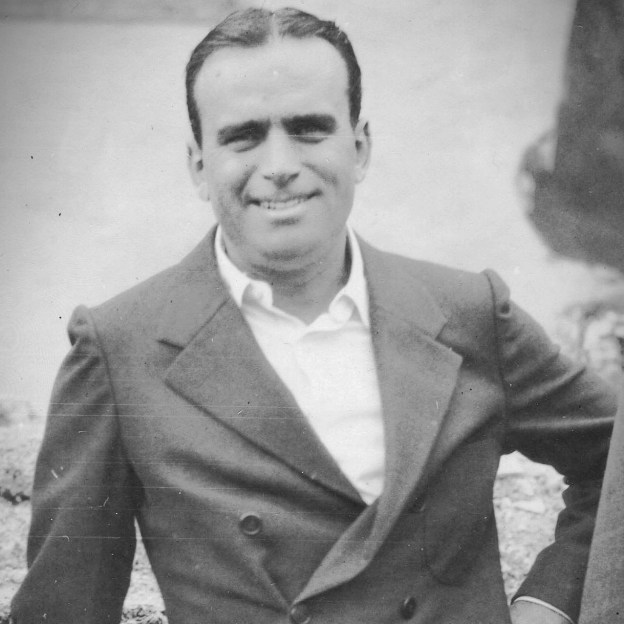
FEATURE image: Silent film superstar and icon Douglas Fairbanks Sr., c. 1917, flashing his trademark toothy smile in a cropped photograph taken in or around 1917. The photograph was taken on location on the massive backlots of Universal Studios at Universal City, California. That year Fairbanks was highly active making dynamic comedies and open-air adventures in Southern California (such as A Modern Musketeer). The original negative is preserved today as part of the official United States Marine Corps History Division Archives.
Douglas Fairbanks, Sr. helped create the modern movie star by transforming himself from a successful Broadway actor into Hollywood’s first great athletic screen hero, using charisma, physicality, and entrepreneurial ambition to become one of silent cinema’s most influential figures and a co-founder of United Artists.
Studio portrait of silent film megastar Douglas Fairbanks Sr., taken at the height of his rise as “The King of Hollywood.” The uncropped image preserves the raw edges of the original 8×10 glass plate negative, revealing the studio backdrop and the photographer’s reference numbers etched along the bottom edge. Photographed in Washington, D.C., in April 1918 by Harris & Ewing, one of the nation’s premier photographic firms, the image comes from a studio renowned for documenting U.S. presidents, visiting dignitaries, and leading cultural figures of the early twentieth century.
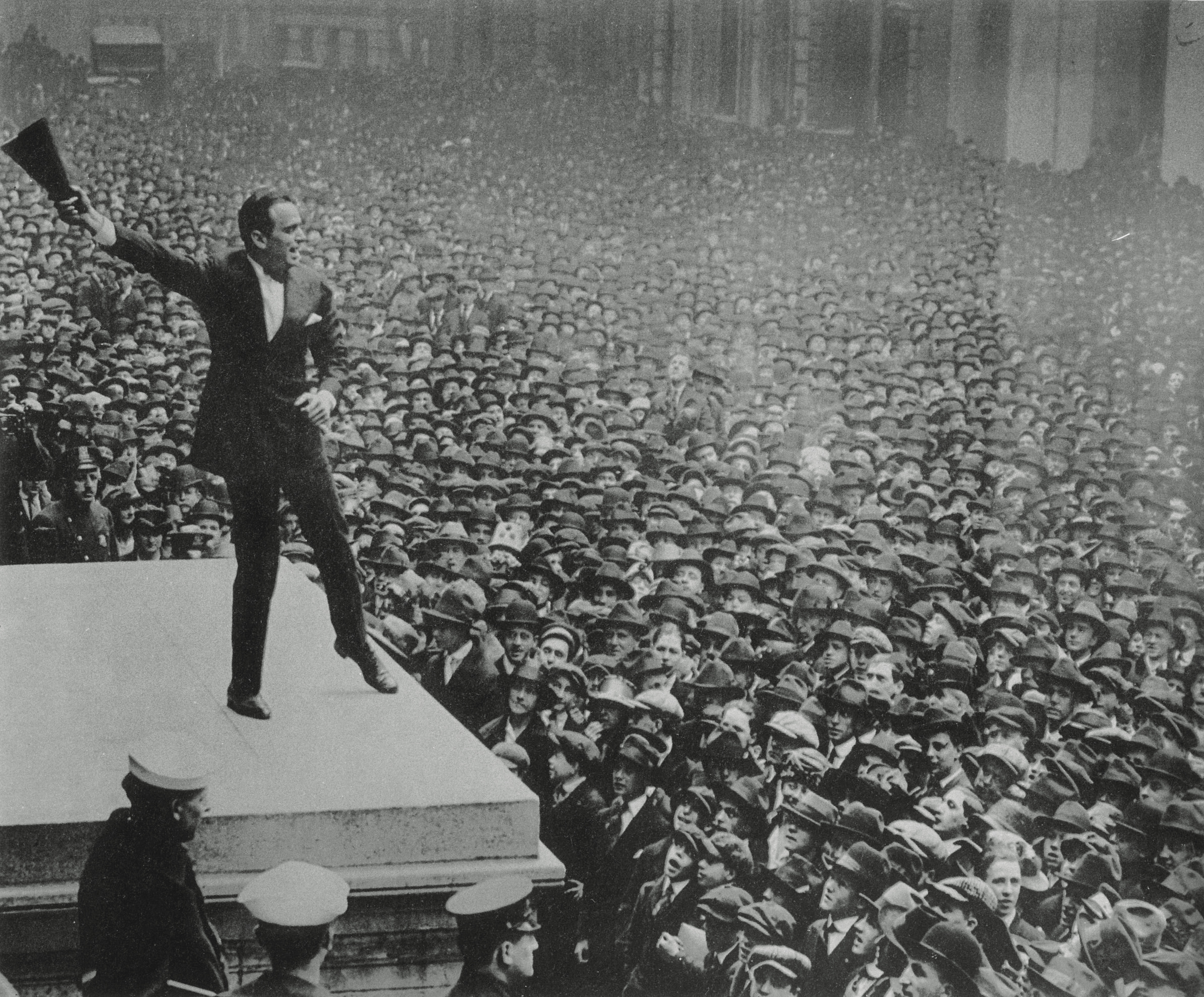
The sitting was part of a major publicity campaign connected to the World War I home-front effort. That spring, Fairbanks joined his close friends and future United Artists partners Charlie Chaplin and Mary Pickford on a widely publicized cross-country tour promoting Liberty Bonds and boosting public support for the war. Along the way, he became a headline attraction at patriotic rallies, including the famous Wall Street event where he hoisted Chaplin onto his shoulders before thousands of spectators.
The Washington studio session provided newspapers, magazines, and patriotic publications with fresh promotional photographs showcasing Fairbanks’s trademark energy and infectious smile, helping carry the Liberty Bond campaign to audiences across the country. Because the images were created as part of a government-associated wartime publicity effort, the original glass negative was ultimately preserved and is now held in the collections of the Library of Congress.No known restrictions on publication. Public Domain.
By John P. Walsh.
Early Life and Family Background
Born in Denver in 1883, Douglas Fairbanks’ mother had been married three times before she had him, the younger of two brothers with his father, an East Coast publisher and lawyer, who had relocated his family to the West. Douglas’s father abandoned the family when he was 5 years old, and the brothers were raised by their mother in Denver. Douglas also had two older half brothers by way of his mother’s previous marriages. With Douglas’s father’s departure, his mother gave her youngest sons her first husband’s surname—Fairbanks.
Stage Beginnings in Denver and New York
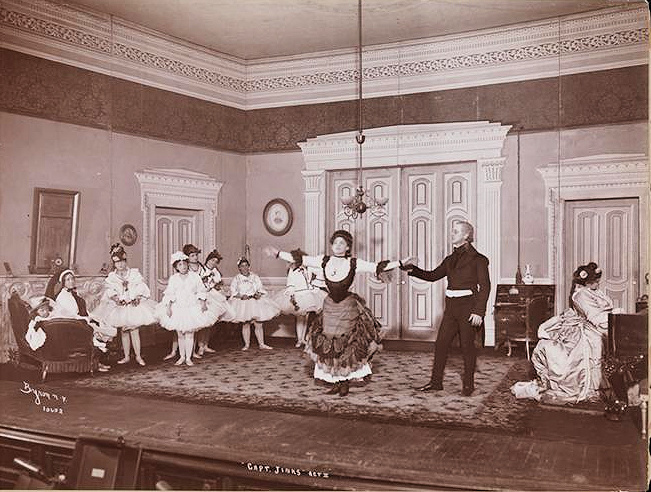
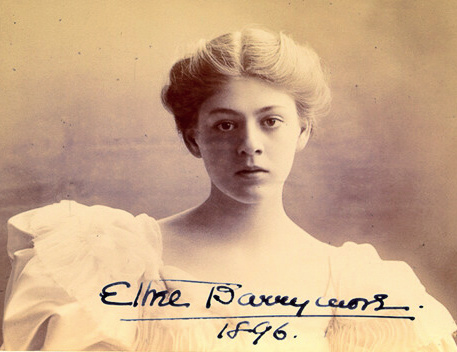
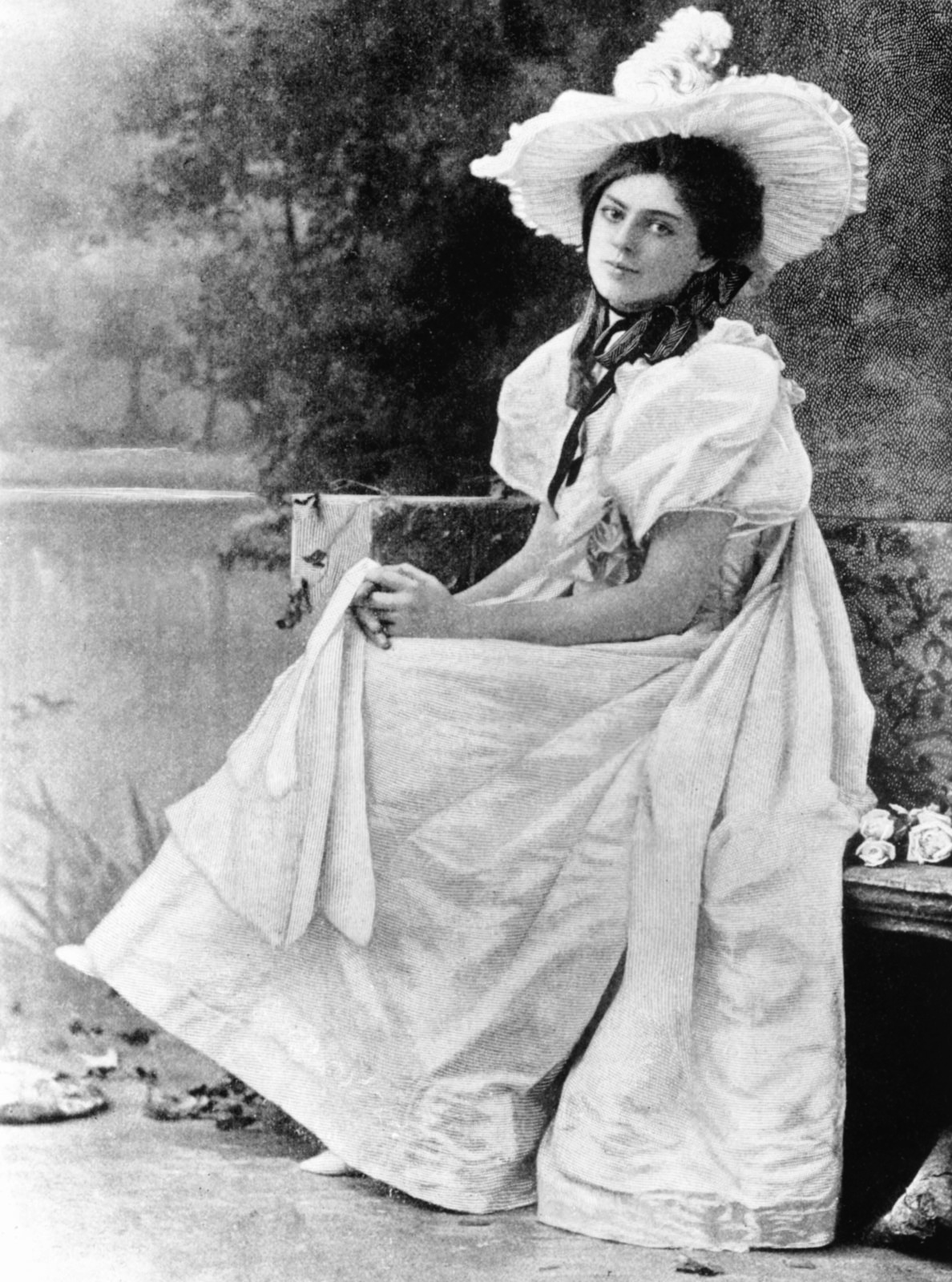
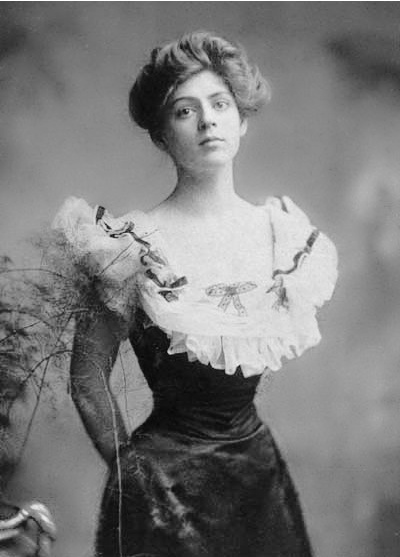
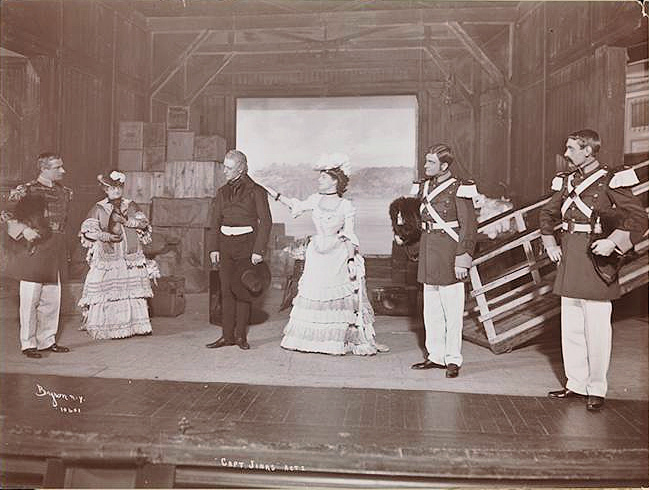
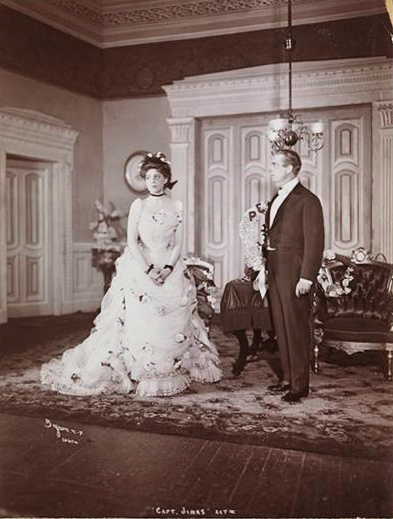
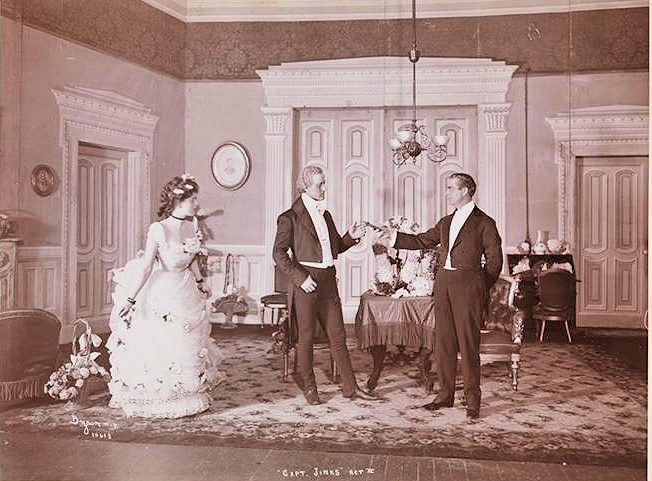
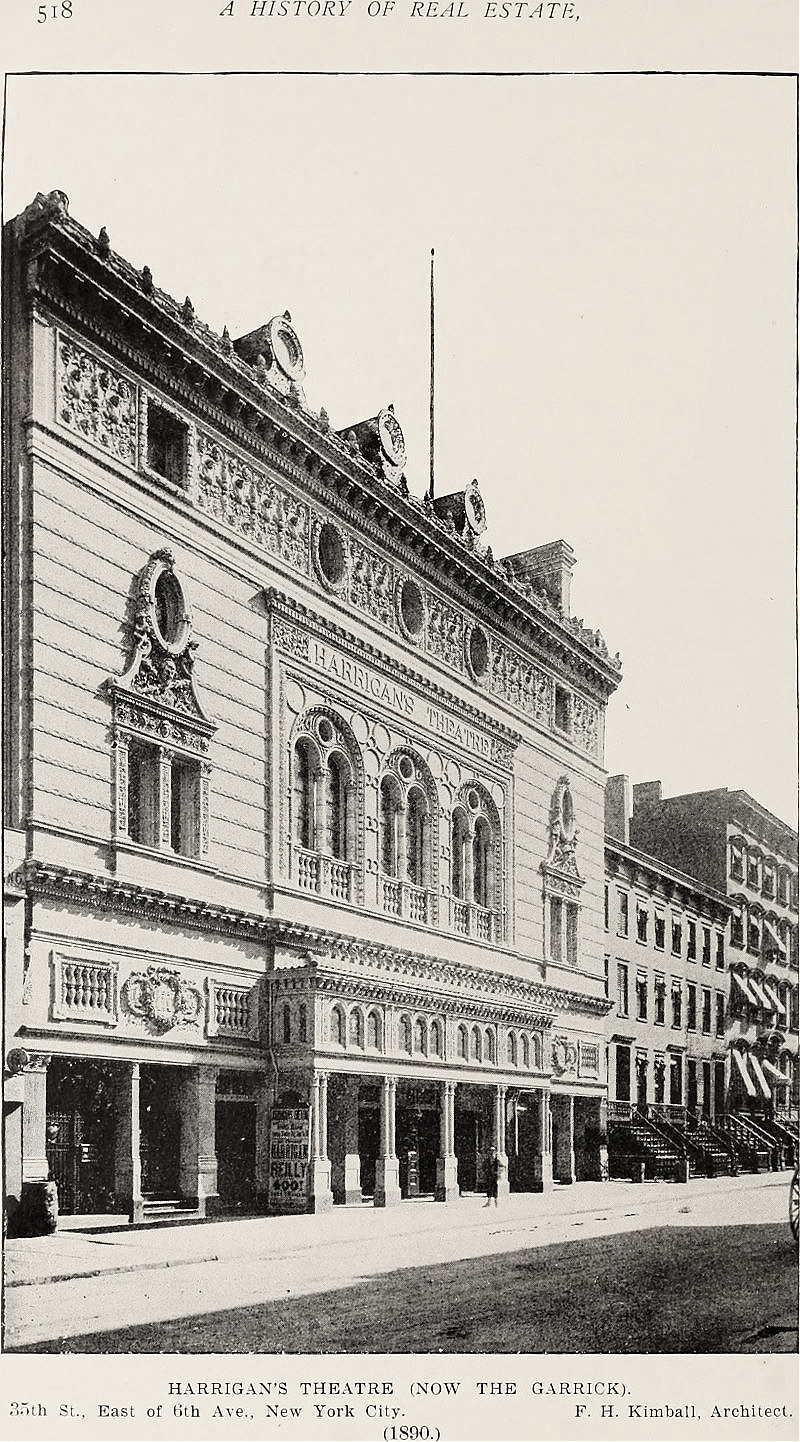
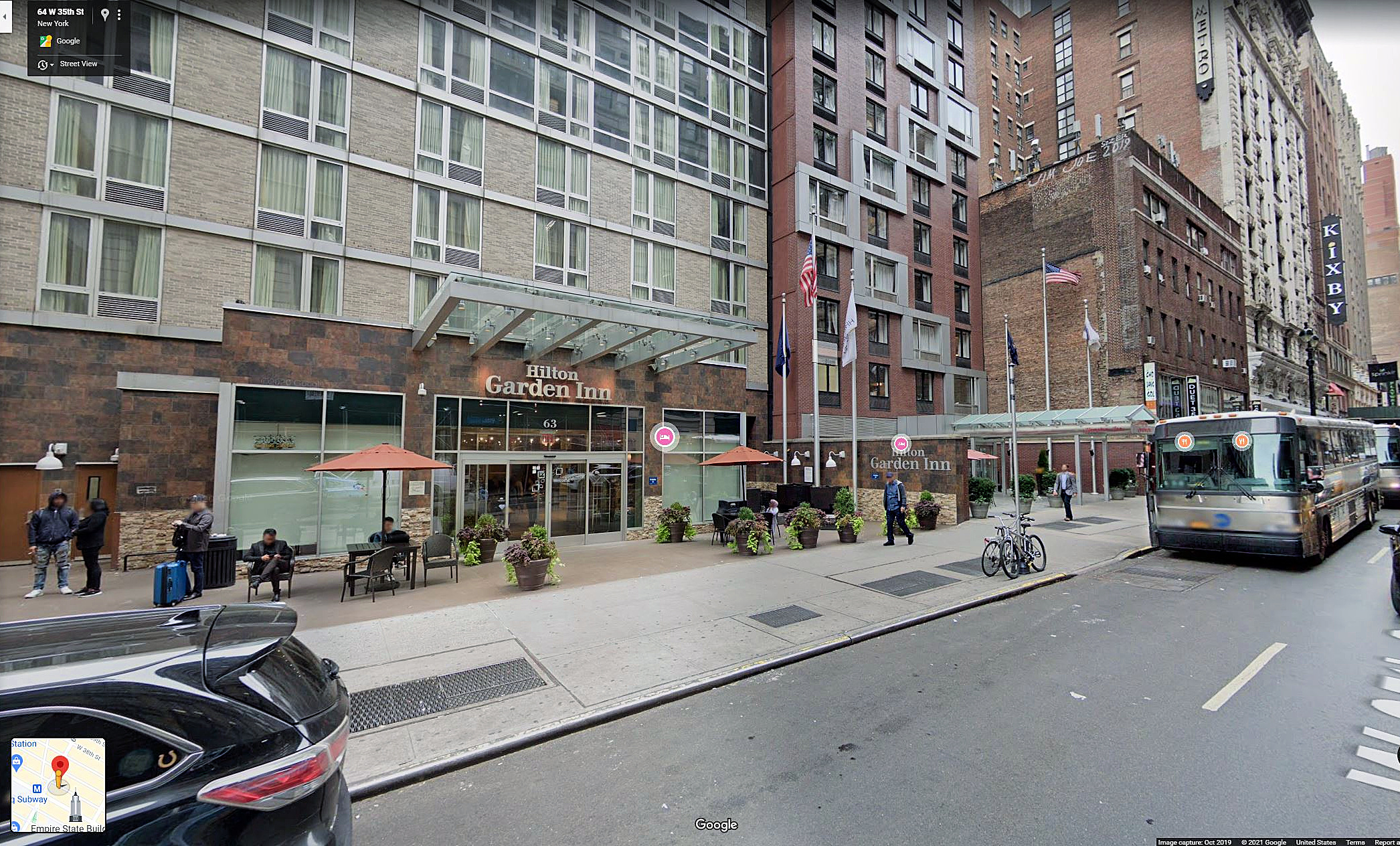
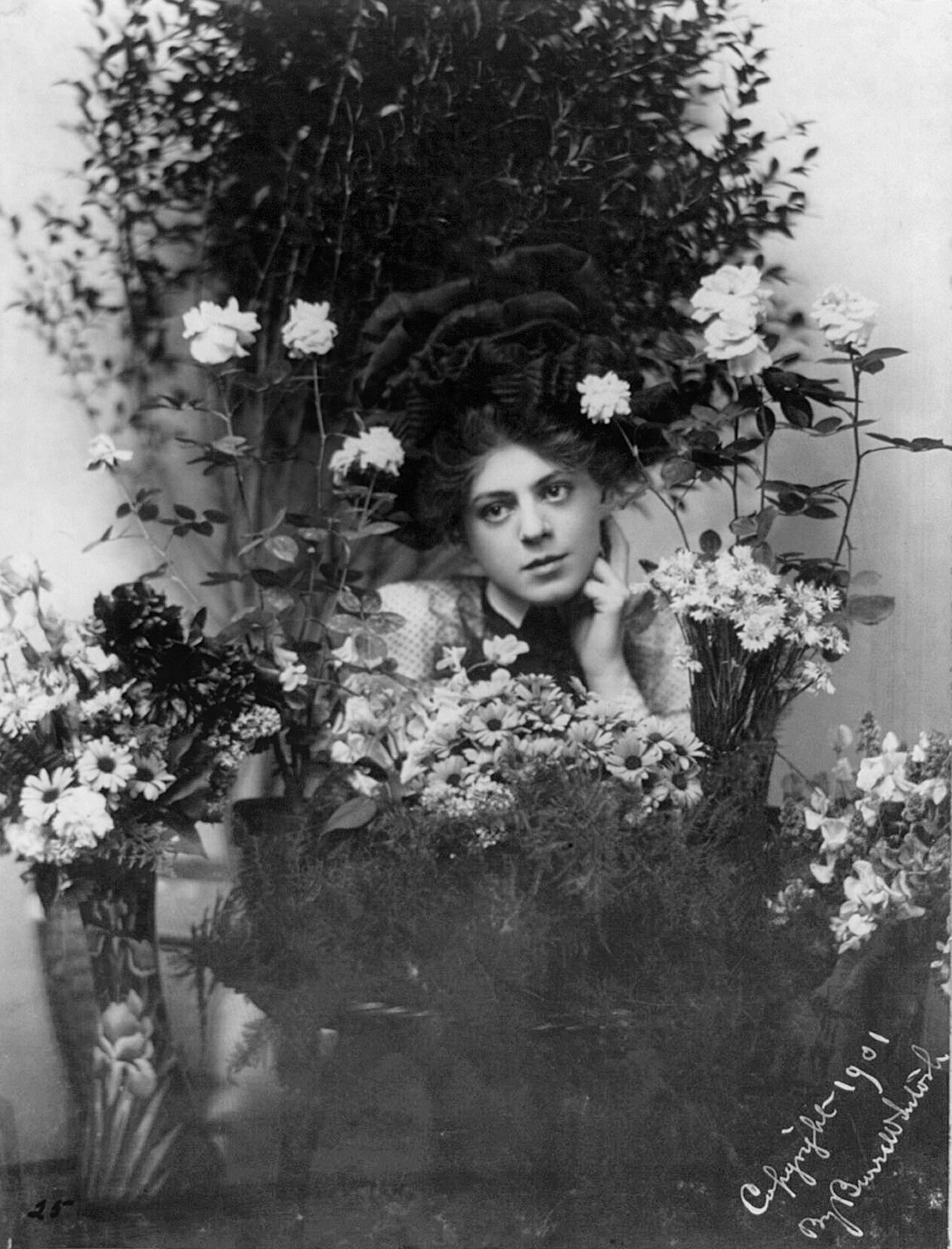
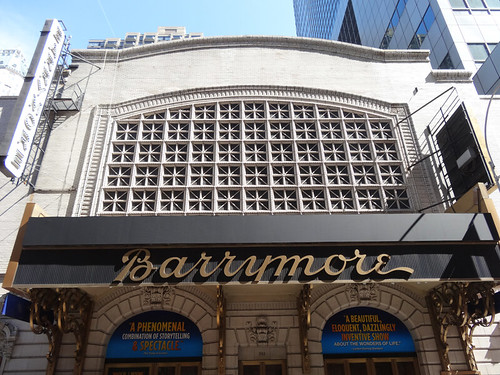
Douglas Fairbanks started acting as a youth in summer stock at the historic Elitch Theatre in Denver so that by 1899 Fairbanks was touring with the acting troupe of English Shakespearean actor Frederick Warde (1851-1935). For two seasons Fairbanks was an actor and assistant stage manager with the group.1 Fairbanks moved to New York where he debuted on Broadway in Her Lord and Master in February 1902. The year before, from February 1901 to July 1901, Ethel Barrymore (1879-1959) of the legendary Barrymore acting family became a Broadway star in a new romantic comedy play, Captain Jinks of the Horse Marines, at the Garrick Theatre in New York City. Barrymore’s production ran on Broadway for 168 performances in 1901 and made the 22-year-old actress a star. The turn of 20th century was a time when the theatre was king of the arts – and where, in the new century’s first decade, the nation’s celebrities were born to be made. Her Lord and Master by Martha Morton was first produced in New York, during the spring of 1902. The play, in which Douglas Fairbanks had his first role, met with success, and ran for 69 performances at the Manhattan Theatre (demolished) at 102 W. 33rd Street in New York City.2 The opening night cast for A Case of Frenzied Finance in April 1905 included Douglas Fairbanks playing Bennie Tucker at third-billing. The play, set in the Vanbillon Hotel, ran for less than a month at the Savoy Theatre at 112 W. 34th Street. That theatre opened in 1900 and closed in 1933 and was demolished in 1952.3
A dapper and svelte 22-year-old Douglas Fairbanks played third-bill Bennie Tucker in A Case of Frenzied Finance at the Savoy Theatre in April 1905. It closed after 8 performances. Public Domain.
Broadway Success and Marriage
Fairbanks appeared in A Gentleman from Mississippi from September 1908 to September 1909. On September 22, 1908 (datelined September 21, 1908) The New York Times wrote a blurb regarding a preview that stated: “A Gentleman from Mississippi received its initial performance to-night at the New national Theatre. The play deals with Congressional riots and social life in the National capital. Thomas A. Wise, Douglas Fairbanks, Sue Van Duser, Harriet Worthington and Lola May were in the cast. Mr Wise [1865-1928] and Harrison Rhodes [1871-1929] are the authors of the play.”
A Gentleman from Mississippi ran for 407 performances moving to the Bijou Theatre in NYC.4 In July 1907, 24-year-old Douglas Fairbanks married wealthy Anna Beth Sully (1886-1967) of Rhode Island. The couple had one son who followed his father into the acting business—Douglas Fairbanks, Jr. (1909-2000).
Douglas Fairbanks, c. 1910. Before 1915 Fairbanks established his character type on Broadway of the athletic all-American hero which followed him into films. By 1920 it was this full-blooded romanticism of Douglas Fairbanks that drew the biggest movie-going audiences in the country5https://www.loc.gov/resource/hec.16616/ Harris & Ewing, photographer. Public Domain.
Creating the All-American Hero
It was in November 1912, on opening night of Hawthorne of the USA, a play by J.B. Fagan, that Fairbanks established his character type for stage and screen: the athletic all-American hero.6 With Fairbanks in the starring role as Anthony Hamilton Hawthorne, the play set in Oberon, the small capital of Borrovina, a small independent state somewhere in the mess of Southeastern Europe, ran for 72 performances at the Astor Theatre at 1537 Broadway (45th St.) in New York.7 It was made into a silent film in 1919 starring Wallace Reid (1891-1923) as the American hero.
Athleticism and acrobatic stunts characterized Douglas Fairbanks’ roles on stage since 1912 were translated to his films. They are on full display in A Modern Musketeer, a 1917 silent adventure comedy film produced by and starring Douglas Fairbanks.
In 1915 the Fairbanks moved to Los Angeles – Douglas Fairbanks Sr. had received a lucrative offer from the nascent film industry. It was a three-year contract for $104,000 per year (over $3 million in today’s dollars) to join Triangle films. Exorbitant sums were dangled, often over-ambitiously by producers, to coax legitimate theatre actors to work on the West Coast in film – and under sometimes multi-year contracts. The strategy usually worked but came at a high cost later to a company’s survival and the star’s future. Again, Ethel Barrymore who became a Broadway star in 1901 and national celebrity at 22 years old began to appear in major silent films starting in 1914. Her brothers John and Lionel were already making films and though absolutely devoted to the stage from her youth, Ethel made at least 14 films before returning to the stage full time in 1920. The trend to capitalize on the talents of the stage in film was already underway when Triangle company was formed in 1915 to do just that on a spectacular scale.
Harry Aitken, c. 1910. Public Domain.
Harry Aitken, Triangle Film Corporation, and the Broadway-to-Hollywood Strategy
Harry Aitken (1877-1956) and his brother Roy Aitken (1882-1978) co-founded a film distribution business in Milwaukee in 1906. There had also been a relationship with a Chicago film distributor who established American Film Manufacturing Company production company in 1910. The Aitken brothers relocated to California in 1908 and in 1912, with others, formed the Mutual Film Corporation. One of Mutual’s many subsidiary production and auxiliary units was Keystone Studios, where 24-year-old Charlie Chaplin got his start in films in 1913 at $150 per week (Chaplin was making more than $20,000 a week 5 years later). In 1914 Harry Aitken went into partnership with D.W. Griffith (1875-1948) and, in 1914, founded Reliance-Majestic Studios at 4516 Sunset Boulevard which is today a strip mall.
Following the tremendous success of The Birth of Nation in 1915 with which Harry Aitken was involved so to reap some of its incredible profits, the Aitken brothers and various other companies, such as Reliance-Majestic Studio, departed from Mutual to form a conglomerate of Triangle Film Corporation. The company served as a distributor to other studios in California and Aitken’s plans included sweeping into the fold the best and the brightest of Broadway theatre – which included 32-year-old Douglas Fairbanks. A leading artistic objective for these Hollywood producers was to bring these stage actors’ greatest plays to the screen. Believed to be a worthwhile goal in 1915, before the end of the 1920’s such published plays and other literature while fine for the boudoir reader were problematic to simply translate to the silver screen. The movement towards self-censorship had developed in reaction to the fear the industry would be regulated or outright banned by states. In 1915 there were fewer worries about this as such theatrical artistic fare was expected to attract a better educated movie-goer as well as the Wall Street big-money-type investors who invested in Broadway plays. In one fell swoop Aitken contracted over 60 actors and actresses including Billy Burke (1884-1970), recently married to Florenz Ziegfeld; soon-to-be Western star Dustin Farnum (1874-1929); Shakespearean actor Sir Herbert Beerbohm Tree (1852-1917) who played Macbeth in D.W. Griffith’s lost 1916 film of the same name; and, “Casey At the Bat” DeWolf Hopper (1858-1935).
Douglas Fairbanks, 1916. Public Domain.
The Lamb and the Birth of a Screen Idol
The debut feature from Triangle starred Douglas Fairbanks in The Lamb, a film based on a 1913 stage play that was expanded to have Western cinematic elements. It premiered with two more features on September 23, 1915 at The Knickerbocker Hotel in Fairbanks’ old stomping ground of New York City. Triangle had in-house three master directors – D.W. Griffith, Mack Sennett, and Thomas Ince. D.W. Griffith had a hand in The Lamb, though its directing and screenplay credits went to 27-year-old W. Christy Cabanne (1888-1950). The Lamb was a hit with audiences, and critics praised Fairbanks’ performance marked by his celebrated physicality.8 The film had a nationwide release that November 1915. Although not yet a movie star, Fairbanks saw his weekly salary doubled. By His Picture in the Papers, a 1916 silent comedy film for Triangle that provided stunts for Fairbanks to wrap his athleticism around, Fairbanks became a popular screen idol. Fairbanks made 13 films for Triangle and when his contract expired, Harry Aitken was paying him $10,000 per week.9 Yet, excepting Douglas Fairbanks, Aitken had over bought his stable of stage stars in relation to their poor return so that in 1916 Triangle was known in the industry to be on the verge of collapse.
Paramount Pictures’ co-founder Adolph Zukor (1873-1976) was one of the innovators of the motion picture business. In 1916 Zukor convinced Douglas Fairbanks to become the independent producer of his own films. From the May 1922 issue of Motion Picture Classic. Public Domain.https://archive.org/details/MotionPictureClassicMay1922/mode/1up?view=theater
Independent Producer and the Douglas Fairbanks Picture Corporation
Douglas Fairbanks, Triangle’s star, was convinced by Paramount Pictures’ co-founder Adolph Zukor (1873-1976), believed to be “the business brains of the motion picture industry,”10 to become the independent producer of his own films. This became reality at the end of 1916 with the creation of the Douglas Fairbanks Picture Corporation. Zukor had already worked to do something similar for Mary Pickford’s films.
Douglas Fairbanks and Mary Pickford around 1919. Both movie stars already had established independent productions companies for their own films which still required their distribution – a key aspect of making money in movies – by others. These stars along with comedy star Charlie Chaplin and master director D.W. Griffith founded United Artists in 1919 largelyto establish control of the distribution arm of the movie making business for their independently produced films. In 1919, Douglas Fairbanks divorced his wife, Anita. The following year, Mary Pickford, “America’s Sweetheart,” divorced her husband, Owen Moore, and married Douglas Fairbanks, her paramour since 1916. The American public, which took tremendous interest in these personal affairs, were shocked but hardly surprised by the country’s changing values. Even Douglas Fairbanks’ films between 1915 and 1919 had demonstrated those changing values by way of his athletic, likeable characters drawn to display a comical, good-natured, brash overambitious hero with a popular philosophy of avoiding both boring convention and conventional boredom. While Fairbanks’ dramatis personae would change dramatically in the 1920s from comedies to swashbucklers his already fantastic, attractive and likeable character type was being merely reinforced.11 Glass negative, Harris & Ewing photographer.https://www.loc.gov/resource/hec.30098/ Public Domain.
Fairbanks Productions and the Road to United Artists
As Fairbanks had been lured away by a better offer, so the actor hired his team at Triangle for his own company. Director John Emerson (1874-1956) and screenwriter Anita Loos (1888-1981) – to be husband and wife in 1919 – had successfully collaborated on Fairbanks’ movie hits at Triangle and even D.W. Griffith valued the pair as among the best film editors in the business after working on Intolerance in 1916. Emerson had directed important films at Triangle in 1916 featuring Douglas Fairbanks including His Picture in the Papers, The Americano, and The Mystery of the Leaping Fish. These Emerson-directed films were followed in 1917 by In Again, Out Again, Wild and Woolly, Down to Earth, and Reaching for the Moon, all for Douglas Fairbanks Productions. In 1918 Fairbanks made 5 more romantic comedies and one melodrama called Arizona, a film now lost. Despite a film receiving perhaps a mixed review from critics or being subject to local censorship, Douglas Fairbanks’ films proved box office gold due to his star power. In 1918 and moving into 1919 Fairbanks had become a millionaire, screen idol and soon to be co-founder of his own movie studio, United Artists.
John Emerson and Anita Loos in 1918. These two creative individuals who married in 1919 worked closely as director, screenwriter, and film editorwith Douglas Fairbanks as well as D.W. Griffith at Triangle films and later at Douglas Fairbanks Picture Corporation. They helpedmake some of the most popular and critically-acclaimed films in the industry at that time. Public Domain.
Down to Earth is a 1917 American comedy romance film produced by and starring Douglas Fairbanks with Irish-born actress Elaine Percy. Directed by John Emerson with a screenplay co-written by Anita Loos, the film features Fairbanks as Bill Gaynor who sets out to prove the outdoors and self-reliant manual labor are better for health than any modern medical treatment. He does this by kidnapping a group of hypochondriacs from a clinic that includes a girl, Ethel Forsythe (Percy). Bill is interested in her, but she refuses his proposals. Finally, after proving his point on a “deserted island” that is next to a California freeway, Bill bids farewell to the revived group of patients and escapes with his awaiting love interest, Ethel, into the sunset by rowboat. The film is in the Public Domain.
The most popular silent film stars on the road selling Liberty bonds in 1918 were Charlie Chaplin, Mary Pickford, and before a massive crowd on Wall Street in New York City, Douglas Fairbanks. In 1918 Fairbanks and Chaplin decided to hire private detectives to spy on their respective studios, Paramount Pictures and First National. They were told that the studios were going to put a stop to their exorbitant salaries and not renew their contracts.12 The positive audience response from the Liberty drives and a fear of a corporate merger that would end star leveraging power, led directly to Fairbanks, Chaplin, Pickford, and master director D.W. Griffith, to found United Artists in January 1919. Public Domain.
Conclusion
As the curtain fell on the theater-dominated nineteenth century and rose on the age of motion pictures, Douglas Fairbanks emerged as a defining titan of the new medium. At a pivotal moment when the art and business of film were still being invented from scratch, Fairbanks helped construct the very blueprint of modern movie stardom. He achieved this through a potent combination of infectious optimism, explosive athletic vigor, and an instinctive, unparalleled screen charisma.
More than just a box-office darling, Fairbanks became the ultimate symbol of silent-era ambition and untamed possibility. He radically disrupted the industry by challenging rigid studio monopolies, pioneering artist-led production as a co-founder of United Artists. In doing so, Fairbanks established a revolutionary model of creative freedom, global celebrity, and entrepreneurial control that reshaped the landscape of Hollywood and the business of filmmaking for generations. Ultimately, his career mirrored Hollywood’s own meteoric rise, ensuring his towering influence would endure long after the silent era that made him famous had passed into history.
NOTES:
1. Goessel, Tracey. The First King of Hollywood; The Life of Douglas Fairbanks. Chicago Review Press, 2016.
8. Lombardi, Frederic (2013). Allan Dwan and the Rise and Decline of the Hollywood Studios. McFarland. pp. 53–54.
9. United Artists, Volume 1, 1919–1950: The Company Built by the Stars, Tino Balio, University of Wisconsin Press, 2009. p. 143.
10. Quoted in the May 1922 issue of Movie Picture Classic, p. 26.
11. A Short History of the Movies, Gerald Mast, Indianapolis: Bobbs-Merrill Company, Inc., 1976, pp. 124; 127 and The Liveliest Art: A Panoramic History of The Movies, Arthur Knight, New York: MacMillan Publishing, 1978, p 107.
12. Chaplin: His Life and Art, David Robinson, New York: McGraw-Hill Book Company, 1985, p. 267.
BIBLIOGRAPHY:
A Short History of The Movies, Gerald Mast, The Bobbs-Merrill Company, Inc. Indianapolis, 1977.
David Robinson, Chaplin: His Life and Art. New York: McGraw-Hill Book Company, 1985.
Hollywood: The Pioneers. Kevin Brownlow and John Kobal, New York: Alfred A. Knopf Inc. A Borzoi Book,1979.
History of the American Cinema, Volume 5, 1930-1939, Charles Harpole, General Editor, New York: Charles Scribner’s Sons, 1993.
The American Film Industry, ed. Tino Balio, University of Wisconsin Press, 1976.
The Hollywood Story, Joel W. Finler, New York: Crown Publishers, Inc., 1988.
The Liveliest Art: A Panoramic History of The Movies, Arthur Knight, New York: MacMillan Publishing, 1978
The United Artists Story, Ronald Bergan, Crown Publishers, Inc., New York, 1986.
United Artists, Volume 1, 1919–1950: The Company Built by the Stars, Tino Balio, University of Wisconsin Press, 2009
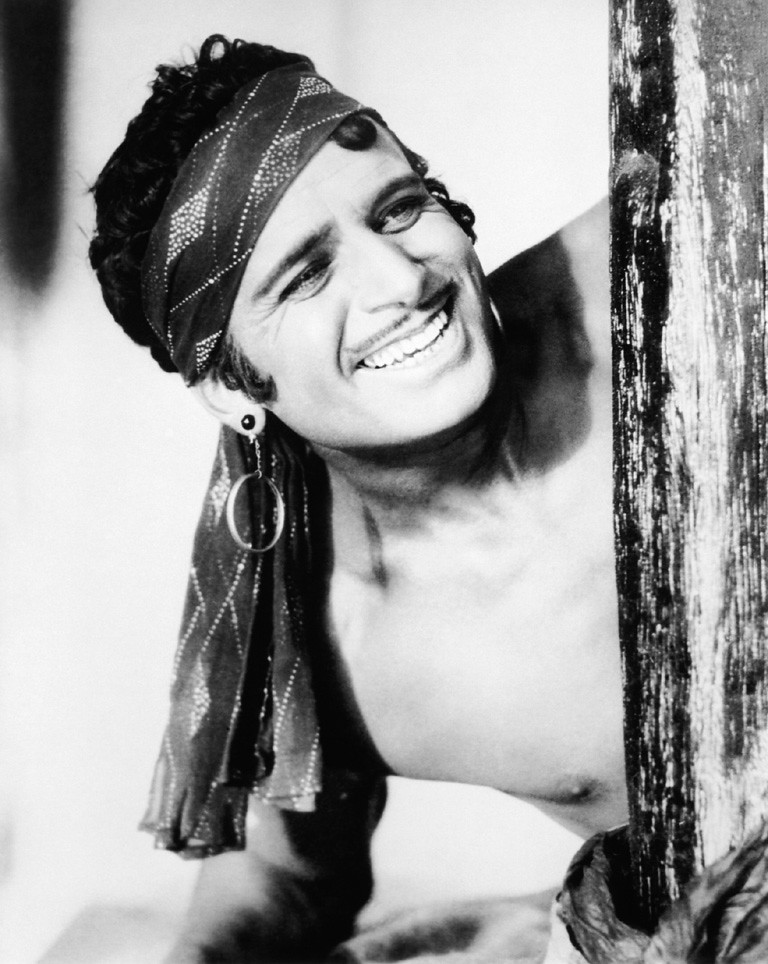
An iconic production still showing Douglas Fairbanks Sr. flashing his famous smile as his character, Ahmed, in the 1924 landmark silent film fantasy epic, The Thief of Bagdad. In the promotional shot distributed by United Artists in 1924 he famously paired a patterned, wrapped head scarf with prominent matching hoop earrings as the movie star starred in what is universally classified as an epic swashbuckler. Public Domain.
FEATURE image: Full-length, black-and-white portrait of the English comic actor and filmmaker Charlie Chaplin in his famous “The Tramp” character, 1915. See details below. Public Domain.
Charlie Chaplin’s rise between 1913 and 1918 illustrates how exceptional talent, business acumen, and a determination to gain creative control transformed him from a touring stage performer into the world’s most famous film comedian and one of the first independent movie auteurs.
Charlie Chaplin (1889–1977) taken circa 1915 to 1916 during Chaplin’s massive surge in popularity while he was under contract with the Essanay Film Manufacturing Company (1915) or right as he transitioned to the Mutual Film Corporation. This is a famous publicity headshot meant to show the public the “real” man behind the slapstick makeup. At the time, audiences worldwide only knew him as the scruffy Little Tramp.
Studio portraits like this shocked fans by revealing that Chaplin was a remarkably handsome, sharp-dressing young man in his mid-20s without his fake mustache, baggy clothes, and heavy eyeliner instead dressed in a formal, well-tailored dark three-piece suit, a high stiff-collared white shirt, and a distinct polka-dot bowtie. Chaplin didn’t sign his historic million-dollar deal with First National Pictures until late 1917, building his own Hollywood studio to produce films for them in 1918. Public Domain.
From Keystone to First National: Charlie Chaplin’s Rise to Global Stardom, 1913-1918.
Discovered in America
Twenty-four-year-old Charlie Chaplin arrived in the United States in 1913 as a member of Fred Karno’s famous English music hall and pantomime troupe. During the tour, his remarkable comic talents attracted the attention of film producer Mack Sennett, founder of Keystone Studios.
Chaplin was discovered in the United States in 1913 while touring with an English vaudeville and pantomime troupe and was hired by Mack Sennett’s Keystone Studios.
Chaplin signed a contract with Keystone Comedies for $150 a week, roughly three times what he had earned in vaudeville and music halls. More importantly, the position introduced him to the rapidly expanding motion picture industry and its enormous commercial potential.
In his first year at Keystone, Chaplin appeared in an astonishing 35 films. The short one- and two-reel format proved ideal for developing his most famous screen creation, “the Tramp,” a lovable, resilient underdog recognizable by his bowler hat, cane, oversized shoes, and distinctive walk. Audiences embraced the character immediately, and Chaplin became one of the first true movie stars of the silent era.
At Keystone, he created and refined the “Tramp” character and became an overnight film sensation through a remarkable output of short comedies.
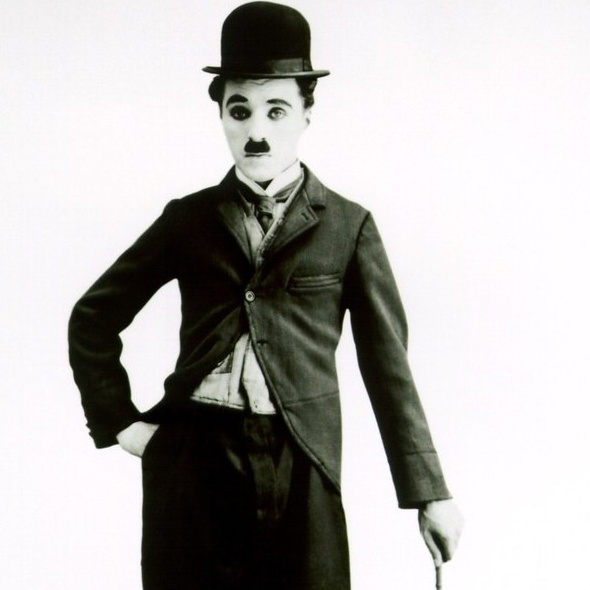
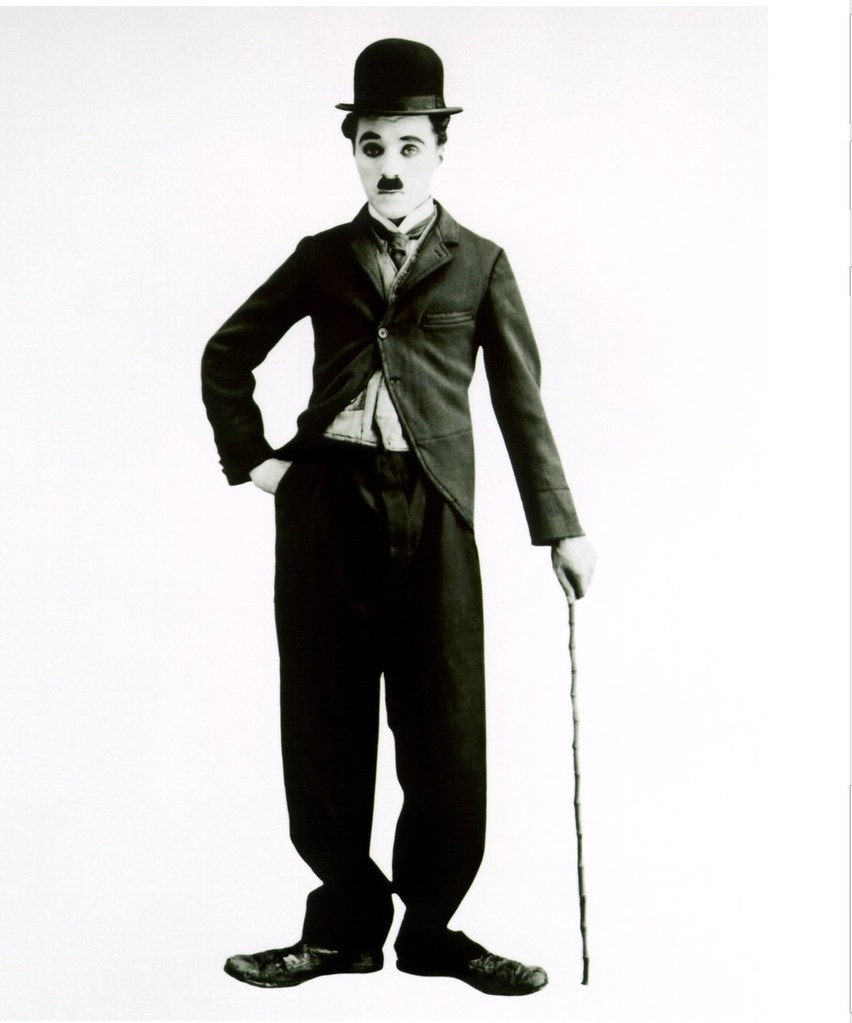
Full-length, black-and-white portrait of the English comic actor and filmmaker Charlie Chaplin in his famous “The Tramp” character costume of tight-fitting jacket, oversized baggy trousers, a collared shirt with vest, large worn-out shoes, and signature bowler hat. One hand is on his hip while the other holds his thin cane, which rests on the floor. The Tramp stands with his feet turned outward and has his trademark small toothbrush mustache and heavily lined eyes, looking directly forward with a slightly melancholy expression.
The portrait was taken in 1915 by American photographer JuliusStrauss-AlbertPeyton Studio. The promotional photograph was made during Charlie Chaplin’s meteoric rise to global fame, specifically around the time he signed with the Essanay Film Manufacturing Company. Chaplin had spontaneously created “The Tramp” (or “Little Tramp”) costume just a year prior in early 1914 while working at Keystone Studios. This exact image became one of the definitive, universally recognized marketing portraits of the era. It was reproduced globally on movie posters, sheet music, and merchandise to promote his foundational silent films, cementing the Tramp as a permanent fixture of film history. PHOTO: “Charlie Chaplin” by tonynetone is licensed under CC BY 2.0.
Edna Purviance: Chaplin’s Leading Lady. Charlie Chaplin and Edna Purviance (1895-1958) share the screen in this classic clip from A Dog’s Life (1918), featuring Granville Redmond (1871-1935) as the dance hall proprietor. Beginning in 1915, Purviance became a key figure in early cinema as Chaplin’s principal leading lady. She brought charm and depth to many of his greatest silent films, appearing in more than 30 films with him through 1923.
Purviance’s natural screen presence and understated acting style complemented Chaplin’s comic genius. Among their collaborations was A Dog’s Life (1918), in which she played the female lead opposite the Tramp. The film also featured landscape painter Granville Redmond (1871-1935), a close friend of Chaplin, in the role of a dance hall proprietor.
The Essanay Years: Creative Freedom and Financial Success
Although Mack Sennett wanted to retain his breakout star, the Chicago-based Essanay Film Manufacturing Company successfully lured Chaplin away in late 1914. The new contract paid him $1,250 a week and, just as importantly, gave him the opportunity to exercise greater creative control over his films.
Chaplin made 14 films for Essanay between 1915 and early 1916. During this period, he refined the Tramp character, blending comedy with sentiment and human emotion in ways that distinguished his work from the rough-and-tumble slapstick then common in silent film comedy.
His move to Chicago’s Essanay Film Manufacturing Company brought a dramatic salary increase and greater artistic control over his films.
The financial rewards were substantial for both artist and studio. While Chaplin earned unprecedented sums, Essanay profited even more from the immense popularity of his films, helping transform both Chaplin and the company into major forces within the motion picture industry.
Mutual Film Corporation and Comic Mastery
In early 1916, Chaplin signed a groundbreaking contract with Mutual Film Corporation that elevated him into the highest ranks of entertainment. The agreement paid him approximately $670,000 annually, or $10,000 a week, an extraordinary amount at the time and the equivalent of hundreds of thousands of dollars per week today.
By this point Chaplin was not merely a popular comedian. He had become an international cultural phenomenon whose fame extended across Europe and North America.
The Mutual period is often regarded as one of the most artistically successful phases of Chaplin’s career. During 1916 alone he produced twelve films, including:
At Mutual Film Corporation, Chaplin became the highest-paid entertainer in the film industry and produced a series of silent comedy classics that established his international reputation.
The Floorwalker
The Fireman
The Vagabond
One A.M.
The Count
The Pawnshop
Behind the Screen
The Rink
Chaplin followed these with four additional films in 1917. Collectively, the Mutual comedies demonstrated a remarkable combination of physical comedy, character development, storytelling, and technical craftsmanship that raised screen comedy to a new artistic level.
By the beginning of 1918, the still youthful Chaplin had become one of the world’s most celebrated filmmakers. His fame opened doors to prominent artists, writers, performers, and cultural figures across the globe.
Becoming an Independent Producer
Recognizing Chaplin’s unmatched drawing power, Mutual offered him a lucrative renewal contract worth $20,000 per week, with the studio covering production costs. Yet Chaplin wanted more than a salary. He wanted artistic independence and a direct share of the profits generated by his films.
Instead, he signed with First National Exhibitors’ Circuit. The new agreement matched Mutual’s financial terms, included a signing bonus of $15,000, and granted Chaplin substantial control over his productions.
Rather than remain a highly paid employee, Chaplin pursued profit-sharing and creative independence, signing with First National. By 1918, with A Dog’s Life, Chaplin was producer, writer, director, and star of his films, demonstrating full artistic authority over his work.
Although Chaplin assumed responsibility for production expenses, he benefited from profit-sharing arrangements – 50% share in its box office – and retained unprecedented authority over every aspect of filmmaking. As producer, writer, director, editor, and star, he was increasingly shaping his career on his own terms.
The arrangement effectively made Chaplin an independent producer, controlling both the artistic direction and financial destiny for his next 8 films. It was a major step toward the complete creative autonomy he would later achieve as a co-founder of United Artists in 1919.
A Dog’s Life and a New Phase of Chaplin’s Career
Chaplin’s first release for First National was A Dog’s Life, which premiered in April 1918.
Running approximately 33 minutes, the three-reel film featured the Tramp and demonstrated Chaplin’s growing sophistication as a filmmaker. Combining humor, pathos, social observation, and romance, the picture is often viewed as a bridge between his shorter comedies and the feature-length masterpieces that would follow.
Chaplin served as producer, writer, director, and star, reflecting the extraordinary level of creative control he had achieved by the age of twenty-eight.
Chaplin on Film: The 1992 Biography Chaplin’s life later inspired the 1992 biographical film Chaplin, directed by Richard Attenborough and starring Robert Downey Jr. in the title role. The comedy-drama film from TriStar Pictures (US). also featured Dan Aykroyd as Mack Sennett, Marisa Tomei as Mabel Normand, Penelope Ann Miller as Edna Purviance, Kevin Kline as Douglas Fairbanks, and Maria Pitillo as Mary Pickford.
One of the film’s most notable aspects was the casting of Geraldine Chaplin, Charlie Chaplin’s daughter, as her grandmother Hannah Chaplin. Although Chaplin received mixed reviews, it earned three Academy Award nominations, including one for John Barry’s acclaimed original score. Barry’s haunting main theme captures both the triumph and melancholy of one of cinema’s most influential pioneers.
Conclusion
Between 1913 and 1918, Charlie Chaplin rose from a touring English music hall performer to the most famous comedian in the world. Through Keystone, Essanay, Mutual, and First National, he steadily gained higher salaries, greater artistic freedom, and increasing control over his work. By the release of A Dog’s Life in 1918, Chaplin had become far more than a movie star. He was a filmmaker, entrepreneur, and creative visionary whose influence would shape the history of cinema for generations.
The time period highlights not only Chaplin’s comic genius but also his evolution into a pioneering filmmaker-businessman whose career pointed toward the creation of artist-controlled enterprises such as United Artists with Mary Pickford, Douglas Fairbanks, and D.W. Griffith in 1919.
Bibliography:
Balio, Tino. “Stars in Business: The Founding of United Artists.” In The American Film Industry, edited by Tino Balio, 135–152. Madison: University of Wisconsin Press, 1976.
Robinson, David. Chaplin: His Life and Art. New York: McGraw-Hill Book Company, 1985.
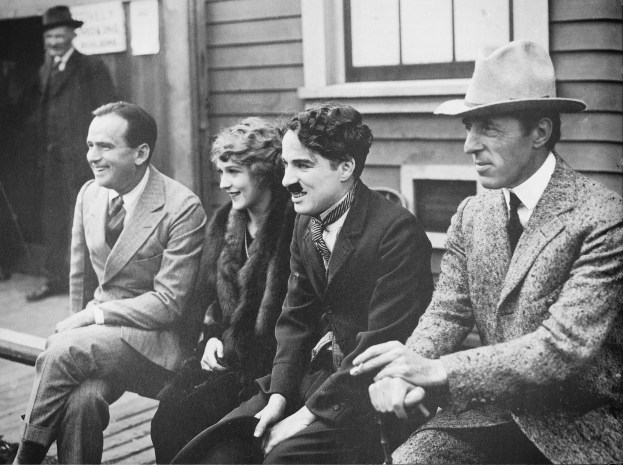
FEATURE image: United Artists founders in 1919, (Left to right) Douglas Fairbanks (1883-1939), Mary Pickford (1892-1979). Charlie Chaplin (1889-1977) and D.W. Griffith (1875-1948).
United Artists was a revolutionary artist-controlled film company founded in 1919 by Hollywood’s biggest stars that challenged the power of the traditional studio system and pioneered the independent producer-driven business model that eventually became standard throughout the film industry.
By John P. Walsh
It is debated whose brainchild the United Artists Corporation (UA), founded in 1919, ultimately was. Was it Mary Pickford’s and Douglas Fairbanks’ theatrical lawyer and a later UA executive who advised them to found an artist-controlled movie company or UA’s first president, a former U.S Treasury Department official, who suggested Douglas Fairbanks start a distribution company for his films or was it a publicity man for one of the majors who suggested to UA’s first general manager to create a movie studio run by artists for artists – or, finally, was it, as Charlie Chaplin claimed, by way of his elder half-brother Sydney who had hired a pretty girl to spy on another studio’s imminent potential merger and whose culled information led directly to founding their own?1 Whatever or whoever was the conduit or original source, in 1919, four of Hollywood’s legendary film artists — actors Douglas Fairbanks (1883-1939), Fairbanks’ future wife, Mary Pickford (1892-1979), Charlie Chaplin (1889-1977), and “the Father of Film Technique” director D.W. Griffith (1887-1948)- formed United Artists, one of Hollywood’s name-brand film studios.
Charlie Chaplin, Mary Pickford, Douglas Fairbanks, and D.W. Griffith founded United Artists in 1919 to gain control over the production, distribution, and profits of their films rather than remain dependent on major studios.
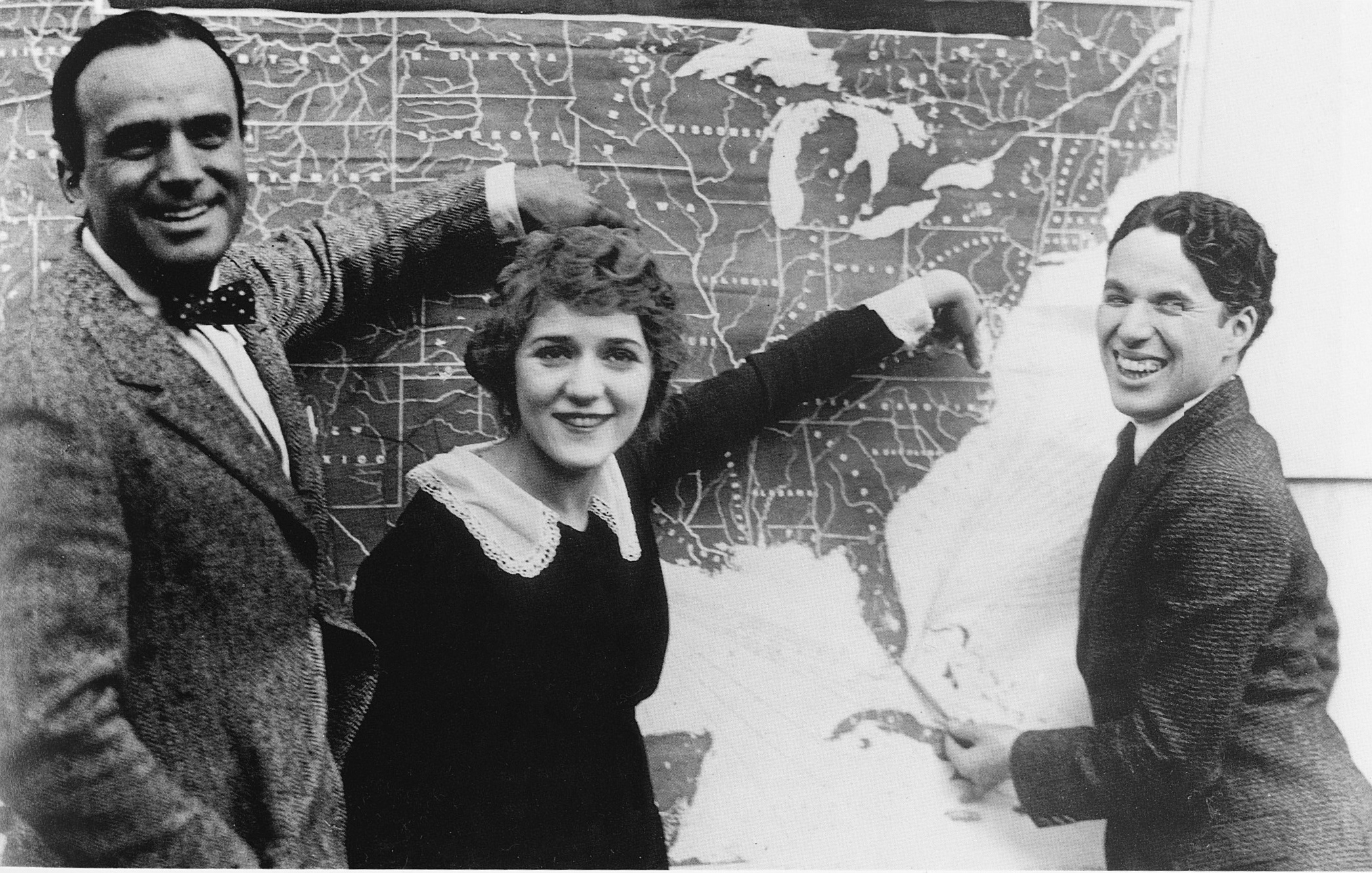
In April 1918 Douglas Fairbanks, Mary Pickford, and Charlie Chaplin, traveled the country selling Liberty Loans (war bonds). The adulation these stars received everywhere during the tour worked to convince them and others that it was time for them to establish an artist-controlled movie studio which occurred months later in February 1919. Public Domain.
Distinct from other movie studios, UA was especially founded by artists for artists. From His Majesty, The American in 1919 starring Douglas Fairbanks that premiered in New York City at the newly-built Capitol through to The Underdoggs scheduled for 2024, a comedy starring Snoop Dog – and many hundreds of major motion pictures in between – United Artists’ impact on the entertainment industry and culture has been highly significant in that its range of film product envisioned and presaged the artist/ producer-driven film industry that is normal today. Yet United Artists was also more as it allowed independents to make their films free of heavy-handed interference from the higher ups which was often the case at the majors. Such freedom in the marketplace could be risky and United Artists’ survival through the decades is nothing other than extraordinary.
United Artists was created by artists for artists, with the goal of protecting creative freedom and resisting the growing concentration of power among Hollywood studios and distributors.
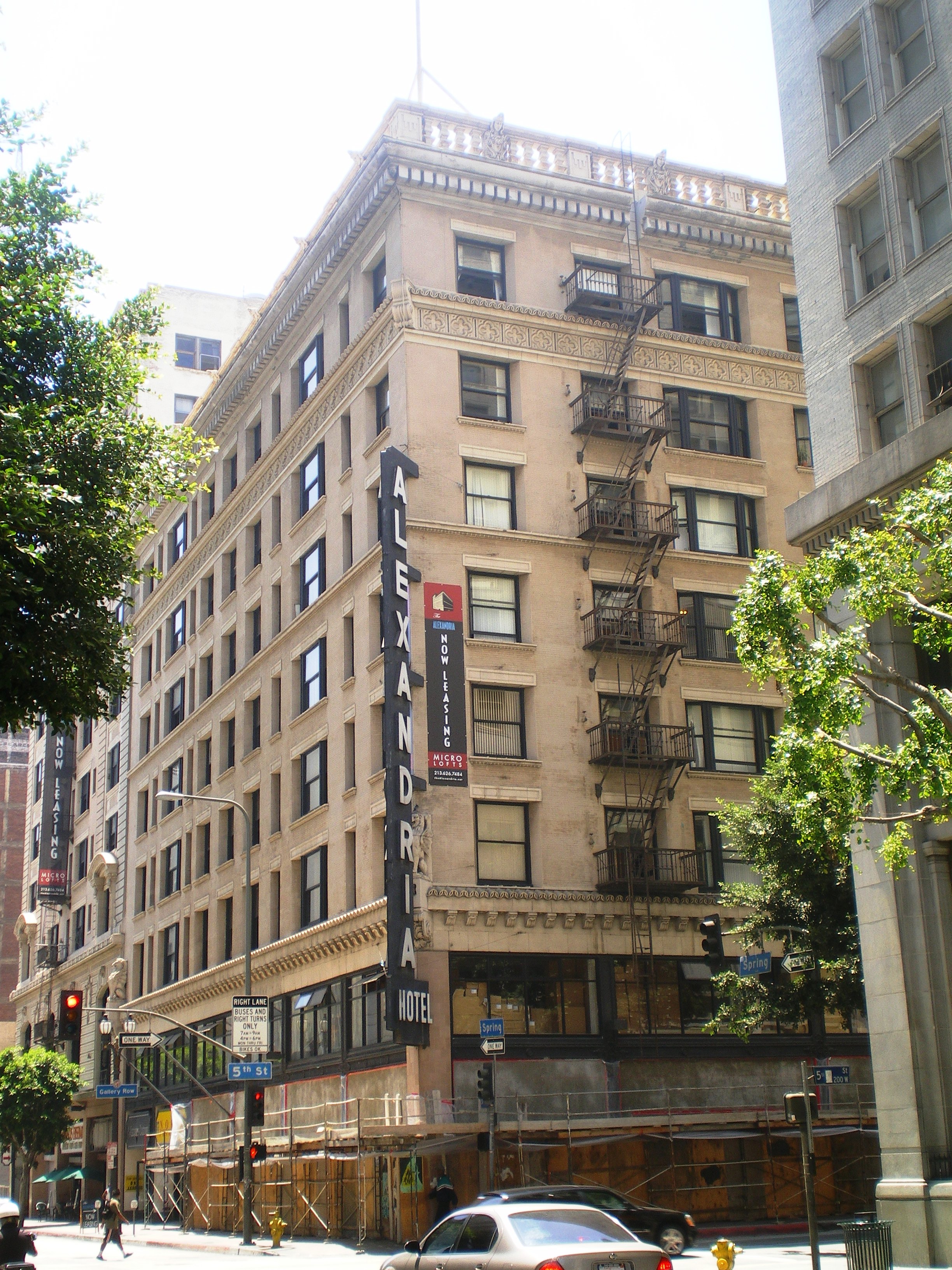
Alexandria Hotel in downtown Los Angeles where Pickford, Chaplin, Fairbanks and Griffith met in the dining room in January 1919 to finalize plans for the founding of their artist-controlled movie studio called United Artists. Built in 1906, the Alexandria Hotel was a relatively new hotel in 1919 sitting on the southwest corner at 501 South Spring Street. “Alexandria Hotel (Los Angeles)” by Los Angeles is licensed under CC BY-SA 3.0.
The following artist corporate manifesto was released to the press on February 5, 1919. Over 100 years later it remains prescient for many reasons including a warning about the use of technology in filmmaking (“machine-made entertainment”) and freedom of choice for the consumer in terms of viewership (“not force[ing] upon him program films he does not desire”) – A new combination of motion picture stars and producers was formed yesterday, and we, the undersigned, in furtherance of the artistic welfare of the moving picture industry, believing we can better serve the great and growing industry of picture productions, have decided to unite our work into one association, and at the finish of existing contracts, which are now rapidly drawing to a close, to release our combined productions through our own organization. This new organization, to embrace the very best actors and producers in the motion picture business, is headed by the following well-known stars: Mary Pickford, Douglas Fairbanks, William S. Hart, Charlie Chaplin and D.W. Griffith productions, all of whom have proved their ability to make productions of value both artistically and financially. We believe this is necessary to protect the exhibitor and the industry itself, thus enabling the exhibitor to book only pictures that he wishes to play and not force upon him (when he is booking films to please his audience) other program films which he does not desire, believing that as servants of the people we can thus serve the people. We also think that this step is positively and absolutely necessary to protect the great motion picture public fromthreatening combinations and trusts that would force upon them mediocreproductions and machine-made entertainment.2
A Vision Ahead of Its Time
In a short 30 years, by the early 1950’s, with the demise of the studio system and the rise of broadcast television, UA would bring this visionary independent investor and producer driven film product to the world as the business template for how all films in and outside of Hollywood would be made.
From Prestige Studio to Industry Model
In 1919, United Artists was originally conceived as a prestige studio that distributed some of the industry’s best larger budget pictures. By the 1940’s it had evolved to add less expensive film products that met audience demands and kept the studio’s distribution networks humming. As capital and power tends towards concentration in a capitalist economy, the notion for a nimble, relatively low overhead movie-making patron facilitating production planning and distribution of films by independent producers proved a vital idea whose relevancy renewed itself through the years.3
A Different Kind of Studio
In contrast to the major studios, such as MGM, Paramount, Fox, RKO, and Warner Bros., which had production, distribution and exhibition arms, United Artists focused solely on distribution. Unlike the majors, United Artists had no star stable, no studio facilities to speak of, no directors, no technicians, no chain of theaters, no house style, but, functioned as a distribution outlet for independently-made productions.
The Business of Distribution
In that way, UA was responsible for all phases of an independent production company’s film releases. This included the layers of market testing desired, the planning (including some financing) and booking of production releases, sundry marketing, and settlement matters following release. Distribution duties ranged from pre-production to marketing assistance as well as a bird’s-eye evaluation during production.
Getting Films to the Screen
Post-production distribution of motion pictures to the country 23,000 theatres in the 1930’s was an umbrella term for what was really a chain of complex business actions starting at the beginning of a film project to its being shown flickering on a local screen.
Unlike MGM, Paramount, Fox, Warner Bros., and other major studios, United Artists operated primarily as a distribution company for independent producers rather than maintaining its own large production infrastructure.
In the beginning: the 1920’s.
Throughout the silent era’s heyday and ultimate demise—the 1920’s—UA was clearly distributing films of its four founders which was a large reason for the company’s genesis. This soon included bankable silent film stars, such as Gloria Swanson (1889-1983). Lillian Gish (1893-1993), Buster Keaton (1895-1966) and Norma Talmadge (1894-1957). UA had no shortage of money-making hits in the roaring ‘20’s. There were melodramas such as Griffith’s Broken Blossoms (1919) to his Way Down East (1921) and comedies starring Mary Pickford, including Pollyanna (1920) and Little Annie Rooney (1925). Douglas Fairbanks starred in UA crowd-pleasers in roles that in the 1930’s sound era was played by Errol Flynn, such as The Mark of Zorro (1920), The Three Musketeers (1921), Robin Hood (1923) and The Thief of Bagdad (1924).
Douglas Fairbanks, Sr. was a swashbuckling film hero of the 1920’s. Made for $2 million, The Thief of Bagdad in 1924 was the most expensive movie ever made up to that time. Douglas Fairbanks Pictures had simply outdone itself since his 1922 silent film, Robin Hood, made for $1.5 million had been the most expensive motion picture ever made (see – Tino Balio, Grand Design: Hollywood As A Modern Business Enterprise, 1930-1939, New York: Scribner’s Sons, 1993, p. 205). For The Thief of Bagdad, based on the Arabian Nights stories, there were monumental sets constructed – and a fantastic magic carpet ride- which set a new standard for Hollywood production values. In a United Artists’ picture directed by Raoul Walsh (1887-1980), Fairbanks played the lead role of Ahmed the Thief, an exotic athletic romantic role. In this leading man type, Fairbanks was joined by Rudolph Valentino (1895-1926), Ramon Novarro (1899-1968), John Barrymore (1882-1942), John Gilbert (1897-1936), Ronald Colman (1891-1951) and Gilbert Roland (1905-1994). Usually playing opposite sexy, mysterious heroines such as Greta Garbo (1905-1990) and Vilma Banky (1901-1991), Douglas Fairbanks played opposite Julanne Johnston (1900-1988) in this silent action film. Douglas Fairbanks Sr.” by twm1340 is licensed under CC BY-SA 2.0.
United Artists’ 1924 silent classic, The Thief of Bagdad, was written, produced and starring Douglas Fairbanks.
Mary Pickford in 1920 in Los Angeles. Pickford was “America’s Sweetheart” and one of the highest paid film stars of the silent era. Pickford made about 50 feature films over which she exercised complete control. As a cofounder of United Artists Pickford exercised direct influence over scores of Hollywood releases for more than 30 years. Portrait by Nelson Evans. Public Domain.
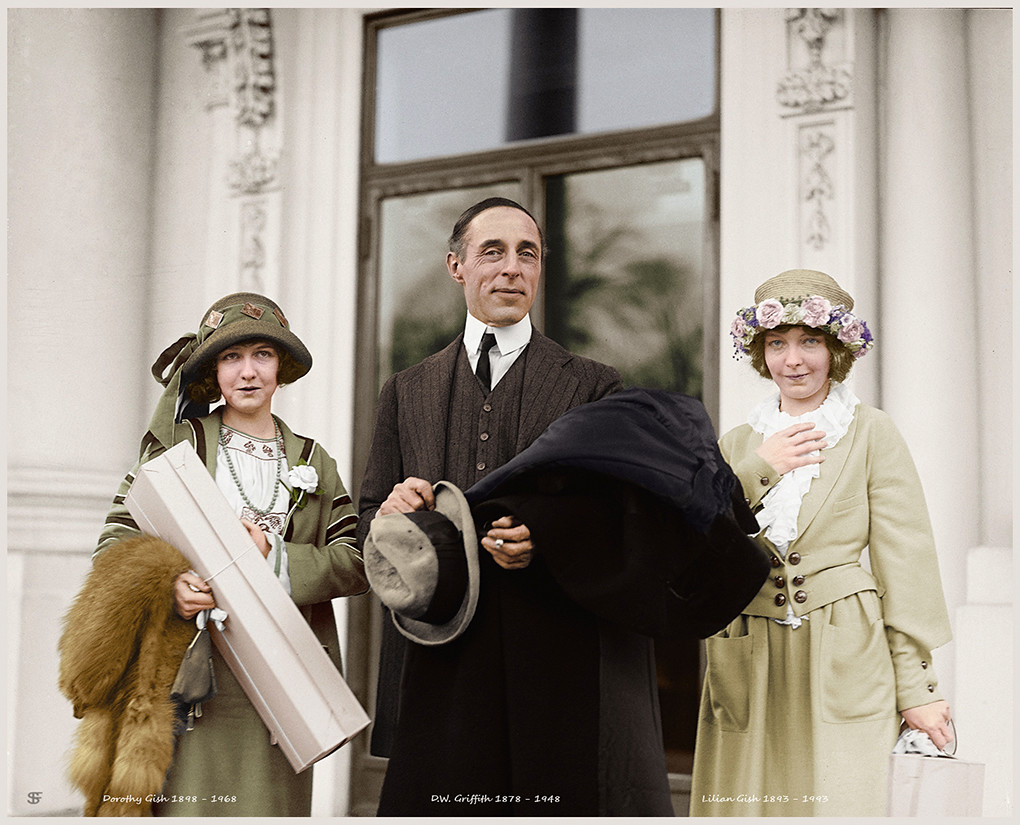
Master of film technique, D.W. Griffith, with Dorothy and Lillian Gish. In 1908 Griffith was paid $5 a day as a scene writer and actor. Seven year later, in 1915, with Griffith’s Birth of a Nation the film director was a millionaire. Made for $100,000, that film generated $18 million at the box office (see – Tino Balio, “Stars in Business: The Founding of United Artists” in The American Film Industry, ed. Tino Balio, University of Wisconsin Press, 1976, p.144). “D.W.Griffith, Dorothy & Lilian Gish” by oneredsf1 is licensed under CC BY-NC-SA 2.0.
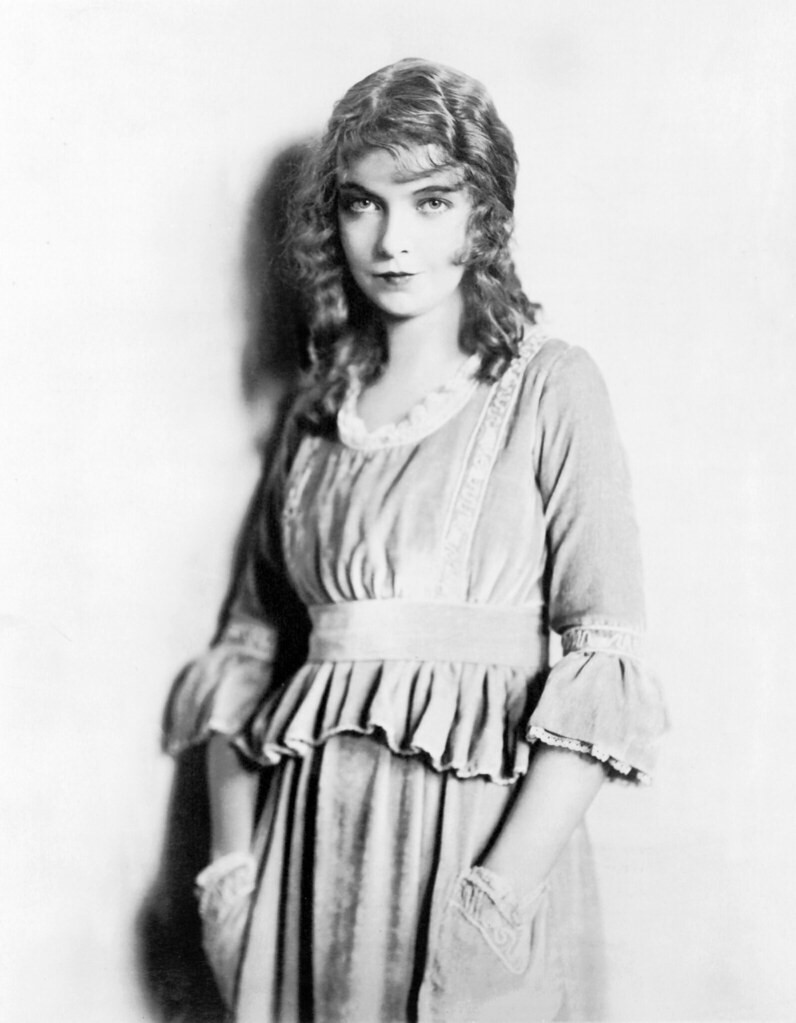
Lillian Gish in 1922 by an unknown photographer. In D.W. Griffith’s Broken Blossoms released by United Artists in 1919, Gish plays young girl, Lucy Burrows, who is abused by her alcoholic prizefighting father, and who meets Cheng Huan, a kind-hearted Chinese man who falls in love with her. In a film career that spanned from 1912 to 1987 – including a directorial debut in 1920 – Gish was called the “First Lady of American Cinema.” “Lillian Gish by unknown photographer, ca. 1922” by trialsanderrors is licensed under CC BY 2.0. Public Domain.
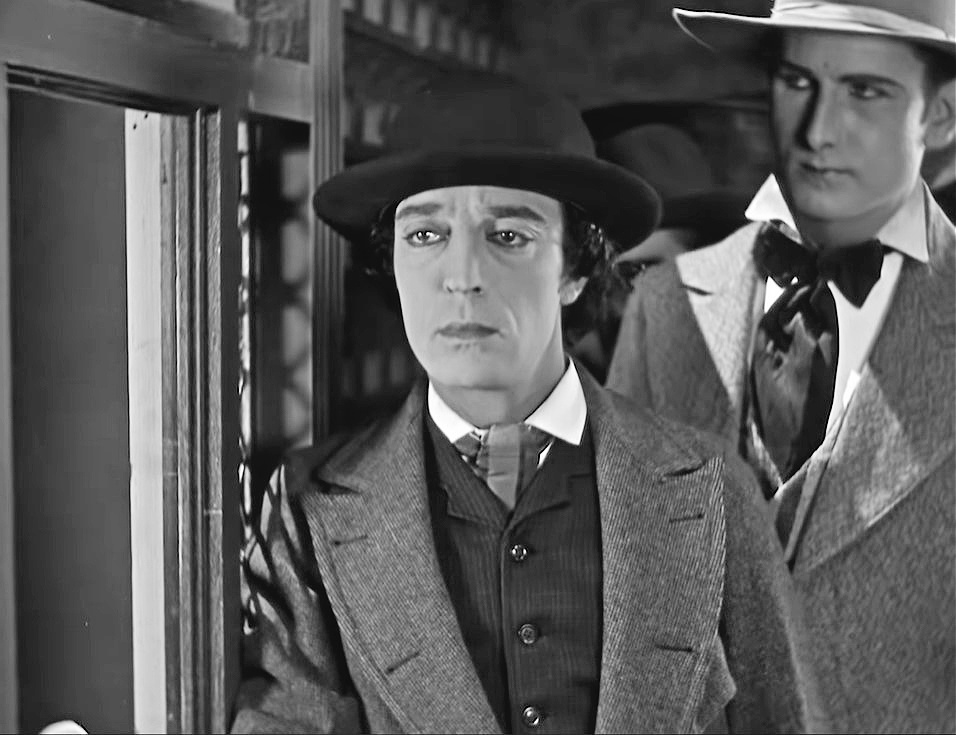
Screenshot ofBuster Keaton in The General, released by United Artists in 1927. The film was an example of a speculative bare bones film studio gone awry. UA president Joseph Schenck had lent Buster Keaton productions (his brother-in law) $750,000 for the silent action film that essentially broke even and prompting UA’s facilitating Buster Keaton’s move to a more watchful MGM for future projects. Public Domain.
The studio became a home for some of the biggest filmmakers and stars of the twentieth century, including Gloria Swanson, Buster Keaton, Samuel Goldwyn, Walt Disney, David O. Selznick, and many others.
Gloria Swanson, born in Chicago, was, at 26 years old, considered the most bankable silent film star of the time. In a successful career in film since 1918, she signed with United Artists in 1925 with UA chairman of the board Joseph Schenck who was brought in the year before. It was a six-picture distribution deal, and her production company was advanced financial loans through United Artists’ own Art Cinema Corporation subsidiary. Swanson also agreed to invest in UA by buying $100,000 of preferred stock. These financial terms proved difficult for Swanson to repay later and required the services of financier Joseph P. Kennedy (1888-1969) who reconfigured her business portfolio to meet her obligations and produced one of her films.4 Meanwhile, her UA debut, The Love of Sunya, basically broke even. Swanson made two other UA films that were critical and financial successes –Sadie Thompson in 1927 with director Raoul Walsh (1887-1980) and The Trespasser, one of Swanson’s few sound films. The latter was directed by Edmund Goulding (1891-1959) and produced by Kennedy in 1929. For both of these films, Gloria Swanson received Academy Award nominations for Best Actress.
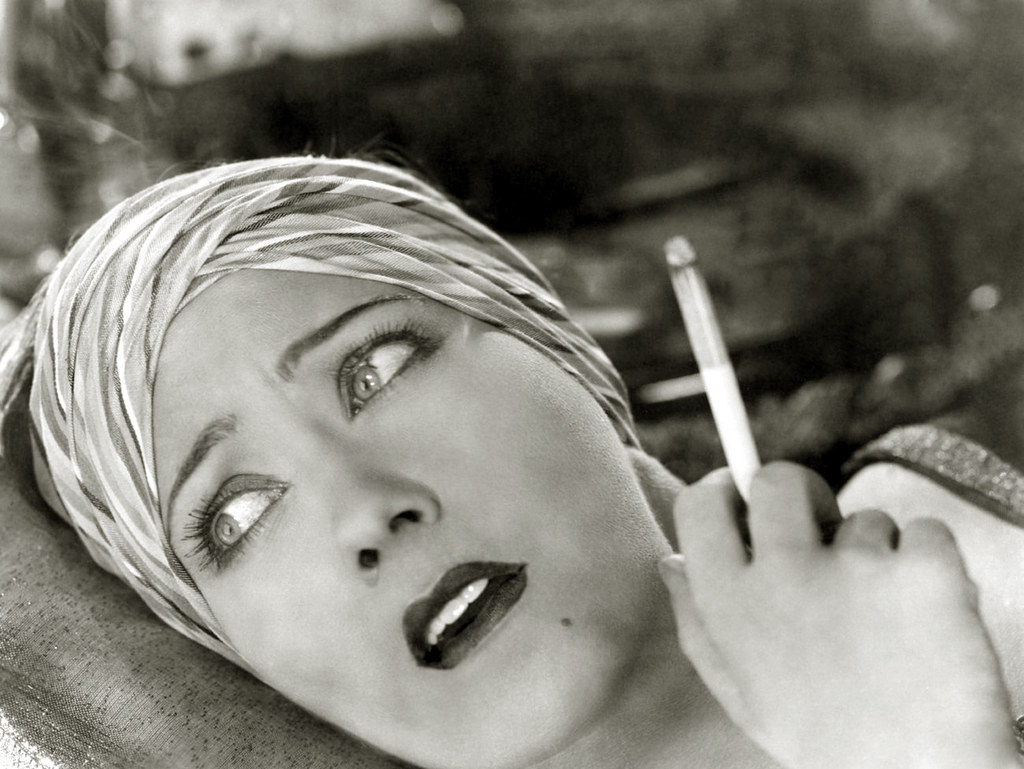
Gloria Swanson, c. 1923. Swanson signed with UA for a six-picture deal. Though the actress adapted well to talkies, Swanson remained the consummate silent screen film star. “smokin turban gloria swanson, c.1923” by carbonated is licensed under CC BY-NC-SA 2.0. Public Domain.
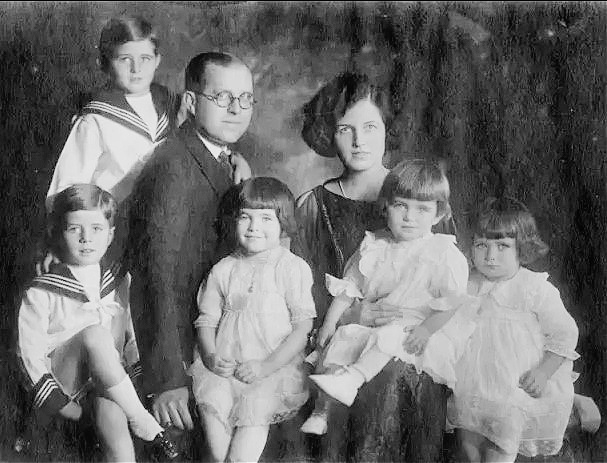
Kennedy family, c. 1923. Joseph P. Kennedy, an imaginative and successful businessman, was the financial advisor to Gloria Swanson in 1927 and film producer for Queen Kelly, a United Artists release, in 1928. The future president of the United States, John F. Kennedy, is seated to the left. Public Domain.
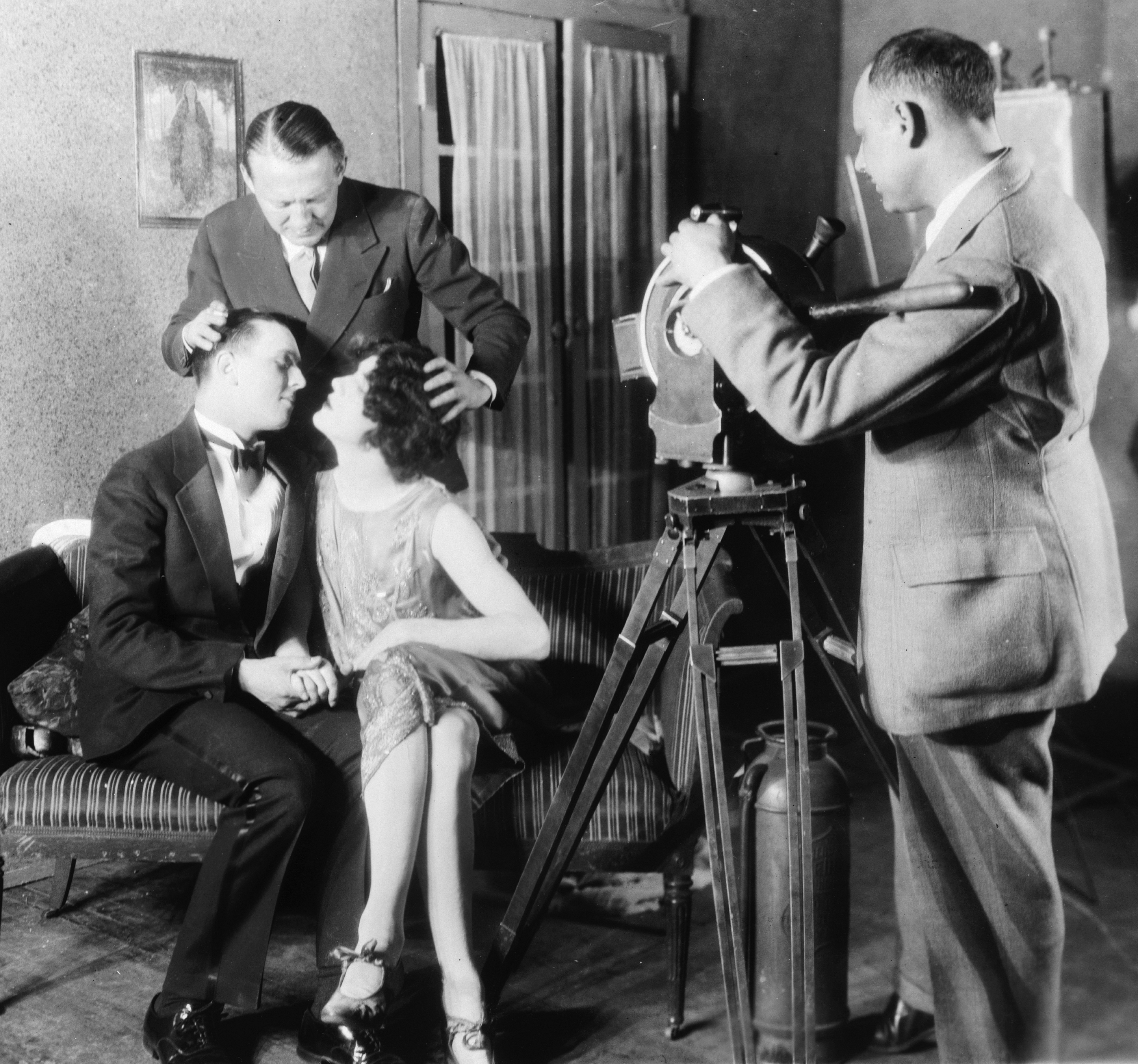
English film director Edmund Goulding (1891-1959) helping William Twiddy and “Bill” Easton kiss while making a film in 1927. Public Domain.
As its founders first looked to protect their public image and screen product, United Artists opened its doors to an array of outside suppliers expanding their business operations. In 1929 UA produced 18 pictures – a company record – and, in the next few years, was expanding to distribute films of Samuel Goldwyn, Howard Hughes, Joseph Schenck, Walt Disney, Alexander Korda, David O. Selznick, and Walter Wanger, among others. With the onset of talkies in 1927 and the Great Depression in 1929 the new pressures on the movie studios were enormous.
Best of Times,Worst of Times: The 1930’s.
While having built their reputation on silent film stars and watching their film output dwindle 25% in the early 1930’s, UA benefited from the management of Joseph Schenck (1876-1961) who facilitated the release of several popular money-making features by Samuel Goldwyn (Palmy Days), Howard Hughes (The Front Page – nominated for an Academy Award for Best Picture), Charlie Chaplin (City Lights) and Alexander Korda (The Private Life of Henry VIII).5
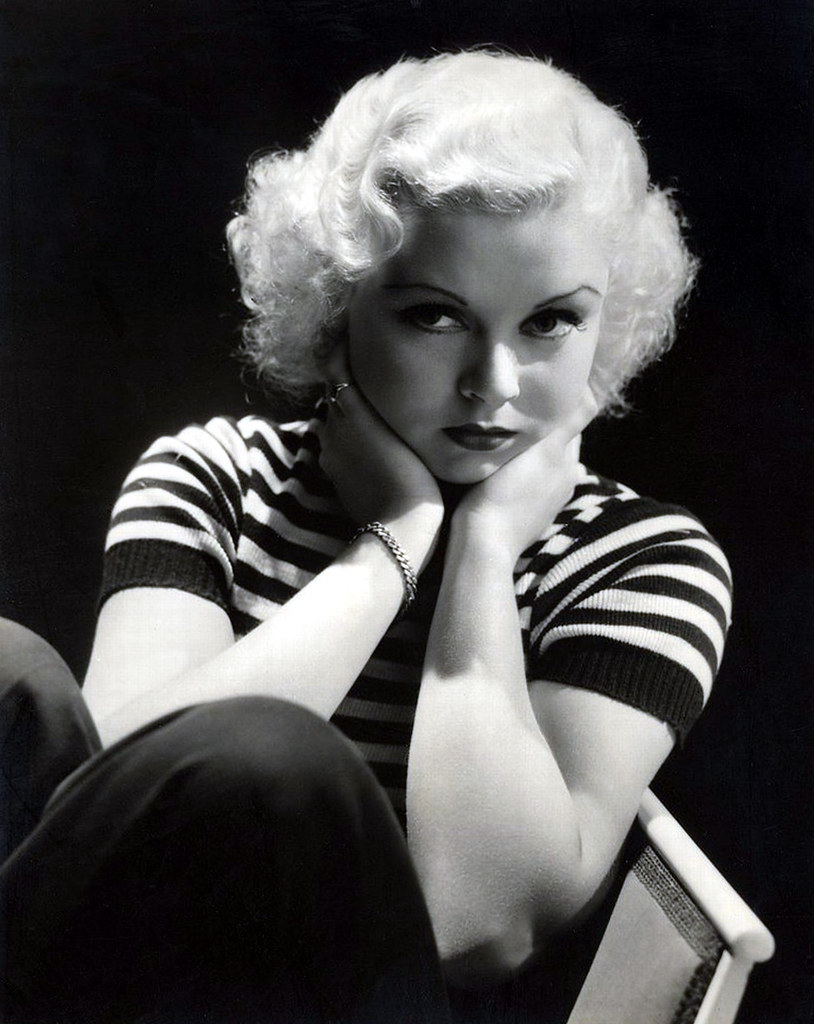
Actor Toby Wing (1915-2001) was an actress and showgirl, once called “the most beautiful chorus girl in Hollwood.” In 1931 she became one of the first Goldwyn Girls and started her film career in Palmy Days (1931), a United Artists release starring Eddie Cantor. In 1933, she was the blonde in 42nd Street in the ‘Young and Healthy’ number with Dick Powell – a film that singlehandedly saved Warner Bros. in the throes of the Great Depression. Sam Goldwyn, imitating the Ziegfeld Follies, looked to create a chorus line for his films where the producer insisted each actress in the Goldwyn line-up “must look as though she had just stepped out of a bathtub. There must be a kind of a radiant scrubbed cleanliness about them which rules out all artificiality.” In a memorable if short film career – Toby Wing retired at 23 years old – her roles were small, often uncredited, and, before the introduction of the Production Code in 1934, frequently risqué. In 1934 she played Consuelo of Claghorne to Cary Grant’s Dr. Maurice Lamar in Paramount Pictures’ rom-com, Kiss and Make-Up and, in 1937, in True Confession, starring Carole Lombard. When, in 1938, at 22 years old, she married “Dick” Merrill, a dashing airmail pilot 20 years her senior, observers didn’t expect the union to last. Wing promptly retired from show business and the newlyweds moved to Florida where Merrill had a reliable Florida-to-New York City route. Wing had two children with Merrill, became a successful real estate agent and the couple stayed together for 44 years until Merrill’s death in 1982. While Toby Wing may have been one more zany platinum blonde that Hollywood and its audiences adored, she possessed an on-screen radiance that found her honored in 1960 with a star on the Hollywood Walk of Fame. Toby Wing died in 2001 at 85 years old. “Toby Wing; (1915 – 2001)” by Movie-Fan is licensed under CC BY-NC-SA 2.0.
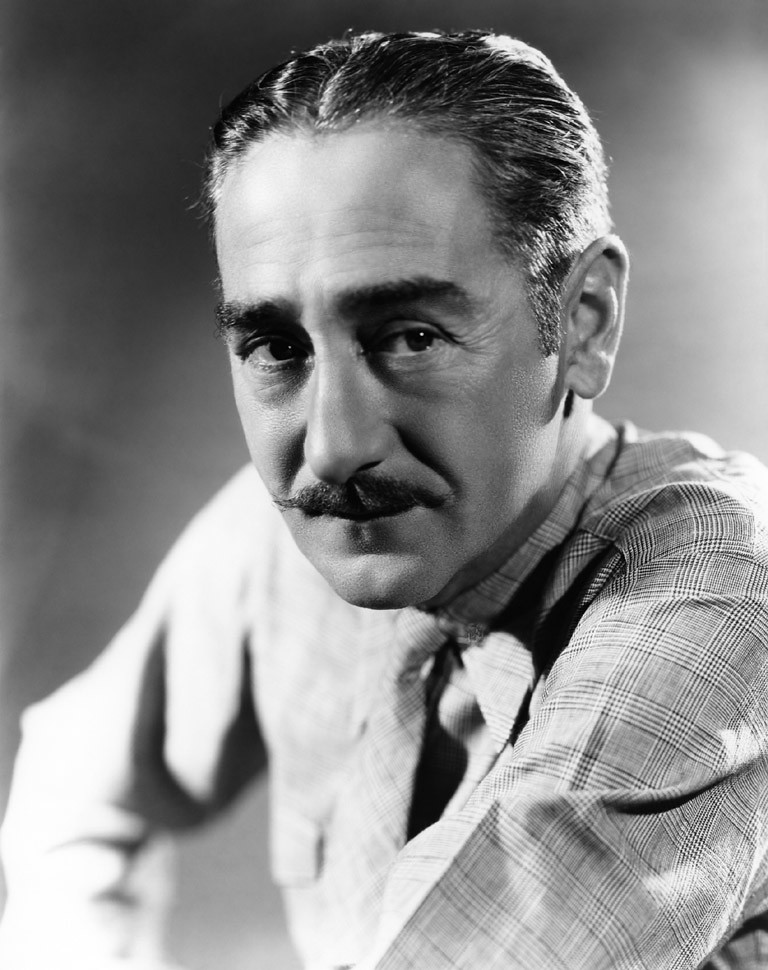
Adolphe Menjou (1890-1963) starred as newspaper editor Walter Burns in The Front Page produced by Howard Hughes and distributed by United Artists in 1931. When the remake of the film by Howard Hawkes was released in 1940 by Columbia Pictures, it was renamed “His Girl Friday” with Cary Grant in the Walter Burns role. For his performance in 1931, Adolphe Menjou as Walter Burns received an Academy Award nomination as Best Actor. “Adolphe Menjou” by twm1340 is licensed under CC BY-SA 2.0.
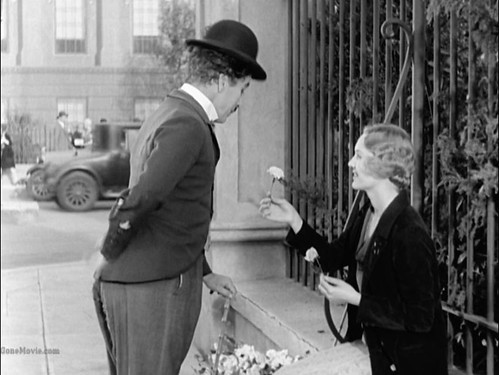
Charlie Chaplin’s City Lights (1931) released by his United Artists –here with Virginia Cherrill (1908-1996) as the visioned-impaired flower girl – was a silent film though made in an era when talkies were most wildly popular. While a tender relationship blossomed between Chaplin’s tramp and the flower girl in the film, on the set, in real life, Chaplin almost fired Cherrill for not meeting his threshold for professionalism. Ultimately, Chaplin didn’t follow through on his threat because it would be prohibitively expensive to find and film a replacement. Independent film production companies, even when it is a famous star and movie studio owner, often had to follow a tighter budget than the majors. “City Lights,” one of Chaplin’s classic films, became one of that year’s blockbusters and helped UA make money during the Great Depression. “City Lights” by Mgmax is licensed under CC BY-NC 2.0.
United Artists released many landmark films across the silent era, Golden Age Hollywood, and modern cinema, helping shape American film culture for decades.
Building a Smarter Business Model
In 1926, Joseph Schenck made a visionary move when he established the United Artists Theatre Circuit, selectively acquiring first-run theaters in major markets to exhibit UA films. The strategy strengthened United Artists’ position in the industry and encouraged the major studios to work more cooperatively with a formidable competitor while also showing UA productions in their own theaters.
A Lean Studio in Hard Times
Unlike MGM, Paramount, Warner Bros., Fox, and RKO, United Artists did not own a vast theater chain. Collectively, those major studios controlled approximately 15 percent of the nation’s theaters. Yet UA’s lack of extensive theater holdings proved advantageous during difficult economic times. When the Great Depression caused declines in movie attendance and real estate values, United Artists was less exposed to the financial losses suffered by the vertically integrated majors.
The company’s lean organizational structure also resulted in lower operating costs. With a smaller staff and fewer fixed expenses, United Artists was better positioned to weather economic downturns and avoid the large-scale layoffs that affected many competitors.
New Approaches to Film Financing
Under Schenck’s leadership, United Artists expanded beyond traditional lending arrangements and began investing directly in future productions through profit-sharing agreements. This approach supplemented the company’s existing practice of advancing funds to producers who repaid loans with interest after a film’s release (Gloria Swanson’s deal). Such financing arrangements helped attract independent filmmakers while allowing UA to share in the success of profitable productions.
The Twentieth Century Partnership
In 1933, Schenck joined forces with Darryl F. Zanuck (1902-1979), formerly of Warner Bros., to create Twentieth Century Pictures. The partnership quickly became one of United Artists’ principal production sources, and Twentieth Century Pictures supplied most of UA’s films in 1933 and 1934.
However, after Schenck was denied a partnership position at United Artists in 1935, he departed the company.6 He then merged Twentieth Century Pictures with Fox Films to form Twentieth Century-Fox, becoming chairman of the new studio.
Leadership Vacuum and Talent Drain
Schenck’s departure created a major challenge for United Artists. The loss of its leading producer left the company without strong executive leadership, a situation that arguably was not fully resolved until the arrival of Arthur Krim and Robert Benjamin in the 1950s.
Following Schenck’s exit, several prominent filmmakers and producers gradually left the company. Although such movement was common in the motion picture industry, particularly among independent-minded figures seeking new opportunities, the departures weakened United Artists’ creative base. Walt Disney moved to RKO in 1936, Samuel Goldwyn followed in 1940, and William Wanger departed for Universal Pictures in 1941.
Searching for a New Future
Only after World War II did United Artists’ surviving founders, Mary Pickford and Charlie Chaplin, seek dynamic new leadership for the company. Their search came at a critical moment, as the traditional Hollywood studio system was beginning to decline and television was emerging as a powerful new competitor. Ironically, the effort to reinvent United Artists would ultimately lead to the departures of Pickford and Chaplin themselves, marking the end of the studio’s founding era.
Joseph Schenck. Joseph M. Schenck Productions became Art Cinema Corporation in 1926. In addition to Buster Keaton, Norma Talmadge (Schenck’s wife) and Gloria Swanson, Schenck through United Artists Studio (Art Cinema using Pickford and Fairbanks’ studio) produced scores of pictures in the 1920’s by Rudolph Valentino (The Son of the Sheik in 1926), John Barrymore (The Beloved Rogue in 1927) and Dolores Del Rio (Evangeline in 1929). In 1927 Schenck had brought in Samuel Goldwyn to United Artists. In 1933 Schenck and Darryl F. Zanuck (1902-1979), formerly of Warner Bros., formed Twentieth Century Pictures. In 1935 Schenck and Zanuck left United Artists to form Twentieth Century-Fox studio. It had been mainly Charlie Chaplin who resisted Schenck’s vision for a more comprehensive movie studio like the majors that hastened Schenck’s ultimate departure. Chaplin looked to continue the vision of United Artists for pictures that reflected the specialized talents of its independent creators (see – Tino Balio, “Stars in Business: The Founding of United Artists.” in The American Film Industry, ed. Tino Balio, University of Wisconsin Press, 1976, p.151).Public Domain.
In 1933, Alfred Newman, then under contract to United Artists, wrote the now‑iconic 20th Century‑Fox fanfare as a commission from Darryl F. Zanuck for his new Twentieth Century Pictures. That same year, Joseph M. Schenck and Zanuck—recently departed from Warner Bros.—formally launched Twentieth Century Pictures under the United Artists banner. In 1935, Schenck and Zanuck left United Artists and merged Twentieth Century Pictures with the Fox Film Corporation, creating 20th Century‑Fox. The fanfare was retained and became permanently tied to the studio’s identity. In 1953, Newman expanded the fanfare with a soaring, widescreen arrangement written specifically for the debut of the studio’s new CinemaScope format.
Selznick, United Artists, The Film That Got Away
Meantime, in 1935 David O. Selznick (1902-1965) joined UA and released his pictures – in 1936, Little Lord Fauntleroy and The Garden of Allah; in 1937, A Star is Born, The Prisoner of Zenda, and Nothing Sacred; in 1938, The Adventures of Tom Sawyer and Young at Heart; and, in 1939, Made For Each Other and Intermezzo, starring Ingrid Bergman who Selznick introduced to American film audiences. These films were jewels for UA and made a fortune for the studio. Selznick International Pictures’ Gone With The Wind should have been released through UA but part of the condition of MGM lending Clark Gable to the project was that the film would be distributed by Gable’s home movie studio.
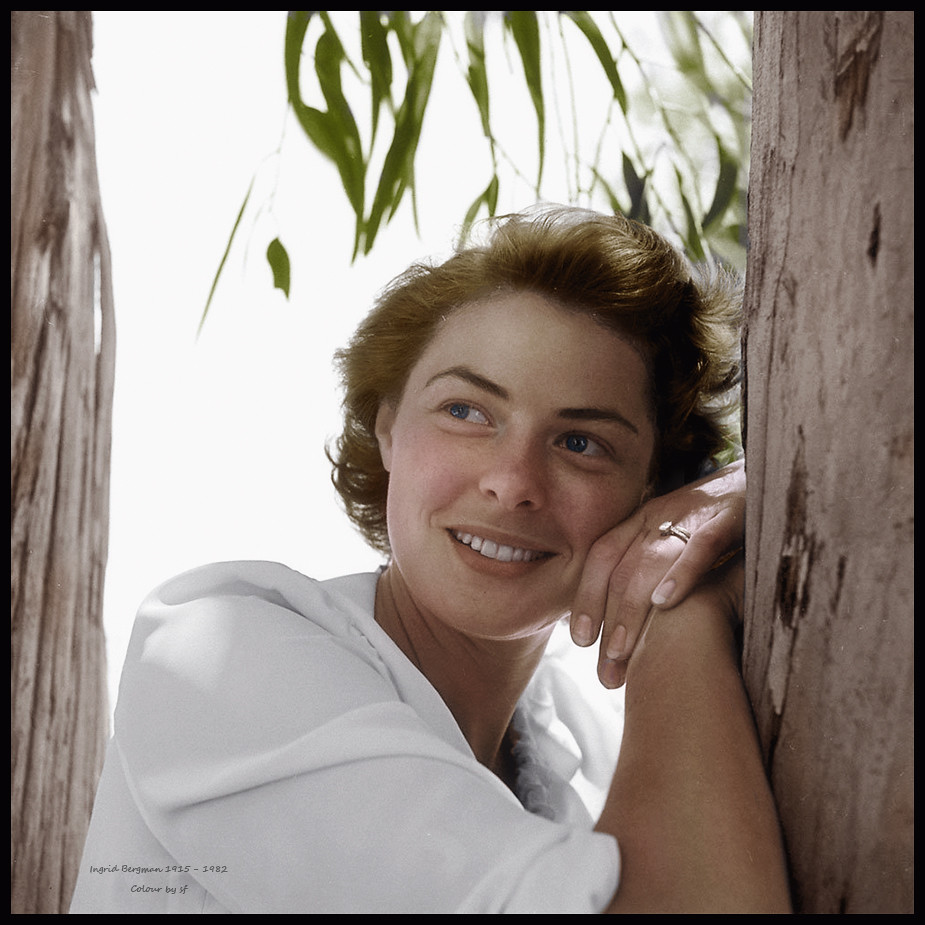
Ingrid Bergman (1915 – 1982) was a 23-year-old Swedish actress when she was introduced to U.S. film audiences after she appeared in David O. Selznick’s 1939 film production, Intermezzo. co-starring Leslie Howard and released by United Artists. “Ingrid Bergman 1915 – 1982” by oneredsf1 is licensed under CC BY-NC-SA 2.0
Other Major UA Releases of the Late 1930s and Samuel Goldwyn Departs
Other notable films from the 1930s released by UA included Walter Wanger’s Trade Winds (1938), John Ford’s Stagecoach (1939), and Samuel Goldwyn’s Wuthering Heights (1939). Before Goldwyn’s departure in 1940 under circumstances not unlike Joseph Schneck in 1935 – a star producer wanting to buy in or buy out UA- he left to form his own movie enterprise after 50 critically acclaimed and money-making films in 14 years for United Artists.
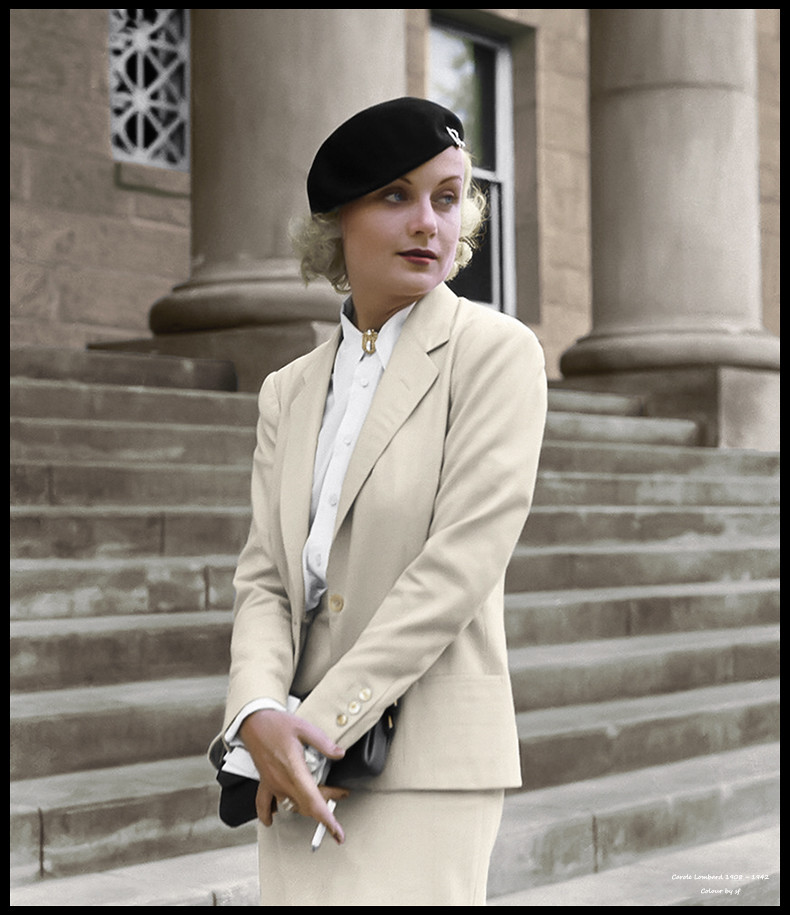
Carole Lombard (1908-1942), well known screen actress shown on the courthouse steps in Carson City, Nevada, on August 18,1933 following her divorce from her husband, William Powell. A rising comedian originally from Indiana, Lombard appeared in the 1937 Technicolor screwball comedy feature film, Nothing Sacred. From Selznick International Pictures, the film was released by United Artists as part of an agreement Selznick made with the movie studio to release a dozen films in a 10-year period. “Carole Lombard 1908 – 1942” by oneredsf1 is licensed under CC BY-NC-SA 2.0.
The War Years.
Selznick’s Successes in the 1940s
In the 1940’s Selznick released Rebecca (1940), Since You Went Away (1944), I’ll Be Seeing You (1945) and Spellbound (1945) through UA.
The Wartime Movie Boom
Seeking diversion, news information, and community camaraderie, America continued to go to the movies in record numbers before and during World War II (1939-1945). In 1938 there were 80 million tickets sold every week.7 The U.S. population in 1940 was about 130 million people and in pre-Pearl Harbor 1941 about 55 million of them (about 40% ) attended the movies each week. 8 In three years, by 1944, weekly attendance numbers nearly doubled to 100 million people – or about 75% of the U.S. population.9 By comparison, starting in the early 1970’s and through to today, the trend is very different. About 10% of the population may attend the movies each week at movie theatres.
Hollywood During World War II
The early 1940’s was booming times for the movie industry whose contemporaneous films often extolled democracy’s virtues as well as a sentimental Homefront along with providing the outright escapist fare such as Westerns, comedies and musicals.
United Artists Falls Behind and the Post-War Decline
Despite this prosperity UA’s film product was mostly undistinguished in this period and their income fell slightly from the end of the pre-war period.10 After the war, movie attendance levels dropped as people returned to start families and go back to school and work. In response, the movie industry released less product – and the decline spiraled so that by the end of the decade of the 1940’s UA was in debt and ripe for a takeover
In 1949 Orson Welles starred in Black Magic, an 18th century costume drama, released by United Artists. Welles played Count Cagliostro, a legendary hypnotist, conjurer, showman and charlatan. The film co-starred Nancy Guild (1925-1999) as Marie Antoinette and her supposed double, Lorenza, whom the Count plots to replace at the Dauphin’s side and control France. The film received mixed reviews. The photograph of Welles in 1949 is from The Third Man. “The Third Man (1949)” by twm1340 is licensed under CC BY-SA 2.0.
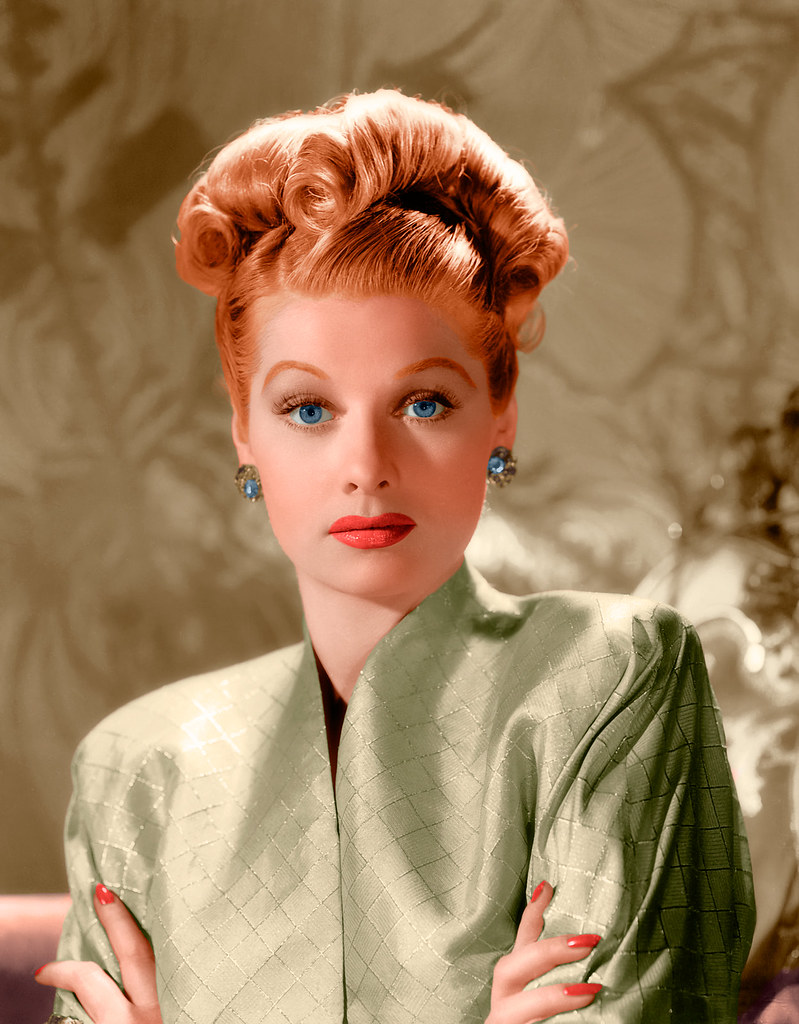
Lucille Ball (1911-1989) in the mid 1940’s. Lucy appeared in the stylish atmospheric “Lured,” a United Artists release, in 1947. Directed by Douglas Sirk and co-starring George Sanders, the film noir is a murder mystery set in Victorian England where 8 young women have mysteriously disappeared after answering an advertisement. Lucy is recruited by Scotland Yard to act as bait for the killer who could be one of several suspects. In the 1940’s United Artists included many lower budget and B pictures to meet demand and keep its distribution business humming. “Lucille Ball” by manito℡ is licensed under CC BY 2.0.
Jane Russell (1921-2011) appeared in Howard Hughes’ The Outlaw, released by UA in 1946. From the start, the Western, with its sexual overtones, was mired in controversy so that it only gained a wide showing in 1950. Russell, playing Rio and wearing a Howard Hughes’ specially designed bra using his aeronautical engineering skill – all of which became part of the film’s controversy – ended up as an iconic Hollywood sex symbol in the process. “Jane Russell (1)” by oneredsf1 is licensed under CC BY-NC-SA 2.0.
Notably, at the end of the decade, beyond film noir with, as Michael F. Keaney points out, “its thematic criminal content” and “Emphasis on obsession, desperation, alienation, and paranoia” that is noted for its “dark visual style,“11 United Artists’ releases contributed to the new willingness after the war and ushering in of the Atomic Age to present serious social issues in films such as Home of The Brave (1949) exploring issues of race bigotry. Produced by Stanley Kramer, directed by Mark Robson, and written by Carl Foreman Kramer and others would continue to explore these social issues in the future.
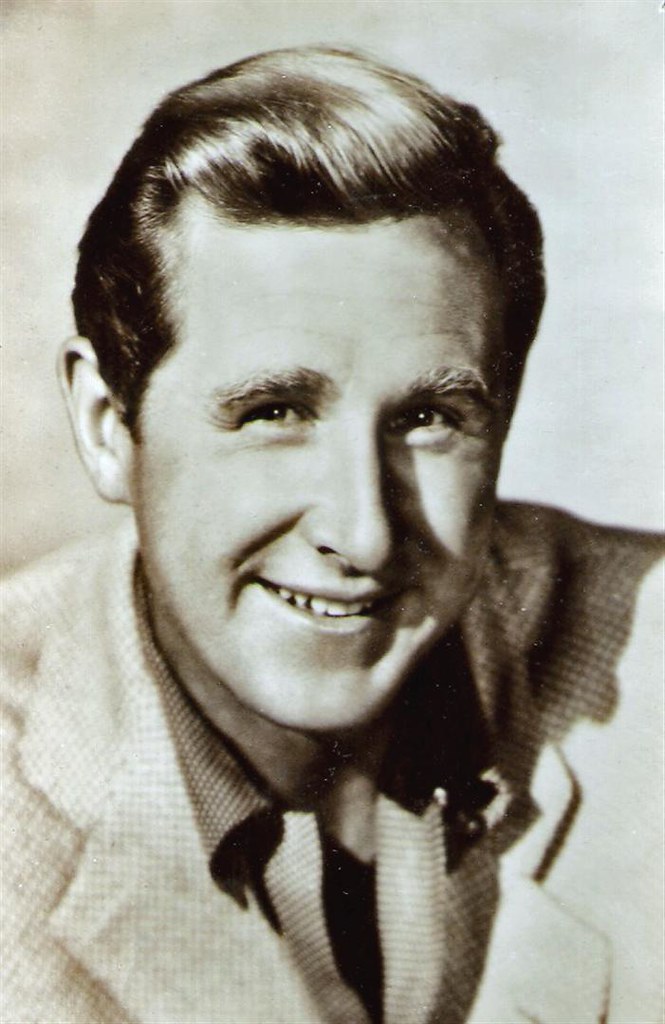
Lloyd Bridges (1913-1998) played the buddy who was killed in Home of The Brave, a 1949 UA release, that results in a Black GI (James Edwards) returning in a state of shock from their mission in the South Pacific during World War II. Using psychoanalysis conducted by a sympathetic doctor (James Corey), the Black soldier’s reaction is revealed to be the result of racial abuse by one of the platoon leaders. This serious social issue of racial bigotry in American institutions and controversial subjects was part of a Hollywood’s new willingness to confront them in popular film in the late 1940’s. “Lloyd Bridges” by YorkieBoy is licensed under CC BY-NC 2.0.
The Post-War Era: 1950’s-1970’s.
Krim and Benjamin: A New Leadership Team
In 1951, Arthur B. Krim (1910-1994) and Robert Benjamin (1909-1979), lawyers and producers, were given leadership at UA and, based on their immediate success, soon acquired the movie studio.
A New Business Model for Hollywood
The duo unabashedly practiced the capital-producer-driven model for making movies which has since defined the film industry business model. United Artists’ visionary low overhead approach from its inception proved prescient for film production outside the once all-encompassing major studio system. Continuance of a skeletal staff which caused independent producers, notably Samuel Goldwyn, to flee from its sometime sloppy operations and no studio space – such could be leased from Pickford and Chaplin – became the de facto method to critical and box office success. 12
Turning Profit in Six Months
When Krim and Benjamin took over United Artists, stockholders gave them three years to make a profit. They did it in six months.13 United Artists devised a strategy based on financing and distribution of independent production that quickly and sustainably transformed the company into an industry leader.
Early Successes and A Home for Independent Filmmakers
The revamped 1950’s United Artists worked with producer Sam Spiegel (1901-1985) and director John Huston (1906-1987) to have two upfront hits – The African Queen in 1951 and Moulin Rouge in 1952. This was followed up by High Noon in 1952 which was nominated for 7 Academy Awards and won four. United Artists was soon working closely with Stanley Kramer, Otto Preminger, Hecht-Hill-Lancaster Productions (actor Burt Lancaster’s production company) and other free-agent actors and others wanting to produce and direct.
The Industry Takes Notice
UA’s innovative and successful business model made the movie studio run by artists for artists the envy of the film industry so that, by the 1960’s, the majors were imitating them.
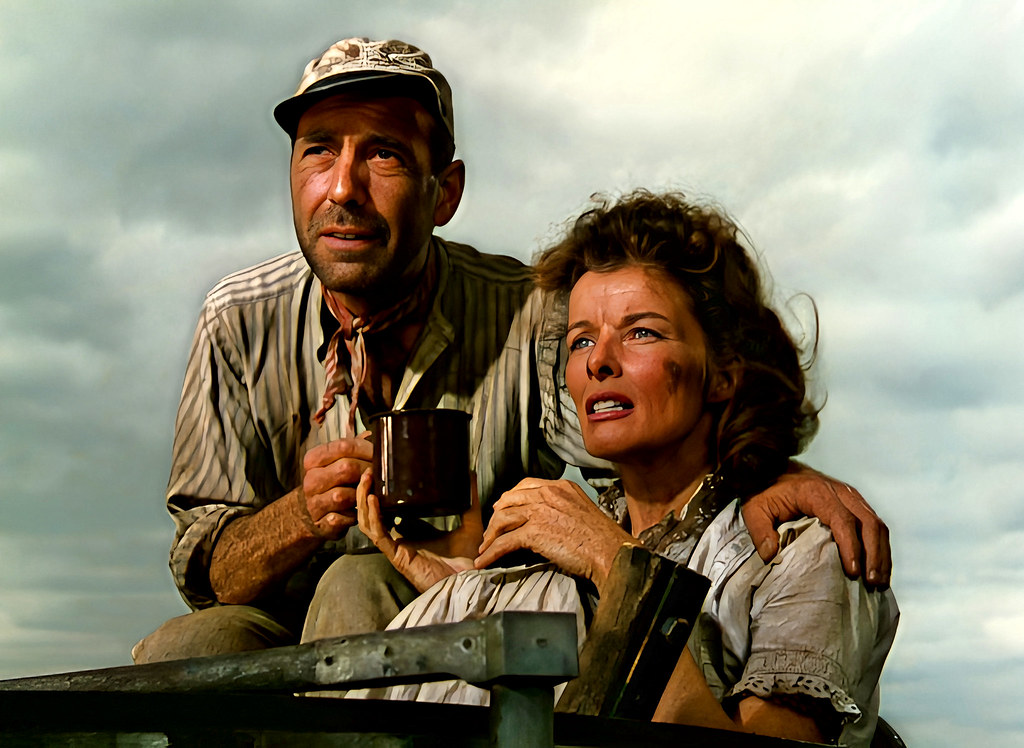
Humphrey Bogart won his only Oscar for the role of the scruffy captain who falls in love with a spinster missionary (Katharine Hepburn) as they take an old steamer down the Congo River during World War I in The African Queen (1951) released by United Artists under the new management of Krim and Benjamin. John Huston’s script wisely focused on the character development and performances of the two talented leads. “The African Queen (1951)” by Wasfi Akab is licensed under CC BY-NC-ND 2.0.
Under Arthur Krim and Robert Benjamin in the 1950s, the company perfected a highly successful model of financing and distributing independently produced films, influencing the future structure of Hollywood.
Surviving Founders Mary Pickford and Charlie Chaplin Sell
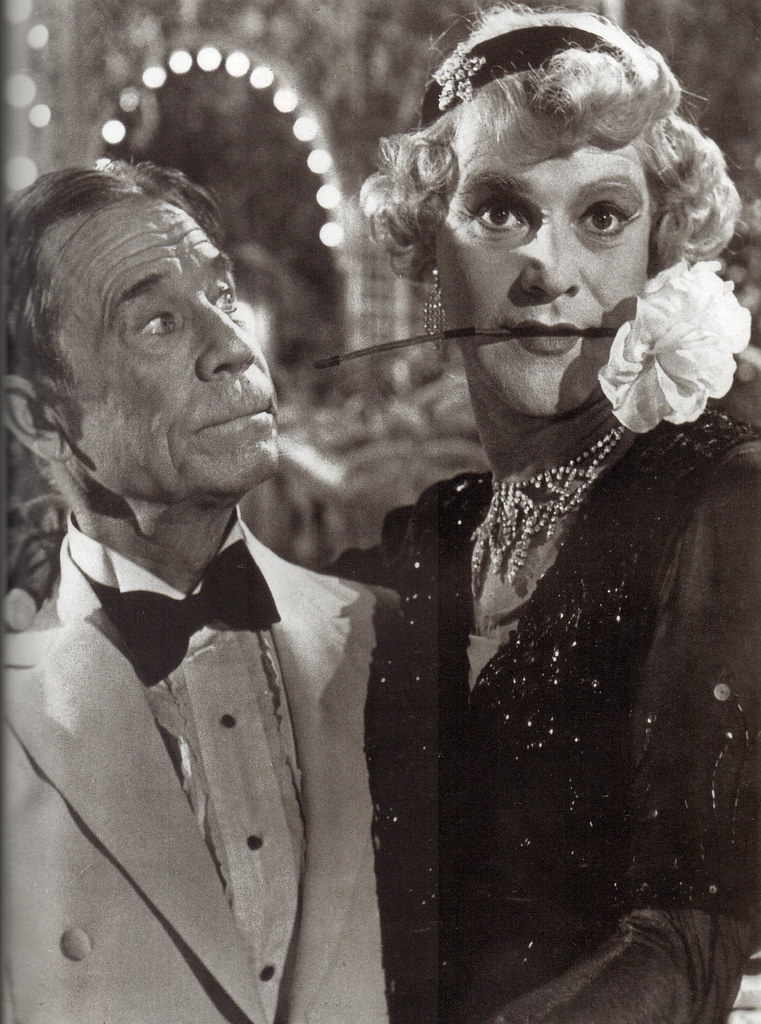
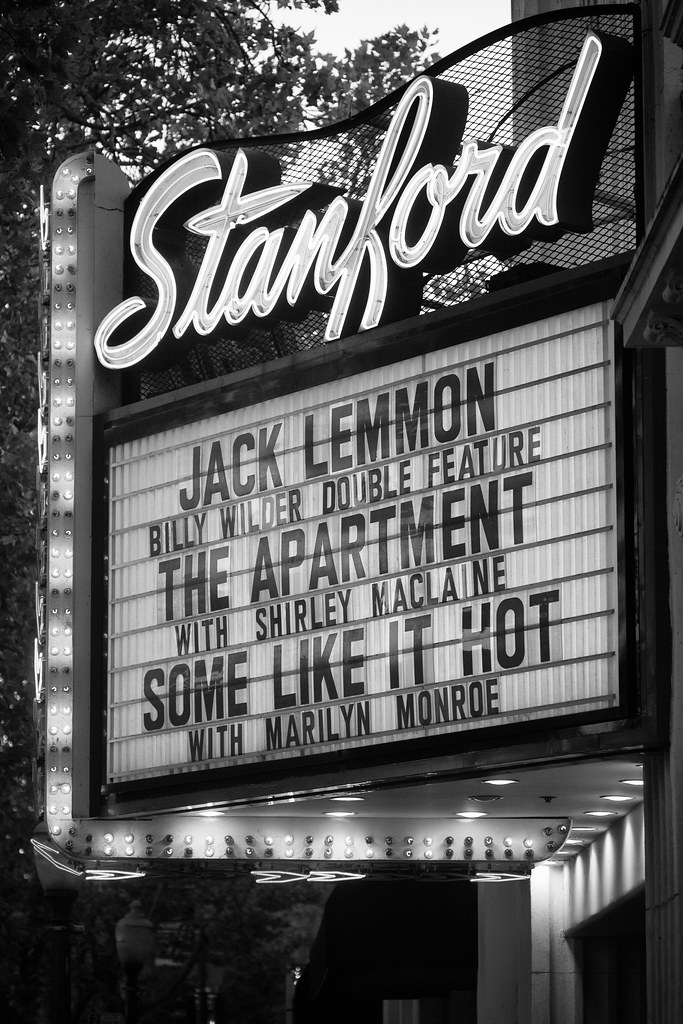
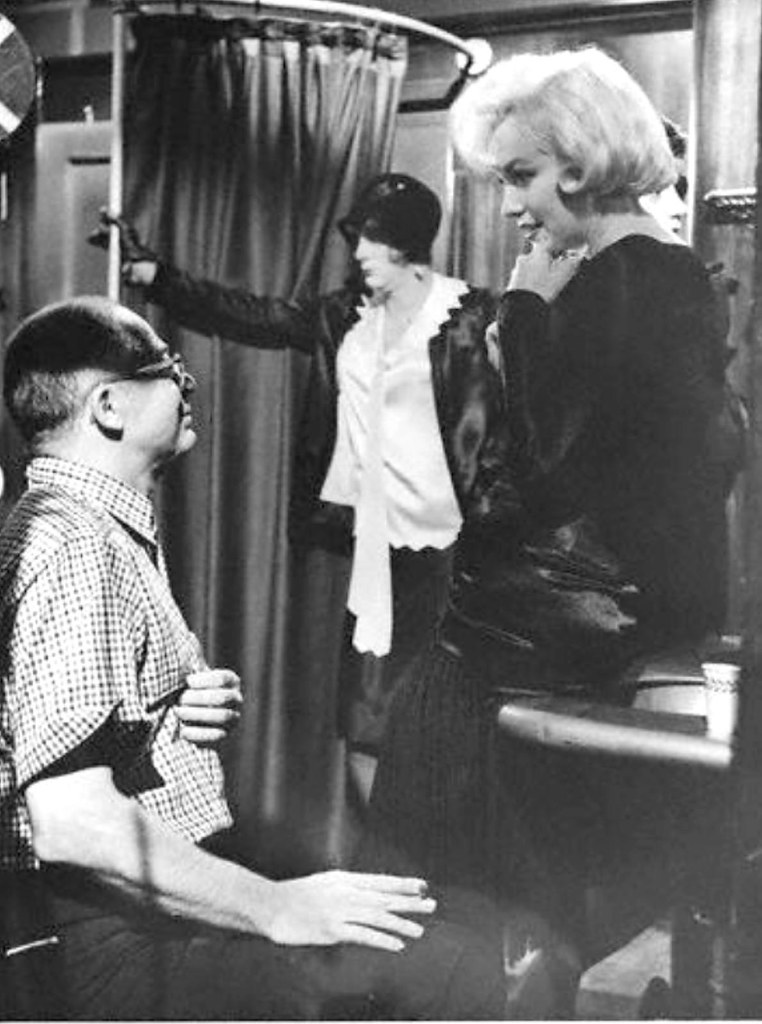
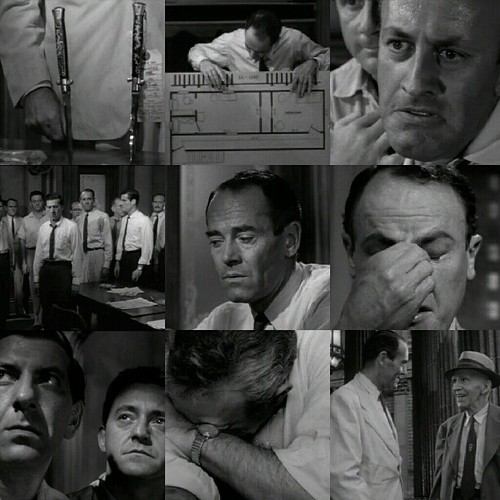
By 1956 both Chaplin and Pickford had divested their shares to Krim and Benjamin who came from Eagle-Lion Films. United Artists then made a motion picture, Marty in 1955, that won four Oscars, including Best Picture. In 1957, a social drama, 12 Angry Men, was Oscar-nominated multiple times. There was also The Bachelor Party, an Oscar-nominated follow-up to Marty, in 1957 and Stanley Kramer’s The Defiant Ones in 1958. UA also released some of the era’s great comedies, including Billy Wilder’s Some Like It Hot in 1959 and The Apartment in 1960 which won the Best Picture Oscar. In the 1960’s Wilder did some of his best work with United Artists including, all of them box office hits, One, Two, Three in 1961, Irma La Douce in 1963, Kiss Me, Stupid in 1964 and The Fortune Cookie in 1966.
Jack Lemmon (right) as Jerry/”Daphne” with admirer Osgood Fielding III (Joe E. Brown) in Billy Wilder’s Some Like It Hot, released in 1959 by United Artists. Lemmon and Tony Curtis as Joe/”Josephine” gave the two best drag performances of their generation as Some Like It Hot marked the best in post-war comedy. “Some Like it Hot, 1959” by thefoxling is licensed under CC BY-NC-SA 2.0.
Marilyn Monroe as Sugar Kowalczyk, a ukulele player and singer, talks to film director Billy Wilder during the filming of a scene in Some Like It Hot. There is no funnier and sexier performance by Monroe in her filmography. “Marilyn Monroe Talking with Billy Wilder” by Movie-Fan is licensed under CC BY-NC-SA 2.0.
Arthur Krim with his wife Mathilde Krim and President John F. Kennedy at the White House in 1962. Public Domain.
Taking UA Public
In 1957 Krim and Benjamin did something the founding owners didn’t do and if they had the studio’s history, likely starting in the mid-1930’s, would be very different: they took UA public. Before the 1950’s was finished, United Artists was the envy of the Hollywood motion picture industry, very profitably producing films, television shows, and records.14 Arthur Krim and Robert Banjamin remained with UA until 1978 when, with others, they created Orion Pictures. From 1978 to 1992, Krim attempted to mirror UA’s success with a company that, since 1997, is a subsidiary of MGM.
In 1961, United Artists released West Side Story which won a record 10 Academy Awards including Best Picture. Producer-Director Stanley Kramer with whom United Artists first started working in 1958, released Judgement At Nuremburg in 1961 and It’s a Mad, Mad, Mad, Mad World which, in its homage to slapstick, featured a Who’s Who ensemble cast of stage and screen comedians and became a box office smash.
One of the best animated opening credits in film history is Saul Bass’s effort for It’s a Mad, Mad, Mad World in 1963 from United Artists.
Director John Sturges’ The Magnificent Seven released by United Artists in 1960 – it was an adaptation of the 1954 Japanese film classic, The Seven Samurai – and a major blockbuster. It featured (pictured above) Yul Brynner and Steve McQueen. “The Magnificent Seven” by MacQ is licensed under CC BY-NC-ND 2.0.
In 1962 United Artists released The Miracle Worker, starring Anne Bancroft as Annie Sullivan, the partially blind teacher of deaf, mute and blind Helen Keller played by Patty Duke, both in Oscar-winning performances. William Gibson’s inspiring theatrical play was altered slightly by the author for the screen that was directed by Arthur Penn. “Miracle Worker” by Mike Monteiro is licensed under CC BY-NC-SA 2.0.
Sidney Poitier (1927-2022) in 1963. Two years later, in 1965, Sidney Poitier became the first Black performer since Hattie McDaniel in Gone With The Wind (MGM. 1939) to win an Oscar for his role as Schmidt, a workman who helps a small group of German nuns build a chapel in Arizona in the United Artists release of Lilies of The Field. “1-a-patch-of-blue-sidney-poitier-1965-everett” by jamesjoel is licensed under CC BY-ND 2.0.
The studio backed major cultural phenomena including James Bond, The Pink Panther, the Beatles’ films, West Side Story, Midnight Cowboy, Rocky, and One Flew Over the Cuckoo’s Nest
It was also in 1963 that United Artists backed the first film in the James Bond 007 franchise – Dr. No. Starting in 1964, they also backed The Pink Panther films directed by Blake Edwards and Bud Yorkin. Starting in 1964, Clint Eastwood was well on his way to becoming a star by way of his UA-backed spaghetti westerns. These and other films looked to satisfy the younger movie-going demographic that increasingly desired depictions of sex and violence at the cinema.
The first James Bond ride was this 1961 Sunbeam Alpine Mk1 in Dr. No. In 1961, producers Albert R. Broccoli and Harry Saltzman purchased the filming rights to Ian Fleming’s spy novels. The pair founded Eon Productions and, with financial backing by United Artists, produced Dr. No that was directed by Terence Young and featured Sean Connery as 007. “The First James Bond Ride: 1961 Sunbeam Alpine Mk1” by Automotive Rhythms is licensed under CC BY-NC-ND 2.0.
UA-backed spaghetti westerns in the mid-1960’s made Clint Eastwood a star. They included A Fistful of Dollars (1964), For a Few Dollars More (1965), and The Good, The Bad and The Ugly (1966). “Clint Eastwood” by yagisu is marked with Public Domain Mark 1.0.
In 1964 and 1965 United Artists got on board to introduce the Beatles to U.S. film audiences with A Hard Day’s Night and Help. Both films were phenomenal money makers. In 1965 UA had the means to finance, at $20 million, the most expensive film ever made up to that time: George Stevens’ production of The Greatest Story Ever Told. Starring Max von Sydow as Jesus Christ with an ensemble cast of actor favorites, the film was critically acclaimed and received five Academy Award nominations in 1965. However, the film recouped most though not all of its historic initial investment.
The Beatles with Richard Lester, film director of A Hard Day’s Night (1964). The film was released by United Artists in the U.S. on August 11, 1964. It accompanied the Beatles’ hit song of the same name and became a phenomenal hit with U.S film audiences, particularly teenagers around the country who lined up to see it with their friends, often multiple times. The film starred the Fab Four – John, Paul, George, and Ringo – in a rather mundane story whose better purpose was to feature the band mates and about a dozen of their most popular songs. “Sept hard-days-night-a-1964-011-beatles-richard-lester-clapperboard-00o-cjr” by bridgevillepennsylvania is licensed under CC BY-NC-ND 2.0.
Later Developments and the End of an Era
A Decade of Academy Award Dominance
United Artists was ascendant in the 1960’s. It won 5 best Picture Oscars in the decade – more than any other single movie studio, a remarkable accomplishment. In addition to The Apartment in 1960 and West Side Story in 1961, there was Tom Jones directed by Tony Richardson in 1963, In the Heat of the Night in 1967, and Midnight Cowboy in 1969.
Collaborative Success and Independent Growth
United Artists was working with an array of directors such as Norman Jewison (In The Heat of the Night in 1967 and The Thomas Crown Affair in 1968), John Sturges (The Magnificent Seven in 1960), Robert Wise and Blake Edwards.15 In the 1960’s this diverse array of directors and actors and their films from United Artists found their audience although, as production exploded with independent projects, not every movie made its mark.16
Corporate Acquisition and Continuing Hits
Purchased in 1967 by Transamerica Corp. based on its film and television success, Krim and Benjamin were pushed aside for new management as UA continued to manufacture film hits such as The Graduate (Best Picture nominee) and In The Heat of the Night (Best Actor and Best Picture winner).
Financial Turmoil and Leadership Restoration
In 1968 UA’s income reached $250 million with a $20 million in profit. Yet, in 1970, the studio lost $35 million. Krim and Benjamin were restored while staff and overhead expenses drastically cut.17
Directed by Britisher John Schlesinger, and starring Jon Voight as small-town stud Joe Buck and Dustin Hoffman as down-and-out local hustler Ratso Rizzo, Midnight Cowboy, follows the pair’s unlikely relationship through the seedy, sordid streets of New York City and beyond. Midnight Cowboy won that year’s Best Picture, Best Director and Best Screenplay at the Academy Awards and both Voight’s and Hoffman’s performances were Oscar-nominated for Best Actor, though it was John Wayne who took home Oscar for his role in True Grit that year.
Midnight Cowboy was made on a shoestring budget of $3 million and though criticized for being luminous but not accurately observed, with a haunting theme by John Barry and hit rock songs on the soundtrack (“Everybody’s Talkin’” by Nilsson), the film scored over $44 million at the box office. Still, the movie studio’s new owner, insurance giant Transamerica, was not particularly pleased with this UA release and, later, its Last Tango In Paris, because of the X-rated content. It led to the insurance corporation taking action to distance itself from certain of its own films. This fissure ultimately led to an irreparable fracture with the movie studio’s longtime successful management team who were also its former owners and who left United Artists in 1978 to form a competing movie studio. Transamerica put United Artists up for sale two years later.18On the set of Midnight Cowboy, a United Artists production, in 1969. “On the set – Midnight Cowboy – United Artists production, 1969” by dou_ble_you is licensed under CC BY-NC-SA 2.0.
The decade of the 1960’s saw a precipitous decline in movie attendance. What began in 1960 with 44 million Americans, or 25% of the population, going to cinema each week was 15 million in 1970 – or less than 10%. Most of these numbers were concentrated in a few films while the rest languished. The movie studios’ search for the surefire blockbuster intensified. One or two misses could – and did – sink a studio’s fortunes. Though UA was no longer the Oscar leader, the 1970’s was a mostly remarkable decade for United Artists. It made hits such as Fiddler on the Roof (1971) and the James Bond series with Roger Moore and had three Best Picture films in a row – One Flew Over the Cuckoo’s Nest (1975), Rocky (1976) and Annie Hall (1977).19 Significantly, in 1977 and 1979, respectively, Charlie Chaplin and Mary Pickford both passed away – and, with them, some of the last vestiges of old Hollywood.
In 1978, following Chaplin’s death, Krim and Benjamin left UA to form Orion Pictures, looking to make it a worthy heir to what United Artists had been. Their exit evolved with clashes with Transamerica since the insurance giant took over the movie studio in 1967. In 1973, as United Artists took over U.S. sales and distribution of MGM films and its music publishing business, in 1981 Transamerica sold United Artists and its film library to Tracinda Corp. Since Tracinda Corp. owned MGM, these two iconic film studio brands merged to become MGM/UA Entertainment Company with a host of subsidiaries.20
Mid-1970’s – Three Best Picture Oscars in a Row.
Jack Nicholson in 1976. Nicholson won the Oscar for Best Actor for his portrayal of grinning anti-hero McMurphy fighting the system personified by Nurse Ratched played by Louis Fletcher in the United Artists’ 1975 release, One Flew Over the Cuckoo’s Nest. Based on a 1960’s novel and stage play, the film swept the Oscars winning Best Picture, Best Director (Miloš Forman), Best Actor (Nicholson), and Best Actress (Fletcher). “File:Jack Nicholson in 1976 crop retouch.jpg” by AP Wire press photo – from eBay auction ebay (auction archive) is marked with CC0 1.0.
Sylvester Stallone in Rocky (1976). Stallone was offered $300,000 for his original script but declined and counter-offered for $75,000, a percentage of the box office and the lead role. It was a shrewd move. The film made $54 million at release and won Best Picture, Best Director (John G. Avildsen) and Best Film Editing Oscars. Stallone was nominated for Best Actor. Made for $1 million, “Rocky” has grossed nearly $1 billion worldwide and spawned 8 sequels so far. “Rocky (1976)” by 7th Street Theatre is licensed under CC BY 2.0.
Diane Keaton in Annie Hall, 1977. “A Nervous Romance” co-written and directed by Woody Allen won 4 Oscars including Best Picture, Best Director (Allen), Best Actress (Keaton) and Best Original Screenplay. It was the first comedy film in Oscar history to win for Best Picture. Diane Keaton’s quality costumes of baggy pants, knotted black tie, felt hat, stylish eyewear and liberated hairstyles set a fashion going forward into the 1980’s. “Diane Keaton in Annie Hall, 1977” by Beauties in Glasses (Movies) is marked with Public Domain Mark 1.0.
A Profitable Era and Leadership Transition
The end of the 1970s was profitable for UA. Though Krim and Benjamin were gone, UA was headed by Andy Albeck, Krim’s longtime assistant and the studio’s investments were reaping themselves handsomely at the box office – Francis Ford Coppola’s Apocalypse Now (1979), Woody Allen’s Manhattan (1979), Bond installment Moonraker (1979) and Rocky II were all hits,
Shifting Demographics and a Risky Gamble
Although Westerns had fallen out of favor, in 1978 UA fronted almost $8 million for Heaven’s Gate. Starting in the 1960’s the film market was gearing to younger audiences. This trend intensified so that in the late 1970s and early 1980s most films were targeted to teenagers.21
Heaven’s Gate bombs, the Fallout, and the MGM Acquisition
Heaven’s Gate became way over budget and then opened to devastatingly reviews. Albeck saw the train wreck that was coming. The film was released then pulled and re-released after severe editing but was a box office bomb. Albeck resigned and UA, despite its money-making releases, including For Your Eyes Only (1981), Rocky III (1982) and Yentl (1983) was sold to MGM and became MGM/UA Entertainment Corp.
Roger Moore in Moonraker. The film was made precisely to cash in on audience demand for space adventure films that 20th Century-Fox’s Star Wars started in 1977. The most expensive Bond film ever made and its biggest money maker, the film nonetheless received mixed to negative reviews. The era of the adolescent, formulaic blockbuster had clearly taken hold at the movies. “moonraker” by cdrummbks is licensed under CC BY 2.0.
Consolidation and Corporate Restructuring: 1980’s.
By 1983, MGM started selling UA assets such as its New York City headquarters as part of the consolidation process while in terms of film and television production the two jointly-owned studios under Kirk Kerlorian’s Tracinda Corp. were put in direct competition with one another. In March 1985 both studios went under one studio head, Alan Ladd, Jr.22
Ted Turner and the End of the Original United Artists
In March 1986,Ted Turner bought MGM/UA and renamed it MGM Entertainment Co. selling back the United Artists’ assets (about one third of the deal) to Tracinda Corp. Though it shared the same or similar assets, it was, from a transactional viewpoint, the end of the original United Artists and start of a new company.23
MGM/UA Communications Company
Later in 1986 Turner sold back MGM’s production and distribution assets to United Artists, retaining ownership of film libraries. United Artists was renamed MGM/UA Communications Company.24
Ownership Changes in the 1990s and 2000s
In the 1990s United Artists (MGM/UA) traded hands from and back to Tracinda Corp and in the 2000s MGM folded UA into Metro-Goldwyn-Mayer Pictures though certain distributorship, branding, and copyrights could bear the United Artists name. In 2005, Comcast, Sony and partner banks bought United Artists and, its parent, MGM, and folded those operations into Sony. The era of mega-consolidation was well underway.25
A Return to the Artist-Driven Model
In 2006, in a return to its roots as an artists’ film studio, actor Tom Cruise, producer Paula Wagner and MGM Studios created United Artists Entertainment LLC. In 2011 it was revealed that MGM bought United Artists whose brand name remains though the last films made under the United Artists banner was in 2009. 26
Changing Audiences and The Rise of the Youth Market
Since the 1980’s until today, certain UA films have been geared to mature audiences -such as, François Truffaut’s The Last Metro (1981), Karel Reisz’s The French Lieutenant’s Woman (1981), Walter Hill’s Wild Bill (1995) and other less successful ventures. But, starting with War Games (1983), the majority of feature films released in the last 40 years are geared to the youth market demographic.
War Games started as a film for mature audiences on the risks of nuclear war. Market research, however, revealed that such a serious-minded film would not be a blockbuster in the box office sense. Director John Badham (“Saturday Night Fever,” Paramount Pictures, 1977) was brought in and working with newcomer Matthew Broderick and witty script by Lawrence Lasker and Walter F. Parkes appealed to a youth market with a film about games. A teenage computer wiz uses his home computer to connect to the Pentagon and with teenage girlfriend Ally Sheedy go about saving the world from the next Armageddon. Made for $12 million, WarGames earned $124 million at the box office and, like United Artists itself, provided a formula for successful movie making that has endured through the decades. “WarGames (1983)” by Wasfi Akab is licensed under CC BY-NC-ND 2.0
United Artists’ greatest legacy was not any single film but its enduring vision of creative independence and artist-driven filmmaking.
Notes:
1. Bergan, Ronald, The United Artists Story, Crown, 1986, p. 8.
4. see- Balio, Tino, United Artists, Volume 1, 1919–1950: The Company Built by the Stars, 2009 and Welsch, Tricia, Gloria Swanson: Ready for Her Close-Up, University Press of Mississippi, 2013.
14. Mayer, Arthur L., “UA at 40,” Variety, June 24, 1959, p. 42; Balio, Tino (March 2, 2009). United Artists: The Company that Changed the Film Industry (1st ed.). Madison, Wisconsin: University of Wisconsin Press. pp. 226–227.
23. Balio, Tino (March 2, 2009). United Artists, Volume 2, 1951–1978: The Company That Changed the Film Industry. Madison, Wisconsin: University of Wisconsin Press. p. 343.
24. Gendel, Morgan (June 7, 1986). “Turner Sells The Studio, Holds on to the Dream”. Los Angeles Times – retrieved August 8, 2023; “Turner, United Artists Close Deal”. Orlando Sentinel. United Press International. August 27, 1986 – retrieved August 8, 2023.
25. Leming, Mike Jr; Busch, Anita (September 22, 2014). “MGM Buys 55% Of Roma Downey And Mark Burnett’s Empire; Relaunches United Artists”. Deadline Hollywood; “United Artists restructuring by MGM”. CNNMoney. June 7, 1999.
26. Fritz, Ben, “MGM regains full control of United Artists”. Los Angeles Times, March 23, 2012.
BIBLIOGRAPHY
A Short History of The Movies, Gerald Mast, The Bobbs-Merrill Company, Inc. Indianapolis, 1977.
Film Noir Guide, Michael F. Keaney, McFarland & Co., Inc. Jefferson North Carolina, 2003.
History of the American Cinema, Volume 5, 1930-1939, Charles Harpole, General Editor, New York: Charles Scribner’s Sons, 1993.
Hollywood The Glamour Years (1919-1941), Robin Langley Sommer, Gallery Books: New York, 1987.
License To Thrill: A Cultural History of the James Bond Films, James Chapman, 2009.
My Autobiography, Charlie Chaplin, Melville House Publishing, Brooklyn and London, 2012 (originally published in 1964).
The American Film Industry, ed. Tino Balio, University of Wisconsin Press, 1976.
The United Artists Story, Ronald Bergan, Crown Publishers, Inc., New York, 1986.
United Artists, Volume 1, 1919–1950: The Company Built by the Stars, Tino Balio, University of Wisconsin Press, 2009
United Artists, Volume 2, 1951–1978: The Company That Changed the Film Industry, Tino Balio, University of Wisconsin Press, 2009.
You’re Only as Good as Your Next One: 100 Great Films, 100 Good Films, and 100 for Which I Should Be Shot, Mike Medavoy and Josh Young, New York: Pocket Books, 2002.
FEATURE IMAGE: Mary Pickford in 1927 in a publicity photograph for My Best Girl. K.O. Rahmn’s 1927 publicity photograph of Mary Pickford for My Best Girl beautifully highlights her warmth and intelligence while capturing the historical onset of her 52-year romance and marriage in real life with co-star Buddy Rogers. Public Domain.
This publicity photograph of Mary Pickford in 1927 is by K.O. Rahmn. Knute Olaf Rahmn was Mary Pickford’s personal photographer who photographed her private and professional life throughout most of her career. Rahmn was the still photographer for a pair of her films, both in 1929, Coquette and The Taming of the Shrew. The 1927 photograph captures Pickford’s warmth, intelligence and beauty.
The long screen kiss in My Best Girl between Buddy Rogers (1904-1999) and Mary Pickford may be because they were already falling in love. The pair would marry in 1937 and remained in wedded bliss for the next 42 years until Pickford’s death in 1979. In My Best Girl Pickford plays a sweet 18-year-old store clerk who falls in love with the new clerk (Rogers) who turns out to be the boss’s son. The Hollywood silent rom-com has all the surprises and happy results that might be predicted for the enjoyment of movie-going audiences in 1927. The film was directed by Sam Taylor (1895-1958).
FEATURE image: Ethel Barrymore on the cover of The Theatre in August 1901 following the close of the successful Captain Jinks of the Horse Marines which ran on Broadway for 168 performances from February to July 1901 and made 22-year-old Ethel Barrymore a star. Public Domain.
Ethel Barrymore’s breakout performance as Madame Trentoni in the 1901 Broadway romantic comedy Captain Jinks of the Horse Marines at the Garrick Theatre transformed her into a major theatrical celebrity, launching a legendary 60-year career across the American stage and cinema.
22-year-old Ethel Barrymore on stage at the Garrick Theatre on West 35th Street in New York City in Clyde Fitch’s Captain Jinks of the Horse Marines in 1901. Dramatist Clyde Fitch (1865-1909) wrote over 60 plays in his career that ranged from comedies and farces to melodramas. Fitch was the most popular writer for the Broadway stage in his time and specialized in writing important dramatic parts for women. Fitch’s new play was a romantic comedy set in the States years after the Civil War. Ethel Barrymore played Madame Trentoni, the female lead and the play’s love interest. The 1901 Broadway production made Barrymore a star. The public domain photograph is in the archive of the Museum of the City of New York.
By John P. Walsh
Stage and screen actress Ethel Barrymore (1879-1959) was the sister to older brother Lionel (1878-1954) and younger brother John (1882-1942) Barrymore. Though Ethel Barrymore was absolutely devoted to the stage from her youth, she began to appear in major silent films starting in 1914. Much later, in the 1940’s, the veteran stage actress was nominated twice for an Academy Award for Best Supporting Actress. She won the golden statuette in 1944 for her role as Ma Mott in the film None but the Lonely Heart starring Cary Grant who used a Cockney accent for his part.
By the time Barrymore appeared in her first feature motion picture, The Nightingale, in 1914, she was a celebrated stage actress on both sides of the Atlantic. Coming from the famous American acting family of Drews and Barrymores, the just 16-year-old Ethel Barrymore made her Broadway stage debut in 1895 alongside her uncle, John Drew, Jr. (1853-1927).
Ethel Barrymore at 17 years old in 1896. In 1895, a 16-year-old Barrymore made her Broadway stage debut alongside her uncle, Jack Drew, Jr., a famous and well-liked actor.
John Drew, Jr. in 1896. A versatile actor, Drew was so highly esteemed by his fellow actors that they elected him the lifetime president of New York City’s Players’ Club. The private social club for actors founded in the 1840’s at 16 Gramercy Park remains active today.
Before she was 20 years old, Ethel appeared several times on the London stage. Her first role was that of Miss Kittridge in William Gillette’s new play, Secret Service (1895). After that show closed, she was offered and played other roles on the London circuit. By the turn of the 20th century, a vibrant and talented Ethel Barrymore gained the especial attentions of several male admirers that included dukes, actors, writers and politicians.
As a young, vibrant actress touring the London circuit, she caught the attention of many high-society suitors, famously refusing a marriage proposal from a young Winston Churchill, who became a lifelong friend.
Winston Churchill in 1900. A public domain photograph in the Imperial War Museum.
One such admirer of Ethel Barrymore was eligible bachelor, enthusiastic theater hound, and nascent politician Winston Churchill (1874-1965). Though Ethel had many propositions and proposals in this period—she was even briefly engaged to a man until Ethel broke it off—any marriage proposal made to her by Churchill was refused. Churchill and Barrymore, however, became lifelong friends.
Poster for William Hooker Gillette’s 1895 play, Secret Service, on the London stage which featured young American actress Ethel Barrymore in its cast. The poster promotion depicts the play as a royal entertainment which attracts princes and princesses, dukes and duchesses. William Gillette (1853-1937) wrote melodramas and spy plays that were very popular with audiences. In 1899, Gillette first created the role of Sherlock Holmes for the stage, a role which he himself played for over 30 years.
Ethel Barrymore at 19 years old in 1898.
Young Ethel Barrymore. From a famous American acting family, she was was devoted to the stage at an early age.
At 20 years old Ethel Barrymore gained the attention of many male admirers, including dukes, actors, writers and politicians. Though briefly engaged around the turn of the century, Ethel broke it off. Ethel finally married in 1909. She met her husband, Russell Griswold Colt (1882–1960), at Sherry’s restaurant at 44th Street and Fifth Avenue in New York City while having lunch with her uncle, John Drew, Jr. The marriage produced three children, though it ended in divorce in 1923.
When Ethel returned to the United States, she began to appear in various stage productions. It was in 1901 when the 22-year-old actress was cast in the role of Mrs. Trentoni in Clyde Fitch’s Captain Jinks of the Horse Marines on Broadway that Ethel Barrymore became a star.
Ethel Barrymore dressed in one of the Edwardian costumes as Madame Trentoni in the 1901 Broadway play, Captain Jinks of the Horse Marines.
The plot of Clyde Fitch’s Captain Jinks of the Horse Marines—in which her character Madame Trentoni falls in love with a man who initially bets he can win her affection—ran for 168 performances from February to July 1901 and cemented Ethel Barrymore’s celebrity status.
Act 1.
Clyde Fitch’s Captain Jinks of the Horse Marines introduces Robert Carrolton Jinks and his friends who form a club to boost the presidential campaign for General U.S. Grant in 1868. Calling themselves “Captain Jinks of the Horse Marines,” they think to try out their marching abilities by greeting the arrival of a steamer carrying Madame Trentoni, a famous opera singer. Though sight unseen, Jinks bets money that he can make Madame Trentoni fall in love with him. The boat is late and everyone leaves the dock except for a gaggle of reporters who wait to greet the opera singer. When Jinks returns, after he lays eyes on Madame Trentoni (played by Ethel Barrymore) he falls in love with her. After Captain Jinks sees she is having trouble at customs, he pulls out money which the customs official mistakes for a bribe and Jinks is promptly arrested.
When Jinks is released on bail he calls on Madame Trentoni who has stopped to visit her foster father. She is as much in love with him as he is with her and their courtship progresses rapidly. When Jinks tries to call off the bet he made with his friends, they refuse until he finally agrees to pay off the bet with an I.O.U.
Jinks’ friends are also smitten with Madame Trentoni but she is totally uninterested in them. This gets them angry and they decide to ruin it for Jinks. They tell Madame Trentoni’s foster father that jinks intends to marry Madame Trentoni solely for her money — and as proof pull out the signed I.O.U. that says “I.O.U. $1,000 for the bet regarding Madame Trentoni.” The foster father flies into a rage, tells Madame Trentoni about the I.O.U, and she decides to never see Jinks again.
ACT 2.
Jinks has no idea why Madame Trentoni is so angry at him. When he finally discovers what his friends have falsely told her, he tries to gain admittance to her apartment to tell her the truth. When she learns the real facts of the matter, Madame Trentoni throws her arms around her Captain Jinks.
In that intimate position, a detective suddenly bursts into the room to arrest Jinks. In all the tumult surrounding the loss of his love interest, Jinks forgot to appear in court for his bribery case. It appeared Jinks had skipped bail. Madame Trentoni tells the detective that she and her sweetheart have had a misunderstanding and only now are having the chance to make up. Her plea and the promise that Captain Jinks will appear in court tomorrow for his case is approved by the detective, who departs. Captain Jinks and Madame Trentoni embrace, and the curtain goes down on the couple living happily ever after.
Act 3.
The public domain photographs above are in the archive of the Museum of the City of New York.
Cultural Phenomenon: The play soon triggered an insatiable public demand for Ethel Barrymore’s style, photos, and postcards.
Color promotional poster for Captain Jinks and the Horse Marines starring Elizabeth Kennedy. After the Broadway show starring Ethel Barrymore closed in July 1901, a new production and cast appeared in 1902. The theatrical poster highlights New York’s Garrick Theatre run. (Library of Congress collection)
Ethel Barrymore as Madame Trentoni in 1901.
Ethel Barrymore on the cover of The Theatre in August 1901 following the close of her successful Captain Jinks of the Horse Marines run which made 22-year-old Ethel Barrymore a star.
Captain Jinks of the Horse Marines was produced in 1901 at the Garrick Theatre. The 910-seat theatre was built in 1890 by Francis Hatch Kimball (1845-1919) and located at 67 W. 35th Street in New York City.
The Garrick opened as Harrigan’s Theatre and became the Garrick in 1895. It was sold to the Schubert brothers in 1916 and leased to Otto Kahn who renamed it the Théâtre du Vieux-Colombier in 1917.
Management reverted to the Schuberts in 1925 when the theatre featured popular burlesque until the onset of the Great Depression. The building was demolished in 1932.
Screenshot, October 2019, site of GARRICK THEATRE (1890-1932), 67 W. 35th Street, New York City. The Garrick Theatre was where Ethel Barrymore starred as Madame Trentoni in Clyde Fitch’s Captain Jinks of the Horse Marines. A smash hit, the Broadway production made Ethel Barrymore one of the 20th century’s major theatrical and film stars. In 2006 the site had a multi-level parking garage which was later replaced by a hotel devlopment. The brownstone building in the middle distance appears to have survived from the late 19th-century period.
Following her 1901 success, Ethel Barrymore became a cultural style icon. She went on to headline numerous top-rated Broadway plays throughout the early 1900s.
Both photographs above, Ethel Barrymore in 1901. As a new theatrical celebrity Barrymore’s image, style, and fashion were in demand by the public.
Ethel Barrymore in 1901.
Barrymore with a fur muf and feather hat in a hairstyle à la mode. The demand by the public for images of theatrical celebrities was insatiable.
In the 20th century’s first decade, Ethel Barrymore became a theatrical celebrity. Her image was in demand in photographs and picture post cards of the time. Throughout the first third of the twentieth century, Barrymore continually appeared in popular stage productions. Following the success of Captain Jinks of the Horse Marines, Barrymore appeared in the next years in many top-rated popular Broadway productions.
A few highlights included in 1903 Barrymore appearing for 60 performances in the title role in Cousin Kate at the brand-new Hudson Theatre at 139–141 West 44th Street. In 1905 Barrymore played Norma Helmer in Henrik Ibsen’s A Doll House for 23 performances at The Lyceum Theatre at 149 West 45th Street. Also in 1905 Barrymore appeared in Alice Sit-by-the-Fire at the Empire Theatre. In 1908 Barrymore played the title role in Lady Frederick for 96 performances, again at the Hudson Theatre. There were a dozen more productions Barrymore was involved in before 1910.
Another side of Ethel Barrymore, at the piano in 1903. Before she took to a career on the stage, Ethel Barrymore aspired to be a concert pianist as a youth.
Ethel Barrymore, 1904, by photographer Arnold Genthe. The actress was starring in several plays that year including in the title role of Kate Curtis in My Cousin Kate at the Empire Theatre. Barrymore would reprise the role briefly in 1907.
Ethel Barrymore in a photograph by William Morrison of Chicago in 1907. In the 1900’s Ethel Barrymore was a theatrical celebrity whose image displayed the latest fashion, make-up, and hairstyles that helped express the style of the times.
Ethel Barrymore in 1908. She was starring in the title role of Lady Frederick at the Hudson Theatre that year. The Broadway play ran for 96 performances.
Ethel Barrymore made her silent film debut in 1914 with The Nightingale and balanced stage work with cinema, later winning an Oscar in 1944.
With her film debut in 1914 in The Nightingale, a film written especially for her by playwright Augustus Thomas (1857-1934), Ethel Barrymore began in the new silent flickering medium of cinema in the footsteps of her brothers Lionel and John, who made their film debuts a couple of years earlier.
While Ethel made at least 14 films between 1914 and 1919 (some films are lost) she continued with her stage work and appeared in a dozen more Broadway productions throughout the 1910’s. When she decided to interrupt her film work in 1920 –and did not return to the movies until 1932 in the M-G-M film Rasputin and the Empress starring with her brothers (Ethel played Czarina Alexandra) – she appeared in a dozen more plays in the 1920’s, all in prominent Broadway theatres.
In 1922 she starred as Juliet in Shakespeare’s Romeo and Juliet for 23 performances at the Longacre Theatre at 220 West 48th Street as well as her celebrated role as Constance Middleton in Somerset Maugham’s new comedy play, The Constant Wife, in 1927. It ran for 296 performances at Maxime Elliot’s Theatre at 109 West 39th Street (it was demolished in 1960). The play had previewed in Cleveland, Ohio, at the Ohio Theatre in early November 1926 with Ethel Barrymore in the title role. It opened on Broadway at the end of November 1926 and ran until August 1927. After the Broadway show closed, Ethel Barrymore toured the production. Maugham dedicated his play to Ethel Barrymore and later said her performance was by far the best of any he had seen given for any of his plays.
Barrymore’s extensive stage work in this period also included, in 1928, appearing in the role of Sister Gracia in The Kingdom of God. The play was selected by Ethel Barrymore herself as the premier production in the Schubert Theatre chain’s newly-built 1,058-seat venue at 243 W. 47th Street in New York City. The new Broadway venue was named the Ethel Barrymore Theatre. Since its opening on December 20, 1928, the Ethel Barrymore Theatre has, without exception, presented legitimate Broadway productions continuously from that time to the present day.
Ethel Barrymore died on June 18, 1959, two months shy of her 80th birthday, at her home in Hollywood. She is buried in the Main Mausoleum in Calvary Cemetery in East Los Angeles, California. (see – https://www.findagrave.com/memorial/59/Ethel-Barrymore – retrieved June 18, 2024). The middle sister of Lionel and John Barrymore, Ethel is great aunt of Drew Barrymore. A screen legend and New York and London stage celebrity for more than 60 years Ethel Barrymore is a First Lady of the American Theatre.
Ultimate Honor: Ethel Barrymore had a permanent 1,058-seat Broadway theatre named after her in 1928.
The Ethel Barrymore Theatre on West 47th street in New York City opened on December 20, 1928. It has been in continuous operation as a legitimate theatre since its first production, The Kingdom of God, a play Barrymore selected and starred in. Photo Credit: “Barrymore Theatre” by ensign_beedrill is licensed under CC BY-NC-ND 2.0.
Three famous actors, Philadelphia-born, in 1904. They were the third generation of the Royal Family of the American stage. From left: John (1882–1942), Ethel (1879–1959), and Lionel (1878–1954) BARRYMORE, performed on stage, screen, and radio. Their grandparents, the Drews, managed the Arch St. Theatre in Philadelphia.
FEATURE image: This striking color portrait of Hedy Lamarr was photographed by the German-born émigré glamour specialist László Willinger (1909-1989), one of the Hollywood photographers who helped define the look of major stars during the late 1930s and 1940s. Commissioned by Metro-Goldwyn-Mayer as a premium publicity image for its lavish all-star production Boom Town (1940), the portrait was designed to reinforce Lamarr’s growing reputation as one of the studio’s most glamorous and sophisticated leading ladies.
The photograph is especially significant because it survives as an authentic color studio portrait from an era when most Hollywood publicity photography was still produced in black and white. At a time when color photographic processes remained expensive, technically demanding, and relatively uncommon in studio portraiture, Willinger achieved a remarkably rich and luminous result through the labor-intensive three-color Carbro printing process. The image captures the brilliance of MGM’s carefully crafted star-making machinery while preserving an unusually vivid record of how audiences were meant to see Lamarr at the height of her early fame.
In Boom Town, Lamarr portrayed Karen Vanmeer, a poised and sophisticated woman whose beauty and elegance play a central role in the film’s drama. Her wardrobe in the portrait, including the luxurious white fur wrap, dramatic pearl earrings, and oversized double-pearl ring, was carefully chosen to project privilege, refinement, and irresistible glamour. Created as a prestige publicity asset, the image was intended for distribution to leading fashion magazines, Sunday newspaper pictorial sections, and upscale theater displays, where its dazzling color and cinematic elegance could help attract audiences long before they reached the box office. Today, it remains one of the finest surviving examples of MGM’s Golden Age publicity art and of Willinger’s mastery of the Hollywood glamour portrait. Public Domain.***
László Willinger’s 1940 glamour portrait of Hedy Lamarr for Boom Town transcends routine film marketing, serving as a masterclass in mid-century studio escapism that weaponized arresting European beauty to anchor MGM’s highest-grossing, star-studded box office juggernaut.
Hedy Lamarr (1914-2000) posed for the glamour portrait in the Feature Image in 1940. The legendary Austrian beauty in Hollywood was 27 years old. Since her first American film in 1938, Algiers from United Artists, Lamarr was believed to be the most beautiful women in the world. Her beauty was so great that when she entered a room all activity in it stopped so to admire her.
The publicity photograph of Lamaar was for the 1940 American adventure film Boom Town from Metro-Godwyn-Mayer. The fast-paced American drama film set against the backdrop of the oil-well drilling industry co-starred Clark Gable, Spencer Tracy and Claudette Colbert. Boom Town was the highest grossing film of 1940.
One of the defining headshots that secured Hedy Lamarr’s legacy as an enduring icon of Golden Age glamour was this late-1939 publicity portrait by the legendary Hungarian-born photographer László Willinger, created during her early reign at Metro-Goldwyn-Mayer. Having recently arrived in Hollywood, Willinger quickly became one of MGM’s most valuable image-makers, renowned for combining sharp technical precision with the sophisticated European sensibility he brought to American studio photography. The portrait was commissioned as a major promotional vehicle as Lamarr’s star continued its rapid ascent and MGM prepared audiences for high-profile productions such as Boom Town (1940). Reproduced by the thousands and distributed worldwide to newspapers, fan magazines, exhibitors, and theater displays, the image kept Lamarr continually before the public even between film releases.
The photograph also showcases Willinger’s mastery of lighting. A glowing rim of backlight outlines Lamarr’s dark hair, separating it from the softly textured gray background and creating the subtle halo effect that became one of his signature techniques. A carefully controlled key light illuminates the left side of her face, directing the viewer’s attention toward the remarkable symmetry of her features, her luminous complexion, and her expressive eyes. Stripped of unnecessary distractions, the portrait achieves an almost sculptural purity, transforming a studio publicity photograph into one of the most memorable and enduring images of Hollywood’s Golden Age. Public Domain.***
How Does the Three-Color Carbro Process Work?
First, the photographer, in this example László Willinger, used a specialized, heavy “one-shot” color camera. Inside the camera, a system of internal prisms split the light entering the lens to expose three separate black-and-white glass plate negatives simultaneously—one through a red filter, one through a green filter, and one through a blue filter.
Next, in the darkroom, these three separation negatives were used to create three separate silver bromide prints. Those prints were then pressed against specialized carbon tissues containing cyan, magenta, and yellow pigmented gelatin. The silver in the prints chemically hardened the gelatin layer by layer.
For the final image these three delicate, colored gelatin layers were physically stripped from their backings, precisely aligned (squeegeed) on top of each other over a single paper support medium, and fixed into place.
Because Carbro prints use permanent color pigments instead of unstable chemical dyes, they retain an extraordinary, paint-like richness and remain completely immune to fading over time.
Classic 1938 studio publicity still promoting United Artists’ landmark romantic drama, Algiers, featuring its stars: Sigrid Gurie, Charles Boyer, and Hedy Lamarr. Because it was published without a copyright notice during the studio system era, the photograph, like the film itself, resides fully in the public domain. The photo perfectly distills the high-stakes, sultry romantic triangle that drives the entire plot of the movie. This film changed cinema history by introducing Hedy Lamarr to American audiences. Studio mogul Louis B. Mayer had brought her over from Europe, changed her name from Hedwig Kiesler, and lent her to United Artists for this film. The moment audiences saw her face in Algiers, she became an overnight sensation, widely dubbed “The World’s Most Beautiful Woman.” Public Domain.
In Boom Town, Austrian-born Lamarr plays Karen VanMeer, a sophisticated and elegant corporate spy. She is recruited by Clark Gable who plays “Big John” McMasters, an oil speculator.
M-G-M splurged on its star power to turn a routine oil-well story into a four-time Academy Award-nominated money gusher called Boom Town. The field was crowded with new films in 1940 just from M-G-M studio, including 18 pictures in Technicolor. Escapism was still the most rewarding M-G-M product.
Producer Sam Zimbalist brought big names to the screen in Clark Gable, Spencer Tracy, Claudette Colbert, and Hedy Lamarr backed up by an “A” list screenplay and Jack Conway’s forceful direction. The movie was the first Gable made under a new seven-year contract with MGM.
Hedy Lamarr, 1938. Photograph by Clarence Sinclair Bull (1896-1979). Captured by photographer Clarence Sinclair Bull in late 1938 or early 1939, this portrait of Hedy Lamarr stands as one of the great masterpieces of Hollywood studio photography. Following the success of her first American film, Algiers (1938), Metro-Goldwyn-Mayer moved quickly to transform its newest star into the screen’s ultimate exotic beauty. Audiences were captivated by Lamarr’s dark elegance, and Bull was assigned to create a series of portraits for MGM’s publicity files as the studio prepared to launch her upcoming films, including Lady of the Tropics (1939) and I Take This Woman (1940).
The photograph proved so successful that MGM repeatedly reissued it for later promotions, including Boom Town (1940) and Ziegfeld Girl (1941). In an era when Lamarr was usually presented beneath elaborate gowns, jewels, and headwraps, Bull and the studio made a calculated departure from the formula. Their goal was to reveal the woman behind the myth and emphasize her natural, almost sculptural beauty.
Instead of exotic glamour, Lamarr appears in a sharply tailored silk blouse marked by bold vertical stripes and oversized white buttons. The relaxed sportswear styling was unusually modern for an MGM leading lady. Her pose, with one hand resting against her head and fingers slipping through her dark curls, suggests a private moment of reflection rather than a carefully staged publicity portrait. The result is an image that balances sophistication with intimacy, transforming Lamarr from an untouchable screen goddess into a living, approachable presence while losing none of the mystery that made her a star.
More than a publicity still, the portrait demonstrates Bull’s genius for simplifying a composition until every line, shadow, and expression serves the subject. By stripping away the studio’s usual ornaments, he revealed the extraordinary face that made Hedy Lamarr one of the most unforgettable icons of Hollywood’s Golden Age. PHOTO: “Hedy Lamarr” by floorvan is marked with CC BY-SA 2.0.
This iconic “totem pole” photograph is a legendary 1941 MGM studio publicity still promoting the hit musical drama Ziegfeld Girl, featuring MGM’s powerhouse trio of female leads for the film: Lana Turner, the blonde, quintessential American girl-next-door; Hedy Lamarr, the sophisticated European exotic beauty; and Judy Garland, the immensely talented and vibrant performer. The vertical alignment was a brilliant marketing gimmick that reminded audiences that they were getting three stars when they bought one movie ticket. Prior to 1941, MGM primarily cast Lamarr as a mysterious, sometimes dangerous femme fatale or an unattainable “goddess” (such as in Algiers or Lady of the Tropics). In Ziegfeld Girl, her character is a more relatable, sweet, and sympathetic European immigrant. The publicity shot captures her with a soft, warm, and highly approachable smile, successfully humanizing her and showing audiences she could play warm, grounded dramatic roles.MGM made three high-profile movies celebrating Florenz Ziegfeld. The first (The Great Ziegfeld, 1936) and the second (Ziegfeld Girl, 1941) were both black-and-white. Its third installment, Ziegfeld Follies (1946) (which also featured Judy Garland), was filmed in Technicolor. Public Domain**
As a standalone film, Ziegfeld Girl (1941) serves as the middle chapter of Metro-Goldwyn-Mayer’s unofficial “Ziegfeld Trilogy.” Together with The Great Ziegfeld (1936) and Ziegfeld Follies (1945-46), it was one of MGM’s lavish prestige productions designed to celebrate the enduring legend of master showman Florenz Ziegfeld. Originally conceived in 1938 as a vehicle for established stars such as Joan Crawford and Eleanor Powell, the project ultimately became a showcase for MGM’s rising generation of leading ladies: Judy Garland, Hedy Lamarr, and Lana Turner.
At the time production began, Garland and Lamarr were the studio’s safer box office investments. MGM, however, was still searching for a glamorous blonde star capable of filling the void left by Jean Harlow’s death in 1937. Executive producer Mervyn LeRoy believed Turner possessed the screen magnetism to become that successor and famously ordered her hair dyed platinum blonde for the role that would transform her career. The contrast among the three stars was so striking that Garland later joked: “When Lana Turner arrived on the set, the crew would whistle. When Hedy Lamarr passed by, the technicians would sigh and fall in love. When I showed up, I was greeted with a simple, ‘Hello.'”
The film’s all-star machinery, which also included Jimmy Stewart, Jackie Coogan, Tony Martin, and Philip Dorn, culminated in a glossy backstage melodrama built around the new torch song “You Stepped Out of a Dream,” written by Nacio Herb Brown and Gus Kahn. Introduced in a dazzling Busby Berkeley production number featuring Turner and Lamarr, the song becomes the emotional thread binding the destinies of the three Ziegfeld girls. That thread ultimately leads to the film’s devastating climax: Sheila Regan, played by Turner, descending the theater staircase for the last time as a fallen Ziegfeld star. It is one of MGM’s great heartbreaking moments, bringing the film’s dreams of fame, beauty, and success crashing down in tragedy while simultaneously launching Lana Turner herself into the highest ranks of Hollywood stardom.
This portrait is another masterwork from the MGM portrait galleries, captured to promote the screwball romantic comedy The Heavenly Body (1944). This is a modern colorization version of the original black-and-white studio asset. The glamour photograph was taken by M-G-M’s László Willinger and showcases Willinger’s signature methodology for sculpting film icons. The image was commissioned as a principal publicity headshot to market The Heavenly Body. It was widely distributed to newspapers, fan magazines, and promotional theater lobbies prior to the movie’s early 1944 release.
In The Heavenly Body, Lamarr plays Vicky Whitley, the astrology-obsessed wife of a serious astronomer (played by William Powell). After years of MGM casting her as a dangerous, sultry foreign temptress (like in White Cargo), the studio used this shoot to soften her look. Willinger captured her looking upward with wide, luminous eyes—portraying an innocent, whimsical, and dreamy expression that matched her comedic character’s preoccupation with the stars and cosmos. Willinger was a master of the rim-light, backlighting technique. He placed intense lights directly behind Lamarr’s head to catch the outer edges of her hair. This created a glowing “halo” or celestial effect that intentionally played on the film’s title (The Heavenly Body).
The wardrobe choice—a simple, high-collared black dress accented by a striking, intricate silver foliate brooch—was curated by the studio to emphasize elegance. This refined presentation appealed directly to wartime fashion magazines, keeping Lamarr positioned as an elite style trendsetter. PHOTO: “Hedy Lamarr 1914 – 2000” by oneredsf1 is marked with CC BY-NC-SA 2.0. Public Domain**
Conclusion
Ultimately, László Willinger’s saturated color portraits and Clarence Sinclair Bull’s dramatic shadows cemented Hedy Lamarr’s legacy as Hollywood’s definitive “dark, exotic” beauty. In the late 1930s and early 1940s, MGM’s marketing machine leveraged this hyper-stylized gallery imagery to transform the Austrian émigré into an international icon, using her striking brunette features to redefine an industry previously dominated by traditional fair-haired blondes. While Lamarr’s breathtaking glamour frequently overshadowed her brilliant, analytical mind, it established an enduring cinematic mythology for the screen siren that permanently altered Hollywood’s aesthetic standards.
This explanatory article may be periodically updated.
*The photograph copyright may be believed to belong to the distributor of the film, Metro-Goldwyn-Mayer, the publisher of the film or the graphic artist. The copy is of sufficient resolution for commentary and identification but lower resolution than the original photograph. Copies made from it will be of inferior quality, unsuitable as counterfeit artwork, pirate versions or for uses that would compete with the commercial purpose of the original artwork. The image is used for identification in the context of critical commentary of the work, product or service for which it serves as poster art. It makes a significant contribution to the user’s understanding of the article, which could not practically be conveyed by words alone. As this is a publicity photo (star headshot) taken to promote an actress, these have traditionally not been copyrighted. Since they are disseminated to the public, they are generally considered public domain, and therefore clearance by the studio that produced them is not necessary. (See- Eve Light Honthaner, film production expert, in The Complete Film Production Handbook, Focal Press, 2001 p. 211.) Gerald Mast, further, film industry author, in Film Study and the Copyright Law (1989) p. 87, writes: “According to the old copyright act, such production stills were not automatically copyrighted as part of the film and required separate copyrights as photographic stills. The new copyright act similarly excludes the production still from automatic copyright but gives the film’s copyright owner a five-year period in which to copyright the stills. Most studios have never bothered to copyright these stills because they were happy to see them pass into the public domain, to be used by as many people in as many publications as possible.” Kristin Thompson, committee chairperson of the Society for Cinema and Media Studies writes in the conclusion of a 1993 conference with cinema scholars and editors, that they “expressed the opinion that it is not necessary for authors to request permission to reproduce frame enlargements … [and] some trade presses that publish educational and scholarly film books also take the position that permission is not necessary for reproducing frame enlargements and publicity photographs.”(“Fair Usage Publication of Film Stills,” Kristin Thompson, Society for Cinema and Media Studies.)
FEATURE image: The 1947 Hollywood glamour portrait of Marlene Dietrich, photographed by A.L. “Whitey” Schafer, Paramount Pictures’ head of still photography since 1941. Photo Credit: Photograph by A.L. “Whitey” Schafer / Paramount Pictures (1947). Status: Public Domain. This image is a Hollywood publicity still distributed freely to the press without a copyright notice, subsequently failing to meet statutory registration and renewal requirements under pre-1978 U.S. copyright law.
In the 1930s and 1940s, the Hollywood “glamour machine” relied on innovative studio photographers like A.L. “Whitey” Schafer and László Willinger to systematically transform actresses into larger-than-life, idealized icons.
This portrait of A.L. “Whitey” Schafer dates from about May 1936 and was taken by an unknown photographer.Captured shortly after Schafer’s appointment as head of Columbia Pictures’ still photography department, the image reflects his rising stature within the industry. He had assumed the position at Columbia in 1935 following the death of department chief William Fraker. As was customary for newly promoted studio executives, Schafer sat for a series of professional publicity portraits created by fellow photographers in the studio’s own portrait gallery. The photograph presents Schafer as not merely a technician behind the camera but conveys his personal warmth as one of the key visual architects of Hollywood’s star-making machinery during the studio era.Photo Credit: Photographer Unknown / Columbia Pictures (May 1936). Status: Public Domain. This image is an official studio promotional portrait distributed freely to trade publications and the press without a formal copyright notice or subsequent registration.
Born in in Salt Lake City and growing up in California, A.L. “Whitey” Schafer ran the leading portrait gallery at Columbia in the 1930’s and early 1940’s. His work contributed to the emerging stardom of Rita Hayworth. “Whitey” Schafer was one of Hollywood’s elite studio photographers, becoming head of Paramount’s still photography department in 1941. A visionary technician as well as an accomplished artist, Schafer wrote extensively about photographic lighting and portrait design, publishing his influential manual Portraiture Simplified in 1941. He believed that successful portraiture depended upon disciplined composition, arguing that a portrait was much like a symphony, with every element supporting a single focal point. For Schafer, that center of interest was always the subject’s head, and the highest light in the image should direct the viewer’s eye there.
That philosophy is evident in his celebrated 1947 portrait of Marlene Dietrich, where a carefully placed key light transforms her blonde hair into a radiant halo, separating her from the background and drawing immediate attention to her face. The result is both technically precise and emotionally compelling, demonstrating Schafer’s mastery of the glamour style that defined Hollywood’s Golden Age.
“Whitey” Schafer wrote an important book on glamour photography
Photographer A. L. “Whitey” Schafer started shooting stills in 1923 and continued in that line of work at Columbia Pictures when he moved there in 1932. Personally outgoing, Schafer was appointed head of the still photography department at Columbia in 1935. In the 1940’s Shafer wrote copiously on his craft and advocated for techniques in glamour photography that are seen in this Dietrich color portrait.
In 1941 Schafer published Portraiture Simplified, a book in which he argues that “portraiture’s purpose is the realization of character realistically.” Among his technical observations Schafer wrote elsewhere that “composing a portrait is comparable to writing a symphony. There must be a center of interest, and in all portraits this naturally must be the head, or your purpose is defeated. Therefore, the highest light should be on the head.” Author’s photograph.
In 1941 Schafer replaced Eugene Richee (1896-1972) as department head of still photography at Paramount Studios. Schafer remained in that position where he photographed the stars until he died at 49 years old in an accident in 1951.
MARLENE DIETRICH
Marlene Dietrich. Paramount, 1947. Photograph by A.L. “Whitey” Schafer. Public Domain.
The 1947 Hollywood glamour portrait of Marlene Dietrich (1901, Berlin – 1992, Paris), photographed by Paramount Pictures’ head of still photography A.L. “Whitey” Schafer, perfectly captures the intersection of postwar studio publicity, advanced color-imaging technology, and the meticulous construction of screen mythology. By 1947, the forty-six-year-old Dietrich was mounting a major cinematic comeback after years devoted to entertaining Allied troops during World War II. The image was created to promote her return film, Golden Earrings (1947), Paramount’s romantic spy thriller so-starring Ray Milland and one of the most important projects of her postwar career.
Produced using the tri-chrome Cabro process to simulate the rich visual impact of Technicolor, the portrait reveals the dramatic reinvention of Dietrich’s screen image. Gone is much of the shadow-drenched femme fatale persona associated with her celebrated 1930s collaborations with director Josef von Sternberg. In its place stands a radiant, golden-haloed blonde wearing a green turtleneck sweater whose precisely penciled arc eyebrows, lifted in a knowing, seductive expression, project confidence and sophistication. High, sculpted cheekbones, luminous skin, and vivid red lipstick matched to her polished fingernails create striking accents of color that reinforce both glamour and modernity.
Historically, the photograph marks a crucial turning point in Dietrich’s career. It demonstrated that her unique screen magnetism could transition seamlessly from the classic black-and-white era into the vibrant color culture of the postwar entertainment industry. At the same time, it remains a textbook example of Schafer’s mastery of Hollywood commercial photography, illustrating how a single carefully engineered image could reposition an established actress not as a fading star, but as a timeless contemporary icon.
The film’s song, “Golden Earrings,” with music by Victor Young (1900-1956) and lyrics by Ray Evans (1915-2007) and Jay Livingston (1915-2001) was sung in the movie by actor Murvyn Vye (1915-1976). It was a hit recording in 1947-48 by Peggy Lee.See- https://digital.library.unt.edu/ark:/67531/metadc1633213/m1/#track/4
1940s blondes
Like other leading ladies in the 1940’s, the Hollywood glamour machine transformed Dietrich into a golden-haloed blond which accentuated her magnificent cheekbones and sultry eyes under penciled-arc eyebrows and painted nails that A.L. “Whitey” Schafer’s color portrait makes evident.
It was also in 1947—the same year that the photograph was made— that Dietrich received the Medal of Freedom. Dietrich called it her life’s proudest achievement.
While Golden Earrings was a decent film, its main purpose was to provide the actress with a job. It led into her next project—the 1948 American romantic comedy A Foreign Affair directed by Billy Wilder. That film made Dietrich a top star again.
From Paramount Pictures, A Foreign Affair is a 1948 American romantic comedy-drama film directed by Billy Wilder. The film made Marlene Dietrich a top star in the post-war years.
Following Dietrich’s meteoric rise at Paramount Pictures starting in 1930 her acting parts later stagnated as film directors —including Josef von Sternberg and others—seemed to use her more as a piece of expensive cinematic scenery than as a serious dramatic actress.
ELIZABETH TAYLOR
1949 color portrait of Elizabeth Taylor, taken by photographer Hymie Fink for M-G-M, represents the dawn of her transition from a beloved child star into Hollywood’s definitive adult beauty.Photo Credit: Photograph by Hymie Fink / M-G-M (1949). Status: Public Domain. This image is a Hollywood studio promotional handout distributed widely to the press without a formal copyright notice or subsequent registration under pre-1978 U.S. copyright law.
In 1949, Elizabeth Taylor was only 17 years old, yet she had already spent nearly a decade before the cameras. After making her film debut at age ten, she spent the 1940s under contract to Metro-Goldwyn-Mayer, growing up before the public eye.
By the end of the decade, M-G-M’s powerful publicity machine recognized that Taylor possessed a striking beauty that seemed far beyond her years. Determined to transition her from celebrated child star to adult leading lady, the studio staged a series of glamorous portrait sessions that showcased her most distinctive features. Though not especially known for projecting a warm or gentle personal demeanor, Taylor could be photographed in ways that softened and refined her public image carefully constructed by the studio. Through dramatic lighting, rich color photography, elegant jewelry, and sophisticated gowns, photographers emphasized her legendary violet-blue eyes and luxuriant dark hair, presenting her not as a teenager but as Hollywood’s newest screen beauty.
In 1950 Elizabeth Taylor co-starred in Father of the Bride, M-G-M’s comedy film that was nominated for three Academy Awards. It was directed by Vincente Minnelli.
Portraits such as this one by Hymie Fink were part of a calculated effort to prepare audiences for Taylor’s next chapter. That campaign culminated in her breakthrough adult role as Kay Banks in Vincente Minnelli’s hit comedy Father of the Bride (1950). The young actress whom moviegoers had watched mature on screen was now being introduced as a poised and romantic leading woman, ready to enter a new phase of stardom at the dawn of the 1950s.
By prioritizing high-contrast lighting, bold colorization, and curated personal archetypes over realistic character study, these pioneering still photographers manufactured the enduring, sensuous visual mythology of the Golden Age star.
WHO IS HYMIE FINK? HIS IDENTITY REMAINS A MYSTERY
Who was Elizabeth Taylor’s photographer, Hymie Fink? Was Hymie Fink a studio photographer? Freelancer? Pseudonym for an unknown talent or combination of unknown talents?
Unlike studio heads like Whitey Schafer or László Willinger, Hymie Fink is a mysterious figure in Hollywood history. His name consistently appeared alongside the industry’s biggest stars from the late 1930s until his sudden death in the mid-1950s.
His name appears among the stars starting in the late 1930’s until his death. It was announced by Hedda Hopper when she ended her newspaper gossip column for September 28, 1956, with the epitaph: “Hymie Fink, one of the sweetest men in Hollywood, died of a heart attack on Jane Wyman’s TV set. Hymie photographed every star and every major event in (Hollywood) for twenty-five years.”
Fink was celebrated as an exceptionally warm, ubiquitous presence in the film community. His lens captured Taylor with an intimate, soft, yet vibrant quality that perfectly bridged the gap between raw star power and youthful innocence.
Hedda Hopper (1885-1966) was a powerful voice in Hollywood whose gossip columns were read by tens of millions. PHOTO: “Hedda Hopper” by Baron Adolph de Meyer, 1 Sep 1868 – 6 Jan 1946 is marked with CC0 1.0.
LANA TURNER
This 1939 color portrait of Lana Turner, taken by Hungarian-born photographer László Willinger for M-G-M, captures a fascinating and brief transitional moment in the actress’s early career before she became a household name.Photo Credit: Photograph by László Willinger / M-G-M (1939). Status: Public Domain. This image is a Hollywood studio promotional handout distributed freely to the press without a formal copyright notice or subsequent registration under pre-1978 U.S. copyright law.
Though pop culture legend remembers Lana Turner as the definitive platinum blonde of the 1940s, this unretouched 1939 photograph catches her at 18 years old as a striking redhead from Idaho named Julia Jean Turner.
Lana Turner had been discovered three years earlier at 15 years old. Her legendary discovery in a malt shop near Hollywood High School where she was a student, has entered the annals of show-biz mythology. After William R. Wilkerson (publisher of The Hollywood Reporter) spotted a 15-year-old Turner at the Top Hat Malt Shop, he referred her directly to legendary actor-turned-talent-agent Zeppo Marx. Marx did not sign her to a film contract himself; instead, he acted as her representative and immediately brought her into an interview with director Mervyn LeRoy. The immediate result of her discovery was a movie contract at Warner Bros. This is where she made her quick, star-making debut in They Won’t Forget (1937) – and audiences didn’t.
“America’s Sweater Sweetheart”
The title of Lana Turner’s first film in 1937 for Warner Brothers was They Won’t Forget. The title proved prophetic for Lana Turner’s Hollywood career as she went on to make over 50 glamorous films, most of them at M-G-M.
Lana Turner was only 16 years old when she made her film debut in a role totaling barely five minutes of screen time. Yet a brief scene of little more than 20 seconds, in which she walked down a sidewalk wearing a tight-fitting sweater and cocked beret, transformed her into an overnight sensation and one of Hollywood’s first modern sex symbols. The impact of that fleeting appearance was so great that gossip columnist Walter Winchell (1897-1972) christened Turner “America’s Sweater Sweetheart.” More importantly, it demonstrated Hollywood’s extraordinary ability to manufacture stardom through a single carefully crafted image. For the next twenty years, numerous actresses would adopt similar wardrobe styles in the hope of achieving the same sudden breakthrough that launched Turner’s career.
Walter Winchell was an influential newspaper gossip columnist and radio news commentator. PHOTO: “Walters Winchell Julius 1” by Goosefriend is licensed under CC BY 2.0.
László Willinger
Hungarian-born photographer László Willinger started his professional career in Vienna, Austria. He left Europe for America in 1937 where he joined M-G-M that same year. Soon after, he made his lush shot of 18-year-old Lana Turner in a silky green dress seated on a red divan (or chair) with her head turned and looking to one side with slightly bloodshot eyes.
Willinger’s color portrait of red-headed Lana Turner emphasizes the sensuality of her personality manifested in her full red sensuous lips and painted nails. In 1944, László Willinger left MGM and established his own photography studio in Hollywood. For the next 40 years he successfully practiced his craft among the Hollywood set.
László Willinger’s portrait photography career of film stars and celebrities started in 1937. Public Domain.
New Jean Harlow?
Turner did not arrive at MGM until 1938. When Mervyn LeRoy left Warner Bros. to accept a high-paying executive producer position at Metro-Goldwyn-Mayer, he brought his young protégée right along with him. MGM subsequently bought out her contract, bumped her weekly salary, and began heavily promoting her as their new rising siren. Turner was under contract with M-G-M at this exact moment in 1939 when the studio’s powerful “glamour machine” was actively trying to groom her to become the next Jean Harlow. The star image engineered by Willinger here leans heavily into intense, mature sensuality rather than teenage innocence. Lana Turner followed the sex-bomb script to full force in 1941 when the studio dyed her hair whitish blonde for Ziegfeld Girl. Lana, co-starring with Judy Garland and Hedy Lamarr, stole the show.
The video features the unforgettable staircase climax from Ziegfeld Girl (1941) that transformed Lana Turner into a top tier M-G-M star as she delivers one of the defining moments of Hollywood melodrama. Turner plays Sheila Regan, a humble department store elevator operator transformed almost overnight into a glamorous star of the Ziegfeld Follies. Yet the success that promises everything ultimately takes everything from her. Drawn into a world of wealth, luxury, and excess, Sheila loses her career, her health, and the love of Gilbert, played by James Stewart. Terminally ill and nearly destitute, she slips away from her sickbed to attend the opening night performance of a friend, watching from the shadows of a theater balcony.
As she prepares to leave, the strains of her signature number, “You Stepped Out of a Dream,” drift through the theater. Bent with exhaustion and grief, Sheila clings to the railing, seemingly defeated. Then instinct takes over. Conditioned by years of performing, she straightens her posture, lifts her chin, and once again becomes the perfect Ziegfeld showgirl. Clad in a stunning black gown and trailing a fur coat behind her, she glides down the grand staircase with breathtaking poise and hypnotic elegance. For a few fleeting moments, the audience sees the star she once was.
But it is her final performance. The instant she reaches the lobby floor, the illusion vanishes. Her failing heart gives out, and she collapses. The scene crystallizes the film’s central message: that fame, when pursued at the expense of love, happiness, and authenticity, can exact a devastating price.
The sequence also proved pivotal in Lana Turner’s real-life career. Her commanding presence during the staircase descent overshadowed even fellow stars Hedy Lamarr and Judy Garland, convincing MGM executives that Turner possessed the screen power of a major leading lady. The moment became one of classic Hollywood’s most celebrated images. For years afterward, whenever Turner entered fashionable nightclubs, orchestras would often greet her by playing “You Stepped Out of a Dream,” forever linking the actress to the role that elevated her into the highest ranks of stardom.
A 1941 black-and-white promotional portrait of Lana Turner, captured by MGM staff photographer Eric Carpenter for the musical drama Ziegfeld Girl, represents a definitive structural pivot in her career. This shot formally buried her old overnight moniker as “America’s Sweater Sweetheart” from her Warner Bros. discovery days. Carpenter treats her body as a living sculpture, cementing a manufactured archetype of smoldering elegance and peak dramatic star power. This is the exact moment Metro-Goldwyn-Mayer fully initiated her transformation into a classic Hollywood goddess. Photo Credit: Photograph by Eric Carpenter / M-G-M (1941). Status: Public Domain. This image is a Hollywood studio promotional handout distributed freely to the press without a formal copyright notice or subsequent registration under pre-1978 U.S. copyright law.
Conclusion
Ultimately, whether using László Willinger’s saturated jewel tones or Eric Carpenter’s sculpted black-and-white shadows, Golden Age Hollywood operated on a singular commercial mandate: manufacturing desire to sell movie tickets. As technologies shifted and public tastes evolved from pre-war vamps to post-war modern sirens, studio titans strategically engineered the changing visual archetypes of Marlene Dietrich, Elizabeth Taylor, and Lana Turner. By leveraging advanced color processes and dramatic gallery lighting, pioneering photographers transformed ordinary talent into untouchable cinematic deities. These meticulously curated glamour portraits did more than just attract eyeballs; they constructed an enduring visual mythology that remains the gold standard of stardom today.
Grace Kelly’s rise from a disciplined, ambitious Philadelphia upbringing to international stardom was not simply the story of extraordinary beauty, but of talent, professionalism, artistic ambition, and careful career choices that transformed her into one of Hollywood’s most admired actresses before she left the screen at the height of her fame to become Princess of Monaco.Her brief film career between 1951 and 1956 produced an enduring legacy that united screen acting, fashion, celebrity culture, and modern royalty.
Philadelphia-born Grace Kelly (1929-1982) had a short but dazzling film career in Hollywood. Called the “Greatest Screen Presence in Film,”1 passionate and dramatically talented Grace Kelly was Alfred Hitchcock’s favorite actress when she starred in three of his classic films of the 1950’s: Dial M For Murder (1954), Rear Window (1954) and To Catch a Thief (1955).
After Grace was discovered in 1951 by Gary Cooper who said that Grace was “different from all these actresses we’ve been seeing so much of”2—and cast in High Noon (1951) as Cooper’s movie wife—Grace Kelly’s incomparable charm and allure swiftly impressed Hollywood and the world.
From September 1951 to March 1956 Grace Kelly’s star blazed across the silver screen in eleven major motion pictures for five different Hollywood studios. Grace was at the height of her career when she exited Hollywood to get married to the prince of Monaco in Europe, in April 1956.
Grace Kelly and her stand-in Dorothy Towne on the set of High Noon (1952).
High Noon (1952), directed by Fred Zinnemann, is a classic American Western that unfolds in near real time. On his wedding day to Quaker bride Amy Fowler Kane (Grace Kelly), retiring Hadleyville marshal Will Kane (Gary Cooper) learns that Frank Miller, the outlaw he once sent to prison, has been pardoned and is arriving on the noon train seeking revenge. Though he has the chance to leave town with his new wife, whose pleas to flee grow increasingly desperate, Kane’s unwavering sense of duty compels him to stay. As the clock relentlessly counts down toward noon, he discovers that the townspeople who once depended on him are unwilling to stand beside him. Abandoned by friends, colleagues, and neighbors, Kane is left to confront Miller and his gang alone in one of cinema’s most powerful examinations of courage, conscience, and moral responsibility.
Gary Cooper, who co-starred with Grace Kelly in High Noon, took credit for discovering her. Cooper was impressed with her acting talent, good looks, work ethic, and professionalism.
Before she became known as Hollywood’s pristine, untouchable “Ice Queen” or the Princess of Monaco this photgraph was taken in October 1951 by photojournalist Carl Mydans for LIFE Magazine. It was taken on location in Burbank, California, on the outdoor backlot set of the classic Western High Noon (1952). Grace Kelly was 21 years old and filming her first major starring Hollywood role as the Quaker wife of Gary Cooper’s character. PHOTO: “Grace Kelly 1929 – 1982” by oneredsf1 is marked with CC BY-NC-SA 2.0.
Promotional photograph shows Ava Gardner (left) and Grace Kelly (right) standing together outdoors on location in Africa during the filming of the 1953 John Ford Technicolor adventure/romantic film Mogambo. With two Hollywood films under her belt (Fourteen Hours in 1951 and High Noon), Grace Kelly was nominated for her first Oscar for Best Supporting Actress in John Ford’s Mogambo (1953). Kelly plays Linda Nordley, who arrives at the camp in Africa with her husband. She soon has an affair with Marswell (Clark Gable), the camp’s big game hunter. When Marswell later tries to break off the affair to protect her marriage, it leads to a dramatic climax where a distraught Linda shoots him, an act that is ultimately covered up by Ava Gardner’s character to save Linda’s reputation.
Both actresses are captured in a candid, joyful moment, smiling away from the camera. Ava Gardner stands with her hands raised slightly, while Grace Kelly stands confidently with one hand on her hip, leaning against a rustic wooden fence structure. Despite their completely contrasting backgrounds and temperaments, Ava Gardner and Grace Kelly formed an incredibly close, lifelong friendship on the set of Mogambo (1953). Ava absolutely adored Grace and playfully nicknamed her “Gracie.” In her memoir, Ava: My Story, Gardner wrote warmly about her co-star: “She was a great lady and also great fun.” When Ava noticed Grace wearing a pair of old, worn-out shoes on set she joked, “Surely you can afford new shoes?” Grace explained they were sentimental favorites from high school. Ava also fondly remembered trying to get Grace to drink with her, noting, “She was never much of a drinker, though she tried hard…”
Grace deeply respected Ava’s raw beauty, honesty, and confidence. Grace remarked on how Ava commanded a room: “When Ava Gardner gets in a taxi, the driver knows at once she’s Ava Gardner… but not for me. I’m never Grace Kelly, I’m always someone who looks like Grace Kelly.” After Grace engaged in a brief, intense affair with their co-star Clark Gable and he broke it off, Grace sought Ava’s advice, who told her, “He likes to conquer, and when he’s done, he’s through.” When Grace married Prince Rainier III in 1956 to become the Princess of Monaco, Ava was personally invited to the wedding, though she ultimately declined to attend to avoid a media spectacle with her ex-husband Frank Sinatra, who was also on the guest list. However, Grace never forgot Ava’s birthday. No matter where Ava was in the world, a bottle of fine Dom Pérignon champagne and a handwritten card from Grace would arrive every single year. The two remained close confidantes and exchanged highly personal letters for decades, with Grace writing to Ava about the realities of settling into Monaco and her first pregnancy.PHOTO Credit: Ava Gardner and Grace Kelly on location in Africa for Mogambo (1953). Publicity still by Metro-Goldwyn-Mayer (MGM). Status: Public Domain.
Following High Noon for United Artists, Grace’s performance for M-G-M on John Ford’s Mogambo (1953) led to her first Academy Award nomination as Best Supporting Actress. This was a coup for Grace Kelly who had made two films and was only one of many actresses considered for the role. Neither was Grace the studio’s first choice for the part of Linda Nordley, but English actress Deborah Kerr. It was mostly thanks to fellow Irish-American John Ford that worked to get fellow half-Irish Kelly the role – and Grace got to see the continent of Africa, “all expenses paid.” Always looking ahead, Kelly did Mogambo for many reasons not least of which was its overseas international connection.
Location filming in Africa began in November 1952 and continued until the end of January 1953. It was a major production, and out of the nervous excitement that seemed to imbue the project for the actors and crew, there shortly developed a sense of camaraderie and confidence. Grace contributed to the exciting professional spirit and a major outcome was that the Technicolor film from M-G-M was successful both critically and at the box office. It also raised the career prospects of its principals—namely, director John Ford, and Clark Gable, Ava Gardner, and newcomer Grace Kelly.3
At dinner in the safari camp compound, Linda Nordley (Grace Kelly) and her husband Donald are newly arrived guests. While Donald is captivated by Victor Marswell’s animated account of the upcoming gorilla safari, Linda remains unusually quiet, studying him with unmistakable interest. Hovering at the edges of the conversation, Honey Bear Kelly punctuates the evening with her sharp wit and sardonic remarks, laying the groundwork for the film’s celebrated romantic triangle and its clash of personalities, classes, and desires.
The elegant lilac-lavender dress Kelly wears in this sequence became one of the most memorable fashion statements in the film. Designed by MGM’s legendary costume department, it perfectly reflects Linda’s privileged, aristocratic background. Paired with a simple strand of white pearls, matching earrings, and impeccably coiffed hair, the look projects sophistication, restraint, and social polish. Amid the rugged African setting, Linda appears every inch the refined outsider, a woman whose carefully ordered world is about to be tested by both the wilderness around her and the powerful emotions awakening within it.
Clark Gable repeated the role of big-game hunter Victor Marswell that he played in Red Dust, M-G-M’s 1932 film co-starring Jean Harlow and Mary Astor. In the 1953 film, Marswell’s competing love interests were now played by Ava Gardner as Eloise Kelly and Grace Kelly as Linda Nordley. Grace Kelly was dressed by Helen Rose (1904-1985) costumer designer at M-G-M, for Mogambo. She wore a memorable well-cut pink shirt and, during one evening dinner, a flower dress which inspired its imitation among movie-goers. In 1956 Grace would be dressed again by Helen Rose for The Swan, though it is by being dressed by older and prolific costume designer Edith Head (1897-1981) that Grace Kelly became a fashion film icon.
From left: hairstylist Annabella Levy, actor Elizabeth Taylor and costume designer Helen Rose in 1954. Helen Rose did most of her costume design work at M-G-M which was Grace Kelly’s home studio. Helen Rose dressed Grace in Mogambo (1953) and The Swan (1956). Public Domain. PD-US (licensing information : [1]) – no copyright notice (see source). https://en.wikipedia.org/wiki/Helen_Rose#/media/File:Levy-Taylor-Rose_in_Rhapsody.jpg
IN 1953 GRACE BEGINS HER FASHION COLLABORATION AND FRIENDSHIP WITH ACADEMY-AWARD-WINNING COSTUME DESIGNER EDITH HEAD.
The photograph was taken by Virgil Apger, one of the most accomplished portrait photographers of Hollywood’s Golden Age and head of MGM’s portrait gallery. Created as a studio publicity still, the image was designed to introduce Grace Kelly as Metro-Goldwyn-Mayer’s newest prestige star after the studio signed her to a seven-year contract following her breakthrough performance in Mogambo. Virgil Apger’s composition masterfully captures the “Ice Queen” archetype that came to define Grace Kelly’s celebrity persona.
Every detail of the portrait reinforces that carefully crafted image. The oversized black straw hat, pearl earrings, and single strand of pearls project elegance, wealth, and effortless refinement. Rather than following the overtly glamorous pin-up style popular in the period, MGM presented Kelly as something rarer: the embodiment of patrician chic, a woman whose beauty derived as much from grace, intelligence, and self-possession as from conventional Hollywood glamour.
The timing was perfect. In 1953, Kelly transformed virtually overnight from a promising stage and screen actress into one of Hollywood’s most sought-after stars. Her acclaimed performance in Mogambo earned her first Academy Award nomination and brought her to the attention of Alfred Hitchcock, who would soon cast her in Dial M for Murder and Rear Window, cementing her place among the era’s screen elite. PHOTO: “Grace Kelly” by twm1340 is marked with CC BY-SA 2.0.
Grace Kelly in wardrobe by Edith Head for The Bridges of Toko-Ri. Filming began in January 1954.
Grace Kelly’s Iconic Film Dresses Restored. By 1953 Grace Kelly was becoming as famous as Audrey Hepburn for her fashion sense so that legendary costume designer Edith Head found Kelly a joy to work with.https://youtube.com/shorts/ZkSOa7j1FlE?si=crKcmfrrVgoHr2Rl – retrieved March 17, 2026.
In July 1953 Grace began work on Dial M For Murder for Warner Brothers where she met Alfred Hitchcock who became a cinematic mentor. Soon after, The Bridges at Toko-Ri (1954) at Paramount Pictures began Grace’s ground-breaking multi-film collaboration with Academy-Award winning costume designer Edith Head. In the 1930’s, costume designer Edith Head leaned liberal in her costume designs. By the 1950’s, when she worked with Grace, Head’s fashion designs became more conservative. Edith Head and Grace Kelly became lifelong friends. Even after Grace left Hollywood and became Princess of Monaco, Edith Head, who had a very busy schedule as a prolific and successful costume designer in Hollywood – a record eight Academy Awards for Best Costume Design between 1949 and 1973 – visited Grace in Monaco on vacations right up to the time of Kelly’s untimely death at 52 years old on September 14, 1982 following a car accident.
In 1952 Grace Kelly played Amy Fowler Kane in Fred Zinnemann’s High Noon. In 1953 Kelly received an Oscar nomination for Best Supporting Actress for her performance as Linda Nordley, one side of a love triangle, in John Ford’s Mogambo with Hollywood stars Clark Gable and Ava Gardner. Grace had made her first of three films with Alfred Hitchcock as Margot Mary Wendice in Dial M For Murder (released in May 1954). So, when filming started in January 1954 for The Bridges at Toko-Ri, Grace Kelly, who just turned 24 years old, had already made remarkable films.
Taken in late 1953, this portrait captures Grace Kelly at the precise moment she stood on the threshold of international stardom. The photograph was made in New York City by the legendary celebrity photographer Milton H. Greene, whose gift for moving beyond the rigid glamour of the Hollywood studio system produced some of the era’s most natural and revealing portraits. Greene photographed many of the entertainment world’s biggest stars, including Marilyn Monroe and Judy Garland, emphasizing poise, personality, and vulnerability over conventional publicity poses.
The image was created for a major profile and fashion feature commissioned by Look magazine, which devoted an extensive spread to Kelly in early 1954 as Hollywood studios began promoting her as a leading new star. The timing was ideal. Within months, Kelly appeared in a remarkable succession of landmark films: Mogambo (1953), which earned her an Academy Award nomination; Alfred Hitchcock’s Dial M for Murder and Rear Window (both 1954); and The Country Girl (1954), for which she won the Academy Award for Best Actress. Seen in retrospect, Greene’s portrait preserves the image of a young actress just before one of the most extraordinary ascents in Hollywood history transformed her into an international icon. PHOTO image: “Grace Kelly 1929 – 1982” by oneredsf1 is marked with CC BY-NC-SA 2.0.
The year 1954 proved to be a banner year for Grace Kelly’s scintillating Hollywood career. In August/September 1954 Alfred Hitchcock’s Rear Window was released. The part of Lisa Carol Fremont solidified Kelly’s image as a fashion icon. Other films released in 1954 starring Grace Kelly were Green Fire with Stewart Granger, The Bridges at Toko-Ri with William Holden and The Country Girl with Bing Crosby – all December 1954 releases. In the dressed-down role of Georgie Elgin Grace Kelly’s performance brought her that year’s Academy Award for Best Actress in a Leading Role in March 1955. In May 1955 Grace Kelly met Prince Rainier III (1923-2005) of Monaco and the couple were engaged by the end of the year.
A behind-the-scenes photograph of Grace Kelly in 1954 shot by celebrity and lifestyle photojournalist Gene Lester. Captured in her studio dressing room during the filming of The Bridges of Toko-Ri, her outfit epitomizes 1950s All-American casual elegance, sometimes referred to as “patrician chic.” She wears a form-fitting, sleeveless black knit turtleneck paired with high-waisted, tailored tan slacks. While she wore high-fashion studio wardrobe designed by legends like Helen Rose and Edith Head for her movies, this minimalist, off-duty ensemble consisted of her own personal clothing rather than a formal studio design. In the film set in the Korean War, Grace played a small but pivotal role as Nancy Brubaker, wife of Lt. Harry Brubaker (William Holden). PHOTO credit: “Grace Kelly 1929 – 1982” by oneredsf1 is marked with CC BY-NC-SA 2.0
Kelly had been working constantly since 1951. She made the entertaining color action feature The Bridges at Toko-Ri for Paramount Pictures. The film is significant for the fact that it started the collaboration of Grace Kelly with costume designer Edith Head as well as was a serious film dealing with the Korean war.
Before meeting Prince Rainier III in May 1955 upon leading the American delegation that year to the Cannes Film Festival and making the Hitchcock thriller, To Catch a Thief, co-starring Cary Grant, Grace had her share of romantic involvements, including during the making of The Bridges at Toko-Ri.
In The Bridges at Toko-Ri Grace Kelly is Nancy Brubaker, the young wife of Navy pilot Lieutenant Harry Brubaker (Holden). A husband and father, Brubaker never wanted to be a flyer in the Navy and still wants out. Yet he accepts a very risky and dangerous mission during the Korean War and is killed in action. The commander asks—is it really a good mission if lives of good men are lost? The film is based on a novel by James Michener who recounted actual missions he covered as a correspondent on U.S. air craft carriers that were flying bombing missions on railroad bridges in North Korea in 1951 and 1952.
A promotional publicity still of Grace Kelly from the production of Paramount Pictures’ The Bridges at Toko-Ri (1954). She is pictured in character as Nancy Brubaker, wearing her signature elegant travel wardrobe, including a halo-style white hat and heavy winter overcoat. One of the finest major motion pictures made about the Korean war, The Bridges at Toko-Ri featured Grace Kelly playing the wife of a U.S. Navy pilot (William Holden) who is killed in action. The Bridges at Toko-Ri is based on a book by James Michener, it was filmed in Technicolor and had the full cooperation of the U.S. Navy.Image Source: Grace Kelly as Nancy Brubaker in a promotional portrait for The Bridges at Toko-Ri (1954). Publicity still by Paramount Pictures. Public Domain.
Though Kelly has a relatively small part in the war film, she is radiant in every scene. This is the first film where Grace Kelly appears in bed. Directed by prolific Marc Robson, The Bridges at Toko-Ri was one of the biggest hits of his career. Lyn Murray composed the musical score. Murray started in Hollywood in 1950 doing vocal arrangements for Walt Disney but soon was writing music for feature films throughout the 1950’s and 1960’s.
The film is a noisy and straightforward tale of one small American family in war-time. It combines humor notably provided by Mickey Rooney as CPO NAP Mike Forney that soon collides with war’s high-stakes mortal danger whose scenes look to presage Vietnam. The film’s cooperation with the U.S. Navy led to realistic and spectacular aerial and carrier action scenes that, in 1956, won the Academy Award for Best Special Effects.
Though the critical consensus surrounding Grace Kelly’s performance in The Bridges at Toko-Ri (1954) is that she is warmly sympathetic, deeply grounding, but intentionally underutilized, it showcased her versatility. Her performance as Nancy Brubaker proved she could seamlessly pivot from high-society thrillers to a grounded, emotionally raw wartime drama while effortlessly commanding the screen. This built momentum for her Oscar win as Best Actress in March 1955 for The Country Girl.
A promotional still from the 1954 Korean War drama The Bridges at Toko-Ri, the first of two films Grace Kelly and William Holden made together that year, followed by The Country Girl. Holden stars as Lt. Harry Brubaker, a World War II veteran and Naval Reservist recalled to combat service in Korea, while Kelly plays Nancy Brubaker, the devoted wife anxiously waiting for his return.
The pairing proved compelling both on and off the screen. During the production, Kelly and Holden began a passionate romance that continued through the filming of The Country Girl. In The Bridges at Toko-Ri, they portray a loving, deeply committed married couple facing the uncertainties of war, a striking contrast to the troubled and emotionally fractured relationship they would depict in their next film. At the height of their Paramount careers, their off-screen relationship added an extra layer of intensity to two of the most memorable collaborations in either star’s career. The electricity of that affair is evident in the love scenes where they played movie husband and wife.
That tension gives the photograph an added resonance today. What appears to be a conventional Hollywood publicity still also captures two major stars at the beginning of a brief but consequential romance, one that unfolded behind the carefully managed façade of 1950s studio-era glamour. Later biographers would describe the relationship as one of the most significant and emotionally charged of Kelly’s Hollywood years, although many of the more colorful stories surrounding the affair remain the subject of debate.Image Source: William Holden and Grace Kelly in a promotional portrait for The Bridges at Toko-Ri (1954). Publicity still by Paramount Pictures. Public Domain.
Holden as Airman Brubaker tenderly expresses his sense of loss when his fellow airmen Mike Forney and Nestor Gamidge (Earl Holliman) are whisked off to other navy assignments. Their entire job was to save the lives of airmen in battle—and had saved Brubaker’s – so that their sudden professional absence is personally and deeply felt.
This is a film of the mid 1950s with caring commanders who look and talk remarkably like Ike, then President of the United States and who had just ended the Korean action in July 1953. Chain smoking by nearly everyone in the cast appears to be de rigueur. Listening to navy radio Lieutenant Harry Brubaker is riveted hearing a broadcast from Chicago’s famous Chez Paree nightclub showcasing jazz trumpeter Henry Busse. The local flair and period cultural items add interest to the fine acting and timeless beauty of Grace Kelly along with the film’s fact-based war story and blockbuster action. Almost 70 years after its initial release, The Bridges at Toko-Ri continues to be a worthwhile entertainment.
Though the film was panned by many, Grace Kelly was the reason the box office thrived for Green Fire, a drama about emerald miners in South America co-starring Stewart Granger. It was produced in Cinemascope and Eastman Color.
Although Green Fire (1954) is not among Grace Kelly’s best-known films today, it was one of MGM’s most ambitious location productions of the period, filmed extensively in Colombia, South America. The Magdalena River setting gave the film an authenticity and exotic atmosphere uncommon in 1950s Hollywood adventure pictures. For Kelly, the role of Catherine Knowland continued the screen persona that was quickly becoming her trademark: intelligent, poised, and self-assured women whose elegance concealed considerable determination and strength.
Designed by M-G-M’s Helen Rose, Grace’s costume is a masterful blend of practicality and sophistication. The soft pink blouse and sturdy leather belt with matching sun hat acknowledge Catherine’s active life on a South American plantation, while the tailored silhouette preserves the refinement and understated glamour that had already become synonymous with Grace Kelly’s screen image. In Green Fire, Grace Kelly plays a coffee plantation owner in Colombia who clashes—and eventually falls in love with—an emerald miner named Rian Mitchell (played by Stewart Granger). PHOTO credit: “Grace Kelly 1929 – 1982” by oneredsf1 is marked with CC BY-NC-SA 2.0.
Taken in March 1954, this portrait captures Grace Kelly at the height of her meteoric rise to Hollywood’s front rank. Within that remarkable year, she starred in three landmark films: Alfred Hitchcock’s Dial M for Murder and Rear Window, and George Seaton’s The Country Girl, the dramatic performance that earned her the Academy Award for Best Actress. The photograph was made by Clarence Sinclair Bull, the legendary chief portrait photographer of MGM, whose images helped define the visual language of Hollywood’s Golden Age. Unlike the more intimate, candid style favored by photographers such as Milton Greene, Bull specialized in polished studio glamour. Every aspect of this portrait, from the lighting and pose to the immaculate styling, was carefully orchestrated to project elegance, refinement, and star power. The result is a quintessential MGM image: a young actress on the verge of becoming not merely a movie star, but one of the most admired and recognizable women in the world. PHOTO: “Grace Kelly” by manitou2121 is marked with CC BY 2.0
Dial M for Murder was filmed starting August 1953 and officially released in theaters on May 29, 1954. A stage play on film, the action in Dial M For Murder is limited to a few rooms. The story concerns a tennis player (Ray Milland) who arranges to kill his wife (Grace Kelly) to inherit her money. Shot in WarnerColor, the cast included Robert Cummings.
Taken in 1954, this photograph was made by legendary LIFE magazine staff photographer Loomis Dean at the absolute pinnacle of Grace Kelly’s meteoric Hollywood ascent. Renowned for his lifestyle and environmental portraiture, Dean often stepped beyond the rigid confines of studio sets, preferring to photograph celebrities in natural settings and available light. The image was created as part of a major LIFE magazine feature documenting Kelly’s emergence as the film industry’s newest “it-girl,” fashion trendsetter, and rising star.
Rather than placing her before a painted backdrop or carefully controlled studio arrangement, Dean photographed Kelly outdoors on the Paramount lot, seeking an atmosphere of effortless, ethereal glamour. He positioned her directly before the afternoon sun, employing a technique known as rim lighting. The backlighting catches the fine strands of her blonde hair, creating a luminous halo that seems to separate her from the surrounding world. The effect is both natural and carefully orchestrated, transforming a publicity photograph into an image that reinforces the qualities Hollywood was then cultivating around Kelly: elegance, poise, refinement, and an almost otherworldly beauty. PHOTO: “Grace Kelly 1929 – 1982” by oneredsf1 is marked with CC BY-NC-SA 2.0.
In the 1940s and early 1950s, Hollywood publicity was dominated by highly processed glamor portraits. Photographs of Kelly convey a completely different ideal: a natural, sophisticated, and serene presence that felt entirely authentic. It perfectly broadcasted her signature appeal—a woman of elite aristocratic poise who remained utterly relaxed and accessible.
On the set of Rear Window (1954).
The background reveals Alfred Hitchcock’s enormous Greenwich Village courtyard set, constructed on Paramount’s Stage 18 and then among the largest indoor sets ever built for a motion picture. Grace Kelly wears one of the most celebrated costumes in cinema history, designed by Edith Head for her role as Lisa Fremont. Drawing on Christian Dior’s influential postwar “New Look” silhouette, Head combined a deep-cut black velvet bodice with a sweeping, multi-layered white chiffon skirt accented by delicate black branch-and-leaf embroidery at the waist and hips. Kelly’s signature pearl necklace completes the look. The costume serves a dramatic purpose beyond fashion: it instantly defines Lisa as a sophisticated Manhattan socialite whose elegance seems worlds apart from Jeff’s rough-and-ready lifestyle. Yet as the story unfolds, she proves far more adventurous, courageous, and resourceful than her glamorous appearance initially suggests, making the gown an enduring symbol of one of Hitchcock’s most memorable heroines. PHOTO: James Stewart, Grace Kelly, and director Alfred Hitchcock on the massive courtyard soundstage set of Rear Window (1954). Publicity still by Paramount Pictures. Public Domain.
Principal photography for Rear Window began on November 27, 1953, and wrapped in early 1954. Its highly anticipated premiere was in New York City on August 4, 1954, and the film was released nationally the following month. Grace Kelly received equal billing with co-star Jimmy Stewart.
Grace refused other lucrative film offers to work again with Hitchcock, this time at Paramount Pictures, on Rear Window co-starring Jimmy Stewart. In this landmark mystery thriller film which came out in summer 1954, one of Hitchcock’s dramatic emphases for Grace Kelly’s film persona was to display her natural elegance and sex appeal—he was amused by her public image as an “Ice Queen”4—by having her costumed in an array of fabulous Edith-Head-designed lingerie, dresses, and pants. Growing up in Philadelphia Grace Kelly as an adolescent and teenager had modeled in local fashion shows but, by the middle 1950’s in her mid-twenties, she became an international fashion and style icon.
Franz Waxman’s theme at first is presented as a romanza cantabile on the piano. Because Lisa’s love for Jeff is mostly unrequited—he is stubborn and resistant to letting a high-society woman into his messy life—the lonely piano notes highlight a sense of longing and romantic frustration. However, as the film moves toward its climax and Lisa proves herself, the song mirrors her triumph.
Edith Head’s famous eau de nil suit and matching pill box hat for Grace Kelly in Rear Window (1954).
Edith-Head lingerie, dresses, and pants highlighted the differences in lifestyle between the character of Lisa played by Kelly and the photojournalist L.B. Jeffries played by Jimmy Stewart.Image Source: Grace Kelly as Lisa Carol Fremont in a promotional portrait for Rear Window (1954). Publicity still by Paramount Pictures. Public Domain.
In this scene from Alfred Hitchcock’s Rear Window (1954), Lisa Carol Fremont (Grace Kelly) arrives at the apartment of her boyfriend, L.B. “Jeff” Jeffries (James Stewart), after a long day in Manhattan. Up to this point, Jeff has dismissed Lisa as a polished Park Avenue socialite, far too refined for the rugged, unpredictable life of a globe-trotting photojournalist. Carrying a Mark Cross overnight case and dressed with effortless elegance, Lisa turns the encounter into a subtle rebuttal. Without saying a word, she demonstrates that sophistication and adaptability are not mutually exclusive.
The outfit, designed by legendary costume designer Edith Head, is among the most celebrated wardrobes in Hollywood history. Tailored from a striking pistachio green, or eau de nil, wool fabric, the ensemble features a structured jacket with a stand-up collar, rounded shoulders, and three-quarter sleeves, paired with a slim, belted column skirt. Yet the real brilliance of the design remains concealed beneath the jacket. When Lisa later removes it, she reveals a white silk halter-neck blouse with a dramatically bare back, transforming the look from impeccably professional to quietly seductive in an instant.
Completed by a pillbox hat, white gloves, a multi-strand pearl choker, matching pearl earrings, and an oversized gold charm bracelet, the ensemble perfectly captures Lisa’s world of wealth, style, and self-confidence. More importantly, it introduces one of Hitchcock’s central themes: appearances can be deceiving. Beneath the flawless couture is a woman far more daring, resourceful, and adventurous than Jeff ever imagined. The suit proved so iconic that Edith Head would later echo its distinctive silhouette and color palette in the celebrated green suit worn by Tippi Hedren in Hitchcock’s The Birds (1963).
Like Dial M for Murder before it, Alfred Hitchcock’s Rear Window (1954) transformed confinement into suspense. Where Dial M for Murder unfolded largely within a single apartment, Rear Window takes place almost entirely from the perspective of photojournalist L.B. “Jeff” Jeffries (James Stewart), who is immobilized in his Greenwich Village apartment by a broken leg.
What might have seemed a severe limitation became one of Hitchcock’s greatest strengths. Armed only with binoculars, a telephoto lens, and his restless curiosity, Jeff begins observing the lives of his neighbors and gradually becomes convinced that a murder has occurred. Set within the confines of a single apartment and an enclosed courtyard, Rear Window masterfully turns ordinary windows into stages, neighbors into characters, and voyeurism into high suspense. Both an artistic triumph and a major box-office success, the film remains one of Hitchcock’s most ingenious demonstrations that the most gripping drama can emerge from the most restricted settings.
Studio publicity still of Grace Kelly for the film Rear Window (1954). Public Domain.
The image above captures a pivotal moment in the creation of the Grace Kelly legend. Photographed by Bud Fraker, Paramount Pictures’ longtime Director of Still Photography, it presents Kelly in the celebrated black-and-white silk-and-tulle gown designed by Edith Head for Alfred Hitchcock’s Rear Window (1954). More than a costume, the dress became a visual statement of elegance, privilege, and effortless sophistication, helping define one of the most enduring star images in Hollywood history.
Although Kelly had already attracted widespread attention through Mogambo (1953) and Hitchcock’s Dial M for Murder (1954), Rear Window crystallized her screen persona. As Lisa Fremont, she embodied a rare blend of glamour, intelligence, confidence, and refinement. Edith Head’s design, with its dramatic contrast of black velvet and sweeping white tulle, perfectly conveyed the character’s status while simultaneously elevating Kelly into the ranks of Hollywood’s elite stars.
The timing could not have been more significant. Within months, Kelly would surprise critics and audiences alike by winning the Academy Award for Best Actress for The Country Girl (1954), proving that she was far more than a stylish leading lady. She followed with a remarkable run of sophisticated, high-profile productions, including To Catch a Thief (1955) and High Society (1956), films that further reinforced her association with luxury, grace, and cosmopolitan elegance.
This portrait series helped establish the public image that would captivate audiences around the world and eventually ease Kelly’s transition from Hollywood star to international royalty. By the time she met Prince Rainier III of Monaco in 1955, she was already viewed not simply as a working actress but a fairy-tale embodiment of poise, elegance, and distinction. The persona Hollywood had so carefully crafted made her transformation into Princess Grace appear less a Cinderella story than the logical culmination of an image that audiences, the press, and even a European prince had already accepted as real.
In the scene where Kelly is first introduced in the film, Stewart awakes to a full close up of Lisa coming toward him for what may be cinema’s greatest kiss. The dress Lisa describes as “fresh from the Paris plane” offered a simple neckline to frame Grace’s face for the close-up, a fitted black bodice and a full skirt to mid-calf, among other accessories. The $1,100 price tag in 1954 that Lisa talks about is about $13,000 today. Hitchcock wanted the audience to know immediately that Lisa was no ordinary woman that had arrived to Jeff’s apartment.
A silk organza floral-print day dress, designed by costume designer Edith Head for Alfred Hitchcock’s Rear Window (1954). In contrast to Grace’s introduction in the elegant black-and-white tulle gown (which established her as an untouchable, high-society creature) this dress represents a more approachable version of Lisa. She wears it during a daytime scene when she involves herself in Jeff’s neighborhood murder investigation, transitioning from a fashion ornament into a hands-on partner in solving the crime. The publicity photograph was taken by studio photographer Bud Fraker. PHOTO: “Grace Kelly in Rear Window” by thefoxling is marked with CC BY-NC-SA 2.0.
Alfred Hitchcock, actress Grace Kelly, and actor James Stewart at the Rivoli Theatre in New York City for a star-studded world premiere of Rear Window on August 4, 1954. Grace’s satin evening gown featuring a dramatic, contrasting white portrait-collar neckline, paired with her signature white opera gloves was custom-designed for her by Oleg Cassini with whom she was then seriously romantically involved. PHOTO: “Alfred Hitchcock, Grace Kelly, Jimmy Stewart (1)” by oneredsf1 is marked with CC BY-NC-SA 2.0.
Taken by theatrical and celebrity portrait photographer Erwin Blumenfeld of Grace in New York City in early winter 1955 for Cosmopolitan magazine. At this time, her Best Actress nomination for The Country Girl was a major topic of Hollywood buzz, but the voting and ceremony had not yet occurred. This exact photograph served as the front cover image for the April 1955 issue of Cosmopolitan magazine. PHOTO: “Grace Kelly 1929 – 1982” by oneredsf1 is marked with CC BY-NC-SA 2.0.
Never just a pretty face, Grace Kelly insisted in her studio contract that she be allowed regular breaks to be able to act in live theater.5 From childhood, Grace admired the art of the live stage and welcomed demanding theater and film roles that challenged and exhibited her acting range and abilities. This love of the theater was a big part of her motivation to seek the hardly glamorous but dramatically impressive role of Georgie Elgin in George Seaton’s The Country Girl (1954) for Paramount Pictures.
With co-stars Bing Crosby and William Holden, the film featured Grace playing Georgie, the long-suffering wife of an alcoholic actor struggling to resume his career (played by Crosby).
Grace Kelly studying the script during filming of George Seaton’s The Country Girl (1954). The drama film received 7 Academy Award nominations and won two Oscars – including Grace Kelly as Best Actress.
The Country Girl features actors playing against type and revealing new facets of their acting talents. William Holden plays Bernie Dodd, a stage director, who takes a chance on Frank Elgin (Bing Crosby), a great star who has lost jobs because of his dipsomania. Dodd blames Elgin’s wife Georgie (Grace Kelly) but realizes that Frank Elgin would have crumbled without her. When Frank pulls himself together for an opening night triumph, Dodd proposes to Georgie and she must decide to leave with the handsome, hardworking stage director or stay with her troubled husband.
Taken in early 1954 during principal photography on the Paramount lot, this behind-the-scenes photograph, originally shot in black-and-white and later colorized, captures Grace Kelly studying a setup through the lens line of a massive Mitchell BNC camera alongside the camera operator and crew. The image comes from the production of The Country Girl (1954), the role Kelly fought to secure after persuading MGM to loan her to Paramount so she could play Georgie Elgin, a weary, unglamorous wife far removed from her polished screen persona. More than a candid production still, the photograph documents a pivotal moment in Kelly’s career, reinforcing her transformation from celebrated fashion icon into a serious dramatic actress determined to be judged by her talent rather than her beauty. PHOTO: “Grace Kelly 1929 – 1982” by oneredsf1 is licensed under CC BY-NC-SA 2.0.
At its release, The Country Girl was a hit and nominated for seven Academy Awards. On Wednesday, March 25, 1955, at the telecast of the 27th annual Academy Awards held at RKO Pantages Theatre, the third time the ceremony was televised nationally, The Country Girl won two Oscars, including one for Grace Kelly for Best Actress.6 At 25 years old Grace Kelly of the ambitious and hugely competitive Kellys of Philadelphia had reached the pinnacle of the cinema arts holding her profession’s gold-plated statuette.
Grace Kelly backstage after the 27th annual Academy Awards on March 25, 1955.
During the evening Grace won the Oscar for Best Actress for her dressed-down and dramatic role in The Country Girl.
At the 27th Annual Academy Awards, presenter Bette Davis is joined by Marlon Brando and Grace Kelly, each holding their golden trophies for Best Actor and Best Actress.
Taken in April 1955 during a Jamaican vacation following her Academy Award win, this relaxed portrait of Grace Kelly was photographed by her favorite photographer, Howell Conant. After an exhausting year that included five feature films, Kelly sought refuge from Hollywood’s relentless demands, escaping to a private villa in Montego Bay for a lifestyle-oriented photo spread in Collier’s. By posing her against a crisp navy-and-white striped cushion, Conant stripped away the cool, sculpted “Dresden China” mystique that Alfred Hitchcock often emphasized on screen. Her vibrant coral-red dress and oversized pearl-button earrings retain an air of high-fashion elegance, yet her upturned gaze, slightly parted lips, and relaxed pose make her seem approachable and warmly human. The image captured a new American ideal: a woman who could be both glamorous fashion icon and carefree vacationer basking in the Caribbean sun. PHOTO: “Grace Kelly 1929 – 1982” by oneredsf1 is marked with CC BY-NC-SA 2.0.
Grace Kelly in a chiffon-draped gown by Edith Head in To Catch a Thief (1955).
In early 1954 Grace had flown to South America to make Green Fire (1954) for M-G-M with Stewart Granger. In May 1954 she was at the French Riviera to make her third film with Alfred Hitchcock: To Catch a Thief (1955) co-starring Cary Grant for Paramount Pictures.
Grace liked the Riviera. In April 1955 she traveled there again for the 8th annual Cannes Film Festival. It was during this early spring 1955 Mediterranean trip that Grace Kelly was first introduced to Prince Rainier III of Monaco.
Sitting in a director’s chair with her co-star Cary Grant’s name emblazoned on it, Academy-Award-winning Best Actress Grace Kelly is served a beverage by director Alfred Hitchcock on the set of To Catch A Thief.
Cary Grant’s reaction to the beach dress makes its stunning design even more iconic. “Grace Kelly” by twm1340 is marked with CC BY-SA 2.0.
Hitchcock had found his blonde muse in Grace Kelly and aided mightily to reveal her star qualities. Grace Kelly and Cary Grant in To Catch a Thief (1955). Kelly and Grant were lifelong friends. PHOTO credit: “Grace Kelly & Cary Grant, ‘To Catch a Thief’, 1955” by thefoxling is marked with CC BY-NC-SA 2.0.
Grace wears a pink dress for a walk in the south of France. Grace Kelly on the set of To Catch A Thief. “grace kelly” by ___carmendy is marked with CC BY 2.0.About Grace Kelly, friend and co-star Cary Grant recalled that the Academy-Award winning actress commanded so much respect during the filming of “To Catch a Thief” that there was almost total silence when she arrived on the set.Fair use.
Grace Kelly dressed for the ball in the penultimate scene of her penultimate film, To Catch A Thief.
Grace Kelly by Howell Conant, 1955. Conant was Grace Kelly’s friend and favorite photographer.
26-year-old Grace Kelly and 31-year-old Prince Rainier III on their first meeting at the palace in Monaco, May 6, 1955. They would be engaged to be married by the end of the year. Photo: Edward Quinn. Fair Use.
Grace Kelly stood five foot seven inches tall and weighed 118 pounds. Her dress size was two.7 She was born on November 12, 1929 into the Kelly family of Philadelphia. Grace Patricia Kelly was the third of four children and one of that Irish-German family’s three girls. Elder sister Peggy and younger sister Lizanne were athletic and shared their mother Margaret’s model looks. Margaret was the family disciplinarian who the Kelly children liked to call “the Prussian General.”8
Grace Kelly models a fashionable dress for her mother in the mid1950’s. Grace’s reflection is in the mirror.
As a child Grace was dreamy and shy while her siblings were outgoing and athletic. Yet Grace inherited a keen awareness of her body using her arms and legs to be dramatically expressive in an actress’s rather than athlete’s way.9 At 18 years old Grace’s beautiful rectangle-shaped face with soft pear-shape dimensions displayed thick blond hair, almond-shaped blue eyes, a small high-bridge nose and ruby lips evident in later glamour photographs.
Each member of the Philadelphia Kelly family was an exuberant competitor in areas of American life such as athletics, business, politics, or high society.
in addition to her remarkable beauty, one of Grace’s major strengths was her ability to focus on the goal she decided to pursue whether professionally or personally until that goal was achieved.
When Grace won the Academy Award for Best Actress in 1955 it was a brick in the Kelly family wall of ambition for success.
Before she was a teenager Grace performed in plays so that during her teenage years a desire to be a professional actress grew. Since Grace was situated within a protective and affluent family as well as educated in Philadelphia Catholic and other private schools she sought theater work in New York City instead of Hollywood. Even when she had achieved the pinnacle of film success Grace still considered New York Theater a worthwhile aspiration and Hollywood as a pitiless machine of cinematic production.10
The Kellys in Philadelphia. Grace and Peggy flank Jack and Lizanne on his shoulders, c. 1946. Grace Kelly moved to Southern California to be in motion pictures. She appeared in her first film called Fourteen Hours for 20th Century-Fox in 1951 when she was 22 years old.“Grace Kelly 1929 – 1982” by oneredsf1 is marked with CC BY-NC-SA 2.0.Grace Kelly, 1955. Four years after her arrival to Hollywood Grace Kelly was one of the most glamorous women in the world.
It was Aristotle Onassis who suggested to Prince Rainier that he marry a beautiful American movie star to bring the glitterati back to Monaco. Onassis’s list at the time did not include Grace Kelly.11
Invited to the 1955 Cannes Film Festival after she had won the Academy Award for Best Actress for The Country Girl one month before, Grace was curious enough about the prince to be introduced to him in Monaco on Friday, May 6, 1955.
What is memorable from the photographs of their meeting at the palace is that the Prince looks chic and handsome and Grace is at her most beautiful in a black silk floral print dress with her blond hair pulled back into a German-style bun.
That evening Grace returned to Cannes for the festival’s screening of The Country Girl helping to conclude a day that Grace herself called “pretty wild.”12 But Grace’s career in Hollywood wasn’t over—nor her life half begun. She was back in Paris before the festival’s winners were announced (she had won nothing there),13 and soon returned to Hollywood to make what turned out to be her final two Hollywood movies – The Swan and High Society.
Grace Kelly and Prince Rainier were engaged in December 1955. One of her female co-stars observed that the gem of Grace’s engagement ring that she received from the prince was the size of a “skating rink.”
Grace Kelly wears her engagement ring from Prince Rainier on the set of High Society.
Grace Kelly in a make-up test for the honeymoon scene in High Society.
High Society from M-G-M, starring Grace Kelly as socialite Tracy Lord, was the biggest money making film of 1956. It was a musical adaptation of M-G-M’s The Philadelphia Story (1940) starring Katharine Hepburn in the lead role. High Society co-starred crooners Bing Crosby and Frank Sinatra and songs by Cole Porter. The film was Grace Kelly’s swan song before she departed Hollywood forever. In High Society (1956) Grace Kelly plays Tracy Samantha Lord. C.K. Dexter-Haven (Crosby), her former husband, remains in love with her but she is now engaged to socially prominent and snobbish George Kittredge (John Lund). With the help of a sympathetic reporter (Sinatra), Dexter-Haven has a short window of time to convince her that she really still loves him. Costumes were by Helen Rose who worked at M-G-M from 1942. Photograph by Eric Carpenter (1909-1976), a Clarence Sinclair Bull assistant, Fair use. Grace Kelly in High Society (1956). “Grace Kelly” by thefoxling is marked with CC BY-NC-SA 2.0.Grace Kelly, The Swan.
In the same year that The Swan (1956), a film featuring royalty, was released, Grace Kelly had married the Prince of Monaco. Grace Kelly in a M-G-M publicity photograph for The Swan.
Grace behind the wheel of a Mercedes-Benz for a scene in High Society (1956).
Ultimately, a hauntingly strange fate for a life shaped entirely by a brilliant ability to command her own narrative, yet in her final chapter a series of mundane, unmanageable coincidences were in the driver’s seat. The woman who spent her career collaborating with Alfred Hitchcock to craft a flawless illusion of untouchable safety—and who walked away from Hollywood specifically to protect her legacy from the undignified realities of aging there—was undone by a crammed backseat of luggage, a short drive she never wanted to take, and a rare medical anomaly at just 52 years old on September 13, 1982, in Monaco.
Leaving “Tinsel Town” for what turned out to be forever, the 26-year-old movie star sailed for Monaco. The Kellys paid a $2 million dowry and, in April 1956, Grace married her prince. She became a wife, mother, and royal princess of a sovereign city-state and microstate on the Mediterranean Sea – and one of the wealthiest places in the world.14 Grace, however, traveled frequentl to the United States, and though her acting career had precipitously ended, she remained Hollywood royalty as well.
Grace Kelly relaxes on a beach in Montego Bay, Jamaica, in April 1955, just weeks after winning the Academy Award for Best Actress for The Country Girl (1954). Weary from the demands of the studio system and relentless media attention, she sought the Caribbean as a secluded refuge to rest and regroup. In retrospect, the trip served as a hidden farewell to Hollywood. One year later, in April 1956, Kelly retired from acting at age 26 to marry Prince Rainier III and become Princess of Monaco. The photograph was taken by her trusted photographer, Howell Conant, who would later serve as Monaco’s unofficial palace photographer for the next twenty-six years. PHOTO: “… Grace Kelly” by x-ray delta one is marked with CC BY-NC-SA 2.0.
GRACE KELLY HOLLYWOOD FILMOGRAPHY
1951:
Fourteen Hours Grace Kelly as Louise Anne Fuller Directed by Henry Hathaway Released March 6, 1951. Twentieth-Century Fox
1952:
High Noon Amy Fowler Kane Directed by Fred Zinnemann Released July 24, 1952 United Artists
1953:
Mogambo Linda Nordley Directed by John Ford Released October 9, 1953 M-G-M
1954:
Dial M for Murder Margot Mary Wendice Directed by Alfred Hitchcock Released May 18, 1954 Warner Bros.
Rear Window Lisa Carol Fremont Directed by Alfred Hitchcock Released September 1, 1954 Paramount Pictures
The Bridges at Toko-Ri Nancy Brubaker Directed by Marc Robson Released December 31, 1954 Paramount Pictures
The Country Girl Georgie Elgin Directed by George Seaton Released December 15, 1954 Paramount Pictures
Green Fire Catherine Knowland Directed by Andrew Marton Released December 29, 1954 M-G-M
1955:
To Catch a Thief Frances Stevens Directed by Alfred Hitchcock Released August 3, 1955 Paramount Pictures
1956:
The Swan Princess Alexandra Directed by Charles Vidor Released April 18, 1956 M-G-M
High Society Tracy Lord Directed by Charles Walters Released July 17, 1956 M-G-M
TEXT NOTES:
It was actually my brother Kevin who, when he was working in the Chicago Film Office, wrote to me this description of Grace Kelly and Rear Window as the greatest film ever.
Quoted in Roberts, Paul G., Style Icons Vol 4 Sirens, Fashion Industry Broadcast, p. 74.
Scott Eyman, Print The Legend: The Life and Times of John Ford, Simon & Schuster, 1999, p. 419-21; Kenda Bean and Anthony Uzarowski, Ava: A Life in Movies, Philadelphia: Running Press, 2017, p. 118
Dherbier, Yann-Brice and Verlhac, Pierre-Henry, Grace Kelly A Life in Pictures, Pavilion, 2006, p. 11.
Edith-Head-designed apparel for Rear Window – Haugland, H. Kristina, Grace Kelly: Icon of style to Royal bride (Philadelphia Museum of Art), Yale University Press, 2006, p. 956; so she could act in live theater – TBA
First meeting in Monaco of Grace Kelly and Prince Rainier III. He would tell her, “This is Europe, not America, We think differently here, and you will have to get used to it.” Fair use.