Tag Archives: #MidwestHistory

A Taste of Milwaukee Nostalgia: Leon’s (1942), Happy Days (1974), and an Enduring American Tradition.

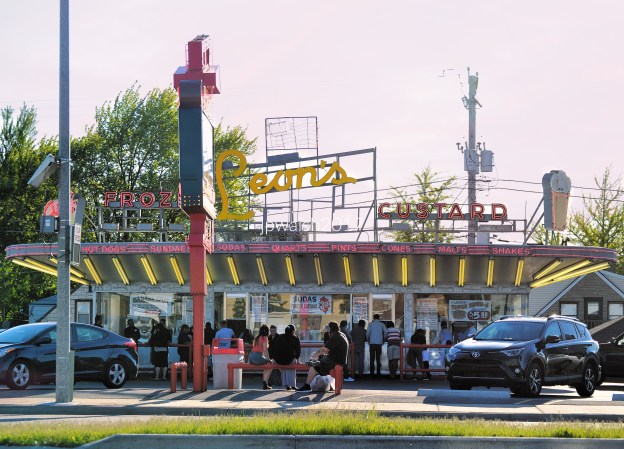
FEATURE image: Late afternoon at Leon’s Frozen Custard in Milwaukee, Wisconsin. June 2017. Author’s photograph. (4.53mb, DSC_0728).

Leon’s Frozen Custard is more than a beloved Milwaukee drive-in. Its remarkable continuity since 1942 and its influence on the creation of Arnold’s Drive-In in television’s Happy Days make it a living link between mid-century Americana, local business history, and popular culture.
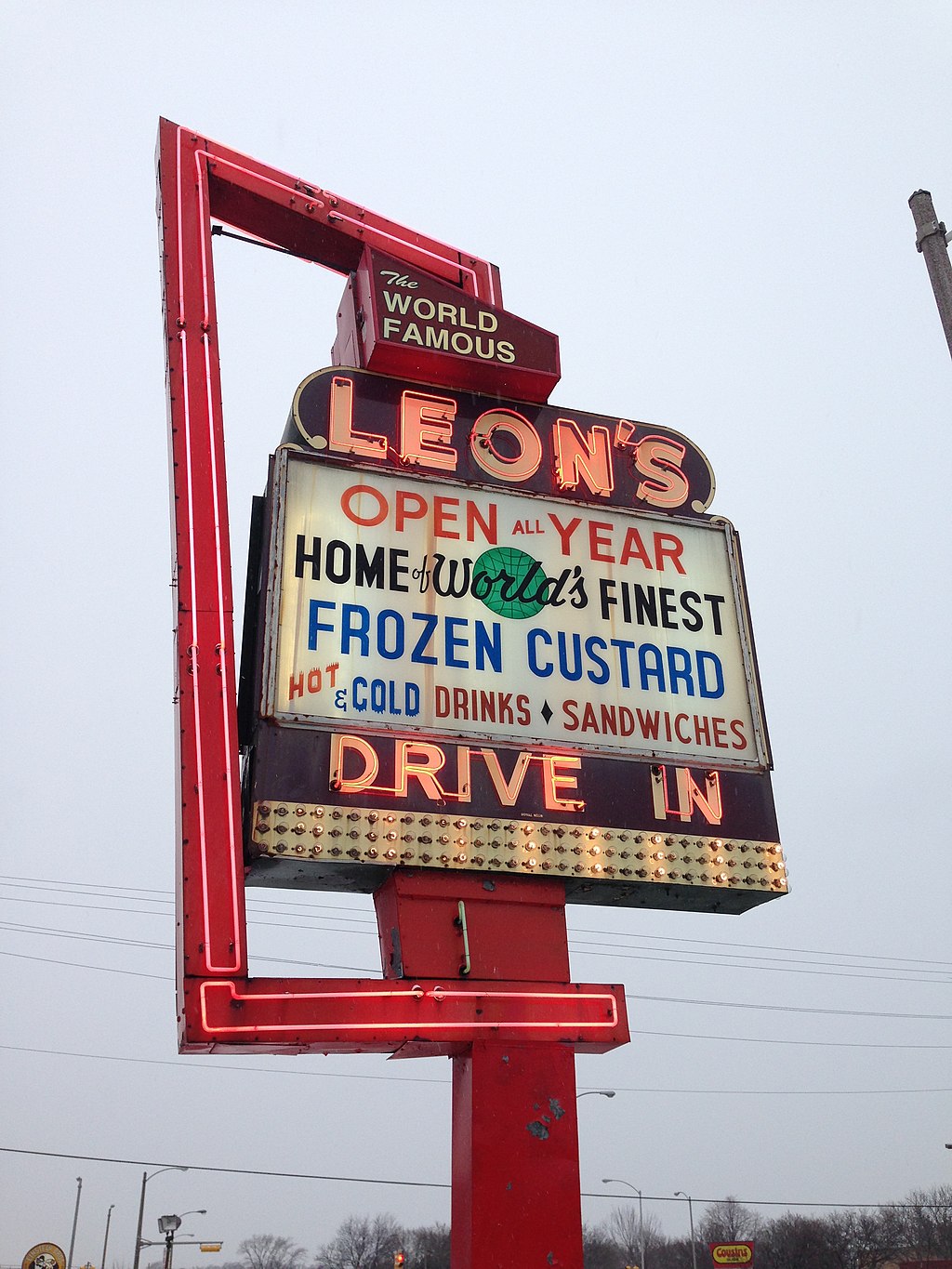
Leon’s original sign. By victorgrigas – Own work, CC BY-SA 3.0.

Leon’s is a family-owned drive-in in Milwaukee, Wisconsin, that opened 83 years ago – in 1942. The building was remodeled in the early 50’s and is what is seen today. Leon’s was inspiration for the original Arnold’s Drive-In in the 1970’s ABC television sitcom, Happy Days, that was also set during the 1950’s in Milwaukee, Wisconsin.

The building was remodeled in the early 1950s, giving it much of the appearance it maintains today.
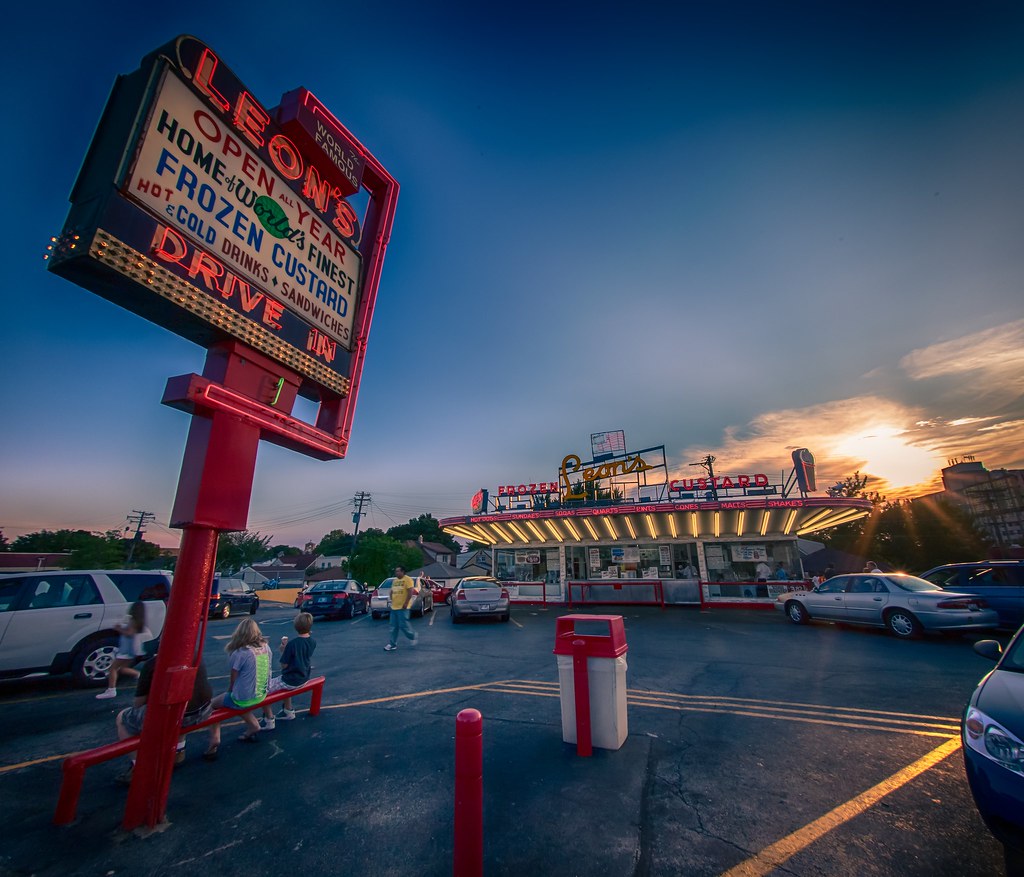
The World Famous Leon’s. “The World Famous Leon’s” by nixter is licensed under CC BY-NC 2.0.

Leon’s served as the inspiration for Arnold’s Drive-In, the iconic gathering place featured in Happy Days, the hit television series set in 1950s Milwaukee.

The Happy Days season 2 intro settles into the warm glow of Arnold’s Drive‑In, where the cast dances, jokes, and moves through the set like regulars in a familiar hangout. The sequence plays over a freshly recorded version of “Rock Around the Clock”, a choice that instantly anchors the show in a 1950s jukebox mood. The season 2 also marks a shift in the show’s rising star power: Henry Winkler’s Arthur “Fonzie” Fonzarelli steps into the opening credits beside Ron Howard, reflecting what would be his iconic popularity with viewers.

Although the tune is the same one Bill Haley & His Comets first cut in 1954, the version heard in Happy Days wasn’t that original hit. The song had begun modestly as the B‑side of a single that only reached No. 23, but everything changed when it blasted through the opening credits of Blackboard Jungle in 1955. Practically overnight, it became a cultural earthquake, soaring to No. 1 that July and helping ignite the rock‑and‑roll era.

Nearly twenty years later, in the fall of 1973, ABC asked the band to re‑record the song specifically for the new TV series. When Happy Days became an instant sensation, viewers went hunting for the version they heard each week—only to discover it wasn’t sold in stores. Their search sent them back to the original 1954 single instead, giving that two‑decades‑old record an unexpected second wind and pushing it back into the Top 40 in 1974, a rare encore for a rock‑and‑roll classic.

Leon’s is a gateway into the broader cultural phenomenon of Happy Days, including its Milwaukee setting, characters, theme song, and enduring popularity.
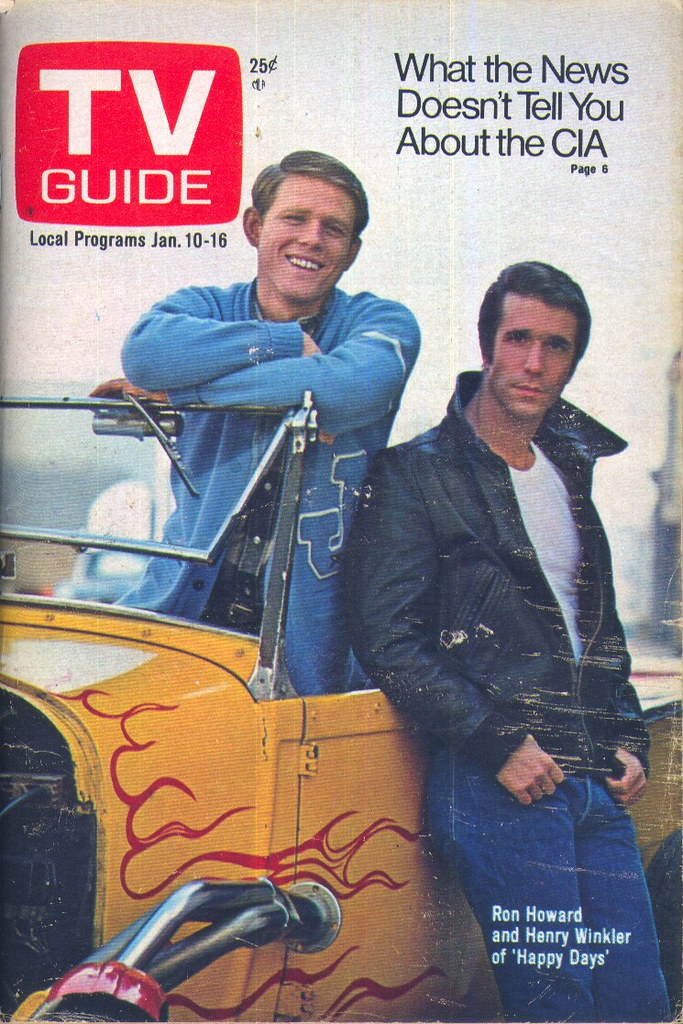
Fonzi played by Henry Winkler was a new character for the ABC TV series. He had just 6 lines in the first episode of “Happy Days” whose debut broadcast was January 15, 1974. In the series, Fonzie’s full name was Arthur Fonzarelli and called that by Richie’s mom. The original family name of series’ creator Garry Marshall (1923-2016) was Masciarelli and changed before Garry was born by his father, a man of Italian descent. “TV Guide #1189” by trainman74 is licensed under CC BY-NC 2.0.

At the 2024 Emmy Awards on September 15, Ron Howard and Henry Winkler reunited to mark Happy Days’ 50th anniversary. The longtime friends presented the award for Outstanding Directing for a Comedy Series from a lovingly recreated Arnold’s Drive‑In set, complete with a vintage jukebox, red‑leather booths, and classic sports pennants.
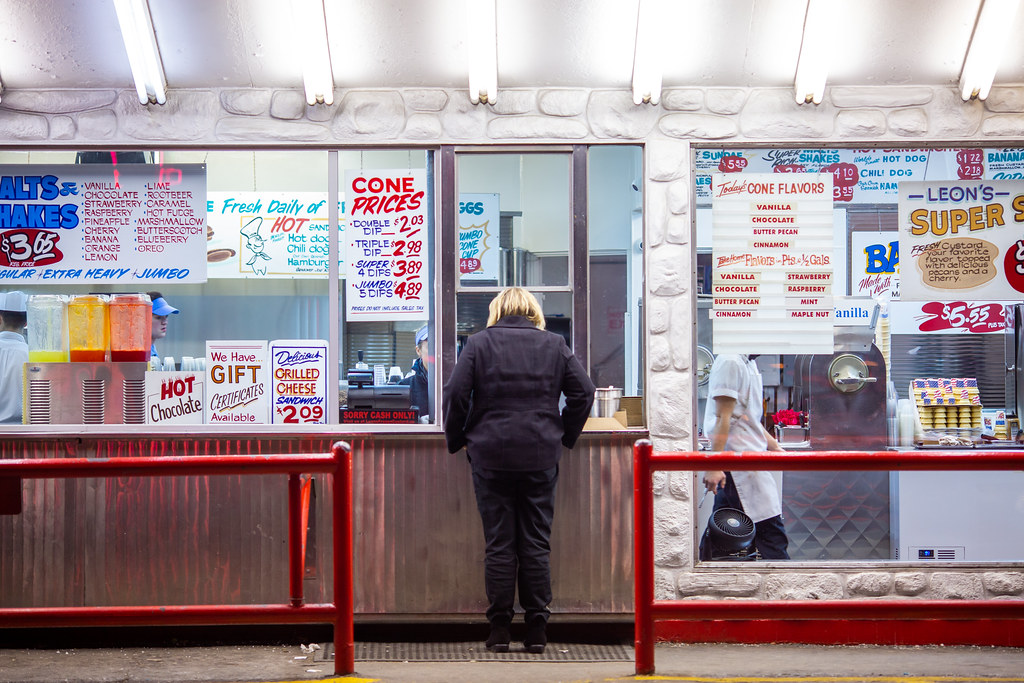
Ordering at Leon’s. “World Famous Leon’s Frozen Custard” by Thomas Hawk is licensed under CC BY-NC 2.0.

Leon’s is still owned and operated by the original family. The main focus of the business is, and always has been, to serve the freshest and finest frozen custard available anywhere. The business is open all year round and they have full soda fountain service, a sandwich menu, daily special flavors and take-out service.
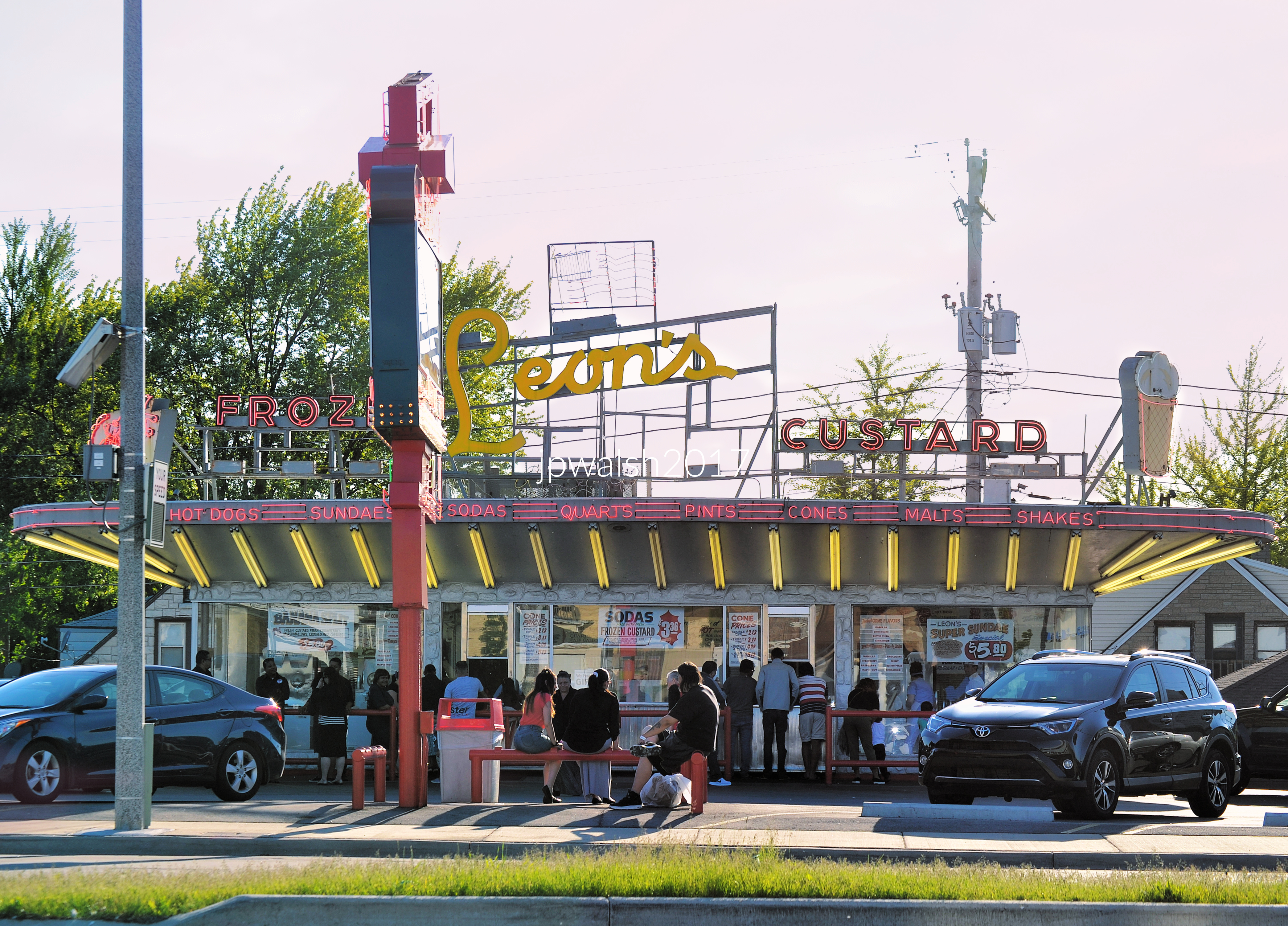
June 2017. Late afternoon at Leon’s, Milwaukee, Wisconsin. Leon’s was inspiration for Arnold’s on Happy Days, a popular 1970’s TV series set in Milwaukee in the 1950’s. Author’s photograph. 4.53 mb
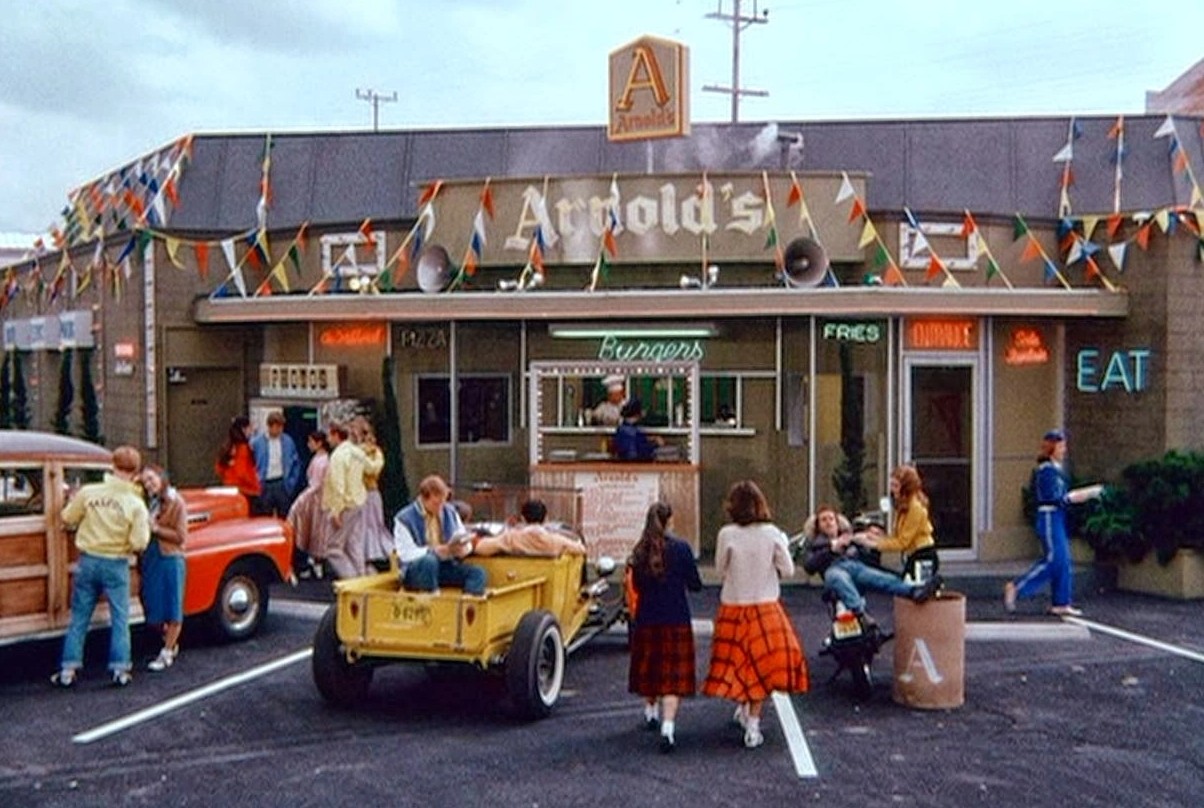
Arnold’s was the name of the local Milwaukee drive-in hang out for most of the characters in Happy Days. Fair Use.

Ron Howard Signs On (1973)

At just 19 years old, Ron Howard signed a seven‑year contract to star in Happy Days. At the time, he was juggling an unusually heavy load: filming American Graffiti, attending USC, and mapping out an early directing career.

Becoming Richie Cunningham

Cast as Richie Cunningham, Howard earned $3,500 per episode—roughly $25,000 in 2025 dollars. He had already played Richie once before, in the February 1972 Love, American Style segment that inspired the new series, but still had to audition again for the TV version. At the first read‑through, Howard reunited with Anson Williams (“Potsie”) and Marion Ross (Richie’s mother)—both of whom had appeared with him in the Love, American Style pilot. He also met the rest of the soon‑to‑be iconic cast: Tom Bosley (“Richie’s dad”), Donny Most (“Ralph Malph”), and Henry Winkler, a 28‑year‑old Yale School of Drama graduate who would become “Fonzie”

A 1970s TV Powerhouse

Alongside M*A*S*H, All in the Family, The Mary Tyler Moore Show, and The Bob Newhart Show, Happy Days became one of the defining sitcoms of the 1970s. It aired for 11 seasons from January 15, 1974, to July 19, 1984 on the ABC network. There was a total of 255 half-hour episodes.

The enduring success of Leon’s reflects the survival of a classic American drive-in tradition that has largely disappeared elsewhere.

Leon’s at night. “Leon’s” by joseph a is licensed under CC BY-NC-SA 2.0.

SOURCES:

Ron Howard & Clint Howard , The Boys A Memoir of Hollywood and Family, William Morrow, 2021, pp. 275-277.

https://leonsfrozencustardmke.com/ – retrieved March 2, 2025.

https://happydays.fandom.com/wiki/Arnold%27s_Drive-In – retrieved March 20, 2025.

From Little Fort to Industrial Port: Waukegan’s Architectural Legacy.

FEATURE image: 946 N. Sheridan Road, Waukegan, Illinois 1876.

Waukegan’s surviving architecture serves as a visual record of the city’s transformation from frontier trading post to prosperous Great Lakes industrial center, preserving nearly a century of changing architectural tastes and civic ambitions.

Text & photographs by author.

INTRODUCTION

Waukegan, Illinois, is an historic community on Lake Michigan about 40 miles north of downtown Chicago. It is one of the oldest settlements in Illinois. The site of the city was visited by French explorers Louis Jolliet (1645-1700) and Père Jacques Marquette, S.J. (1637-1675) in 1673 where Waukegan began as a French trading post and Potawatomie village.

Inside the Kiva (c.1905-1912), oil on canvas. 20 in. x 30.25 in., Kate Cory (1861-1958), Waukegan Historical Society. Waukegan photographer, sculptor, painter and muralist Kate Cory moved to Newark, New Jersey, with her family as a child. Between 1905 and 1912 she lived among the Hopi of the Oraibi Mesa in Arizona where this painting was made.  Public Domain.

Waukegan’s origins as “Little Fort.”

“Little Fort” was the first name for the environs of Waukegan. It started around 1700 as a log building overlooking the Waukegan River on its southwestern shore as it drained into Lake Michigan. This point marked the portage from the Lake to the Des Plaines River as it traveled west. The state of Illinois was established in 1818. Over the next quarter century, the Illinois volunteer army fought local native American tribes and forced them to sign treaties and migrate west of the Mississippi. The Potawatomie left Waukegan by 1829 as they ceded their land in this area and throughout northeastern Illinois to the U.S. Government. The 1830s brought vast changes to the area with opportunities for development. In addition to the land transfer, the building of the Erie Canal in 1830 brought boatloads of settlers from New England and New York State into the Illinois and the Midwest region.

Along with other communities which developed on Chicago portage routes, the history of Waukegan’s founding and development shares a similar time frame as well as personalities and activities. In 1835 Thomas Jenkins was the first settler at “Little Fort.” Jenkins was followed in quick succession by other enterprising and hard-working New Englanders who settled much of northern Illinois in the 1830s which was the edge of the Western wilderness. Like Marquette and Jolliet in the 17th century, these newcomers recognized the potential monumental impact that access to Lake Michigan had for transport of goods in and out of the region and what that commercial activity and subsequent settlement would have on the surrounding real estate. As more people arrived, the creation of a village emerged. The area was platted and streets designated, and in a contested election in 1841, “Little Fort,” became the governmental center for a recently formed Lake County.

Little Fort Becomes Waukegan

Between 1844 and 1846 the town’s population multiplied from 150 to 750 persons. In 1849 the community changed its name from “Little Fort” to Waukegan. By 1859, when the town was incorporated as a city, Waukegan boasted a population of 2,500 people. Chicago, by comparison, had a population of 112,172 denizens in the 1860 census. Waukegan is an English alliteration that closely approximated the word for “fort” or “trading post” in the Algonquin language. In the 2020 census Waukegan reported a population of 89,321 people.

Growing population in the port city. Coming of the railroad

Waukegan had a natural deep harbor and was a port city. This feature attracted merchants and farmers who could readily ship their goods, produce, and grain from Lake and McHenry County businesses and farms to Chicago –- and, from that point, to the Midwest and the world. Waukegan soon became one of the busiest ports on the lake. When the railroad came to Waukegan in 1855 (today’s Chicago and North Western Railway), it stimulated interest in Waukegan as a manufacturing town that included ship and wagon building, flour milling, sheep raising, pork packing, beer brewing and dairy farming (Hawthorne-Melody Farms). The railroads made it feasible for the establishment of larger industries which appeared in Waukegan at the end of the 19th century such as U.S. Sugar Refinery, Washburn and Moen Wire Mill (U.S. Steel Corporation), U.S. Starch Works, and Thomas Brass and Iron Works, among others. This mercantile and agricultural activity generated sufficient wealth for its citizens to build big houses along Waukegan’s main streets. These residences expressed the current tastes in residential styles from Greek revival and Italianate styles to the Victorian and Prairie School.

1890-1930: Population boom fueled by immigration

Between 1890 and 1930 Waukegan experienced a population boom fueled by European immigrants and, in the 1920’s, Black Americans during the Great Migration. Waukegan thrived though by the end of the 20th century, the city suffered from an exodus of its population to farther west suburbs. This was accompanied by a shuttering of industries as management sought cheaper labor in other countries. At the same time, Waukegan was welcoming a new influx of immigrants from Latin America.

Famous residents

A few of Waukegan’s most famous residents in history include comedian Jack Benny (1894-1974), science fiction writer Ray Bradbury (1920-2012), World War II combat photographer under Colonel Darryl F. Zanuck (Twentieth Century Fox) Albert Klein, the aforementioned fine artist Kate Cory and NFL quarterback for the Cleveland Browns Otto Graham (1921-2003).

When he became famous, Jack Benny never forgot his hometown of Waukegan.

Science Fiction writer Ray Bradbury said he had a sign over his typewriter for 25 years as advice to himself and other writers: “DON’T THINK.”

When Otto Graham played for the Cleveland Browns the team played in 10 consecutive title games, 4 all-American Conference and 3 NFL championships. In Waukegan, Otto Graham’s father was a music teacher who taught Jack Benny to play the violin.

THE HOUSES:

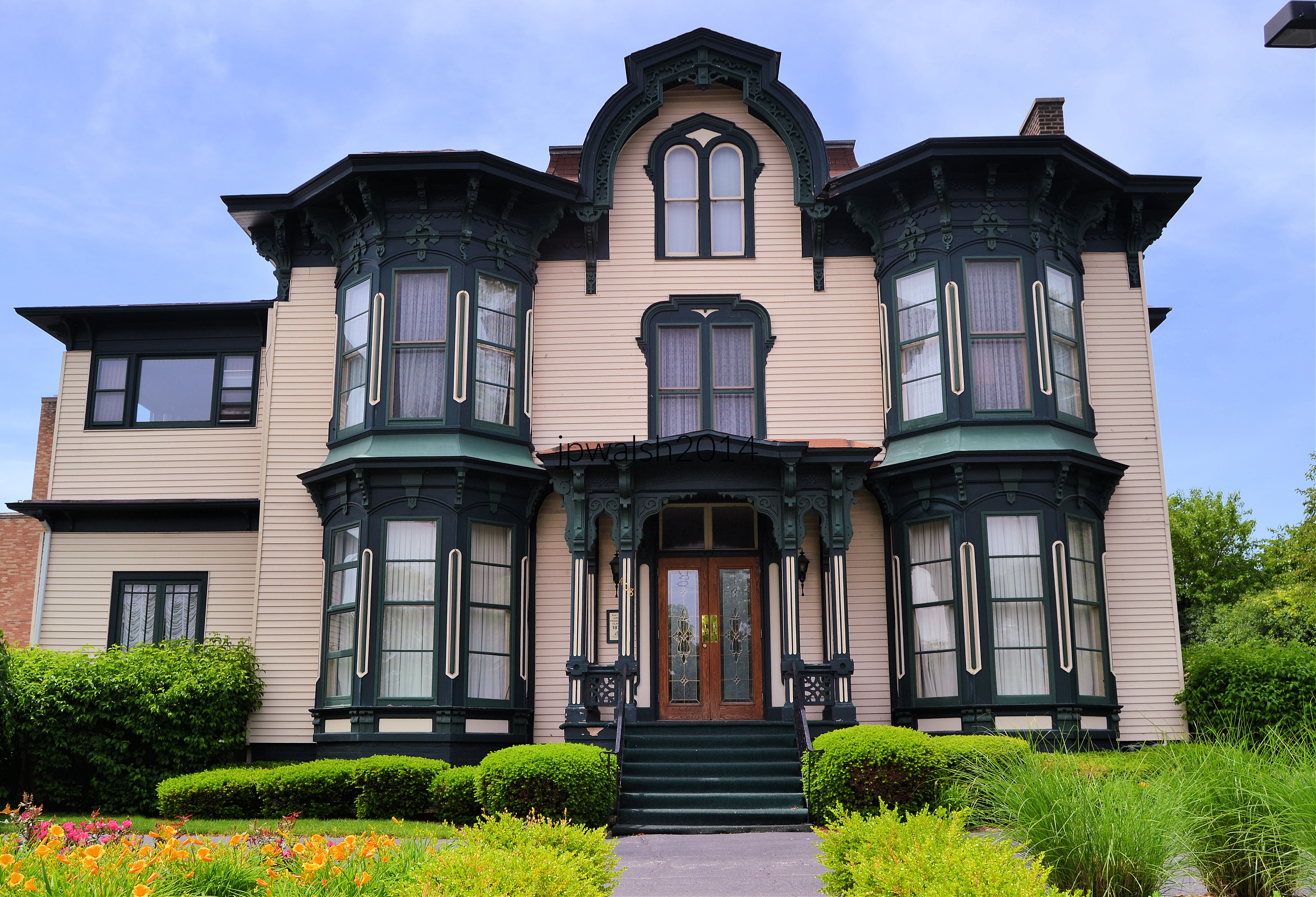
408 N. Sheridan Road, 1875. Built in the Italianate style in 1875. The set of four symmetrical bay windows on the first and second floors have 12 tall thin windows. The moldings have scroll cut, incised, and cut out brackets with heavy decorative surrounds with keystones. In the center above the canopied main entrance are a second floor and gable windows with heavy shoulders for its surrounds. Above the gable window is punched out, playfully decorative bargeboard. The two story porch to the south (left) while integrated to the Italianate building is a later turn-of-the-century addition.

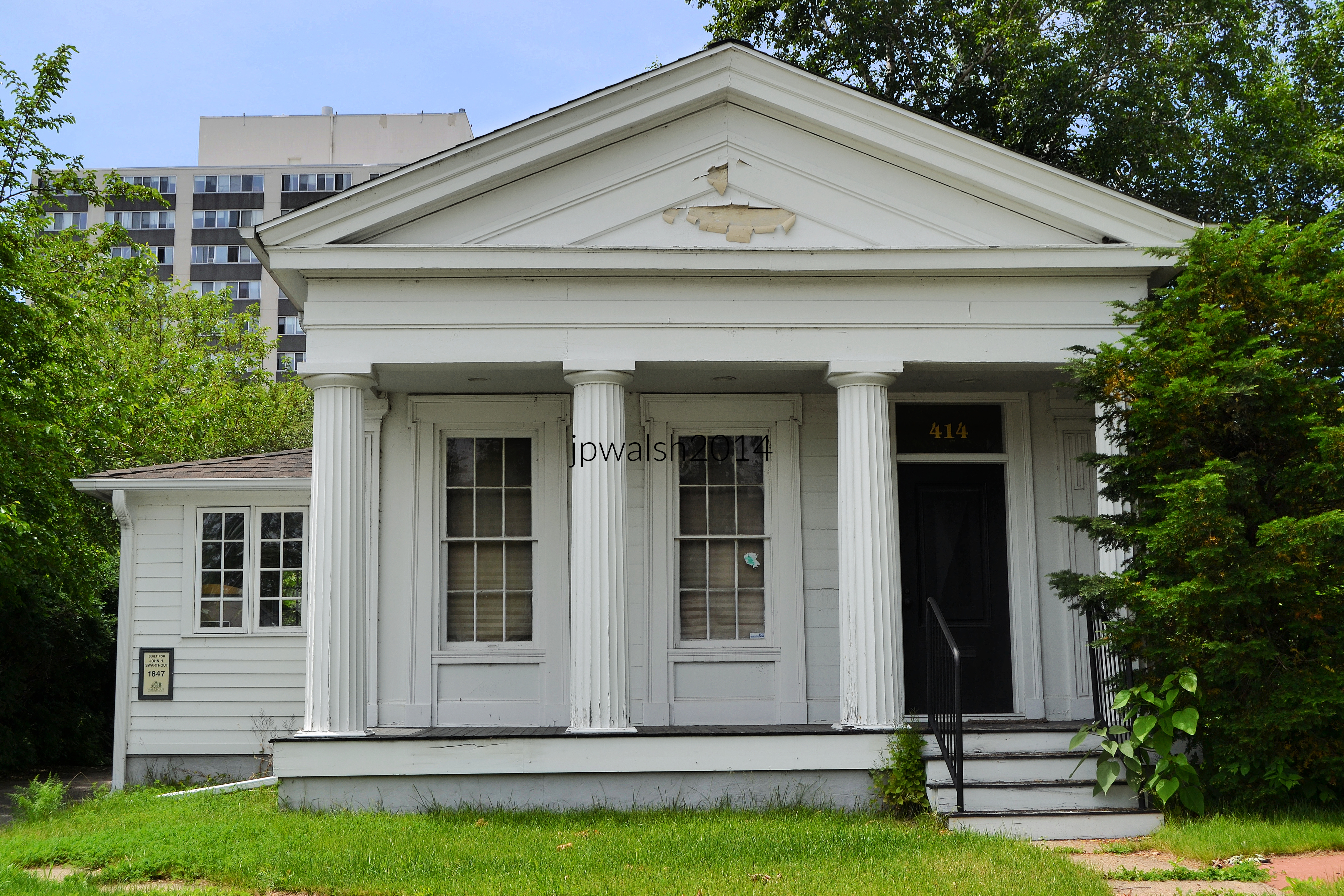
414 N. Sheridan Road, 1847. The strict Greek Revival-style modest building dates from 1847. Built by John H. Swartout, the frame house has a portico with a perfect classical pediment with Doric columns holding up a blank entablature. The façade hosts three identical openings – two being windows with shouldered moldings and a door with a transom. It is a simple and relatively small building that was in need of repair in 2014 when this photograph was taken by the author.

438 N. Sheridan Road, 1840s. The house was built up around a small 1840s Greek revival Style house. The Italian Villa style with its tall central tower, porch and columns, double brackets under the eaves and pediments above the windows, dates from the middle 1850s. the central door starts with the rope molding around the double doors and ascends to double arched windows on the second and third floors.

438 N. Sheridan Road, 1840s. Same house as above, southern exposure. The tower’s windows are replicated on each side at the same level as the front view.

505 N. Sheridan Road, 1850s. A central tower with a double window and a peaked arched pediment and a steep pitched roof marks this house from the 1850s as Greek Revival style. The door has heavy shoulders for its surrounds.

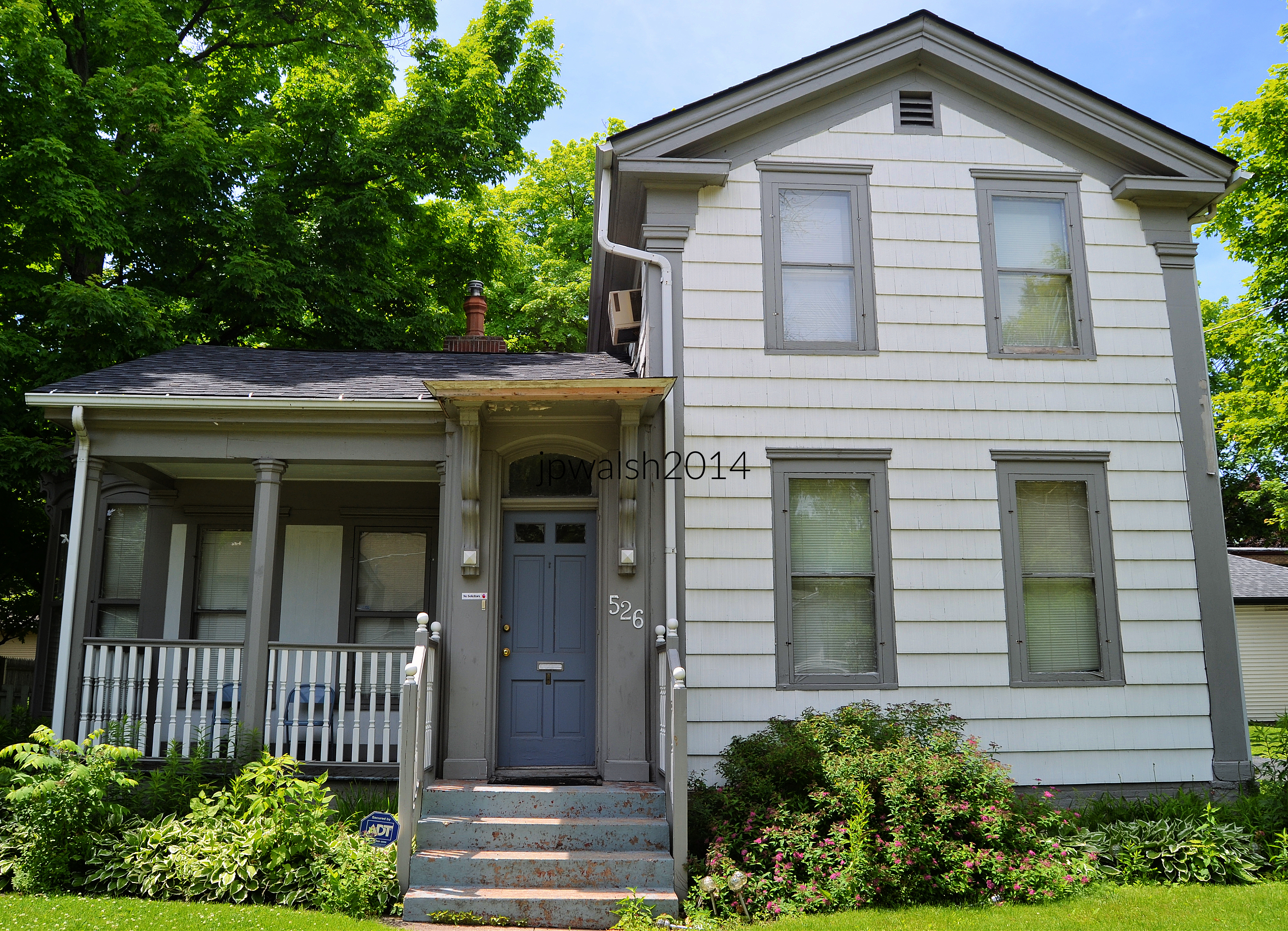
526 N. Sheridan, late 1840s. A Greek revival style house prevalent in the state of Ohio. The Greek Revival gable has short returns with the second-floor windows extending into the gable area. This is a construction short cut for these upper story rooms. The porch with its octagonal columns and front door entry with its heavily bracketed canopy are later additions although no later than the mid1870s.

619 N. Sheridan Road, 1840s. The present house was built around an earlier house erected in the 1840s. It is in the Victorian Gothic style. There are steep gables for the central tower and dormers. The central doors and windows have simple and neat surrounds.

Detail of same house above, 619 N. Sheridan Road, 1840s.

Waukegan’s historic houses and neighborhoods reveal the story of a city shaped by lake commerce, railroads, industry, immigration, and economic growth, with its architecture preserving the ambitions and cultural aspirations of successive generations from the 1840s through the early twentieth century.

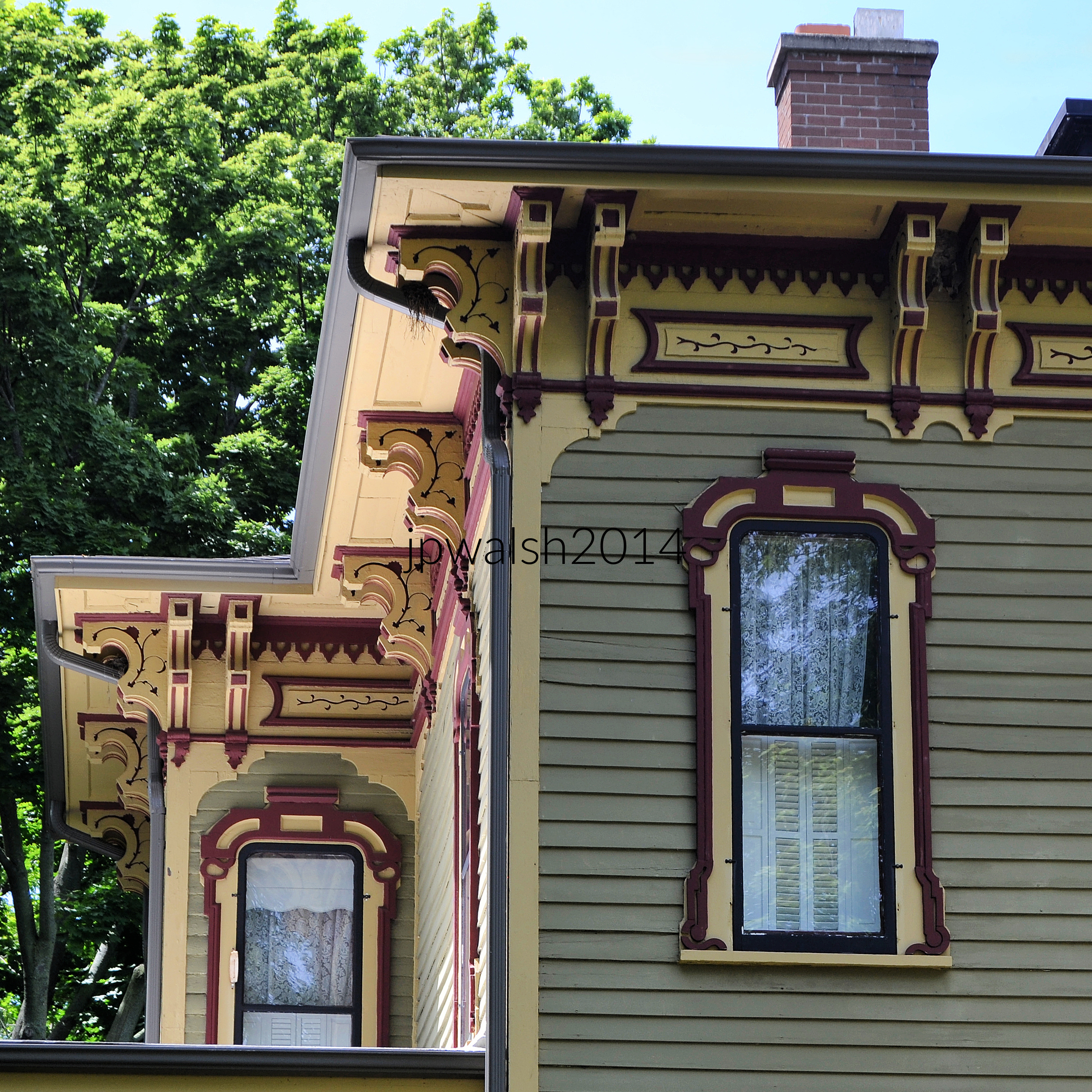
710 N. Sheridan Road, 1872. A restored Second Empire and Italianate Victorian mansion. The frame house features a double door entrance with glass panes and a veranda-like columnar front porch. A square-shaped second-floor porch is above the front entrance in the central section of the house and below its double bracketed cornice and Mansard roof.

Detail of double bracketed cornice of restored 1872 Second Empire and Italianate Victorian mansion at 710 N. Sheridan Road in Waukegan, Illinois.

Waukegan preserves a remarkable range of architectural styles including Greek Revival, Italianate, Italian Villa, Victorian Gothic, Second Empire, and Tudor Revival.

837 N. Sheridan Road, 1858. The front porch and polygonal bay window were added to this late-1850s Italianate brick house more than 60 years later, around 1910.

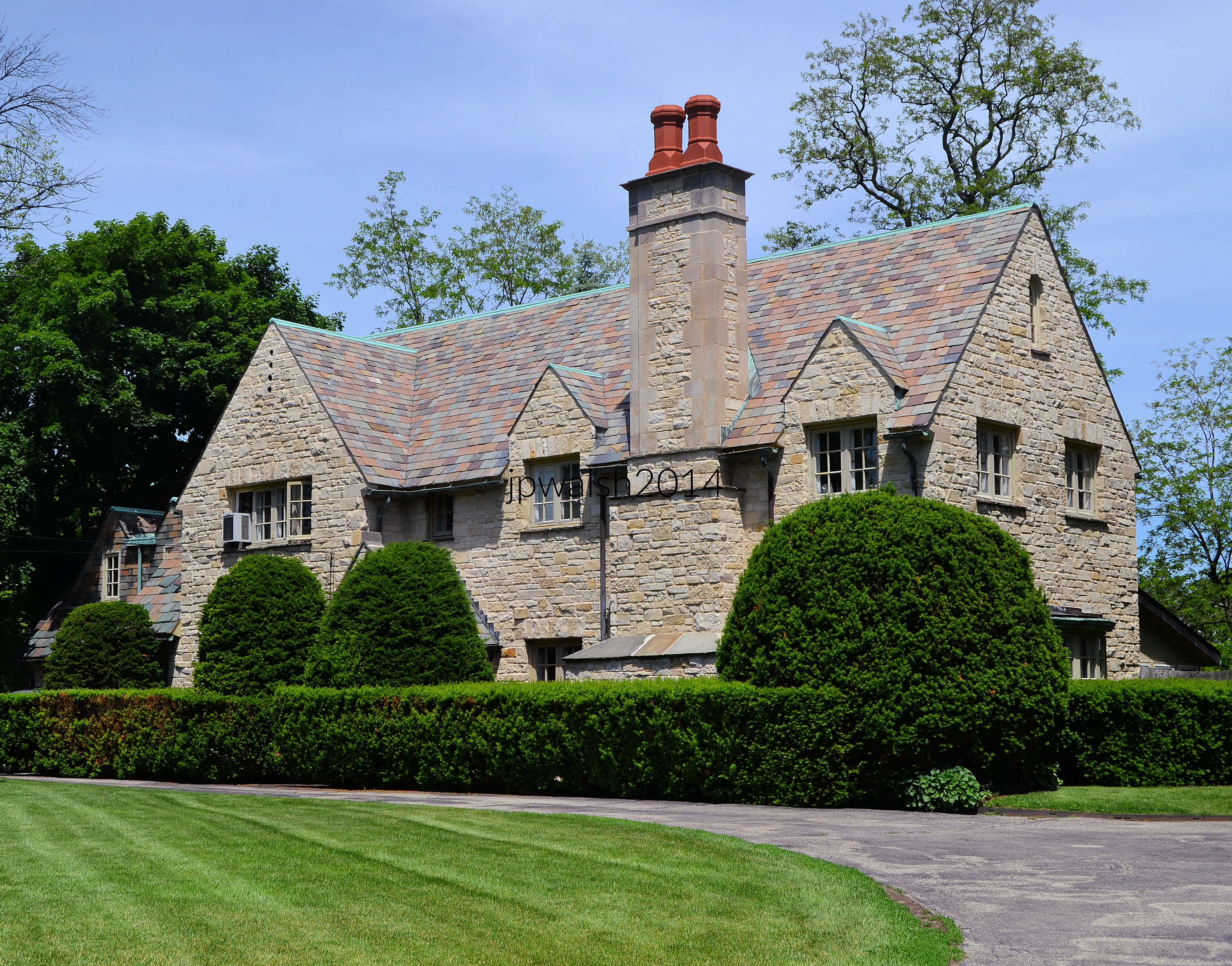
907 N. Sheridan Road, early 1930s. Made of Lannon stone from Wisconsin, the buff-colored, blocky, sedimentary dolomite rock house is designed in the English Tudor style. It has a slate roof. The tall wide chimney is integrated into the façade of the solid stone wall building flanked by casement windows in gabled wall dormers.

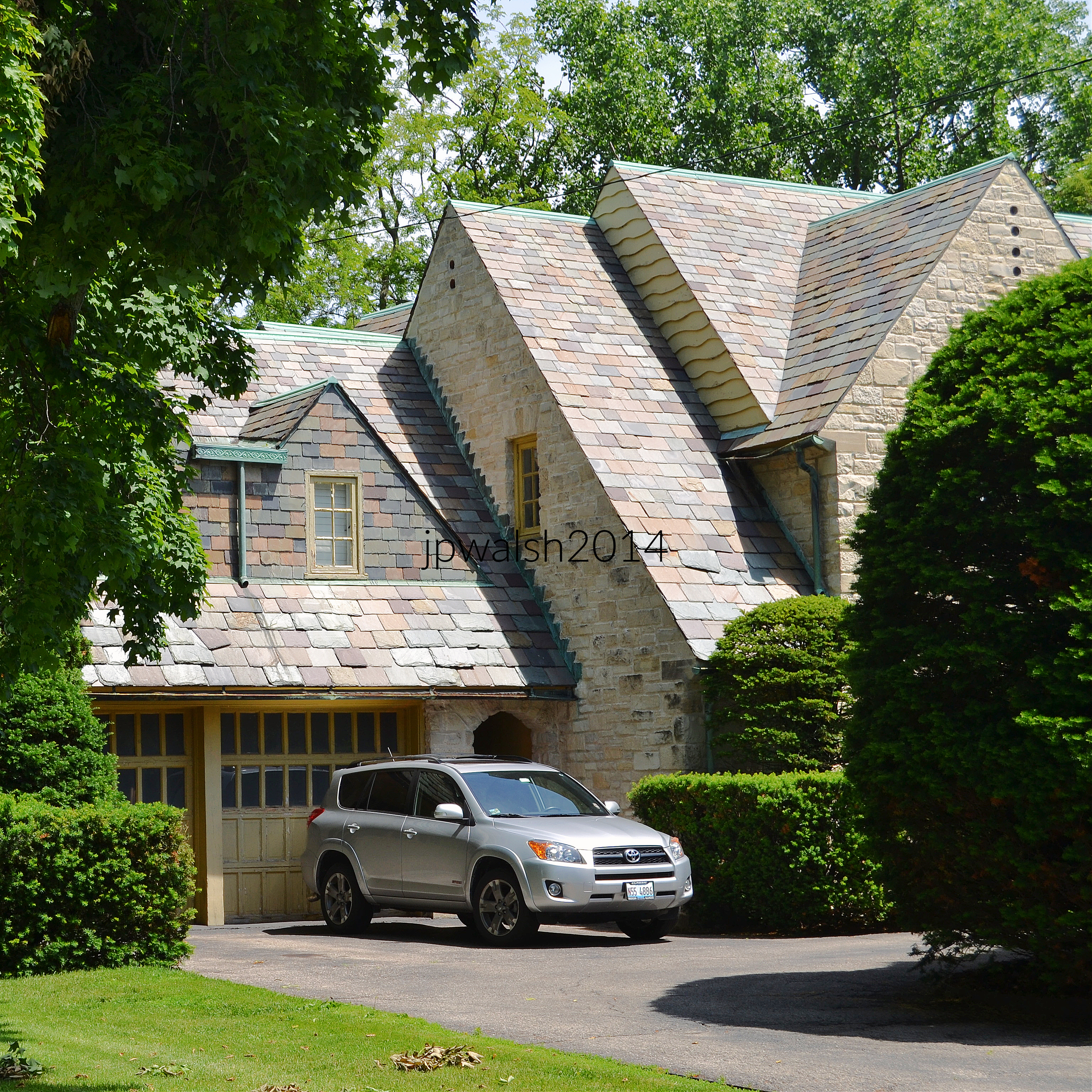
Another view of same house above, 907 N. Sheridan Road, early 1930s. The well-designed monolithic stone and slate fortress was erected during the Great Depression.

Individual houses illustrate changing architectural fashions across nearly a century of development. Waukegan’s built environment reflects both nineteenth-century optimism and twentieth-century prosperity before later industrial decline and demographic change.

946 N. Sheridan Road, 1876. An Italianate house has a central tower with notable openings – a ground floor heavy doorway; above that, a pair of windows under a semi-circular pediment; and finally, at the top, a triplet of windows under a triangle pediment. The second floor carries the semi-circular pediment design across three more of its windows and there are double brackets under the eaves. The porch is likely an early 20th century addition.

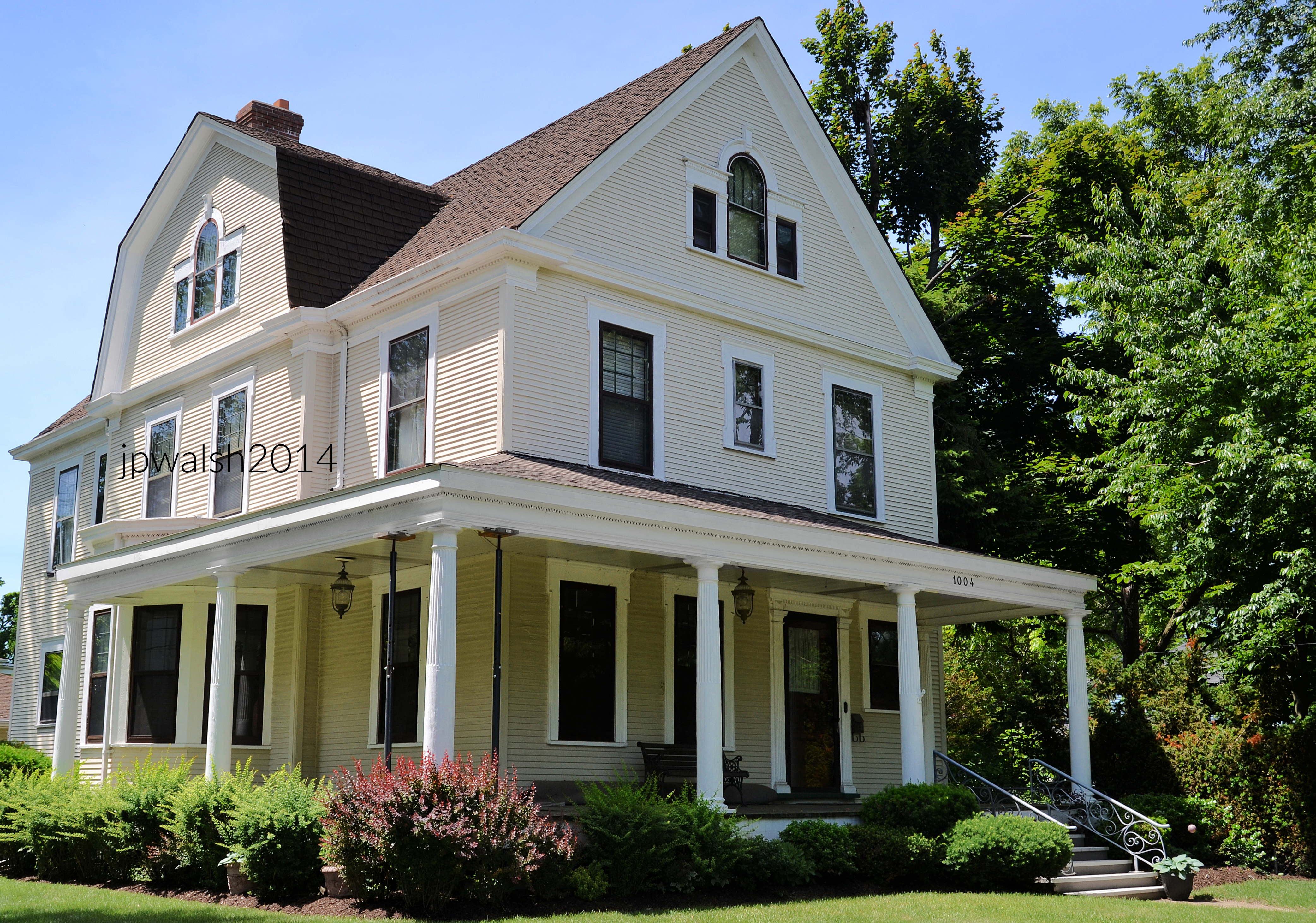
1004 N. Sheridan Road, late 1890s.

Sources:

Bach, Ira J. 1981. A Guide to Chicago’s Historic Suburbs on Wheels and on Foot. Chicago: Swallow Press/Ohio University Press, pp. 97-111.

Encyclopedia of Chicago. n.d. “Waukegan, IL.” Accessed May 3, 2023. http://www.encyclopedia.chicagohistory.org/pages/1328.html.

Waukegan Historical Society. n.d. “Historical Places.” Accessed May 3, 2023. https://www.waukeganhistorical.org/places.

Waukegan, Illinois, City of. n.d. “Demographic Information.” Accessed May 3, 2023. https://www.waukeganil.gov/178/Demographic-Information.

Waukegan, Illinois, City of. n.d. “History of Waukegan.” Accessed May 3, 2023. https://www.waukeganil.gov/181/History-of-Waukegan.

Wikipedia. s.v. “Demographics of Chicago.” Last modified October 3, 2026.https://en.wikipedia.org/wiki/Demographics_of_Chicago.

Wikipedia. s.v. “Otto Graham.” Last modified October 1, 2026.https://en.wikipedia.org/wiki/Otto Graham.