Tag Archives: #FaithAndHope

National Shrine of St. Jude: The Chicago Church That Helped Inspire Danny Thomas to Found St. Jude Children’s Research Hospital.

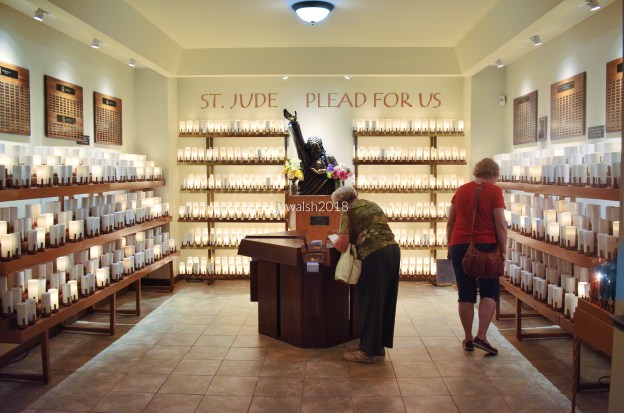
FEATURE Image: The many prayer intentions received at the National Shrine of St. Jude in Chicago are placed at the patron of hopeless cases’ devotional altar in the main sanctuary. These petitions are remembered at the National Shrine’s Masses and devotional prayers throughout the years. June 2018 80% 7.76mb DSC_9191. Author’s photograph.

Chicago’s National Shrine of St. Jude is more than a local religious landmark. It is a place where faith, devotion, and personal transformation intersect, most famously in the life of Danny Thomas, whose prayers to St. Jude here helped inspire a career that ultimately led to the founding of St. Jude Children’s Research Hospital. The shrine stands as a living testament to the powerful role that religious faith and pilgrimage can play in individual lives and broader humanitarian endeavors.

The National Shrine of St. Jude at 3208 E. 91st Street on Chicago’s far southeast side at Our Lady of Guadalupe parish church was canonically established in 1929.  Its official decree was promulgated on November 15, 1929, by Chicago Cardinal Archbishop George Mundelein (1872-1939). June 2018 88% 7.72mb DSC_9173. Author’s photograph.
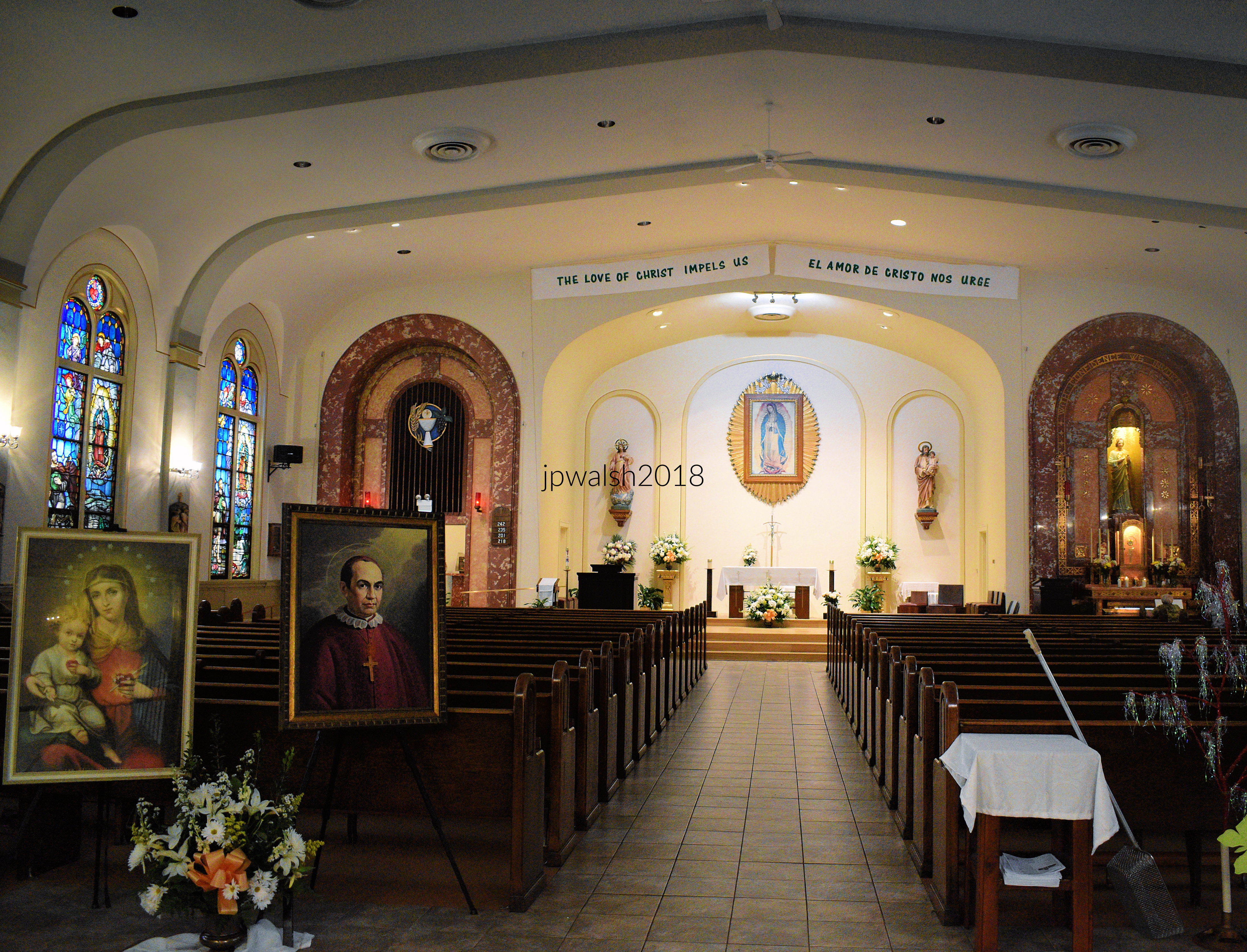
The pastor of the church at the time was Fr. James Tort, a Claretian missionary, who had a deep personal devotion to St. Jude, patron of hopeless cases and those that are almost despaired of. The saint, not to be confused with the traitor, Judas Iscariot, is honored by the church universally as the saint who brings visible and speedy help in most dire circumstances. A portrait of the founder of the Claretians, Spanish priest and bishop, St. Anthony Mary Claret (1807-1870), is one of the artworks that greet visitors into the main sanctuary. The image of Our Lady of Guadalupe is over the main altar. The devotional altar to St. Jude is right of the main altar. The altar to St. Jude contains a major relic of the saint: a piece of his bone. June 2018 84% 7.78 DSC_9177. Author’s photograph.

The shrine contains a major relic of St. Jude and serves as an active center of prayer and pilgrimage.
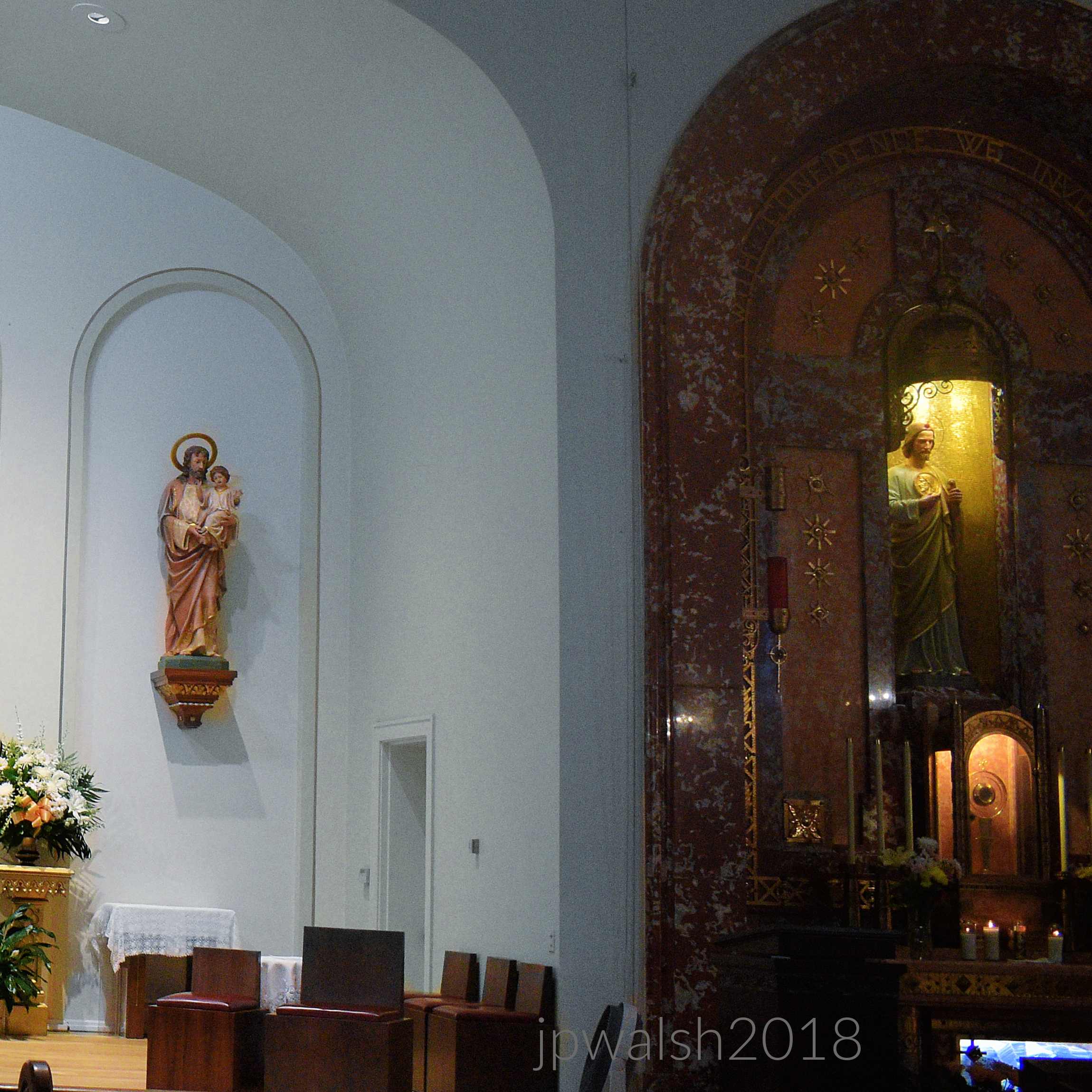
The shrine altar to St. Jude (right). In the darkest days of the Great Depression, Father Tort petitioned St. Jude with a request to help complete the parish church building for the people. In gratitude for the granting of this great favor. Fr. Tort promised to never cease to honor the saint, a true blood relative of Jesus and Mary, by dedicating a shrine altar to him in the church and to do all in his power to spread devotion to him. June 2018 2.29mb DSC_9186 (1). Author’s photograph.

This is one of the stained-glass windows in Chicago’s St. Jude Shrine. It depicts Jude preaching in Persia. Tradition holds that Saint Jude preached the Gospel in Judea, Samaria, Idumaea, Syria, Mesopotamia and Libya. He is also said to have visited Beirut. In addition to being patron of hopeless cases, Jude is patron of vegetarians. That Jude is portrayed holding an image of Jesus Christ has an interesting origin. During Jesus’s public ministry, a king had an incurable condition and was dying in Edessa. He sent a letter asking for Jesus to come. Instead of going himself, Jesus sent Jude. As Jude set out on this journey, Jesus pressed a cloth against His face, and when he gave it back to Jude, it had the Lord’s image on it. When St. Jude then went to the dying king in Edessa, and the king looked at the cloth with Christ’s miraculous impression, he was immediately healed. June 2018 6.47mbDSC_9184 (4). Author’s photograph.

Danny Thomas, struggling to establish himself in show business, learned of the shrine while in Chicago and prayed to St. Jude there for assistance. Soon afterward, Thomas received the career opportunity that launched him to national fame as a comedian, television star, and entertainer.
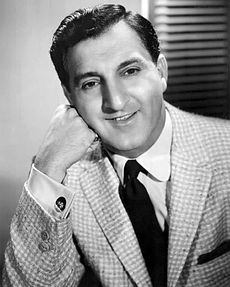
In 1940 when entertainer Danny Thomas (1912-1991) came to Chicago to do radio commercials, he found early success doing stand-up comedy in nightclubs. When work was finished, often around dawn, Thomas went to 6 a.m. Mass at St. Clement Church. There Thomas learned about Chicago’s National Shrine of St. Jude on the far southeast side. A couple of years earlier, Thomas, starting out in show business in Detroit— and with his first child, Marlo Thomas, on the way— had dedicated himself to St. Jude as the patron of hopeless cases. Soon after visiting and praying at the Chicago shrine, Thomas was offered a stand-up comedy job in New York City at La Martinique at 57 West 57th Street. This job launched his entertainment career into the big time. Following World War II, Thomas was performing for $3,750 a week at New York’s Roxy Theater just off Times Square and was performing in nightclubs across the country as well as offered film roles. In 1953 he starred in his own television show, Make Room for Daddy (later, The Danny Thomas Show). The sitcom ran for 11 consecutive seasons and became more popular with each year. By 1957 it was the no.2 show on television and, when the sitcom ended in 1964, it was in the top ten. PHOTO: “Danny thomas kayrouz” by Hany raymond rahme is licensed under CC BY-SA 4.0.

Remembering his promise to give back if he succeeded, Thomas founded St. Jude Children’s Research Hospital in Memphis in 1962, creating one of the world’s most respected pediatric medical institutions.

Remembering St. Jude from his early days in Detroit and Chicago—and promising if he made it big he’d give back somehow— Danny Thomas in 1962 founded the St. Jude Children’s Research Hospital in Memphis, Tennessee. In 2020, St. Jude’s has expanded to eight affiliate hospitals across the United States. In 1996 one of its doctors in St. Jude’s Immunology Department was a co-recipient of the Nobel Prize in Physiology. The prize was for key discoveries on how the immune system works to kill virus-infected cells. PHOTO: “Have you heard of @StJude Children’s Research Hospital? Named for the patron saint of lost causes Danny Thomas founded St. Jude because he believed that ‘no child should die in the dawn of life.’ I’m homored to be invited to spend the next two days with t” by Leticia Barr @TechSavvyMama is licensed under CC BY-NC-ND 2.0.

The National Shrine of St. Jude in Chicago was canonically established in 1929 and became one of the most important centers of devotion to St. Jude in the United States.

Altar of St. Jude, The National Shrine of St. Jude in Chicago. St. Jude Thaddeus was one of Jesus’ 12 apostles and. legend has it, that it was Jude who was the groom at the wedding feast of Cana where Jesus performed his first miracle of turning water into wine (John, chapter 2). Matthew states that Jude was one of the “brothers” of Jesus usually interpreted as a blood cousin. St. Jude, pray for us! June 2018 73% 7.89mb DSC_9182. Author’s photograph.

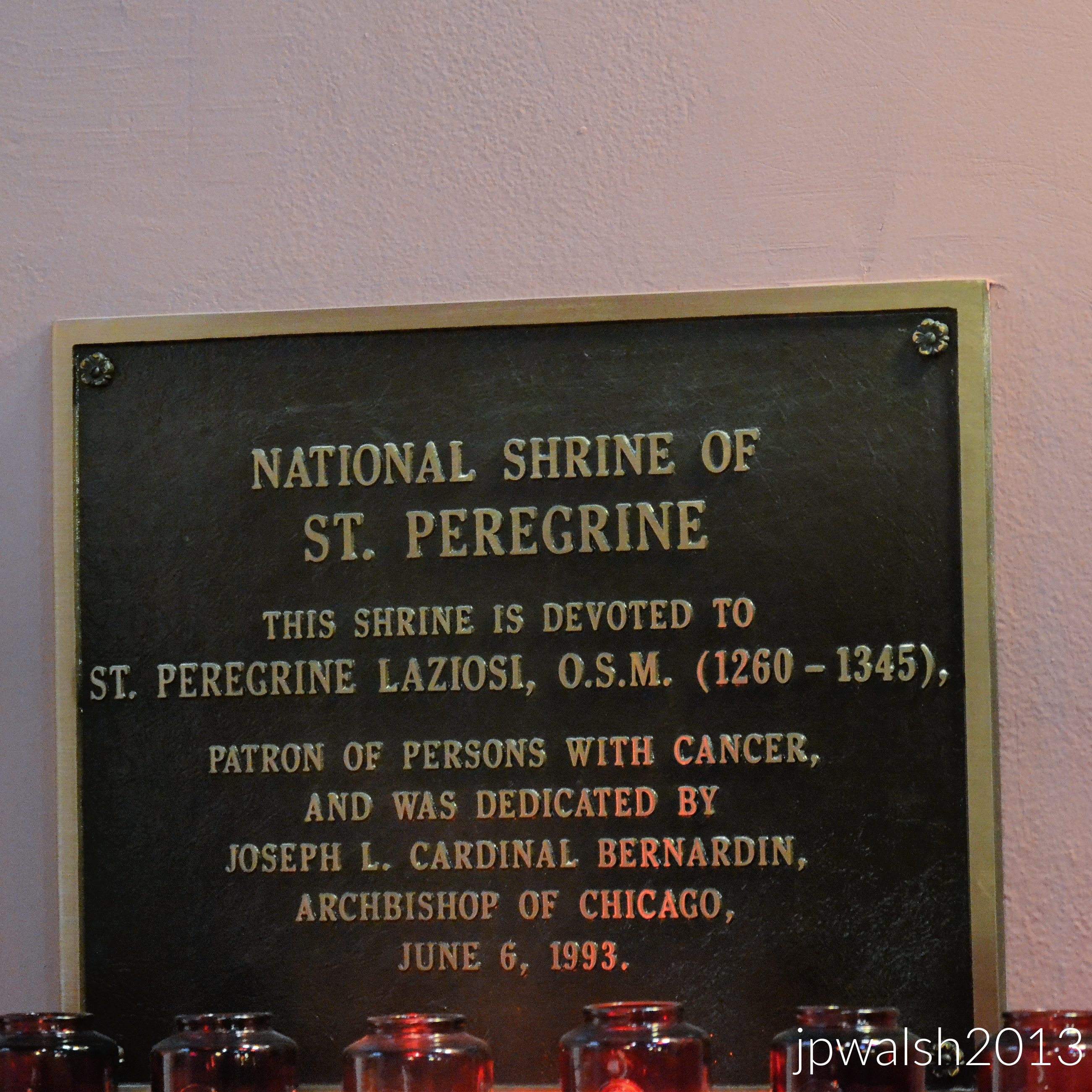
The Man Who Struck a Saint and Became One: St. Peregrine Laziosi’s Journey from Political Fury to Patron Saint of Cancer Patients, Whose National Shrine Is in Chicago.

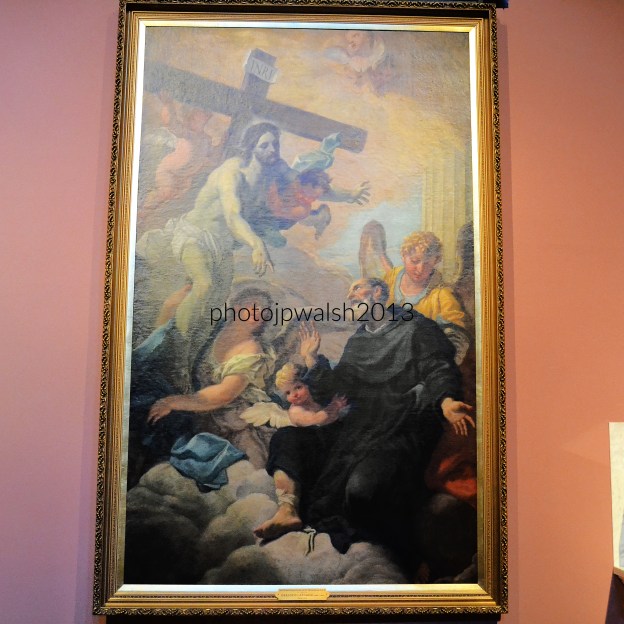
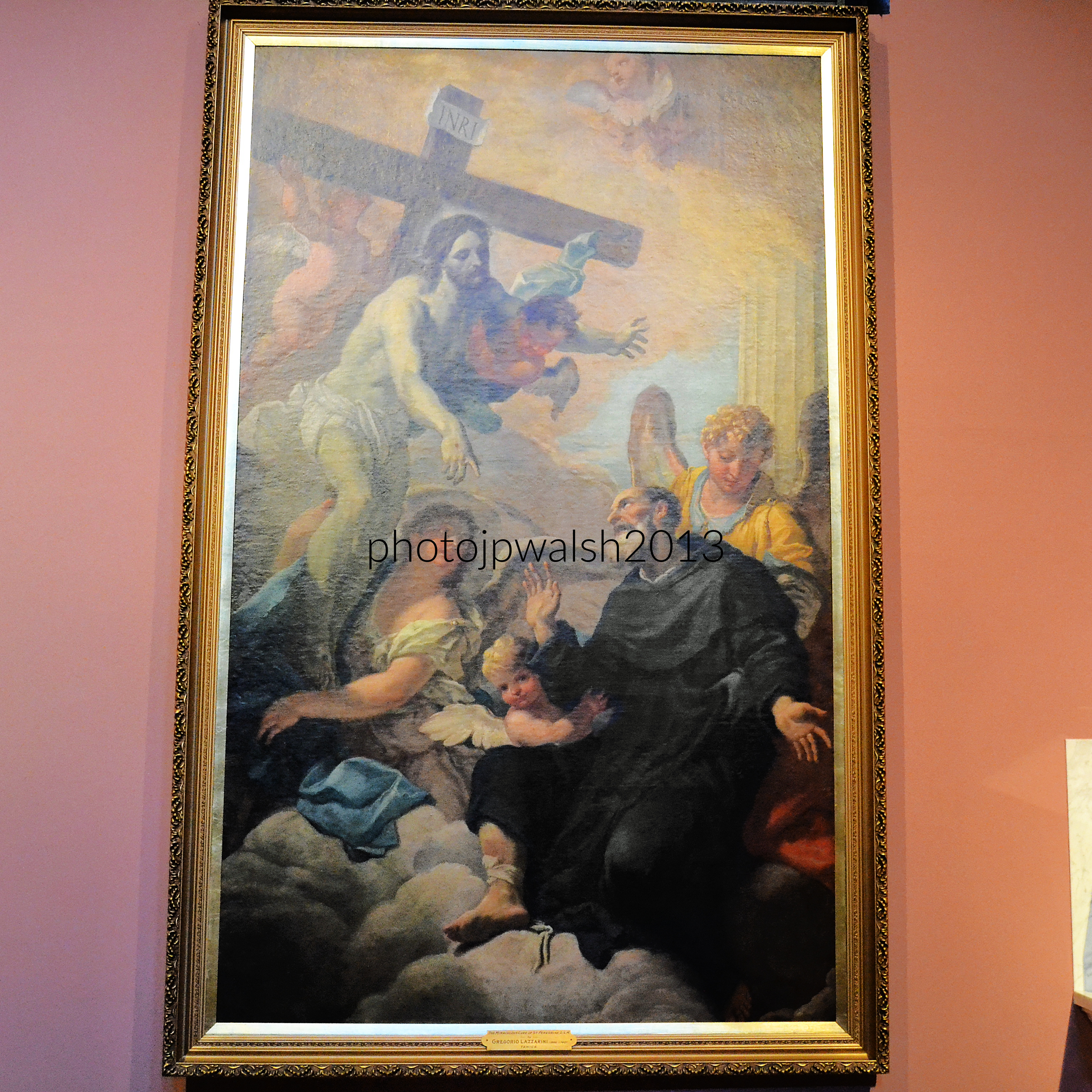
FEATURE image: At the National Shrine of St. Peregrine at Our Lady of Sorrows Basilica on Chicago’s west side is a painting attributed to the late 17th century painter, Gregorio Lazzarini (1665-1740) entitled Jesus the Healer; St. Peregrine, OSM the Helper. December 2013. Author’s photograph. 3.89mb DSC_0218 (1).

St. Peregrine Laziosi’s enduring significance lies in his transformation from a hot-headed opponent of the Church into a holy servant whose own miraculous healing from a cancerous tumor made him a lasting symbol of hope, healing, and intercession for those facing cancer and other life-threatening illnesses. His medieval life story is connected to the continuing ministry of his shrine in Chicago.

Peregrine Laziosi grew up in Forli near Ravenna in Italy. Peregrine came from a very wealthy family who lived in the town in which half the population was for being part of the Papal States and half were against. Peregrine’s family, and thus Peregrine as a young man, was against the pope’s political rule.

Pope Alexander IV (1254-1261), pope at the time of the birth of Saint Peregrine, is depicted in a fresco in San Marco in Milan, Italy. On September 26, 1255, Alexander IV had canonized Saint Clare of Assisi, founder of the second order of Franciscans, known as the Poor Clares. The following month, on October 29, 1255, Alexander IV, in his bull Benigna Operatio, declared that the stigmata of Saint Francis of Assisi (who was canonized in 1228) was a fact of the pope’s “own knowledge.” Public domain.

Guelphs and Ghibellines.

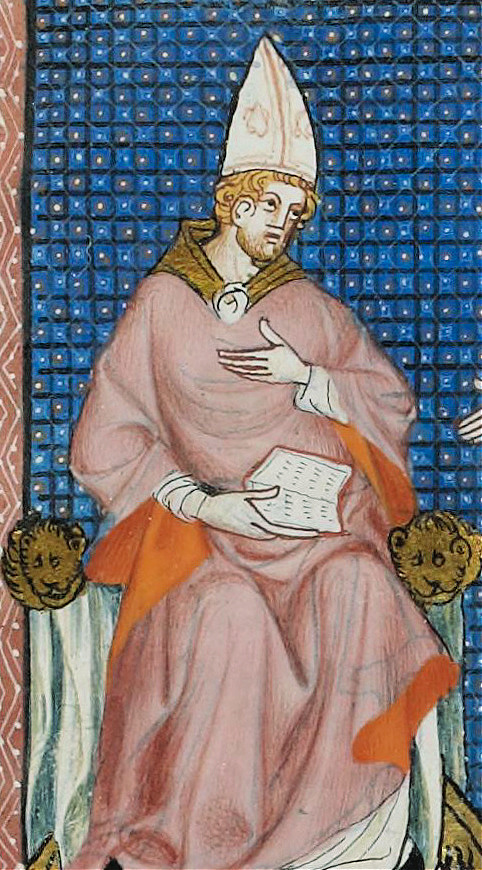
14th century Illumination on parchment of Pope Martin IV, c. 1335. From the manuscript Vie et miracles de saint Louis. Bibliothèque Nationale de France. Born Simon de Brion (c. 1210 –1285), Martin IV was the last French pope to stay in Rome before the papacy moved to Avignon. He ruled the Papal States from 1281 to 1285. Public Domain.

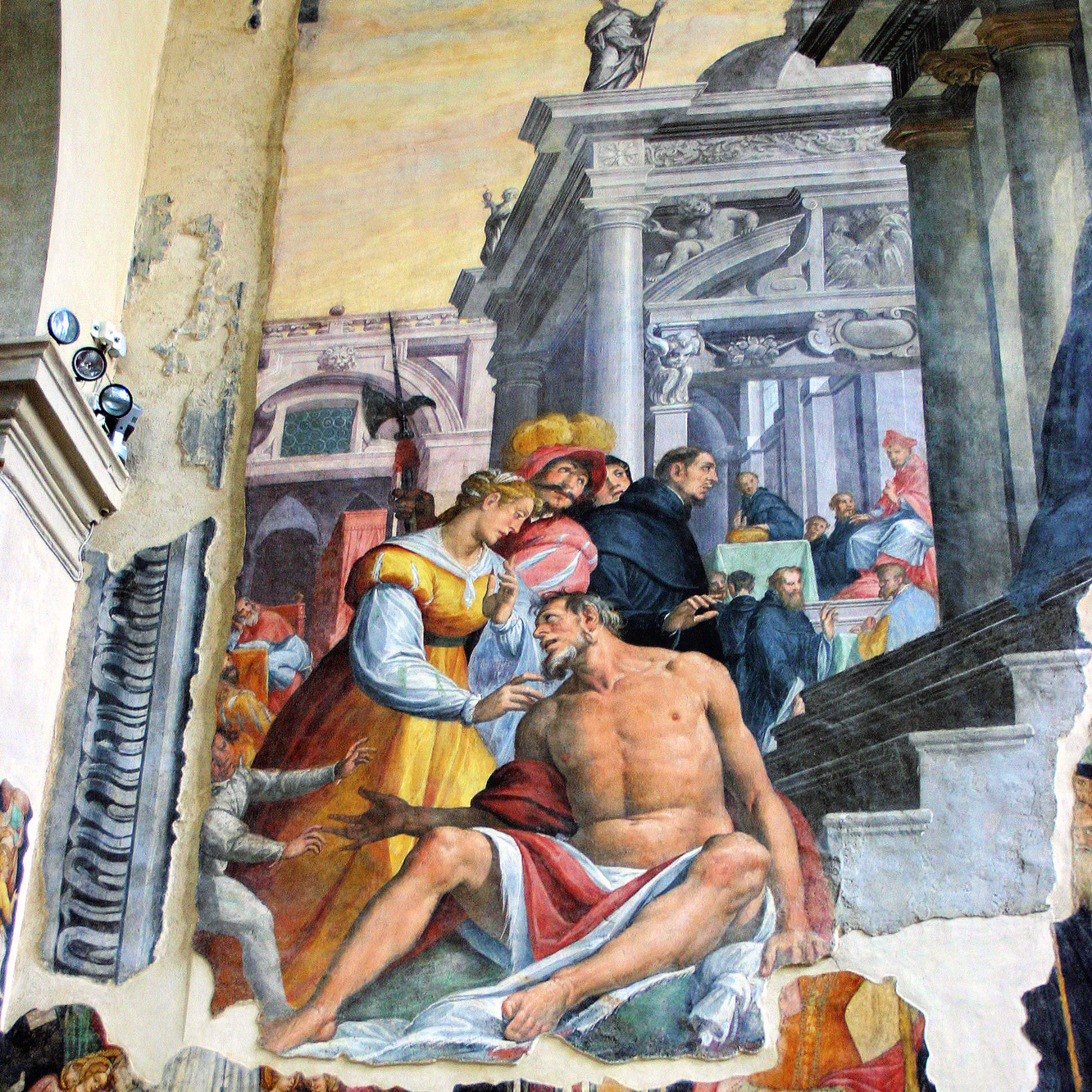
Filippo Benizzi (1233-1285), fifth general superior of the Servants of Mary (Servite Order), was assigned by Pope Martin IV to go to Forli to try to bring together the two sides. The Servites were a mendicant order that embraced poverty and devoted to preaching and encouraging devotion to the Virgin Mary. General Superior Benizzi was the Order’s chief propagator and organizer. In Forli, the pro-pope group was called Guelphs and pro-Holy Roman Emperor group was called Ghibellines. A political meeting was called where Fr. Benizzi would meet the two sides. Benizzi is also reputed to have healed a leper when in the town by giving him his tunic to wear. The Guelphs represented the interests of wealthy merchants, bankers, and urban elites who viewed the Empire as a threat to their free trade and dominance. This group later split into Black (radical) Guelphs and White (moderate) Guelphs. The Ghibellines represented the landed aristocracy who favored traditional hierarchical structures and sought imperial protection against the expanding papal states that fostered smaller, autonomous communes and free trade practices representing the “new money” merchant class.

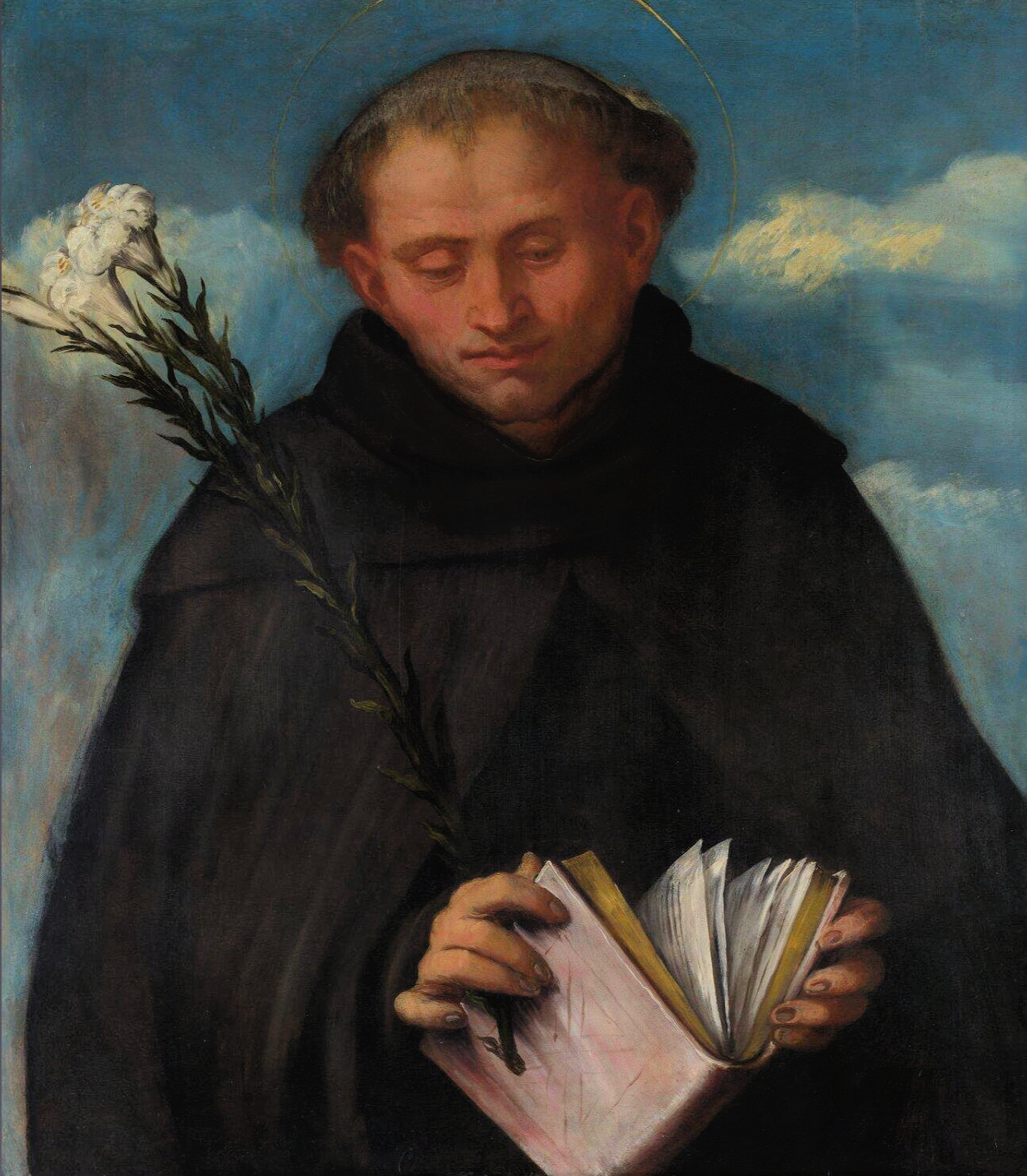
Saint Filippo Benizzi, Girolamo Romanino (c,1484-c.1560), c.1524, High Altarpiece, S. Alessandro, Brescia. oil on wood, 74.2 × 64.9 cm, The National Gallery London. Benizzi wears the black scapular, tunic and cowl of his Order. Saint Filippo Benizzi’s body is in the church of the Servants of Mary in Todi, Umbria. He was beatified by Pope Leo X in 1516 and made a saint by Pope Clement X in 1671. see – Girolamo Romanino | Saint Filippo Benizzi | NG297.5 | National Gallery, London – retrieved Jan. 27, 2026.

St. Peregrine born in Forlì, Italy, came from a wealthy family aligned against papal political authority during the bitter Guelph-Ghibelline conflicts. As an 18-year-old, he joined a hostile crowd confronting St. Filippo Benizzi, the Servite leader and papal representative, and even struck him physically. Peregrine repented and moved by Benizzi’s forgiveness and charity, joined the Servite Order, and eventually became a priest.

At the meeting, the crowds that gathered spewed insults at the friar and 18-year-old Peregrine, son of a Ghibelline leader, was among them. They chased the Servite General out of Forli with insults and violence and Peregrine physically struck him. Soon after, Peregrine regretted his violent actions and sought out his victim to apologize. Filippo Benizzi greeted Peregrine with charity which made a lasting impression on the young man. A few years later, Peregrine Laziosi joined the Servites in Siena and became a priest.

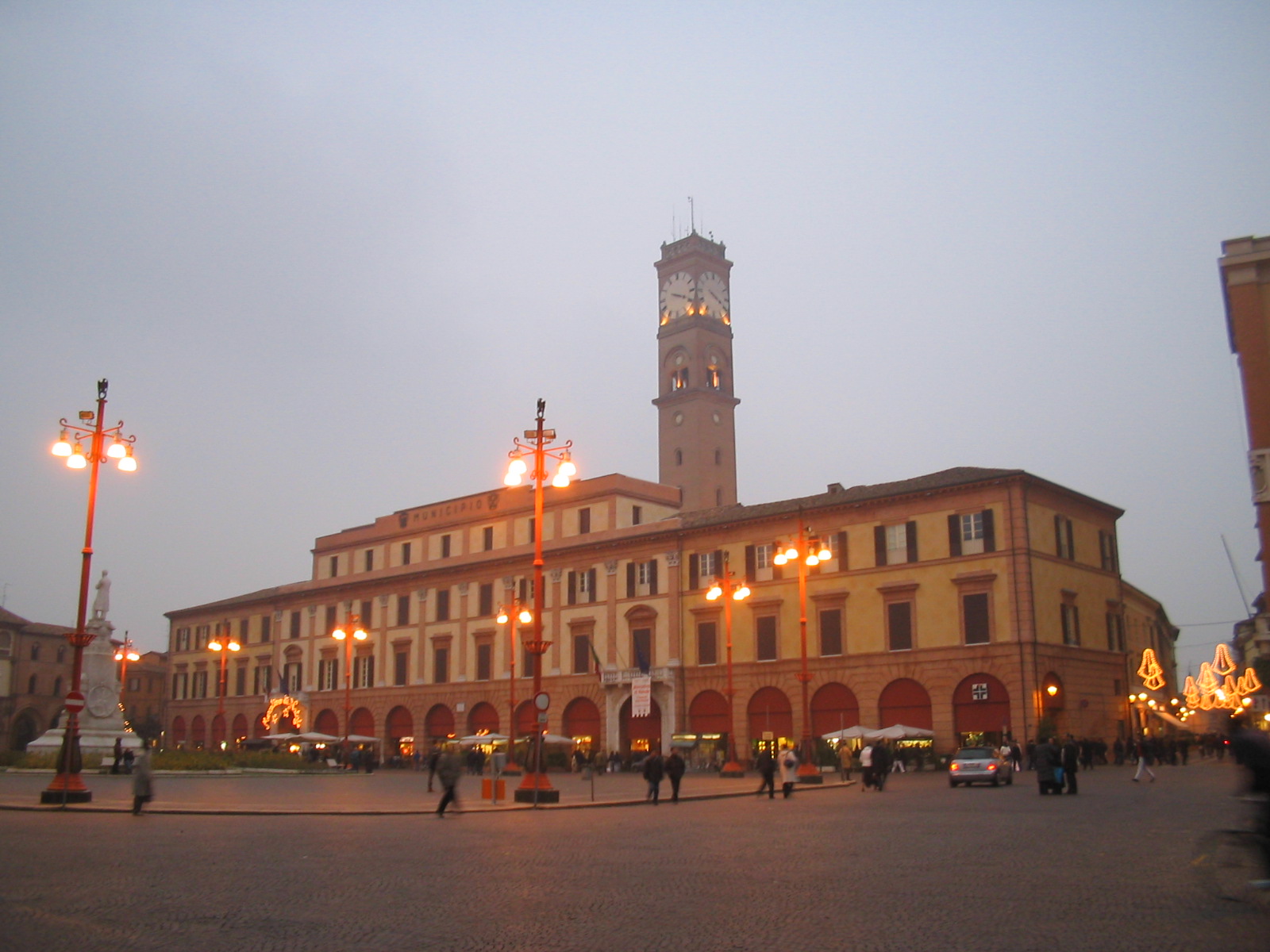
Piazza Aurelio Saffi (main square), Forli, Italy. PHOTO: “Main square SAFFI Forli Italy December-2004” by Ivanwiki is licensed under CC BY-SA 3.0.

Peregrine was sent back to Forli, founded a new Servite house, and became popular for his preaching and well known for charitable work.

Returning to Forlì, Peregrine founded a Servite house and became known for a lifetime of preaching and charitable works.

Miraculous cure.

Saints are often famous for their miracle-working powers. In the case of St Peregrine, he is known for being the recipient of a miracle. At 60 years old, Peregrine found he had a cancerous tumor on his right leg. The doctors had given up hope of a cure and decided to amputate the leg. The night before the operation St. Peregrine had a vision. It is the one depicted in the shrine’s painting: St. Peregrine seeing Jesus descend from the cross to touch and heal his leg.

The artwork depicts the healing miracle of his tumorous leg experienced by St. Peregrine Laziosi.

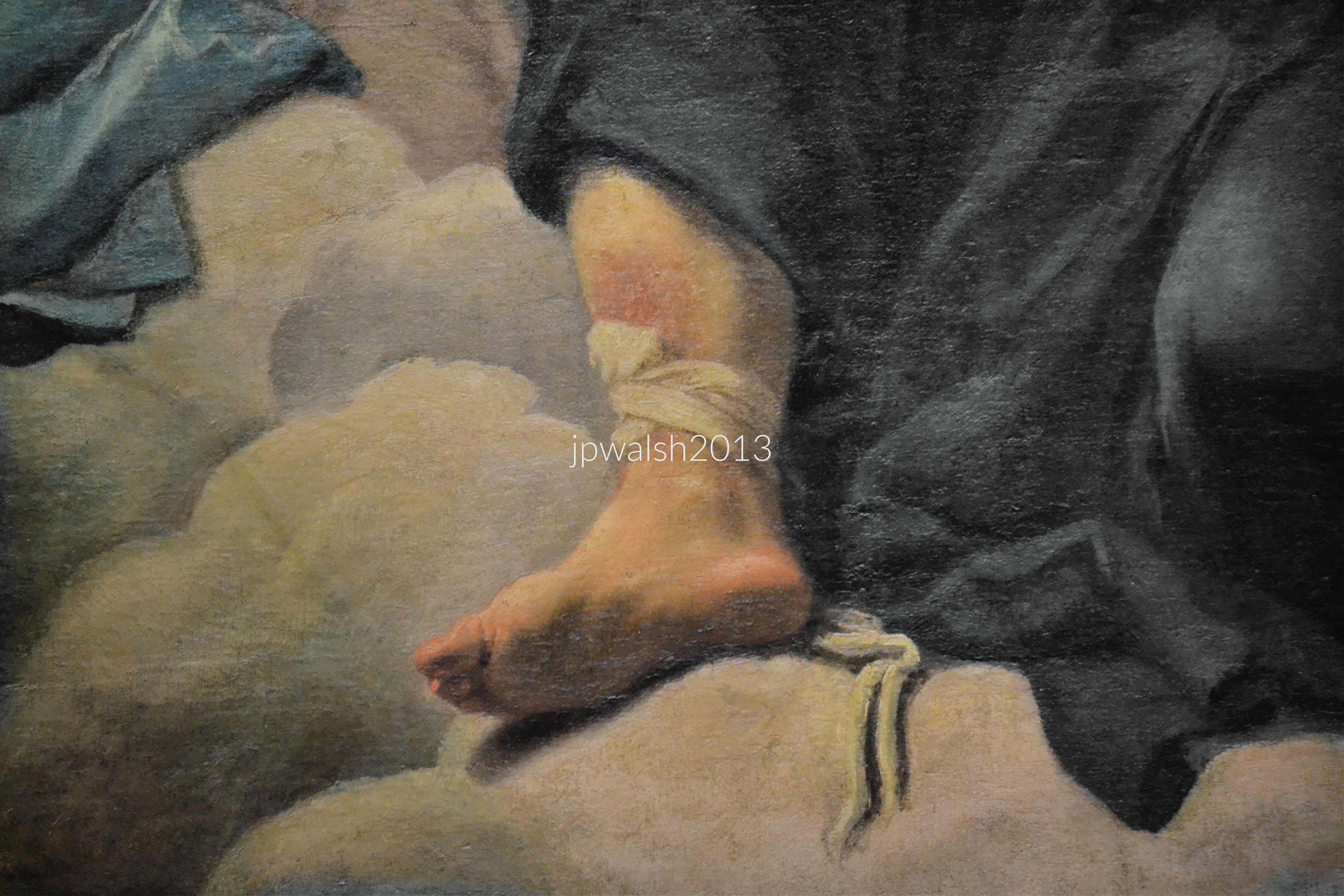
Detail of painting depicting St. Peregrine’s tumorous leg that was miraculously cured by Jesus Christ in a vision in 1320. Author’s photograph. 5.09mb DSC_0246 (1)

When the doctors arrived the next day to perform the operation, they found that Peregrine had been completely cured, an event unexplained by medical science. The news spread like wildfire through the town. St. Peregrine died of fever 25 years later on May 1, 1345, in his mid 80’s. After his death people who were sick and cured attributed it to St. Peregrine’s miraculous intercession, particularly when it was a life-threatening disease. His saintly cult grew – Peregrine is patron saint of cancer and other life-threatening maladies – and his image often shows him exposing his own tumorous leg that was miraculously cured by Christ.

Around age sixty, Peregrine developed a cancerous tumor in his leg, and doctors planned an amputation. On the eve of the operation, he experienced a vision of Christ descending from the Cross and healing him. The next day, the tumor had disappeared, a cure described as unexplained by medical science.

The shrine through prayer, blessing, pilgrimage, reconciliation and evangelization, accompanies those persons who live with serious illness, traditionally cancer, and their caregivers, as they seek to find healing, support, peace and God in their daily lives. There is also a relic of St. Peregrine Laziosi at the shrine. Author’s photograph. 2.74mbDSC_0260 (1)

After his death in 1345, devotion to St. Peregrine grew as many attributed healings to his intercession were made. He became the patron saint of cancer patients and those suffering from other grave illnesses, often depicted exposing his miraculously healed leg.

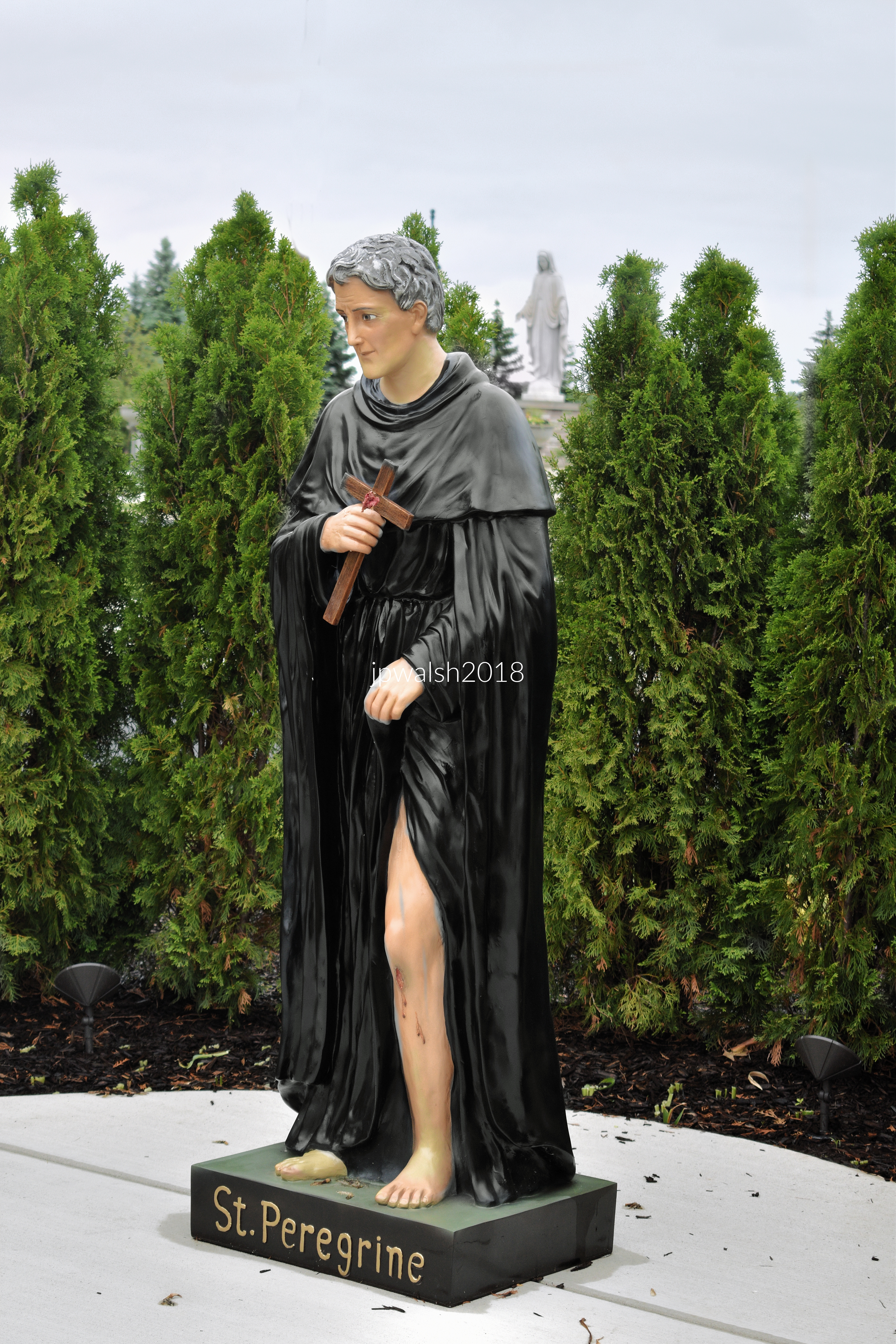
Statue of St. Peregrine Laziosi in an outdoor garden near to the Shrine of Christ’s Passion, St. John, Indiana. June 2018. Author’s photograph. 89% 7.93mb DSC_9062