Tag Archives: #Pilgrimage

The Man Who Struck a Saint and Became One: St. Peregrine Laziosi’s Journey from Political Fury to Patron Saint of Cancer Patients, Whose National Shrine Is in Chicago.

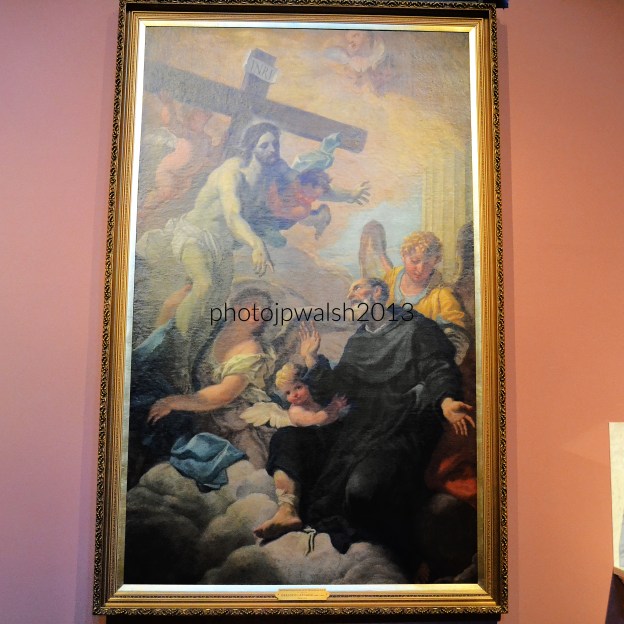
FEATURE image: At the National Shrine of St. Peregrine at Our Lady of Sorrows Basilica on Chicago’s west side is a painting attributed to the late 17th century painter, Gregorio Lazzarini (1665-1740) entitled Jesus the Healer; St. Peregrine, OSM the Helper. December 2013. Author’s photograph. 3.89mb DSC_0218 (1).

St. Peregrine Laziosi’s enduring significance lies in his transformation from a hot-headed opponent of the Church into a holy servant whose own miraculous healing from a cancerous tumor made him a lasting symbol of hope, healing, and intercession for those facing cancer and other life-threatening illnesses. His medieval life story is connected to the continuing ministry of his shrine in Chicago.

Peregrine Laziosi grew up in Forli near Ravenna in Italy. Peregrine came from a very wealthy family who lived in the town in which half the population was for being part of the Papal States and half were against. Peregrine’s family, and thus Peregrine as a young man, was against the pope’s political rule.
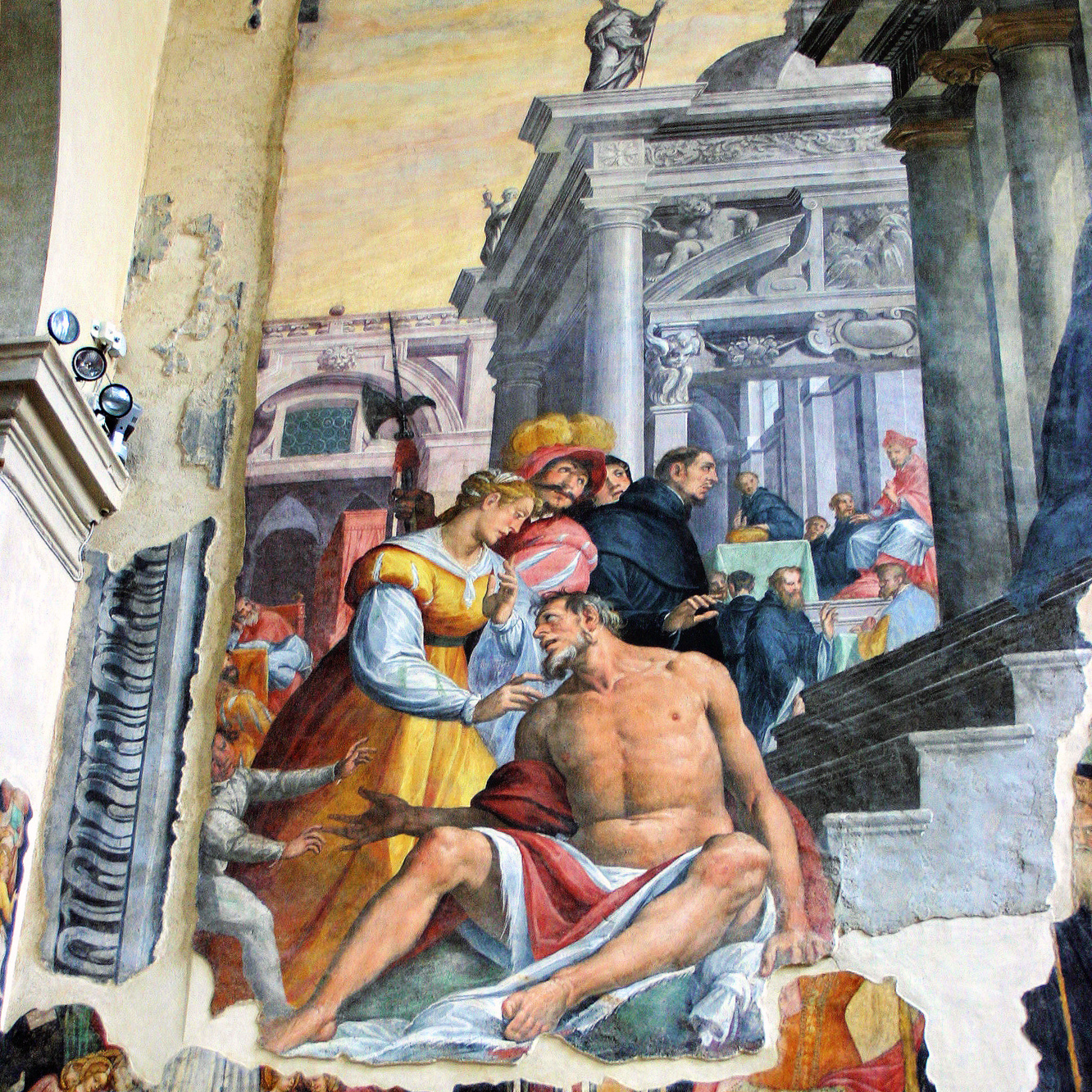
Pope Alexander IV (1254-1261), pope at the time of the birth of Saint Peregrine, is depicted in a fresco in San Marco in Milan, Italy. On September 26, 1255, Alexander IV had canonized Saint Clare of Assisi, founder of the second order of Franciscans, known as the Poor Clares. The following month, on October 29, 1255, Alexander IV, in his bull Benigna Operatio, declared that the stigmata of Saint Francis of Assisi (who was canonized in 1228) was a fact of the pope’s “own knowledge.” Public domain.

Guelphs and Ghibellines.
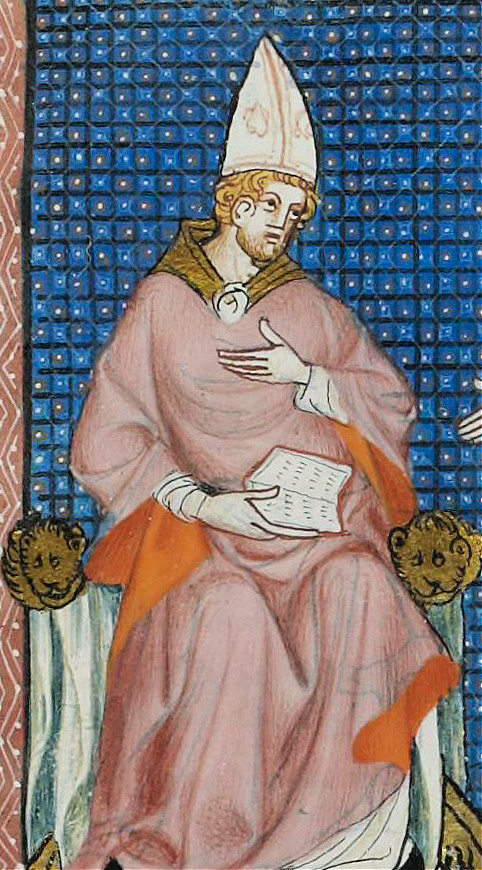
14th century Illumination on parchment of Pope Martin IV, c. 1335. From the manuscript Vie et miracles de saint Louis. Bibliothèque Nationale de France. Born Simon de Brion (c. 1210 –1285), Martin IV was the last French pope to stay in Rome before the papacy moved to Avignon. He ruled the Papal States from 1281 to 1285. Public Domain.

Filippo Benizzi (1233-1285), fifth general superior of the Servants of Mary (Servite Order), was assigned by Pope Martin IV to go to Forli to try to bring together the two sides. The Servites were a mendicant order that embraced poverty and devoted to preaching and encouraging devotion to the Virgin Mary. General Superior Benizzi was the Order’s chief propagator and organizer. In Forli, the pro-pope group was called Guelphs and pro-Holy Roman Emperor group was called Ghibellines. A political meeting was called where Fr. Benizzi would meet the two sides. Benizzi is also reputed to have healed a leper when in the town by giving him his tunic to wear. The Guelphs represented the interests of wealthy merchants, bankers, and urban elites who viewed the Empire as a threat to their free trade and dominance. This group later split into Black (radical) Guelphs and White (moderate) Guelphs. The Ghibellines represented the landed aristocracy who favored traditional hierarchical structures and sought imperial protection against the expanding papal states that fostered smaller, autonomous communes and free trade practices representing the “new money” merchant class.
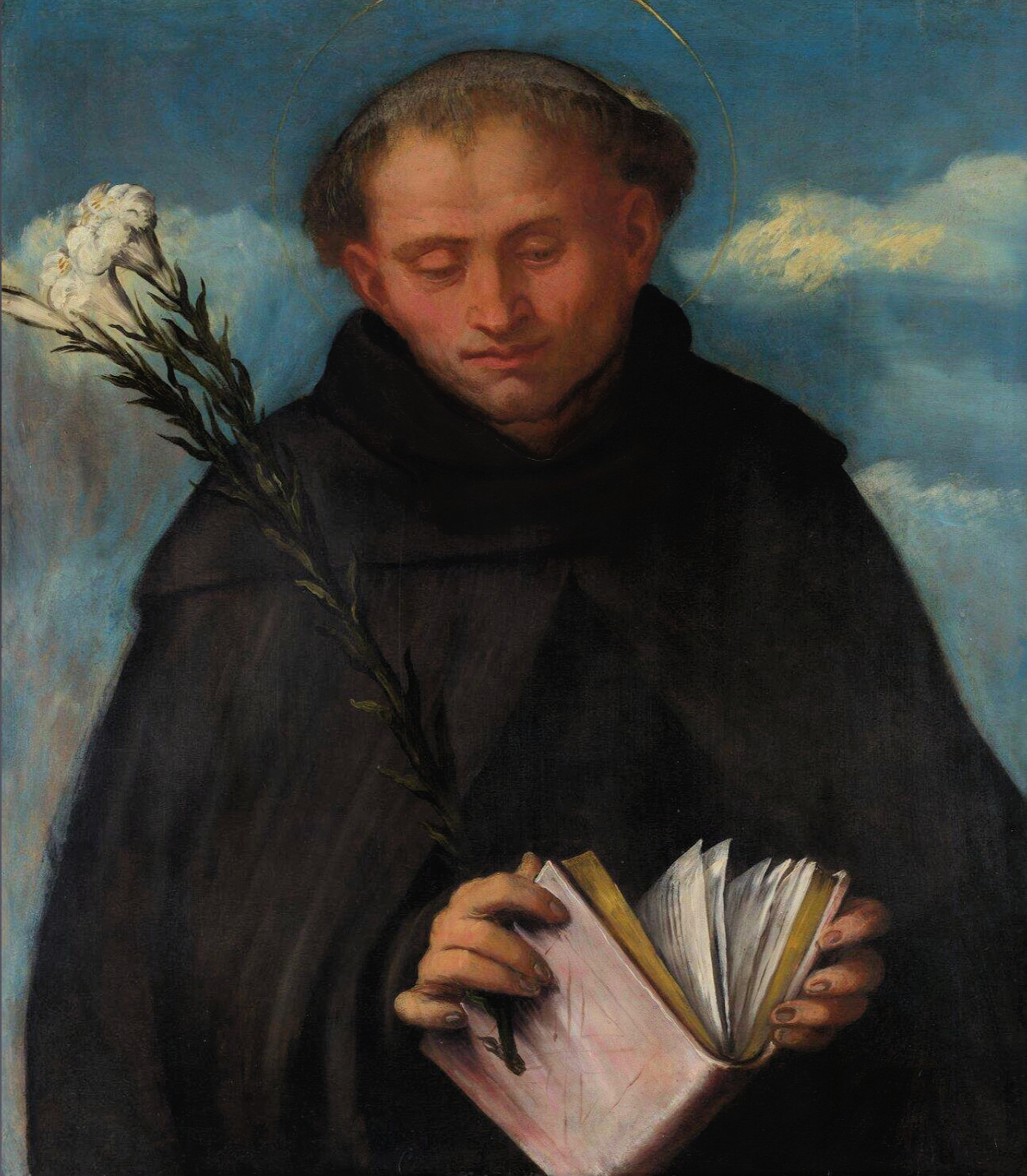
Saint Filippo Benizzi, Girolamo Romanino (c,1484-c.1560), c.1524, High Altarpiece, S. Alessandro, Brescia. oil on wood, 74.2 × 64.9 cm, The National Gallery London. Benizzi wears the black scapular, tunic and cowl of his Order. Saint Filippo Benizzi’s body is in the church of the Servants of Mary in Todi, Umbria. He was beatified by Pope Leo X in 1516 and made a saint by Pope Clement X in 1671. see – Girolamo Romanino | Saint Filippo Benizzi | NG297.5 | National Gallery, London – retrieved Jan. 27, 2026.

St. Peregrine born in Forlì, Italy, came from a wealthy family aligned against papal political authority during the bitter Guelph-Ghibelline conflicts. As an 18-year-old, he joined a hostile crowd confronting St. Filippo Benizzi, the Servite leader and papal representative, and even struck him physically. Peregrine repented and moved by Benizzi’s forgiveness and charity, joined the Servite Order, and eventually became a priest.

At the meeting, the crowds that gathered spewed insults at the friar and 18-year-old Peregrine, son of a Ghibelline leader, was among them. They chased the Servite General out of Forli with insults and violence and Peregrine physically struck him. Soon after, Peregrine regretted his violent actions and sought out his victim to apologize. Filippo Benizzi greeted Peregrine with charity which made a lasting impression on the young man. A few years later, Peregrine Laziosi joined the Servites in Siena and became a priest.
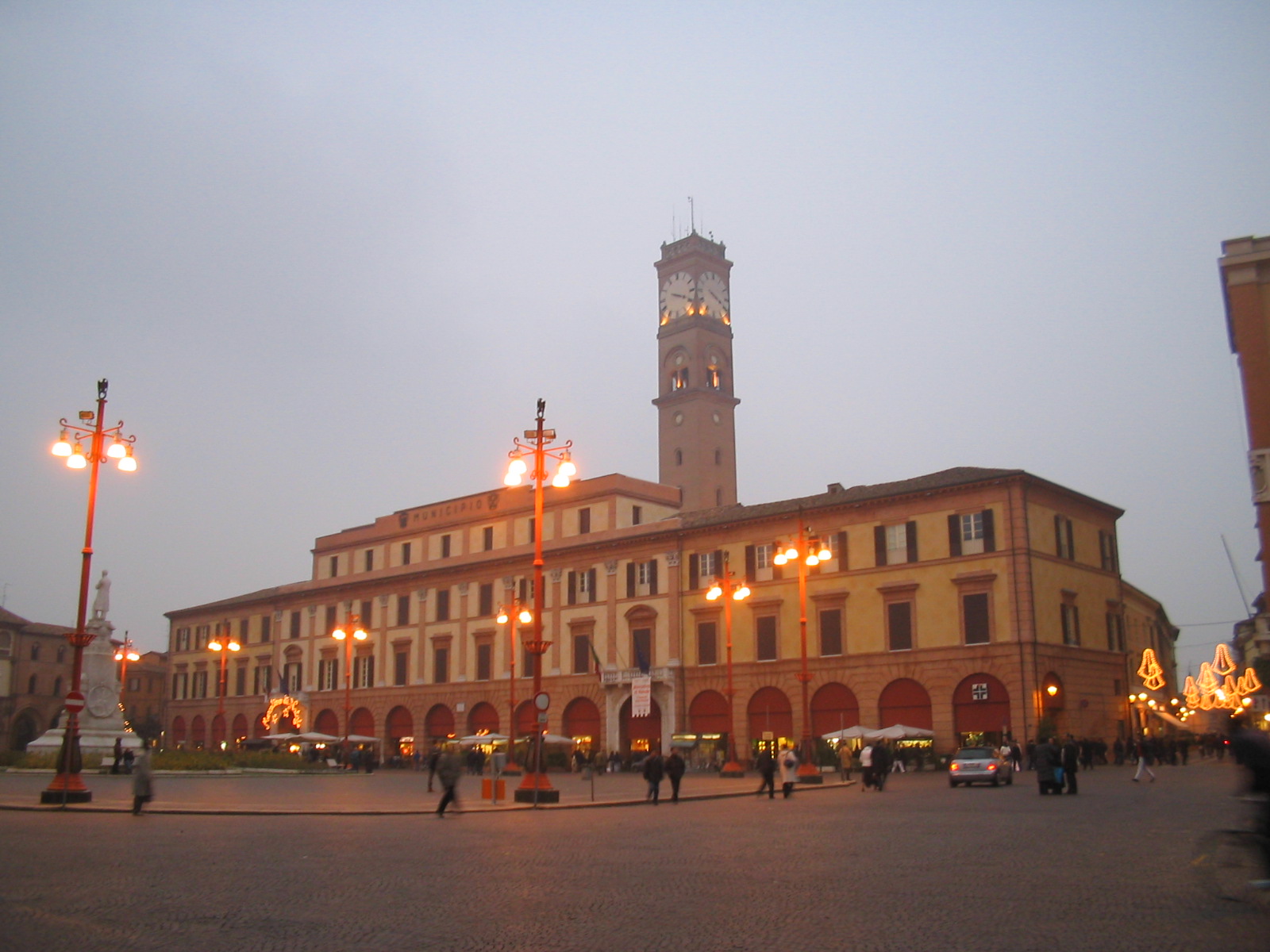
Piazza Aurelio Saffi (main square), Forli, Italy. PHOTO: “Main square SAFFI Forli Italy December-2004” by Ivanwiki is licensed under CC BY-SA 3.0.

Peregrine was sent back to Forli, founded a new Servite house, and became popular for his preaching and well known for charitable work.

Returning to Forlì, Peregrine founded a Servite house and became known for a lifetime of preaching and charitable works.

Miraculous cure.

Saints are often famous for their miracle-working powers. In the case of St Peregrine, he is known for being the recipient of a miracle. At 60 years old, Peregrine found he had a cancerous tumor on his right leg. The doctors had given up hope of a cure and decided to amputate the leg. The night before the operation St. Peregrine had a vision. It is the one depicted in the shrine’s painting: St. Peregrine seeing Jesus descend from the cross to touch and heal his leg.
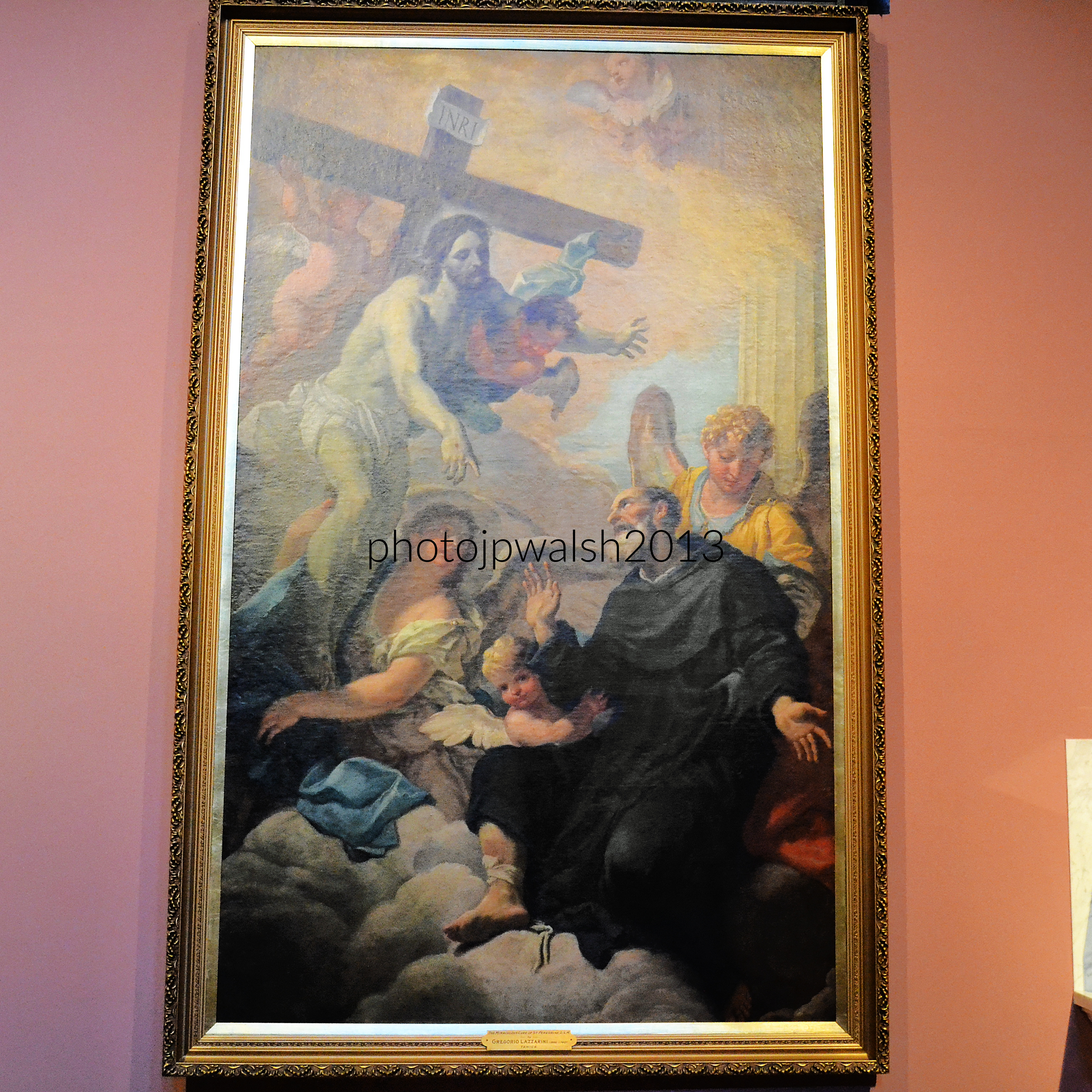
The artwork depicts the healing miracle of his tumorous leg experienced by St. Peregrine Laziosi.
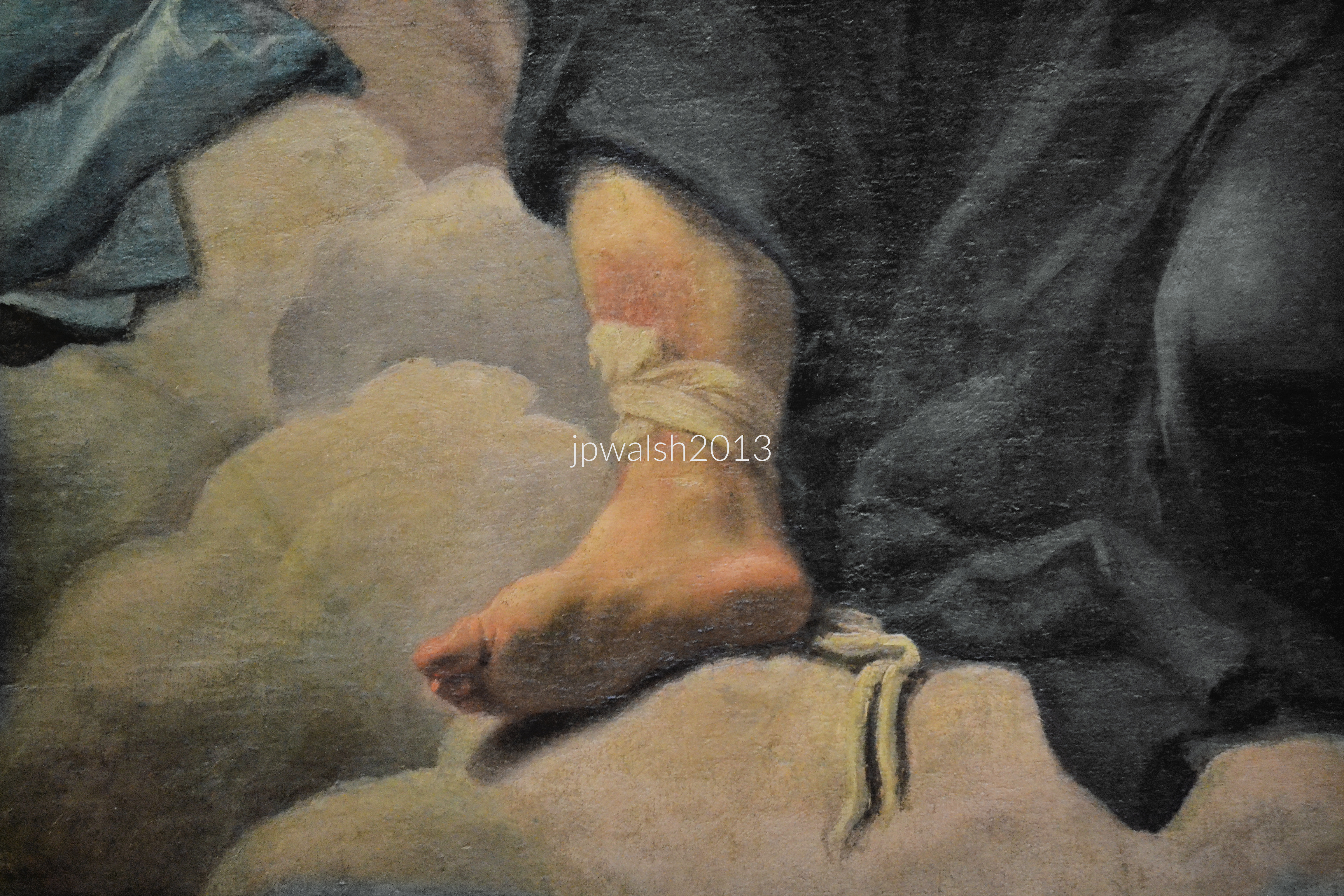
Detail of painting depicting St. Peregrine’s tumorous leg that was miraculously cured by Jesus Christ in a vision in 1320. Author’s photograph. 5.09mb DSC_0246 (1)

When the doctors arrived the next day to perform the operation, they found that Peregrine had been completely cured, an event unexplained by medical science. The news spread like wildfire through the town. St. Peregrine died of fever 25 years later on May 1, 1345, in his mid 80’s. After his death people who were sick and cured attributed it to St. Peregrine’s miraculous intercession, particularly when it was a life-threatening disease. His saintly cult grew – Peregrine is patron saint of cancer and other life-threatening maladies – and his image often shows him exposing his own tumorous leg that was miraculously cured by Christ.

Around age sixty, Peregrine developed a cancerous tumor in his leg, and doctors planned an amputation. On the eve of the operation, he experienced a vision of Christ descending from the Cross and healing him. The next day, the tumor had disappeared, a cure described as unexplained by medical science.
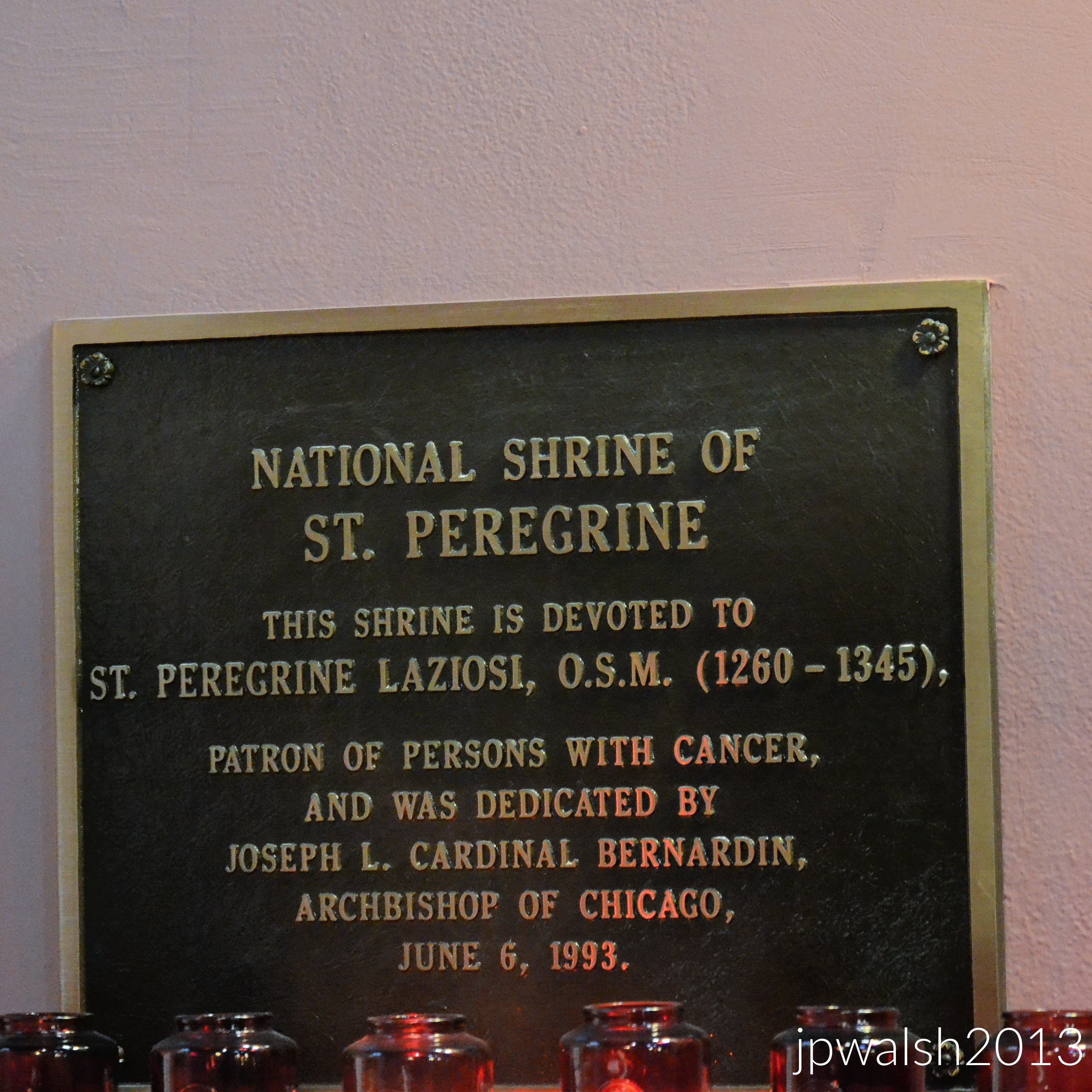
The shrine through prayer, blessing, pilgrimage, reconciliation and evangelization, accompanies those persons who live with serious illness, traditionally cancer, and their caregivers, as they seek to find healing, support, peace and God in their daily lives. There is also a relic of St. Peregrine Laziosi at the shrine. Author’s photograph. 2.74mbDSC_0260 (1)

After his death in 1345, devotion to St. Peregrine grew as many attributed healings to his intercession were made. He became the patron saint of cancer patients and those suffering from other grave illnesses, often depicted exposing his miraculously healed leg.
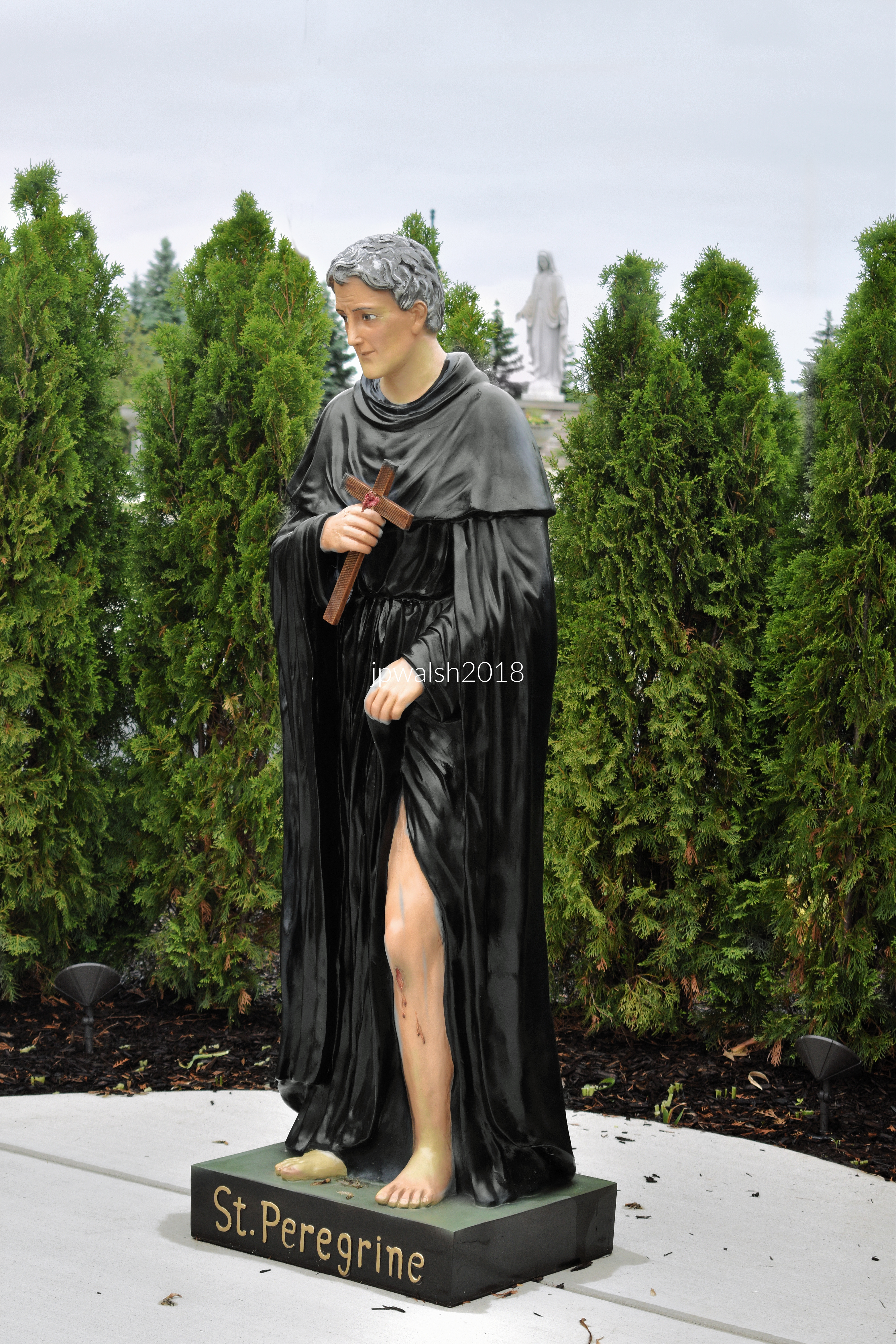
Statue of St. Peregrine Laziosi in an outdoor garden near to the Shrine of Christ’s Passion, St. John, Indiana. June 2018. Author’s photograph. 89% 7.93mb DSC_9062

UNITED STATES. My Art Photography: THE SHRINE OF CHRIST’S PASSION, St. John, Indiana. (73 Photos & Video).

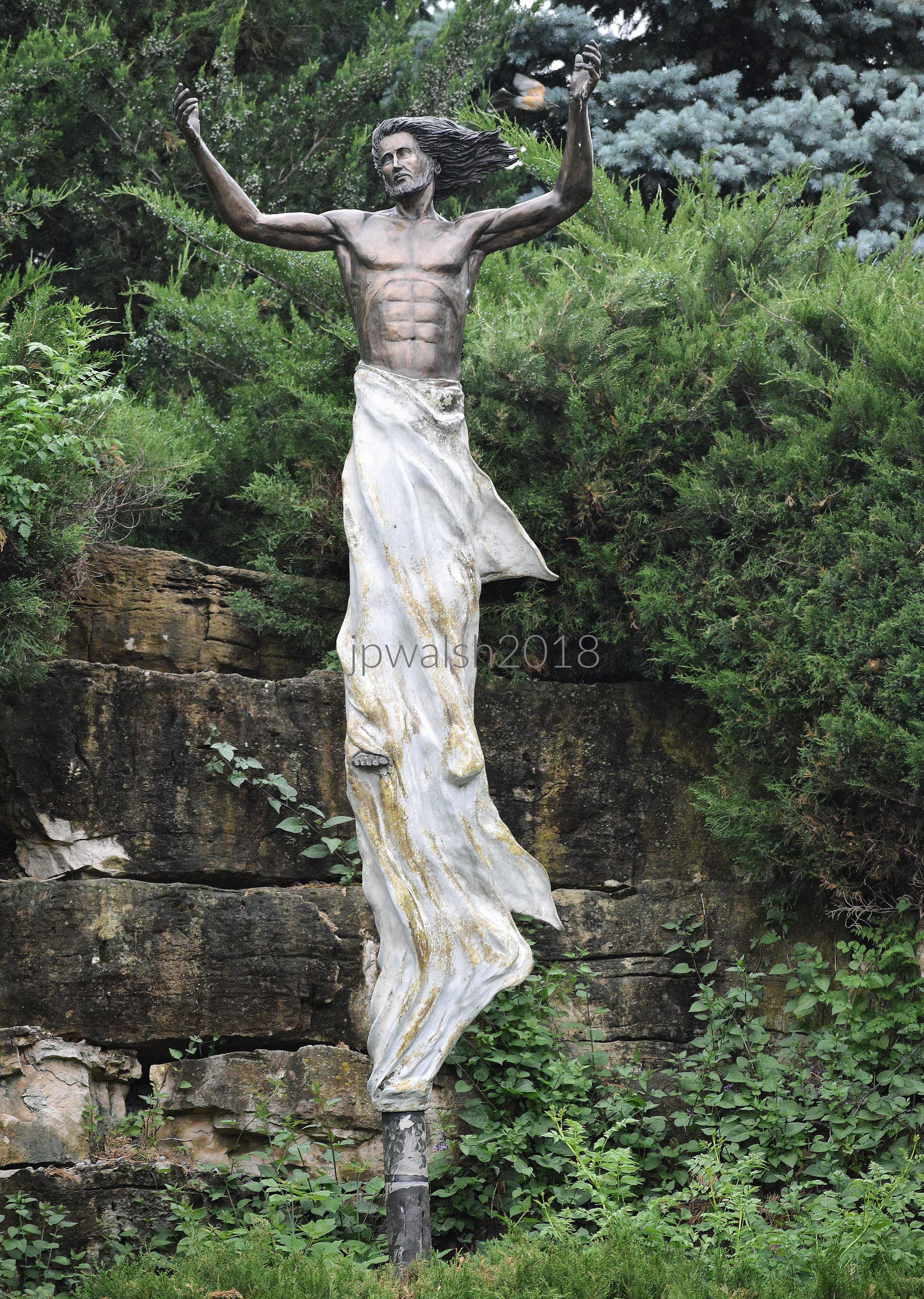
FEATURE image: (detail) Jesus Appears to Mary Magdalene, John 20:11-18.

The Shrine of Christ’s Passion in St. John, Indiana is much more than a sculpture park or roadside attraction. Through life-sized bronze sculptures, landscaped surroundings, Scripture, and meditation, it offers visitors an immersive experience of Christ’s Passion, Death, Resurrection, and Ascension while serving as a major regional destination for prayer, reflection, and religious art.

INTRODUCTION

One hour’s drive (about 40 miles) south of downtown Chicago—and 90 minutes drive from the University of Notre Dame near South Bend, Indiana—is The Shrine of Christ’s Passion. Within a 30-acre site whose landscaped rocks, hills, and trees envelop the visitor, the shrine is located on busy U.S. 41 at 10630 Wicker Avenue in St. John, Indiana. A pioneer town settled in 1837, St. John still sits among farm fields though there is increasingly more development only minutes from the Indiana-Illinois state line.

On the historic Wachter family farm, the level terrain is a perfect outdoor setting for an array of multi-media and interactive attractions. Most visitors, whether as individuals or in groups, come to the shrine to traverse the half-mile winding concrete pathway that contain over 40 life-sized bronze sculptures which dramatize the Passion of Jesus Christ in the Bible.

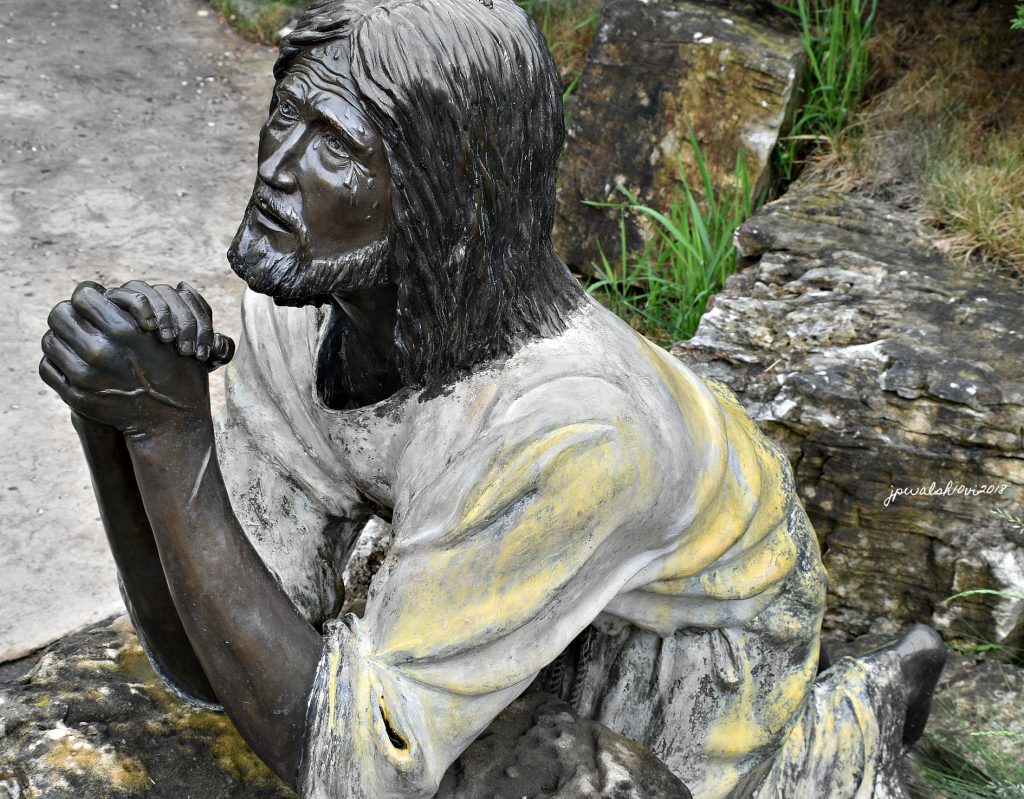
The visit to the shrine begins in the well-stocked gift shop and leads directly outdoors to the dramatization of Jesus at The Last Supper and into the Garden of Gethsemane where Jesus prays. This is followed by the 14 traditional Stations of the Cross. The visit ends at Jesus’s empty tomb and his appearance to Mary Magdalene. Finally there is the dramatic Ascension of the Risen Jesus into Heaven on Mount Olivet.  

The shrine opened in 2011 and added its latest attraction– namely, a re-creation of the rock-filled path up Mount Sinai to where Moses has received the 10 Commandments –in 2017.

The Shrine of Christ’s Passion required a decade of planning and over $10 million dollars to build. Each setting or station for Christ’s passion has an orientation kiosk. Each features the well-known recorded voice of American television journalist Bill Kurtis. A push of a button has Mr. Kurtis’s voice over the kiosks’ speakers provide a clear and brief description in English of the sculptures’ scenes followed by a short meditation.

Along the broad concrete pathway the prayer trail is meditative and its easy progression from station to station lends itself to discovery. Formed hills, planted trees, bushes, and grasses as well as many large boulders, provide a complete landscape far from the outside world. The design creates a terrain that is self-contained and works to evoke the arid climate of the Holy Land where the last days of Christ can become vibrant today.

Upon exiting the gift shop with its walls and shelves of tempting religious articles and other items for purchase — all proceeds apparently go to the upkeep of the shrine– one steps into an outdoor pastoral setting which offers the immediate transition into the world of the Bible and following in the footsteps of Christ during his darkest moments. Visitors share the trail with others from around the nation and world. This is part of what makes each visit to the shrine unique and alive. Yet there is ample space and freedom to enjoy one’s own completely personal experience.

Whenever one may visit the shrine — it is open 361 days a year– the prayer trail has an atmosphere that is quiet and respectful. There is always a place to sit and drink in the sculpture art detailing the greatest story ever told. Among its flora, evocative rock and land formations, and realistically-rendered life-sized sculptures depicting Jesus Christ’s suffering –- one witnesses in a a new way Christ’s mission which triumphed over sin and death. 

A large and impressive place, The Shrine of Christ’s Passion retains a human scale along with giving the visitor a sense of being serenely out in nature.  Depending on how much time a visitor can spend, a visit to the shrine could possibly be accomplished in as little as 30 minutes though at least an hour should be allowed to see and begin to savor everything it has to offer.

In addition to the main prayer trail and gift shop, the shrine includes more attractions such as the Moses, Mount Sinai, and the 10 Commandments trail; The Sanctity of Life Shrine; and Our Lady of The New Millennium, a monumental three-story (34 feet) tall statue of the Virgin Mary constructed out of over 8,000 pounds of stainless steel.

The Shrine is operated by a non-denominational nonprofit, private foundation. Admission to all attractions at the shrine is free. The Shrine is open daily from 10:00 a.m. – 5:00 p.m., Thursdays until 8:00 p.m. The Prayer Trail is open year round, weather permitting.  

Sources –
The Shrine of Christ’s Passion Official website – http://shrineofchristspassion.org/
Our Lady of the New Millennium – https://www.chicagotribune.com/news/ct-xpm-2011-03-04-ct-talk-mary-statue-0305-20110304-story.html

IMAGES FROM THE PRAYER TRAIL

Main Entrance on U.S. 41 at 10630 Wicker Avenue in St. John, Indiana, minutes from the Illinois-Indiana state line. Just 40 minutes from downtown Chicago, there is ample free parking and tour buses are welcome.

The Gift Shoppe.

The Last Supper Luke 22:19

“And he took bread, gave thanks and broke it, and gave it to them, saying, “This is my body given for you; do this in remembrance of me.”

Garden of Gethsemane Mark 14:34

“My soul is overwhelmed with sorrow to the point of death,” Jesus said to them. “Stay here and keep watch.”

THE 14 STATIONS OF THE CROSS AT THE SHRINE OF CHRIST’S PASSION, ST. JOHN, INDIANA.

1. Jesus is condemned to death Matthew 27: 19-26.

“When Pilate saw that he was not succeeding at all, but that a riot was breaking out instead, he took water and washed his hands in the sight of the crowd, saying, “I am innocent of this man’s blood. Look to it yourselves.”…Pilate had Jesus flogged, and handed him over to be crucified.”

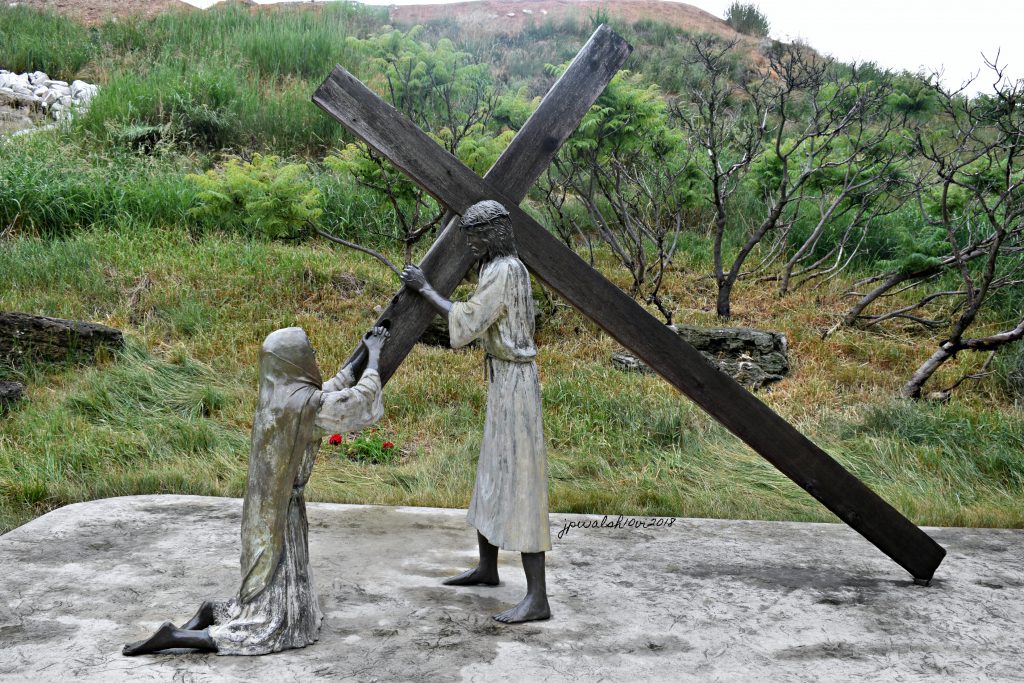
2. Jesus carries His cross John 19:16-17

“Then Pilate handed him over to be crucified. The soldiers took charge of Jesus, who carried his own cross to a location called “The Place of a Skull,” known in Aramaic as Golgotha.” 

3. Jesus falls for the first time Isaiah 53:1-3

“He was despised and rejected by mankind,
    a man of suffering, and familiar with pain.
Like one from whom people hide their faces
    he was despised, and we held him in low esteem.”

4. Jesus meets His mother, Mary Lamentations 1:12

“Is it nothing to you, all you who pass by?
    Look around and see.
Is any suffering like my suffering
    that was inflicted on me..?”

5. Simon of Cyrene helps Jesus carry the cross Luke 23:26

“They seized Simon from Cyrene, who was on his way in from the country, and put the cross on him and made him carry it behind Jesus.”

6. Veronica wipes the face of Jesus Psalm 17:15

“As for me, I will be vindicated and will see your face;
    when I awake, I will be satisfied with seeing your likeness.”

7. Jesus falls for the second time   Isaiah 53:4-6

“Surely he took up our pain
    and bore our suffering,
yet we considered him punished by God,
    stricken by him, and afflicted.”

8. Jesus meets the women of Jerusalem Luke 23:27-31

“A large number of people followed him, including women who mourned and wailed for him. 28 Jesus turned and said to them, “Daughters of Jerusalem, do not weep for me; weep for yourselves and for your children.”

9. Jesus falls for the third time Isaiah 53:10-11

“Yet it was the Lord’s will to crush him and cause him to suffer,
    and though the Lord makes his life an offering for sin,
he will see his offspring and prolong his days,
    and the will of the Lord will prosper in his hand….”

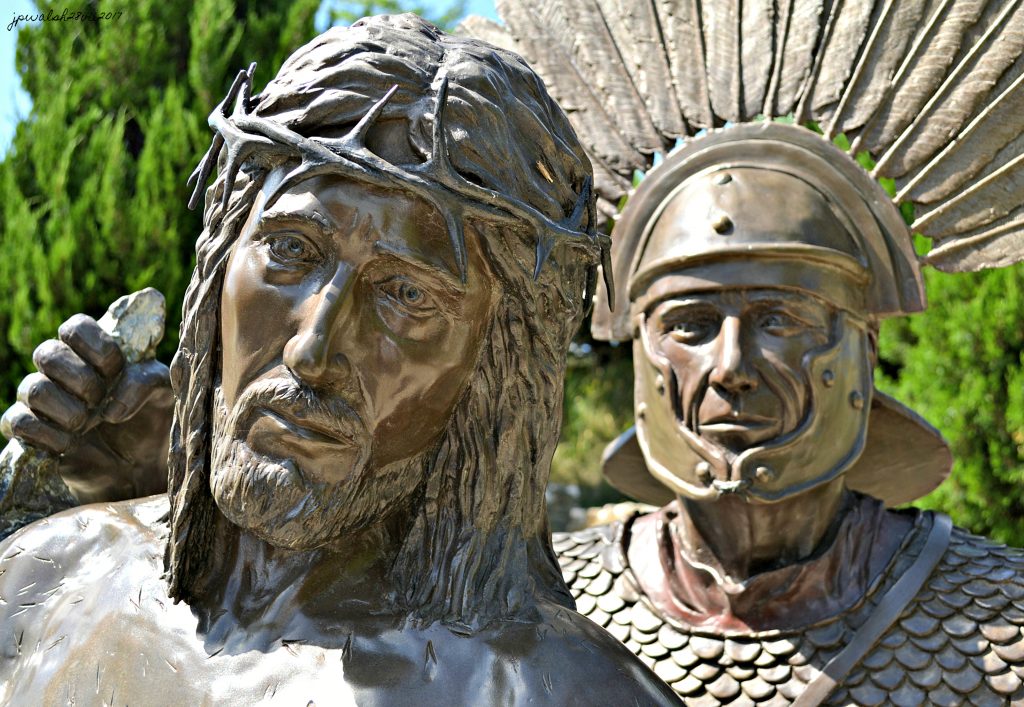
10. Jesus is stripped of His clothes Matthew 27:27-31

“They stripped him and put a scarlet robe on him, and then twisted together a crown of thorns and set it on his head. They put a staff in his right hand. Then they knelt in front of him and mocked him.”

11. Jesus is nailed to the cross Luke 23:33-34

“When they came to the place called the Skull, they crucified him there, along with the criminals—one on his right, the other on his left.”

12. Jesus dies on the cross­ Luke 23:44-49

 “Jesus called out with a loud voice, “Father, into your hands I commit my spirit.” When he had said this, he breathed his last.”

13. Jesus is taken down from the cross Mark 15:39

“When the centurion who stood facing him saw how Jesus breathed his last he said, ‘Truly this man was the Son of God!'”

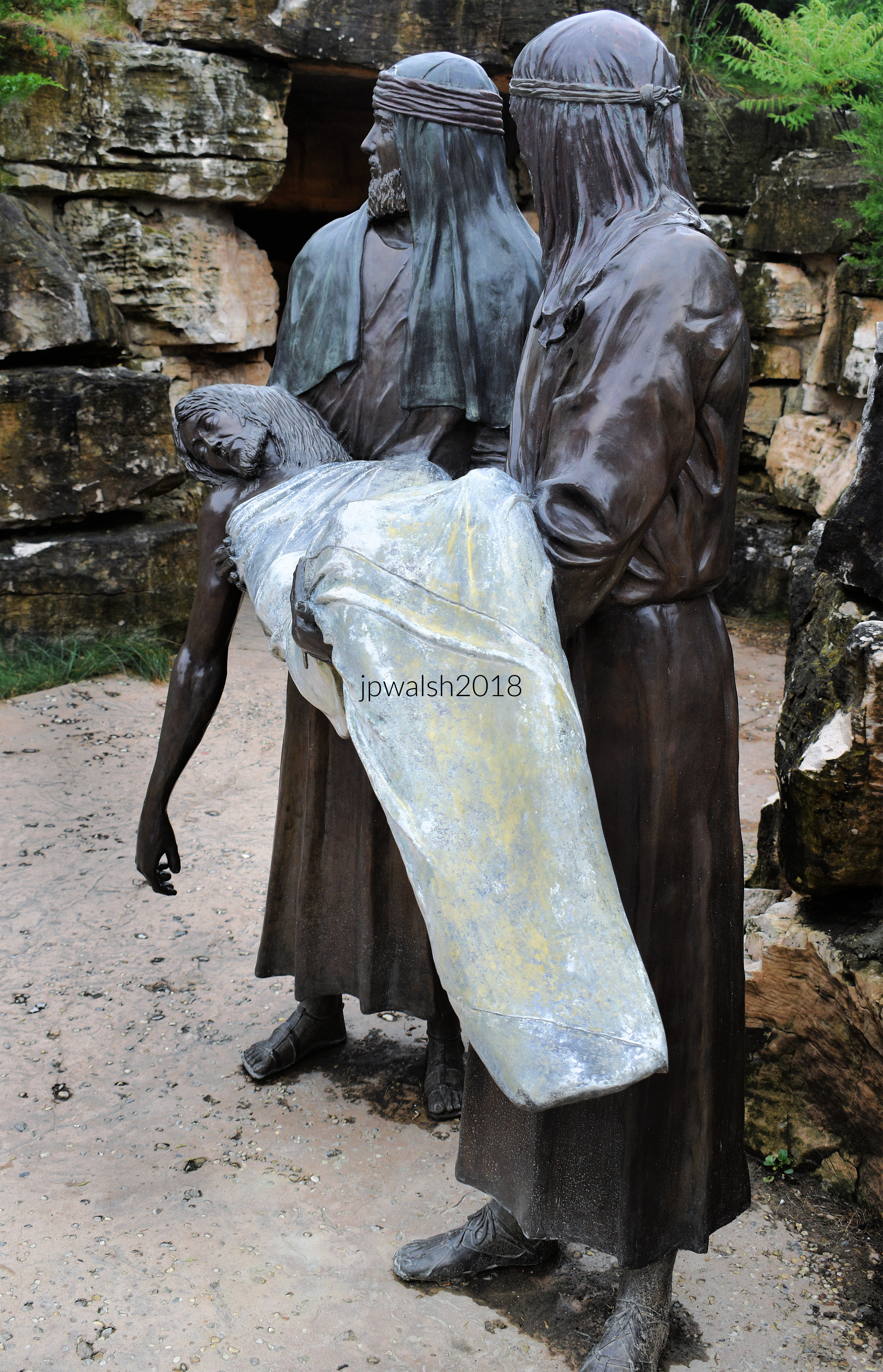
14. Jesus is placed in the tomb Luke 23:50-53

“Going to Pilate, Joseph of Arimathea asked for Jesus’ body. Then he took it down, wrapped it in linen cloth and placed it in a tomb cut in the rock, one in which no one had yet been laid.”

June 2018. 87% 7.94mb DSC_9082

The Resurrection of Jesus. Matthew 28.

1 After the sabbath, as the first day of the week was dawning,* Mary Magdalene and the other Mary came to see the tomb.

2 And behold, there was a great earthquake; for an angel of the Lord descended from heaven, approached, rolled back the stone, and sat upon it.

3 His appearance was like lightning and his clothing was white as snow.

4 The guards were shaken with fear of him and became like dead men.

5 Then the angel said to the women in reply, “Do not be afraid! I know that you are seeking Jesus the crucified.

6 He is not here, for he has been raised just as he said. Come and see the place where he lay.

Jesus Appears to Mary Magdalene John 20:16

 “Jesus said to her, “Mary.” She turned toward him and cried out in Aramaic, “Rabboni!” 

MORE of the Prayer Trail

The Ascension Acts of the Apostles 1:9

“…Jesus was taken up before their very eyes, and a cloud hid him from their sight.”

June 2018. 68% 7.90mb DSC_0310

The Ascension of Jesus is described twice in the New Testament, and both accounts come from Luke the Evangelist. The first appears at the end of his Gospel (Luke 24:50–53); the second opens the Acts of the Apostles (Acts 1:6–12).

In Acts, Luke introduces a crucial detail: a forty‑day period (Acts 1:3) during which the risen Jesus appears to the apostles, teaches them, and prepares them for their mission. This time frame is not emphasized in the Gospel account, suggesting that Luke separates the Resurrection and Ascension in Acts not because he inherited two different traditions, but because doing so serves a narrative purpose. Acts uses the forty days to situate the apostles within the larger story of Israel’s covenant history and to frame the early Church as the continuation of God’s saving work.

Once Jesus rises from the dead, the disciples recognize him as the Messiah. It is therefore understandable that, in Acts, they ask whether he will now restore Israel’s political kingdom. Luke, writing for future Christians, places in Jesus’s mouth a deliberately open‑ended reply. The timing of the parousia — the Second Coming — is not for them to know. Their task is different: to wait for the Holy Spirit, whose power will make them witnesses “to the ends of the earth.” Jerusalem, the site of Jesus’s Passion and Resurrection, becomes the starting point of this worldwide mission.

Acts adds further symbolic depth to the Ascension. Jesus is taken from their sight by a cloud, a biblical sign of divine presence and a motif associated with end‑times imagery (Luke 21:27). The event occurs on the Mount of Olives, a location already charged with eschatological expectation. As Jesus is lifted up, two figures in dazzling garments appear — the same angelic type who announced his birth (Luke 2:9) and proclaimed his Resurrection (Luke 24:4–7). Their message links Ascension and Second Coming: the Jesus who is taken up in glory “will return in the same way you saw him go” (Acts 1:11).

Christian tradition understands the mystery of Christ by tracing a single arc from the Incarnation to the Ascension. It begins at the Annunciation (Luke 1:26–38), when the eternal Word — the One who “was with God and…was God” (John 1:1) — takes on human nature in the womb of Mary. In this moment, the divine and human are united in the Person of Jesus.

The Ascension brings this union to its fulfillment. Here, the “new, saved man” enters the very life of the Father, revealing the destiny of redeemed humanity. Christ’s glorified body becomes the perfect expression of what humanity is meant to be in God: a life whose very mode of existence is love, for “God is love” (1 John 4:16). In heaven, the God‑Man embodies this reality completely.

The Ascension is immediately followed by Pentecost, when the apostles receive the Holy Spirit from the risen Christ. From that moment forward, they speak not only of Christ exalted in heaven, but of “Christ in us” — the indwelling presence that makes believers participants in his risen life.

Photographs and text: