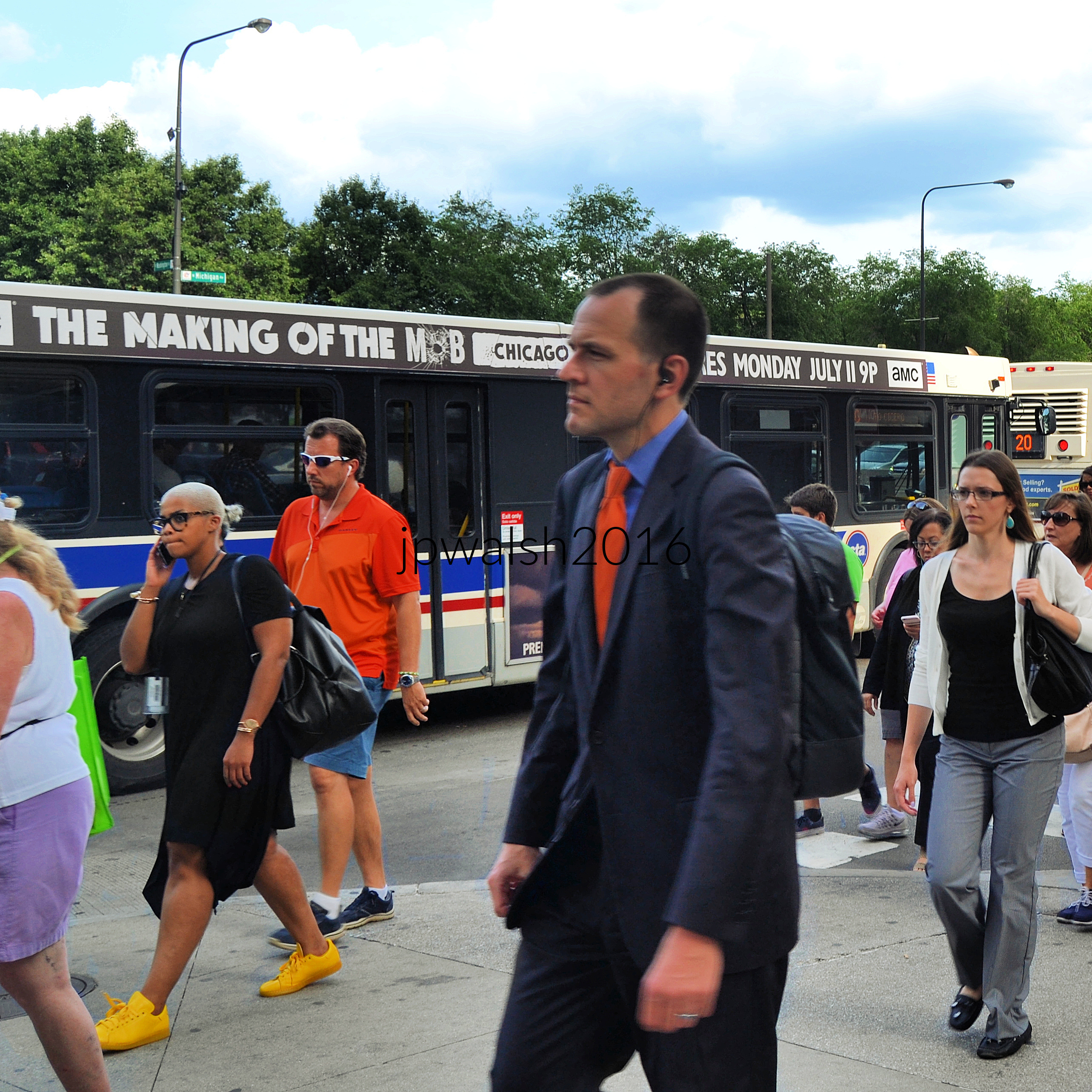
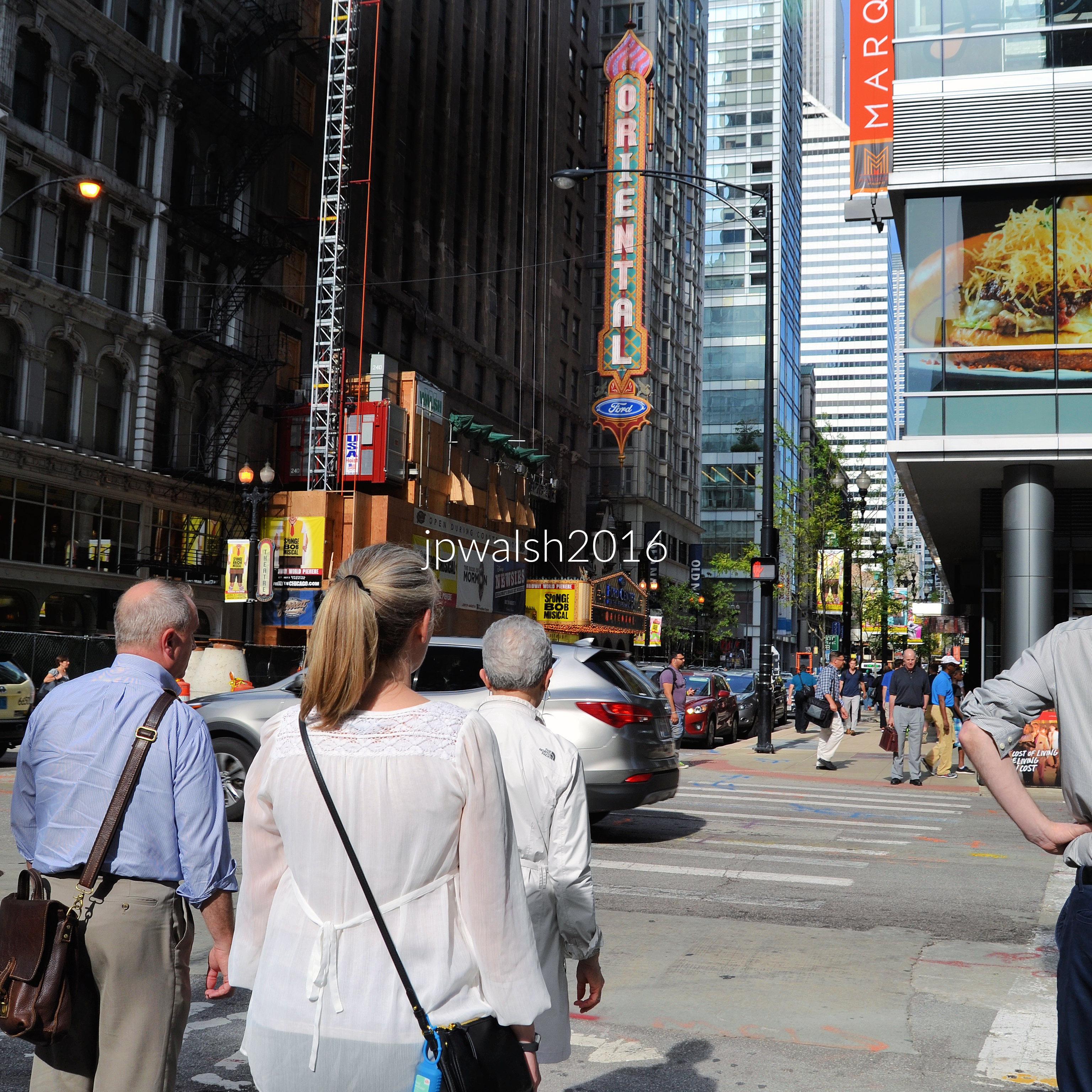
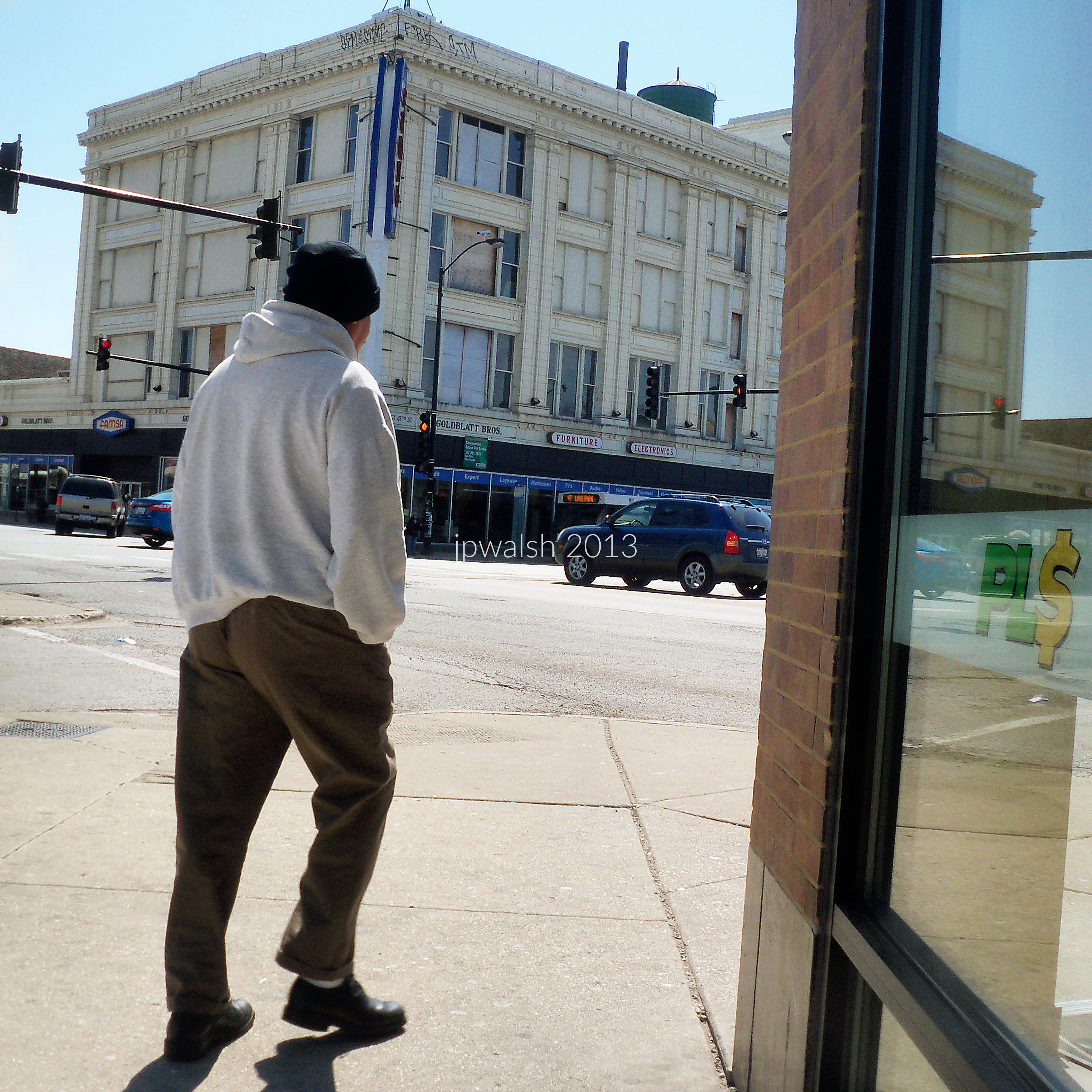
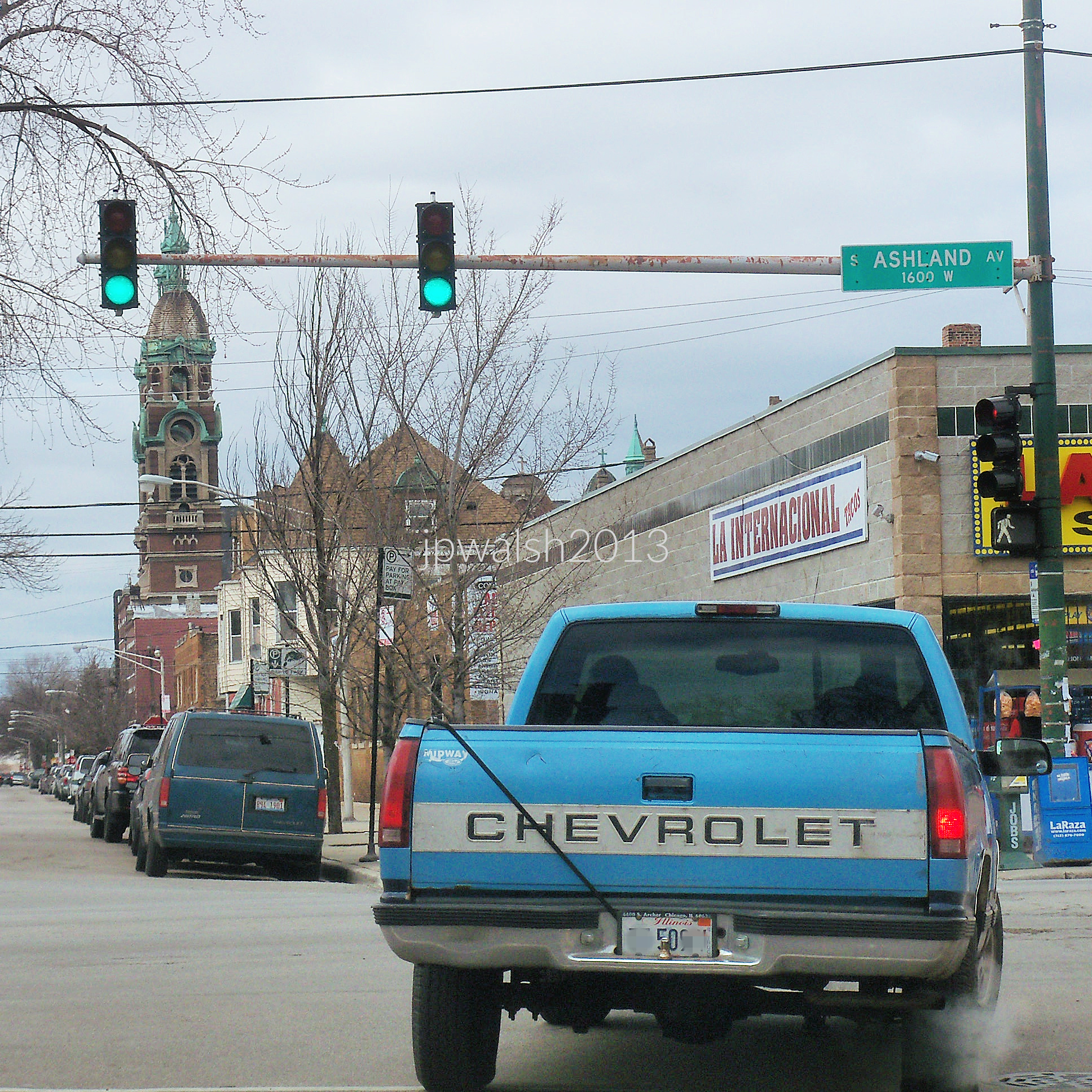
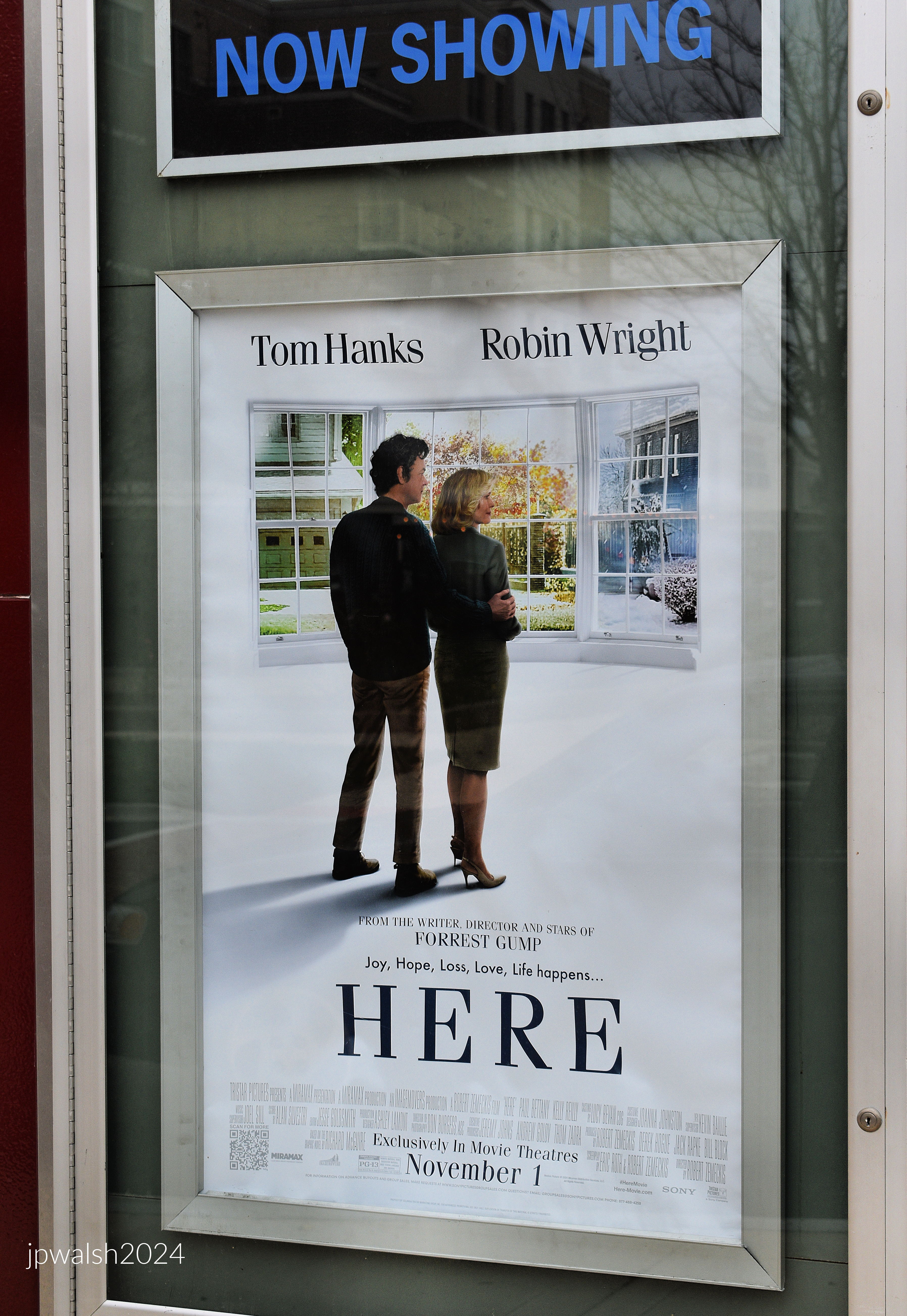
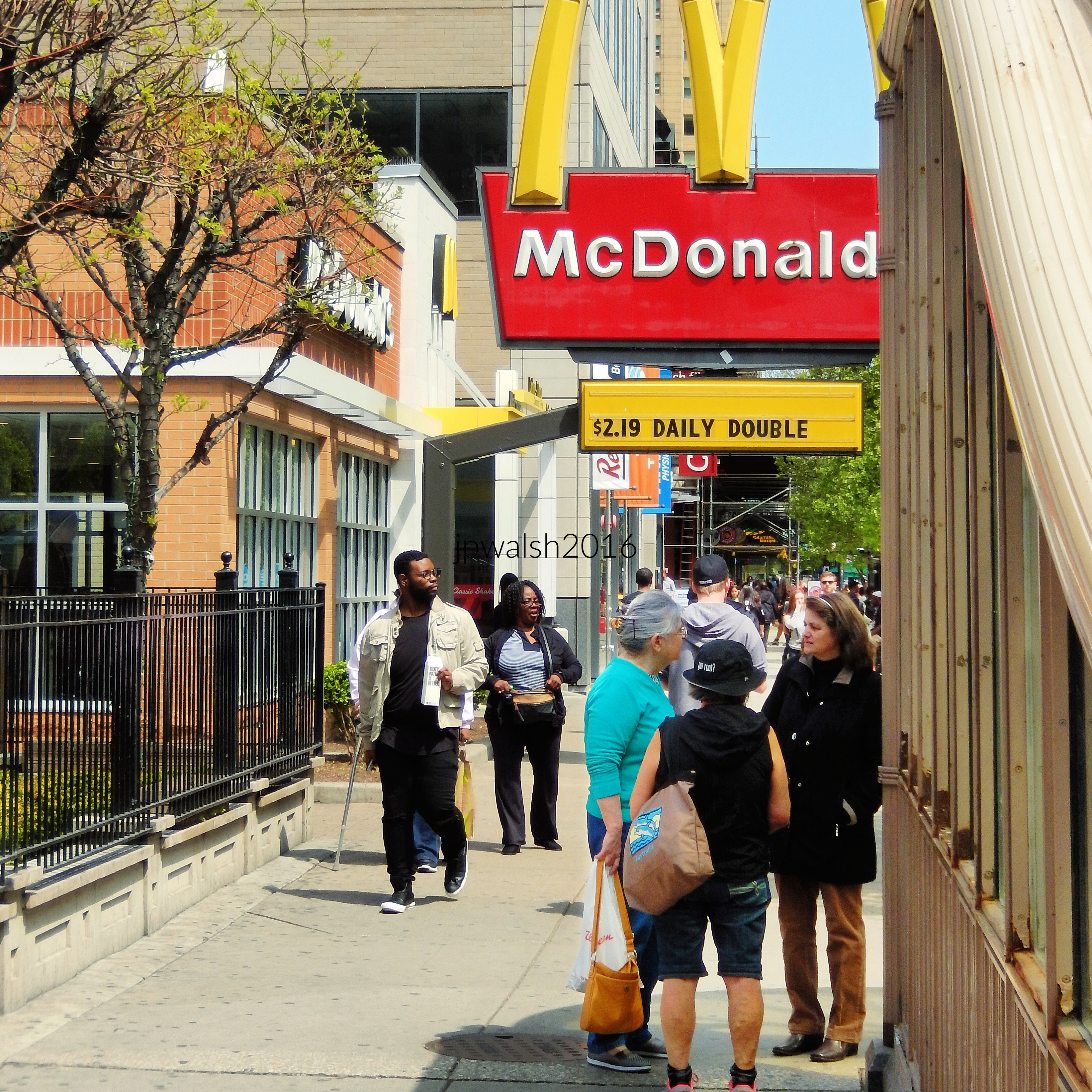
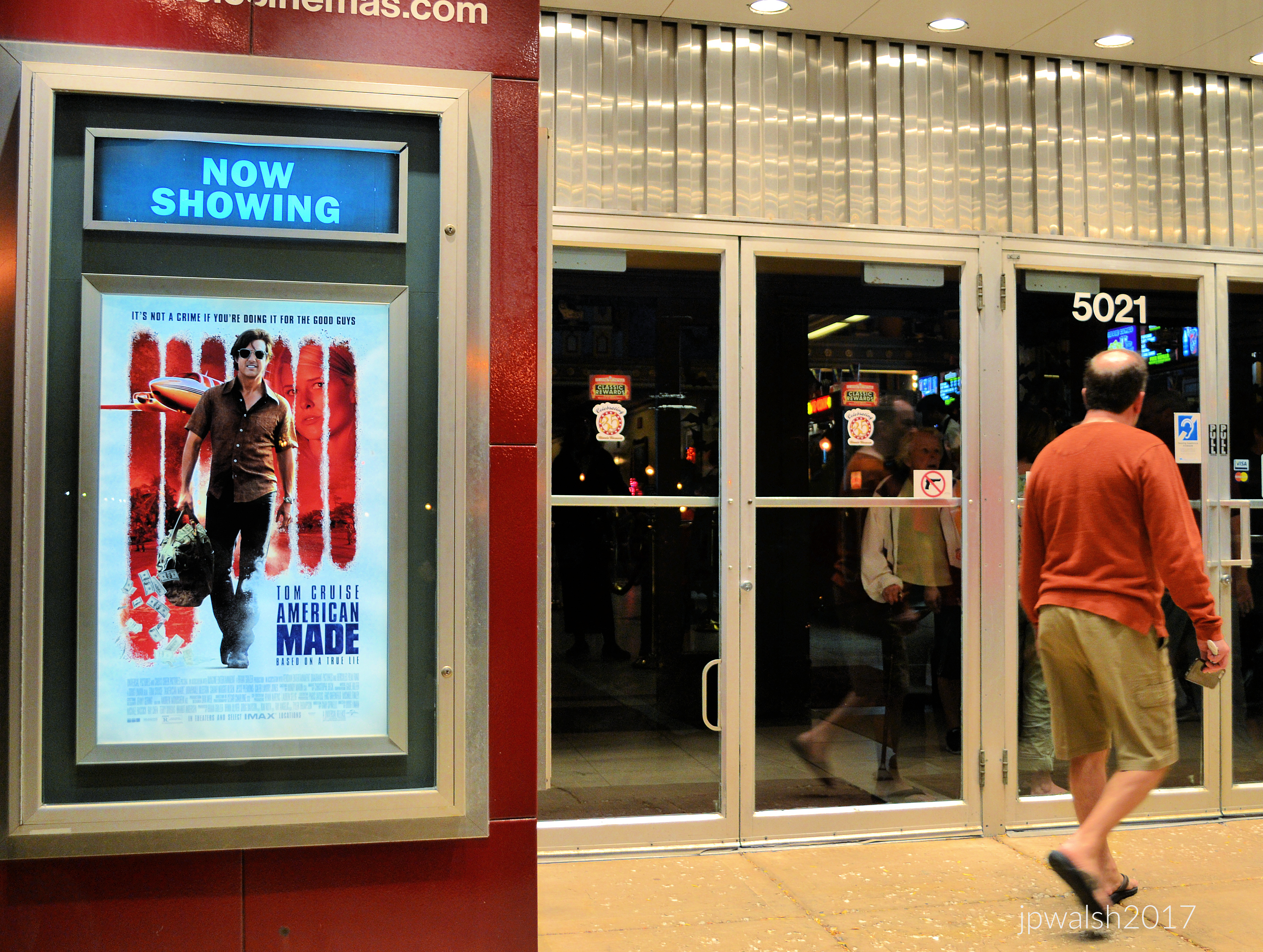
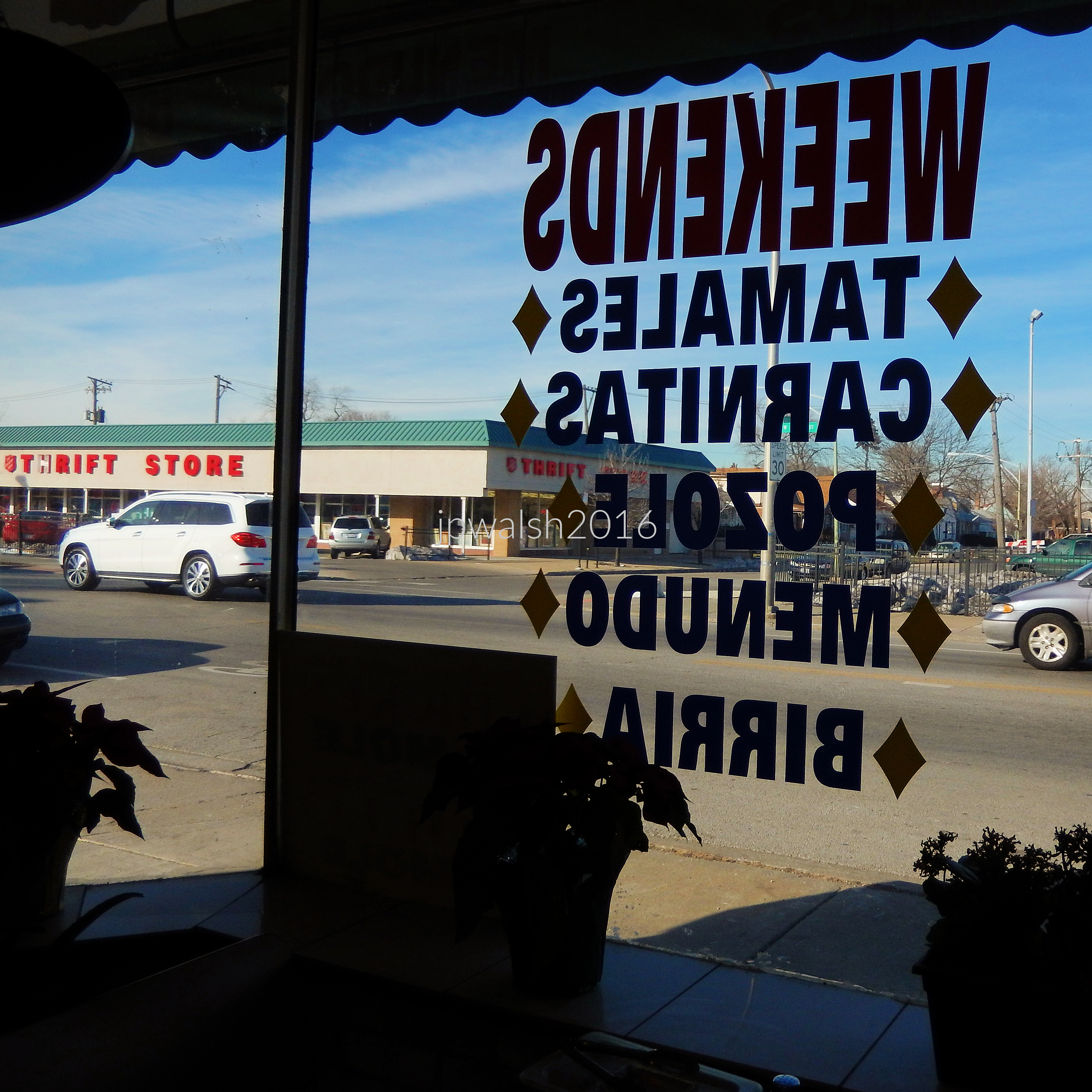
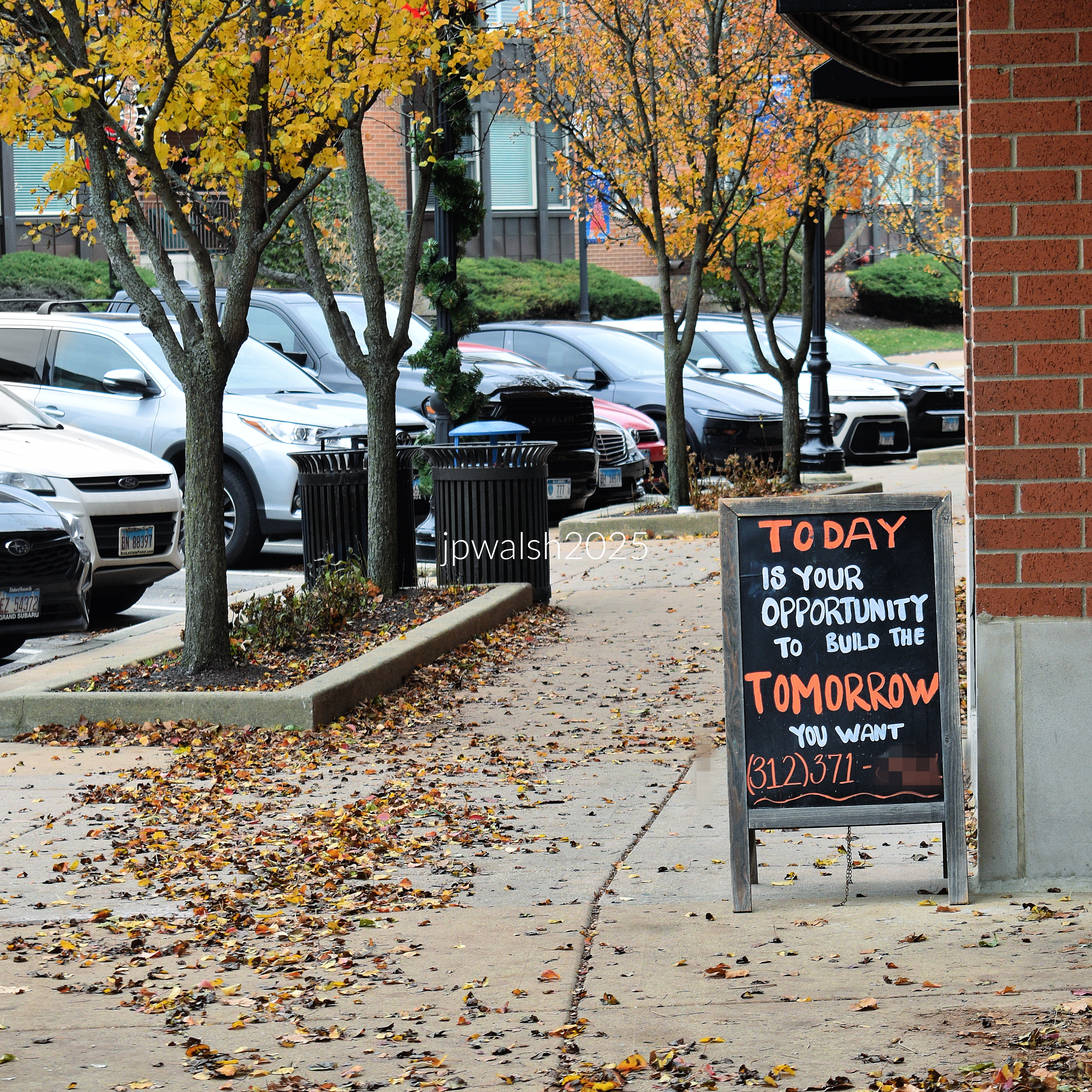
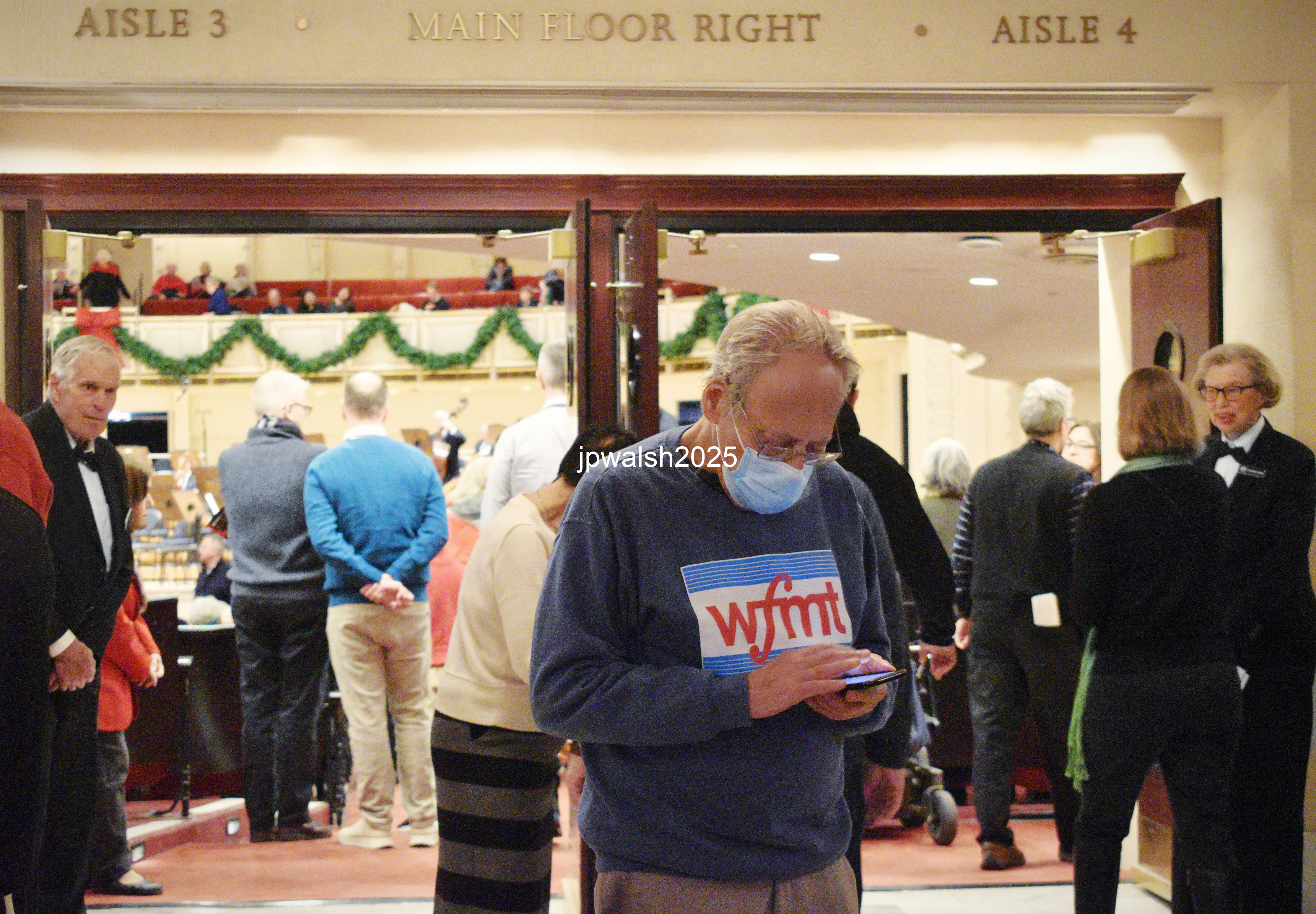
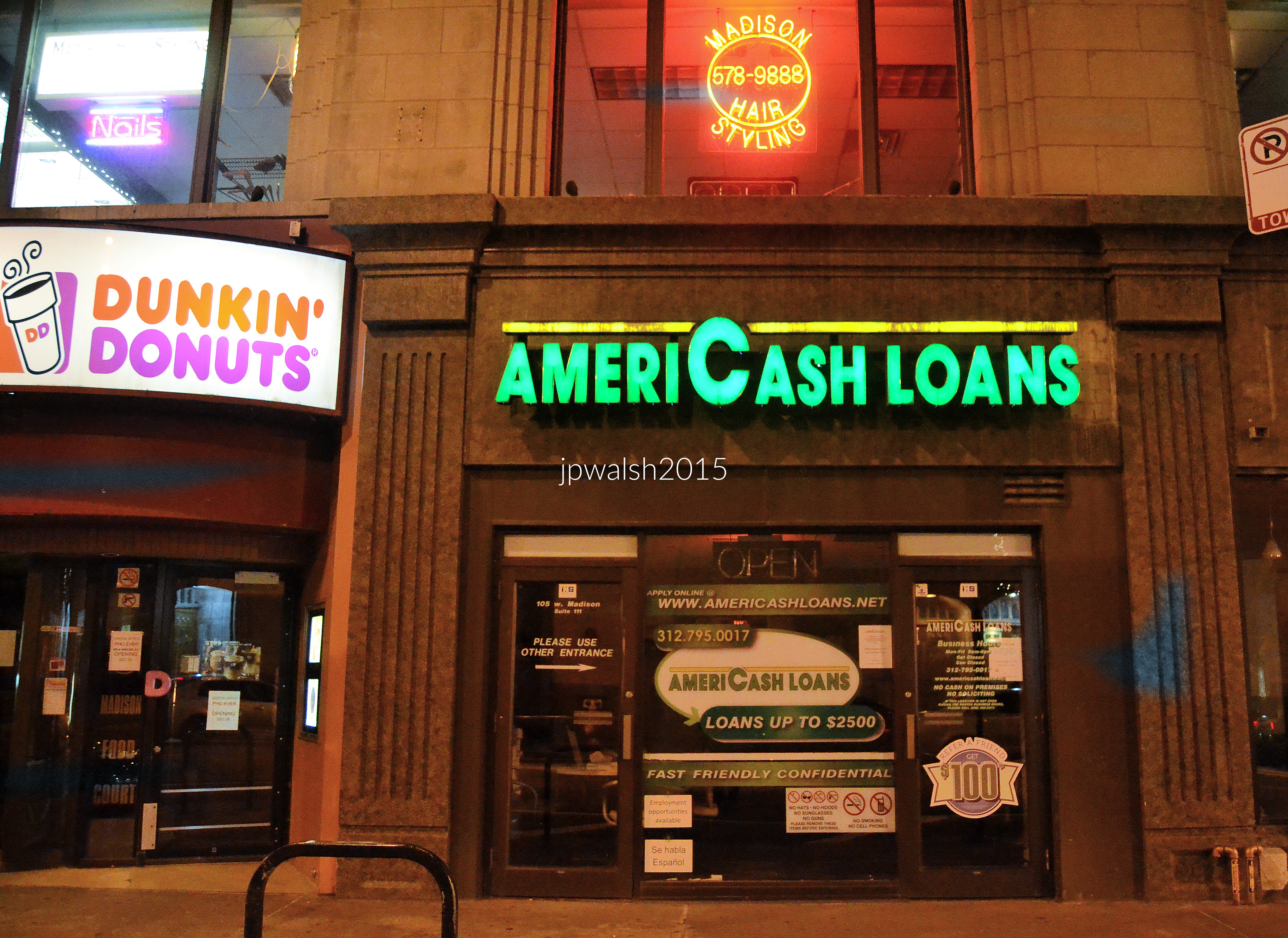
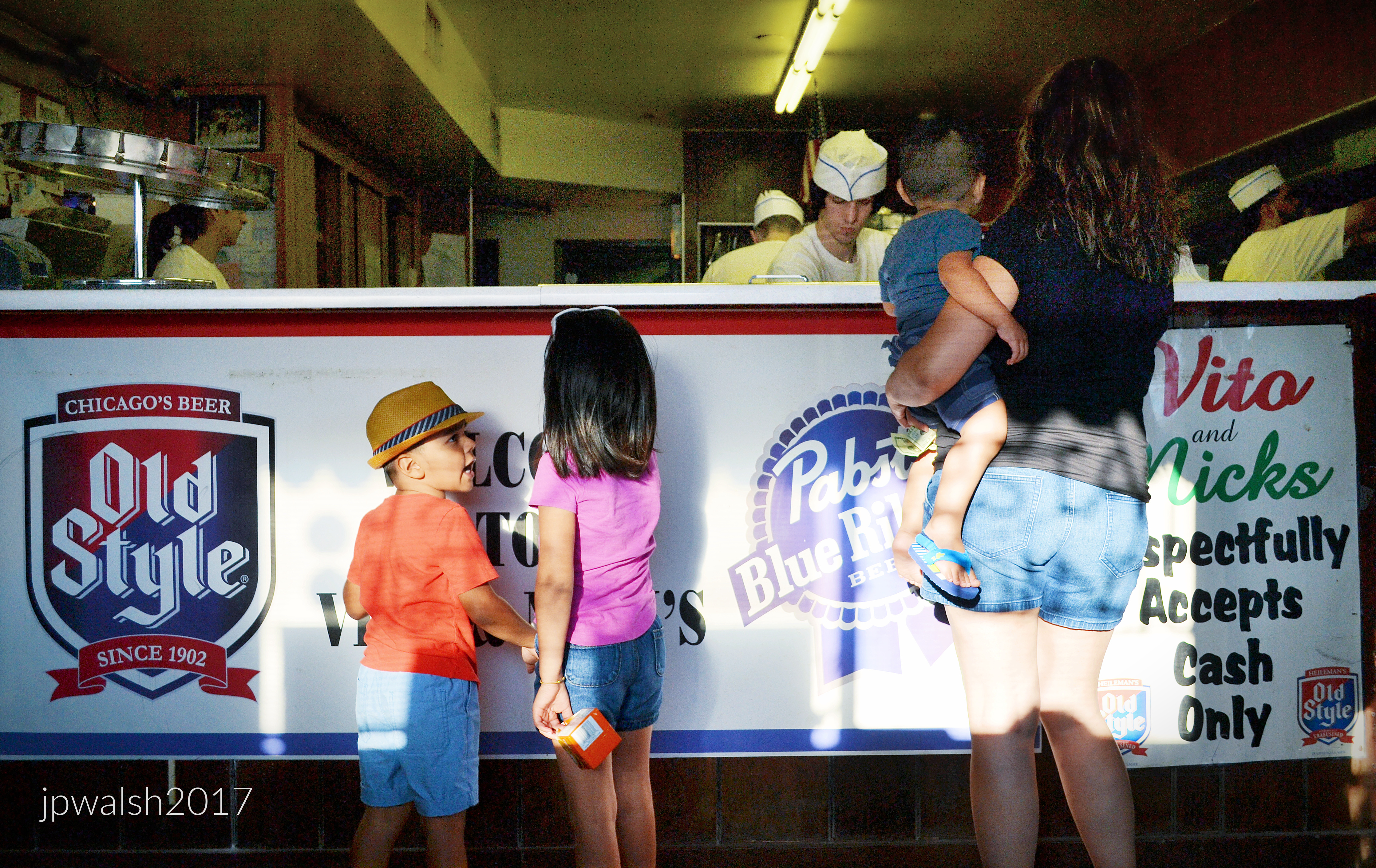
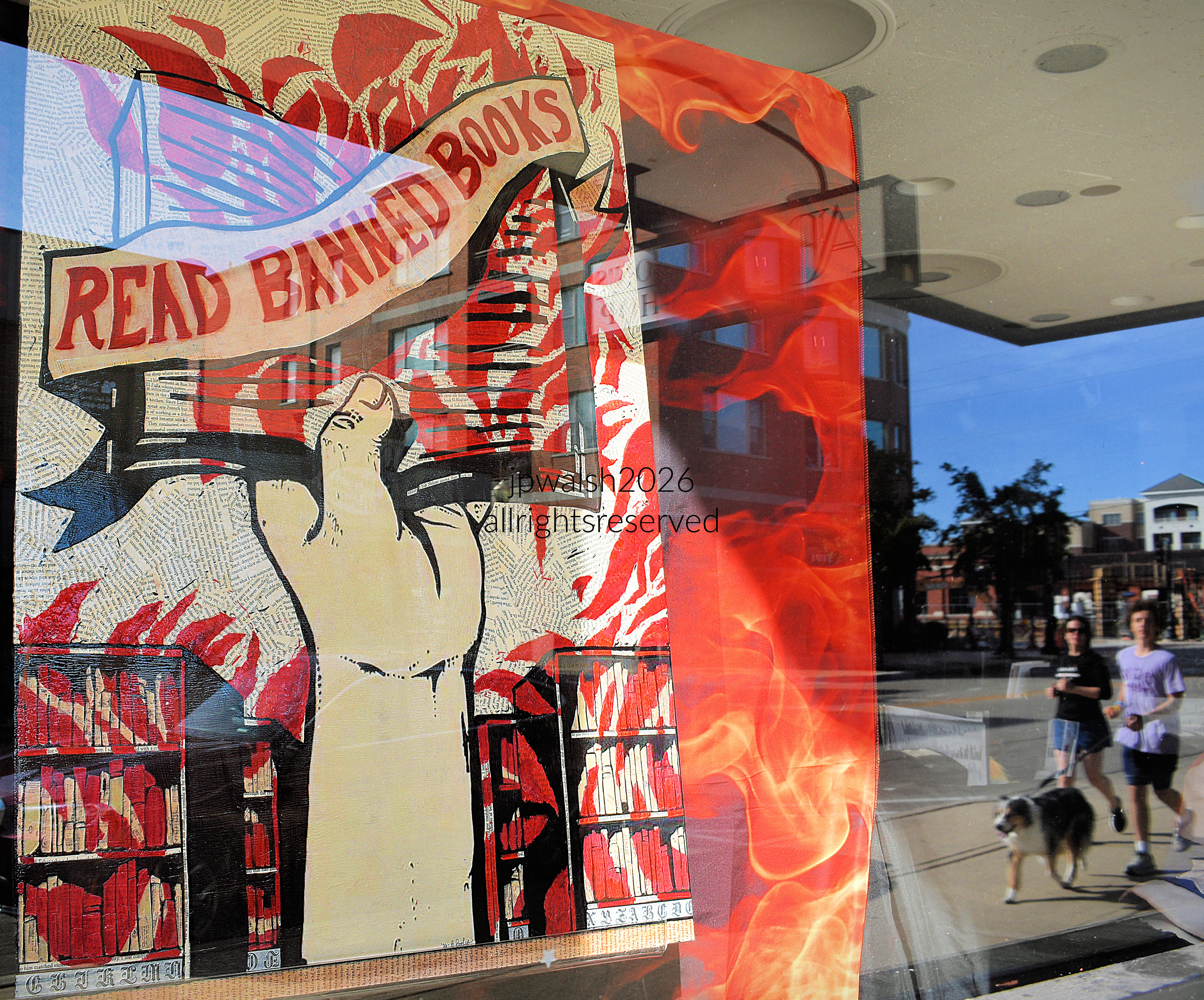
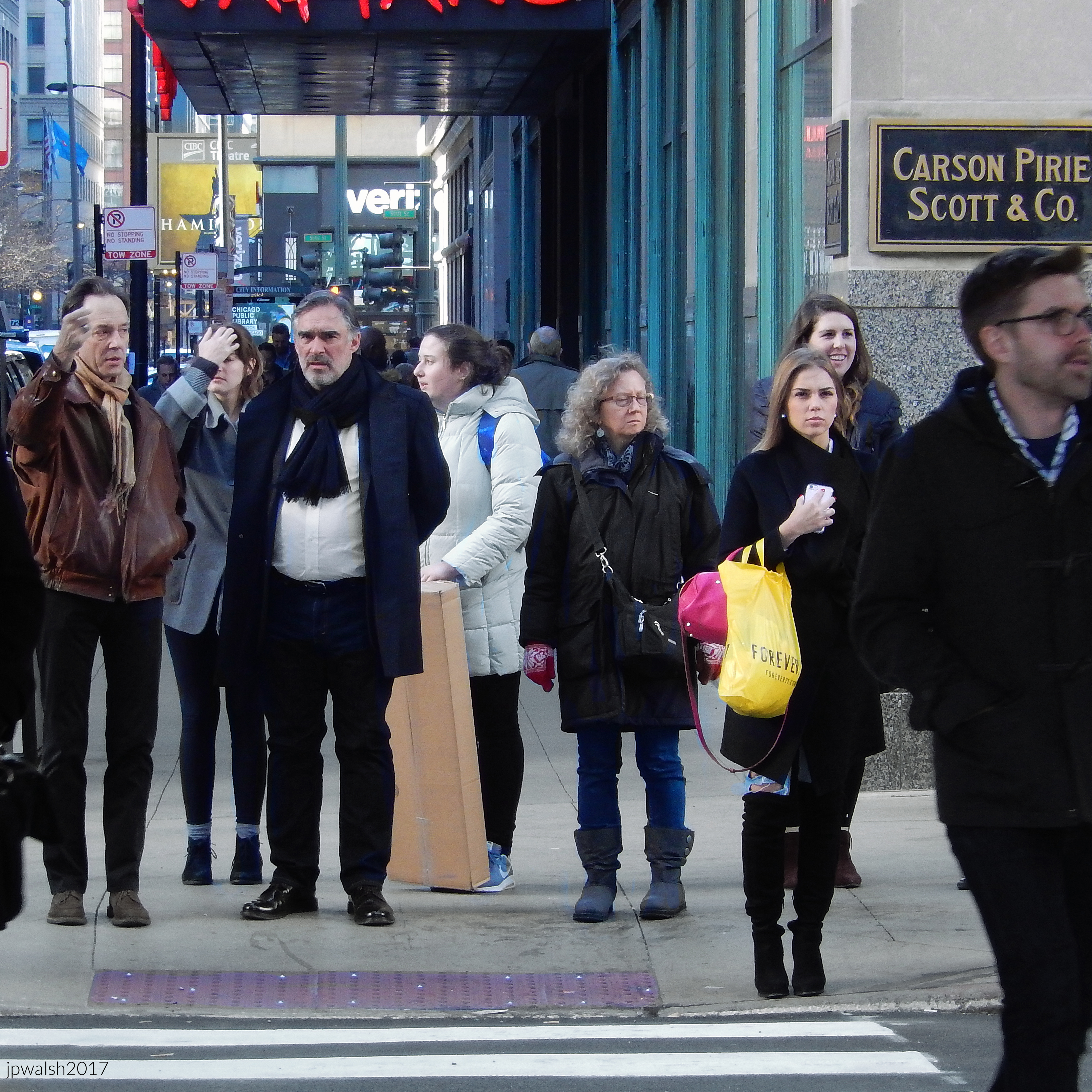
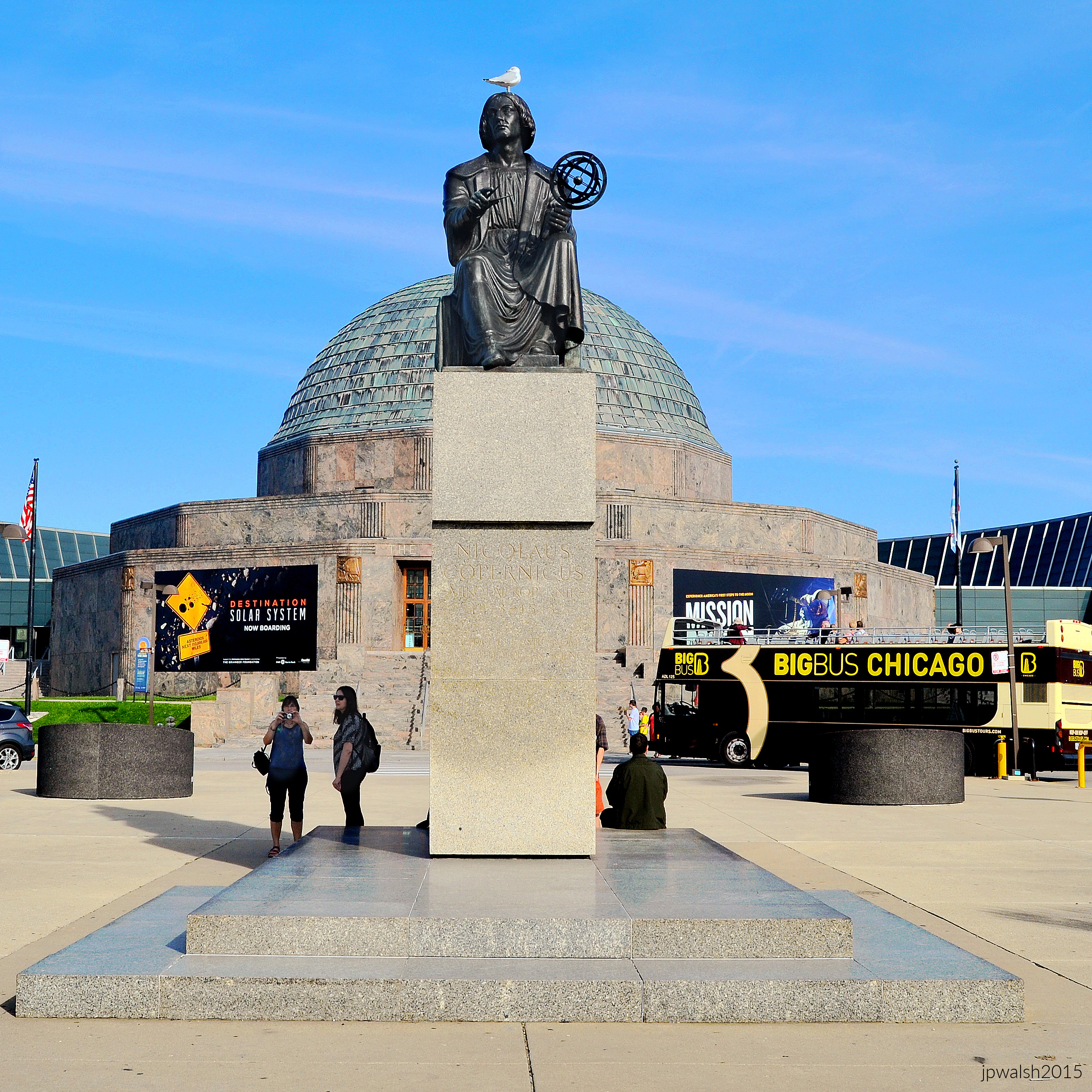
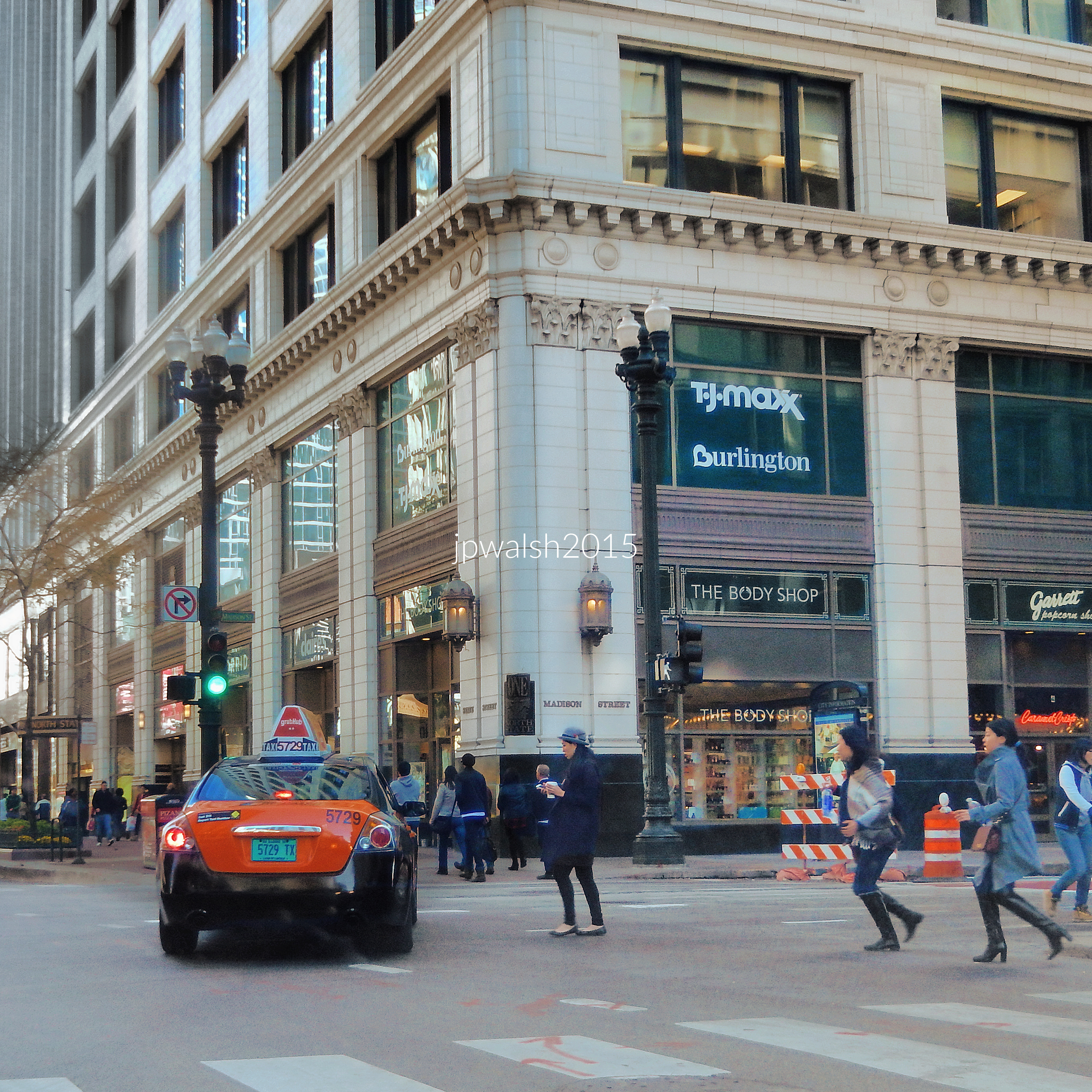
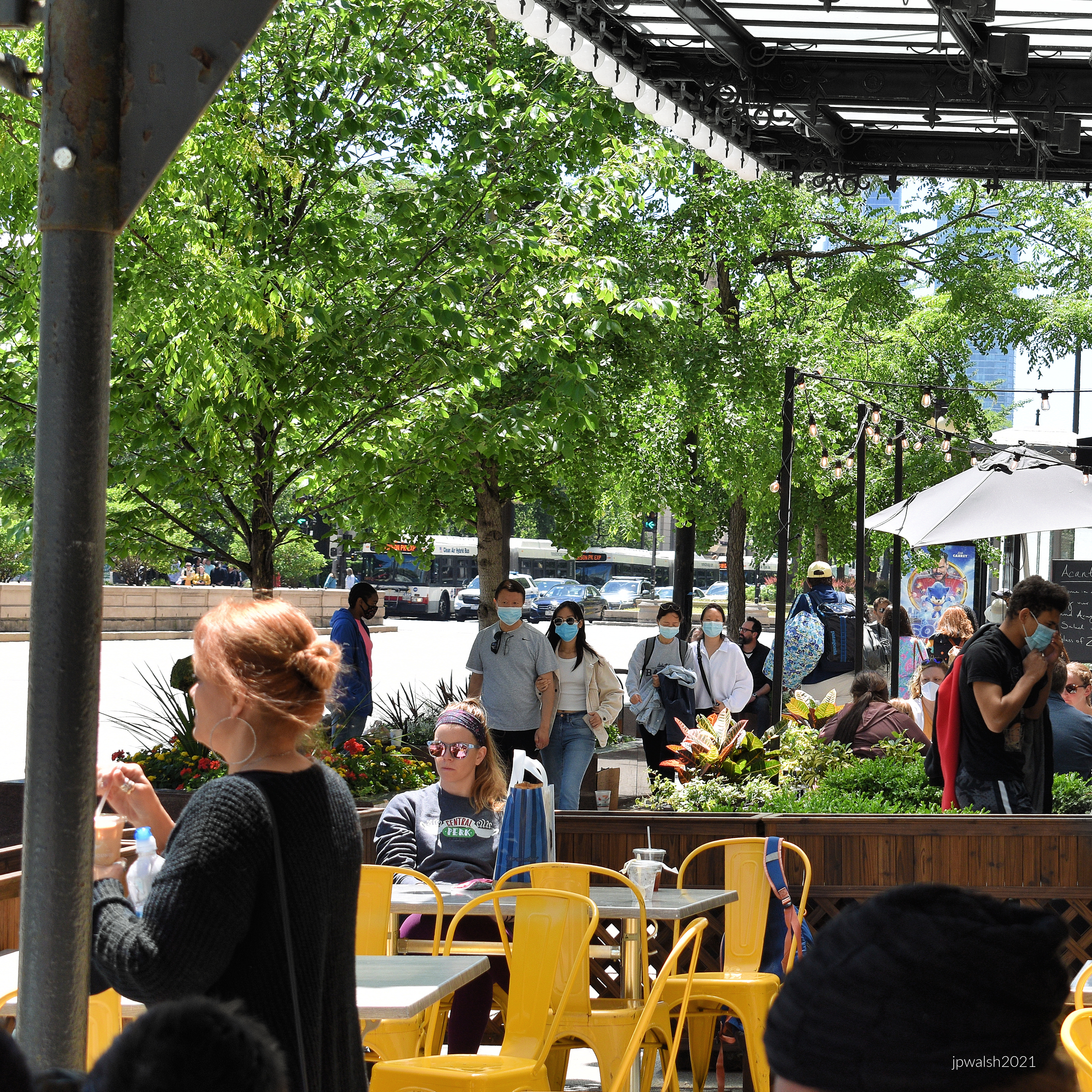
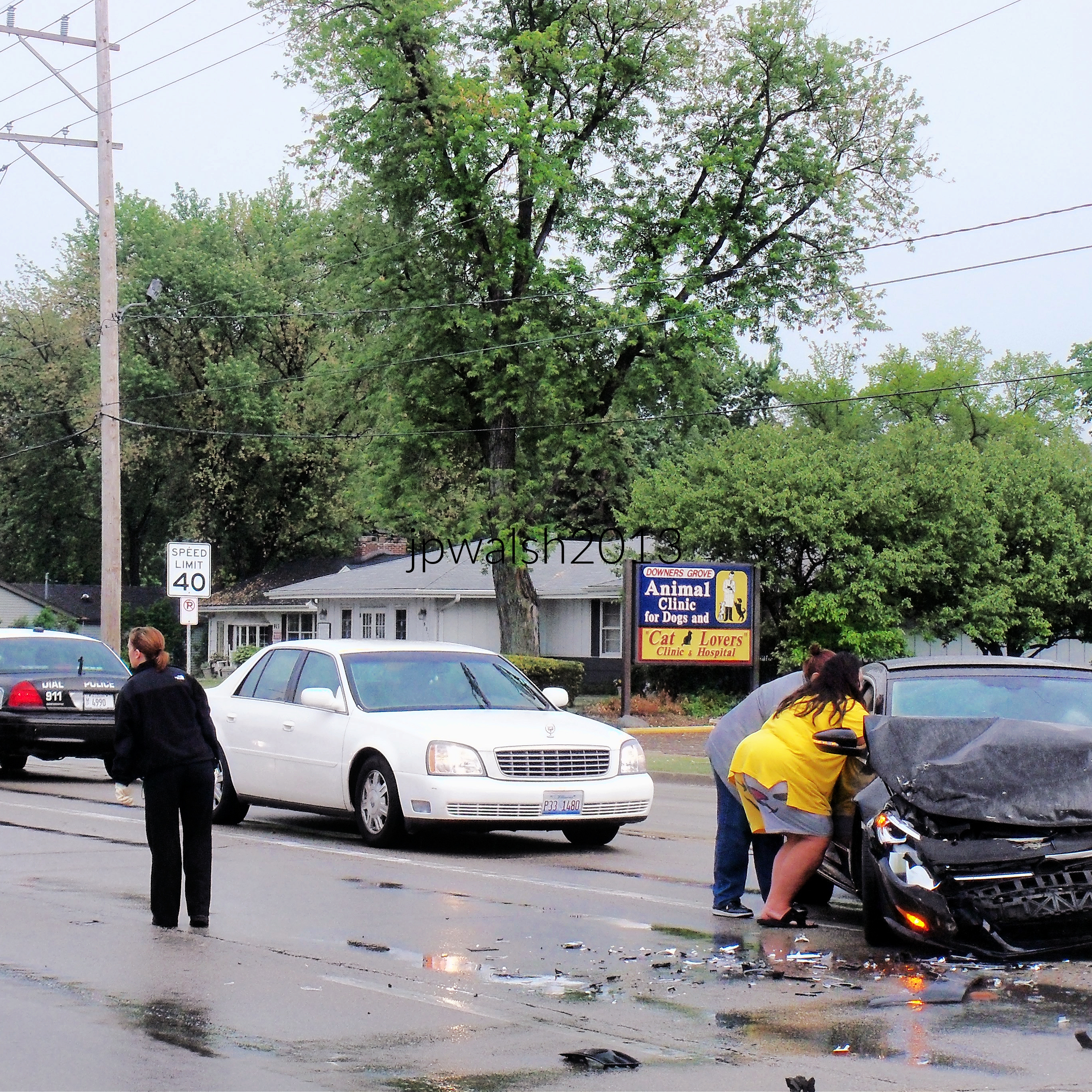
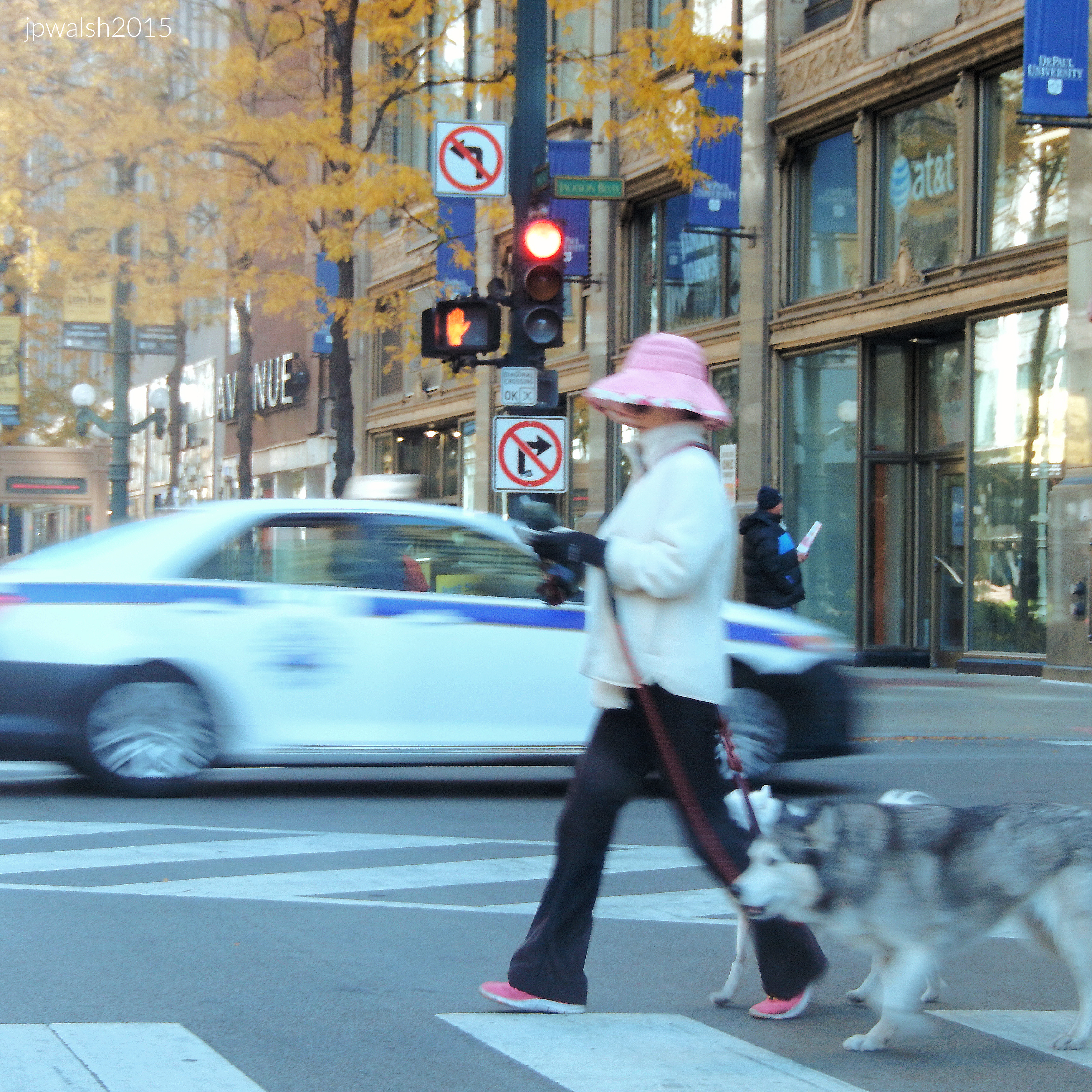
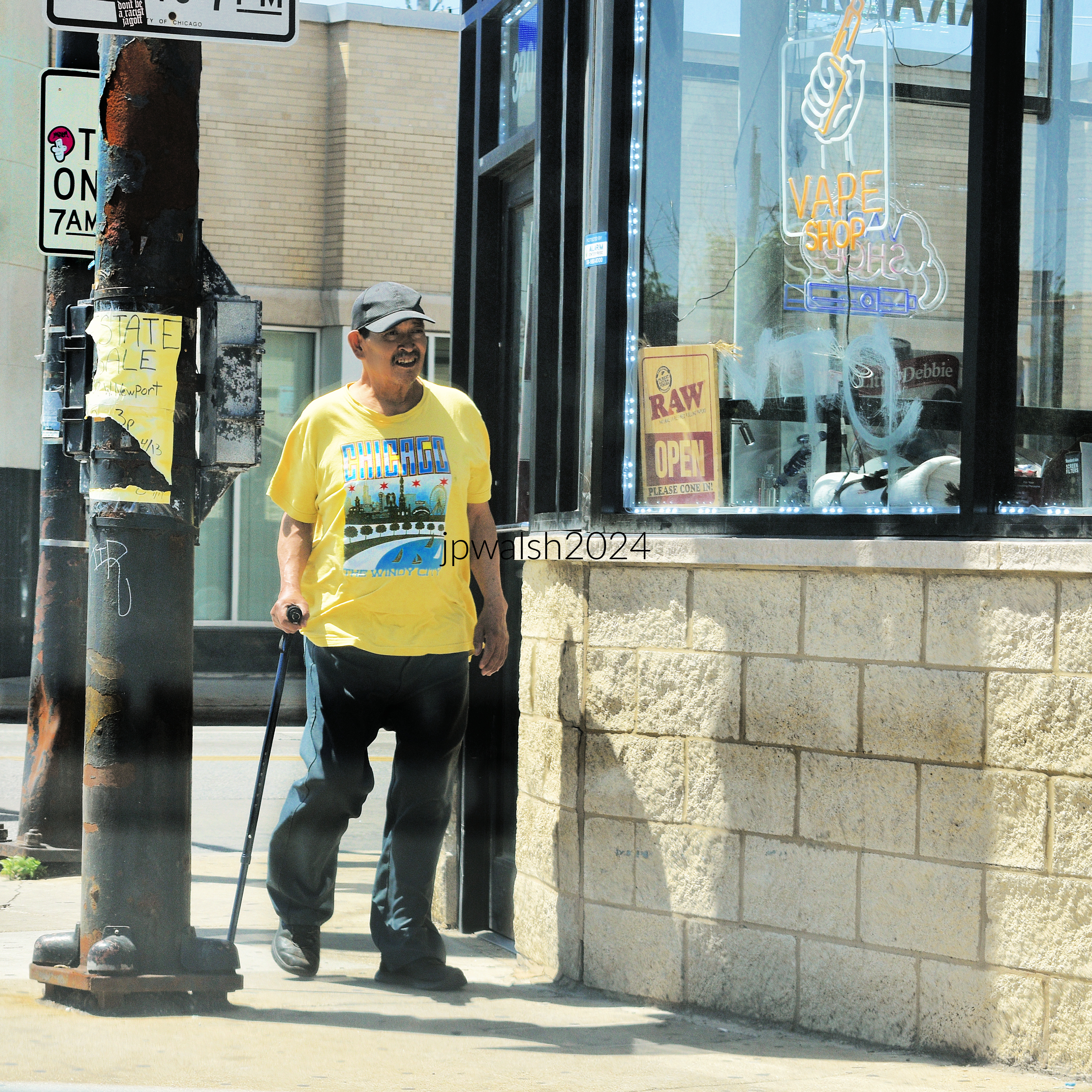
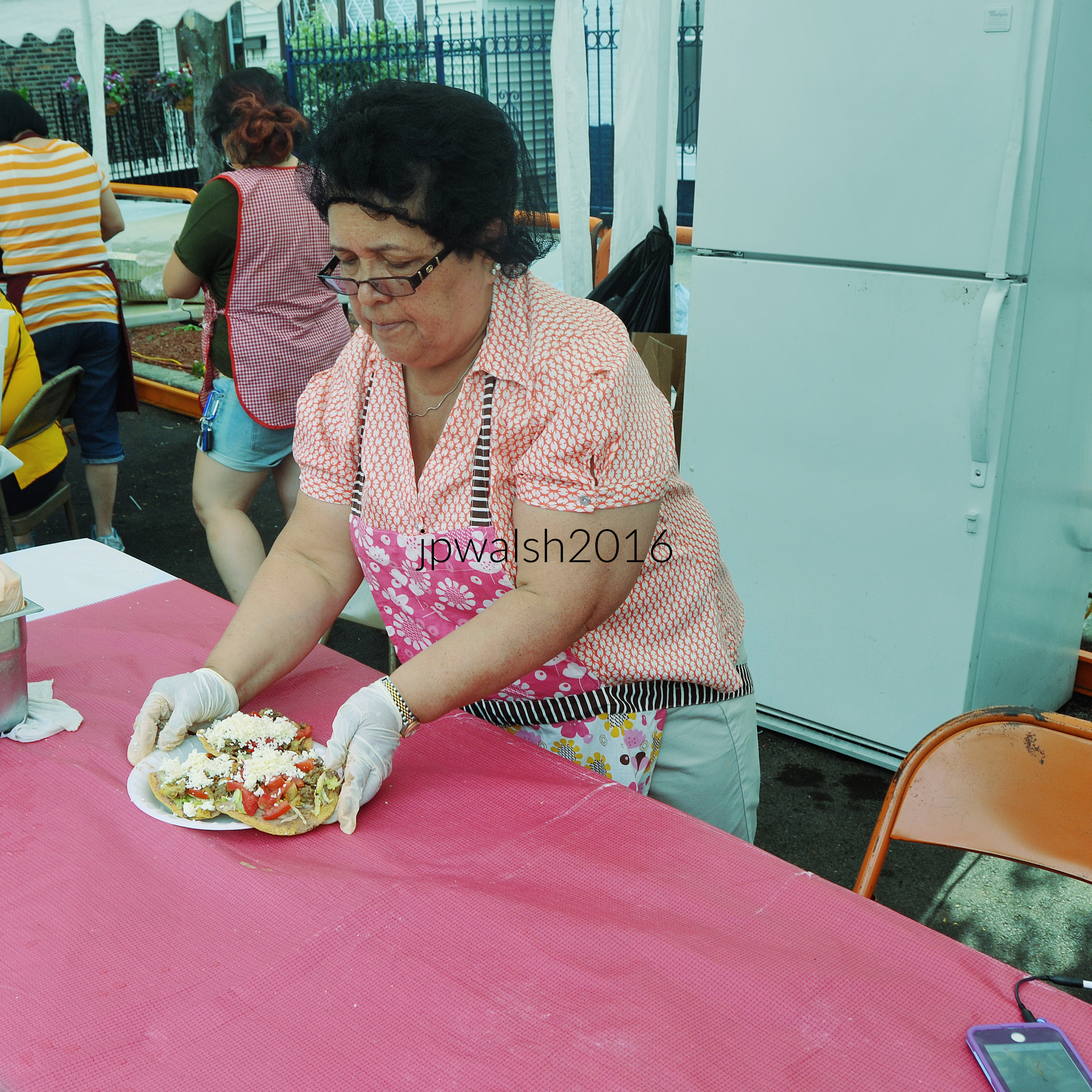
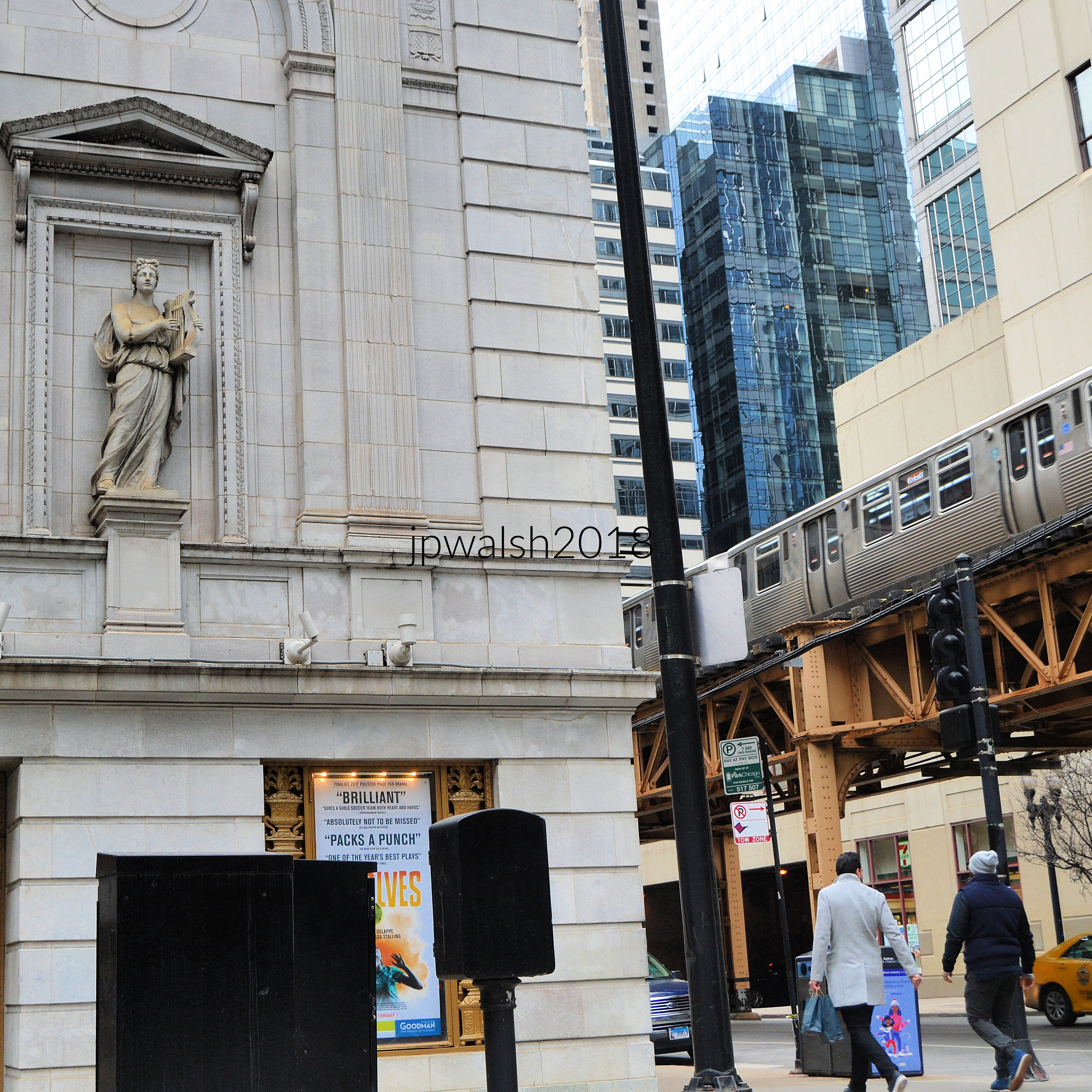
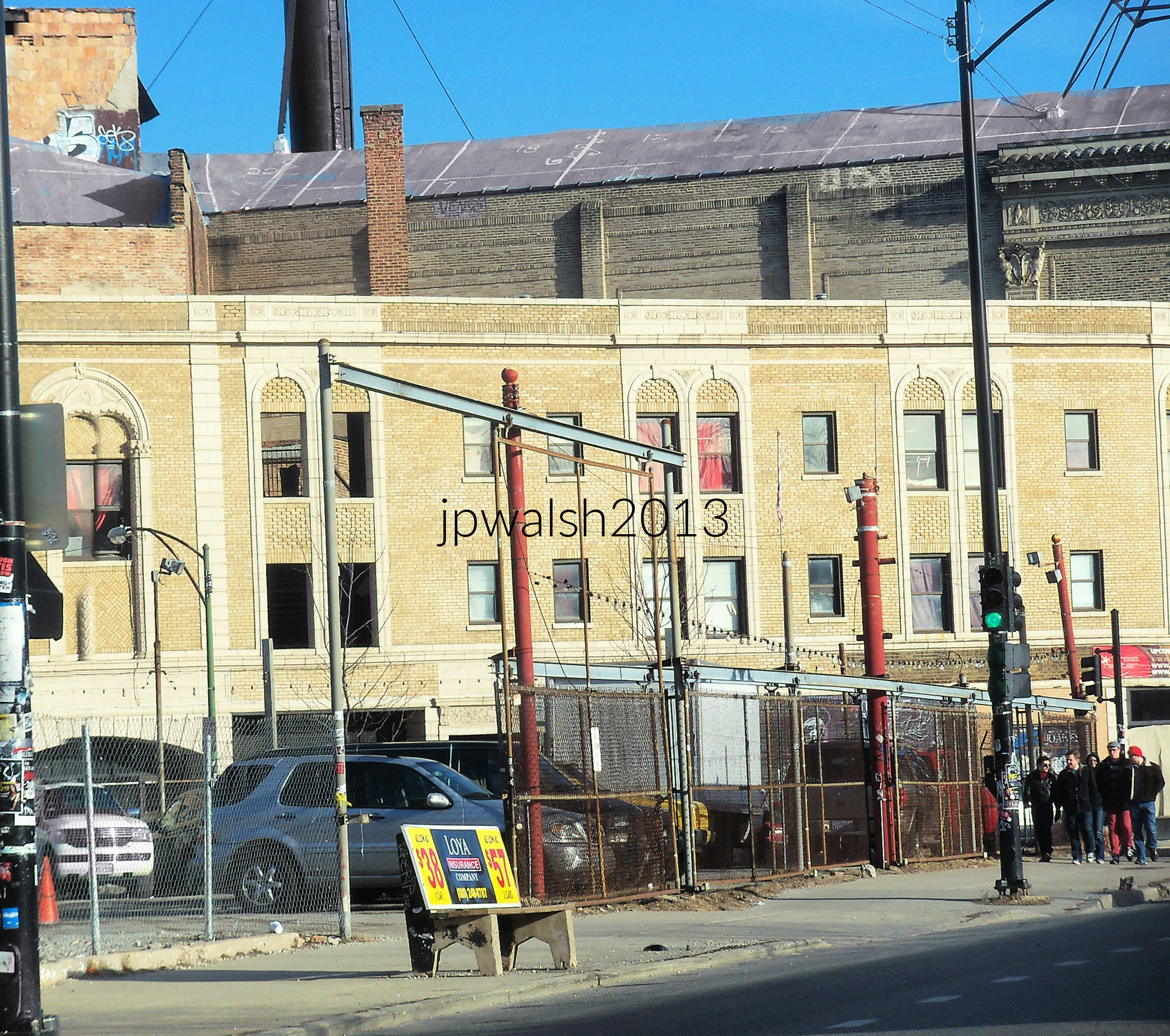
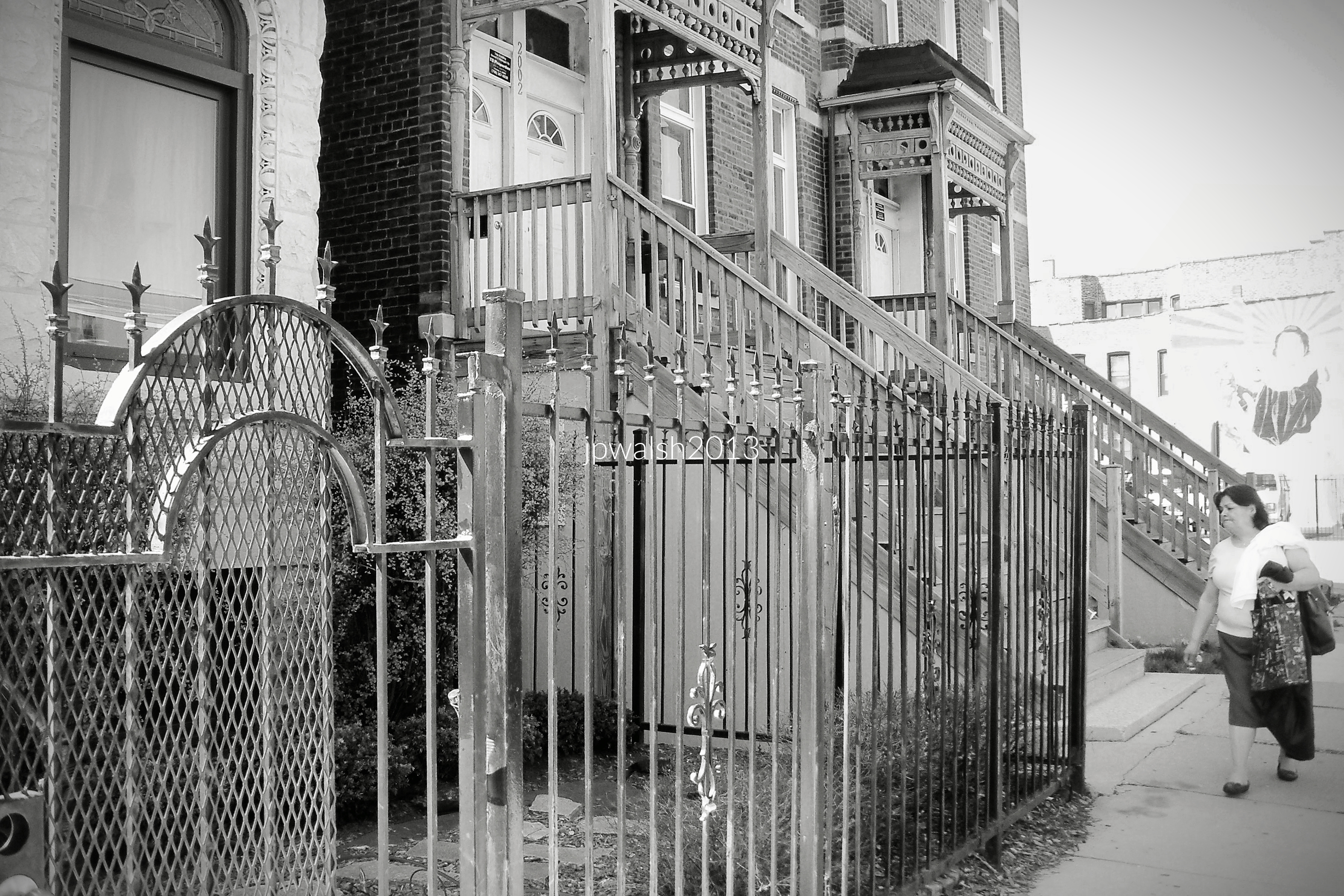
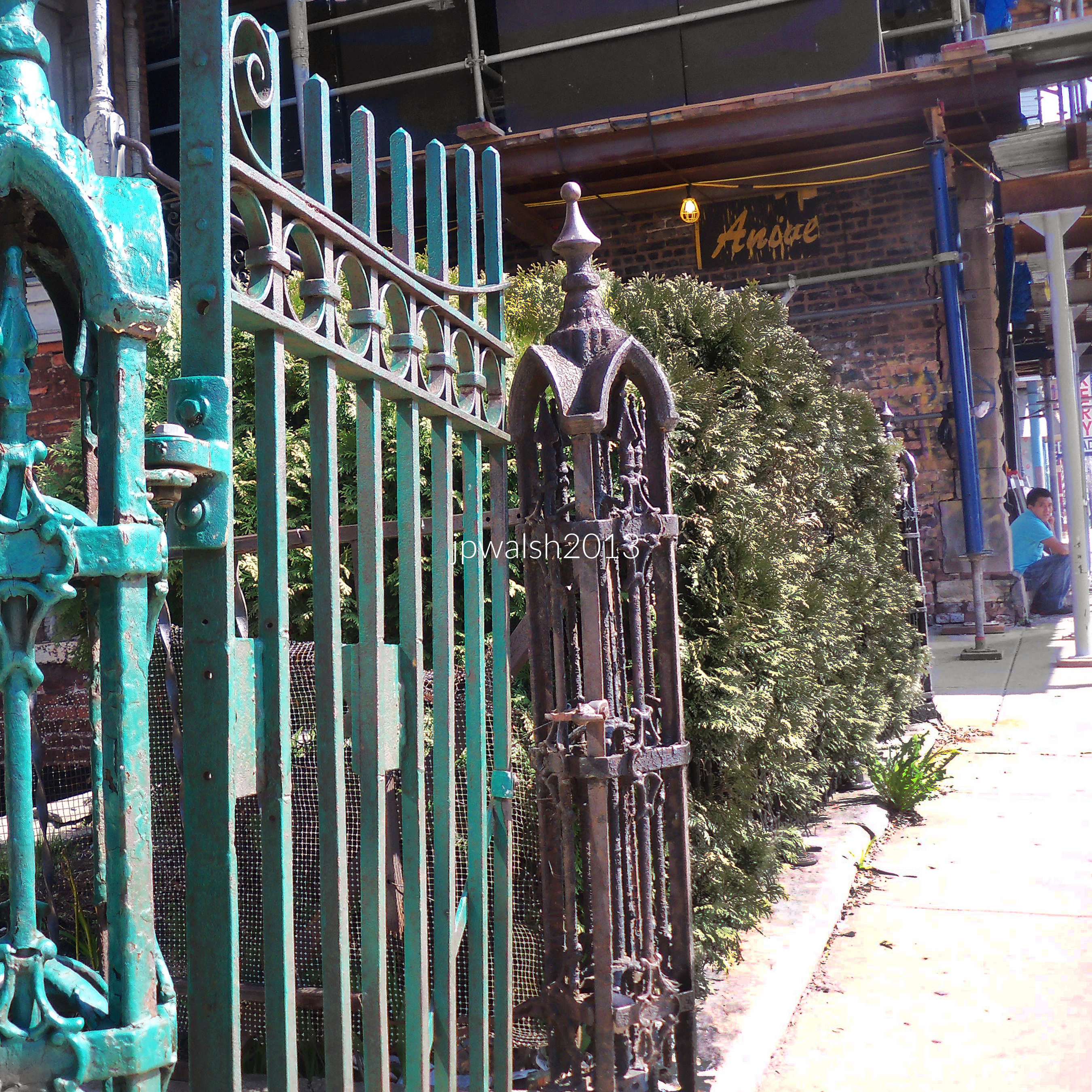
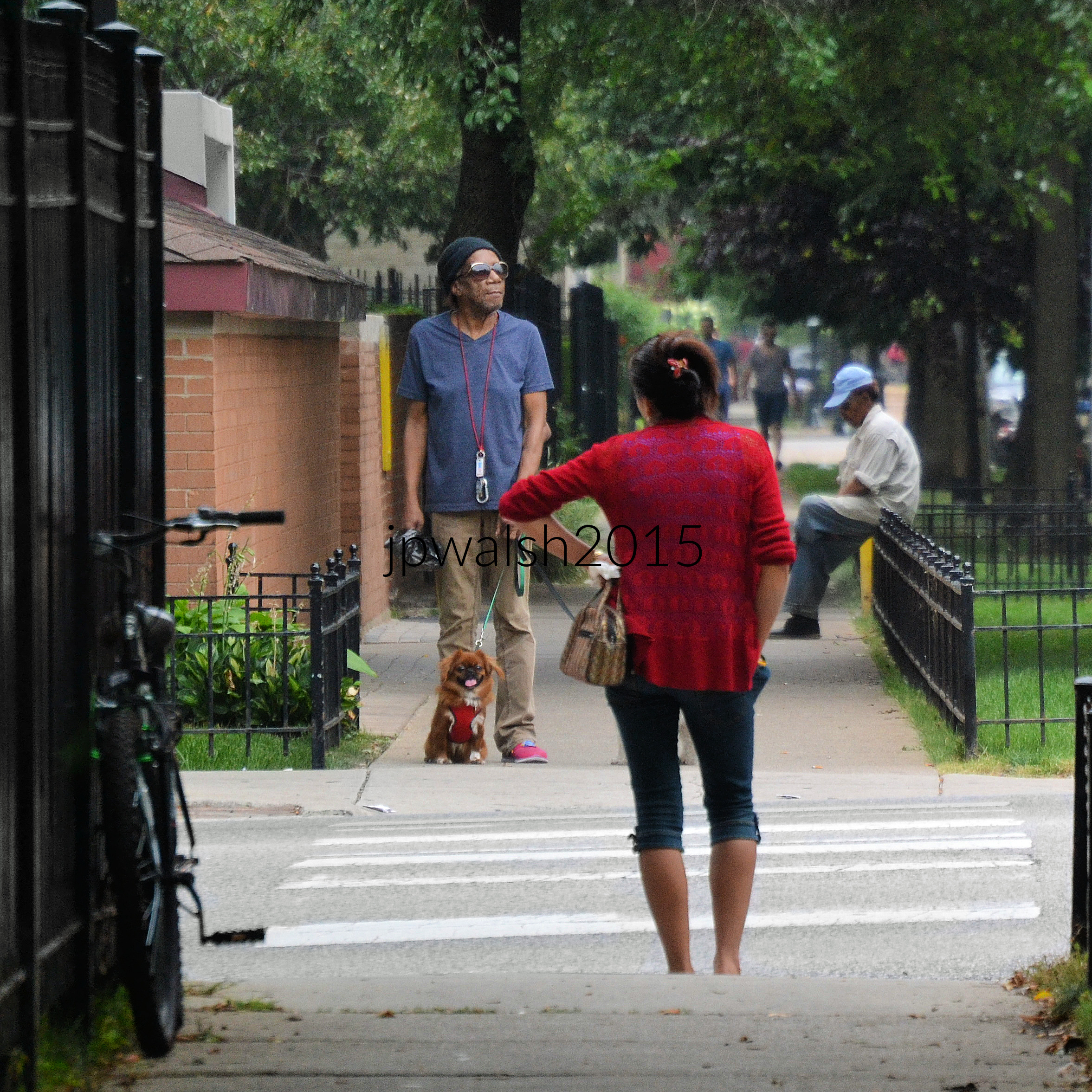
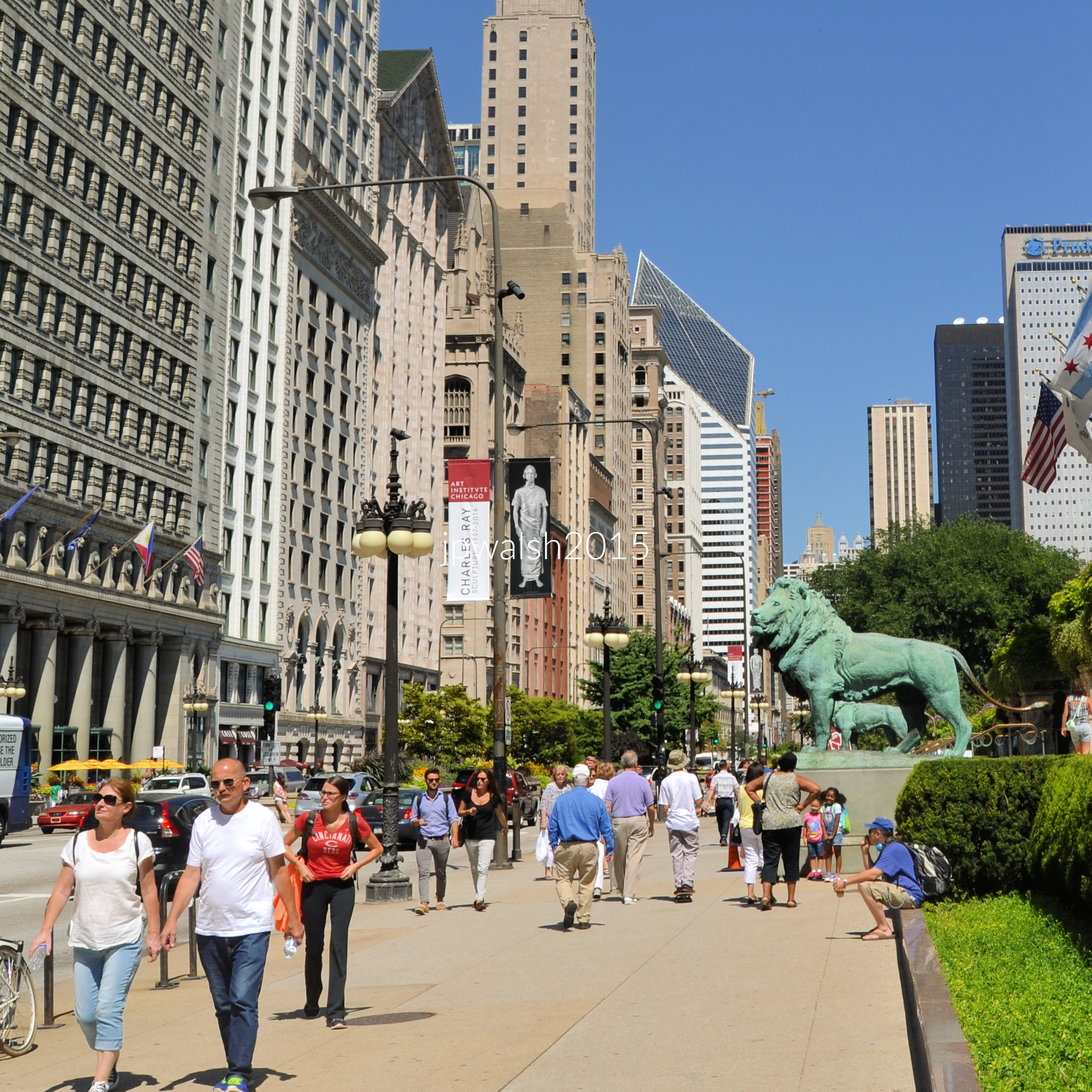
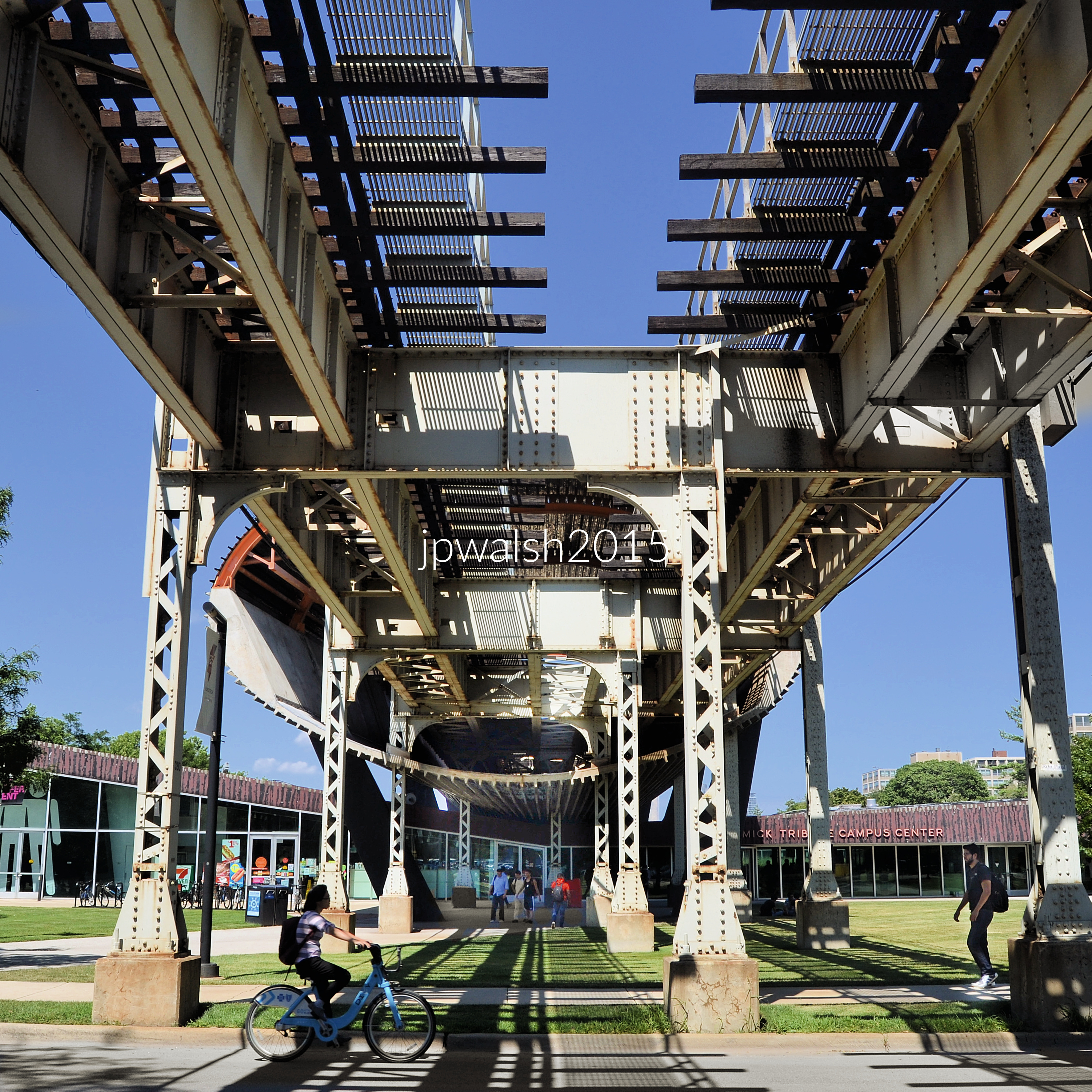
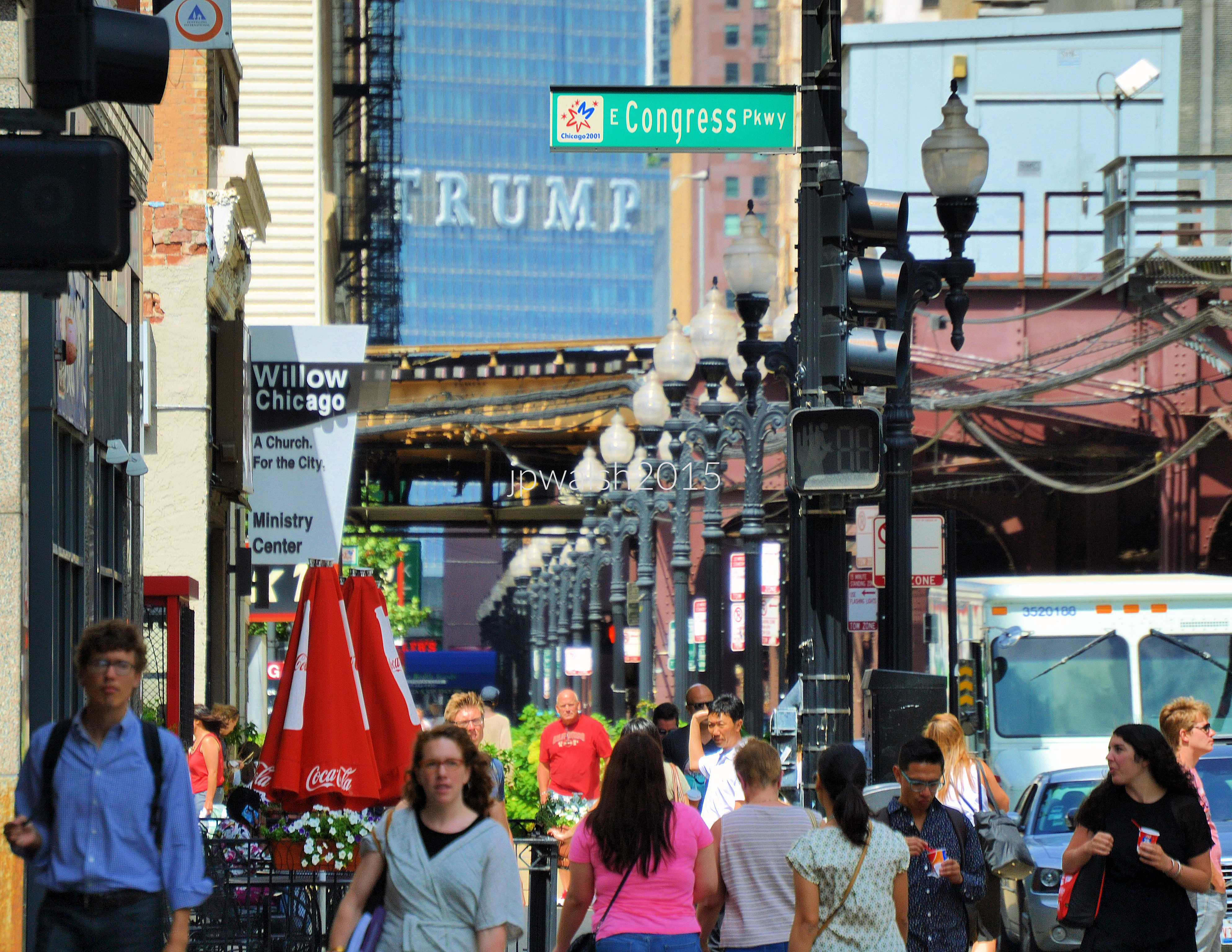
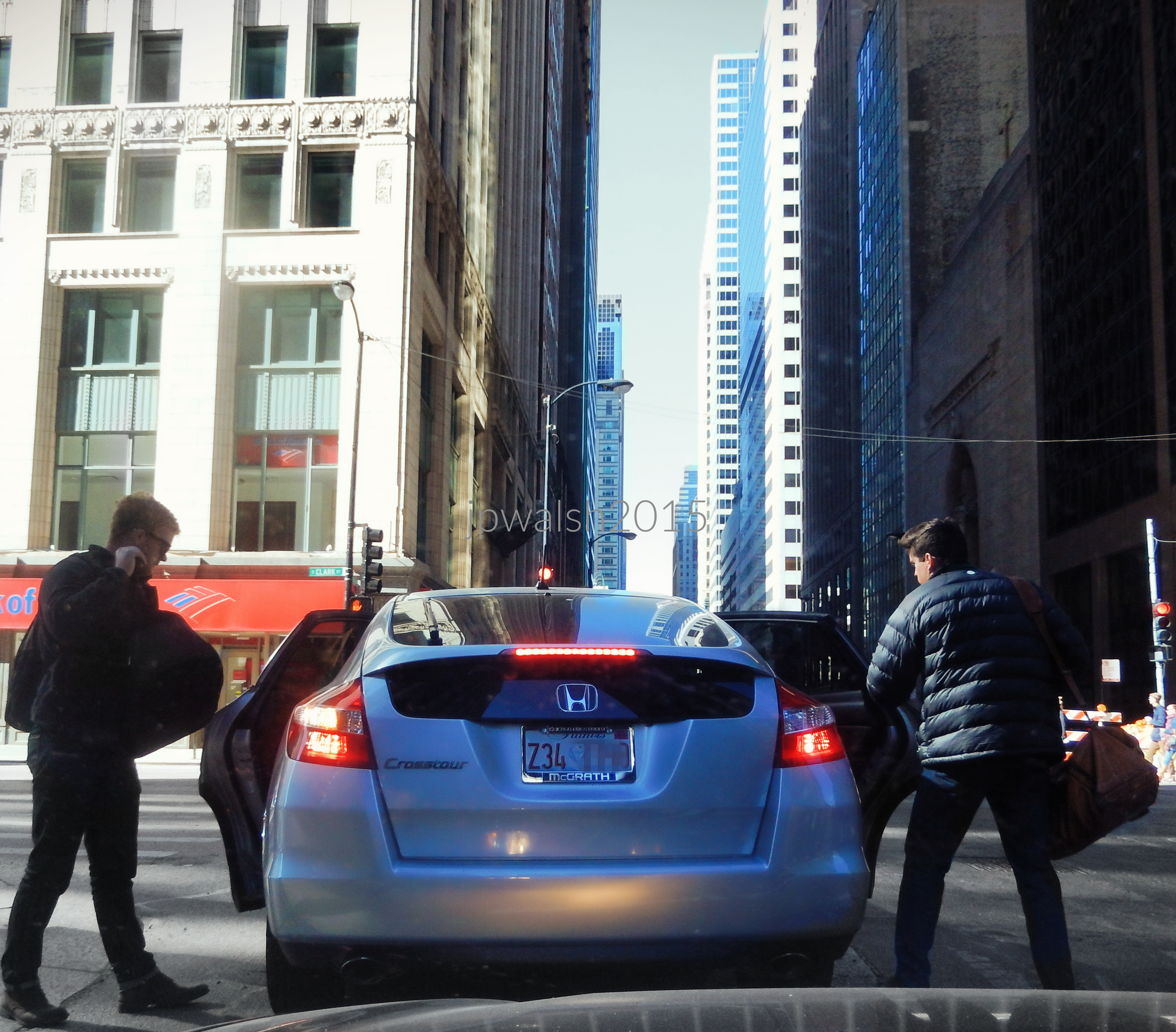
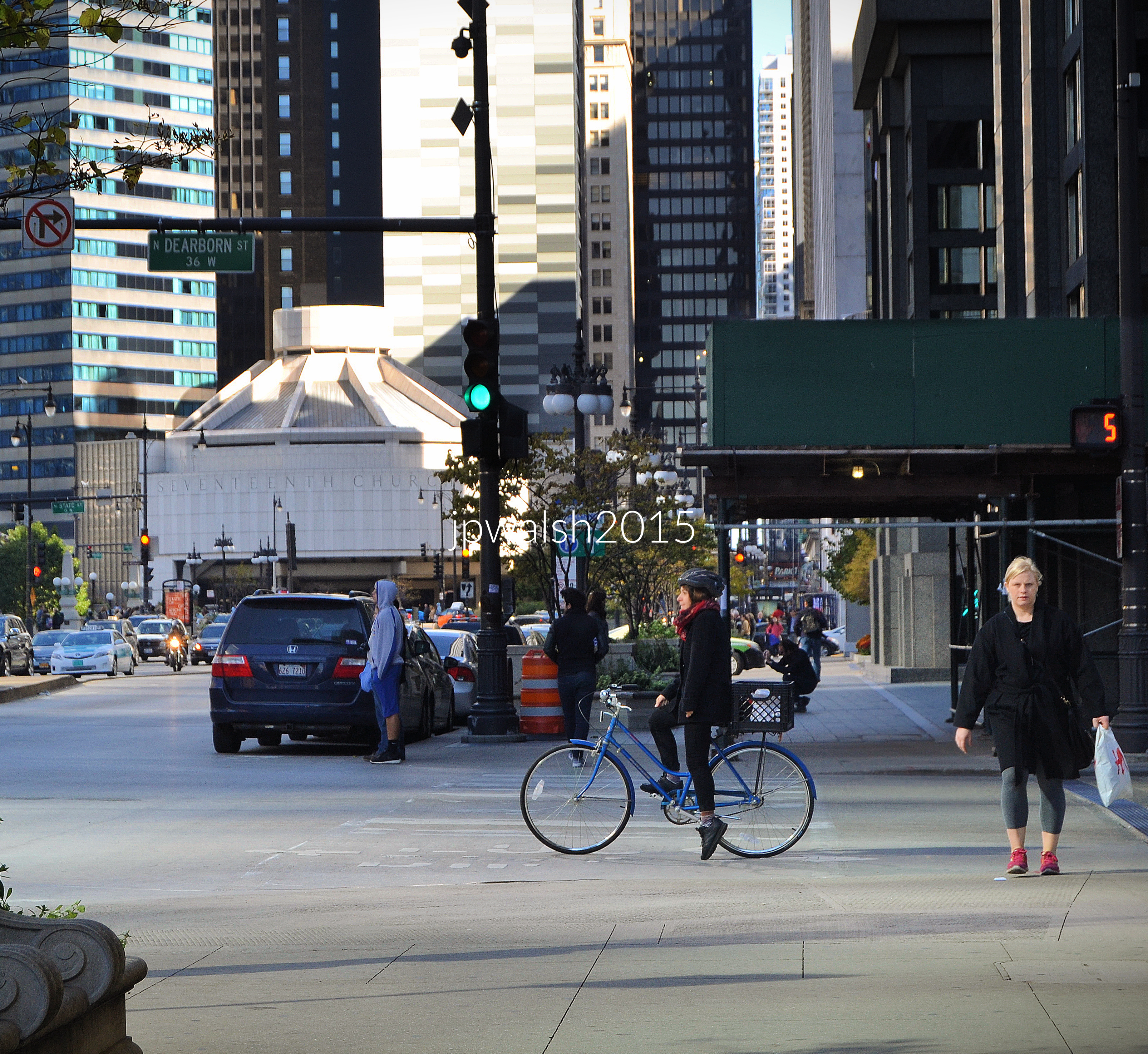
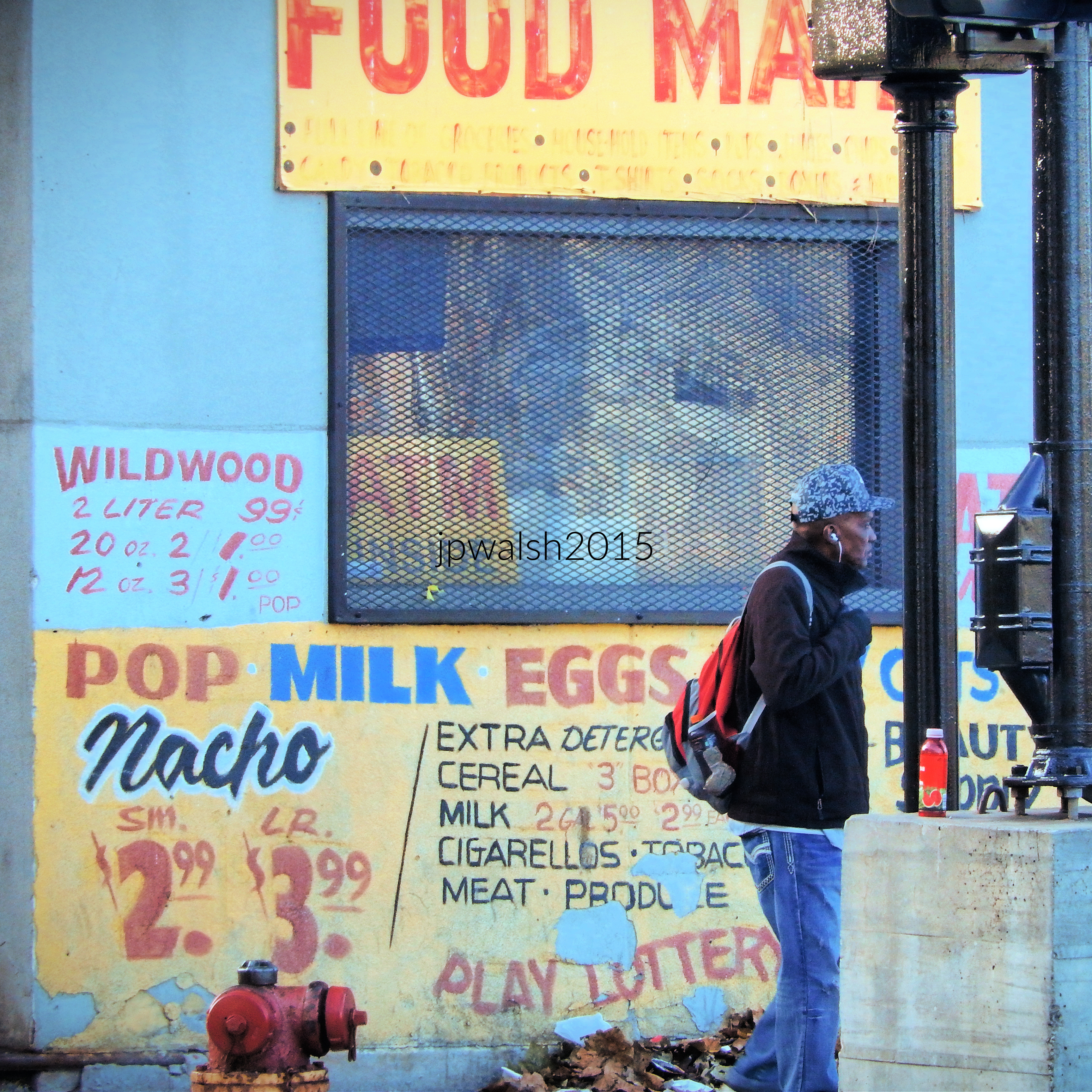
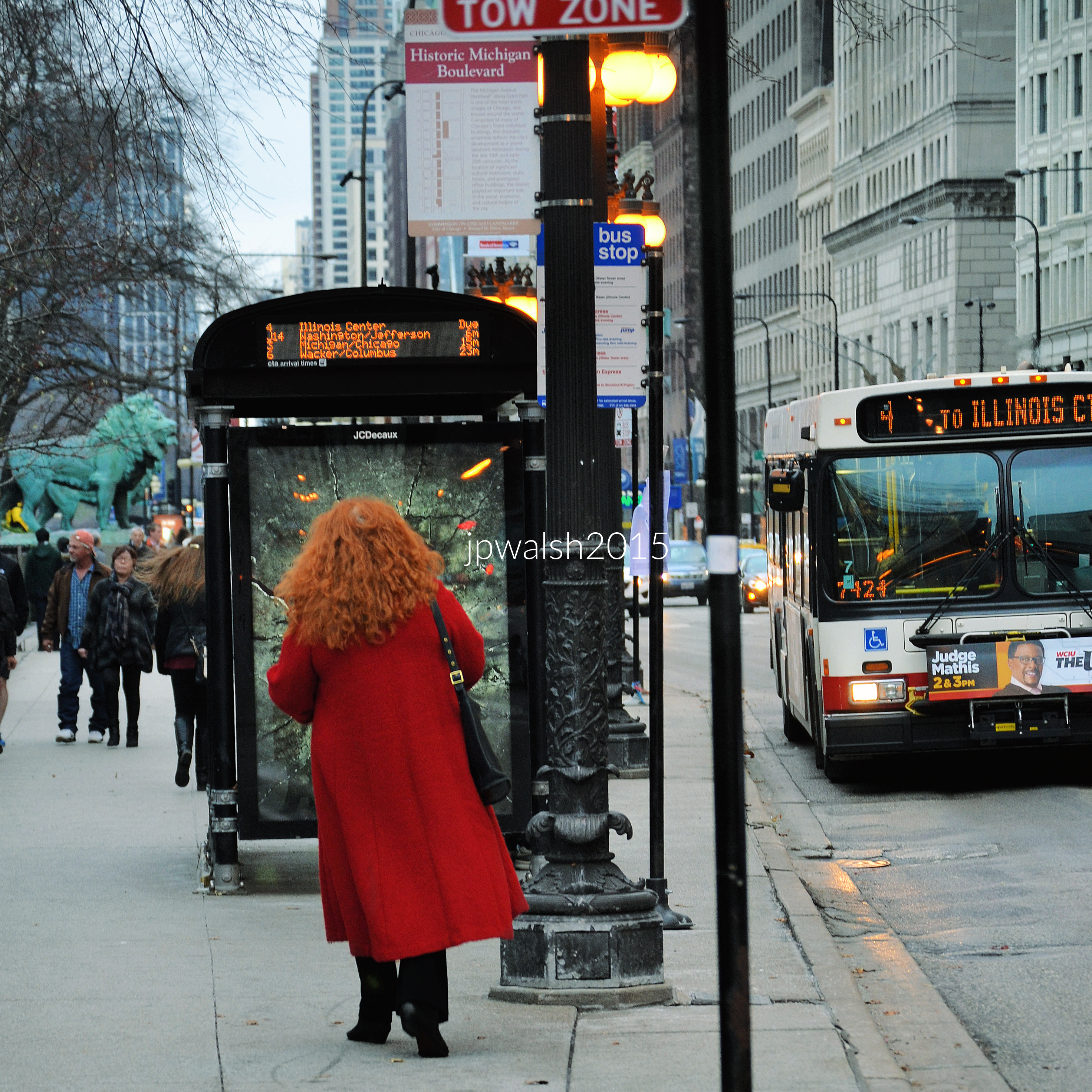
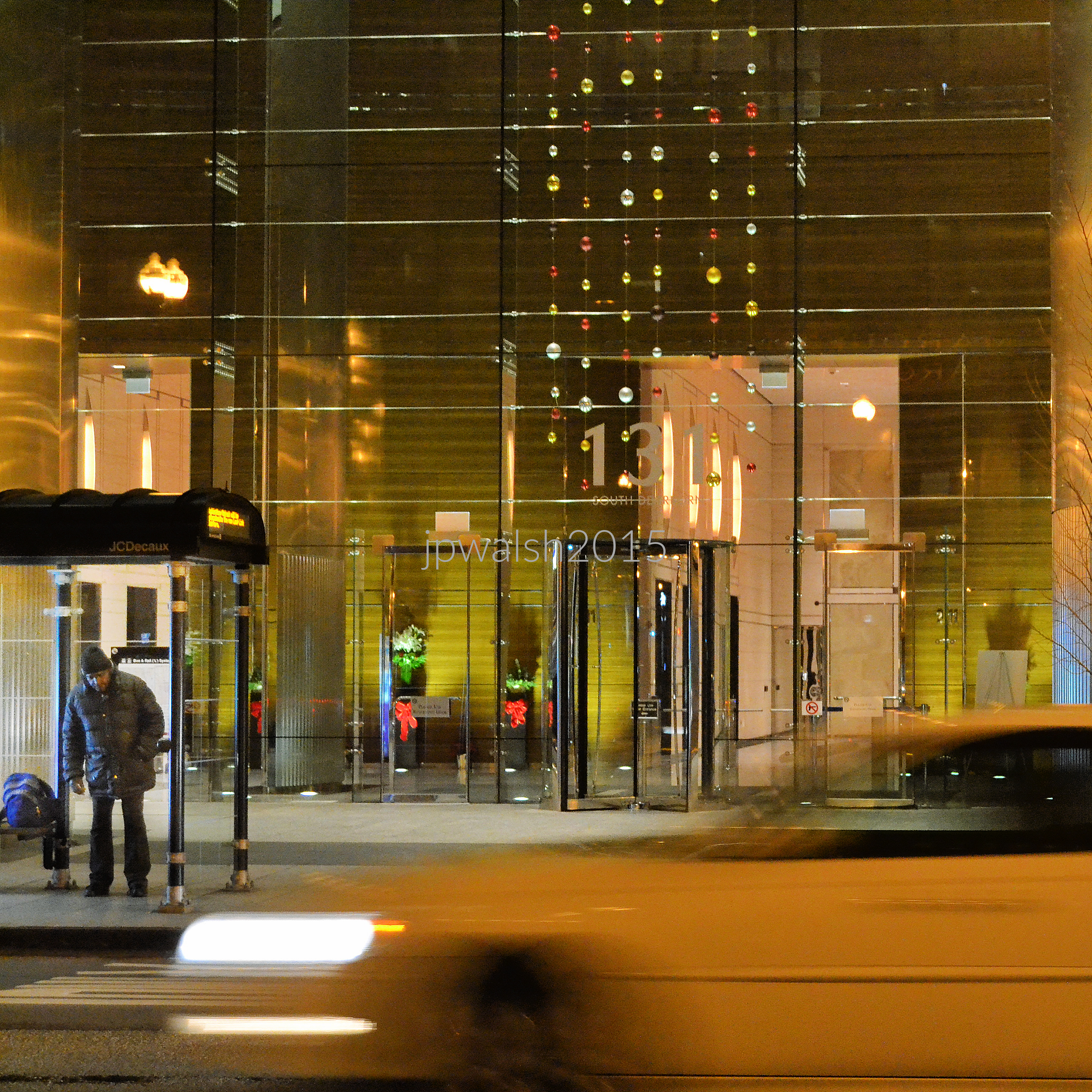
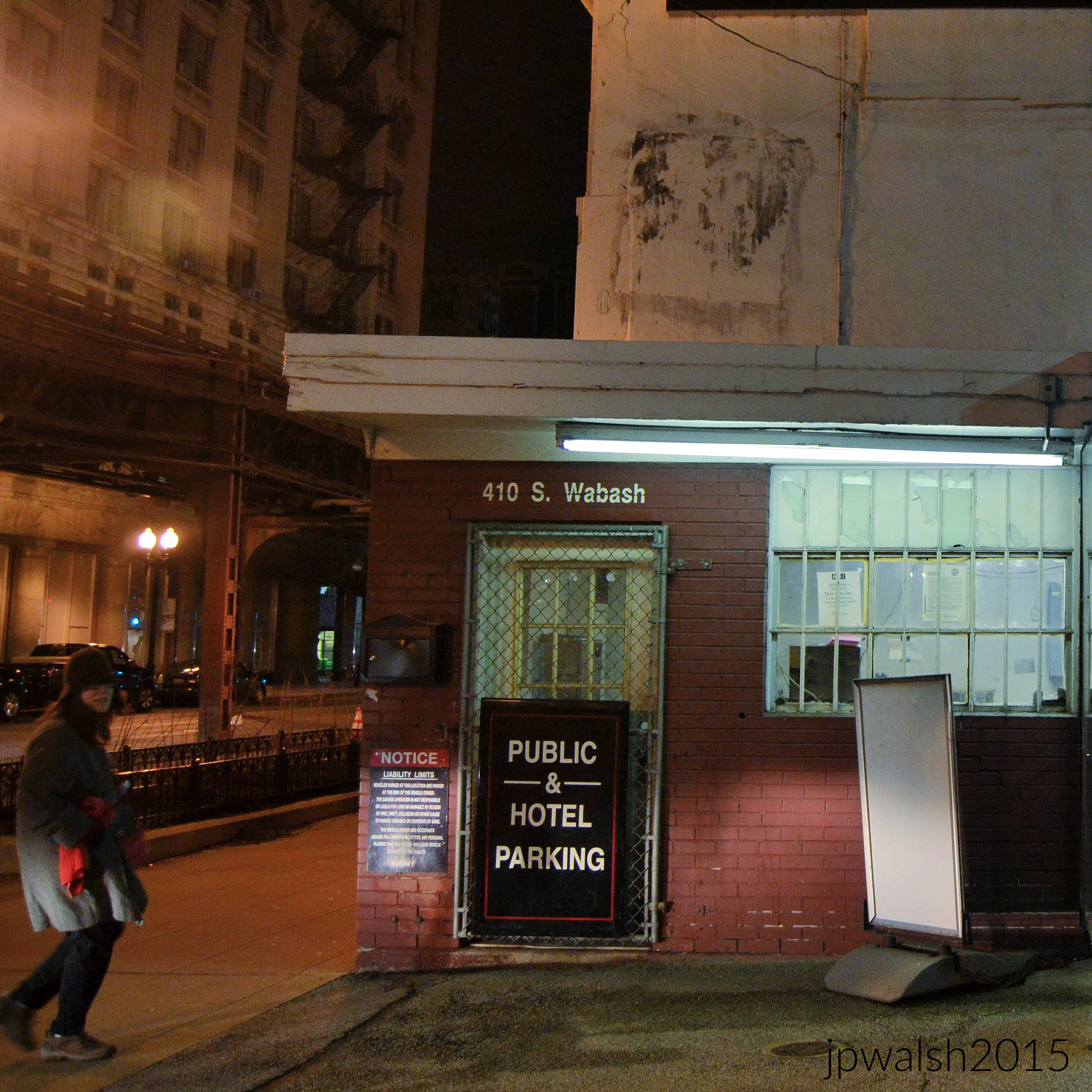
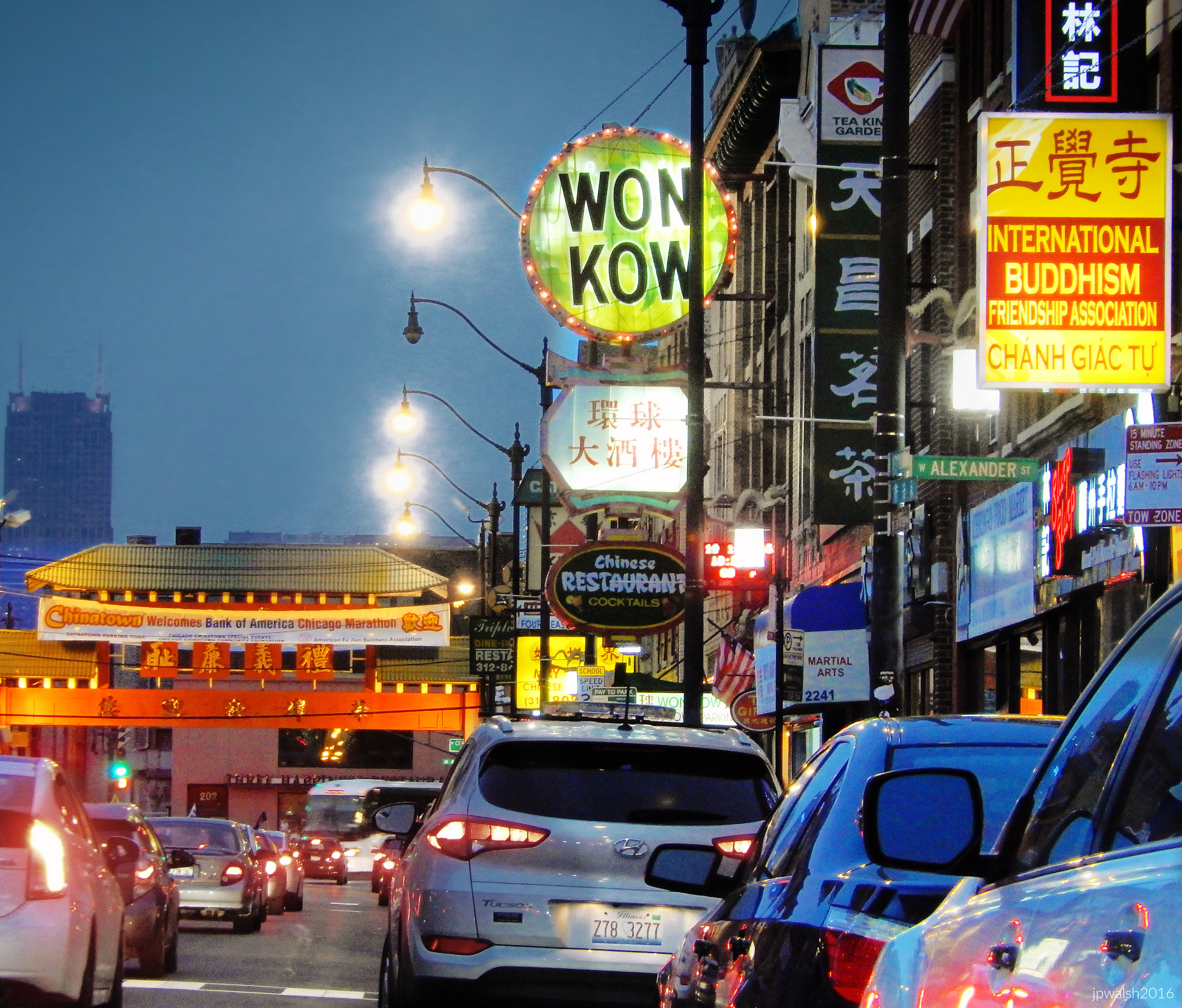
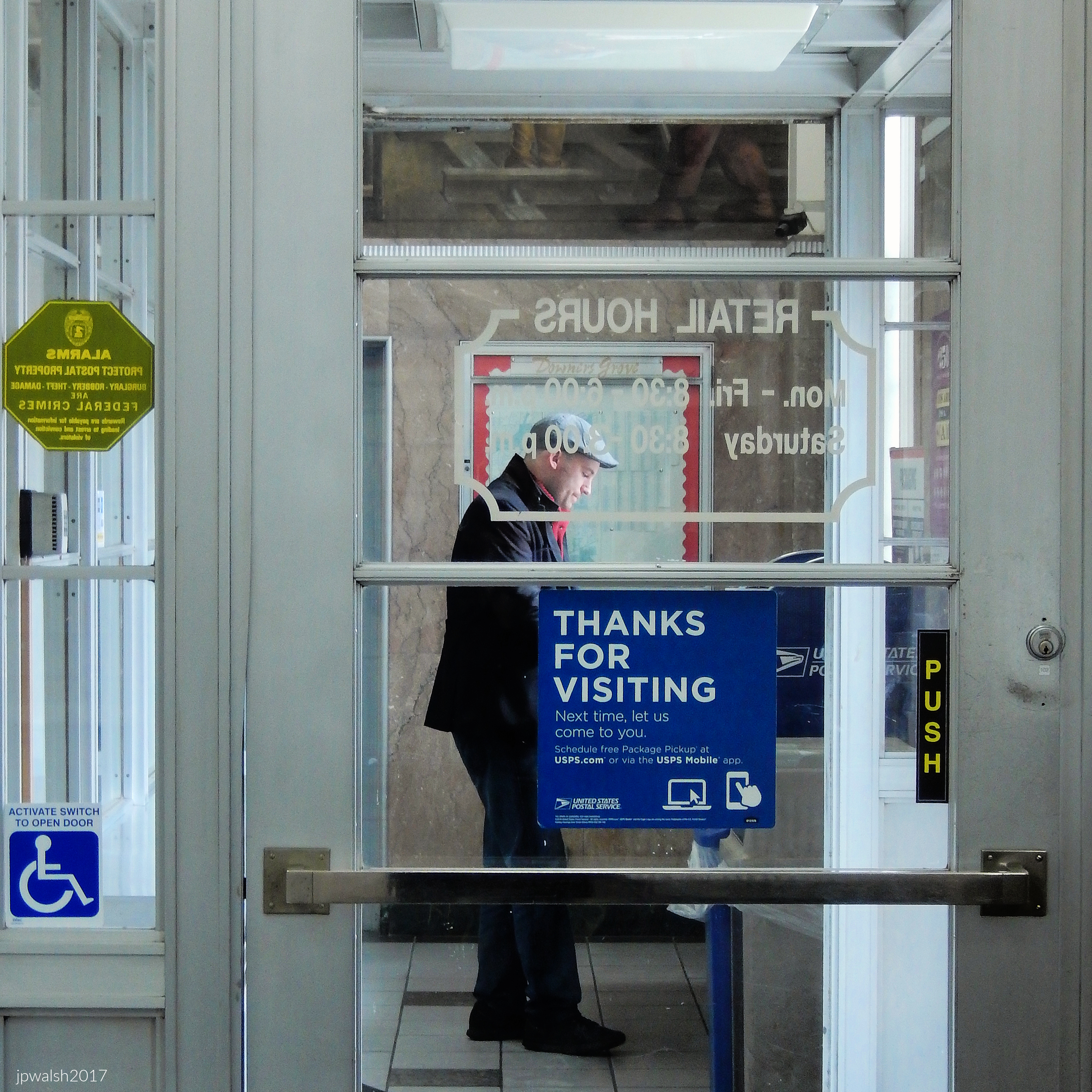
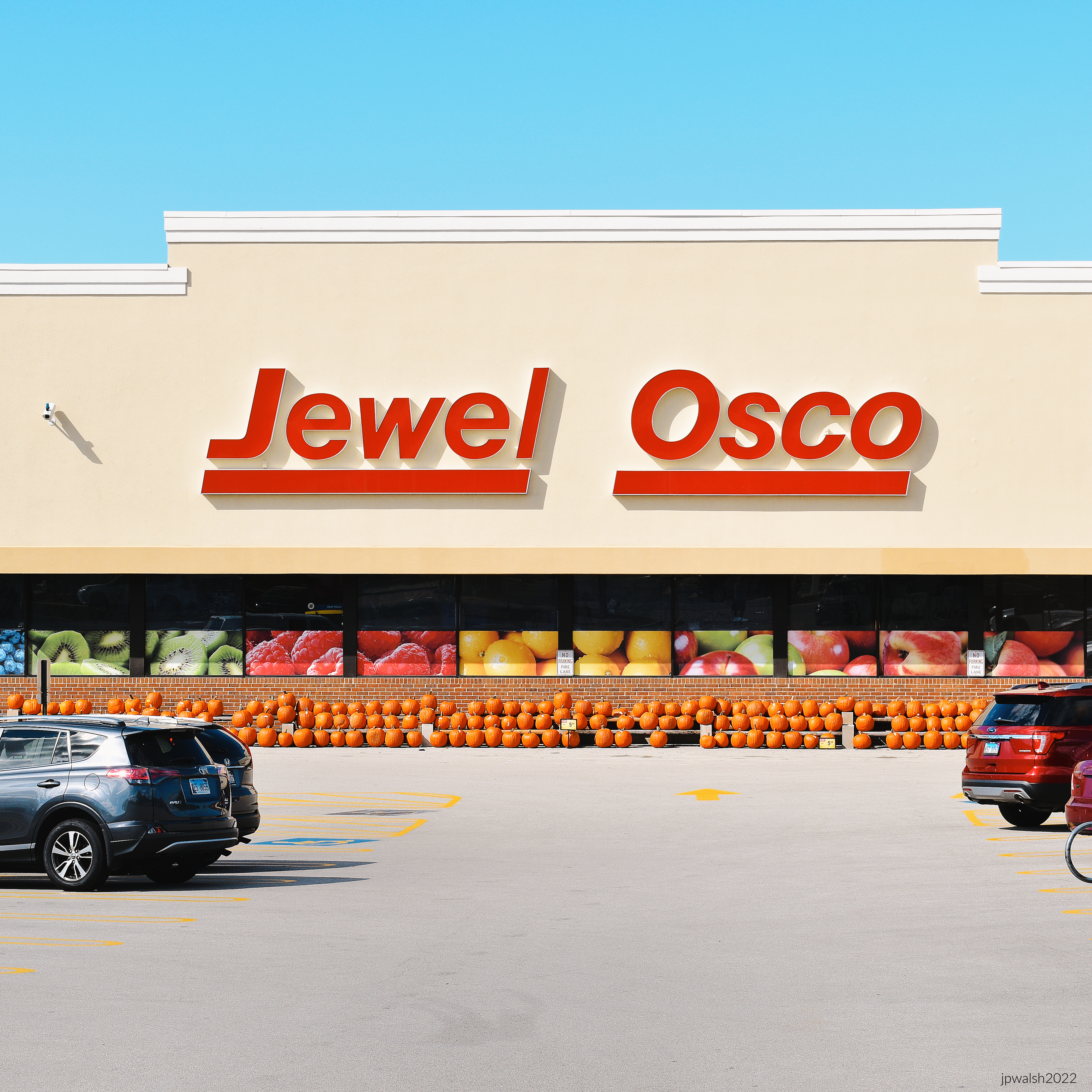
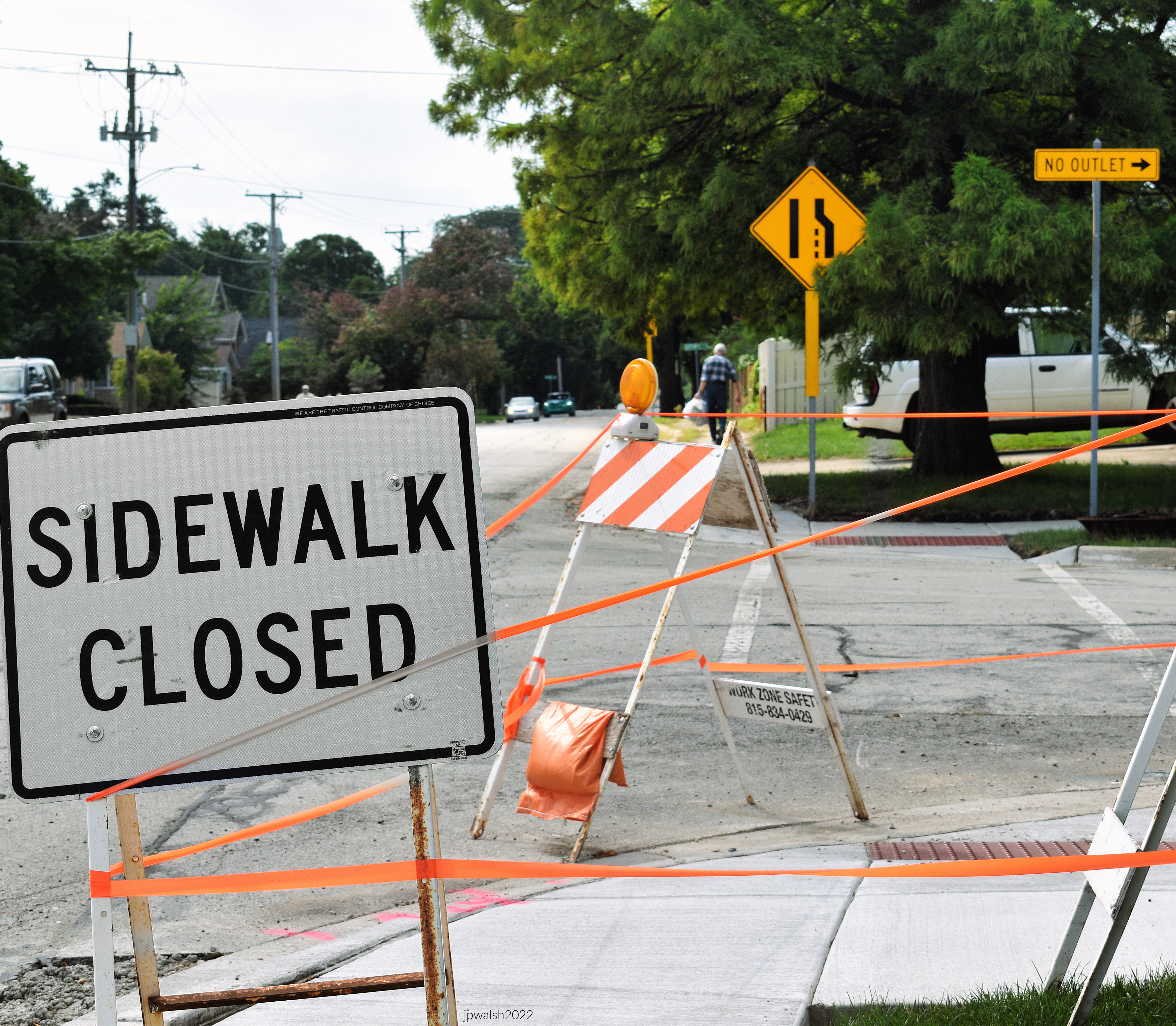
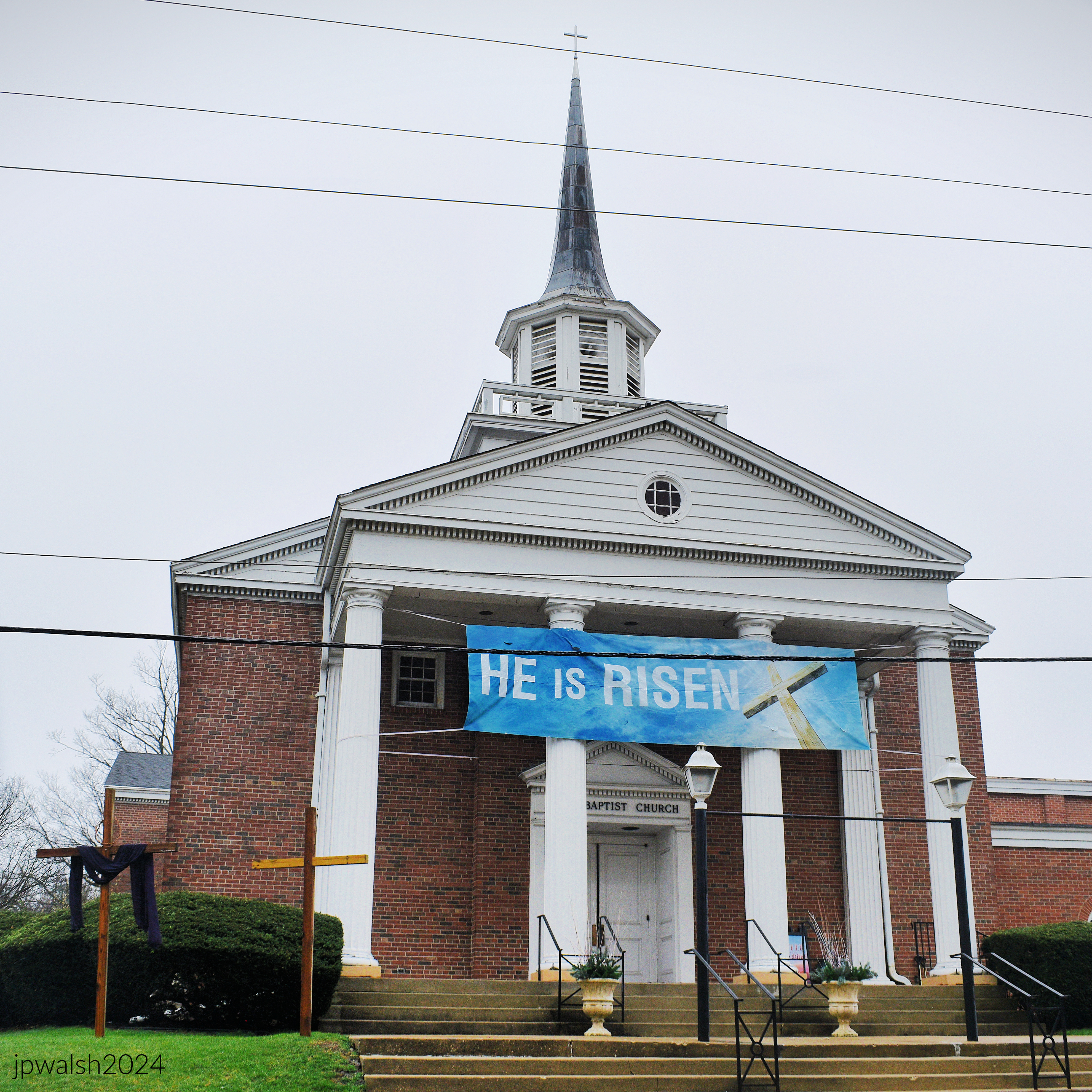
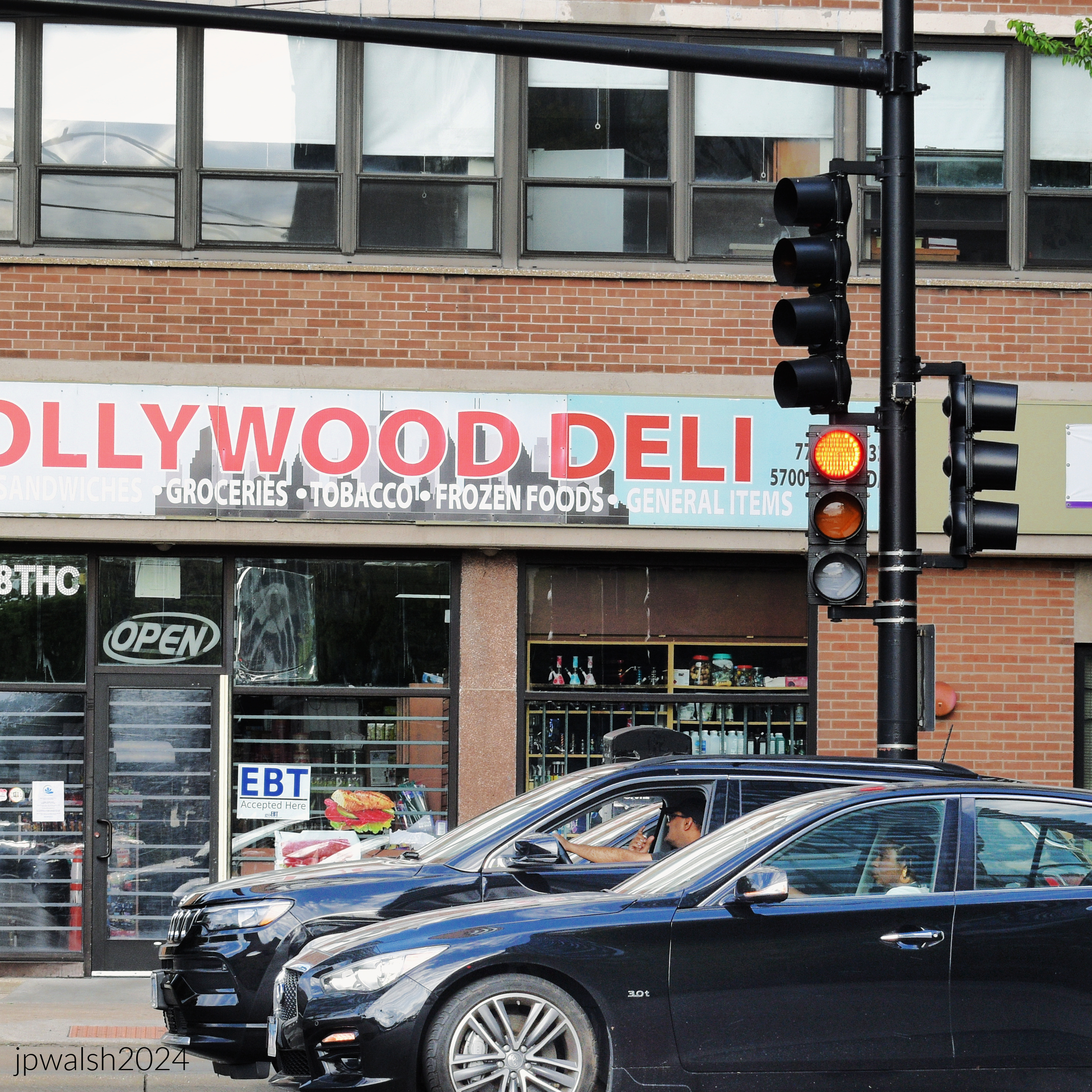
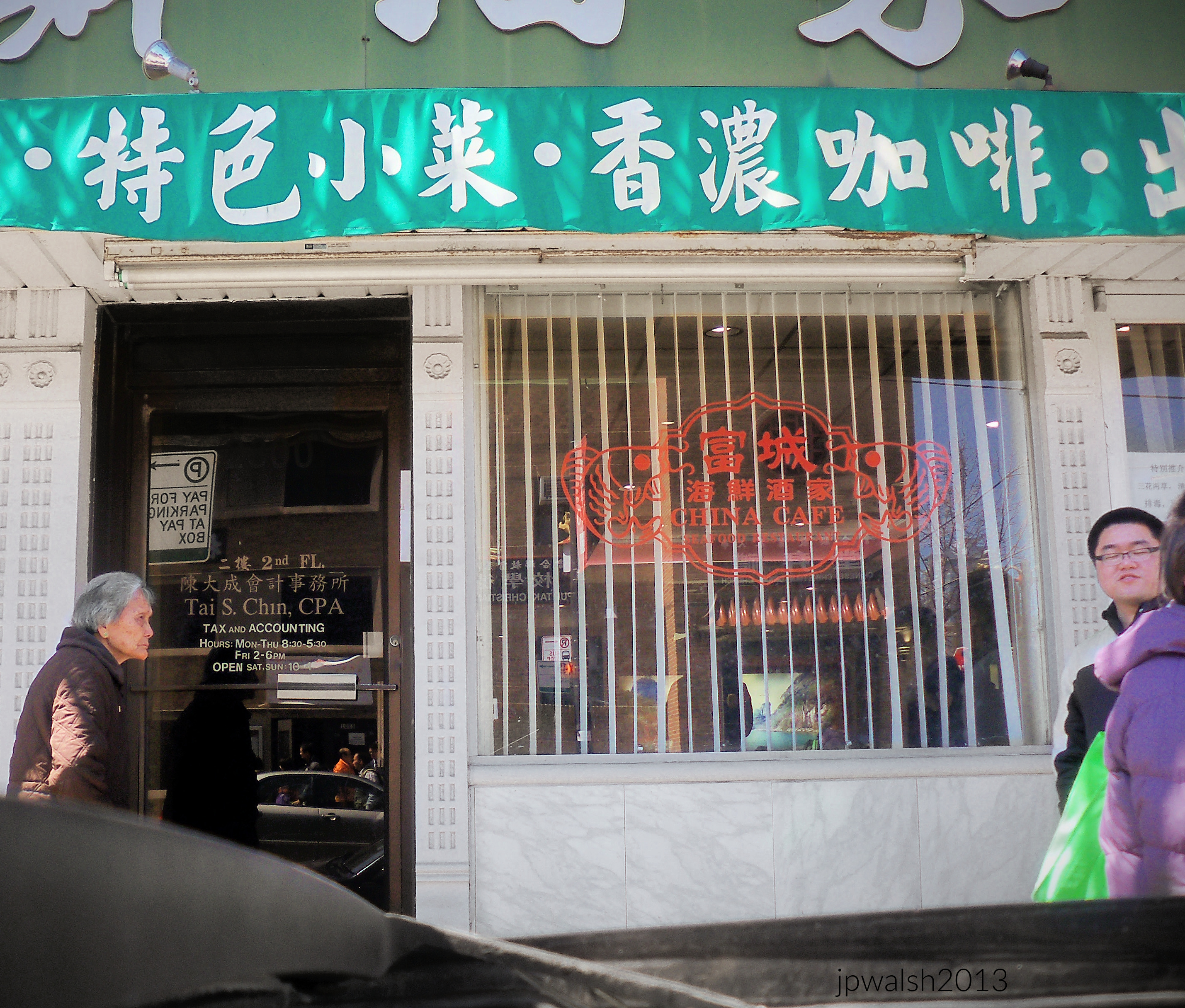
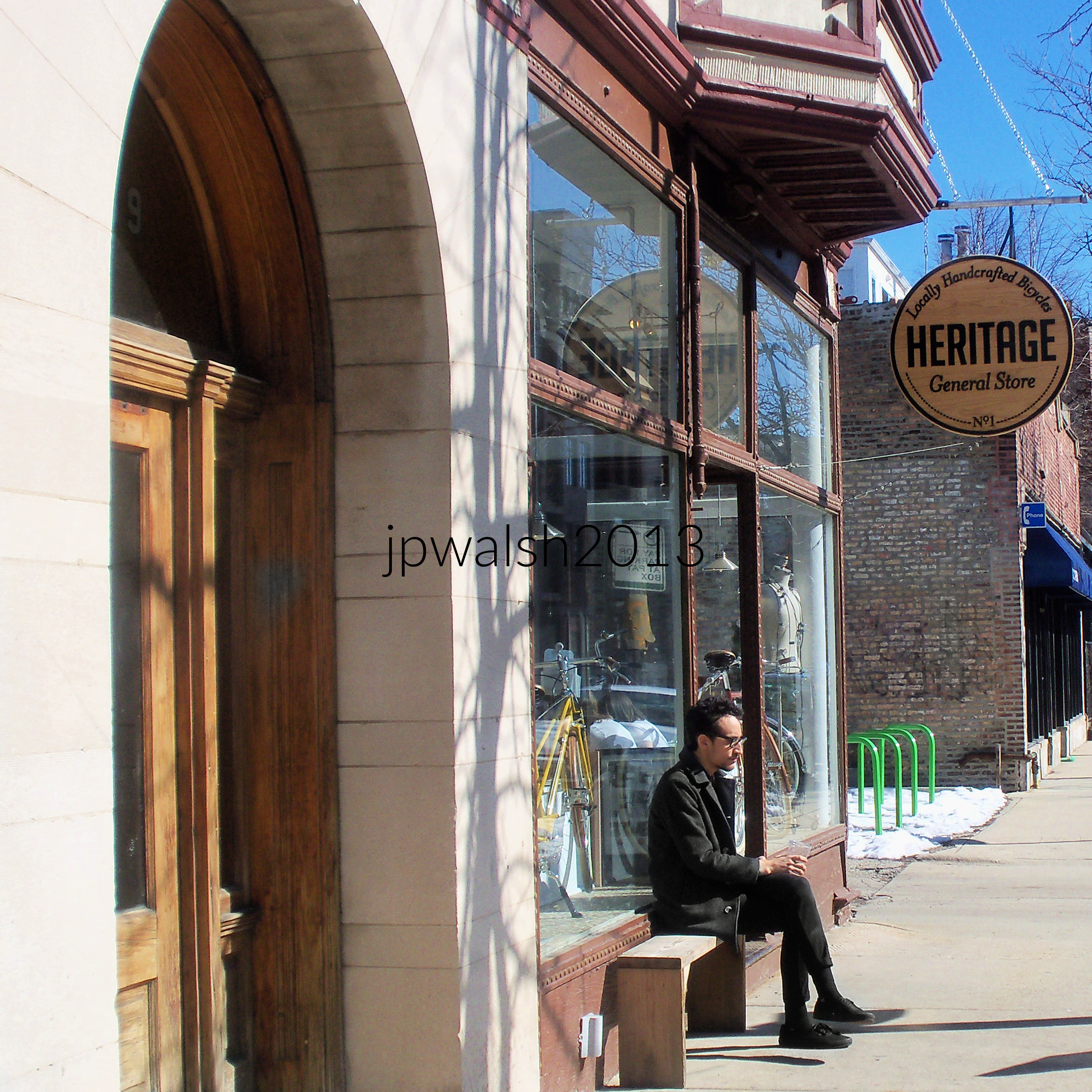
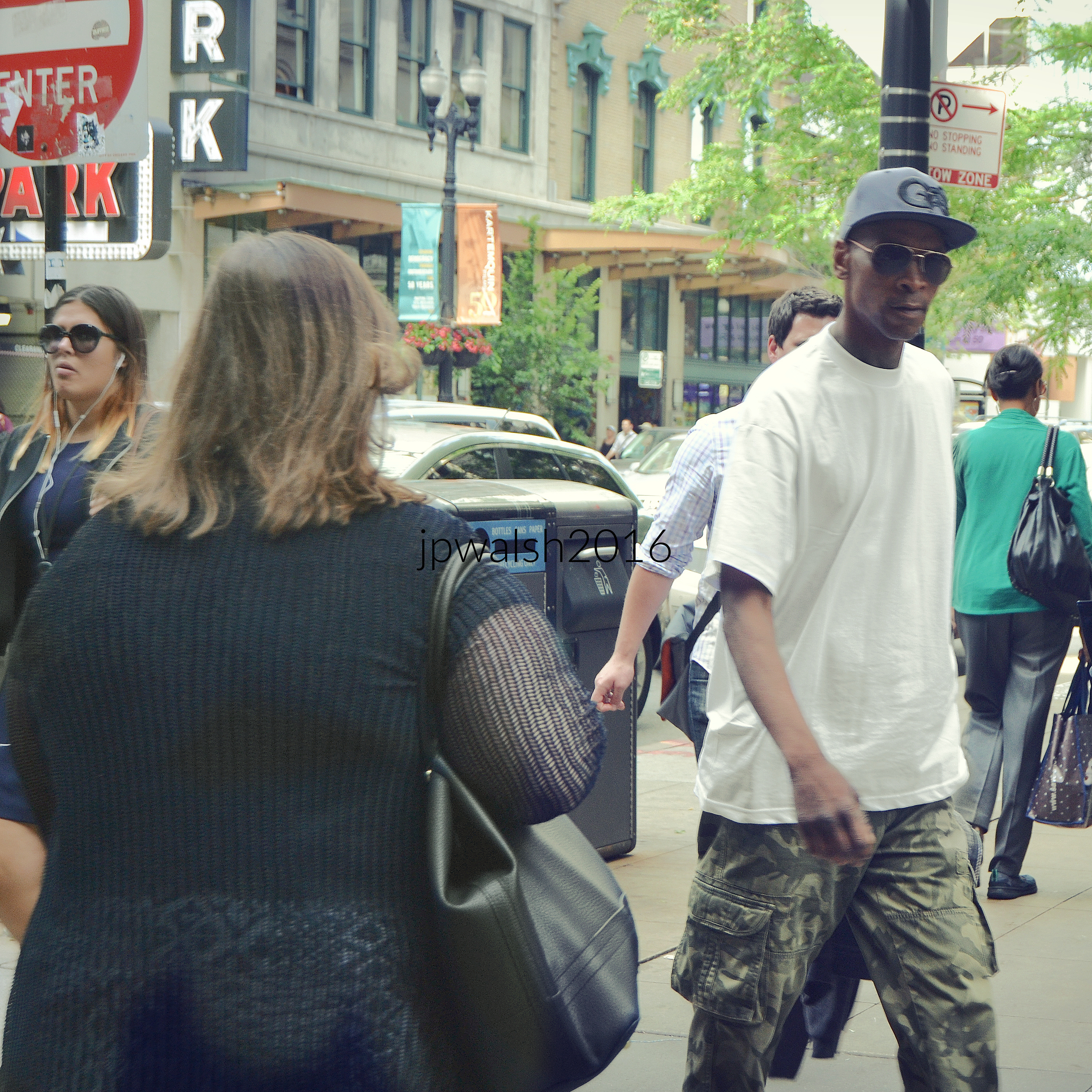
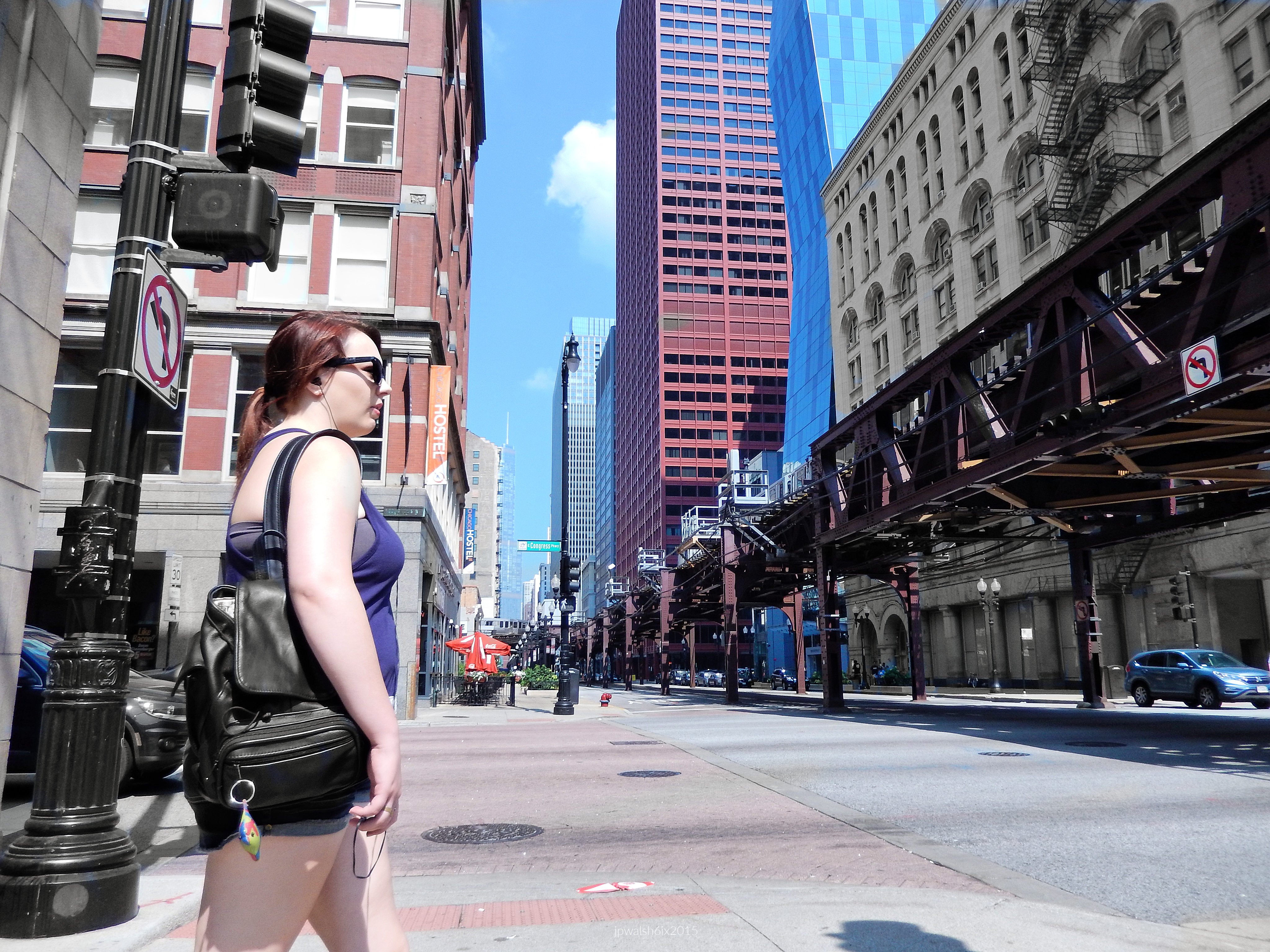
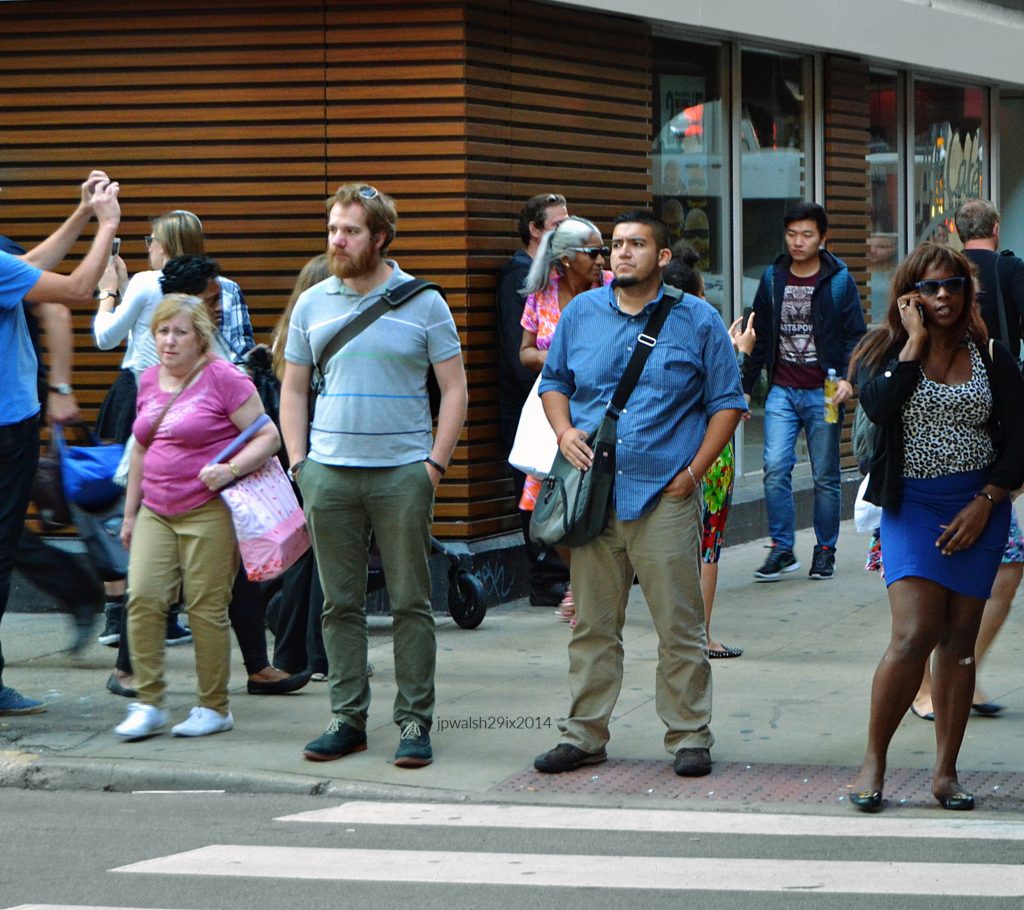
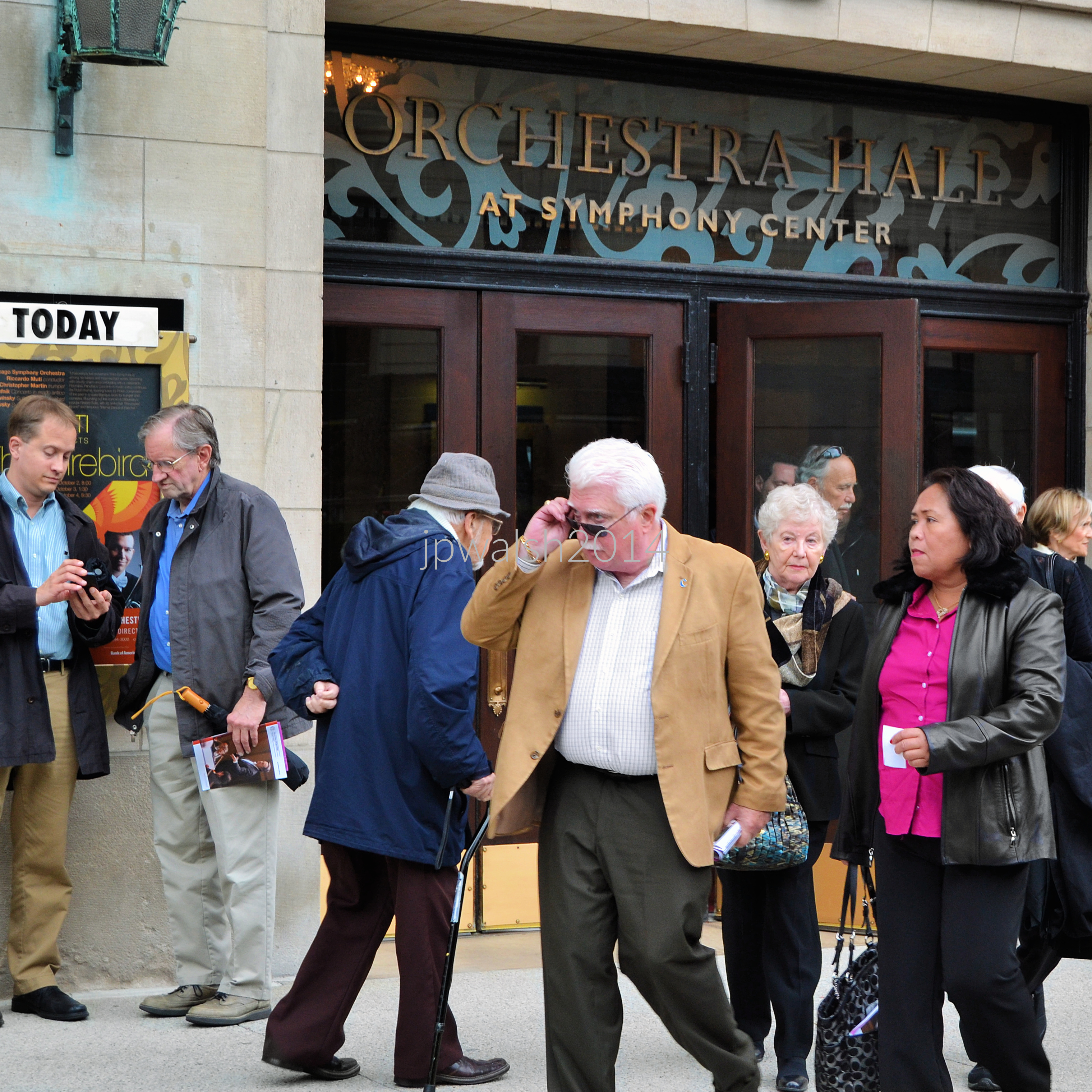
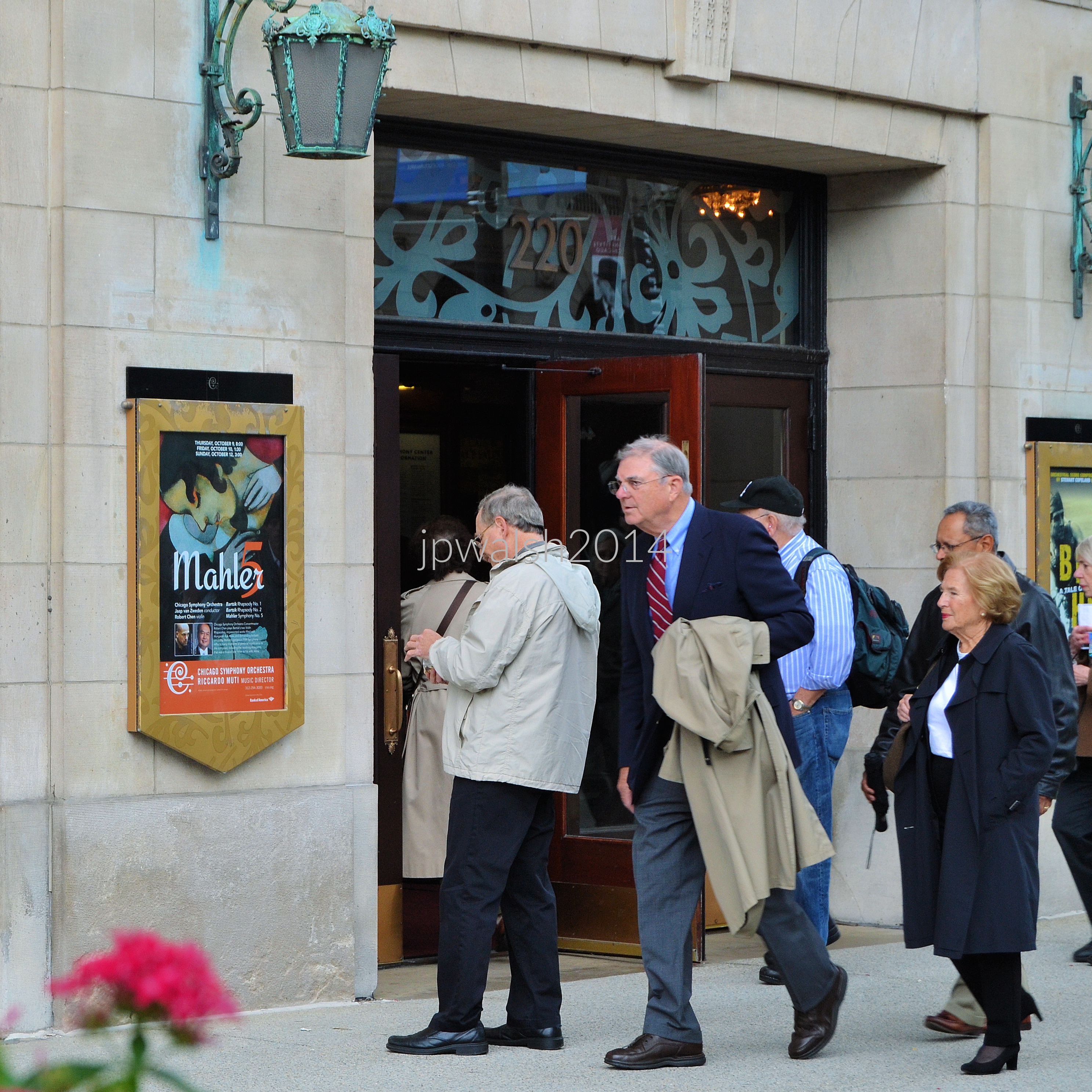
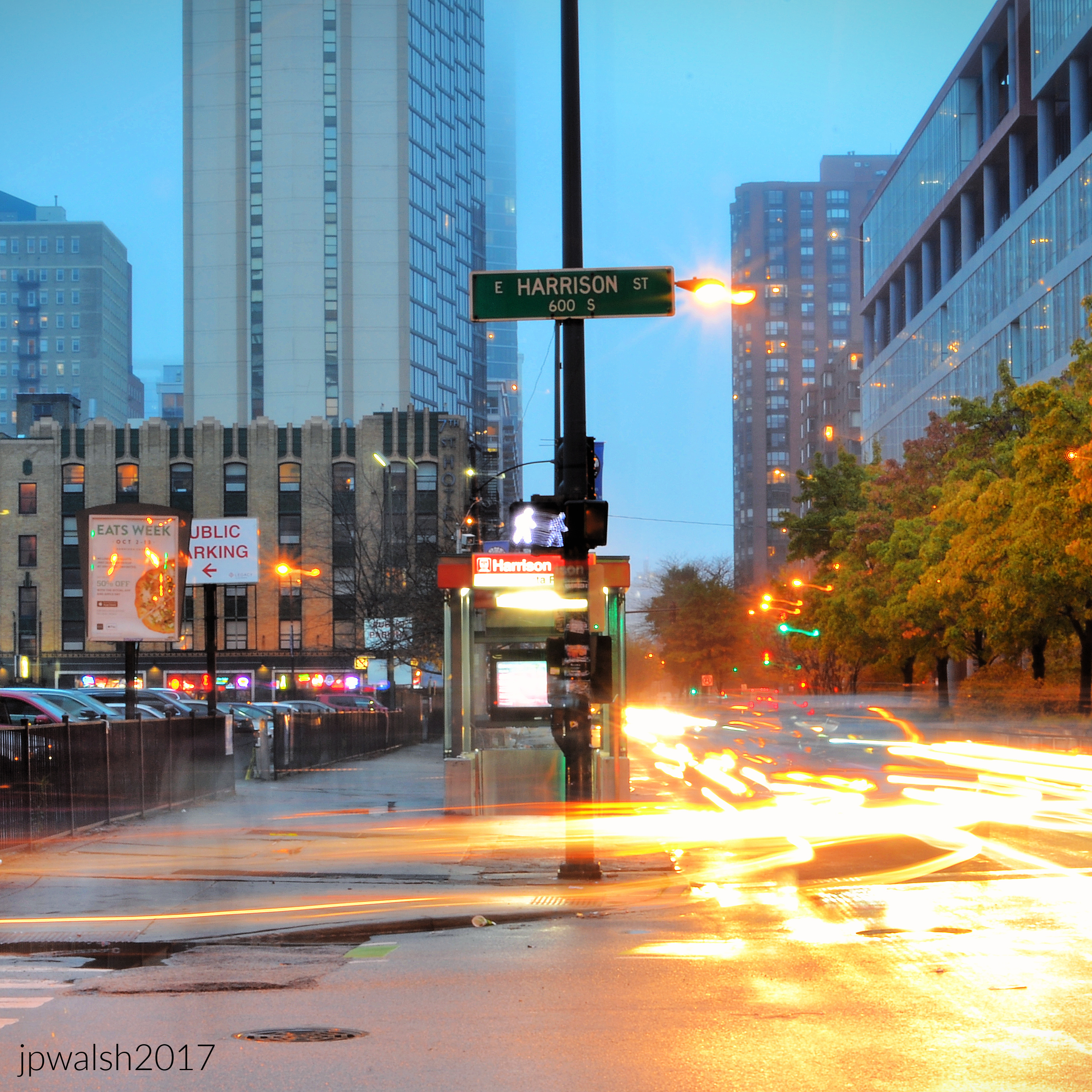
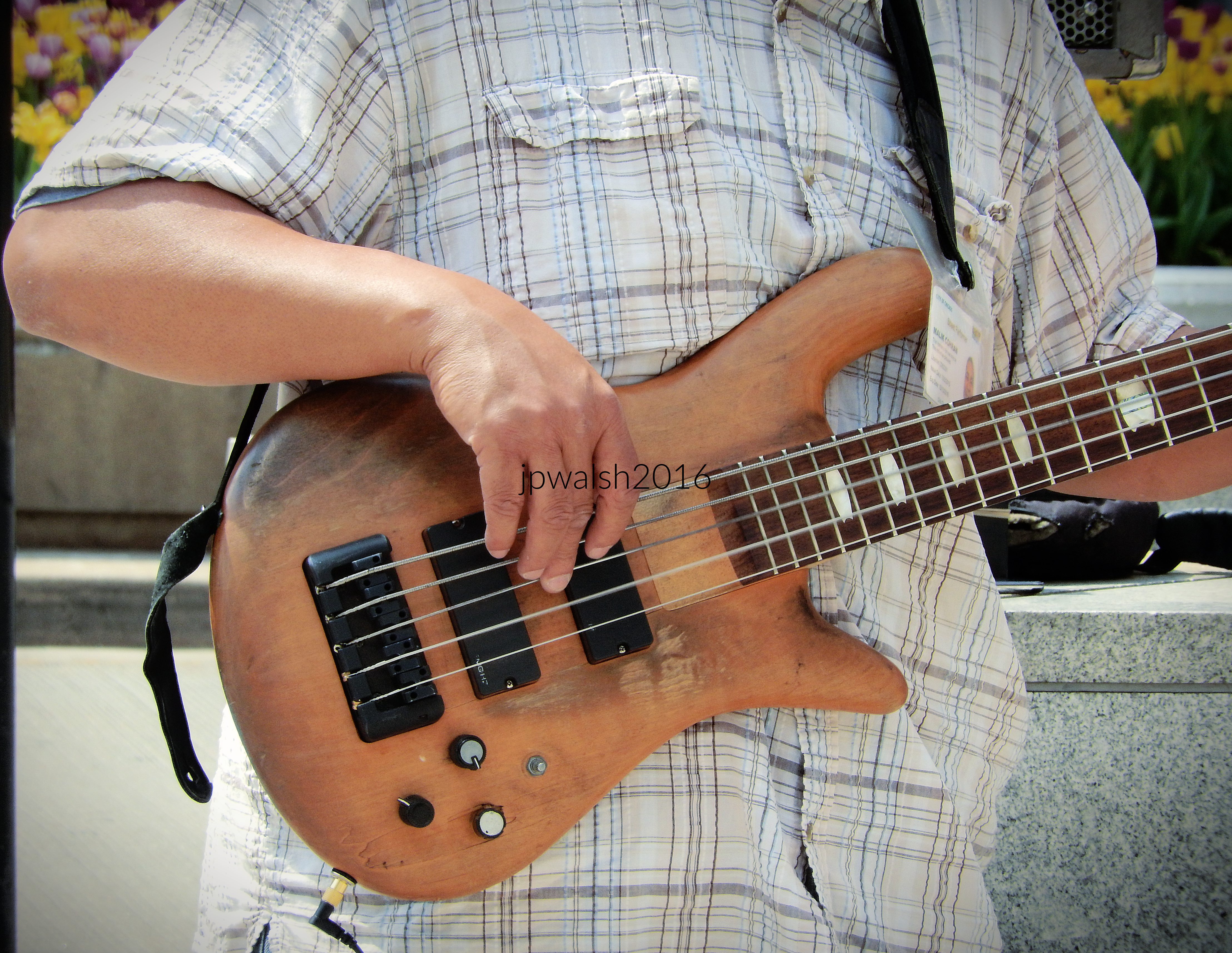
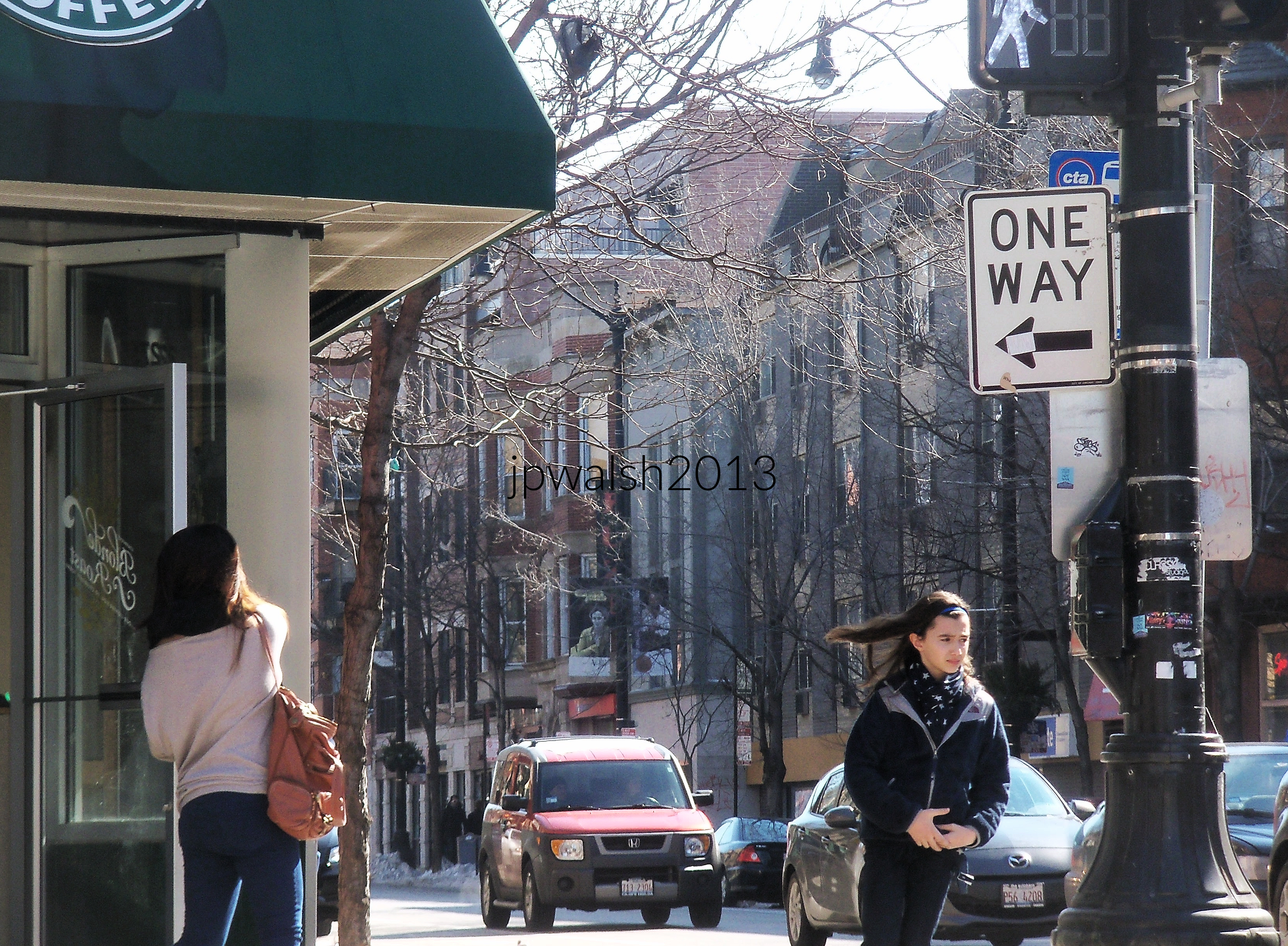
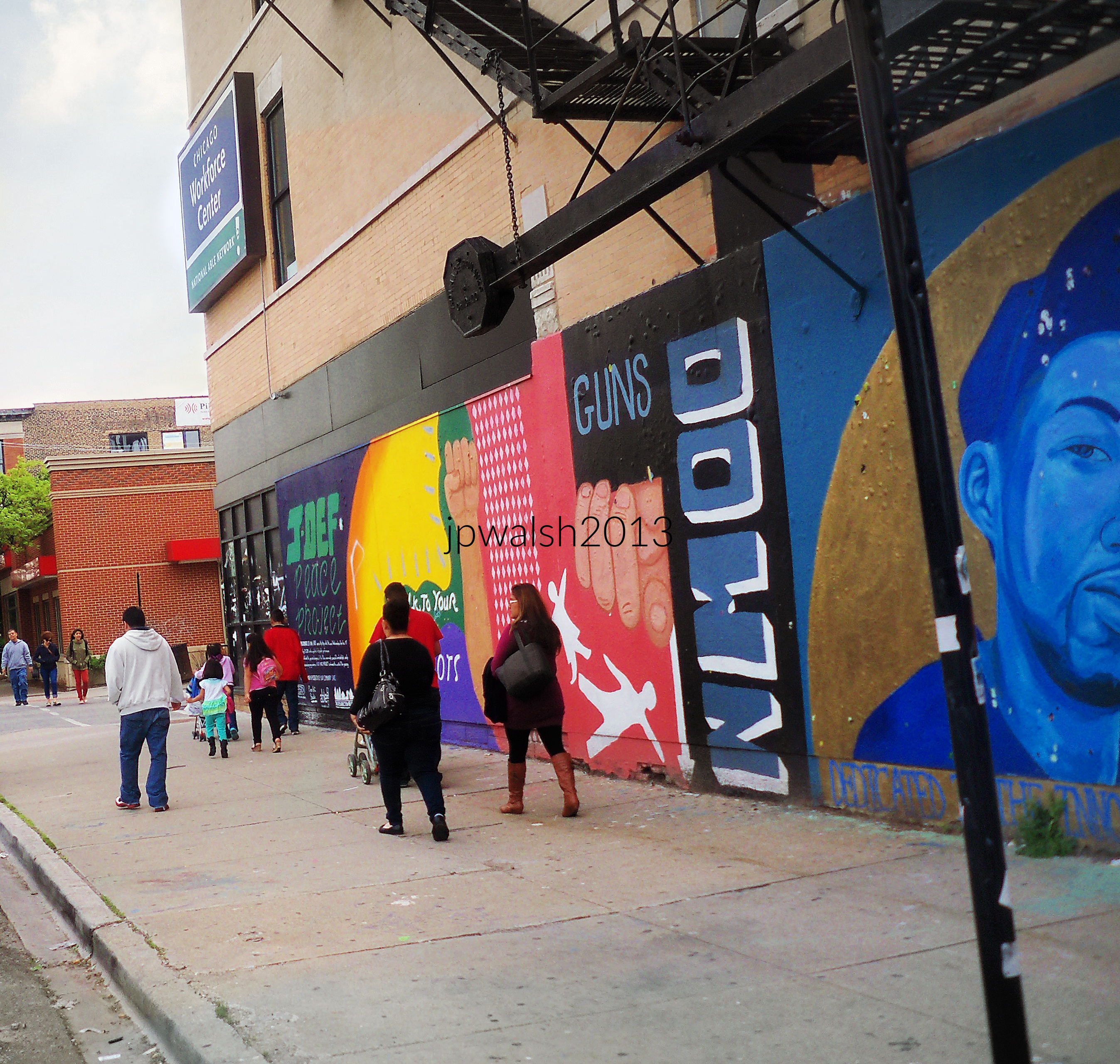
Signs serve as visual blueprints of community identity, tracking economic activity, institutional history, and the constant evolution of a place. As everyday markers of culture, commerce, religion, and memory, they collectively provide a living record of the eras they inhabit.
All photographs and text by John P. Walsh.
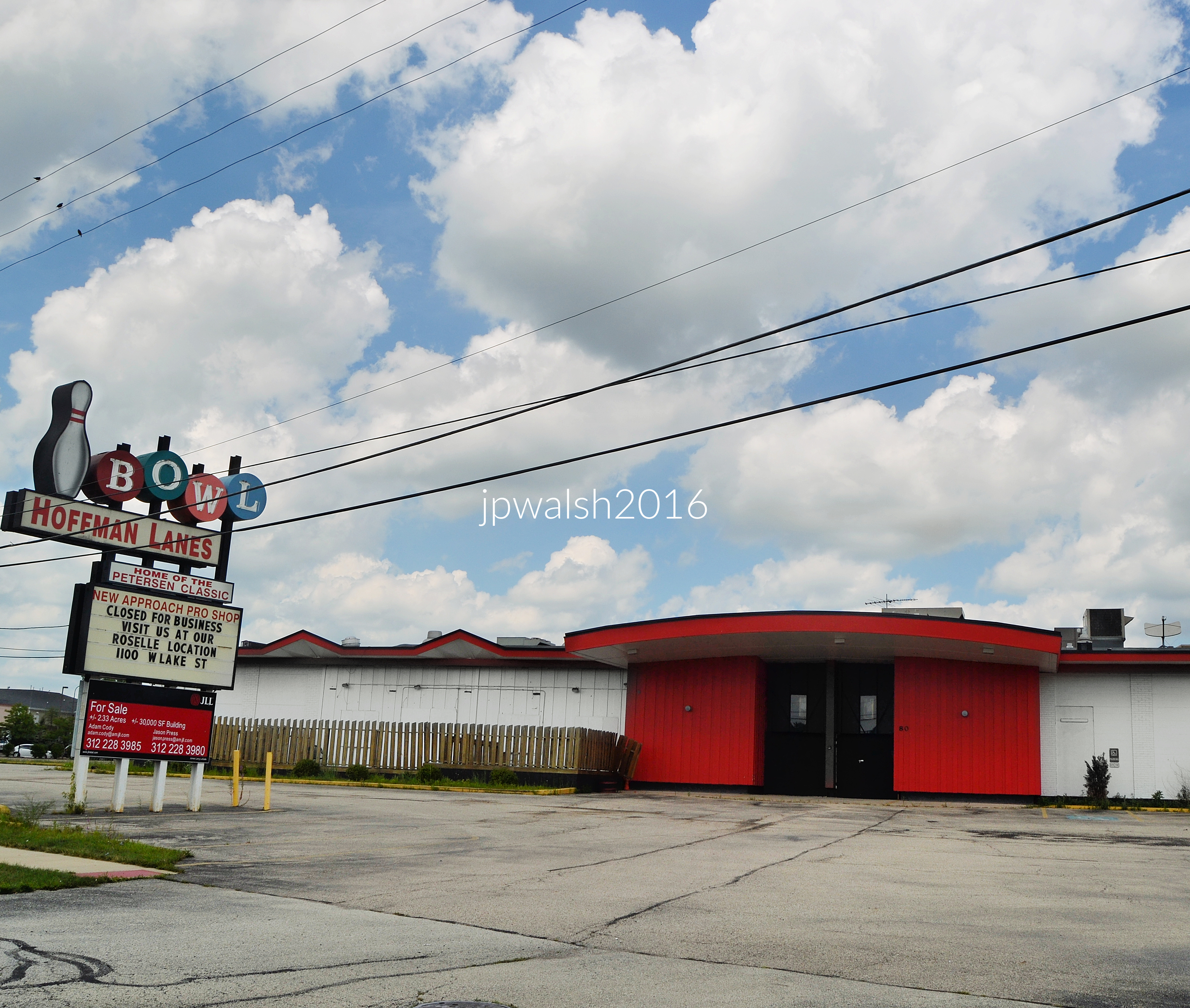
August 2024 Chicago 90% 7.91 mb1459 (1)September 2024 99% 7.23 mb_2004 (1)August 2015. Chicago. 3.53mb DSC_0697 (1)August 2024 74% 7.84 mb 0880 (1) (90)September 2024 8.96mb_2038 (1)September 2024 97% 7.92mb _2052 (1)July 2016. In business 1962 to 2022. 4.80mb DSC_0916 (1)Elk Grove Bowl: Bowling alley closing after nearly 60 years in Elk Grove Village – ABC7 Chicago – retrieved March 19, 2026. August 2016. In business from 1961 to 2015. 80 W Higgins Rd, Hoffman Estates, IL 60169 3.69mb DSC_0076 (1). REMEMBERING HOFFMAN LANES – History of Schaumburg Township – retrieved March 19, 2026. October 2022. 99% 7.05 mb 9395 (1)October 2024. 92% 7.82mb _2841 (1)October 2024. 6.75mb_2803 (1) to o&e11 – October 2024 80% 7.85mb_3929October 2024. 78% 7.92mb _4000November 2024. 91% 7.95mb 4514November 2024. 88%7.86mb _4986 0&eDecember 2024. 81% 7.87mb _5986May 2024. Fox River Valley. 99% 6.42mb _6451August 2015. 4.34 mb _0344 (1)January 2016. 3314 W. 63rd St., Chicago. Marquette Photo Supply opened in November 1944. Owner Joe Herbert sold and repaired photo equipment and processed film. His father and brother operated the barbershop next door. The family lived in an apartment behind the store. For decades, Mr. Herbert supplied equipment to photography students at many high schools, including nearby all-girls Mother McAuley. A beloved presence in the neighborhood, the shop closed in 2017 when Mr. Herbert passed away. 96% 7.91mb see – https://chicago.suntimes.com/2017/9/14/18318528/joseph-joe-herbert-dies-ran-marquette-photo-supply-for-73-years – retrieved January 30, 2025. May 2016. State & Chicago. 5.32mb DSCN2408 (1)November 2017. Below the fold. 4.85mb DSC_3148 July 2016. Established in 1928. 3259 E. 95th Street, Chicago. DSC_0793 (1)August 2017. Chicago. 7.57mb DSC_1554March 2025. 95% 7.91 mb DSC_7840October 2017. 5.38 mb DSC_2973November 2017. 89% 7.80mb DSC_3398April 2025. 99% 7.23mb DSC_8741May 2018. 90% 7.75mb DSC_7149January 2018. Chicago. Downtown. 3.71 mbMay 2025. 99% 6.99mb DSC_0078 (1)October 2024 3.87mb DSC_3187 (1)October 2015. October 2015. St Cornelius Church, 5430 W. Foster Ave, in Chicago when it was still an active parish church. Built in 1964, it closed in 2020 for lack of mass attendance and was desacralized in 2021. In 2024 the church building was sold to be redeveloped as a funky 1960’s style club and pickleball court. The site redevelopment will include parking and an event space with stage for pinball games, beverage lounge, and record spinning area. St. Cornelius for whom the church was named was a 3rd century pope who was banished from Rome by the Roman emperor Trebonianus Gallus and who died in exile. 5.91mb DSC_0311 (1) see – https://www.chicagobusiness.com/commercial-real-estate/former-st-cornelius-church-be-pickleball-court-and-club – retrieved June 23, 2025. June 2025. Downers Grove, Illinois. 97% 7.88mb DSC_1850July 2025. 99% 7.33mb DSC_3614June 2018. Chicago. 6.42mb DSC_9166 June 2018. Chicago. 6.25mb DSC_0827June 2025. 90% 7.90 mb DSC_2406 (1) January 2016. 3.70 mb DSCN1968 (1) July 2015. Chicago. 3.23 mb DSC_0387 (1)July 2015. Chicago. 3.19mb DSC_0592 (1)December 2017. Chicago. 89% 7.94mb DSC_3767 (1)November 2025. 99% 7.35mb DSC_8897December 2025. 6.27mb DSC_9476 (1)December 2025. Chicago 78% 7.83mb DSC_0012December 2025. Chicago. 81% 7.83mb DSC_0041February 2013. 1.64mb 2101_6381 (1)
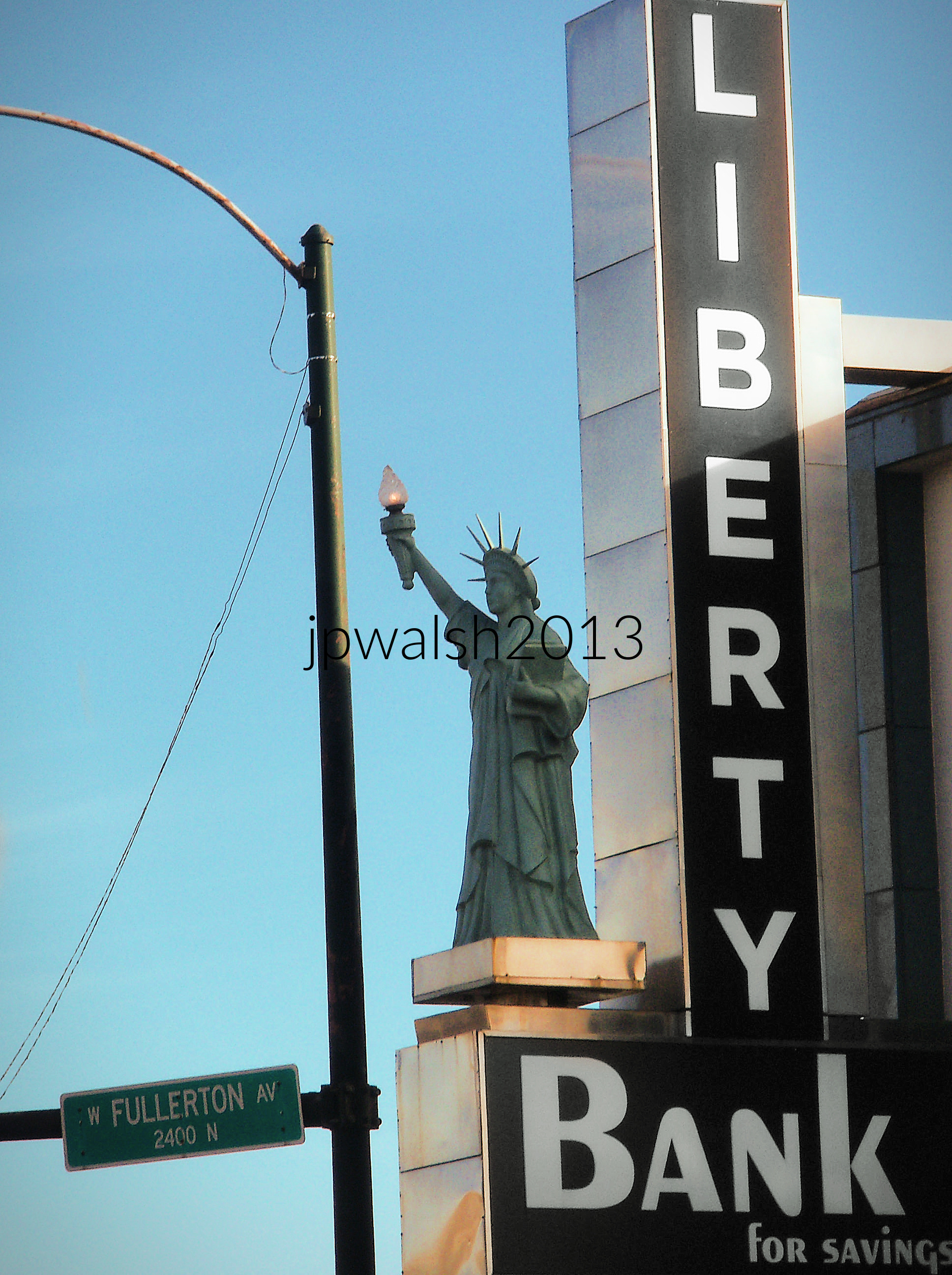
Liberty Bank’s origin dates back to 1898 when parishioners of All Saints Polish National Catholic Church on Chicago’s North Side (2392 N. Milwaukee Avenue)came together to form a mutual savings institution committed to “neighbors helping neighbors.”
Art outdoors transforms streets, parks, plazas, and building walls into public galleries where history, memory, community identity, and creative expression become part of everyday life, demonstrating how art can engage audiences beyond the traditional museum setting.
All photographs & text by John P. Walsh.
September 2001. Philadelphia, Pennsylvania 70% Progress of Women was completed by artists Larissa Preston Danowitz and Cesar Viveros and collaborators in 2001. At 1307 Locust Street the mural shows work of the New Century Guild to promote women in the workforce. At the top of the mural is the visage of Eliza Turner (1826-1903) who founded the New Century Guild in 1882 and lived in Philadelphia.
October 2003. Corcoran Gallery of Art, Washington, D.C. The Renoir-inspired outdoor sculpture (“Dance at Bougival,” 1883, The Boston Museum of Fine Arts) was in conjunction with that year’s exhibition called “The Impressionist Tradition in America.” Closed in 2014, the former museum is today the Corcoran School of the Arts and Design, a part of the George Washington University.
November 2017. Crown Fountain, Jaume Plensa [Krueck + Sexton Architects], Millennium Park, Chicago. 368kb 35%
October 2015. Chicago. 4.48 mb
June 2018 Chicago. 4.65 mb
July 2015. Chicago. 4.32 mb
May 2014. Chicago. 4.72 mb
June 2022. Chicago. 7.89 mb 86%
December 2013. Chicago. 6.79 mb
June 2022. Chicago (Rogers Park). 4.20 mb
June 2022. Chicago. 7.66 mb 84%
June 2022. Chicago 11.71 mb
June 2022. Chicago 2.38 mb 50%
August 2015. Chicago. 7.92 mb 96%
August 2018. Chicago. 7.29 mb
August 2015. Chicago. 5.26 mb
October 2016. Chicago. Daniel Buren (b. 1938), Attrape-soleil, 2013. 4.49 mb.
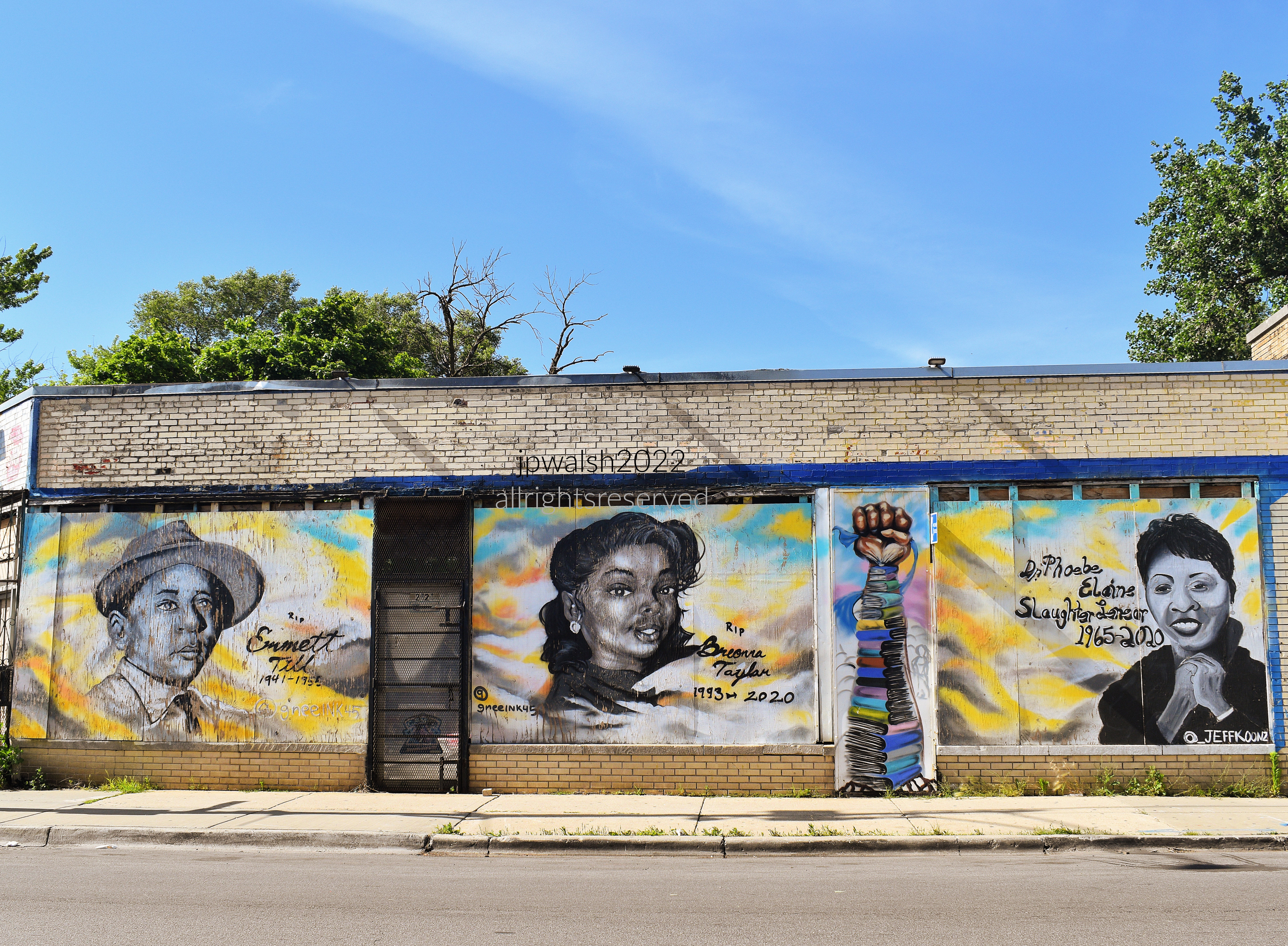
Featured on the exterior wall of a building in the Englewood/Morgan Park area located on the South Side of Chicago, three prominent civil rights figures and community leaders are memorialized in this mural created in 2020. Emmett Till (1941–1955) is A 14-year-old Chicago youth whose brutal lynching in Mississippi became a primary catalyst for the American Civil Rights Movement; Breonna Taylor (1993–2020) is a 26-year-old emergency room technician who was fatally shot by police officers in her Louisville, Kentucky home. And Dr. Phoebe Elaine Slaughter-Lenear (1965–2020) is a respected local Chicago educator, humanitarian, and community leader. Created in the midst of the nationwide civil rights protests that summer, the mural was painted as a collaboration by Chicago-based visual artists GNEE ART (@gneeink45) and Calin Bruett, professionally known as JEFF K%NZ (pronounced “Jeff Koonz”).
November 2017. Chicago. Opened in July 2004, Crown Fountain in Millennium Park was designed by Spanish artist Jaume Plensa (b. 1955) and executed by Krueck and Sexton Architects. 66% 7.91 mb DSC_3423
April 2013. Chicago Pilsen. 4.89mb102_0165 (1)
July 2015. Chicago 5.66mb DSC_0083 (1)
December 2015. Chicago (State Street). 5.13mb DSCN1936 (1)
FEATURE Image: November 2017. Michigan-based Saints basketball team visiting in downtown Chicago.
All photographs and text by John P. Walsh.
August 2021.July 2016. Chicago. September 2015. Chicago. Michigan Avenue. July 2019. Oakbrook, IL. November 2017. Chicago.June 2022. Chicago. 948 kb 30% July 2018. Downers Grove, Illinois. February 2013. 1.70mb 101_6378 (1)
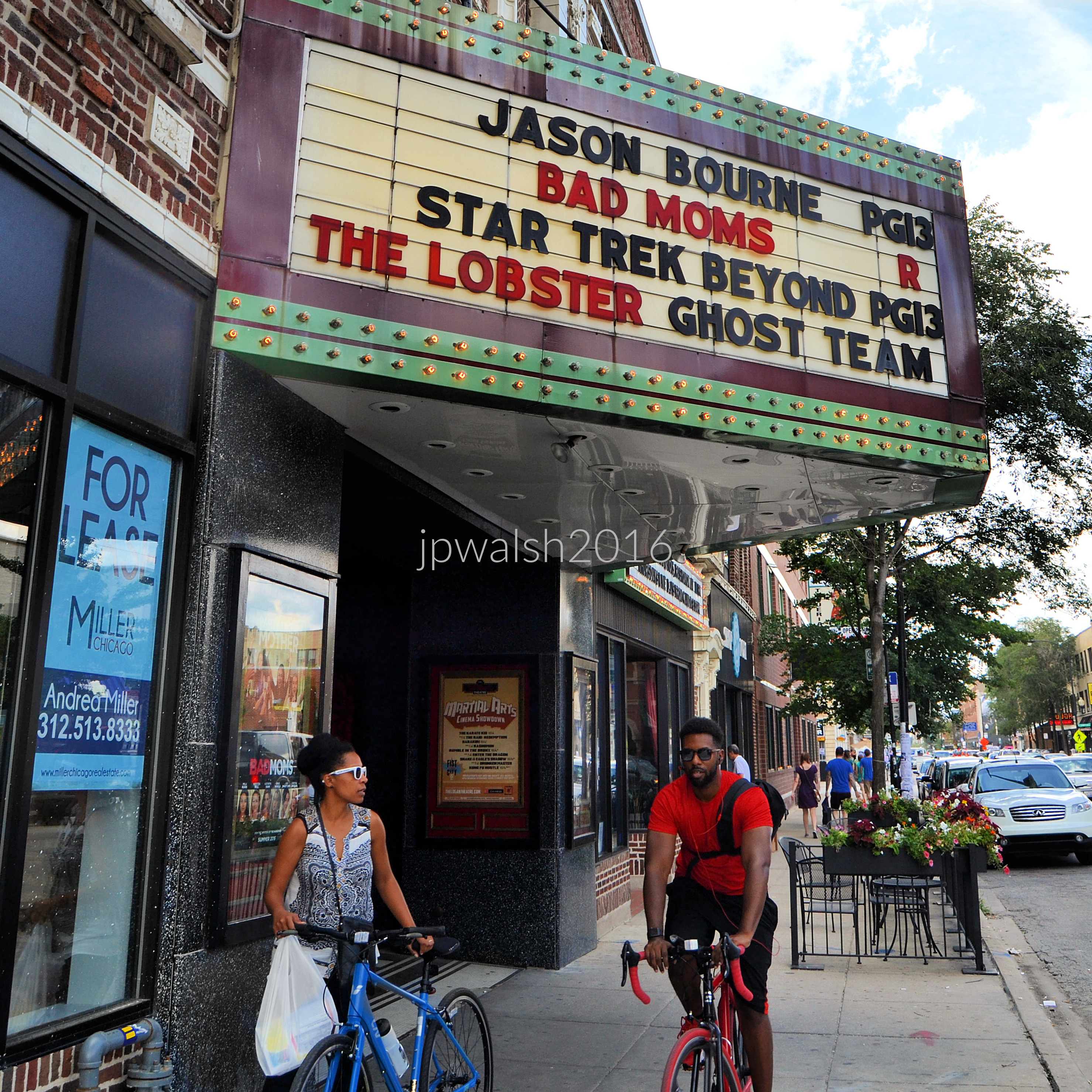
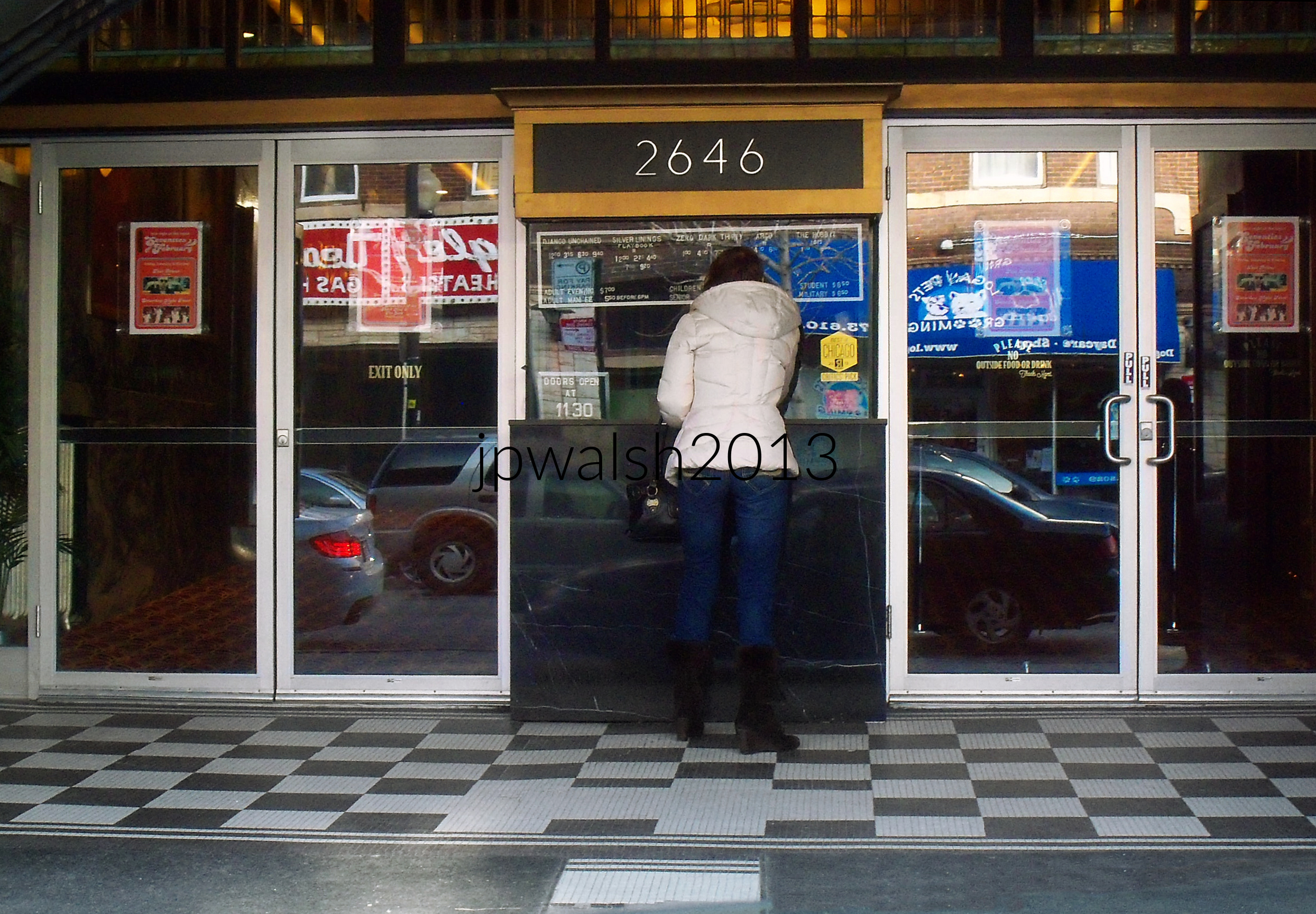
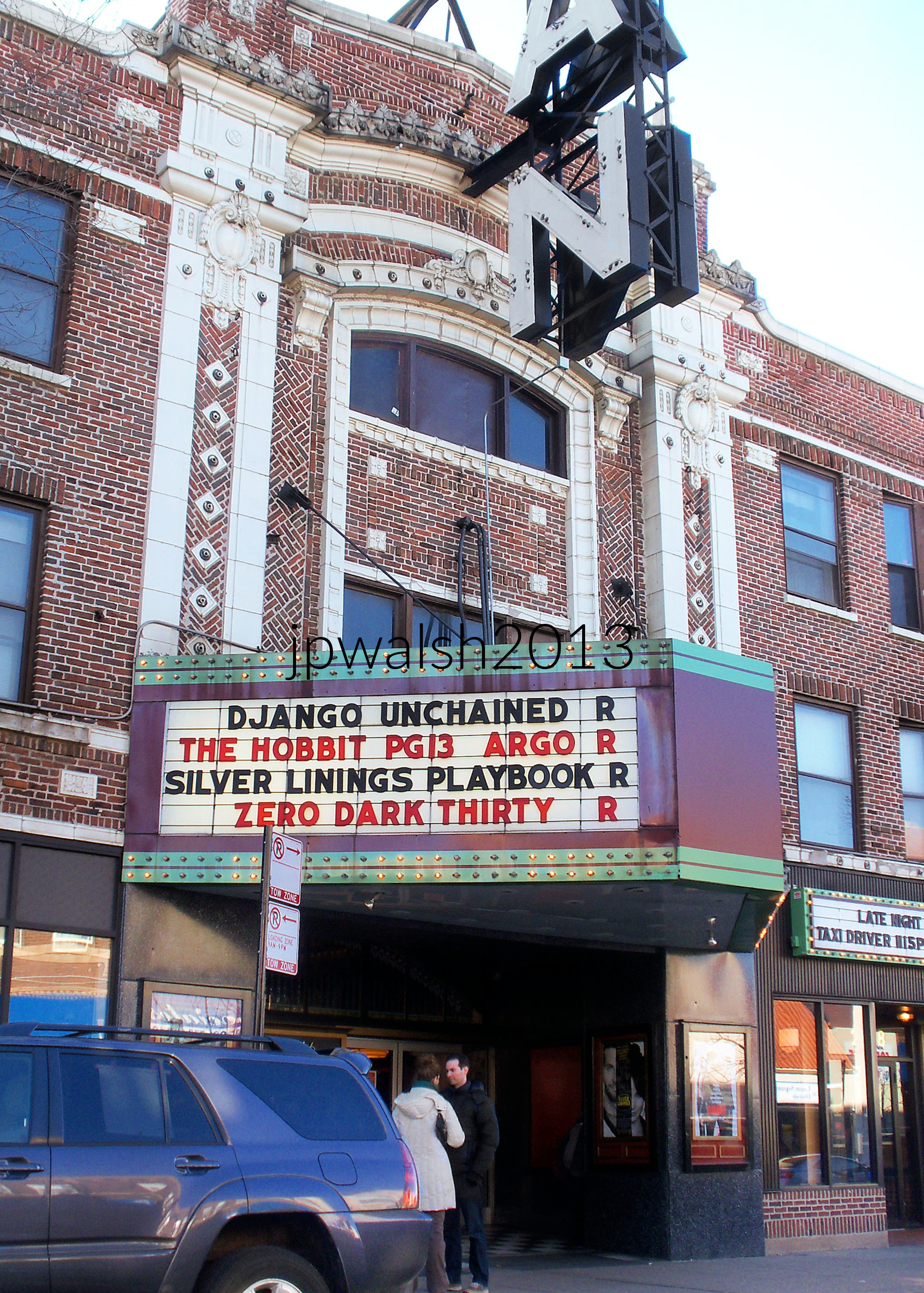
The Logan Theatre at 2646 N. Milwaukee in Chicago opened in November 1915 as The Paramount Theatre. It was operated by Lubliner & Trinz that started operating movie theaters in Chicago around 1914. At their peak, Lubliner & Trinz operated about nineteen theaters and leased or built about 36 theaters until 1934. The Paramount had seating for 988 in orchestra level and was equipped with a Weickhardt organ, based in Milwaukee, Wisconsin. It was renamed the Logan Theatre in 1929 when it was taken over by Essaness, a Chicago-based movie theater chain. The company owned and operated 33 theaters in the Chicago area, including the Pantheon and Biograph theaters. see – Lubliner & Trinz Theater History – The Clark Theater ; Logan Theatre in Chicago, IL – Cinema Treasures – retrieved January 18, 2026.
February 2013. 2.48mb 101_6324 (1)October 2017. Chicago. 315kb 20%December 2017 Chicago Downtown. 3.79 mb May 2014. Chicago. Michigan Avenue. July 2016. Chicago.July 2016. Chicago. July 2016. Chicago. July 2015, Chicago. September 2016. Chicago. Navy Pier. October 2016. Chicago. West Loop/East Garfield Park. September 2016. Chicago. Millennium Park. (20)September 2016. Chicago (Grand Boulevard/Bronzeville). Mount Pisgah Missionary Baptist Church, 4600 S. King Drive. Built by German Jewish immigrants whose synagogue was founded in 1861, the neo-Classical building was home to Chicago Sinai Congregation from 1912 until the 1940s. The church moved into the building in 1961. With a commitment to social justice, the church played an instrumental role in bringing Dr. Martin Luther King Jr.’s Southern Christian Leadership Conference to Chicago in the 1960’s. September 2015. Chicago. Navy Pier.May 2019. Downers Grove, IL.June 2020. Downers Grove, IL.June 2018. Milwaukee, WI. June 2014. Chicago. July 2019 Oakbrook, IL. July 2019 Oakbrook, IL.May 2016. Chicago. Magnificent Mile.June 2014. Chicago. North Rush Street. August 2017. Chicago. September 2015. Chicago. 30%September 2015. Chicago. August 2017. Chicago. Old Town. August 2017. Chicago. Downtown. August 2017. Chicago. Downtown. September 2015. Chicago. Downtown.August 2015. Chicago. (40)September 2015. Chicago.1.88 mbJune 2016. Wilmette, IL. June 2019. Oakbrook, IL.October 2017 Chicago. 6.39 mbOctober 2017. Chicago. 3.93 mbDecember 2017. Chicago. 5.87 mbJuly 2016. Chicago. 3.86 mb (50)October 2016. Chicago. Ukrainian Village. 332 kb 27%September 2015. Chicago. 5.02 mbJanuary 2016. Chicago. 4.74 mbJuly 2016. Chicago. 2.60 mbAugust 2021. Chicago. 6.75 mbOctober 2021. Chicago. 3.99mbDecember 2015. Chicago. 1.52 mb 35%October 2015. Chicago. 6.53 mb (70)October 2015. Chicago. 1.21 mb 35%October 2015. Chicago. 1.18 mb 35%October 2015. Chicago. 7.81 mbOctober 2015. Chicago. 6.25 mbMay 2021. Chicago. 7.82 mbJune 2022. Chicago. 4.13 mbJuly 2016. Chicago. 2.23 mbOctober 2015. Chicago. 5.59 mbJuly 2021. Wheaton, IL. 3.92mbMay 2013 4.06mbOctober 2015. Chicago. 5.90 mbJuly 2022. Chicago. 4.17 mbSeptember 2015. Chicago. 25%August 2016. Chicago. 5.07 mbMay 2024. Chicago. 5.82 mbMay 2024 Chicago. 99% 7.12 mbMay 2024. Chicago. 5.75 mb June 2018 852 kb October 2015. Chicago (Garfield Park). 6.80 mb N1733 (1) (2)August 2016. Chicago. 6.21 mb DSC_0507August 2016. Chicago (Logan Square). 6.63 mb DSC_0482 (1)August 2016. Chicago (Pilsen). 3.91mb DSC_0684February 2018. Goodman Theatre, Chicago. Opened in 1922 by New York theatrical producer Sam H. Harris and brothers Archie and Edgar Selwyn, the Harris and Selwyn Theatres were the Chicago home to some of the most famous plays and performers of the Broadway stage. 4.25mb DSC_0897 January 2016. Chicago Lawn (Marquette Park). 7.99mb DSCN2030February 2013. Chicago (Logan Square). 2.85mb101_6385 (1)April 2013. Chicago (Pilsen). 3.58mb 102_0007 (1)April 2013. Chicago (Pilsen). 4.48mb 102_0042 (1)August 2015. Chicago (Edgewater). 2.76mb DSC_0042 (2)August 2015. Chicago. 2.01 mb DSC_0576 (2)August 2015. 3.87mb DSC_0732 (1)June 2014. Chicago. 3.65mb DSC_0407 (1)May 2015. Chicago. 3.67mb DSC_0454 (1)August 2015. Chicago.1.85mb DSC_0958 (1)August 2015. Chicago. 4.32mb DSC_0955 (1)August 2015. Chicago. 7.03mb DSC_0950 (1)August 2015. Chicago. 2.08mb DSC_0526 (3)August 2015. Chicago. 5.71 mb DSC_0479 (1)September 2015. Chicago 3.35mb DSCN1222 (1)October 2015. Chicago. 2.87mb tDSCN1443 (1)October 2015. Chicago. 4.62mb DSC_0117 (2)October 2015. Chicago. 5.81 mb DSCN1680 (1)November 2015. Chicago. DSC_0060 (1)November 2025. Chicago. 2.75mb DSC_0425 (1)December 2015. Chicago. 12 S. Michigan. 4.11mb DSC_0696 (1)
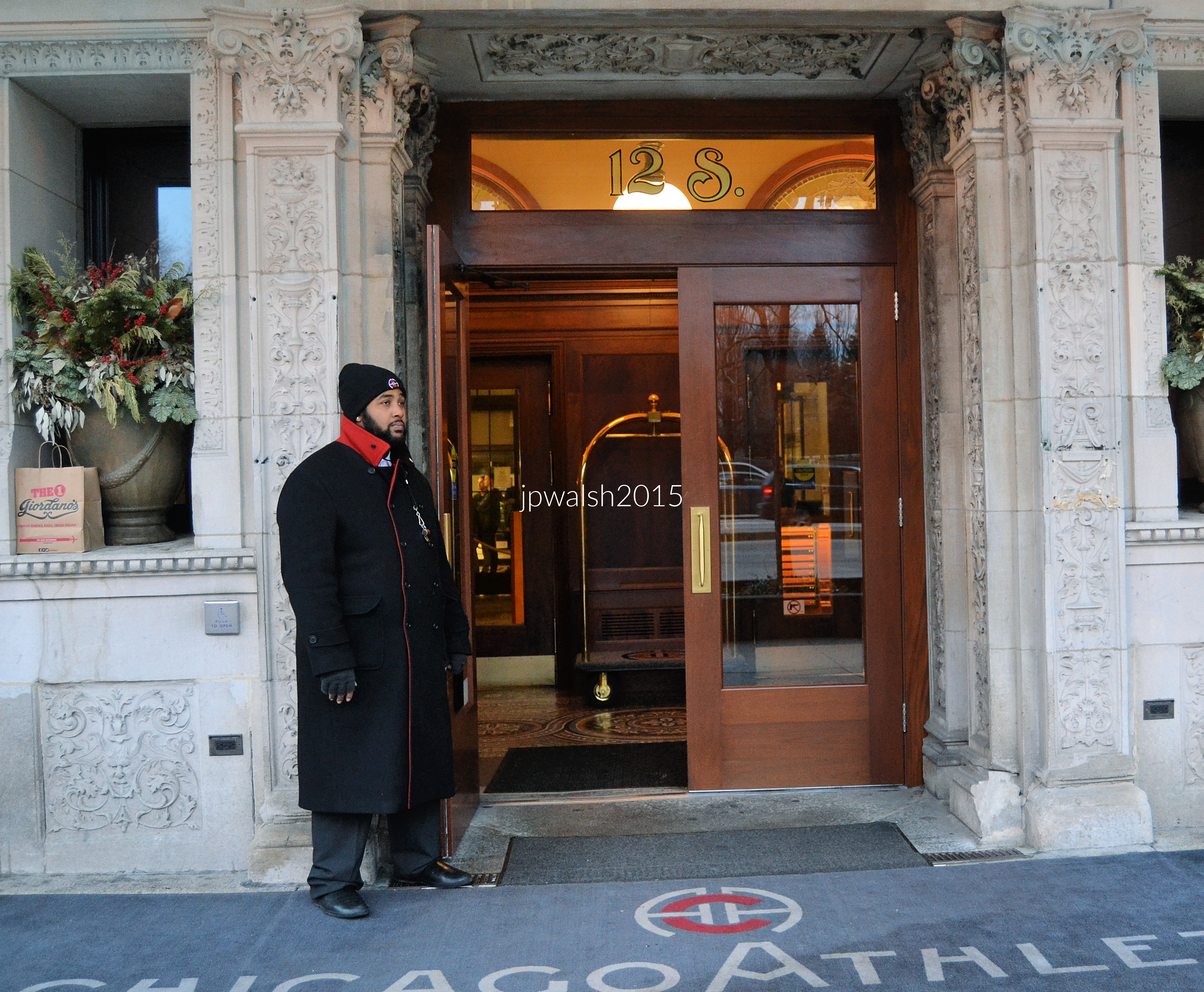
The Chicago Athletic Association (CAA) was a historic men’s club and athletic team based in Chicago, Illinois, formed in 1890 and closed in 2007. The 1893 building was designed by prolific architect Henry Ives Cobb (1859-1931). Transformed into the Chicago Athletic Association Hotel, it opened as a boutique hotel, welcoming the public and preserving its rich history.
December 2015. Chicago. 1.91mb DSC_0689 (1)
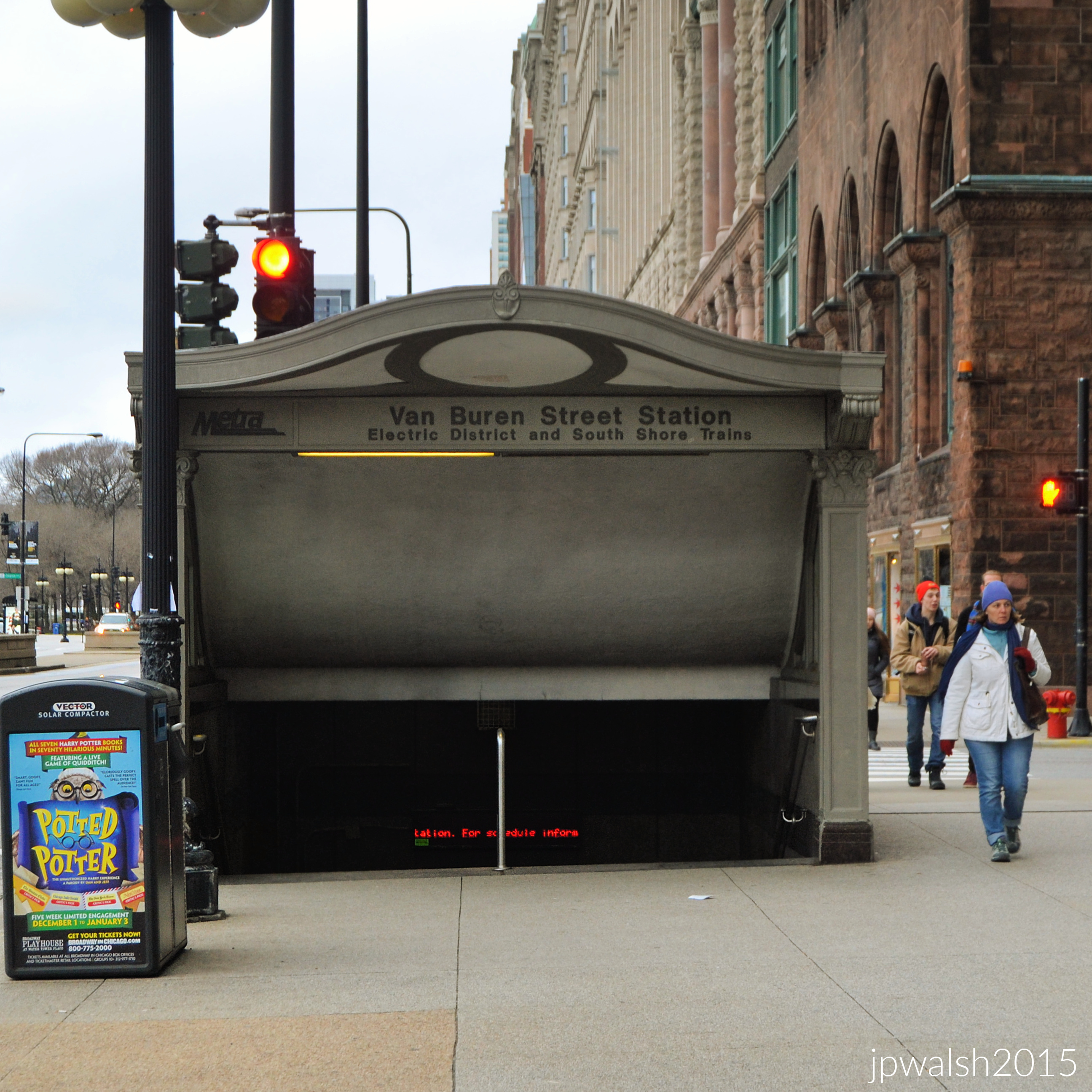
Van Buren Street Station is a commuter rail station in downtown Chicago that serves the Metra Electric Line to University Park, Blue Island, and South Chicago neighborhood and the South Shore Line to Gary and South Bend, Indiana.
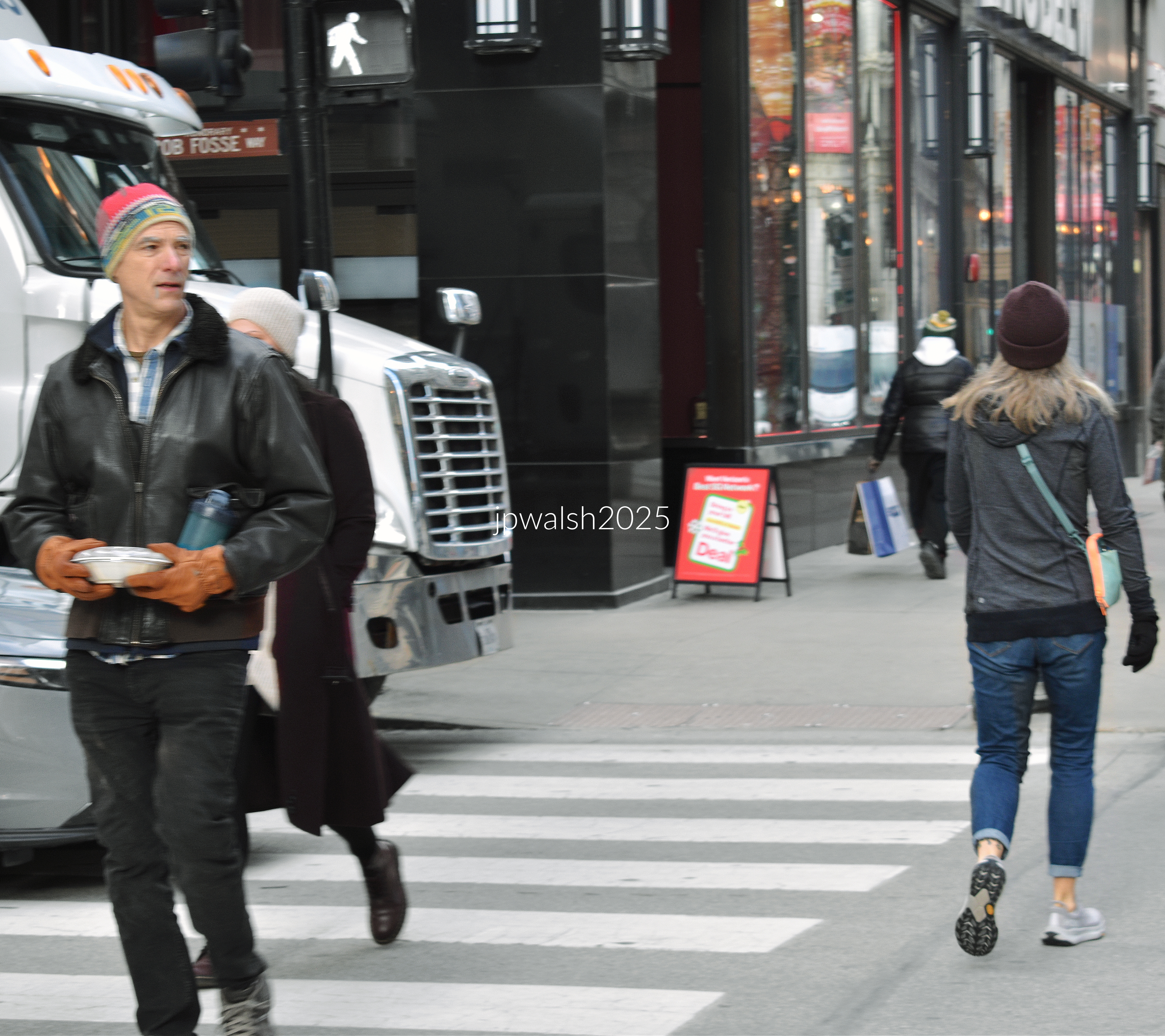
FEATURE image: July 2015. Chicago. 134 S Wabash Ave, Chicago 60603. According to their website, Miller’s Pub was established as a bar in 1935 which was bought in 1950 by Pete, Nick and Jimmy Gallios, three brothers of Greek descent. A fourth brother, Vannie, worked his way into a stake in the business in 1953. Miller’s Pub thrived in the same location until 1989 when they moved around the corner into another of their restaurants they owned located at 134 S. Wabash. Over the years entertainers, politicians and sports figures have patronized Miller’s Pub in Chicago’s Loop including Chicago mayors, Jimmy Durante, Marilyn Monroe, Bill Veeck, Harry Caray, Tony Bennett and Bob Fosse’s dancers who came for an after-show nightcap. 3.68 mb
Signs are visual artifacts of community identity, capturing cultural and economic shifts, institutional history, and the continual transformation of a landscape. By anchoring everyday culture, commerce, religion, and memory, they provide a powerful record of the times in which they exist.
All photographs and text by John P. Walsh.
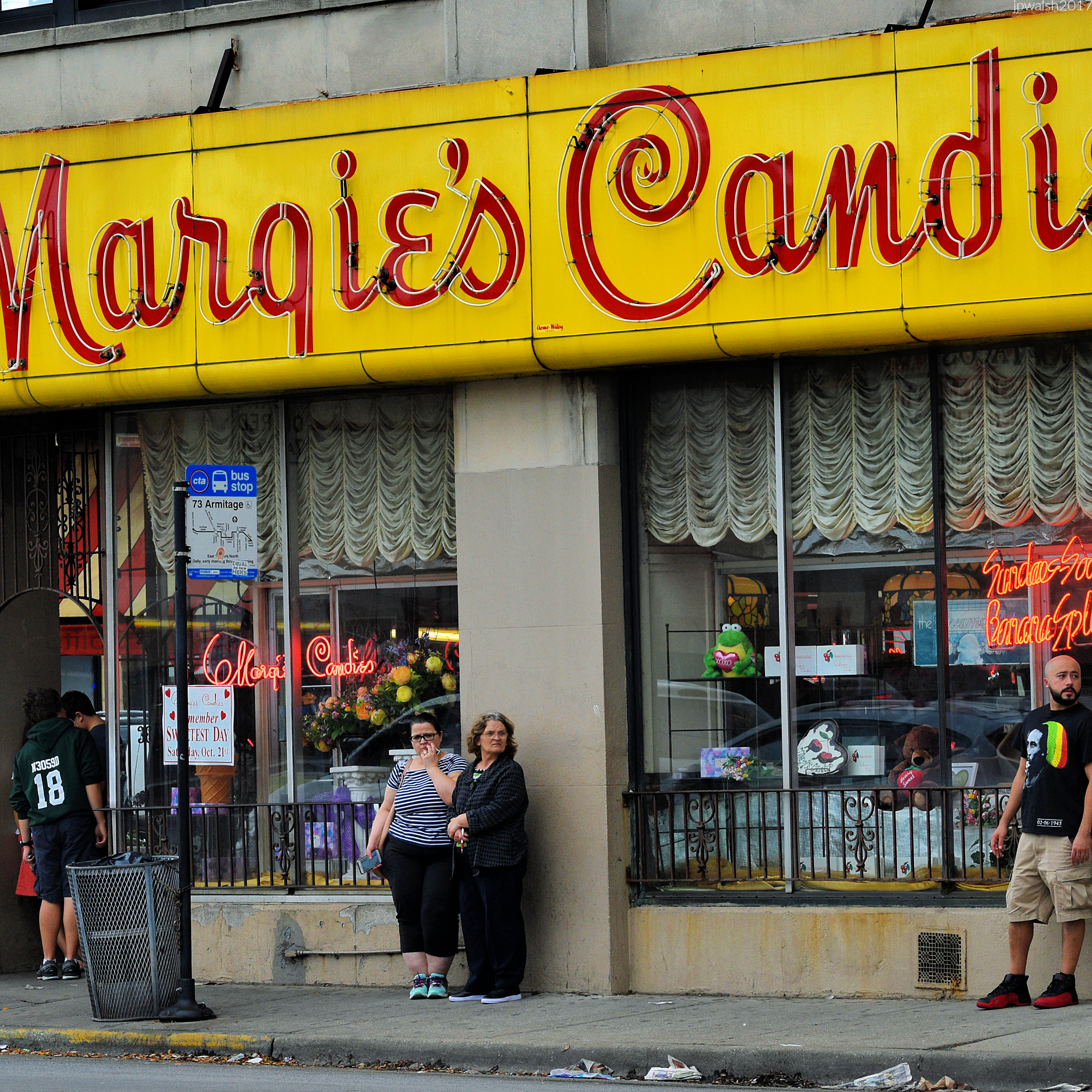
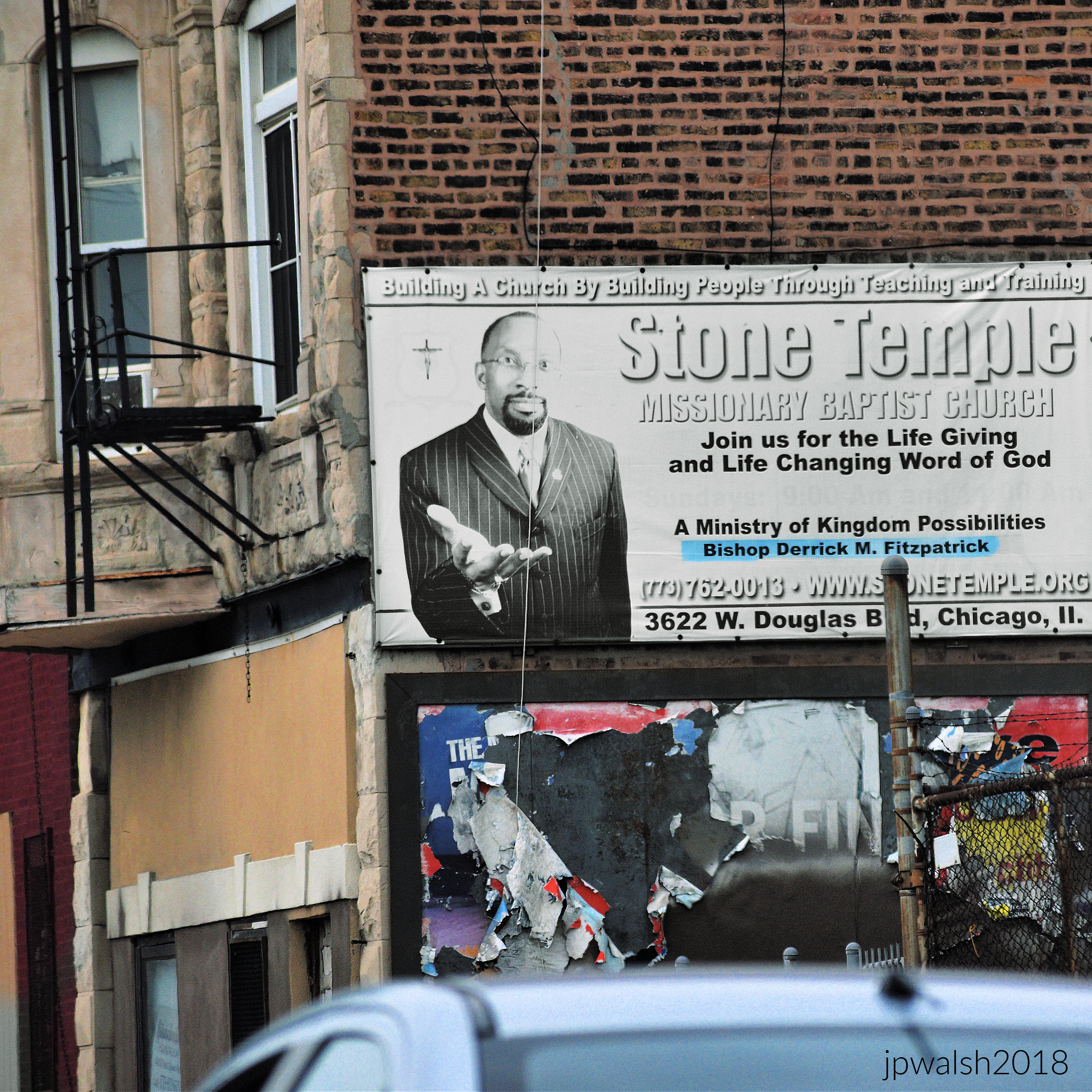
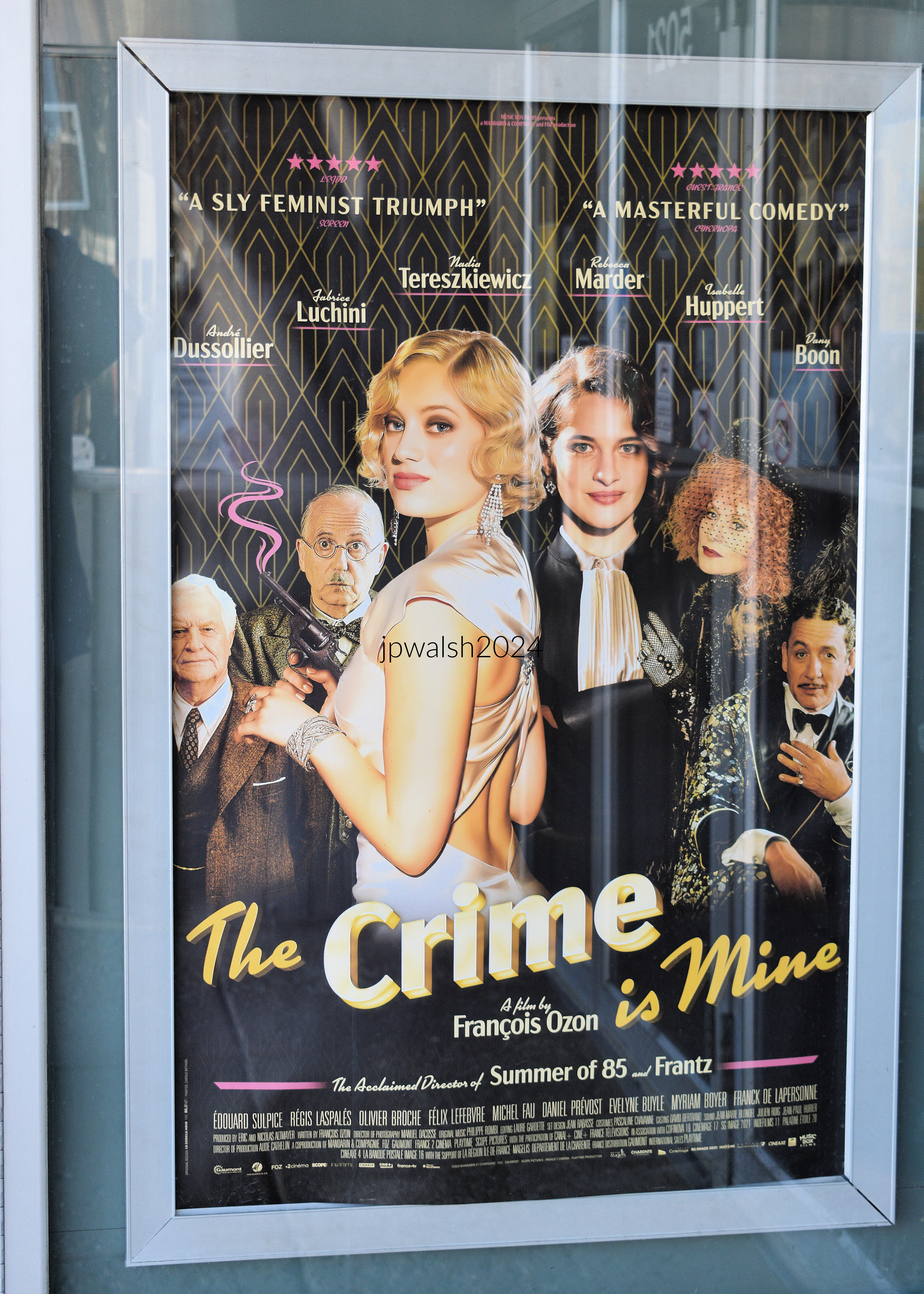
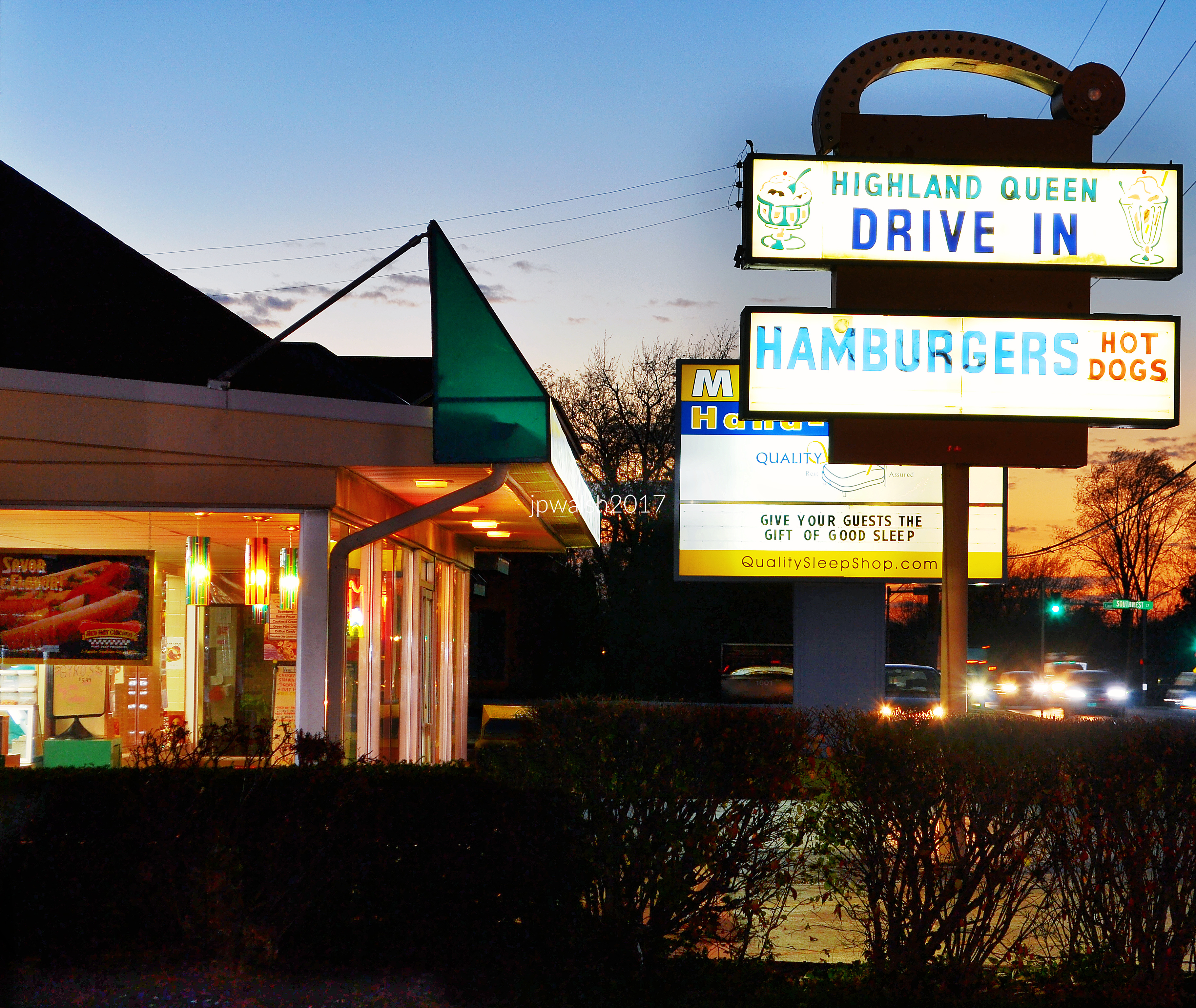
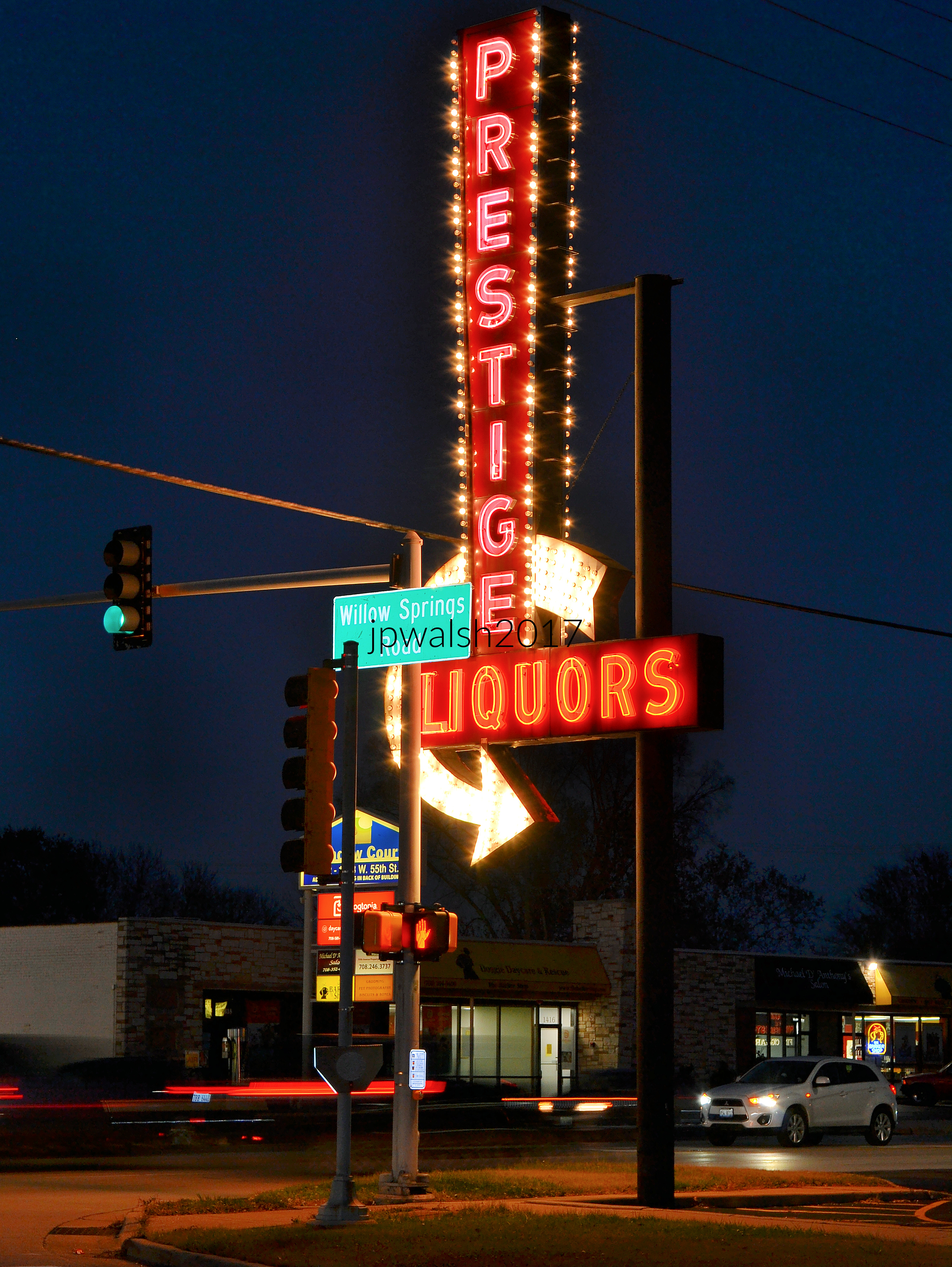
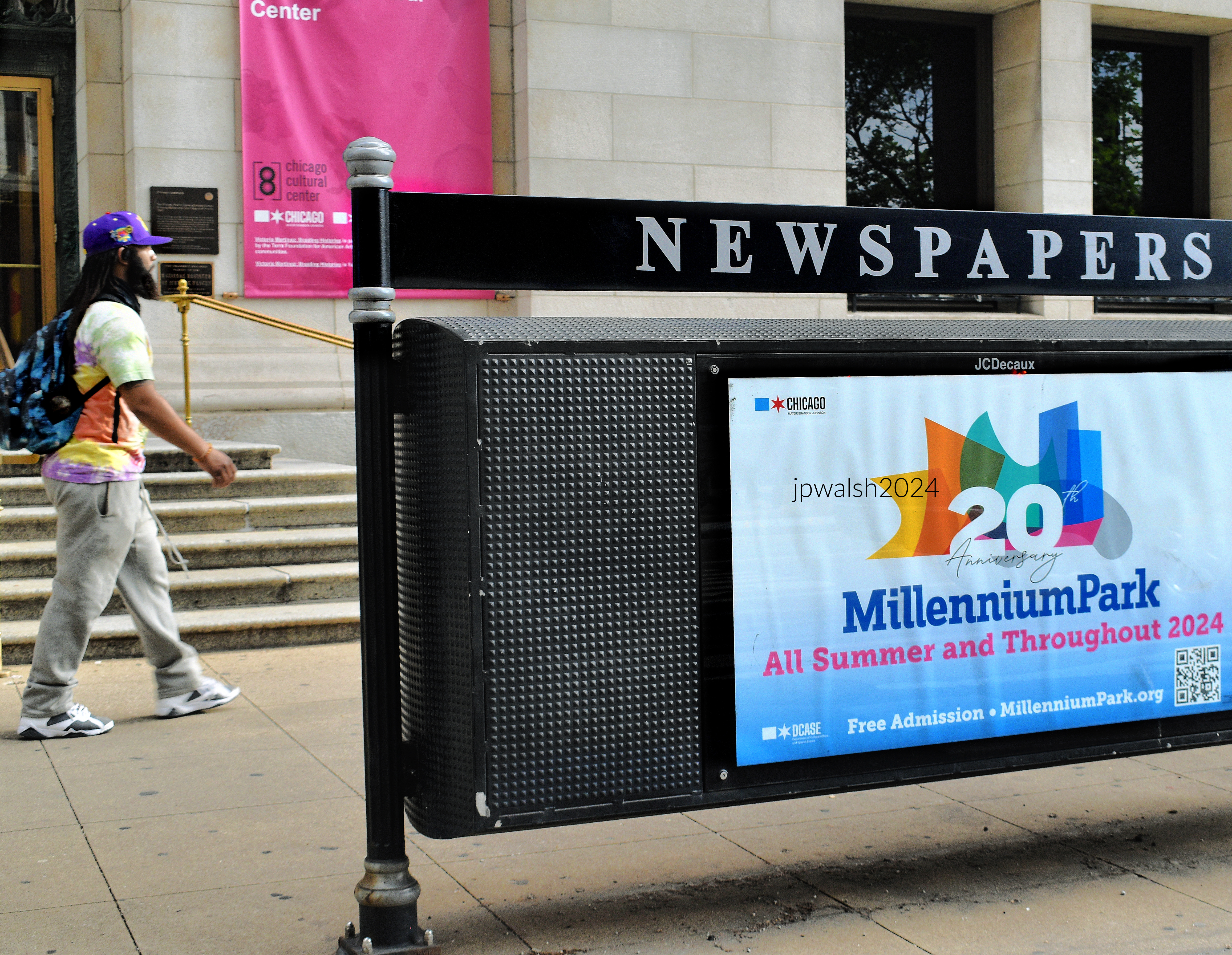
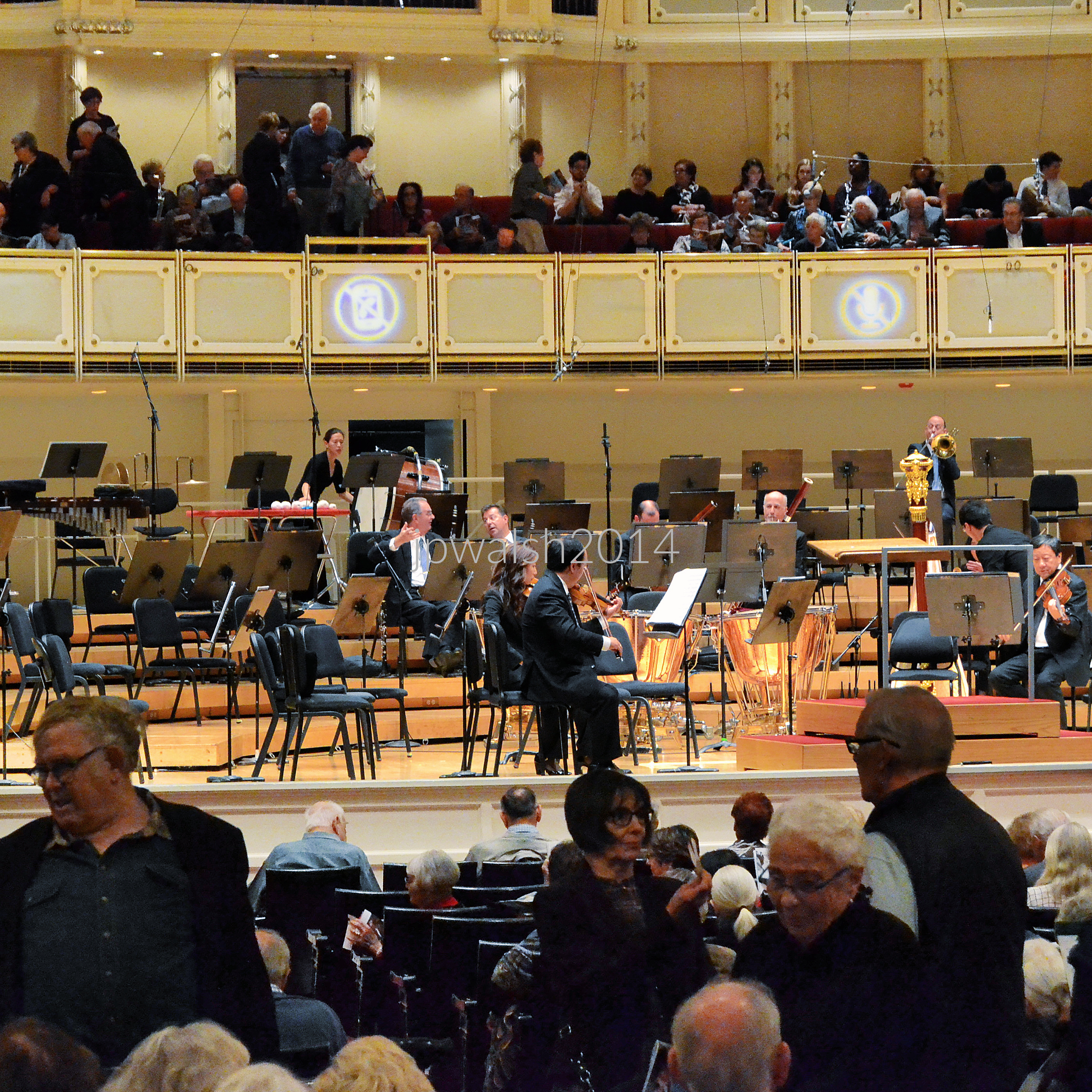
January 2024. 7.89 mb 80%October 2023. 6.86mb 99%August 2021. Chicago 7.43 mb 70%August 2015. Chicago. Michigan Avenue.Chicago. 6.30 mb 95%July 2015. Chicago. 40%October 2014. Chicago. Symphony Center. 1.99 mbOctober 2014. Chicago. Symphony Center. 2.51 mbDecember 2016. Chicago. Auditorium Theatre. January 2018. Chicago. Macy’s State Street. 872kb (10)September 2016. Forest Park, Iilinois. 5.11 mbSeptember 2015. Chicago. 3.82 mbJanuary 2018. Oak Park, Iilinois. 2.40 mbSeptember 2015. Chicago (Streeterville). 2.75 mbOctober 2016. Chicago (Chinatown). 4.78mb DSCN4244 (1)August 2015. Chicago (Chinatown). 3.44 mbJuly 2016. Chicago (Chinatown). 5.01 mb February 2018. Chicago. 4.74 mbDecember 2017. Westmont IL. 7.83 mb 98%September 2017. Chicago. 2.80 mbJune 2022. Chicago. 7.79mb 77%October 2017. Margie’s Candies at 1960 N. Western Avenue in the Bucktown neighborhood in Chicago was founded in 1921. It was renamed Margie’s Candies in 1933. In August 1965 Margie’s Margie’s hosted the Beatles who came in after they played a concert at Comiskey Park in Bridgeport. The Fab 4 ordered “Fudge Atomic Sundaes” that are still on the menu today which can complement to Margie’s since much of its décor is original from its first day of business. 3.03 mb May 2018. Villa Park, Illinois. 4.06 mbOctober 2022 5.80 mb 99%February 2019. Evanston, Illinois. 4.94 mbJune 2022. Evanston, Illinois. 7.70 mbApril 2020. Downers Grove, Illinois. 7.39mbMarch 2018. Lisle, Illinois. 3.38 mb (30)July 2015. Chicago. 3300 W. 111th St, 60655. 4.16 mbJuly 2023. 7.65 mb 74%August 2015. 4900 N. Broadway Chicago. 3.54 mbApril 2020. Cancelled & re-scheduled. 4.15 mb. see – Frida Kahlo: Timeless — CCMA – retrieved Dec. 26, 2025. June 2020. Downers Grove, Illinois. 4.59 mbSeptember 2015. Chicago (South Loop). 3.82 mbAugust 2017. Watseka, Illinois. 6.24mb August 2017, Kentland, Indiana. 3.16mbJune 2018. Chicago. 558 E 79th St, 60619 3.64mbJune 2021 95%June 2018. Cedarburg, Wisconsin. 6.23 mb 95% February 2018. Chicago (Kennedy Expressway). 6.58 mb (40)June 2018. 80% 7.82 mb DSC_0641. In 1966 when Dr. Martin Luther King, Jr. and Coretta Scott King lived in Chicago on the West Side at 1550 S. Hamlin Avenue Dr. King preached at Stone Temple Baptist Church at 3622 W. Douglas Boulevard, a ten-minute walk away. Built in 1926 as a synagogue in the North Lawndale neighborhood the building became a Baptist church in 1954. Already in the 1950’s and early 1960’s Dr. King had delivered several speeches at Stone Temple MB Church in his civil rights efforts and used the church during his 1966 Chicago residency as a base for his civil rights and fair housing advocacy. His efforts led to the signing of the 1968 Fair Housing Act on April 11, 1968, a week after his assassination. Today, Stone Temple is led by Bishop Derrick M. Fitzpatrick, the grandson of Rev. James Marcellus, the church’s founder.February 2018. Chicago (Loop). 3.63 mbDecember 2015. Chicago (Michigan Avenue). 4.30 mbNovember 2017. Chicago (South Loop). 3.50 mbFebruary 2018. Chicago. 6.18 mbSeptember 2015. Chicago. 6.33 mbJune 2022. Chicago. 5.86 mb December 2012. Chicago. 6.67 mb 99%May 2022. 7.33mb 98% (50)October 2023 7.78 mb 68%June 2022 7.02mbMarch 2017. Post Office. 4.11 mbSeptember 2022. Lisle Illinois. 6.57 mbAugust 2016. Kendall Co., IL. 3.48mbAugust 2022. 7.57 mb 99%August 2021. Chicago. 6.25 mb 99%August 2015. Chicago, 8611 S Pulaski Rd 60652. 7.71 mb 87%May 2022. Wheaton, Illinois. 917 E Roosevelt Rd, 7.76 mb 99%July 2017. Alsip, IL (demolished). 4.56 mb (60)August 2015. Chicago. 2116 W. 95th Street, 60643. 7.13 mbJune 2014. Waukegan, Illinois. 7.10mbMay 2023. Downers Grove, Illinois. 7.09 mb 99% August 2023. Wheaton, Illinois. 7.75 mb 61%August 2023. Tivoli. 7.17mb 99%September 2023. Downers Grove, illinois. 7.84mb 91%June 2023. Downers Grove, Illinois. 7.95mbSeptember 2023. 7.60 mb 80%July 2023. Darien, IL. 7.94mb 85%January 2019. 4.04mb (70)June 2022. Chicago. 7.41mb 99%December 2017. Chicago. 141 kb 25%March 2013.Chicago. 65%November 2023. 7.84mb 96%– *December 2023. 7.92 mb 94%April 2024. Downers Grove, Illinois. 99% 7.06mbApril 2024. 99% 6.65 mbApril 2024. 90% 7.79mb (2.15 minutes). Based on a 1934 French stage play, The Crime Is Mine (“Mon Crime’) is 2023 French film about a young actress (Nadia Tereszkiewicz) who becomes celebrated overnight after being acquitted of murdering a French movie producer in self-defense. But is she really innocent – or has she just gotten away with murder? The crime-comedy film was directed François Ozon who conceived it as a tale “ultimately about the triumph of sorority” and influenced by French directors Jean Renoir and Francois Truffaut and Americans Ernst Lubitsch, Frank Capra and Blake Edwards. Ozon based Isabelle Huppert’s character on French stage actress Sarah Bernhardt. The plot and characters of the original stage play by Georges Berr and Louis Verneuil became the basis for two Paramount Pictures’ films in the 1930s and 1940s – “True Confessions” starring Carole Lombard in 1937 and “Cross My Heart” starring Betty Hutton in 1946. Reviews for The Crime is Mine have been generally favorable citing particularly its star power.November 2017. Countryside, Illinois. 5.44 mb November 2017. Countryside, Illinois. 5.35 mb (80)2015. Chicago.7.69 mbMay 2024. 7.17mbMay 2024. 99% 7.35 mbMay 2024. Burger King was founded in Miami, Florida in 1954. Downers Grove, Illinois. 6.61mbChicago. May 2024 7.71 mbbuild to suit (dream home). May 2024 75% 7.68 mb – *June 2024. 99% 7.71 mb 8077May 2017. Marengo, Illinois. 1.29 mb 0247July 2024. 4.31mb 7746 (1)August 2024. Naperville, Illinois. 99% 7.60 mb 1161 (1)May 2024. Downers Grove, Illinois. II 81% 7.71 mbChicago. May 2024 3.24 mbChicago (Chinatown). 4/2013 2.86 mbChicago. 6/2022 7.72mb 85% July 2024. Woodridge, Illinois. 85% 7.81mb 0646November 2012. Wheaton, Illinois. 2.59mb 101_0382February 2013. Chicago. 1.85mb101_6384 (1)February 2013. Chicago. 3.67mb 101_6792 (1)March 2013. Chicago. 2.38mb 101_7015 (1)March 2013. 4.68mb 101_7023 (1)February 2013. 2.04mb 101_6508 (1)February 2013. 1.95mb 101_6610 (1)March 2013. Chicago 3.58mb 101_8578 (1)
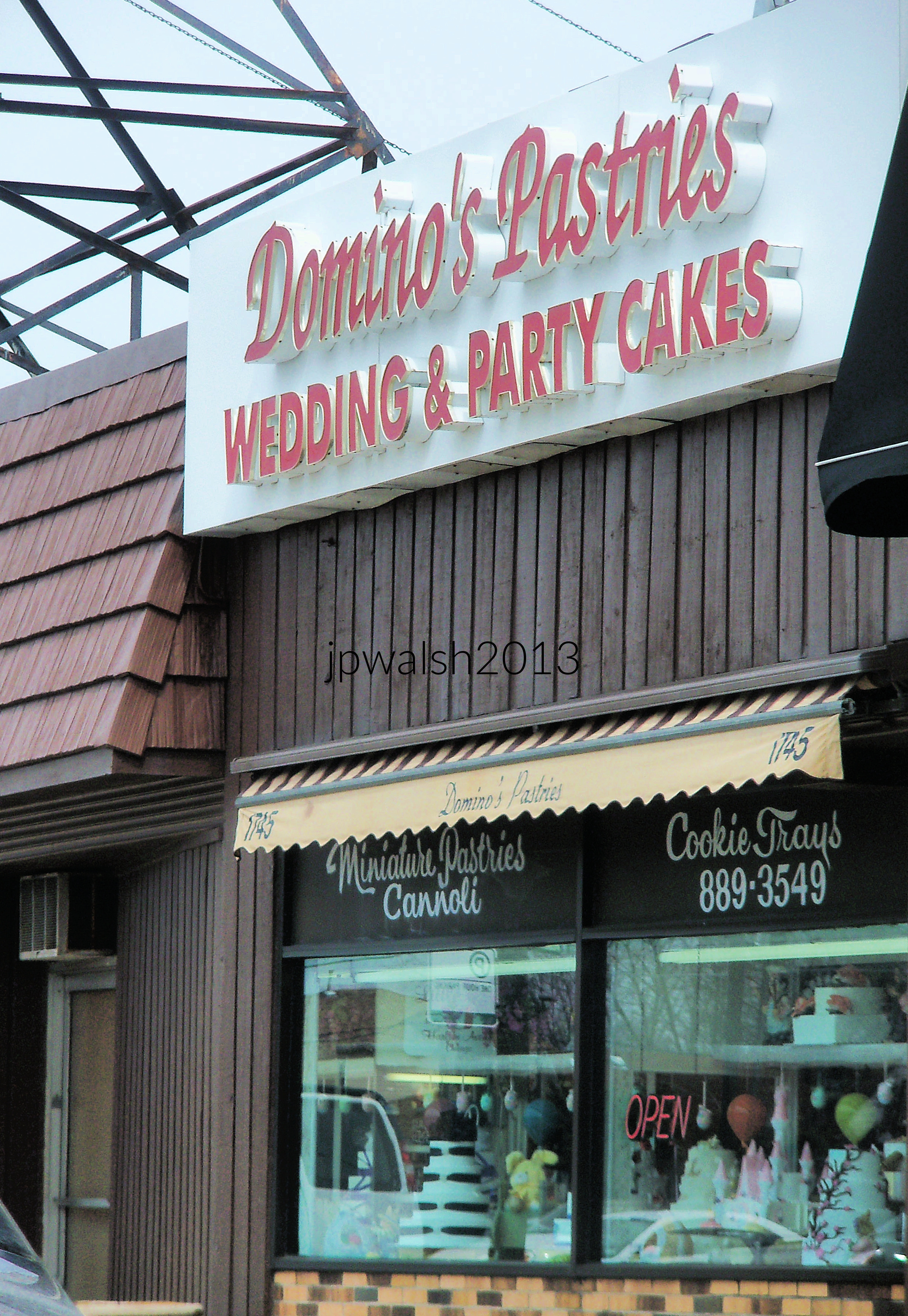
The owner came to the US from Italy through Ellis Island in 1938. The family business, Domino’s Pastries, was founded in this location in Chicago in 1952. Their loyal customer base is witnessed when the same couples who ordered their wedding cakes at Domino’s ordered many years later their anniversary cakes.
March 2013. Chicago. 4.58mb 101B8629 (1)April 2013. 4.28mb 101_9593 (1)April 2013. Chicago. 3.89mb 102_0152 (1)May 2013. Chicago. 3.84mb 102_1487 (1)August 2013. Aurora, Illinois. 3.48mb DSC_0848 (1)February 2016. 7.47mbDSCN2087 (1)April 2016. Joliet, Illinois. 6.12mb DSCN2341 (1)May 2016. Wheaton. 5.16 mb DSC_0597 (1) Last Slice Served At Jack Straw’s Pizza In Wheaton | Wheaton, IL Patch – retrieved March 9, 2026.June 2016. 6.30mb DSC_0803 (1)June 2016. 5.65mb DSC_0913 (1)
FEATURE image: May 2015. Michigan Avenue Main Lobby. The Art Institute of Chicago. 4.57mb DSC_0366 (1)
Whether displayed in museums, galleries, historic houses, homes, offices, public buildings, sculpture gardens, or private collections, the focus of this collection remains the artwork itself. Through photography, it explores painting, sculpture, design, and other forms of visual expression while also acknowledging how their settings can enrich our understanding of their artistic, historical, and cultural significance.
Photographs and Text by John P. Walsh.
September 2015. 7.68 mb 99%
Michigan Avenue entrance of The Art Institute of Chicago.
May 2015.
Sculpture Court, The Art Institute of Chicago.
September 2015.
Modern Wing, The Art Institute of Chicago.
June 2014. The Art Institute of Chicago. 20th Century. American. Pop.
Andy Warhol (1928-1987), Mao, 1972, Acrylic, silkscreen ink, and pencil on linen, 448.3 × 346.7 cm (176 1/2 × 136 1/2 in.). The Art Institute of Chicago.
June 2014. The Art Institute of Chicago. 40%
The Chauncey McCormick Gallery refers to exhibition space (often featuring Asian and European decorative arts) at the Art Institute of Chicago named after Chauncey Brooks McCormick (1884–1954), a prominent Chicago businessman, philanthropist, and president of the museum from 1944 until his death
June 2014. 5.59mb
Robert Irwin (1928-2023), Untitled, Acrylic lacquer on cast acrylic disk, 1969. The Art Institute of Chicago. Irwin was a pioneering figure in California Light and Space art.
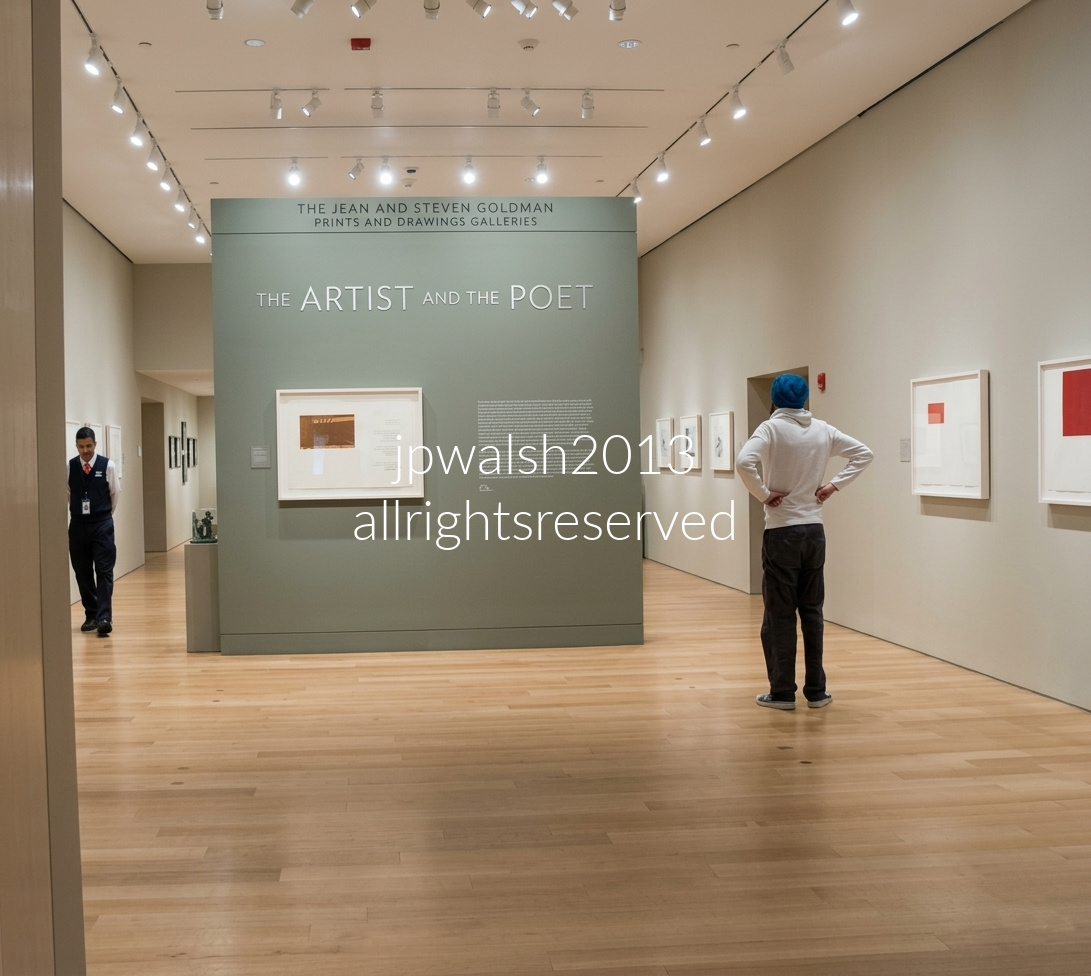
February 2013. Galleries 124–127, The Art Institute of Chicago.
The exhibition “The Artist and the Poet” at the Art Institute of Chicago ran from February 1 to June 2, 2013, exploring the dialogue between visual art and literature through works on paper, prints, and illustrations. It was presented in the Jean and Steven Goldman Prints and Drawings Galleries (Galleries 124–127), located on the first floor of the museum’s historic Ryerson and Burnham Libraries building.
September 2015. 6.25 mb
Modern wing, The Art Institute of Chicago.
August 2015. The Art Institute of Chicago. 21st Century. American.
Frances Stark (1967-) from Intimism, 2015. The Art Institute of Chicago.
August 2015. Alexander McKinlock Memorial Court. AIC. 20th Century. Nordic. Sculpture.
Carl Milles (1875-1955), Triton Fountain, 1926, bronze, Alexander McKinlock Memorial Court, The Art Institute of Chicago. Swedish sculptor Carl Milles (1875-1955) studied in Paris from 1897 to 1904, working in the studio of Auguste Rodin (1840-1917). Yet Milles departed from the prevailing naturalism that dominated sculpture in the Belle Époque era, and embraced ideas and forms that reflected the artist’s independent spirit, his knowledge and appreciation of classical and Gothic sculpture, and his Nordic roots.
Speaking of his fountain at the Art Institute of Chicago, Milles observed: “The great classicists knew that it was impossible to reproduce the appearance of flesh in marble, and they set themselves to create forms of pure beauty that would merely suggest and symbolize the living creature, and then to invest those forms with a meaning that mankind would feel intuitively to be universal and significant. This is what I have tried to do.”
September 2015. The Art Institute of Chicago. 21st Century. American. Sculpture.
Charles Ray (1953-), Young Man, 2012, Solid Stainless Steel.
May 2015. The Art Institute of Chicago.
Lorado Taft (1860-1936), Fountain of the Great Lakes, 1913. South Garden. The Art Institute of Chicago.
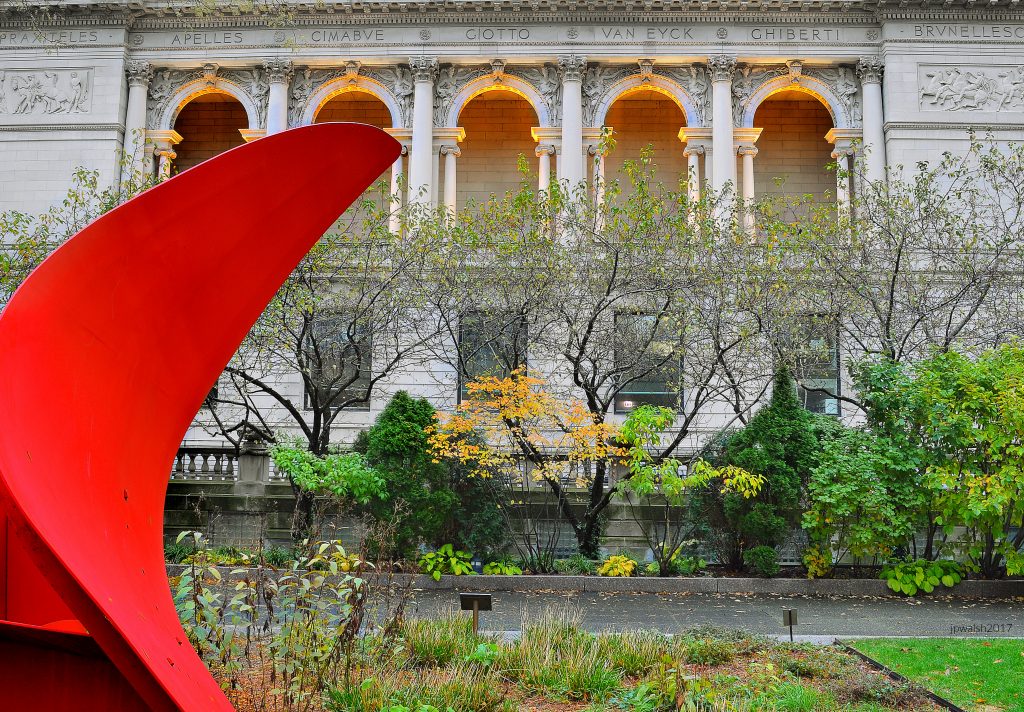
November 2017. North Garden, The Art Institute of Chicago.
Alexander Calder (1898-1976), Flying Dragon, 1975, Steel plate and paint, 365 × 579 × 335 cm (120 × 228 × 132 in.), North Garden, The Art Institute of Chicago. 20th Century. American. Sculpture. Modernism.
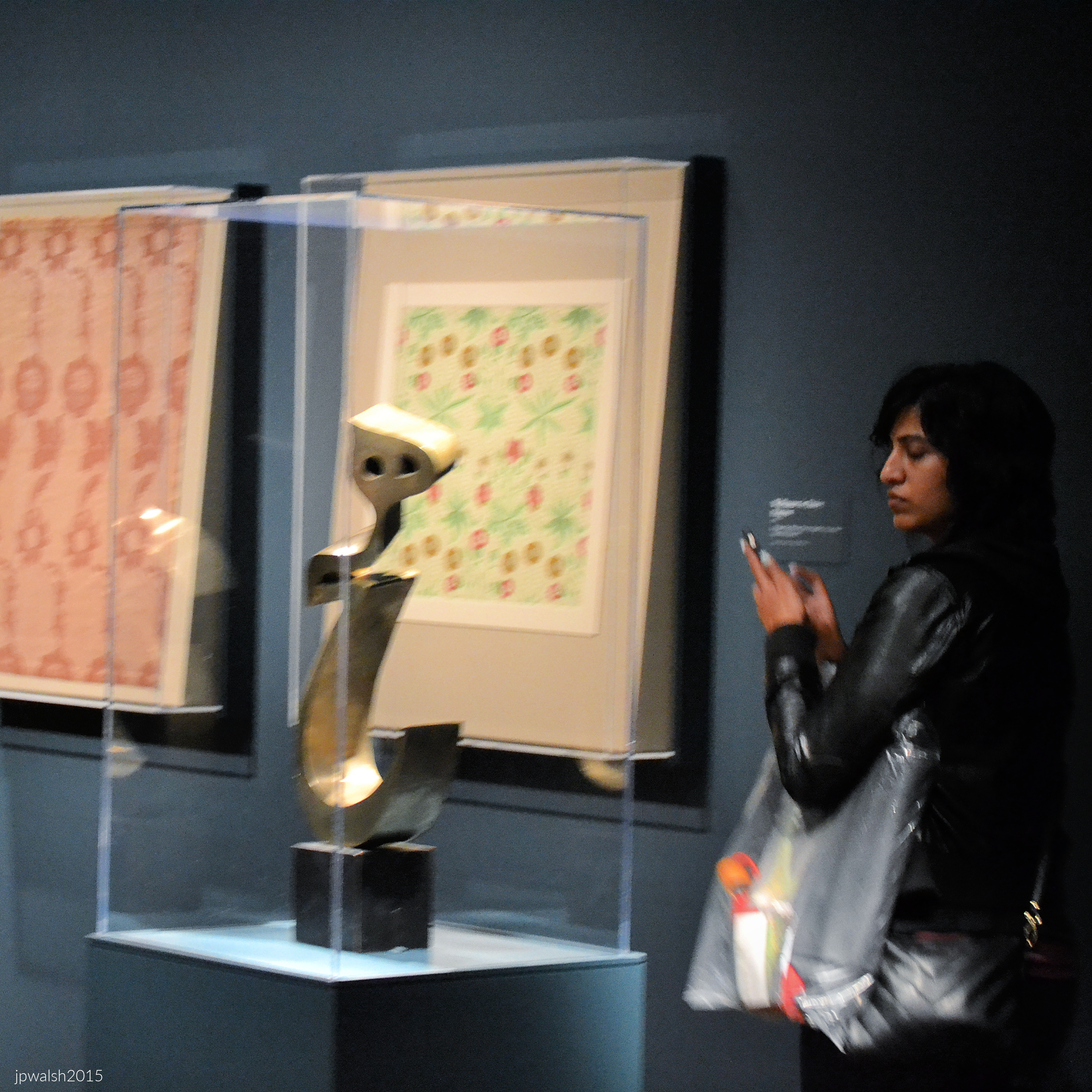
November 2017. North Garden, The Art Institute of Chicago. Partial view: Flying Dragon, Alexander Calder, 1975. November 2017. North Garden, AIC. 20th Century. British. Modernism. Sculpture.
Henry Moore (1898-1986), Large Interior Form, bronze (ed. of 6), 1953/4, 16 ft. 9 in., North Garden, The Art Institute of Chicago. Henry Moore’s 16-foot sculpture was made when the 84-year-old British artist was concerned with the construction of three-dimensional space, internal forms within solid volumes, and placing his work in a natural setting. Moore had worked primarily in stone but as these formal concerns emerged, he shifted to modeling and bronze casting. Large Interior Form explores mass and void as well as gravity and growth within a nature-inspired artist-created form.
March 2010. Washington, D.C.
Aristide Maillol (1861-1944), Nymph—Central Figure for the Three Graces, 1930, The Hirshhorn Museum and Sculpture Garden, Washington D.C. Acquired by the museum in 1966, photographs show that the statue stood in an open location by a garden pool at the museum. In 1991 following a whirlwind of euphoria associated with the successful completion of Operation Desert Storm, a victory celebration at the Mall in June of that year involved hovering military jets and helicopters. Their downdraft sent gravel footpath debris flying in the air that scratched and cracked several statues in the sculpture garden. Though none appeared to sustain damage beyond some repair, the Nymph—Central Figure for the Three Graces suffered the most damage as the nude female statue had pitted indentations on her backside. In 2010 when this photograph was taken, the sculpture was located in front of a protective garden wall. See- https://www.baltimoresun.com/news/bs-xpm-1991-06-12-1991163158-story.html 20th Century. France. Sculpture. Modernism.
August 2015. The Art Institute of Chicago. 1.43 mbMay 2015. Art Institute of Chicago. 3.34 mb
Indian and Islamic Art.
September 2015. The Art Institute of Chicago. 6.90 mbMay 2015. Frédéric Bazille. The Art Institute of Chicago. 19th Century. France. Impressionism.
Frédéric Bazille, Self-portrait, 1865/6. The Art Institute of Chicago.
November 2012. Toledo (Ohio) Museum of Art. 18th Century. France. Terracotta.
Clodion (1738-1814). The See-Saw. 1775. Toledo (Ohio) Museum of Art.
November 2012. Toledo (Ohio) Museum of Art. 17th Century. France. Sculpture.
Michel Anguier (1612-1686), Amphitrite, marble, 1684. Toledo (Ohio) Museum of Art.
November 2012. Toledo (Ohio) Museum of Art.
Venus, Roman, Asia Minor, marble, c.165 CE, Toledo (Ohio) Museum of Art.
September 1993. Museum of Anthropology, UBC, Vancouver, B.C. 20th Century. Canada.
Bill Reid (1920-1998), Birth of the World or The Raven and the First Men/Humans, yellow cedar, 1980. Museum of Anthropology, UBC, Vancouver, British Columbia.
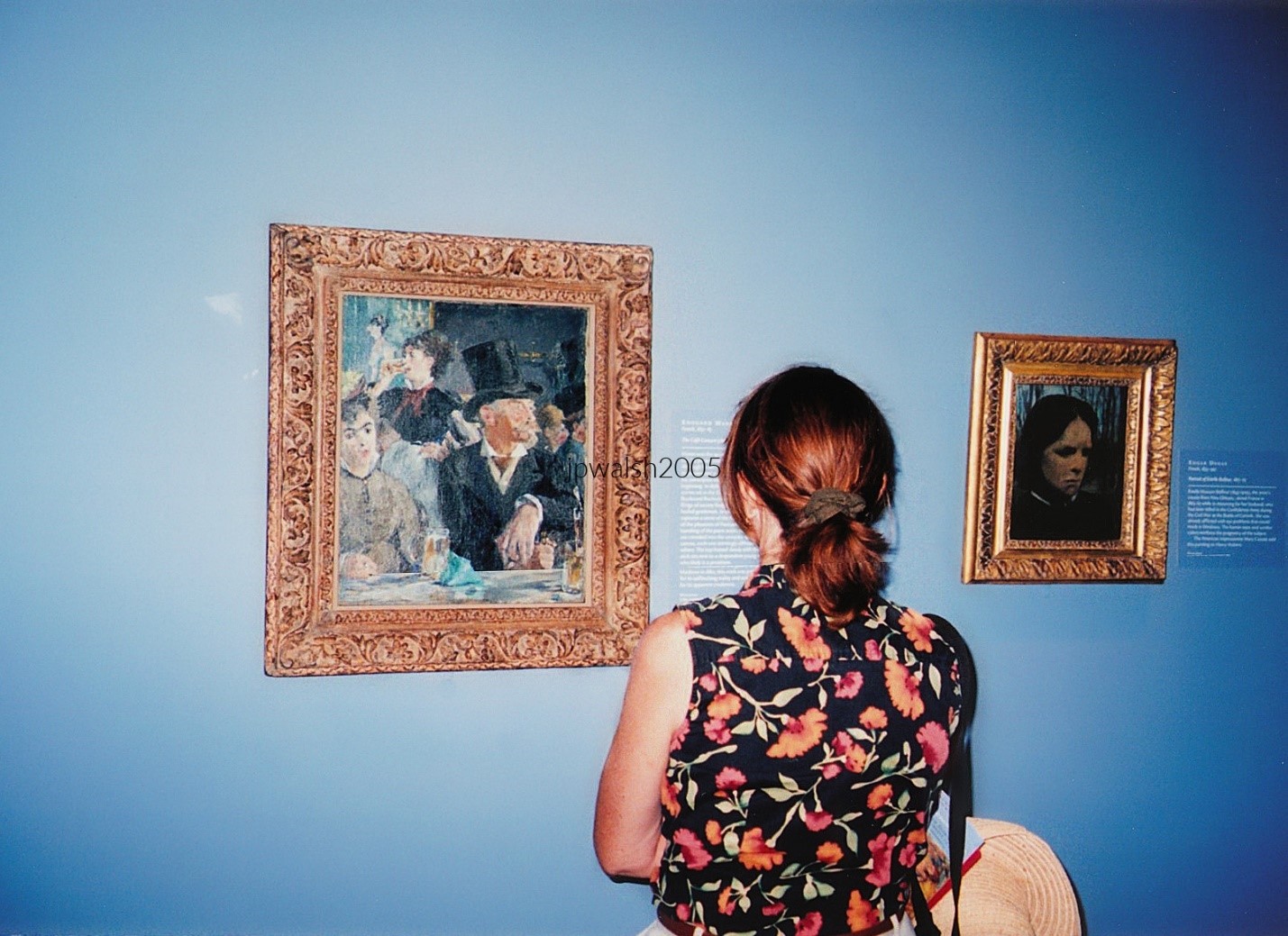
August 2005. National Gallery of Art, Washington, D.C.
“The Café-Concert,” Édouard Manet, c. 1879. The Walters Art Museum, Baltimore at the National Gallery of Art, Washington, D.C. Next to it is Portrait of Estelle Balfour by Edgar Degas, c. 1863-65, oil on canvas mounted on panel, also at The Walters.
September 2016. Milwaukee Art Museum. 20th Century. Germany. France. Fauvism. Expressionism.
From right to left: Kees van Dongen (1877-1968), Woman with Cat, 1908, and Quai, Venice, 1921; Gabriele Münter (1877-1962), Portrait Young Woman, 1909. Milwaukee Art Museum.
August 2015. The Art Institute of Chicago. 16th Century. Japan.
Mikazuki (male deity) Noh Mask, cypress wood, brass, colors. The Art Institute of Chicago.
May 2014. The Art Institute of Chicago. Impressionist galleries.
Pierre-Auguste Renoir (1841-1919): Chrysanthemums, 1881/2; Acrobats at the Cirque Fernando (Francisca and Angelina Wartenberg), 1879; Fruits of the Midi, 1881; Seascape, 1879; Lucie Berard (Child in White), 1883. The Art Institute of Chicago.
September 2013. The Art Institute of Chicago. Impressionist galleries.
Berthe Morisot (1841-1895), Woman in a Garden, 1882/3, The Art Institute of Chicago.
September 2012. Snite Museum of Art, Notre Dame, Indiana. 20th Century. American. Realism.
William Glackens (1870-1938), The Dressing Table, c.1922, oil on canvas. Snite Museum of Art, Nore Dame University, South Bend, Indiana.
September 2016. Milwaukee Art Museum. 20th Century. Germany. Expressionism.
Gabriele Münter (1877-1962): Kirche von Reidhausen, oil on canvas board, 1908 and Mädchen mit Puppe, oil on cardboard, 1908/9. August Macke (1887-1914), Geraniums Before Blue Mountain, oil on canvas, 1911. Milwaukee Art Museum.
May 2015. The Art Institute of Chicago.
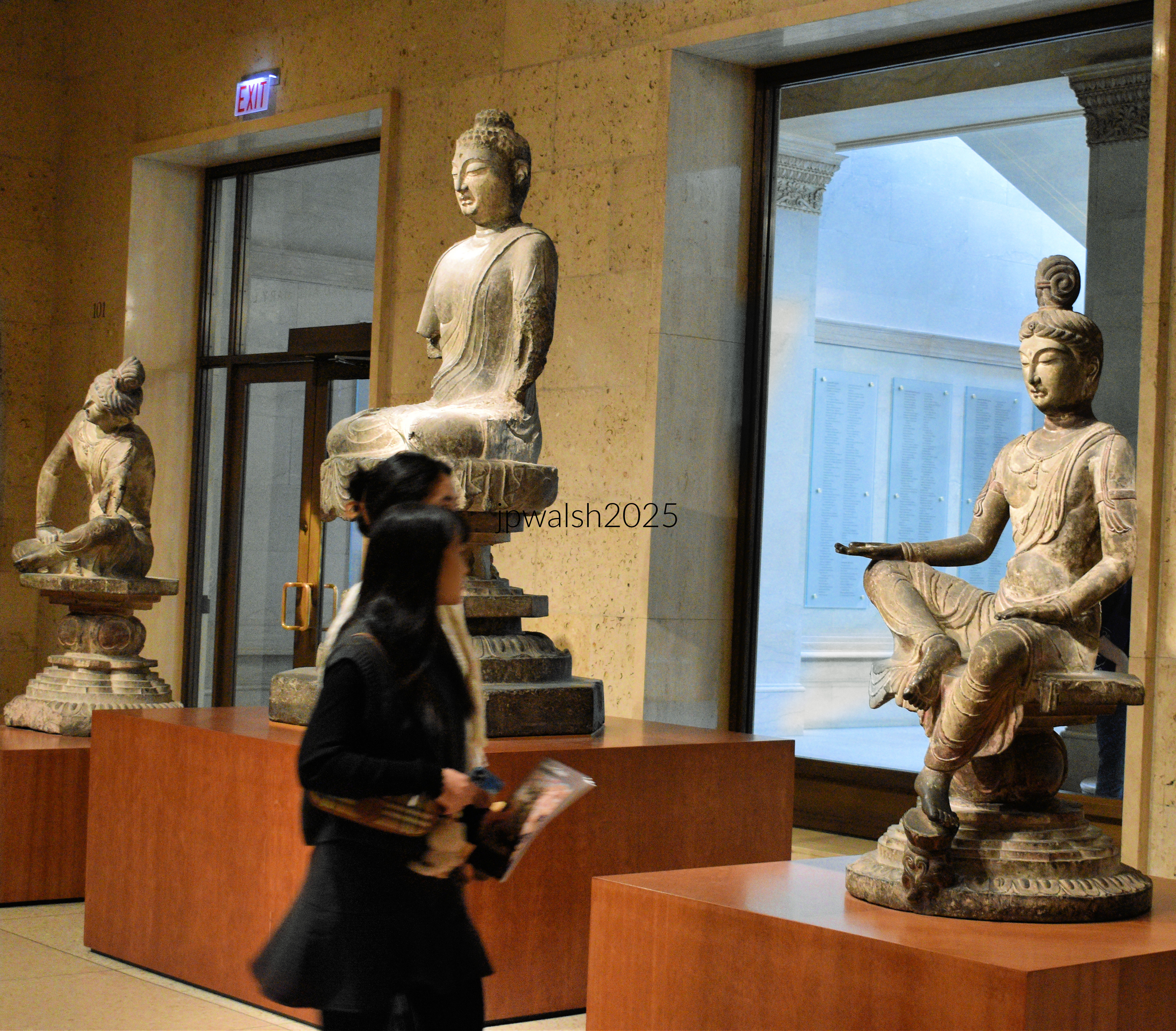
Above and below: Bodhisattva; Diety; Buddha. 4th-6th Centuries. Afghanistan/Pakistan. Stucco. The Art Institute of Chicago.
May 2015. The Art Institute of Chicago. September 2015. Room 235, The Art Institute of Chicago. September 2015. The Art Institute of Chicago. August 2015. The Art Institute of Chicago.May 2015. At The Art Institute of Chicago.
Charles Collins (1680-1744), Still Life with Game, 1741. Private Collection. 18th Century. Ireland.
May 2015. At The Art Institute of Chicago.
James C. Timbrell (1807-1850), Carolan the Irish Bard, c. 1844, oil on canvas. Private collection. 19th Century. Ireland.
May 2015. The Art Institute of Chicago. 256 kb 25%May 2015. At The Art Institute of Chicago.
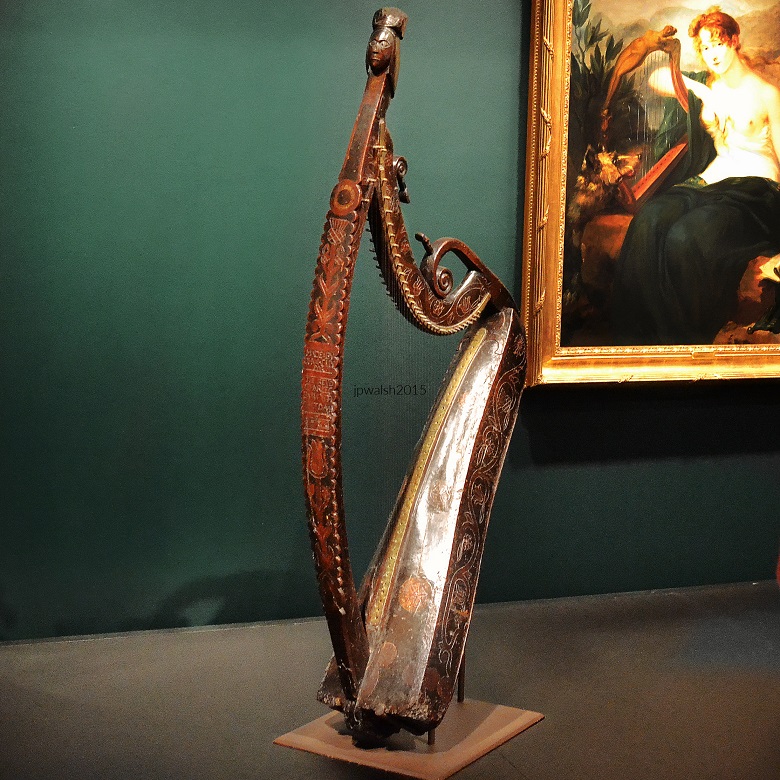
John Kelly, wire-strung Bunworth harp, 1734, Museum of Fine Arts, Boston, and Robert Fagan (c. 1761-1816), Portrait of Lady as Hibernia, c. 1798. Private collection. The Bunworth harp is inscribed: “made by Iohn Kelly for the Revd Charles Bworth Baltdaniel 1734″. The wire-string harp was made by Catholic instrument maker John Kelly for the Reverend Charles Bunworth, also of Baltdaniel, who was the Protestant rector of Buttevant, County Cork. The many aspects of the instrument—from soundbox, harmonic curve, fore-pillar, tuning pegs, and ornamentation and color— invite interest. Though it may be the female head at the top of the harmonic curve that at first most intrigues. (see – https://harp.fandom.com/wiki/Bunworth_Harp and http://www.earlygaelicharp.info/harpmakers/ – both retrieved October 14, 2021). Robert Fagan was an Irish painter who was born in London but spent most of his artistic career in Rome and Sicily (Fagan first arrived into Italy in 1781). Though an expatriate, Fagan’s oil on canvas depicts a woman who represents Ireland careessing the strings of the harp, the country’s national instrument and symbol. Seated next to an Irish wolfhound, she holds a scroll that reads: “Ireland Forever” (“Erin go bragh“). 18th century. Ireland.
August 2005. Yale Center for British Art, New Haven, CT.
Includes (below) John Dodd, of Swallowfield, Berkshire, 1739, John Vanderbank (1694 – 1739) and (above) Portrait of a Woman, Probably Elizabeth Aislabie, of Studley Royal, Yorkshire, c. 1749, Thomas Hudson (1701-1779), Yale Center for British Art, New Haven, CT.
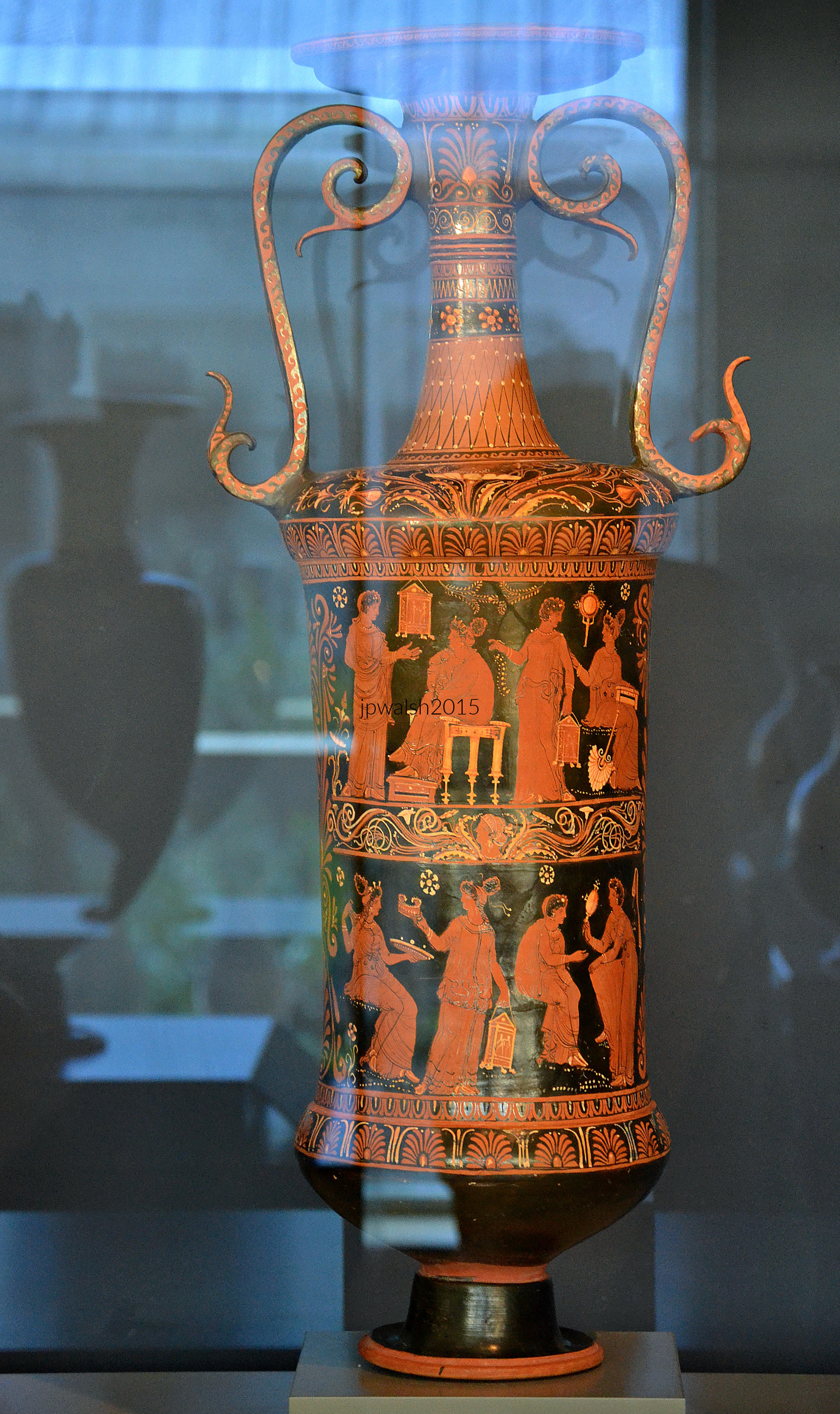
August 2015. The Art Institute of Chicago.
Loutrophoros (Bath water vase), 4th Century BCE. Greece. Italy (Apulia). Terracotta. The Art Institute of Chicago.
August 2015. Ancient Greek and Roman Art, The Art Institute of Chicago. October 2014. AIC. 6.64mb 35%The Art Institute of Chicago.
Black-figure painting was the primary technique for decorating Greek vases for over 200 years. The technique started in Corinth and expanded east to Athens in the mid first millennium BCE (700- 500 BCE). In this time period ancient Corinth was, with almost 100,000 people, one of the largest cities of Greece. In 146 BCE the Romans besieged, captured and demolished Corinth. The site lay deserted for almost 100 years until the Romans rebuilt it as a new city populated with around 50,000 Romans, Greeks and Jews.
August 2015. The Art Institute of Chicago.
Oil Jar, 450 BCE, Athens, Greece, terracotta. The Art Institute of Chicago.
May 2015. The Art Institute of Chicago. 19th Century. France. Impressionism.
Gustave Caillebotte (1848-1898), Paris Street; A Rainy Day (“Rue de Paris, Temps de pluie”), 1877. The Art Institute of Chicago.
October 2014. The Art Institute of Chicago. 19th Century. American.
Abbott Handerson Thayer (1849-1921). Winged Figure, 1889, oil on canvas. 130.8 × 95.9 cm (51 1/2 × 37 3/4 in.). The Art Institute of Chicago.
October 2014. The Art Institute of Chicago. 19th Century. American.
James McNeill Whistler (1834-1903), The Artist in his Studio, c. 1865-66, oil on boarded mounted on panel, 62 × 46.5 cm (24 7/16 × 18 5/16 in.). The Art Institute of Chicago.
May 2014. The Art Institute of Chicago. 19th Century. France. Sculpture. Modernism.
Auguste Rodin (1840-1917), Eternal Springtime, 1884. Bronze. Fonderie Alexis Rudier, Paris (20th century). The Art Institute of Chicago.
May 2015.The Art Institute of Chicago. 19th Century. France. Impressionism. Sculpture.
Edgar Degas (1834-1917), Spanish dance (c.1883), Arabesque (c.1885), and Woman seated in an armchair, (c.1901), bronze (cast later). The Art Institute of Chicago.
May 2014. The Art Institute of Chicago. 19th Century. French. Sculpture. Modernism.
Auguste Rodin (1840-1917), Adam, 1881. Bronze. The Art Institute of Chicago.
September 2015. Africa. The Art Institute of Chicago.
Headdresses. 19th/20th Century. Africa. The Art Institute of Chicago. The headdresses at the right and at the left are Gelede headdresses. The headdress in the middle is perhaps a Gelde or Efe headdress. The headdress at the left is made of wood and the oldest of the headdresses. It was made in Nigeria or Benin by the Yoruba community in the late 19th/early 20th centuries. Gelede headdresses often portray women. The headdresses in the center and at right depict women. One is wearing a head tie and the other is showing a woman with a plaited hairstyle. These were made in Nigeria by the Yoruba community in the early 20th century. The Gelede festival of the Yoruba community in western Africa is a public spectacle which uses colorful masks that combines art and ritual dance to educate, entertain and inspire worship. Gelede includes the celebration of “Mothers,” a grouping that includes female ancestors and deities as well as the elderly women of the community whose power and spiritual capacity in society is convoked. The Efe is a nighttime public performance held the day before the Gelede.
May 2015. 7.05 mb The Art Institute of Chicago.
Mariano Fortuny (1838-1874), African Chief, 1870, oil on canvas, 41 × 32.9 cm (16 1/8 × 12 15/16 in.). The Art Institute of Chicago. African Chief in The Art Institute of Chicago was recently exhibited in a 2017-2018 monographic retrospective at the Prado in Madrid. The show, simply entitled “Fortuny (1838-1874),” reflected the Prado’s holdings of many of this artist’s masterpieces. The Prado’s collection is due to their own acquisitions but mainly the generous bequests of the artist’s oils, watercolors, and drawings by late 19th century Mexican collector Ramón de Errazu (1840-1904) as well as the painter’s son, Mariano Fortuny y Madrazo. Fortuny’s artwork is often Orientalist in style that reflects the many trips he made to North Africa. In his career, Fortuny was noted for his precision of anatomy and archaeological scrupulousness though African Chief tends to the modern broken brush style for which the Spanish artist was prescient following his many trips to Paris. 19th century. Spain. Romanticism.
October 2014. The Art Institute of Chicago.
Left to right: Kramer Brothers Company (Dayton, Ohio), Settee, c. 1905/25; Cecilia Beaux (American, 1855-1942), Dorothea and Francesca, 1898, oil on canvas; Daniel Chester French (American, 1855- 1931), Truth, 1900, plaster.
September 2015. The Art Institute of Chicago. 19th Century. American. Modernism.
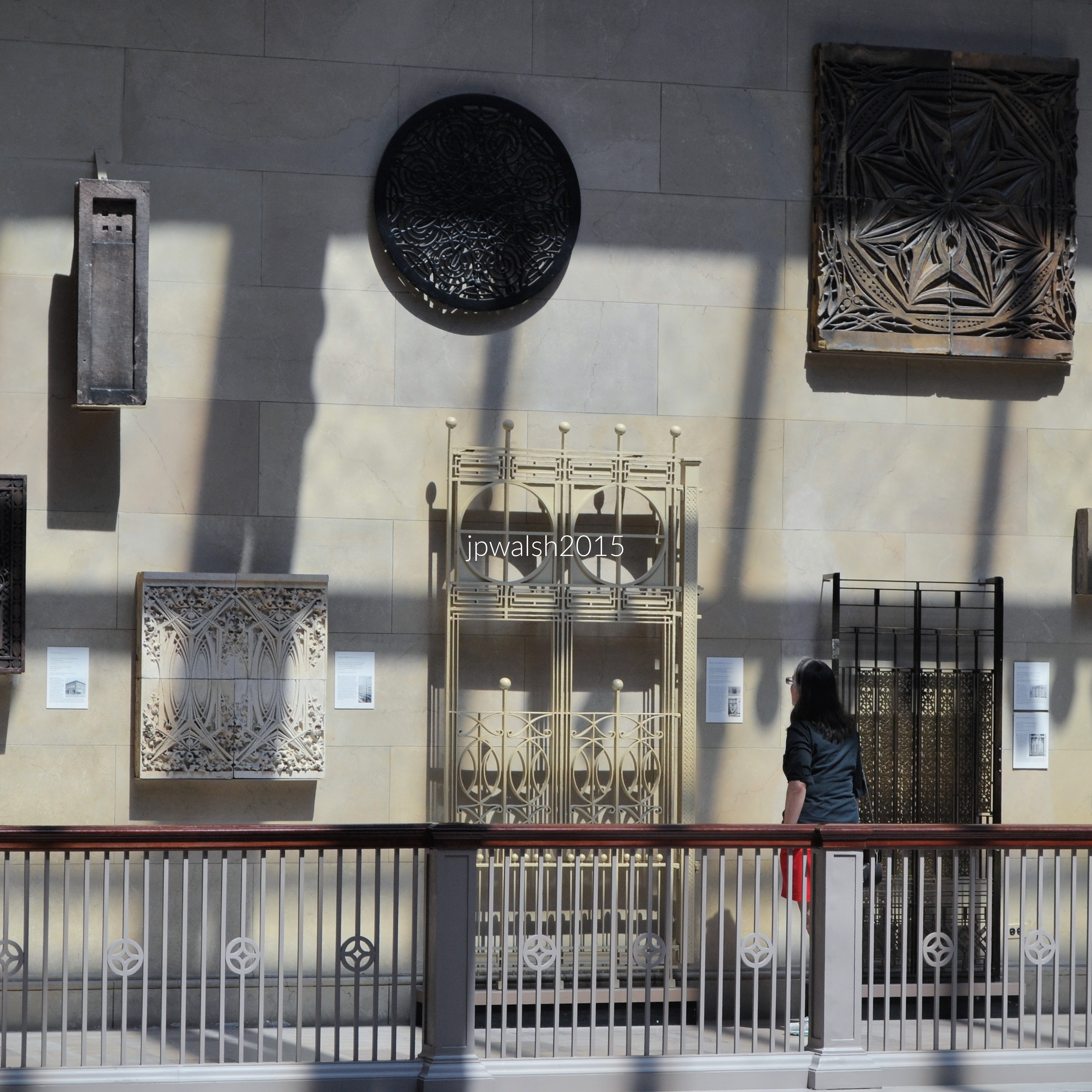
Above and next three below: Fragments, Dankmar Adler (1844-1900) and Louis Sullivan (1856-1924), The Art Institute of Chicago. 19th Century. American. Modernism.
September 2015. The Art Institute of Chicago. 560kb 40%August 2015. The Art Institute of Chicago. 2.87mb DSC_0644 (1)November 2015. 6.38mb DSC_0352 (1)
With the arm detail of Rodin’s bronze Adam (1881), the landing of the Grand Staircase at The Art Institute of Chicago.
September 2015. Help desk, The Art Institute of Chicago. May 2021. 7.35 mb The Art Institute of Chicago.
Bisa Butler (1973-), The Safety Patrol, 2018, by Bisa Butler. Cotton, wool, and chiffon; appliquéd and quilted. The Safety Patrol considers the potential of a group of children as future caretakers of the world led by a boy in a sash with outstretched arms whose duty it is to protect the others. Bisa Butler uses the technique of appliqué quilt making to create her work. For the figures, the artist cuts, layers, and pins together fabrics and arranges them on the ground fabric. This comprises the quilt top. Between this quilt top and a backing fabric is a layer of fiber “batting” or stuffing. These layers are stitched to form the quilt with the thread lines part of the structure, texture and details of the image. Butler seeks to use fabric colors and patterns to contribute to the quilt’s subject and narrative. 21st Century. American.
May 2014. The Art Institute of Chicago. 18th century. France. (60)
Hubert Robert (French, 1733-1808), The Fountains, 1787, oil on canvas, 255.3 × 221.2 cm (100 1/2 × 88 1/8 in.). The Art Institute of Chicago.
May 2015. 7.73 mb The Art Institute of Chicago.
Joseph Wilson (d. 1800), Adephi Club – Belfast, oil on canvas, 1783.
May 2015. 6.62 mb The Art Institute of Chicago.
The State Ballroom, Saint Patrick’s Hall, Dublin Castle, oil on wood, c. 1845, signed and inscribed: F. J. Davis/Dublin. St Patrick’s Hall had long been a key location for Ireland’s political, military and social elite to gather (B. Rooney, Creating History, Stories of Ireland in Art, 2016, p.179). These dance proceedings are overseen by the Lord Lieutenant of Ireland and his wife visible at the end of the hall. The 1840s was a period of fashion indulgence. The social ball with attendees in sumptuous costume took place during the period of the Irish famine (1845-1849) where approximately one million people died. Another one million or more emigrated out of the country at the same time, many to the United States. Court dress for gentleman allowed personal expression in fabric and style for the waistcoat. Military officers and political office holders wore court uniforms indicating their position and rank. For ladies, to signal their marital situation, unmarried women wore jewelry and fresh flowers in their hair. Conventionally-minded single ladies added two ostrich feathers behind one ear. Matrons sported a third ostrich feather in their hair and wore lace ribbons.
May 2021. The Art Institute of Chicago. 16th Century. Spain.
El Greco (Doménikos Theotokópoulos) (1541-1614), Saint Francis Kneeling in Meditation, c. 1595, oil on canvas. 92 × 74 cm (36 3/16 × 24 1/8 in.). The Art Institute of Chicago.
October 2014. The Art Institute of Chicago. 19th Century. American.
Arthur Wesley Dow (1857-1922), Boats at Rest, c. 1895, oil on canvas, 66 × 91.4 cm (26 × 36 in.). The Art Institute of Chicago.
October 2016. Ukrainian National Museum (2249 W. Superior Street), Chicago. 4.55 mbMay 2015. Aurora, IL. The David L. Pierce Art & History Center (20 East Downer Place). 4.15 mbMay 2014. The Art Institute of Chicago.
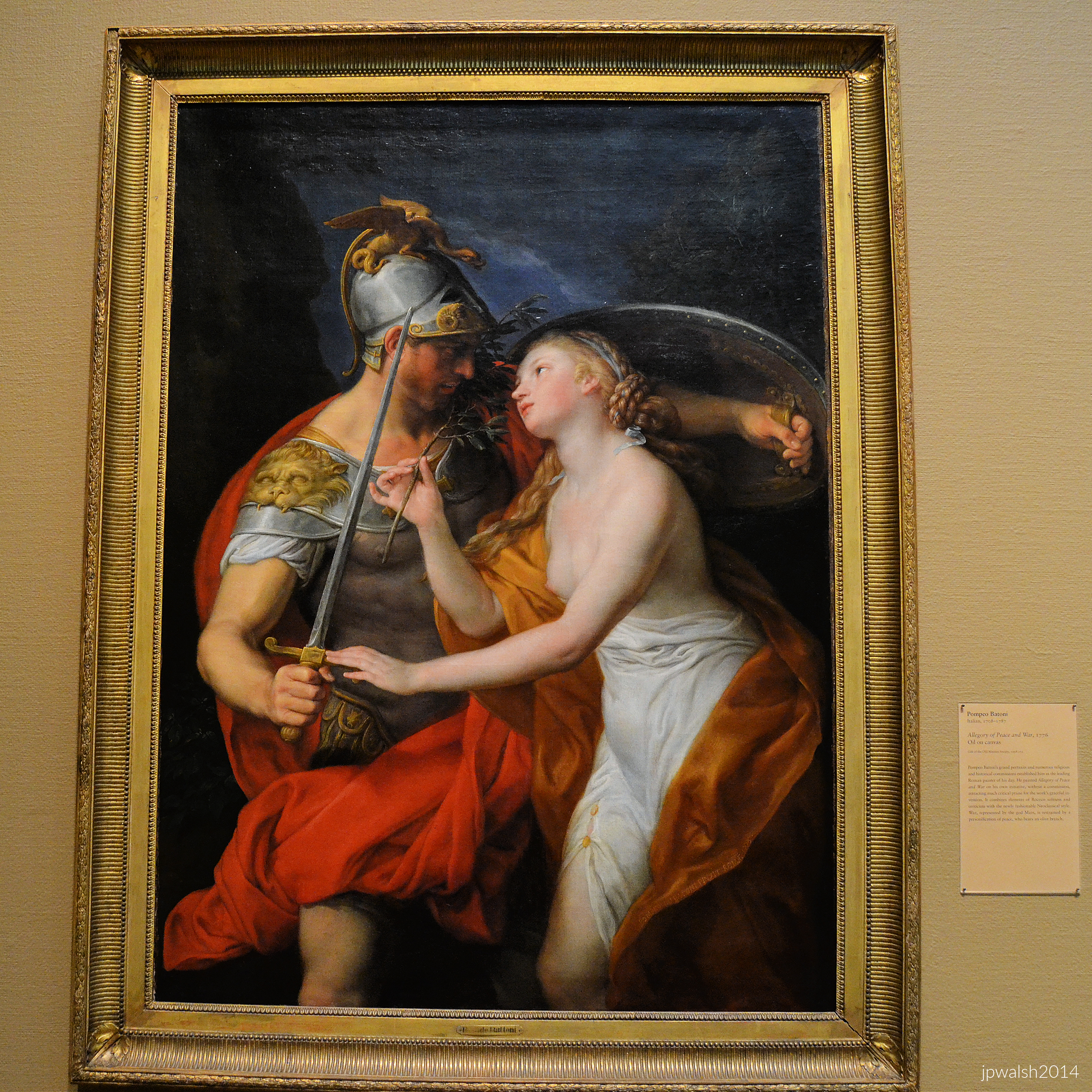
Pompeo Batoni (Italian, 1708-1787), Allegory of Peace and War, 1776, oil on canvas, 53 1/2 × 39 in. The Art Institute of Chicago. 5.73 mb Pompeo Batoni was a leading 18th-century Roman painter. The artist was known for his portraits and commissioned large format historical and religious paintings. The painting entitled “Allegory of Peace and War” represented the mythological figure of the god Mars being restrained by a semi-nude embodiment of peace. Peace lays her hand on War’s sword and bears to him an olive branch. The painting was the result of Batoni’s own invention – no one commissioned this artwork – and it stayed in the artist’s studio until at least the early 1780s.
December 2015. Chicago Cultural Center. 3.62 mb March 2002. Louvre, Paris. 312 kb
Statue of Aphrodite, called Venus de Milo because it was found on the Greek Island of Milos in the Aegean Sea. It dates from around 150 B.C. In the Louvre in Paris, the Venus de Milo is one of the most famous statues in the world. Its soft, sensual handling of the marble was characteristic of the late Hellenistic period. She is monumental – the topless, armless Venus de Milo stands, independent of her base and pedestal, six feet five inches in height. In the course of the second half of the 19th century, the Venus de Milo became a favorite statue of Parisians and its visitors. It was around 1875 that it was moved away from the wall which it stood against and placed in the middle of a 17th century room so that it could be viewed completely around. It was accorded this baroque effect first used at Versailles at the start of the 18th century so to isolate monumental sculpture for display to produce maximum impact and enjoyment of the artwork. SOURCES: Masterpieces of the Louvre, Marcel Brion, NY: Abrams; Creators Collectors and Connoisseurs, Niels Von Holst, NY: G.P. Putnam’s Sons.
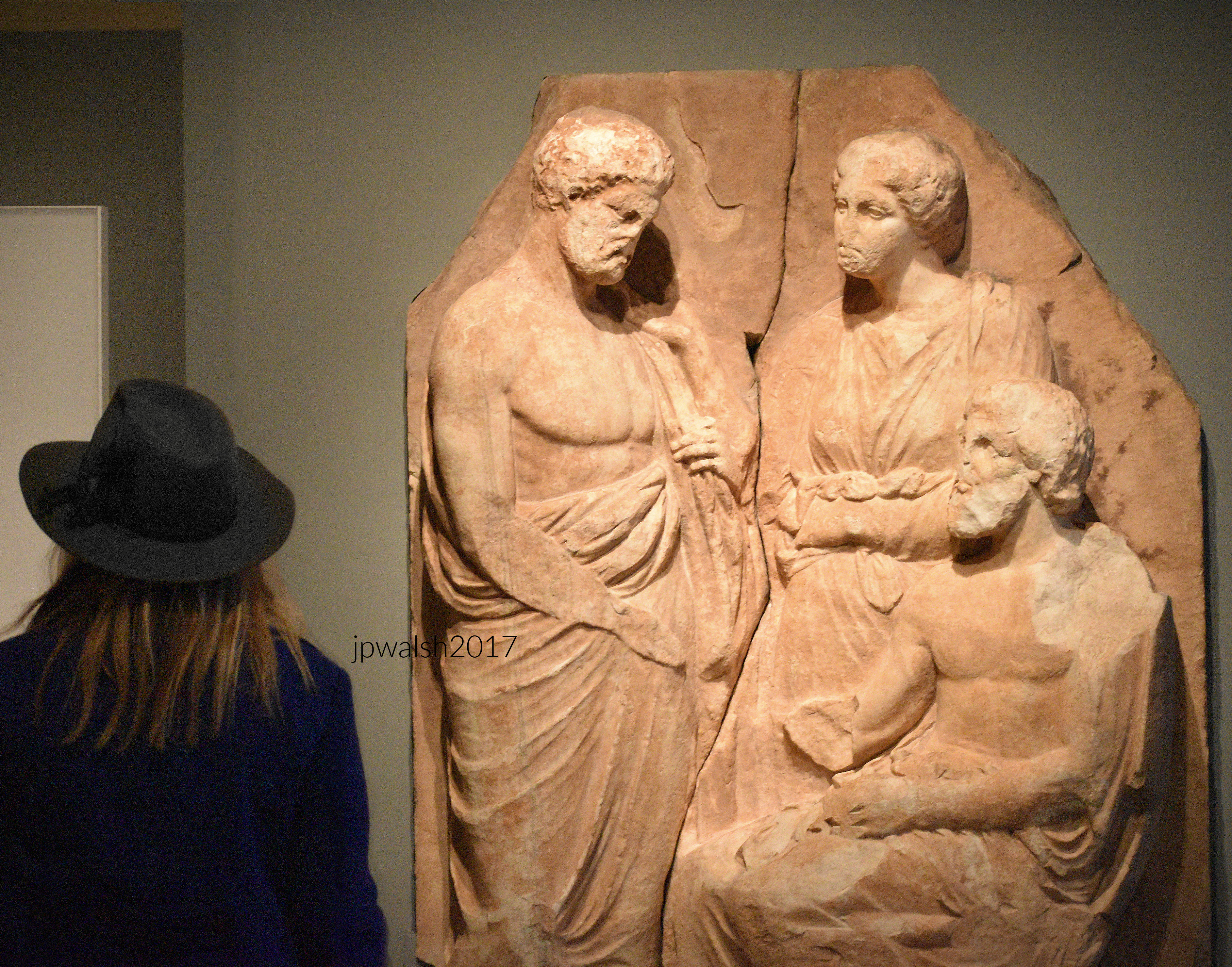
November 2017. 74% 7.84mb DSC_3350 The Art Institute of Chicago.
Fragment of a Funerary Monument, c. 330 BCE Greek; Athens, 152.4 × 111.8 × 33 cm (60 × 44 × 13 in.), The Art Institute of Chicago. see- https://www.artic.edu/artworks/55887/fragment-of-a-funerary-naiskos-monument-in-the-shape-of-a-temple – retrieved March 31, 2025. This is one of the fashionable burial markers, whether of Greek or Roman families, encountered by the public in ancient times. Made in all sorts of shapes and sizes, this large stone monument from the 4th century BCE shows three figures carved in very high relief so much so that they are nearly in the round. The two male figures’ gestures of parting indicate that it is a funerary scene. The standing man is likely the person who has died and this funerary marker depicts his sharing a final farewell with loved ones – their relationship, obviously close, after 2500 years, completely unknown.
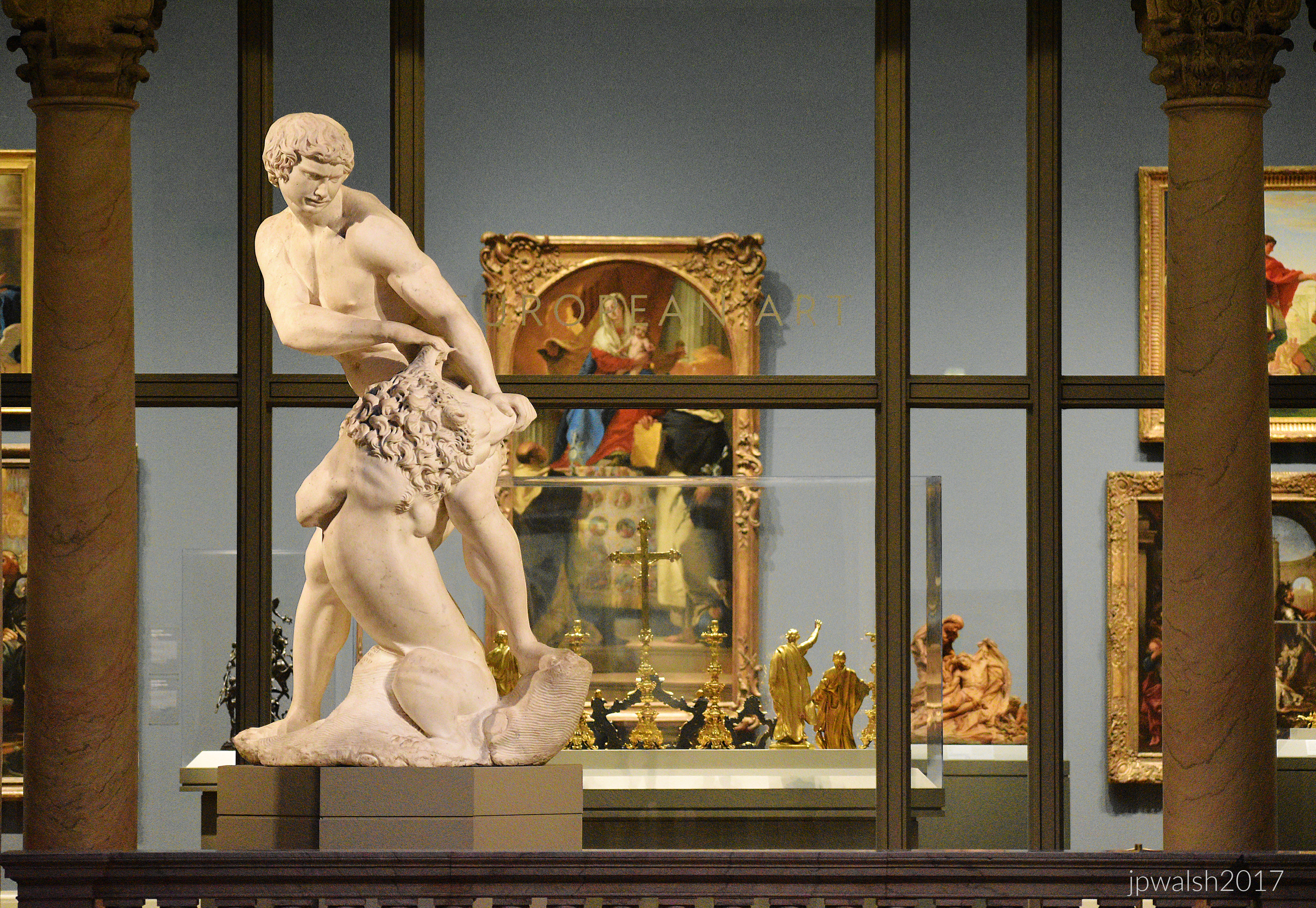
November 2017. 69% 7.88mb DSC_3355 The Art Institute of Chicago.
Cristoforo Stati (Italian, 1556–1619). Samson and the Lion, 1604-1607, marble, 210 × 112 × 84 cm (82 11/16 × 44 1/8 × 33 1/8 in.). The Art Institute of Chicago. see – https://www.artic.edu/artworks/146875/samson-and-the-lion – retrieved April 1, 2025. Stati studied in Florence under Giambologna (1529-1608). In 1601, Tuscany’s archduke, Ferdinando I de’ Medici (1549-1609), sent a sculpture of Samson by Giambologna to the palace of Spain’s prime minister in Valladolid as a gift. Later, Stati’s sculpture of Samson and the Lion was also sent to Spain as a complementary gift and installed in Madrid. The work was in a Swiss private collection before it was acquired by The Art Institute of Chicago in 1996.
November 2017. The Art Institute of Chicago. 80% 7.88mb DSC_3315December 2012. 1st century. Roman. The Art Institute of Chicago. .2.25mb 101_1469
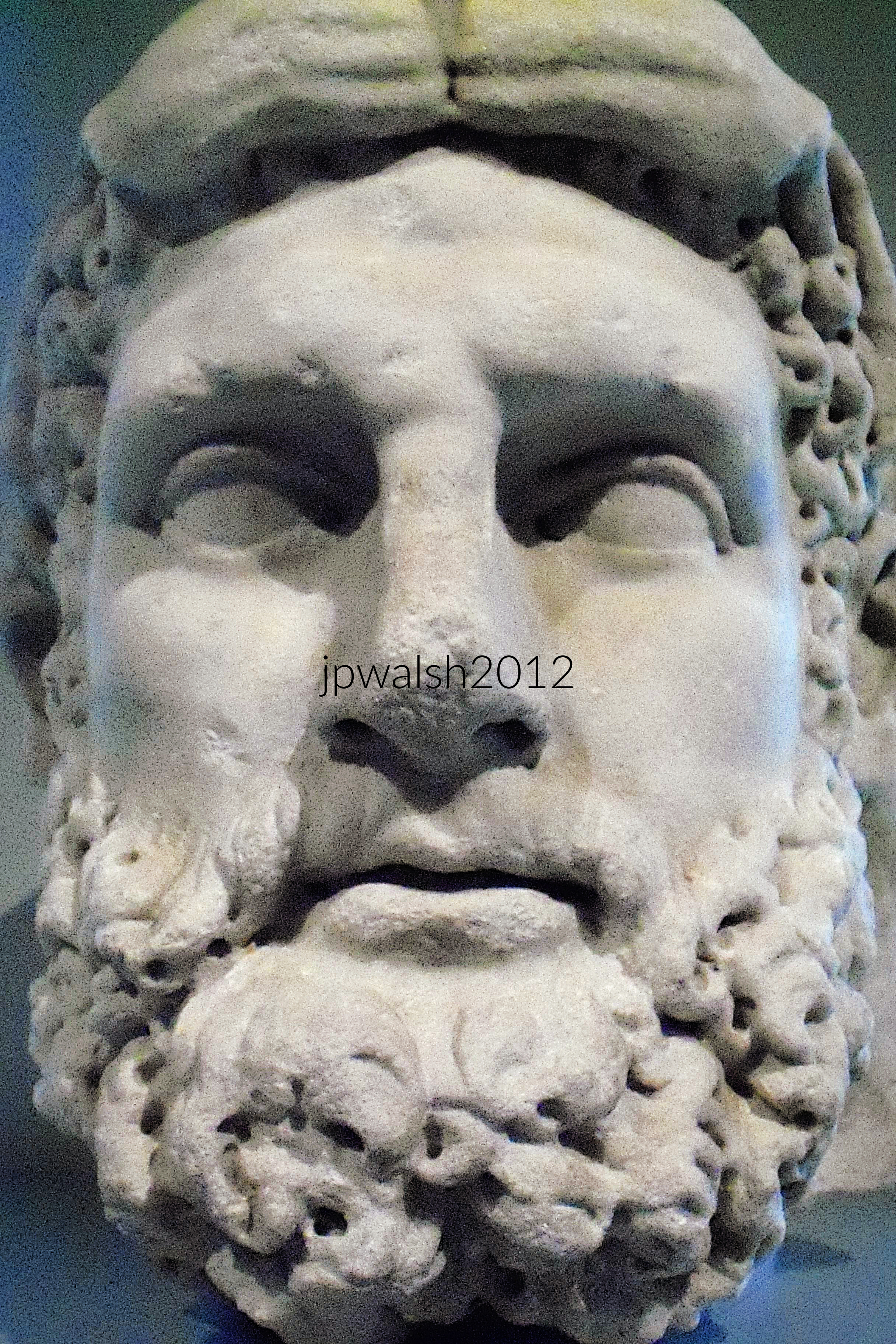
Head of Hercules. Roman, First Century CE. The Art Institute of Chicago. The Romans adapted the stories of Hercules’ superhuman feats of strength from the Greeks. The earlier Greeks viewed him as a demigod, the later Romans saw him as one of their hero figures.
May 2016. The Art Institute of Chicago. 7.44mb DSCN2611 (1)
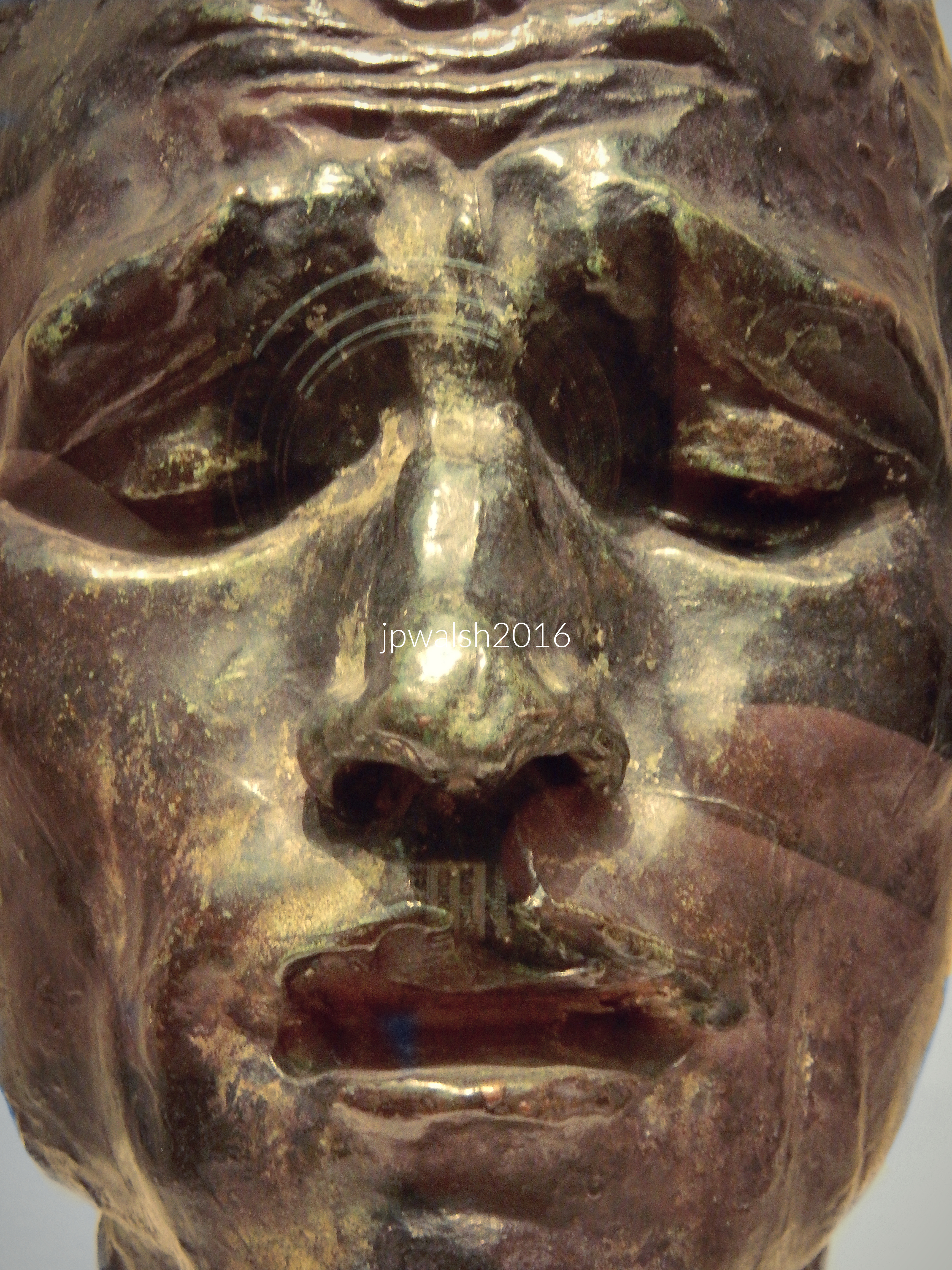
Head of Pierre de Wissant (1889) by Auguste Rodin, part of The Burghers of Calais (1884–89) in the collection of the Art Institute of Chicago, originates from the larger sculptural ensemble commemorating the six citizens of Calais who offered themselves as hostages to the English during the Hundred Years’ War. When displayed independently, the head emphasizes Rodin’s exploration of psychological intensity and human vulnerability. The sculpture conveys a moment of profound emotional anguish: the downward gaze, deeply furrowed brow, and partially opened mouth collectively articulate a state of acute despair and inner turmoil. Through these expressive distortions, Rodin captures not only the historical gravity of the subject’s sacrifice but also the universal experience of psychological suffering.
December 2025. 98% 7.84mb DSC_9937The Art Institute of Chicago.
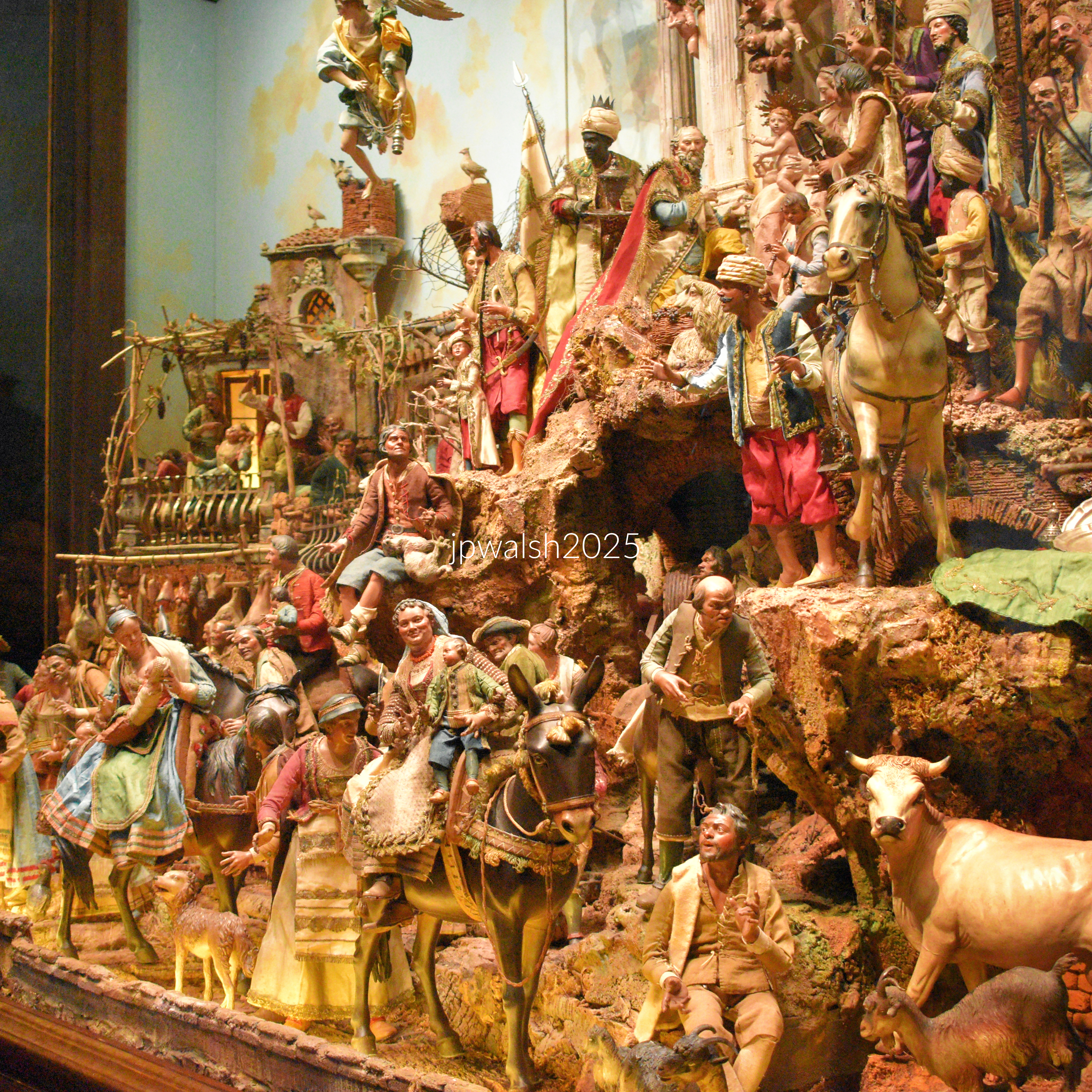
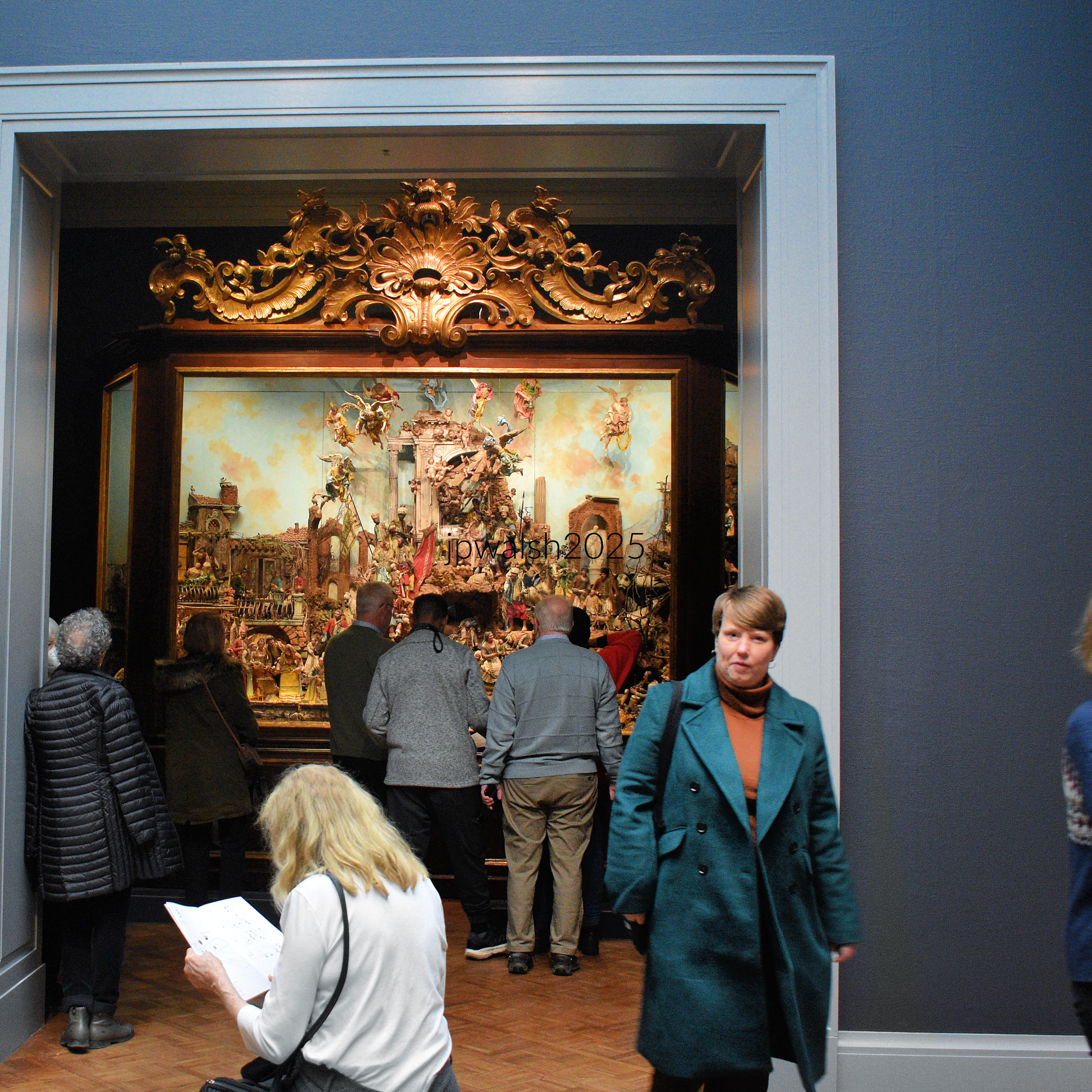
Crèche, mid-18th century, Naples, Italy. Details of daily life are connected to the biblical narrative of the Nativity of Jesus Christ.
December 2025. The Art Institute of Chicago. 7.33mb DSC_9933 (1)
The mid-18th century Neapolitan Crèche invites viewers to witness the miraculous among the mundane. The Art Institute of Chicago. see – Neapolitan Crèche | The Art Institute of Chicago – retrieved December 14, 2025.
December 2025. The Art Institute of Chicago.7.66mb DSC_9896 (1)
Auguste Rodin (1840-1917), A Burgher of Calais (Jean d’Aire), modelled 1889, plaster, 82×26 in. The figure was exhibited in the 1893 World’s Columbian Exposition in Chicago and entered the Art Institute’s collection that same year. The monument includes six individualized figures on a heroic scale and was commissioned in France in 1884. Completed in 1889 by Rodin the monument was installed in Calais’s town hall square in 1895. Rodin depicts Jean d’Aire, one of the town fathers, in sackcloth with the keys of the city, surrendering to the English during the Hundred Years War, in exchange for their lifting a nearly year-long siege that led to the starvation of the city’s inhabitants.. see – Monument to The Burghers of Calais | Musée Rodin – retrieved December 15, 2025.
December 2025. The Art Institute of Chicago. 73% 7.86mb DSC_9847
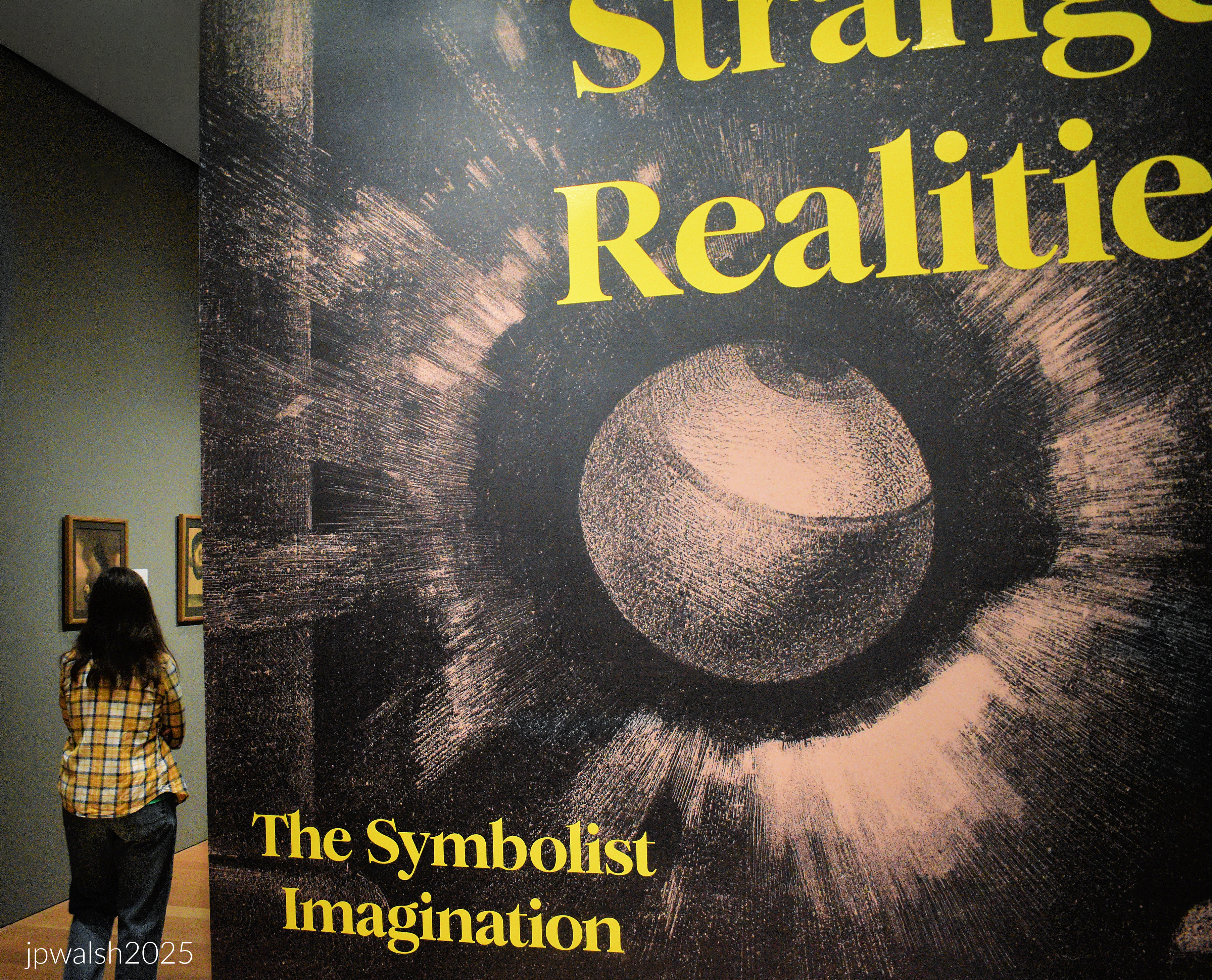
Exhibition Strange Realities: The Symbolist Imagination (October 4, 2025- January 5, 2026). Over 85 works of major artists including Odilon Redon, Paul Gauguin, and Edvard Munch, drawn from the Museum’s collection of drawings and prints exploring the late 19th century pan-European Symbolist movement of art, literature and theatre.see – Strange Realities: The Symbolist Imagination | The Art Institute of Chicago – retrieved December 16, 2025.
December 2025. The Chauncey McCormick Gallery, The Art Institute of Chicago. 93% 7.89mb DSC_9889September 2014. The Art Institute of Chicago. 3.55mb DSC_1038 (1)
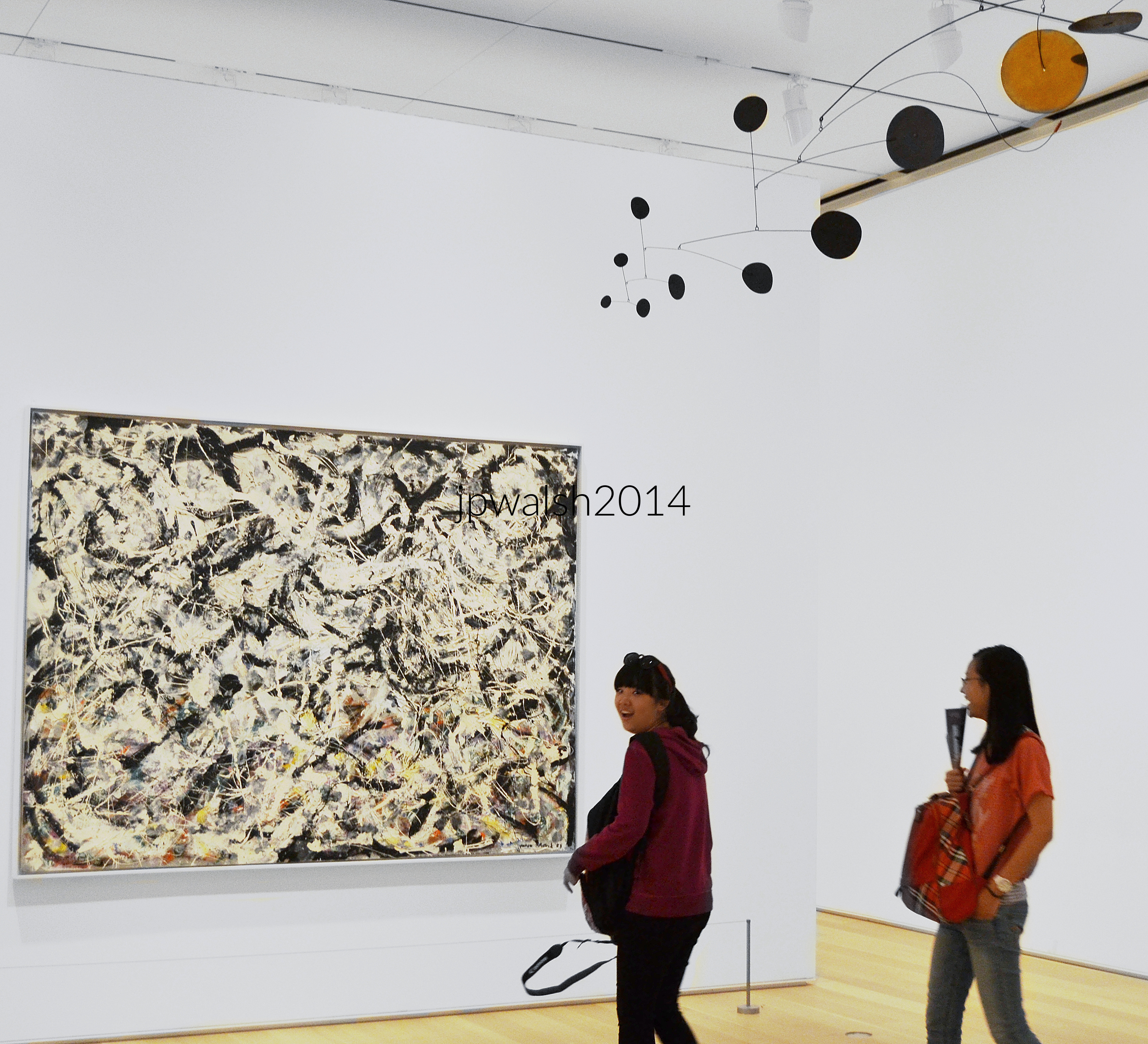
Greyed Rainbow, 1953, Jackson Pollock, oil on linen, 182.9 × 244.2 cm (72 1/16 × 96 3/16 in.) and Streetcar, 1951, Alexander Calder, Brass, sheet metal, rod, wire, and paint, 9’8″ long, Art Institute of Chicago. See – Streetcar (1951) | Calder Foundation – retrieved Jan. 29, 2026 and Greyed Rainbow | The Art Institute of Chicago – retrieved Jan. 29, 2016.
Ed Harris’s December 2000 biographical film Pollock reconstructs the mid-20th-century modern art world through a meticulous ensemble cast, highlighted by Marcia Gay Harden’s Academy Award-winning portrayal of pioneering Abstract Expressionist painter Lee Krasner.
POLLOCK: IF PEOPLE WOULD JUST LOOK AT THE PAINTINGS I DON’T THINK THEY’D HAVE ANY TROUBLE ENJOYING THEM. IT’S LIKE LOOKING AT A BED OF FLOWERS. YOU DON’T TEAR YOUR HAIR OUT OVER WHAT IT MEANS.
In a stellar cinematic year defined by Gladiator, Traffic, Almost Famous, and Erin Brockovich, Marcia Gay Harden triumphed at the Academy Awards, winning Best Supporting Actress for her riveting performance in Pollock. Harden portrayed Lee Krasner (1908–1984), the pioneering American Abstract Expressionist painter and wife of the biographical film’s brilliant but tortured title character, Jackson Pollock (1912–1956). In addition to her Oscar victory, Harden secured the Best Supporting Actress prize from the New York Film Critics Circle.
Ed Harris pulled impressive double duty on the project, earning an Academy Award nomination for Best Actor in what also marked his directorial debut. Behind the camera, Harris assembled a flawless ensemble cast to bring the mid-20th-century modern art world to life. The film features Jennifer Connelly as Ruth Kligman (1930–2010), the American abstract artist and romantic partner to both Pollock and Willem de Kooning. Val Kilmer portrays the iconic Dutch-American abstract expressionist de Kooning (1904–1997) himself, alongside Bud Cort as writer and dealer Howard Putzel (1898–1945).
Rounding out the historic inner circle are Jeffrey Tambor as art critic Clement Greenberg (1909–1994), John Heard as sculptor Tony Smith (1912–1980), Robert Knott as Jackson’s older brother Sande Pollock (1909–1963), Sada Thompson as Pollock’s mother Stella (1875–1958), and Amy Madigan as American art collector Peggy Guggenheim (1898–1979). Much like its Pollock and Krasner’s revolutionary artwork, the film made an indelible splash upon its December 2000 release, remaining a memorably fine and enduring effort. https://youtu.be/z0xiovbDML0?si=XupBbr5gZnhuTVqP – retrieved Jan. 30, 2026.
September 2014. Modern Wing, Art Institute of Chicago. 3.49mb DSC_1061 (1)August 2015. Modern Wing, Art Institute of Chicago. 3.76mb DSC_0672 (1)August 2015. The Art Institute of Chicago. 3.14mb DSC_0068 (1)August 2015. The Art Institute of Chicago.4.14 mbDSC_0181 (1)August 2015. The Art Institute of Chicago. 1.22mb DSC_0014 (1)October 2015. Art exhibit. Oak Park, IL. 4.72mb DSCN1739 (2)November 2015. Art Institute of Chicago. 3.77 mb DSC_0094 (1)September 2016.Milwaukee Art Museum. 2.63mb DSC_0054 (1)
Thomas Hart Benton, Poker Night (from A Streetcar Named Desire), 1948(Whitney Museum of American Art),Milwaukee Art Museum. 2.63mb DSC_0054 (1)
September 2016. Haggerty Art Museum, Milwaukee, WI. 3.54mb DSC_0922 (1)Frida Kahlo (1907-1954), Untitled called Self-Portrait with Thorn Necklace and Hummingbird (“Autorretrato con Collar de Espinas y Colibrí”), 1940, oil on canvas mounted to board, 61.2 cm × 47 cm (24.11 in × 18.5 in),Harry Ransom Center, Austin, Texas. The Ransom Center acquired the self-portrait in 1965 as one of a large collection of artworks assembled by photographer Nickolas Muray (American, b. Hungary, 1892–1965). Kahlo gifted the painting to Muray soon after it was completed in 1940.
Frida Kahlo’s Self‑Portrait with Thorn Necklace and Hummingbird (1940) is a concentrated display of her mature portrait style. Despite its small scale, the composition is intricate, drawing the viewer’s eye across a dense constellation of figures and symbolic objects. At the center sits Kahlo herself, rendered with imaginative realism and surrounded by a menagerie: a monkey on her left, a cat on her right, and a lifeless hummingbird suspended at her throat. Beneath her signature joined eyebrows, she meets the viewer with a calm, unwavering gaze that feels both resolute and quietly intense.
The animals around her animate the scene with contrasting energies. The monkey, distracted, toys with the thorn necklace, while the cat appears tense and ready to strike. The necklace itself encircles her neck and extends downward, its sharp thorns pressing into her half‑length figure. Against this harshness, delicate butterflies—whether real or hair clips—rest motionless in her hair, and above them hover two dragonflies, creatures that in Mexican art often signal a link between nature and the spirit world, messengers of transformation and guardians of the soul.
Within this symbolic framework, the monkey can be read as an emblem of lust or moral temptation, the cat as mysticism and freedom, and the thorn necklace as a sign of bodily suffering and constraint. It also evokes Christ’s crown of thorns, allowing Kahlo to cast herself in a mode of imitatio Christi—a figure bearing pain, betrayal, and emotional anguish after failed relationships. In this light, the butterflies and dragonflies become signs of renewal, hinting at the possibility of resurrection emerging from her world’s suffering.
Finally, hummingbirds (colibríes) are powerful symbols of the warrior spirit, deeply linked to Aztec mythology, embodying courage, vitality, and the fierce renewal of life. By the modern era hummingbirds have also come to represent love, hope, joy, and inner strength while being understood as messengers carrying the presence of departed loved ones returning in brief, luminous visitations.
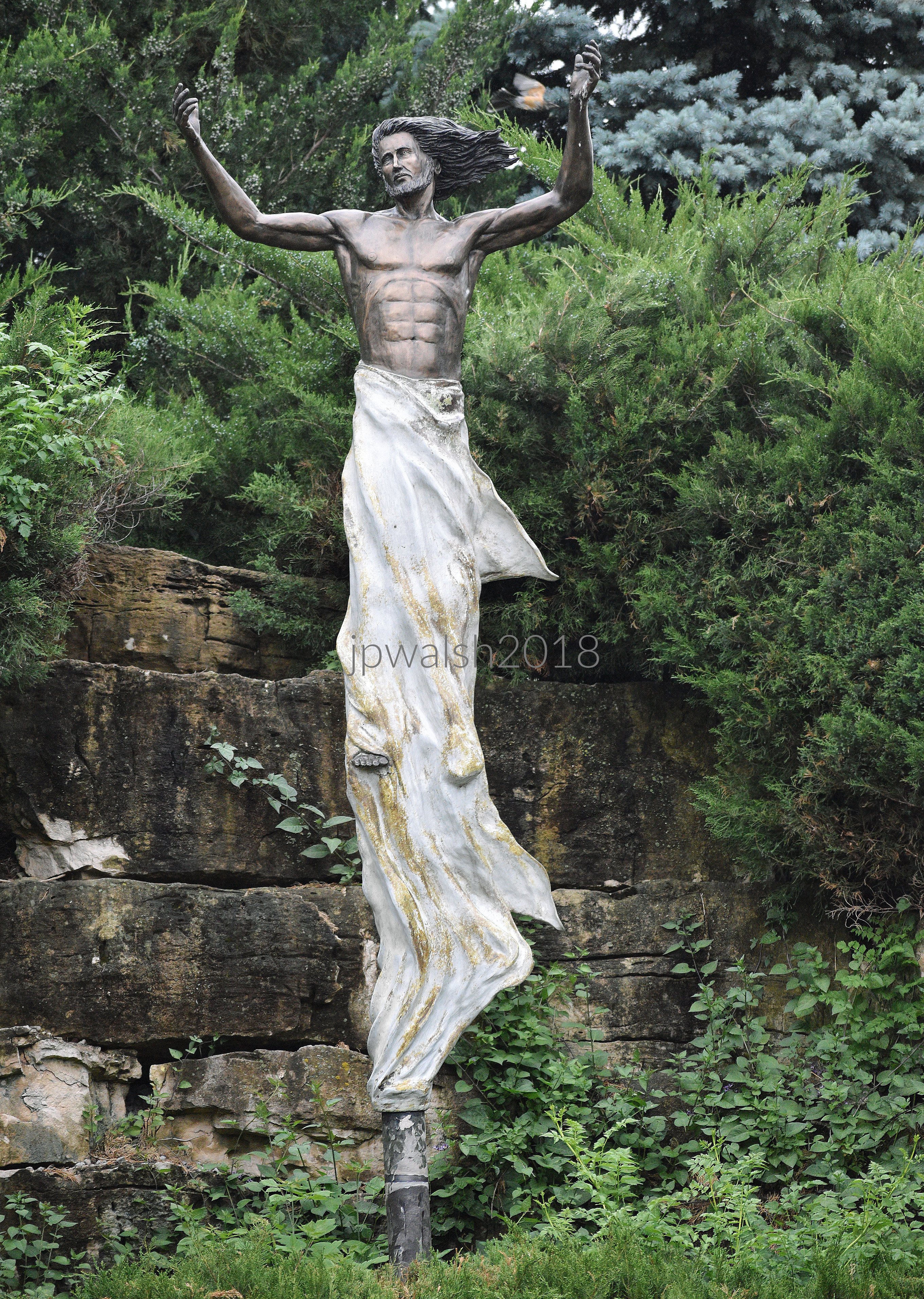
FEATURE image: (detail) Jesus Appears to Mary Magdalene, John 20:11-18.
The Shrine of Christ’s Passion in St. John, Indiana is much more than a sculpture park or roadside attraction. Through life-sized bronze sculptures, landscaped surroundings, Scripture, and meditation, it offers visitors an immersive experience of Christ’s Passion, Death, Resurrection, and Ascension while serving as a major regional destination for prayer, reflection, and religious art.
INTRODUCTION
A Serene Oasis in Northwest Indiana
The Shrine of Christ’s Passion is located on busy U.S. 41 at 10630 Wicker Avenue in St. John, Indiana—just a one-hour drive (about 40 miles) south of downtown Chicago and 90 minutes from the University of Notre Dame. Settled as a pioneer town in 1837, St. John still sits among rolling farm fields despite increasing modern development near the Indiana-Illinois state line.
Situated on the historic Wachter family farm, the 30-acre site features an array of multimedia and interactive attractions. Most visitors come to traverse the half-mile winding concrete pathway, which beautifully showcases over 40 life-sized bronze sculptures that dramatize the biblical Passion of Jesus Christ.
Journeying Through the Stations of the Cross
The journey begins inside a well-stocked gift shop before leading directly outdoors to the first dramatic scenes: Jesus at the Last Supper and praying in the Garden of Gethsemane. From there, visitors follow the 14 traditional Stations of the Cross. The trail concludes at the empty tomb, Jesus’s appearance to Mary Magdalene, and a dramatic depiction of the Ascension of the Risen Jesus into Heaven on Mount Olivet.
To build this massive spiritual destination, it required a decade of planning and over $10 million. To enhance the experience, each station features an orientation kiosk. At the push of a button, visitors can listen to a clear, brief English description and short meditation narrated by famed American television journalist Bill Kurtis.
The shrine opened in 2011 and added its latest attraction– namely, a re-creation of the rock-filled path up Mount Sinai to where Moses has received the 10 Commandments –in 2017.
Immersive Landscapes of the Holy Land
The broad concrete pathway is designed for an easy, meditative progression that fosters quiet reflection and personal discovery. The landscape architecture incorporates formed hills, carefully planted trees, bushes, grasses, and large boulders. This self-contained design effectively blocks out the outside world, beautifully evoking the arid climate and terrain of the Holy Land.
Upon exiting the gift shop—where all proceeds fund the upkeep of the shrine—the transition into the pastoral, biblical setting is immediate. While visitors share the trail with pilgrims from around the world, the layout provides ample space and freedom for a deeply personal, intimate experience.
A Space for Reflection and Exploration
Open 361 days a year, the prayer trail maintains a quiet, respectful atmosphere year-round. A large and impressive place, there are plenty of places to sit, rest, and take in the realistic sculpture art detailing “the greatest story ever told.” While a quick visit can be completed in about 30 minutes, visitors should allow at least an hour to fully savor the experience.
Beyond the main prayer trail, the grounds feature several other major attractions:
The Moses, Mount Sinai, and the 10 Commandments Trail
The Sanctity of Life Shrine
Our Lady of The New Millennium: A monumental, 34-foot-tall statue of the Virgin Mary crafted from over 8,000 pounds of stainless steel.
Visitor Information and Hours
The shrine is operated by a non-denominational, nonprofit private foundation, and admission to all attractions is completely free.
The Prayer Trail: Open year-round (weather permitting).
Main Entrance on U.S. 41 at 10630 Wicker Avenue in St. John, Indiana, minutes from the Illinois-Indiana state line. Just 40 minutes from downtown Chicago, there is ample free parking and tour buses are welcome.
The Gift Shoppe.
The Last Supper Luke 22:19
“And he took bread, gave thanks and broke it, and gave it to them, saying, “This is my body given for you; do this in remembrance of me.”
Garden of Gethsemane Mark 14:34
“My
soul is overwhelmed with sorrow to the point of death,” Jesus said to
them. “Stay here and keep watch.”
THE 14 STATIONS OF THE CROSS AT THE SHRINE OF CHRIST’S PASSION, ST. JOHN, INDIANA.
1. Jesus is condemned to death Matthew 27: 19-26.
“When Pilate saw that he was not succeeding at all, but that a riot was breaking out instead, he took water and washed his hands in the sight of the crowd, saying, “I am innocent of this man’s blood. Look to it yourselves.”…Pilate had Jesus flogged, and handed him over to be crucified.”
2. Jesus carries His cross John 19:16-17
“Then Pilate handed him over to be crucified. The soldiers took charge of Jesus, who carried his own cross to a location called “The Place of a Skull,” known in Aramaic as Golgotha.”
3. Jesus falls for the first time Isaiah 53:1-3
“He was despised and rejected by mankind, a man of suffering, and familiar with pain. Like one from whom people hide their faces he was despised, and we held him in low esteem.”
4. Jesus meets His mother, Mary Lamentations 1:12
“Is it nothing to you, all you who pass by? Look around and see. Is any suffering like my suffering that was inflicted on me..?”
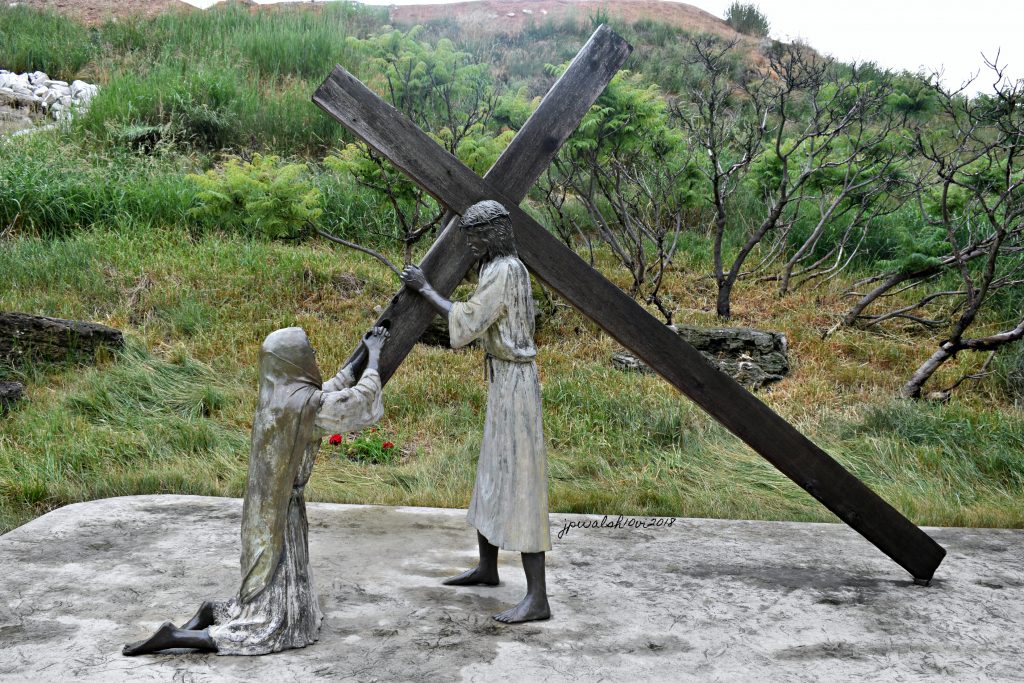
5. Simon of Cyrene helps Jesus carry the cross Luke 23:26
“They seized Simon from Cyrene, who was on his way in from the country, and put the cross on him and made him carry it behind Jesus.”
6. Veronica wipes the face of Jesus Psalm 17:15
“As for me, I will be vindicated and will see your face; when I awake, I will be satisfied with seeing your likeness.”
7. Jesus falls for the second time Isaiah 53:4-6
“Surely he took up our pain and bore our suffering, yet we considered him punished by God, stricken by him, and afflicted.”
8. Jesus meets the women of Jerusalem Luke 23:27-31
“A large number of people followed him, including women who mourned and wailed for him. 28 Jesus turned and said to them, “Daughters of Jerusalem, do not weep for me; weep for yourselves and for your children.”
9. Jesus falls for the third time Isaiah 53:10-11
“Yet it was the Lord’s will to crush him and cause him to suffer, and though the Lord makes his life an offering for sin, he will see his offspring and prolong his days, and the will of the Lord will prosper in his hand….”
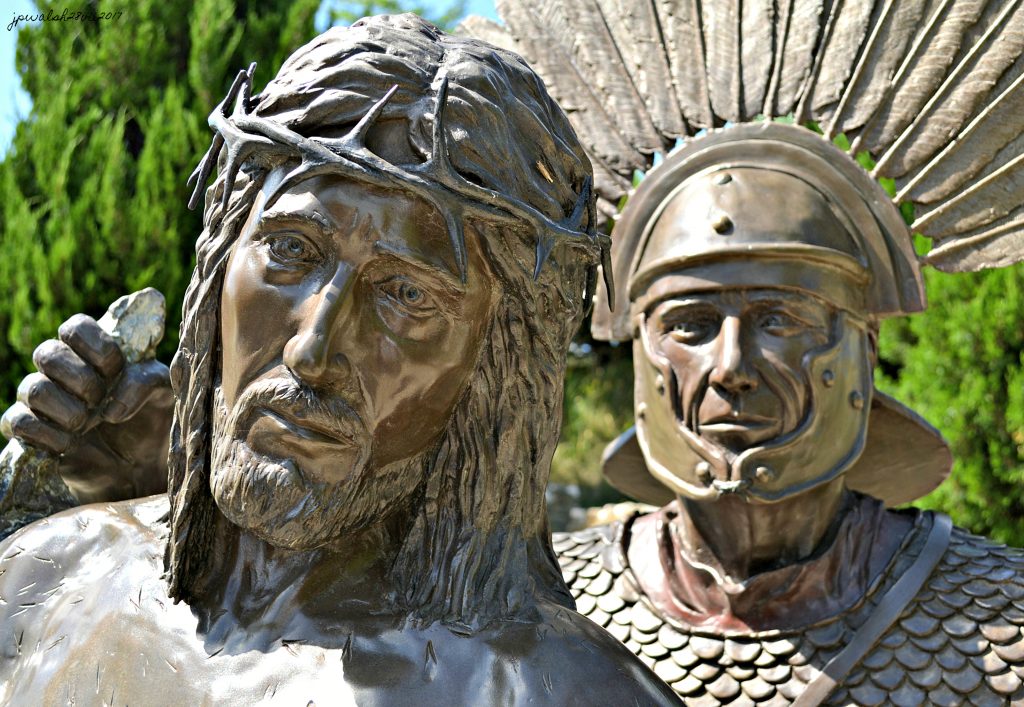
10. Jesus is stripped of His clothes Matthew 27:27-31
“They stripped him and put a scarlet robe on him, and then twisted together a crown of thorns and set it on his head. They put a staff in his right hand. Then they knelt in front of him and mocked him.”
11. Jesus is nailed to the cross Luke 23:33-34
“When they came to the place called the Skull, they crucified him there, along with the criminals—one on his right, the other on his left.”
12. Jesus dies on the cross Luke 23:44-49
“Jesus called out with a loud voice, “Father, into your hands I commit my spirit.” When he had said this, he breathed his last.”
13. Jesus is taken down from the cross Mark 15:39
“When the centurion who stood facing him saw how Jesus breathed his last he said, ‘Truly this man was the Son of God!'”
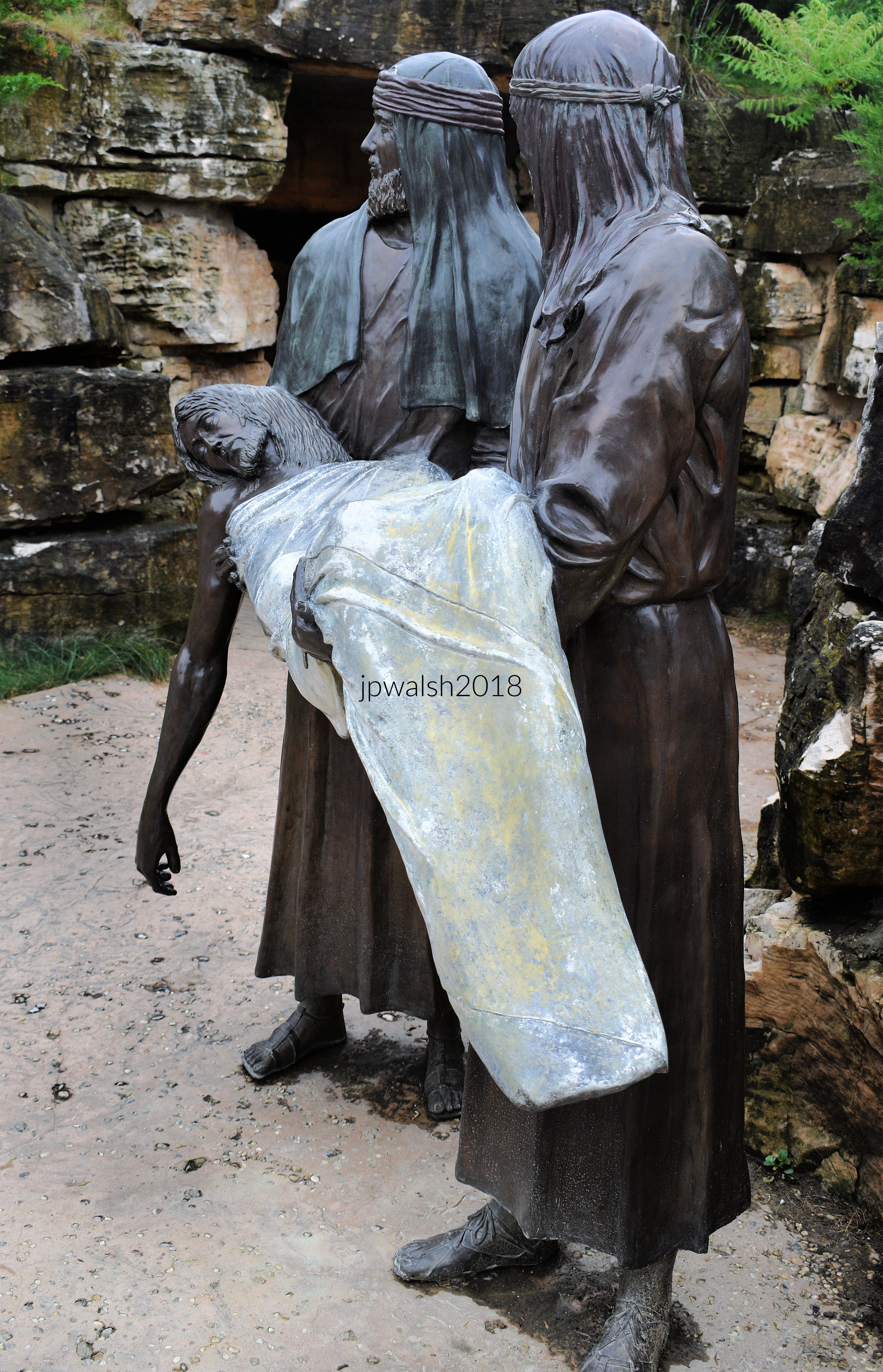
14. Jesus is placed in the tomb Luke 23:50-53
“Going to Pilate, Joseph of Arimathea asked for Jesus’ body. Then he took it down, wrapped it in linen cloth and placed it in a tomb cut in the rock, one in which no one had yet been laid.”
June 2018. 87% 7.94mb DSC_9082
The Resurrection of Jesus.Matthew 28.
1 After the sabbath, as the first day of the week was dawning,* Mary Magdalene and the other Mary came to see the tomb.
2 And behold, there was a great earthquake; for an angel of the Lord descended from heaven, approached, rolled back the stone, and sat upon it.
3 His appearance was like lightning and his clothing was white as snow.
4 The guards were shaken with fear of him and became like dead men.
5 Then the angel said to the women in reply, “Do not be afraid! I know that you are seeking Jesus the crucified.
6 He is not here, for he has been raised just as he said. Come and see the place where he lay.
Jesus Appears to Mary Magdalene John 20:16
“Jesus said to her, “Mary.” She turned
toward him and cried out in Aramaic, “Rabboni!”
MORE of the Prayer Trail:
The Ascension Acts of the Apostles 1:9
“…Jesus was taken up before their very eyes,
and a cloud hid him from their sight.”
June 2018. 68% 7.90mb DSC_0310
The Ascension of Jesus: The Double Account of Luke the Evangelist
The Ascension of Jesus is described twice in the New Testament, with both accounts originating from Luke the Evangelist. The first description appears at the very end of his Gospel (Luke 24:50–53), while the second opens the Acts of the Apostles (Acts 1:6–12).
In Acts, Luke introduces a crucial narrative element: a forty‑day period (Acts 1:3) during which the risen Jesus appears to the apostles, teaches them, and prepares them for their upcoming mission. This specific timeframe is not emphasized in the Gospel account. This suggests that Luke separates the Resurrection and the Ascension in Acts not because he inherited conflicting traditions, but because it serves a distinct narrative purpose. Acts utilizes these forty days to firmly situate the apostles within the larger framework of Israel’s covenant history, framing the early Church as the direct continuation of God’s saving work.
Reorienting the Expectations of the Kingdom
Once Jesus rises from the dead, the disciples fully recognize him as the Messiah. It is therefore understandable that, in Acts, they ask whether he will now restore Israel’s political kingdom. Luke, writing for future generations of Christians, places a deliberately open‑ended reply in Jesus’s mouth.
The exact timing of the parousia—the Second Coming—is not for them to know. Instead, their task is entirely different: to wait for the Holy Spirit, whose power will transform them into witnesses “to the ends of the earth.” Jerusalem, the central site of Jesus’s Passion and Resurrection, thus becomes the launching pad for this worldwide mission.
Symbolism and Eschatology on Mount Olivet
Acts adds further symbolic depth to the Ascension through specific biblical motifs:
The Cloud: Jesus is taken from their sight by a cloud, a classic biblical sign of the divine presence and a motif heavily associated with end‑times imagery (Luke 21:27).
The Location: The event occurs on the Mount of Olives, a location already deeply charged with eschatological expectation.
The Two Figures: As Jesus is lifted up, two figures in dazzling garments appear. They match the same angelic type who initially announced his birth (Luke 2:9) and later proclaimed his Resurrection (Luke 24:4–7).
The message delivered by these figures directly links the Ascension to the Second Coming, promising that the Jesus who is taken up in glory “will return in the same way you saw him go” (Acts 1:11).
From Incarnation to Glorification
Christian tradition understands the mystery of Christ by tracing a single, unbroken arc from the Incarnation to the Ascension. This trajectory begins at the Annunciation (Luke 1:26–38), when the eternal Word—the One who “was with God and…was God” (John 1:1)—takes on human nature in the womb of Mary. In this pivotal moment, the divine and human are permanently united in the Person of Jesus.
The Ascension brings this union to its ultimate fulfillment. Here, the “new, saved man” enters into the very life of the Father, revealing the ultimate destiny of redeemed humanity. Christ’s glorified body becomes the perfect expression of what humanity is truly meant to be in God: a life whose very mode of existence is love, for “God is love” (1 John 4:16). In heaven, the God‑Man embodies this reality completely.
Pentecost and the Indwelling Presence
The Ascension is immediately followed by Pentecost, the moment when the apostles receive the promised Holy Spirit from the risen Christ. From that historic day forward, the early believers speak not only of Christ exalted in heaven, but of “Christ in us”—the indwelling presence that dynamically makes all believers active participants in his risen life.
FEATURE image: The Millers in 1920. Lee, Erik, Theodore, Florence and John. Public Domain.
Lee Miller’s extraordinary artistic career did not emerge suddenly in Paris or the Surrealist movement, but was rooted in the unique environment of her Poughkeepsie upbringing, where family affluence, her father’s intense photographic interests, early exposure to cameras, artistic encouragement, and her rebellious independent personality shaped the creative force she would become.
The Millers, Theodore, Elizabeth Lee, Erik, John and Florence, in 1923. Public Domain.
By John P. Walsh
In the first decades of the twentieth century it became increasingly common practice for established American families to reflect and display their personal lives as well as social status in the timely gathering of photographic portraits. Progressively, the American family unit grew more compact in tandem with its greater personal affluence in an economy increasingly dominated by mechanization and the manufacture of consumer goods, all of which worked relentlessly to replace farming as the engine of American enterprise.
The Millers of Poughkeepsie, New York – a seventeenth century town eighty miles north of New York City which in the eighteenth century had progressed to an early state capital and, by 1910, a significant stop on the railroad line1 – shared that prototypical family form as they gathered for their family portraits between 1914 and 1932.
After 1900, camera availability and quality had markedly improved. Moving into the popular culture, photography allowed the display of a family image that is relaxed and natural as well as a time capsule of its members. In the instance of the Millers their formal and informal photographic portraits capture what appears to be a cohesive family unit expressive of their times. They are within a thoughtfully creative pose and posture likely managed by the head of the household, Theodore Miller (1872-1971), an energetic lifelong amateur photographer.
These portraits are ambitious for an aesthetic which manifests as a controlled vibrancy in the sitters as well as overall composition. The outcome for these portraits which all include Lee Miller as a child and teenager are photographs that combine the qualities of the fine arts with the more delicate workings of a machine.
The extensive photographs taken by her father, Theodore Miller, unintentionally document the formation of a future artist, providing rare visual evidence of the circumstances that nurtured one of the twentieth century’s most remarkable photographers.
Lee Miller at about eight months old, c. December 1907. Taken by her father Theodore Miller, the amateur photographer would photograph his daughter near incessantly from her childhood into adulthood. Part chronicle, part creative project, their photographer-model relationship could be unusual as he photographed his daughter nude at times over the same time period. Public Domain.
Lee Miller at 8 years in a photograph by her father, Theodore Miller, in 1915. Public Domain.
The Millers, headed by highly credentialed mechanical engineer and amateur photographer Theodore Miller and his wife Florence (1881-1954), saw the couple produce a handsome family: brothers John MacDonald (December 15, 1905-2008) and Erik Theodore (born May 22, 1910-?) and middle daughter, Elizabeth Lee, later Lee Miller, Lady Penrose (April 23, 1907-1977).
In childhood, Lee was curious, had her special interests and likes, especially the newly invented movies, and was encouraged by her parents to be free and active. Rambunctious in youth, Li-Li (Elizabeth Lee’s nickname) expressed herself as a sort of tomboy and later a definite teenage rebel. In school she was often undisciplined and, as the ringleader, provocative.2
When she was ten years old in 1917, her father gave Li-Li an inexpensive and popular Kodak Brownie to take photographs. Kodak used the box camera to sell more products and popularize photography. Almost more like a toy, the Brownie series was first introduced in 1900 and extensively marketed to children,3 although they were taken by soldiers into World War I.
Theodore Miller’s experimentation with photographic technologies exposed Lee to creative and technical aspects of image-making from an early age. She received a Kodak Brownie camera at age ten, introducing her directly to photography.
In the age of American invention, teenage Li-Li Miller, intelligent and creative, was fascinated by her father’s enduring experimentation with new camera gadgets including stereoscopy. That photographic application produced two-dimensional images which, when combined in the brain, gave the perception of three-dimensional depth.4
The family’s photographs serve as both personal records and carefully composed artistic images.
The Millers in 1914. Florence, Erik, Lee, John, Theodore. Public Domain.
Lee Miller and her mother in 1914. Public Domain.
In an almost desperate search for an academic program to constructively engage their daughter’s interest, the Millers placed Li-Li in and out of several schools around Poughkeepsie. Lee traipsed through Governor Clinton school to Oakwood Quaker to St. Mary’s Catholic to Eastman Business College to Putnam Hall known as the prep school for local Vassar College.
Even with extra-curricular dance and theater activities as well as sojourns into creative writing – along with extended trips to New York City and, accompanying her father on business trips, such as to Puerto Rico on a cruise – by 1920 Li-Li seemed only most uniquely prepared to embrace the intrepid nonchalance of the flapper whose age had arrived thanks to the appearance of This Side of Paradise by F. Scott Fitzgerald.
“The Flapper” as conceived by American illustrator Frank Xavier Leyendecker (1876-1924) for Life magazine in 1922. It seemed by the start of the 1920’s, the teenage rebel and provacateur Lee Miller was ready to embrace the Flapper’s nonchalant image. PHOTO: “‘The Flapper’ (1922)” by Swallowtail Garden Seeds is marked with CC PDM 1.0. This work is in the public domain.
Lee was intelligent, strong-willed, unconventional, and often rebellious in school and social settings. Her interests in movies, dance, theater, travel, and creative expression reflected a broader artistic temperament.
The Millers in 1920. Lee, Erik, Theodore, Florence and John. The teenager bobbed and later permed her golden hair to match a new decade’s fashionable style as she looked for the next exit out of Poughkeepsie. Public Domain.
At the end of a record-cold spring of 1925, Li-Li, called spoiled and well-to-do by many of her neighborhood classmates, took a ship for Paris, France, on May 29 of that year. The Millers’ intention was not to internationalize the shortcomings of their daughter’s educational career, but to assist in the rebellious 18-year-old’s discovery and development of a talent and skill to match her artistic temperament.5
No one could predict in 1925 that after spending this short period of time in Europe as a teenager, Li-Li Miller of Poughkeepsie, New York, will, as Lee Miller, finally return to Europe to spend most of the rest of her life, over 50 years. In those adult years, Miller became a celebrated artist’s and cinema’s muse as well as an important World War II photographer.
By the 1920s, Lee embraced the spirit of the modern flapper, seeking independence beyond her hometown. Her 1925 departure for Paris marked the transition from gifted, restless teenager to the future photographer, model, muse, Surrealist, and war correspondent she would become.
In the cold spring of 1925, Lee Miller is joined by her father as the 18-year-old Lee boards the ship that will take her to Paris to study. The family’s hopes include that in Paris Lee will find and develop some talented skill to express her artistic temperament. Public Domain.
FOOTNOTES:
1. Burke, Carolyn, Lee Miller: A Life, Alfred A. Knopf, New York, 2006, p.6. 2. Haworth-Booth, Mark, The Art of Lee Miller, Yale University Press, 2007, p. 14; provocative-Burke, p. 24. 3. Roberts, Hilary, Lee Miller: A Woman’s War, Thames & Hudson, 2015, p. 190. 4. see Lincoln, Tom, Exercises in Three Dimensions, 2011. http://www.lincolntom.com/pages/Exercises%20in%203D.html- retrieved April 17, 2019 5. Roberts, p.194; https://thestarryeye.typepad.com/weather/april/page/2/
June 2014. Chicago. 3.01 mb _0400July 2016. Chicago. 5.91mb DSC_0939July 2016. Chicago. 2.61 mb DSC_0055June 2018. Chicago. Pilsen. 3.23 mbApril 2013. Chicago (Back of the Yards). 1mb 35%December 2016. Dinkel’s bakery, 3329 N. Lincoln Ave. In business since 1922, Dinkel’s bakery closed in 2022. 25%.June 2018. Chicago. 2.41 mbJune 2018. Chicago. 4.0 mbJuly 2016. Chicago. 360 kb 25%September 2014. Chicago. Chinatown. 1.86 mbJune 2018. Chicago. Chinatown. 7.90 mb 97%August 2015. Chicago. 3.17mb DSC_0948December 2014. Chicago. Gold Coast. 2.53mbAugust 2017. Chicago. 6.75 mbSeptember 2015. Chicago. 4.92 mbSeptember 2013. Chicago. 4.28 mb (10)August 2015. Chicago. 3.40 mb DSC_0353June 2013. Chicago. Little India. 568 kbJune 2013. Chicago. Little India 3.17mb fsb 100_2560 (1)June 2013. Chicago. Little India 4.27 mb 100_2564 (1)June 2013. Chicago. Little India 4.27mb 100B2592 (1)June 2013. Chicago. Little India 3.01 mb 40% 100_2605 (1)June 2013. Chicago. Little India 3.22 mb 100_2572 (1)June 2013. Chicago. Little India2.31mbJune 2013. Chicago. Little India2.23mbJuly 2016. Chicago Loop. 7/2016 1.25 mb (20)September 2015. Chicago. 2.89 mbAugust 2014. Chicago. Adams/Wabash.1.60 mbJanuary 2018. Chicago. Millennium Station. 4.69 mbJune 2019. Oakbrook, IL. 1.79 mbJune 2019. Oakbrook, IL. 2.24 mbJune 2019. Oakbrook, IL. 2.36 mbJune 2019. Oakbrook, IL. 2.59 mbJune 2019. Oakbrook, IL. 1.52 mbMay 2016. Chicago. Michigan Avenue. 1.04 mbDecember 2017. Chicago. Millennium Park. 2.27 mbMay 2016. Chicago. Millennium Park. 4.32 mbJune 2019. Oakbrook, IL. 1.34 mb June 2018. Milwaukee, WI. 748 kbJune 2016. Milwaukee, WI. 2.94 mbOctober 2016. Chicago. Bridgeport. 4.30 mbMay 2015. Chicago. 2.98 mbJuly 2015. Chicago. Reliance Building (1895), State/Washington. 4.53 mbJune 2018. Chicago. United Center Park. 4.30 mbAugust 2016. Chicago. Goose Island. 4.75 mb (40)October 2014. Symphony Center Chicago. 1.94 mbOctober 2014. Symphony Center Chicago. 3.03mb DSC_0071 (1)October 2014. Symphony Center Chicago. 3.39mb DSC_0056 (1)October 2014. Symphony Center Chicago. 4.47mb DSC_0058 (1)February 2018. Chicago. River North. 765 kbMarch 2020. Downers Grove, IL. 2.74 mbMarch 2020. Downers Grove, IL. 3.10 mbMay 2020. Downers Grove, IL. 772 kbMay 2018. Wheaton, IL. 4.11 mbSeptember 2013. Chicago. New East Side. 3.12 mbJune 2019. Oakbrook, IL.1.44 mbJune 2018. Chicago. Chinatown. 8.64 mbSeptember 2015. Chicago. The Loop. 1.76 mb October 2015. Chicago. Rehearsal. 862 kb _0375August 2017. Chicago. 4.07 mbAugust 2015. Chicago. 3.23 mb DSC_0876August 2016. Chicago. Douglas Park, S. 16th Street/W. Kedzie Avenue. 4.15 mb
William C. “Bill” Henry (1935-1992) for which this portion of 16th Street is named, was a 24th Ward Chicago alderman. Ald. Henry put together the coalition of Black and white aldermen to elect Eugene Sawyer (1934-2008) as mayor of the City of Chicago following the sudden death of Harold Washington (1922-1987), the first black mayor elected in Chicago.
Responding to accusations of deal cutting, Ald. Henry declared during the debate in the City Council chamber: “Deals? We was all making deals!” Henry’s constituents voted their alderman out of office for helping Sawyer in preference to Tim Evans, the reform candidate. Ald. Henry passed away from cancer in 1992 at 56 years old. In 2021 Timothy C. Evans is the Chief Judge of the Circuit Court of Cook County.